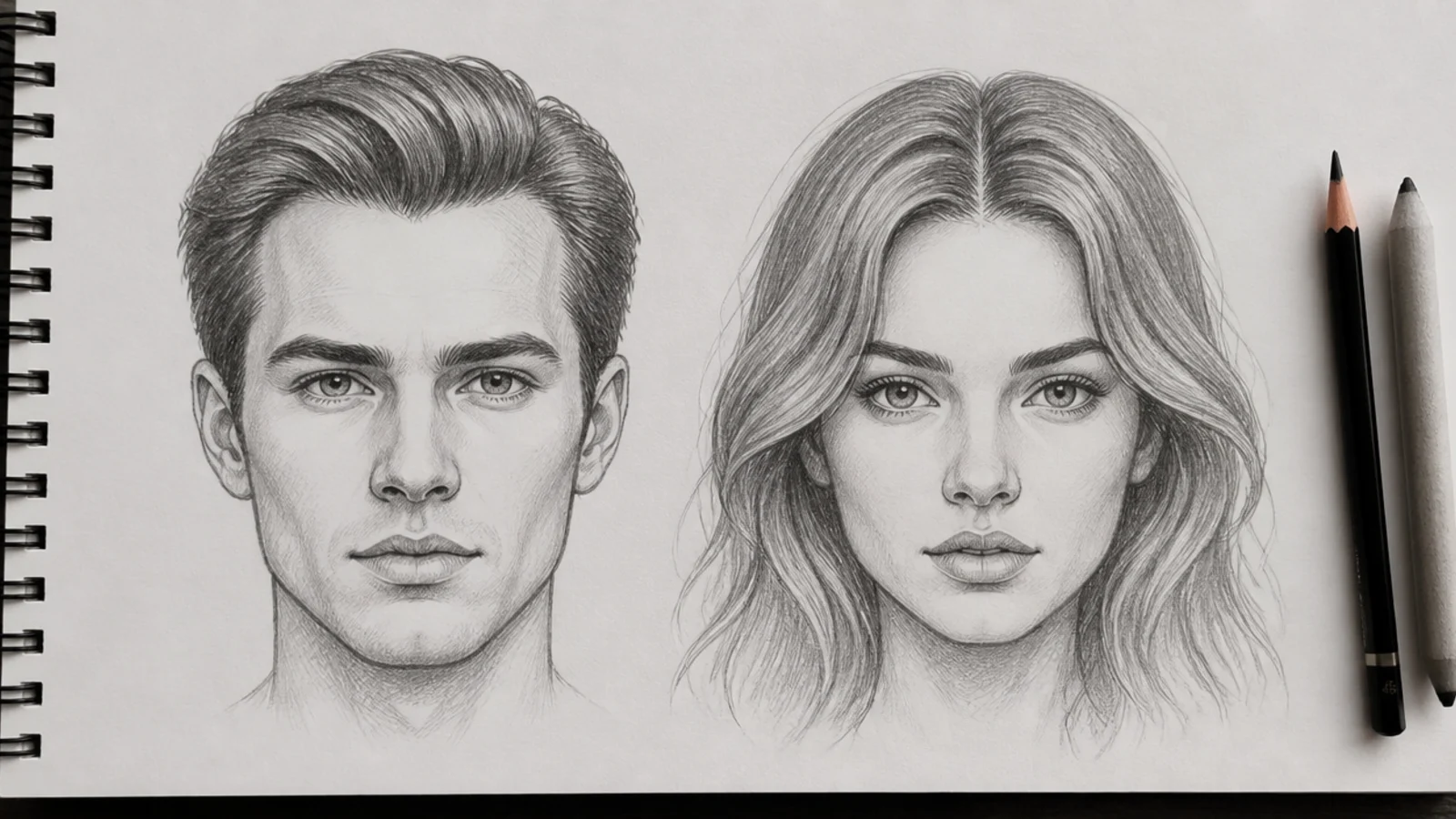
20 Male Hair Sketch Studies With Female Comparisons
Twenty paired graphite studies, and the correction most portraits need. What separates a male hair drawing from a female one is the hairline and the volume above the skull, not the length, and drawing the same curve on both is the tell.
In this article · 28
- Materials and References
- Silhouette Before Strands
- Hairline Comparison
- Shading for Volume
- Texture Types
- Common Mistakes
- The 20 Paired Hair Studies
- 1. The Hairline Overlay
- 2. Buzz Cut
- 3. Female Centre Part
- 4. Textured Crop
- 5. Female Blowout
- 6. Skin Fade
- 7. Sleek Ponytail
- 8. Slicked Back
- 9. Long Straight
- 10. Male Curtain Bangs
- 11. Female Curtain Bangs
- 12. Male Top Knot
- 13. Female Messy Bun
- 14. Male 4C Coils
- 15. Female Afro Puff
- 16. Curly Undercut
- 17. Spiral Curls
- 18. Male Mullet
- 19. Layered Shag
- 20. Back View Bob
- Final Thoughts
Most artists draw male hair by drawing female hair shorter, which is why so many male portraits end up looking like a woman with a crop.
The difference is the hairline, not the length. A male hairline sits higher and squares off into corners at the temples, where a female one runs lower and holds a continuous curve across the brow.
Everything else is shared. Texture, flow lines, highlight bands and dark channels behave identically on both heads, which is why the studies below alternate rather than separating into two lists.
Materials and References
Two pencils and a kneaded eraser. A 2B for the mid tone, a 6B for the cores, and the eraser to lift highlights back out rather than carefully drawing around them.
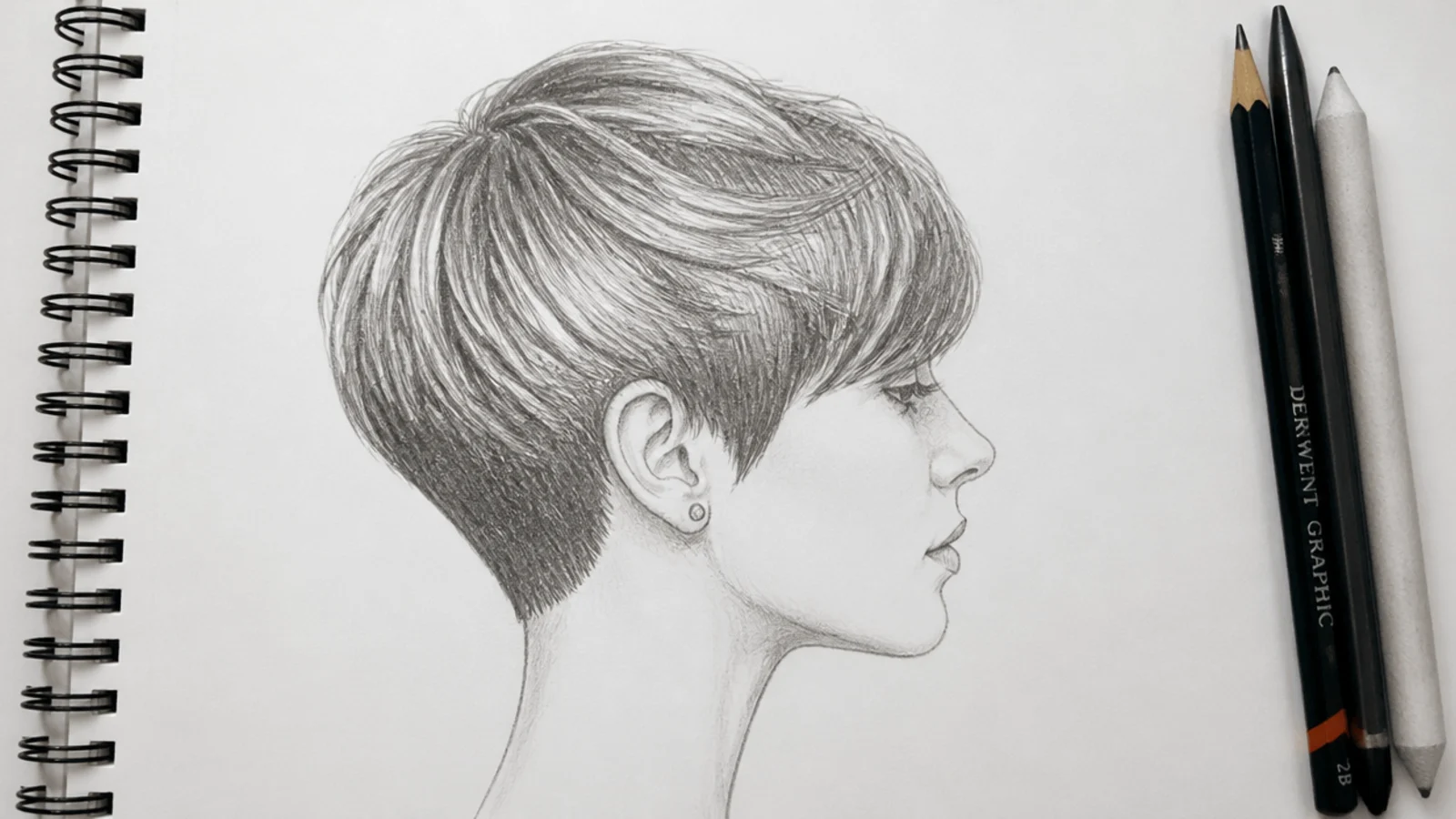
Short hair rewards a sharper point. Everything happens at the edge on a crop, so a blunt lead loses the flick detail that makes the cut read as hair instead of as a moulded shape.
Collect references in pairs. The same haircut photographed on a high hairline and a low one teaches more about drawing heads than two different styles ever will.
Shoot your own back views. Back and three quarter references are scarce online and take ten seconds with a phone and a bathroom mirror.
Silhouette Before Strands
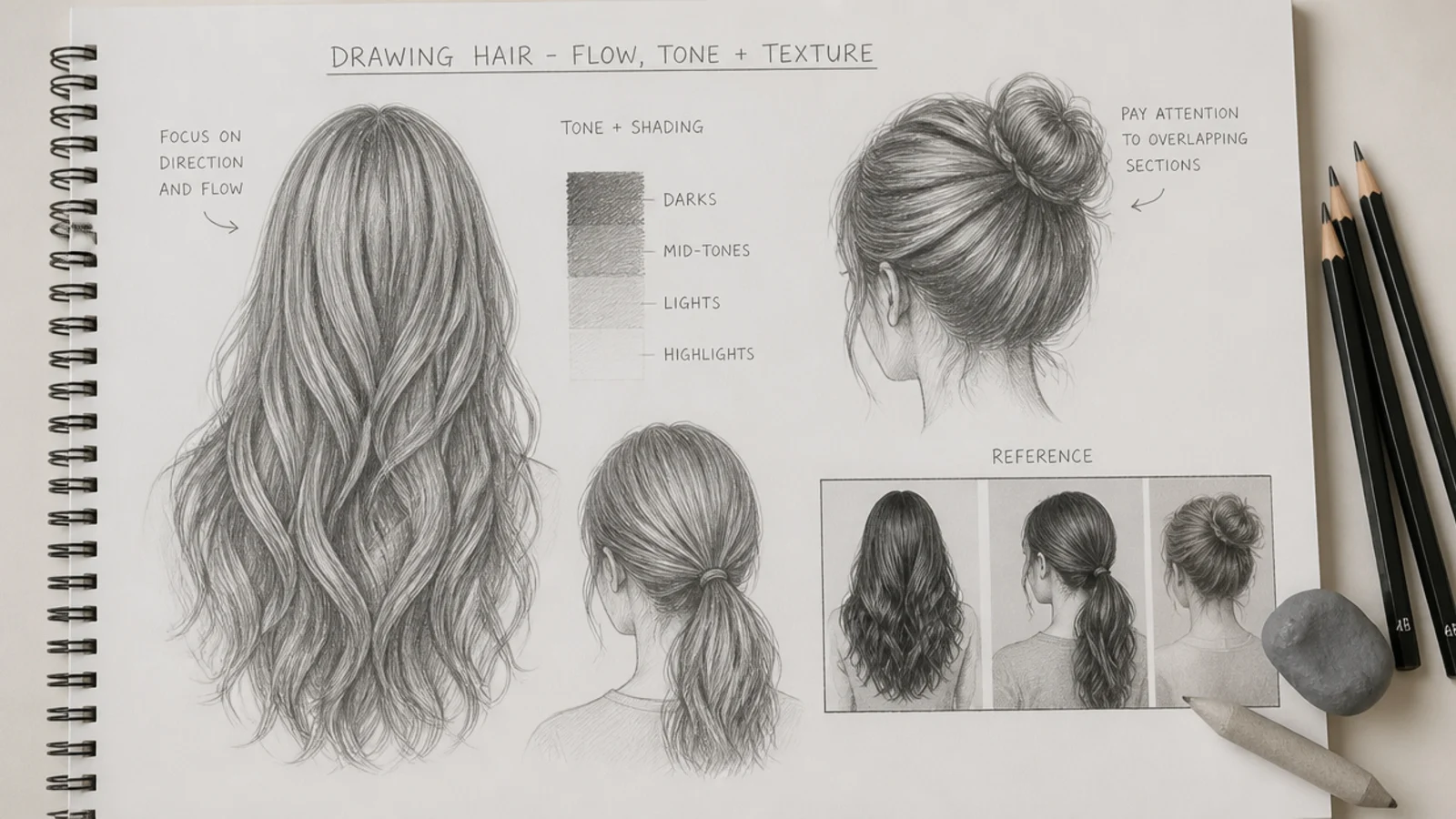
The shape names the cut. Fade, crop, blowout, mullet — each is identifiable filled in flat black, and that is the only test worth running before detail.
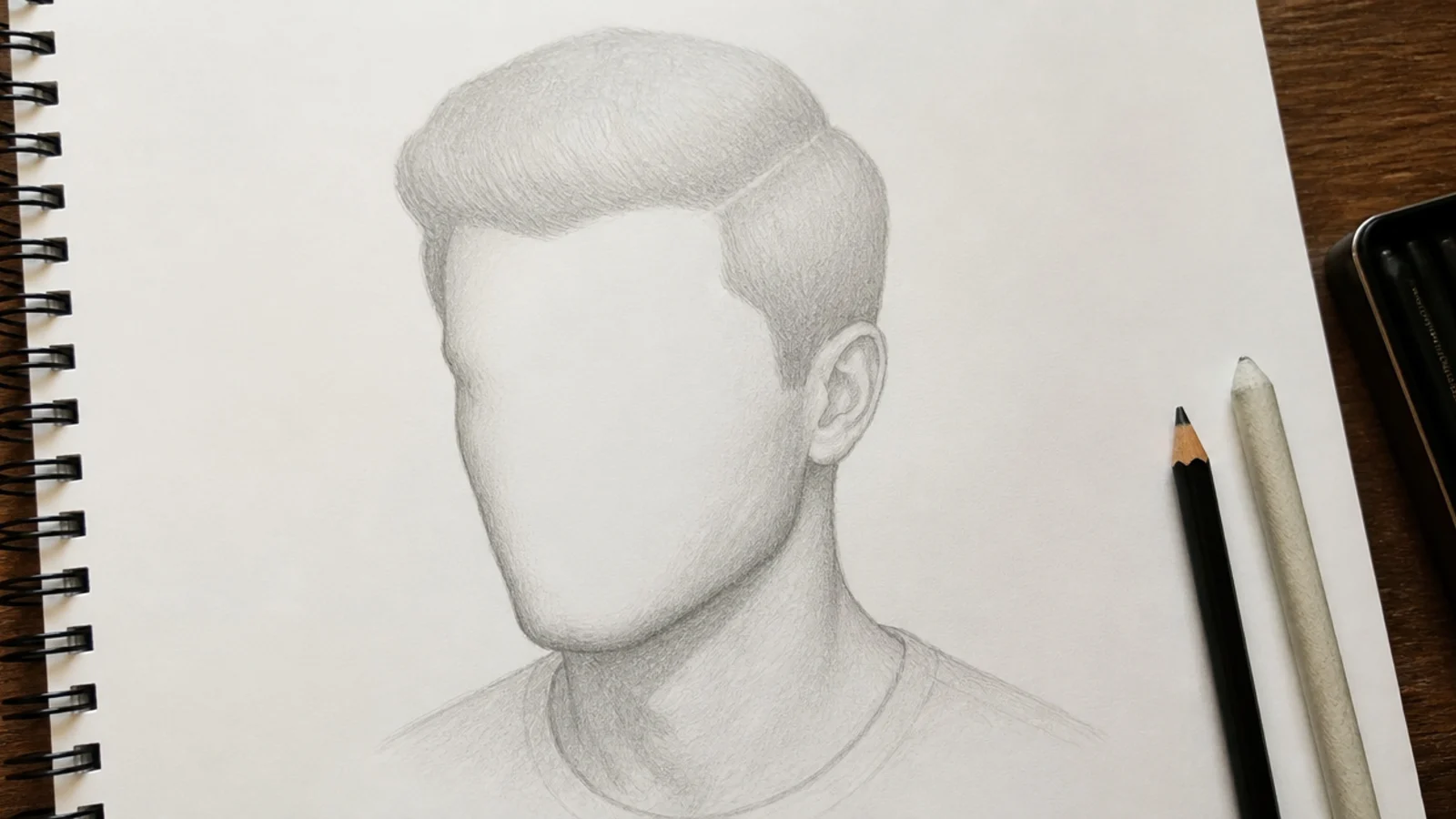
Short does not mean tight to the skull. Even a crop stands a few millimetres proud of the bone, and a silhouette drawn on the skull line reads as a painted head.
Block the sides against the ear. The ear is the most reliable landmark on a head for judging how high a fade or a taper begins.
Fix the outline before shading. A corrected edge underneath laid tone always shows as a change in density along the join, however lightly you work.
Hairline Comparison
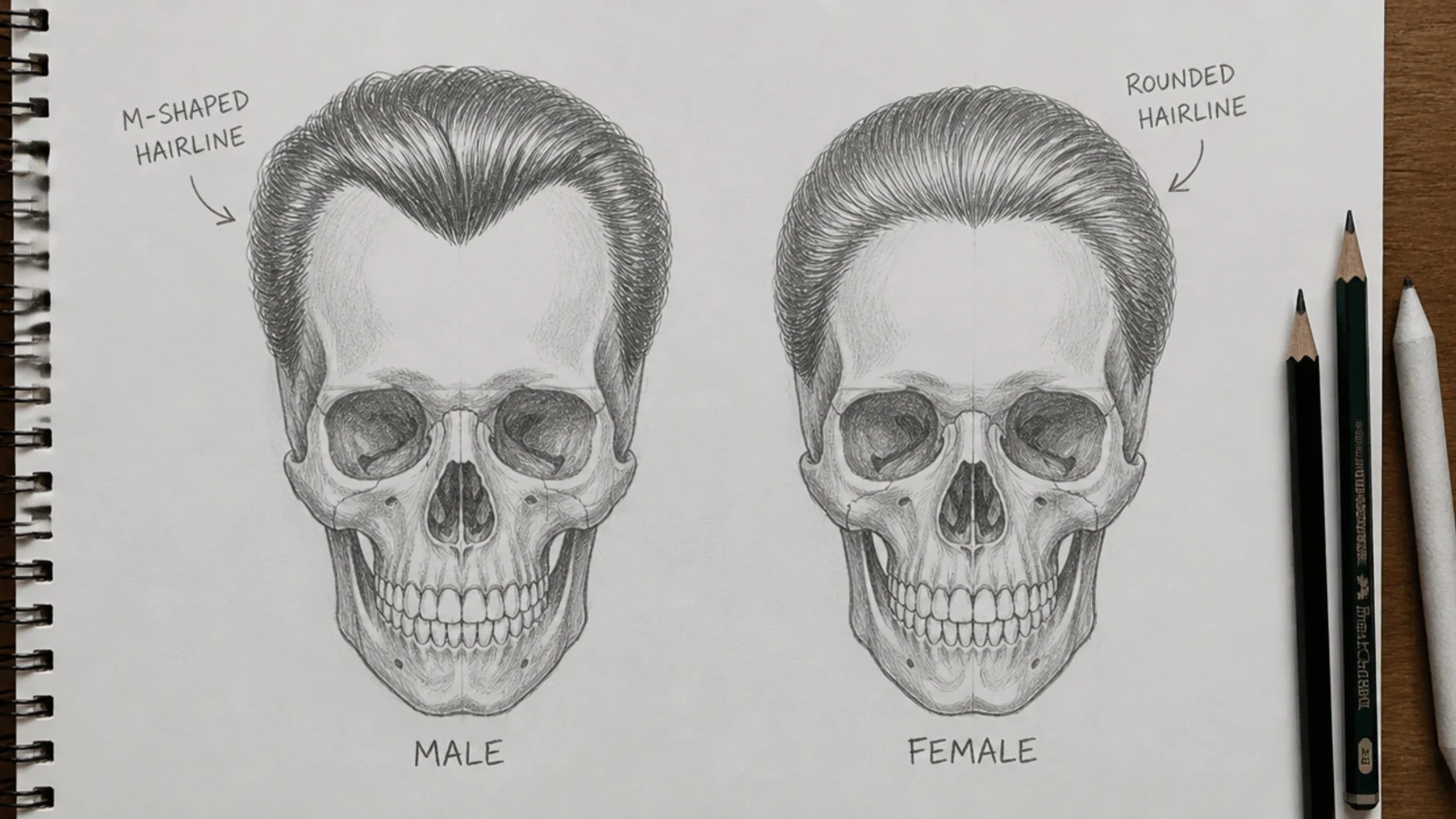
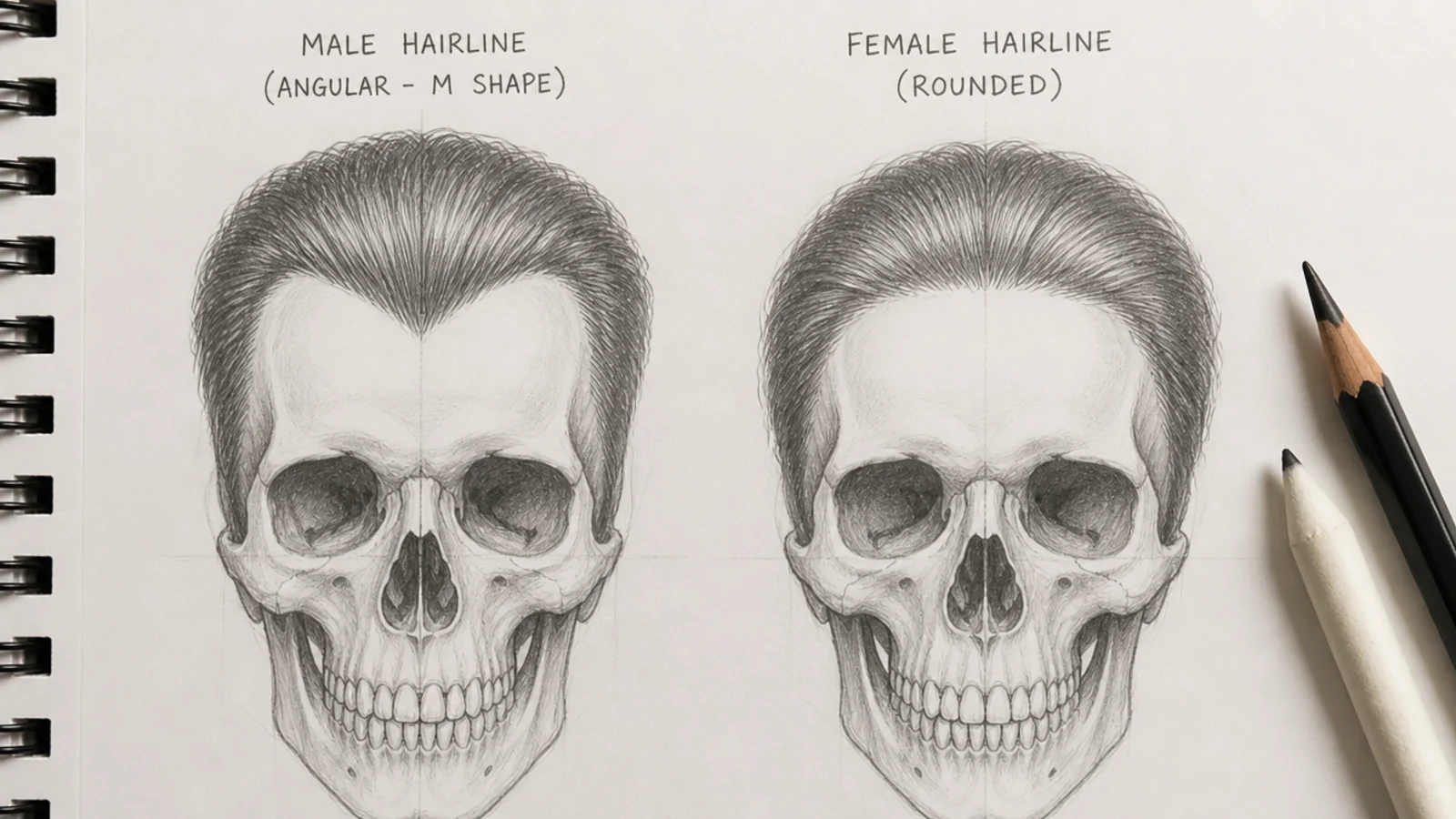
Male hairlines sit higher and square off at the temples. Those corners are the tell, and rounding them off feminises a portrait faster than any length decision.
Female hairlines run lower and rounder. One continuous curve across the brow with the temple corner soft rather than cut.
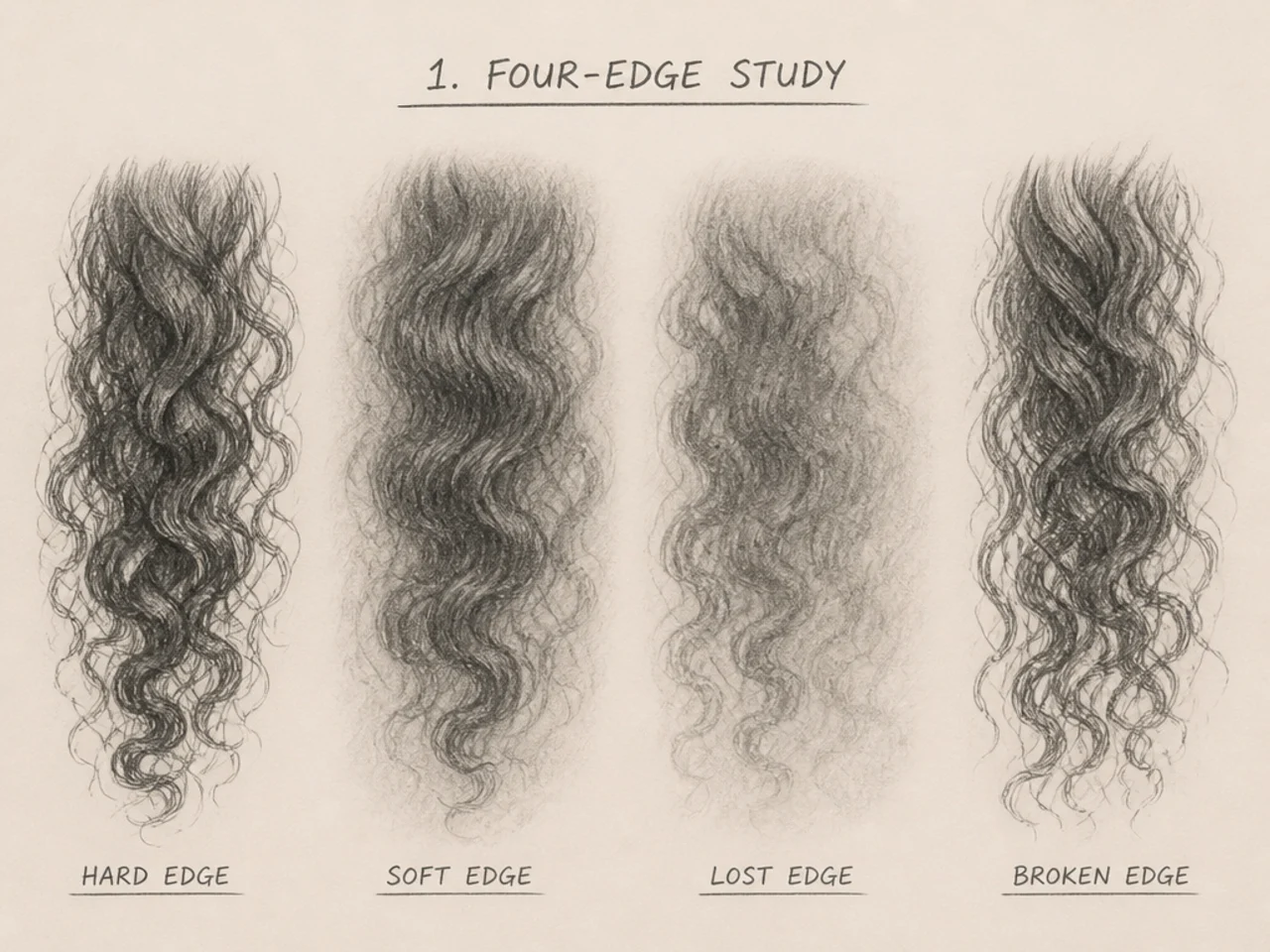
Neither is ever smooth. Both break into fine hairs along the edge, and both are slightly uneven from one side to the other.
The hairline sets the proportions. It decides how much forehead the style has to work against, which is why it goes down before any hair does.
Shading for Volume
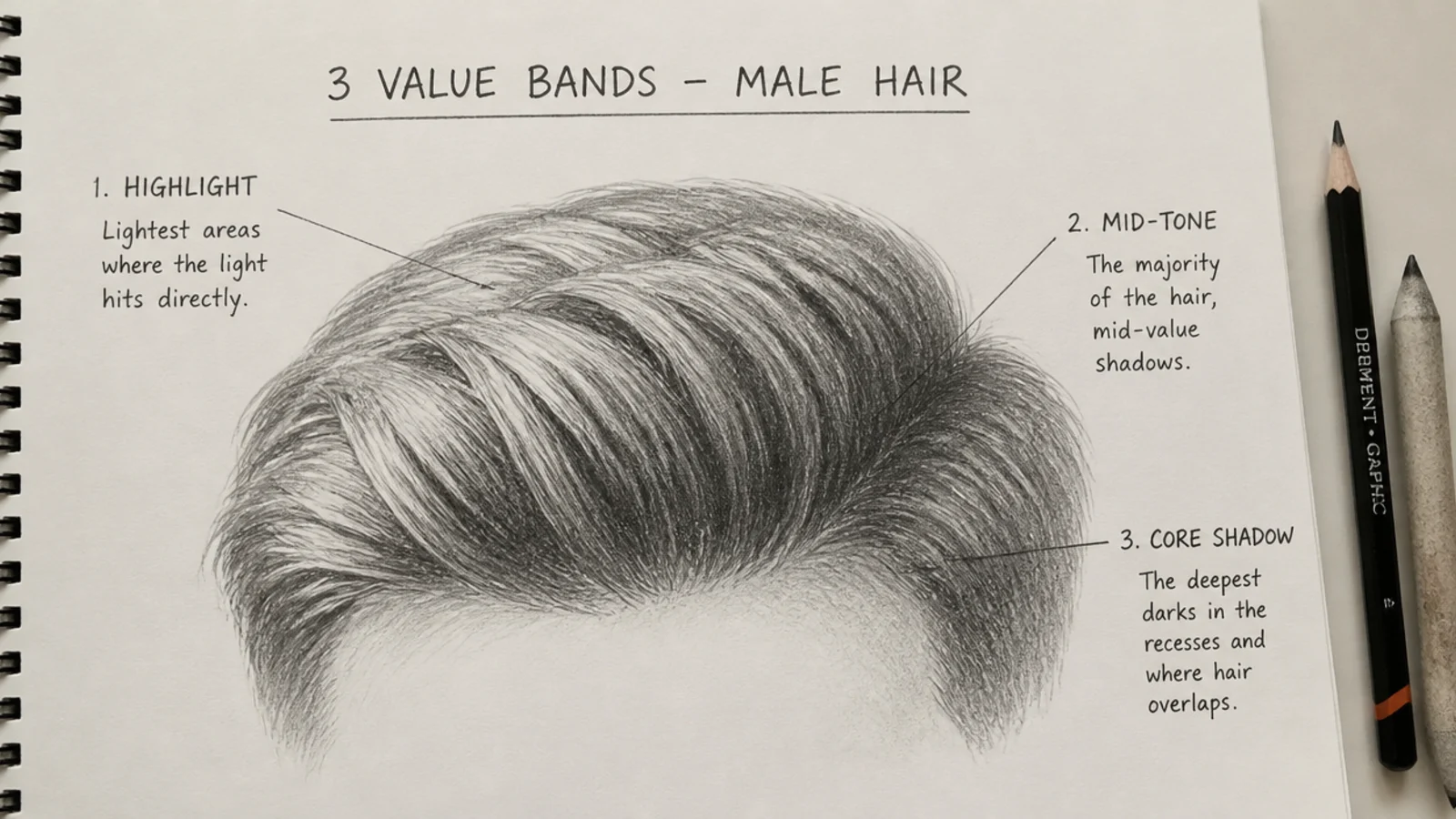
Highlight bands curve across the strands. Around the skull rather than down the length, because the band is describing the roundness of the head underneath.
Cores live in the channels. Between groups, under overlaps and at the roots. On a very short cut those channels shrink to the shadow at the temple and behind the ear.
Fades are gradients, not bands. Run the tone smoothly from dark at the top to bare paper at the neckline, since a visible step reads as a badly blended cut.
Leave the paper where the light is. White paper is the brightest value available and no eraser fully returns it once it has been shaded.
Texture Types
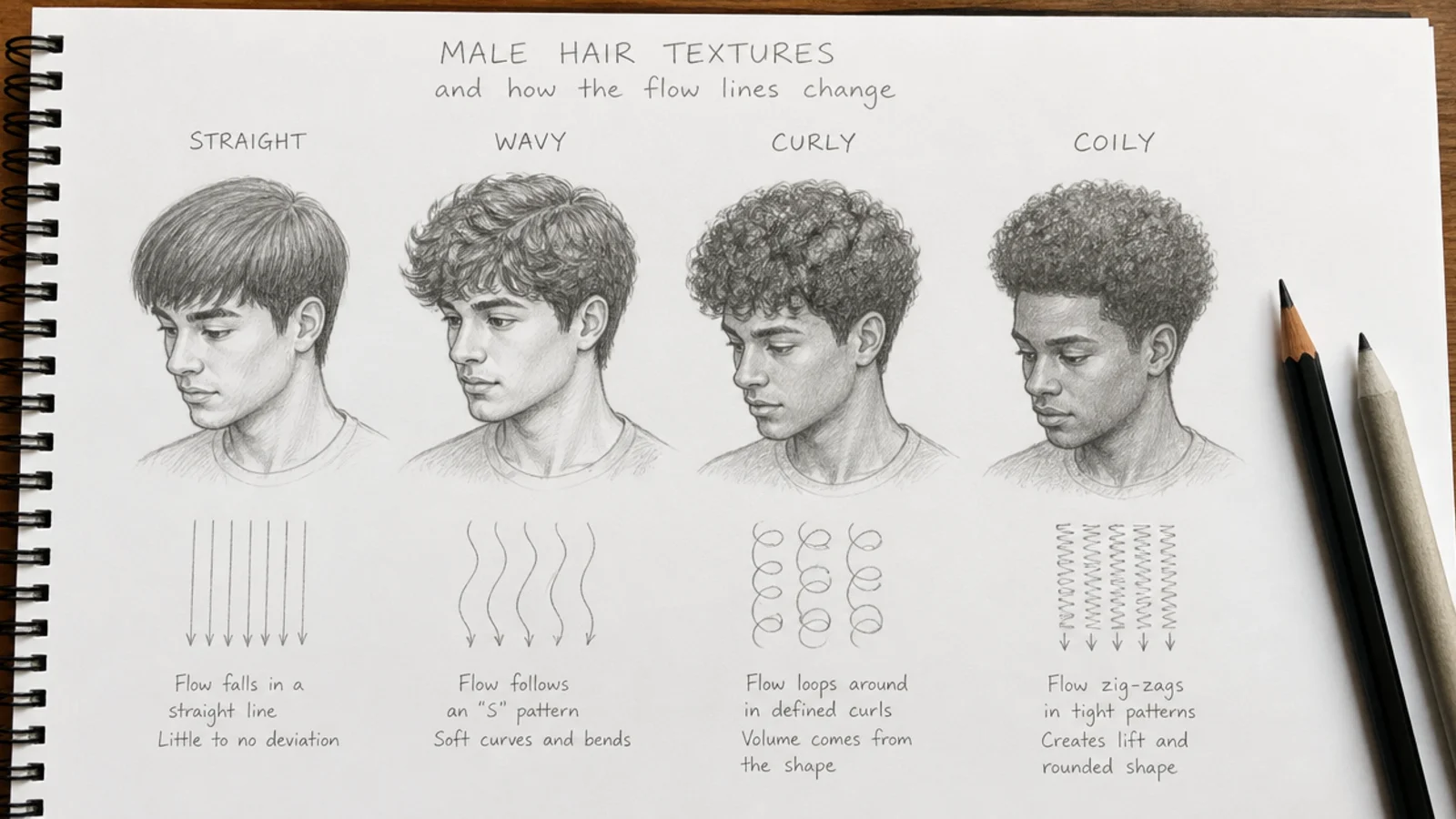
Straight shows every unsteady stroke. One direction from root to end and no bend to hide a wobble behind.
Wavy flips value at every bend. A new face of the strand rotates toward the light at each turn of the S.
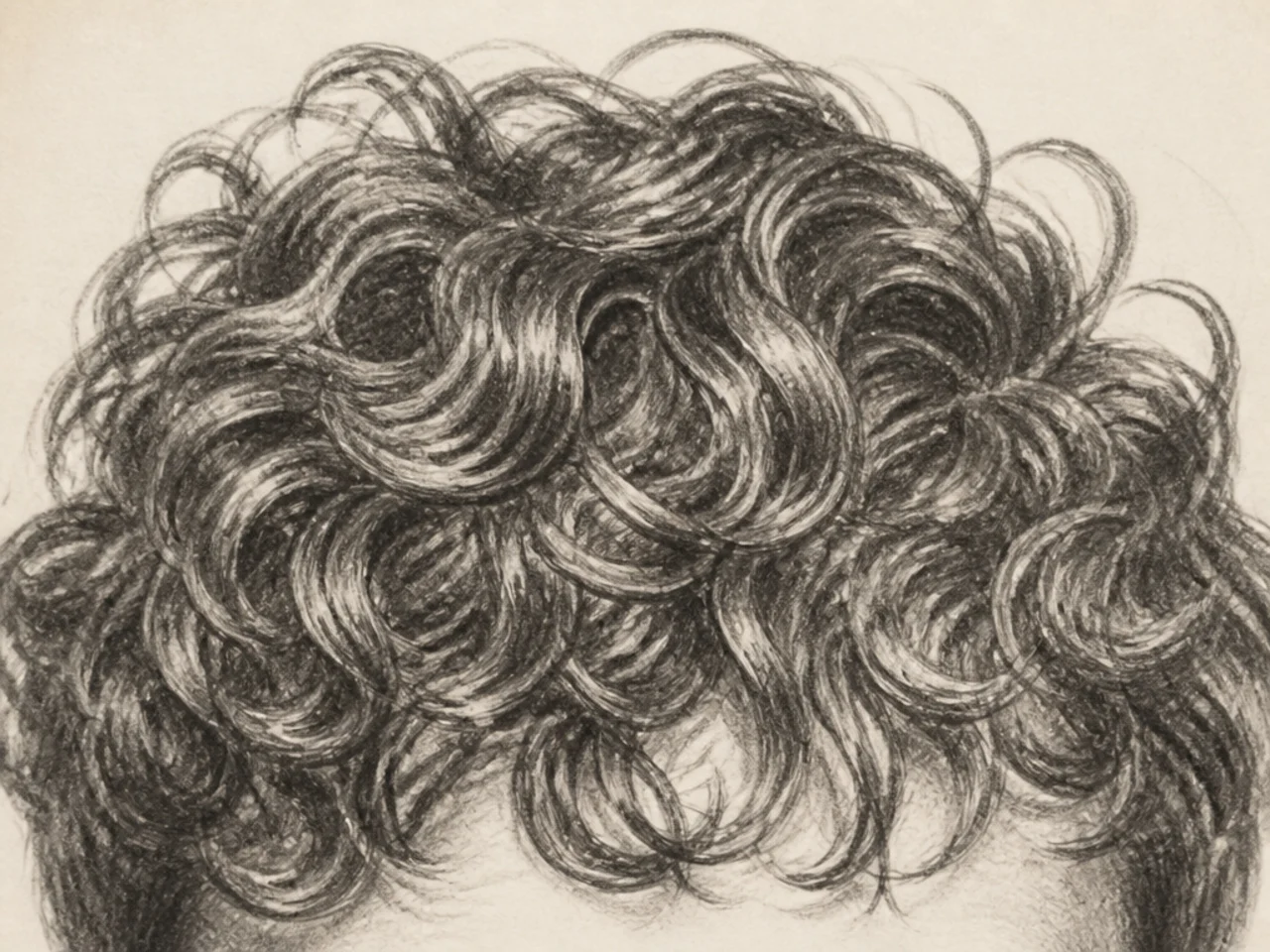
Curly is ribbon work. Fixed diameter, light outer face, dark receding face, and curls clumped into groups rather than spaced evenly.
Coily is mass work. Rounded shading through the interior and fine irregular texture at the silhouette only.
Common Mistakes
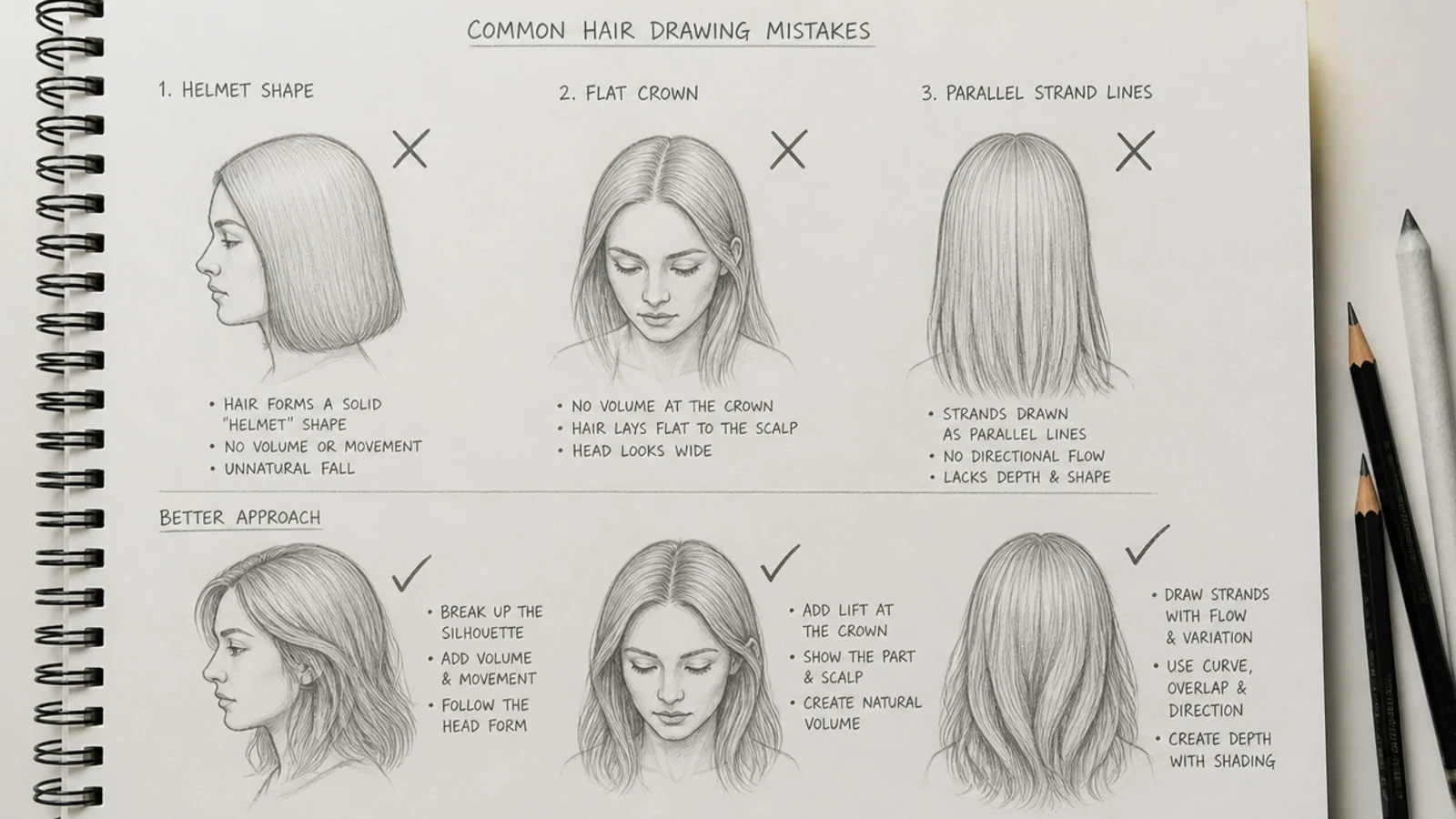
A smooth curved hairline on a male head. Square the temple corners and the portrait reads correctly without another change.
Fades drawn as bands. They are continuous gradients, and a visible step looks exactly like a cutting error.
Hair drawn tight to the skull. Even a buzz stands off the bone, and the outline should show that margin.
Every strand drawn on a short cut. The interior stays flat and the edge does the work.
One angle for every study. Rotate the head, because back and three quarter views are where the mistakes hide.
The 20 Paired Hair Studies
1. The Hairline Overlay
Draw both hairlines on one head to see the difference plainly — the male version higher with squared corners at the temples, the female version lower and rounded. Every other decision in a male hair drawing follows from that one line, because it sets how much forehead the style has to work against.
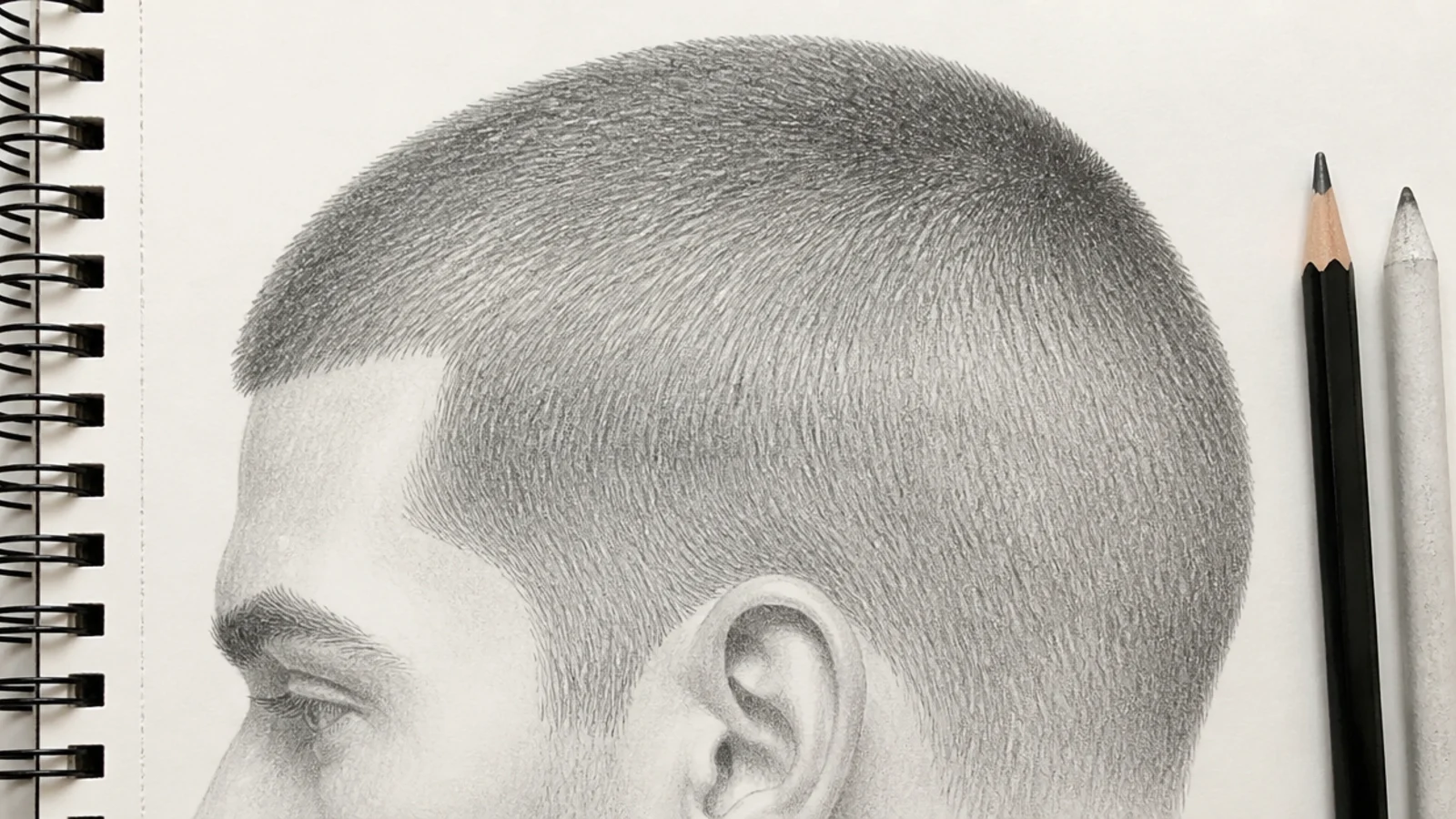
2. Buzz Cut
A buzz is entirely a value exercise, since there is no length available to draw. Shade the skull as one continuous curved surface with a highlight where the crown turns, then darken slightly at the temples where hair density is highest and the tone genuinely deepens.
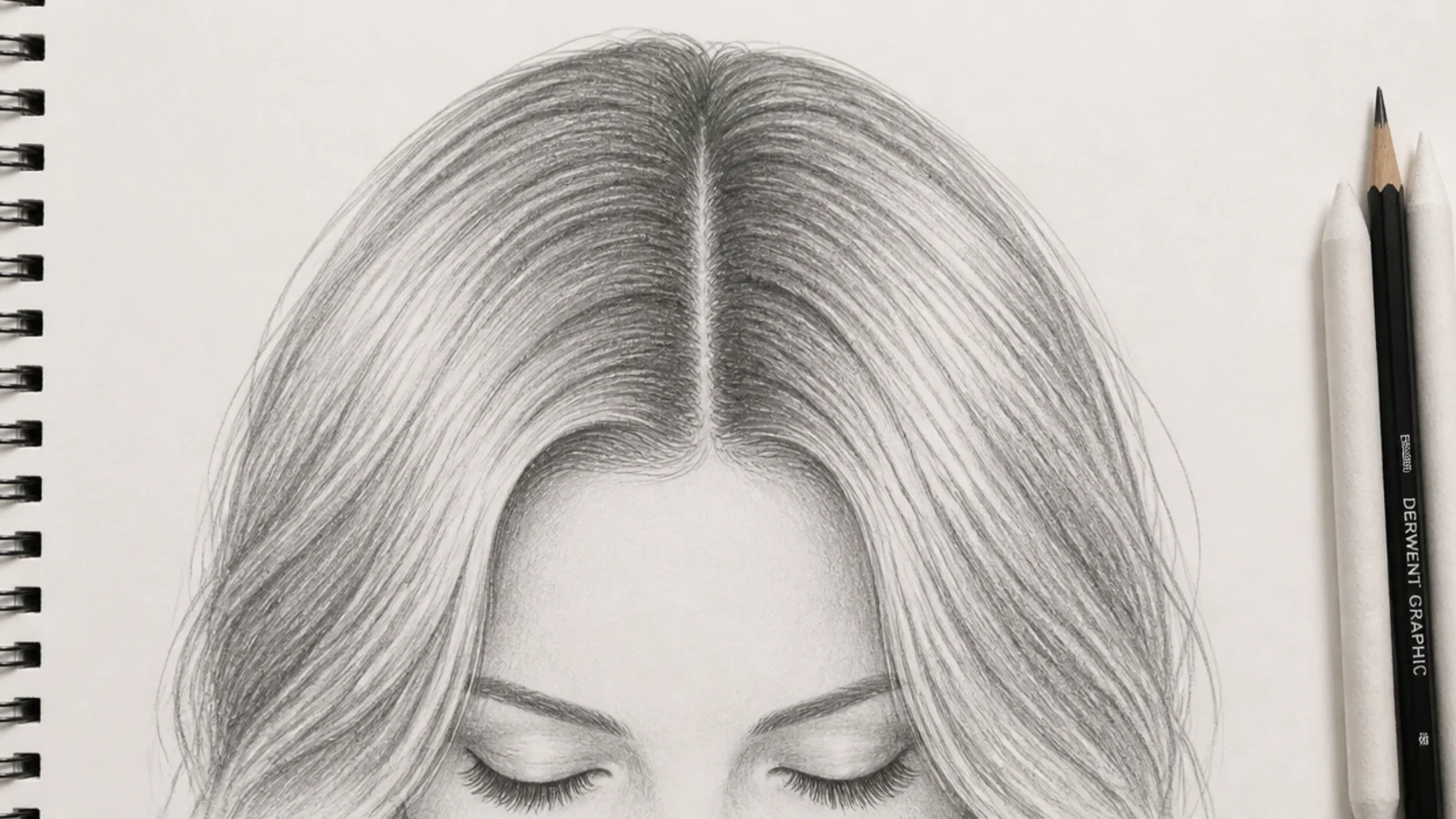
3. Female Centre Part
A centre part exposes a strip of scalp along its whole length and splits the mass in two, so it needs a genuine gap rather than a drawn line. Darken either side of the parting where the hair lifts away from the scalp, and the split reads as a channel instead of a scratch.
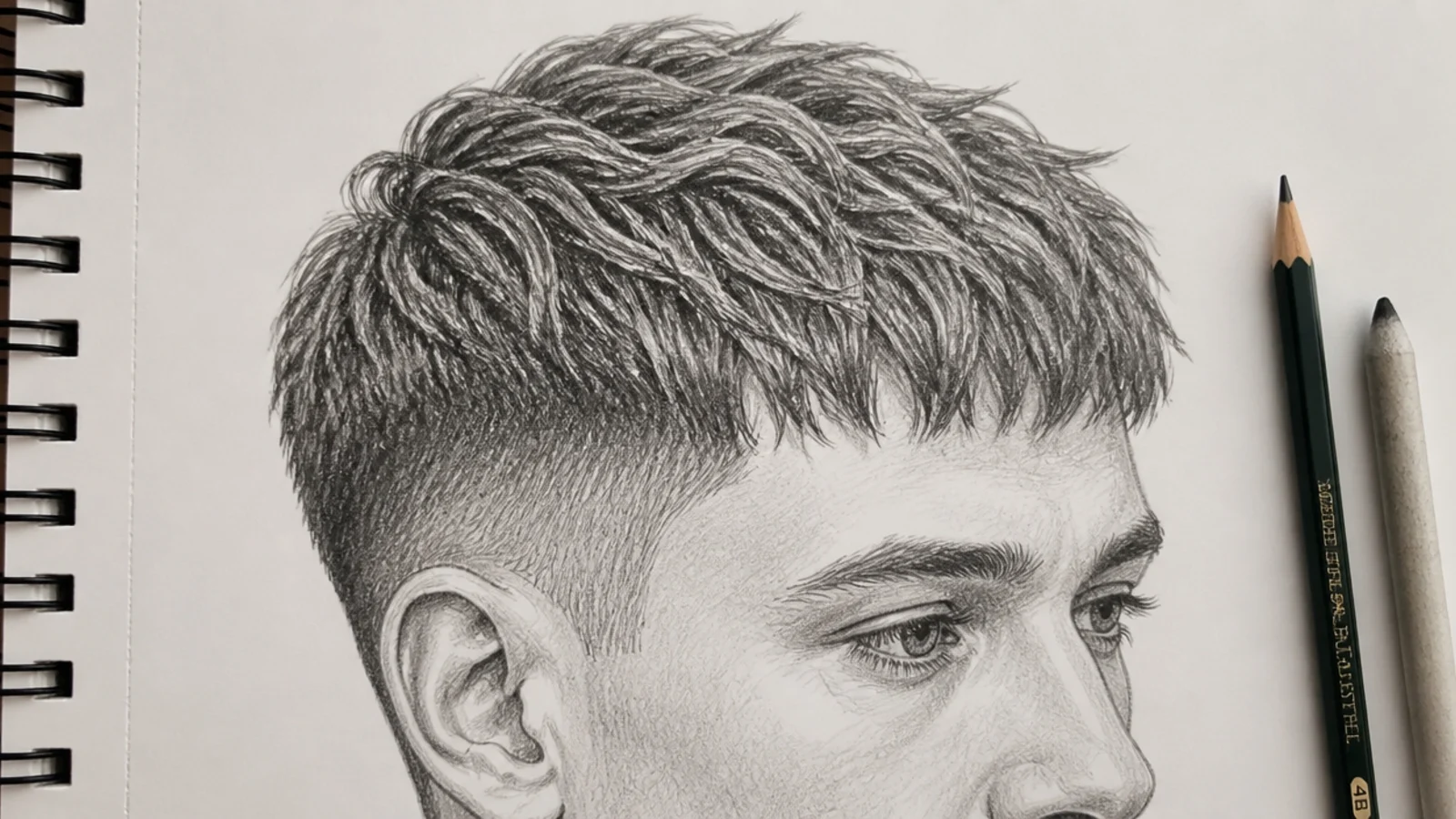
4. Textured Crop
Texture on a short cut lives at the edge, so break the fringe line into irregular clumps two or three strand widths across. Keep the interior tone flat and let the shadow between clumps do the separating, because a busy interior beneath a smooth outline reads as noise rather than as texture.
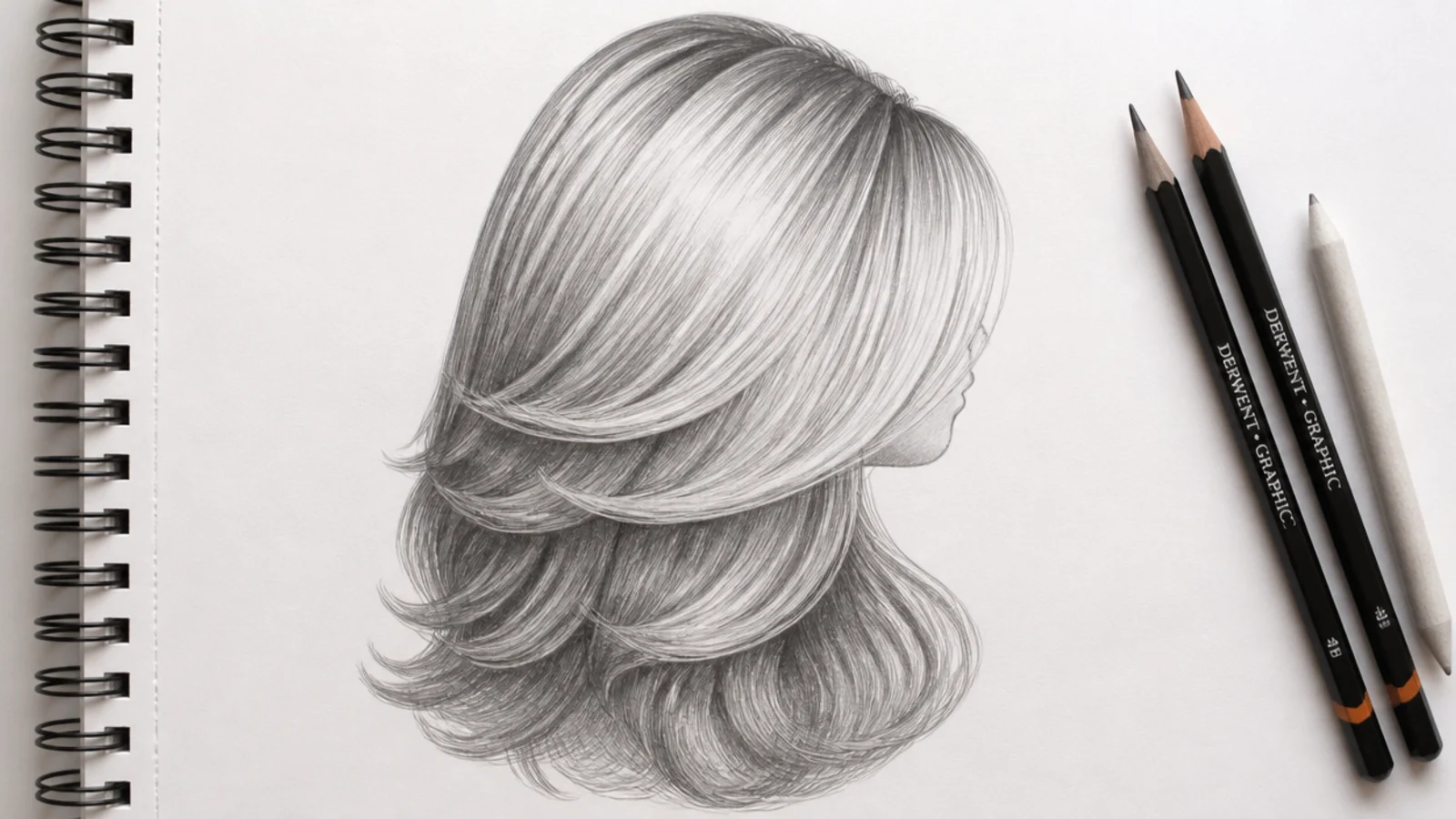
5. Female Blowout
A blowout lifts the hair off the skull at the roots and turns the ends under, so the silhouette bulges wide at the top and curves inward at the bottom. Exaggerate the gap at the roots, since the entire style is a demonstration of volume the head itself does not have.
6. Skin Fade
A fade runs to bare skin at the bottom while a taper leaves length behind, and in graphite that difference is pure value. Take the tone from darkest at the top down to untouched paper at the neckline and keep the gradient unbroken, because any step in it reads as a poorly blended cut.
7. Sleek Ponytail
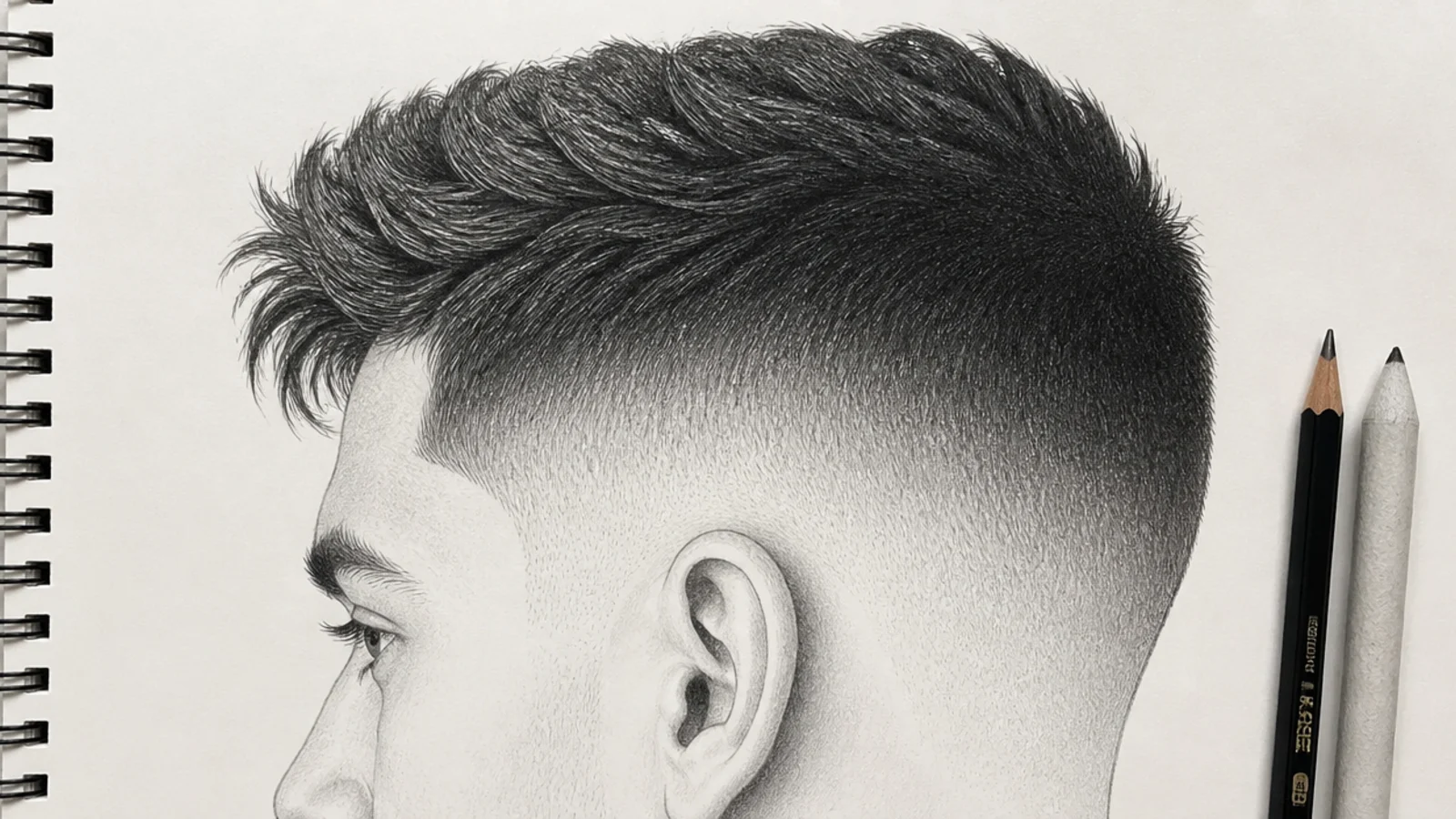
Sleek hair reflects light in a hard narrow strip rather than a soft band, because the strands are compressed into one continuous surface. Keep the strokes long and unbroken from hairline to tie, place a thin bright highlight where the skull turns, and darken sharply at the elastic.
8. Slicked Back
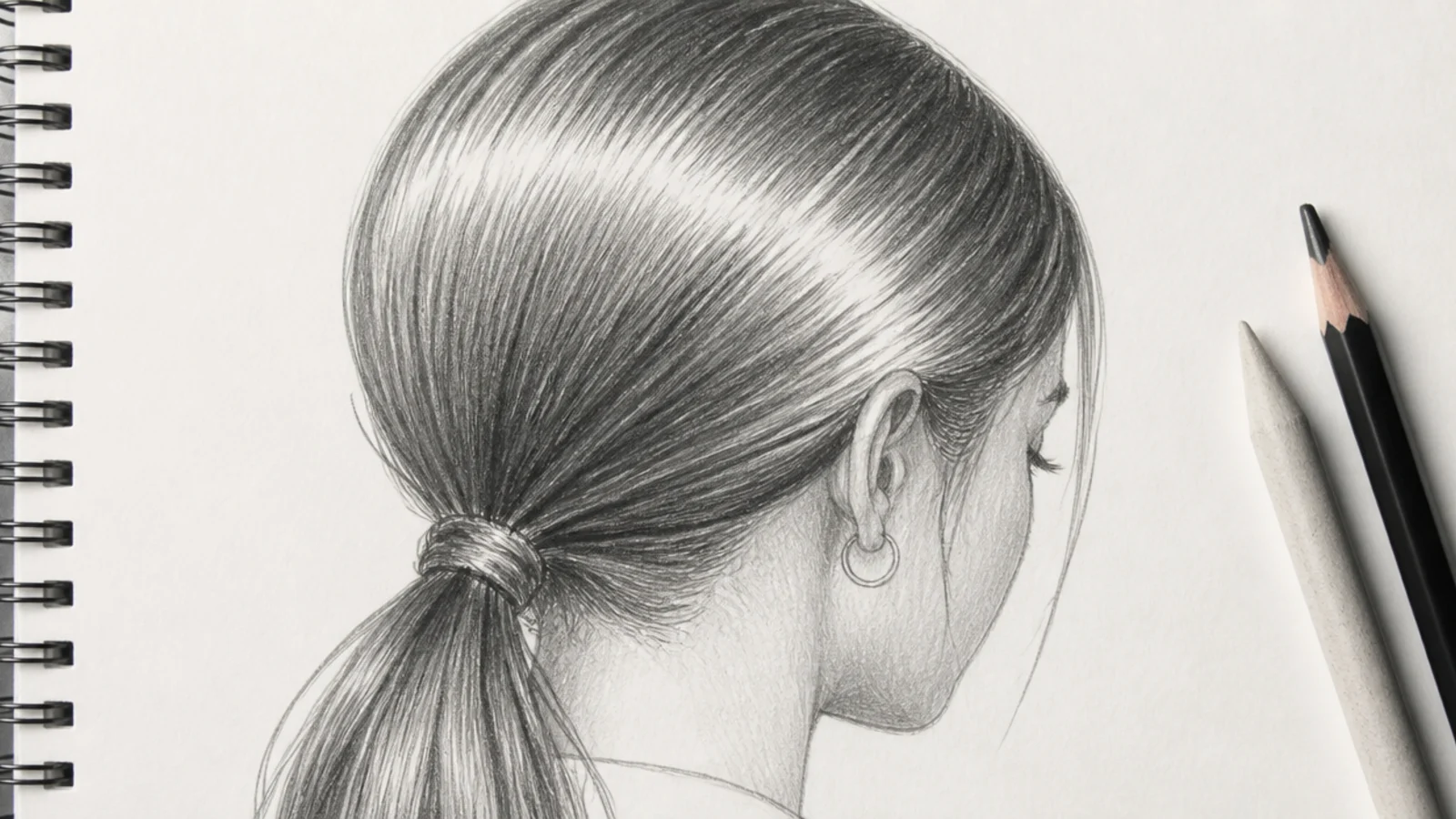
Slicked hair follows the skull exactly, which makes this a drawing of the cranium with comb marks on it. Run every stroke back from the hairline in a single direction and keep the highlight on the top plane where the skull sits closest to the light, not down the sides.
9. Long Straight
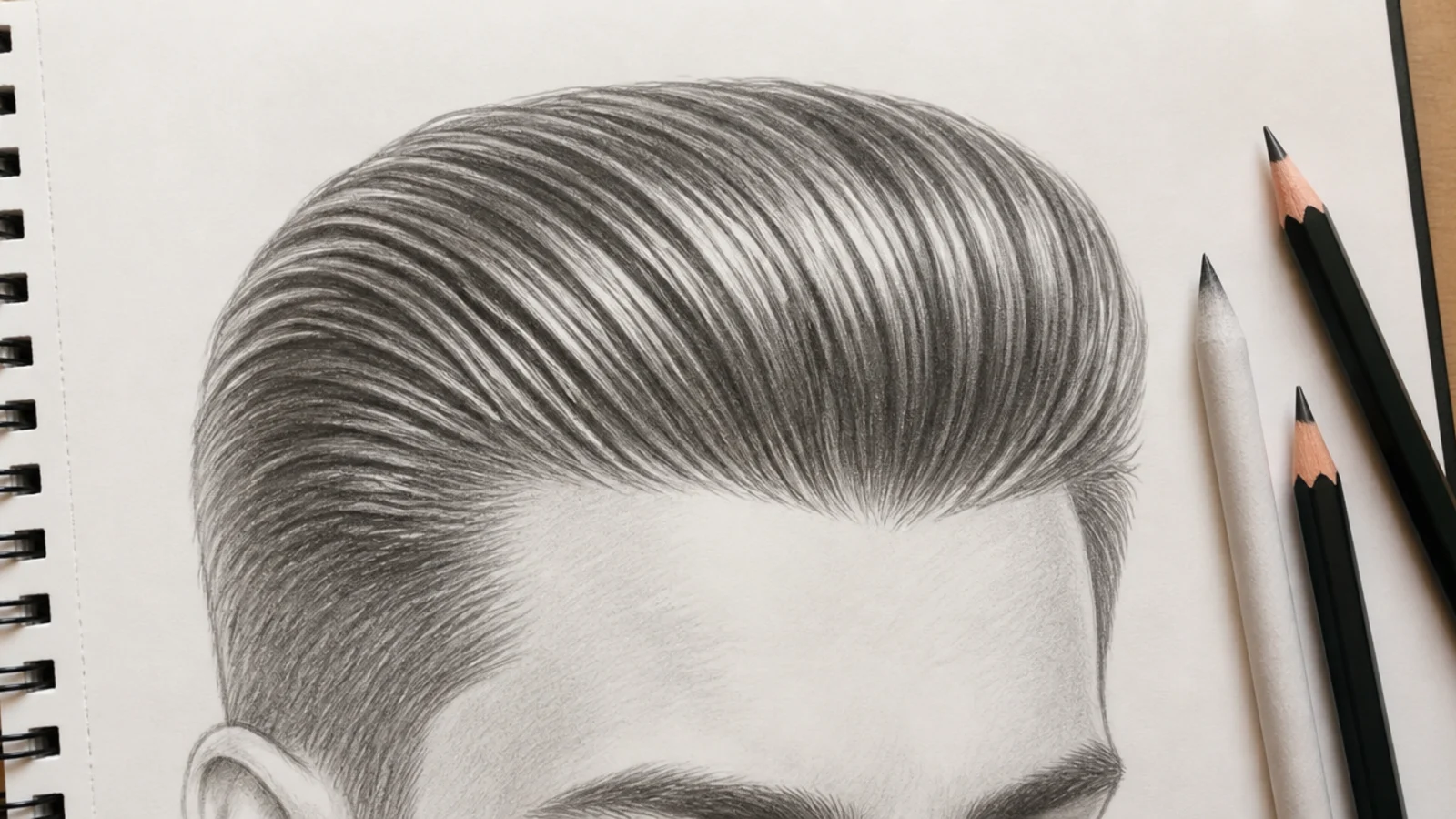
Long straight hair holds one direction over a long distance, and the danger is the strokes drifting apart into a fan. Keep the flow lines converging slightly toward the ends and narrow the mass as it descends, because fewer strands reach full length than reach the shoulder.
10. Male Curtain Bangs
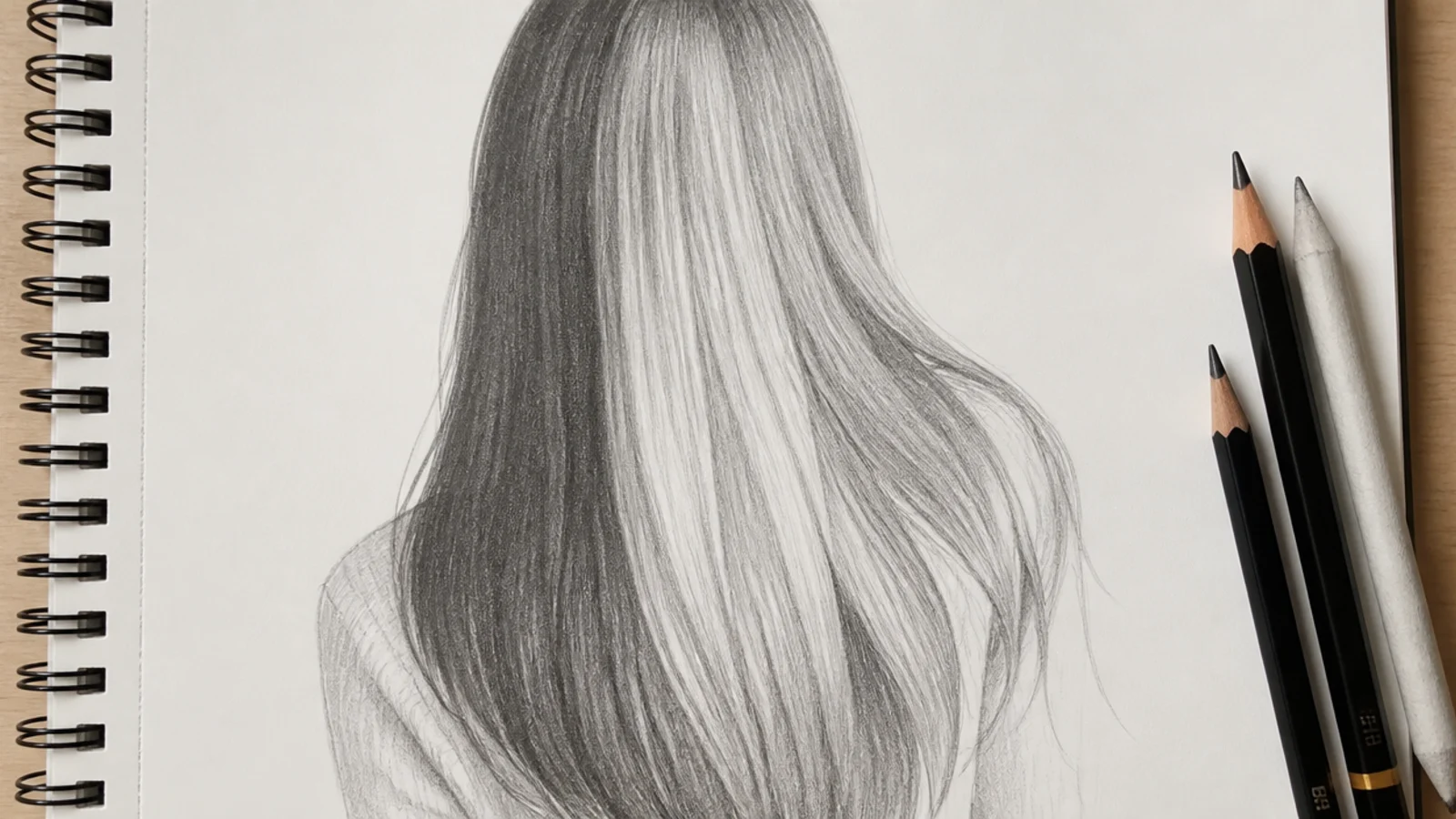
On a higher hairline the curtains start further back, so more forehead shows between them and the split point sits deeper into the head. Keep the outer edges longer than the inner ones and let the ends reach the cheekbone, which makes the shape frame the face rather than cover it.
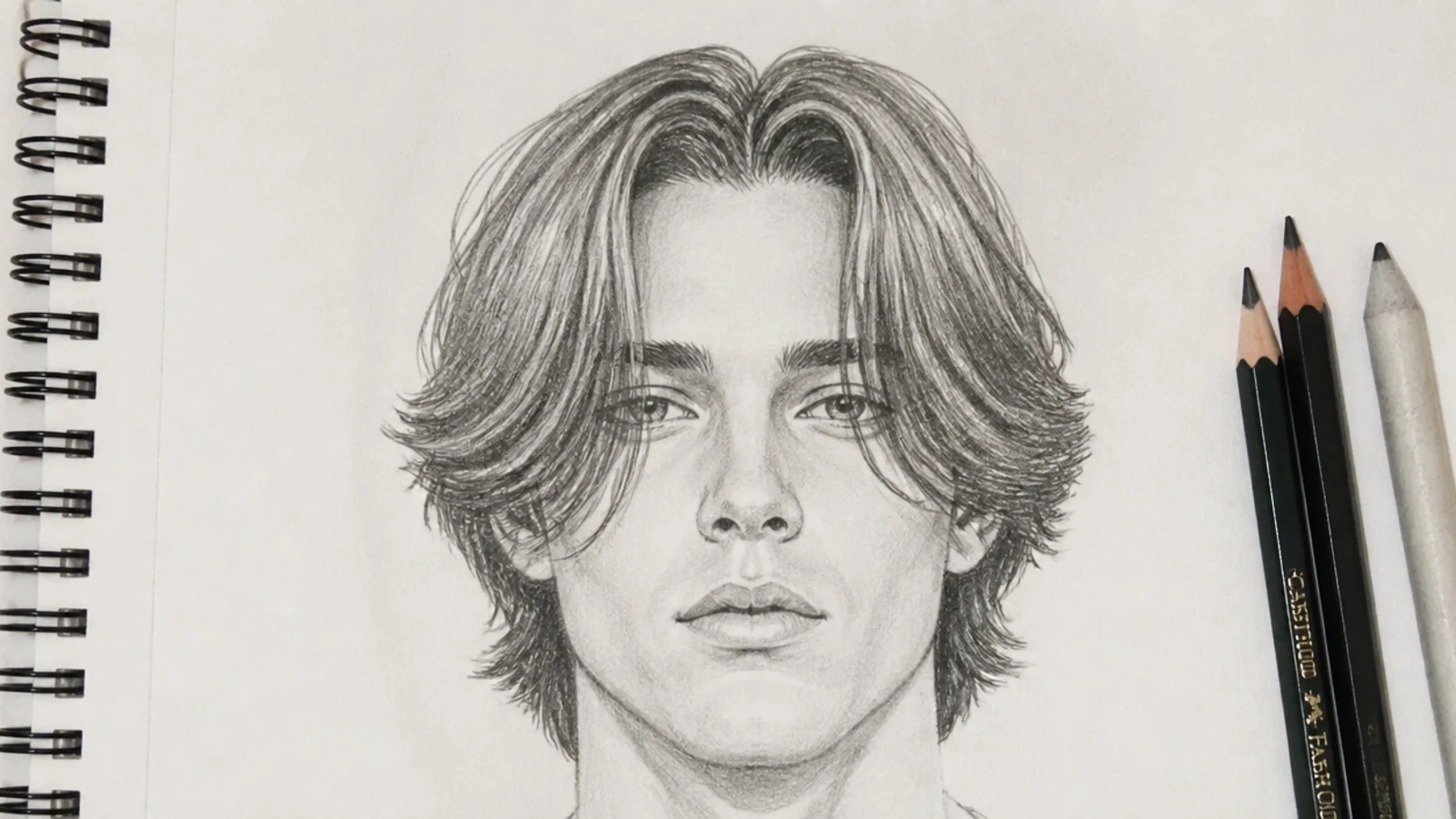
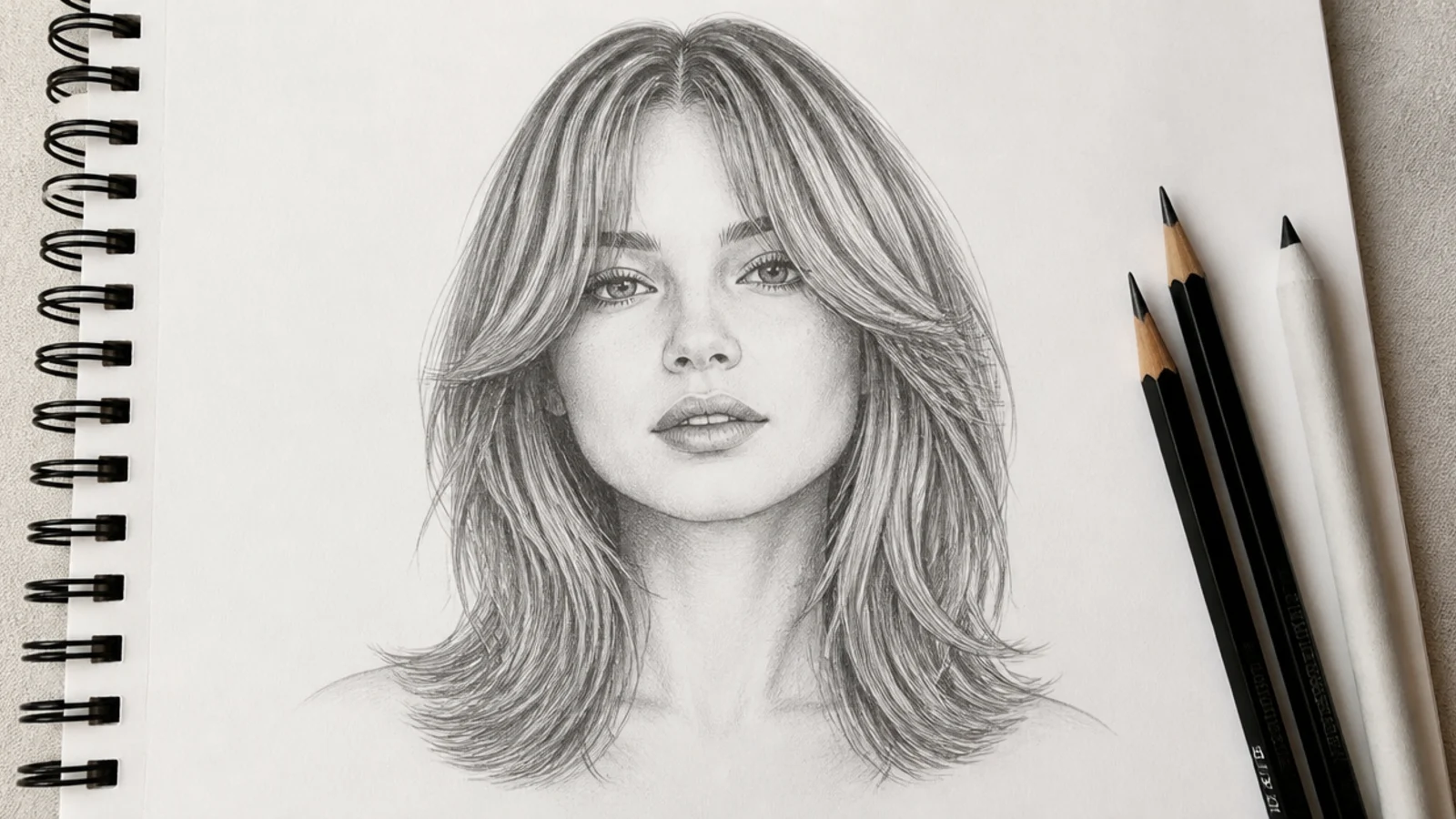
11. Female Curtain Bangs
A lower, rounder hairline puts the split closer to the brow, so the curtains cover more forehead and the inner edges sit shorter. Draw the two halves at matching lengths but different shapes, and leave a little skin visible between them or the fringe becomes a solid block.
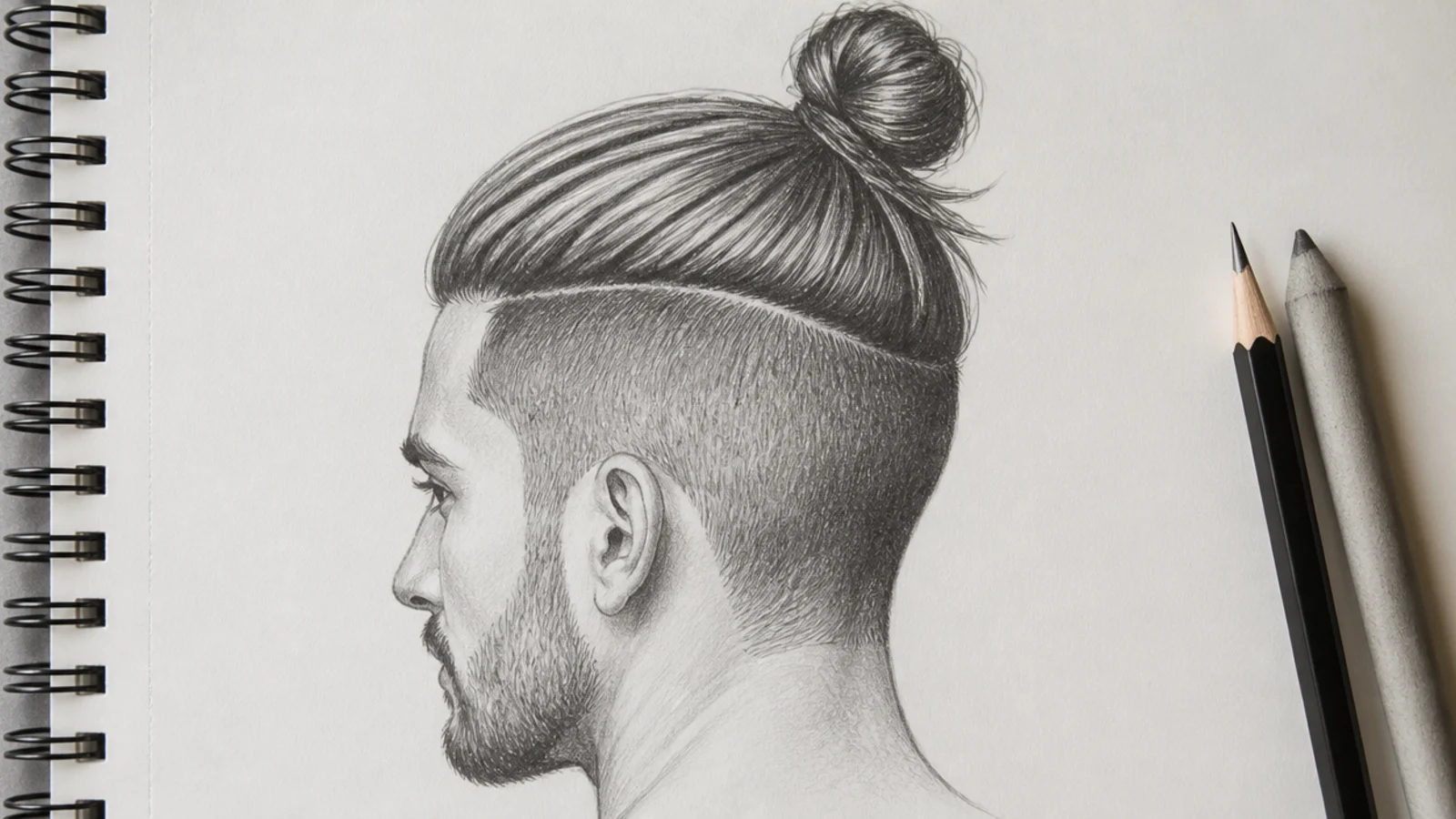
12. Male Top Knot
The knot sits above short or shaved back and sides, which makes the contrast in the silhouette the whole style. Keep the sides tight to the skull with a hard change of density at the disconnect line, and draw the knot itself as a sphere with strands wrapping around it.
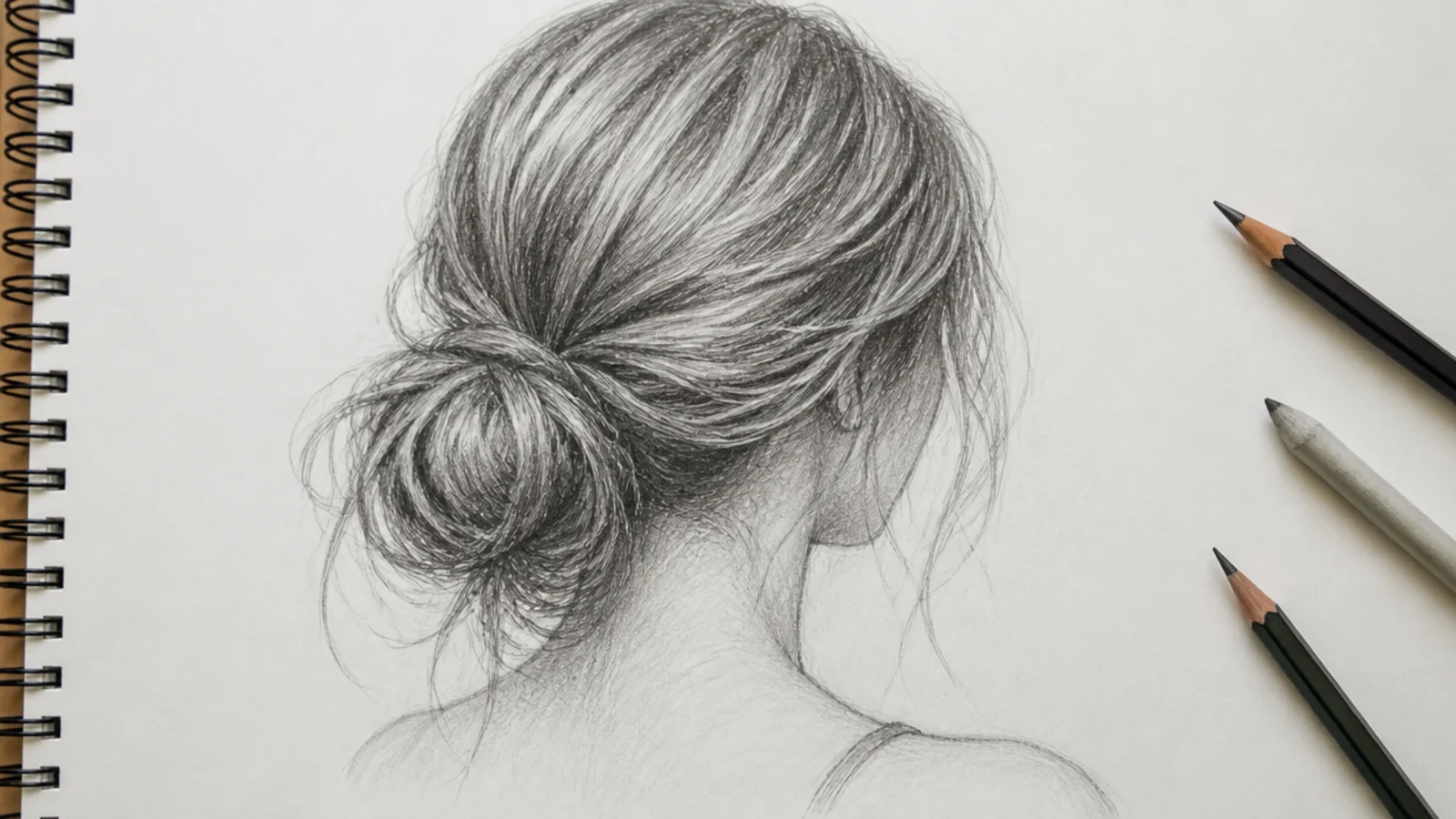
13. Female Messy Bun
A messy bun is a sphere with deliberate escapees, and those escapees have to originate from the same crown as the gathered hair. Darken the gap where the bun meets the head, since that single shadow separates the knot from the skull more effectively than any amount of loose strand detail.
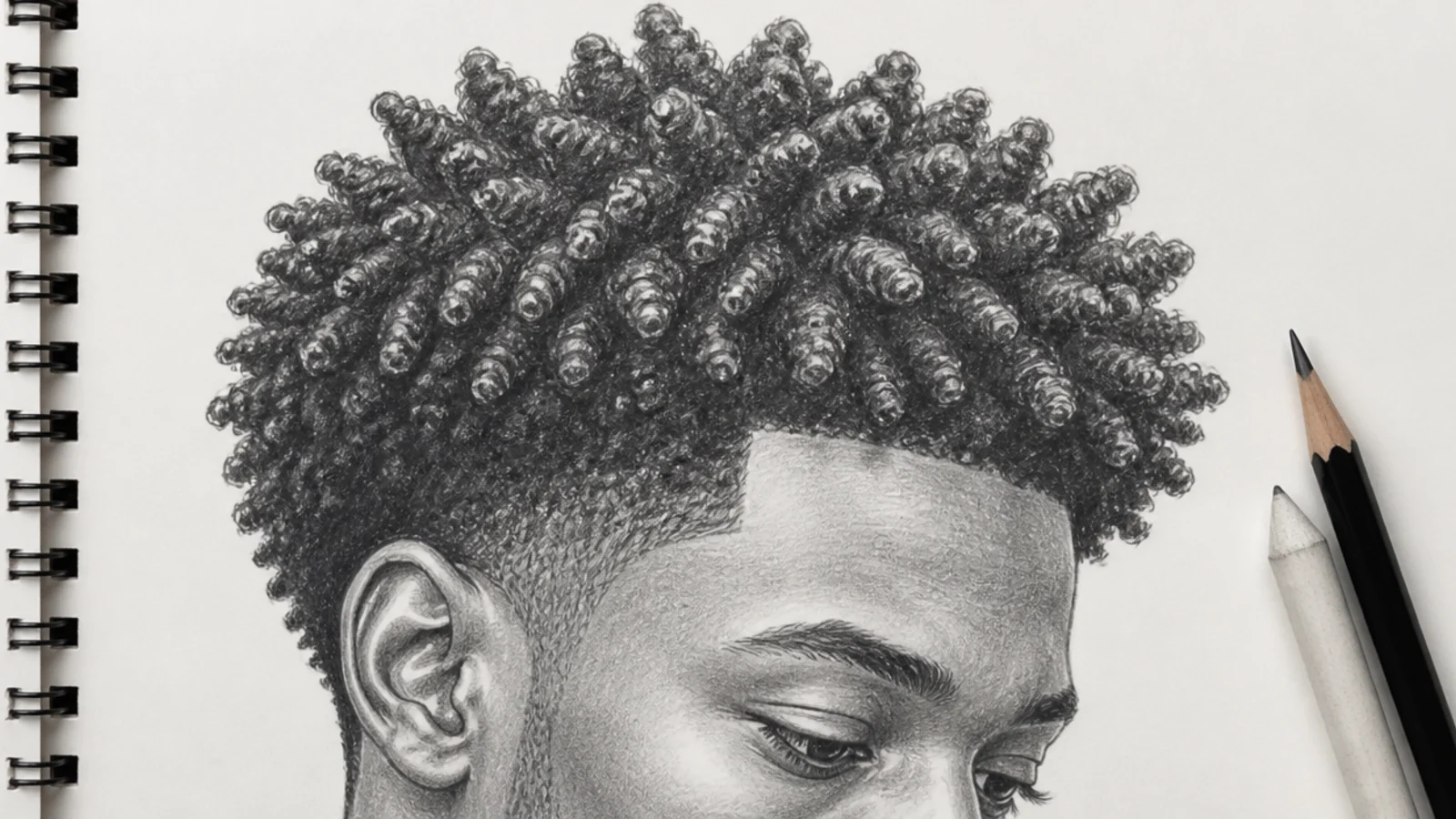
14. Male 4C Coils
Coils shaped into a defined outline read as a haircut rather than as texture, so the silhouette has to be crisp where it was lined up and soft everywhere else. Shade the mass as a rounded form and reserve the fine zigzag for the free edge only.
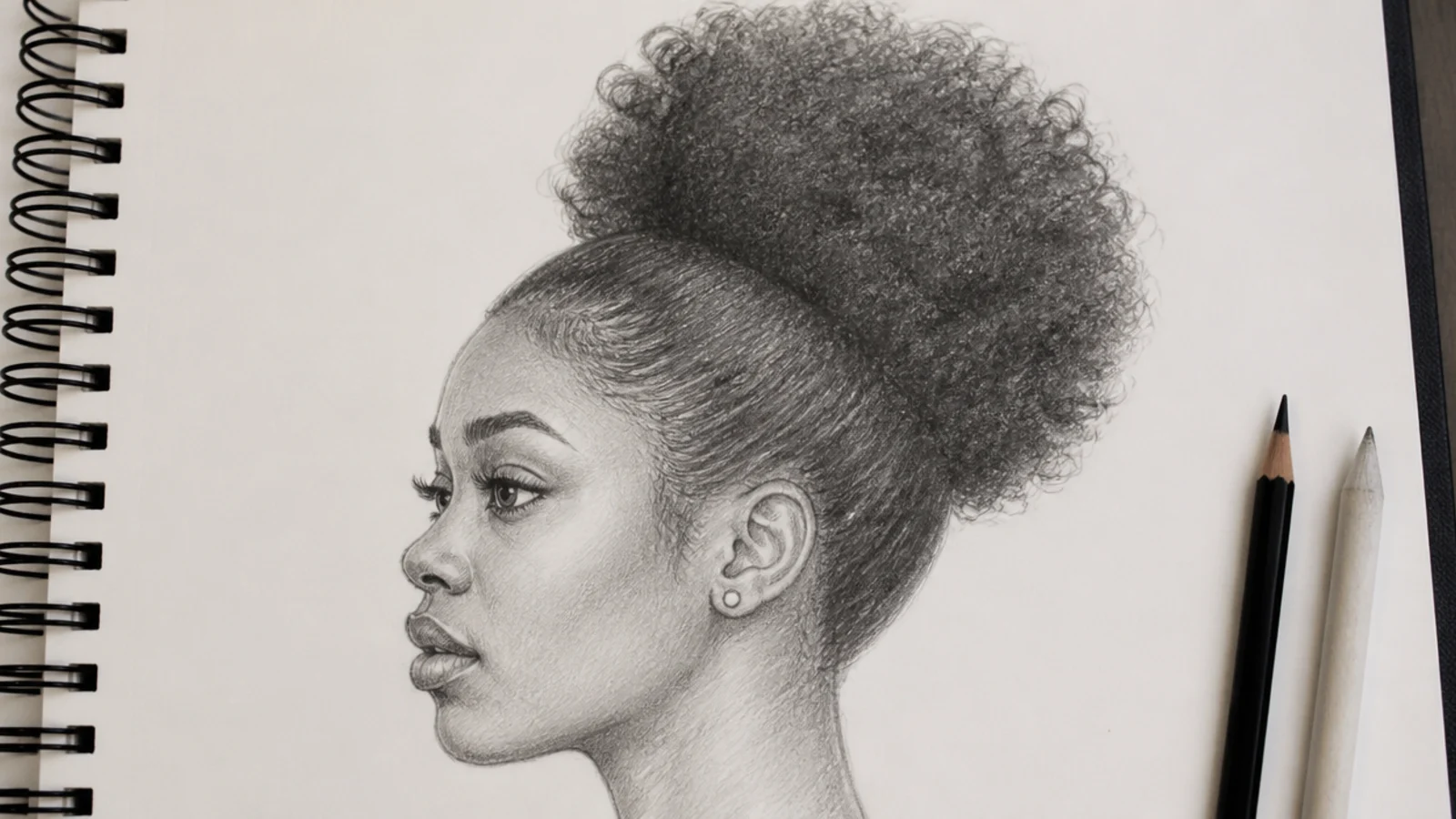
15. Female Afro Puff
A puff is a sphere gathered at its base, so it widens above the tie while the scalp shows in a smooth curve below it. Keep the outline soft and broken all the way round, then darken tightly at the gather, because that compression is what proves the volume sitting above it.
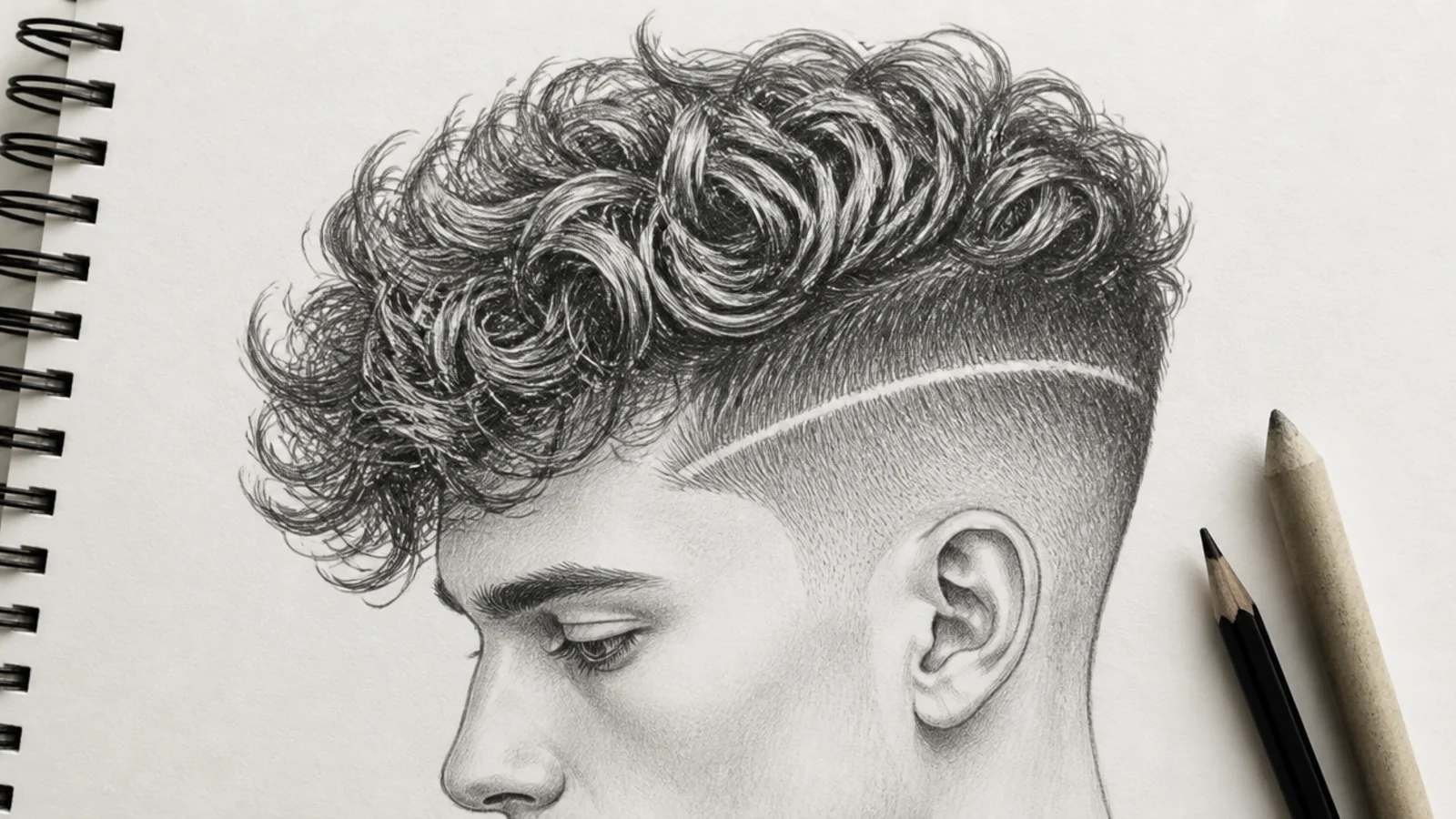
16. Curly Undercut
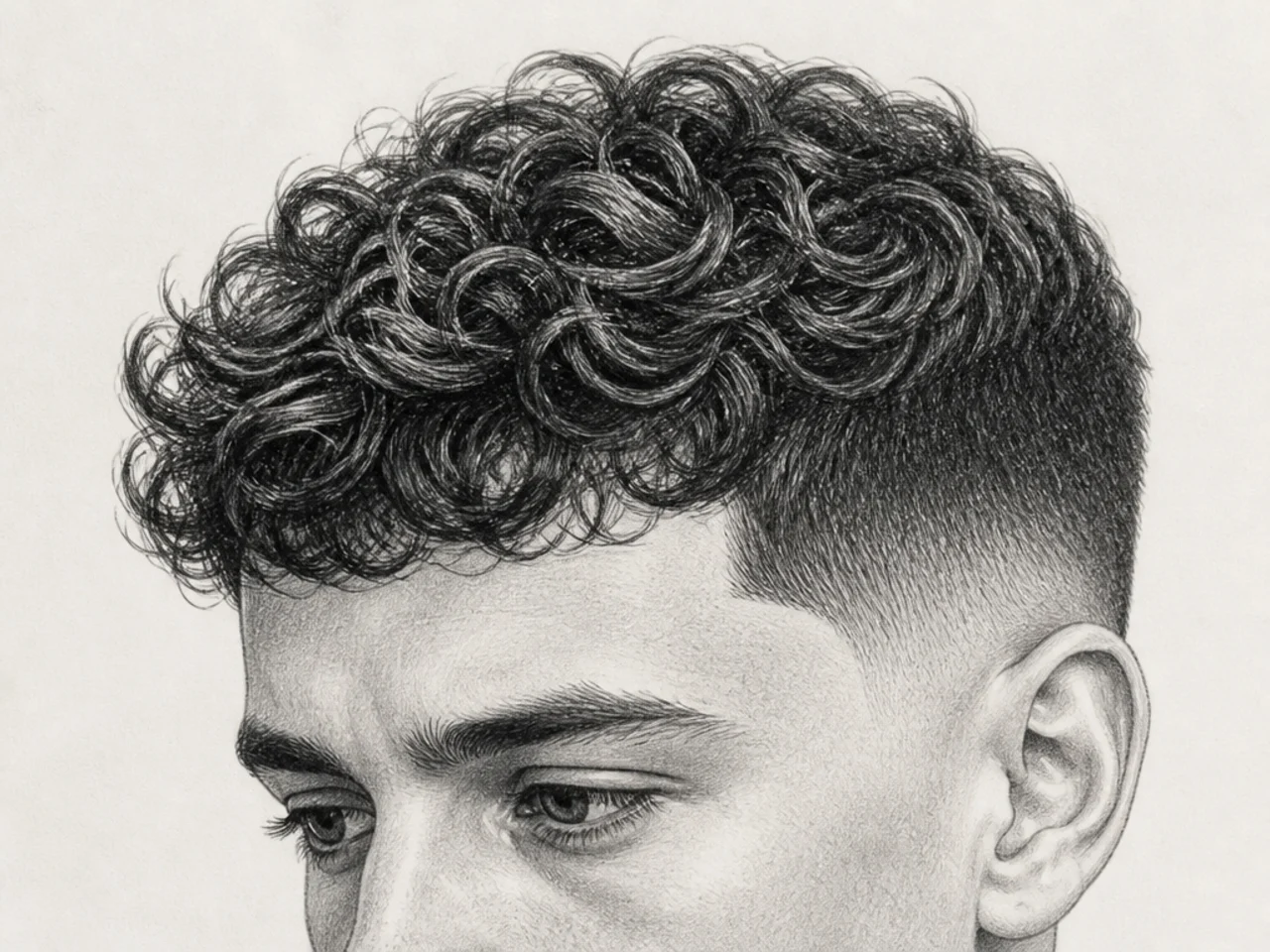
The undercut sets a hard boundary between shaved and curly, and that boundary is a value edge rather than a drawn line. Keep the shaved area as flat even tone and let the curls break over it irregularly, so the disconnect reads as hair overhanging skin.
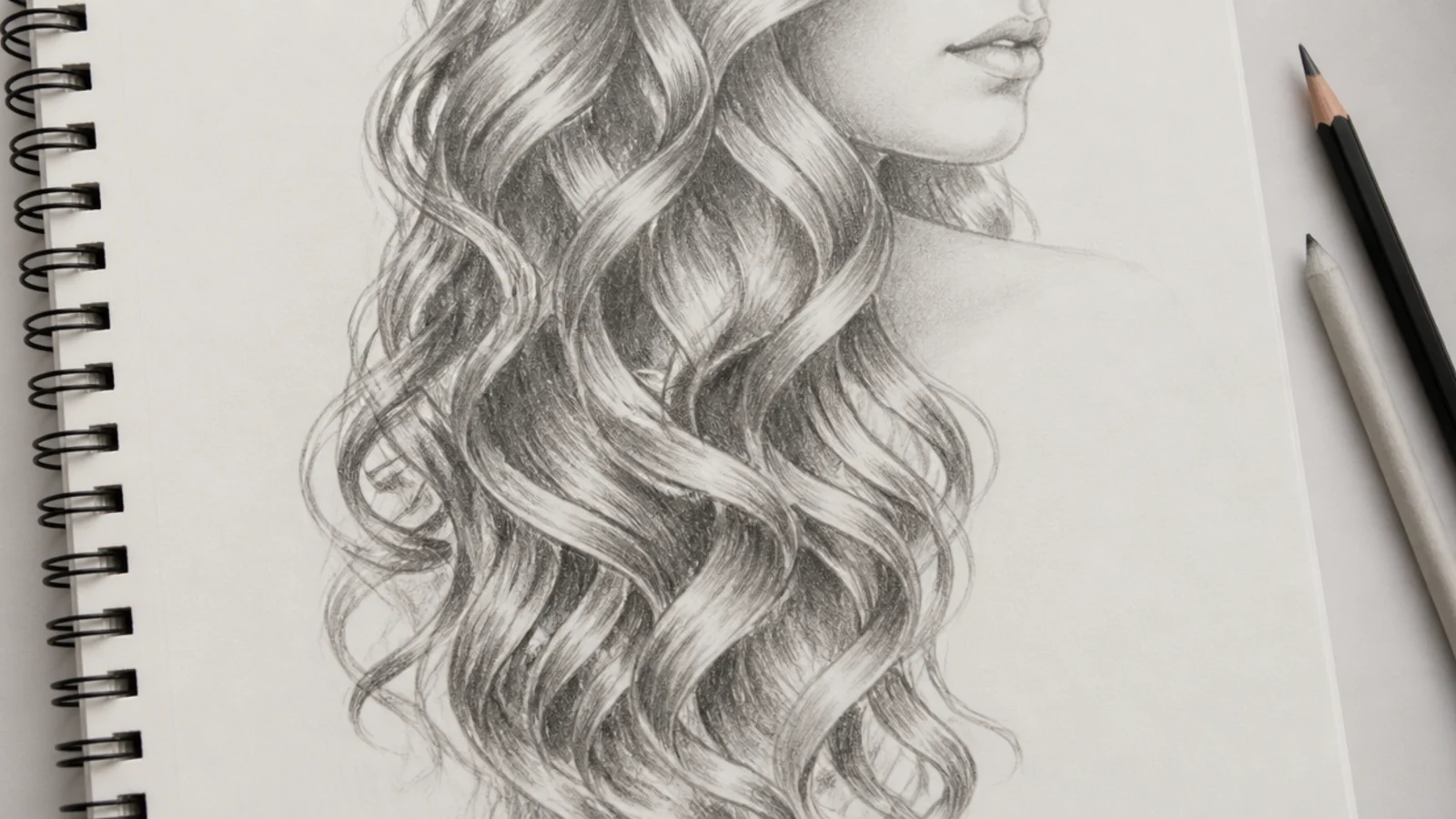
17. Spiral Curls
Spirals are ribbons wound around invisible cylinders, and the diameter has to stay consistent or the head reads as several textures at once. Give the receding face of each curl the darkest value and let curls clump in threes and fours, since real curls group rather than sit evenly spaced.
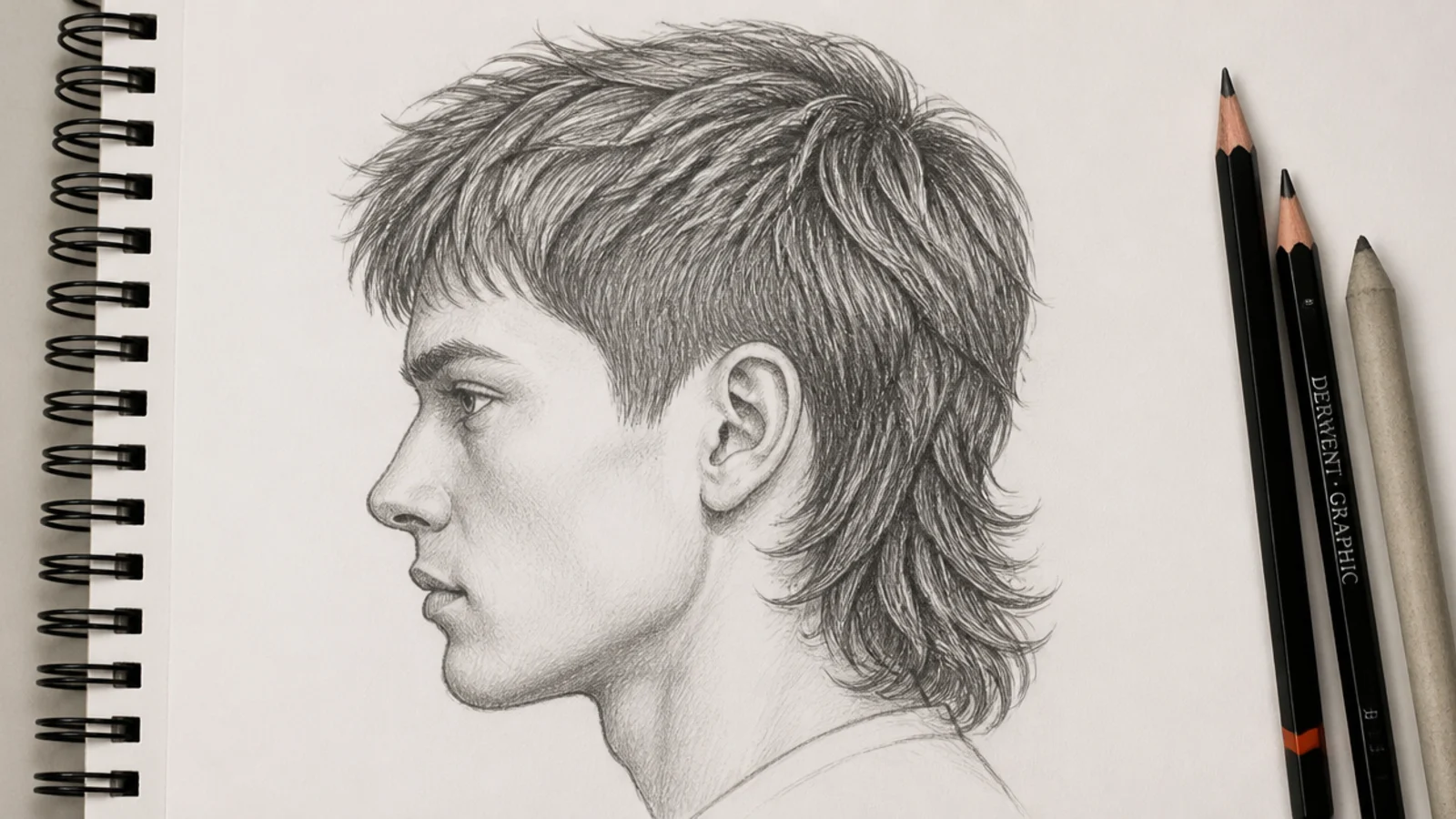
18. Male Mullet
A mullet is short at the front and sides with weight left at the back, so the profile silhouette is the only reliable way to draw it. Keep the transition gradual rather than stepped and let the back length break the line of the neck, because that overhang is the entire shape.
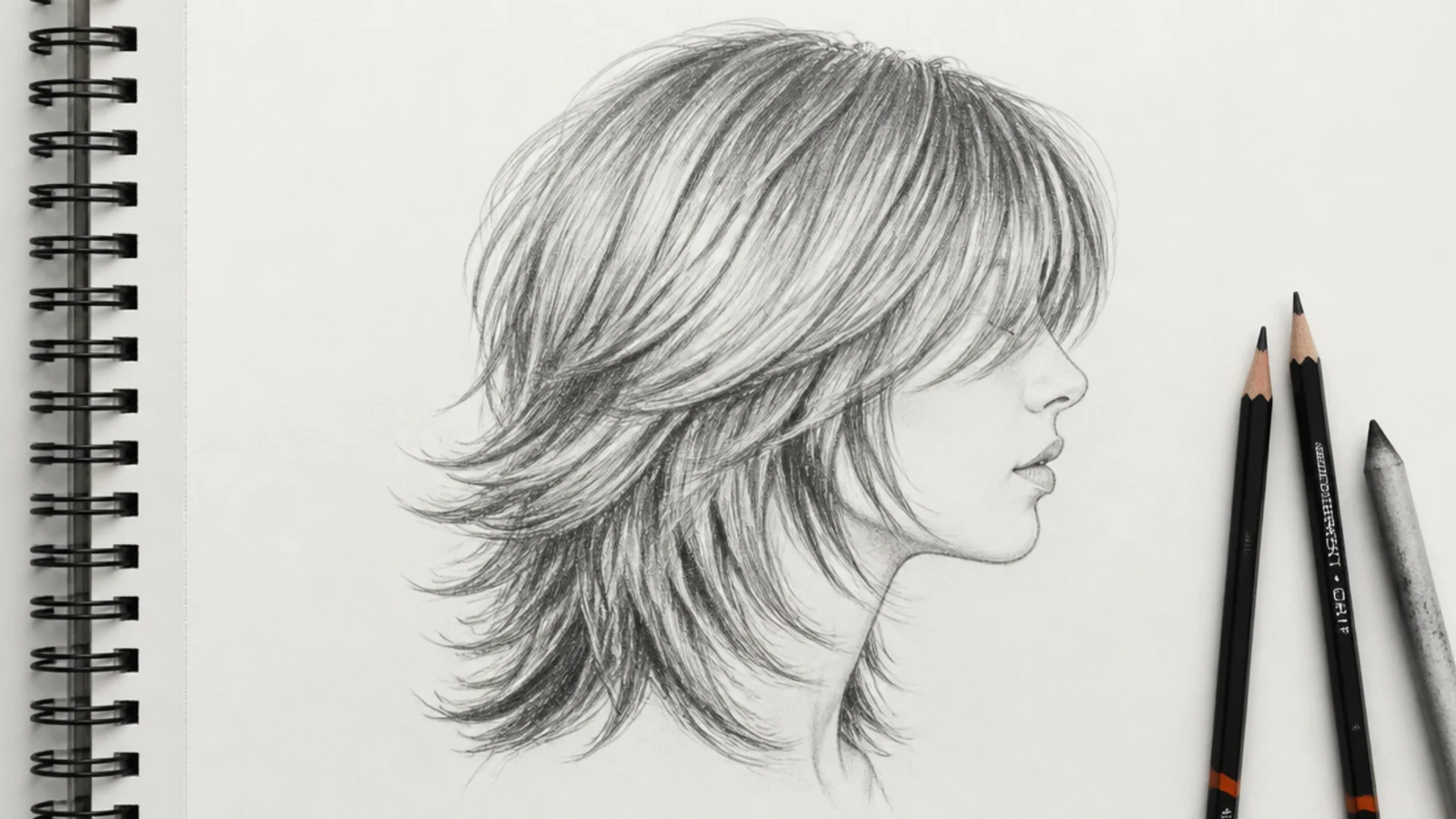
19. Layered Shag
A shag stacks short layers at the crown over longer ones beneath, producing stepped ends at several depths instead of one perimeter. Draw the ends of each layer at a different height and let them separate visibly, since a shag with a single hemline is just long hair with a fringe.
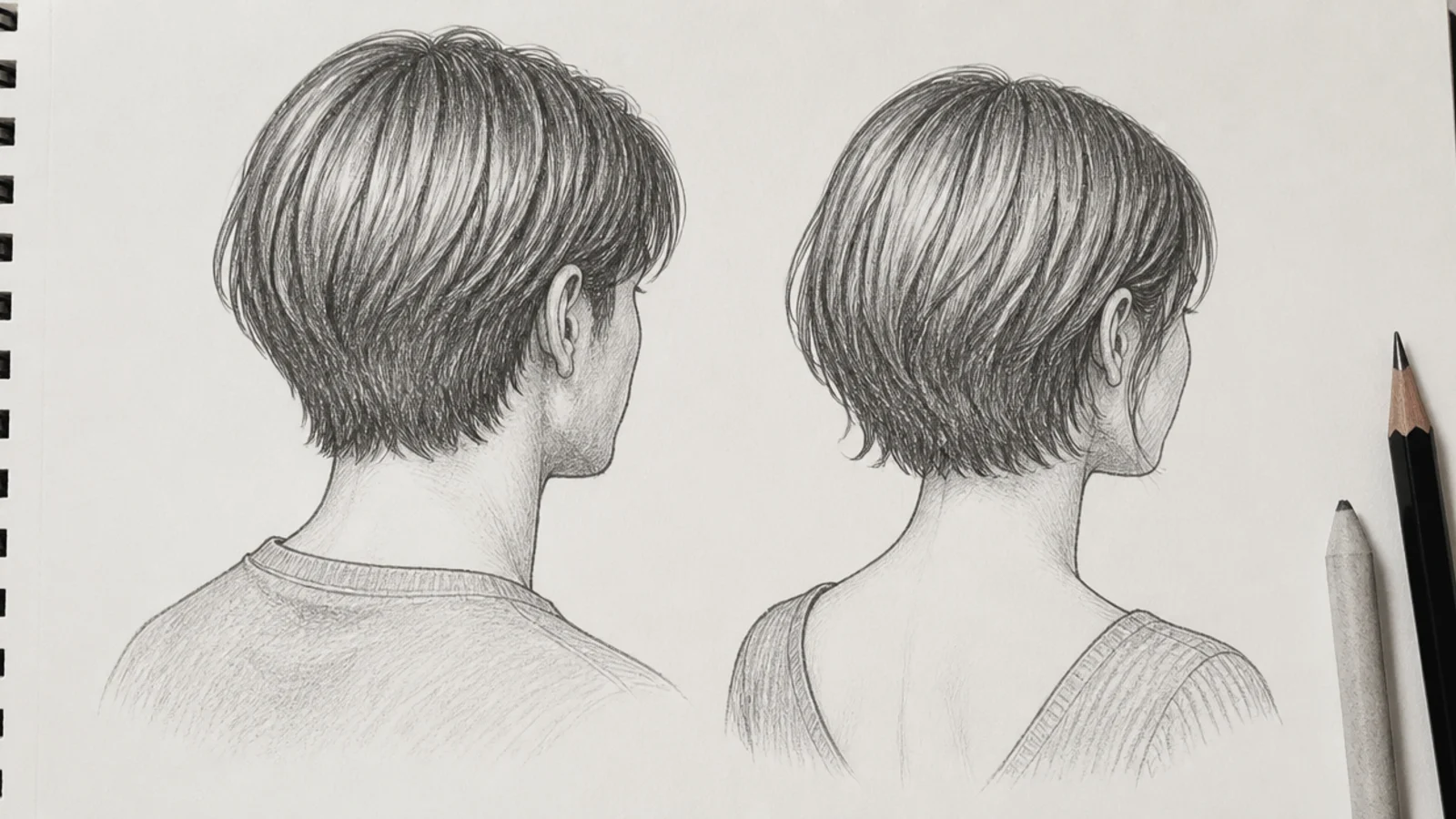
20. Back View Bob
From behind there is no face to carry the proportions, so the drawing rests on the neckline, the width of the mass and the level of the cut. Keep the bottom edge straight and slightly heavier at the centre, and show the nape narrowing beneath it.
Final Thoughts
Draw the hairline overlay before anything else on this list. Once the squared temple corner is in your hand, male heads stop drifting toward female ones and the rest of the studies become a question of texture rather than of gender — a fade is a gradient, a bun is a sphere, a curl is a ribbon, and none of those change depending on whose head they sit on.
Pair the studies deliberately. Draw the male crop and the female blowout on the same page and the difference in how far the silhouette stands off the skull becomes obvious in a way no amount of reading about volume will make it. For curls specifically see the curly drawing version and the how to curly version. More in Hair Drawing.