7 Steps to Style a Quiff That Lasts All Day
Quiff styling all day is a routine — mousse prep, round-brush lift, matte clay, cool shot. Seven barbershop steps that hold from damp to bedtime.
In this article · 18
- What You'll Need
- The 7-Step All-Day Quiff Routine
- 1. Wash the Night Before, Not the Morning Of
- 2. Rough-Dry to Damp — Not Wet, Not Bone-Dry
- 3. Prime the Roots with a Volumizing Mousse
- 4. Round-Brush the Front Up and Back
- 5. Lock the Shape with a Cool Shot
- 6. Press Matte Clay From Ends Toward Roots
- 7. Seal with a Light Hairspray Halo
- Adjusting the Routine for Your Hair Type
- Troubleshooting Quiff Styling All Day Fails
- FAQ
- Which quiff variation lasts longest without a mid-day refresh?
- Can I skip the round brush and still get lift?
- Is a matte clay always better than a pomade for an all-day quiff?
- Do I need to see a barber to get the base cut right for an all-day quiff?
- How often should I wash if I am styling a quiff daily?
- Can I use hair gel instead of clay for an all-day quiff?
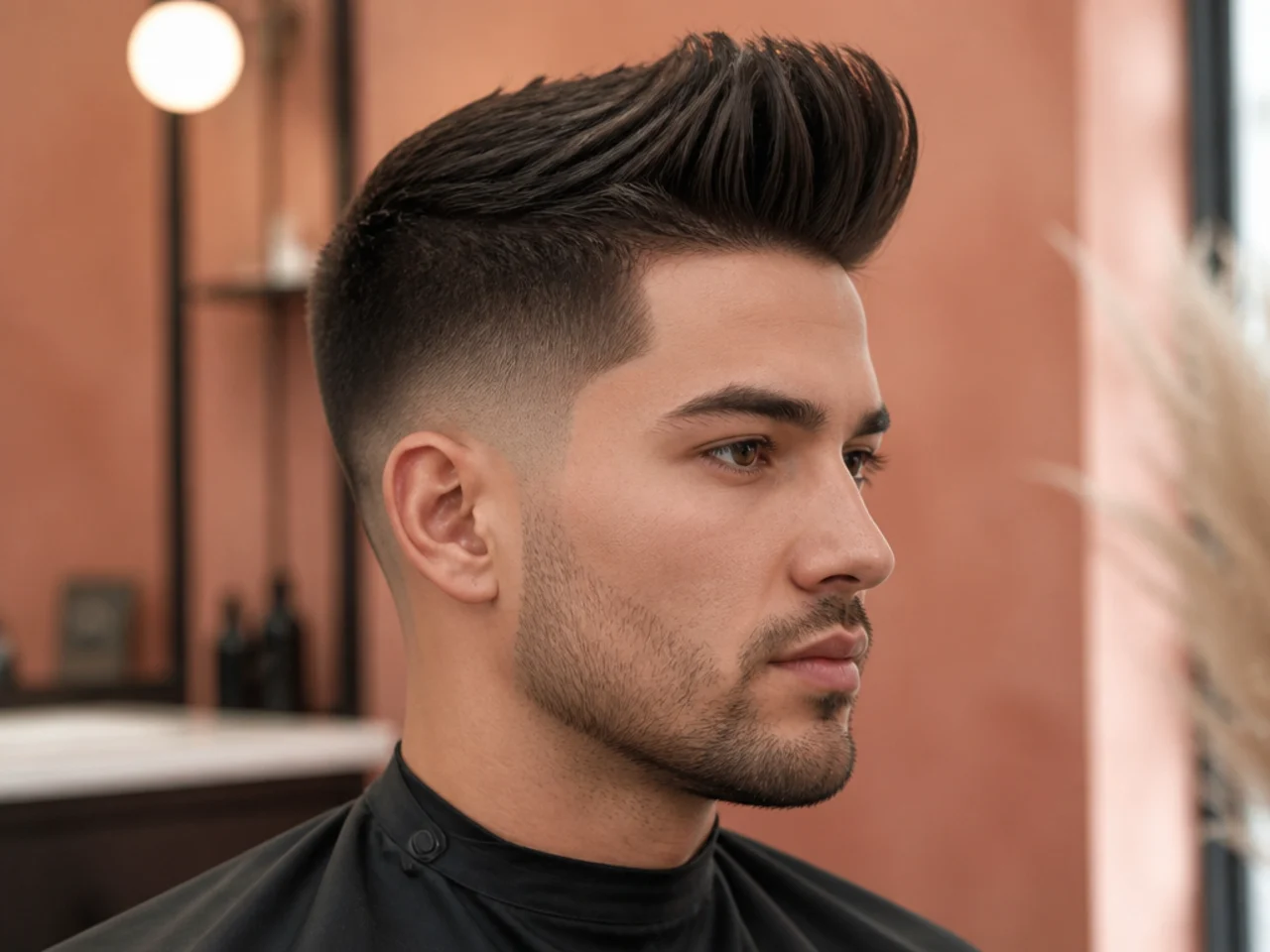
A quiff that holds through a full day is built the night before. Fresh-washed hair slides; day-two hair grips. From that starting point, seven steps carry a quiff from damp to bedtime without the front collapsing — mousse for lift, round brush for shape, cool shot for lock, matte clay for hold, hairspray for seal. Quiff styling all day comes down to sequence, not sheer product volume. Follow the order below and skip nothing.
What You'll Need
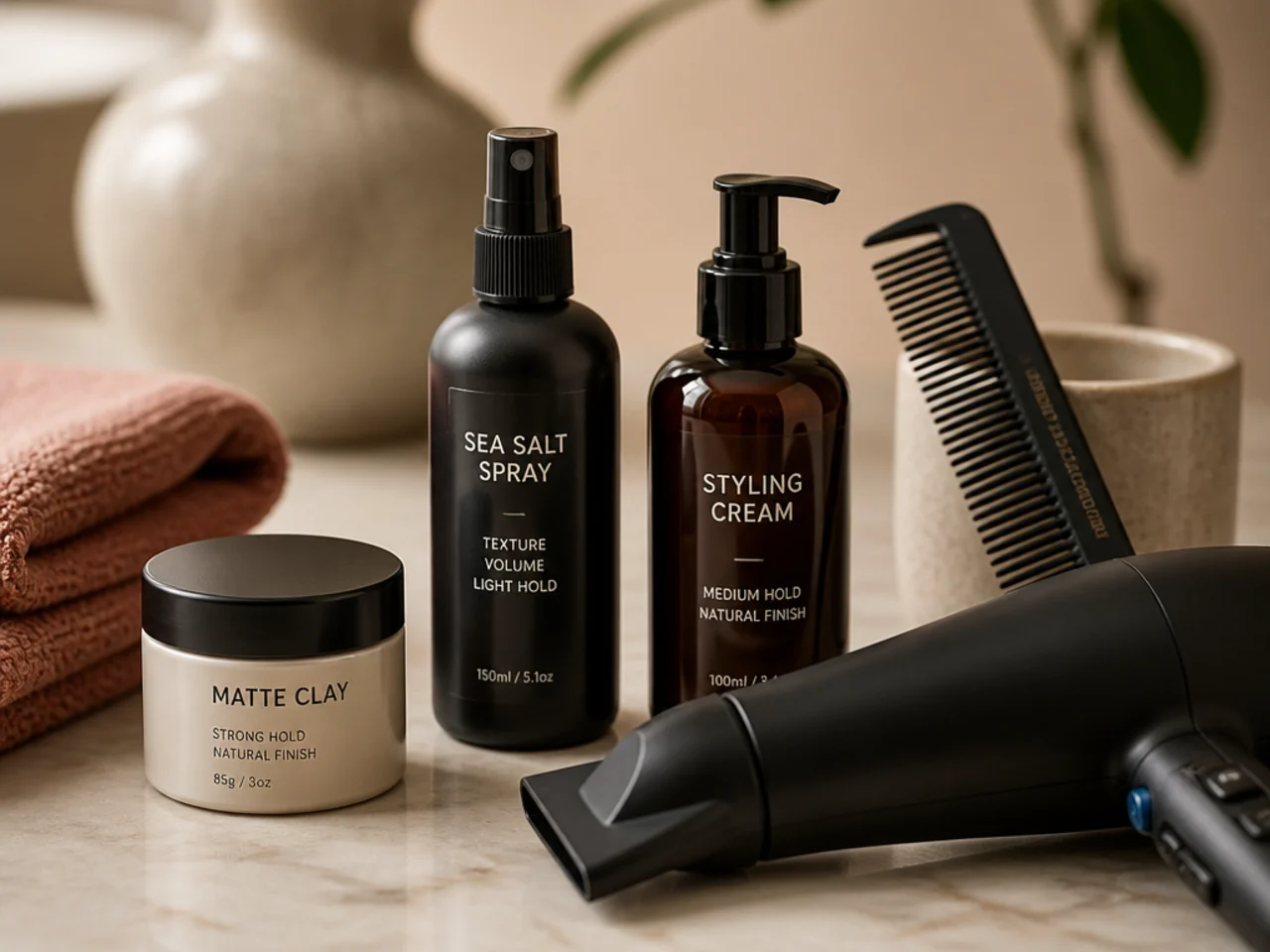
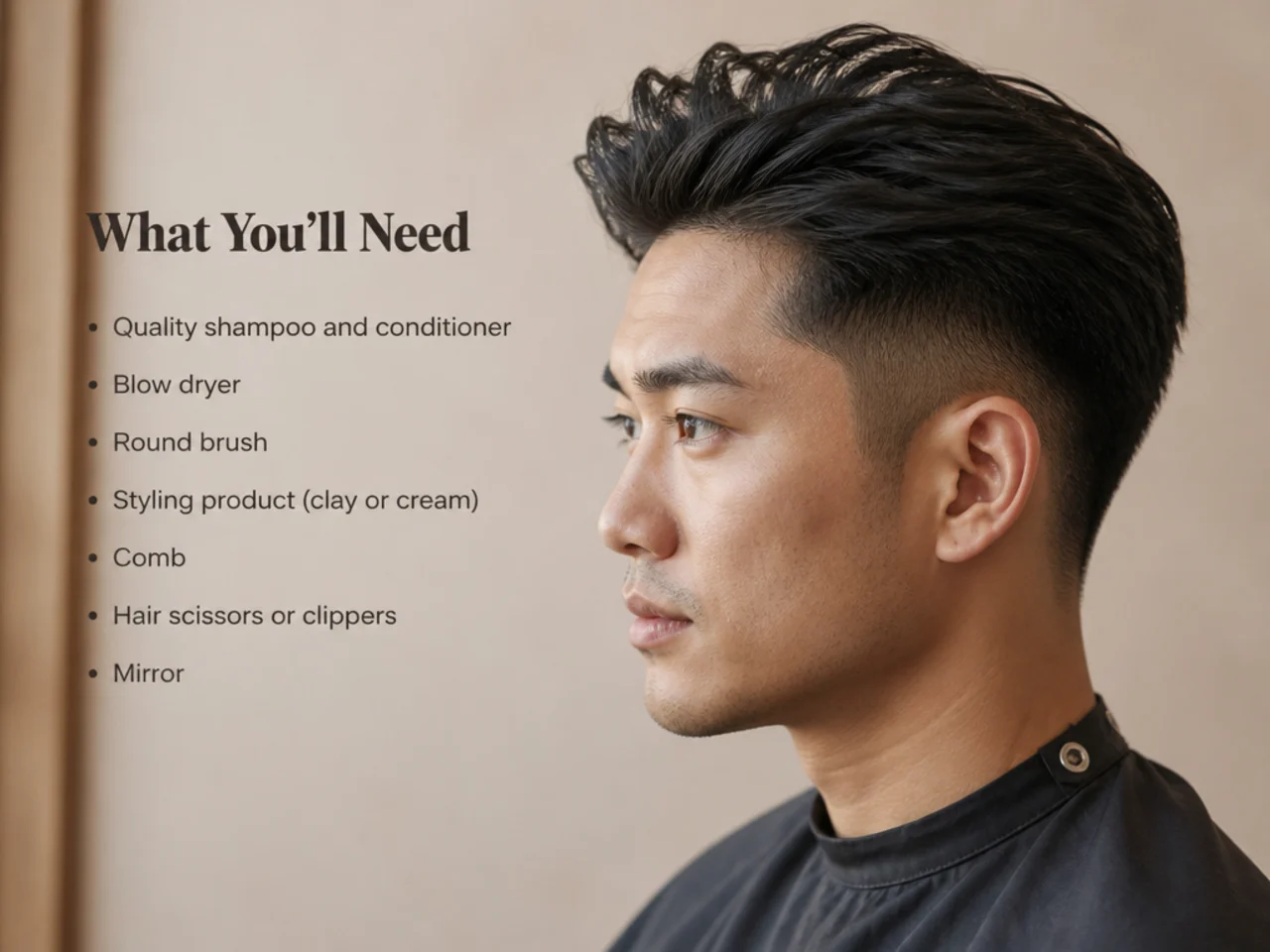
The full kit is six items — most of them last three months on a single tin. Pick each product for the job it does, not for the brand on the label. Nothing here needs a specialty barbershop line to work.
- A volumizing mousse — the pre-styler that builds root lift. Ping-pong-ball amount per use, so a can lasts months.
- A matte clay or paste — the hold product. Strong hold on the label, matte finish (no shine). Nickel-size scoop per style.
- A blow dryer with a concentrator nozzle — the nozzle focuses airflow down the shaft so the cuticle stays smooth. Any 1,800-watt dryer does the job; the nozzle matters more than the brand.
- A round brush — 2-inch barrel for medium hair, 3-inch for thick. Boar-bristle or mixed-bristle grips better than plastic.
- A fine-tooth comb — one pass to frame the front after the clay goes in.
- A light matte hairspray — flexible hold, matte finish. Twelve inches away, two-second pass.
Optional but useful: a sea-salt spray for wavy hair (adds grit without weight), and a hair powder for the mid-day refresh. If your hair is fine, add a root-lift spray to the list — mousse alone won't get vertical height out of thin density.
The 7-Step All-Day Quiff Routine
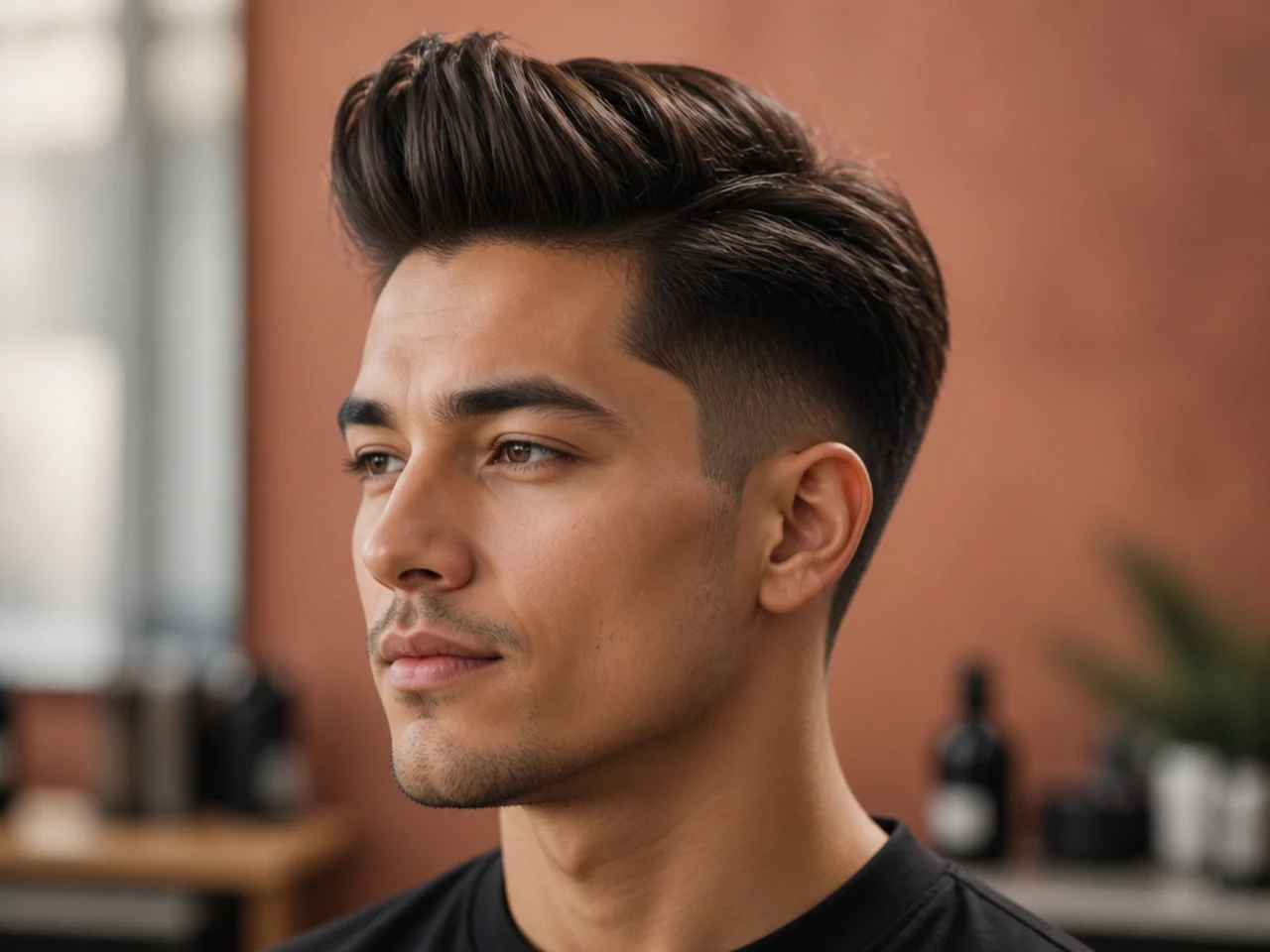
The whole routine takes six to eight minutes from damp hair to walking out the door. Nothing here is optional. Skip a step and the quiff will hold four hours instead of twelve — you will feel exactly which step you skipped by the time you get to lunch.
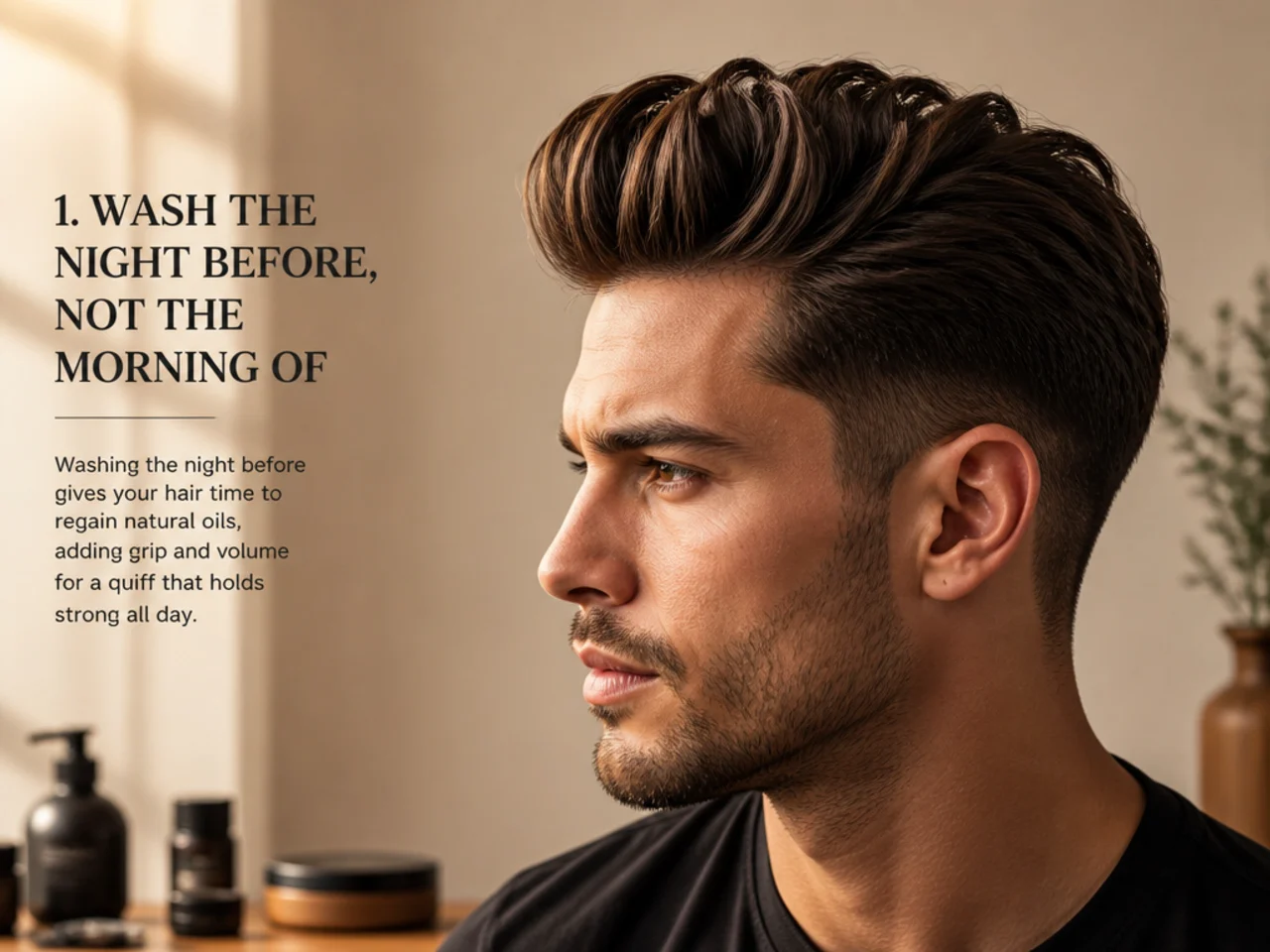
1. Wash the Night Before, Not the Morning Of
Freshly washed hair is the enemy of an all-day quiff. Squeaky-clean strands slide against each other and refuse to hold vertical shape — product beads up on top instead of gripping the shaft. Day-two hair has just enough natural sebum in it to give clay something to grab. That grip is what turns a two-hour quiff into a twelve-hour one.
Wash the night before with a sulfate-free shampoo and skip conditioner on the top of the head. Conditioner on the crown coats the shaft with silicones and softeners that fight every hold product you put in after. Rinse cool for the last ten seconds — cool water closes the cuticle and locks any leftover product from your previous style out of the way.
Common mistake: wetting the hair fully in the morning shower, towel-drying, and going straight into styling. The overnight settle is what builds the grip; if you have to shower in the morning, keep the head out of the spray entirely. If you must wash the same morning, double the mousse in Step 3 and expect the quiff to hold two hours less.
2. Rough-Dry to Damp — Not Wet, Not Bone-Dry
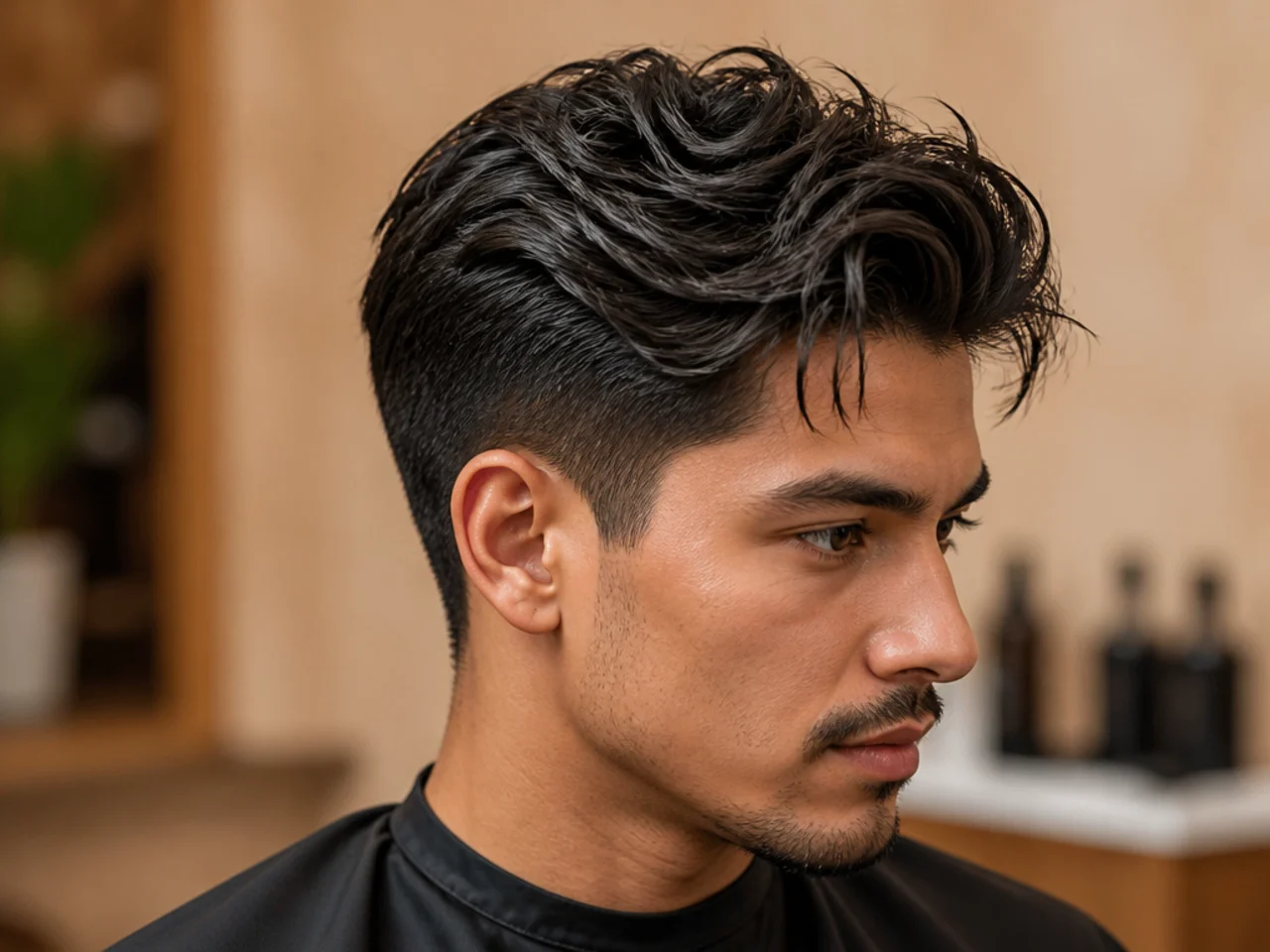
Product goes into damp hair — roughly 80 percent dry, still cool to the touch, no water beading up when you rake fingers through. Soaking wet hair dilutes every product you put in; bone-dry hair refuses to accept it at all. The damp window is where mousse, clay, and cream do their job.
If you washed the night before, spritz the top with a water bottle until it reads damp instead of dry — that hits the same window. If you washed in the morning, towel-dry with a microfiber cloth (regular terry frizzes the cuticle), then rough-dry with fingers on medium heat until the hair stops feeling cold. Two minutes of finger-drying is enough on medium hair.
Common mistake: styling on hair that looks dry from the outside but is still cold at the roots. That cold is trapped moisture, and it will bleed out into your product over the next hour and drop the shape. Test with the back of your hand at the crown before Step 3 — warm and dry means go.
3. Prime the Roots with a Volumizing Mousse
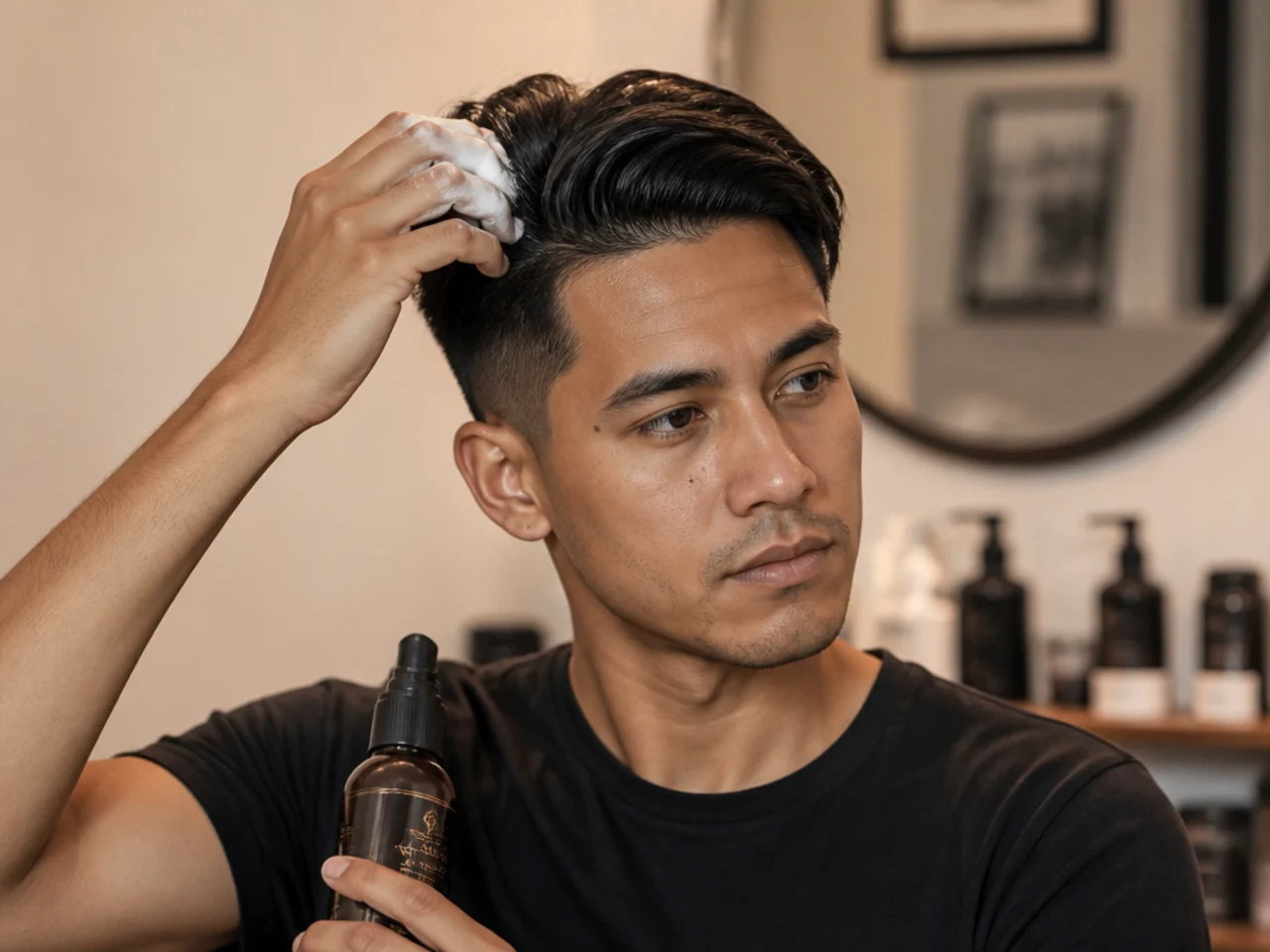
Mousse is the single product most guys skip and the single reason most quiffs fall flat. It coats the individual strand with a light polymer that dries stiffer than the hair itself — a scaffolding you cannot see or feel but that gives the roots a bone to stand on. Skip this and no amount of clay will rescue the shape.
Dispense a ping-pong ball of volumizing mousse into your palm. Rub the palms together to warm it. Then work it only into the roots and lower mid-lengths — never through the ends. On the front section, tilt the head back and press the mousse in upward, against gravity. That vertical direction pre-programs the lift you will build with the round brush next.
Common mistake: working mousse all the way through to the ends. The ends do not need lift — they need texture and separation, which happens in Step 6. Mousse on the ends turns the finished quiff into a lacquered helmet by mid-afternoon.
4. Round-Brush the Front Up and Back
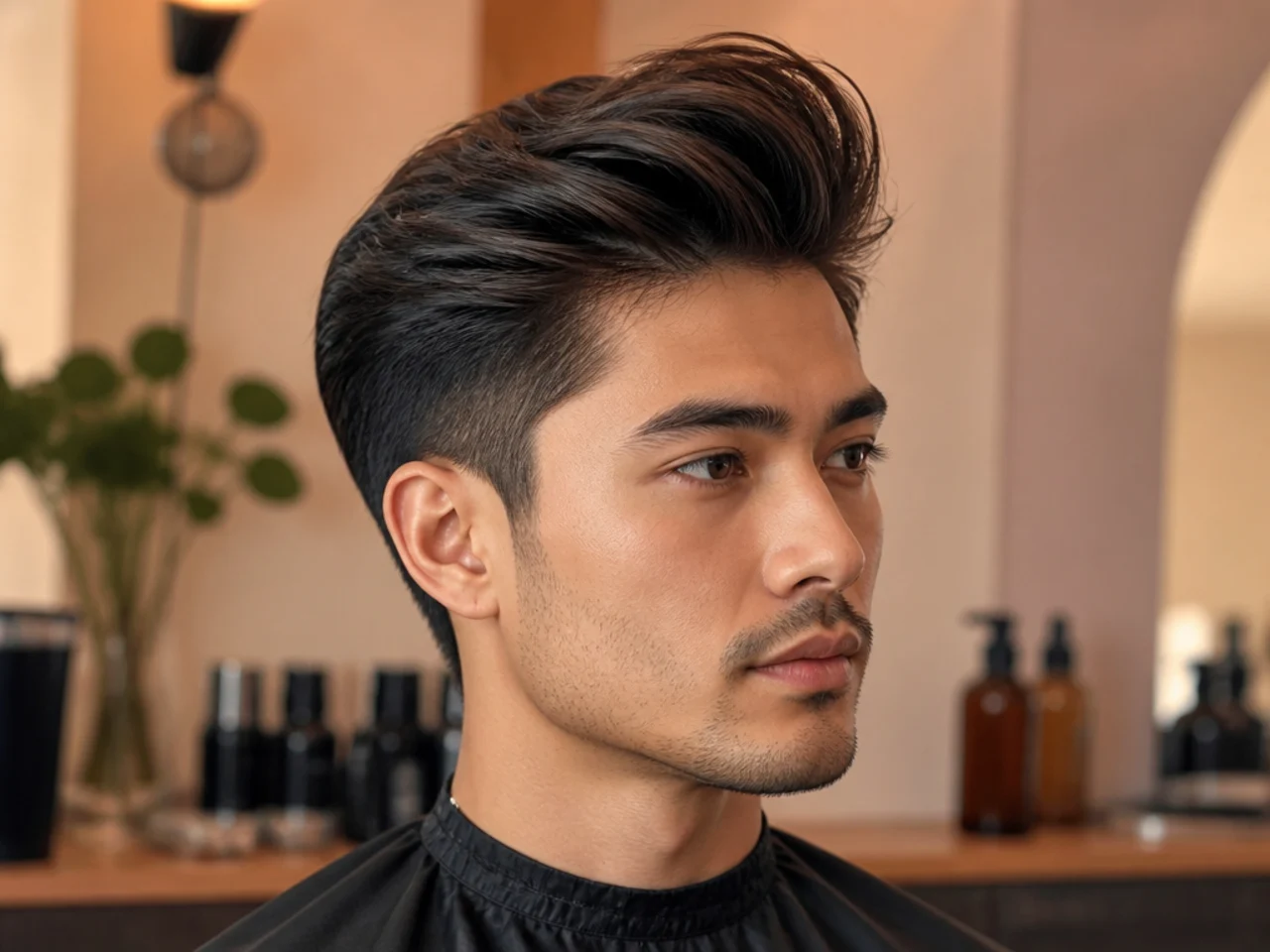
This is where the shape is actually built. Product decides how long it holds; the round brush decides what the finished shape looks like. Ninety seconds of technique here beats five minutes of styling wax on limp hair.
Take the front section — everything above a horseshoe line running from temple to temple — and wrap it under the round brush at the roots. Point the dryer nozzle down the length of the shaft (never up into the roots — that opens the cuticle and frizzes the finish) and pull the brush up and slightly back in one slow motion. Hold at the top of the arc for two seconds while the airflow hits the cuticle. Release. Repeat three or four times across the front until the section stands up on its own without the brush.
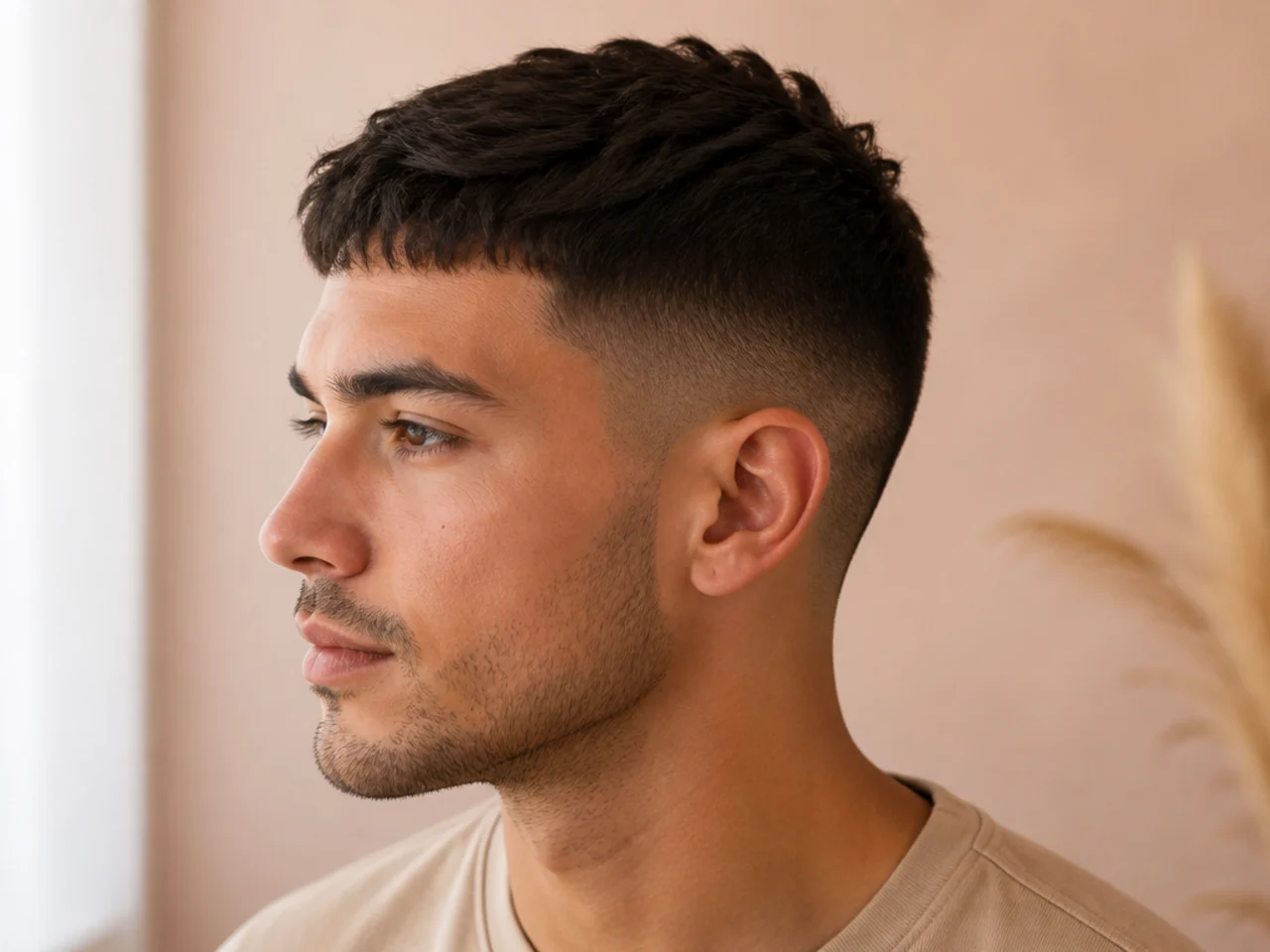
The sides get a much simpler treatment: point the nozzle down against the hair on medium heat for thirty seconds. If your quiff is paired with an undercut fade or a low taper fade, the sides are short enough that they dry themselves and just need the airflow to smooth them flat.
Common mistake: pointing the nozzle up toward the roots to build lift faster. That opens the cuticle in the wrong direction and the shape is guaranteed to frizz within an hour. Nozzle down, always.
5. Lock the Shape with a Cool Shot
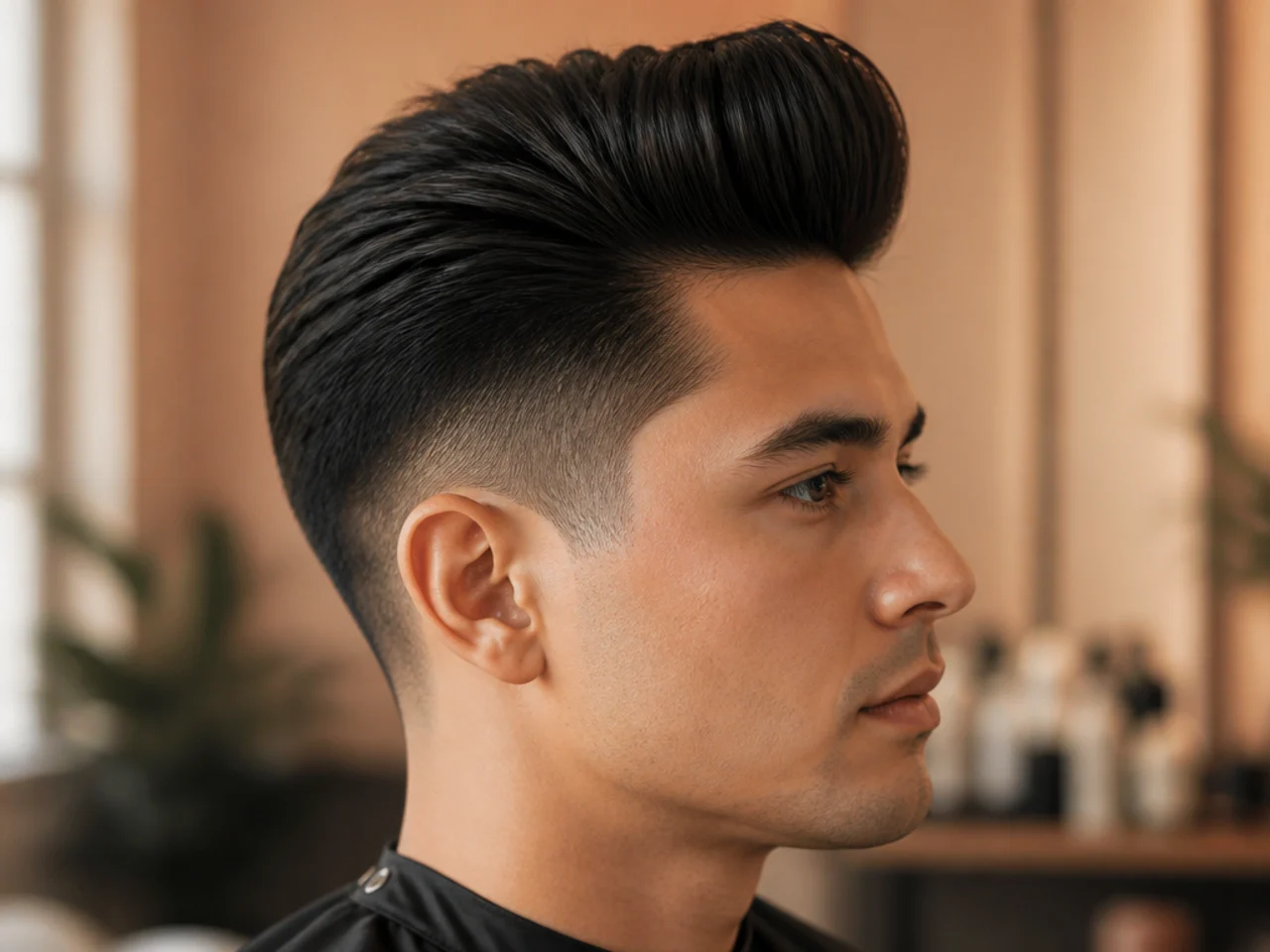
Every blow dryer has a cool-shot button. Every guy skips it. It is the single fastest step in the routine and the one that separates a two-hour quiff from a twelve-hour one.
Heat expands the hair shaft and opens the cuticle so it accepts a new shape. Cool air contracts the shaft and closes the cuticle to lock that shape in place. Skip the cool shot and you walk out the door with the cuticle still warm and open — the first breeze reshapes what you spent five minutes building.
Aim the dryer at the front of the quiff and hit cool shot for a full twenty seconds. Move across the top slowly. You should feel the hair actually cool under the nozzle. When it does, the shape is locked and the styling has moved from malleable to set.
6. Press Matte Clay From Ends Toward Roots
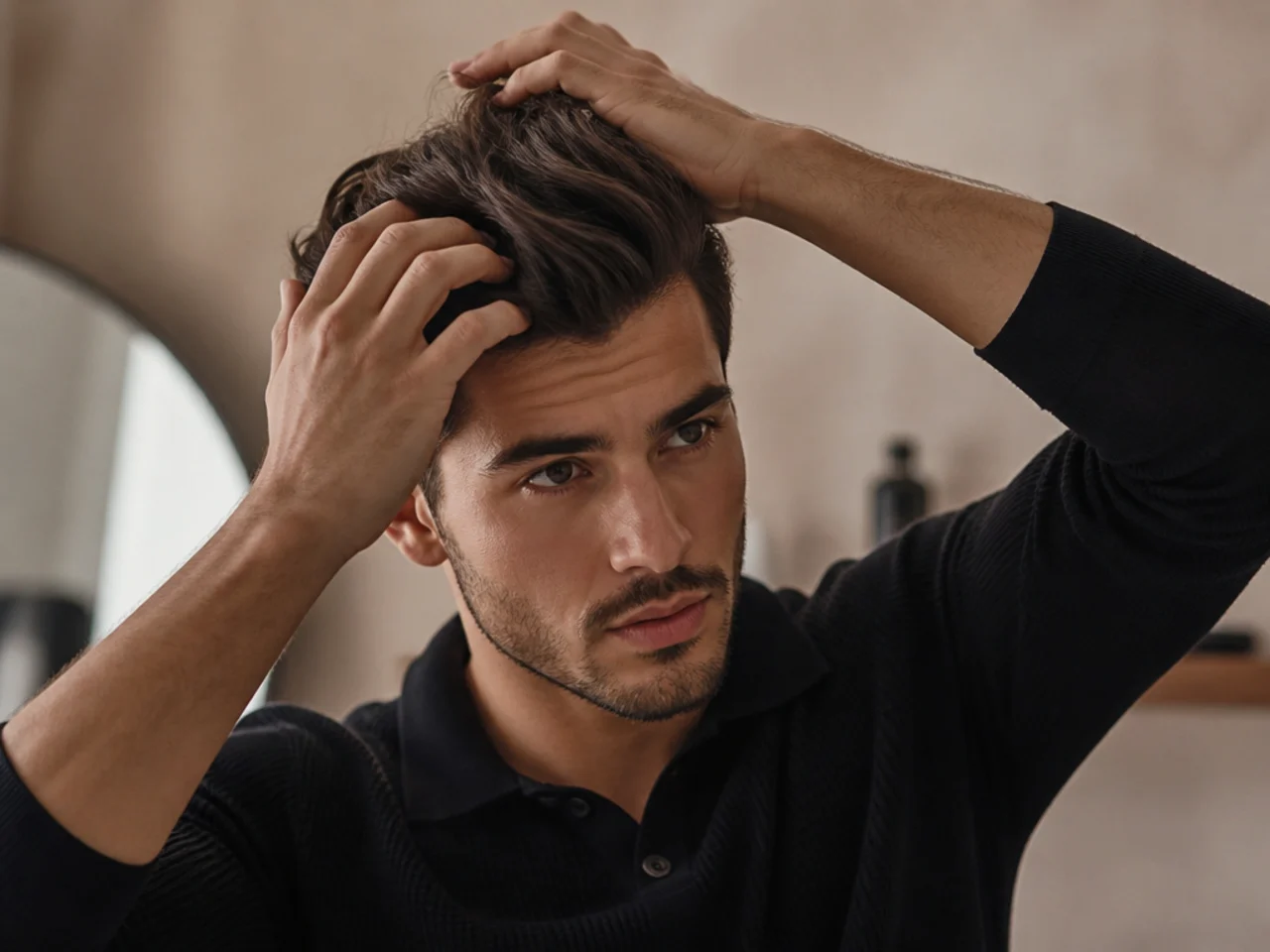
Clay does the holding. But the direction it goes in matters as much as the amount. Warm a nickel-size scoop between your palms until it disappears completely — the clay should be invisible on your skin, spread like a thin film. If you can still see it, keep rubbing.
Press the clay into the ends of the top first, then push up into the mid-lengths, then finally graze the roots with what is left on your palms. Fingers only — never a comb, never a brush. Combing clay through wet-looking hair breaks up the shape you just built and drops the front. On the front section, push up and back with an open hand to reinforce the direction the round brush set.
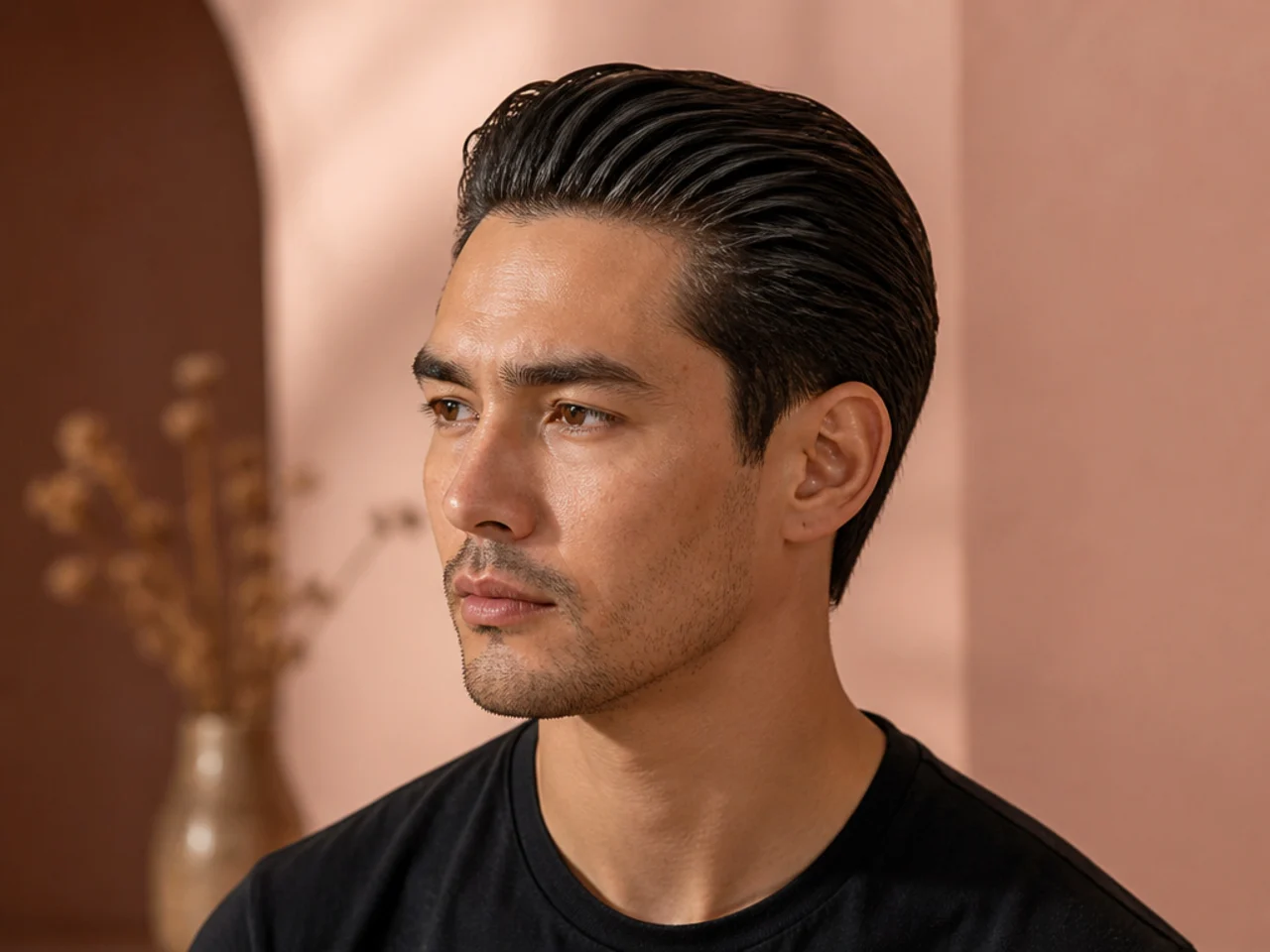
One quick pass with a fine-tooth comb across the very top surface — the outermost layer only — smooths the finish so the quiff reads polished rather than tousled. That pass is optional on the messy and textured versions (which sit close to a messy quiff hairstyle) and mandatory on the classic quiff and slick-back-adjacent versions.
Common mistake: dispensing clay cold and pushing it straight into the roots. Cold clay clumps at the scalp, weighs the front down, and reads greasy by 2 pm. The warm-palm step is not optional.
7. Seal with a Light Hairspray Halo
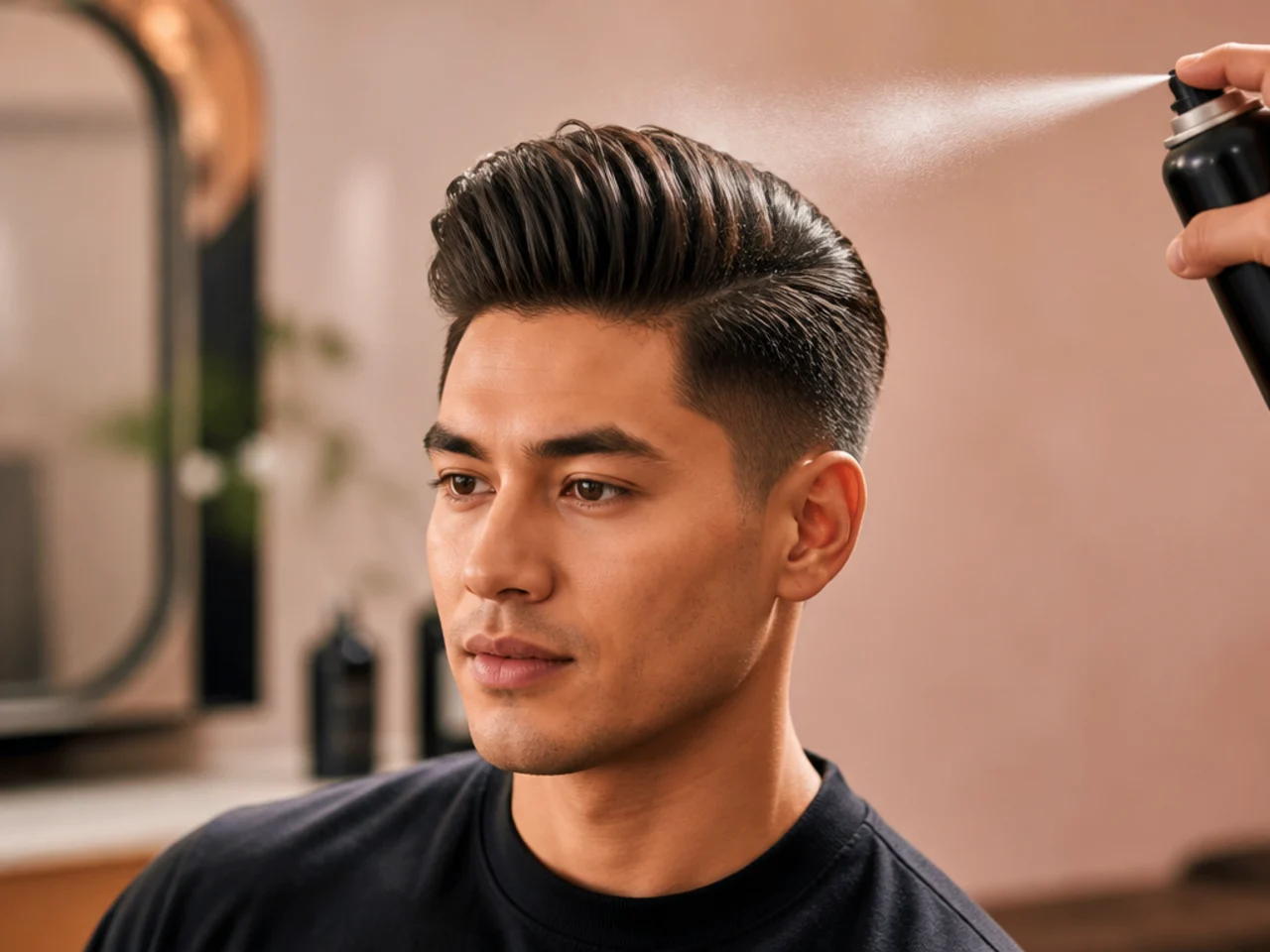
The final step is a two-second seal, not a lockdown. Hold a light matte hairspray twelve inches from the head. One steady pass across the front, one across the crown. Done. The distance is what matters — closer than twelve inches and the spray beads on the surface, dries hard, and turns the finish into shellac.
The purpose of this pass is not to hold the shape (the clay did that). The purpose is to build a light invisible cage around the whole quiff that stops wind and humidity from getting to the individual strands. Think of it as sealing the walls, not building them.
Common mistake: using a strong-hold aerosol hairspray on top of clay. The two products fight each other — the spray tries to lock the pieces where they are, the clay is still slightly workable underneath, and the tension between them cracks the finish by afternoon. Match hold levels: strong clay, light spray.
Adjusting the Routine for Your Hair Type
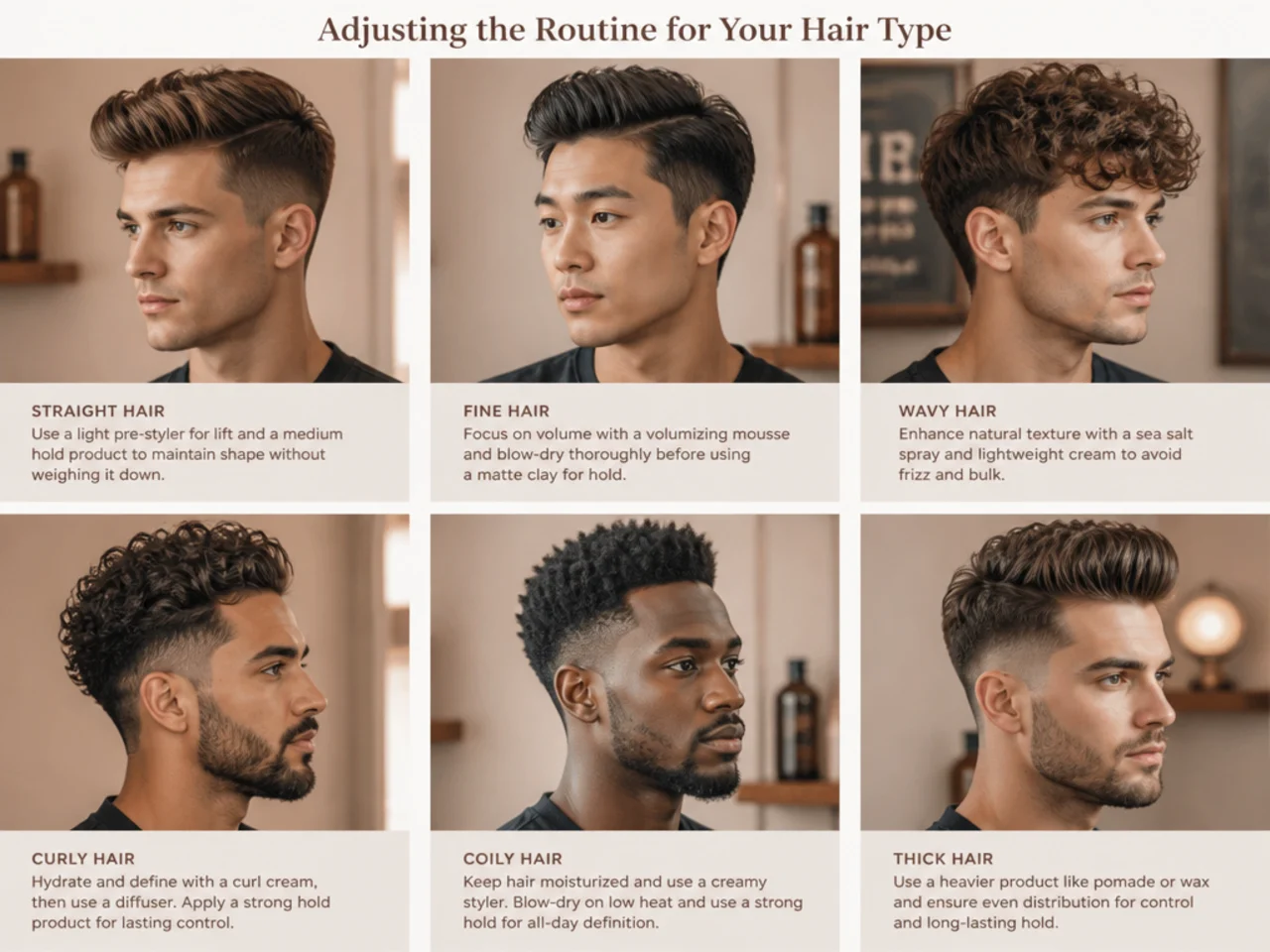
The seven-step routine above is the reference. Every hair type needs a small tweak from that reference. The changes are minor — the sequence stays the same, only the product choices and dry times shift.
Straight and fine hair needs double the pre-style. Layer a volumizing mousse and a root-lift spray in Step 3 — not one or the other. Skip clay at the roots in Step 6 (fine hair collapses under any weight at the scalp) and press it only into the ends. Add a light matte powder at the roots before the hairspray for extra lift that lasts through the afternoon.
Straight and thick hair gets the reference routine with less product. A pea of mousse instead of a ping-pong ball, a chickpea of clay instead of a nickel. Thick hair holds shape on its own once the round brush sets it — over-producing turns it into a helmet by lunch.
Wavy hair swaps mousse for a sea-salt spray in Step 3. The salt does the same lift-and-grip job while working with the natural wave pattern instead of fighting it. Skip the fine-tooth comb pass in Step 6 — combing kills wave definition. Rough-scrunch the front with an open hand instead. The finish reads close to the messy quiff family: piecey, undone, and warmer than a straight quiff.
Curly hair needs the whole routine rebuilt around the coil pattern. Curl cream on damp hair instead of mousse, diffuse-dry on low heat with the head tipped forward (never a round brush — it destroys curl pattern), and finish with a light gel scrunched in with an open hand. The result is not a lifted quiff — it is a defined curl mass swept up and back. The curly hairstyles for men playbook applies more than the straight-hair method above. Length matters here: under five inches of stretched curl length, the shape reads more brushed-up than quiff.
Long hair (six inches and up at the front) adds five minutes to Step 4. The round brush needs three or four full arcs to fully set six inches of length, and the cool shot in Step 5 stretches to a full thirty seconds. If you are working with a long quiff, a firm-hold matte cream can replace the clay in Step 6 — cream distributes through length better than clay does.
Troubleshooting Quiff Styling All Day Fails
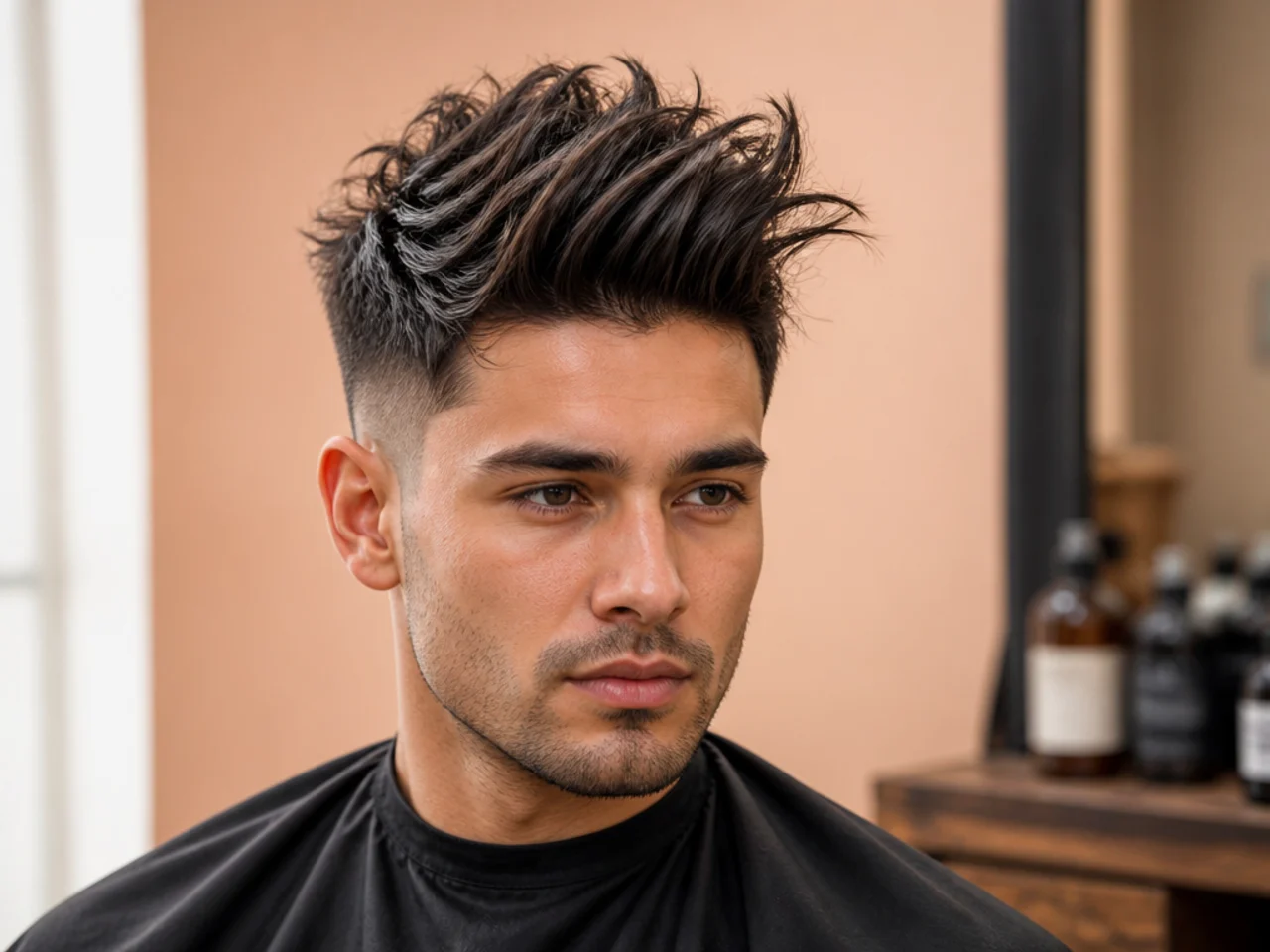
Every quiff has a failure mode. The fix is almost always one skipped step or one over-applied product. Read this before your first attempt so you know what to correct mid-routine instead of starting over from wet hair.
- Quiff falling flat by lunch. The mousse step was skipped or under-dosed. Tomorrow, use a ping-pong ball at the roots on properly damp hair and hit cool shot for the full twenty seconds. Same-day fix: dust hair powder at the roots and lift with fingers.
- Front looks greasy by 3 pm. Too much clay, or clay pressed in cold. Warm the product until it is invisible on your palms and use less than you think — a pea for fine, a nickel for medium, a chickpea for thick. Same-day fix: work a dry shampoo through the roots and reshape.
- Sides puffing out over the ears. The round-brush pass on the sides was skipped or the sides need a shorter cut. A single medium-heat pass with the nozzle pressed against the hair fixes it. Long term, ask your barber for a low taper fade or mid fade to keep the side length in check.
- Stiff, shellac finish. Hairspray too close, or too strong. Move to twelve inches away and switch to a light matte-finish spray. If it already happened today, rake damp fingers through the front to break up the seal.
- Front sweeps forward instead of back within an hour. The cool shot was skipped or the round brush arc was too shallow. Pull the brush higher — the front section should stand fully vertical when you release it, not partial.
- Won't hold on fine hair no matter what. Add a root-lift spray under the mousse in Step 3, cut the top a half-inch shorter next cut (heavy length drags fine hair down), and consider layering a light gel with the clay in Step 6. Fine hair needs two hold products, not one.
- Whole shape collapses in humidity. Nothing holds a quiff in above-80-percent humidity except a heavier pomade — which changes the finish from matte to slick, closer to a slick back haircut. For humid days, either commit to the slicker finish or plan for the mid-day refresh.
FAQ
Which quiff variation lasts longest without a mid-day refresh?
The classic and short versions hold longest by a wide margin. Length is weight; weight pulls the front down. A short quiff at three to four inches on top holds twelve to fourteen hours on straight hair with almost no refresh. A long quiff at six inches needs a hairspray touch-up by mid-afternoon on most days. Match the variation to your daily schedule: short for long days without bathroom access, long if you accept a lunchtime reset.
Can I skip the round brush and still get lift?
Not really. A comb-and-blow-dry combination gets you halfway there — some lift, no locked direction. The round brush is what forces the front to memorize its arc while the cuticle is still open. Fingers alone will not do it, and neither will a paddle brush. If you must skip the round brush entirely, use twice the mousse and a stronger hairspray, and accept that the shape will drop two hours earlier than the full routine.
Is a matte clay always better than a pomade for an all-day quiff?
For most quiff shapes, yes. Matte clay grips vertically and holds shape without weighing the front down; pomade slicks the hair flat against the scalp within an hour. The exception is the slick-back-adjacent quiff, where a light pomade is actually the correct choice because you want the front polished rather than lifted. See the slick back haircut product notes for the pomade options that hold longest without turning greasy.
Do I need to see a barber to get the base cut right for an all-day quiff?
Yes — no styling routine rescues the wrong cut. The front needs to be at least four inches long to lift into a proper quiff, the crown should taper down to three inches so the shape does not read blocky, and the sides need a short finish (taper, fade, or undercut) so they do not compete for volume with the top. Ask your barber for the exact numbers, or start with the main quiff hairstyles guide to pick a variation before you book.
How often should I wash if I am styling a quiff daily?
Every second or third day is the sweet spot for most guys. Daily washing strips the natural sebum that makes the hair grip clay, and quiff shapes suffer most from too-clean hair. On non-wash days, rinse the top with cool water in the shower to reset the shape and use dry shampoo at the roots for grease control. For product buildup, a clarifying shampoo once a week clears out old clay without stripping the shaft — pair with a decent wavy hair conditioner or similar hydration product if your ends run dry.
Can I use hair gel instead of clay for an all-day quiff?
Only if you accept the wet-looking finish. Traditional hair gel dries to a hard glossy shell that holds shape aggressively but reads dated and cracks visibly by afternoon when it starts to break down. Modern matte gels split the difference — hold like classic gel, finish like clay — and are a valid option if you want maximum hold without daily commitment to the round-brush routine. Use them in Step 6 in place of clay, and skip the hairspray in Step 7 entirely. If in doubt, keep a set of decent clippers and a solid matte clay in your kit before you experiment with gel.