15 Ways to Cut a Toddler Boy Haircut at Home
A toddler gives you ten to forty seconds of stillness at a time, and a booked chair has to spend all of it in one block. Cutting at home is the only version where you can stop at sixty percent and finish the rest on Thursday.
In this article · 22
- Home Buys You the Ability to Stop
- How to Choose Yours
- The 15 Home Setups
- 1. The High Chair at Snack Time
- 2. On a Parent's Lap Facing Out
- 3. Two Adults, One Cutting One Holding
- 4. Standing at a Screen
- 5. In the Bath With the Hair Wet
- 6. On the Floor With the Child Playing
- 7. Asleep in the Cot
- 8. Outside So the Clippings Blow Away
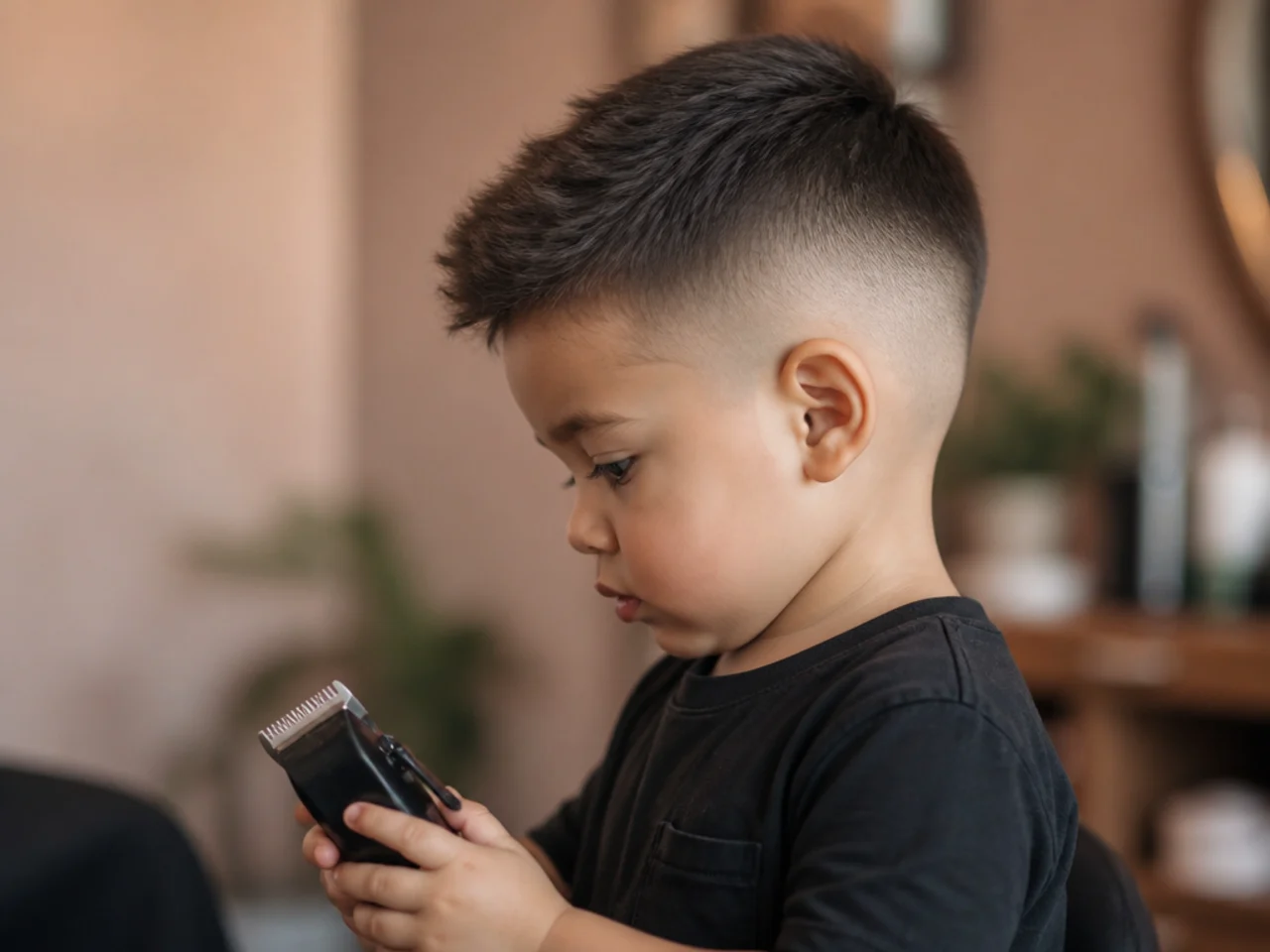
- 9. Clipper Handed Over Switched Off First
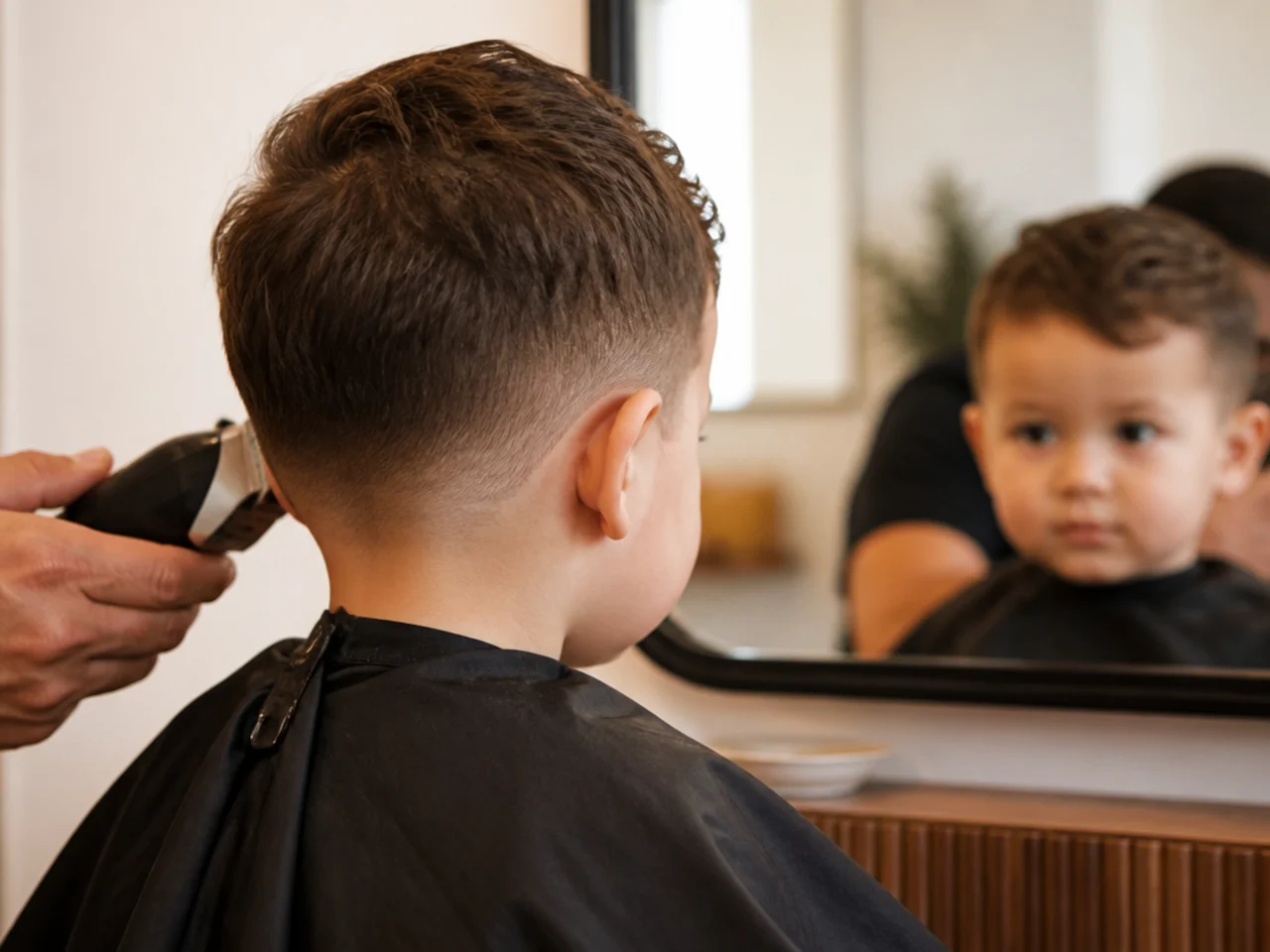
- 10. Sat in Front of a Mirror So He Can Watch
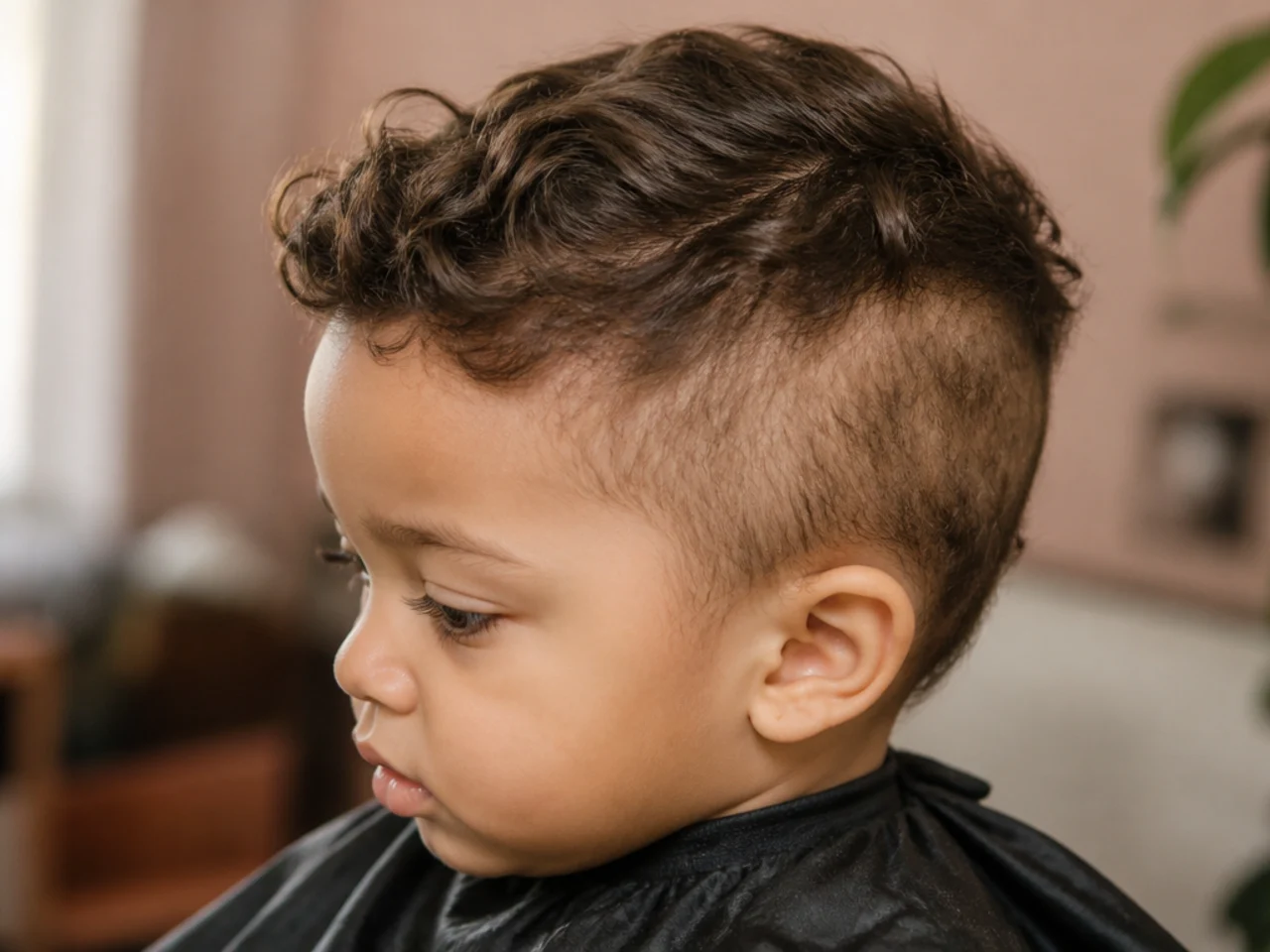
- 11. Split Across Two Evenings
- 12. Ten Minutes After a Nap
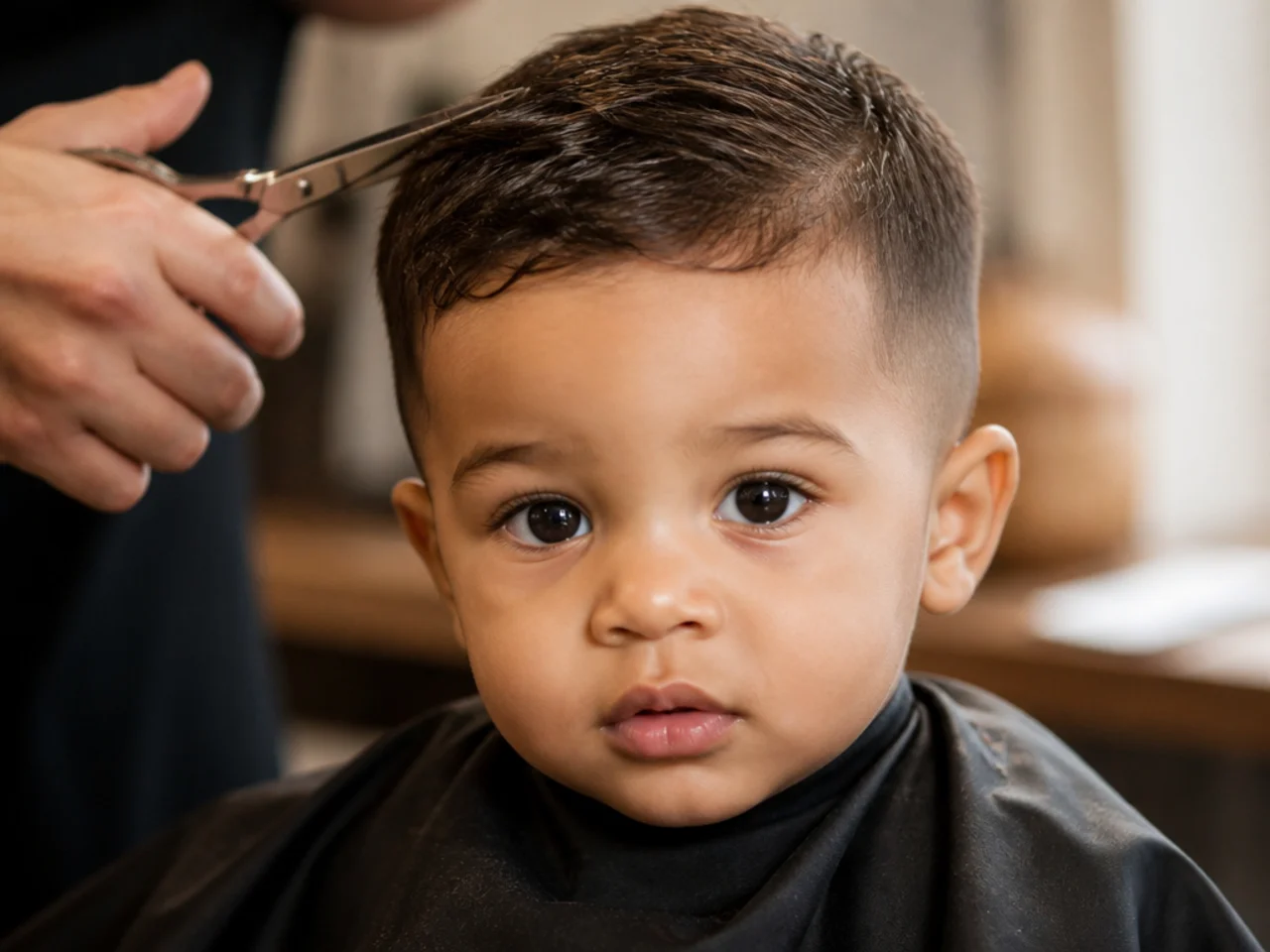
- 13. Sat on the Kitchen Counter at Adult Eye Level
- 14. Scissors Only, With the Clipper in Another Room
- 15. In the Doorway Where He Is Free to Walk Away
- Styling and Upkeep
- Mistakes to Avoid
- FAQ
- Final Thoughts
A barber's chair is a single booked block of time. A toddler who decides at four minutes that he has had enough leaves with one side done and a bill for the whole thing.
The one thing your kitchen has that a barber's chair does not is the ability to stop and resume. Sides on Tuesday, fringe on Thursday, neckline whenever. Nobody paid for a finished result, so an unfinished one costs nothing but a second attempt.
Judge every setup below on two things — the seconds of unbroken stillness it buys, and how easily you can abandon it mid-pass. A toddler hands you ten to forty seconds at a time, and the setup decides how many of those blocks you get.
Home Buys You the Ability to Stop
A haircut can be split across days. Sides one evening, fringe the next, so each sitting only has to outlast a single burst of patience.
Cut the section that matters most first. If you stop at sixty percent, the finished sixty percent should be the part people look at — fringe and top before back.
Nobody is watching, so a wobble is not embarrassing. In a shop the pressure to finish is what pushes a session past the point the child could take.
He is on familiar ground, so the fear starts lower. No stranger behind him and no mirror wall, which leaves the clipper as the only new thing in the room.
How to Choose Yours
Count the seconds a setup buys, not how comfortable it looks. One that keeps him happy but moving is worth less than an awkward one that holds his head still.
Pick a setup you can walk away from mid-pass. Anything that took five minutes to rig is one you will be reluctant to abandon, and reluctance pushes a session one pass too far.
Match the setup to the section you need. A child looking down gives you the back and crown, a child facing forward gives you the fringe, and none gives you both.
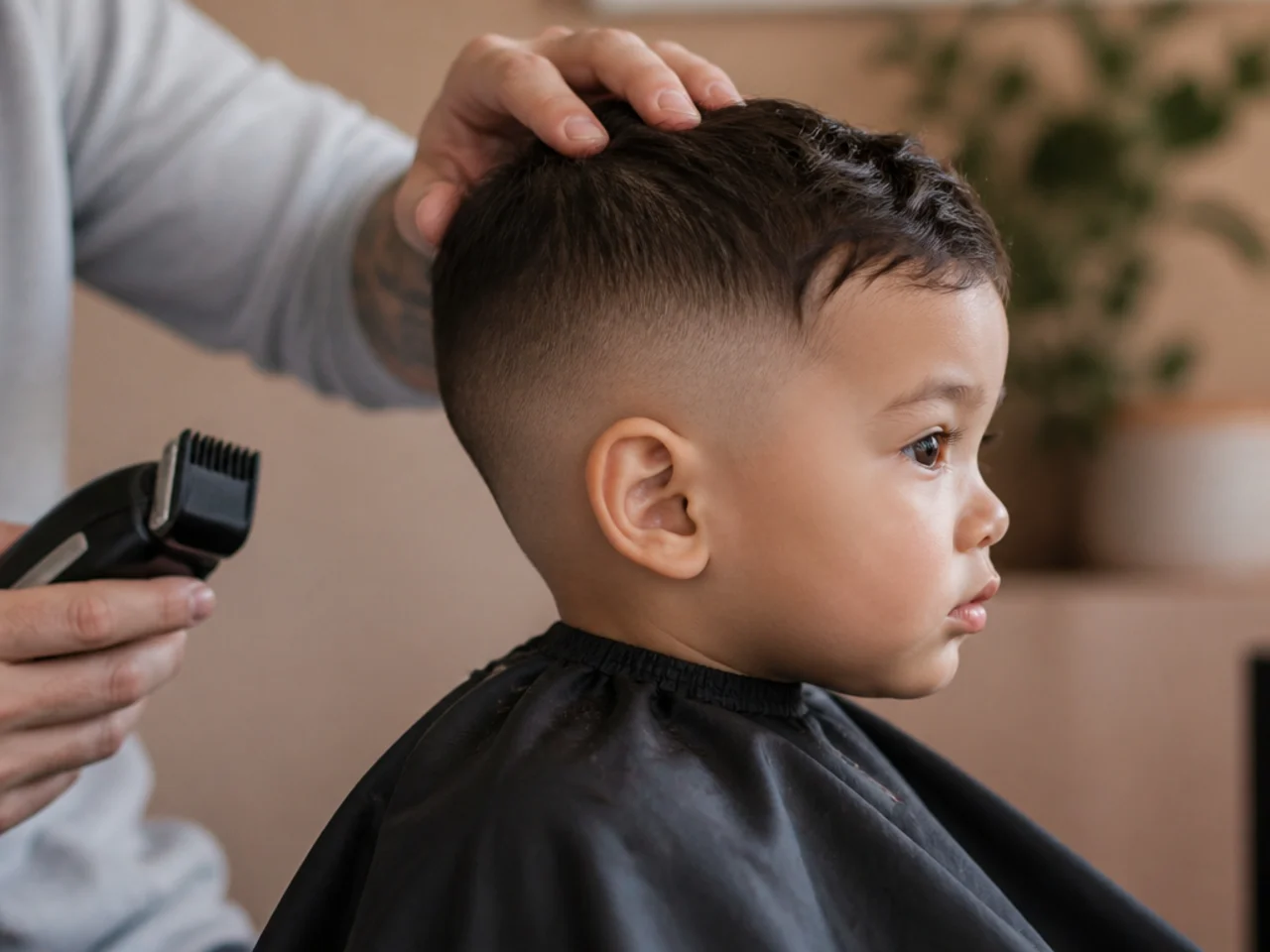
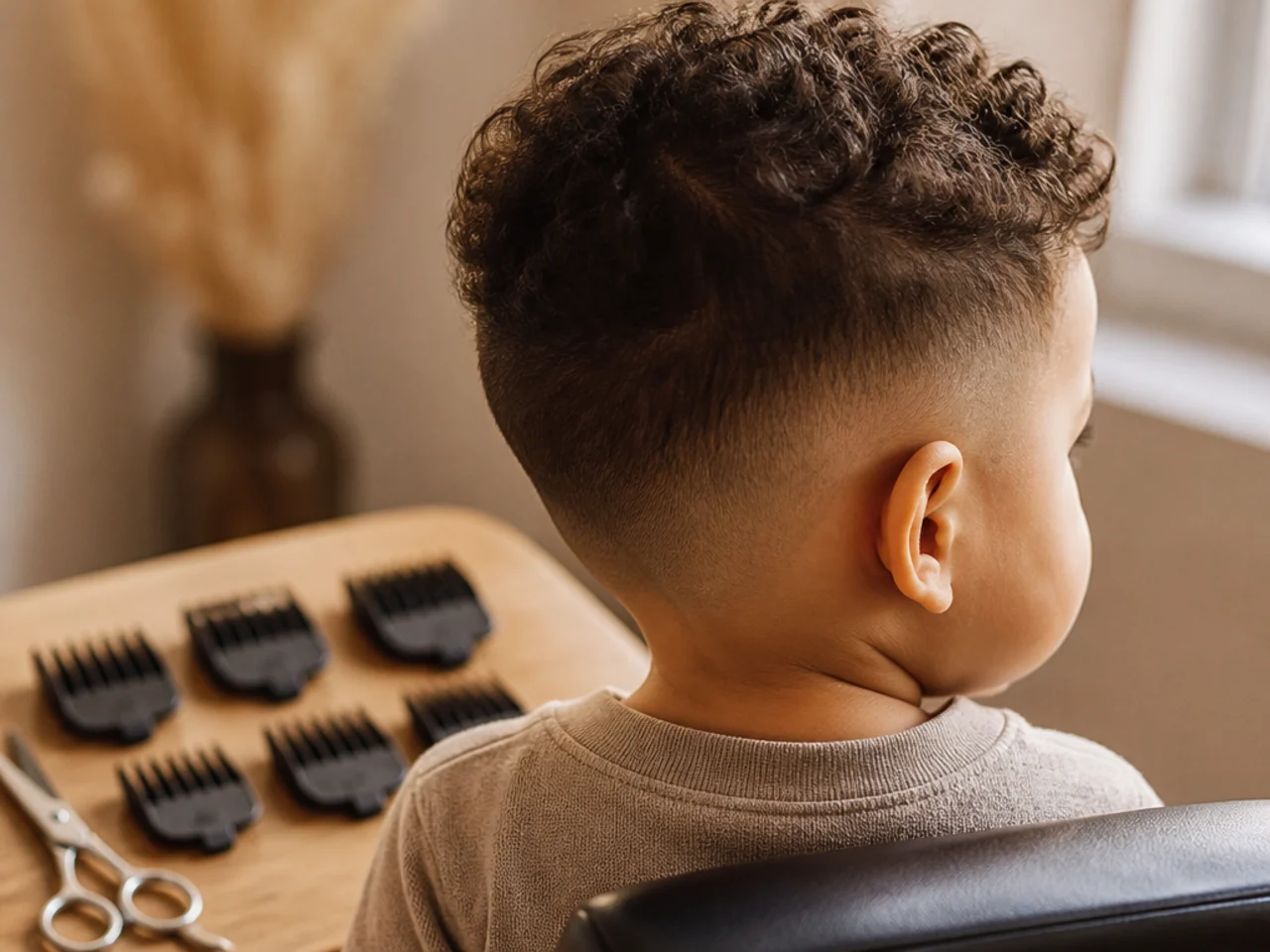
Keep the guard at a #3 or #4 in every setup. Fine baby hair shows scalp under a #2, which turns an interrupted cut into a visibly patchy one.
The 15 Home Setups
1. The High Chair at Snack Time
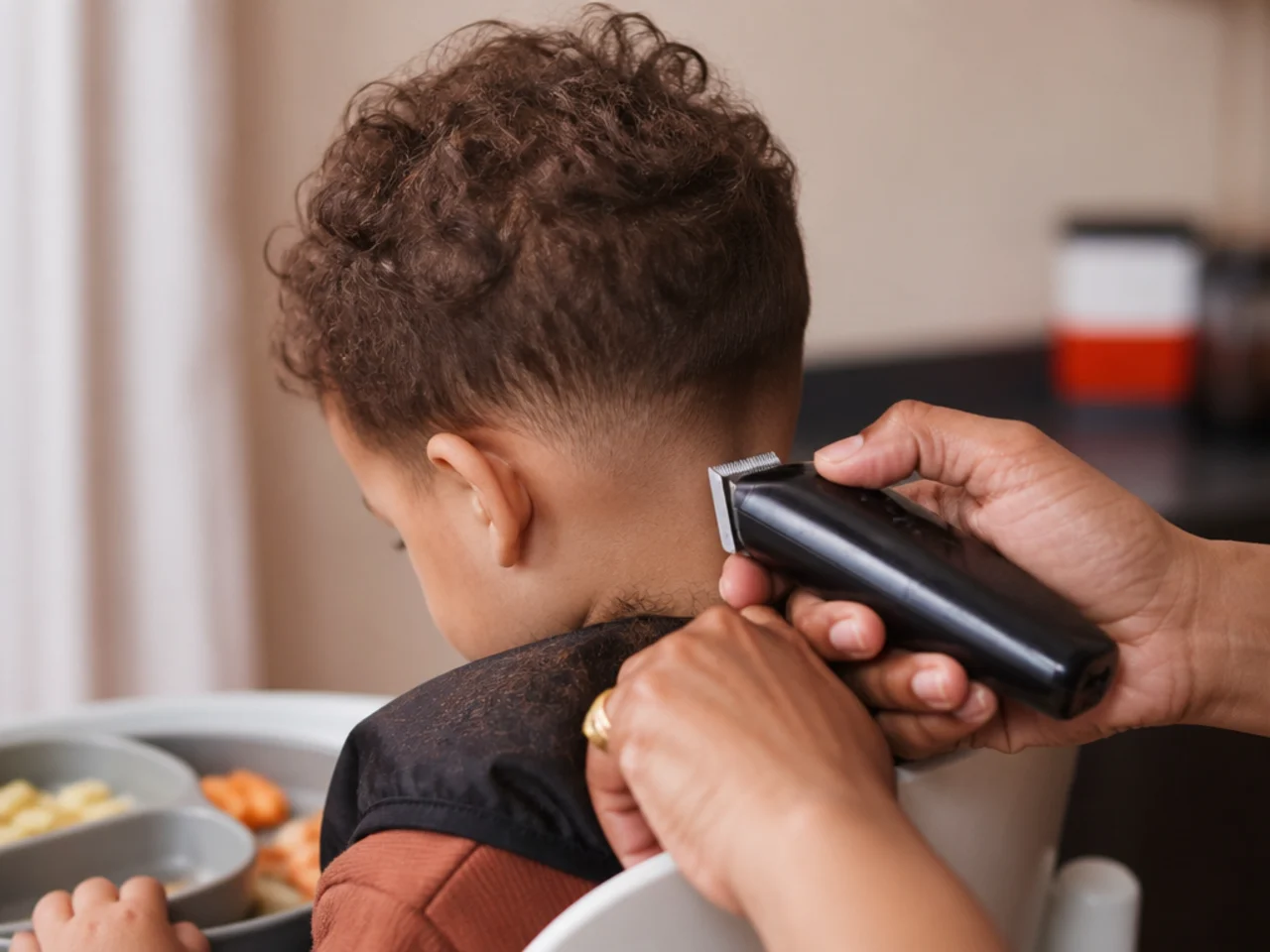
The tray restrains him without anyone holding him, and slow food buys two to four minutes of stillness, the longest single block on this list. What it costs is the fringe, because a child eating looks down at his hands. Take the back, crown and sides here and get the front somewhere else.
2. On a Parent's Lap Facing Out
He sits facing away, which gives the cutter a stable head at a known height for as long as the room stays interesting. It buys thirty to sixty seconds a time and resets easily, because a cuddle reads as a pause rather than an ending. The cost is that clippings land on both of you.
3. Two Adults, One Cutting One Holding
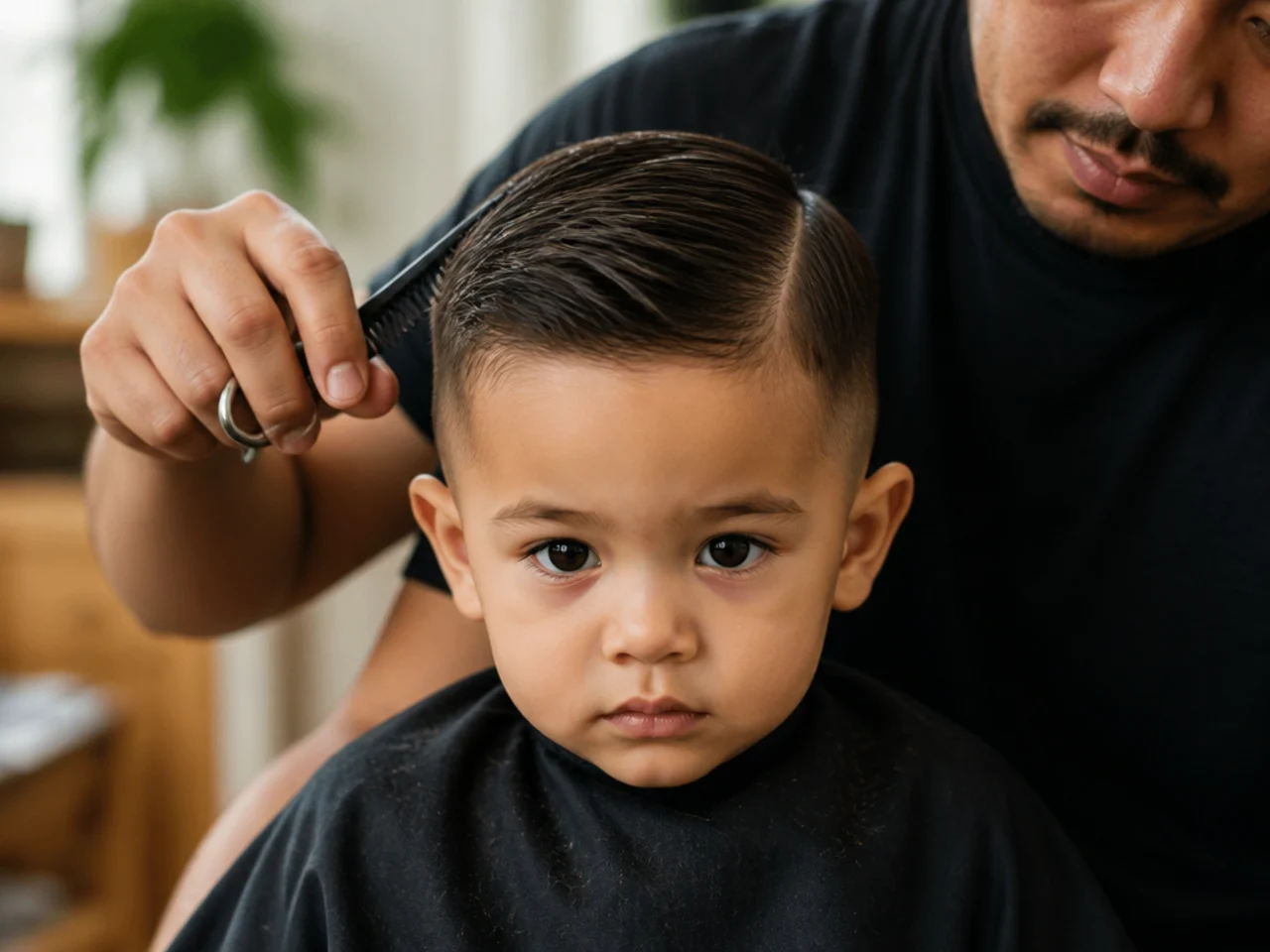
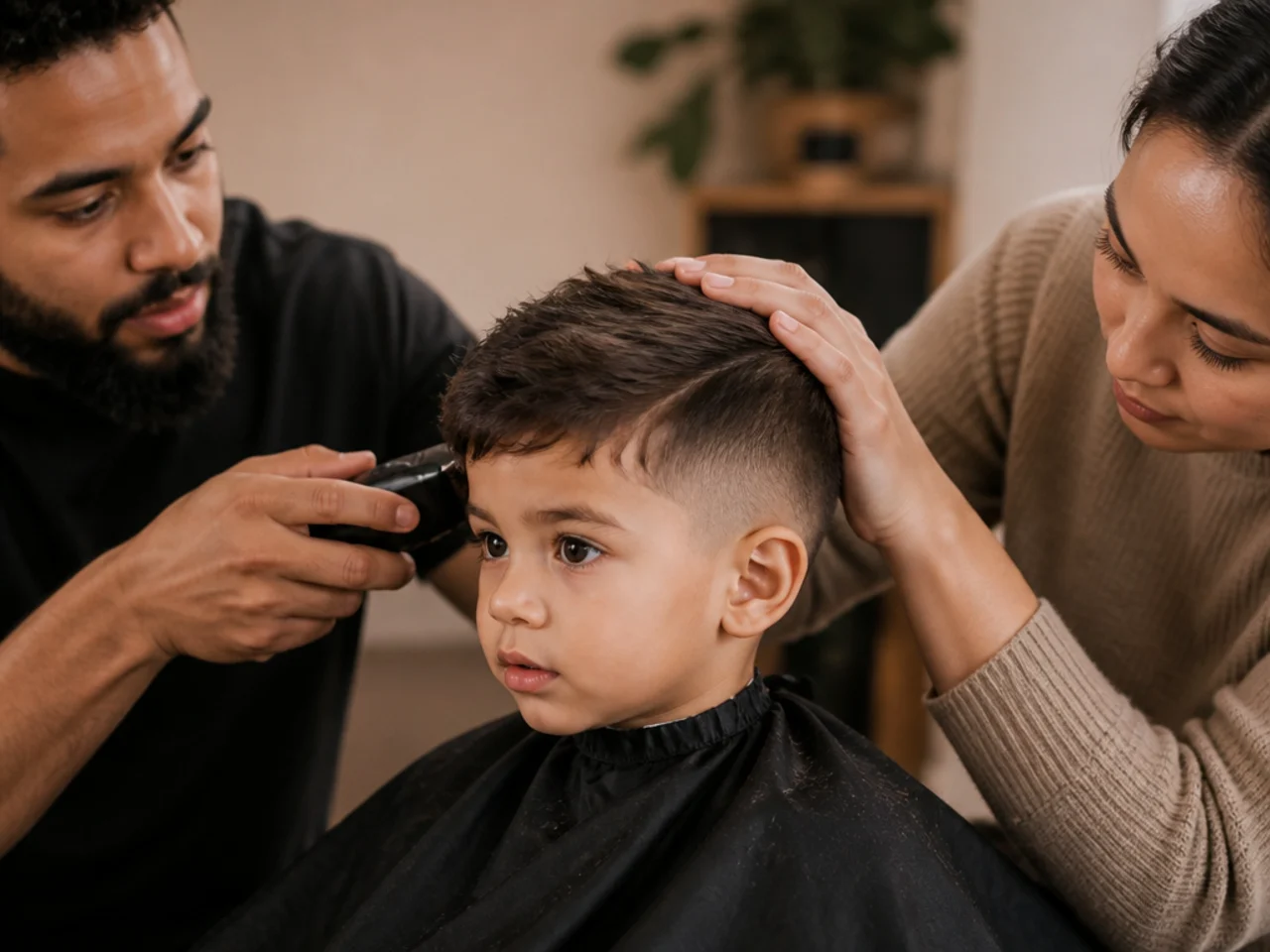
The holder's only job is the head, the one variable that ruins a pass, so the cutter never breaks off to steady him. This is the only setup where a clipper line stays level for a full run up the side. It costs a second adult, so spend it on the sections that need accuracy.
4. Standing at a Screen
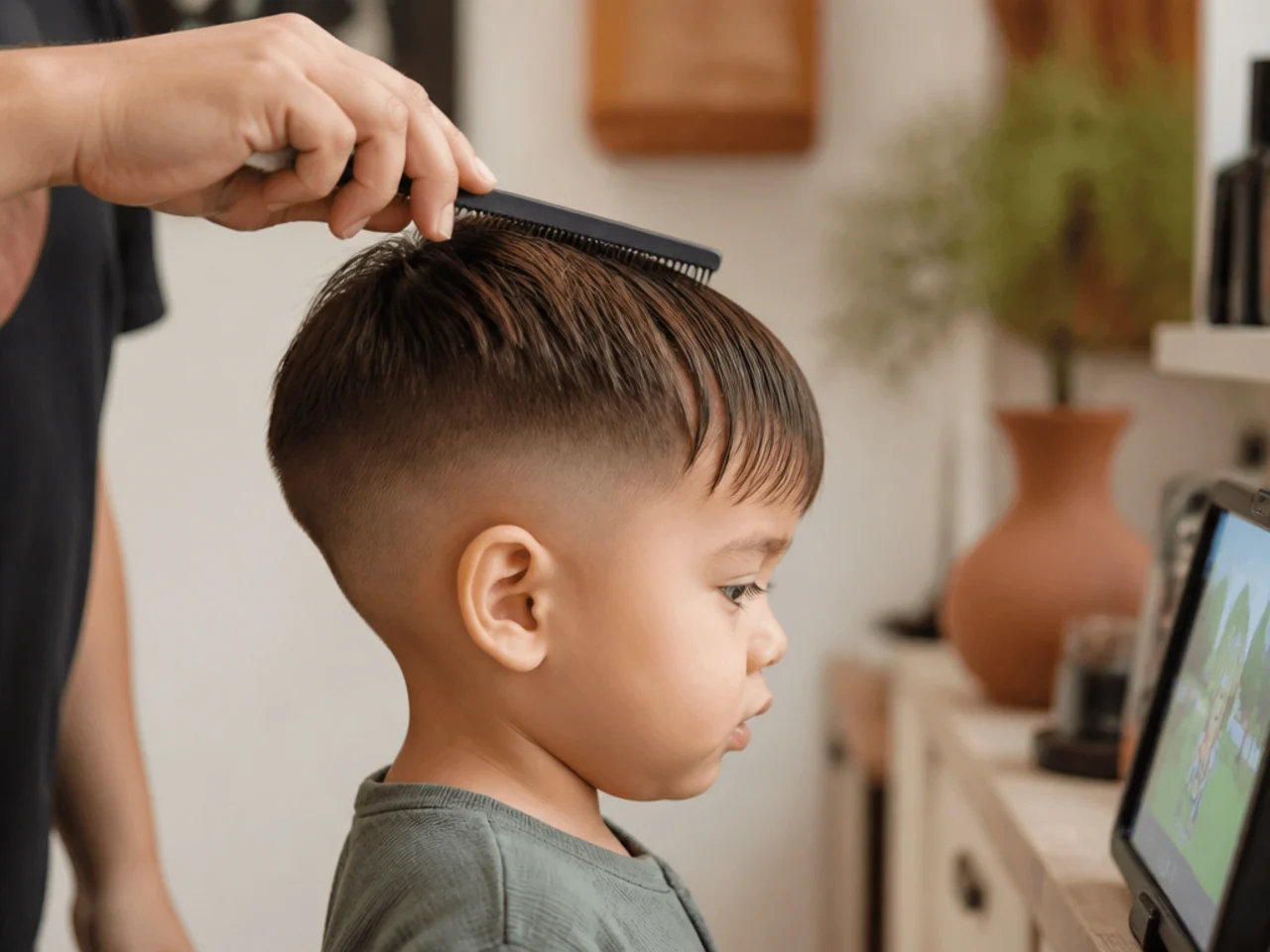
A screen at eye level fixes his gaze forward, which is exactly the head position the fringe needs and the hardest one to get any other way. It reliably buys a couple of minutes. The cost is that he leans in and tips his chin, so recheck the fringe line straight-on before cutting.
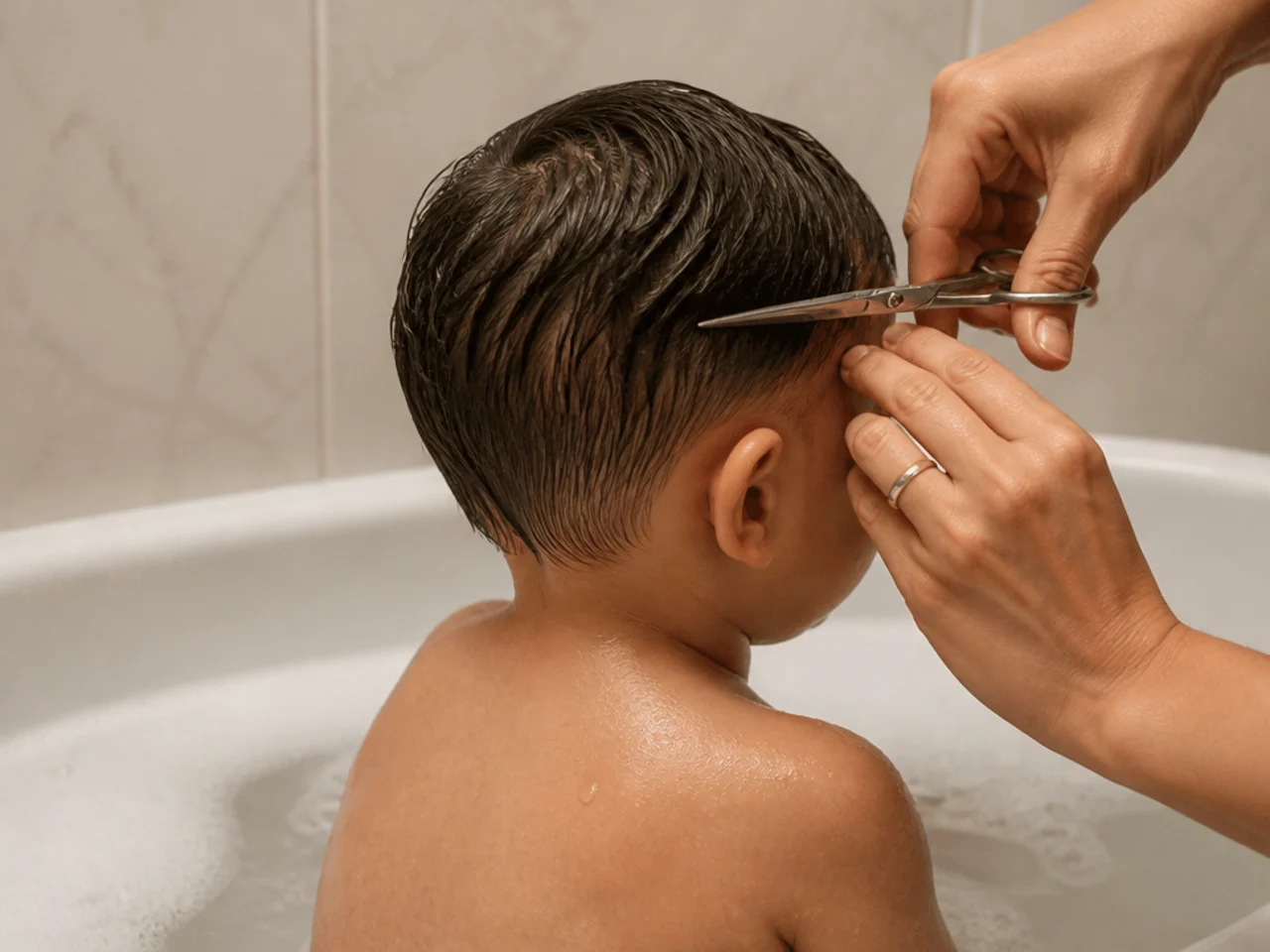
5. In the Bath With the Hair Wet
He is already contained and occupied, and the clippings sink instead of itching his neck, which removes the most common reason a session ends early. It suits scissor work only, and it is where most curly toddler trims end up happening. Wet fine hair hangs straight and lands shorter once dry, so leave a centimetre more than you think you need.
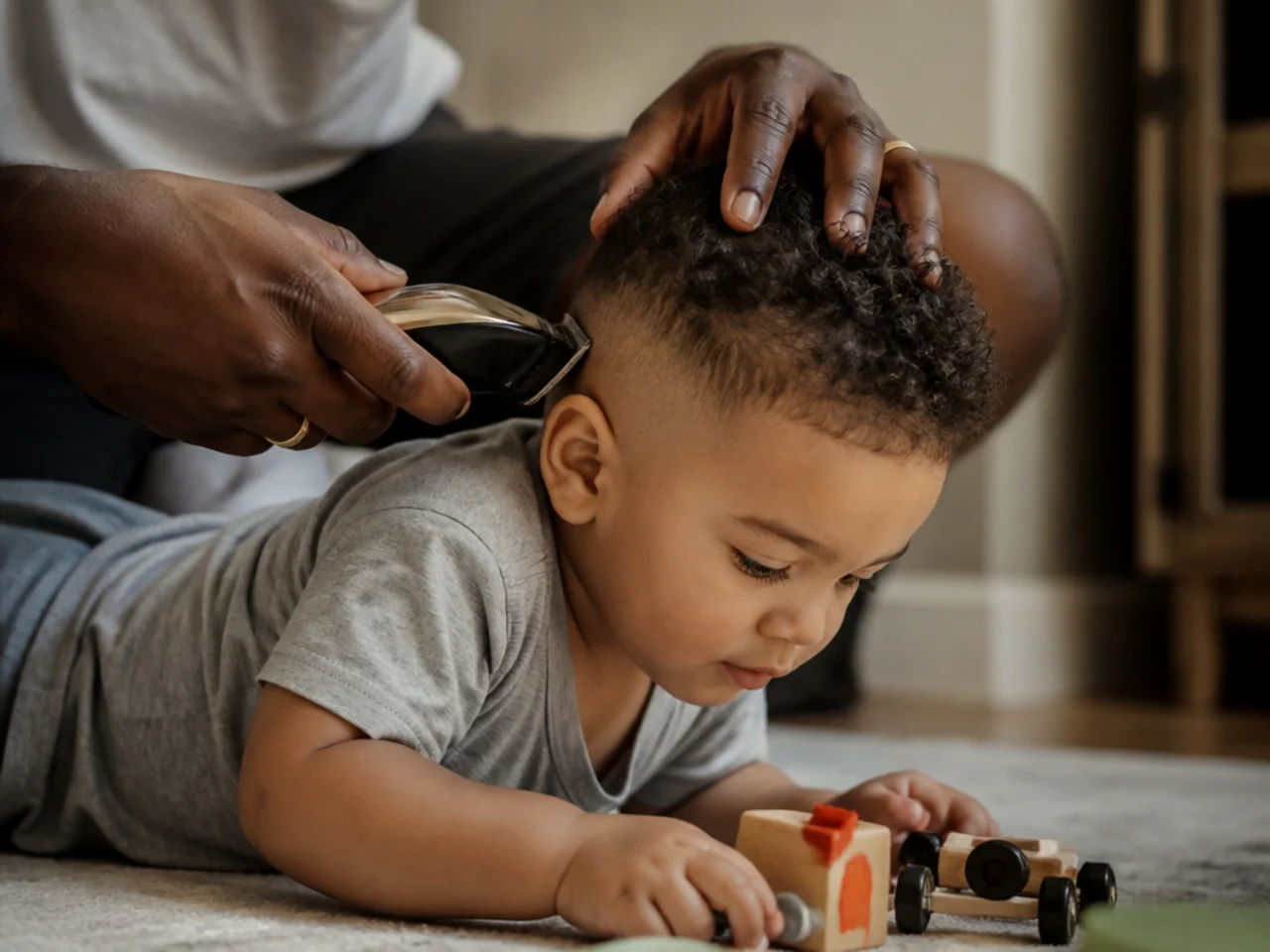
6. On the Floor With the Child Playing
You work around him, taking a section whenever his head happens to be still, usually eight to fifteen seconds at a time. Nothing is asked of him, so nothing gets refused. The cost is that you will never get a level line this way — it softens bulk, it does not shape.
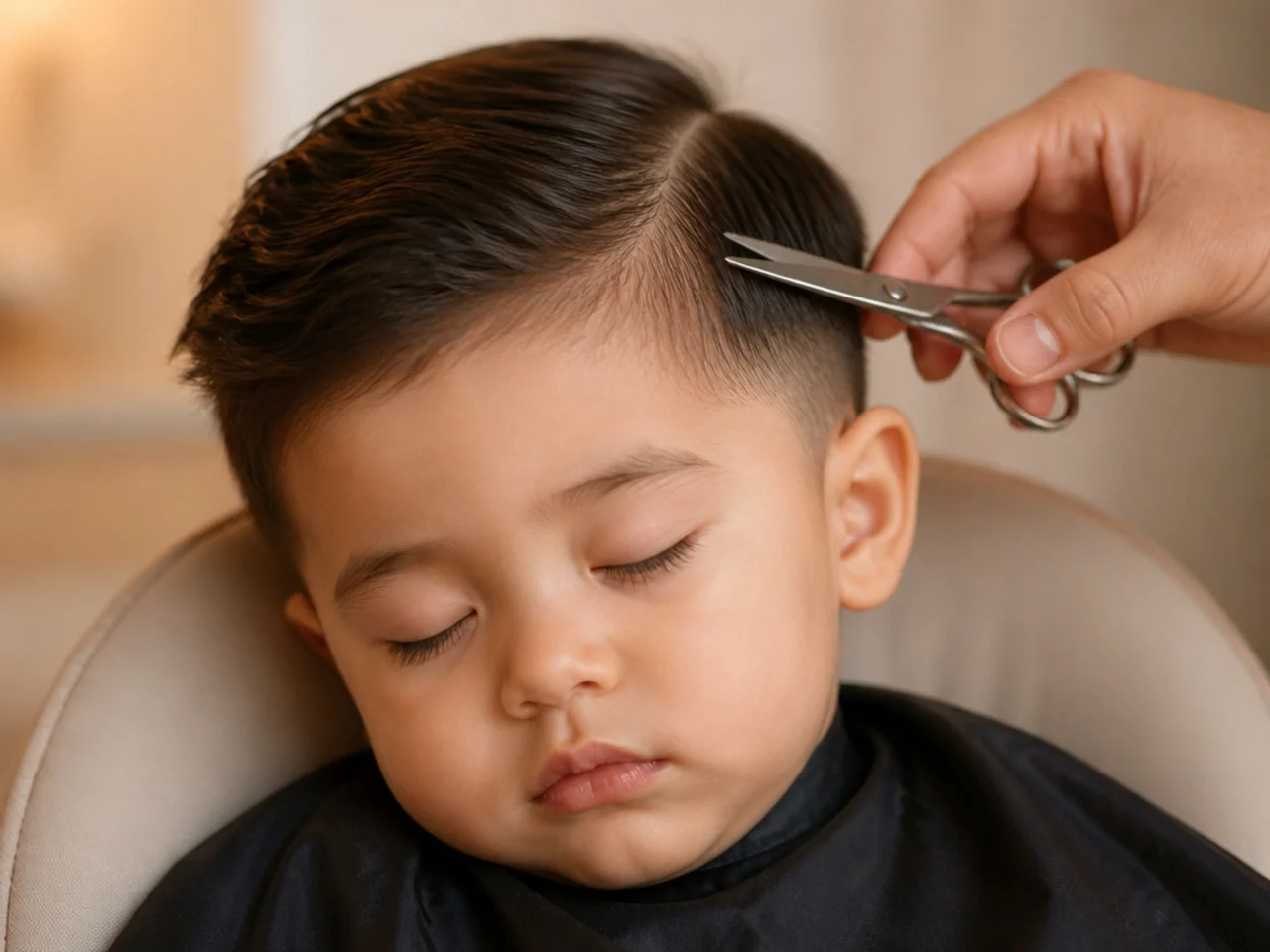
7. Asleep in the Cot
Deep sleep buys minutes rather than seconds, and it is the only setup where you get to take your time. Scissors only — clipper vibration travels through the skull and wakes a child even when the noise does not. You get the side he is not lying on, so treat it as one section rather than a haircut.
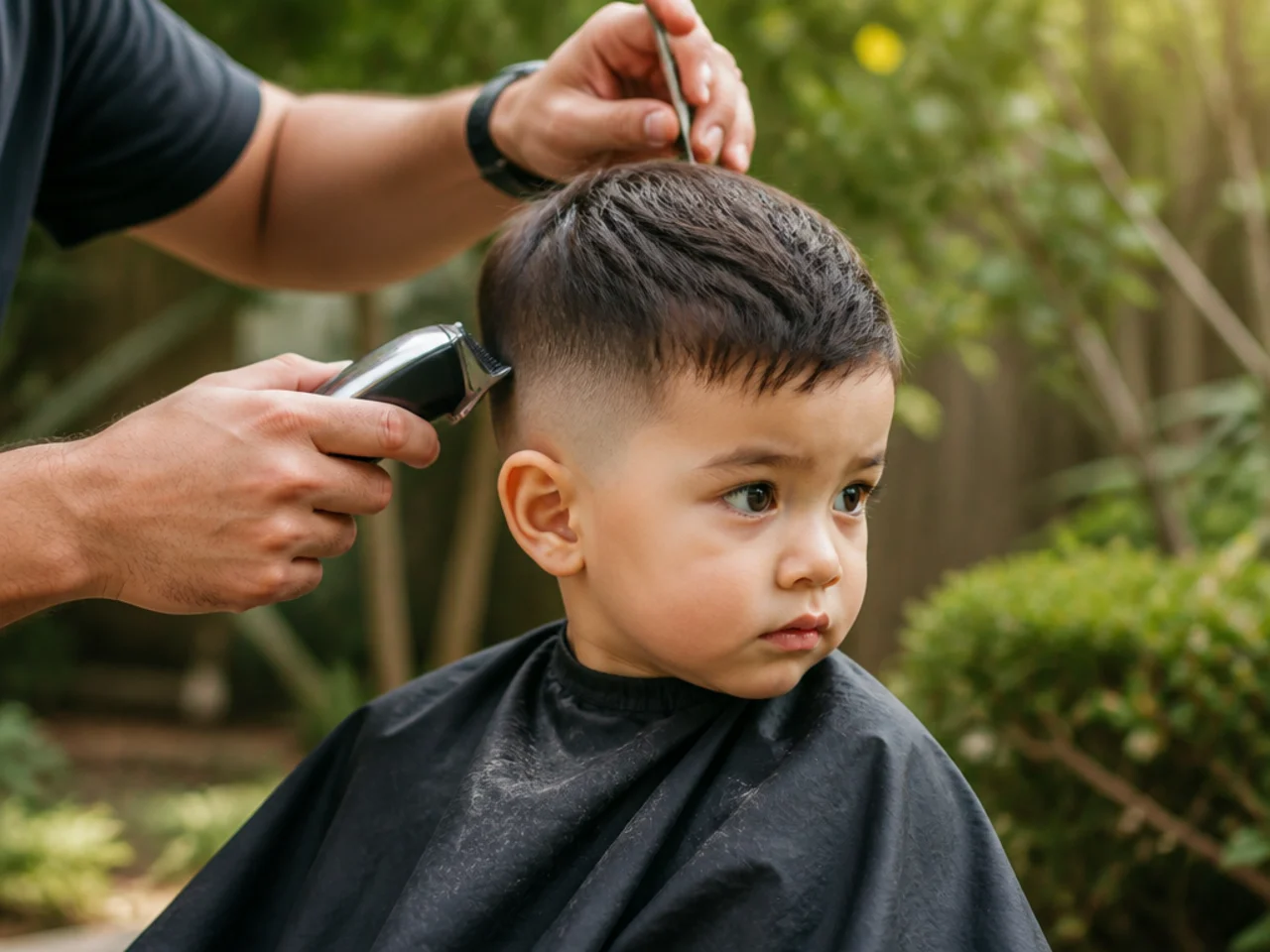
8. Outside So the Clippings Blow Away
Itchy clippings down the collar end more toddler haircuts than clipper noise does, and outside the problem disappears without a cape or a rinse. There is more to look at, which stretches his tolerance by a minute. The cost is wind moving fine hair while you are judging a length.
9. Clipper Handed Over Switched Off First
He holds the clipper, turns it over and hands it back, which converts it from a thing being done to him into an object he has already had. It costs thirty seconds and buys the whole clipper phase. Do it every time, not just the first, because the fear resets between haircuts.
10. Sat in Front of a Mirror So He Can Watch
Seeing what is happening removes the surprise, and a toddler who can track the clipper stops flinching at the point of contact. It also holds him facing forward without being asked. Some children get more upset watching hair fall, so this one either works immediately or not at all.
11. Split Across Two Evenings
Two ten-minute sittings rather than one twenty-minute one, so each half only has to outlast a single stretch of patience. It only works on a shape that survives being abandoned, so do fringe and top on night one and sides and neckline on night two. The cost is a day of looking slightly odd, which matters to nobody at this age.
12. Ten Minutes After a Nap
Wake-up is the widest tolerance window of the day — calm, not yet hungry, not tired enough to refuse things on principle. The window is about twenty minutes and then it closes. The cost is scheduling around it, which is why the tools have to be out before he is up.
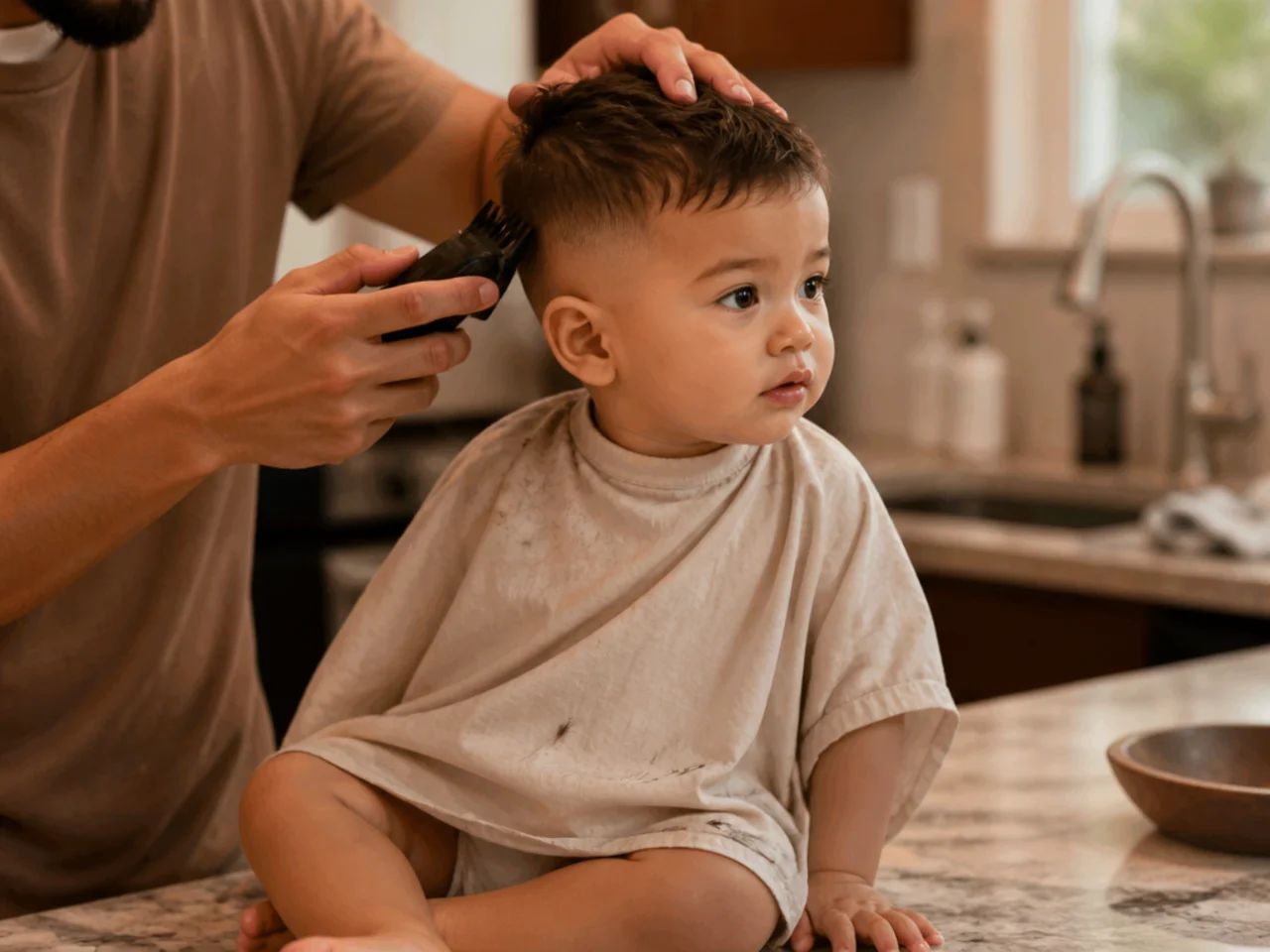
13. Sat on the Kitchen Counter at Adult Eye Level
Raising him to your height means cutting across rather than down, which is the difference between a level side and a line that drifts because you were leaning. You see the guideline properly and your hands stay steady. It needs a hand on him throughout, so it is a two-adult setup.
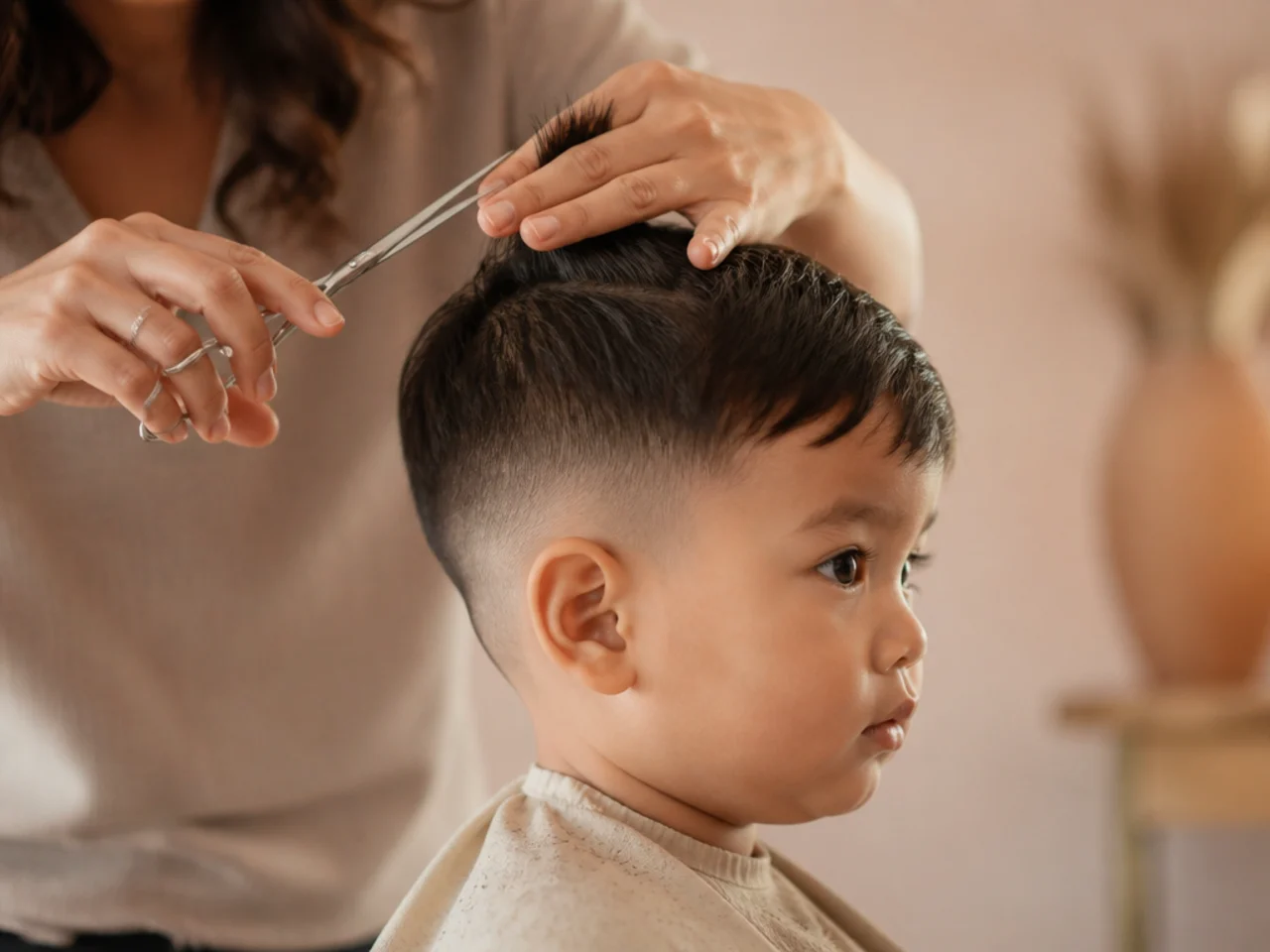
14. Scissors Only, With the Clipper in Another Room
Removing the motor removes the loudest variable, and a scissor cut happens in near silence while he half-attends to something else. Fine baby hair is soft enough that scissors over fingers gives a soft edge with no clipper at all, and the step-by-step order is the same either way. The cost is that you cannot get genuinely short this way.
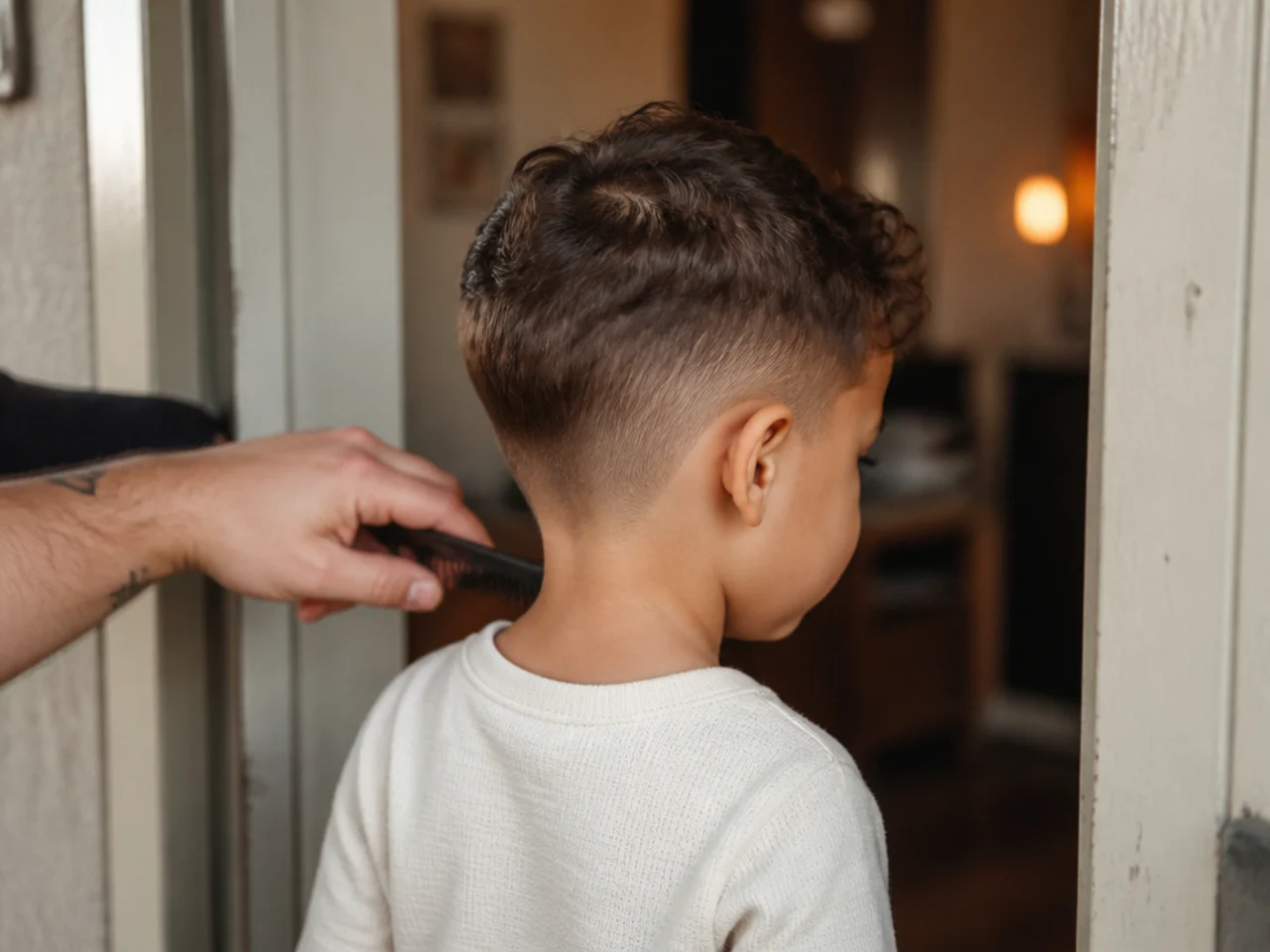
15. In the Doorway Where He Is Free to Walk Away
Nothing holds him, and knowing he can leave is usually why he does not — a restrained toddler spends his stillness testing the restraint. You get ten-second bursts on his terms. It is the least efficient setup here and the only one that works on a child who has refused everything else.
Styling and Upkeep
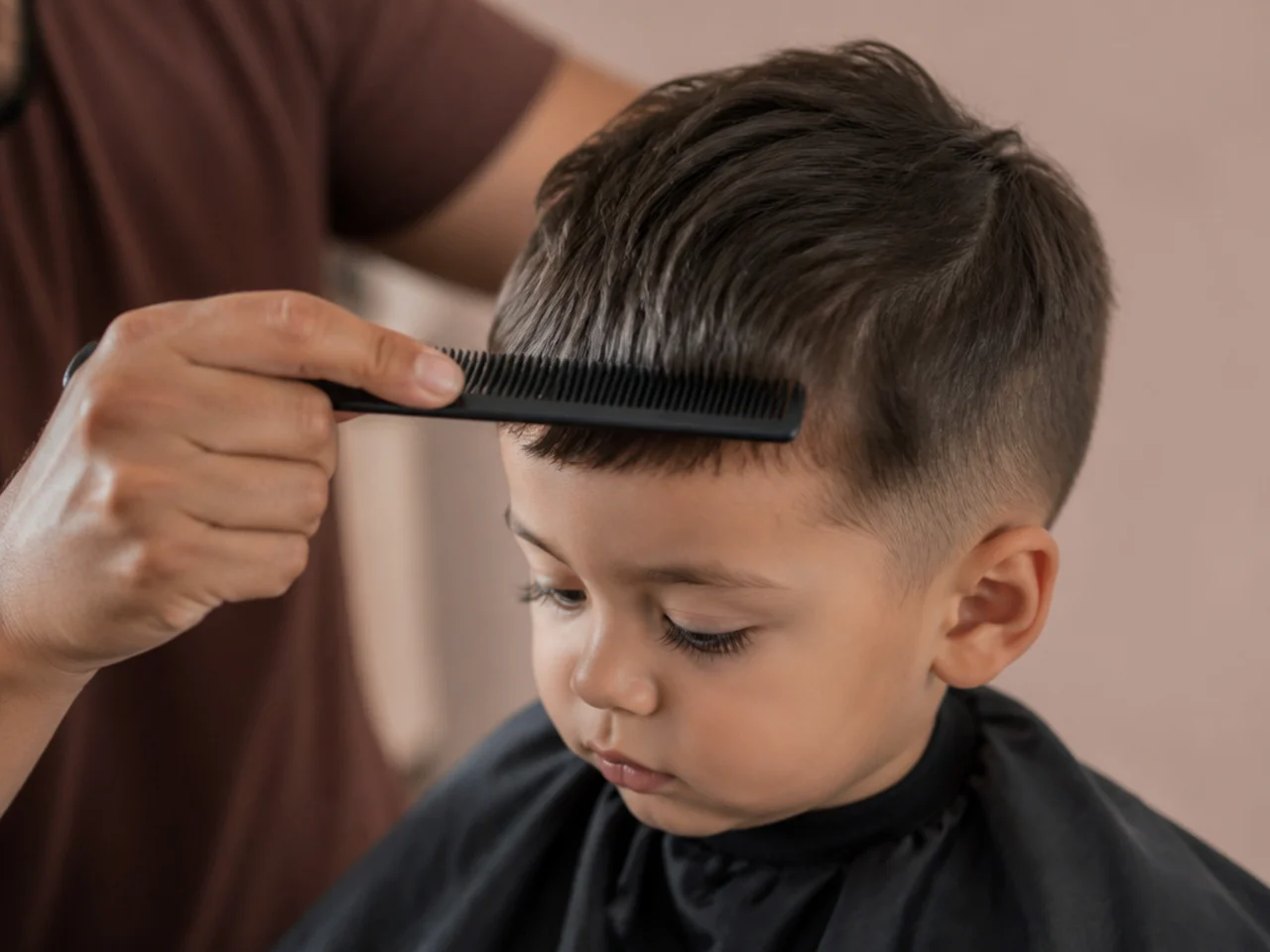
Recheck only the fringe every two weeks. It is the one section with a deadline, because hair in the eyes is a daily problem and a long neckline is not.
Judge the crown whorl dry, never wet. Water pulls the whorl flat and hides the spot that stands up the moment it dries.
Leave a centimetre more than you want on a wet cut. Fine hair lifts as it dries, so a wet toddler cut lands shorter than it looked in your fingers.
Keep the clipper charged with the guard already fitted. Fitting a guard while he waits spends the best thirty seconds of stillness on admin.
Do the neckline as its own thirty-second job another day. Nobody photographs a neckline, so it is the section that most deserves postponing.
Mistakes to Avoid
Treating the cut as one event. Booking it in your head as a finished haircut is what makes you push past the protest that should have ended it.
Dropping to a #1 or #2 on fine baby hair. There is not enough density to cover scalp at 3mm or 6mm, so it reads bare rather than short.
Starting the motor next to his head. Switch it on at arm's length and let him hear it for a few seconds before it goes near an ear.
Cutting the back first because it is easiest to reach. End the session there and you have finished the section nobody sees.
Carrying on after the first genuine protest. The next haircut is easier or harder depending entirely on how this one ended.
FAQ
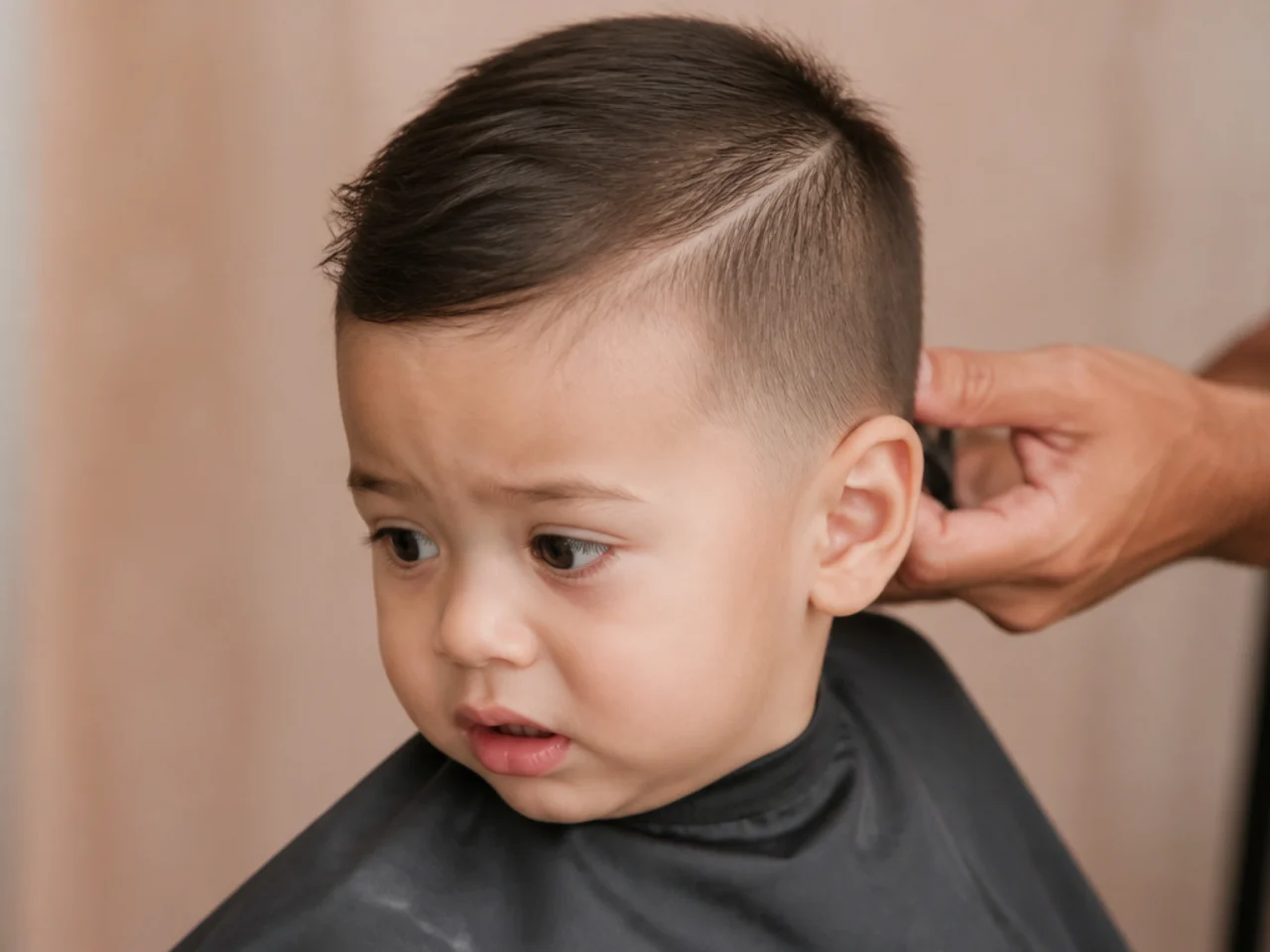
Where is the easiest place to cut? The high chair at snack time, because the tray restrains him and nobody has to hold his body.
Can you cut a sleeping toddler's hair? Scissors yes, clipper no — the vibration wakes him even when the sound does not.
How short can you safely go? A #3 or #4, because fine baby hair shows scalp at anything shorter.
Final Thoughts
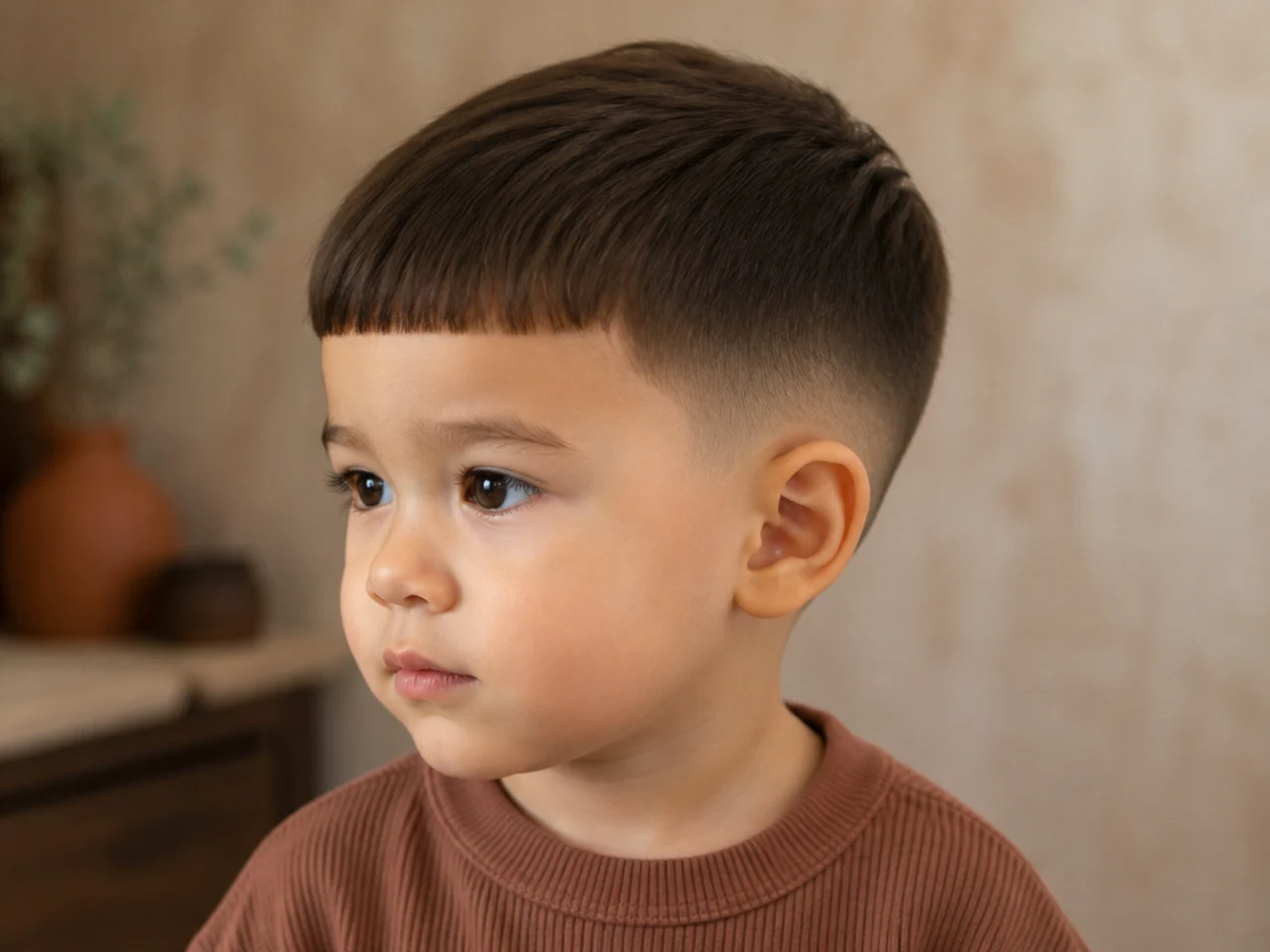
Stop thinking of it as a haircut and start thinking of it as a list of sections, each worth about forty seconds. Cut the one that matters most while he is still willing and let the rest wait until tomorrow — that flexibility is the entire reason to do it at home.
If you want a shape that survives being finished badly, see the toddler burst fade guide, and for choosing a quiet cordless machine start with the best hair clippers guide. More in Men's Haircuts.