10 Chic Bob Haircuts for Round Face Shapes to Try Now
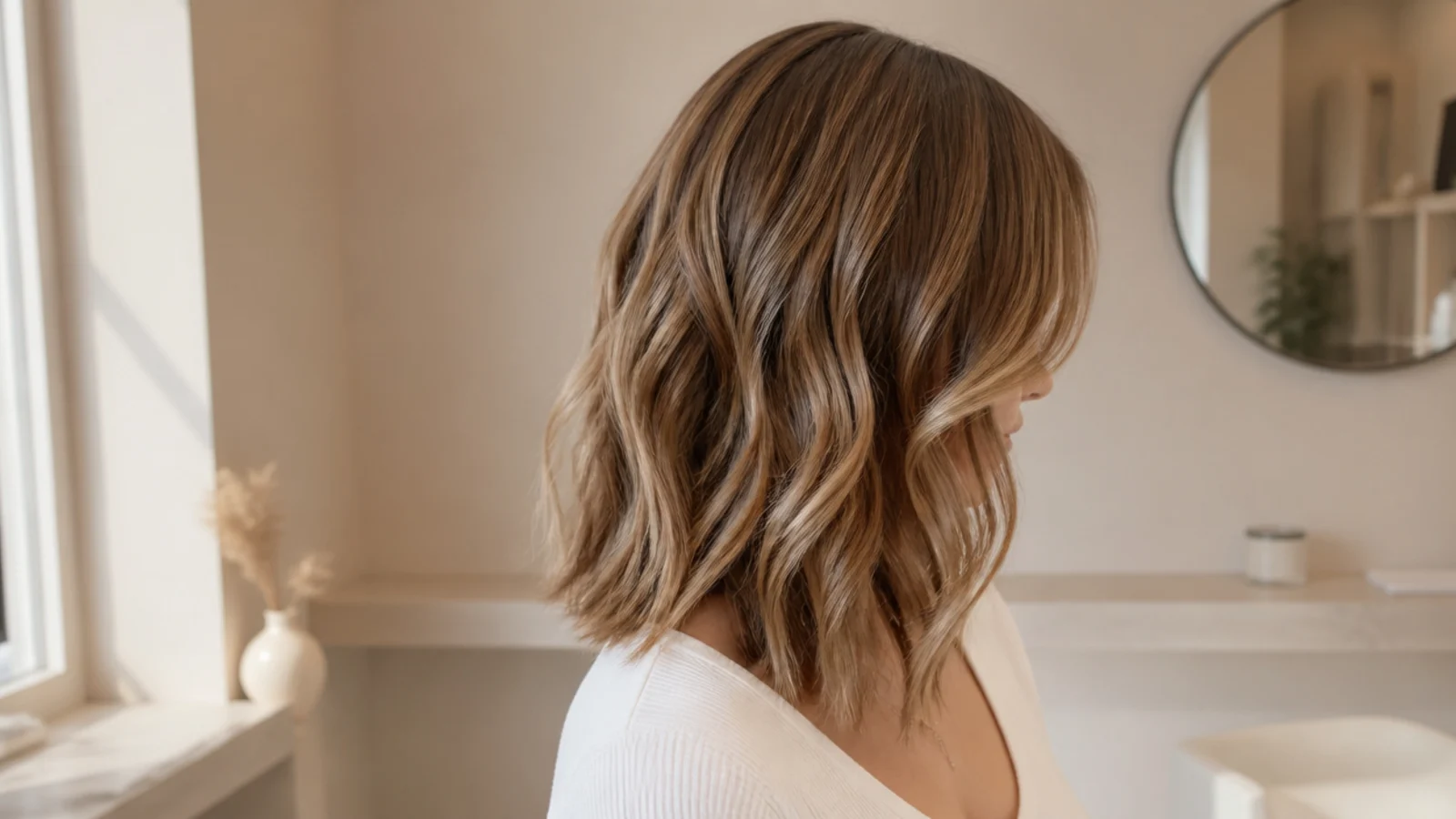
This shoulder-length blunt bob offers a clean and sophisticated look. The sharp edges frame a round face beautifully, enhancing your cheekbones. The side part adds symmetry, m
In this article · 11
- 1\. Shoulder-Length Blunt Bob with Side Part for Soft Features
- 2\. Textured Bob with Wispy Bangs for a Playful Vibe
- 3\. A-Line Bob with Subtle Highlights for Dimension
- 4\. Curly Bob with Curtain Bangs for Effortless Charm
- 5\. Inverted Bob with Edge for a Chic, Modern Look
- 6\. Blunt Bob with Tapered Ends for a Minimalist Aesthetic
- 7\. Long Bob (Lob) with Beach Waves for Relaxed Appeal
- 8\. Classic Bob with Pocketed Layers for Movable Texture
- 9\. Asymmetrical Bob with Bold Color for a Trendy Flair
- 10\. Layered Bob with Face-Framing Highlights for Soft Radiance
- Narrowing Down Your Perfect Bob Cut
Round faces need one thing from a bob: vertical length. Not width. That means angled fronts, longer sections past the jaw, and off-center parts that break the perfect circle. Skip the chin-length one-length shape — it lands at your widest point and stops there. The ten bob haircuts for round face shapes below all pull the eye downward, sharpen the cheekbones, and read as intentional. Bring photos. Know your part. Read the styling notes twice.
1. Shoulder-Length Blunt Bob with Side Part for Soft Features
Push the length past the chin. A round face gets width where a chin-length bob usually lands, so dropping the perimeter to the shoulder pulls the eye down instead of across. That vertical pull is the whole trick. The deep side part matters as much as the length. It breaks symmetry, drops one side lower than the other, and shifts the widest visual point off your cheek. Sharp ends keep the outline crisp — anything ragged softens the elongating effect you paid for.
This shape also flatters heart and oval faces that want a low-fuss frame. If you have a strong jawline, this cut lets it lead.
Ask your stylist for "a shoulder-length one-length bob with a deep side part and blunt ends — no internal layers." Point to the exact spot on your shoulder. Say the word "shoulder."
Styling tip: blow-dry with a round brush turning under, then run a flat iron through the last inch only for that clean line. A drop of oil at the tips seals frizz. If you want to compare against every other length variation, our full bob haircut guide breaks the whole family down. Trim every seven weeks.
2. Textured Bob with Wispy Bangs for a Playful Vibe

Texture is your friend. A round face reads flatter when the surface has movement — negative space between strands, wispy ends, air. A solid perimeter emphasizes fullness. A broken one deflects it. Add wispy bangs and you split the forehead into a triangle. That triangle draws the eye to the center of the face and away from the cheeks.
Keep the bangs at brow level, feathered, not thick. Curtain bangs widen the forehead. Wispy bangs elongate it. This cut also works for square jaws that want to soften and for oval faces that want more life. Thick hair carries it best because there is more weight to remove.
Ask for "a jaw-length bob with internal razor layers and wispy bangs sitting at the brow — point-cut, not blunt." If your hair is thick, mention weight removal explicitly.
Styling tip: spritz sea salt spray on damp hair, scrunch, and diffuse. Skip the round brush. Dry texture spray at the roots adds crown height, which lengthens the face further. If you like the messy-airy feel, our roundup of messy bob haircuts that instantly make you look younger gives more variations built on the same idea. Trim every eight weeks.
3. A-Line Bob with Subtle Highlights for Dimension
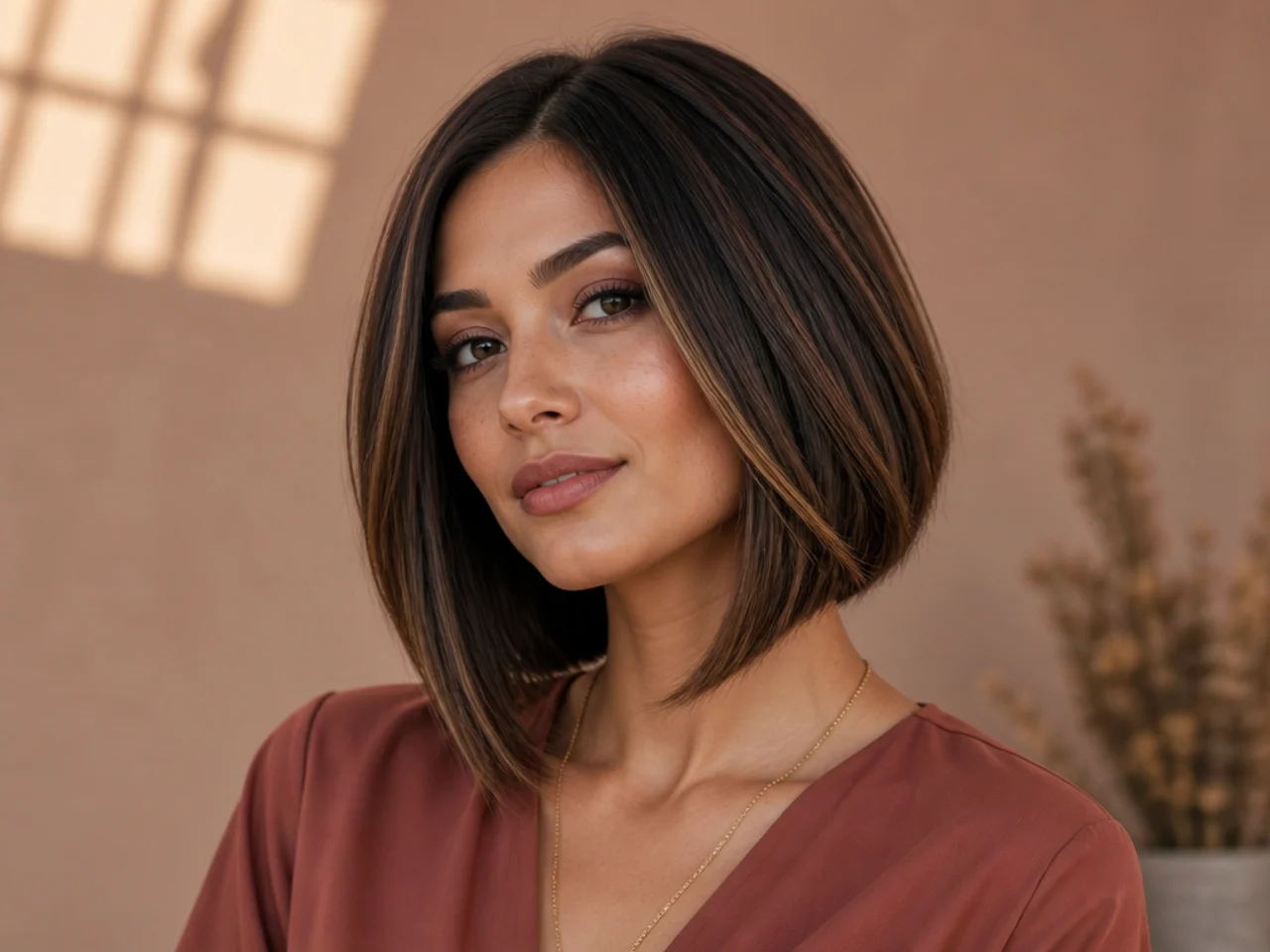
The A-line bob is the round face's cheat code. The front is longer than the back. That single angle stretches the face vertically and pulls attention past your jawline. The back stays shorter and gives lift at the crown — vertical height where you want it. Two directions of pull from one cut.
Highlights strengthen the illusion. Placed at the front pieces near the jaw, they catch light and draw the eye down. Deeper at the crown, they add dimension without widening. Ask for baby lights, not chunks. Face-framing panels only.
This angled bob for round face shapes also suits square and diamond faces — anyone wanting to slim the middle third. Fine hair loves the built-in structure. Thick hair needs internal thinning to keep the angle sharp.
Ask for "an A-line bob for round face proportions, chin-length in back to collarbone-length in front, with a soft graduation and face-framing baby lights." Bring a photo of the exact angle you want.
Styling tip: use a round brush, rolling the front pieces under and toward the face. Finish with shine serum on the length only — never at the roots. For context on how bobs adapt to different bone structure, see our trendy bobs for every face shape roundup. Trim every six weeks.
4. Curly Bob with Curtain Bangs for Effortless Charm

Curls need special treatment on round faces. Volume at the sides is the enemy — it widens where you already have width. The fix is height, not width. Cut the bob dry, in curl formation, so your stylist can see how each spiral will land. Layers should sit inside the shape, not at the surface, so the perimeter stays defined and the crown builds up.
Curtain bangs seem risky here but work well when they part around the face. They frame the cheekbones like brackets and split the forehead vertically. Type 2b to 3a hair takes this best. Coarse 3c and 4-type curls need custom placement from a curl specialist.
Ask for "a dry curly cut, jaw-to-shoulder length, with internal layers for crown volume, plus curtain bangs cut wet at cheekbone length so they sit at the jaw when dry."
Styling tip: apply curl cream on soaking wet hair, scrunch, and diffuse upside down for lift. Never brush. Refresh next-day curls with water and a leave-in. Prefer straighter shapes? Our guide to layered bob haircuts covers layered options across textures. Trim every ten weeks — curly hair grows down in length but out in bulk.
5. Inverted Bob with Edge for a Chic, Modern Look
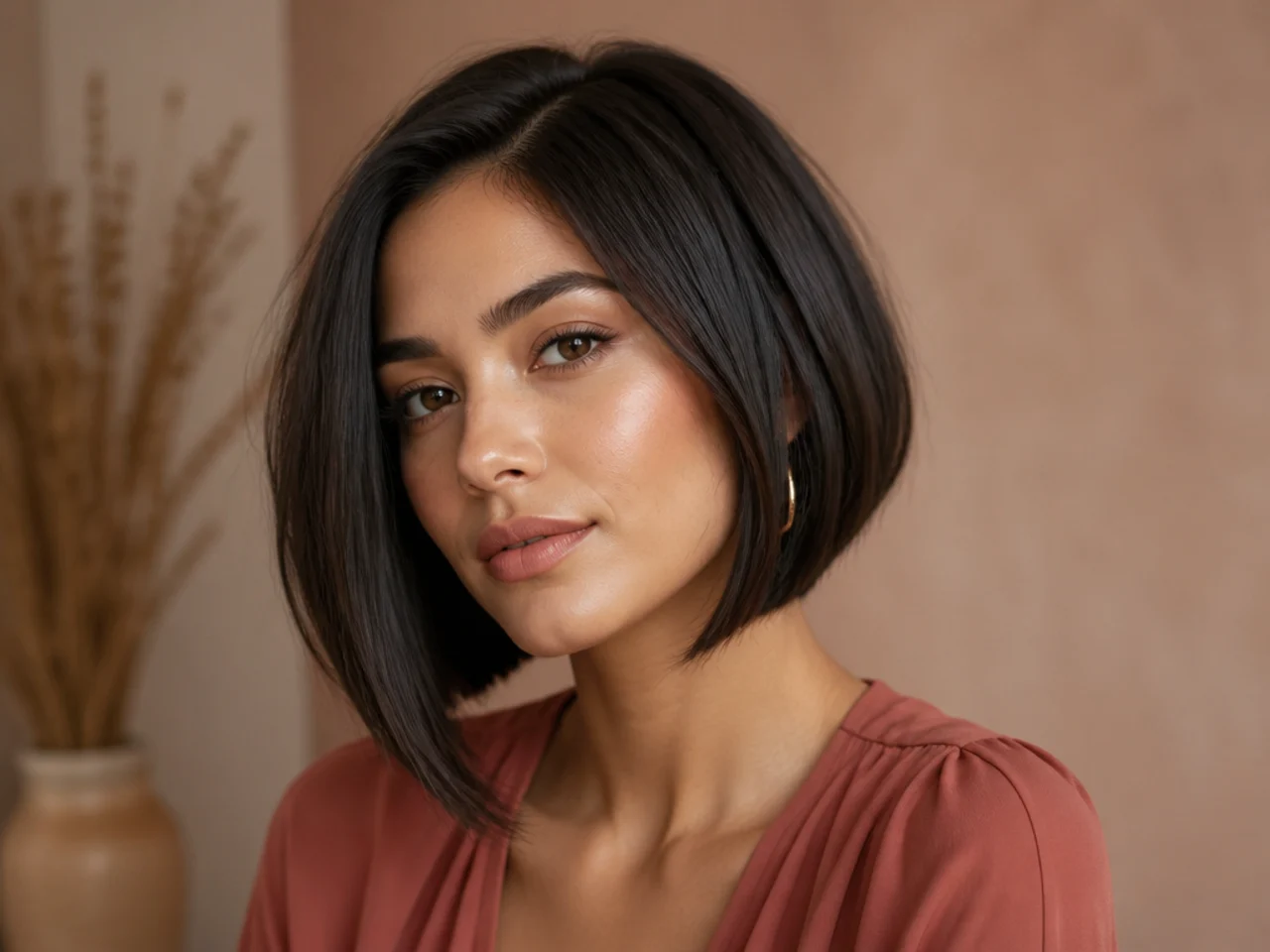
Inverted means stacked at the back. Shorter underneath, longer on top, dropping into longer front pieces. The stack pushes volume up at the crown and creates a sharp diagonal from the nape to the chin. That diagonal is a vertical line pretending to be a haircut. On a round face, it works overtime. Back height stretches you above the ears. The longer front stretches you below the chin. You get pulled from both ends.
This cut suits oval and heart faces beautifully and gives fine hair the appearance of density. It is not ideal for very thick hair — the stack goes pumpkin-shaped fast unless you thin aggressively.
Ask for "an inverted bob with stacked layers in the back, dropping to jaw-length front pieces, chin-length through the middle." Bring reference photos from multiple angles. This shape reads differently from every side.
Styling tip: round-brush the crown pieces up and back for lift. Light mousse at the roots holds it. Finish with hairspray at the crown only — the length wants to hang. If you like engineered angles, the Karen haircut is another sharp shape worth studying. Trim every six weeks or the stack collapses.
6. Blunt Bob with Tapered Ends for a Minimalist Aesthetic
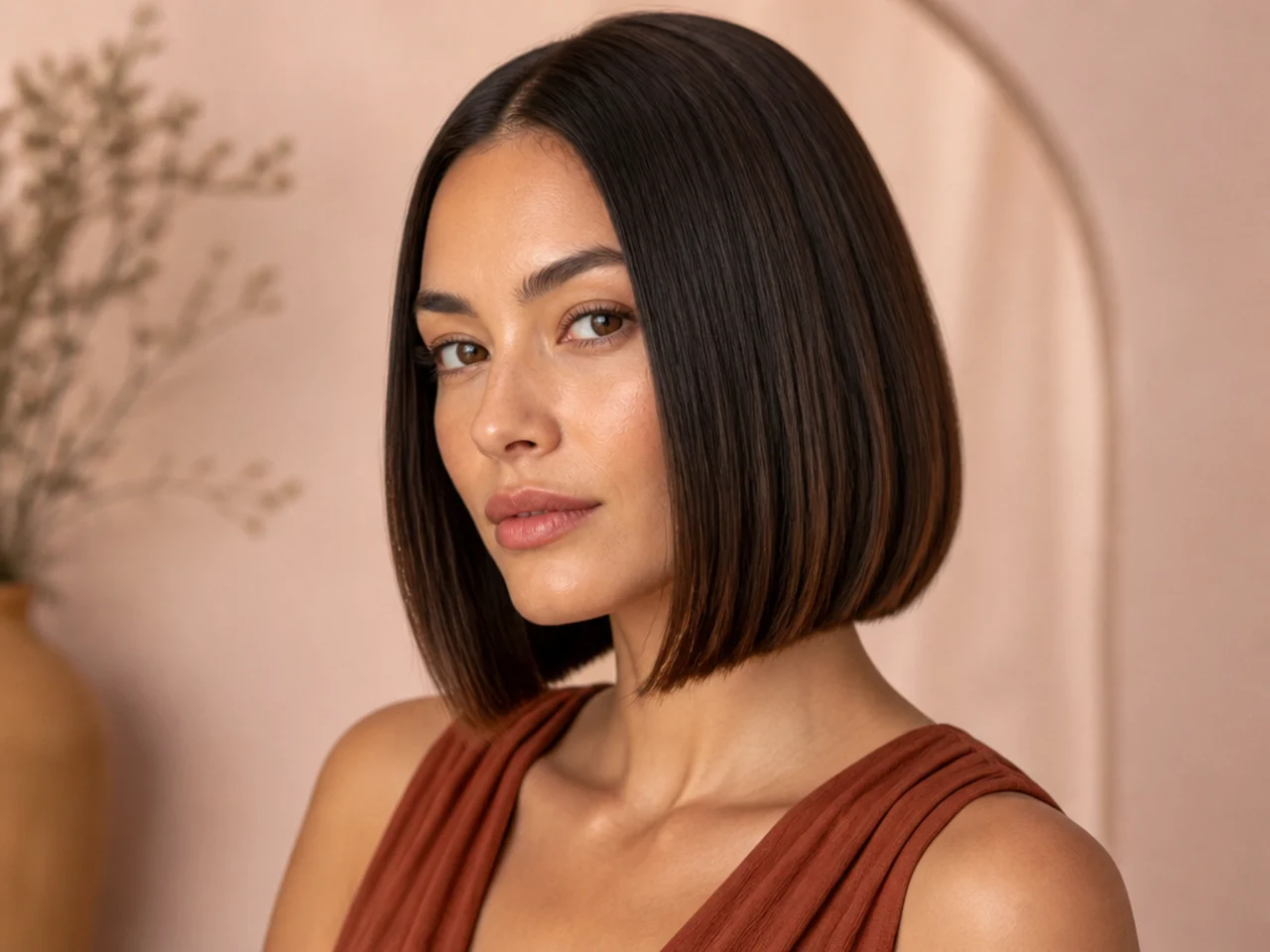
Here is the nuance most guides get wrong. A pure blunt bob at chin length is round-face kryptonite — it draws a horizontal line across your widest point. The version that works has tapered ends and drops past the jaw to collarbone. The taper softens the perimeter without breaking it. Length below the chin pulls the shape down. Together, they read as blunt without acting like it.
This cut works for oval and long faces at any length. On round faces, keep it long enough to clear the widest point. Fine hair benefits most because the near-blunt line reads as density.
Ask for "a long blunt bob, collarbone length, with soft point-cutting on the last inch to remove the hard line." Do not say "chin-length." That word will get you the version you do not want.
Styling tip: blow-dry with tension using a paddle brush, angling the ends slightly under. Pass a flat iron through once for finish. Skip volume at the roots — this shape wants sleekness. If you want the polished line with more movement, see our take on the blunt haircut with layers. Trim every six weeks. The ends fray fast.
7. Long Bob (Lob) with Beach Waves for Relaxed Appeal

The lob is the safest round-face bob. Length below the collarbone gives the vertical you need. Waves add movement without adding width — the S-curve of a wave narrows the outline compared to a straight strand or a full curl. Beach waves keep the pattern loose so the shape stays elongated. Tight waves round out. Loose ones stretch. That difference decides everything.
This cut works for every face shape and every hair type, which is why it lives in every stylist's greatest-hits reel. Round faces should ask for a subtle A-line even in a lob — a small front-length advantage keeps the vertical pull working.
Ask for "a lob with soft face-framing layers, longest pieces at the collarbone in front, and internal layers that hold a wave without going puffy."
Styling tip: wrap 1.5-inch sections around a curling wand, alternating direction, and leave the last inch out for that lived-in break. Cool the section in your hand for two seconds, then finger-comb. A pump of texture cream at mid-lengths adds the piece-y finish. Salt spray works too but dries faster. Trim every eight to ten weeks.
8. Classic Bob with Pocketed Layers for Movable Texture

A pocketed layer is a hidden layer. Cut inside the shape, invisible from the surface, they remove weight without breaking the perimeter. On a round face, this matters — a strong outline elongates, while surface layers can widen. Pocketed layers give you movement without the trade.
Keep the length below the chin — jaw to collarbone — and the layers do the internal work while the outline stays long. This cut suits medium to thick hair best. Fine hair loses the point of pocketing because there is not enough weight to remove; if that is you, our guide to short bob hairstyles for fine hair has better matches. Oval and square faces also love the shape.
Ask for "a jaw-length bob with pocketed internal layers for weight removal and a slight forward graduation." Add: "no visible surface layers."
Styling tip: blow-dry with a round brush, rolling under with tension. The pockets create bounce without you having to fake it. A light hairspray sets the shape. Trim every seven weeks.
9. Asymmetrical Bob with Bold Color for a Trendy Flair
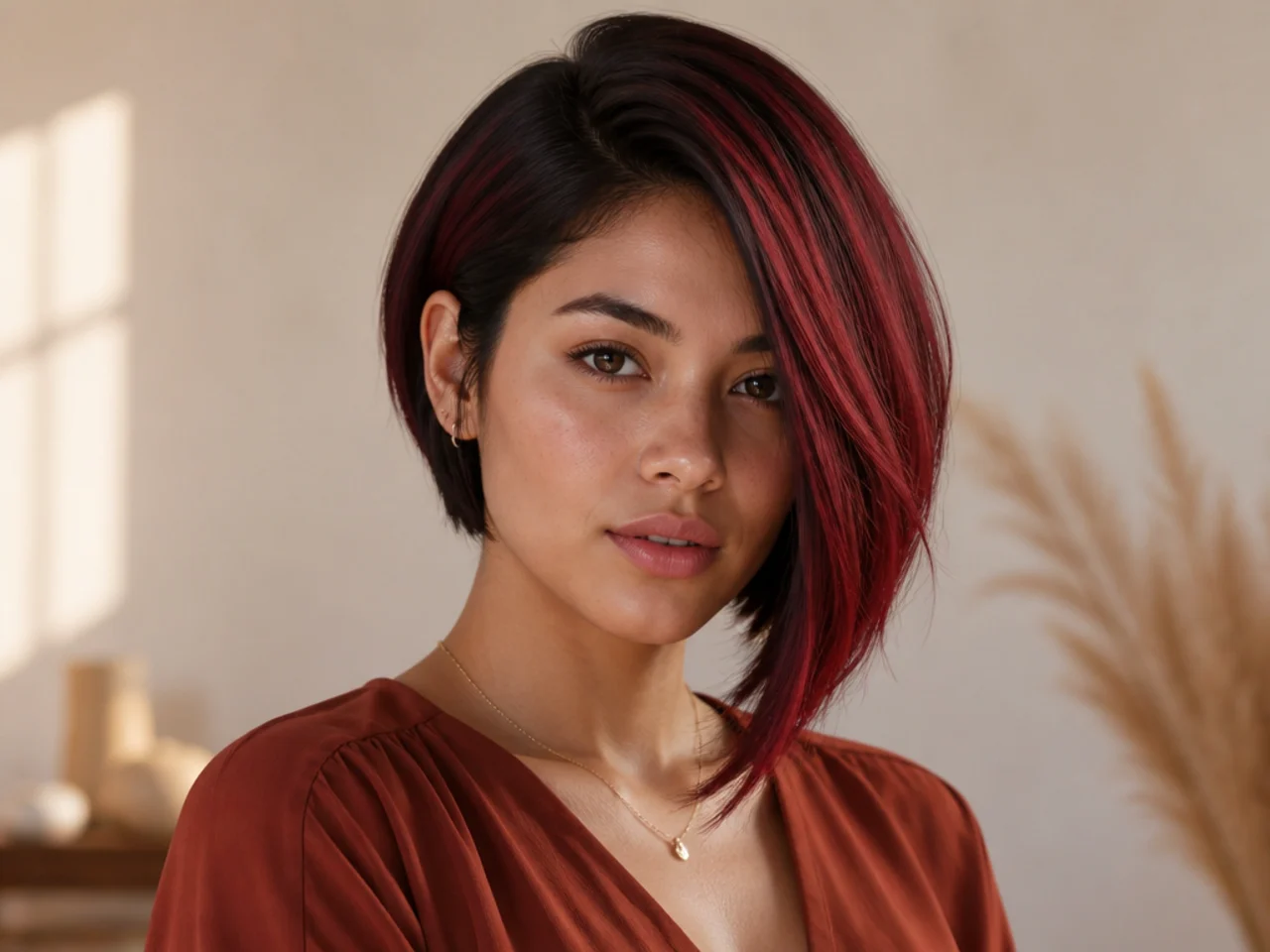
Asymmetry is unbeaten for round faces. One side longer, one side shorter, and the eye cannot find center — when the eye moves, the face reads longer. The bolder the asymmetry, the stronger the effect. Combine it with color and you double the illusion. Dark roots keep the crown grounded, which pulls up. A brighter mid-length pulls the eye down along the longer side. Proportion working with pigment.
This cut suits confident wearers with fine to medium hair. Thick hair can carry it if you thin the shorter side aggressively — otherwise the imbalance looks wedged instead of intentional.
Ask for "an asymmetrical bob, chin-length on the short side, collarbone on the long side, with the longer side falling on your dominant styling side." Match color to your undertone. Warm undertones read best with burgundy or copper. Cool undertones with ash or blue-black.
Styling tip: keep the long side sleek with a flat iron and the short side textured with a bit of paste. The contrast strengthens the shape. Root spray adds crown lift. Trim every five weeks to protect the difference in length.
10. Layered Bob with Face-Framing Highlights for Soft Radiance
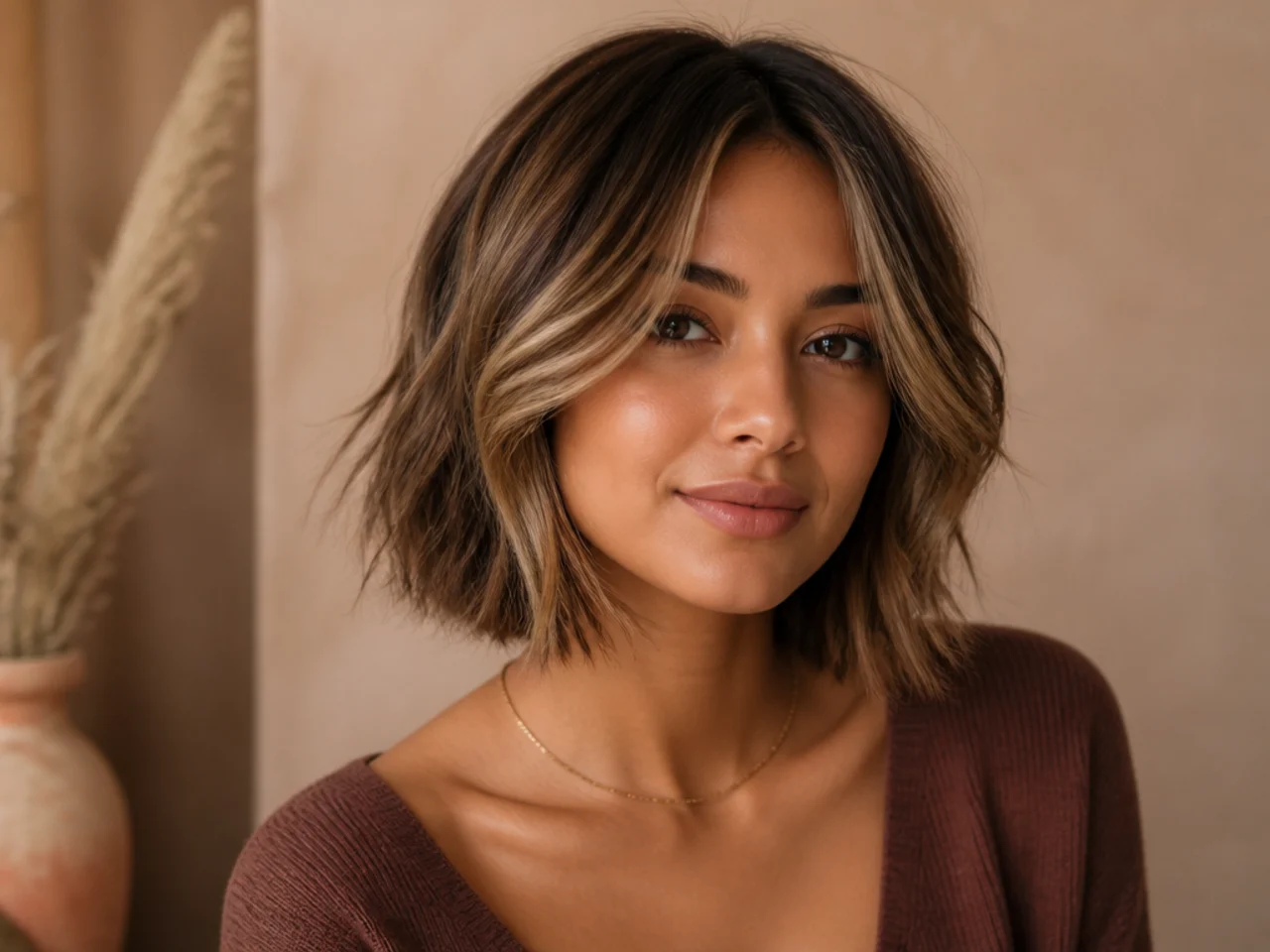
Face-framing layers are surgical. They start at the cheekbone and drop to below the chin, sculpting the face without cutting into the bulk of the shape. For round faces, this creates the appearance of hollows where none exist. The eye follows the shortest layer down to the longest — a vertical scan every time.
Highlights placed on those same face-framing pieces catch light like contour makeup. The face reads longer, narrower, more sculpted. This is the technique that flatters almost everyone — round, square, heart, oval all suit it. Fine through medium hair takes it best. Very thick hair needs extra internal weight removal to let the framing layers sit right.
Ask for "a jaw-to-collarbone layered bob with face-framing layers starting at the cheekbone and dropping two inches below the chin, plus baby-light highlights on those same pieces."
Styling tip: round-brush the face-framing layers away from the face on the first pass, then toward on the second. That gives them lift at the root and movement at the ends. Finish with a light oil on the length only. Trim every seven weeks to keep the shortest framing pieces working.
Narrowing Down Your Perfect Bob Cut
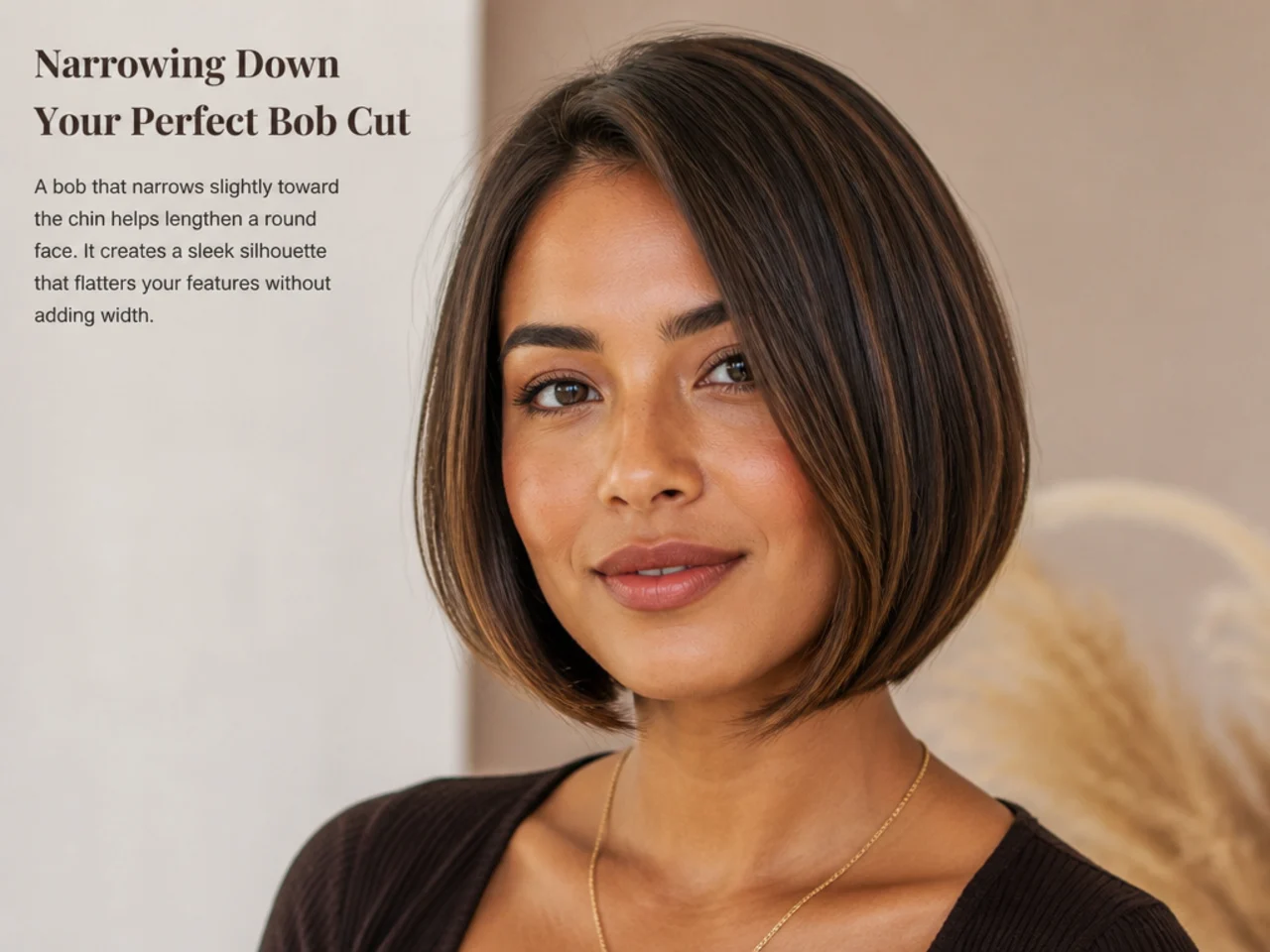
Round face, one rule: choose vertical. Every cut above works because it adds length somewhere — front pieces past the jaw, height at the crown, an angle that pulls the eye off-center. The shapes that fail are the ones that stop at the widest point of your face. Chin-length one-length blunt bobs. Symmetrical bowl cuts. Anything that draws a horizontal line at your cheek.
Pick your hair type first. Fine hair wants blunt outlines and internal layers. Thick hair wants weight removal. Curly hair wants a dry cut. Then pick your commitment level. Every five weeks for asymmetrical shapes. Every ten for a lob. If you go shorter than a bob will allow, our pixie cuts guide covers even shorter shapes that add serious vertical without giving up crown volume.
Bring at least three photos to the consultation. Photos remove ambiguity that words cannot. Tell your stylist which features you want emphasized and which you want played down — they will cut differently for "soften the jaw" than for "sharpen the cheekbones." The right bob does not hide your face. It reintroduces it.