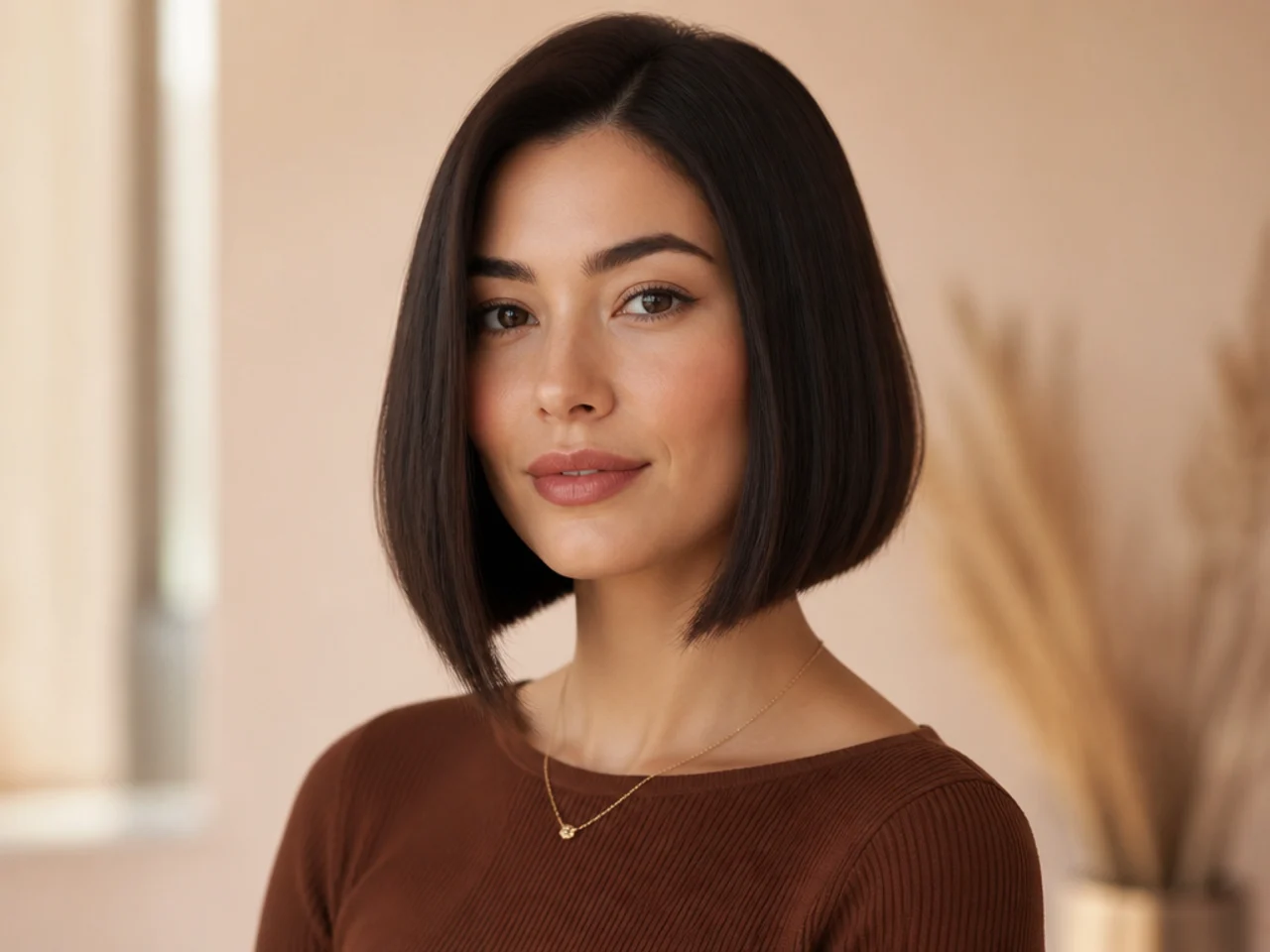
15 Trendy Bobs for Every Face Shape and Hair Type
This A-line bob features a precise cut with blunt ends, creating a chic silhouette that flatters oval faces beautifully. This timeless style brings a modern twist while keepin
In this article · 16
- 1\. Classic A-Line Bob with Blunt Ends for Oval Faces
- 2\. Textured Bob with Wispy Ends for Wavy Hair
- 3\. Bob with Bangs for Heart-Shaped Faces
- 4\. Inverted Bob for All Face Shapes
- 5\. Shoulder-Length Bob for Thick Hair
- 6\. Undercut Bob for Edgy Vibes
- 7\. Layered Bob for Fine Hair
- 8\. Long Bob with Subtle Balayage for Medium Textures
- 9\. Classic Bob with Shaggy Layers for a Playful Look
- 10\. Blunt Bob for a Chic, Polished Look
- 11\. Curly Bob for Natural Texture
- 12\. bob with Soft Layers and Bangs for a Flirty Style
- 13\. Choppy Bob with Disconnected Layers for a Modern Feel
- 14\. Shiny Bob with a Side Part for Professional Settings
- 15\. Asymmetrical Bob for Creative Types
- Time to Choose Your Signature Bob
A bob only works when the cut matches your face. That's the difference between a haircut that flatters and one that fights you every morning. This guide breaks down 15 bob variations, each tuned to a specific face shape — oval, round, heart, square, long, or rectangular. You'll get the angles that slim a wide jaw, the lengths that soften a strong forehead, and the parts that shave visual width. Pick the one built for your bone structure.
1. Classic A-Line Bob with Blunt Ends for Oval Faces
The A-line bob angles from long in the front to short in the back. That forward slope drops weight along the jaw and guides the eye down toward the chin. Oval faces handle this shape because they already carry balanced proportions — the A-line adds structure without warping them.
The blunt perimeter is the whole point. Layers would blur the geometry and soften the very lines you paid for. Keep it clean.
Ask for a chin-length base with a one- to two-inch drop toward the front. Blunt ends. No internal layering above the mid-lengths. If you want a touch of interior movement, request undercutting behind the ear only — invisible from the outside, but it takes weight off dense hair.
Style with a paddle brush and cool airflow along the length, not into the ends. That keeps the line sharp. For a softer read, bend the ends under with a flat iron at medium heat. Skip texturizing spray — you want the finish to reflect one continuous line of hair.
For the full playbook on the shape that spawned every variation below, see the classic bob haircut guide — the A-line sits at the top of that family.
2. Textured Bob with Wispy Ends for Wavy Hair
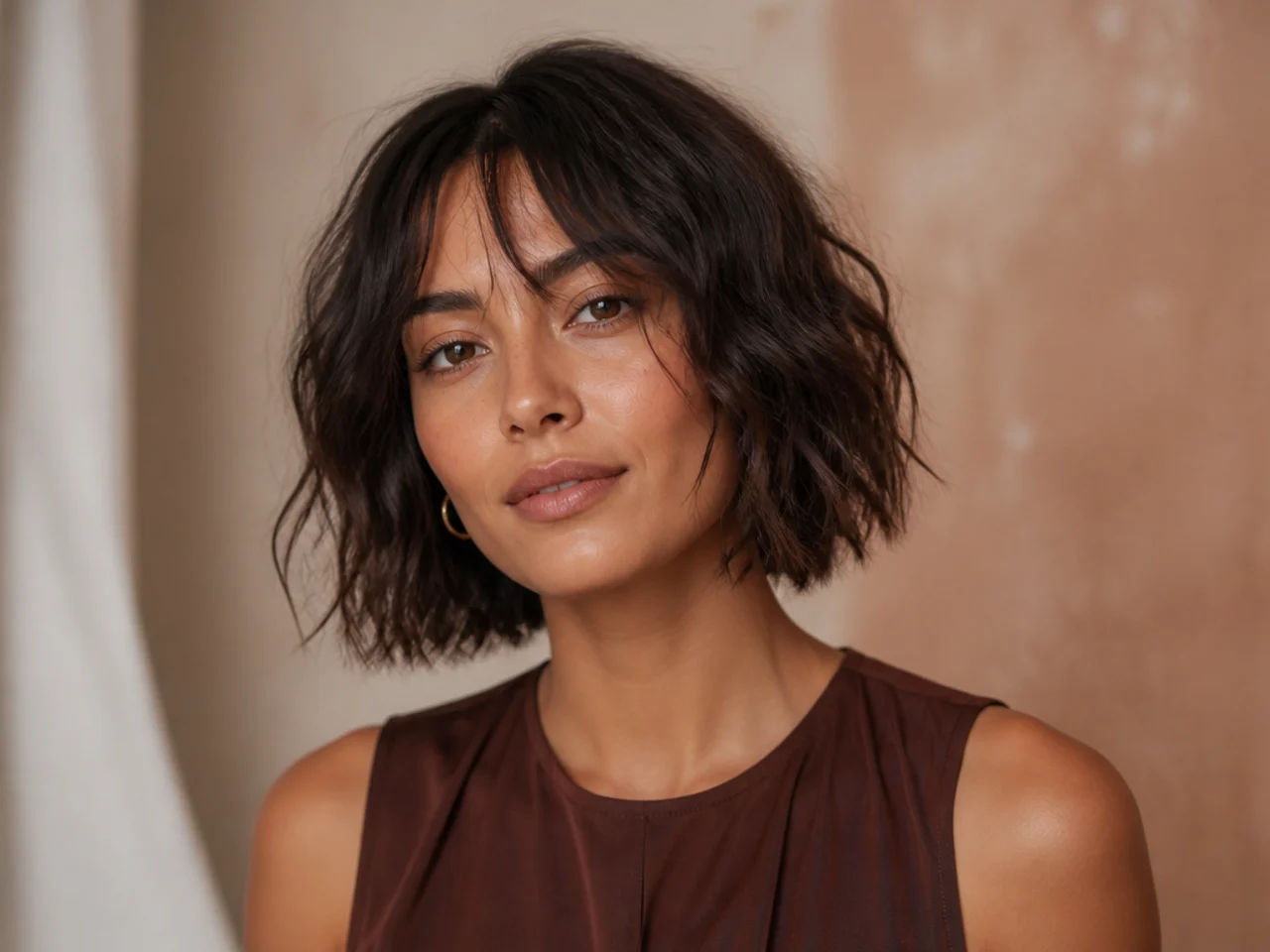
This bob is cut with a razor or point-cut scissors, which feathers the ends into wisps. The perimeter softens instead of holding a hard line. That soft edge adds visual width at the bottom of the cut — perfect for long or oblong faces that need horizontal balance.
Wavy hair takes to this cut naturally. The natural bend needs a defined finish. Blunt cuts on wavy hair collapse under their own density; textured ends let the wave sit where it wants to sit.
Ask for a chin-to-collarbone length with point-cut ends and light internal layering. Tell your stylist you want the perimeter "broken up," not blunt. The phrasing matters — most stylists default to a cleaner line unless you specify.
Skip the round brush during styling. You'll fight the texture and undo the point of the cut. Mist sea salt spray on damp hair, scrunch as you rough-dry with your fingers, and finish with a light cream on the ends only.
3. Bob with Bangs for Heart-Shaped Faces
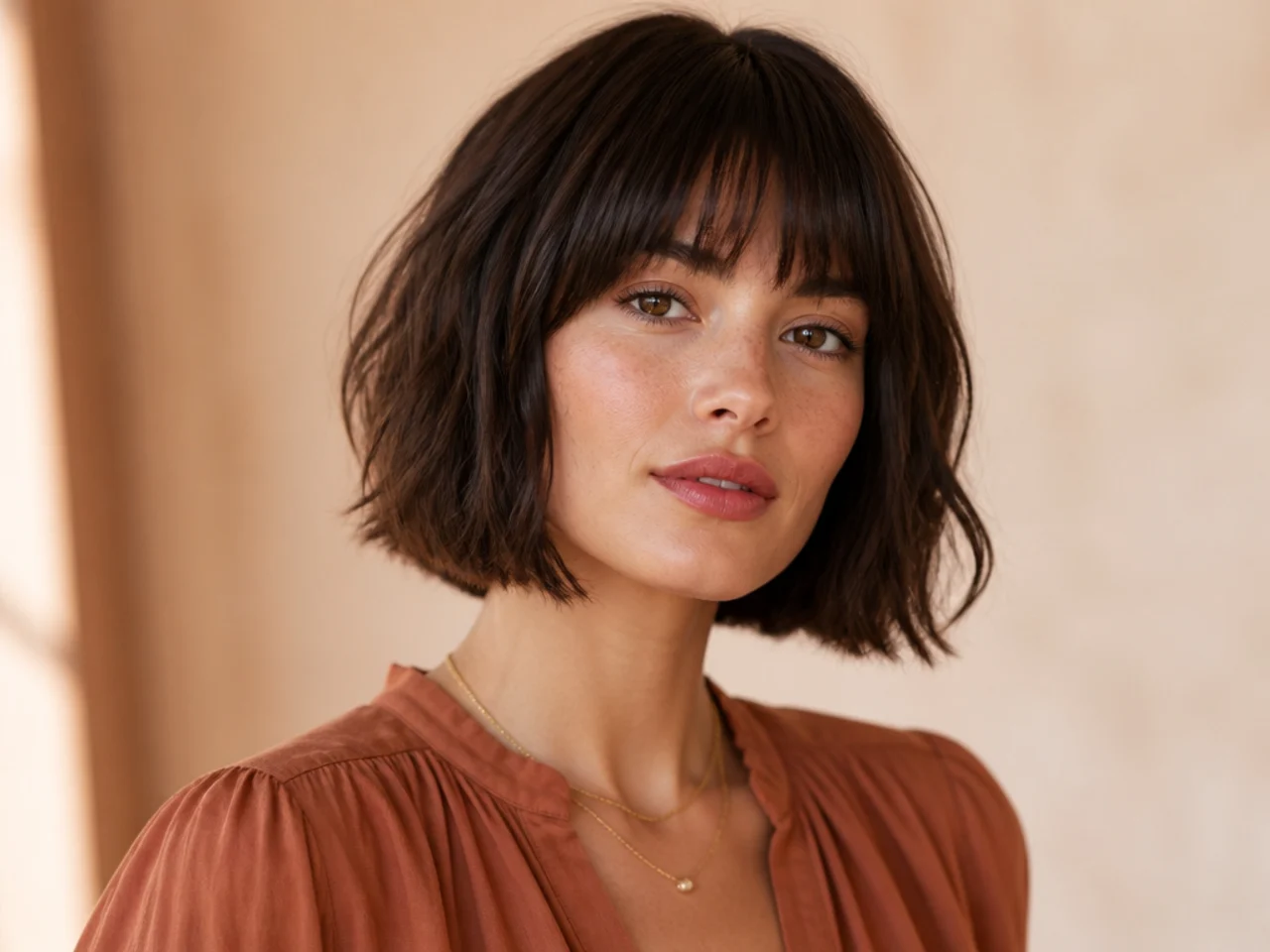
Heart-shaped faces carry width at the forehead and narrow to a pointed chin. Bangs close down the top; a chin-length bob adds visual width at the jaw. The two work together to rebalance the face vertically.
Curtain bangs work best. They fan out from a center split and taper into the sides, softening the temples without a hard fringe line. Blunt bangs also work but skew stronger — better if your forehead runs tall or you want a sharper aesthetic.
Ask for a chin-length cut, curtain bangs starting at the pupils, and a slight face-frame that connects the bangs into the length. Skip a straight, uniform perimeter — you want gentle movement around the jaw so the whole cut reads soft.
Blow-dry the bangs with a small round brush, aiming the airflow down and slightly across. That keeps them light rather than helmet-flat. Finish with a spot of oil on the ends of the bangs to prevent flyaways from breaking the line.
4. Inverted Bob for All Face Shapes
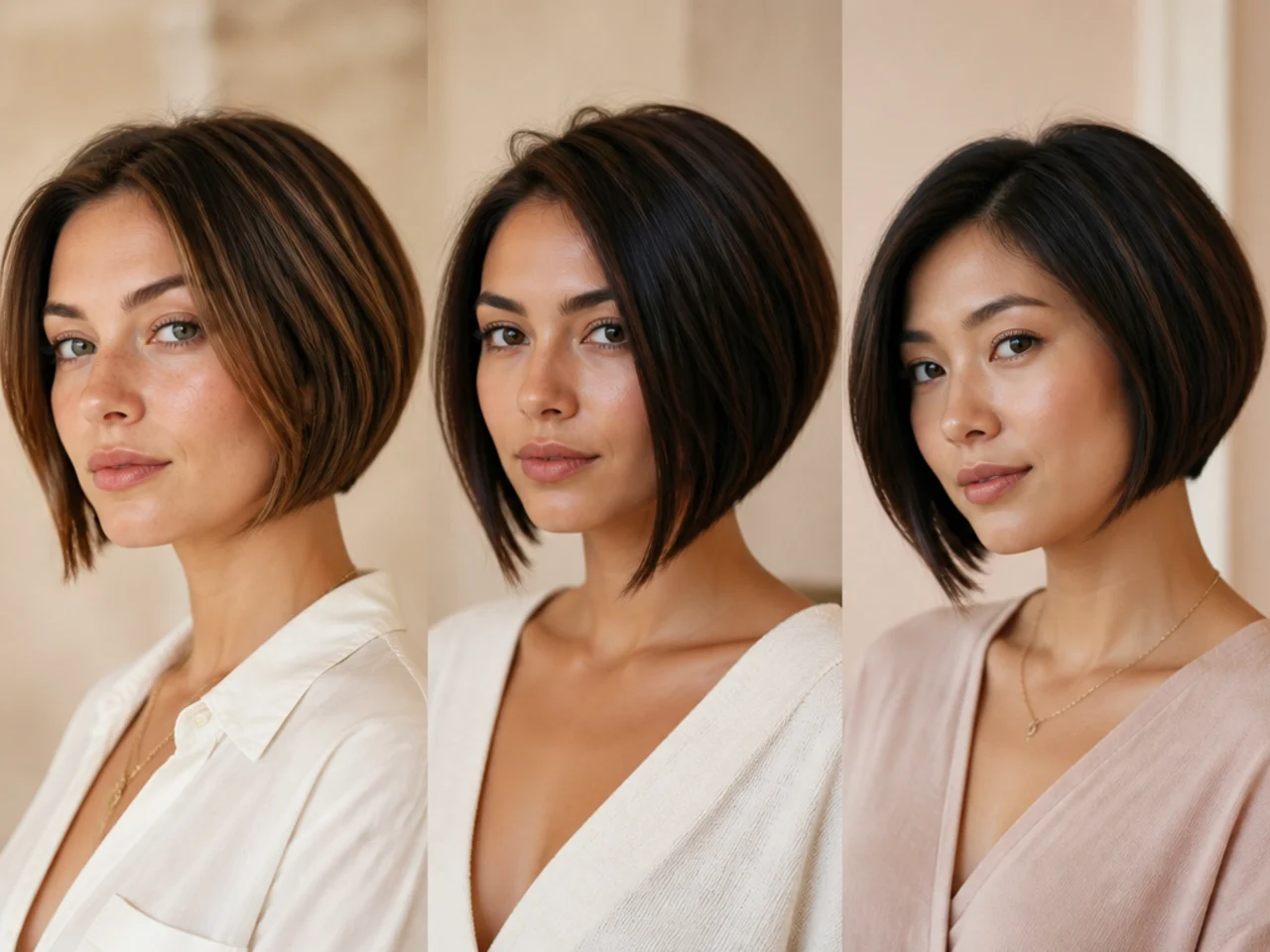
The inverted bob stacks the back and angles the front longer. Think of a graduated wedge — short at the nape, long at the jaw. That silhouette adds vertical lift at the crown and elongation at the front, two things almost every face shape can use.
The reason it works across face shapes is the adjustability. On a round face, exaggerate the front-to-back angle to slim the cheeks. On a square face, keep the angle subtle and add wave to soften the jaw. On a long face, hold the front length at the earlobe instead of the collarbone so you don't add more vertical.
Ask for a graduated cut with stacked layers in the back and a defined forward angle. Specify the front length in inches from the earlobe. The back should sit tight against the nape without exposing scalp.
Style with a medium round brush, curling the ends slightly under. Finish with a light-hold spray. If you want to see the sharpest version of this shape, the Karen haircut breakdown covers the extreme end of the inverted-bob family.
5. Shoulder-Length Bob for Thick Hair
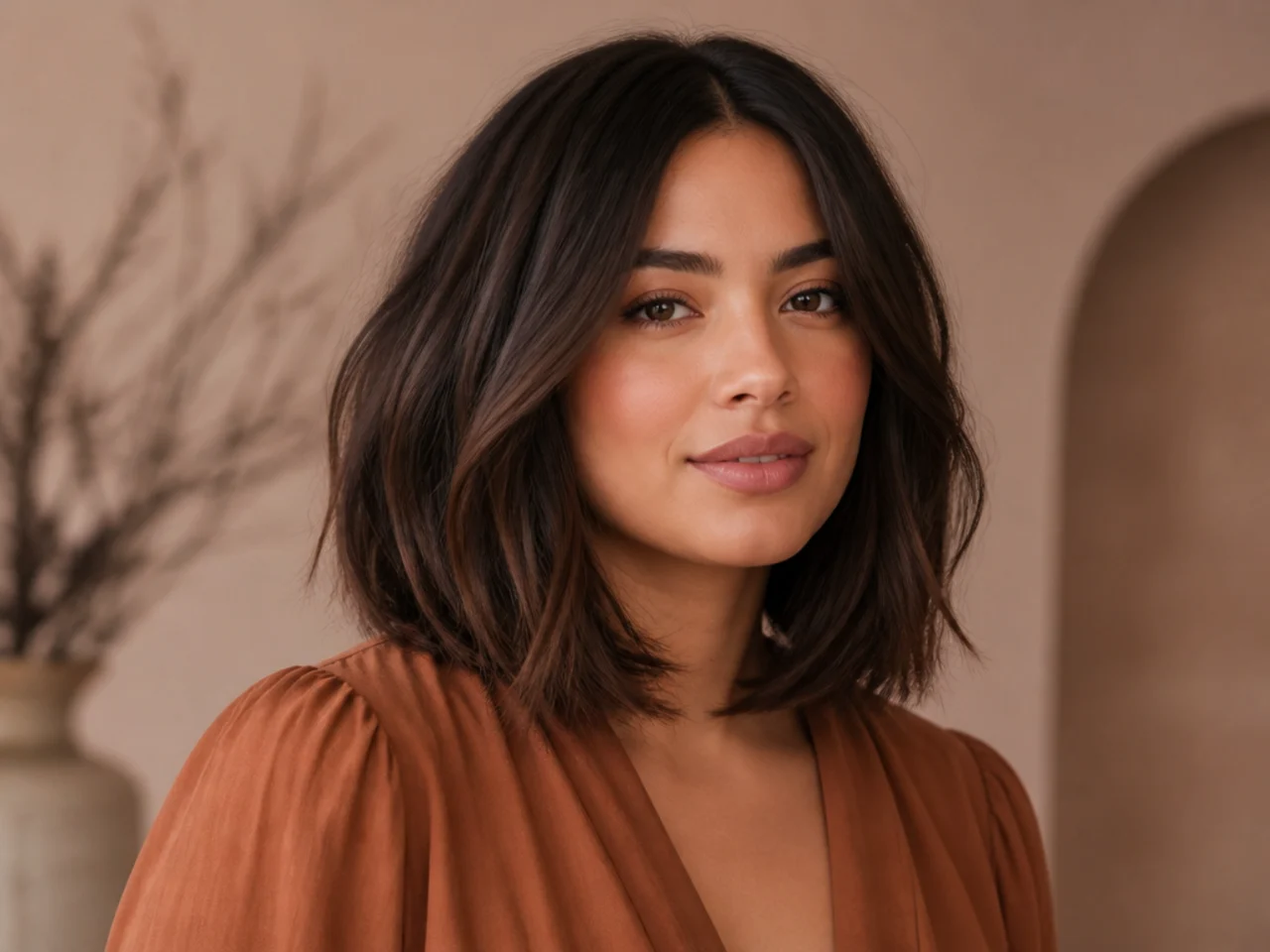
Thick hair needs internal thinning or it sits like a helmet. The shoulder-length bob — sometimes called a collarbone bob — gives enough length to distribute weight without dragging density downward into a triangle.
This length flatters rectangular and oblong faces. The horizontal line at the shoulder cuts the vertical span of the face and pulls the eye outward. That's exactly the balance a long face needs.
Ask for a collarbone-length cut with internal thinning through the mid-lengths — not the ends. Keep the perimeter blunt so the shape reads clean. Face-framing layers starting at the chin will soften a strong jaw without stealing weight from the perimeter.
Style with a large-barrel round brush and finish with a shine serum on the ends. If you want more movement, run a 1.25-inch curling iron through in alternating directions. Leave the last inch out of the iron for a lived-in finish. Never over-thin the ends — thick hair with thin ends looks like it was chewed rather than cut.
6. Undercut Bob for Edgy Vibes
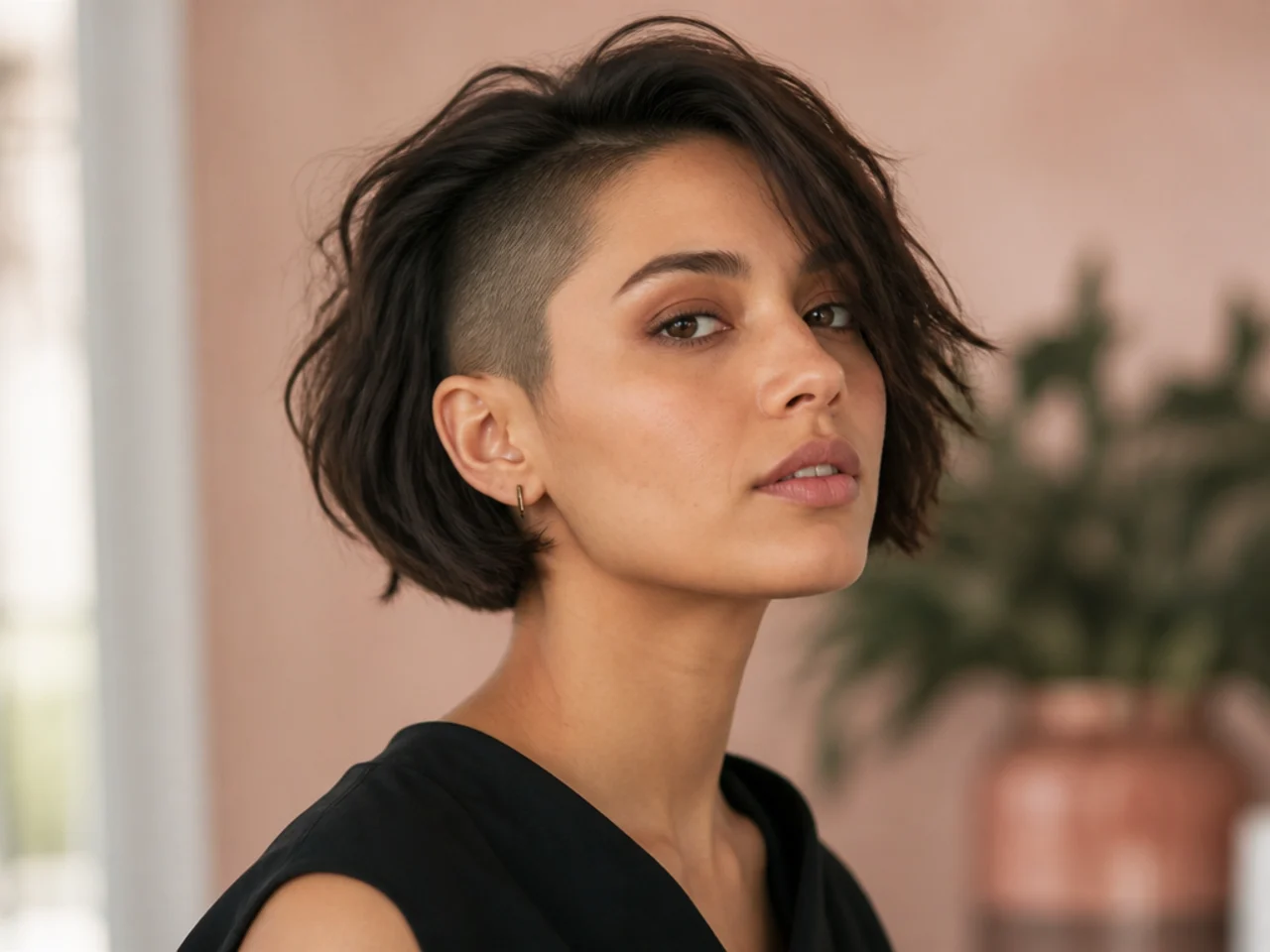
An undercut shaves or closely tapers the hair underneath the occipital bone. The top layer falls over it, hiding the cut when your hair is down. Weight drops instantly — often two ounces of hair in a single appointment.
This works for thick or coarse hair that fights sitting flat. It also flatters square and rectangular faces because it strips bulk from the sides. The visual width shrinks, softening a strong jaw without hiding it.
Ask for a chin-length bob on top with a two- to three-inch undercut across the nape and sides. Tell your stylist whether you want a fade (soft transition) or a hard line (visible edge). The fade grows out more gracefully; the hard line makes the design element more intentional.
Style the top like a standard bob — smooth or textured, your call. On second-day hair, tuck one side behind your ear to show the undercut. Trim the undercut every three to four weeks. The top can wait six to eight.
7. Layered Bob for Fine Hair
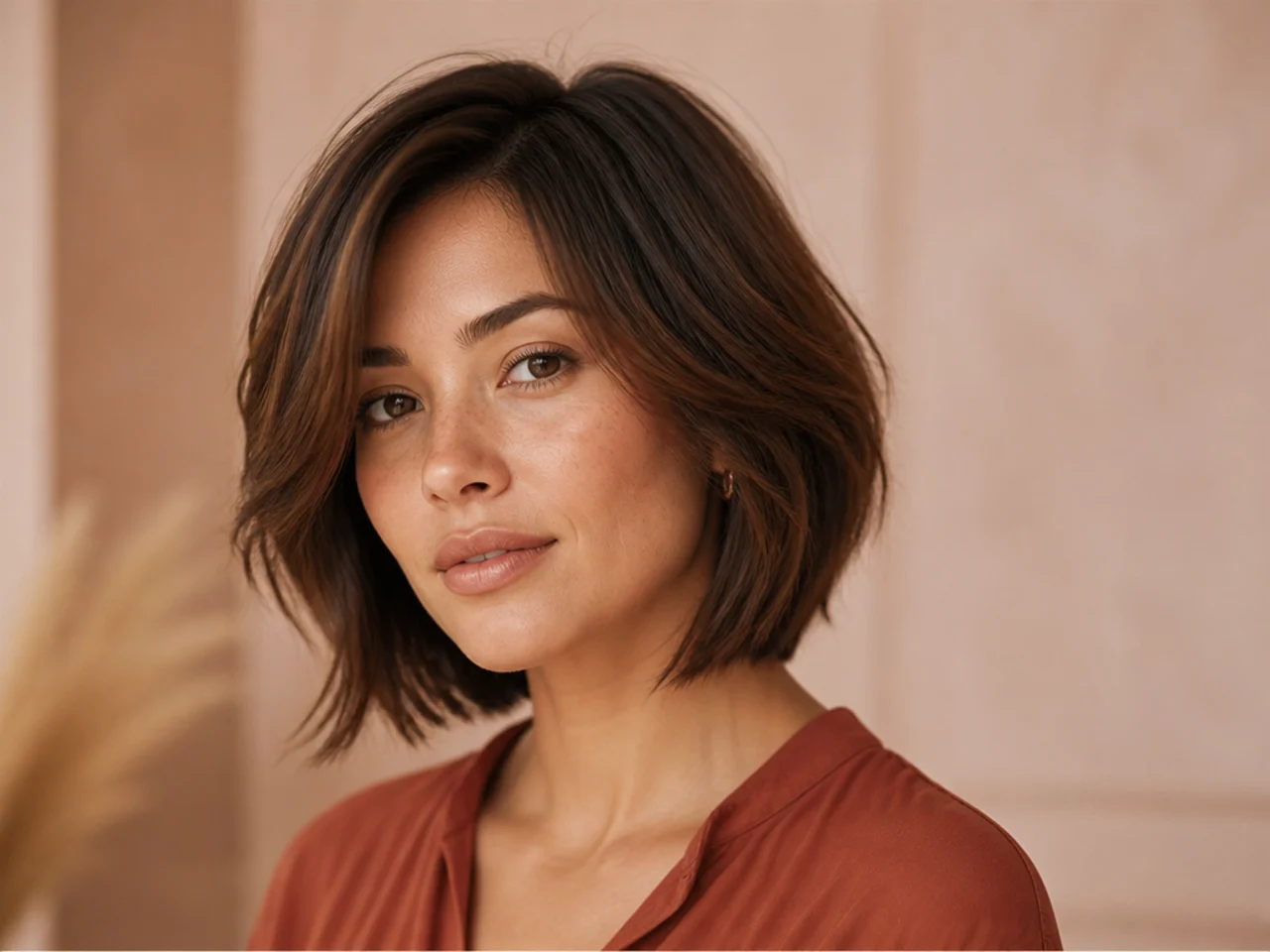
Fine hair benefits from strategic layers that build the illusion of density. Too many layers, though, and the ends look stringy. The sweet spot is two or three long layers that stack weight through the mid-lengths without cutting into the perimeter.
Oval faces suit this cut because the movement doesn't distort proportions. Round faces can wear it too if the layers start below the chin and angle downward — that vertical direction elongates the face.
Ask for a chin-length base with long layers cut with scissors — not a razor. Razor cuts thin fine hair further, which is the last thing you want. Add face-framing pieces starting at the cheekbones for a soft frame that catches the light.
Style with a volumizing mousse at the roots, then blow-dry with a round brush lifting away from the scalp. A quick blast of cool air at the end locks in the lift. For more depth on this shape, see the full layered bob playbook, and if fine hair is your main concern, the short bob styles built for fine hair guide covers the density tricks in detail.
8. Long Bob with Subtle Balayage for Medium Textures
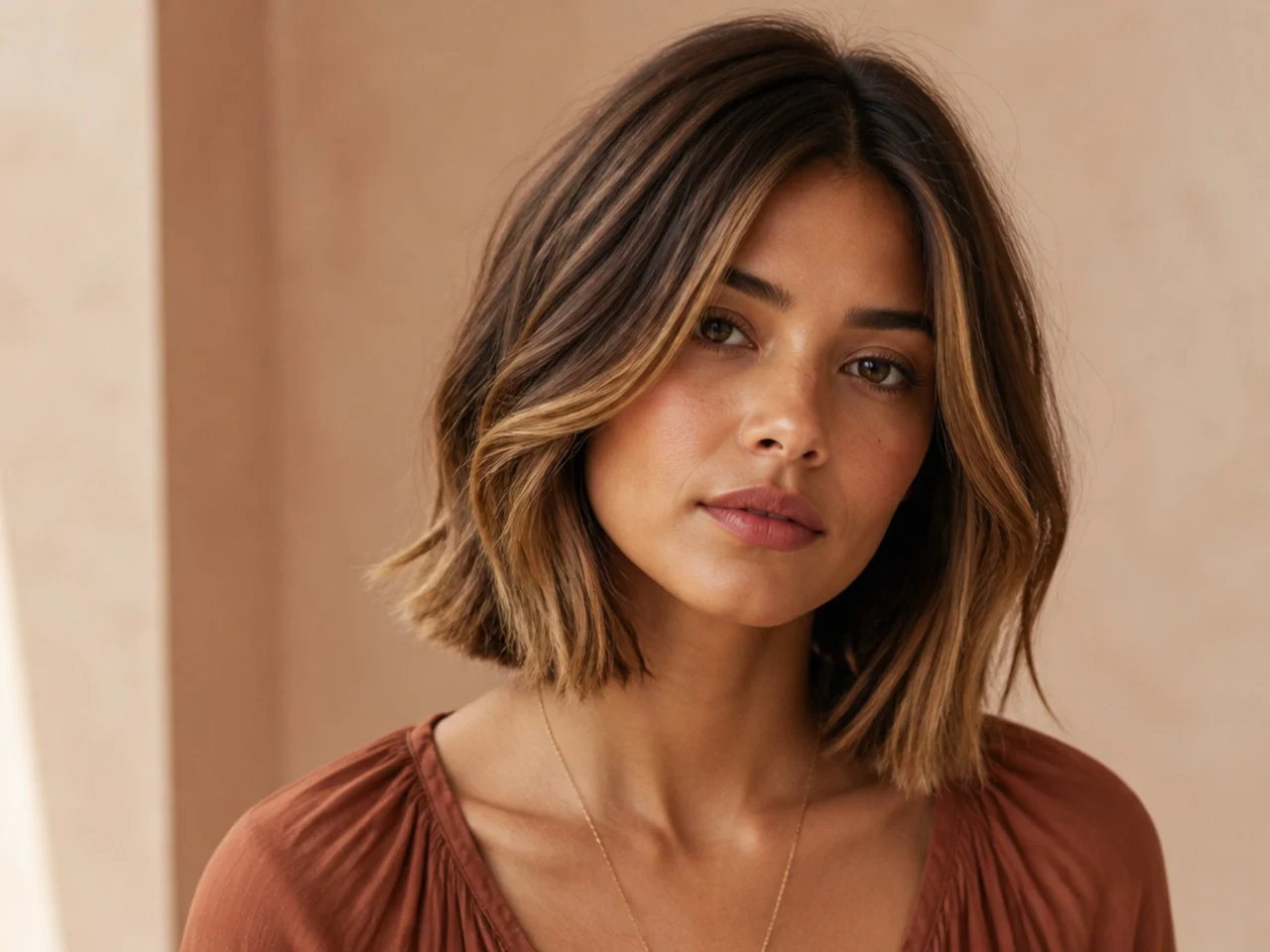
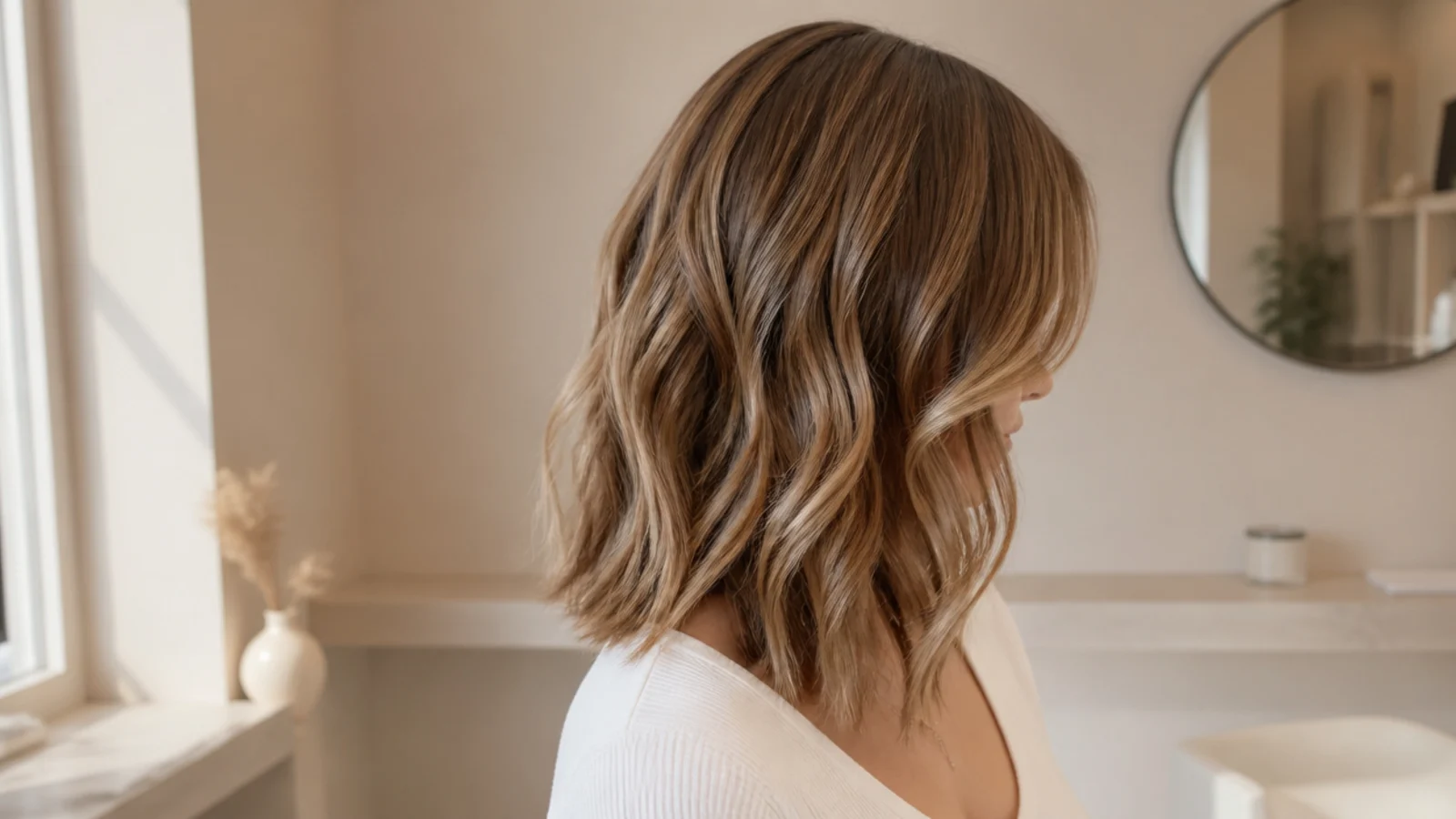
The long bob — the lob — sits between the collarbone and the shoulder. Balayage adds hand-painted lightness through the mid-lengths and ends, creating depth and mimicking natural sun-lightening. The color placement is what turns a plain lob into something photographers want to shoot.
The lob flatters round faces because the length elongates the neckline and pulls the eye vertically. Medium hair textures hold this length without falling flat (fine hair) or overwhelming the shape (thick hair). If your texture sits in that middle zone, this is your default.
Ask for a collarbone-length cut with soft internal layers and balayage placed at the mid-shaft down. Specify a natural sun-kissed placement rather than heavy contrast. Show your colorist a reference photo — the word "balayage" now covers everything from subtle to money-piece bold.
Style with a 1-inch curling iron, alternating direction with each section. Leave the ends out of the iron for a bent, lived-in finish. A texture spray at the roots keeps it from looking too styled. Refresh color every 12 to 14 weeks.
9. Classic Bob with Shaggy Layers for a Playful Look
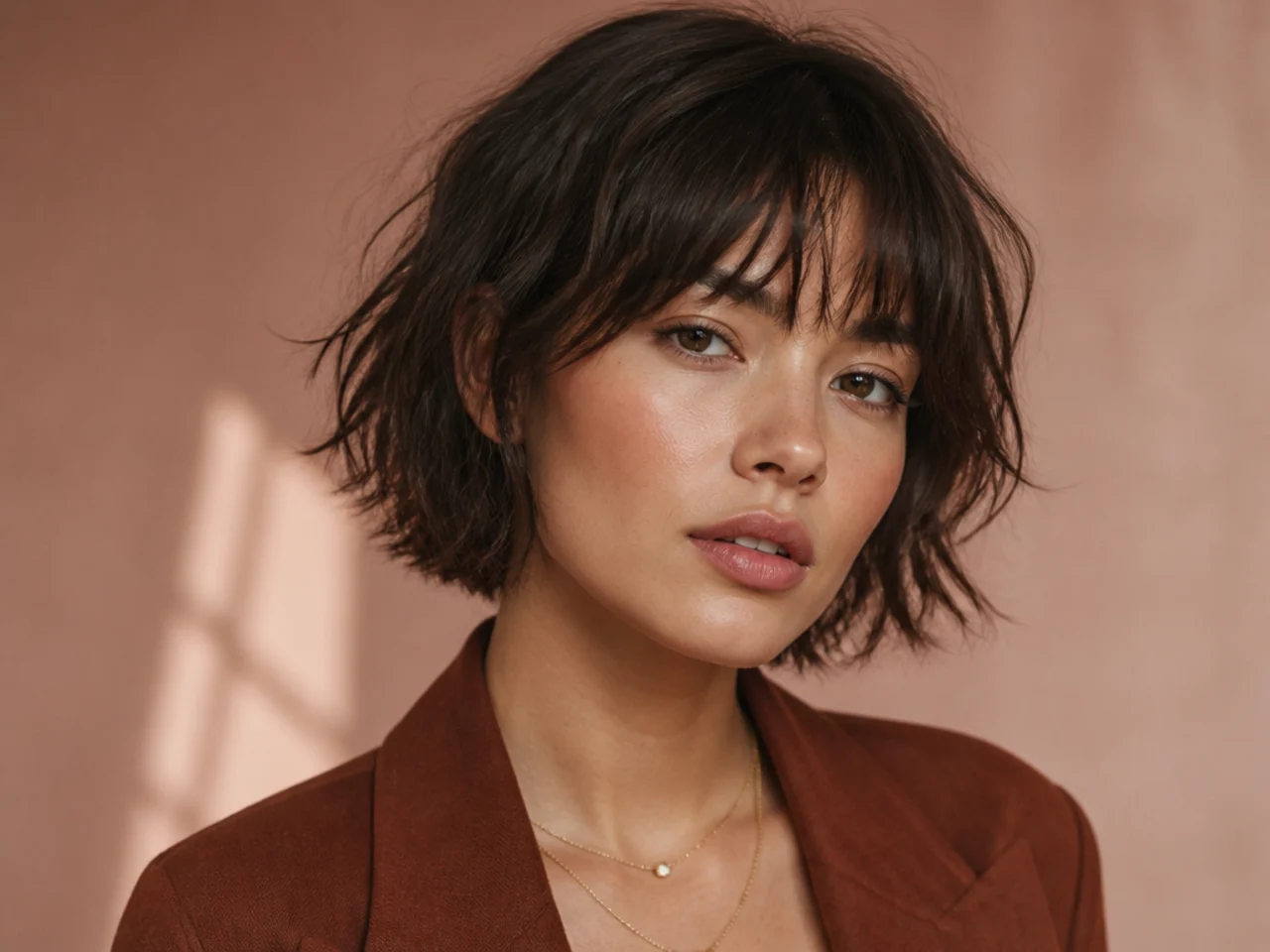
The shag layers this bob heavily from the crown down. That means visible layers, feathered ends, and often curtain bangs. The whole cut is engineered to move — a wash-and-go shape that reads intentional even when it's not.
Oval faces suit this best. Strong layering doesn't clash with balanced proportions, so the cut becomes a pure style choice rather than a corrective. Heart-shaped faces also work well when you pair it with curtain bangs to soften the forehead.
Ask for a chin-length base, three to four visible layers starting at the ears, and optional curtain bangs. Tell your stylist you want the ends point-cut, not blunt. The word "shag" should register — most stylists modernize it into a current cut without turning it into a 70s throwback.
Style with a curl cream on damp hair and diffuse-dry on low heat. Skip the brush entirely. For a related aesthetic that sits one notch messier, see the messy bob roundup that makes you look younger — the shag DNA is the same, just dialed up on the mess.
10. Blunt Bob for a Chic, Polished Look
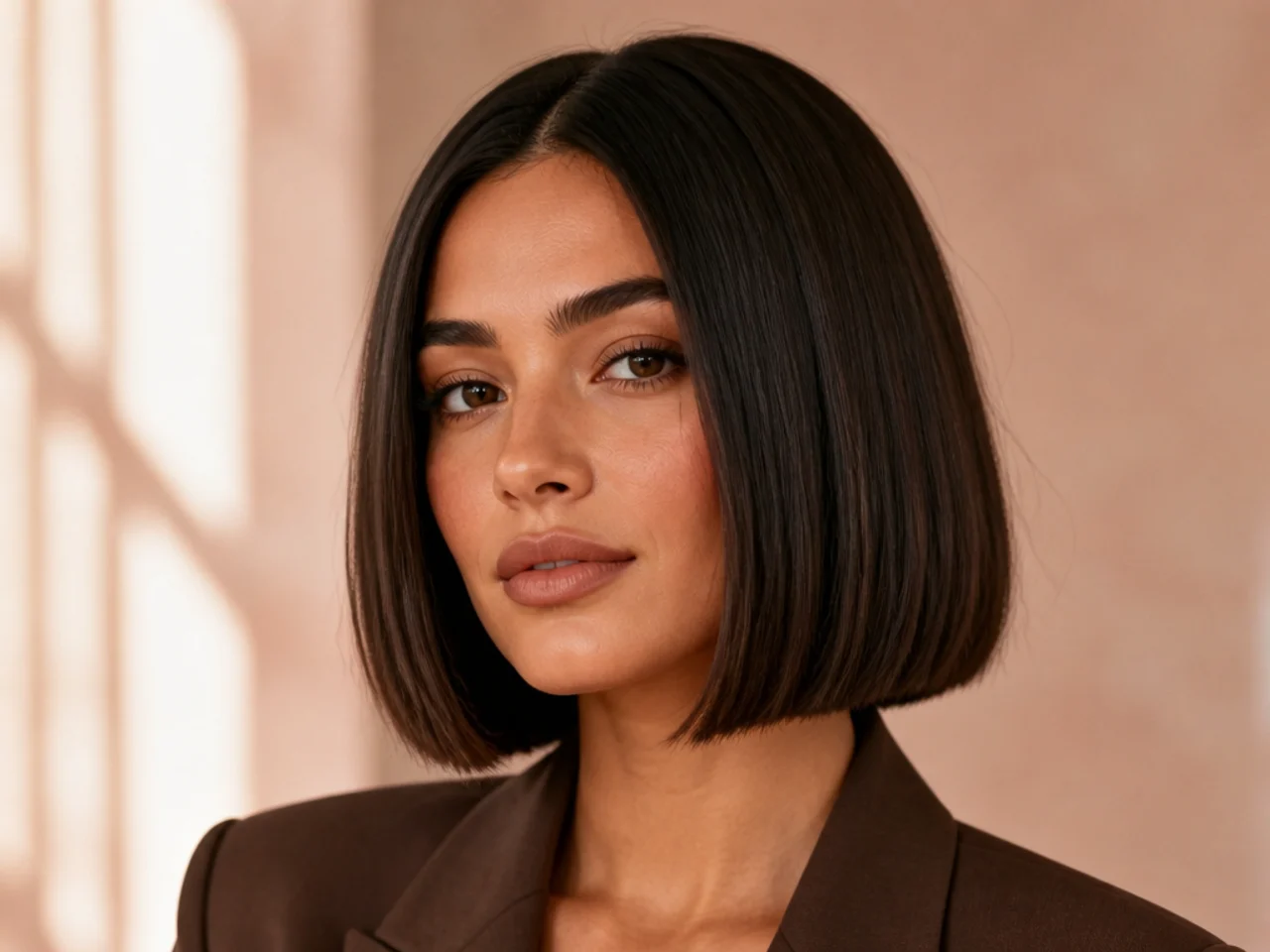
A blunt bob is one length across, no layers, no angling. The perimeter is a straight line. That density and precision reads high-fashion instantly — it's the cut that walks the runway and the boardroom.
Heart-shaped faces benefit because the blunt line at the chin builds horizontal weight where the face narrows. That visual width at the jaw offsets the width at the forehead. Fine hair also benefits — the blunt perimeter creates the illusion of thickness by making every strand end at the same spot.
Ask for a chin-length or slightly longer one-length cut with no internal layering. Tell your stylist you want a strong, straight perimeter. Some will instinctively soften the ends with a point-cut unless you specify otherwise.
Style with a smoothing balm on damp hair, then blow-dry flat with a paddle brush. Finish with a flat iron for the sharpest line. Trim every six weeks without exception — the blunt shape shows split ends within days of them appearing.
11. Curly Bob for Natural Texture
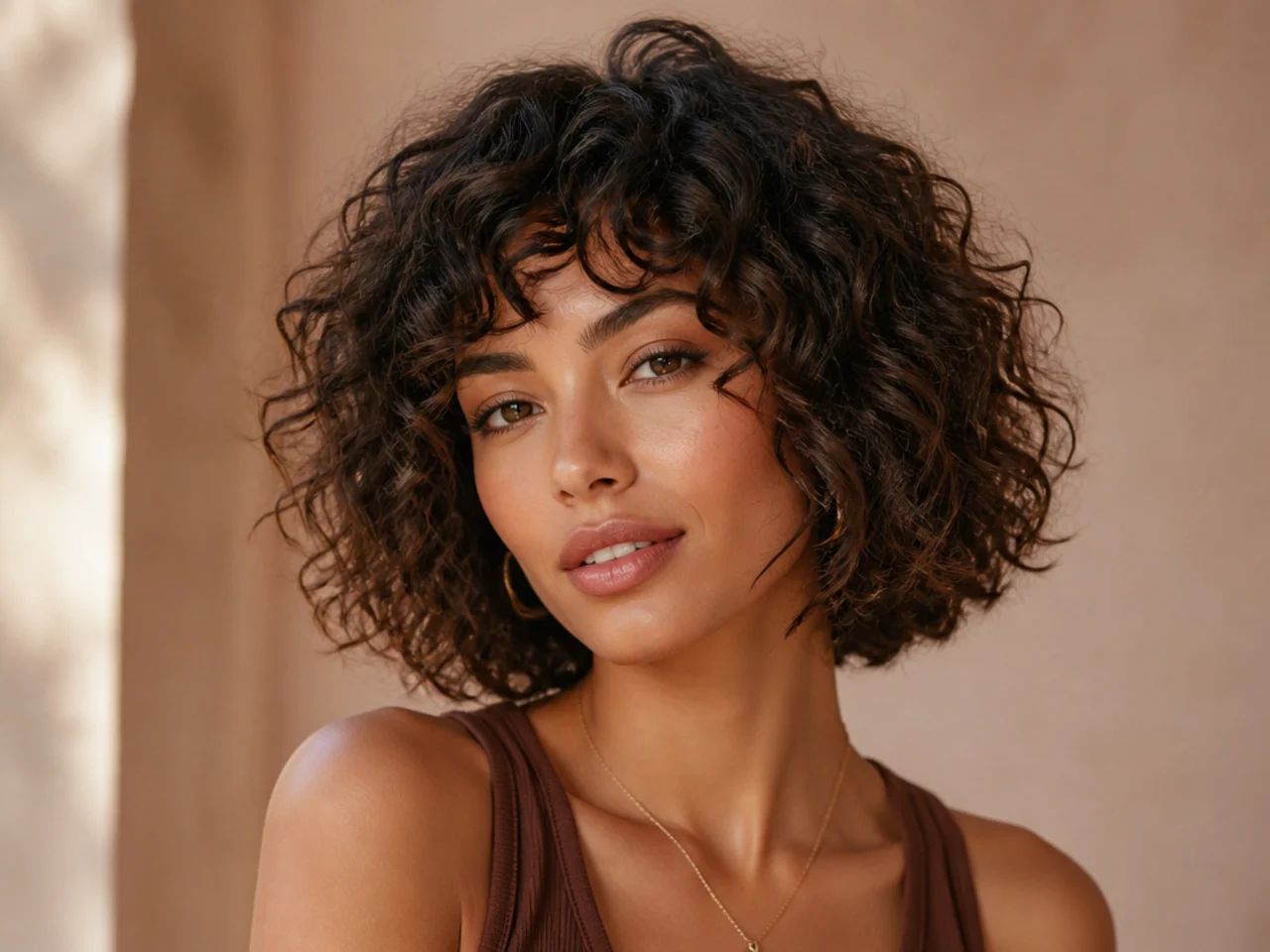
A curly bob is cut dry, curl by curl. Wet-cutting on curly hair leaves you with uneven shrinkage — one side sits at the chin, the other at the jaw. Dry cutting respects the curl pattern and lets your stylist see the actual finished length while cutting.
Square faces work well with a curly bob because the curl volume rounds off the corners of the jaw. The added width at the sides softens strong angles without hiding them. Long faces also benefit — the volume adds horizontal balance.
Ask for a dry cut. This is non-negotiable if you want it to sit right. Have your stylist shape the perimeter to your natural curl pattern, cutting each spiral individually. Keep the length at the chin or slightly below for maximum lift — go longer and gravity fights the curl.
Style with a leave-in conditioner and a curl-defining gel, applied to soaking-wet hair. Diffuse on low heat or air-dry. Refresh day-two curls with a water-and-conditioner spray. If your square face is the driving concern, the haircuts built for square face shapes guide covers cuts across textures.
12. bob with Soft Layers and Bangs for a Flirty Style

This cut layers softly through the length and adds wispy bangs. The whole shape reads gentle rather than sharp — the opposite of a blunt bob. Every line is designed to soften.
Oval faces carry this well because the soft layering doesn't require correction — it's a pure aesthetic choice. If your face leans long, this cut adds width through the mid-face and shortens the visual span. Heart shapes gain the same forehead-softening benefit that any bang-forward cut delivers.
Ask for a chin-length base, three long layers stacked through the mid-lengths, and soft wispy bangs that end at the eyebrows. Tell your stylist you want everything "airy" — a signal that consistently produces the right texture without over-cutting.
Style with a light mousse at the roots and a round brush through the length. Push the bangs slightly to one side while drying for the flirty movement. Skip heavy oils — they weigh down the softness this cut depends on.
13. Choppy Bob with Disconnected Layers for a Modern Feel
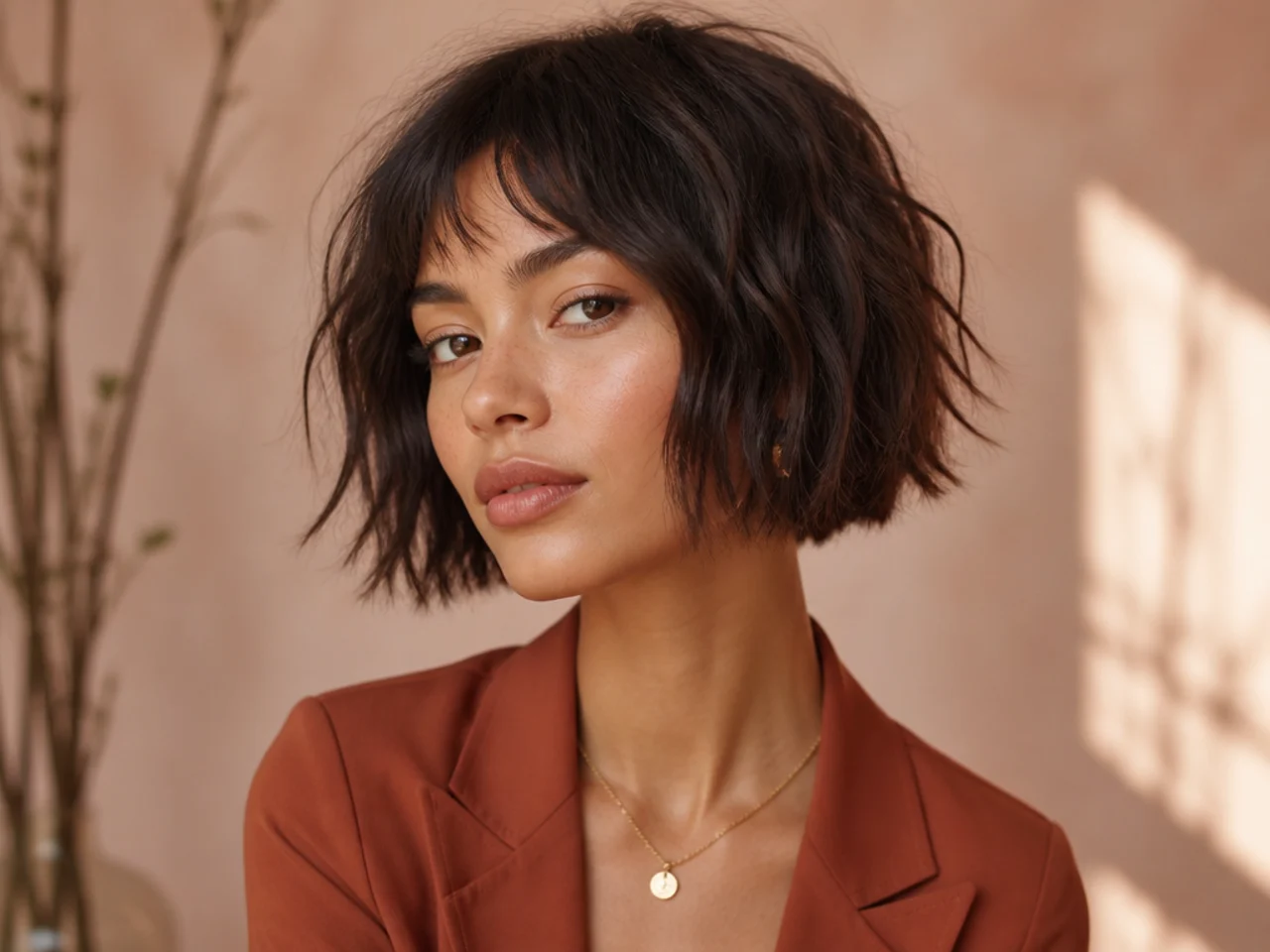
Disconnected layers means the layers don't blend into each other — there's visible separation between lengths. That creates a broken, textured silhouette that reads bold and current.
Rectangular faces suit this cut because the disconnection breaks up the vertical rectangle of the face. Each visible layer adds horizontal information, which shortens the visual read of the length. Square faces work too if you keep the disconnection subtle enough not to reinforce the angles.
Ask for a chin-to-jaw-length cut with disconnected layers throughout. Specify that you want visible steps between the layers — most stylists soften disconnection unless you insist on it. Bring a reference photo showing the level of separation you want. This detail varies wildly between cuts that use the same term.
Style with a texturizing paste worked through the mid-lengths and ends, not the roots. Rough-dry with your fingers. Skip the round brush entirely — you want the choppiness to show, not hide behind a smooth blow-out.
14. Shiny Bob with a Side Part for Professional Settings
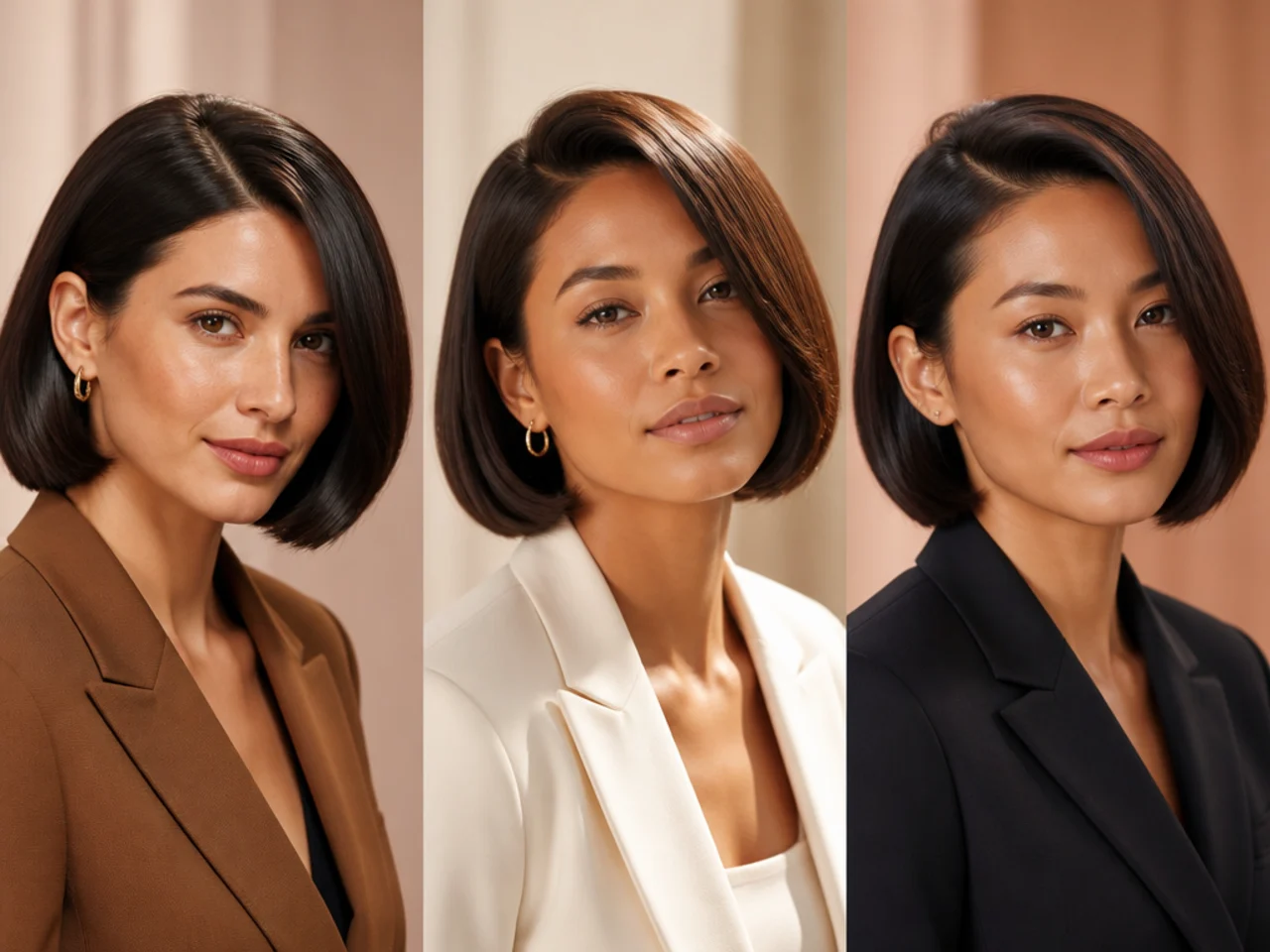
A deep side part creates asymmetric weight — one side sweeps across the forehead, the other tucks behind the ear. That asymmetry balances symmetrical face shapes and flatters oval faces particularly well. It's a small styling choice with a big face-flattering payoff.
The shine comes from the cut, not just the product. Blunt, uniform lengths reflect light in a single plane. Layered cuts scatter it. So this style is built on a one-length or minimally-layered perimeter that catches light rather than diffusing it.
Ask for a chin-length one-length cut with the part pre-planned. Have your stylist cut both sides with the intended part in mind — the length will hang correctly instead of flipping to a symmetric side when you part it. Consider a subtle A-line if you want the front to bend inward toward the jaw.
Style with a smoothing serum through the length and a flat iron on medium heat. Finish with a shine spray, not a gel — gels dull the finish over time. If you love the structured look but want some interior movement, a blunt haircut with layers gives you both.
15. Asymmetrical Bob for Creative Types
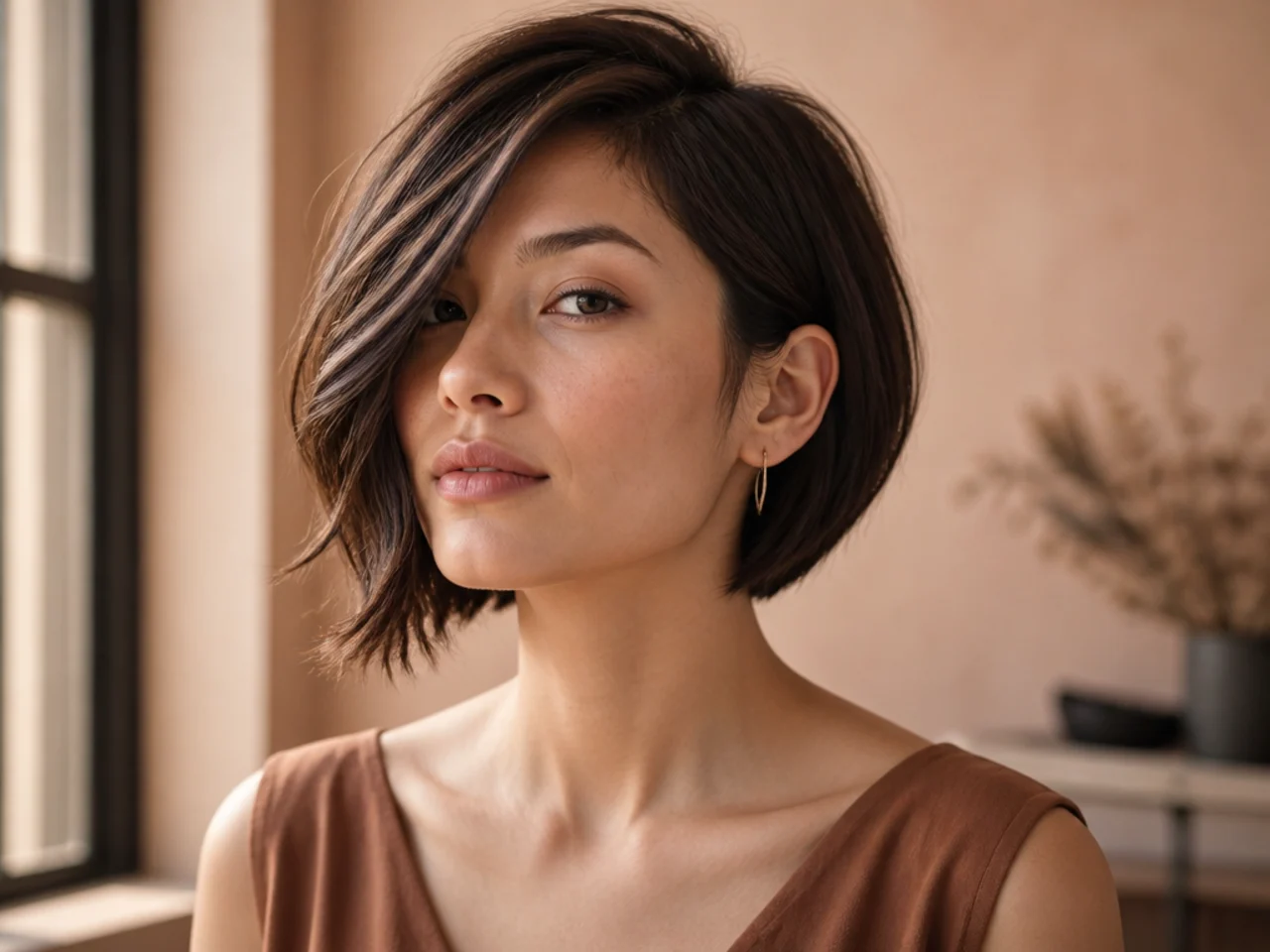
An asymmetrical bob cuts one side deliberately longer than the other. The imbalance is the design. It can be a subtle one-inch difference or a dramatic four-inch drop — same principle, different intensity.
Round faces benefit because the asymmetry pulls the eye off the horizontal. Instead of reading the round face across, the eye tracks diagonally down the long side. That elongates the visual proportions immediately. Oval faces also carry it well — they can handle any strong shape without distortion.
Ask for the length on each side in inches. Bring a photo. Discuss whether you want a hard visible line at the perimeter or a softer, textured finish. Talk through how you'll style it — this cut can look off if the long side falls to the wrong shoulder because you slept on it.
Style with a light gel on the long side and let the short side air-dry. That contrast in finish sells the asymmetry. If you want to see how this shape reads against other bobs cut for round faces, the chic bob roundup for round face shapes walks through the full range.
Time to Choose Your Signature Bob
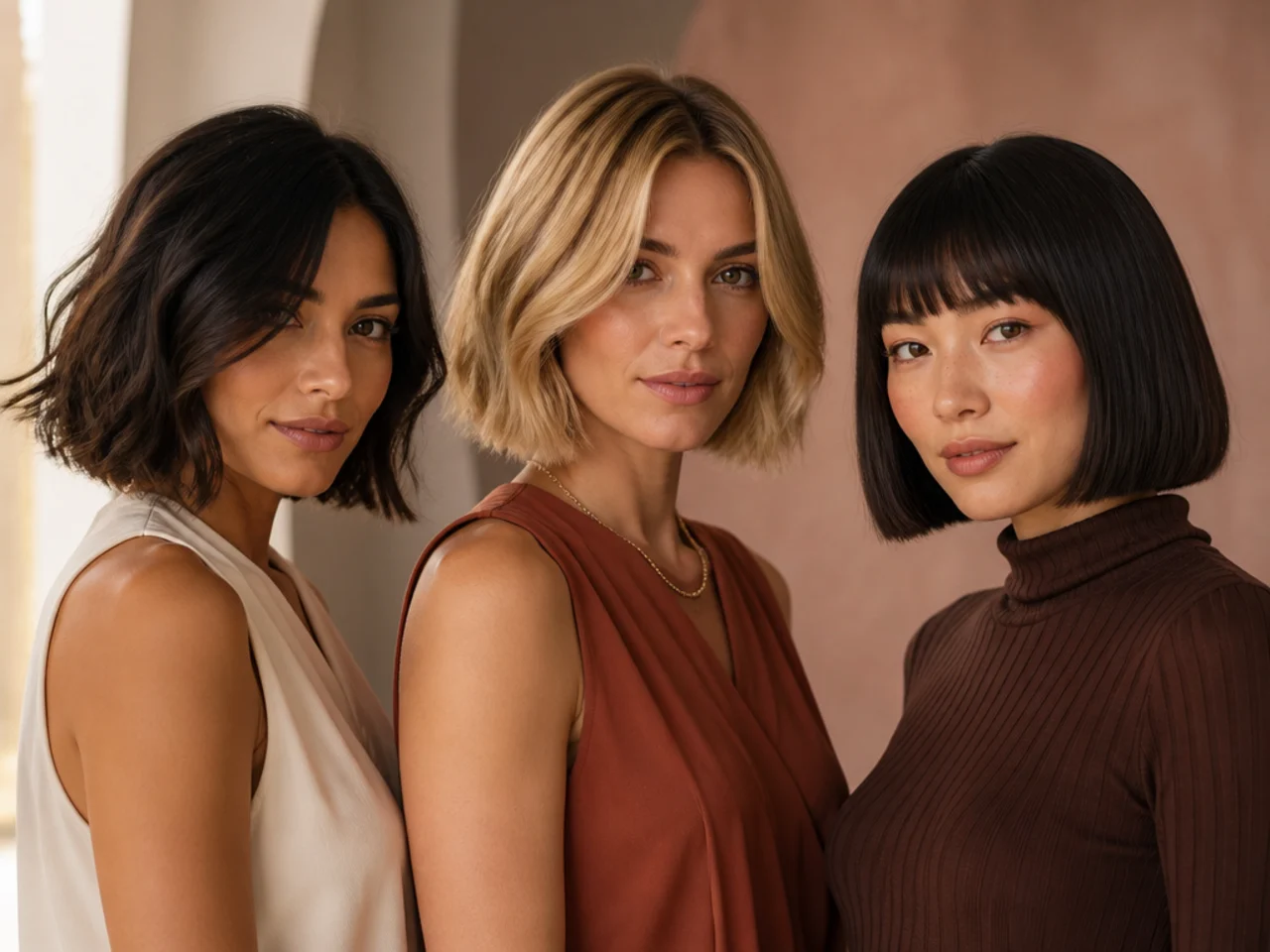
Start with your face shape. It sets the parameters for length, angle, and weight distribution — everything else is preference.
Round faces want vertical elongation: A-line, asymmetrical, or lob. Square faces need softening at the jaw: curls, undercut, or a textured perimeter. Heart shapes need width at the chin: blunt bob or curtain bangs. Long and oblong faces need horizontal balance: textured bob or a shoulder-length cut with layers. Oval faces can wear almost anything, which means the choice becomes about hair type and lifestyle rather than correction.
Then consider your hair type. Fine hair needs blunt cutting for the illusion of density. Thick hair needs internal thinning or an undercut. Curly hair needs a dry cut, curl by curl. Straight hair takes almost any variation cleanly and rewards precision.
Bring three reference photos to your consultation. Measure length in inches from a fixed point — earlobe, jaw, or collarbone — not vague terms like "chin-length" that mean different things to different stylists. Specify the part. Say whether you want the ends blunt or textured. That single word decides the finish more than anything else you'll say.
The right bob is the one that fits your face, your hair, and your morning routine. Pick with intention. It'll show every time you walk into a room.