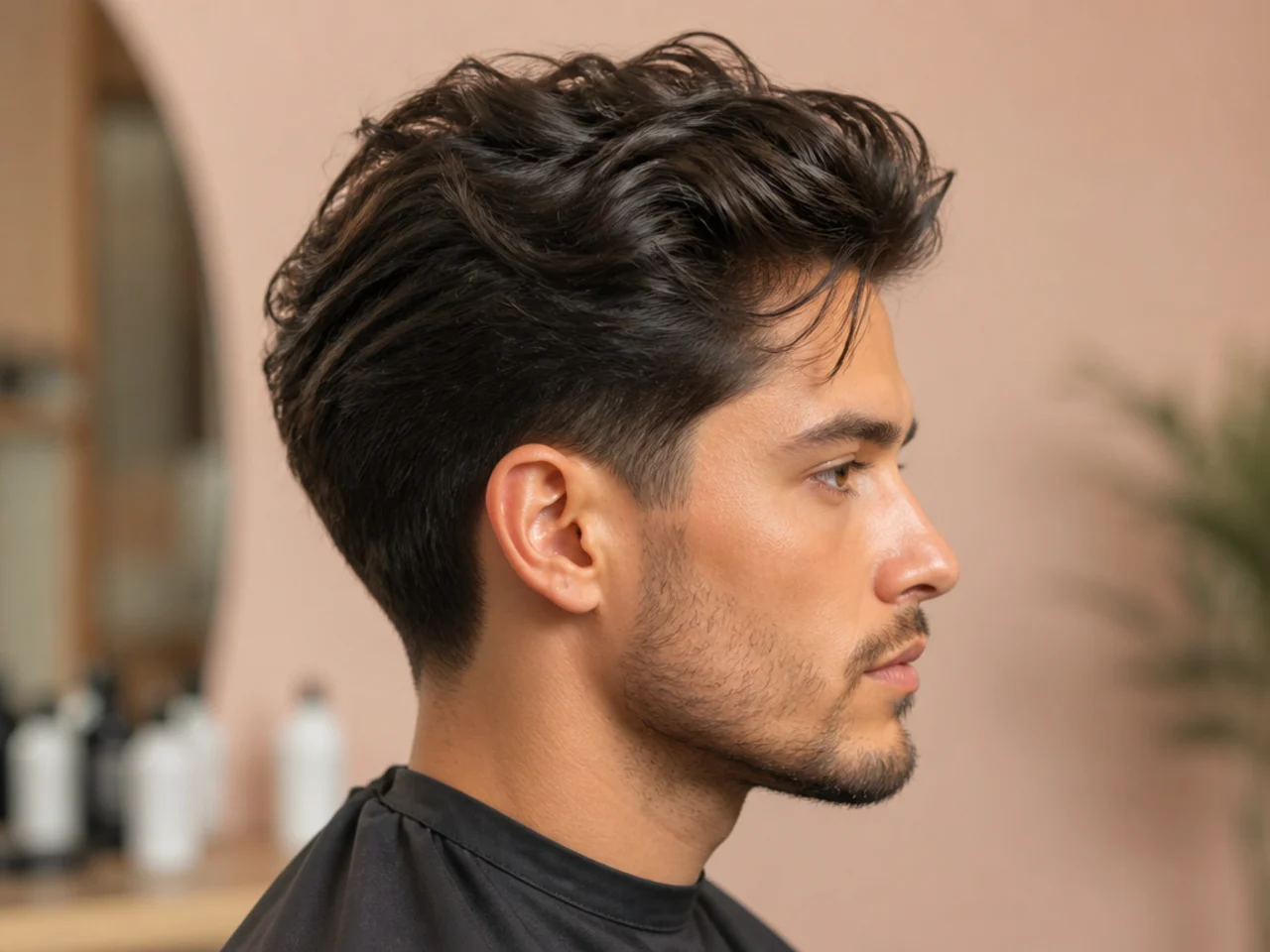
20 Textured Blowout Taper Ideas Worth Trying
Twenty textured blowout taper variations for 2026 — cutting techniques, hair-type notes, guard numbers, and the exact wording to hand your barber.
In this article · 26
- What Is a Textured Blowout Taper?
- Who It Suits and How to Choose
- The 20 Variations
- 1\. Classic Mid Textured Blowout Taper
- 2\. Low Textured Blowout Taper
- 3\. High Textured Blowout Taper
- 4\. Point-Cut Textured Blowout Taper
- 5\. Razor-Cut Textured Blowout Taper
- 6\. Thinning-Shear Textured Blowout Taper
- 7\. Choppy Textured Blowout Taper
- 8\. Piecey Textured Blowout Taper
- 9\. Messy Textured Blowout Taper
- 10\. Wavy Textured Blowout Taper
- 11\. Curly Textured Blowout Taper
- 12\. Coily Textured Blowout Taper
- 13\. Straight-Hair Textured Blowout Taper
- 14\. Broccoli Textured Blowout Taper
- 15\. Textured Blowout Taper With a Fringe
- 16\. Textured Blowout Taper With a Middle Part
- 17\. Textured Blowout Taper for Thick Hair
- 18\. Textured Blowout Taper for Fine Hair
- 19\. Textured Blowout Drop Taper
- 20\. Textured Blowout Taper With a Line-Up
- How to Ask Your Barber for a Textured Blowout Taper
- Styling and Maintenance
- FAQ
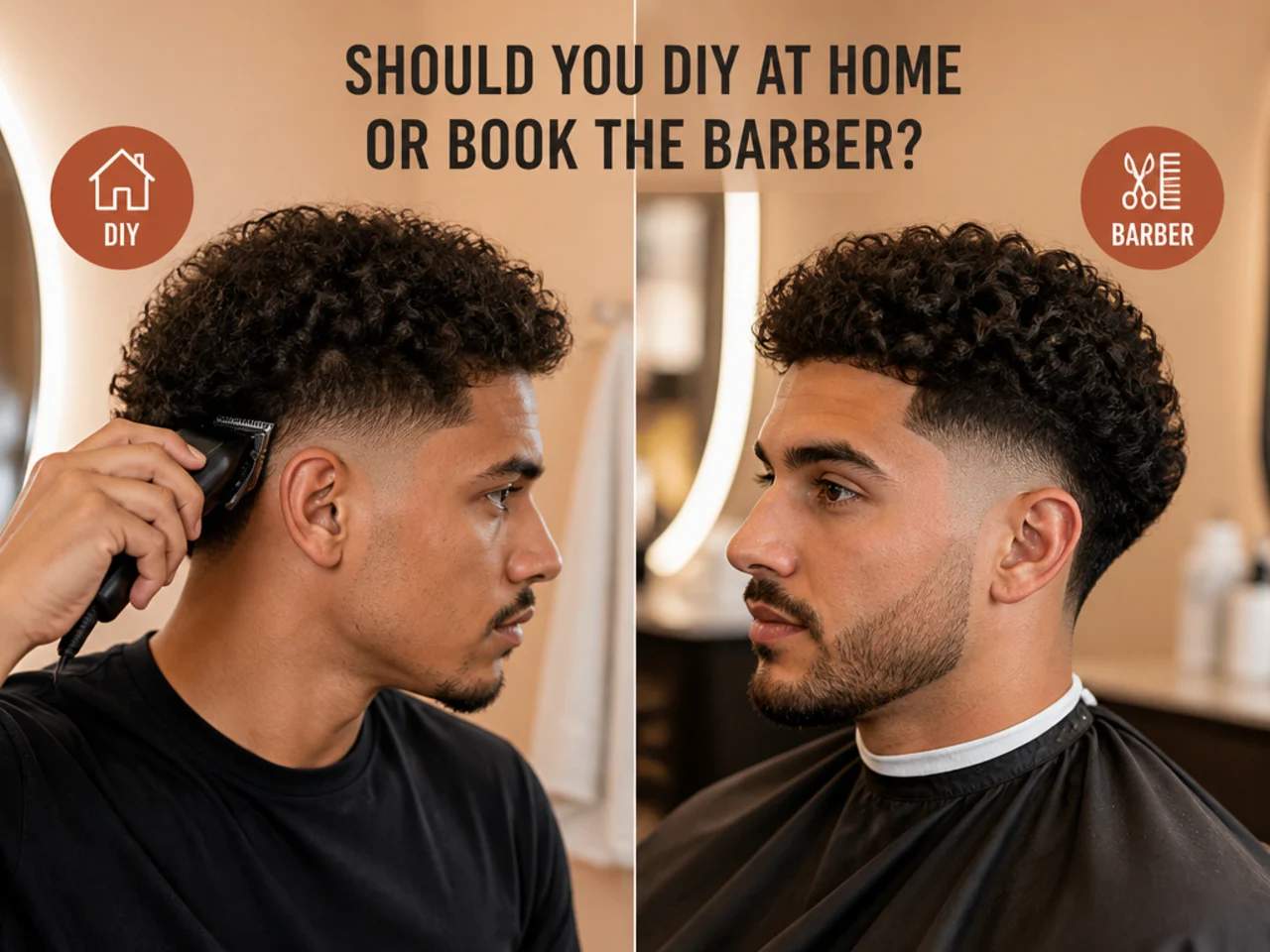
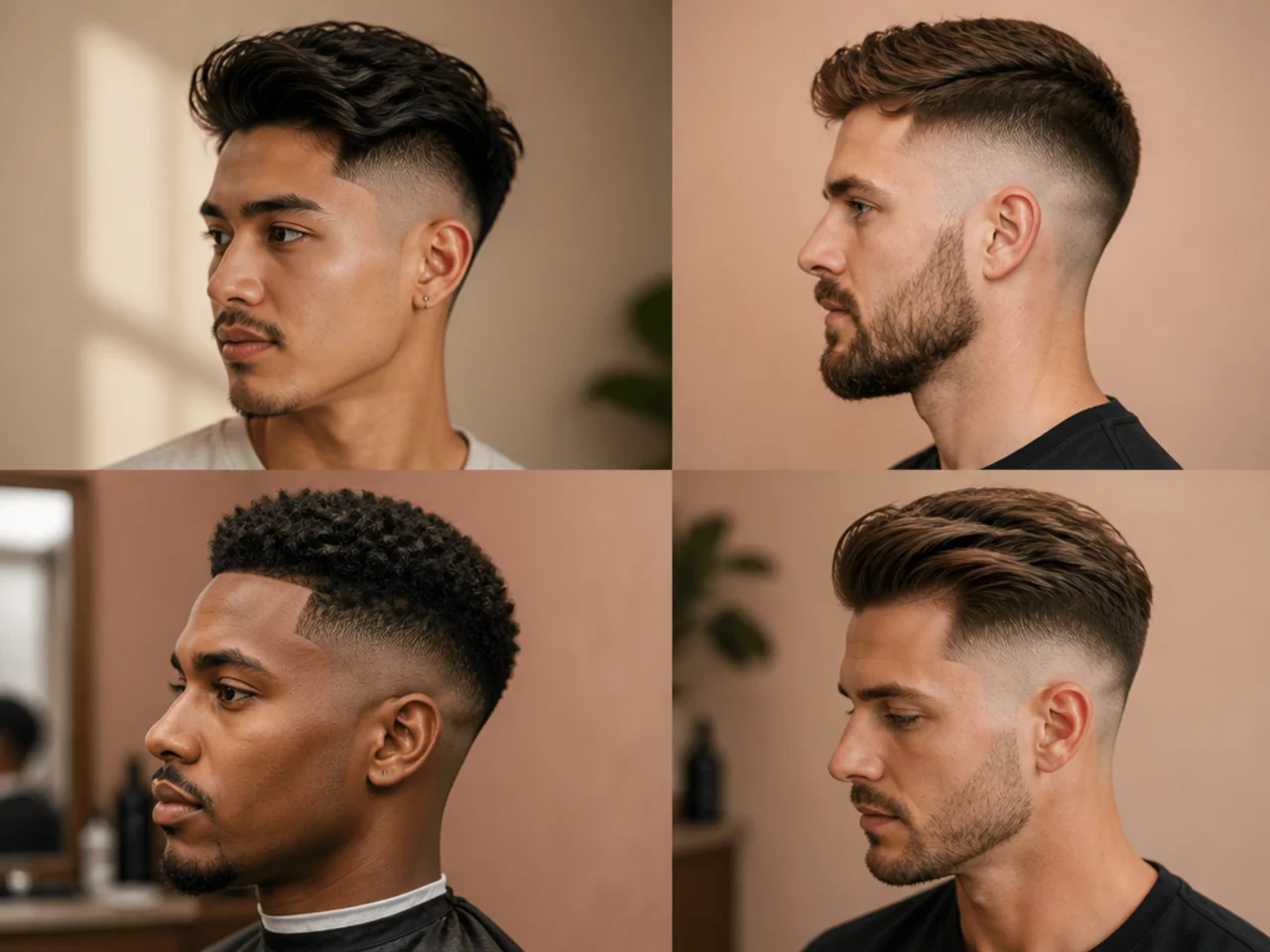
The textured blowout taper is what happens when a barber trades the smooth, helmet-like top of a classic blowout for a piecey, broken-up surface that reads modern, lived-in, and photographs better than almost any other silhouette on the board. The taper still cleans the sides. The blowout still lifts the crown. What changes is the edge quality — point-cuts, razor sweeps, and thinning-shear channels break the top into individual strands so the shape looks intentional at any distance. Below are twenty textured blowout taper variations worth asking for in 2026 — cutting techniques, hair-type notes, and the exact language to leave with the version you had in mind.
New to the silhouette? Start with the blowout taper pillar, or step back to the full fade haircut family to see how this sits inside the broader taper world.
What Is a Textured Blowout Taper?
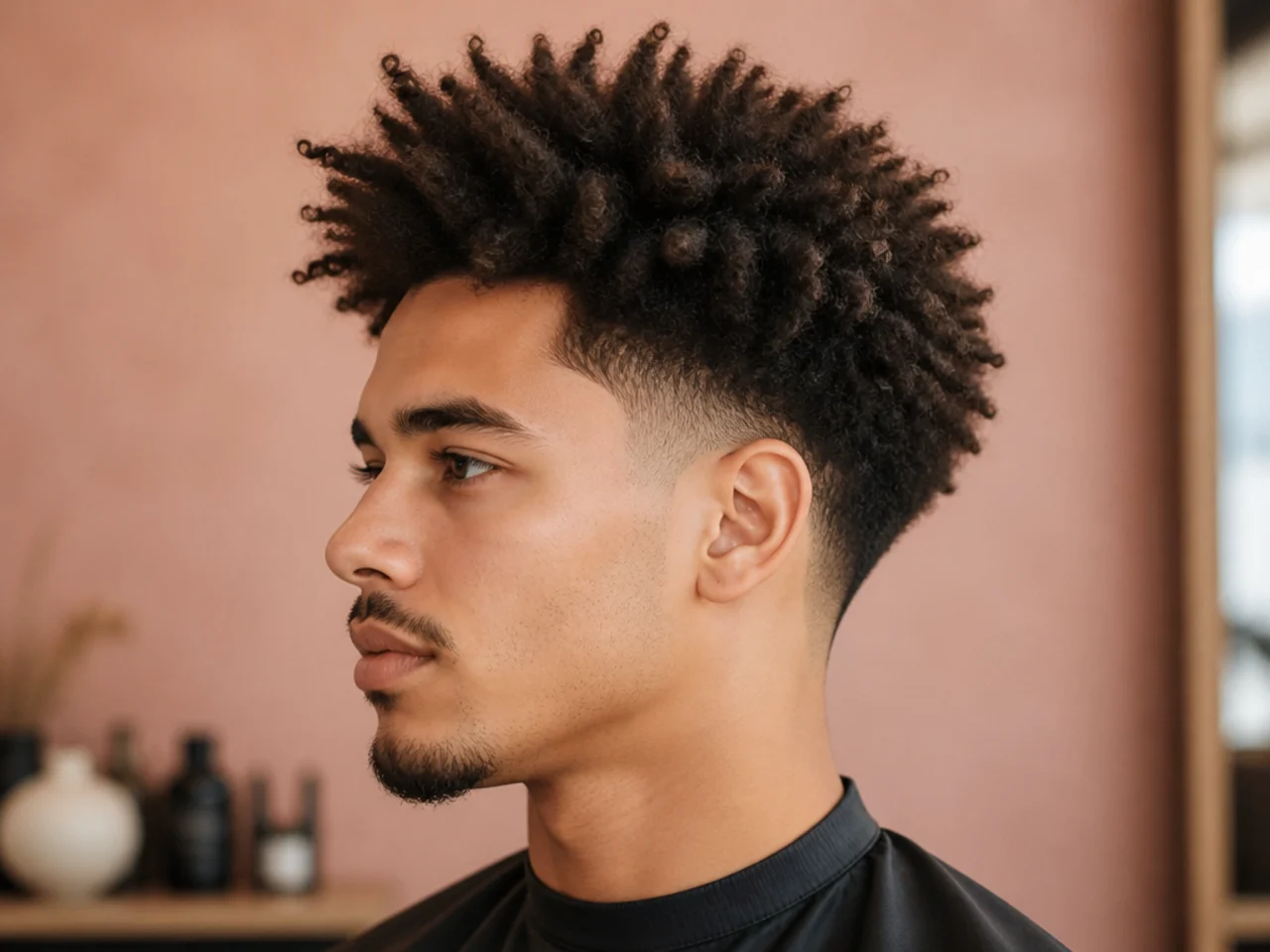
Two techniques stack. The taper — hair shrinks gradually down the sides and stops at a #0.5 or #1 guard, never buzzed to skin. And the texture — the top length gets broken up with point-cutting, razor work, or thinning shears so no two adjacent hairs land at the same height. That's what gives the finished top its piecey, separated look.
The top between the fringe zone and the crown is then styled forward and up into the rounded blowout silhouette a round brush or diffuser builds. Two things soften each other. The taper softens the hard side line a fade would create. The texturing softens the top so it stops reading like a helmet of scissor-cut length. What you're left with is a cut that reads intentional at any dress code from creative office to first date.
Where the plain blowout taper can leave the top scissor-clean, this variation deliberately breaks that edge. Where a blowout taper fade drops the sides to skin for maximum contrast, this one keeps the taper soft so the top texture — not the side contrast — carries the whole cut.
Who It Suits and How to Choose
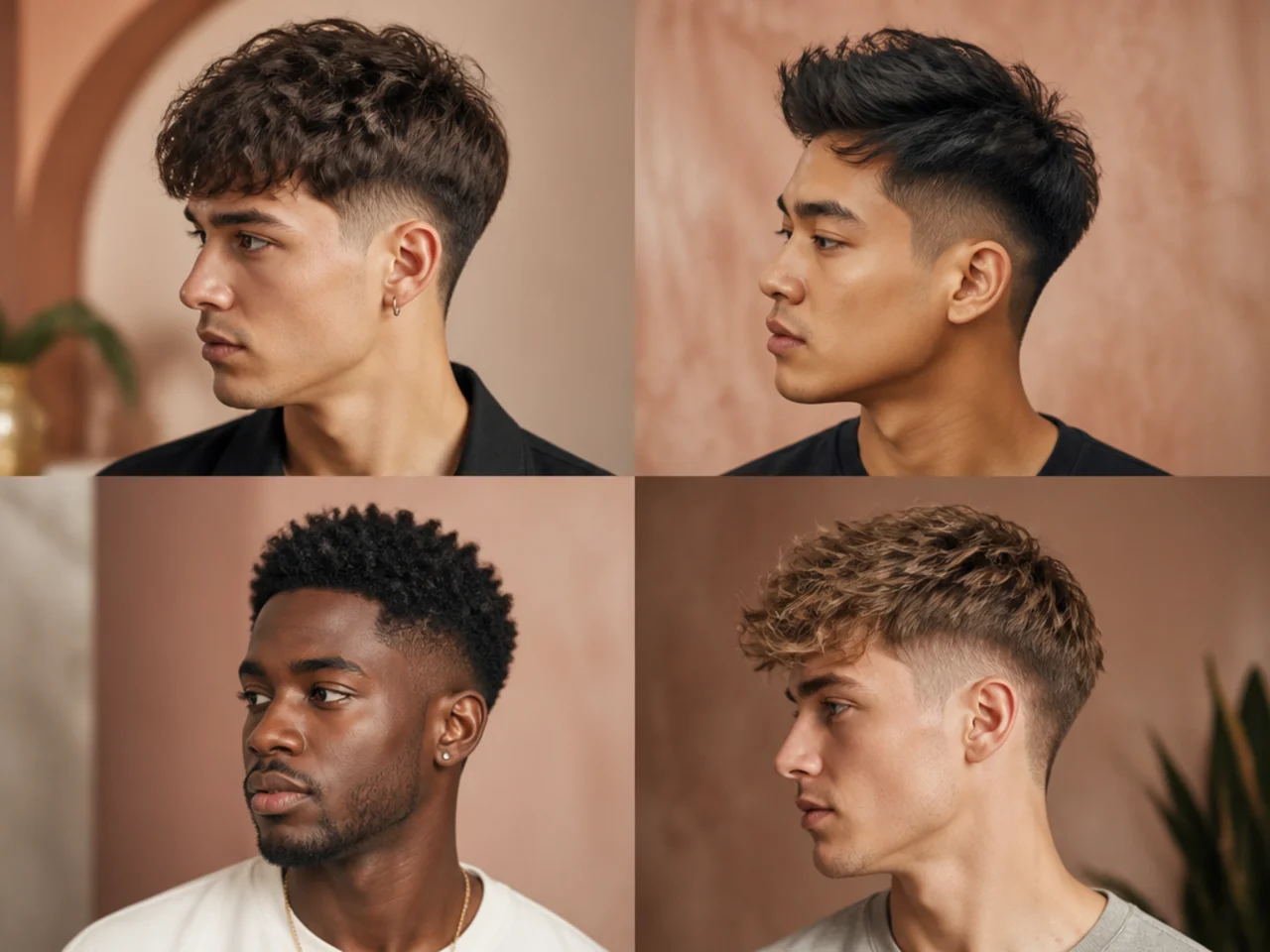
Three inputs decide which of the twenty below is yours: your face shape, your hair type, and your styling appetite.
Face shape. Oval takes everything — pick on style, not shape. Square and oblong faces gain the most from added volume at the crown; go taller with a high or mid taper so the head reads longer. Round faces should keep the top length at four inches or above and lift high, which pulls the eye up and slims the frame. Heart-shaped faces suit the middle-part and curtain-adjacent variations that add width around the eyes and balance a narrower jaw.
Hair type. Straight hair (1A–1C) needs the most aggressive point-cut or razor work because there is no natural texture to help. Wavy hair (2A–2C) is the sweet spot — the wave carries the piecey read on its own. Curly hair (3A–3B) already reads textured; the cut just shapes it. Coily hair (4A–4C) works but wants a scissor-cut top picked out with a wide-tooth comb rather than blown out with a round brush.
Styling appetite. A short cropped textured blowout taper takes ninety seconds and a pea of matte paste. A high textured blowout with four-plus inches on top and heavy razor work takes ten minutes with a round brush, matte cream, and a cool shot. Pick the version your morning can actually run — the cut looks bad when the maintenance stops.
The 20 Variations
Twenty textured blowout taper recipes below, sorted from the most everyday to the most editorial. Each covers what makes it different, who it suits, exactly how to ask, and one styling move worth stealing.
1. Classic Mid Textured Blowout Taper
The default entry point. Mid taper landing at the temple line, four inches on top scissor-cut with point-cutting through the surface, styled up and forward into a rounded blowout. Reads polished at any workplace and photographs like you spent an hour on it. Best for oval and square faces and anyone new to the textured blowout family.
Ask for: "mid blowout taper, #1 at the shortest, four inches on top scissor-cut, point-cut through the surface for texture, styled forward into the blowout."
Styling: matte paste worked through damp hair, blow-dry with a round brush up and forward from the crown, break up the surface with your fingers before adding a pea of cream to the mids.
2. Low Textured Blowout Taper
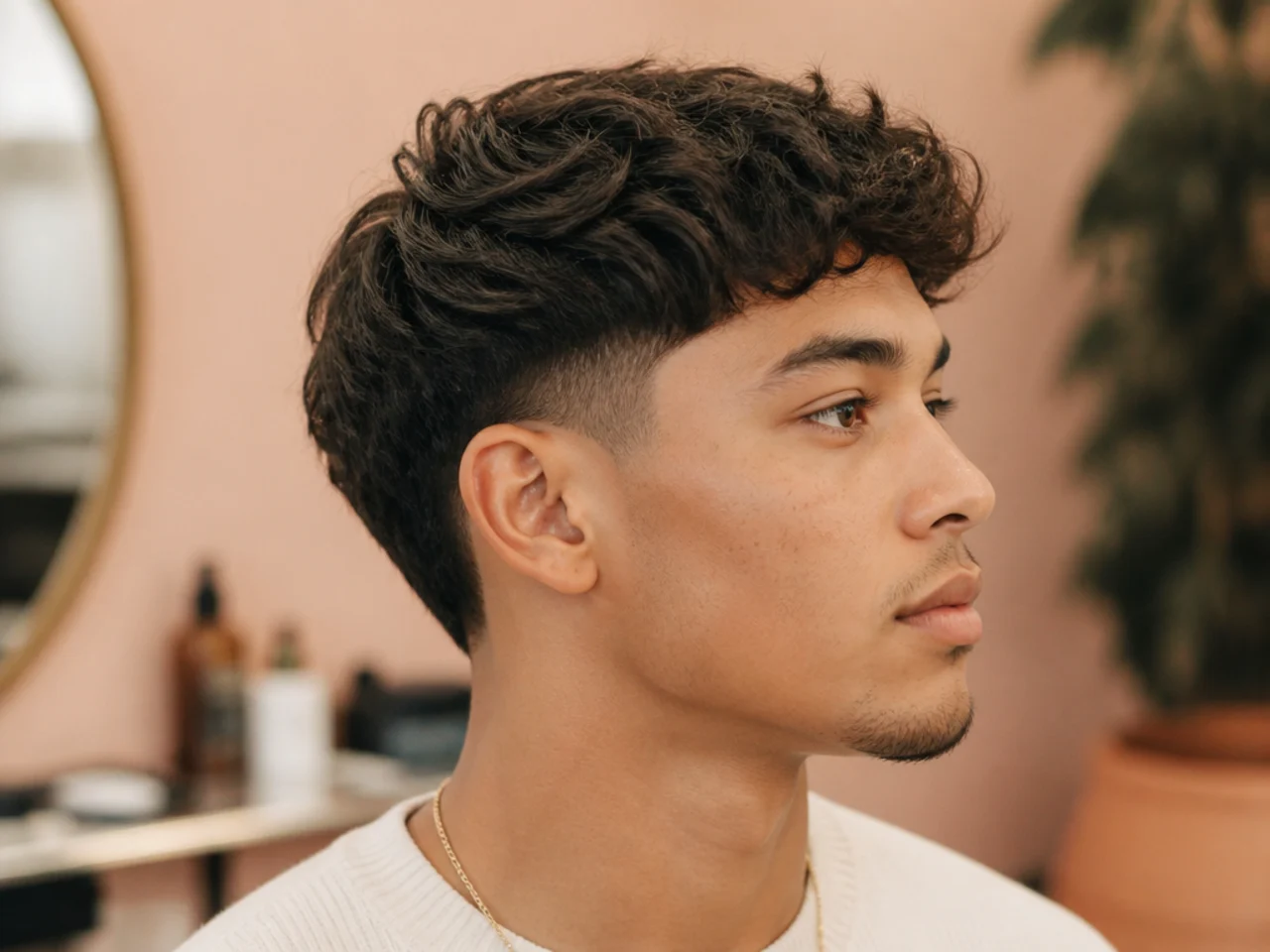
The most conservative version — a low taper barely touching the ear, most of the length above stays intact, and the top gets point-cut for texture without going short. Reads office-safe in almost any dress code. Best for oval, diamond, and long faces, and any workplace that side-eyes bolder cuts.
Ask for: "low blowout taper, #1 at the shortest, four inches on top scissor-cut, point-cutting through the length for texture, styled forward."
Styling: sea-salt spray on damp hair, blow-dry the crown up, separate the piecey top with your fingertips.
3. High Textured Blowout Taper
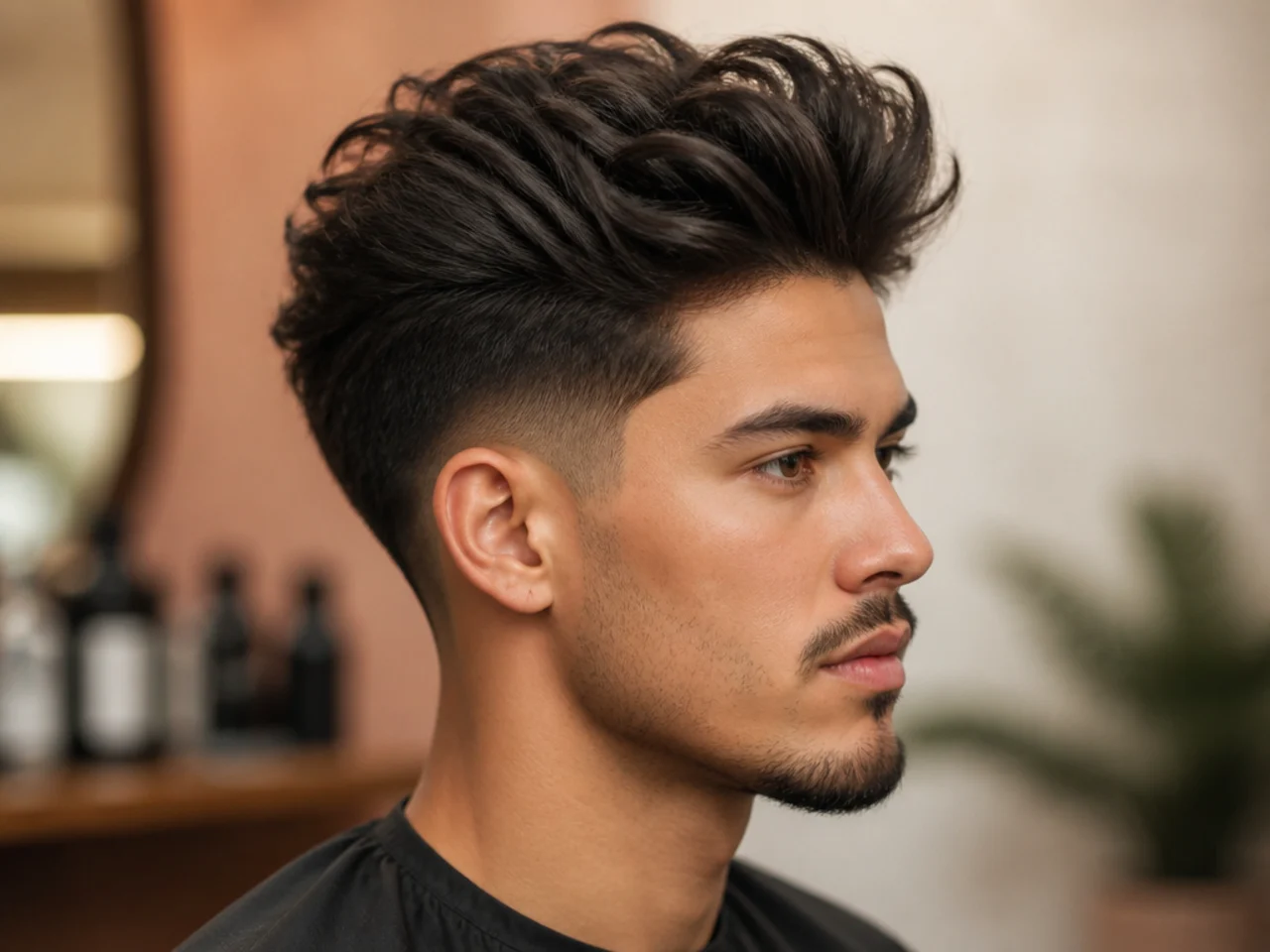
The high-height version — taper starting up near the parietal ridge, contrast dialled high, the textured top reading sharp against the short flanks. Best for oval and diamond faces; round faces will look shorter under it. Requires enough length on top (five inches minimum) to build the height.
Ask for: "high blowout taper, #0.5 at the shortest, five to six inches on top scissor-cut, heavy point-cutting throughout, sharp line-up at the forehead."
Styling: matte cream on damp hair, blow-dry with a round brush lifting the crown straight up, cool shot at the end to lock the height, finish by pulling individual pieces apart between two fingers.
4. Point-Cut Textured Blowout Taper
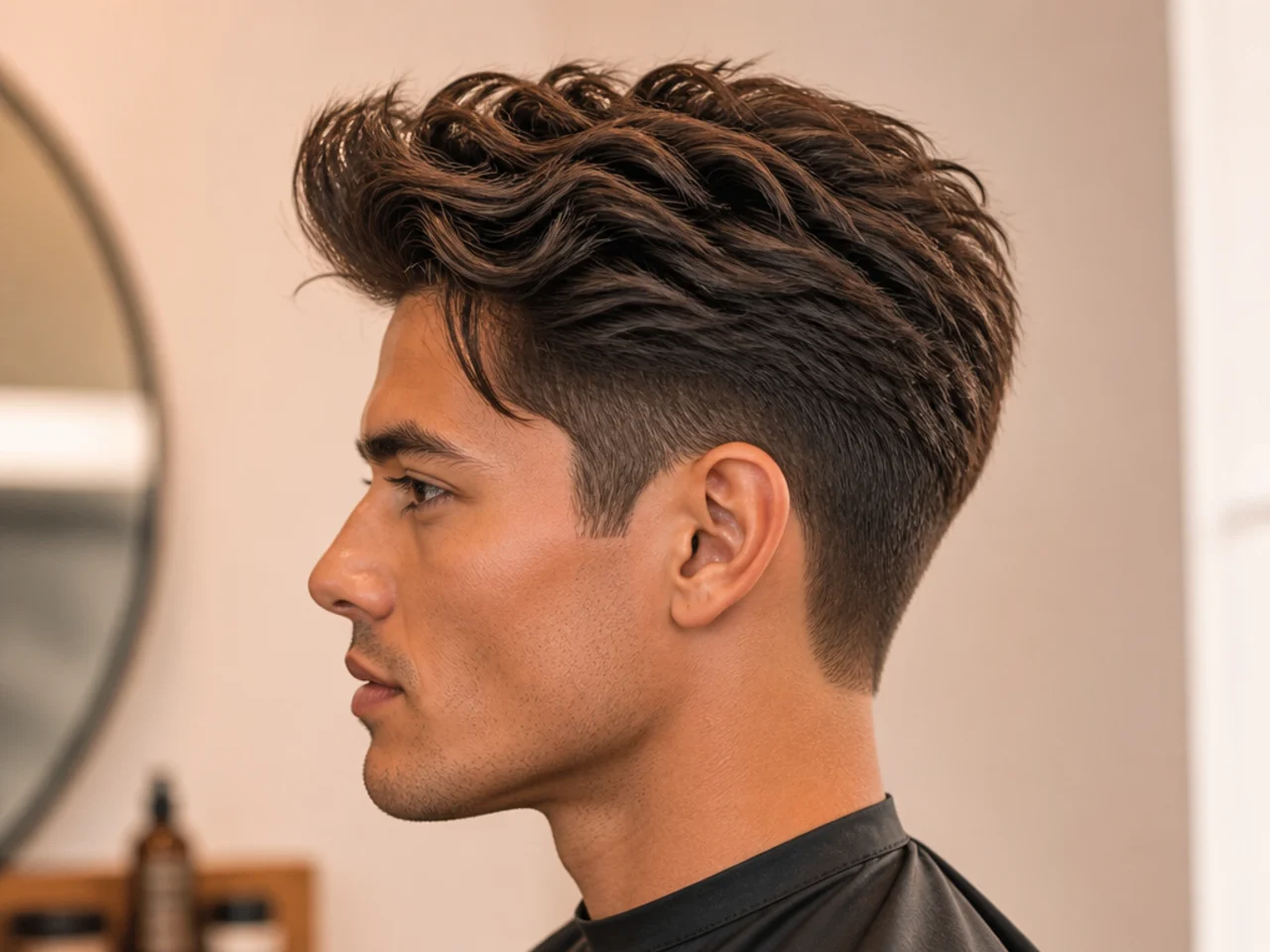
The technique-forward version — the whole top cut with the scissor tips pointing into the hair rather than across it, so every strand ends at a different height. Softer than razor work but sharper than thinning shears. Best on medium-density straight-to-wavy hair and any face shape.
Ask for: "mid blowout taper, #1 at the shortest, four inches on top scissor-cut, point-cutting every quarter-inch section throughout the top and fringe."
Styling: matte paste on damp hair, round-brush the top up and forward, run your fingers backward through the crown to expose the point-cut edges.
5. Razor-Cut Textured Blowout Taper
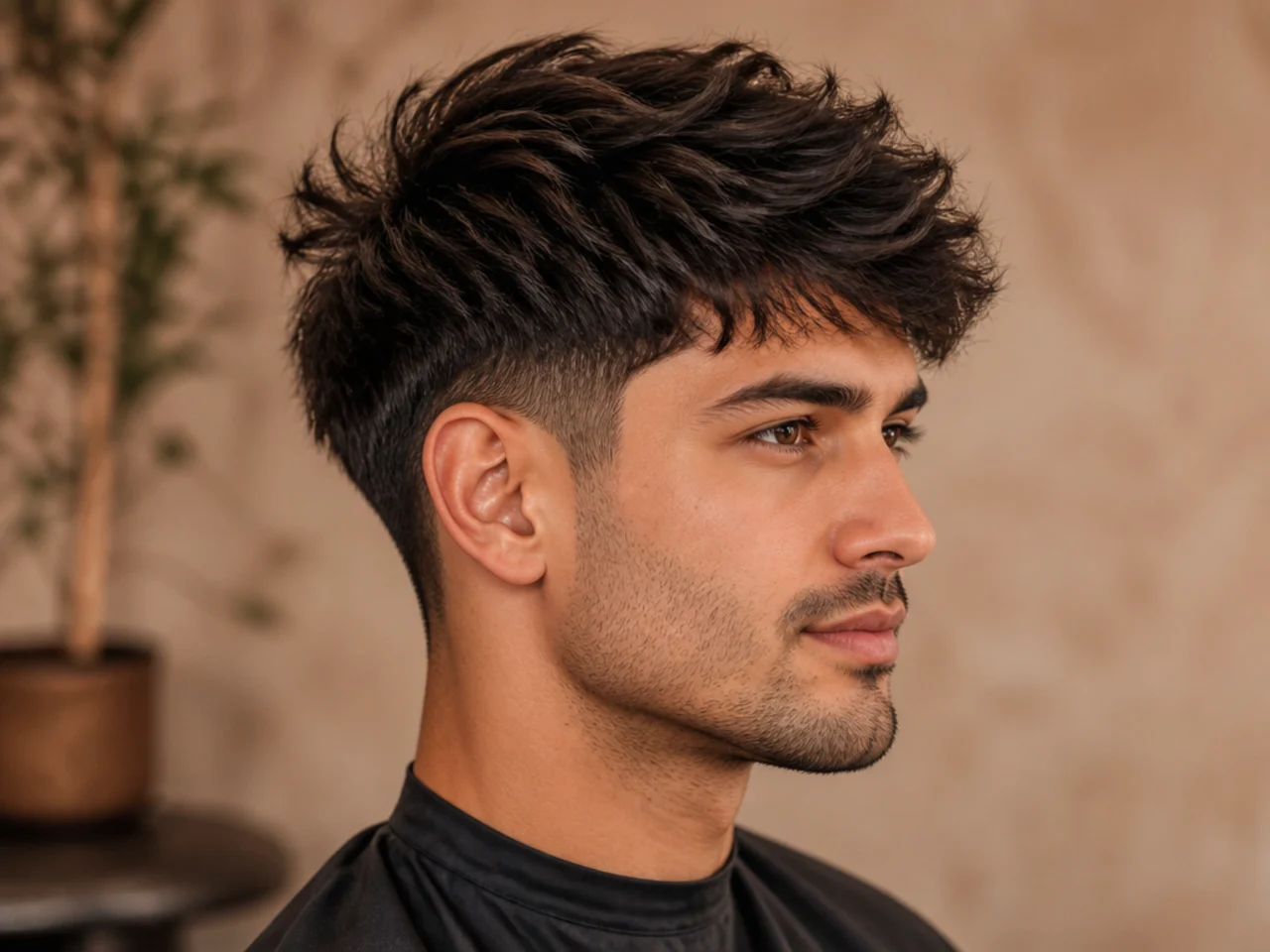
The sharpest texture on the list. A straight razor drawn through the top length feathers the ends into piecey wisps that a scissor edge cannot match. Reads punky, modern, deliberately unpolished. Best on straight and wavy hair; skip on fine hair because the razor removes weight fast.
Ask for: "mid blowout taper, #1 at the shortest, four inches on top razor-cut throughout, feathered ends, styled forward into the blowout."
Styling: matte cream through damp hair, blow-dry with the fingers only (no brush), pull individual razored pieces apart with a pea of clay between two fingertips.
6. Thinning-Shear Textured Blowout Taper
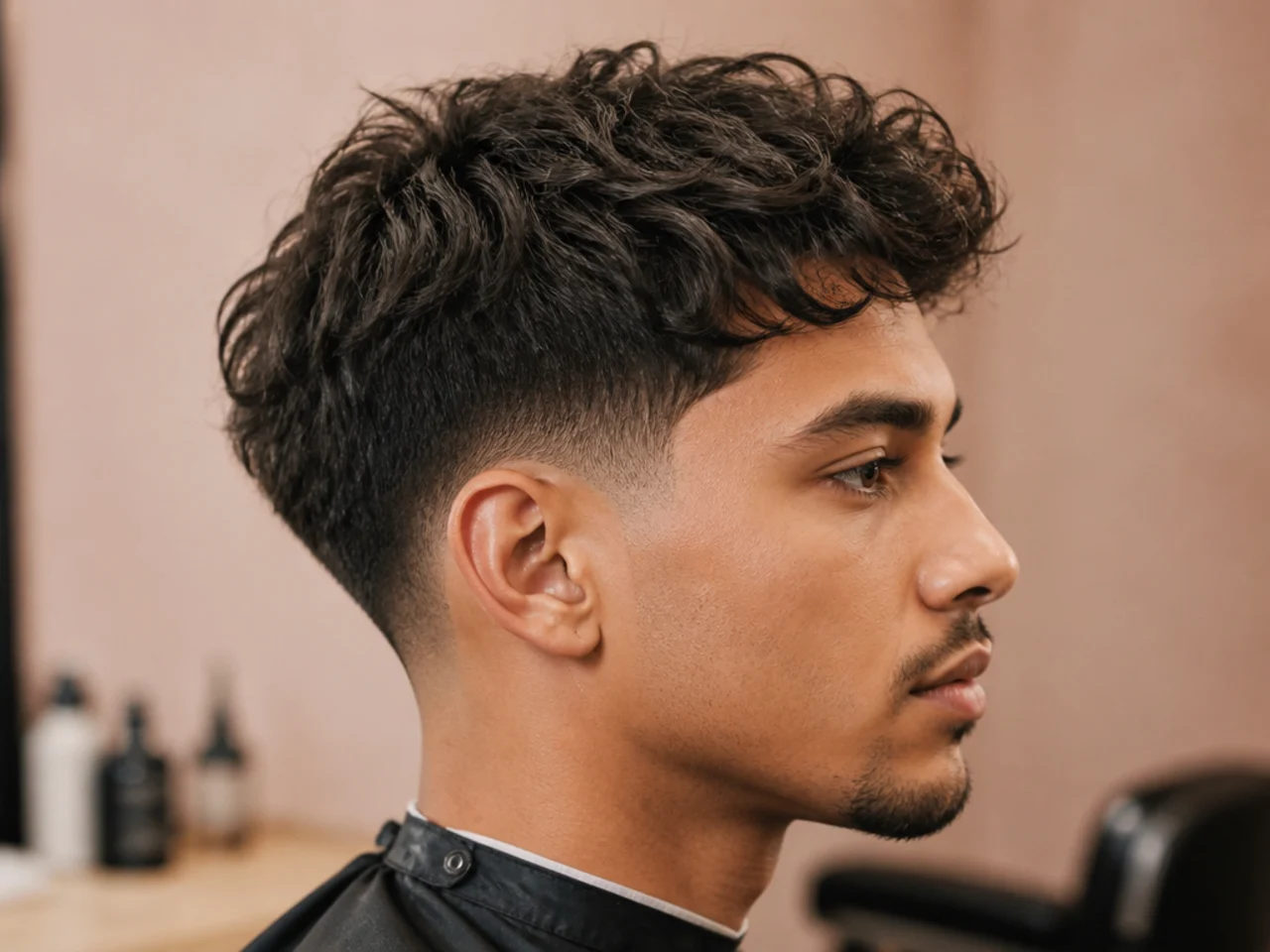
The bulk-management version. For guys with dense, thick hair that sits like a helmet in a plain blowout, thinning shears cut into the interior at an angle and release weight without shortening the surface length. The top still looks four inches long — it just moves. Best for thick straight or wavy hair.
Ask for: "mid blowout taper, #1 at the shortest, four inches on top scissor-cut, thinning shears through the interior at forty-five degrees to release weight, keep the surface length intact."
Styling: matte paste through damp hair, blow-dry with a round brush from the crown forward, comb through once with a wide-tooth comb.
7. Choppy Textured Blowout Taper
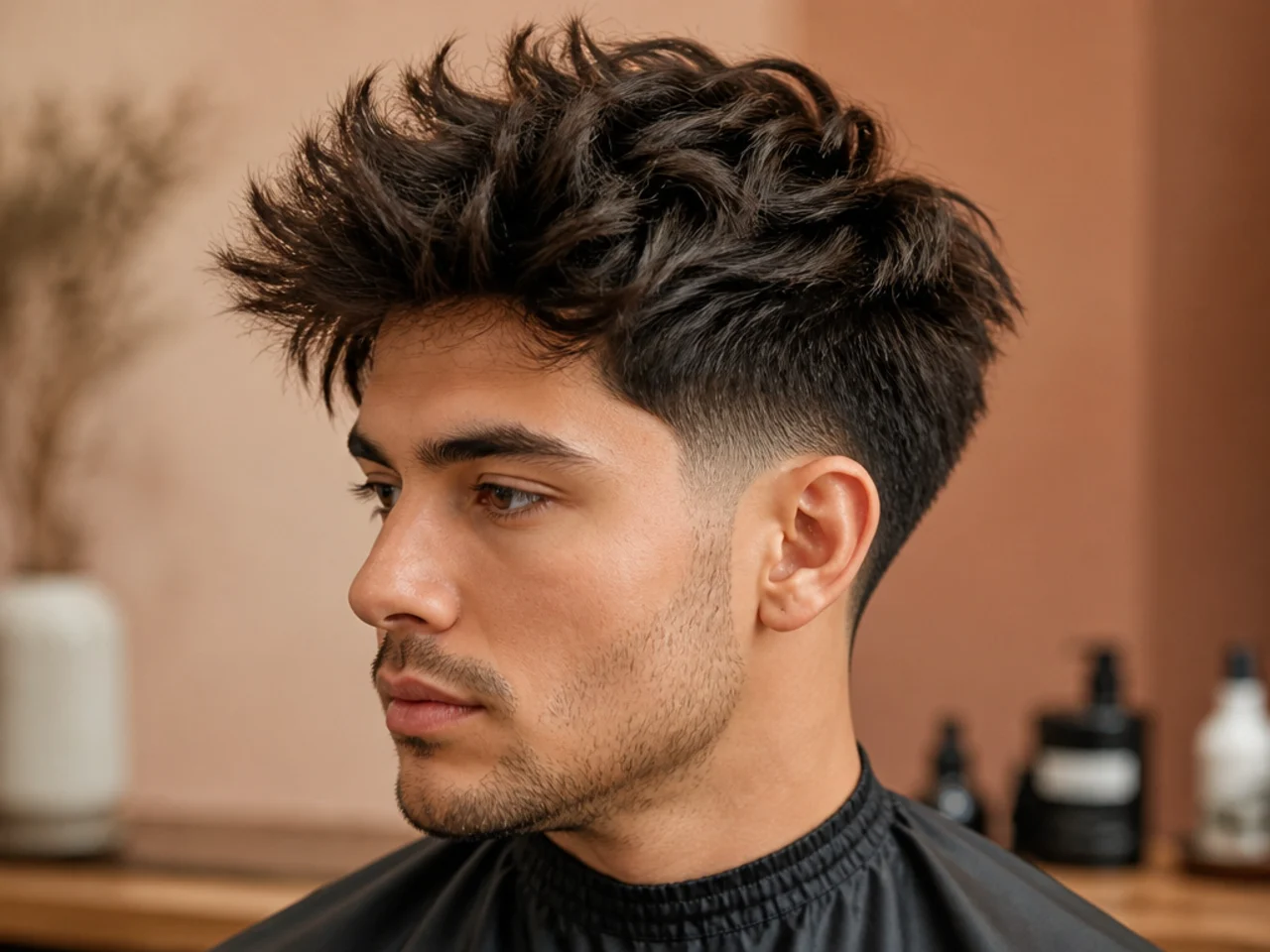
The most textured of the group. The top deliberately cut uneven with a combination of point-cutting and razor work, so pieces land at different heights across the entire crown, not just the fringe. Reads punky and editorial. Best for creative-industry dress codes, oval and square faces, and straight-to-wavy hair.
Ask for: "mid blowout taper, #1 at the shortest, four to five inches on top, choppy point-cut and razored throughout with pieces landing at deliberately different heights."
Styling: matte paste worked in with the fingers only (no comb), tousle the crown up, pull individual pieces apart between two fingers.
8. Piecey Textured Blowout Taper
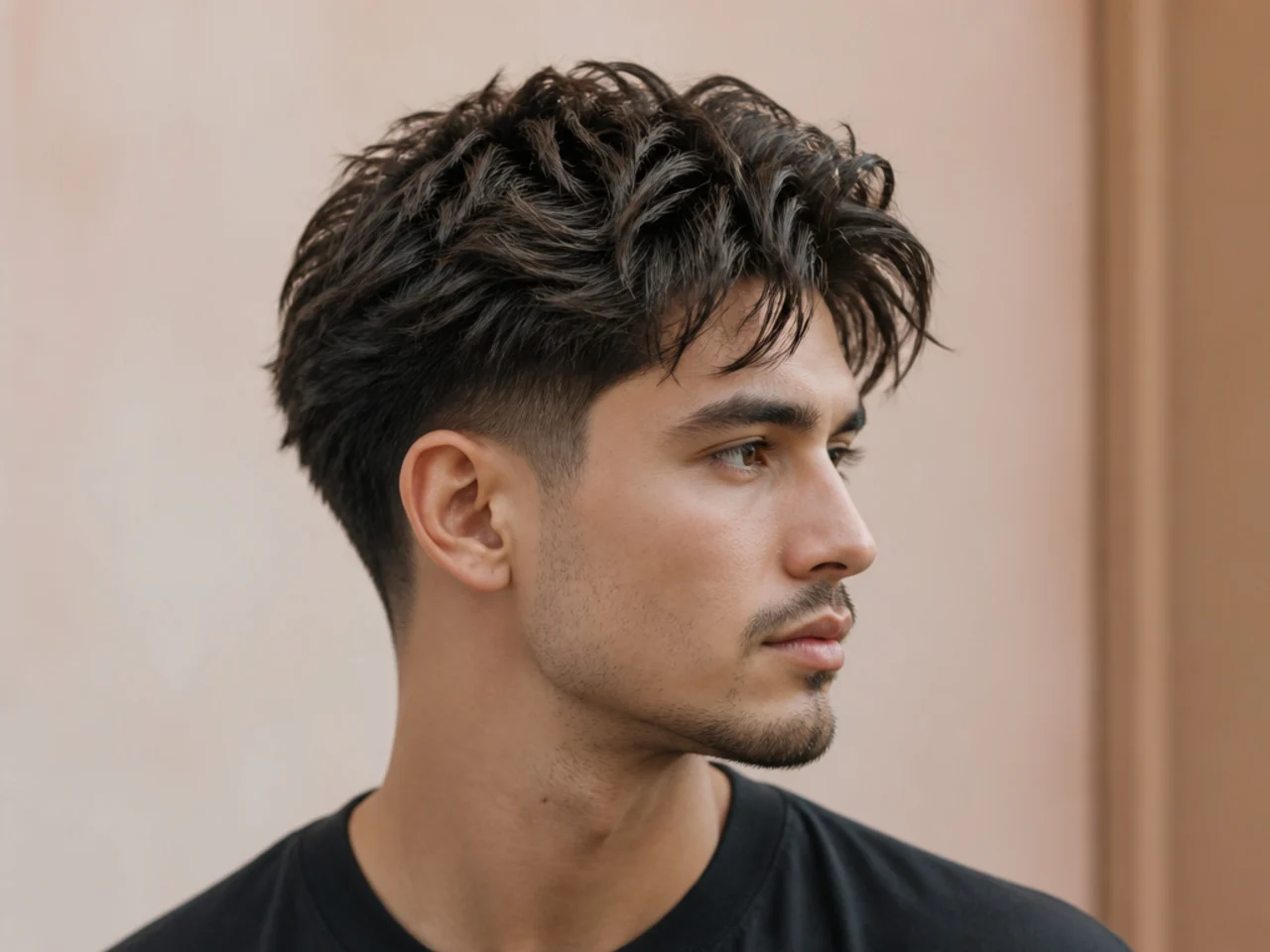
The separated-strand version — the top cut so that individual chunks of length stand apart from each other rather than blending into one mass. Requires deliberate section-by-section point-cutting. Reads intentional and modern. Best on 1A to 2B hair and oval, square, or diamond faces.
Ask for: "mid blowout taper, #1 at the shortest, four inches on top scissor-cut, section-by-section point-cutting so the finished top reads piecey and separated."
Styling: matte paste on damp hair, blow-dry the crown up, separate individual pieces between the pads of your fingers before the hair fully cools.
9. Messy Textured Blowout Taper
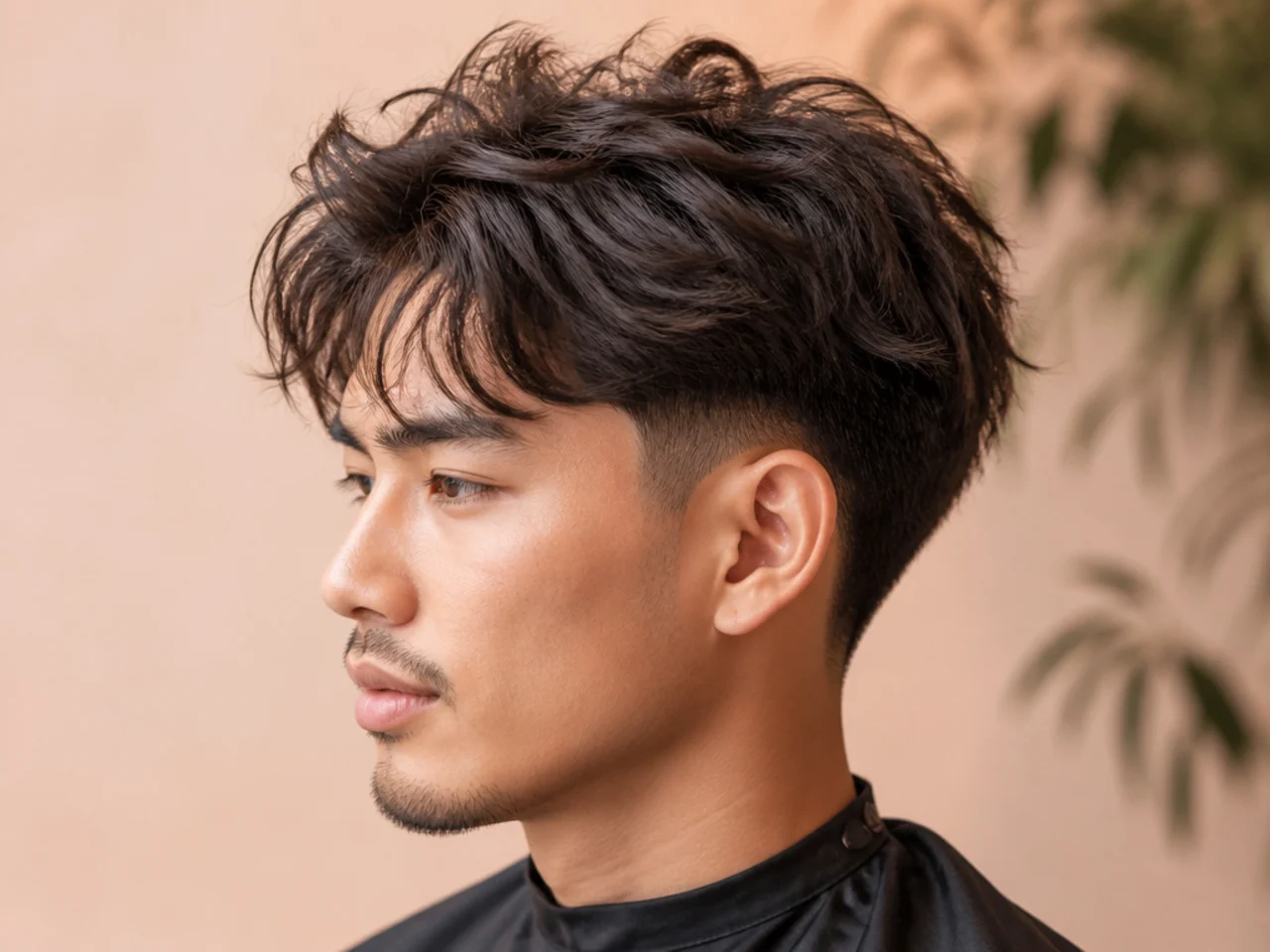
The deliberate-disarray version. Heavy texturing throughout plus a styling technique that pushes pieces in different directions rather than one uniform sweep. Adjacent to the messy hairstyles men family but with the blowout lift built in. Best for oval and square faces, and any hair type from 1B to 3A.
Ask for: "mid blowout taper, #1 at the shortest, four inches on top scissor-cut, heavy point-cutting throughout, styled for a messy tousled finish rather than one uniform direction."
Styling: matte paste on damp hair, blow-dry with your fingers pushing hair in random directions, no combing, finish with a pinch of matte clay to lock the disarray.
10. Wavy Textured Blowout Taper
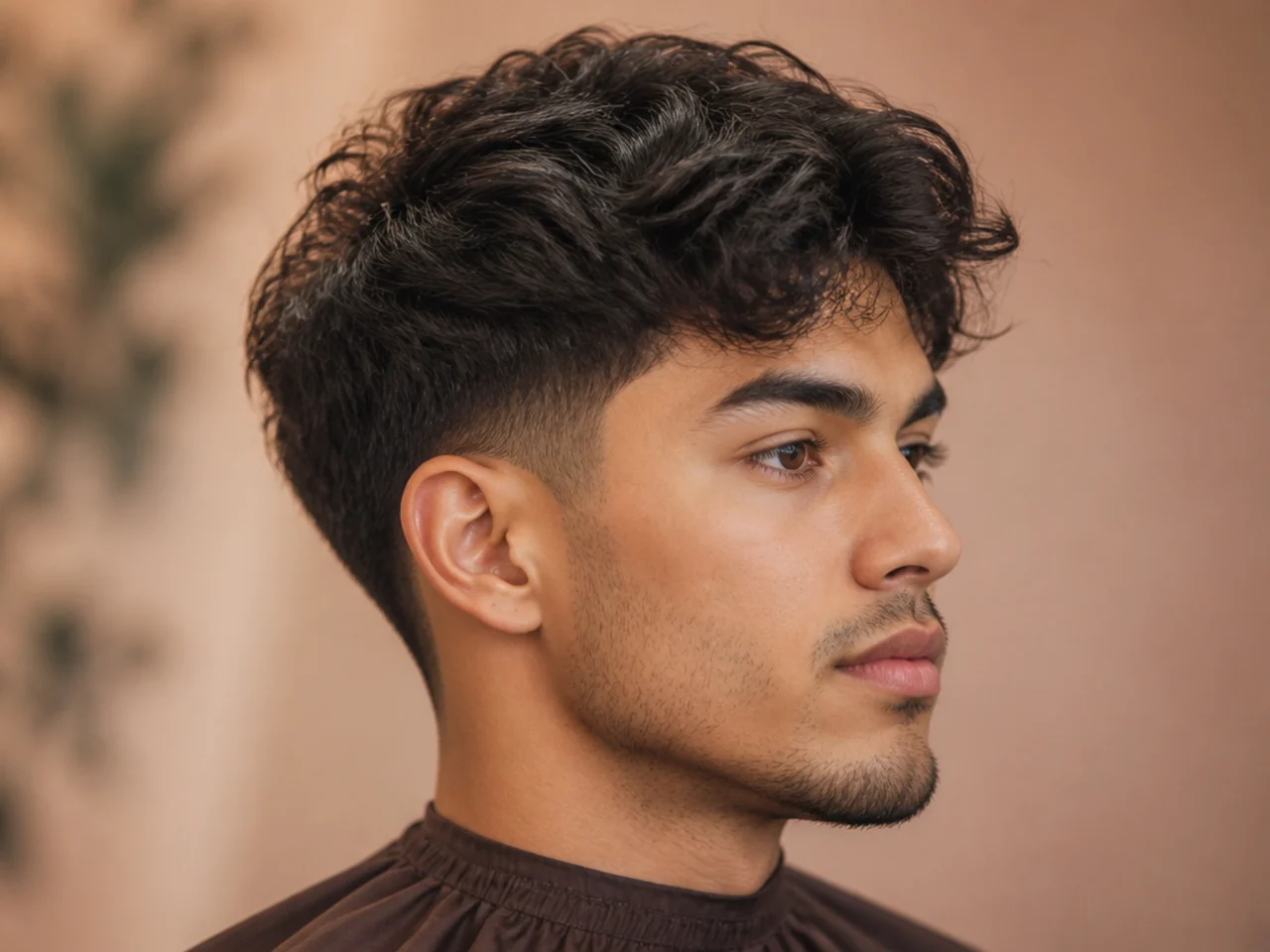
For 2A to 2C waves — the top left long enough that the natural wave pattern is visible in the finished silhouette, textured only lightly so the wave carries the piecey read. Feels like the least work of any variation on this list. Suits square, oblong, and oval faces, and any wavy hair type.
Ask for: "mid blowout taper, #1 at the shortest, four to five inches on top scissor-cut, light point-cutting only, keep the wave pattern intact throughout."
Styling: sea-salt spray on damp hair, scrunch with a microfibre towel, diffuse on low with the cup pointed upward toward the crown. Skip the round brush — you'll flatten the wave.
11. Curly Textured Blowout Taper
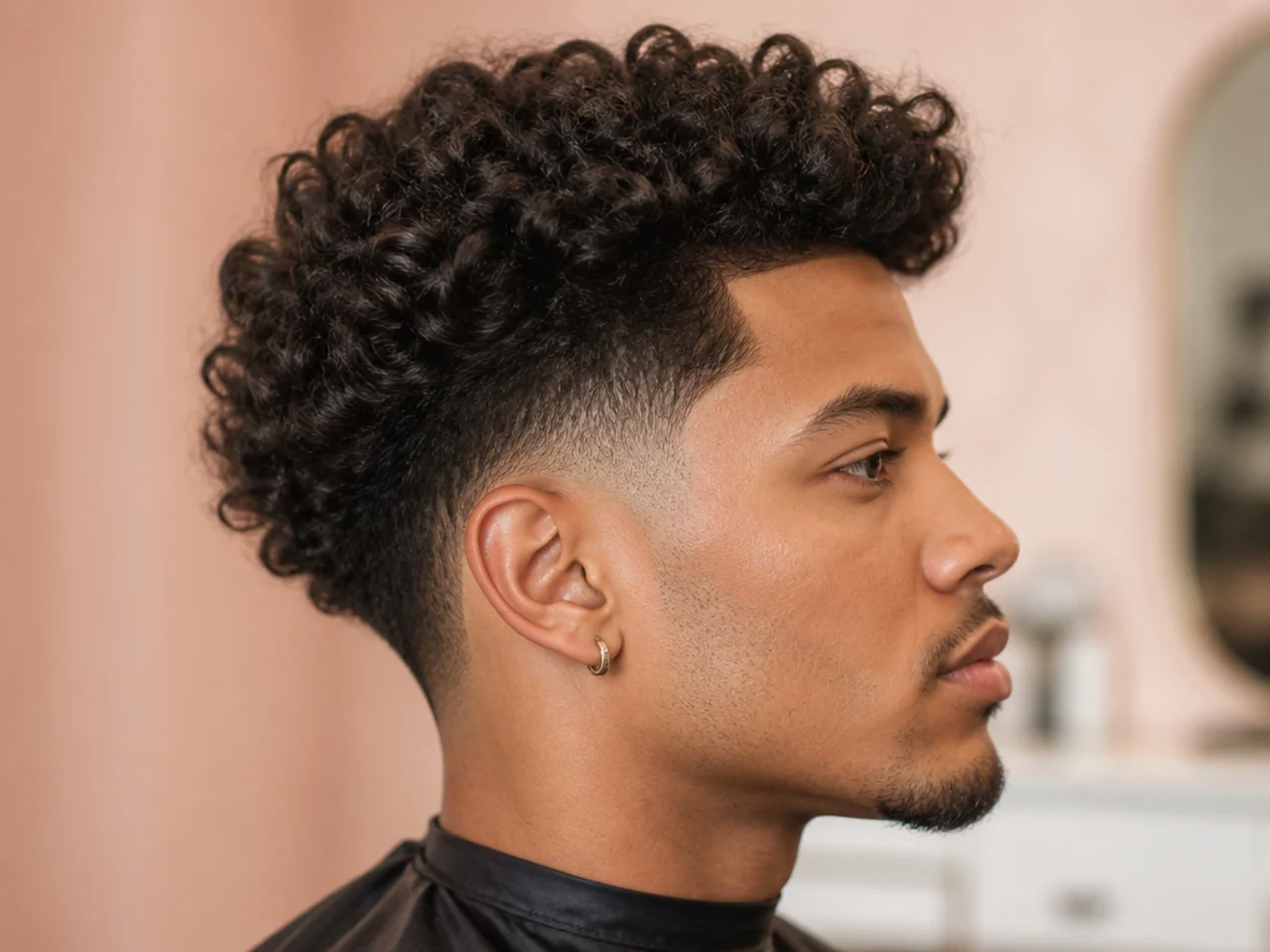
The 3A to 3B version — the top cut to preserve the curl pattern with a scissor-only approach (no clippers on top), the natural texture doing all the work. Adjacent to the curly hairstyles for men family. Best on oval, round, and square faces with 3A to 3B natural curl.
Ask for: "mid blowout taper, #1 at the shortest, four to five inches on top scissor-cut dry so you can see the curl fall, no thinning shears, no clippers on top, shape it round."
Styling: curl cream on soaking-wet hair, diffuse on low with the cup facing upward, plop and lift at the roots as you dry. Do not touch it after — every touch flattens the pattern.
12. Coily Textured Blowout Taper
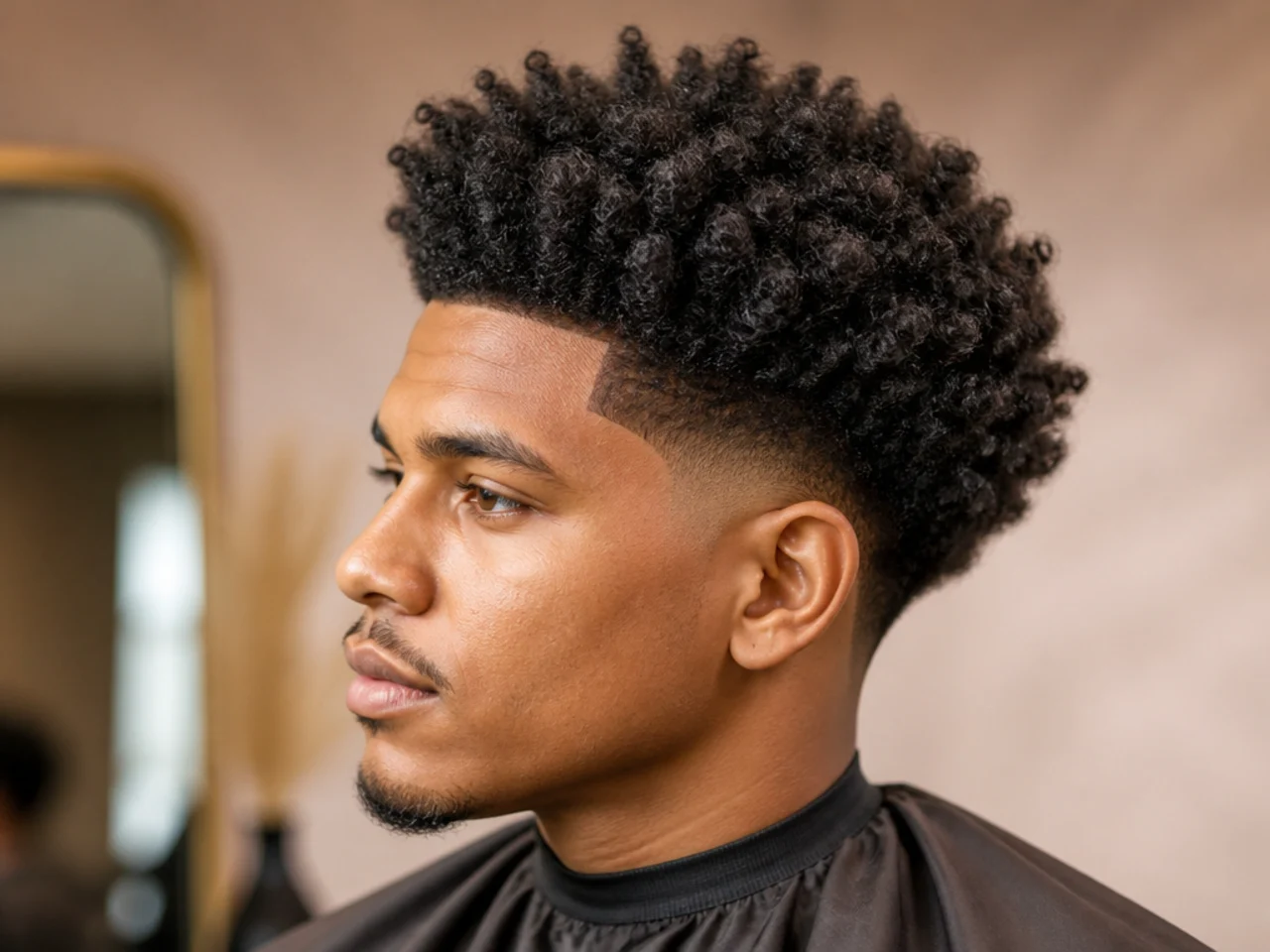
The 4A to 4C version — the coil pattern kept on top at three to five inches of length, sponged or picked out into a rounded dome, taper cleaning the sides. The "blowout" here is picked, not blown — coils don't take a round brush. Best on any face shape with 4A to 4C natural coil.
Ask for: "mid or low blowout taper, #1 at the shortest, three to five inches on top scissor-cut, keep the coil pattern intact, no chemical relaxer."
Styling: leave-in conditioner on damp hair, pick out with a wide-tooth pick or twist-sponge for defined coils, shape with your hands, light-hold spray to set. Silk bonnet overnight.
13. Straight-Hair Textured Blowout Taper
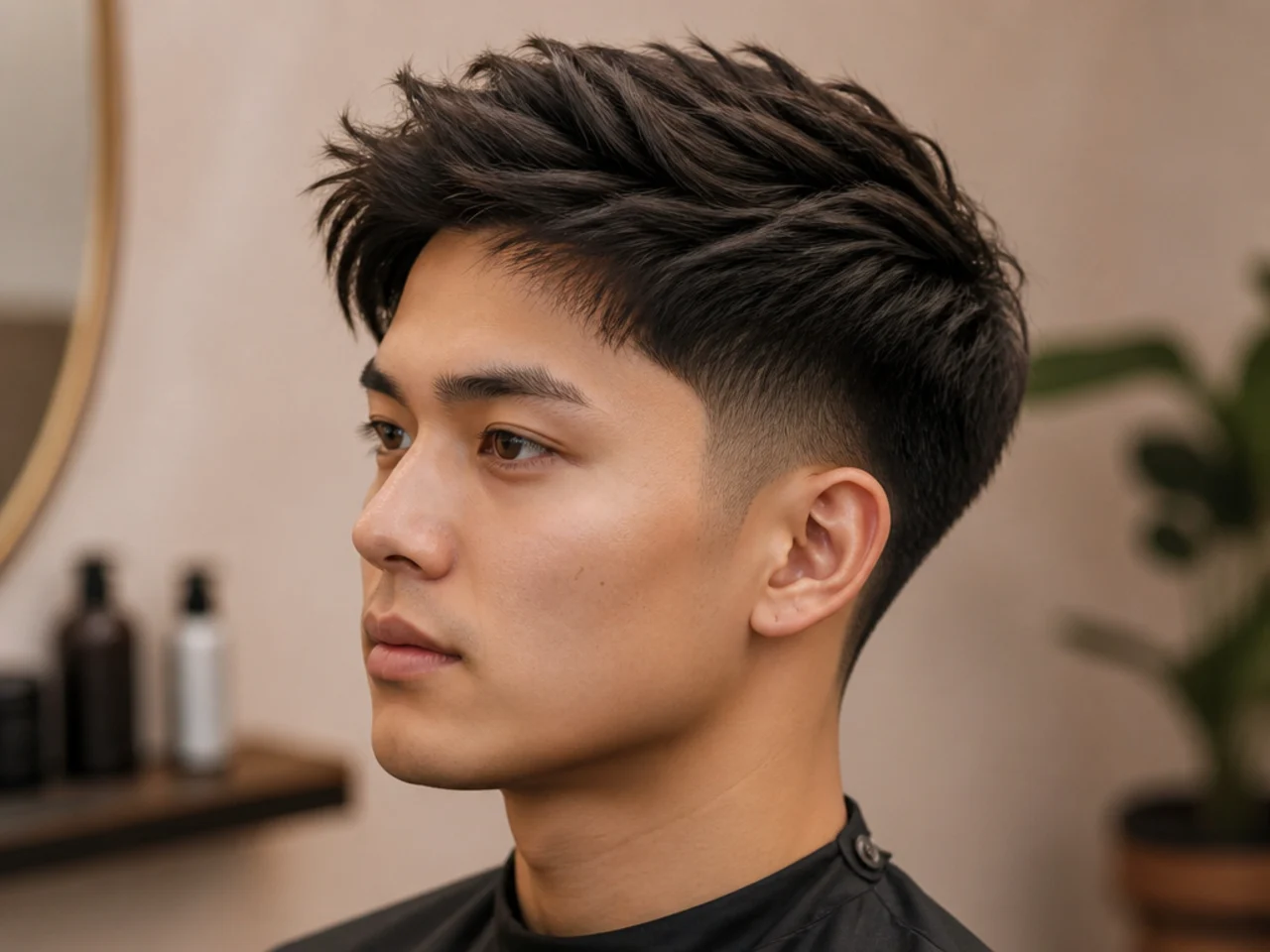
For pin-straight 1A hair — the toughest hair type for a textured blowout because there is no natural body or texture to build on. The whole thing is engineered with heavy razor work at the cut and heat plus product at home. Requires commitment. Best for medium-density straight hair and any face shape.
Ask for: "mid blowout taper, #1 at the shortest, four inches on top scissor-cut with aggressive razoring throughout to break the straight bluntness into pieces."
Styling: volumising mousse at the roots on damp hair, blow-dry upside down for the first pass, flip up and shape with a round brush going up and forward, finish with texture powder at the roots for grip.
14. Broccoli Textured Blowout Taper
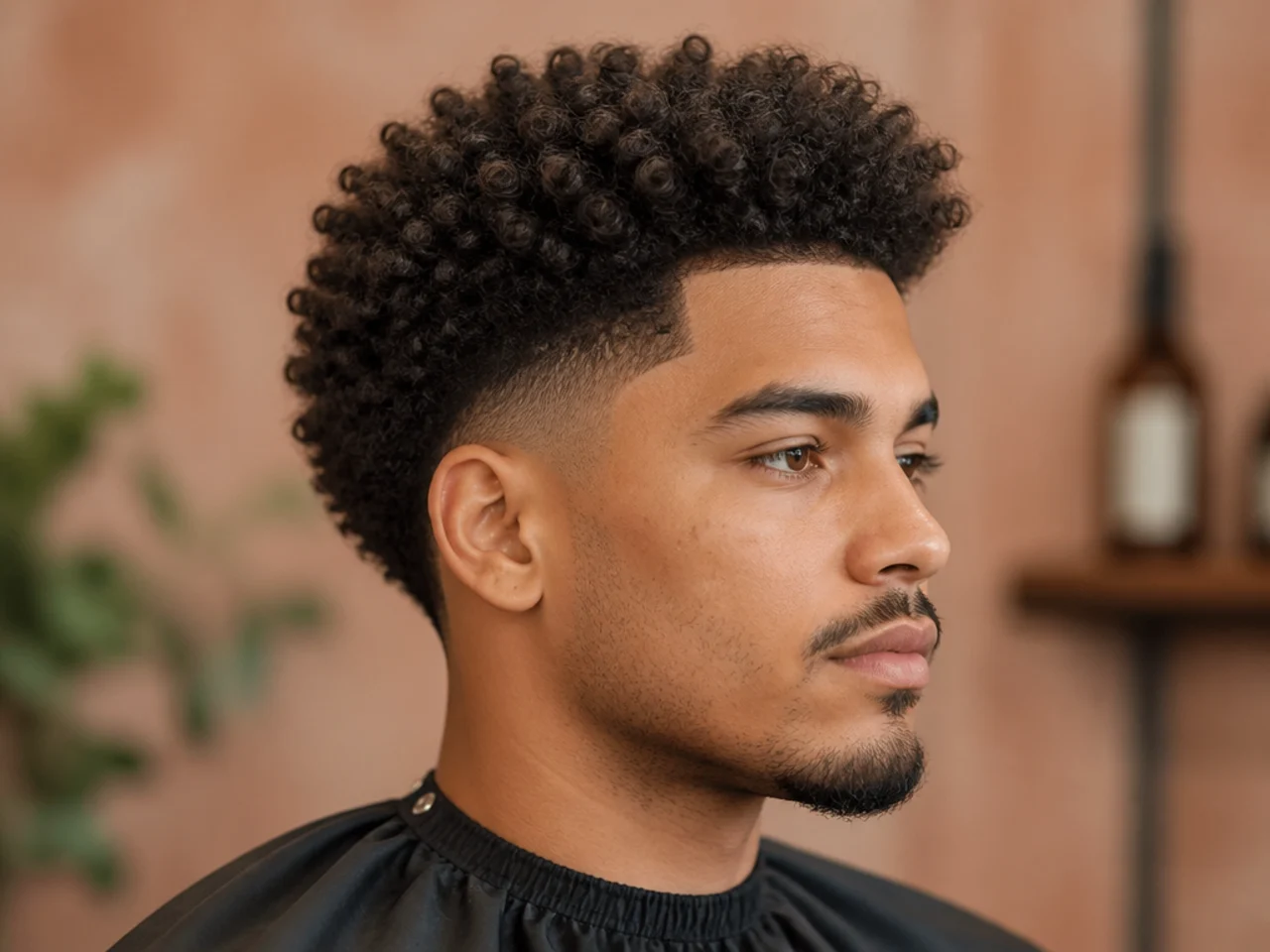
The viral broccoli haircut silhouette dropped onto a textured blowout taper base — a dense rounded pouf of natural or permed curl on top, shaped like a broccoli head, with the taper framing the flanks. Cleaner than a plain broccoli because the taper reads intentional instead of grown-out. Best on 3A to 3B natural curl or permed hair, and round, oval, or square faces.
Ask for: "mid blowout taper, #1 at the shortest, three to four inches of curl on top scissor-cut, no thinning shears, shape it into a rounded broccoli-style dome."
Styling: curl cream on soaking-wet hair, diffuse on low while cupping upward toward the crown, twirl individual curls around a finger before they dry.
15. Textured Blowout Taper With a Fringe
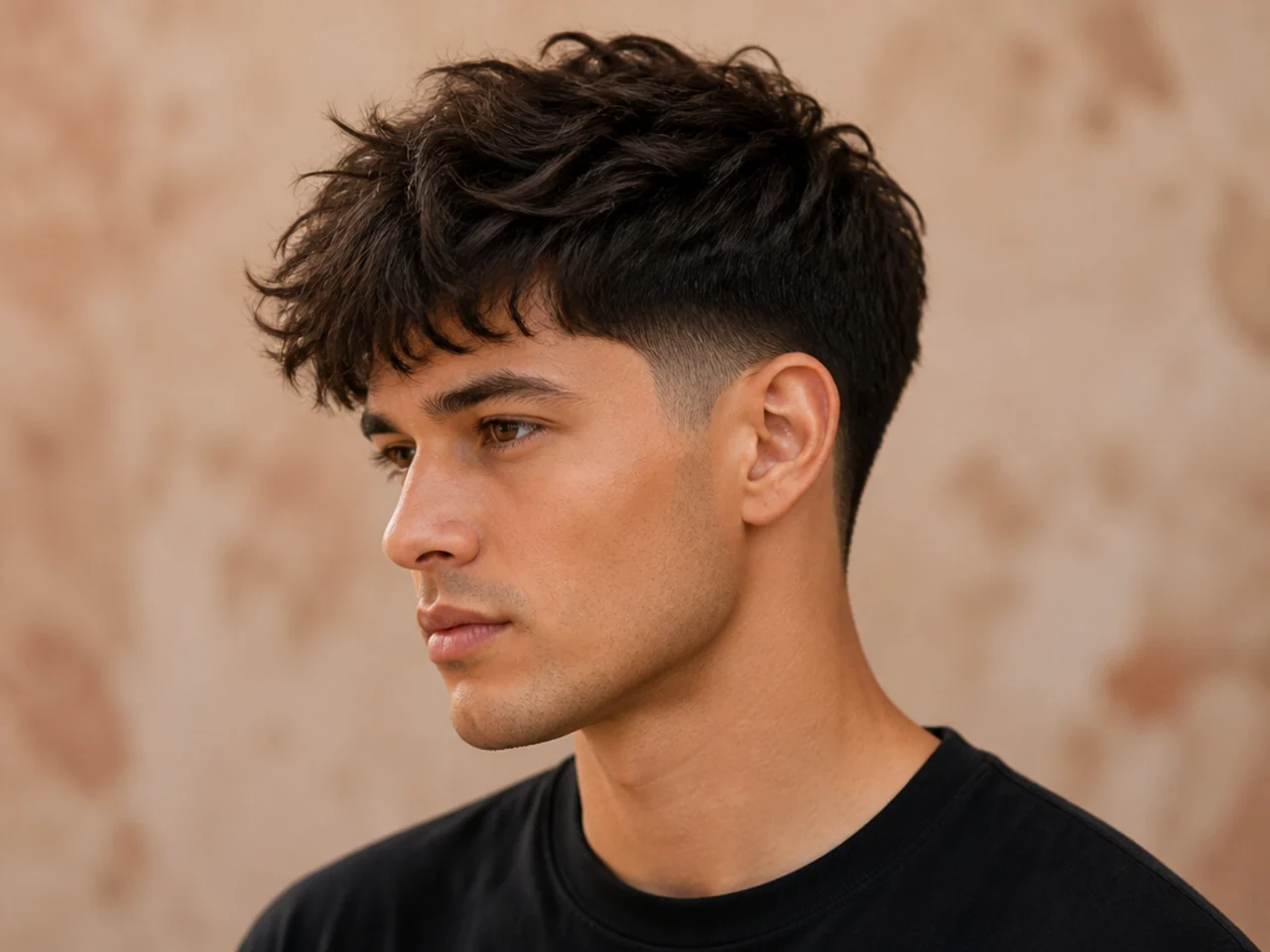
The fringe-forward version — the whole top textured throughout plus a piecey fringe left long enough to fall at brow level. Different from a plain fringed blowout because the texturing extends through the entire top, not just the front. See the blowout taper textured fringe guide for twenty fringe-focused variations. Best for square, oblong, and oval faces.
Ask for: "mid blowout taper, #1 at the shortest, four inches on top scissor-cut, point-cutting throughout the top plus a textured fringe point-cut to fall at brow level."
Styling: matte cream on damp hair, blow-dry the crown up and forward with a round brush, drop the fringe last with your fingers.
16. Textured Blowout Taper With a Middle Part
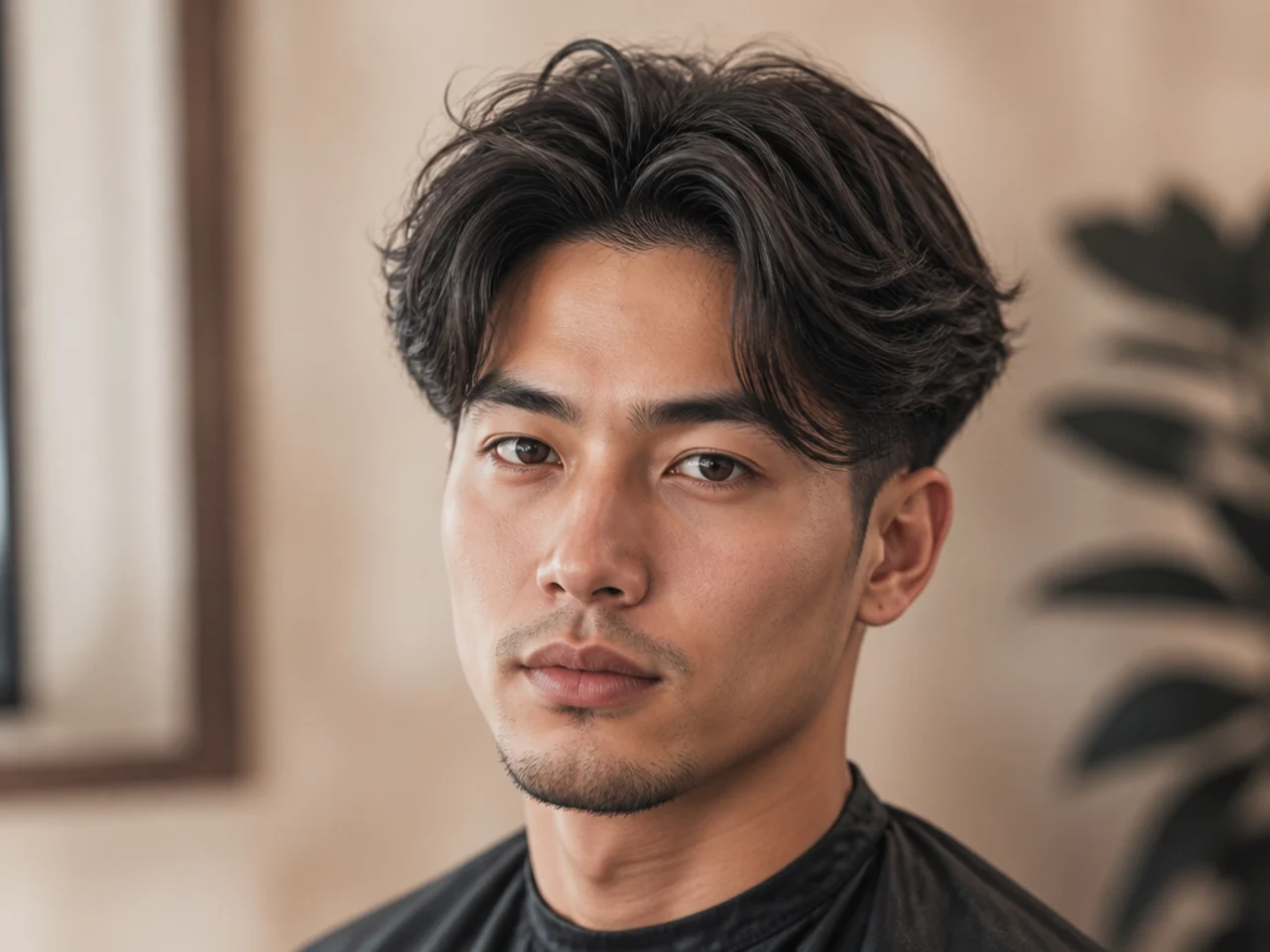
The parted-top silhouette — top length split down a natural middle part, both halves lifted into blowout volume with the textured pieces sweeping outward from centre. Different from the curtain fringe because the parted look extends through the whole top. Adjacent to the middle part haircut men family. Suits oval, square, and heart-shaped faces.
Ask for: "mid blowout taper, #1 at the shortest, four to five inches on top scissor-cut, point-cutting throughout, natural middle part from crown to fringe with both sides styled outward."
Styling: matte cream on damp hair, blow-dry each side outward from the part with a round brush, break up the texture with your fingers after the hair cools.
17. Textured Blowout Taper for Thick Hair
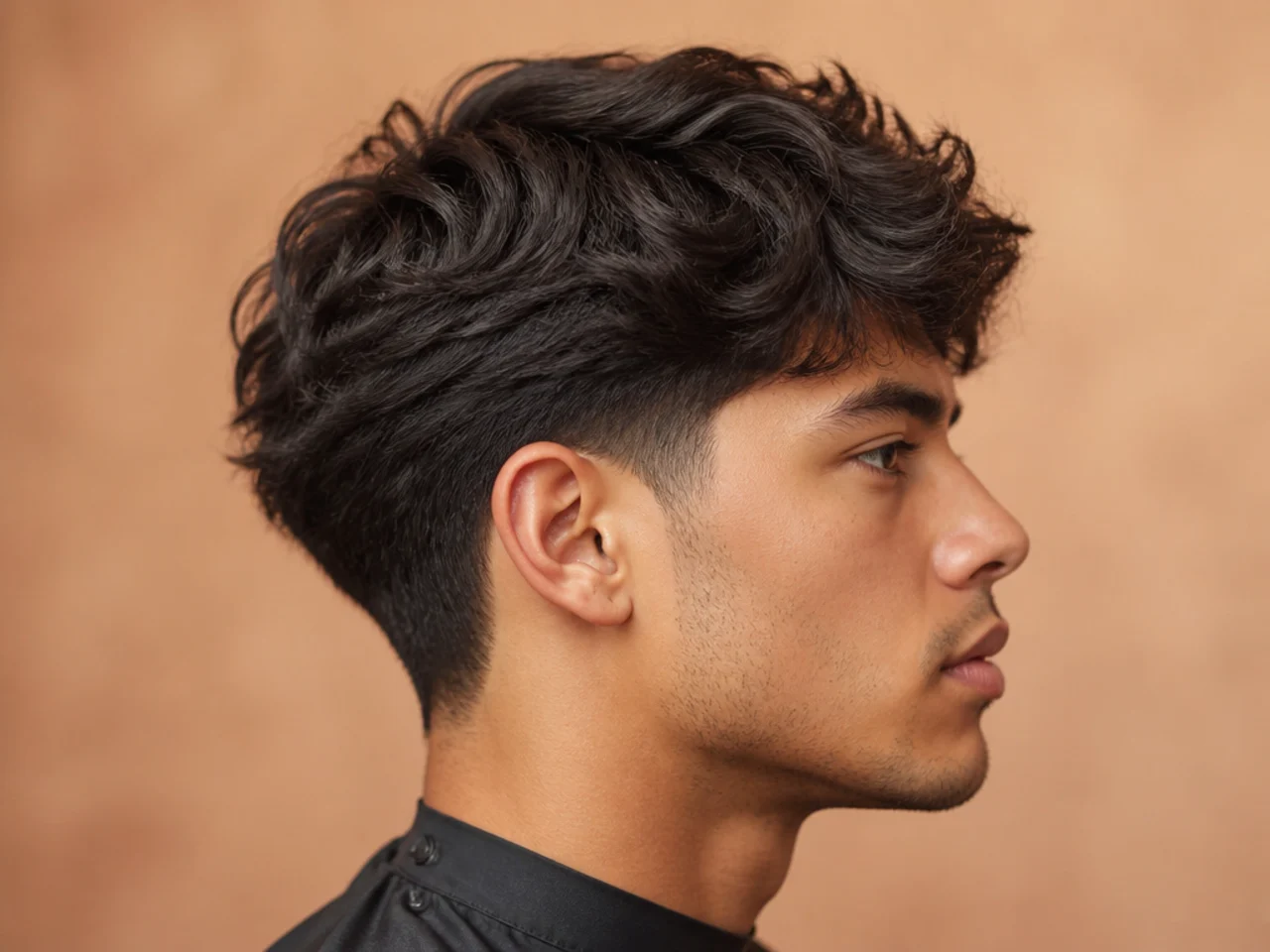
The density-management version. Thick hair needs interior thinning shears plus surface point-cutting so the finished top has enough movement to blow out cleanly. Without both, thick hair sits as a bulky helmet in the blowout shape. Best on 1B to 2C hair at medium to high density.
Ask for: "mid blowout taper, #1 at the shortest, four inches on top scissor-cut, thinning shears through the interior at forty-five degrees plus point-cutting through the surface."
Styling: matte paste through damp hair, blow-dry with a round brush from the crown forward, use a wide-tooth comb to distribute product evenly, cool shot to set.
18. Textured Blowout Taper for Fine Hair
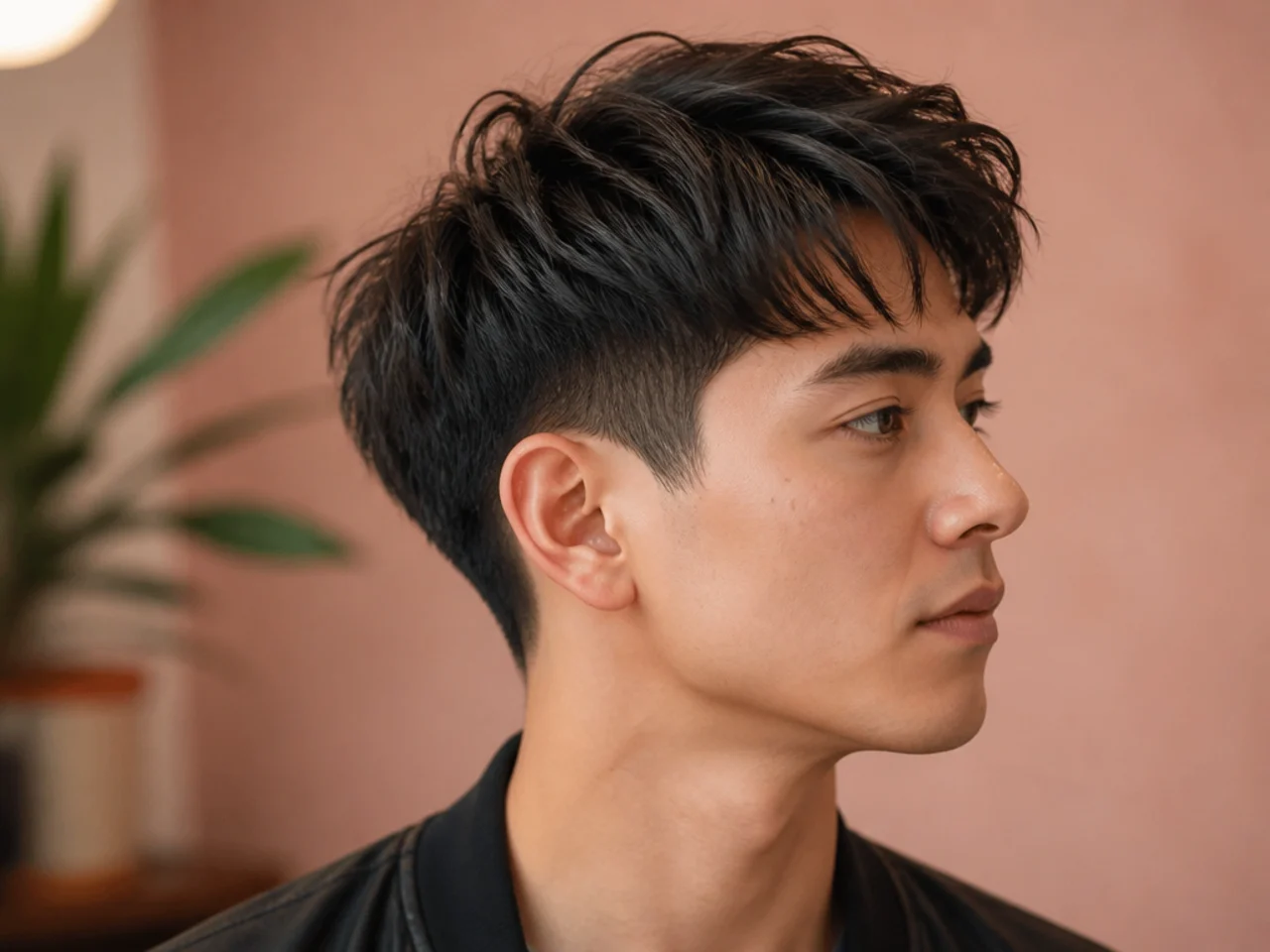
The density-building version. Fine hair needs point-cutting only — skip the thinning shears because they remove weight you don't have to spare. The taper stays low so the sides read as dense as possible, and the top is kept shorter (three inches) with light point-cutting so it reads full rather than wispy. Best on fine 1A to 2A hair and any face shape.
Ask for: "low blowout taper, #1 at the shortest, three inches on top scissor-cut, light point-cutting only through the surface, no thinning shears."
Styling: root-lift spray at the roots on damp hair, blow-dry against the natural fall, finish with a matte fibre that grips without clumping. No shine — shine on fine hair reads slick, not blown out.
19. Textured Blowout Drop Taper
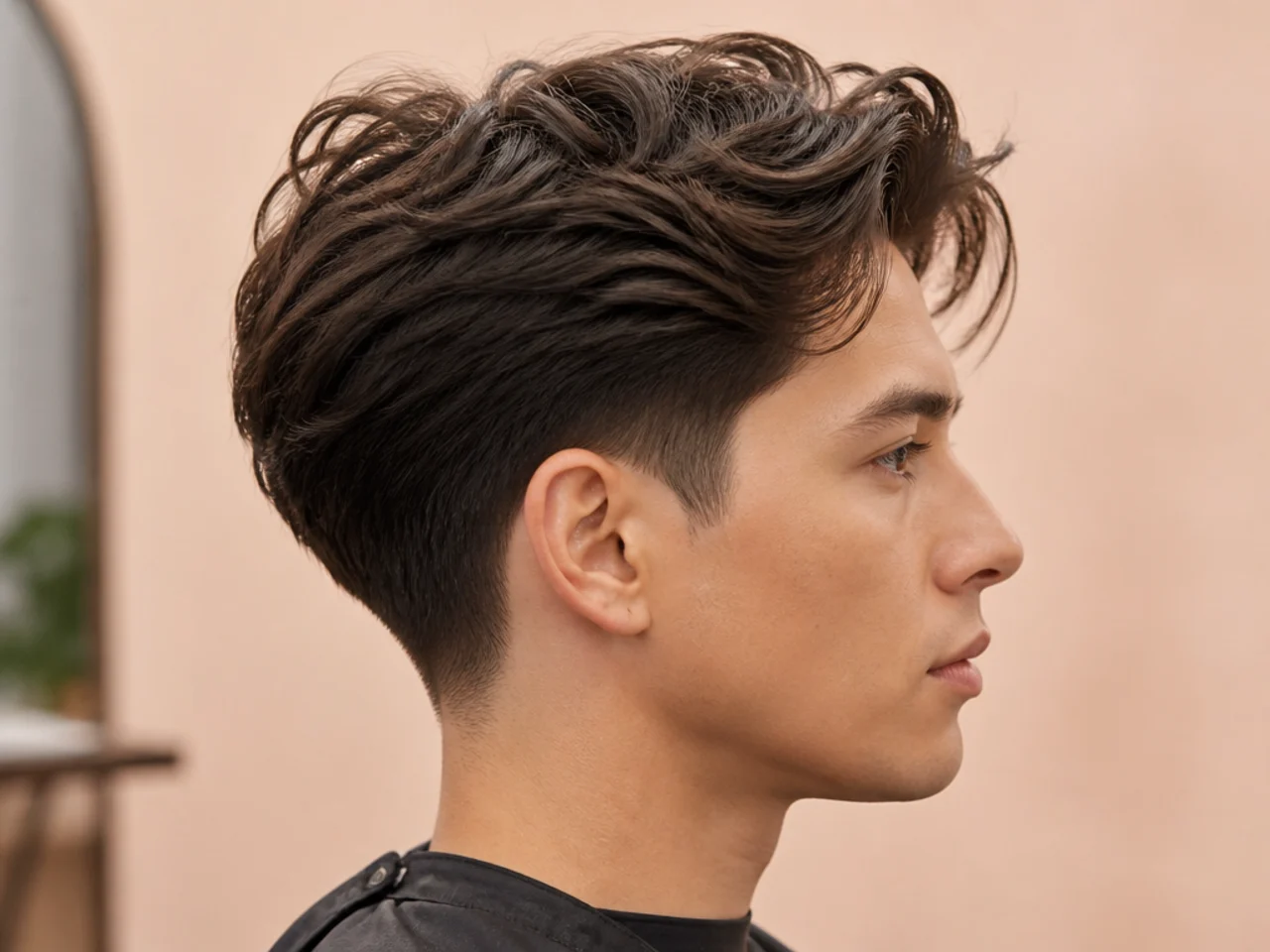
The drop shape curves the taper down behind the ear instead of running horizontal across the sides. Pairs beautifully with a textured top because it balances a piecey silhouette up front with a rounded back-of-head profile. Best for guys with a flatter occipital bone — the drop compensates.
Ask for: "blowout drop taper, #0.5 at the shortest, four inches on top scissor-cut, point-cutting throughout for texture, curved drop behind the ear."
Styling: matte paste through the mids, round-brush blowout up and forward, drop the fringe last with a fine-tooth comb, break up the surface with your fingers.
20. Textured Blowout Taper With a Line-Up
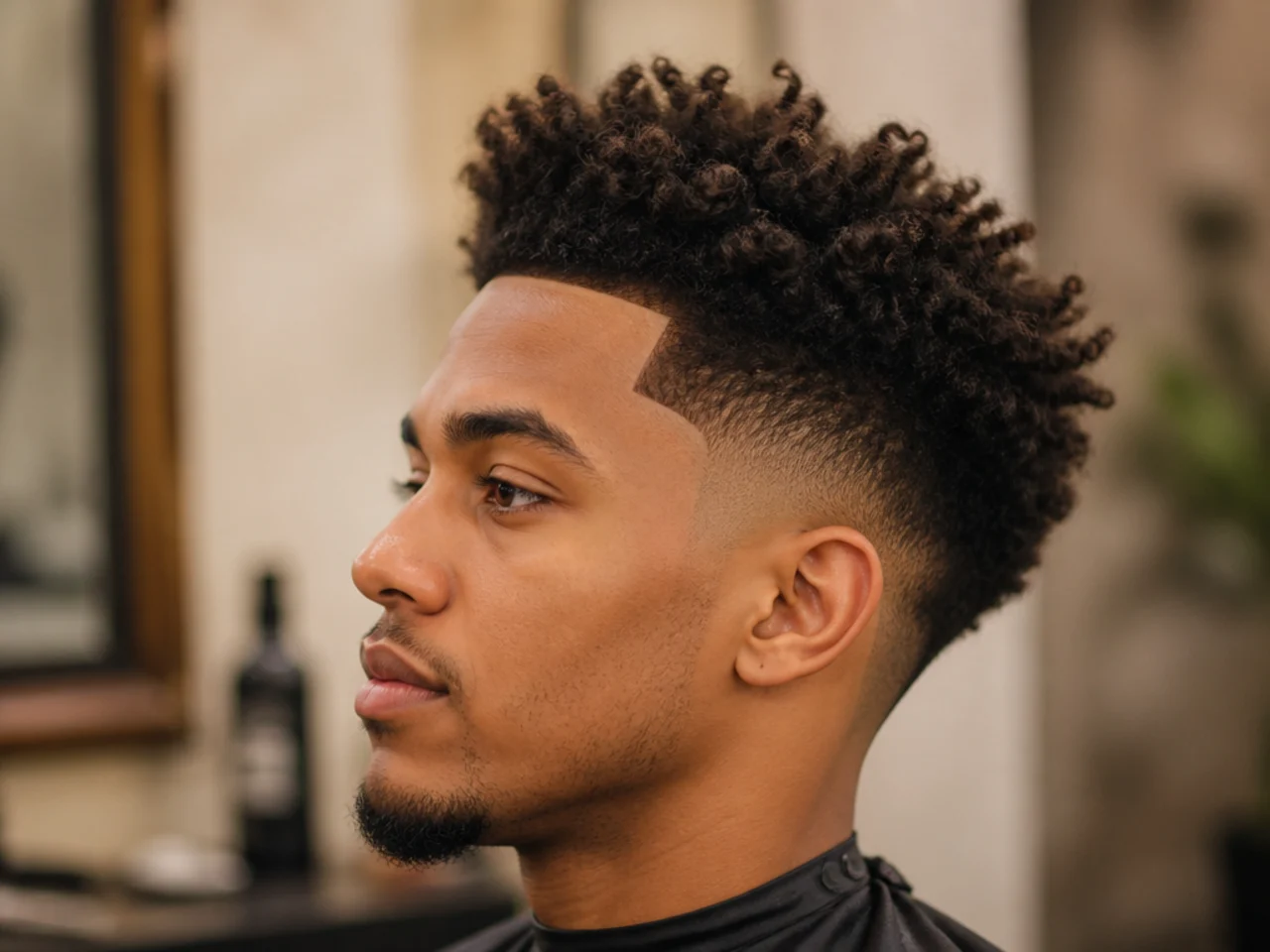
The line-up is what turns a good textured blowout taper into a great one. A razored, hard-line edge at the forehead, temples, and behind the ear squares off the whole cut, and the textured top reads sharper against a clean frame. Best on 1C to 4A hair and requires a barber who does razor work well. Book a line-up refresh every ten to fourteen days between full cuts.
Ask for: "mid blowout taper, #0.5 at the shortest, four inches on top scissor-cut, point-cutting throughout, sharp razored line-up at the forehead, temples, and behind the ear."
Styling: whatever routine matches your hair type. The line-up carries the polish — the styling only has to look intentional, not fussy.
How to Ask Your Barber for a Textured Blowout Taper
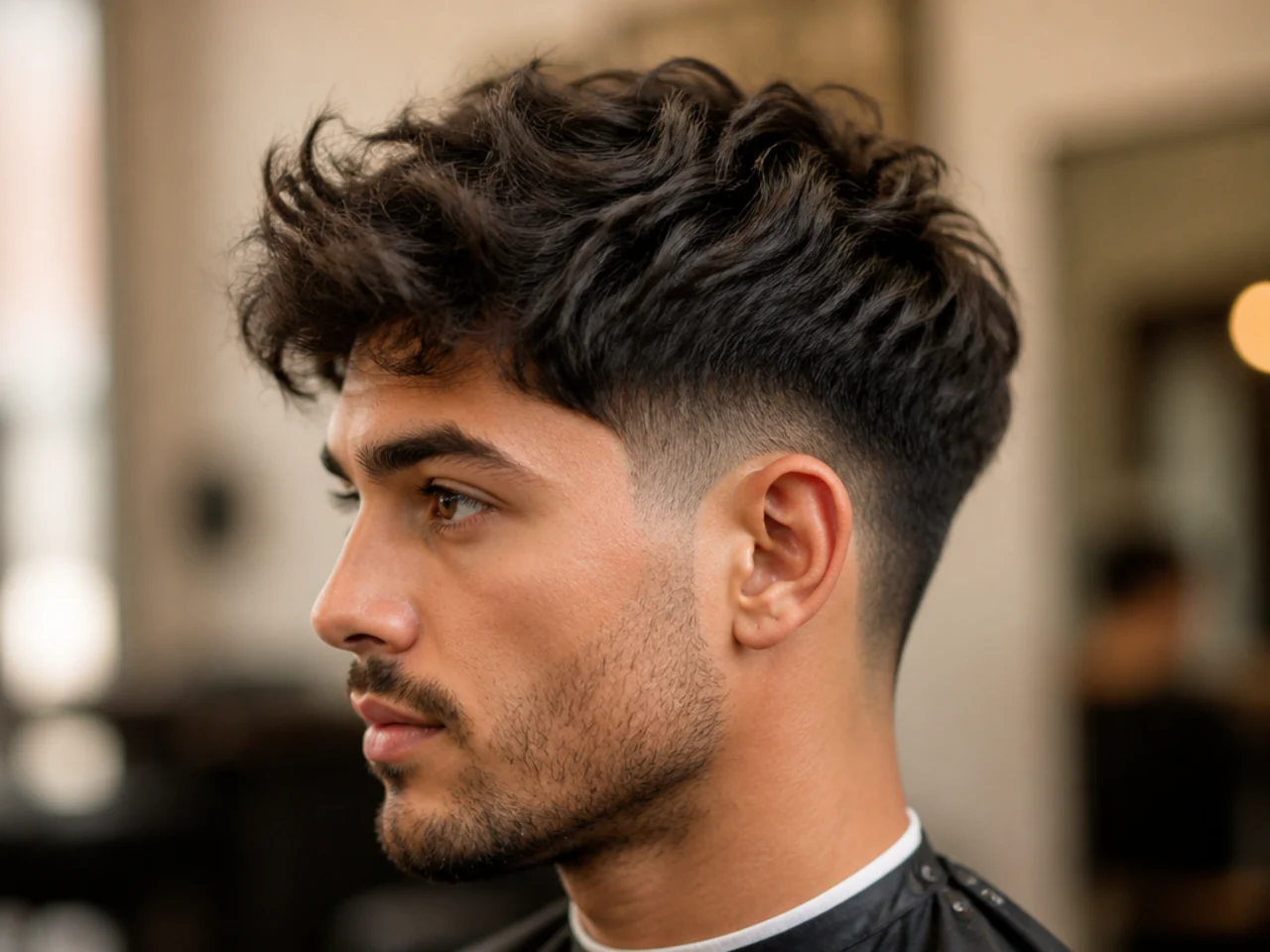
Seven lines cover the entire conversation. Nail these and you walk out with the shape you had in mind.
- Show a photo — and pick one with hair like yours. A textured blowout taper on 1A pin-straight reads completely different from the same cut on 2C wavy or 3B curly. Screenshot a reference where the model's hair type matches yours.
- Say the words "textured blowout taper." Not "blowout fade," not just "taper." The full phrase tells your barber where to stop the sides (a #0.5 or #1 guard, never skin), how to shape the top (long, styled up and forward into the domed blowout), and how to finish the length (point-cut, razored, or thinned for texture — not scissor-smooth).
- Confirm the taper height. Low sits above the ear, mid lands at the temple, high rides up near the parietal ridge. Pick before you sit down.
- Confirm the guard at the shortest point. #0.5 for sharper contrast against the top, #1 for softer. Do not go below the half-guard — the moment your barber cuts to bare skin, you have a fade, not a taper.
- Specify the top length in inches. Not "medium" or "leave some length." Numbers. "Four inches on top." Barbers work off measurements, not adjectives.
- Name the texturing technique. Point-cutting for a controlled piecey read. Razor work for a feathered, punky read. Thinning shears through the interior only for bulk release on thick hair. Say which one — do not leave it to your barber to guess.
- Book your next appointment before you leave. Every three to four weeks for the taper touch-up, every six weeks for the full cut. Even better — ask for a fifteen-minute taper-only appointment at week three and a full re-cut at week six.
Styling and Maintenance
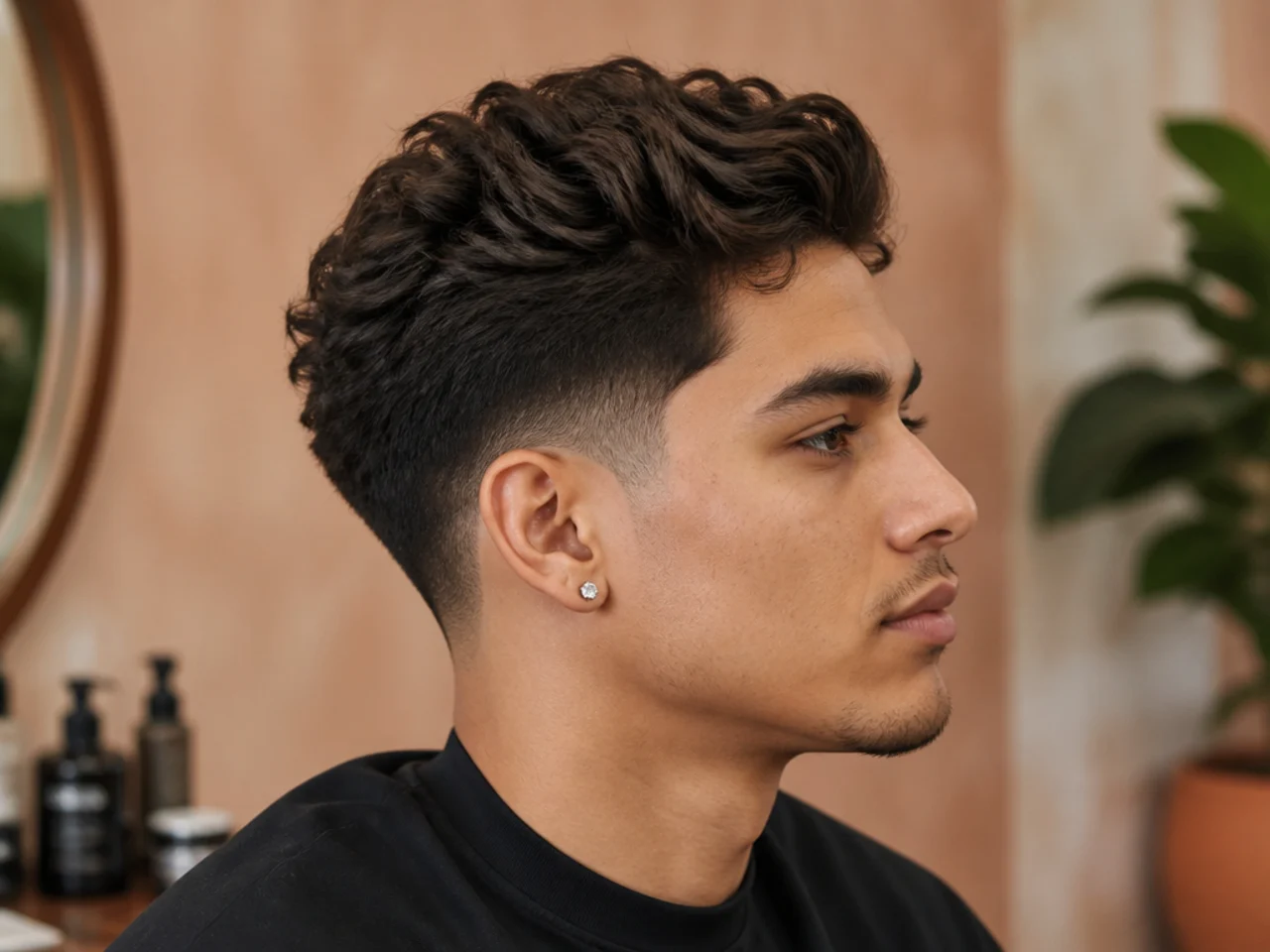
The routine is short. Damp hair, product first, blow-dry second, texture last. Texture always happens last because separating pieces before the hair cools flattens them right back down.
Wash rhythm. Two to three times a week with a sulfate-free shampoo. Daily washing strips the natural oils that give textured tops their piecey grip and the crown its blowout body. If your hair feels flat by day three, dry shampoo the roots.
Product family. A matte paste or matte clay is the workhorse. Add a sea-salt spray if your hair sits flat naturally, or a light-hold pomade if you want the pieces to hold their shape without stiffness. Skip anything glossy — shine kills the textured read. If you have wavy or curly hair, a leave-in and curl cream replace the paste and salt spray.
Blow-drying. Round-brush the top up and forward from the crown, working from the back to the front. Keep the dryer on medium heat, nozzle pointing down the hair shaft to seal the cuticle. The texture comes last — after the shape is set and the cool shot has locked it, pull individual pieces apart with your fingertips.
Cool shot. Every blow-dryer has one. Use it. Heat shapes; cool locks. Skip the cool shot and the blowout drops by lunch, texture and all.
Texturing at home. A pea of matte clay between the pads of two fingers, worked into individual pieces one section at a time. Do not run product through the top with a comb — you'll re-blend everything the point-cutting broke.
Maintenance cadence. Taper touch-up every three to four weeks; full cut every six weeks. If your hair holds a taper well (usually 1B to 2C), you can stretch to five and eight; if you like sharp taper lines (usually 3B to 4C), stick to three and six.
Between-visit cleanup. Keep your neckline and sideburn sharp with a quality edger. Fifteen seconds in the mirror twice a week and the taper stays crisp until your next appointment.
Overnight care. Silk or satin pillowcase if you can. In the morning, spray the crown with water, work in a pea of paste, quick round-brush lift for two minutes, and pull the texture apart last. Total morning time: five minutes if you already showered the night before, ten if you did not.
For the wider textured category — different silhouettes without the blowout base — see textured haircuts for men for more shape references worth screenshotting before your next appointment. For the fringe-forward variation with twenty additional recipes, see blowout taper fringe.
FAQ
How is this different from a plain blowout taper? Same silhouette, different edge quality. A plain blowout taper can be scissor-cut clean on top and reads polished and rounded. This version deliberately breaks that surface with point-cutting, razor work, or thinning shears, so the finished top reads piecey and modern. Texture also holds volume longer between washes because the broken ends grip each other.
Does it work on thinning hair? Yes, and often better than the plain version. The textured top disguises scalp show-through because individual pieces stand slightly apart rather than lying flat and revealing gaps. Ask for point-cutting only — skip the thinning shears, which remove weight you cannot spare. Keep the length shorter (three inches) so the finished top reads dense rather than wispy.
Will my beard clash with this cut? The opposite. A neat beard blended into the taper reads as one continuous shape from jaw to crown. Ask your barber to blend the sideburn into the taper line at the same appointment. Keep the beard at least a week of growth so it holds a razor line.
How much should I expect to pay? A textured blowout taper at a mainstream barbershop runs $40 to $70. Add razor work, a line-up, or a beard blend at a specialist shop for $65 to $120. Tip fifteen to twenty percent. A taper-only touch-up between full cuts is usually $15 to $25 and takes fifteen minutes.
Can I take this into a corporate workplace? Yes — pick the shorter versions (variations one, two, six, thirteen, eighteen) with a mid or low taper and skip the choppy, messy, and razor-heavy options. The textured blowout taper is one of the more office-friendly modern silhouettes precisely because the taper reads as intentional shape rather than trendy contrast, and the texture just softens what would otherwise be a slick pompadour read.
Can I get a textured blowout taper with a full fade instead of a taper? Yes — that's the blowout taper fade with the top textured the same way described above. The trade-off is contrast versus softness. A fade drops the sides to skin and reads sharper; a taper stops at a #0.5 or #1 and reads softer. Same top, different frame. Pick based on how much contrast your face and workplace can take.