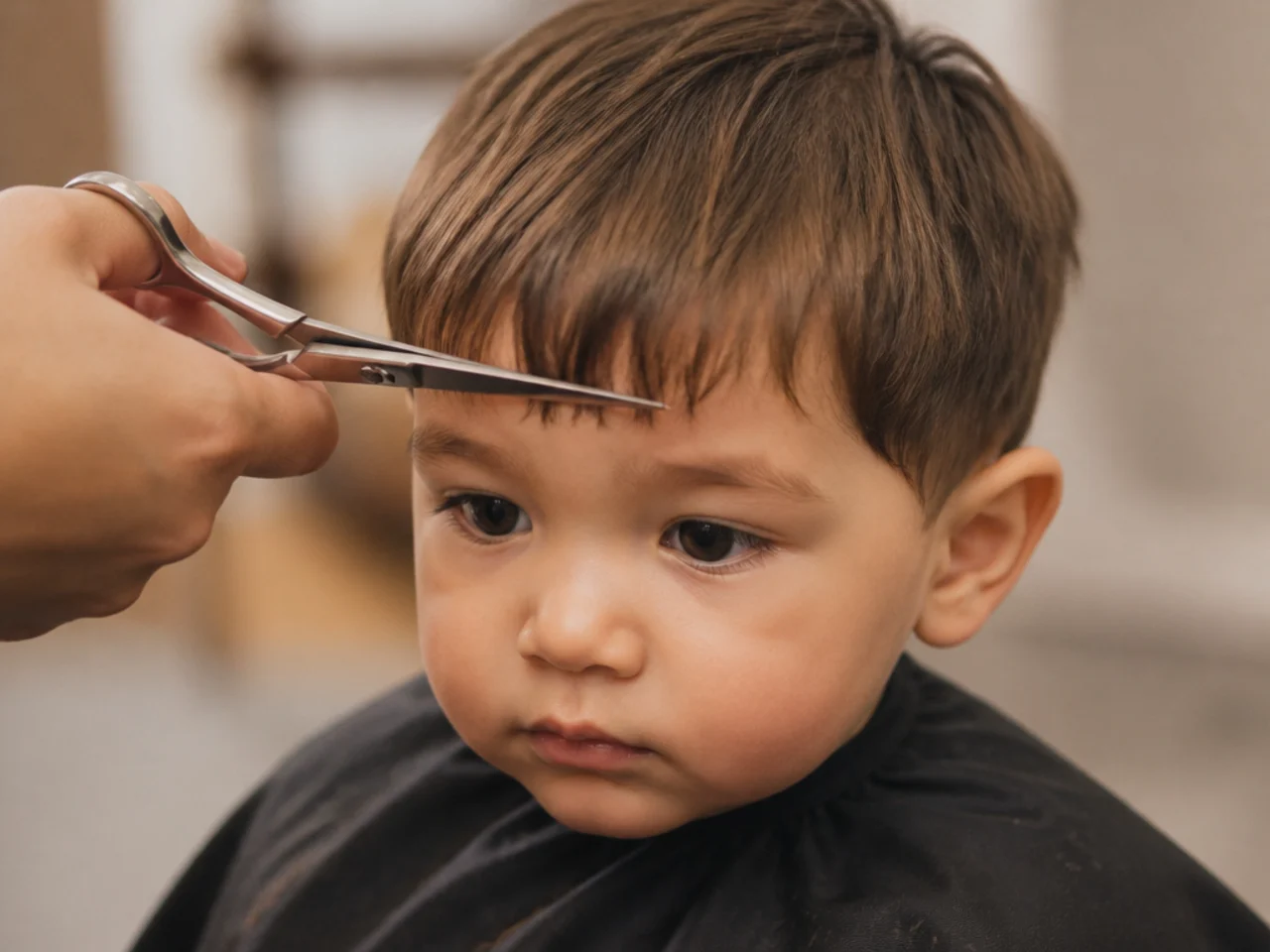
20 First Toddler Boy Haircut Ideas We Adore
The first haircut is not really about the haircut — it decides whether the second one is possible. Frighten a toddler once and the chair, the cape and the clipper noise stay frightening for a year.
In this article · 27
- The First Cut Sets the Price of Every Cut After It
- How to Choose Yours
- The 20 First Haircuts
- 1. A Fringe Trim and Nothing Else
- 2. Just the Hair Over the Eyes
- 3. Four Snips at the Nape
- 4. A Trim Around the Ears Alone
- 5. The Curl Kept and Only the Ends Taken
- 6. A Soft One-Length Trim on a Lap
- 7. A Trim Done at the Kitchen Table
- 8. A Trim in the High Chair at Snack Time
- 9. A Fringe Cut While the Child Is Asleep
- 10. A Trim With a Towel Instead of a Cape
- 11. A Cut Done Standing Up
- 12. A Trim With a Toy in Both Hands
- 13. A Cut Done Over Two Evenings
- 14. Half the Cut on the First Evening
- 15. A Fringe Point-Cut Rather Than Cut Blunt
- 16. A Trim Cut Between Two Fingers
- 17. A Trim With the Child Facing a Parent
- 18. A One-Length Trim Left Slightly Long
- 19. A Barber Visit With No Clippers Asked For
- 20. The Cut That Stops at Three Minutes
- Styling and Upkeep
- Mistakes to Avoid
- FAQ
- Final Thoughts
The first haircut is not really about the haircut. It is about whether there will be a second one without a fight.
A toddler who is frightened once remembers the chair, the cape and the clipper noise for a year. Every cut after that costs three times the effort, and the shape you get is whatever could be finished before the child had had enough.
So the first cut is chosen for how little it asks. Scissors only, no motor noise, no cape, sitting on a parent rather than in a chair, and finished inside four minutes.
The First Cut Sets the Price of Every Cut After It
No clippers on visit one. A motor is a new noise pressed against the head, and it is the thing most toddlers react to first. Scissors can do every cut on this page.
No cape. Being wrapped and fastened at the neck upsets more toddlers than the scissors do, because it removes the ability to get down. A towel laid loosely on the shoulders does the same job.
Sit on a lap rather than in a chair. A booster seat puts a toddler alone, high up and facing a mirror. The same cut done on a parent's knee removes all three of those at once.
Stop while the child is still happy, not when the cut is finished. An unfinished trim can be evened up in a week. A first cut that ended in tears sets the price of the next five.
How to Choose Yours
Pick the smallest cut that solves the actual problem. Most first haircuts exist because hair is going into the eyes, and that is a fringe trim rather than a haircut.
Choose a shape that survives being abandoned halfway. One length all over still reads as a haircut at 60 per cent done, and a graduated shape does not.
Cut dry. Wet fine hair sits flat and lands shorter than it looked, and the wetting itself is another thing to negotiate before you have started.
Pick the time of day, not just the cut. After a nap and after food buys more sitting than any technique on this list.
The 20 First Haircuts
1. A Fringe Trim and Nothing Else
The smallest possible first haircut, and usually the only one actually needed. Take the fringe alone, leave the rest untouched, and the whole thing is over in under a minute — it is also the first step of growing the length out if that is where you are heading.
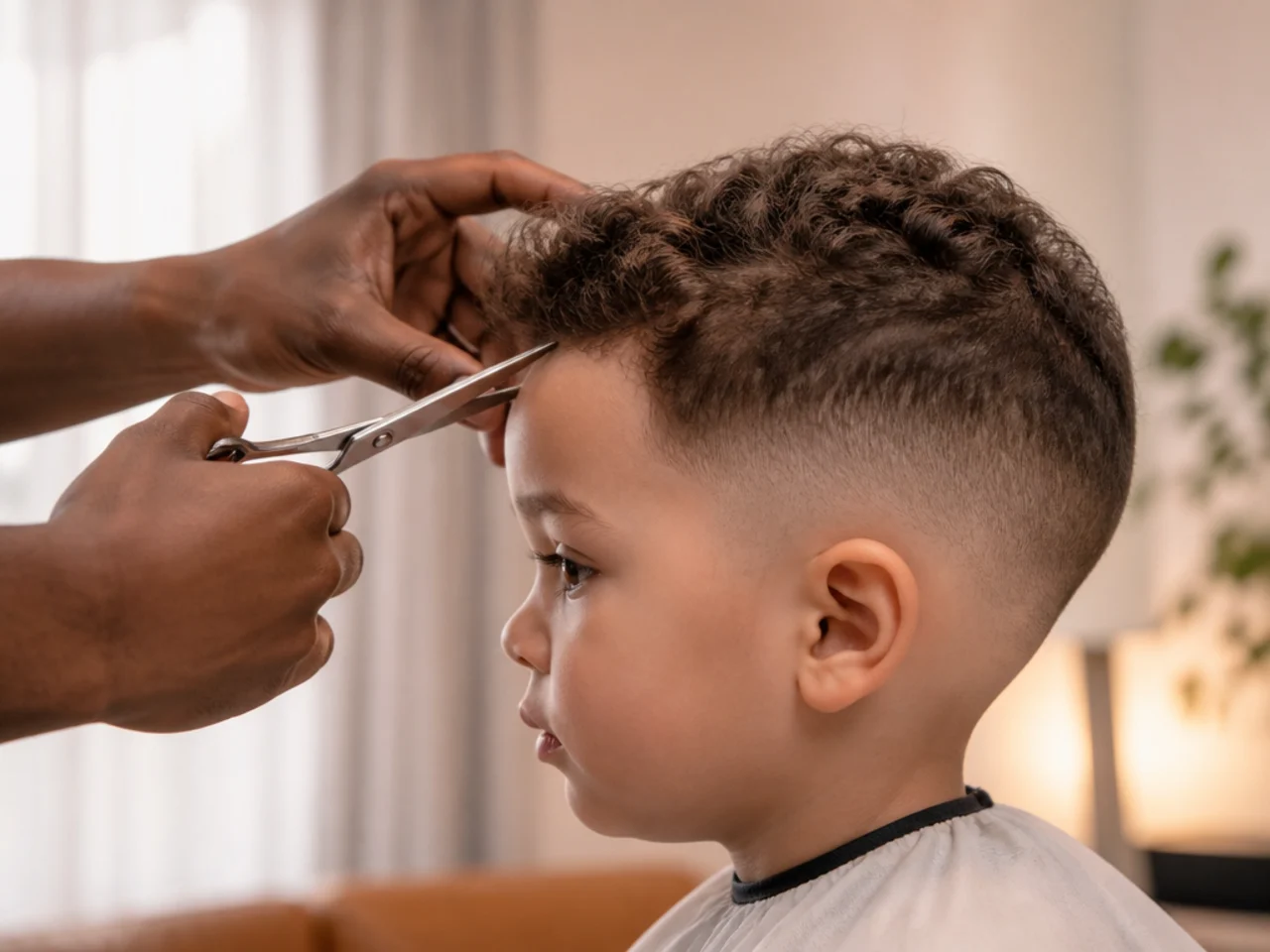
2. Just the Hair Over the Eyes
Narrower again — only the section that actually falls into the eyeline, not the full width of the fringe. It leaves a slightly uneven front edge that grows out in a fortnight, which is a fair trade for thirty seconds of work.
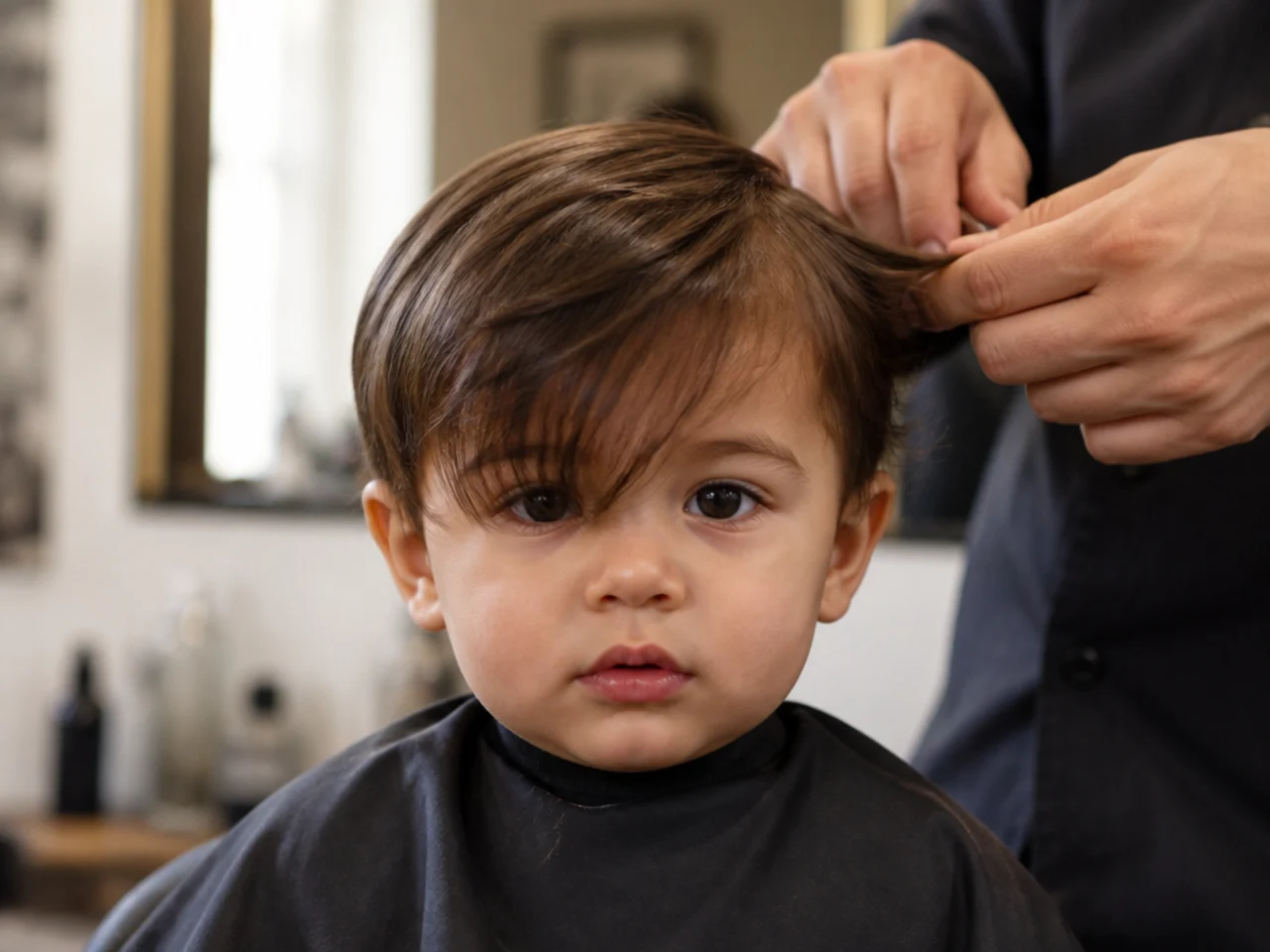
3. Four Snips at the Nape
The back of the neck goes stringy before anywhere else on fine baby hair. Four snips straight across takes the wispy ends off and reads as a tidy neckline without touching the sides.
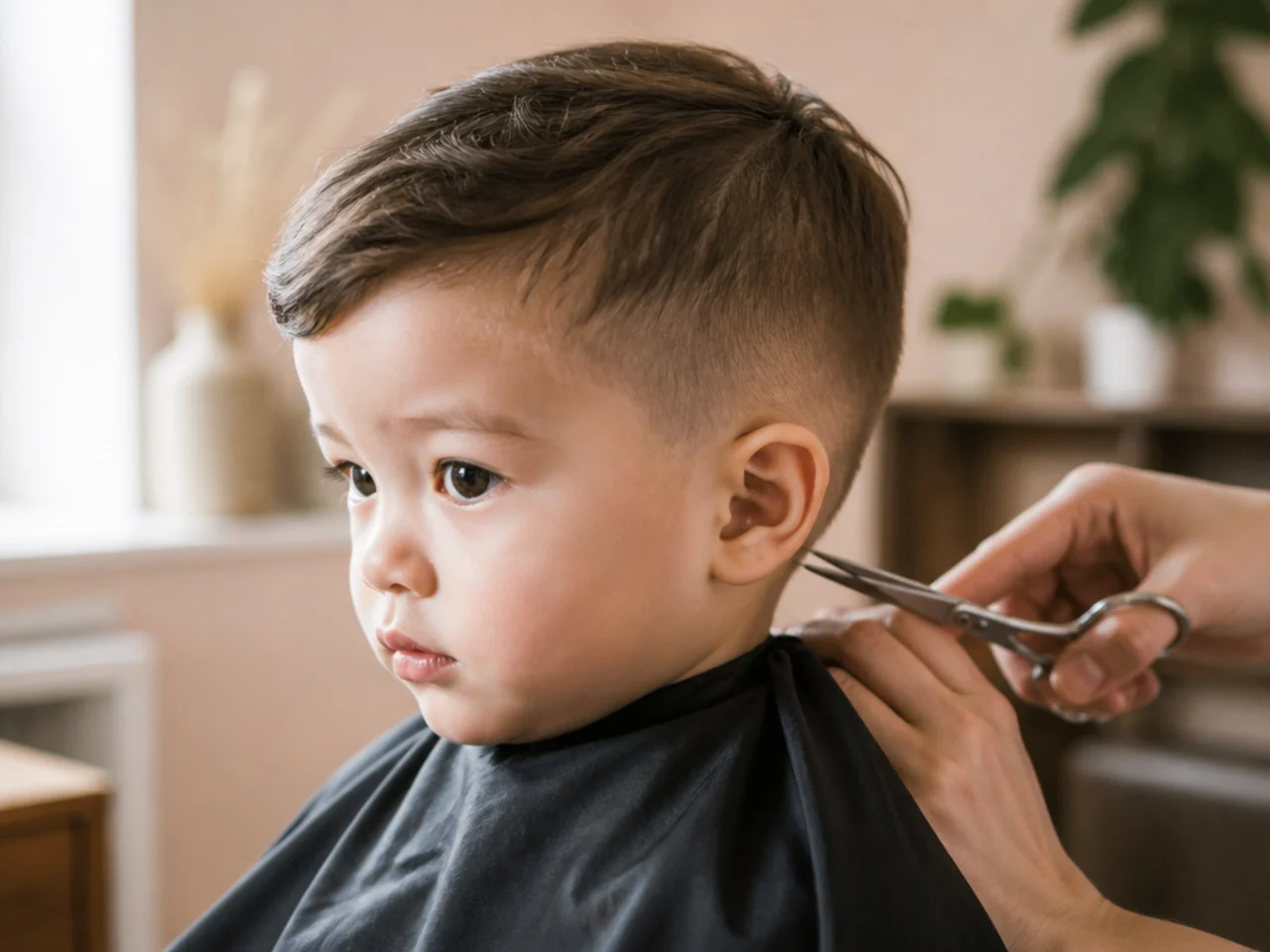
4. A Trim Around the Ears Alone
Two small sections, one per side, each taking about twenty seconds. Doing the ears without touching the length makes the whole head look cut, which is often all a parent is after.
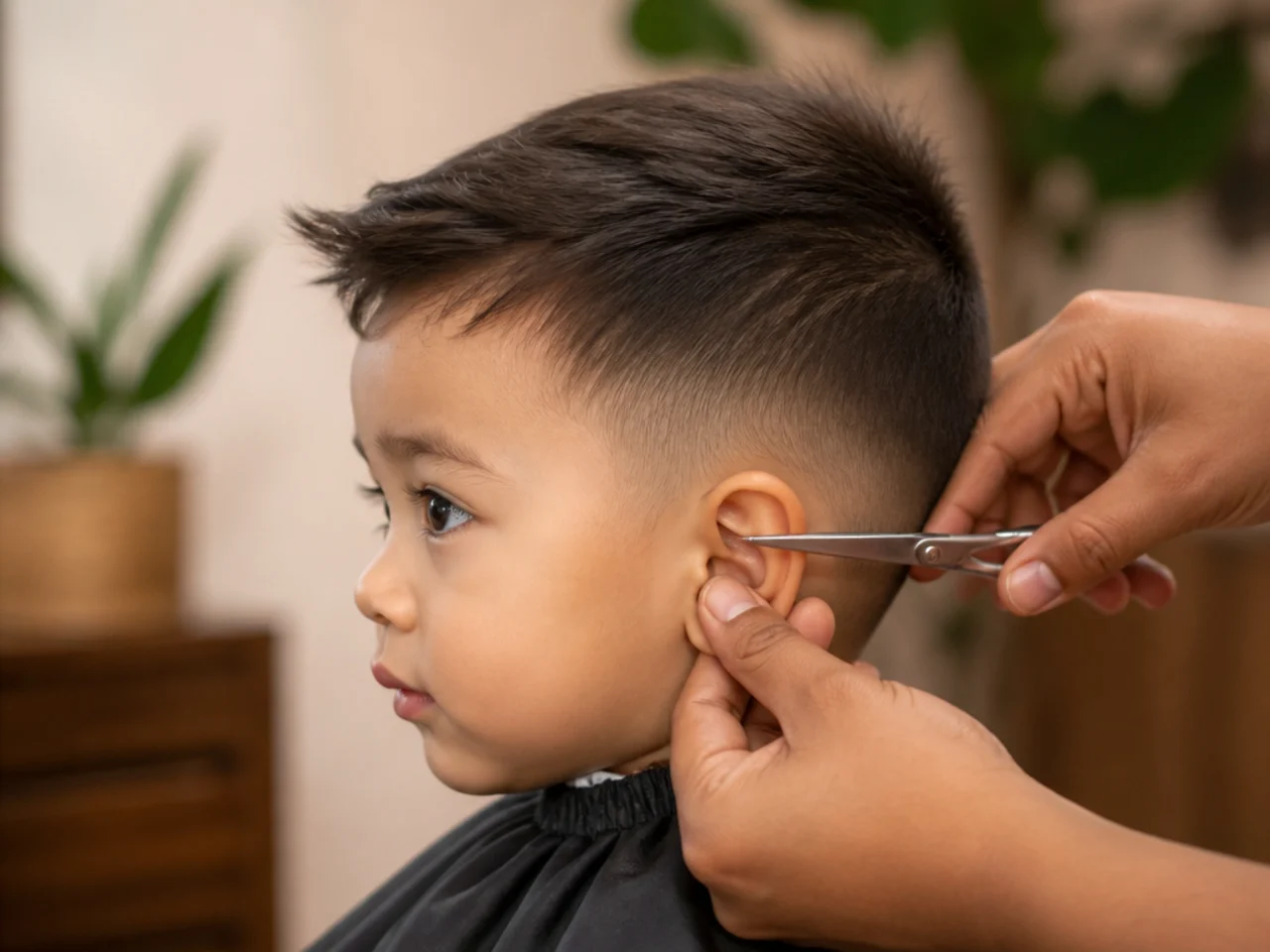
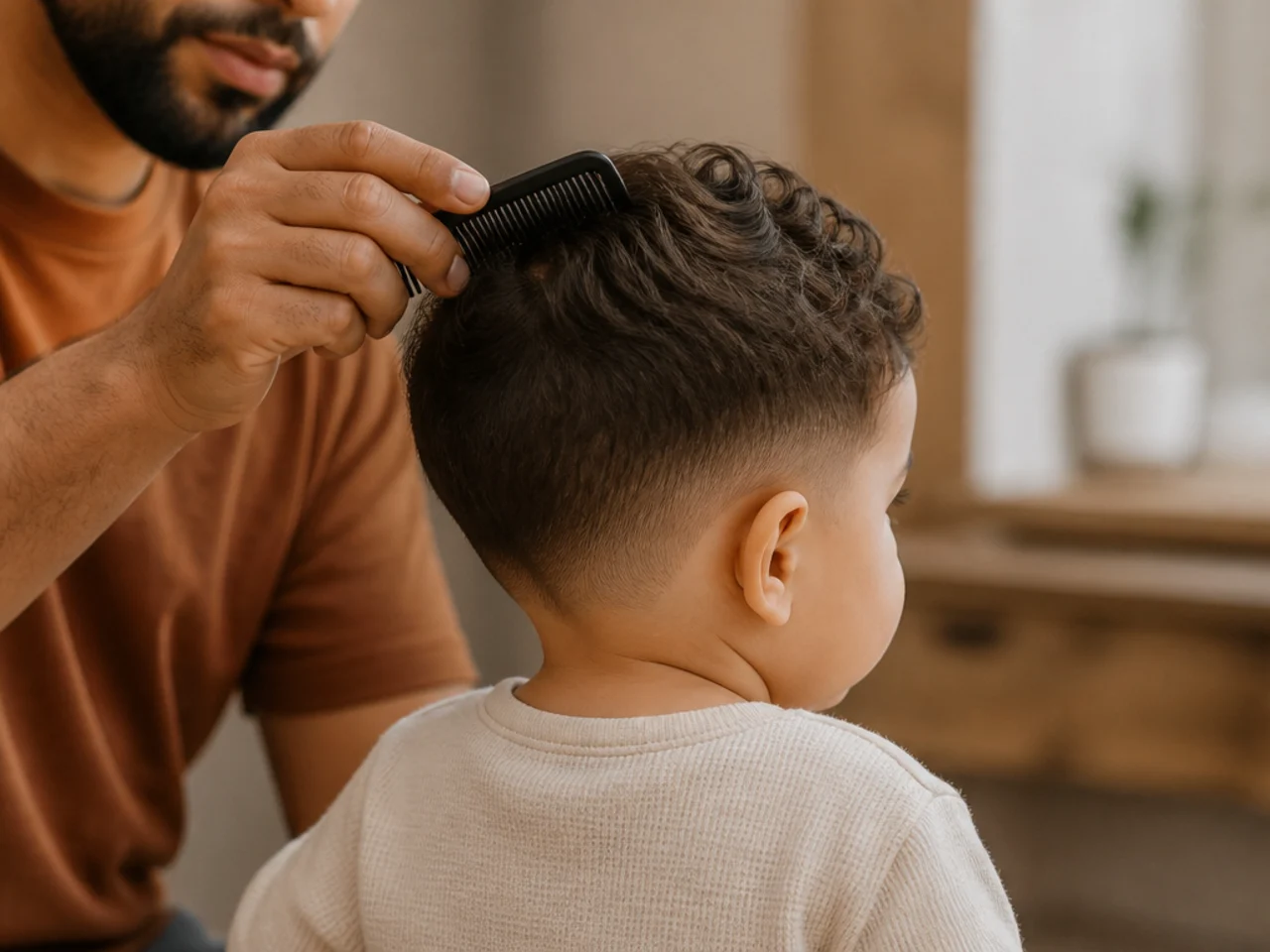
5. The Curl Kept and Only the Ends Taken
On a curly toddler the temptation is to cut the shape in, and that is the cut people regret. Taking a centimetre off the ends removes the frayed bits without touching the curl pattern that gives the head its shape.
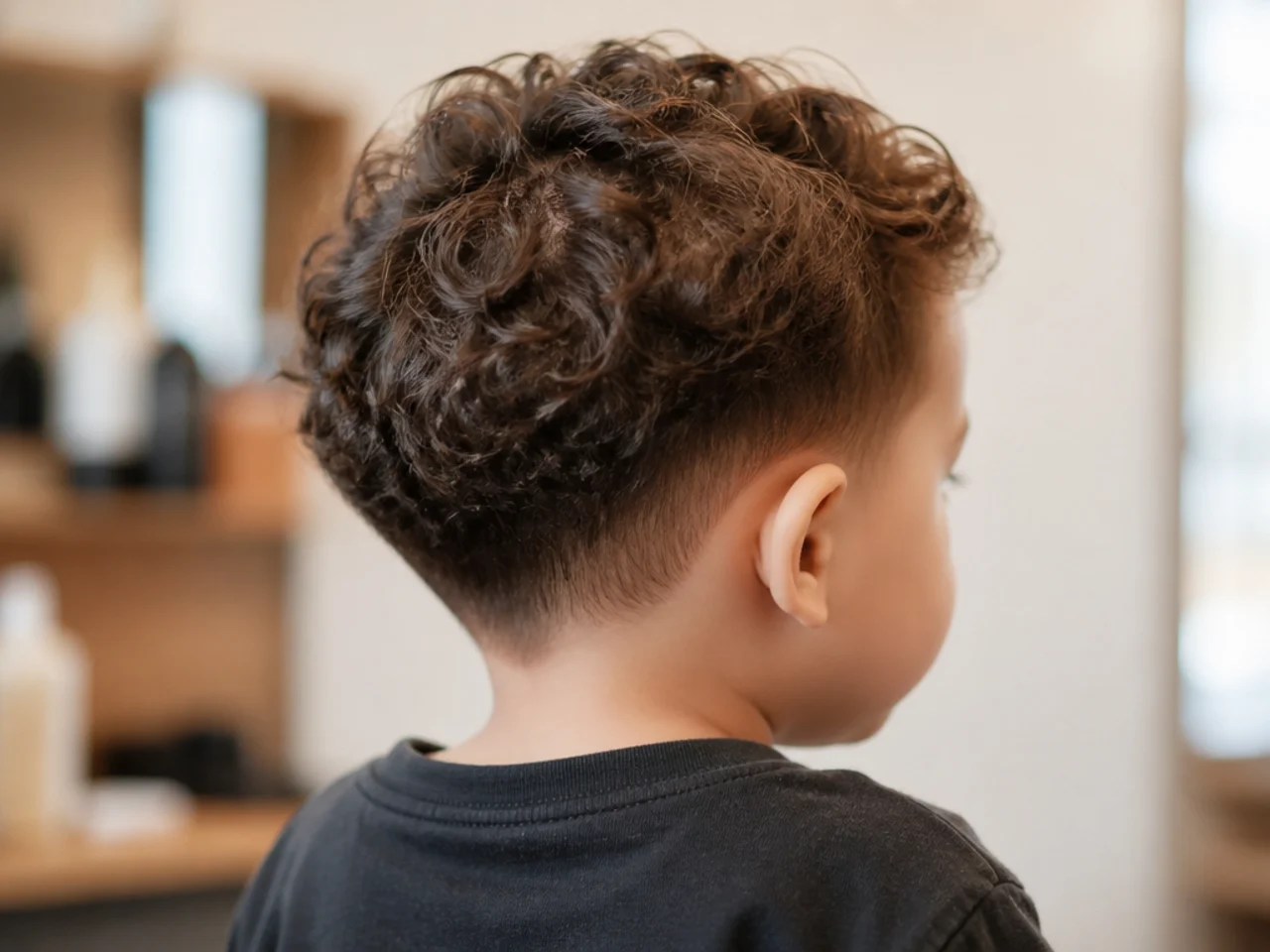
6. A Soft One-Length Trim on a Lap
Everything taken to a single length with the child sitting on a knee facing outward. One length is the most forgiving shape there is, because stopping early leaves a slightly long patch rather than a step.
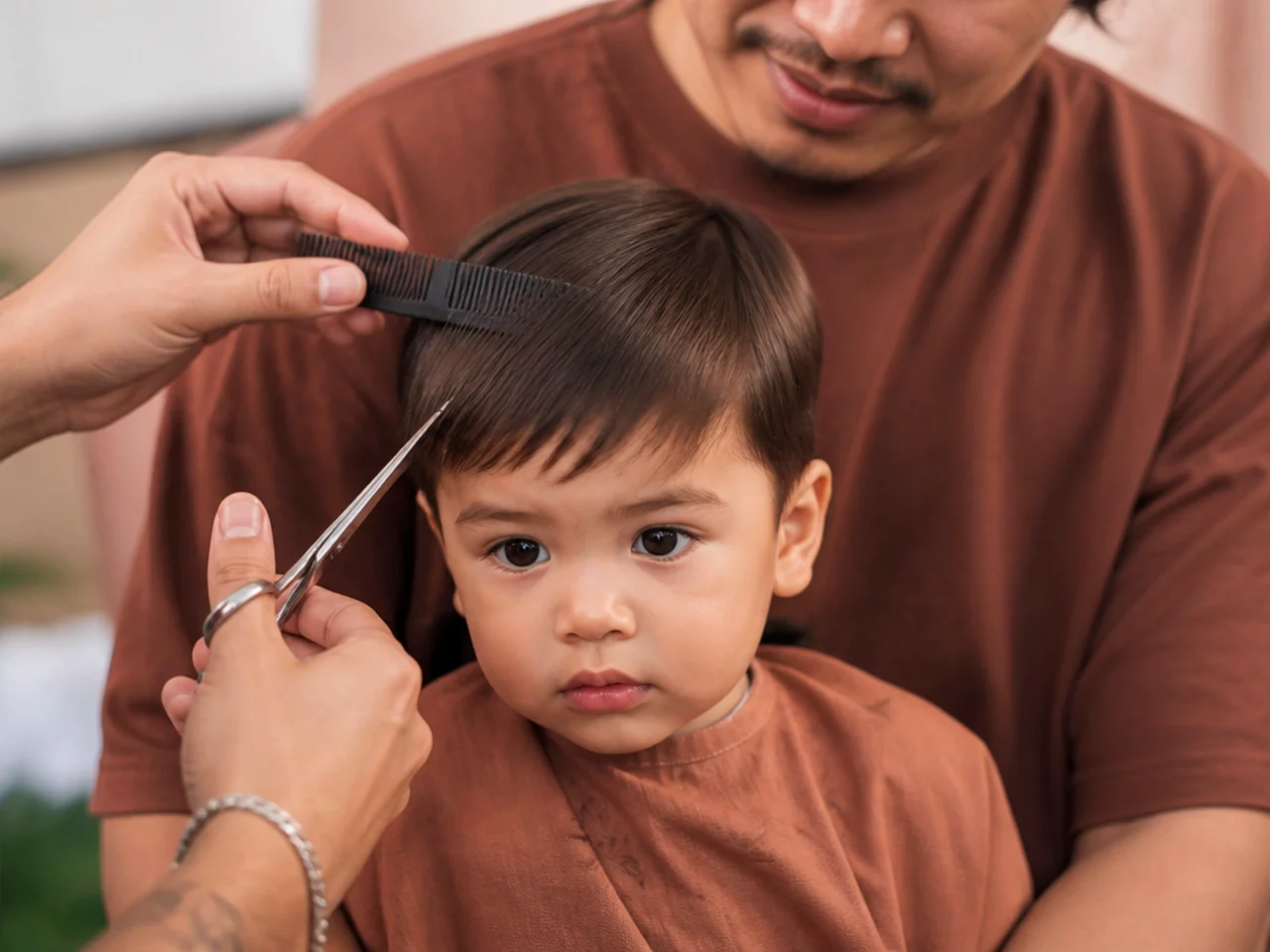
7. A Trim Done at the Kitchen Table
No mirror, no chair, no salon smell — just a familiar room the child already sits in every day. Removing the unfamiliar setting removes most of the objection before the scissors come out.
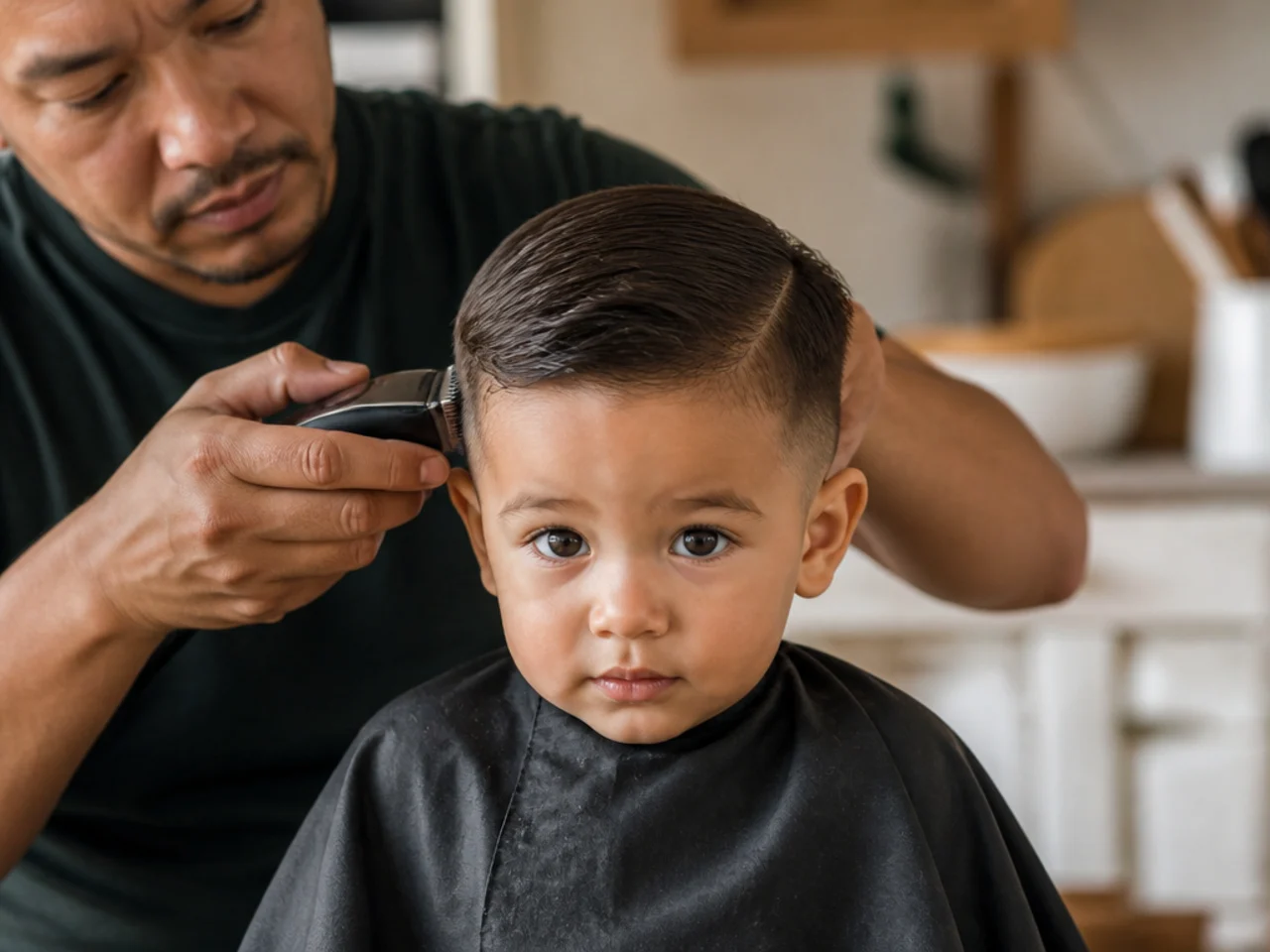
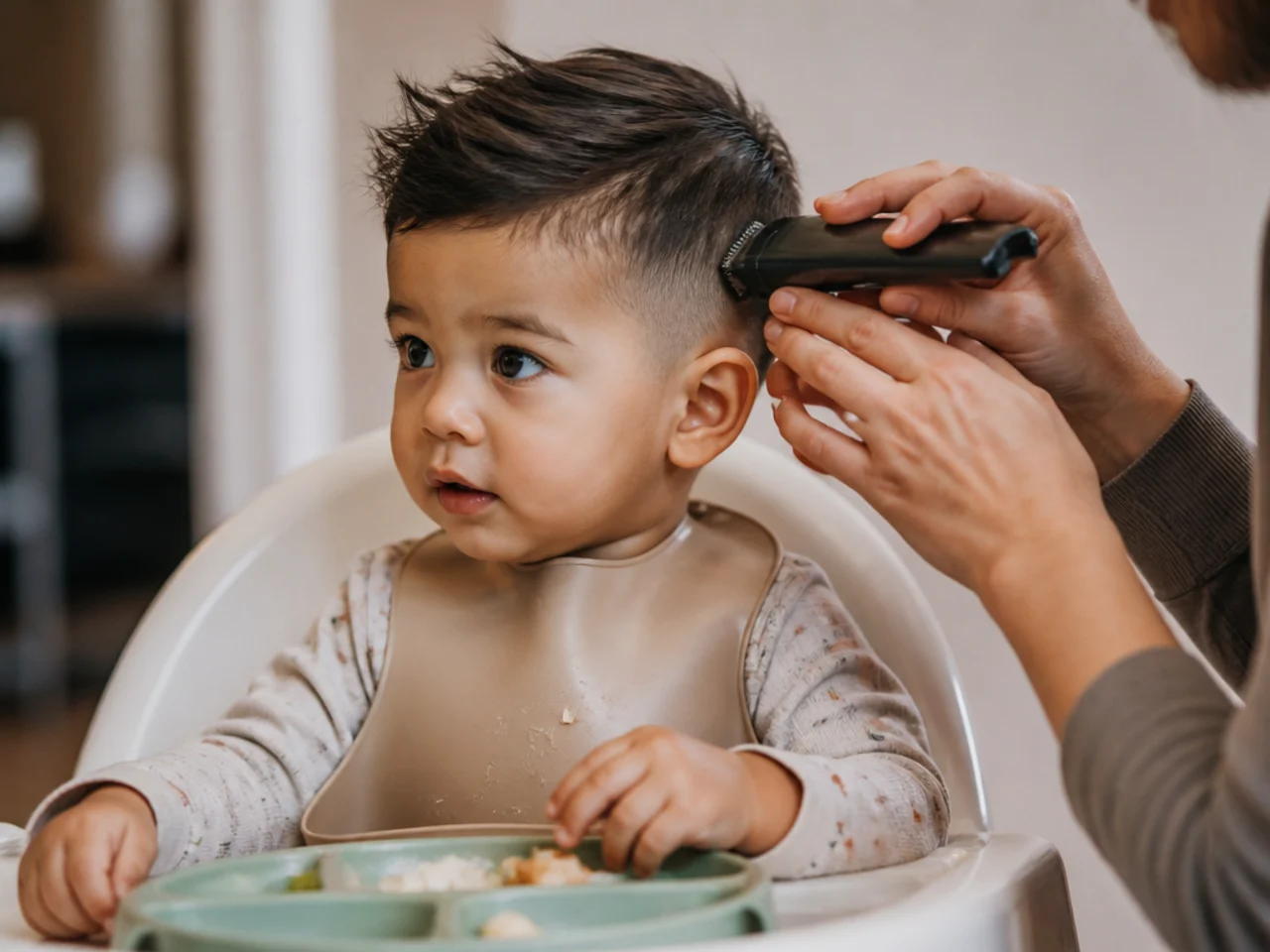
8. A Trim in the High Chair at Snack Time
Hands busy, body strapped in, attention elsewhere. It buys the longest run of stillness available to most parents, and the tray catches a fair amount of the hair.
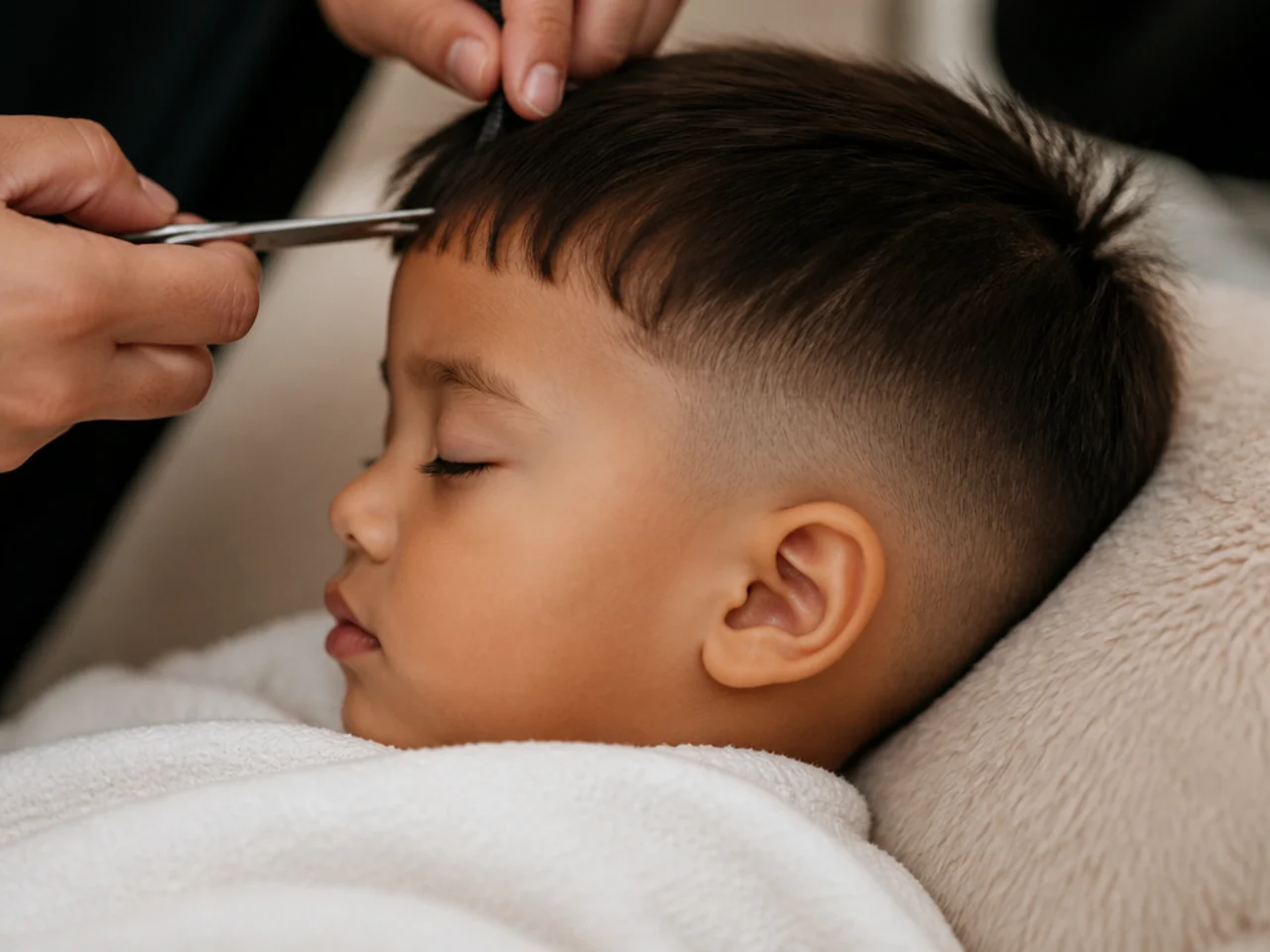
9. A Fringe Cut While the Child Is Asleep
Two or three snips taken during a nap, with the head resting flat. It works only for the fringe, because reaching the back means moving the child, and moving the child ends the nap.
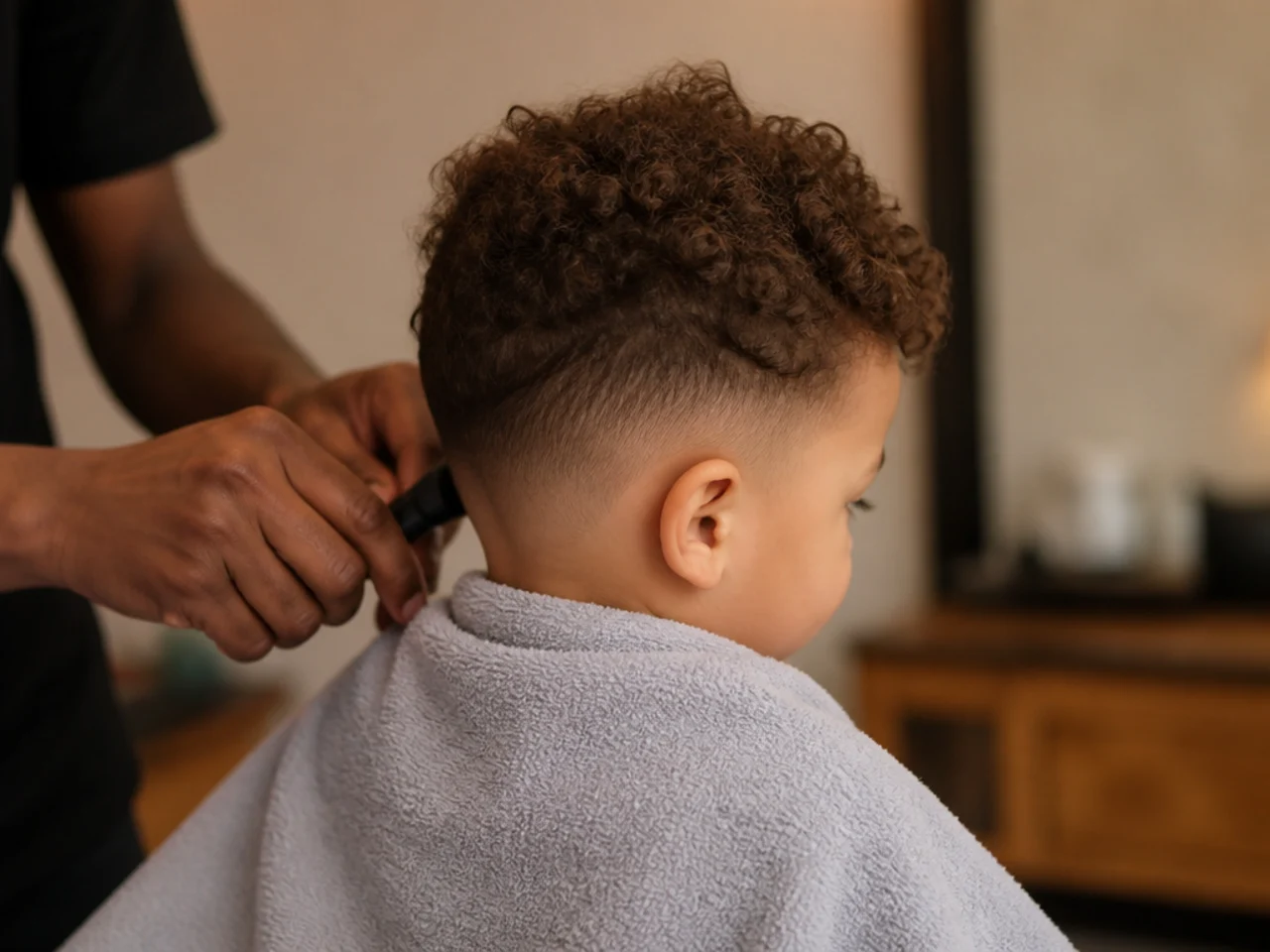
10. A Trim With a Towel Instead of a Cape
The same cut, with a bath towel laid over the shoulders and not fastened. Nothing touches the neck and the child can still move their arms, which removes the trapped feeling a cape creates.
11. A Cut Done Standing Up
Some toddlers will not sit and will happily stand at a window. A standing child moves side to side rather than up and down, which is easier to work around than a child fighting to get out of a seat.
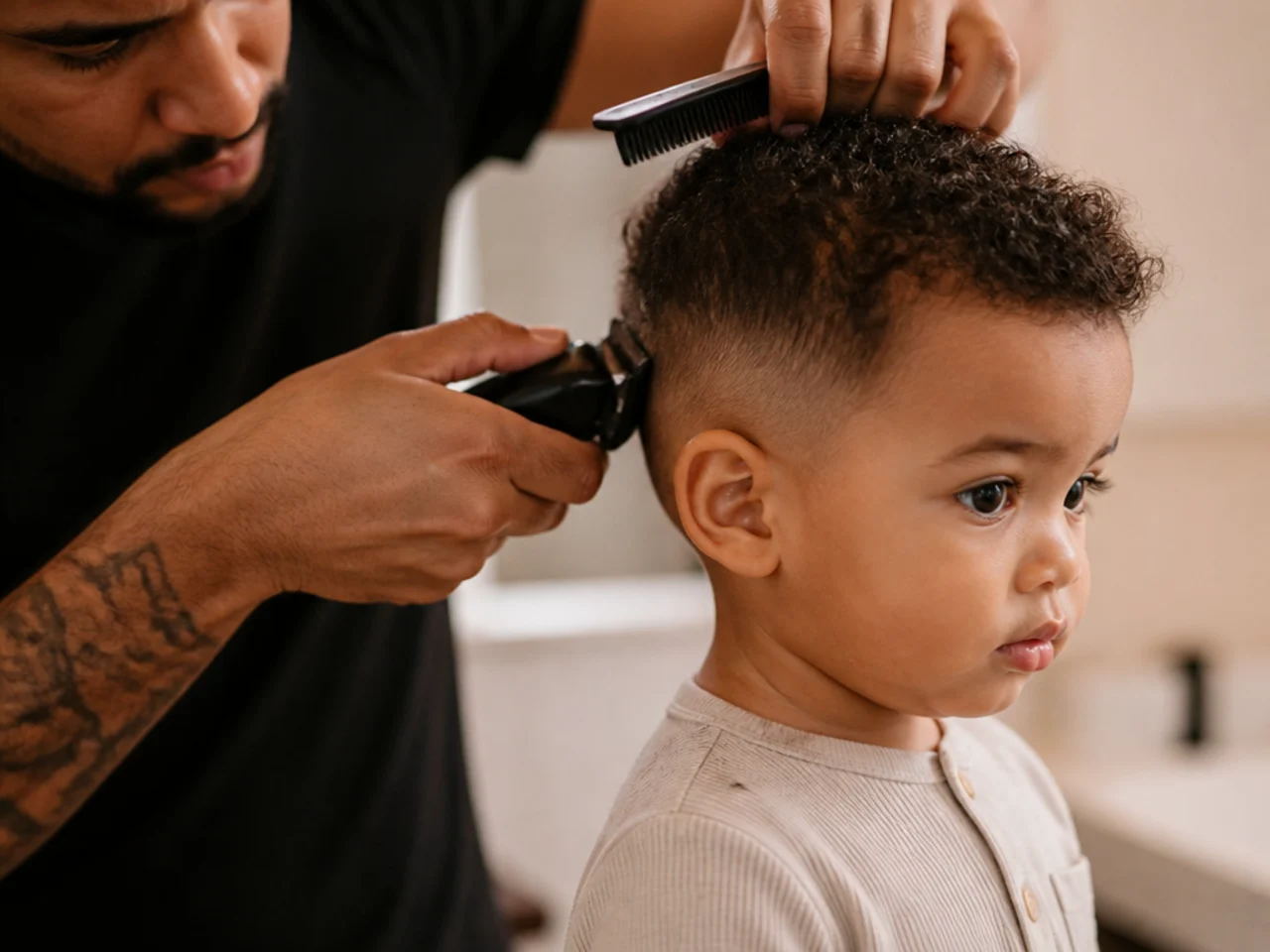
12. A Trim With a Toy in Both Hands
Two objects rather than one, because a toddler with one free hand reaches for the scissors. It sounds trivial and it is the single most reliable way to keep hands down.
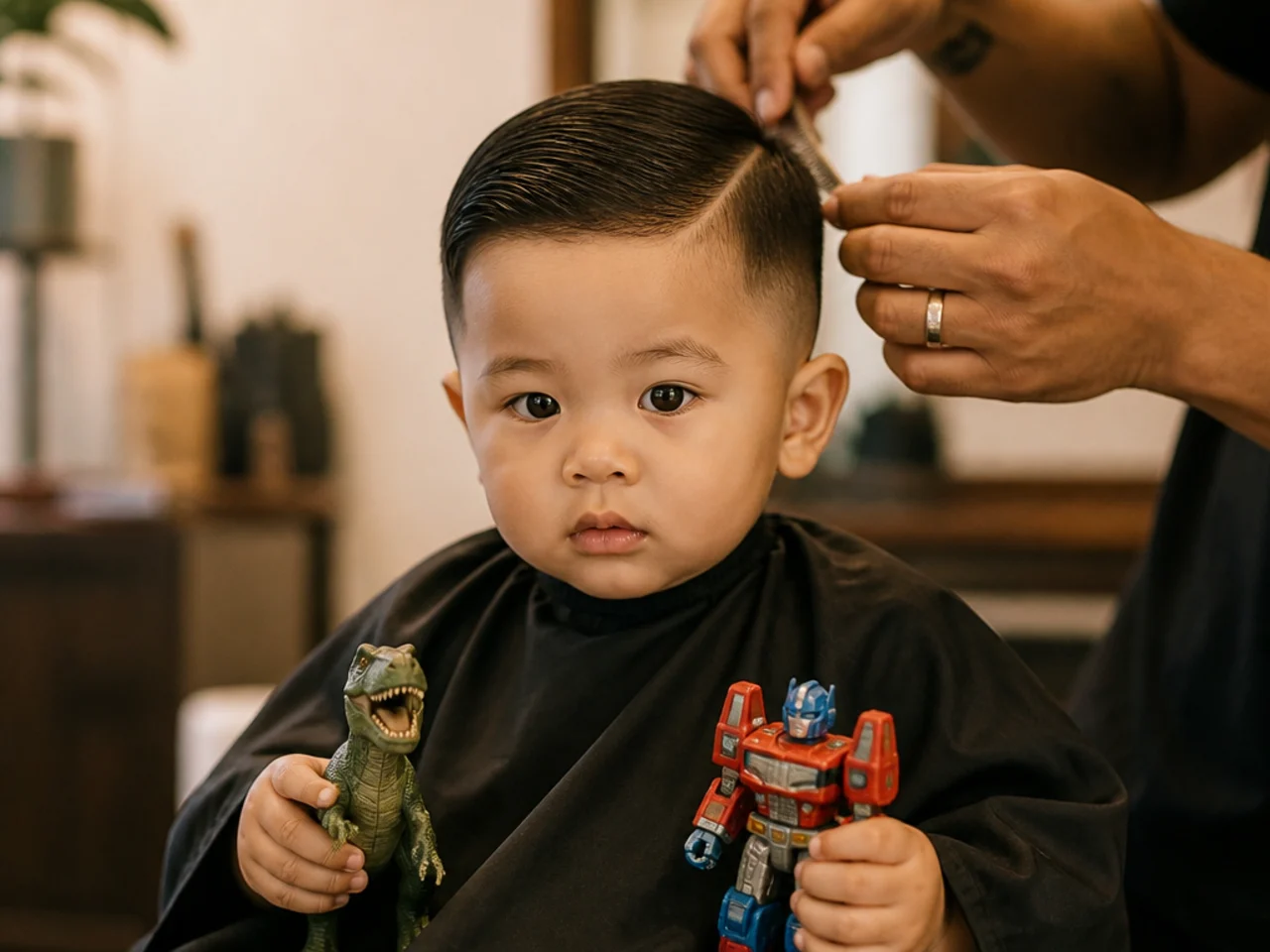
13. A Cut Done Over Two Evenings
Fringe and one side on the first night, the rest on the second. Nothing about a scissor cut requires it to be finished in one sitting, and two calm halves beat one long fight.
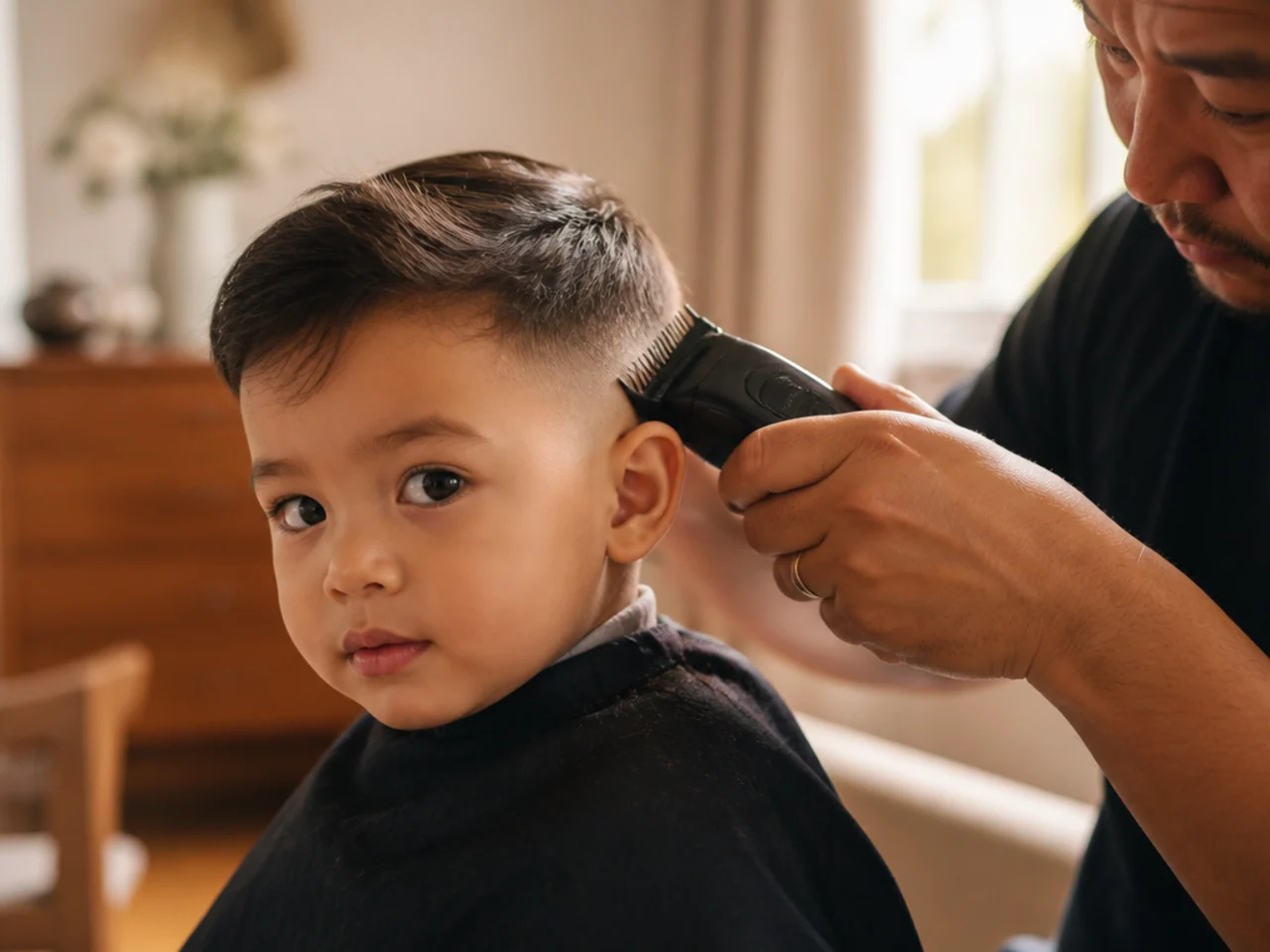
14. Half the Cut on the First Evening
Deliberately planning to do only half, so there is no pressure to push on when the child has had enough. Knowing in advance that you are stopping is what stops you overrunning.
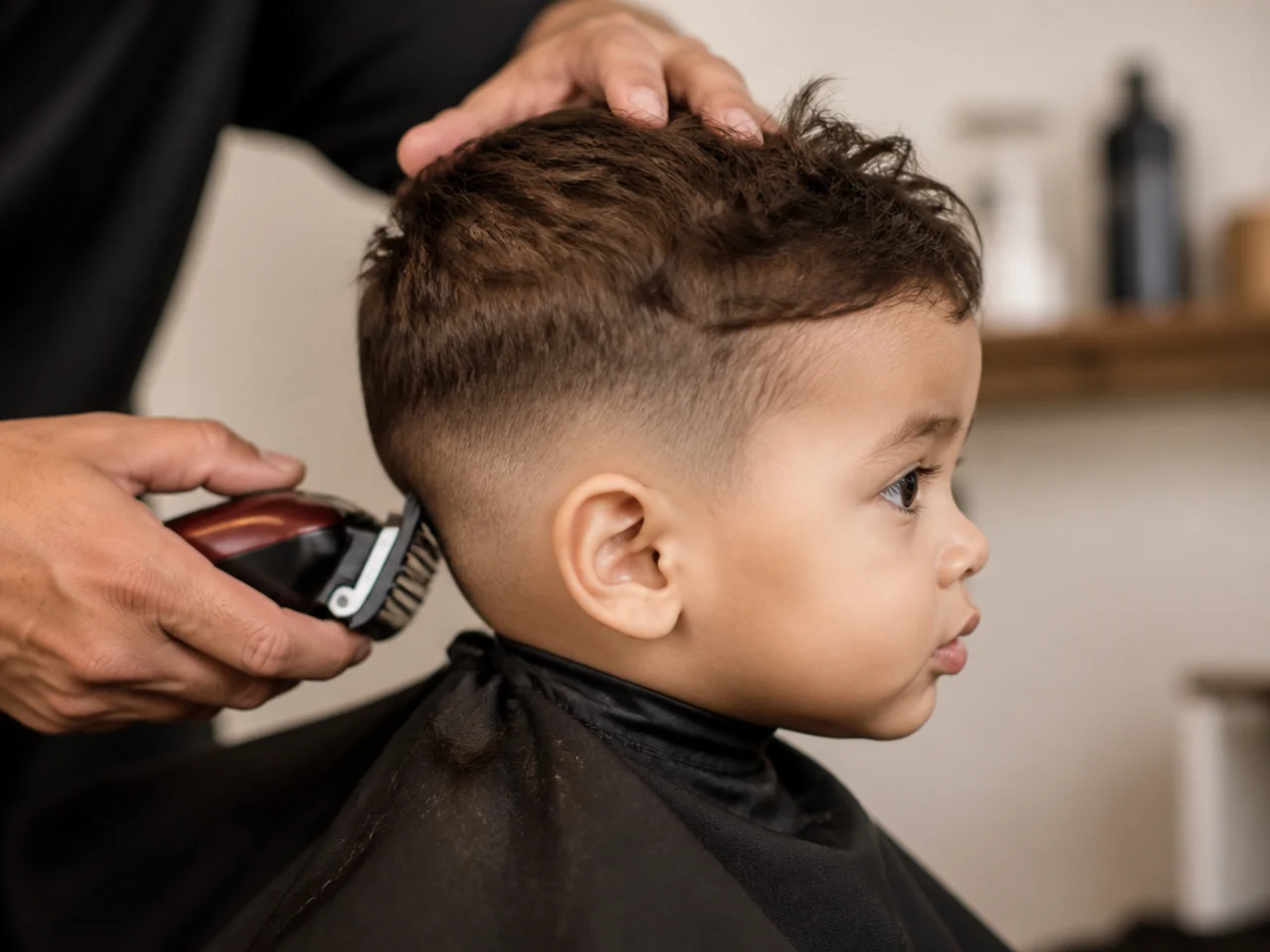
15. A Fringe Point-Cut Rather Than Cut Blunt
Scissors held vertically, taking small notches out of the fringe edge instead of one straight line. A soft edge hides the unevenness that a moving head guarantees, where a blunt line advertises it.
16. A Trim Cut Between Two Fingers
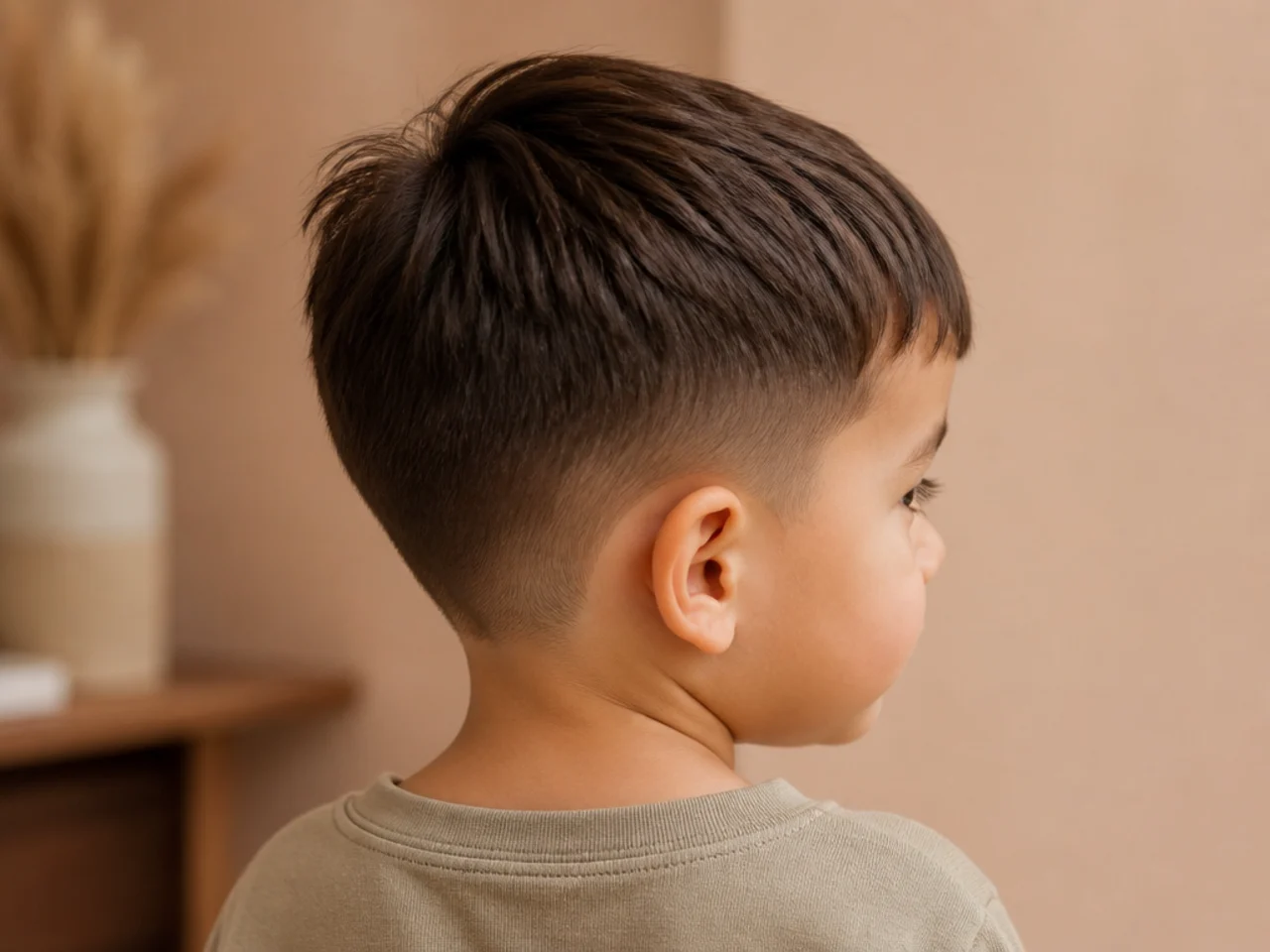
The hair held between the index and middle finger acts as a stop, so a sudden head movement pulls the hair out of your fingers rather than into the blades. It is the safest way to cut a child who will not stay still.
17. A Trim With the Child Facing a Parent
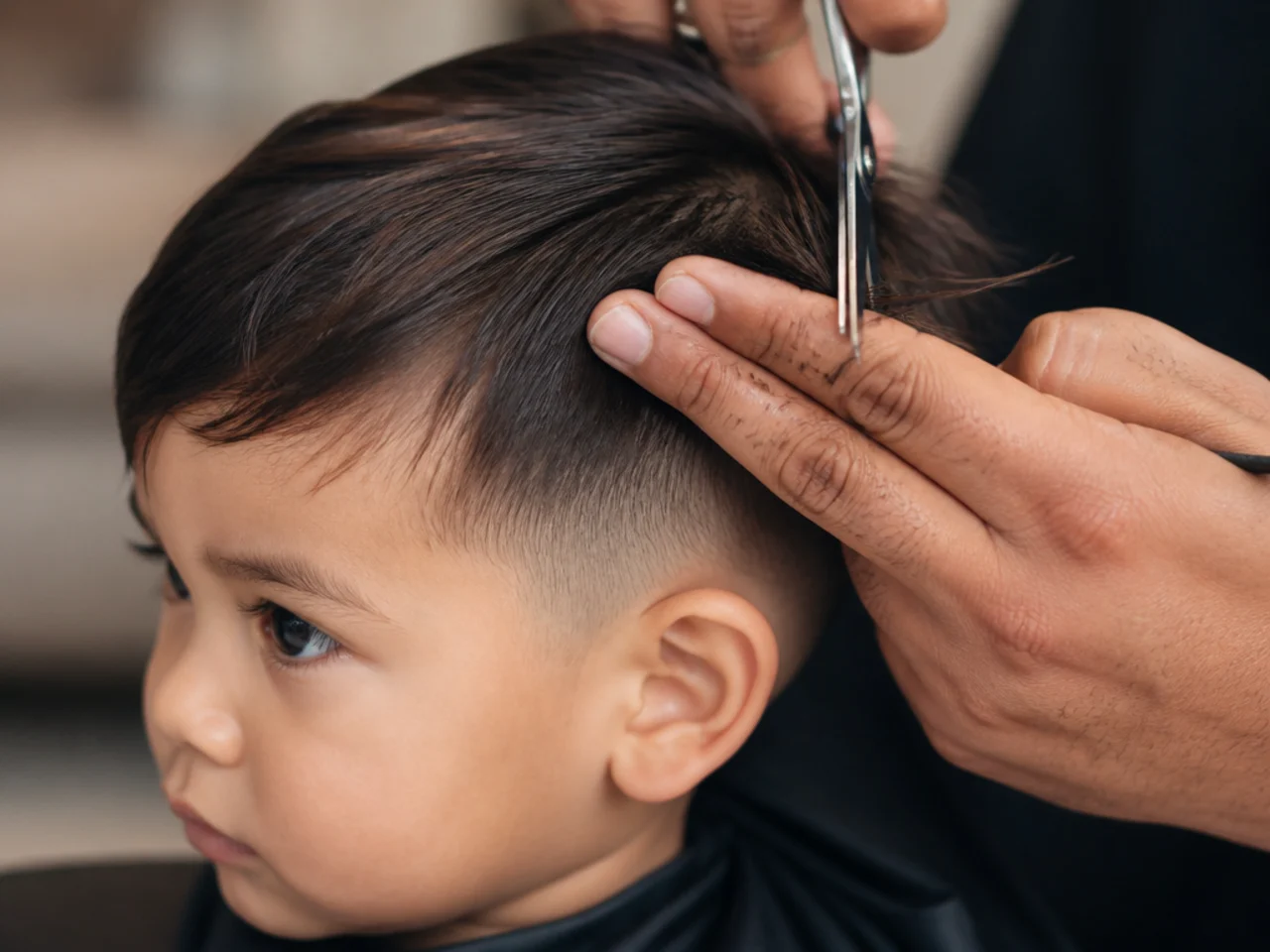
Facing a familiar adult rather than a mirror. Toddlers who are fine with the scissors often still object to watching themselves being handled by someone standing behind them.
18. A One-Length Trim Left Slightly Long
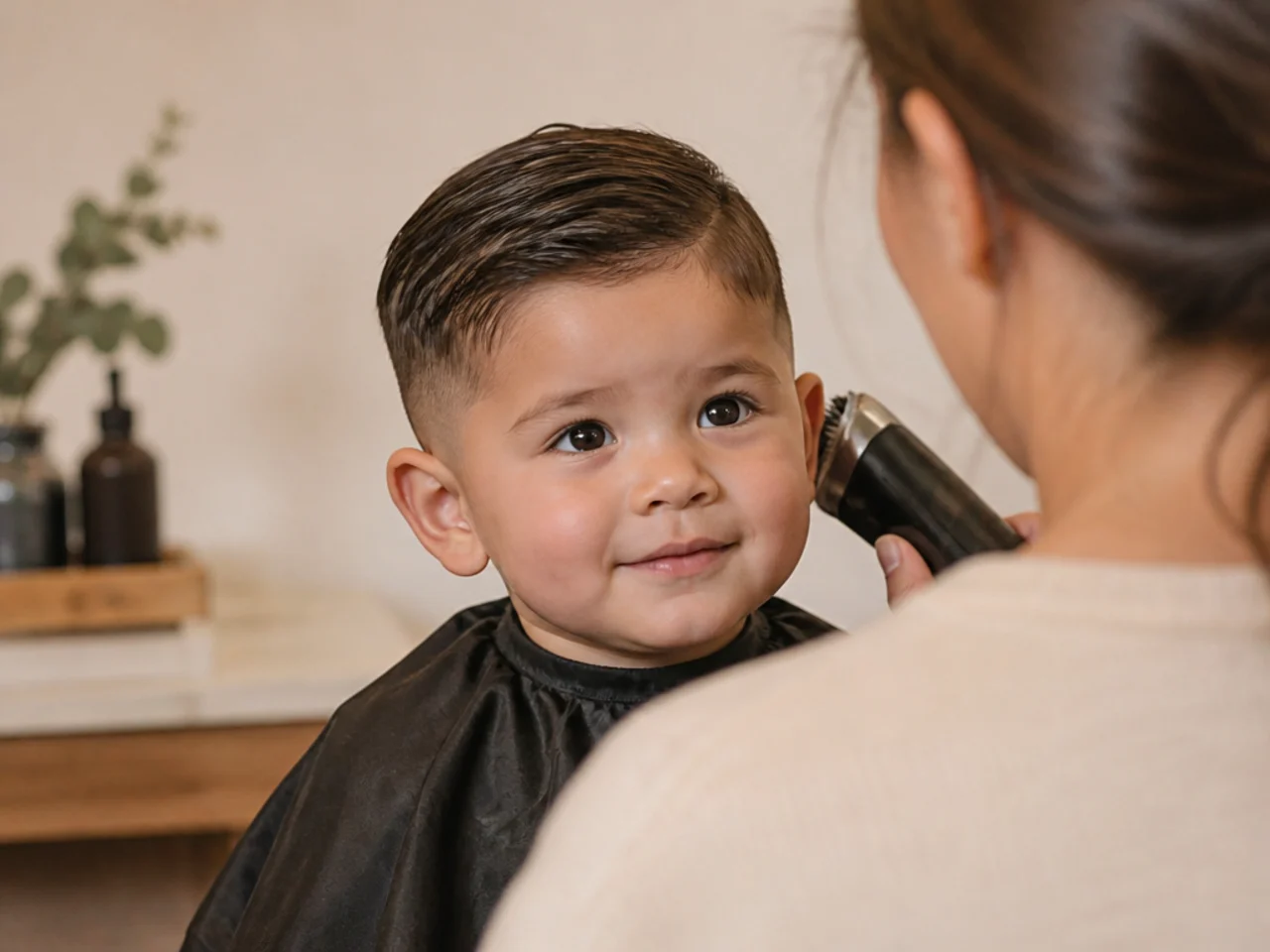
Cut deliberately a centimetre longer than you want it. Fine baby hair looks shorter once it dries and settles, and leaving margin means a second small tidy-up rather than a month of waiting.
19. A Barber Visit With No Clippers Asked For
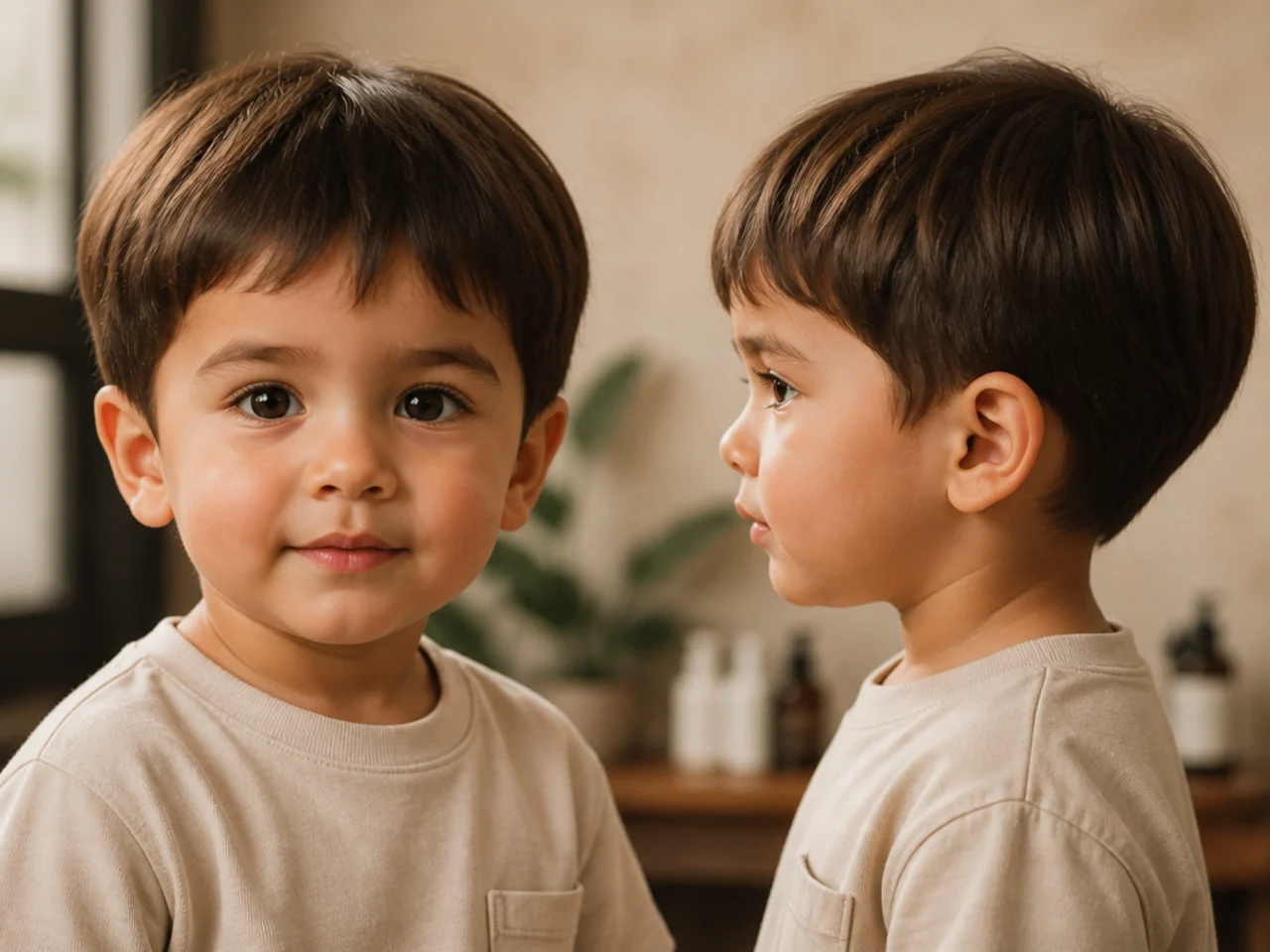
The chair and the room without the motor. Saying at the start that this visit is scissors only makes the first professional cut a much smaller step than turning up and hoping.
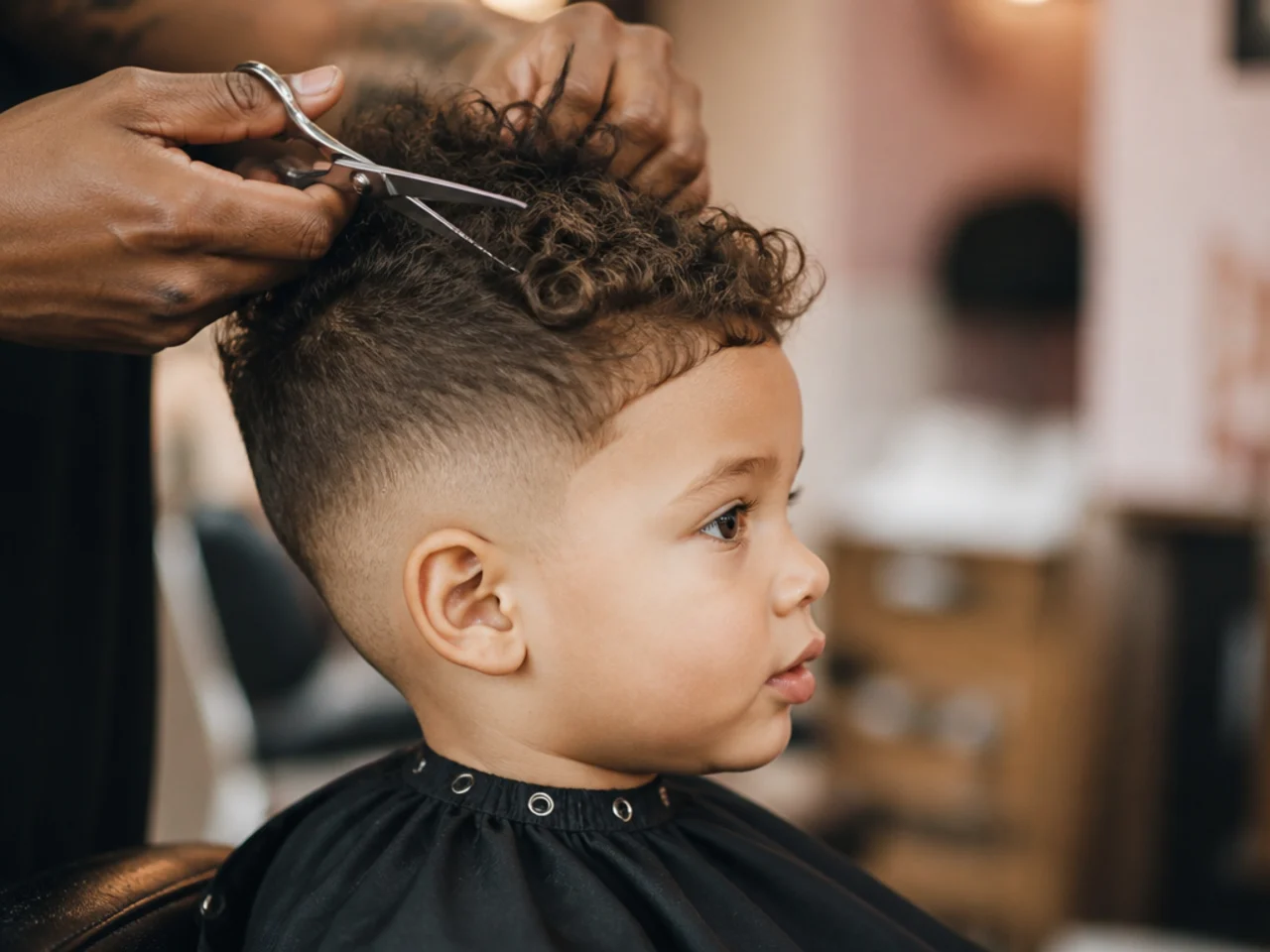
20. The Cut That Stops at Three Minutes
A timer, and the scissors go down when it goes off regardless of what is finished. It sounds arbitrary, and it is the rule that most reliably produces a toddler who is fine about the next haircut — it only works on shapes that survive being abandoned.
Styling and Upkeep
Nothing goes on the hair afterwards. Fine baby hair carries product badly and a toddler will rub it into their eyes within the hour.
Even up the unfinished side within a week. A short second sitting while the first cut is still a good memory is what teaches a child that haircuts end fine.
Expect the fringe back in your way in about three weeks. Children's hair grows faster than adults', so plan on the fringe alone rather than a whole cut every time.
Comb it once and judge it dry. Fine hair falls differently once it has settled, and a line that looked uneven wet often reads level an hour later.
Keep the scissors visible between cuts. A tool that lives on the shelf and gets handled is not the same object as one that appears from a drawer.
Mistakes to Avoid
Bringing clippers to the first haircut. The noise is the part a toddler remembers, and once it is remembered it is expensive to undo.
Fastening a cape at the neck. More first haircuts fail on the cape than on the cut.
Wetting the hair down first. It adds a negotiation before you start and makes fine hair land shorter than you meant.
Pushing on to finish a shape. The shape is the thing you can fix next week, and the child's tolerance is not.
Cutting a graduated shape on visit one. Layers and tapers cannot be abandoned halfway, and something will always interrupt a first haircut.
FAQ
Should the first cut use clippers? No — scissors only, and leave the motor for the third or fourth haircut.
How long should it take? Under four minutes, and less if the child has had enough.
Do you need a cape? No, and most toddlers object to the cape more than the scissors.
Final Thoughts
Choose the smallest cut that fixes the actual problem, do it somewhere the child already sits every day, and put the scissors down while everyone is still enjoying it. The shape is easy to correct next week and a frightened toddler is not, which is the whole reason this page exists.
When clippers do eventually join in, see the toddler burst fade guide, and for keeping a curly first cut intact as it grows see curly haircuts for boys. More in Men's Haircuts.