15 Long Toddler Boy Haircut Ideas to Save
Long hair means cutting a toddler three times a year instead of eight, and it takes the clipper out of the room entirely. It also has a ceiling that adult long hair does not, because fine baby hair goes stringy rather than shaggy.
In this article · 22
- Where Long Stops on Fine Baby Hair
- How to Choose Yours
- The 15 Long Toddler Boy Haircut Ideas
- 1. One Length to the Jaw
- 2. Chin-Length With a Curtain Fringe
- 3. Long With a Blunt Straight Fringe
- 4. Long With the Fringe Swept and Pinned
- 5. Shoulder Length With the Nape Taken Up
- 6. Long All Over With No Fringe at All
- 7. Ear-Length Perimeter With a Short Fringe
- 8. Collar-Length With the Ends Squared Off
- 9. Long Front With a Shorter Back
- 10. Jaw-Length Tucked Behind the Ears
- 11. Long With a Micro Fringe Above the Brow
- 12. Shoulder Length Left Completely Uncut
- 13. Two Snips at the Nape and Nothing Else
- 14. Collarbone Length With the Stringy Ends Removed
- 15. Long With the Fringe Cut on a Curve
- Styling and Upkeep
- Mistakes to Avoid
- FAQ
- Final Thoughts
Growing it out is the only toddler haircut decision that reduces the number of haircuts. Three trims a year instead of eight, and no clipper in the room at all.
But fine baby hair has a ceiling that adult long hair does not. There is not enough density to carry weight past a certain point, so instead of going shaggy the ends separate and go stringy.
And length only has to solve two things. Hair in the eyes, and hair at the nape being pressed flat by a car seat for hours a day — everything below is judged on those two and on where the perimeter stops.
Where Long Stops on Fine Baby Hair
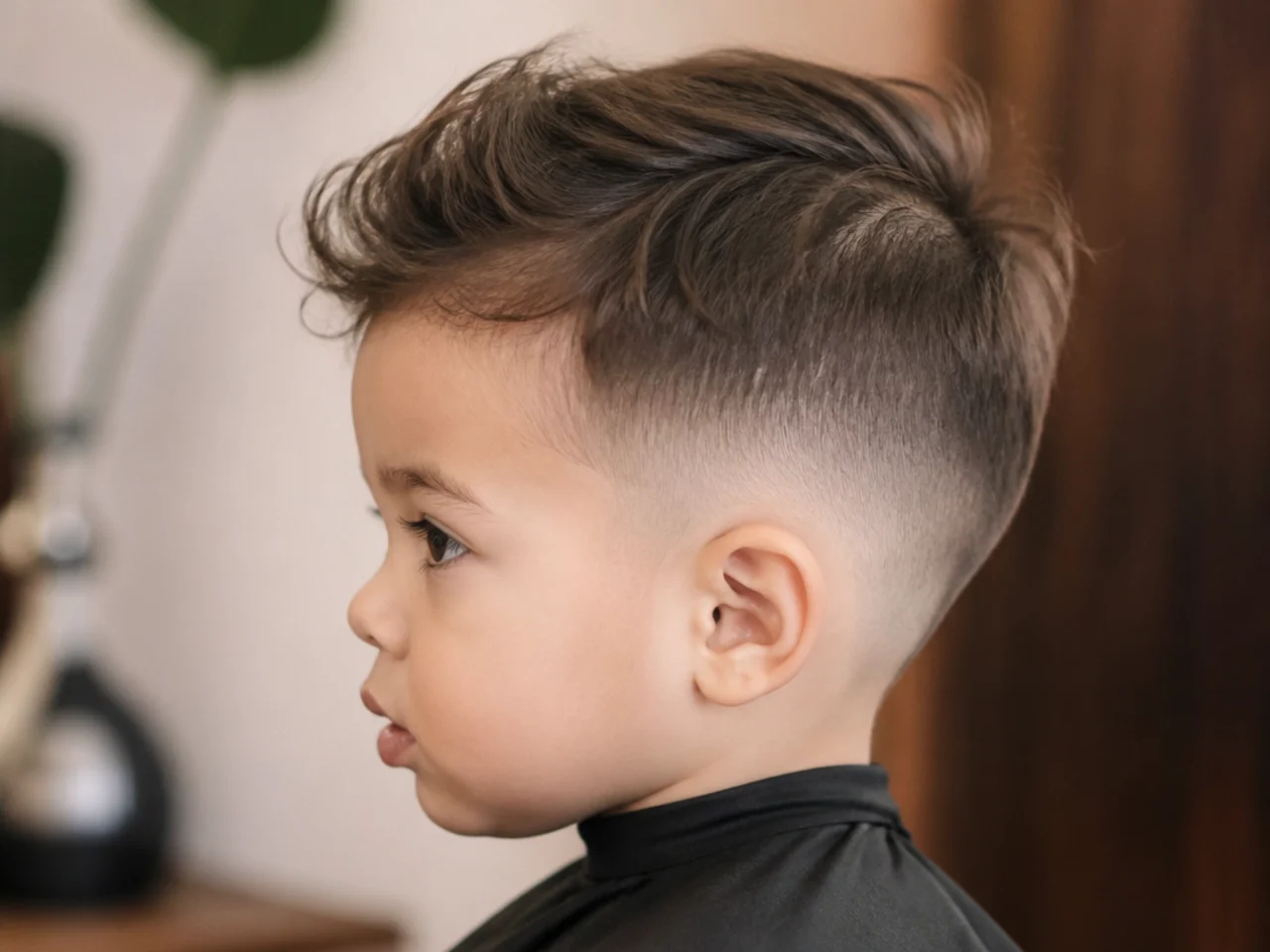
Density sets the limit, not length. Baby hair has fewer strands per square centimetre than the same child will have at six, so past roughly collarbone length there is nothing holding the ends together.
Stringy is the failure mode, not shaggy. Adult long hair thickens visually as it grows and toddler hair does the opposite, thinning to points that show gaps between them from a metre away.
The fringe is the only cut that is genuinely urgent. Everything else can wait months, but hair reaching the eyelashes is a daily irritation and it is the one thing a toddler will fight you about.
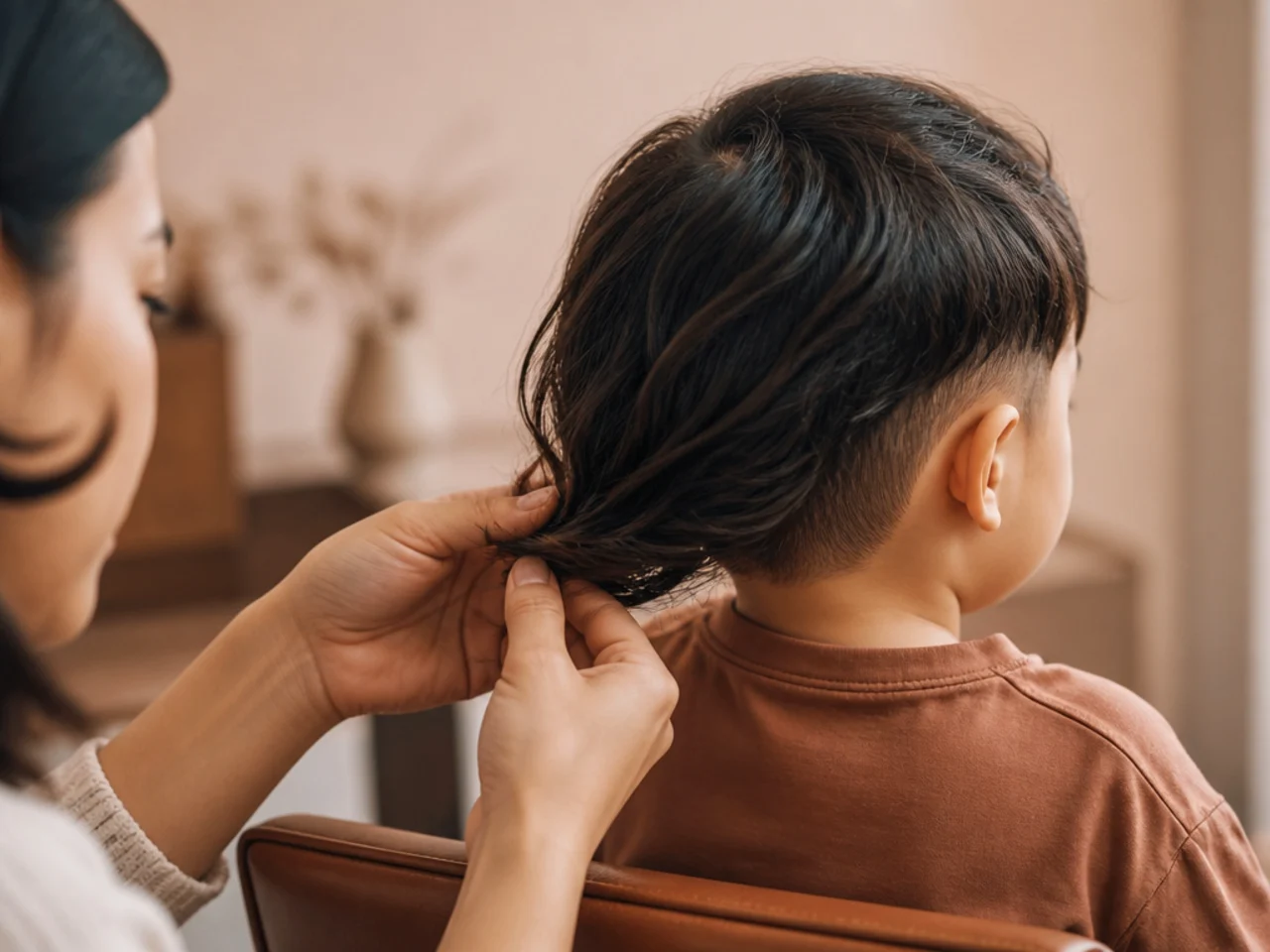
The nape mats before anywhere else. A headrest presses the same patch every journey, and friction on fine hair builds a flat pad that a comb cannot open — the same failure that ends most attempts at long curly hair on a boy.
How to Choose Yours
Set the perimeter by where the ends stop looking solid. Hold the length out and look at the last two centimetres — if you can see through them, that is your stopping point.
Decide the fringe separately from the length. They grow at the same rate but they are cut on completely different schedules.
Look at the nape before you look at anything else. If a pad is forming there, no perimeter decision will fix it.
Count the snips a shape needs. A cut that takes six snips is a cut a toddler will sit through, and one that takes forty is not.
The 15 Long Toddler Boy Haircut Ideas
1. One Length to the Jaw
The perimeter cut level all the way round at jaw height, with no fringe section separated out. Jaw length is well inside the density limit, so the ends still fall as one weight and the shape holds its outline as it grows. About eight snips with the hair combed damp, done in two passes across the back and one at each side.
2. Chin-Length With a Curtain Fringe
The front split down the middle and cut to fall either side of the face, with the rest left at chin length — an early version of the middle part boys wear later. The curtain solves the eye problem without a hard line across the brow, which matters because a hard line is the one thing you cannot cut in two goes. Six snips for the perimeter and four for the fringe, and the fringe half can be done on its own another day.
3. Long With a Blunt Straight Fringe
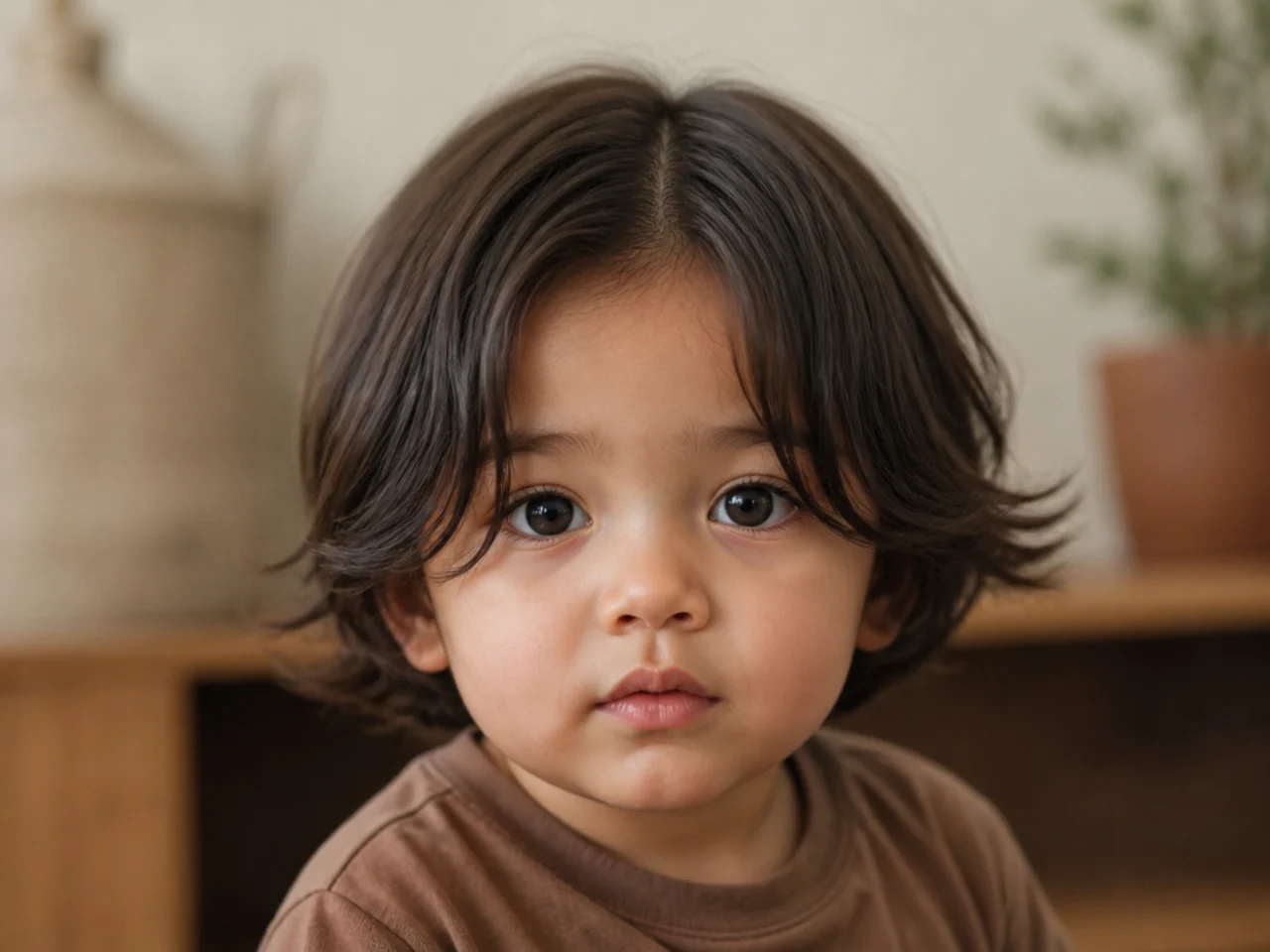
Everything left long with one level line cut across the forehead. The blunt fringe is the most forgiving on fine hair because a straight line hides the thinness that a feathered one exposes, and you can stop halfway and rejoin exactly where you left off. Three or four snips across the front, plus nothing else at all if the session ends there.

4. Long With the Fringe Swept and Pinned
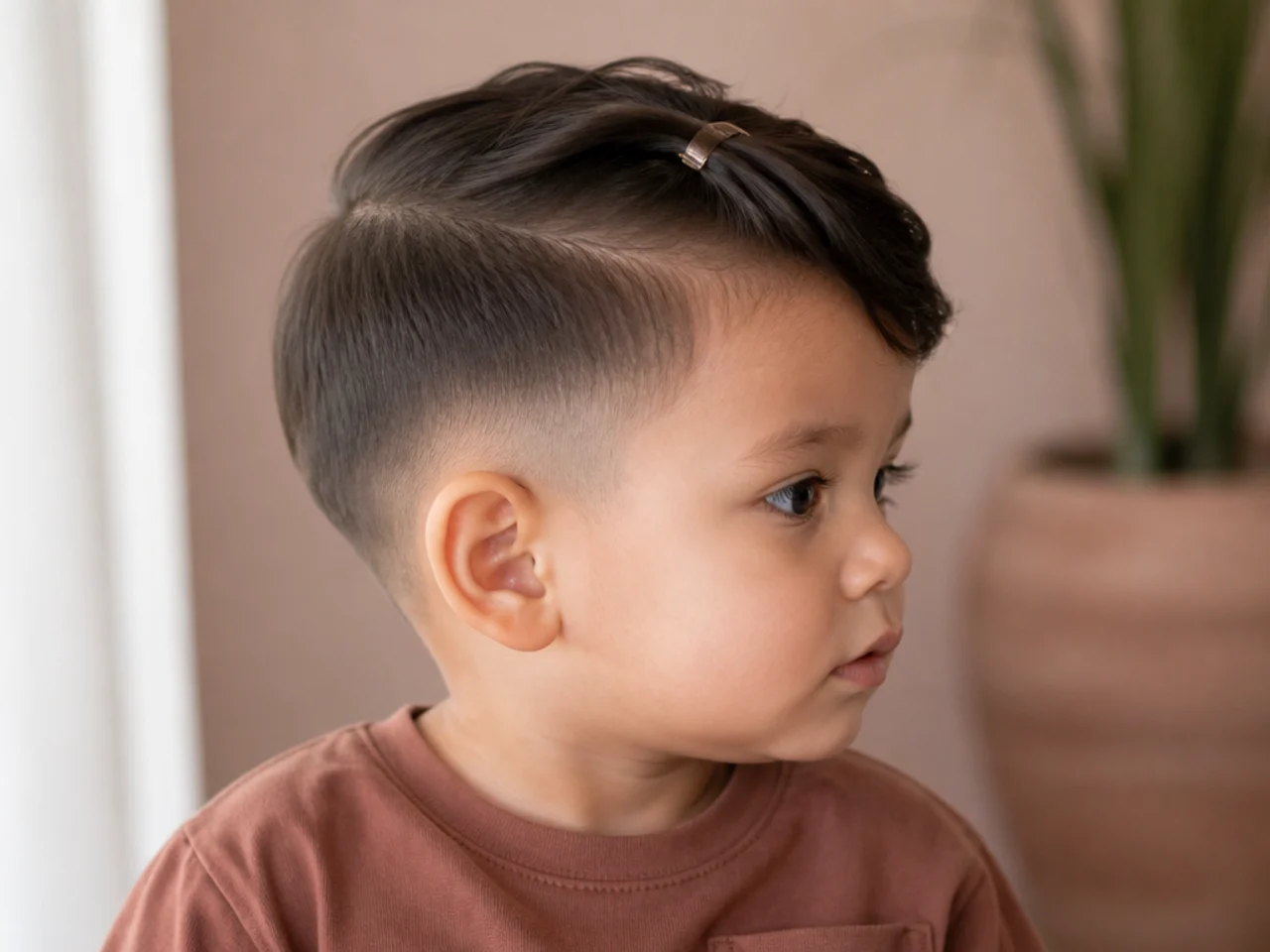
No fringe cut at all, with the front held to one side by a clip instead. It buys you months before the front needs cutting, and it keeps the whole head at one length so the perimeter never develops the shorter front layer that makes fine hair look uneven. Zero snips, which makes this the only entry on the page that is not a haircut.
5. Shoulder Length With the Nape Taken Up
Full length everywhere except the section below the occipital bone, which is shortened to sit above the collar. That patch is where every mat forms and it is invisible under the length above it, so removing it costs nothing and solves the daily comb fight. Roughly ten snips at the nape and none anywhere else.

6. Long All Over With No Fringe at All
The front grown past the eyes and long enough to sit behind the ears or fall to the sides on its own. This is the version that reduces cutting to almost nothing, because the only genuinely urgent section has been removed from the equation, and it is the strongest card in the long-versus-clippered argument. Two or three snips a year to level the perimeter and that is the whole maintenance.
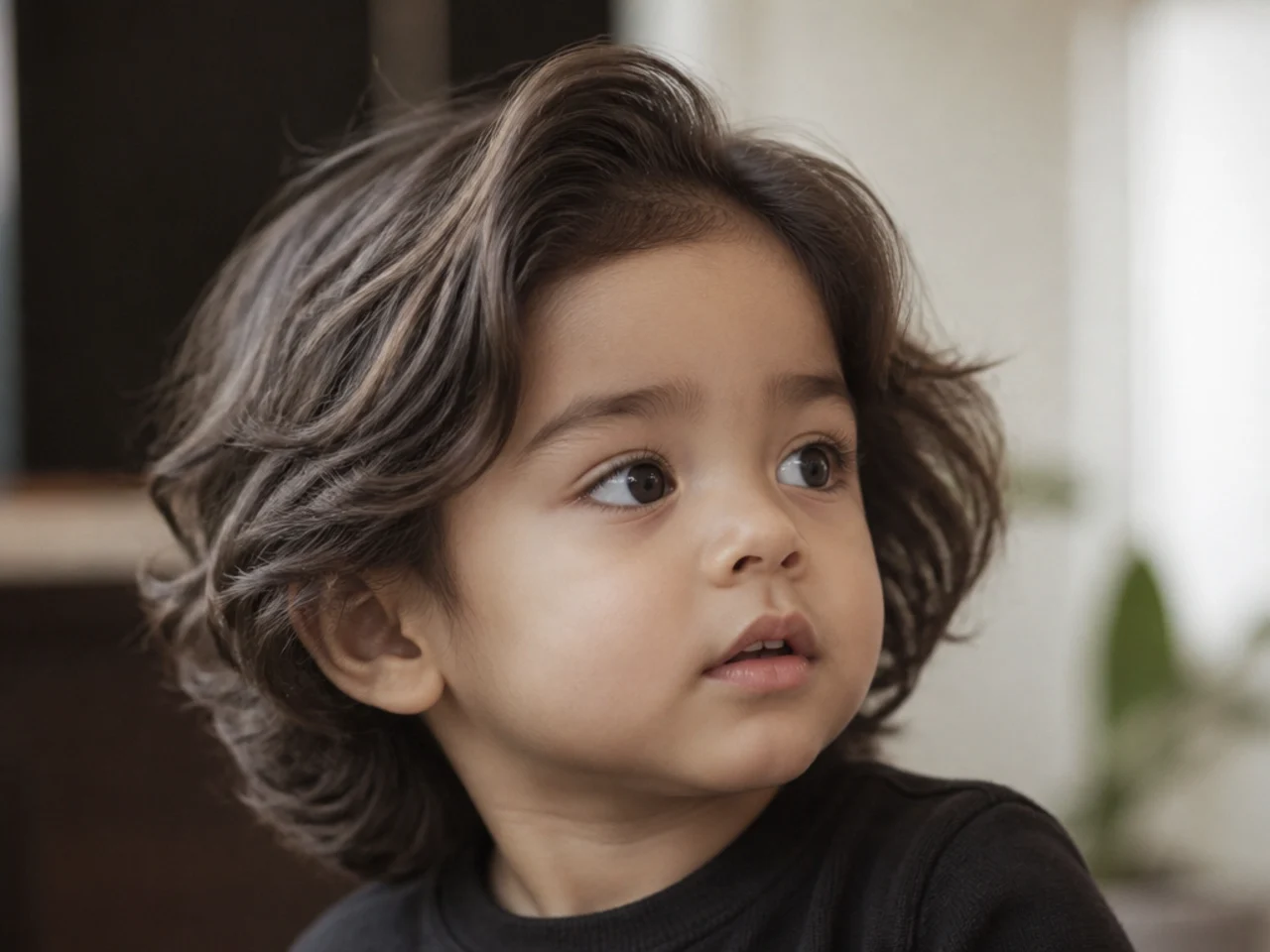
7. Ear-Length Perimeter With a Short Fringe
The shortest long shape here, cut level with the earlobe and paired with a fringe above the brow. At ear length the ends are still dense enough to look solid, which makes this the safest option for a child whose hair is particularly fine. About six snips for the perimeter and three for the front.
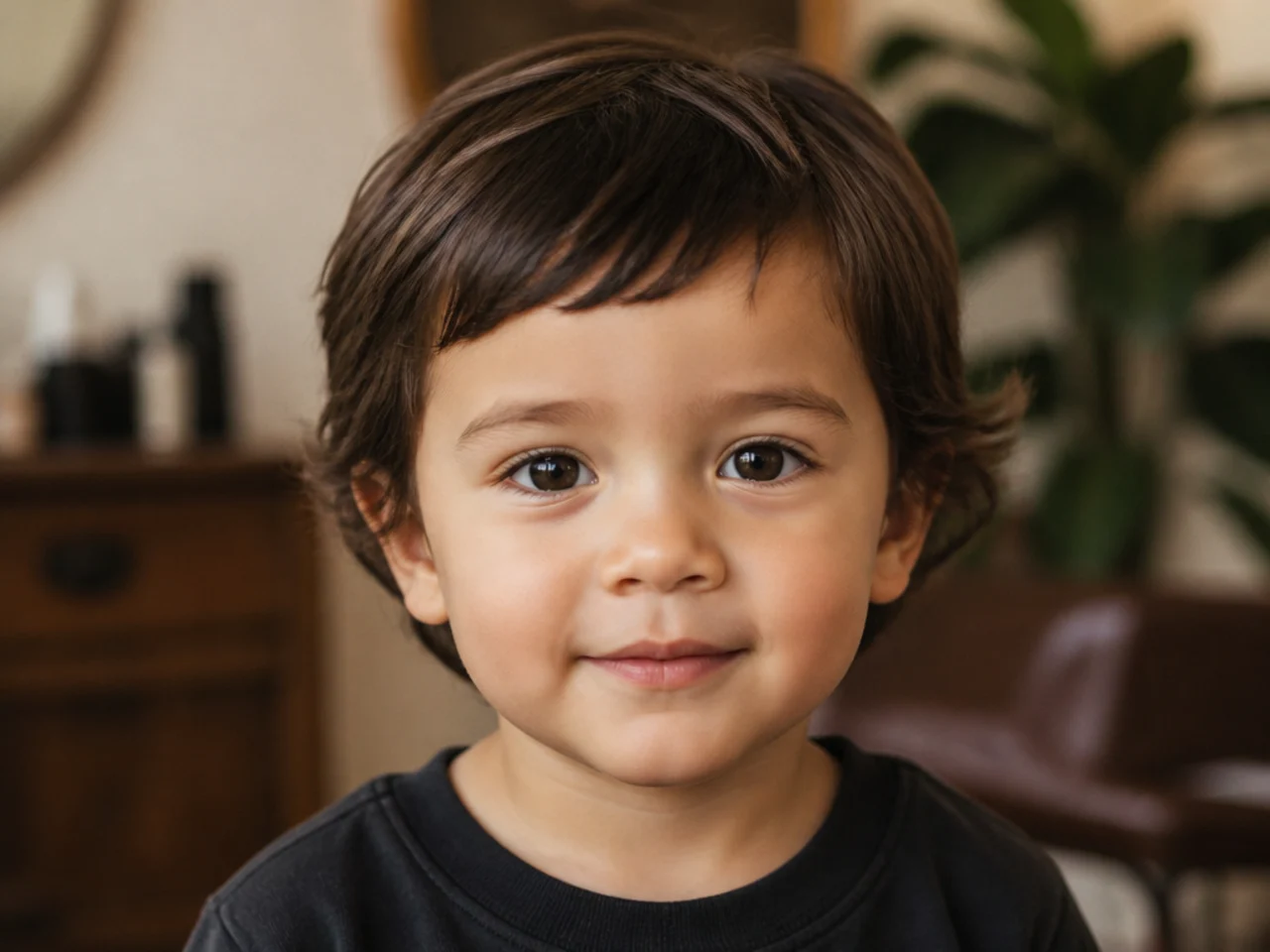
8. Collar-Length With the Ends Squared Off
Length stopping at the collar with the perimeter cut flat rather than rounded. Squaring the ends puts every strand at the same point, which concentrates what density there is into one visible edge instead of letting it taper away. Around eight snips, all across the back, with the sides left to fall into the same line.
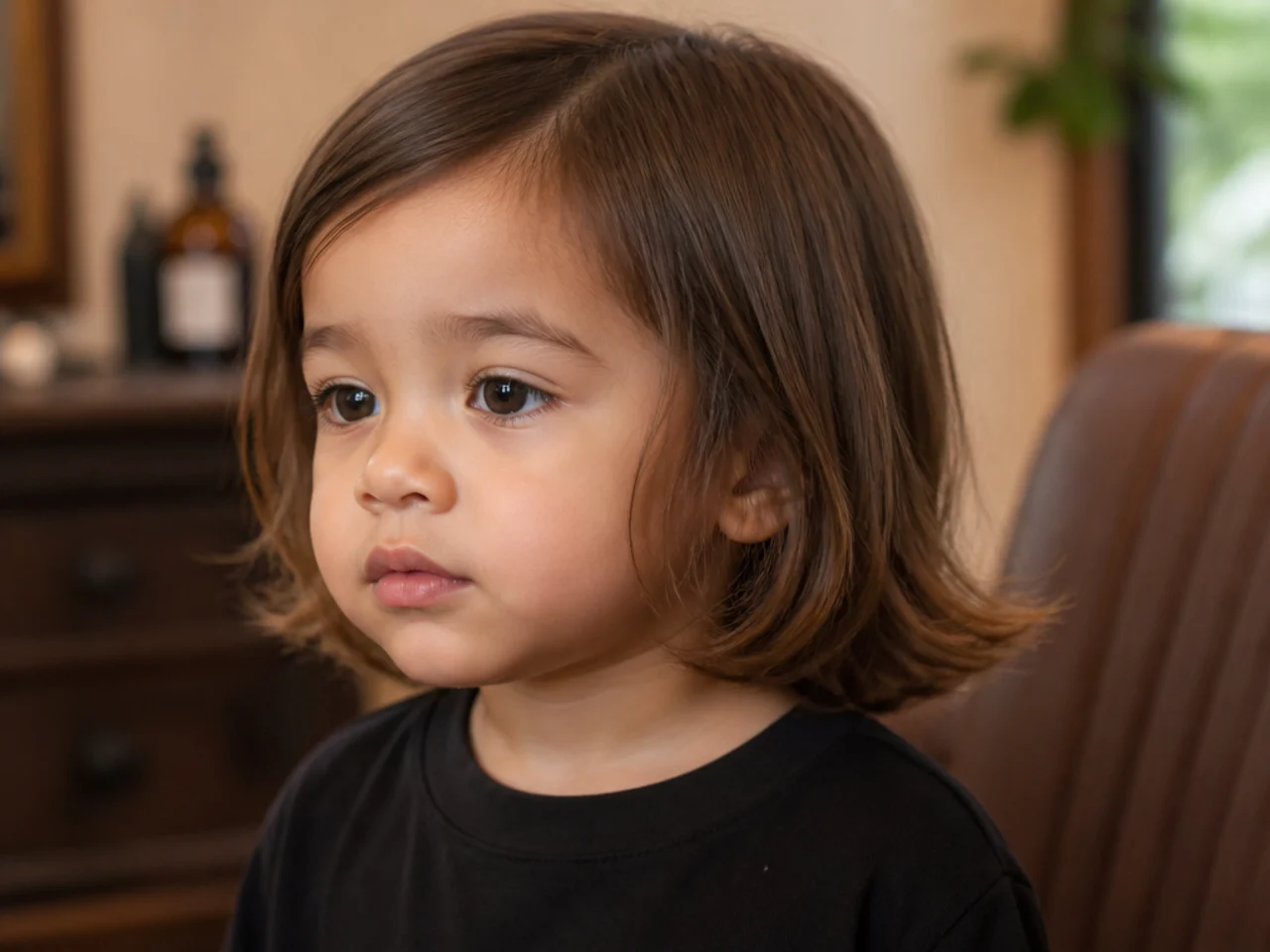
9. Long Front With a Shorter Back
The front kept at jaw length and the back taken up to the nape, reversing the usual arrangement. It works because the back is the section that mats and the front is the section that gets seen, so each part is cut for the problem it actually has. Roughly twelve snips split between two sittings if needed.
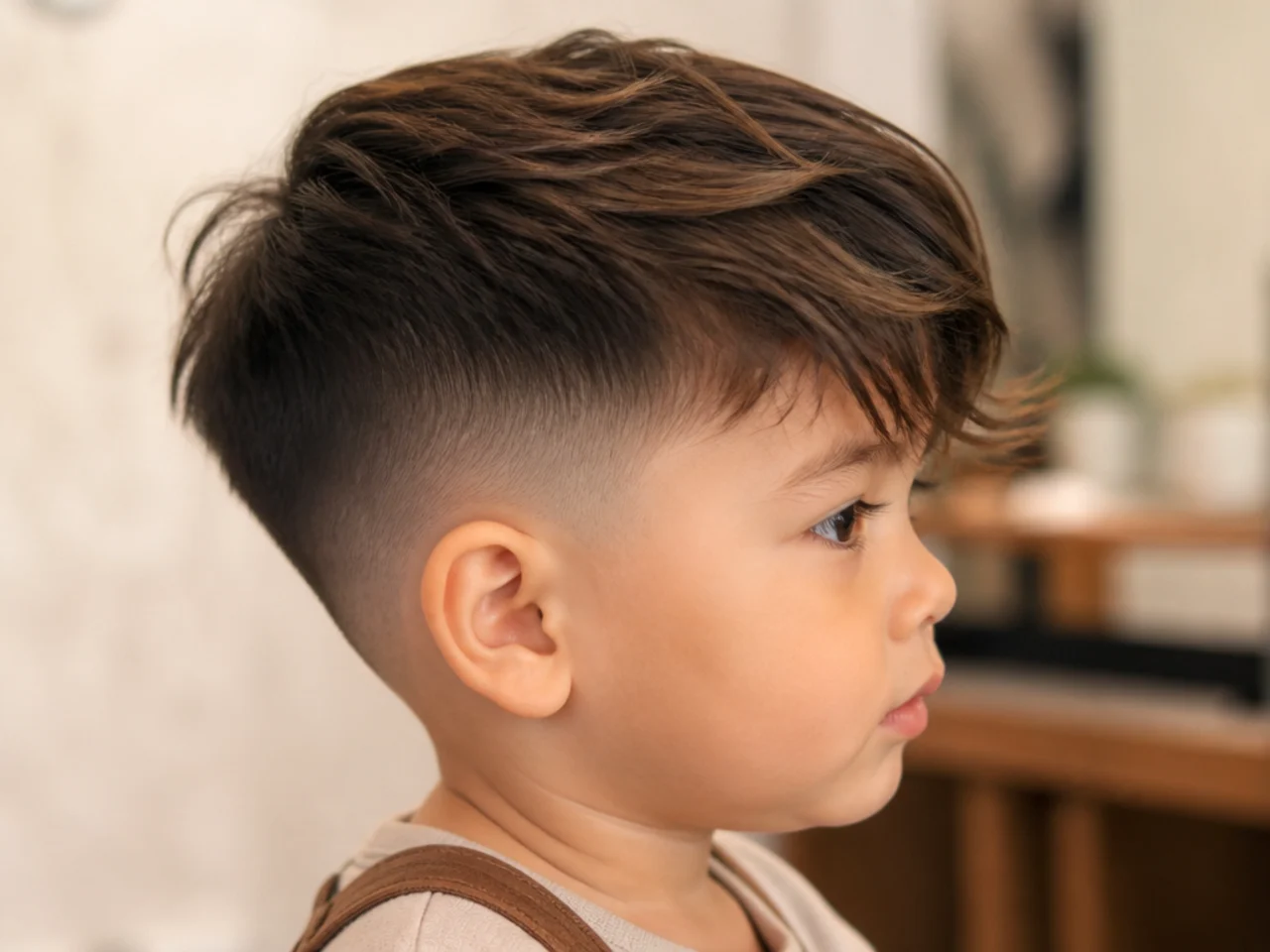
10. Jaw-Length Tucked Behind the Ears
Cut to the jaw and long enough at the sides to sit behind each ear rather than in front of it. Tucking removes the hair from the eyeline without cutting a fringe, which keeps the perimeter as one unbroken length. Eight snips, and no separate front section to maintain afterwards.

11. Long With a Micro Fringe Above the Brow
A deliberately short fringe sitting a centimetre clear of the eyebrows, with everything else long. Cutting the front short buys the longest possible gap before it reaches the eyes again, which on fine hair growing at about a centimetre a month is roughly three months. Three snips, and it is the fastest fringe on the list to redo.
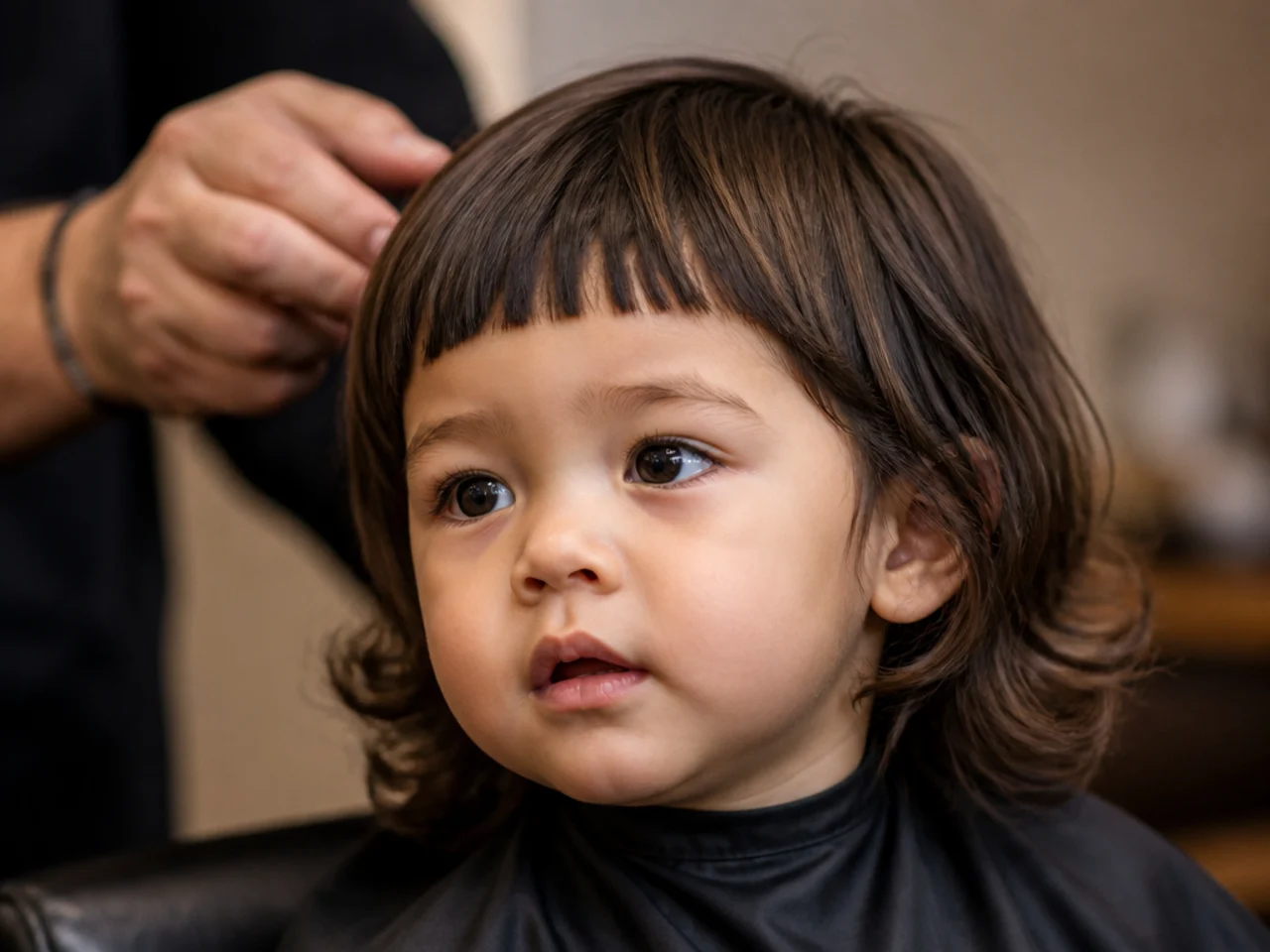
12. Shoulder Length Left Completely Uncut
Nothing touched at all, allowed to reach the shoulders on its own. This is the shape to choose only if the ends still look solid at that length, because shoulder length is the point where fine baby hair usually starts breaking into separate strands. No snips, and one honest look at the ends every couple of months.
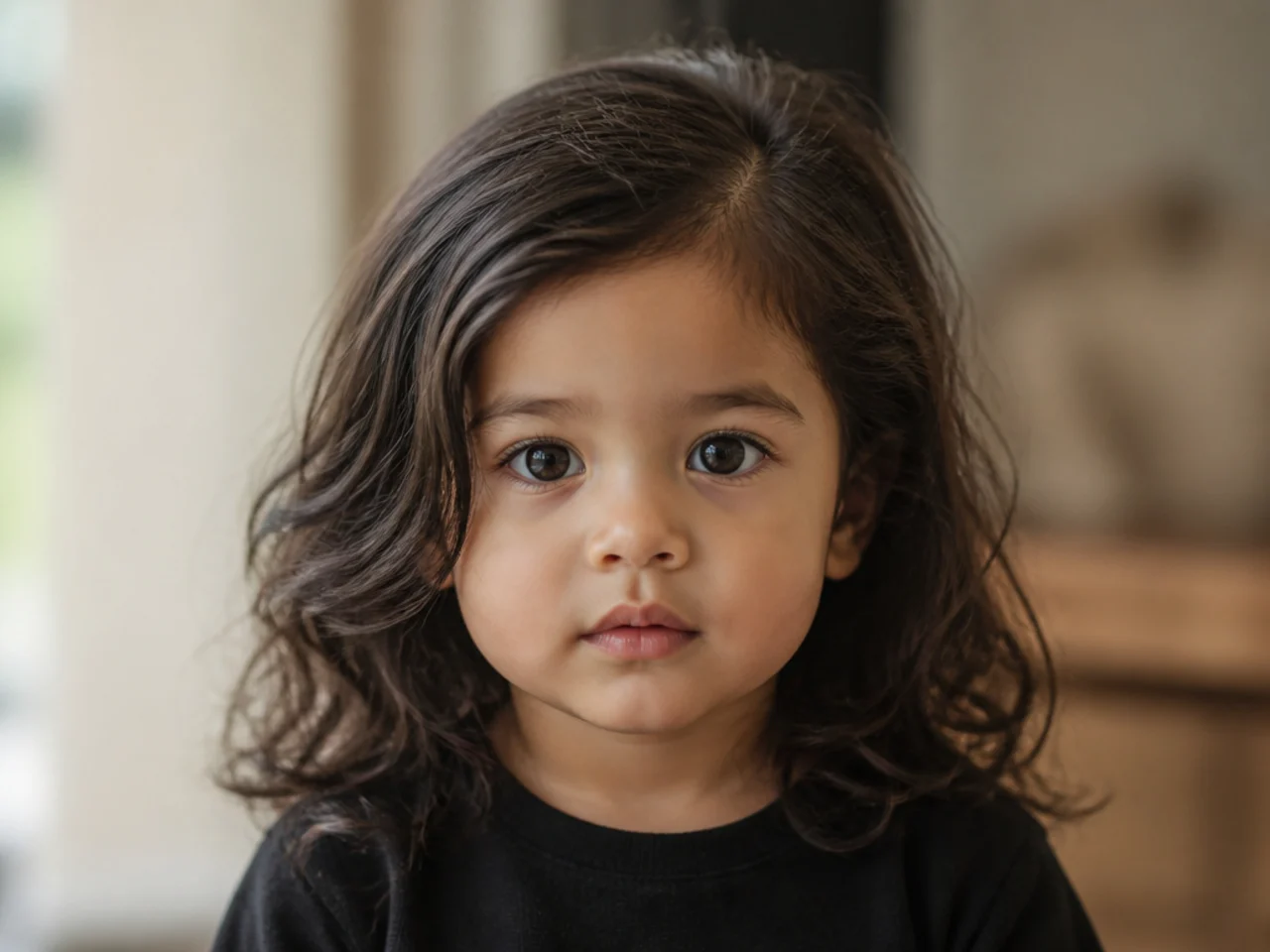
13. Two Snips at the Nape and Nothing Else
A minimal intervention aimed at one problem, removing only the pad of hair that presses against the headrest. It is the highest-value cut per second of a toddler's patience that exists, because it fixes the thing you deal with daily and takes under a minute. Two or three snips, easily done while he is distracted.
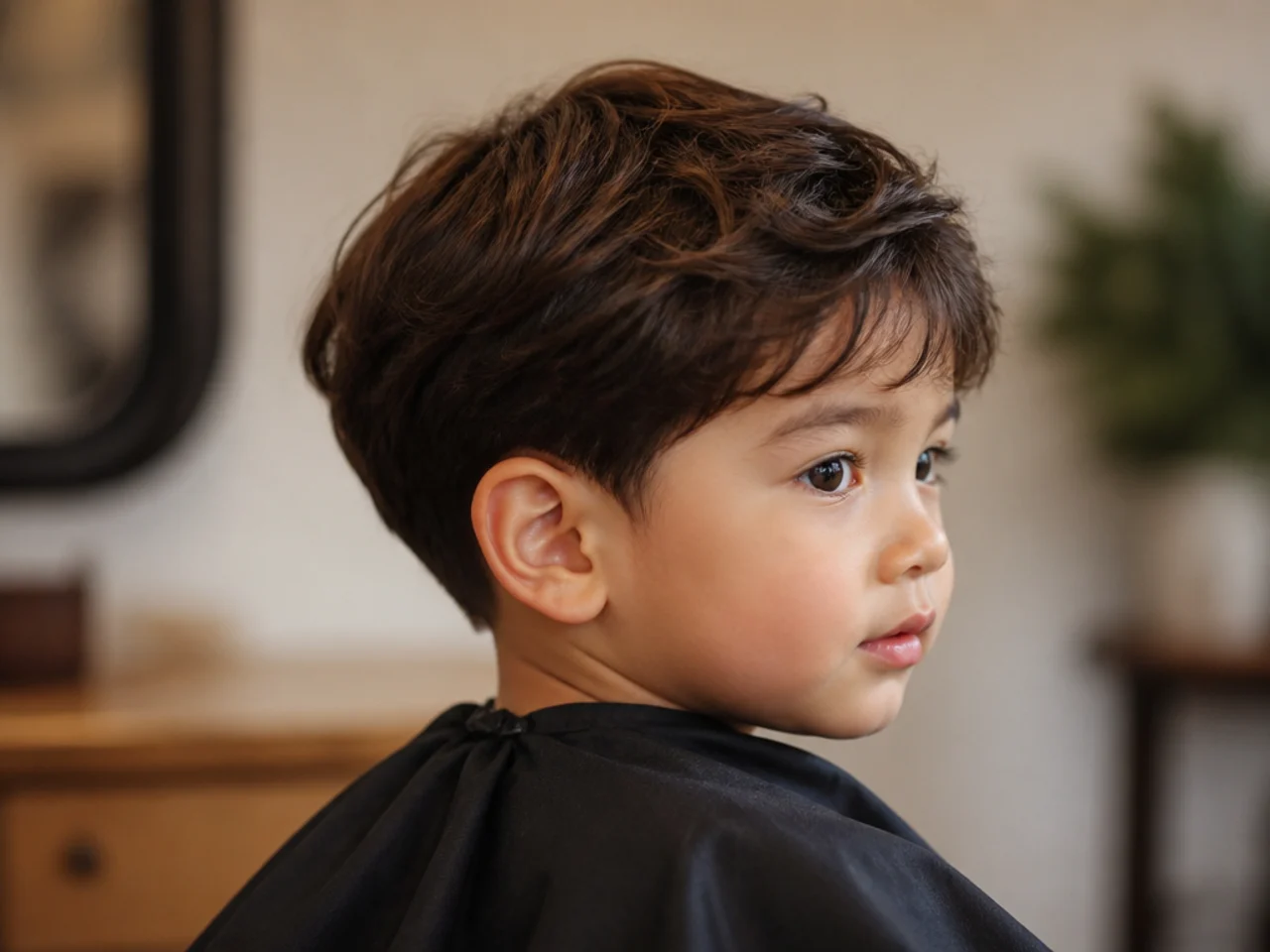
14. Collarbone Length With the Stringy Ends Removed
The maximum length worth attempting, with the last centimetre or two taken off once the ends start separating. Removing the wispy ends does not shorten the look much but it restores the solid outline, which is the entire difference between long hair and thin hair on a toddler. About ten snips straight across, no layering anywhere.
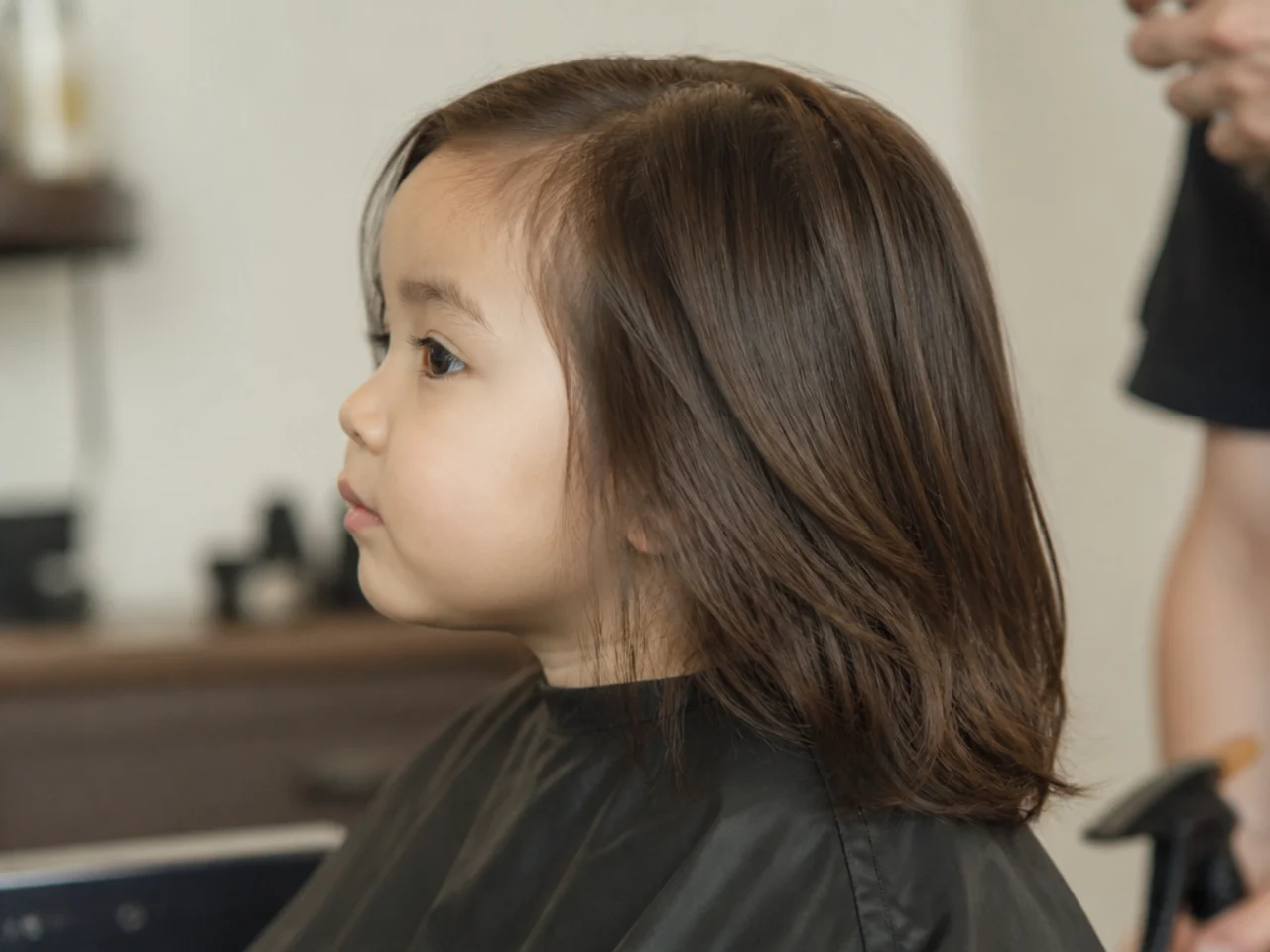
15. Long With the Fringe Cut on a Curve
Everything long, with the front cut longer at the temples than in the middle so it follows the brow. A curve disguises an unsteady hand far better than a level line, so it is the fringe to choose if you are cutting a child who moves. Five snips working from one temple to the other.

Styling and Upkeep
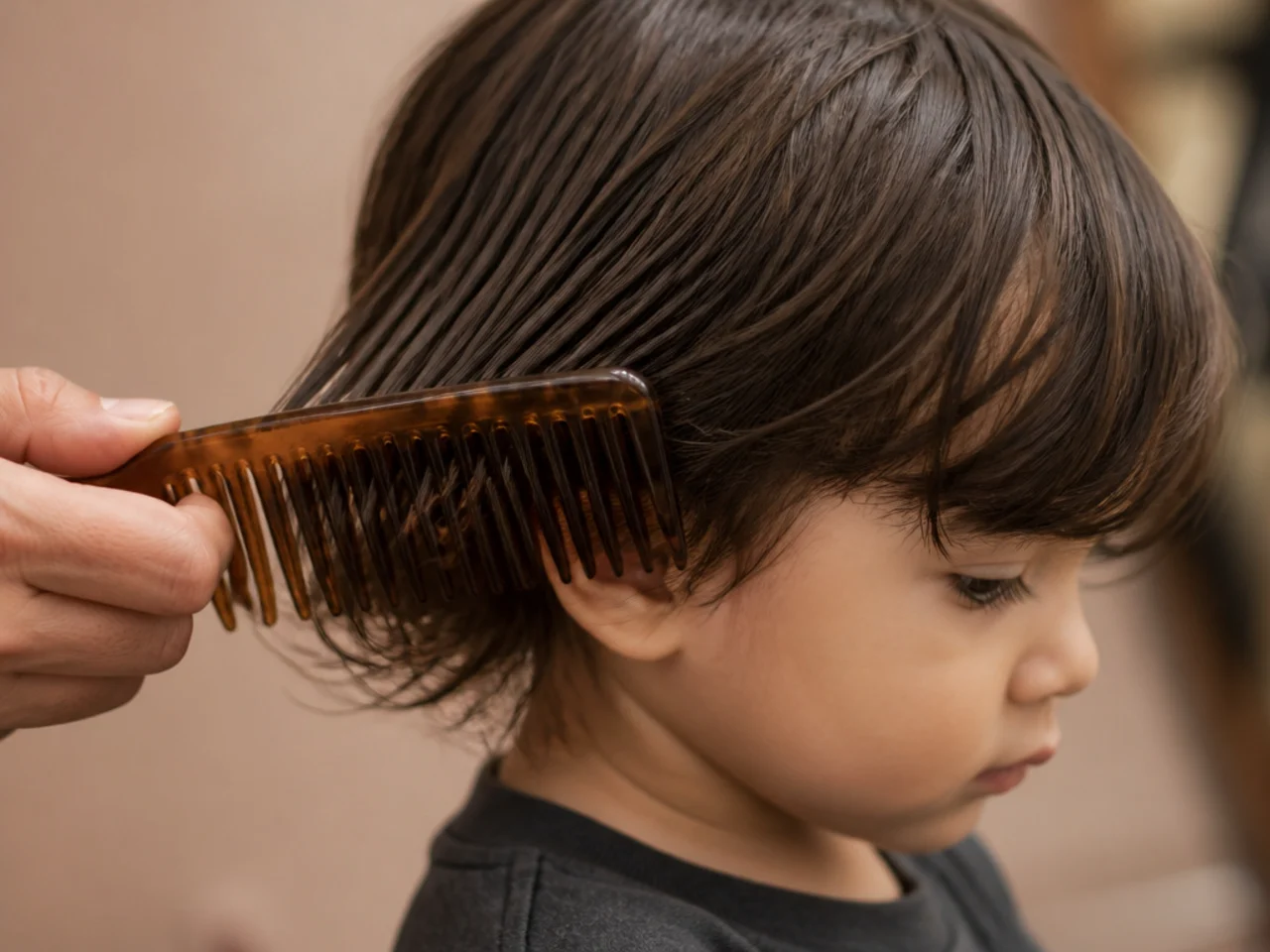
Comb it damp, from the ends upward. Starting at the roots on fine hair drags the whole length through a knot and turns a tangle into breakage.
Deal with the nape before every long journey. A quick comb through that patch beforehand is the difference between a tangle and a pad.
Check the ends in daylight every couple of months. Stringiness shows up against a window long before it shows in a mirror.
Cut the fringe on its own schedule. It reaches the eyes roughly every six to eight weeks while the perimeter can wait months.
Skip conditioner past a light rinse. Fine baby hair has no weight to spare and anything heavy makes the ends hang flatter and look thinner.
Mistakes to Avoid
Growing it past the collarbone on very fine hair. The ends separate and the whole length reads thin rather than long.
Layering it to add movement. Layers remove weight, and weight is exactly what fine baby hair does not have to spare.
Cutting the fringe while it is wet and pulled straight. It lands well above the brow once it dries and settles.
Ignoring the nape until it mats. Once the pad has formed it usually has to be cut out rather than combed out.
Treating the perimeter and the fringe as one job. They need cutting at completely different intervals, and doing them together means one is always wrong.
FAQ
How long is too long? Past the collarbone on most fine baby hair, where the ends stop reading as one mass.
How often does it need cutting? About three times a year for the length, and every six to eight weeks for the fringe.
Do I need to cut the nape? Only if a car seat is flattening it, which on most toddlers it is.

Final Thoughts
Long is a maintenance decision before it is a look. It removes the clipper, the noise and five haircuts a year, and in exchange it asks you to watch two things — where the ends stop looking solid, and what the car seat is doing to the nape.
If the hair is curly as well as long, curly haircuts for boys covers what changes once the pattern settles, and fringe haircut men shows where the fringe shapes here end up years later. More in Men's Haircuts.