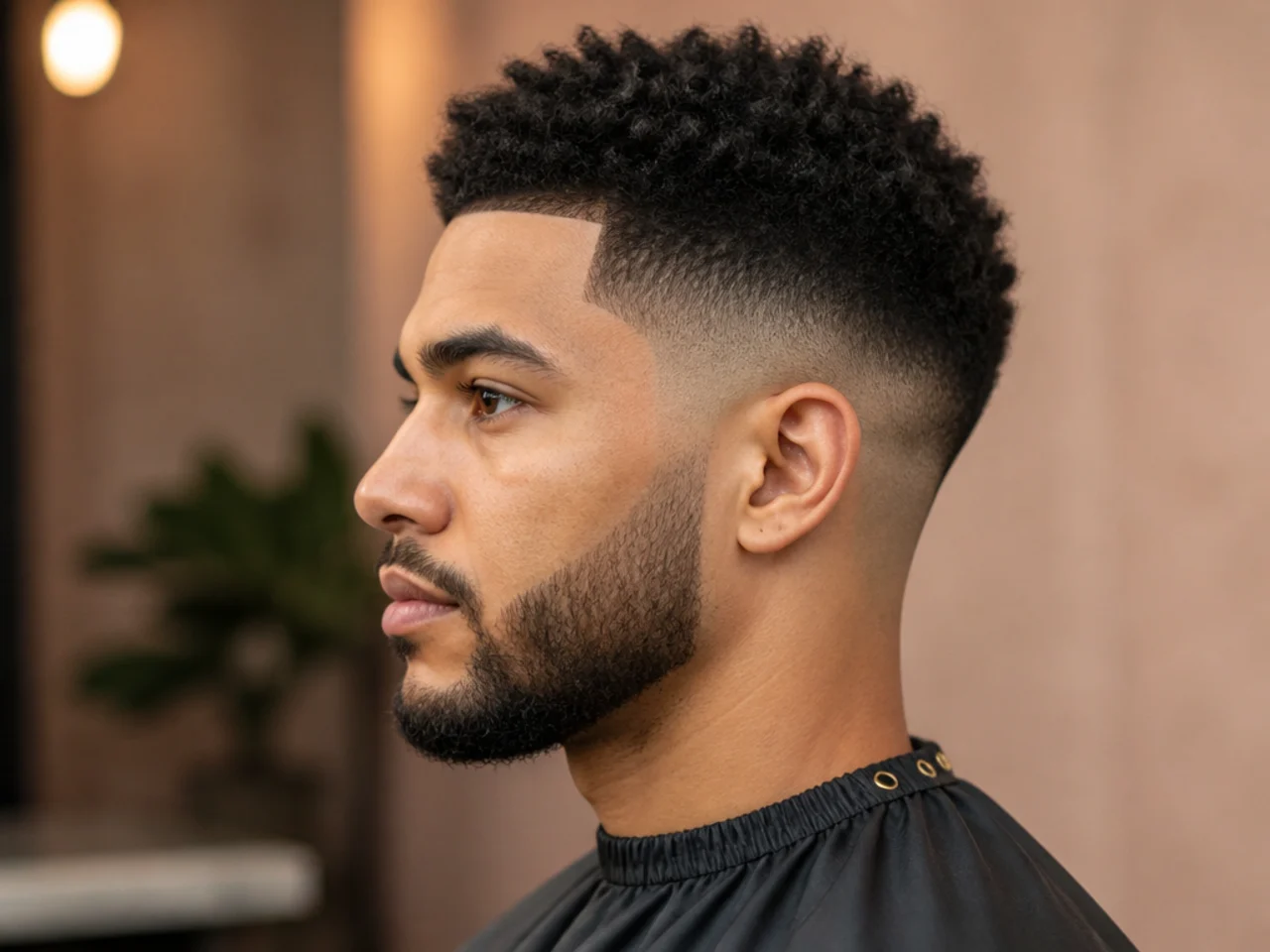
30 Faded Haircuts for Men That Never Get Old
A faded haircut for men, done right, outlasts every trend cycle. Thirty timeless variations — low, mid, high, skin, drop, burst — with photos and barber notes.
In this article · 42
- What Is a Faded Haircut for Men?
- How to Choose Your Fade
- Timeless Faded Haircuts for Men
- Classic Low Fade
- Mid Fade
- High Fade
- Low Taper Fade
- High Taper Fade
- Skin Fade
- Drop Fade
- Burst Fade
- Undercut Fade
- Blowout Taper Fade
- Fade with a Crew Cut
- Fade with a Buzz Cut
- Fade with an Ivy League
- Fade with a Comb Over
- Fade with a Side Part
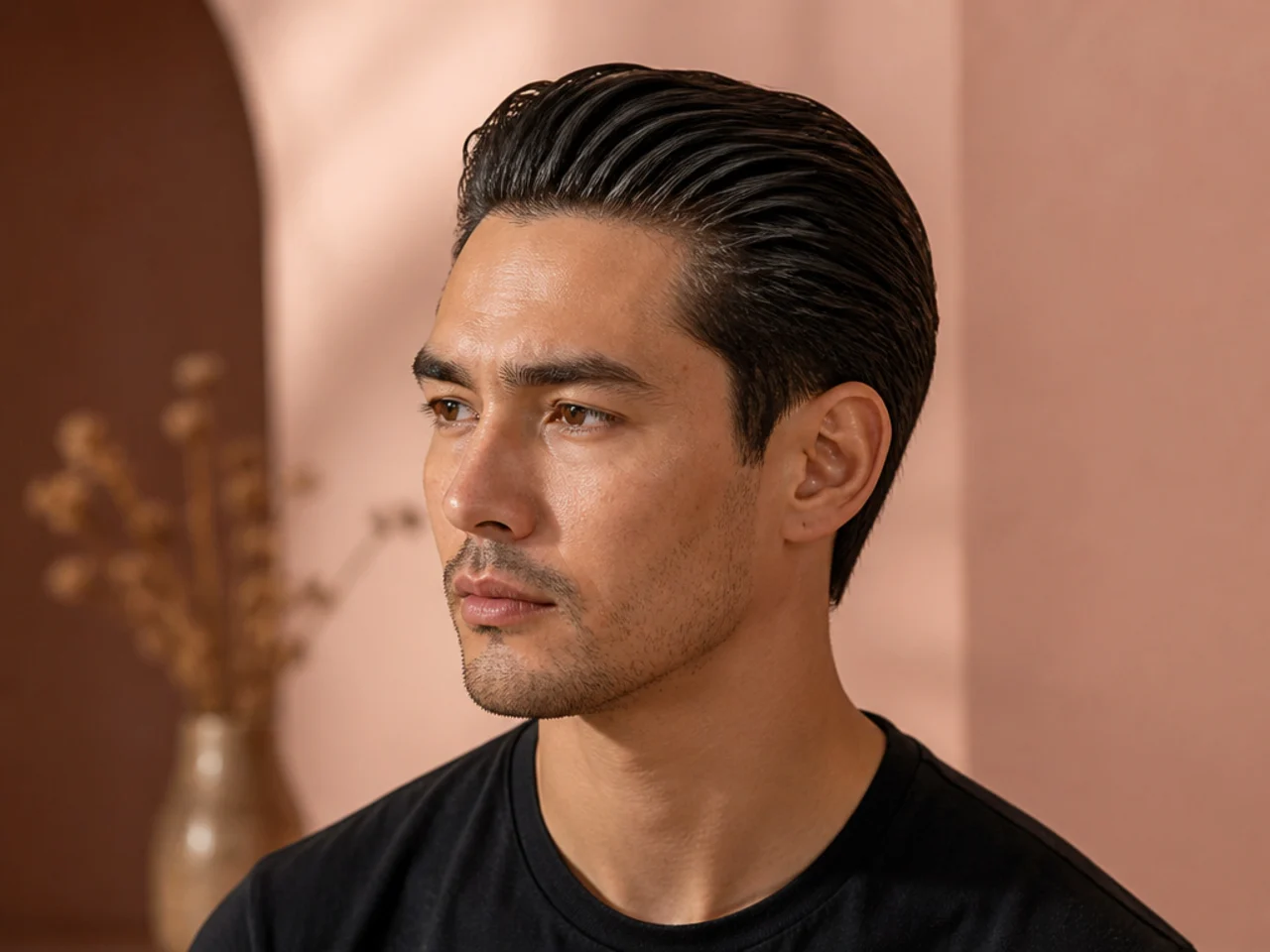
- Fade with a Slick Back
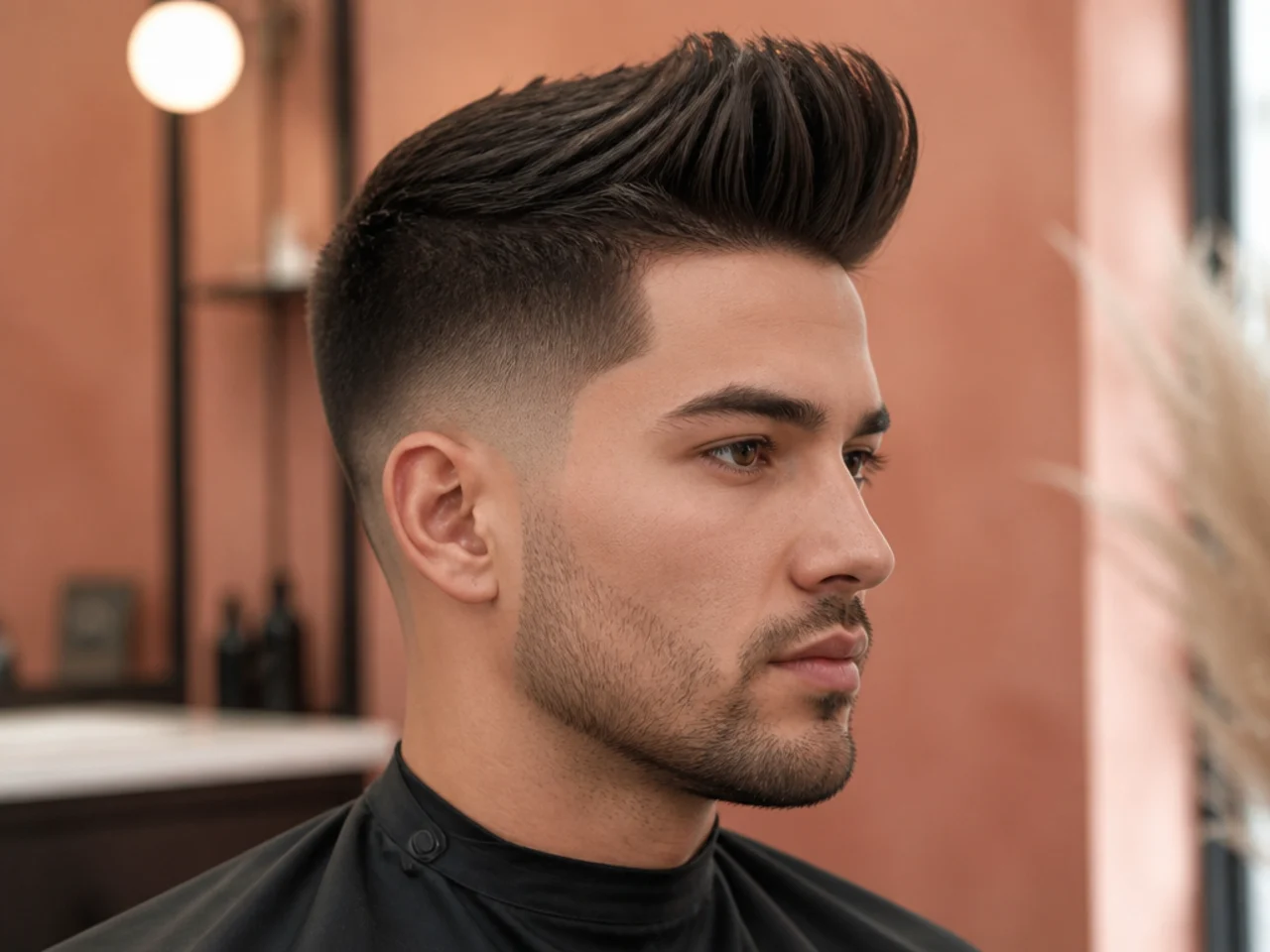
- Fade with a Pompadour
- Fade with a Quiff
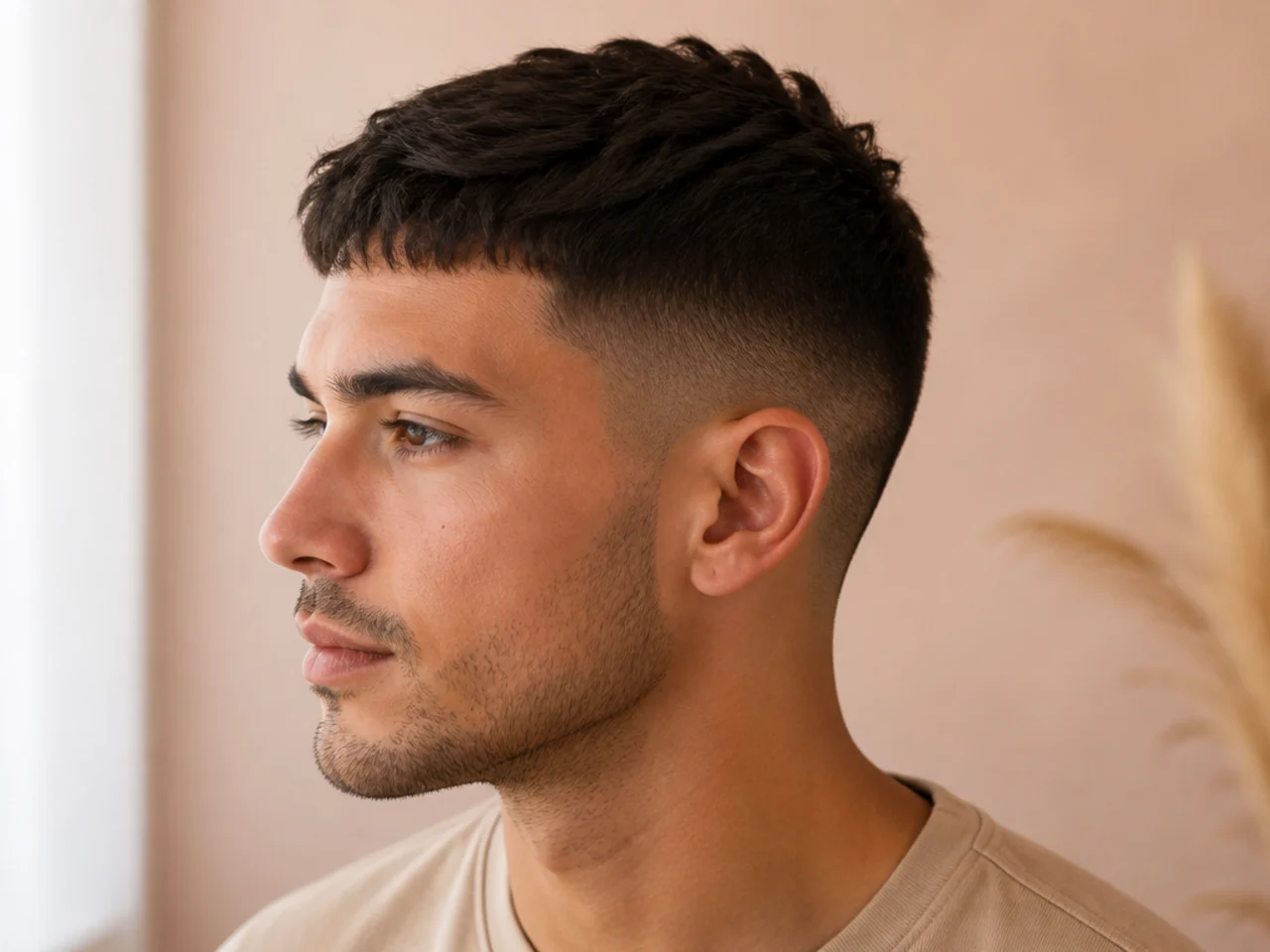
- Fade with a French Crop
- Fade with a Textured Crop
- Fade with a Textured Fringe
- Fade with an Edgar Cut
- Fade with a Messy Textured Top
- Fade with a Brush Up
- Fade with Curly Hair
- Fade with Waves
- Fade with a Middle Part
- Fade with an Afro
- Fade with a Modern Mullet
- Fade with a Beard Connection
- How to Ask Your Barber for a Faded Haircut
- Styling and Maintenance
- FAQ
- What is the most timeless faded haircut for men?
- Is a fade the same thing as a taper?
- Which fade lasts longest between cuts?
- Does a faded haircut for men look professional?
- Which faded haircut works best for curly hair?
- How much does a faded haircut cost?
Trends rotate. The fade does not. Barbers have been blending short sides into longer tops since the 1940s, and every decade since has just moved the transition line up or down the head. This guide walks through thirty faded haircut variations for men that outlast the trend cycle — low, mid, high, skin, drop, burst, undercut, blowout — each paired with the top style it flatters and the exact language you can hand your barber. Bring the photo, say the numbers, walk out with the cut in your head.
What Is a Faded Haircut for Men?
A faded haircut is a cut where the hair on the sides and back gets progressively shorter as it travels down toward the ear and neckline, with the shortest point running anywhere from a soft guard 1 down to bare skin. The blend is the whole game. A good fade has no visible line between guards — just a smooth gradient.
Every fade lives on a dial. The higher the shortest point sits on your head, the sharper the contrast against the top. The lower it sits, the more conservative the finish reads. Change the height, change the top style, change the neckline finish, and you have thirty different cuts from one basic idea. That is why the fade haircut family has held on for so long — it flexes.
Two constants make a fade a fade. The transition is invisible up close. And the top length, whatever it is, sits over sides short enough to read intentional. Nail those two and everything else is styling.
How to Choose Your Fade
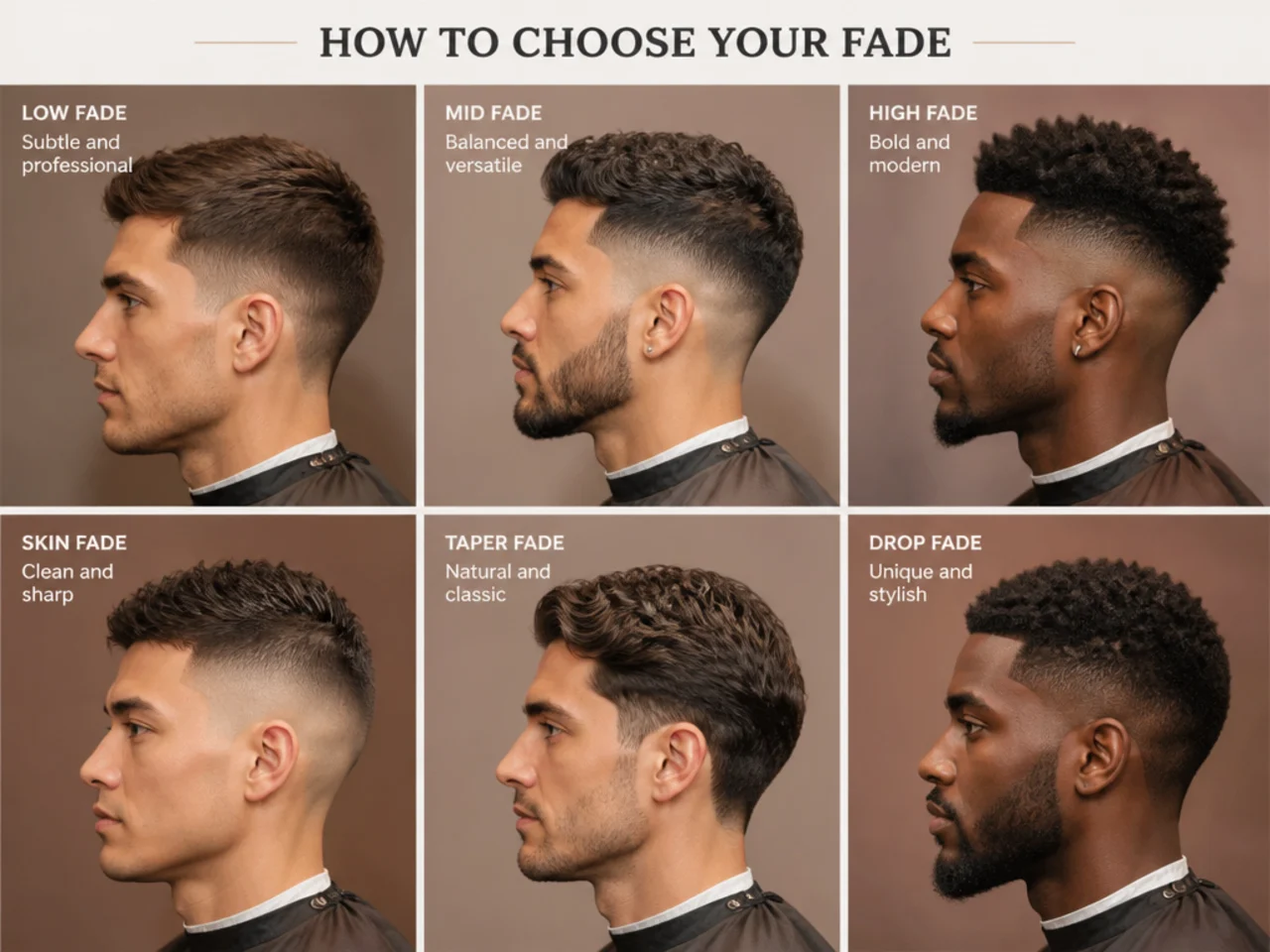
Three questions get you to the right fade.
How conservative is your day? If your workplace notices haircuts, stay low. A low fade or low fade haircut sits below the sideburn and reads like a regular clean cut from a distance. Mid fades work for creative offices and school. High fades and skin fades are best for weekends, industries with no dress code, or anyone whose personal brand rewards edge.
What is your face shape? Round and square faces gain from height on top and shorter sides — a mid or high fade with a quiff, brush up, or textured crop lengthens the face. Long and oblong faces want restraint on top; a low fade with a fringe, crop, or side part balances the vertical. Oval faces suit every fade on this list. Heart shapes want width at the jaw — pair a low or mid fade with a beard. Diamond shapes soften with wave or curl on top over a mid fade.
How often can you sit in the chair? Skin fades and bursts blur by week two. Low tapers hold for three to four weeks. If you can only book once a month, go low.
Timeless Faded Haircuts for Men
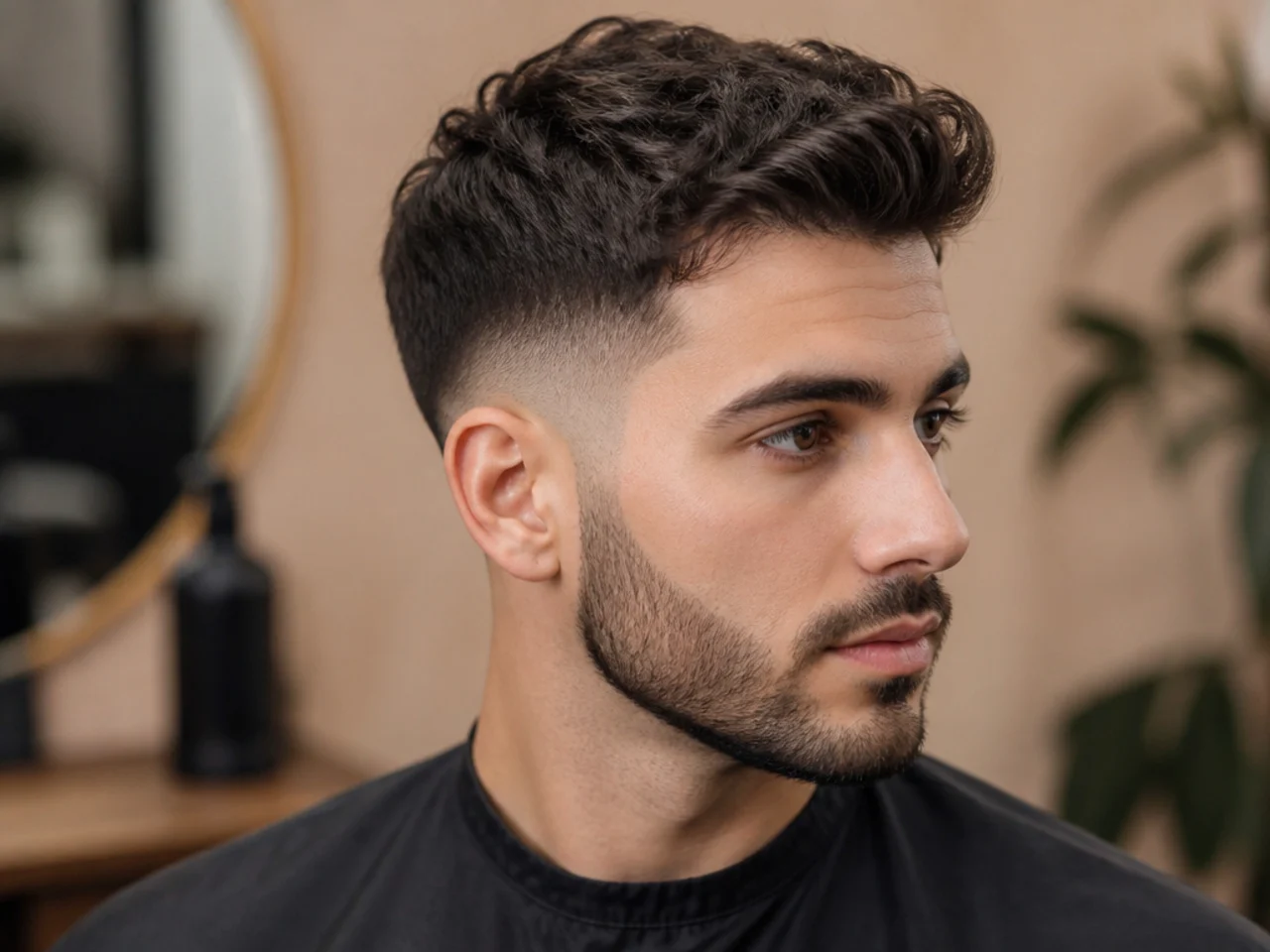
Thirty variations, arranged from fade family (heights and shapes) into fade-plus-top-style pairings. Each block covers what makes the variation different, who it suits, how to ask, and one styling move worth stealing.
Classic Low Fade
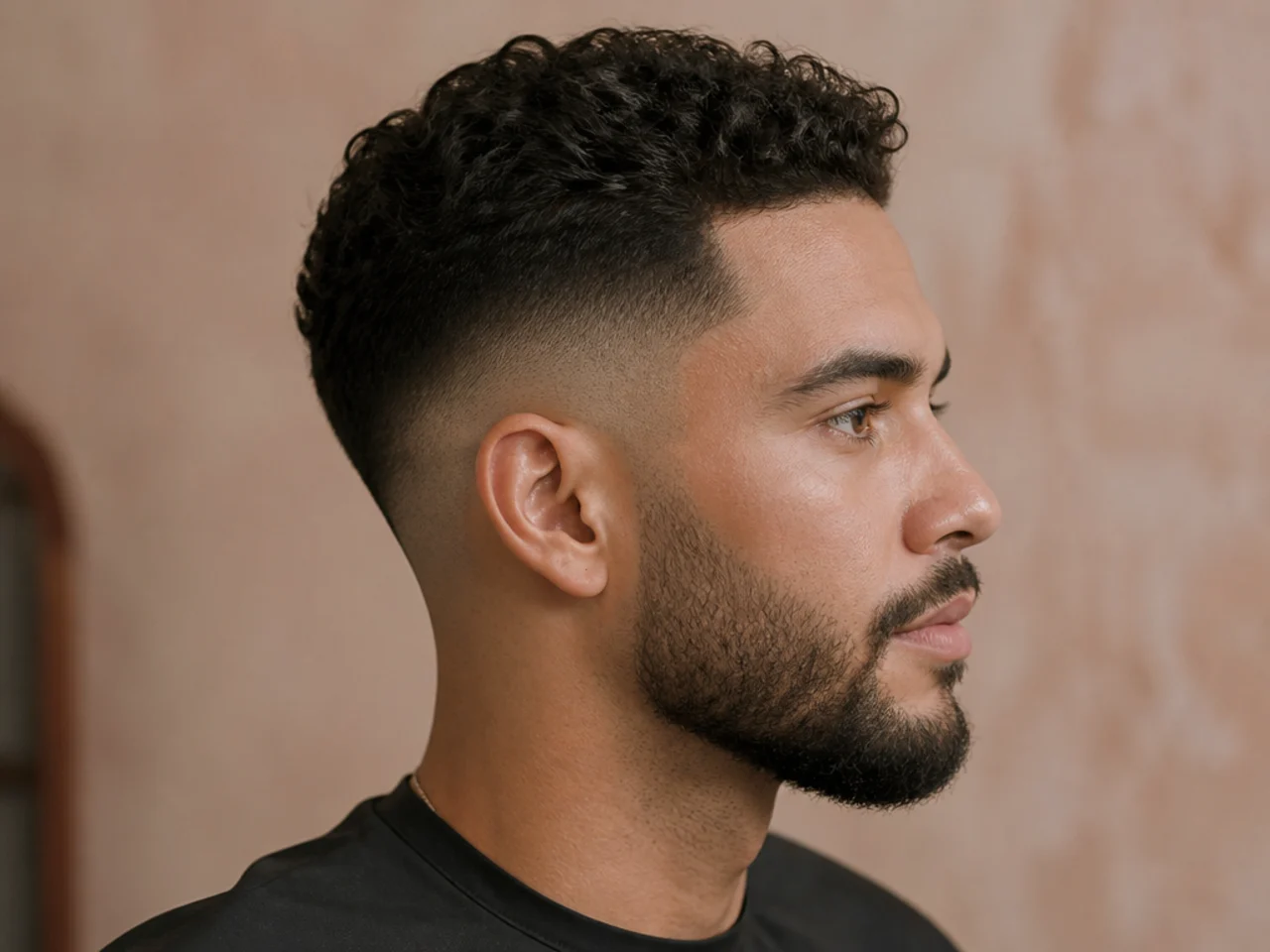
The baseline every other low fade builds off. Sides start at a 2 guard just above the ear, blend down through a 1 to a 0.5 at the neck, no skin, no drama. Fits every face shape and every hair type — this is the cut barbers reach for when a client says "just clean me up." Ask for: "low fade, 2 to 0.5, keep two inches on top, matte finish." Work a pea-size amount of matte paste through damp hair with your fingers and you are done.
Mid Fade
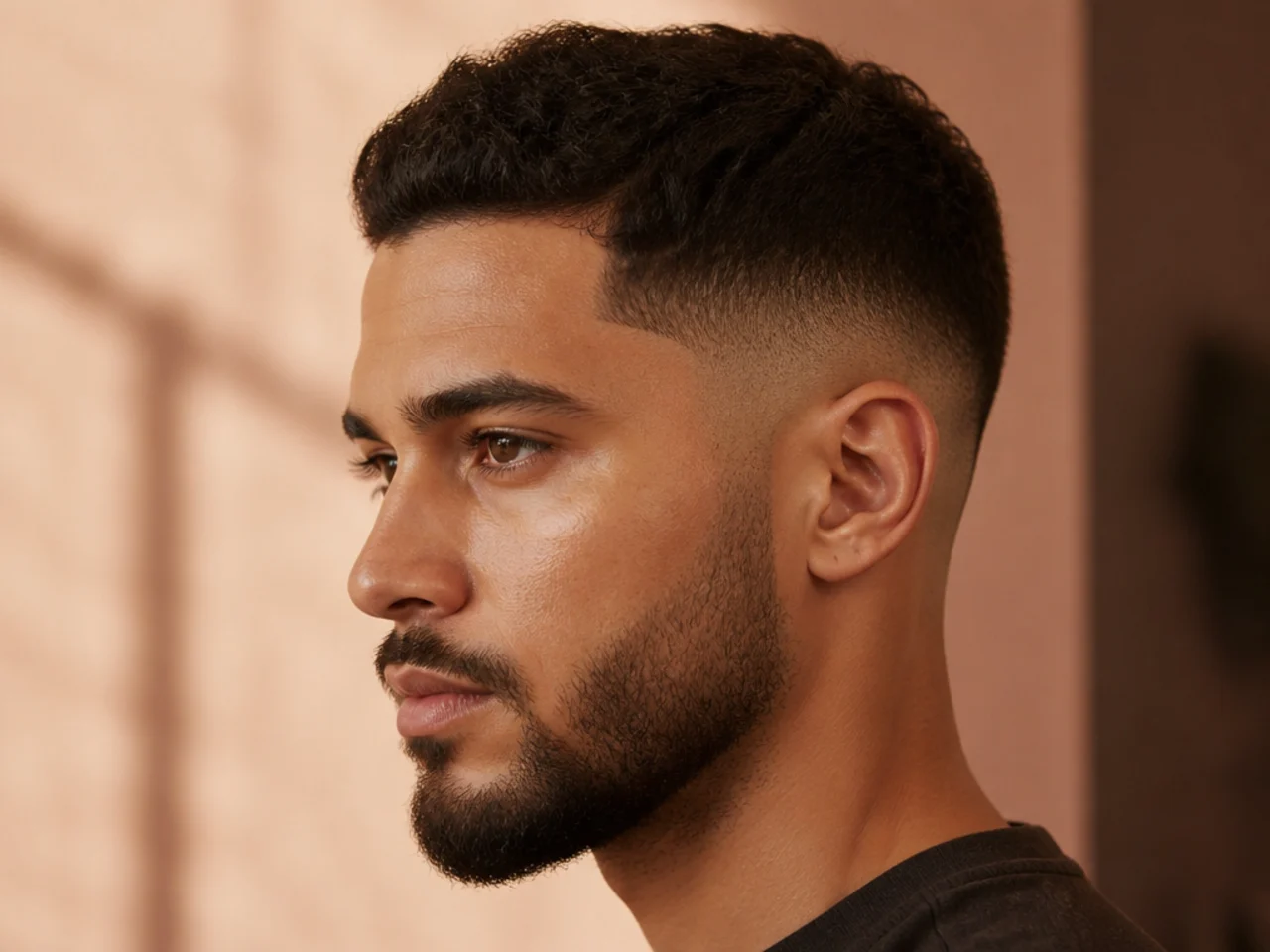
The mid fade puts the shortest point right at the temple — the balanced middle position that photographs cleaner than any other height. Sharper than a low fade, tamer than a high fade, and the most-photographed fade on Instagram for a reason. Suits oval, square, and heart faces best. Ask for: "mid fade, 1 to 0.5 at the temple, blend up to a 3, keep two to three inches on top." Blow-dry the top forward with your fingers and finish with a matte clay. See the mid fade haircut guide for more length pairings.
High Fade
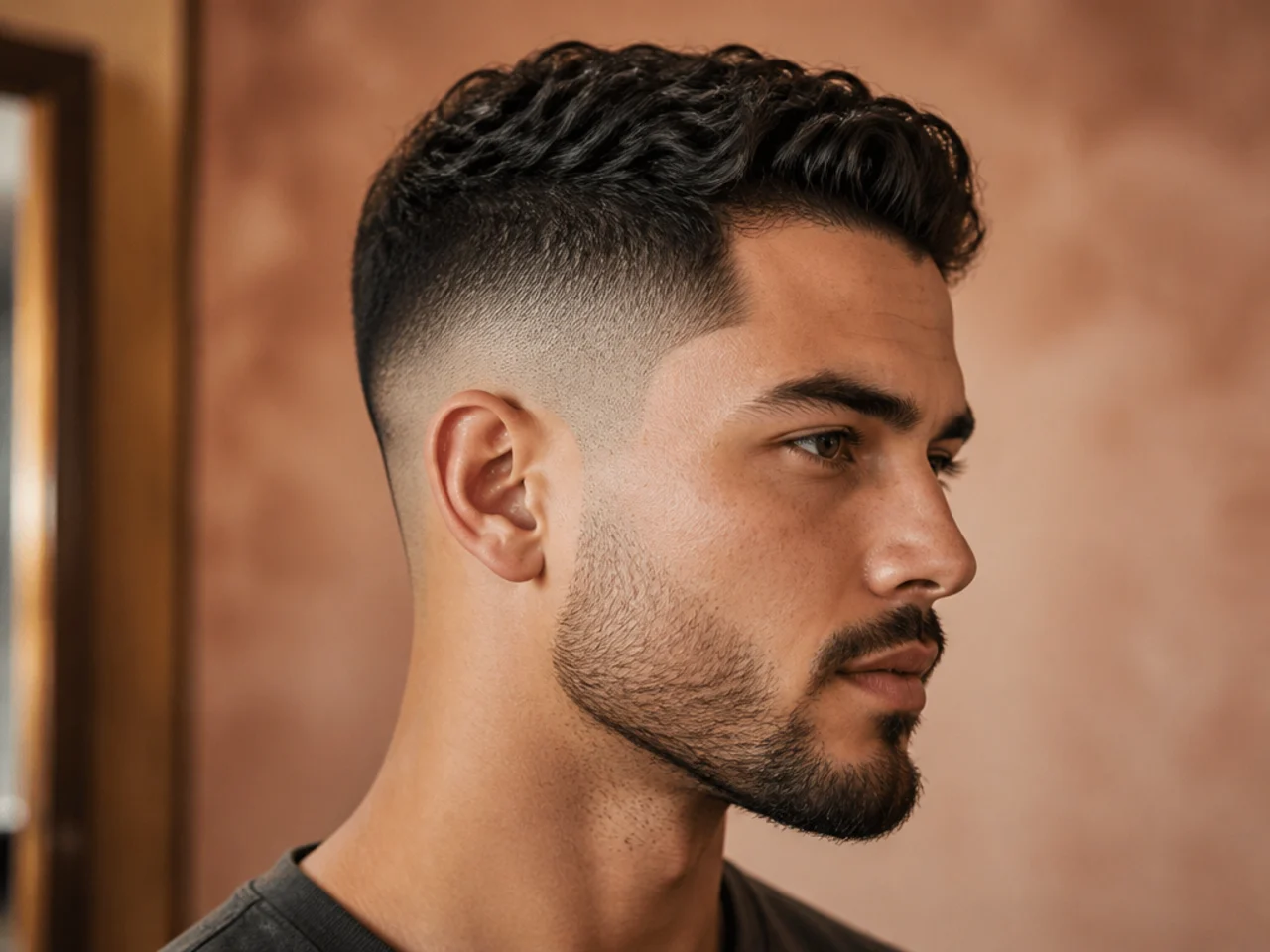
The high fade takes the shortest point almost to the crown, exposing more scalp than any other height and forcing the top length to earn its space. Best when the top is short and structured — a crop, a quiff, a brush up — because loose length reads mismatched against so much bare skin. Suits oval and diamond faces. Ask for: "high fade, skin at the temple, blend up to a 2, keep one to two inches on top, matte finish." Rub a fingertip of styling cream through and let it sit.
Low Taper Fade
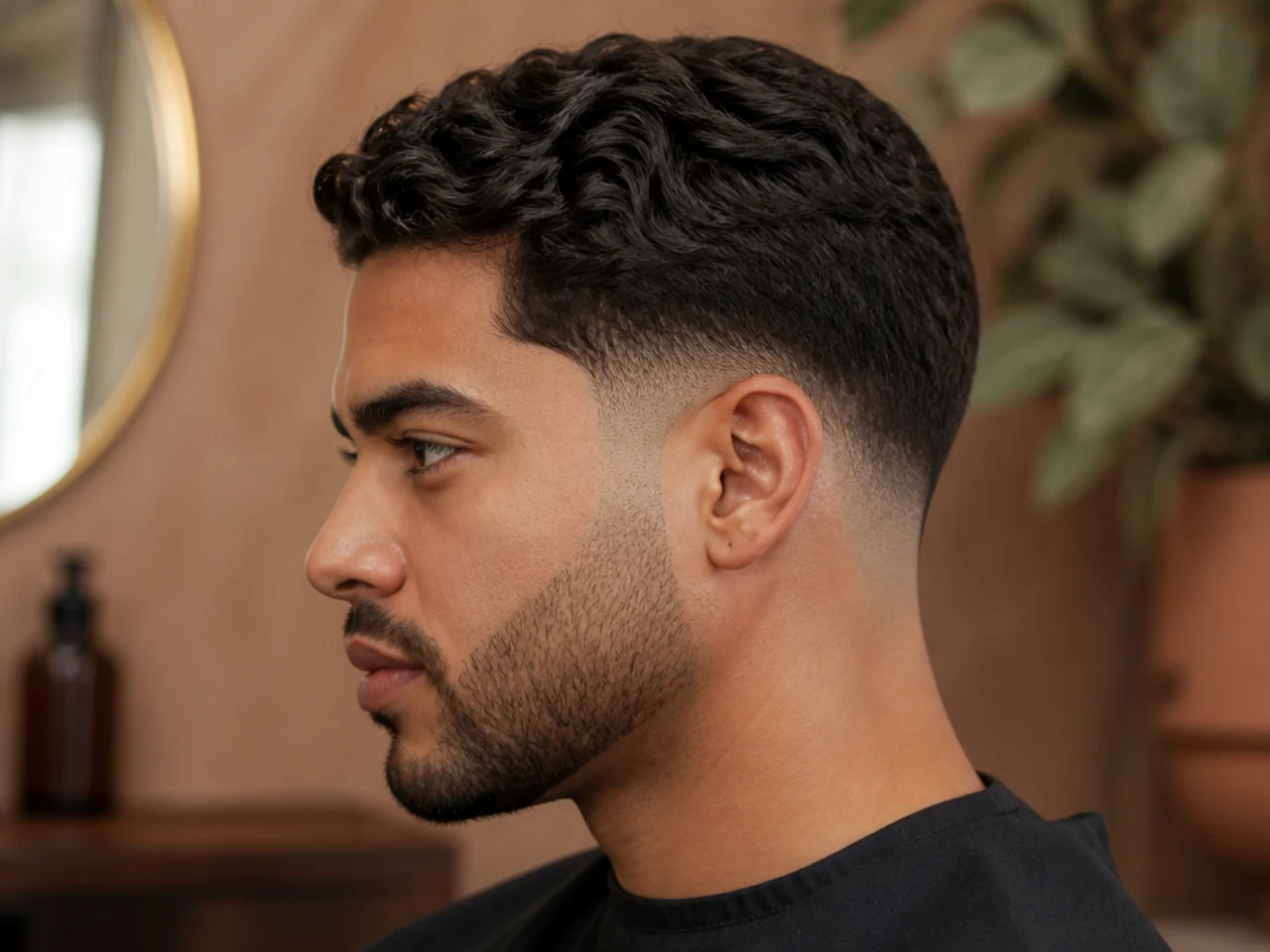
The low taper fade skips the skin and keeps a soft 0.5 or 1 guard at the tightest point — the most conservative fade that still reads modern. Fits under a suit collar or a hoodie, plays with any top style, and grows out gracefully. Any hair type, any face shape. Ask for: "low taper fade, 1 at the shortest, blend up to a 3, keep two inches on top, natural finish." Sea salt spray and air-dry gives it a lived-in read without product weight.
High Taper Fade
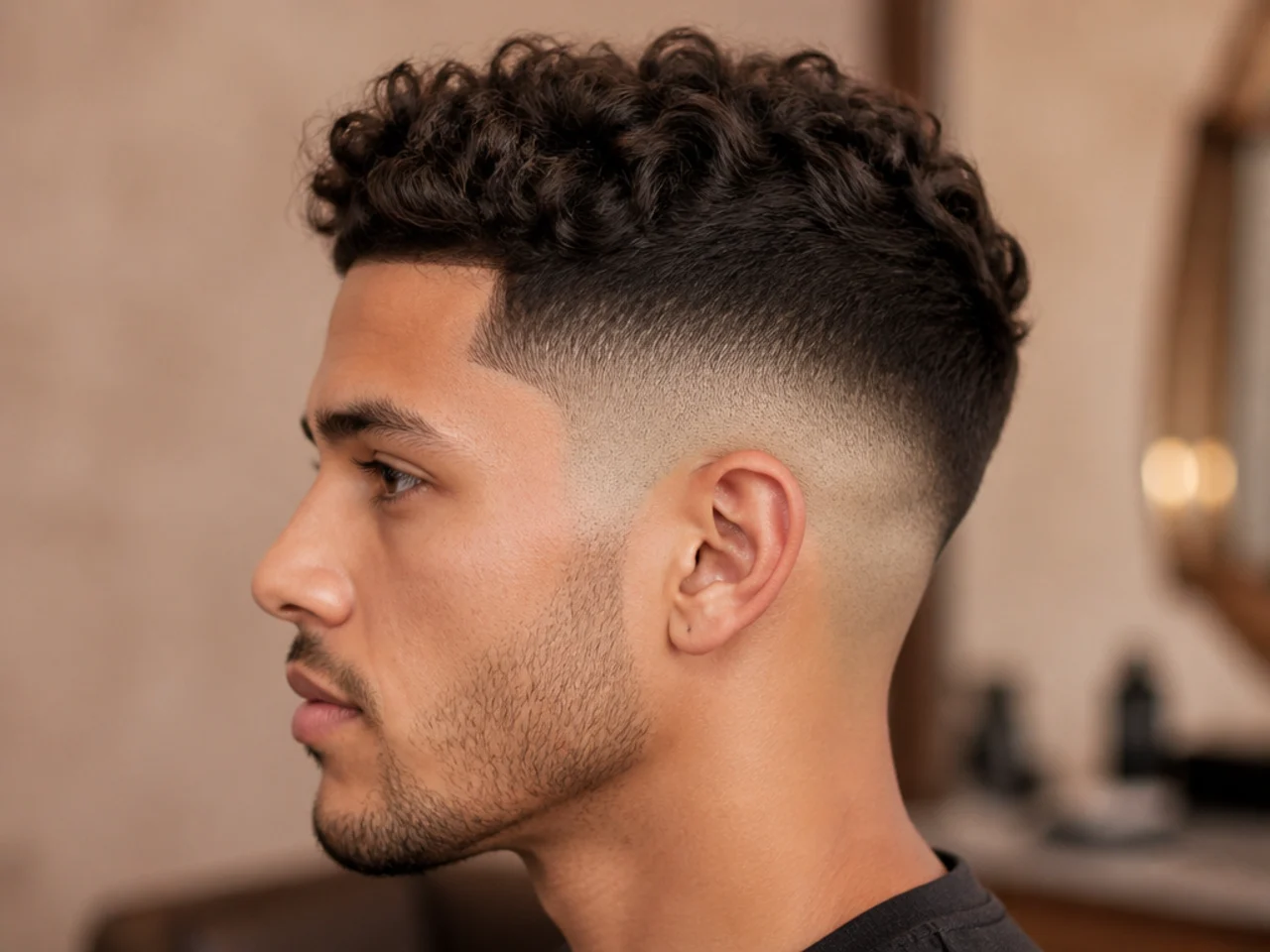
The high taper fade is the high fade's cleaner cousin. Same starting height near the crown, but the finish softens into a taper at the neckline instead of a hard fade line. Reads sharp from the front, tidy from the back. Best on oval, square, and diamond faces. Ask for: "high taper fade, skin at the temple, blend up to a 2, taper the nape, keep 1.5 inches on top." Matte paste, palms first, fingertips to break it up.
Skin Fade
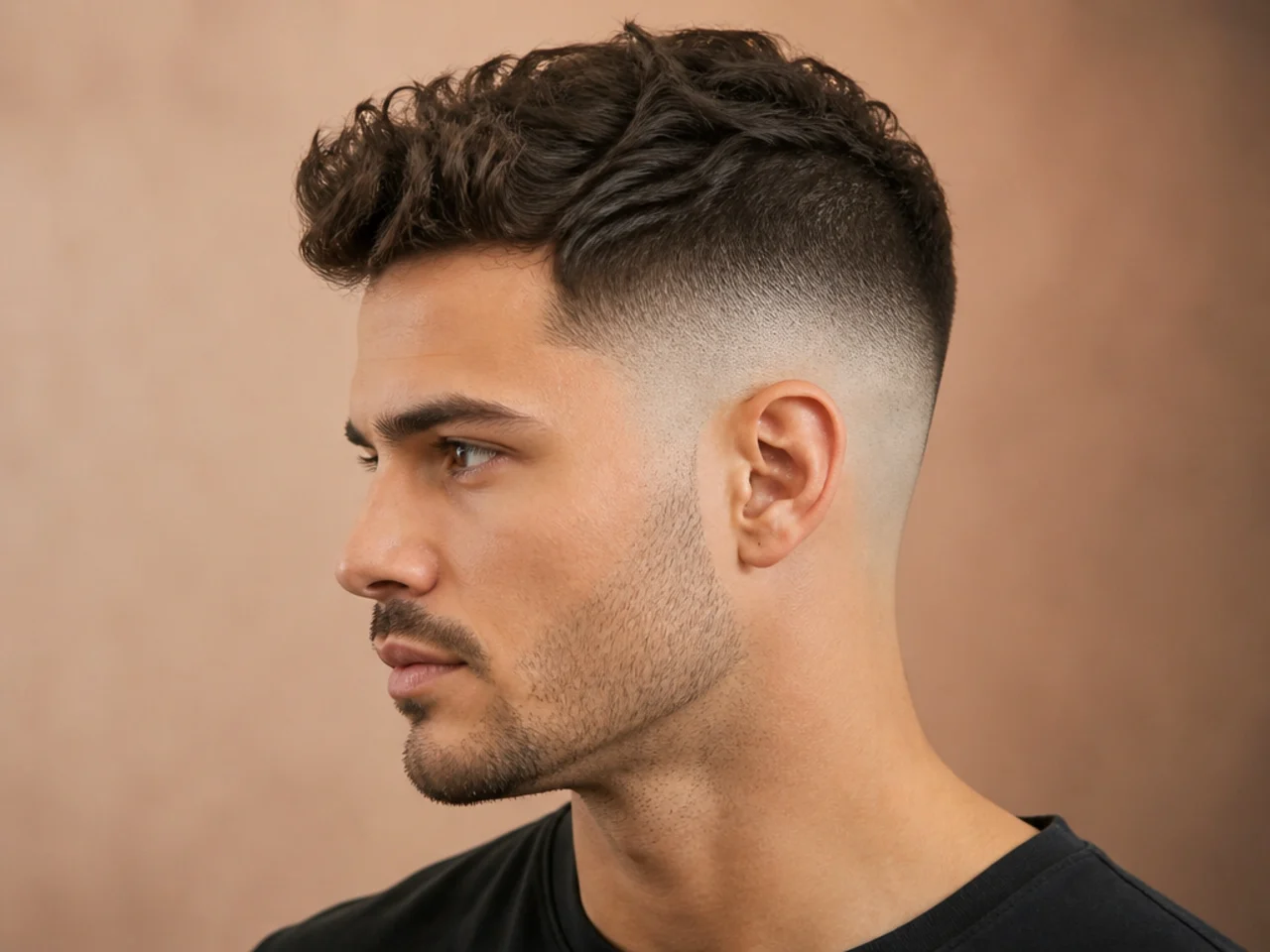
The skin fade — sometimes called a bald fade — runs to bare skin at the shortest point regardless of height. The strongest contrast a fade can offer, and the fastest to grow out. Best on straight and wavy hair with a defined top length, because the shine of the shaved area needs something to balance it. Ask for: "mid skin fade, zero at the temple, blend up to a 2, keep two inches on top, matte finish." Hit the freshly shaved skin with fragrance-free sunscreen for the first two days.
Drop Fade
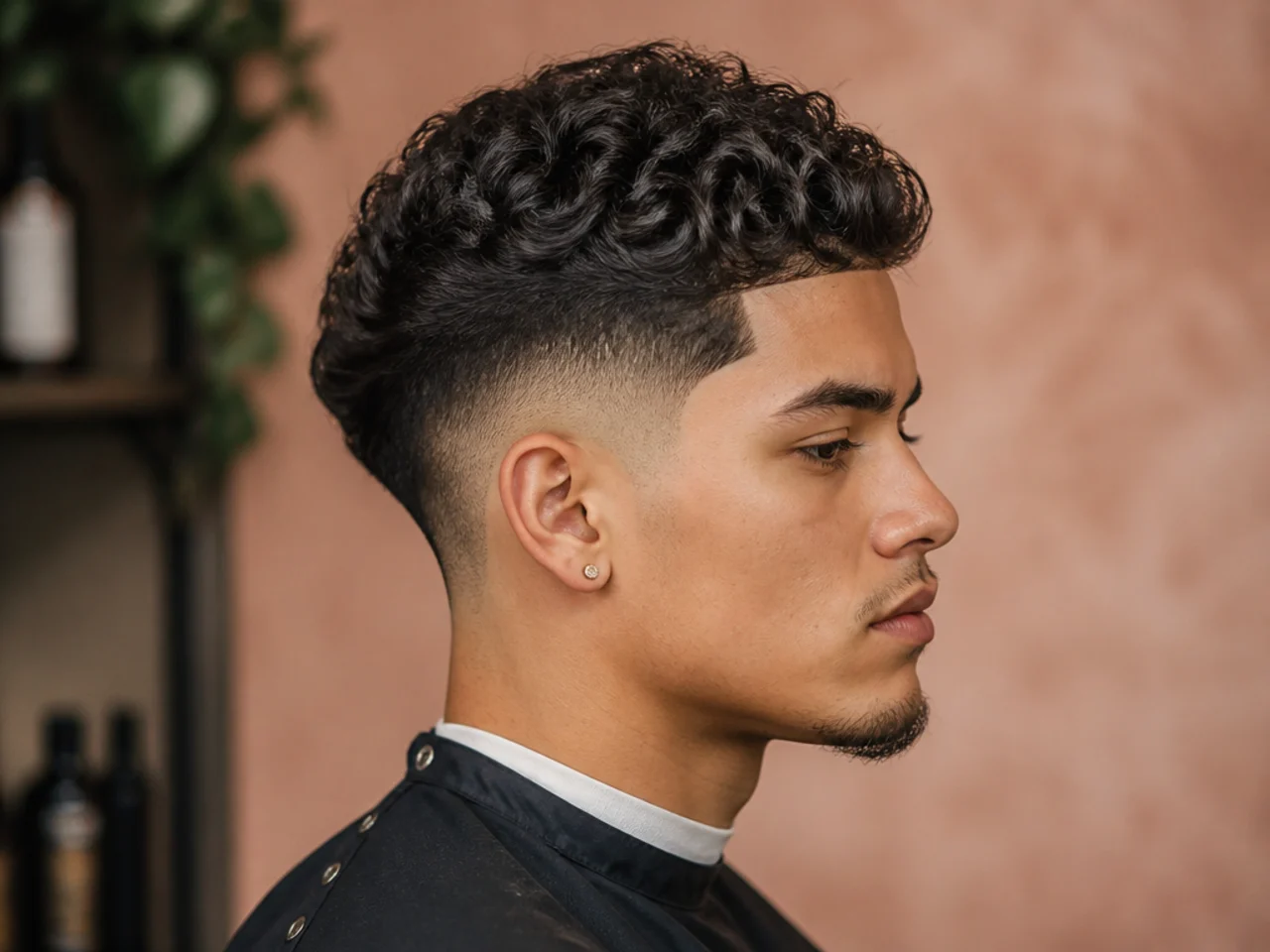
The fade line dips behind the ear instead of running straight across — that drop gives the sides a rounded silhouette that follows your skull. Best on oval and square faces because the curve softens hard angles, and it plays well with waves, curls, and coily textures that already carry a rounded top. Ask for: "low drop fade, dropping behind the ear, 1 guard at the shortest, keep two to three inches on top." Diffuse curls on low heat while cupping the ends toward the scalp.
Burst Fade
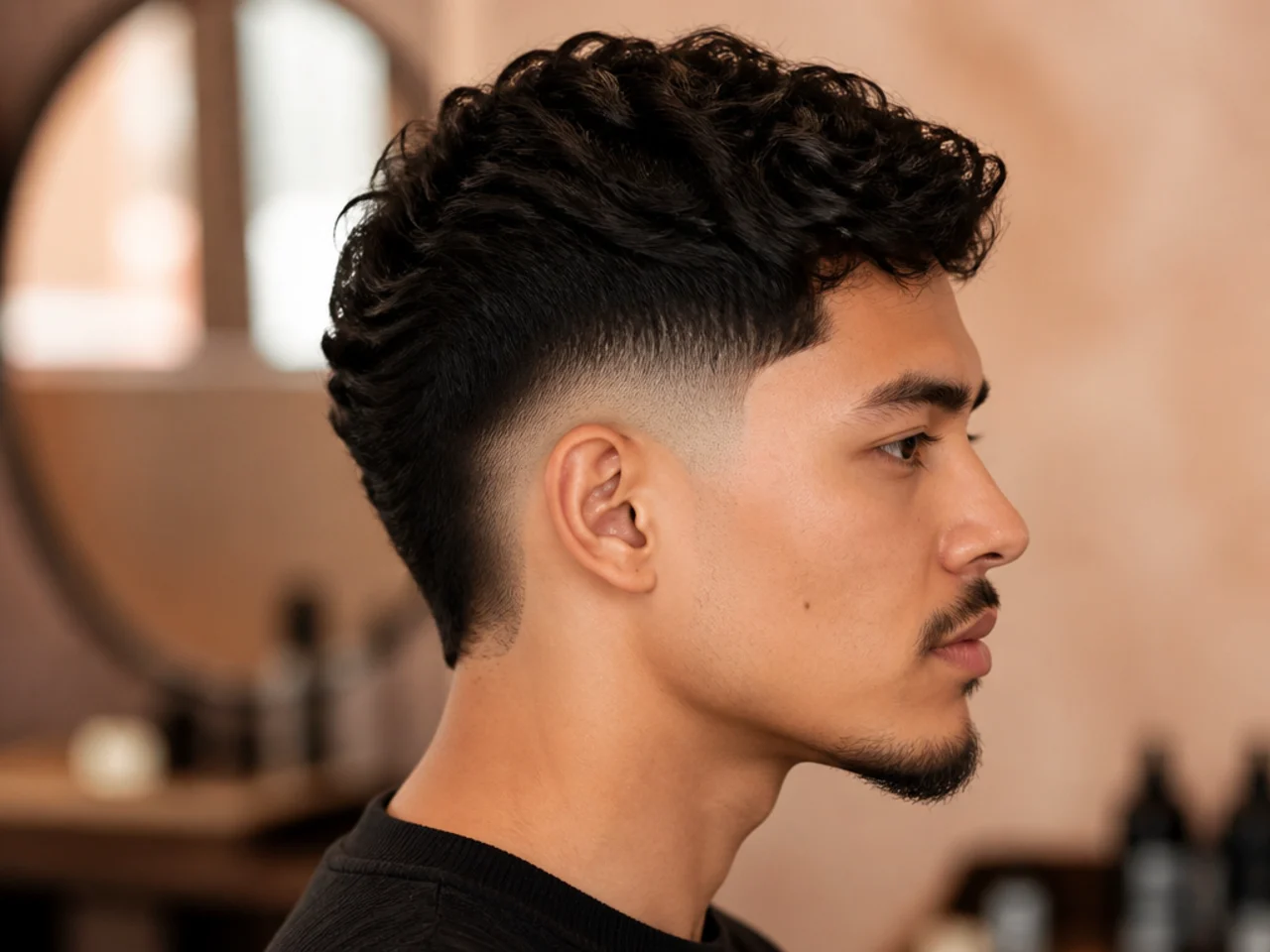
The burst fade curves around the ear in a horseshoe shape, leaving length at the temple and the nape and burning away everything by the ear itself. The one fade shape that reads as a design choice from every angle. Pairs beautifully with mohawks, mullets, and any top that needs a strong frame underneath. Ask for: "burst fade around the ear, 0.5 at the tightest, keep three inches on top." Twist small sections between your fingers to build definition.
Undercut Fade
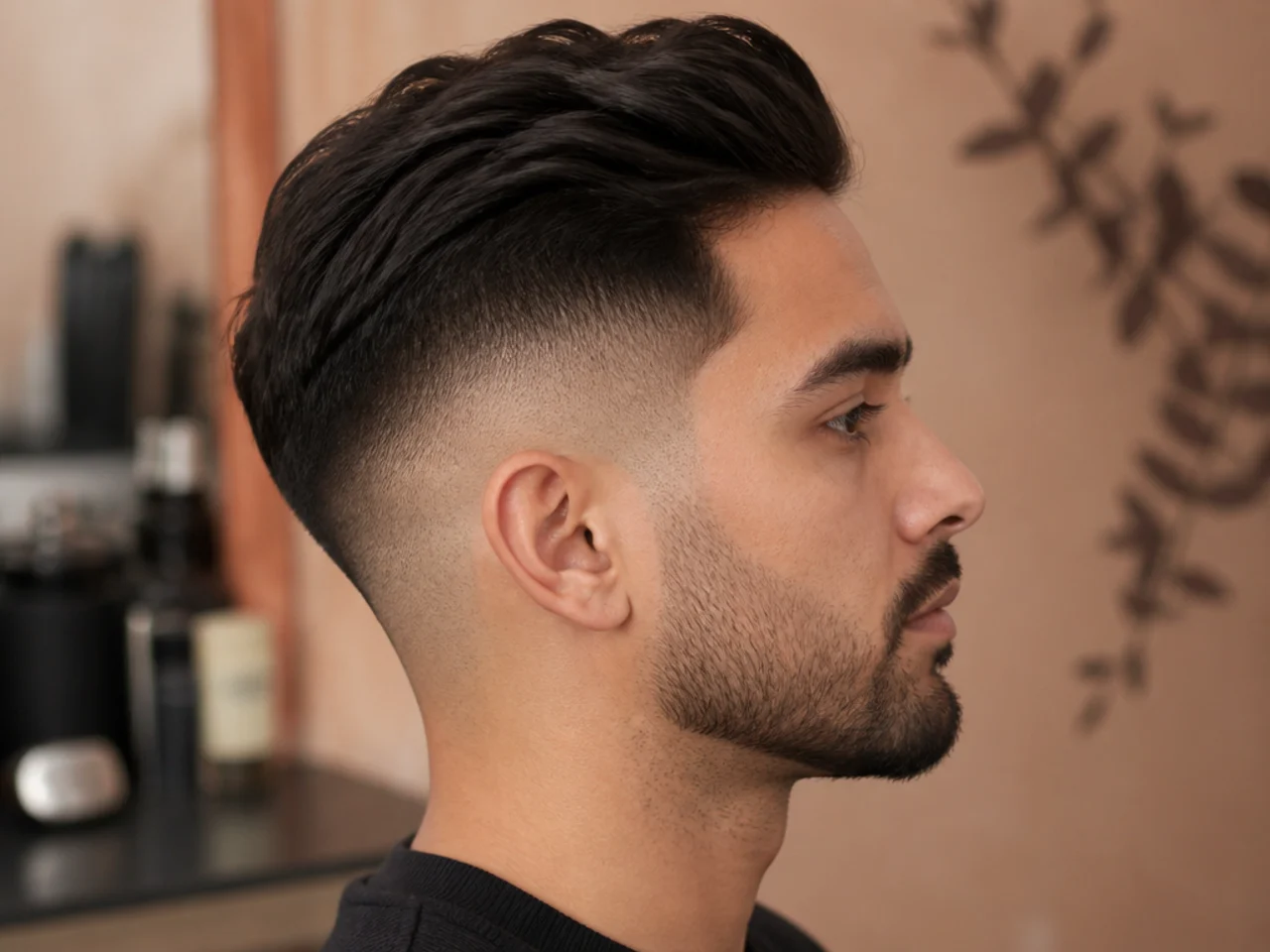
The undercut fade combines a straight disconnected line where the sides meet the top with a soft fade below to keep the nape from looking harsh. Best on straight or slightly wavy hair with real length on top (three inches minimum) — you need weight to slick back or brush up. Ask for: "low fade underneath, sides at 1 guard, hard disconnect at the parietal, four inches on top." Blow-dry back with a paddle brush and lock with pomade.
Blowout Taper Fade
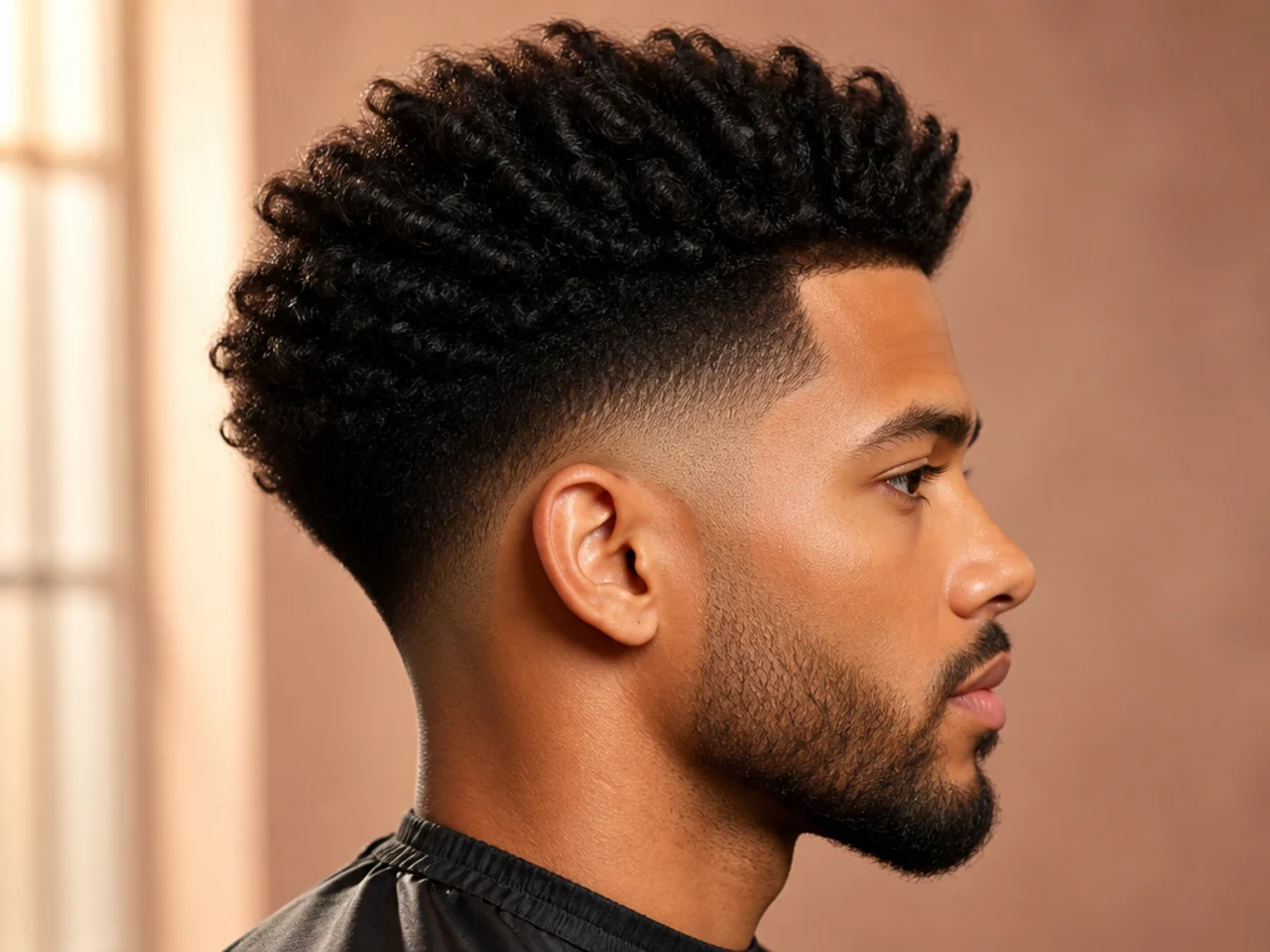
The blowout taper pairs a low taper fade with a top that has been blow-dried straight up and out for maximum height. Volume-forward, dramatic, and instantly recognizable. Best on medium to thick hair with density that can hold lift. Suits oval, square, and heart faces. Ask for: "low taper fade to a 1, keep three to four inches on top, cut to blow out." Round brush and a hair dryer on medium, then matte clay pinched into the roots.
Fade with a Crew Cut
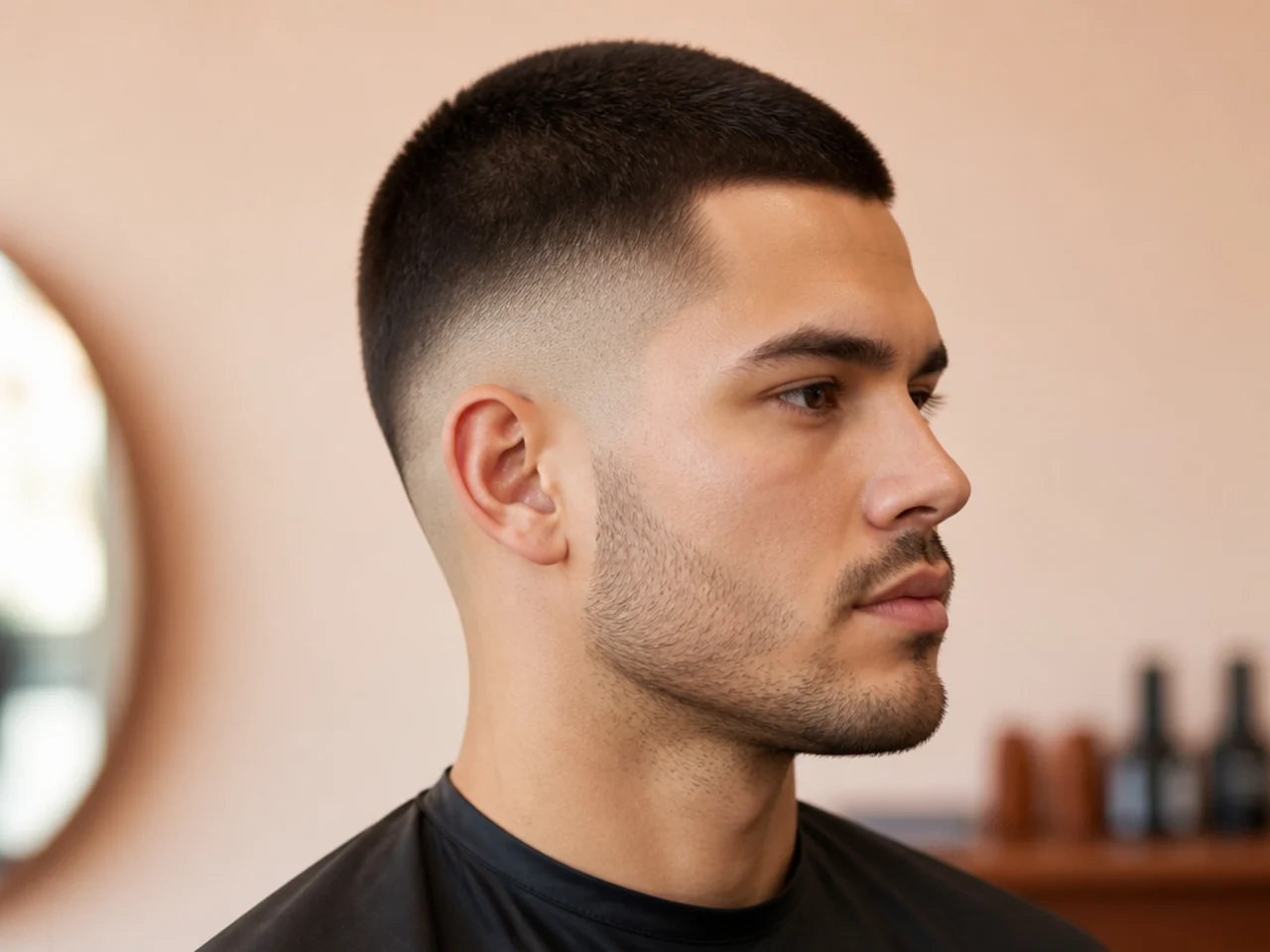
The traditional crew cut tapers the top from an inch at the front down to half an inch at the crown, and a low fade below tightens the whole thing up. Old-school military lines meet modern barbering — a cut your grandfather and your kid will both wear. Fits every face shape. Ask for: "low fade to a 0.5, crew cut on top, one inch tapering to half an inch at the back." Leave it alone. A matte cream through damp hair for hold if you want it.
Fade with a Buzz Cut
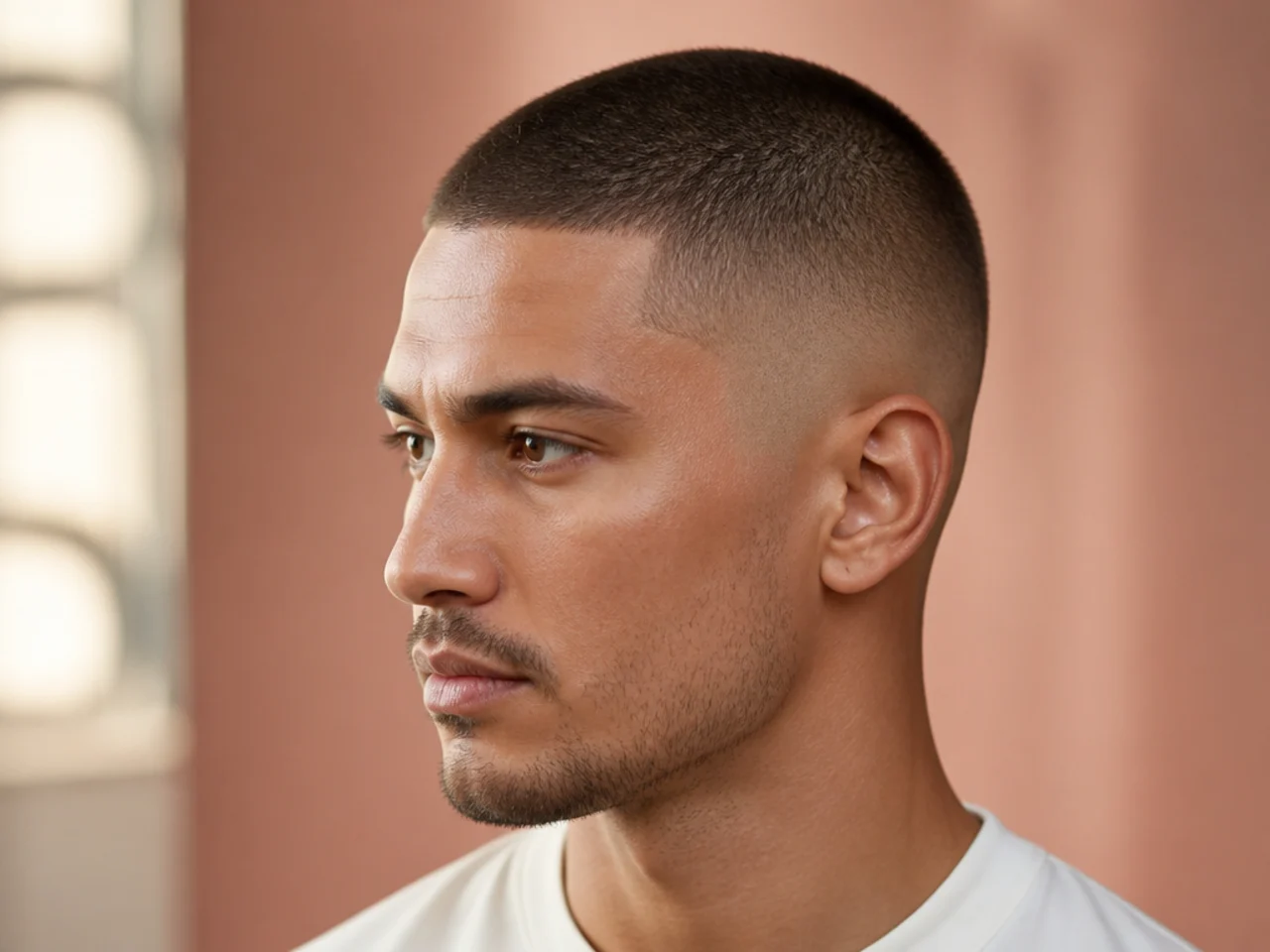
The buzz cut runs the top at a 3 or 4 guard, and the fade below drops it to a 0.5 or skin — same clipper family, better finish. The lowest-maintenance cut on this list; the only styling is a rinse in the shower. Suits oval and square faces best; heart-shaped faces benefit from a touch more length on top. Ask for: "low skin fade, 4 guard across the top, clean line at the forehead." Nothing else to do. Wet it and go.
Fade with an Ivy League
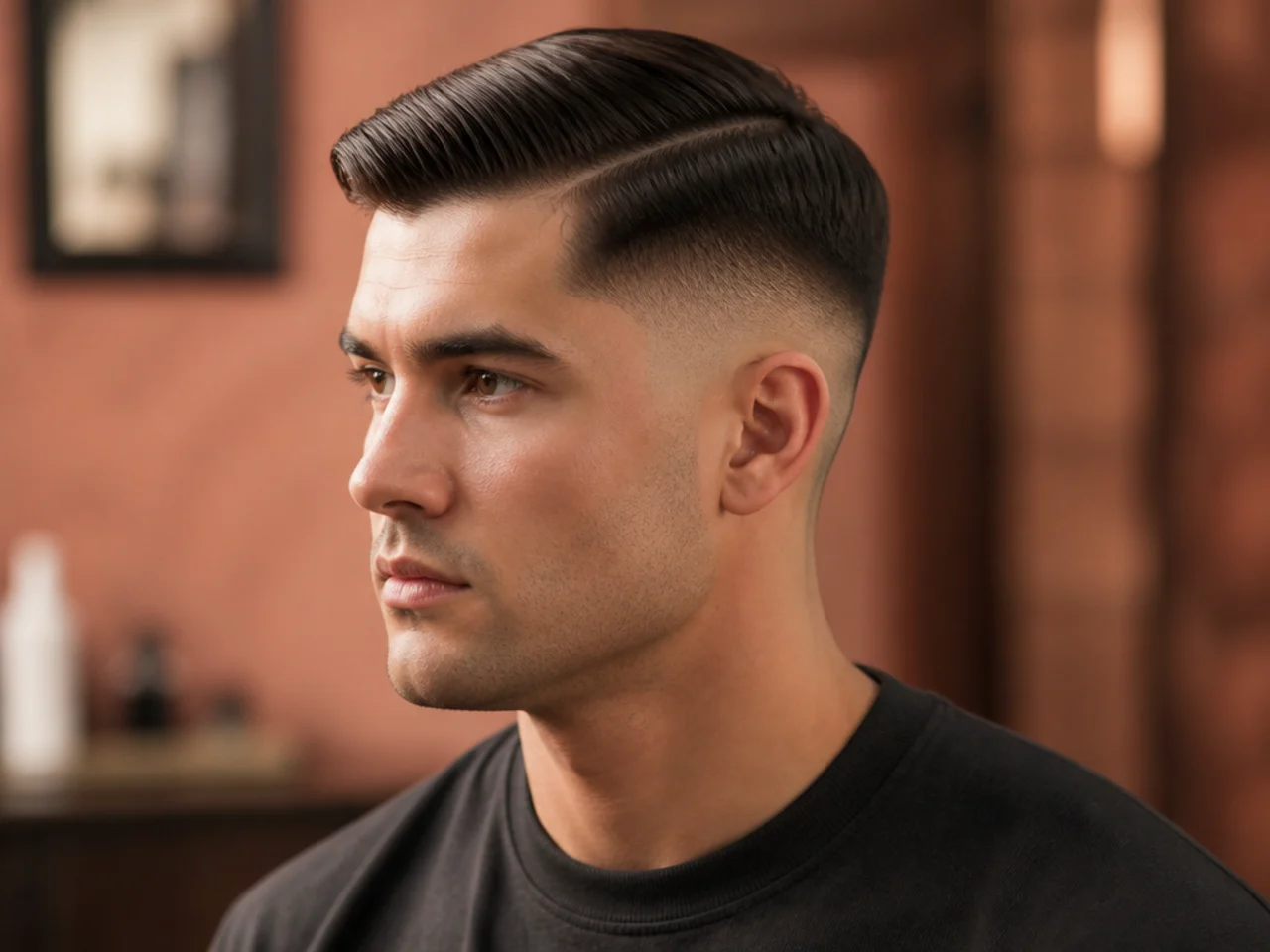
The ivy league is the crew cut with an extra inch of length on top so you can actually part it. Add a low fade below and you get a cut that reads sharp in a boardroom and casual on a Saturday. Straight and slightly wavy hair takes it best. Fits oval, square, and diamond faces. Ask for: "low fade to a 1, two inches on top scissor-cut, part on the left, matte finish." Comb through damp hair, blow-dry across, finish with a light cream.
Fade with a Comb Over
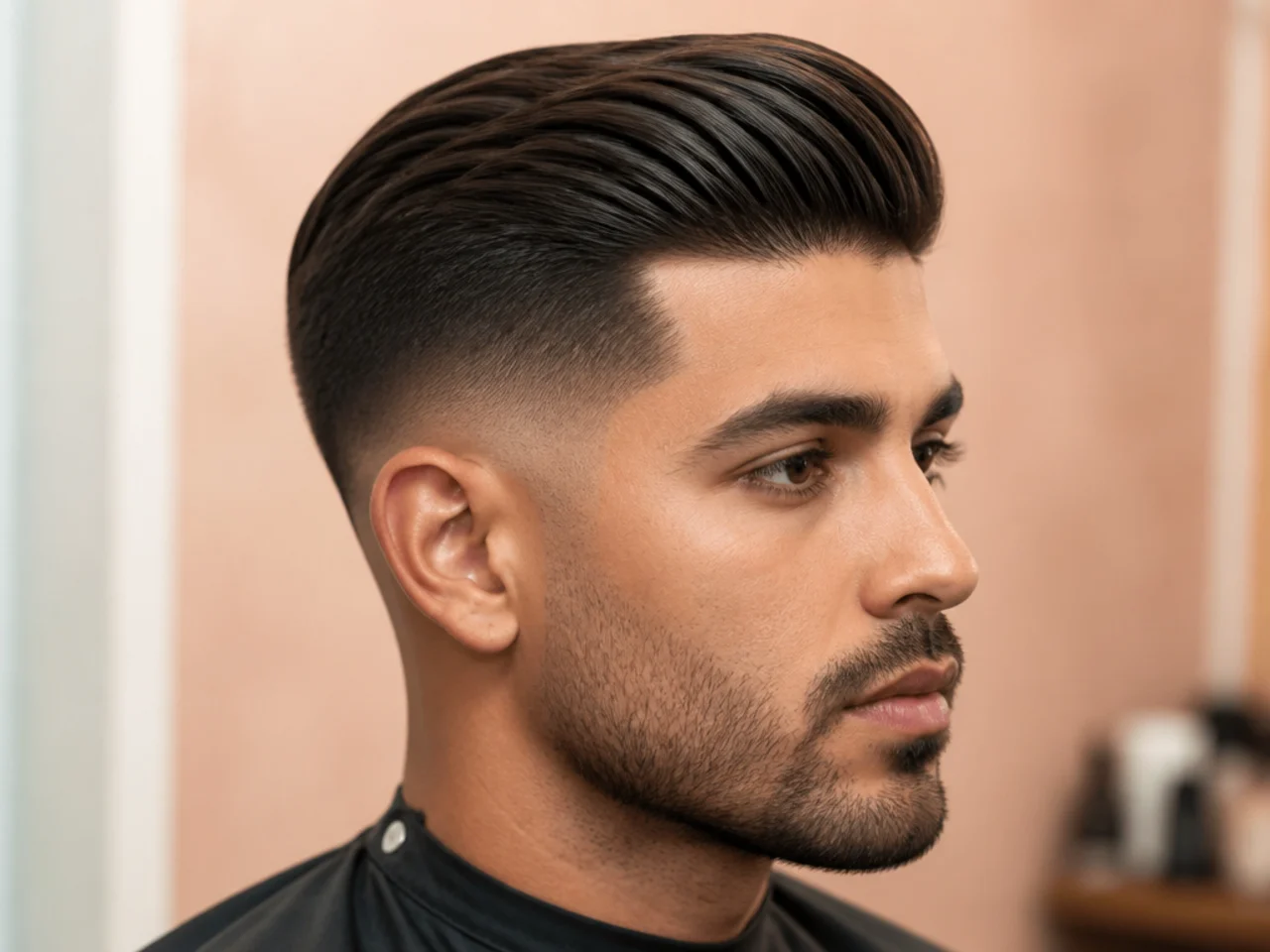
A classic comb over sweeps the top from one side to the other, and the fade below cleans up the sides without competing for attention. Add a razor-drawn part line and the whole cut reads executive. Best on straight and wavy hair with three to four inches on top. Suits oval, square, and diamond faces. Ask for: "low fade to a 1, hard part on the left, comb over, three inches on top, sleek finish." Comb through wet, blow-dry across, set with pomade.
Fade with a Side Part
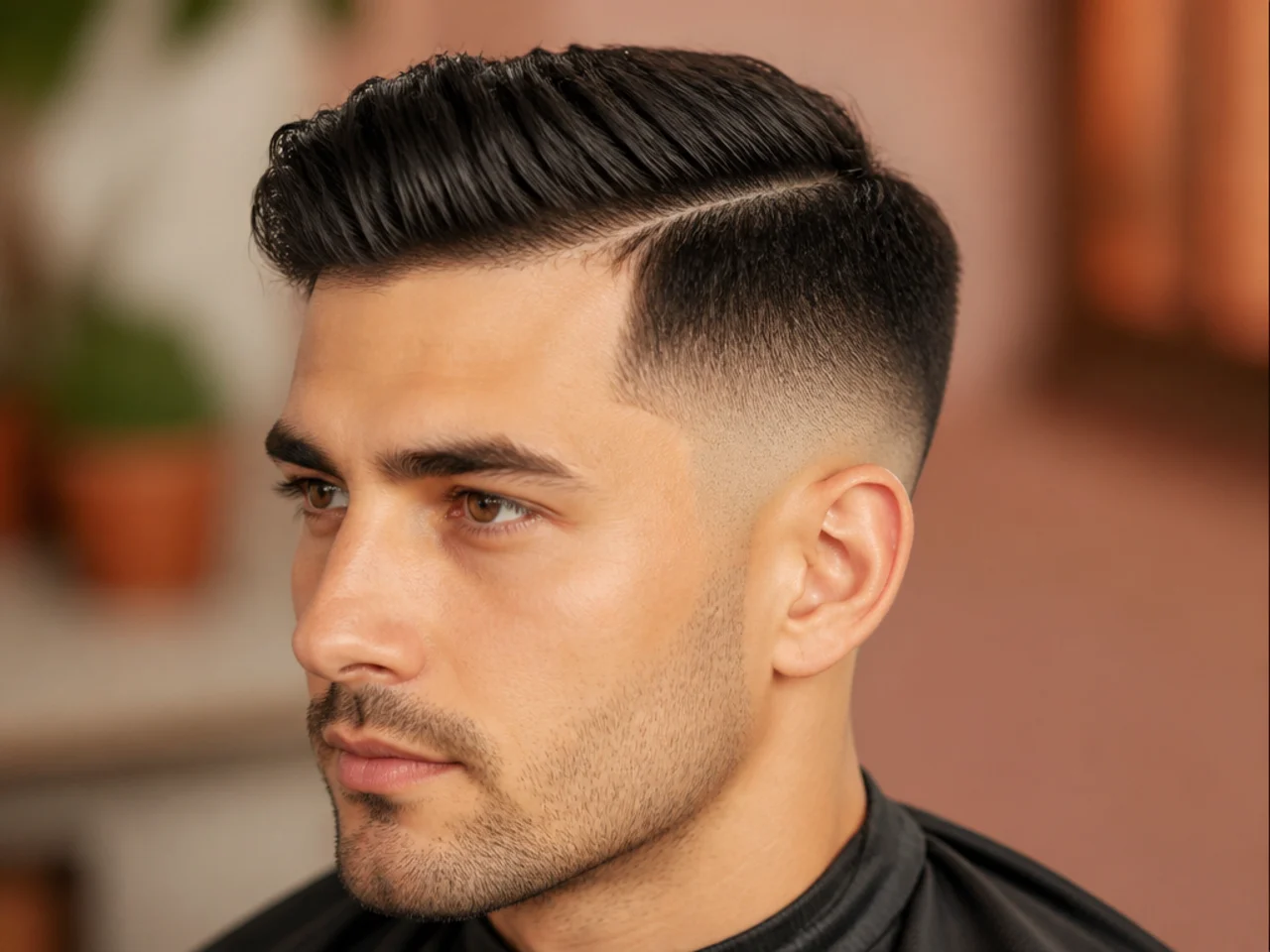
The side part with a fade is the most repeated timeless combination in barbering — every era has its version. Slightly less top length than a comb over (two to two and a half inches), a soft natural part, and a fade below that keeps the shape tidy. Fits every face shape. Ask for: "low fade to a 1, natural part on your stronger side, two inches on top, light shine finish." A cream-based pomade combed in wet holds all day.
Fade with a Slick Back
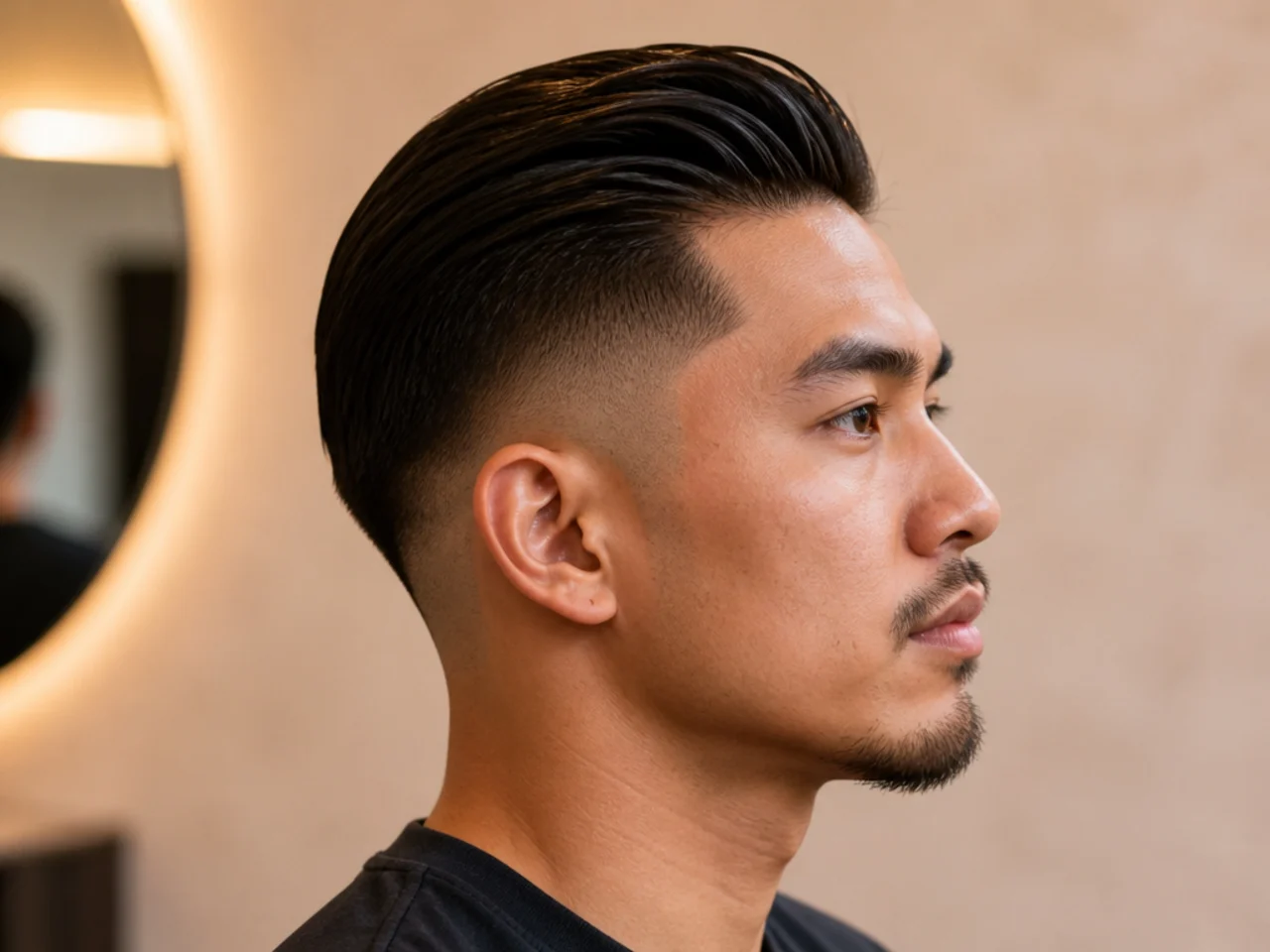
The slick back sends every strand backward from the hairline in a wet-look or matte finish. The fade below strips away side bulk so the slicked top stays the focal point. Best on straight and wavy hair with four inches minimum on top. Suits oval, square, and diamond faces. Ask for: "mid skin fade, keep four inches on top, cut to encourage back flow." Pre-styler on damp hair, brush back with a paddle brush and dryer, finish with strong pomade.
Fade with a Pompadour
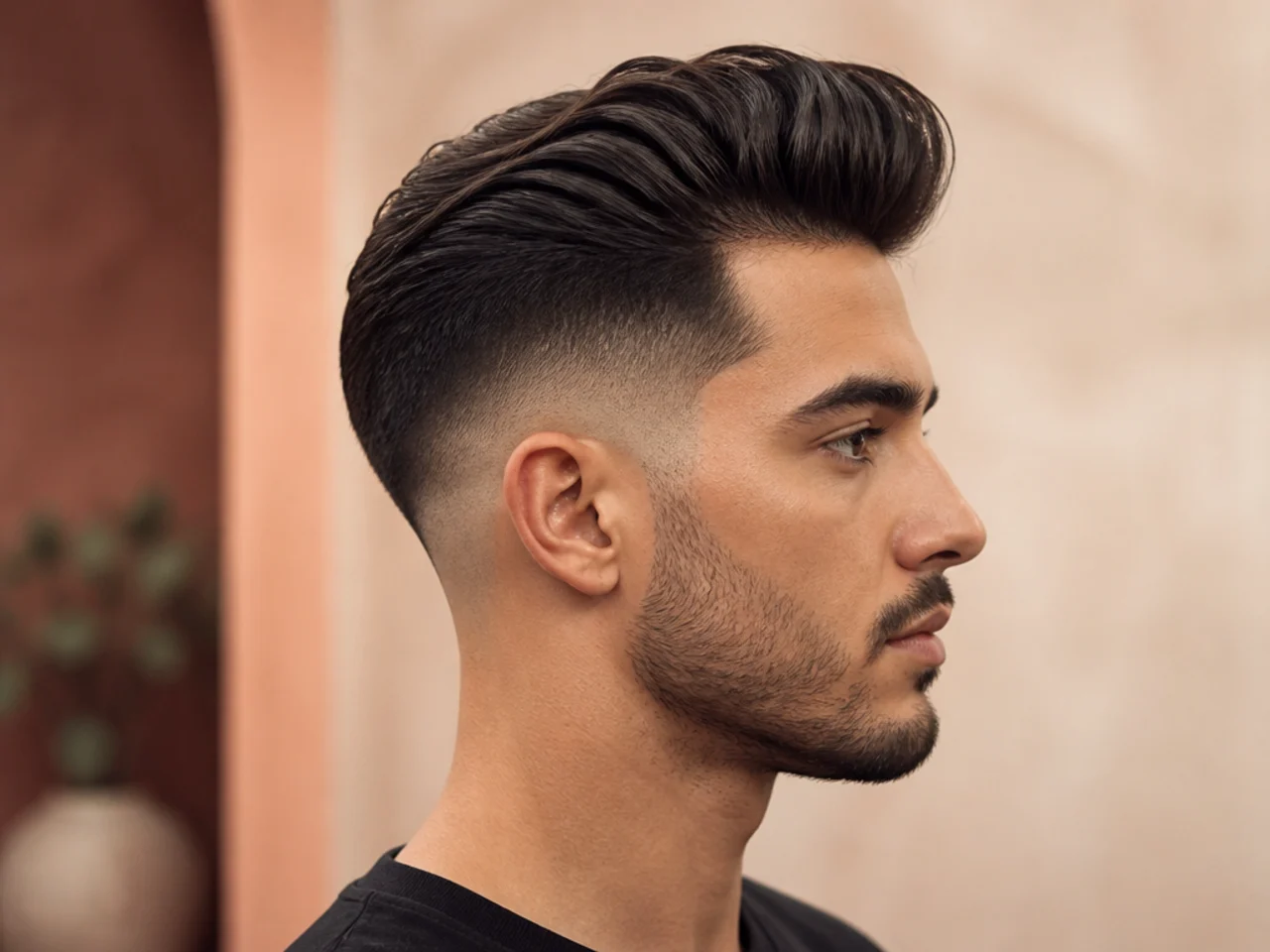
The classic pompadour lifts the front high and sweeps everything back, and a skin fade below turns a retro silhouette into a modern one. Best on oval, square, and diamond faces. Straight and wavy hair only — tight curls fight the shape. Ask for: "low skin fade, keep four to five inches on top for pompadour height, textured mid-lengths." Pre-styler and a round brush blow-dry to build the front, then matte pomade to lock the shape without shine.
Fade with a Quiff
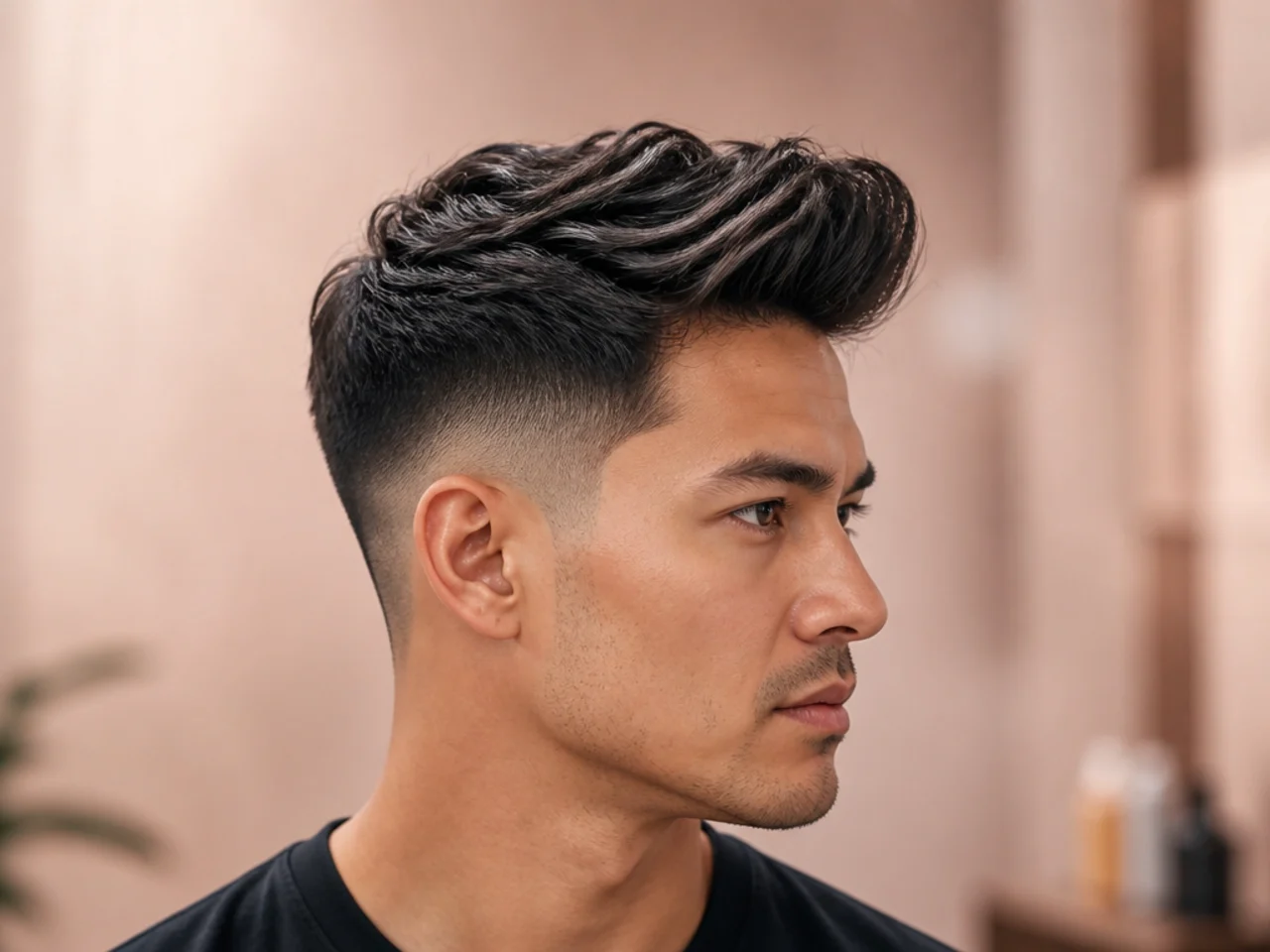
The quiff is the pompadour's less-formal cousin — less height, more texture, less commitment to a hard shape. Add a mid fade below and you get a versatile cut that reads sharp in every setting. Best on medium to thick hair with three to four inches on top. Fits oval, square, and heart faces. Ask for: "mid fade to a 1, keep three inches on top, cut for forward-and-up flow." Sea salt spray, blow-dry with your fingers pushing forward, matte clay to finish.
Fade with a French Crop
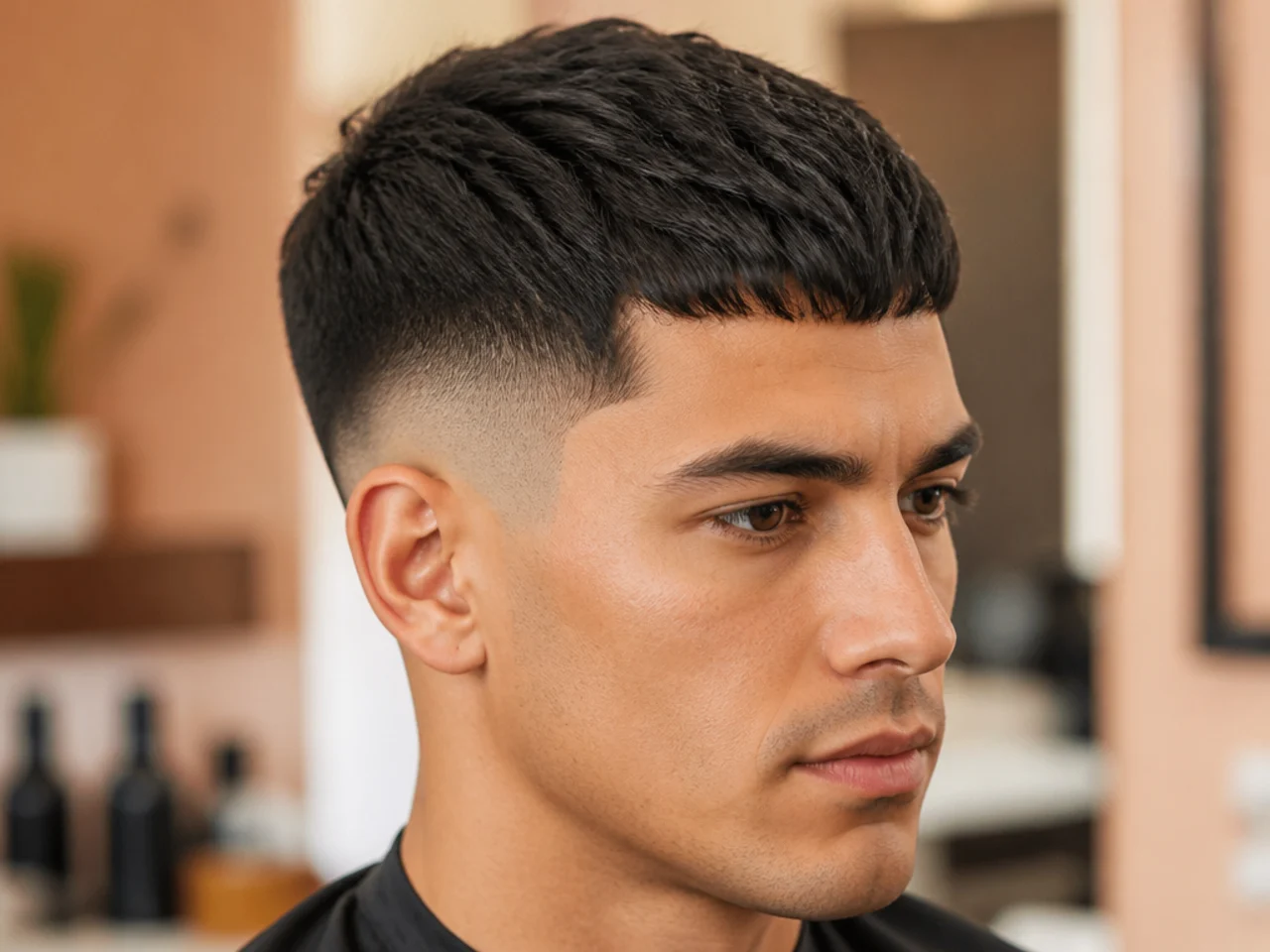
The French crop drops a short blunt fringe onto the forehead and keeps the rest of the top clipped tight. Add a skin fade below and the fringe becomes the star. Best on thick straight hair — thin hair needs texture, not blunt lines. Suits square, oval, and long faces because the fringe shortens vertical space. Ask for: "mid skin fade, blunt French crop, one and a half inches on top, fringe to the brow." Rough-dry with fingers, set the fringe flat with a bristle brush.
Fade with a Textured Crop
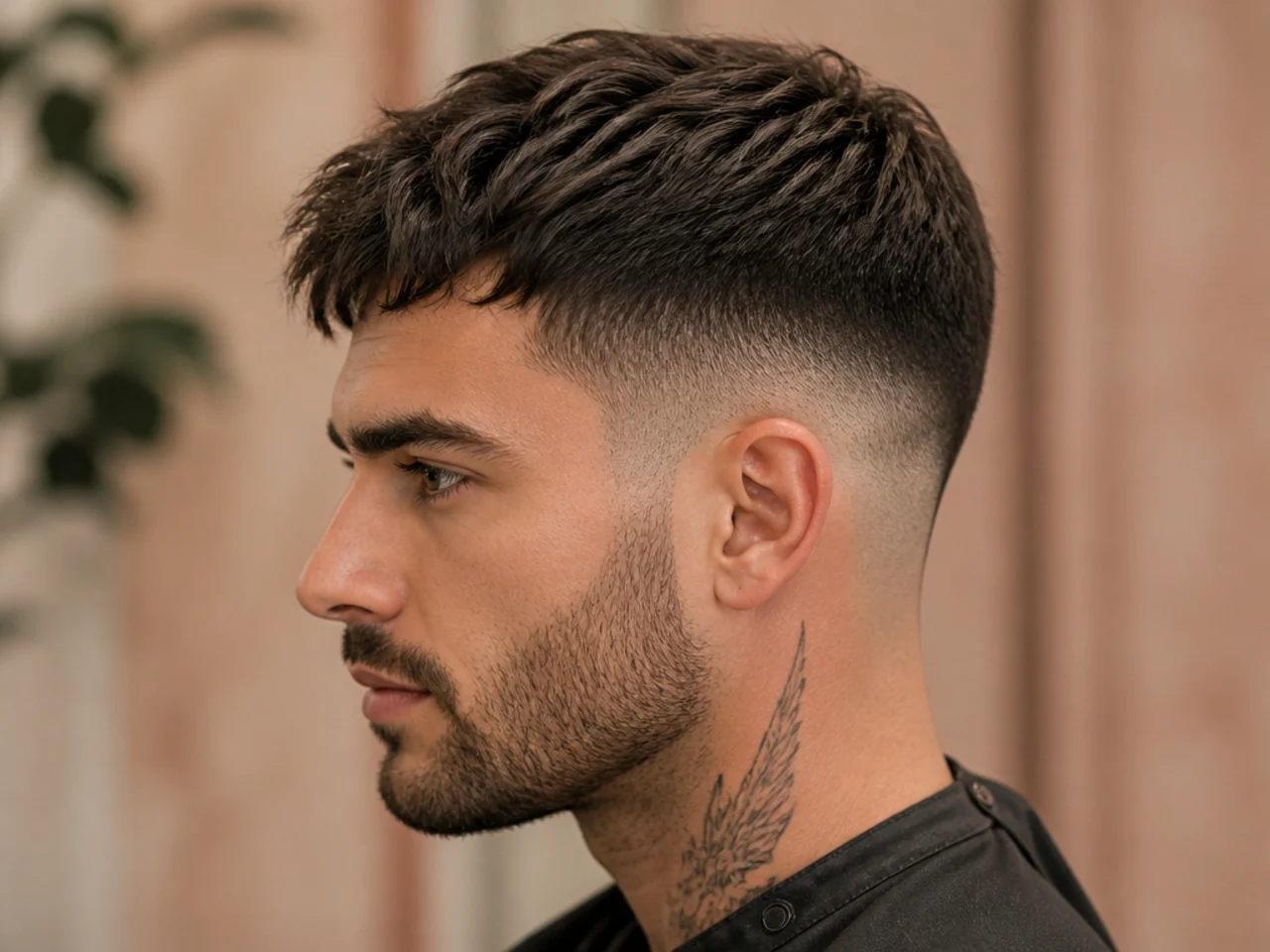
The textured crop is the French crop's messier sibling — same short forward-swept top, but point-cut through the surface so the fringe reads choppy instead of blunt. Reads younger and more casual. Fits round, oval, and square faces because the texture softens hard angles. Ask for: "low fade to a 1, textured crop on top, 1.5 inches, point-cut the fringe." Matte clay warmed in your palms, pushed forward, fringe pressed down flat.
Fade with a Textured Fringe
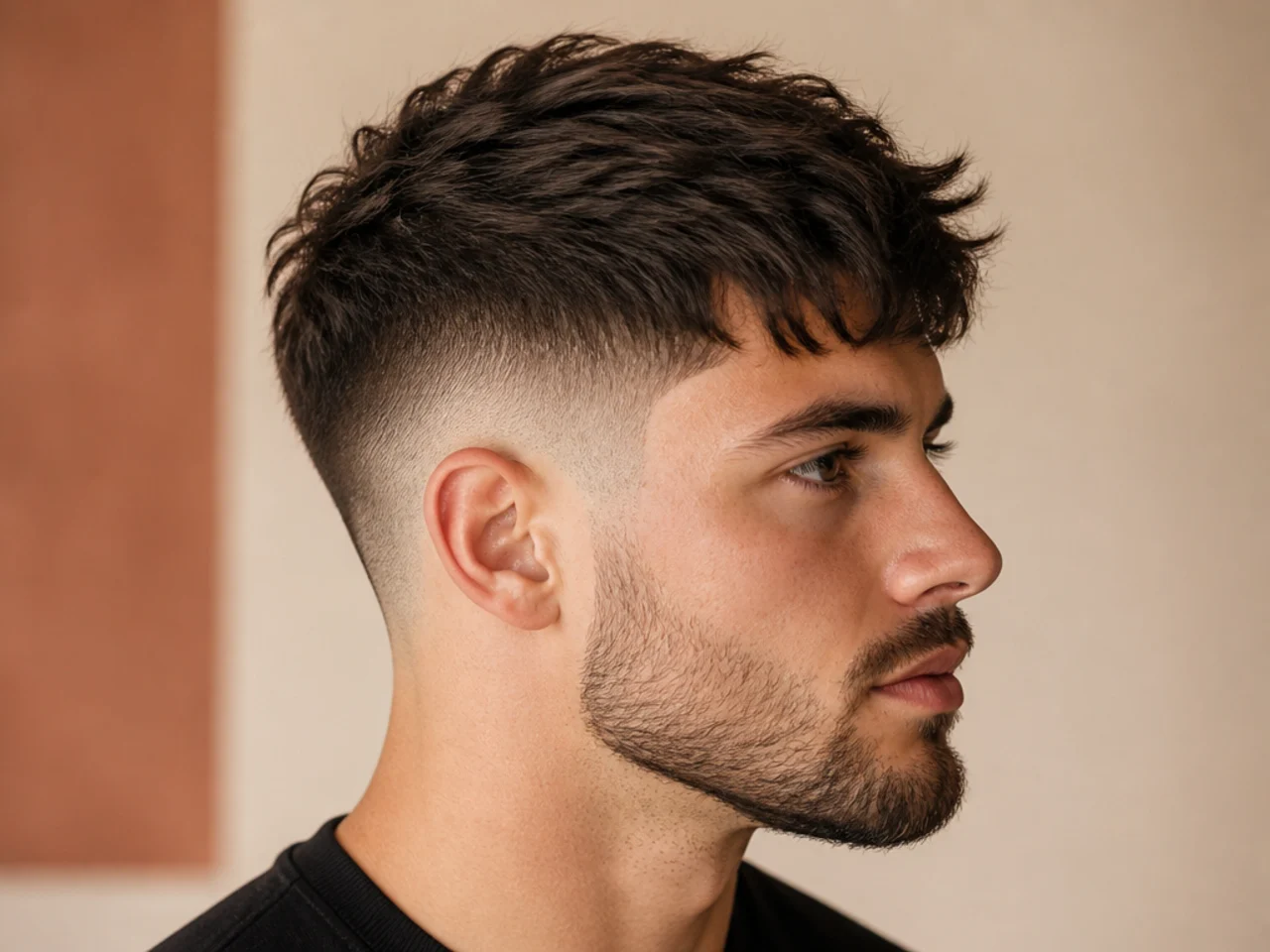
A textured fringe pushes softer, longer length forward over the forehead — three inches at the front tapering to a shorter back — while the fade underneath holds the sides tight. Best on straight to wavy hair, oval and long faces. Reads especially modern on younger guys. Ask for: "mid taper fade, keep three inches at the front, taper back to two, point-cut the fringe." Blow-dry forward with fingers, finish with styling cream for piece separation.
Fade with an Edgar Cut
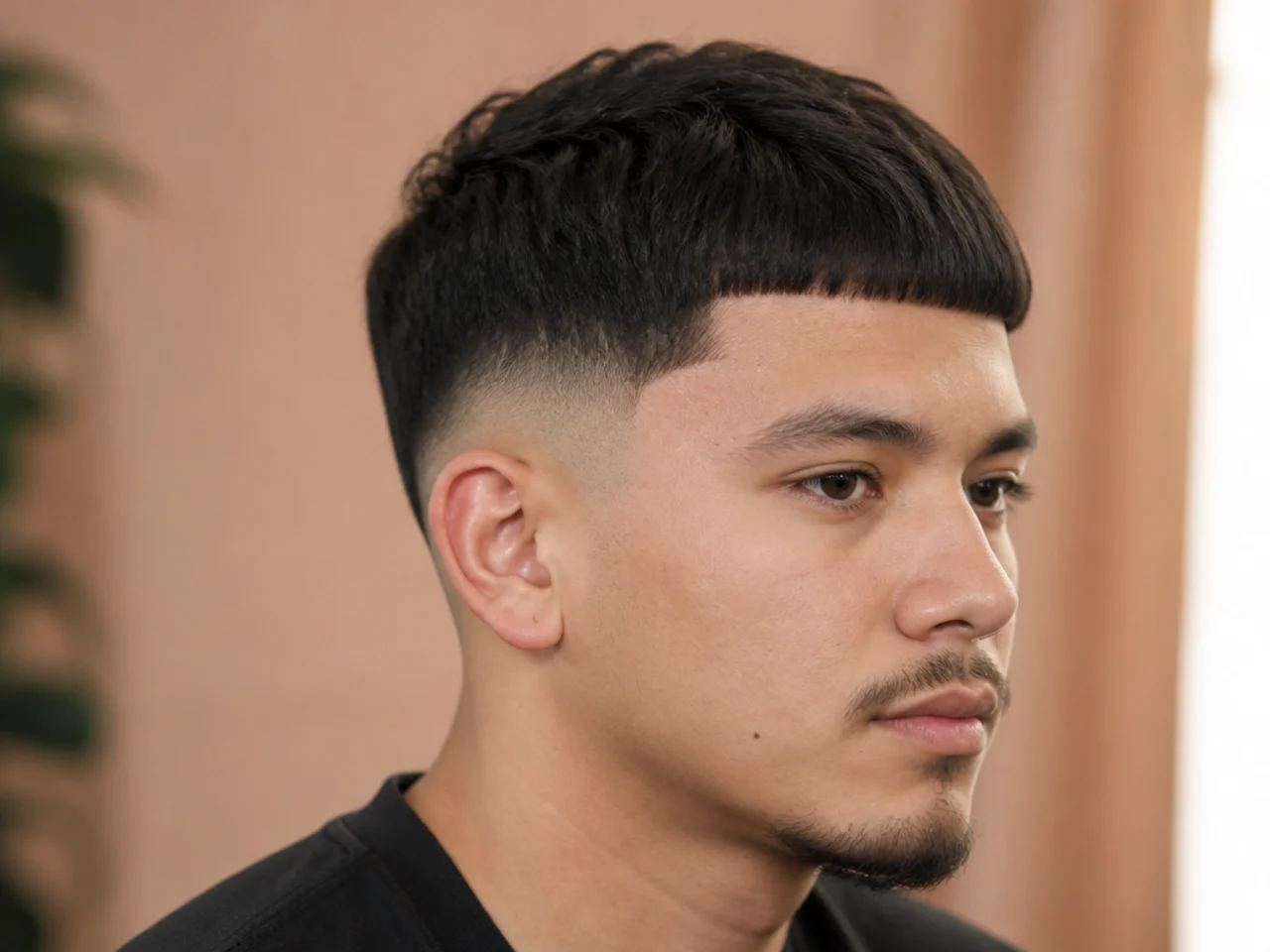
The Edgar cut drops a hard, straight-across fringe onto the forehead and pairs it with the shortest fade in the shop. The blunt line at the front is the identifier. Fits round and oval faces where the flat fringe adds structure. Ask for: "mid skin fade, Edgar cut on top, blunt fringe to the eyebrow, two inches on top." A light styling cream after a quick blow-dry forward is all the top needs. Bring a photo — the fringe angle is personal.
Fade with a Messy Textured Top
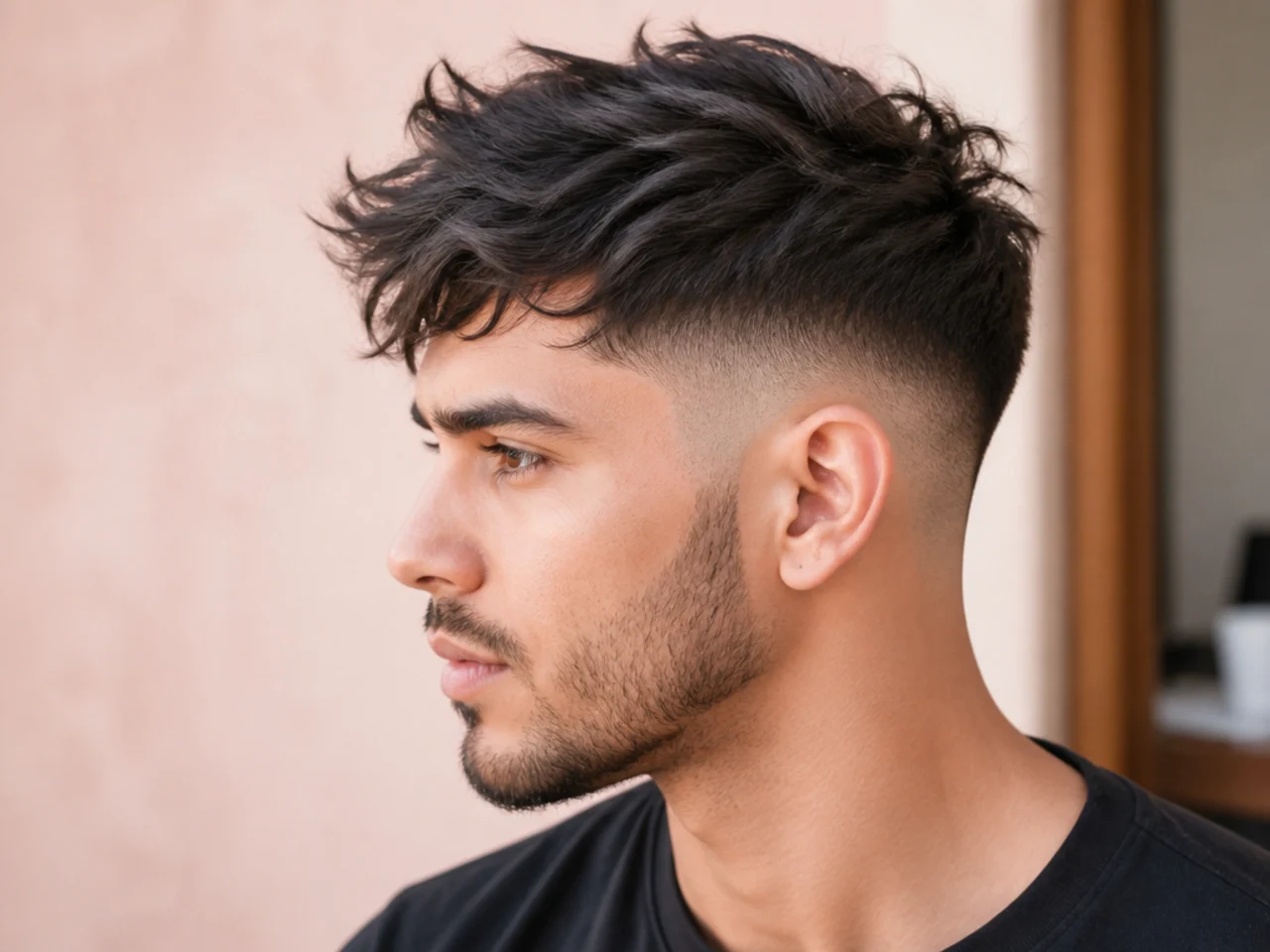
Point-cut, layered, tousled length on top with a fade below — the fade tightens the outline while the mess adds character. Two to three inches of length, matte finish, styled with fingers not brushes. Best on medium-density straight or wavy hair. Fits round, oval, and heart faces. Ask for: "low taper fade to a 1, keep two to three inches on top, heavily texturized." Sea salt spray on damp hair, rough-dry, then a fingertip of matte clay pinched through.
Fade with a Brush Up
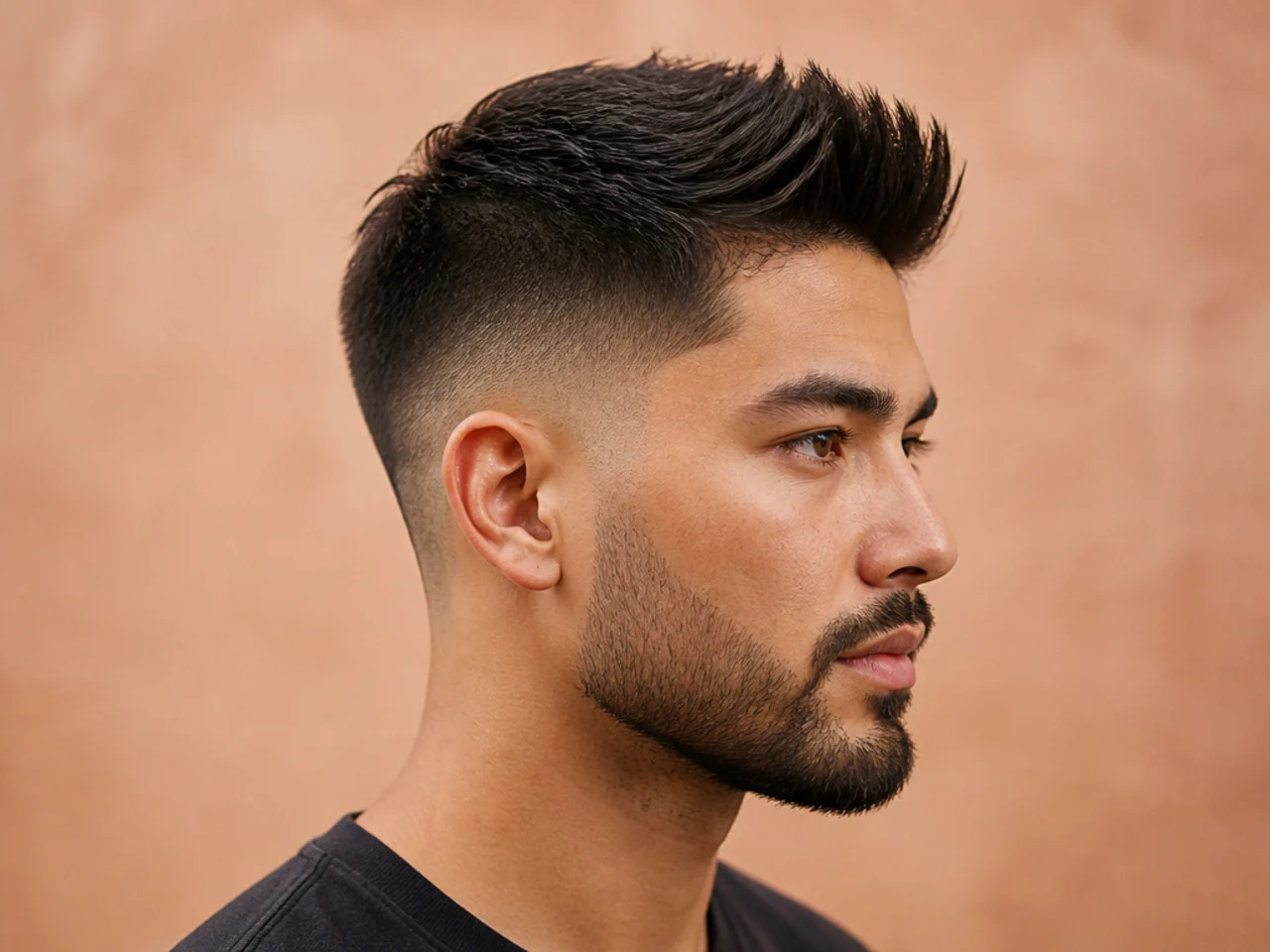
Thick hair brushed straight up from the front, fade below, everything pointing skyward. Best on square and oval faces because the vertical lift adds height. Wavy hair holds this shape best; fine hair collapses under it. Ask for: "low skin fade, keep three inches on top, cut to encourage forward-and-up flow." Sea salt spray plus a blow dryer aimed at the roots, finish with a fiber for hold that still moves. This is the workhorse of a modern medium-length top.
Fade with Curly Hair
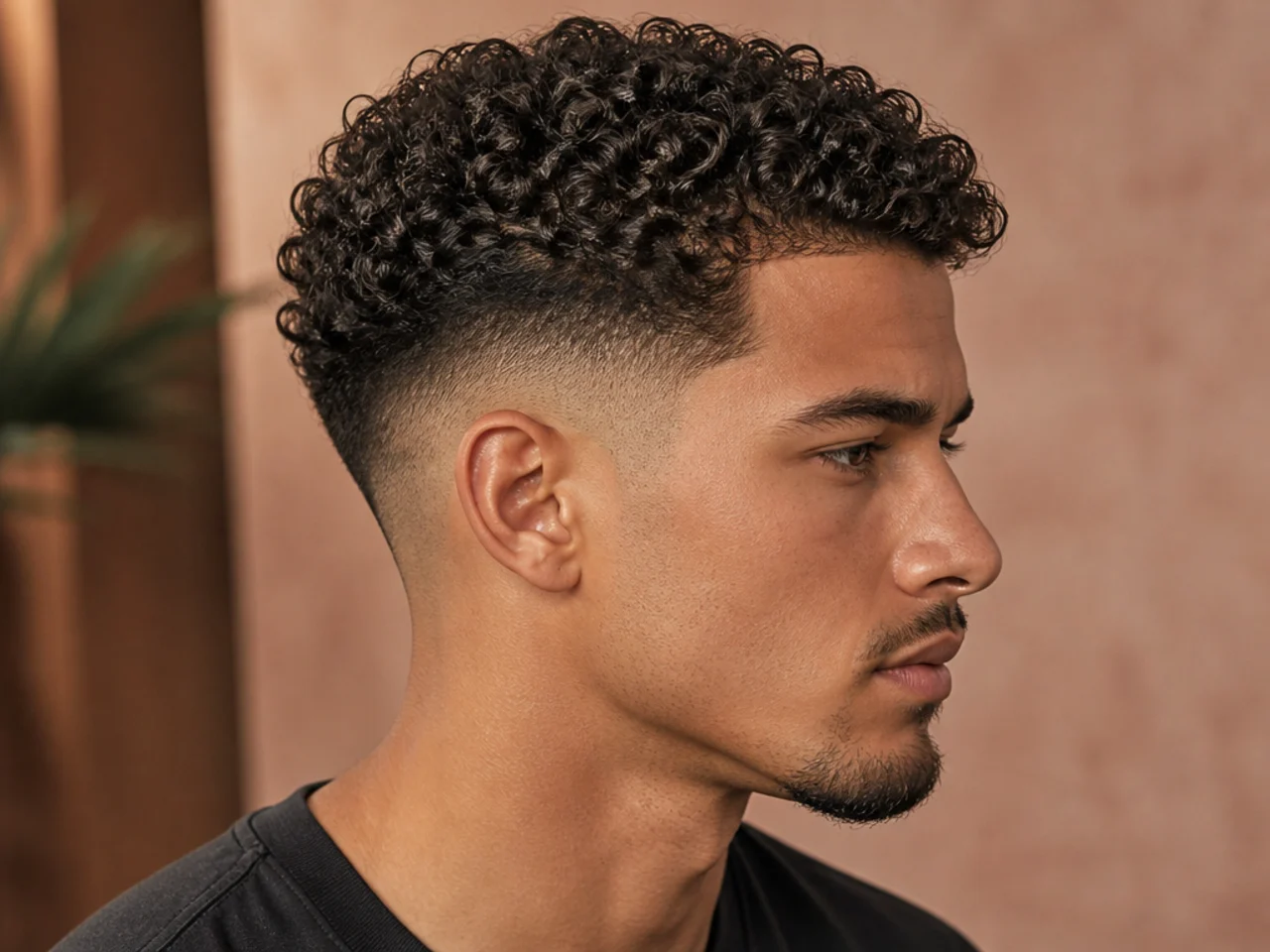
Real curly length on top (three to four inches or more) paired with a soft fade below — the sides pull weight off so the curls do not pyramid out. Best on 3A through 4A patterns. Oval, oblong, and heart faces gain most from the vertical volume. Ask for: "low drop fade to a 1, scissor-cut the top, leave three to four inches, no thinning shears." Co-wash, curl cream on soaking-wet hair, air-dry or diffuse on low. See more curly hairstyles for men for length inspiration.
Fade with Waves
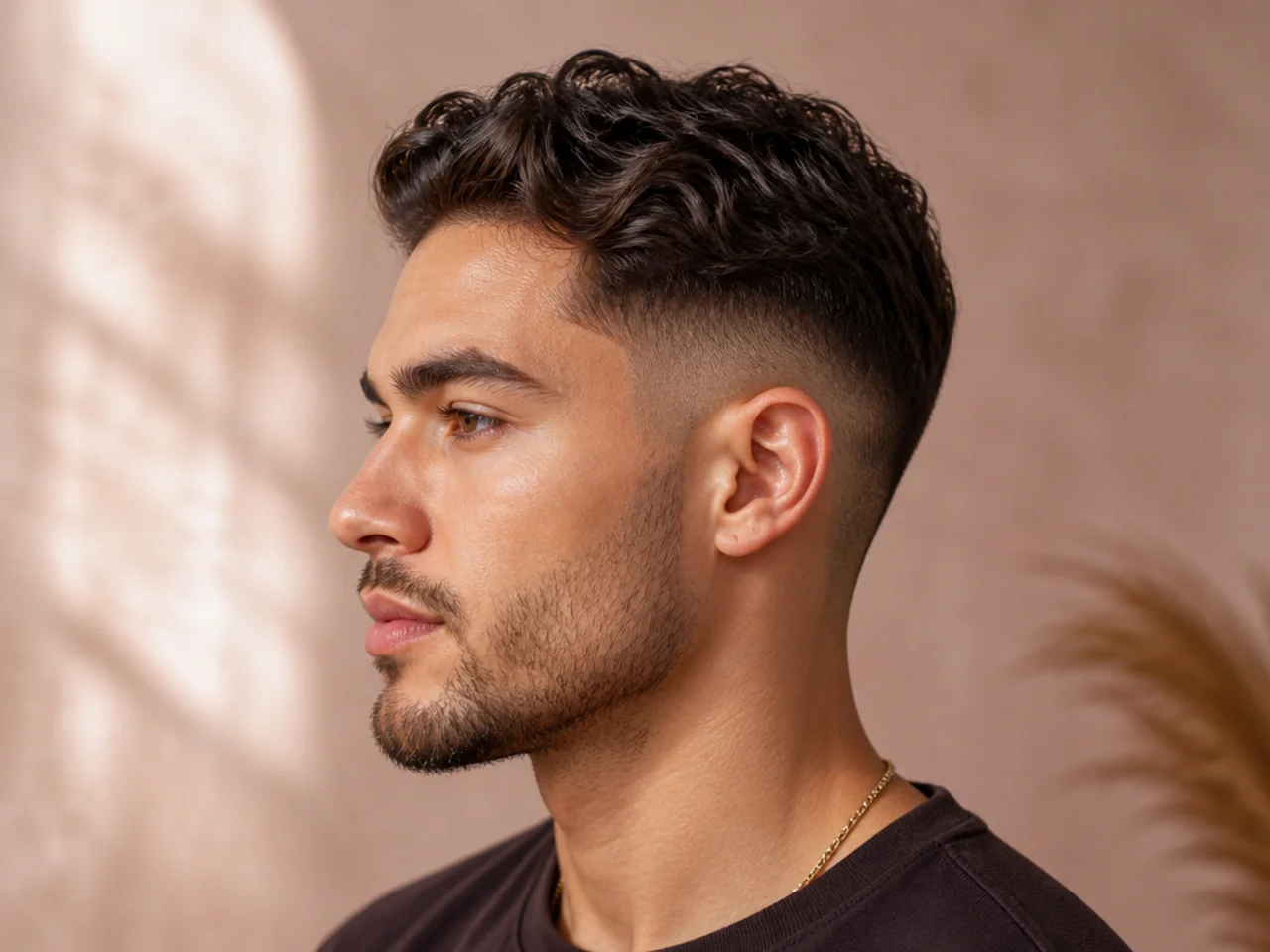
Short 360 waves brushed into the top (about half an inch) with a low burst or drop fade around the sides — the fade keeps the pattern clean where the sides meet the top. Best on coarse Black hair with wave potential. Fits every face shape. Ask for: "low burst fade around the ear, 1 guard across the top, brush the wave pattern in." Du-rag every night, wave brush 100 strokes daily for the first month. Then just maintenance.
Fade with a Middle Part
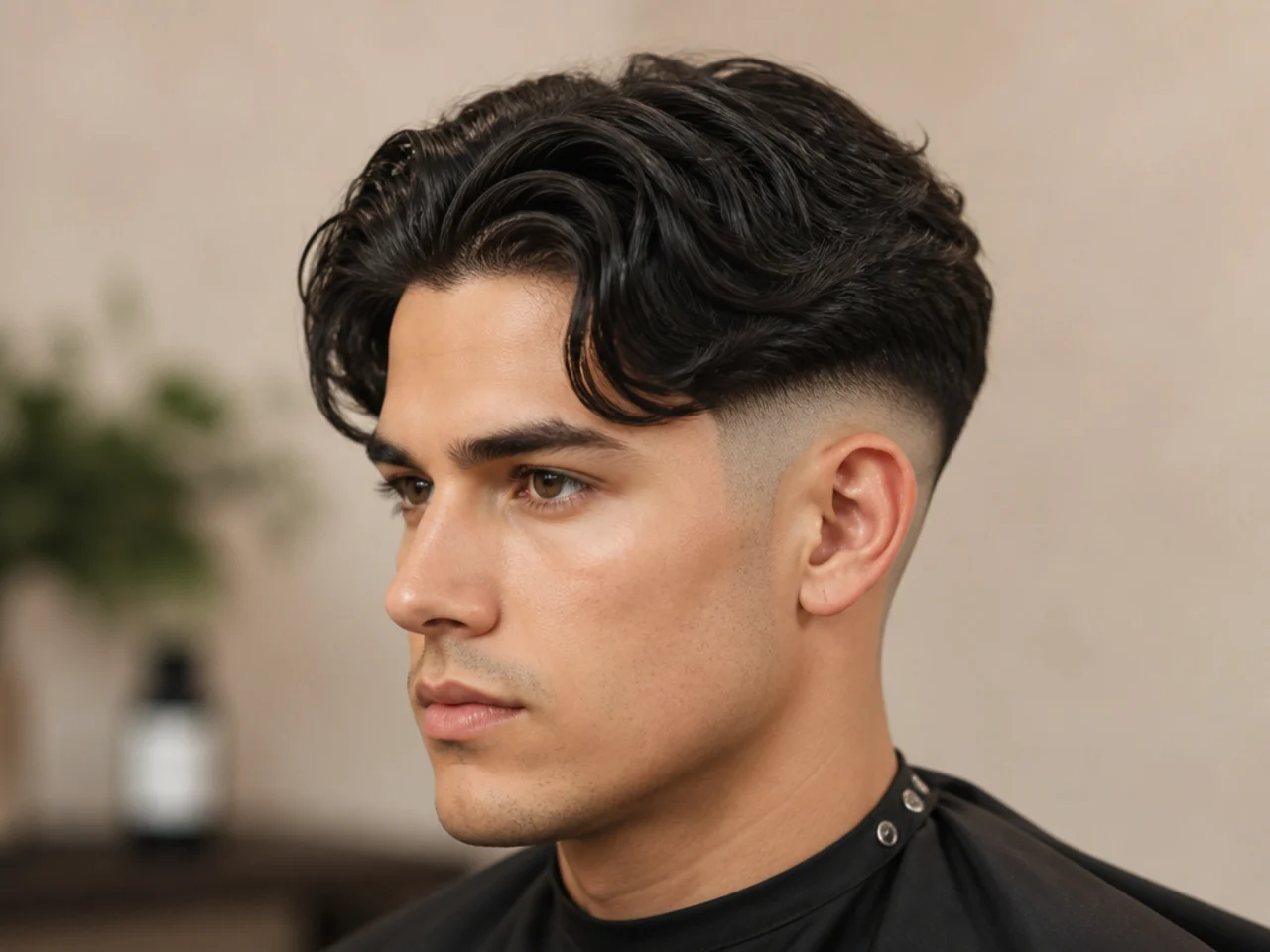
A middle part with a fade splits a longer top down the center, letting each side fall softly toward the ears. Reads modern and slightly retro at the same time — the K-drama and 90s-Britpop crossover. Best on oval, heart, and diamond faces. Straight to wavy hair only. Ask for: "low taper fade to a 1, keep four inches on top, cut for a center part with curtain flow." Blow-dry with a round brush pulling forward, part with a fine-tooth comb, finish with styling cream.
Fade with an Afro
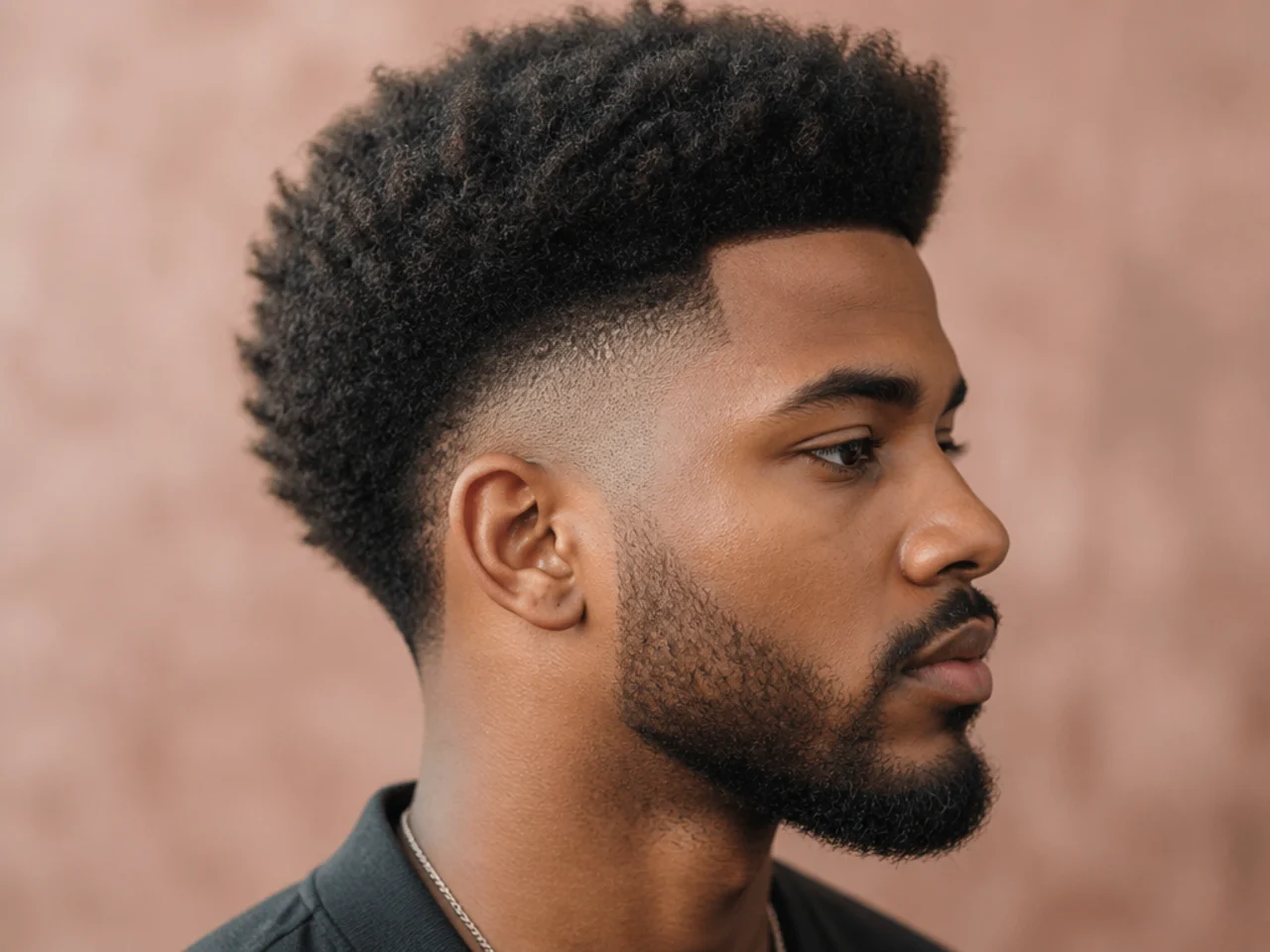
An afro over a fade is the shape's cleanest showcase — round volume up top mirrors the sharp line at the sides. Two curves stacked. Fits round and square faces where the volume adds height without adding width. Ask for: "high burst fade around the ear, afro shaped by hand, three to four inches on top." Deep-condition once a week, pick out with an afro comb, set with a light molding paste. Book every two to three weeks to keep the outline sharp.
Fade with a Modern Mullet
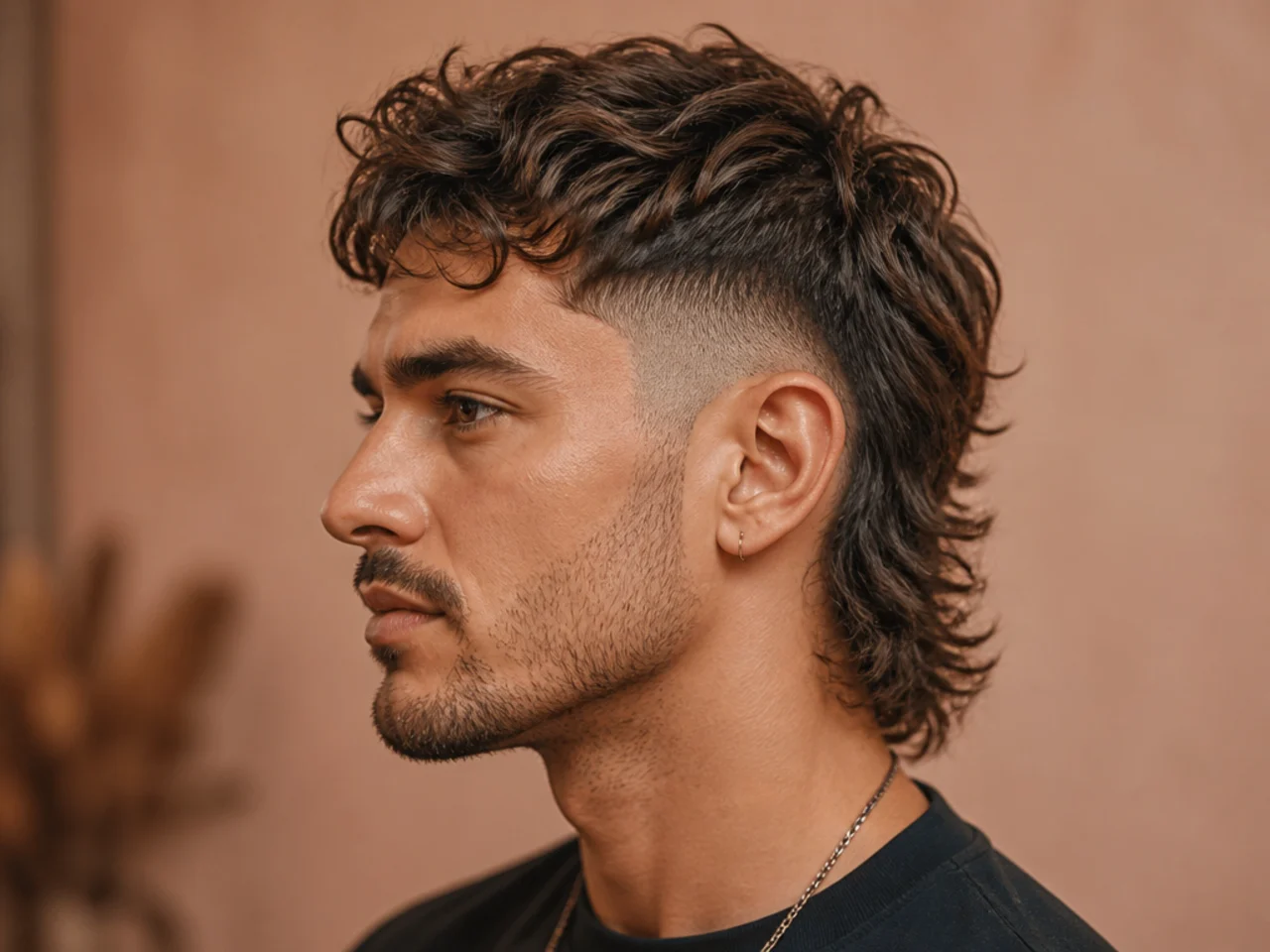
Short and faded on the sides, longer through the back — the modern mullet uses the fade to keep the front professional even while the party stays in the back. Best on straight and wavy hair. Fits oval and oblong faces. Ask for: "low fade to a 1, keep two inches on top, disconnect to four inches through the back." Sea salt spray, air-dry, tousle with fingers. Never a comb.
Fade with a Beard Connection
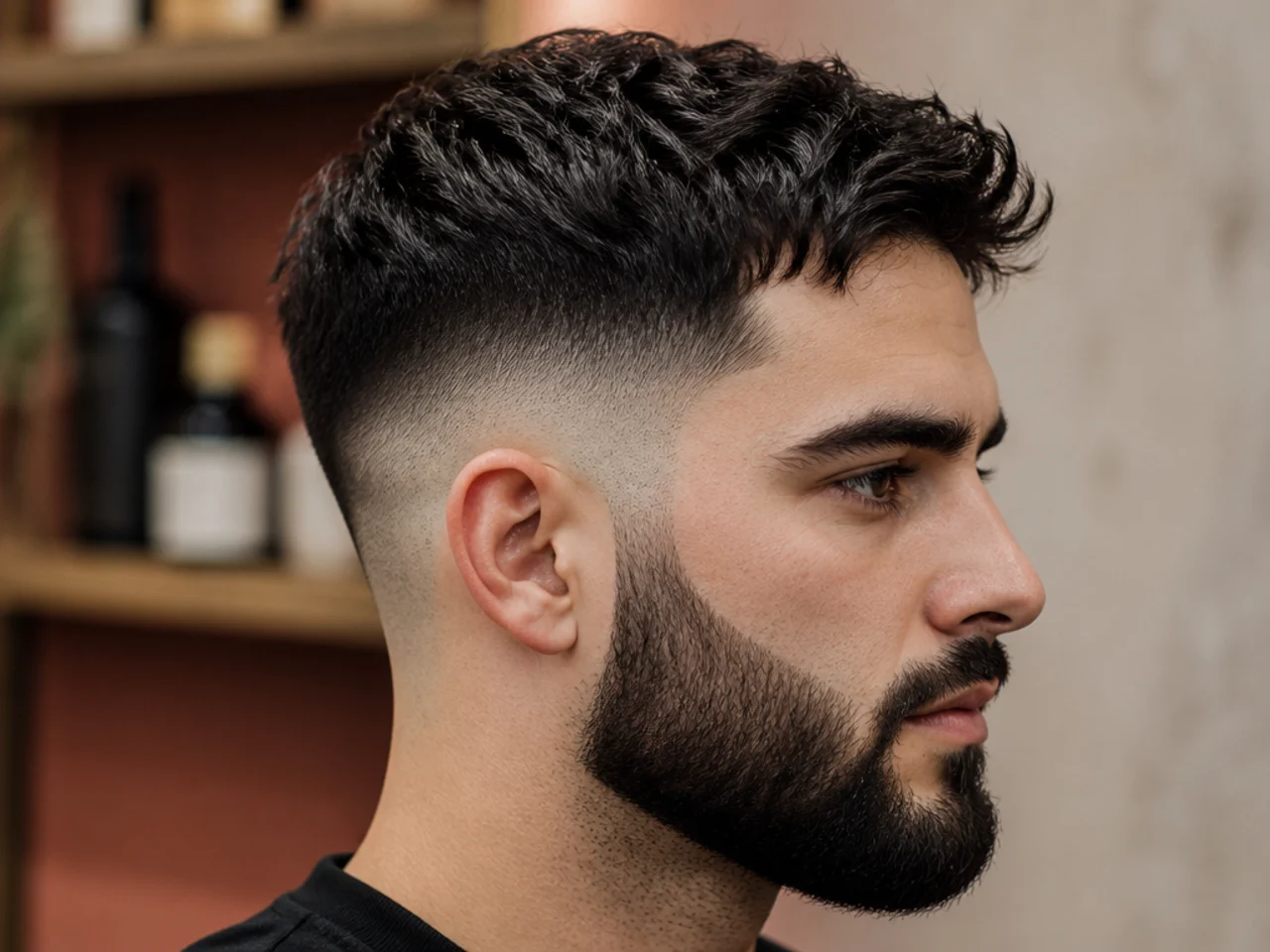
The barber's precision test — connecting the fade line seamlessly into a beard along the jaw. Done right, the fade and beard read as one continuous shape from crown to chin. Best on square, oval, and diamond faces because the connected line balances the jaw with the top. Ask for: "low fade to a 1, connect through the beard line, beard at a 3 guard, keep two inches on top." Matte paste through the top, beard oil combed downward once a day. Rebook every two weeks — the connection blurs first.
How to Ask Your Barber for a Faded Haircut
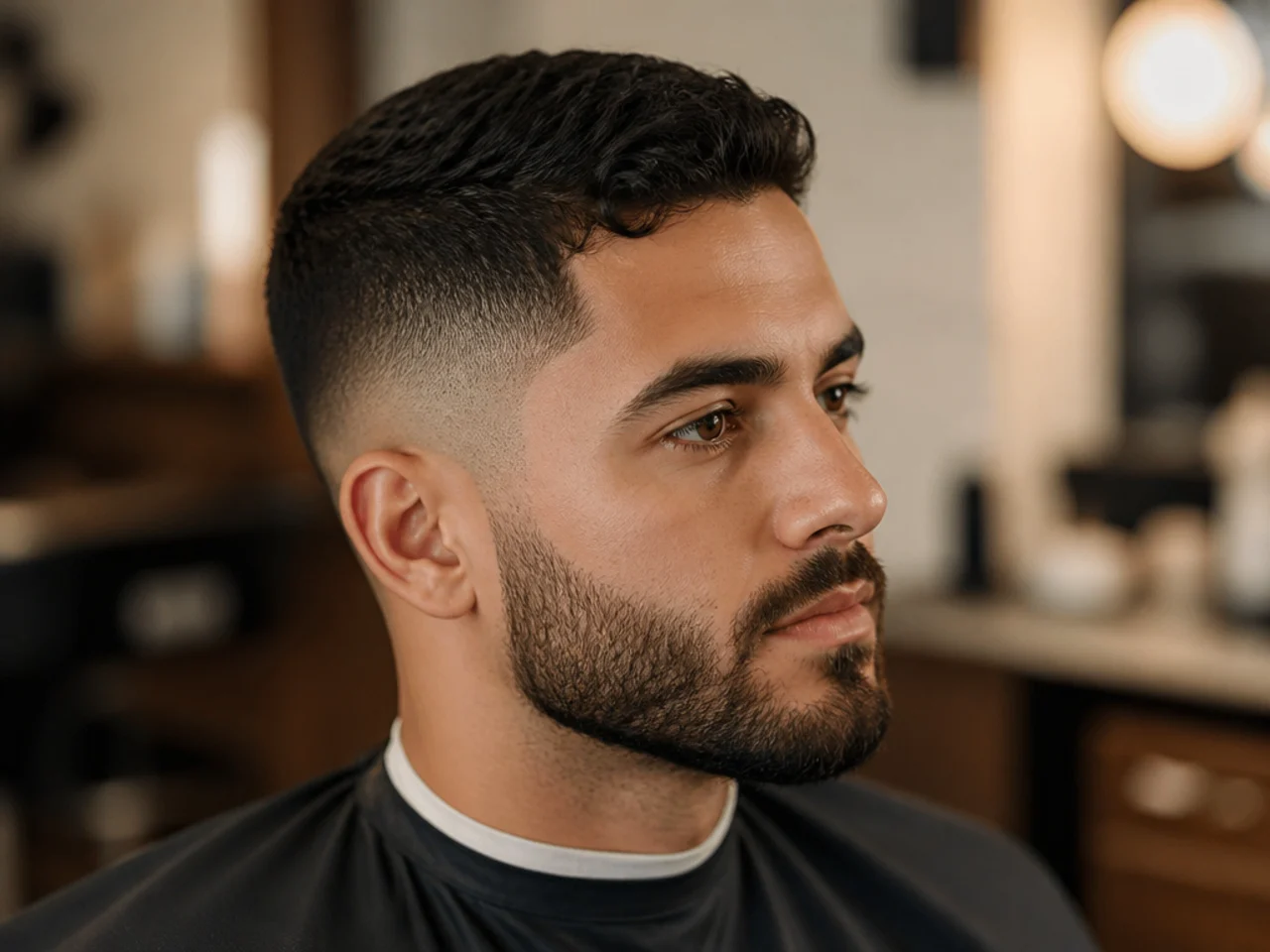
Bring a photo. That is rule one. Then use these five numbers.
- Fade height — low (above the ear), mid (at the temple), or high (near the crown). This is the single biggest decision. Everything else adjusts around it.
- Fade type — taper (soft, ends at guard 0.5 or 1), skin (ends at bare skin), drop (curves behind the ear), burst (semicircle around the ear), or undercut (hard line where sides meet top).
- Guard at the shortest point — 0 for skin, 0.5 or 1 for very short but visible, 2 for cropped-but-not-bald.
- Length on top — in inches (one, two, three, four) or a guard number if you want it clippered rather than scissor-cut.
- Finish — matte and textured, or sleek and shiny. Matte reads modern; sleek reads formal.
Once you can name those five, your barber has everything they need. Confirm with the photo, then let them work. Do not say "just a fade" — every barber will interpret that differently.
Styling and Maintenance
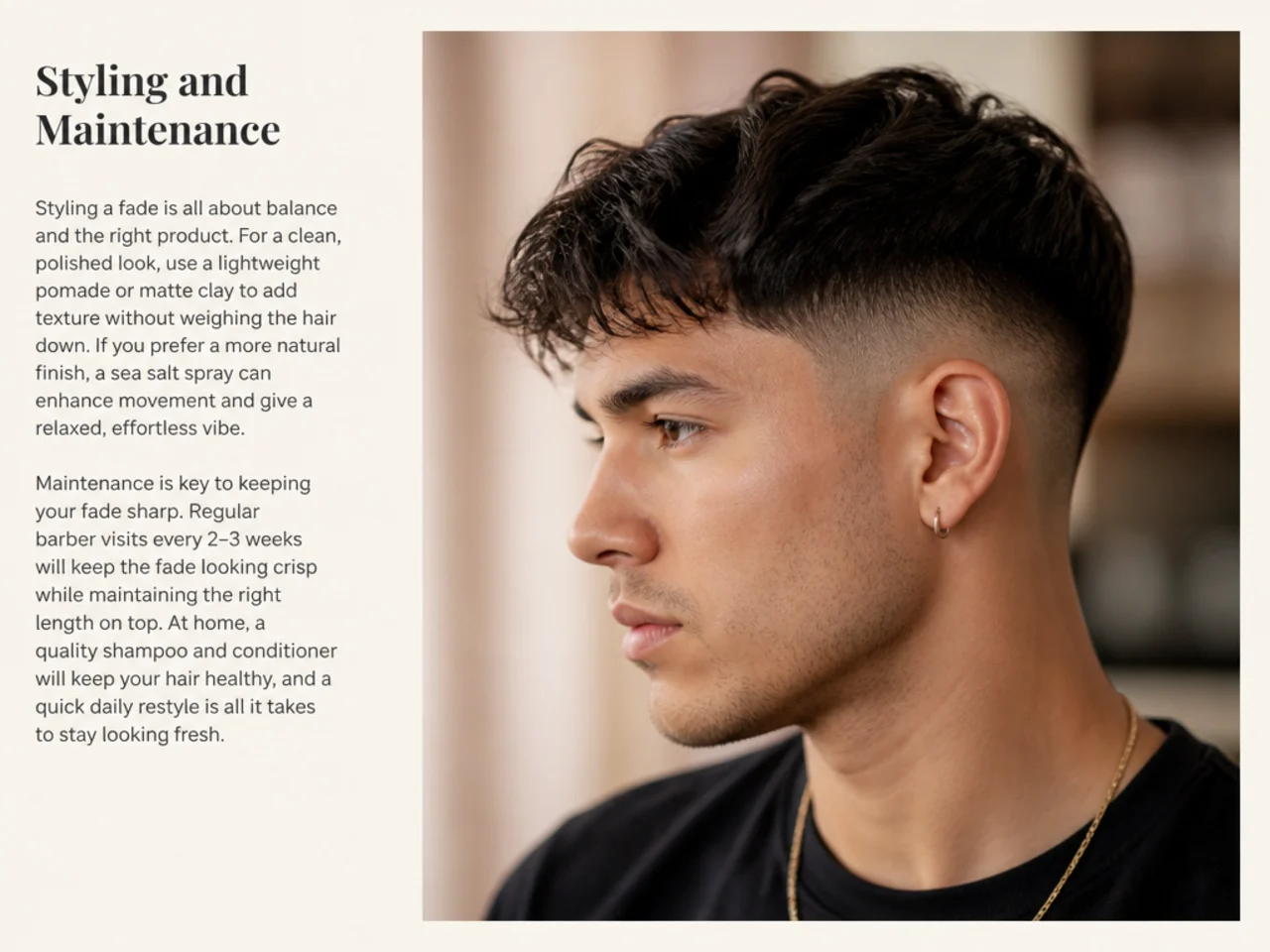
The fade does most of the visual work — your job is to keep the top looking intentional and the shape looking fresh.
Products by finish. For matte tousled tops (crops, brush ups, messy styles), a matte clay or texture paste with medium-to-strong hold. For structured tops with light shine (comb overs, side parts, textured quiffs), a molding paste. For slick backs and hard side parts, a cream-based pomade or strong-hold gel. For curly tops, a curl cream on soaking-wet hair — never dry. Sea salt spray is a pre-styler for straight and wavy hair; skip it entirely on curls.
Styling sequence. Wash and towel-dry to damp (not soaking, not bone-dry). Apply your pre-styler if you use one. Blow-dry into the direction you want the top to fall — fingers for texture, round brush for slick or lift, paddle brush for back-swept. Finish with your hold product warmed between your palms first, then rake through with fingertips. Total time, under five minutes.
Maintenance cadence. Book the next cut before you leave. Skin fades, high fades, and burst fades blur by day 14 — that is the two-week window. Low tapers and standard low fades hold for three to four weeks. Wash three to four times a week (every day strips oils; twice is not enough for product-heavy styles), condition mid-lengths to ends only, and sleep on a silk or satin pillowcase if the top is curly or wavy. Trim your neckline yourself between visits with a beard trimmer for an extra week of clean shape.
Between-visit habits. A boar-bristle brush distributes scalp oils through the top. Fragrance-free sunscreen on the freshly shaved skin for the first two days after a skin fade. And if the transition line looks blurry a week early, do not wait — a shape-up costs less than a full cut.
FAQ
What is the most timeless faded haircut for men?
The low taper fade paired with a classic top — crew cut, ivy league, side part, or comb over. That combination has been cut in barbershops for eighty years and every era has recognized it as sharp. If you want a fade that will still look right in a photograph fifteen years from now, that is the safest pick.
Is a fade the same thing as a taper?
No. A taper only shortens the sideburns and neckline, leaving the sides of your head at their natural length. A fade blends the entire side and back from a longer guard down to a very short one or bare skin. Every fade is technically a taper; not every taper is a fade. If your barber says "low taper," expect softer sides than a "low fade."
Which fade lasts longest between cuts?
The low taper fade. Because the shortest point is a 0.5 or 1 (not skin) and sits low on the head, the grow-out is subtle for three to four weeks. Skin fades and high fades start looking blurry inside two weeks. If you can only book monthly, go low taper.
Does a faded haircut for men look professional?
Absolutely — go low. A low fade or low taper fade sits below the sideburn and reads like a regular tidy haircut from the front, even in the most conservative offices. Skip the skin fade and the high fade for corporate environments, and keep the top style classic (side part, comb over, ivy league) rather than statement (mohawk, pompadour, mullet).
Which faded haircut works best for curly hair?
A drop fade or a low burst fade. Both use a curved shape at the sides that echoes the round shape of the curls on top, which reads intentional instead of accidental. Ask your barber to scissor-cut the curly top rather than clipper-cut it so the curl pattern is preserved, and go for three to four inches of length so the curls actually fall.
How much does a faded haircut cost?
In the U.S., expect $25–$45 at a standard neighborhood barbershop, $50–$80 at a higher-end shop, and $100+ at a boutique or celebrity barber. Skin fades and complex designs run at the top of that range. Book with a specific barber whose work you have seen — fade quality varies enormously chair to chair, and a $30 cut from the right person beats a $70 cut from the wrong one every time.