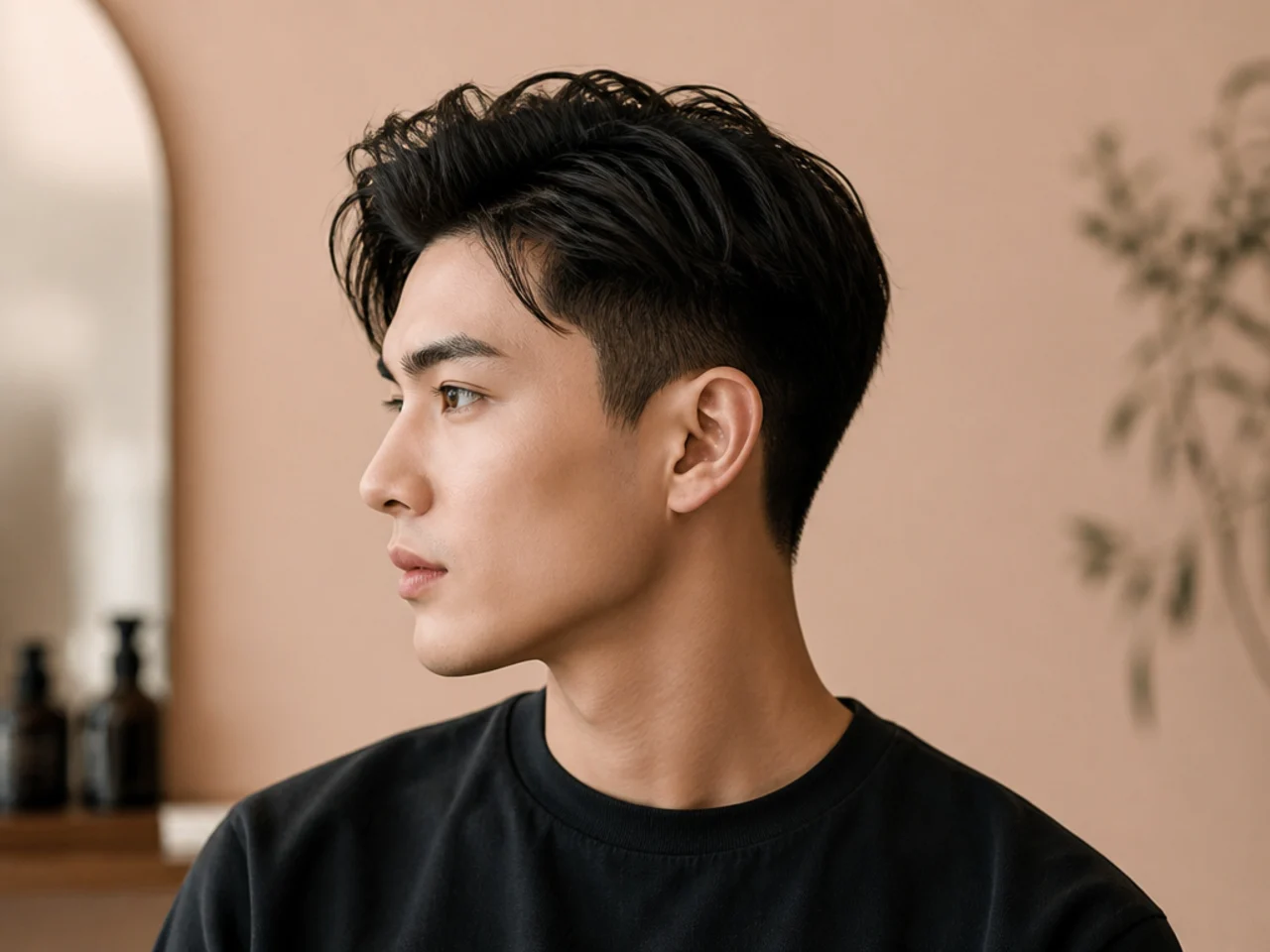
20 Two Block Undercut Haircuts for Men
Twenty two block undercut variations men are asking for by name — hard-line disconnected sides, K-pop tops, and the exact numbers to hand your barber.
In this article · 32
- What Is a Two Block Undercut Haircut?
- How to Choose Your Two Block Undercut
- The 20 Two Block Undercut Variations
- 1. The Classic Two Block Undercut
- 2. The Middle-Part Two Block Undercut
- 3. The Long Top Two Block Undercut
- 4. The Short Two Block Undercut
- 5. The Curtain-Front Two Block Undercut
- 6. The Textured Two Block Undercut
- 7. The Slick Back Two Block Undercut
- 8. The Brushed Up Two Block Undercut
- 9. The Comma Front Two Block Undercut
- 10. The Curly Two Block Undercut
- 11. The Wavy Two Block Undercut
- 12. The High Two Block Undercut
- 13. The Low Two Block Undercut
- 14. The Two Block Undercut with Design
- 15. The Asymmetric Two Block Undercut
- 16. The Fringe-Heavy Two Block Undercut
- 17. The Side Part Two Block Undercut
- 18. The Mullet Two Block Undercut
- 19. The Bowl Two Block Undercut
- 20. The Grown-Out Two Block Undercut
- How to Ask Your Barber
- Styling and Maintenance
- FAQ
- Can I get a two block undercut at any barber, or do I need a Korean one?
- What's the difference between a two block undercut and a two block fade?
- Does the two block undercut work for balding or thinning hair?
- Which two block undercut is the most professional?
- Does a two block undercut grow out well?
- How is a two block undercut different from a Korean two block haircut?
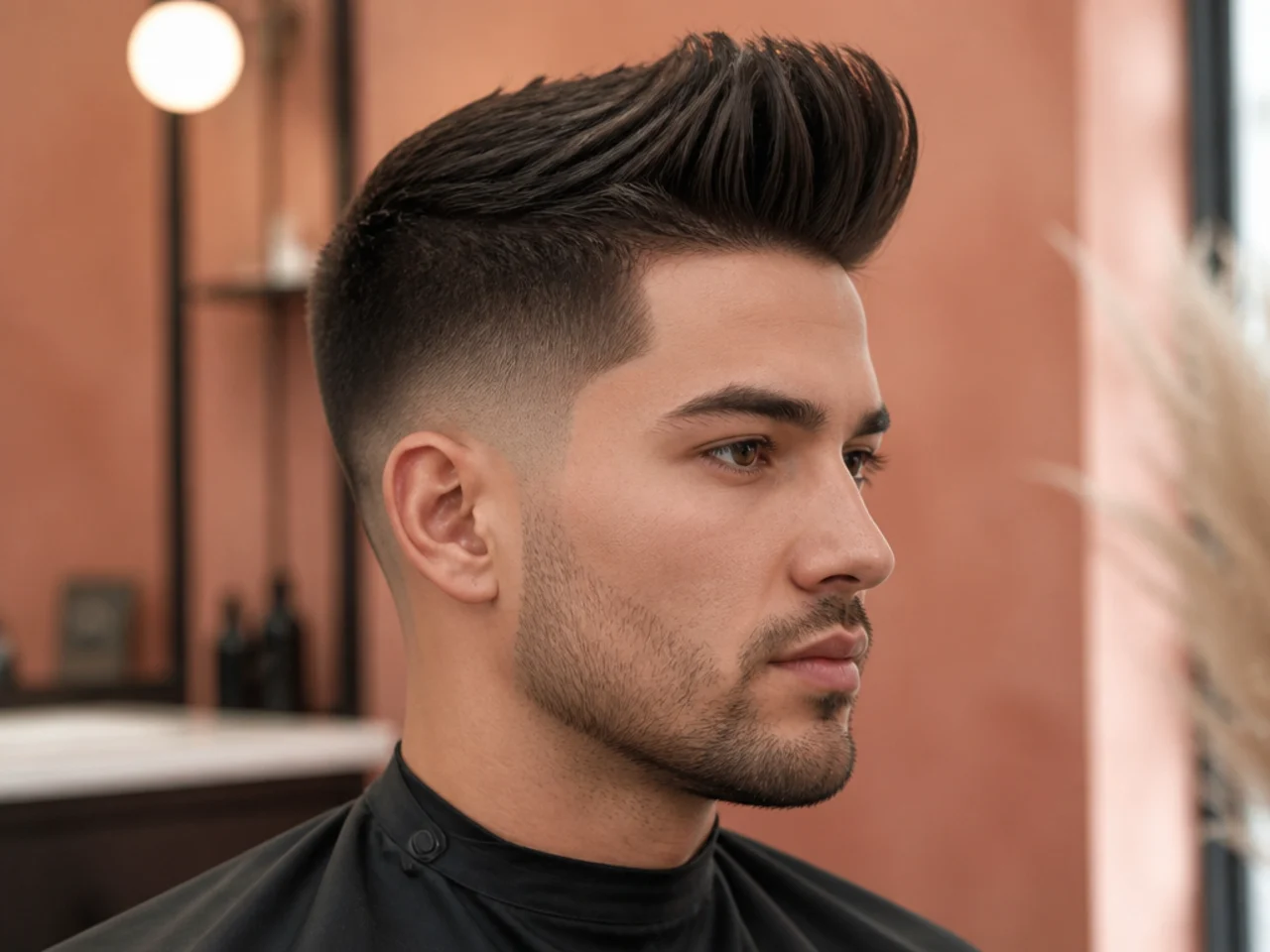
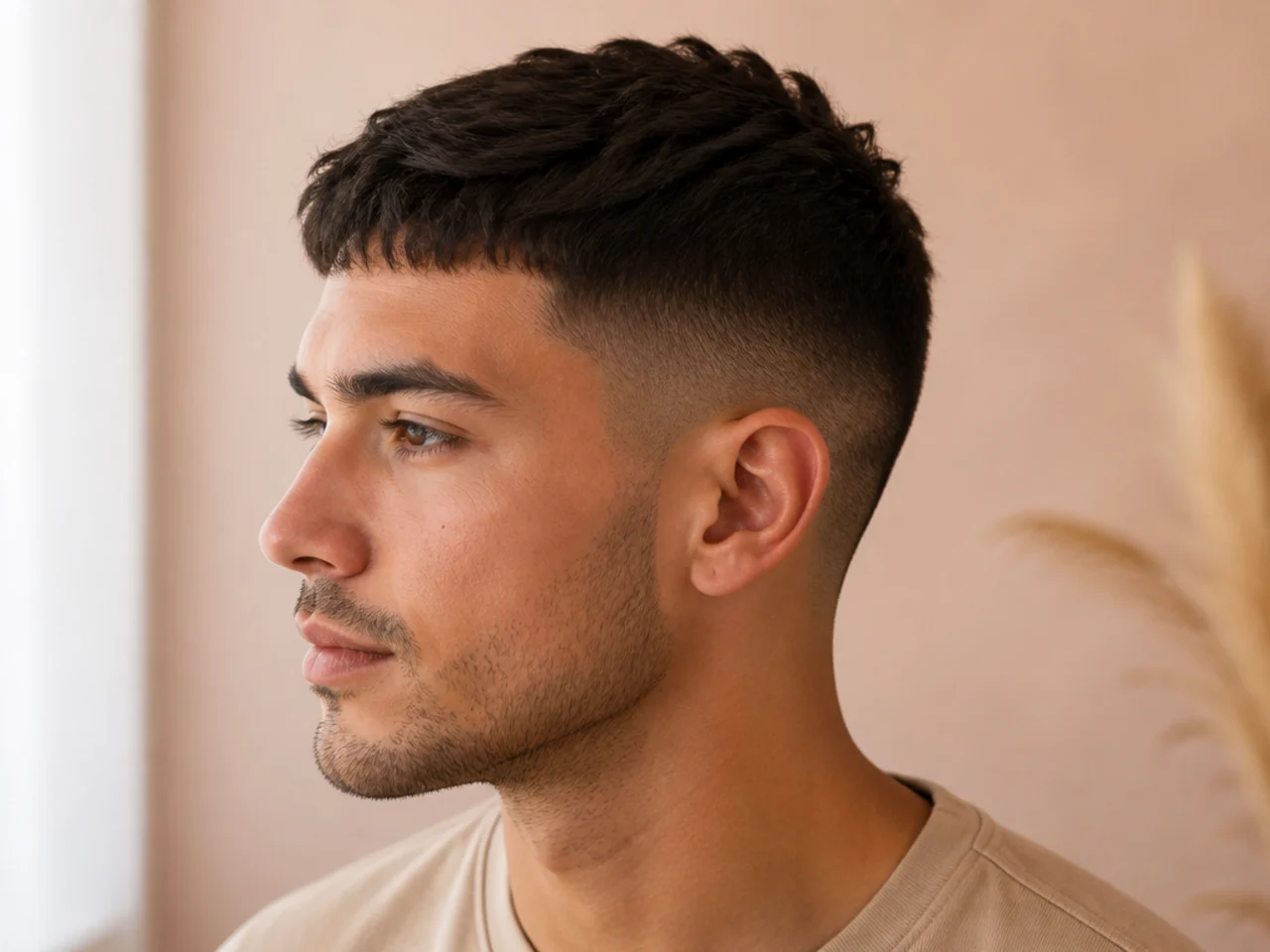
The two block undercut is the sharpest version of Korea's biggest men's cut. Long, styled hair on top drapes past a horseshoe line above your ears. Below that line a single clipper guard runs straight down to skin — no blend, no fade, no taper. At rest you see one length; the second you move the top, a hard-line disconnect shows itself. This guide covers 20 two block undercut variations men are asking for in 2026 — classic, curtain, slick back, textured, wolf — with face-shape notes and the exact ask for your barber.
What Is a Two Block Undercut Haircut?
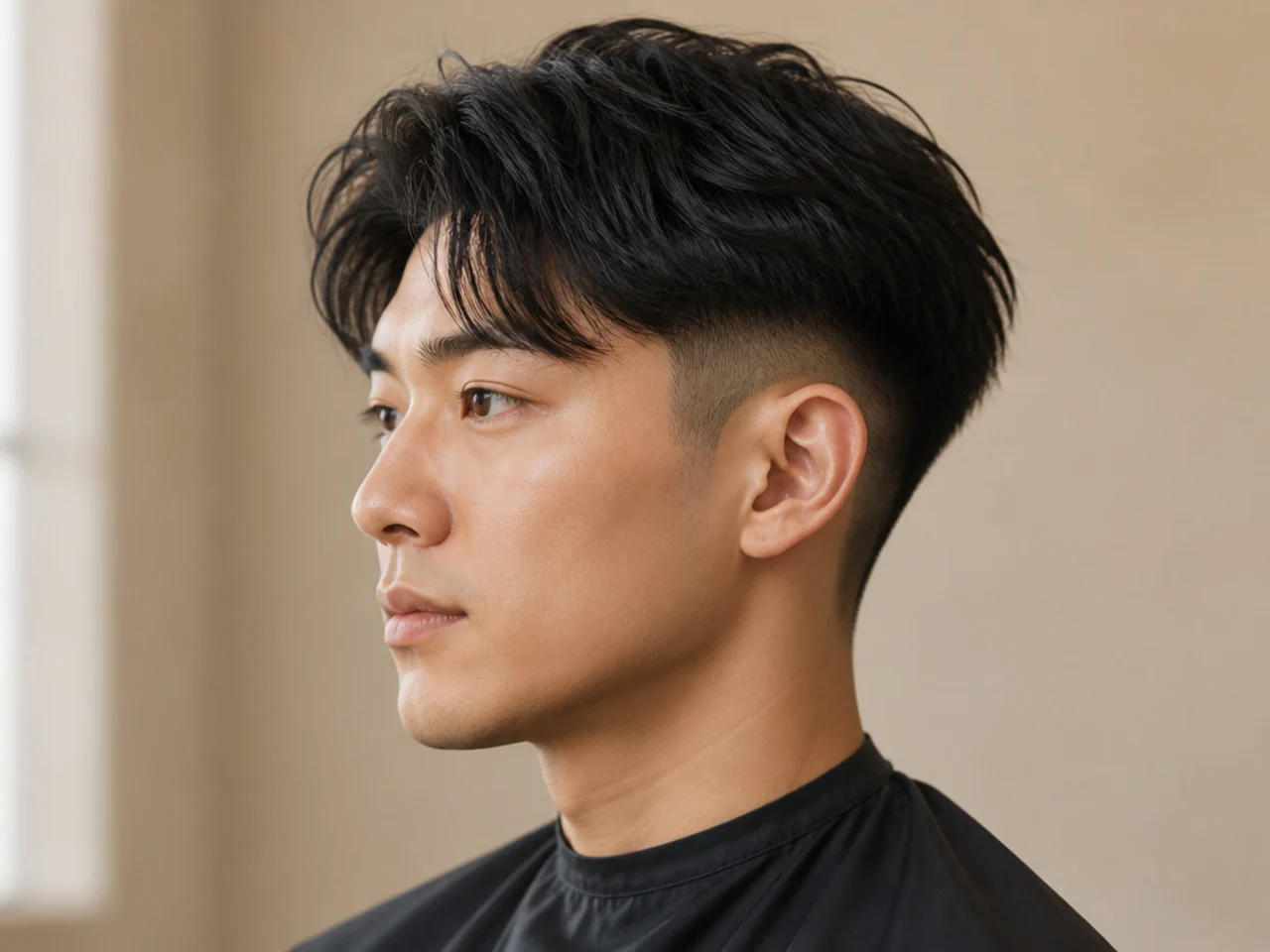
A two block undercut is built from two lengths with a hard visible edge between them. The upper block — everything above a horseshoe line running from temple to temple across the crown — stays long. Three, four, five inches, depending on the variation. Below that line the sides and back get clipped in one pass to a single guard, most often a zero, a half, or a one, and the clipper runs straight down to skin with no taper.
That single hard-cut line is what makes it an undercut instead of a fade. A two block haircut with a taper or fade blends the two lengths softly. A two block undercut refuses to blend them. The top still drapes past the horseshoe to cover the buzzed second block at rest — that is what keeps it a two block instead of a plain undercut fade — but the moment you tuck the top behind an ear or the wind lifts it, the disconnect shows in one clean line.
Ask for "a two block undercut." Then give three numbers. The length of the top in inches. The single guard number for the disconnected bottom. Whether you want a center part, a side part, or no part. That is the whole conversation.
How to Choose Your Two Block Undercut
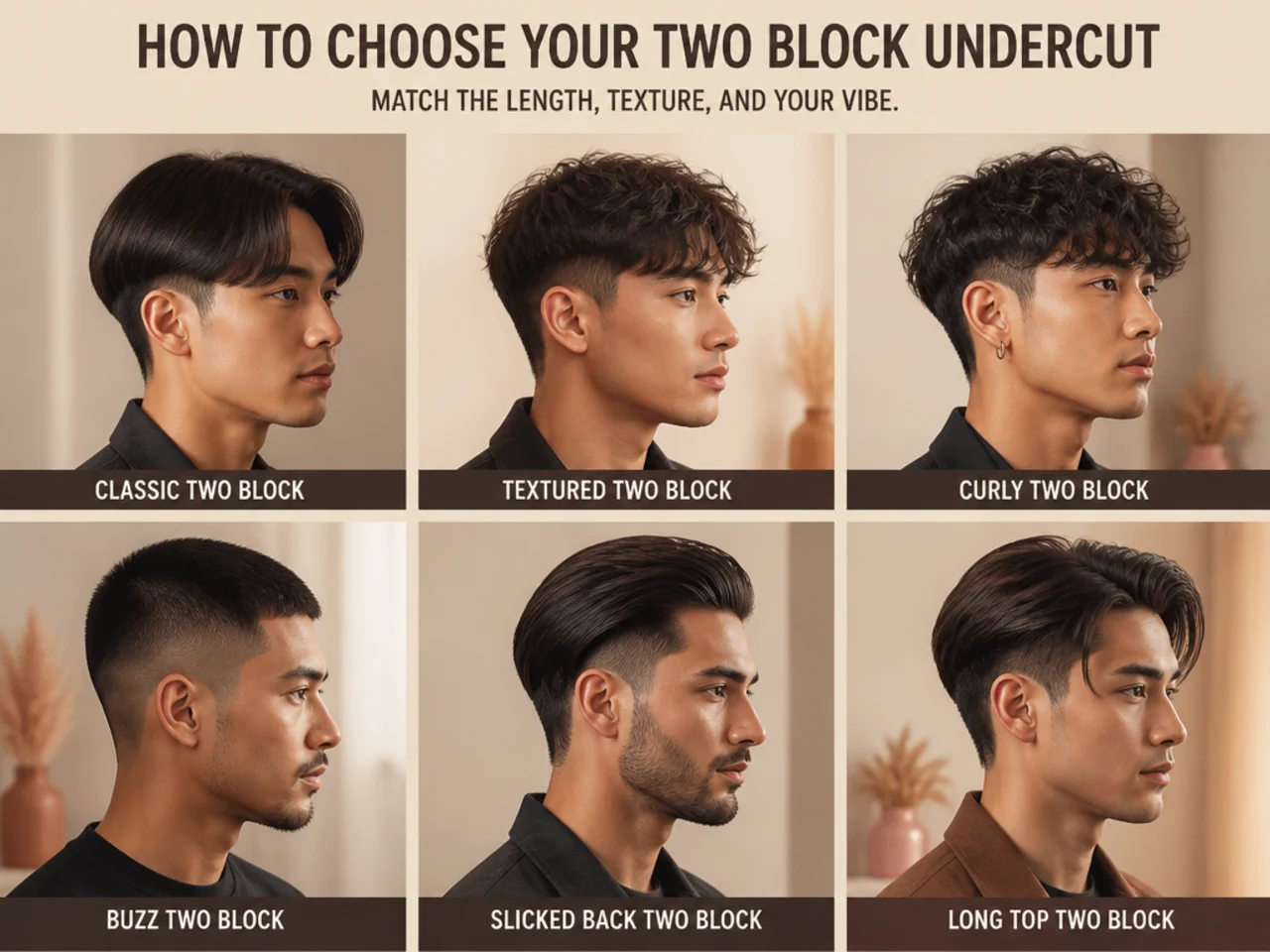
Start with hair type. Straight silky hair is the reference — every K-pop idol version uses it, and the top drapes cleanest when it is heavy enough to fall past the horseshoe without lifting. Wavy hair leans into the textured, wolf, and curly variations. Curly hair needs at least four inches on top and a half-guard second block so the curl pattern still covers the buzz when it lifts.
Face shape decides the disconnect placement. Oval faces get every variation below. Round faces want the disconnect line slightly higher than usual — that visually lengthens the face — plus root lift on top. Square and angular faces soften with the curtain, feathered, or wavy versions. Long or oblong faces want a heavier top with more front weight to shorten the visible height.
Then the honest question: how loud a haircut do you want to wear? The classic and short two block undercut are subtle at rest because the top covers the disconnect. The high, mullet, or design versions are statement cuts that read loud even before you touch them. Pick the version that matches how much attention you actually want.
The 20 Two Block Undercut Variations
Every variation below is a two block plus a hard-line undercut hybrid your barber will recognize with a photo. Numbers matter — inches on top, single guard number on the disconnected sides — so bring both.
1. The Classic Two Block Undercut
The template every other version bends. Top runs 4 inches, cut in a soft rounded shape that falls forward past the hairline. The disconnect drops straight from the horseshoe on a one guard, no taper, no blend. When the top is down you see one length; when you tuck it behind an ear you see a clean vertical line above your ear. If you are not sure which two block undercut to try first, this is the default. Every other cut on this list is a variation on this base.
Best on straight to lightly wavy hair with medium density. Oval, square, and long faces.
Ask for: "Classic two block undercut, 4 inches on top styled forward, one guard hard-line straight down at the horseshoe. No taper anywhere."
Styling tip: cream through damp hair, blow-dry with fingers pushing forward, done. Two minutes total. Keep the top polished so the disconnect carries the edge without messy product fighting it.
2. The Middle-Part Two Block Undercut
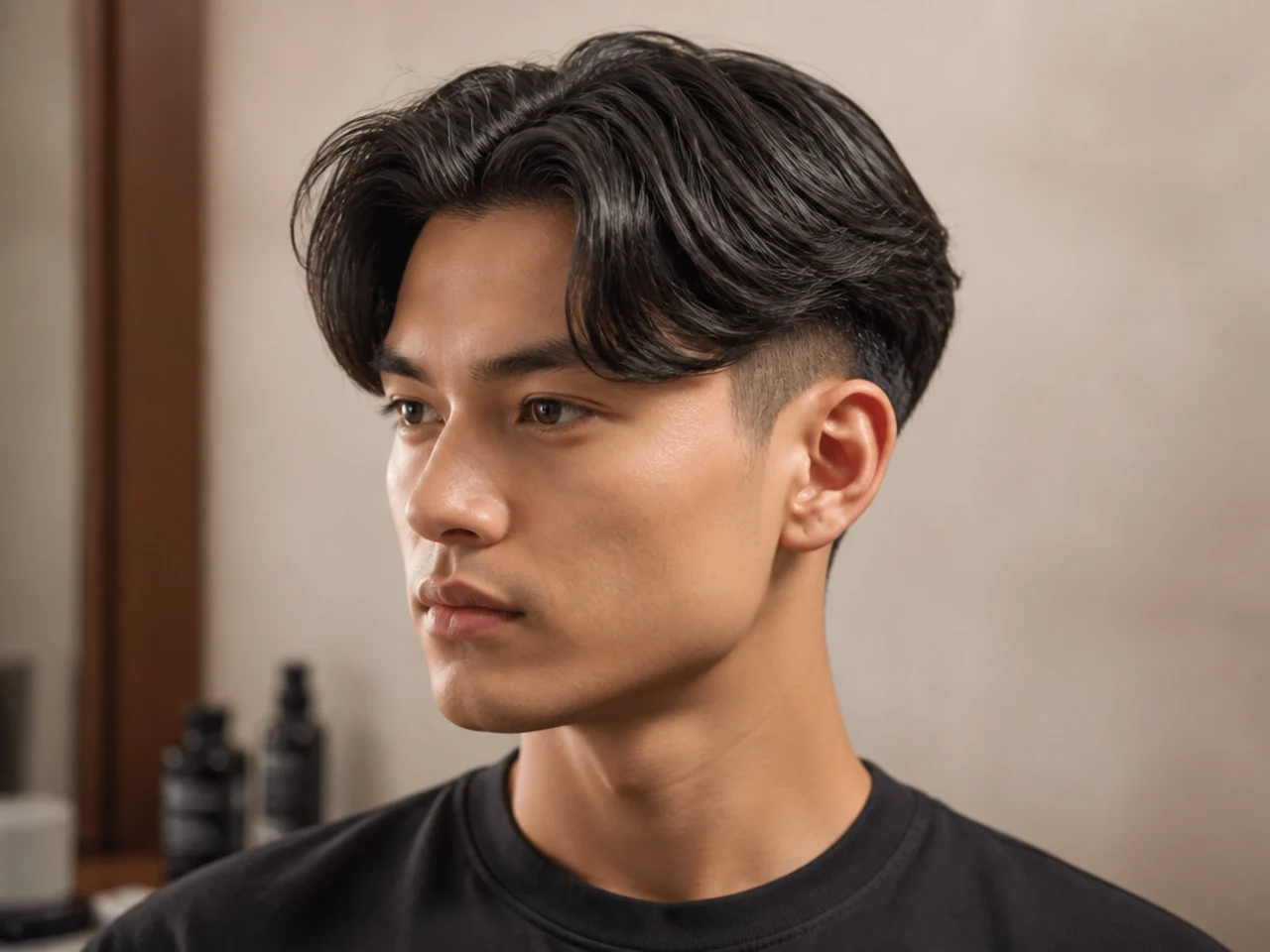
The K-drama lead default. Top runs 5 inches, cut long enough to fall in two soft curtains from a hard center part. The undercut runs one guard straight down under both curtains — so when you tuck a panel behind your ear, a strip of buzzed skin shows between hair and ear. Signature 2020s Korean idol look. Sits inside the wider middle part haircut for men family.
Best on oval, square, and heart-shaped faces. Round faces need extra crown volume to balance.
Ask for: "Two block undercut with a hard center part, 5 inches on top, one guard hard-line disconnect underneath, weight left in the front so the curtains fall past the brows."
Styling tip: blow-dry with a round brush from the roots outward on each side of the part. Light hairspray to hold the split. A pea of cream through the mid-lengths.
3. The Long Top Two Block Undercut
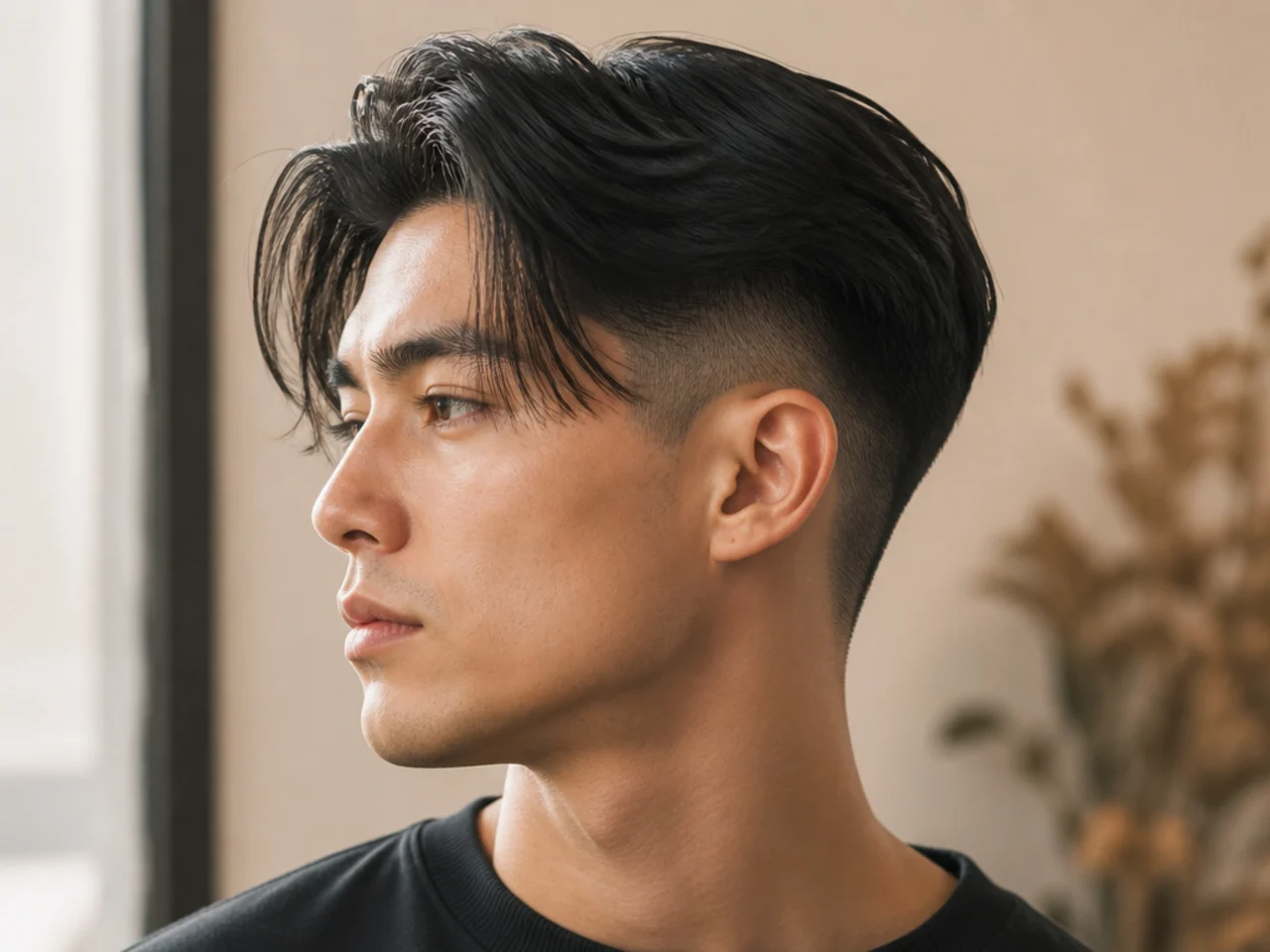
Top pushed past 5 inches — past the eyebrows in front and past the collar at the back. The zero guard on the sides gives the sharpest visible line when the length moves. Because there is no taper to soften it, the disconnect between the long top and the shaved second block reads dramatic. If you like the long two block haircut drape, this is its harder-edged cousin.
Best on straight-to-wavy hair with density to spare. Oval and heart-shaped faces.
Ask for: "Long two block undercut, 5 to 6 inches on top, zero guard hard-line all the way around, keep the front weight so the length drapes over the disconnect."
Styling tip: leave-in conditioner on damp hair, air-dry to ninety percent, split with fingers. Styling product weighs the length down and kills the movement. A drop of hair oil on the mid-lengths only.
4. The Short Two Block Undercut
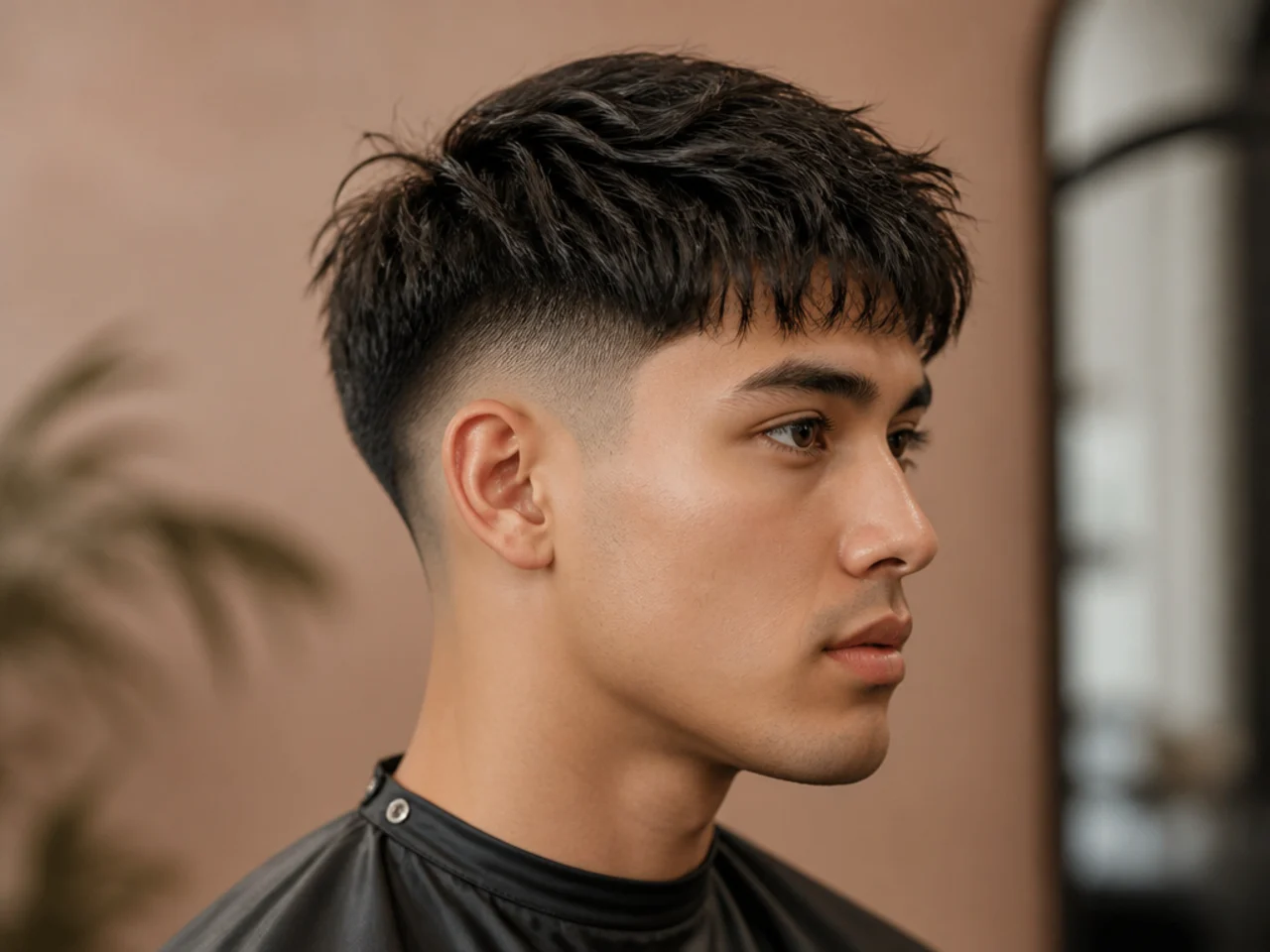
The shortest version that still qualifies. Top runs 3 inches — the floor length where a covered two block still works. The disconnect on a one guard reads sharp but not aggressive. The base sits close to the short two block haircut but adds the disconnected side line. Reads office-safe from the front, K-pop from the side.
Best on round or square faces because the low top height balances the head shape. Every hair type.
Ask for: "Short two block undercut, 3 inches on top styled forward, one guard hard-line disconnect, blended cleanly so nothing sticks out under the top when it drapes."
Styling tip: a fingertip of cream, run front to back. No product on the crown — it weighs the covering piece down. Rough-dry with fingers, no comb.
5. The Curtain-Front Two Block Undercut
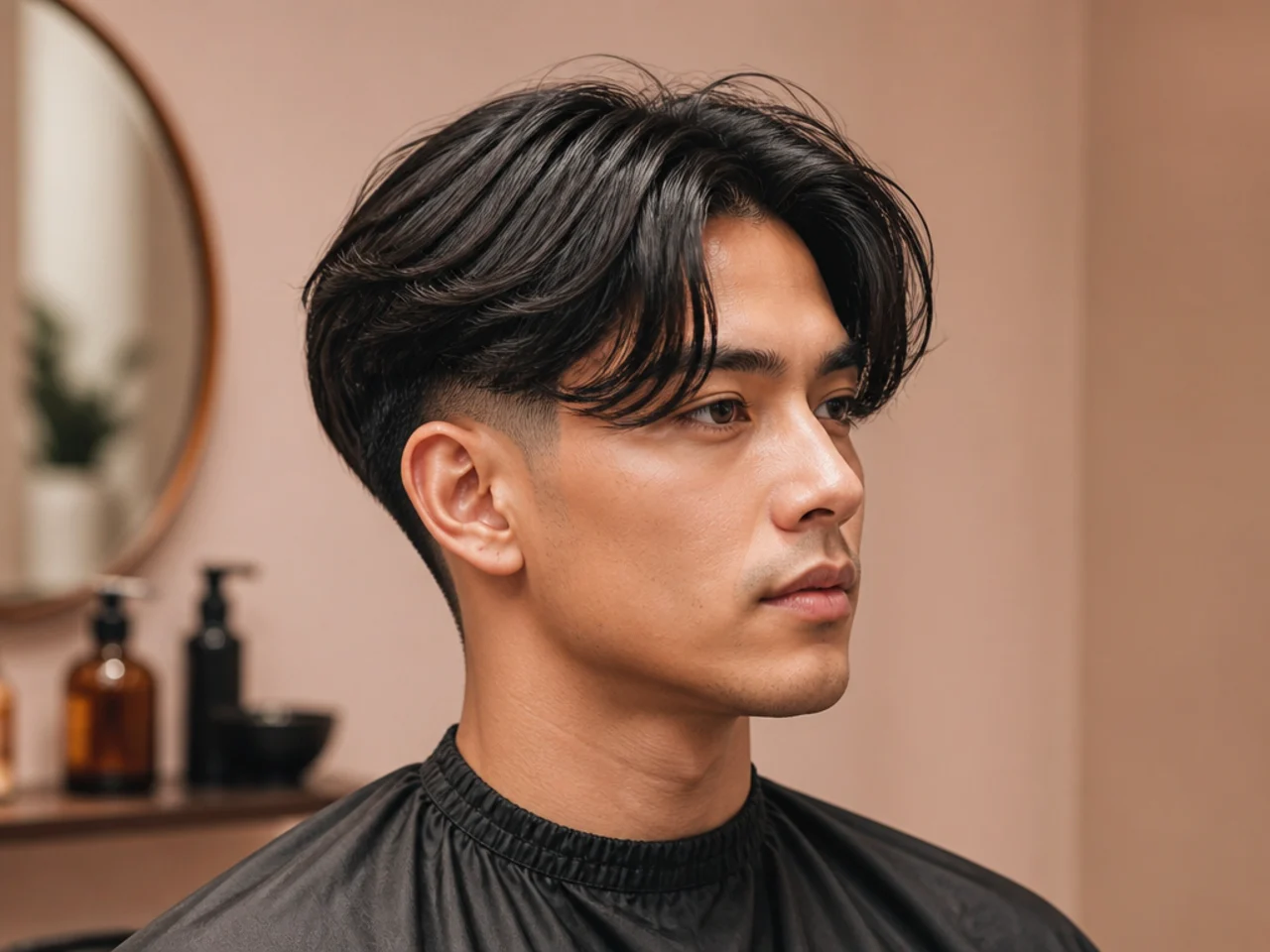
The two block undercut with a proper curtain front — 4 to 5 inches on top, center-parted, cut long enough to fall in two soft panels grazing the eyebrows. The disconnect stays hard on a one guard. When the curtain drapes forward it covers the disconnect completely; when you split the panels the buzzed second block shows on both sides of the part. Compare the fully hybrid two block curtain haircut for the softer scissor-blended version.
Best on straight-to-wavy hair with medium density. Oval, square, and heart-shaped faces.
Ask for: "Two block undercut with a curtain front, 4 to 5 inches on top center-parted, one guard hard-line disconnect underneath, front cut long enough to fall past the brows."
Styling tip: light cream through damp hair, blow-dry each panel outward from the part with a round brush. Cool shot from underneath to set the split. Ninety seconds per side.
6. The Textured Two Block Undercut
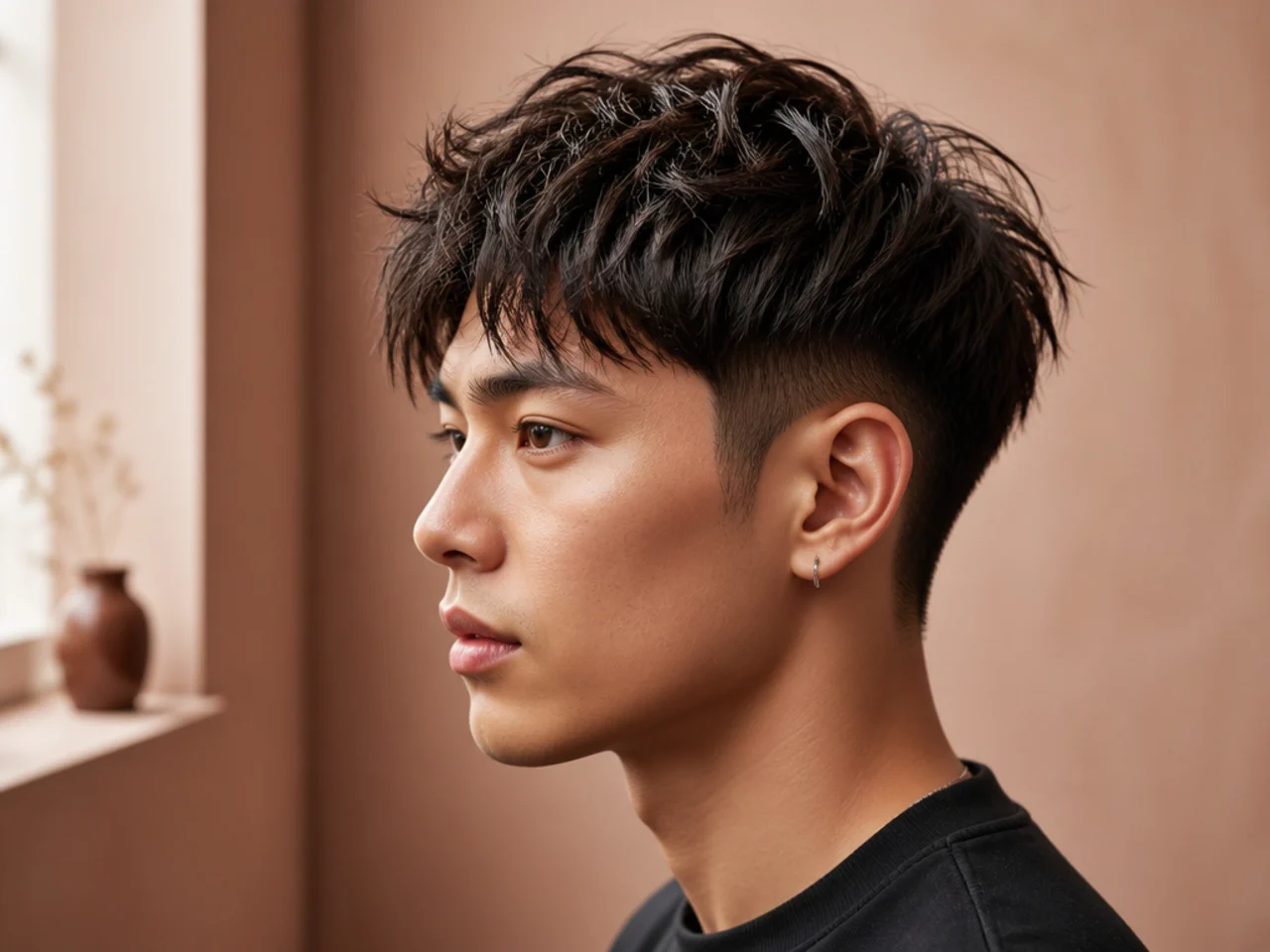
Point-cut ends across the top layer break up the flat helmet look you get when the top is cut blunt. The piecey ends move independently so the covering piece never sits like a lid. The disconnect stays clean on a one guard. Sits close to the textured haircuts for men family but keeps the hard-line undercut instead of a taper.
Best on straight, medium-to-thick hair that would otherwise fall too heavy over the disconnected sides.
Ask for: "Two block undercut, 3 to 4 inches on top with heavy internal texture, one guard hard-line disconnect. Point-cut the top — don't blunt it."
Styling tip: matte clay through damp hair, blow-dry with the nozzle aimed down the shaft, then pinch the ends with fingertips to define the piecey sections. No comb.
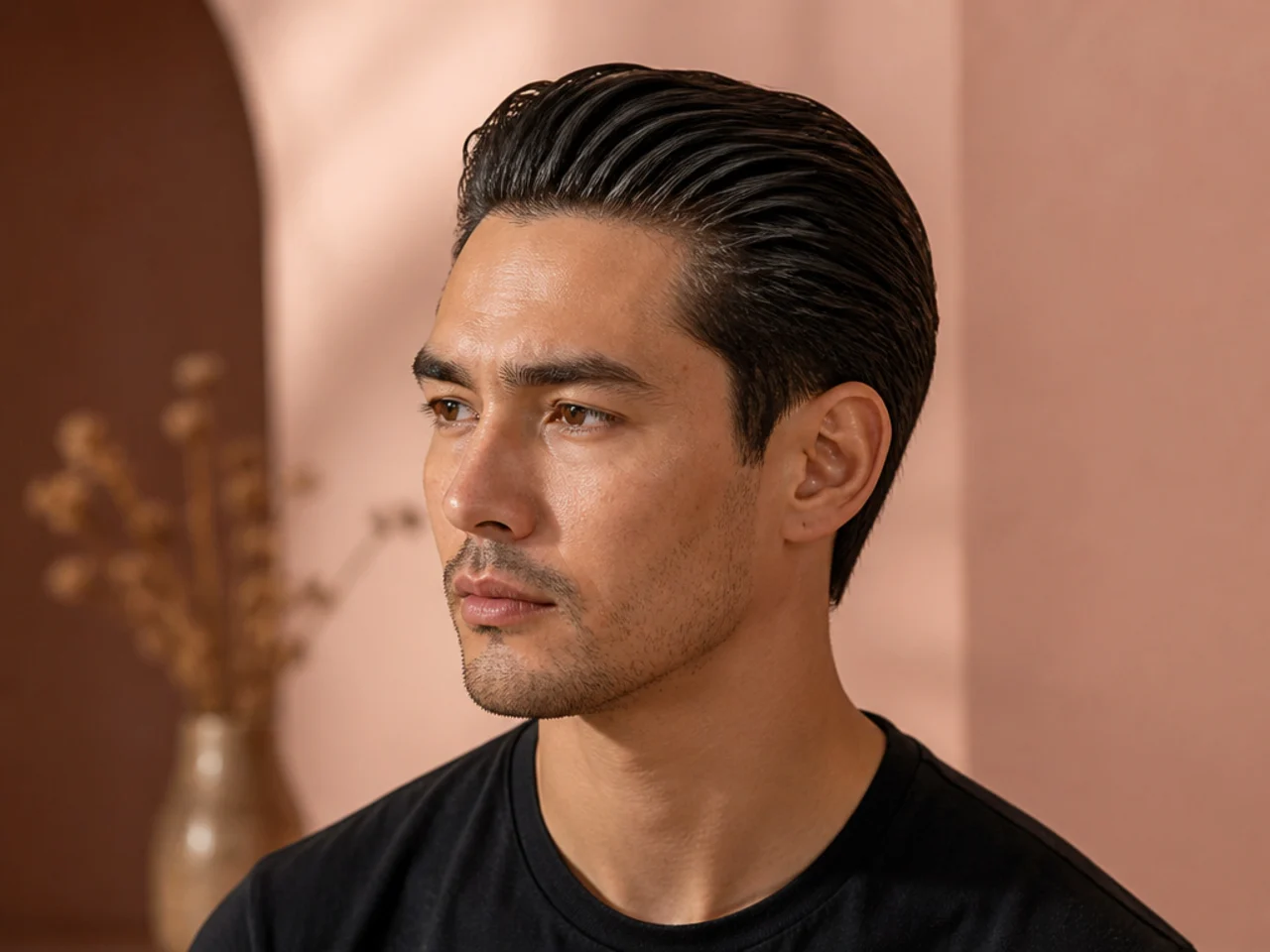
7. The Slick Back Two Block Undercut
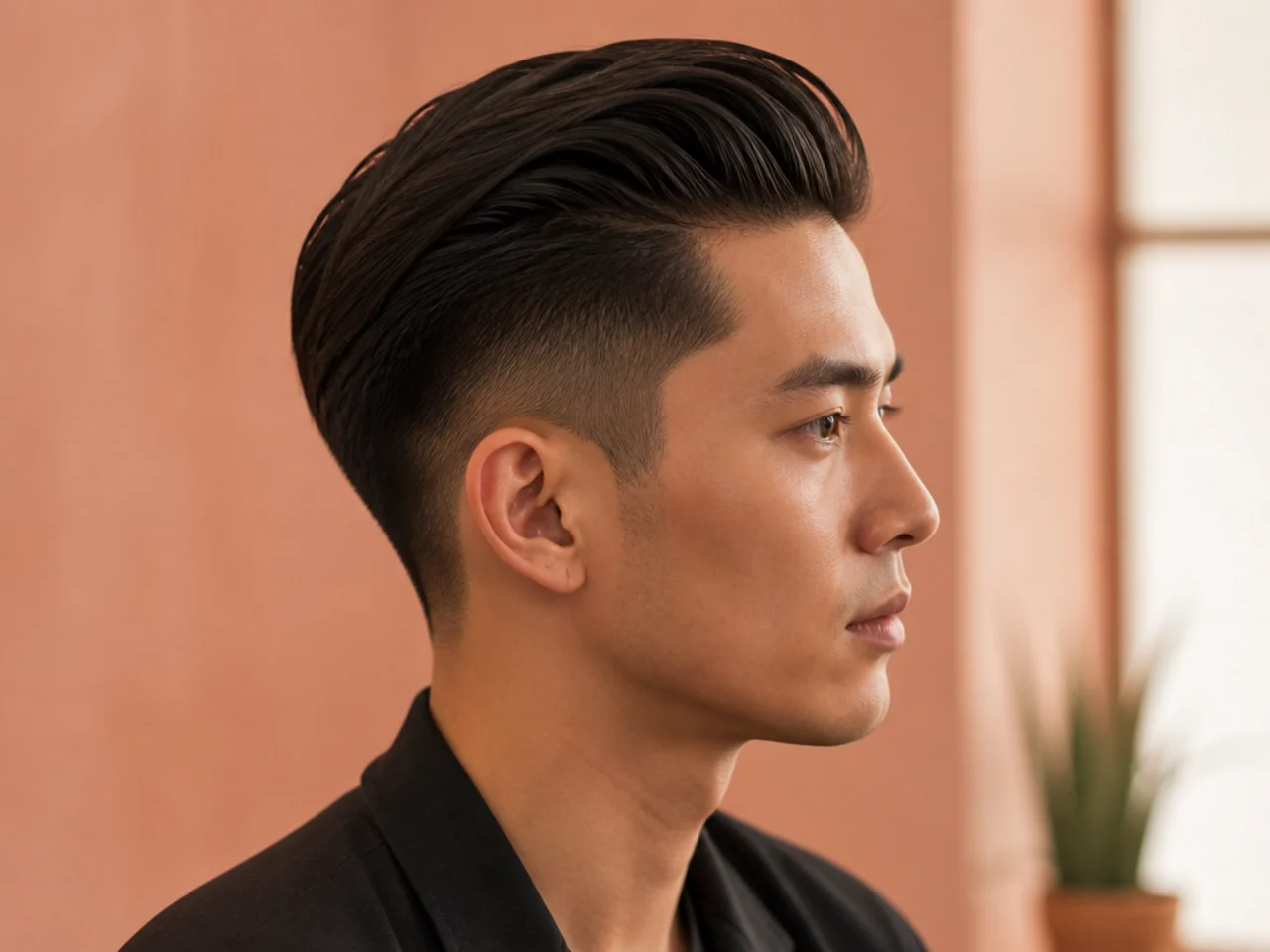
The subtle version becomes bold. Top gets slicked straight back off the forehead — no forward drape — which means the hard-line disconnect is fully visible from every angle. Reads corporate-punk and looks sharper than a plain slick back because the disconnected second block frames the polished top. Compare the smoother slick back haircut if you want the shape without the exposed sides.
Best on straight hair with medium density. Oval, square, and diamond faces.
Ask for: "Two block undercut styled as a slick back, 4 inches on top with the length going backward, zero or one guard hard-line disconnect underneath."
Styling tip: a nickel of pomade combed strictly backward from a wet hairline. No fingers. Set with a shine spray from twelve inches away. Never let the top go rough — the polish is what balances the exposed disconnect.
8. The Brushed Up Two Block Undercut
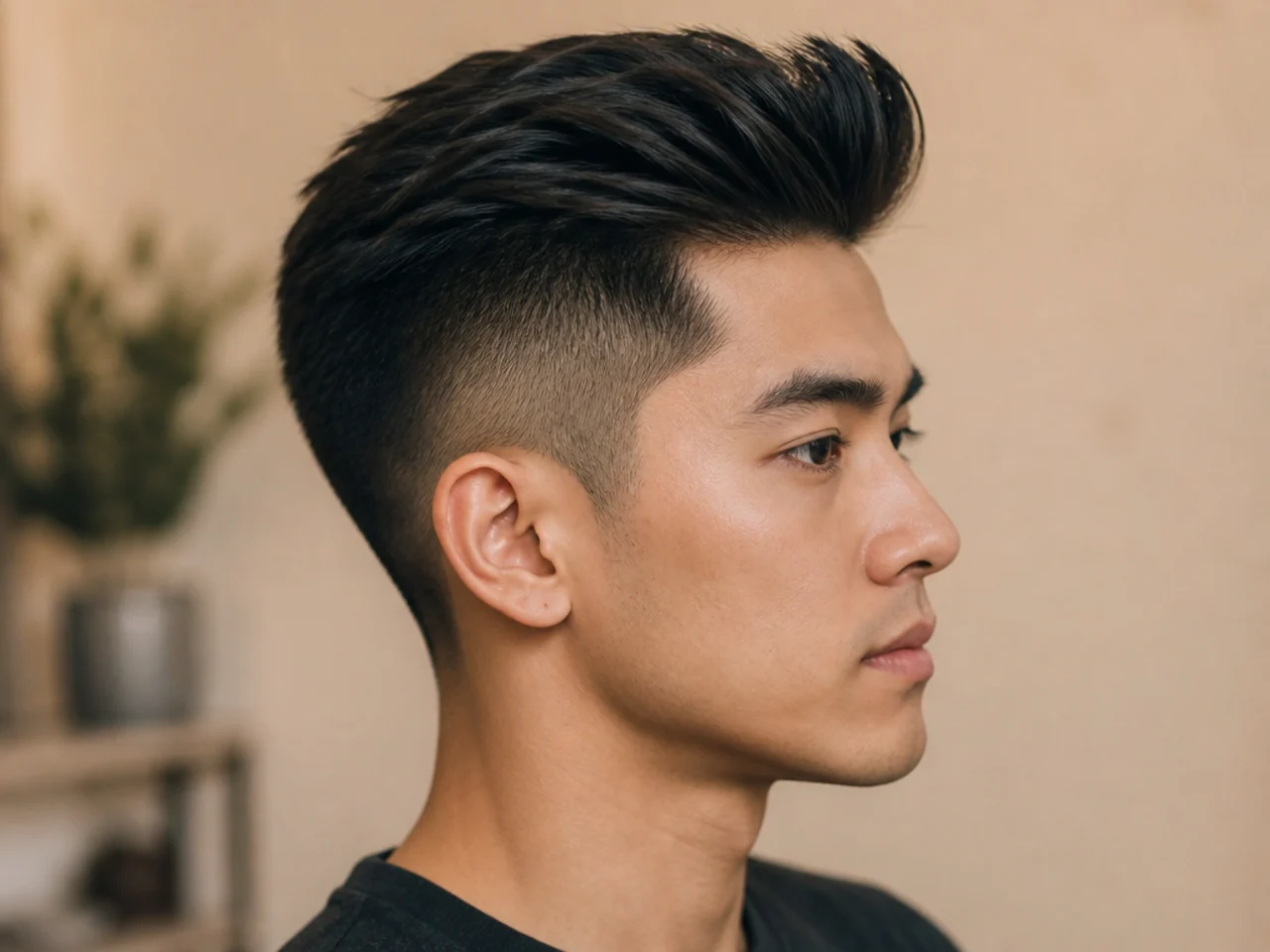
Instead of falling forward or to a side, the top pushes up and back off the forehead. The hidden layer removes side weight so all the volume comes from the top itself. Because the length lifts vertically, the hard-line disconnect at the temple shows through the styling. Reads modern-punk and gains visual height for round-face wearers.
Best on straight hair with fine-to-medium density. Round, oval, and square faces.
Ask for: "Two block undercut, brushed-back styling, 4 inches on top with root lift, one guard hard-line disconnect on the sides."
Styling tip: mousse at the roots on damp hair, blow-dry with a round brush pulling straight up, then a light matte spray to hold. Cool shot from the underside to lock the lift.
9. The Comma Front Two Block Undercut
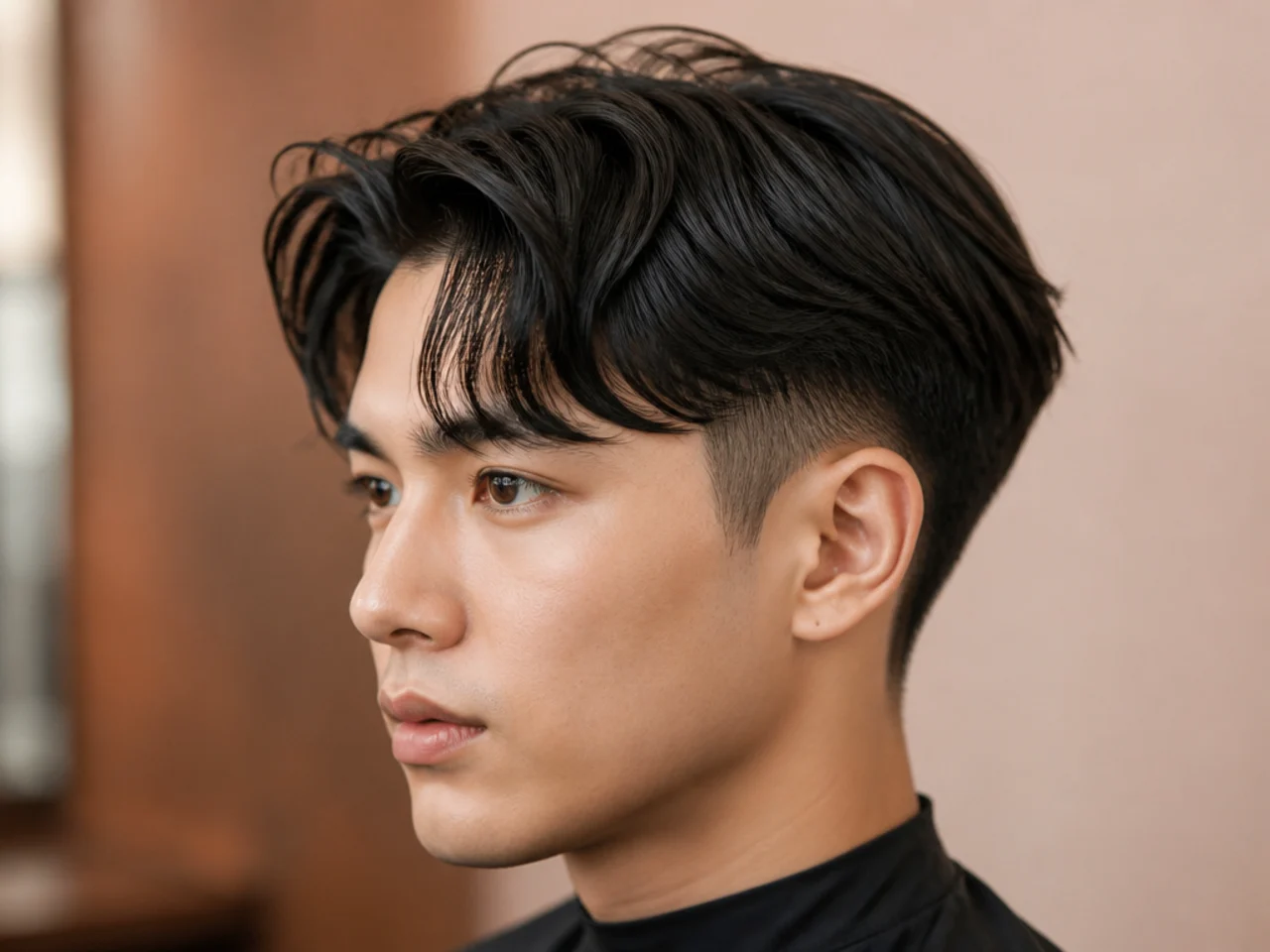
A comma haircut grafted onto a two block undercut. Top runs 4 inches, styled with two curled hooks — one on each side of the forehead — that punctuate toward the outer edge of each eye. The one-guard hard-line disconnect stays clean underneath. Reads playful and polished at the same time. V from BTS wore variations of this exact shape through late-2010s BTS eras.
Best on straight to lightly wavy hair. Oval, oblong, and heart-shaped faces.
Ask for: "Two block undercut with double comma fronts, 4 inches on top with the front cut long enough to hold a curl, one guard hard-line disconnect underneath."
Styling tip: point a one-inch round brush at each temple, roll the front sections inward toward the outer eye, hit each side with cool air. A pea of curl cream to set.
10. The Curly Two Block Undercut
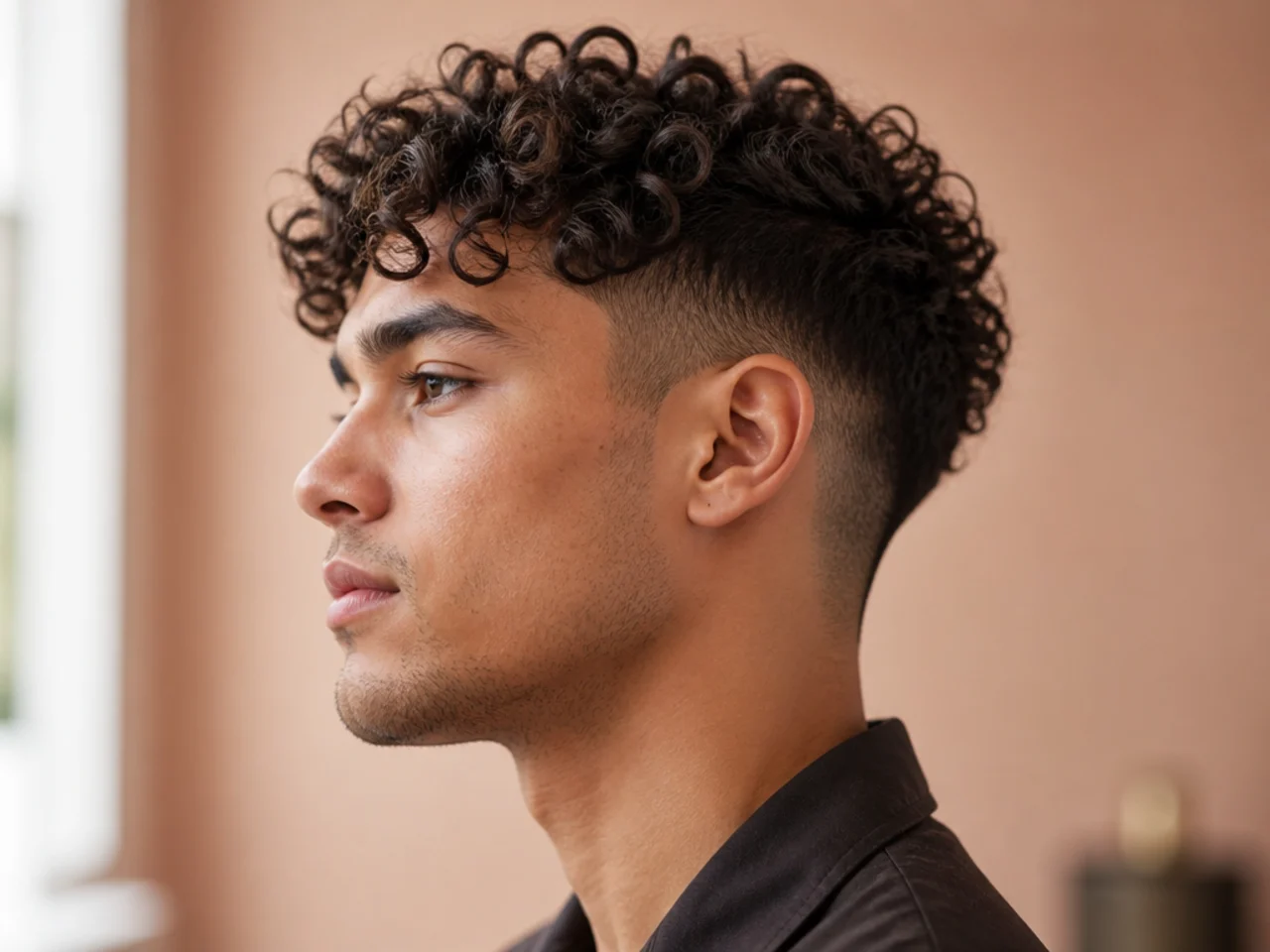
Curls fight the covering mechanic of a two block because they lift instead of drape. The fix is two-part — leave the top long enough that gravity wins, and go shorter on the disconnected layer than you would with straight hair. A half-guard second block keeps the buzz from peeking through the spirals when the top moves.
Best on type 2C through 3B curls. Oval, heart, and square faces.
Ask for: "Two block undercut for curls, 4 to 5 inches on top so the weight pulls down, half guard hard-line disconnect, cut when my curls are dry so the shape reads correctly."
Styling tip: curl cream on soaking-wet hair, scrunch, plop in a T-shirt for ten minutes, then air-dry. Never brush dry curls between wash days.
11. The Wavy Two Block Undercut
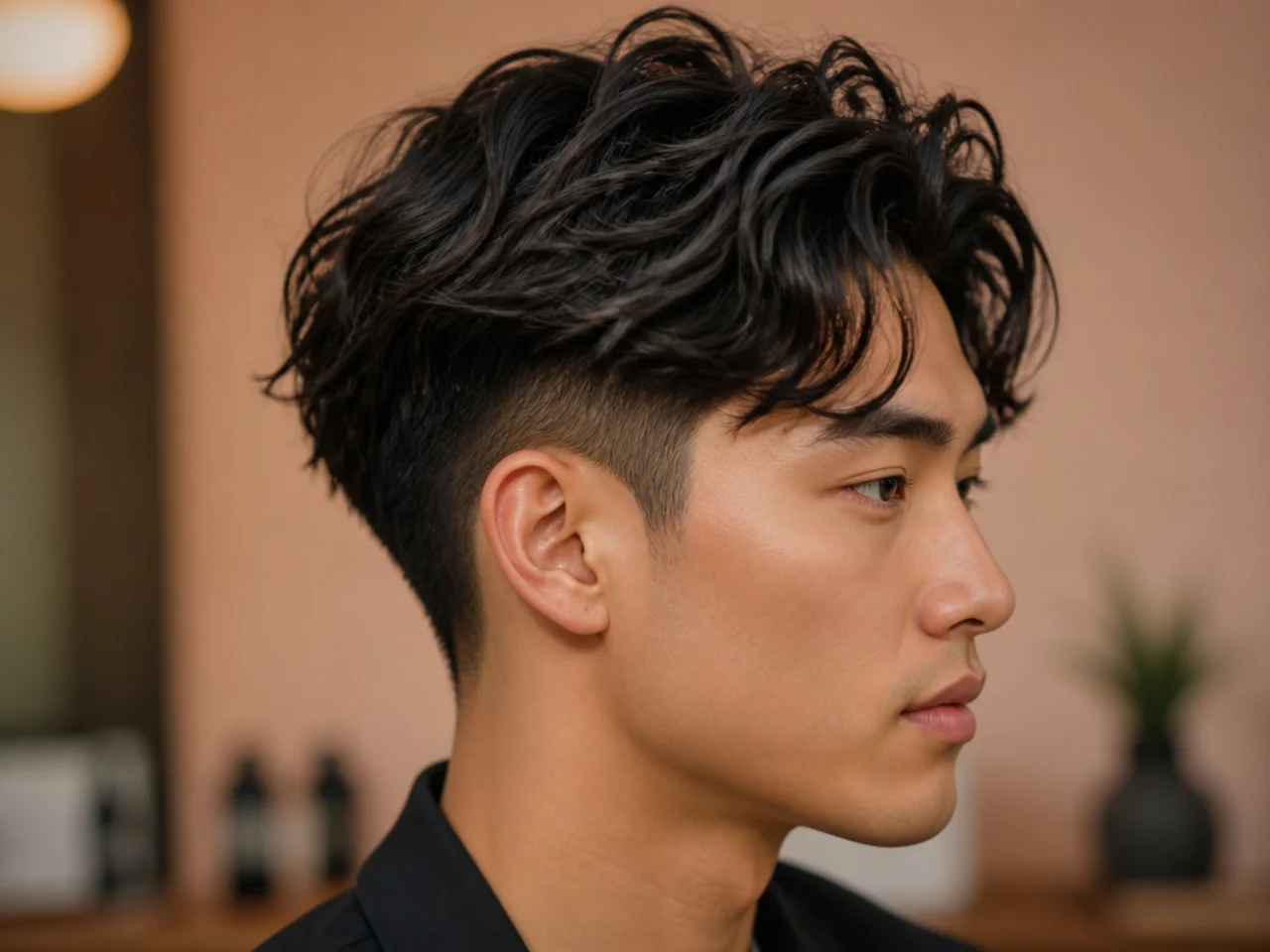
For hair with a natural bend. Your barber cuts the top with the wave pattern in mind — heavier where the wave falls, lighter where it flips up — so the finished shape reads intentional instead of untidy. The disconnect stays hard on a one guard. This is the version that looks best when you skip styling entirely.
Best on type 2A through 2C hair. Oval, heart-shaped, and square faces.
Ask for: "Wavy two block undercut, cut the top with my wave direction, 4 inches at the longest point, one guard hard-line disconnect on the sides."
Styling tip: sea salt spray on damp hair, scrunch, air-dry. No brush. A fingertip of cream through the ends only after it dries.
12. The High Two Block Undercut
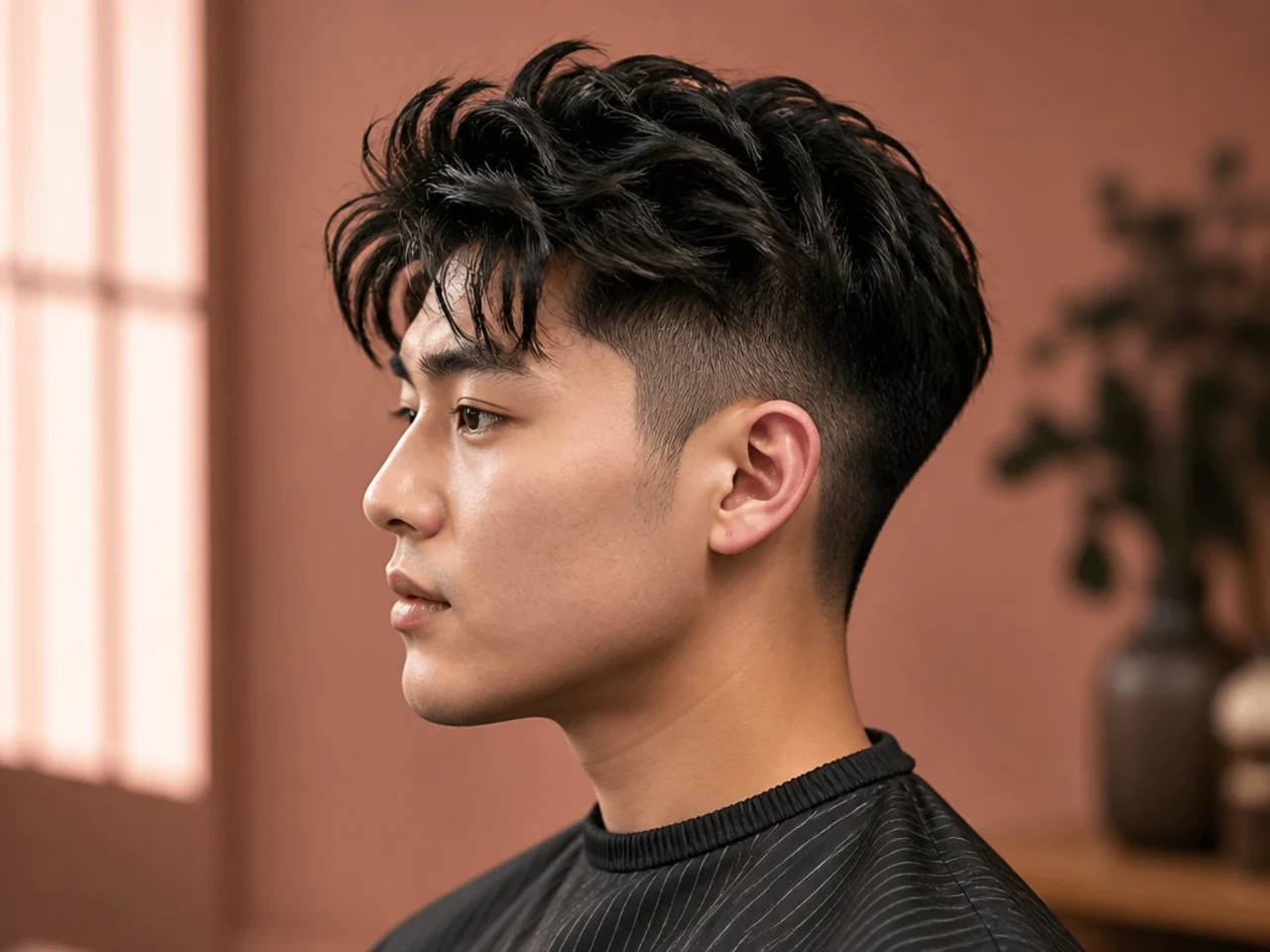
The disconnect line drops the horseshoe higher on the head — closer to the crown than the temple — so more of the sides gets buzzed and less of the top gets to drape. Reads bold, angular, and much less conservative than the classic. Best when the top is styled with lift so the extra buzzed real estate stays visible instead of getting fully covered.
Best on straight hair with strong density. Angular, square, and long faces.
Ask for: "High two block undercut, 4 inches on top, one guard hard-line disconnect with the horseshoe line set high up near the crown."
Styling tip: mousse at the roots on damp hair, blow-dry pulling the top up and back so the raised disconnect stays exposed. A light matte spray to hold.
13. The Low Two Block Undercut
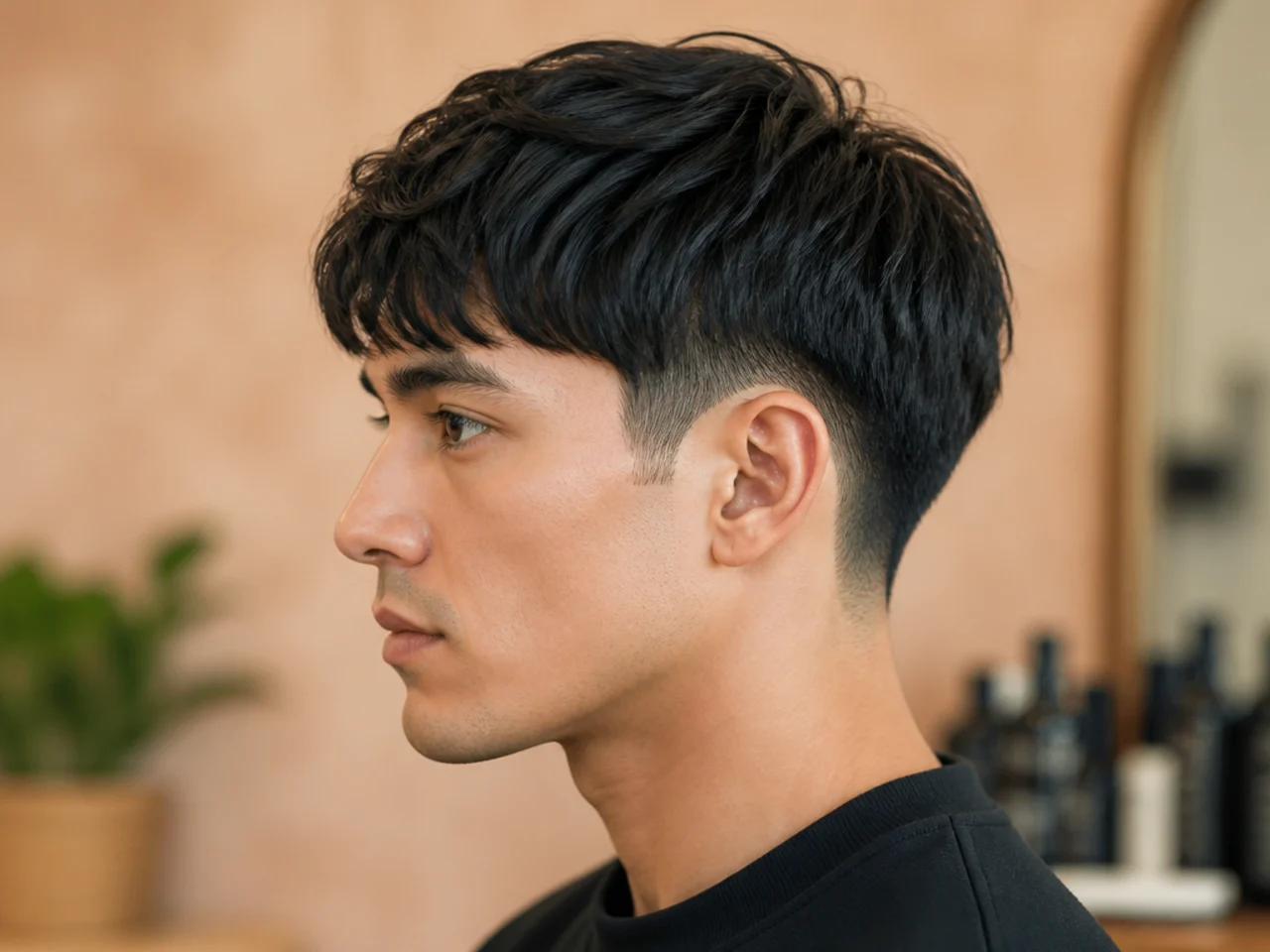
The mirror version of the high — the horseshoe drops low, close to the ears. Less of the sides gets buzzed, more of the top drapes over the disconnect at rest. This is the most subtle two block undercut on the list; the disconnect only shows if you actively push the top back. Reads corporate-safe from most angles and reveals the K-pop shape only when you want it to.
Best on every face shape. Great for professional workplaces that don't allow visible fades.
Ask for: "Low two block undercut, 4 inches on top, one guard hard-line disconnect with the horseshoe line dropped low near the ears."
Styling tip: cream through damp hair, blow-dry forward, split with fingers. The disconnect is hidden by default — don't fight the shape by styling upward.
14. The Two Block Undercut with Design
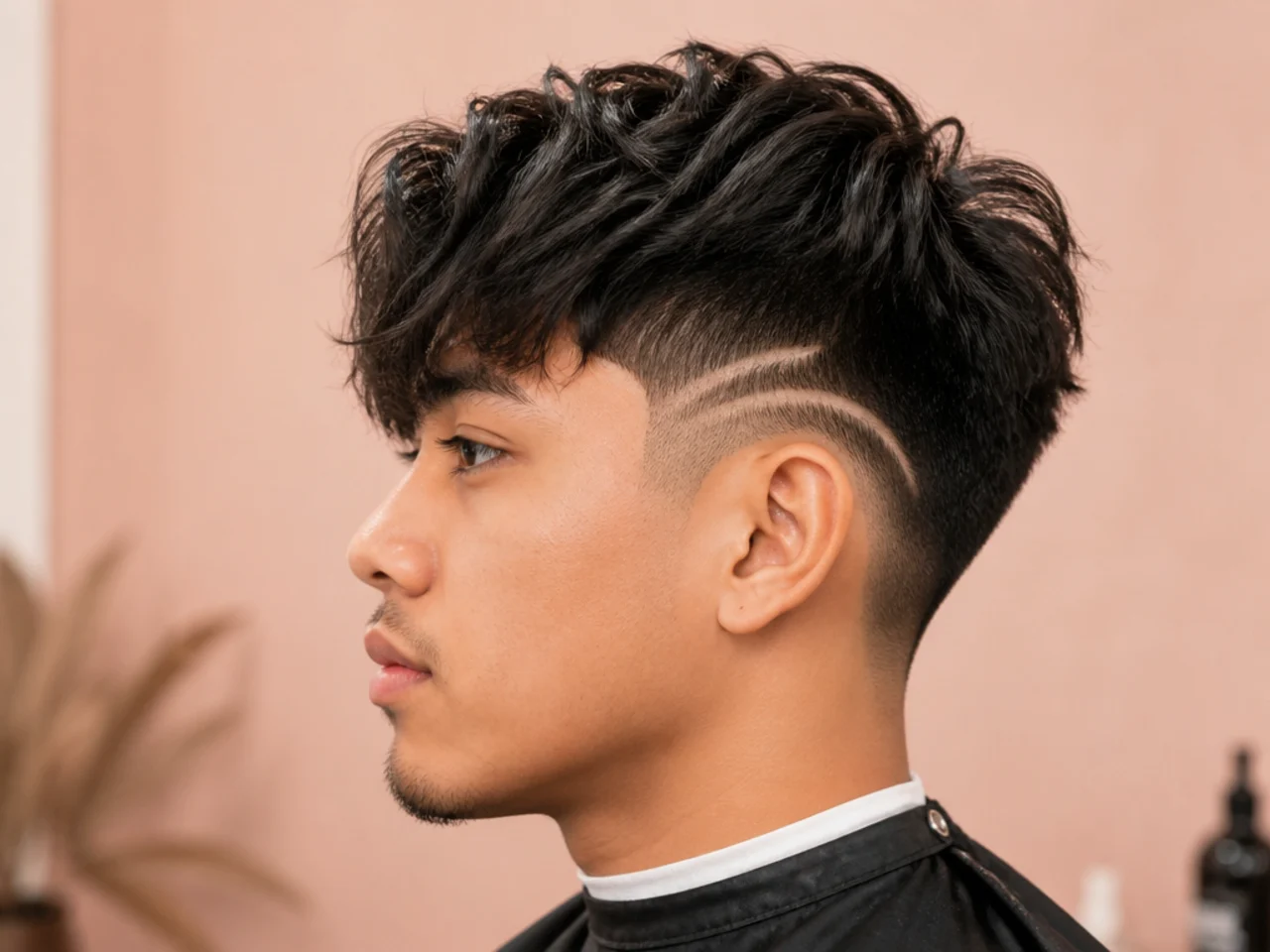
A hair tattoo, line-up, or geometric design cut into the buzzed second block. Because the top drapes over the disconnect at rest, the design stays private — visible only when you push the top back or tuck it behind your ear. Popular with guys who want a statement they control the visibility of. Ask your barber to sketch first, then commit; a design cut into short hair grows out fast.
Best on any face shape. Straight or wavy hair reads sharpest against the etched detail.
Ask for: "Two block undercut with a design etched into the buzzed section — bring the drawing on your phone. 4 inches on top, zero guard hard-line disconnect so the design cuts clean."
Styling tip: blow-dry the top pushed back at least once a day so the design stays visible when you want it to. Skip caps and beanies — they crush the top flat and hide the design permanently.
15. The Asymmetric Two Block Undercut
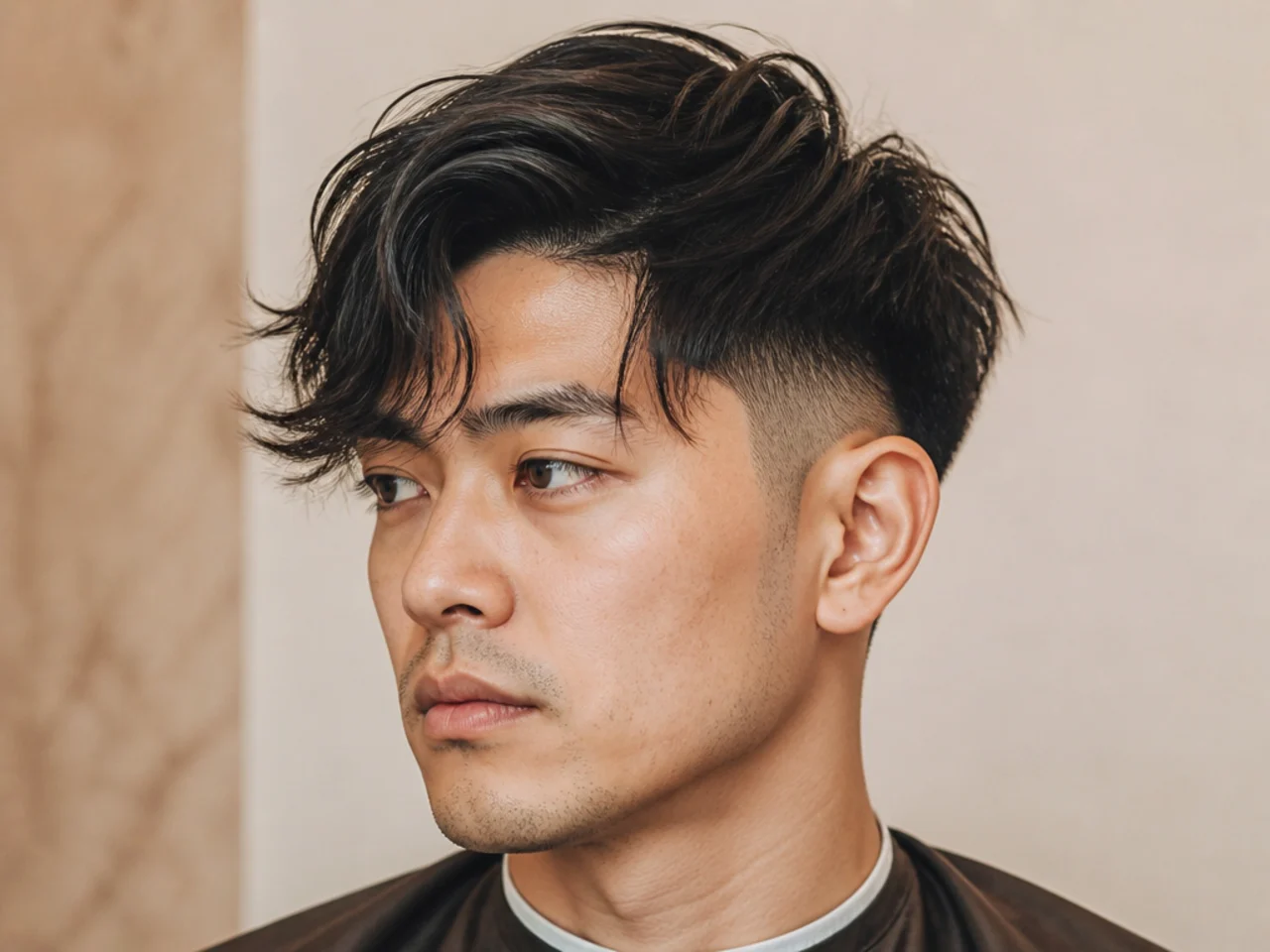
Cut with the part offset about an inch from center — so one side of the top sits heavier and longer than the other. Your barber cuts the top asymmetrically so the shape sits by default without styling. The disconnect stays uniform on a one guard around both sides. Reads more contemporary than a perfect center part and softer than a full side part.
Best on straight or wavy hair. Oval, square, and diamond faces.
Ask for: "Asymmetric two block undercut, 4 inches on top with the part offset an inch to my left, heavier panel on the right, one guard hard-line disconnect around both sides."
Styling tip: comb the offset part while wet, blow-dry each panel outward, keep the heavier panel flowing across the forehead with your hand as it dries.
16. The Fringe-Heavy Two Block Undercut
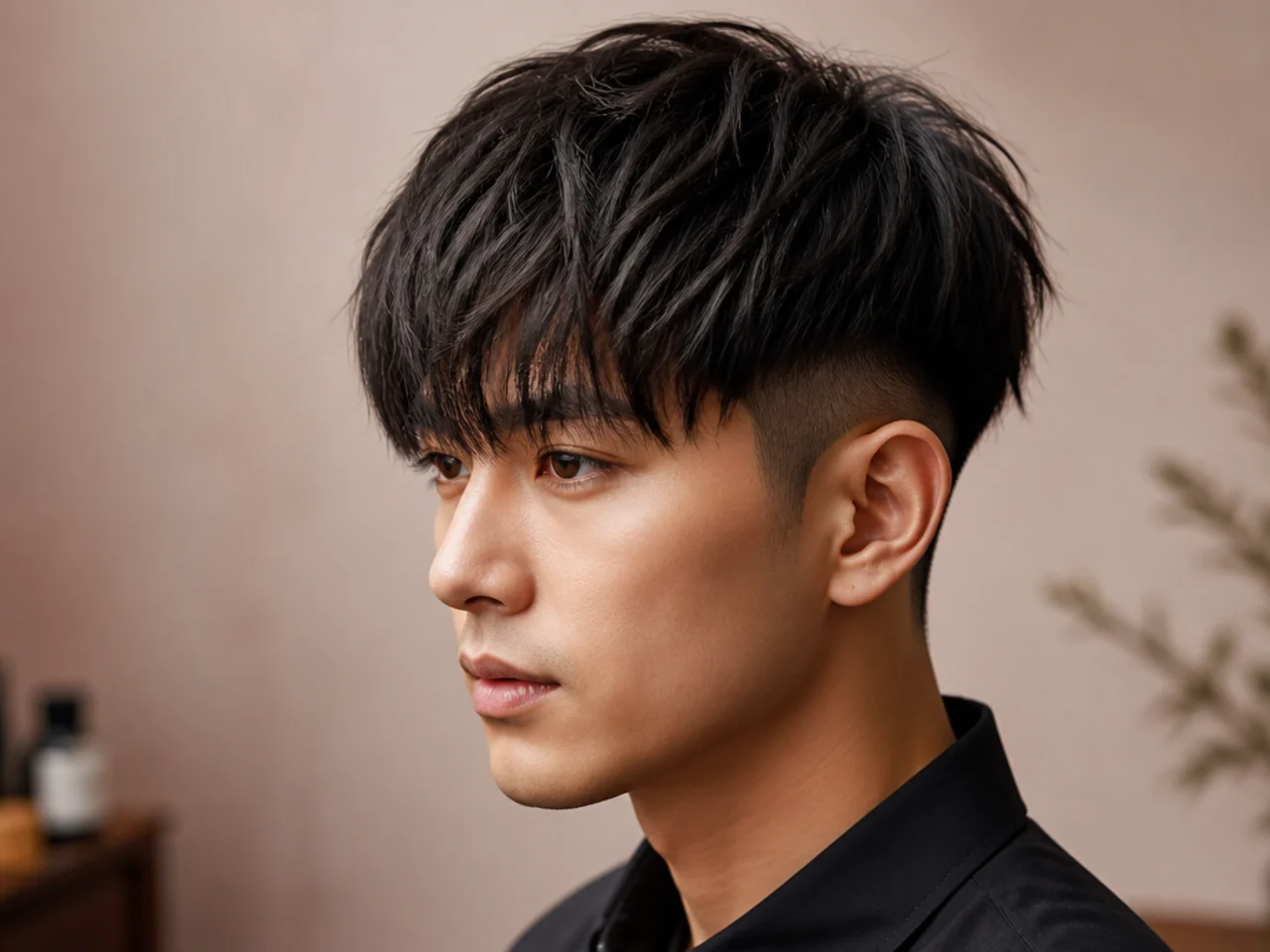
The front section is cut extra thick and extra long — past the eyebrows — while the rest of the top layer stays shorter. The heavy fringe covers exactly what you don't want to show on your forehead, and the disconnected second block keeps the sides from adding width. Reads moody, K-drama-villain, magazine editorial.
Best on straight or wavy hair with medium-to-thick density. Long, oblong, and heart-shaped faces.
Ask for: "Two block undercut with a heavy fringe, 5 inches at the fringe and 3 inches through the rest of the top, one guard hard-line disconnect on the sides."
Styling tip: blow-dry the fringe forward and down over the forehead with your hand shaping the ends. Light cream through the mid-lengths only. Never comb dry — that flattens the weight.
17. The Side Part Two Block Undercut
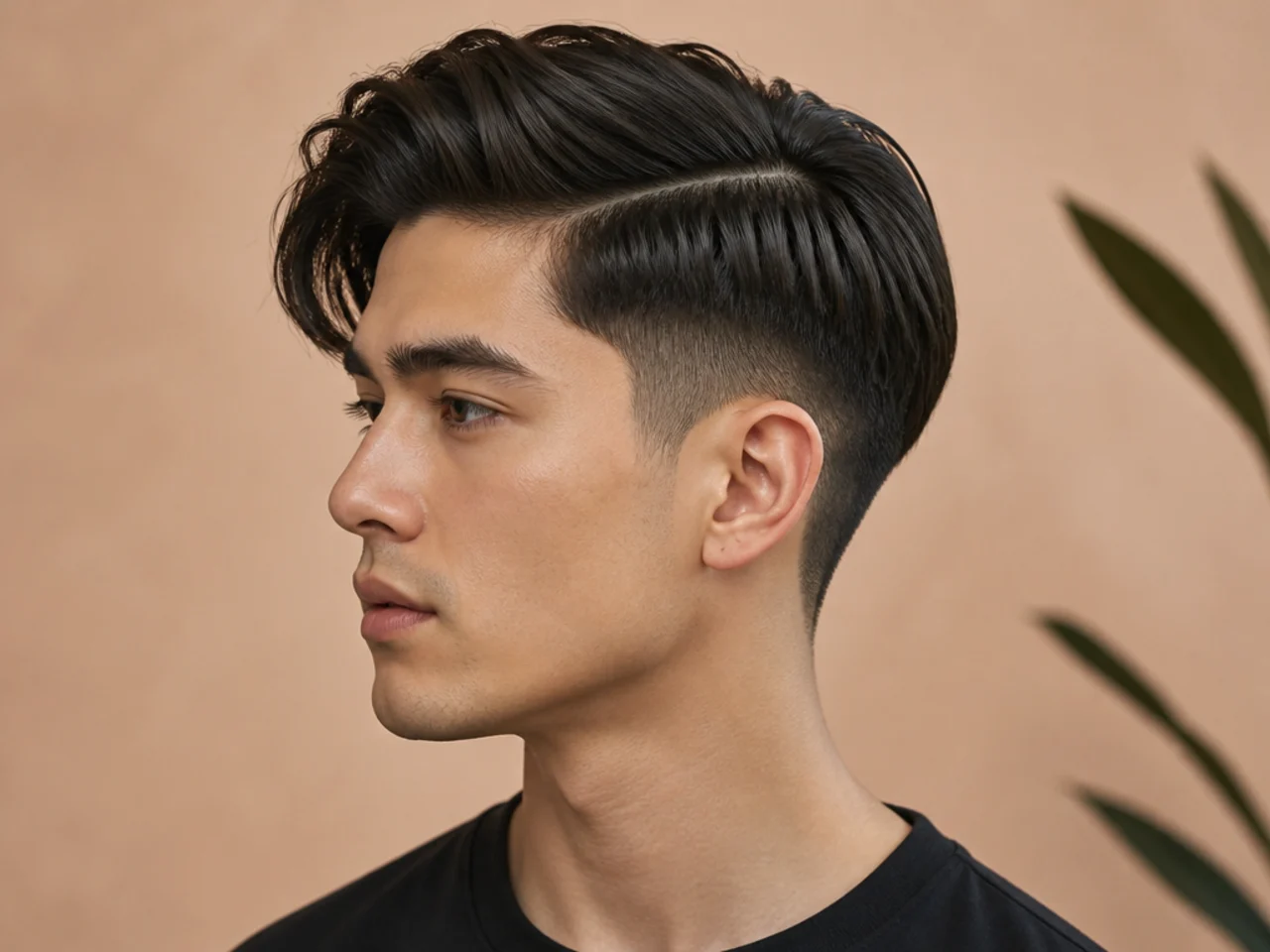
The classic side part cut on a two block undercut base. A hard, sharp part sits above one temple — usually the natural low side — and the top layer sweeps across to the other side. The disconnect line runs one guard around both sides. Reads the most polished of the twenty and sits close to the side part hairstyles for men family, but with a K-pop hidden layer twist.
Best on oval, square, and heart-shaped faces. Straight hair.
Ask for: "Two block undercut with a hard side part on the left, 4 inches on top with the length sweeping to the right, one guard hard-line disconnect around both sides."
Styling tip: pomade combed strictly to shape. No fingers. Set with a shine spray from twelve inches away. Keep the part crisp; the polish is half the look.
18. The Mullet Two Block Undercut
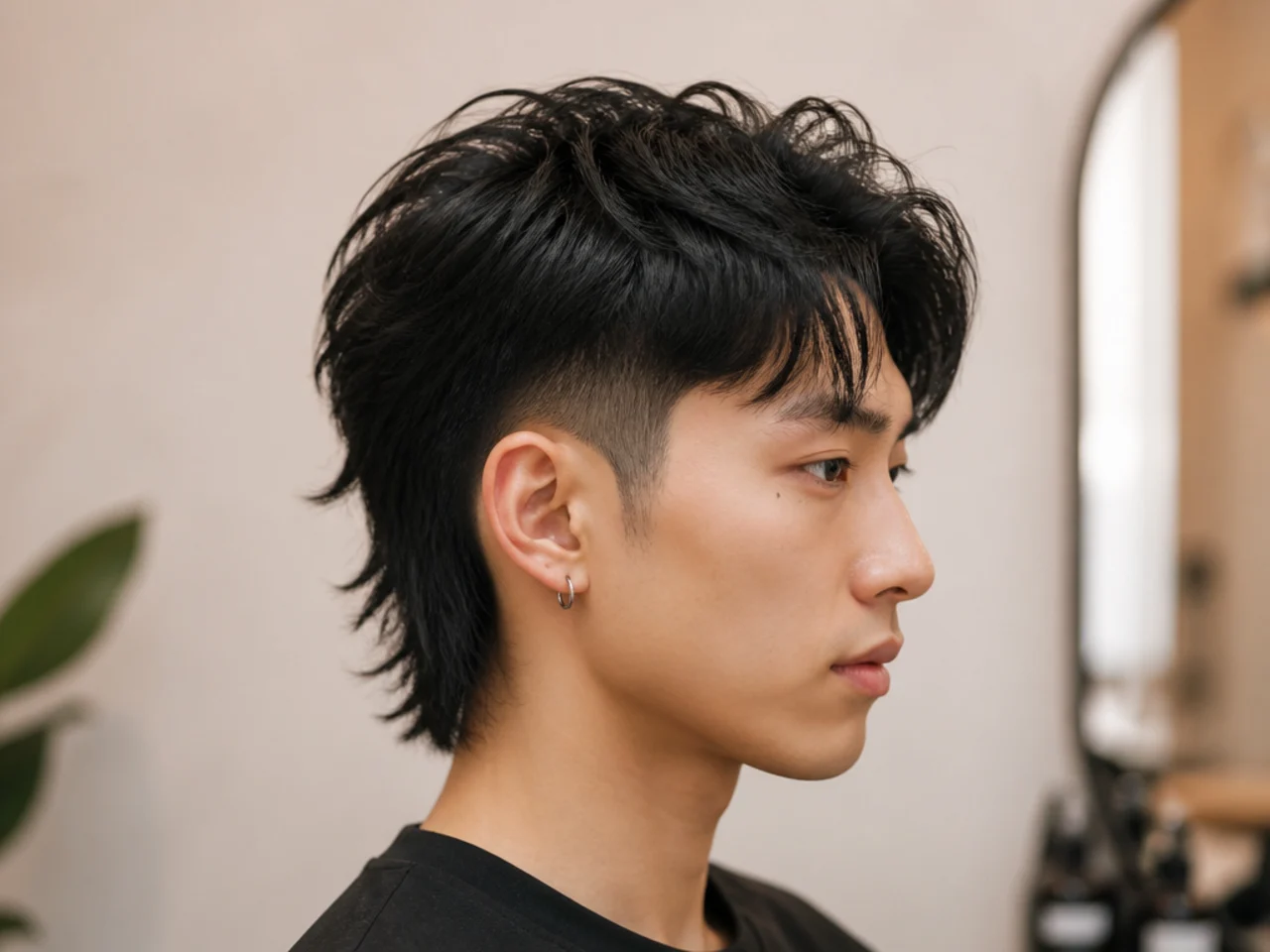
A modern mullet grafted onto a two block undercut base. The hard-line disconnect wraps around the sides only; then the length in the back grows past the collar. Reads bold — this is a statement cut, not a safe one. Fourth-gen K-pop idols like Hyunjin cycle through variations of this between comebacks.
Best on straight or slightly wavy hair. Confident wearers, oval and square faces.
Ask for: "Two block undercut with a mullet back, one guard hard-line disconnect on the sides only, keep the back long past the collar and disconnected from the sides."
Styling tip: sea salt spray on the back length, scrunch by hand, air-dry. Do not blow-dry the tail — it goes fluffy. Style the front separately with cream.
19. The Bowl Two Block Undercut
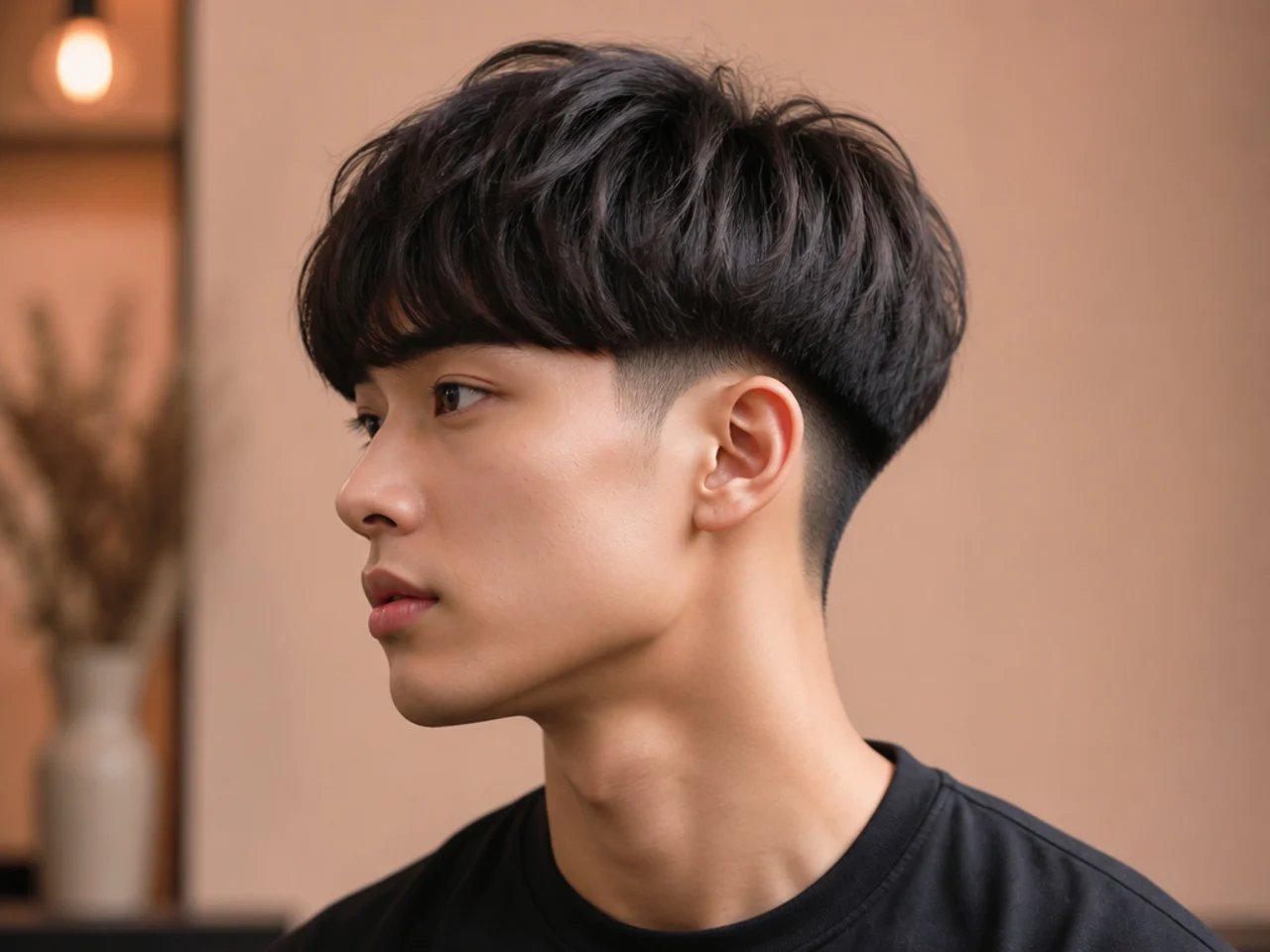
Top layer cut on one horizontal line all the way around — the bowl. Underneath, the disconnect on a one guard stays hard. When the top drops, it forms a perfect circle framing the face; when you push it back, the hard undercut shows in a full ring. Suits straight hair and angular face shapes because the round perimeter softens sharp jawlines.
Best on straight hair. Square, diamond, and oval faces.
Ask for: "Two block undercut with a bowl top, cut the top on one horizontal length all the way around at 3 to 4 inches, one guard hard-line disconnect underneath."
Styling tip: comb the top forward while blow-drying so the round perimeter stays smooth. Never scrunch. A drop of cream through the ends to finish.
20. The Grown-Out Two Block Undercut
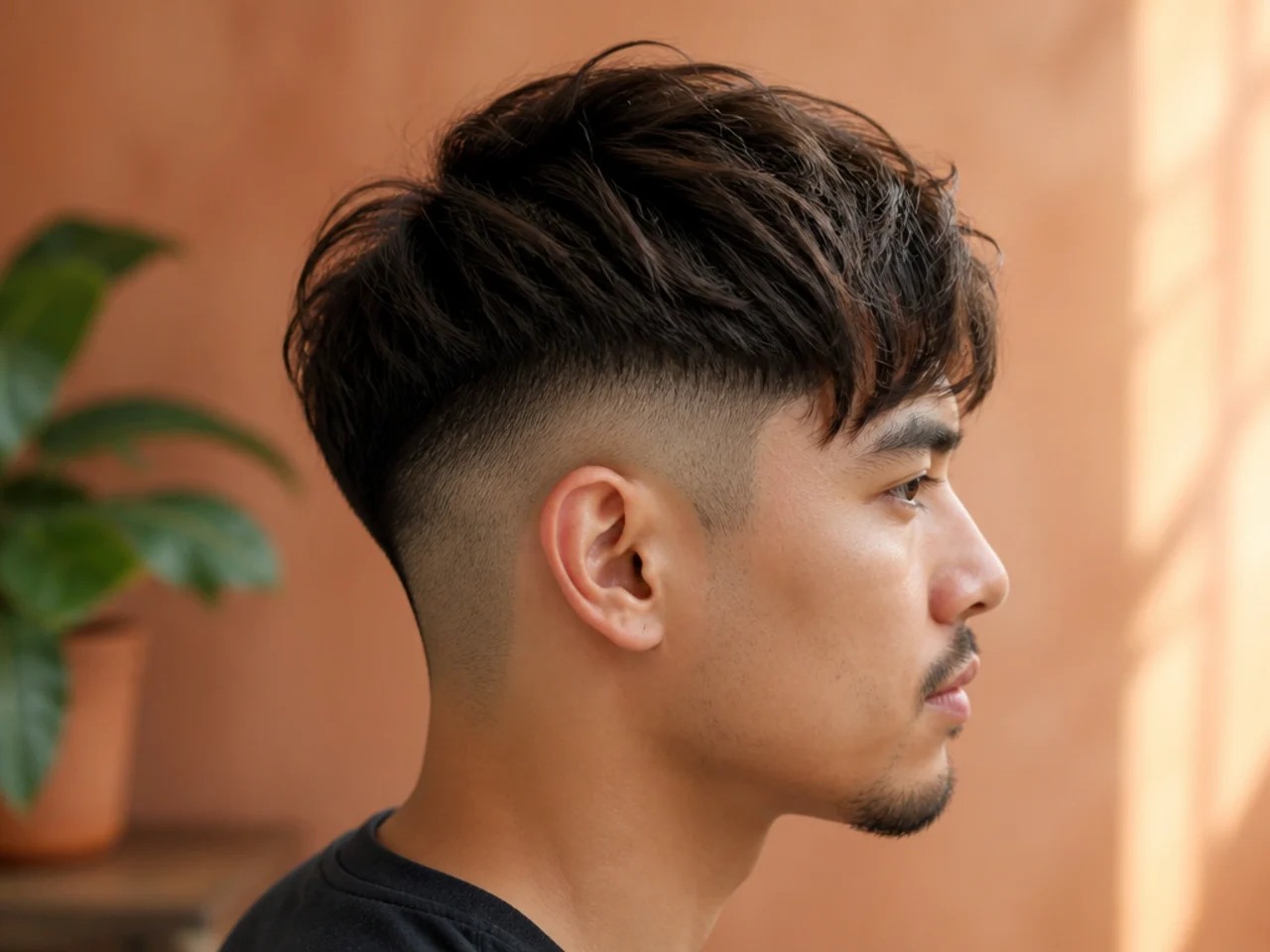
A two block undercut let out for six to eight weeks. The buzzed sides grow into a soft self-blend, the disconnect line softens, and the top pushes past 5 inches. Half the appeal is that the shape ages well — it doesn't collapse into a shapeless mess between cuts. Reads relaxed and slightly rebellious, halfway between the classic version and a full Korean haircut for men grow-out.
Best on straight-to-wavy hair with density to spare. Every face shape.
Ask for: "Grow-out shape from a two block undercut — leave the sides where they are, cut only the top so the length still drapes over the softened disconnect."
Styling tip: sea salt spray on damp hair, scrunch, air-dry. Finish by pushing the top wherever you want the weight to sit — the shape is forgiving at this stage.
How to Ask Your Barber
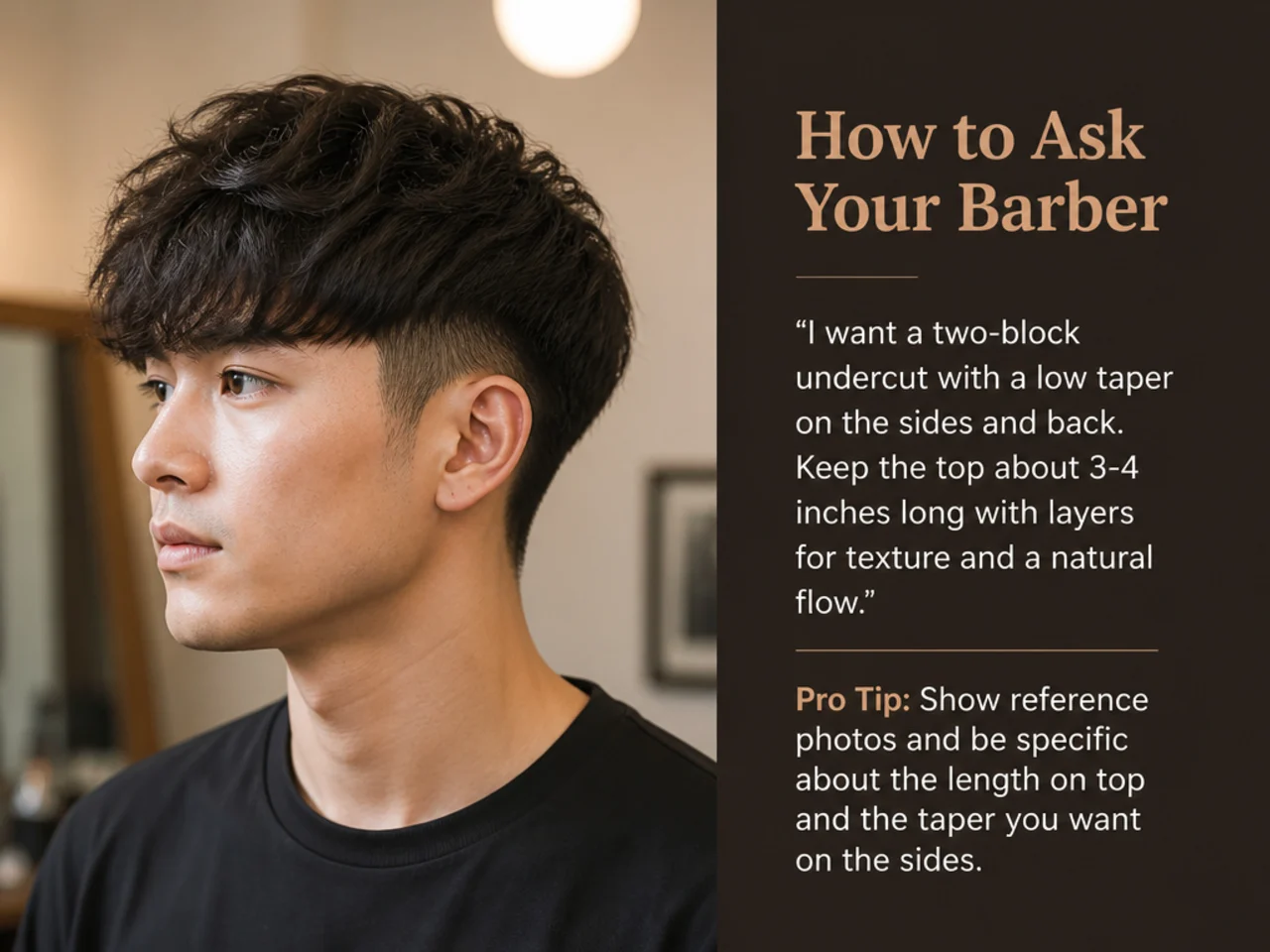
Two block undercut vocabulary trips up non-Korean barbershops, and the wrong translation gets you either a plain undercut or a soft-blend two block — not the sharp disconnected hybrid. This script gets you the version you had in mind:
- Bring three photos — front, side, and three-quarter of the exact variation you want. One photo lets your barber guess; three photos remove guessing.
- Say "two block undercut" and point to the horseshoe line. Touch your temple where you want the hidden line to sit — high, low, or standard. Most barbers know both terms; showing the horseshoe placement removes ambiguity.
- Say "hard line, no blend, no taper." This is the single most important sentence. Without it, most barbers default to a taper — which turns your two block undercut into a two block taper.
- Give the top length in inches, not adjectives. "Five inches on top" is unambiguous. "Medium-long" is not.
- Give the single guard number for the disconnect. Zero, half, one, two, or three. Say it out loud with the number.
- Specify the part. "Center part," "hard side part on the left," "no part, styled forward." The word for how the top sits.
- Book the follow-up before you leave. 3 to 4 weeks for short and classic versions, 5 to 6 weeks for long, mullet, and grown-out ones.
Styling and Maintenance
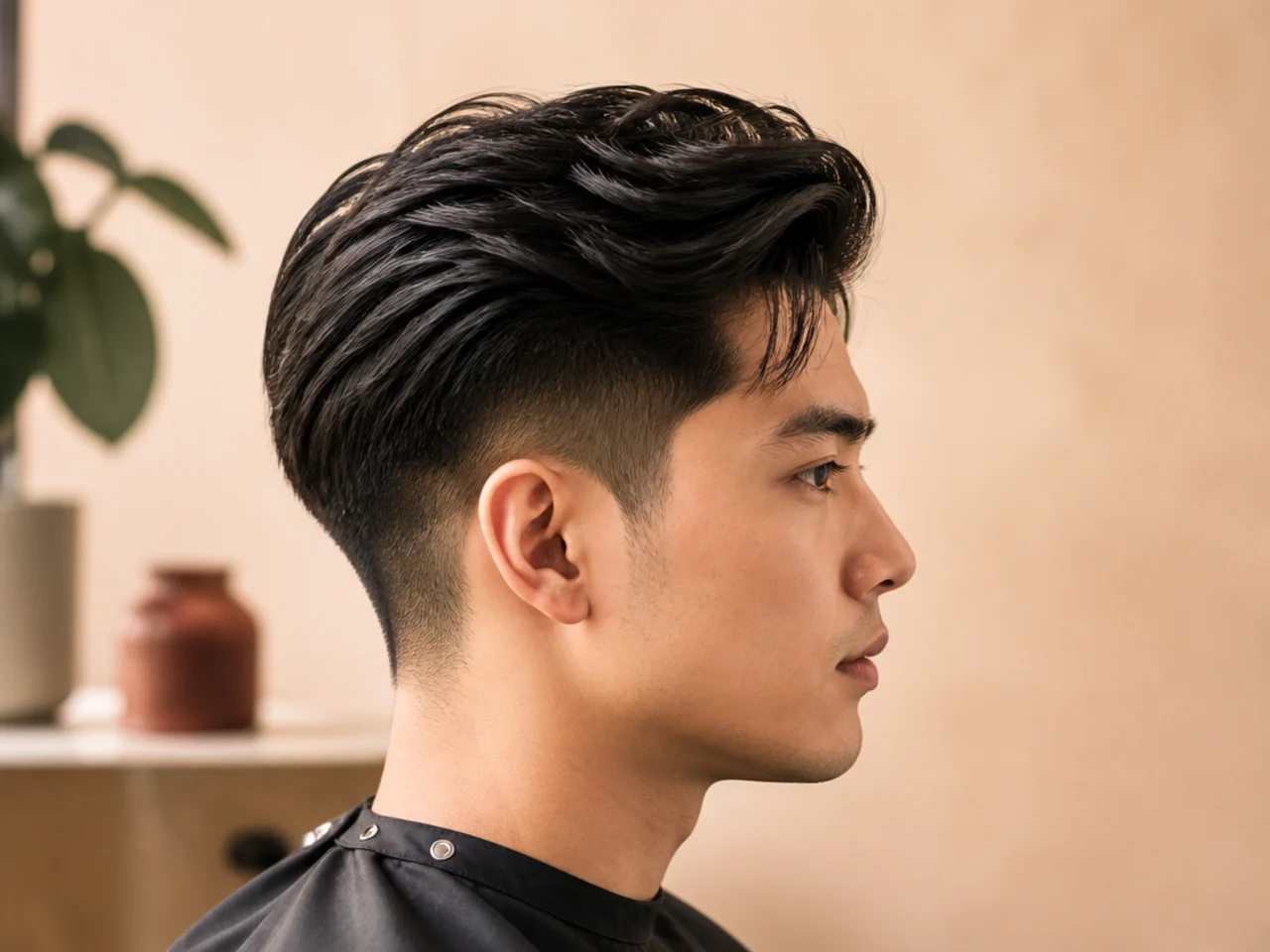
The two block undercut does most of its work in the barber's chair — the disconnected line and the covering top are the shape. Home styling stays minimal. Five habits keep the cut reading sharp.
Wash and rough-dry first. Rough-dry until your hair is damp, not wet. Product goes in damp — soaking wet dilutes it, dry hair fights it. A sulfate-free shampoo twice a week for oily scalps, once for dry. Skip anything with silicones on curly variations — they coat the pattern and drop the definition within a week.
Blow-dry from the roots out to the ends. Point the nozzle down the shaft in the direction you want the top to sit — forward for classic, back for slick, up for brushed up, outward from the part for center-parted. Two minutes with a hairdryer beats ten minutes of product. A cool shot from underneath sets the shape.
Match the product to the finish. A light cream for the classic, short, and middle-part versions. A matte clay for the textured, wavy, and messy variations. A pomade for the slick back and side part. A curl cream for the curly and wavy versions. One product, small amount — Korean styling is subtractive, not additive.
Keep the disconnect fresh. The buzzed second block is what makes it a two block undercut. As soon as it grows past a fingernail's length, the hard line softens and the shape starts reading unkempt. A quick clipper touch-up on the sides at week two or three — home or barbershop — stretches the cut a full extra week. Pick up a solid pair of clippers if you're doing it yourself.
Sleep on a satin pillowcase. It saves the round-brush work overnight, especially on the brushed up, slick back, and curtain variations. Guys with permed or wolf-style tops should also skip touching the shape between washes — every hand-run drops the pattern.
FAQ
Can I get a two block undercut at any barber, or do I need a Korean one?
Any barber can cut it now — both the two block and the undercut have crossed over. Bring three photos, use inches and guard numbers, and say the phrase "hard line, no blend, no taper" out loud. That single sentence is what stops a Western barber from defaulting to a soft-blend two block instead of the sharp disconnected version.
What's the difference between a two block undercut and a two block fade?
A two block fade blends the two lengths softly — the sides step down through several clipper guards or fade all the way to skin gradually. A two block undercut refuses to blend. A single clipper guard runs straight down from the horseshoe line to skin with no transition. When the top moves, a fade shows a smooth gradient; an undercut shows a sharp horizontal edge.
Does the two block undercut work for balding or thinning hair?
Yes, with a shorter top and heavier internal texture. Keep the top at 3 to 4 inches, ask for razor-cut or point-cut layers to build visual mass, and drop the disconnected layer to a zero guard so nothing peeks through when the top thins. The Korean haircut for men family covers more thinning-hair-friendly shapes if that's the priority.
Which two block undercut is the most professional?
The short two block undercut, the low two block undercut, and the classic version with a one-guard disconnect all read office-ready. Keep the top under 4 inches, the disconnect line low near the ears, and style the top forward so the buzzed sides stay covered. Skip the high, mullet, and design variations for strict dress codes.
Does a two block undercut grow out well?
Yes — it is one of the better grow-outs in the Korean cut family. The buzzed second block softens into a natural taper as it lengthens, and the top drapes further over the disconnect as the sides catch up. The grown-out two block undercut variation is intentional exactly because the shape ages gracefully. You can wear it three to six weeks past a normal cut cycle without it reading messy.
How is a two block undercut different from a Korean two block haircut?
A Korean two block haircut is the parent family — any two block with a Korean silhouette on top, using any transition between the two lengths. A soft scissor blend, a taper, a fade, or a hard undercut all count. A two block undercut is specifically the hard-line disconnected version. All two block undercuts are Korean two blocks, but not every Korean two block is an undercut version.