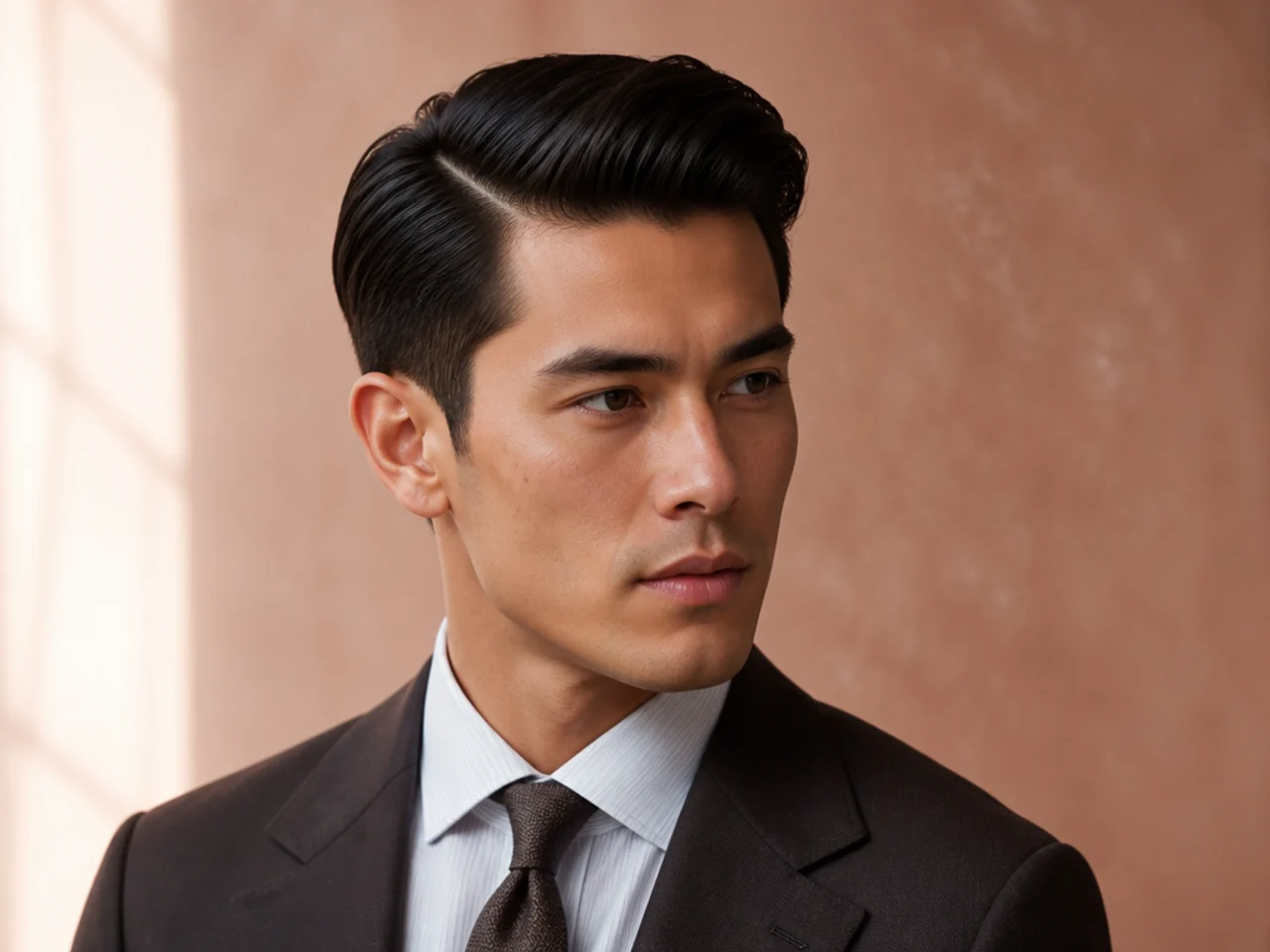
30 Side Part Haircuts Every Guy Should See
Thirty side part haircut ideas every guy should see — classic scissor cuts, hard-part skin fades, curly builds. Photos, face-shape fits, what to ask.
In this article · 36
- Why the Side Part Never Left the Barbershop
- How to Pick the Right Side Part for Your Face and Hair
- The 30 Side Part Variations Every Guy Should See
- 1\. Classic Executive Side Part
- 2\. Ivy League Side Part
- 3\. Traditional Gentleman's Comb Over
- 4\. Preppy Scholar Side Part
- 5\. Old Money Aesthetic Side Part
- 6\. Hard Part with Skin Fade
- 7\. Deep Hard Part with Mid Fade
- 8\. Thick Etched Hard Part with Disconnect
- 9\. Razor Line-Up Side Part
- 10\. Modern Textured Side Part with Low Fade
- 11\. Side Part with Mid Fade
- 12\. Side Part with High Skin Fade
- 13\. Deep Parting Volume Top
- 14\. Side Part with Drop Fade
- 15\. Side Part with Burst Fade
- 16\. Classic Undercut Side Part
- 17\. Disconnected Undercut Side Part
- 18\. Side Part with Blended Beard
- 19\. Side Swept Fringe with Taper
- 20\. Pompadour Side Part
- 21\. Deep Side Slick Back
- 22\. Messy Textured Side Part
- 23\. Curly Top Side Part with Taper
- 24\. Coily Hard Part with Skin Fade
- 25\. Wavy Natural Side Part
- 26\. Asian Straight Hair Side Part
- 27\. Long Flow Side Part
- 28\. Grown-Out Transitional Side Part
- 29\. Teen Skin Fade Side Part
- 30\. Salt-and-Pepper Mature Side Part
- How to Ask Your Barber for the Version You Want
- Styling and Maintenance
- FAQ
Every barbershop has its evergreen cut. For men, that cut is the side part — parted length on top, tighter sides, and one visual line that decides whether the shape reads classic, modern, or sharp. This is a running gallery of thirty side part haircut ideas worth seeing before you sit in a chair, from scissor-tapered gentleman's cuts to razor-drawn skin fades. Photos, face fits, and the words to bring your barber.
For the wider category and every parted variation, start with the side part hairstyles for men pillar. This list narrows to thirty specific looks worth pinning.
Why the Side Part Never Left the Barbershop
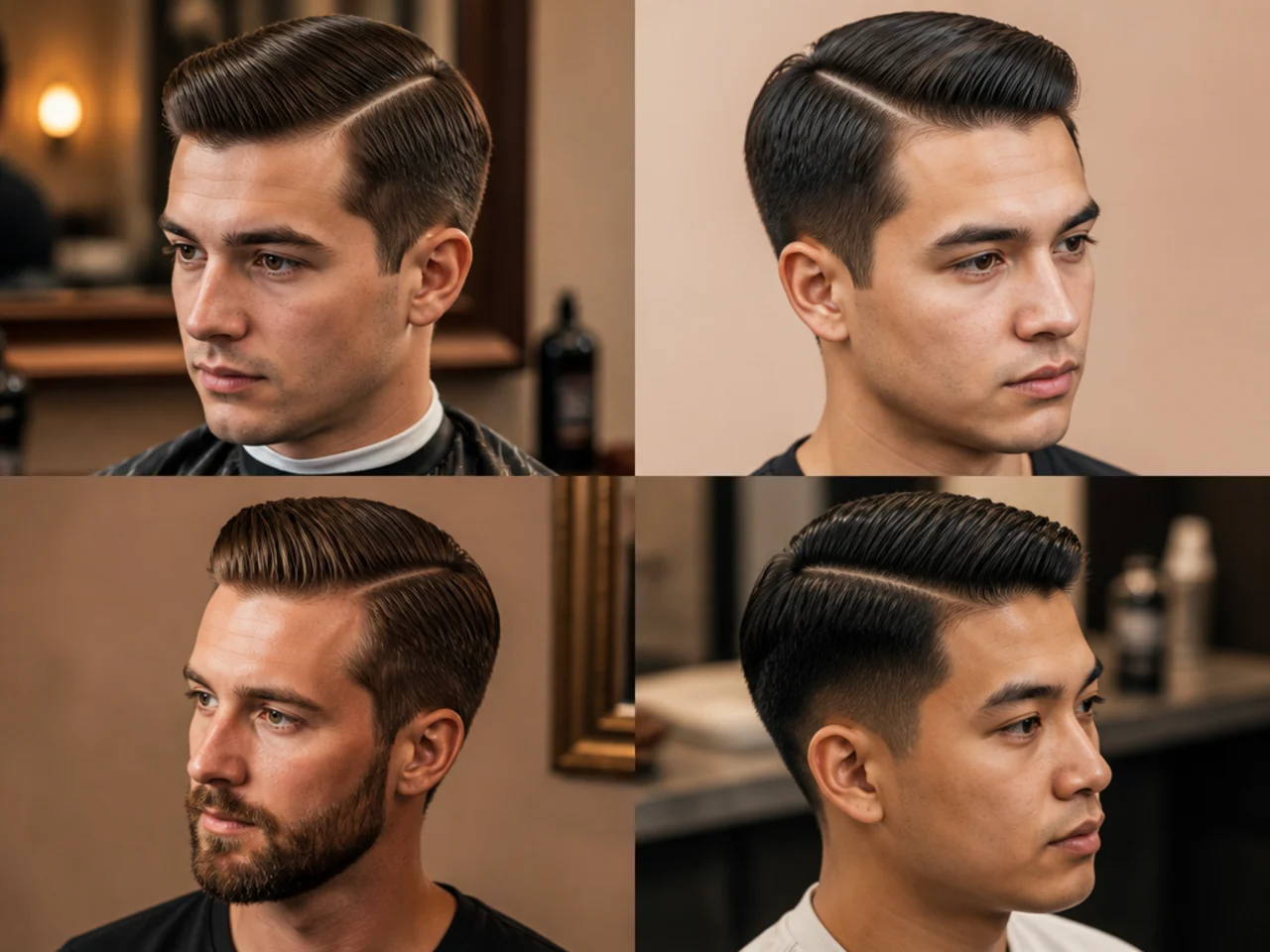
Trends rotate through men's grooming every eighteen months. The side part sits underneath all of them. It's the base a barber falls back on when a client says "clean up whatever this is" — because a parted top with tapered sides is the closest thing haircutting has to a neutral setting. Add a hard part and it reads current. Grow the top and it reads mature. Fade the sides and it reads sharp. Skeleton doesn't change.
The parting itself is the tool. That single visible line lengthens a round face, adds structure to a soft jaw, and gives thin hair density it doesn't naturally have. Two categories of side part run this list — the scissor-blended classic (no clipper marks, four-to-six-week wear) and the modern fade-and-parting (clippered sides, razor definition, two-to-three-week wear). Both belong in every guy's short list.
How to Pick the Right Side Part for Your Face and Hair
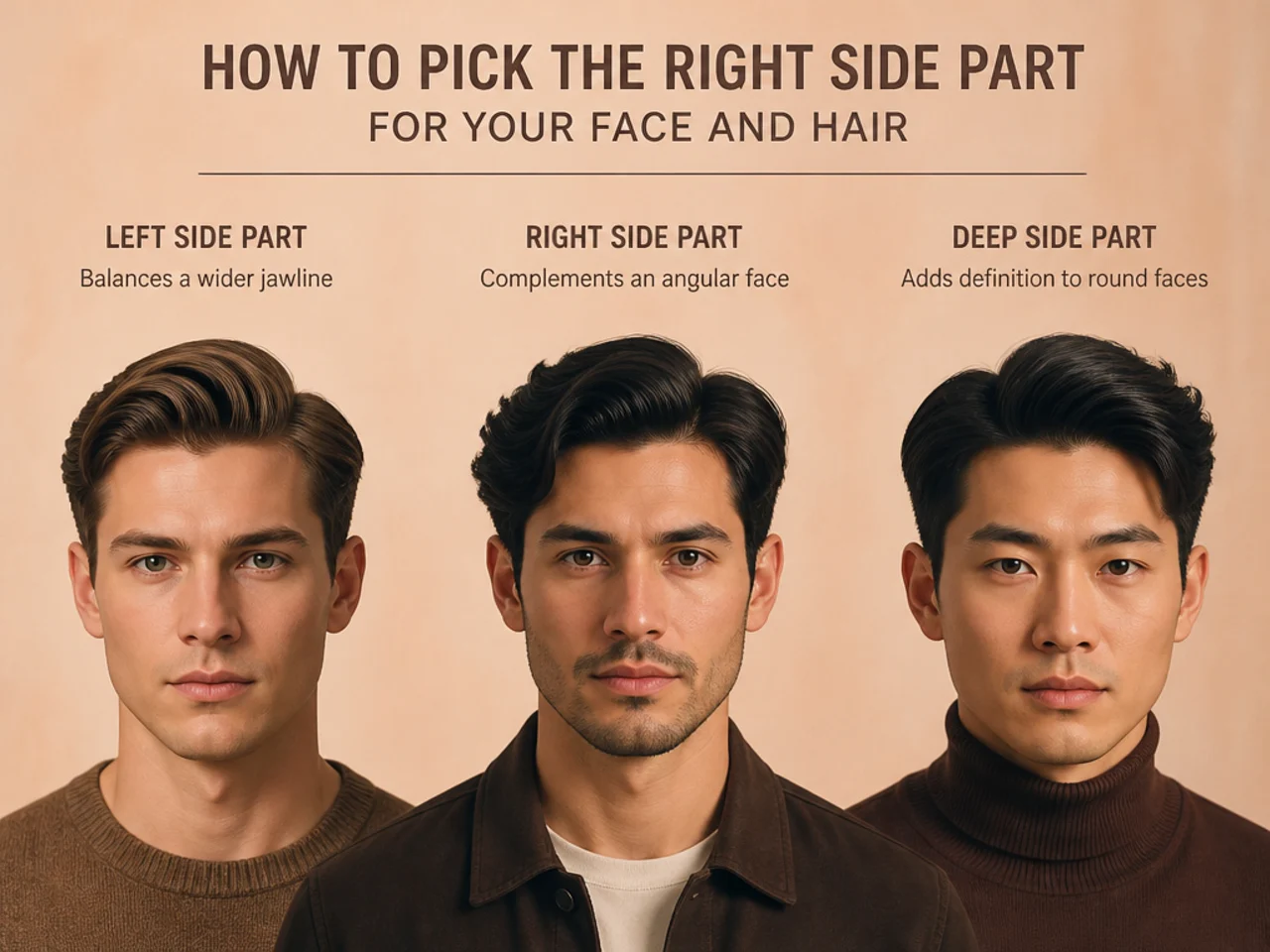
Three variables decide the version for you. Face shape sets the geometry. Hair texture decides the finish. Your calendar decides how often you can hold the shape.
Round faces want vertical lift and a deeper parting to break the symmetry — variations 6, 7, 13, and 20 handle that cleanly. Long or oblong faces do better with a shallow part, less height on top, and a lower fade — see 1, 4, and 17. Square jaws land beautifully with soft classic parts or a hard part above a mid fade; both offset the corners. Oval and diamond faces wear almost anything on this list.
Hair texture pushes the finish. Straight hair holds a razor-drawn line the sharpest. Wavy hair wants a soft comb-drawn part where the wave carries the sweep on its own. Curly and coily hair look best when the sides are tapered short so the density on top has a clean frame — the parted line reads harder against contrast.
Maintenance is the last cut. A skin fade with a hard part looks its best for ten days and tired by twenty-one. A scissor-tapered classic stretches to five weeks. If your calendar only holds monthly haircuts, pick from the classic and low-fade families. The how often should men get a haircut guide covers rebook rhythms by build.
The 30 Side Part Variations Every Guy Should See
Thirty versions sorted from classic through modern to specialty. Each entry names what makes the cut different, who it suits, exact wording for the chair, and one styling move worth stealing. For a slightly narrower twenty-five-version breakdown, the side part haircut men sibling guide is worth a scan.
1. Classic Executive Side Part
The version every barber cuts with his eyes closed. Scissor-tapered sides, two to three inches on top, natural parting along the cowlick, combed once. No fade, no clipper, no razor line. Reads competent from a distance and holds every meeting that week. Suits every face shape and every workplace. Best on straight to gently wavy hair.
Ask for: "scissor-tapered sides, two to three inches on top, natural side part on my dominant side, no clipper marks."
Styling: pea of light-hold pomade combed through damp hair from the parting outward. Sixty seconds.
2. Ivy League Side Part
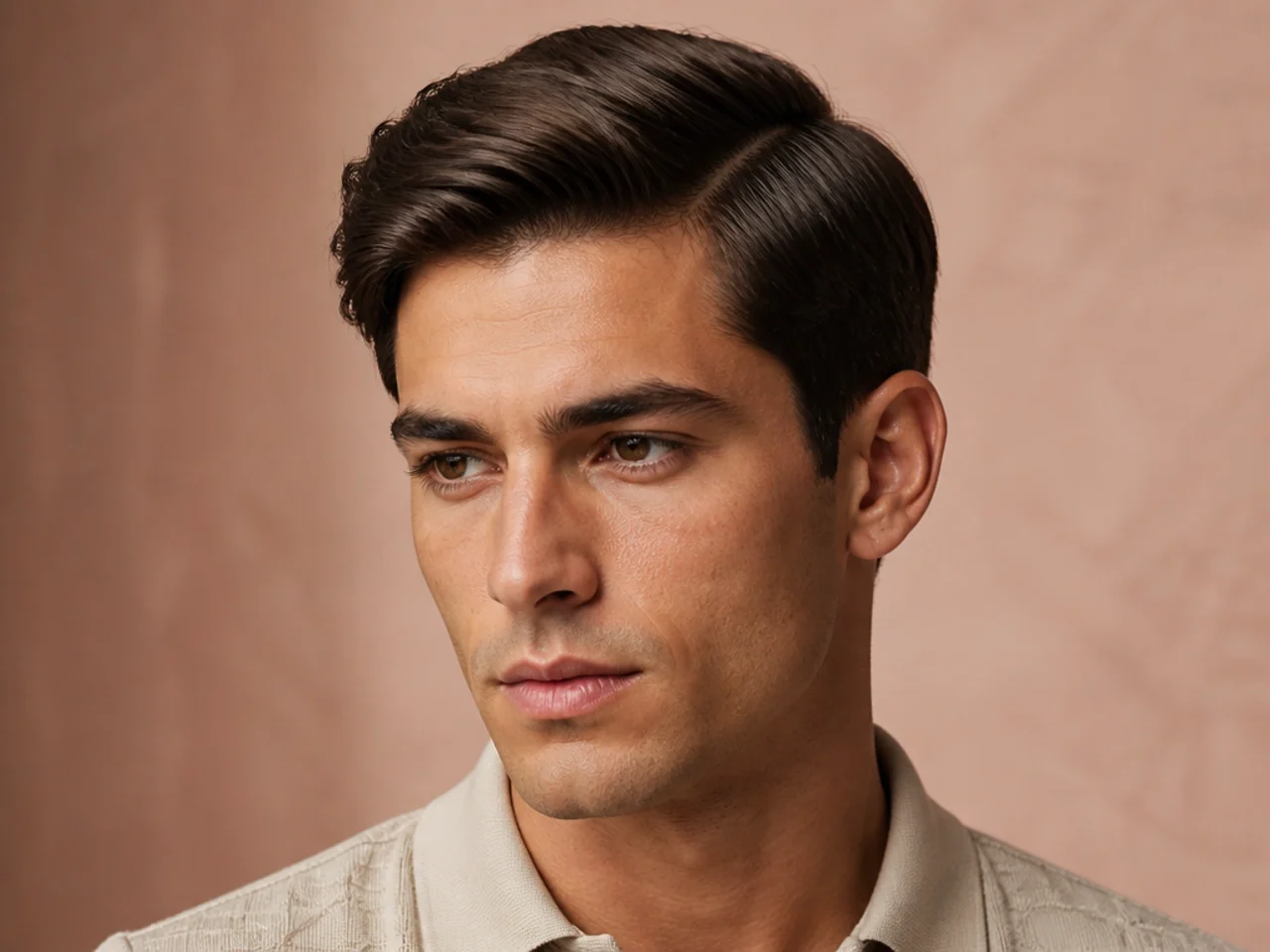
The prep-school archetype dropped into 2026. One and a half to two inches on top, scissor-tapered sides that never touch skin, soft comb-drawn parting on the dominant side. Reads intentional without reading trendy. The full Ivy League haircut breakdown covers the length nuances that separate an Ivy from an executive cut.
Ask for: "Ivy League with a side parting, one and a half to two inches on top, scissor taper on the sides, no fade."
Styling: hair cream or light-hold pomade combed once. Ages up cleanly from twenty-five to fifty-five.
3. Traditional Gentleman's Comb Over
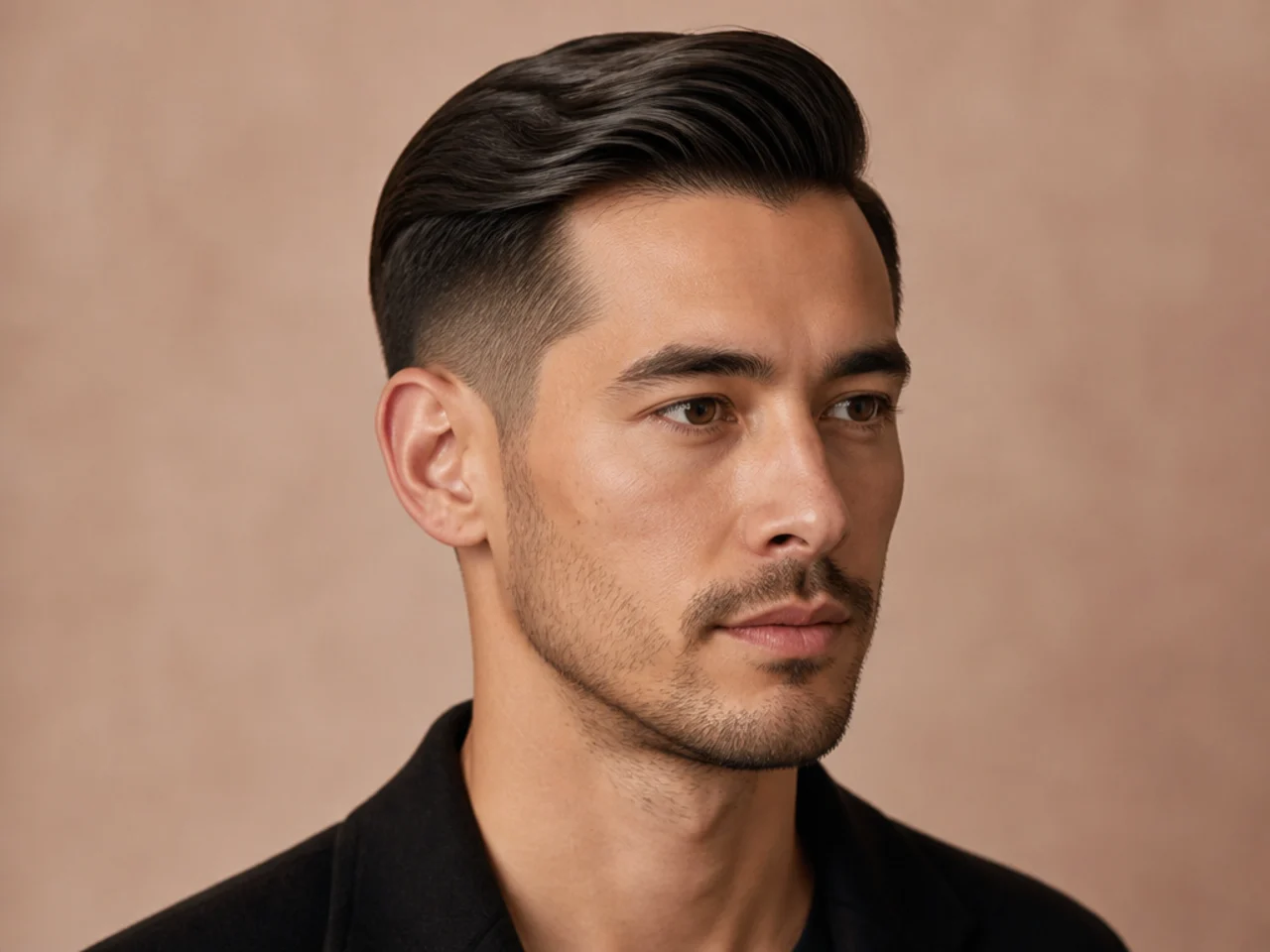
Four inches on top, scissor-blended sides with zero clipper marks, shallow hand-drawn parting that lets the whole top sweep across the crown. Reads wedding-guest formal without leaning stuffy. Handles thinning crowns gracefully because the sweep adds density where nature has stepped back. See the comb over haircut family for length variants.
Ask for: "gentleman's comb over — scissor-blended sides, no clipper, four inches on top, shallow side parting."
Styling: shine-forward pomade or hair cream, combed from the parting outward. Blow-dryer pass across the top for lift. Aim for satin, not plastic.
4. Preppy Scholar Side Part
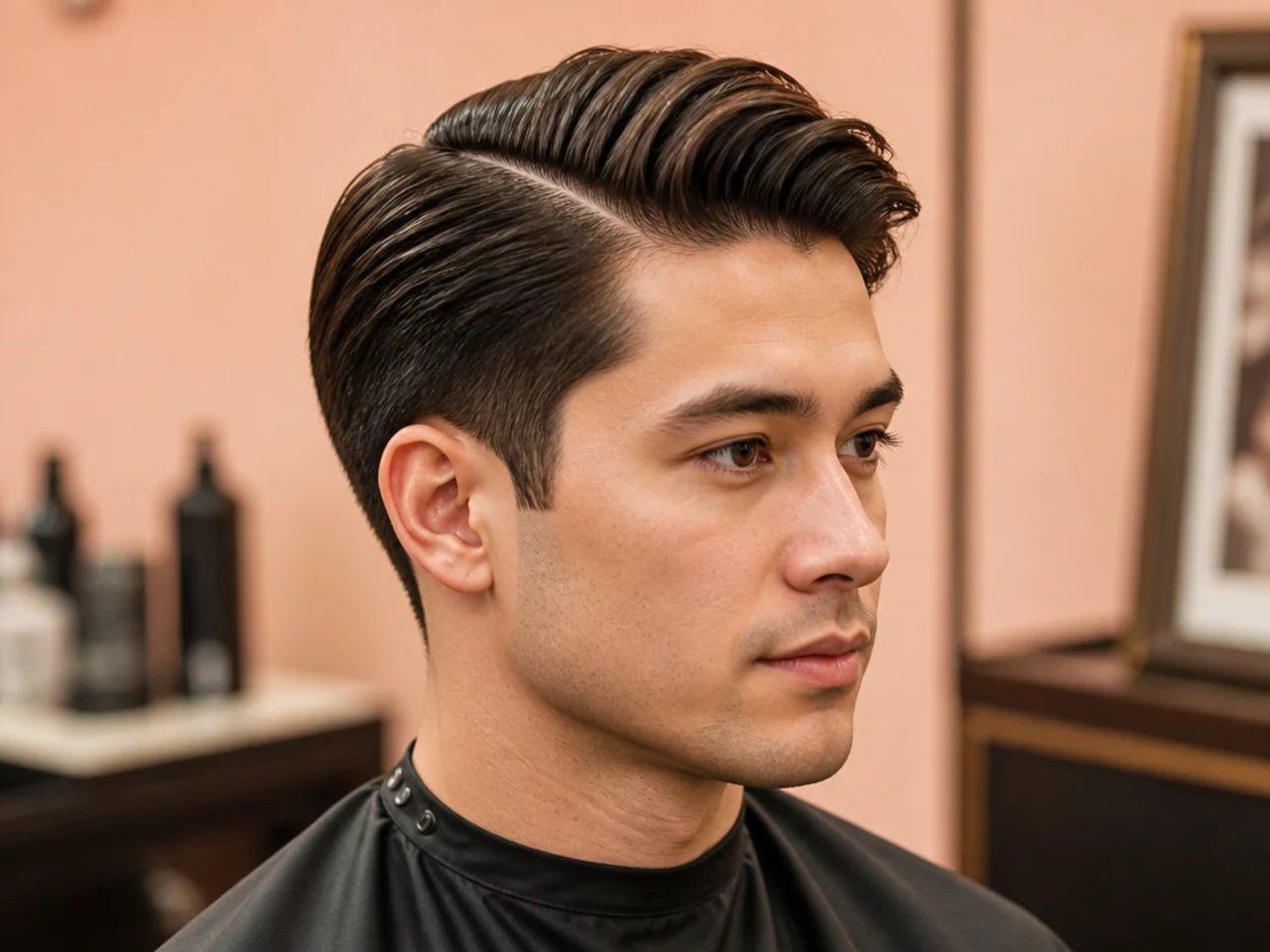
Ivy League proportions with a longer front — the fringe brushes the brow rather than sitting tucked. Two inches on top, scissor-tapered sides, soft parting sitting lower on the head than a boardroom cut. Best on straight or wavy hair on younger guys, though it holds through the thirties on the right face.
Ask for: "scissor taper on the sides, two inches on top with slightly more length at the front, soft side parting."
Styling: dime of hair cream combed once, then finger-tousle the front so the fringe breaks softly. Air-dry if you can.
5. Old Money Aesthetic Side Part
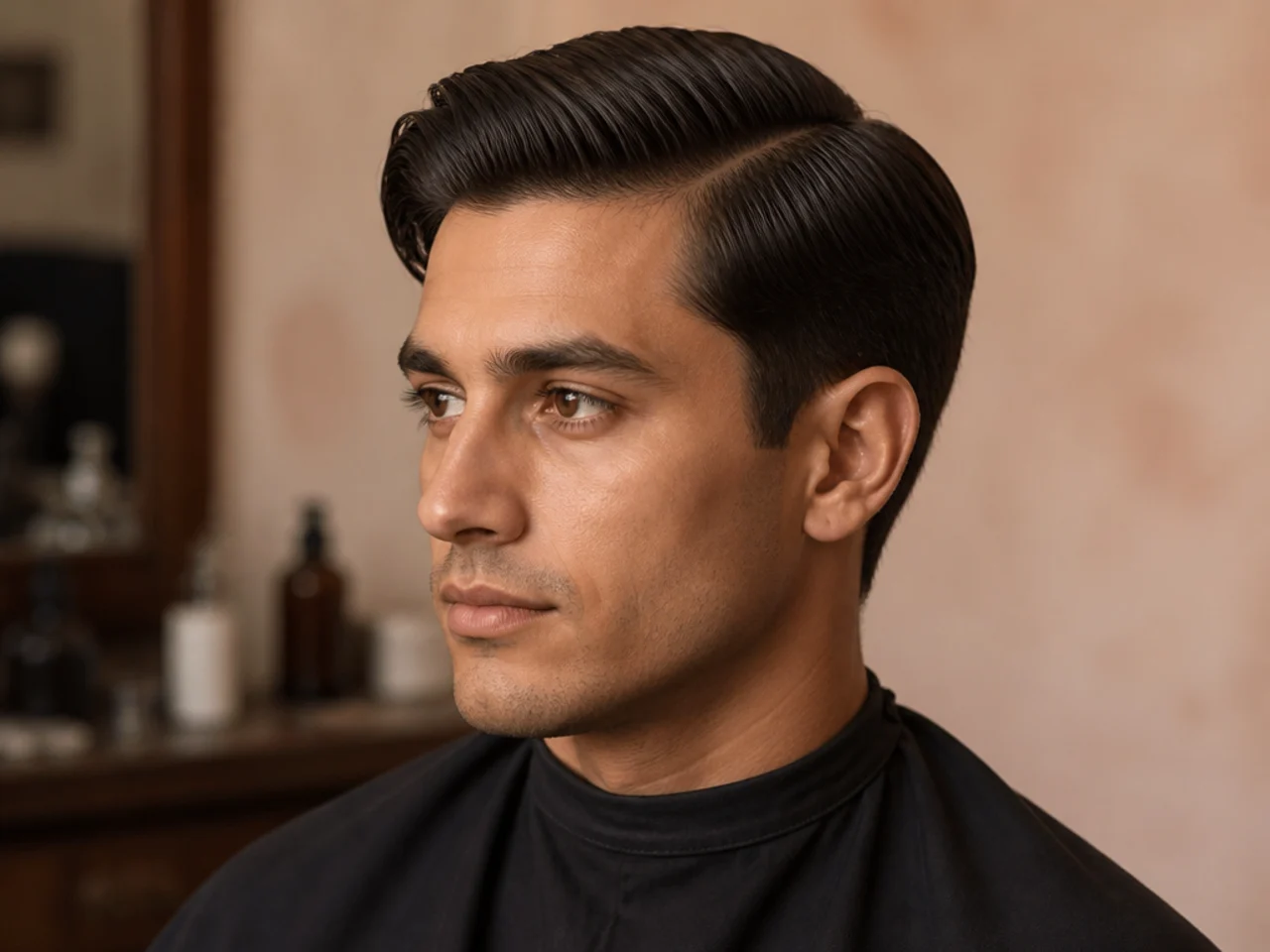
The internet's favorite quiet-luxury silhouette. Scissor-blended sides — never faded — three inches on top, soft parting swept back and slightly to one side. Looks inherited rather than bought. Fine wavy hair carries the movement cleanest; heavy straight hair may need mousse for lift.
Ask for: "old money finish — scissor-blended sides only, three inches on top, soft natural side sweep, no visible parting line."
Styling: light cream worked with fingers, low blow-dry against the roots, no comb.
6. Hard Part with Skin Fade
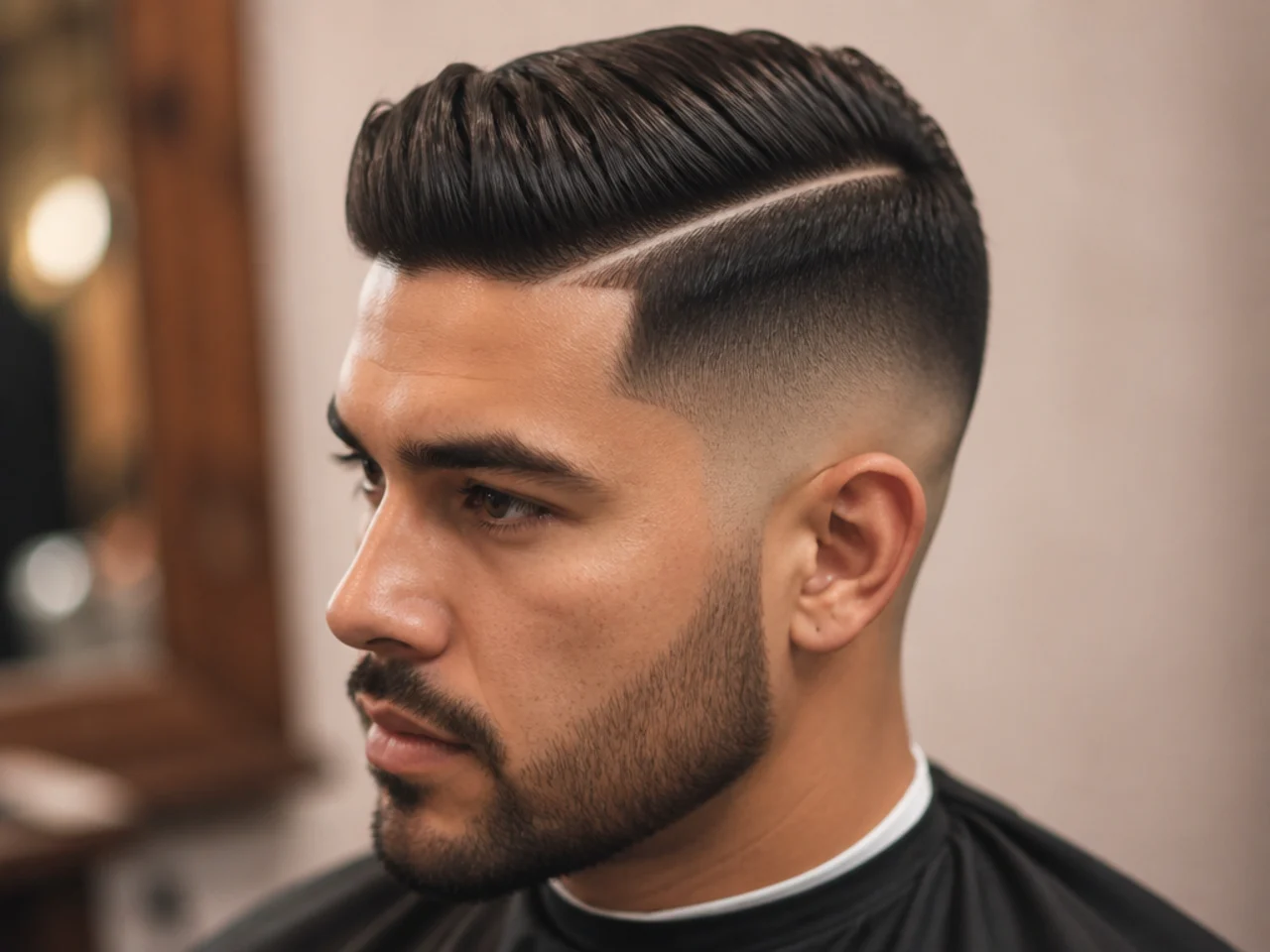
The current default modern build. Razor-drawn line shaved into the scalp along the parting, sitting above a high skin fade that drops the sides to bare scalp. Smooth skin, sharp line, textured top. Best on square and oval faces with strong angles. Shorter top, sharper cut.
Ask for: "high skin fade, razor-drawn hard part on my dominant side, one to two inches on top, fade line starting just above the temple."
Styling: matte paste worked with fingers, top pushed away from the hard part. Book every two weeks — the hard part fuzzes fastest.
7. Deep Hard Part with Mid Fade
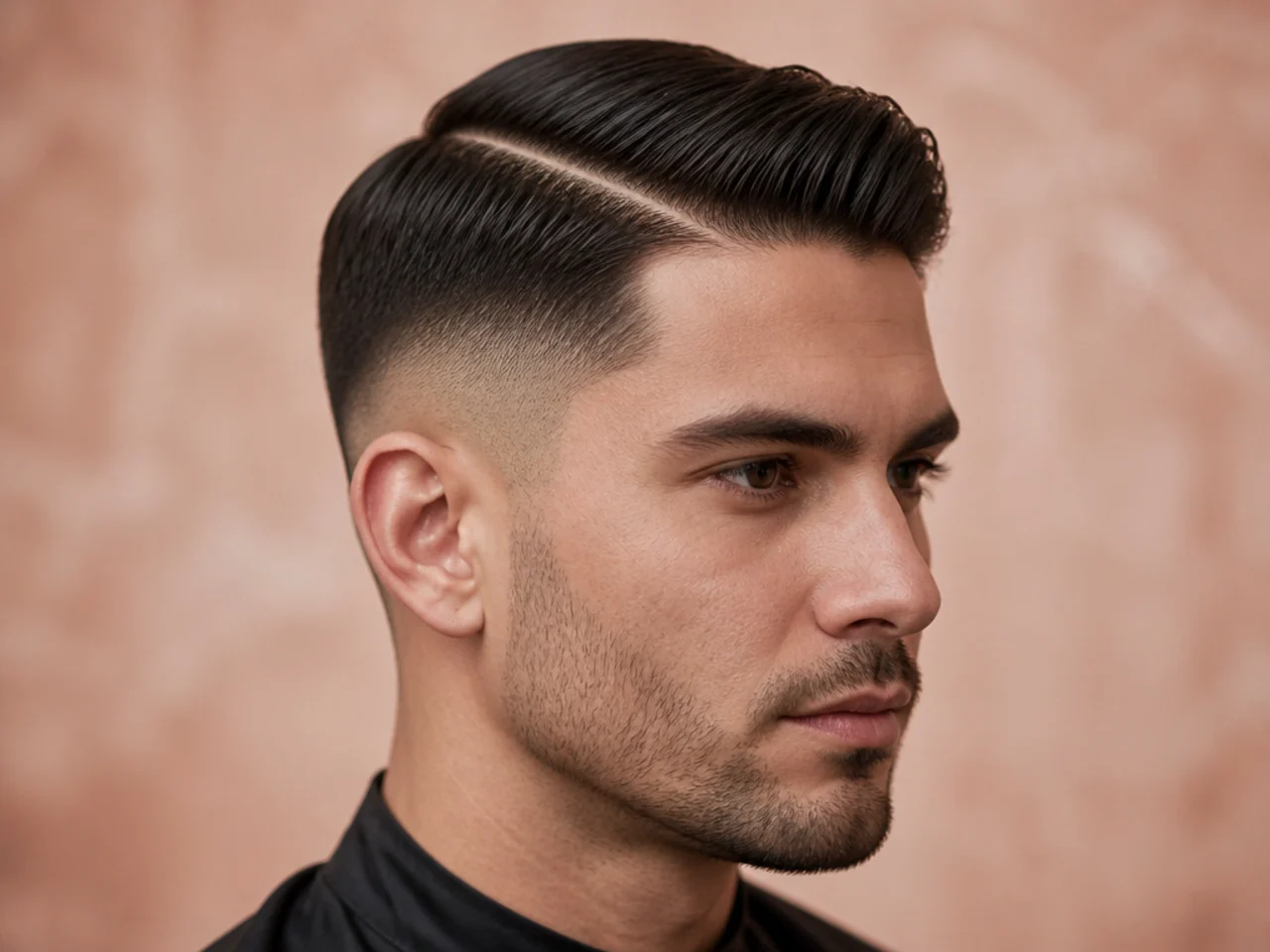
The best hard-part compromise for guys who don't want a skin fade. Two and a half inches on top, mid fade on the sides, razored line drawn deep on the head — closer to the crown than the temple. The deeper parting adds vertical structure that flatters round faces and rescues flat crowns. Design detail without the sharp shock.
Ask for: "mid fade, deep razored hard part above the temple, two and a half inches on top point-cut for texture."
Styling: matte clay through damp hair, top swept away from the hard part, low blow-dry at the root for lift. Deeper part, more lift needed.
8. Thick Etched Hard Part with Disconnect
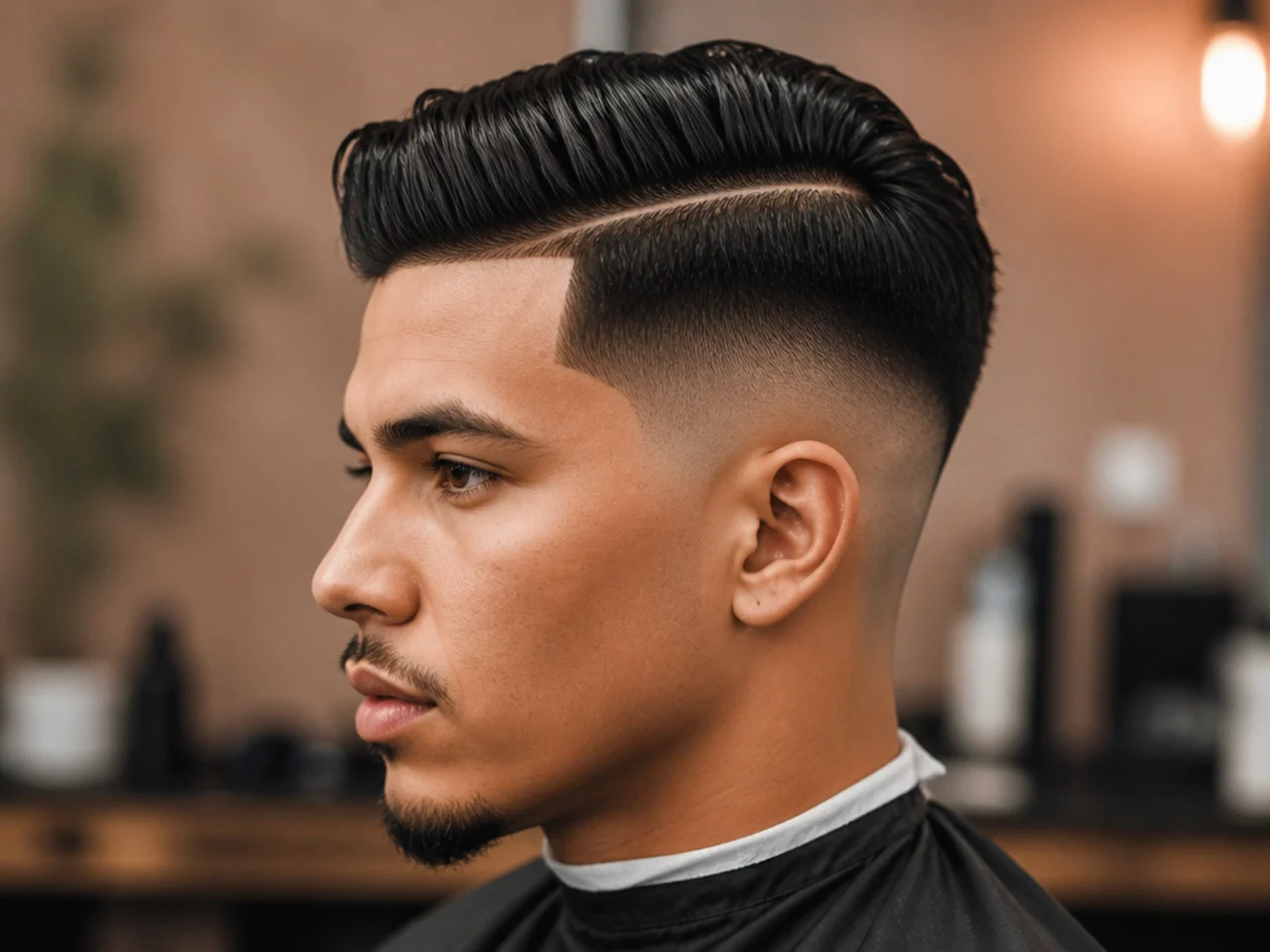
The loudest version on the list. A wider razor line — three to four millimeters instead of one — cut through a mid or low fade, with the top disconnected from the sides. Just a hard visual break. Fits guys with strong facial structure and thick, coarse hair. Fine hair won't carry the disconnect.
Ask for: "low or mid fade with a thick etched hard part, half-centimeter disconnect at the crown, two inches on top."
Styling: heavy matte clay for texture, pushed away from the hard part with fingers. Never comb the top down over the fade — that erases the disconnect.
9. Razor Line-Up Side Part
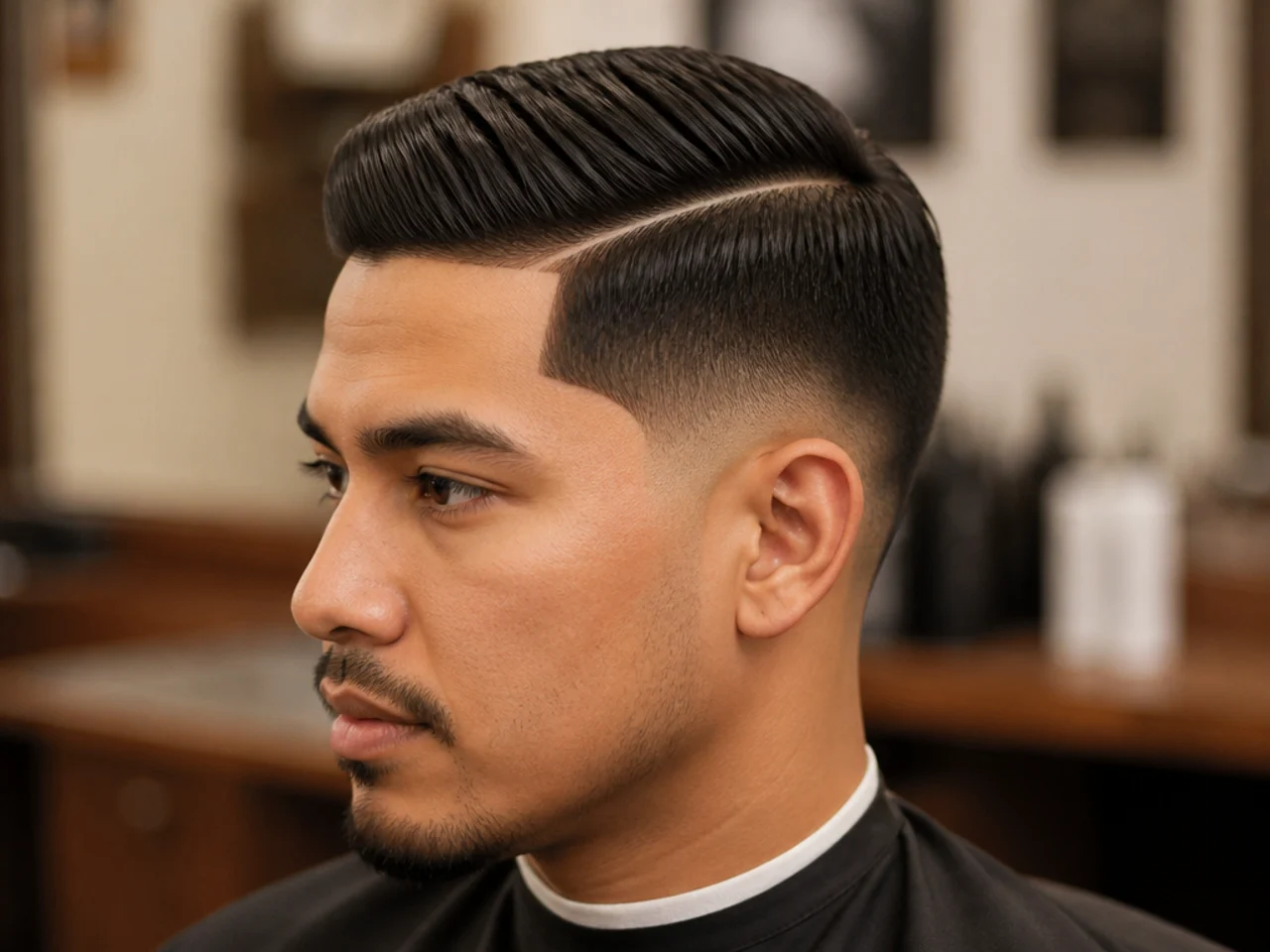
Razor work sits at the hairline instead of along the parting. A straight, hard-edged razor line runs across the forehead and around the temples, and the top feathers into a soft comb-drawn side part. The line-up carries the sharpness; the top stays subtle. Best on square, oval, and diamond faces. Requires a barber who's good with a straight razor.
Ask for: "razor line-up at the forehead and temples, soft comb-drawn side part on top, two inches of length."
Styling: matte cream on top, kept low so the line-up stays the focal point. Shape-up every ten days.
10. Modern Textured Side Part with Low Fade
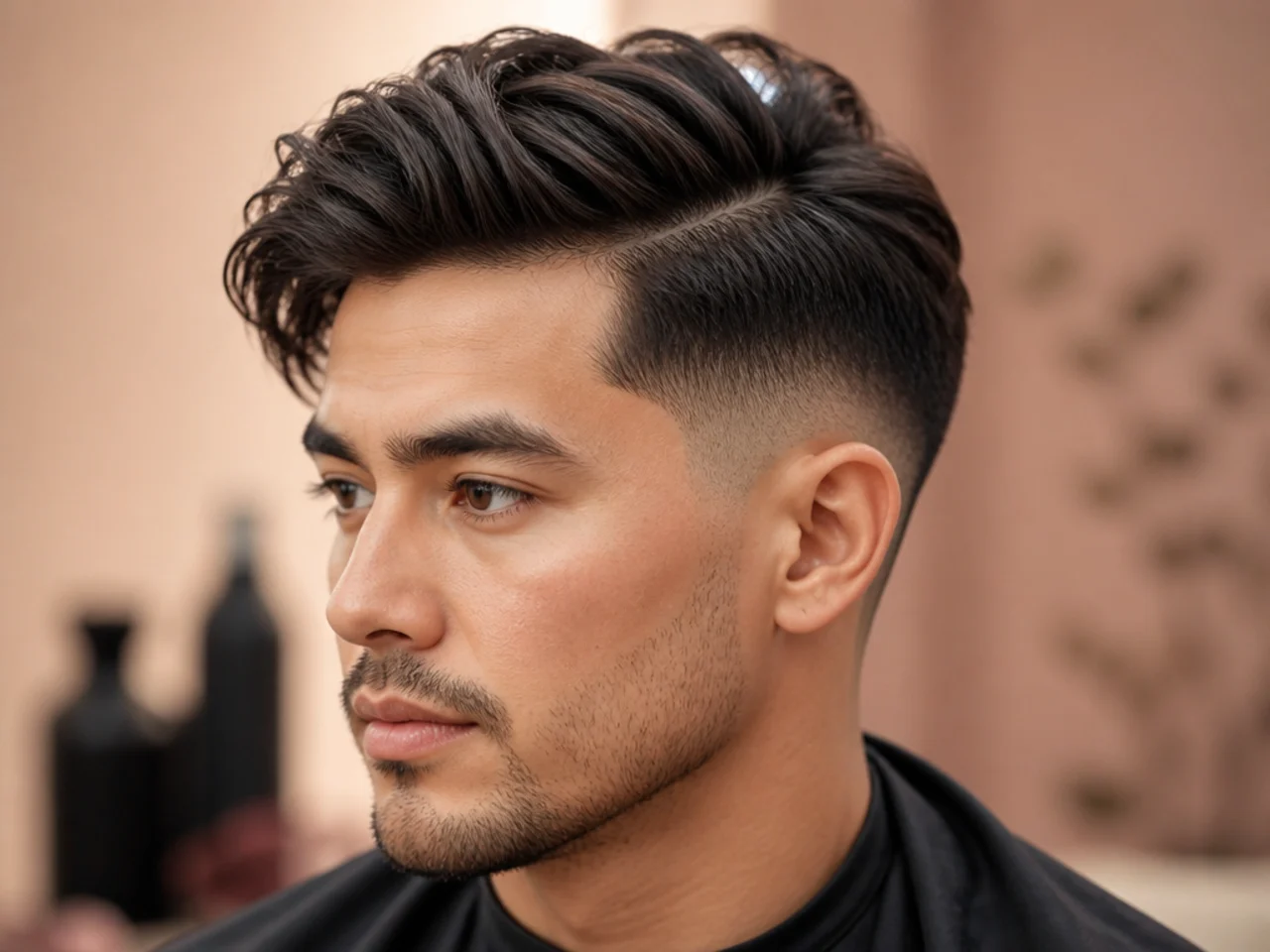
The "current" side part barbers cut ten times a day. A low fade at the ears, two to three inches on top point-cut for movement, soft comb-drawn parting on the dominant side. No razor line, no disconnect — clean modern proportions. Ask for this when you want "the current version, nothing dramatic."
Ask for: "low fade at the ears, two and a half inches on top point-cut for texture, soft side parting."
Styling: matte cream or a light paste, worked with fingers, no comb. The finish should look like the barber left the room five minutes ago.
11. Side Part with Mid Fade
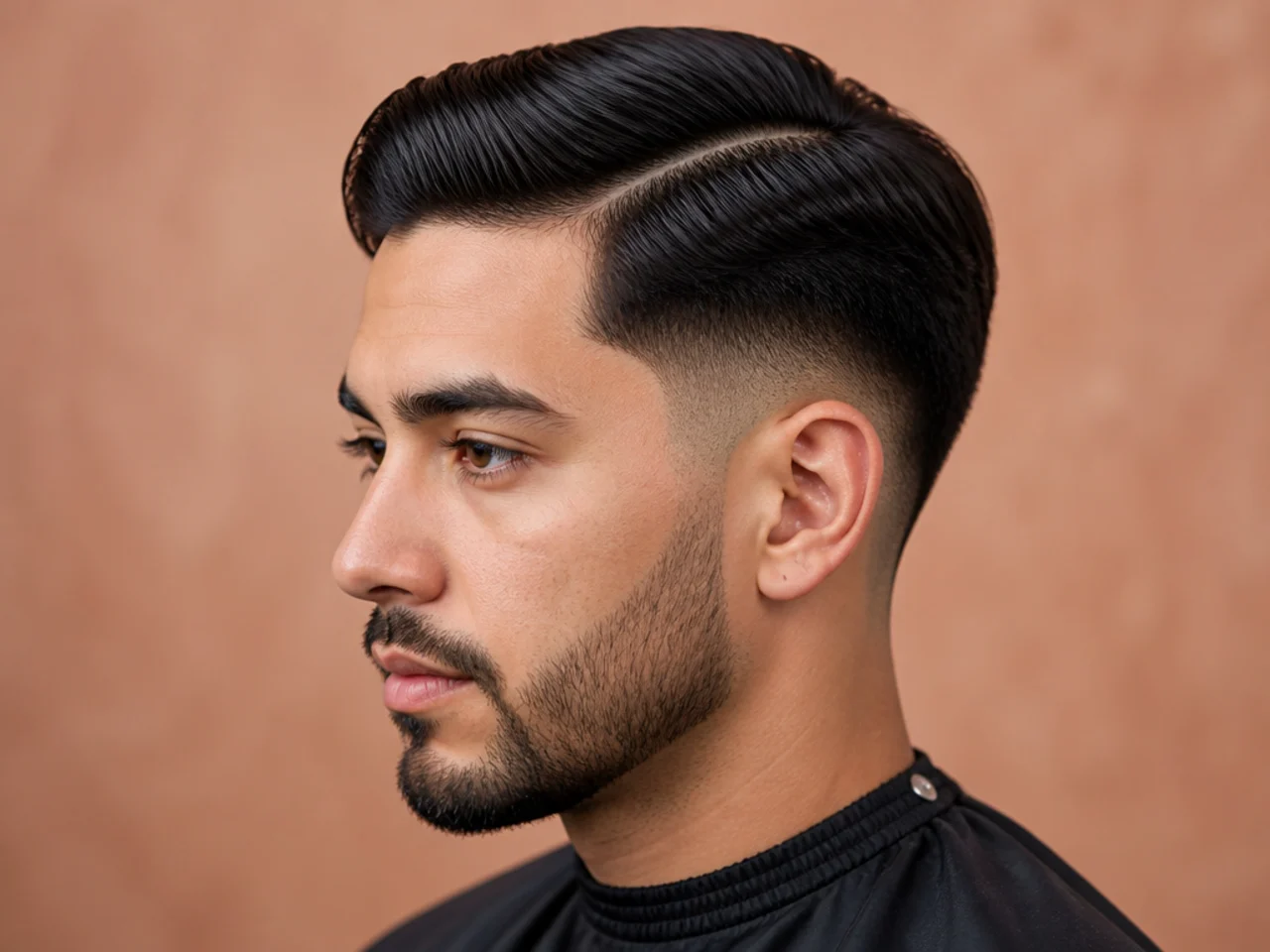
The most-requested modern side part on the wall. A mid fade starting at the temple line, blending to skin at the neckline, paired with two to three inches on top and a defined comb-drawn parting. Fits every face shape and every hair type. If a guy walks in and says "modern side part," this is what most barbers hand him.
Ask for: "mid fade blending to skin at the temple line, two to three inches on top, defined side parting on my dominant side."
Styling: medium-hold cream combed once, burst of low-heat air to set the parting. Re-cut every two and a half to three weeks — the temple line dates first.
12. Side Part with High Skin Fade
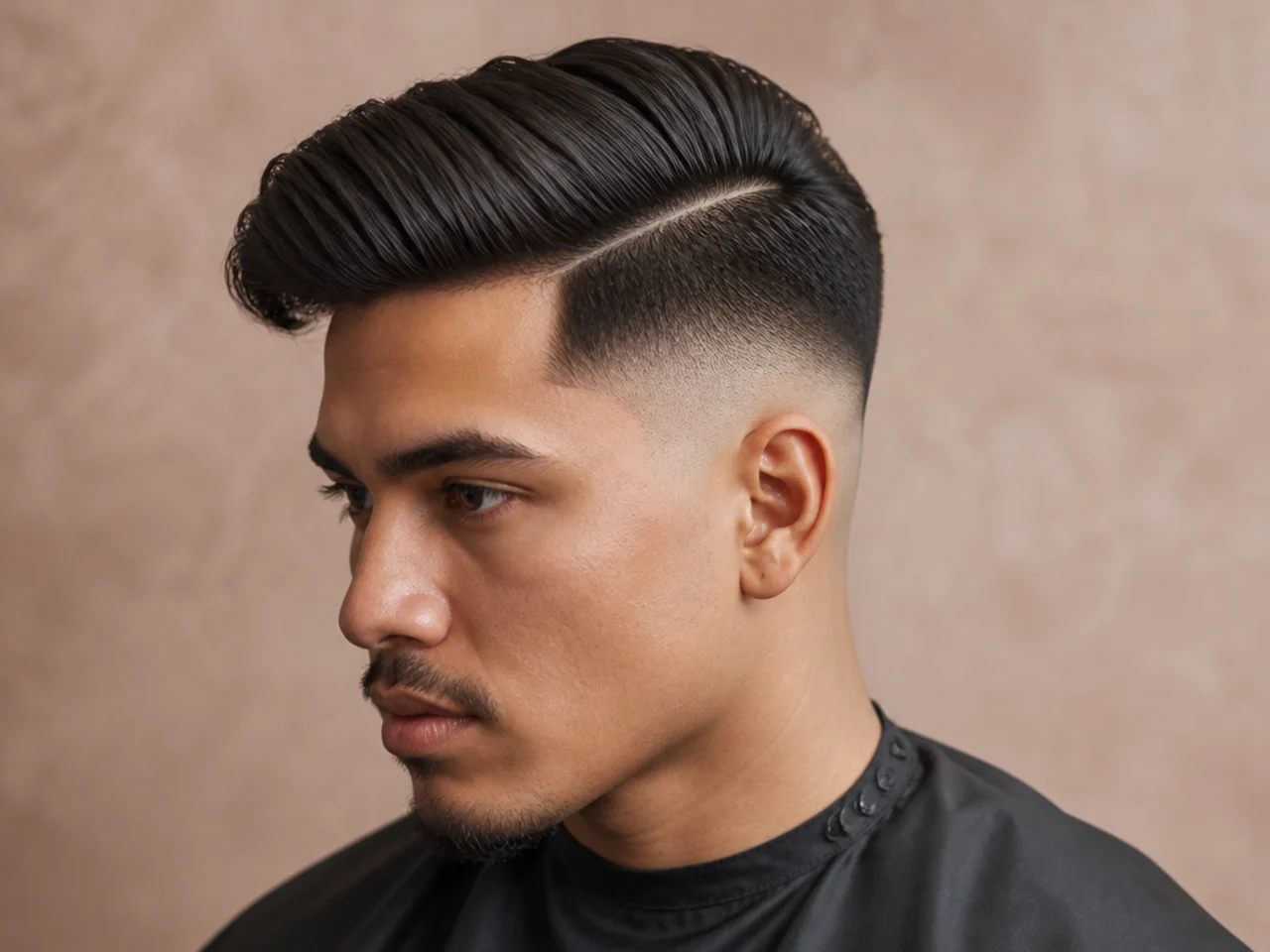
The sharpest fade in the family. Fade line starts above the temple and drops to bare scalp all the way down. Two inches on top side-parted so the contrast between smooth panel and parted length reads extreme. Best on square, oval, and diamond faces with strong jaws. Skip if you're round-faced.
Ask for: "high skin fade starting above the temple, two inches on top, defined side parting — I want maximum contrast."
Styling: matte paste or medium-hold cream combed sharply into the parting. Sunscreen on the freshly shaved panel for the first two days. Book every ten to fourteen days.
13. Deep Parting Volume Top
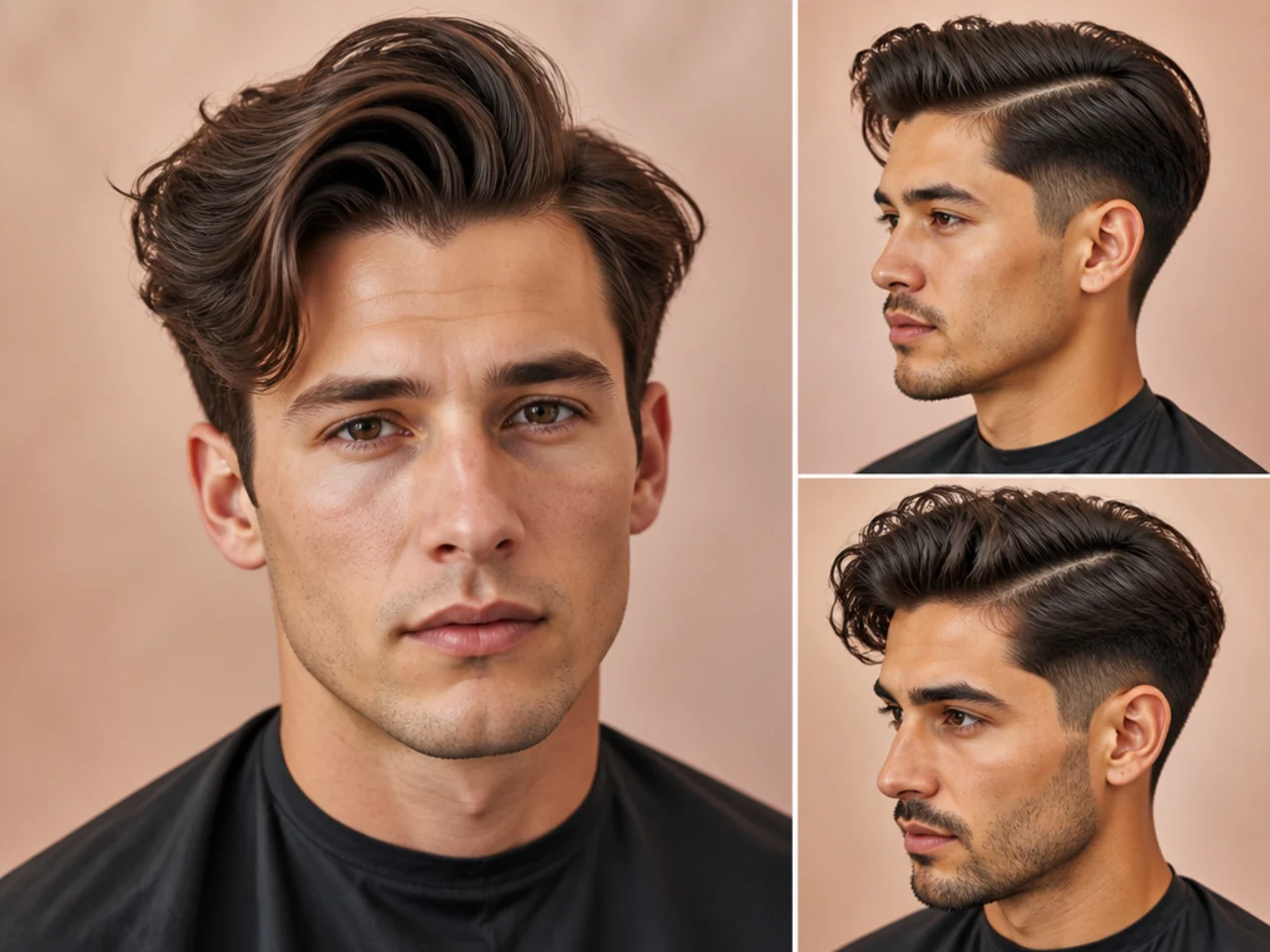
Parting sits deep — well past the natural cowlick — and the top is styled for maximum height on the long side. Reads bold, formal, old-school glamorous. Fits oval, oblong, and heart-shaped faces because the height flatters long proportions. Round faces should keep the top shorter so the ratio doesn't tip. Wavy hair carries the volume most cleanly.
Ask for: "low fade or scissor taper on the sides, four inches on top, deep side parting — closer to the crown than the temple."
Styling: mousse into damp roots, round-brush the top up and back, finish with light pomade combed into place. The parting has to sit deeper than feels natural.
14. Side Part with Drop Fade
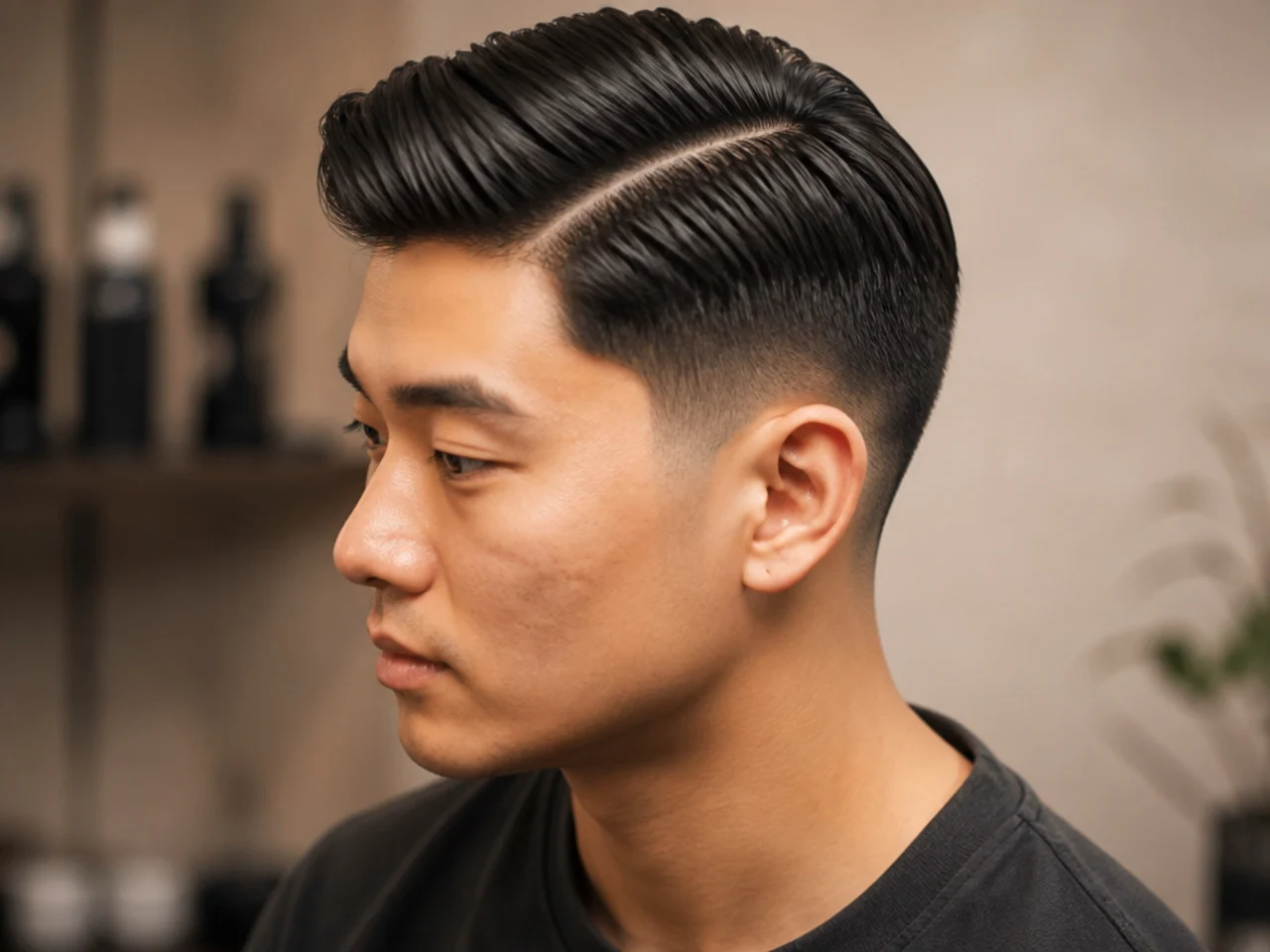
Drop fade curves down behind the ear instead of staying level — it follows the shape of the skull. Combined with a defined side part and one and a half to two inches on top, the whole cut looks sculpted. Fits oval and square faces most. Best on straight to gently wavy hair — coarse or curly hair will fight the sharp curve.
Ask for: "high drop fade curving behind the ear, hard or comb-drawn side part on my dominant side, one and a half to two inches on top."
Styling: strong-hold pomade or gel combed from the parting straight back. Dry-set without touching. Once the shine has locked, it holds a full day.
15. Side Part with Burst Fade
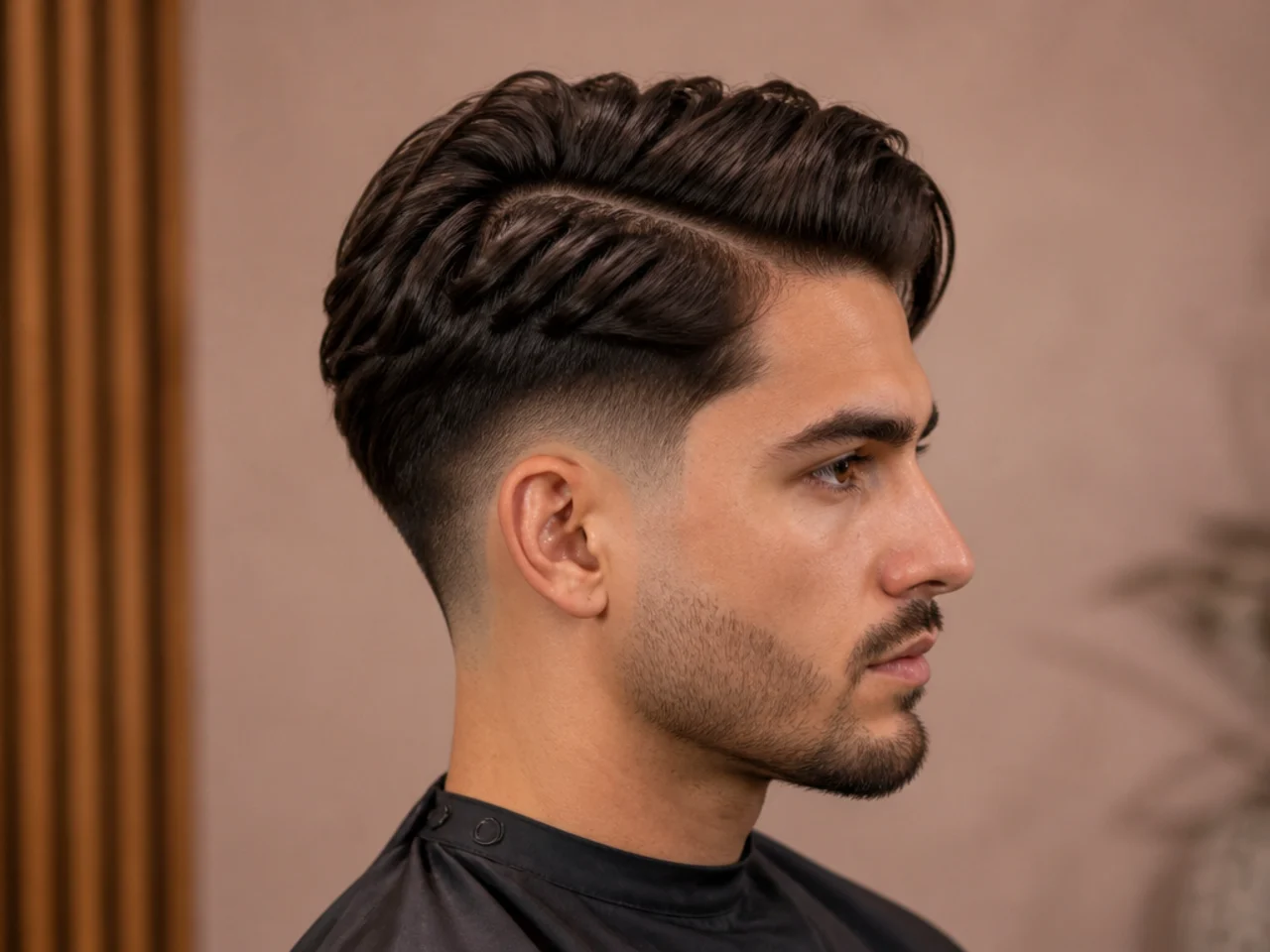
The burst fade arcs around the ear in a semi-circle, leaving length longer at the neckline. Paired with a side-parted top, it adds movement to a cut that would otherwise sit static. Fits oval and heart-shaped faces. Lands well in the twenties and early thirties.
Ask for: "burst fade arcing around the ear, longer length at the neckline, three inches on top with a side parting."
Styling: matte cream or light paste for texture, top styled away from the parting with fingers. The burst holds two to three weeks — the ear curve softens first.
16. Classic Undercut Side Part
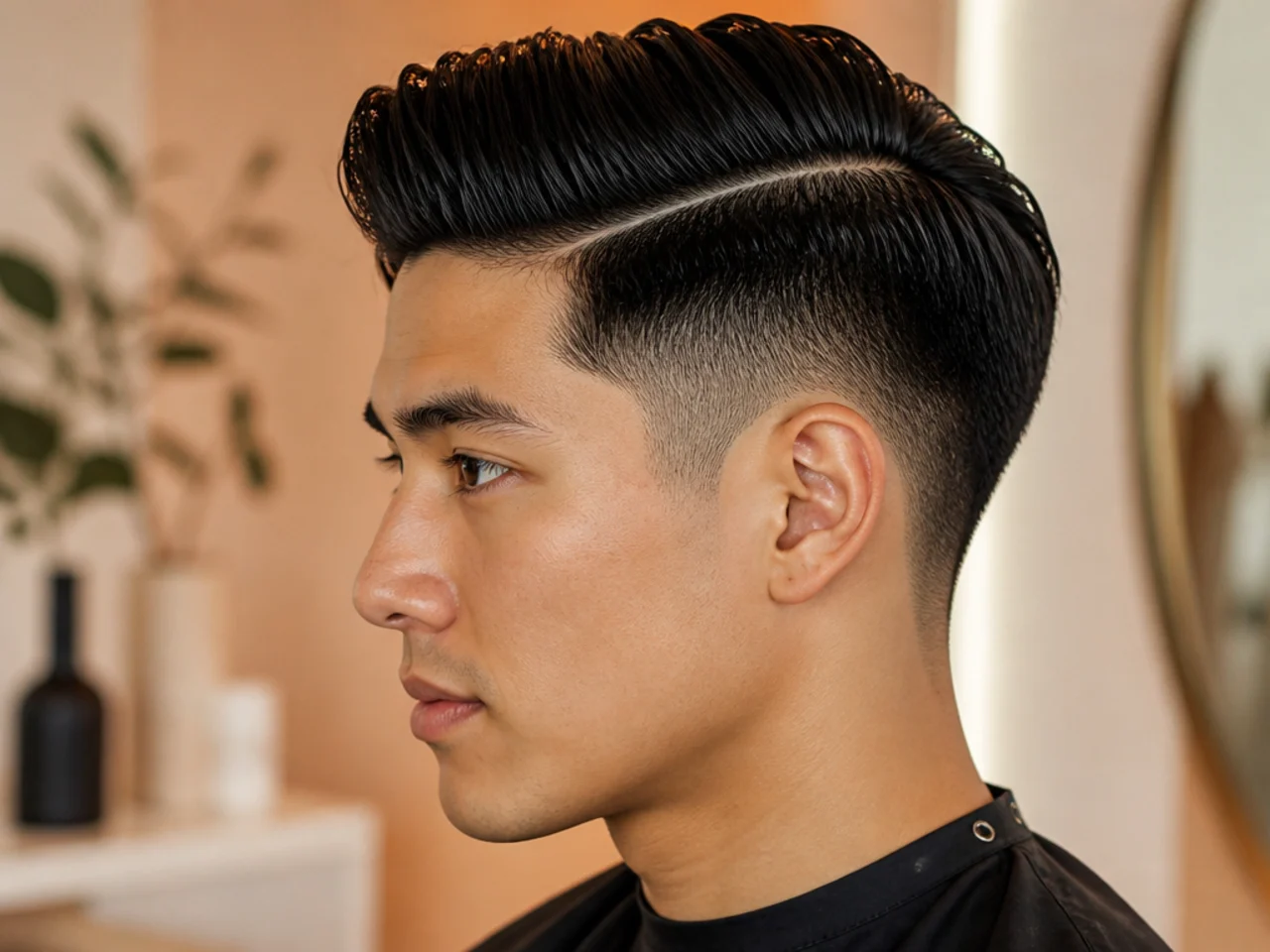
Not a fade — the flat undercut fade alternative. Sides and back clippered to one guard (usually a #1 or #2) with no taper. Top left long at three to four inches and combed into a defined side part. Contrast comes from one flat short against one flat long. Grows out gracefully because there's no fade line to soften.
Ask for: "#2 clipper undercut all around, no fade, no taper, three to four inches on top, defined side part on my dominant side."
Styling: medium-hold pomade combed into a defined parting. The top has to sit clean — no fade to distract from a sloppy sweep.
17. Disconnected Undercut Side Part
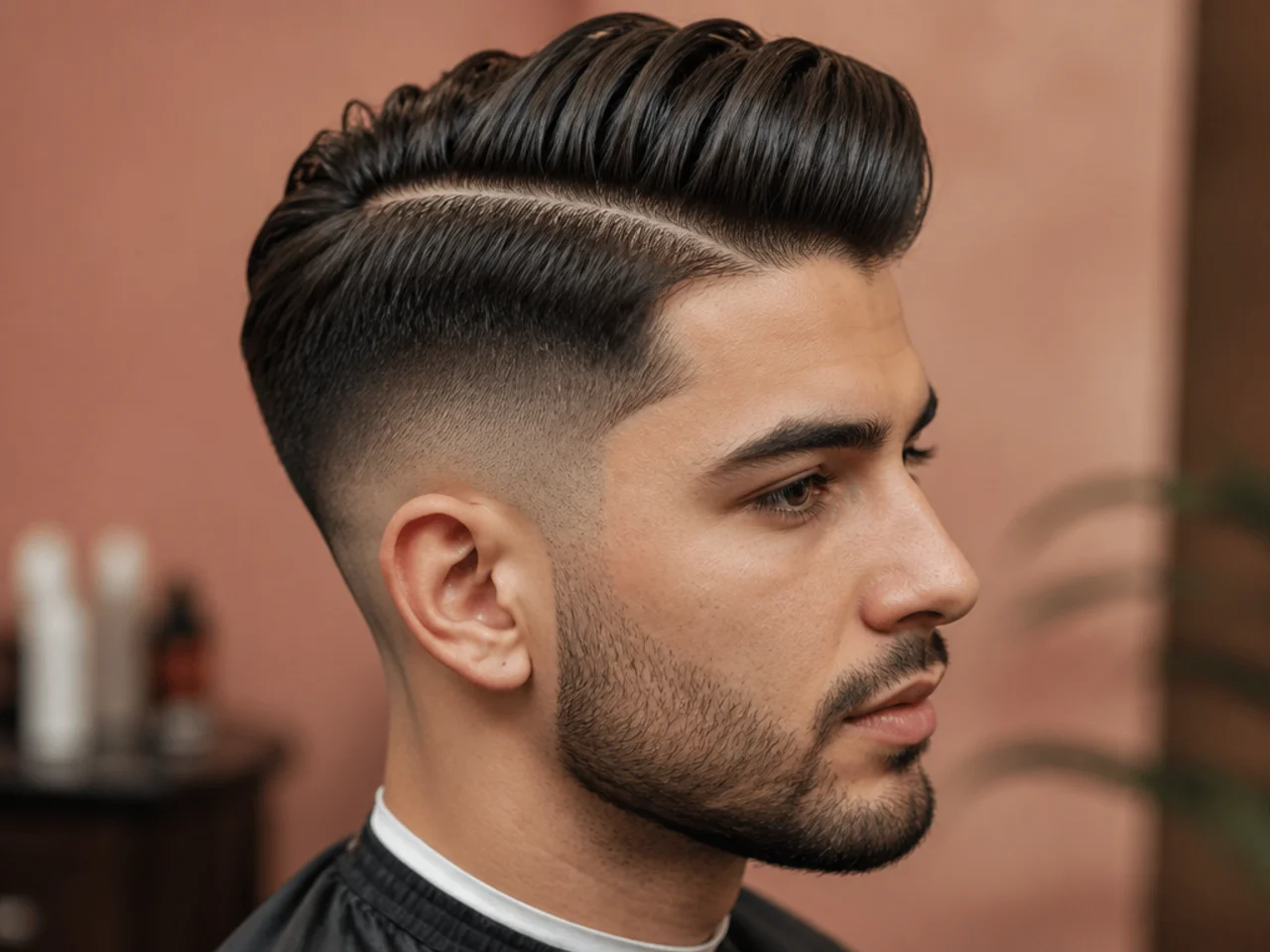
Same skeleton as the classic undercut but top and sides refuse to blend. A visible ledge sits where long top meets short sides, and the parting runs along that ledge. Reads sharp and slightly aggressive. Fits square and diamond faces with strong bone structure. Thick coarse hair carries the disconnect best.
Ask for: "disconnected undercut — no blend between top and sides — #1 or #2 clipper on the sides, four inches on top, hard side part."
Styling: matte clay so length holds without shine. Comb the top straight over the ledge so the disconnect stays visible from the side.
18. Side Part with Blended Beard
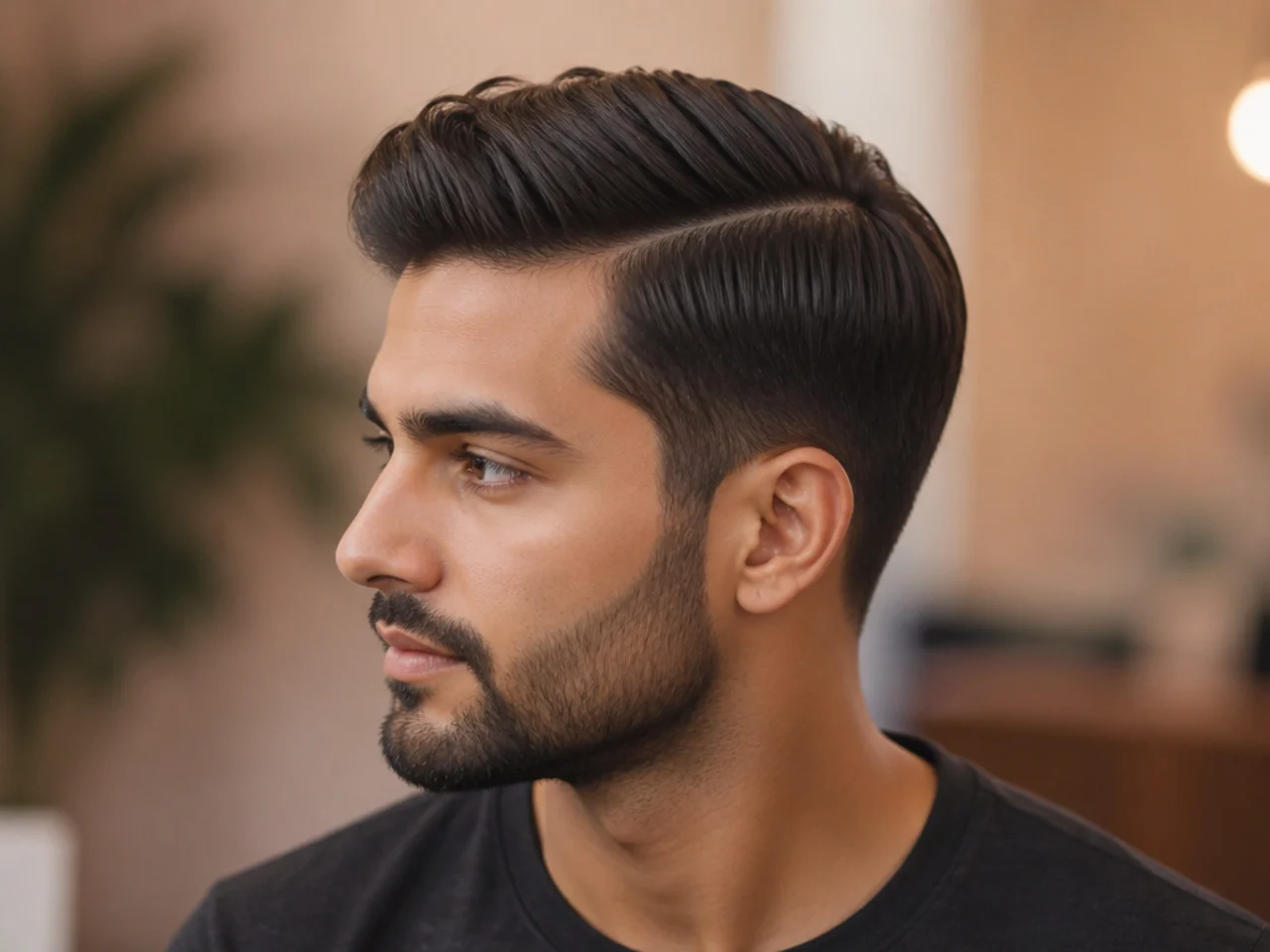
The full statement build. Mid or skin fade on the sides, defined side part on top, and a beard that fades directly into the haircut where the sideburn meets the ear. Every element flows into the next. Fits square and oval faces. Beard needs at least a half-inch to fade properly. Book both cuts the same appointment.
Ask for: "mid or skin fade sides, two to three inches on top with a side parting, beard trimmed to a #4 and blended into the fade at the sideburn."
Styling: matte clay on top combed into the part. Comb the beard downward, then oil lightly. Book every two weeks — a fuzzy sideburn kills the build.
19. Side Swept Fringe with Taper
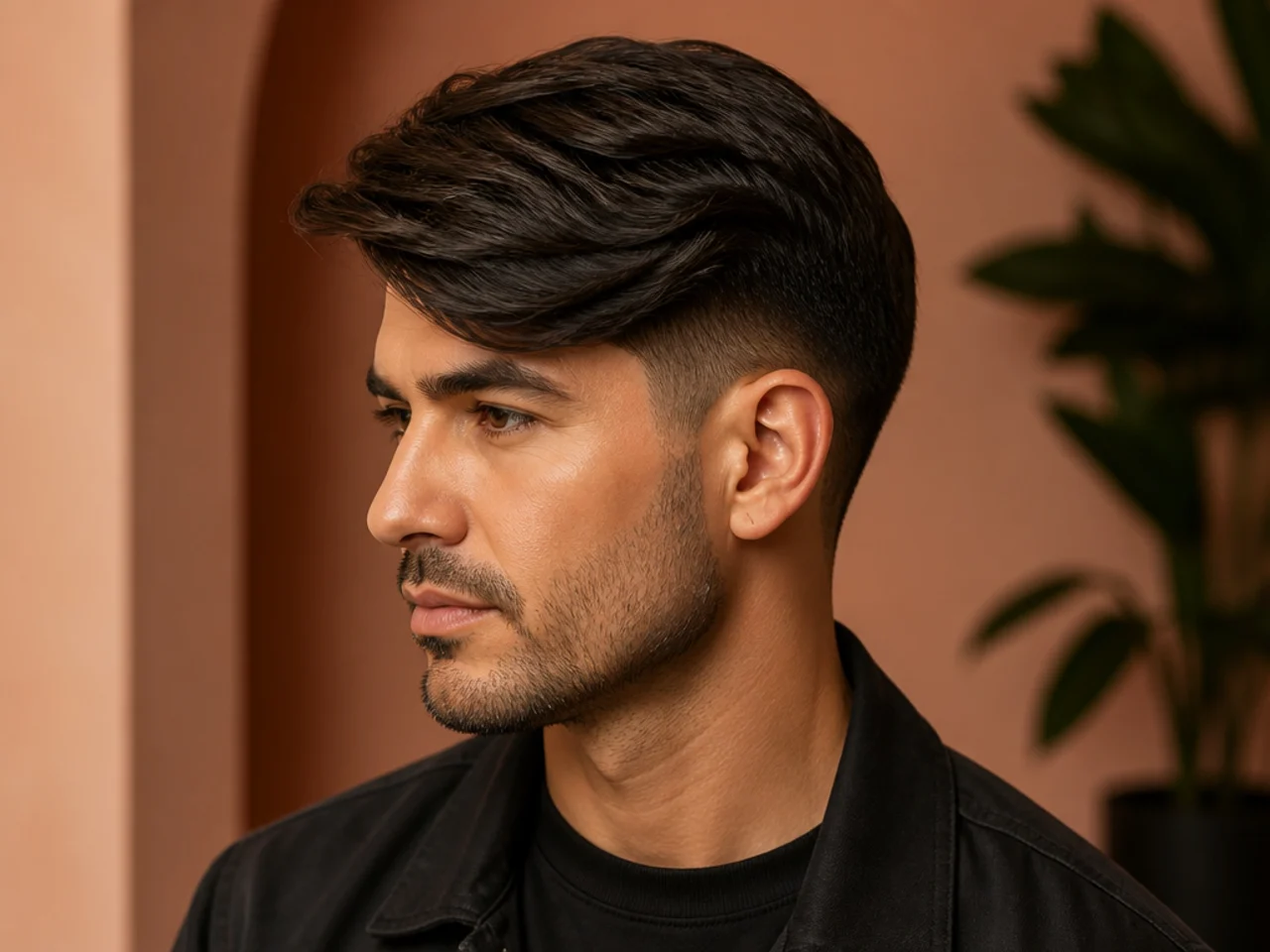
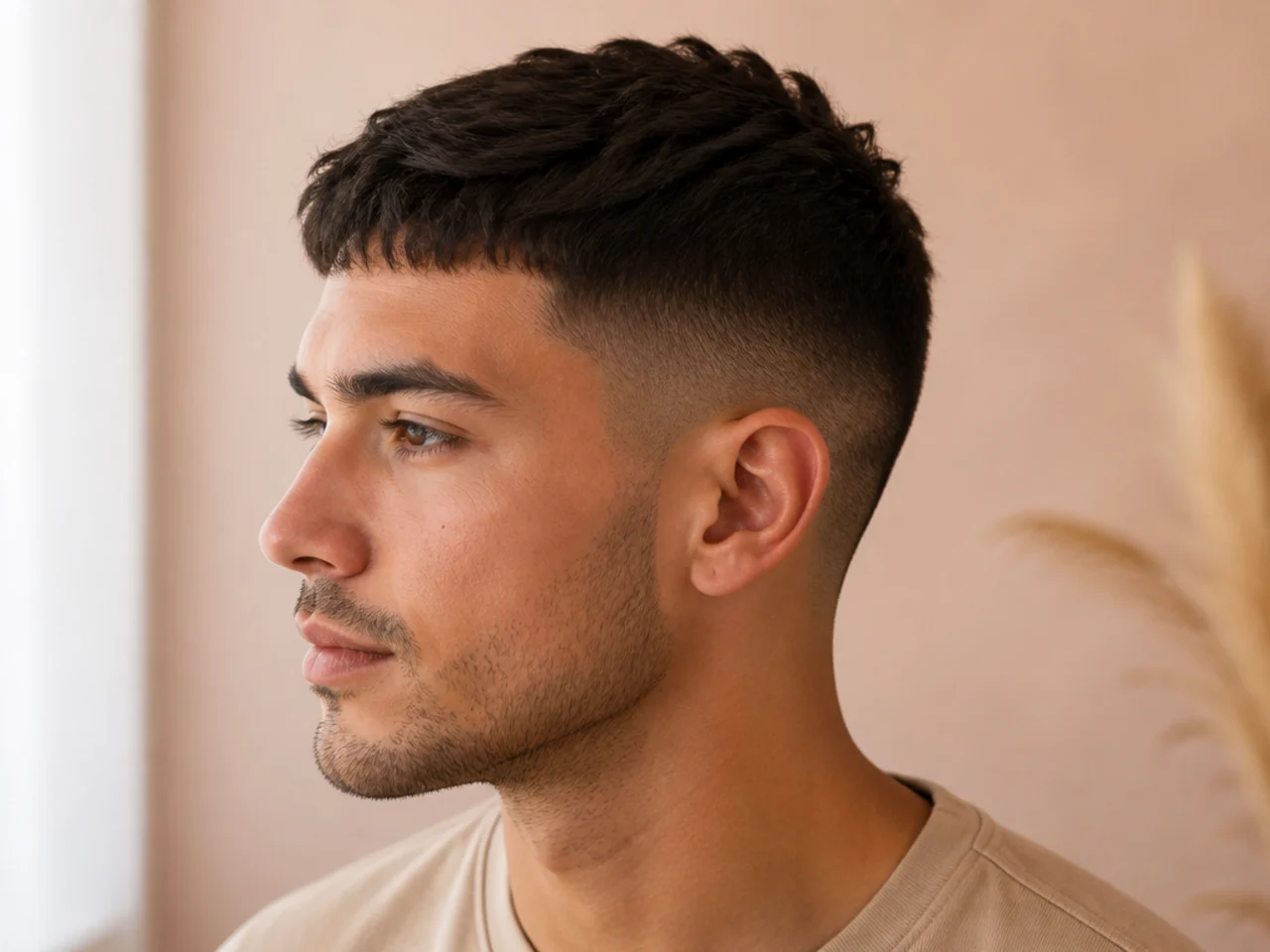
Parting sits high on the head and the top sweeps into a long fringe touching the brow or cheekbone. Sides tapered short so the sweep reads intentional rather than shaggy. Fits round and oval faces best — the diagonal line breaks flat symmetry. The fringe haircuts for men guide covers other sweep-forward variants.
Ask for: "tapered sides — not skin-short — three inches on top with extra length at the front for a side sweep."
Styling: light cream on damp hair, paddle-brush blow-dry in the sweep direction. If the fringe collapses by lunchtime, switch to a matte paste.
20. Pompadour Side Part
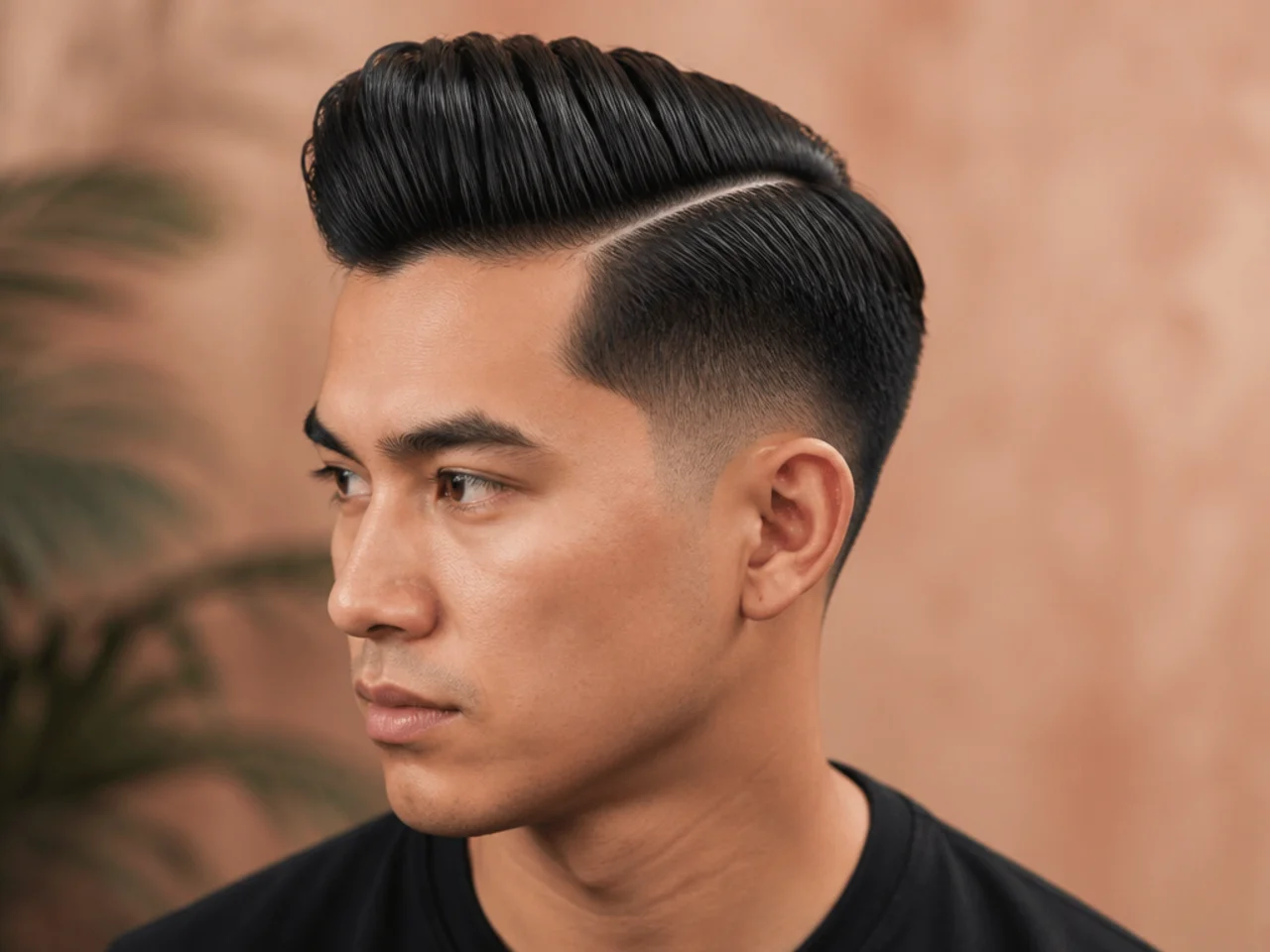
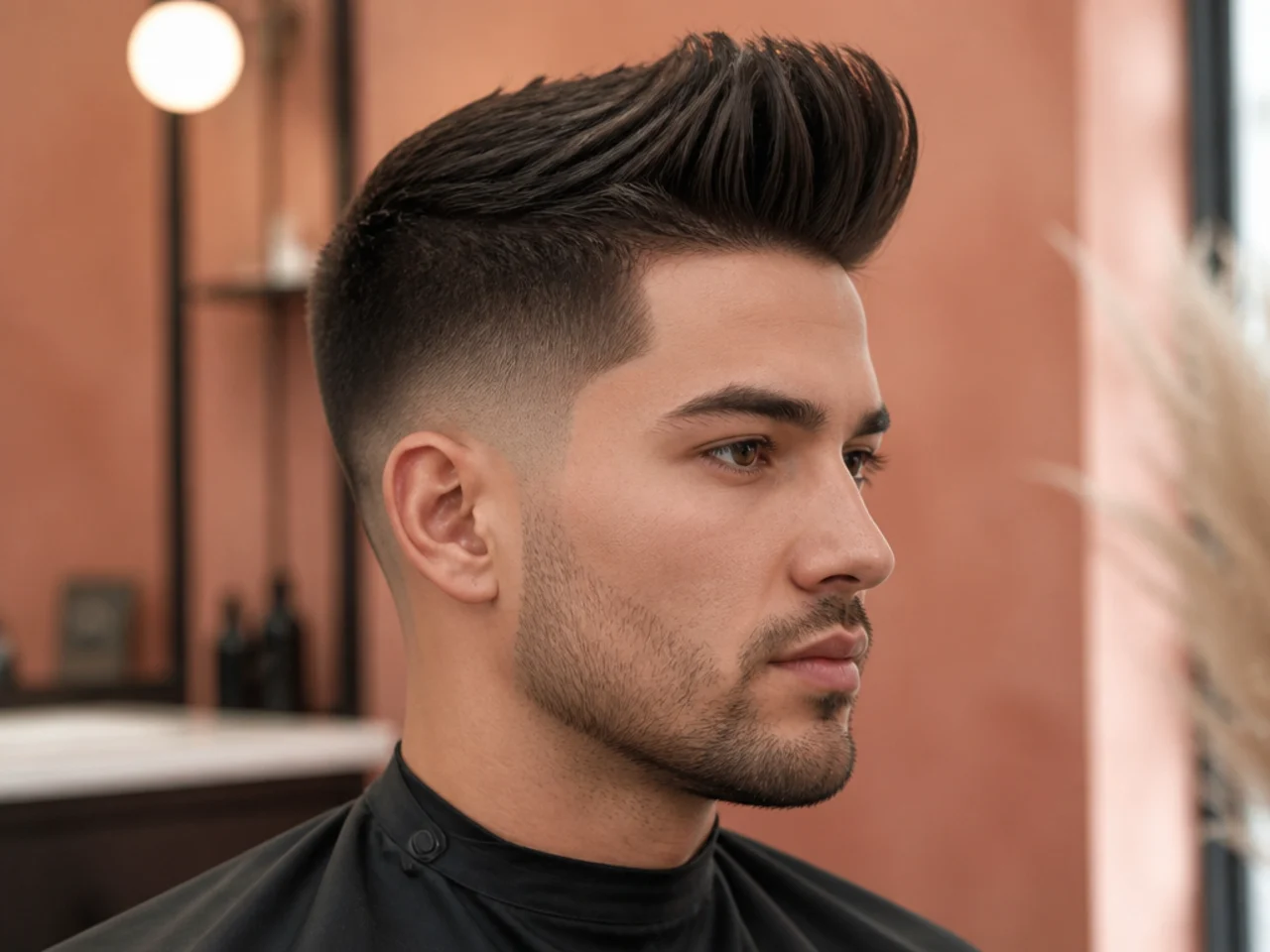
A pompadour built off a side parting instead of a centered lift. Front rises three to four inches high, then sweeps back and slightly to one side from a low or mid fade. Fits oval and oblong faces most. Straight or wavy hair with real thickness carries this best.
Ask for: "low or mid fade on the sides, four inches on top with front length for height, side parting on my dominant side, styled up and back for pomp."
Styling: volumizing mousse on damp roots, round-brush blow-dry the front up and back, finish with a shine or semi-matte pomade combed in. Fifteen minutes done right.
21. Deep Side Slick Back
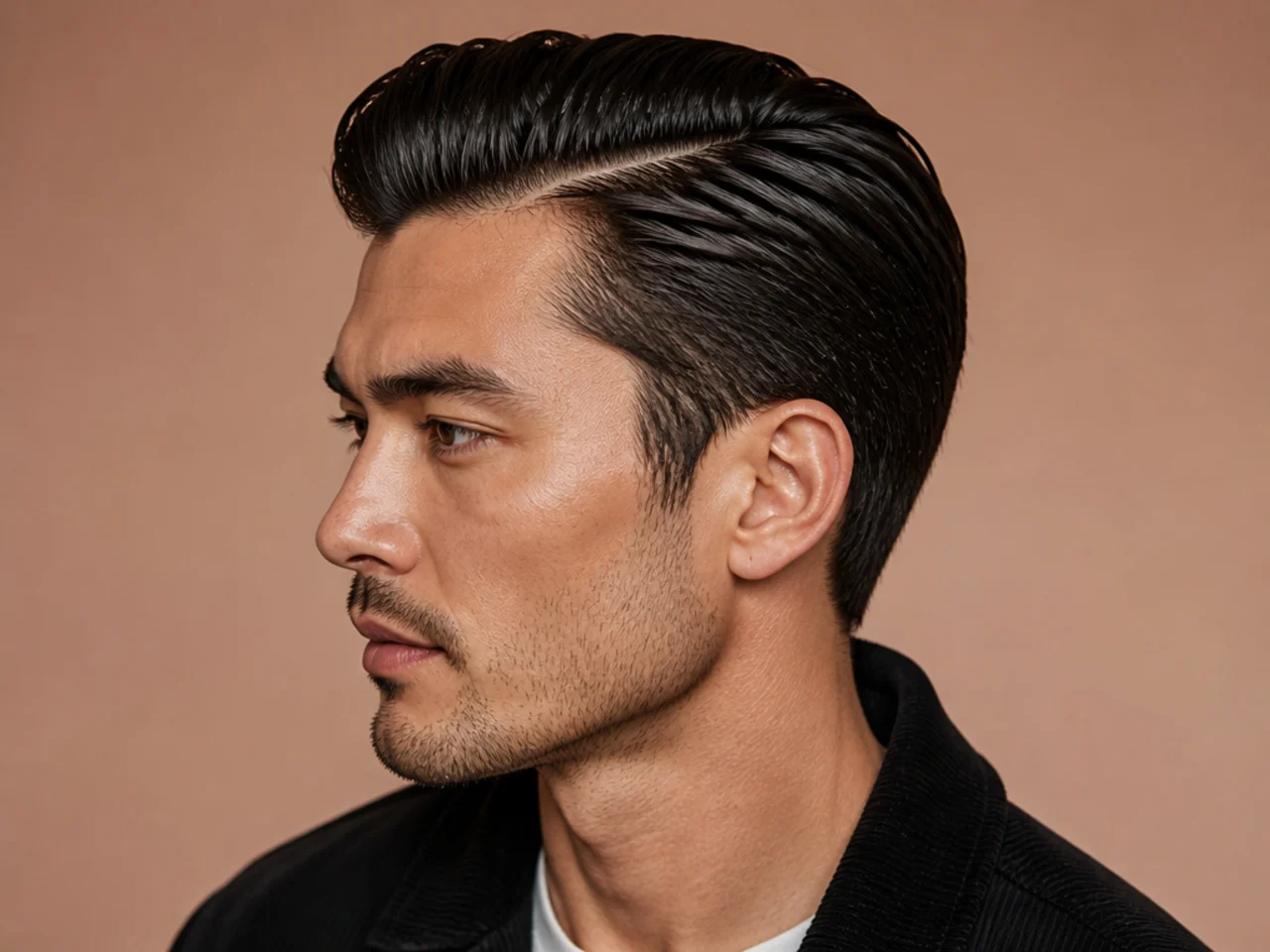
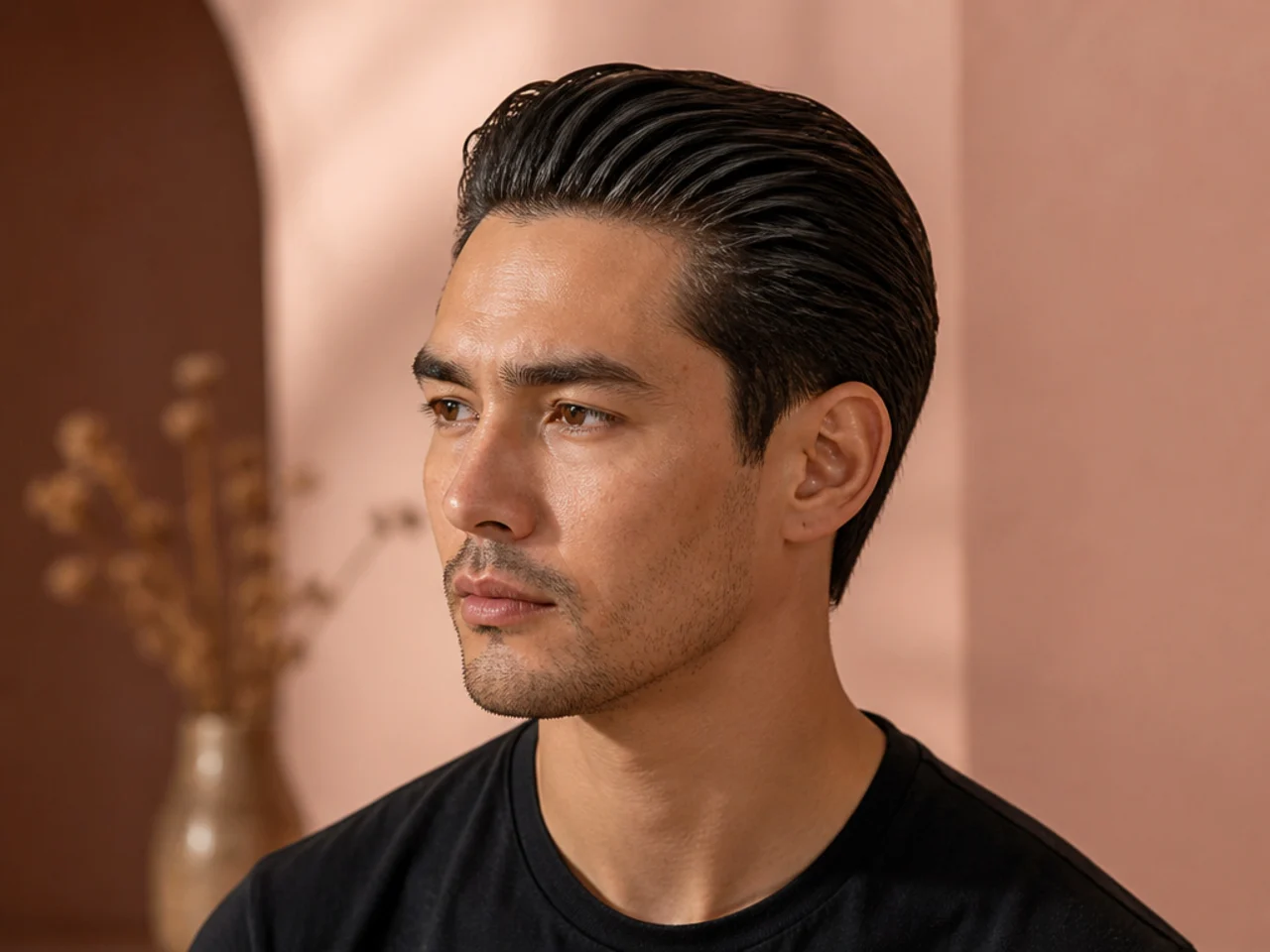
The mob-boss silhouette. Deep parting, top combed straight back with shine pomade — not swept across, straight back. Sides tapered or faded short so the slick carries the whole shape. See the slick back haircut guide for the pomade technique. Best on straight or wavy hair with three-plus inches. Skip if you're tight-curly.
Ask for: "low fade on the sides, three to four inches on top, deep side parting, styled straight back with shine."
Styling: quarter of shine pomade combed straight back on damp hair, blow-dried back-to-front for root lift, re-combed once shine has set. One of the few side parts where wet-look is the point.
22. Messy Textured Side Part
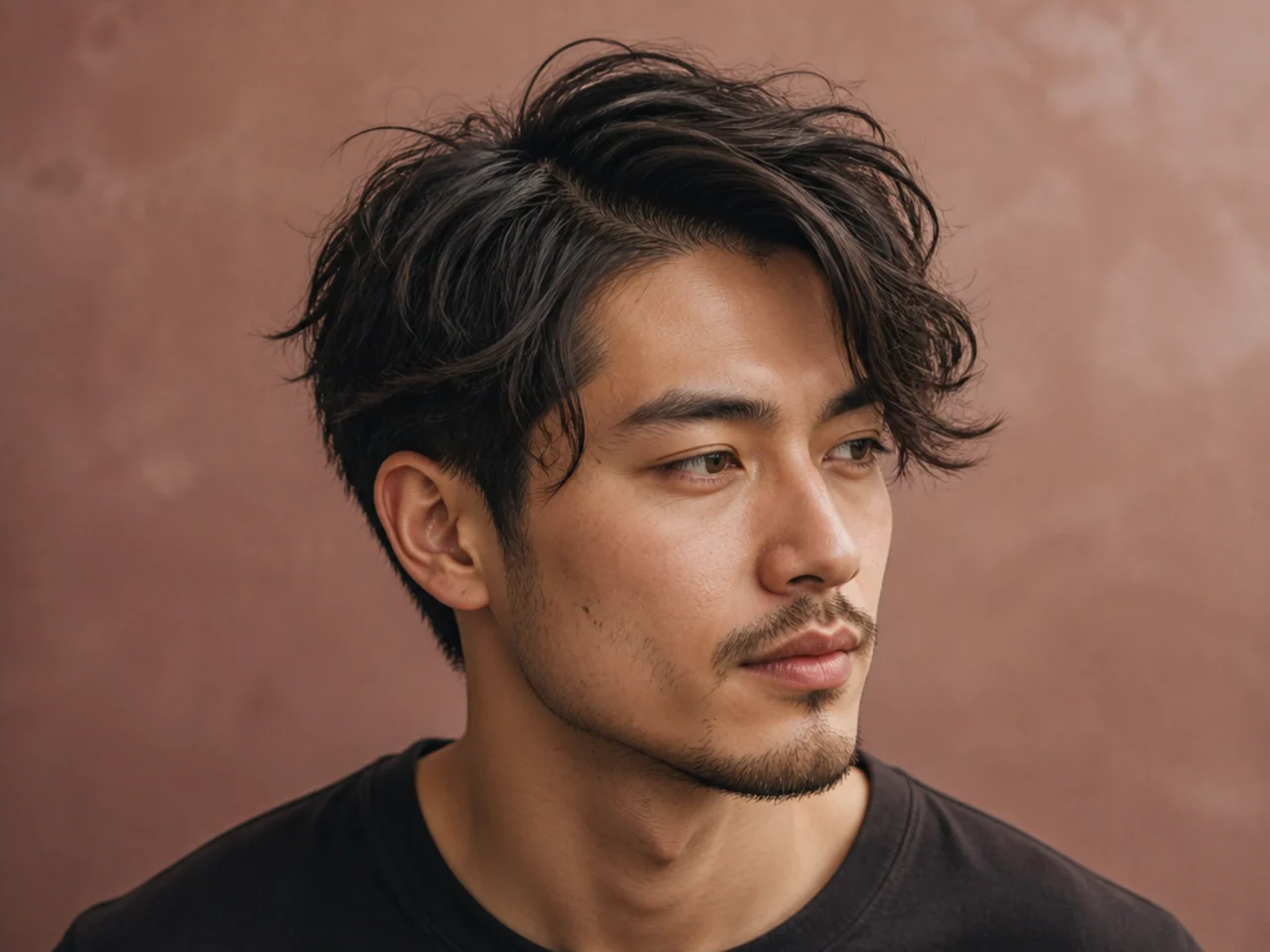
The anti-hard-part version. Two to three inches on top point-cut heavily, low taper on the sides, shallow soft parting that lets the top read piece-y rather than swept. The "just woke up like this" finish that took five minutes. See the messy hairstyles men guide for related builds.
Ask for: "low taper on the sides, two and a half inches on top heavily point-cut, shallow soft parting, messy textured finish."
Styling: matte paste emulsified in the palms, pushed through damp hair with fingers only, air-dried. No comb.
23. Curly Top Side Part with Taper
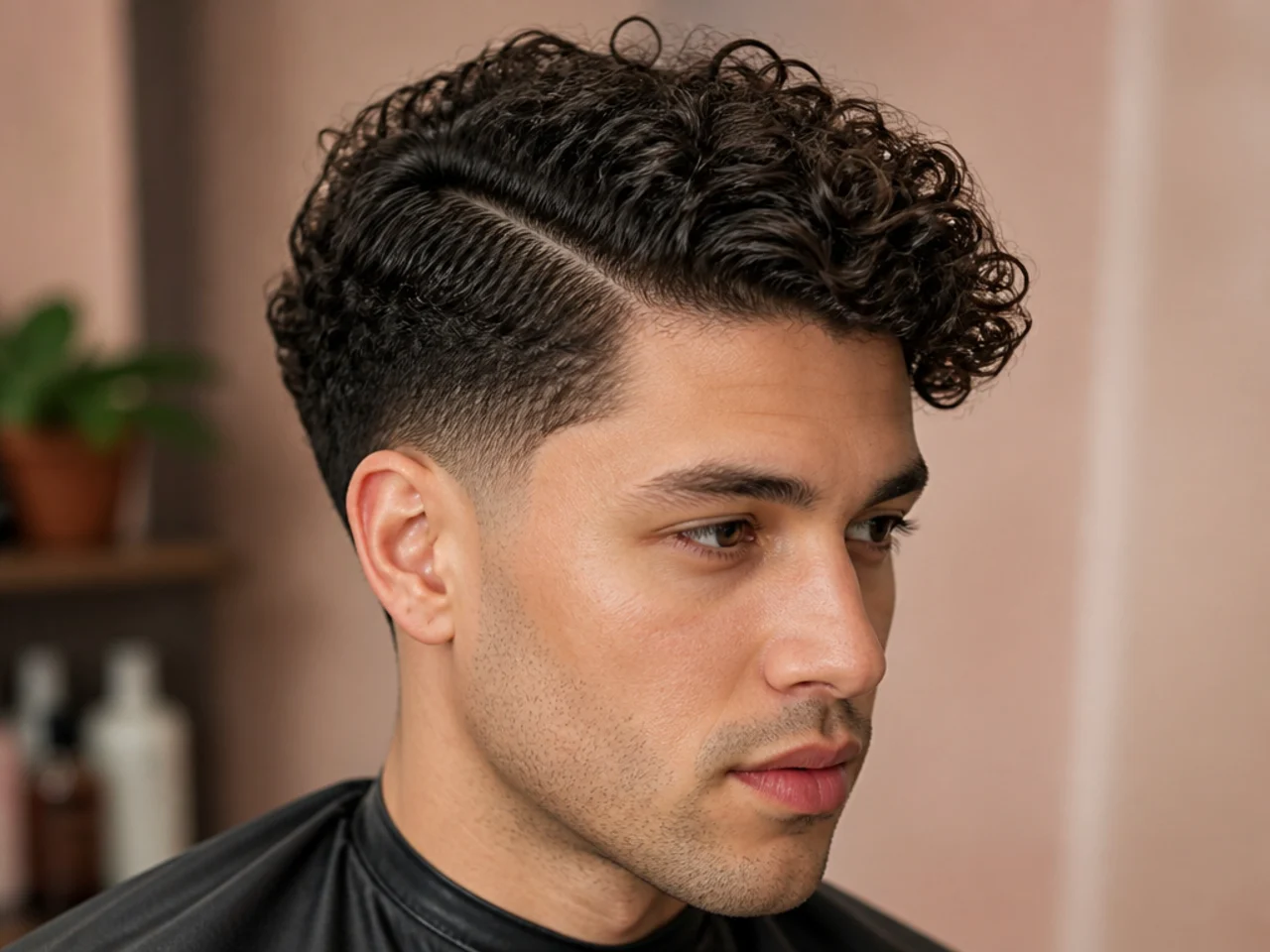
A parted side part built around curly hair on top. Sides tapered short (not skin-short) so the curl has a clean frame, three to four inches of length left long enough to show pattern, soft parting cut with the curl rather than against it. Best on 2C to 3B hair. The curly hair haircuts pillar covers the wider category.
Ask for: "low taper on the sides — not to skin — three to four inches on top cut with the curl, soft side parting on my dominant side."
Styling: curl cream on soaking-wet hair, scrunched with fingers, diffuse-dried on low. Refresh with water and a drop of leave-in on day two.
24. Coily Hard Part with Skin Fade
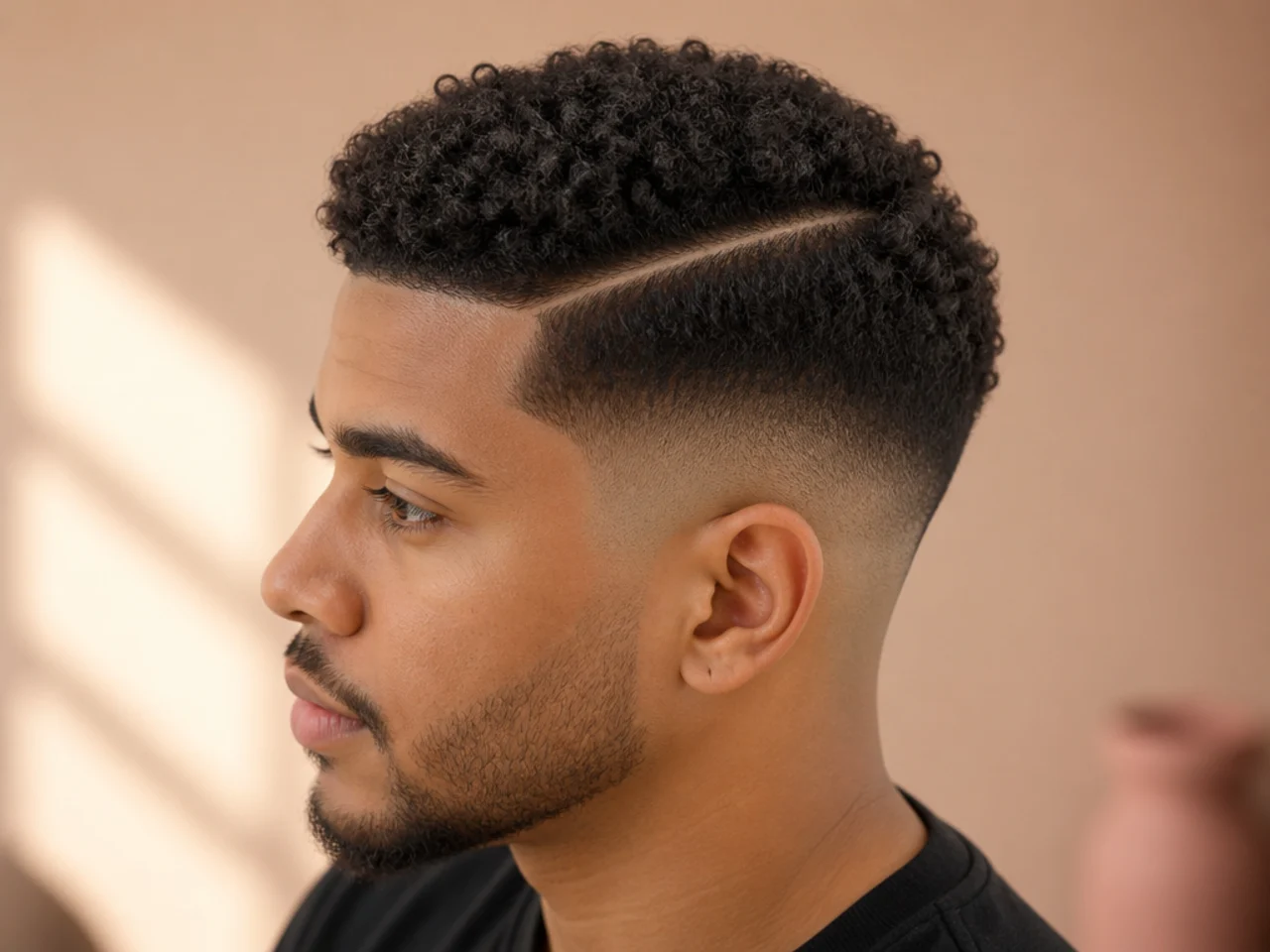
The barbershop standard for 4A to 4C hair. High skin fade drops the sides to bare scalp, razor-drawn hard part cuts through the coil pattern on top, and the top sits between one and two inches. The razor line reads sharp against dense coil.
Ask for: "high skin fade, deep razored hard part on my dominant side, one and a half inches of coily length on top, natural pattern."
Styling: dime of styling cream or curl butter with fingers, hair pushed away from the hard part. Do-rag overnight. Book every two weeks.
25. Wavy Natural Side Part
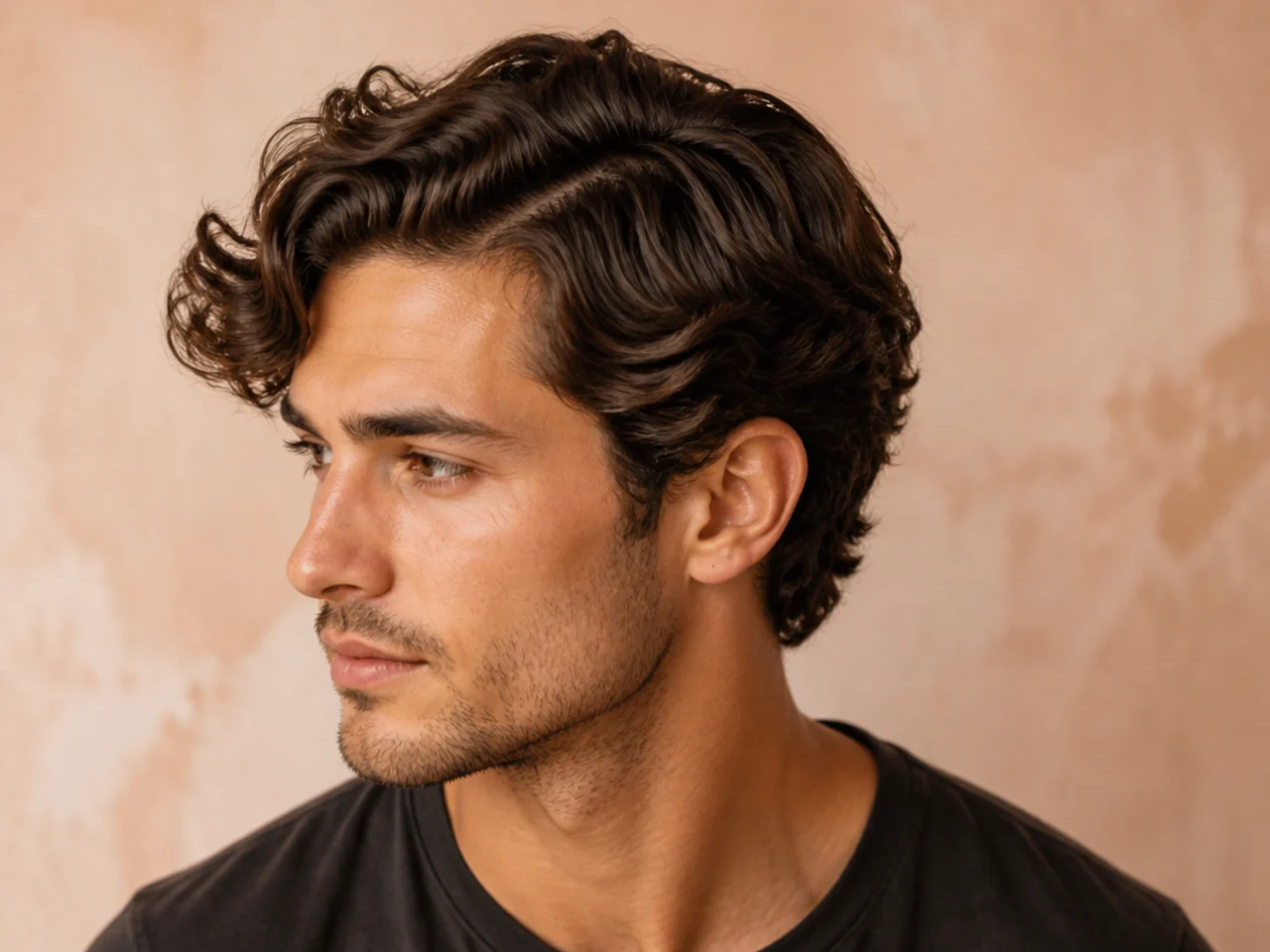
Built around a natural wave rather than fighting it. Low or scissor taper on the sides, three to four inches on top, soft parting sitting where the wave already breaks. Works only on genuine wavy hair (1C to 2C). The wave carries the sweep on its own.
Ask for: "low taper or scissor taper, three to four inches on top, soft side parting — cut with the wave direction, not against it."
Styling: curl cream or light mousse on damp hair, scrunched with fingers, diffuse-dried on low. Light hairspray twelve inches from the head for extra hold.
26. Asian Straight Hair Side Part

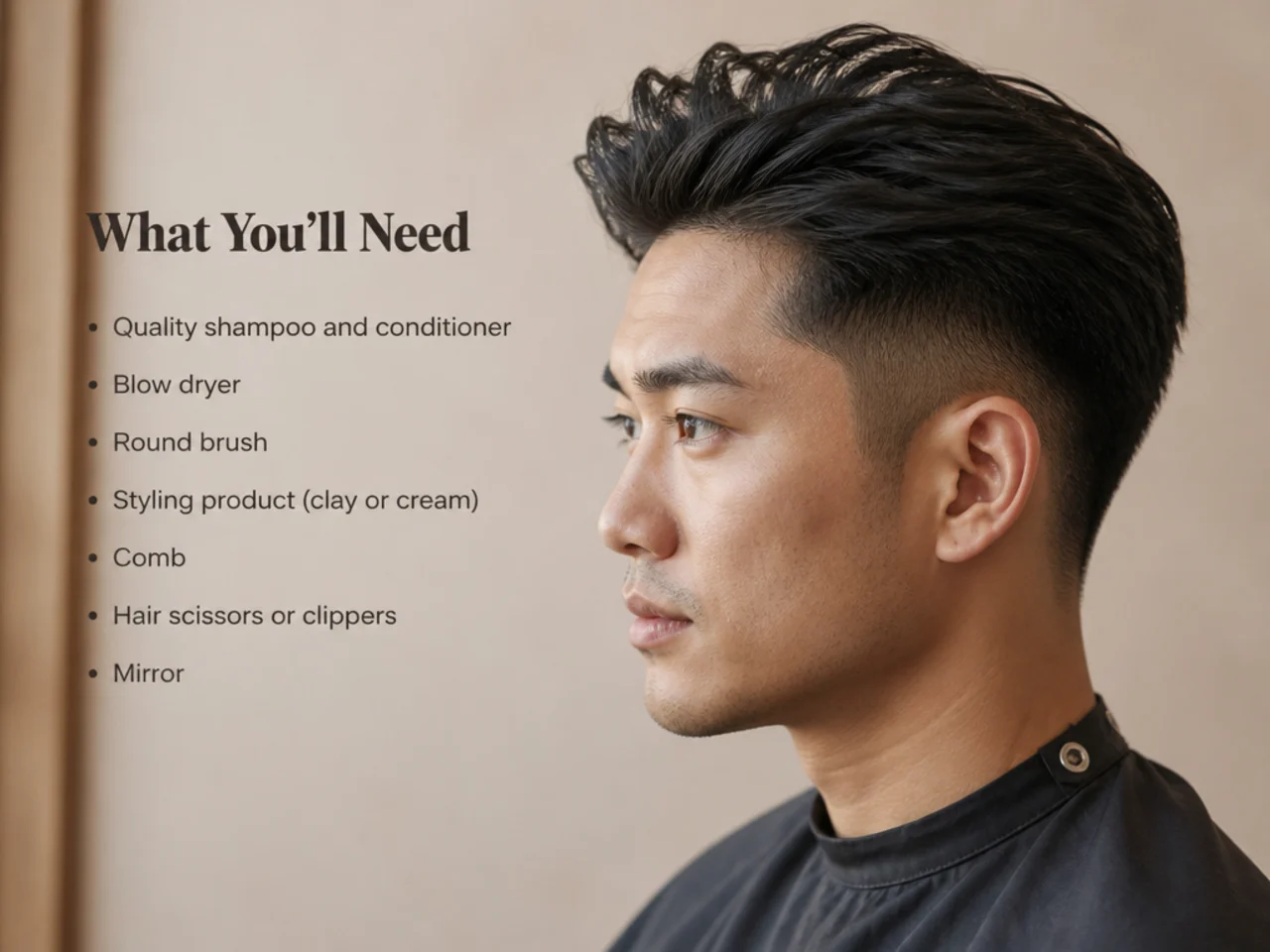
Dense East Asian hair takes a razor-defined parting sharper than any other texture. Clean mid fade, two to three inches of poker-straight length on top, comb-drawn parting that sits visible without a razor line. Holds the sweep all day.
Ask for: "mid fade at the temple, two and a half inches on top, defined comb-drawn side parting — cut for straight East Asian hair."
Styling: light cream or matte paste combed once, low blow-dry against the parting. Dense straight hair holds eight hours without a hard part.
27. Long Flow Side Part
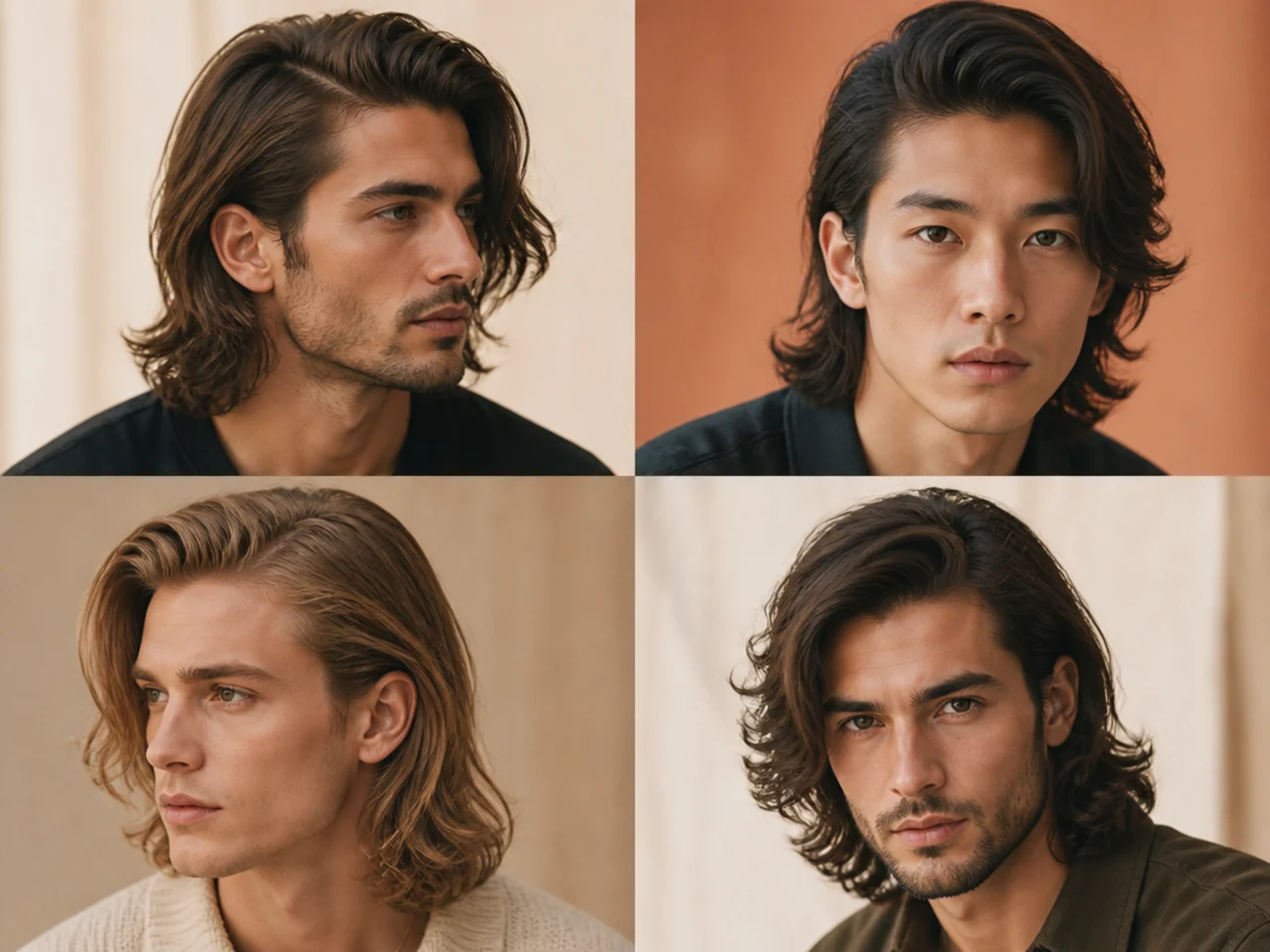
The longest end. Four to six inches or more on top, scissor-tapered sides — never faded — swept from a natural parting with movement. Fits oval and long faces. Wavy or gently curly hair carries this beautifully. Consider the middle part haircut men sibling if you're between centered and offset.
Ask for: "scissor-cut sides, no clipper, four to six inches on top, natural side sweep — bring a photo, length descriptions vary between shops."
Styling: sea-salt spray on damp hair, scrunched, air-dried or diffused. Skip pomade at this length — it drags the roots flat.
28. Grown-Out Transitional Side Part
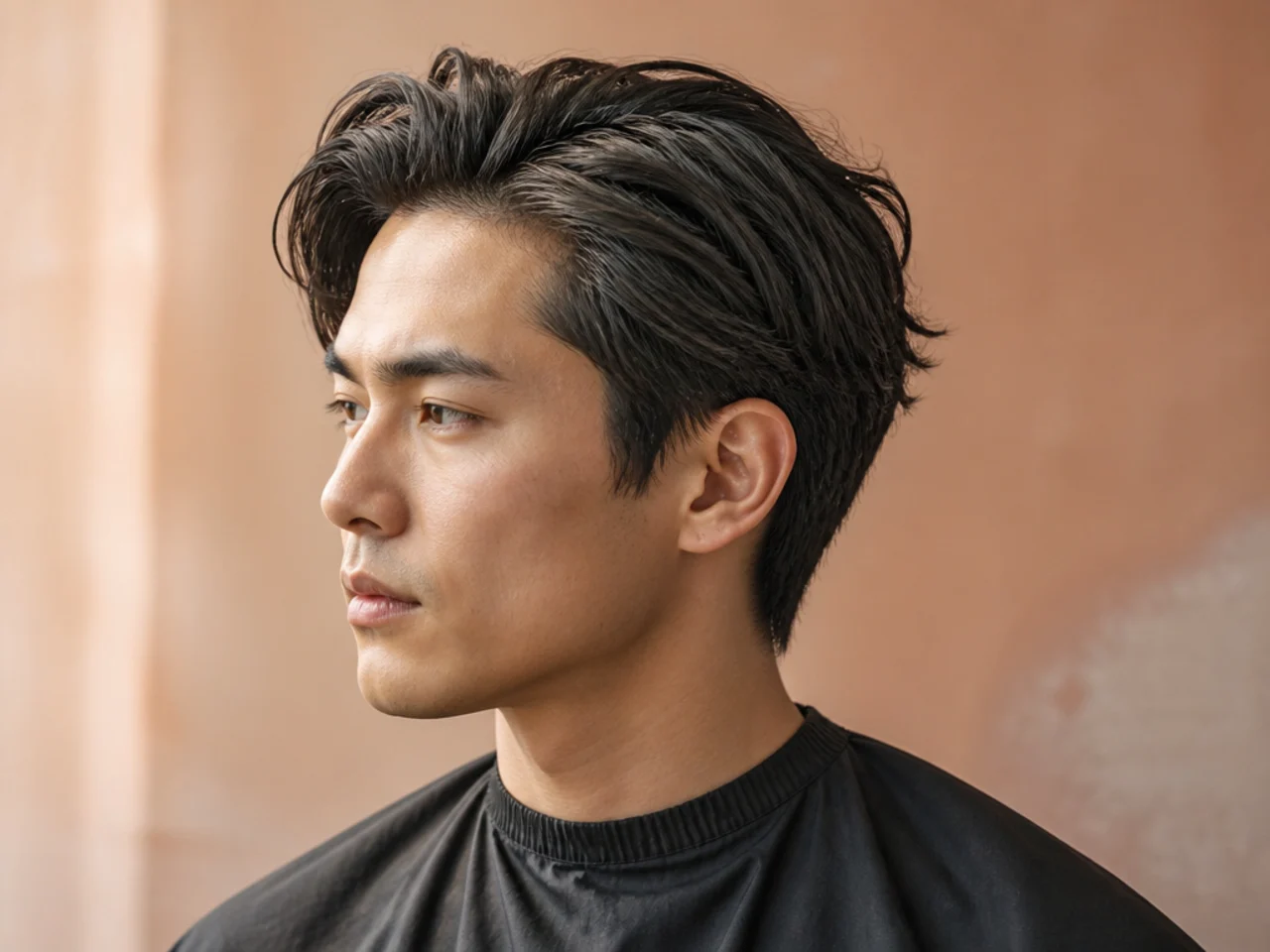
The version for guys mid-grow-out from a shorter cut. Everything left slightly longer than the barber's default — sides at a #4 instead of #2, top pushed to three inches, parting held soft. Buys six to eight weeks between shop visits while the top catches up to a real style. The parking-lot version of a side part.
Ask for: "leave the sides at a #4 taper, three inches on top blended in with scissors, soft parting — I'm growing this out."
Styling: cream or light paste, minimal styling. Re-cut every six weeks with the same instructions.
29. Teen Skin Fade Side Part
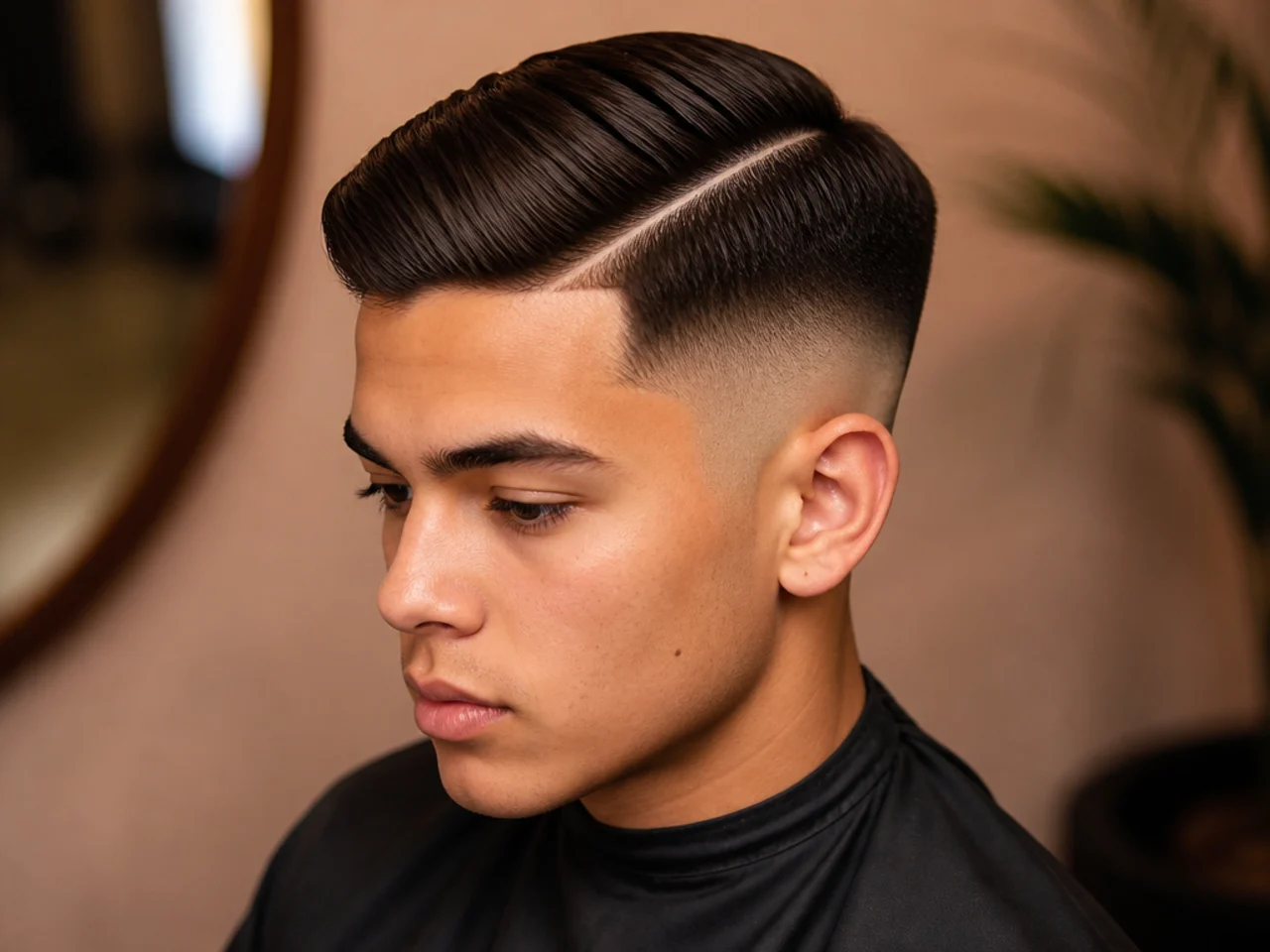
The most-requested haircut on any teen barbershop wall. High skin fade, hard part shaved sharp, one and a half to two inches of textured top styled loose. Reads modern, plays well on TikTok, and — because the fade sits high — takes the eye up to a still-growing jawline. See the boys haircuts for teenage guys roundup for wider teen context.
Ask for: "high skin fade with a razor hard part, one and a half inches on top point-cut for texture, matte finish."
Styling: small amount of matte clay pushed through with fingers. Book every two weeks — teens outgrow shape faster than adults.
30. Salt-and-Pepper Mature Side Part
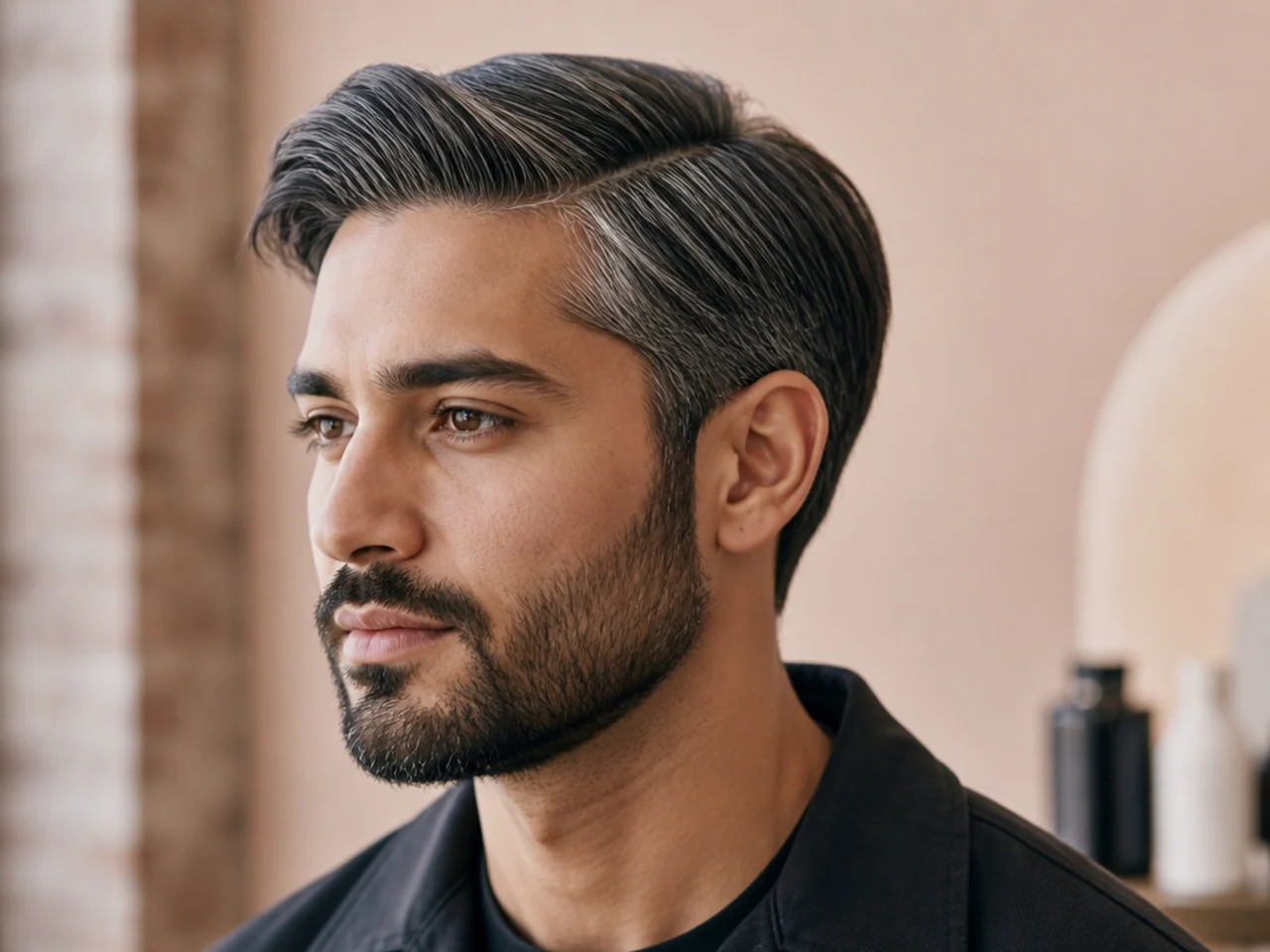
Built for gray-transitioning hair on the fifty-plus crowd. Scissor-tapered sides, three inches on top, natural parting, satin finish that lets the salt-and-pepper contrast do the work. Skip the fade — a scissor taper suits mature hair better because it doesn't over-contrast against silver strands. Handles thinning hair well.
Ask for: "scissor-tapered sides, three inches on top, natural side parting, satin finish — cut for gray-transitioning hair, no fade."
Styling: hair cream combed once. Skip matte products — they age gray hair by another decade visually. Satin or shine only.
How to Ask Your Barber for the Version You Want
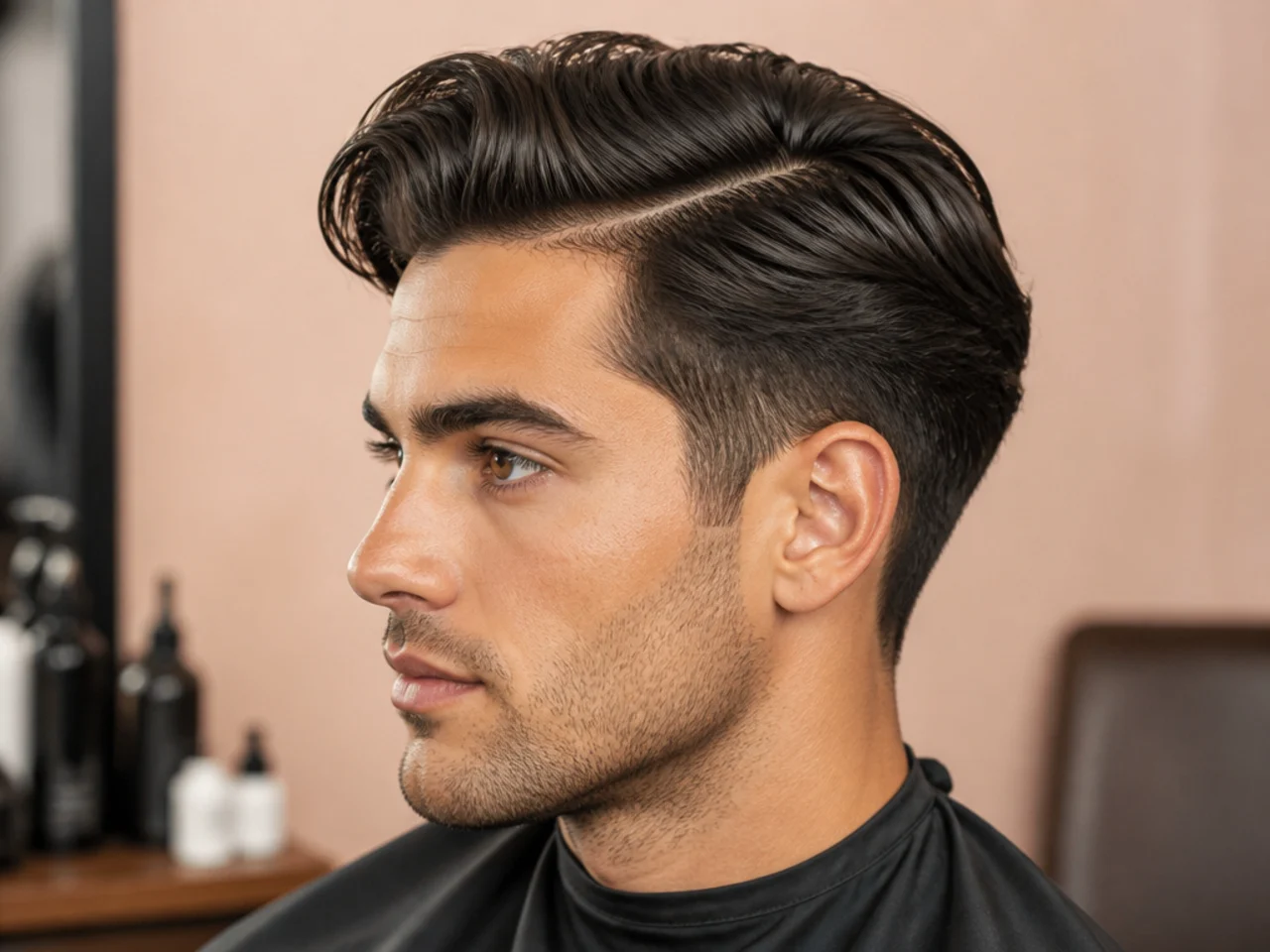
Six lines cover the whole conversation. Nail these and you walk out with the cut you had in mind.
- Bring a photo of the top and the fade line. The parting is easy to describe. The top length and fade transition are where most guys under-communicate. Screenshot from someone with similar hair texture and hairline.
- Name the sides finish. Scissor taper, low fade, mid fade, high skin fade, drop fade, burst fade, undercut, or classic taper. One phrase decides half the cut.
- Give the top length in inches. "Two and a half inches on top, scissor-cut." Not "medium." Not "a bit shorter than now." Inches remove ambiguity between shops.
- Choose the parting style. Natural (follows your cowlick), comb-drawn (soft line, no razor), or hard part (razored line into the scalp). Say which side — most guys part on the left.
- Name the finish vibe. Matte and textured. Sleek and shiny. Satin and polished. That phrase tells the barber what product weight to leave your hair ready for.
- Book the next appointment before you leave. Skin-fade builds want a chair every ten to fourteen days. Mid fades stretch to three weeks. Classic scissor tapers hold four to five. Get on the schedule while you're in the chair.
Styling and Maintenance
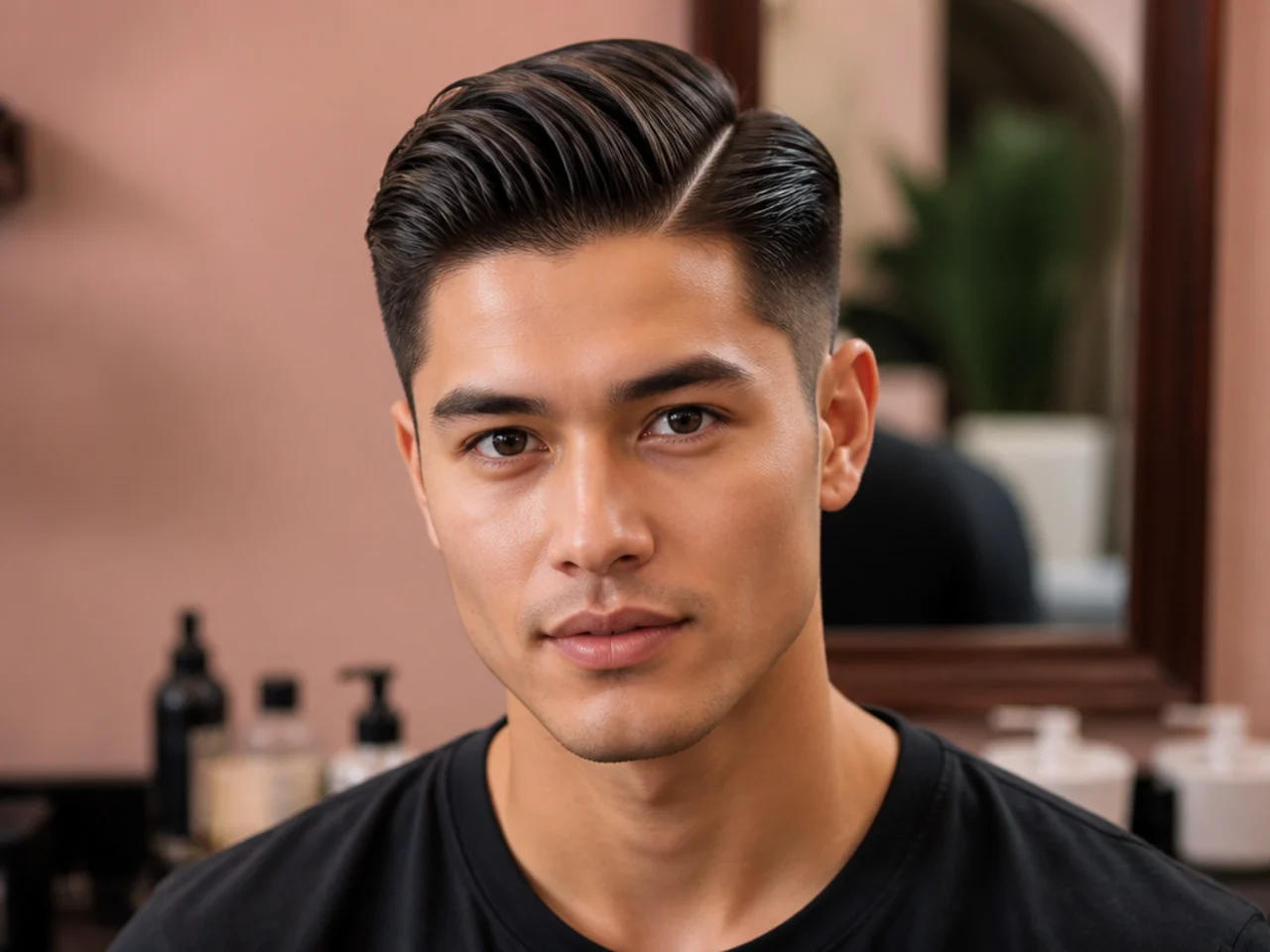
The side part rewards a simple routine and punishes over-styling. Wash, towel-dry until the water stops dripping, warm a pea to nickel of product between palms, work through the top only, style with fingers or a comb. Two minutes for scissor-tapered. Five for hard part or deep parting.
Product by finish. Matte clay or paste for textured tops (10, 11, 17, 22, 29). Cream pomade for satin (1, 2, 3, 4, 26, 30). Shine pomade or gel for slick-back (13, 14, 20, 21). Sea-salt spray plus matte cream for wavy and flow (25, 27). Curl cream or butter for curly and coily (23, 24). Pick one product per cut — layering flattens the shape.
Parting technique. Comb wet, not dry. Damp hair sets a parting clean; dry hair leaves it fussed. If you have a strong cowlick, use it. The best hair clippers for men guide covers home tools that hold the neckline between cuts.
Line and hard-part upkeep. Book a shape-up between full cuts for any hard part or skin fade. Most shops charge fifteen to twenty dollars for a fade-and-line touch-up. The forehead line and hard part fade first.
Cadence. Skin fade with hard part: ten to fourteen days. High or mid skin fade: two to three weeks. Low fade or drop fade: three to four weeks. Classic scissor taper: four to five weeks. Low taper or transitional: five to six weeks. Long flow: eight weeks. The low maintenance mens haircuts guide covers wider low-effort options.
FAQ
Which side should a guy part his hair on? Follow your cowlick — that's the split your hair wants, and fighting the other side loses every morning. If your crown doesn't swirl strongly, default to the left; that's the traditional masculine side.
Is a side part still a modern cut in 2026? More than any point in twenty years. The classic scissor version has been steady for a hundred years. The modern hard-part-with-fade builds have driven request lists since 2018. Both sit somewhere on this list.
How much length do I need on top? Two inches minimum for a parting that will hold. Shorter and the top won't stay swept. Growing from a buzz? Allow three to four months.
Do curly and coily guys have to skip the side part? No — variations 23 and 24 are built for curly and coily hair. Both work by keeping the sides short so the density on top has a clean frame. Coily hair actually takes a hard-part line sharper than most textures because the razor edge contrasts against the coil.
Hard part or comb-drawn? Comb-drawn works for every variation above except the ones named "hard part" (6, 7, 8, 9, 24, 29). Hard part reads sharper in photos but demands a two-week rebook. Monthly guys should stick with comb-drawn.
Which side part suits a receding hairline? The traditional gentleman's comb over (3), the classic executive (1), and the mature salt-and-pepper version (30). All three carry length across the crown from a low parting. Skip hard parts sitting at the recession.
Can I part it myself between cuts? Yes for the parting; no for the sides. Wet the top, comb front-to-back once, sweep to your dominant side along the natural split. The textured haircuts for men guide covers home-maintenance ideas that overlap with side-part upkeep.