15 Middle Part Haircuts That Suit Any Face
Fifteen middle part haircuts for men grouped by face shape — oval, round, square, heart, diamond, and long. Photos, barber wording, and one styling cue each.
In this article · 32
- Why Face Shape Matters for a Middle Part
- How to Identify Your Face Shape
- Middle Parts for Oval Faces
- 1. The Long Layered Curtain
- 2. Mid-Length Middle Part with Low Taper
- Middle Parts for Round Faces
- 3. Voluminous Middle Part with High Fade
- 4. Two Block Middle Part with Vertical Undercut
- 5. Sleek Middle Part with Skin Fade
- Middle Parts for Square Faces
- 6. Loose Wavy Middle Part
- 7. Soft Textured Middle Part with Low Fade
- 8. Messy Middle Part Flow with Connected Sides
- Middle Parts for Heart Faces
- 9. Chin-Length Parted Curtains
- 10. Middle Part with Burst Fade
- Middle Parts for Diamond Faces
- 11. Feathered Curtain Middle Part
- 12. Middle Part with Drop Fade
- Middle Parts for Long / Oblong Faces
- 13. Medium Middle Part with Dense Connected Sides
- 14. Short Middle Part with Brow-Length Fringe
- 15. Rounded Curtain Middle Part with Low Fade
- How to Ask Your Barber
- Styling and Maintenance
- FAQ
- Which face shape suits a middle part best?
- Do middle part haircuts make your face look longer?
- What is the best middle part for a round face?
- What middle part suits a square face?
- How do I know which face shape I have?
- Can I get a middle part with a receding hairline?
A middle part reads differently on every face shape. The same five-inch curtain that lengthens an oval face can widen a round one — or stack too much geometry on top of a square jaw. This guide covers fifteen middle part variations grouped by face shape, with the exact top length, side treatment, and one styling move to make each one land. Two or three picks per shape so you walk out with a version that actually flatters you.
For the base cut and the wider curtain menu, see the middle part haircut men pillar or step out to the full men's haircuts hub.
Why Face Shape Matters for a Middle Part
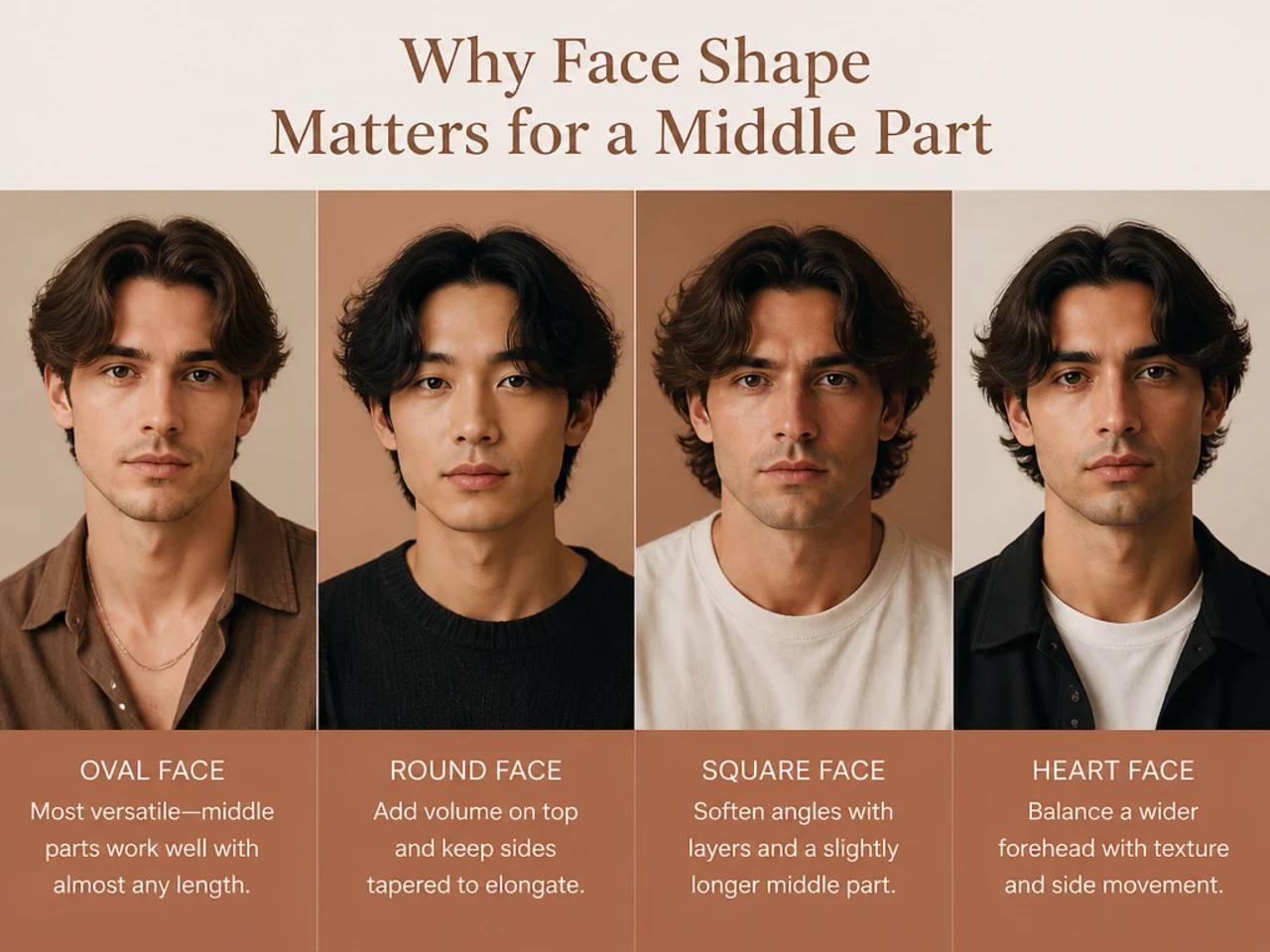
The middle part draws a vertical line down the center of your face. That single line does two things at once — it splits the visual width of your head and lengthens the vertical read. Which is why the same cut narrows a round face and widens an oval one, and why long faces need extra width at the sides to stay proportional.
Length on top does the opposite work of the sides. A five-inch curtain adds height and shrinks visual width. Short sides — a fade, taper, or skin fade — take even more width off. Connected, longer sides at the jaw put width back on. Every middle part variation below is really a decision about how much vertical versus horizontal weight your specific face shape needs.
The third variable is edge softness. Soft face shapes (round, oval, heart) tolerate hard fades and disconnected undercuts. Angular face shapes (square, diamond) look best with softer, connected sides so you are not stacking angles on angles.
How to Identify Your Face Shape
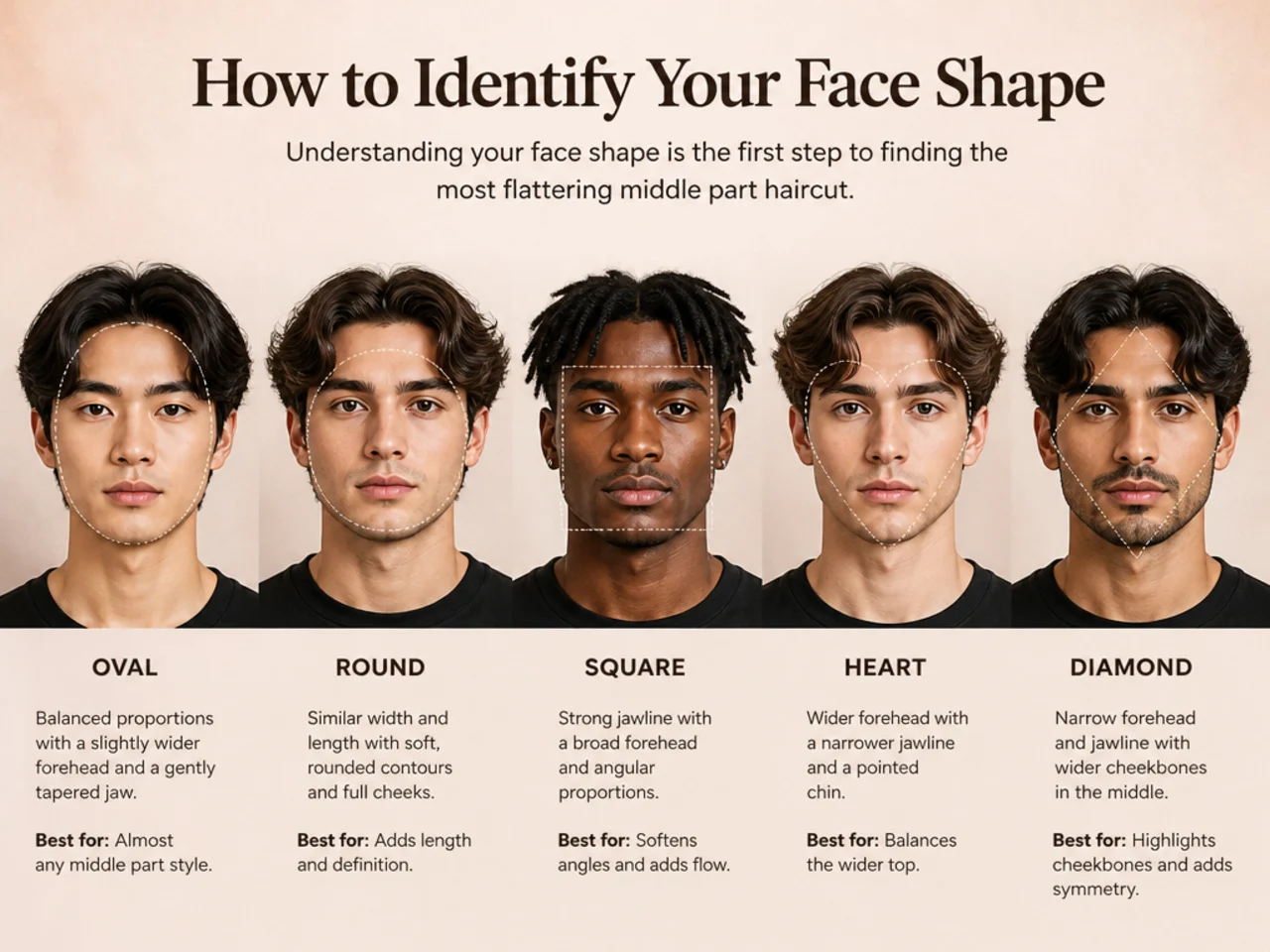
Pull your hair off your forehead, face a mirror, and look at where your face is widest.
- Oval: Length is roughly one and a half times the width, softly curved everywhere. Balanced top to bottom.
- Round: Length and width are almost equal, cheeks are the widest point, chin is soft.
- Square: Length and width are almost equal, but the jaw is strong and matches the width of the forehead.
- Heart: Forehead is the widest point, cheekbones narrow, chin points.
- Diamond: Cheekbones are the widest point, forehead and chin are narrower.
- Long / Oblong: Length is significantly greater than width, forehead and jaw are similar widths.
If you sit between two shapes, pick the one your jaw resembles most. The jaw drives more of a middle part decision than the forehead does.
Middle Parts for Oval Faces
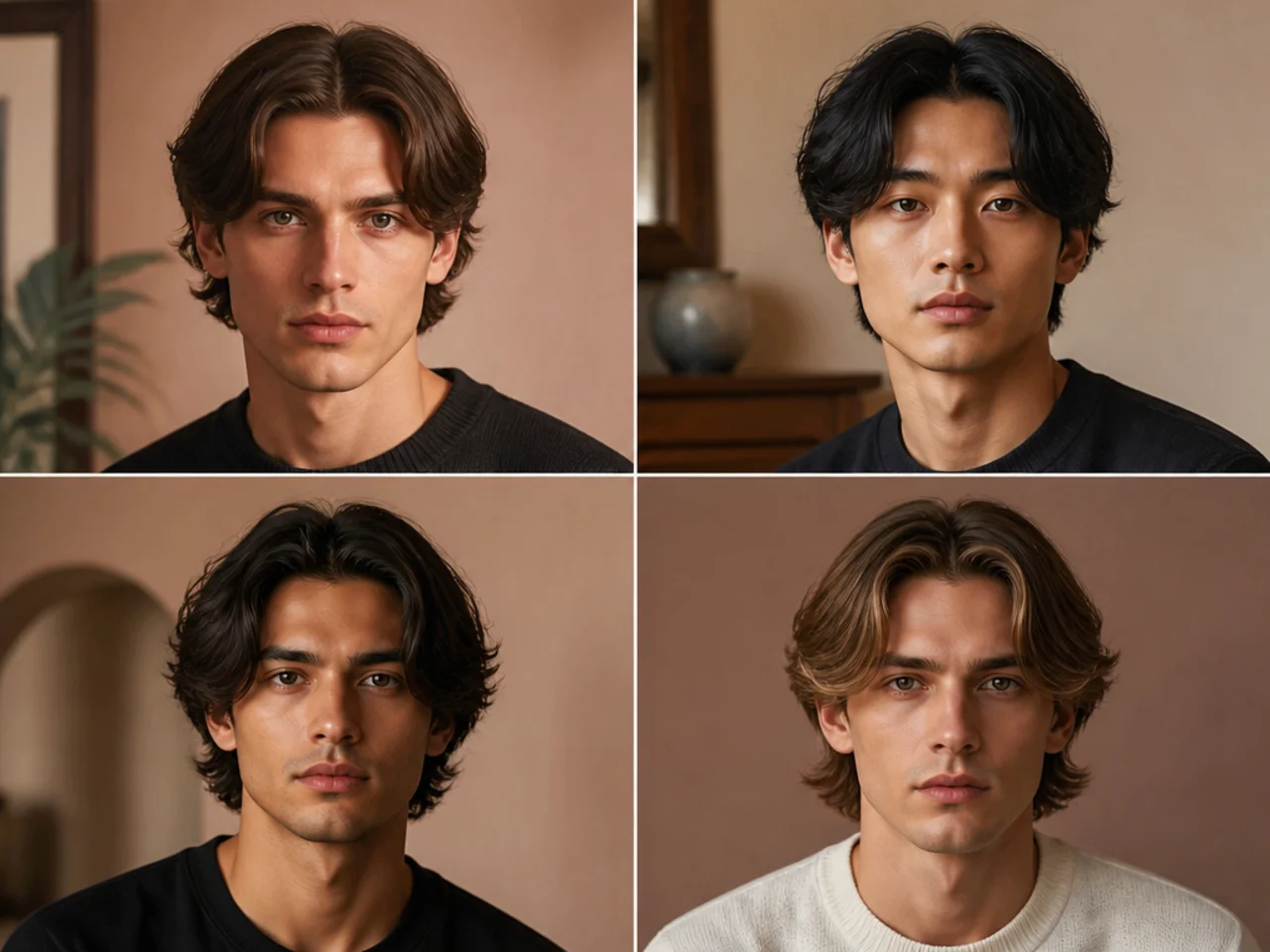
Oval faces wear almost any middle part without adjustment. The center split matches their natural symmetry, and both connected and faded sides work. Pick based on your styling appetite rather than your bone structure — you have the widest range of any face shape on this list.
1. The Long Layered Curtain
The pure curtain cut. Six inches on top layered from the cheekbone down, sides connected at the jaw, no fade and no undercut. The drape does the work — this version needs real length to sit right. Best on oval and long faces with straight to slightly wavy hair. Ask for: "Grow-out length on top around six inches, long soft internal layers from the cheekbone down, sides connected at the jaw, no fade." Blow-dry with the head tipped forward under a nozzle to train the fall, then finger-comb both curtains out.
2. Mid-Length Middle Part with Low Taper
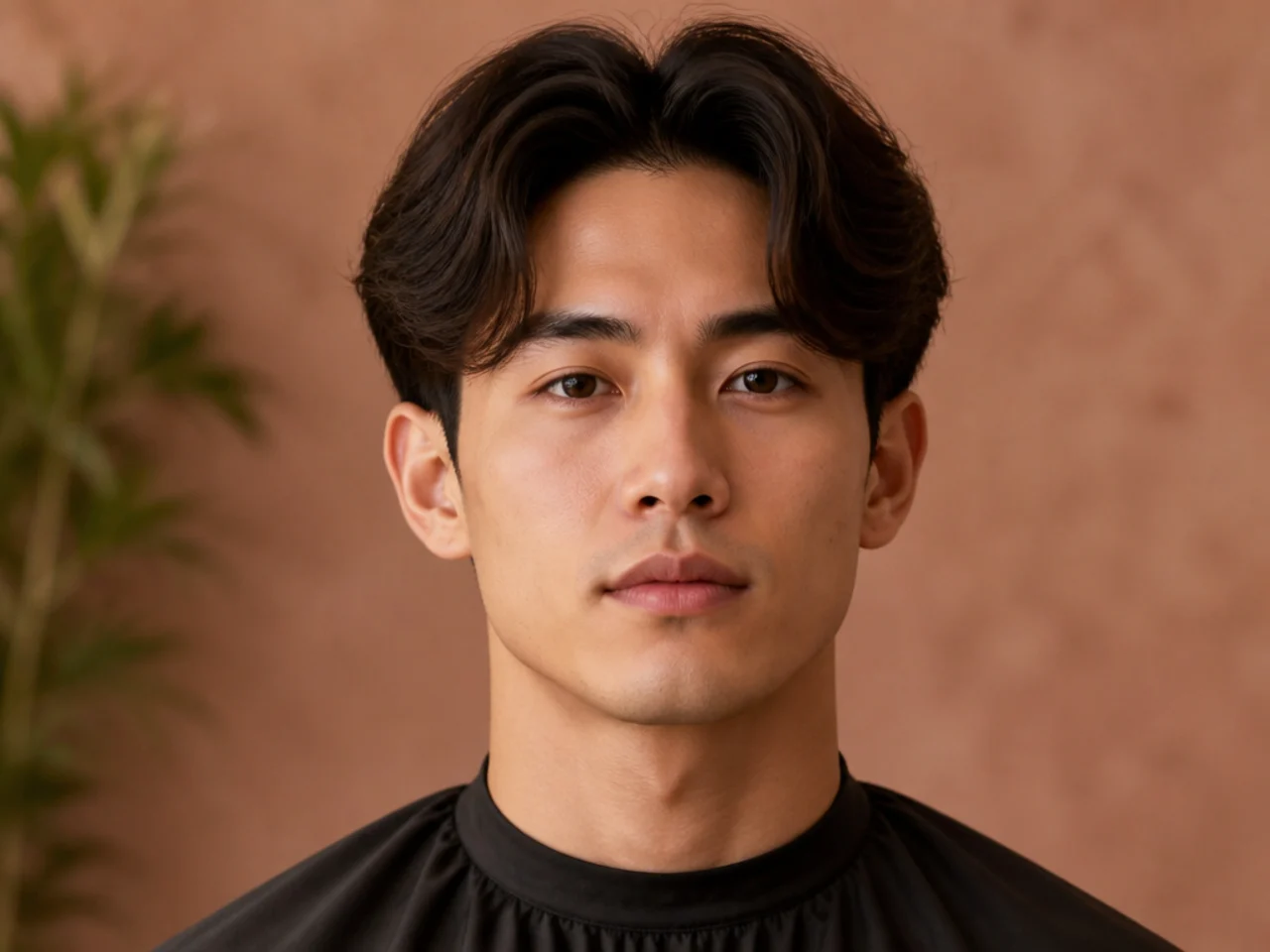
The everyday oval pick. Five inches on top, sides dropped into a soft low taper fade behind the ear so the shape reads modern without shouting. Suits every hair type from fine straight to medium wavy. Ask for: "Low taper around the ears and nape, five inches on top layered for a middle part with movement." Blow-dry front-forward with a round brush, split down the center with a wide-tooth comb, finish with a pea of matte paste worked ends-only.
Middle Parts for Round Faces
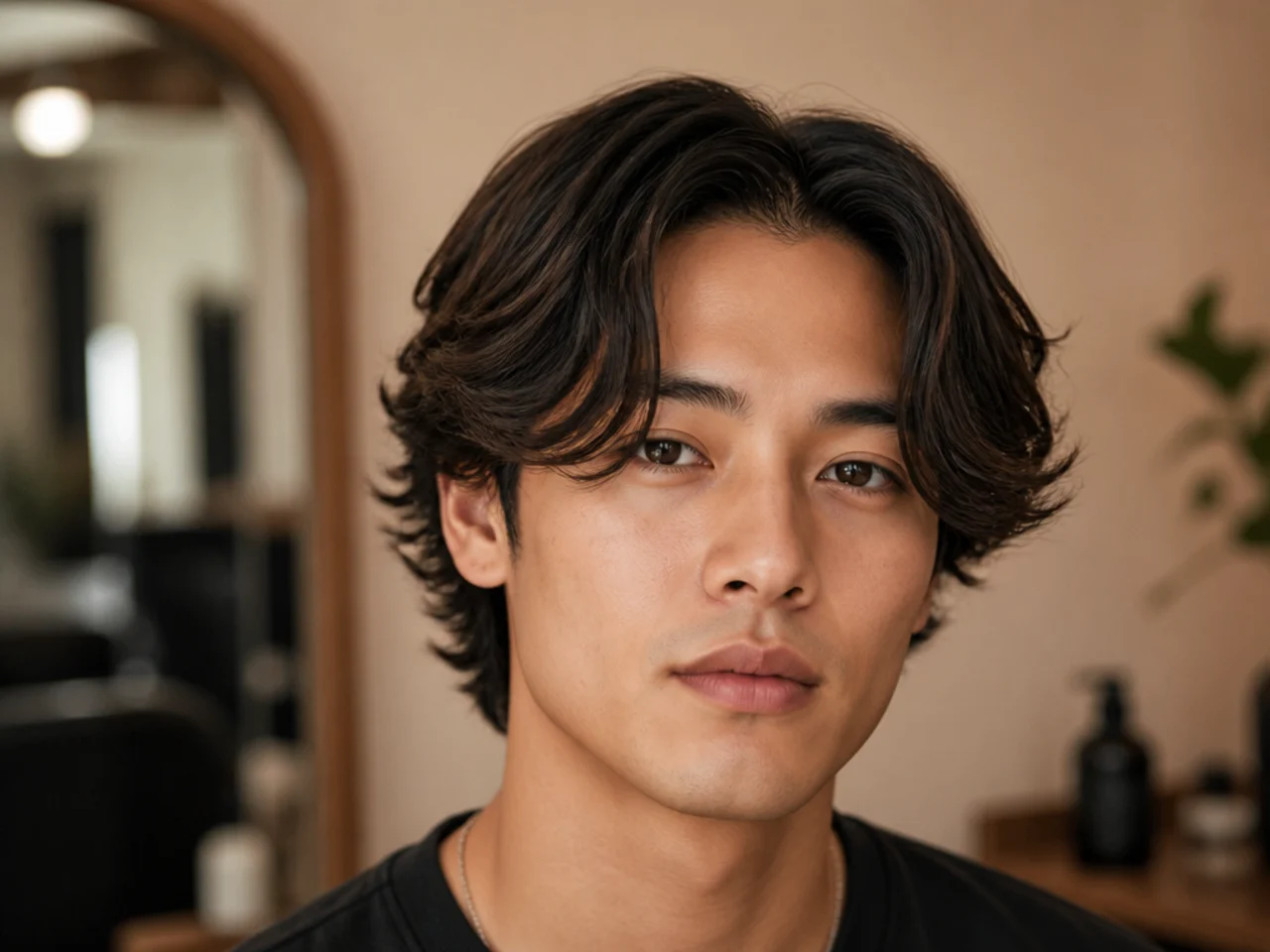
Round faces need vertical length. That means longer tops (five to six inches minimum), higher fades to strip width off the sides, and no bulky connected sides at the jaw. Every version below adds height and removes width so the finished shape reads oval, not round.
3. Voluminous Middle Part with High Fade
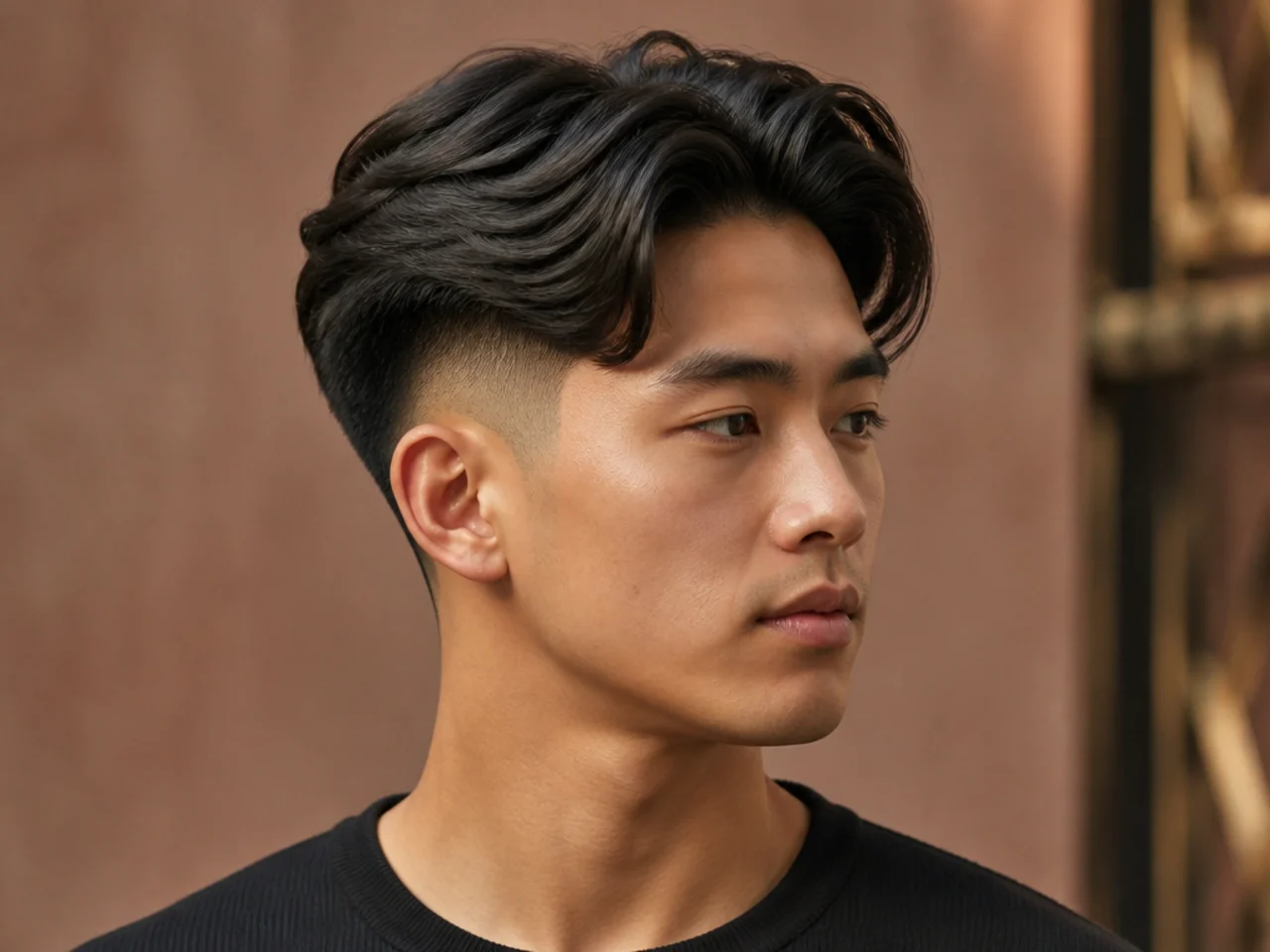
Six inches on top with real crown lift, sides dropped into a high fade that jumps in above the temple. The height and the fade combine to add three visual centimeters of face length. Suits round faces with medium-to-thick straight or wavy hair — very fine hair cannot hold the volume. Ask for: "High fade starting above the temple, six inches on top with internal thinning through the mid-shaft only, do not thin the ends, split down the middle." Blow-dry with a round brush lifting straight up at the roots before the split goes in.
4. Two Block Middle Part with Vertical Undercut
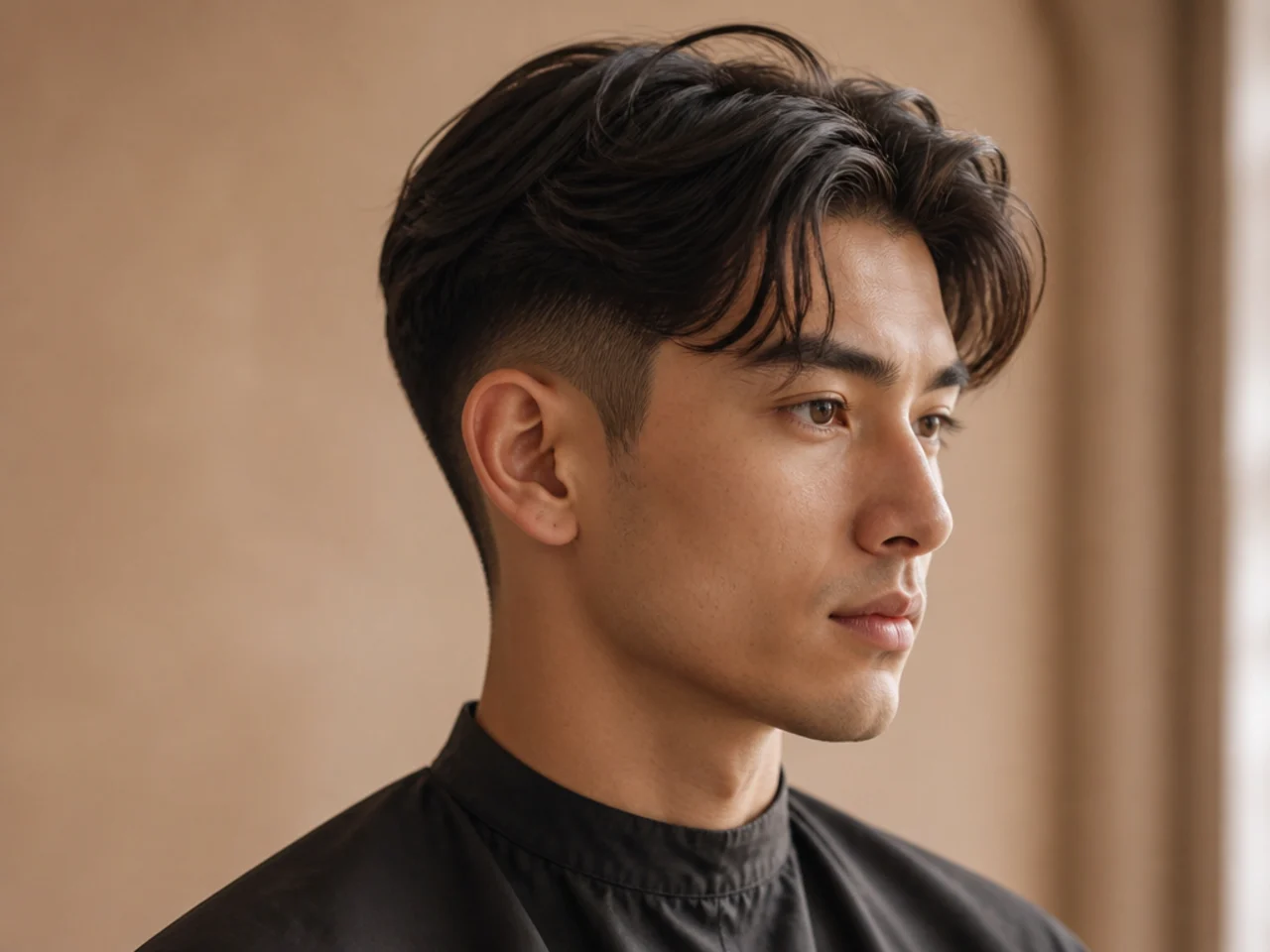
The Korean two block engineered for round-face slimming. Six-inch middle-parted top sits over hidden clippered sides at a #1 or #2, with a hard disconnected line where the two sections meet. See our two block haircut guide for the wider two block family and our korean haircuts for men guide for the K-pop takes. Ask for: "Two block cut with a disconnected undercut at a number two around the sides and back, six inches on top layered for a middle part with length in the front." Matte clay pushed forward from the roots locks the split.
5. Sleek Middle Part with Skin Fade
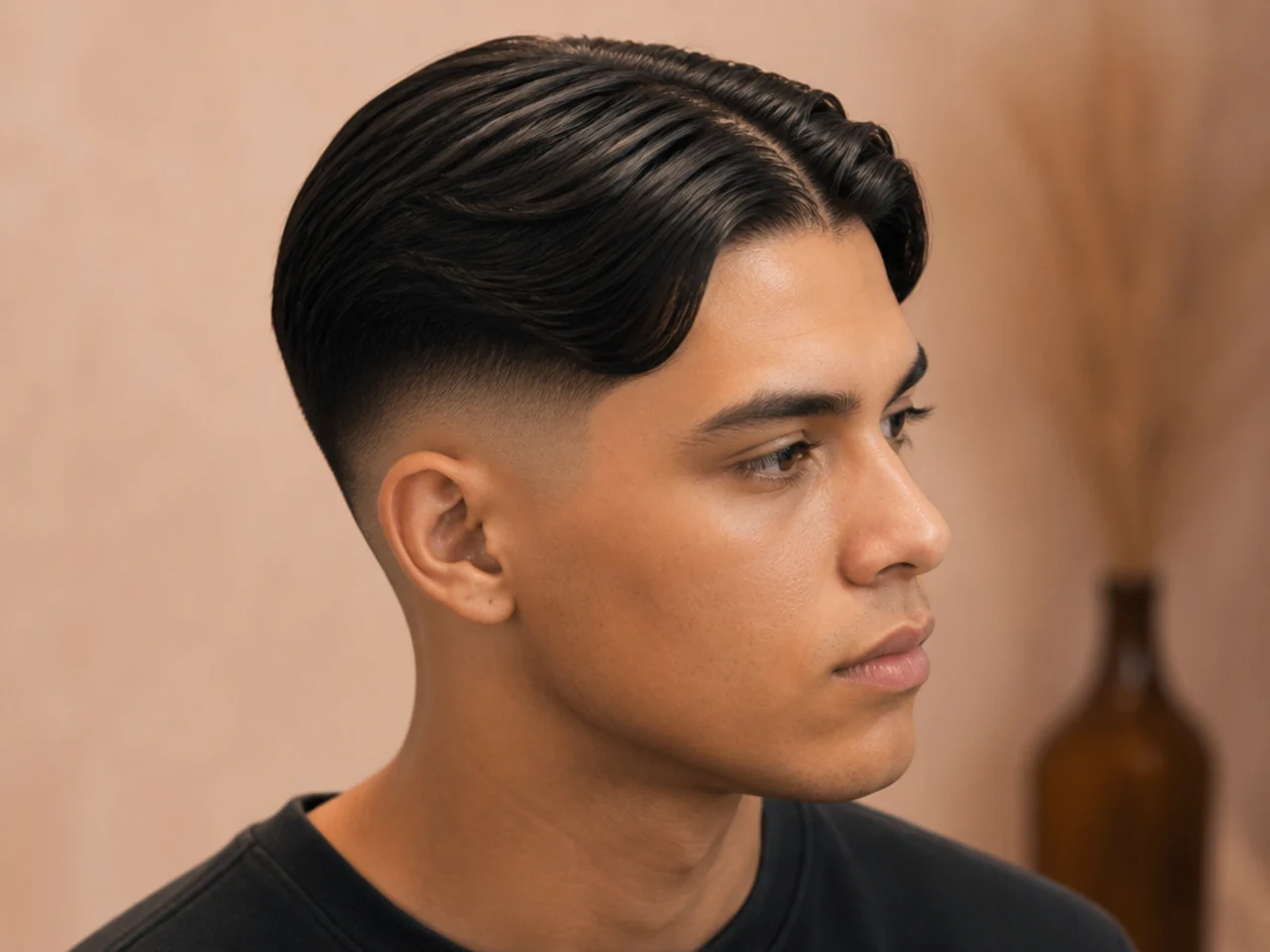
The sharpest visual contrast on the round-face list. A skin fade blends all the way to the scalp on the sides while a five-inch top sits above, combed cleanly off a center split. The scalp-to-scalp contrast pulls all width off the sides. Best on medium-thick straight hair — very fine hair looks patchy against a skin fade. Ask for: "Skin fade at the sides starting low, five inches on top scissor-cut, split dead center." Style with matte paste; the shine of a pomade fights the scalp. Rebook every two weeks or the skin fade grows in visibly.
Middle Parts for Square Faces

Square faces need softness — you already have strong angles, so the cut should not add more. Skip disconnected undercuts, skin fades, and razor-blunt ends. Reach for soft internal layers, connected or low-tapered sides, and textured finishes that break up the geometry. If you want the wider face-shape guide, see haircuts for square faces for the full menu.
6. Loose Wavy Middle Part

Built specifically for the guy with natural type 2 waves and a square jaw. Five inches on top, long soft internal layers cut with the wave pattern, sides connected at the ear. The waves soften every angle on your face without you doing anything. Ask for: "Five inches on top, long internal layers cut with a razor along the wave pattern, sides connected at the ear, no fade." Wash, apply a wave-defining cream in the shower, diffuse on low with an upward scrunch. That is the whole routine.
7. Soft Textured Middle Part with Low Fade
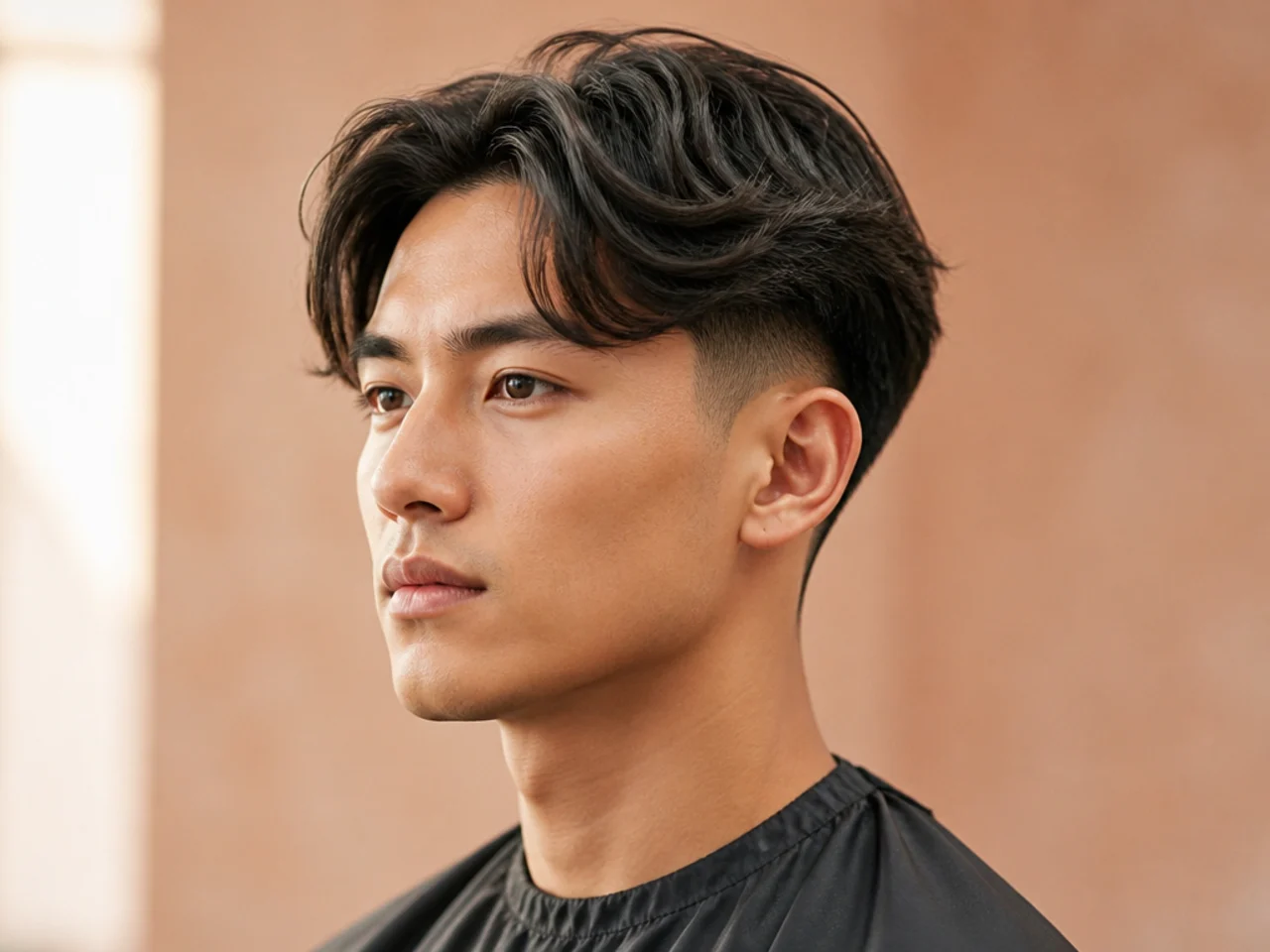
Four-and-a-half inches on top with heavily point-cut ends, dropped over a clean low fade that stops before the temple. The soft top edge does the softening, the low fade keeps the whole shape modern. Best on square faces with any hair type from straight to wavy. Ask for: "Low fade behind the ear, four and a half inches on top point-cut for texture, split down the middle." Rough-dry with fingers, work a pea of matte clay through, split with your fingers rather than a comb.
8. Messy Middle Part Flow with Connected Sides
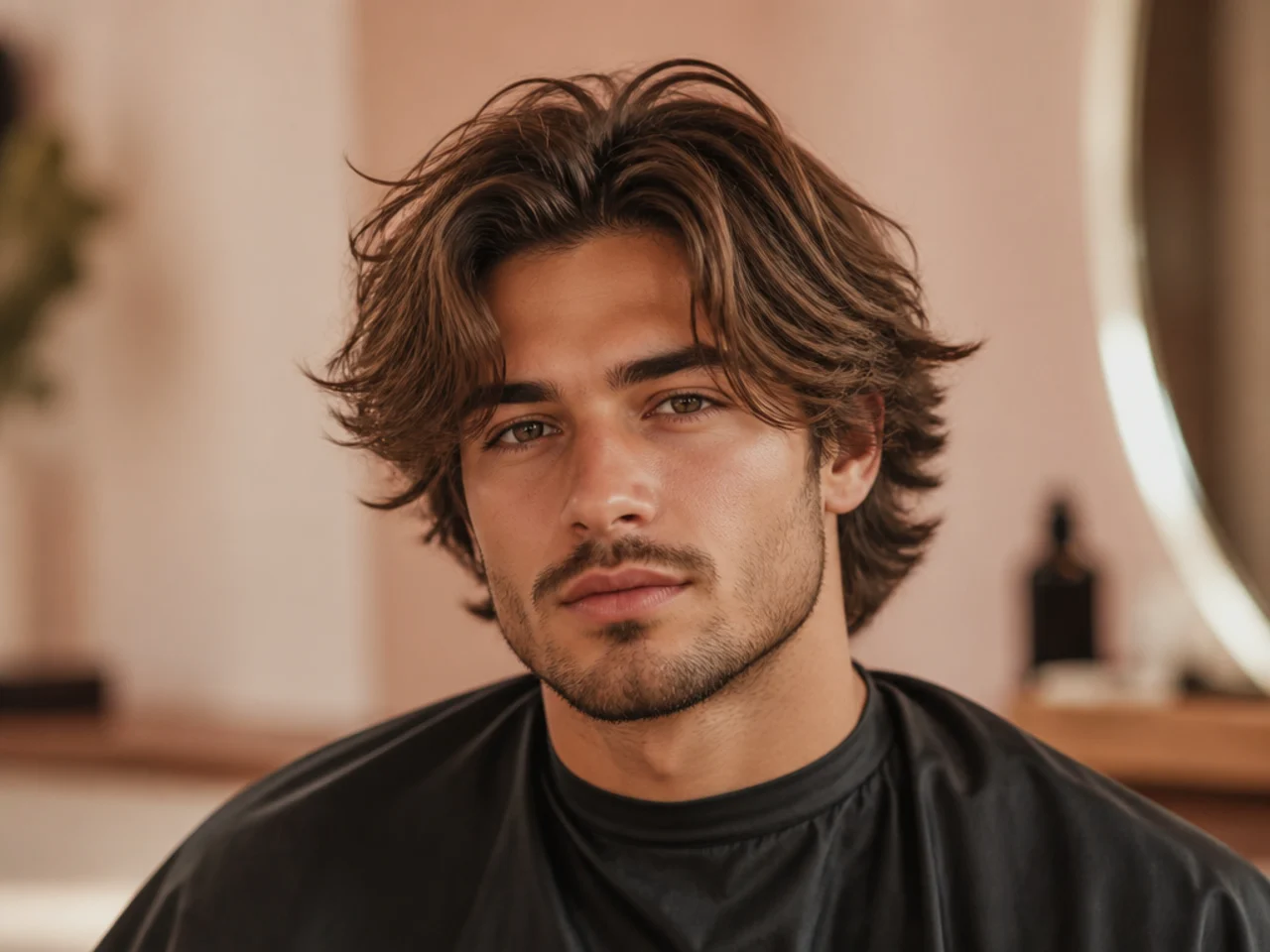
The most forgiving square-face middle part. Five inches on top styled deliberately loose — the split is there but not rigid, sides connected at the ear, ends point-cut for movement. Cousin to the messy hairstyles men family. Ask for: "Point-cut top around five inches, choppy through the front, sides connected at the ear, cut so the middle part is soft not rigid." Sea salt spray on damp hair, matte paste worked in with fingers, no comb. If it looks too neat, muss with damp hands and reshape.
Middle Parts for Heart Faces
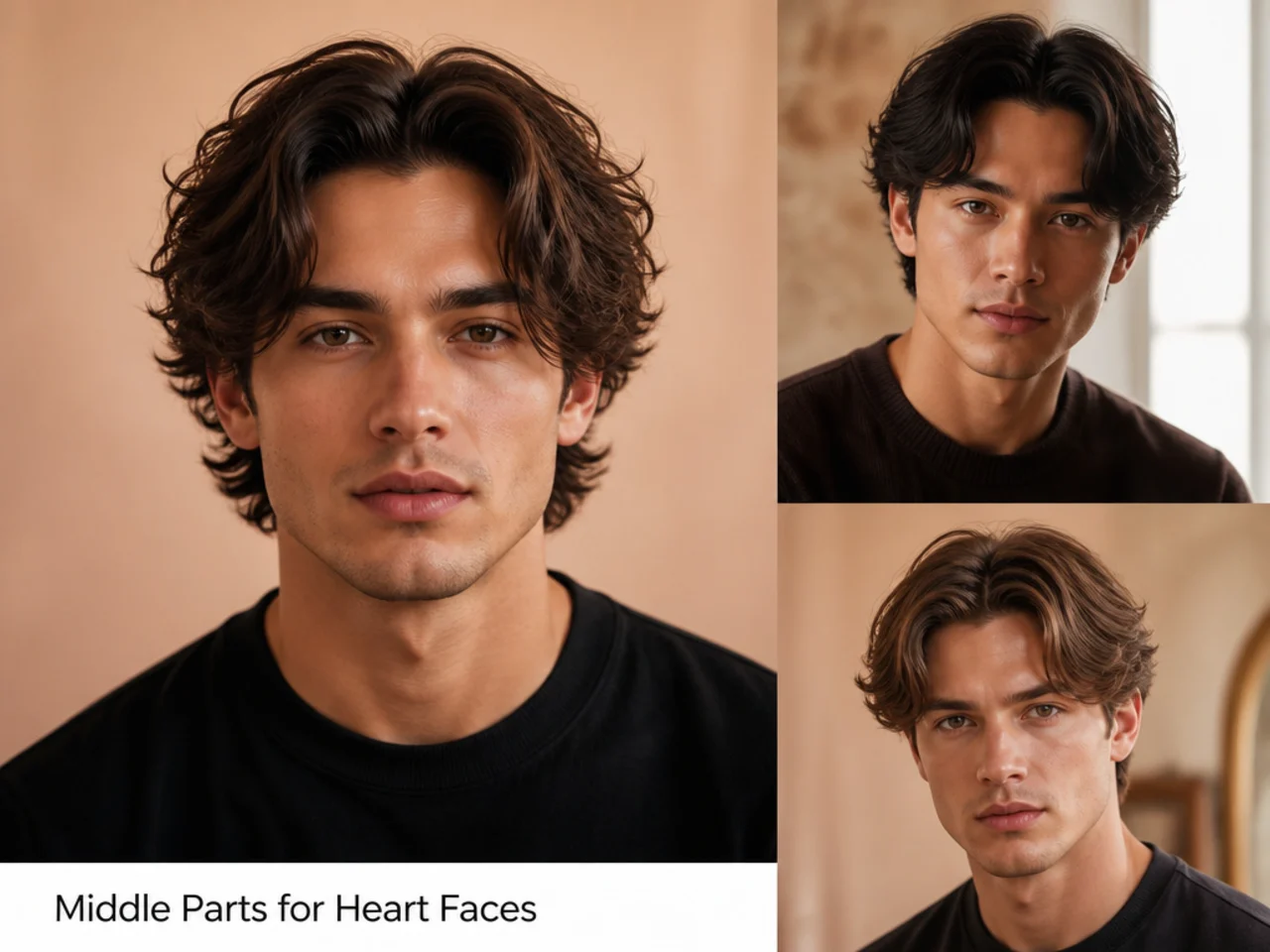
Heart faces are widest at the forehead and narrow to a pointed chin. The cut should balance that top-heavy pyramid by adding weight at the jawline and keeping the top from adding more width at the temples. Jaw-length curtains and fades that add fullness low on the sides are the two moves that do it.
9. Chin-Length Parted Curtains
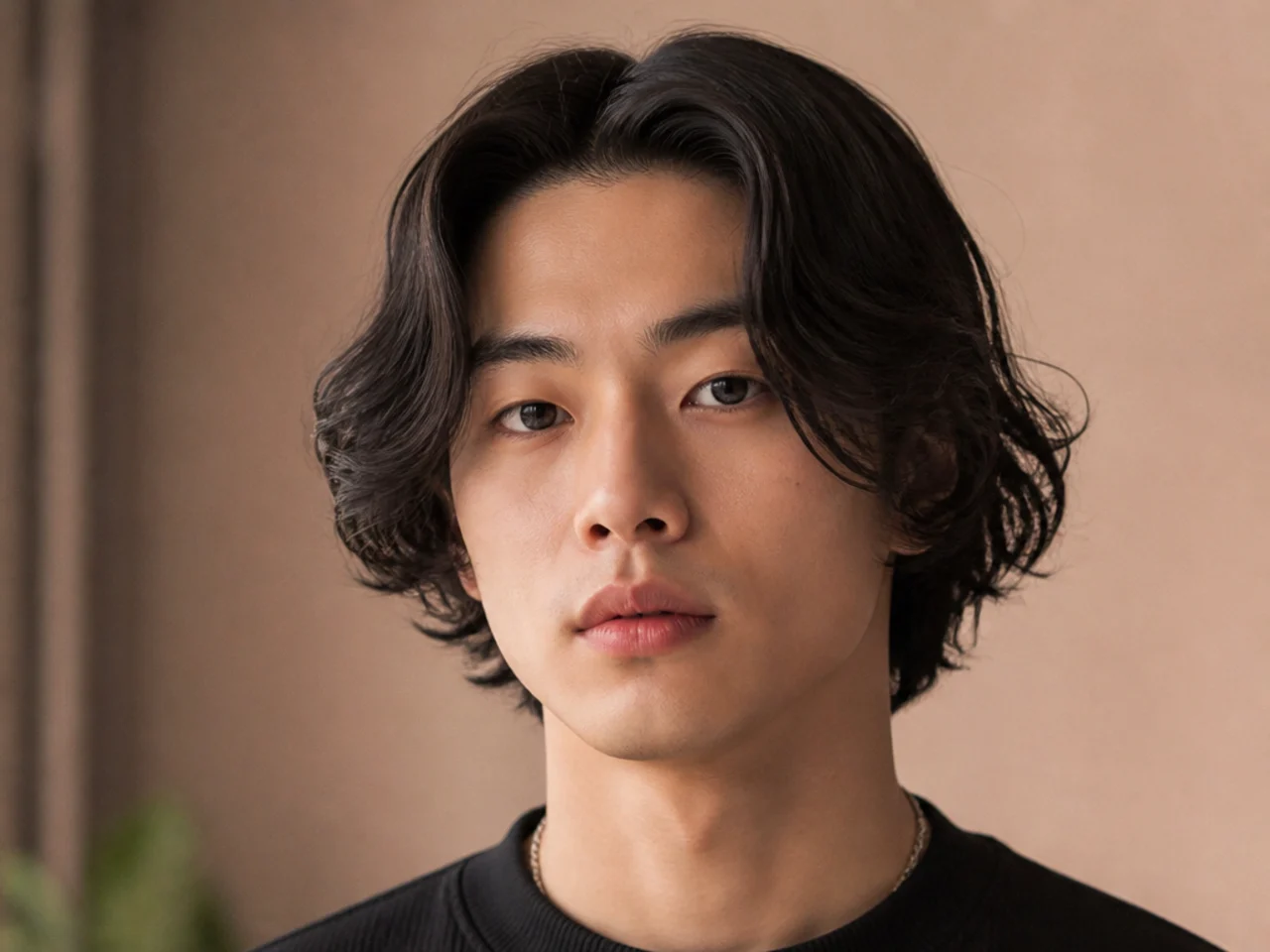
The '90s Leonardo DiCaprio cut, done deliberately for heart faces. Blunt ends at the chin, no fade, no undercut, parted straight down the middle with two full curtains falling forward. The weight at the jaw balances the width at the forehead. Best on straight to slightly wavy hair. Ask for: "Curtain cut, blunt ends at chin length, no layers past the mid-shaft, sides connected." Diffuse on low heat, work a coin-sized bit of styling cream through with your palms, rake front-to-back.
10. Middle Part with Burst Fade
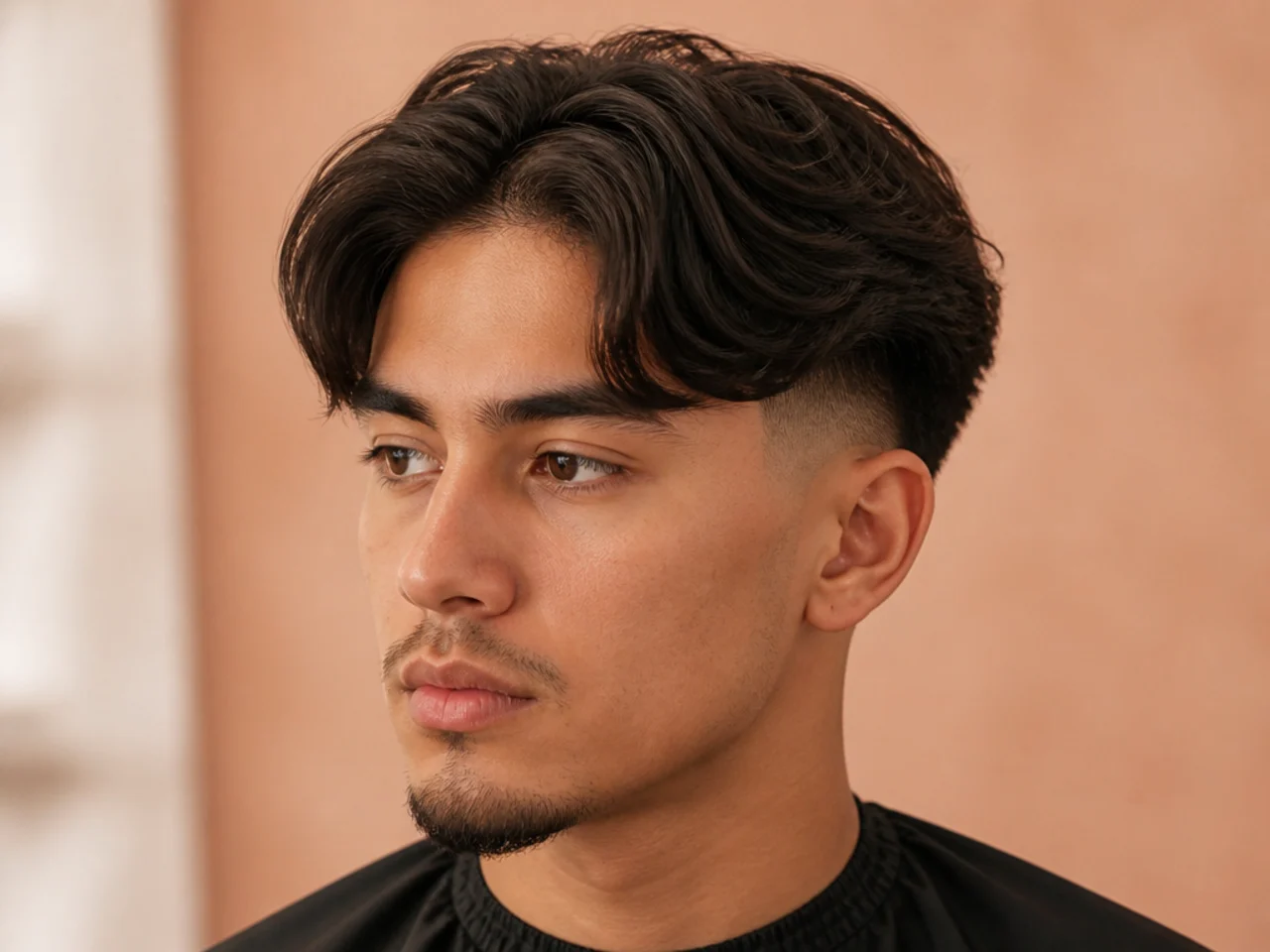
The burst fade arcs around the ear like a fanned semicircle, leaving weight at the nape. The weight low on the sides adds fullness at your jaw — exactly what a heart face needs to balance the wider forehead. Best on any hair type. Ask for: "Burst fade around the ear, weight left at the nape, five inches on top layered for a middle part with movement." Style with a matte paste worked through the roots for lift. Book the fade every two weeks — burst fades blur fast.
Middle Parts for Diamond Faces
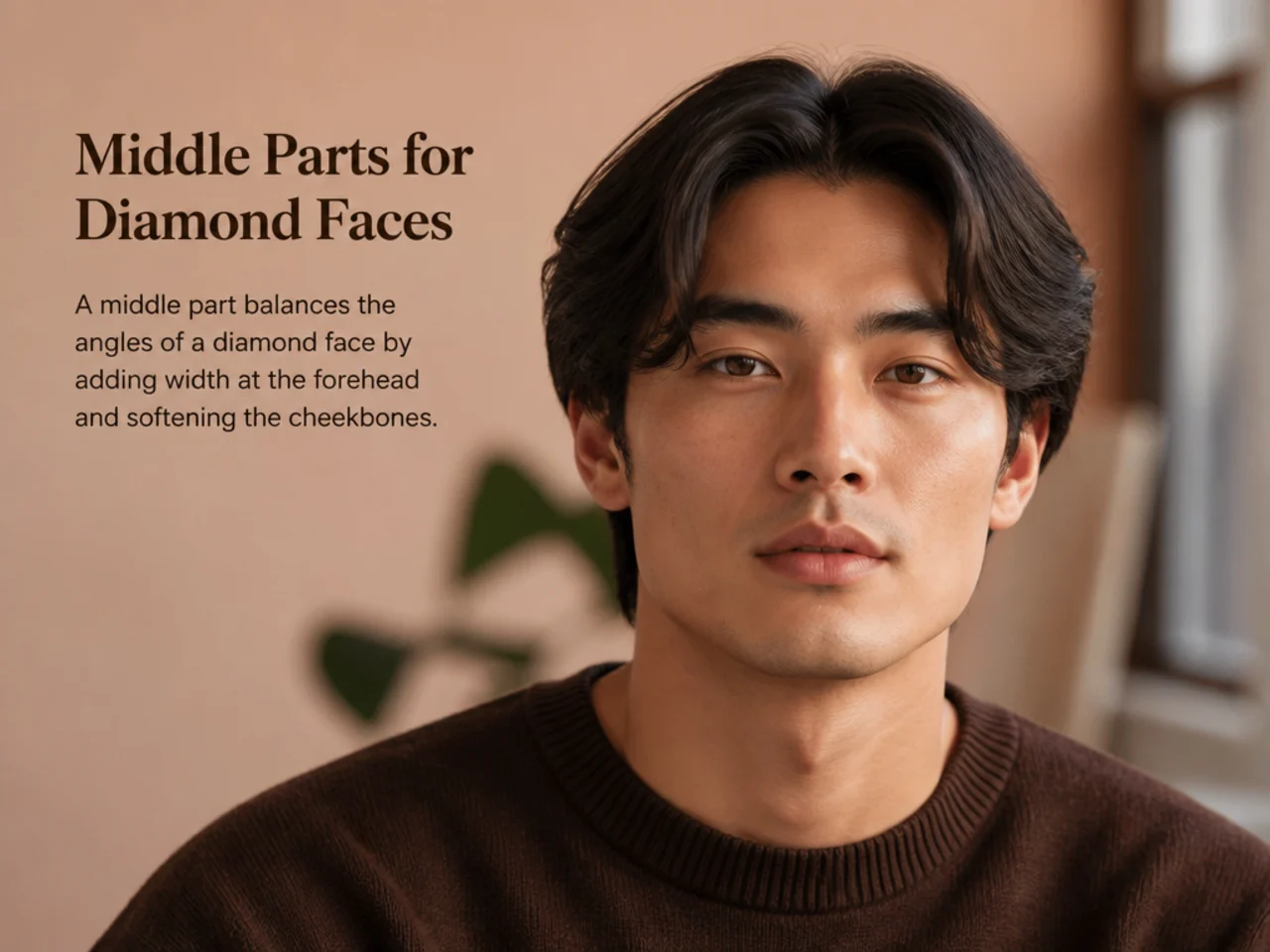
Diamond faces are widest at the cheekbones with a narrower forehead and chin. The goal is to add width at the forehead (via a fringe or fuller top) and soften the cheekbone line (via feathered ends rather than blunt cuts). Skip anything that hugs the cheekbones and skip skin fades that shrink the temples further.
11. Feathered Curtain Middle Part
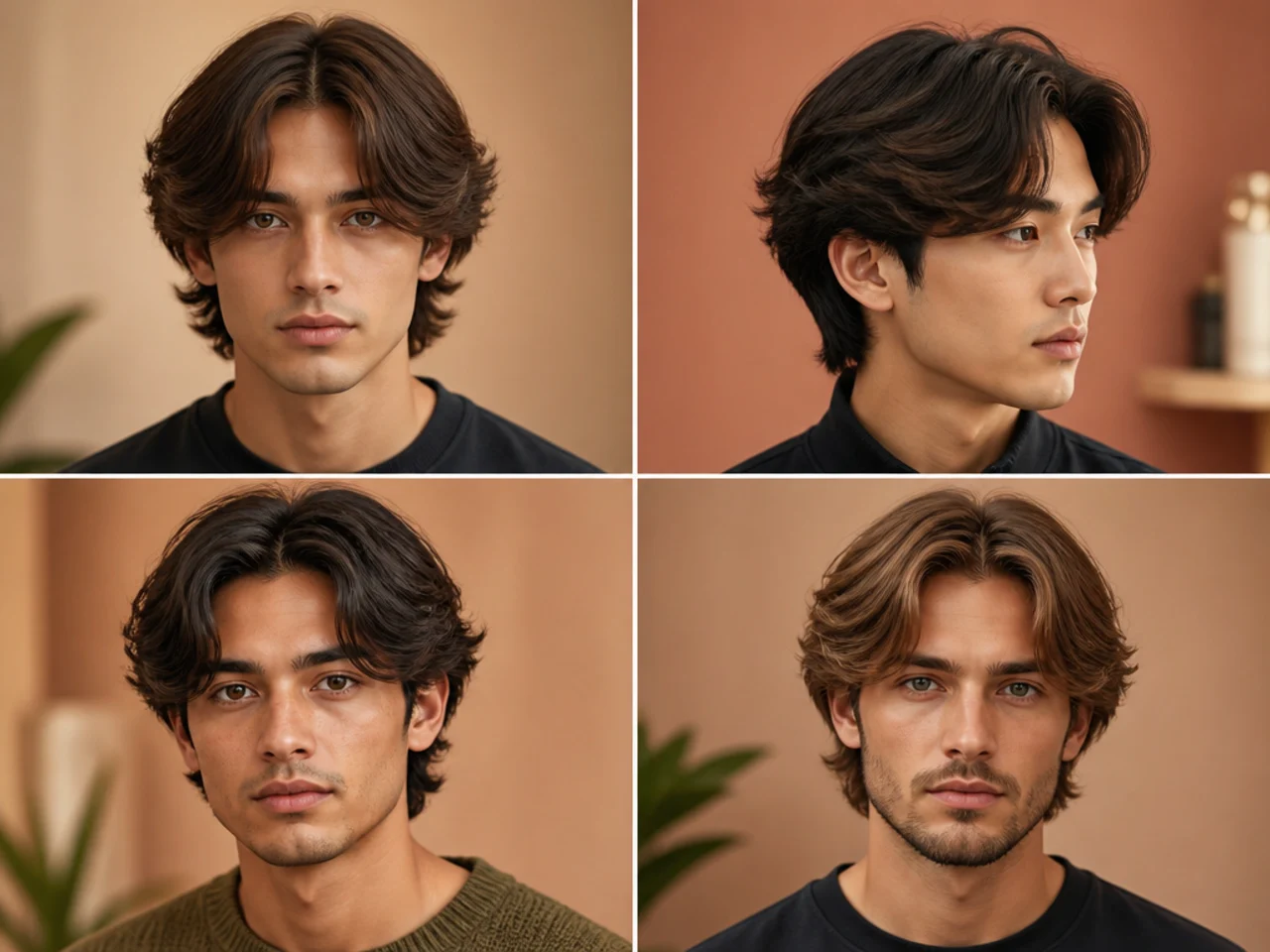
Wispier and lighter than a classic curtain — more air, less structure. Five inches on top, heavily razor-textured so the ends sit feathered and broken, sides scissor-blended above the ear. The feathering softens the cheekbone line as the curtains fall past. Best on fine to medium straight-to-wavy hair. Ask for: "Curtain cut, five inches on top, razor-textured for internal movement, feathered ends, scissor sides above the ear, no fade." Air-dry to eighty percent, tap a pea of matte cream through the ends only.
12. Middle Part with Drop Fade
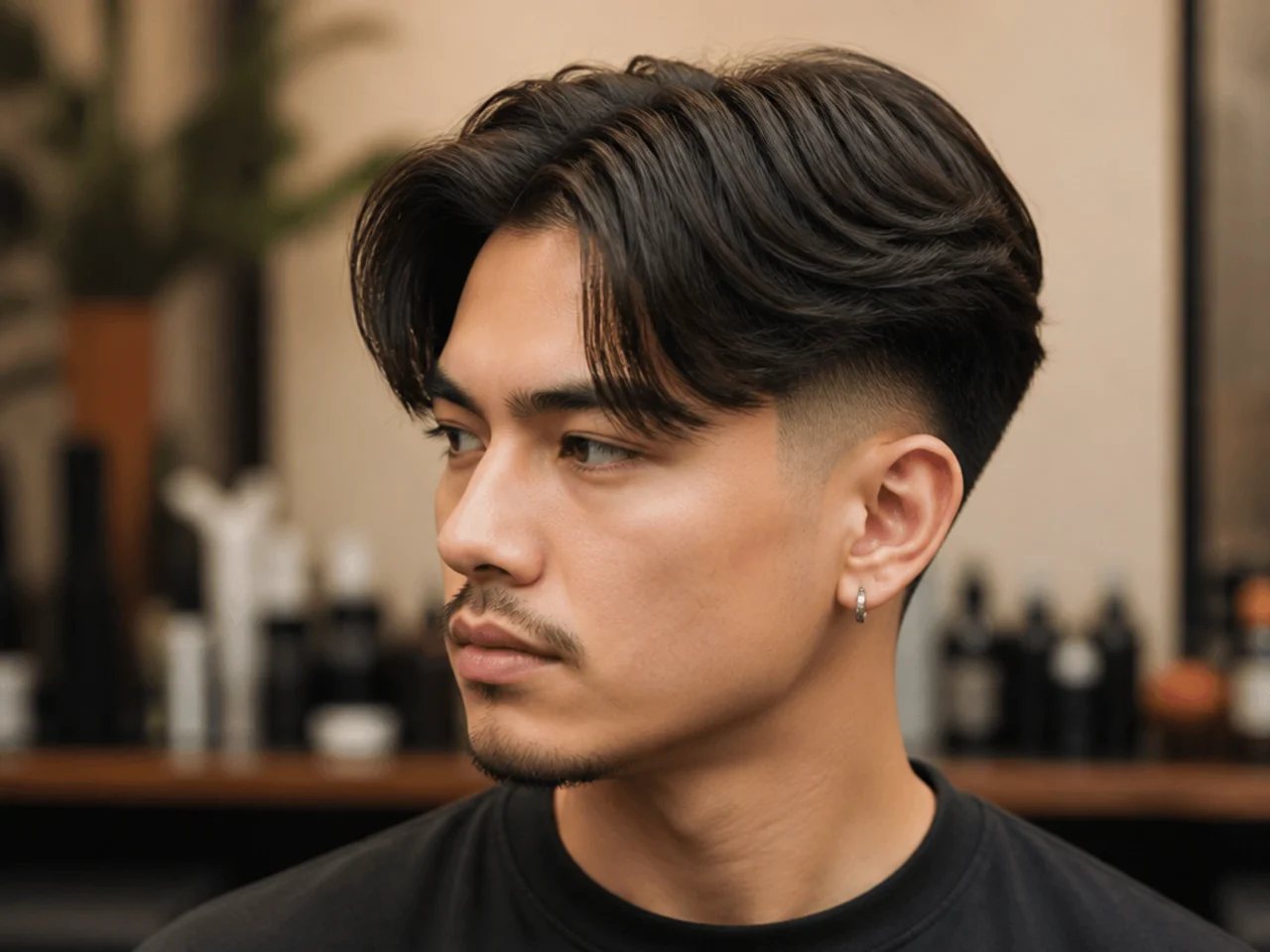
The drop fade arcs down behind the ear rather than running straight around — the drop point sits lower behind the temple than in front of it. The lower back point softens the angle a diamond face carries at the temples. Ask for: "Drop fade behind the ear dropping to the nape, five inches on top layered for a middle part with soft internal layers." Style with a matte cream through damp hair, split with fingers, no comb needed.
Middle Parts for Long / Oblong Faces
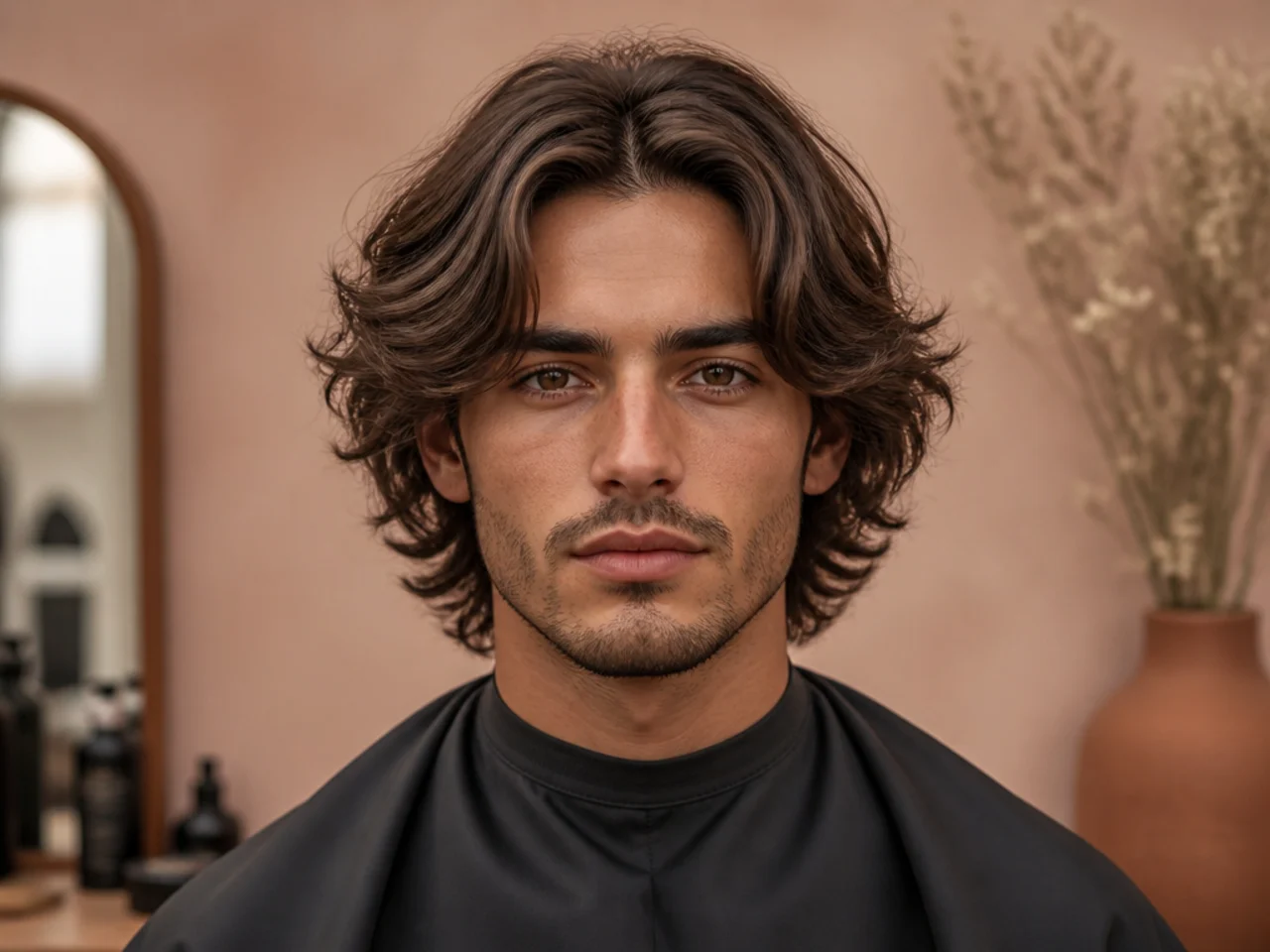
Long faces need the opposite prescription from round faces — width, not height. Keep the top medium at four to five inches so it does not stretch the face further, keep the sides denser or connected so the width offsets the length, and add a fringe or horizontal weight if you can. The layered haircuts for men guide covers the wider layered menu that pairs well with any of these.
13. Medium Middle Part with Dense Connected Sides
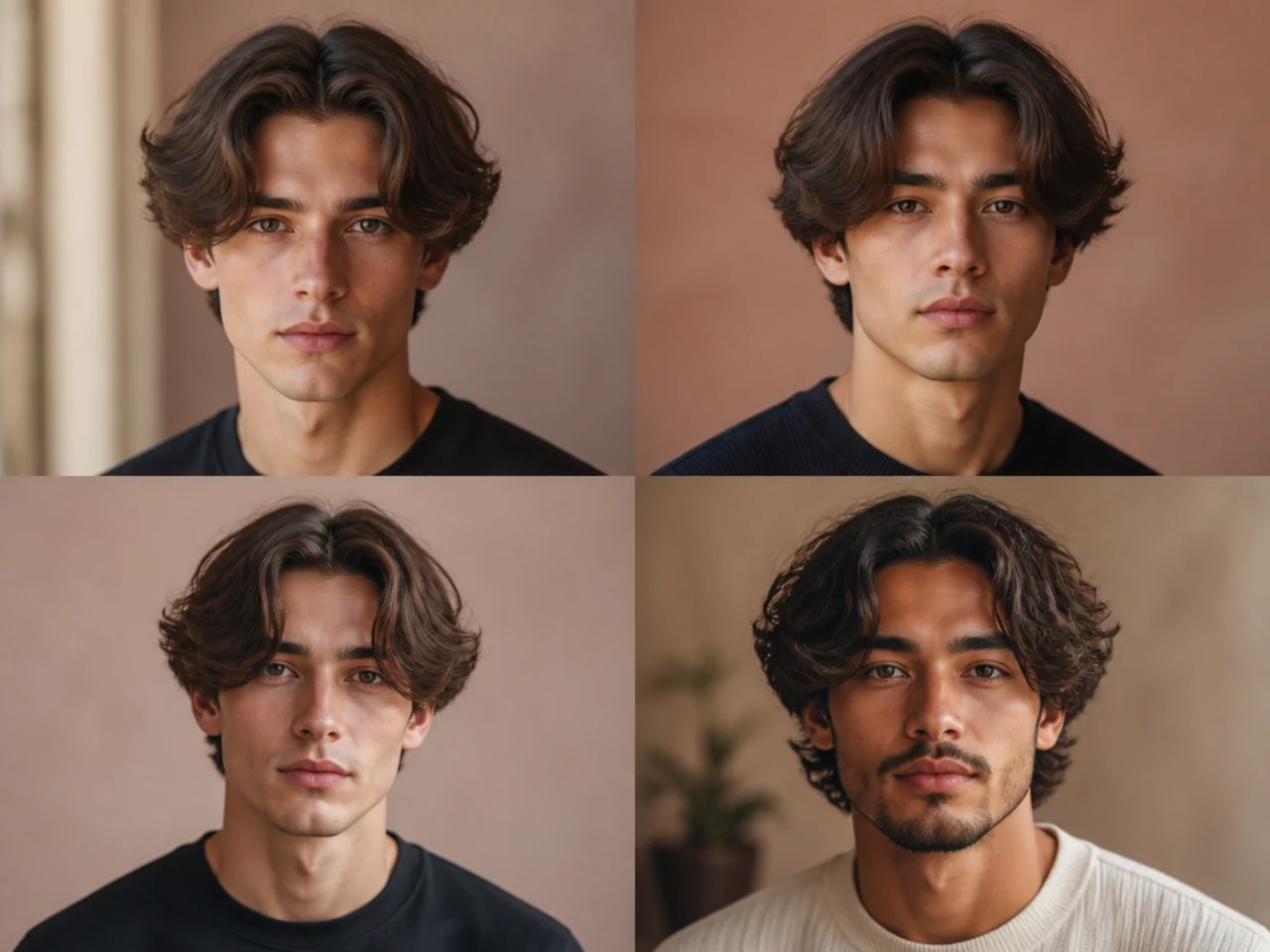
Four-and-a-half inches on top, sides connected and kept full past the ear — no fade, no taper, no thinning through the sides. The density at the temples adds horizontal weight that shortens the visual read of your face. Ask for: "Four and a half inches on top with medium internal layers, sides connected and kept dense past the ear, no fade or taper, cut for a middle part." Blow-dry with the head tipped forward, split with a wide-tooth comb, avoid product at the roots so the sides do not deflate.
14. Short Middle Part with Brow-Length Fringe
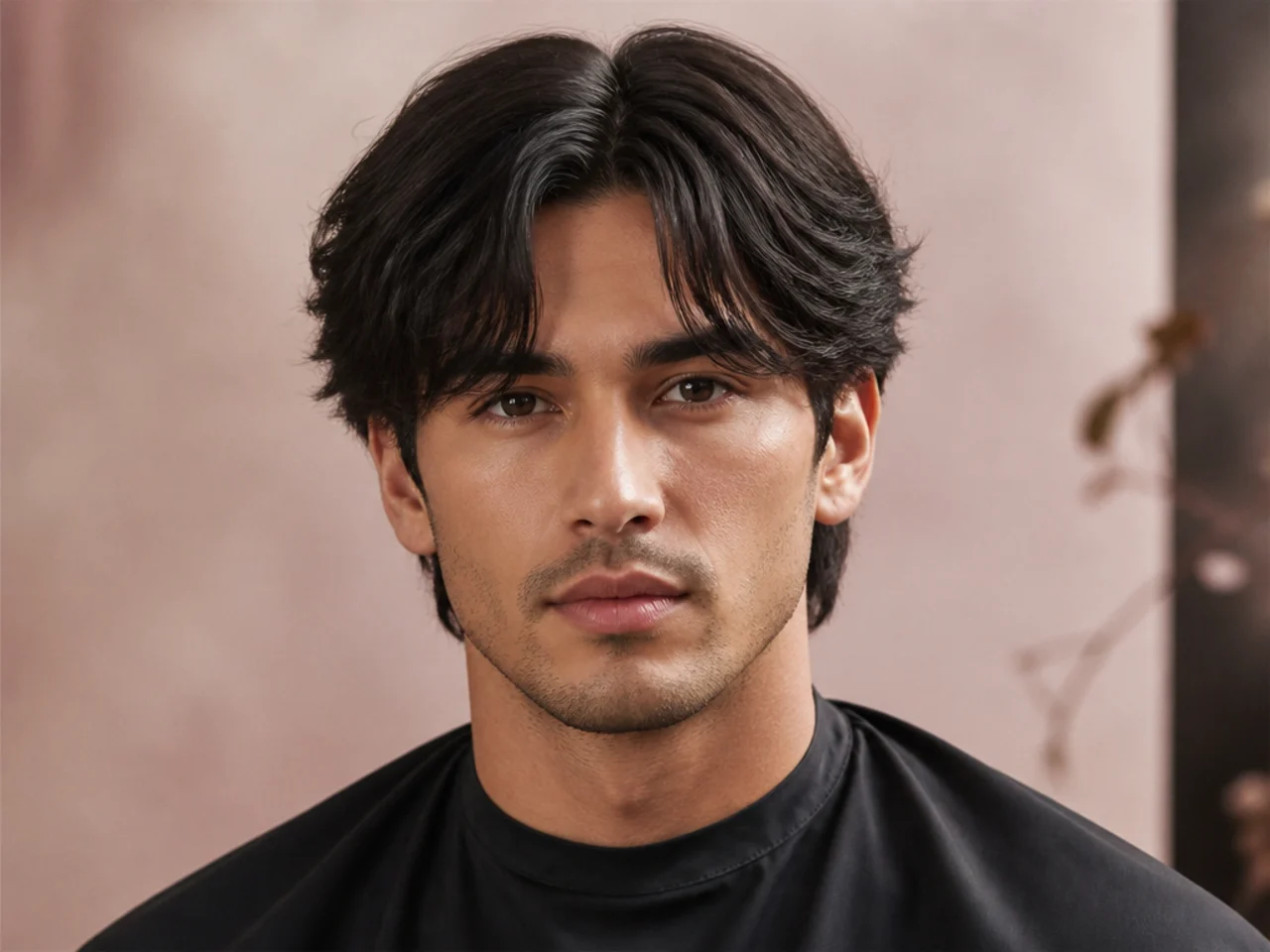
Cousin to the fringe haircuts for men family. Four inches on top with brow-length fringe pieces cut to part outward off a center line, sides scissor-blended above the ear. The fringe shortens the visual forehead — the single most effective move for a long face. Best on straight to slightly wavy fine-to-medium hair. Ask for: "Curtain fringe at the brow, four inches on top, cut to part center, scissor sides above the ear, no fade." Blow the fringe forward first with fingers, then twist and split it out to either side.
15. Rounded Curtain Middle Part with Low Fade
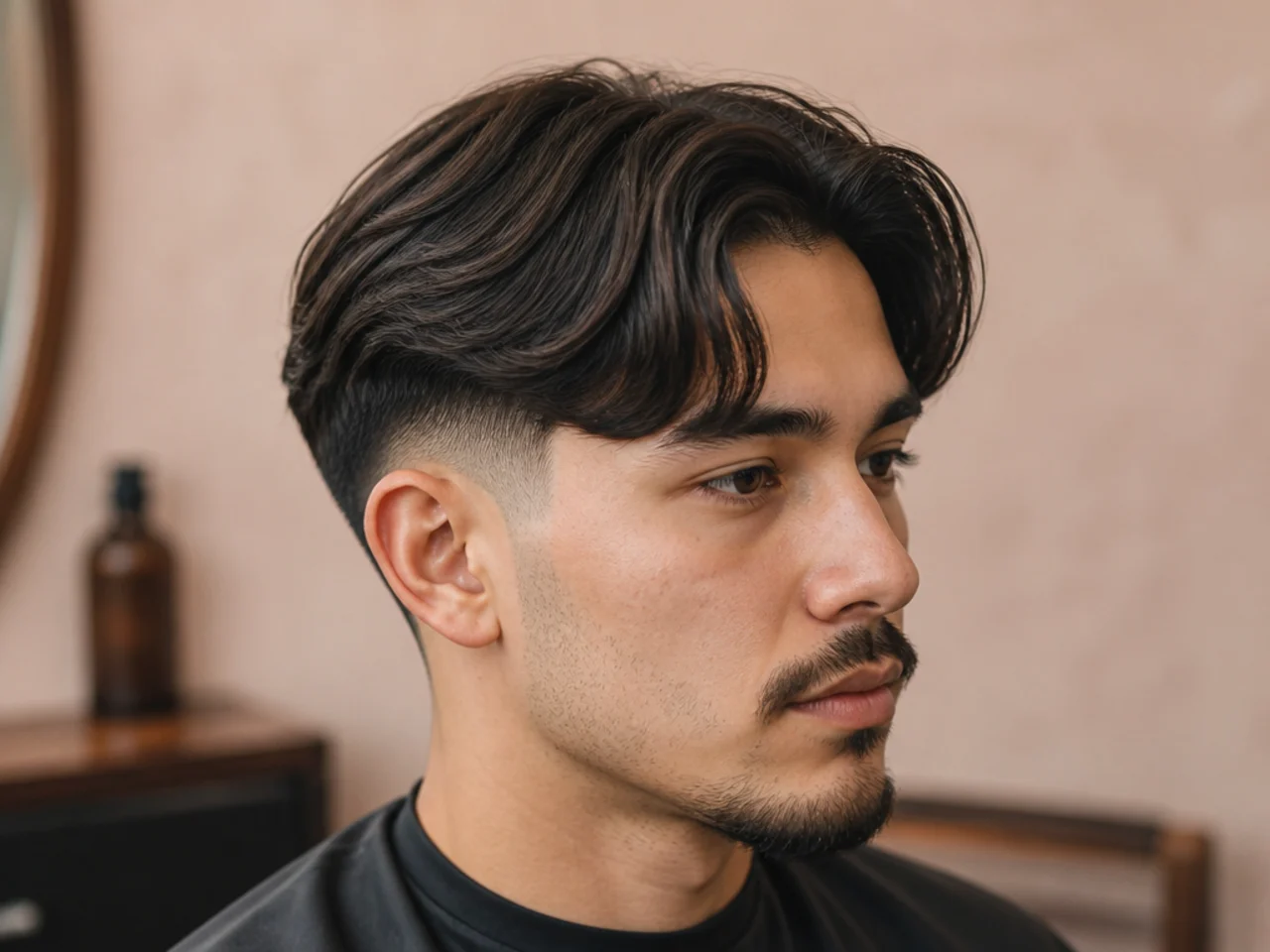
Five inches on top, layered so the weight sits at the mid-shaft rather than the ends — the curtains bow outward into a rounded silhouette instead of falling straight down. Paired with a low fade that only takes the width off from the ear down. The rounded top adds horizontal weight where a long face needs it most. Ask for: "Low fade behind the ear, five inches on top with layered mid-shaft weight, cut to fall outward off a middle part." Blow-dry with a round brush pulling the mid-shaft outward, then split with a comb.
How to Ask Your Barber
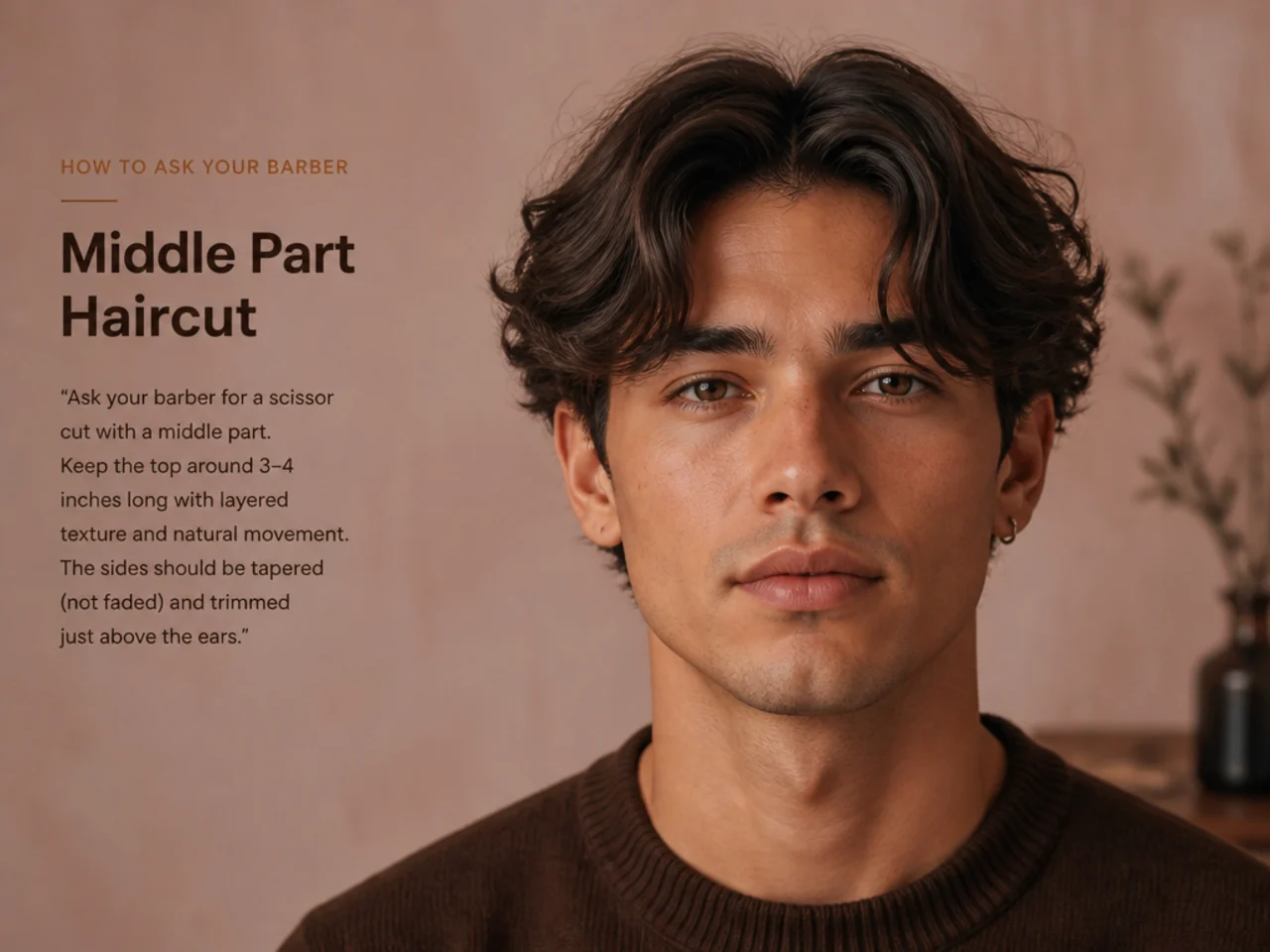
Every middle part above lives or dies by six specifics. Get them right and you walk out with the shape in your head.
- Bring a photo — two if you can. Words drift; photos anchor. One front, one side. Barbers cut to references faster than descriptions.
- Say your face shape out loud. Not to justify it — to prime the conversation. "I have a round face, I want the vertical version" saves ten minutes of adjustment.
- Name the top length in inches, not vibes. "Five inches on top" or "six." Barbers cut to numbers. "Medium" is not a number.
- Name the side treatment specifically. Connected at the ear, scissor-blended, low taper, low fade, mid fade, high fade, skin fade, drop fade, burst fade, or disconnected undercut. Point at your own head to show where the blend should start.
- Say "split down the middle" or "center part" out loud. Skip this and your barber may default to a natural fall that lands off-center on the crown.
- Ask for the layering direction. "Layered so the front falls forward off a center split." Not just point-cut ends — real internal layers cut to fall in the direction you need.
Ask your barber to show you the first blow-dry before you leave the chair. Head tipped forward, nozzle down the shaft, air pushed front-forward. Recreate the exact motion every morning and the hair trains itself within two weeks.
Styling and Maintenance

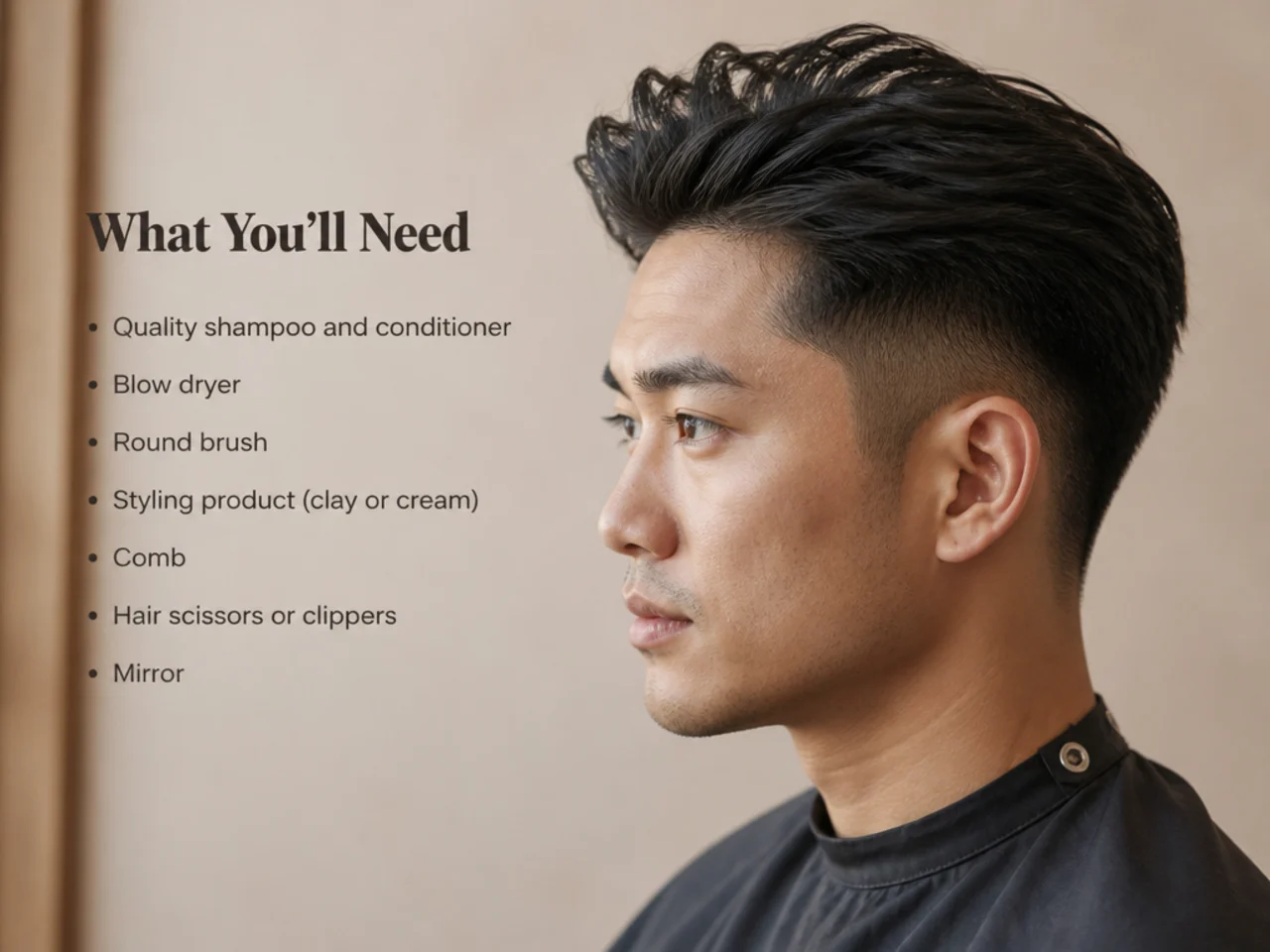
Face-shape-matched middle parts need the same four tools as any other version: a blow-dryer with a nozzle attachment, a wide-tooth comb, a matte styling clay or paste, and a texture spray. Diffuser only if your hair is curly.
Match the product to your finish rather than to your face shape:
- Long, mid-length, and voluminous versions — matte styling clay or paste, warmed between palms and worked front-to-back through damp hair.
- Textured, choppy, and messy versions — sea-salt spray on damp hair first, then matte clay finger-pushed through.
- Two block, Korean, and comma-adjacent versions — a light water-based cream or hair mist. Keep the top soft, never crunchy.
- Wavy version — wave-defining cream on damp hair, air-dry, split with fingers.
- Skin fade, high fade, and drop fade versions — matte paste or matte clay only. Shiny pomades fight the scalp and read heavy against the fade.
- Chin-length parted curtains — a soft styling cream, palm-warmed, raked front-to-back. Skip clays that stiffen the drape.
The blow-dry does the shape training. For the first two weeks after a fresh cut, blow-dry every morning with the nozzle angled down the shaft — never blast heat up from below, which puffs the crown and kills the drape. After two weeks the hair memorizes the direction and you can skip the blow-dry on quick mornings.
Rebook cadence hinges on the sides. Skin fades, high fades, and burst fades want two weeks. Mid fades and drop fades want three. Low fades, low tapers, and scissor-blended sides hold four to five. Anything past its rebook window loses the crispness that makes a face-shape-matched middle part read intentional instead of grown-out. For the deep pillar on longer-term maintenance across every men's cut, see professional hairstyle men.
FAQ
Which face shape suits a middle part best?
Oval, heart, and diamond faces wear a middle part by default because the center split matches their natural symmetry. Round, square, and long faces still work — you just need to tune the length, side treatment, and density so the shape reads balanced instead of amplified.
Do middle part haircuts make your face look longer?
A middle part draws the eye vertically, so it can lengthen a round or square face by a few visual centimeters. For long or oblong faces, keep the top medium at four to five inches and let the sides stay full — the width at the temples offsets the vertical pull.
What is the best middle part for a round face?
A five-to-six-inch top over a high or skin fade is the round-face pick. The height on top adds vertical length while the fade takes width off the sides, so the overall shape reads longer than wide. A two block middle part with a disconnected undercut works for the same reason.
What middle part suits a square face?
Soft-edged versions — loose wavy middle parts, textured tops with a low fade, and messy flow cuts with connected sides. The goal is to soften the jawline instead of stacking hard geometry on top of a hard face shape. Skip disconnected undercuts and skin fades on very square faces.
How do I know which face shape I have?
Pull your hair back, face a mirror, and look at where your face is widest. Cheekbones widest with a narrow forehead and chin is diamond; forehead widest with a narrow chin is heart; equal width top to bottom with a strong jaw is square; equal width with soft curves is round; longer than wide is oblong; balanced with soft curves is oval.
Can I get a middle part with a receding hairline?
Yes. Keep the top medium at four inches and pair it with a low taper rather than a high or skin fade so the eye stays away from the temples. A subtle fringe over a soft middle part reads intentional rather than compensatory. Skip the tight center split at the hairline — start the part half an inch back from the recession points.