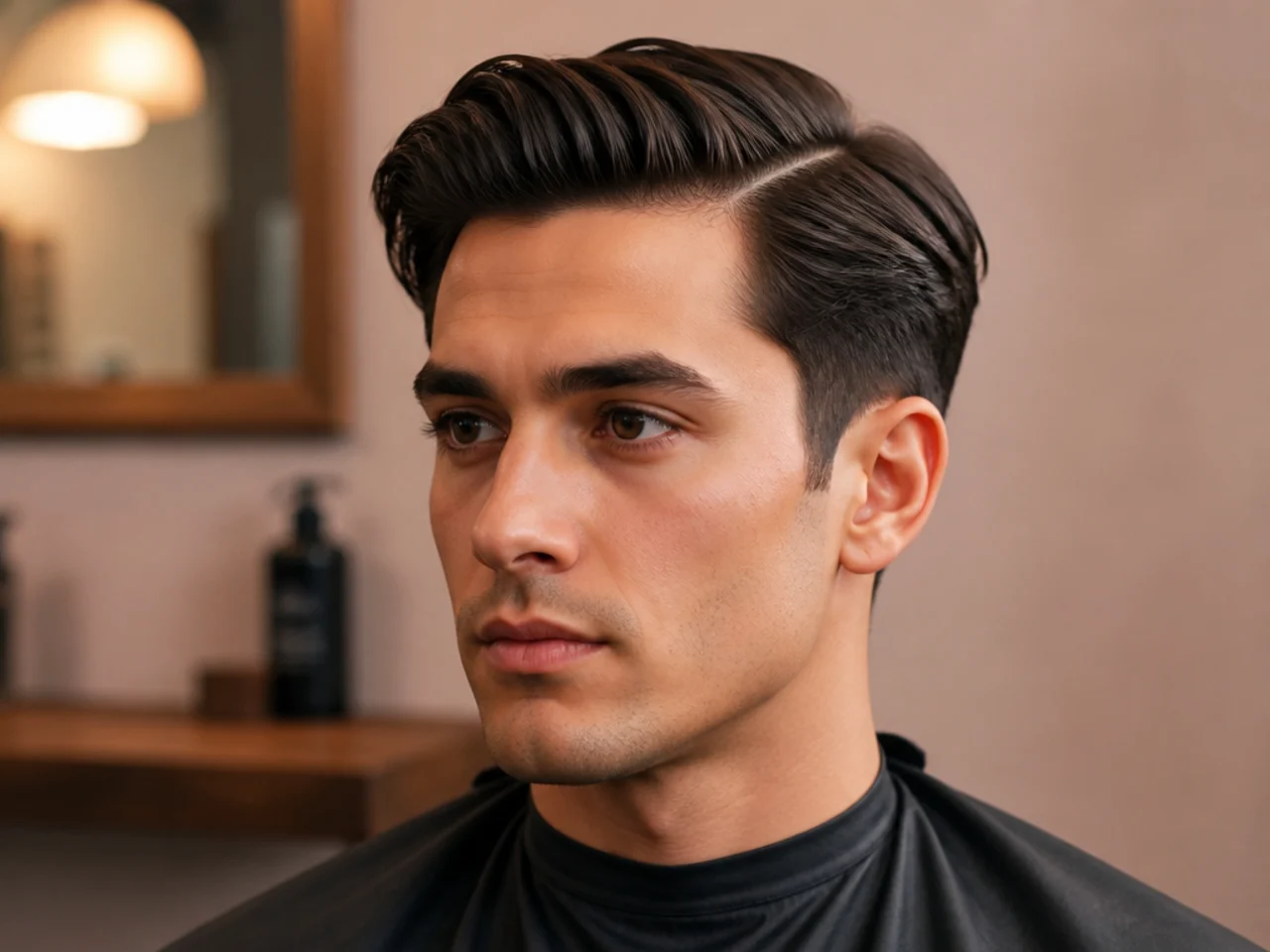
20 Side Part Styles That Suit Any Face
Twenty side part styles for any face — oval, round, square, heart, oblong, and diamond. Face-shape rules, clipper numbers, and what to hand your barber.
In this article · 30
- What Makes a Side Part Suit Any Face
- How to Match a Side Part to Your Face
- Side Parts for Oval Faces
- 1\. Classic Scissor Side Part
- 2\. Ivy League Side Part with Soft Taper
- 3\. Textured Side Part with Mid Fade
- 4\. Modern Slick-Back Side Part
- Side Parts for Round Faces
- 5\. Tall Pomp Side Part with High Skin Fade
- 6\. Hard-Part Side Part with Mid Fade
- 7\. Deep-Part Undercut Side Part
- 8\. Textured Crop Side Part with High Fade
- Side Parts for Square Faces
- 9\. Soft Classic Side Part with Scissor Taper
- 10\. Slick-Back Undercut Side Part
- 11\. Hard-Part Side Part with Drop Fade
- Side Parts for Heart Faces
- 12\. Long Side-Swept Fringe Side Part
- 13\. Side Part with Beard Blend Fade
- 14\. Curtain-Style Side Part with Low Fade
- Side Parts for Oblong and Rectangular Faces
- 15\. Shallow Side Part with Low Fade
- 16\. Side-Parted Flow with Low Taper
- 17\. Comb-Over Side Part with Low Taper
- Side Parts for Diamond Faces
- 18\. Volumized Textured Side Part with Low Taper
- 19\. Side Part with Full Fringe and Low Fade
- 20\. Wavy Medium Side Part with Beard
- How to Ask Your Barber
- Styling and Maintenance
A side part is the one men's cut that flexes across every face shape when the details are right. Change the parting depth, the top length, and the sides finish, and the same skeleton reads sharp on a round face, soft on a square jaw, or balanced on a heart-shape frame. This guide covers twenty side part styles grouped by face shape — oval, round, square, heart, oblong, and diamond — with the clipper numbers, top lengths, and exact sentence to hand your barber.
Want the full family map first? Start at the side part hairstyles for men pillar or step further out to the fade haircut family the modern side part borrows from.
What Makes a Side Part Suit Any Face
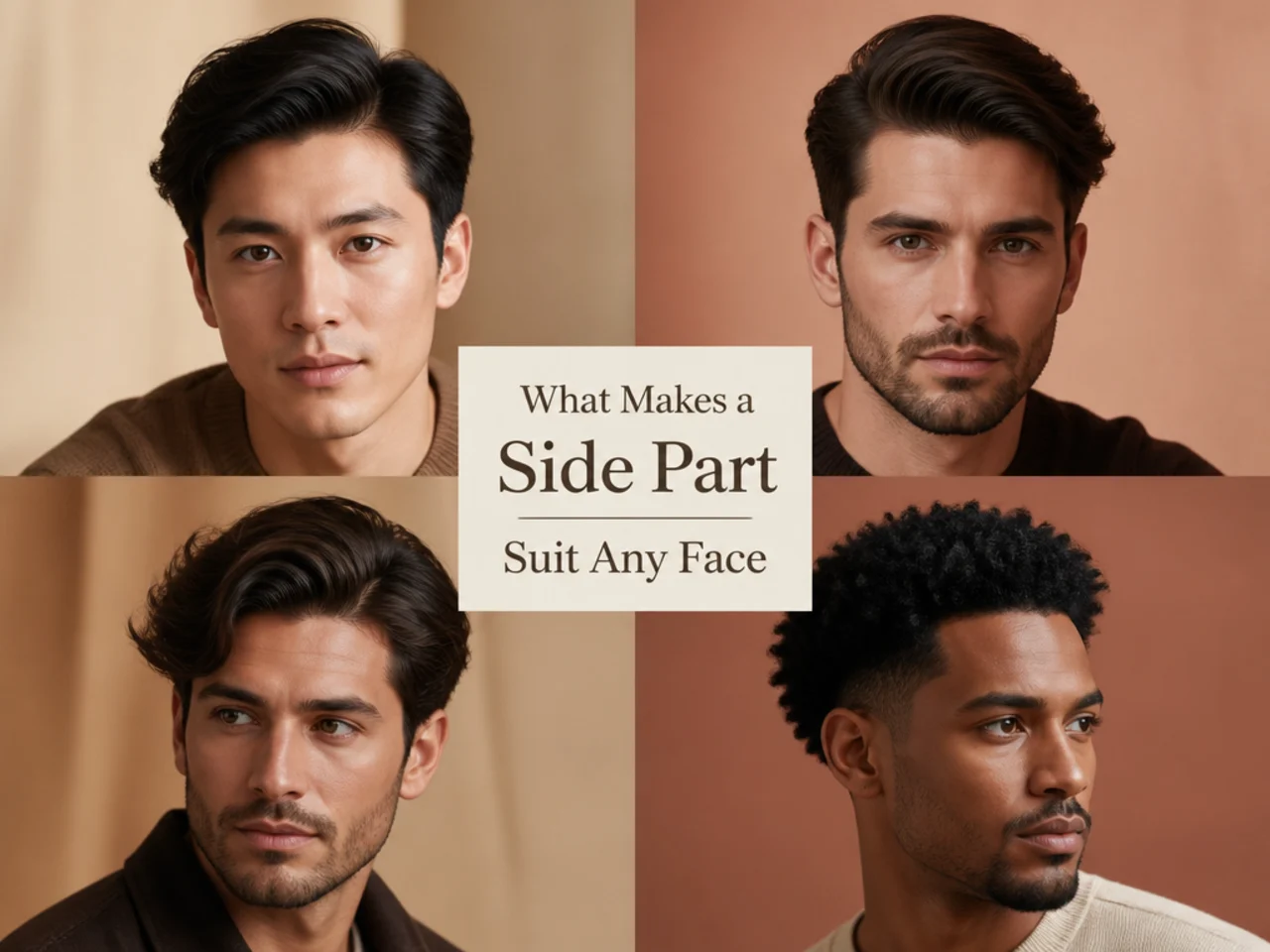
A side part is three moving parts, not one — the parting itself, the top length and finish, and the sides treatment. Every face shape wants a different combination of those three.
The parting does the geometric work. A deep side part on a round face breaks symmetry that reads full on camera. A shallow parting on an oblong face keeps the eye from tracking vertically. The top length sets the silhouette — short and matte hides the shape, medium and textured adds personality, long and slicked leans classical. The sides finish sets the contrast and dictates the rebook cadence.
Match the length to what your calendar can hold, then match the sides to what your face needs.
How to Match a Side Part to Your Face
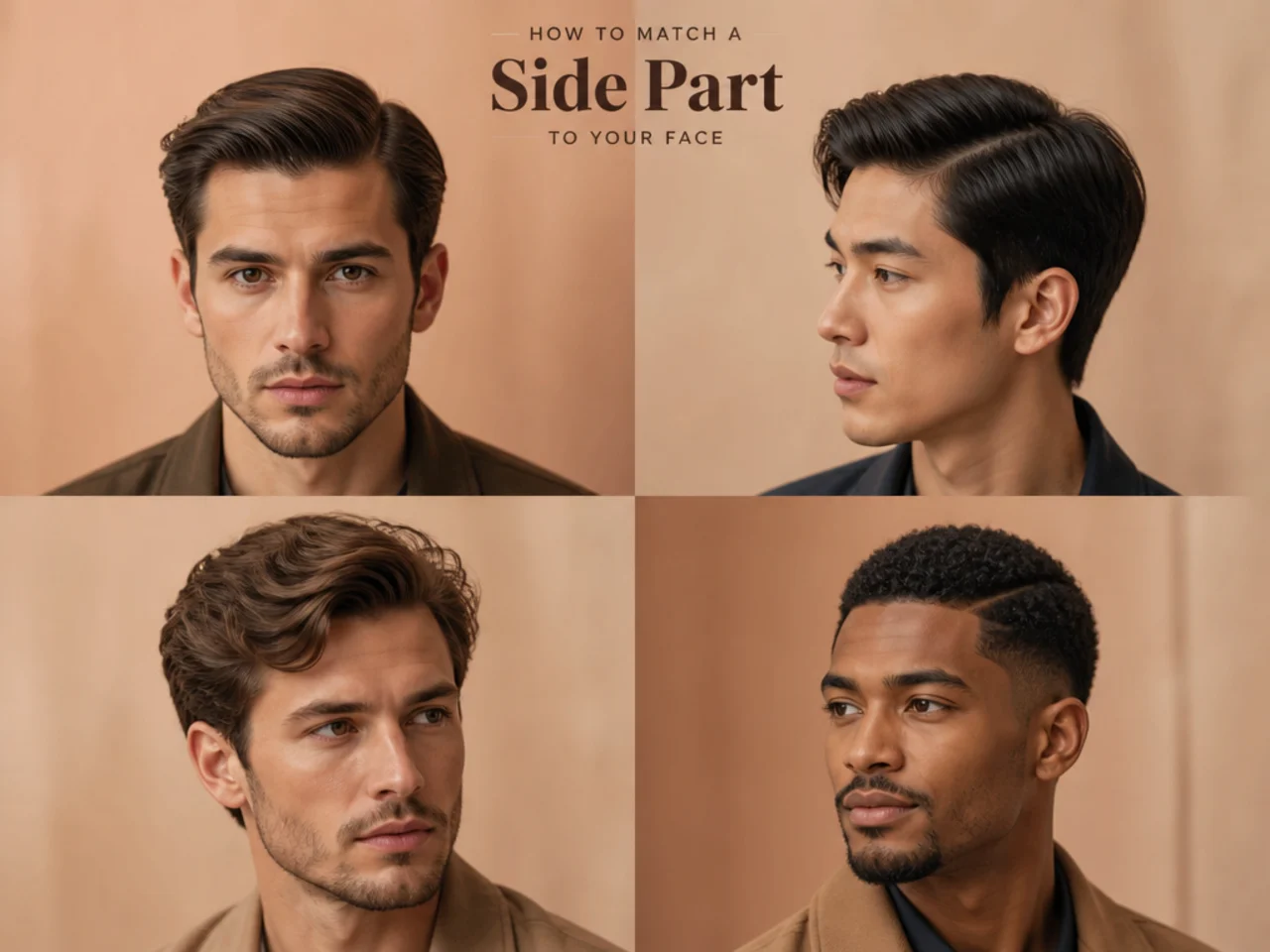
Find your face shape first. Oval is longer than wide with a soft jaw. Round is close to equal in both directions with full cheeks. Square shares the round's width but has a defined jaw corner. Heart is wider at the temples and narrows to a pointed chin. Oblong is longer than wide with a straighter jaw. Diamond has narrow forehead and chin with wide cheekbones sitting between them.
Now match. Oval takes almost anything — start with what your hair type does easily. Round needs vertical stretch, so choose taller tops and deeper partings. Square softens with scissor sides and length, or leans in with a hard part and a mid fade. Heart wants weight at the jaw — a longer top swept forward, a beard blend, or a curtain front. Oblong needs the opposite of round: shorter tops, shallow parts, low fades. Diamond wants width at the forehead and chin — front fringe, side sweep, and beard shape at the jaw.
Side Parts for Oval Faces
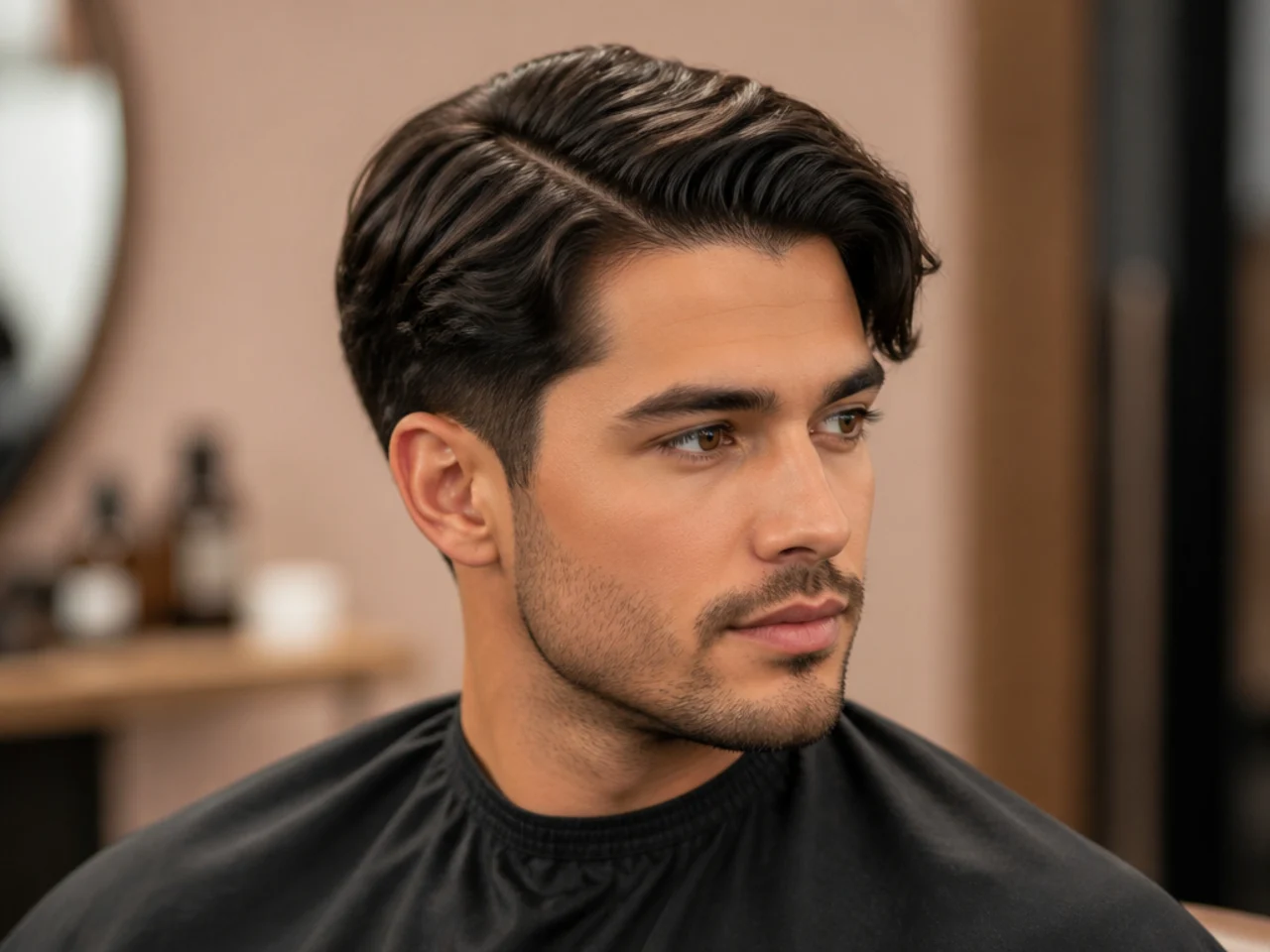
Oval is the barber's default — balanced proportions, soft jaw, no correction required. That means the cut leads with style instead of shape. Every variation below works on oval; pick based on your hair type and how many chair visits your calendar can hold.
1. Classic Scissor Side Part
The base version of every side part on this page. Two to three inches on top combed to one side along a natural parting, scissor-tapered sides that stop short of any fade line. Reads timeless in every decade since the 1920s. Best on straight to lightly wavy hair.
Ask for: "Classic scissor side part, two to three inches on top, scissor taper on the sides down to a No. 2 at the perimeter, natural parting on my left."
Styling: a pea of light-hold pomade worked into damp hair, one comb pass.
2. Ivy League Side Part with Soft Taper
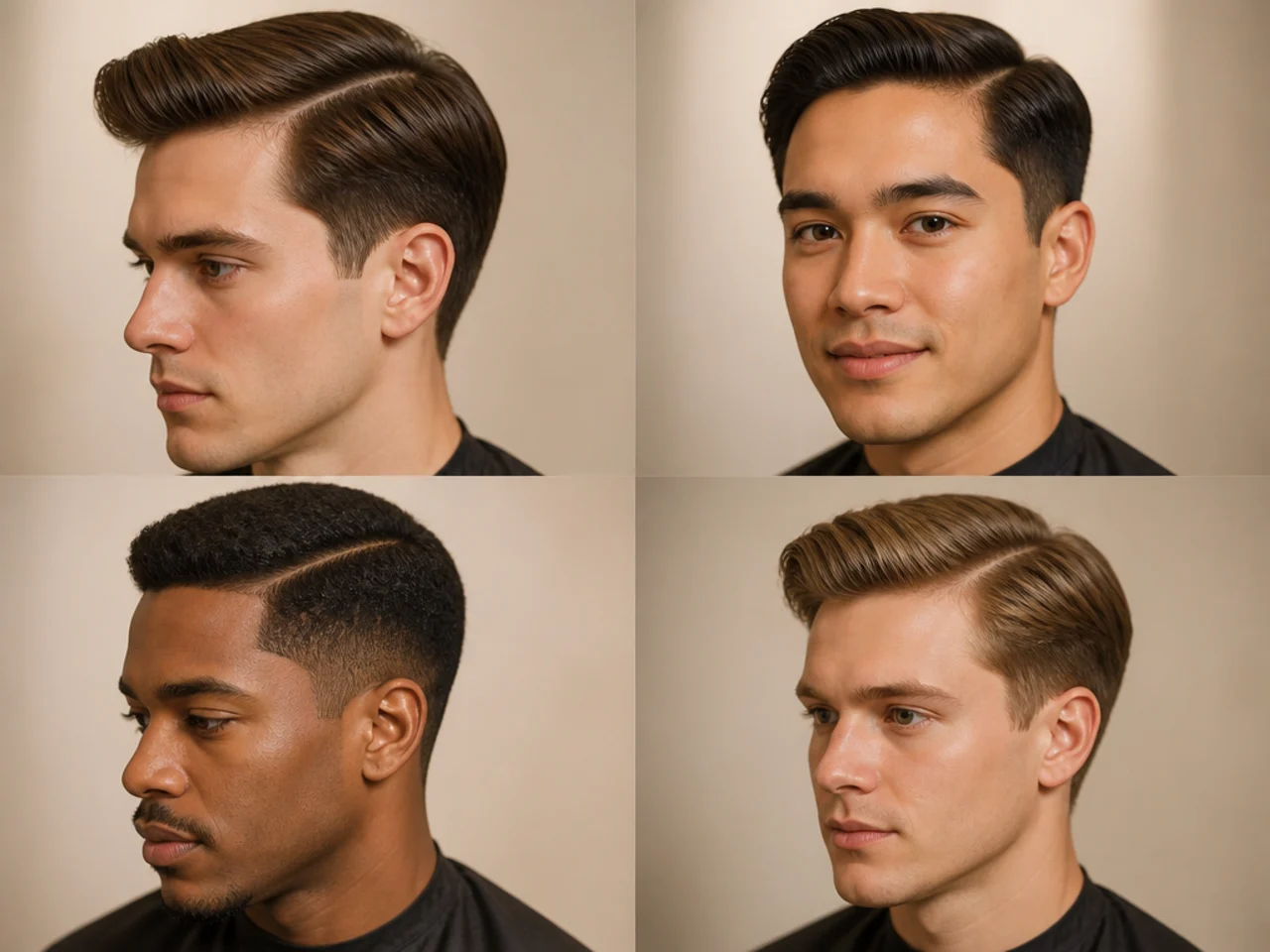
The prep-school original in a modern read. The Ivy League keeps two inches on top for a proper combed parting with scissor-blended sides — no fade line, no clipper contrast. Ages up cleanly from twenty-five to fifty-five. Best on straight to lightly wavy hair.
Ask for: "Ivy League with a defined side parting, two inches on top, scissor-blend the sides to a No. 2 at the perimeter, part on my natural side."
Styling: a pea of cream pomade on damp hair, blow-dried toward the parting with a small round brush, then combed once. Satin finish — keep the product light or it flips shiny.
3. Textured Side Part with Mid Fade
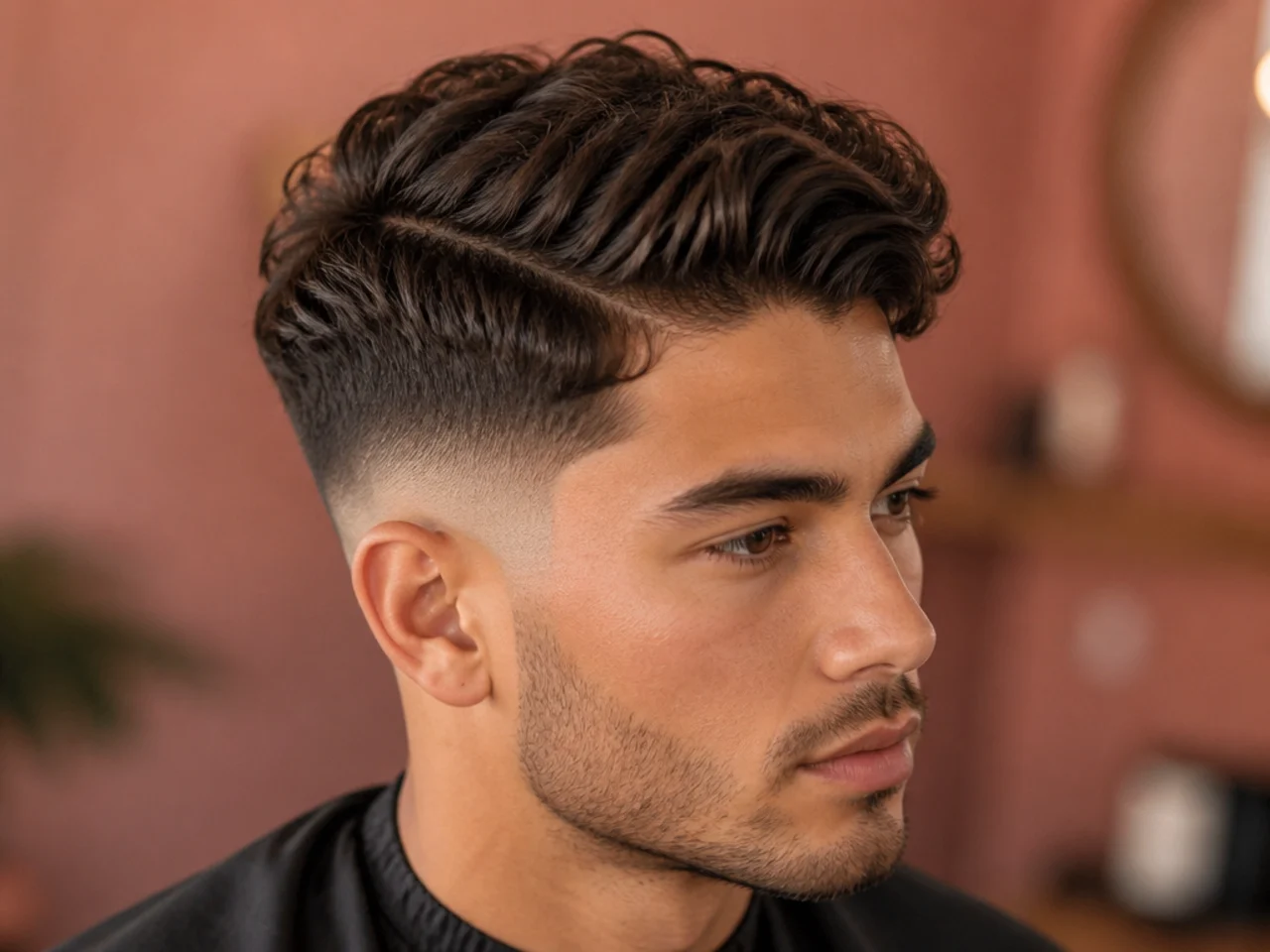
Where the classic side part meets modern barbering. Top runs 1.5 to two inches, point-cut for visible texture and left rough. Sides drop into a mid fade that starts at the temple and works to skin — the contrast between the textured top and the clean fade is the whole point.
Ask for: "Textured side part with a mid skin fade, No. 0 at the shortest blended to a No. 3 at the parietal ridge, 1.5 inches on top point-cut for texture, natural parting on my left."
Styling: a pea of matte clay warmed between the palms and pressed through with a piston motion. Fingers only, following the parting.
4. Modern Slick-Back Side Part
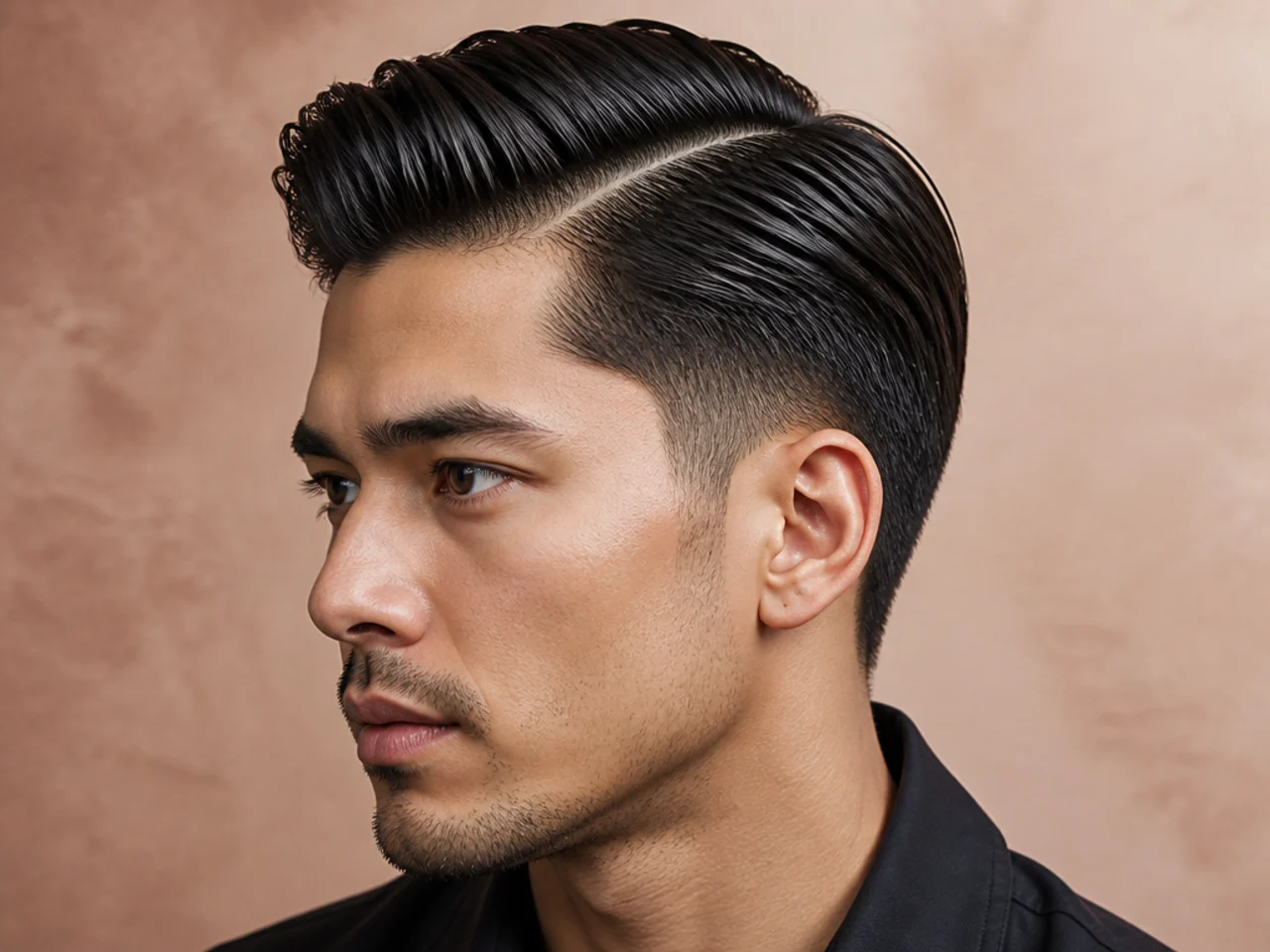
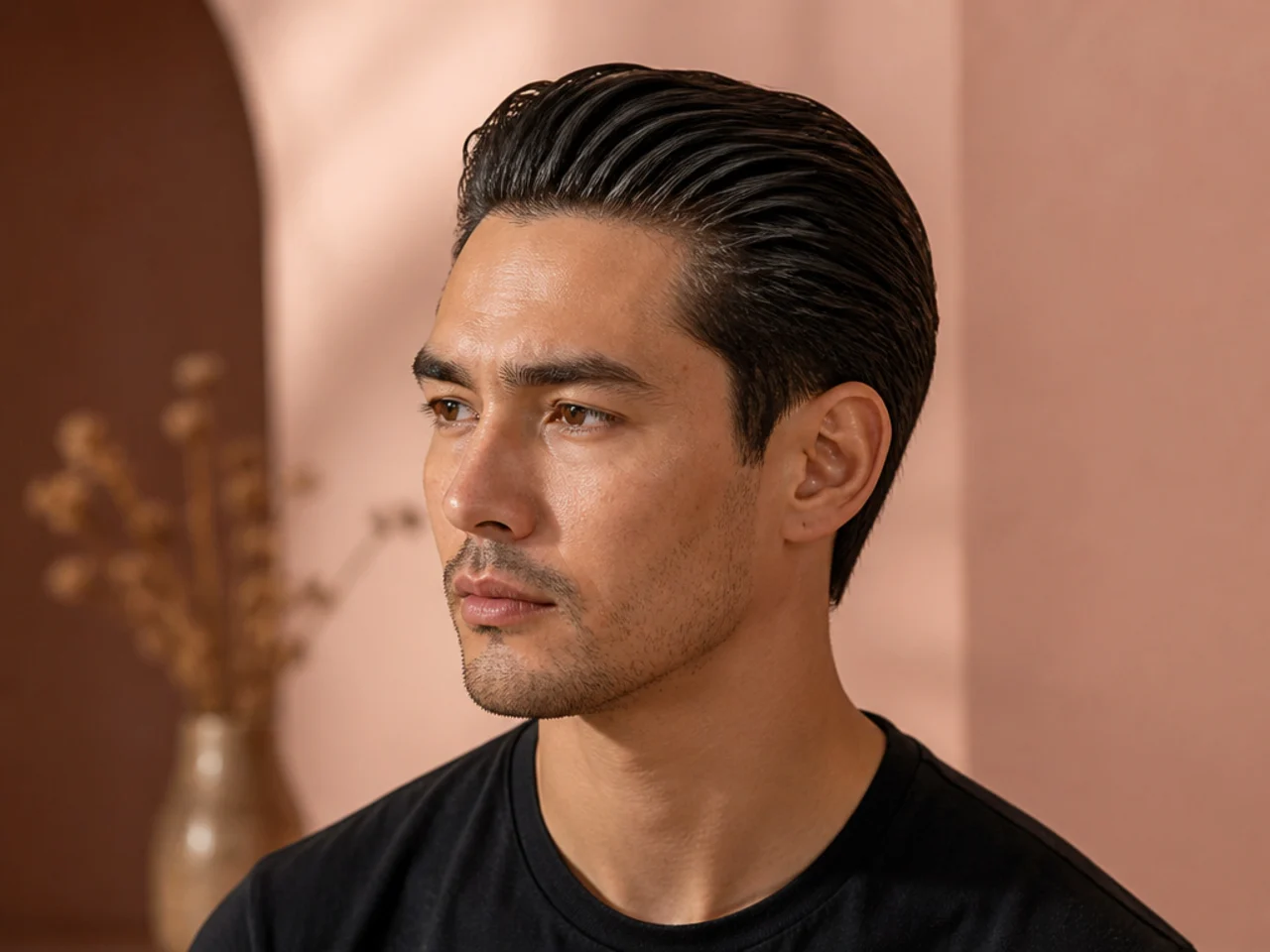
The slick back with a defined parting built in rather than combed flat. Three inches on top pulled back and slightly to one side along a natural cowlick, low taper on the sides. Satin finish, not glossy. Best on straight to gently wavy hair with enough density to hold the sweep.
Ask for: "Modern slick-back side part, three inches on top, low scissor taper on the sides, medium-hold cream pomade for a satin finish, parted on the left."
Styling: cream pomade combed through damp hair, then blow-dried back and to the side with a paddle brush. One comb pass sets the parting.
Side Parts for Round Faces
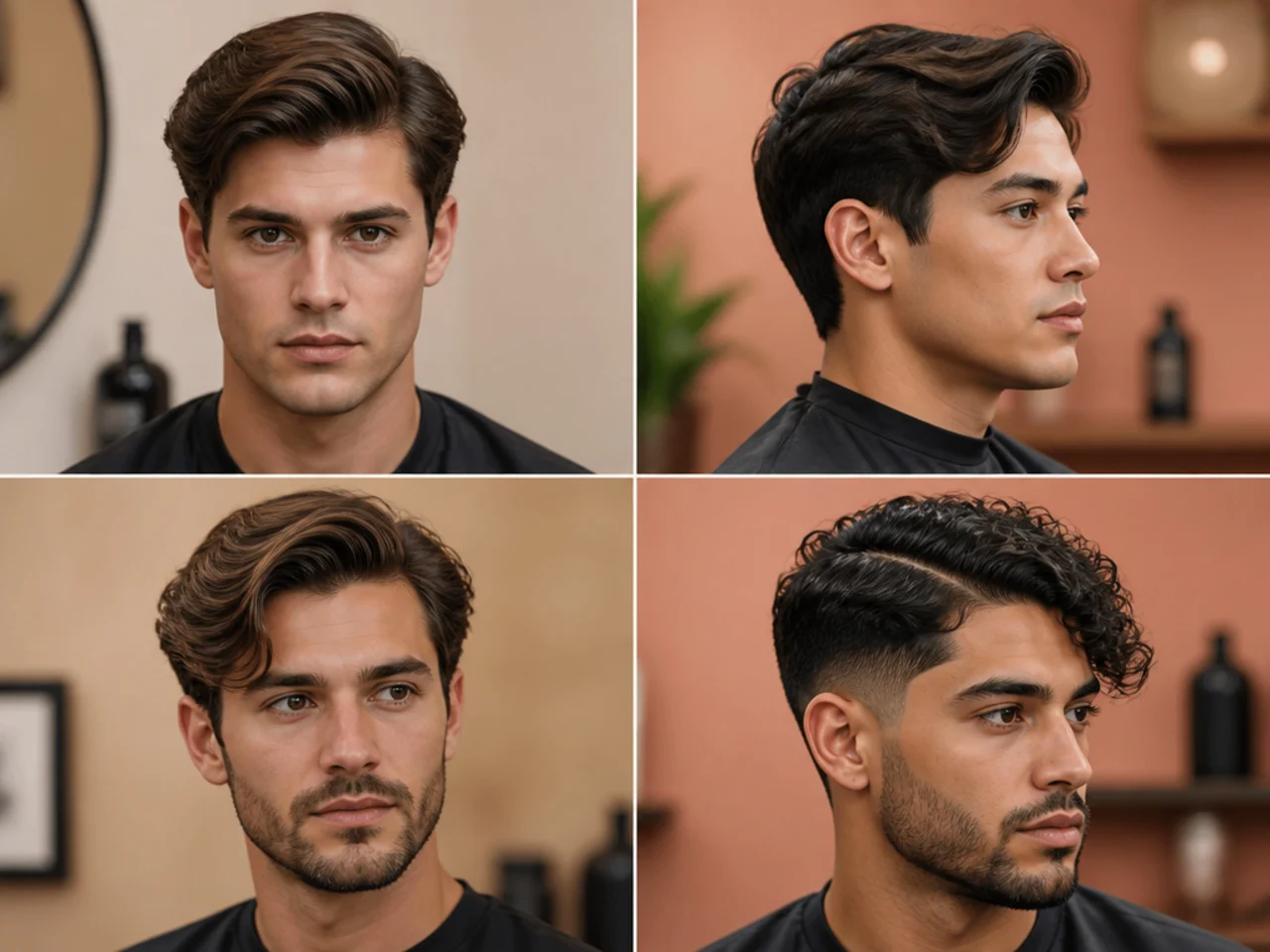
Round faces want vertical stretch and asymmetry. Height on top pulls the eye upward and lengthens the visual line. A deep parting breaks the symmetry that reads full on camera. High fades wipe the sides so the top reads as a separate column of texture. Every choice below leans into height and contrast — the goal is to draw the eye up and away from the cheekbones.
5. Tall Pomp Side Part with High Skin Fade
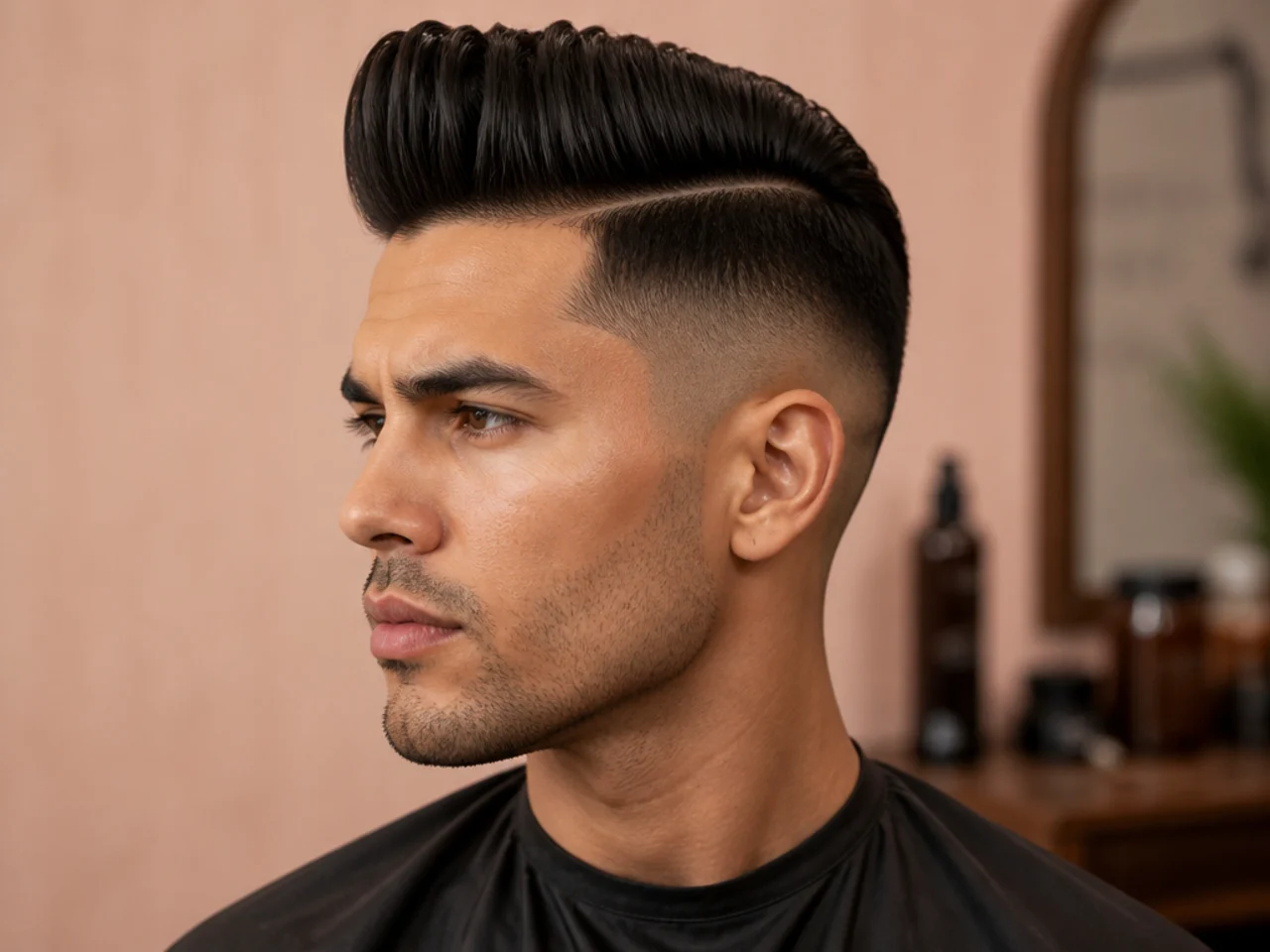
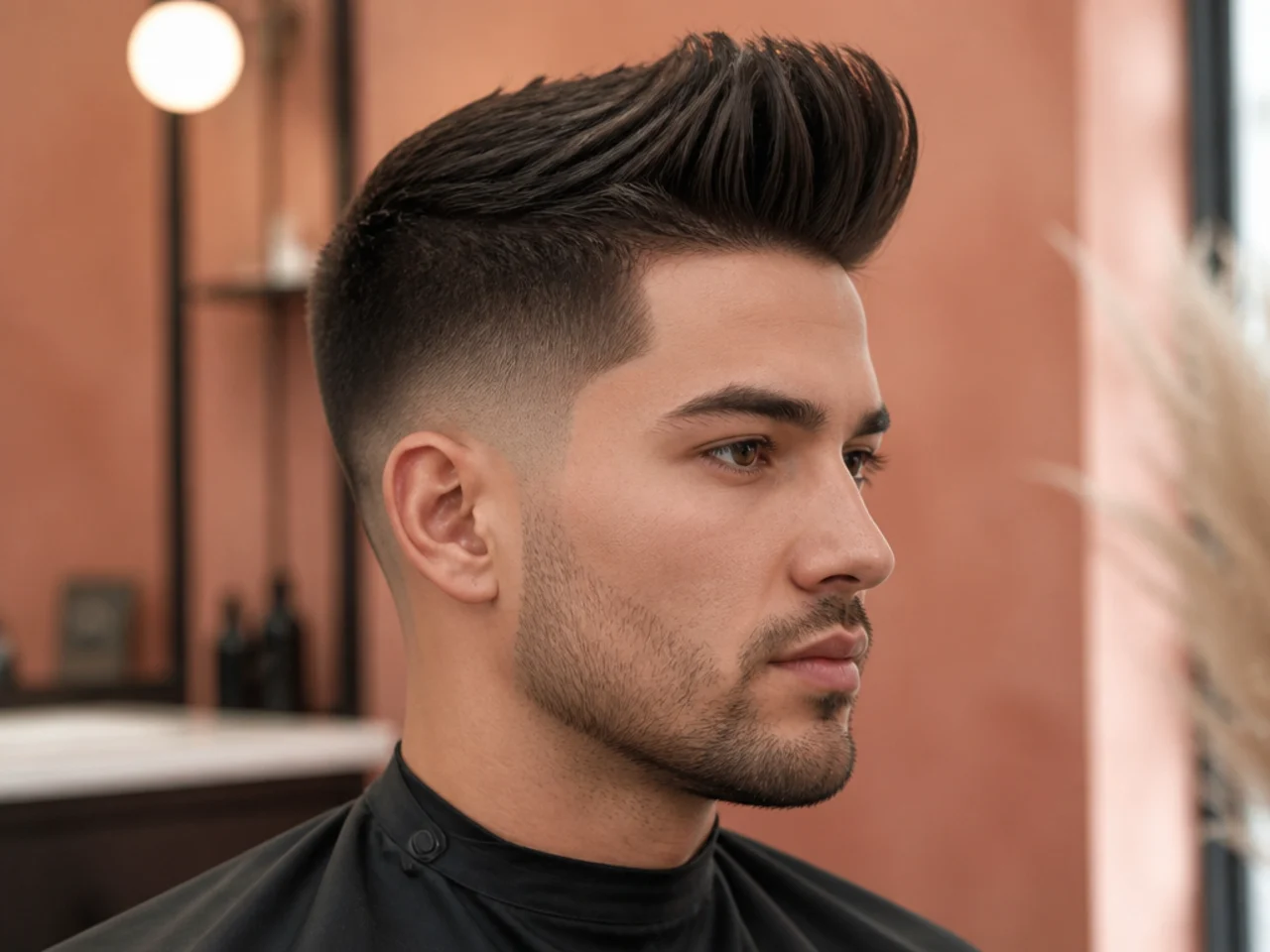
The strongest lift move on the list. Three to four inches on top styled into a pomp — height built at the front and pushed back along a deep parting. Sides drop into a high skin fade that wipes bare above the temple. The vertical column and clean fade line together stretch a round face by two visible inches.
Ask for: "Tall pomp side part with a high skin fade, No. 0 at the shortest blended to a No. 2 above the temple, three to four inches on top for a lifted pomp, deep left parting."
Styling: blow-dry the front up and back with a round brush. Set with a medium-hold matte pomade — a wet look kills the height. Rebook every two weeks.
6. Hard-Part Side Part with Mid Fade
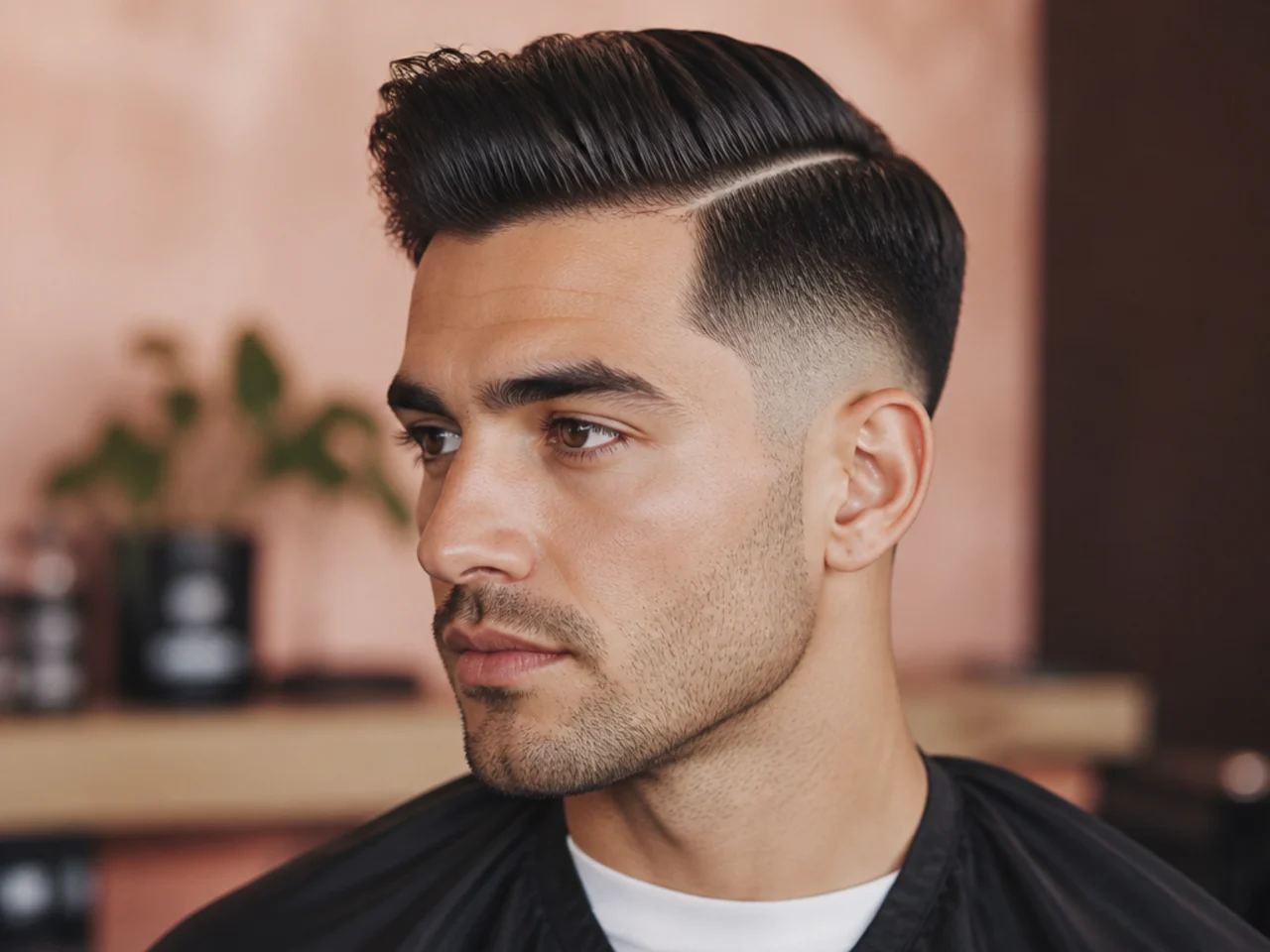
The clearest asymmetry play. A straight razor cuts a defined line into the scalp along your parting — that hard part becomes the vertical anchor. Above it, two to three inches on top with visible texture and small lift. Below it, sides drop into a mid fade. Works on every hair type; the more density on top, the sharper the effect.
Ask for: "Hard-part side part with a mid fade, razor-drawn hard line on my left, No. 0.5 at the shortest blended to a No. 3 at the ridge, two to three inches on top with texture."
Styling: matte clay finger-worked into damp hair, then lifted at the front with a round brush. Rebook the hard part every ten days — the razored line fuzzes fast.
7. Deep-Part Undercut Side Part
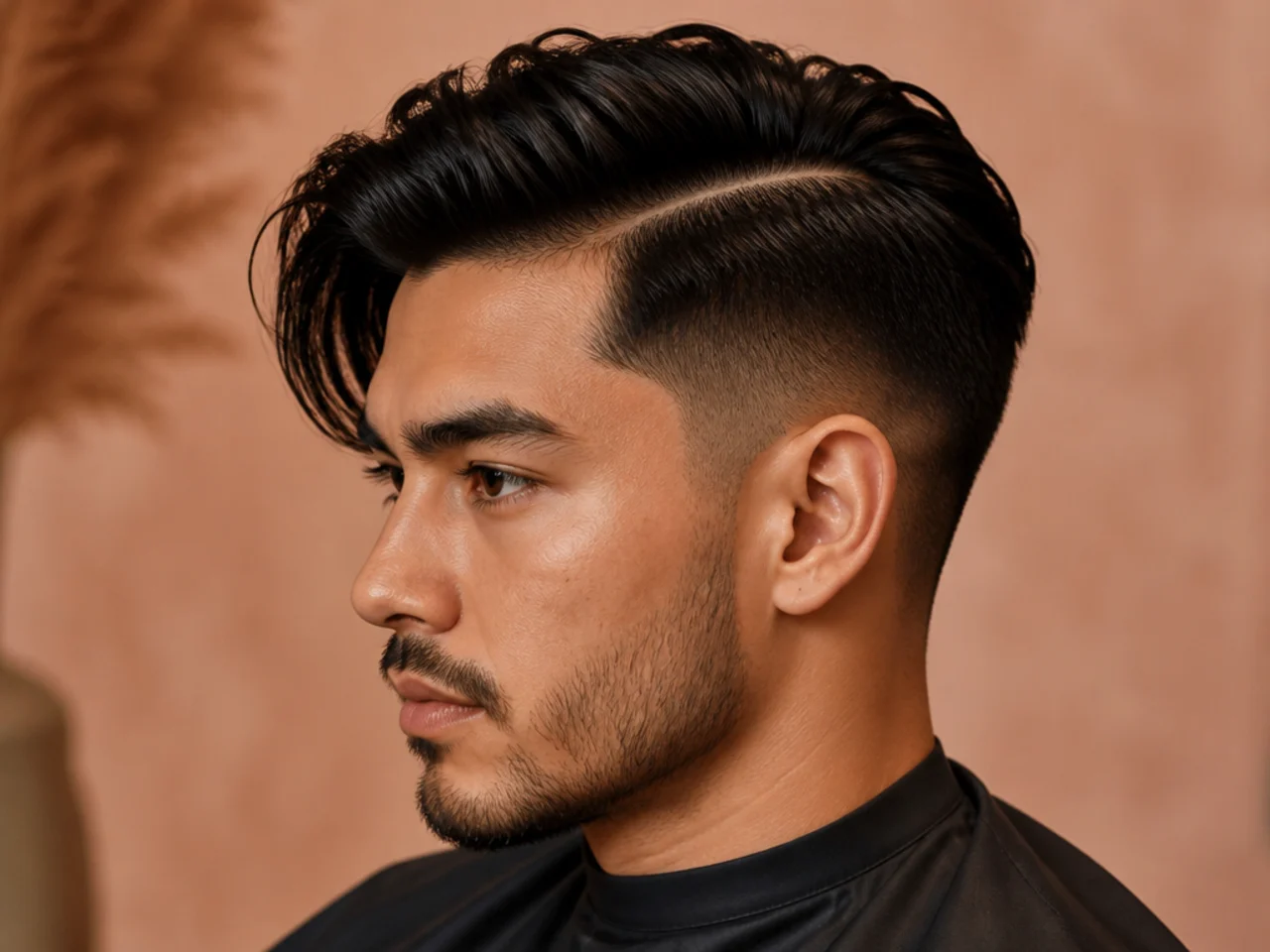
Contrast turned all the way up. A disconnected undercut takes the sides down to a single short guard from ear to crown, leaving a hard line where the top meets the shave. Four to five inches on top pushed back and to one side from a low, deep parting. The disconnect gives the round face a rectangular perimeter it does not naturally have.
Ask for: "Deep-part undercut with disconnected sides, No. 1 from ear to crown with a hard line at the top, four to five inches on top pushed back from a deep left parting."
Styling: cream pomade combed straight back with a fine comb, set with a light hairspray mist while damp. Rebook every two weeks — the disconnect grows out fast.
8. Textured Crop Side Part with High Fade
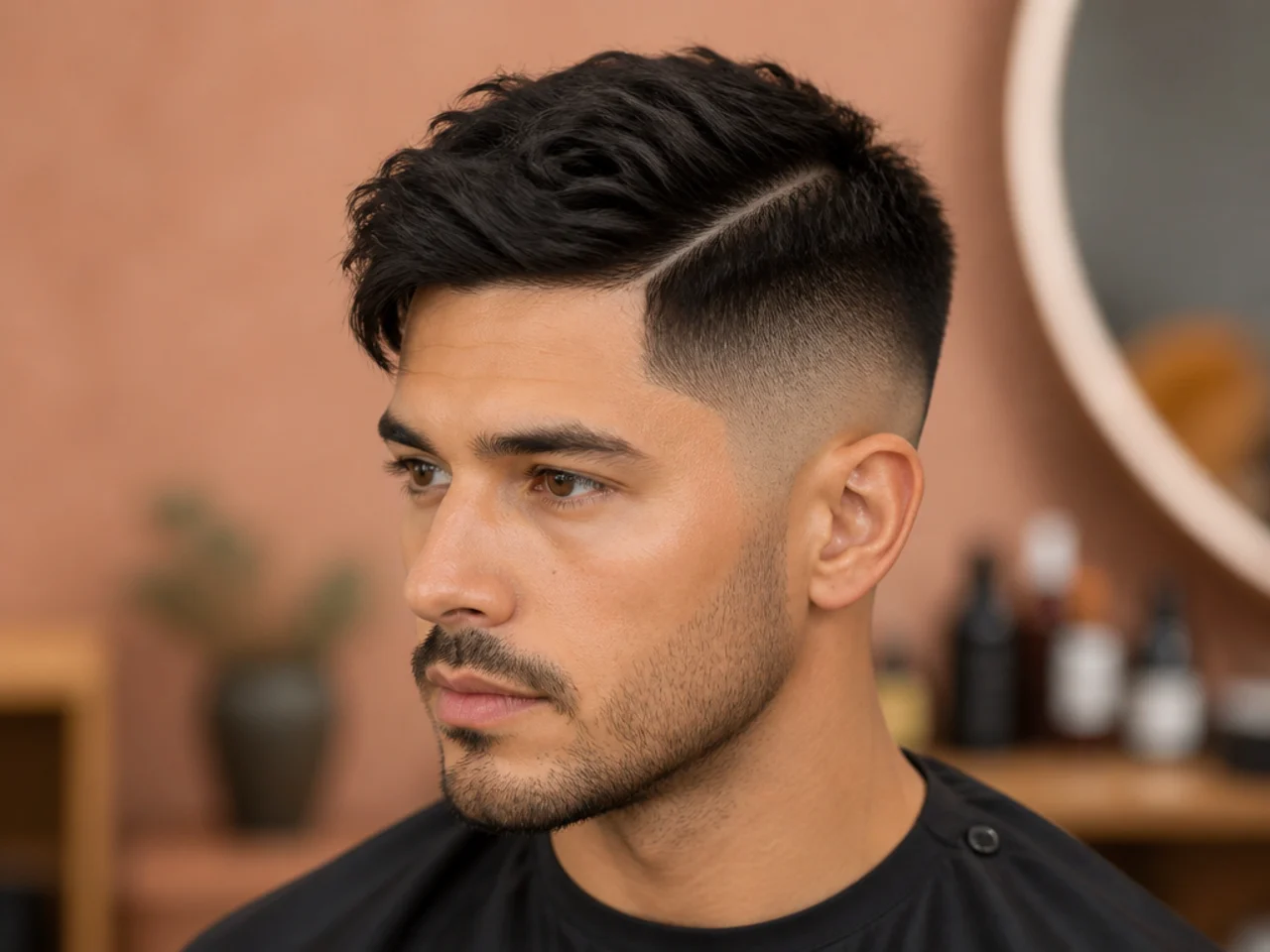
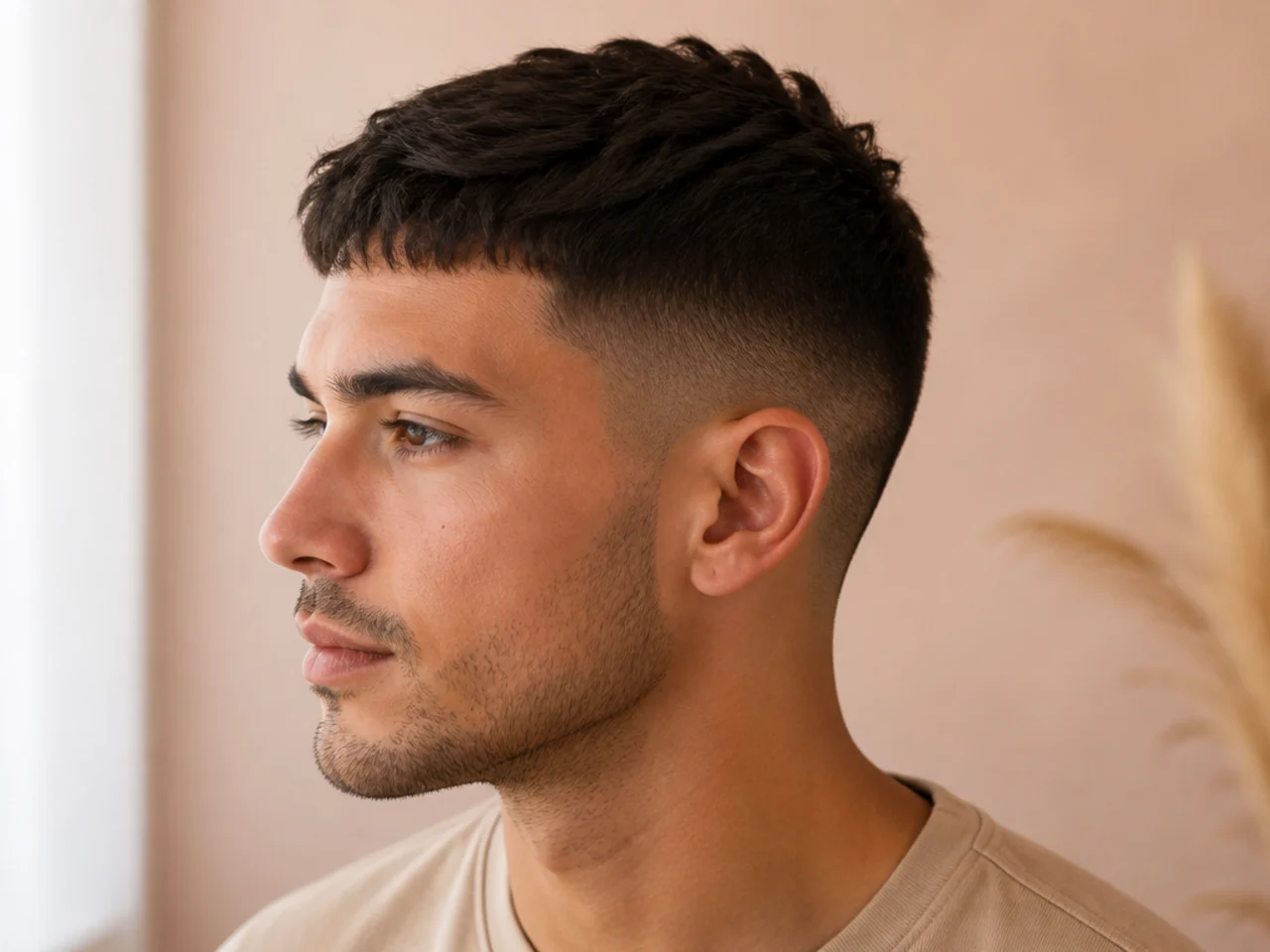
The textured crop reworked with a diagonal sweep rather than a straight-forward push. Two inches on top point-cut for aggressive texture, swept to one side along a defined parting. Sides drop into a high fade — often to skin at the shortest — that adds another vertical element a round face needs.
Ask for: "Textured crop with a side parting and a high skin fade, No. 0 at the shortest blended to a No. 2 above the temple, two inches on top point-cut and swept to my left."
Styling: a pea of matte paste finger-pushed forward and to the side. No comb — the crop lives on rough texture.
Side Parts for Square Faces
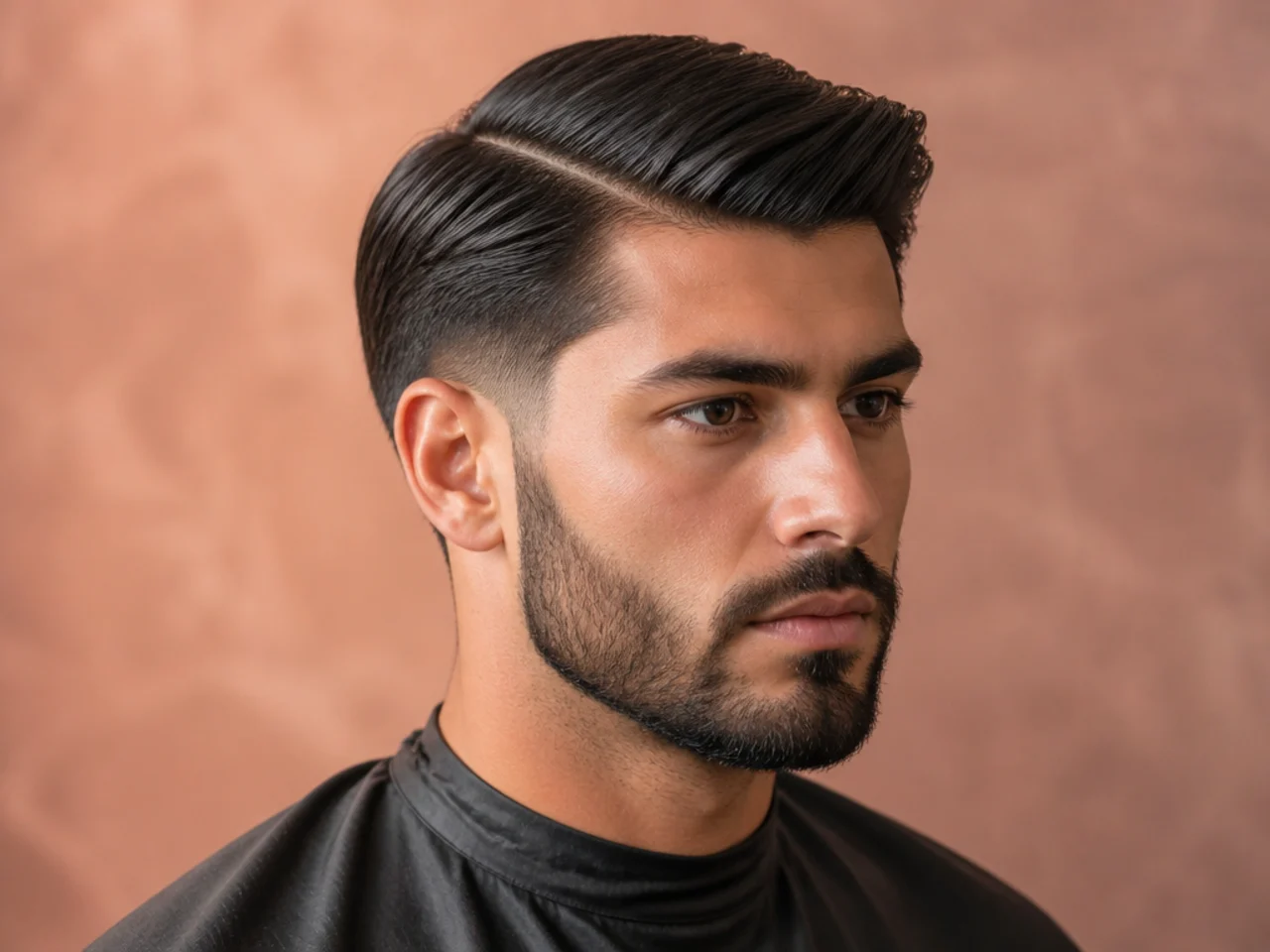
Square jaws give you two options — soften the corners with scissor sides and length, or lean into the geometry with a hard-part fade. Both work. Which one you pick depends on whether you want the cut to disappear into the face or amplify it. Every choice below tags the intent. For more shape-first guidance, our haircuts for square faces breakdown covers the wider taxonomy.
9. Soft Classic Side Part with Scissor Taper
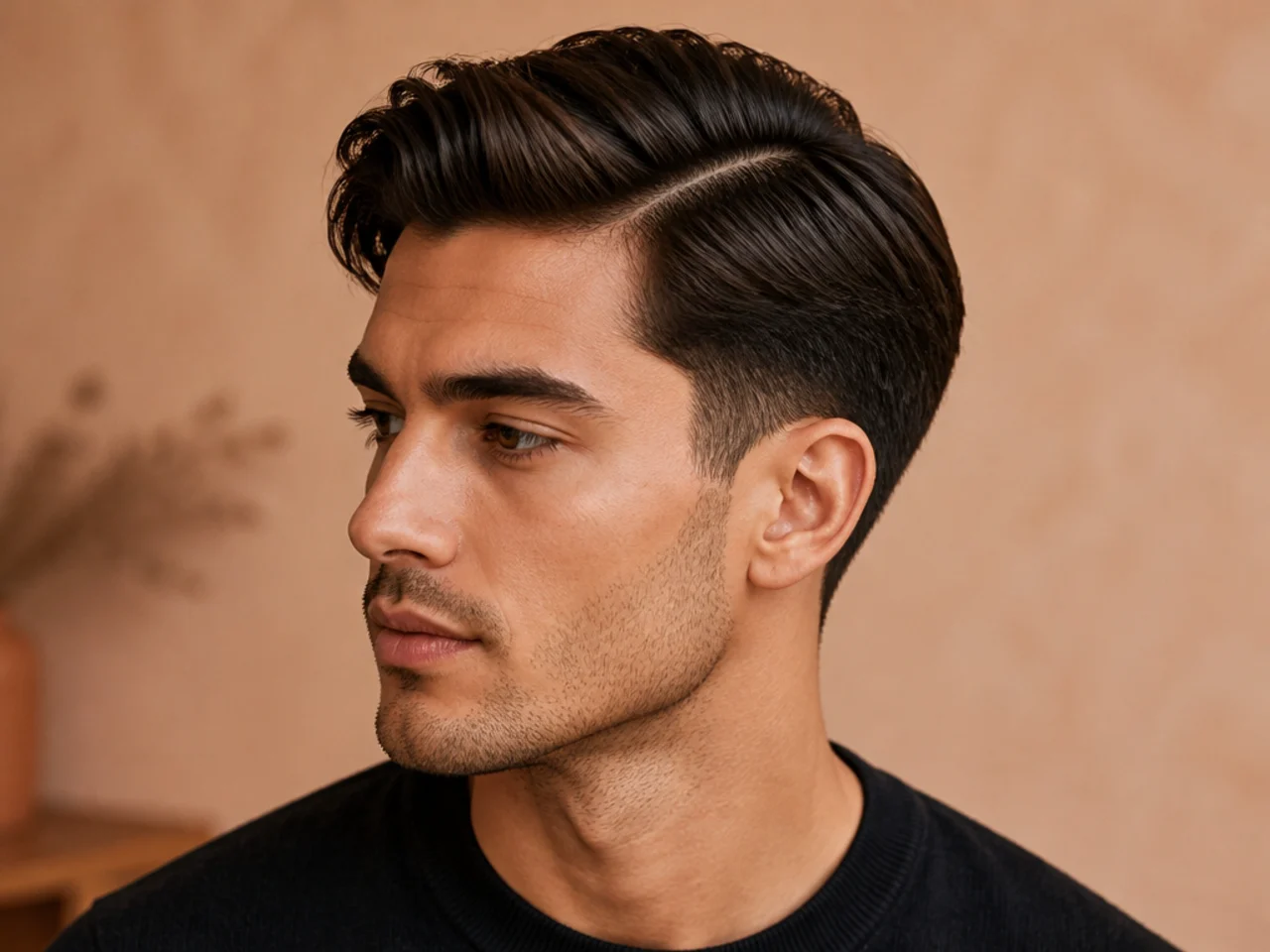
The softening move. Two and a half inches on top combed to one side along a natural parting, sides scissor-tapered gradually — no clipper contrast, no hard fade line. The absence of sharp visual angles at the sides quiets the jaw corners rather than echoing them. Best on thirties-plus dressers who want the cut to sit under the room rather than announce itself.
Ask for: "Soft classic side part, two and a half inches on top, scissor taper on the sides with no fade line, gradual blend to a No. 2 at the perimeter, natural parting on the left."
Styling: cream pomade on damp hair, combed once.
10. Slick-Back Undercut Side Part
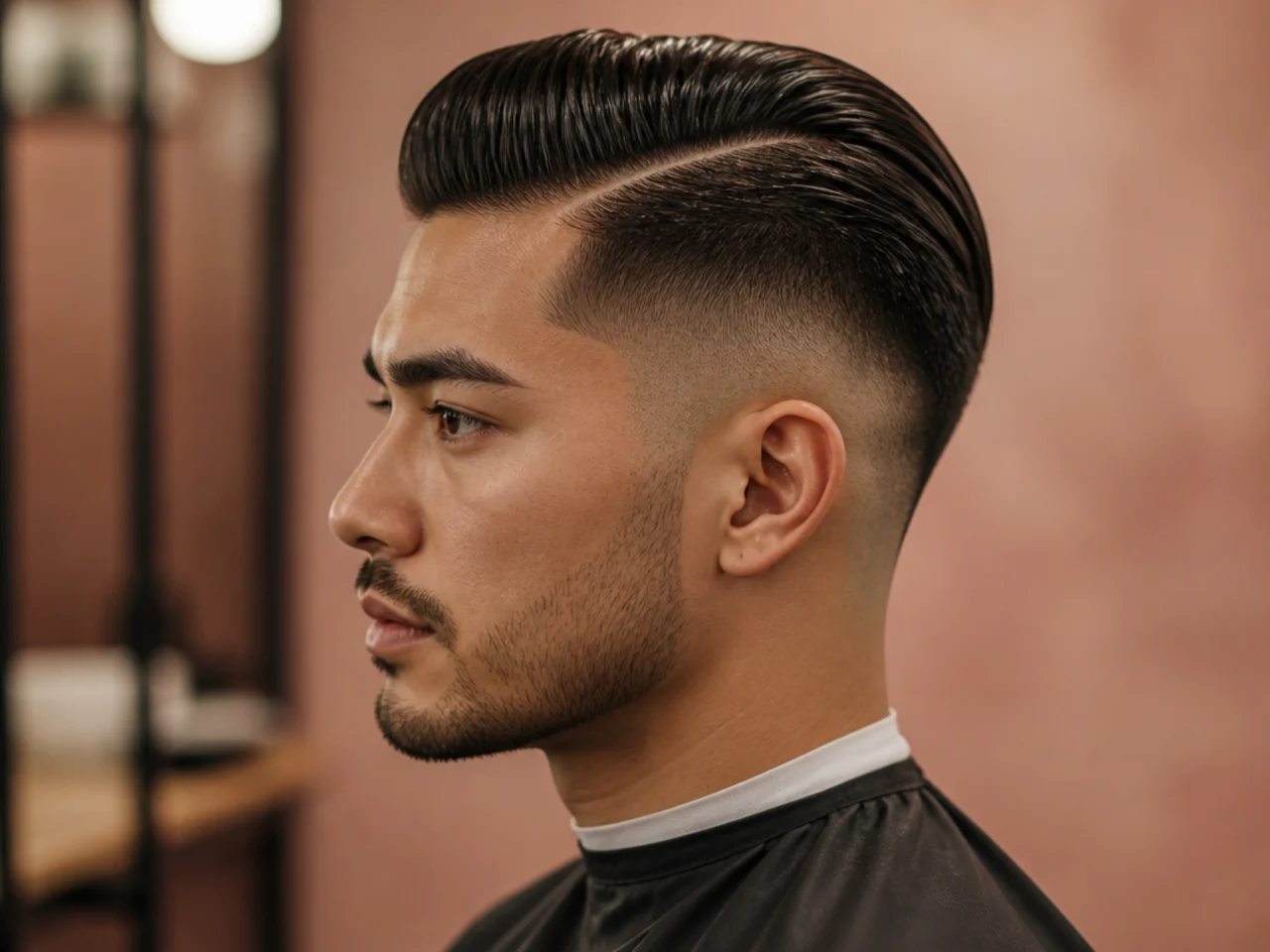
The bolder move. Five inches on top slicked back and to one side, sides taken down to a disconnected undercut with a hard line at the crown. Glossy finish. Where the soft classic hides the jaw, this version echoes it — clean, deliberate lines that mirror the square geometry. Best on straight, medium-to-heavy density hair.
Ask for: "Slick-back undercut side part, five inches on top slicked back to my left, No. 1 undercut sides with a disconnected line at the crown, glossy pomade finish."
Styling: strong-hold pomade raked through damp hair with a fine comb, pulled back from the front. Set with a light hairspray mist while damp.
11. Hard-Part Side Part with Drop Fade
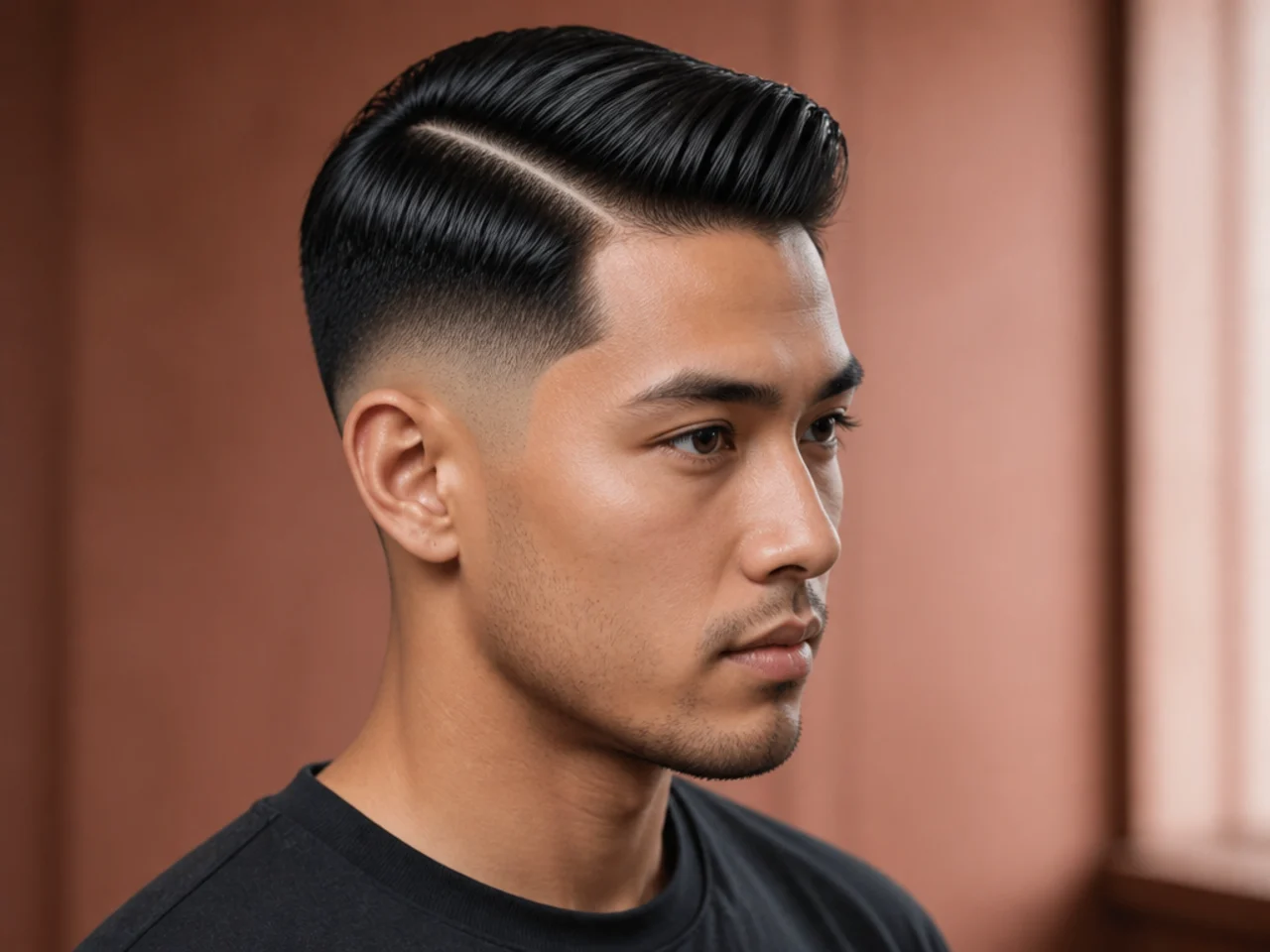
Where a mid fade runs straight across the temple, a drop fade dips lower behind the ear — the fade curves rather than crosses. Add a hard part cut through the parting and the result is modern, low-drama sharpness. The softness of the drop curve balances the hard line at the top. Two inches on top with subtle texture.
Ask for: "Hard-part side part with a drop fade behind the ear, No. 0 at the shortest curving up to a No. 3 at the parietal ridge, razor-drawn hard line on the left, two inches on top."
Styling: matte clay worked through damp hair and finger-styled toward the parting. Rebook every two weeks.
Side Parts for Heart Faces
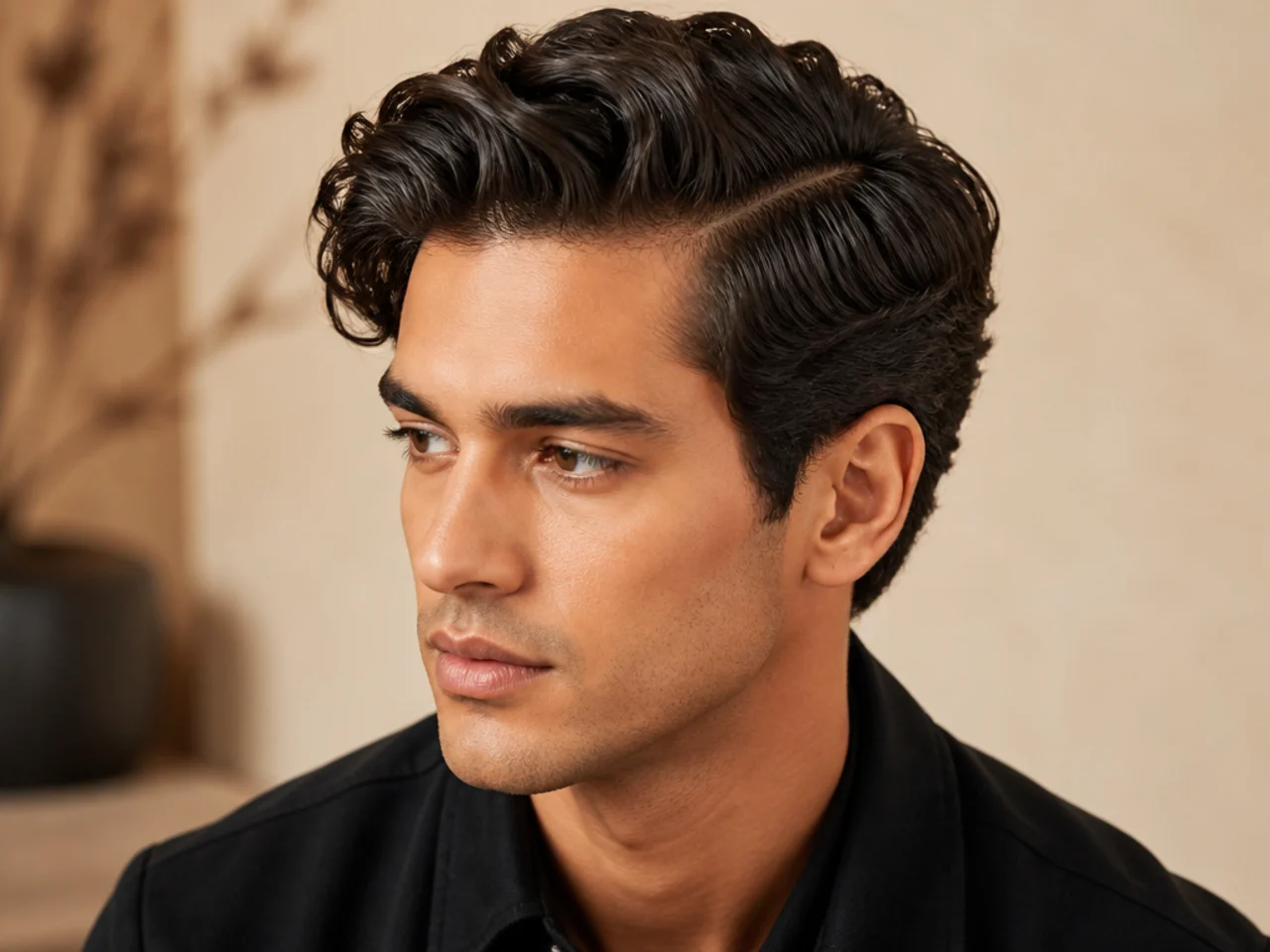
Heart faces are wider at the temples and forehead and narrow to a pointed chin. The fix is to add weight low — at the jaw and chin — and to keep the top from adding more visual mass to the wider upper half. Long side sweeps, curtain fronts, and beard blends all help redistribute the frame. Skip anything that stacks height directly above the forehead.
12. Long Side-Swept Fringe Side Part
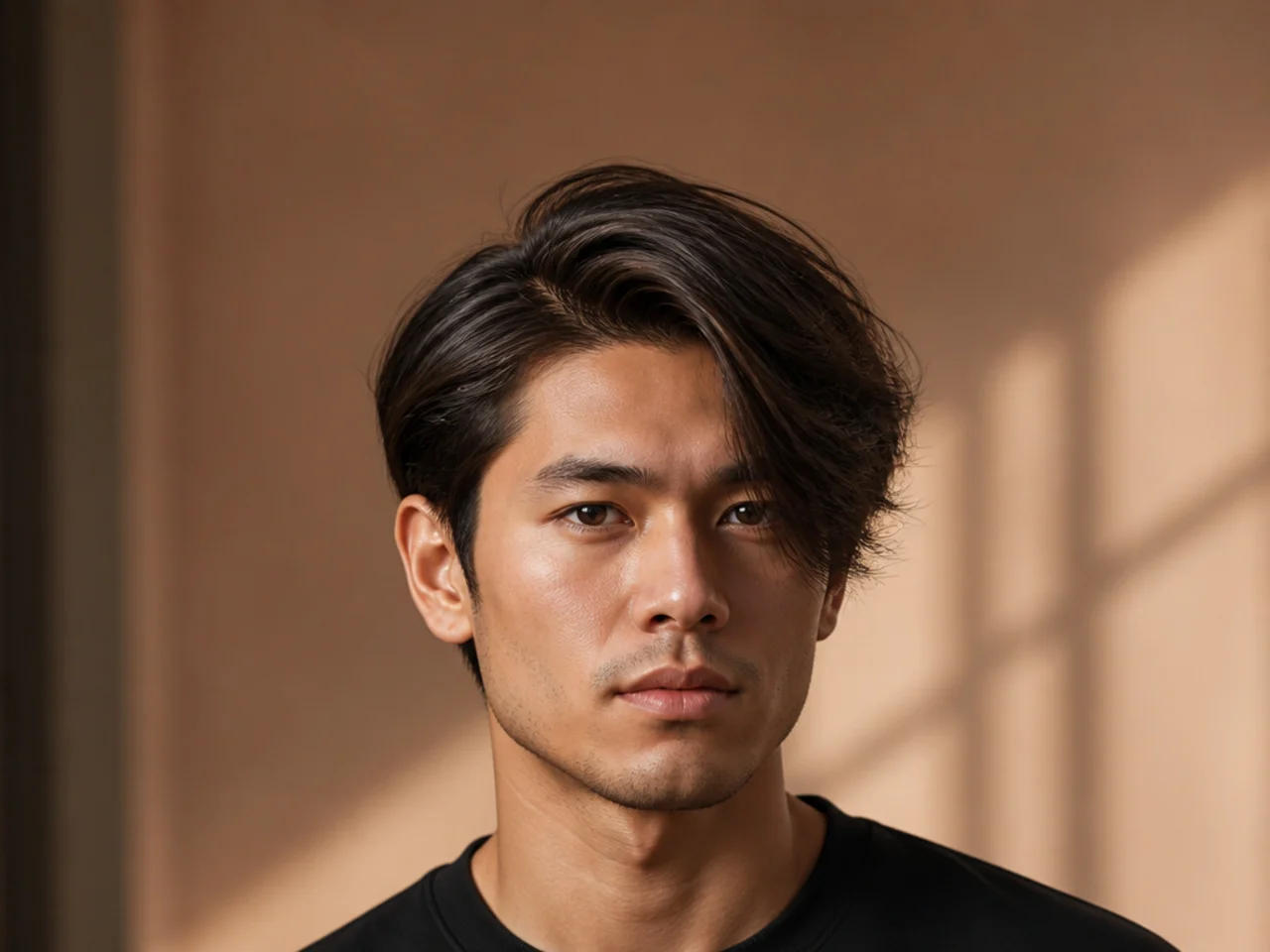
The heart-face staple. Three to four inches on top with a longer front piece cut to fall past the eyebrow along a defined side parting. The fringe sweeps diagonally across the forehead and lands near the cheekbone — that softens the temple width and pulls the eye toward the narrower chin. Sides sit at a soft scissor taper or a low fade.
Ask for: "Long side-swept fringe side part, three to four inches on top, cut the front piece to fall to my cheekbone on the left, low fade to a No. 2 or scissor taper on the sides, soft matte finish."
Styling: blow-dry the fringe forward and to the side while damp with a paddle brush. Finish with a pinch of styling cream through the ends.
13. Side Part with Beard Blend Fade
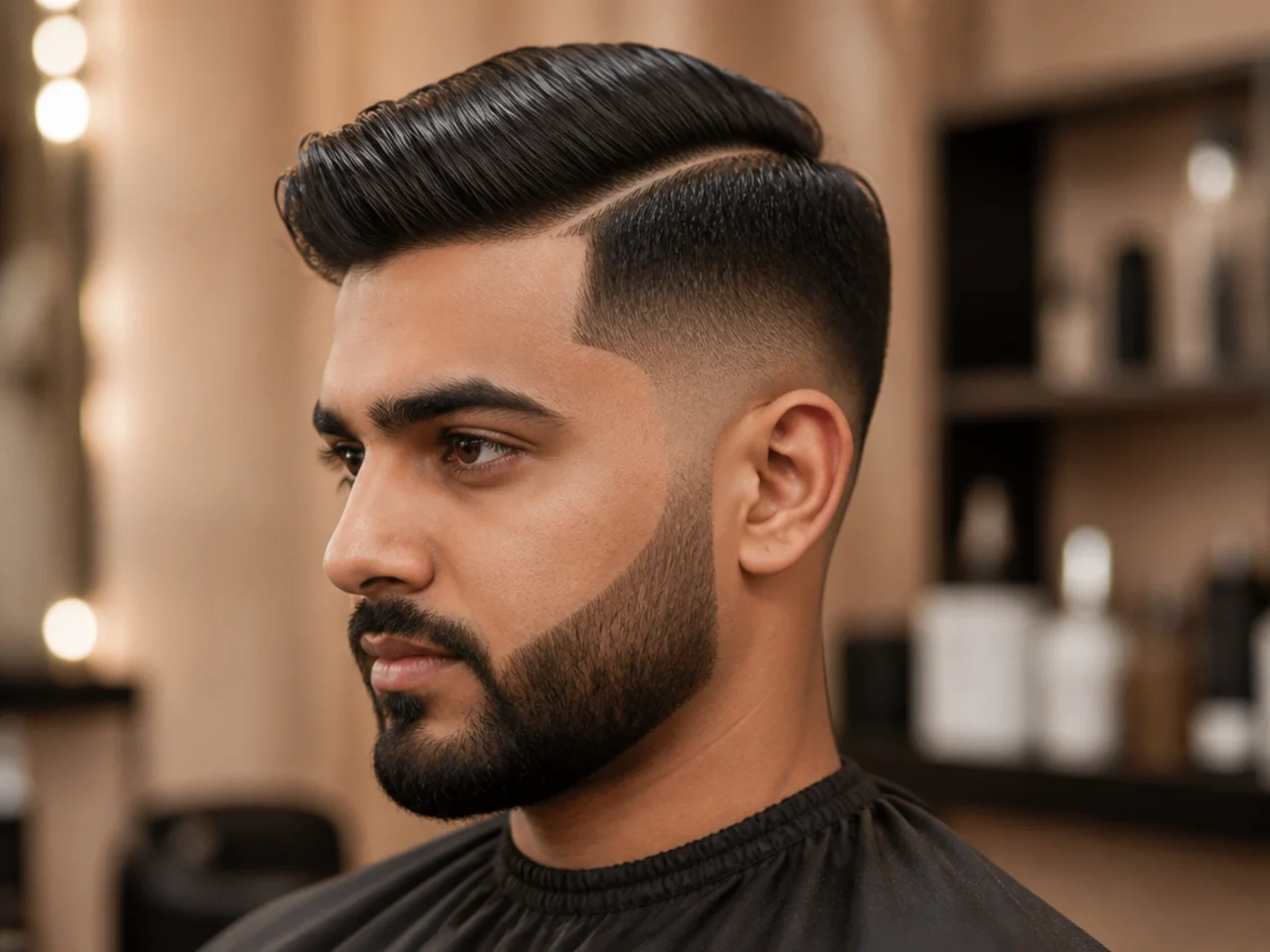
Weight at the jaw does the heart-face work. Two to three inches on top, side-parted on a defined line with a mid fade on the sides. The fade blends directly into a full beard so sideburn, temple, and jaw line become one connected shape. Best on straight to wavy hair with strong beard density.
Ask for: "Side part with a mid fade blended into my beard line, No. 1 at the shortest fading up to a No. 3 through the ridge, two to three inches on top, connect the sideburn to the beard through the fade."
Styling: cream pomade combed through the top, beard brushed with a light beard oil. Line up the beard every two weeks alongside the fade.
14. Curtain-Style Side Part with Low Fade
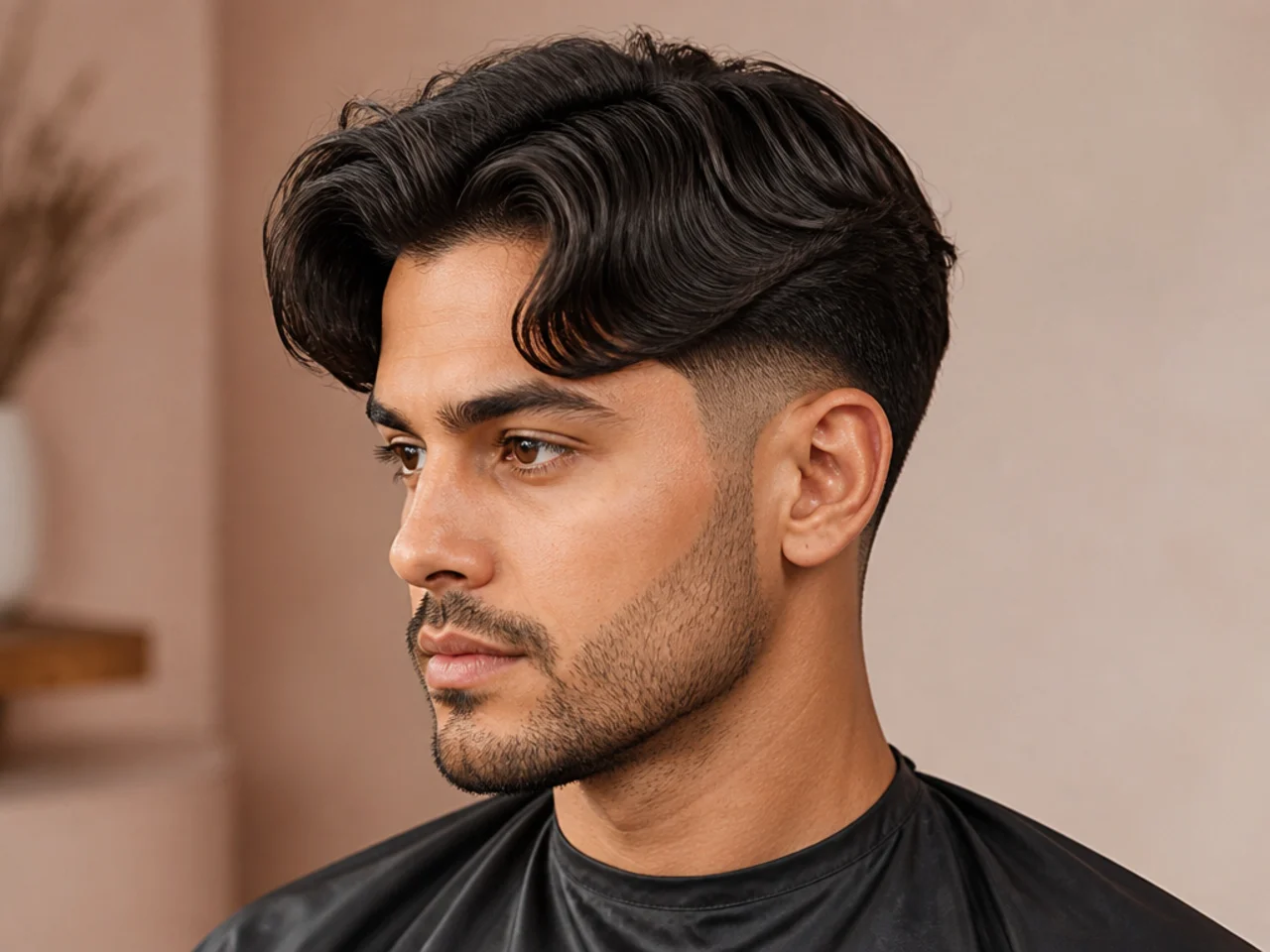
A modern curtain front reworked as a side part rather than a middle part. Four to five inches on top with the front piece parted deliberately to one side and left long enough to fall past the eyebrow in a soft curve. Sides drop into a low fade that only touches the perimeter — the curtain does the visual work. The forward drape softens the wider forehead and pulls attention toward the chin.
Ask for: "Curtain side part with a low fade, No. 1 at the shortest around the ears blended into scissor length above the arc, four to five inches on top, curtain front parted to the left and falling past the brow."
Styling: blow-dry the front forward and to the side with a round brush. Sea-salt spray at the roots, a pinch of matte cream at the ends for definition.
Side Parts for Oblong and Rectangular Faces
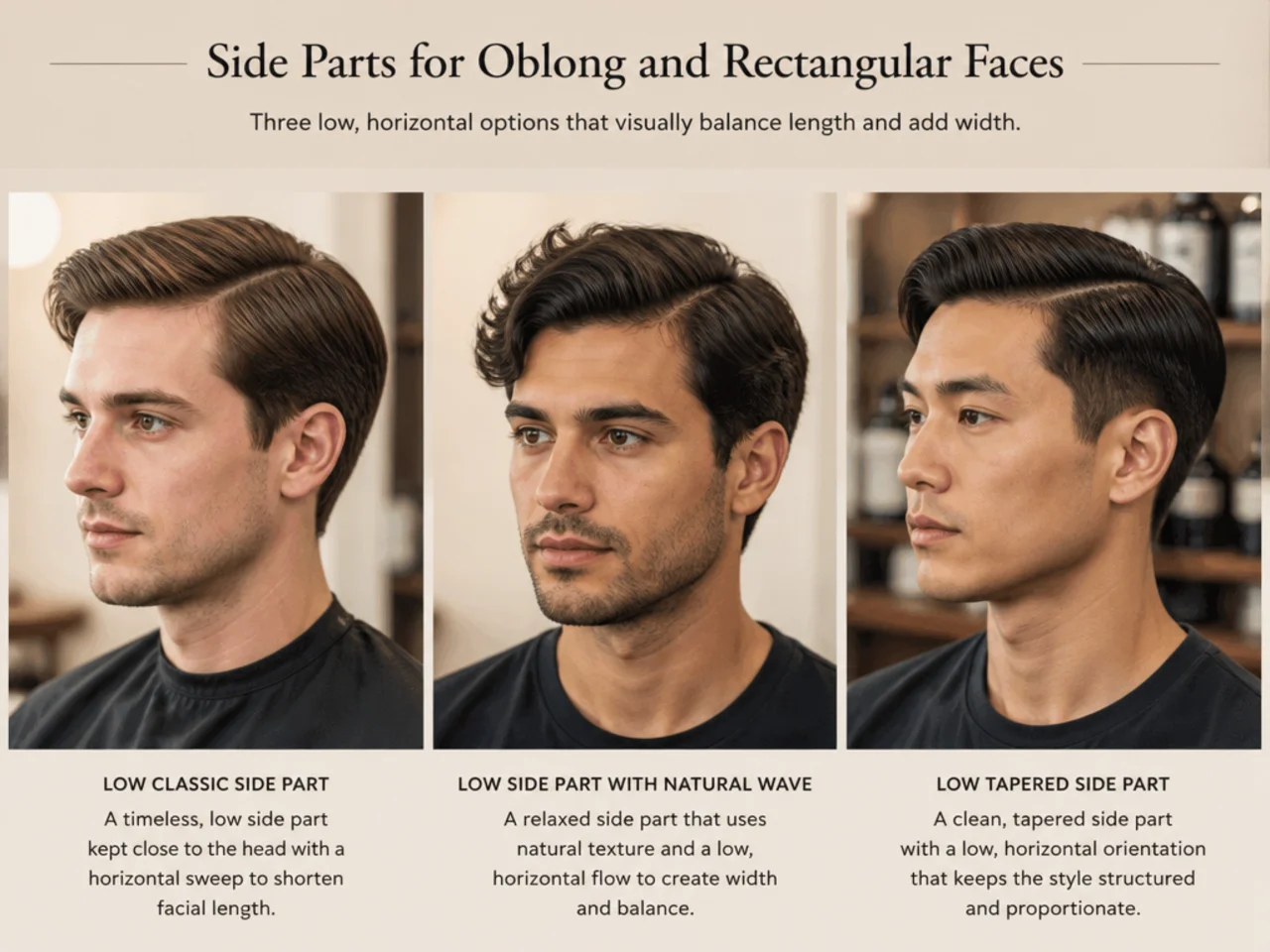
Oblong and rectangular faces are longer than wide with a straighter jaw line. Height on top is the enemy — it stretches the face further vertically. The fix is to keep everything low: short to medium tops, shallow partings, low fades that hug the neckline, and a slight horizontal push across the forehead. Skip pomps, tall quiffs, and hard parts that draw the eye upward.
15. Shallow Side Part with Low Fade
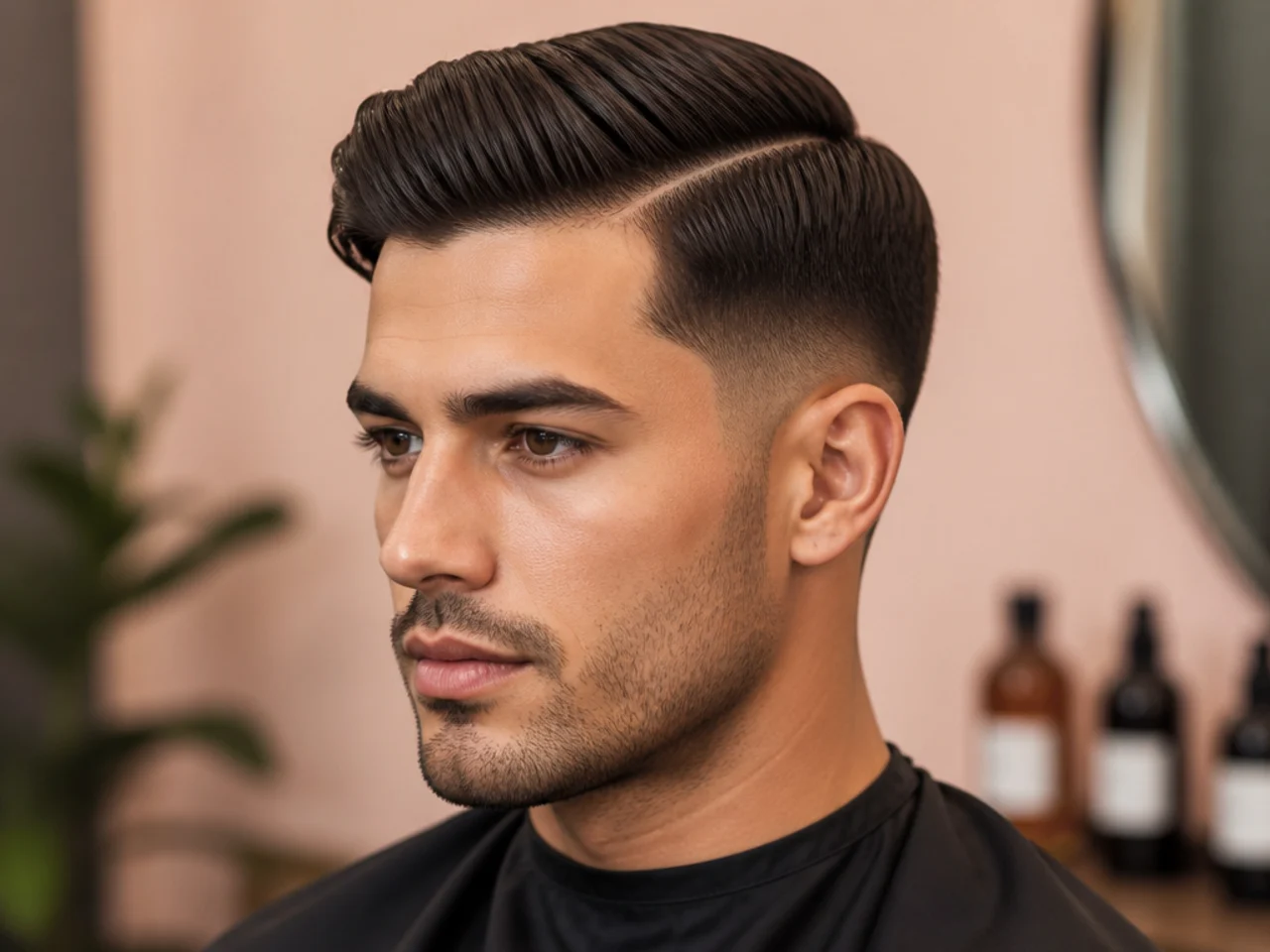
The most restrained cut on the list, and exactly what an oblong face needs. Top runs 1.5 inches finished, parted along a shallow line closer to the center than a traditional side part. Sides drop into a low fade that lives at the ear and neckline — nothing rises above the temple. Everything sits close to the head, which shortens the face visually.
Ask for: "Shallow side part with a low fade, No. 1 at the ear and nape blended into a No. 3 above the arc, 1.5 inches on top, part just off-center on my left."
Styling: a pea of matte clay worked through, combed once. Skip anything with lift.
16. Side-Parted Flow with Low Taper
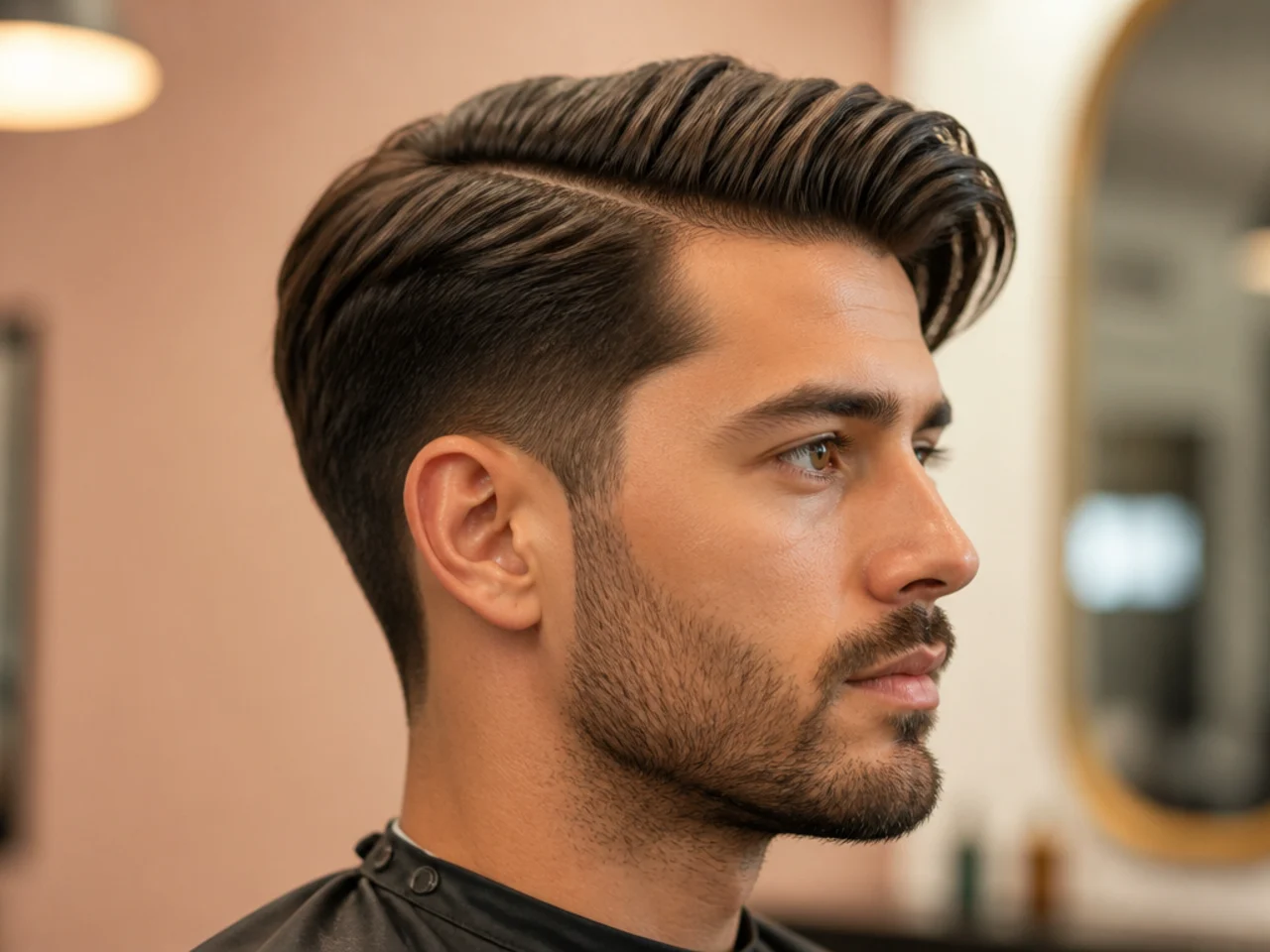
The flow cut with a defined parting rather than pushed straight back. Three inches on top left to fall in its natural wave direction, swept to one side along a shallow parting so the movement runs horizontally rather than vertically. Low taper on the sides. Best on wavy hair — straight hair loses the horizontal texture the cut relies on.
Ask for: "Side-parted flow with a low taper, No. 1 at the shortest around the ears, three inches on top, shallow parting on my natural side, keep the natural wave pattern."
Styling: sea-salt spray on damp hair, rough-dried with fingers running in the sweep direction. A pinch of matte cream to define.
17. Comb-Over Side Part with Low Taper
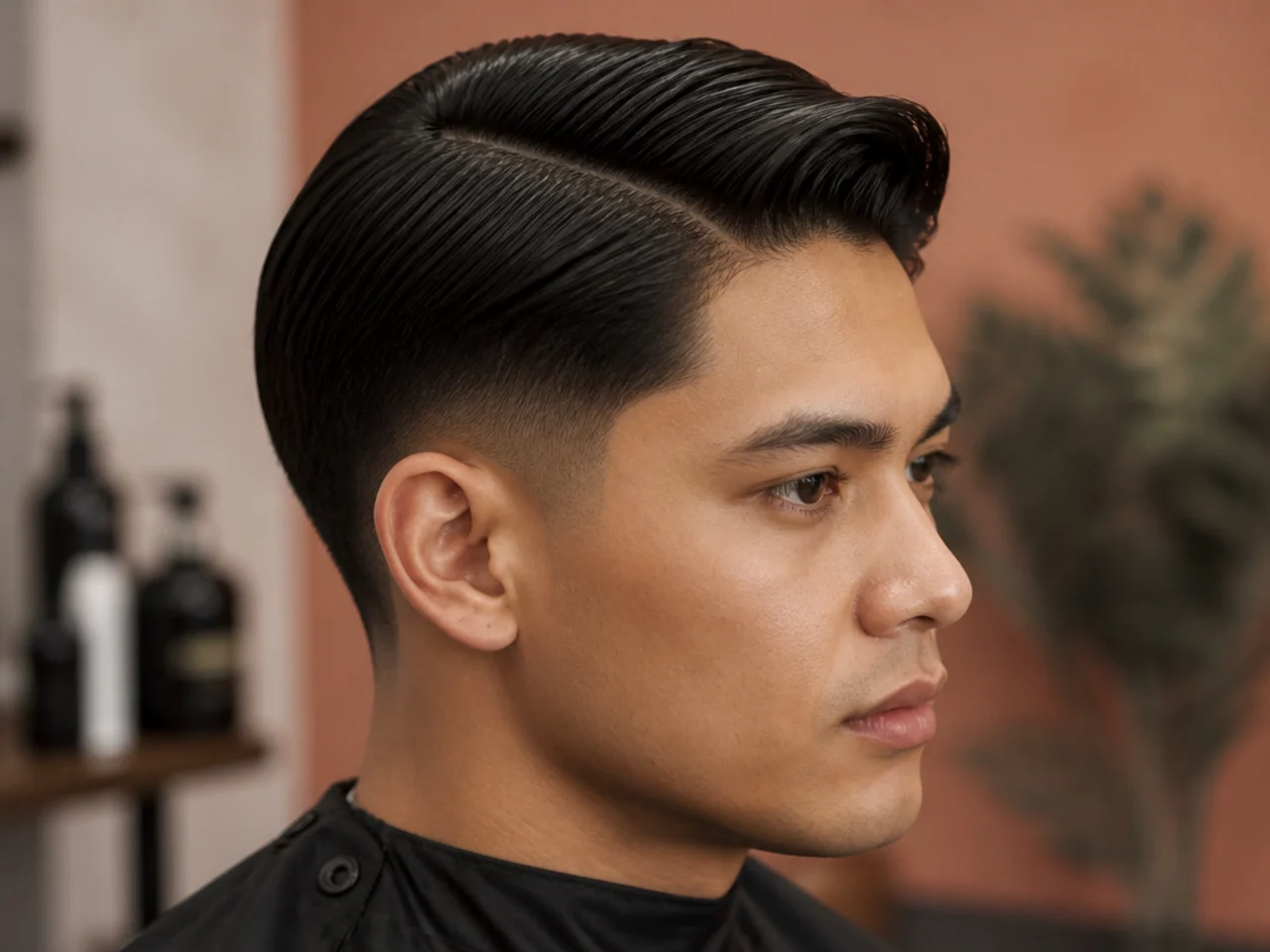
The comb over worked in a purely horizontal direction — no lift at the front, no back sweep. Two to two and a half inches on top combed across from a deep side parting so the hair travels horizontally over the crown. Sides sit at a soft low taper. The horizontal sweep widens the face visually and holds the vertical line in check.
Ask for: "Comb-over side part with a low scissor taper, two to two and a half inches on top, deep parting on my left, comb the top across horizontally with no lift."
Styling: cream pomade combed through damp hair, set with a low-heat blow-dry across the comb-over direction.
Side Parts for Diamond Faces
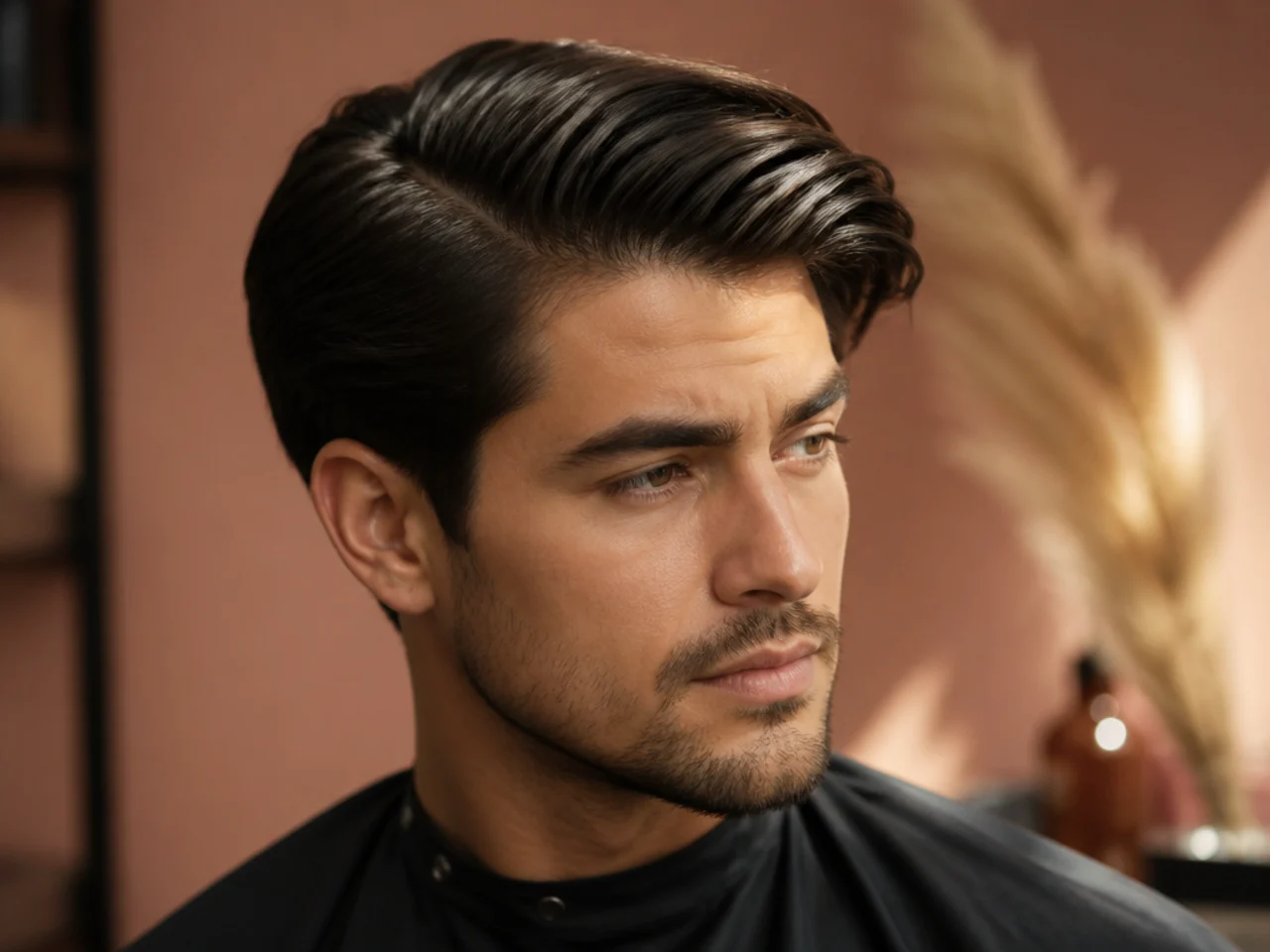
Diamond faces are narrow at both the forehead and chin with wide cheekbones sitting between them. The mission is to add width high and low — mass at the forehead through fringe and volume, mass at the chin through beard shape or longer perimeter — while keeping the cheekbones from becoming the widest point. Avoid anything that pulls the temples inward or drops height above the crown.
18. Volumized Textured Side Part with Low Taper
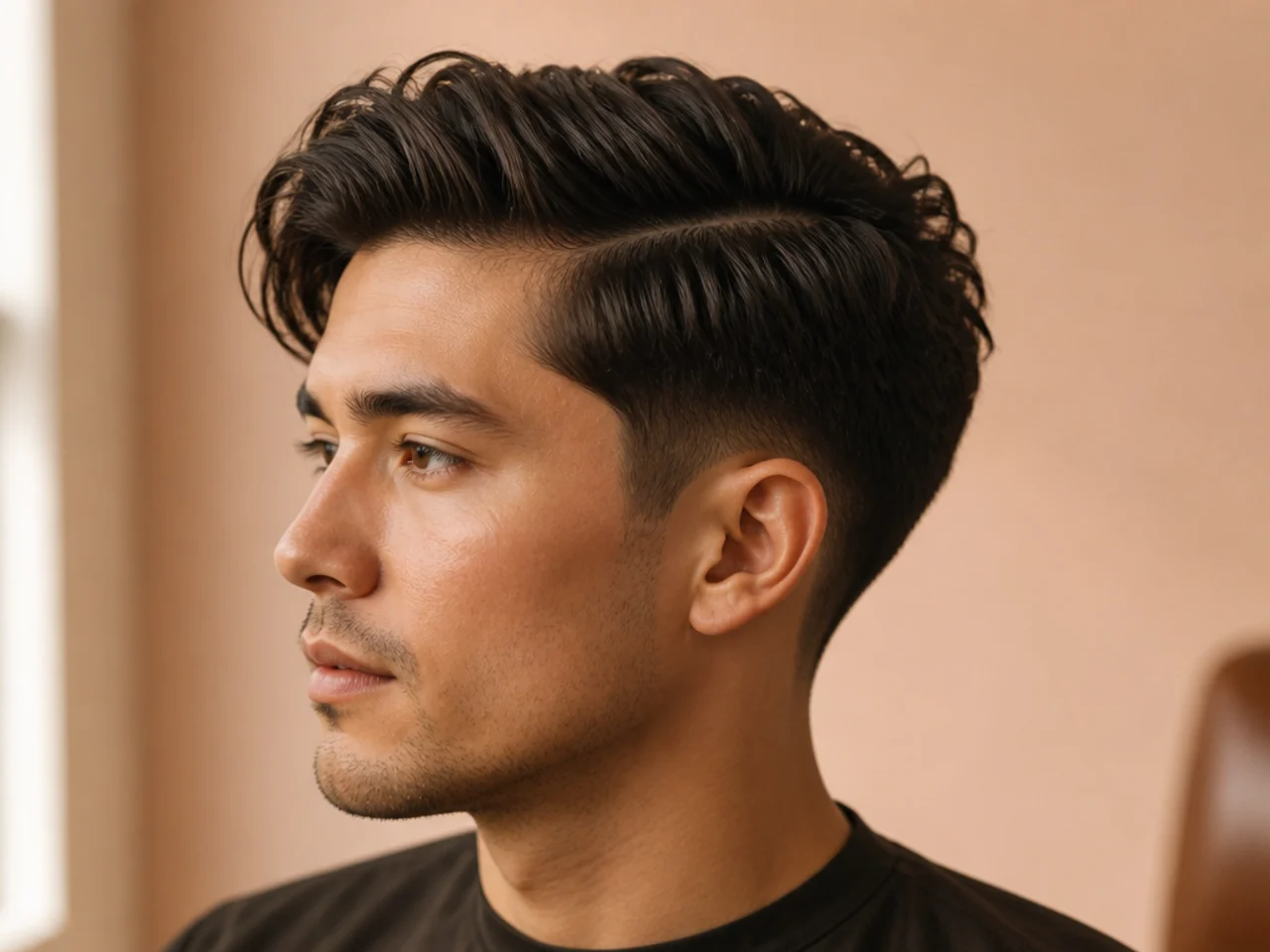
Width at the front is the diamond-face priority. Three inches on top point-cut for texture, blow-dried up and forward at the front so the volume sits above the forehead — exactly where the narrow point of a diamond needs mass. Sides drop into a soft low taper that keeps some length at the perimeter, avoiding the tight-side look that would narrow the cheekbones further.
Ask for: "Volumized textured side part with a low taper, No. 1.5 at the shortest around the ears blended into scissor length, three inches on top point-cut, blow-dry the front up and forward from my left parting."
Styling: mousse at the root while damp, blow-dry the front forward with a round brush. A pinch of matte paste to define once dry.
19. Side Part with Full Fringe and Low Fade
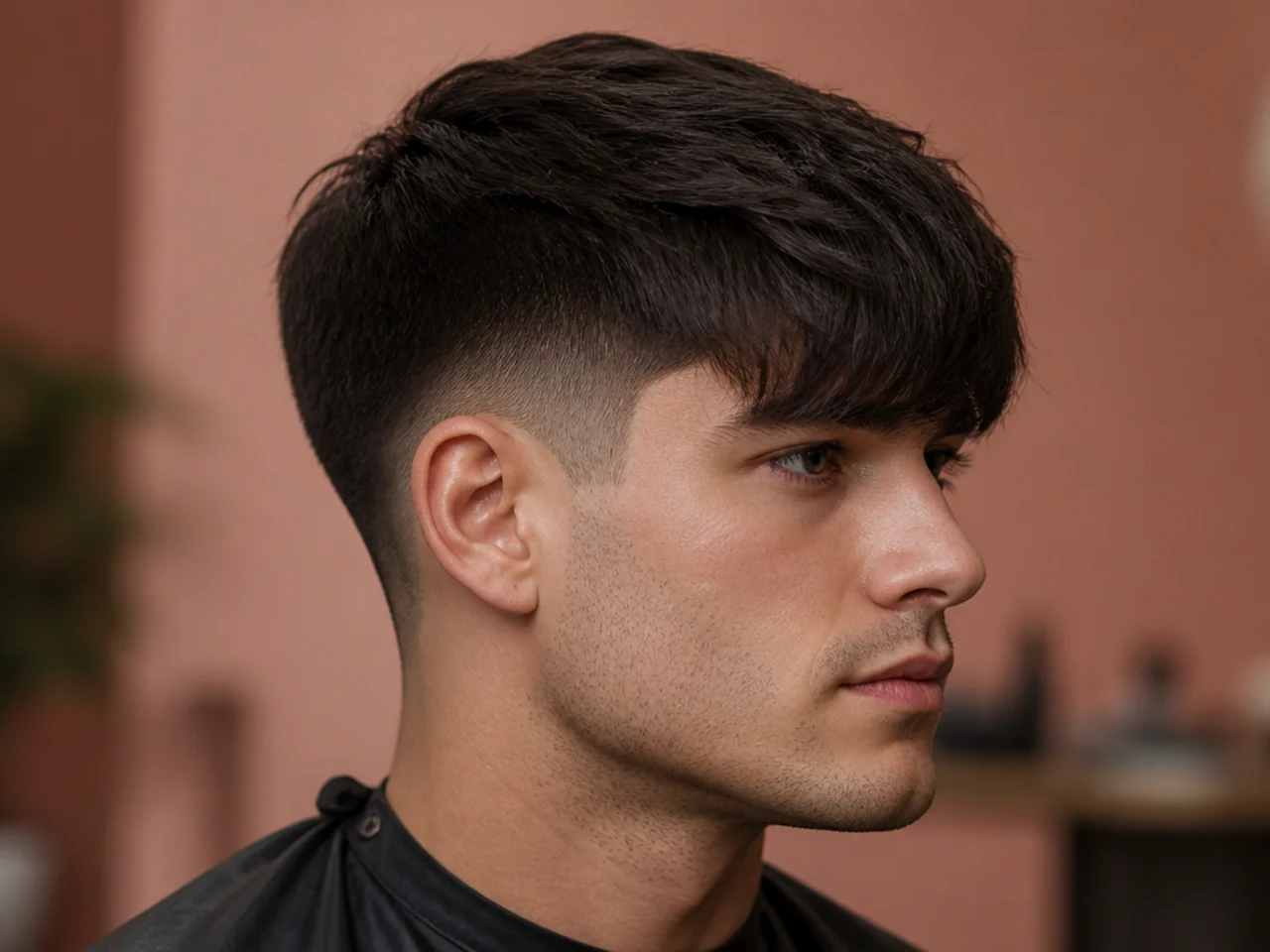
A heavier fringe worn as a horizontal band across the forehead widens the narrow upper point of a diamond face. Three inches on top with a full, blunt-cut fringe sitting at the eyebrow — the fringe reads as a solid horizontal line above the cheekbones. Behind it, a defined side parting carries the rest of the top. Sides drop into a low fade.
Ask for: "Side part with a full blunt fringe and a low fade, No. 1 around the ears blended to a No. 3 above the arc, three inches on top, heavy blunt fringe cut to the eyebrow, defined parting on my left behind the fringe."
Styling: blow-dry the fringe forward and slightly down with a paddle brush. A pinch of styling paste through the ends to stop it reading too heavy.
20. Wavy Medium Side Part with Beard
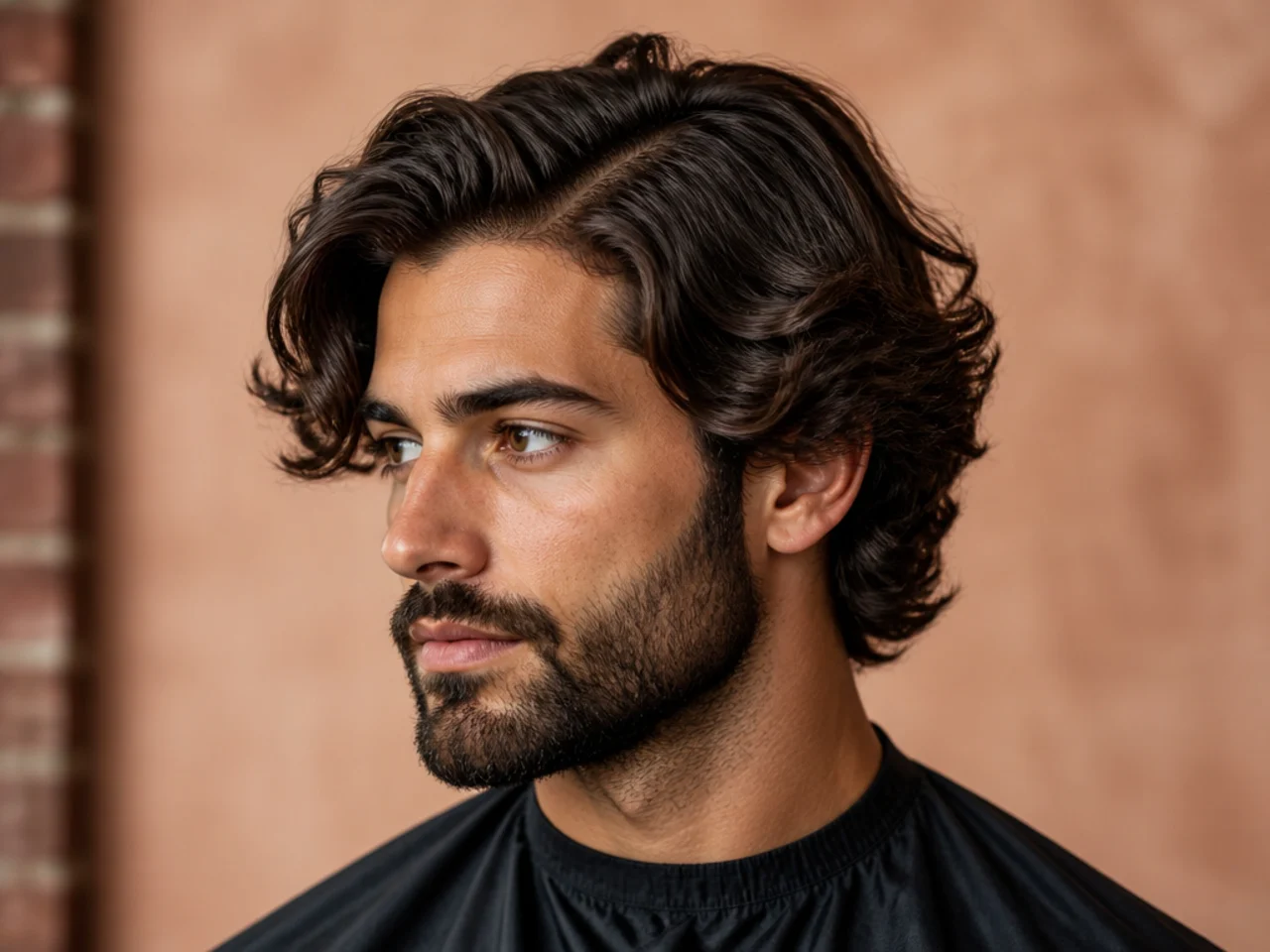
Width at the chin balances the diamond's narrow lower point, and a proper shaped beard does that work more efficiently than any haircut alone. Three inches on top left wavy along its natural pattern and side-parted on a shallow line. Sides sit at a soft scissor taper. A medium beard is shaped fuller at the chin to add horizontal mass. Best on wavy hair with strong beard density.
Ask for: "Wavy medium side part with a scissor taper, three inches on top left in its wave pattern, shallow parting on my left, and shape the beard fuller at the chin to add width."
Styling: sea-salt spray on damp hair, air-dried. Beard brushed with beard oil and shaped every two weeks.
How to Ask Your Barber
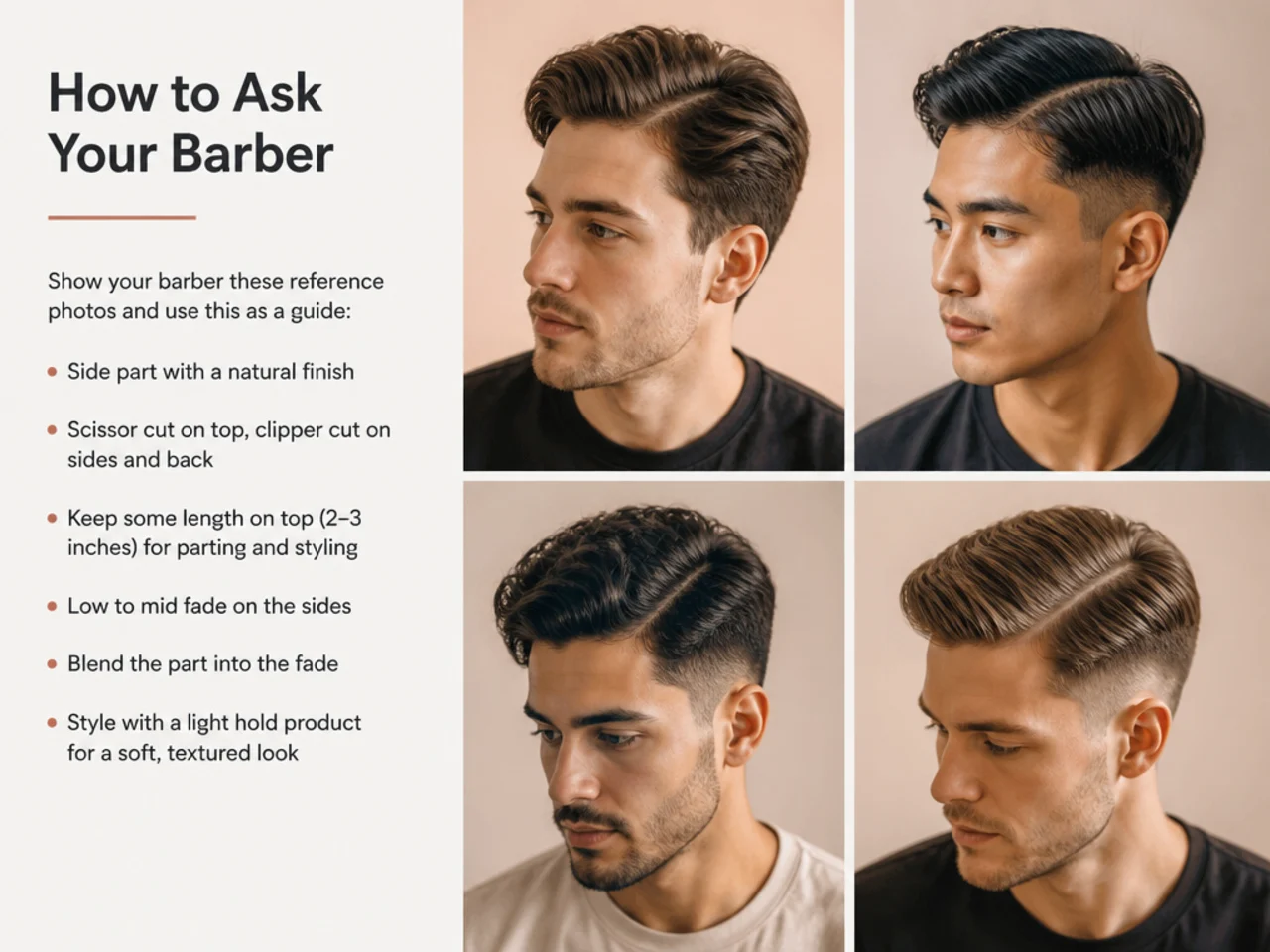
A barber can build any of the twenty cuts above from four inputs — the parting, the top length, the sides finish, and the beard shape if there is one. Give them all four and you leave with the cut you had in mind.
- Name your face shape and the variation. "I have a round face and I want the tall pomp with a high skin fade" is a better opening than a photo alone.
- Say which side to part on and how deep. "Deep parting on my left" or "shallow natural parting on the right." Mention your cowlick — a skilled barber follows it rather than fights it.
- Give the top length in inches, not adjectives. "Three inches for lift" is unambiguous. "Longer on top" is not.
- Give the sides finish in clipper numbers. "No. 0 at the shortest blended to a No. 3 at the parietal ridge for a mid fade."
- Name the finish — matte for round and diamond, satin for oval and heart, glossy for square when leaning into geometry.
- Add a photo for the last ten percent — styling, parting depth, and beard shape that words alone might miss.
- Rebook before you leave the chair.
Styling and Maintenance
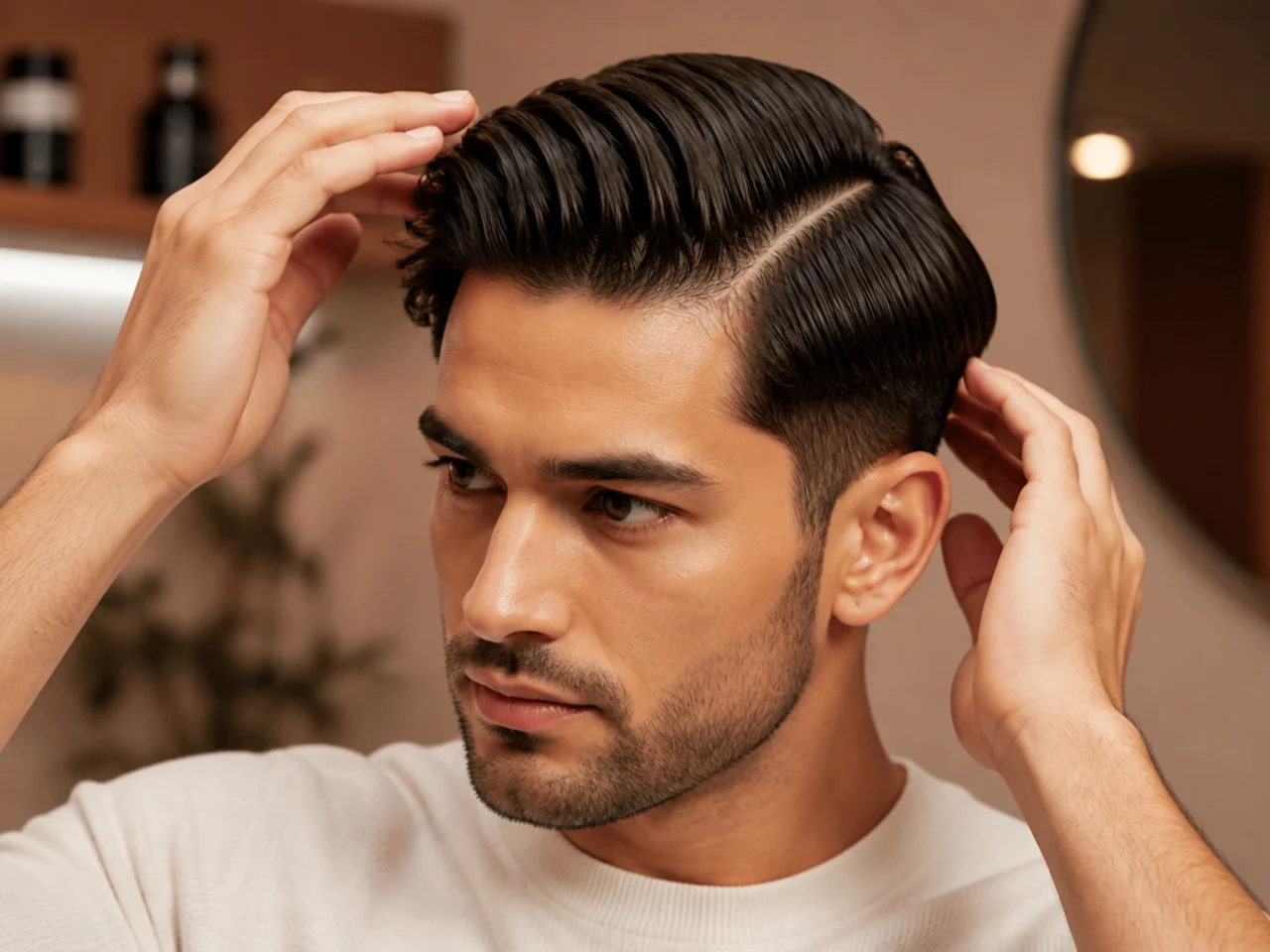
Products decide the finish more than the cut does. Match one product to your version, then commit — layering three products in one morning flattens the top faster than any single one will.
Matte clay is the default for textured, cropped, and lifted styles. Grips damp hair, dries invisible, works on every face shape that needs height without shine. Warm between the palms first — cold clay tears through the sweep instead of setting it.
Cream pomade is the choice for classic, Ivy League, and comb-over builds where a satin finish reads more current than glossy shine. Work through damp hair with a fine-tooth comb, then set with a low-heat blow-dry across the parting. Fine hair holds cream pomade better than heavy pomade.
Sea-salt spray belongs on wavy and flow cuts where the natural texture is doing the work. Mist damp hair, rough-dry with fingers in the sweep direction, finish with a pinch of matte cream. Skip sea-salt on classic scissor cuts — it flattens the smooth finish.
Traditional pomade and gel earn their spot on the slick-back undercut, the hard-part fade, and any formal-occasion version. Use them for the finish they were built for, not the modern matte look.
Rebook cadence lives on the same calendar as the fade. Two weeks for skin fades and hard parts. Three to four weeks for mid and low fades. Five to six for scissor tapers. The fade line at the temple softens first — book the next appointment when you see the softening, not when the whole cut looks bad.
For more parting-first reading, our companion guides on short side part haircuts, long side part hairstyles, and side part fade hairstyles go deeper into length- and fade-specific variations. For a wider face-shape lens, see our 15 trendy fade haircuts for every face shape roundup.