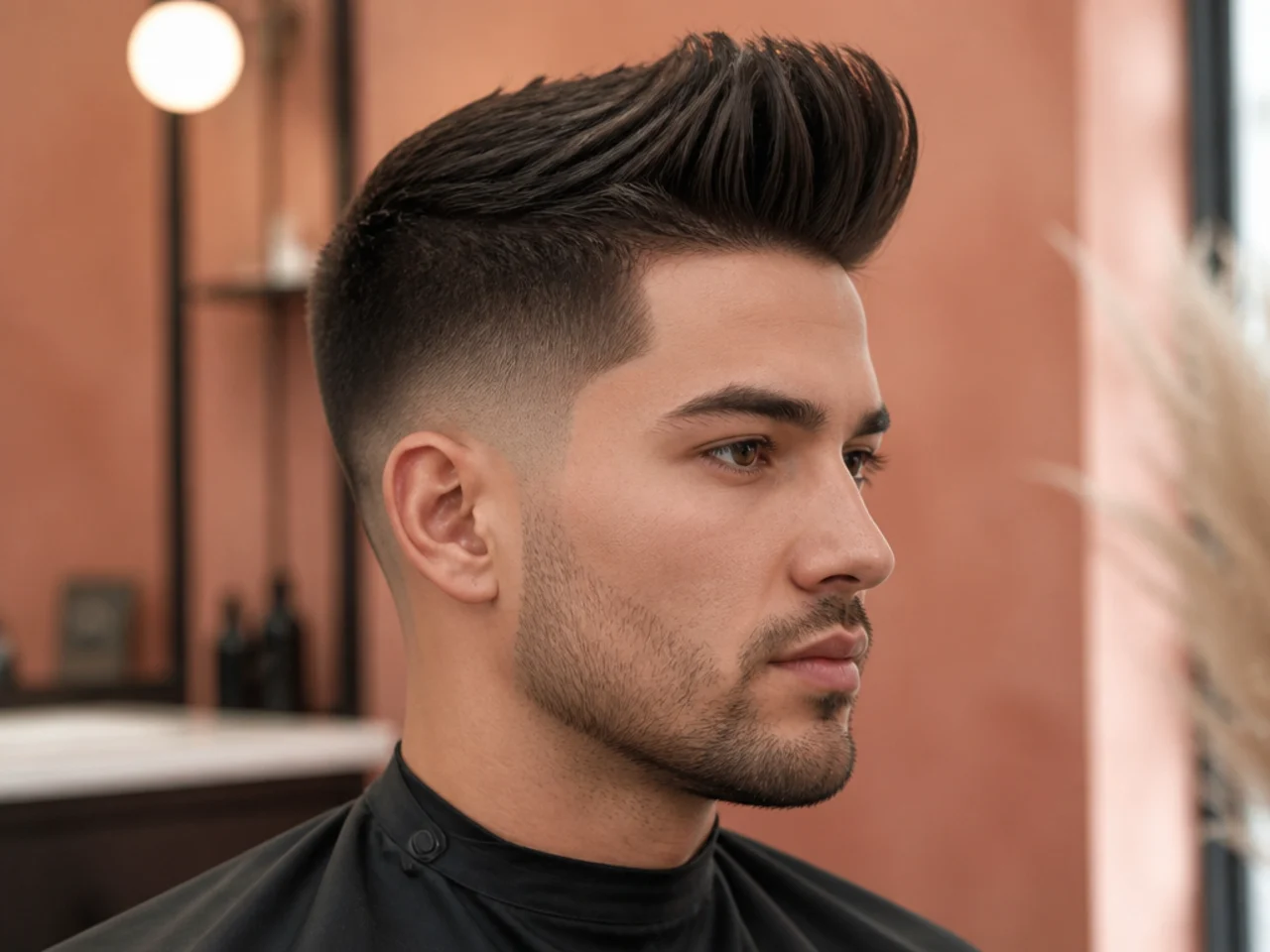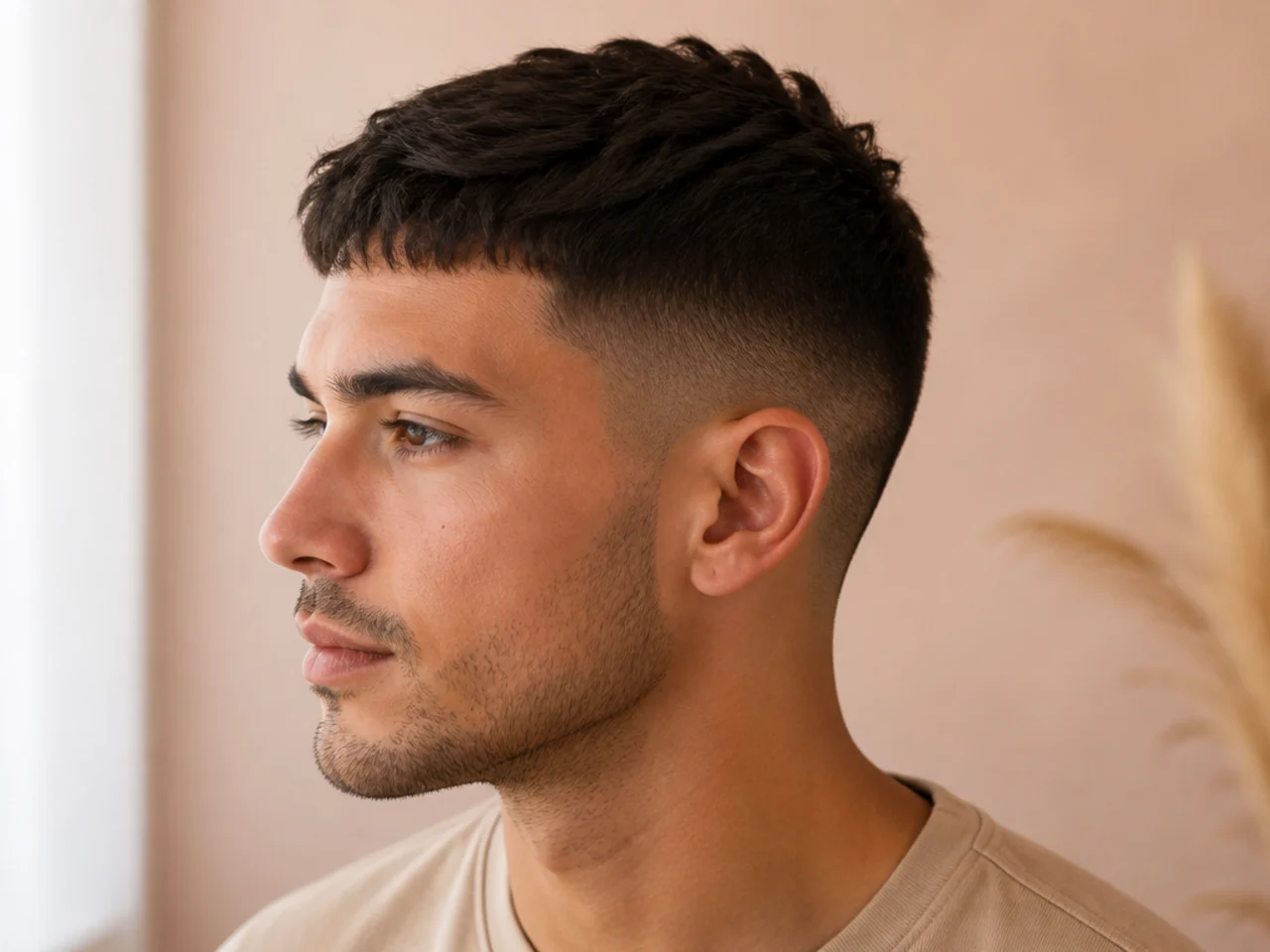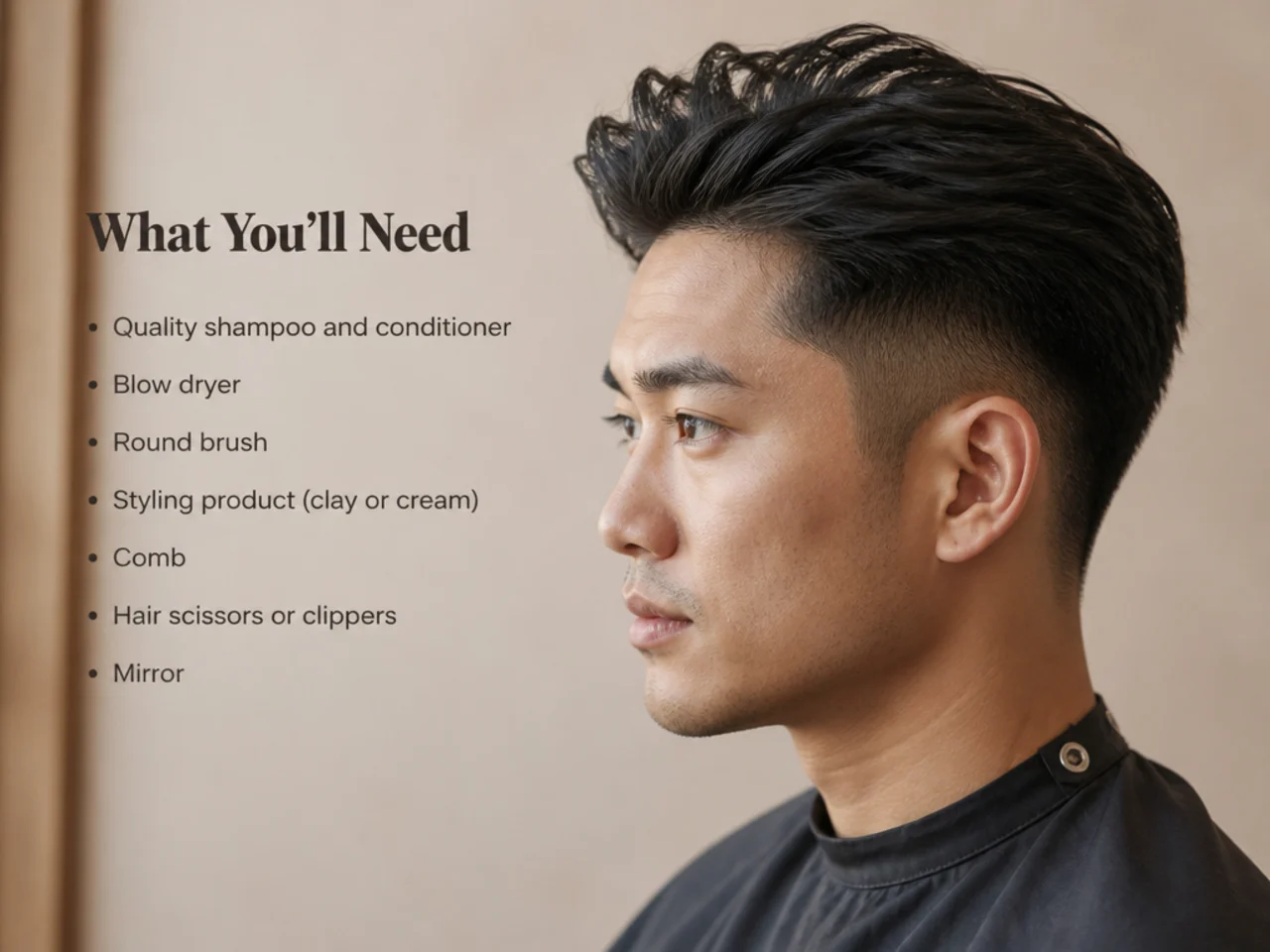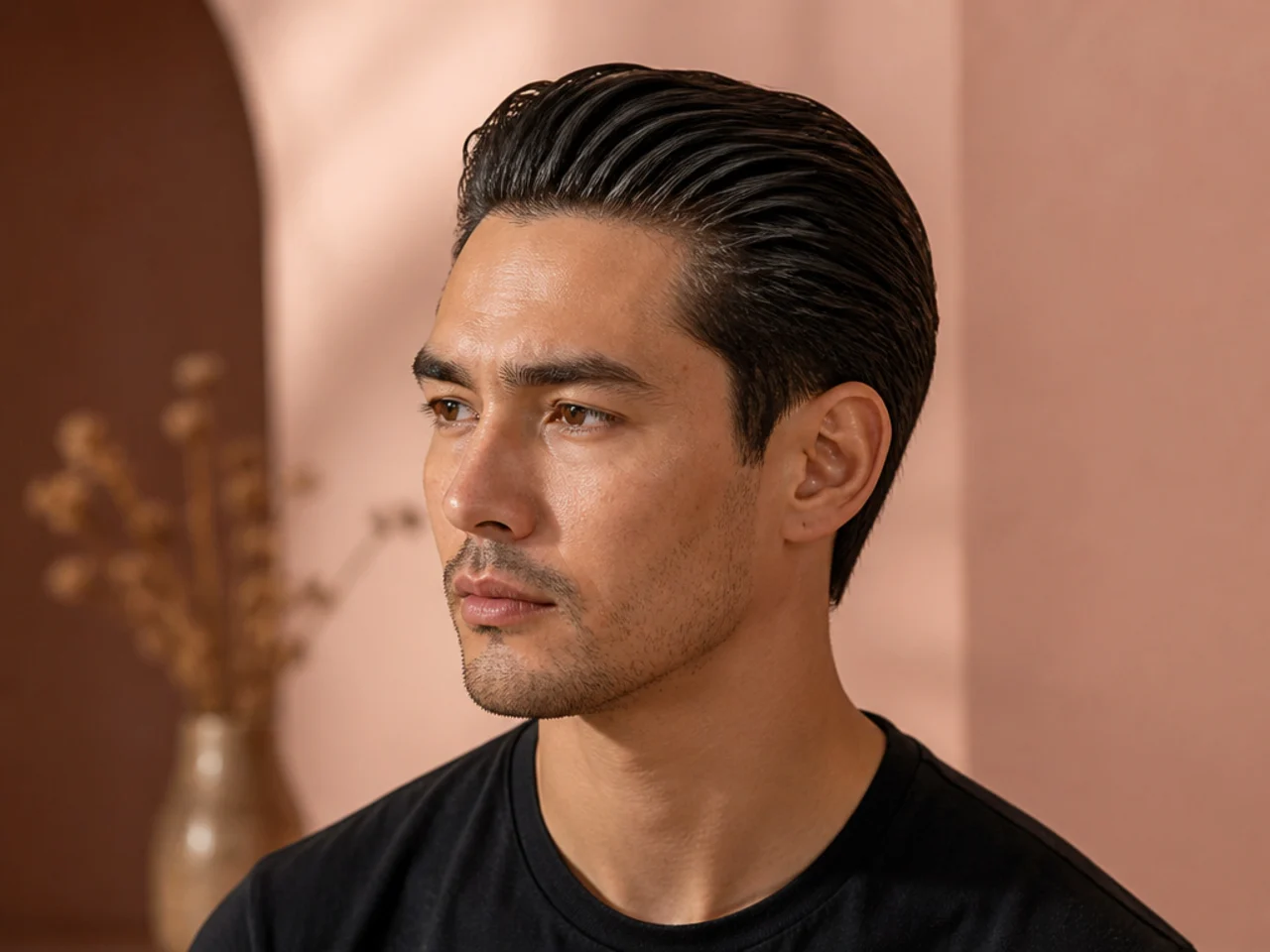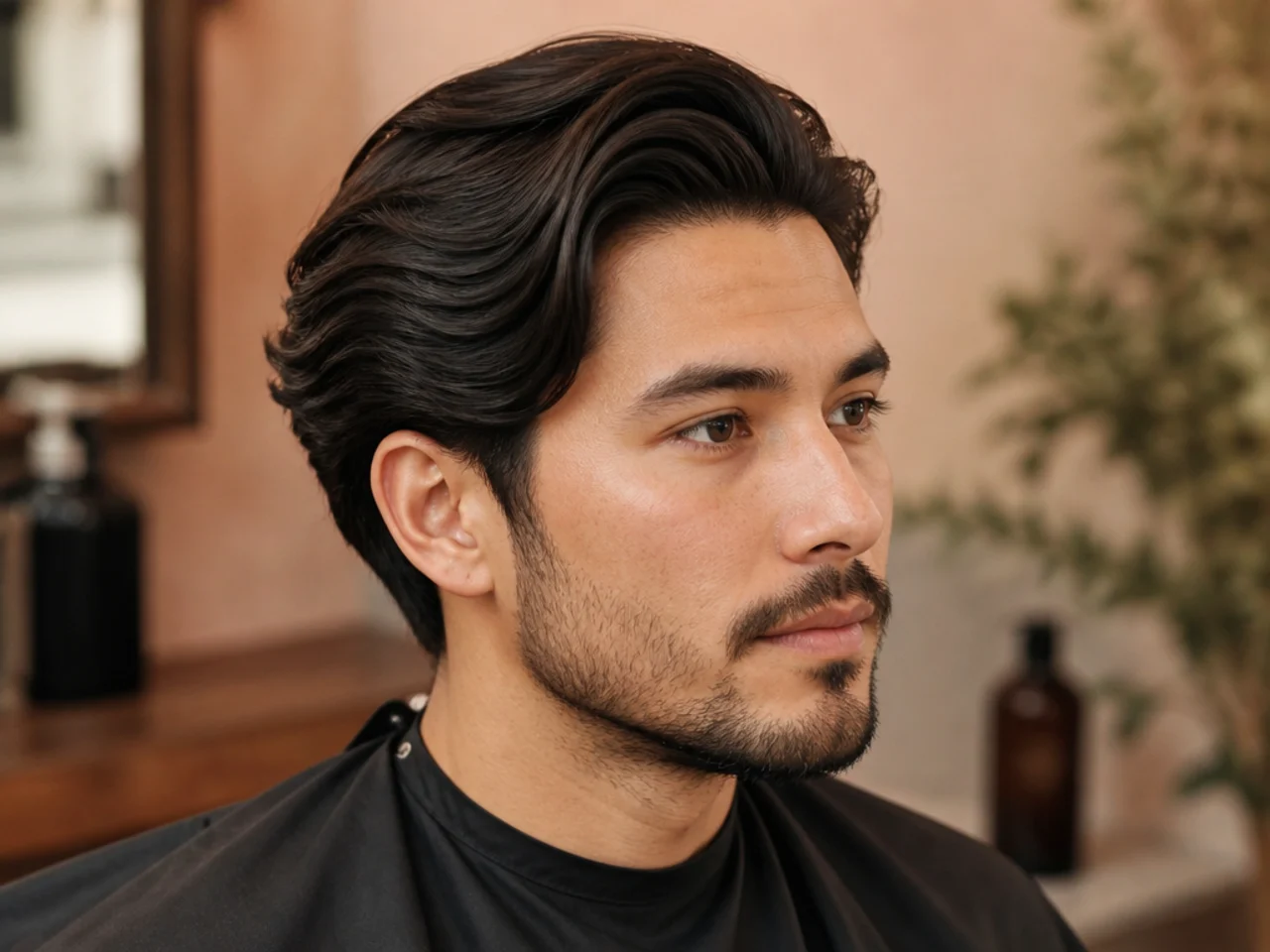
20 Long Side Part Hairstyles for Men
Twenty long side part hairstyles for men — slick back, old money, flow, curtain, and 16 more long-top variations with clipper numbers and how to ask.
In this article · 26
- What Is a Long Side Part?
- Who a Long Side Part Suits Best
- The 20 Long Side Part Variations
- 1\. Classic Long Side Part
- 2\. Long Slick Back Side Part
- 3\. Old Money Long Side Part
- 4\. Long Side Part with Low Taper
- 5\. Long Side Part with Low Fade
- 6\. Long Side Part with Mid Fade
- 7\. Long Side Part with High Skin Fade
- 8\. Long Side Part Undercut
- 9\. Long Hard Part
- 10\. Long Flow Side Part
- 11\. Long Curtain Side Part
- 12\. Long Textured Side Part
- 13\. Long Wavy Side Part
- 14\. Long Curly Side Part
- 15\. Long Side Part with Beard Blend
- 16\. Long Layered Side Part
- 17\. Long Executive Side Part
- 18\. Long Korean Side Part
- 19\. Long Comb-Over Side Part
- 20\. Long Side Part with Half-Up Bun
- How to Ask Your Barber
- Styling & Maintenance
- FAQ
A long side part is the men's cut that lets the top length do the talking. Sweep three or more inches from a defined parting and the whole silhouette reads confident, adult, and quietly expensive. This guide walks through twenty long side part hairstyles for men — slick back, old money, flow, curtain, and every fade variation — with clipper numbers and the exact sentence to hand your barber.
What Is a Long Side Part?
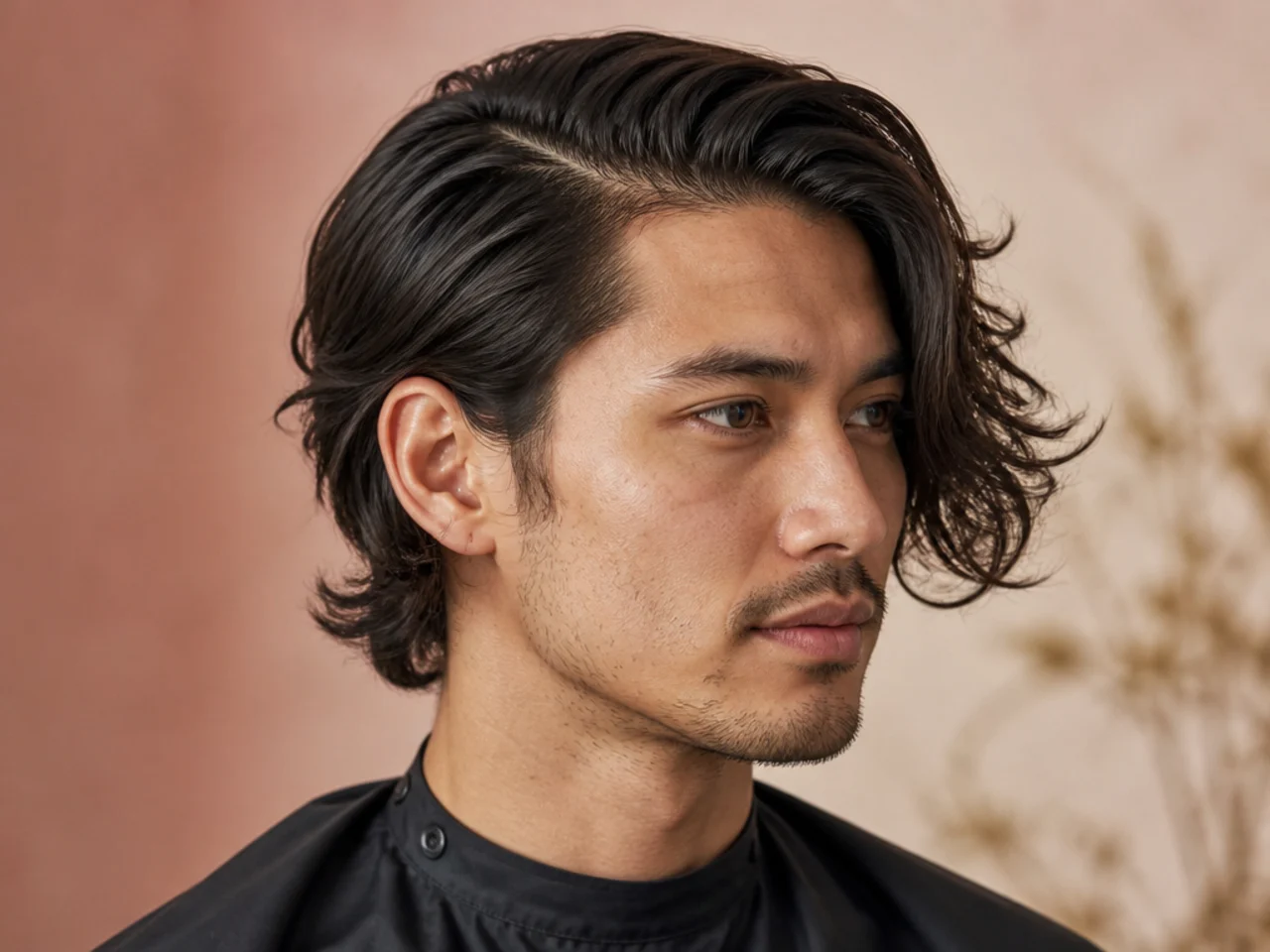
A long side part is any men's cut where the top runs three inches or longer, splits along a defined line, and sweeps across the head while the other side stays shorter. The parting can be a natural cowlick, a comb-drawn line, or a razor-shaved hard part. The sides can be scissor-tapered, faded, or clippered short — but the top is what carries the shape.
The three-inch rule matters because it changes what the hair does. Under three inches the top sits close to the scalp and reads short or medium — a different silhouette covered in our companion short side part hairstyles for men guide, or the whole family in our pillar side part hairstyles for men roundup. Past three inches the top drapes, sweeps, and holds a real diagonal line across the head. That drape is what makes the long version read expensive rather than corporate.
The three decisions that name your long side part are simple. How the top finishes (slicked, flowing, layered, or textured), how the sides sit (scissor-tapered, faded, or undercut), and how the parting is set (natural, combed, or hard-shaved). Combine those three answers and you have named one of the variations below.
Who a Long Side Part Suits Best
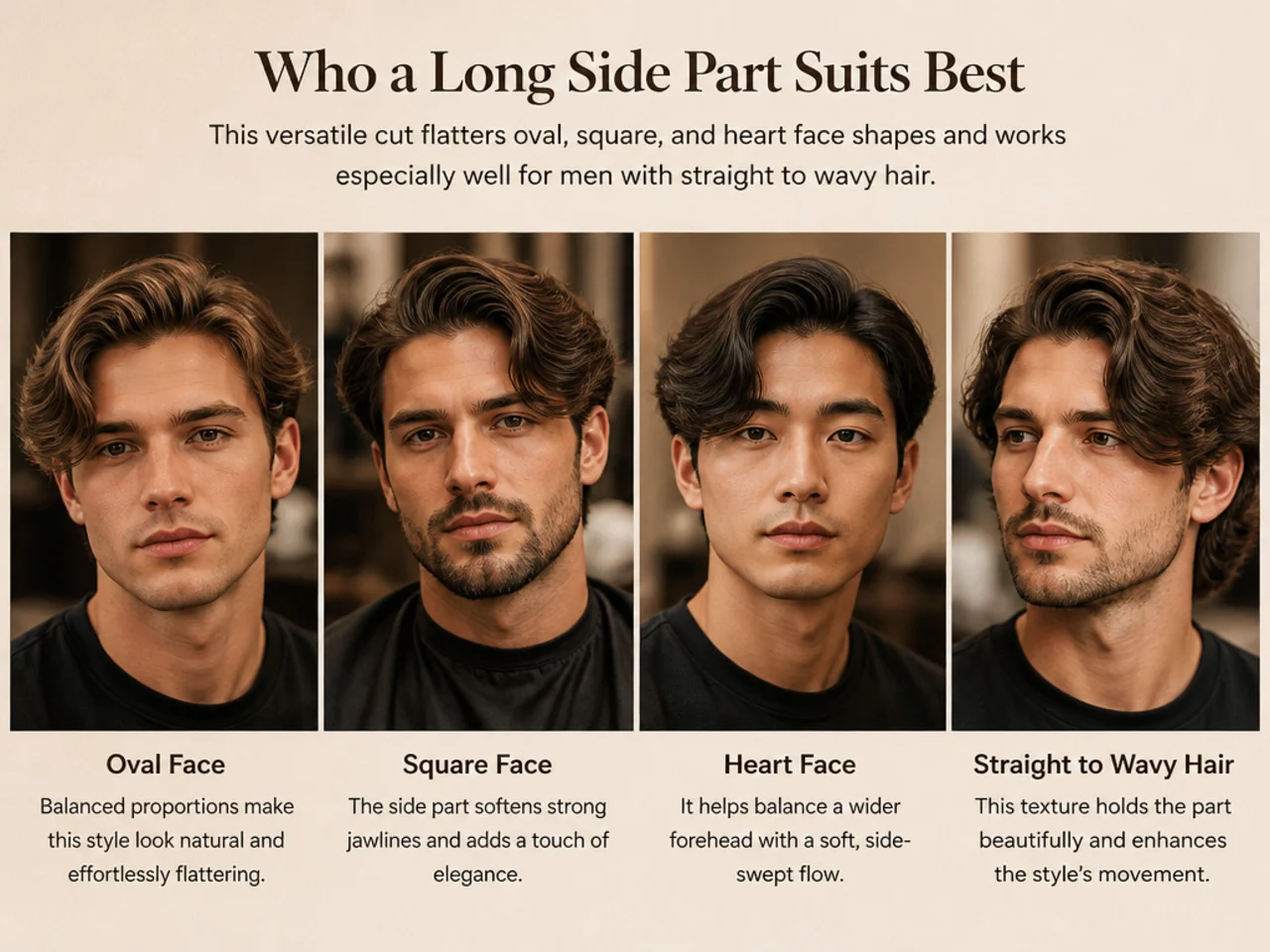
Long side parts flatter the widest face-shape range in the whole side part family because the sweep adds movement without adding height. Oval faces carry every version. Square and rectangular faces read softened — the diagonal drape breaks the strong jaw line without hiding it. Round faces benefit from a longer top with visible height near the parting, which draws the eye upward and lengthens the face. Long or oblong faces should skip the tallest slick back builds and stick to flow, curtain, or old money versions that keep the top length falling forward rather than pushed up.
Hair type sets the next filter. Straight to slightly wavy hair takes every long variation cleanly and holds a defined parting with the least product. Wavy hair (Type 2A to 2C) shines in flow, textured, and old money builds where the natural bend adds shape. Curly hair (3A to 3B) works with a scissor-cut long side part on damp hair — the pattern sets the drape. Fine or thinning hair should keep the top under four inches; longer than that on fine density and the sweep collapses by lunchtime.
Workplace matters too. Executive, boardroom, and business-formal environments reward the classic long, old money, executive, and slick back versions below. Creative and hospitality-facing offices carry flow, textured, curtain, and Korean styles comfortably. Anywhere with a helmet, hard hat, or hospitality cap forces you shorter — long side parts and headgear fight each other all day.
The 20 Long Side Part Variations
Sorted loosely from most classic to most current. Each entry names the top length, the sides finish, who it suits, and the exact sentence to hand your barber.
1. Classic Long Side Part
The blueprint. Top runs three to four inches, scissor-cut across the crown, parted along your natural cowlick and combed to one side. Sides are scissor-blended from a No. 4 down to a No. 2 at the perimeter — no fade line, no clipper marks. It reads at home in a boardroom, a wedding, or a Sunday brunch. Best on straight-to-wavy hair, and every face shape. Ask for: "Classic long side part, three inches on top, scissor-blend the sides down to No. 2, natural parting on my dominant side." Style with a pea of medium-hold cream pomade worked into damp hair, comb once from the parting outward, air dry. This is the version to book if you are new to long side parts — timeless, quiet, no maintenance drama.
2. Long Slick Back Side Part
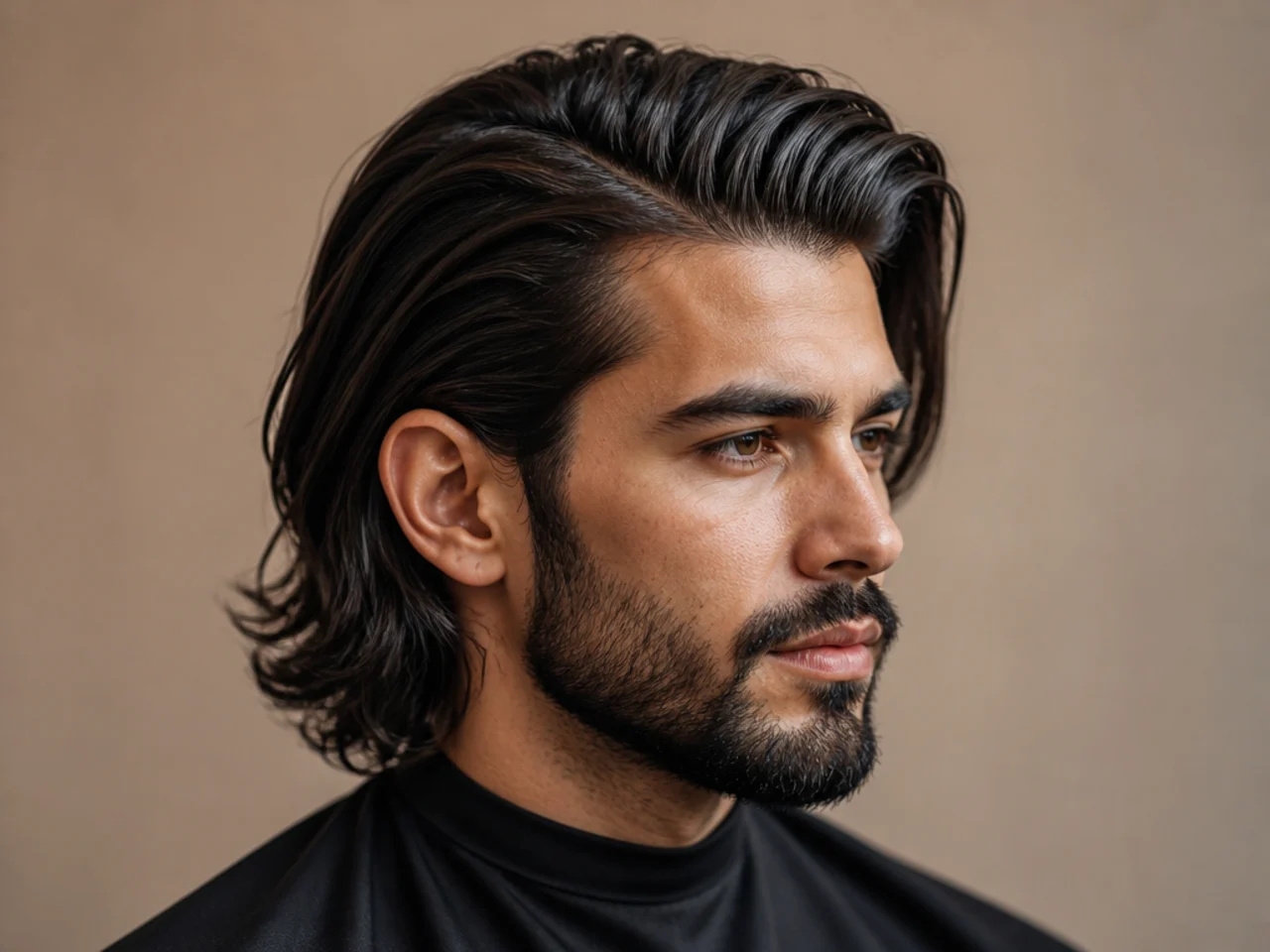
The slick back with a defined parting engineered into the sweep. Top runs four to five inches, combed straight back and slightly diagonal from a low side parting, sides scissor-tapered or blended with a low fade. The parting starts the sweep — the rest of the hair follows. Suits oval and square faces, business-formal wardrobes, and straight to lightly wavy hair. Ask for: "Long slick back with a defined side parting on the left, four to five inches on top, scissor-taper the sides." Style with medium-hold cream pomade combed straight back from the parting through damp hair, blow-dry with the airflow following the sweep, finish with a light hairspray for hold.
3. Old Money Long Side Part
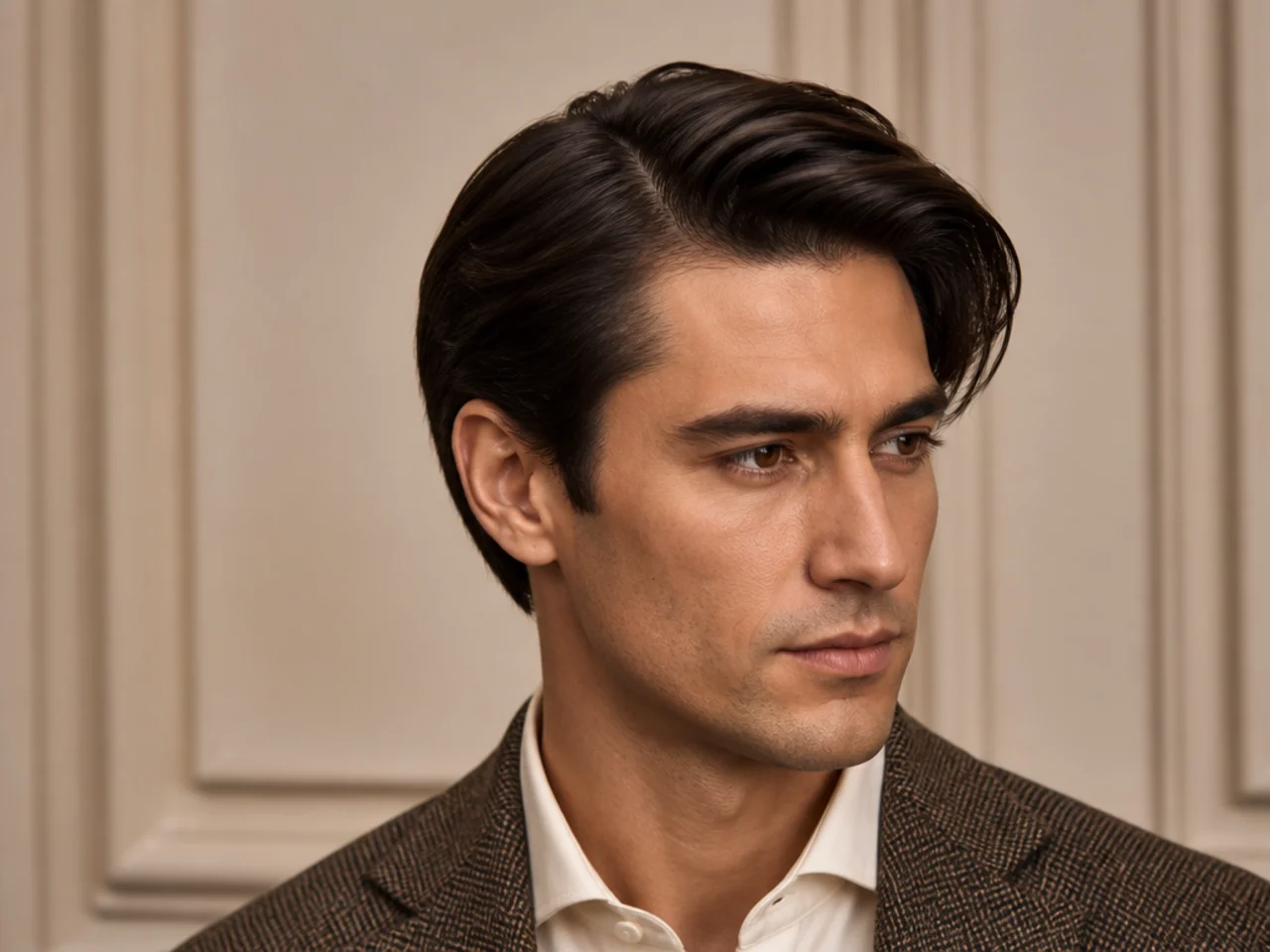
Quiet money's default. The old money long side part runs three to four inches on top with a defined natural parting, scissor-blended sides that stop well short of any fade line, and a matte satin finish that never shows product. Nothing sculpted, nothing shiny, nothing loud. Suits oval, square, and rectangular faces, professional workplaces, and straight to lightly wavy hair. Ask for: "Old money side part, three and a half inches on top, scissor-blend the sides with no fade line, natural parting on my dominant side." Style with a pea of matte cream worked through damp hair, comb once, air dry or use a low-heat blow-dry pointed with the parting.
4. Long Side Part with Low Taper
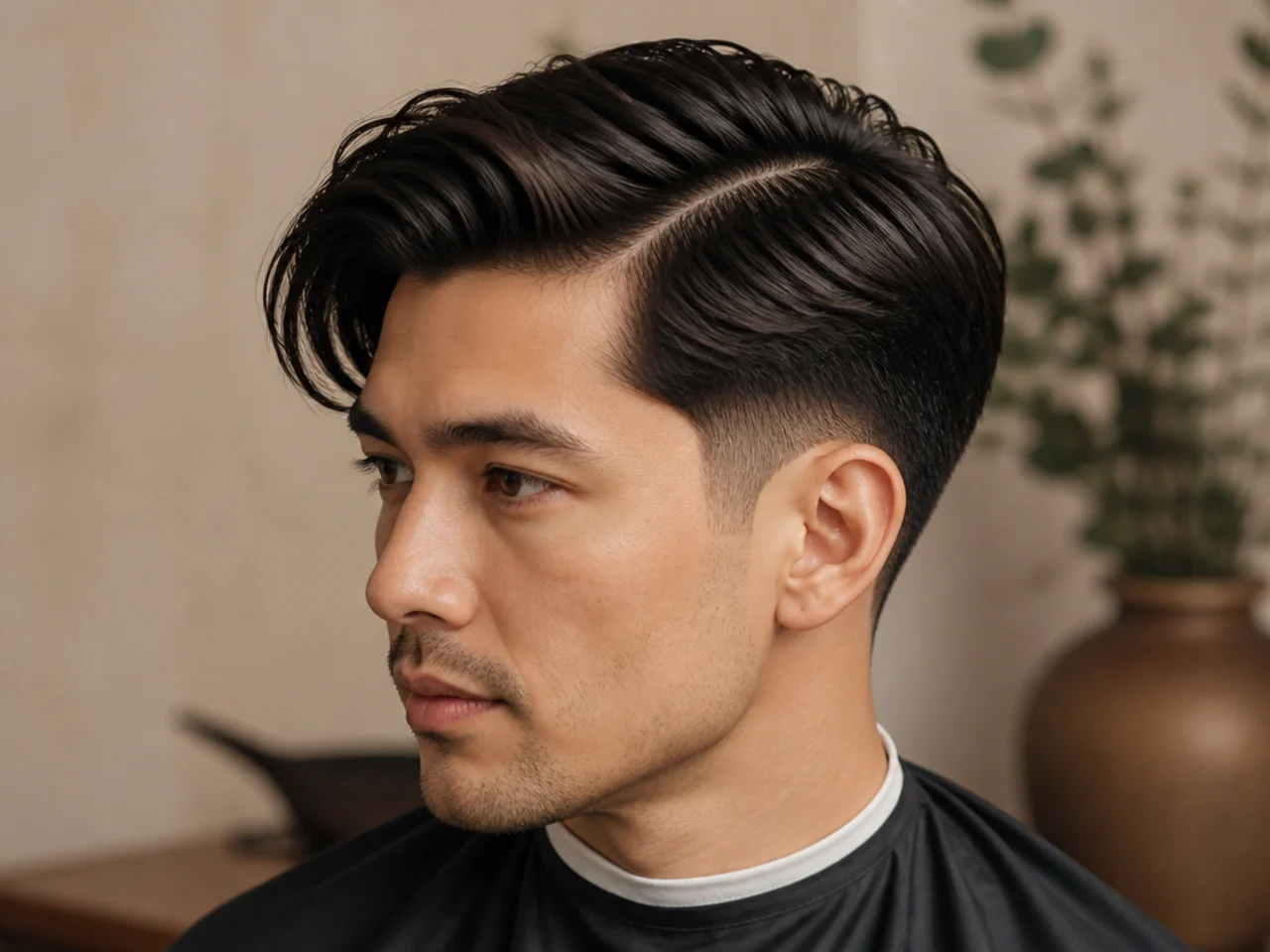
A low taper fade blends the sides gradually from a No. 3 down to a No. 1 at the neckline — softer than a skin fade, more modern than a full scissor taper. Pair it with a defined side part and three to four inches on top and you get the safe modern default for long side parts. Suits every face shape and most workplaces, from open-plan offices to consultant firms. Best on straight to wavy hair. Ask for: "Low taper fade with a defined side part, three inches on top." Style with medium-hold cream pomade combed from the parting outward, air dry or blow-dry lightly. Rebook every five to six weeks — the taper holds shape longer than a hard fade line does.
5. Long Side Part with Low Fade
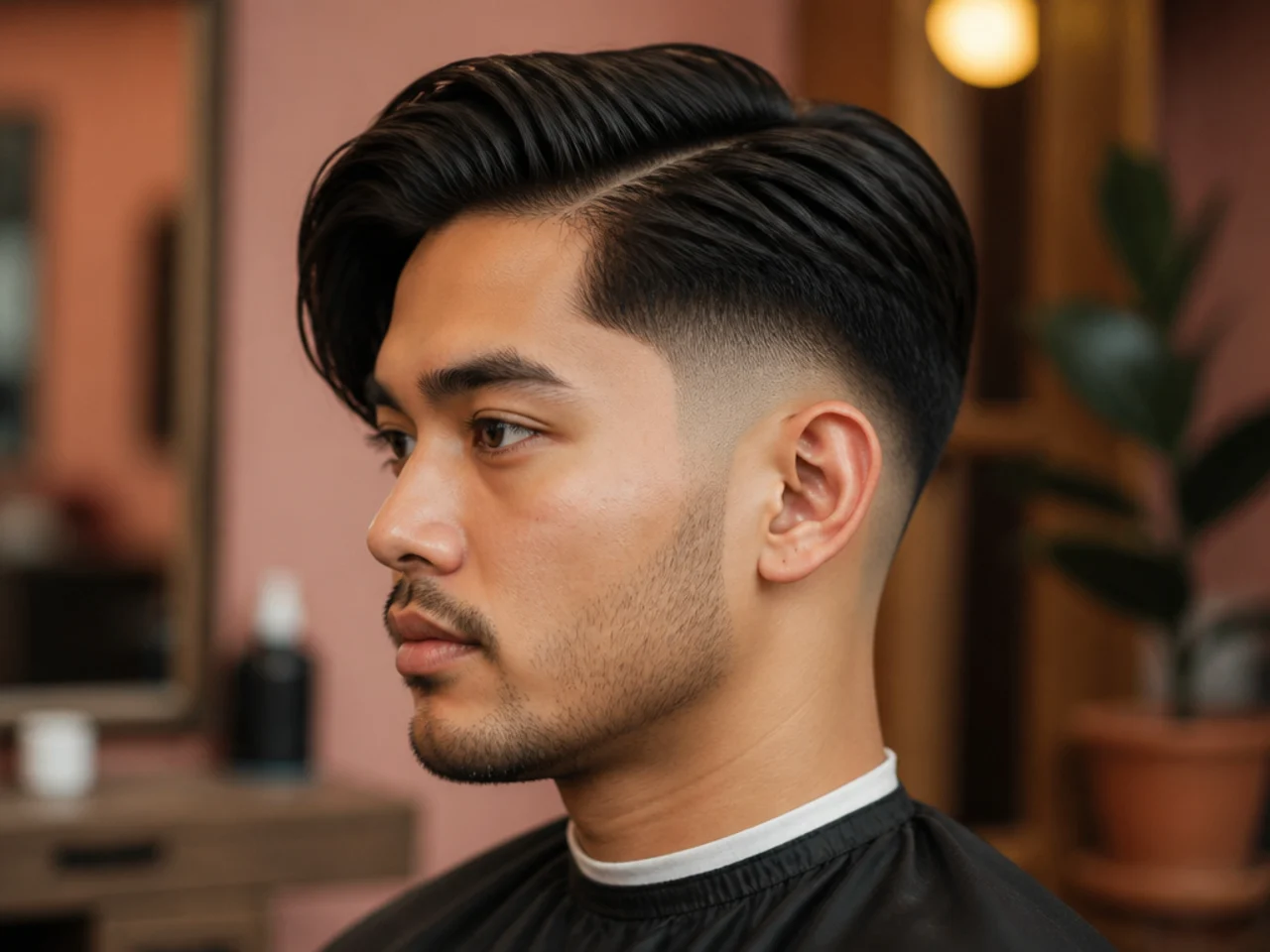
The low fade drops the fade line to skin just above the ear, keeping the top-to-side contrast subtle while still marking a visible edge. Pair with three to four inches on top and a defined parting for the business-friendly version of the modern fade family. Suits softer face shapes and any hair type from fine to thick. Ask for: "Low fade with a defined side part, three inches on top, fade line starting an inch above the ear." Style with medium-hold pomade worked from the crown forward, combed once from the parting outward, blow-dried following the sweep. Rebook every four to five weeks.
6. Long Side Part with Mid Fade
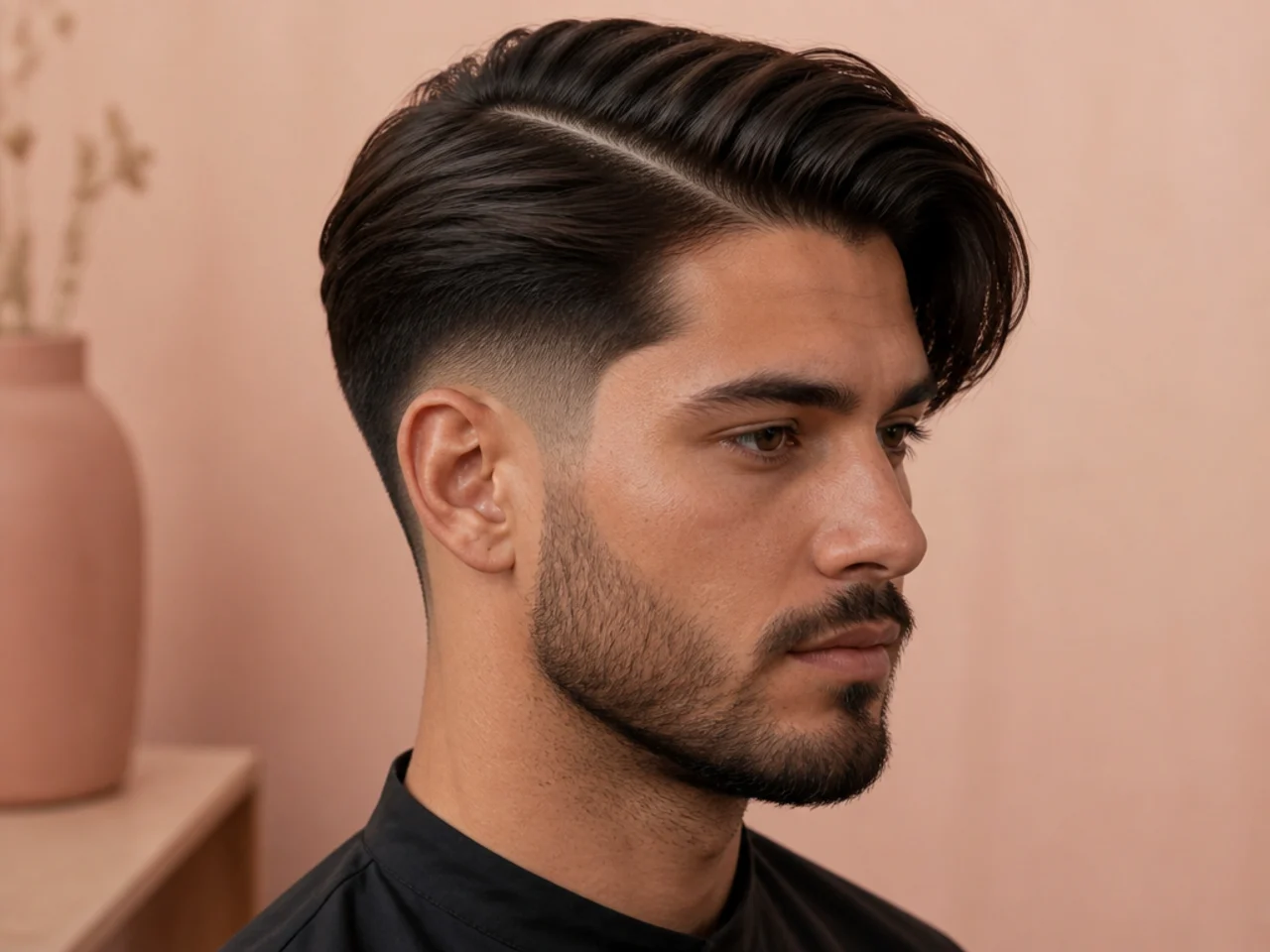
The mid fade starts at the temple, halfway between the ear and the crown, and blends to skin at the bottom. Combined with a long defined side part on top, it is the sharpest of the modern long side part builds — the mid fade elongates the head while the four-inch top carries the movement. Suits every face shape; especially good on round faces because the mid fade adds height. All hair types work. Ask for: "Mid fade with a defined side part, four inches on top, fade blending to skin at the bottom." Style with a light-hold cream on damp hair, comb from the parting, set with a short burst of low-heat air. Bring a photo — "mid" varies shop to shop.
7. Long Side Part with High Skin Fade
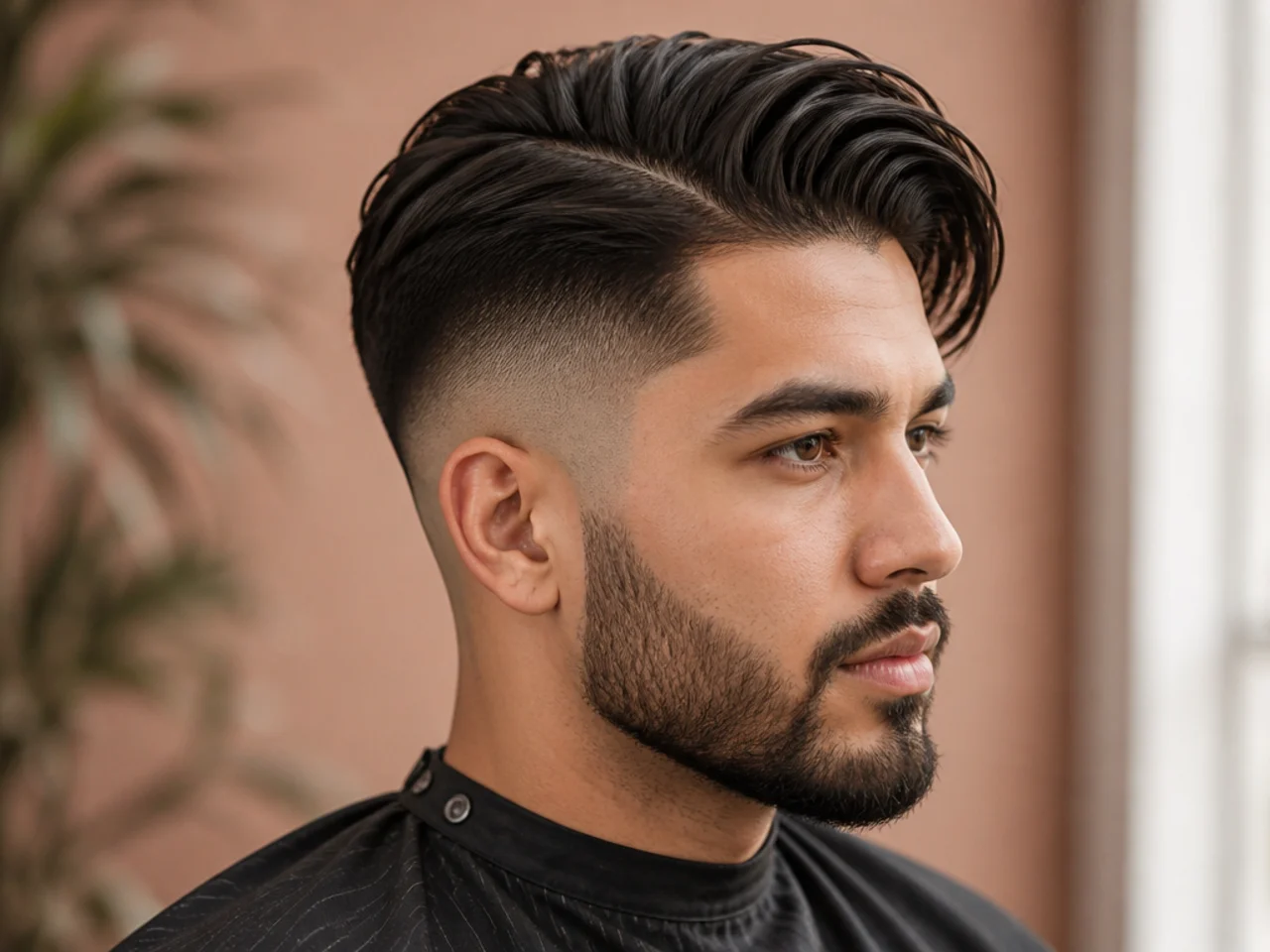
The high fade climbs above the temple, sometimes close to the crown, taking the sides all the way to bare skin. Combined with four to five inches on top and a defined parting, it is the biggest contrast play in the long side part family — the disconnect between long top and bare skin is the whole point. Suits square and oval faces, strong bone structure, and any hair type. Darker hair shows the fade line sharpest against skin. Ask for: "High skin fade with a defined side part, four inches on top, fade line starting at the top of the temple." Style with matte cream pushed away from the parting, then a single comb pass. Rebook every three to four weeks — the fade line drifts fast.
8. Long Side Part Undercut
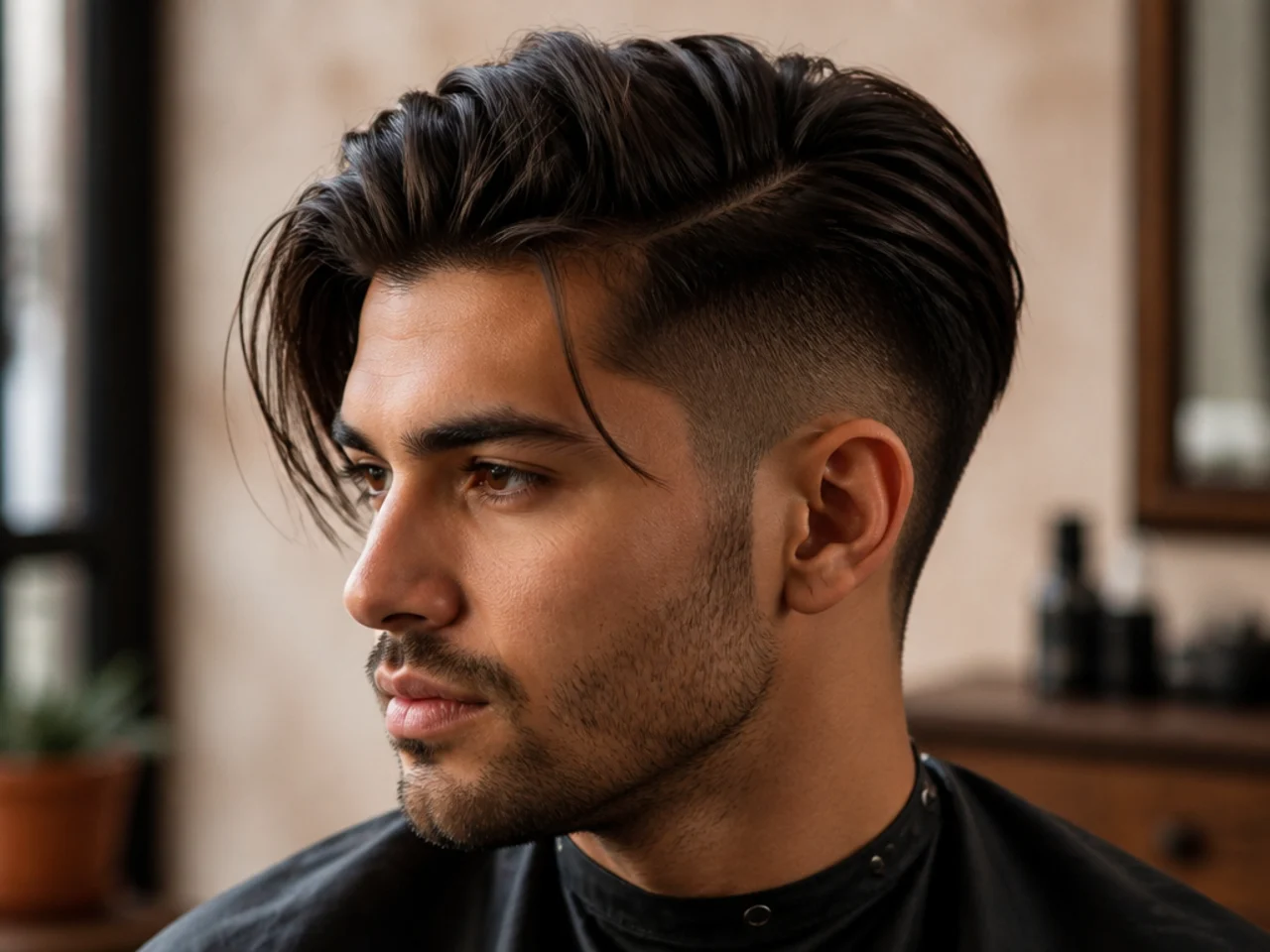
A disconnected long side part swaps the fade for an undercut — sides clippered to a single short guard with no blend, creating a hard visual line where the two lengths meet. The long top sits on top of the disconnect and can be swept, slicked, or worn loose. Suits oval, square, and triangular faces; thick straight-to-wavy hair carries the disconnect cleanest. Skip it if your hair is very fine — the hard line exaggerates thinness at the crown. Ask for: "Long side part undercut, No. 1 on the sides with no blend, four to five inches on top, defined side parting." Style with a medium-hold pomade combed from the parting. Rebook every four weeks.
9. Long Hard Part
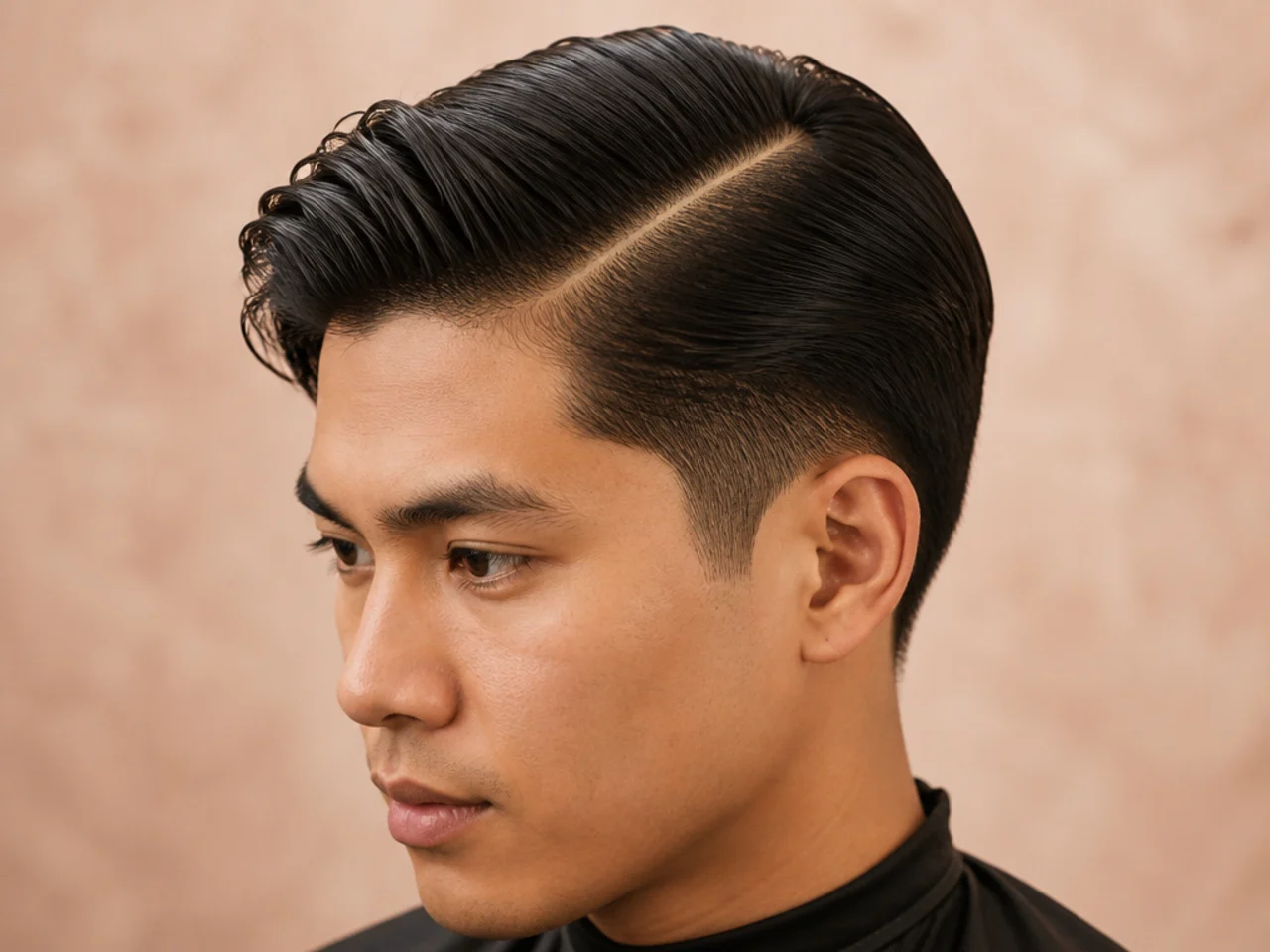
The hard part is a straight line shaved into the scalp along the parting — a razor-drawn quarter-inch groove that separates the top from the sides. Pair with a long three-to-four inch top and a low or mid fade for a bolder, more sculpted long side part read. Suits every face shape and every hair type, though darker hair shows the line cleanest against the scalp. Ask for: "Low fade with a hard part on my dominant side, razor-drawn quarter inch, three inches on top." Style with medium-hold pomade, comb the top away from the parting so the shaved line stays visible from three feet away. Rebook every two to three weeks — a fuzzy hard part ruins the whole cut.
10. Long Flow Side Part
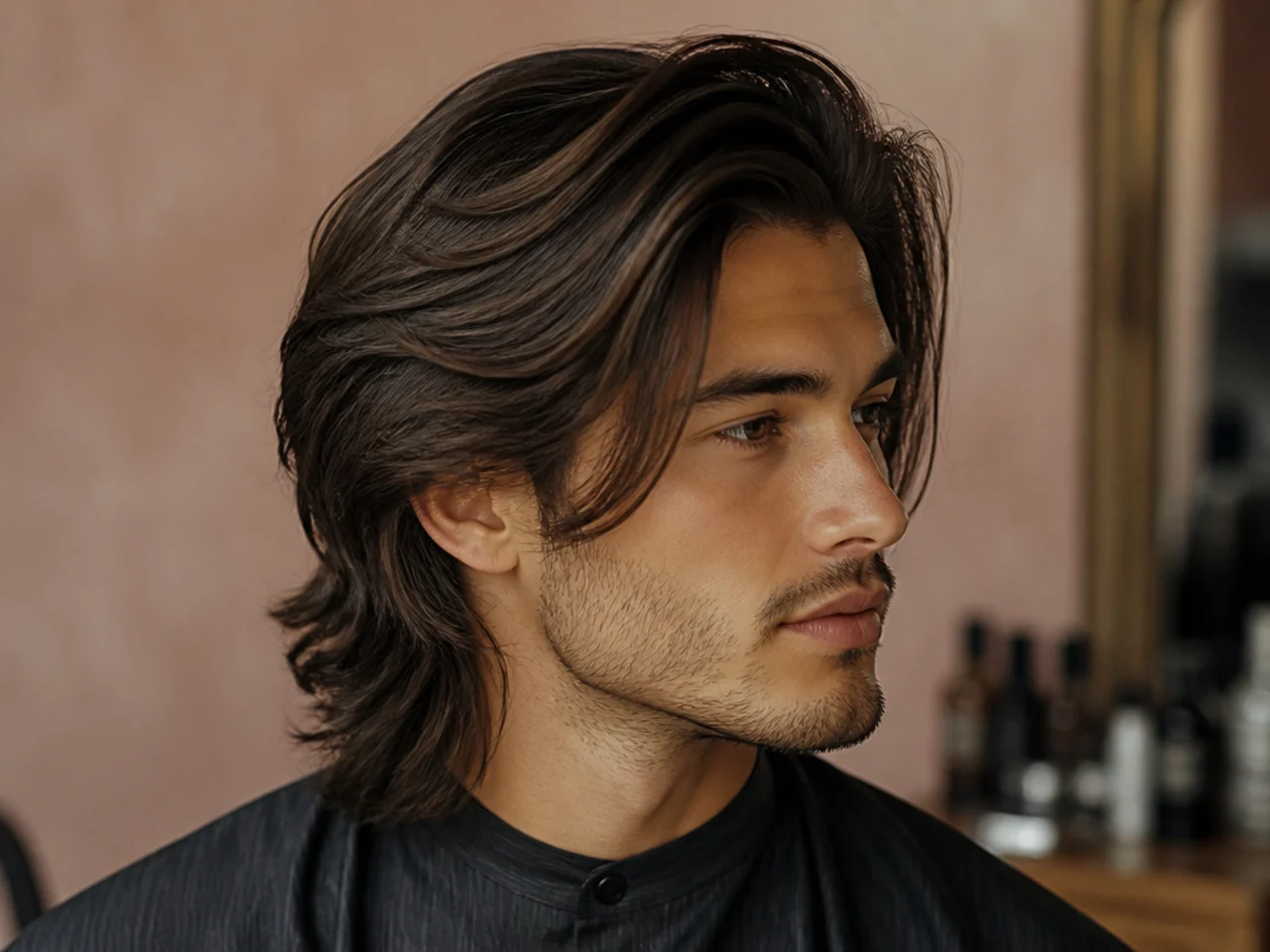
The flow with a defined parting engineered in. Top runs five to six inches, scissor-cut into long soft layers with a defined side parting the hair falls away from. Sides are scissor-tapered — no fade, no clipper marks, no undercut. The finished shape looks lived-in rather than done. Suits oval, square, and heart faces, all workplaces outside strict business-formal, and wavy or lightly curly hair. Ask for: "Long flow side part, five inches on top with soft layers, scissor-taper the sides, defined side parting on the left." Style with sea-salt spray on damp hair, scrunched from the ends, air-dried or diffused on low. No comb after the initial parting — the flow needs its natural texture.
11. Long Curtain Side Part
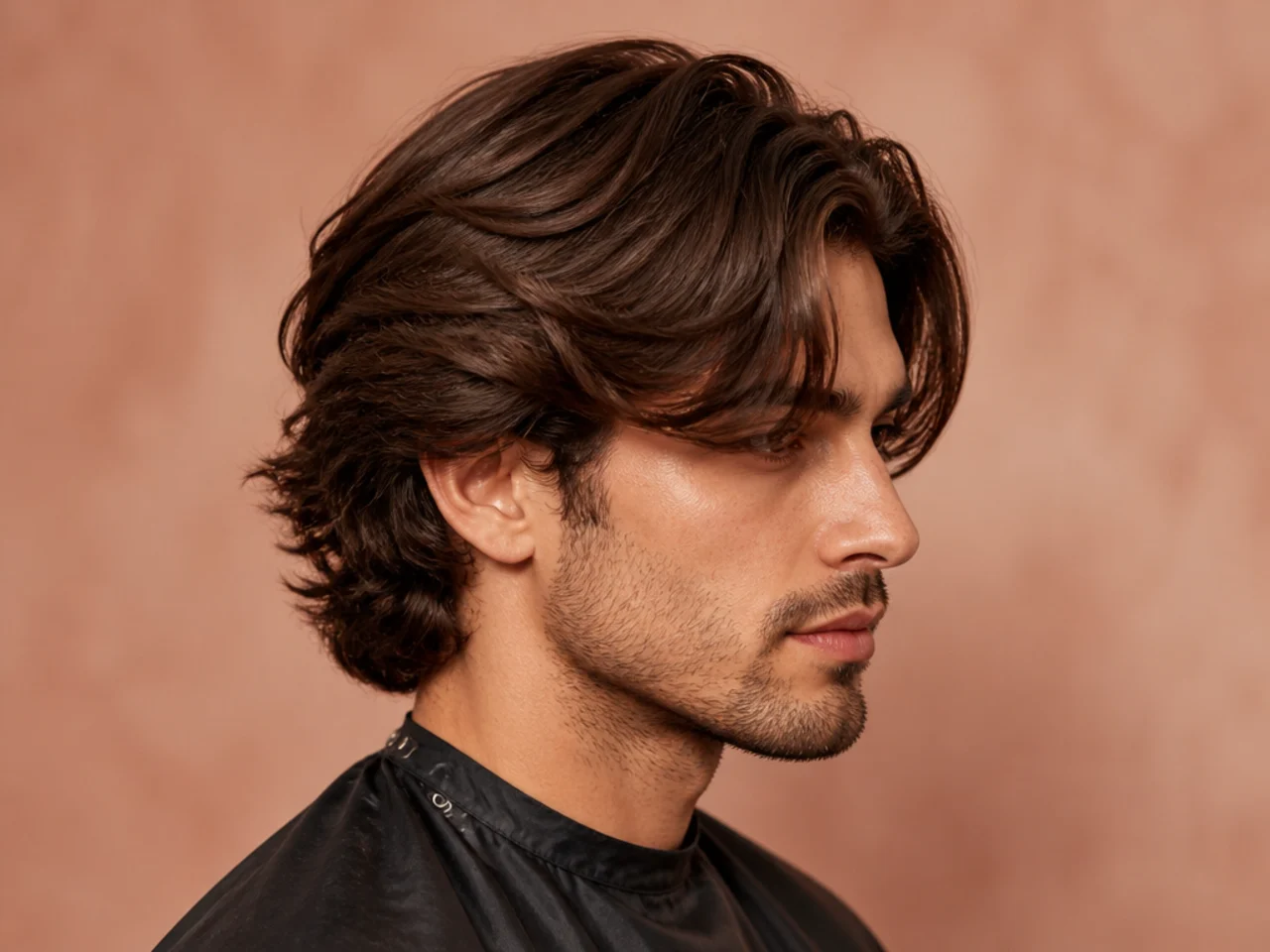
Curtain bangs on a side part. Top runs four to five inches with the front pieces cut long enough to sweep sideways into a soft asymmetric curtain from a low parting. Sides are scissor-tapered or finished with a low fade. Suits oval, square, and heart faces, and reads especially current on younger clients aged 18 to 30. Best on straight to wavy hair. Ask for: "Long side part with curtain bangs swept sideways from a low parting on the left, four inches on top, scissor-taper the sides." Style with a light-hold cream on damp hair, blow-dry the front pieces with a round brush sweeping toward the parting, then let the back air dry.
12. Long Textured Side Part

Same skeleton as a classic long side part, but the top is point-cut through the ends for visible piecey texture rather than left smooth. The result is broken-up movement across a defined parting. Suits every face shape — the texture softens the geometry — and looks especially good on medium to thick hair with a hint of wave. Ask for: "Long side part with a low taper, three inches on top point-cut through the ends for texture, defined parting on the left." Style with sea-salt spray on damp hair, dried with fingers, then a pea of matte cream pushed through the ends. No comb through the top after drying — you will flatten the texture you just built.
13. Long Wavy Side Part
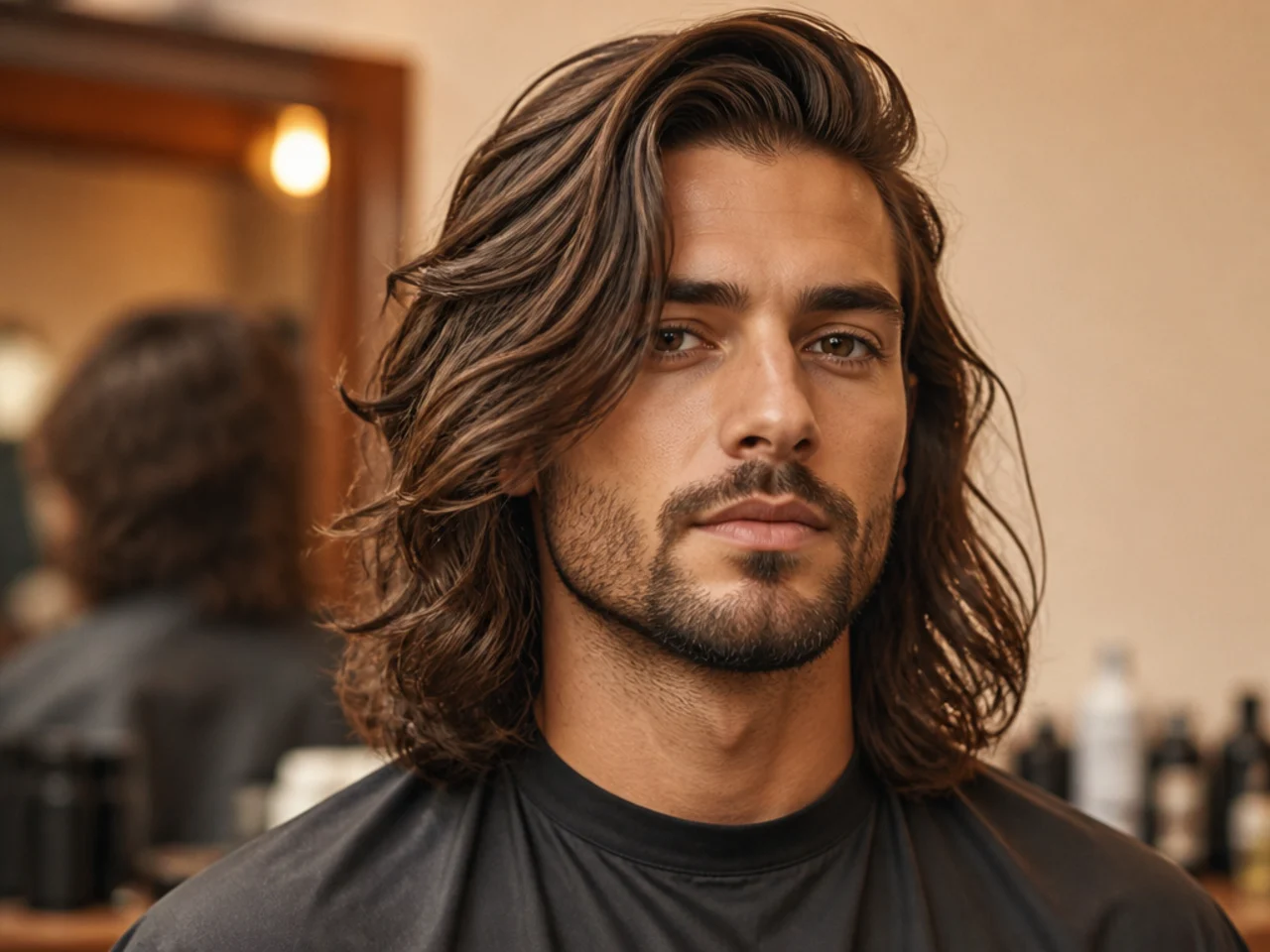
Built specifically for Type 2A to 2C waves. Top runs four to five inches, scissor-cut on damp hair so the natural wave pattern sets the drape rather than fighting it. A defined side parting sits on the dominant side and lets the waves cascade diagonally across the head. Sides are scissor-tapered or finished with a low fade. Suits oval, square, and long faces. Ask for: "Long wavy side part, four to five inches on top, cut on damp hair with my wave pattern, scissor-taper the sides, defined parting on the left." Style with a curl cream or sea-salt spray on soaking-wet hair, scrunched upward, air-dried or diffused. Never blow-dry straight — it kills the wave the cut was built around.
14. Long Curly Side Part
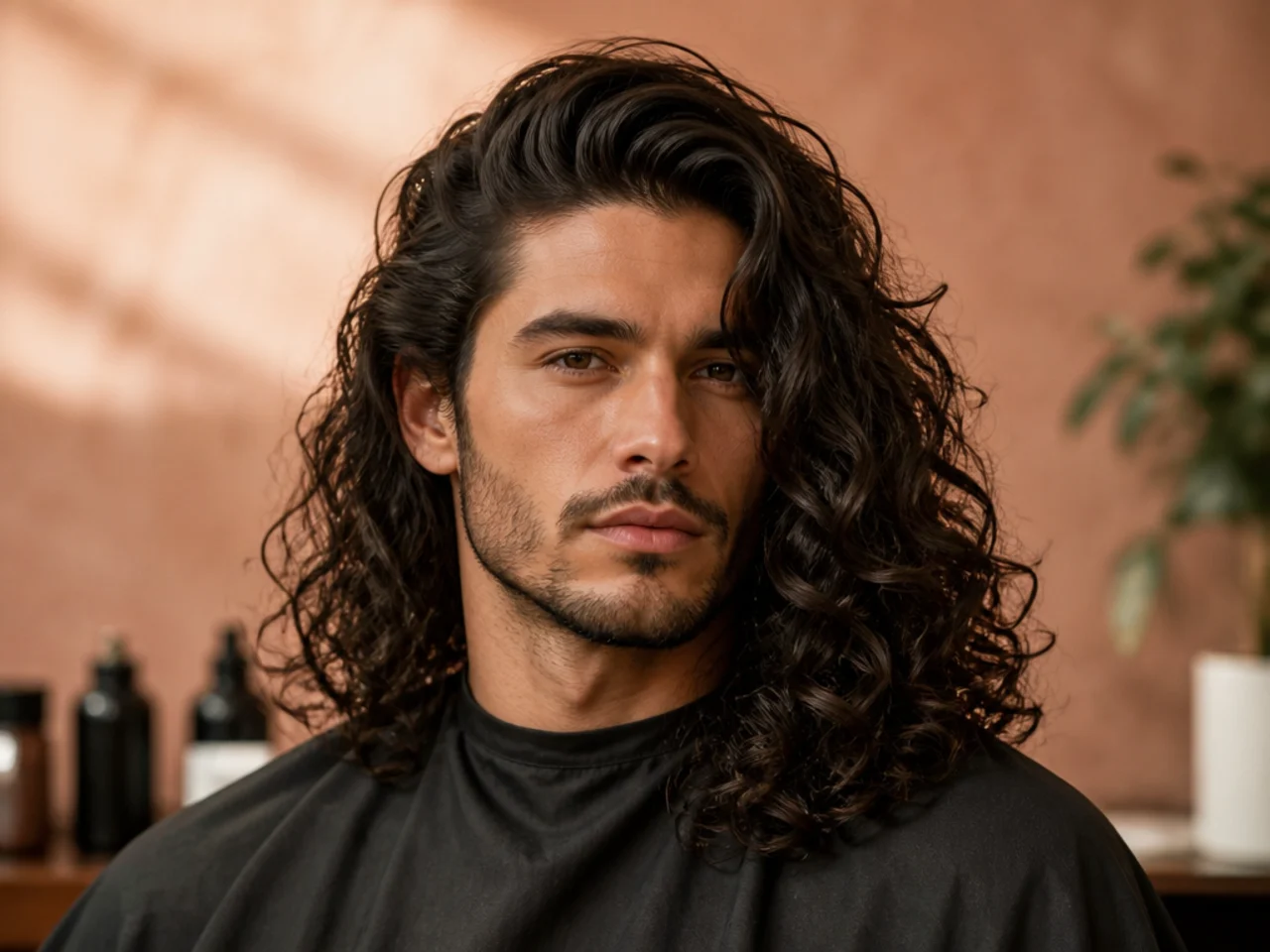
For 3A to 3B curls. Top runs four to six inches of natural curl, scissor-cut on damp hair so the pattern sets the outline, with a low fade or scissor taper at the sides. A defined side parting is combed once through wet hair and left to set as the curls dry. Suits any face shape and any curl pattern in the 3A to 3B range. Beyond 3C the curl is too dense to hold a visible side parting — a middle part or wash-and-wear cut works better. Ask for: "Long curly side part, five inches of curl on top, cut with scissors on damp hair, low fade sides, defined parting on the left." Never let a barber clipper the top of curly hair — it flattens the pattern instantly.
15. Long Side Part with Beard Blend
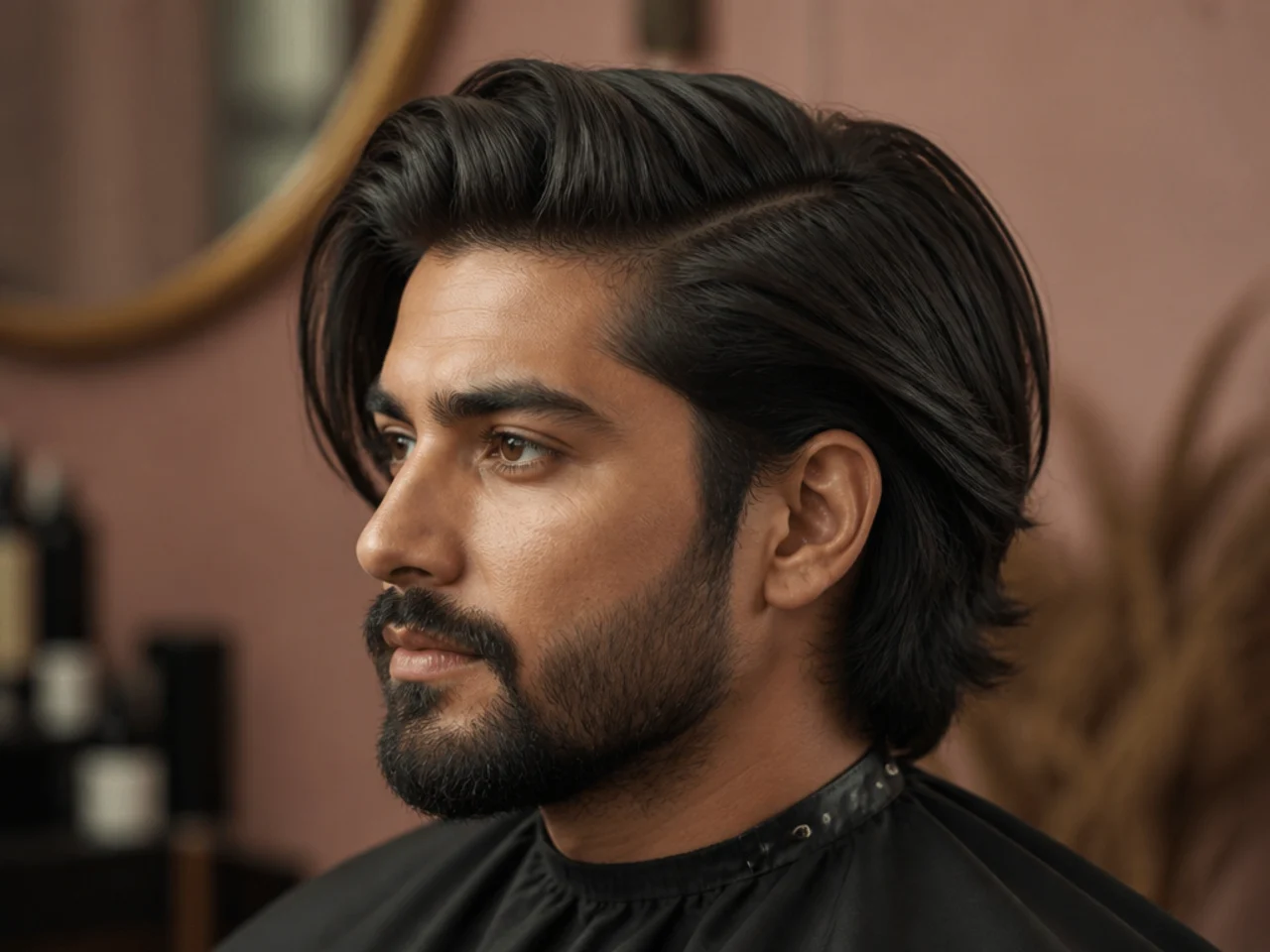
The full-frame statement. Long defined side part on top (three to four inches), skin or high fade on the sides, and a groomed beard that fades into the haircut where the sideburn meets the ear. Every element flows into the next. Suits square and oval faces best, and any hair type; the beard blend requires facial hair at least a half inch long for the transition to read. Ask for: "Skin fade with a defined side part, three inches on top, beard blended into the fade at the sideburn." Style top with medium-hold cream from the parting outward, comb the beard downward, then oil it lightly. Rebook every two to three weeks — a fuzzy blend line ruins the whole cut in a week.
16. Long Layered Side Part
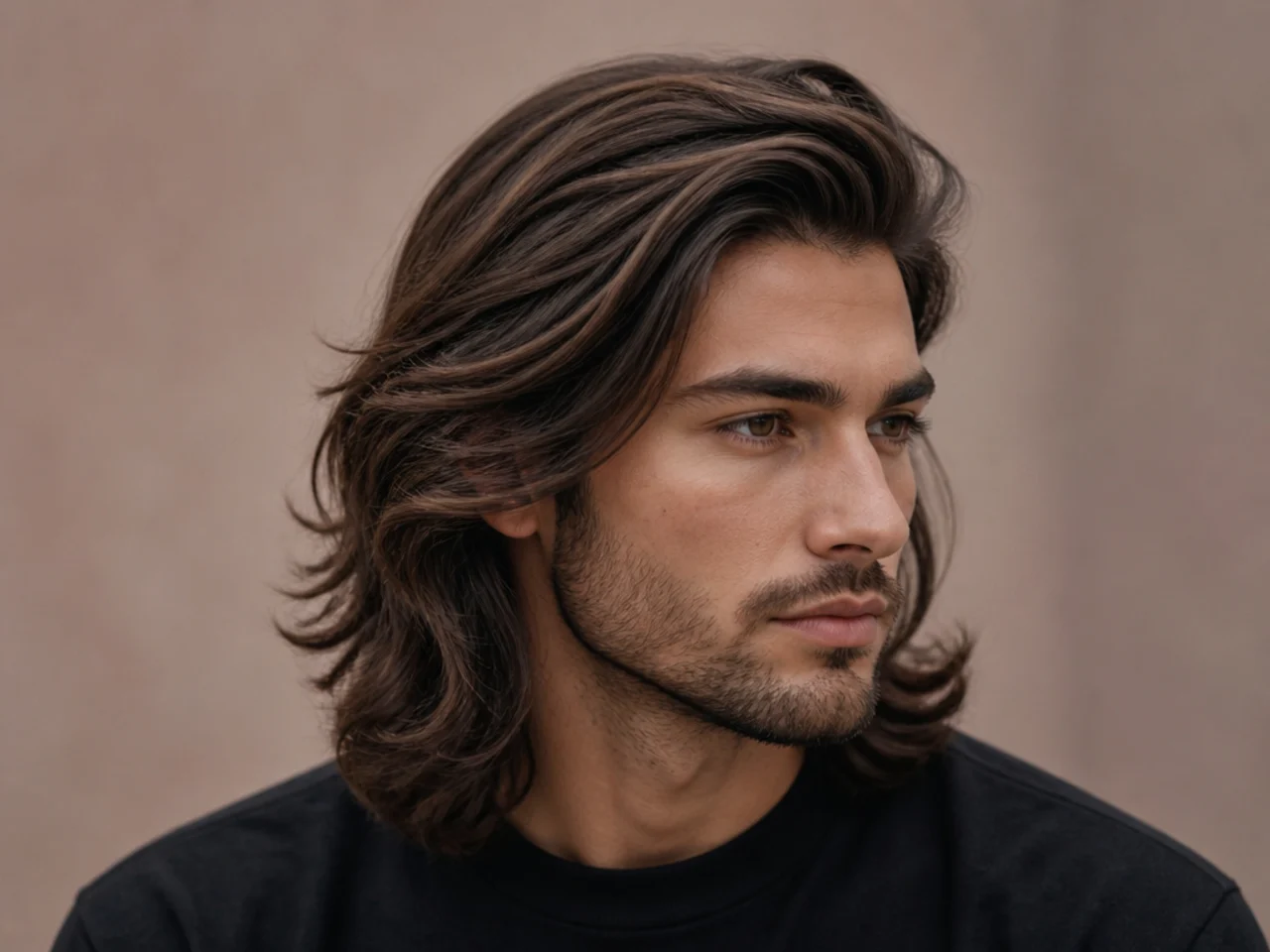
The soft version. Top runs four to five inches with internal layers cut through the length so the drape moves rather than sitting as a solid block. The parting sits on the dominant side and the layers cascade diagonally. Sides are scissor-blended, occasionally with a very soft low taper. Suits every face shape and reads good on thick hair that needs weight removed. Best on straight to wavy hair with medium to thick density. Ask for: "Long layered side part, five inches on top with soft internal layers, scissor-blend the sides, defined parting on the left." Style with a light-hold cream on damp hair, air dry or blow-dry with the layers falling naturally toward the parting.
17. Long Executive Side Part
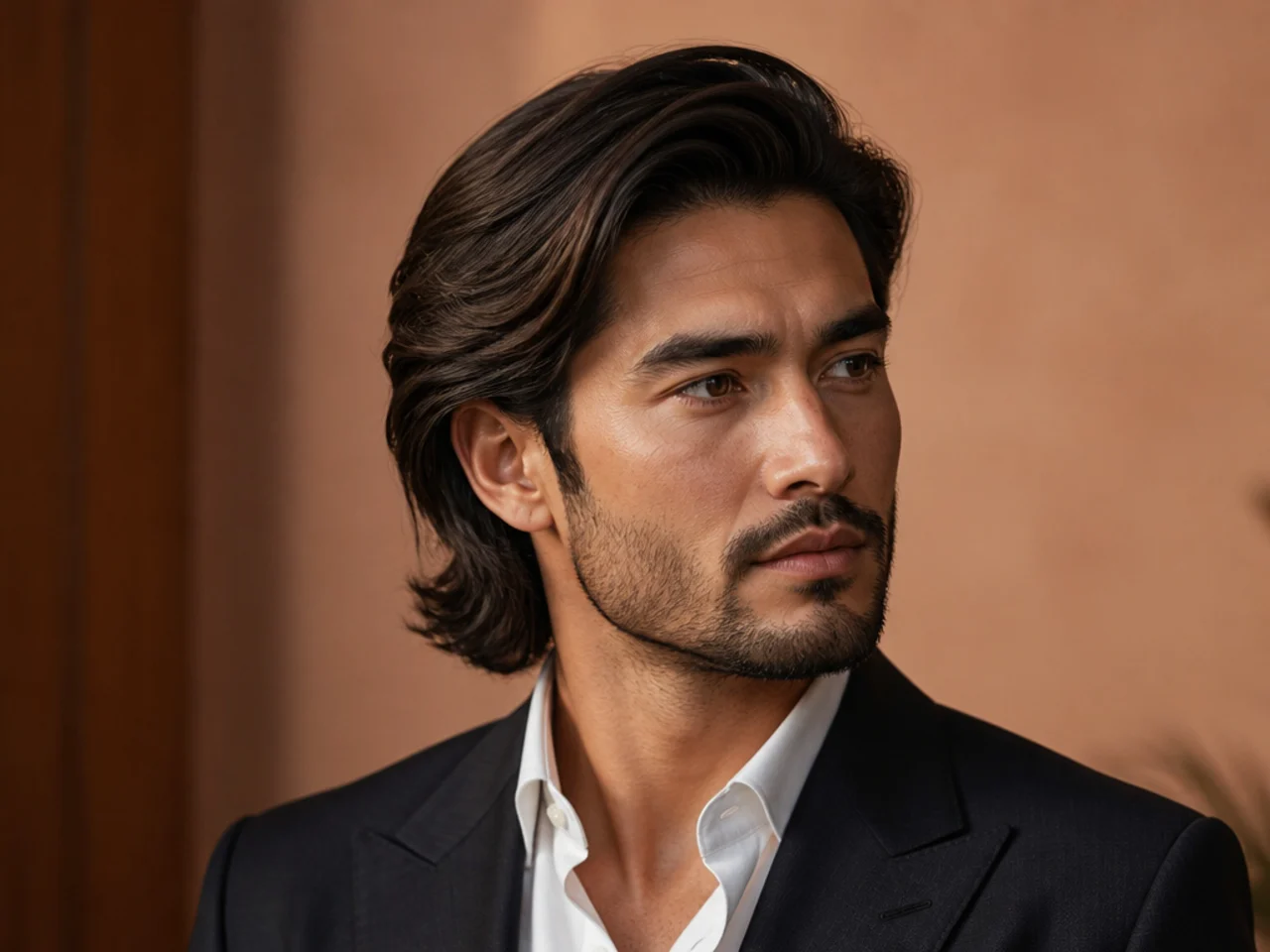
Boardroom-ready with real length. Top runs three to three and a half inches, combed clean along a defined side parting, sides scissor-tapered with no clipper line. Nothing textured, nothing loud, nothing that reads younger than 30. Suits every face shape because it is built to sit under a suit collar rather than make a statement. Best on straight to lightly wavy hair. Ask for: "Long executive side part, three inches on top combed clean, scissor-taper the sides, defined parting on the left." Style with medium-hold pomade combed clean from the parting, blow-dried on low heat with the airflow following the sweep. Sits at the top of any long-hair rotation for corporate roles.
18. Long Korean Side Part
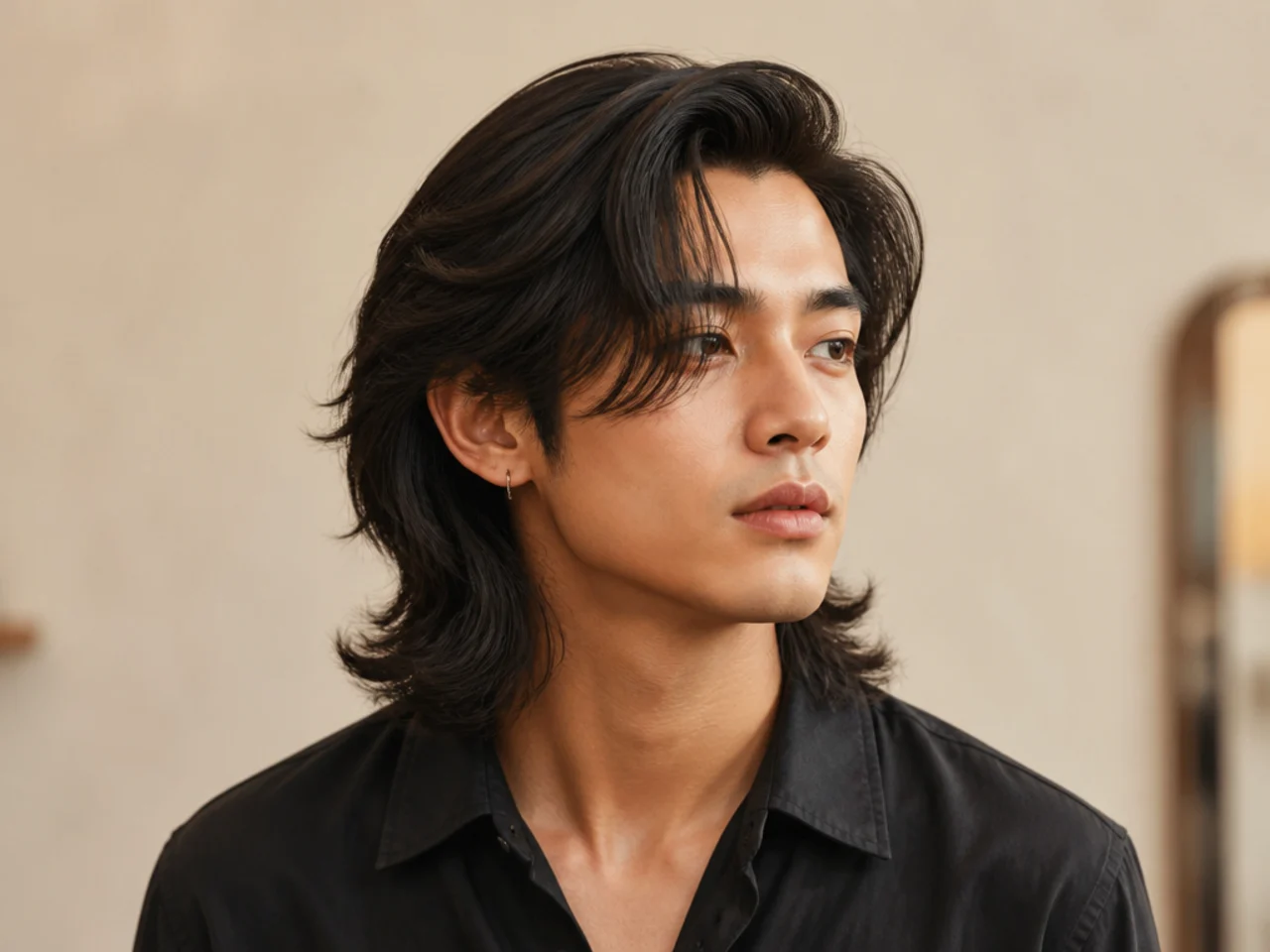
The K-drama long variation of the Korean side part family. Top runs four to five inches, softly layered, swept diagonally from a defined side parting with visible volume at the crown. Sides can be scissor-tapered or finished with a subtle low fade. The finished shape is soft, tall, and modern rather than sharp. Suits round, oval, and heart faces; especially flattering on Asian hair types where the natural weight benefits from the added crown lift. Ask for: "Long Korean side part, four inches on top with volume at the crown, scissor-taper the sides, soft defined parting on the left." Style with mousse at the roots on damp hair, blow-dried up and back with a round brush, finished with a light hairspray.
19. Long Comb-Over Side Part
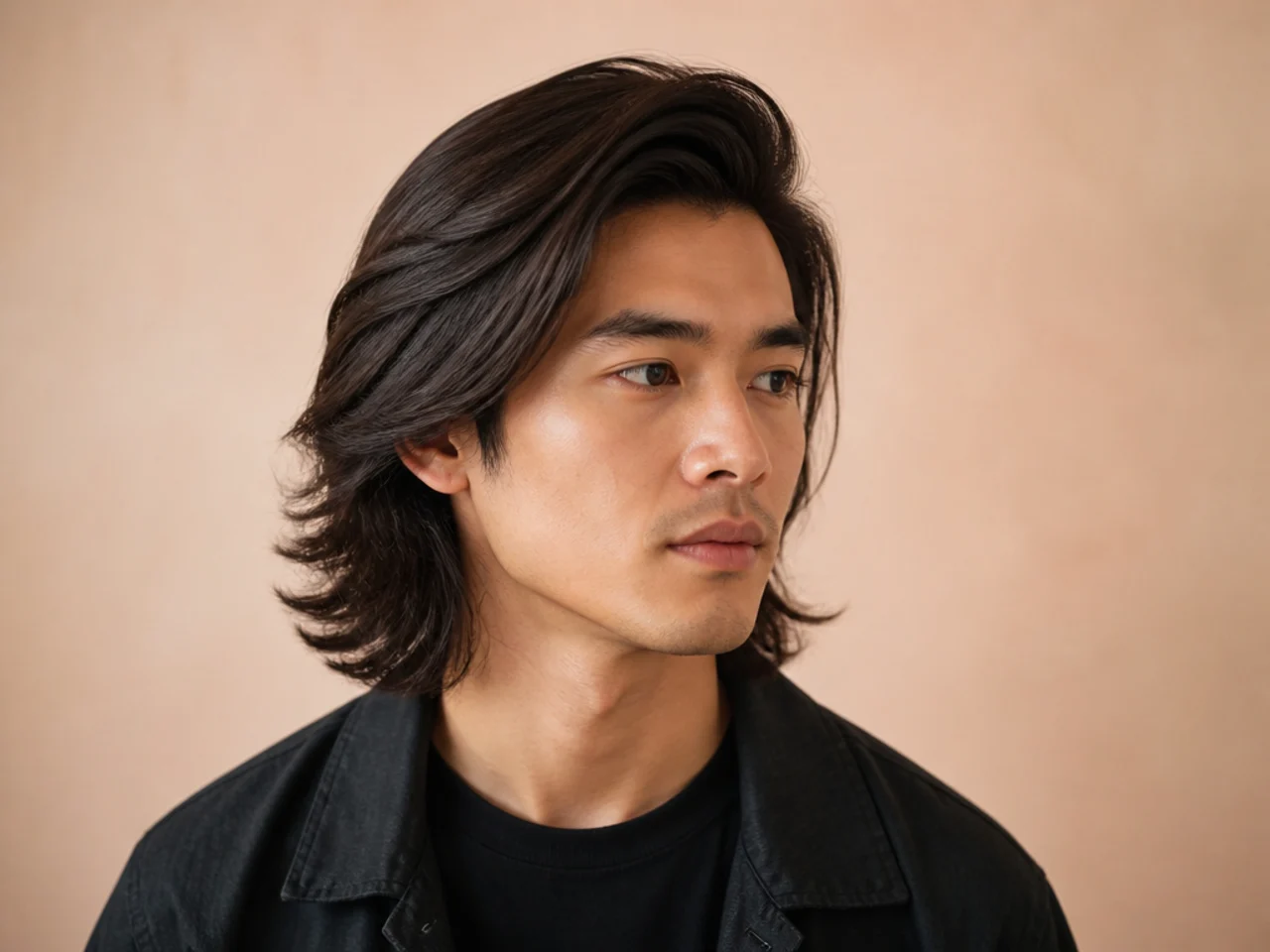
The classic comb-over taken long. Top runs four to five inches swept horizontally across the head from a deep low side parting. Sides finish in a scissor taper or low fade. Modern, sharp, and versatile — including for thinning hair, where the sweep adds visual density without pretending to hide anything. Suits every face shape and reads especially good on straight to wavy hair with enough length to lay flat. Ask for: "Long comb-over with a low fade, four inches on top, deep side parting on the left combed across." Style with a light-hold cream on damp hair combed from the parting across, blow-dry with the airflow following the sweep direction to lock the shape. A mist of light-hold spray sets it for the day.
20. Long Side Part with Half-Up Bun
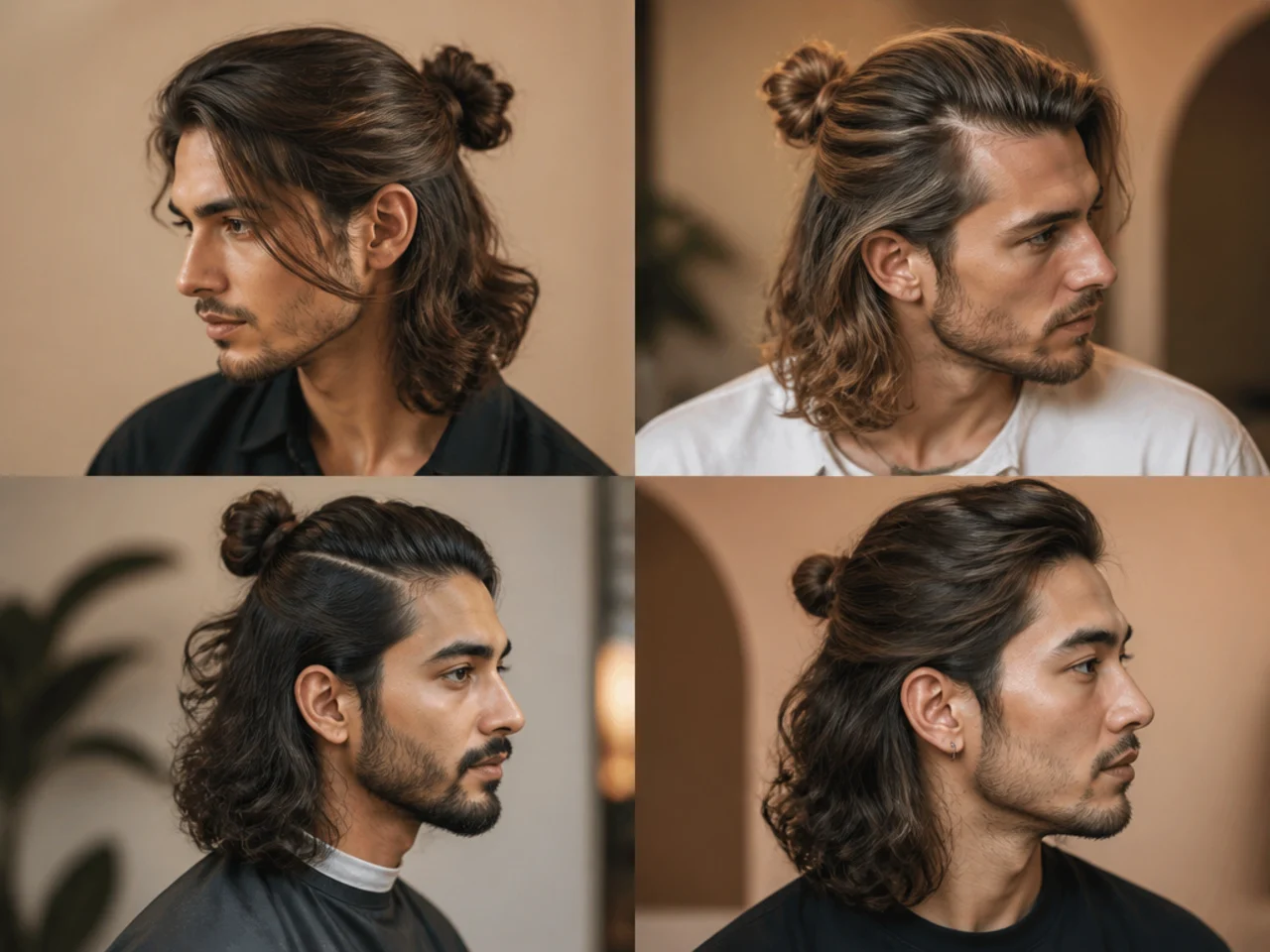
For hair five inches or longer on top. Top runs five to seven inches with a defined side parting at the front and the crown gathered into a loose half-up bun. Sides are scissor-tapered or finished with a low fade. The half-up keeps the shape anchored to the parting instead of collapsing under its own weight. Suits oval, square, and long faces; creative and hospitality workplaces. Best on straight to wavy hair with real length. Ask for: "Long side part with a half-up bun option, six inches on top, defined side parting, scissor-taper the sides." Style with a sea-salt spray through the front, gather the crown with your fingers, tie loosely with a small elastic. The visible parting is what keeps this from reading as generic long hair.
How to Ask Your Barber
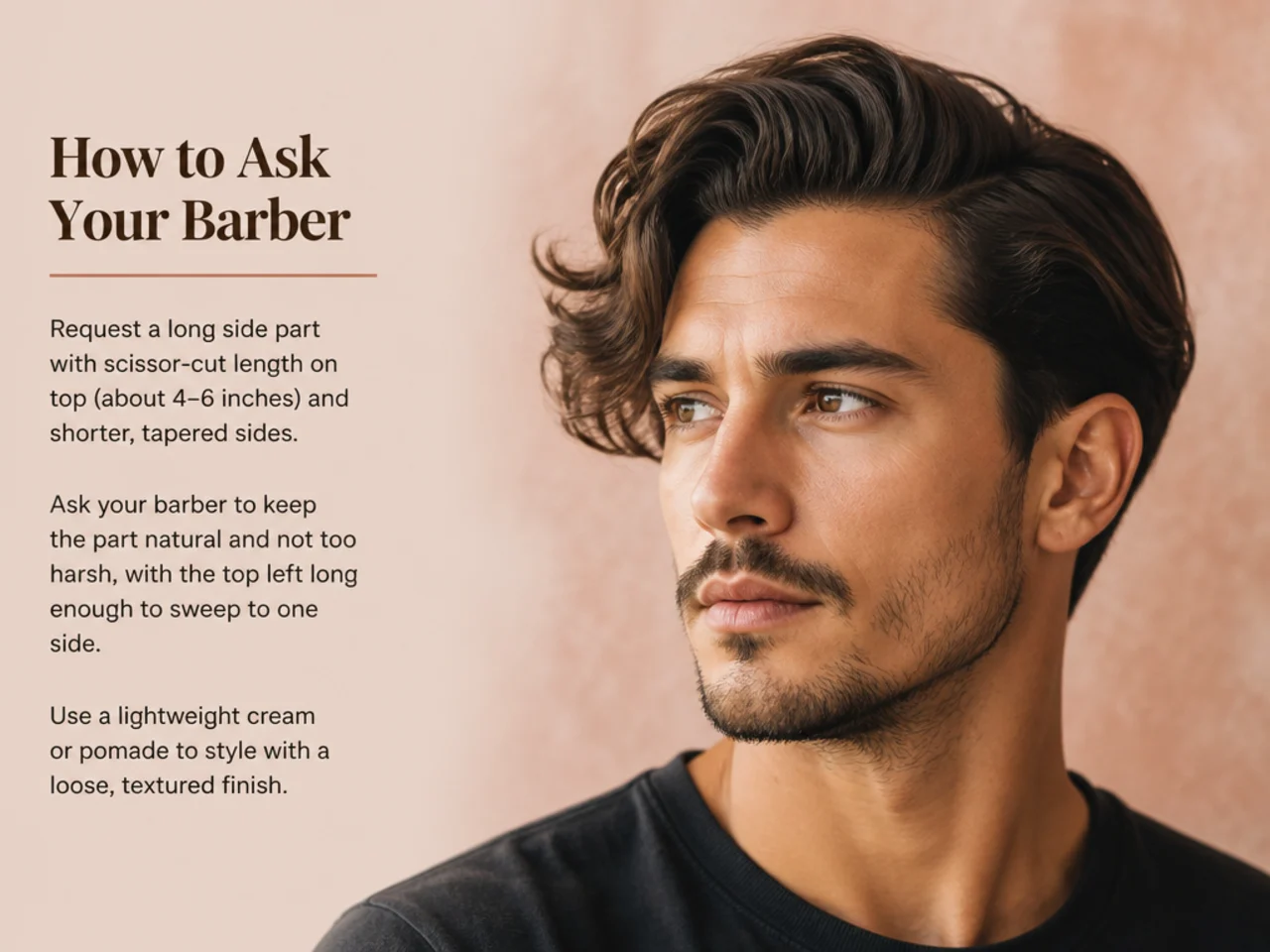
Barbers do not need a lecture. They need the name of the cut, the top length in inches, the sides finish, and one clean reference photo. Here is the sequence that gets you the version you had in mind.
- Name the specific variation. "Long slick back side part," "old money long side part," "long flow side part." A vague "longer on top with a part" wastes your barber's time and yours.
- Give the top length in inches. "Four inches on top" is workshop language. Guard numbers do not apply to hair over an inch and a half — always name inches for long tops.
- Give the sides finish. "Scissor-taper," "low taper fade," "low fade," "mid fade," "high skin fade," "No. 1 undercut with no blend." Name the fade start (temple, mid, high) if you have a preference.
- Name the parting style. "Natural side parting on my dominant side," "defined combed parting on the left," "razor-drawn hard part on the left." The parting is what makes a long cut a side part rather than a generic long cut.
- Call out any add-ons. Beard blend, hard part, curtain front, half-up bun option — flag them upfront so the barber can plan the whole cut around them.
- Show one reference photo. Not five. One clean photo of the version you want, ideally on hair close to your texture and density.
- Confirm the rebook cadence. Three weeks for hard part or beard-blend builds. Four to five weeks for low or mid fade versions. Six to eight for scissor-tapered classics, old money, and flow builds that grow out with grace.
Styling & Maintenance
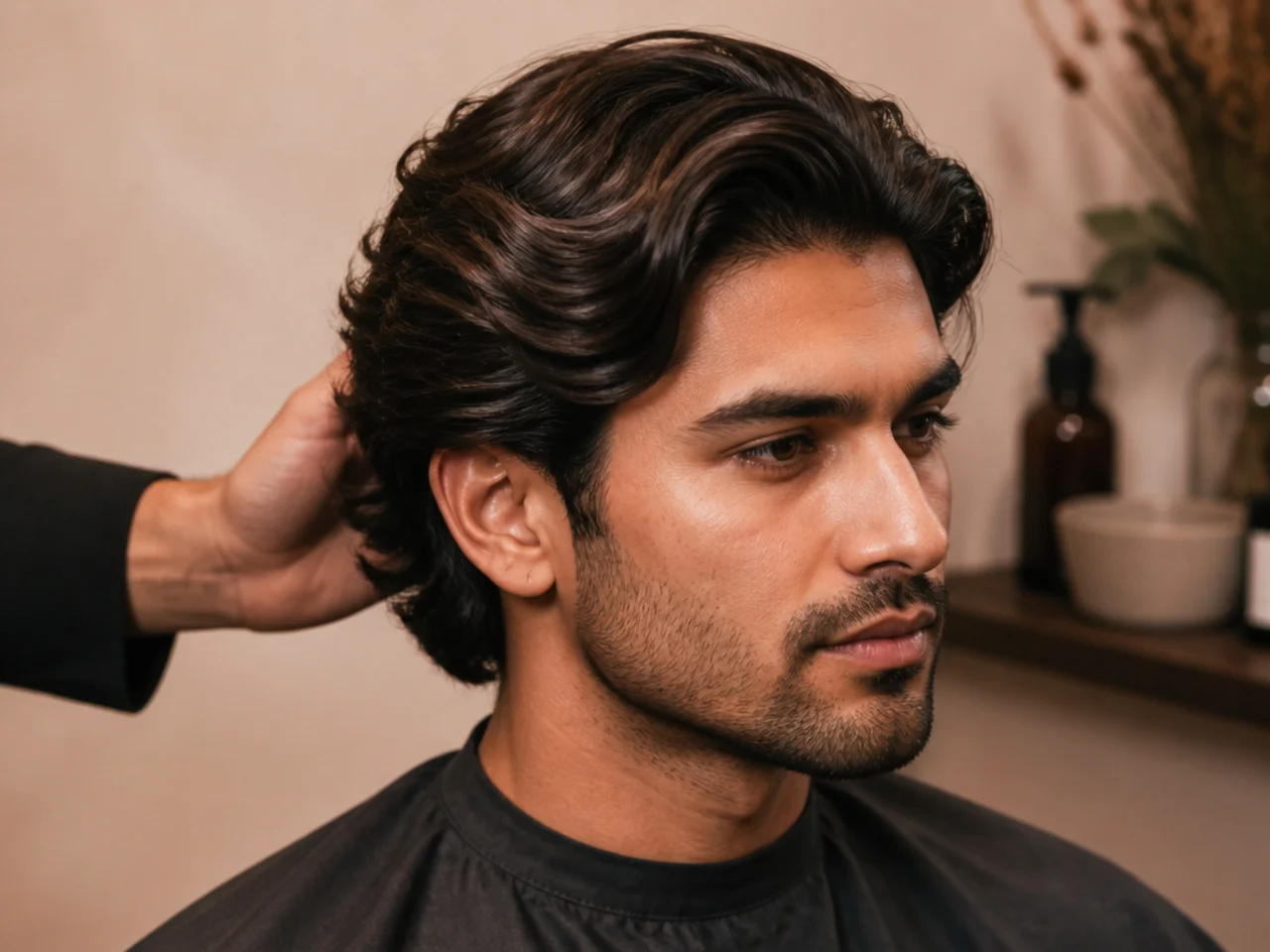
Long side parts need a slightly bigger product shelf than short versions because the top length gives you more to work with — and more that can go wrong. Four products cover every variation above.
Medium-hold cream pomade is the workhorse for classic, slick back, old money, executive, and comb-over versions. Work a chickpea-sized amount through damp hair from the roots down, comb from the parting outward, blow-dry with the airflow following the sweep direction. Water-based only — oil-based pomades feel dated on long hair and never wash out cleanly.
Sea-salt spray builds the shape for flow, textured, and wavy versions. Two to three spritzes into damp hair, scrunched upward with fingers, air-dried or diffused on low. Adds separation and grip without weight.
A small round brush plus a blow-dryer is the tool combo for Korean, curtain, executive, and slick back builds. Point the airflow with the direction of the sweep, brush the top toward the parting, then move the brush along the sweep. The brush is where the shape actually comes from — product just holds what the brush built.
Light-hold hairspray locks in slick back, executive, and Korean builds for eight to ten hours. A single burst held six inches from the head, aimed at the parting, sets the whole sweep. Skip it on flow, textured, and wavy versions — hairspray fights the movement those cuts are built around.
Rebook cadence depends on the outline. Skin fade, hard part, and beard-blend builds need a chair visit every three weeks — the fade line and shaved edges soften fast and take the whole look with them. Low fade and mid fade builds stretch to four or five weeks. Scissor-tapered classics, old money, flow, and executive cuts hold for six to eight weeks because a little growth still reads intentional. The pillar short simple mens haircuts guide walks through the full rebook logic across every men's cut family, and best hair clippers for men covers what to keep at home if you want to stretch between visits.
Wash cadence is separate from cut cadence. Every second or third day with a sulfate-free shampoo keeps the scalp happy and the long top from drying out. Daily washing strips natural oils and turns long hair frizzy at the ends within a week. If your parting starts collapsing by mid-afternoon, do not add product — add hold. Switch to a stronger-hold cream or a light hairspray before you cut the length off the top. Long side parts are a length investment; protecting that length is the whole game.
FAQ
What counts as a long side part for men? Any side part where the top runs three inches or longer finished. That length lets the hair sweep, slick, or flow with a real drape across the head. Under three inches the top sits closer to the scalp and reads short or medium.
How long can a long side part get before it stops looking like a side part? About six to seven inches, roughly chin length. Past that the top pulls out of the parting under its own weight. A half-up bun keeps longer lengths anchored to a defined parting.
Do I need a fade to wear a long side part? No. The best long side parts are often scissor-tapered with no clipper line at all — that is the shape old money, executive, and flow versions all use. Fades add contrast but scissor blends never date.
Which side should a long side part sit on? Follow your natural cowlick. If your hair splits evenly, part on the left — the traditional masculine side and the default at almost every barbershop. The parting matters more on long hair because the sweep carries the whole silhouette.
How often should I rebook a long side part? Every six to eight weeks for scissor-tapered classics, old money, and flow builds. Every four to five weeks if the sides carry a fade. Every three weeks for hard part or beard-blend versions.
What product works best on a long side part? Medium-hold cream pomade for classic, slick, and comb-over versions. Sea-salt spray plus a light matte cream for flow, textured, and wavy versions. Avoid heavy shine pomades outside of formal occasions.