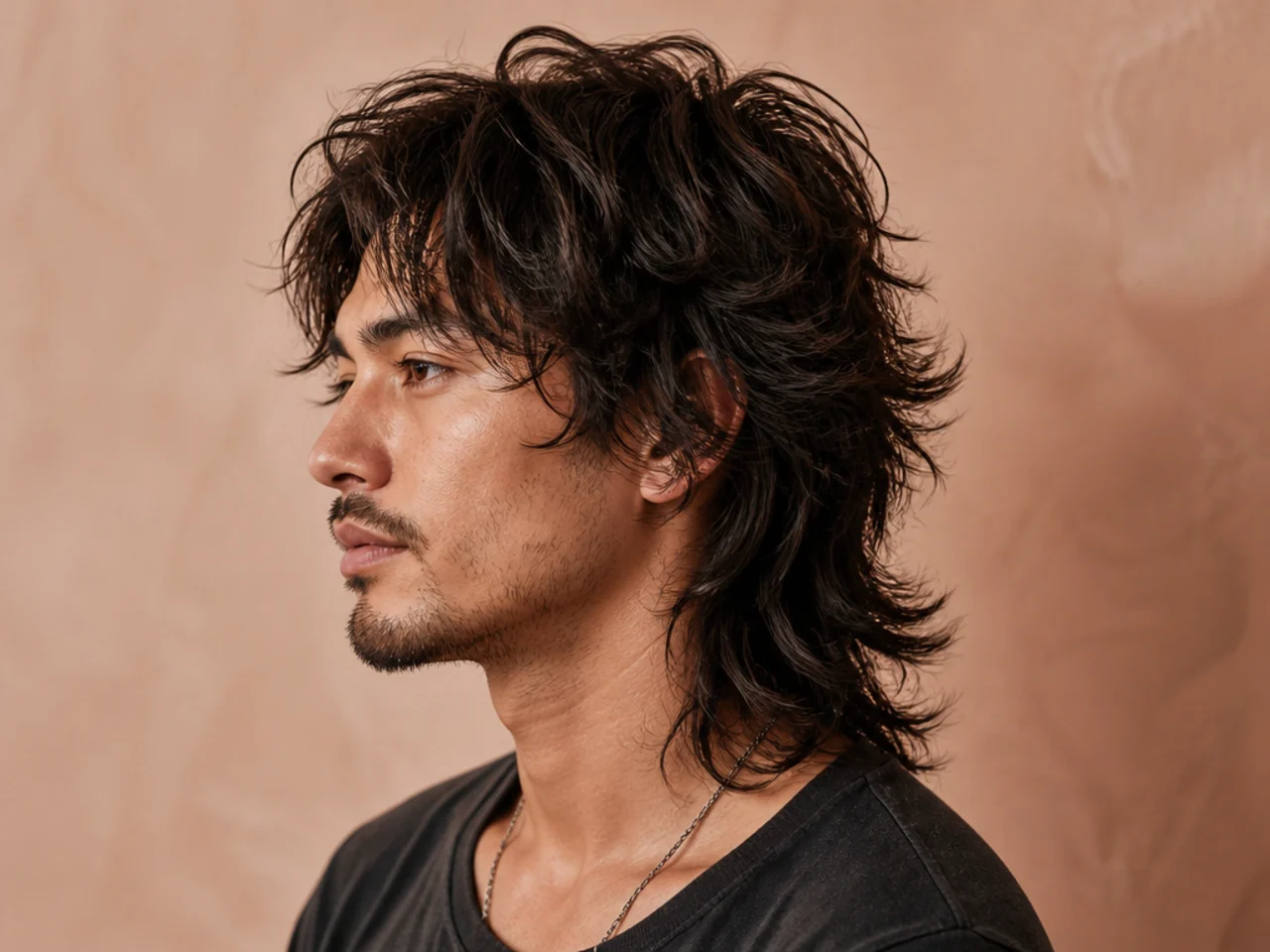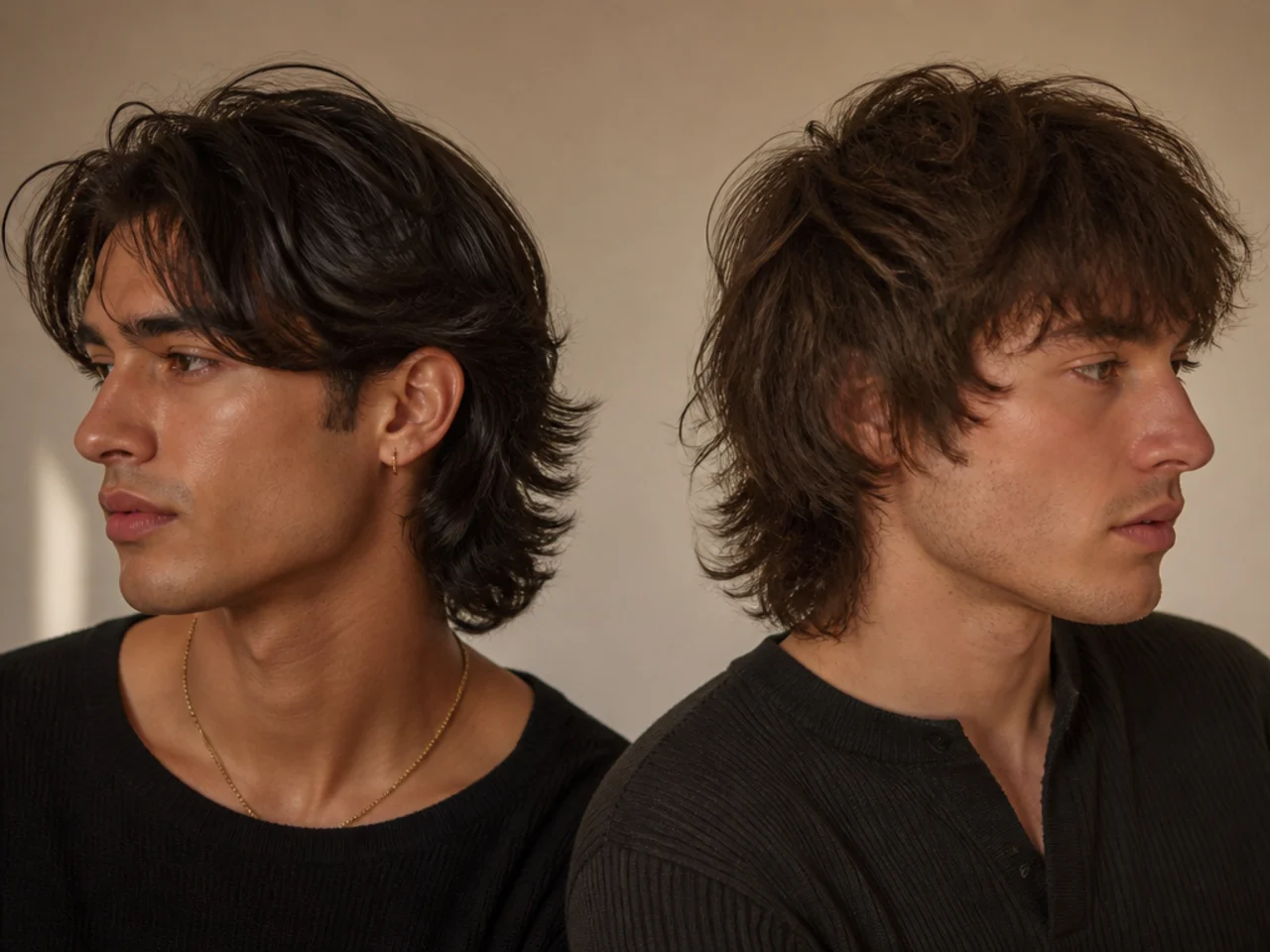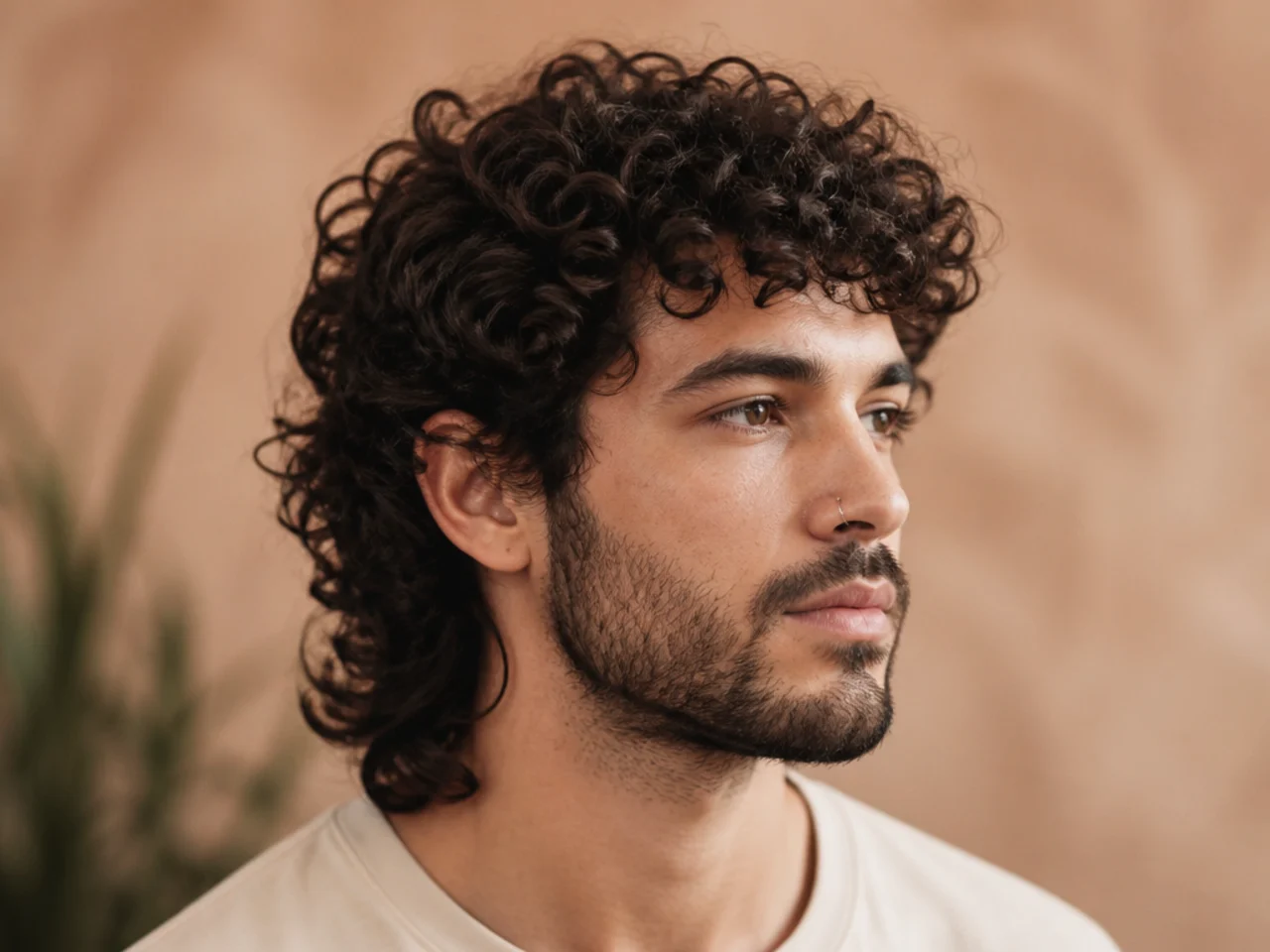
5 Reasons the Wolf Cut Works for Curly Hair
Five reasons the wolf cut curly hair pairing actually works — natural volume, layered structure, low daily styling, cross-pattern range, and long grow-out.
In this article · 18
- The One-Line Answer
- What Makes This a Wolf Cut and Not a Shag
- Reason 1: Your Curls Already Do the Volume Work
- Reason 2: Layered Structure Amplifies the Coil Pattern
- Reason 3: Minimal Styling — the Cut Does the Work
- Reason 4: One Cut, Every Curl Type — 3A Through 4C
- Reason 5: It Grows Out Beautifully
- Wolf Cut on Curly Hair: Side by Side Across Curl Types
- Which Version of the Curly Wolf Should You Ask For?
- How to Ask Your Stylist for a Curly Wolf Cut
- Styling and Maintenance
- FAQ
- Does the wolf cut really work on all curly hair types?
- Why is a wolf cut easier to style on curly hair than on straight?
- Will a wolf cut make my curly hair look like a triangle?
- How often do I need to trim a curly wolf cut?
- Should curly hair be cut wet or dry for a wolf cut?
- Can I get a wolf cut with fine curly hair?
The wolf cut and curly hair are the strongest pairing in the whole shag-mullet family. Every trick straight-hair guys sweat over — root lift, defined pieces, feathered perimeter — arrives free with a curl pattern. Here are the five reasons stylists keep steering curly clients toward the wolf, plus a side-by-side of what changes across curl types and the chair language for each one.
The One-Line Answer
The wolf cut works for curly hair because your curl pattern already does the layered, textured, voluminous work the cut is designed to build. Straight hair needs a stylist to fake volume with point-cutting and hours of styling with a round brush. Curls stack at the crown by default, spring at the cheekbones without any encouragement, and feather at the perimeter as the pattern separates naturally. The wolf cut just gives that rhythm a defined silhouette — long enough that the curl reads as intention, short enough that the crown lift stays sharp. Every curl type from 3A waves to 4C coils translates the same shape through a different technique.
What Makes This a Wolf Cut and Not a Shag
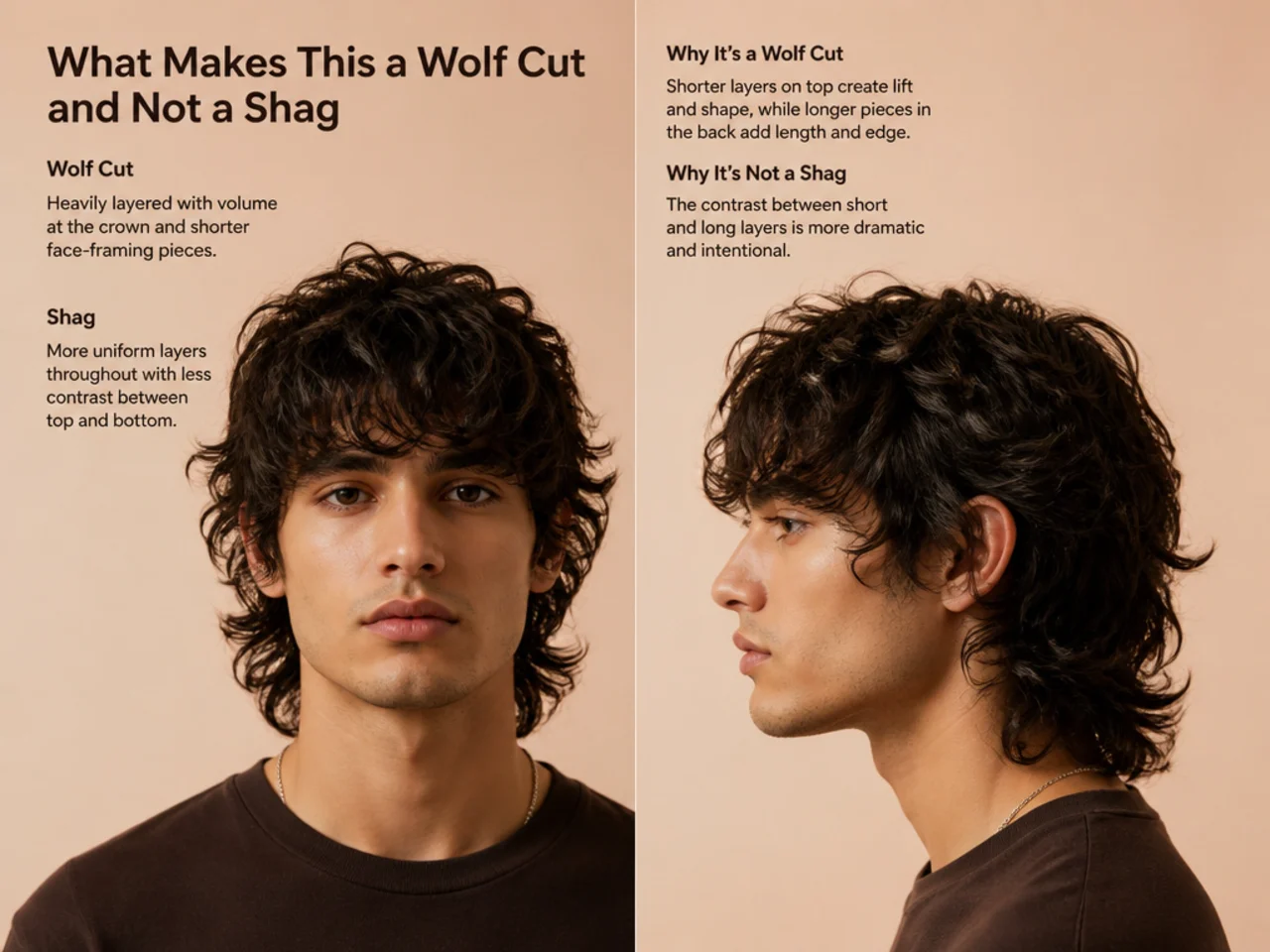
The wolf cut is the shag-mullet hybrid — internal layers through the crown, face-framing pieces at the cheekbone, and a longer feathered perimeter at the nape. The shag haircut shares the layered top and face-framing pieces but keeps the perimeter one soft continuous length. The modern mullet concentrates length at the back with less layered rhythm through the top. The wolf sits between the two.
On curls, that middle ground is the sweet spot. A shag on curly hair can read soft to the point of shapeless; a mullet can read as pure back-length without the crown structure. The wolf carries defined pieces at every angle — crown, cheek, nape — which is exactly what a curl pattern amplifies best. If you want the full silhouette breakdown, our men's wolf cut hub covers the anatomy in detail.
Reason 1: Your Curls Already Do the Volume Work
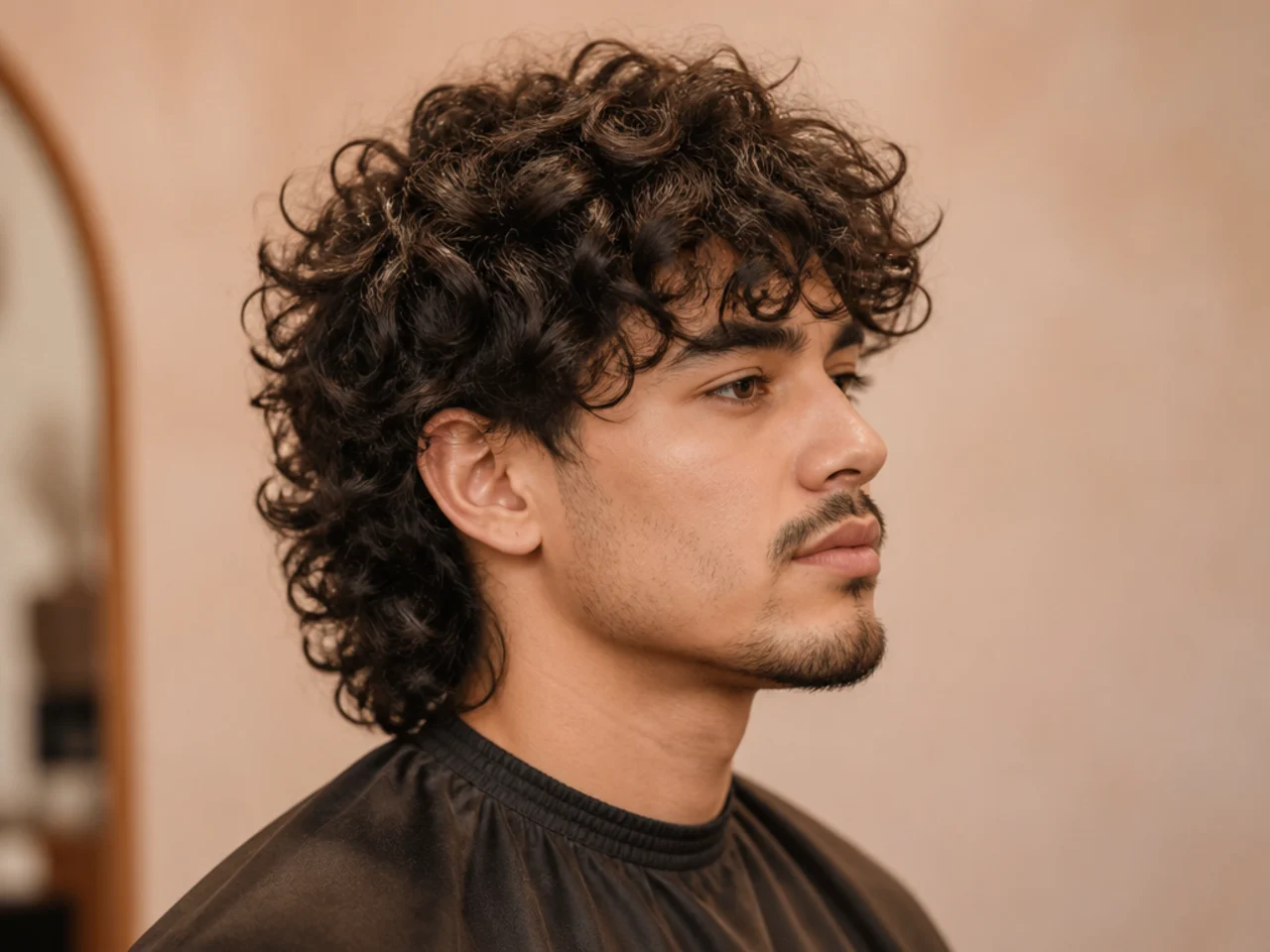
Volume is the whole point of a wolf cut, and it is the single hardest thing to build on straight hair. Straight guys sit under a hood dryer, get root-lift spray combed through wet, and blow-dry against the grain with a round brush for eight minutes just to fake the height a curly guy walks in with.
Your crown arrives lifted. The corkscrew of a 3B curl or the S-loop of a 4A coil stacks vertical density on top of the head without a single styling move. Your stylist just cuts internal layers so that stacked height does not compact into a triangle — the layering keeps the volume distributed rather than piled.
The math is easy. A straight-hair wolf cut needs a hair dryer, a round brush, a mousse or root-lift spray, a texture powder, and eight to twelve minutes of styling. A curly wolf cut needs leave-in conditioner, a curl cream, and a scrunching motion. The volume shows up during drying, not during styling.
What this means at the chair: the stylist should cut internal layers for weight removal only. Do not ask for texture — your pattern is the texture. Ask for interior thinning so the crown lifts freely. If your stylist wants to point-cut the surface aggressively, they are treating curly hair like straight hair and you will lose curl definition. Correct them.
Reason 2: Layered Structure Amplifies the Coil Pattern
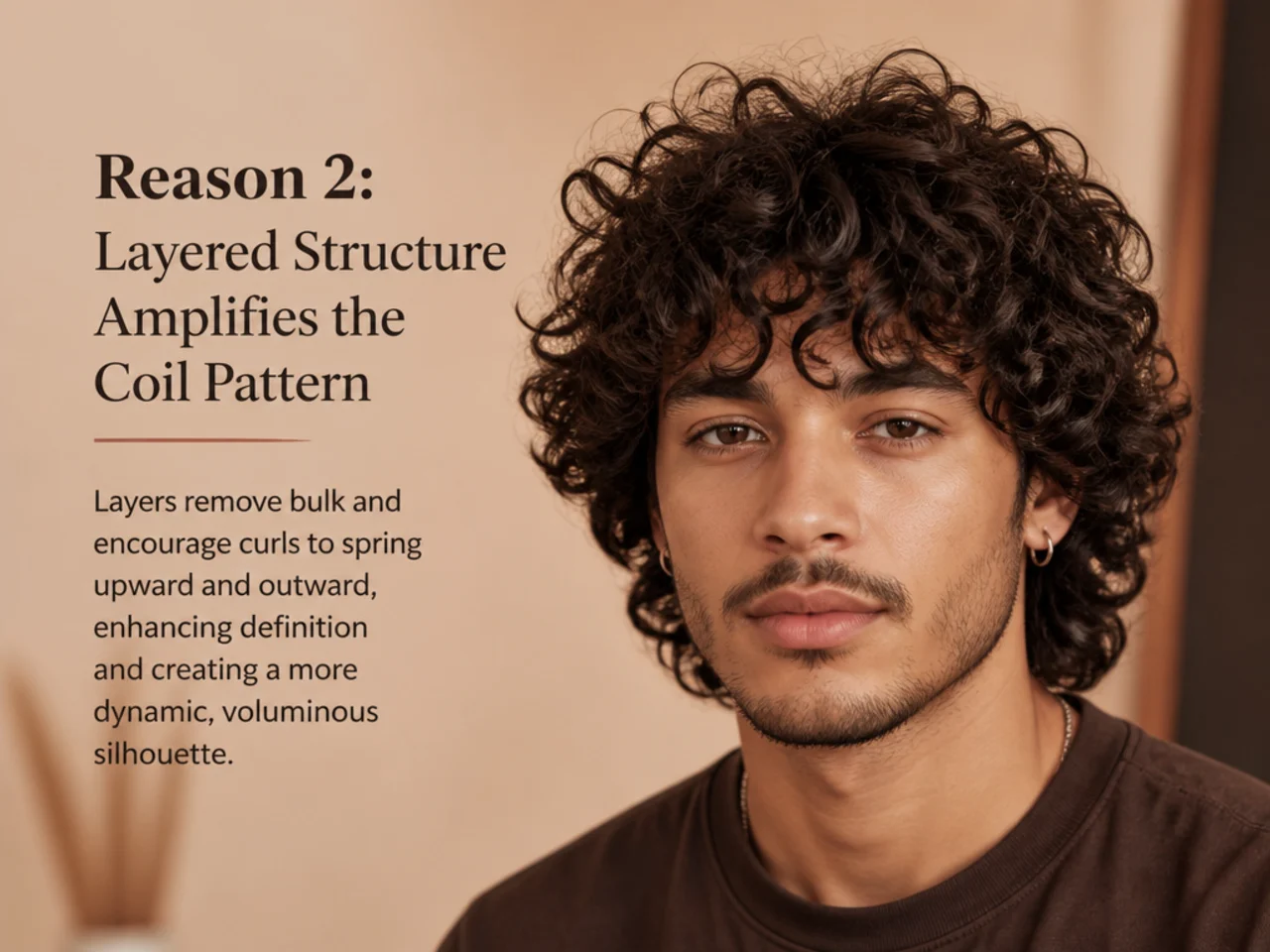
Curly hair without layers builds one solid mass. The pattern is still there, but every coil is fighting the weight of the coils above it — the whole shape stacks into a helmet, and individual curl definition disappears. Layers fix this.
Internal layering removes weight from underneath the top surface. The coils on the interior get shorter than the coils on the outside, so weight from beneath the shape is redistributed. What you feel is a lighter head; what you see is a defined pattern where each curl or coil finally has room to spring.
This is the geometry the wolf cut is built for. The layered rhythm — crown short, mid-length longer, nape longest — matches how gravity pulls on a curl pattern. Face-framing pieces at the cheekbone catch the widest part of the corkscrew or spiral, so the pattern reads across the front view. The feathered nape lets the perimeter coils separate rather than blunt-cut into a heavy line.
The result is that every reason you liked your curl pattern before — the springiness, the pieces, the natural movement — gets amplified rather than fought. See curly hair haircuts for a broader pattern-by-pattern guide, or the dedicated curly wolf cut men breakdown for 20 layered variations.
Ask for it this way: "Internal layers for weight removal, not surface layers for texture. Cut for pattern definition, not for cutting motion." One line, spoken before scissors touch hair.
Reason 3: Minimal Styling — the Cut Does the Work
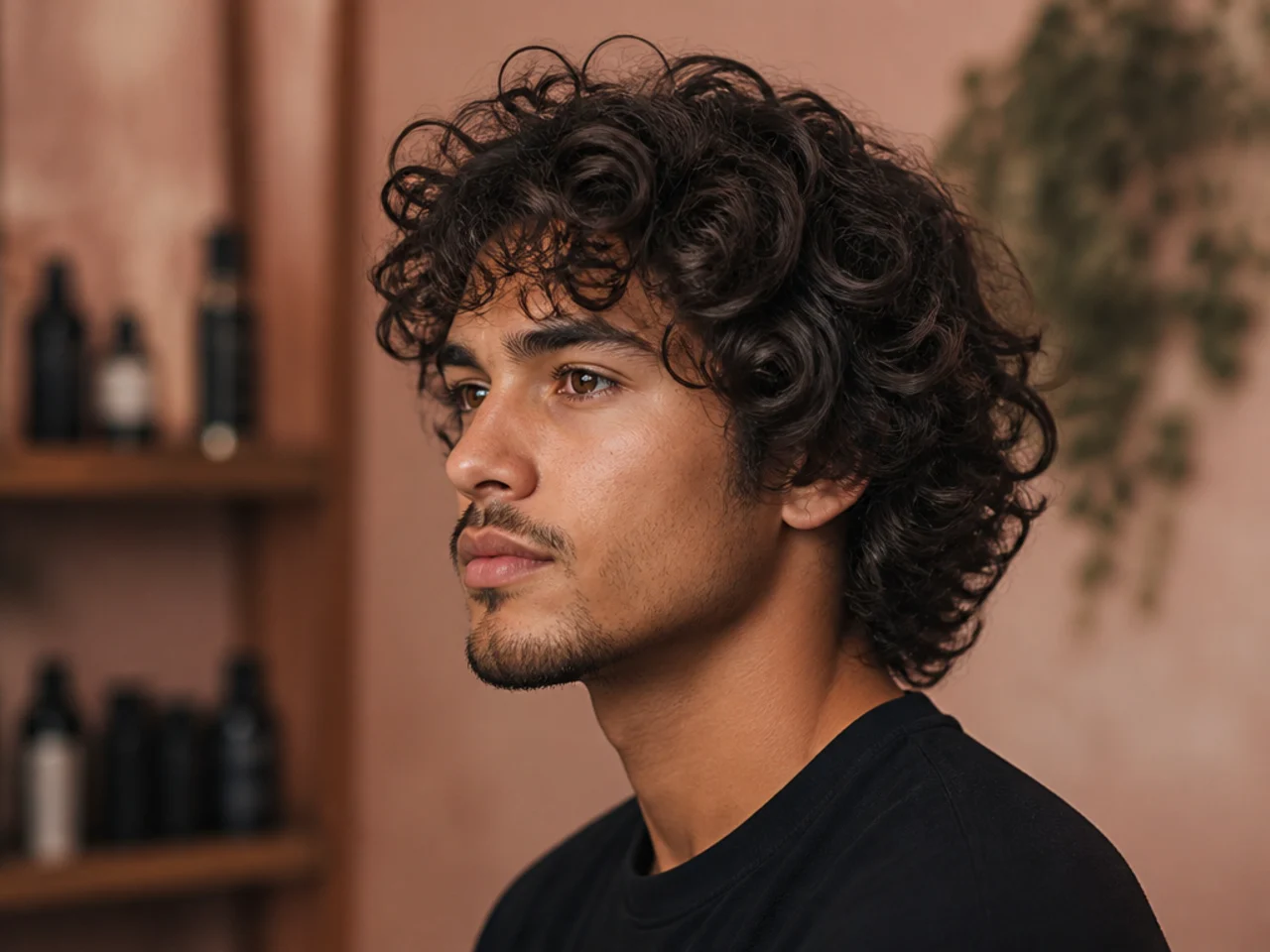
A well-cut curly wolf takes under three minutes to style on a normal morning. That is not a marketing number. That is what the routine actually adds up to.
Start on soaking-wet hair — not damp. Scrunch a nickel of leave-in conditioner from the ends up toward the roots. Scrunch a similar amount of curl cream over it. Air-dry undisturbed while you make coffee, or hit it with a diffuser on low heat for 60 seconds if you are in a hurry. Done. Total time including product application: two to three minutes.
Compare that to what a straight-hair wolf cut needs on a good day. Blow-dryer, round brush, texture spray or sea-salt spray, matte paste for the pieces, plus the discipline to work section by section so the crown lift does not collapse before the perimeter is set. Twelve minutes minimum, longer if the hair fights back.
The reason the curly version is fast is that the cut is doing the styling work. The internal layers create the silhouette on drying. The face-framing pieces spring into position on their own. The feathered nape falls into shape without touching. A stylist who cuts a curly wolf well is essentially cutting your morning routine short.
What to keep on the shelf: a sulfate-free shampoo (wash two or three times a week, not daily), a rich conditioner, a leave-in conditioner, a curl cream, and one curl gel for hold when you want it. That is the whole product list. For a full product breakdown by curl type, see our best wavy hair products roundup — the curl-cream category applies to curls as much as waves.
Reason 4: One Cut, Every Curl Type — 3A Through 4C
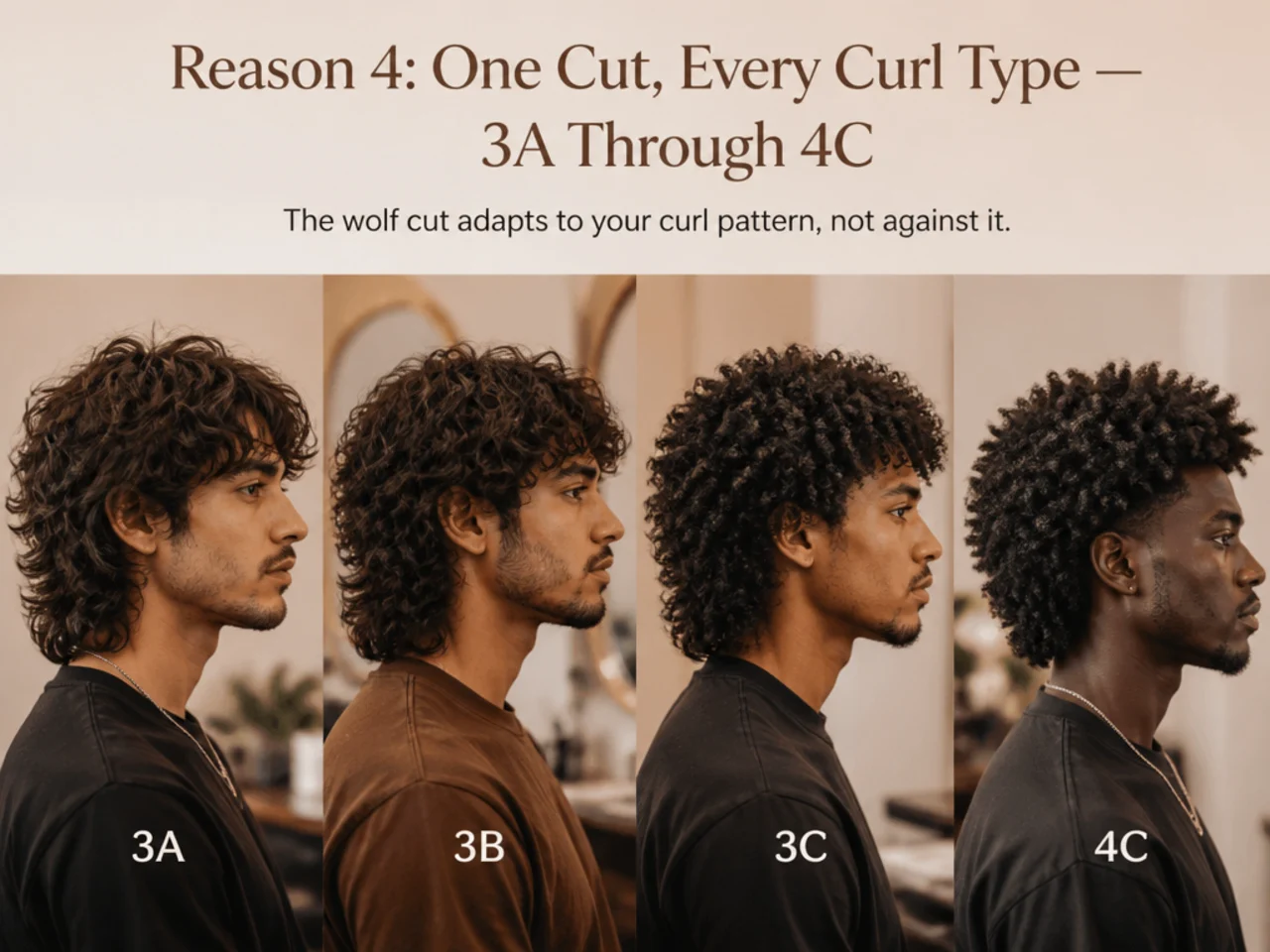
The wolf cut is one of the few silhouettes that adapts cleanly across the entire type-3 and type-4 curl spectrum. The shape is identical — layered crown, face-framing pieces at the cheek, feathered perimeter — but the execution changes with the pattern. That range is rare. Most haircut families favor one type and fight the others.
Loose 3A curls form wide S-shapes closer to waves than tight spirals. They wear the wolf cut long and soft — four inches through the crown, gentle internal layers, and a feathered nape past the collar so gravity keeps the S-wave visible.
Springy 3B corkscrews are the reference-photo baseline. The pattern carries the wolf silhouette without adjustment — three inches through the crown, deep internal layering, face-framing corkscrews at the cheekbone, and a nape with visible coil separation. If you have seen a curly wolf cut on Pinterest, it is probably 3B.
Tight 3C spirals stack denser, so aggressive interior work becomes non-negotiable. Ask for heavy internal layering, face-framing pieces at the temple rather than the cheekbone, and a slightly shorter nape so the finished shape reads oval rather than pyramidal.
Coily 4A, 4B, and 4C patterns all take the wolf cut, but each needs the stylist to work with sprung coils rather than stretched ones. Cut the length once the coil has fully contracted. Layer for shrinkage — a curl that reads three inches sprung is often five or six inches stretched. Skip that step and the finished cut lands two inches shorter than the reference photo.
For a full pattern reference before your appointment, see our curl types guide. Not sure what your number is? Look at your curl fully hydrated and untouched — the diameter of one coil at its widest point places you within a pattern band.
Reason 5: It Grows Out Beautifully
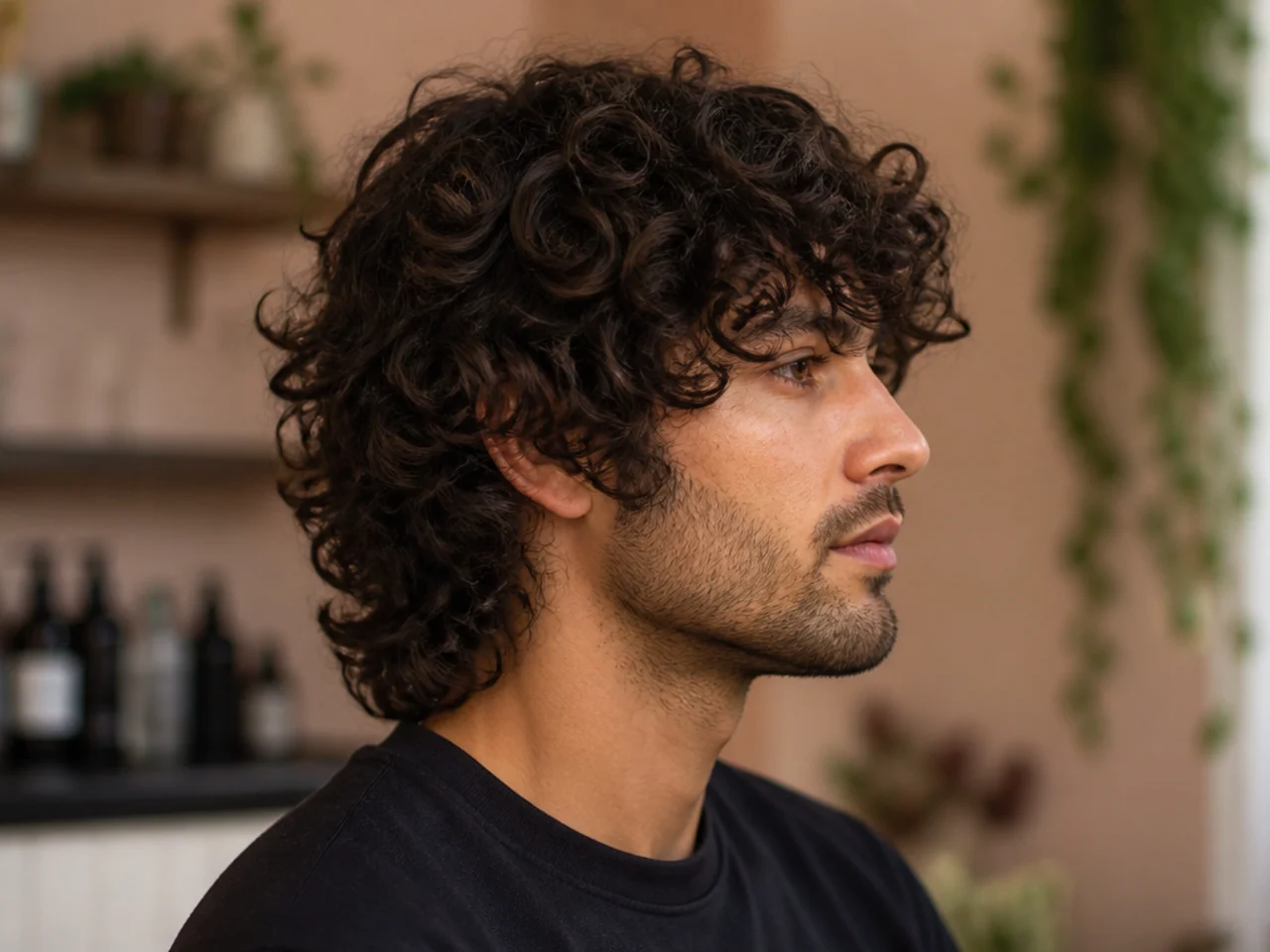
Straight hair has nowhere to hide grow-out. A crown length that reads sharp at week four reads shaggy at week six and starts looking neglected at week eight. That short cycle is why the average straight-hair cut runs $40 to $60 every four weeks — the shape collapses on schedule.
Curly wolf cuts break that math. The curl pattern hides an extra inch of growth completely — the coil rolls the length into itself, so grow-out reads as more curl rather than as more hair. The face-framing pieces blur softer as they extend past the cheekbone. The feathered nape gains length without losing its feather.
The practical outcome is that most curly wolf clients stretch to six to ten weeks between full re-cuts. Fade or taper sides need a refresh every three to four weeks — a five-minute walk-in — but the layered structure on top holds. That saves real money. On a monthly basis, a curly wolf cut costs roughly half what a straight-hair one does, because you are cutting the top half as often.
There is one caveat. Split ends unravel a curl pattern faster than a lost inch of length. Ask your stylist to trim wispy split ends at every visit, even the fade-only appointments. Five minutes of dusting the tips preserves the whole pattern for another cycle. For grow-out strategy across the whole shag family, our wolf cut hair men guide covers cadence variants by length and finish.
Wolf Cut on Curly Hair: Side by Side Across Curl Types
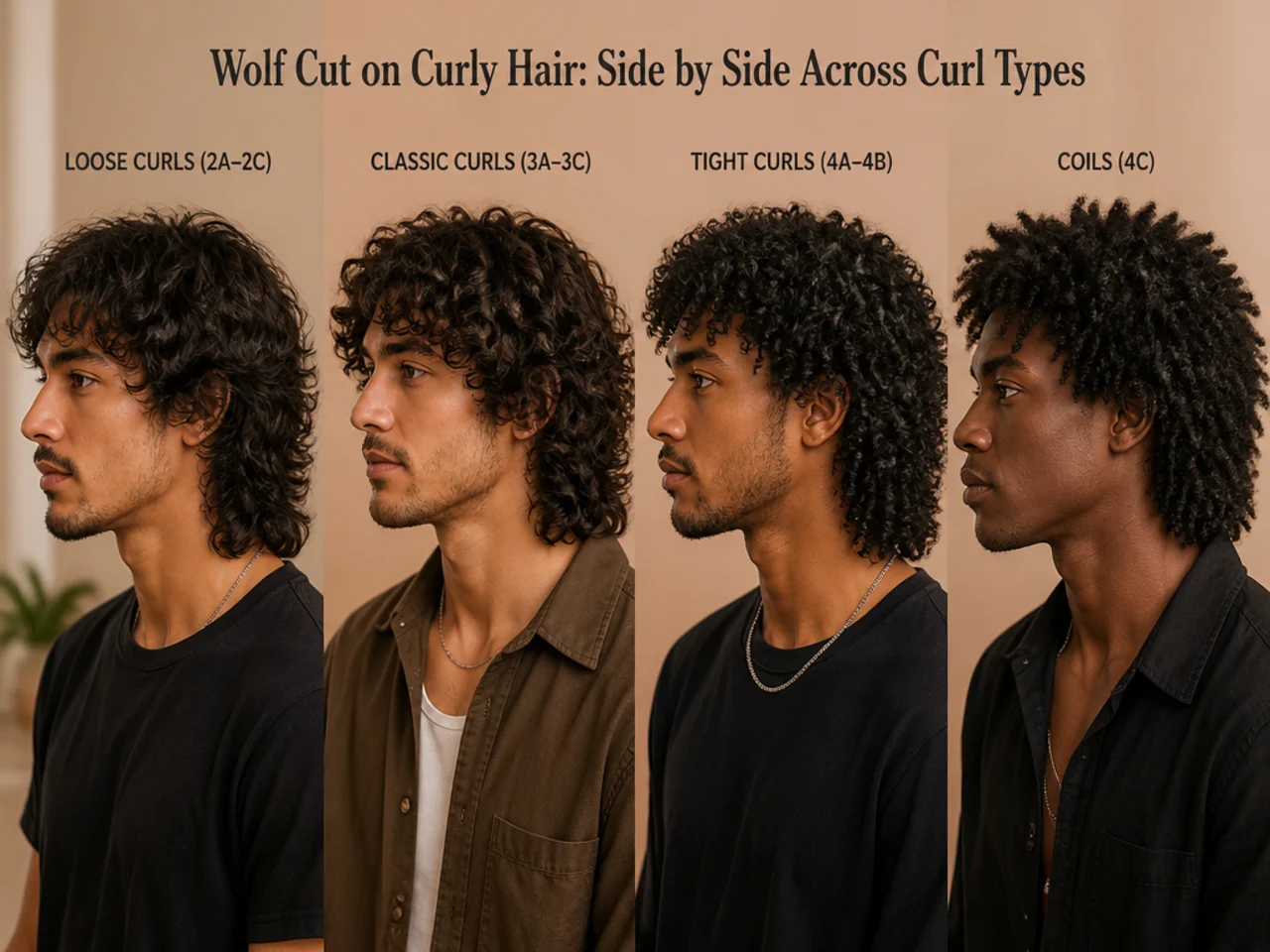
Same cut, different execution. Here is what actually changes between one curl pattern and the next, laid out in a single view.
Two things worth calling out from the table. First, the re-cut cadence gets longer as the curl gets tighter — 4C coils hide grow-out longer than any other pattern in existence. Second, the product footprint scales the same direction, but the total daily time stays under five minutes across the entire spectrum. Neither number is true for the same cut on straight hair.
Which Version of the Curly Wolf Should You Ask For?
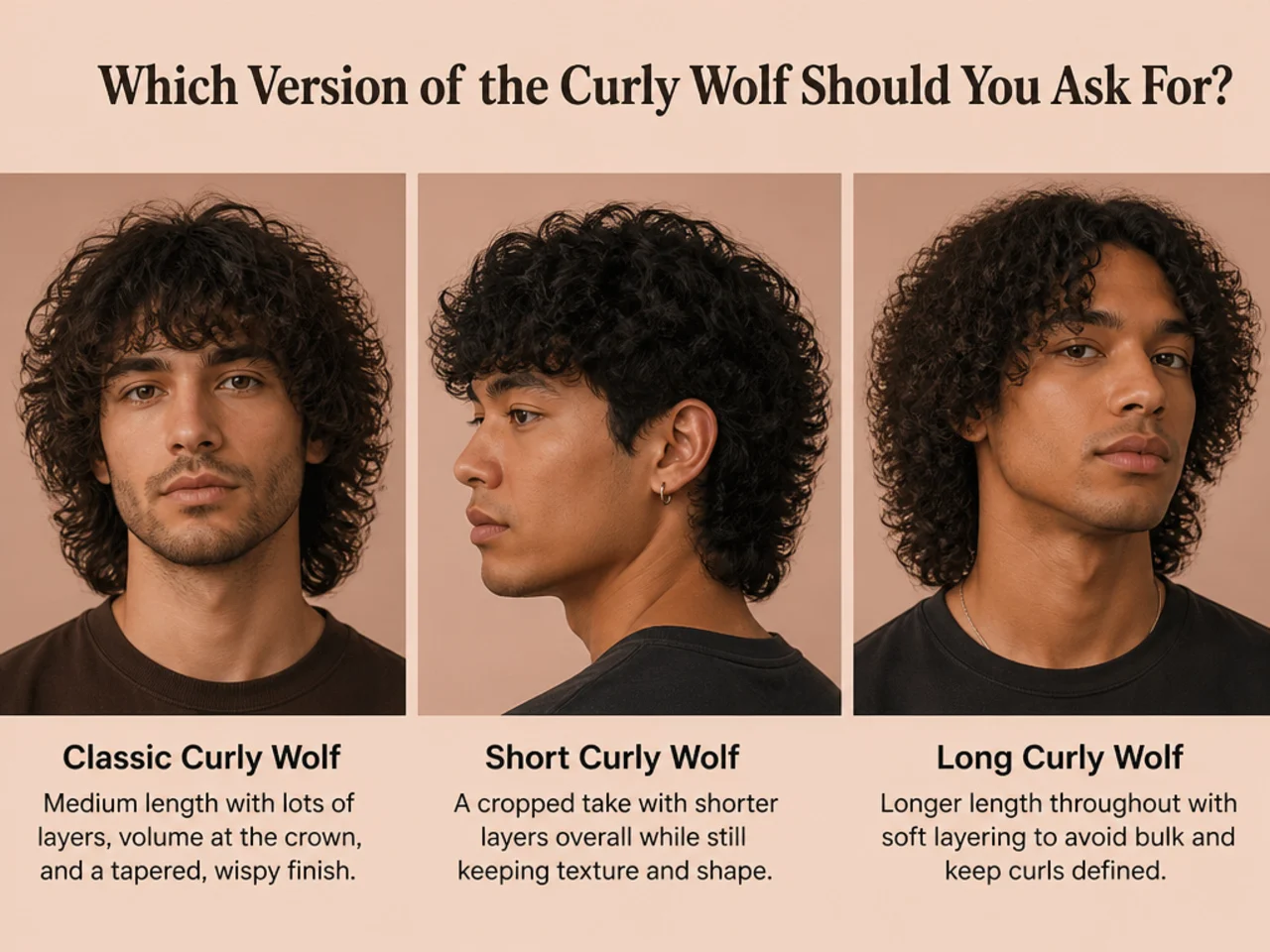
Pick your version by matching three variables: curl type, workplace, and length appetite. The chart above sets the technical baseline; the questions below narrow the visual.
Ask for the classic curly wolf if you want the baseline — three dry inches through the crown, face-framing curls at the cheekbone, feathered nape at the collar, scissor-blended sides. Reads modern in every setting. Best on 3B and 3C.
Ask for the short curly wolf if you want the office-safe version. Two dry inches through the top with the same layering geometry, tighter nape at or above the collar. Sharpest on 3B, 3C, and 4A. See our short wolf cut men breakdown for length variations.
Ask for the curly wolf with low taper fade if you want cleanness without losing the layered top. The low taper fade curly hair starts above the ear and dies into the sideburn — reads clean in any office and preserves the whole silhouette.
Ask for the curly wolf with burst fade if you want editorial energy. The arc curves around each ear and leaves the nape untouched, so the wolf's feathered back flows out of the fade rather than getting clipped. Best on 3C through 4B where the crown carries visual weight.
Ask for the long curly wolf if you want a statement. Five to six sprung inches through the crown with heavy internal layering, face-framing curls past the jaw, feathered nape near the shoulders. Best on 3A, 3B, or 3C with moderate density. Browse the 10 stunning wolf cut hairstyles roundup for long-length inspiration, or the 15 chic wolf cut hairstyles for every face for face-shape-first sorting.
Ask for the curly wolf mullet hybrid only if you want back-length concentration in addition to the layered crown. Dramatic drop past the collar, three inches on top with internal weight removal, low taper on the sides. Reads loud — save it for creative fields.
If you want the fully layered version rather than the classic silhouette, the layered wolf cut men breakdown zooms in on layer geometry. If you are still deciding between the wolf and other curly options, the curly hairstyles for men guide surveys the full range side by side.
How to Ask Your Stylist for a Curly Wolf Cut
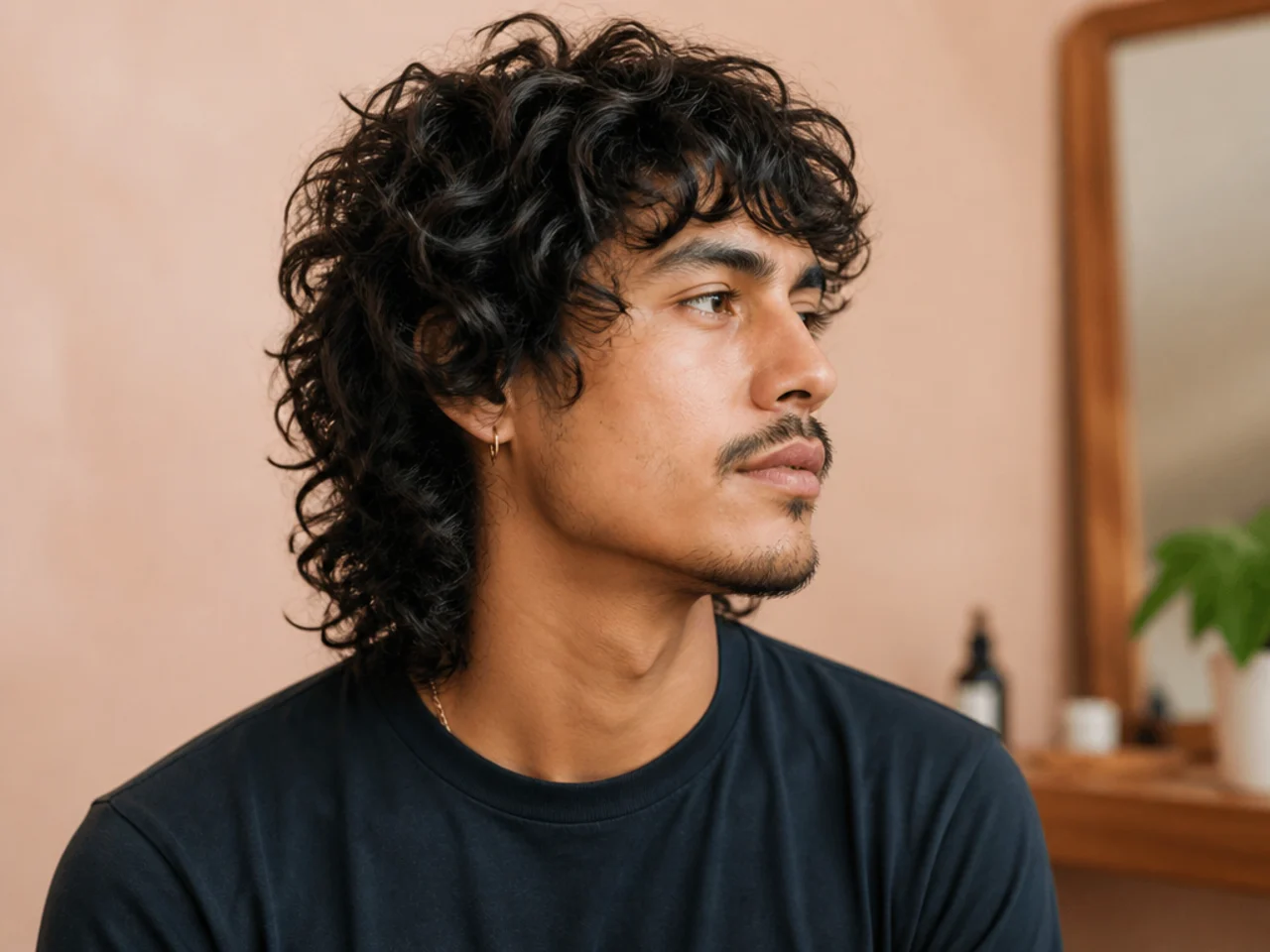
The chair conversation matters more with curls than with any other hair type. A straight-hair cut can be adjusted after the fact — a curl cut cuts what you keep. Bring a photo of your hair worn loose and hydrated so your true pattern is visible before scissors touch anything.
- Say "wolf cut" and specify your curl type by number. 3A, 3B, 3C, 4A, 4B, or 4C. If you are not sure, ask your stylist to look and tell you before cutting. The layering intensity, cut technique, and length target all change with pattern.
- Request a dry cut. This is the single most important instruction. Wet-cutting stretches curls, so the finished length shrinks past the reference photo. Dry-cutting shows the true finished shape at every step.
- Set the top length in sprung inches. Sprung means the length once the curl contracts — not stretched. Two to three inches for short and workplace, three to four for classic, five-plus for long.
- Set the face-framing height. Cheekbone is the default; jaw is softer and longer; temple is shorter and more sculpted. Match to face shape and curl density.
- Set the perimeter finish. Feathered coils (soft), coil-cut (defined ends on each spiral), or blunt (rare for curls but works on very tight 4C where coils stack). The perimeter is what separates a wolf from a shag on curly hair.
- Set the side treatment. Scissor-blended, low taper, mid taper, burst fade, mid fade, skin fade, disconnected undercut, or two-block. Match the loudness to how much attention you want the cut pulling.
- Ask for internal layers cut for weight removal — not surface layers for texture. Curls already have texture. What they need is weight removed from the interior so the crown lifts instead of stacking. This one line separates a good curly wolf from a mushroom-shaped one.
Once those seven questions have answers, your stylist can start cutting without a single guess. Show the photo one more time and confirm the sprung length before the first scissor pass.
Styling and Maintenance
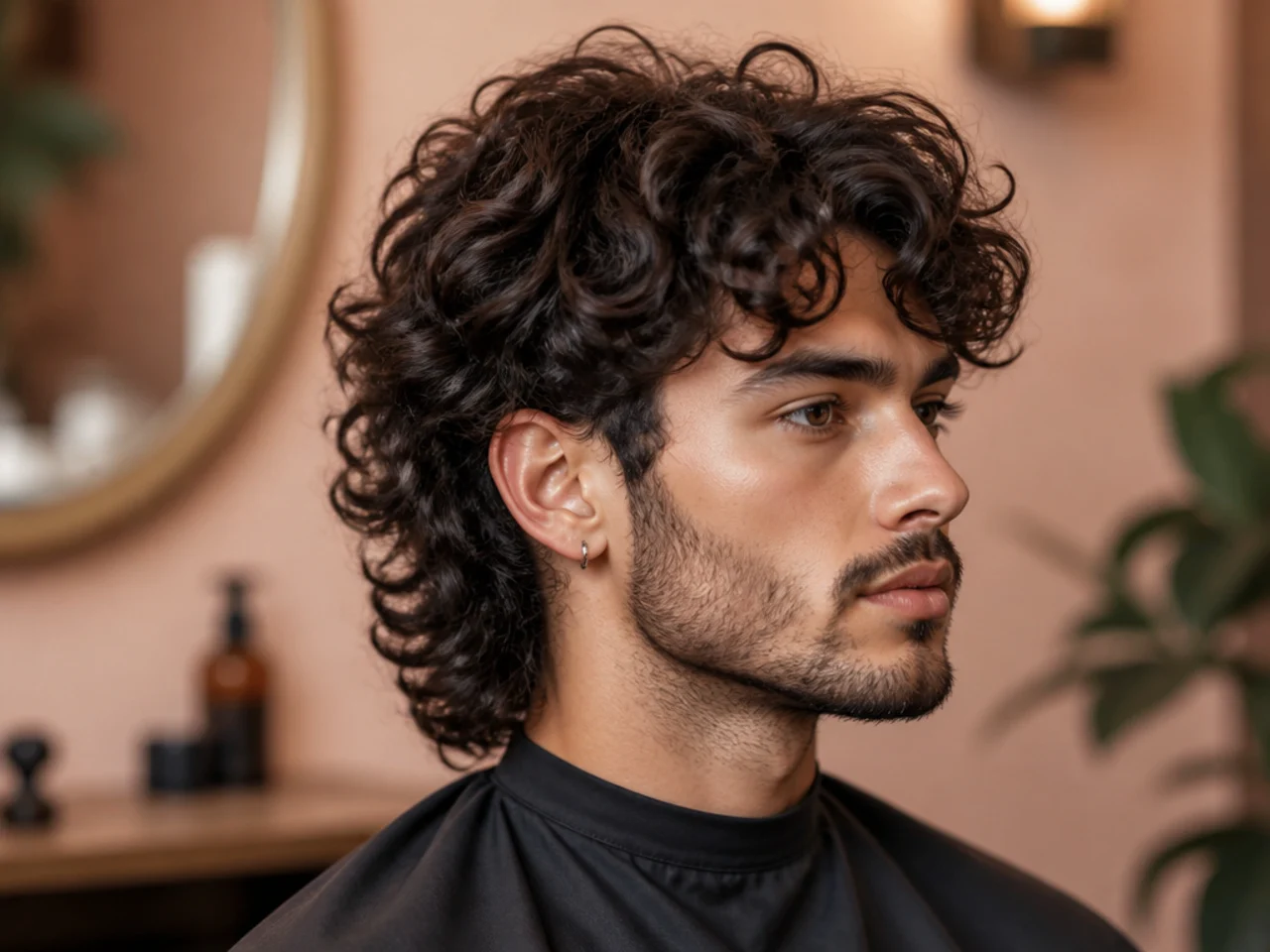
Curls need moisture more than any other hair type. Get the routine right and the wolf silhouette holds for days between wash cycles. Skip the essentials and the pattern flattens by lunch on day one.
Wash with a sulfate-free shampoo two to three times a week — sulfates strip the natural oils curls rely on for pattern hold. Follow with a rich conditioner, and once a week swap in a deep conditioner or a hair mask. Never wash daily; that flattens the pattern and dries the ends.
Apply product to soaking-wet hair, not damp. Start with a leave-in conditioner, then a curl cream for definition, then a curl gel for hold if you want it. Scrunch each product upward toward the scalp — never comb through, because combing snaps the pattern. For 4A through 4C coils, use the shingling method — smoothing product through section by section — instead of scrunching.
Diffuse or air-dry. A diffuser on low heat and low speed for 60 to 90 seconds sets the crown volume and shortens drying time. Air-drying takes 30 to 60 minutes but preserves the truest pattern. Whichever you pick, do not touch the hair while it dries — every touch breaks a curl and creates frizz.
Sleep on a satin or silk pillowcase, or wrap the hair in a satin bonnet. Cotton absorbs moisture and creates friction, which flattens the pattern by morning. Pineapple longer curls — a loose high ponytail at the crown — so the coils do not crush against the pillow.
Re-cut the layered structure every six to ten weeks. Fade or taper sides need a refresh every three to four weeks; between visits, ask your stylist to trim wispy split ends at every appointment. For adjacent curly-hair length breakdowns, the wolf cut men long guide covers extended-length variations and the curl types reference sits closest to this article's pattern-first framing.
FAQ
Does the wolf cut really work on all curly hair types?
Yes — 3A through 4C all wear the wolf cut well. The technique changes with the pattern but the silhouette translates cleanly. Loose 3A curls get longer length and softer layers so gravity keeps the S-wave visible. Tight 4C coils get sculpted internal layering cut to sprung length. Same cut family, six pattern executions, one shared silhouette.
Why is a wolf cut easier to style on curly hair than on straight?
Curls arrive at the mirror with the crown volume a straight-hair wolf cut has to build with heat and product. Leave-in conditioner and a curl cream scrunched into soaking-wet hair does the whole job. Air-dry or diffuse for 60 seconds. Total daily styling time is under three minutes, versus eight to twelve minutes for the same cut on straight hair.
Will a wolf cut make my curly hair look like a triangle?
Not if your stylist cuts internal layers for weight removal instead of surface layers for texture. The triangle happens when weight stacks under the crown and pushes the sides wide. Ask for aggressive interior thinning and face-framing pieces at the cheekbone or temple — those two moves break up the triangle line on the front view.
How often do I need to trim a curly wolf cut?
Every six to ten weeks for the layered structure — curls hide grow-out longer than any other hair type. Fade or taper sides need a re-cut every three to four weeks. Ask your stylist to trim wispy split ends at every visit, even the fade-only appointments; split curls unravel the pattern faster than a lost inch of length.
Should curly hair be cut wet or dry for a wolf cut?
Dry — always. Wet-cutting stretches curls, so a length that reads perfect wet snaps back one to three inches shorter when it dries. Dry-cutting shows the true sprung length at every step, and the stylist cuts to the finished silhouette instead of guessing. If your stylist insists on wet-cutting curls, find one who specializes in curl work.
Can I get a wolf cut with fine curly hair?
Yes — fine curly hair actually benefits from the layered structure because it adds visual density the hair itself does not have. Ask for a shorter overall length, tighter internal layers, and a fuller nape. Skip the disconnected undercut and full skin fade — both remove mass fine hair is already short on. A low taper fade or scissor-blended sides preserve the fullness while keeping the silhouette clean.