15 Curly Jellyfish Haircut Ideas That Survive Shrinkage
Fifteen curly jellyfish ideas and the one rule that decides whether yours works. Curl shrinks as it dries and the amount depends on your pattern, so a bell cut wet at the chin can finish at the cheekbone by the time you leave.
In this article · 23
- What Is a Curly Jellyfish Haircut
- Jellyfish Versus Wolf Versus Mullet
- Who Suits a Curly Jellyfish
- What to Ask Your Stylist For
- Styling the Bell and the Lengths
- Growing Out a Curly Jellyfish
- The 15 Curly Jellyfish Haircut Ideas
- 1. 2C Chin Length Bell
- 2. 3A Cheekbone Bell
- 3. 3B Rounded Bowl
- 4. 3C With a Side Part
- 5. 4A Tapered Bell
- 6. Short Bell for a Round Face
- 7. Long Lengths to Mid Back
- 8. Curtain Bangs
- 9. Hime Side Panels
- 10. Hidden Undercut
- 11. Platinum Bell
- 12. Copper on Olive Skin
- 13. Fine Wavy
- 14. Thick Coarse
- 15. Blunt Bell for a Square Face
- Final Thoughts
The commonest way a curly jellyfish goes wrong has nothing to do with the shape and everything to do with water.
Curl shrinks as it dries. A loose wave loses a little, a tight coil can lose more than half its wet length, and the bell is the section where that loss is most visible.
Which means the bell has to be cut dry. A wet bell cut at the chin can finish somewhere near the cheekbone by the time it is dry, and there is no way to put it back.
What Is a Curly Jellyfish Haircut
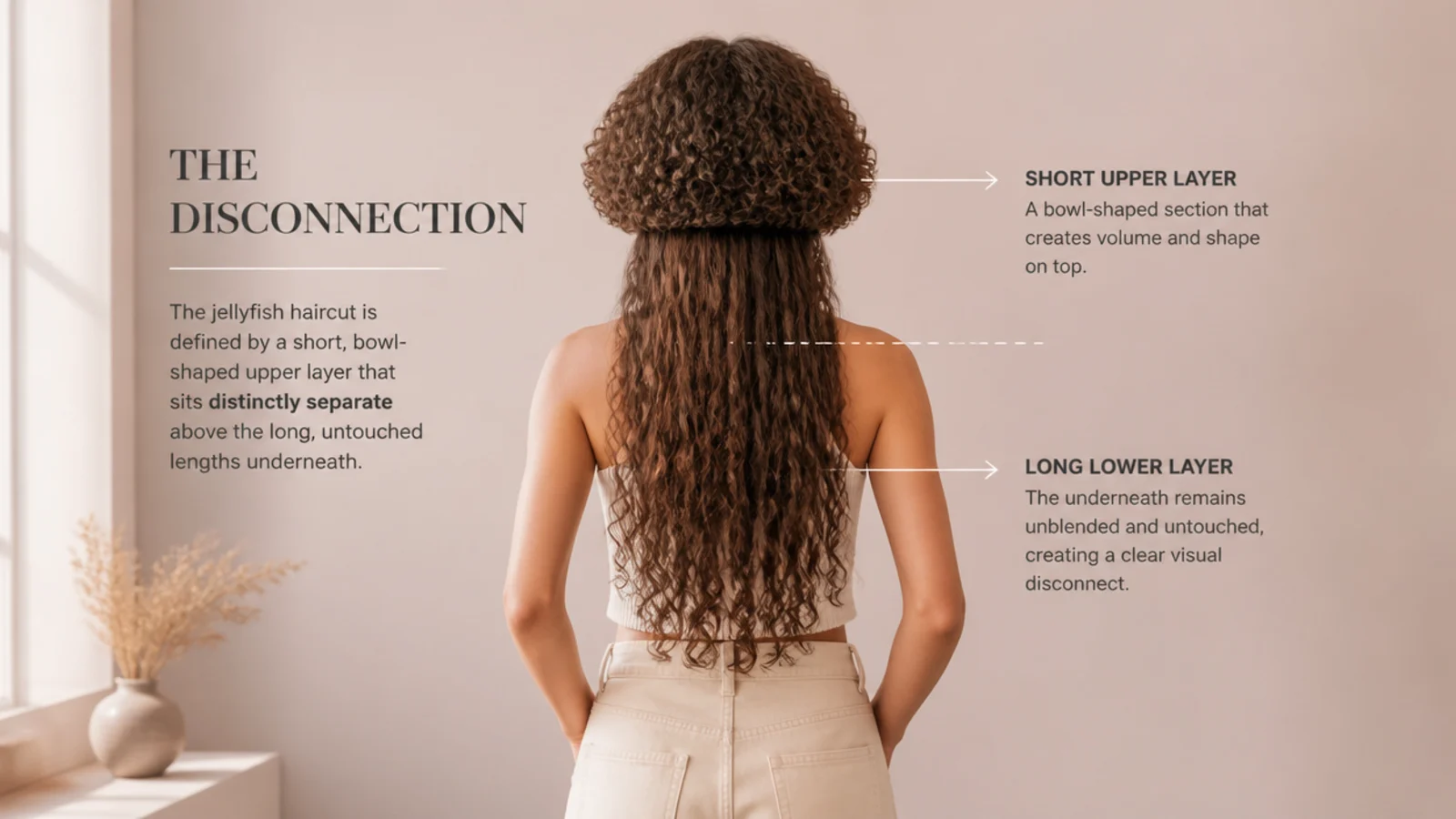
Two disconnected lengths on one head. A rounded bell of curl over a long under section, with a hard step between them and nothing blended across it.
Curl builds the dome for you. Straight hair needs a round brush to lift the bell away from the skull, while a spiral pattern does the same job on its own as it dries.
The shelf reads as density, not as an edge. On straight hair the disconnection is a line. On curls it is a mass of short springs sitting above a thinner fall of long ones.
It only works cut dry. Every decision about where the bell finishes depends on seeing where the curl actually sits when there is no water pulling it down.
Jellyfish Versus Wolf Versus Mullet
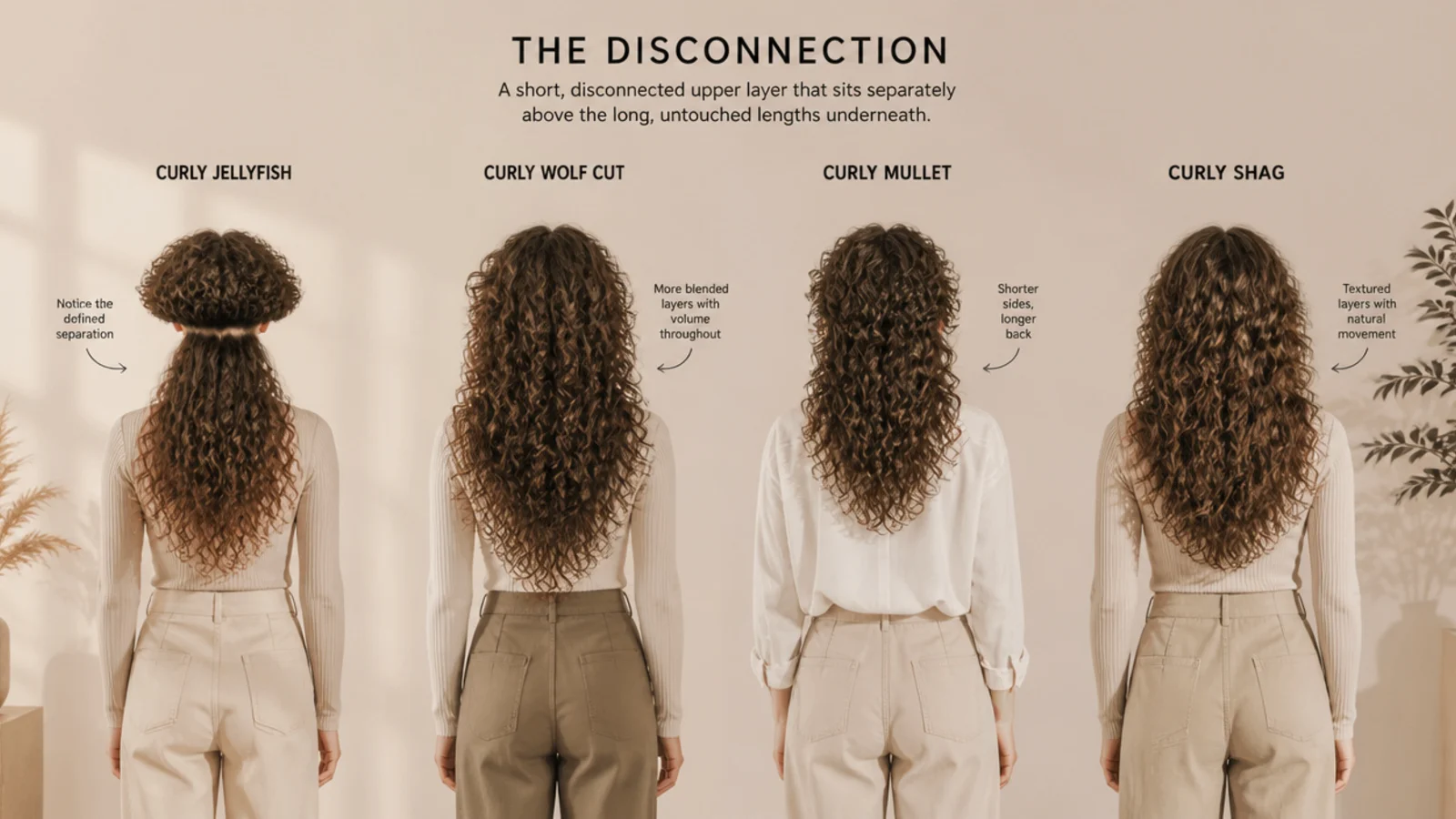
A wolf cut is blended by definition. Short crown layers fall into long ends through a gradient, and the gradient is the point of it.
A mullet moves weight front to back. Shorter at the sides, long at the back, with the change running along the head rather than around it.
A jellyfish separates top from bottom. One horizontal boundary around the whole head, held level, with no connecting layers anywhere.
On curls the wolf cut is the easy mistake. A stylist working with texture blends by default to avoid a visible shelf, so the word disconnected has to be said clearly and more than once.
Who Suits a Curly Jellyfish
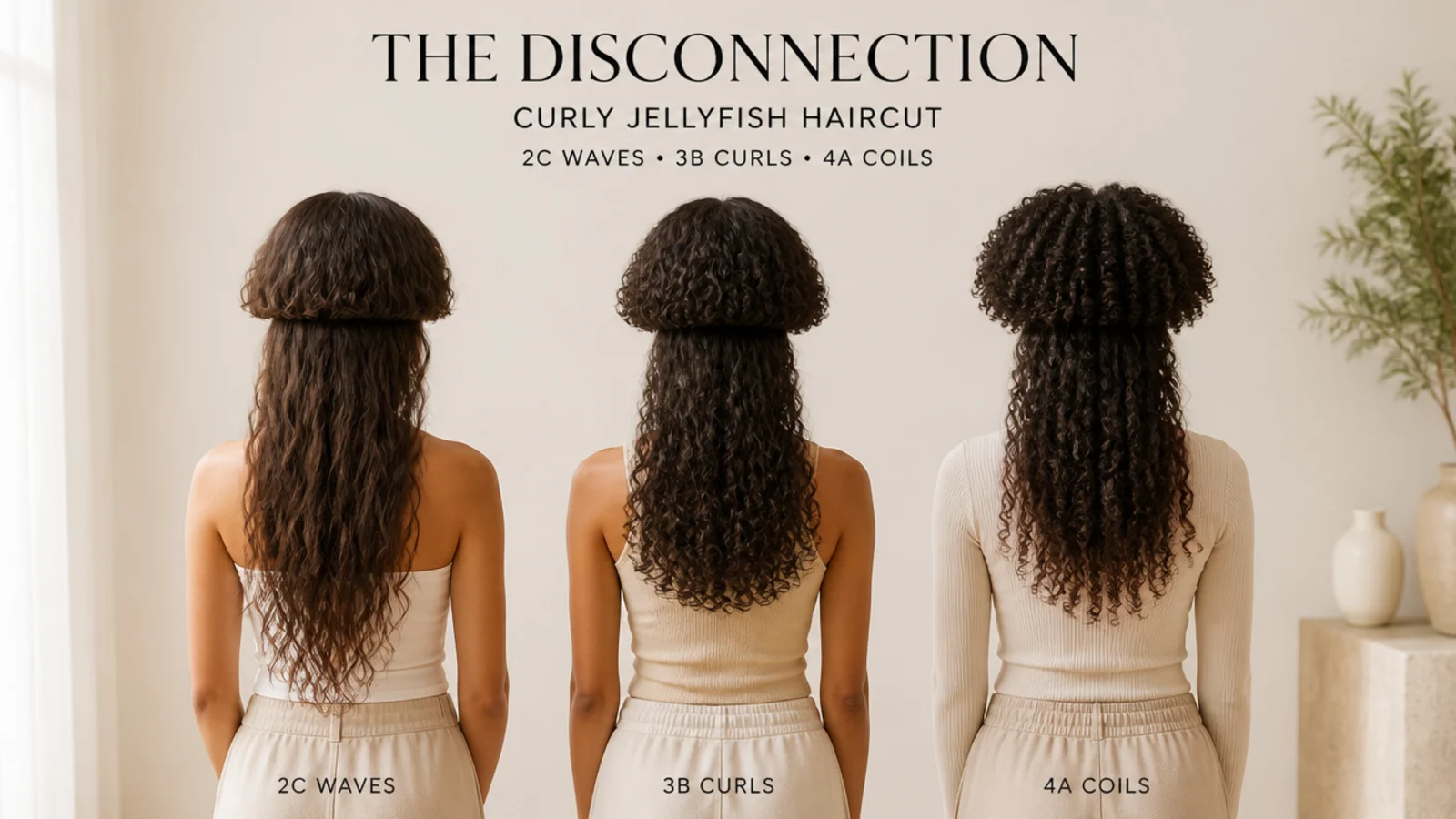
3A through 3C is the easiest range. Spirals in that band have enough spring to build a dome and enough weight to hang below it.
2C works with a blunter bell. A wave has less natural lift, so the perimeter has to be cut solid or the bell reads as a long fringe.
4A and tighter needs the bell left long. Coils that shrink by half arrive at the mirror far shorter than they left the scissors, so the cut length and the finished length are different numbers.
Density decides more than pattern does. A thin head of 3B curls makes a weaker bell than a dense head of 2C, because the bell only reads if the section looks solid.
Fine curls want no internal layering. Every strand ending at the same point is what stops the bell going see through, and see through is the one thing this shape cannot carry.
What to Ask Your Stylist For
Book a dry cut and arrive with your hair styled the way you wear it. Not washed that morning, and not stretched out.
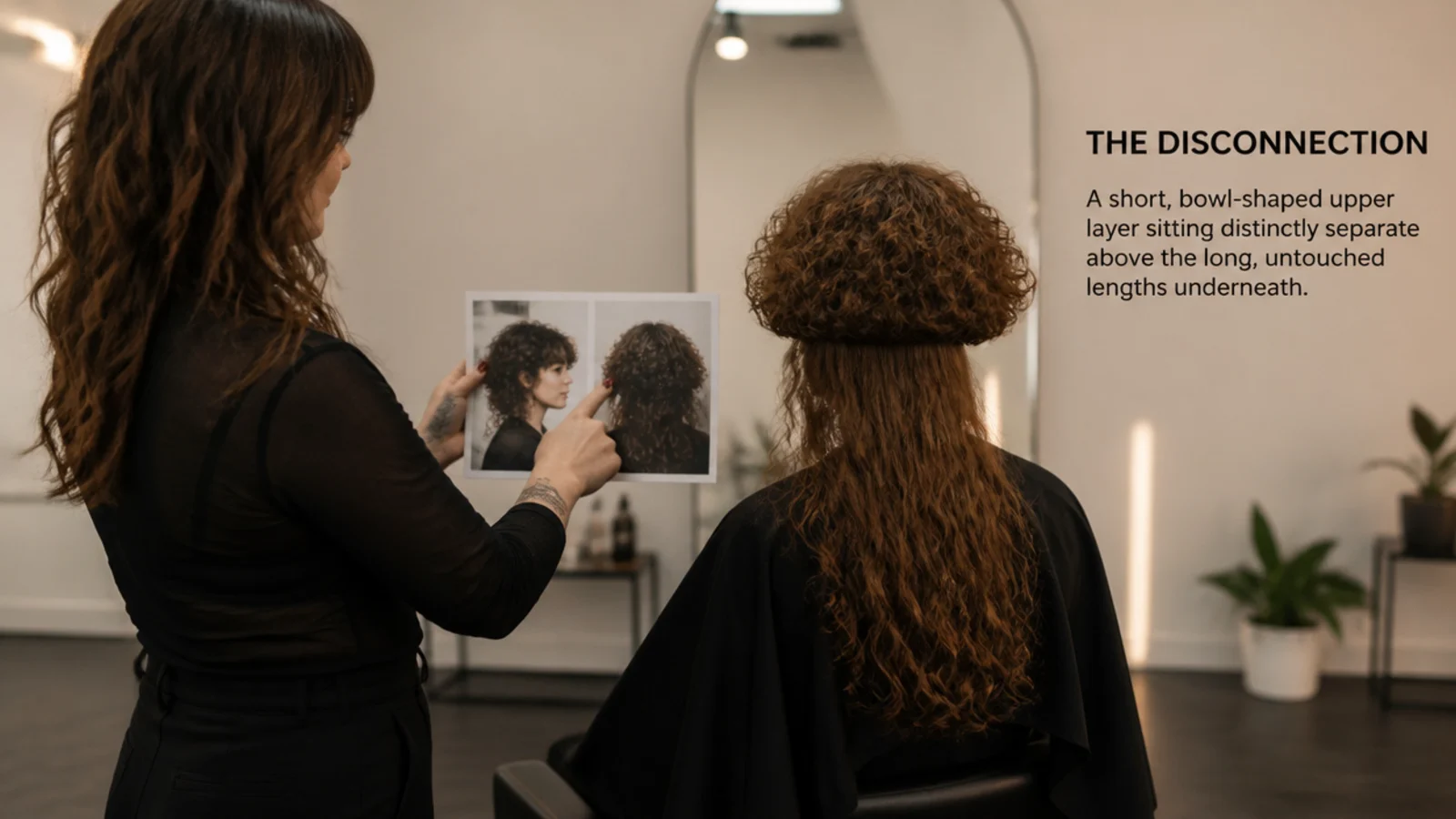
Say disconnected twice. Once when you describe the shape and once when the scissors reach the boundary between the two sections.
Name two points on your own body. Where the bell finishes and where the lengths finish, using your cheekbone, chin, collarbone or mid back rather than inches.
Ask for weight removed from inside the under section. Not thinned at the ends, which frays curls and makes them frizz at exactly the point you want them hanging smooth.
Styling the Bell and the Lengths
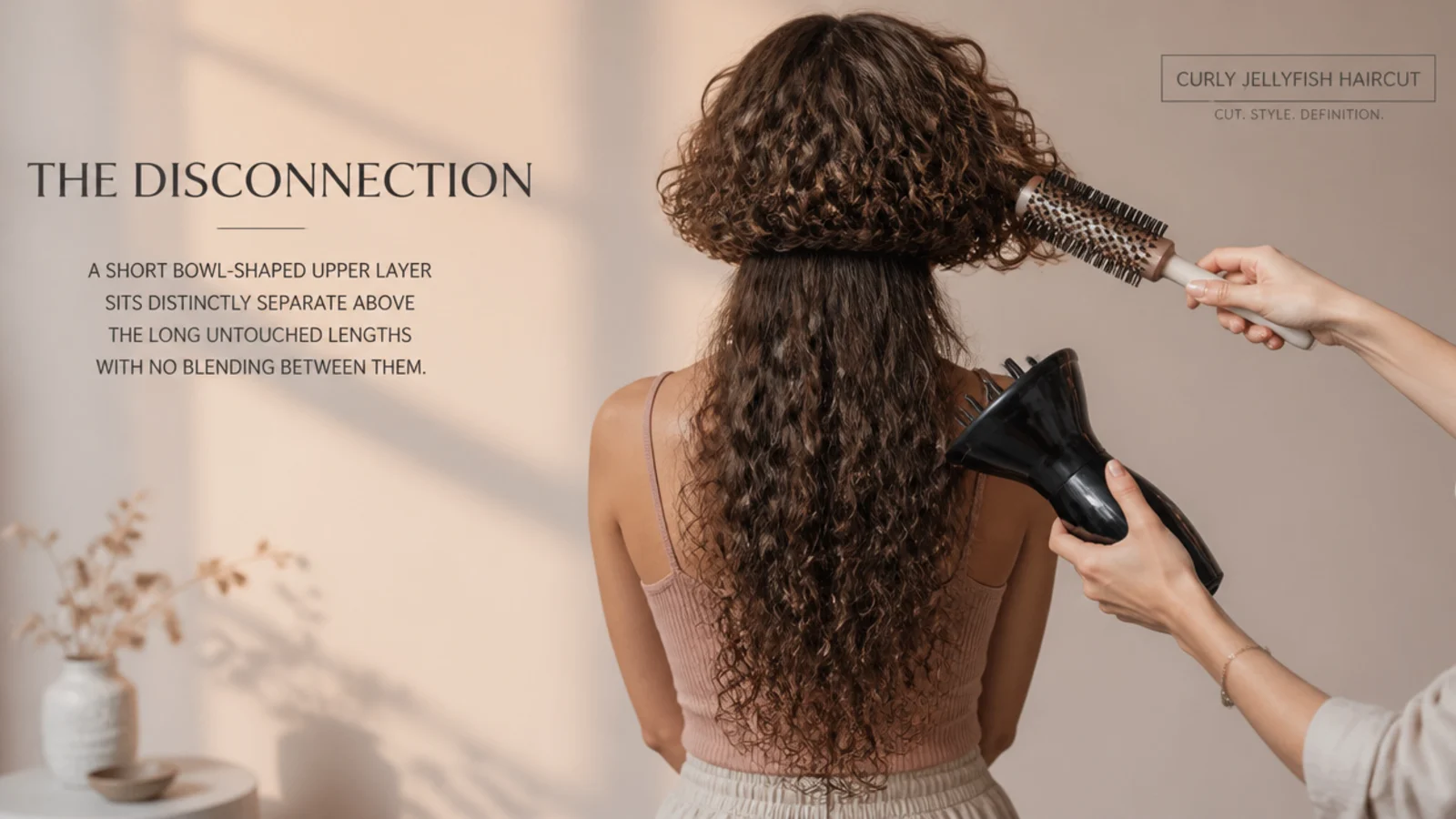
Define the bell and stretch the lengths. Contrast in texture reinforces contrast in length, and it is free.
Diffuse the bell first while the lengths are still wet. The bell sets the shape, and hair that dries last ends up wherever the hair that dried first pushed it.
Refresh only the bell between wash days. A little water and a light leave in on the top section brings the dome back without disturbing the section underneath.
Keep gel light on the bell and heavier below. Product weight is what drops a dome, and the same weight is what keeps the long section hanging straight.
Growing Out a Curly Jellyfish
Curl hides grow out better than any other texture. Hair grows roughly half an inch a month, and on a tight pattern most of that half inch disappears into the spring rather than showing as added length.
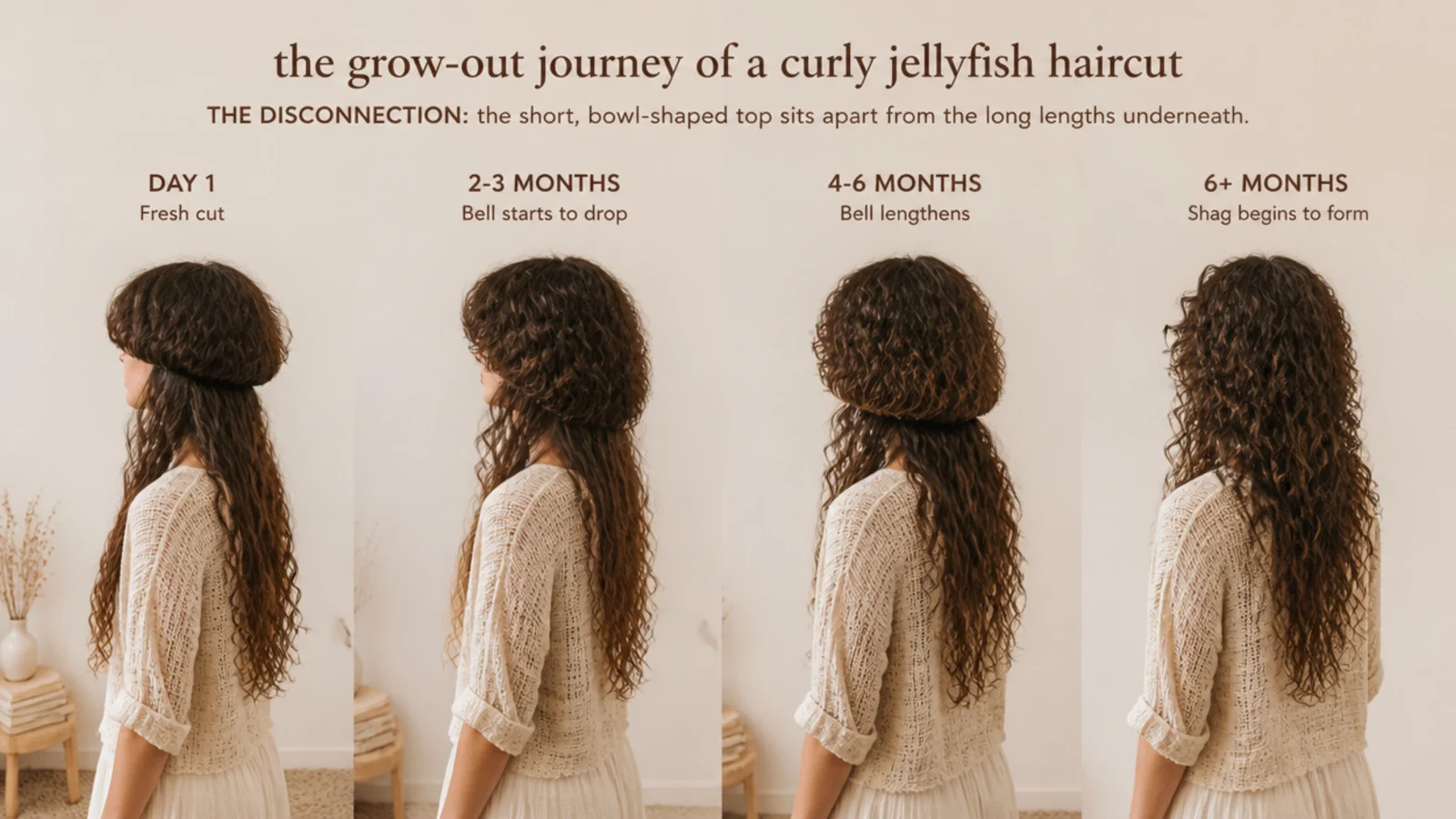
The bell widens before it drops. Extra length on a curl adds diameter to the dome first, so the earliest sign of an overdue trim is the shape getting rounder rather than longer.
Trim the bell every eight to ten weeks. Longer than a straight jellyfish needs, precisely because shrinkage swallows so much of the growth.
It grows out into a curly shag. Once the bell reaches the under section you have a layered shape rather than an awkward stage, which makes this one of the safer texture experiments.
The 15 Curly Jellyfish Haircut Ideas
1. 2C Chin Length Bell
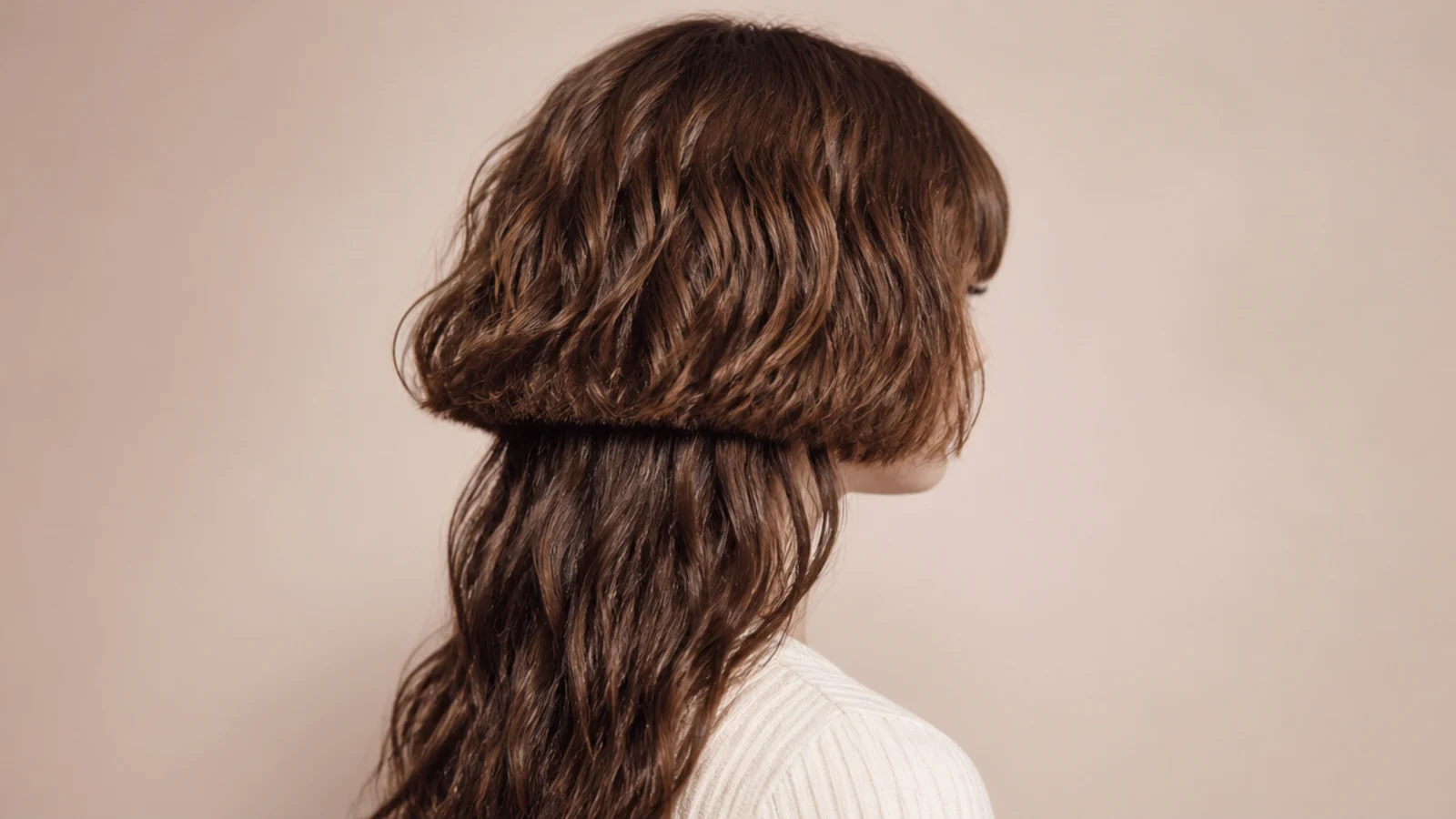
A 2C pattern is mostly wave with the occasional spiral, so it loses the least length as it dries and a chin bell stays close to the chin. The perimeter still needs cutting solid, because a wave has too little spring to build a dome on its own.
2. 3A Cheekbone Bell
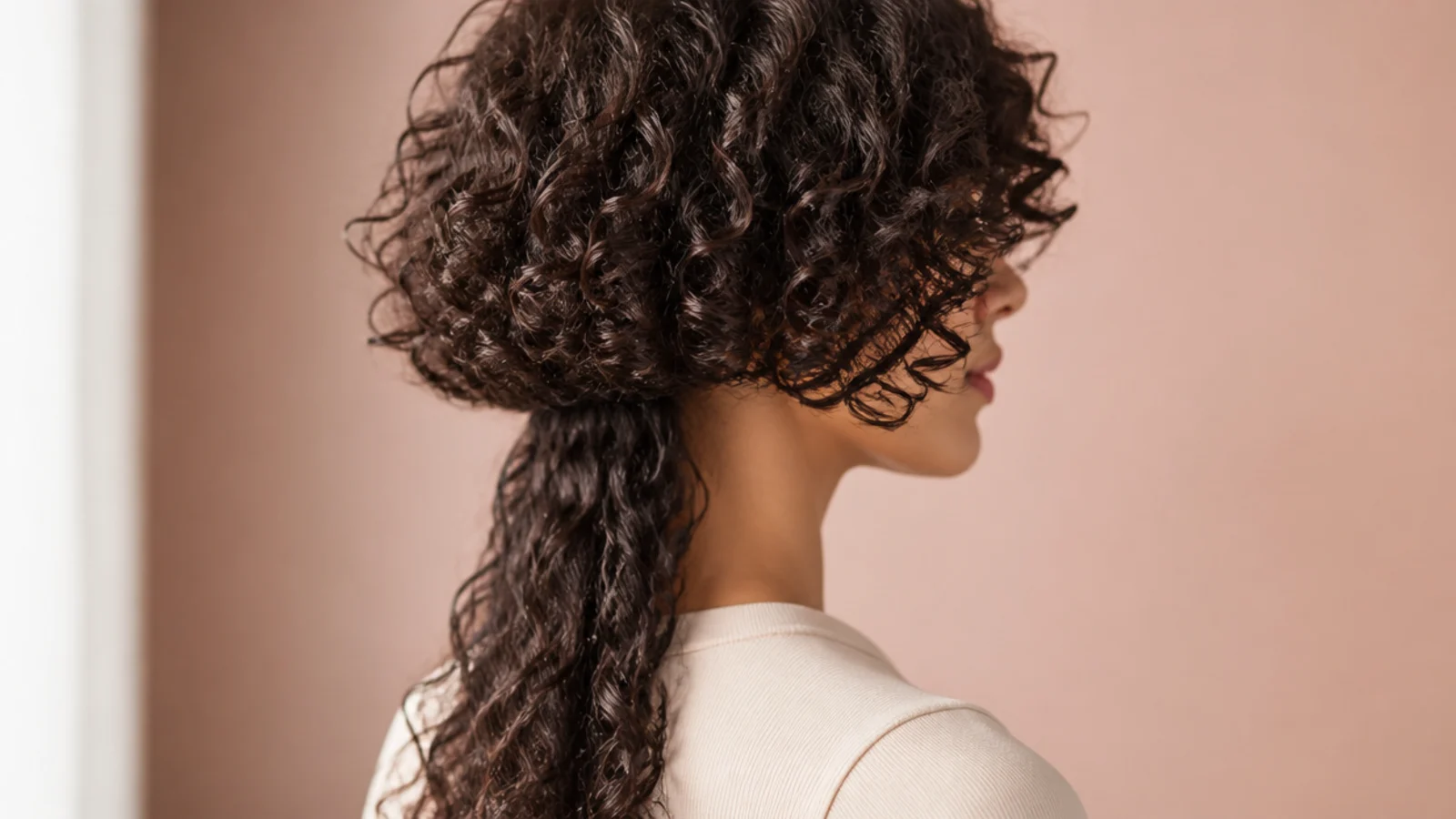
Large open spirals lift away from the skull without help, which is why 3A builds the cleanest dome of any pattern here. It also shrinks noticeably, so the bell is cut lower than the cheekbone and arrives at the cheekbone once it dries.
3. 3B Rounded Bowl
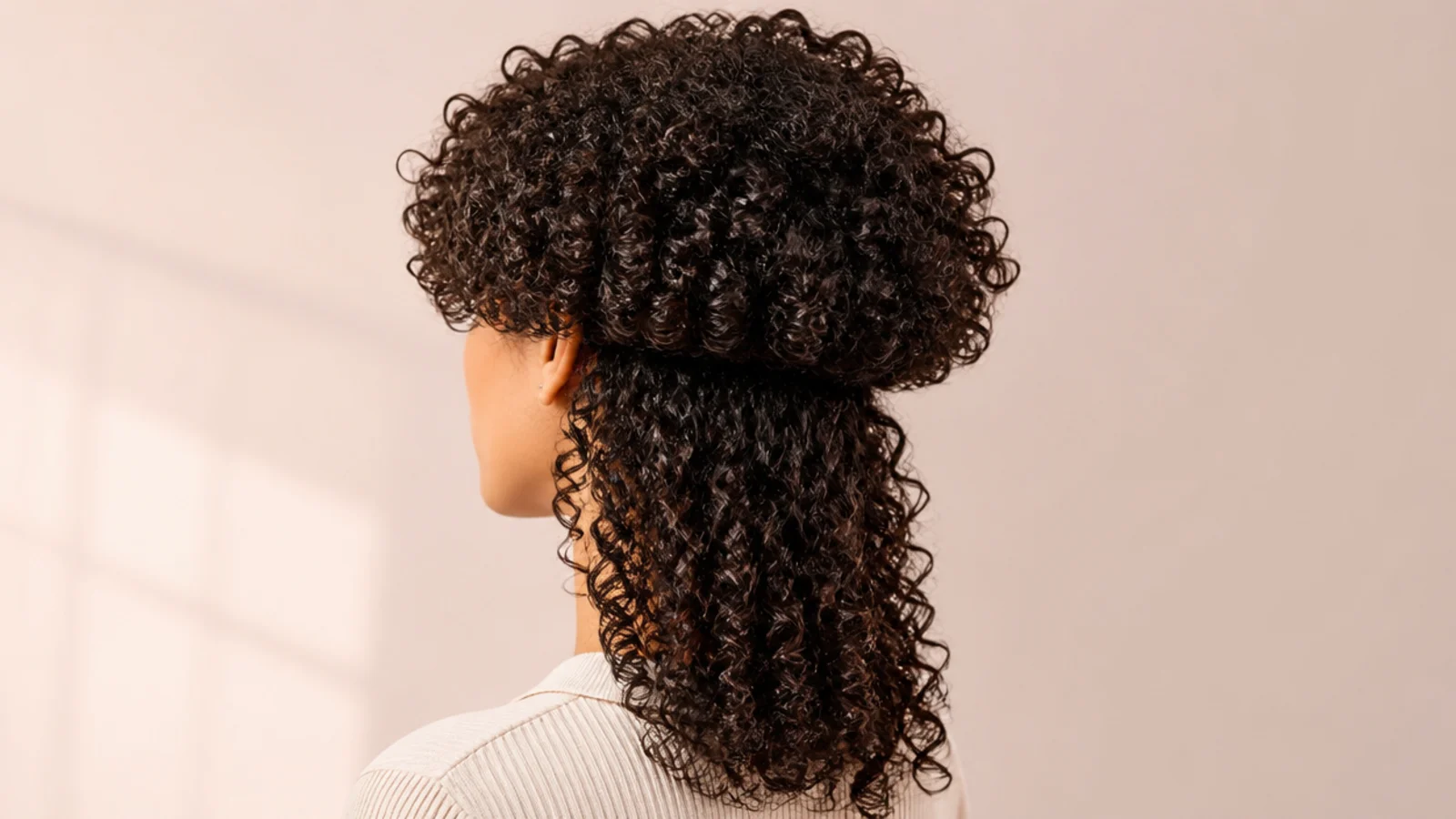
Springy ringlets around the width of a marker give the bell its most solid outline, because each ringlet ends at a slightly different point. The perimeter reads as a rounded mass rather than as a line, which is the softest version of the shelf.
4. 3C With a Side Part
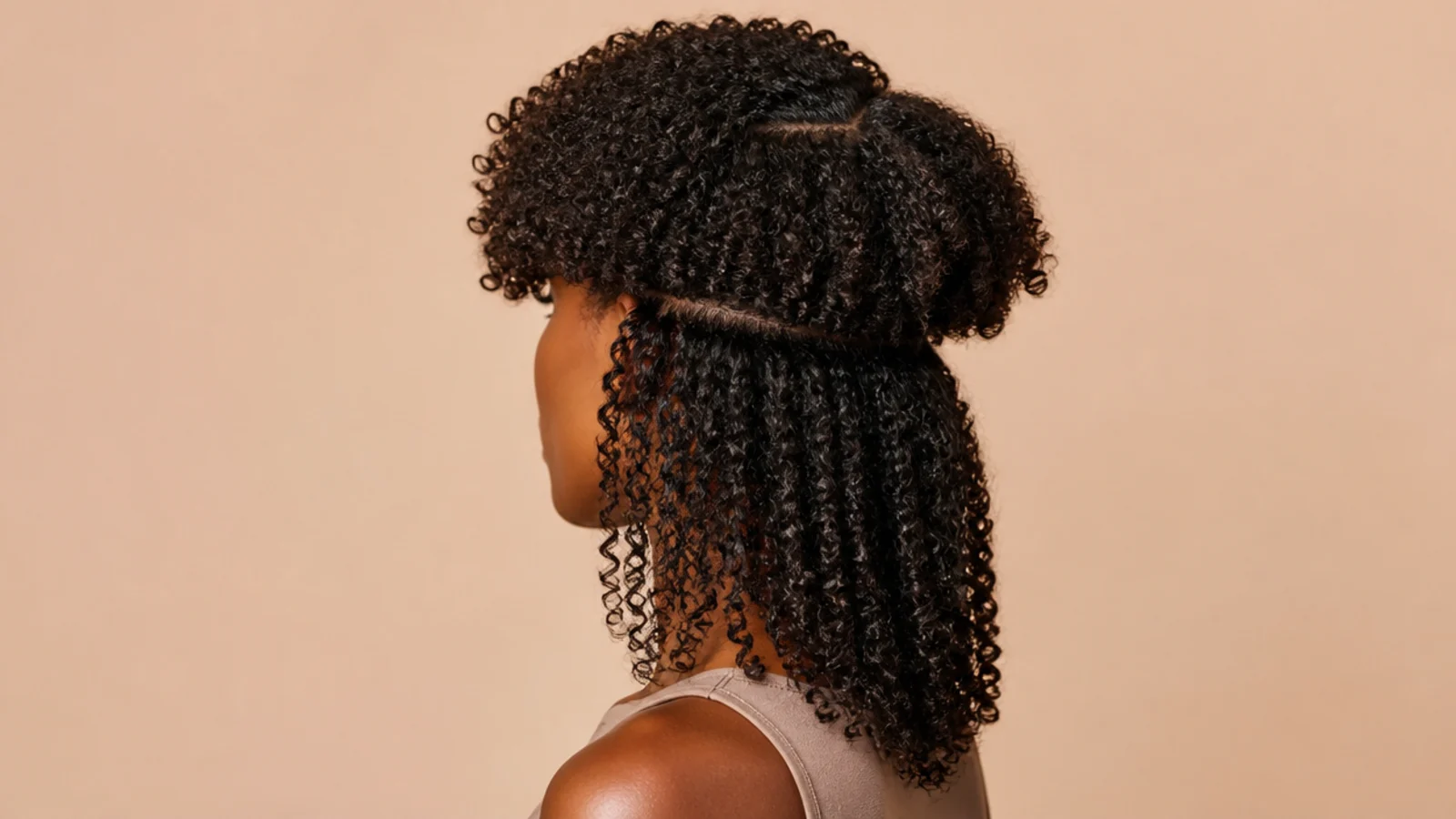
Tight corkscrews carry enough density that a side part builds real height at the crown, and on this shape that lift keeps the bell sitting above the shelf rather than collapsing onto it. Move the part a centimetre and the whole dome changes proportion.
5. 4A Tapered Bell
Coils this tight can lose half their wet length or more, so the bell is cut long and only becomes a bell once it dries. Tapering the underside of the section keeps the mass from stacking outward and turning the dome into a triangle.
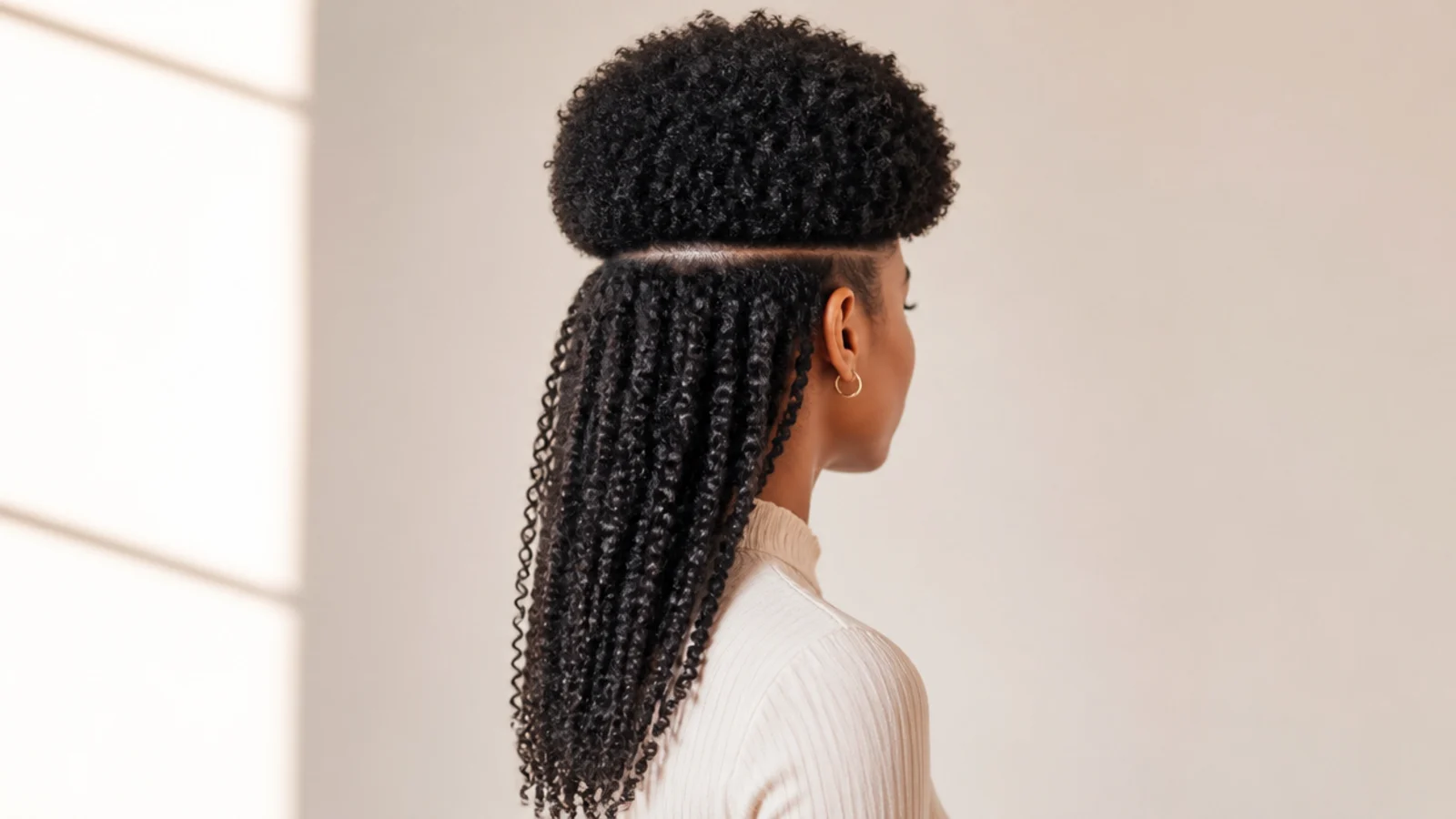
6. Short Bell for a Round Face
On curls the width of the bell matters more than its height, because a dome adds volume at the sides where a straight bob would only add a line. Keeping the sides cut close is what lets a short bell work on a rounder face at all.
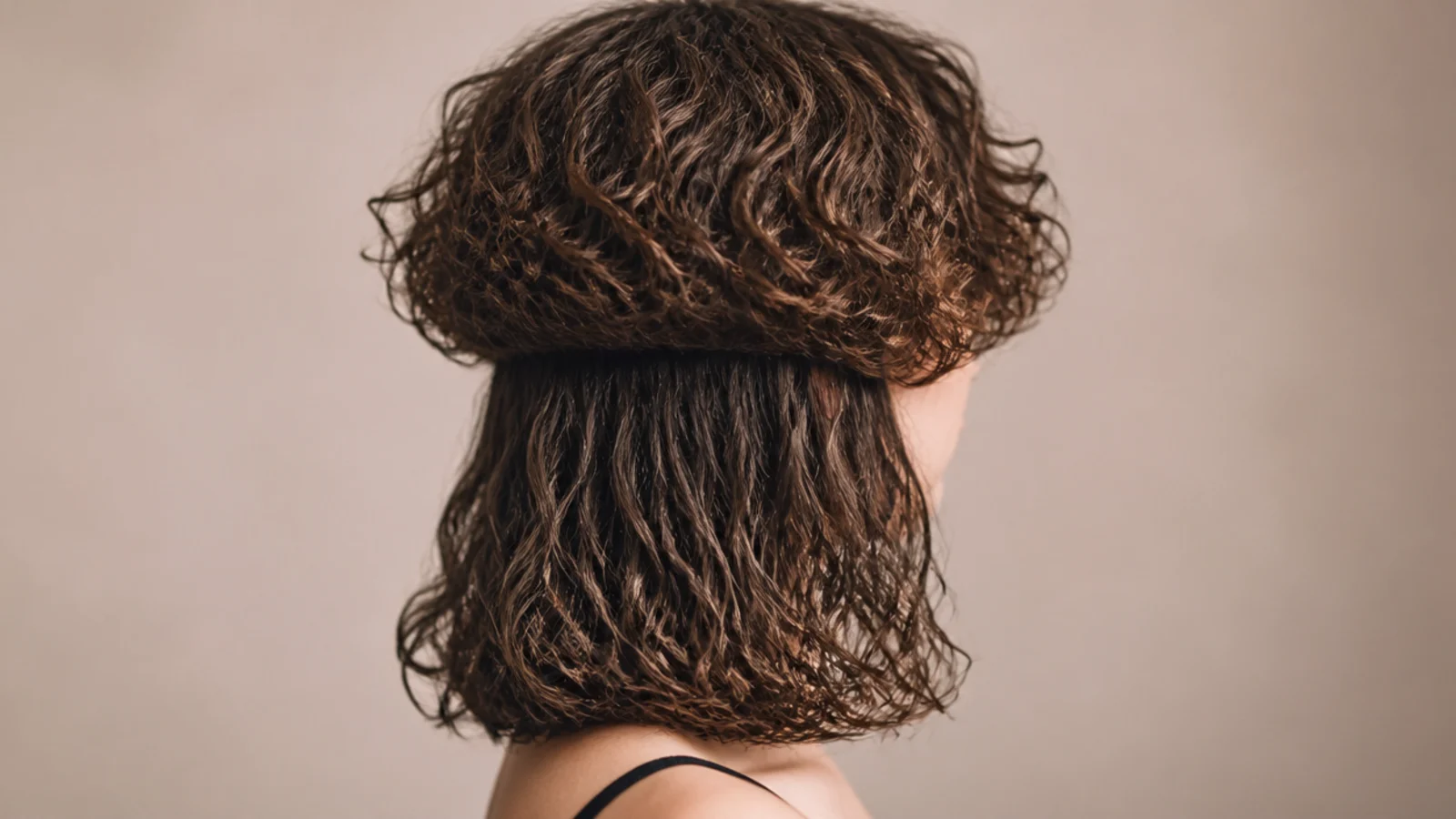
7. Long Lengths to Mid Back
Length adds weight and weight stretches curl, so the further the under section falls the looser and straighter it hangs. That gives you a strong texture contrast against a tight bell without touching either section with heat.
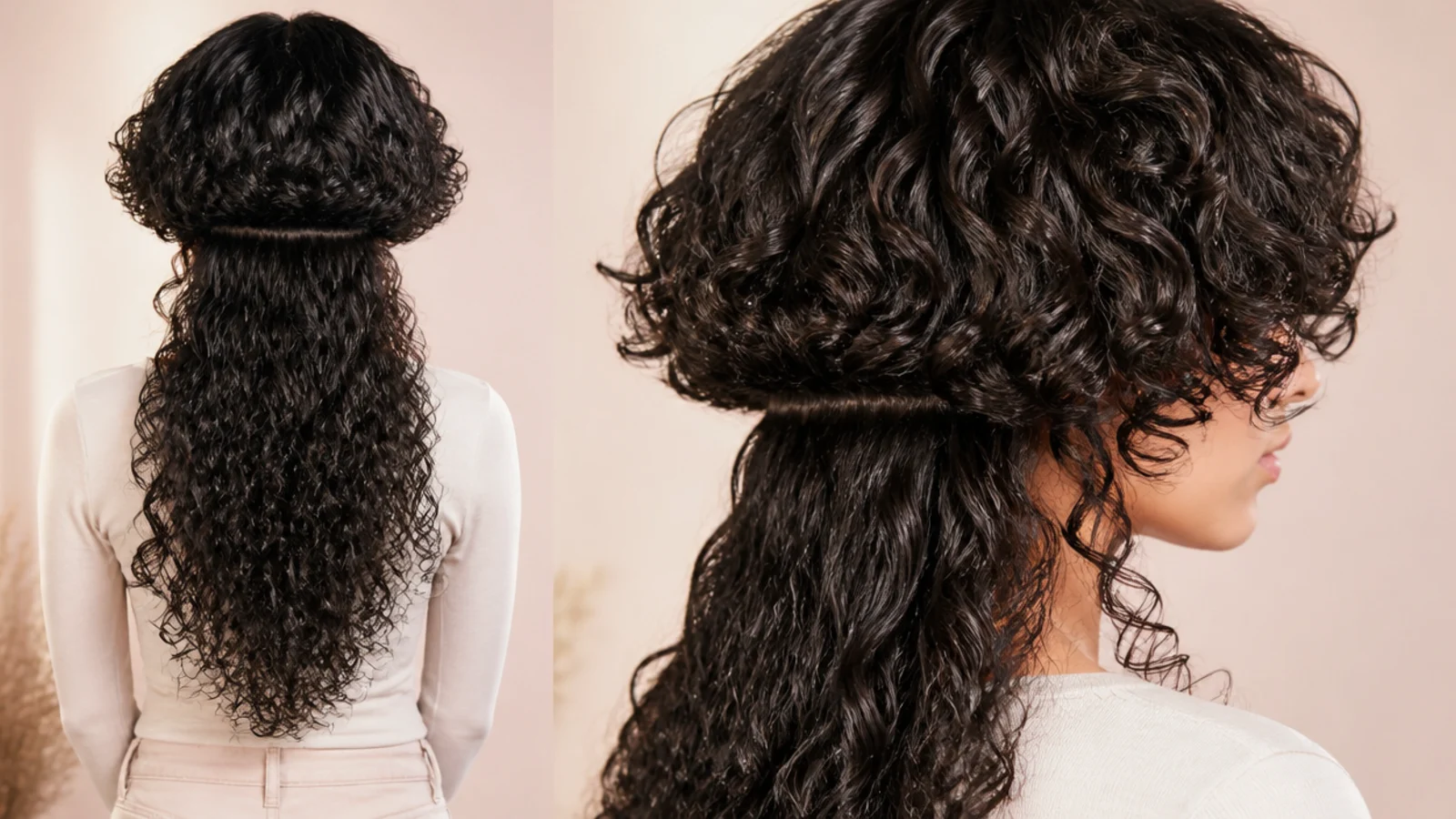
8. Curtain Bangs
Curly curtain bangs have to be cut one spiral at a time in their dry position, because a fringe cut as a straight ribbon springs up to a much shorter length the moment it is released. Expect the stylist to work slowly here and let them.
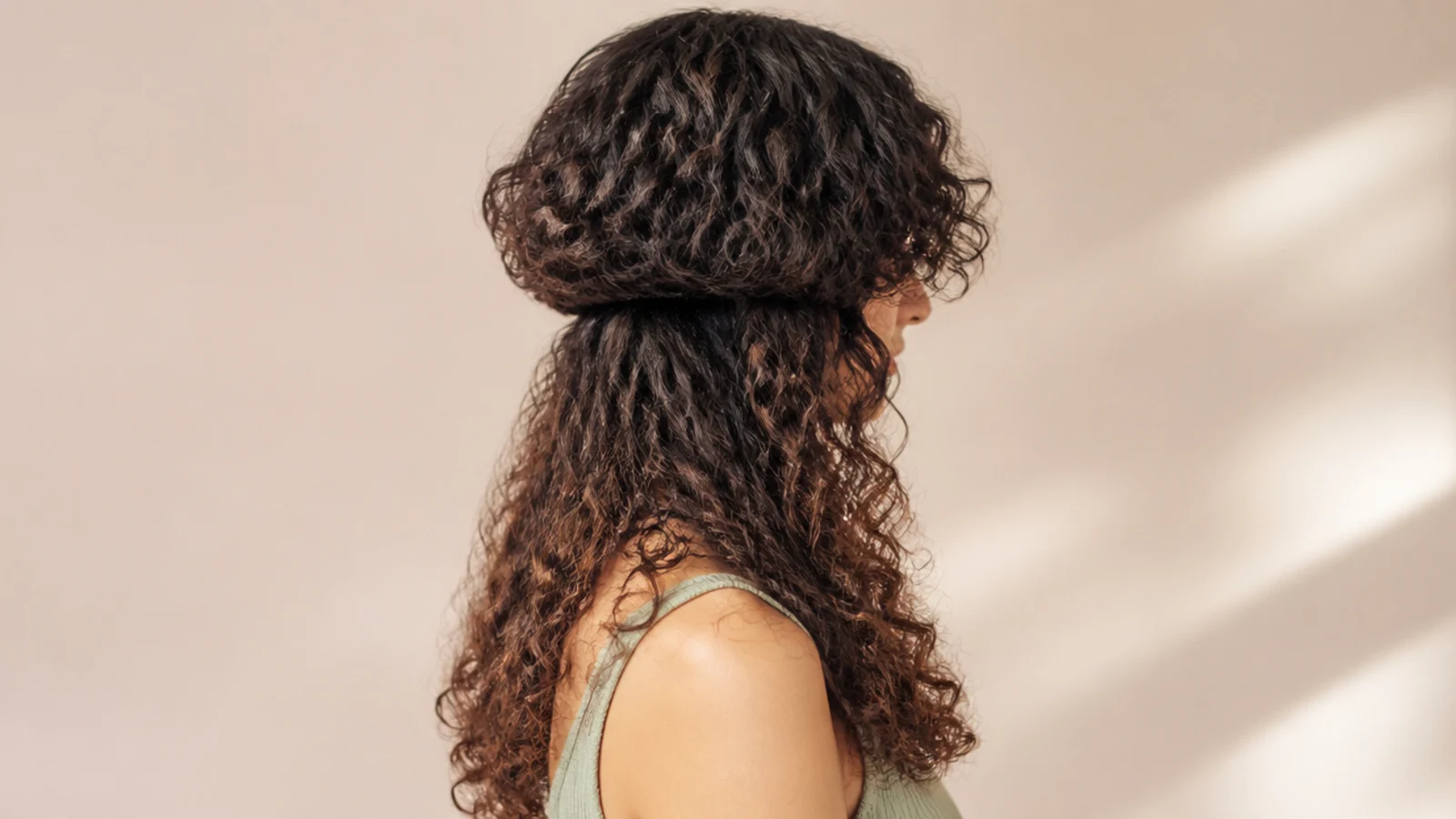
9. Hime Side Panels
Two straight side panels beside a curly bell need cutting to the same dry length on both sides, and the contrast between a defined panel and a curly mass is what makes hime read on texture. Straightening the panels only is enough.
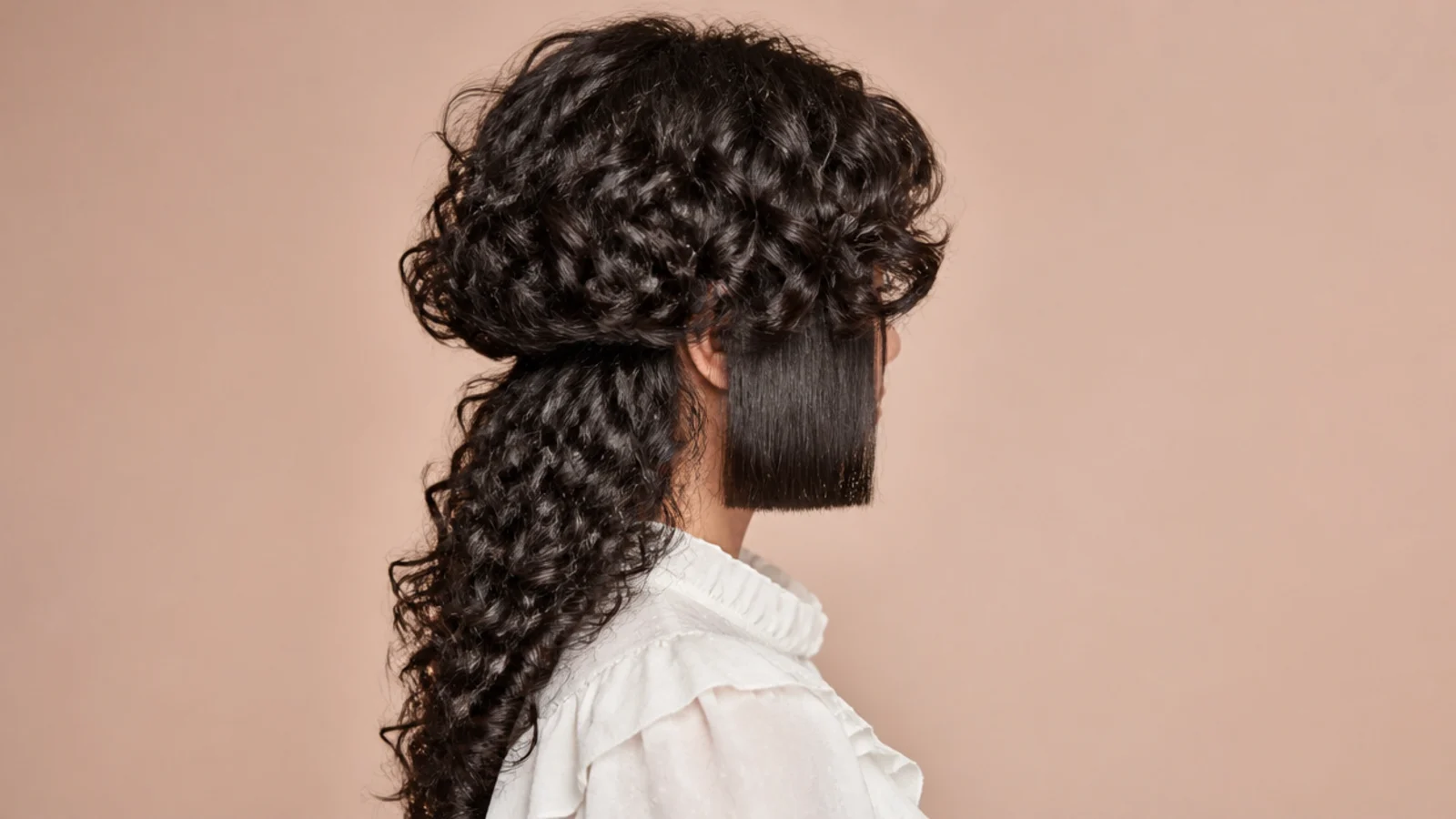
10. Hidden Undercut
Taking bulk out under the curls at the nape lets the long section hang instead of stacking outward across the shoulders. On dense curls this is often the single change that stops the whole silhouette going pyramidal.
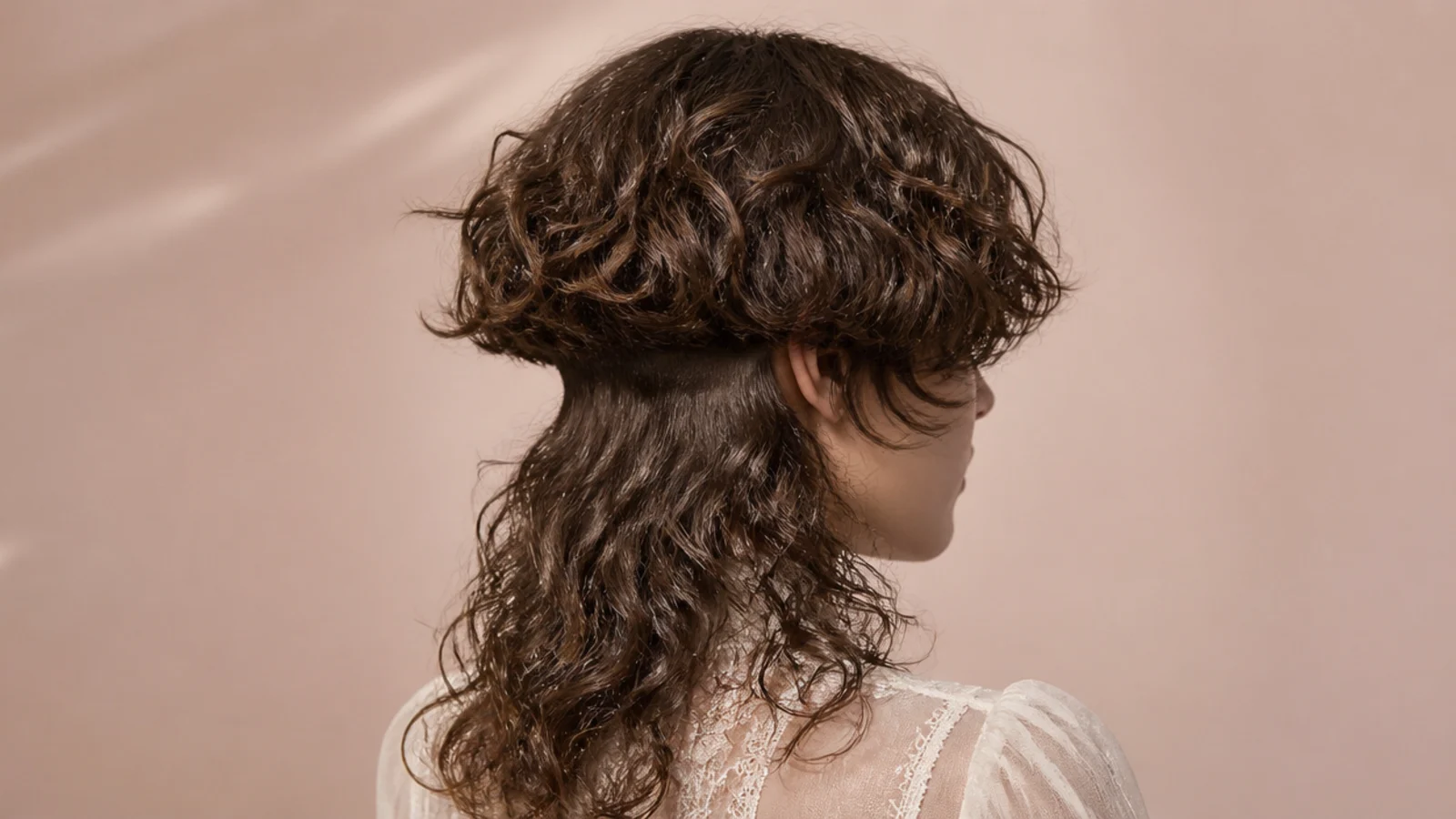
11. Platinum Bell
Lightener breaks bonds inside the hair, and a curl held in shape by those bonds relaxes when they go, so a bleached bell sits at a looser pattern than the lengths below it. That difference in pattern strengthens the separation between the two sections.
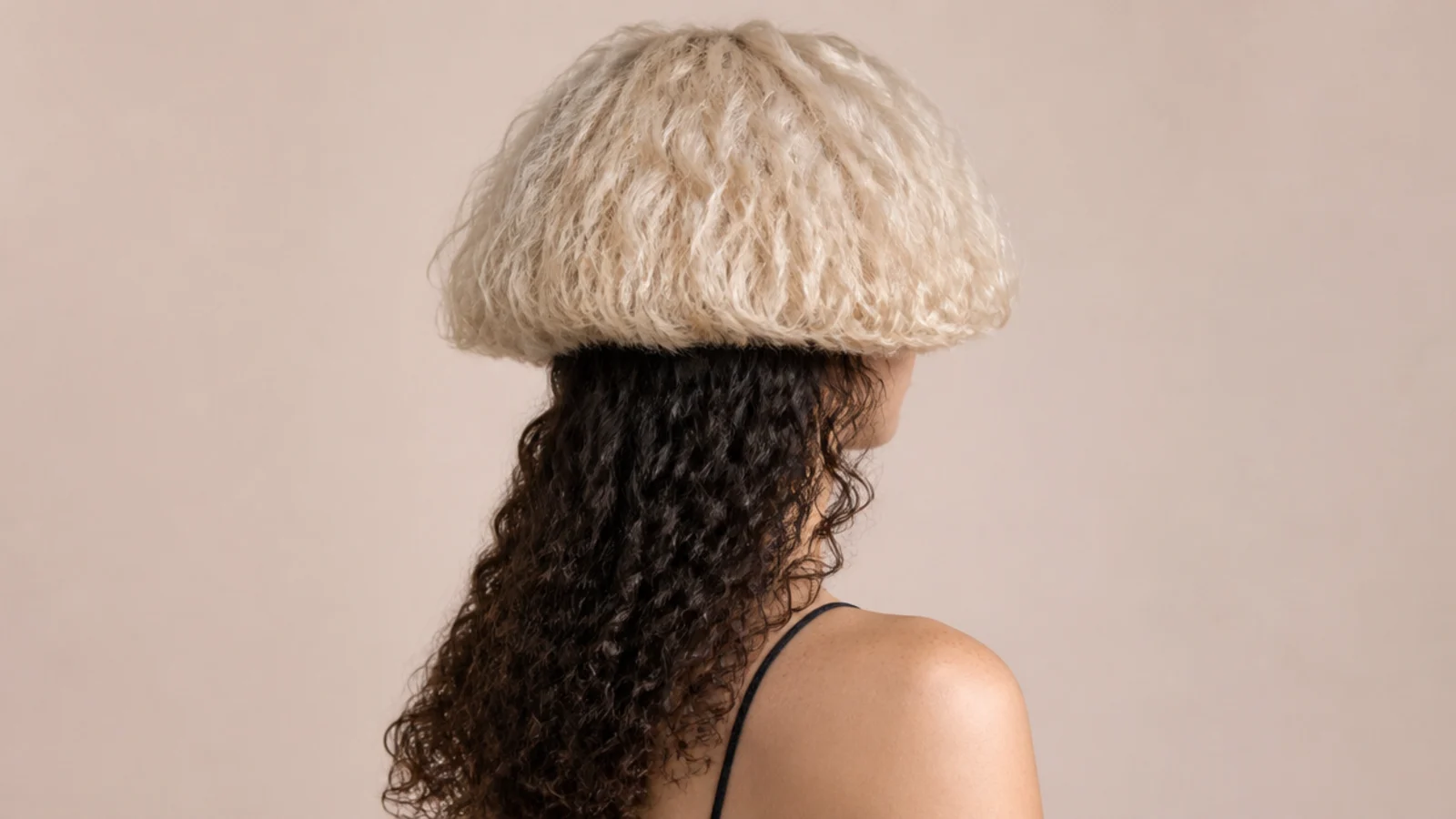
12. Copper on Olive Skin
Copper reaches its shade with far less lift than any blonde, which means the curl pattern comes through the process largely intact. On olive undertones the warmth also stays readable in low light, where cooler shades flatten out.
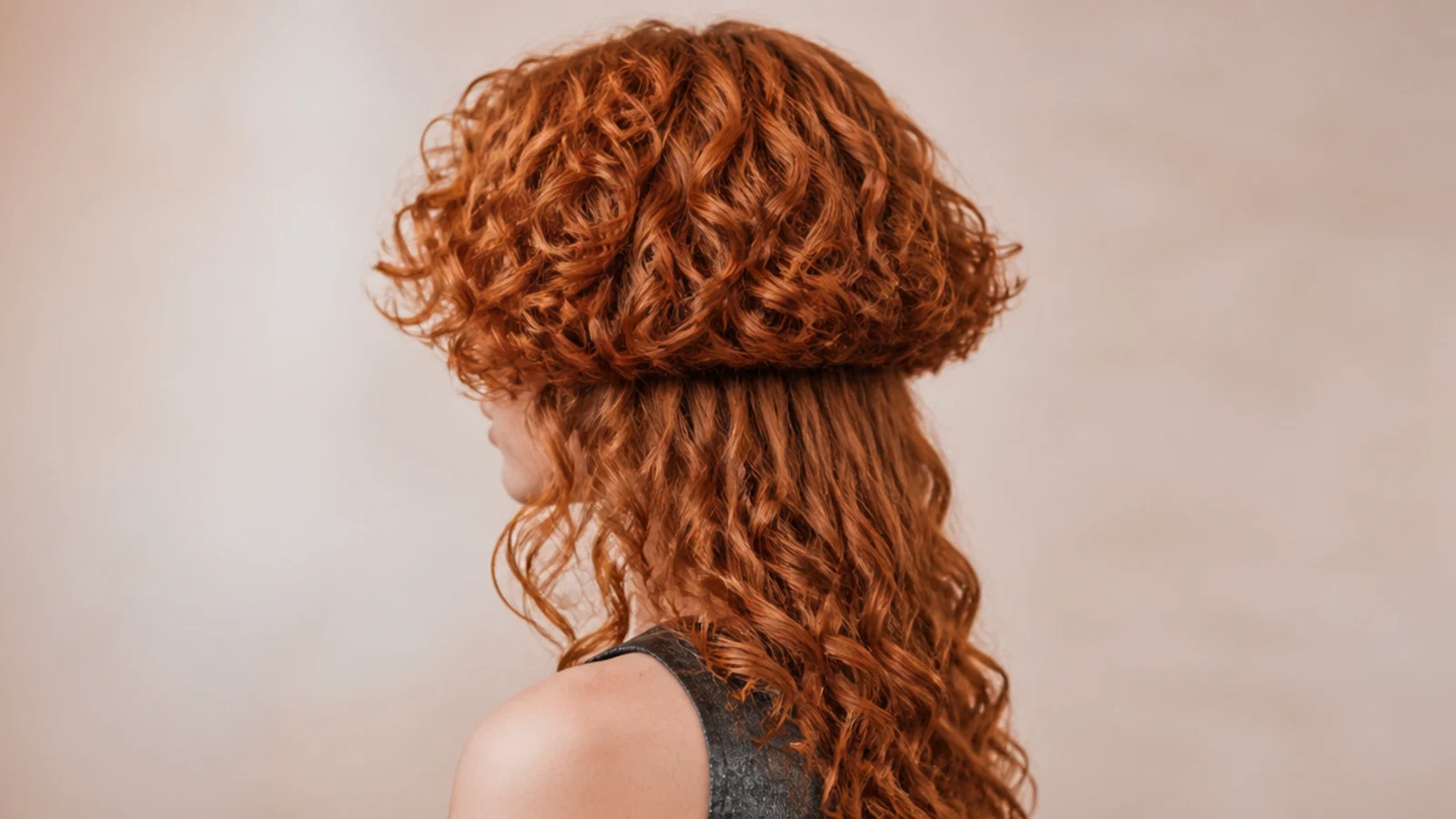
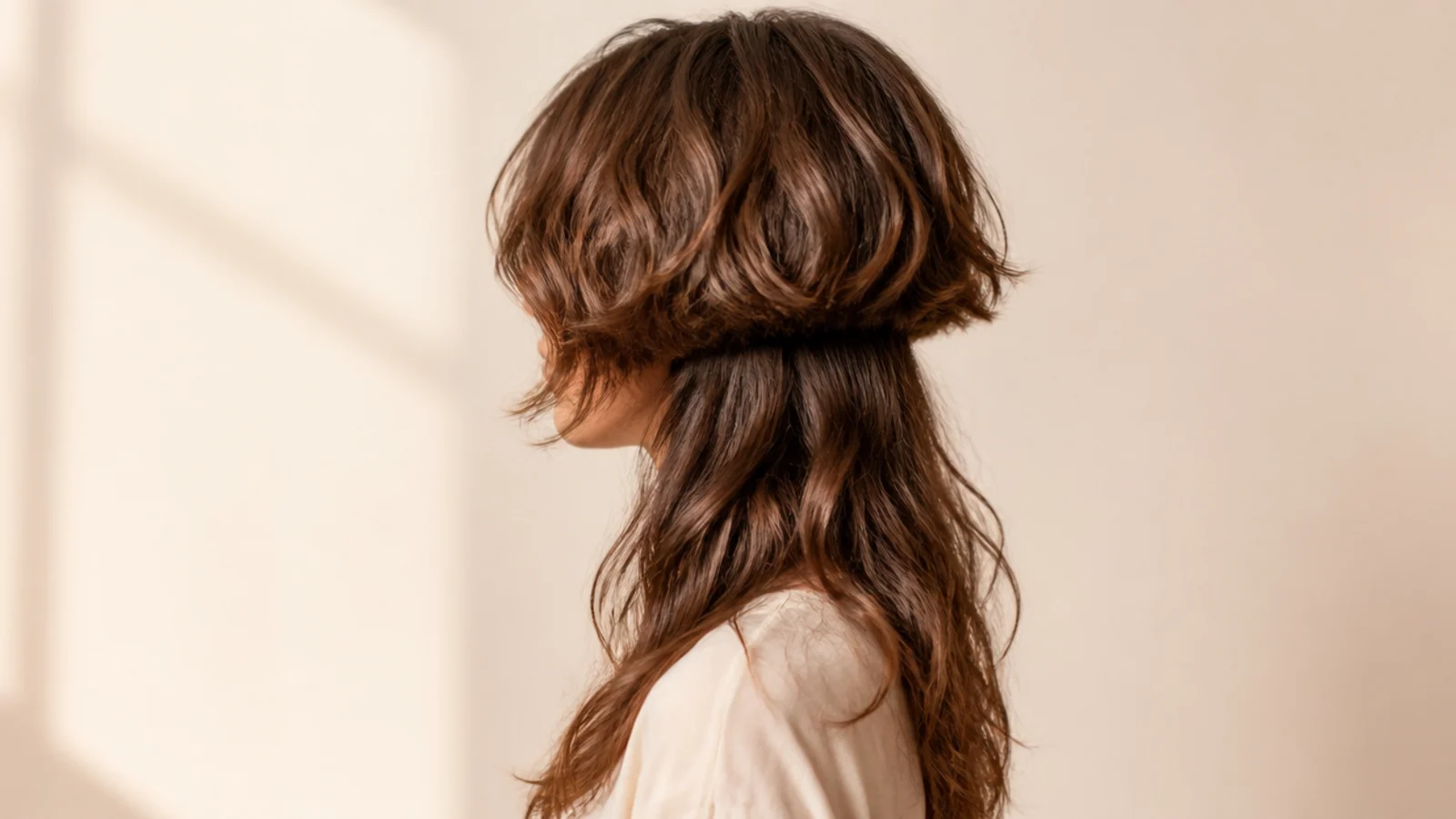
13. Fine Wavy
Fine curls carry almost no weight, so the bell has to be cut blunt with no internal layering at all or the section turns see through and the shelf stops existing. Every strand ending at the same point is what reads as density here.
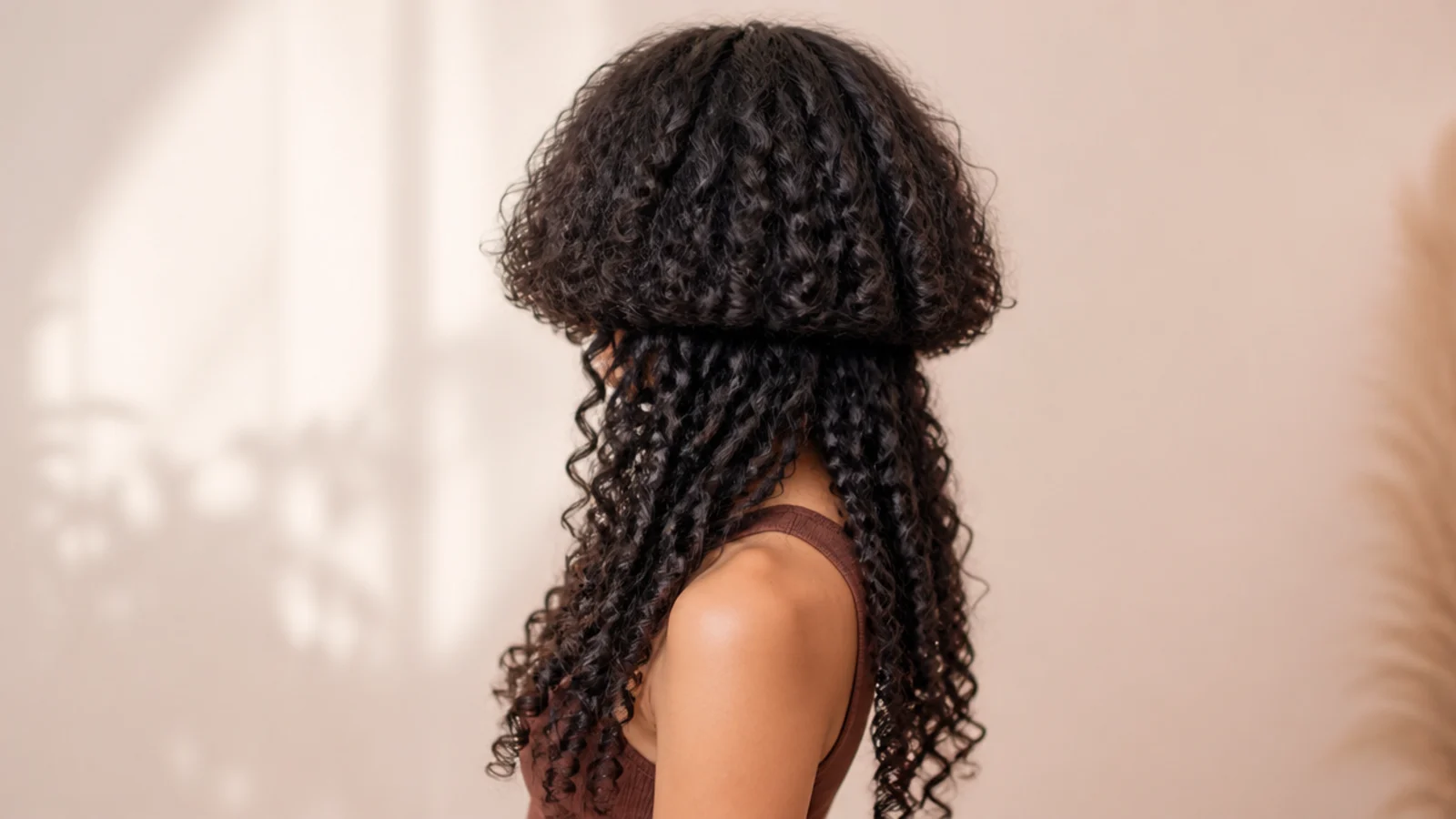
14. Thick Coarse
Dense coarse curl makes the strongest bell available, but the under section has to be thinned internally or the two masses meet and read as one enormous shape. The thinning goes in the interior, never at the ends.
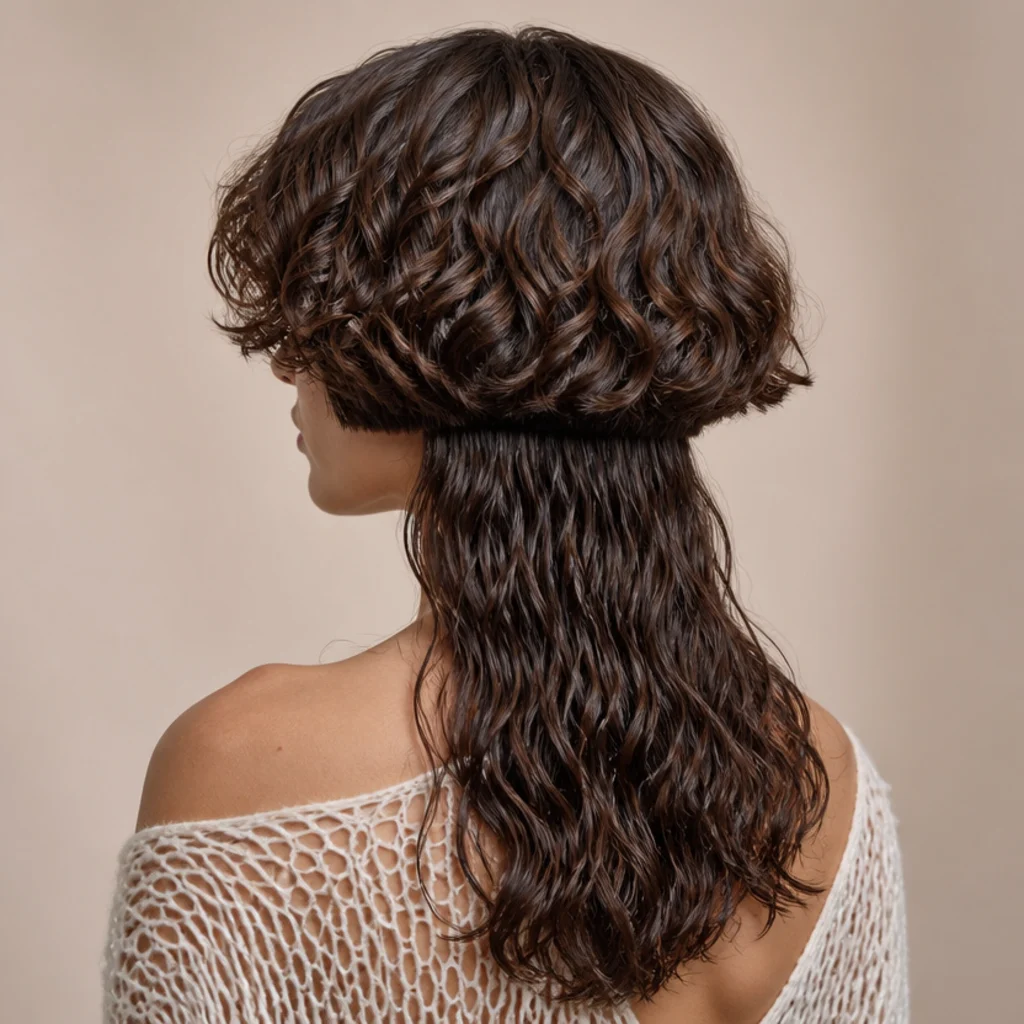
15. Blunt Bell for a Square Face
A rounded curly perimeter reads as contrast against an angular jaw, where a straight bowl line would simply repeat it. On curls, blunt means every curl cut to the same dry point rather than a straight line drawn through the section.
Final Thoughts
Book the appointment as a dry cut and describe the shape twice, because those two things fix the two ways this cut usually fails. Everything else on this page is a preference, but a wet cut on curl and a blended boundary are mistakes you have to grow out rather than correct.
For the shape on every texture see the jellyfish haircut guide, and for the softer blended relative see the curly shag haircut. More in Mullet and Wolf Cuts.