25 Gorgeous Curly Shag Haircut Ideas For Big Volume
Twenty five curly shags, and the single decision behind all of them — how high the shortest layer sits. That height is what props the curls beneath it up, and it is also what turns the shape into a triangle if it goes wrong.
In this article · 32
- Why a Curly Shag Builds Volume
- Choosing Your Layer Depth
- The 25 Curly Shag Haircut Ideas
- 1. Classic Curly Shag
- 2. Short Curly Shag
- 3. Medium Curly Shag
- 4. Long Curly Shag
- 5. Curly Shag With a Curtain Fringe
- 6. Curly Shag With a Micro Fringe
- 7. Curly Shag on Loose Waves
- 8. Curly Shag on Spiral Curls
- 9. Curly Shag on Tight Coils
- 10. Curly Shag With a Rounded Crown
- 11. Curly Shag Cut Dry
- 12. Curly Shag With Invisible Layers
- 13. Curly Shag With Heavy Layers
- 14. Curly Shag Bob
- 15. Curly Shag Mullet
- 16. Curly Shag Wolf Cut
- 17. Curly Shag on Fine Curls
- 18. Curly Shag on Dense Curls
- 19. Curly Shag With a Tapered Perimeter
- 20. Curly Shag With a Blunt Perimeter
- 21. Curly Shag With Face Framing Layers
- 22. Curly Shag With Balayage
- 23. Curly Shag for Round Faces
- 24. Curly Shag for Long Faces
- 25. Curly Shag at Twelve Weeks
- Styling and Upkeep
- Mistakes to Avoid
- FAQ
- Final Thoughts
A curly shag goes wrong in one of two directions: flat at the roots because the layers are too long, or triangular at the jaw because they all stop at the same height.
The volume is mechanical, not textural. Short crown layers rest on the longer ones beneath them and hold them off the scalp. That support is the lift.
Curl shrinks by about half as it dries. Any layer measured wet lands somewhere you did not choose, which is why this cut is done dry.
Why a Curly Shag Builds Volume
Short layers prop up long ones. A layer cut at the crown physically sits on the section below it, and that is where root lift comes from on curly hair.
Weight is the enemy of curl pattern. A curl that is carrying too much length below it straightens out under its own weight, so removing that weight lets the pattern return.
Density collects where layers stop. Every layer line leaves a band of bulk at its own height, which is why spreading the stack matters more than how short it goes.
A shag layers the whole head. That is what separates it from a mullet, which keeps a deliberate gap between a short front and a long back rather than a continuous gradient.

Choosing Your Layer Depth
Set the shortest layer by your curl pattern. Tighter curl shrinks more, so the same layer height reads much shorter on a coil than on a wave.
Spread the stack, do not stack it. Layers ending at three different heights distribute the bulk; layers ending at one height concentrate it into a shelf.
Keep the perimeter for density if your curls are fine. The outline is the only place density registers, and a heavily tapered perimeter on fine curls leaves stringy ends.
Say dry cut when you book. It takes longer and is charged accordingly, and it is the difference between the length you asked for and the length you get.
The 25 Curly Shag Haircut Ideas
1. Classic Curly Shag
Layers running from the crown to the ends in a continuous gradient, with the shortest sitting a few inches from the root. It is the version the whole family of cuts descends from, and the continuous gradient is what stops any single layer line from becoming a visible shelf.
2. Short Curly Shag
Cut to the jaw or above, which is where curl behaves best because there is almost no length left to pull the pattern straight. Related shapes for men are covered in the short curly haircut guide, and the same weight logic applies to both.

3. Medium Curly Shag
Perimeter at the collarbone, layers starting at the cheekbone. It is the length where a curly shag is most balanced, because there is enough weight to hold a shape but not so much that the curls at the back stretch out under it.

4. Long Curly Shag
Length past the shoulder blades with the layer stack spread over the full distance. Long curly hair carries real weight, so the layers have to start higher than most people expect simply to prevent the crown flattening under what hangs below it.

5. Curly Shag With a Curtain Fringe
The front split down the centre and swept both ways into the face framing layers. A curtain grows sideways rather than down into the eyes, so on curly hair it stays wearable for around ten weeks where a blunt fringe needs a trim in four.

6. Curly Shag With a Micro Fringe
A very short fringe sitting well above the brow. It has to be cut allowing for shrinkage twice over, because a short curl draws up proportionally the same amount as a long one but has far less length to give.

7. Curly Shag on Loose Waves
Waves shrink least of any pattern, so layers land close to where they were cut. The tradeoff is that a loose wave has little natural spring, so the lift has to come from the layer stack rather than from the pattern itself.

8. Curly Shag on Spiral Curls
A defined spiral holds a layer line clearly, which makes this the pattern that shows the cut best. It also shrinks close to half, so every layer has to be placed with that allowance built in before the scissors move.

9. Curly Shag on Tight Coils
Shape rather than length is what registers, so the cut is built as a silhouette and checked from a distance. Cutting under tension pulls a coil almost straight, and the released length lands far shorter than the mirror showed a moment earlier.
10. Curly Shag With a Rounded Crown
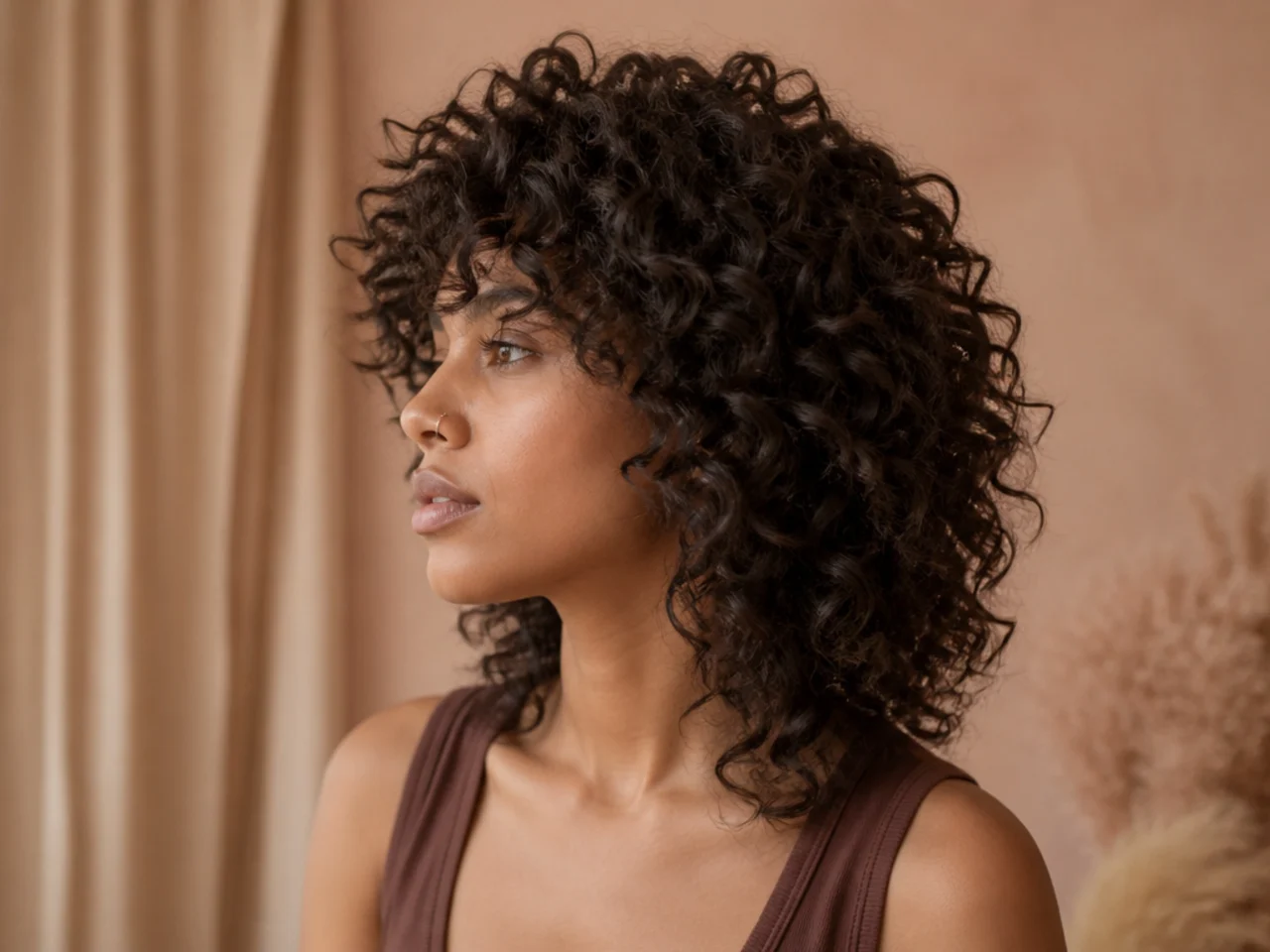
The shortest layers concentrated at the top of the head and shaped into a dome. Rounding the crown puts the maximum lift directly above the eye line, which is the position that reads as volume rather than as bulk.

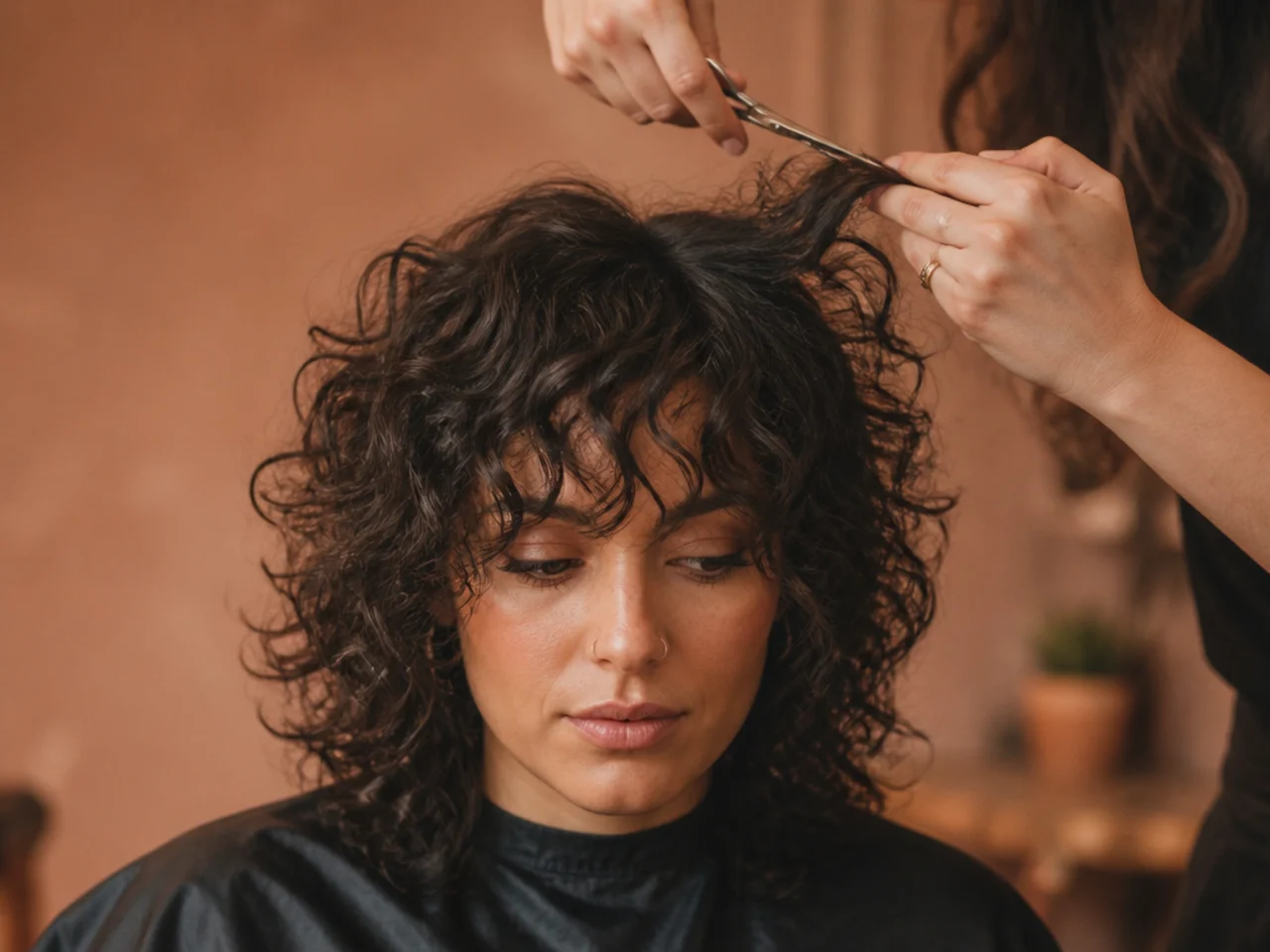
11. Curly Shag Cut Dry
Each curl cut individually in its own dried position rather than in a wet section. It is slower and more expensive, and it is the only method that places a layer where the curl will actually sit once it has sprung back.
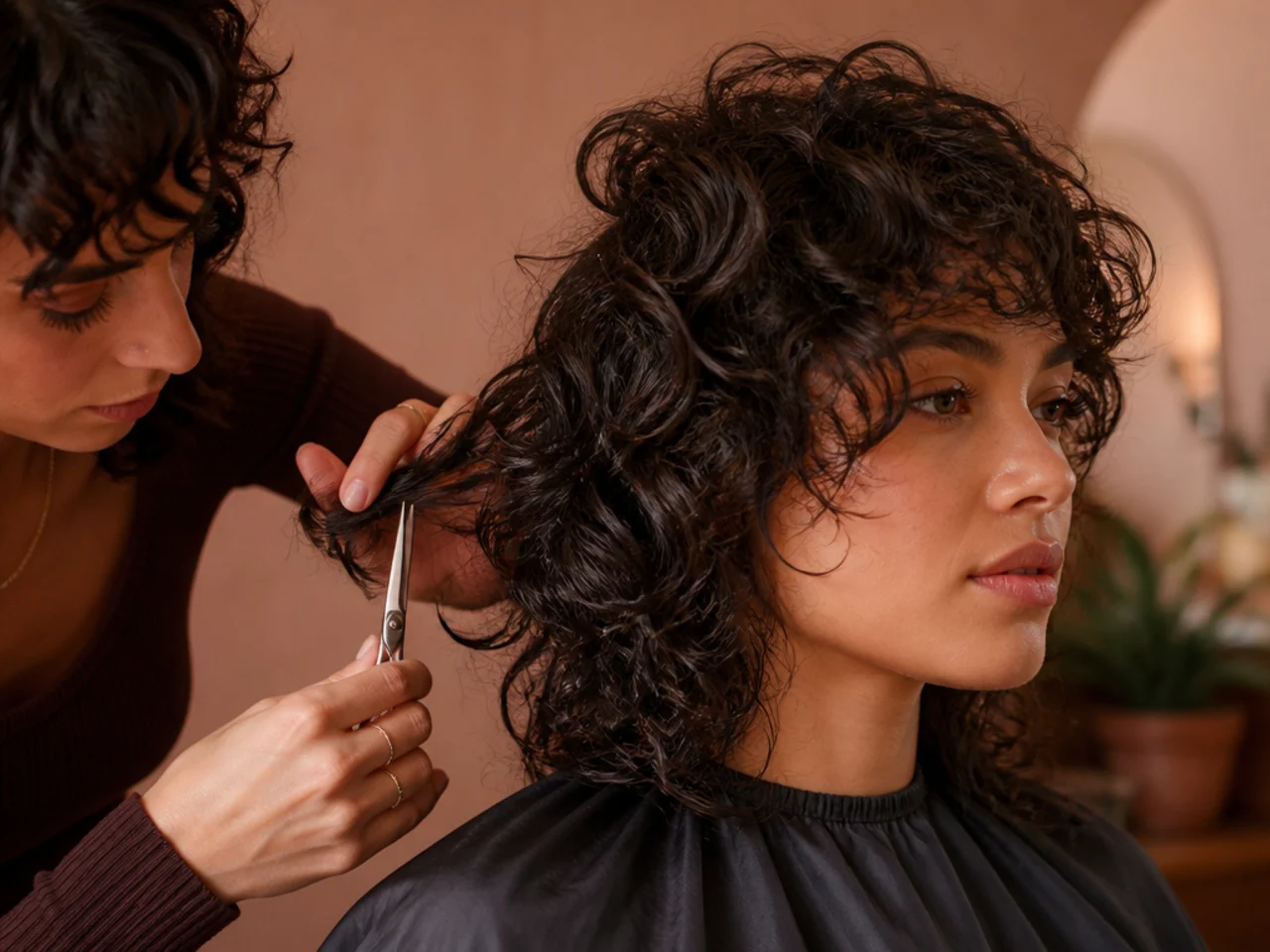
12. Curly Shag With Invisible Layers
The layers cut inside the shape so no shorter end sits on the surface. On curly hair this matters more than on straight, because a short end sitting on top of a curl clump reads as frizz rather than as texture.

13. Curly Shag With Heavy Layers
A large amount of weight removed so the curl pattern springs to its tightest. It gives the biggest volume available from the cut, and it commits you to it, because the removed weight takes several months to grow back.

14. Curly Shag Bob
The perimeter brought up to the chin with layers kept above it. At this length the curls carry almost no weight, so the pattern sits at its tightest and the cut needs the least product of any version here.

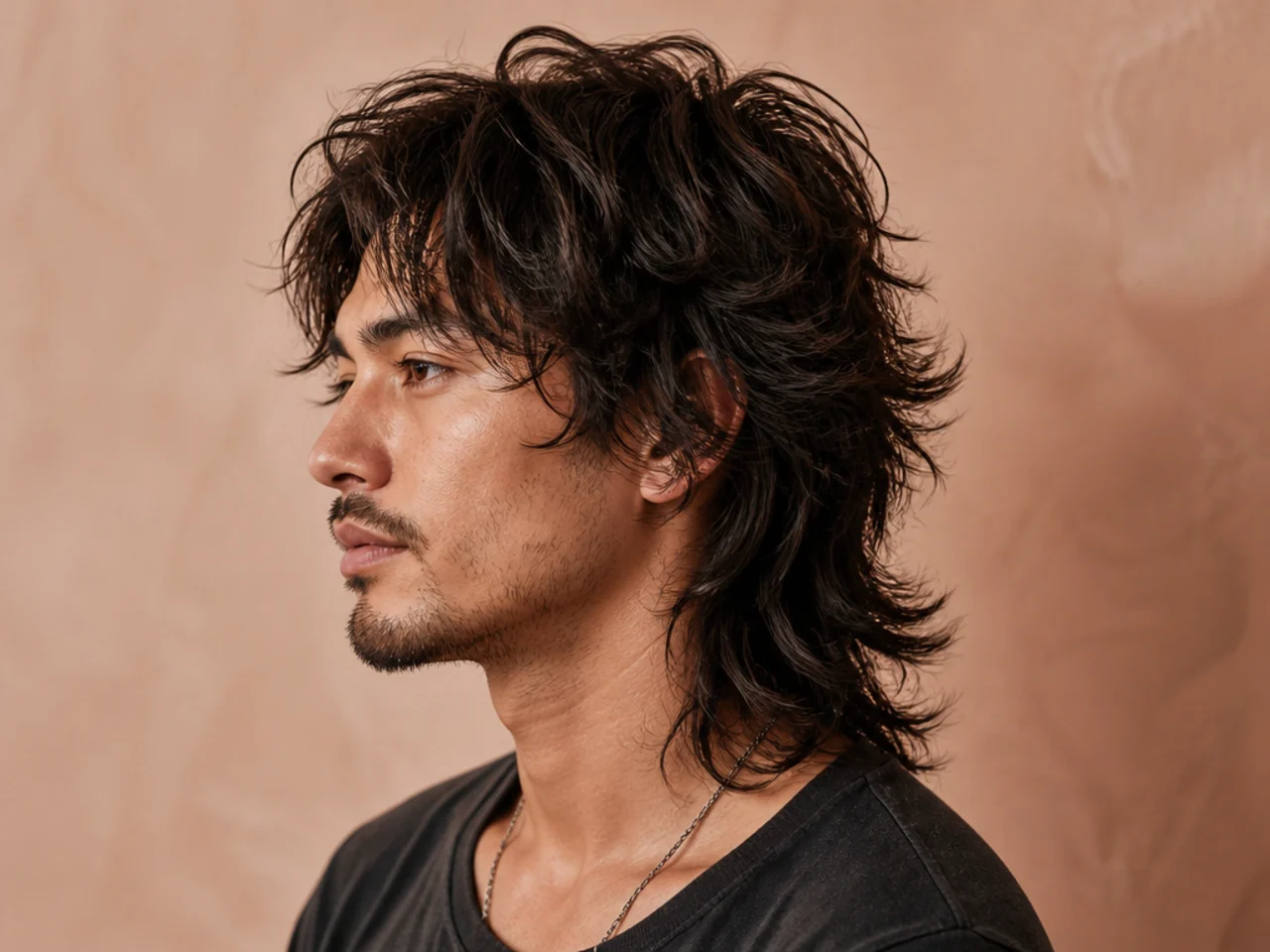
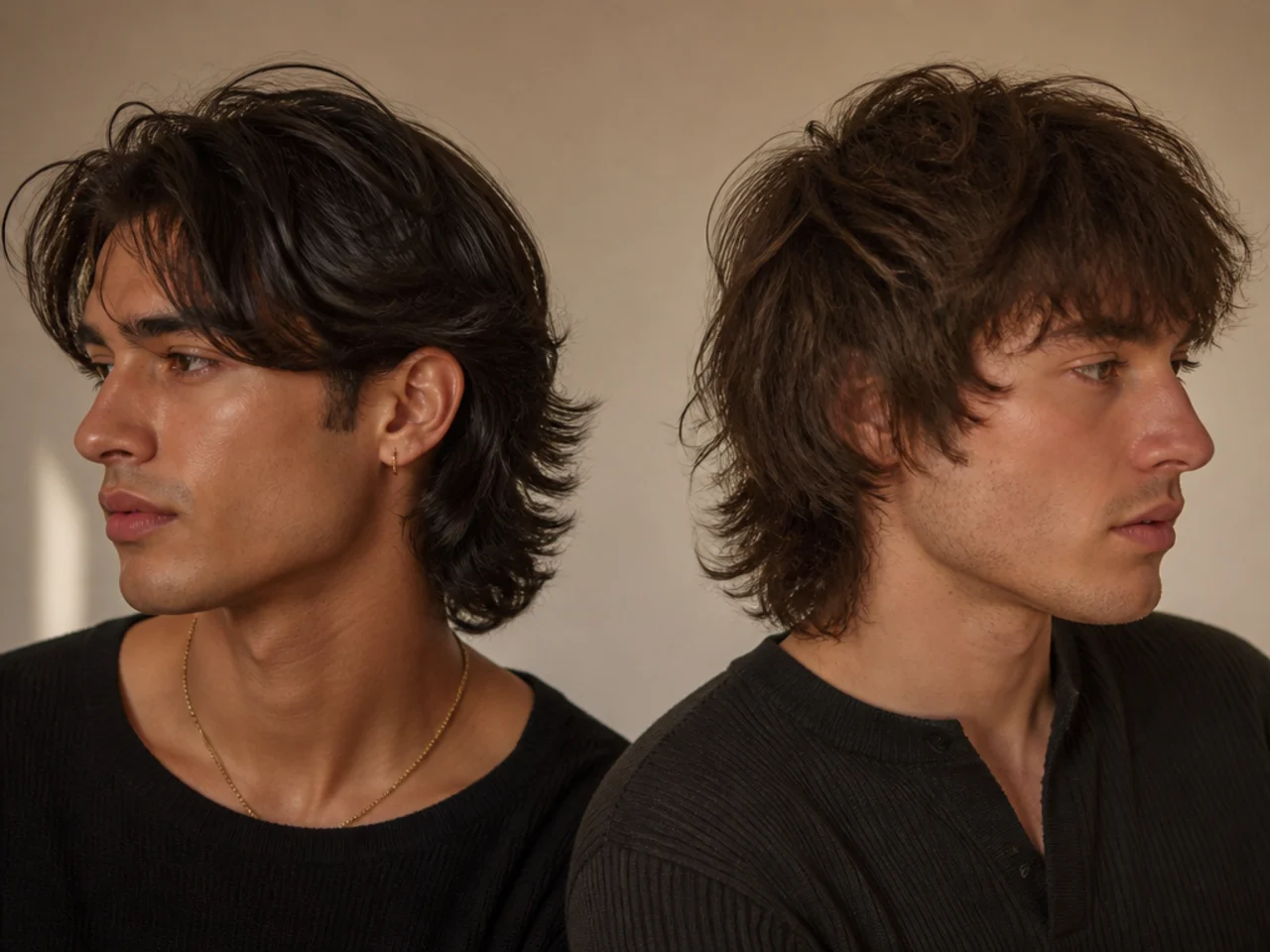
15. Curly Shag Mullet
The same layering with a deliberate gap left between a short front and a long back. The gap is what separates it from a shag, and on curly hair it has to be cut wider than on straight because curl blurs any boundary it crosses.

16. Curly Shag Wolf Cut
Heavy layering carried up into the crown with the length left long underneath. The crown layers do all the propping, which is why a wolf cut reads taller than a shag of identical length, and why it flattens fastest if those layers are cut a fraction too long.

17. Curly Shag on Fine Curls
Keep the layering shallow and leave the perimeter alone. Each layer removes density where it lands, and fine curls have none spare, so a heavily layered fine head loses the clump structure that made the curls visible in the first place.

18. Curly Shag on Dense Curls
Weight has to come out from inside or the shape widens at the jaw. Dense curly hair builds outward rather than downward, so internal weight removal keeps the silhouette narrow while leaving the outline intact.

19. Curly Shag With a Tapered Perimeter
The outline thinned so the ends finish in points. It softens the bottom line and reduces the triangle effect on dense hair, but it removes the density that fine curls rely on, so it belongs on thick heads only.

20. Curly Shag With a Blunt Perimeter
The outline left uncut and solid with all the work done above it. Density registers at the outline, so a blunt bottom edge keeps the cut looking full even when a great deal of weight has been taken out of the interior.

21. Curly Shag With Face Framing Layers
The shortest pieces cut on a diagonal running from cheekbone to jaw. A diagonal means every stage of the grow out still lands somewhere useful, because there is no single line to drop past its best position.

22. Curly Shag With Balayage
Colour painted on the surface and left dense at the roots. Curl already scatters light in several directions, so painted colour appears and disappears as the curls move, which reads as depth rather than as stripes.

23. Curly Shag for Round Faces
Keep the volume high at the crown and the shortest front pieces below the chin. Width at the cheekbone on curly hair is easy to create and hard to remove, and it lands on the widest part of a round face.

24. Curly Shag for Long Faces
Do the opposite and build the width at eye level with a shorter front layer or a fringe. Volume at the cheekbone shortens the apparent length of a face, where crown height adds to it.

25. Curly Shag at Twelve Weeks
The layer stack has dropped and the crown lift has gone with it, though the outline still looks correct. This is why curly shags are trimmed on the layers rather than the length, and why cutting the perimeter alone does nothing to bring the volume back.

Styling and Upkeep
Apply product to soaking hair. Water is what holds a curl clump together while the gel sets around it.
Diffuse on low speed, or air dry. A concentrated nozzle blows clumps apart mid set and they dry as frizz rather than curl.
Do not touch it while it dries. Every contact breaks a clump, and a broken clump cannot reform without rewetting.
Scrunch the cast out once it is fully dry. The crisp shell is doing its job until then, and breaking it early drops the shape.
Trim the layers every ten to twelve weeks. The stack drops as it grows and takes the crown lift with it.

Mistakes to Avoid
Cutting it wet. Curl draws up by around half, and unevenly, so a wet cut lands nowhere you chose.
Ending every layer at the same height. All the density collects in one band and the shape widens into a triangle.
Layering fine curls heavily. It removes the density that holds the clumps together and leaves stringy ends.
Brushing it dry. Brushing separates every clump at once, which is the single fastest way to turn defined curls into frizz.
Trimming only the perimeter. The lost volume is in the layers, and the outline is the part that still looks fine.

FAQ
Wet or dry cut? Dry, curl by curl — shrinkage makes a wet measurement a guess.
Where does the volume come from? Short crown layers physically propping up the longer ones beneath.
How often? Ten to twelve weeks, and trim the layers rather than the outline.

Final Thoughts
Two things decide a curly shag: how high the shortest layer sits, and whether the stack is spread or concentrated. Everything else in the list above is a variation on those two numbers, and both of them have to be set on dry hair to mean anything.
For the same weight and layering logic applied to shorter mens shapes see the curly hair haircut guide, and for the fringe options that pair with it see the curly fringe haircut. More in Mullet and Wolf Cut.