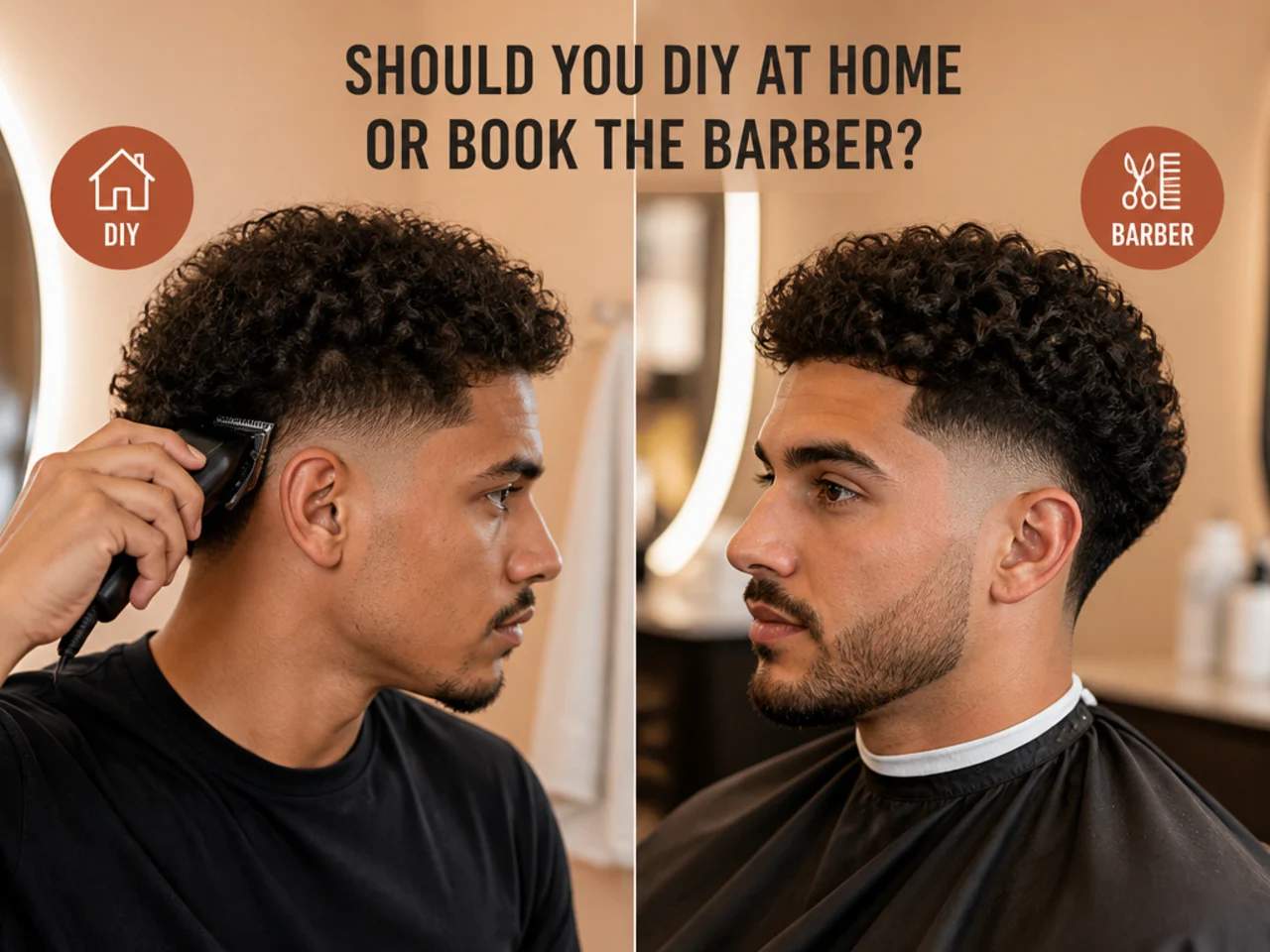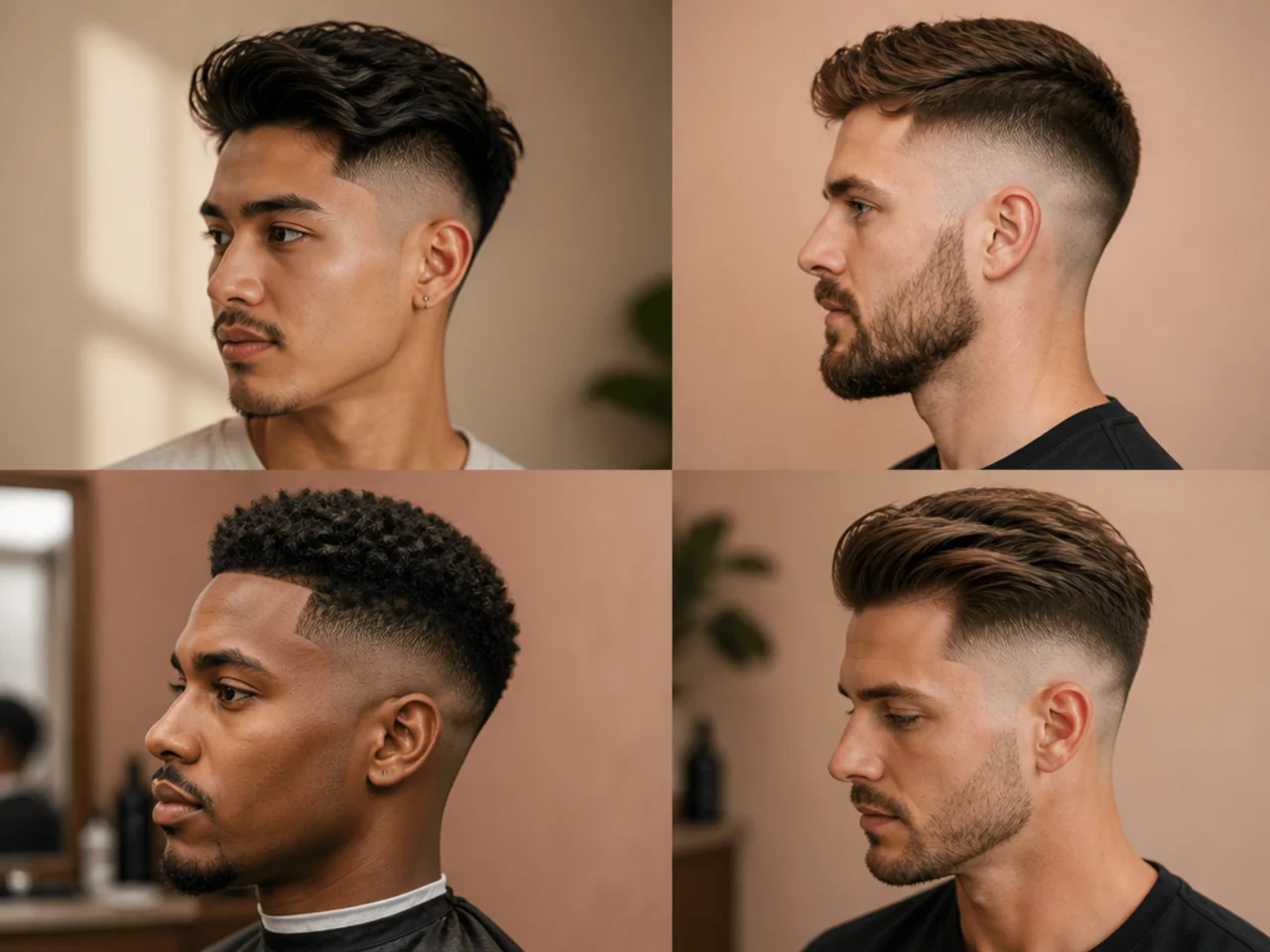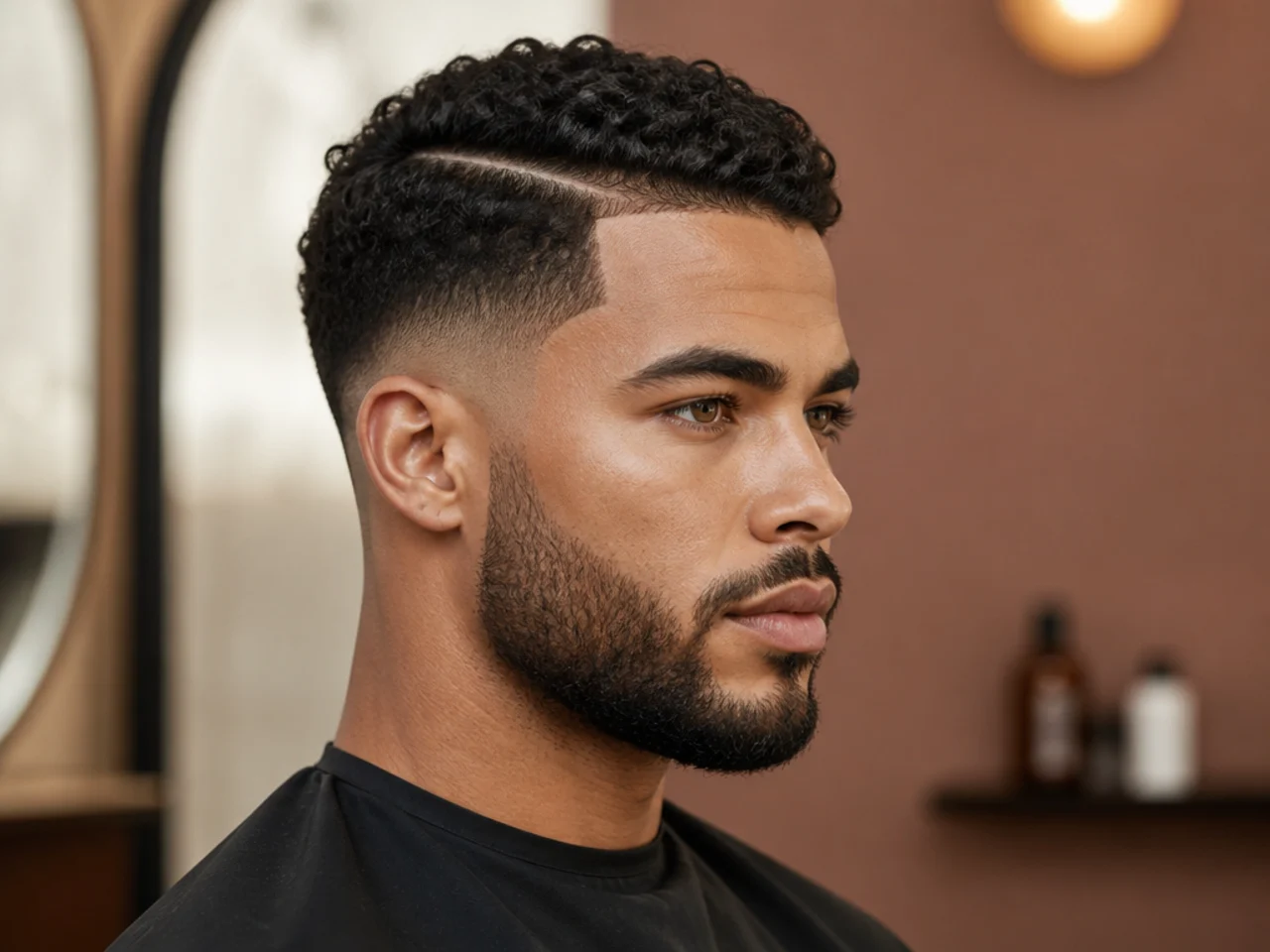
6 Blowout Taper Designs Barbers Recommend Most
Six blowout taper designs barbers cut most — hard part, chevron, script, star, etched waves, geometric. Placement, chair language, upkeep, compliments.
In this article · 18
- What Is a Blowout Taper Design?
- How to Choose Your Design and Placement
- The Six Designs Barbers Recommend Most
- 1. The Hard Part — Miles, 32
- 2. The Temple Chevron — Devin, 24
- 3. The Script Initial — Jamal, 29
- 4. The Star — Trevor, 27
- 5. The Etched Waves — Andre, 33
- 6. The Geometric — Ezra, 28
- The One Habit That Keeps Every Design Sharp
- What to Do Next
- FAQ
- What is a blowout taper design?
- Where should a design sit on a blowout taper?
- How long does a blowout taper design last?
- Do designs work with the volume of a blowout?
- How much extra does a blowout taper design cost?
- Do blowout taper designs work on curly and coily hair?
Every blowout taper client who asks about a design starts the same way. They point at the temple. Then they hedge — "nothing crazy, just something." Six of my regulars have crossed that line in the last two years and stayed on the other side of it. Below is what each one asked for, how we placed it under the blowout volume, and the upkeep rhythm that keeps the design sharp between visits.
What Is a Blowout Taper Design?
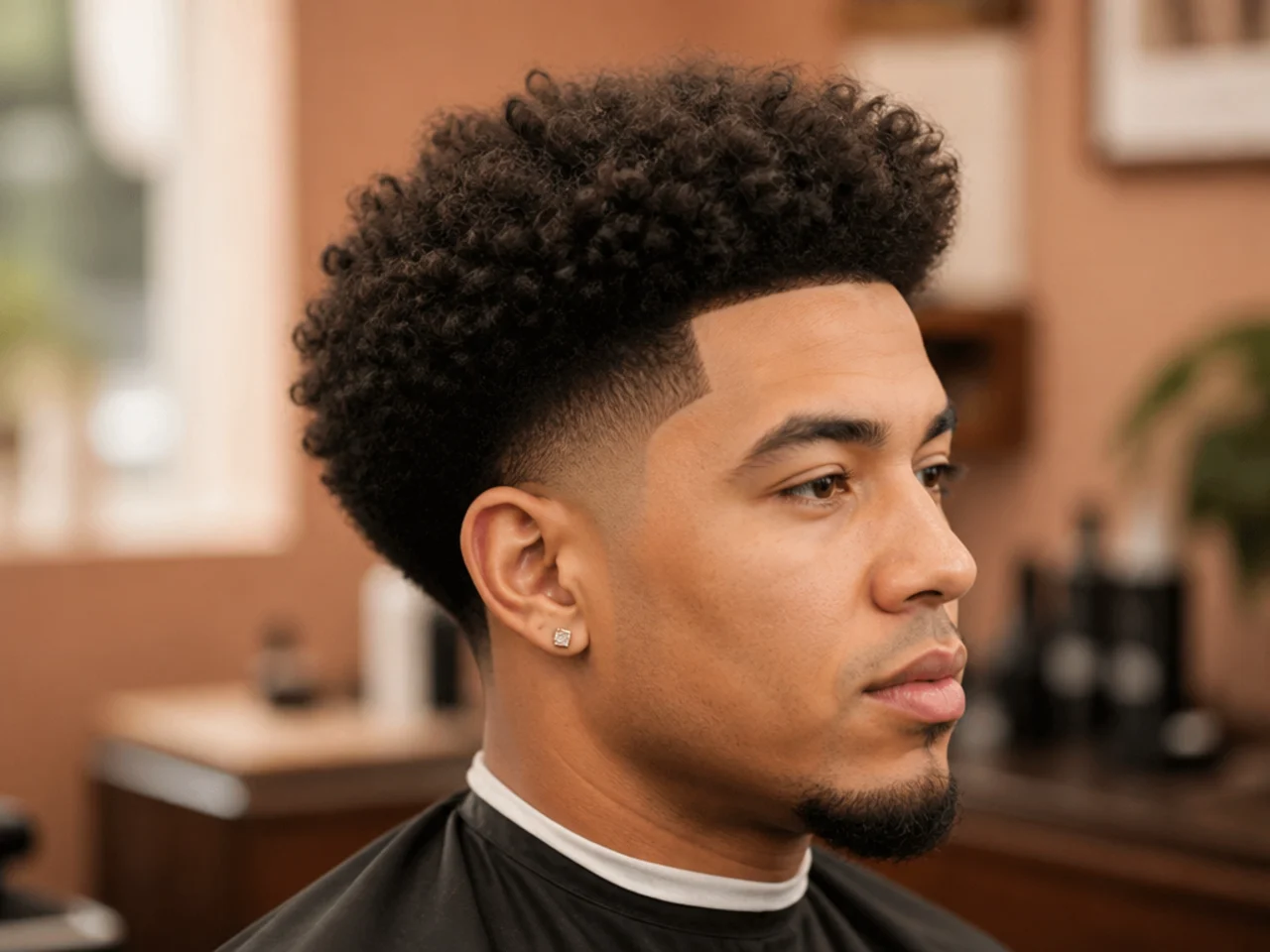
A blowout taper design is a shaved shape carved into the tapered section of a blowout taper — the strip of hair that runs from behind the ear down around the nape, and, on the razored versions, the crown line through the top. Because the taper stops at a 0.5 or 1 guard rather than running to skin, the canvas is a controlled shade of stubble instead of bare scalp. Designs read softer here than on a full skin fade, and they blur more gracefully as the hair grows in.
Placement is the whole game. A blowout taper design can sit in four places: at the temple below the round-brushed volume, along the taper line between the sideburn and ear, at the nape below the neckline, or cut as a "hard part" running from the front hairline back through the crown. Each spot changes who sees the design and how loud it reads next to the blowout above it.
Line quality separates a clean design from a scratched one. A trimmer alone leaves fuzzy edges; a fresh straight-razor pass gives the crisp cut that lets a two-finger star read like a two-finger star from ten feet away. For where the blowout taper fits inside the fade family, the fade haircut pillar walks through it.
How to Choose Your Design and Placement
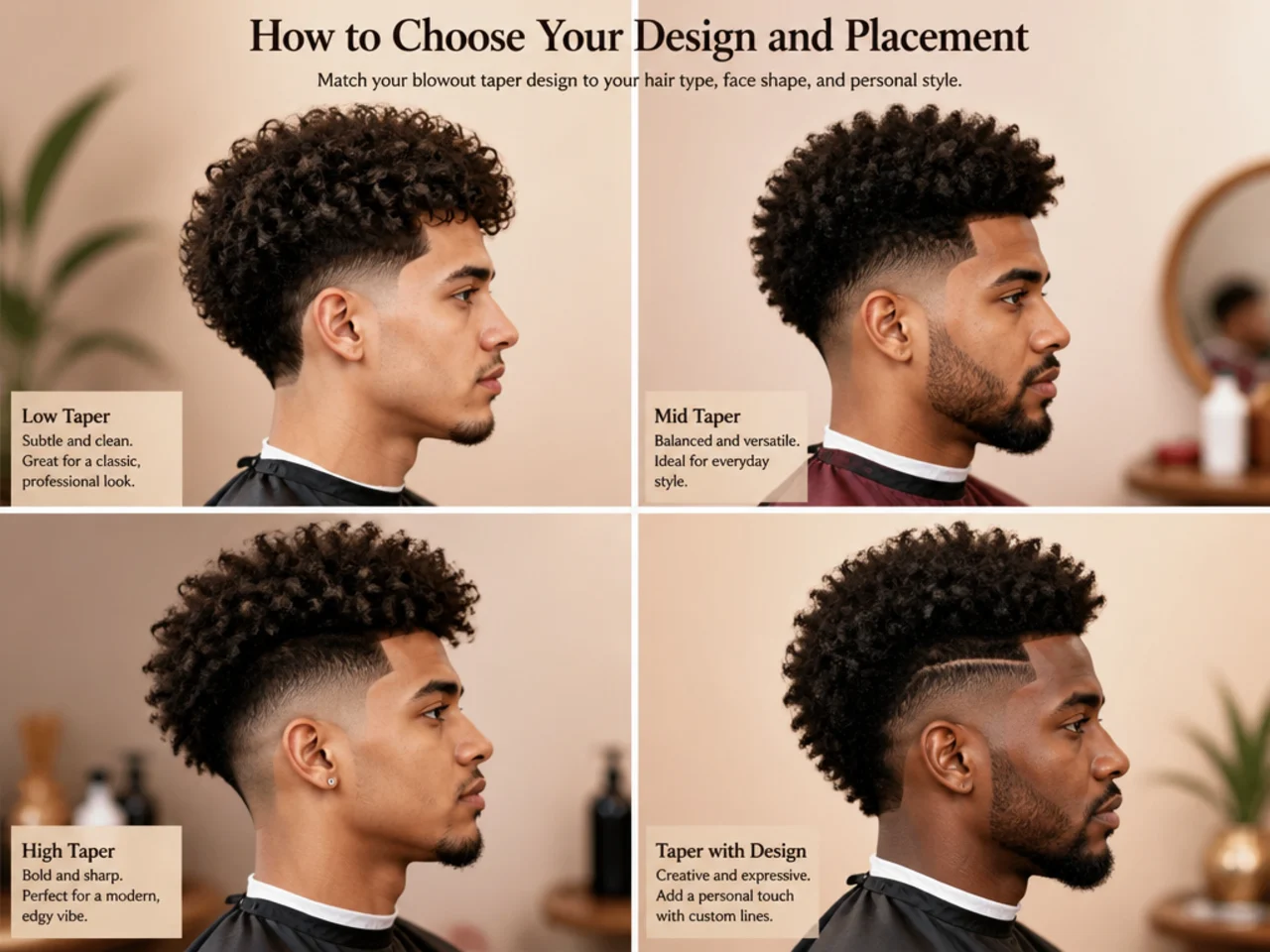
Start with where you want the design to live. A temple design shows every time you tilt your head to check your phone or turn in a crowded room. A hard part draws a line the camera catches when you look down at a laptop. A nape design is what the barista notices and nobody on the Zoom call sees. Pick the room first; placement follows.
Then match it to the volume above. A blowout keeps four to six inches on top round-brushed up and forward, which creates a natural frame at the temple where the volume meets the taper. Small designs read big in that frame. On the other side of the head — the side your top falls over — you need a bigger, higher-contrast shape to fight the flop. Placement compensates for silhouette.
Third, hair type on top. Curly and coily hair on top makes shaved lines pop against the pattern above, which is why most of my design work sits on 3A through 4C textures. For the curl-first recipe, blowout taper curly hair covers it, and for coarse straight hair with density on top, blowout taper straight hair walks the different setup.
Fourth, your workplace. A creative studio, a kitchen, a stage — these rooms carry loud designs. A courtroom or a client-facing desk wants the smallest, lowest placement you can live with. My six regulars below all matched design size to the room they spend most of their week in.
The Six Designs Barbers Recommend Most
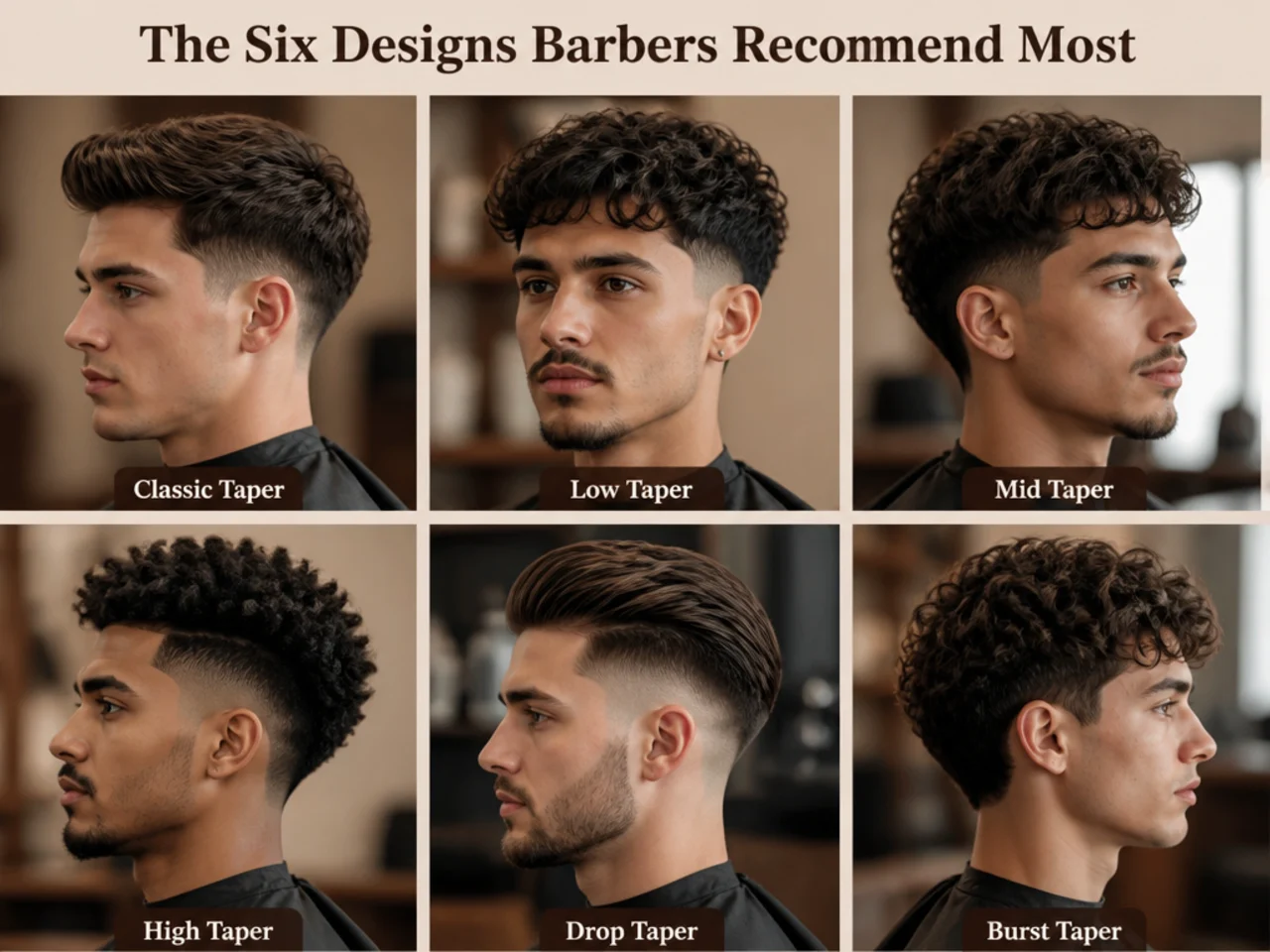
Six regulars, six designs, six different reasons for asking. Read the one closest to your job and your hair type first, then borrow whatever fits your life.
1. The Hard Part — Miles, 32
Miles is a corporate attorney at a firm downtown who wears a two-button navy jacket every day and calls me his stylist because "barber" doesn't play in his lobby. He has medium straight hair, dense at the crown, and a standing 7:15 AM Thursday appointment. When he asked for a design last spring, he wanted something invisible from the front and unmistakable from the side.
We landed on a hard part. A single razor line running three inches from the front hairline back into the crown on his left — the side that faces the boardroom camera when he sits at the head of the table. Blowout taper underneath: 0.5 guard at the shortest, blending into a 2 above the ear, four inches of length on top brushed to the right so the hard part opens as the visual anchor rather than getting buried.
Hard parts photograph clean but they demand precision. I razor Miles's part fresh every visit before I re-set the blowout, because a re-blown top hides a soft edge. He books every fourteen days — twelve when partners are in town. Between visits he runs a thin comb along the part line to keep the top hair from creeping back over it.
The compliments live in specific rooms. Junior associates ask where he cuts. Two clients have mentioned it in the last quarter. His nine-year-old son called it "Dad's stripe" and asked for the same one on a Saturday afternoon; I put a smaller version in with clippers only.
2. The Temple Chevron — Devin, 24
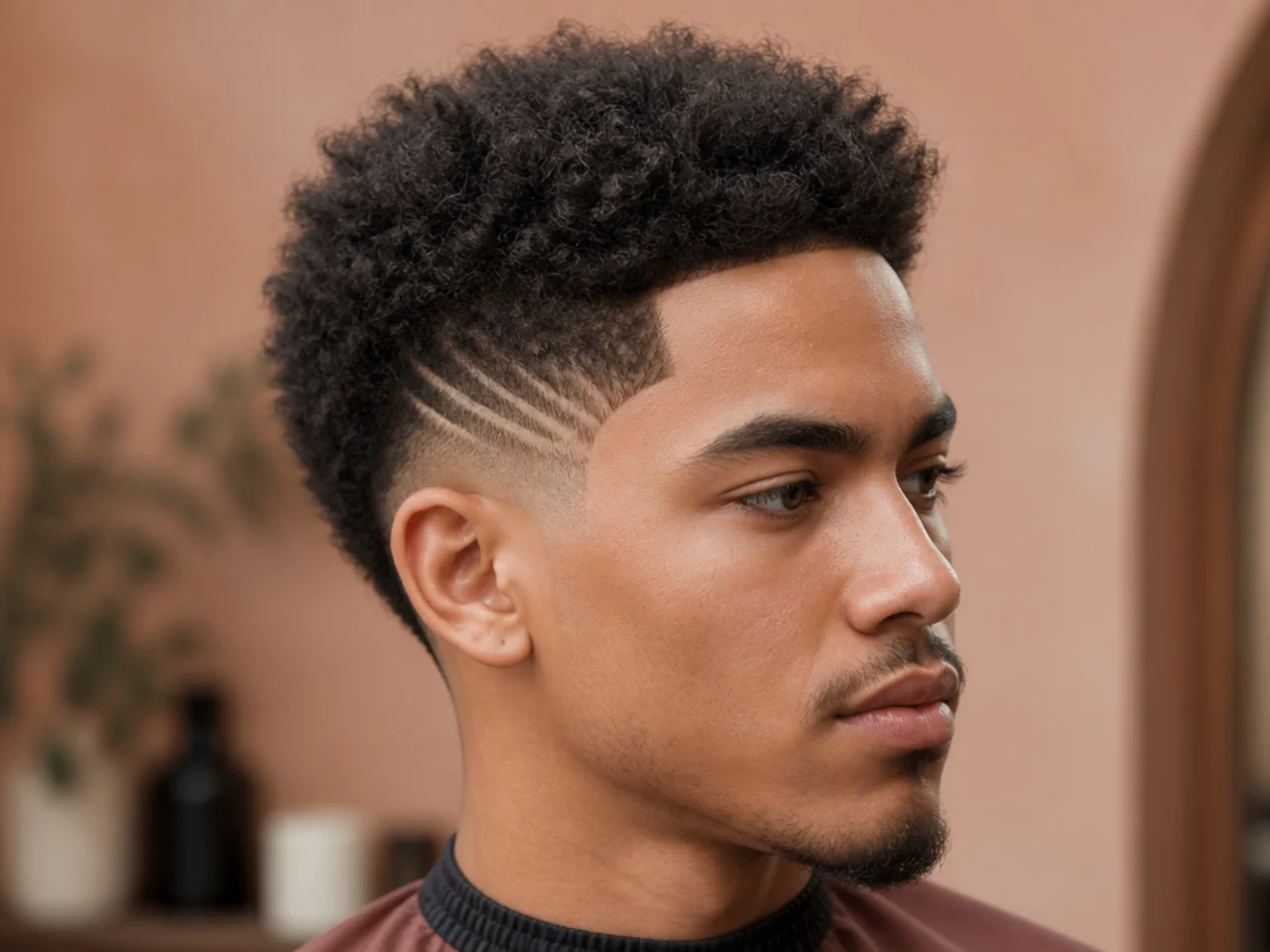
Devin trains at a boutique gym in the arts district and posts progress clips five nights a week. He has thick 2b wavy hair, dense enough to hold any silhouette I've thrown at it, and a jawline that reads clean under any fade. He wanted a design that photographed sharp against his brand color when he shot Tuesday-morning content in the mirrored room.
He came in with a screenshot of a boxer's temple chevron — three stacked V shapes pointing forward, two blade widths tall each, cut just above the sideburn on his right side. Blowout taper base: mid taper this time, from a 3 at the parietal ridge down to a 0.5 at the shortest around the ear, four inches on top round-brushed forward and to the left so the chevron stayed exposed on the right of every clip.
Chevrons demand symmetry inside each V. I use a trimmer for the outline and a straight razor for the inside edges. Devin books every ten days because he sees his own hair on camera before I do, and the third V blurs before the first two.
Compliments happen in his DMs. Two supplement brands sent him free product citing the chevron in their outreach. His mother wanted a photo when she visited from out of state; she framed it. Devin told me last month he wants to add a fourth V for his next birthday. I told him three is the design; four is just chevrons. He agreed.
3. The Script Initial — Jamal, 29
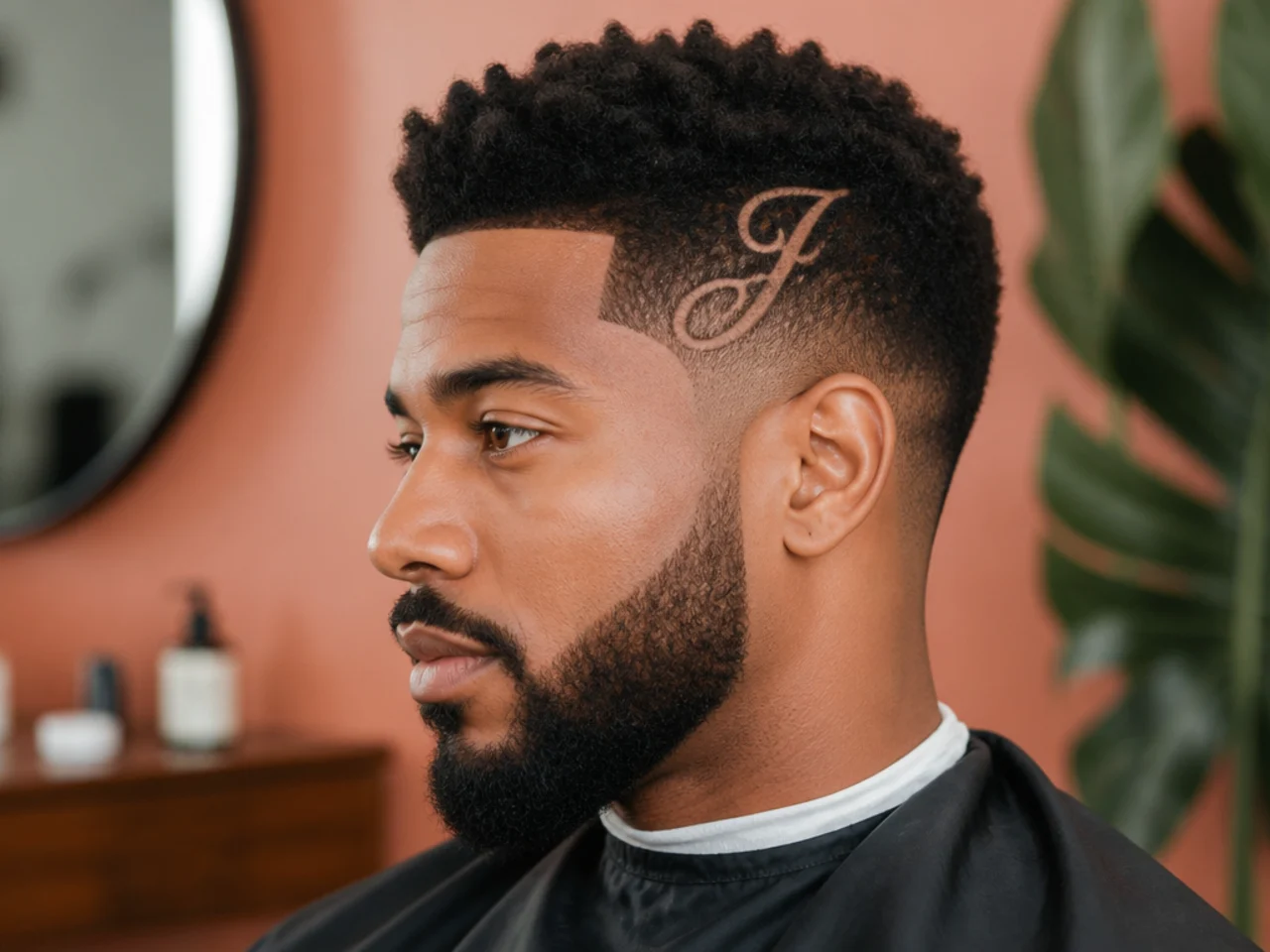
Jamal became a father in March and walked into my shop in April with a photo of his son Noah in a hospital bassinet. He has 3c curls that grow at what I've come to call the new-dad rate — twice as fast as the sleep he's getting. He asked me to put an N in his hair. Nothing more. Just the letter.
I placed the N on his right temple, one-and-a-quarter inches tall in a hand-drawn block script — not cursive, because cursive would fade to a squiggle inside eight days on his density. Blowout taper underneath: low taper to a 0.5 at the shortest, blending into a 2 above the ear, four inches of curl on top scissor-cut so the S-pattern of his coils sat behind the letter like a backdrop instead of competing with it.
Script initials on curly hair need a redraw every visit. I mirror the N off the same original photo each time — Jamal keeps it in a phone folder labeled "N" — so the crossbar sits at the same angle to the millimeter. Twelve-day cycle. Straight razor for the interior corners of the letter every visit.
The compliments started with his mother-in-law, who called it corny to his face and then asked, at the christening, if the ceremony photos would show it. His wife had a family portrait done in July with the N visible; it hangs in the hallway. Noah is nine months old now and has grabbed at the letter twice. Jamal is already sketching a second one for his second child when the time comes.
4. The Star — Trevor, 27
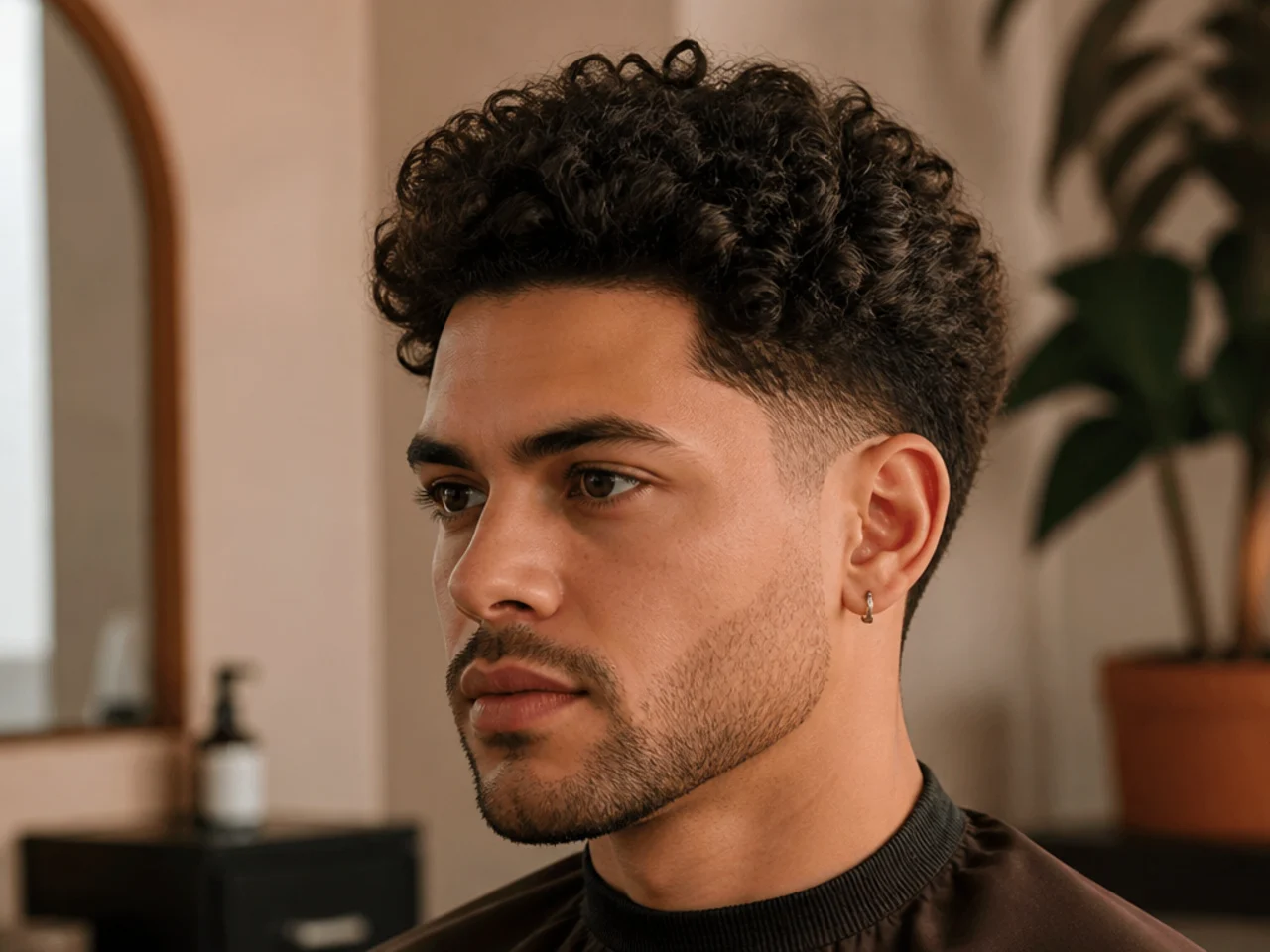
Trevor paints murals for restaurants and coffee shops around the city — his portfolio pays rent and his personal work lives on Instagram. He has straight ash-brown hair, medium density, and a work uniform of denim spattered with the last commission's palette. He wanted a design that read as a signature without being one.
He chose a single five-point star, three fingers tall, above his left sideburn — the side that shows when he's up on a ladder facing a wall. Blowout taper base: mid taper from a 2 at the parietal ridge to a 0.5 at the shortest, three-and-a-half inches on top round-brushed up and forward so the star sat framed at the taper line rather than buried under length.
Stars look simple; they are not. Five points, five angles, five distances from the center — a single point off by two millimeters and the whole shape wobbles. I cut Trevor's star with a paper template he printed at the shop next to his studio, holding it to his scalp before every trim. He books every thirteen days. Straight razor inside every point at every visit.
The compliments come from clients who see him work and take him for someone whose brand includes his hair. A gelato place in Little Italy hired him after seeing the star from across the counter. His mother, who told him at fifteen that he was too much for tattoos, sent him a text after the first cut: "The star is good." She hasn't said that about any of his other choices in twelve years. He kept the text.
5. The Etched Waves — Andre, 33
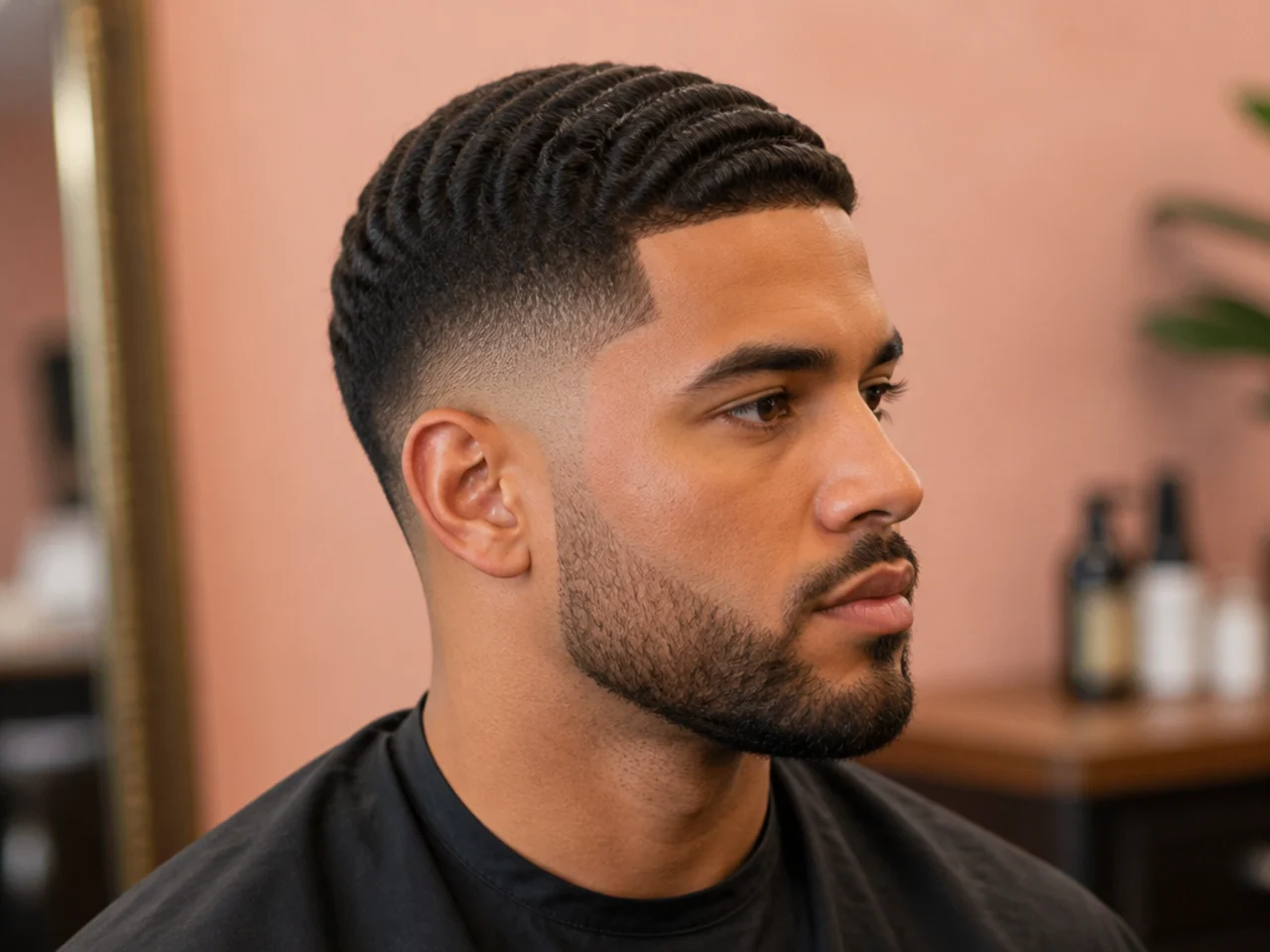
Andre is a house DJ who plays two residencies and a Friday-night warehouse party for the crowd that shows up before the headliner. He has 4a coily hair on top and wears 360 waves on a 1 guard when he's on decks. When he added a blowout taper last year, the wave pattern on top stopped abruptly at the transition line. He wanted a bridge.
We etched a bridge. Four parallel wave lines cut horizontally through the taper on his right side, a quarter-inch apart, running two-and-a-half inches from behind the ear forward to just past the temple, echoing the direction of his 360s on top. Blowout taper to a 1 guard at the shortest rather than 0.5 — the etched waves needed a soft canvas, not a shaved one, so they blur at the same rate as the pattern above.
Etched waves are the lowest-maintenance design I cut, because they age with the hair instead of against it. Andre books every fifteen days. Wave cap overnight, boar-bristle brush every morning for the pattern on top, and a light oil through the crown before he sits at the booth. Straight razor for the outer edge of each wave line every visit; the interior lines soften naturally.
The compliments come from the crowd on the DJ float at Sunday-afternoon block parties and from the girlfriends of the drummers he plays with. His daughter, who is four, calls the etched lines "the water" and asks him to bend down at her height so she can see them. His mother, who cuts her own hair, drove three hours to have him show her the pattern up close.
6. The Geometric — Ezra, 28
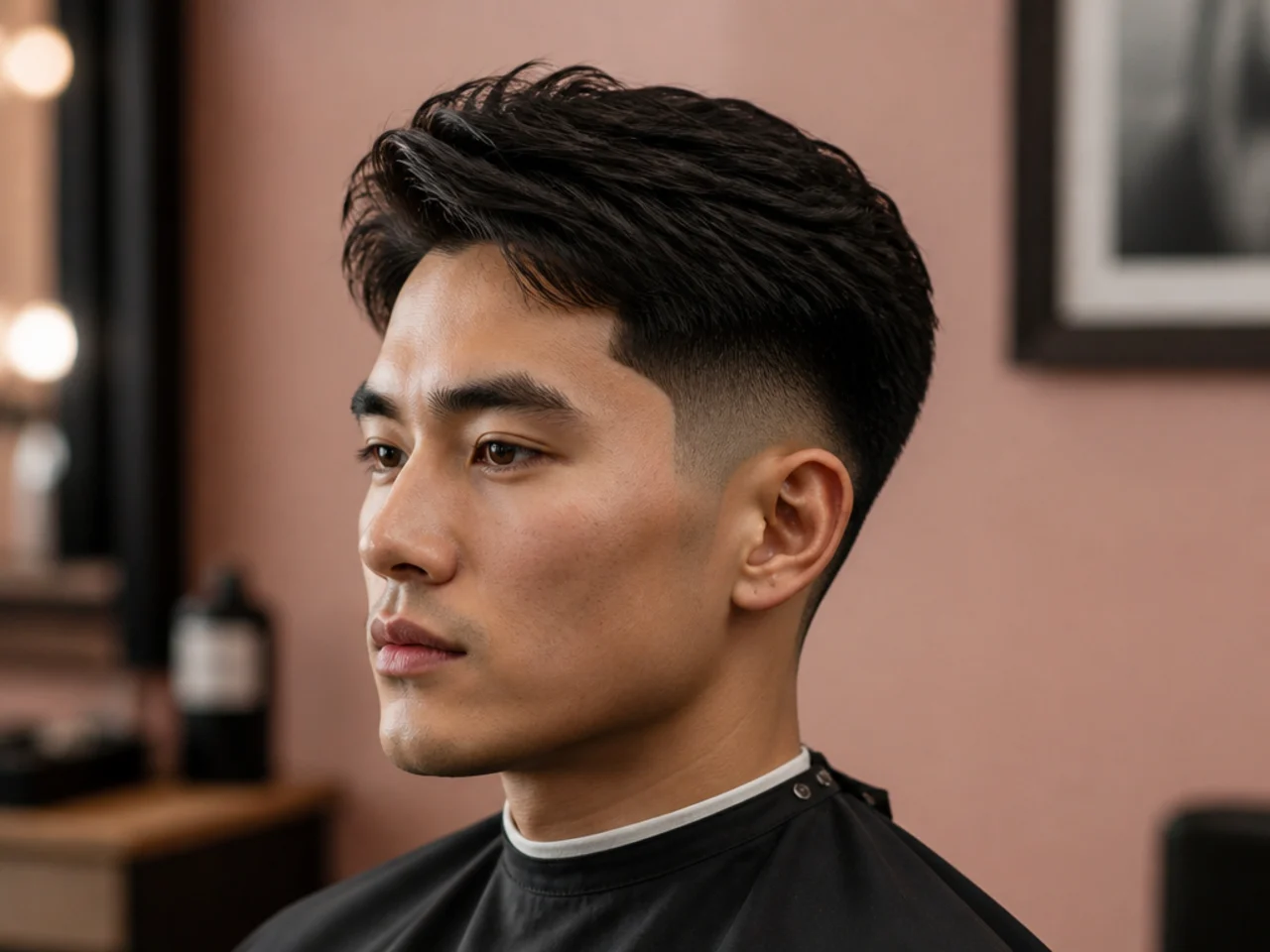
Ezra is an industrial designer at a housewares studio who spends his weekdays sketching salt shakers and coffee cups on a Wacom tablet. He has medium straight brown hair, a thin wire beard, and the kind of precision that shows in the way he cuffs a shirt sleeve. He wanted a design that felt drafted, not doodled.
We landed on a geometric field — three interlocking triangles carved above his left ear, each triangle two fingers tall with a razor-thin line separating them, running from behind the ear forward to just below the temple. Blowout taper base: high taper from a 0.5 at the shortest up to a 3 above the ear, four inches of straight top round-brushed high and back so the field of triangles sat framed against a clean strip of taper.
Geometric designs forgive nothing. A degree off on the first triangle throws the second and third out of alignment. Ezra printed a scale template on vellum and brought it every visit for the first three months; I still keep a copy in my station drawer. Fourteen-day cycle. Straight razor along every interior line at every visit; the exterior arcs re-run with the fade.
The compliments come from other designers at his firm, from clients at product showcases who assumed the geometric pattern was tied to a brand launch, and, most often, from strangers on the subway looking at the reflection in the window. His art-director partner made a black-and-white print of the design and framed it above their entryway. Ezra sketched the triangles for me in a card at Christmas. That's on the shelf too.
The One Habit That Keeps Every Design Sharp
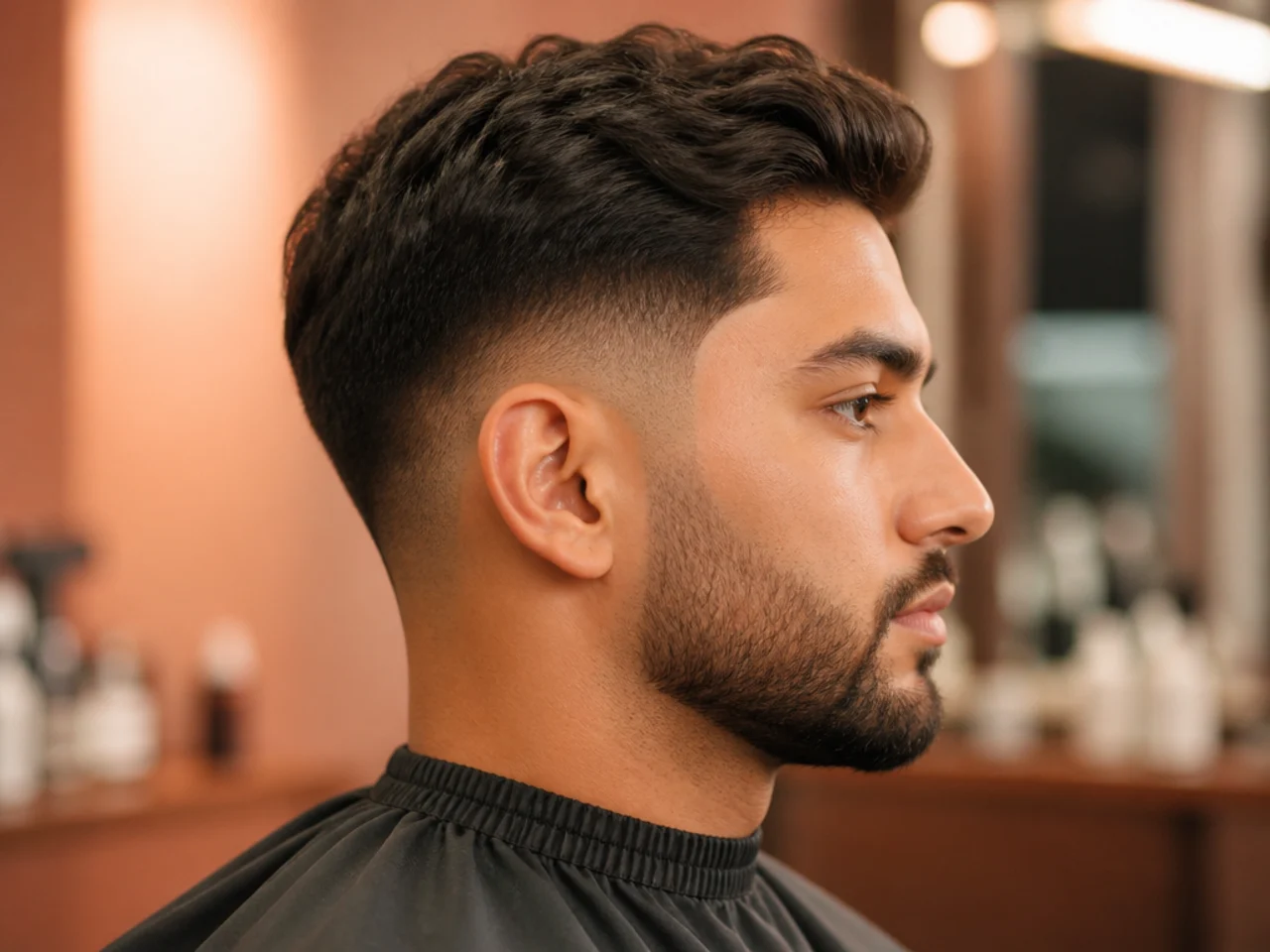
Every one of these six clients started the same way: a first design they lived with for two weeks that read wrong. Miles's first hard part sat a quarter-inch too far to the right. Devin's first chevron pointed backward. Jamal's first N had the crossbar too high. In every case the fix was the same — they stopped booking the design and the fade as one long appointment and started booking them as two shorter ones.
The math is simple. A full blowout taper with a design in the same visit runs sixty-five to eighty minutes; both the volume cut on top and the pattern below have to be near-perfect on the first pass. Split it into a forty-five-minute cut with the blowout and a fifteen-minute design touch-up two weeks later and the design gets full attention instead of tail-end attention. All six of these regulars keep a standing bi-weekly slot for the touch-up alone.
The other quiet habit: every one of them keeps a labeled phone folder with three photos — the original reference, the design after the first fresh cut, and the design at day thirteen. That third photo tells the barber how the pattern ages on your specific hair and how much the volume from the blowout hides or reveals the shape as the top length grows. Bring all three every visit and the conversation shortens to a nod.
What to Do Next
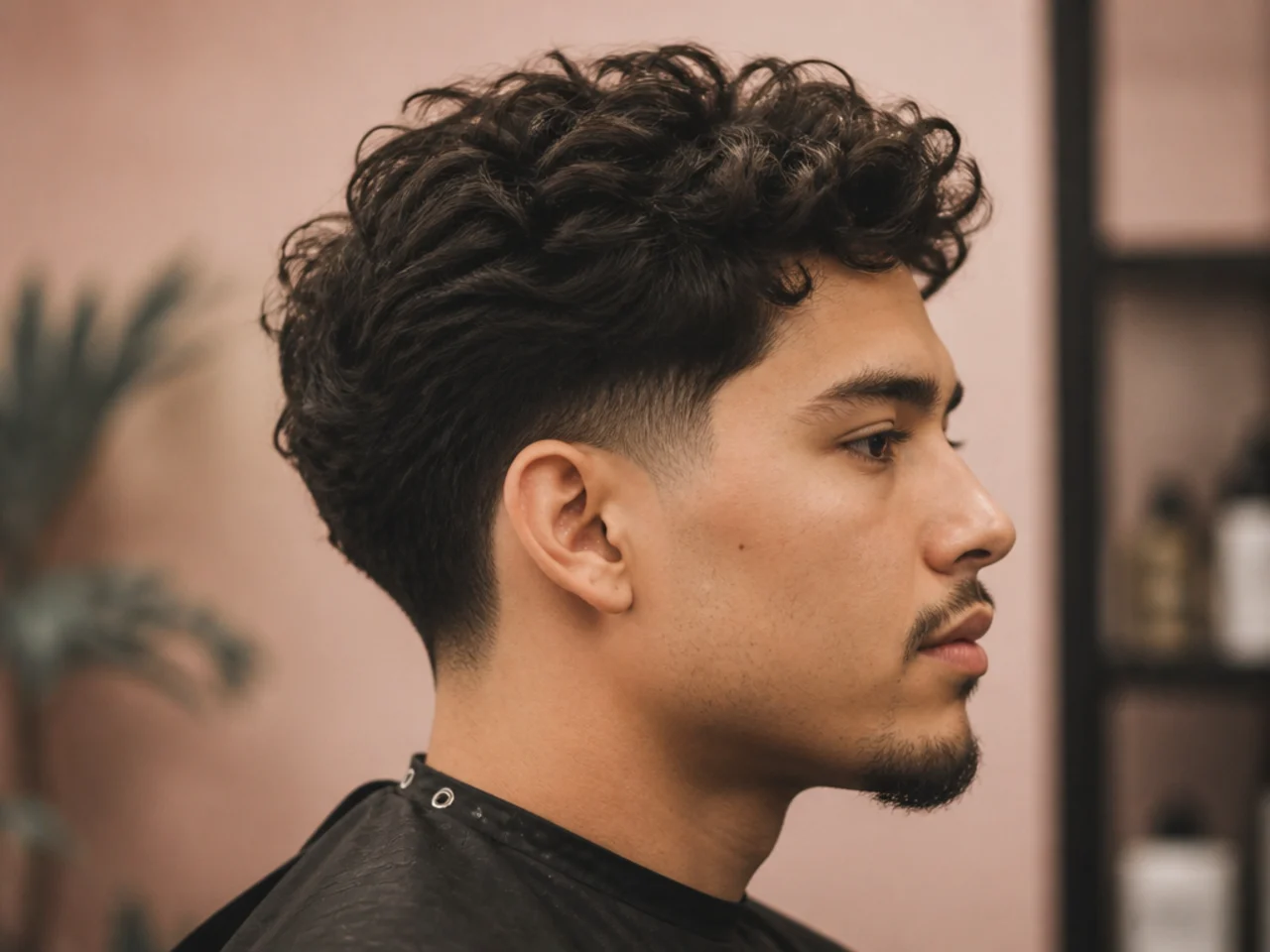
Pick your placement before your pattern. Miles picked left crown because that side faces the boardroom camera. Devin picked right temple because that side shows on gym-mirror content. Trevor picked left sideburn because that side shows on the ladder. When placement drives the choice, you almost never end up with a design in the wrong room.
Book a barber with a design portfolio, not just a fade portfolio. Ask to see three photos of shaved designs on their Instagram before you book, and look for the day-fourteen photo — that's where the real skill shows. A barber can cut a great blowout taper fade and still put a scratched star at your temple. The two skills are separate.
Then plan the neighboring cuts. For a lower guard along the sides that keeps designs subtle, 16 guard blowout taper is the closest neighbor. For a coarse straight-hair setup, blowout taper men curly hair covers the curl-first version. For a fringe-forward top that sits over the design, the edgar haircut is the most-requested pairing at my chair, and for the textured haircuts for men family the same designs read cleaner when the top is finger-styled instead of round-brushed.
If you'd rather test a design on a taper without volume first, low taper fade design walks through the same six shapes on the flatter silhouette. Weighing burst instead? Burst fade designs shows the same patterns cut along the ear arc. Still choosing between the blowout taper and a full taper as your base? The taper haircut overview places both inside the fade family. Bring a friend to your first design appointment — a second pair of eyes drops the regret rate to near zero.
FAQ
What is a blowout taper design?
A blowout taper design is a shaved pattern etched into the tapered section of a blowout taper — at the temple, above the sideburn, at the nape, or as a razor-drawn hard part running back through the crown. Common shapes include hard parts, chevrons, script initials, stars, etched waves, and geometric fields. The outline is cut with a trimmer and finished with a straight razor.
Where should a design sit on a blowout taper?
Temple for the boldest side-profile hit, above the sideburn for a smaller signature, at the nape for something only close friends notice, and as a hard part running back into the top for structural. The round-brushed volume above pulls the eye up, so most designs read loudest at the temple. Pick your placement before your pattern.
How long does a blowout taper design last?
A design cut into the 0.5 or 1 guard reads clean for ten to fourteen days and starts to soften by three weeks. Because the taper stops short of skin, designs blur gently as the hair grows in rather than growing out in a hard line. Book a design-only touch-up every two weeks and a full re-blow with the design fresh at each visit.
Do designs work with the volume of a blowout?
Yes — the height and volume of a blowout taper frame a temple design like a spotlight. The round-brushed top pulls the eye up, so a small pattern at the taper line reads louder than the same shape on a flatter cut. Ask your barber to keep the top length off the design zone so the volume never sits on top of the shape and hides it.
How much extra does a blowout taper design cost?
Fifteen to forty dollars at most independent shops depending on complexity. A single chevron, a small star, or a discreet hard part sits at the low end; a script initial, a geometric field, or a multi-line etched wave pattern sits at the high end. Confirm the price before the trimmer touches your head.
Do blowout taper designs work on curly and coily hair?
Yes — 3A through 4C textures hold a design sharper than straight or wavy hair because the curl pattern makes shaved lines pop against the fuller top. Ask for a fresh straight-razor edge, not a trimmer alone, and book every ten to twelve days because faster-growing textures blur sooner. Scissor-cut the top so the curl pattern sits behind the design instead of competing with it.