20 Textured Wolf Cut Haircuts for Men
20 textured wolf cut men variations — razored, choppy, piecey, and point-cut finishes with face-shape notes and the exact language to hand your barber.
In this article · 32
- What Is a Textured Wolf Cut?
- How to Choose Your Textured Wolf Cut
- The 20 Textured Wolf Cut Variations
- 1. Classic Textured Wolf Cut
- 2. Razored Wolf Cut
- 3. Choppy Wolf Cut
- 4. Piecey Wolf Cut
- 5. Point-Cut Wolf Cut
- 6. Feathered Wolf Cut
- 7. Sliced Wolf Cut
- 8. Shag-Textured Wolf Cut
- 9. Wispy Textured Wolf Cut
- 10. Textured Wolf with Curtain Bangs
- 11. Textured Wolf with Textured Fringe
- 12. Short Textured Wolf Cut
- 13. Medium-Length Textured Wolf Cut
- 14. Long Textured Wolf Cut
- 15. Textured Wolf with Low Taper Fade
- 16. Textured Wolf with Mid Fade
- 17. Textured Wolf with Burst Fade
- 18. Textured Wolf with Undercut
- 19. Textured Wolf Mullet Hybrid
- 20. Textured Wolf with Full Beard
- How to Ask Your Barber for a Textured Wolf Cut
- Styling and Maintenance for a Textured Wolf Cut
- FAQ
- What is a textured wolf cut for men?
- What is the difference between razored, choppy, piecey, and point-cut?
- Does a textured wolf cut work on straight hair?
- Can I get a textured wolf cut with curly hair?
- Which face shape suits a textured wolf cut best?
- How often do I need to re-cut a textured wolf cut?
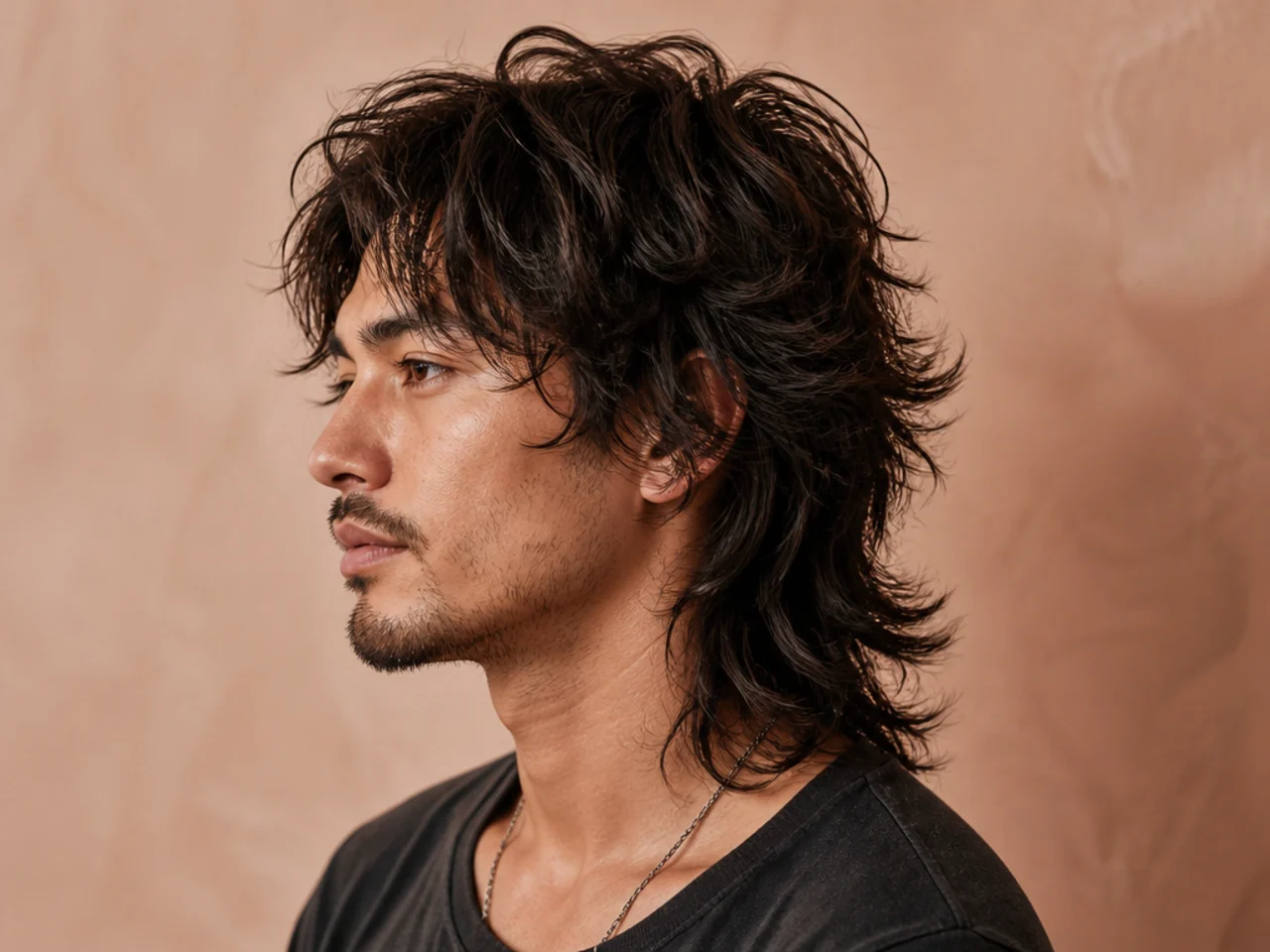
The textured wolf cut is the shag-mullet silhouette finished with a cutting technique that does the work styling product used to do — razored ends, choppy chunks, piecey separation, or clean point-cut angles. The shape is the same as any wolf cut. What changes is how the ends land. This guide covers 20 textured wolf cut men variations, with the finish technique, face-shape notes, and exact chair language for each one.
What Is a Textured Wolf Cut?
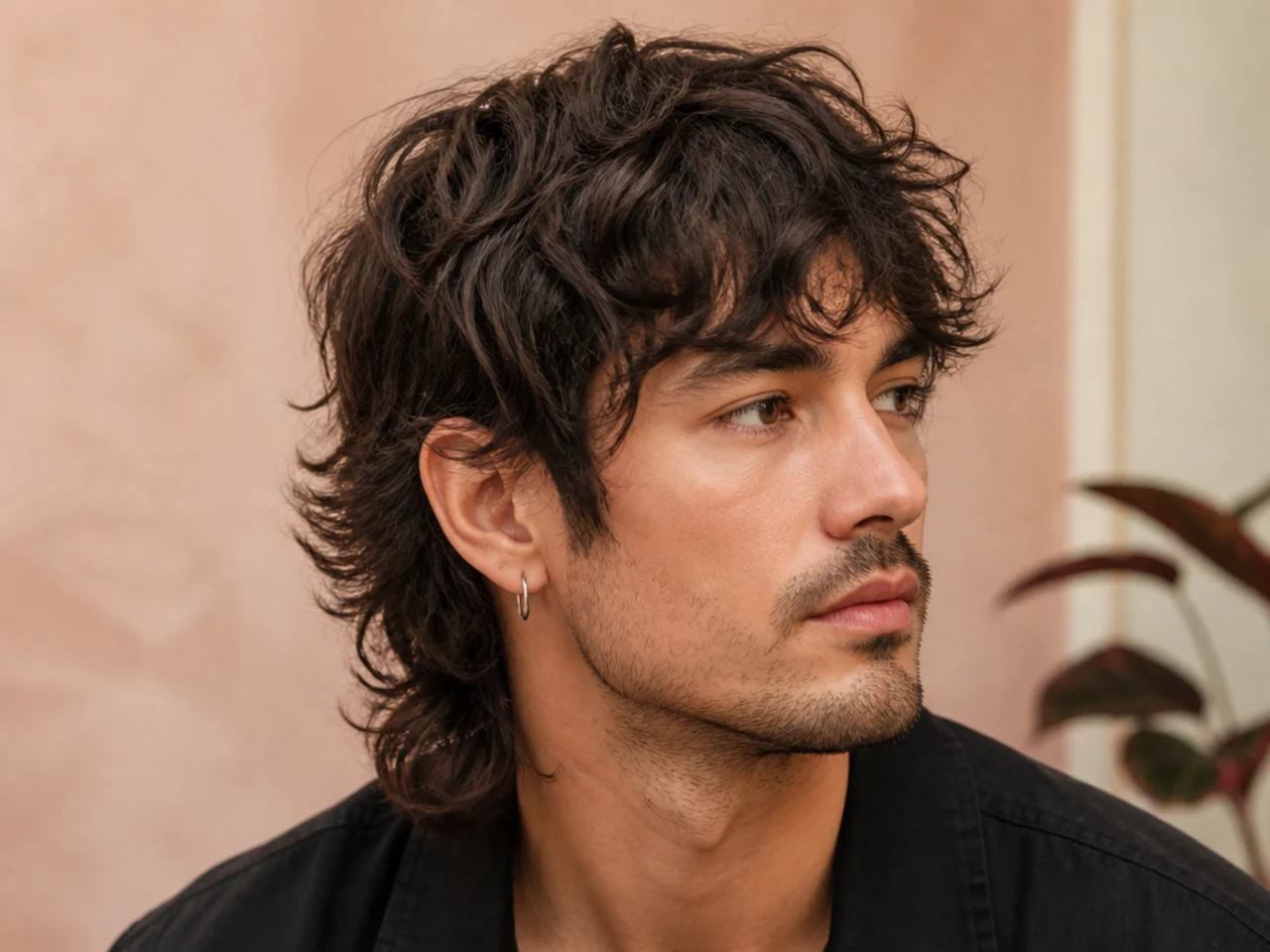
A textured wolf cut is a men's shag-mullet hybrid cut where the ends are finished with a texturizing technique rather than left blunt. The base anatomy is the same as any men's wolf cut — internal layers through the crown, face-framing pieces around the cheekbone, and a longer feathered perimeter at the nape. The difference is the last pass. A blunt wolf cut reads dense and heavy. A textured wolf cut reads light, layered, and modern.
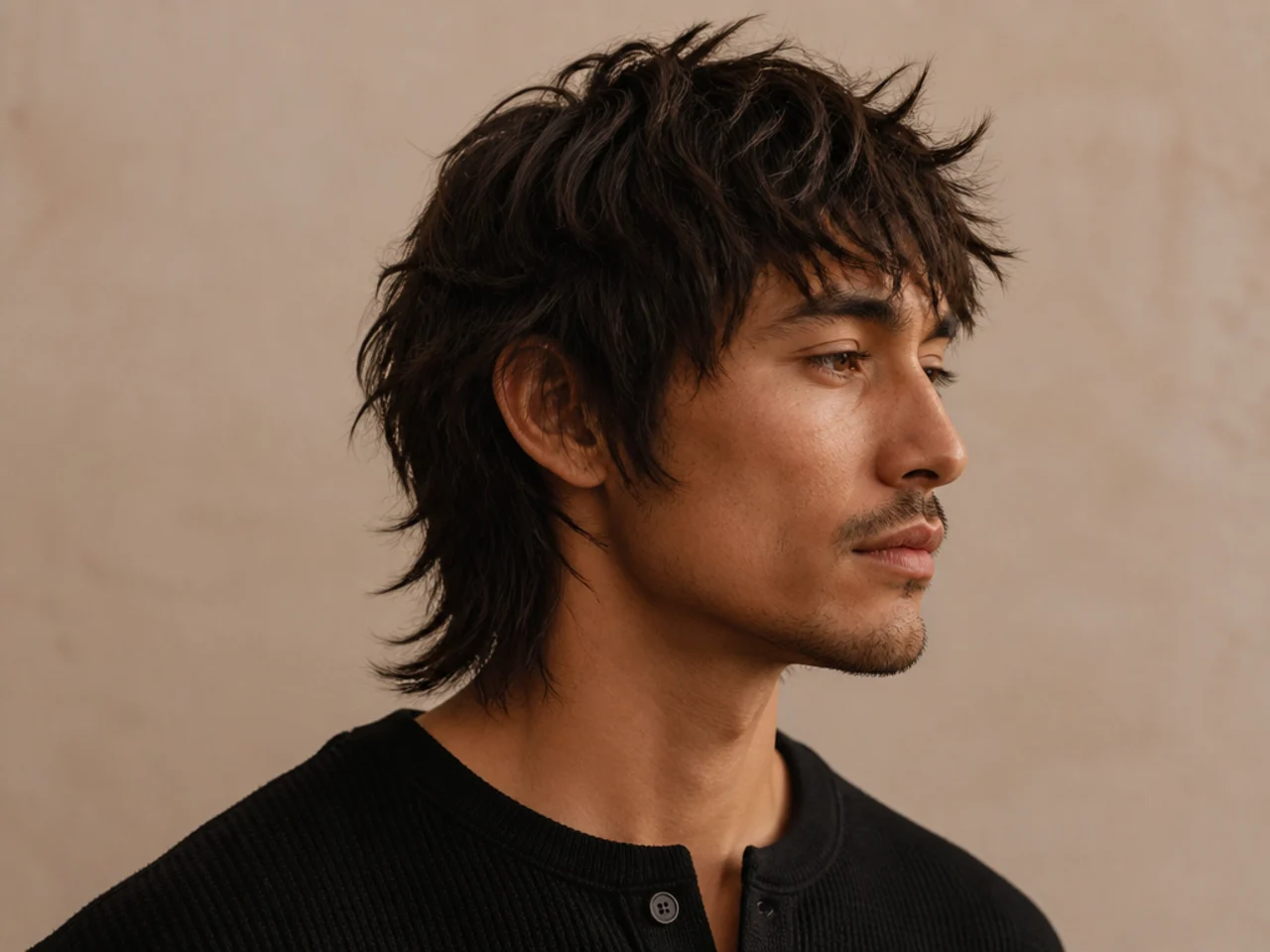
The texture comes from four core techniques. Razor-cutting uses a straight or shaping razor to slice ends at an angle, leaving soft feathered wisps. Chop-cutting drives the scissors down into the length in bold chunks. Piecey cutting groups the ends into small separated sections that read defined with product. Point-cutting angles the scissor tips into the ends for a cleaner textured finish with less visible break than a chop.
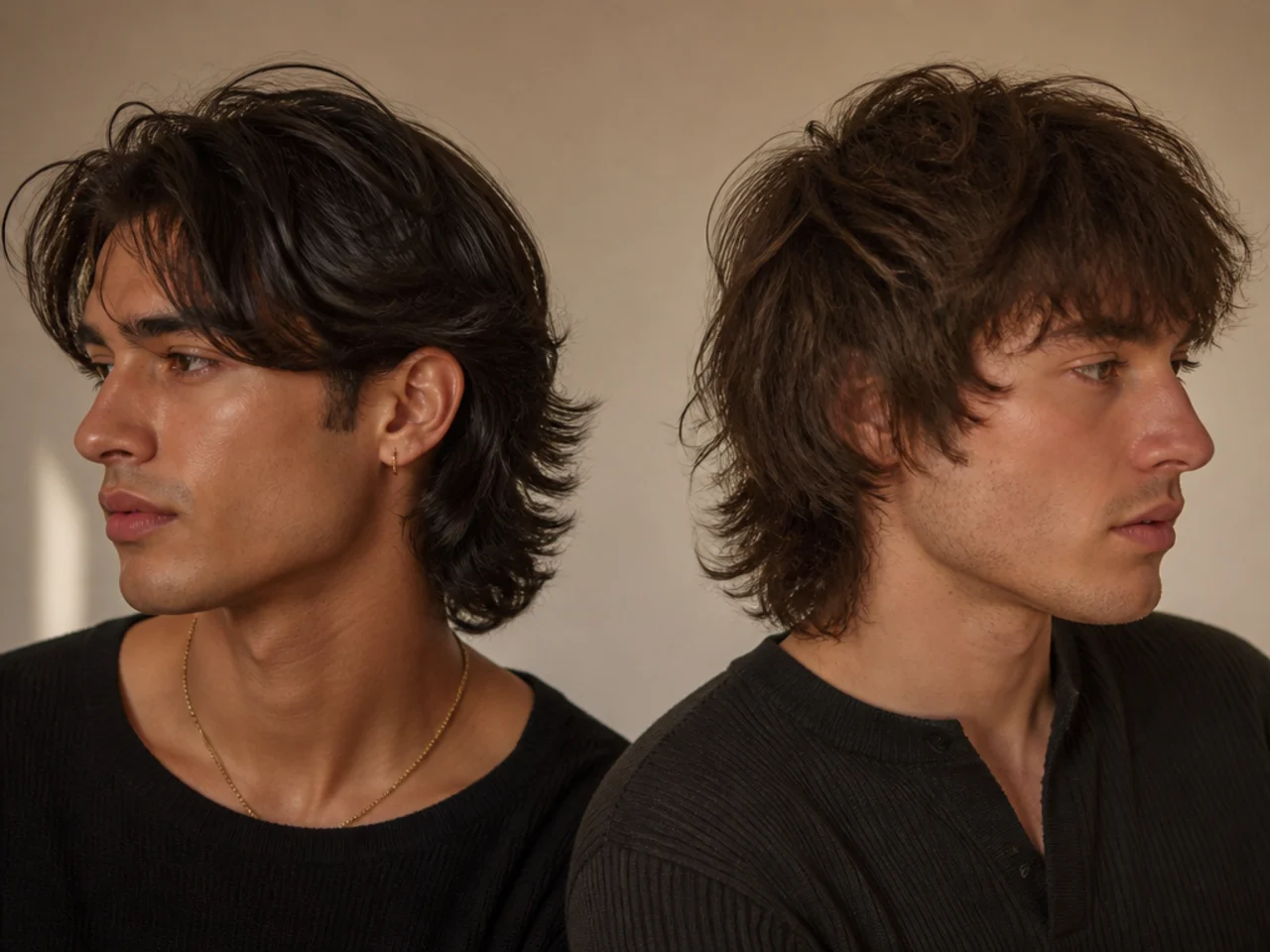
Each technique produces a distinct look on the same base cut. A razored textured wolf reads soft and effortless. A choppy version reads bold and rock-adjacent. A piecey version reads sculpted and editorial. A point-cut version reads clean enough for the office. This guide walks through all four families across 20 variations so you can pick the exact texture you're after.
How to Choose Your Textured Wolf Cut
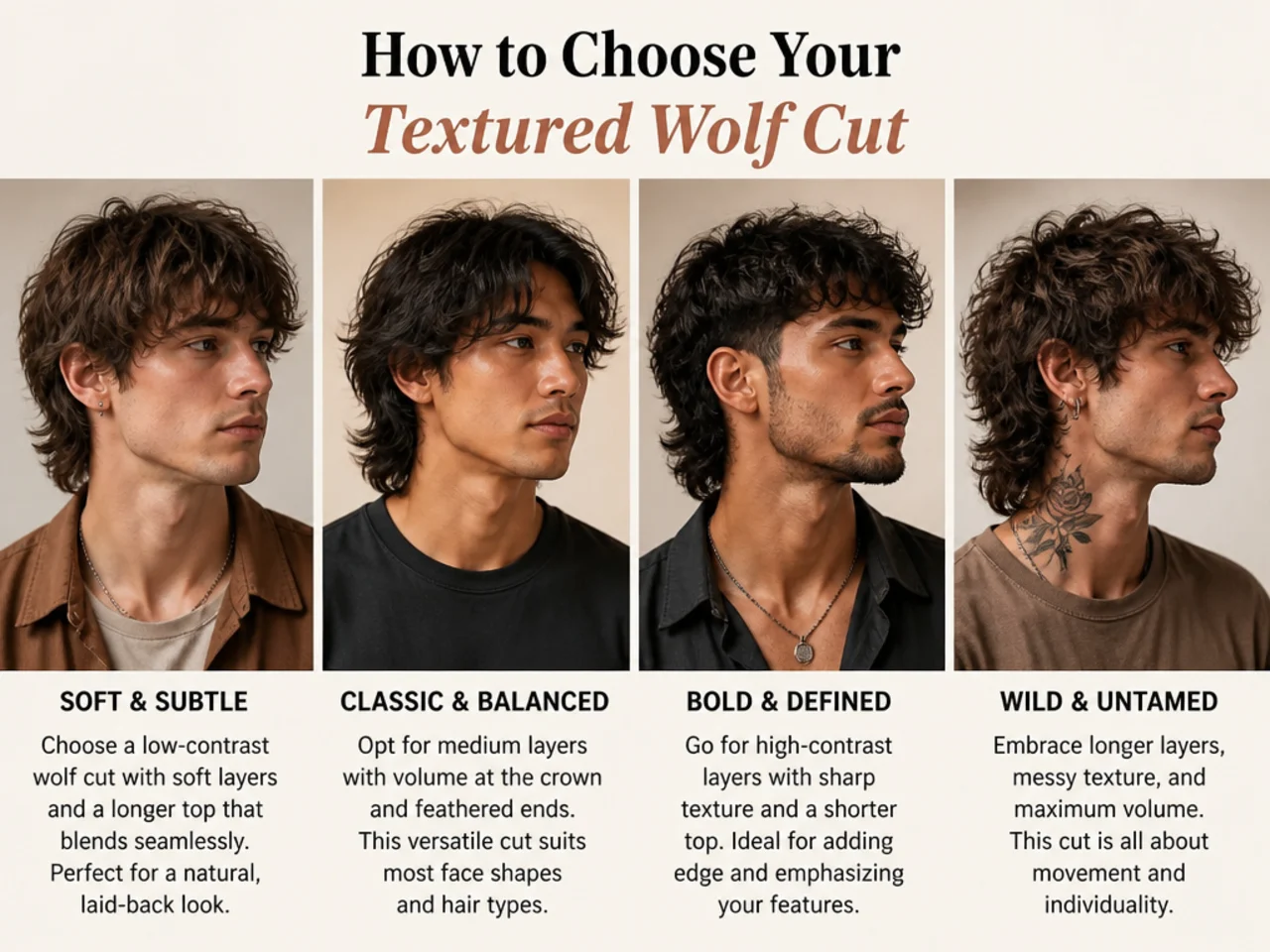
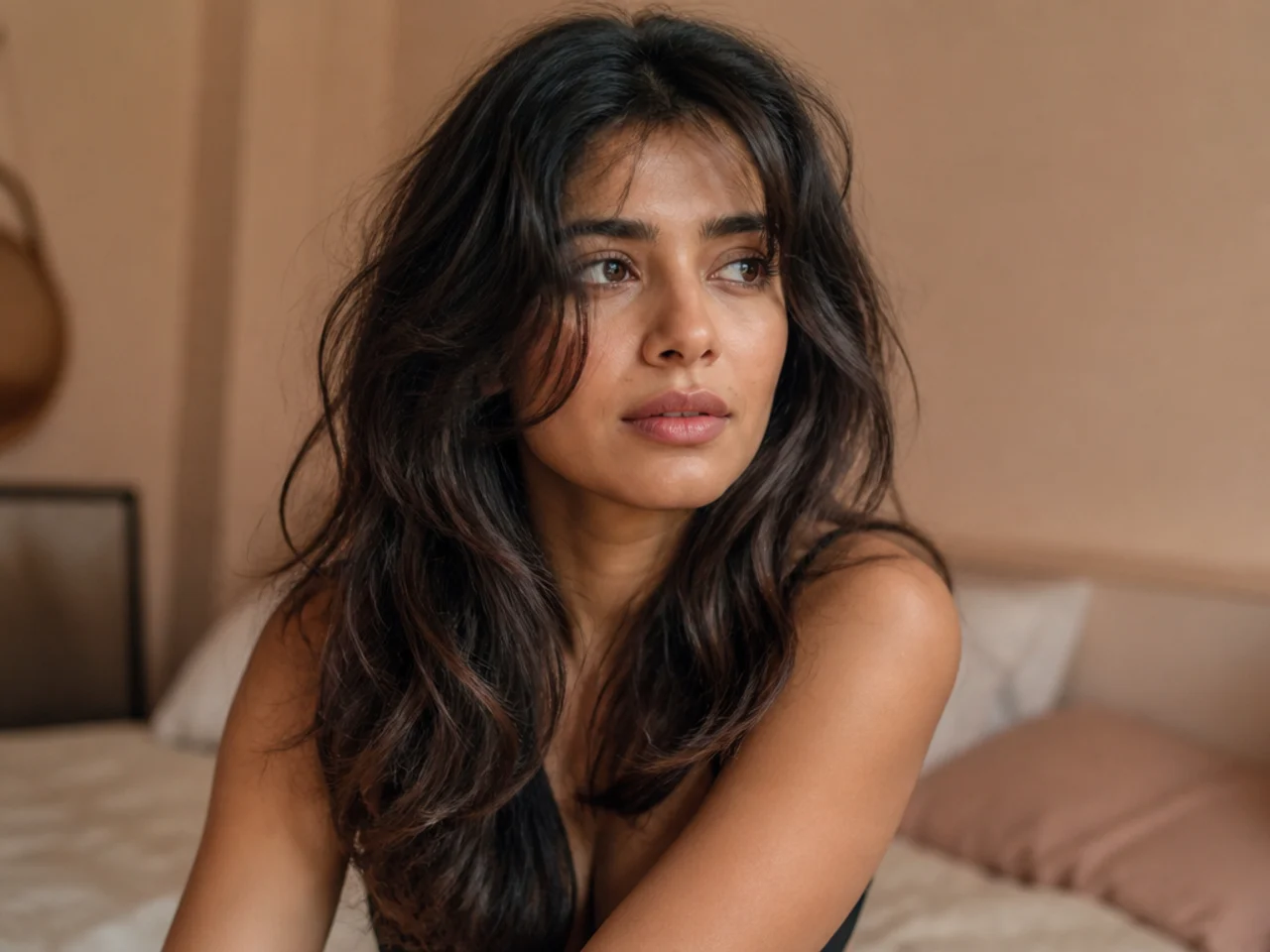
Hair type sets the technique. Straight hair benefits most from an aggressive razor or chop finish because the strands have no natural break — the cutting technique is what creates the movement. Wavy hair takes any of the four techniques and shows the texture clearly. Curly and coily hair should stick to point-cutting or dry scissor chopping; razors on curls disrupt the pattern and cause frizz. See our curl types guide if you're unsure of your pattern.
Face shape sets the crown height and fringe choice. Oval and heart faces suit almost every textured wolf variation. Round faces want extra crown lift with a curtain or textured fringe to add vertical lines. Square jaws read best with softer razored or feathered finishes rather than hard choppy chunks. Long faces need a fuller textured fringe and a shorter crown so the profile doesn't stretch further. Diamond faces get a clean read on nearly every version.
Lifestyle sets the sides. Scissor-blended sides read polished at any office. A tapered or lower-height fade sharpens the whole shape without pulling focus. Full undercuts, two-blocks, and mullet-hybrid versions read as statement cuts — good for creative fields, tricky for traditional corporate. Match the loudness to the room you spend the most time in, and browse the modern mullet haircut men pillar for adjacent shapes if the wolf reads too shaggy.
The 20 Textured Wolf Cut Variations
Each variation below tells you what makes it different, who it flatters, the finish technique, and the exact language for your barber. Show a reference photo and confirm the length and technique before the first scissor pass.
1. Classic Textured Wolf Cut
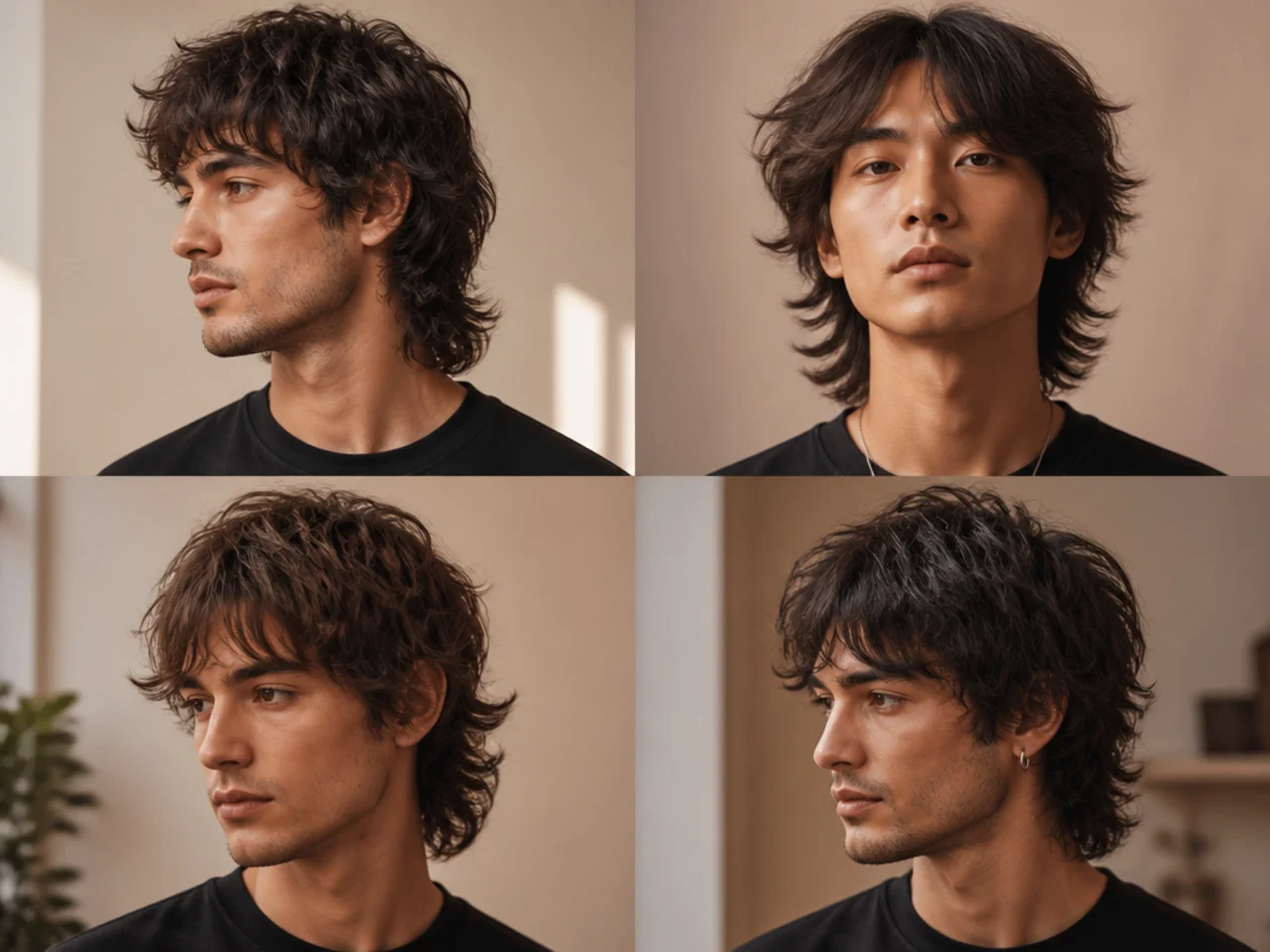
The baseline every other version riffs on. Three inches through the crown with internal layers, face-framing pieces that fall to the cheekbone, and a feathered nape that brushes the collar. Ends finished with point-cutting throughout for clean texture and visible layered rhythm.
Suits oval, heart, and diamond faces. Works on straight, wavy, and looser curly hair.
Ask for: "Classic textured wolf cut, three inches through the crown with internal layers, face-framing pieces at the cheekbone, feathered nape at the collar, point-cut throughout for texture, scissor-blended sides."
Styling tip: A pea-sized dollop of matte styling cream worked through damp hair, then rough-dry with fingers to lift the crown.
2. Razored Wolf Cut
The whole cut finished with a straight razor for the softest possible ends. Layers slice at an angle rather than chop straight across, leaving wispy feathered tips that catch the light and move with every head turn. Reads relaxed and rock-adjacent.
Suits oval, square, and long faces. Straight to wavy hair only — razors and curls don't mix.
Ask for: "Razored wolf cut, three inches through the crown, razor-sliced internal layers, face-framing pieces razored at the cheekbone, feathered razored nape, blended sides."
Styling tip: A sea-salt spray on damp hair and air-dry with fingers to keep the razored ends soft and separated.
3. Choppy Wolf Cut
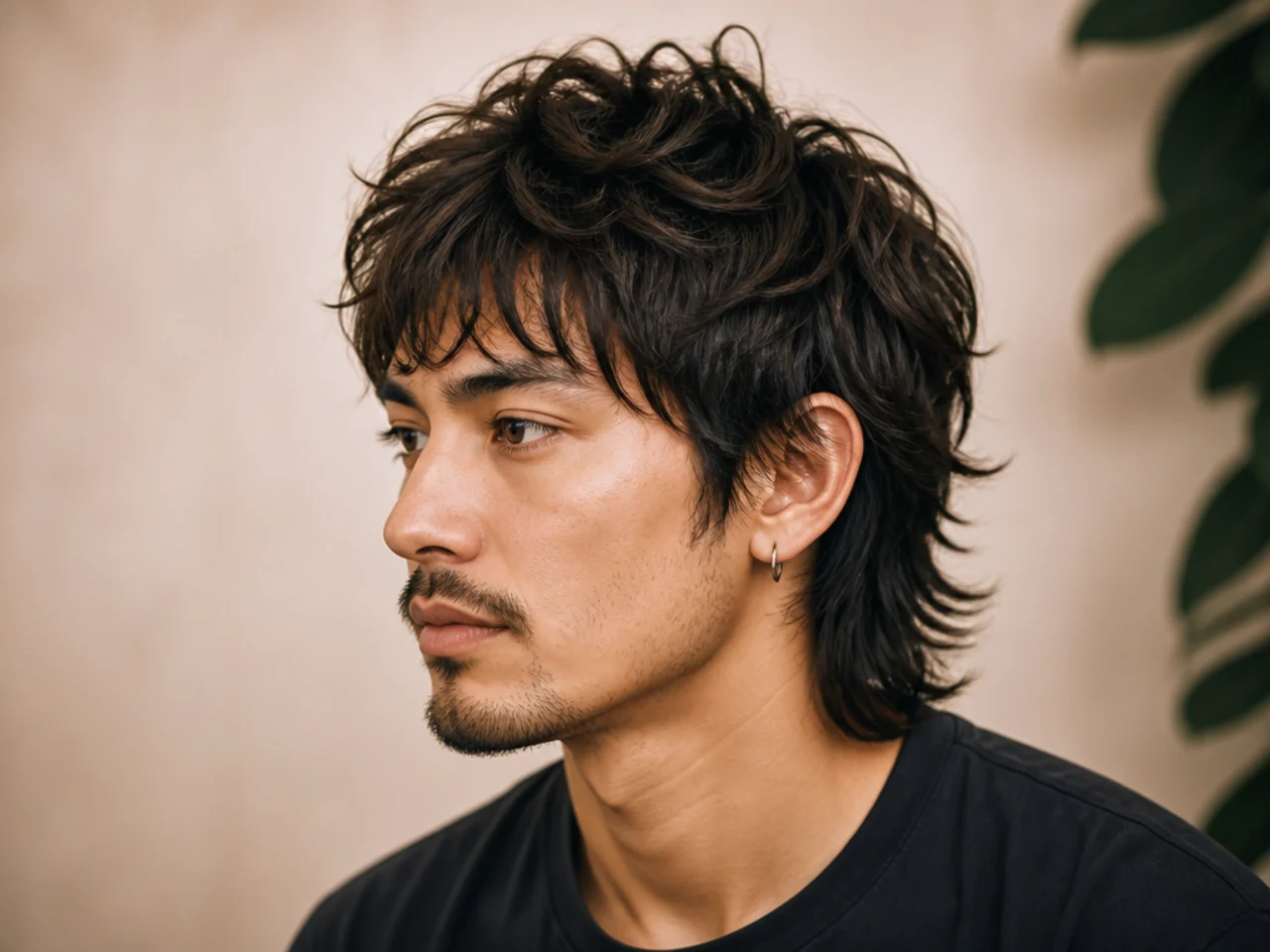
The most aggressive finish on the list. Scissors chop straight down into the length in bold visible chunks — the ends read broken and layered even without styling. The whole cut has more visual movement than any of the softer variations. Reads bold, statement, and confident.
Suits oval, heart, and diamond faces where the drama flatters rather than overwhelms. Straight to wavy hair carries the chop cleanest.
Ask for: "Choppy wolf cut, three inches through the crown with aggressive chop-cut internal layers, face-framing pieces chopped at the cheekbone, choppy feathered nape, scissor-blended sides."
Styling tip: A matte clay worked between the palms and pushed into the chops from the roots to lift and separate the chunks.
4. Piecey Wolf Cut
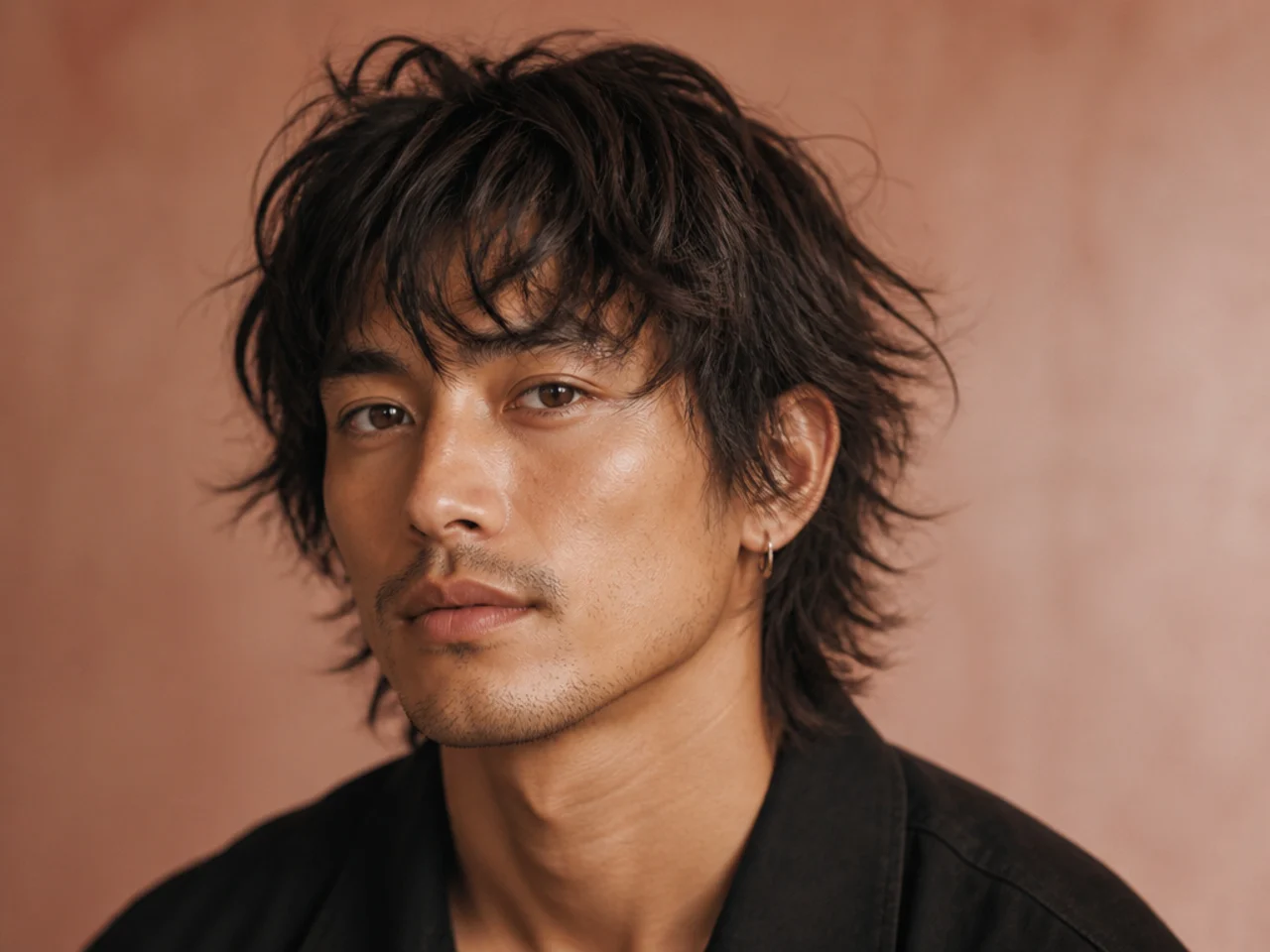
The sculpted version. The barber cuts the layers into small defined pieces rather than a smooth feathered edge — every strand groups into a chunk you can see. Product then holds those pieces apart so the whole cut reads like an editorial spread. The wolf shape stays intact under the sculpting.
Suits oval, heart, and diamond faces. Best on straight to wavy hair with medium density.
Ask for: "Piecey wolf cut, three inches through the crown with internal layers cut into defined pieces, face-framing pieces at the cheekbone, piecey feathered nape, blended sides — I want visible separation."
Styling tip: A fingertip of firm-hold styling paste rubbed between the palms, then pinched through the pieces one by one to hold each separation.
5. Point-Cut Wolf Cut
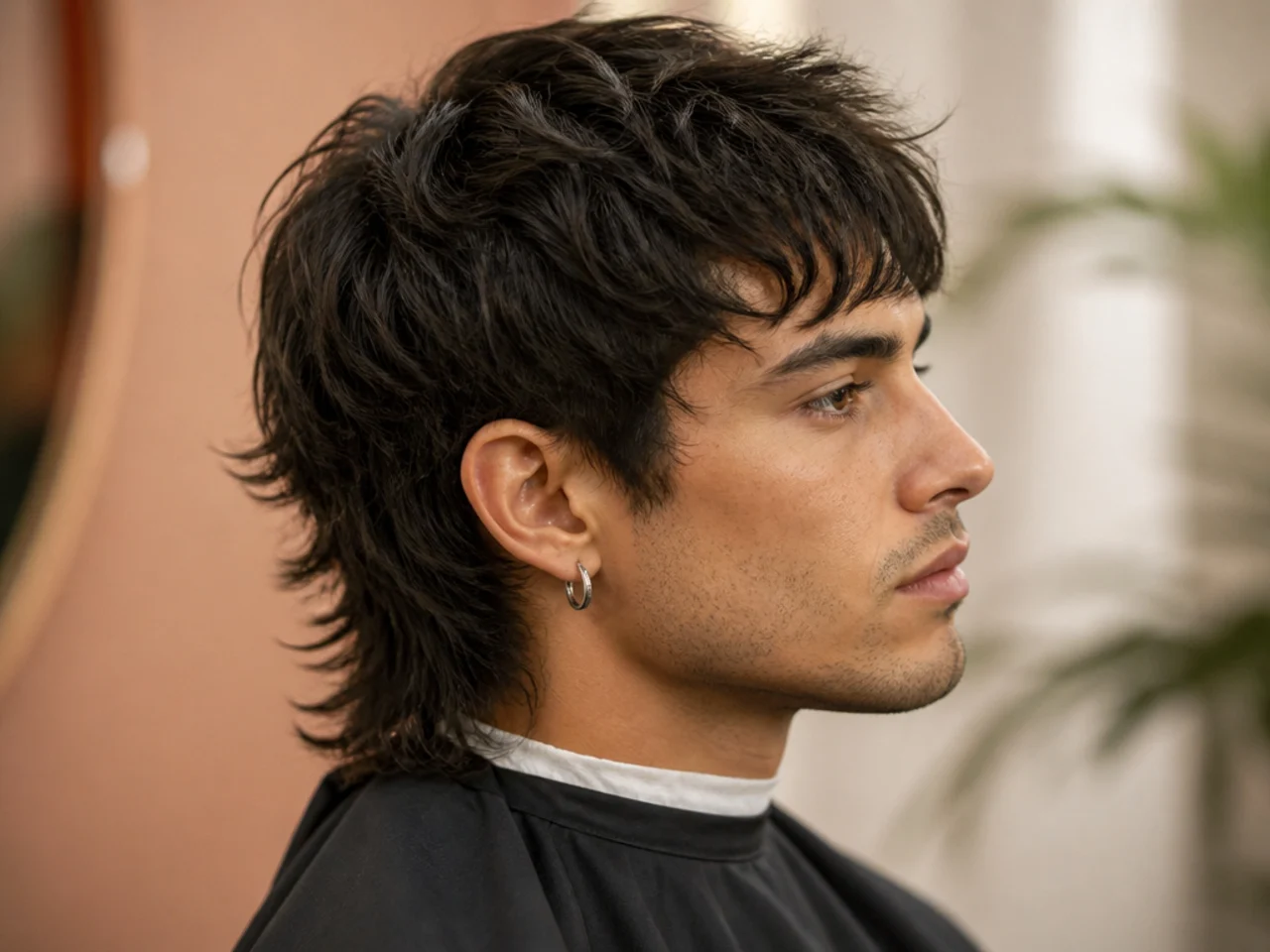
The cleanest textured version. Scissor tips drive into the ends at a soft angle — no chunks, no razor wisps, just controlled angled points that break the perimeter. Reads workplace-safe while still holding wolf-cut movement. The most versatile choice for guys who need one cut for both weekdays and weekends.
Suits every face shape. Works across straight, wavy, and looser curly hair.
Ask for: "Point-cut wolf cut, three inches through the crown with point-cut internal layers, point-cut face-framing pieces at the cheekbone, feathered point-cut nape, scissor-blended sides."
Styling tip: A pea of styling cream worked through damp hair and rough-dried with fingers for a natural finish that suits any dress code.
6. Feathered Wolf Cut
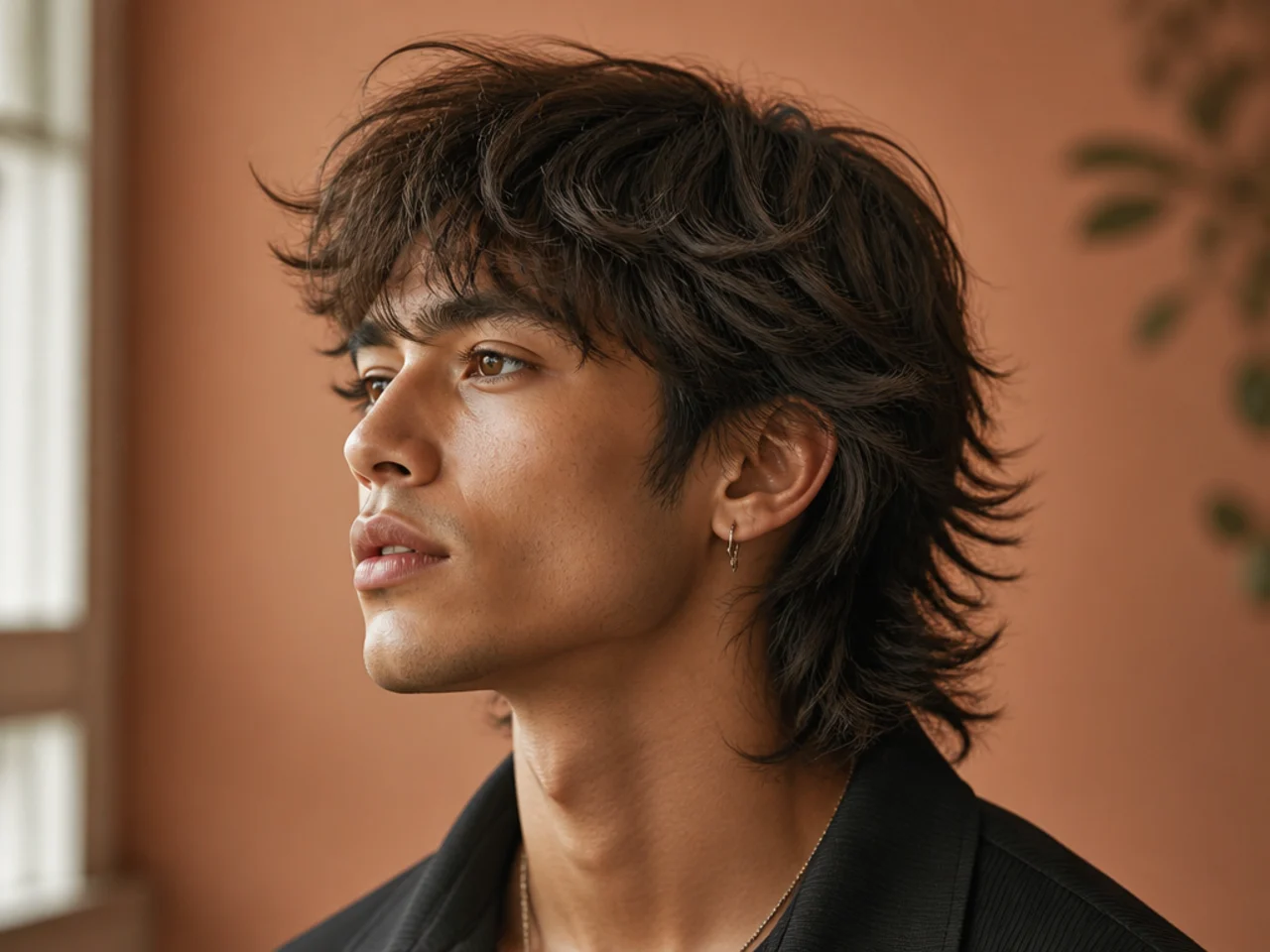
The softest silhouette. Every layer feathers into the one below with no visible break — the crown flows into the sides, the sides flow into the nape. The cut looks less like a stack of layers and more like one continuous drape of hair. Reads romantic and effortless.
Suits oval, heart, and long faces where the softness flatters proportion. Best on straight or wavy hair with fine to medium density.
Ask for: "Feathered wolf cut, three inches through the crown, softly feathered internal layers with no visible break, feathered face-framing pieces at the cheekbone, feathered nape at the collar, blended sides."
Styling tip: A leave-in conditioning spray on damp hair and air-dry with occasional finger passes to encourage the feathering.
7. Sliced Wolf Cut
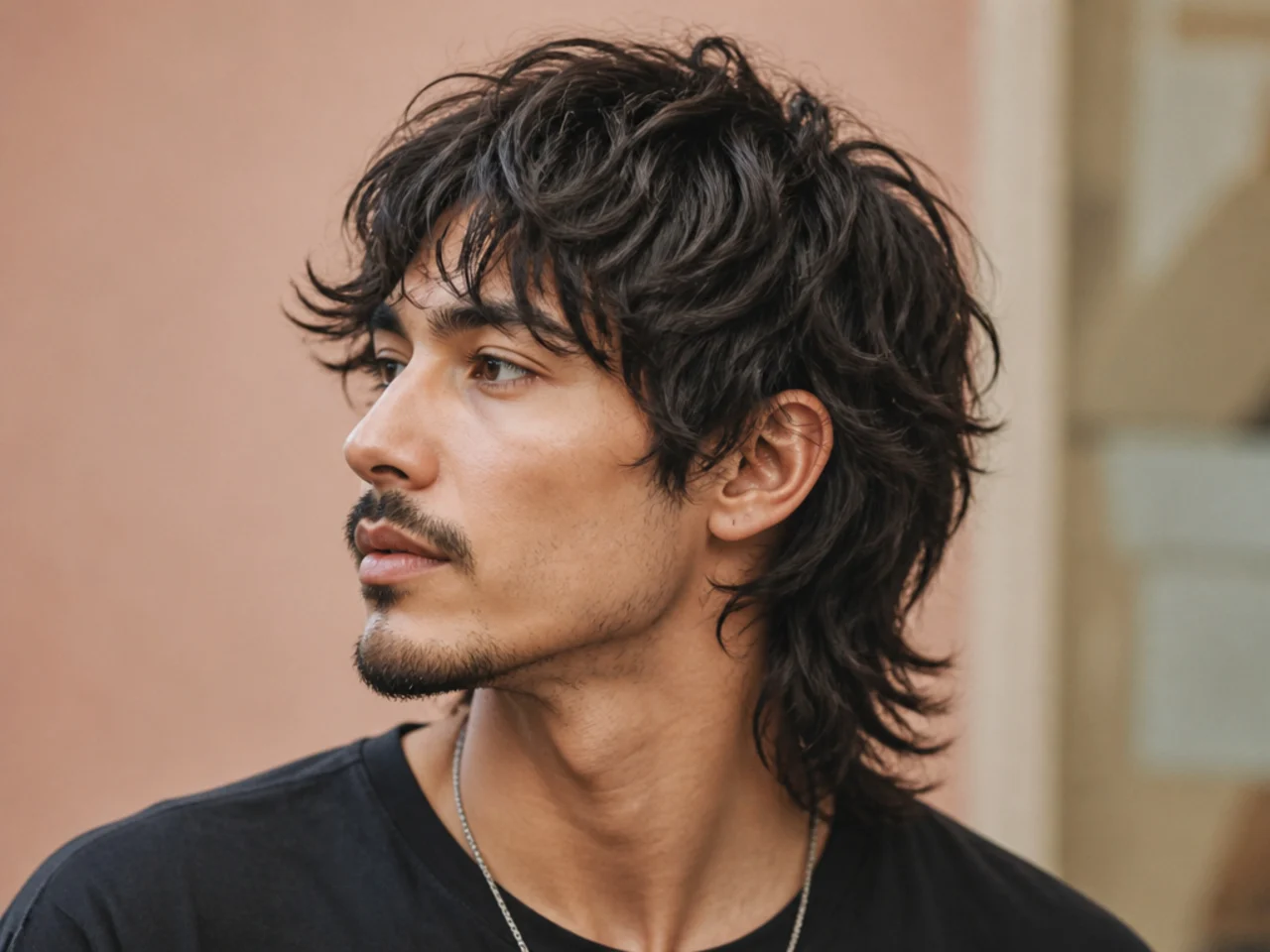
The technique-forward cousin of the razor cut. The barber uses scissor slicing — long angled cuts along the length of the hair — instead of a straight razor. Produces directional movement that reads intentional, with less risk of over-thinning than a full razor cut.
Suits oval, heart, and diamond faces. Works on straight and wavy hair; ask for a demo pass on curly to make sure the pattern holds.
Ask for: "Sliced wolf cut, three inches through the crown with scissor-sliced internal layers, sliced face-framing pieces at the cheekbone, sliced feathered nape, blended sides."
Styling tip: A texturizing spray on damp hair, then rough-dry with a round brush pulling the length in the direction of the slice.
8. Shag-Textured Wolf Cut
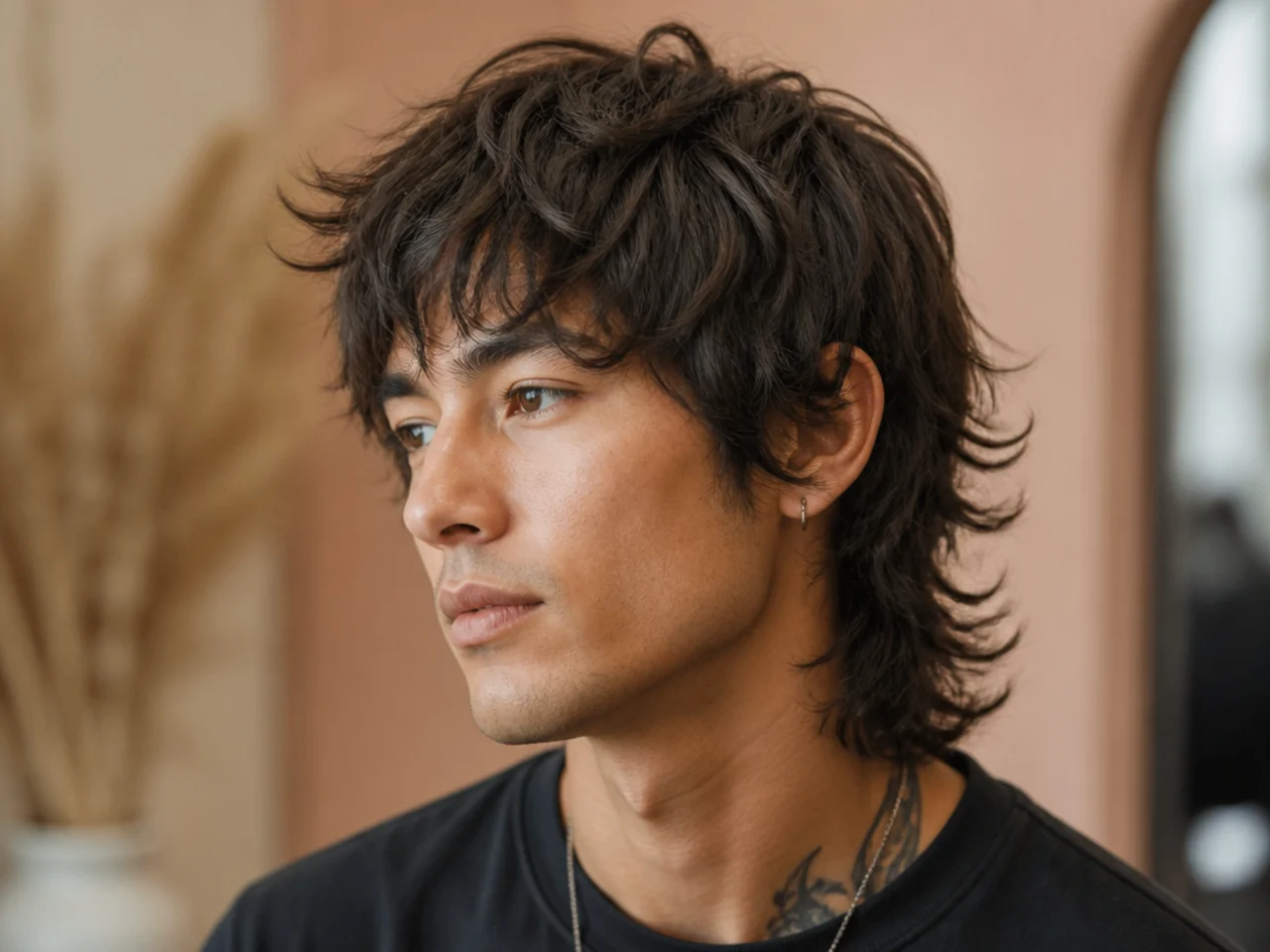
The wolf cut pushed toward the shag. Heavy layering starts higher — right at the crown — with more visible layer breaks throughout the length. The face-framing pieces are chunkier and more numerous. Reads more 70s and rock than the classic textured wolf.
Suits oval, heart, and diamond faces. Wavy hair carries the shag texture cleanest.
Ask for: "Shag-textured wolf cut, three inches through the crown with heavy shag layering starting at the crown, chunky choppy face-framing pieces at the cheekbone and jaw, textured feathered nape, blended sides."
Styling tip: A sea-salt spray on damp hair, scrunch upward, and air-dry for maximum shag movement without product weight.
9. Wispy Textured Wolf Cut
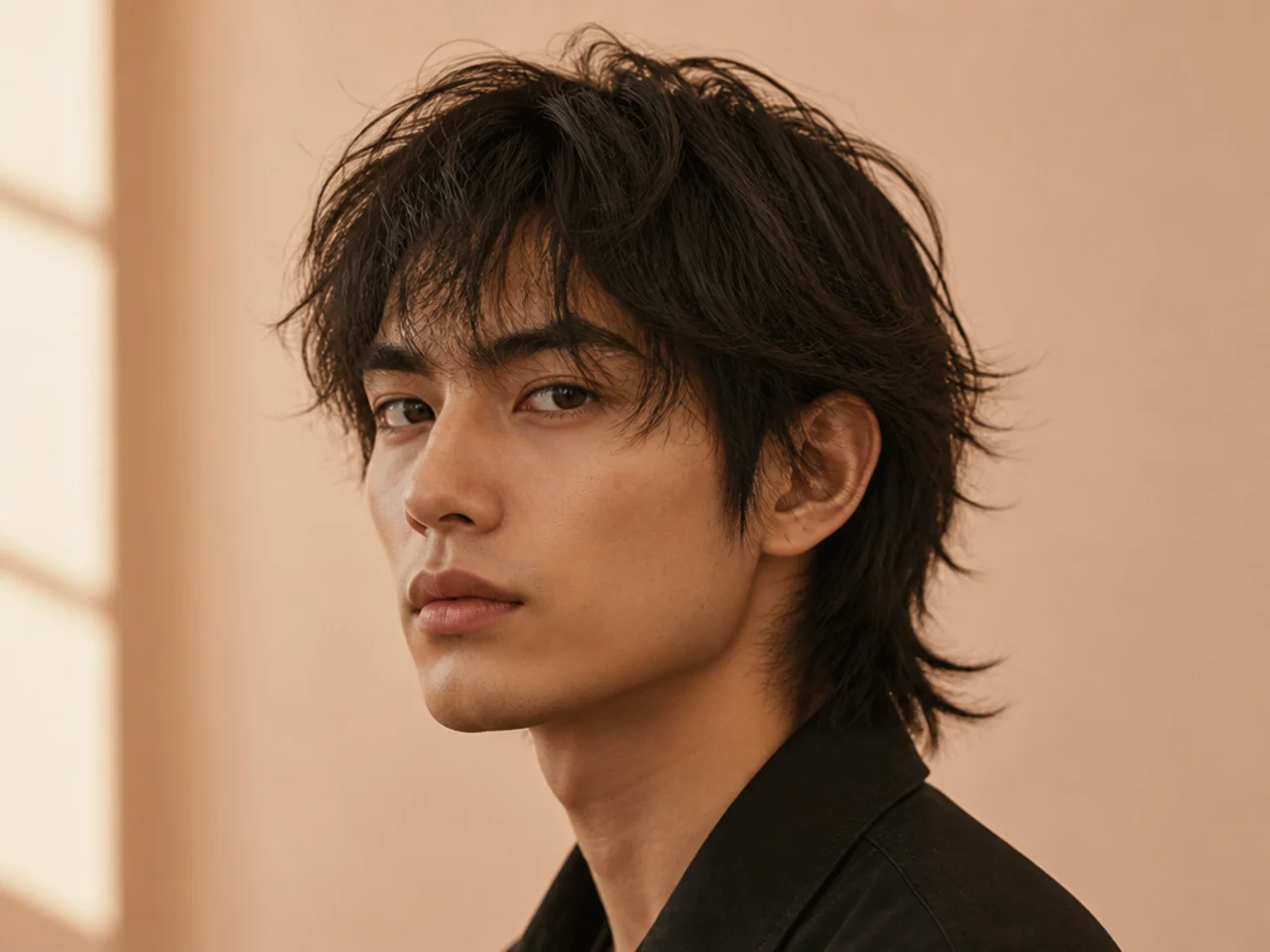
The lightest possible version. Ends razored or sliced to fine wisps that read almost translucent at the perimeter. Best for fine hair that would look thick and heavy in a blunt cut — the wispiness makes the density work rather than fighting it.
Suits oval, heart, and long faces. Fine to medium straight or wavy hair only; thick hair loses definition in a fully wispy finish.
Ask for: "Wispy textured wolf cut, three inches through the crown with razor-sliced internal layers cut to fine wisps, wispy face-framing pieces at the cheekbone, wispy feathered nape, softly blended sides."
Styling tip: A dry texture spray misted from above and shaken through with fingertips to keep the wisps separated and airy.
10. Textured Wolf with Curtain Bangs
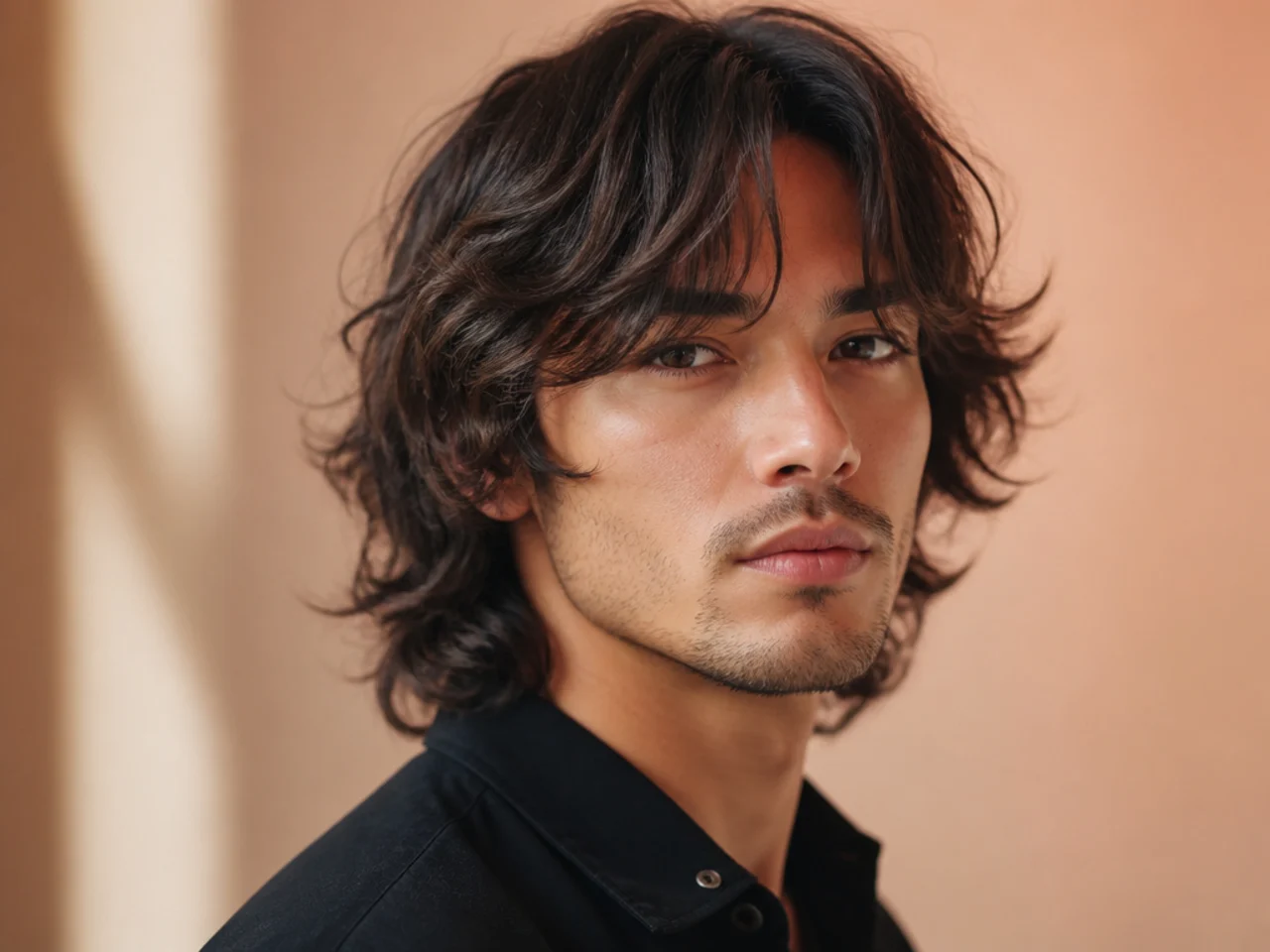
The face-framing pieces extended into a full curtain fringe. Two textured panels sweep out from a center part and frame the forehead, while the rest of the layered wolf silhouette sits shaggy behind them. Reads soft and approachable — one of the friendliest versions on the list.
Suits round, oval, and heart faces where the curtain softens the top of the face. Best on straight to wavy hair with enough length to hold the sweep.
Ask for: "Textured wolf with curtain bangs, three inches through the crown with point-cut internal layers, curtain bangs cut long enough to meet at a center part and sweep outward at the temples, feathered nape, low taper on the sides."
Styling tip: Blow-dry the fringe downward from a center part with a round brush, then set with a light finishing spray.
11. Textured Wolf with Textured Fringe
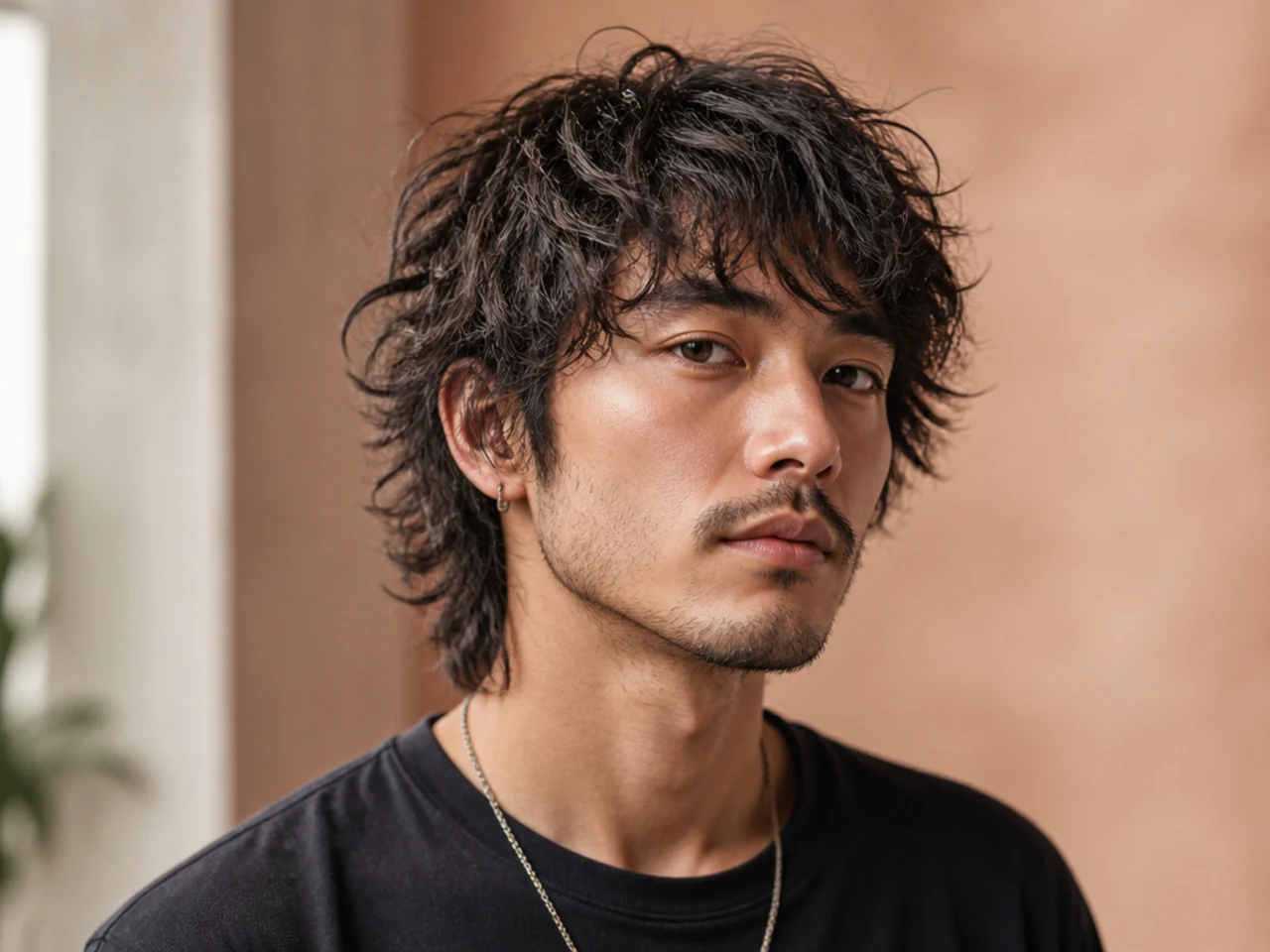
A piecey textured fringe drops forward onto the forehead in defined chunks. The layered crown and feathered nape hold the wolf shape while the fringe adds forward movement and softens the hairline. Reads modern and youthful. Cross-reference our textured fringe men breakdown for full fringe technique.
Suits round, oval, and square faces. Works across straight to wavy hair with any density.
Ask for: "Textured wolf with textured fringe, three inches through the crown, piecey point-cut fringe falling to the brow in defined sections, feathered perimeter, blended sides."
Styling tip: Rough-dry the fringe forward with fingers, then separate the pieces with a fingertip of matte clay.
12. Short Textured Wolf Cut
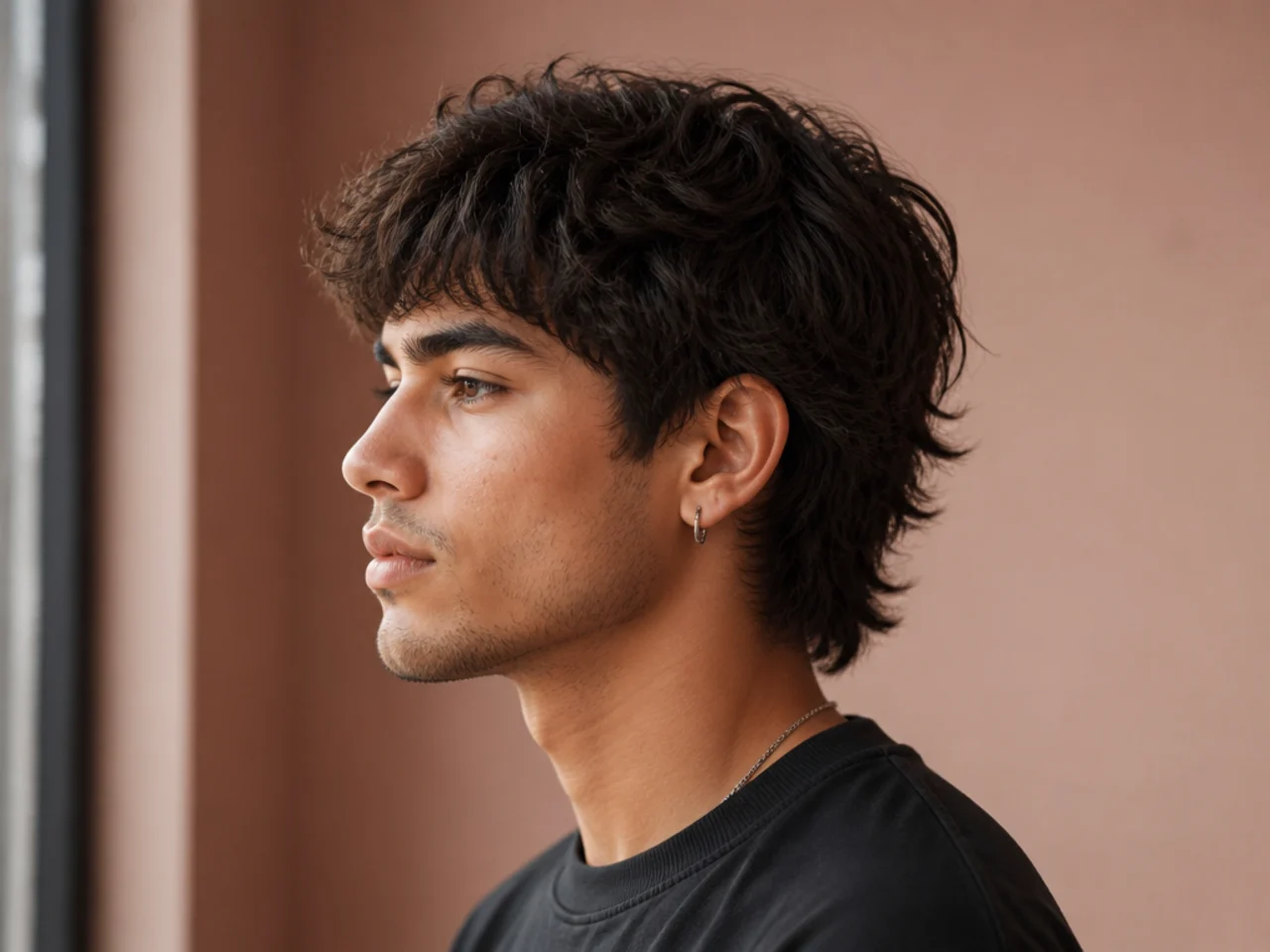
The whole silhouette compressed above the collar. Two inches through the crown with the same point-cut or razored finish, face-framing pieces at the cheekbone, and a nape that sits at or just above the collar. Reads modern and workplace-safe without losing the wolf-cut rhythm. See our short wolf cut men breakdown for more short-length variations.
Suits every face shape. Works on any hair type from straight to coily.
Ask for: "Short textured wolf cut, two inches through the crown with point-cut internal layers, face-framing pieces at the cheekbone, feathered nape at the collar, blended sides at a guard 2."
Styling tip: A pea of matte clay pushed through with fingertips — three-minute style routine, done.
13. Medium-Length Textured Wolf Cut
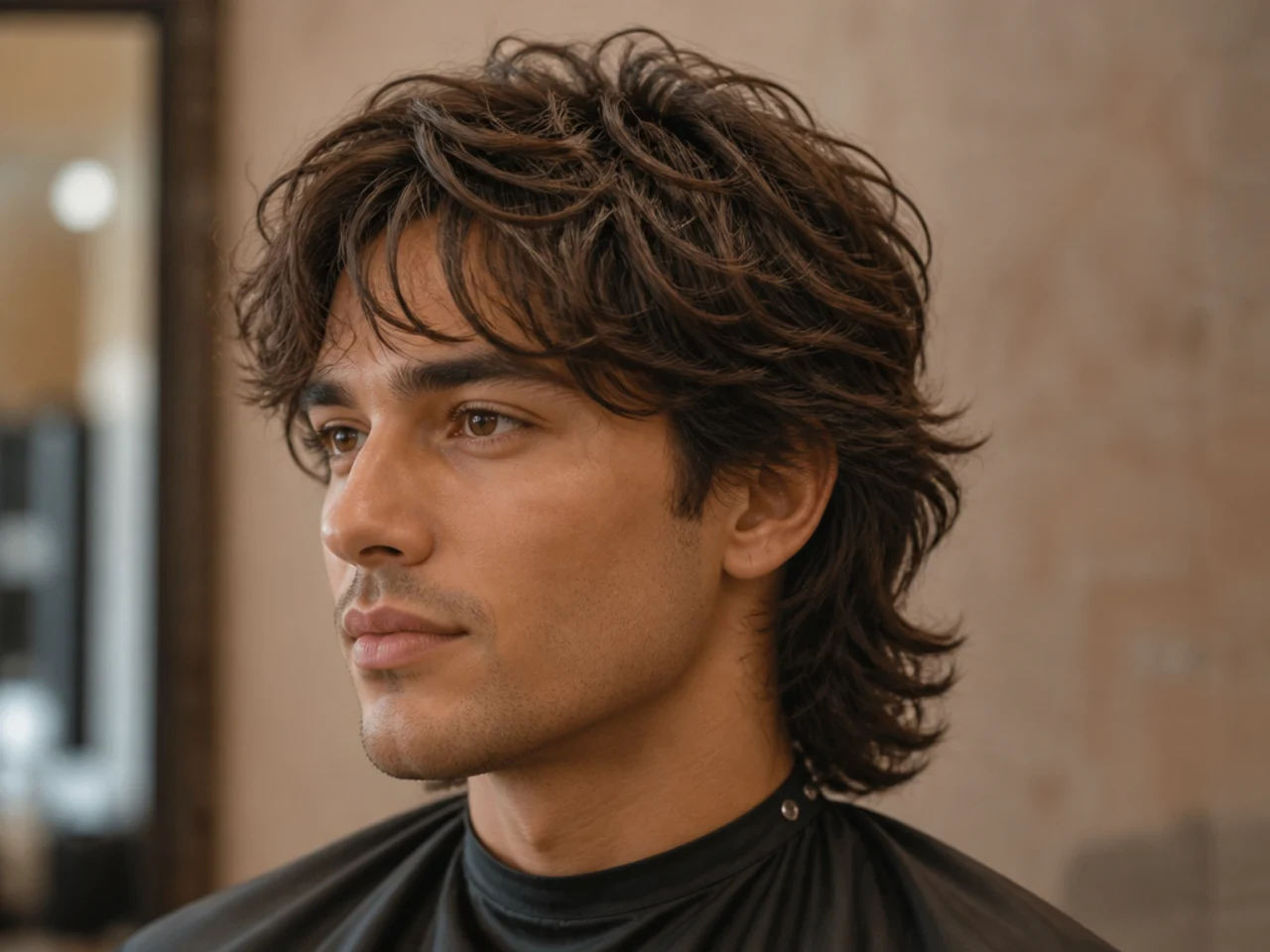
The classic length window. Four inches through the crown, face-framing pieces to the jaw, and a nape that sits an inch or two past the collar. The most versatile length because it carries the wolf rhythm without demanding either short-hair discipline or long-hair maintenance.
Suits oval, heart, and diamond faces. Works across straight, wavy, and curly hair.
Ask for: "Medium-length textured wolf cut, four inches through the crown with point-cut internal layers, face-framing pieces to the jaw, textured nape two inches past the collar, blended sides."
Styling tip: Sea-salt spray on damp hair, rough-dry with fingers, and finish with a light matte cream for hold.
14. Long Textured Wolf Cut
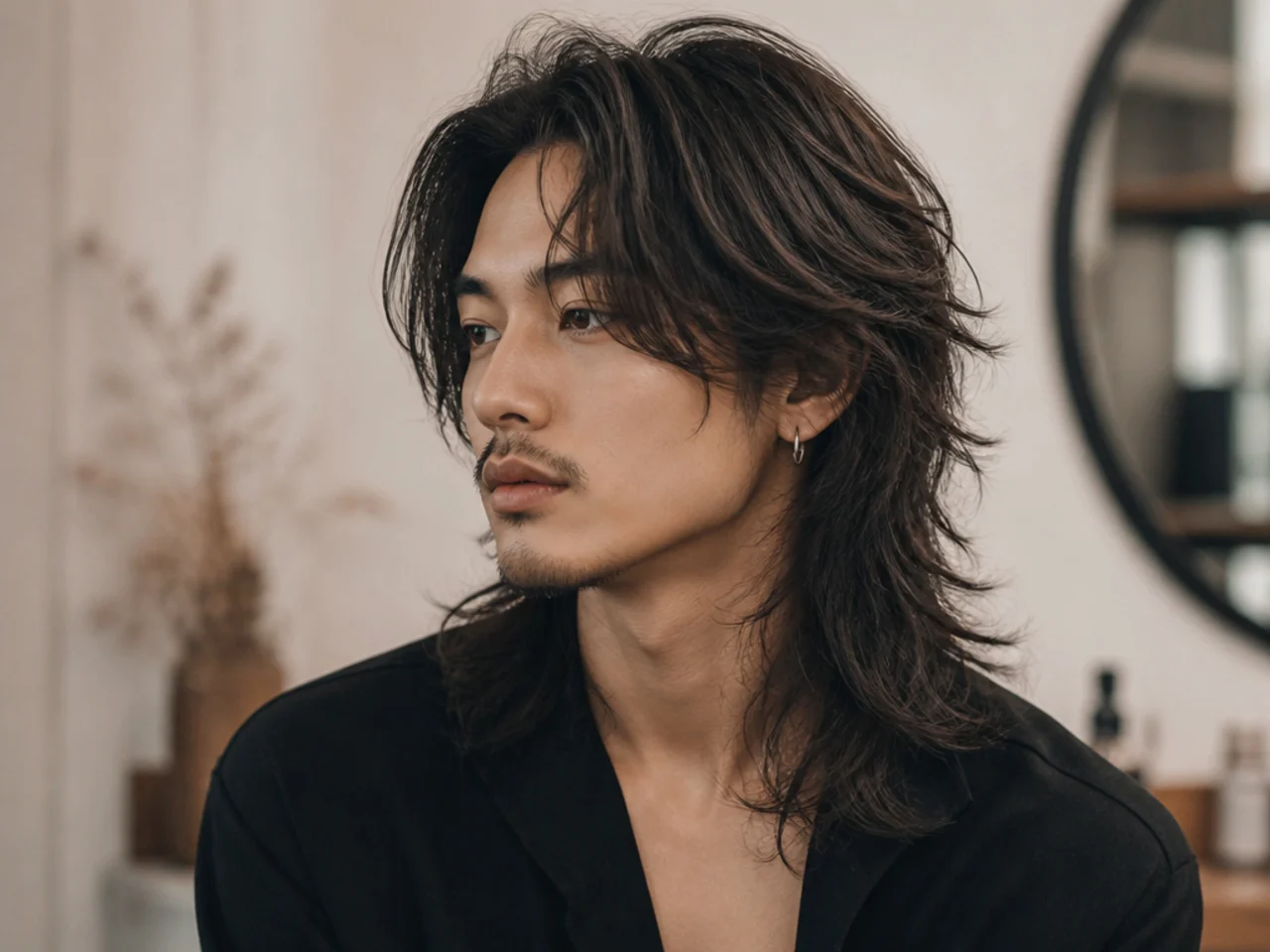
The maximum commitment version. Five or six inches through the crown, face-framing pieces past the jaw, and a nape that sits at or past shoulder length. Aggressive internal texture is critical here — without it, the whole silhouette turns heavy and triangular. See our wolf cut men long guide for the full long-length spectrum.
Suits oval, heart, and diamond faces. Best on straight to wavy hair with moderate density.
Ask for: "Long textured wolf cut, six inches through the crown with heavy razor-sliced internal layers for weight removal, face-framing pieces past the jaw, textured nape at shoulder length, blended sides — no fade."
Styling tip: A sea-salt spray and a leave-in cream on damp hair; scrunch upward and air-dry to preserve the length and the layered rhythm.
15. Textured Wolf with Low Taper Fade
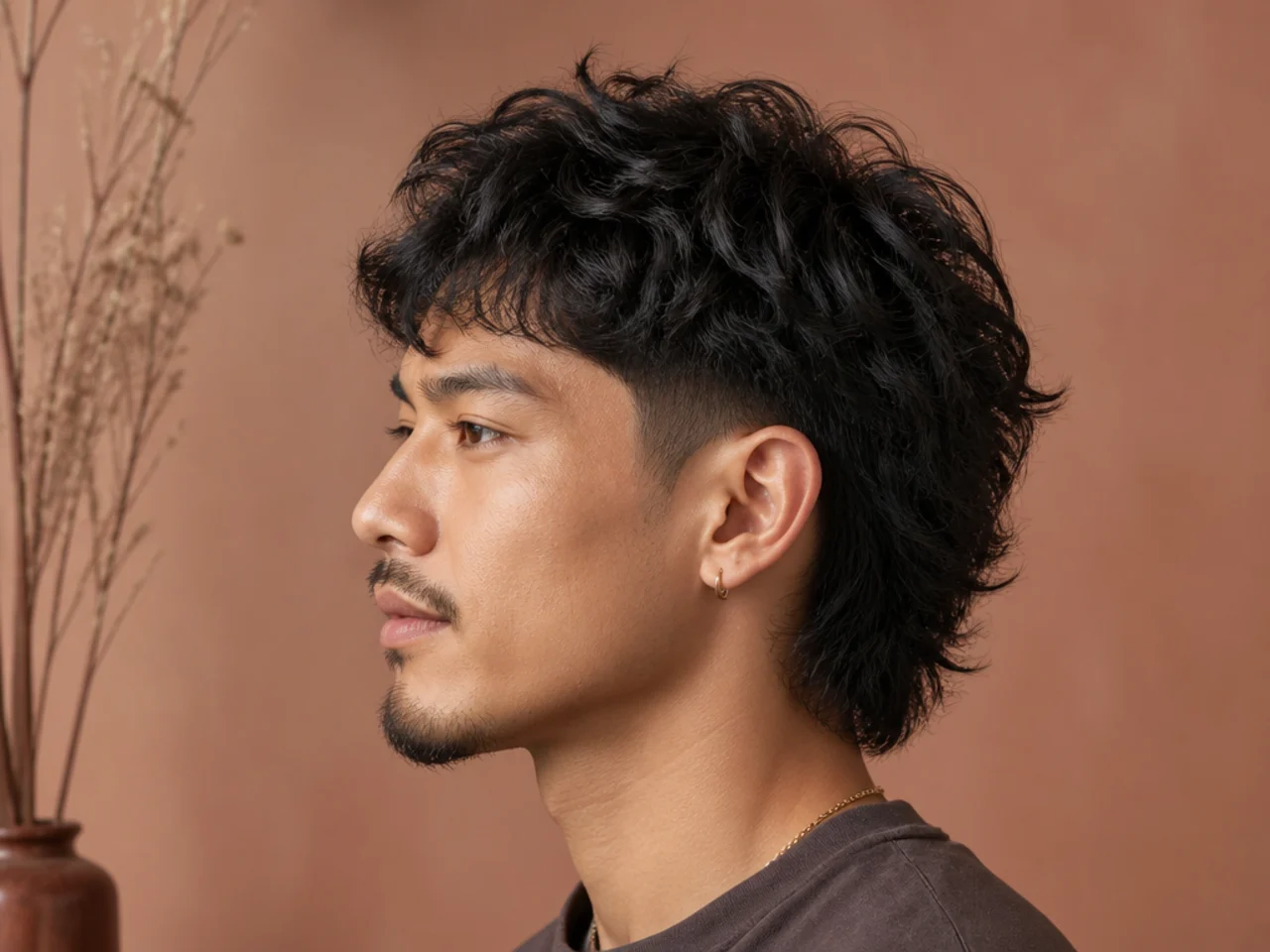
The office-safe polish version. A low taper fade starts just above the ear and fades cleanly into the sideburn without pulling focus. The textured wolf silhouette on top stays intact, and the tapered sides keep the whole shape from spreading wide.
Suits every face shape. Works across straight, wavy, and curly hair.
Ask for: "Textured wolf on top — three inches with point-cut internal layers — low taper fade on the sides starting at the sideburn ending at a guard 1, softly tapered nape."
Styling tip: Matte clay through the top; a swipe of firm styling wax along the fade line to keep the edges reading crisp.
16. Textured Wolf with Mid Fade
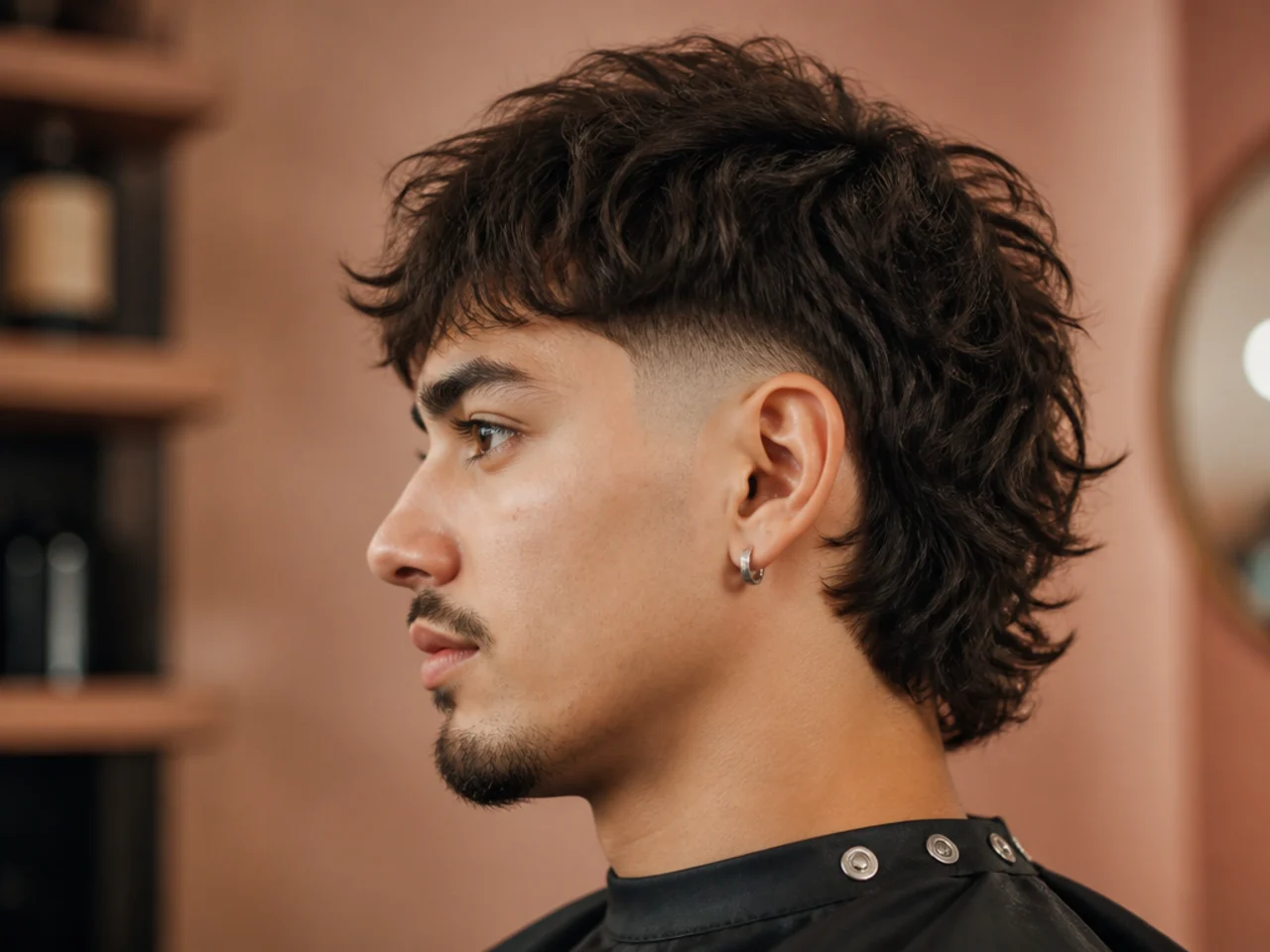
The mid fade puts the transition at the temple line, which draws visual weight upward and makes the textured crown the focal point of the whole cut. Louder than a low taper but not as bold as a skin fade — the middle-ground fade for the middle-ground wearer.
Suits square, oval, and heart faces. Best on straight to wavy hair where the crown texture can carry the visual weight.
Ask for: "Textured wolf with a mid fade, three-inch layered textured top, mid fade blending at the temple line ending at a guard 0.5, feathered textured nape."
Styling tip: Matte clay pushed up through the crown for lift, then a light hairspray to hold the texture through the day.
17. Textured Wolf with Burst Fade
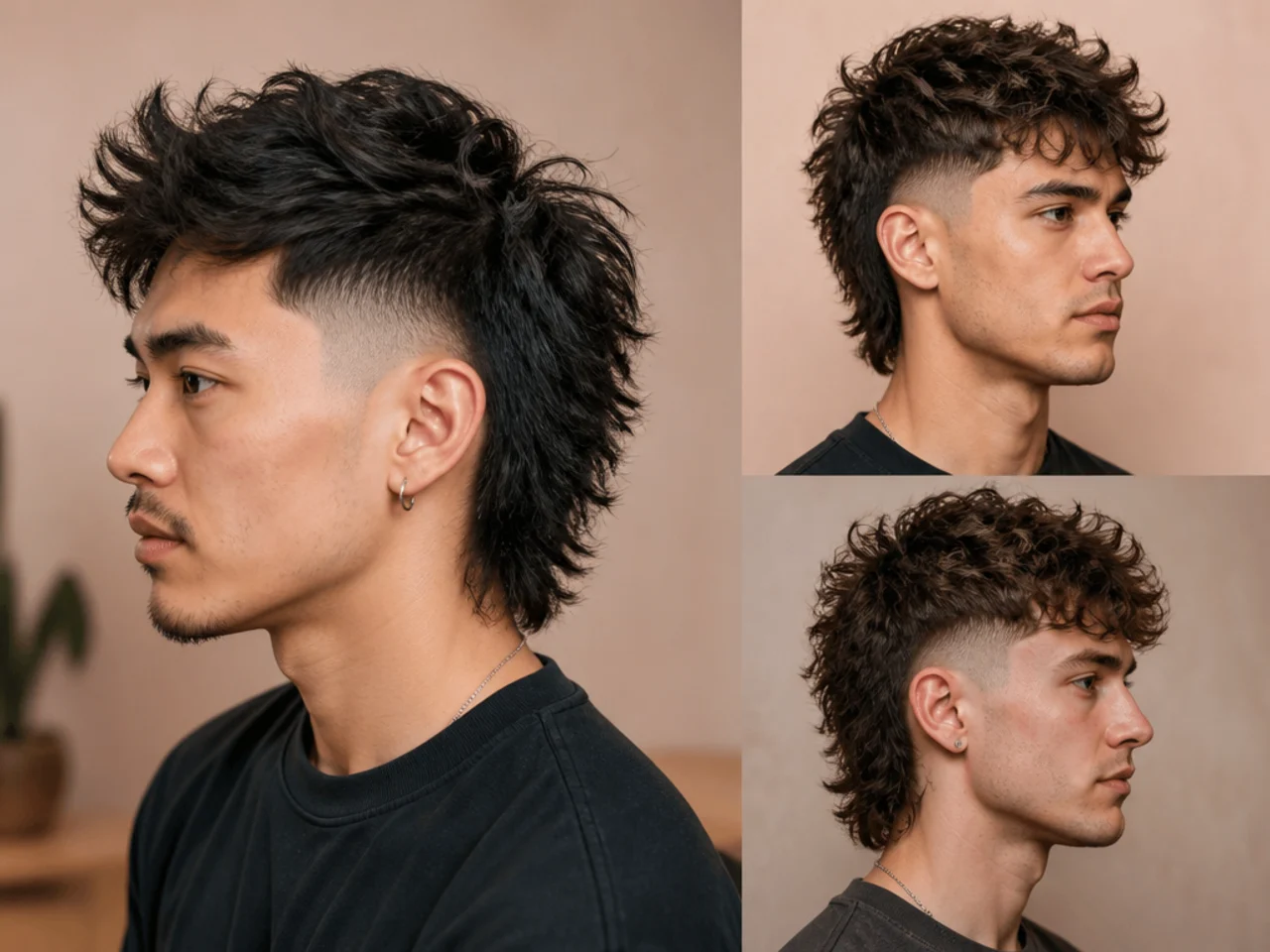
The burst fade curves in a semicircle around each ear and leaves the nape length untouched — the textured wolf's feathered back flows out of the fade instead of getting cut off. One of the best fade choices for a textured wolf because the shape follows the natural hair direction.
Suits oval, heart, and diamond faces. Especially strong on wavy and curly textures where the crown builds significant height.
Ask for: "Textured wolf with a burst fade, three-inch layered textured top, burst fade to a guard 0.5 arcing around each ear, keep the nape length untouched and textured."
Styling tip: A texturizing spray through the crown and a shot of finishing spray to hold the burst-fade shape.
18. Textured Wolf with Undercut
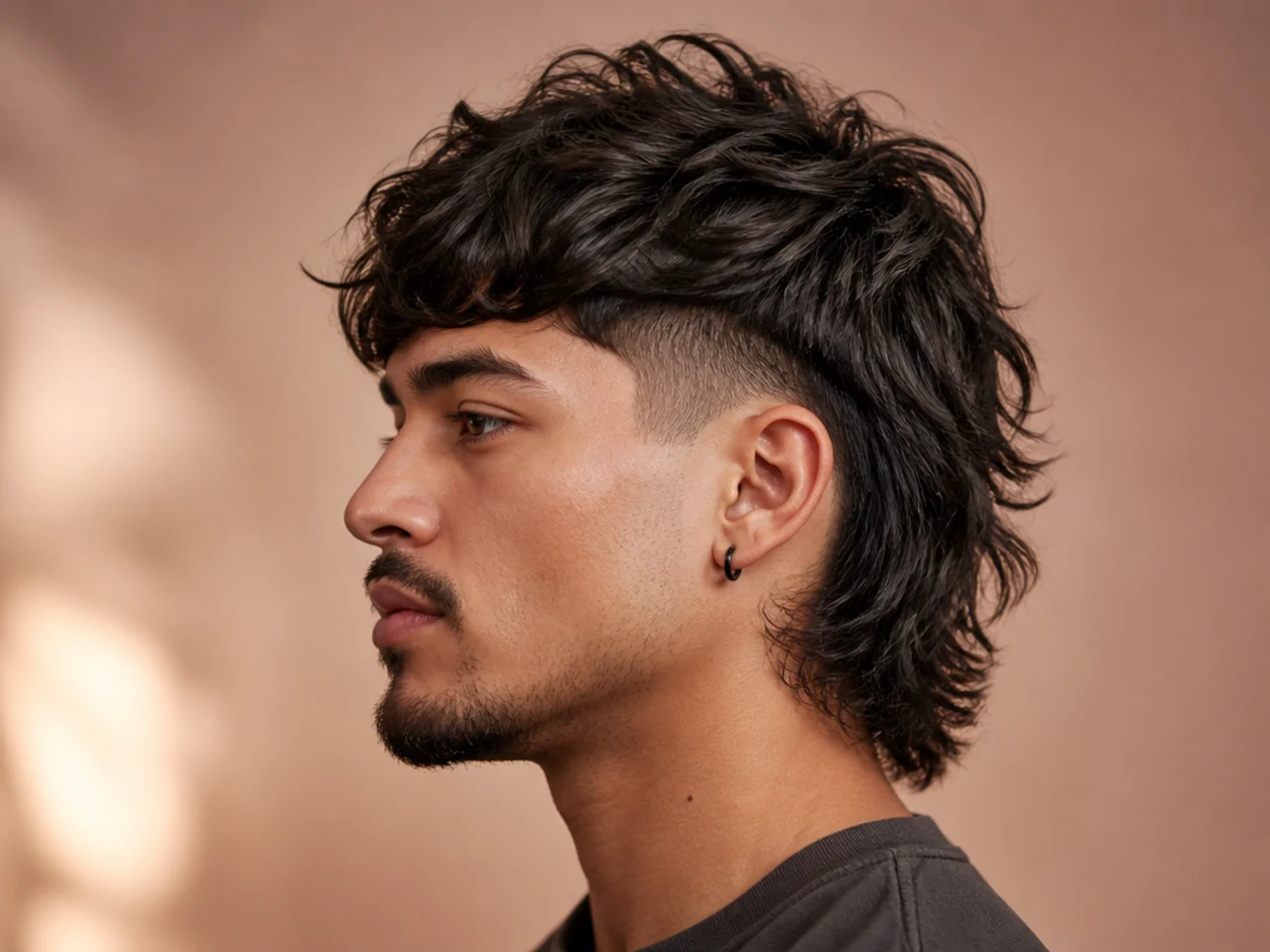
No blend. A clear disconnection line runs around the parietal ridge, with a heavily textured layered top sitting over a buzzed undercut base. The two lengths meet at a hard edge rather than transitioning. Reads statement and modern.
Suits oval, diamond, and long faces where the vertical drop of the disconnect flatters proportion. Best on straight to wavy hair with medium to high density.
Ask for: "Textured wolf with a disconnected undercut, four inches on top with razor-sliced layers and face-framing pieces, half-guard undercut on the sides and back, keep the disconnect line hard and clean."
Styling tip: A firm-hold styling paste worked through the top mass and pushed back so the texture reads as one sculpted piece against the undercut.
19. Textured Wolf Mullet Hybrid
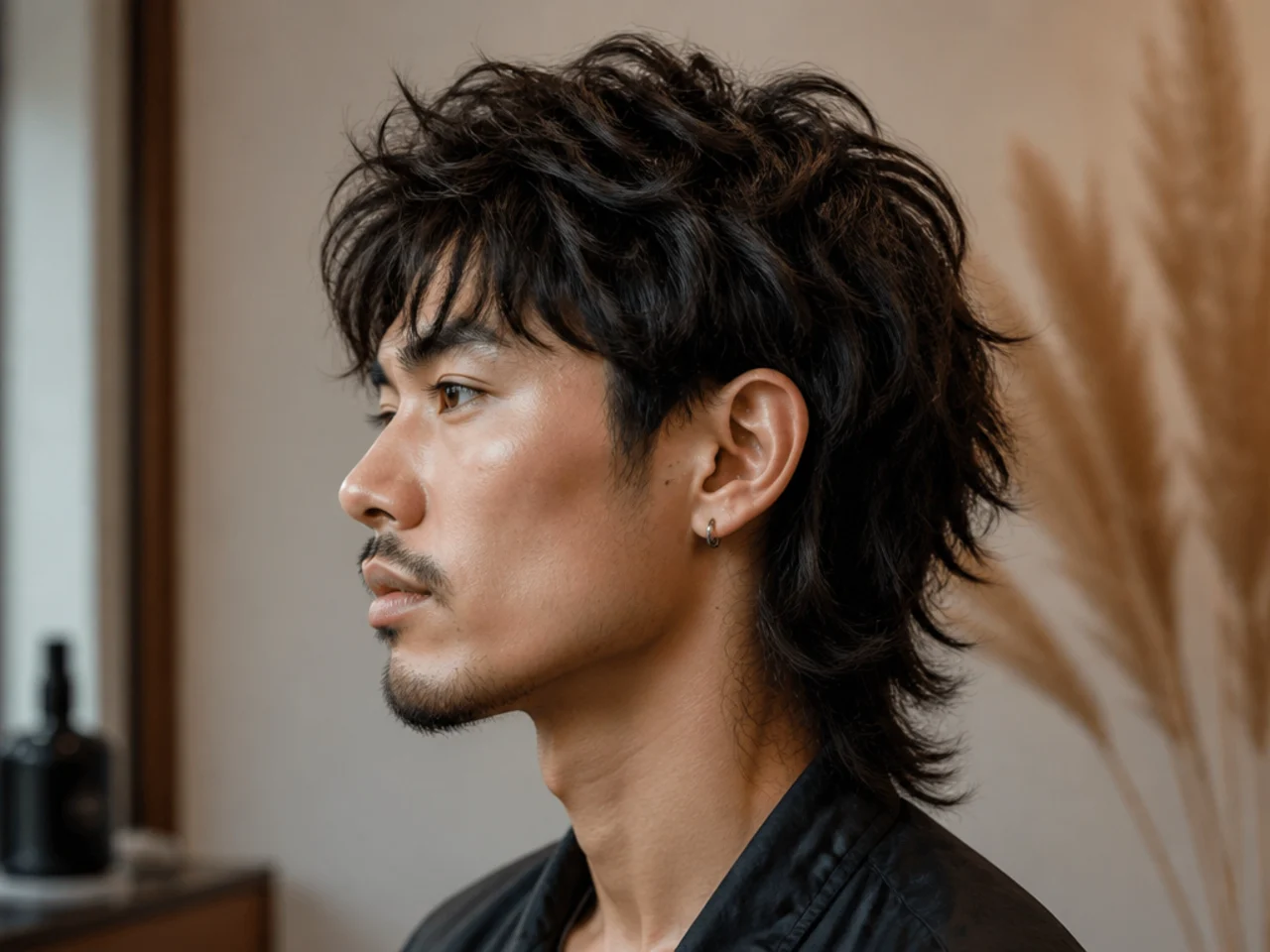
The mullet energy pushed forward. Length concentrates dramatically at the back — six or more inches past the collar — while the crown and sides sit shorter. The heavy texture keeps the mullet from reading dated; the wolf-cut layering around the crown keeps it from reading pure mullet.
Suits oval, square, and heart faces. Best on straight to wavy hair where the back length carries the drop.
Ask for: "Textured wolf mullet hybrid, three-inch layered textured crown with razor-sliced layers, face-framing pieces at the cheekbone, back length six inches past the collar with heavy textured layers, low taper on the sides."
Styling tip: Sea-salt spray through the entire length, rough-dry the crown with fingers, and let the back air-dry undisturbed so the length reads defined rather than flat.
20. Textured Wolf with Full Beard
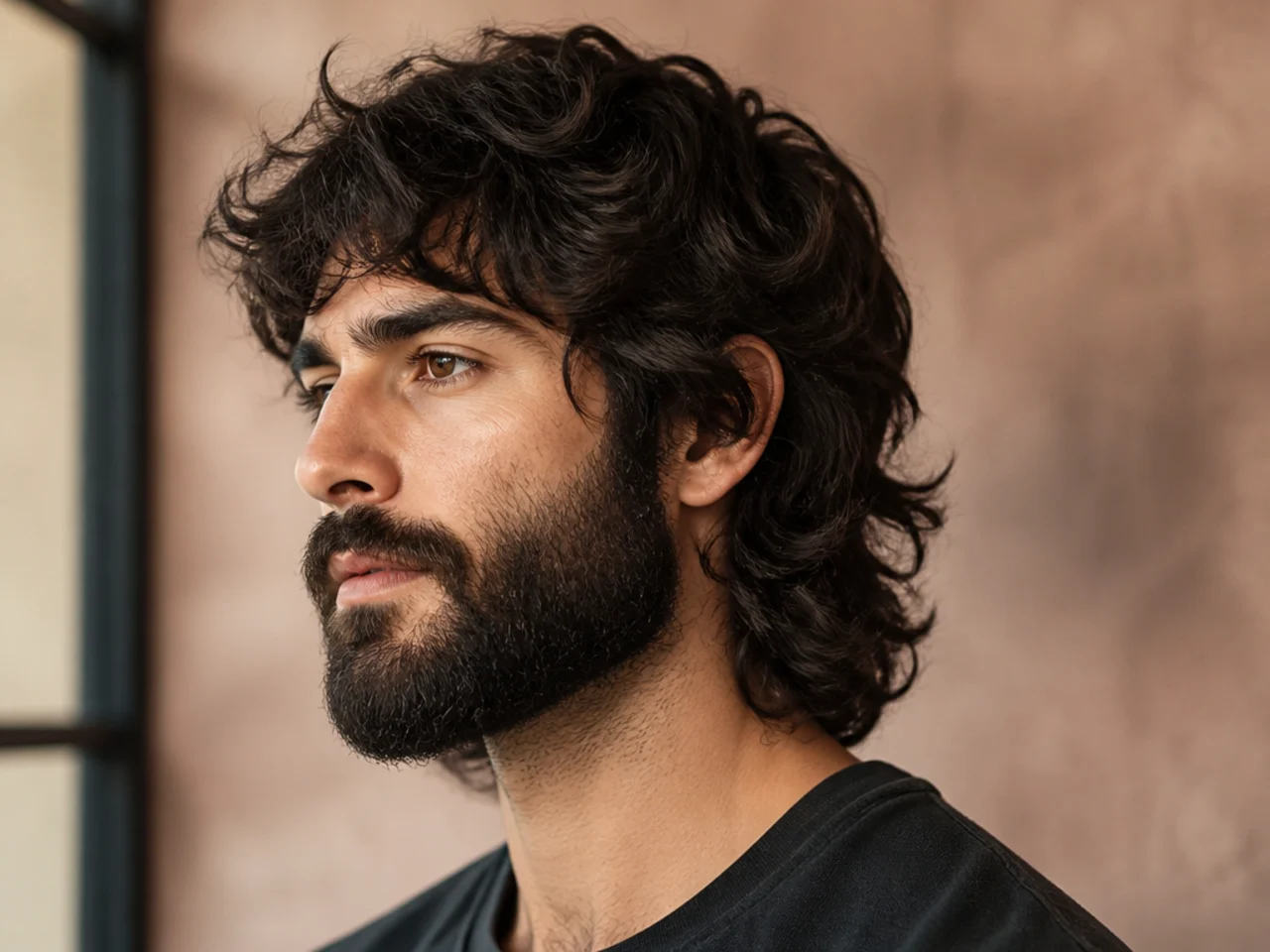
The beard grounds the whole shape. Where the layered top moves and the perimeter feathers, a full beard adds a hard visual base — the two together make the textured wolf read as an adult cut rather than a Gen Z trend. Match the beard grade to the sides so the transition reads intentional.
Suits diamond, oval, and square faces where the beard balances a wider forehead. Best paired with a mid or low taper rather than a full skin fade.
Ask for: "Textured wolf with a full beard, three-inch layered textured top with point-cut layers, feathered nape at the collar, mid taper on the sides connecting into a matched-grade full beard, hard line at the sideburn."
Styling tip: Beard oil daily and a fingertip of matte clay through the hair — the two textures should read as one continuous shape from crown to jaw.
How to Ask Your Barber for a Textured Wolf Cut
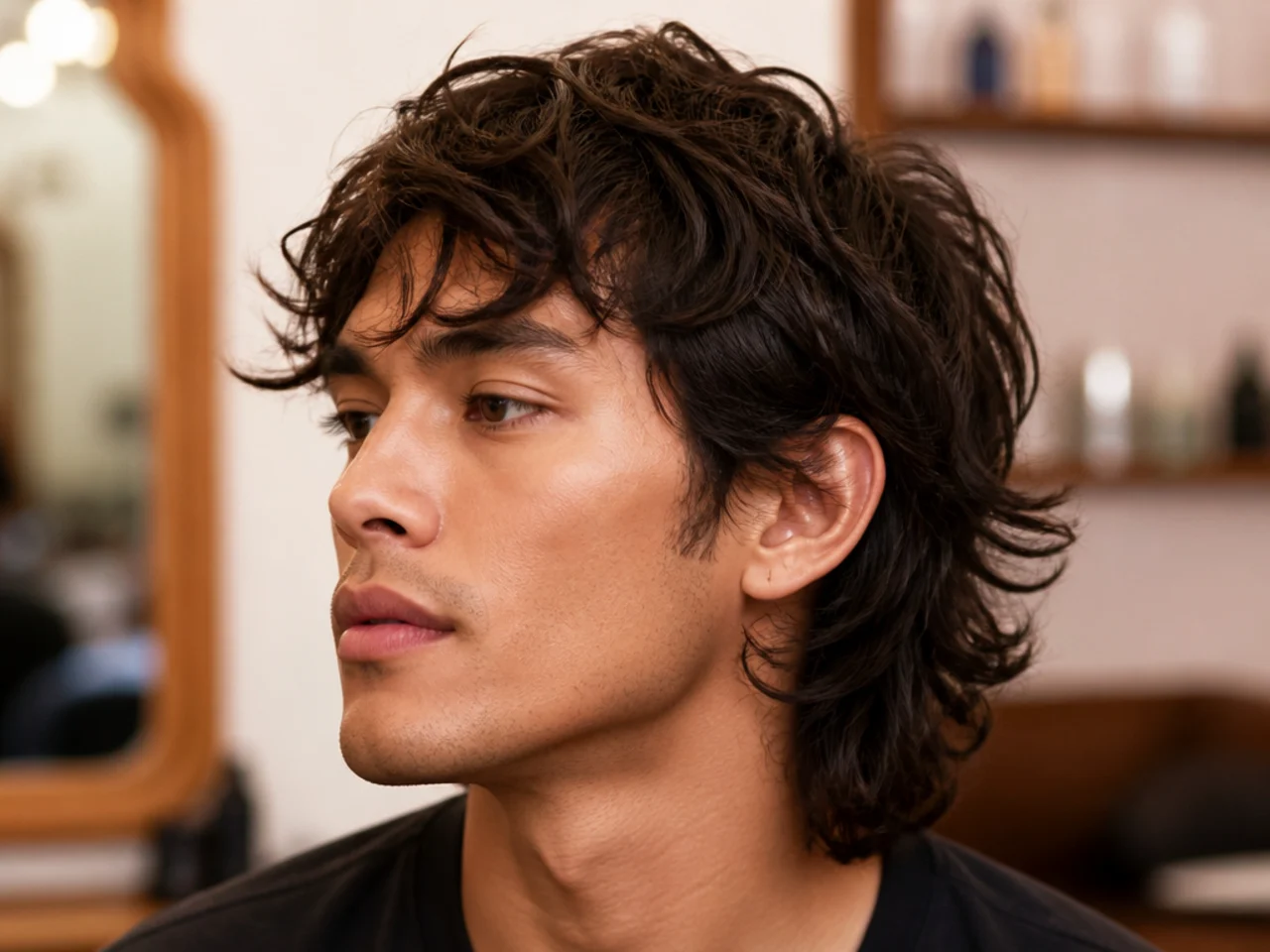
The finish technique matters as much as the base shape. A wolf cut with the wrong finish is not the same haircut as one with the right finish. Bring a reference photo so the level of texture is visible before scissors touch anything.
- Say "textured wolf cut" and name the finish technique. Razored, choppy, piecey, point-cut, feathered, sliced, or wispy. Each produces a different look on the same base shape.
- Set the crown length in inches. Two to three for short and workplace, three to four for classic, five or more for long. Confirm dry inches for straight hair, sprung inches for curly.
- Set the face-framing height. Cheekbone is the default; jaw is longer and softer; temple is shorter and more sculpted.
- Set the nape length. Collar for classic, past-collar for medium, shoulder for long, mullet-drop for the hybrid version.
- Set the side treatment. Scissor-blended, low taper, mid taper, burst fade, skin fade, disconnected undercut, or two-block. Match the loudness to how much attention you want the cut pulling.
- Ask for internal layering, not just surface texture. Internal layers cut for weight removal are what let the crown lift and the sides fall. Surface-only texture leaves the hair heavy and flat.
- Confirm the length one more time before the first cut. Look at the photo, look in the mirror, agree on the crown length and nape length verbally. Once the length is off, the whole cut is off.
Answer those seven questions and the barber has enough to work without a single guess. The reference photo is the safety net — show it before, during, and at the mirror check.
Styling and Maintenance for a Textured Wolf Cut
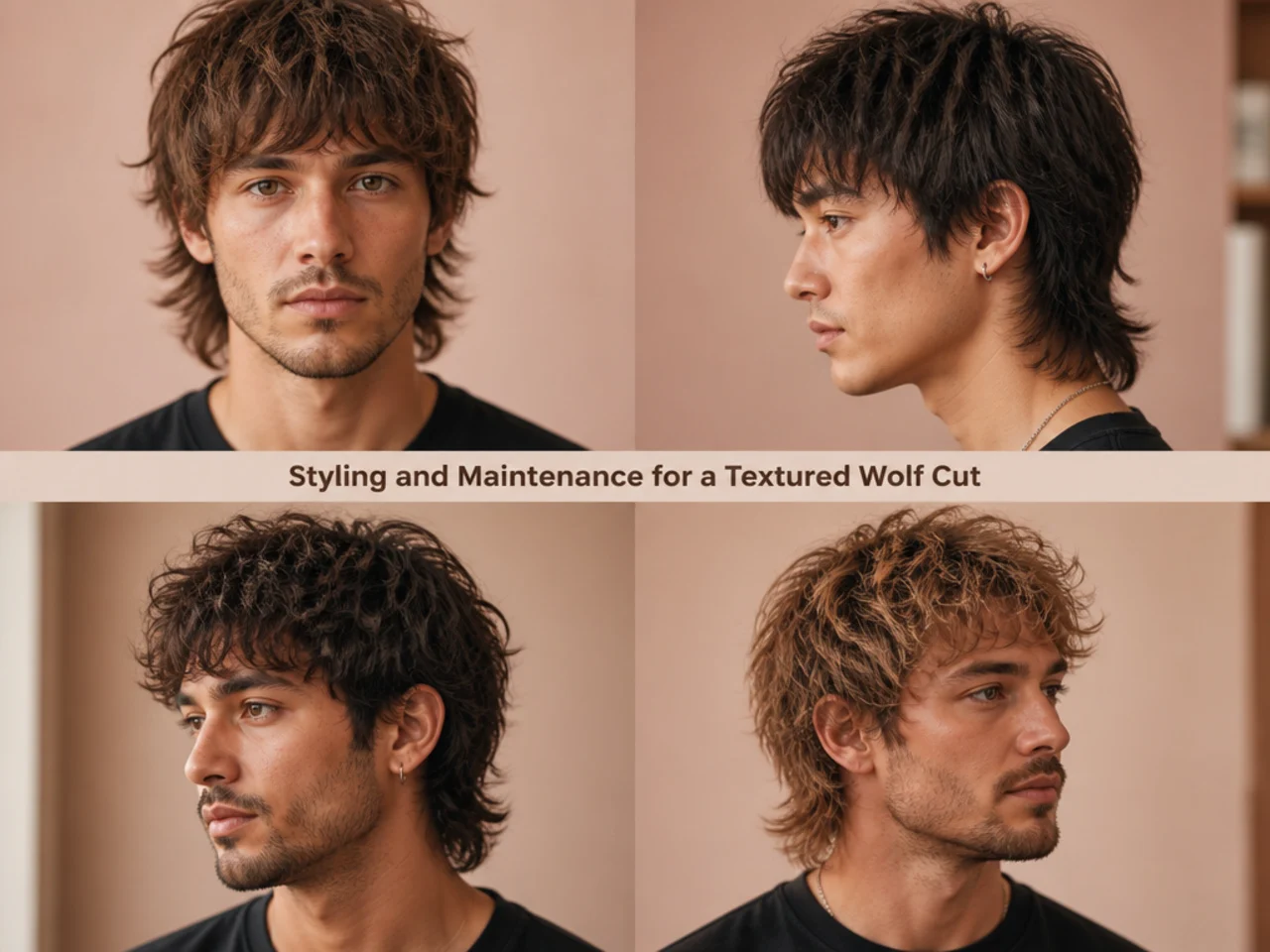
The textured cut does most of the styling work for you — the goal is to keep the technique visible without weighing the ends down. Match the product to the finish technique for the cleanest read.
Wash two to three times a week with a mild sulfate-free shampoo. Sulfates strip the natural oils that give textured hair its movement, and daily washing flattens the layered rhythm. Follow with a lightweight conditioner focused on the mid-lengths and ends — heavy conditioner near the roots kills lift at the crown.
Apply product to towel-dried hair, not soaking-wet. A sea-salt spray adds grit for razored and sliced finishes. A matte clay adds hold and lift for point-cut and choppy finishes. A firm-hold styling paste separates pieces on a piecey cut. A leave-in cream softens feathered and wispy finishes. Use a pea-sized amount and rough-dry with fingers rather than a comb — combs smooth the texture back into flatness.
Diffuse or air-dry. A diffuser on low heat and low speed sets crown volume for wavy hair. Straight hair air-dries best with occasional finger passes to shape the crown. Never blow-dry flat with a brush — the whole point of the textured finish is the movement, and a brush flattens the layers into a helmet.
Sleep on a smoother pillowcase — satin or high-thread-count cotton — to reduce friction that dulls the texture overnight. Pineapple longer versions with a loose crown-hair-tie so the length doesn't crush against the pillow.
Re-cut the layered shape every six to eight weeks. Textured ends grow out cleaner than blunt ones because the perimeter is already broken up, so the shape holds longer than a straight cut. Fade or taper sides need a refresh every three to four weeks between full re-cuts. Between appointments, browse our layered haircuts for men hub for adjacent cuts, or the textured haircuts for men roundup if you're deciding whether to keep the wolf silhouette or step down to a cropped textured cut.
FAQ
What is a textured wolf cut for men?
A textured wolf cut is a men's shag-mullet hybrid cut finished with a texturizing technique rather than left blunt. The base shape is the same as any wolf cut — internal layers through the crown, face-framing pieces at the cheekbone, and a longer nape. What sets it apart is the finish: razored, choppy, piecey, or point-cut ends that break the perimeter and add visible movement.
What is the difference between razored, choppy, piecey, and point-cut?
Razored uses a straight razor to slice ends at an angle for soft feathered wisps. Choppy uses scissors to chop straight down for bold visible chunks. Piecey groups the ends into small separated sections that read defined with product. Point-cutting angles the scissor tips into the ends for a cleaner textured finish. Each gives a distinct look on the same base wolf shape.
Does a textured wolf cut work on straight hair?
Yes — straight hair is where the texture technique matters most. Straight strands have no natural break, so the razored, choppy, piecey, or point-cut finish is what creates the wolf-cut movement. Without a textured finish, straight hair reads flat and mullet-shaped rather than layered and modern. See the parent wolf cut men straight hair guide for more straight-specific direction.
Can I get a textured wolf cut with curly hair?
Yes, with technique adjustments. Skip the razor on curls — it disrupts the pattern and causes frizz. Ask for dry scissor cutting with point-cutting or dry chopping instead. Internal layers should be cut for weight removal with the coils fully sprung so the shape reflects the finished length. See our curly wolf cut men guide for the full curl-specific breakdown.
Which face shape suits a textured wolf cut best?
Oval and heart faces suit every version on this list. Round faces want extra crown lift with a curtain or textured fringe. Square jaws read best with softer razored or feathered finishes rather than hard choppy chunks. Long faces need a fuller textured fringe and shorter crown. Diamond faces get a clean read on nearly every version. See our 15 chic wolf cut hairstyles for every face roundup for a face-shape-first version of the guide.
How often do I need to re-cut a textured wolf cut?
Every six to eight weeks for the layered top. Textured ends grow out cleaner than blunt ones because the perimeter is already broken up, so the shape holds longer than a straight cut. Fade or taper sides need a refresh every three to four weeks between full re-cuts. Between visits, use the styling routine above to keep the texture reading defined, and browse our 10 stunning wolf cut hairstyles roundup for length and finish ideas as your cut grows out.