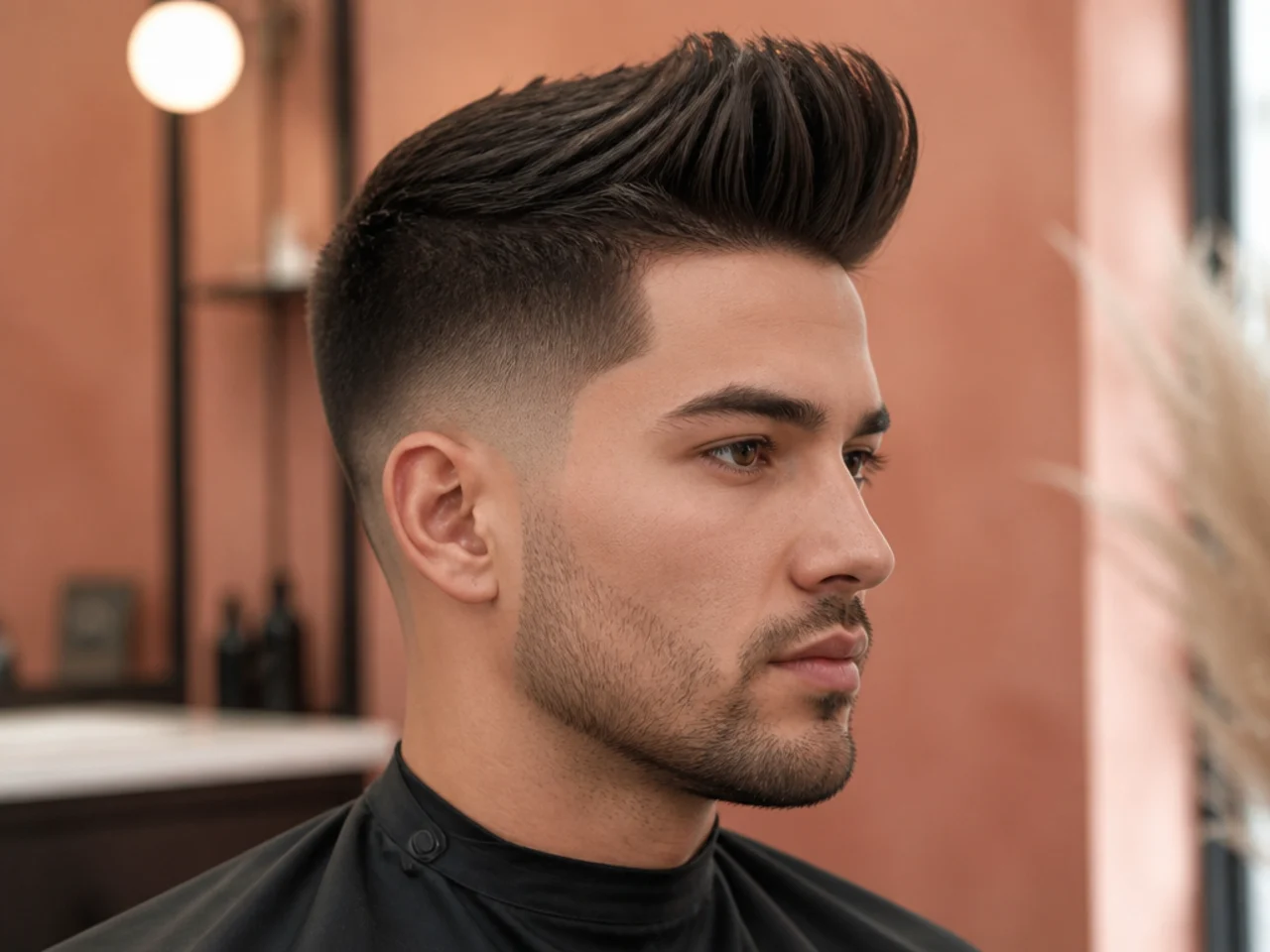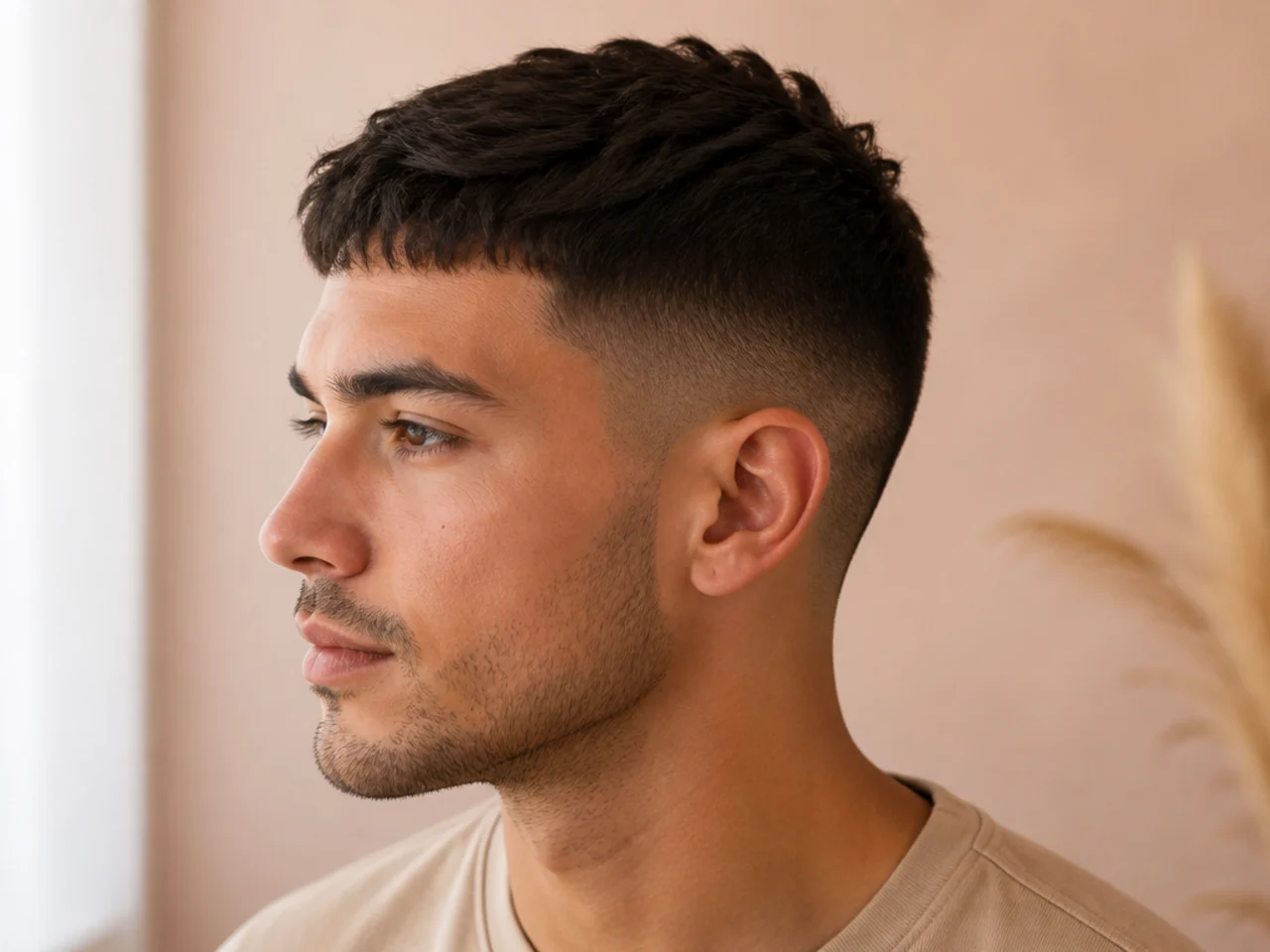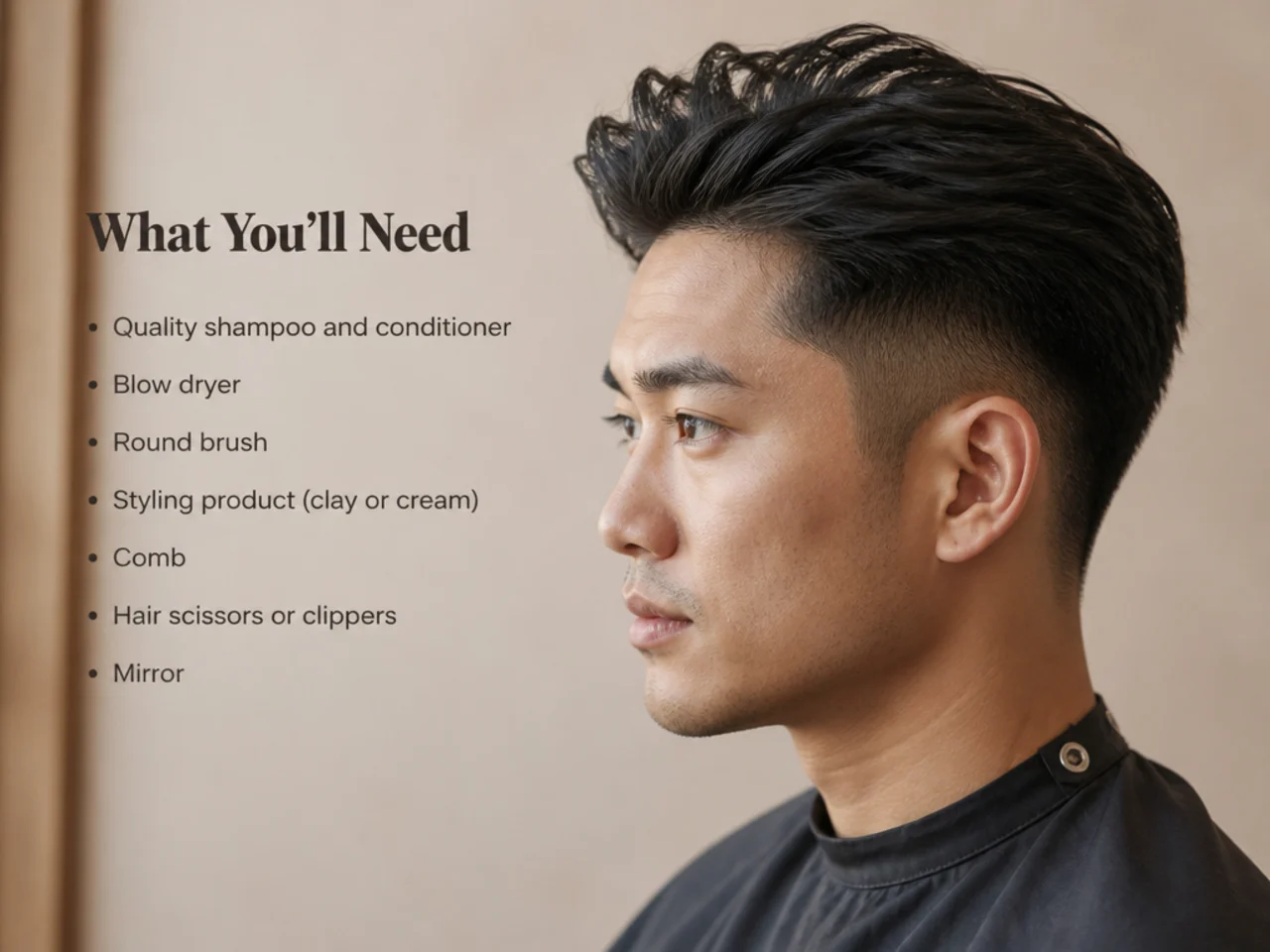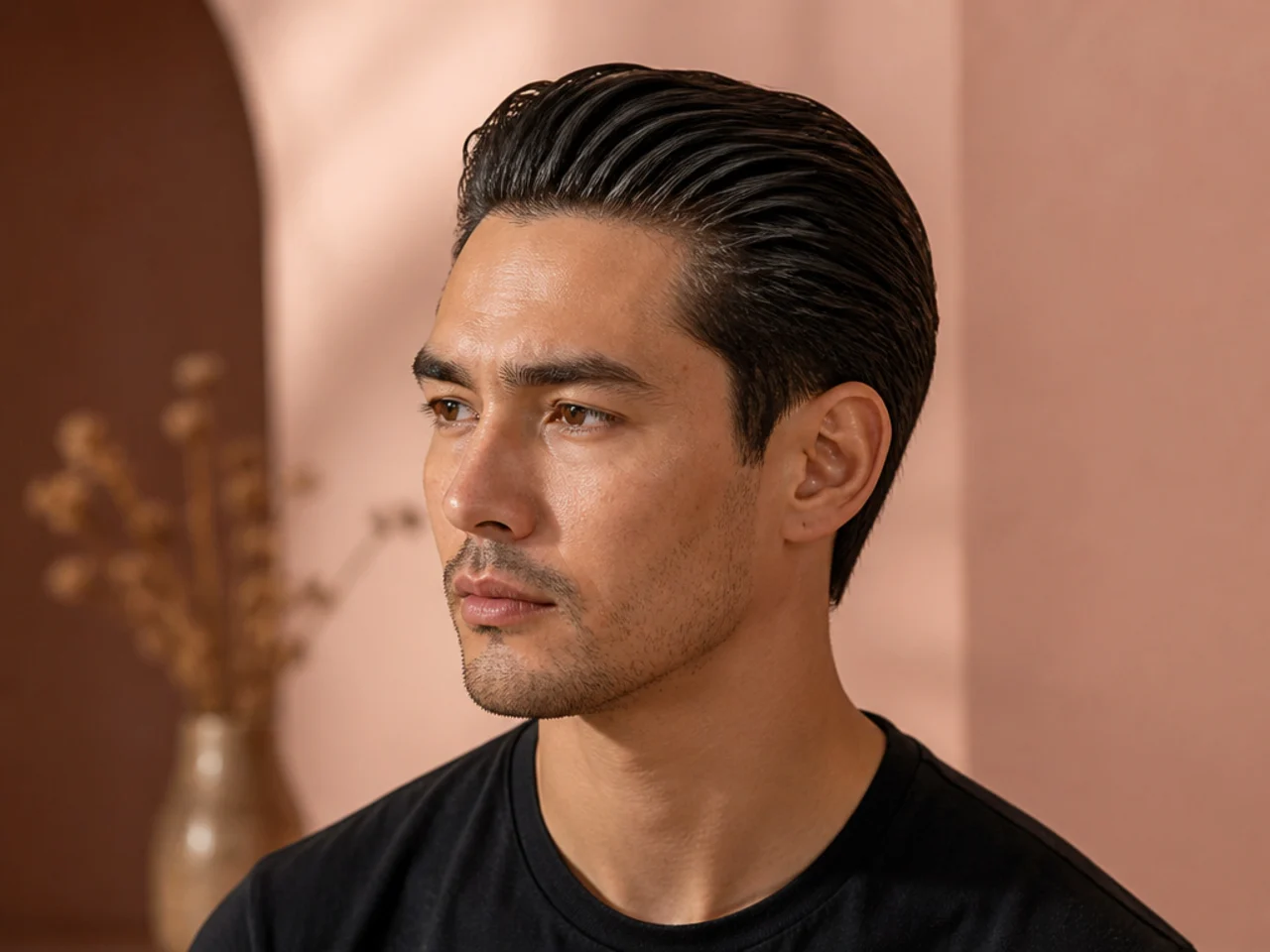
5 Reasons Medium Length Hair Suits Most Men
The mens haircut medium length wins on versatility, face-shape range, growout, hair type, and workplace fit. Five reasons stylists keep pitching it, with the ask lines.
In this article · 10
- What Is Medium Length Hair on a Man?
- Reason 1: Versatile Styling
- Reason 2: Face-Shape Friendly
- Reason 3: Grows Out Well
- Reason 4: Works With Any Hair Type
- Reason 5: Professional-Safe
- Which Medium Length Style Should You Pick?
- How to Ask Your Stylist for a Medium Length Cut
- Styling & Maintenance for Medium Length Hair
- FAQ
Medium length hair is the safest bet a stylist can pitch a walk-in. Long enough to style five different ways. Short enough not to argue with a shirt collar. Forgiving on almost every face shape. That's why the mens haircut medium length keeps showing up in the chair week after week. Here are the five reasons medium length suits most guys — with the versions and ask-lines that back each one up.
For the full catalog by name, start with the 25 medium length haircuts men are asking for roundup, or the medium length hairstyles for men pillar for the styling side.
What Is Medium Length Hair on a Man?
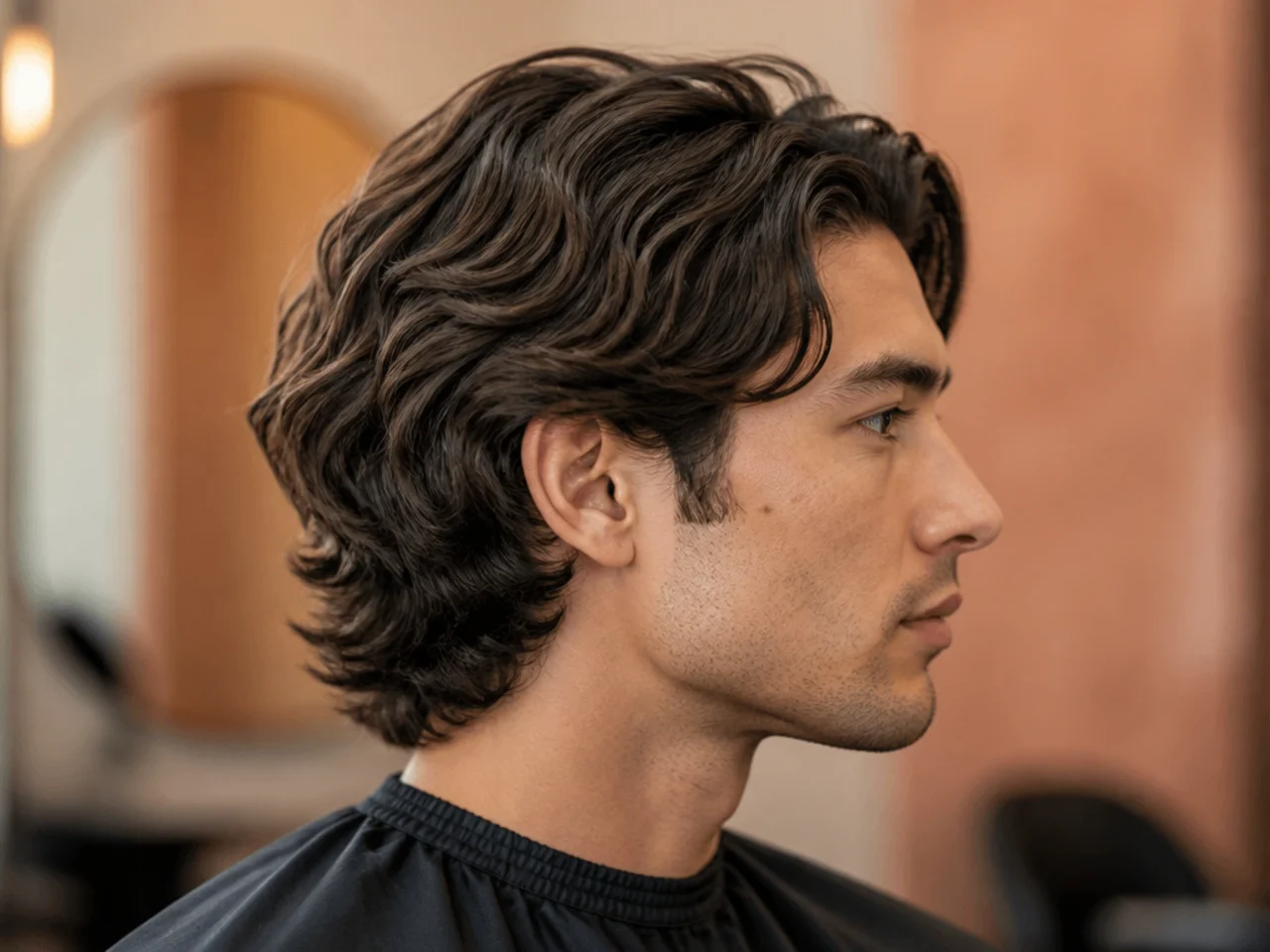
Medium length runs three to six inches on top. Under three inches and it reads as a crop or a taper. Past six and it reads as long hair. That in-between window is where most of the men's-haircut menu actually lives. The quiff. The side part. The slick back. The flow. The middle part. The layered cut. The soft-front textured crop. All of them start at medium length. The name only gets pinned on later, once you decide how to wear it.
The sides can stay long and scissor-blended for a soft finish or drop to a low, mid, or high fade for a sharper outline. The top is where the family lives — everything below is a support decision that adjusts contrast, not silhouette. Length gives you room to try more than one silhouette between visits, which is the argument every stylist makes when a client asks whether to grow it out or keep it short.
Medium length also tolerates a bad day better than any other range on the menu. Two extra inches means one extra tuck behind the ear, one extra hand comb, or one extra pass with a matte clay — all fixes a short cut can't offer. That resilience is the quiet reason five different reasons stack up in its favor.
Reason 1: Versatile Styling
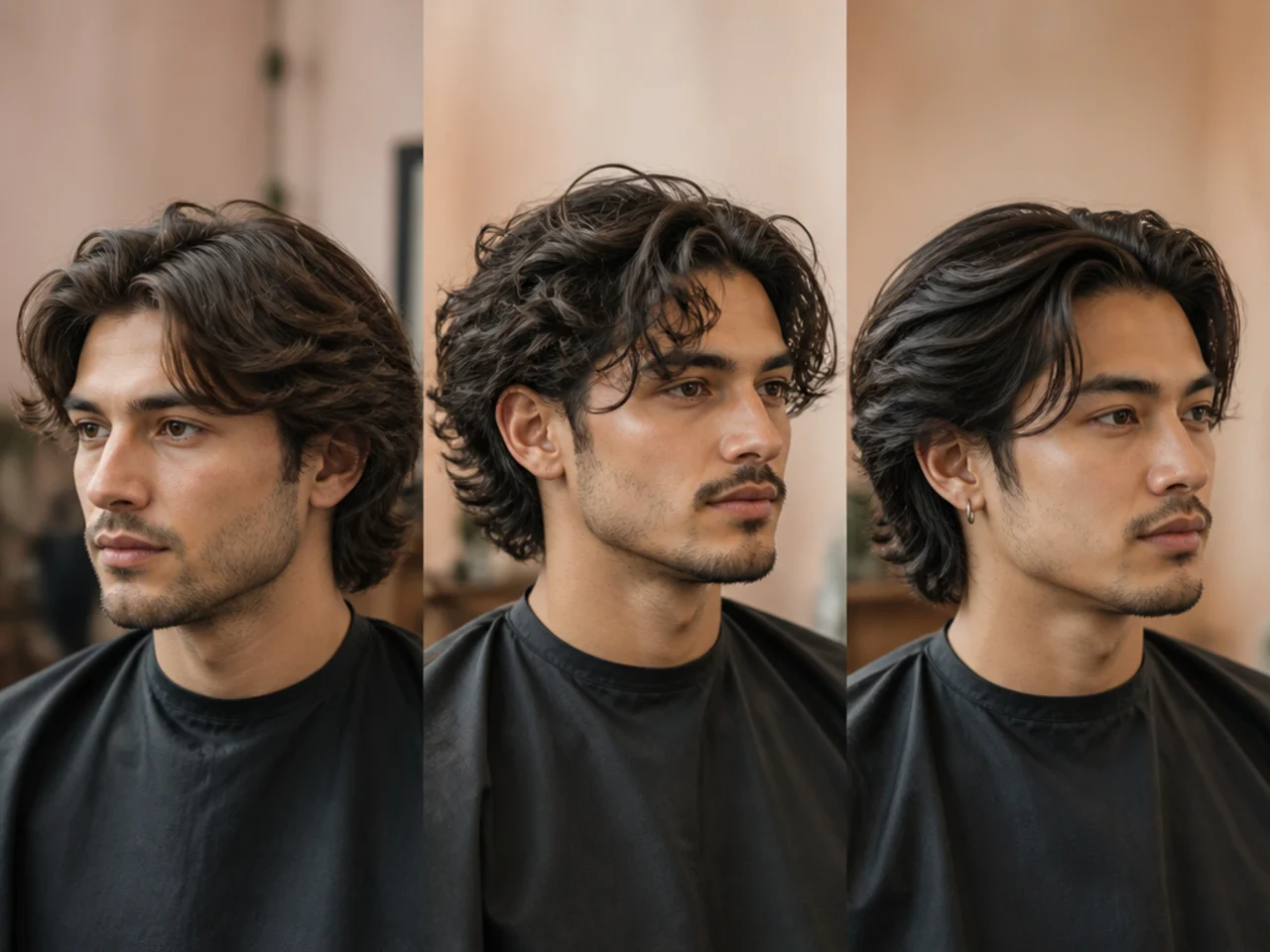
Cut a two-inch buzz and you get exactly one shape — the one your barber leaves you with. Cut a five-inch crown and you can style five different ways before the week is out. A back-swept slick for a formal room. A middle part for a casual weekend. A textured quiff for a night out. A soft side part for a headshot. A messy piece-out for a Saturday errand.
That's the argument a stylist makes for medium length every time. One cut. Five silhouettes. No return trip to the chair.
The trick is picking a base cut that supports every silhouette instead of one that locks you into a single move. A medium quiff can flatten into a comb-over on a low-energy morning. A medium slick back can soften into a side part with a wider-tooth comb. A medium flow can be tucked behind the ears or shown, depending on the fit of your collar. Ask for four to five inches on top with one round of internal layers — that combination is the widest styling window a men's cut offers.
Reason 2: Face-Shape Friendly
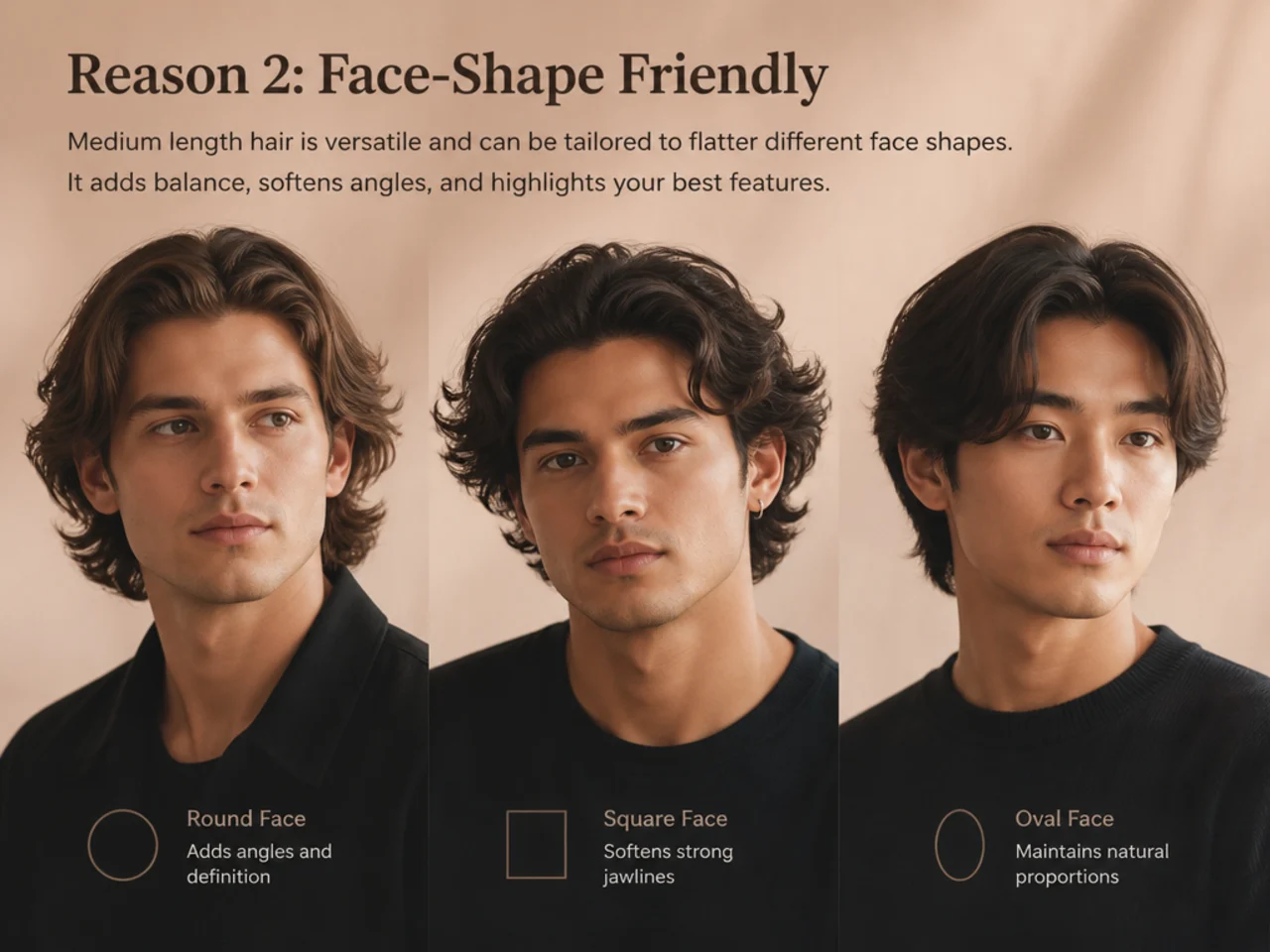
Every stylist runs the same silent checklist when you sit down. Round, square, oval, long, diamond, heart. Six shapes, six defaults. Medium length is the answer that survives all six because the two variables you can tune — top height and fringe direction — match whichever face is in the chair.
Round faces want vertical lift, so a medium quiff or a soft brush-back with a high fade underneath elongates the shape. Long or oblong faces want the opposite — a middle part or a fringe that runs across the forehead adds horizontal weight so the face doesn't stretch further. Square jaws want a rounded crown to soften the geometry, so a medium layered cut with a low fade does more work than a slick back would. Heart-shaped faces reach for a forward-swept crop that fills the wider forehead line. Diamond faces want forehead volume and softness through the temples, so a curtain fringe with a low fade handles it. Oval faces are the reference frame — any tuning works.
For the deep dive matched to your exact bone structure, see the 20 medium length haircuts by face shape guide. For square jaws specifically, haircuts for square faces covers the geometry rule that decides fringe direction and side length.
Reason 3: Grows Out Well
Every haircut has a bad phase. The buzz cut goes through a mangy stubble stage at week two. The high-and-tight blurs out of shape by week four. The fade loses its line by week three. The pixie splits into a wolf cut before the client is ready.
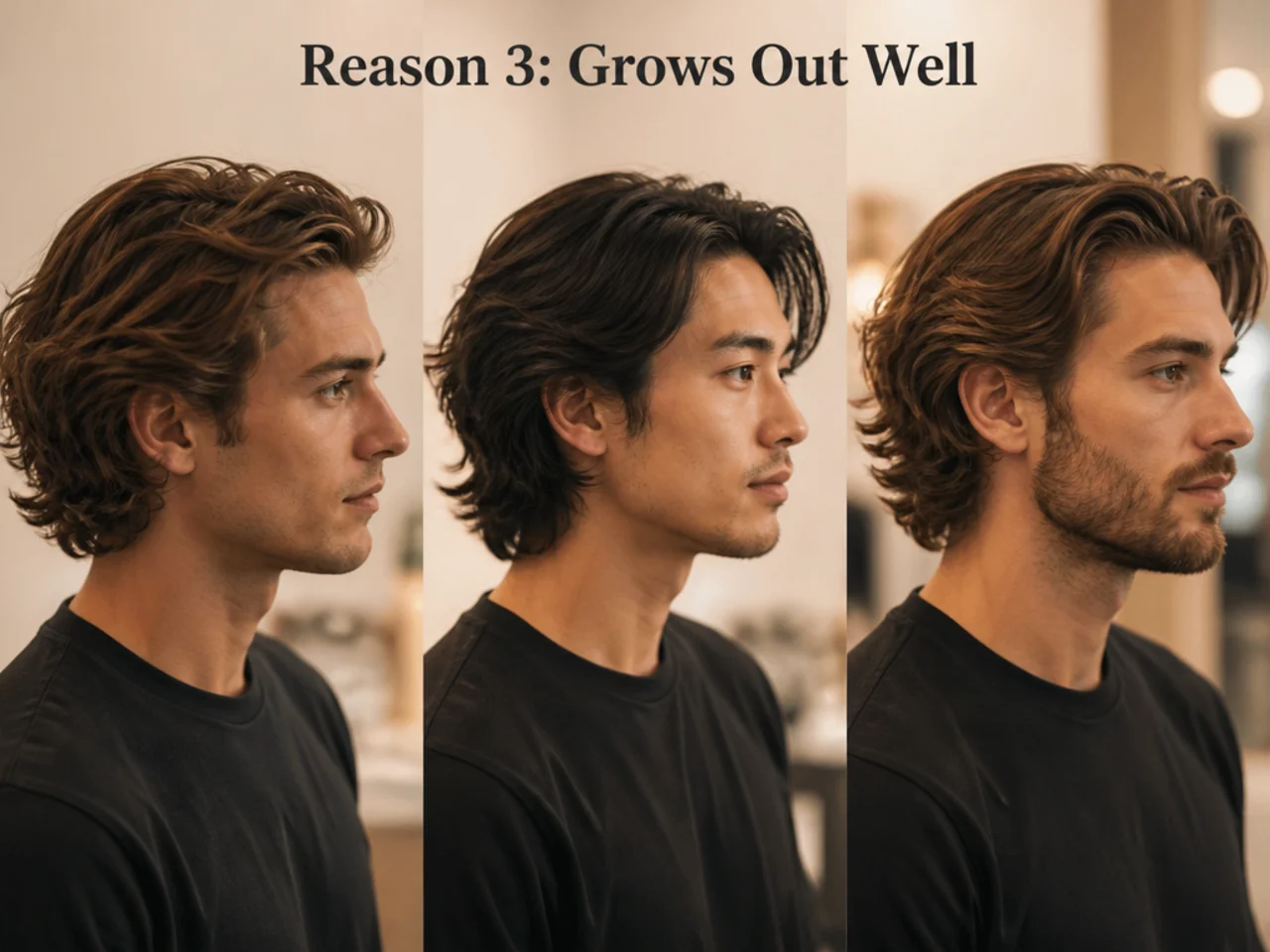
Medium length has no bad phase. It grows longer — and stays medium.
That's the second silent argument every stylist makes for the length. A client who books every eight weeks instead of every three saves time and money without ever walking around with a haircut that looks past due. The silhouette shifts from a defined side part at week one to a softer, longer version of the same shape at week eight. Both read intentional. Neither reads overgrown.
The reason is geometry. A short cut's shape is drawn by the outline — the fade line, the neckline, the sideburn. When those lines blur, the shape dies. A medium cut's shape is drawn by the mass on top. When that mass grows, the outline blurs but the mass gets more of what it already had. The eye still reads a full silhouette instead of a broken edge. If you drop the sides to a fade underneath, book a mini touch-up at week four so the line stays crisp while the top does its slow drift.
Reason 4: Works With Any Hair Type
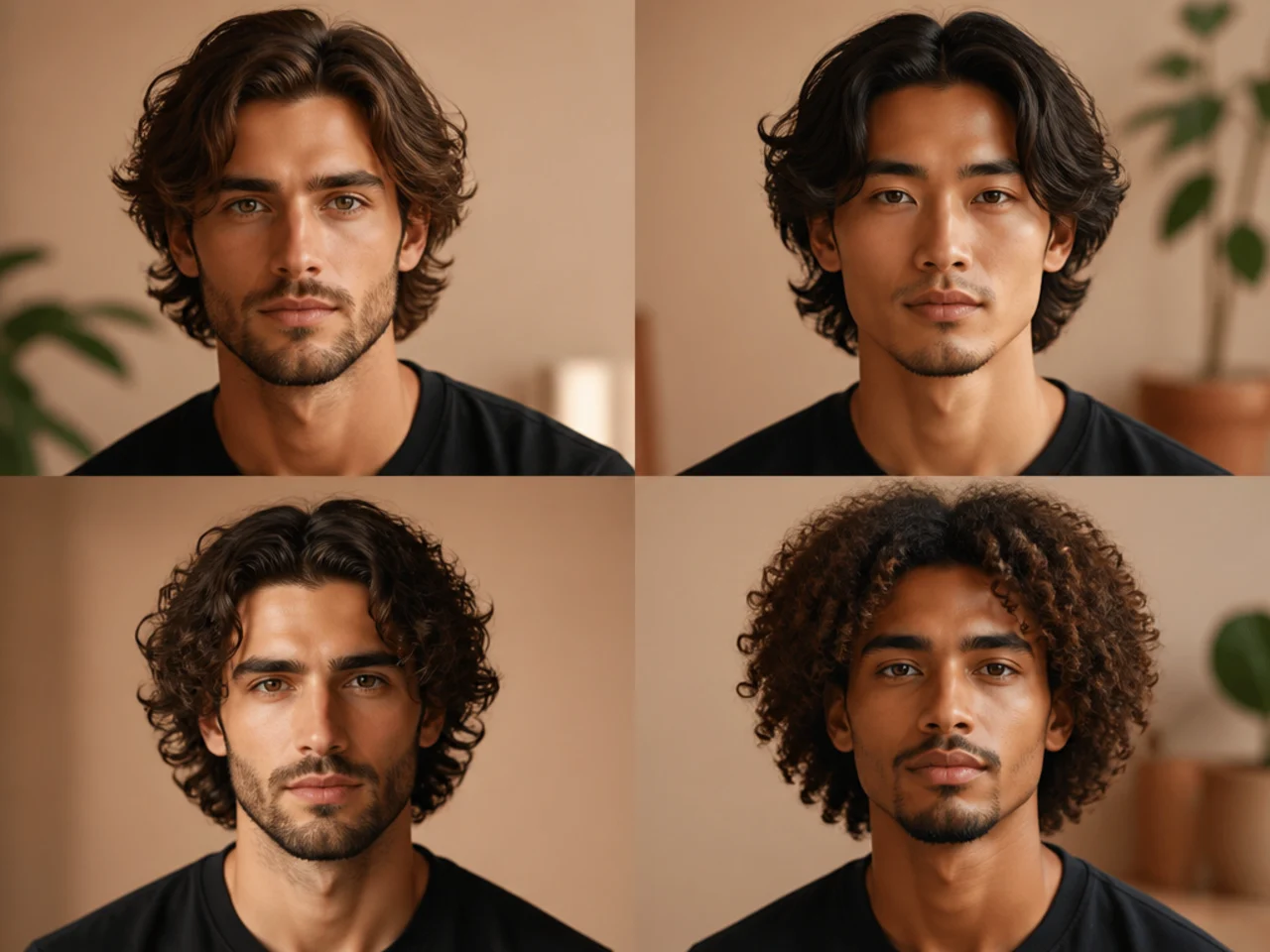
Straight, wavy, curly, coily, thick, thin, fine, coarse — every hair type has a medium length version that flatters. That's not true of every family on the menu. A buzz on fine hair reveals scalp before it reveals shape. A fade on very curly hair blurs into the head instead of stepping down cleanly. A long cut on fine hair drapes flat and dead.
Medium length gives every hair type room to do what it does best. Straight hair falls into a defined part or brush-back with no fight. Wavy hair air-dries into a lived-in, textured shape that most guys pay a stylist to fake. Curly hair reaches its most flattering length — where curls form defined ringlets or coils instead of a triangular pyramid — right in the medium window. Coily hair grows into a defined pattern at four inches that a short cut hides entirely. Thin hair borrows visual weight from length that a short cut can't offer, especially if the top is layered to fake volume.
For the curl-specific fits, curly hair haircuts covers the length choices by curl type. For wavy hair styling, the best wavy hair products roundup lists the sea-salt sprays and creams that keep a medium wave defined instead of frizzy.
Reason 5: Professional-Safe
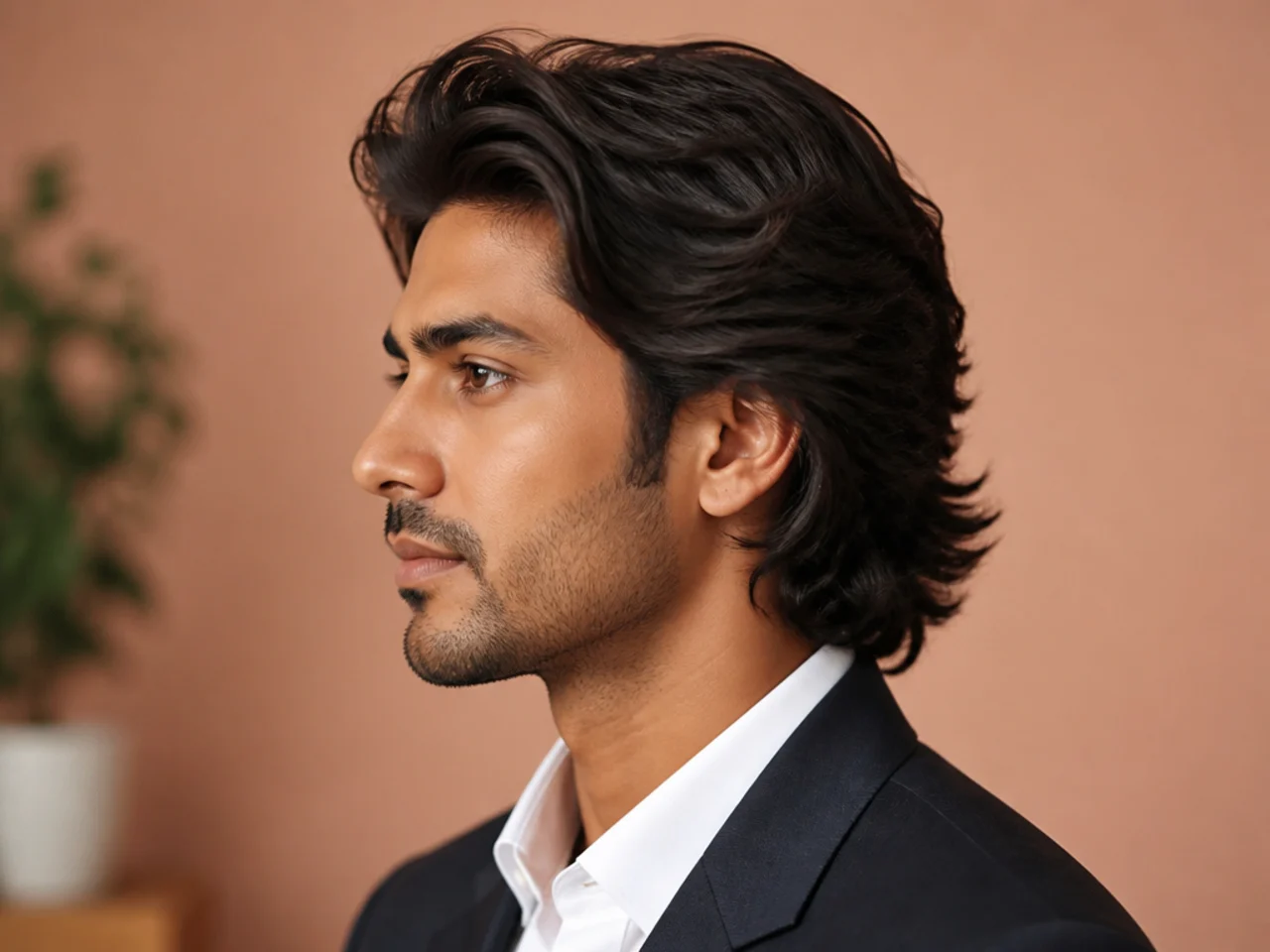
The bar for professional hair used to sit low. Anything past three inches was too long. That bar has moved. A tech founder pitches an IPO with shoulder-length hair. A finance associate rocks a middle-part flow at a Monday standup. A trial lawyer walks into court with a five-inch slick back and nobody blinks.
Medium length reads professional now — as long as it's cut and styled with intent. What separates a boardroom-ready medium length cut from a scruffy one is the presence of a plan. A defined part. A visible product finish. A clean neckline. A fringe that goes somewhere on purpose. Those four beats read as intent to anyone reading you across a table, and intent is the only currency a professional look actually spends.
For the strictest environments, the professional hairstyles for men guide catalogs the eleven cuts that survive the most conservative dress codes. If you're chasing a specifically classic, buttoned-up read, the old money haircut for men breakdown covers the exact length, part, and product finish that reads inherited-wealth polished instead of trendy.
Which Medium Length Style Should You Pick?
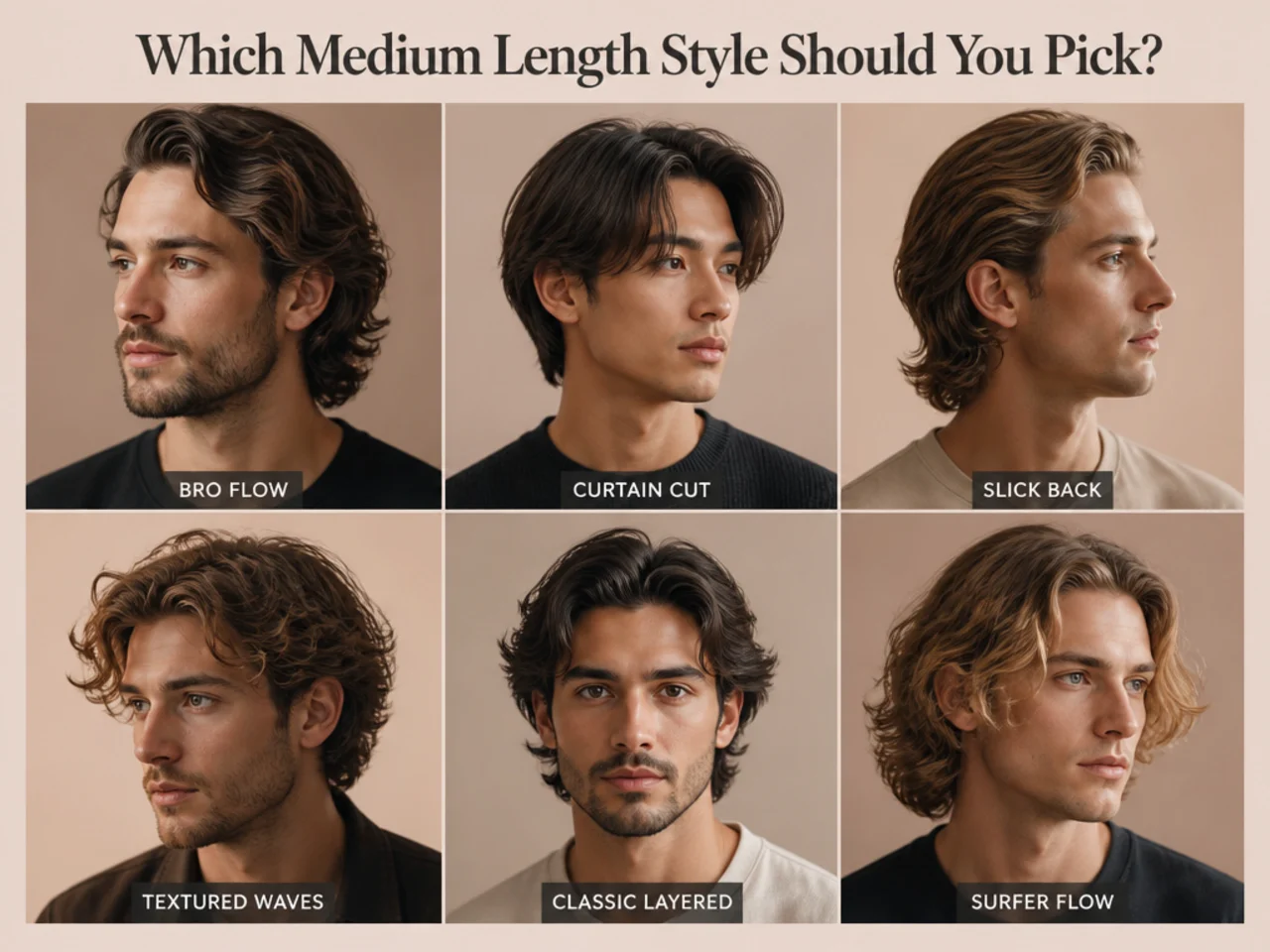
Three questions decide the pick.
Question one — how much time will you spend styling in the morning? Under a minute means a layered flow or a textured crop that dries into shape with sea-salt spray and finger-work. Three to five minutes opens the door to a slick back, a quiff, or a defined side part with a blow-dryer.
Question two — what does your workplace expect? Sharp and buttoned-up points to a classic side part or a controlled slick back with a low or mid fade. Modern and creative points to a middle part flow, a layered medium cut, or a soft textured crop with scissor-blended sides.
Question three — what's your hair type actually doing? Thick and coarse rewards a layered cut with internal thinning so it sits instead of standing up. Fine or thin rewards a textured cut with a shorter fringe so the front reads dense. Curly rewards the four-to-five-inch window with a layered crown and no fade under an inch. Wavy rewards a middle part or flow so the natural bend does the styling.
Three questions, three answers, one cut. Bring the answers to your stylist and the conversation takes ninety seconds instead of ten minutes.
How to Ask Your Stylist for a Medium Length Cut
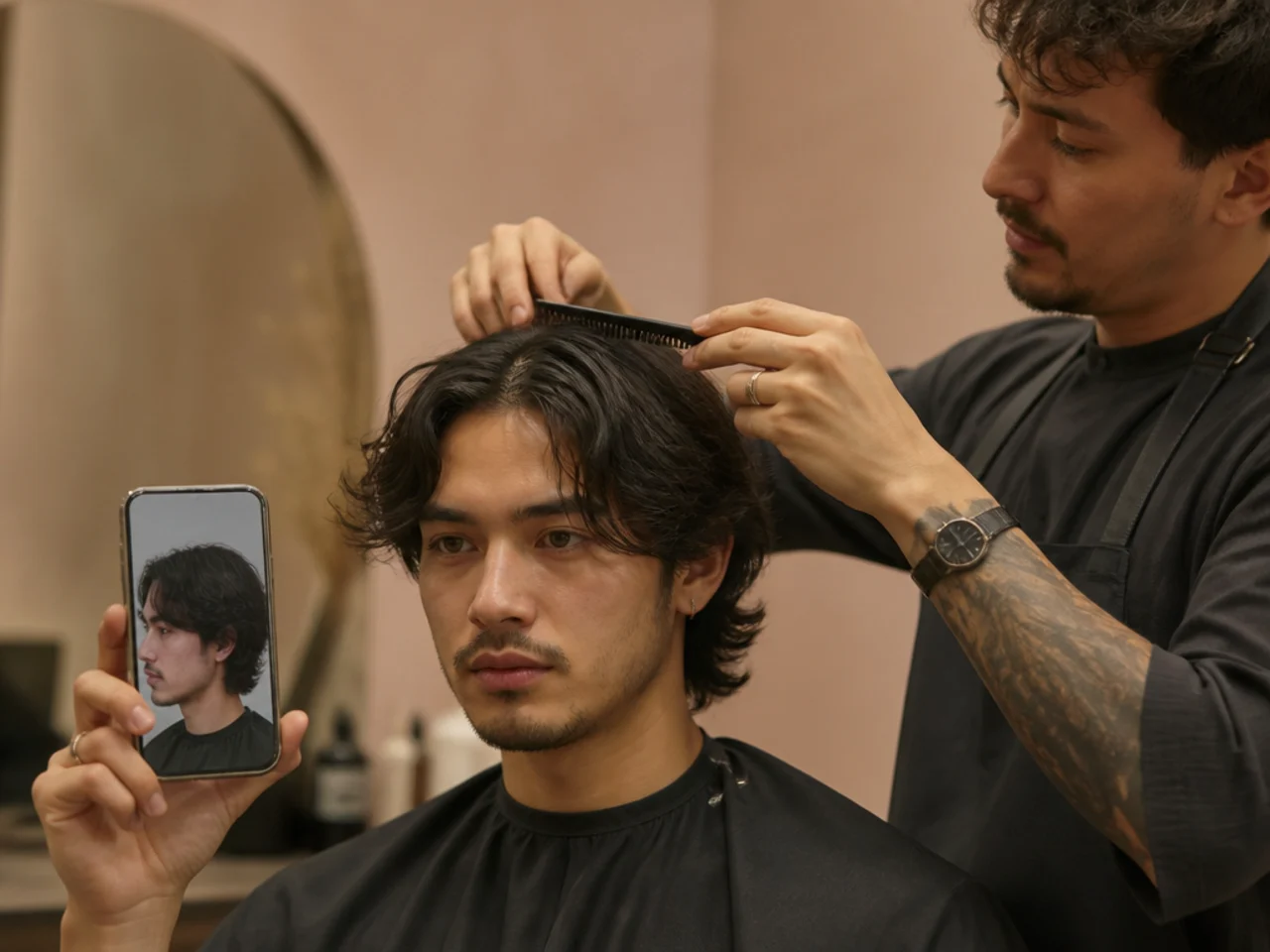
The clearest ask a stylist can hear on a medium length client sits on three details.
- Reference photo. Two if possible — one front and one side. Same hair type as yours, ideally same face shape. A photo removes 80% of the miscommunication that leads to a client sitting up disappointed.
- Length in inches, not adjectives. "Medium" means five different things to five different stylists. "Four inches on top, tapering to three at the fringe" means one thing. Say it in inches.
- Side finish. Two options — scissor-blended (long and soft) or clipper-faded (short and sharp). Name the height if it's a fade — low, mid, or high. Ask for a specific guard number if you know it (usually #1 to #3 at the shortest point for a medium cut).
- Fringe direction. Forward, back-swept, side-swept, middle-parted, or curtain. Pick one and say it out loud. Your stylist won't guess correctly.
- How you'll style it at home. "I air-dry with sea-salt spray" tells your stylist to leave more internal layering. "I blow-dry with a paddle brush" tells them to keep the crown a quarter-inch longer so it stays up. Match the cut to the routine you'll actually run.
Styling & Maintenance for Medium Length Hair
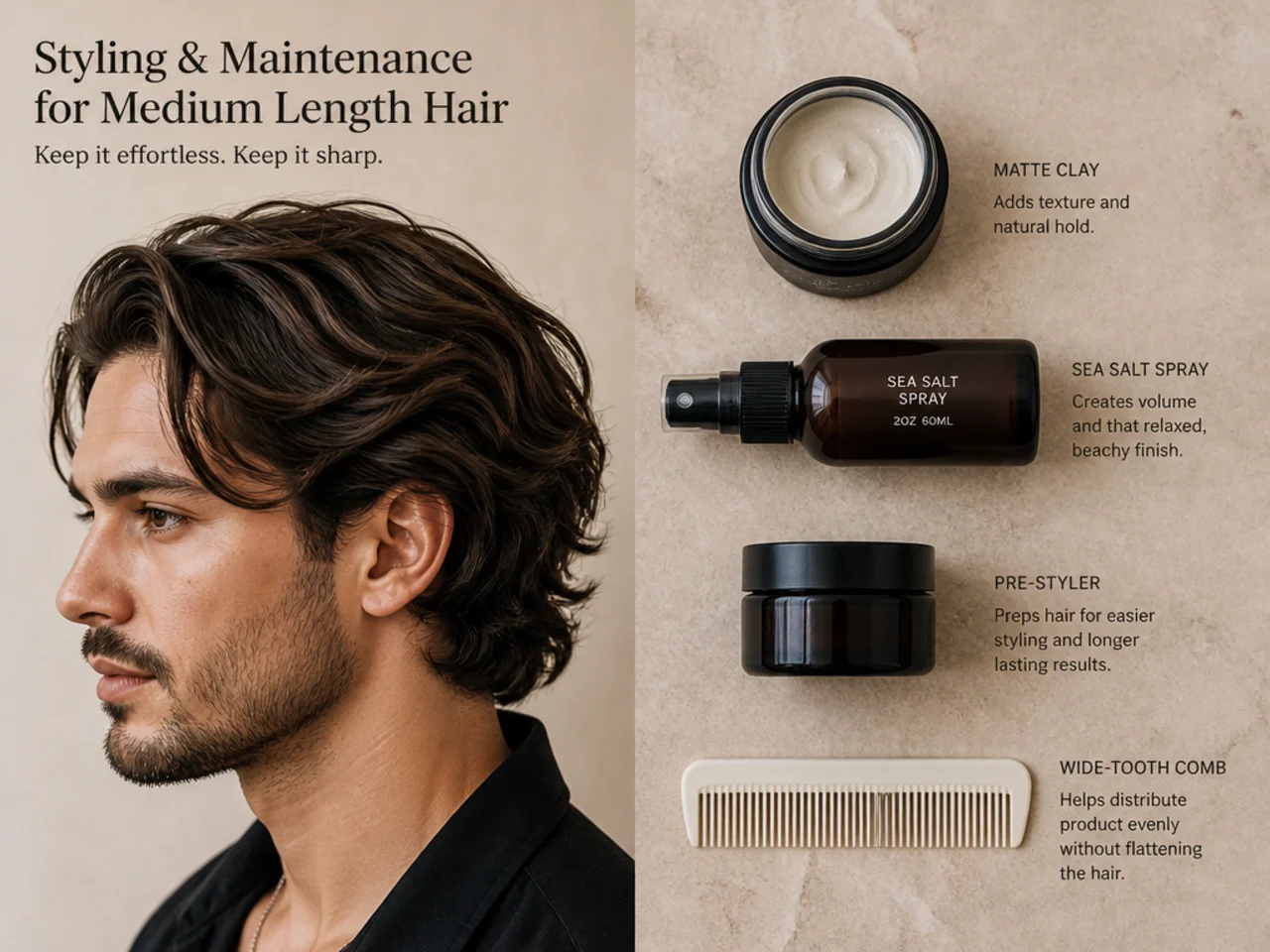
Four products cover almost every medium length silhouette. A matte clay for textured, casual finishes with hold and no shine. A firm-hold pomade for slick backs and defined side parts with a wet-look sheen. A sea-salt spray for air-dried, tousled flow finishes with grip and no weight. A light-hold cream for soft office silhouettes that need control without stiffness.
Apply product to damp hair, never bone-dry. Damp hair takes half the product for twice the hold and dries into whatever shape you fingered it into. Bone-dry hair fights product until you double the dose, then you look greasy the rest of the day. A wide-tooth comb sets the part. A blow-dryer with a nozzle sets the direction. Fingers set the texture. Fifteen seconds each. Done.
Wash cadence sits at two to three times a week for most hair types — daily washing strips the natural oils that give medium length its natural fall. In the off days, a co-wash (conditioner-only rinse) refreshes without stripping. Every wash finishes with a leave-in for curly or coily hair, a lightweight cream for wavy, or nothing for straight.
Trim every five to six weeks if you're maintaining a defined shape, or every eight to ten if you're growing it out. Book the next appointment before you leave the chair — a medium cut shifts silhouette faster than a short one because two extra inches swings the outline by an inch either side. If you're growing from short to medium, ask for shape-only trims that keep the outline clean without shortening the length.
FAQ
What counts as a medium length haircut for men?
Three to six inches of length on top. Long enough to comb, part, slick back, or sweep forward. Short enough to sit above the shoulder and above any shirt collar. The sides can stay long and scissor-blended for a soft finish or drop to a low, mid, or high fade for a sharper outline.
Is medium length hair harder to maintain than short hair?
Slightly, and only in the styling minute. A medium cut asks for one product pass and thirty seconds with a comb or your fingers. A short cut asks for nothing. Between visits, medium length is actually easier — it grows out into itself instead of losing its shape the way a fresh fade does at week three.
Which face shapes does a medium length cut flatter?
All six — oval, round, square, heart, oblong, and diamond — because two variables you can tune (top length and fringe direction) let the same family fit any bone structure. Round faces want vertical lift. Long faces want horizontal weight. Square jaws want a rounded crown. Medium length supports every one of those moves.
Can I get a medium length cut on curly or thick hair?
Yes — curly and thick hair are two of the best candidates for medium length. The extra length gives curls room to form defined ringlets instead of a triangular shape, and it lets thick hair fall with weight instead of standing straight up. Ask for internal layers to keep the volume under control.
Is a medium length haircut office-appropriate?
Almost always. The bar for professional hair moved years ago — a clean side part, a controlled slick back, or a soft middle part all read polished in a business setting. The only hard line most workplaces still draw is around visible neck hair or an unkempt fringe over the eyes. Both are cut-and-style problems, not length problems.
How often should a medium length cut be trimmed?
Every five to six weeks if you're maintaining a defined shape. Every eight to ten weeks if you're growing it out and only want the split ends tidied. Book the next appointment before you leave — a medium cut shifts silhouette faster than a short one because two extra inches swings the outline by an inch either side.
For more medium length reading, the mens medium length haircut roundup catalogs the trending silhouettes for the year, and hairstyles for medium length hair men covers the styling-first companion guide. For a specific silhouette, drop into the middle part haircut men or side part hairstyles for men breakdowns.