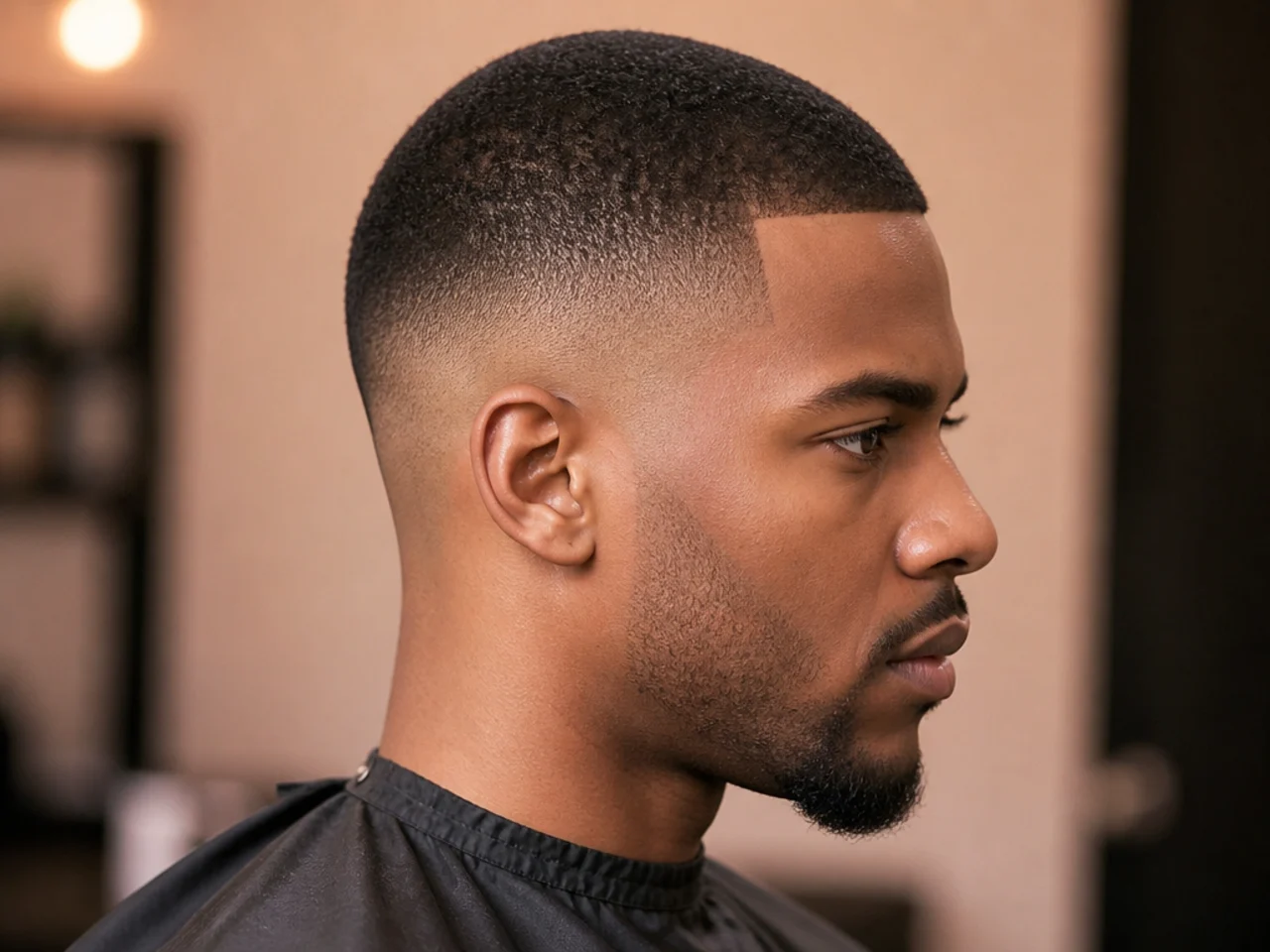
25 Low Fade Haircuts for Black Men
Twenty-five low fade haircut mens black ideas for 2026 — waves, sponge, twist-outs, high tops, cornrows, box braids, and locs paired with a clean skin-blended low fade, plus the exact ask for your barber.
In this article · 31
- What Is a Low Fade on Black Hair?
- How to Choose Your Low Fade for Black Hair
- The 25 Variations
- 1\. Classic Low Skin Fade with Buzz Cut
- 2\. Low Fade with 360 Waves
- 3\. Low Fade with TWA (Teeny Weeny Afro)
- 4\. Low Fade with Short Rounded Afro
- 5\. Low Fade with Sponge Coils
- 6\. Low Fade with Twist-Out
- 7\. Low Fade with Freeform Afro
- 8\. Low Fade with High-Top Afro
- 9\. Low Fade with Retro Hi-Top Flat
- 10\. Low Fade with Two-Strand Twists
- 11\. Low Fade with Blowout Afro
- 12\. Low Fade with Middle Part Afro
- 13\. Low Fade with Curly Fringe
- 14\. Low Fade with Hard Part
- 15\. Low Fade with Straight-Back Cornrows
- 16\. Low Fade with Zigzag Cornrow Design
- 17\. Low Fade with Box Braids
- 18\. Low Fade with Knotless Braids
- 19\. Low Fade with Starter Locs
- 20\. Low Fade with Mature Locs Tied Up
- 21\. Low Fade with Sharp Razor Line-Up
- 22\. Low Fade with Full Beard Blend
- 23\. Low Drop Fade Curve Behind the Ear
- 24\. Low Fade with Frosted Blonde Tips
- 25\. Low Fade with Etched Side Design
- How to Ask Your Barber for a Low Fade
- Styling and Maintenance for Black Hair Over a Low Fade
- FAQ
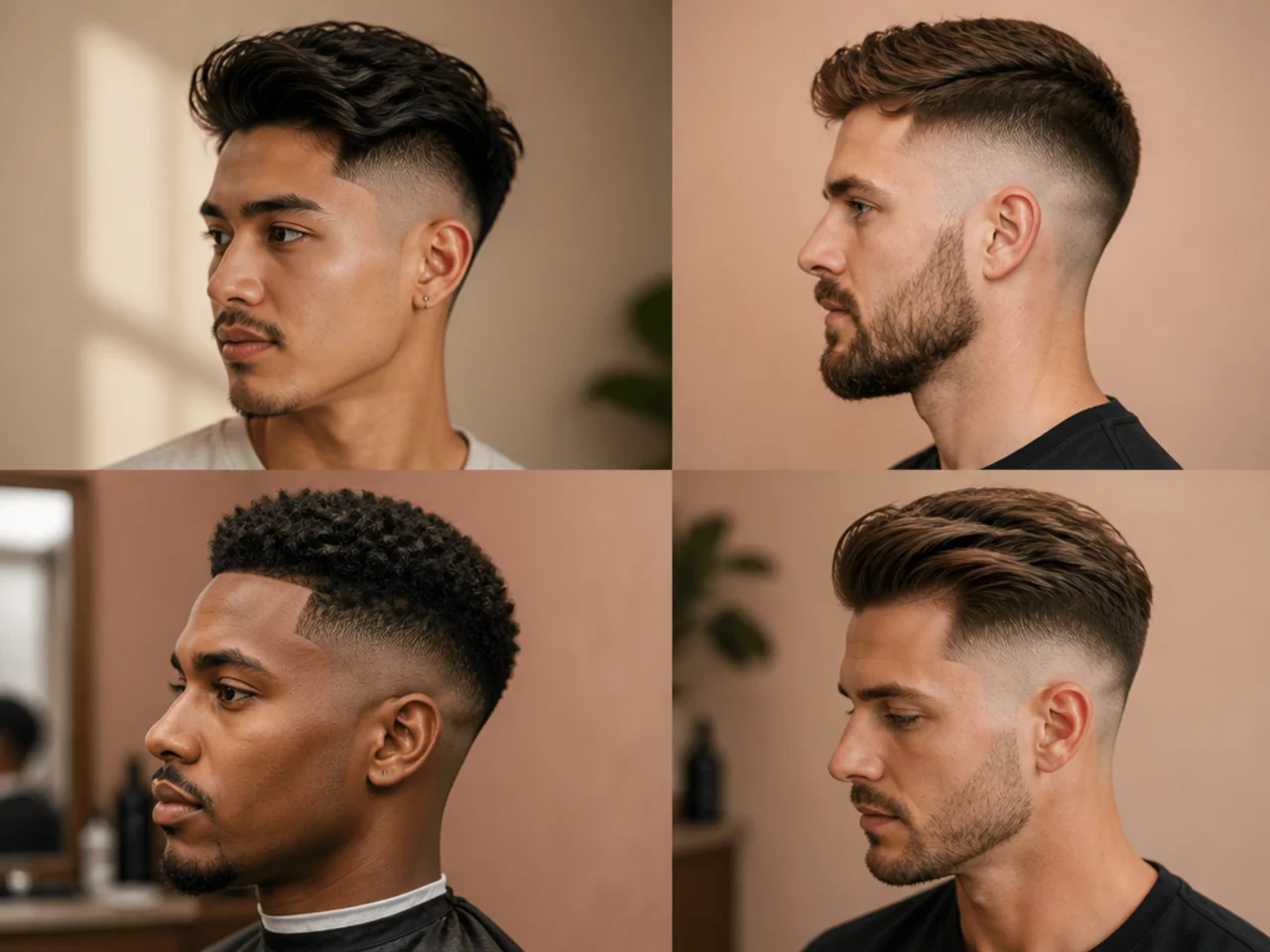
The low fade is the barbershop workhorse for Black men who want a clean, skin-sharp perimeter without giving up whatever they're doing on top. It blends to bare scalp just above the ear, so the wave pattern, coil, twist, or braid up top reads loud against the transition. Below are twenty-five low fade haircut mens black variations worth asking for in 2026 — waves, sponge coils, twist-outs, high tops, cornrows, box braids, locs, and more — each with the exact wording to hand your barber. New to the family? Start with the low fade haircut pillar or the broader fade haircuts for Black men roundup.
What Is a Low Fade on Black Hair?
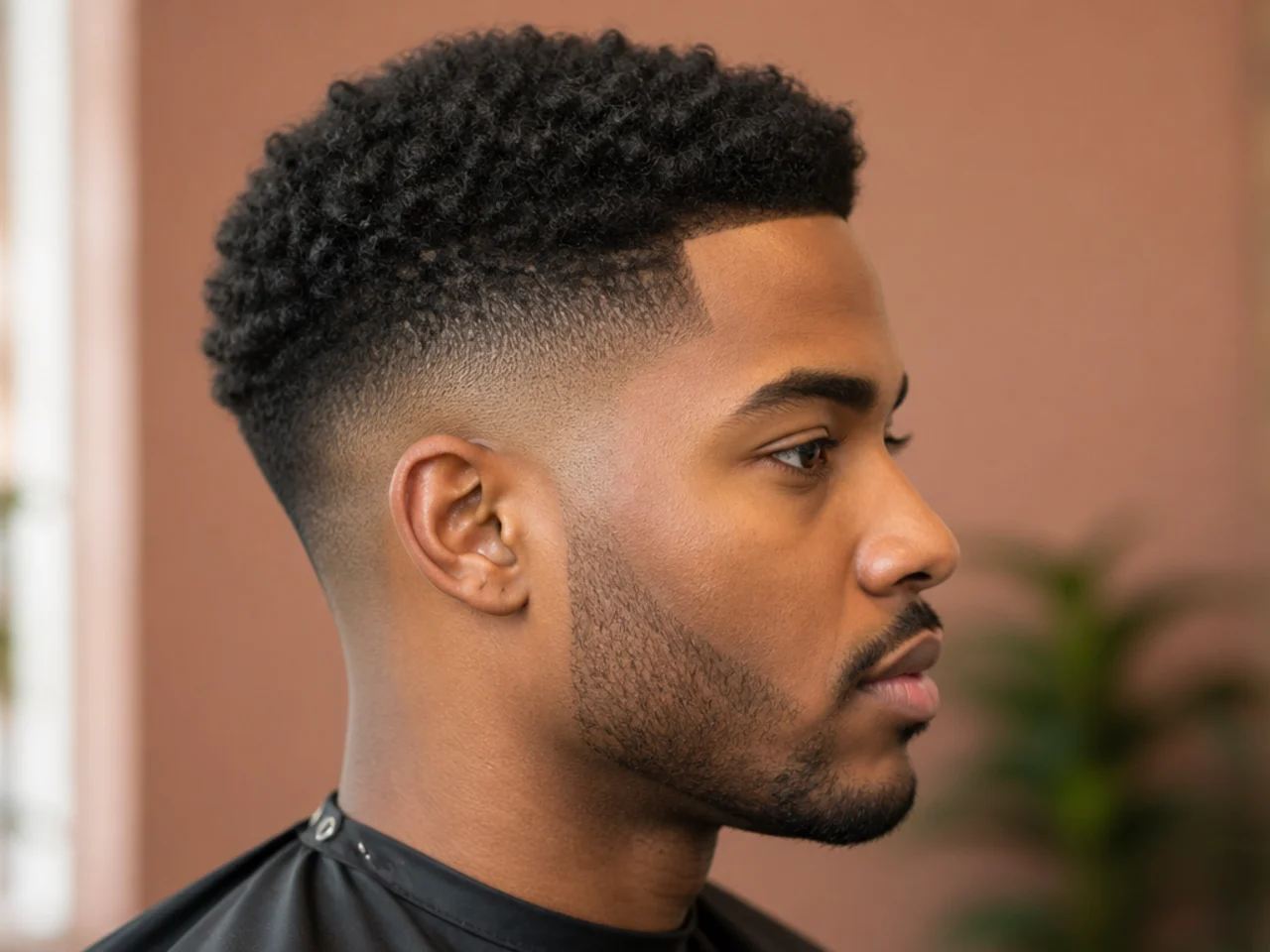
A low fade starts just above the ear and blends down to bare skin at the shortest point. That's the "fade" — the clippers work the perimeter from your natural top length down to a #0 guard, then a foil shaver takes the bottom edge to skin. The result is a hard, clean transition from top to nothing, no soft grey band, no gradual step-down.
The "low" is where the fade begins. Higher on the head means more skin exposed and more visual contrast. A low fade keeps most of your hair intact — everything above the parietal ridge stays your natural length — and reserves the skin transition for the two-inch strip right above the ear. That combination is why it reads sharp without going aggressive.
On 4A, 4B, and 4C hair the low fade earns its reputation. The scalp exposure at the bottom mirrors the natural darkness of the coil density up top, so the whole silhouette reads intentional rather than clipped. The frame belongs to the fade; the personality belongs to your texture.
How to Choose Your Low Fade for Black Hair
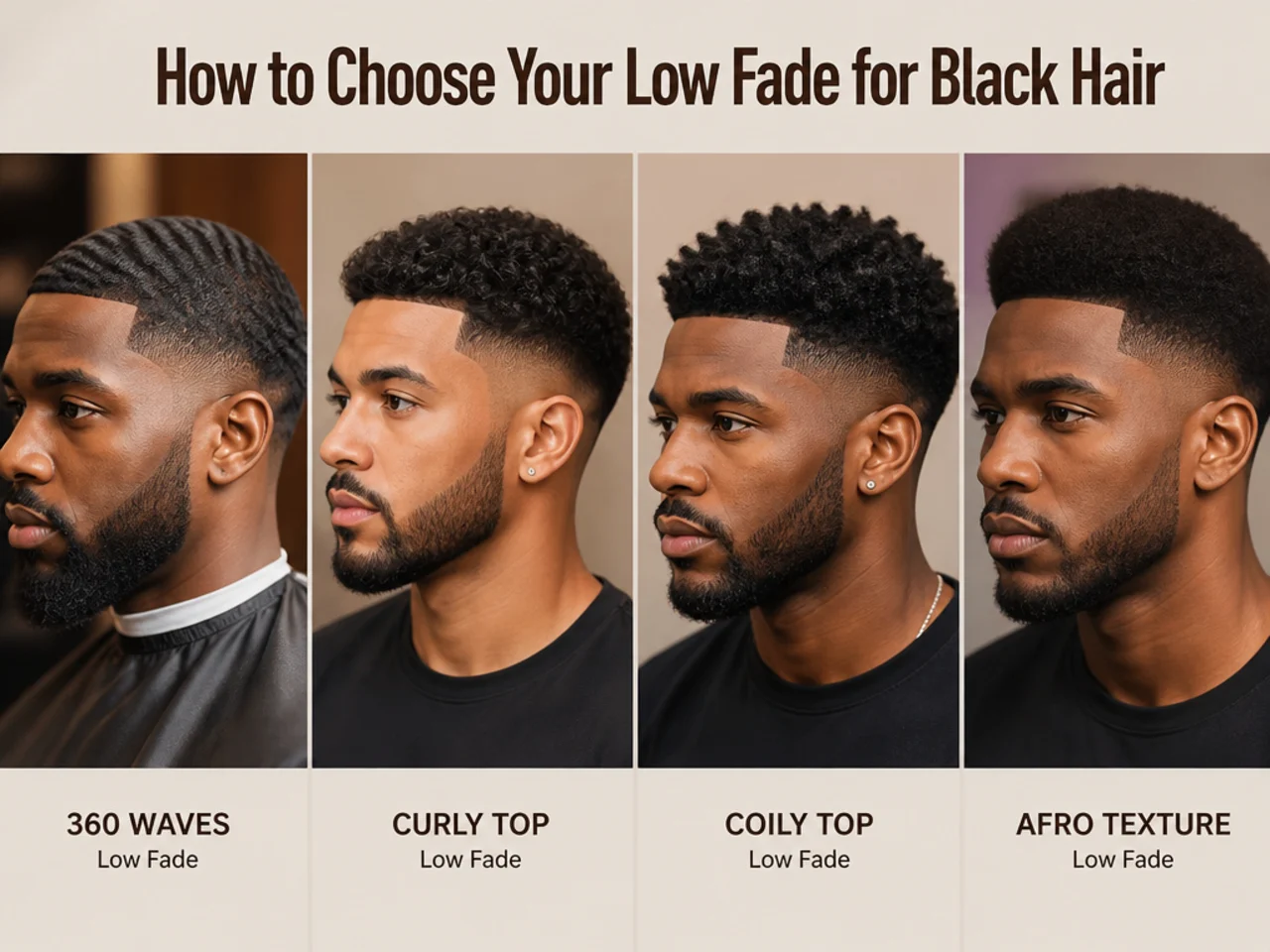
Three variables land you on the right version: your face shape, your coil density, and the top style you're actually willing to maintain.
Face shape. Oval and diamond faces wear almost every top over a low fade. Round faces should push the top taller — three inches or more of coil — so vertical volume counters the cheekbones. Square jaws suit softer rounded tops that offset the angles. Long or oblong faces want the top under three inches. Heart shapes suit medium afros, twists, or a middle part.
Coil density. 4A holds waves, twist-outs, and blowouts with the most bounce. 4B packs into round afros and takes twist-outs beautifully. 4C gives you the densest coil pattern of any hair type — big afros, tight sponge coils, and crisp cornrow parts all read sharpest on 4C.
Top style. Waves need brushing twice a day. Afros need moisture and picking. Twist-outs need a bedtime set. Cornrows and box braids buy you two to six weeks between salon visits. Locs are a multi-year commitment. Pick the top you'll actually maintain — the fade below is the easy part.
The 25 Variations
Twenty-five low fade haircut ideas for Black men, sorted from clean everyday to full statement. Every one keeps the low fade constant and changes what you're doing on top. Each block covers what makes the variation different, who it suits, how to hand it to your barber, and one styling move worth stealing.
1. Classic Low Skin Fade with Buzz Cut
The cleanest option in the family — a #1 or #2 guard buzz across the top with a low skin fade at the sides going all the way to bare scalp above the ear. Sharp razor line-up squares the frame. Suits any workplace and takes about three minutes to style in the morning. Best for oval, square, and diamond faces where the compact silhouette reads polished.
Ask for: "low fade to skin, starting a finger above the ear, blending up to guard 3 through the parietal, #1 or #2 across the top, sharp razor line-up at the forehead and temples."
Styling: rub a leave-in through the top after a shower, pat dry, done. Sunscreen the exposed skin at the top if you spend time outdoors — that shortness leaves scalp bare.
2. Low Fade with 360 Waves
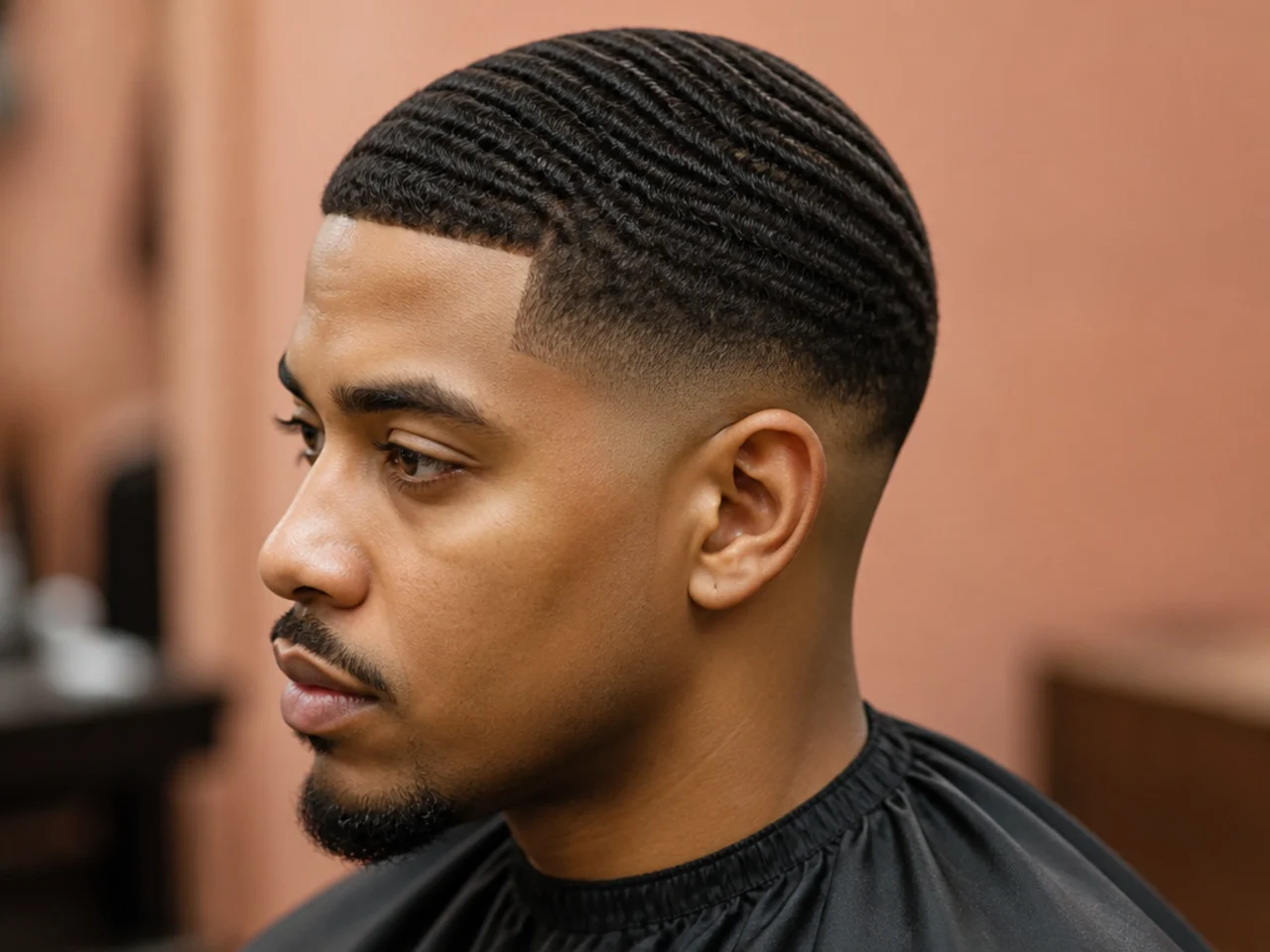
The wave-head signature — a short brushed top with visible 360 waves rolling from the crown outward, low fade to skin at the sides so the wave pattern gets a hard clean stop at the perimeter. Best on 4A texture that's brush-trainable, and on oval, square, and heart faces. The low fade is the go-to for wavers because it doesn't cut so high that it eats into the wave zone above the temple.
Ask for: "low skin fade, bald at the shortest just above the ear, blending up to guard 3, keep the top uncut so the waves stay long enough to brush."
Styling: brush soft, medium, hard, twice a day with wave grease or curl cream. Du-rag every night and after every brush session. Wolf for four to eight weeks between top cuts to deepen the pattern.
3. Low Fade with TWA (Teeny Weeny Afro)
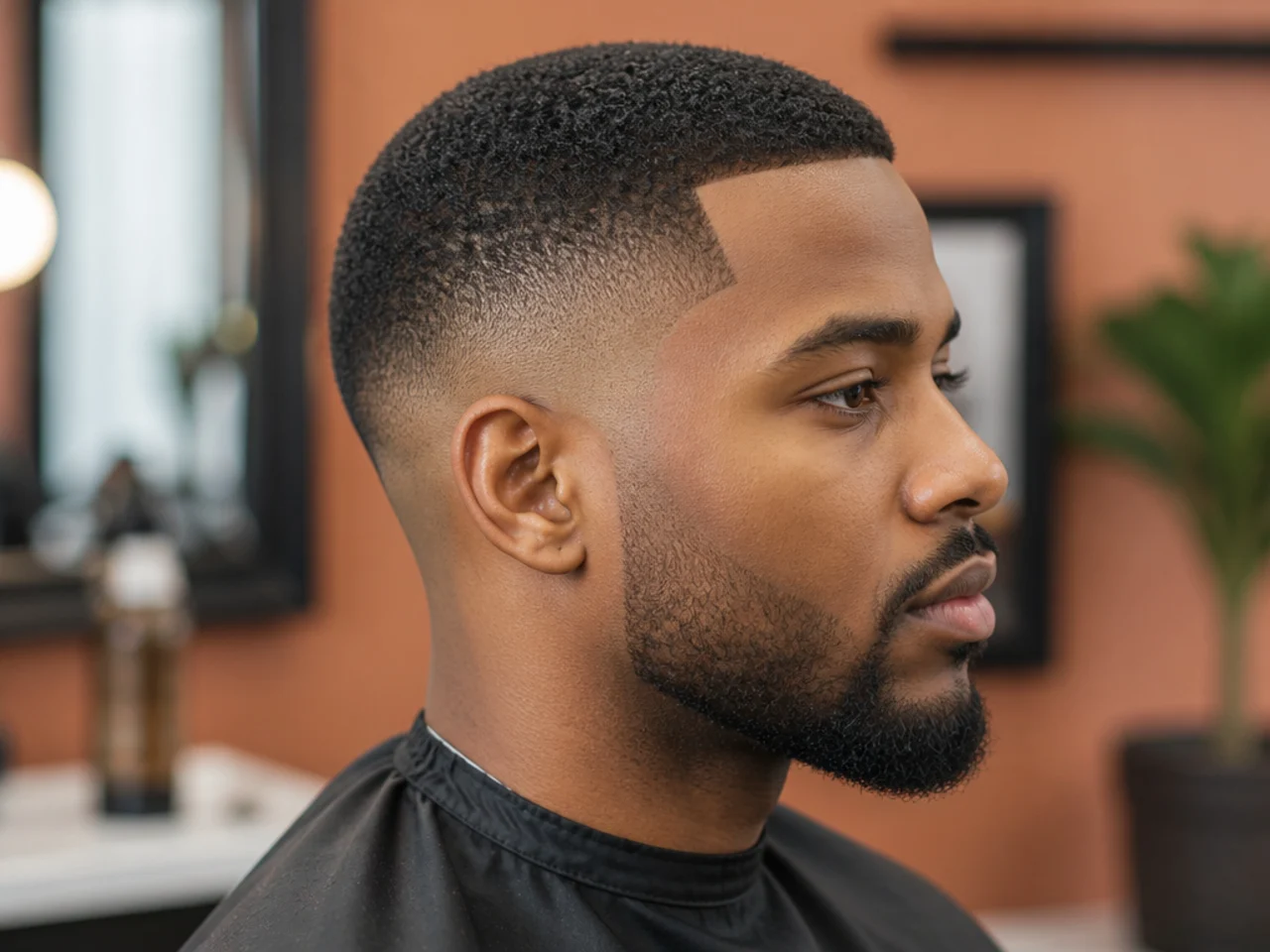
The TWA — a half to three-quarters of an inch of natural texture on top with a low skin fade at the sides. Reads freshly-natural whether you just did the big chop or you're maintaining the length permanently. Best for oval and square faces, and for anyone who wants the pattern visible without the maintenance of a full afro.
Ask for: "low fade to skin, blending up to guard 2, leave three-quarters of an inch of natural texture on top scissor-cut for even shape, sharp line-up at the forehead."
Styling: water-based leave-in daily, curl cream two to three times a week, satin bonnet at night. Deep-condition weekly — the shorter the length, the more the pattern depends on moisture.
4. Low Fade with Short Rounded Afro
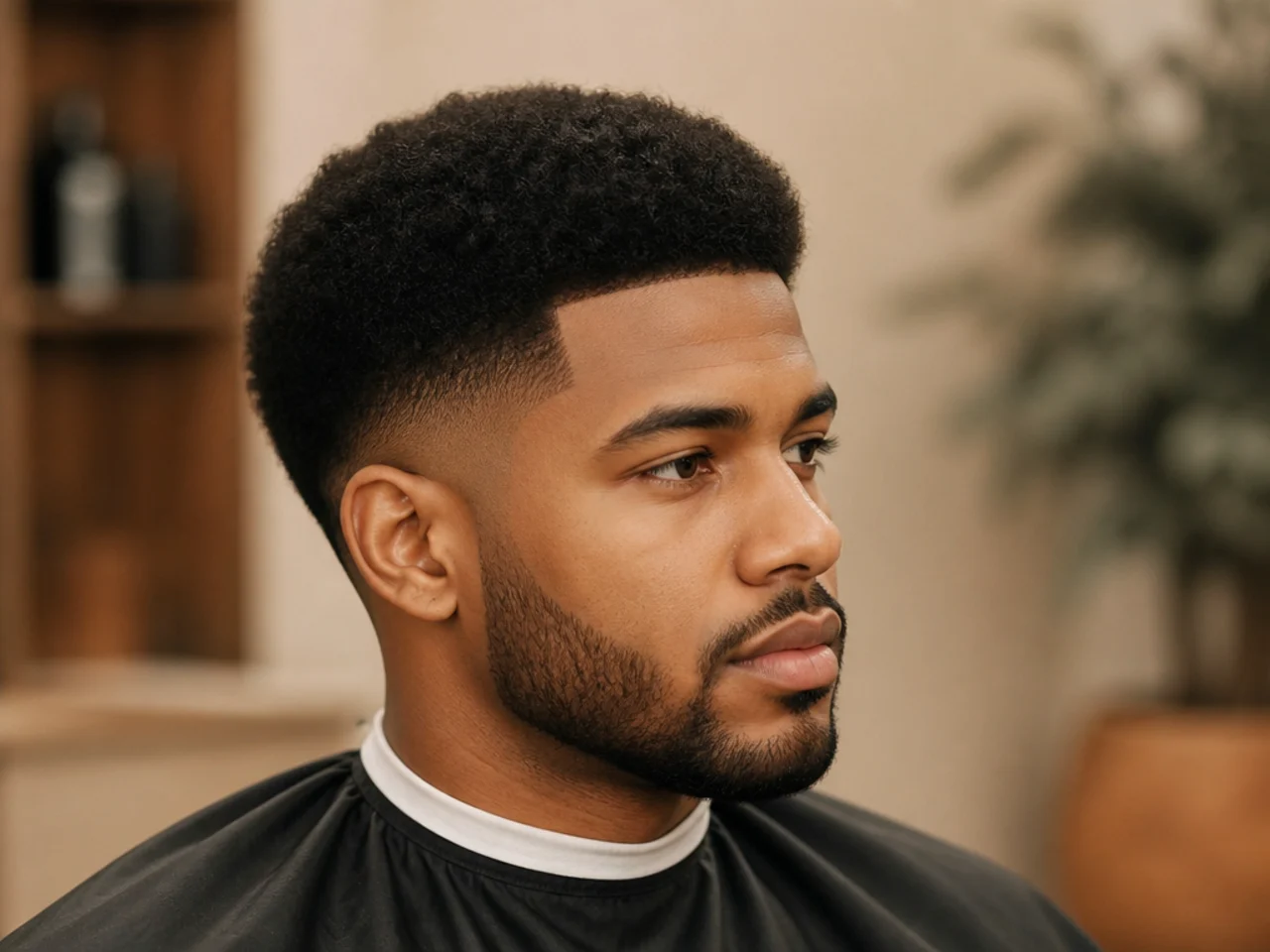
One and a half to two inches of coil scissor-cut into a rounded dome with a low skin fade dropping softly above the ear. The dome up top plus the skin transition below reads as one connected silhouette — no picked height, no hard geometry. Best on square and round faces where the compact shape balances the jaw.
Ask for: "low fade to skin, blending up to guard 3, two inches of natural texture on top picked out and scissor-cut to a rounded dome, no visible layers, sharp line-up at the forehead."
Styling: leave-in on damp hair, pick out and pat with a boar-bristle brush into the dome, moisturize daily. Lowest-effort styling routine on the list after the buzz and TWA.
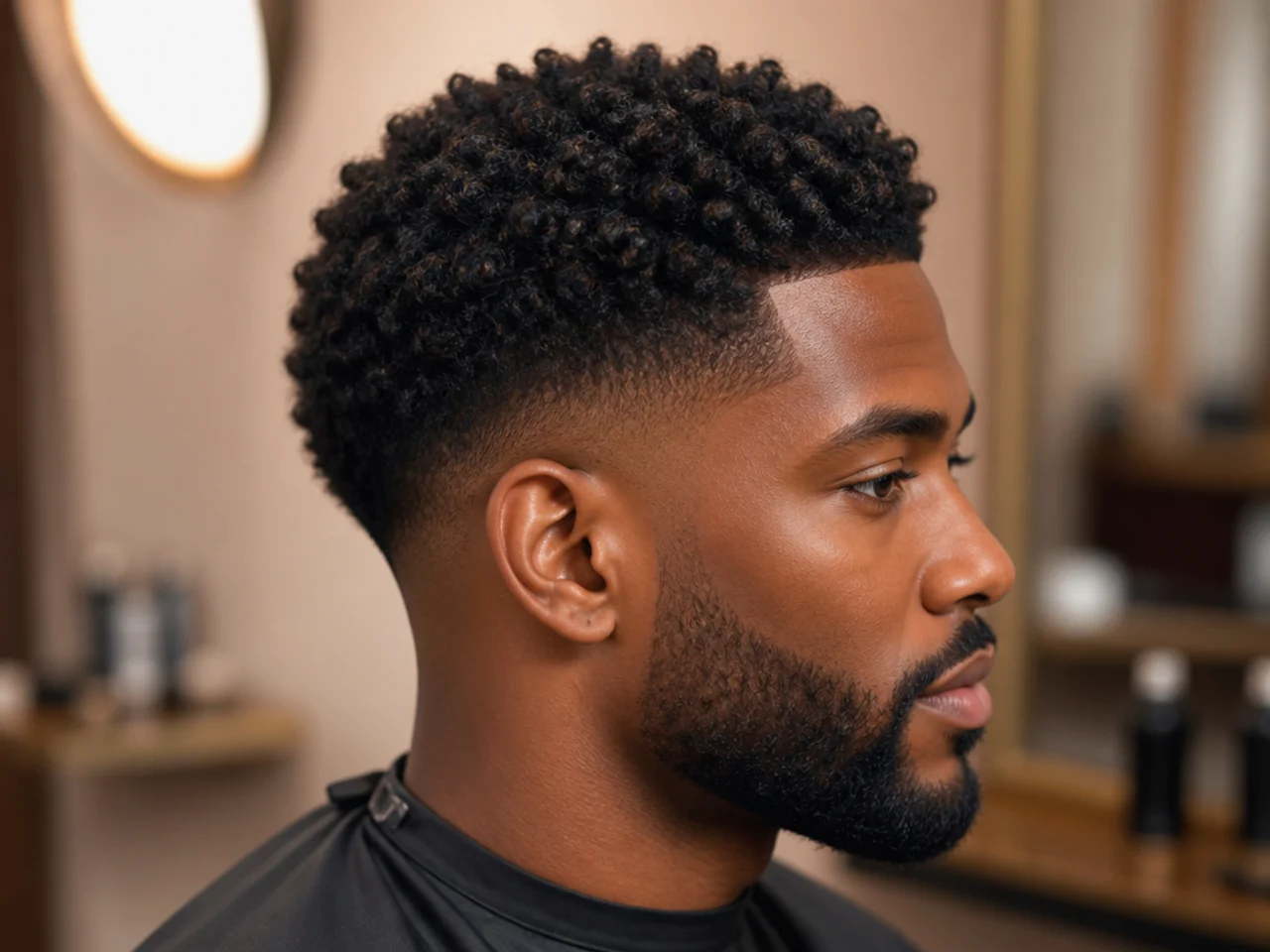
5. Low Fade with Sponge Coils
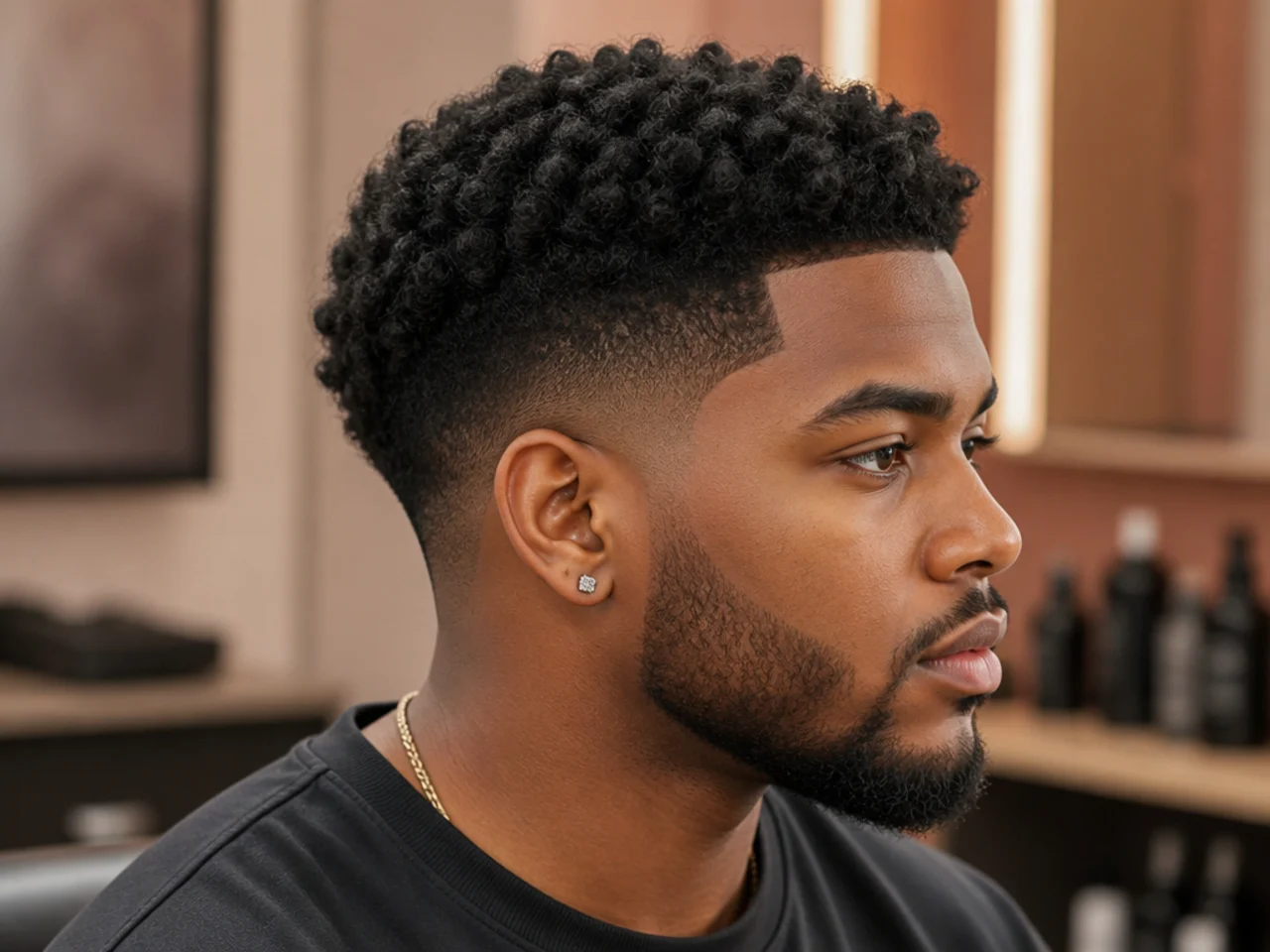
Two to three inches of 4B or 4C coil rotated into tight uniform curls with a hair sponge, low fade at the sides. The sponge presses small circles across the top to form a defined coil pattern that photographs sharp and holds through the workweek. Best on natural 4B and 4C density, and on oval, square, and heart faces where the round crown lands balanced.
Ask for: "low fade to skin, blending up to guard 3, two and a half inches of natural texture on top, sponge finish at the chair, sharp line-up at the forehead."
Styling: leave-in and a light oil on damp hair, rotate the curl sponge in tight circles until the coils set. Refresh with a water spritz and re-sponge every two to three days between washes.
6. Low Fade with Twist-Out
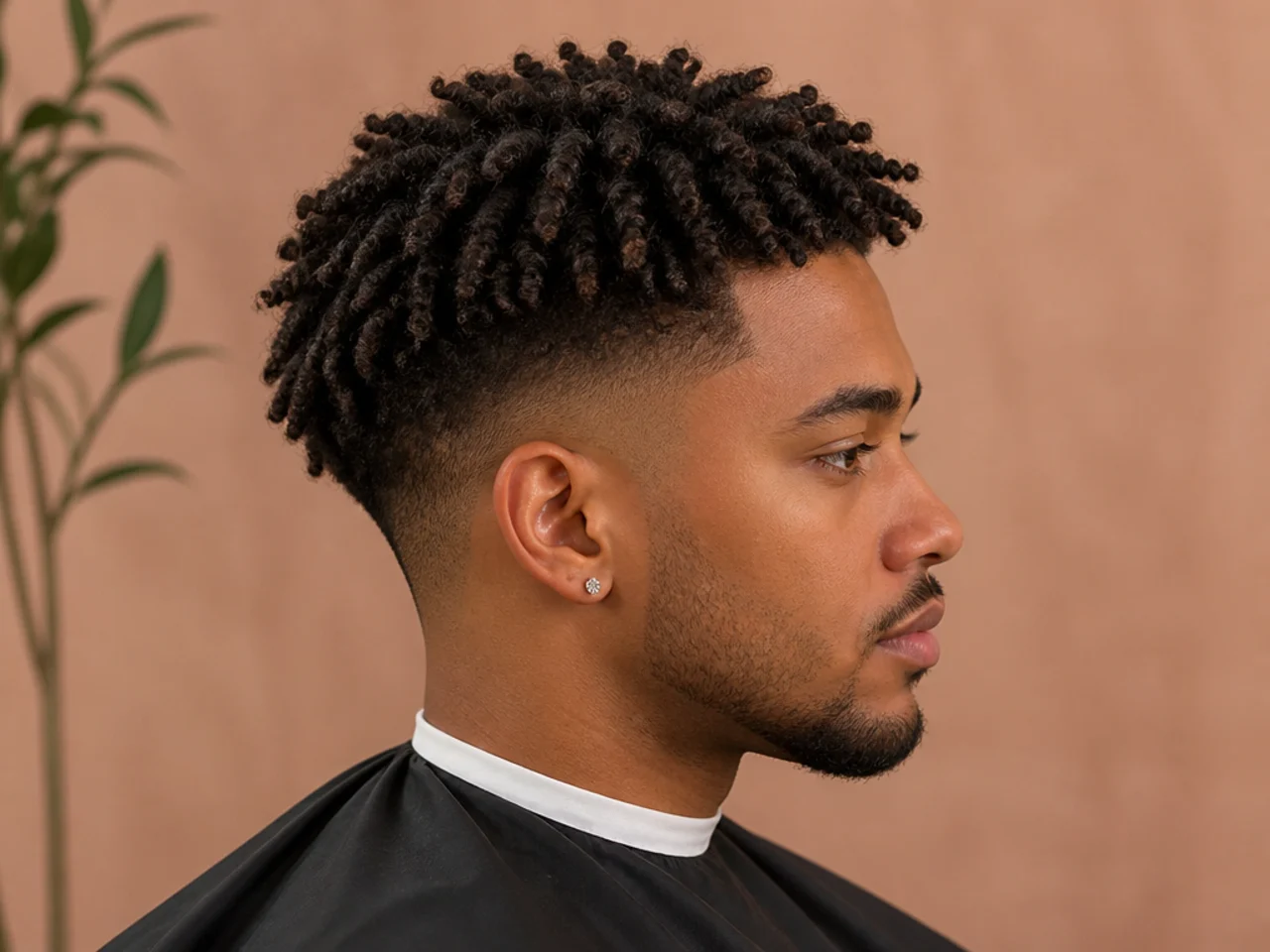
The twist-out gives you elongated S-shaped coils instead of undirected coil texture — twist small sections overnight on wet hair, unravel in the morning for a springy, defined pattern. Low fade frames the twist-out with a skin-clean perimeter. Best on 4A and 4B textures with enough density to hold the twist, and on oval and square faces.
Ask for: "low fade to skin, blending up to guard 3, three inches of natural texture on top scissor-cut, cut before I twist so the shape is set on picked-out hair."
Styling: curl cream through soaking-wet hair, twist small sections, sleep in a satin bonnet, unravel with oiled fingers in the morning. A pea of light oil keeps the coils separated as they open.
7. Low Fade with Freeform Afro
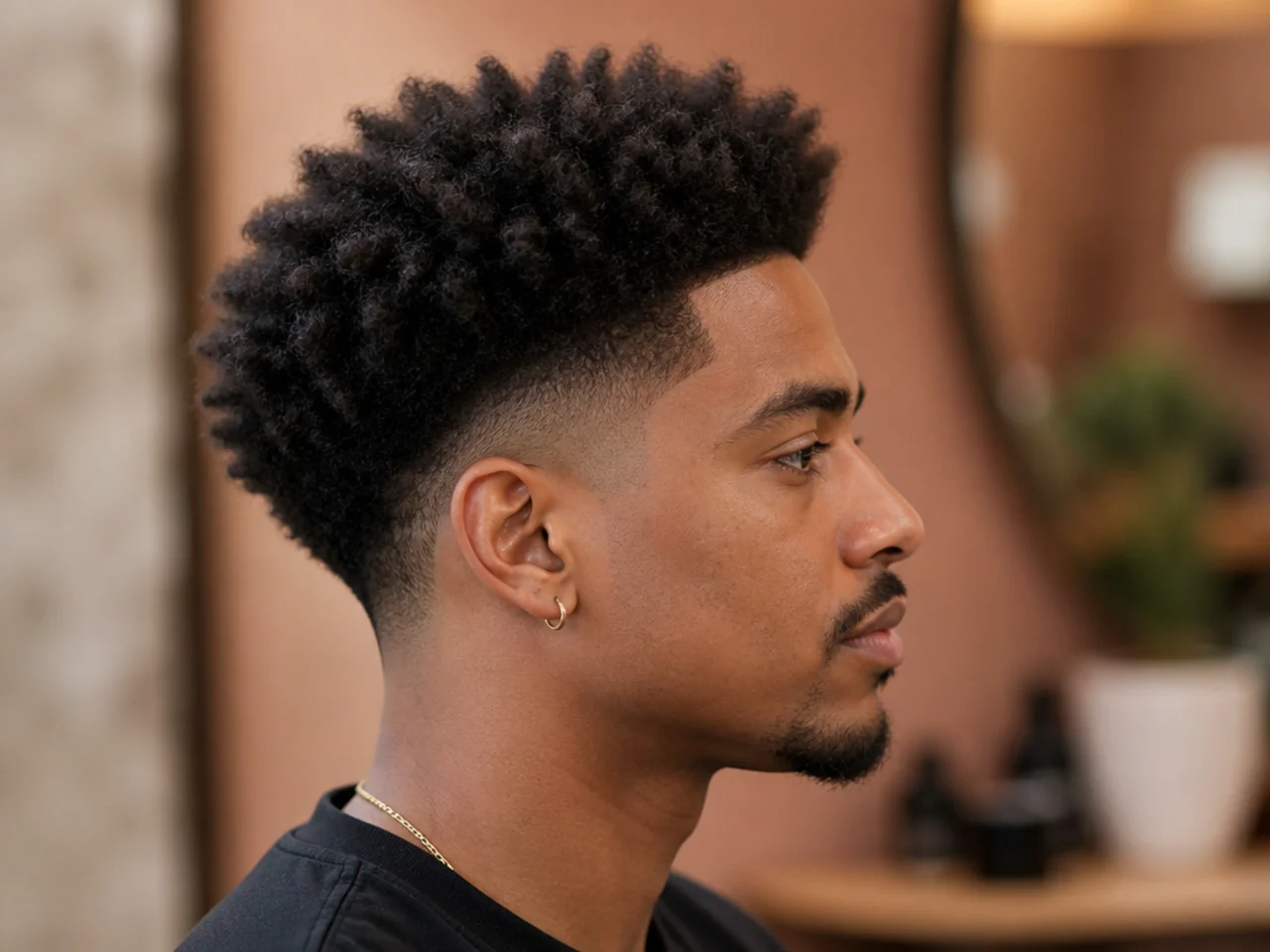
Freeform means no imposed shape — three to four inches of 4A coil picked out and left however it naturally sits, low fade handling the sides with a hard skin transition just above the ear. Best on 4A patterns with visible coil definition, and on oval and heart faces that carry natural asymmetry well. The wash-and-go equivalent of a barber-cut perimeter.
Ask for: "low skin fade, blending up to guard 3, three to four inches of natural afro on top, freeform shape — no rounding, no flat crown, no hard geometry."
Styling: leave-in and curl cream on damp hair, pick out with a wide-tooth afro pick, walk away. The whole point is skipping the styling ritual.
8. Low Fade with High-Top Afro
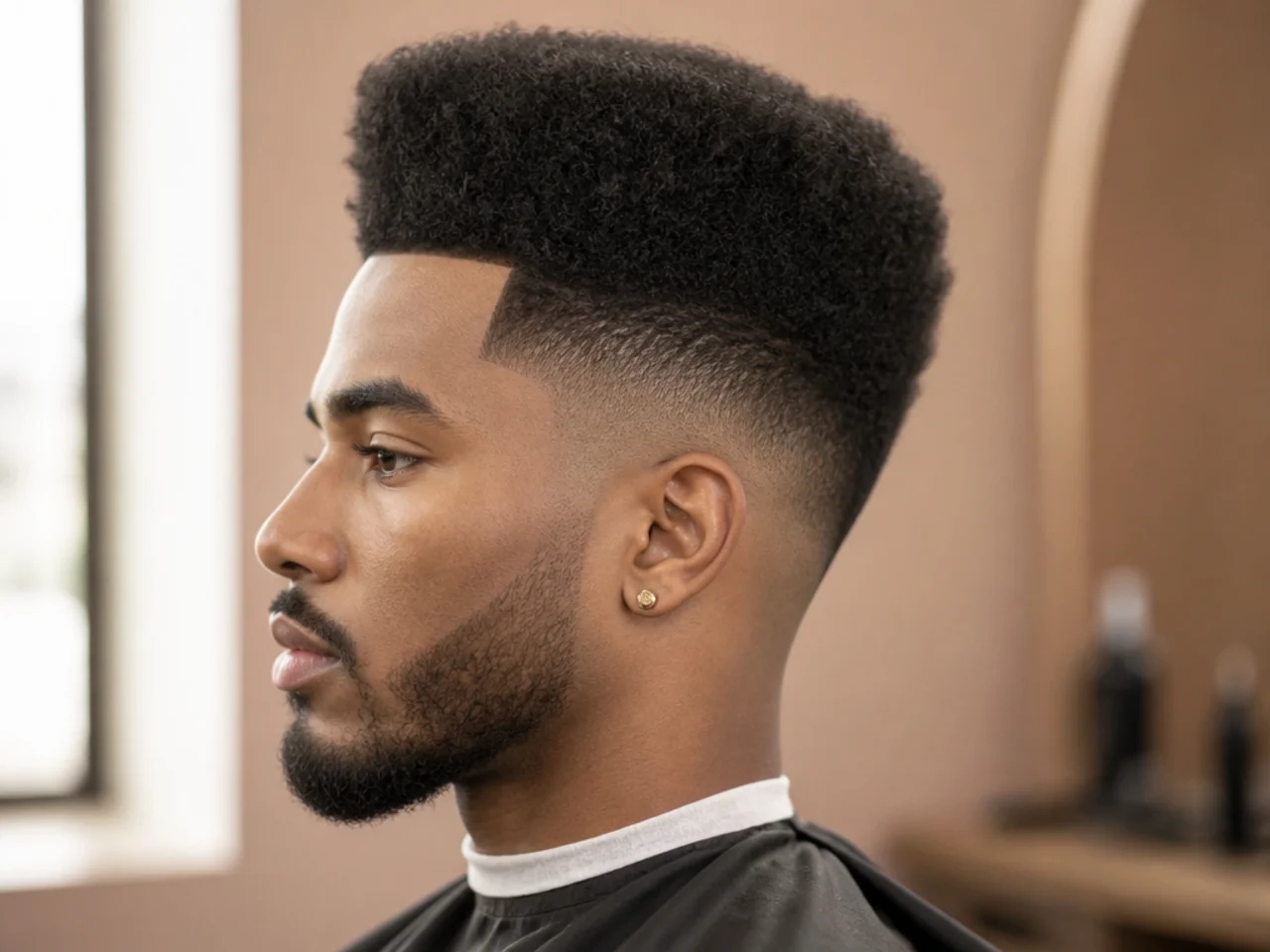
The heritage silhouette with a modern frame — four to five inches of dense 4A or 4B coil stacked on top into a rounded high crown, low skin fade on the sides. Classic high tops usually run mid or high fades; this low version reads softer and lets the crown carry more presence. Best on oval and long faces where the added height sits balanced, and on hair dense enough to hold the tall shape.
Ask for: "low fade to skin, blending up to guard 3, four inches of natural afro on top shaped tall and round, no flat crown, sharp line-up at the forehead."
Styling: pat with a boar-bristle brush and curl cream nightly to hold the round shape. Satin bonnet for sleep — the height drops sideways fast on cotton. Deep-condition weekly to keep the coil pattern springy at the extra length.
9. Low Fade with Retro Hi-Top Flat
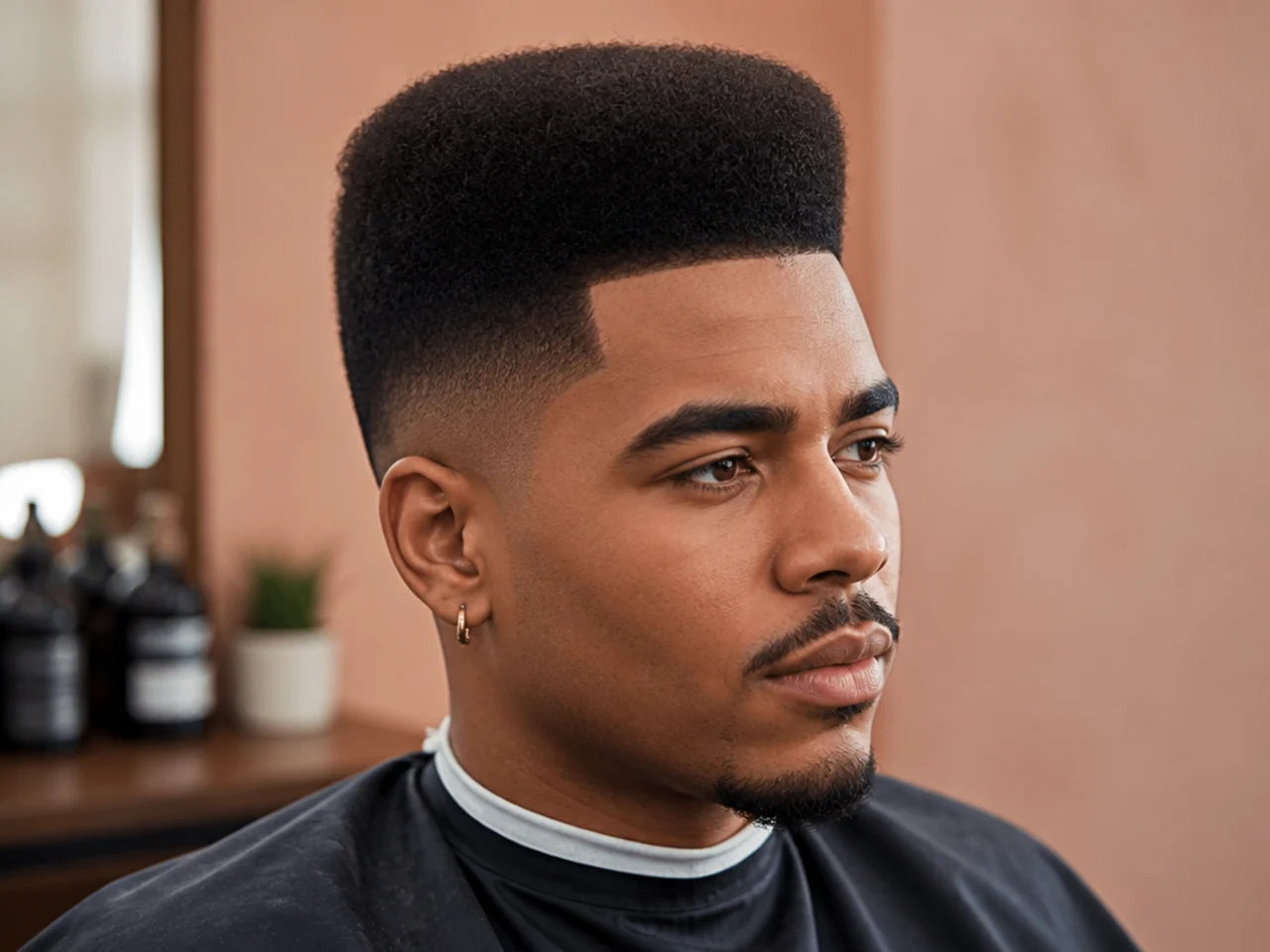
The straight-up '90s callback — four inches of dense 4B coil stacked into a proper hi-top flat with a level crown, low fade on the sides for a modern update on the Kid 'n Play silhouette. Best on oval and long faces where the height sits balanced, and on hair dense enough to hold the flat-top geometry. Highest-maintenance top on the list.
Ask for: "low fade to skin, blending up to guard 3, four-inch hi-top afro, flat crown cut with clipper-over-comb, sharp line-up at the forehead and temples."
Styling: pat with a boar-bristle brush and curl cream nightly to hold the flat, wave cap for sleep, book a shape-up every ten days. Skip a visit and the flat rounds over within the week.
10. Low Fade with Two-Strand Twists
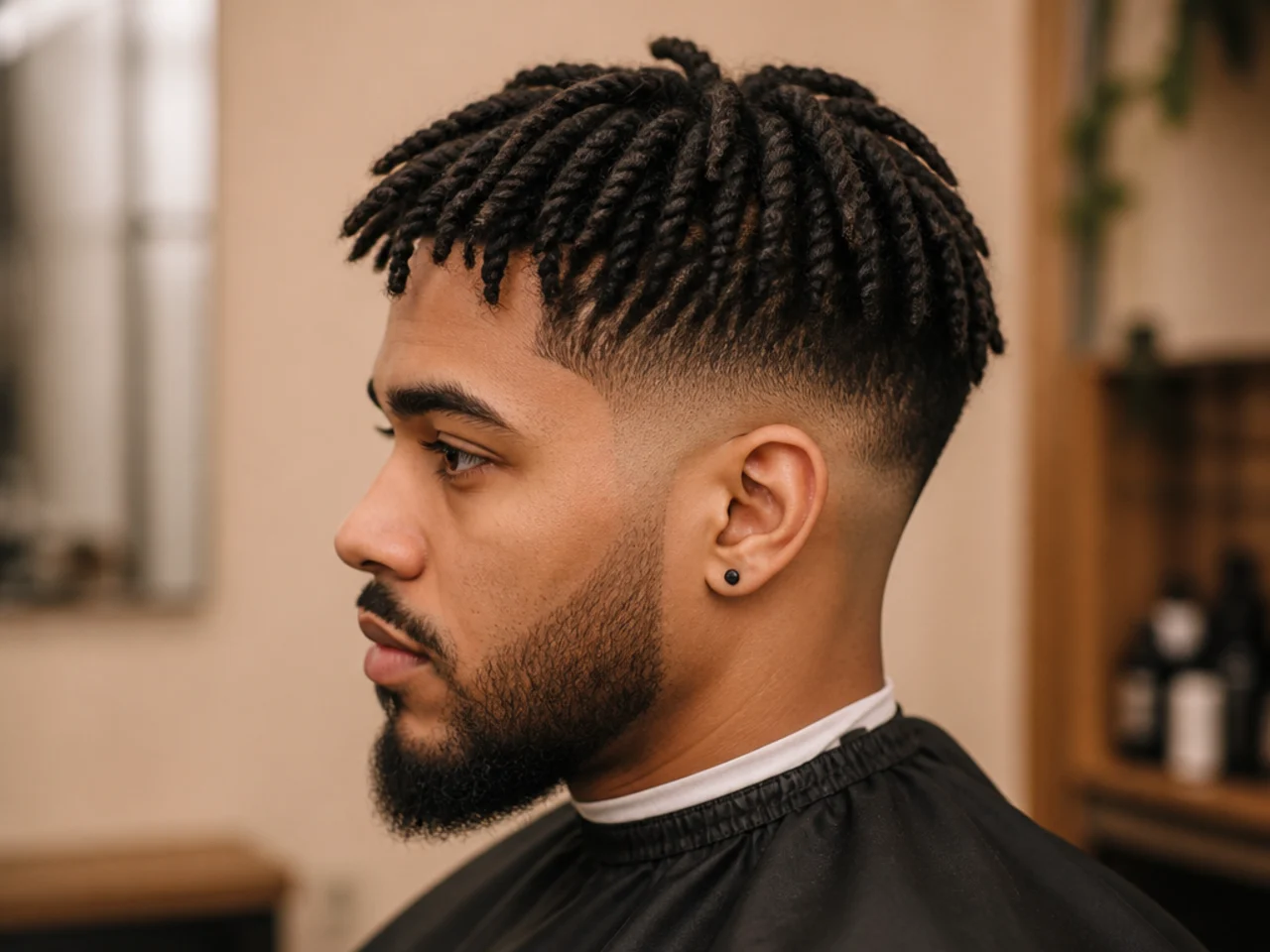
The twists-left-in version — small two-strand twists across a three-to-four-inch top instead of unraveled into a twist-out, low skin fade at the sides. Reads more textured than an afro, less structured than braids, and buys you a full two weeks between salon visits. Best on 4B and 4C density, and on oval, square, and heart faces.
Ask for: "low fade to skin, blending up to guard 3, three to four inches of natural texture on top left long enough for two-strand twists, fade the sides after the twists are set."
Styling: twist small sections on damp hair with curl cream, moisturize the twist bodies every two to three days with a light oil, satin bonnet nightly. Retwist any that come loose at week two.
11. Low Fade with Blowout Afro
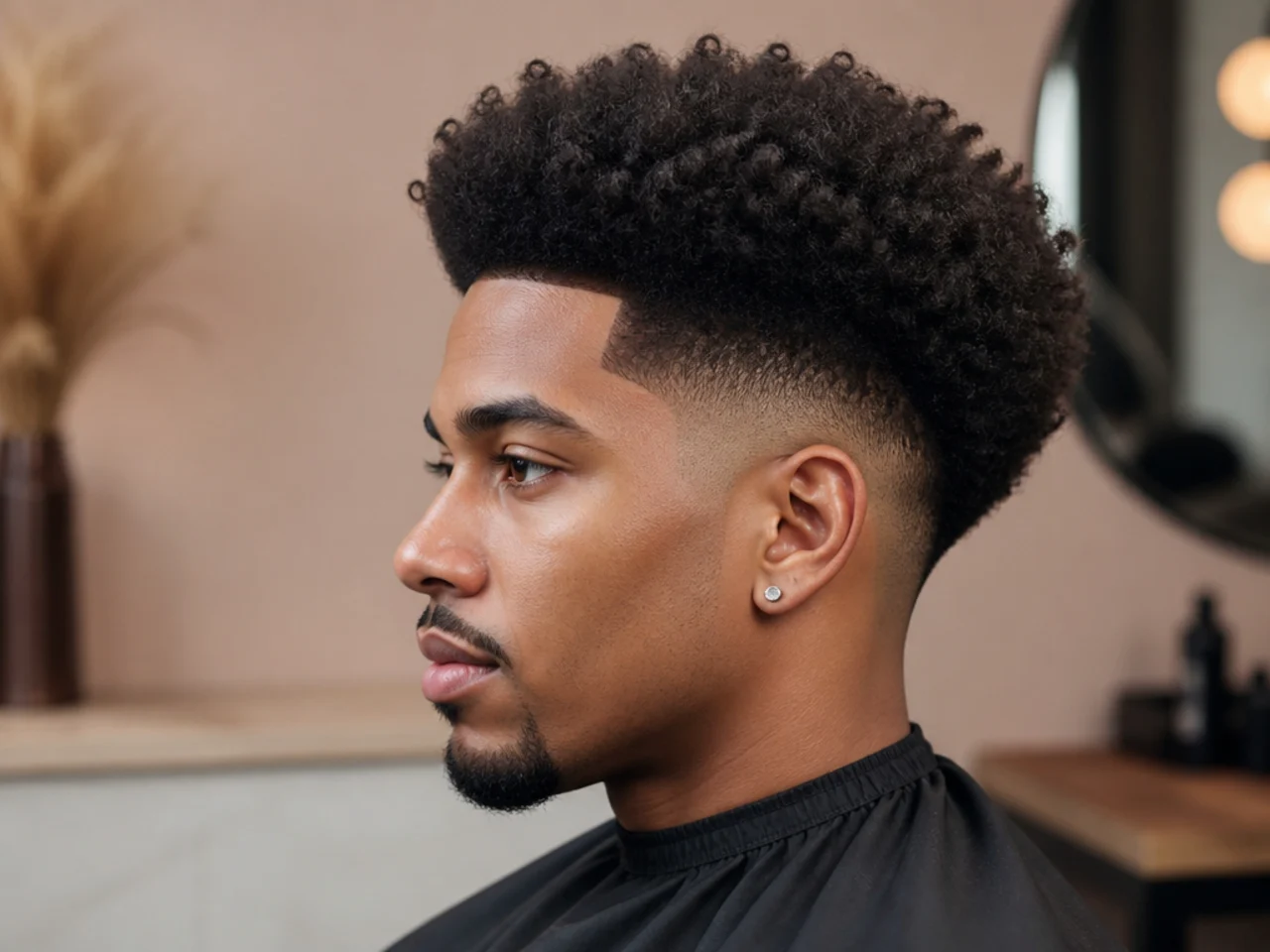
Three to four inches of 4A or 4B texture blown out with a diffuser and picked into a full round crown, low fade handling the sides. The blowout expands the coil pattern so the top reads bigger than its cut length. Best for oval and long faces where the vertical crown flatters, and on medium-density hair that holds a blowout through the day.
Ask for: "low fade to skin, blending up to guard 3, three to four inches of natural afro on top, cut before I blow it out so the shape sets on picked-out hair."
Styling: blow-dry on cool with the diffuser cup pointed at the roots, pick out from the roots upward with an afro pick, finish with a light hold spray to lock the volume.
12. Low Fade with Middle Part Afro
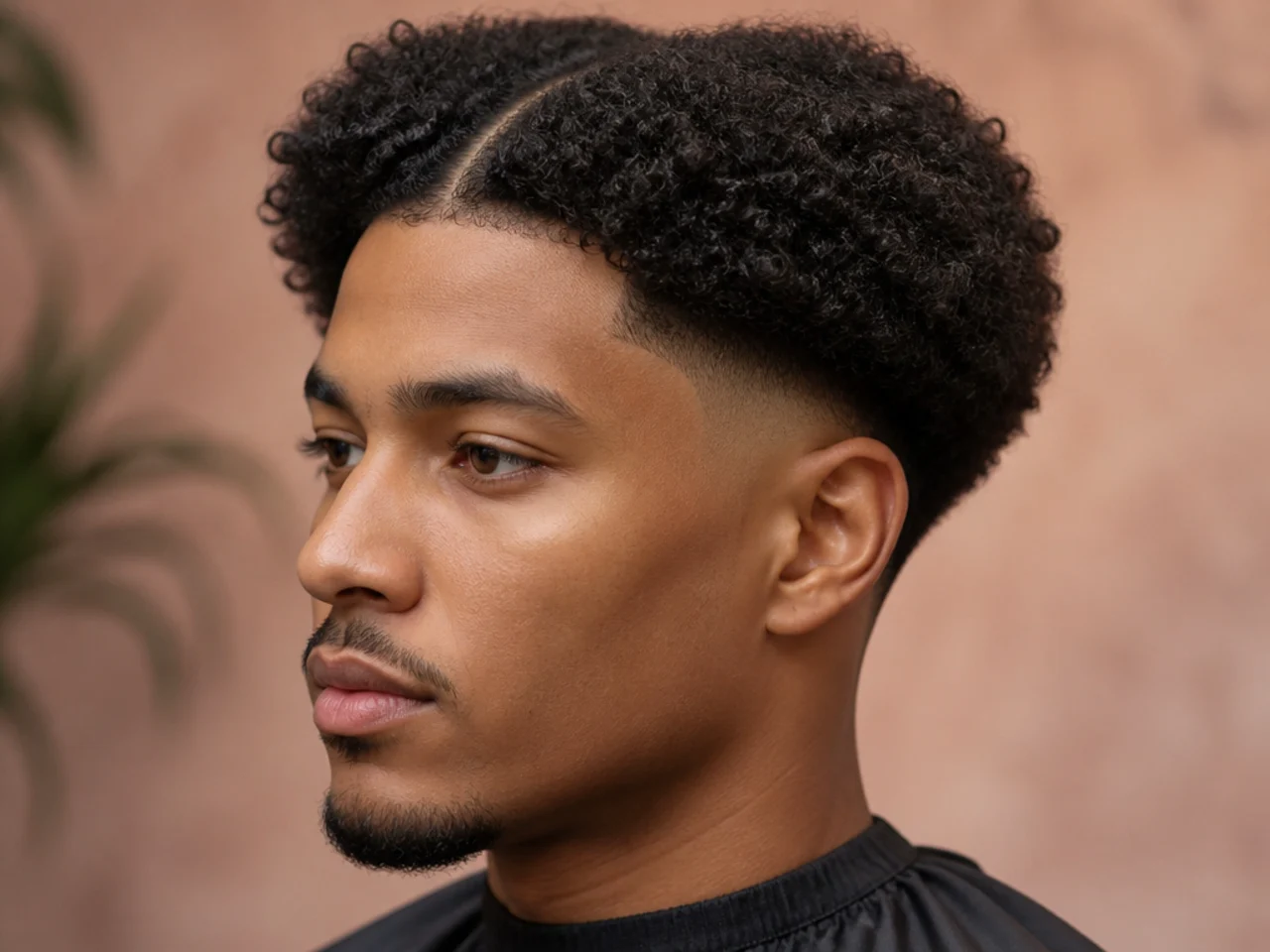
Four inches of 4A coil parted straight down the middle, both sides falling in coily volume, low fade at the sides. Trades the round afro silhouette for a split silhouette — reads current without shouting. Best on oval and square faces with looser 4A density, and on any guy comfortable with slightly more length on top than the standard afro.
Ask for: "low fade to skin, blending up to guard 3, four inches of natural texture on top, natural middle part combed into place, scissor-cut dry so the fall of the part is set."
Styling: curl cream on damp hair, comb the part into place with a wide-tooth pick, air-dry undisturbed. A light oil applied along the part line keeps the scalp from looking dry through the day.
13. Low Fade with Curly Fringe
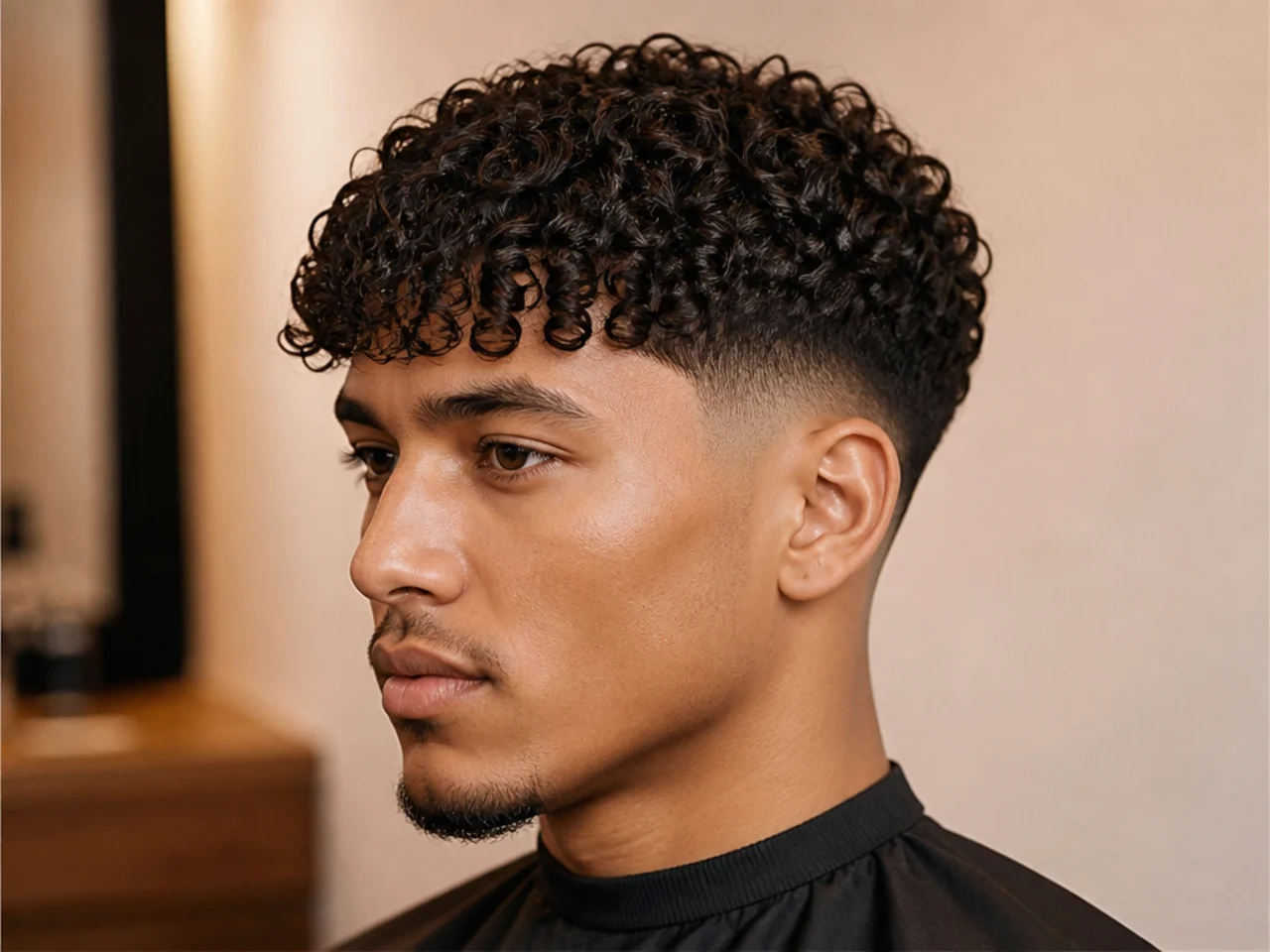
Three inches of 4A afro on top with the front pieces left long enough to fall past the brows as a soft curly fringe, low fade at the sides. The fringe softens tall foreheads and adds a break at the front instead of a razored line-up. Best on square, heart, and oblong faces, and on looser 4A patterns where the front will fall rather than stand straight up. Explore more textured options in the curly hairstyles for men roundup.
Ask for: "low fade to skin, blending up to guard 3, three inches on top with the front pieces left long enough to fall to the brow, natural fringe shape, no hard line at the forehead."
Styling: curl cream through the fringe on damp hair, twirl the front pieces around a finger to set the fall direction, air-dry. Refresh with water and cream between washes.
14. Low Fade with Hard Part
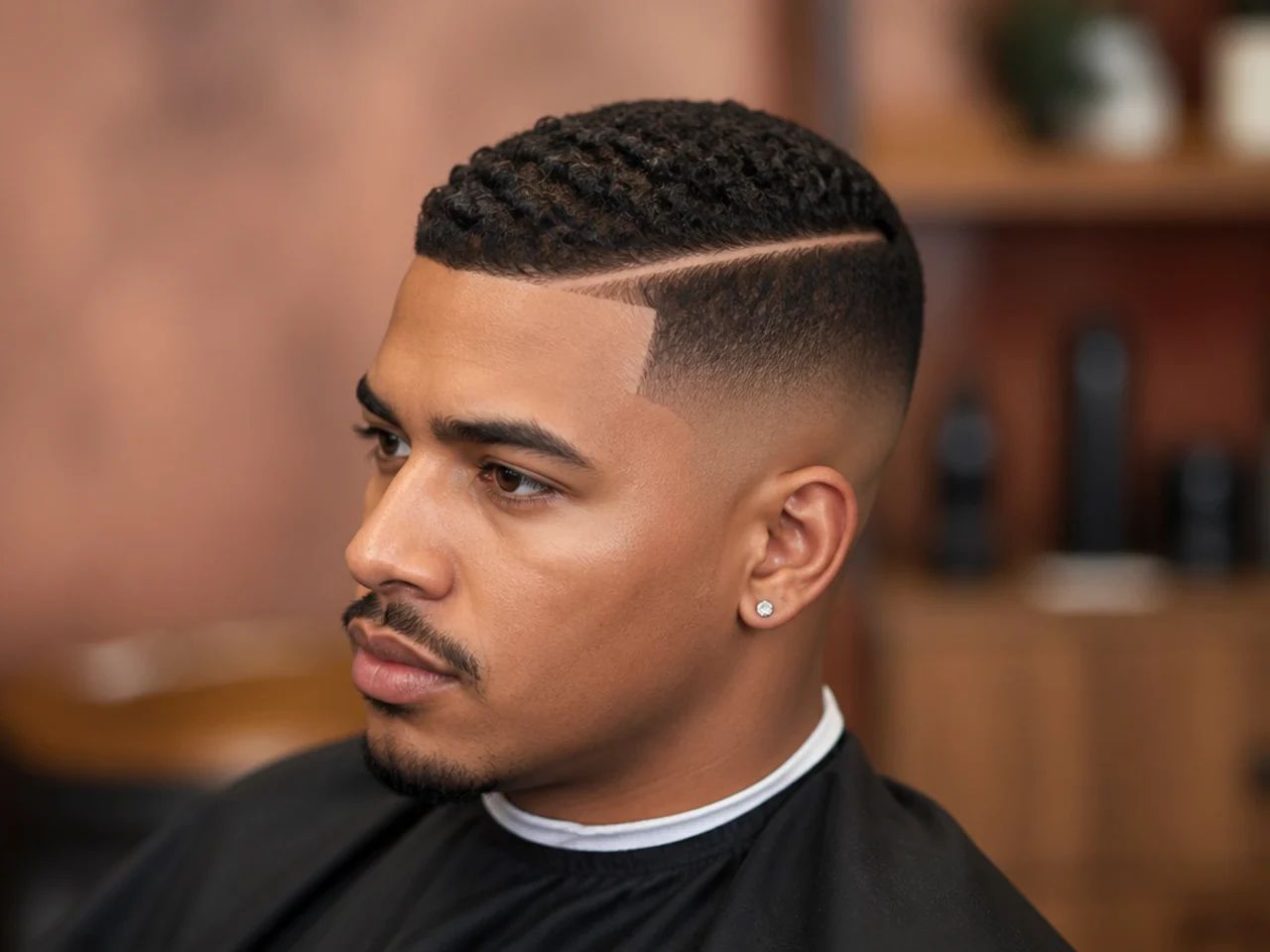
The hard part adds a razored line down one side, splitting the top from the fade with a sharp visual break. Low skin fade drops the perimeter to bare scalp, three-inch 4A or 4B afro sits on top. Reads more polished than the same look with a high fade — the whole cut still lands sharp rather than statement. Best on square, diamond, and heart faces where the vertical line adds structure.
Ask for: "low fade to skin, blending up to guard 3, three inches of natural afro on top, razored hard part on the left side above the temple, sharp line-up at the forehead."
Styling: leave-in on damp hair, pick out the top, brush the hair away from the hard part on both sides. Re-razor the hard part every visit or it disappears within a week.
15. Low Fade with Straight-Back Cornrows
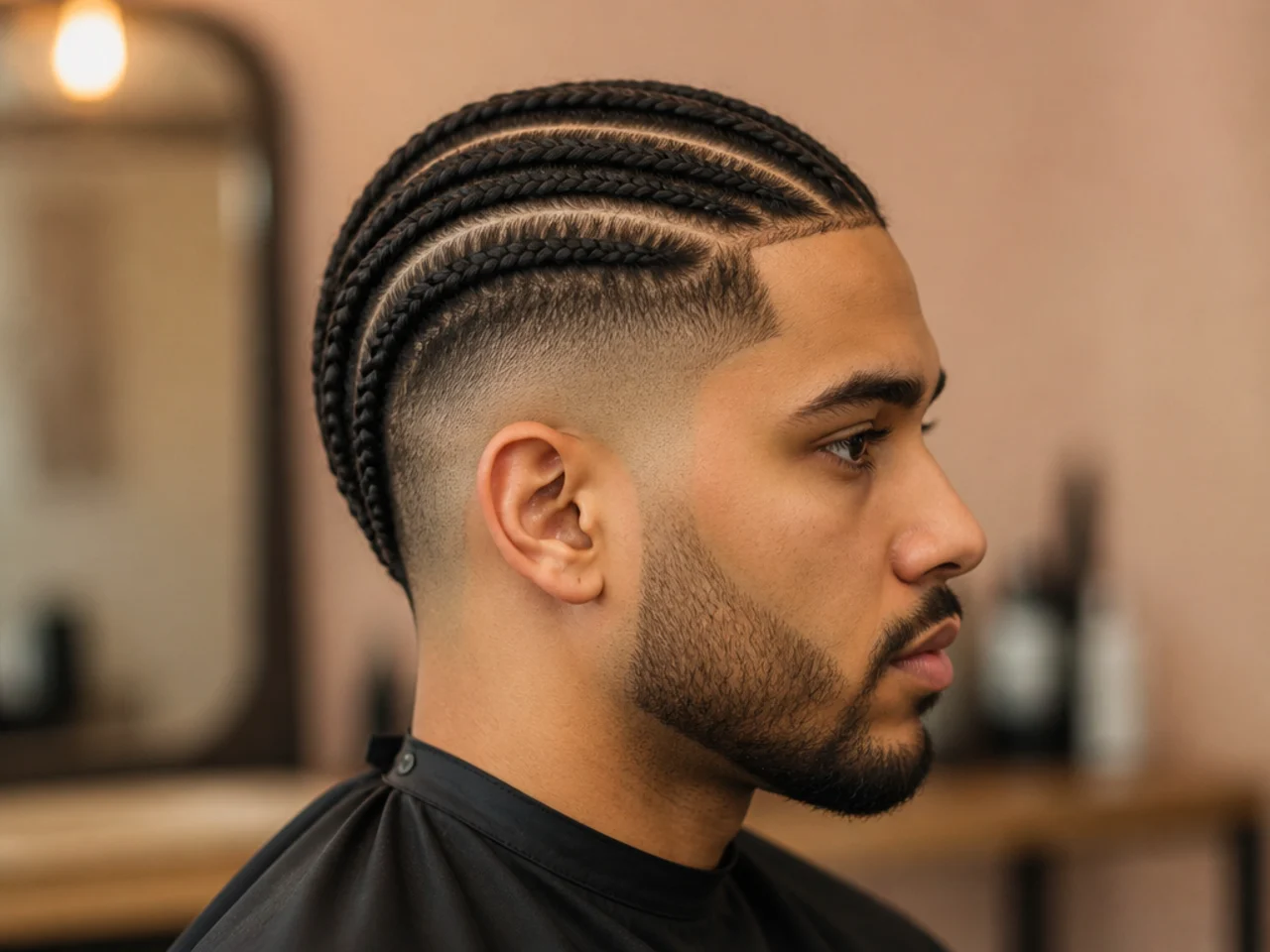
Six to eight neat cornrows running straight back from the forehead to the nape, low fade at the sides framing the parting lines with a skin-clean perimeter. The fade handles the sides while the braids protect the natural pattern for four to six weeks. Best on 4B and 4C length that holds the braid tension, and on oval, square, and long faces.
Ask for: "low fade to skin, blending up to guard 3, six to eight straight-back cornrows across the top from forehead to nape, fade the sides after the braids are set so the perimeter matches the braid line."
Styling: oil the parting lines twice a week with a light scalp oil, satin durag every night, mist the braids with a water-plus-leave-in spray in the morning. Rebraid the front three every two to three weeks as they loosen at the hairline.
16. Low Fade with Zigzag Cornrow Design
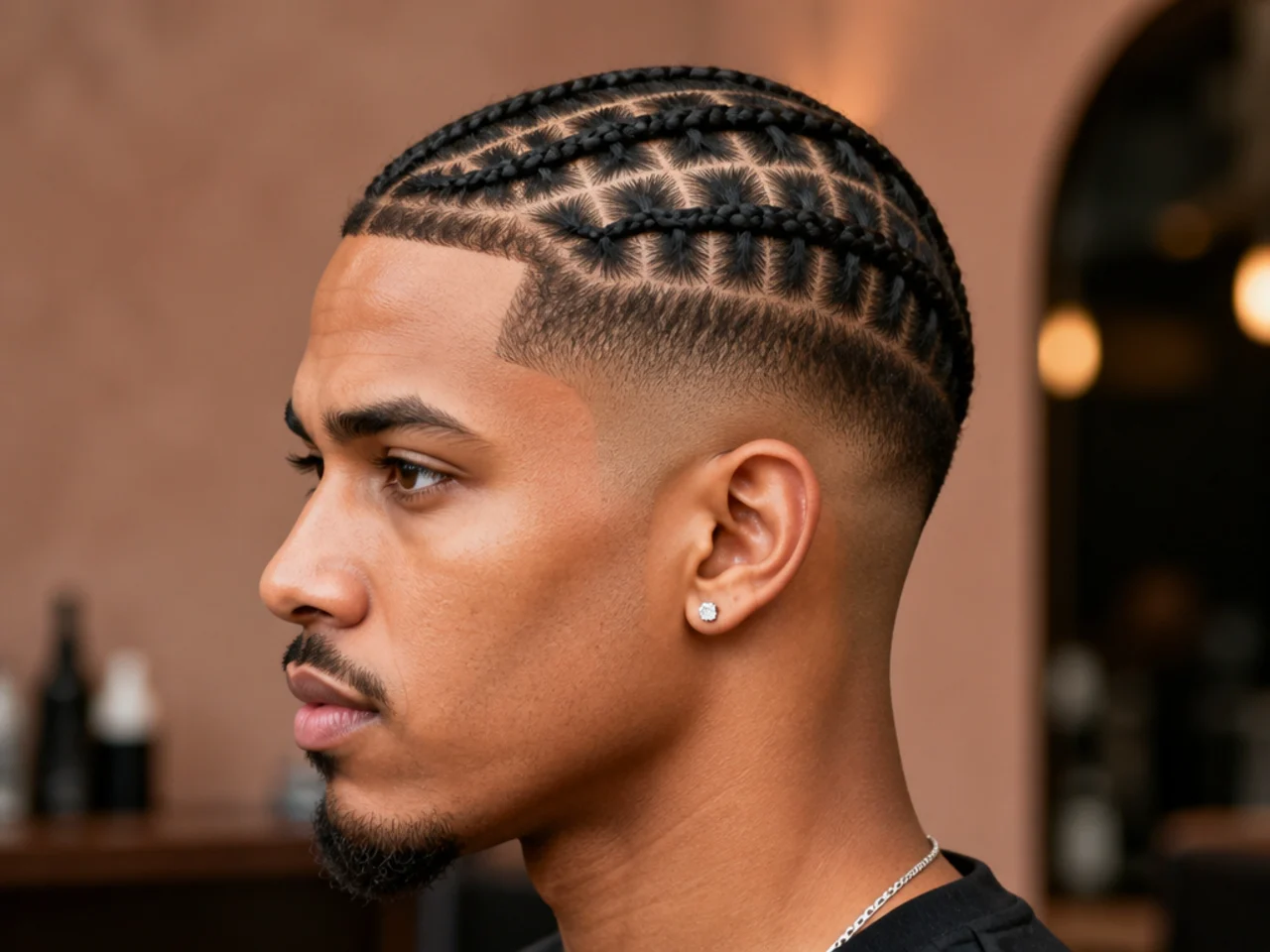
The design version — cornrows braided in zigzag, curved, or geometric patterns across the top instead of straight back, low fade at the sides. The parting lines carry the design, so the whole cut becomes a piece of visible craft. Best on 4A, 4B, and 4C density with enough length to braid, and on oval, square, and diamond faces where the design details read well.
Ask for: "low fade to skin, blending up to guard 3, zigzag cornrow pattern across the top (bring a reference photo), fade the sides after the braids are set."
Styling: oil the design partings every two to three days, satin durag nightly to keep the pattern flat. Book the braid appointment first with a stylist who does design work, then the fade touch-up on top after two weeks.
17. Low Fade with Box Braids
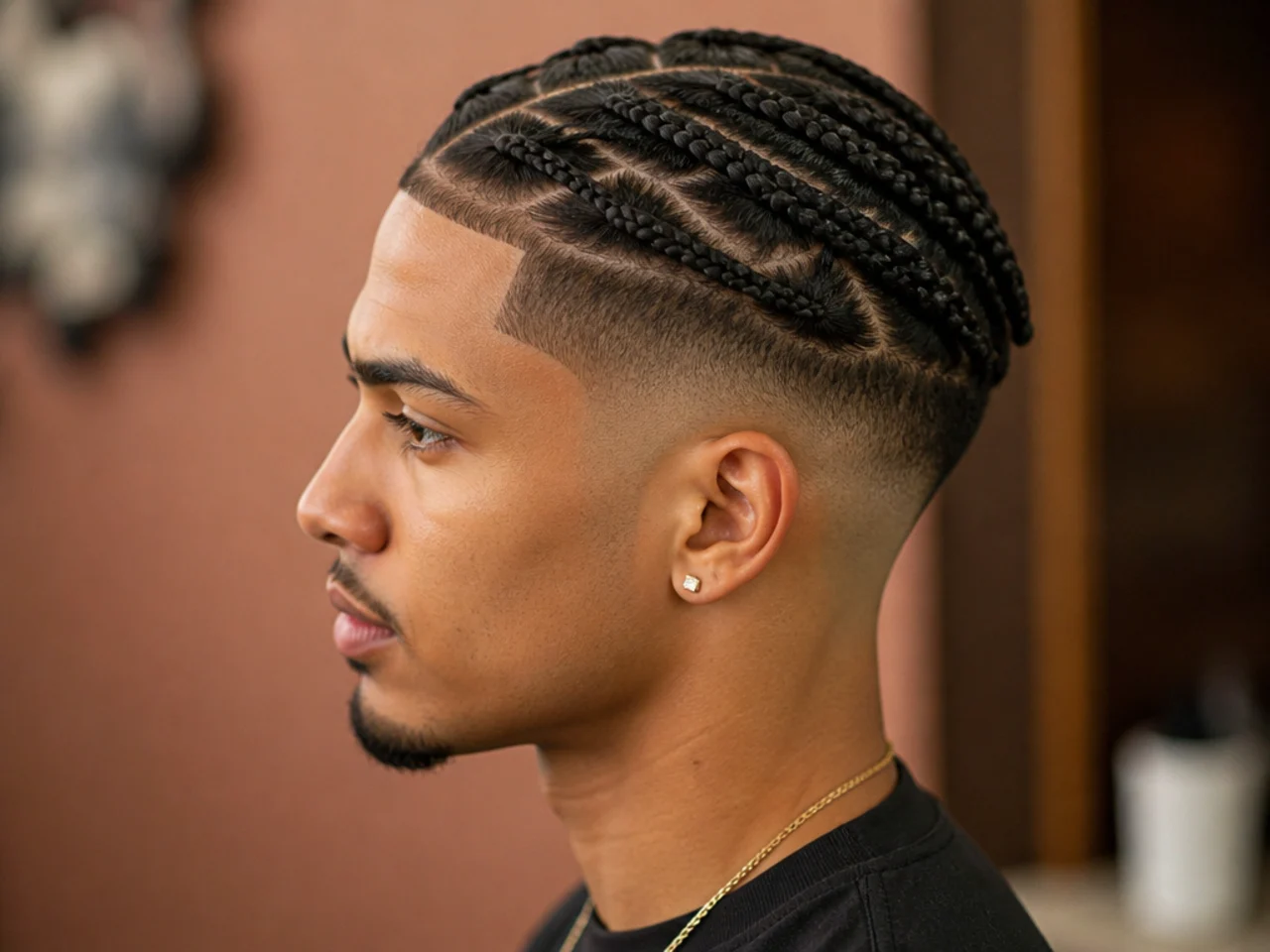
Full box braids across the top — medium-sized, shoulder-length or shorter, low fade handling the sides so the box parting frame stays crisp against the skin transition. Buys you six to eight weeks between salon visits. Best on 4B and 4C hair with enough length for braid takedown, and on oval, square, and long faces.
Ask for: "low fade to skin, blending up to guard 3, medium box braids across the top (bring a reference for length), fade the sides after the braids are done so the perimeter matches the braid line."
Styling: wash the braids monthly with diluted sulfate-free shampoo, oil the scalp twice a week with a light oil, satin bonnet or braid sock nightly. Take the braids down at eight weeks maximum — longer and the roots start to loc.
18. Low Fade with Knotless Braids
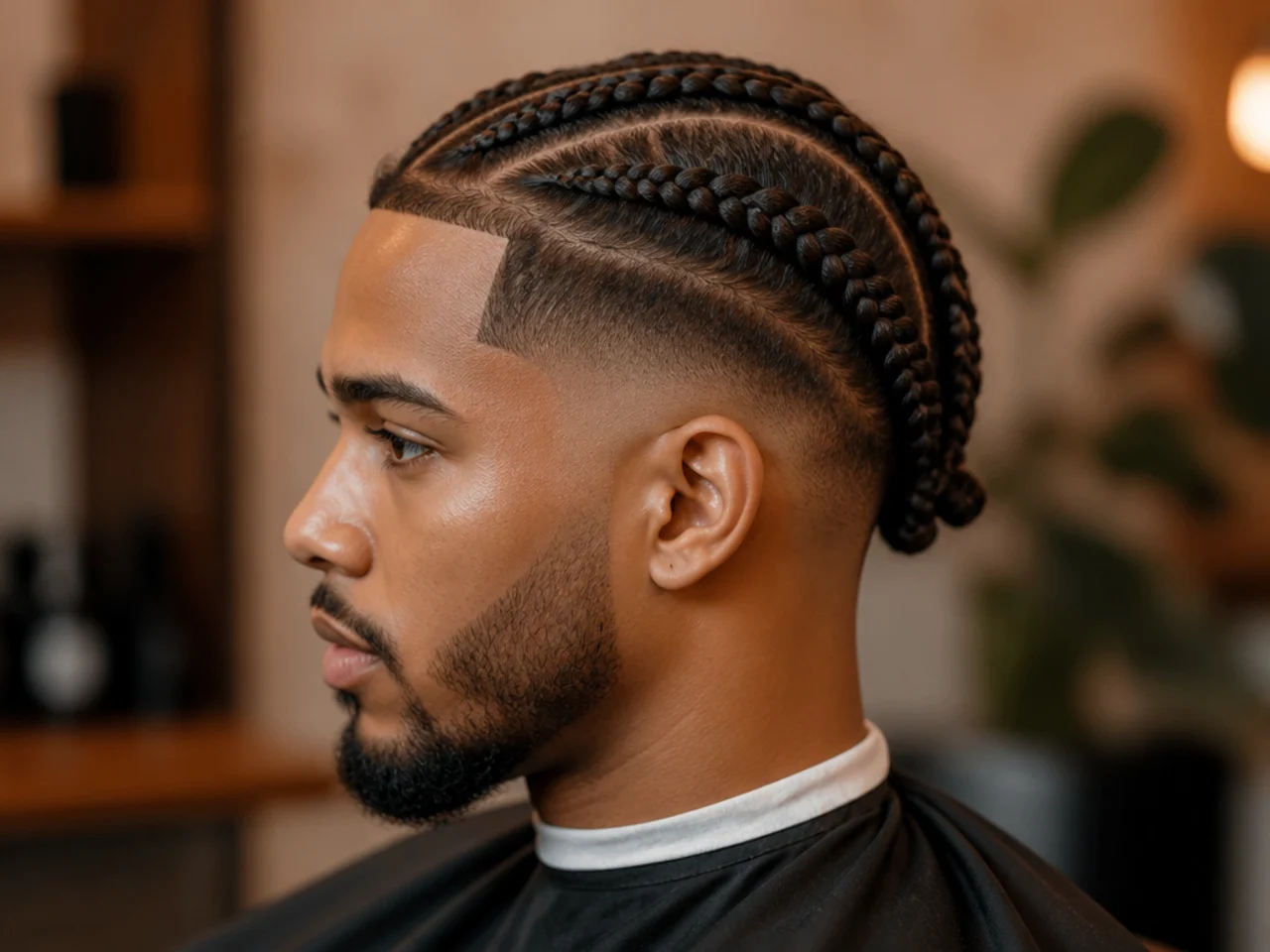
The knotless version — box braids started without the visible knot at the root, so the braid lays flatter and pulls less on the hairline. Low fade at the sides for the same clean frame. Best on 4A, 4B, and 4C hair (looser textures especially), and on oval, square, heart, and long faces. Kinder to your edges than traditional box braids over the long haul.
Ask for: "low fade to skin, blending up to guard 3, knotless box braids across the top (bring a reference for length and part size), fade the sides after the braids are done."
Styling: same rhythm as regular box braids — monthly wash, twice-weekly scalp oil, satin bonnet nightly. The knotless start needs even more scalp care because the natural roots are more exposed than in traditional box braids.
19. Low Fade with Starter Locs
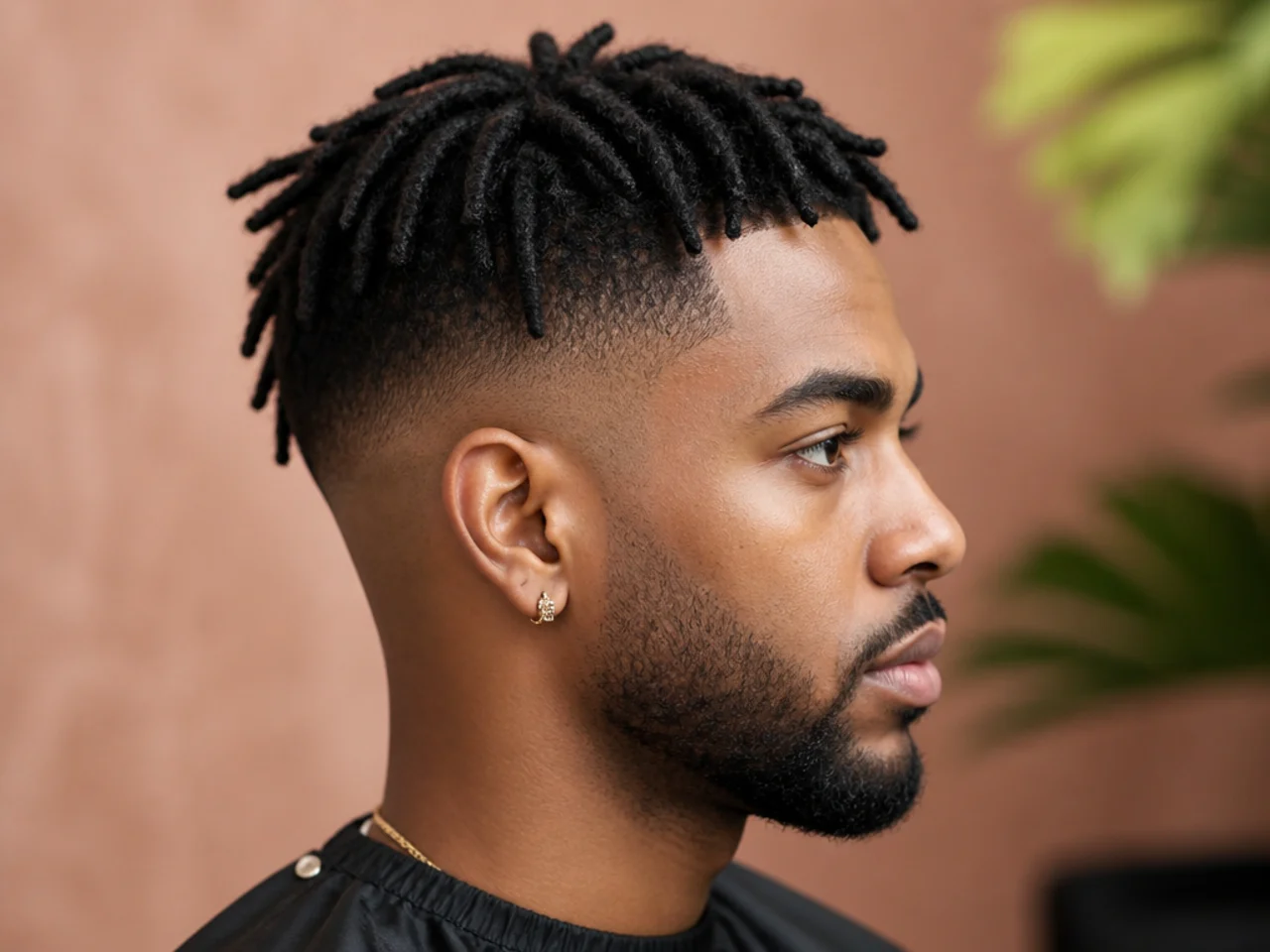
The transition cut — starter locs on the top crown (three to four inches long, mature enough to hang) with loose afro texture still at the front perimeter, low fade on the sides. The skin-clean low fade gives the starter phase a polished frame while the locs mature. Best on 4B and 4C textures with dense coil that will hold the loc, and on oval and long faces.
Ask for: "low fade to skin, blending up to guard 3, don't cut the crown locs — just clean the perimeter around them and blend the fade into the loose afro at the front."
Styling: retwist the loc roots every four to six weeks with a residue-free wax or gel, moisturize the loose afro section daily, wash locs weekly with a residue-free shampoo so buildup doesn't drag them down.
20. Low Fade with Mature Locs Tied Up
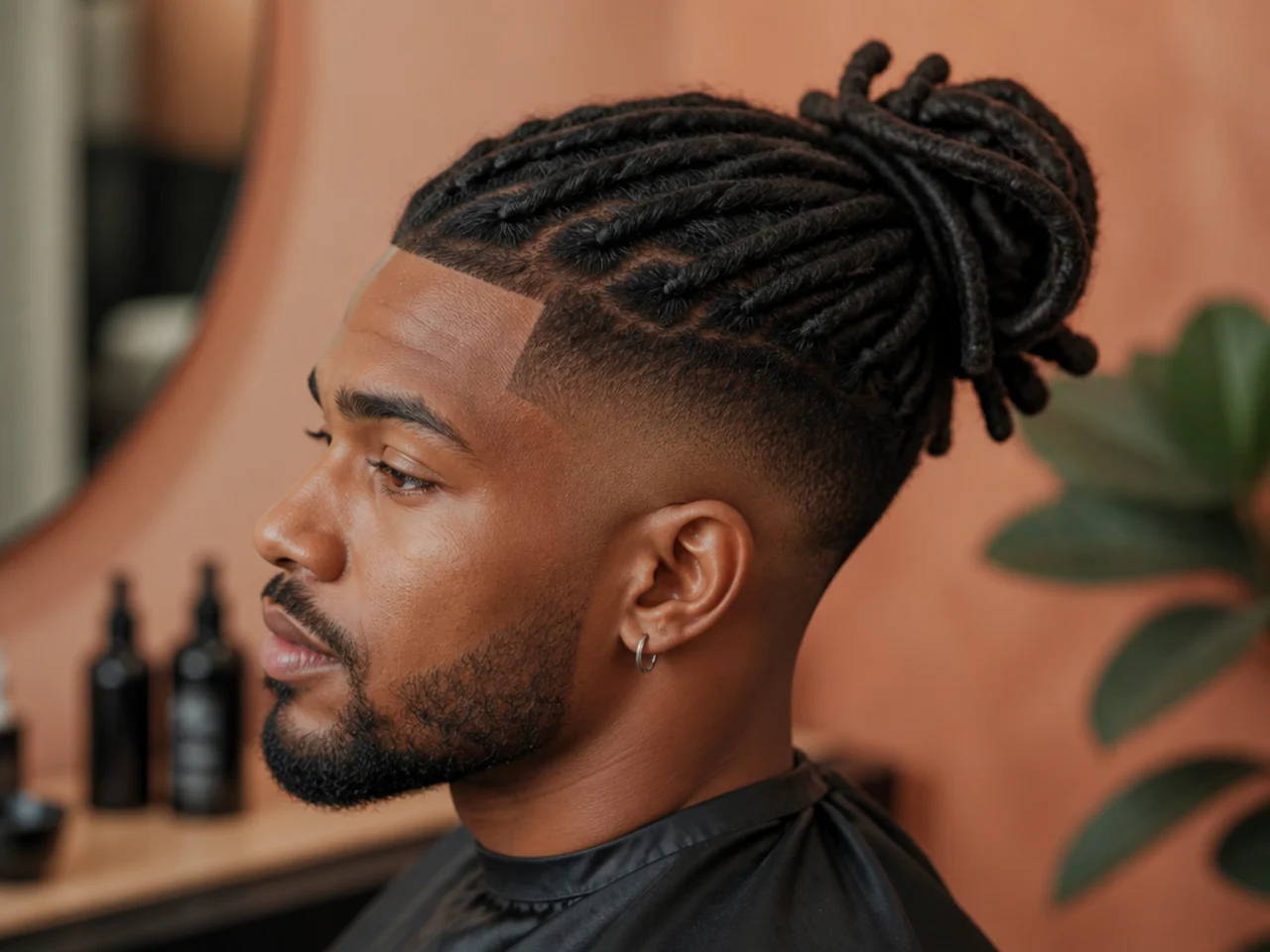
Long locs pulled up into a top bun or top knot, low fade at the sides. The skin-clean low fade anchors the whole silhouette when the locs are lifted off the perimeter — without it, the pulled-up locs read heavy at the crown with nothing framing the face. Best on oval, square, and long faces, and on locs at least eight to ten inches long.
Ask for: "low fade to skin, blending up to guard 3, don't touch the locs — clean the perimeter and blend the fade up into where the locs sit against the head."
Styling: wash locs weekly, retwist the roots monthly, oil the scalp along the loc partings twice a week. Take the bun down at night and cover with a satin bonnet — sleeping on a loc bun compresses the pattern and creates awkward humps by morning.
21. Low Fade with Sharp Razor Line-Up
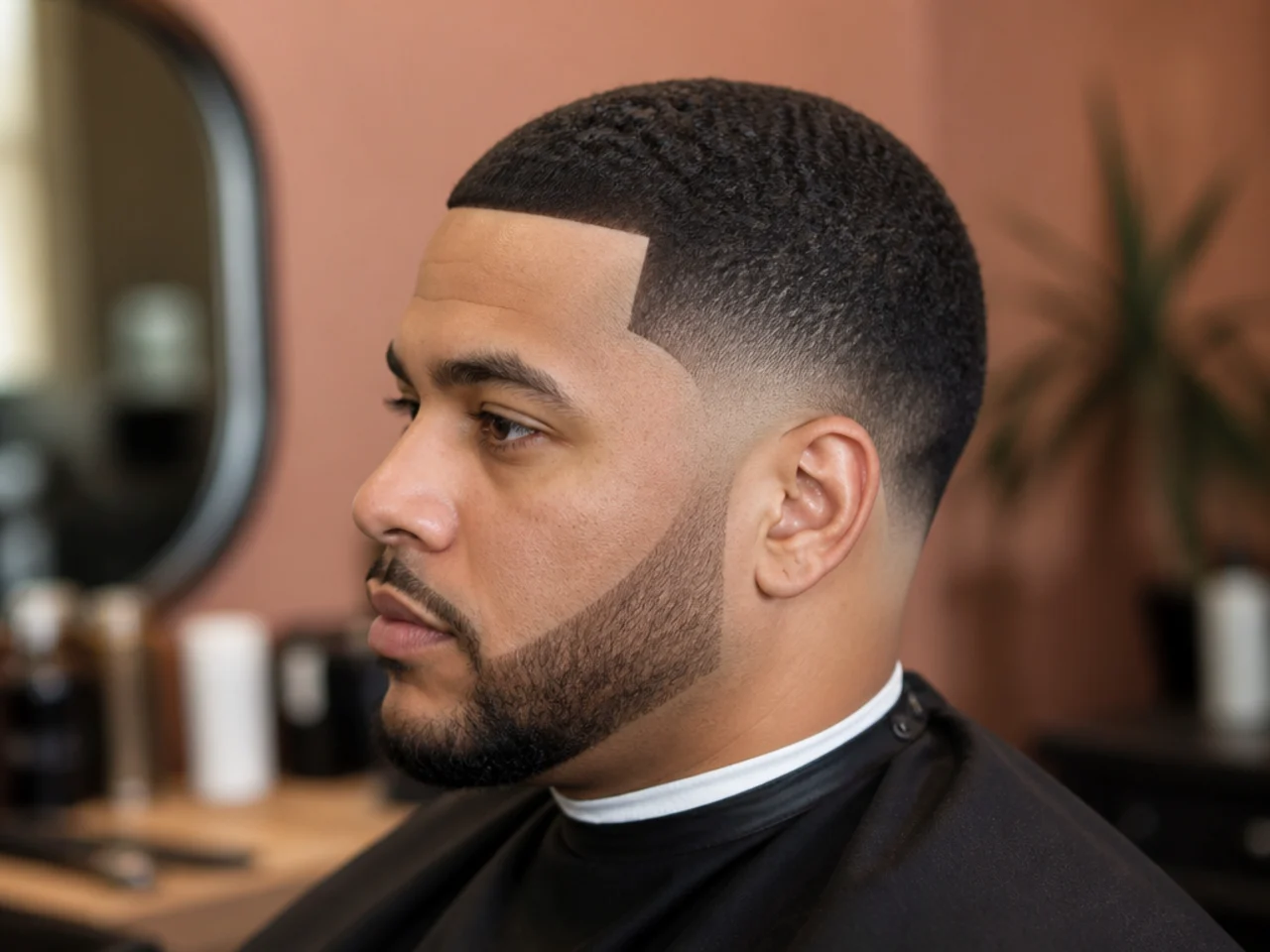
The line-up is what turns a good low fade into a great one. A razored, hard-line edge at the forehead, temples, and sideburns squares off the whole silhouette so the natural top reads intentional against the crisp frame. On a low fade the line-up also visually connects the top to the skin transition below, tying the cut into one continuous shape. Best on 4B and 4C density where the coil bulk benefits from a sharp perimeter.
Ask for: "low fade to skin, blending up to guard 3, two inches of natural texture on top, straight razor line-up at the forehead, temples, and sideburns."
Styling: normal top routine — leave-in plus daily moisturizer. The line-up blurs faster than the fade. Book a shape-up-only touch-up every ten to fourteen days to keep the edge crisp between full cuts.
22. Low Fade with Full Beard Blend
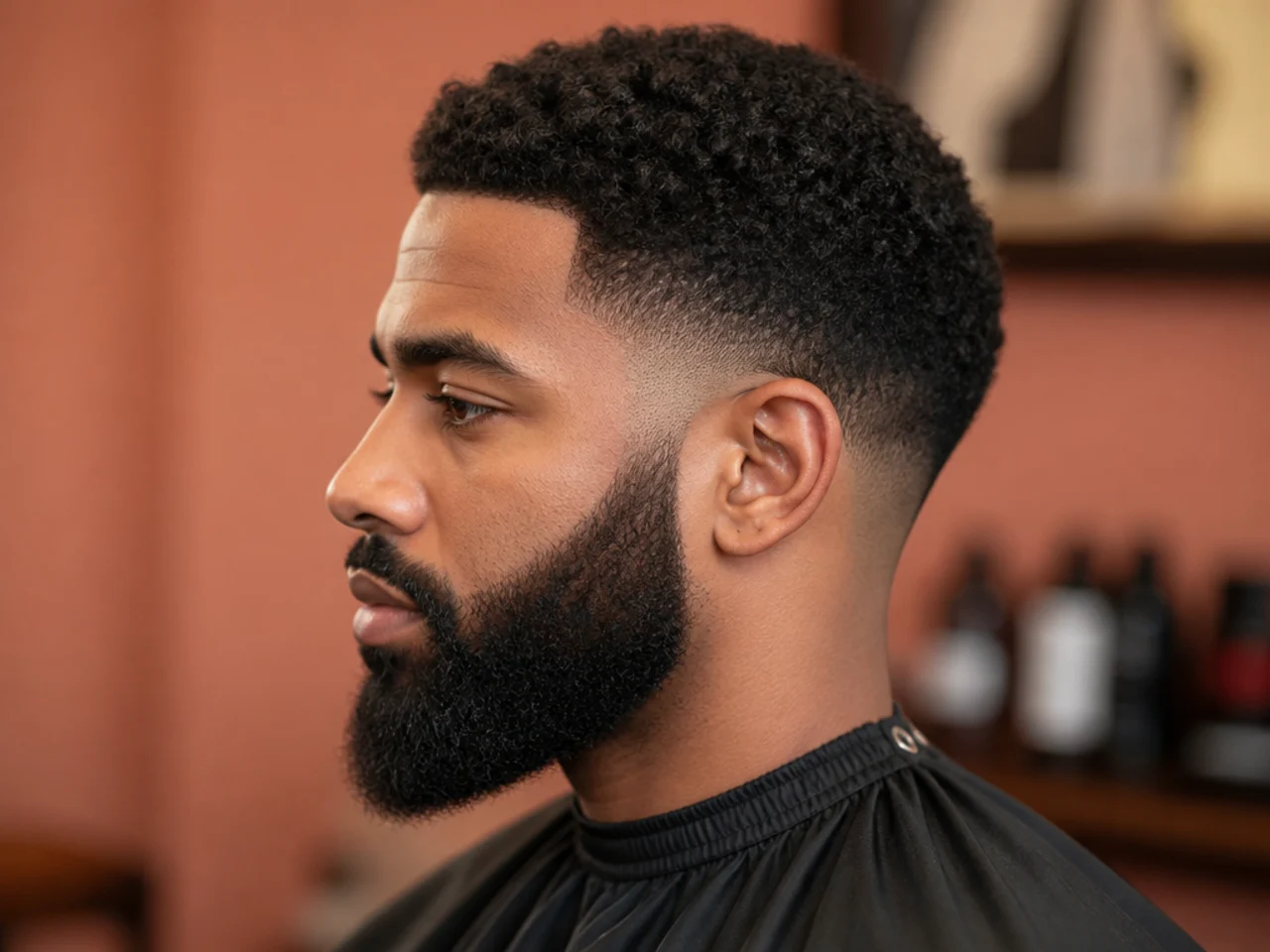
The face-frame version — a two-to-three-inch textured top with a matched full beard, low fade at the sides tapered to blend from the sideburn straight into the beard so the whole face frame reads as one continuous shape. Best on oval, square, and diamond faces, and on anyone with enough beard growth to hold a defined shape. Beard density and head-hair density should read similar for the blend to work.
Ask for: "low fade to skin, blending up to guard 3, two to three inches of natural texture on top, beard shaped to match with a clean blend at the sideburn straight into the beard."
Styling: beard oil every morning, comb the beard down before your barber shapes it, book beard trims on the same schedule as head cuts so the connection reads clean at every stage of growout.
23. Low Drop Fade Curve Behind the Ear
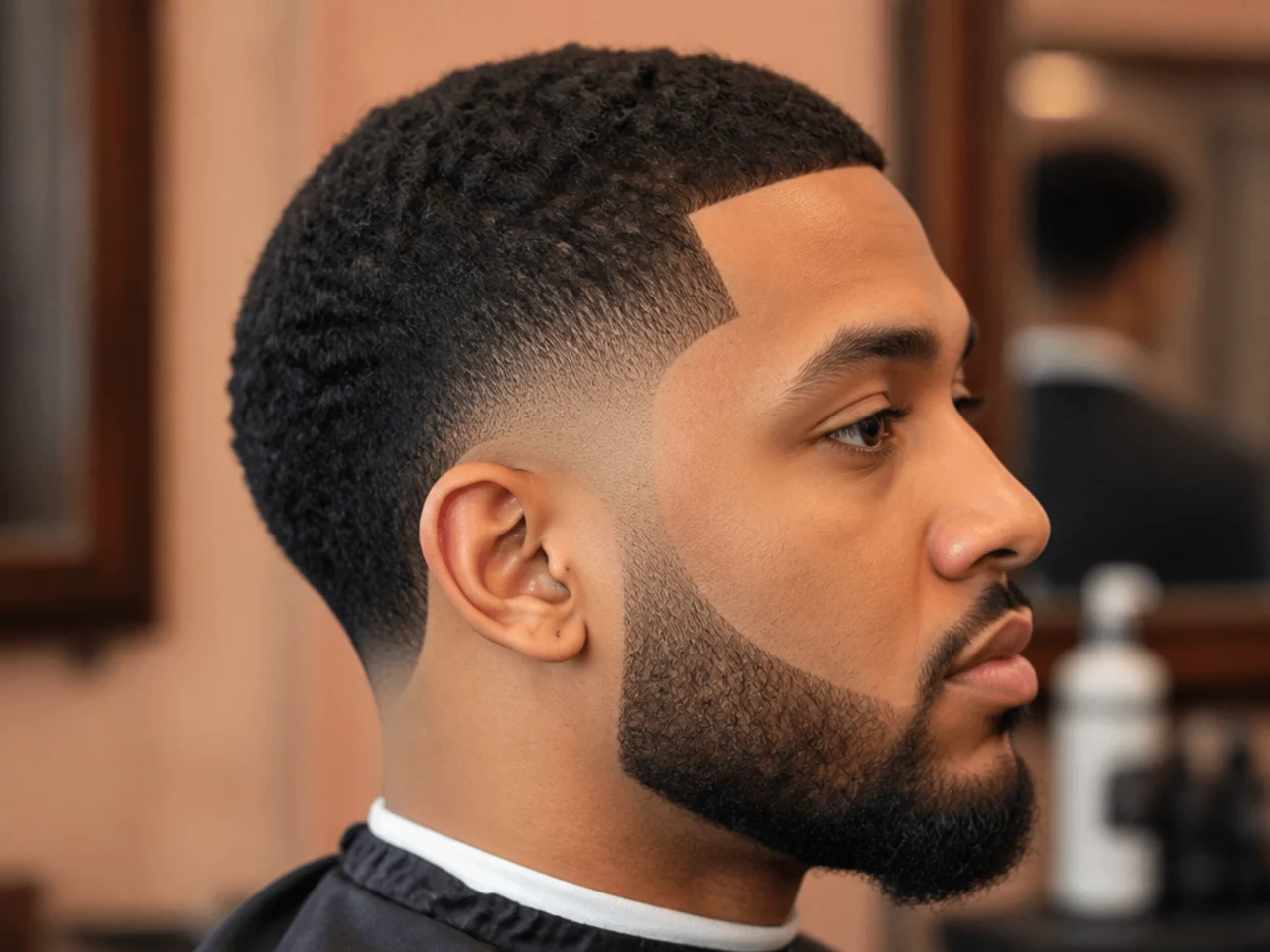
The drop shape curves the fade line behind the ear so the perimeter arcs around the skull rather than running straight. On a three-inch textured top, that curve reads sculpted rather than clipped. Best for oval, diamond, and heart faces, and for anyone who wants the fade shape itself to be the design detail. See the low drop fade for Black men breakdown for more on the drop-fade variant.
Ask for: "low drop fade to skin, blending up to guard 3, three inches of natural texture on top, curved drop line behind the ear following the skull shape."
Styling: leave-in and curl cream on the top, pick out and air-dry. The drop shape does the visual work — you don't need heavy finishing product to make the cut read.
24. Low Fade with Frosted Blonde Tips
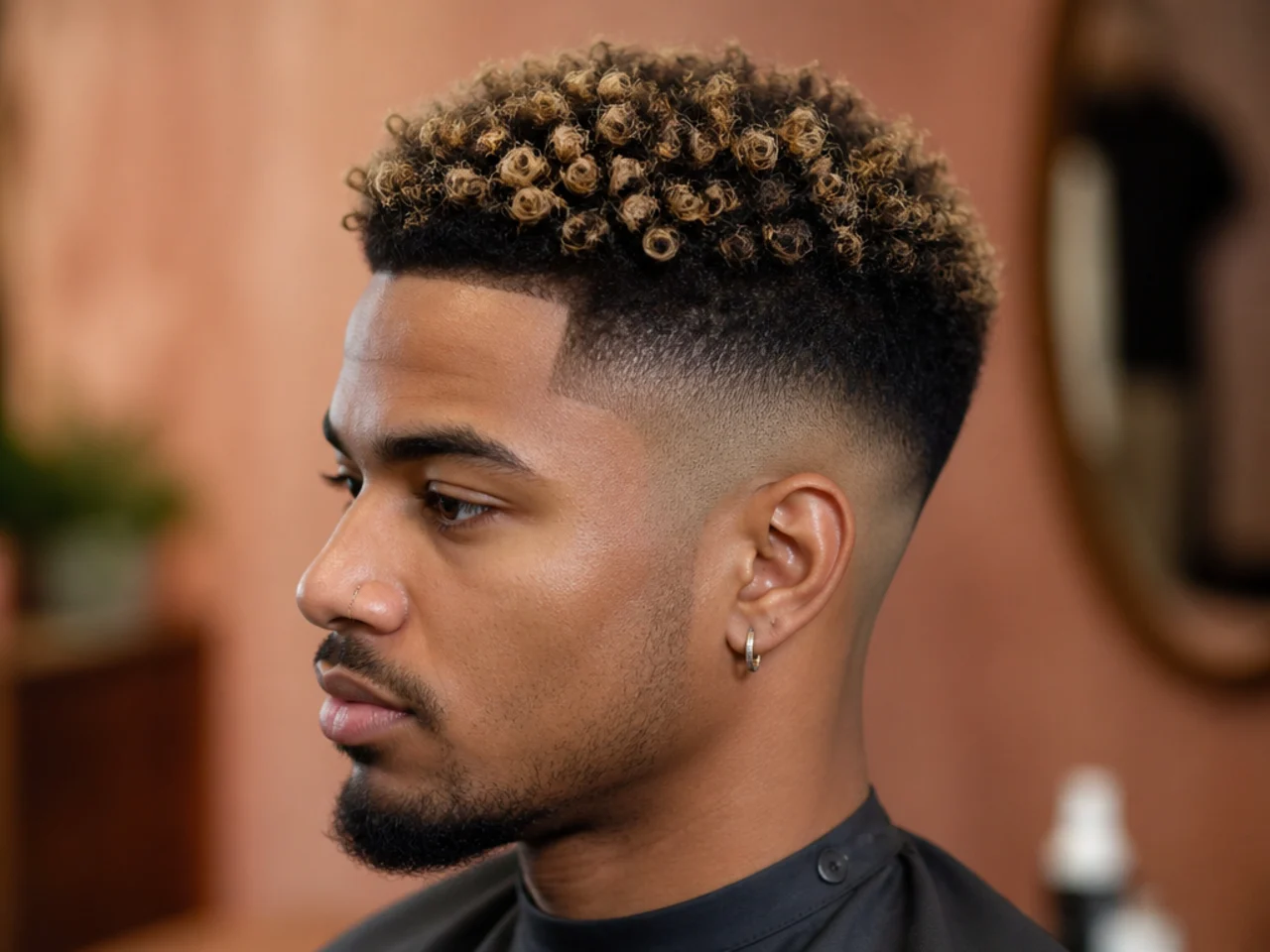
The color statement — three to four inches of natural afro on top with the tips lightened one to three shades or bleached full blonde, low fade on the sides. The clean low fade keeps the frame quiet so the color does the talking. Bold, not for every workplace, but photographs like a cover shot. Best on medium-density afros that can survive the bleach lift, and on oval, square, and diamond faces.
Ask for: haircut first — "low fade to skin, blending up to guard 3, three to four inches of afro on top." Book the bleach separately with a colorist who works on textured hair; the color service should not happen in the same chair as the fade.
Styling: deep condition every wash to counter bleach dryness, purple shampoo weekly if you went full blonde, leave-in daily to keep the tips soft. Skip heat styling for the first two weeks after the color service.
25. Low Fade with Etched Side Design
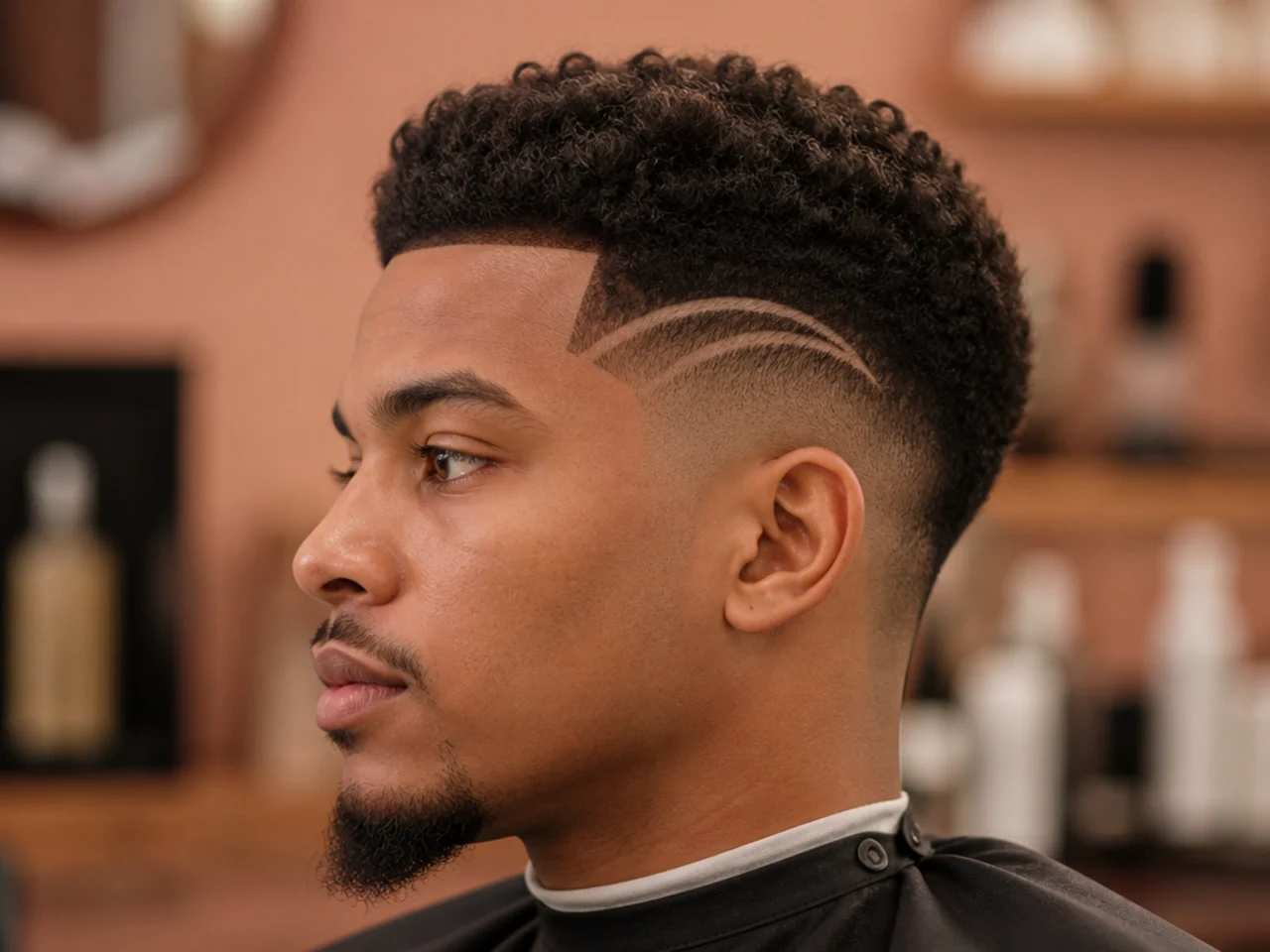
The barber-designed version — a razored star, lightning bolt, curved line, or geometric pattern etched into the side of the low fade above the ear, two-inch afro on top. Reads bold, personal, and unmistakably barbershop craft. Best on oval, square, and diamond faces, and on anyone with a barber who does design work — this isn't a first-visit ask.
Ask for: "low fade to skin, blending up to guard 3, two inches of natural texture on top, razor-etched design on the side above the temple (bring a reference photo)."
Styling: normal top routine. The etched design fades faster than the rest of the fade — book a shape-up every ten days if you want the etching to stay crisp between full cuts.
How to Ask Your Barber for a Low Fade
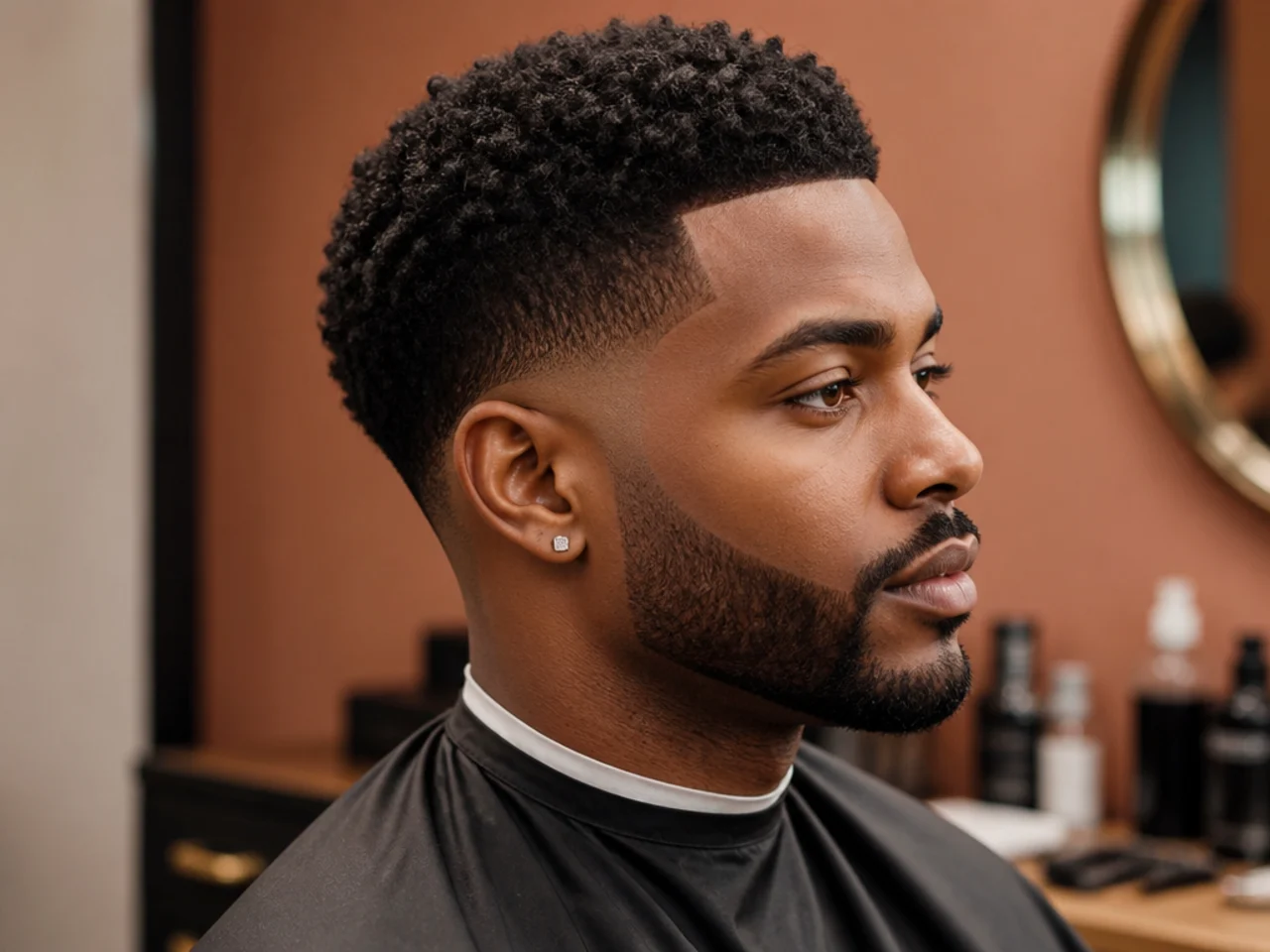
Seven lines cover the whole conversation. Nail these and you'll walk out with the version you had in mind.
- Show a photo — and pick one with hair like yours. A low fade on 4A loose coils reads completely different from the same shape on 4C. Screenshot a reference where the model's texture matches yours.
- Say the words "low fade to skin." Not just "low fade," not "skin fade." The full phrase tells your barber the fade starts low above the ear and blends all the way down to bare scalp at the shortest point.
- Point to where the fade should start. Just above the top of the ear, about a finger-width up. That's the "low" position — the transition sits below the parietal ridge and keeps most of your head hair intact.
- Confirm the shortest guard and the top guard. "Skin at the bottom, blending up to guard 3" is standard. Skin at the bottom means bald with a foil shaver; guard 3 blends into your natural top length.
- Name the top style clearly. Buzz, TWA, waves, sponge, twist-out, twists, blowout, high top, cornrows, box braids, locs, freeform — the ask changes based on what you're doing on top.
- Ask for the line-up separately. A straight razor line-up at the forehead, temples, and sideburns takes an extra five minutes and makes the whole cut read professional. Don't assume it's included — call it out.
- Book your next appointment before you leave. Every ten to fourteen days for the fade and line-up on a skin fade. Skip that cadence and the perimeter blurs fast.
Styling and Maintenance for Black Hair Over a Low Fade
Black hair needs moisture before it needs product. Water first, leave-in second, cream over that, hands off after. Below is the full rhythm for the top; the fade underneath needs its own cadence.
Wash rhythm. Once or twice a week with a sulfate-free shampoo. Rinse and condition between washes if you sweat heavy or use a lot of product. Daily shampoo strips the oils your coils depend on. On braids or locs, stretch that to every two to four weeks with a diluted rinse.
Product order. Water-based leave-in on soaking-wet hair, rich curl cream over it, light oil to seal. Apply in that order every time — leave-in is the carrier, cream is the definer, oil is the anchor. Reverse the order and the cream dries in patches.
Shaping the top. Pick out with a wide-tooth afro pick from the roots upward, never down through the length. Once picked, pat into shape with your palm or a boar-bristle brush — never comb through a picked-out afro.
Wave routine. Brush soft, medium, hard, twice a day. Wave grease or curl cream after a quick water spritz, then du-rag or wave cap for at least an hour between brush sessions. Wave caps overnight, every night. Wolf sessions of four to eight weeks between top cuts deepen the pattern.
Sponge and twist-out finishes. Rotate a curl sponge in tight circles on damp hair to form defined coils. Twist small sections at bedtime for a next-day twist-out. Both lock in when the hair air-dries undisturbed.
Braid and loc care. Oil the scalp along the parting lines twice a week with a light oil (jojoba, sweet almond, or a scalp-formulated blend). Satin durag or bonnet nightly. Mist braids and locs with a water-plus-leave-in spray in the morning to refresh moisture without weighing them down.
Overnight care. Satin bonnet, satin durag, or satin pillowcase, every single night. Cotton pulls moisture and flattens the pattern within hours. In the morning, spritz water and a pea of leave-in, then re-pick, re-brush, or re-sponge as needed.
Skin-fade maintenance. The bare-scalp strip at the perimeter shows every day of growth. Book the fade every ten to fourteen days for maximum crispness. Between visits, moisturize the exposed skin daily so the fresh-cut area doesn't flake, and use sunscreen through the summer — the exposed skin sunburns fast. Dark-collared shirts stain the neckline; pat dry after showering.
Top-cut cadence. The top reshape runs on a longer cycle — every four to eight weeks depending on how long you're keeping the top and whether you're wearing a protective style. Braids and locs stretch that longer. Waves, afros, and twists come in on the shorter end.
Between-visit cleanup. Keep the neckline sharp with a good edger. If you own decent clippers — see the best hair clippers for men guide — you can re-blend the fade yourself at day ten to twelve so the frame stays crisp until the next full cut.
For more options in the family, the low fade haircut men roundup covers all-texture low fades, the low skin fade for men breakdown zooms in on the skin-fade specifics, and the low taper fade Black men guide covers the taper alternative when you want a softer perimeter. The taper fade Black men roundup handles the wider taper family, and the afro taper fade Black men guide focuses on afro tops specifically. Cross-silo, the curly hair haircuts hub and the textured haircuts for men roundup both cover natural-texture care that transfers directly to Black hair maintenance.
FAQ
Is a low fade the same as a low skin fade? They're the same cut in modern barbershop language. A low fade blends to bare skin at the shortest point above the ear — that's the "skin" in low skin fade. If you want the fade to stop short of bare skin (still feel hair at the shortest), you're asking for a low taper fade, not a low fade. Point to your own ear and say "low fade to skin" and any Black barber knows exactly what you mean.
Which top style pairs best with a low fade on Black hair? All of them work — the low fade is the most texture-friendly fade in the family. Waves and short afros are the most common because the skin at the perimeter matches the compact top length. Twist-outs, sponge coils, cornrows, box braids, and locs all pair cleanly too. Big high-top afros over a low fade read especially strong because the size contrast between the crown and the skin transition amplifies the silhouette.
Can I get a low fade with a receding hairline? Yes, and the line-up carries the load here. A razored line-up at the forehead lets your barber draw the line where you want it — not necessarily where your natural hairline sits. Over a few visits, that drawn line stays fixed while your grow-out builds up behind it, so the perimeter reads full even as the natural hairline shifts. The skin at the sides of a low fade doesn't fight this because the transition is below the temple, not at it.
How does a low fade compare to a mid taper or high fade? The height changes the drama level. A low fade keeps most of your top intact and reads sharp without shouting. A mid fade lands the transition at the temple line for more visible contrast. A high fade throws the transition up near the crown, leaving most of the head showing skin — a bold statement cut. For most Black men, the low fade is the daily-wear pick because it looks polished in a boardroom and casual on a Saturday.
Do I need to shave the exposed skin at the neck? No — the fade blends the bottom edge to bare scalp with a foil shaver at the appointment, so you don't need to touch it between visits. If you own a foil shaver at home you can clean up the neckline at day seven to buy another few days of sharpness before your next barber visit. If not, leave it alone — DIY neckline work with regular clippers goes wrong fast.
Can I maintain a low fade if I travel a lot? The low fade is one of the more travel-friendly skin fades because the perimeter is compact. Book every ten to fourteen days in your home city, and use a trusted local barber for a shape-up on the road if you're gone longer. Between visits, keep a du-rag, a satin bonnet, a small pot of leave-in, and a bottle of curl cream in your travel bag. That's the full road kit for any top style short of full braids or locs.