20 Cute Curly Bun Ideas for Natural Hair
Twenty curly bun ideas, and the problem curly hair actually has — it is never holding. Curls grip themselves better than any other texture. The problem is compression, and the dent it leaves for days afterwards.
In this article · 27
- What Makes a Curly Bun Work
- How to Choose Yours
- The 20 Curly Bun Ideas
- 1. High Pineapple Bun
- 2. Low Puff Bun
- 3. Loose Curly Top Knot
- 4. Curly Bun with a Wide Scrunchie
- 5. Claw Clip Curly Bun
- 6. Half-Up Curly Bun
- 7. Two Curly Buns
- 8. Curly Bun with a Headband
- 9. Curly Bun with a Silk Scarf
- 10. Curly Bun with Front Curls Left Out
- 11. Curly Bun on Damp Hair
- 12. Curly Bun on Refreshed Second-Day Curls
- 13. Twisted Curly Bun
- 14. Braided Curly Bun
- 15. Curly Bun on Coily Hair
- 16. Curly Bun on Loose Waves
- 17. Curly Bun for Sleeping
- 18. Curly Bun for the Gym
- 19. Curls Released After a Loose Bun
- 20. The Dent from a Tight Elastic
- Styling and Upkeep
- Mistakes to Avoid
- FAQ
- Final Thoughts
Almost every curly bun tutorial is written to solve a problem curly hair does not have.
Curly hair grips itself better than any other texture. More friction between strands, more natural hold, fewer pins required. It is not going to slip out.
The problem is compression. An elastic crushes the curl pattern at the root and holds it flat for hours, and curls hold whatever shape they are left in — so the dent stays long after the bun comes out.
What Makes a Curly Bun Work
Gather loosely, because you can. The friction is already there. Tension only buys you a dent.
Wide fabric over thin elastic. A wide scrunchie spreads the pressure; a thin band concentrates it into a crease.
Never comb first. Combing separates the clumps that provide both the grip and the definition.
Let the bun keep its volume. A curly bun is meant to be a puff, not a compressed coil. Forcing it small is what causes damage.
How to Choose Yours
Use the widest tie you own. It is the single most protective change available.
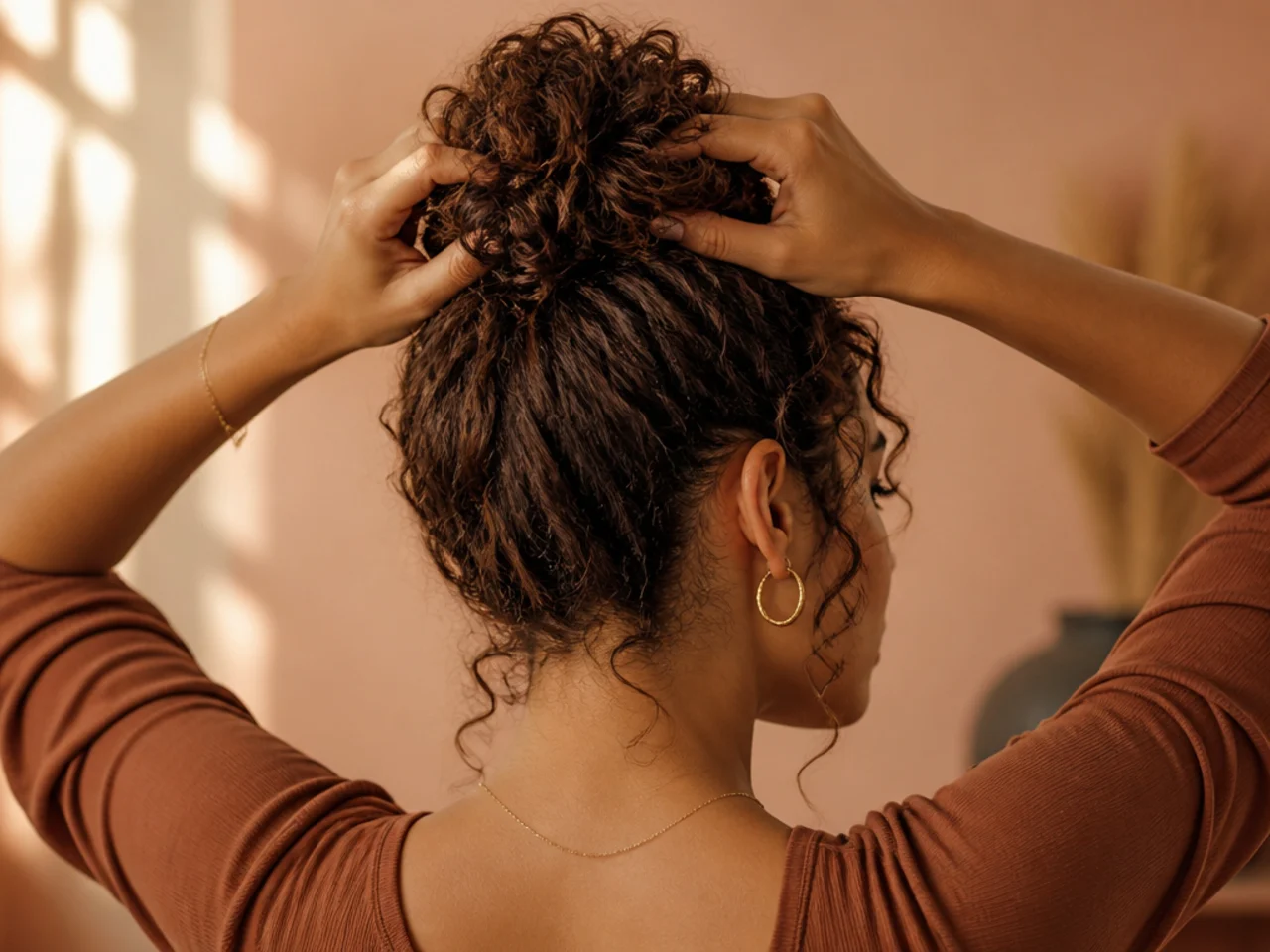
Gather with your hands, not a brush. Fingers keep the clumps together.
Vary the position day to day. The same gathering point every day creates a permanent weak spot.
Do it on damp or refreshed hair. Dry curls compress harder and hold the dent longer.
The 20 Curly Bun Ideas
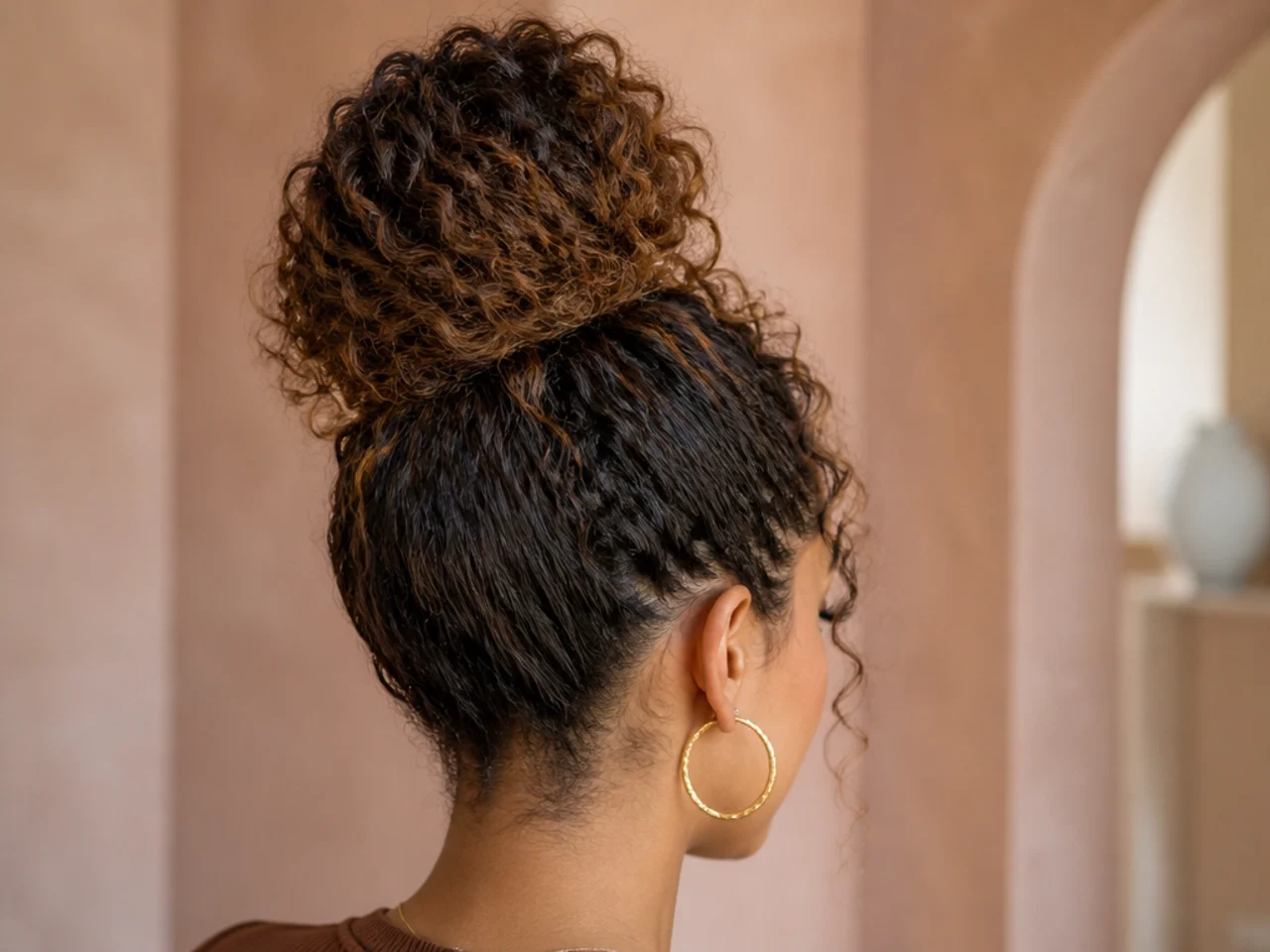
1. High Pineapple Bun
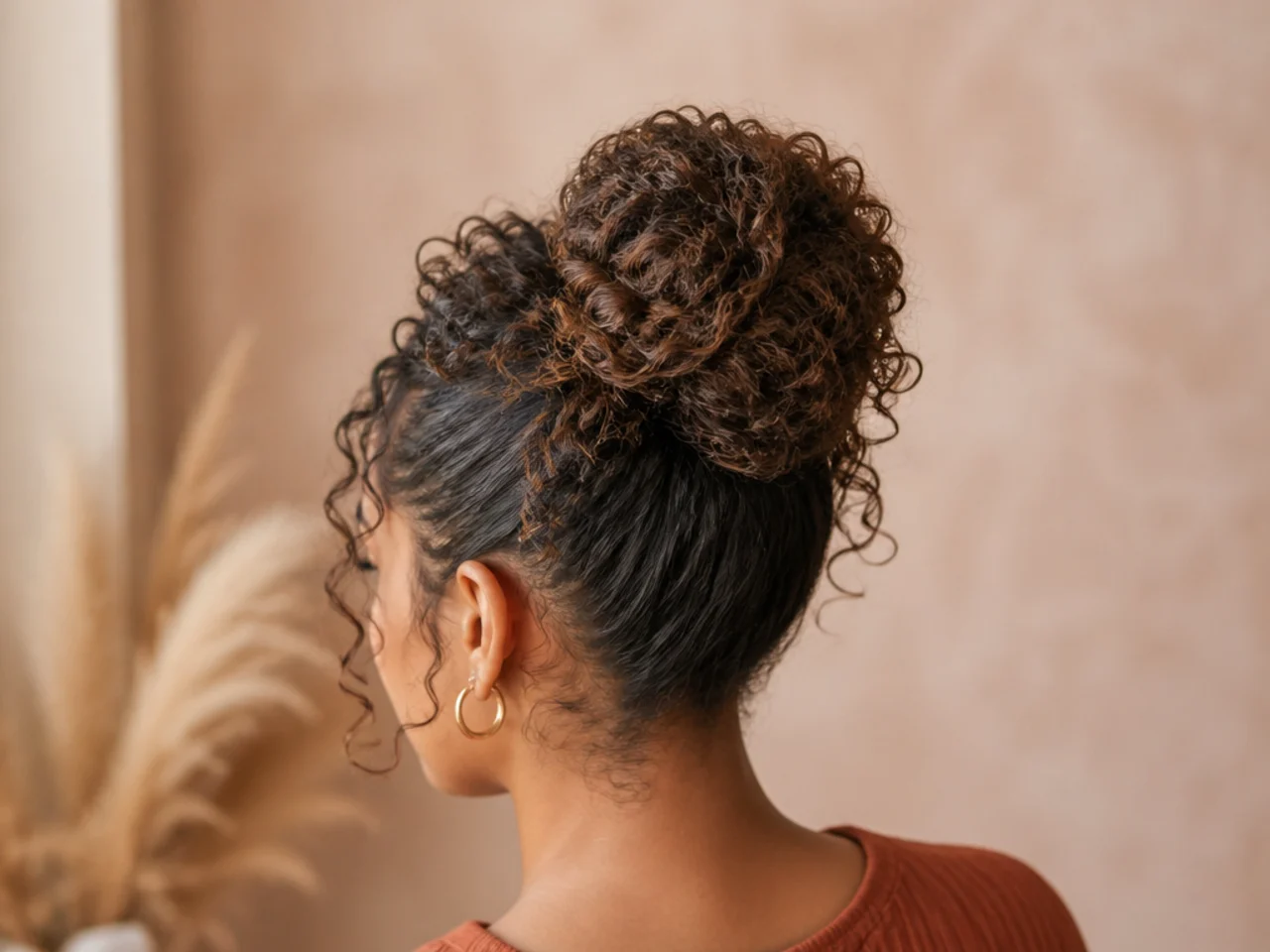
Gathered loosely at the very top so the curl sits rather than compresses. The very top is also the position that keeps the pattern off pillows and collars, which is why it doubles as the sleeping version.
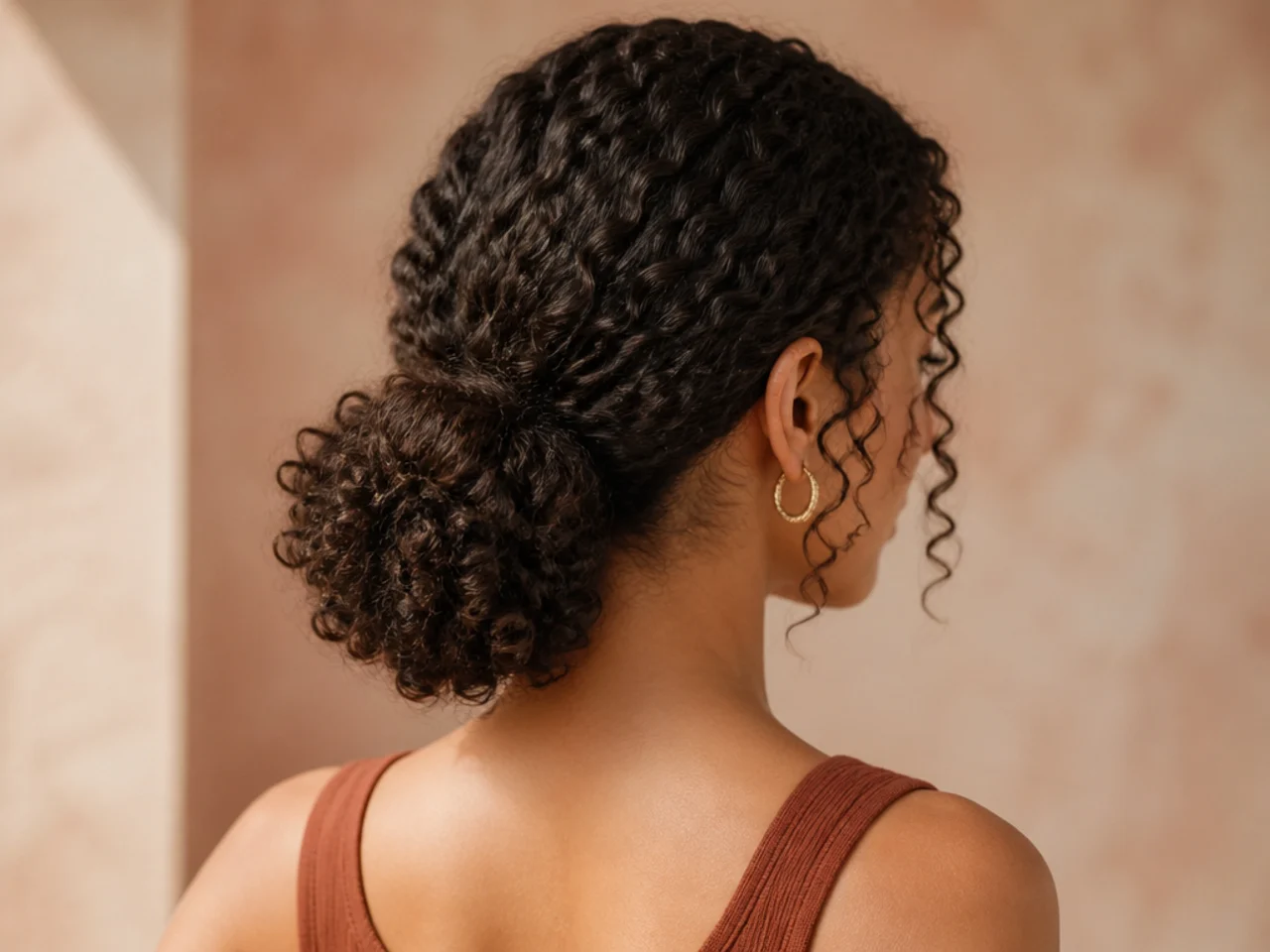
2. Low Puff Bun
Low and full, with the volume kept rather than smoothed away. Low placement lets the puff rest against the head, which is more comfortable across a full day.
3. Loose Curly Top Knot
Gathered high with almost no tension at all. Curl supplies enough friction that a loose gather holds perfectly well, so tension buys nothing here except a dent.
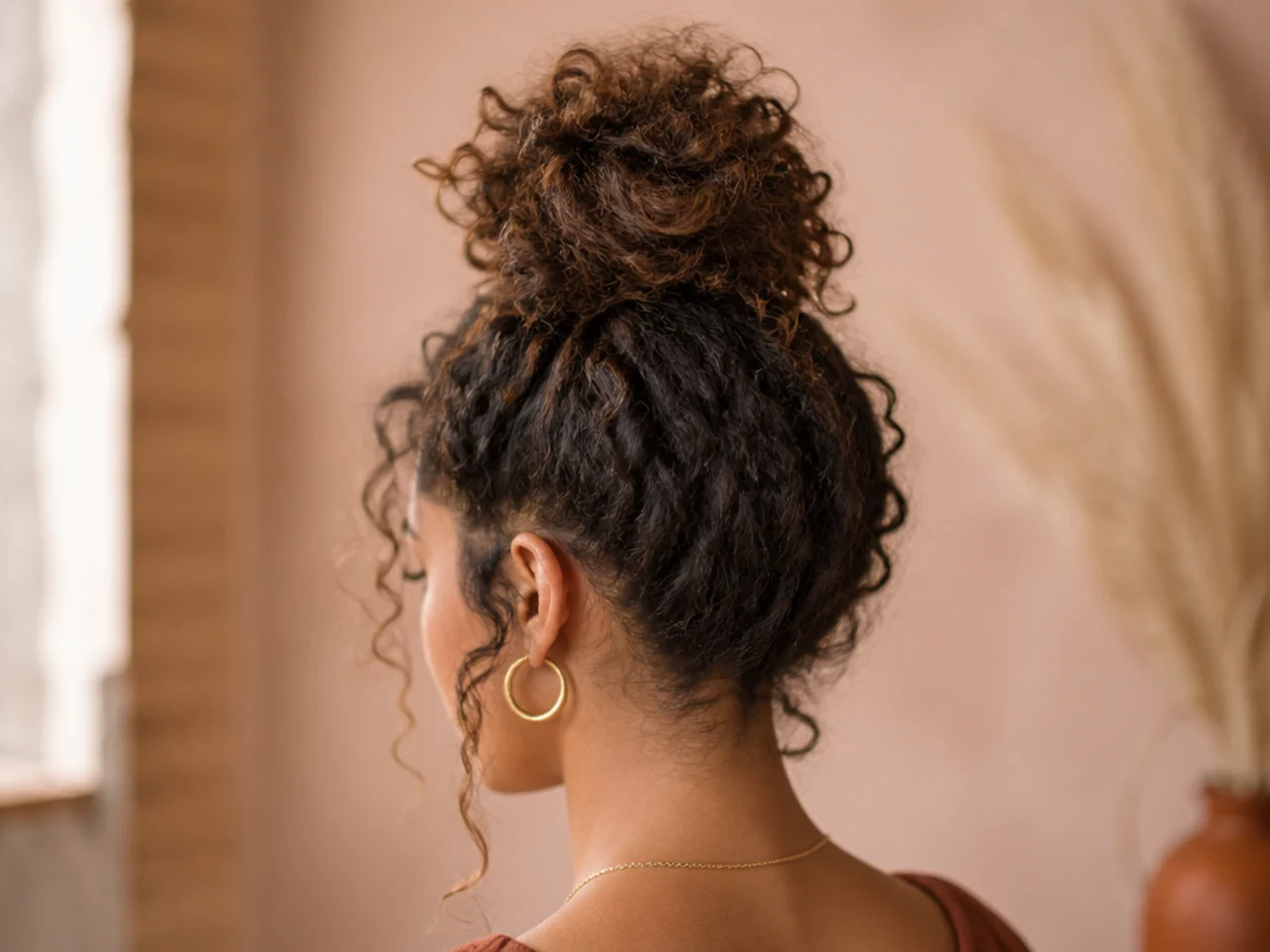
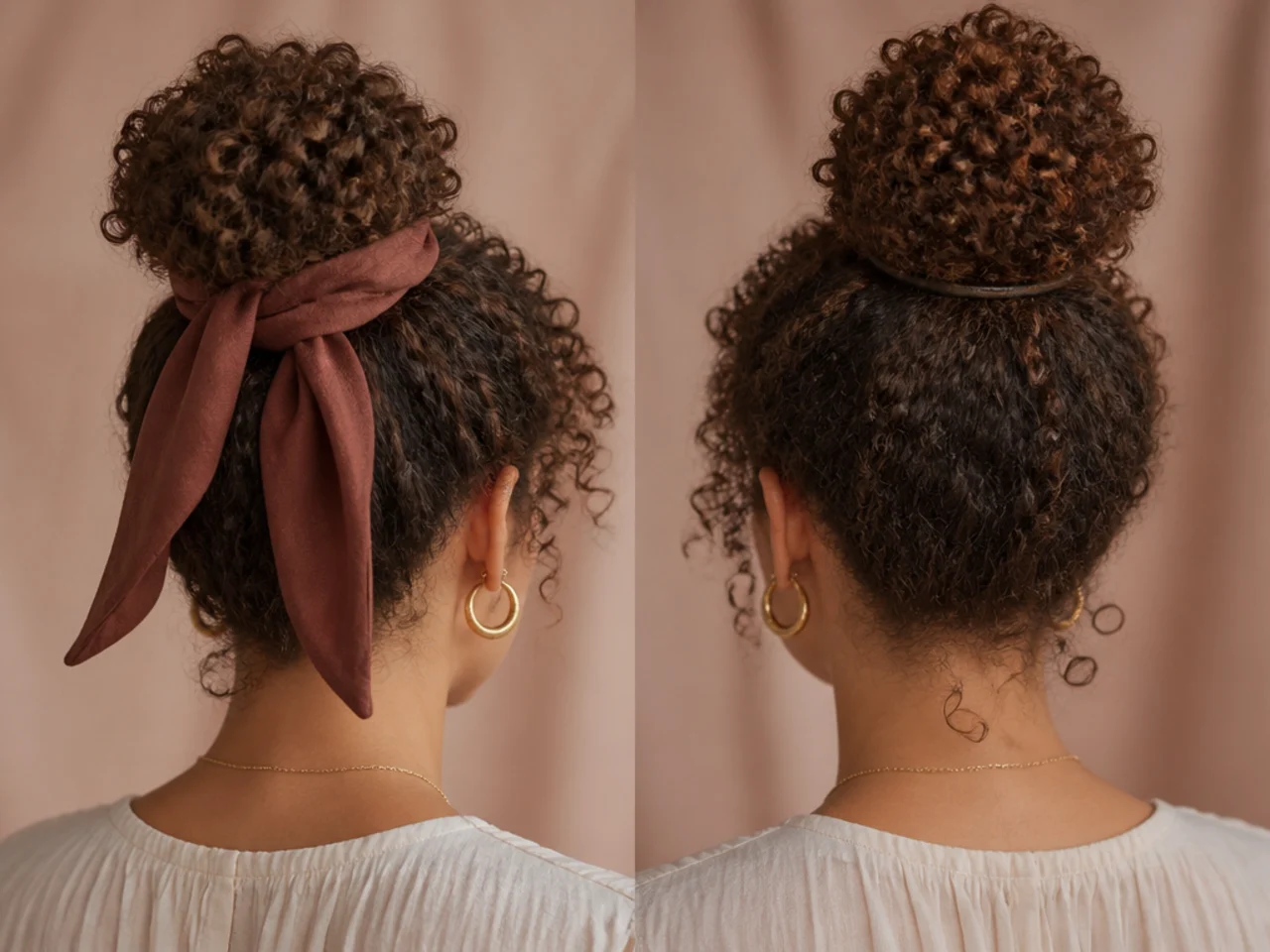
4. Curly Bun with a Wide Scrunchie
The widest fabric you have, spreading the pressure. Pressure spread over a centimetre of hair does not crease; the same force over two millimetres does.
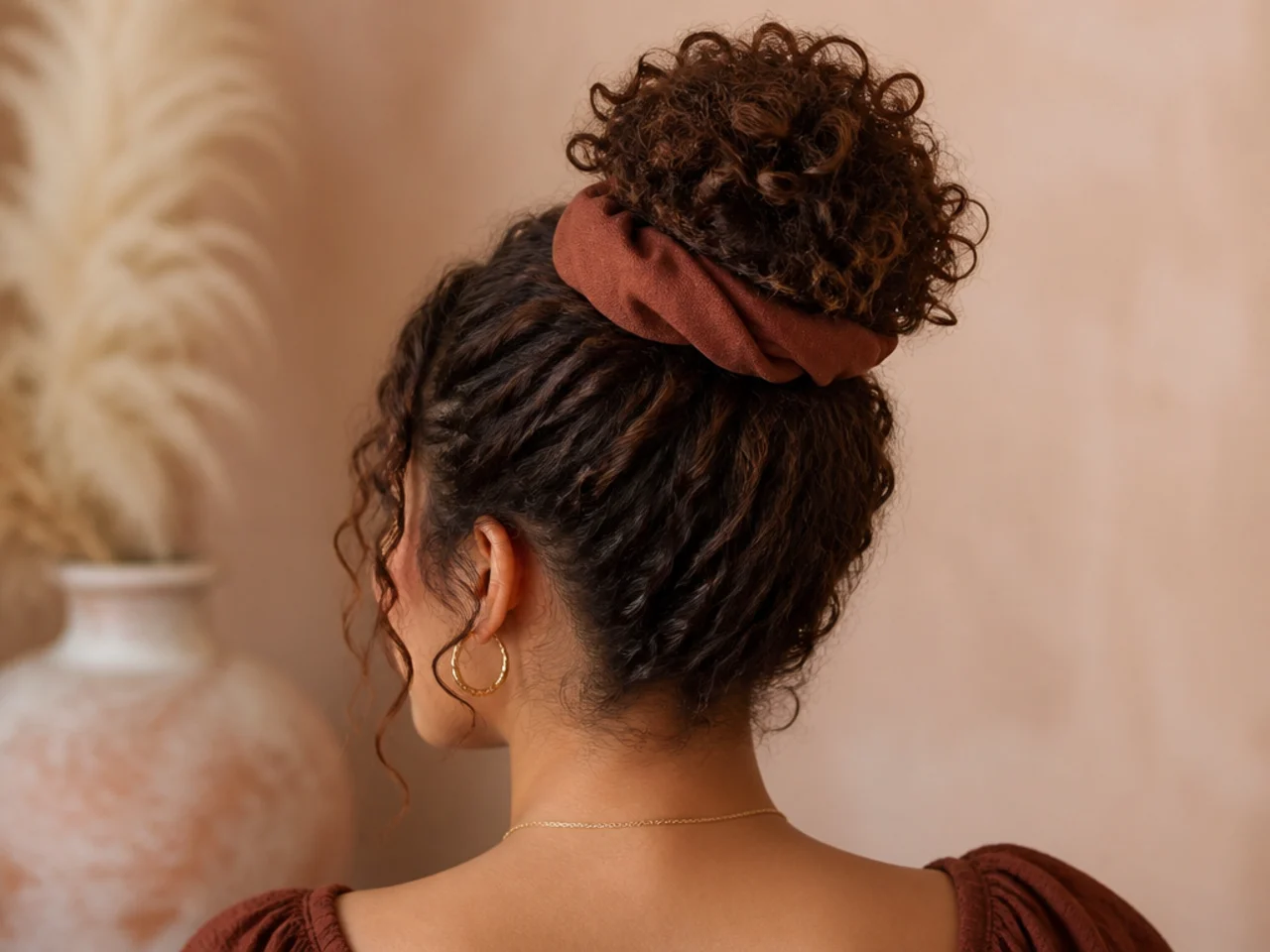
5. Claw Clip Curly Bun
No elastic at all, so no compression ring. A clip holds by clamping at the edges rather than squeezing all the way round, which is why it leaves no line.
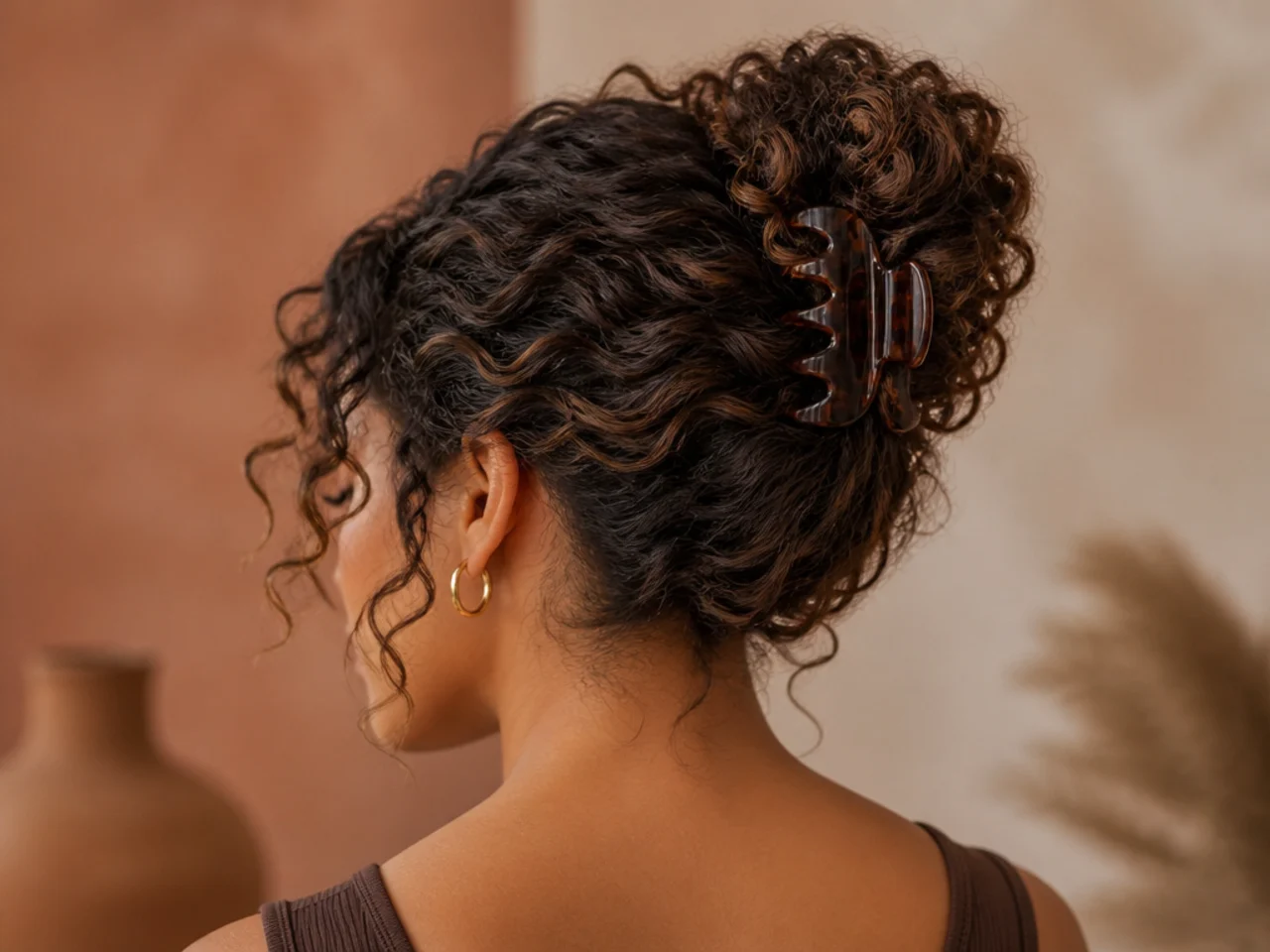
6. Half-Up Curly Bun
Only the top gathered, the rest left completely free. A third of the hair gathered means a third of the potential dent, and none of it where it shows.
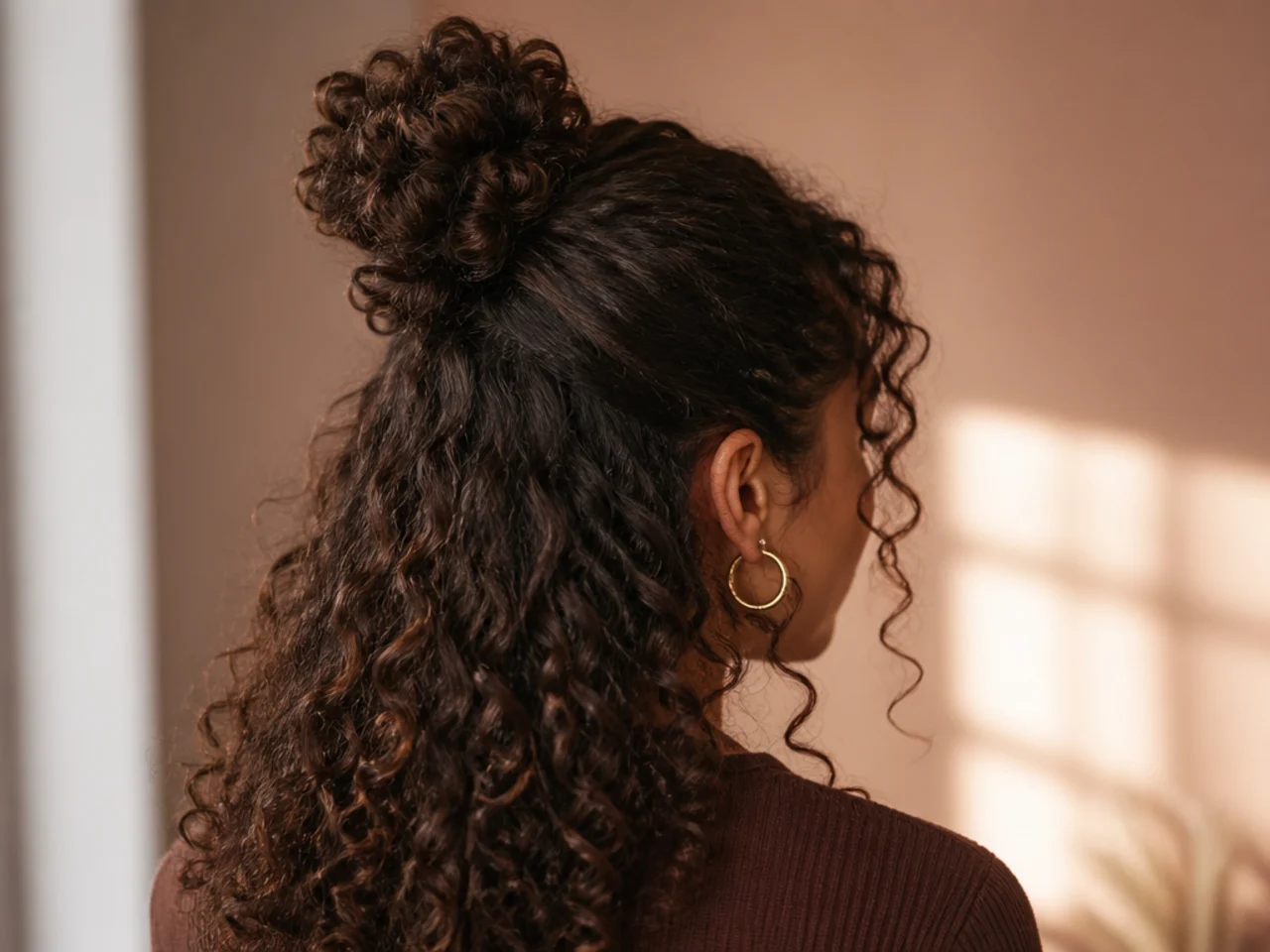
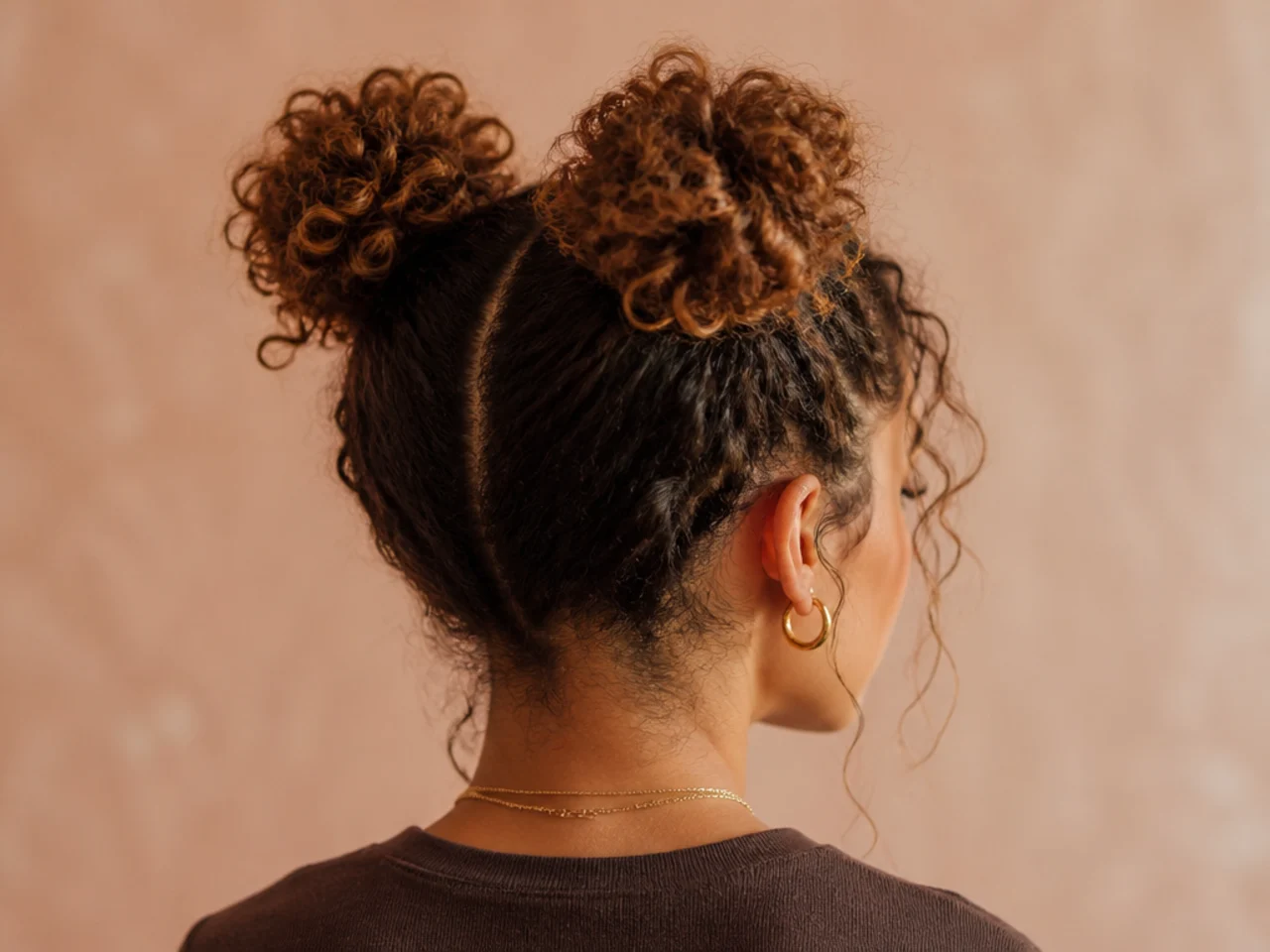
7. Two Curly Buns
The load split, so neither section is pulled tight. Two smaller gathers each need less tension to stay put than one large one would.
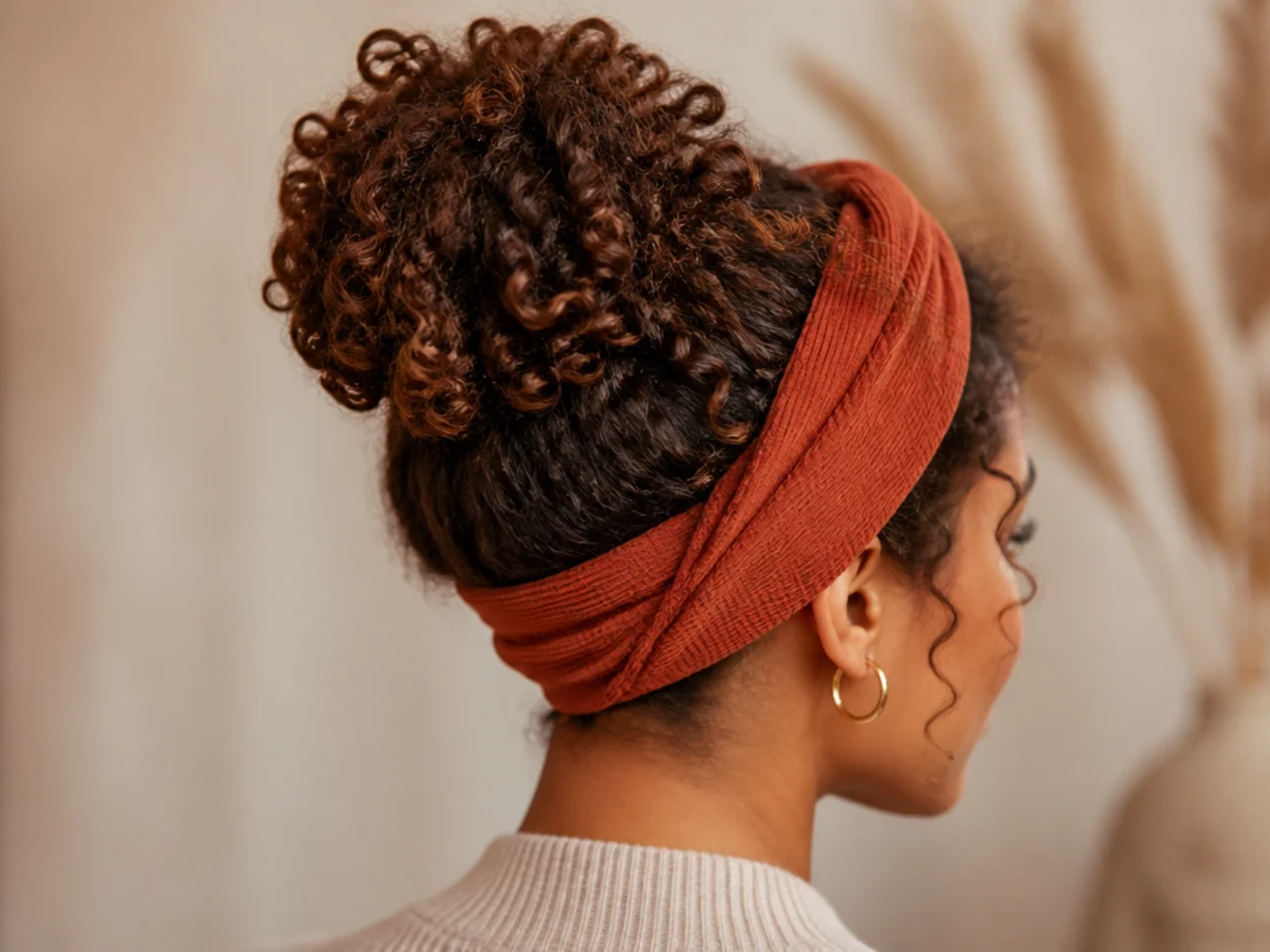
8. Curly Bun with a Headband
The band holding the front so the gathering can stay loose. The front curls are the ones you would otherwise pull tight to control, so a band removes the reason to.
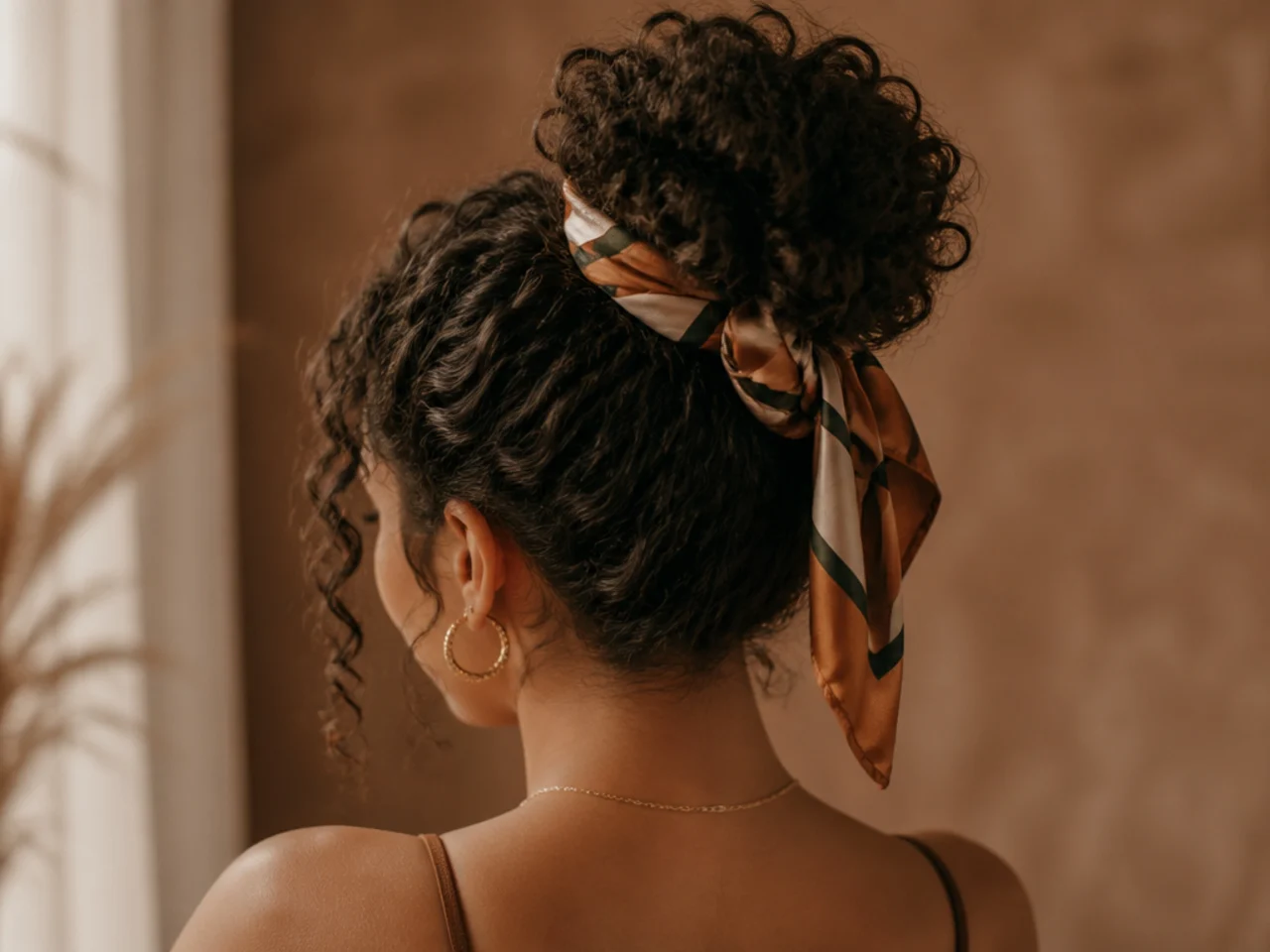
9. Curly Bun with a Silk Scarf
Fabric at the base, and gentler than anything elasticated. Silk also glides against the cuticle rather than dragging on it, which matters at the one point everything is held.
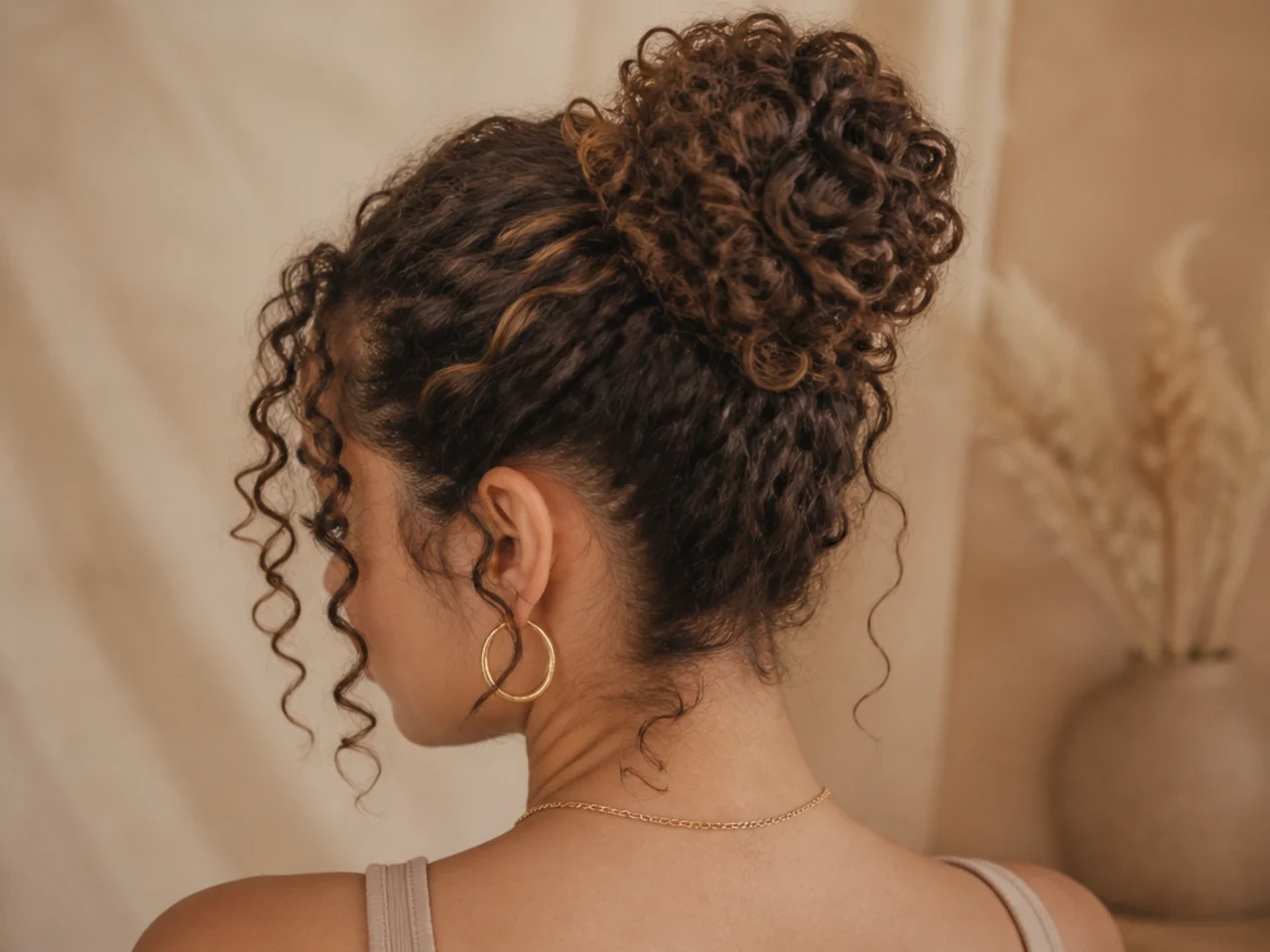
10. Curly Bun with Front Curls Left Out
Two clumps at the face, chosen rather than pulled. Choosing them before you gather means you keep the clumps intact instead of tearing two out of a finished bun.
11. Curly Bun on Damp Hair
Less compression, and it sets into shape as it dries. Damp curls compress less because the water keeps them pliable, and they recover their pattern faster afterwards.
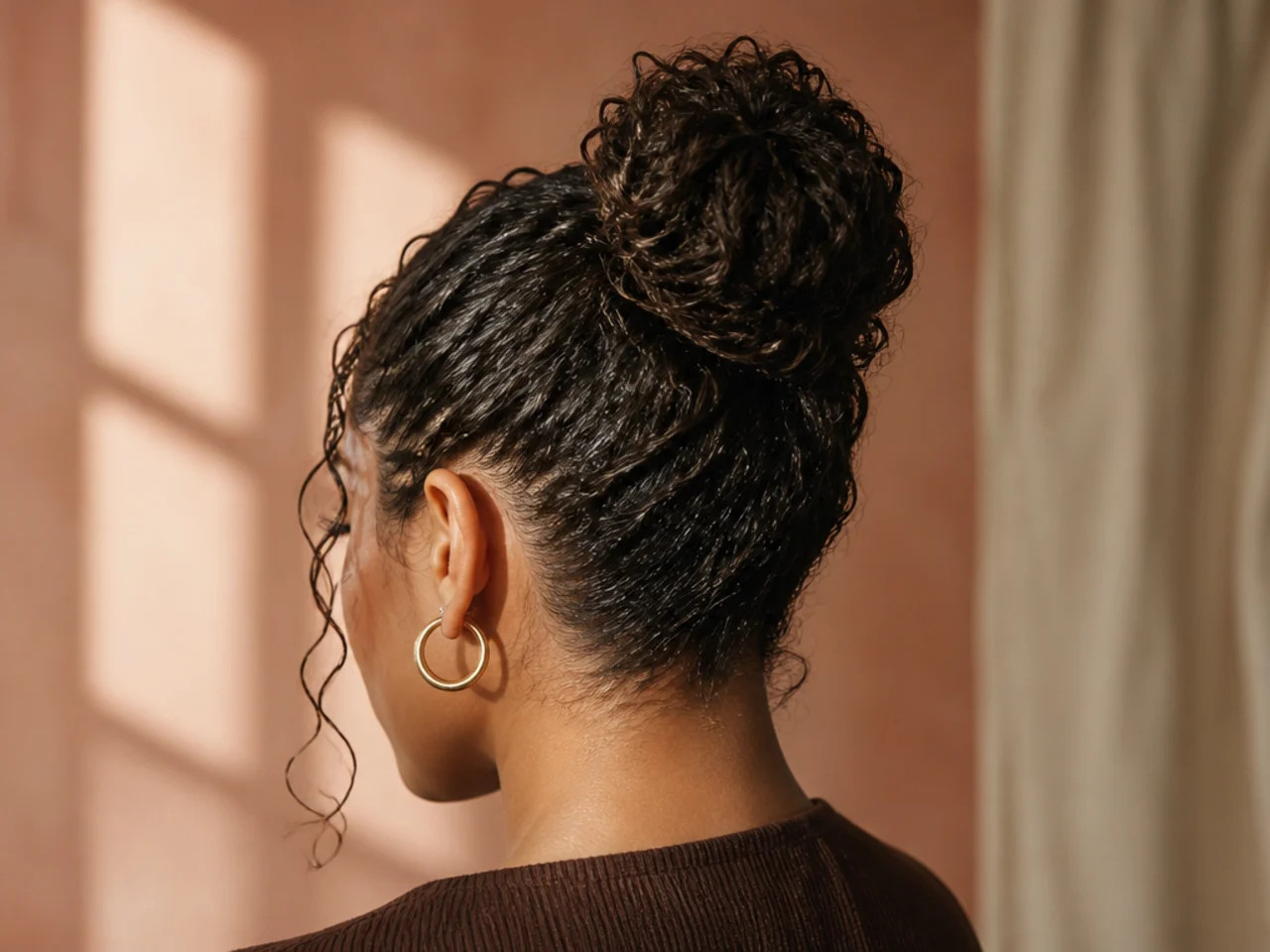
12. Curly Bun on Refreshed Second-Day Curls
Misted, reshaped and gathered. The everyday version. Water is the only thing that genuinely resets a curl, which is why a mist does more than any refresher product.
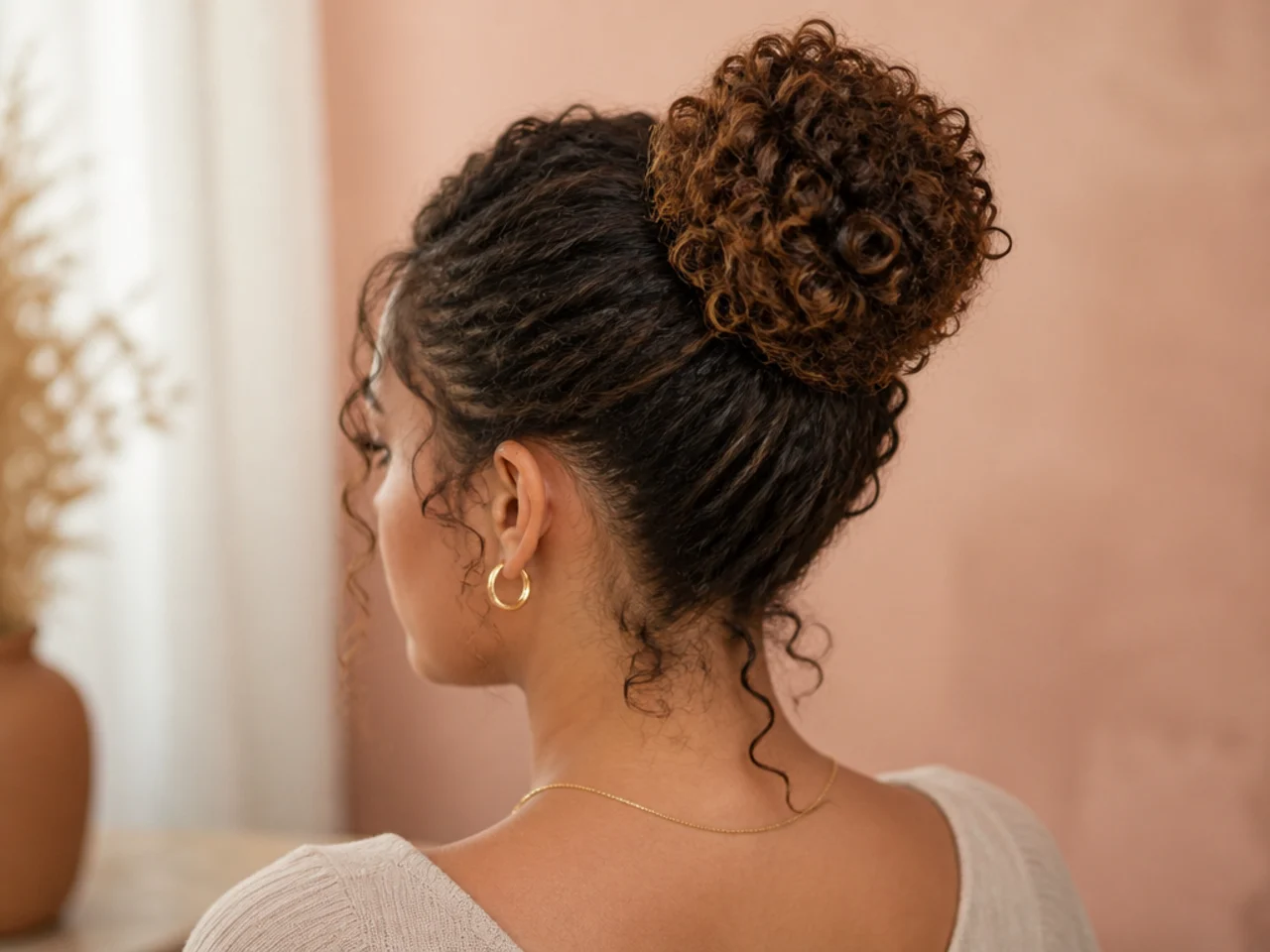
13. Twisted Curly Bun
Twisted gently before coiling, without pulling it straight. Twist with the pattern rather than against it, or you undo the clumps you are relying on for grip.
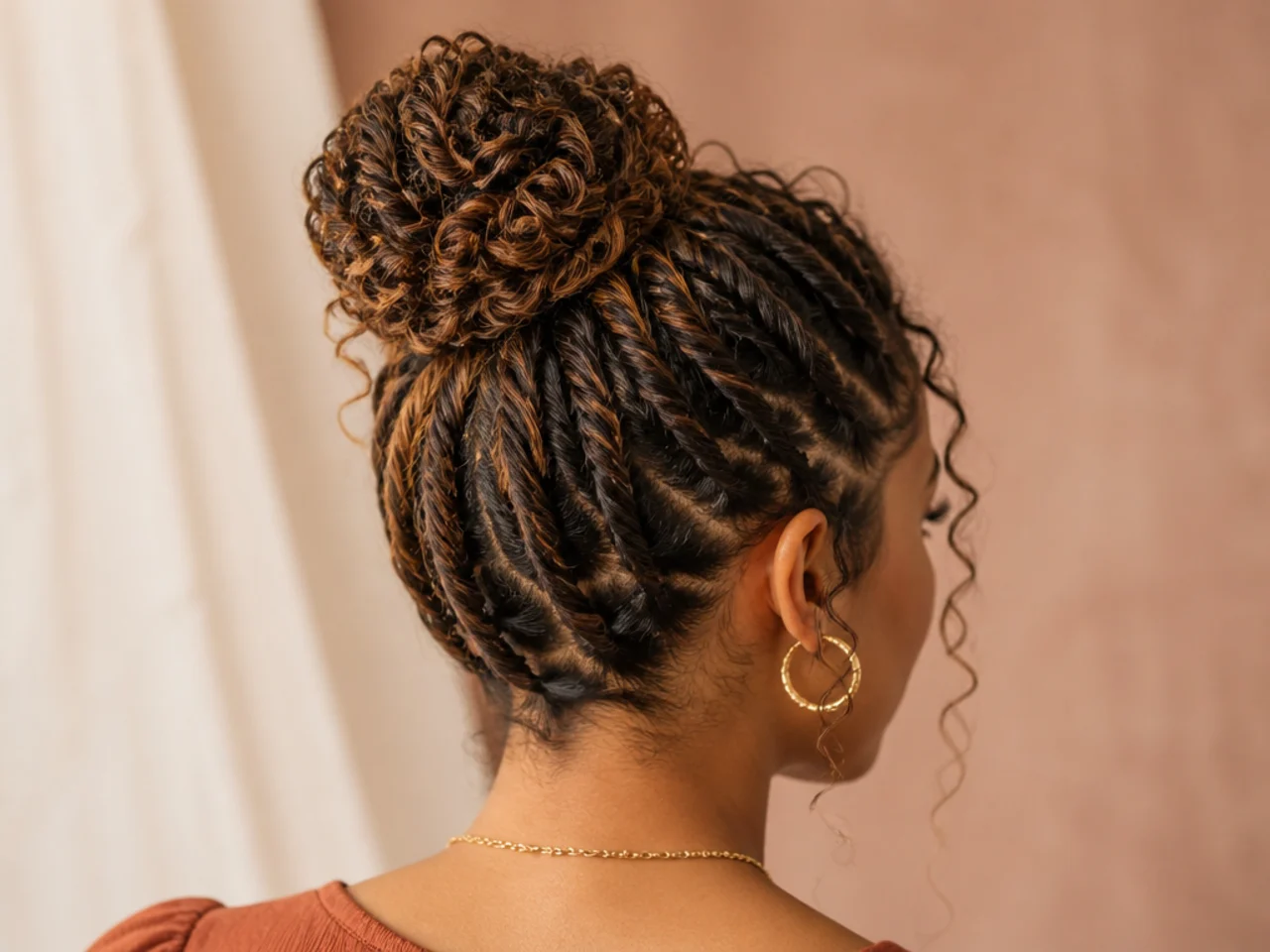
14. Braided Curly Bun
Plaited first, which reduces bulk without compressing the roots. Braiding takes up length in the weave, so the coil is smaller without anything being pulled tighter.
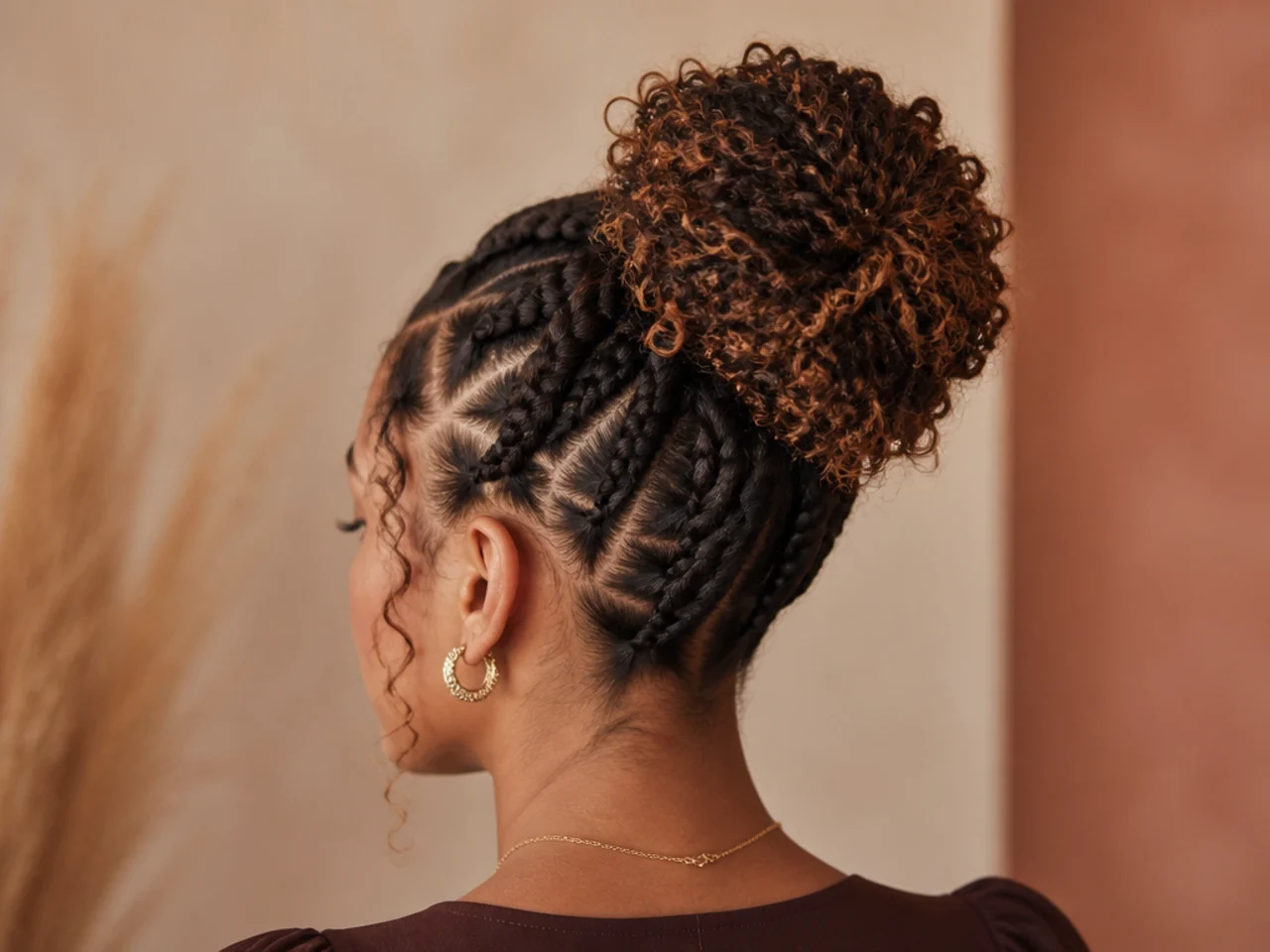
15. Curly Bun on Coily Hair
The tightest pattern, and the one most protected by a loose gather. Coils have the most friction of any texture, so they need the least tension and suffer most from getting it.
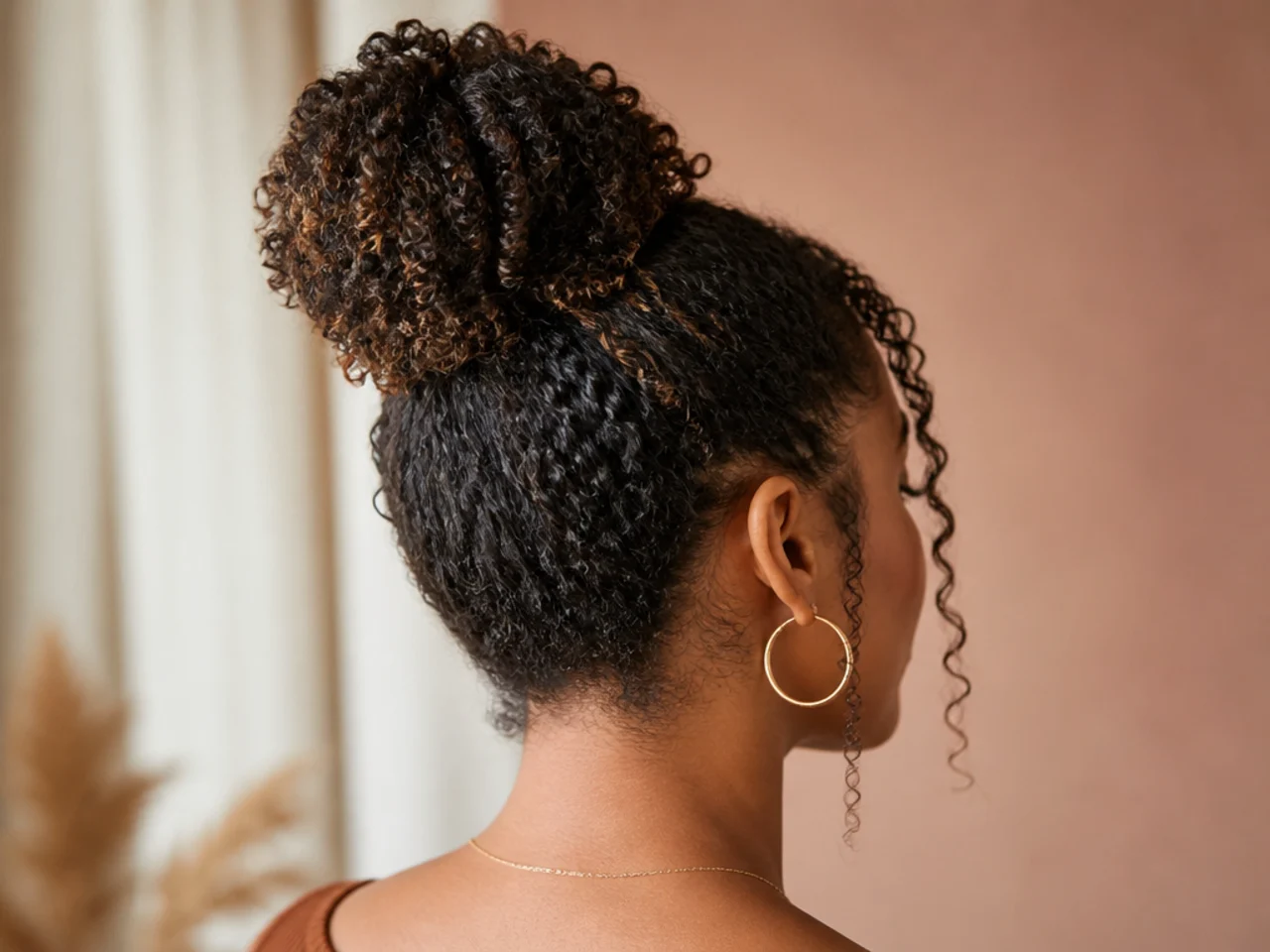
16. Curly Bun on Loose Waves
Less natural grip, so this is the one curl type that may need a pin. A wave has fewer strands locked together per clump, which is why it is the one pattern that can actually slip.
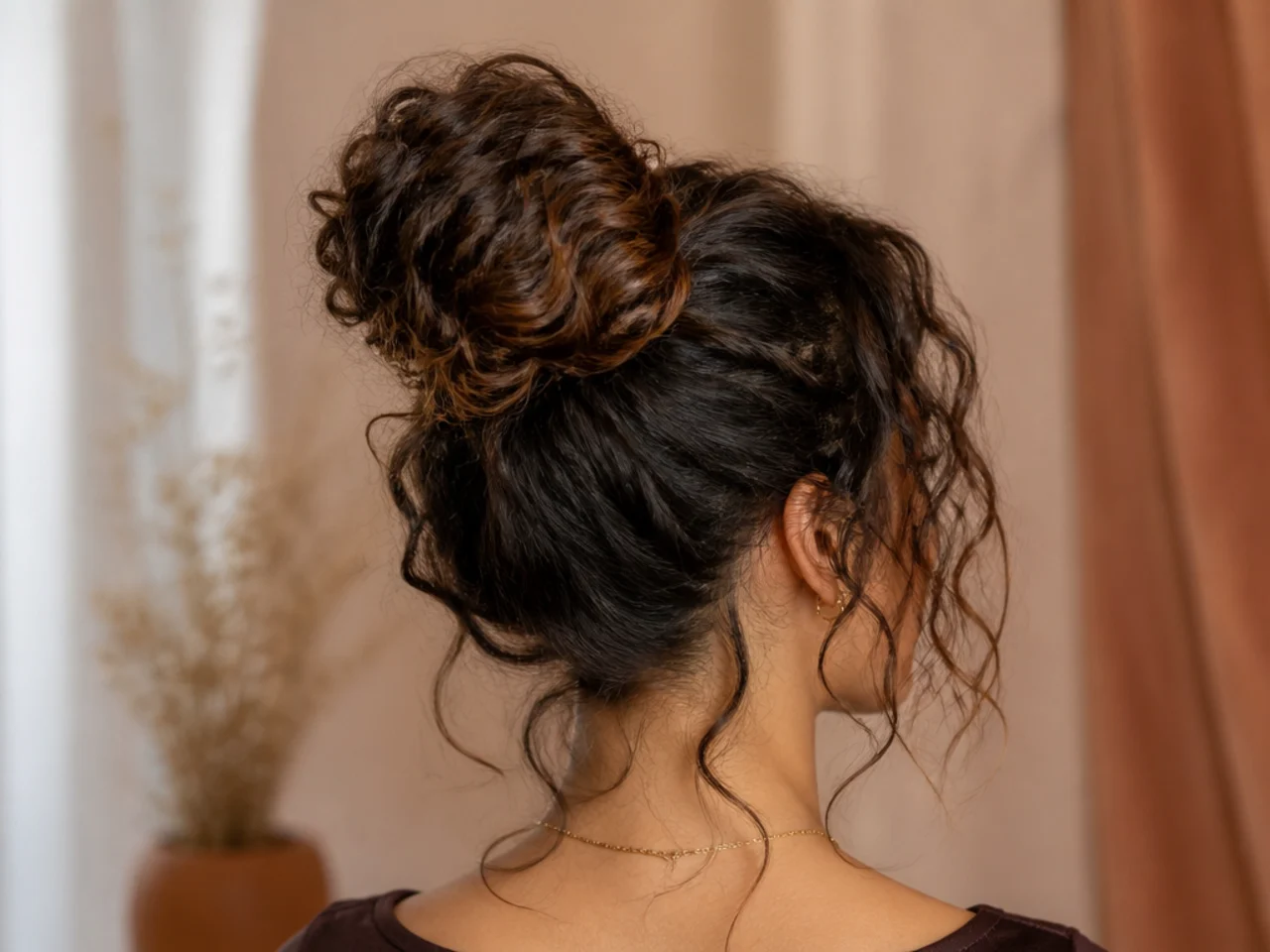
17. Curly Bun for Sleeping
High and very loose, on satin, so nothing is pressed flat. Satin creates far less friction than cotton, so the curls that do touch the pillow are not roughened overnight.
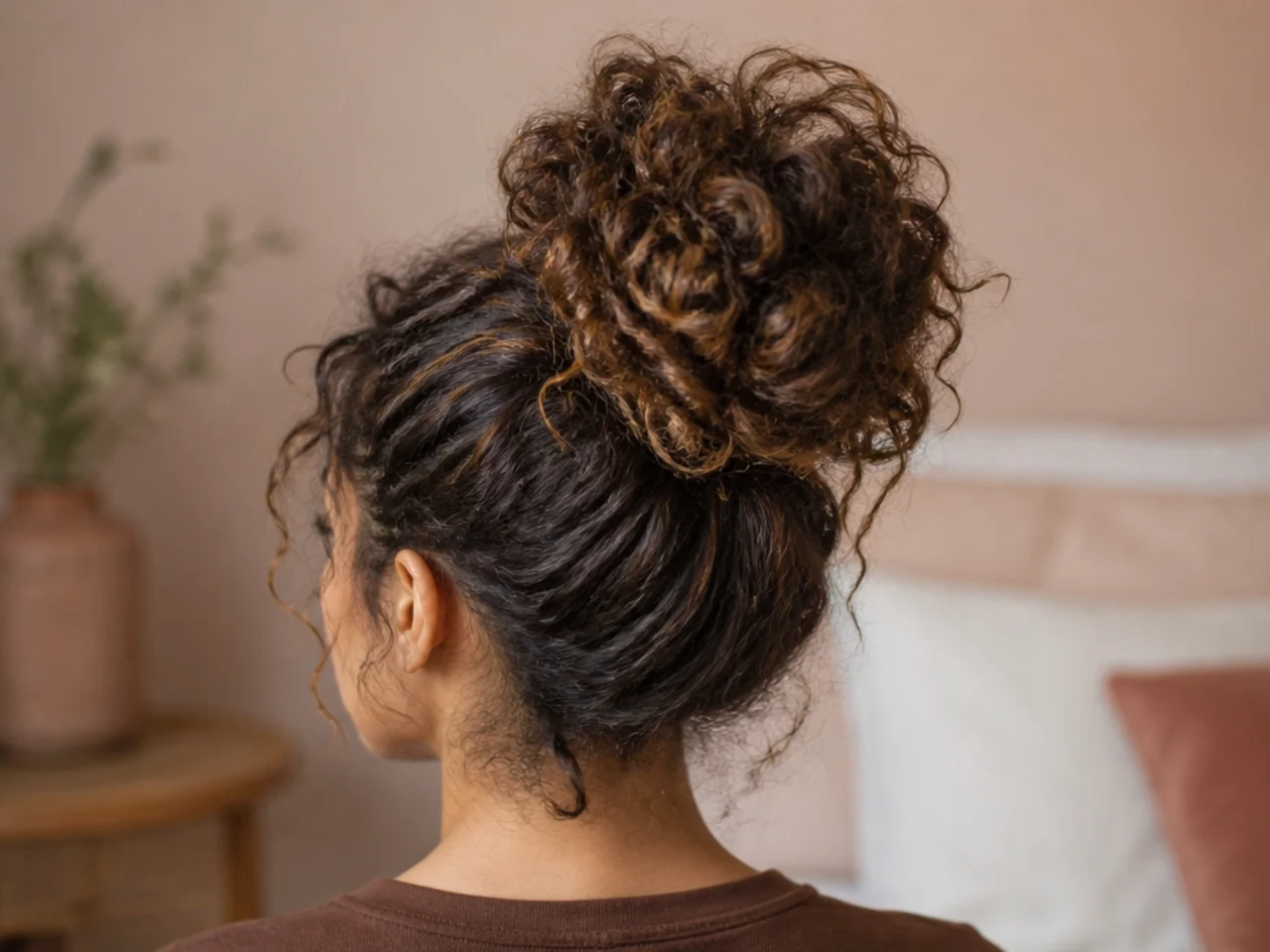
18. Curly Bun for the Gym
Secure without being tight — the one case for slightly more tension. Even here, a wide fabric tie gets you the security without the crease that a thin elastic would leave.
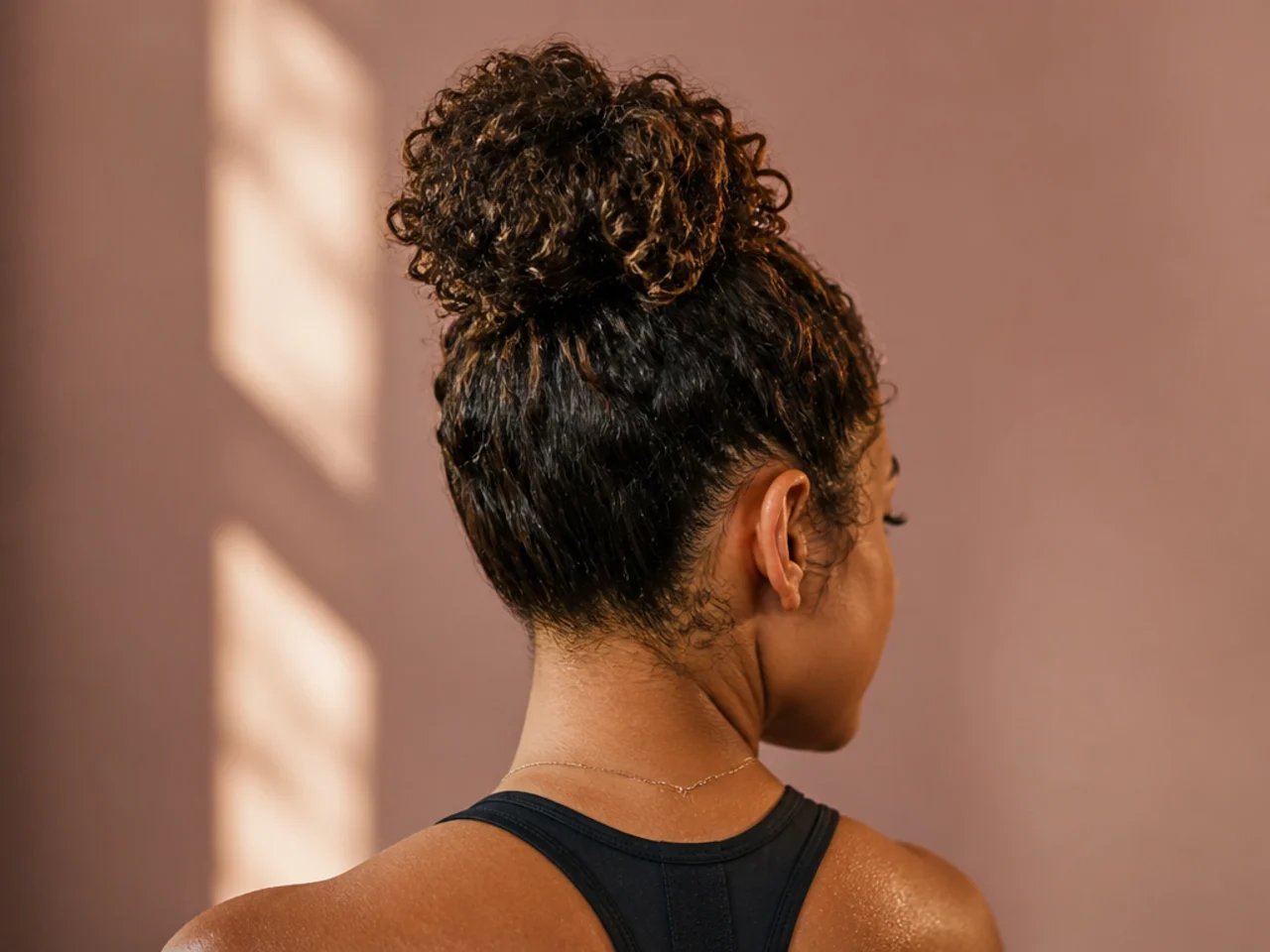
19. Curls Released After a Loose Bun
Pattern intact, no crease. What the loose gather buys you. Release it from the base upward rather than pulling it downward, or you drag straight through the clumps.
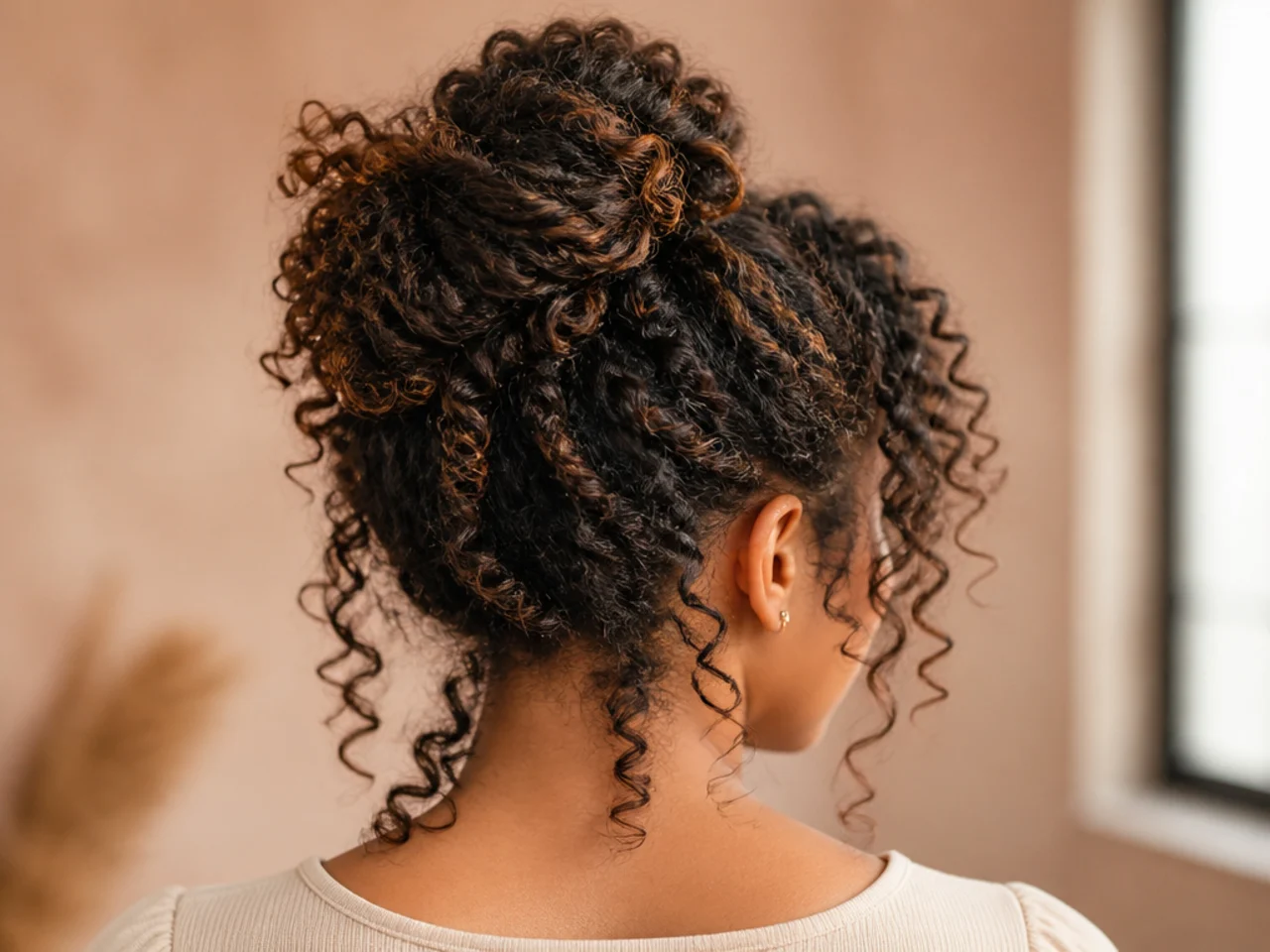
20. The Dent from a Tight Elastic
A flat compressed ring at the root. The thing to avoid. Curls hold whatever shape they were left in, so the dent outlasts the bun by days unless you wet it.
Styling and Upkeep
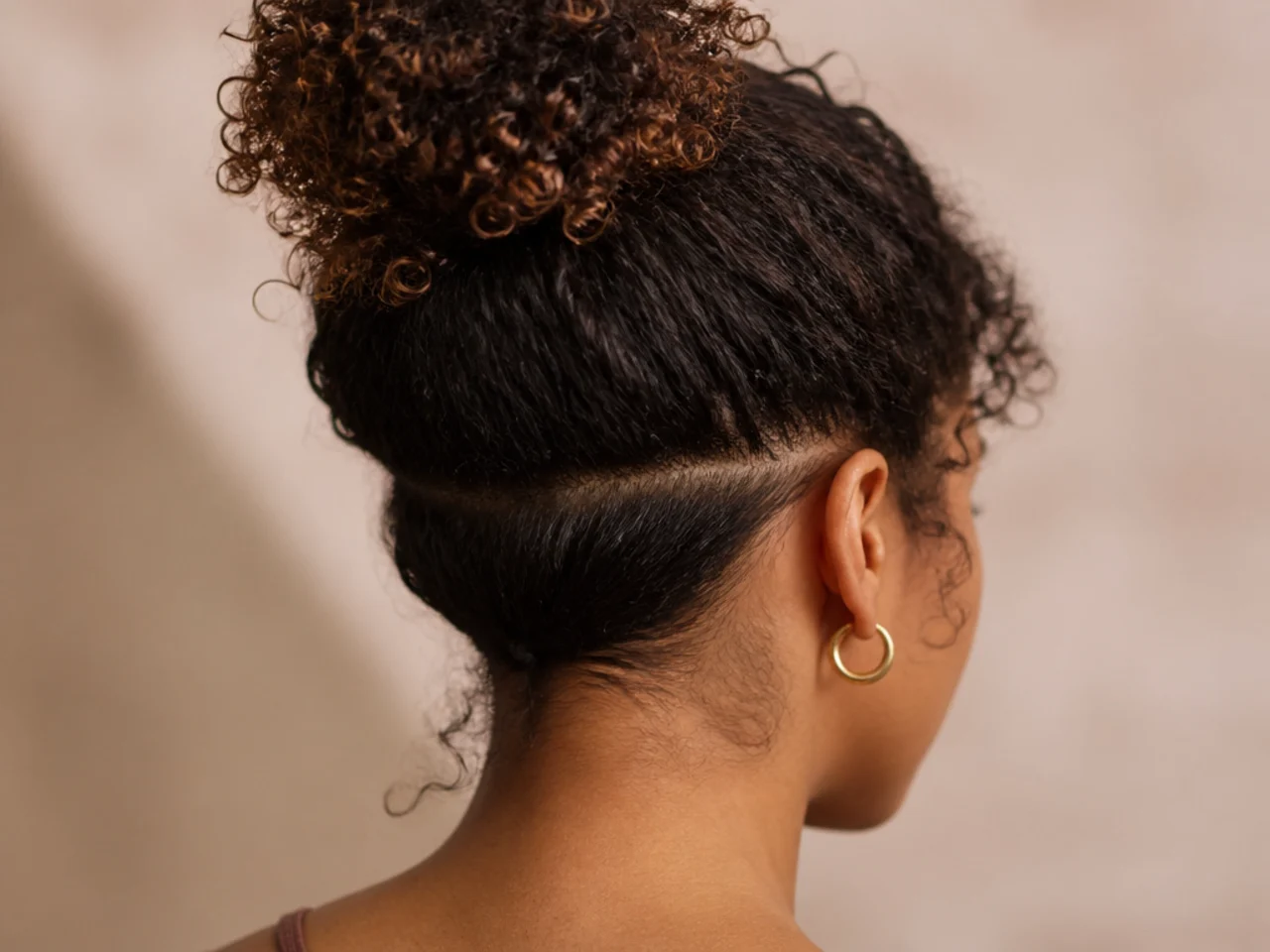
Use the widest fabric tie available. Pressure spread over a centimetre does not crease; pressure over two millimetres does.
Gather at a slightly different point each day. It prevents a permanent weak spot at one place on the scalp.
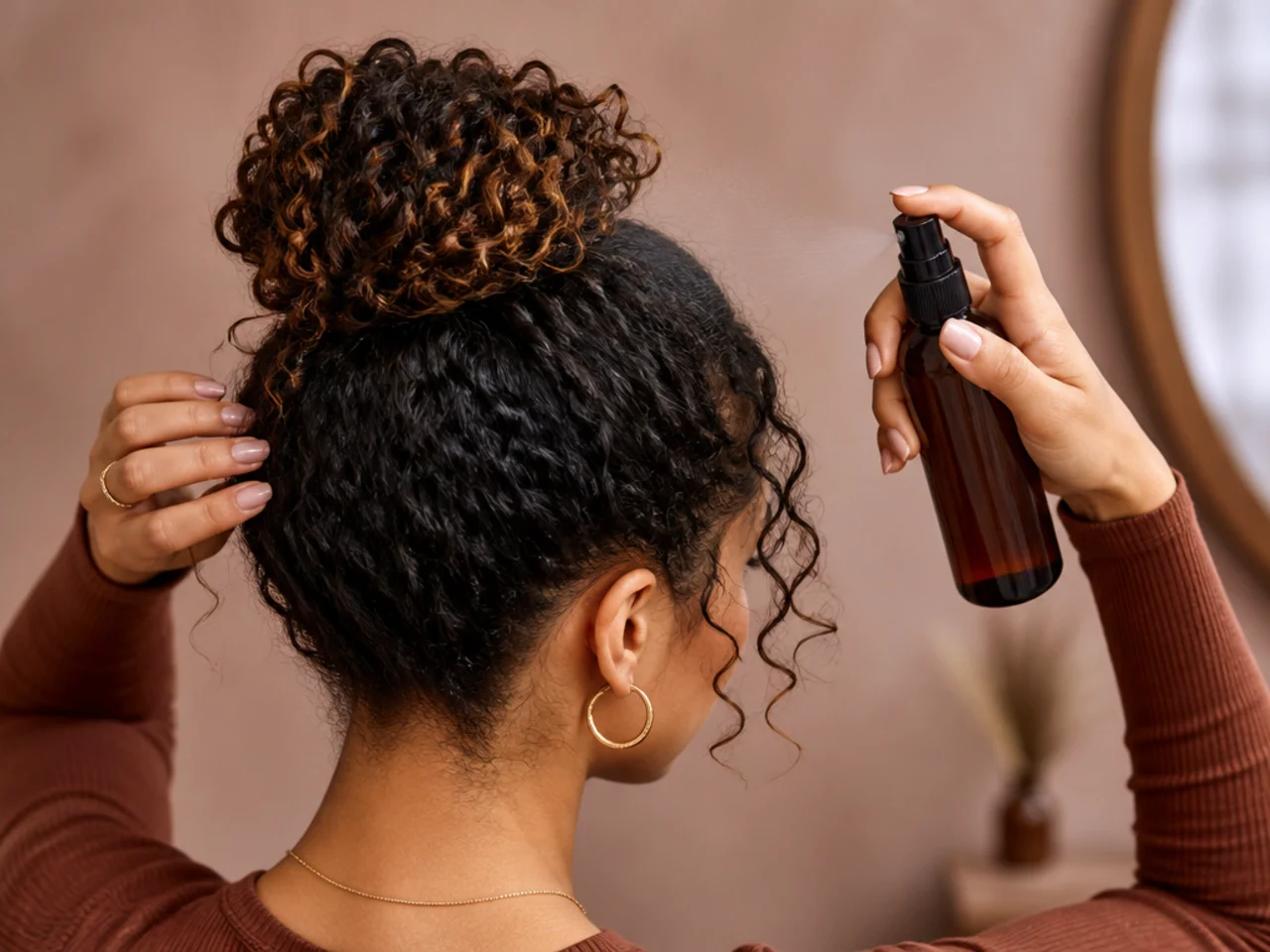
Mist before gathering, not after. Damp curls compress less and recover faster.
Release it gently, from the base. Pulling a bun out downward drags through the clumps.
Refresh with water and your fingers. If a dent has set, water is the only thing that resets it.
Mistakes to Avoid
Thin elastics. They concentrate all the pressure into one line.
Combing before gathering. It removes the grip and the definition together.
Pulling it tight for security. Curly hair does not need it, and the dent lasts days.
Gathering at the same spot daily. It creates a permanent weak point.
Compressing it small. A curly bun is a puff, not a coil.
FAQ
Why the dent? The elastic compresses the curl pattern, and curls hold whatever shape they are left in.
Do curly buns slip? Less than any other texture — curls have the most friction.
Should you brush first? No. It removes the clumps that give both grip and definition.
Final Thoughts
Swap your thin elastic for the widest fabric tie you own and gather with your hands. Curly hair will hold a bun almost regardless of what you do — the entire skill is in taking it out again with the pattern intact.
For adjustments across every texture see 20 simple bun tutorials for every hair type, and for the high position specifically see 15 easy high bun looks for any occasion. More in Updos & Clips.