15 Ways to Style Large Knotless Braids
Fifteen ways to style large knotless braids, and the constraint that decides which ones you can actually wear — the parting grid is fixed at install, and a style that fights its direction never looks right.
In this article · 22
- What Makes Styling Large Braids Different
- How to Choose Yours
- The 15 Ways to Style Them
- 1. Worn Down, Centre Part
- 2. Worn Down, Deep Side Sweep
- 3. All Over One Shoulder
- 4. Low Ponytail
- 5. High Ponytail
- 6. Low Bun
- 7. High Bun
- 8. Two Low Buns
- 9. Braided Crown Wrap
- 10. Low Side Bun
- 11. Loose Knot at the Nape
- 12. Headband or Scarf Band
- 13. Scarf Wrapped Along One Braid
- 14. Claw Clip Gather
- 15. Front Braids Tucked, Back Left Down
- Styling and Upkeep
- Mistakes to Avoid
- FAQ
- Final Thoughts
Most styling advice for braids ignores the one thing that decides what you can do with them.
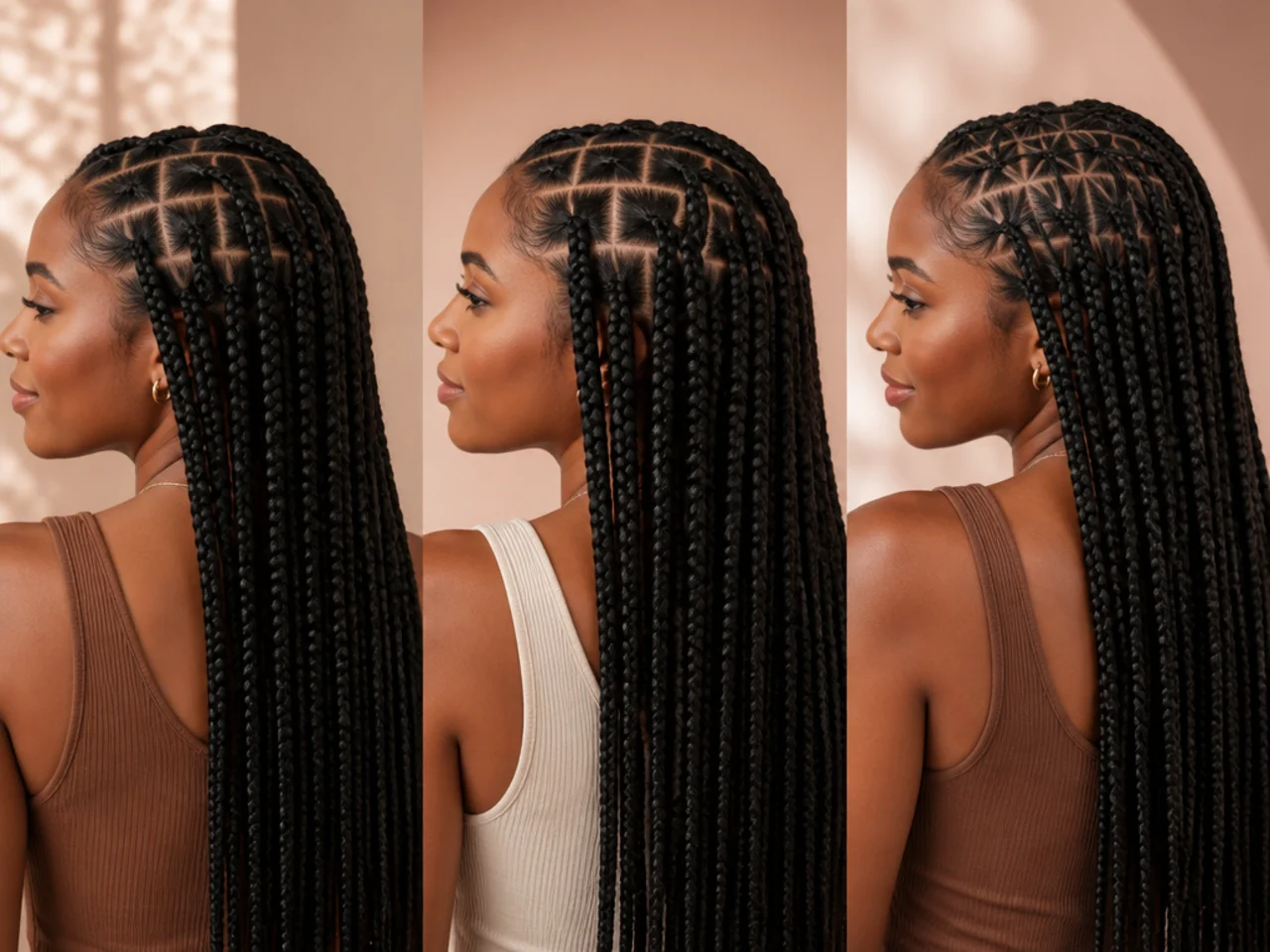
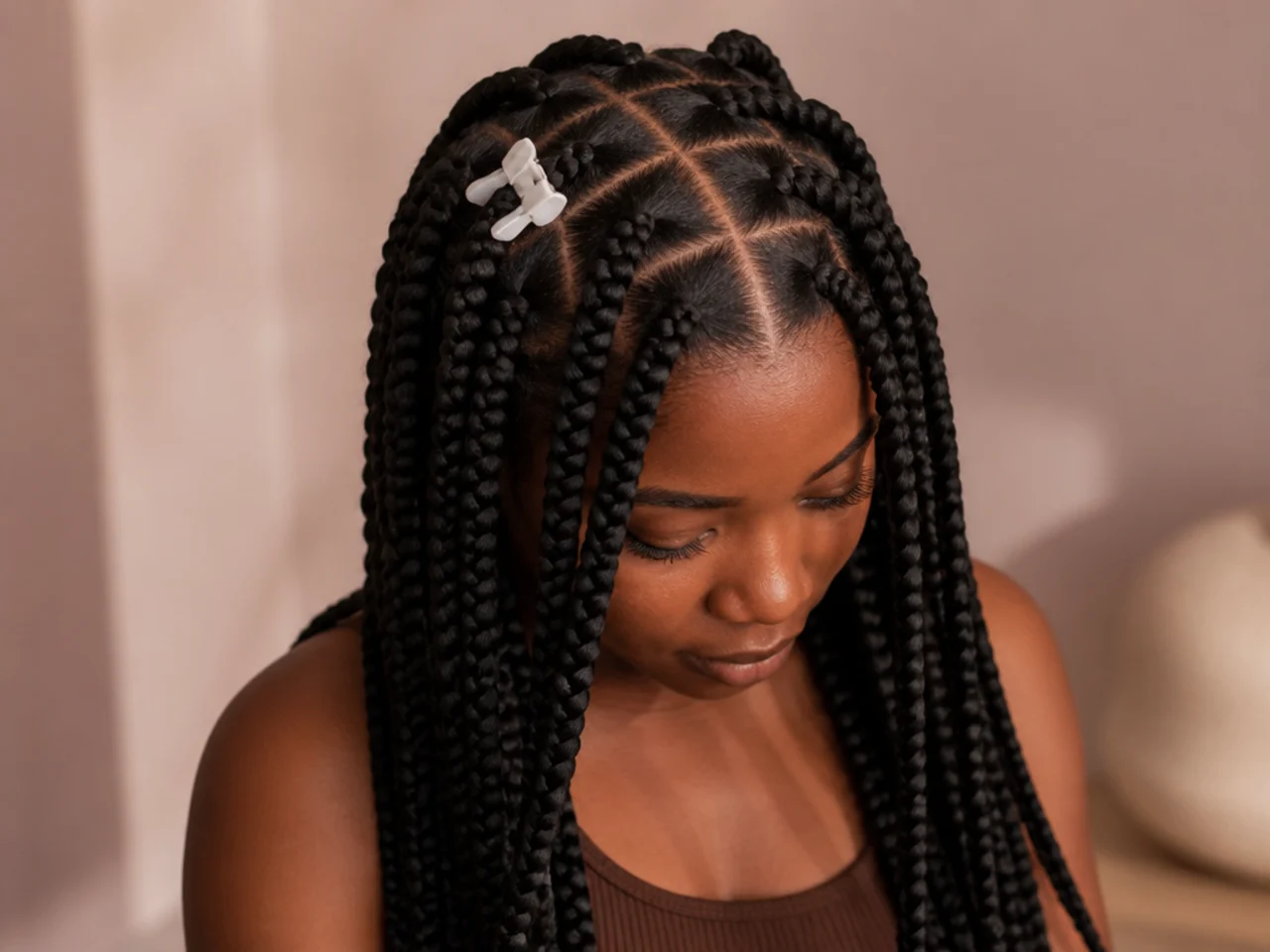
The parting grid is fixed at install. A set braided straight back stays parted straight back for six weeks. You cannot flip it to the side, and a style that pulls against the grid direction always looks slightly wrong without anyone being able to say why.
So the styling repertoire is chosen at the appointment. Everything below assumes you know which grid you have.
What Makes Styling Large Braids Different
Fewer braids means less to hide behind. With forty to sixty braids, a gather is made from a countable number of pieces. It reads as structure rather than as volume.
Weight lands on the crown in every high style. Gathering upward moves the whole load onto the roots at the top of the head — the ones already carrying the most.
Height compounds with length. A high bun on a waist-length set puts far more strain on the crown than the same bun at shoulder length. The lever is longer.
The grid direction sets the styles. Straight back suits ponytails and buns. A centre part suits half-up and worn down. A side part suits everything asymmetric and nothing symmetric.
How to Choose Yours
Ask yourself what you will wear most, before the grid is parted. If you live in a high bun, say so and have the grid run straight back.
Match height to the week. High styles in the first fortnight, low styles from week four onward as the roots loosen.
Use accessories instead of tension. A scarf, a headband or a clip changes the look without pulling anything.
Keep a no-tension option in the rotation. Something for the days when your scalp is tender — worn down, or half-up at most.
The 15 Ways to Style Them
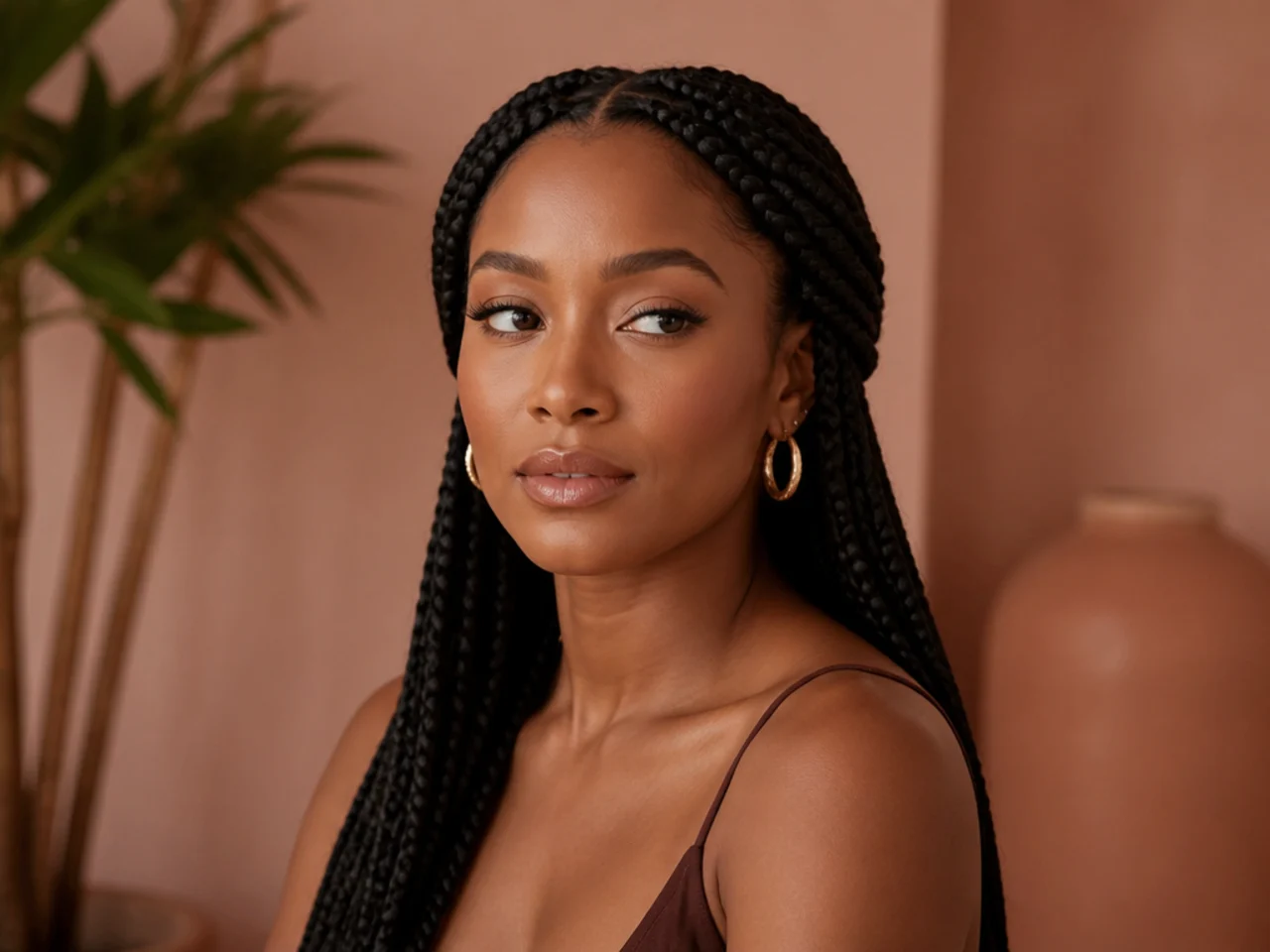
1. Worn Down, Centre Part
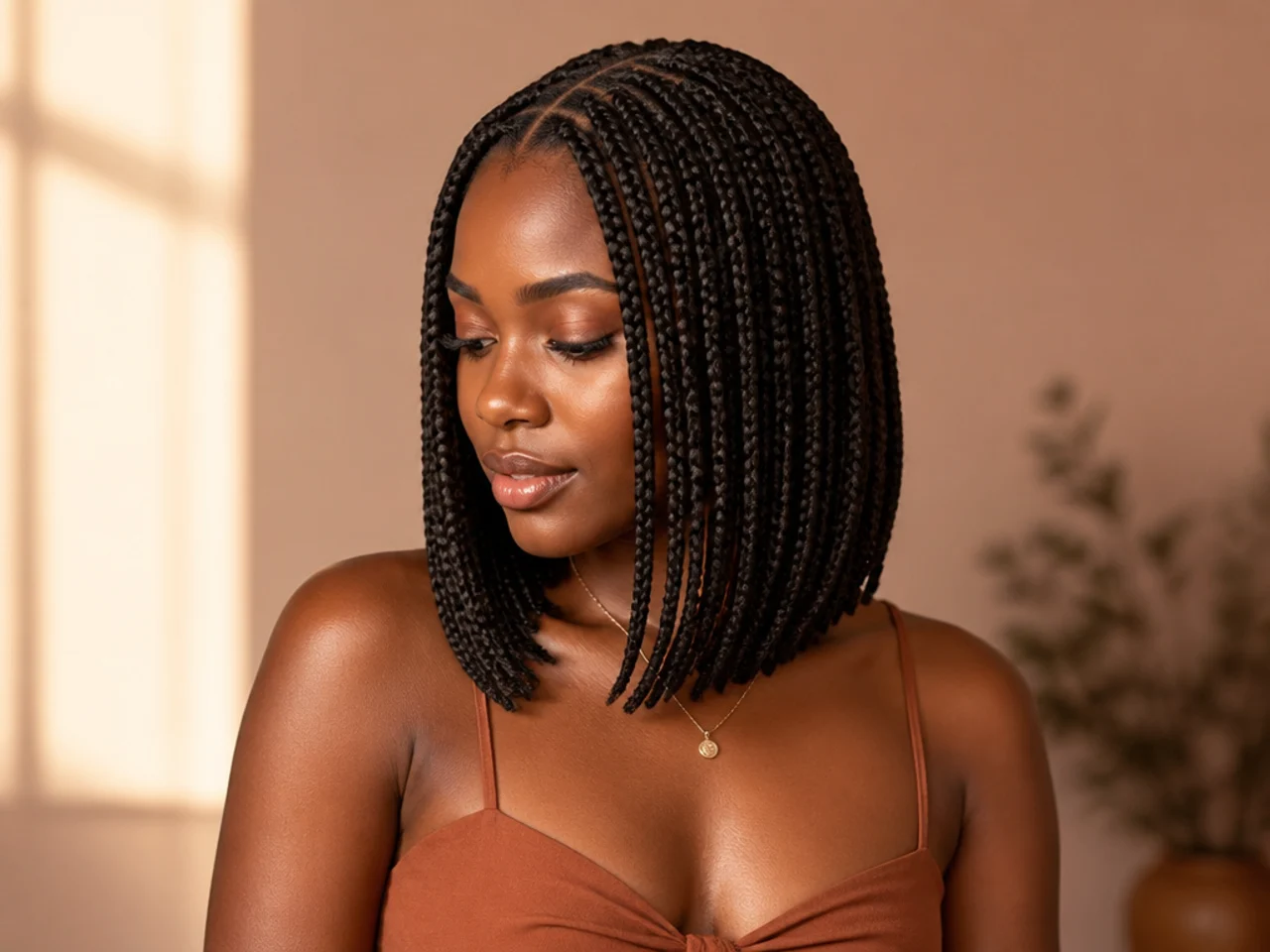
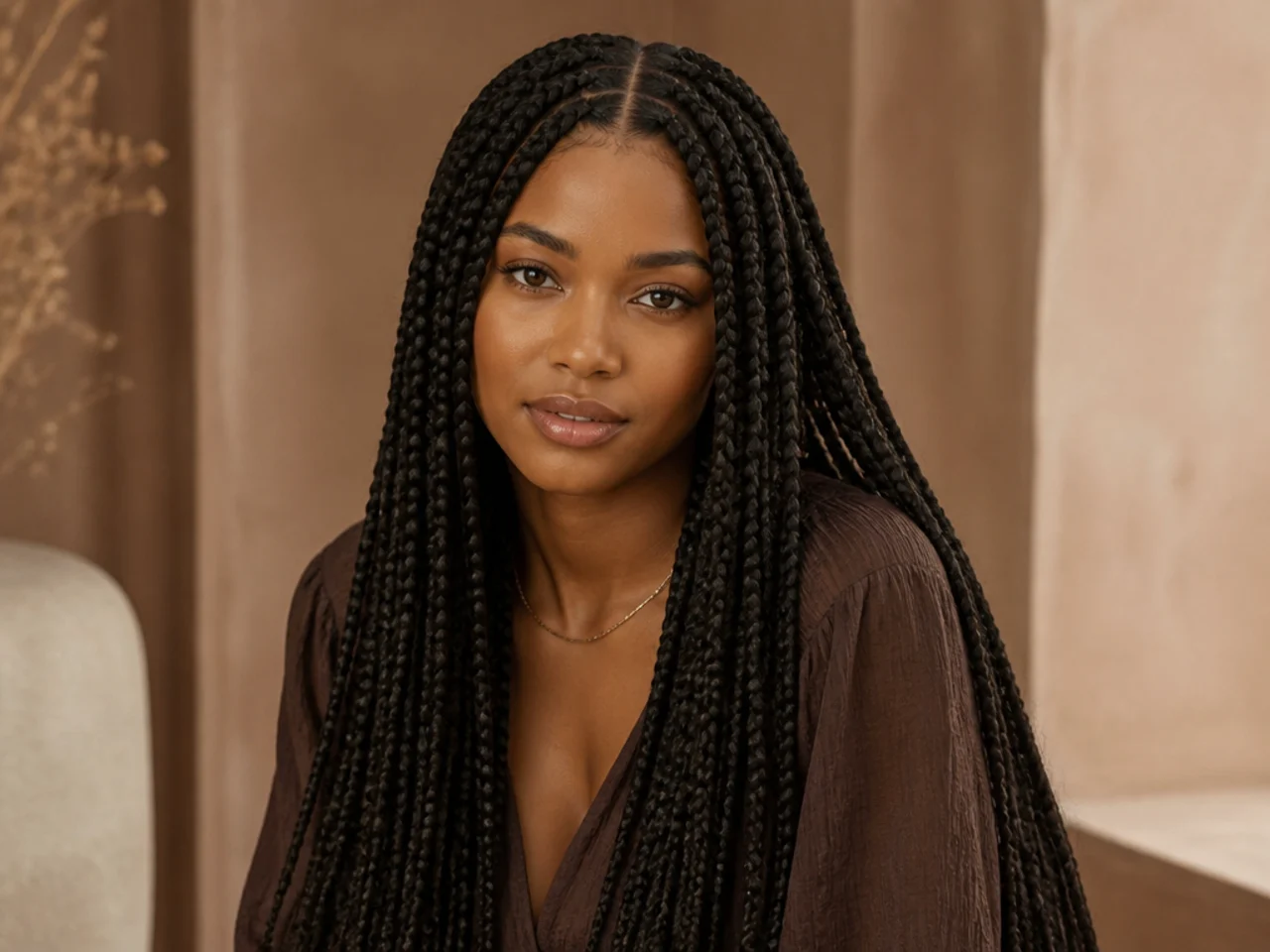
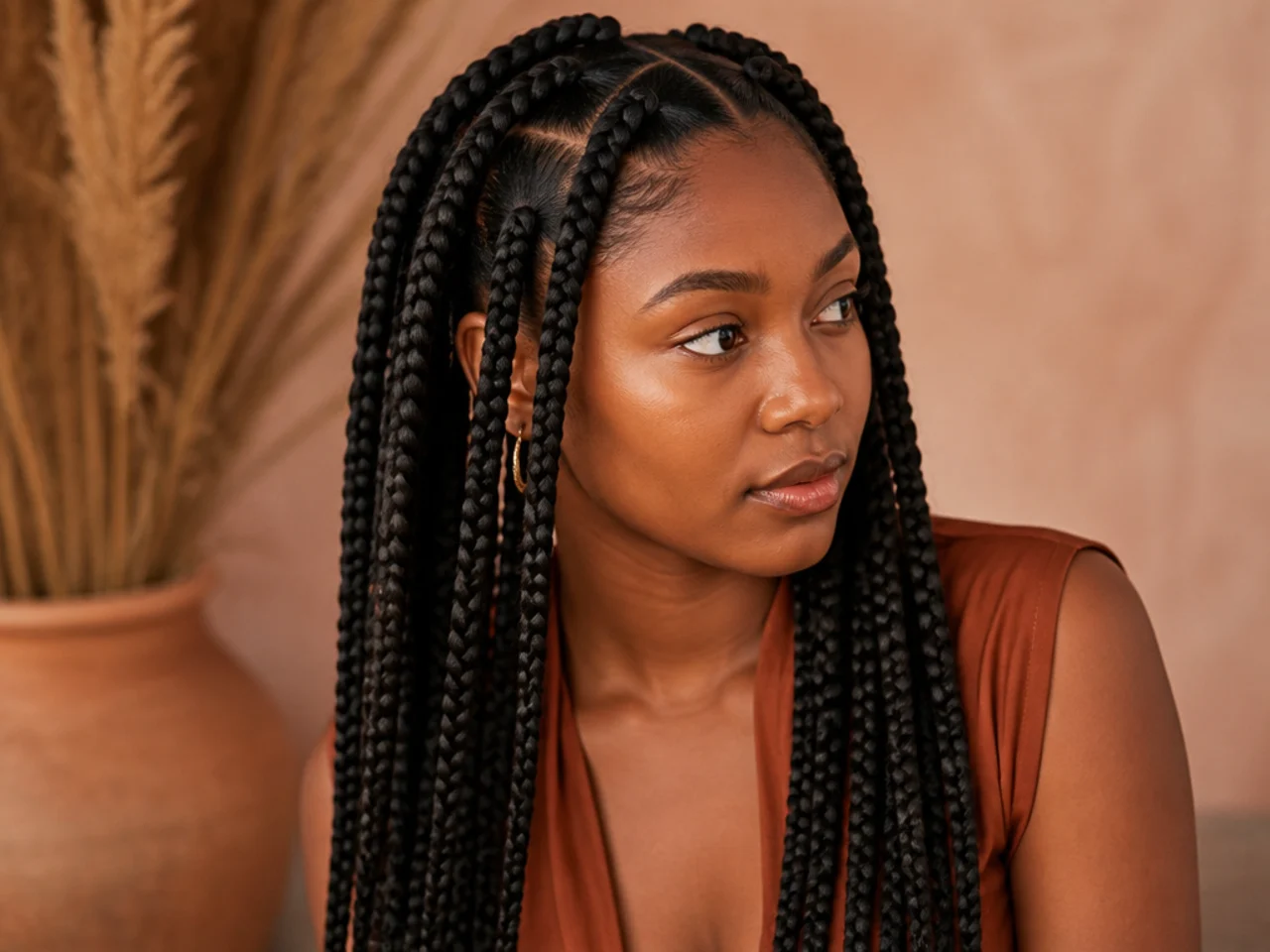
The default. Zero tension anywhere, and the one to fall back on. At this braid count worn down is also where the grid looks best, because every parting runs cleanly from the front to the back.
2. Worn Down, Deep Side Sweep
Same braids, different weight distribution. Works only on a side-parted grid. Sweeping a centre-parted set to one side puts every braid at an angle to the parting it grew from, and the eye picks that up immediately.
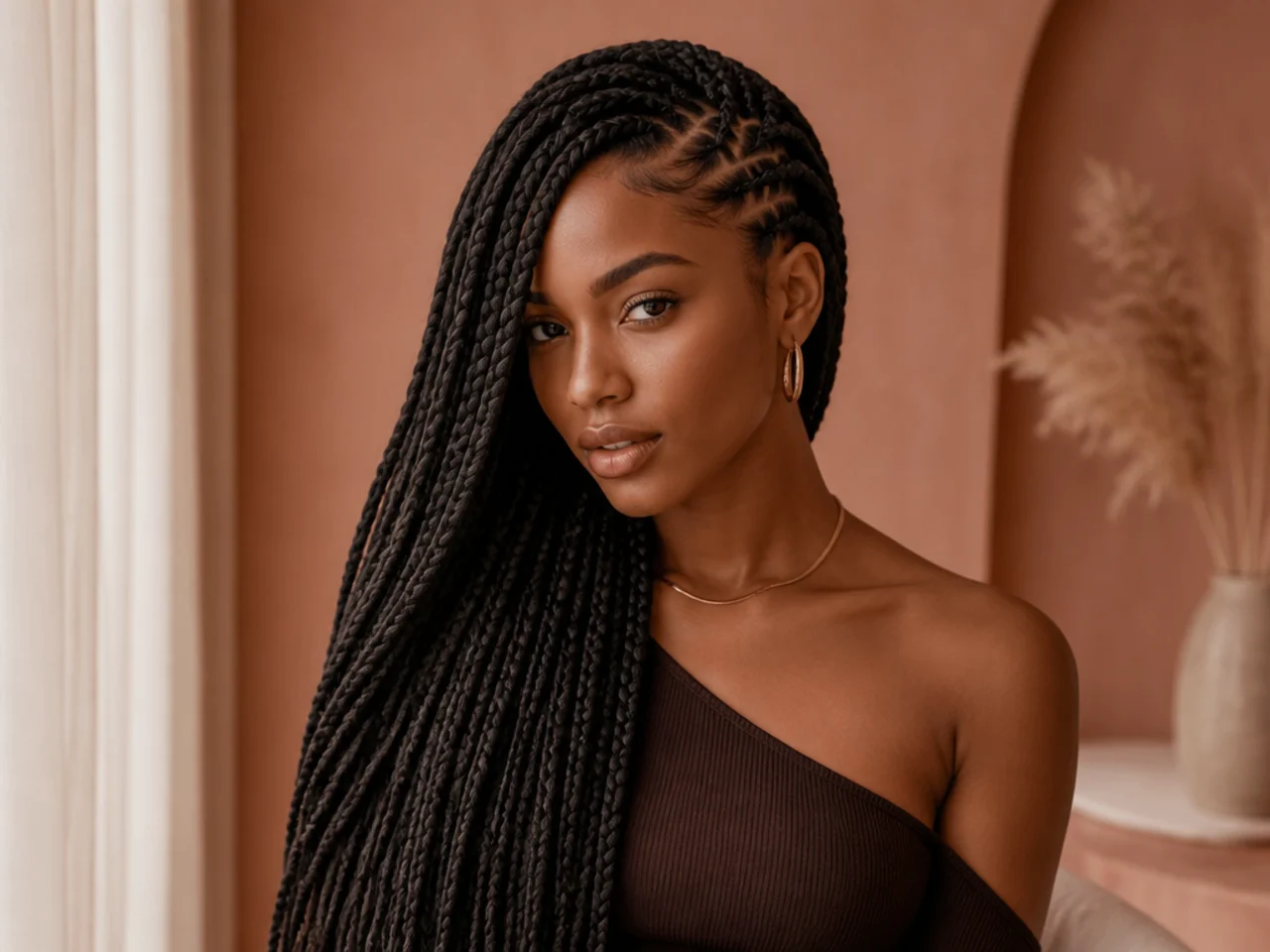
3. All Over One Shoulder
Everything gathered forward to one side. Halves the visual weight. It also lifts the whole set off the back of the neck, which is the simplest comfort change available.
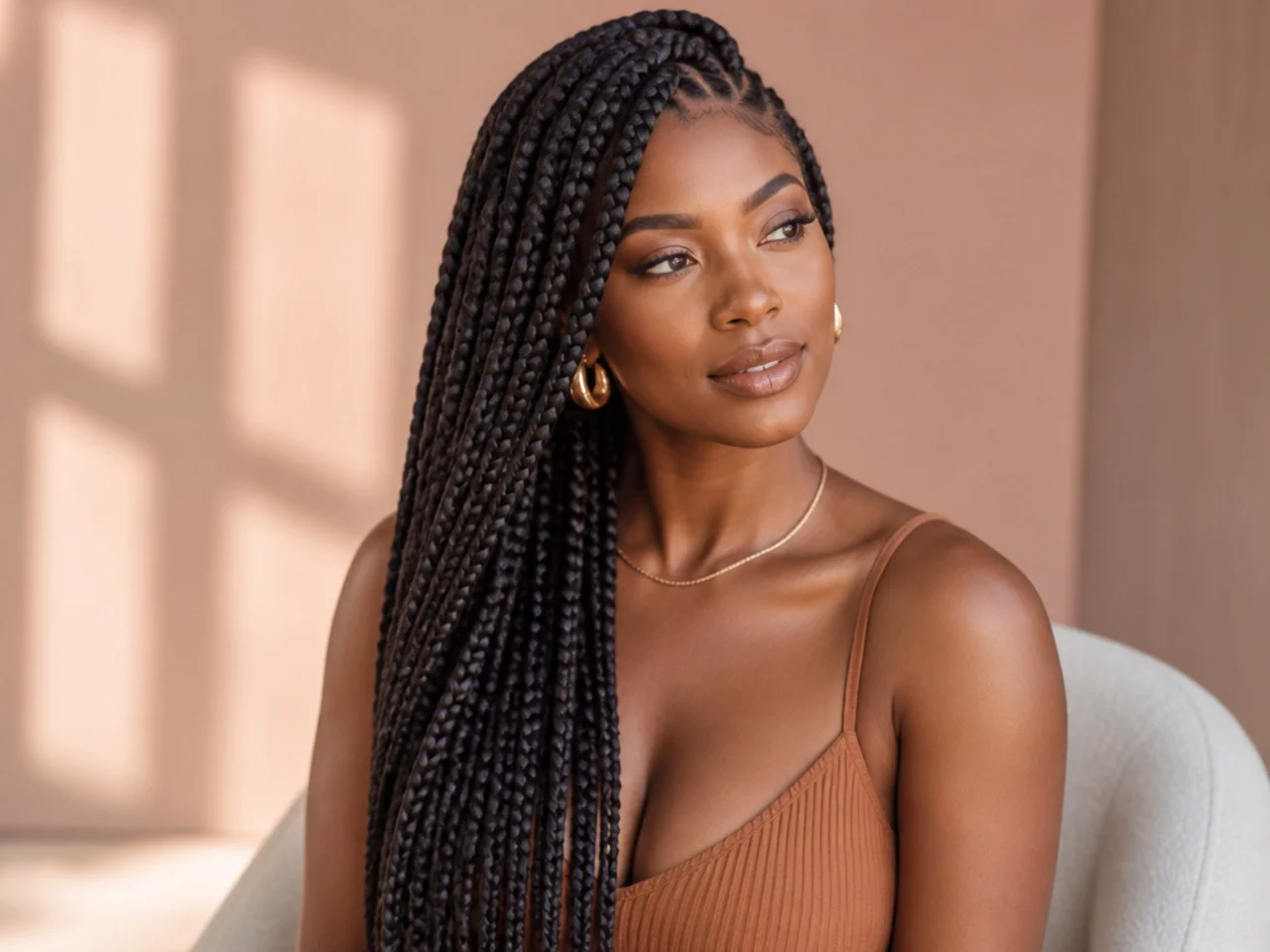
4. Low Ponytail
Gathered at the nape. The lowest-tension gathered style there is. The nape is the shortest distance from every part of the head, so nothing has to be pulled to reach the gather.
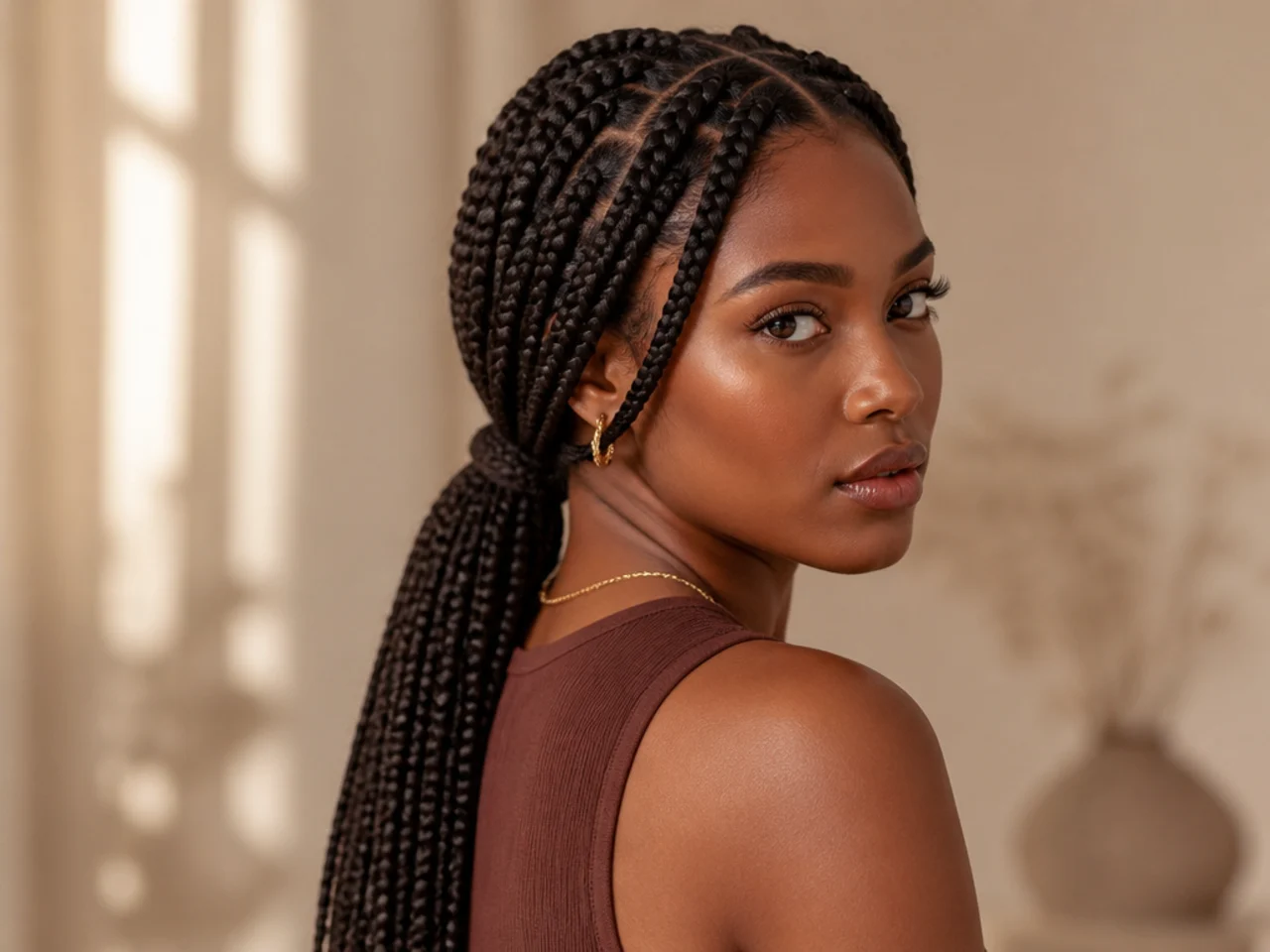
5. High Ponytail
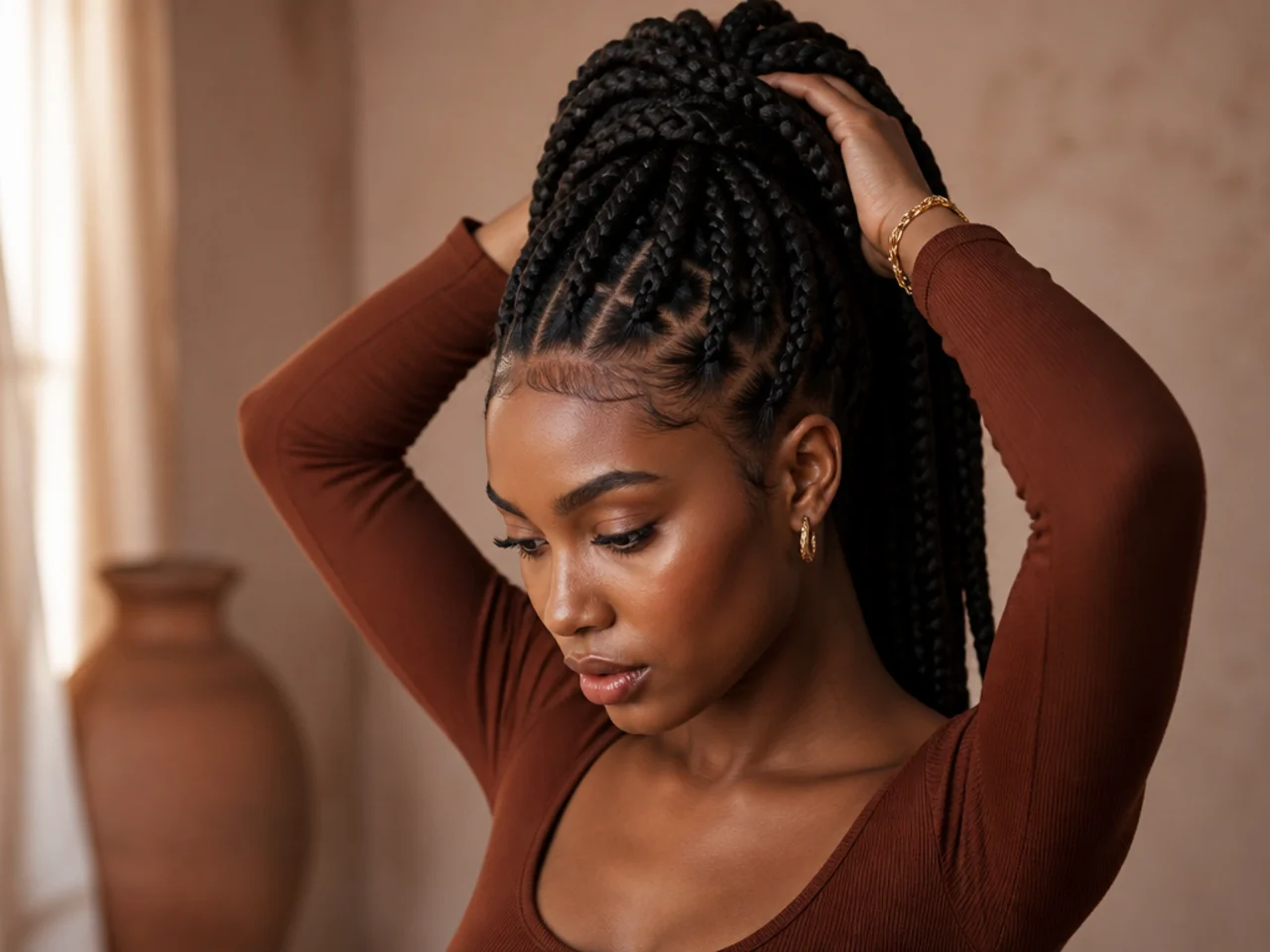
Dramatic and the highest-tension style here. Save it for the first fortnight. Height and braid width compound — forty heavy braids gathered at the crown is the largest load any style on this page creates.
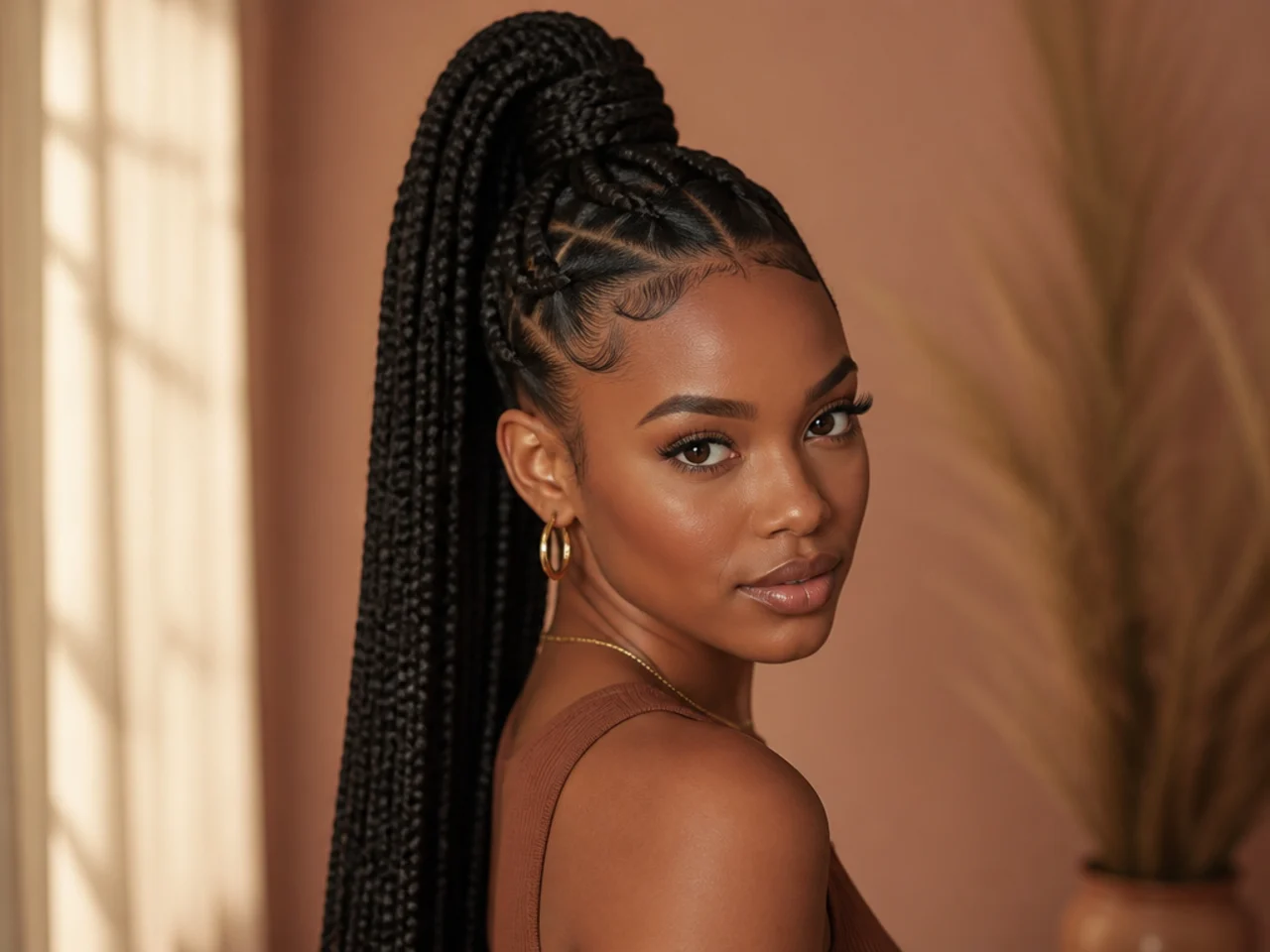
6. Low Bun
Coiled at the nape. The best option for a long evening. Low placement lets the skull carry part of the weight, which is what makes it survivable across hours.
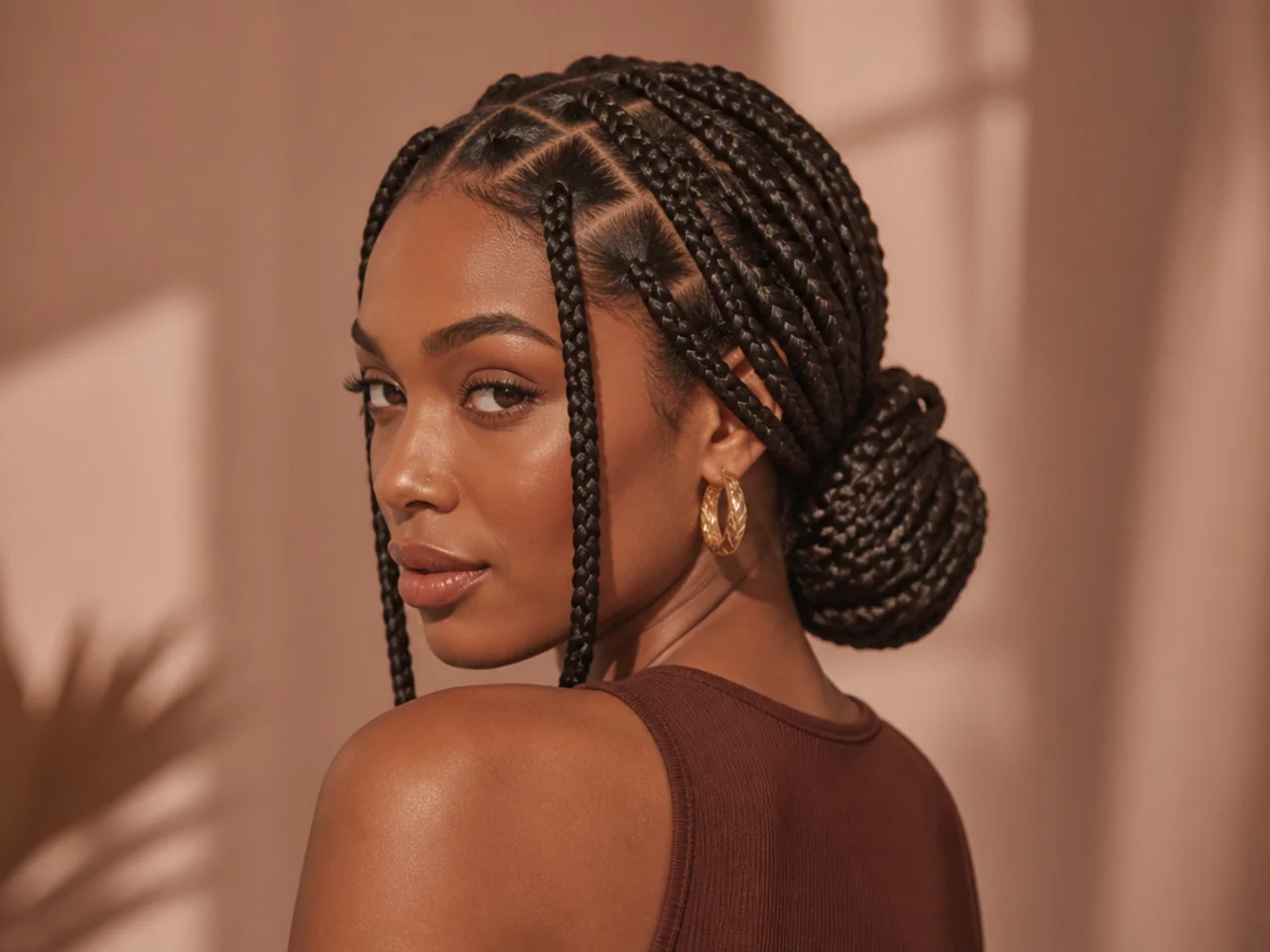
7. High Bun
Everything up and forward. Striking, and heavy on the crown. Nothing sits underneath a crown bun to support it, so the roots are holding the entire weight.
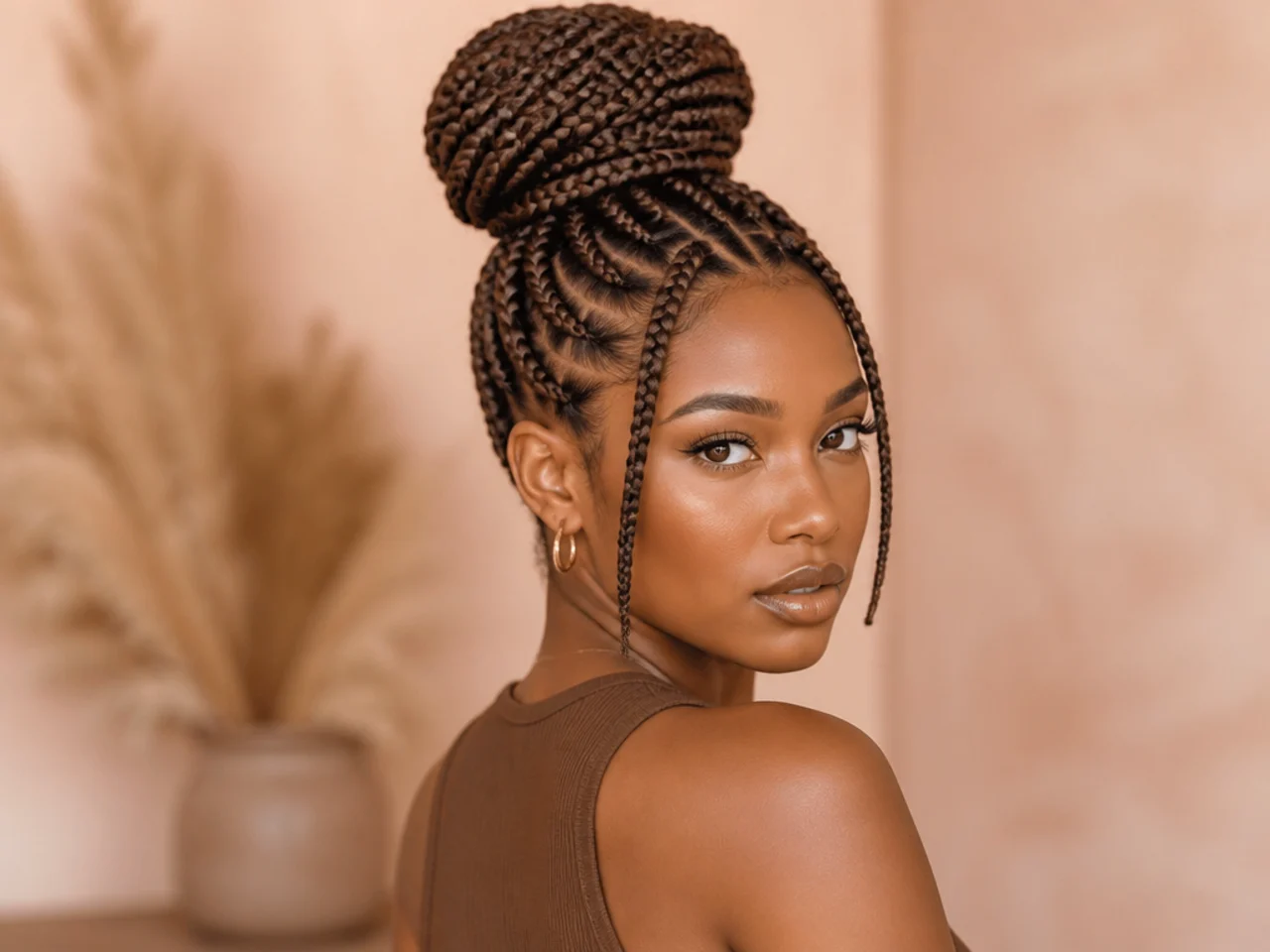
8. Two Low Buns
Split at the centre part and coiled at each side. Symmetrical and light. Each side carries half the mass, so neither fastening is anywhere near what it can hold.
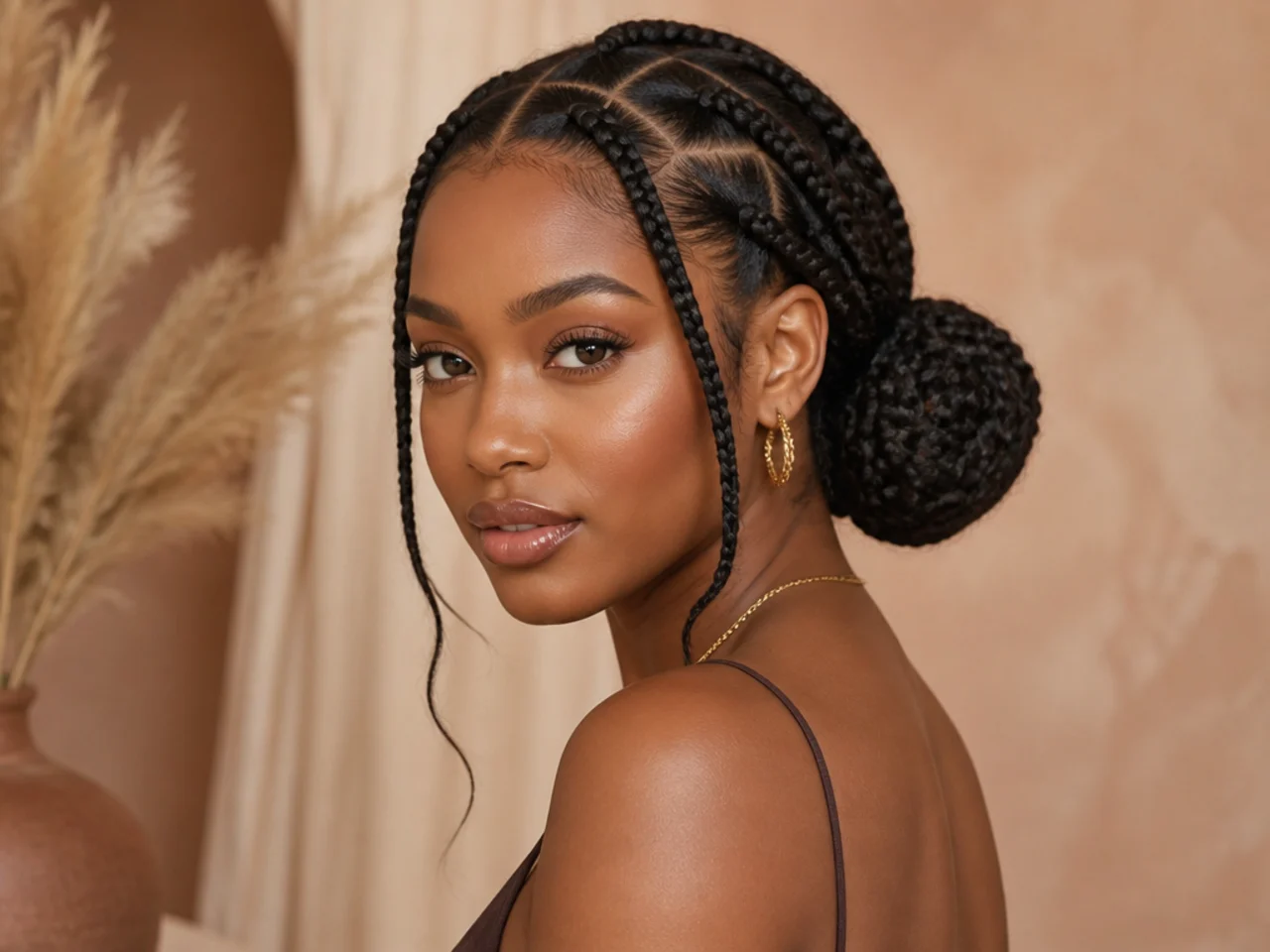
9. Braided Crown Wrap
The full length wrapped around the head and pinned. Weight sits evenly. No single point carries anything, which makes it the most comfortable way to wear a long set up all day.
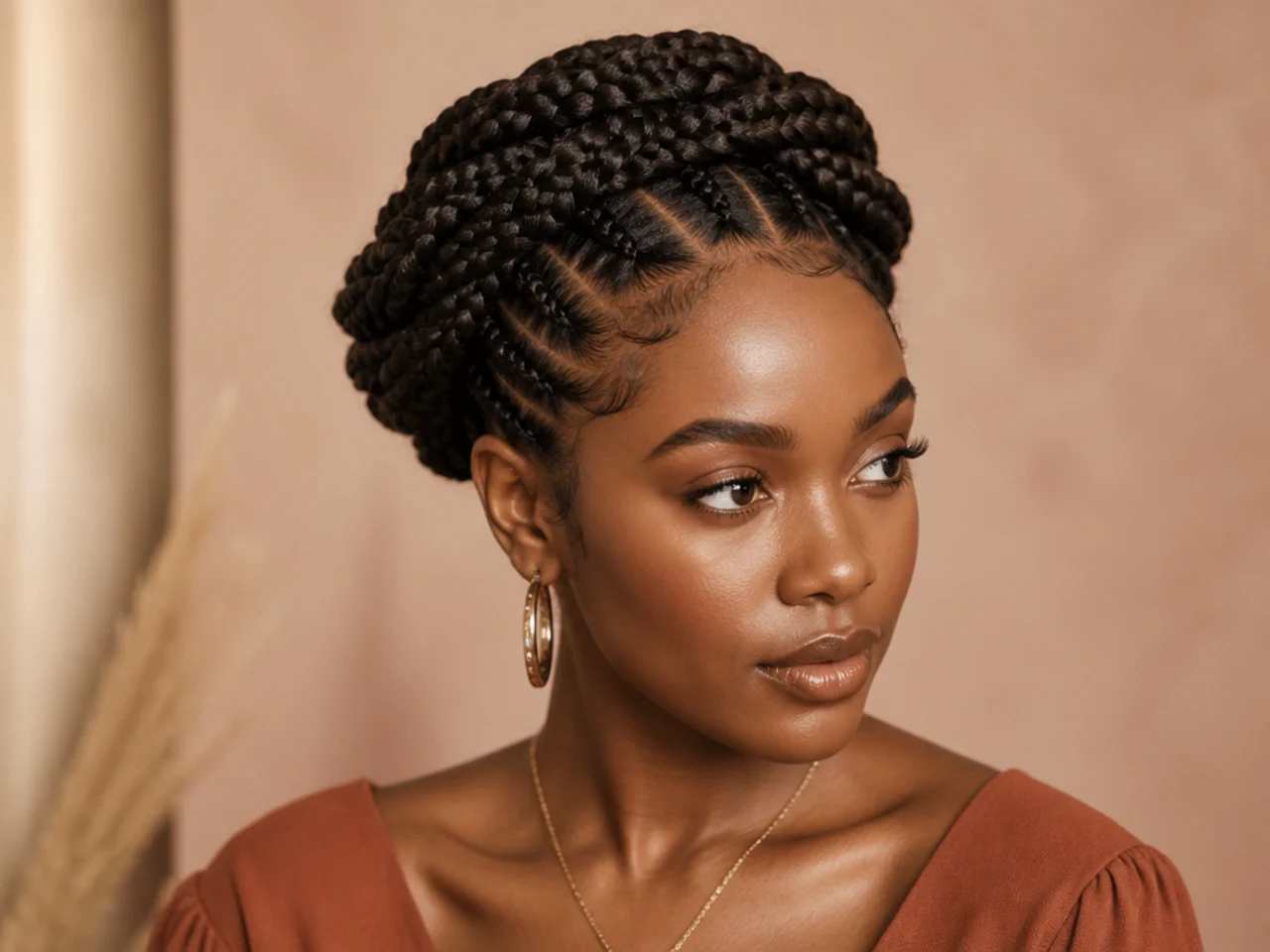
10. Low Side Bun
Coiled low and off-centre. Softer than a nape bun. Off-centre also moves the load away from the centre back, which helps if one area has become tender.
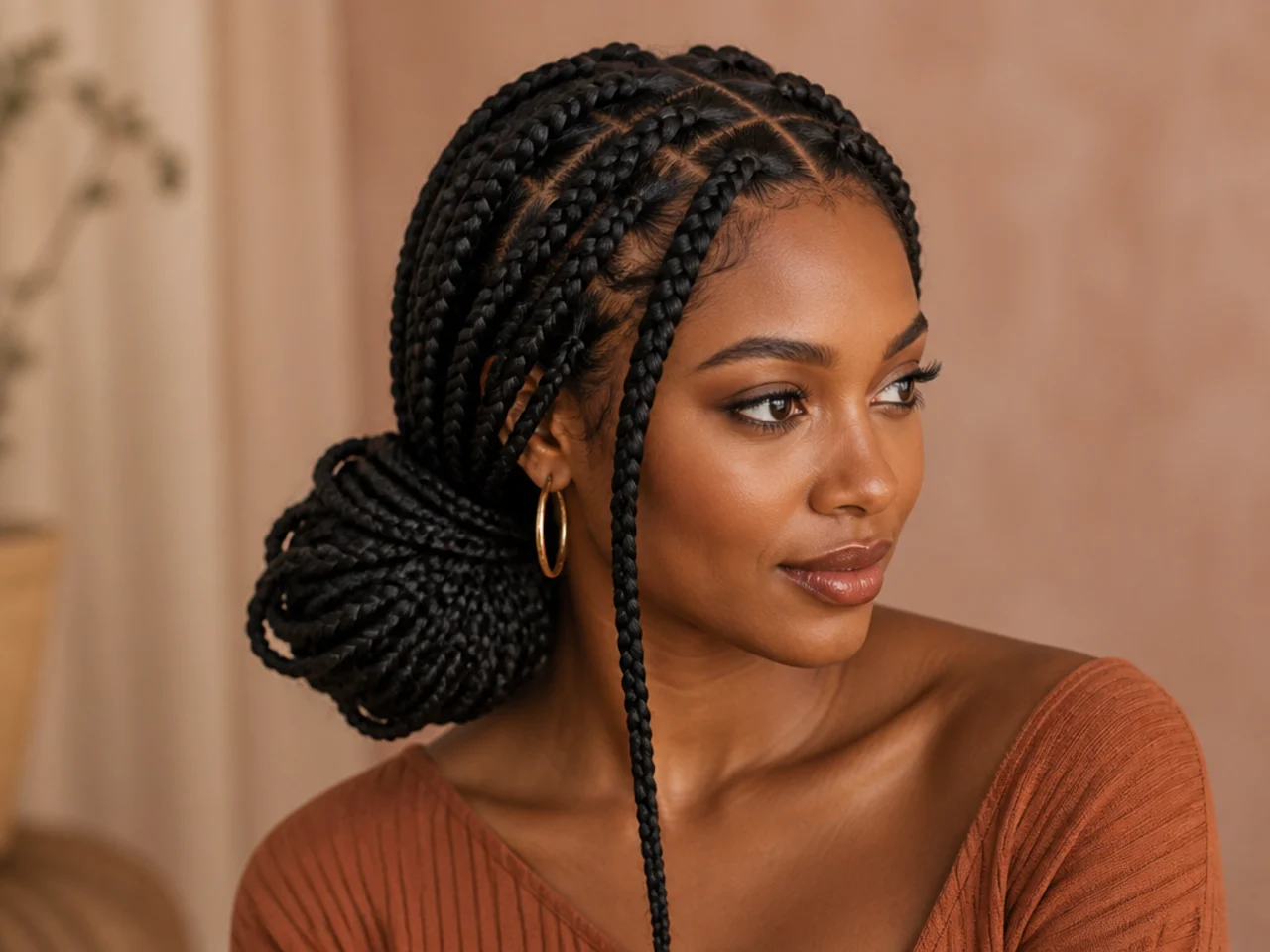
11. Loose Knot at the Nape
The braids tied once rather than pinned. Takes seconds and holds surprisingly well. Large braids have enough surface against each other to hold a single knot, which finer braids do not.
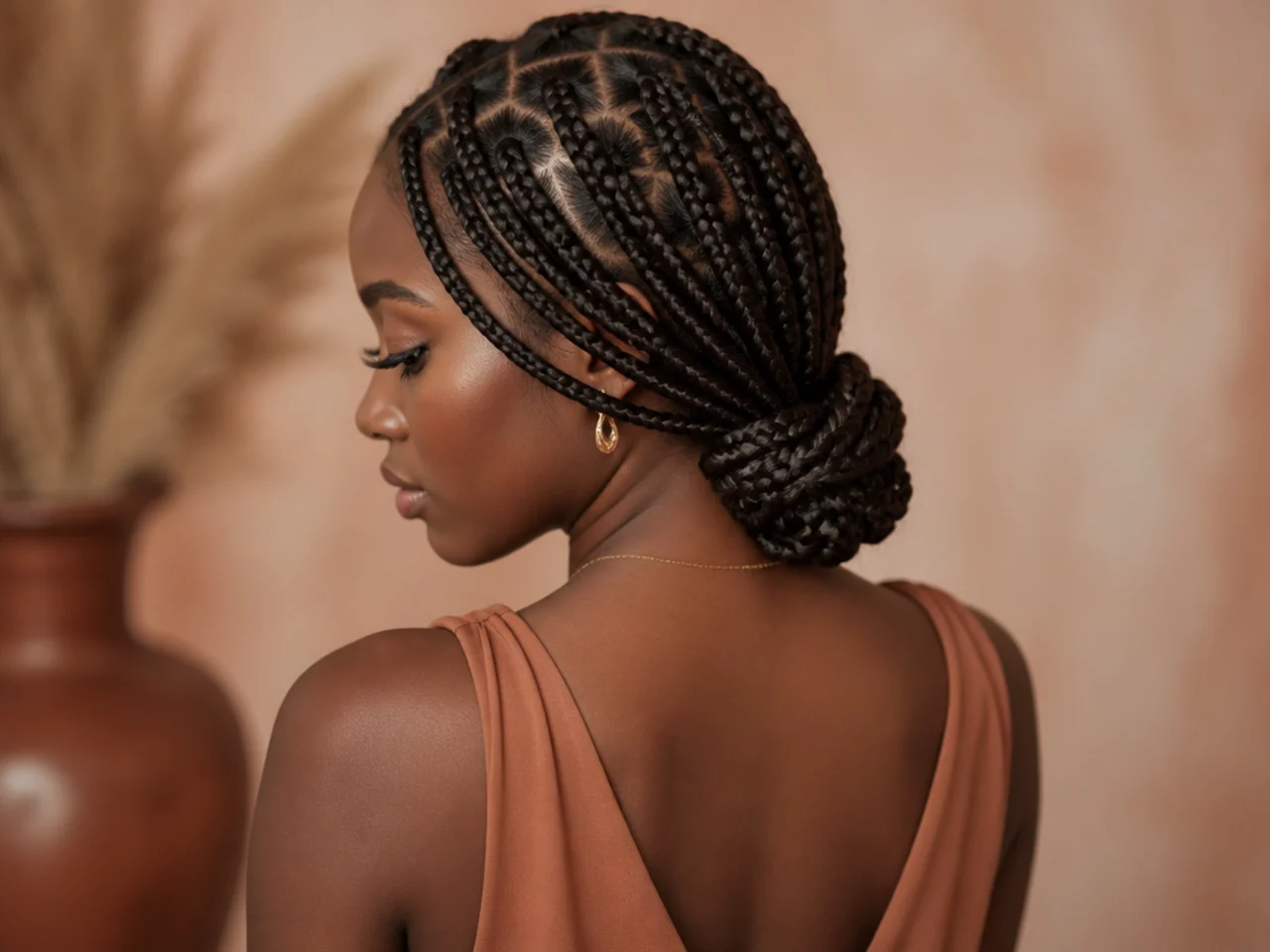
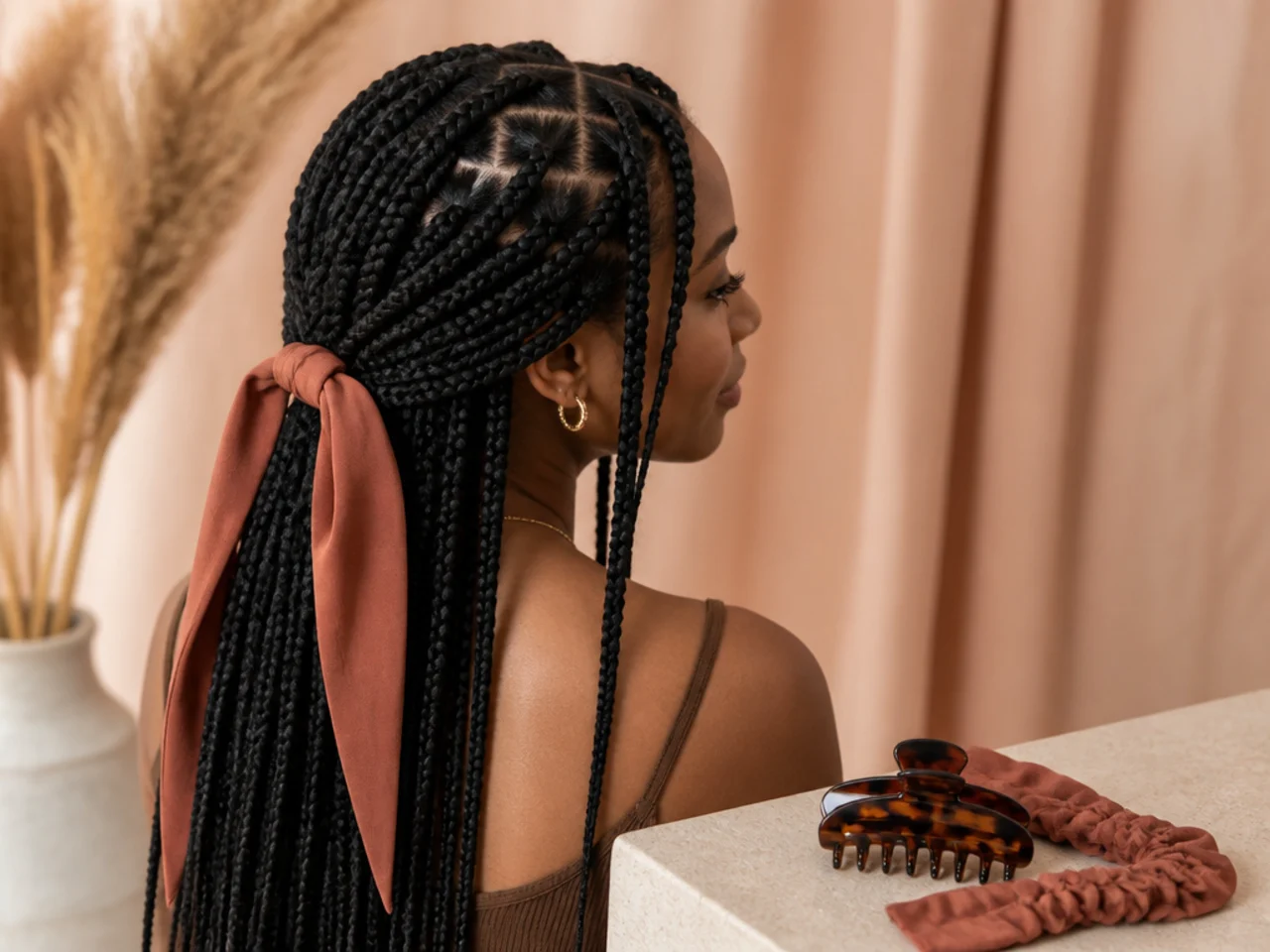
12. Headband or Scarf Band
Covers the front grid without touching the roots. The week-five rescue. By week five the front partings are the most visibly loosened part of the set, and a band hides exactly that.
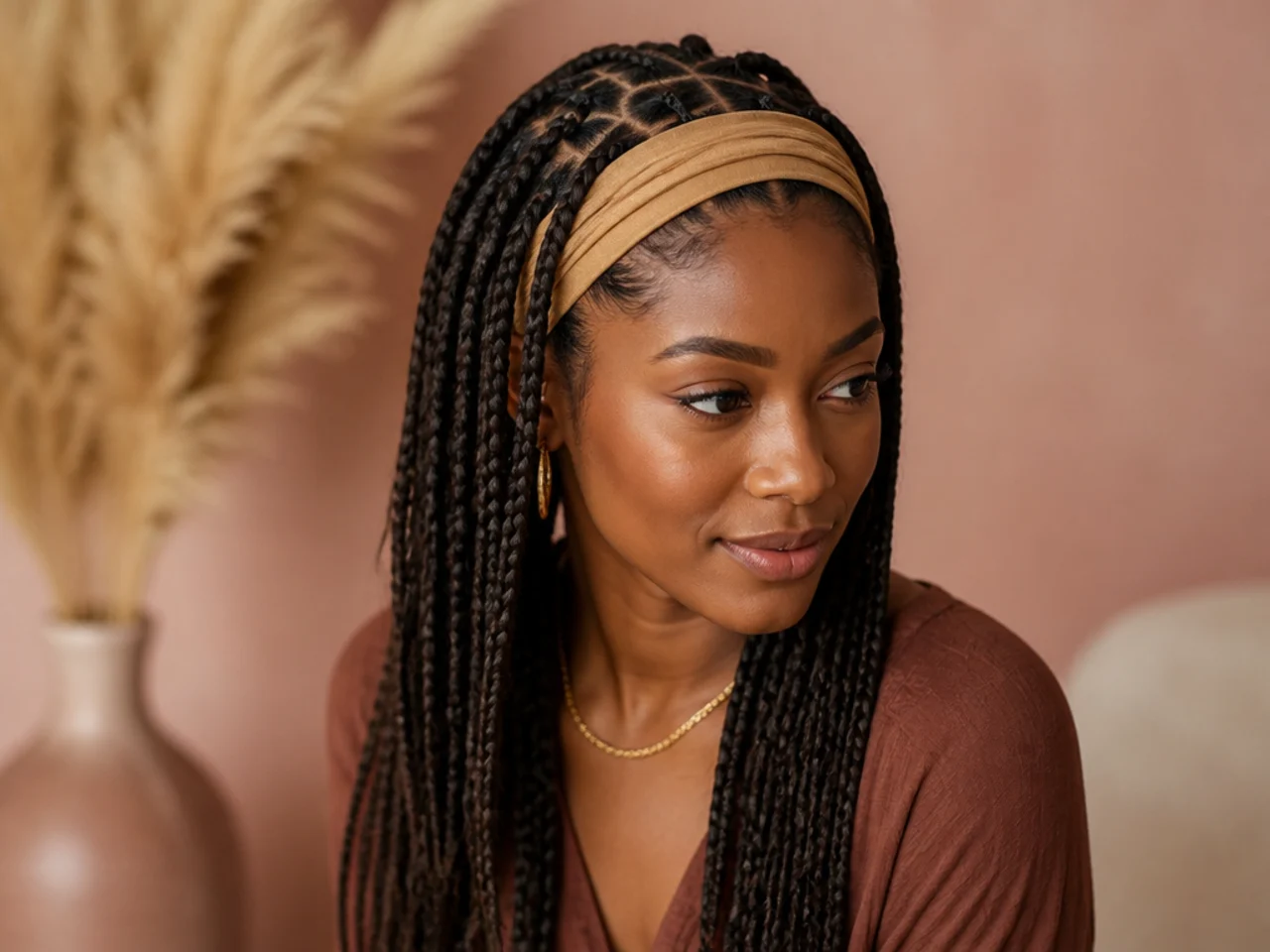
13. Scarf Wrapped Along One Braid
Fabric wound down a single braid. Decoration with no weight. One braid is doing all the decorative work, so the other fifty-nine carry nothing extra.
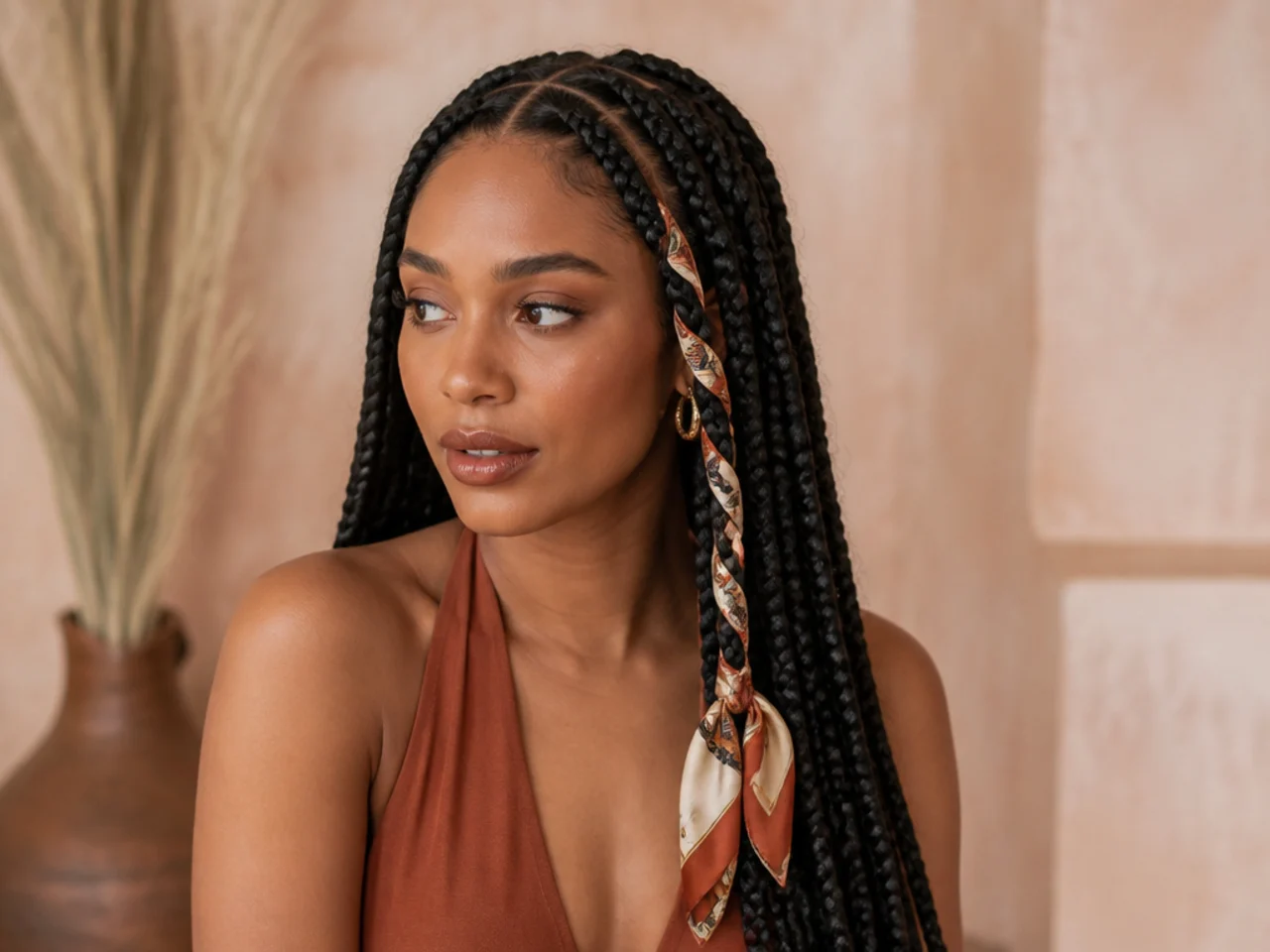
14. Claw Clip Gather
A large claw clip holding the length loosely. Fastest style on this page. A wide claw clamps at the edges rather than squeezing all the way round, so it holds without any pull at the roots.
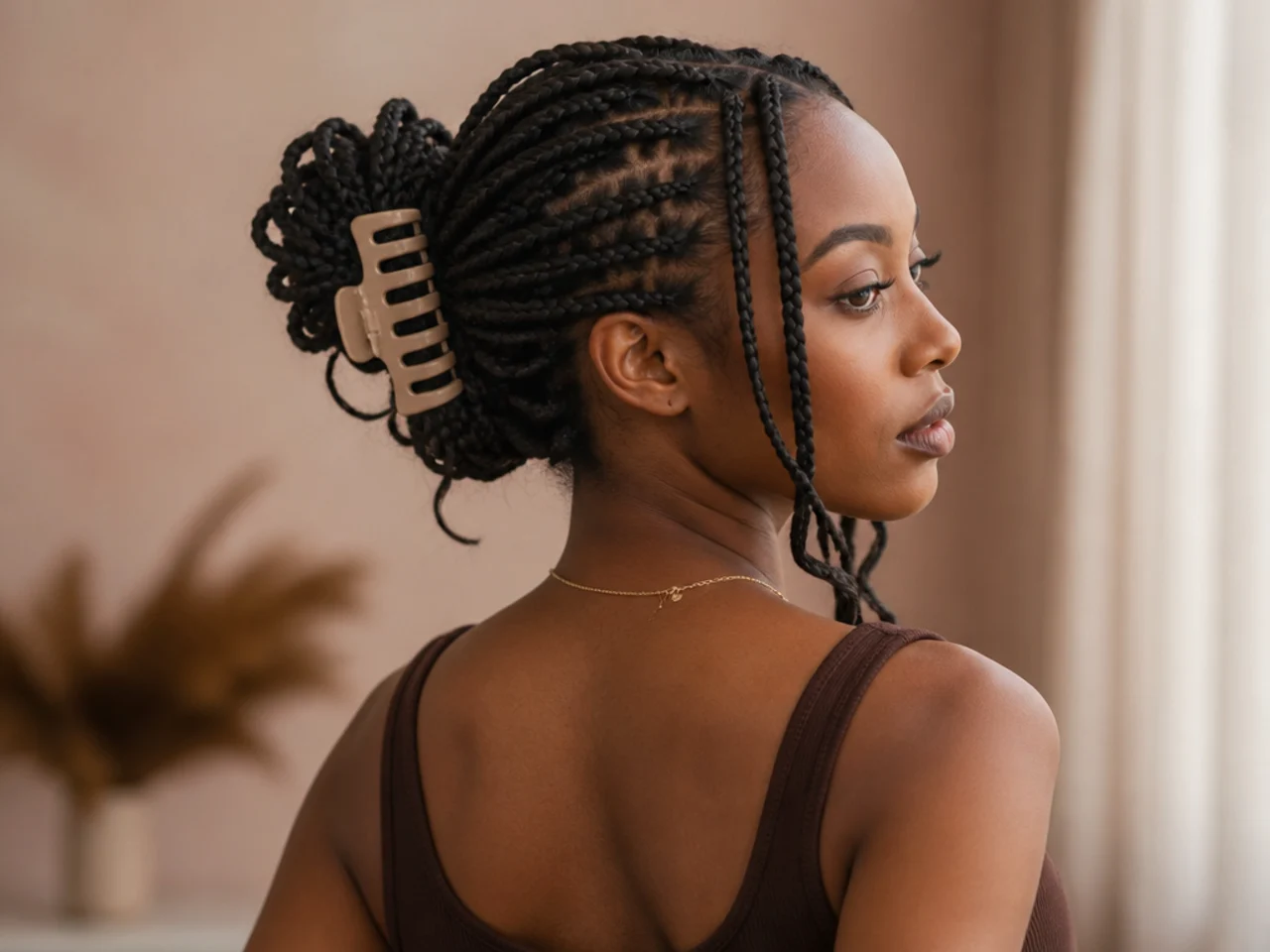
15. Front Braids Tucked, Back Left Down
One adjustment, no tools, and it works on every grid. Tucking the front braids back changes the whole face-framing without gathering anything or fighting the parting direction.
Styling and Upkeep
Rotate the height. Wearing a high bun every day means the same crown roots carry the load every day. Alternate high, low and down.
Use a large, wide-toothed claw. Small clips bite into a wide braid and mark it.
Never use elastic bands directly. Fabric-covered ties only — a bare elastic catches the braid and pulls fibres loose.
Change the style before it hurts, not after. Tenderness at the crown is the signal to go low for a day or two.
Refresh the partings, not the length. A little oil along the grid does more for how a style photographs than anything applied to the braids.
Mistakes to Avoid
Expecting to re-part the grid. It is fixed for six weeks.
Living in a high bun. Same roots, same load, every day.
Bare elastic bands. They catch and pull fibres out of the braid.
A high style on a waist-length set at week five. Longest lever, loosest roots.
Small clips on wide braids. They mark the braid and slip anyway.
FAQ
How do you style them? Within the grid, which is fixed at install — decide the grid for the styles you actually wear.
Which styles strain the edges? Anything gathered high and pulled back.
What should you wear at week five? Half-up, or anything gathered low.
Final Thoughts
The most useful styling decision happens before any braiding does. Tell the braider which style you actually wear most often and let the grid be parted for it — that one sentence at the appointment gives you more styling range than any tutorial will.
For the single most-worn style done properly see half up large knotless braids, and for the full range see 25 large knotless braids ideas. More in Braids & Protective Styles.
Frequently asked questions
Related posts
See all posts
20 Waterfall Mermaid Braid Ideas That Hold
Read more
15 Side Mermaid Braid Ideas That Sit Right
Read more
20 Side Part Medium Knotless Braids I Saved
Read more