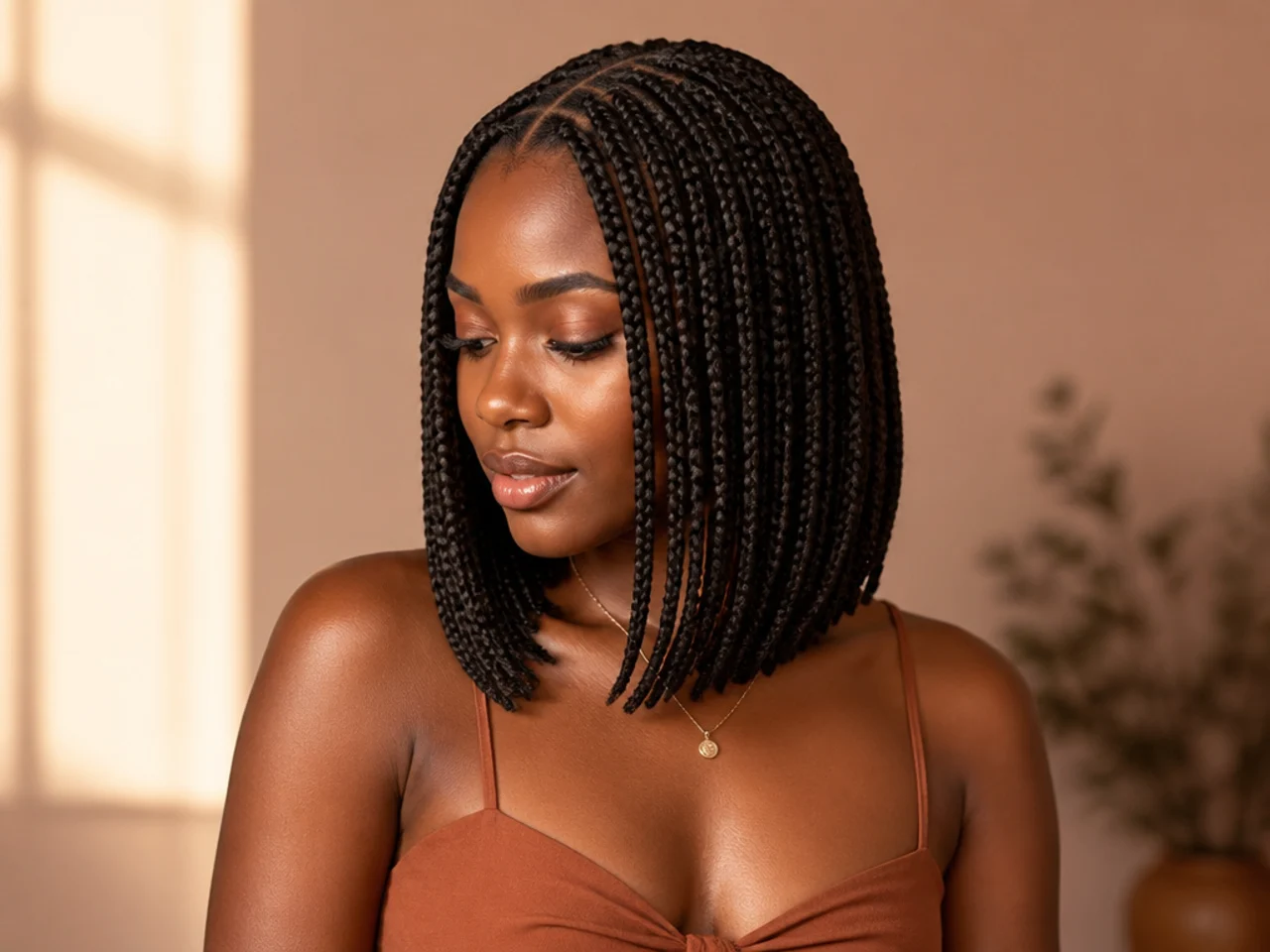
15 Large Knotless Braids With Beads
Fifteen beaded large knotless braid ideas, and the two things nobody mentions — standard beads do not fit a large braid, and a bead at the tip pulls far harder than the same bead placed halfway up.
In this article · 22
- What Makes Beaded Large Knotless Work
- How to Choose Yours
- The 15 Beaded Ideas
- 1. Gold Beads at Mid-Shaft
- 2. Gold Beads at the Tips
- 3. Wooden Beads on Natural Braids
- 4. Silver Beads on Dark Braids
- 5. Beads on the Front Braids Only
- 6. Scattered Beads at Mixed Heights
- 7. Stacked Beads
- 8. Beads Marking the Curl Transition
- 9. Beads on a Braid Bob
- 10. Beads with Blonde Braids
- 11. Coloured Glass Beads
- 12. Beads with Gold Cuffs Together
- 13. Beads on a Half-Up Style
- 14. Beads on Shoulder-Length Braids
- 15. A Bead Sitting Where a Braid Has Compressed
- Styling and Upkeep
- Mistakes to Avoid
- FAQ
- Final Thoughts
Beads are treated as a finishing touch, chosen at the end of an appointment from whatever the salon has. Two practical facts make that a bad way to do it.
Standard beads do not fit large braids, and a bead at the tip pulls hardest. Both are fixable, and both are much easier to fix before the braiding starts than after.
What Makes Beaded Large Knotless Work
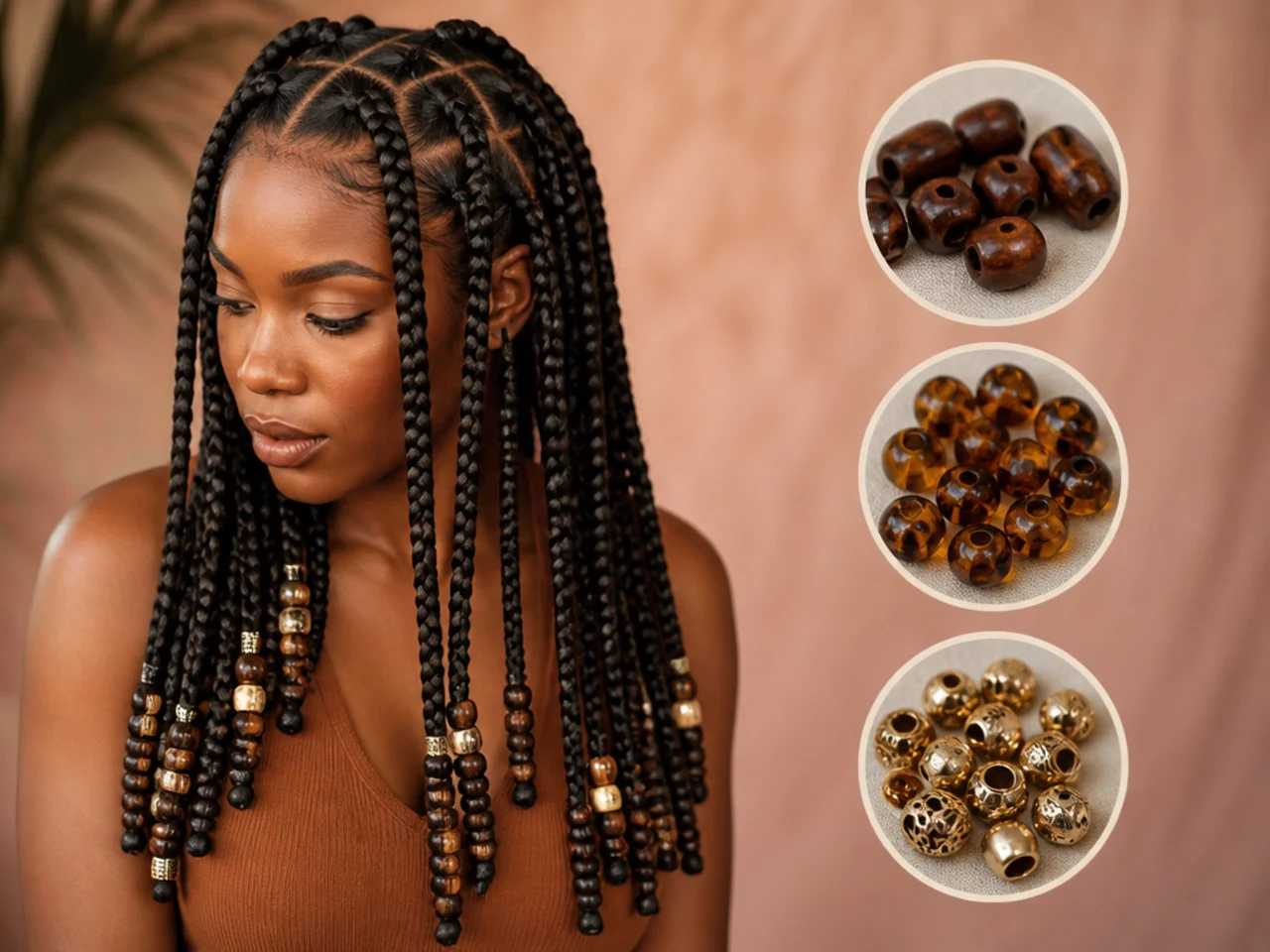
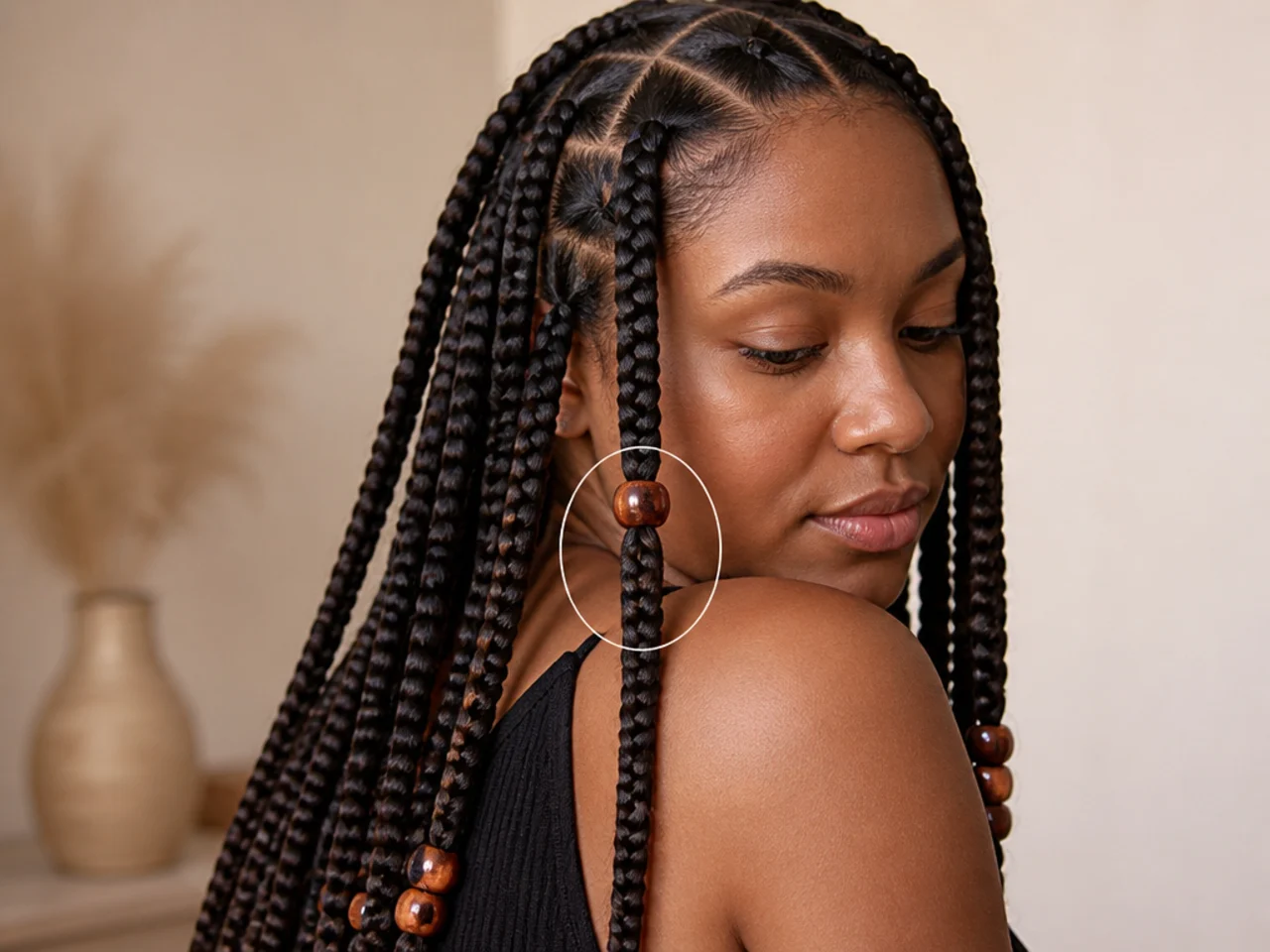
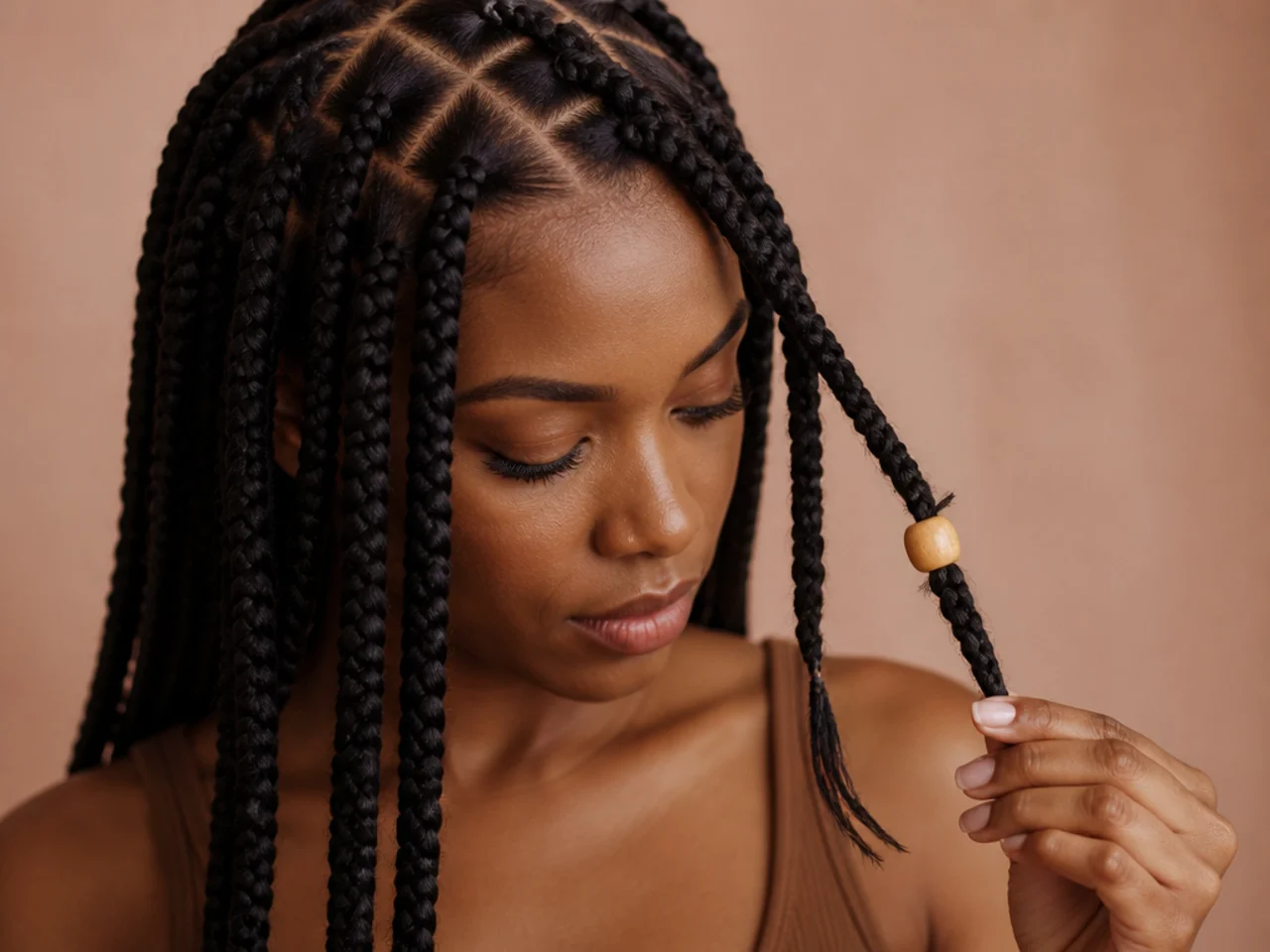
Bead hole size is the first constraint. Most hair beads are made for small and medium braids. A large braid needs a large-hole bead, and forcing a standard one on compresses the braid where it sits — which is exactly where it later snaps.
Placement changes the load, not just the look. A bead at the very end sits at the greatest possible distance from the root, so it pulls with the most leverage. The same bead at mid-shaft barely registers.
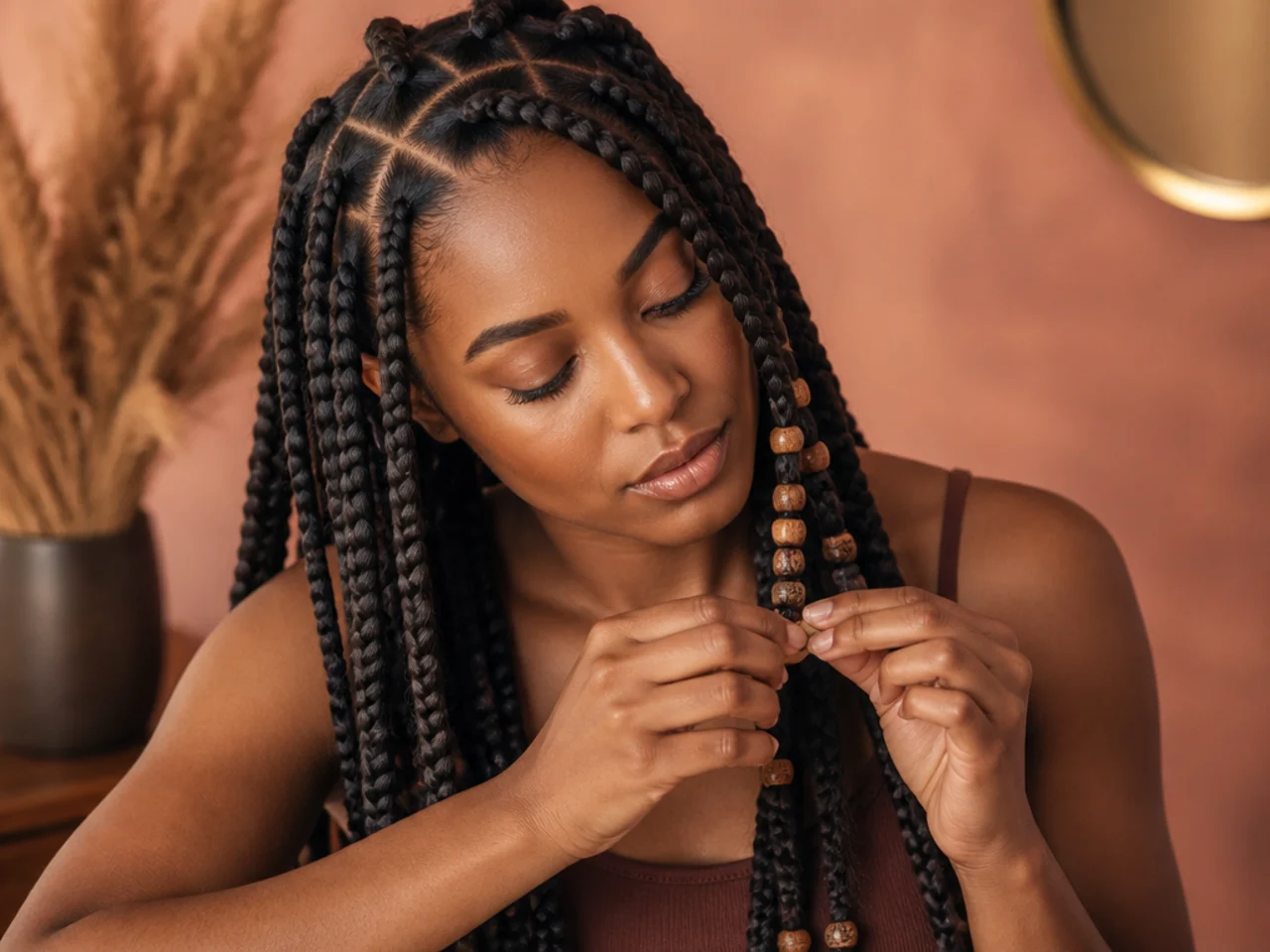
Beads need a stopper. A tight rubber band below the bead, or the braid end folded back through and sealed. Without one they migrate down and off.
Fewer beads read better at this size. On a wide braid, three or four beads look deliberate. A dozen looks crowded and adds real weight.
How to Choose Yours
Buy large-hole beads before the appointment. Do not rely on the salon having them. Check the hole against a braid width, not against the pack description.
Decide the placement height. Mid-shaft for minimum pull, tip for maximum sway, or scattered at two or three heights for a looser look.
Choose material for weight, not only appearance. Wood and plastic are light; glass and metal are noticeably heavier and compound with braid length.
Count them per braid, and count the braids. Four beads on twelve braids is an accent. Four beads on all sixty is a different style and about five times the weight.
The 15 Beaded Ideas
1. Gold Beads at Mid-Shaft
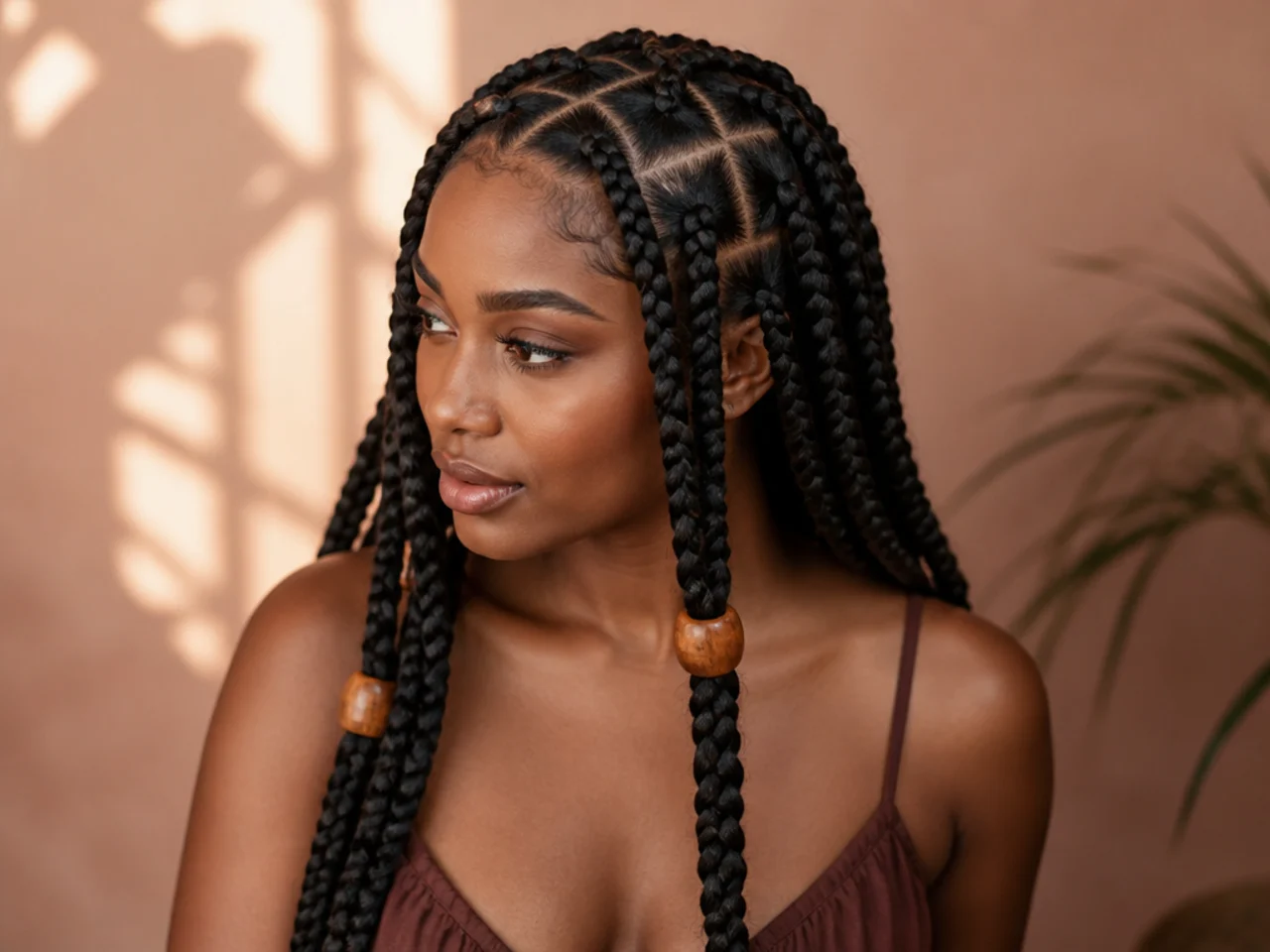
Metallic, placed high. The lowest-strain version of the classic look. Mid-shaft means less braid hanging below the bead, so there is far less leverage acting on the root.
2. Gold Beads at the Tips
The sway everyone pictures, and the heaviest placement available. The tip is the furthest point from the root, which makes it the position with the most leverage per gram.

3. Wooden Beads on Natural Braids
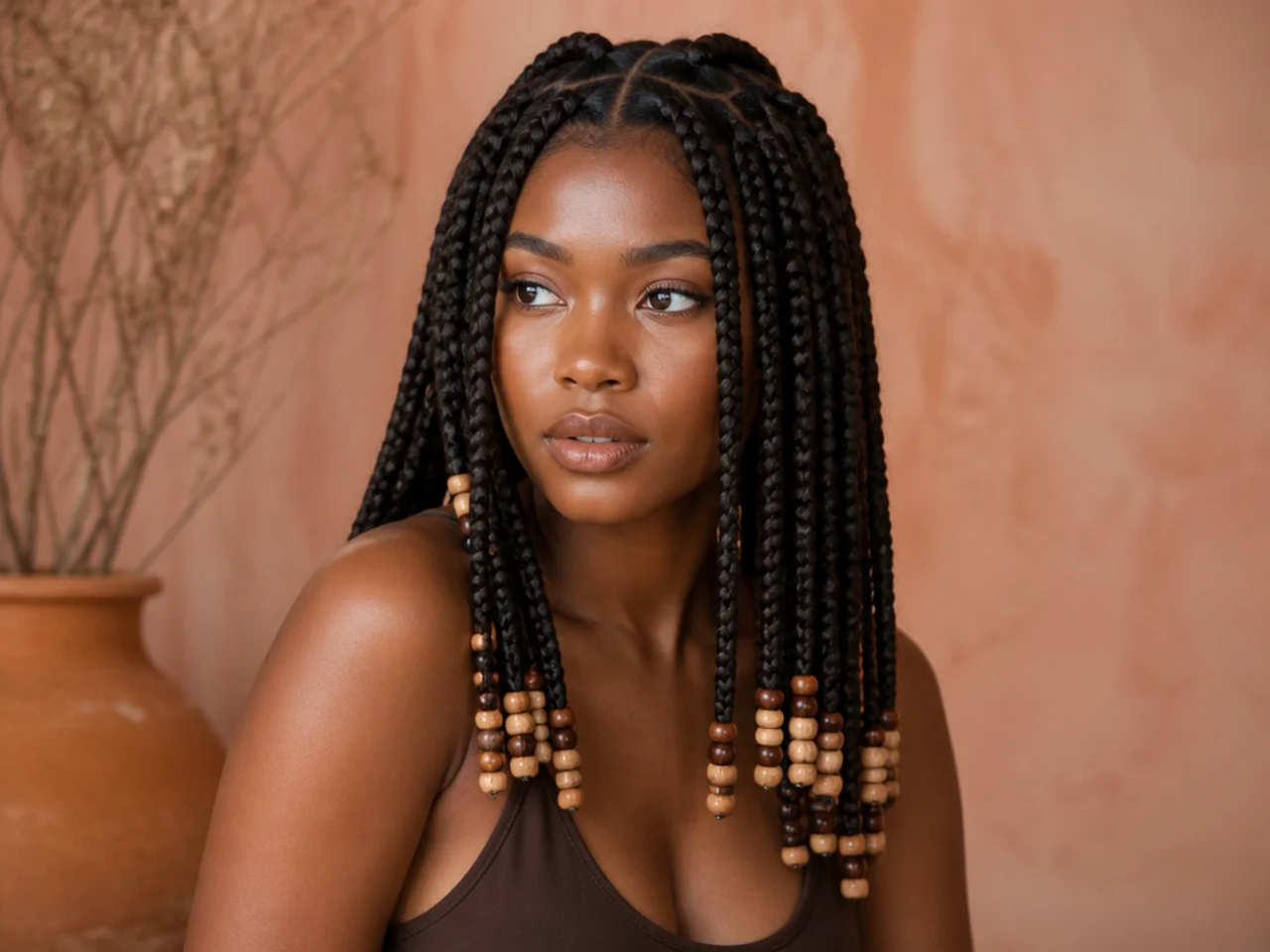
Matte wood against dark braiding hair. The lightest material here. Wood is the one material where a full head does not multiply into a real load.
4. Silver Beads on Dark Braids
Cool metal, high contrast, and it reads more modern than gold. Silver stands against dark braids because the value gap is wider than gold against the same base.
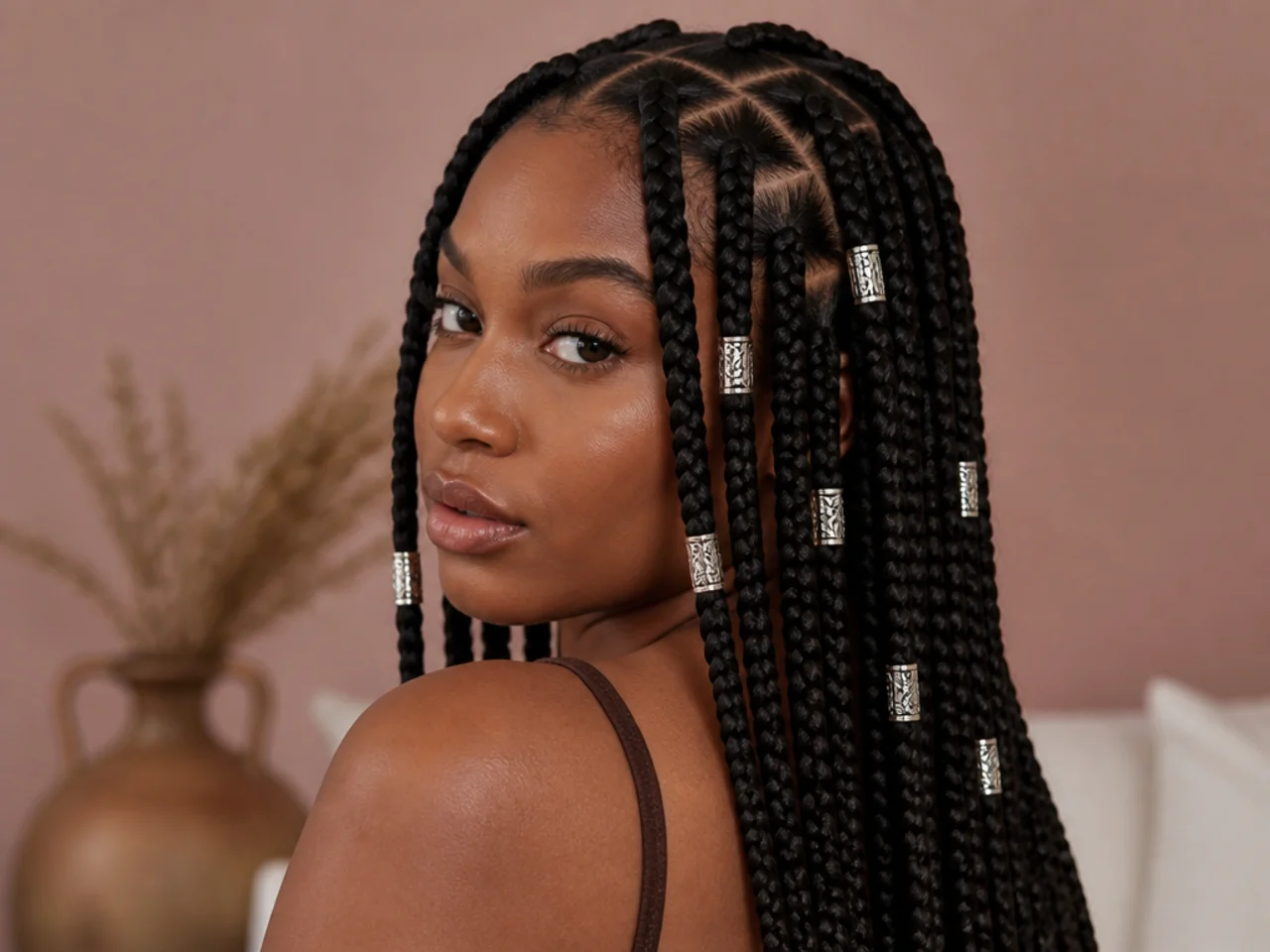
5. Beads on the Front Braids Only
Six beads total, all at the face. Maximum visibility, minimum weight. The front is a tiny fraction of the braids and the majority of what anyone sees, which is the best trade on this page.

6. Scattered Beads at Mixed Heights
Two or three heights across the head. Deliberately irregular. Mixed heights also spread the load rather than concentrating it all at one distance from the roots.
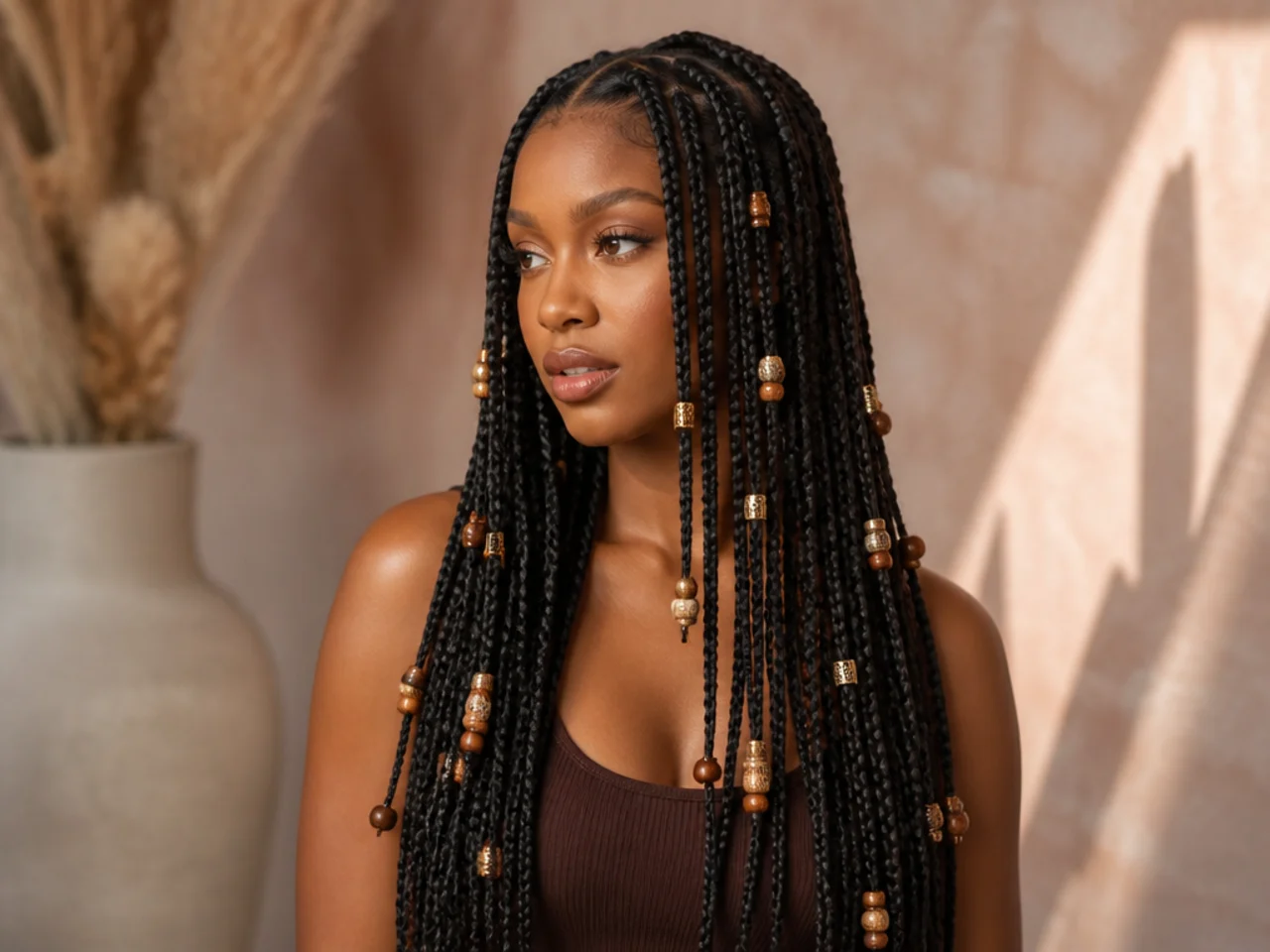
7. Stacked Beads
Three or four beads in a run on a handful of braids only. Stacking multiplies the weight on the few braids carrying it, so keep that handful genuinely small.

8. Beads Marking the Curl Transition
Placed exactly where a braid releases into curl. Neat and functional. The bead marks a boundary you would otherwise be hiding, which turns it into a feature.

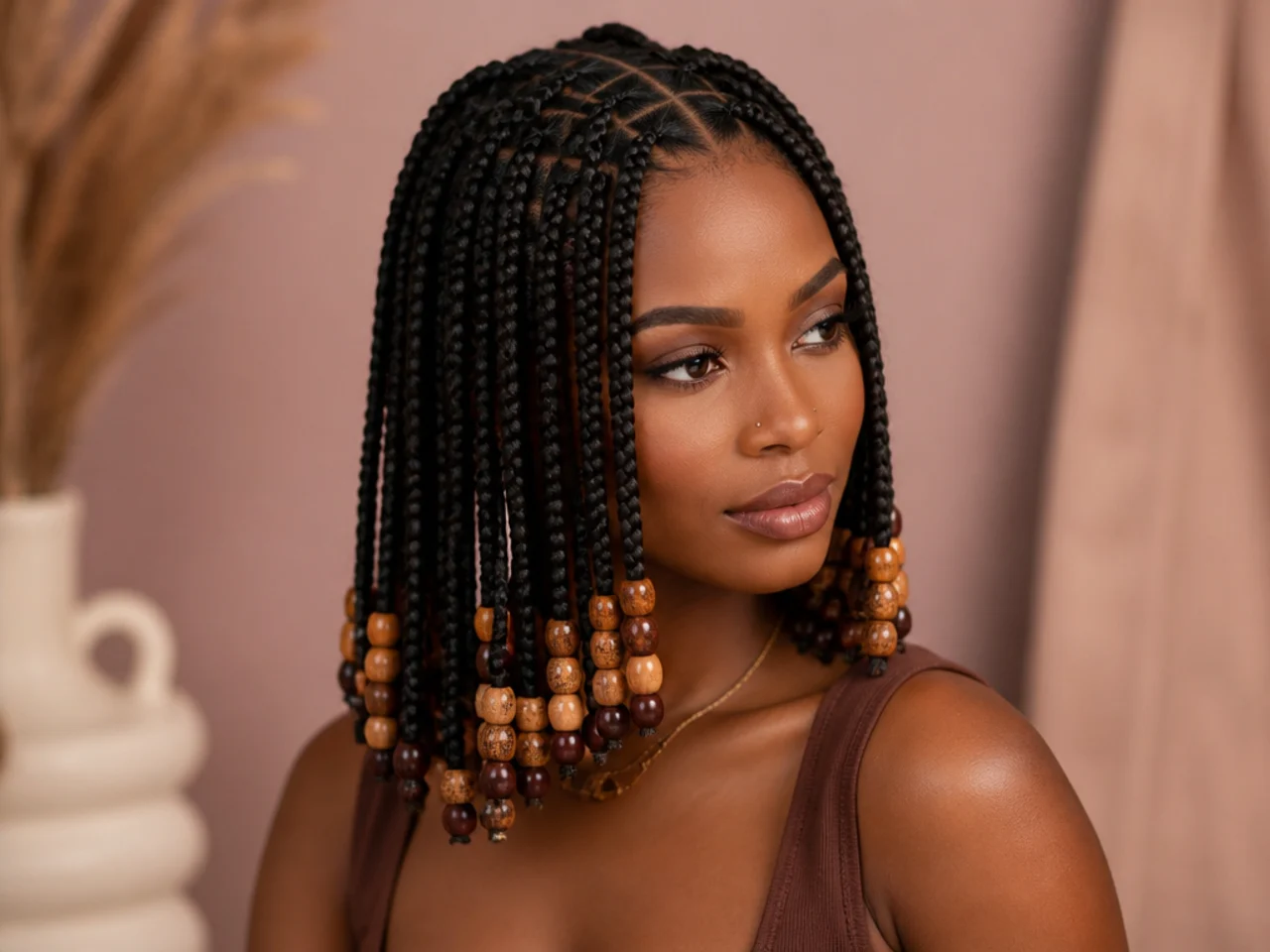
9. Beads on a Braid Bob
Short braids, so the beads sit high by default and weigh almost nothing. Less braid below the bead means less leverage, which is why a bob tolerates tip placement that a long set does not.
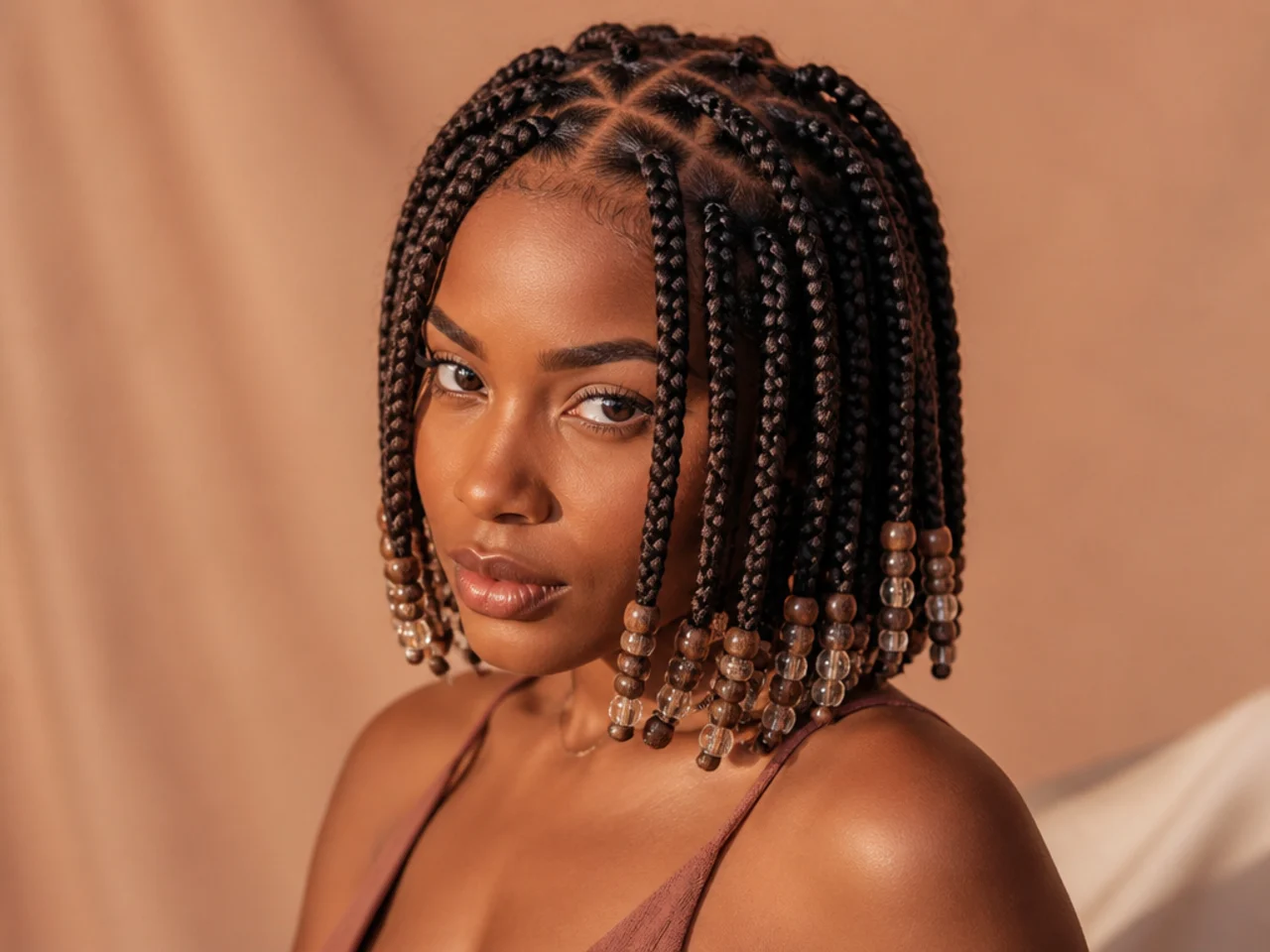
10. Beads with Blonde Braids
Gold on blonde reads tonal; silver on blonde reads sharp. Choose on that basis — gold blends into a blonde set and silver stands against it.

11. Coloured Glass Beads
Translucent colour. Heavier than they look, so use them sparingly. Glass is denser than it appears, and it is the multiplication rather than any single bead that catches people out.

12. Beads with Gold Cuffs Together
Cuffs high, beads low. Two accessories that do not compete. Separating them by height means each is read on its own rather than as clutter.
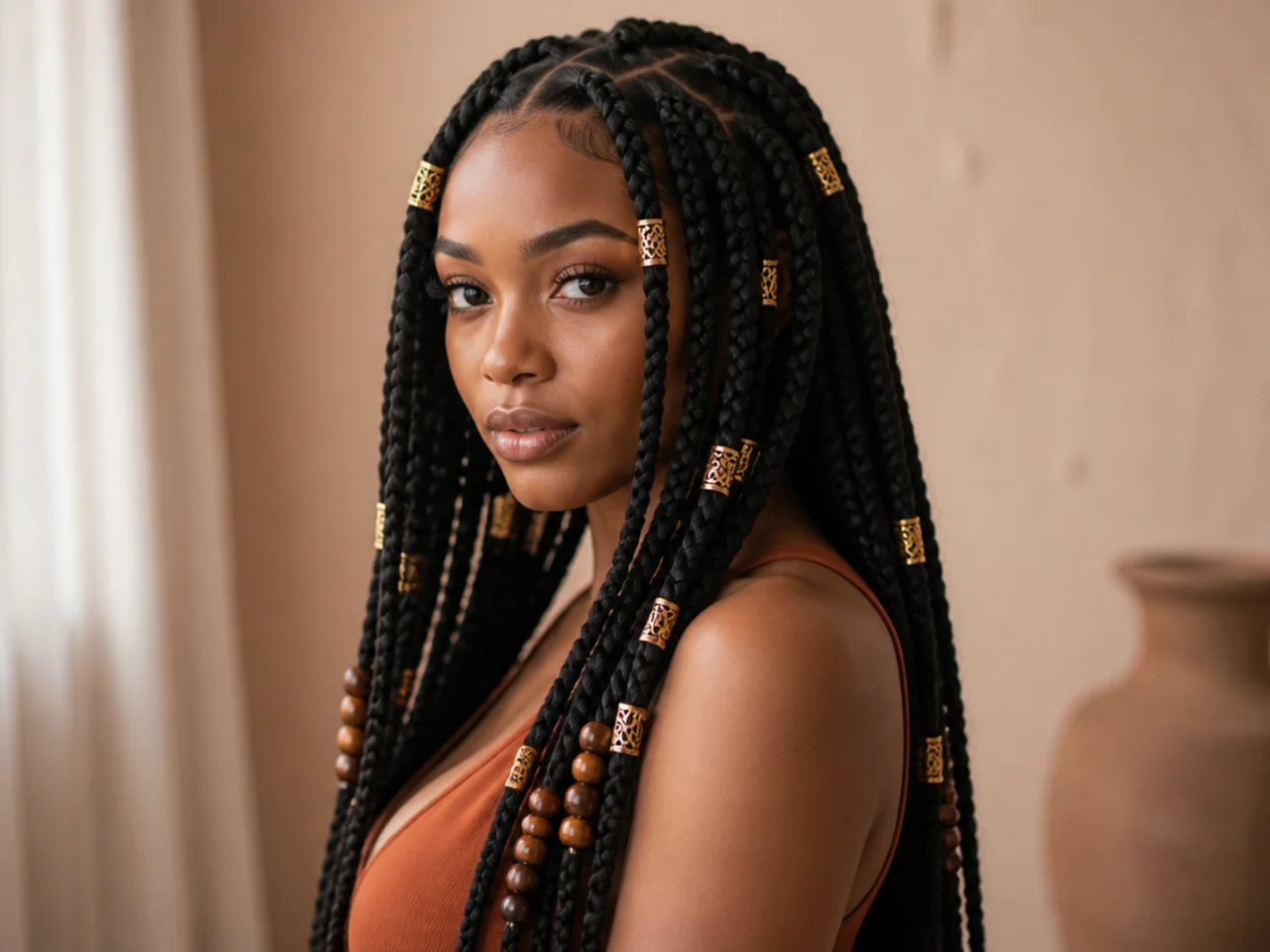
13. Beads on a Half-Up Style
Gathered at the crown, beads visible on the falling section. A half up puts the beaded section at eye level from behind, which is where beads show best.
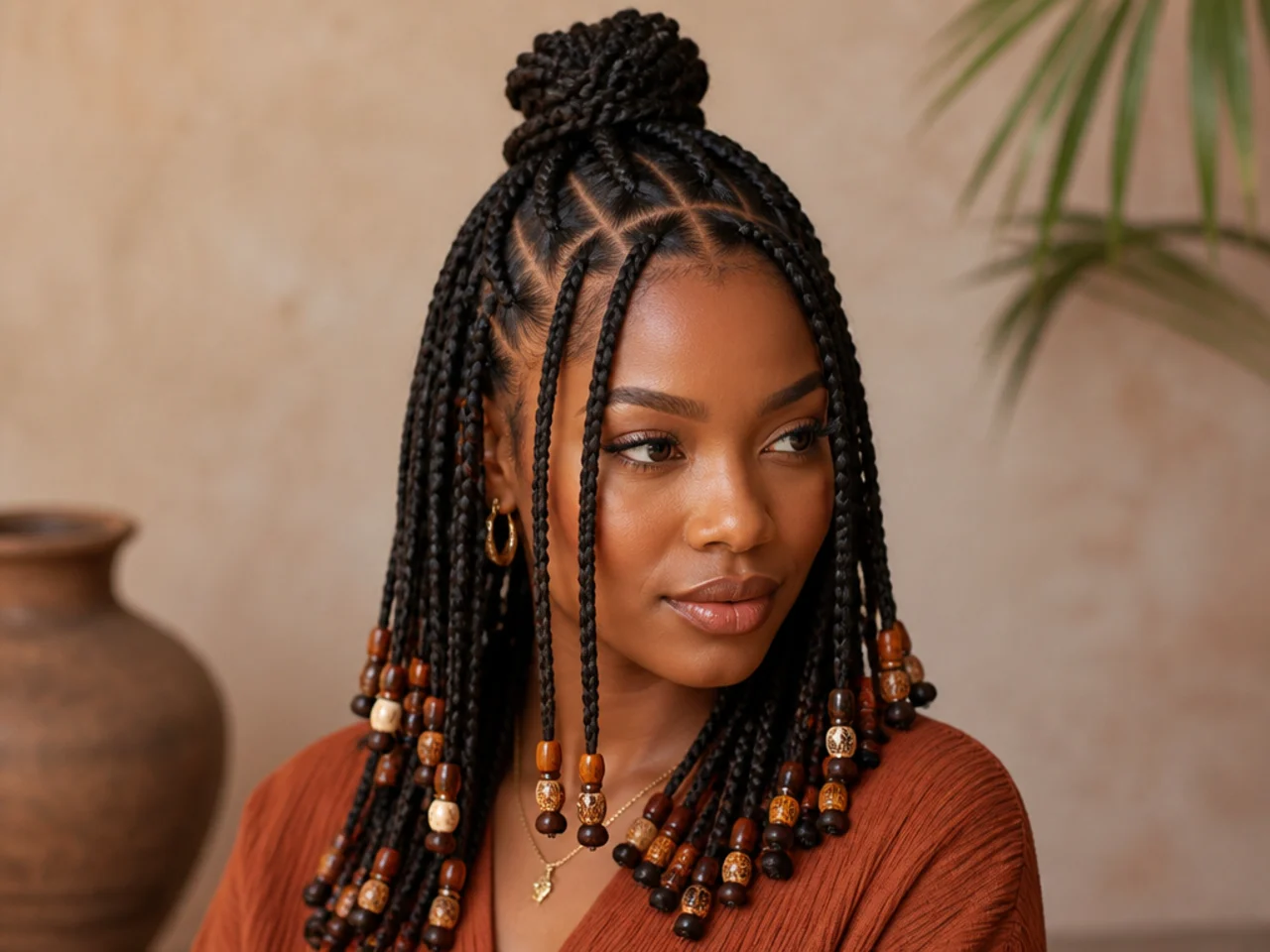
14. Beads on Shoulder-Length Braids
Short enough that even tip placement stays comfortable. Shoulder length is the point where you can bead the ends without thinking about the weight at all.
15. A Bead Sitting Where a Braid Has Compressed
What forcing a small bead onto a large braid does. Worth recognising. The compression point becomes a thin spot, and a thin spot under a bead is where the braid eventually gives way.
Styling and Upkeep
Check the stoppers weekly. A rubber band that has rolled or perished lets the bead work its way down and off, usually without you noticing.
Look at the braid where the bead sits. If it has thinned or frizzed at that exact point, the bead is too tight and needs to come off before the braid gives way.
Take beads out before washing. They trap water inside the hole, and a wet braid held inside a bead stays damp for days.
Remove them at night if there are many. Beads against a pillow are noisy, and they concentrate weight on whichever braids you are lying on.
Do not add more as the style ages. By week four the roots have already loosened; extra weight then is the worst possible timing.
Mistakes to Avoid
Using standard-hole beads. They pinch the braid and create the point where it snaps.
Loading beads at the tips of a waist-length set. The heaviest arrangement possible.
Skipping the stopper. The bead simply leaves.
Choosing glass or metal for a full head. Multiply the weight by sixty before deciding.
Washing with beads on. Water gets trapped and stays there.
FAQ
Do beads fit large braids? Only large-hole ones. Standard beads pinch.
Where should they go? Higher than most people place them — mid-shaft pulls far less than the tip.
How do you stop them sliding off? A tight rubber band below the bead, or fold and seal the end.

Final Thoughts
Buy the beads yourself, check the hole against an actual braid, and place them higher than the reference photo does. Those three decisions cover every problem beads cause at this braid size, and none of them can be made retrospectively once the hair is in.
For the curl transition beads sit so well on see large knotless braids with curls, and for the full range see 25 large knotless braids ideas. More in Braids & Protective Styles.
Frequently asked questions
Related posts
See all posts
20 Waterfall Mermaid Braid Ideas That Hold
Read more
15 Side Mermaid Braid Ideas That Sit Right
Read more
20 Side Part Medium Knotless Braids I Saved
Read more