15 Large Knotless Braids With Curls
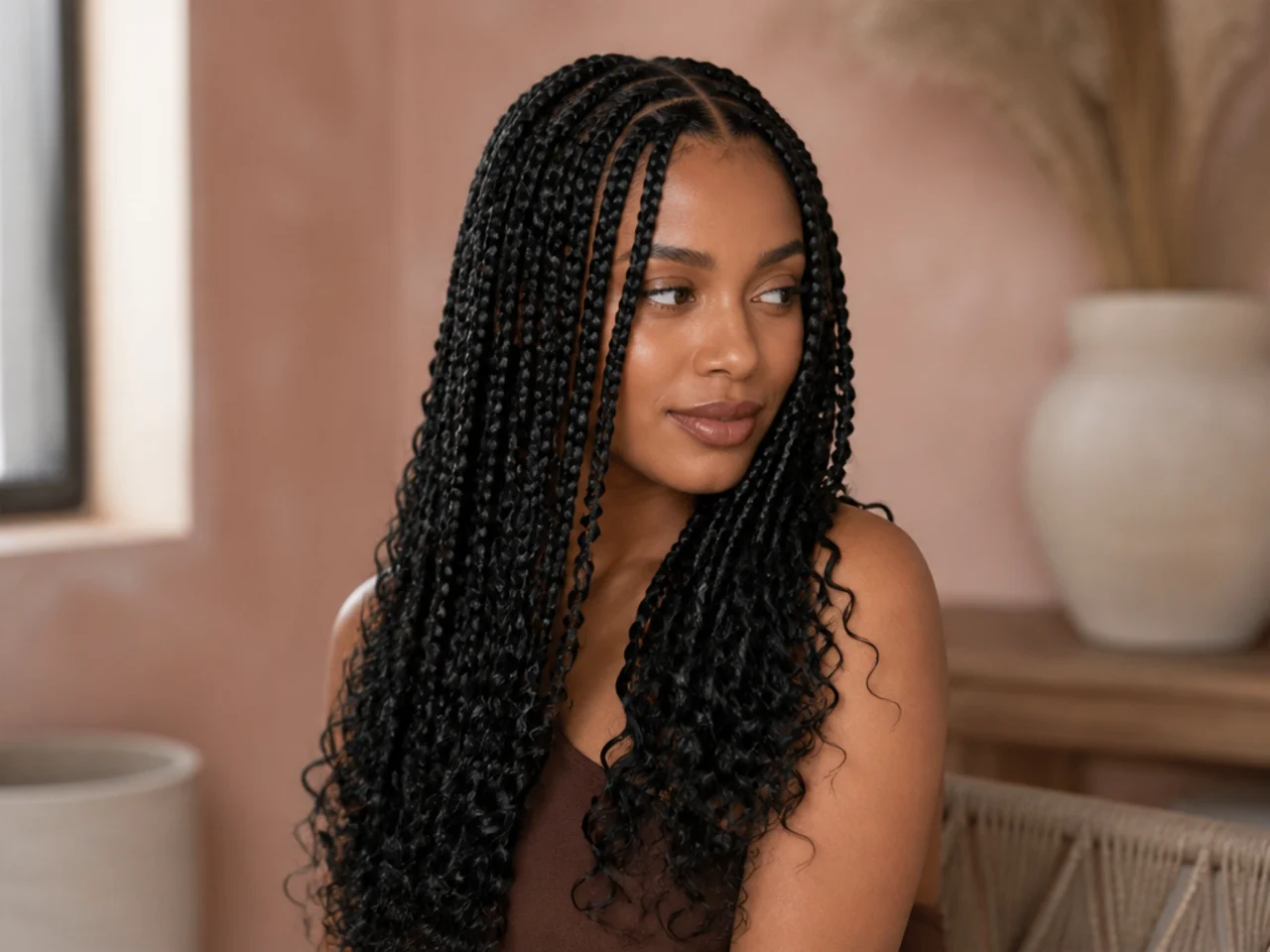
Fifteen large knotless braids with curls, and the decision that actually defines the look — not the curl pattern, but how far down the braid the curl starts. That transition point is also where every tangle begins.
In this article · 22
- What Makes Curly Large Knotless Work
- How to Choose Yours
- The 15 Curly Ideas
- 1. French Curl Large Knotless
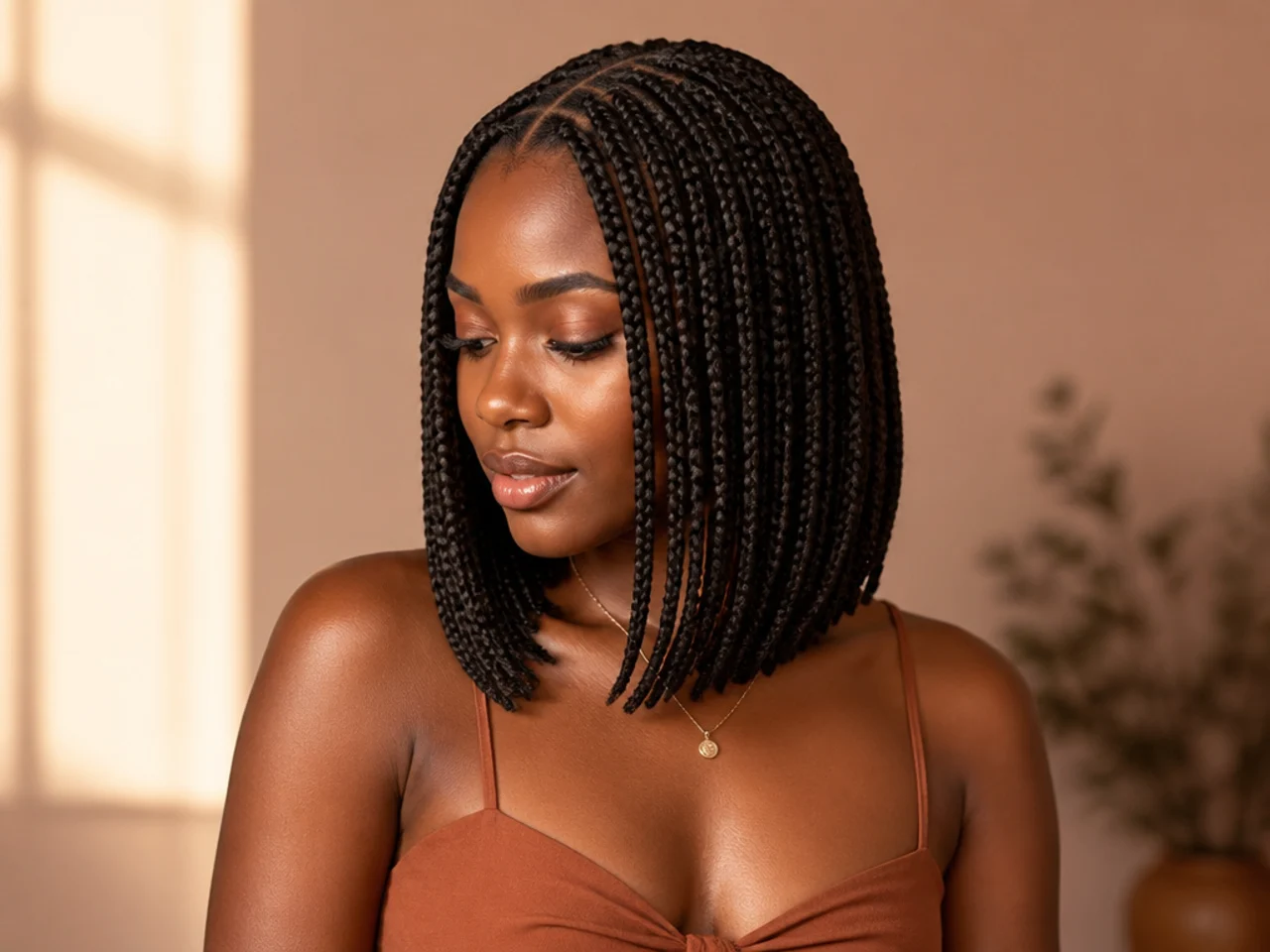
- 2. Curly Ends Only
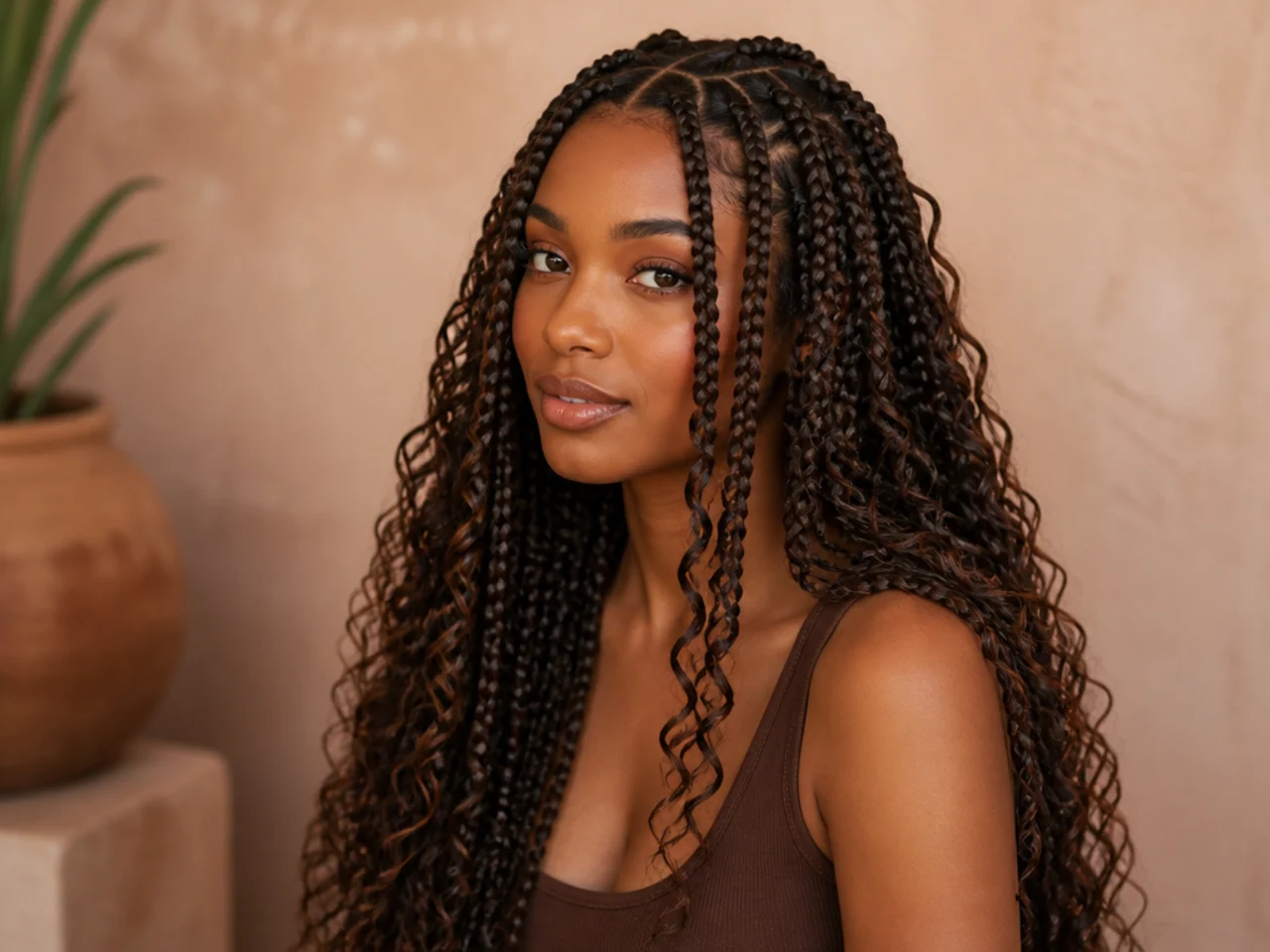
- 3. Mid-Shaft Curl Release
- 4. Deep Wave Large Knotless
- 5. Water Wave Large Knotless
- 6. Tight Spiral Curl Ends
- 7. Curly Braids at Shoulder Length
- 8. Waist-Length French Curl
- 9. Honey Blonde Curly Braids
- 10. Ombré Curl Release
- 11. Curly Braids with a Centre Part
- 12. Half-Up Curly Braids
- 13. Curly Braids Over One Shoulder
- 14. Curly Braids with Gold Cuffs at the Transition
- 15. Curly Braids at Week Four
- Styling and Upkeep
- Mistakes to Avoid
- FAQ
- Final Thoughts
Large knotless braids with curls get discussed as a curl-pattern choice — water wave, deep wave, French curl. That is the smallest of the decisions involved.
The real decision is where the curl starts. The same curl pattern beginning at mid-back and beginning three inches from the tip produce two completely different styles, and the second one is a fraction of the price.
What Makes Curly Large Knotless Work
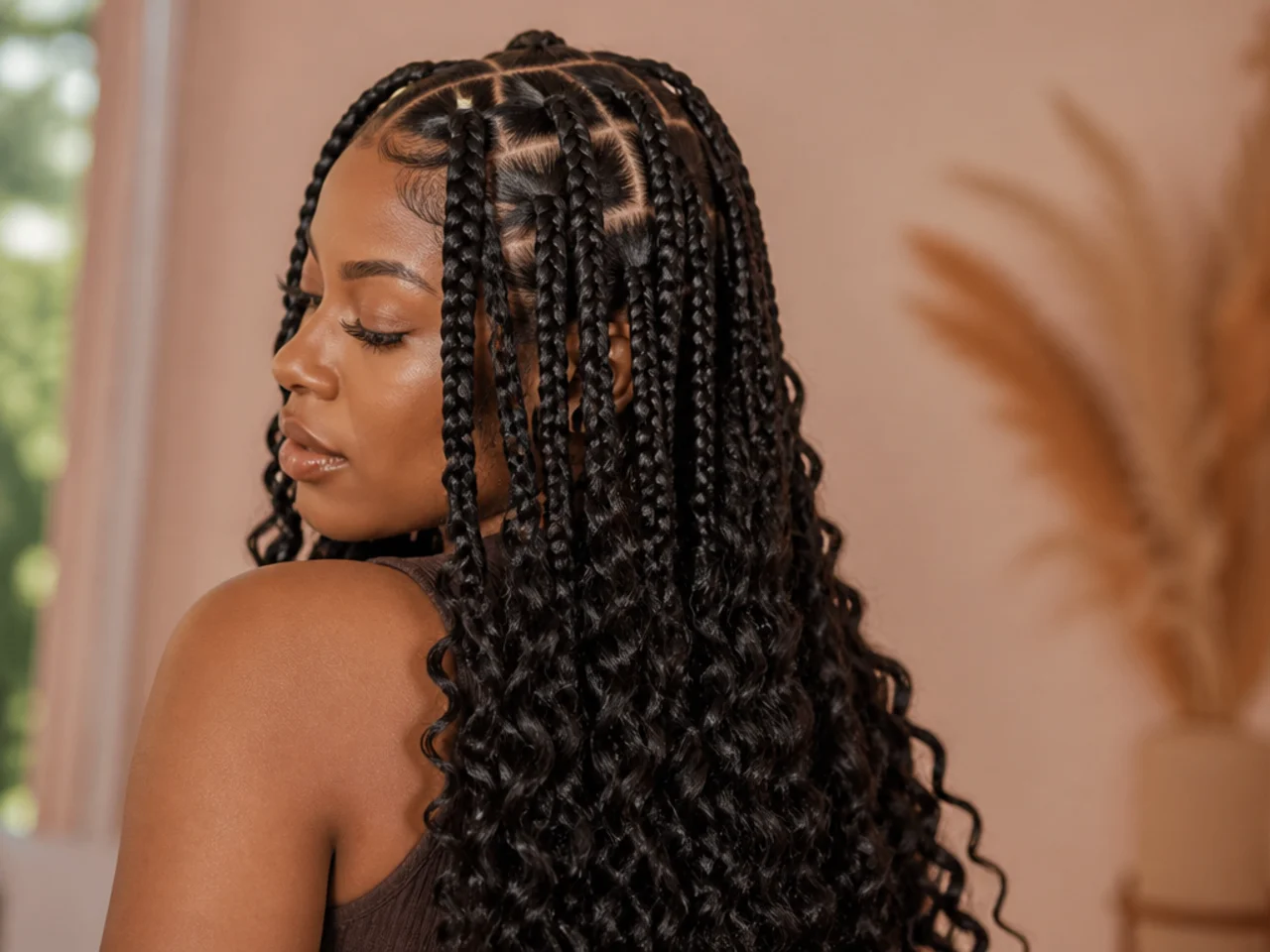
The braiding is unchanged. The root, the sectioning and the knotless feed-in are exactly as they would be on a plain set. Only the hair going in changes partway down.
You are paying for two textures. Straight or pre-stretched extension for the braided length, curly extension for the released section. The longer the curl section, the more of the second you need.
The transition is a snag point. Where the tight braid stops and loose curl begins, two textures meet and catch on each other. That is where matting starts — not at the ends.
Curl adds volume, not much weight. A curled section takes up far more space than a braided one of the same length, which is why these sets look fuller than they weigh.
How to Choose Yours
Pick the transition height first. Mid-back for the full French curl look, mid-shaft for a balanced release, the last few inches for a soft finish on an otherwise plain braid.
Match the curl pattern to how much you want to handle it. A loose wave separates with fingers and forgives neglect. A tight defined curl looks better on day one and mats faster if it is left alone.
Shorter curl sections are far less work. Three inches of curl on a mid-back braid is a five-minute nightly job. Eighteen inches is not.
Budget for human-hair curl if you want to wash it. Synthetic curl loses its pattern once it has been wet and worked, and it does not come back.
The 15 Curly Ideas
1. French Curl Large Knotless
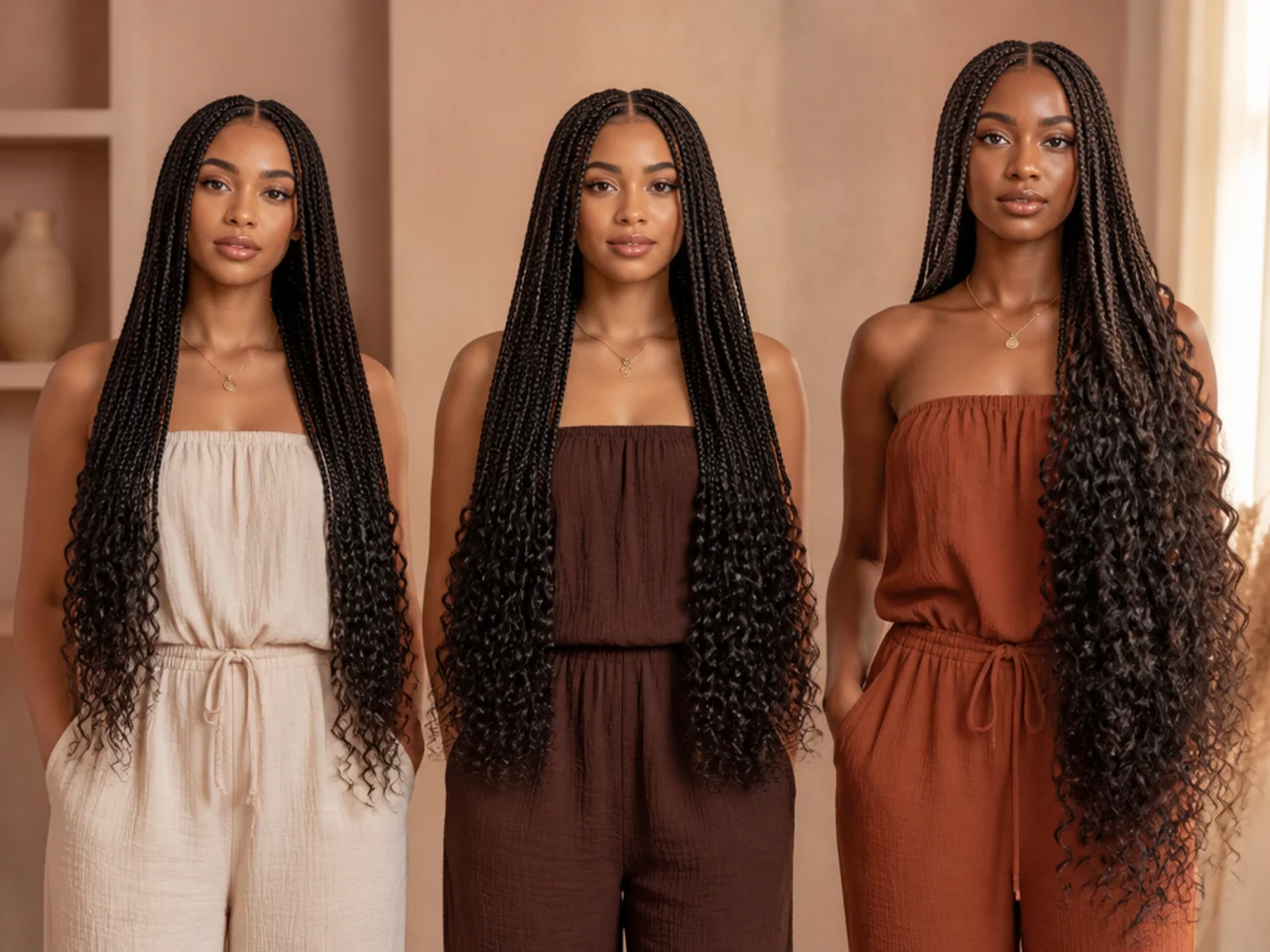
Curl released from mid-back. The most dramatic transition on this page. It is also the most curly extension you will buy, since everything below the release point is the second texture.
2. Curly Ends Only
The last three inches curled. The lowest-effort version by a distance. Three inches is a two-minute nightly job where eighteen inches is a commitment, and the look from the front is much the same.
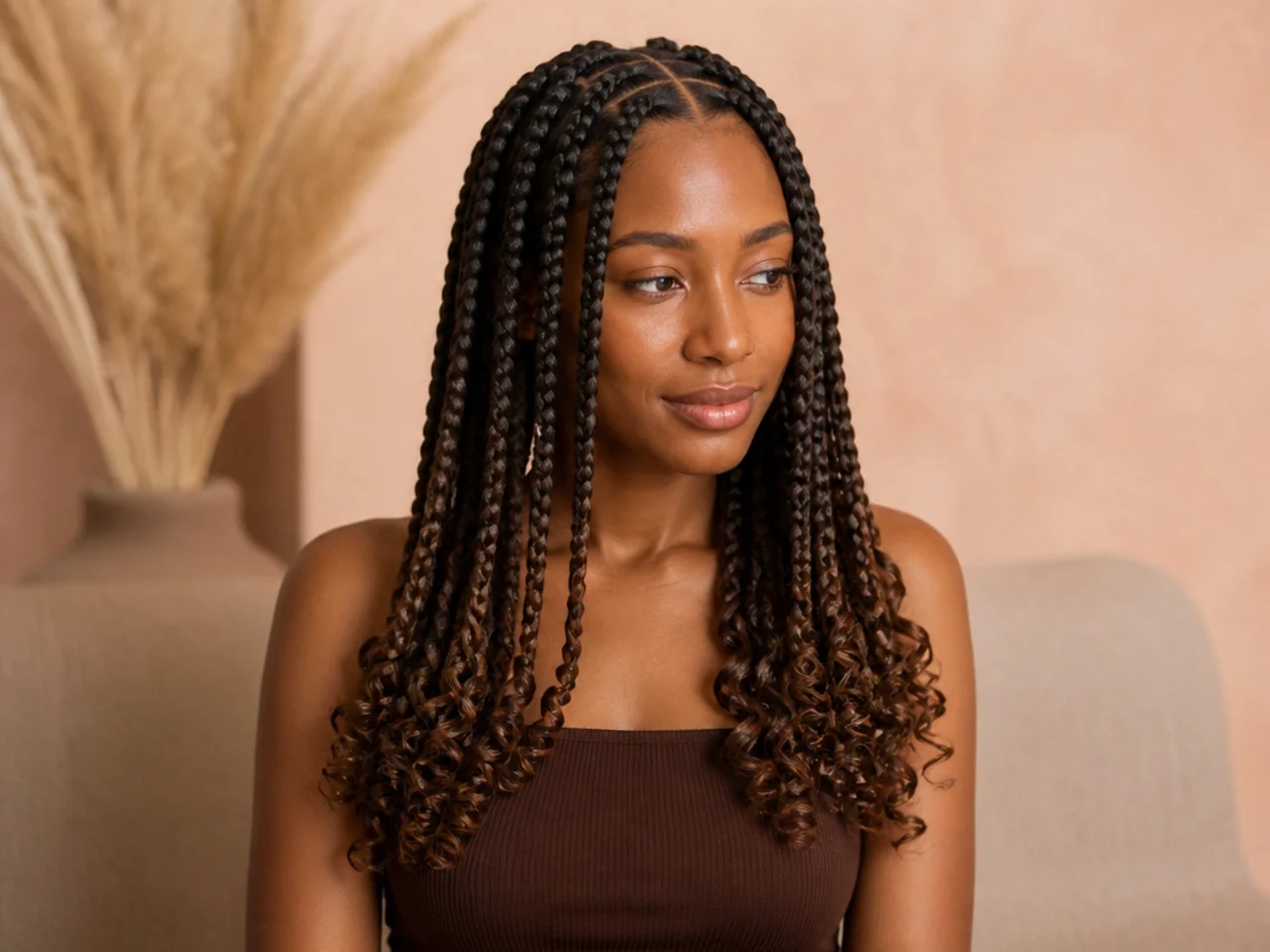
3. Mid-Shaft Curl Release
Curl from roughly halfway. The balanced middle option. Halfway keeps the curl clear of your collar while still giving enough of it to read as a curly set.
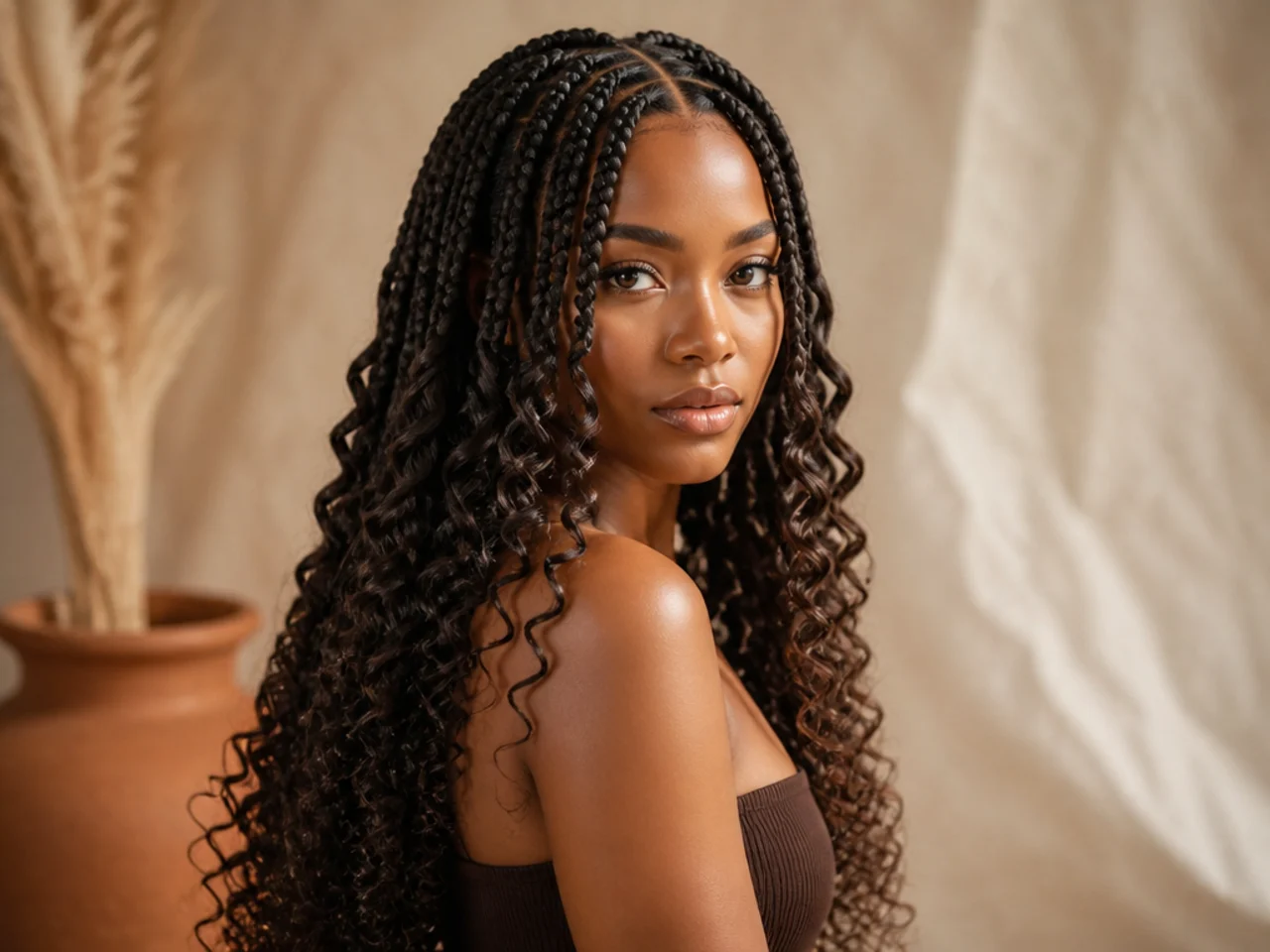
4. Deep Wave Large Knotless
A defined S-wave rather than a spiral. Reads as texture, not ringlets. The wider bend also has less surface touching its neighbours, which is why deep wave mats more slowly than a tight spiral.
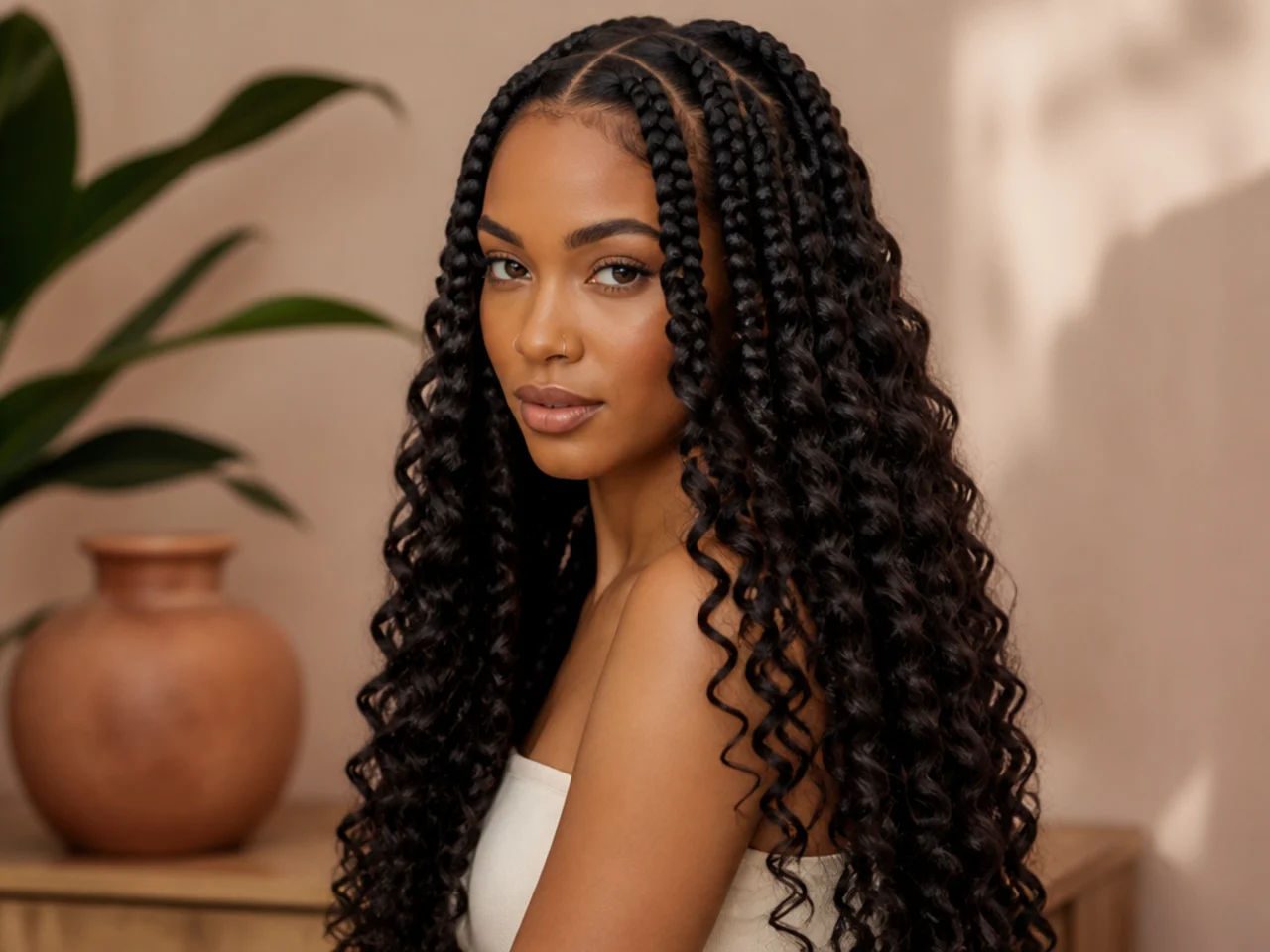
5. Water Wave Large Knotless
Looser and more irregular. The most forgiving pattern to live with. Irregularity hides the days you skip separating it, which no uniform pattern does.
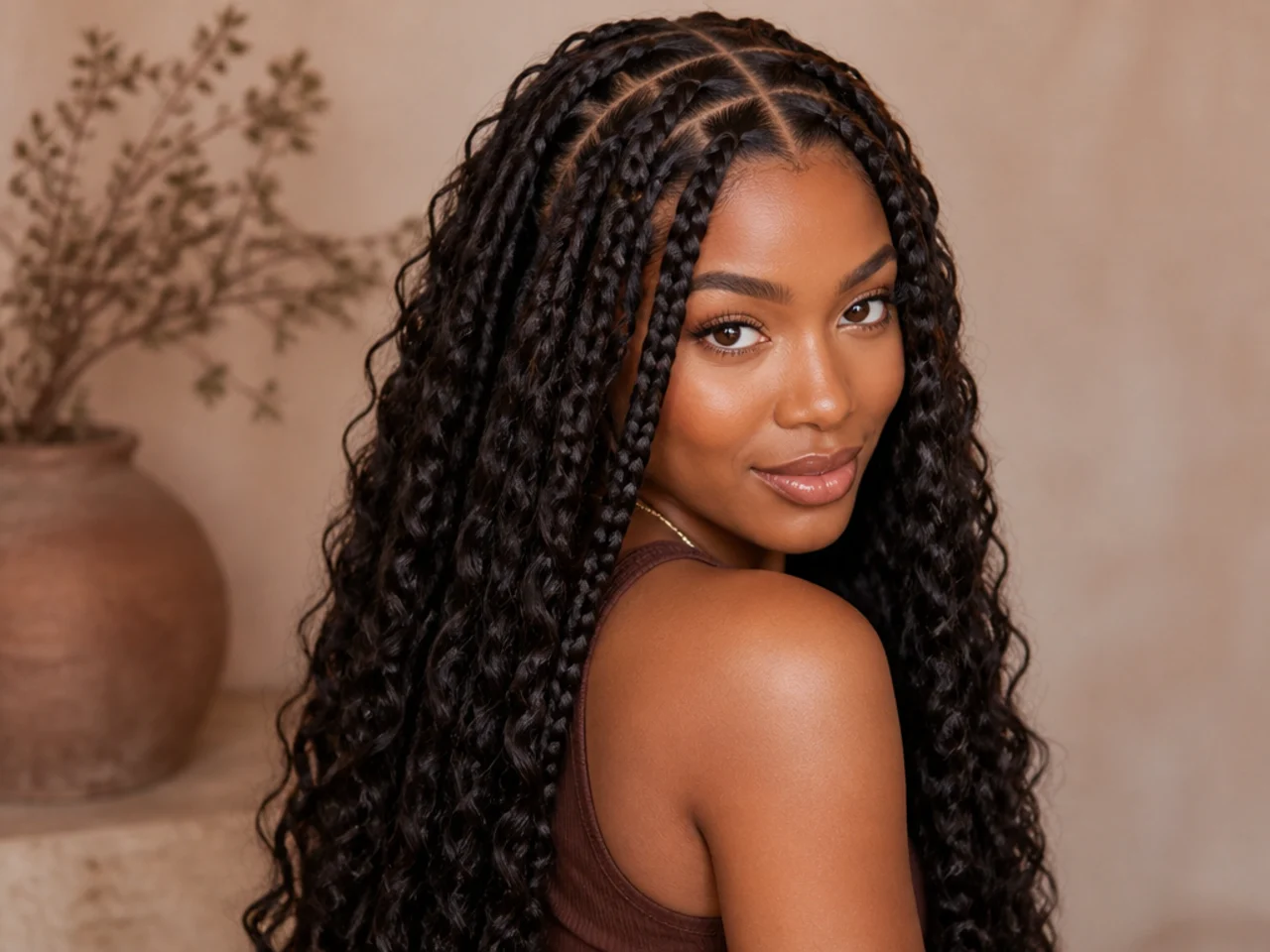
6. Tight Spiral Curl Ends
Small defined spirals on the final inches. High impact, high upkeep. A tight spiral has the most surface in contact with the curls beside it, and contact is what causes matting.
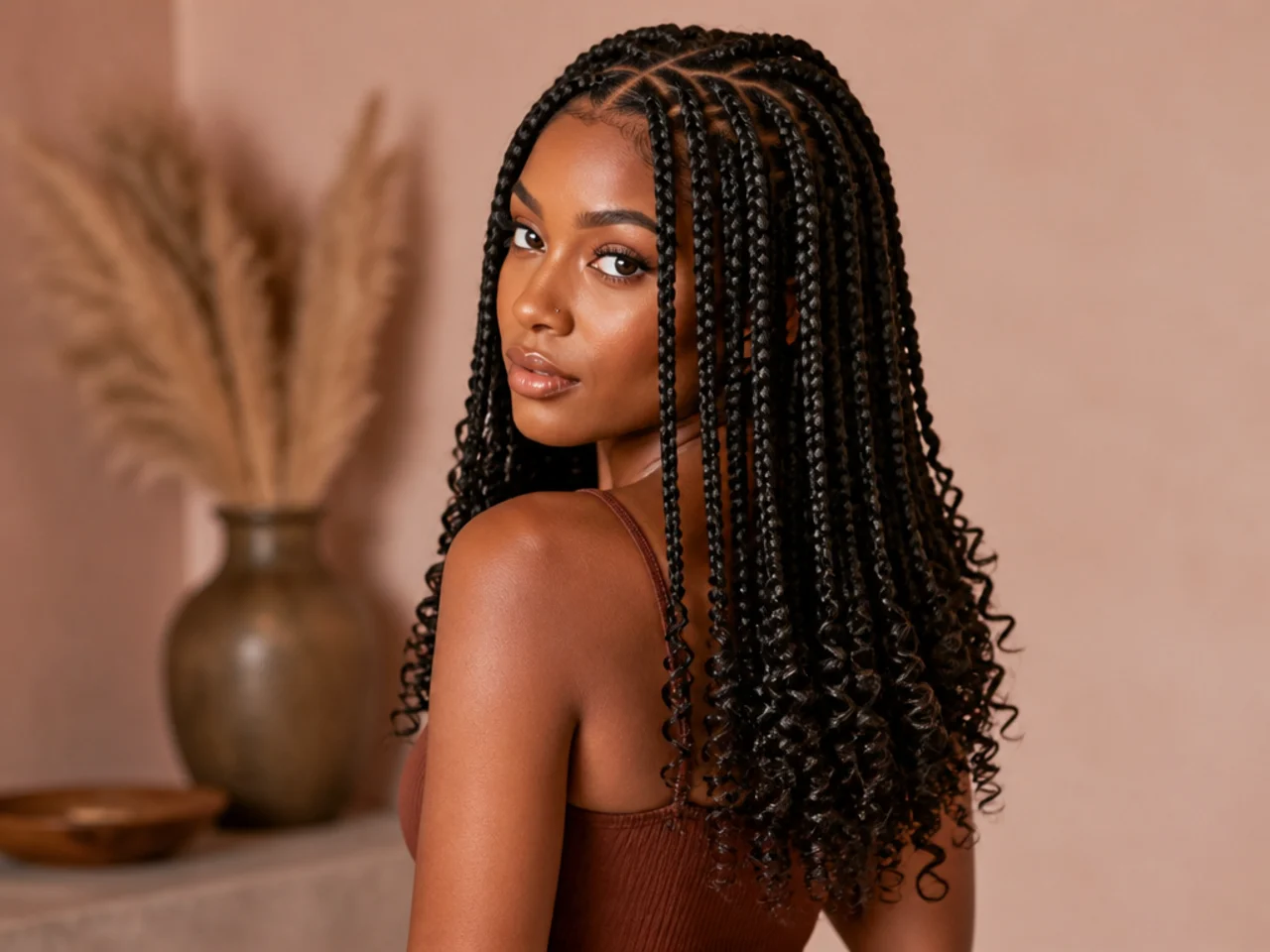
7. Curly Braids at Shoulder Length
Short overall, so the curl section is short too. Very manageable. Length of curl drives the daily work, so a short set is the least demanding curly install available.
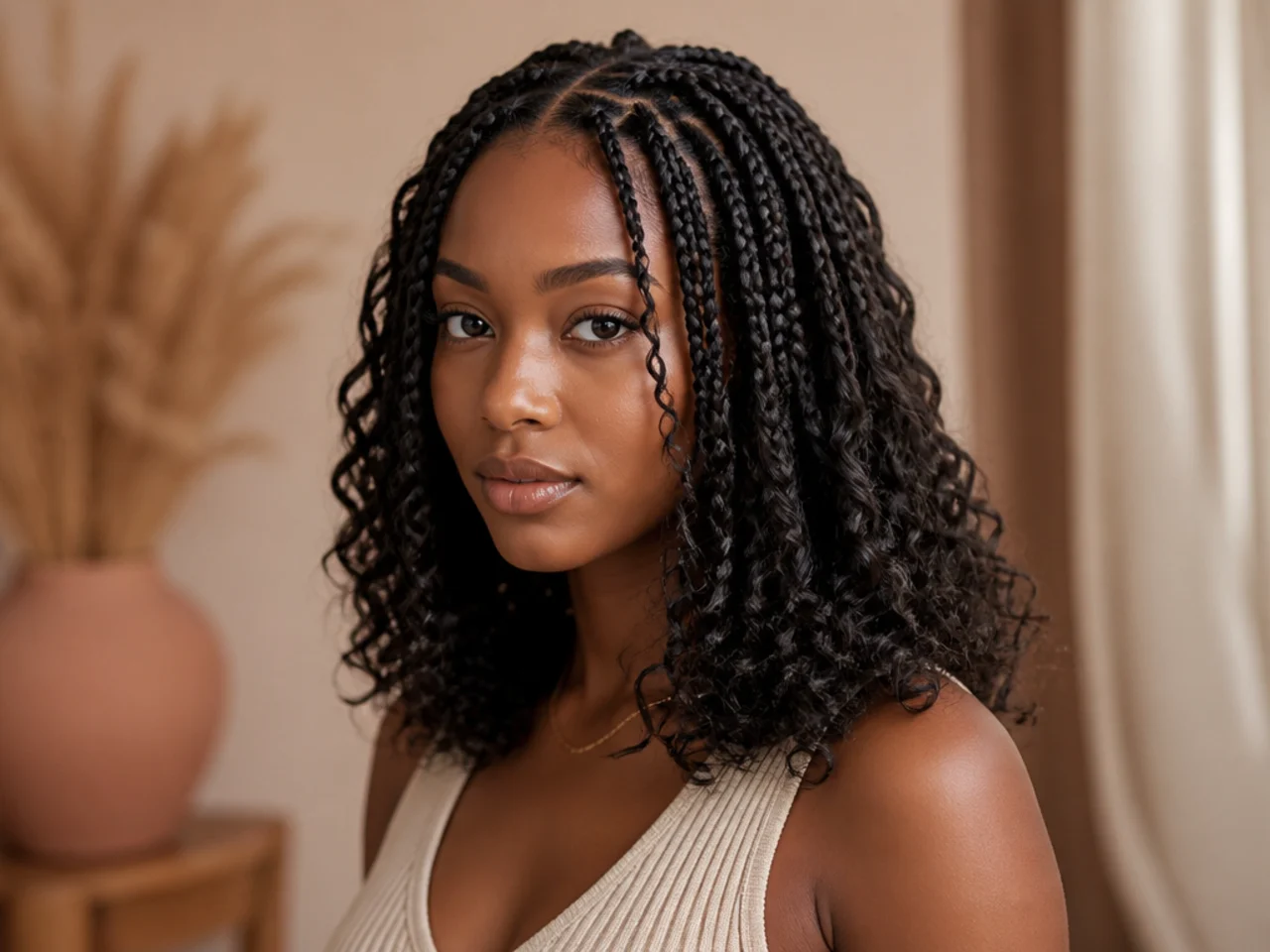
8. Waist-Length French Curl
The longest version. Beautiful, and the most daily handling of anything here. Waist-length curl spends the whole day rubbing against clothing, which is where the tangling actually comes from.
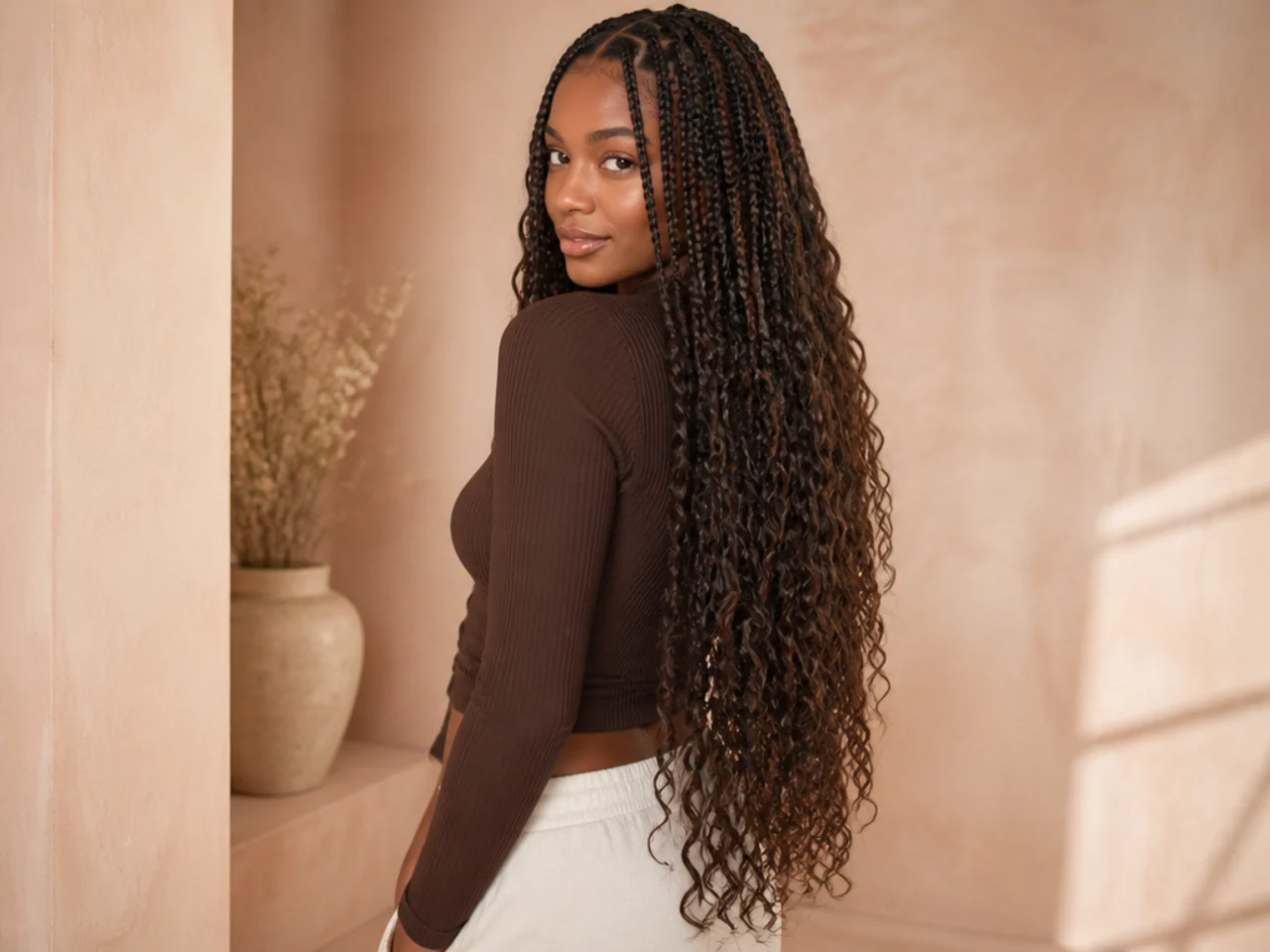
9. Honey Blonde Curly Braids
Warm colour, and curl shows a colour far more than a braid does. A curl presents its surface from many angles at once where a braid shows only a narrow face, so the same shade reads brighter.
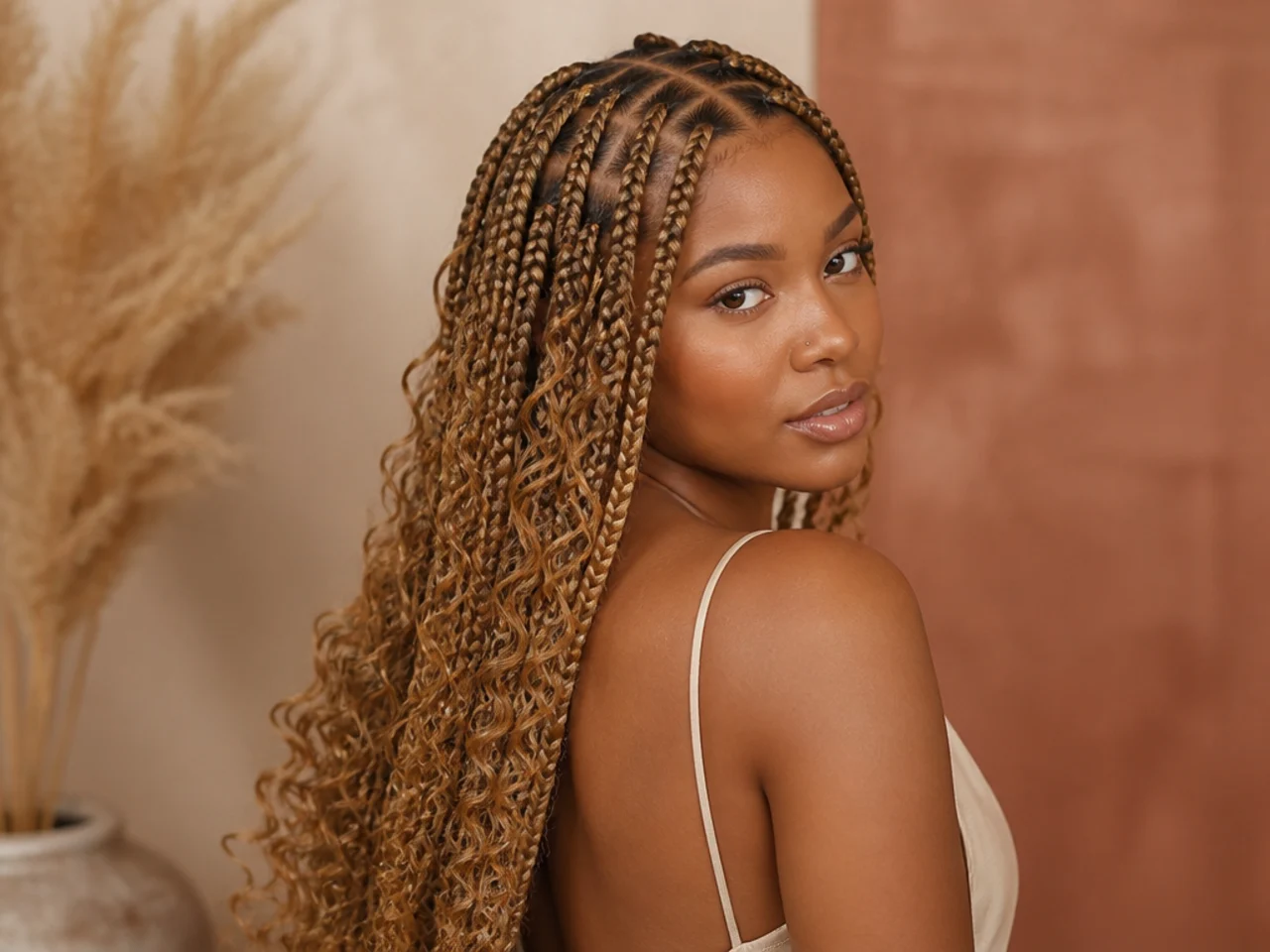
10. Ombré Curl Release
Dark braid, lighter curl. The transition doubles as a colour change. Putting both changes at one height gives you a single boundary rather than two, which reads far cleaner.
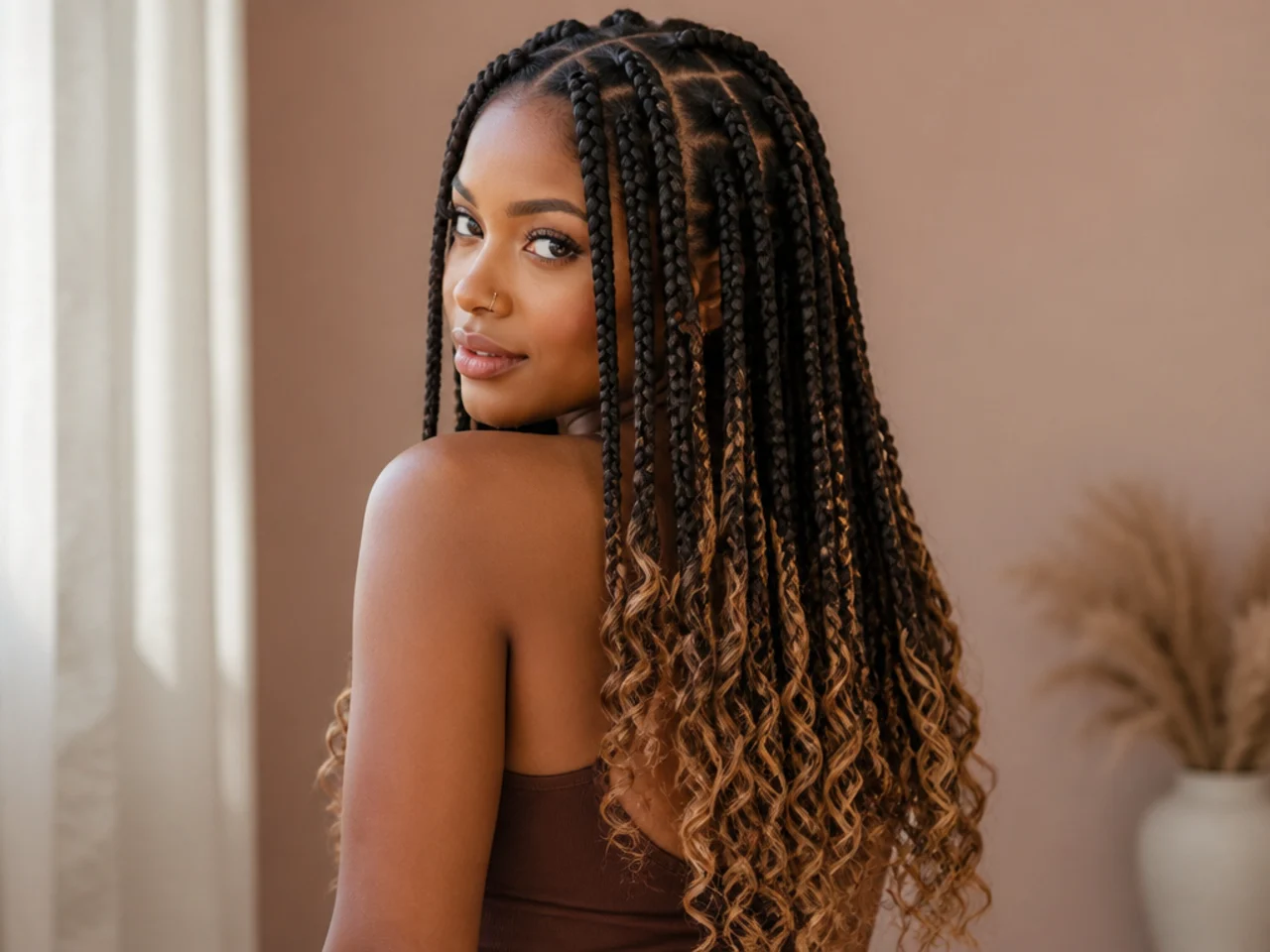
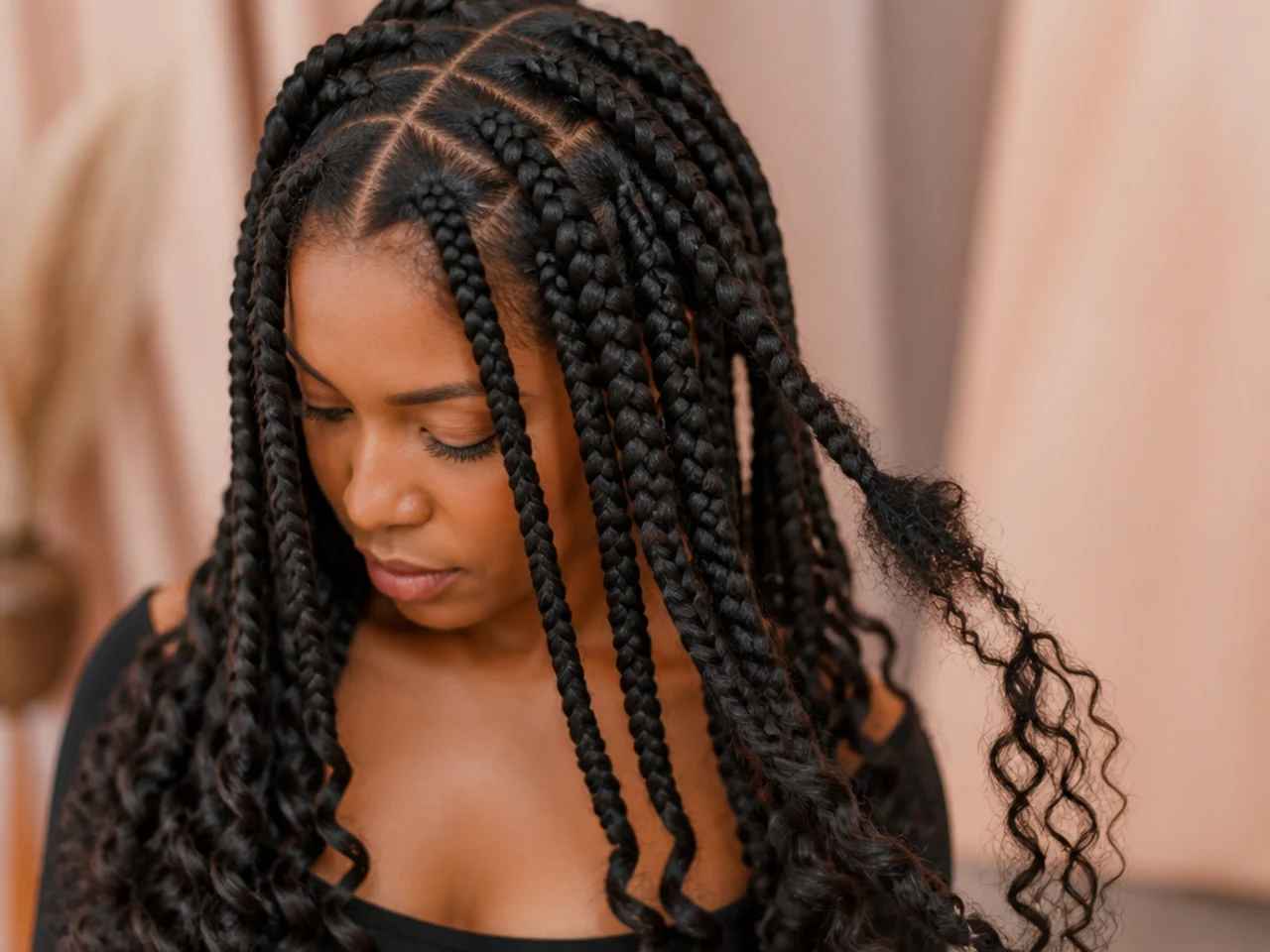
11. Curly Braids with a Centre Part
A clean grid at the top against loose curl below. The contrast is the point — a sharp parting makes the loose curl read as deliberate rather than as an unravelling braid.
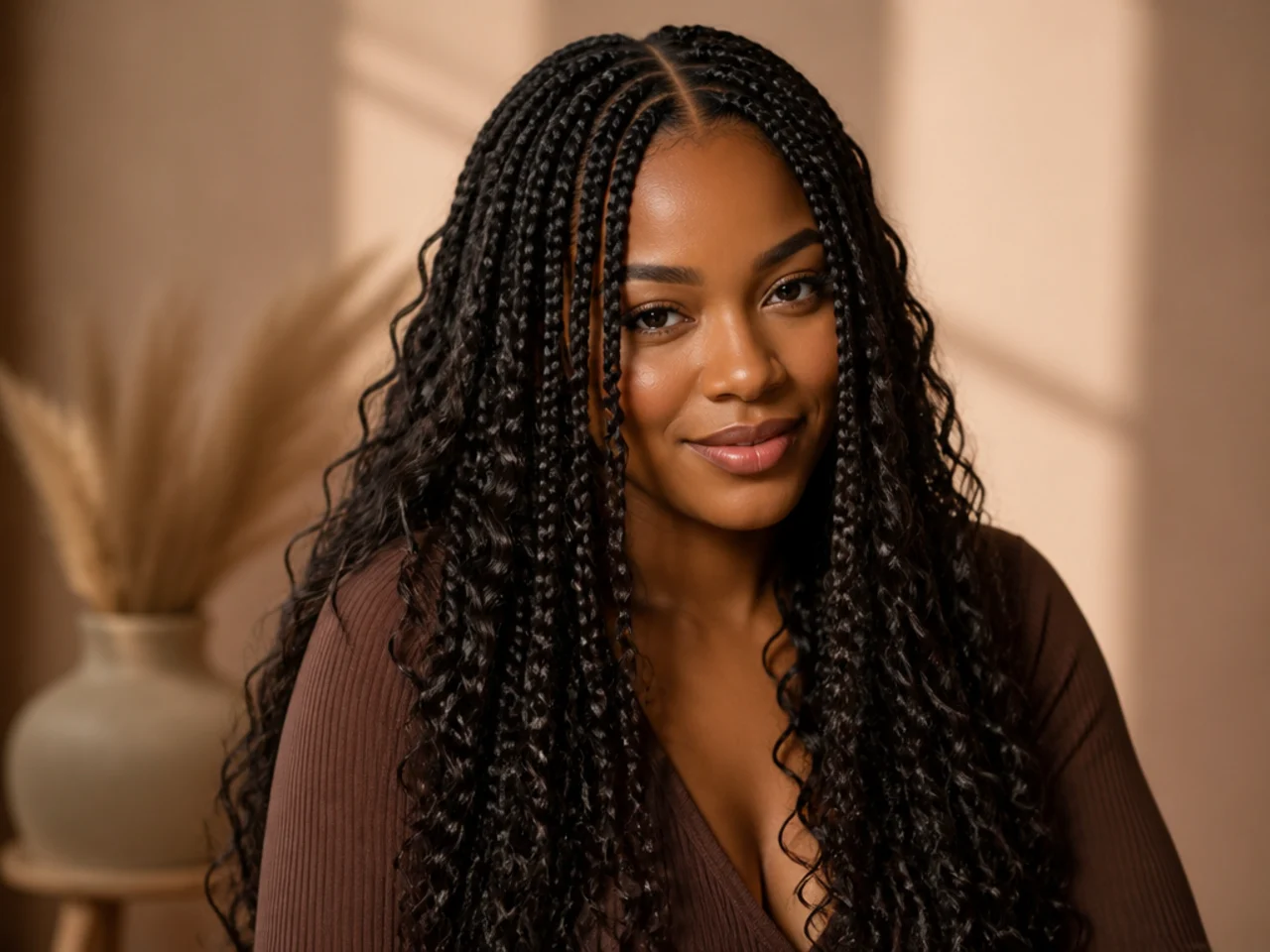
12. Half-Up Curly Braids
Gathered at the crown so the curl section falls free. Gathering only the top keeps the curl out of the tie, which is the one place curl gets crushed flat.
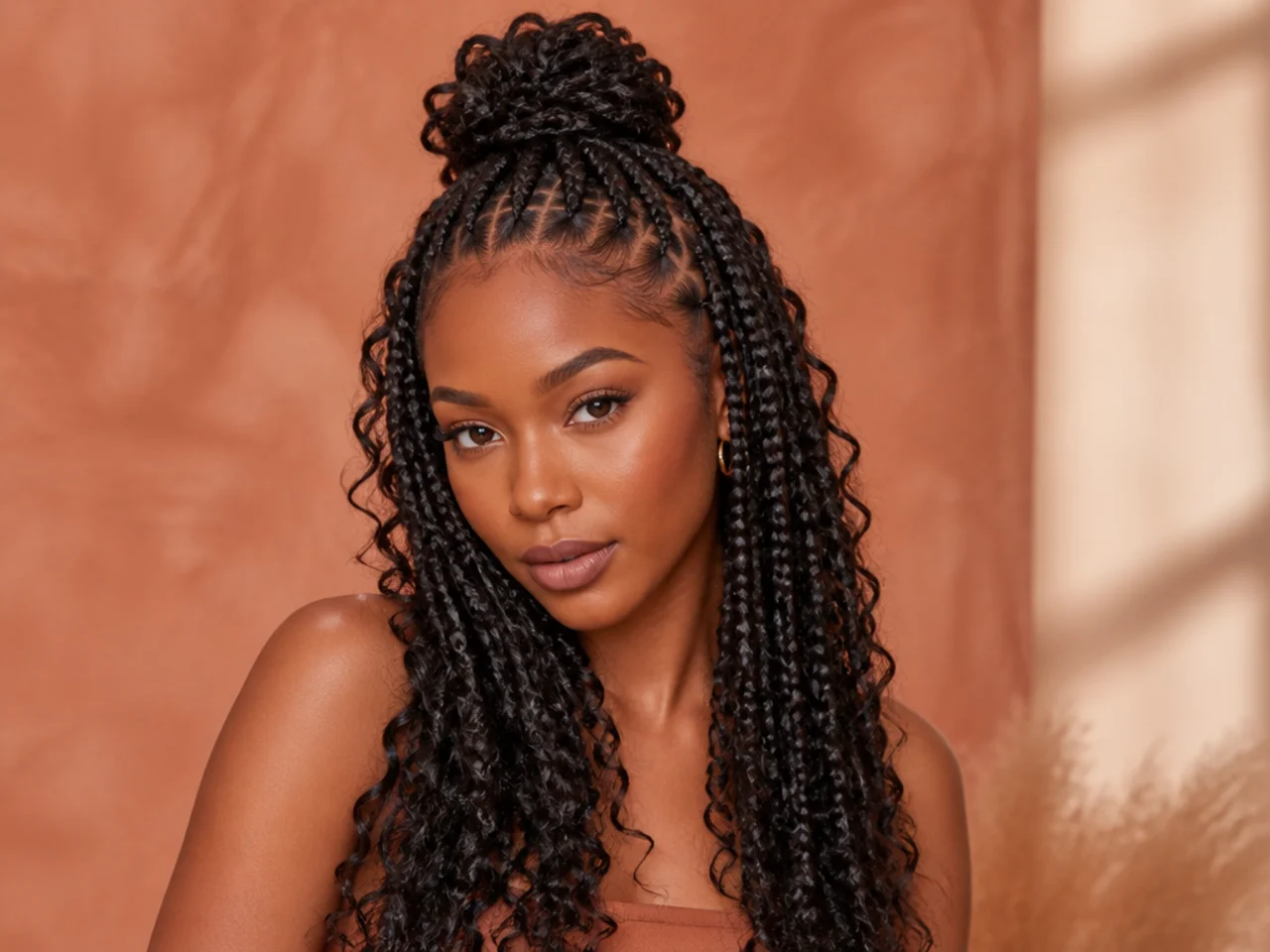
13. Curly Braids Over One Shoulder
Everything to one side. Curl reads best gathered rather than spread. Curl fills out when it is bunched together, so one shoulder looks fuller than the same hair split across two.
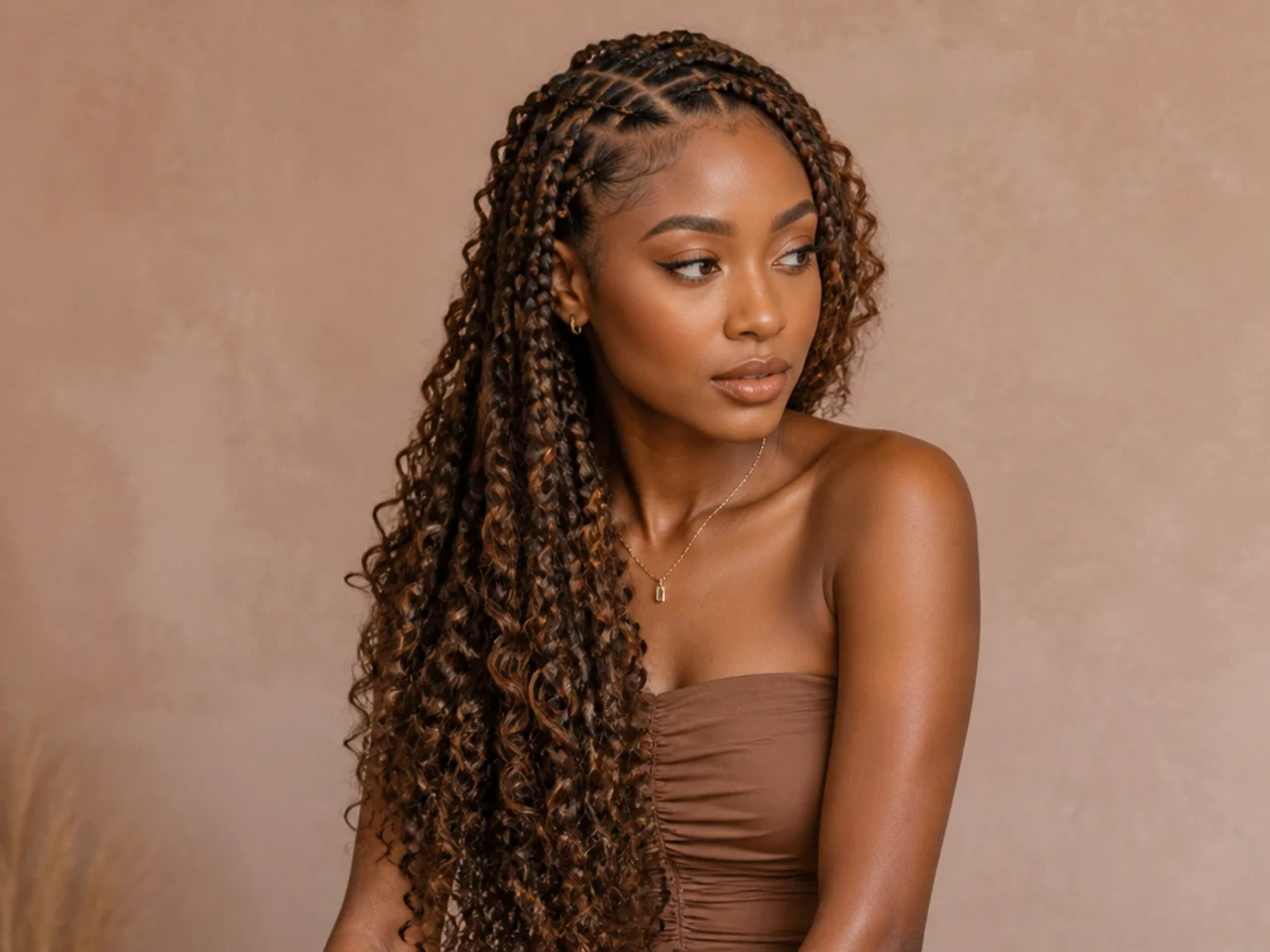
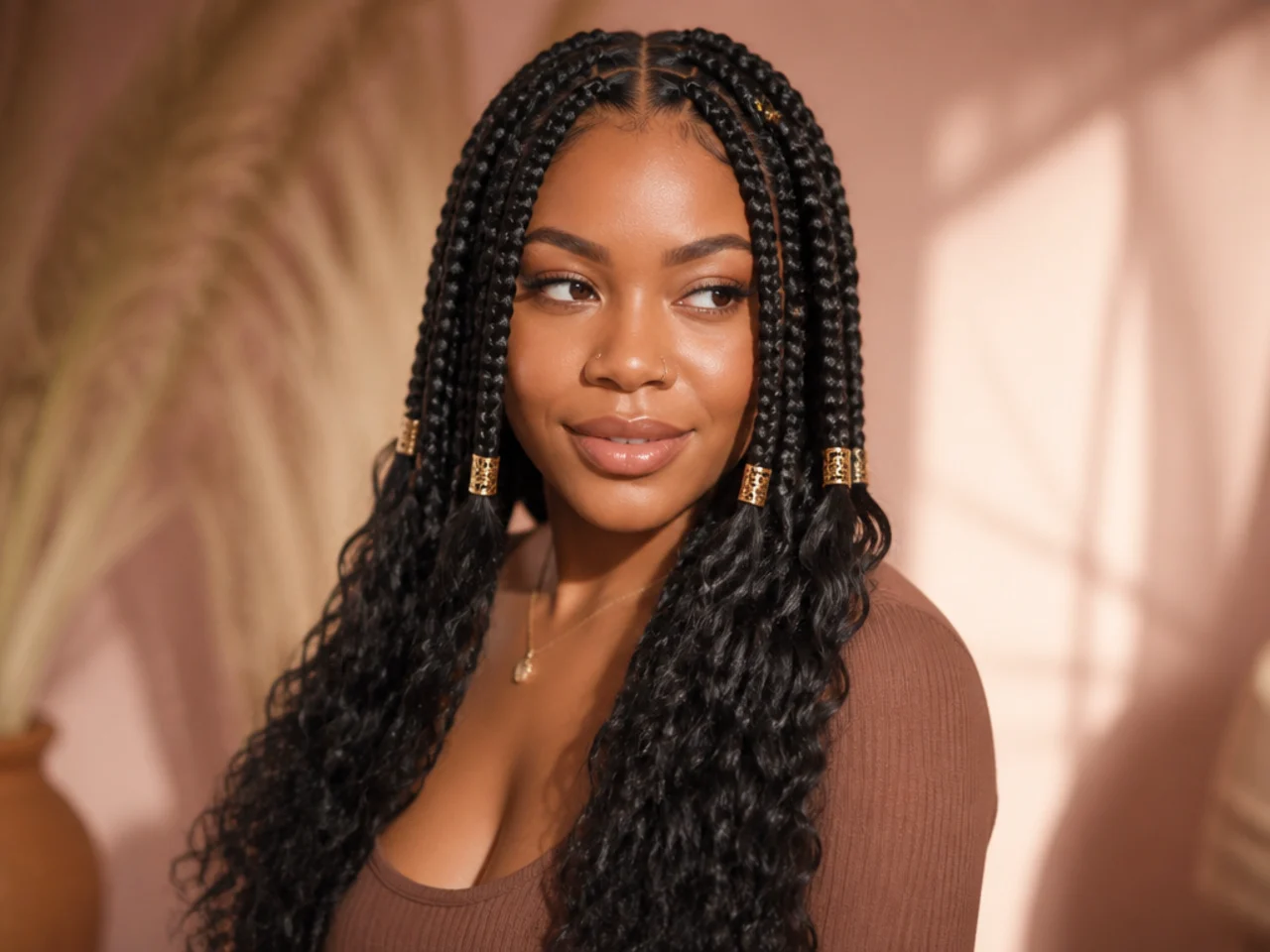
14. Curly Braids with Gold Cuffs at the Transition
Cuffs placed exactly where the braid releases. Neat and deliberate. It turns the snag point into a feature, and the cuff also holds the two textures together where they meet.
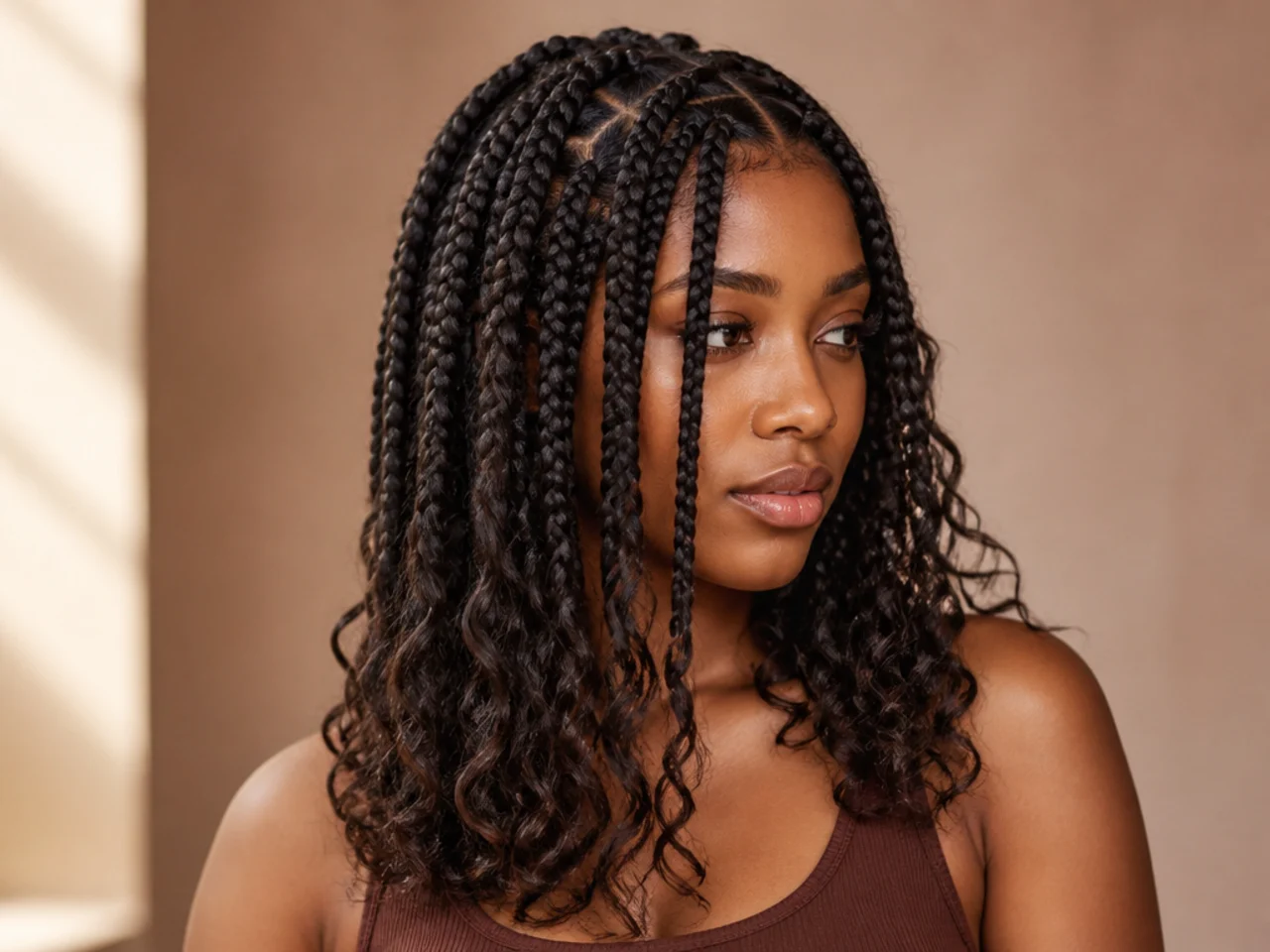
15. Curly Braids at Week Four
Where the transition point has started to matt. Worth seeing first. This is the failure this style actually has, and it happens where the textures meet rather than at the ends.
Styling and Upkeep
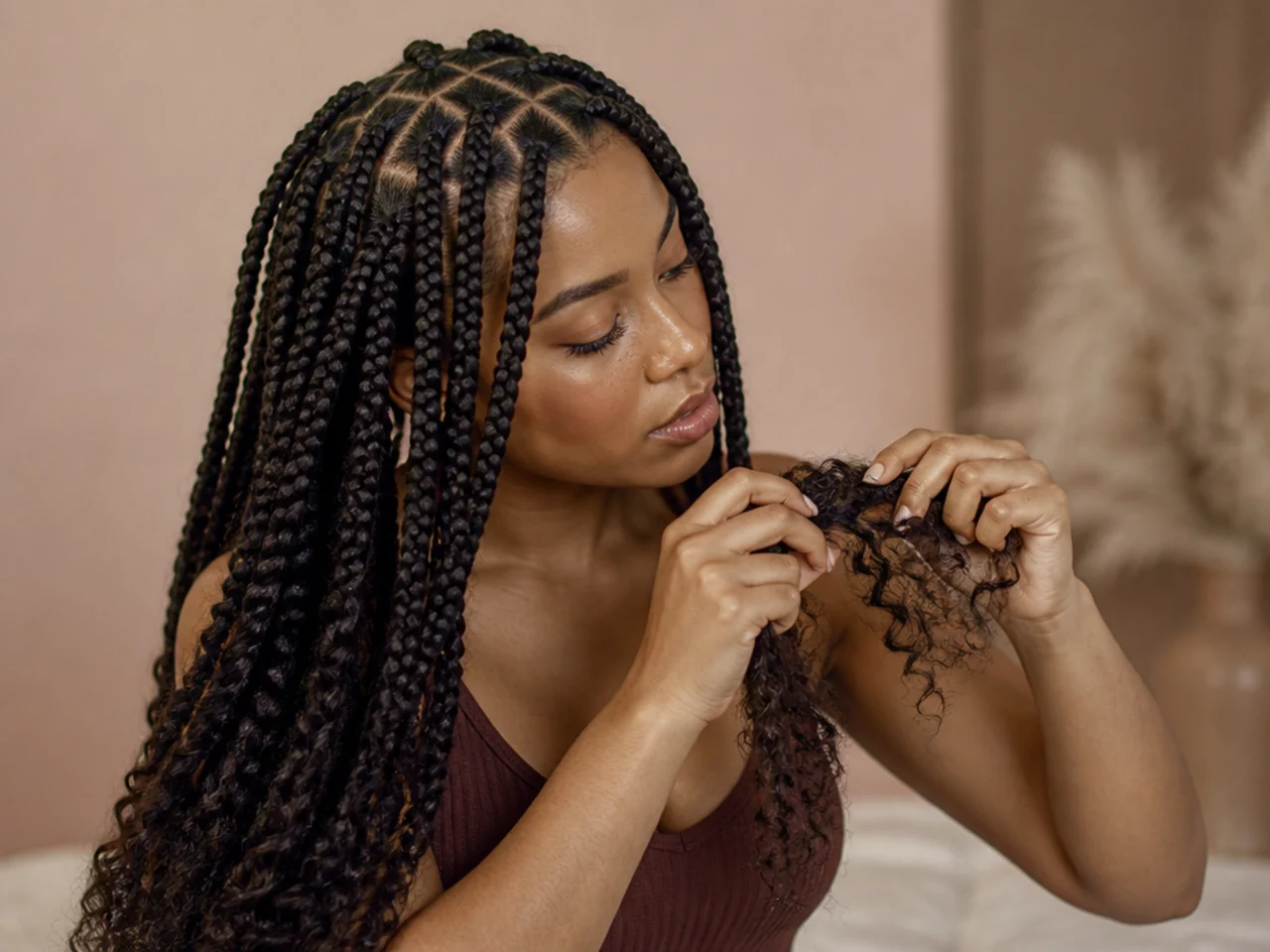
Separate the transition daily. Run fingers through the point where the braid releases, every day. Two minutes there prevents the one failure this style actually has.
Never brush the curl. A brush pulls the pattern straight and drags the transition tighter. Fingers, or a very wide-tooth comb from the tips upward.
Mist rather than wash. Water and a light leave-in on the curl section only, keeping the braided length dry, keeps the pattern alive between full washes.
Gather the curl at night. A loose pineapple on satin. Curl left loose against a pillow mats in a single night.
Expect a shorter run than plain braids. Four to five weeks rather than six, because the curl section degrades before the roots do.
Mistakes to Avoid
Ignoring the transition point. It mats first, and once it has matted it cannot be undone without cutting.
Brushing the curl. It strips the pattern permanently on synthetic hair.
Choosing a long curl section without the time for it. Eighteen inches of curl is a daily commitment.
Washing synthetic curl expecting it to bounce back. It will not.
Leaving it in six weeks. The curl gives up before the braid does.
FAQ
What are they? Standard large knotless braids with curly extension fed in partway down.
Where should the curl start? Mid-back for the full look, the last few inches for a soft finish.
Do they tangle more? Yes, at the transition point where the two textures meet.
Final Thoughts
Decide the transition height before you look at a single curl pattern. It sets the cost, the daily upkeep and how long the style lasts — and if you are unsure, start with curl on the last few inches. It gives you most of the softness for almost none of the maintenance.
For loose pieces left outside the braid instead see boho large knotless braids, and for the full range see 25 large knotless braids ideas. More in Braids & Protective Styles.
Frequently asked questions
Related posts
See all posts
20 Waterfall Mermaid Braid Ideas That Hold
Read more
15 Side Mermaid Braid Ideas That Sit Right
Read more
20 Side Part Medium Knotless Braids I Saved
Read more