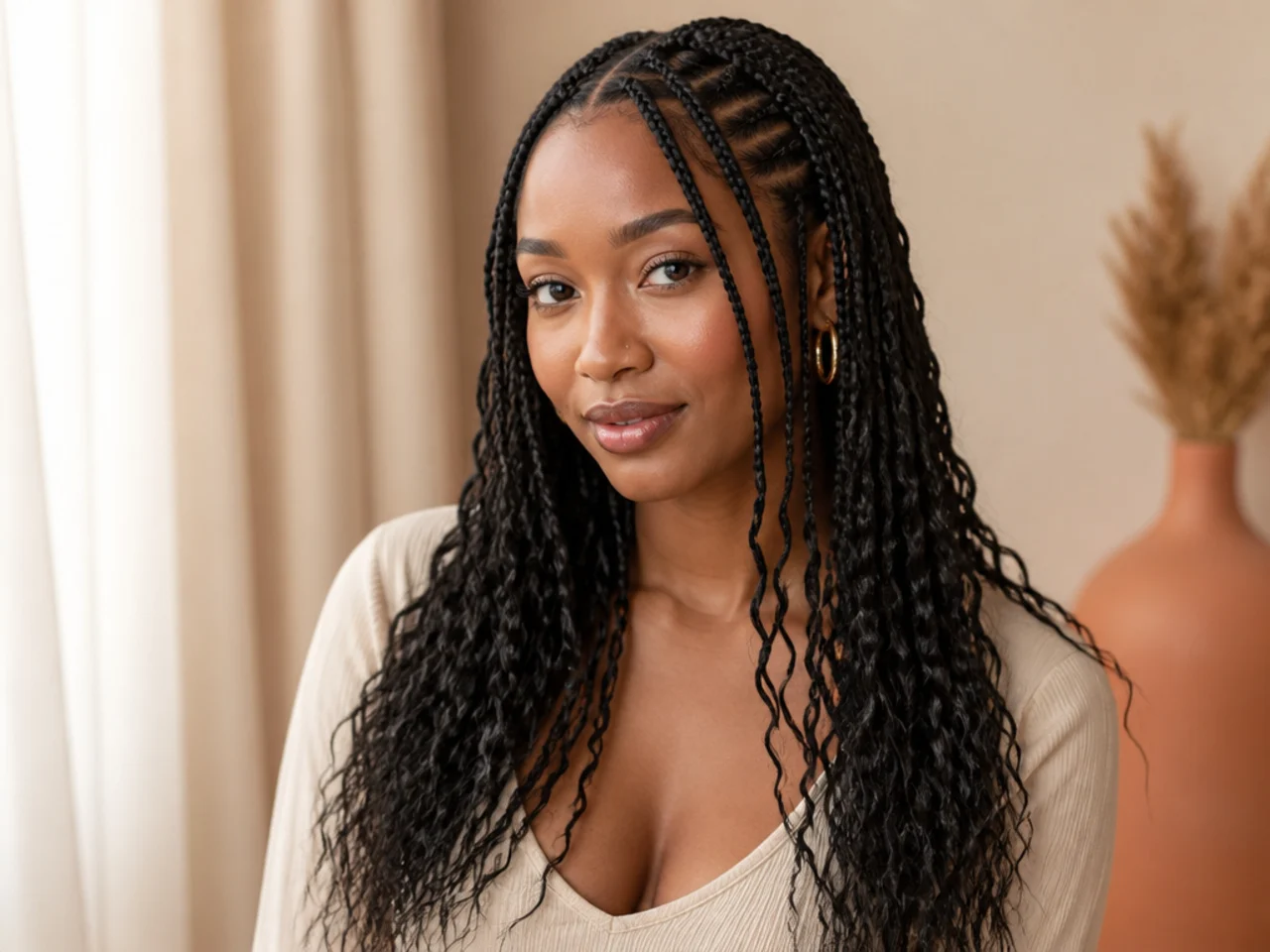
10 Gorgeous Winter Hair Braids to Try in 2026
Ten winter hair braids for 2026, from the classic French braid to knotless braids that last six weeks, each with the cold-weather mechanism, the hat-proof styling and the exact words to ask for.
In this article · 11
- 1\. The Classic French Braid
- 2\. The Dutch Braid Crown
- 3\. The Fishtail Braid
- 4\. The Low Side Braid
- 5\. The Braided Low Bun
- 6\. The Double French Braids
- 7\. The Chunky Pull-Through Braid
- 8\. The Braided Headband
- 9\. The Knotless Braids
- 10\. The Holiday Braid With Velvet Ribbon
- Narrowing Down Your Perfect Winter Braid
A braid is the rare hairstyle that gets better in winter. Cold air holds less moisture than warm air, so it pulls hydration out of loose hair all day, and wool scarves and coat collars rub the lengths into tangles and static. A braid answers both problems at once: it binds the hair together so the ends stay protected, and it keeps the style contained under a hat instead of flattening when the hat comes off. Competitor roundups mostly list braid names and photos, or they cover only protective styles for one hair type; this guide gives ten braids for every hair type, each with the cold-weather mechanism, the hat-proof styling, and how long it lasts, so you can pick the one that fits your hair and your week. If your hair is fine and you are still choosing a cut, our bob haircut guide covers the short options, and for fringe-first face framing, see curtain bangs for round faces.
1. The Classic French Braid
The French braid is the winter default for a reason: it is the braid that sits flattest against the head, which is exactly what a beanie needs. The mechanism is containment along the scalp: because each new section is picked up as you braid downward, the hair is held close and smooth the whole way, so there is almost nothing loose to catch on a scarf or frizz in dry air. It also survives a hat better than any other braid here, since there is no volume to crush.
How to do it: Start with damp hair and a little leave-in conditioner. Begin at the crown, add a small section from each side as you cross over, and keep the tension even so the braid lies flat. Finish with a clear elastic and tuck the tail under your coat collar.
Frequency: Restyle daily; the braid itself takes about five minutes once you know it. Best for: All hair types, medium to long hair, and anyone who wears a beanie daily.
2. The Dutch Braid Crown
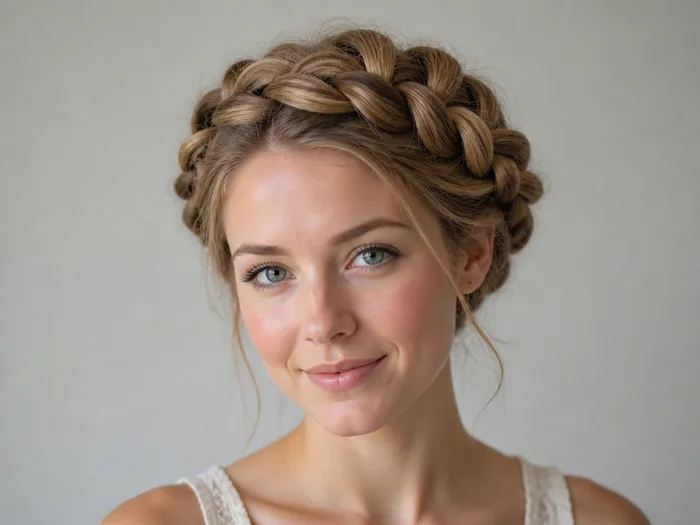
A Dutch braid is a French braid worked in reverse, with each section crossed under instead of over, so the braid sits raised on top of the hair rather than woven into it. Run around the head as a crown, it becomes the most hat-proof style on this list. The mechanism is the raised ridge: the braid's height holds its shape under a hat instead of flattening, and the crown shape keeps every strand off the neck and away from collar friction.
How to do it: Part the hair in the middle, start a Dutch braid at one temple, and work around the head, crossing sections under and adding hair as you go. Pin the tail under the braid at the far temple. Finish with a light-hold spray.
Frequency: Restyle daily; lasts all day under a hat. Best for: Medium to long hair, oval and round faces, and days when a hat is non-negotiable.
3. The Fishtail Braid

The fishtail looks far more intricate than it is, which makes it the best effort-to-impact ratio in this guide. The mechanism is the two-strand weave: instead of three sections, you alternate tiny pieces from each side, which creates a fine herringbone pattern that hides frizz and flyaways inside the weave. It also holds together better than a loose three-strand braid when the wind gets at it, because the small crossings lock each other in place.
How to do it: Gather the hair low at the nape, split it into two sections, and take a thin piece from the outside of the left section across to the right, then repeat from the right. Keep the pieces small for the classic fine look, and pull the braid gently wider at the end for softness.
Frequency: Restyle daily; holds for a full day outdoors. Best for: Long hair, straight to wavy textures, and anyone who wants a braid that looks done with minimal effort.
4. The Low Side Braid

The low side braid is the lowest-static way to wear long hair in winter, and it takes about two minutes. The mechanism is position: a braid that sits over one shoulder never touches the back of your coat, so it escapes the worst friction zone entirely, and the low placement means a hat or hood never has to pass over it. It is the braid to choose on the days you do not want to think about your hair at all.
How to do it: Sweep all the hair to one side, braid it loosely from just below the ear, and secure it with a soft elastic. Pull a few face-framing pieces loose and smooth the surface with a drop of hair oil.
Frequency: Restyle daily; two minutes from start to finish. Best for: Long hair, all textures, and commutes in wind and snow.
5. The Braided Low Bun
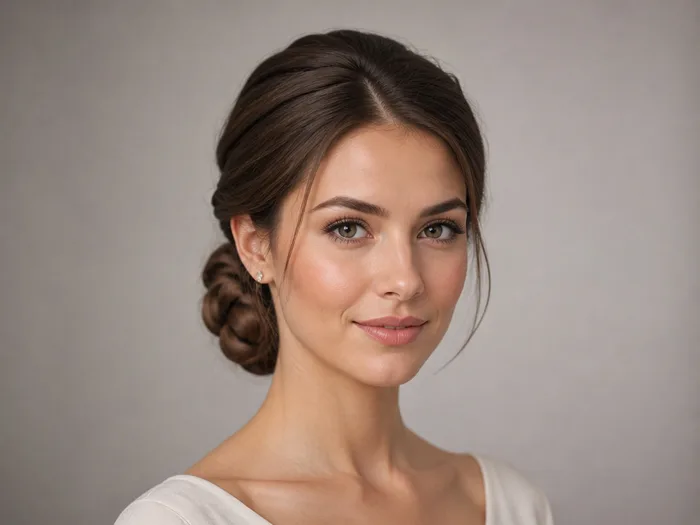
The braided low bun is the most protective style here, because it is the only one that tucks the ends away completely. The mechanism is end protection: the ends are the oldest and driest part of the hair, and winter air plus scarf friction breaks them first. Braiding the lengths and coiling them into a bun at the nape hides the ends entirely, so nothing is exposed to the cold except the smooth braided surface.
How to do it: Braid the hair loosely from the nape, coil the braid into a flat bun, and pin it in place with bobby pins matched to your hair colour. Finish with a satin scrunchie around the base for extra hold without a crease.
Frequency: Restyle daily; holds through a full workday. Best for: Medium to long hair, formal days, and anyone growing their hair out through winter.
6. The Double French Braids

Double French braids, the classic pigtail braids, are the most practical winter style for active days. The mechanism is symmetry under a hat: two flat braids distribute the hair evenly on both sides, so a beanie sits level instead of sliding, and neither braid takes the full force of a scarf or collar. They also survive workouts, snow, and a full day outdoors better than a single braid, because each braid carries half the weight.
How to do it: Part the hair straight down the middle, French-braid each side from the crown to the nape, then continue as a regular three-strand braid and secure both ends. Keep the parting clean for the neat finish.
Frequency: Restyle daily; can be slept in for a second day of waves. Best for: Medium to long hair, active days, and anyone who wants a braid that survives a hat and a workout.
7. The Chunky Pull-Through Braid
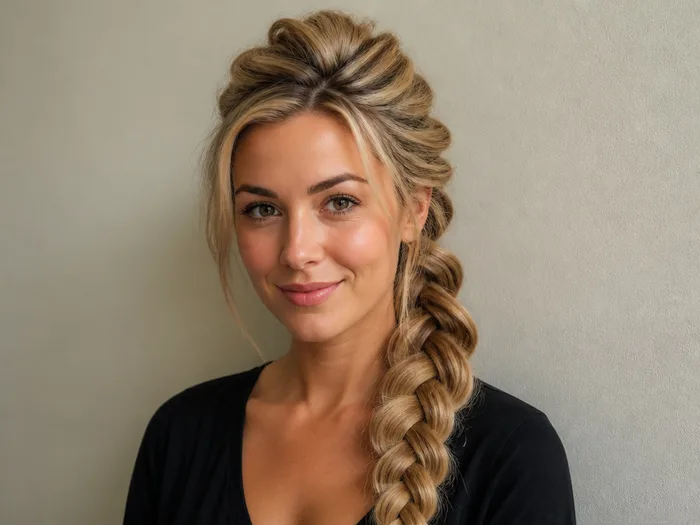
The pull-through braid gives you the volume of a thick braid without the teasing or the tension of a tight plait. The mechanism is the loop-and-pull construction: instead of crossing sections, you stack small ponytails and pull each one through the one above it, which creates a full, rope-like braid that stays soft. Because the hair is never pulled tight against the scalp, it is gentler than a French braid and it keeps its volume under a loose hat.
How to do it: Tie the top section into a small ponytail, split it, and pull the next ponytail up through the gap. Repeat down the head, then gently tug each loop wider for fullness. It works best on hair that is at least shoulder length.
Frequency: Restyle daily; the loops hold well for a full day. Best for: Fine to medium hair that needs volume, and anyone who finds tight braids uncomfortable.
8. The Braided Headband
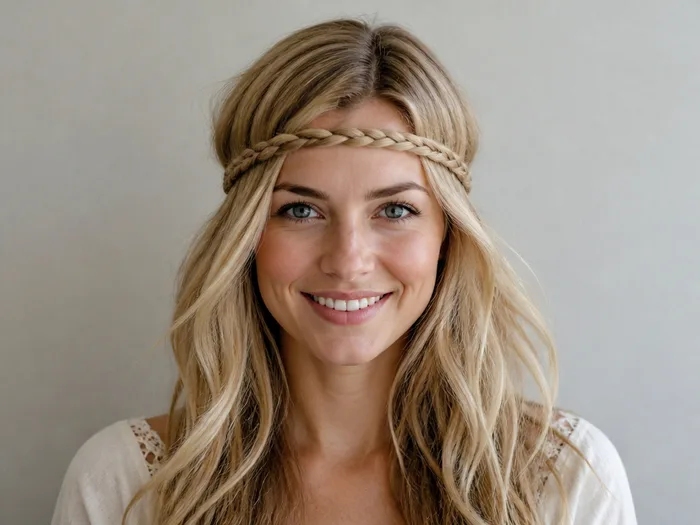
The braided headband is a braid used as an accessory rather than a style, and it solves the beanie-hair problem from the other direction. The mechanism is the front frame: a braid worked across the hairline holds the front sections back and keeps them from frizzing out under a hat, while the rest of the hair stays loose behind it. When the hat comes off, the braid still looks intentional instead of flattened.
How to do it: Take a section from behind one ear, braid it across the front of the head, and pin it behind the other ear. Wear the rest of the hair loose, or gather it into a low ponytail. A little texture spray before braiding keeps the headband from slipping.
Frequency: Restyle daily; five minutes to braid. Best for: Medium to long hair, hat days, and anyone who wants braids without committing to a full braided style.
9. The Knotless Braids
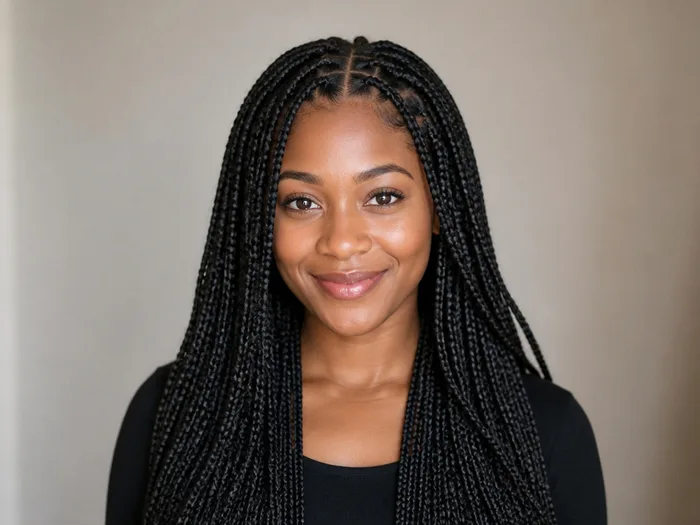
Knotless braids are the long game: a protective style you install once and wear for six to eight weeks, which makes them the lowest-effort option across the whole winter. The mechanism is the knotless start: instead of a knot of braiding hair at the root, the braid begins with your own hair and the extensions are fed in gradually, so there is less tension at the scalp and the braid lies flatter. Less tension means less breakage, and the flat root means a hat sits comfortably over them.
How to do it: Ask your braider for medium or jumbo knotless braids, which install faster and cost less than tiny ones, and request a length that tucks inside your coat. For care, moisturize the scalp with a water-based braid spray, seal with a light oil, and sleep in a satin bonnet.
Frequency: Install once, wear six to eight weeks. Best for: Natural and textured hair, anyone who wants a set-and-forget winter style, and cold climates where daily styling is a chore. Our large knotless braids guide covers sizes and styling in detail.
10. The Holiday Braid With Velvet Ribbon

The holiday braid is the party version of everything above: a loose, soft braid with a velvet ribbon woven through it, which reads festive in about ten minutes. The mechanism is the ribbon itself: the velvet adds colour, texture and a party cue without any extra styling, and because the braid is loose, the ribbon sits visible on the surface instead of disappearing into a tight plait. Deep red, forest green or black velvet all work, and the ribbon doubles as the tie at the end.
How to do it: Braid the hair loosely from the nape, weaving a length of velvet ribbon in with one of the three sections as you go. Leave the last few centimetres unbraided for softness, tie the ribbon into a small bow, and pull a few pieces loose around the face.
Frequency: Restyle for each party; the ribbon is reusable all season. Best for: Long hair, Christmas and New Year parties, and anyone who wants a festive look without an updo.
Narrowing Down Your Perfect Winter Braid

Choose by three filters, in this order: how long you want the style to last, whether you wear a hat, and how much time you have. If you want weeks rather than a day, section 9 is the only choice, and it is the one that protects the most hair. If you wear a beanie every day, start with the flat styles in sections 1, 2 or 6, because a braid that sits close to the head is the one that survives a hat. If your styling time is under five minutes, the low side braid in section 4 is the honest pick, since it takes two minutes and avoids the worst friction zone entirely. Whatever you choose, keep the ends protected and the surface smooth: a little leave-in conditioner before braiding and a satin lining in your hat will do more for your hair this winter than any single style.
Frequently asked questions
Related posts
See all posts
20 Waterfall Mermaid Braid Ideas That Hold
Read more
20 Small Simple Fulani Braids Ideas to Try
Read more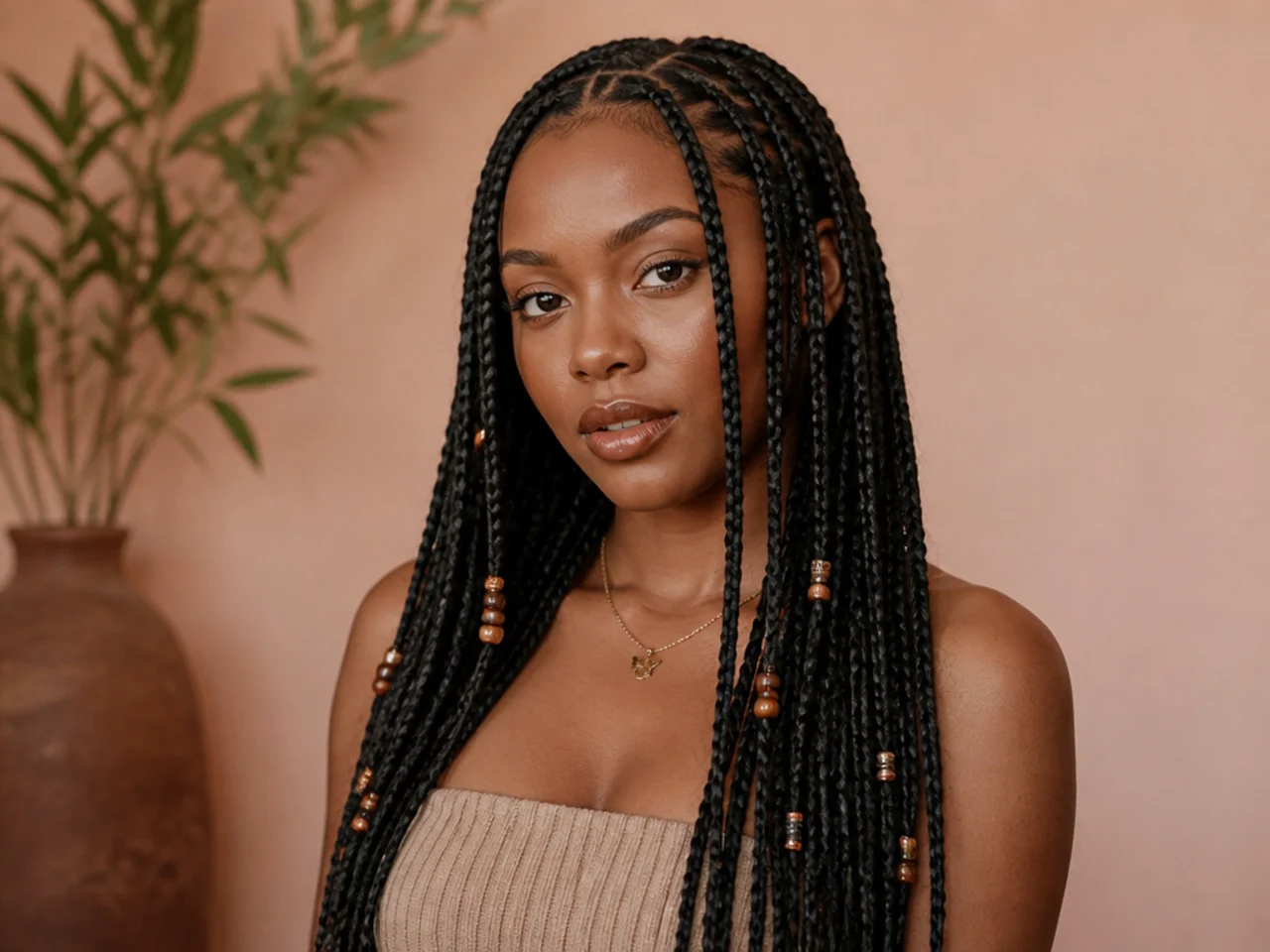
15 Ways to Style Simple Fulani Braids
Read more