20 Large Knotless Braids Into a Bob
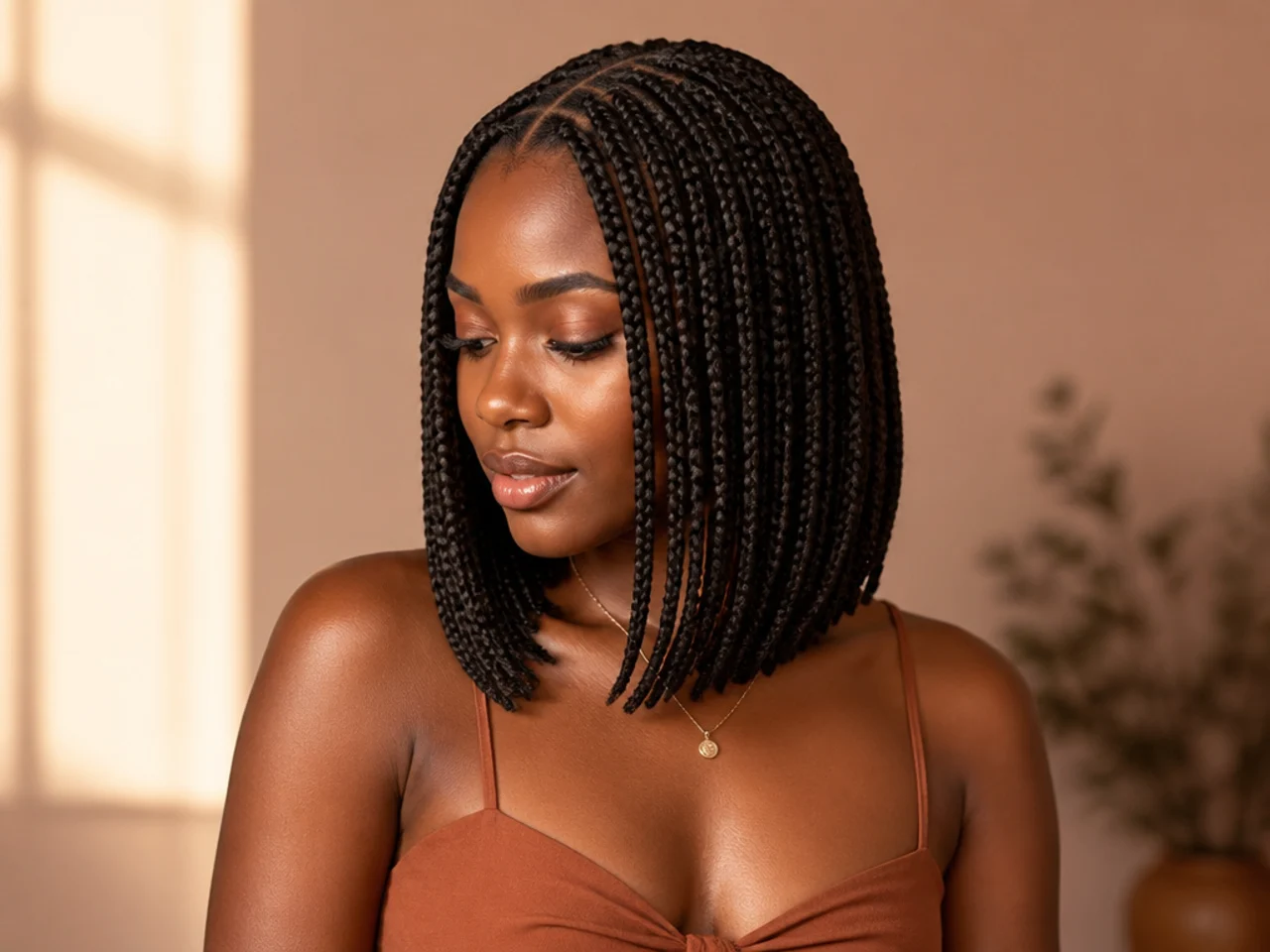
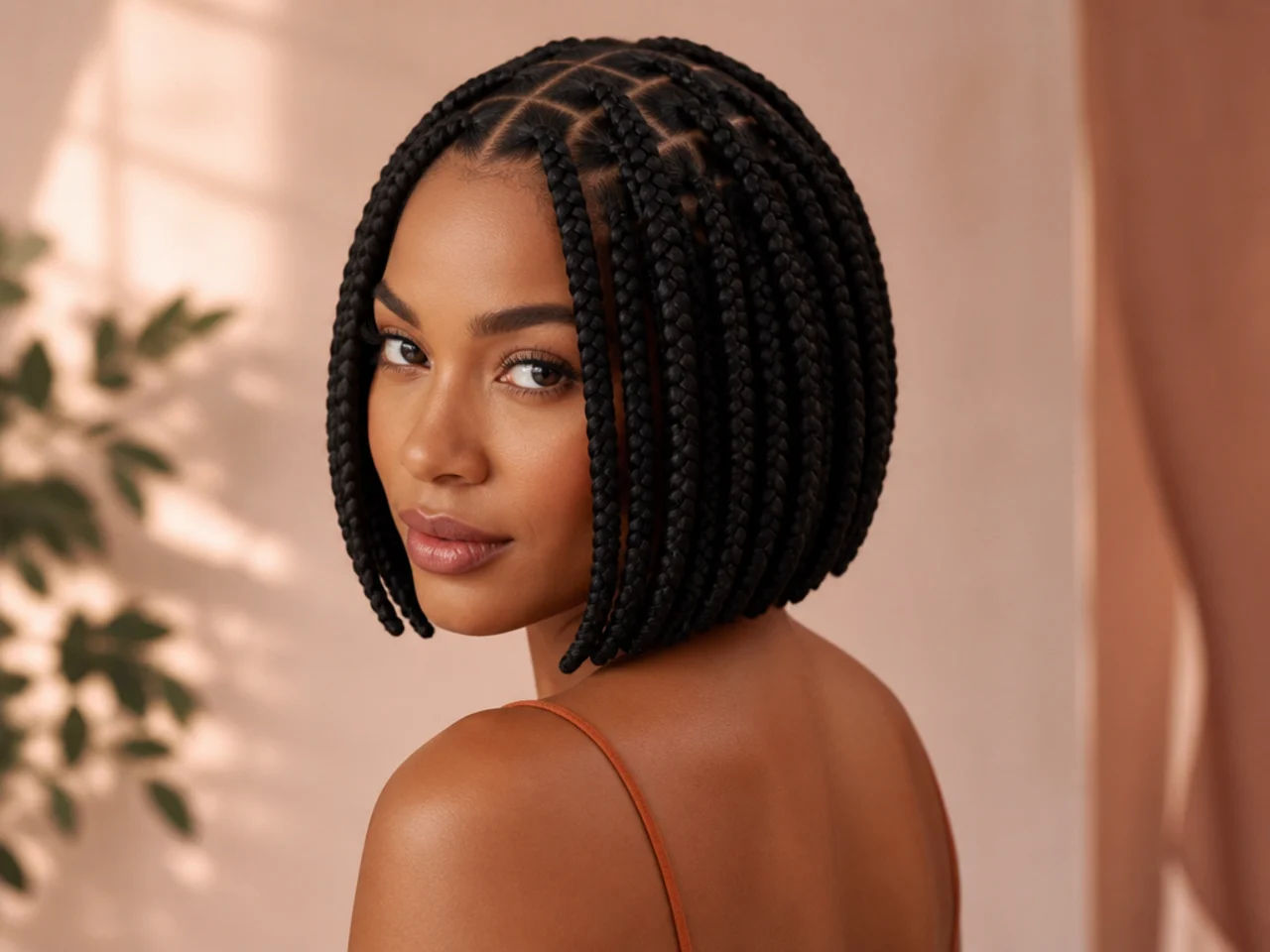
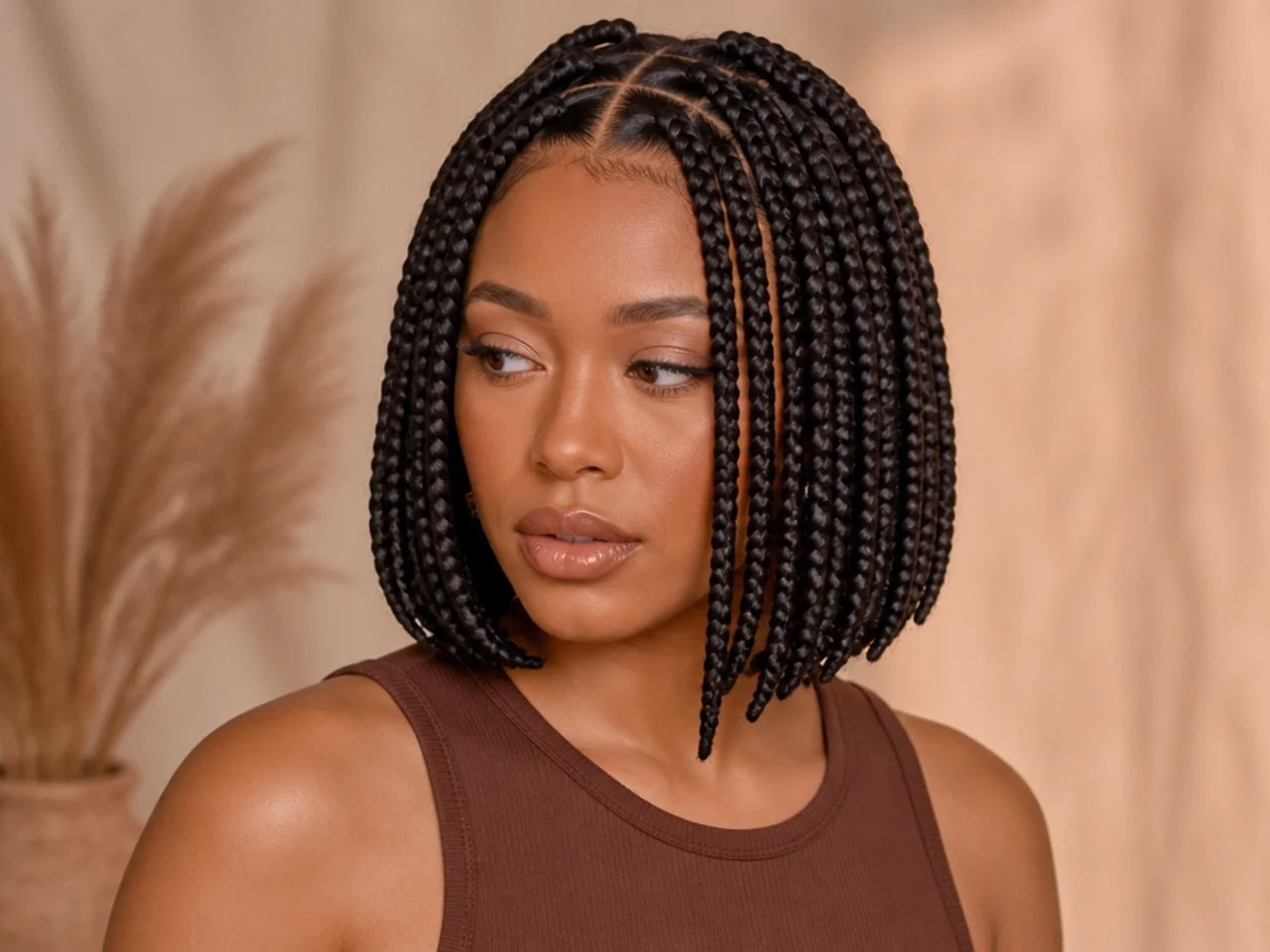
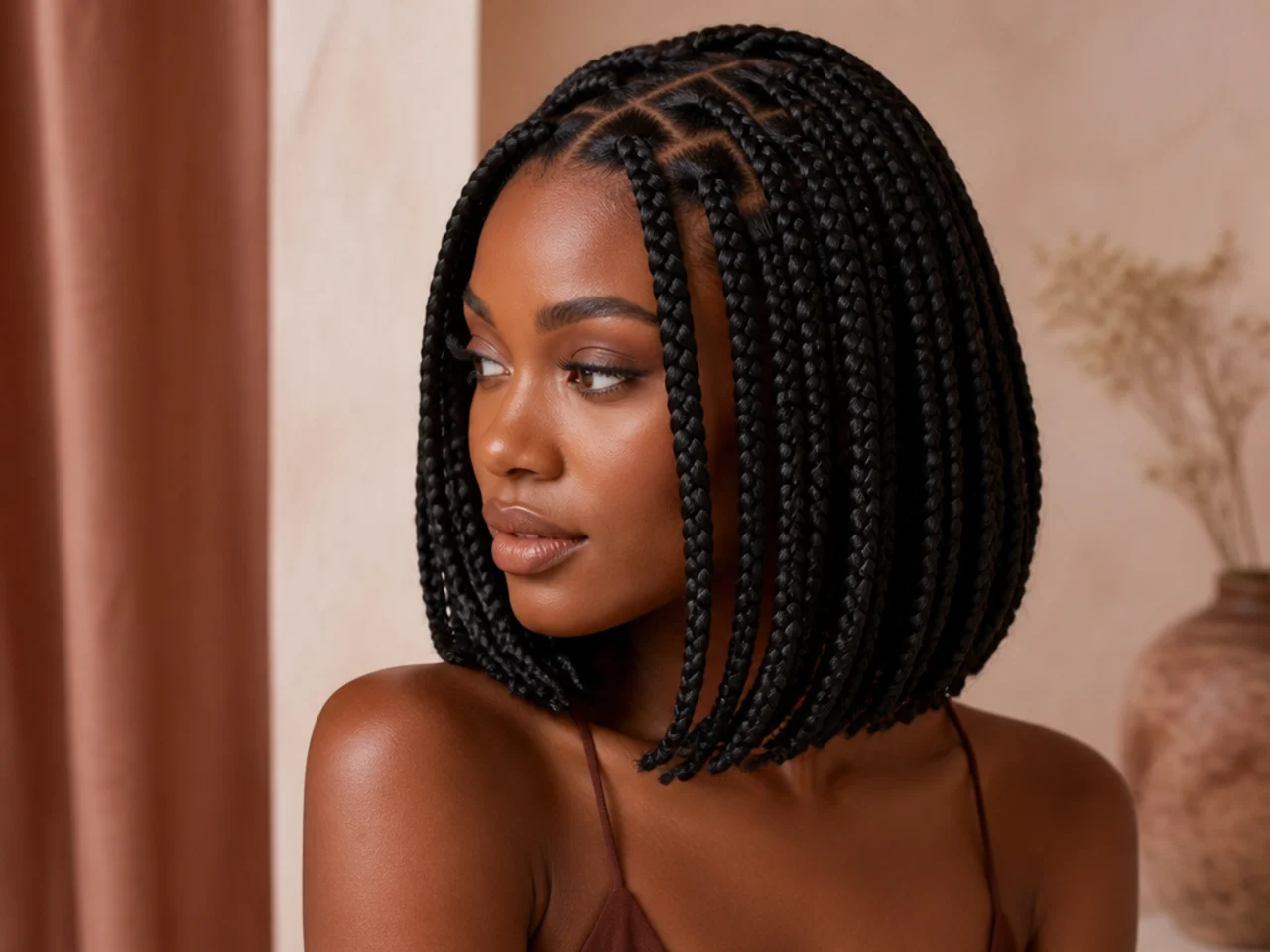
Twenty large knotless braid bob ideas, and the reason a braid bob looks sharper than a hair bob — every braid is the same thickness top to bottom, so the line you cut is the line you get, exactly.
In this article · 27
- What Makes a Braid Bob Work
- How to Choose Yours
- The 20 Bob Ideas
- 1. Blunt Chin-Length Braid Bob
- 2. Jaw-Length Braid Bob
- 3. Collarbone Braid Lob
- 4. A-Line Braid Bob
- 5. Centre-Parted Braid Bob
- 6. Deep Side-Parted Braid Bob
- 7. Braid Bob with a Middle Part and Face Frame
- 8. Two-Length Stepped Braid Bob
- 9. Braid Bob with Curled Ends
- 10. Honey Blonde Braid Bob
- 11. Burgundy Braid Bob
- 12. Two-Tone Braid Bob
- 13. Braid Bob with a Curved Grid
- 14. Braid Bob with a Square Grid
- 15. Braid Bob with Gold Cuffs
- 16. Braid Bob with Beads
- 17. Braid Bob Tucked Behind One Ear
- 18. Braid Bob with a Headband
- 19. Braid Bob on Fine Natural Hair
- 20. Braid Bob at Week Four
- Styling and Upkeep
- Mistakes to Avoid
- FAQ
- Final Thoughts
A braid bob is a different object from a hair bob, and the difference is worth understanding before you sit down.
Every braid is the same thickness from root to tip. A hair bob softens at the perimeter because hair thins toward the ends. A braid does not thin. The line you cut is the line you get, at full density, with nothing to blur it.
What Makes a Braid Bob Work
The blunt line is absolute. This is the whole appeal. No other version of a bob holds its edge this precisely, and none of it depends on styling.
Weight is negligible at this length. A bob is the lightest large set you can wear, which makes it the safe choice on fine hair or edges with a history.
The line placement carries the entire look. With no layering, no movement and no taper, where the cut sits against your jaw is the only variable that matters.
Layering only works in steps. Braids cannot be graduated. A "layered" braid bob is two or three deliberate lengths, and it either reads as designed or as a mistake — there is no in-between.
How to Choose Yours
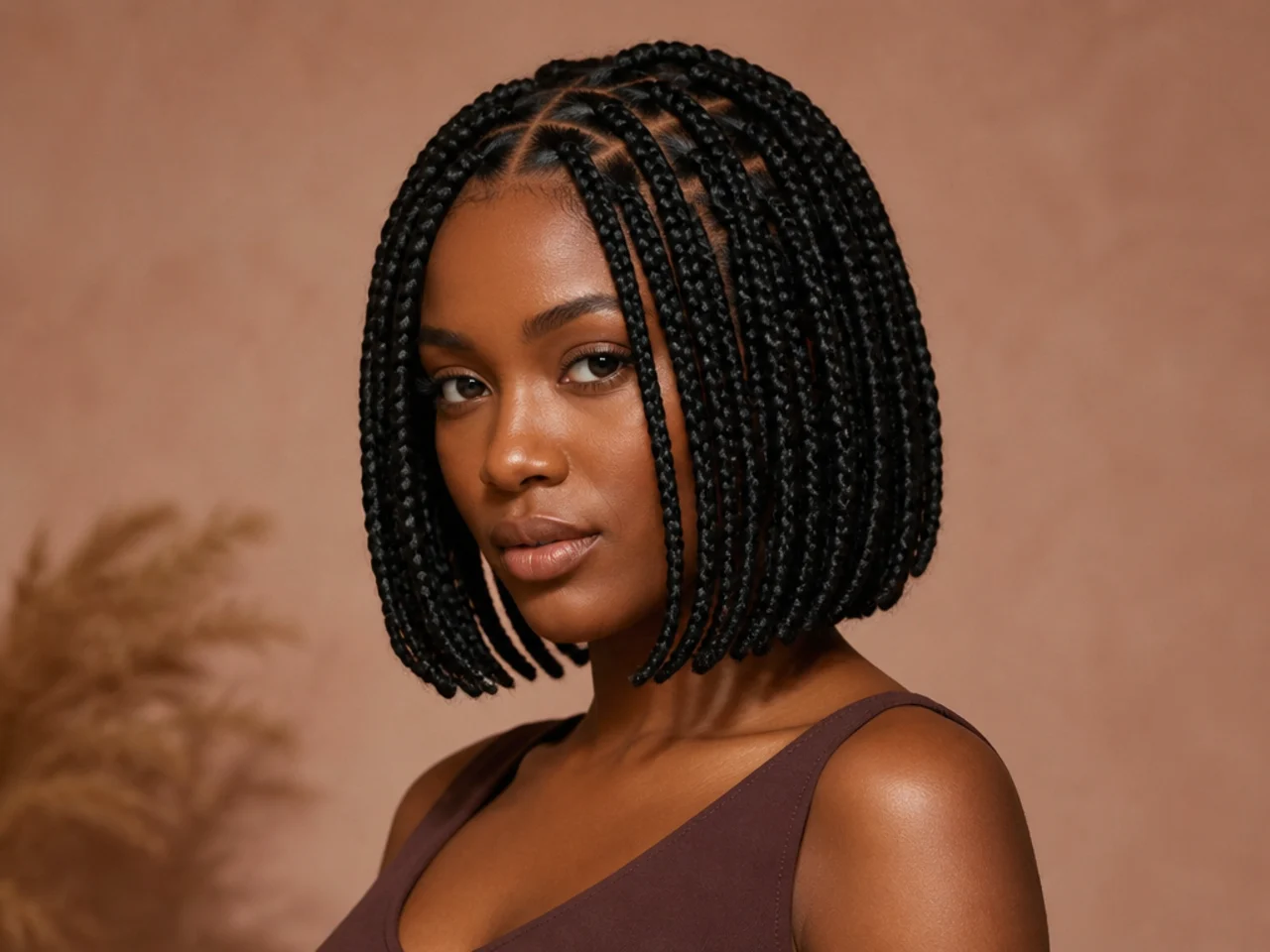
Place the line against your jaw, upright. Chin is the sharpest, jaw the most wearable, collarbone the softest. Measurements in inches land differently on every face.
Decide the back length separately. An A-line bob sits shorter behind and longer at the front, and at this braid size that shape is very visible.
Plan the back grid, not just the front. A bob exposes the parting lines at the nape every time you tip your head. On longer sets the length hides them.
Match the part to the line. A centre part suits a blunt equal-length bob; a deep side part suits an A-line, because the asymmetry already exists.
The 20 Bob Ideas
1. Blunt Chin-Length Braid Bob
The sharpest version. Every braid ending on the same line. At forty to sixty braids the line is the whole look, because there is not enough density to soften it into a graduation.
2. Jaw-Length Braid Bob
The most wearable placement, and the easiest to live with daily. The jaw sits where the face is widest, so the line lands somewhere that flatters most head shapes.
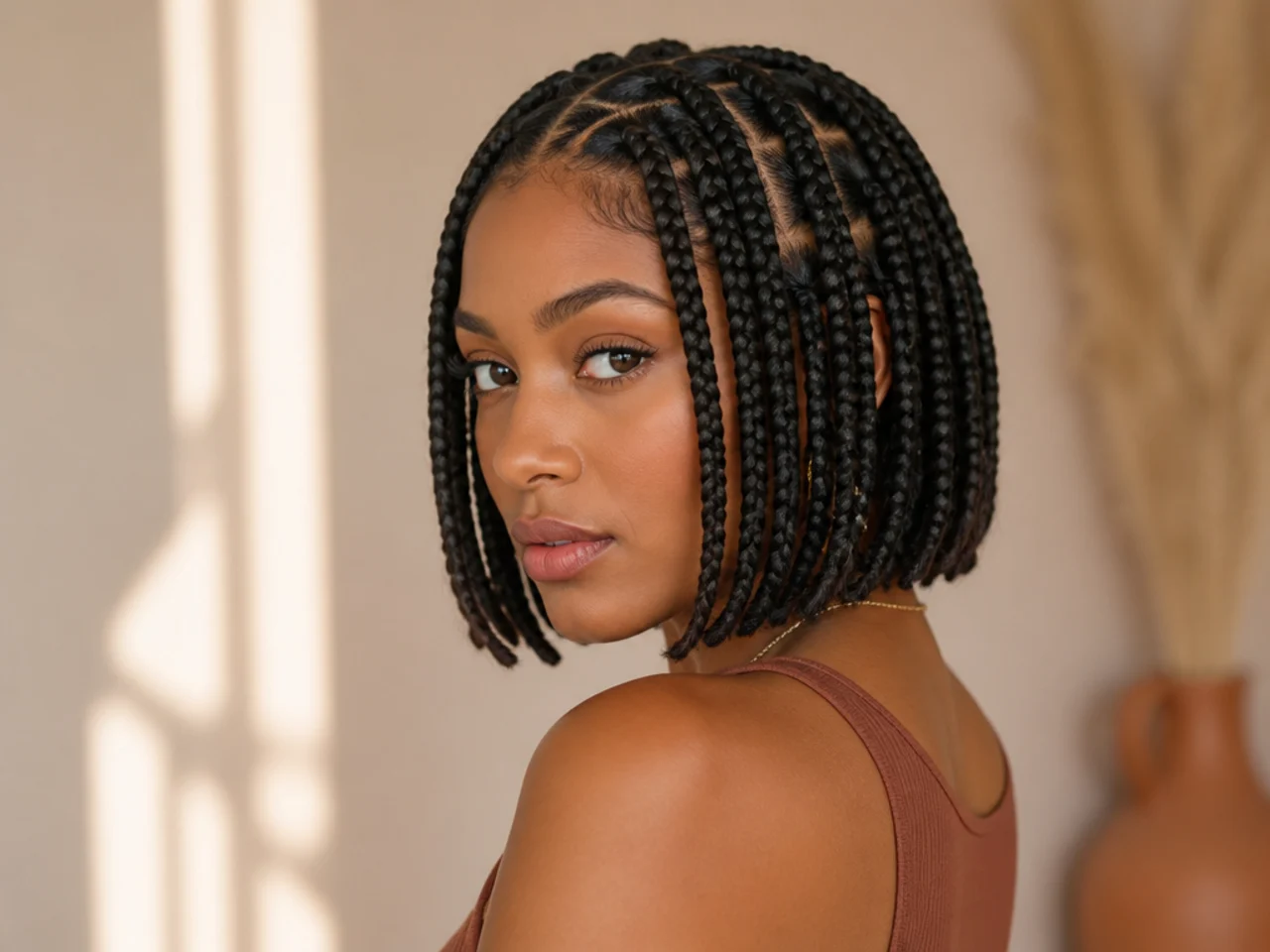
3. Collarbone Braid Lob
The long bob. Softest of the three lines.
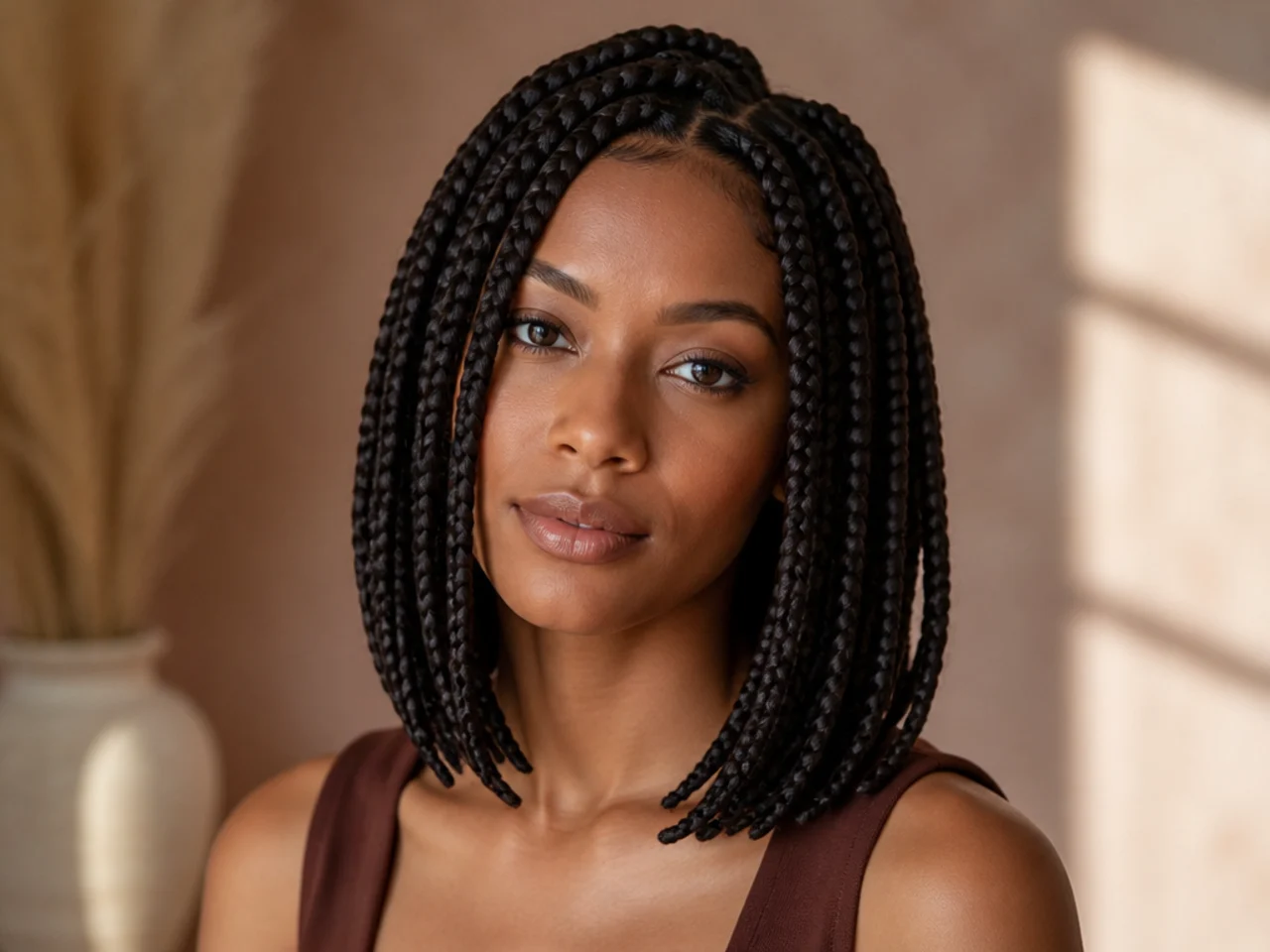
4. A-Line Braid Bob
Shorter at the nape, longer at the front. Very graphic at this braid width. Say which direction the graduation runs — front to back, not side to side — or you may get two lengths rather than a slope.
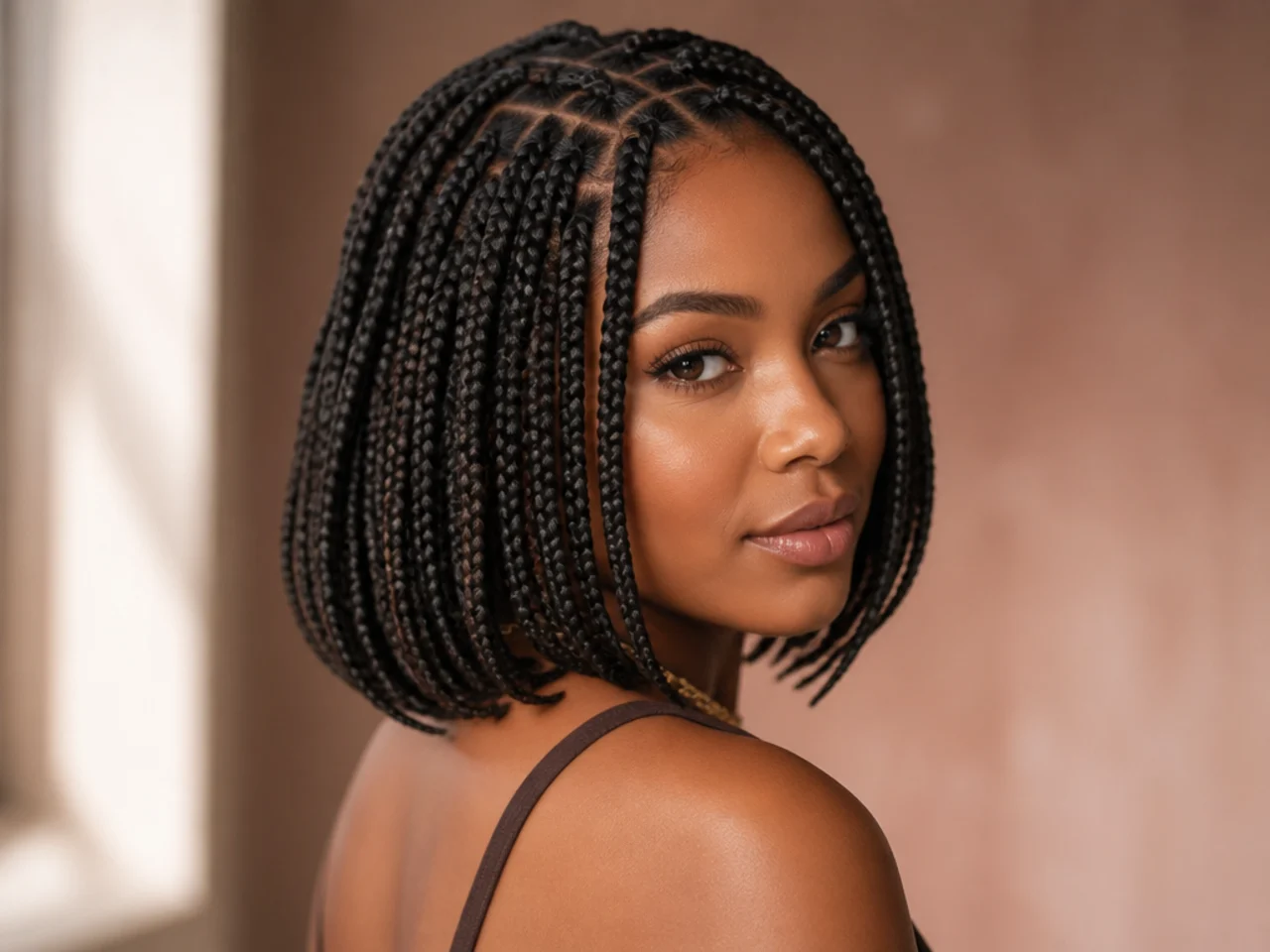
5. Centre-Parted Braid Bob
Symmetry against a symmetrical line.
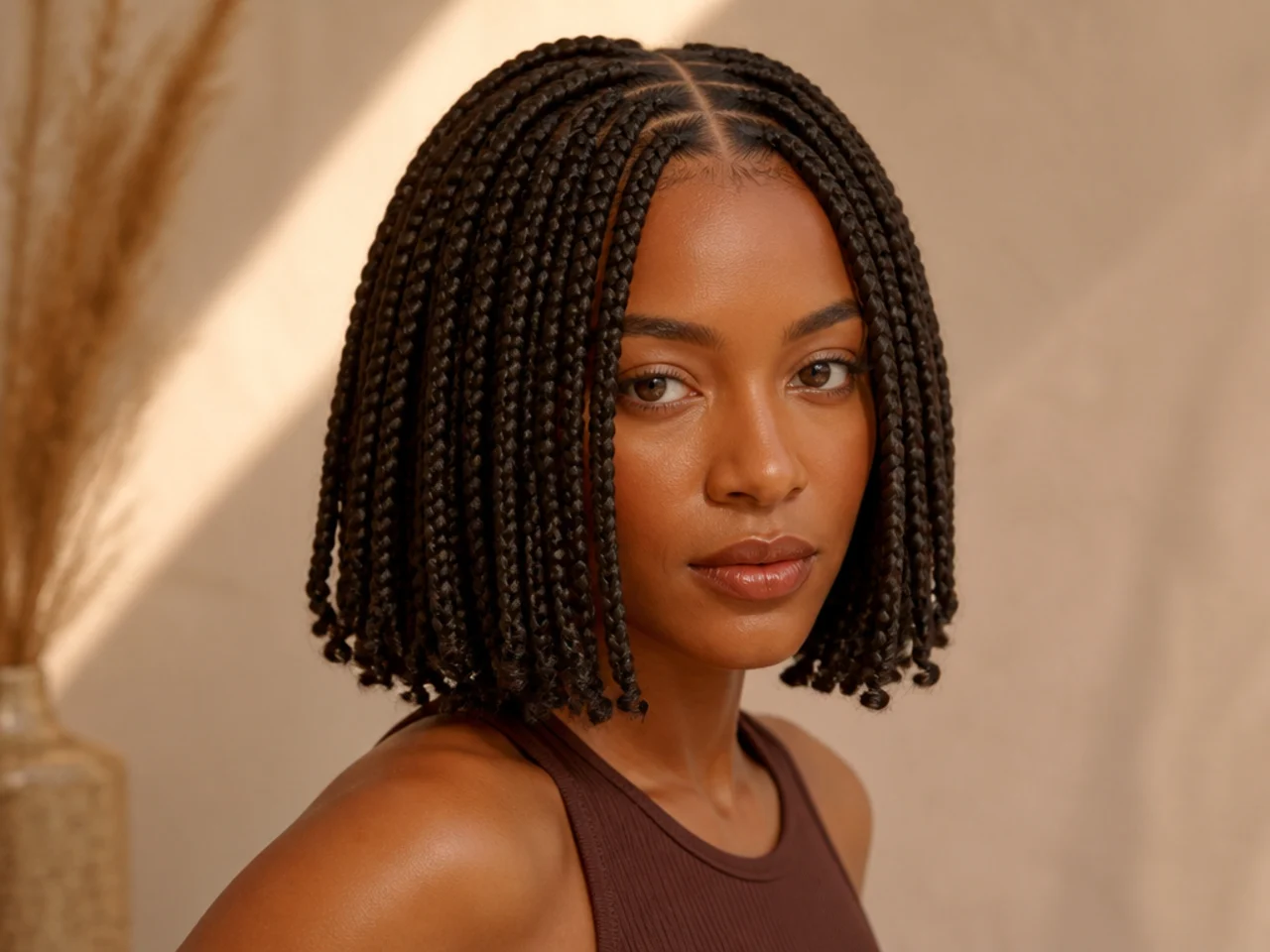
6. Deep Side-Parted Braid Bob
One side sweeping across. Breaks the symmetry deliberately.
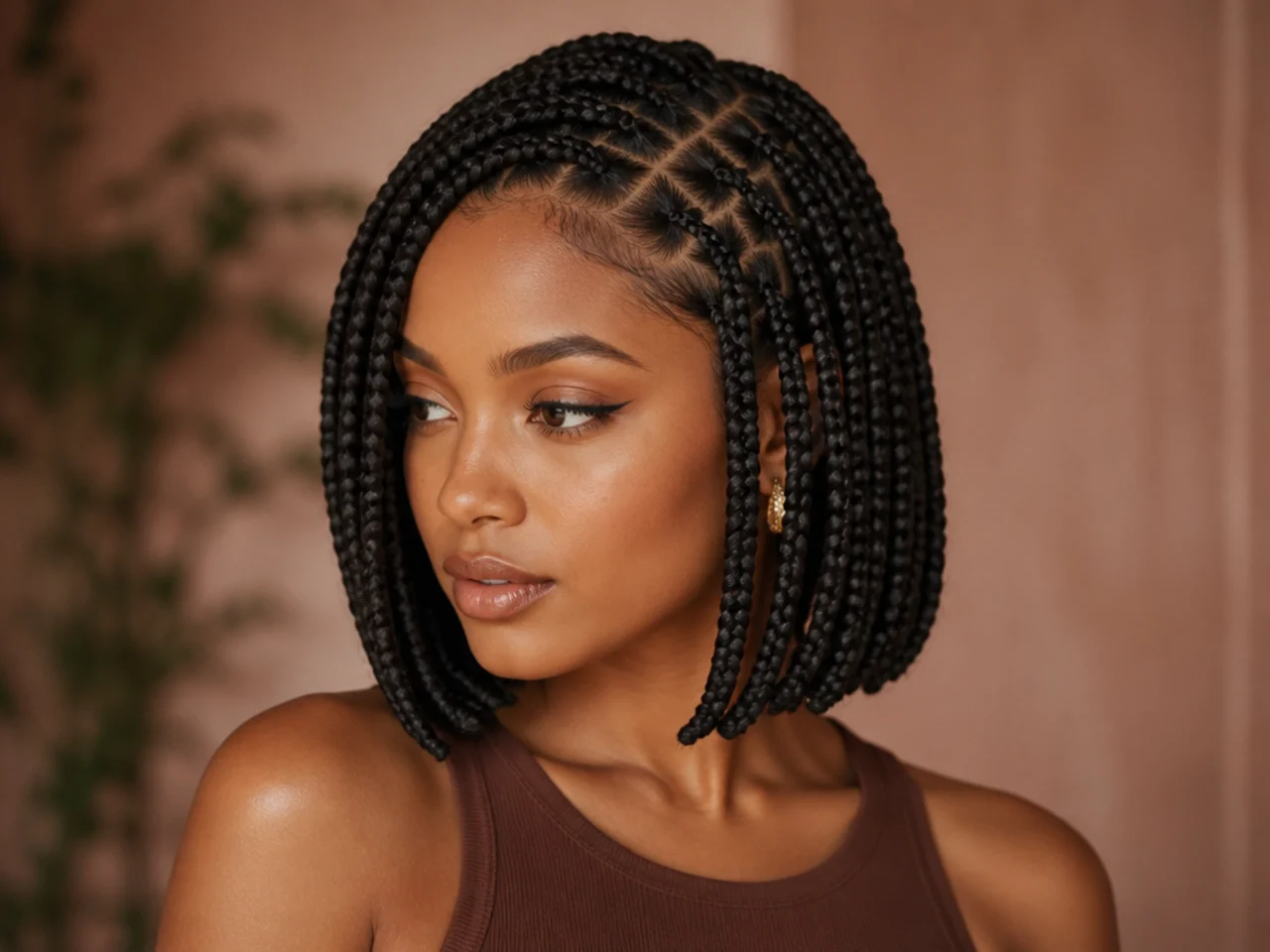
7. Braid Bob with a Middle Part and Face Frame
Two front braids left slightly shorter to frame the face.
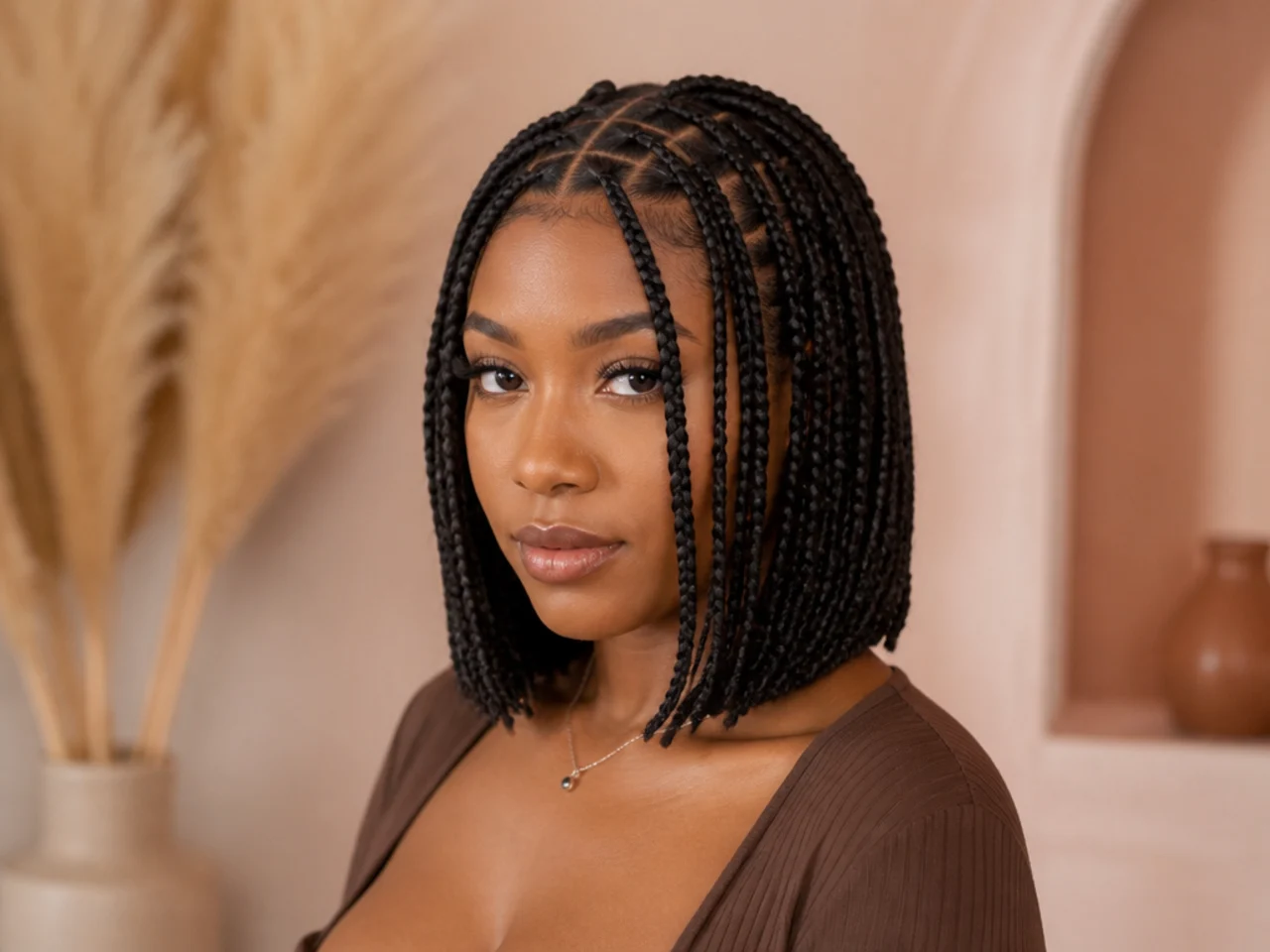
8. Two-Length Stepped Braid Bob
Two clear lengths rather than a blend. Layering, done the way braids allow. Braids cannot be graduated one by one at this count, so two deliberate lengths is the honest version of layering here.
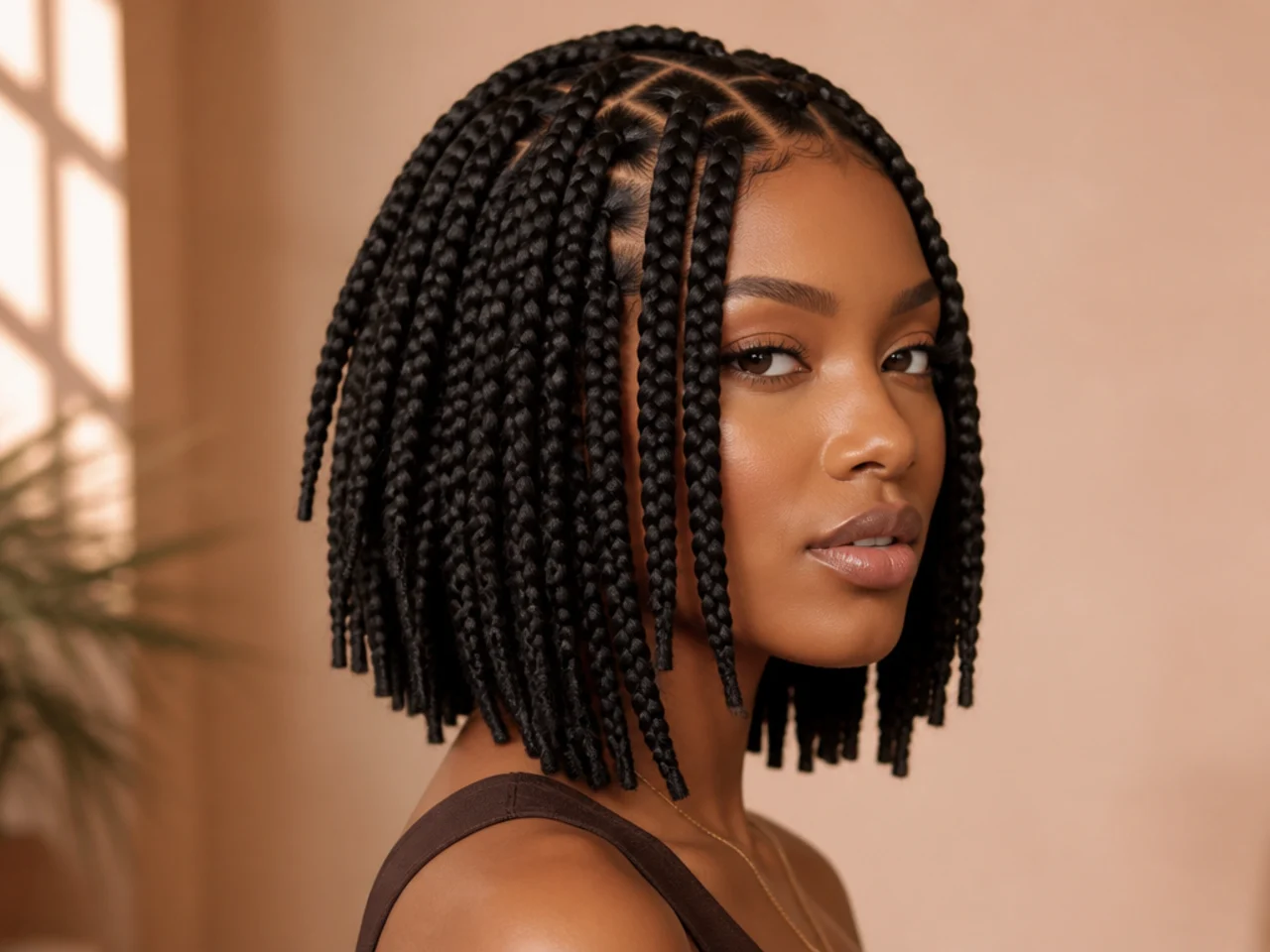
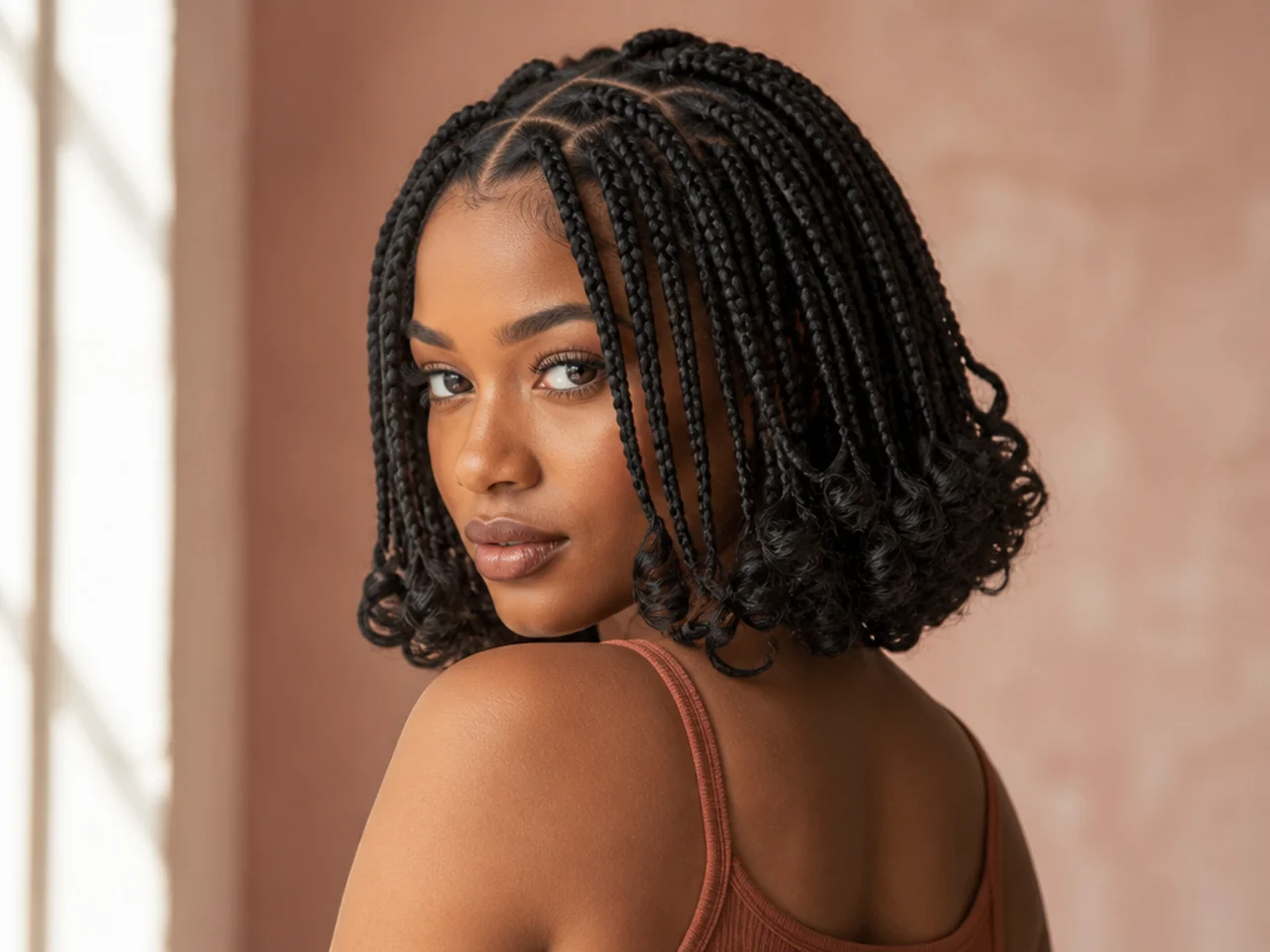
9. Braid Bob with Curled Ends
The one way to soften the blunt line without changing the cut. A curled tip breaks the hard edge that a cut leaves, which is the giveaway on any braid bob.
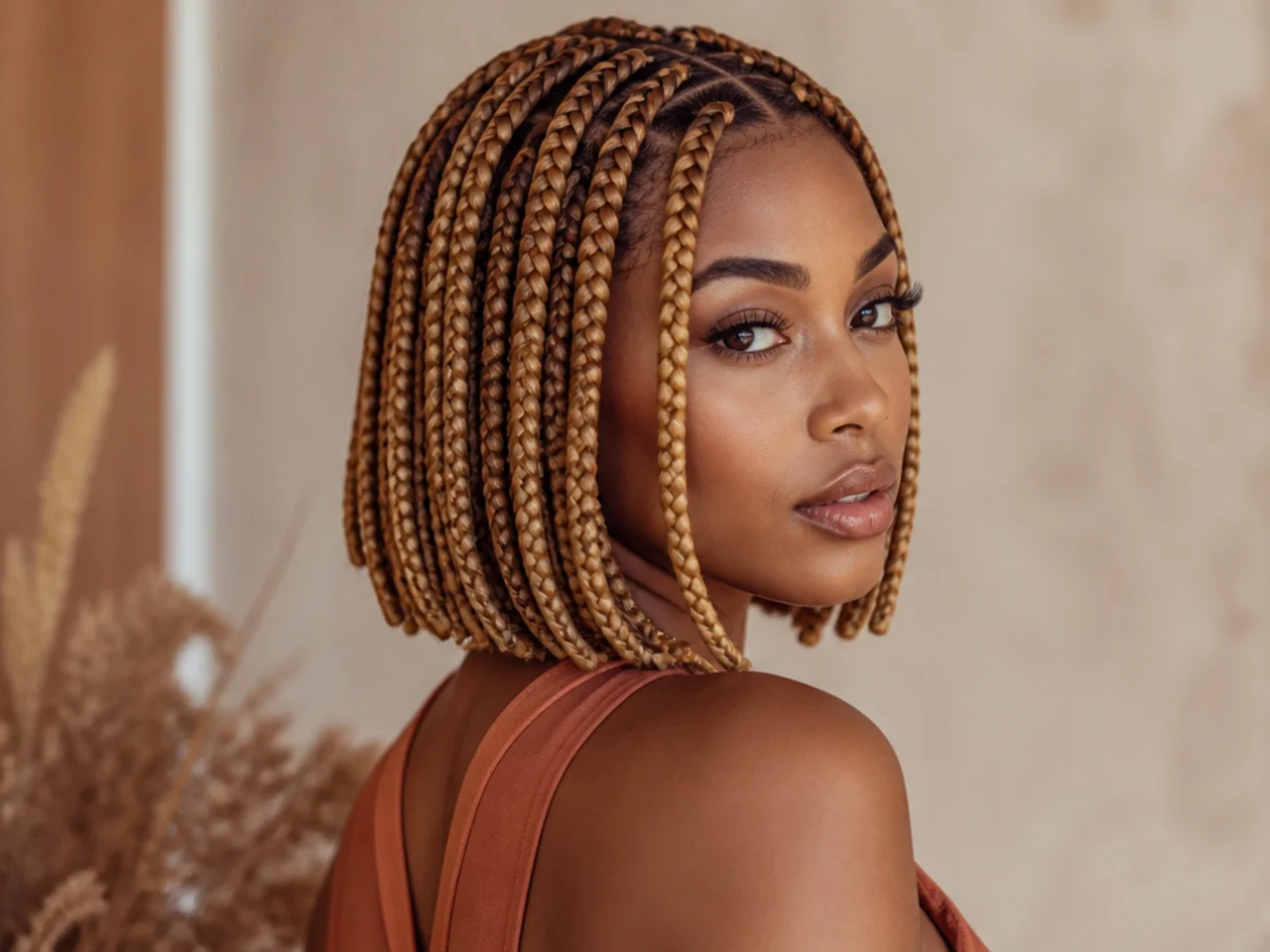
10. Honey Blonde Braid Bob
Warm colour, concentrated by the short length.
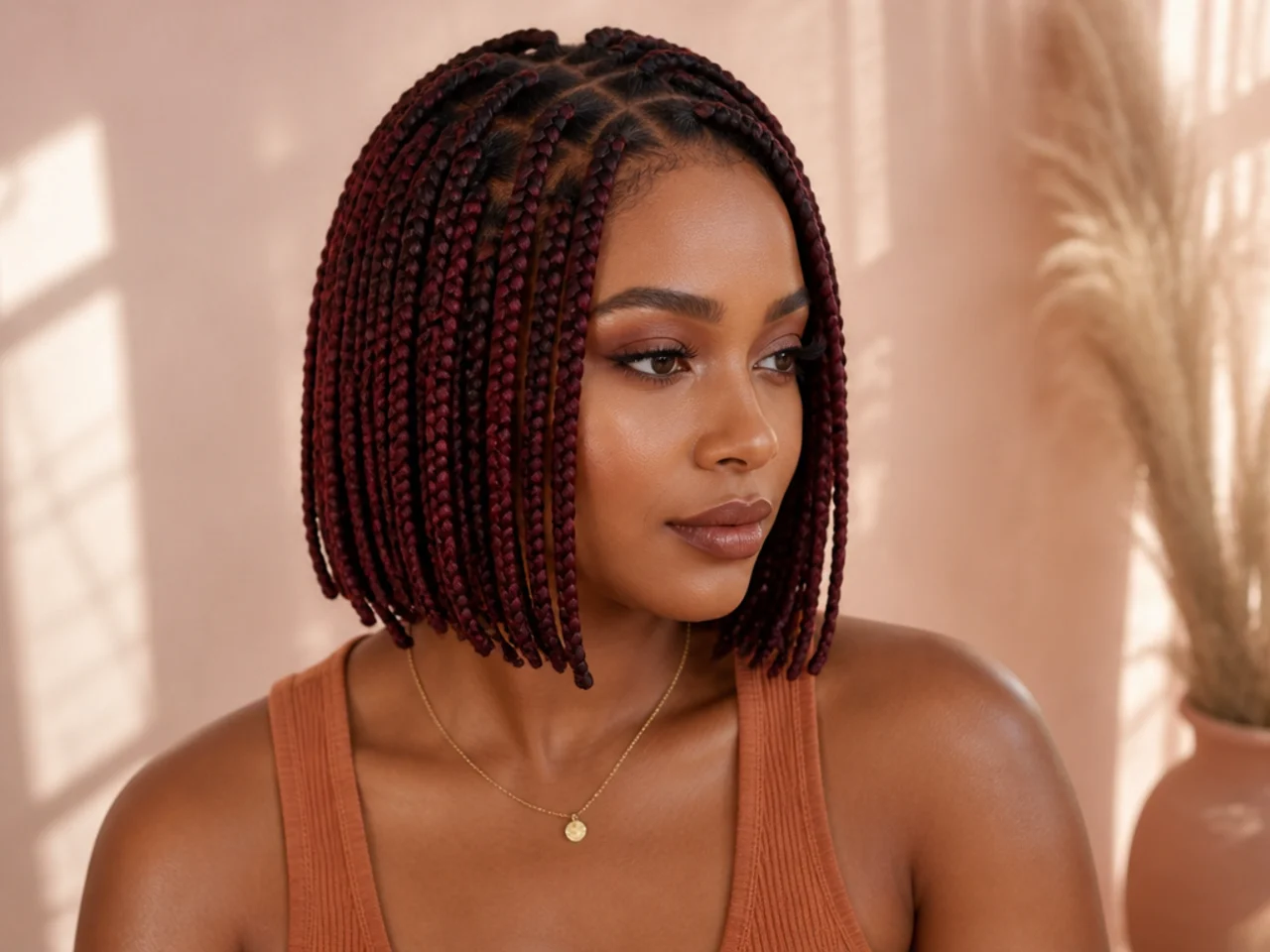
11. Burgundy Braid Bob
Deep red against a hard line. One of the strongest looks here.
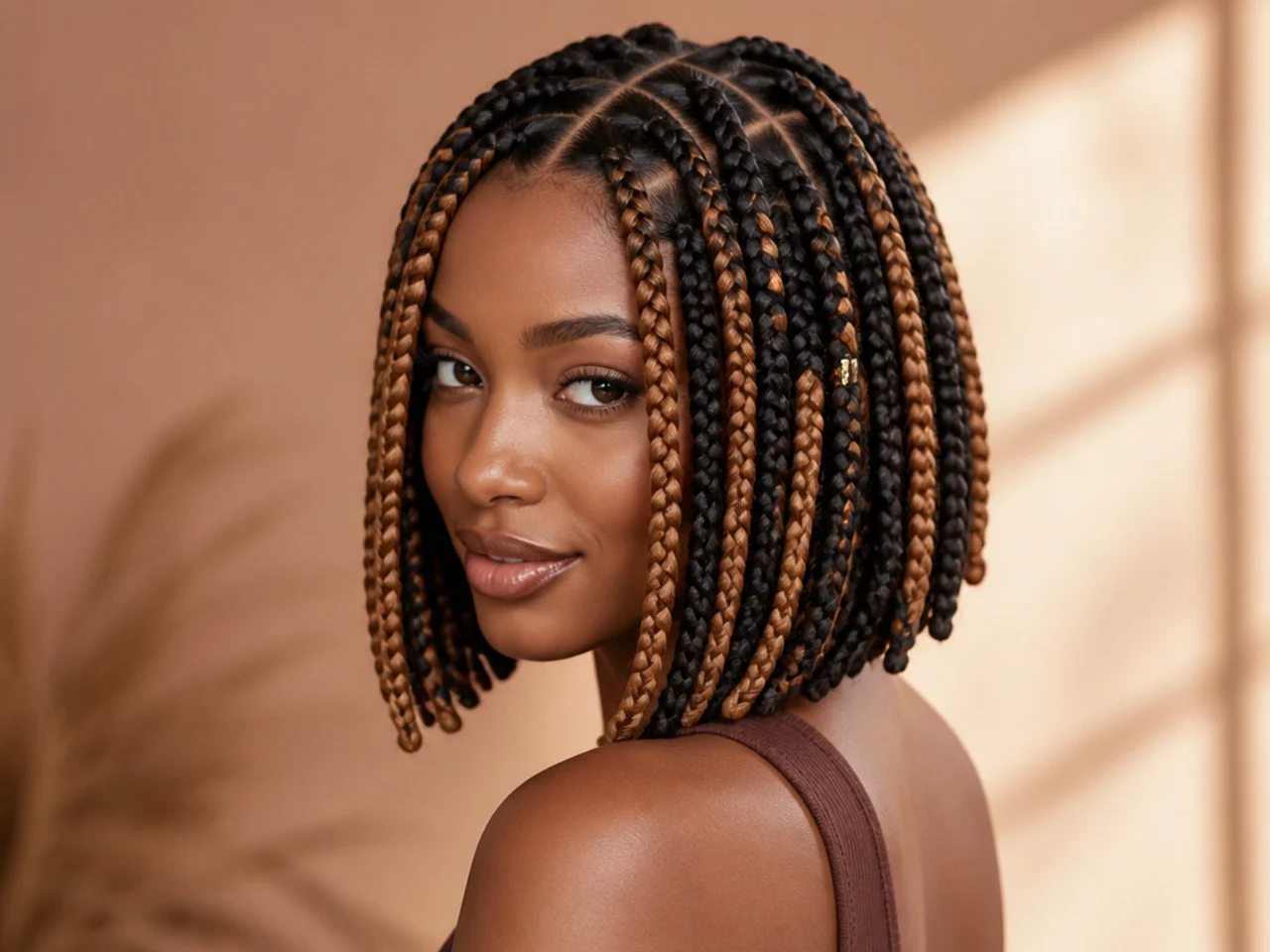
12. Two-Tone Braid Bob
Alternating shades across the bob. The line makes the pattern read clearly. A hard perimeter gives the alternation a common edge to resolve against, which is why two-tone reads sharpest on a bob.
13. Braid Bob with a Curved Grid
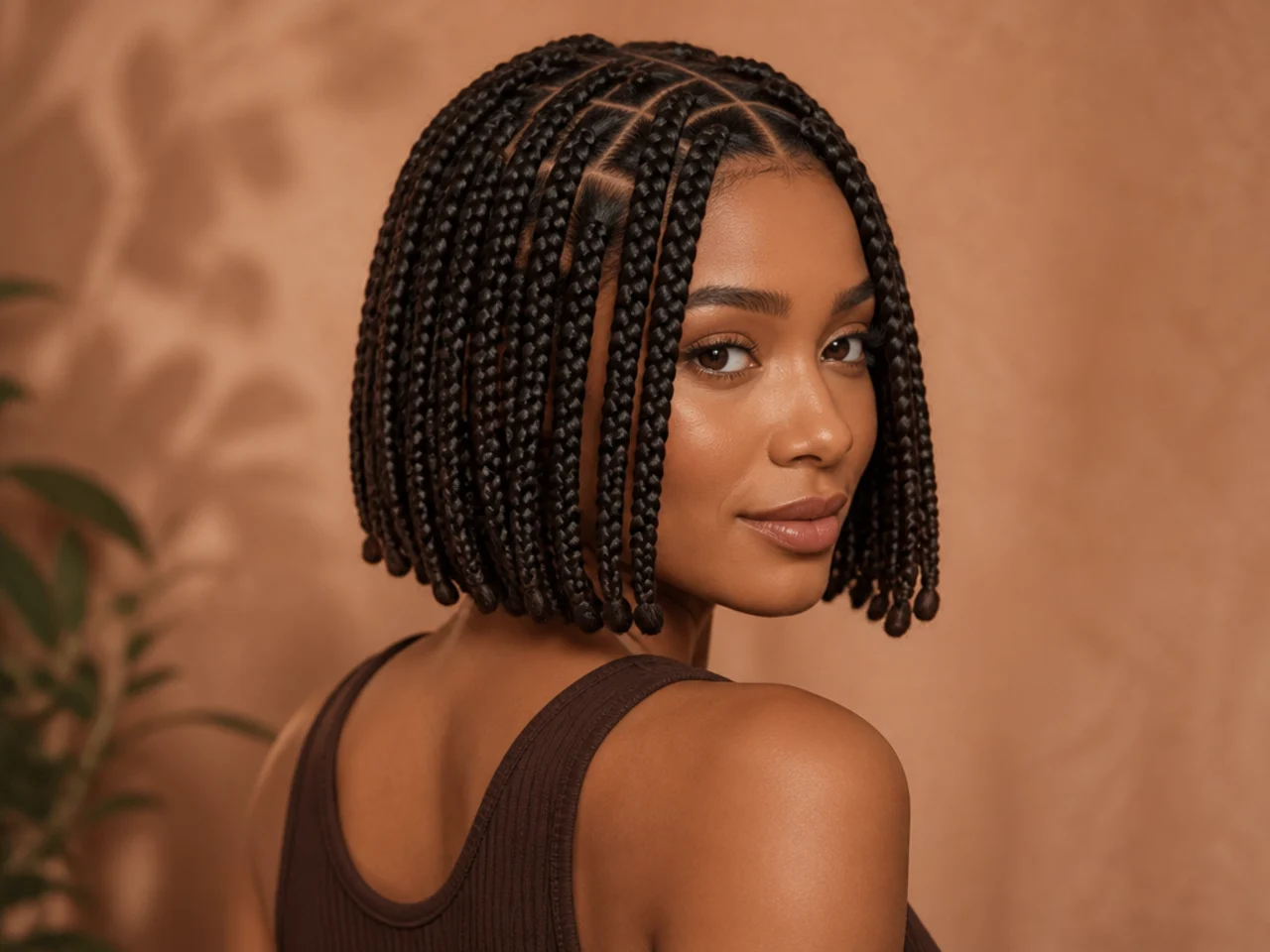
Curved partings against a straight perimeter.
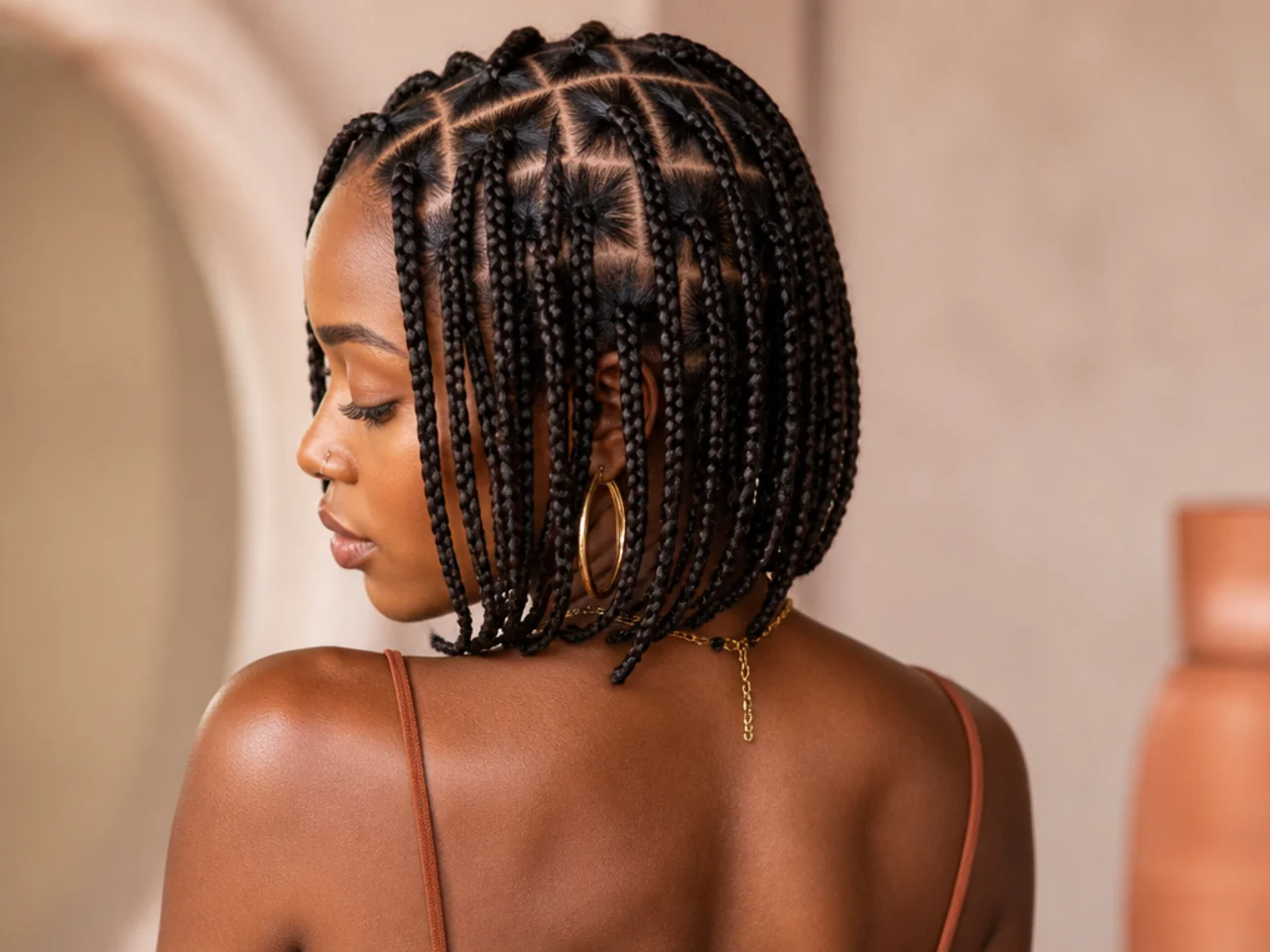
14. Braid Bob with a Square Grid
Square sections. The most architectural version of the whole style. A square grid holds its shape across a long install better than a curved one, and on a bob the grid is fully visible.
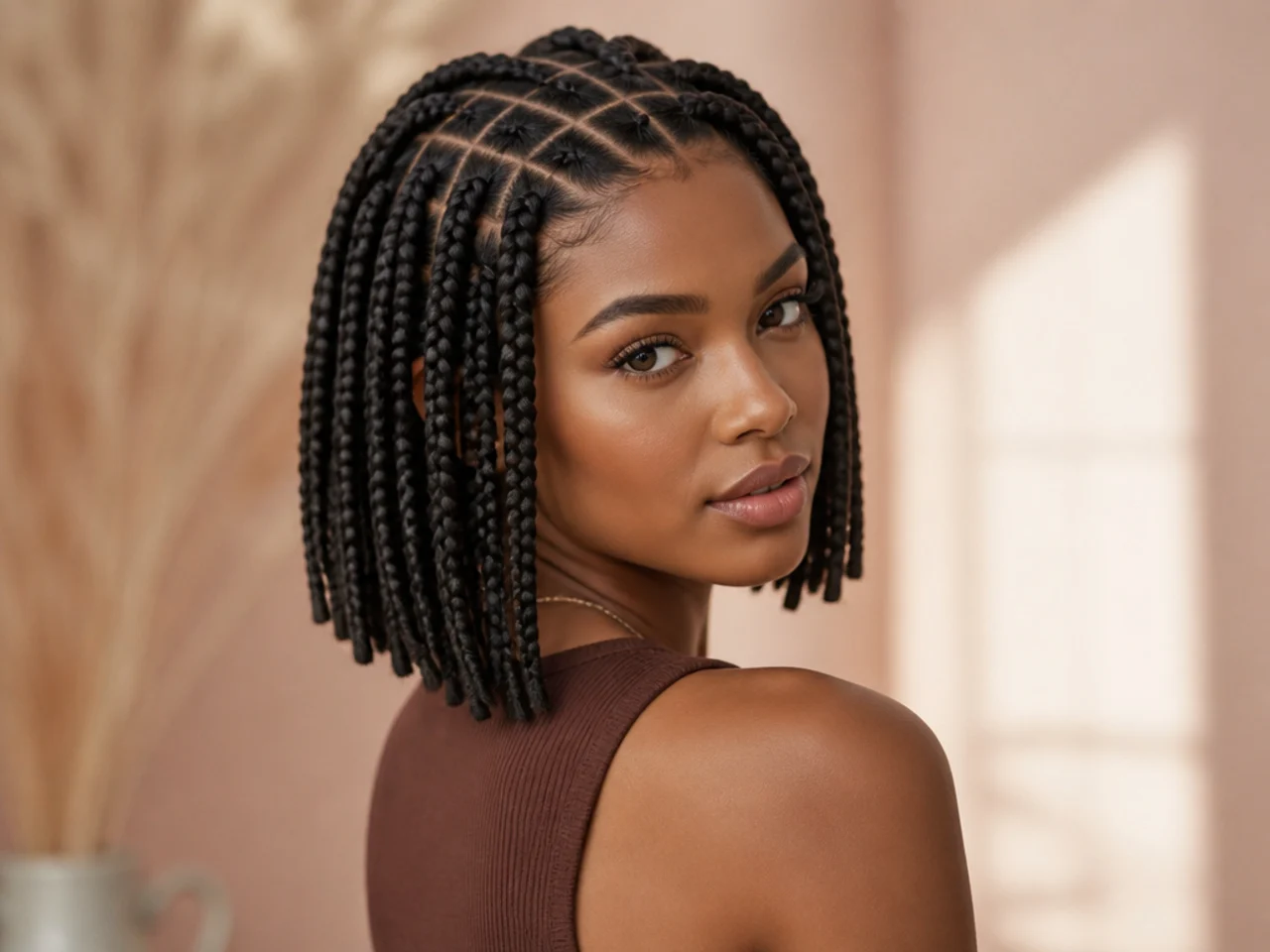
15. Braid Bob with Gold Cuffs
Cuffs near the ends, where a bob has room to show them.
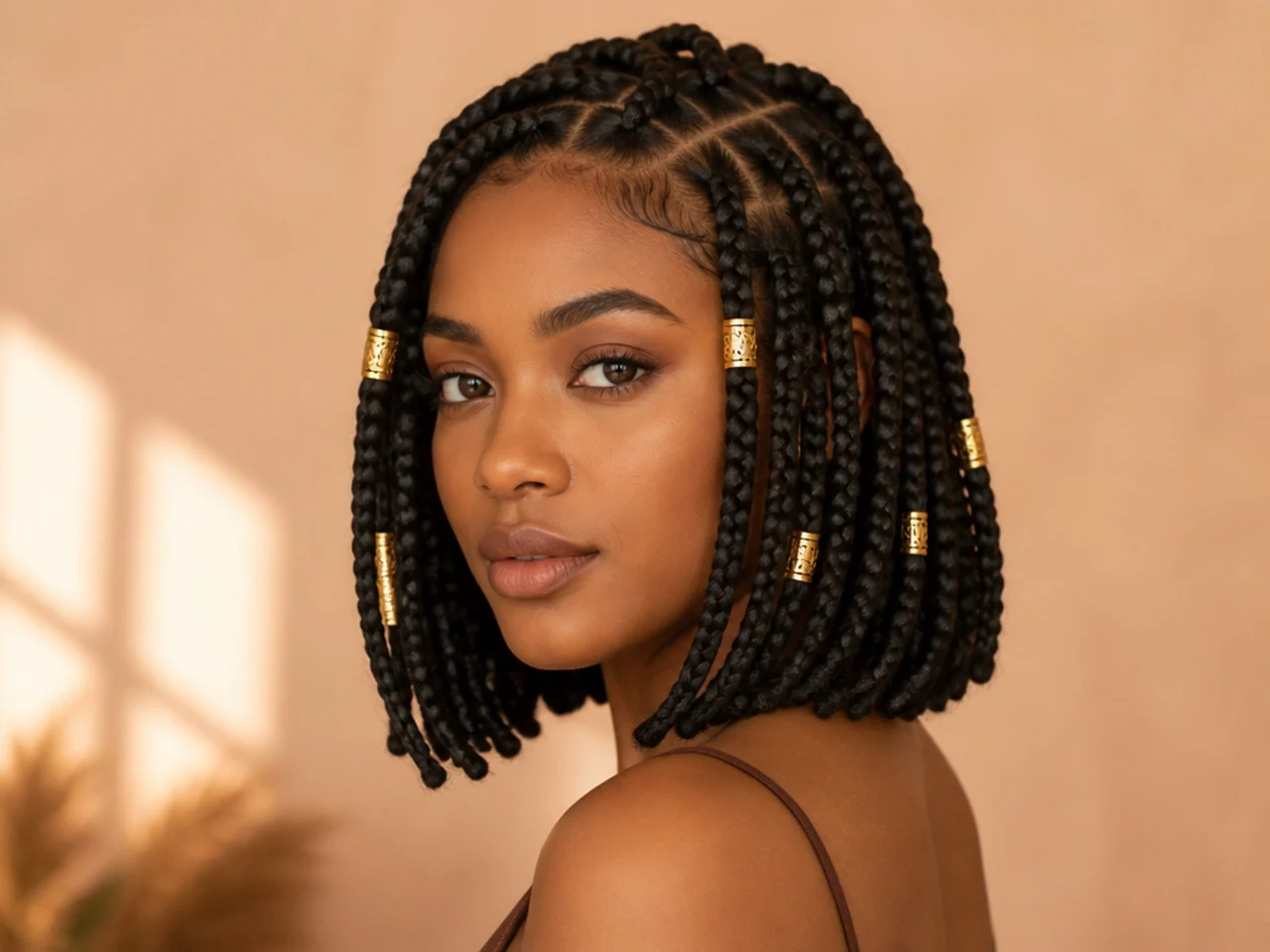
16. Braid Bob with Beads
Beads holding the cut ends and marking the line. A bead also holds a cut end without sealing, though it still needs a stopper below it or it works its way off.
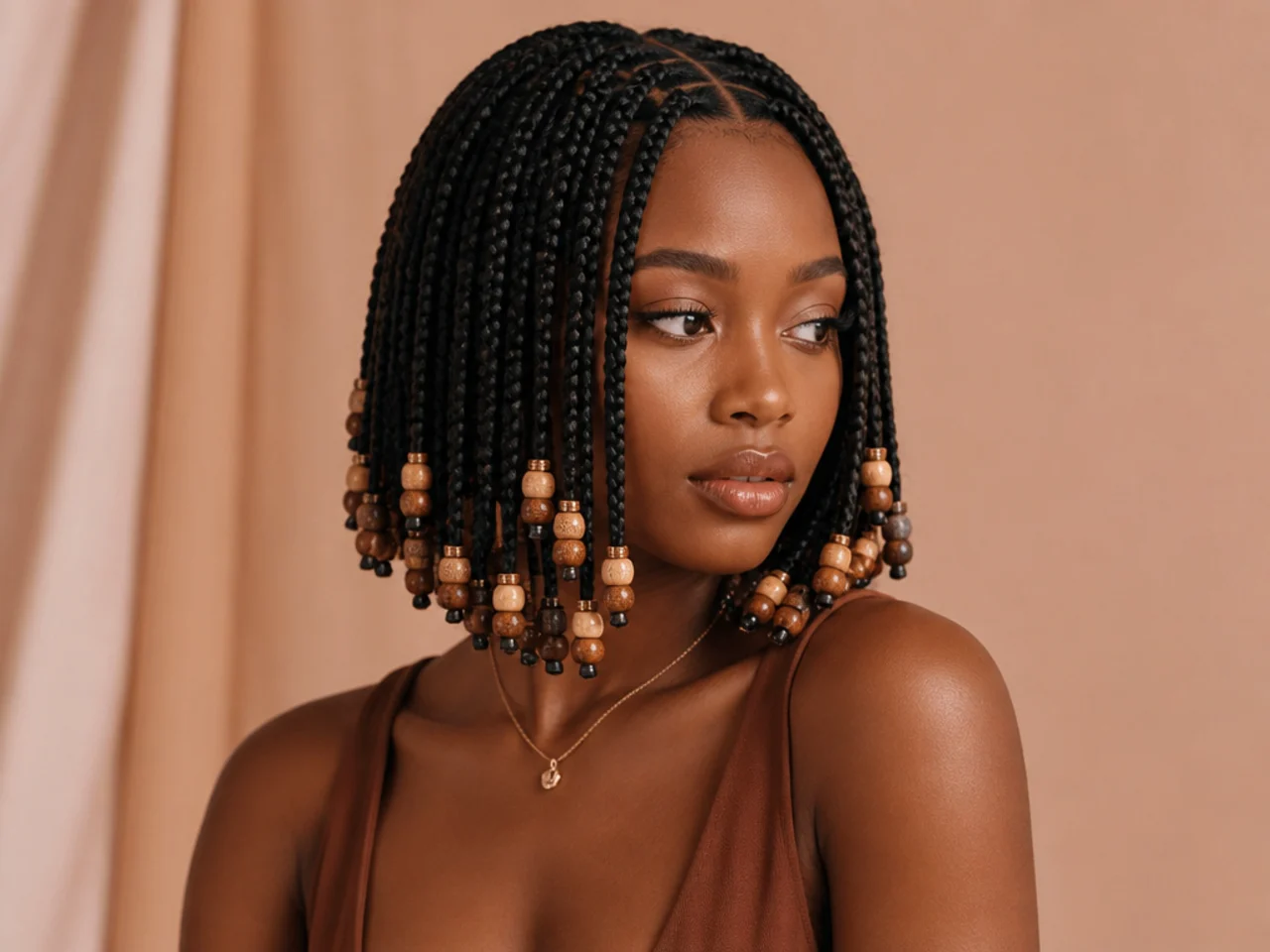
17. Braid Bob Tucked Behind One Ear
Asymmetry created without cutting anything.
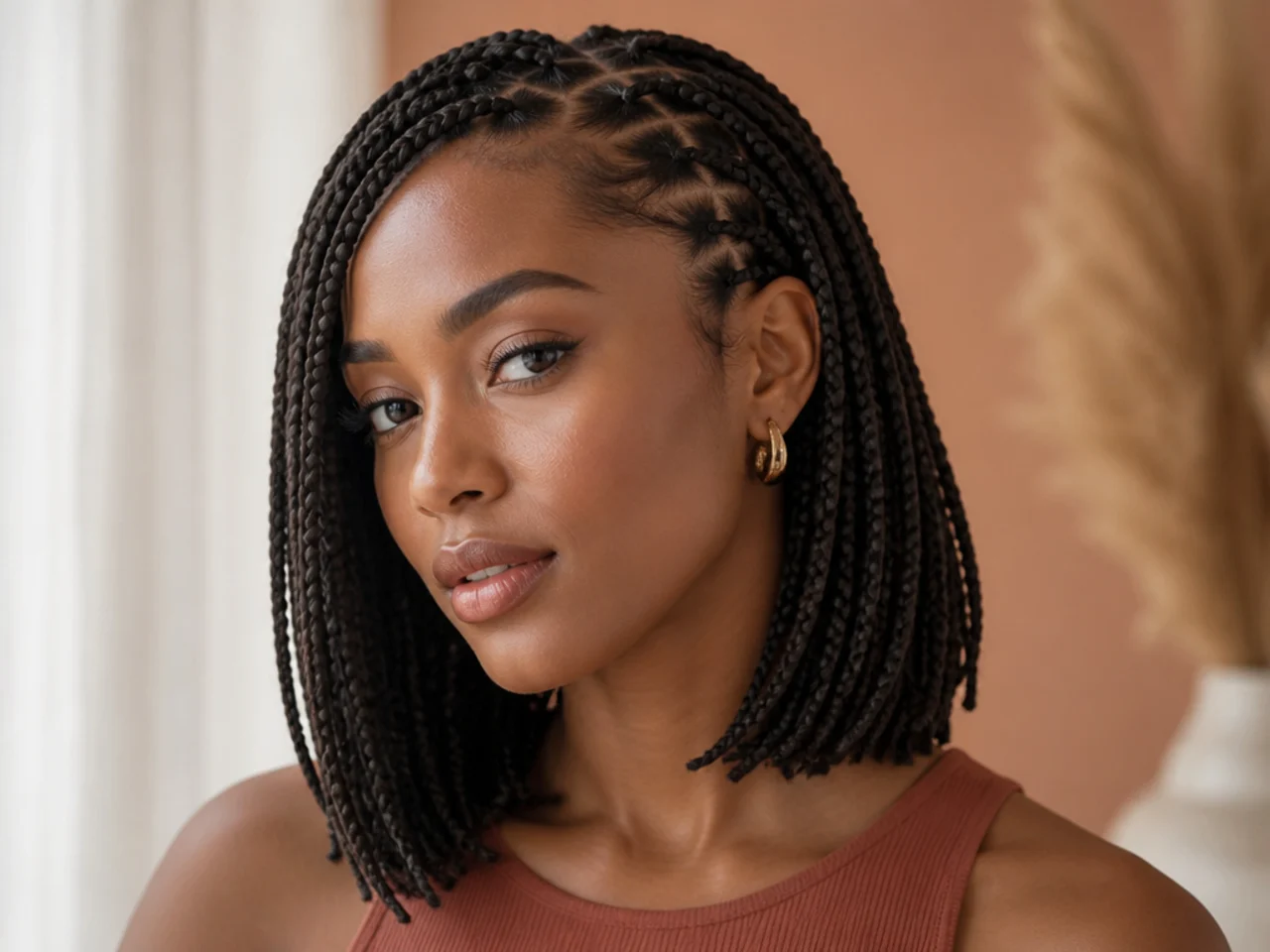
18. Braid Bob with a Headband
Front grid covered, perimeter line untouched.
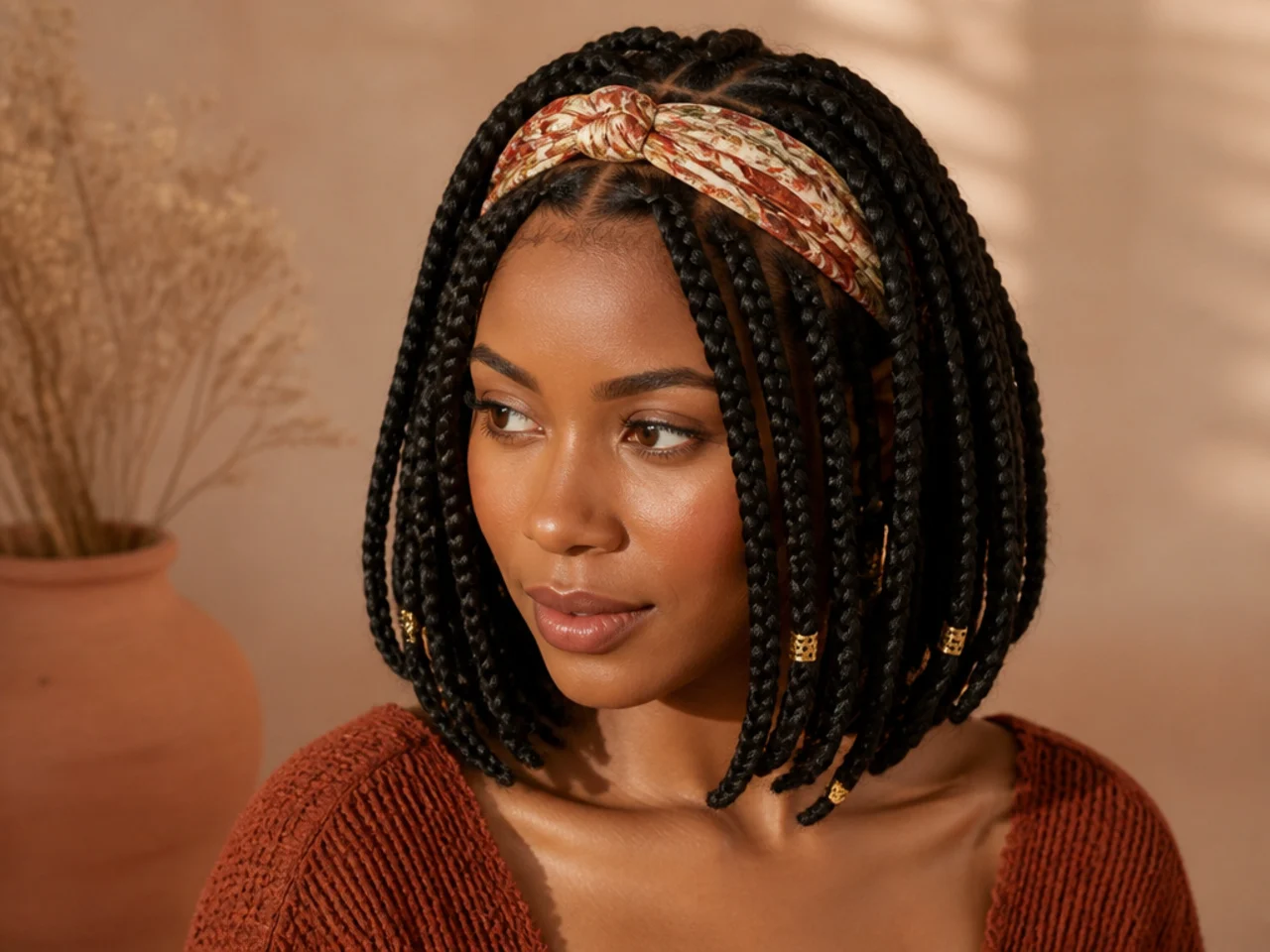
19. Braid Bob on Fine Natural Hair
The lightest large option there is, and the reason to pick a bob. Shortest length at the largest braid size means the least weight on each individual root, which is the whole argument on fine hair.
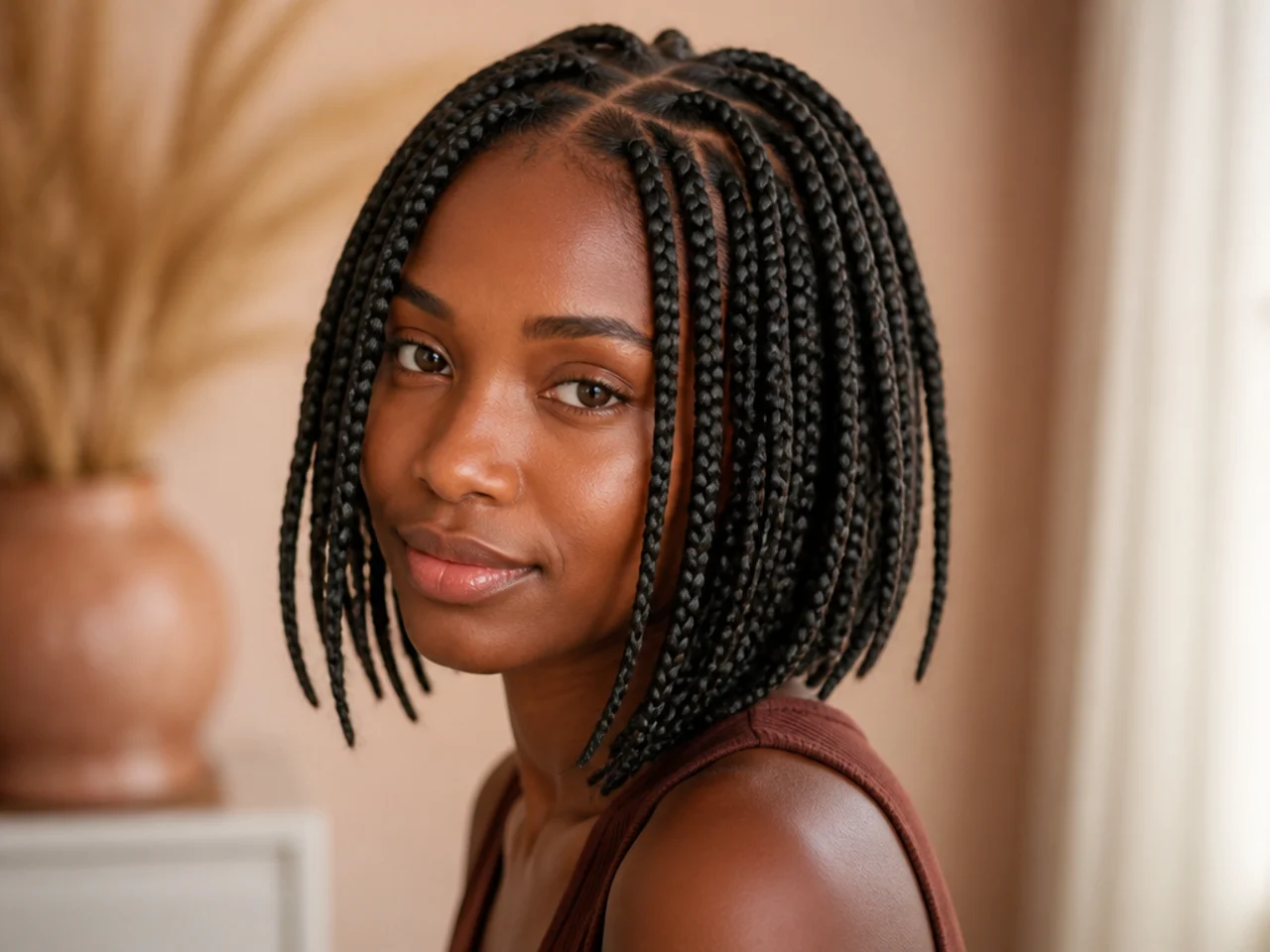
20. Braid Bob at Week Four
Where the line is still sharp but the roots have shifted. A bob holds its outline long after the roots have moved, which is exactly what makes it easy to overstay.
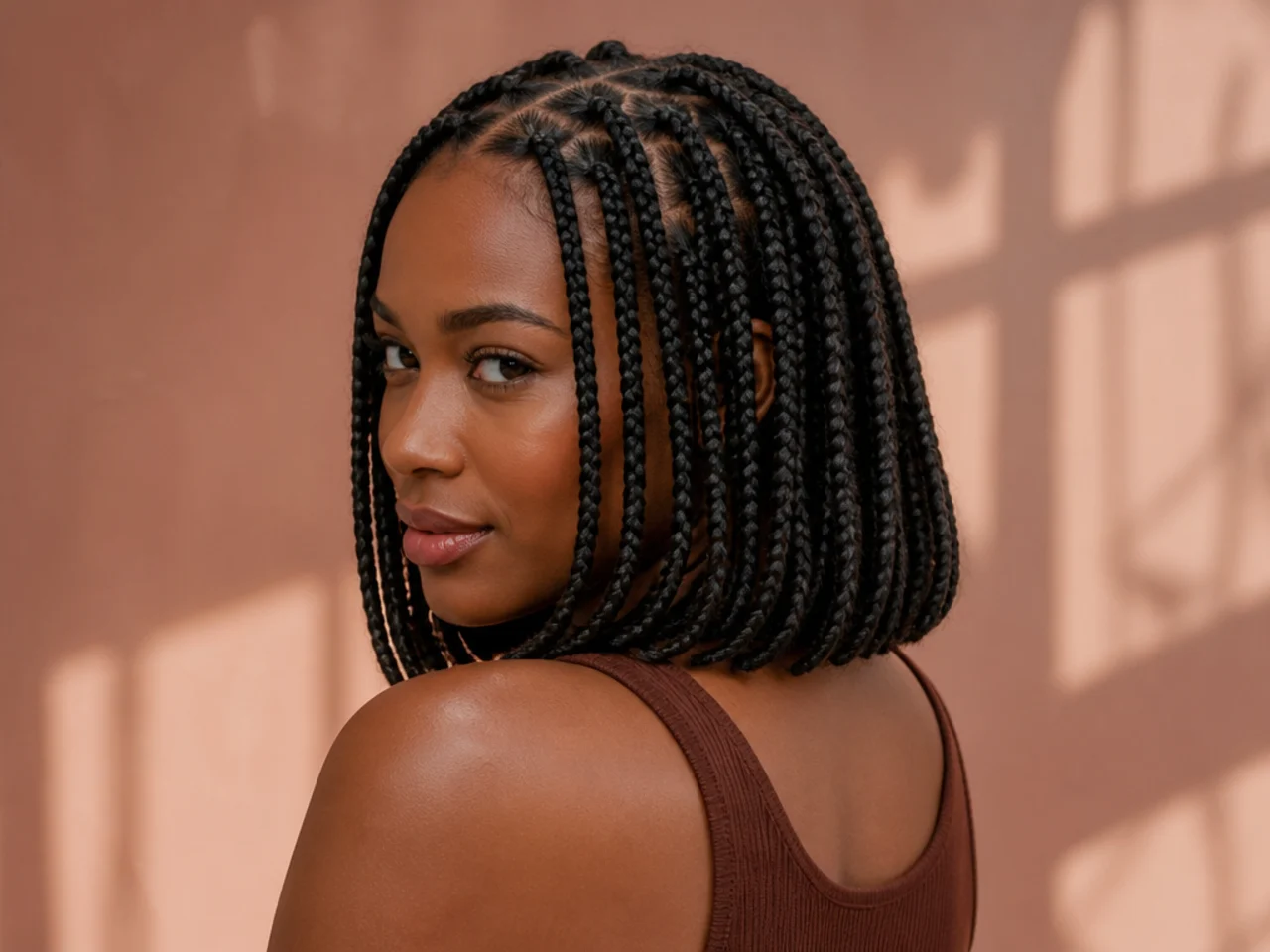
Styling and Upkeep
Protect the line. A bob is only as good as its perimeter, so any braid that unravels at the cut breaks the shape immediately. Reseal it the week you spot it.
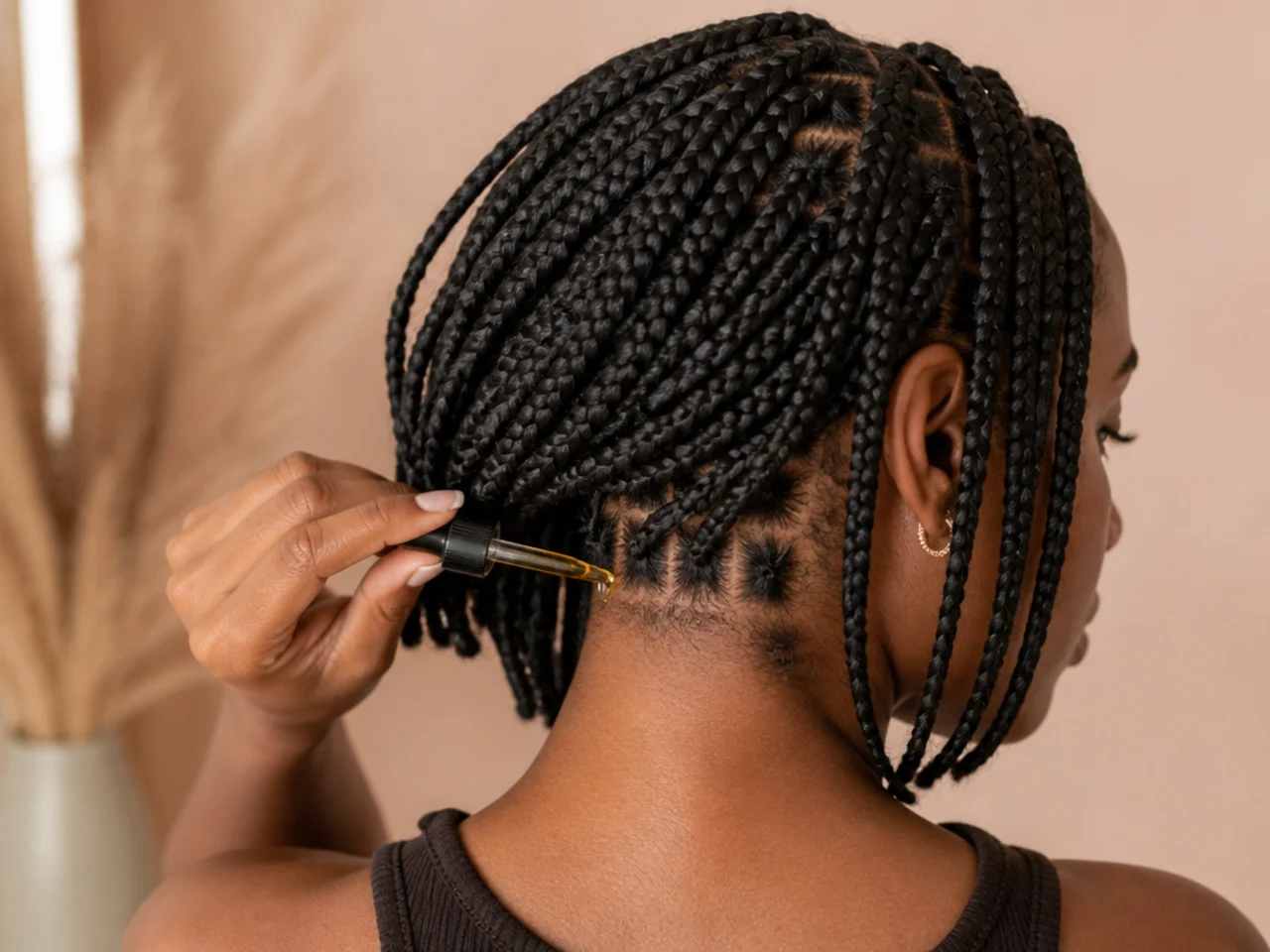
Oil the nape partings. They are on show at this length from behind, and they are also the ones you never see in a mirror.
Bonnet at night, not a gather. There is no length to gather, and forcing one puts tension into the roots for no benefit.
Wash freely. A bob dries in a fraction of the time a long set does, so there is no reason to stretch washes.
Take them out at six weeks. The shape stays crisp long after the roots have loosened, which makes a bob the easiest set to leave in too long.
Mistakes to Avoid
Asking for layers. Braids step, they do not blend. Ask for two lengths, deliberately.
Choosing the line in inches. Choose it against your jaw with the braids in.
Ignoring the back grid. A bob shows the nape partings that a long set hides.
Letting one end unravel. On a blunt line a single short braid is obvious from across a room.
Wearing it past six weeks because it still looks good. It will — the shape outlasts the roots.
FAQ
Do they work as a bob? Better than expected — the blunt line reads absolutely, since braids do not thin at the ends.
What length? Chin is sharpest, jaw is most wearable. Place it against your own jaw.
Can you layer it? Only in steps. Braids cannot be graduated.
Final Thoughts
Choose a bob for the line, not for the length. If you want a soft, movement-led shape, braids are the wrong material and you will spend the whole six weeks fighting them. If you want an edge that stays exactly where it was cut, nothing else does it this well.
For the length range see short large knotless braids, and for the full set see 25 large knotless braids ideas. More in Braids & Protective Styles.
Frequently asked questions
Related posts
See all posts
20 Waterfall Mermaid Braid Ideas That Hold
Read more
15 Side Mermaid Braid Ideas That Sit Right
Read more
20 Side Part Medium Knotless Braids I Saved
Read more