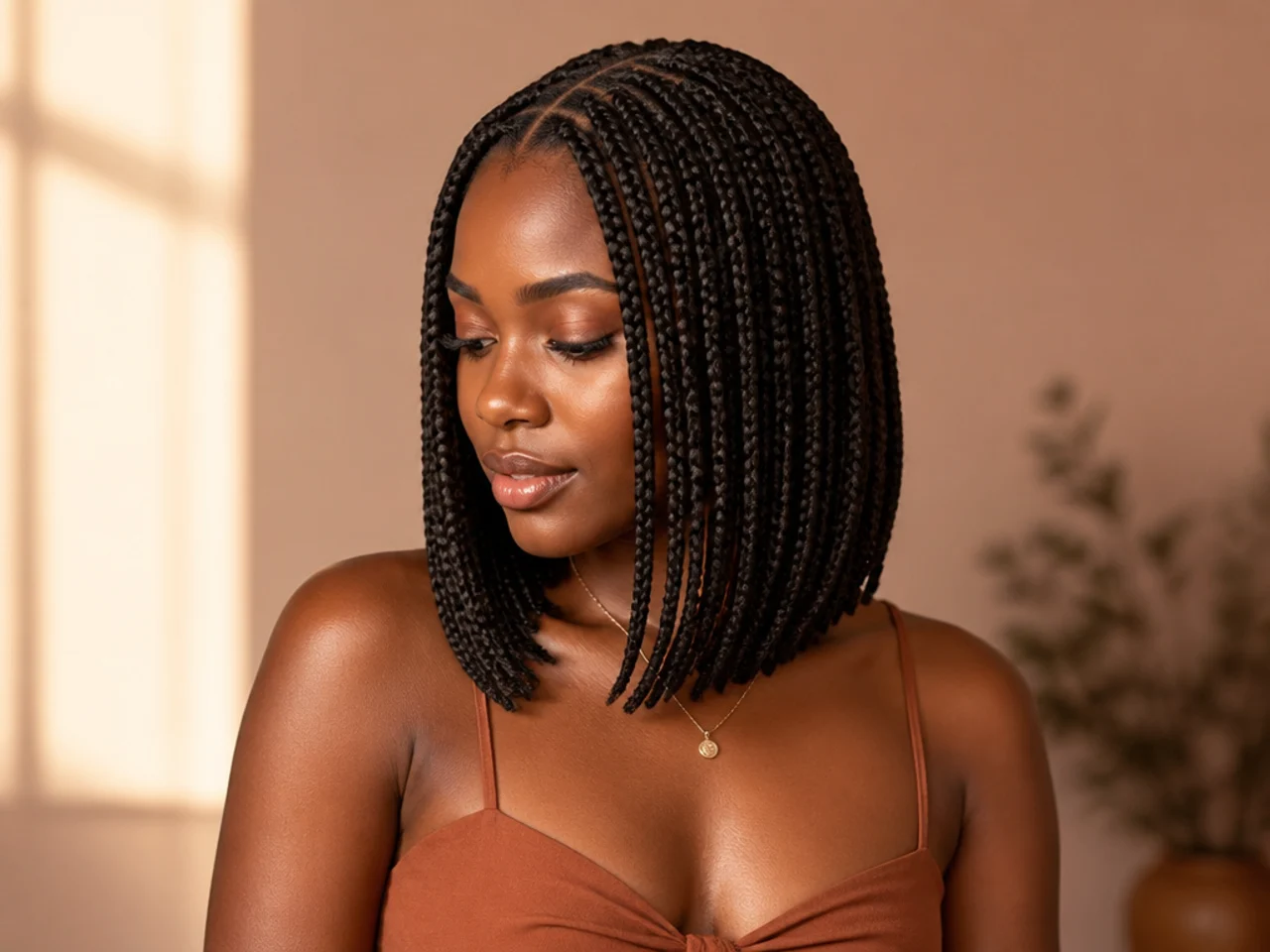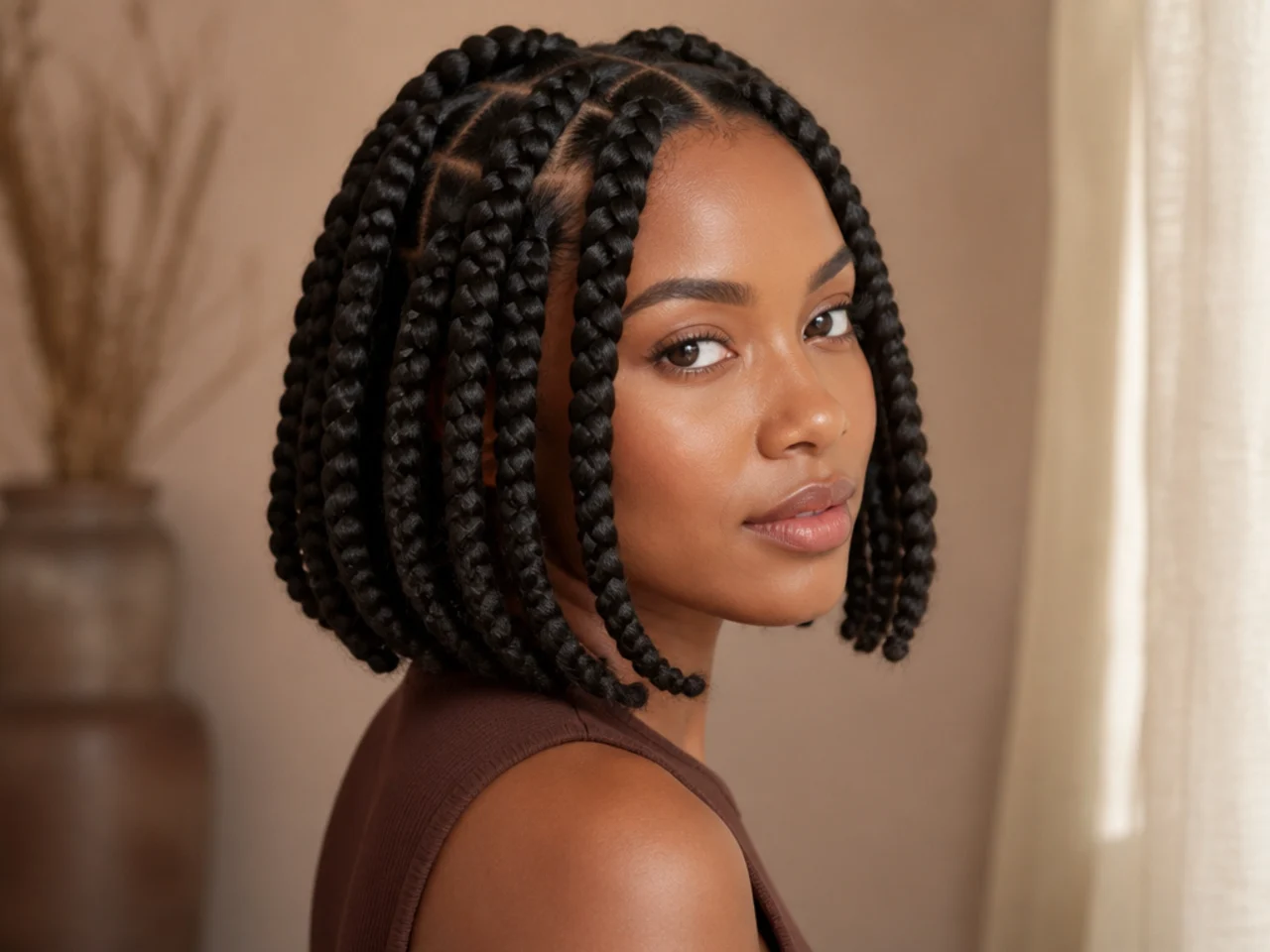
15 Short Large Knotless Braids Ideas
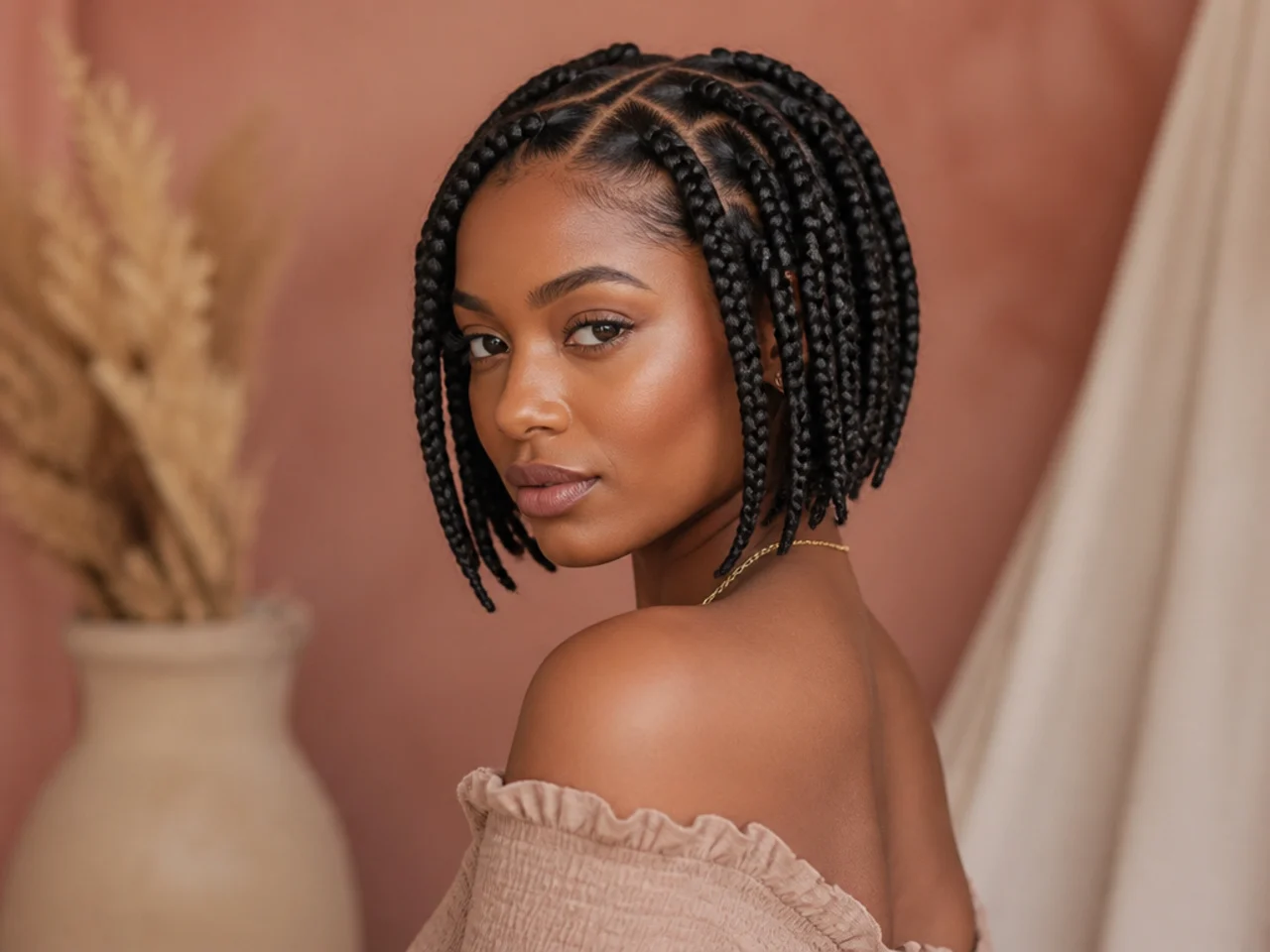
Fifteen short large knotless braid ideas, and the thing nobody says at the booking stage — short braids are almost always cut down from a longer install, and the cut end has to be resealed or it unravels.
In this article · 22
- What Makes Short Large Knotless Work
- How to Choose Yours
- The 15 Short Ideas
- 1. Chin-Length Large Knotless
- 2. Jaw-Length Large Knotless
- 3. Collarbone-Length Large Knotless
- 4. Short Braids with Hot-Water-Sealed Ends
- 5. Short Braids with Beaded Ends
- 6. Short Braids with Curled Tips
- 7. Short Braids with a Centre Part
- 8. Short Braids with a Deep Side Part
- 9. Honey Blonde Short Braids
- 10. Burgundy Short Braids
- 11. Short Braids Tucked Behind One Ear
- 12. Short Braids with a Half-Up Clip
- 13. Short Braids with a Headband
- 14. Short Braids on Fine Natural Hair
- 15. A Long Set Cut Down Short
- Styling and Upkeep
- Mistakes to Avoid
- FAQ
- Final Thoughts
Short large knotless braids are the lightest thing in this silo and the most misunderstood, because of how they are actually made.
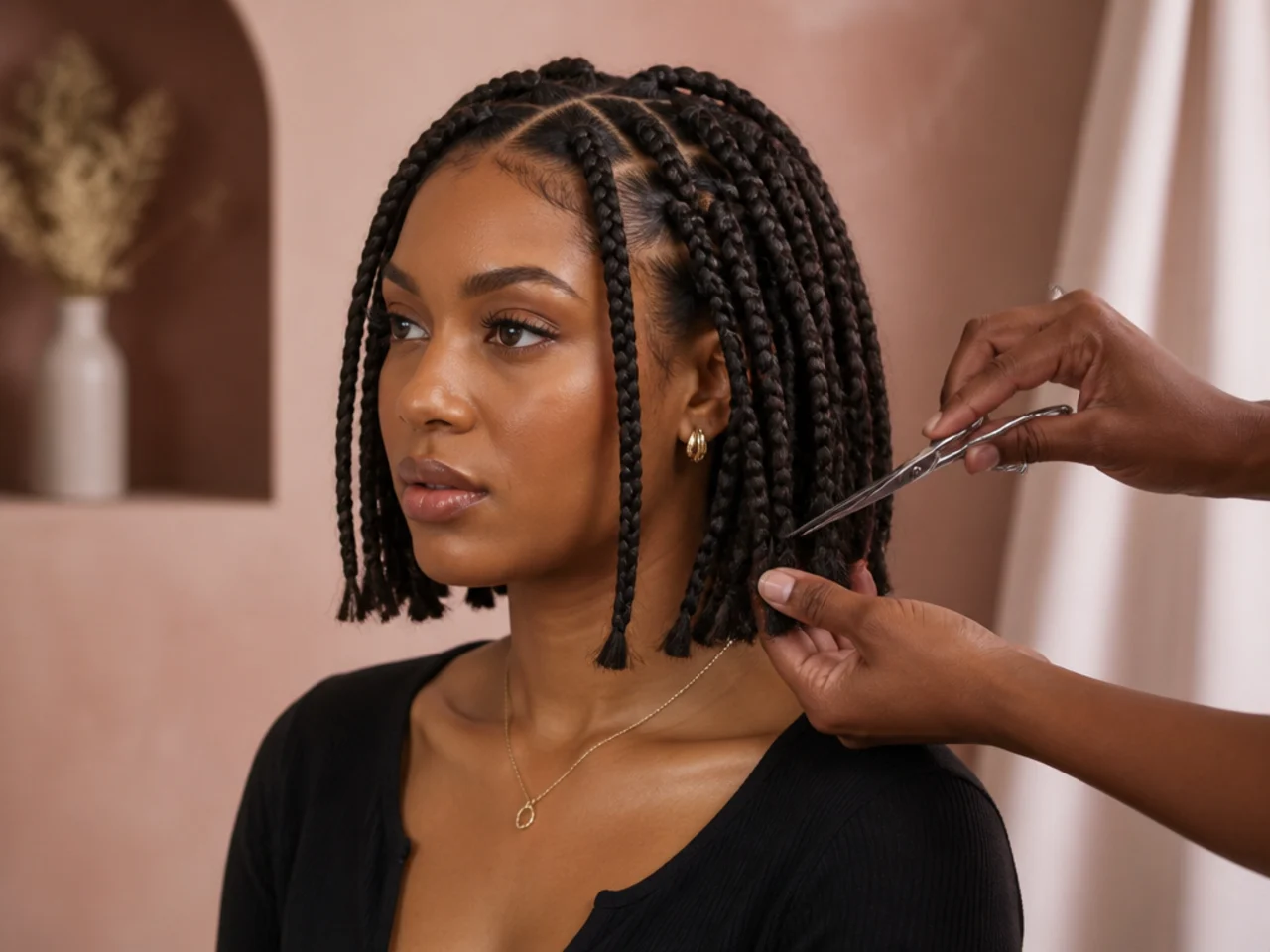
They are cut, not installed short. The braider needs several inches of extension past the end of your own hair to feed and taper each braid properly. The short shape happens at the end of the appointment, with scissors.
What Makes Short Large Knotless Work
Weight all but disappears. Length drives weight in a straight line, so an above-shoulder set puts roughly a third of the load on each root that a waist-length one does. This is the safest large size there is on fine hair.
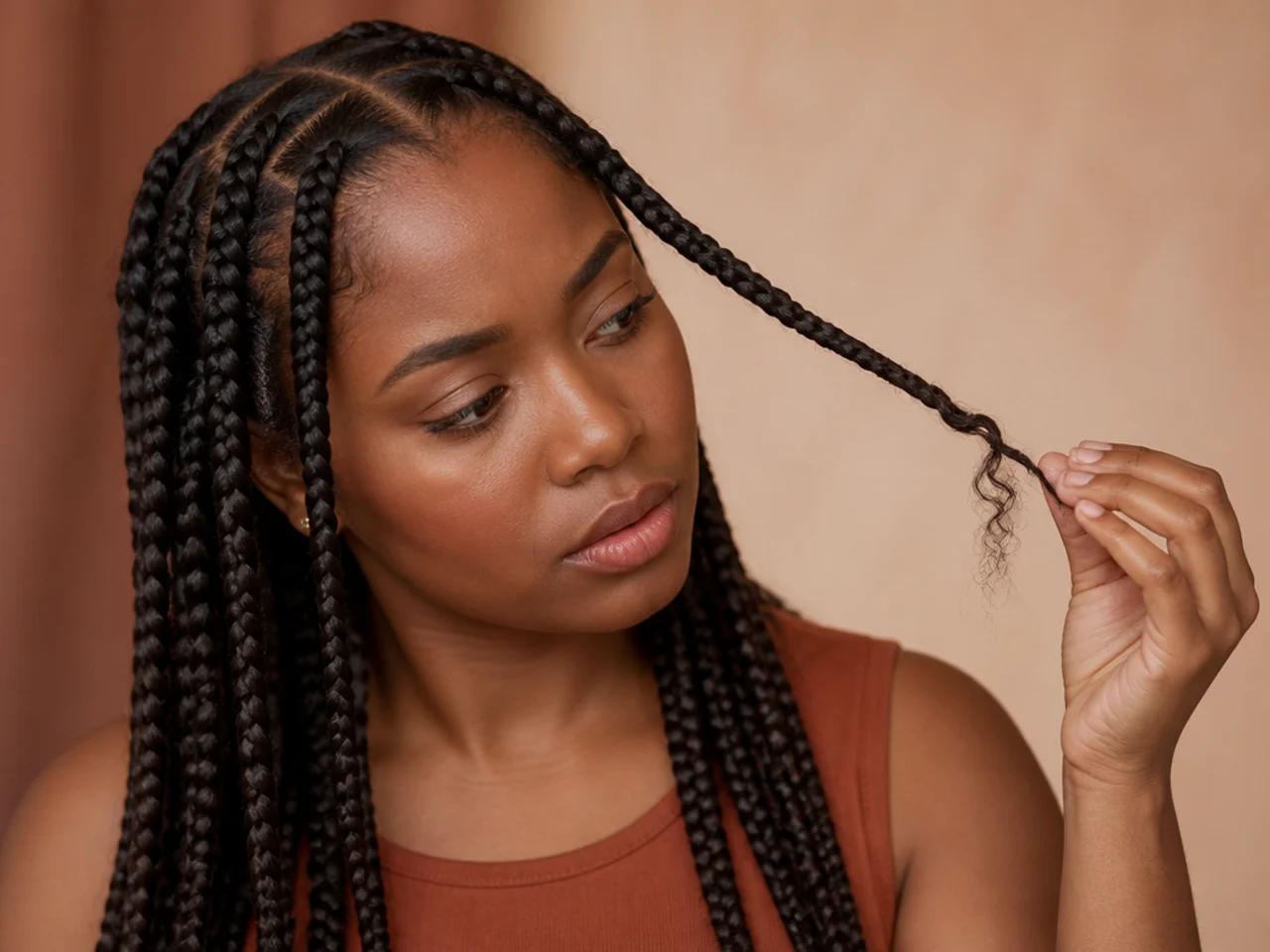
A cut braid is an open braid. Nothing holds the end once the taper is gone. Left alone it unravels from the cut upward, usually within a few days and always faster than you expect.
Sealing is quick at this size. Forty to sixty ends dipped in hot water takes a few minutes. On a two-hundred-braid set it is a chore; here it is not.
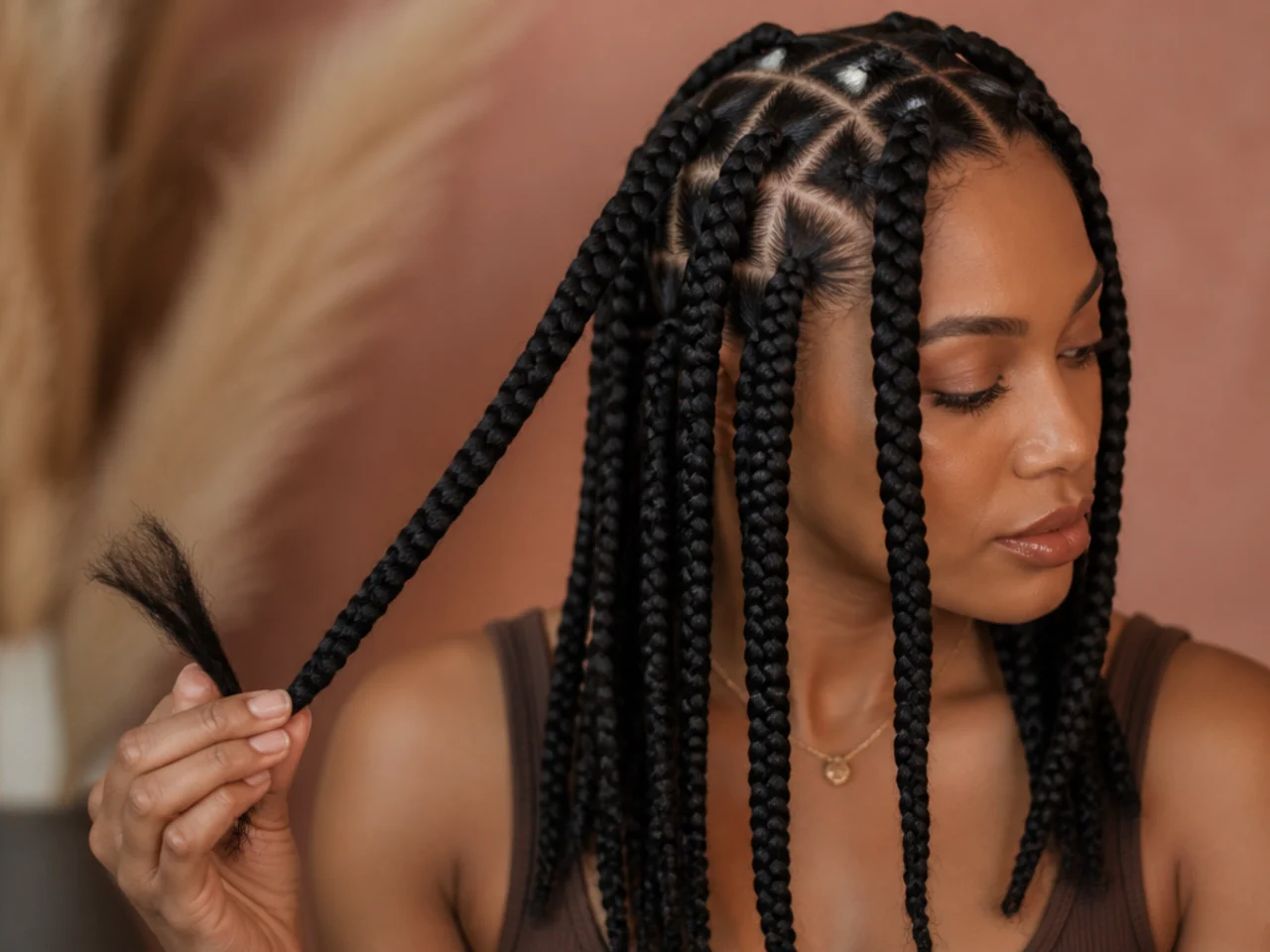
The grid is more exposed than at any other length. Without length falling over the back of the head, the parting lines are visible from behind whenever you tip your head forward.
How to Choose Yours
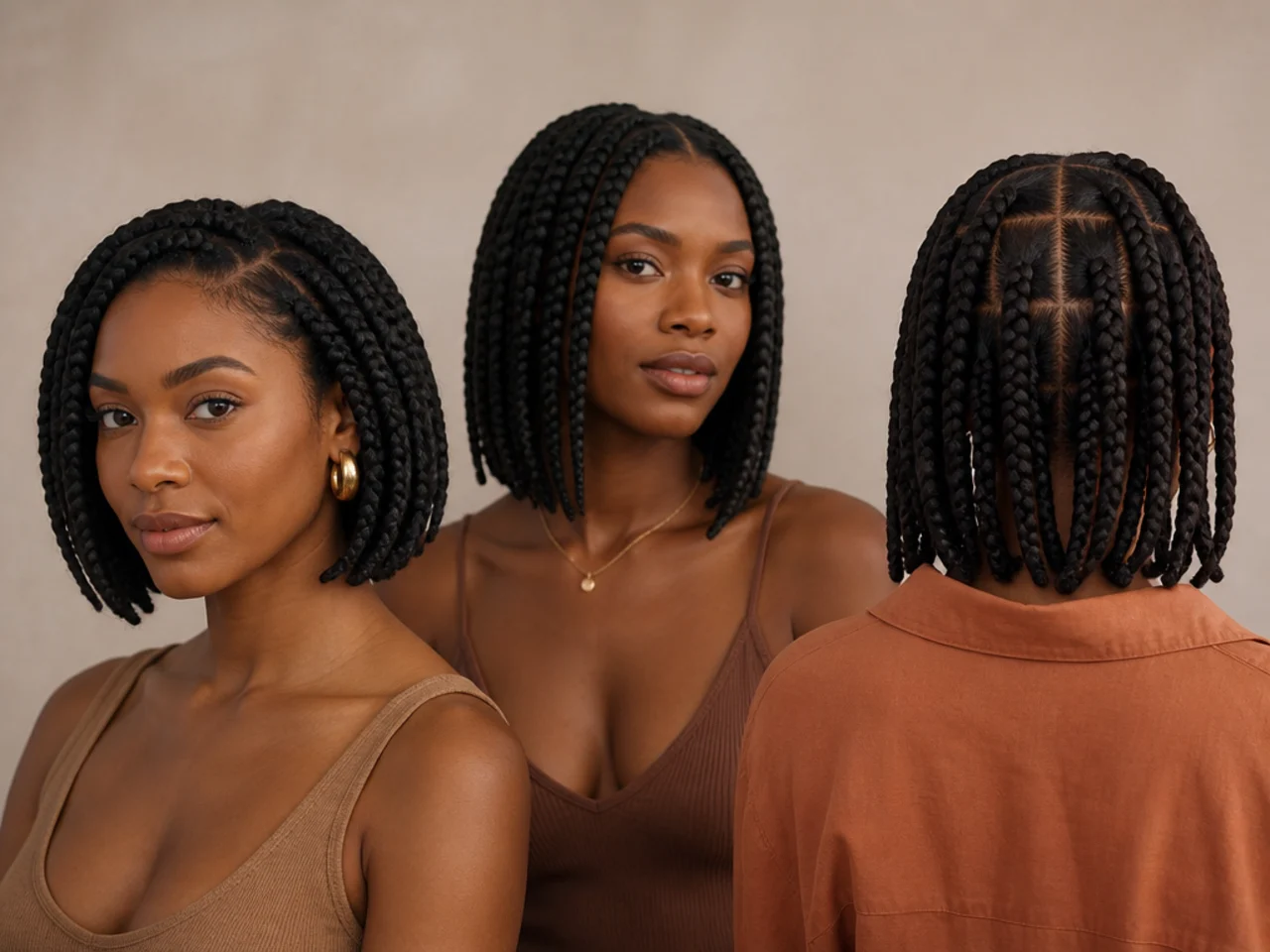
Decide the length against your jaw, not in inches. Chin, jaw and collarbone read completely differently on different faces, and inches do not translate between them.
Ask to have it cut dry and standing. Braids sit differently when you are upright with the weight settled. Cut on a seated, damp head, the line lands shorter than intended.
Choose your sealing method before the cut. Hot water dipping gives a clean tapered finish, a knot gives a blunt one, and a bead holds the end without either. They look different, so pick deliberately.
On fine hair, this is the length to pick. Not a compromise — the least stressful large set you can wear.
The 15 Short Ideas
1. Chin-Length Large Knotless
The shortest that still reads as braids rather than a crop. Below the chin there is not enough length left below the taper for the shape to read as a braided style at all.
2. Jaw-Length Large Knotless
A touch longer, and much easier to tuck behind an ear. Tucking needs enough weight behind the ear to stay put, and the jaw is roughly where that becomes reliable.
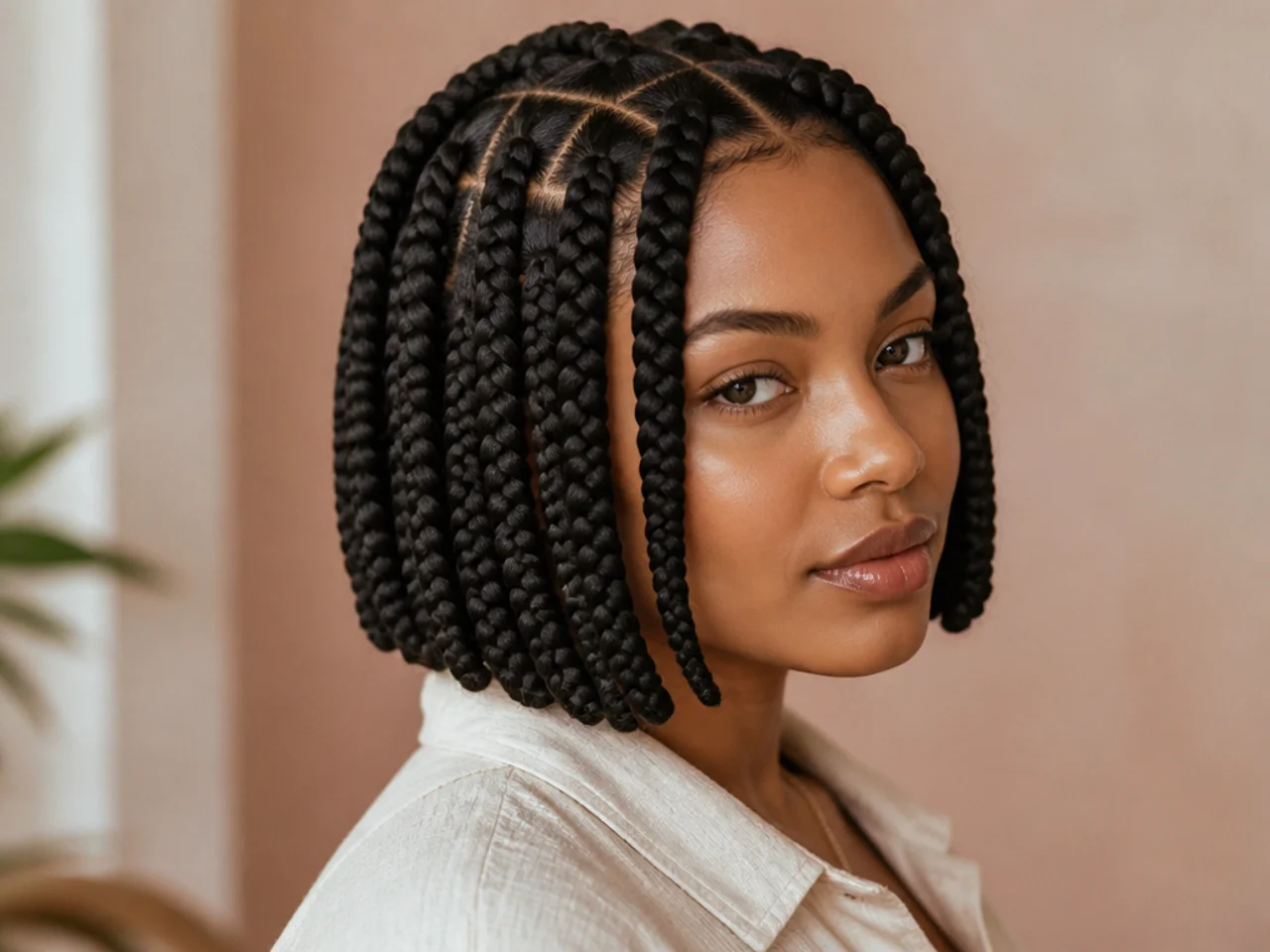
3. Collarbone-Length Large Knotless
The longest of the short range. Still weightless compared with mid-back. Collarbone is the point where you get the full styling range back while keeping most of the weight advantage.
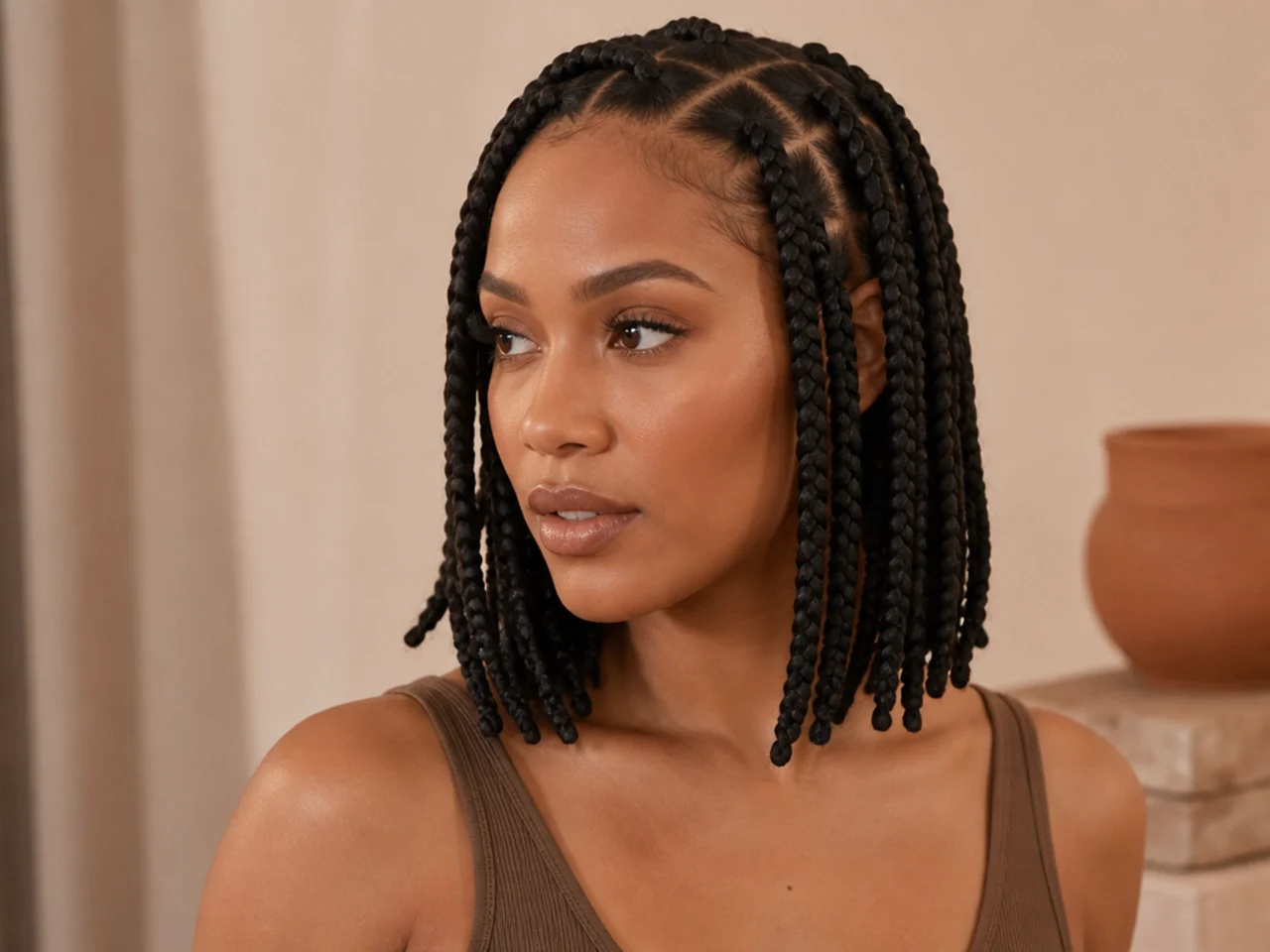
4. Short Braids with Hot-Water-Sealed Ends
Dipped and tapered. The cleanest finish and the most common. Hot water fuses the fibre ends together, which is what stops a cut braid unravelling from the cut upward.
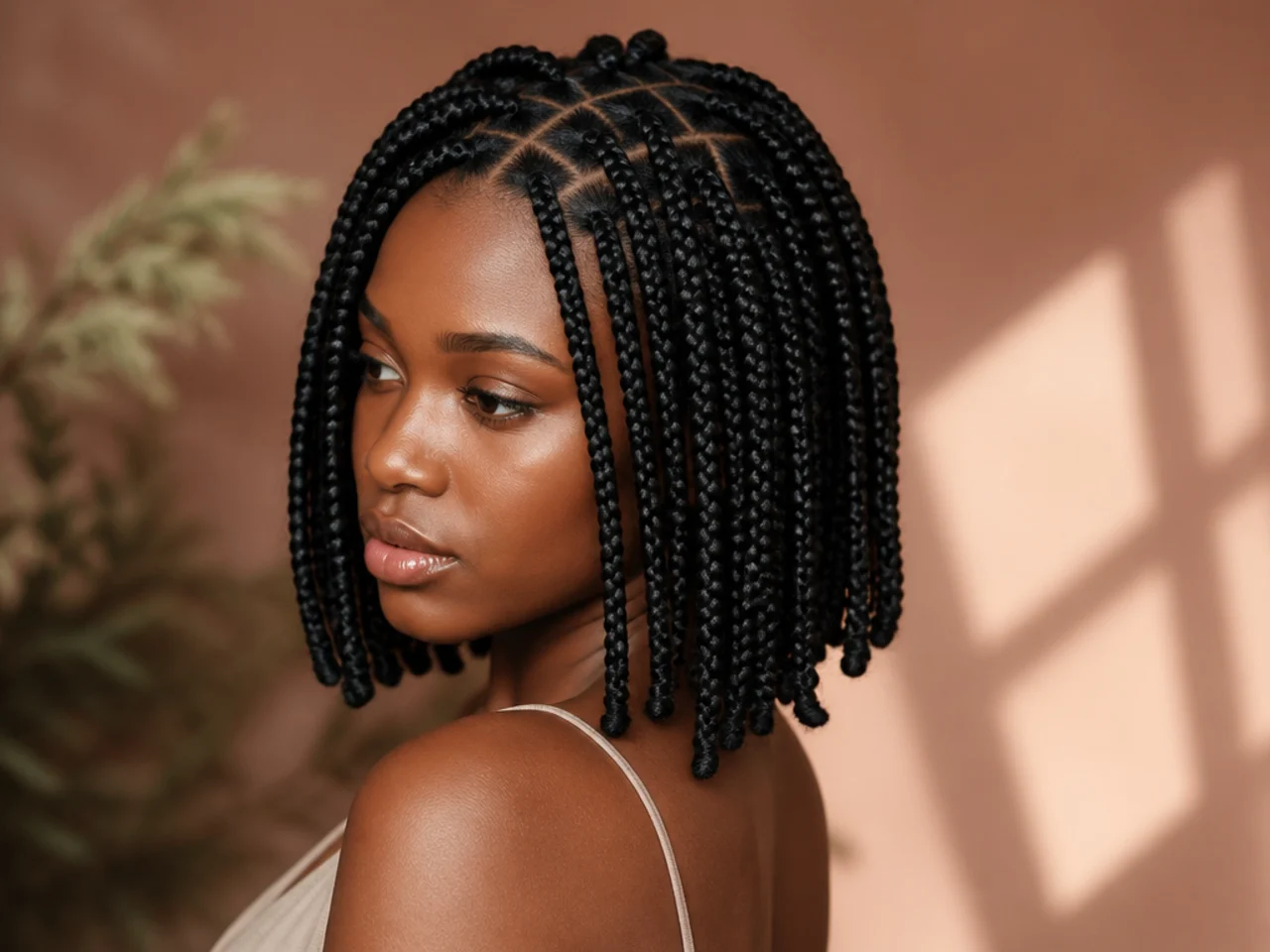
5. Short Braids with Beaded Ends
Beads hold the cut without sealing and add a little sway. The bead needs a stopper below it, or it works its way off and takes the seal with it.
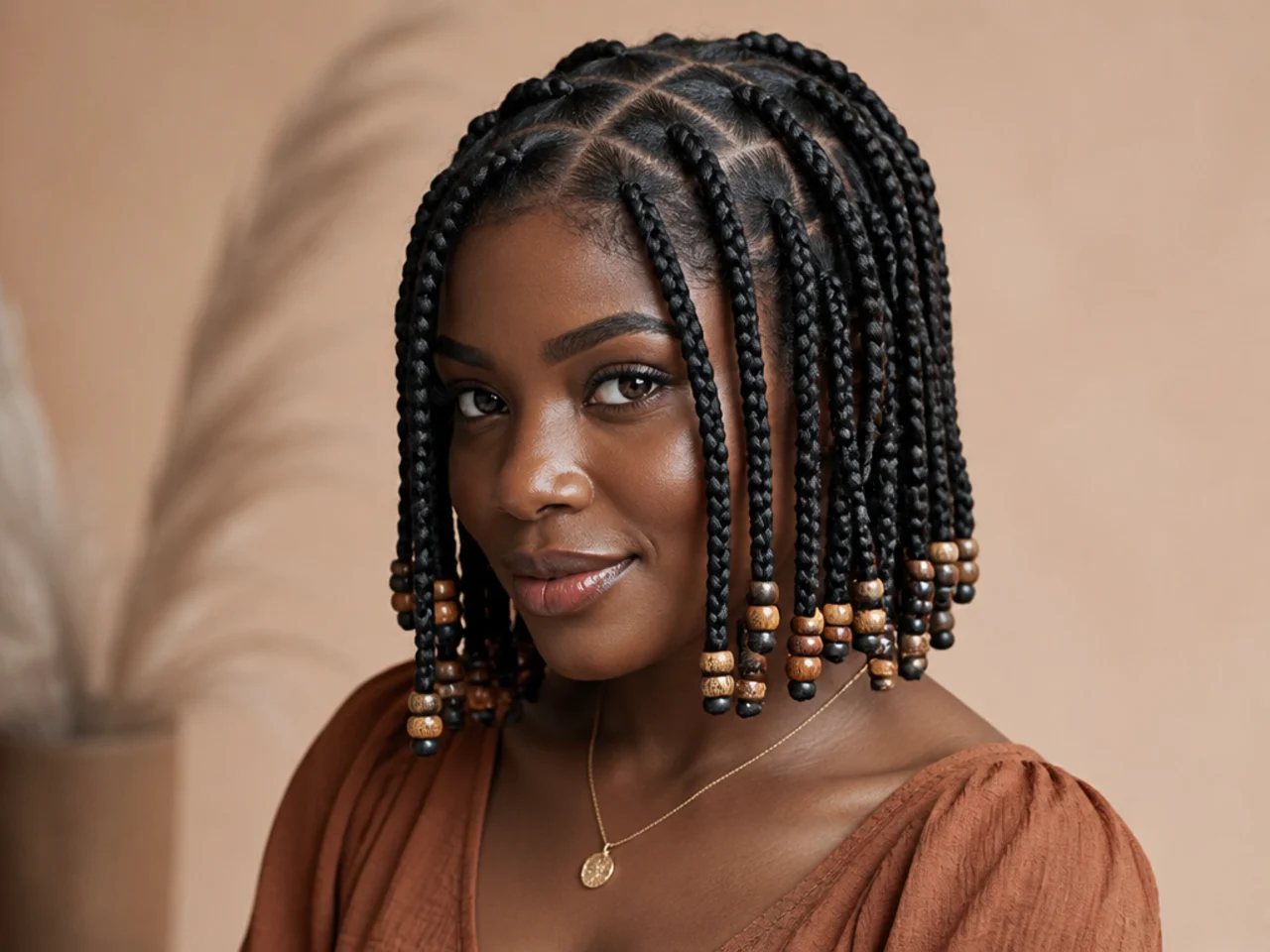
6. Short Braids with Curled Tips
The last inch curled so the cut line is softened. A curled tip disguises the blunt edge a cut leaves, which is the giveaway on a short set.
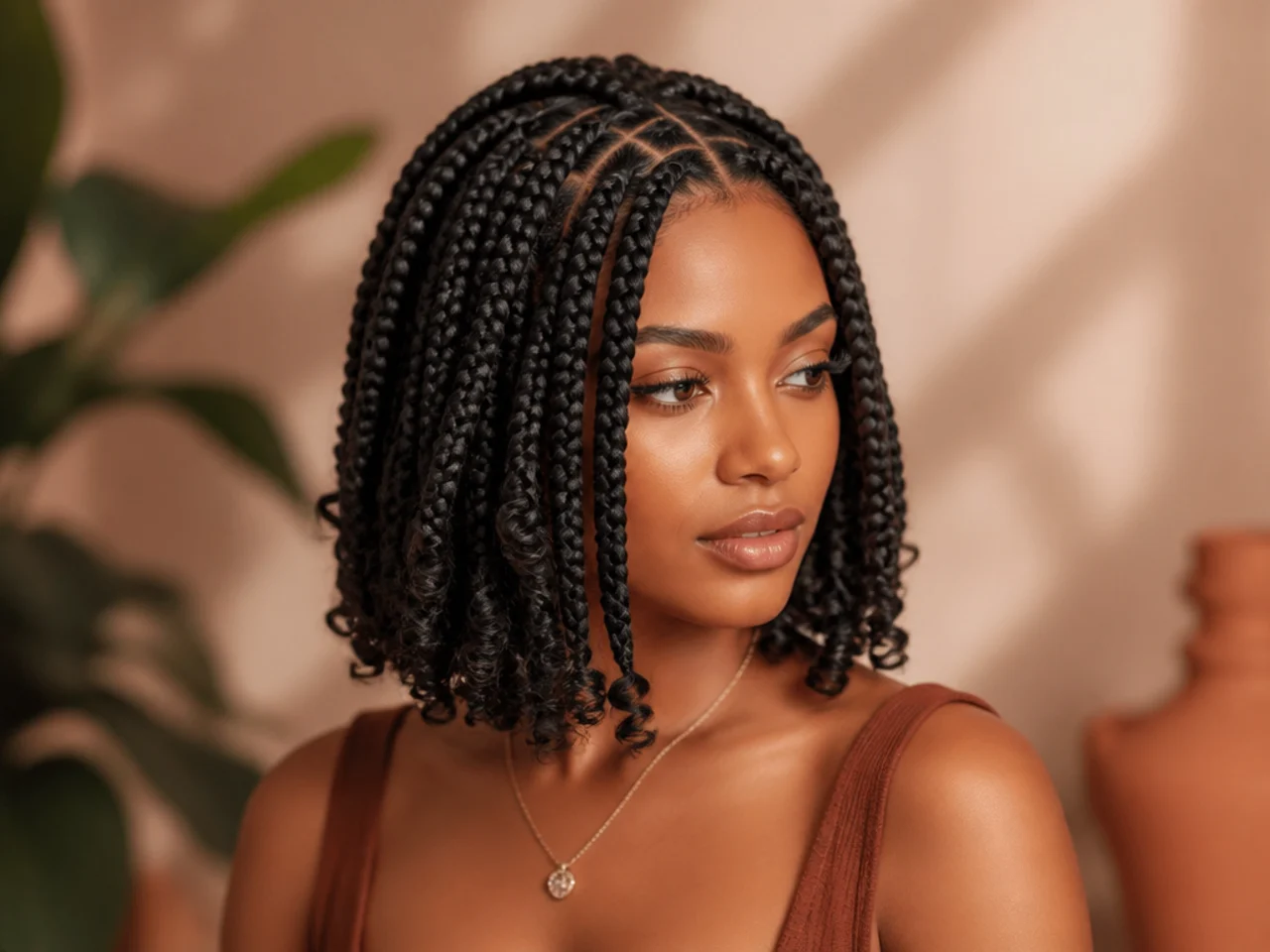
7. Short Braids with a Centre Part
Symmetrical, and the parting is the whole styling decision at this length. With so little length there is nothing else doing any work, so the parting carries the entire look.
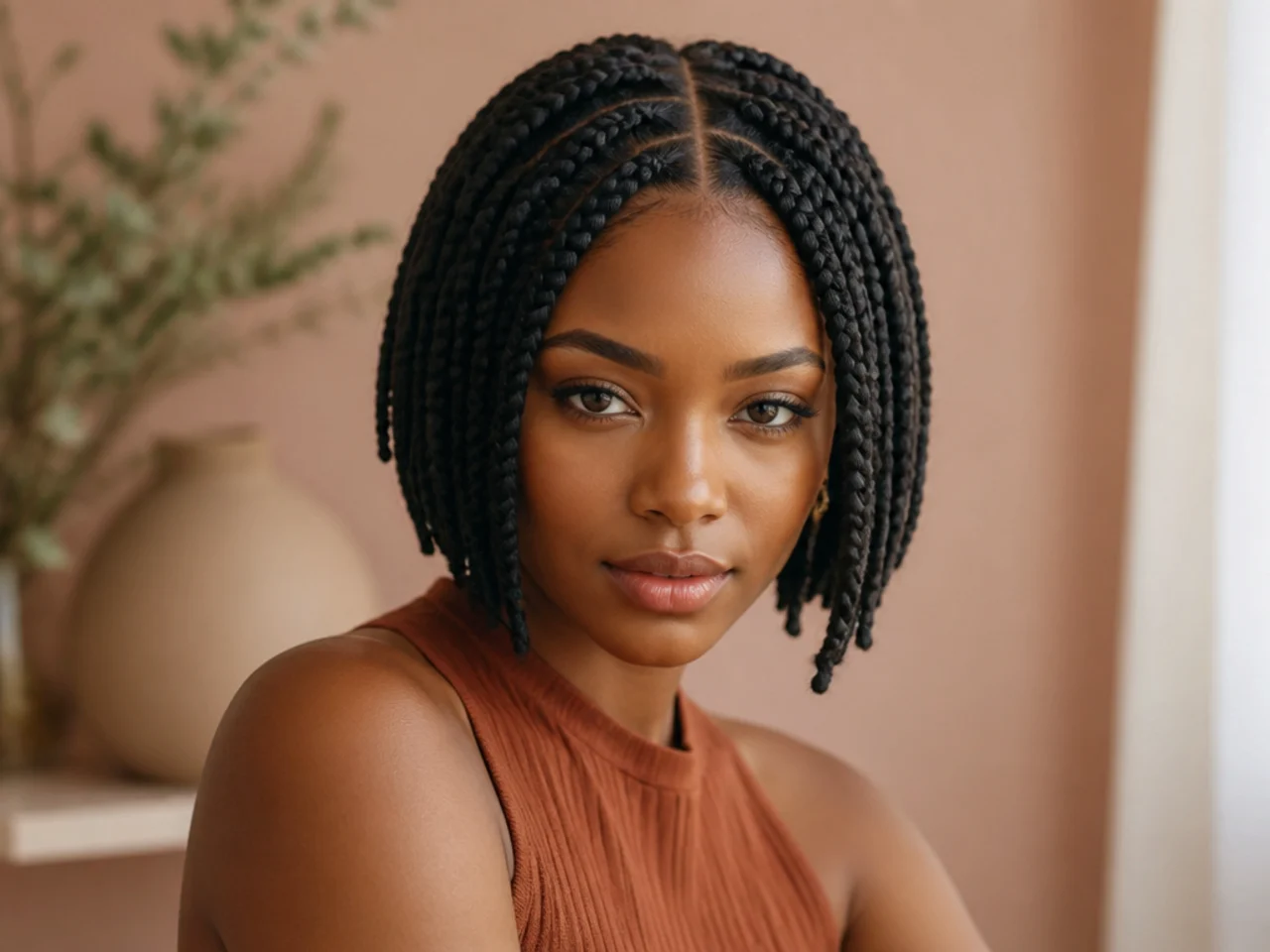
8. Short Braids with a Deep Side Part
Weighted heavily to one side. Softens a short cut considerably. A deep part also puts more braids on one side, which gives a short set some of the movement it otherwise lacks.
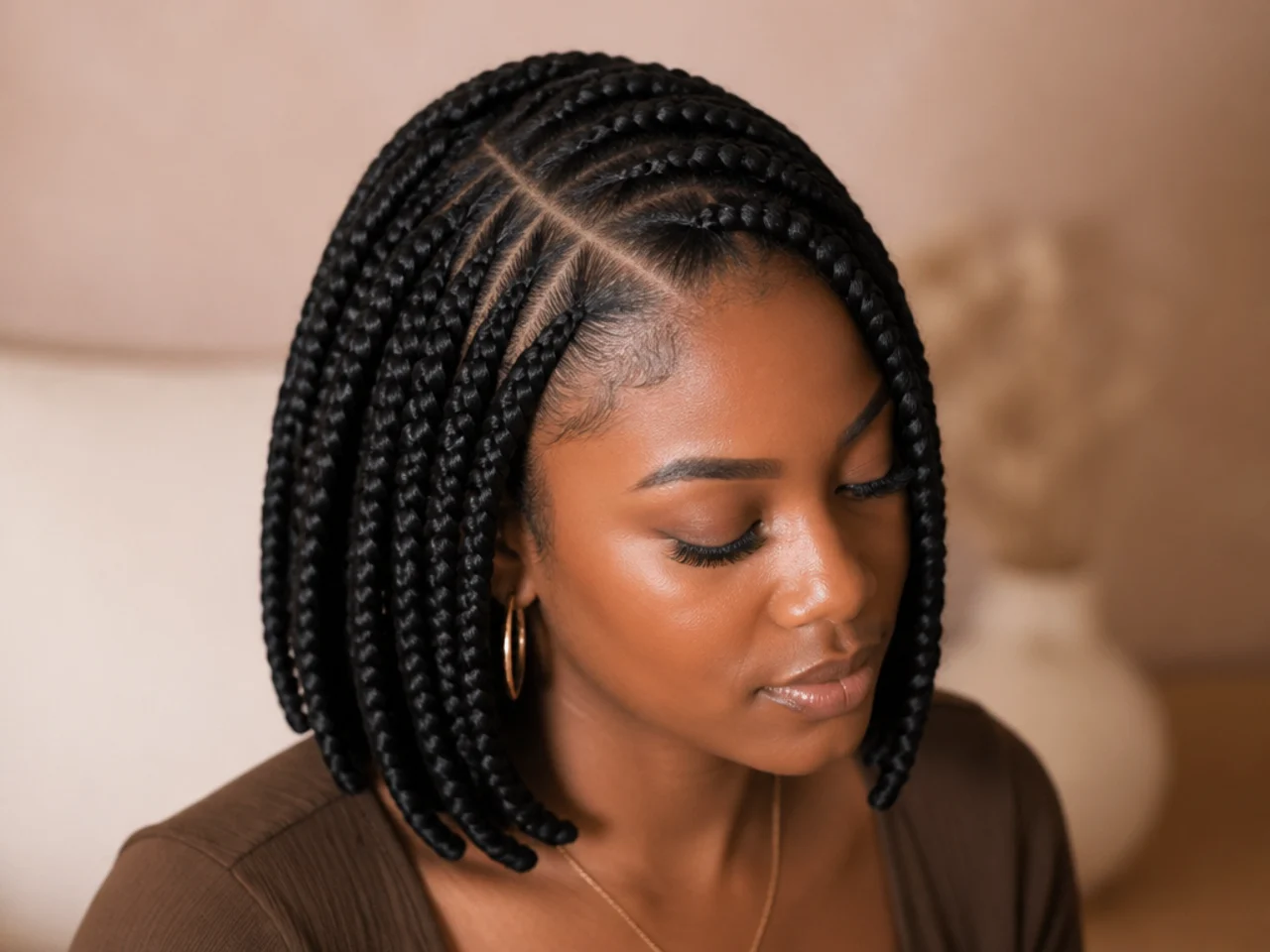
9. Honey Blonde Short Braids
Warm colour, and it reads brighter concentrated in a short length. The same number of coloured packs covers a much smaller area, so the shade reads denser than on a long set.
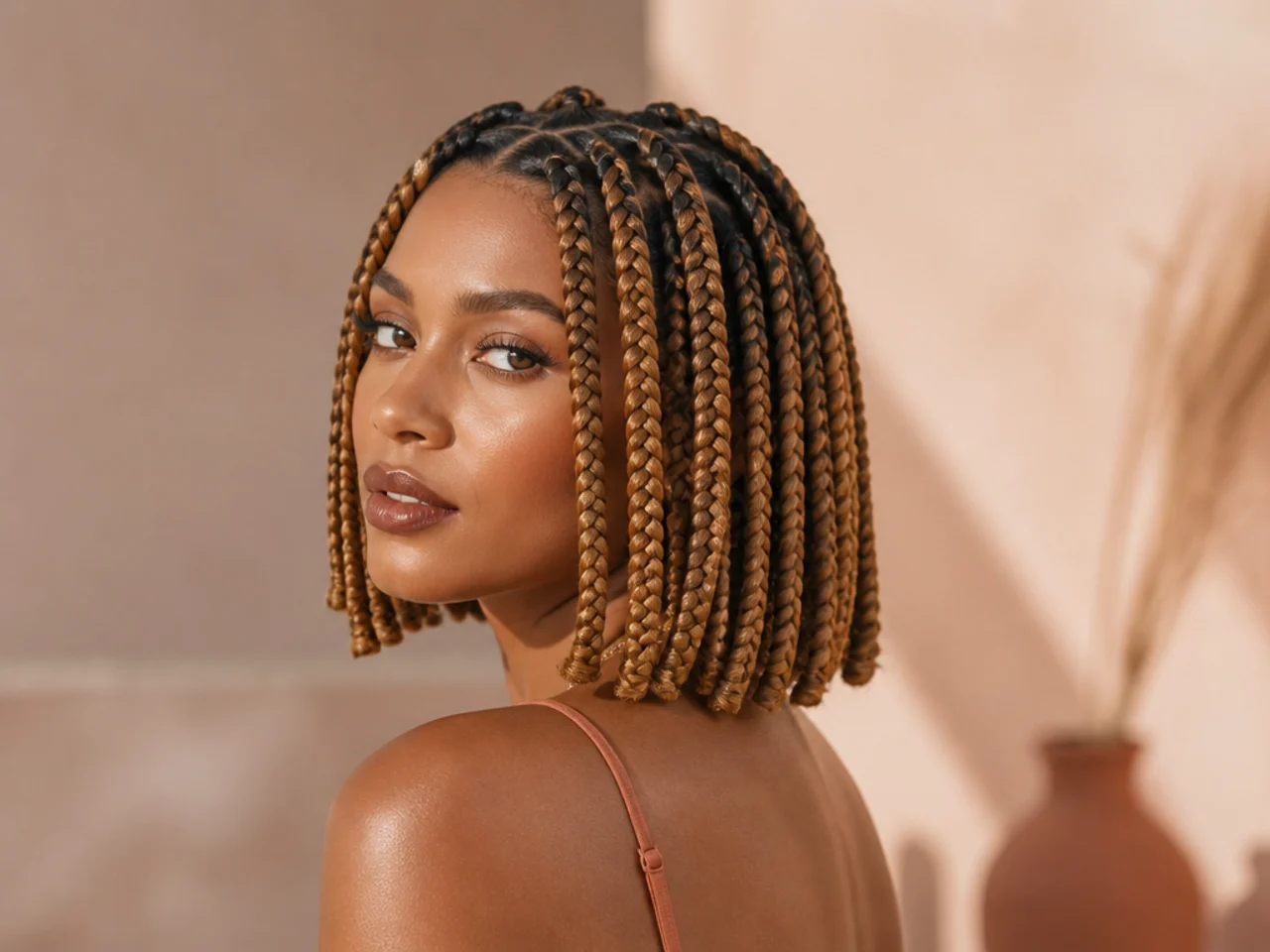
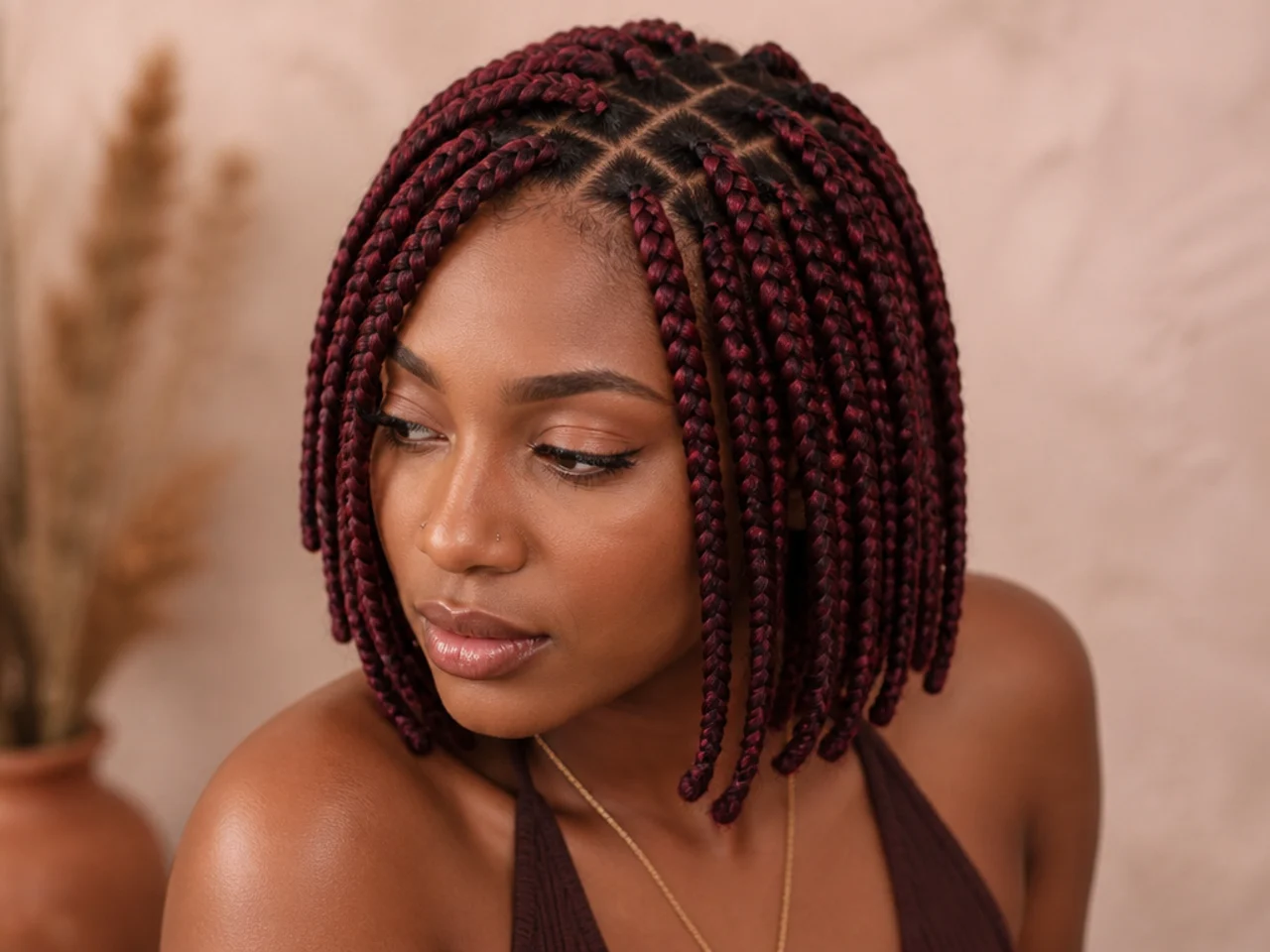
10. Burgundy Short Braids
Deep red, dense at this length rather than diluted down a long braid. Colour on a short set is all at eye level, where a long set spreads the same colour down past the waist.
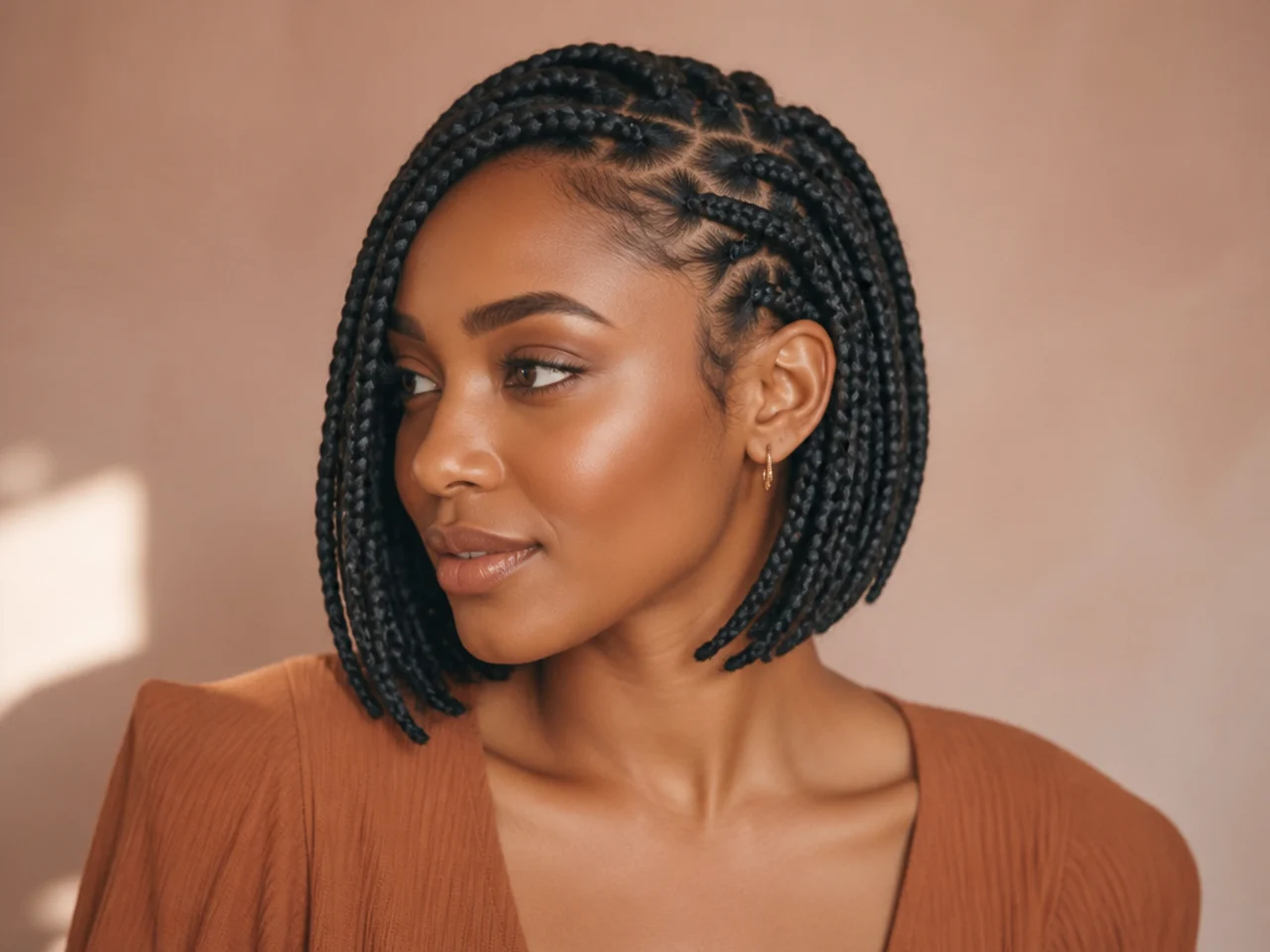
11. Short Braids Tucked Behind One Ear
The one styling move that works at every short length. It costs nothing, needs no tools, and it is the only asymmetry available when there is no length to sweep.
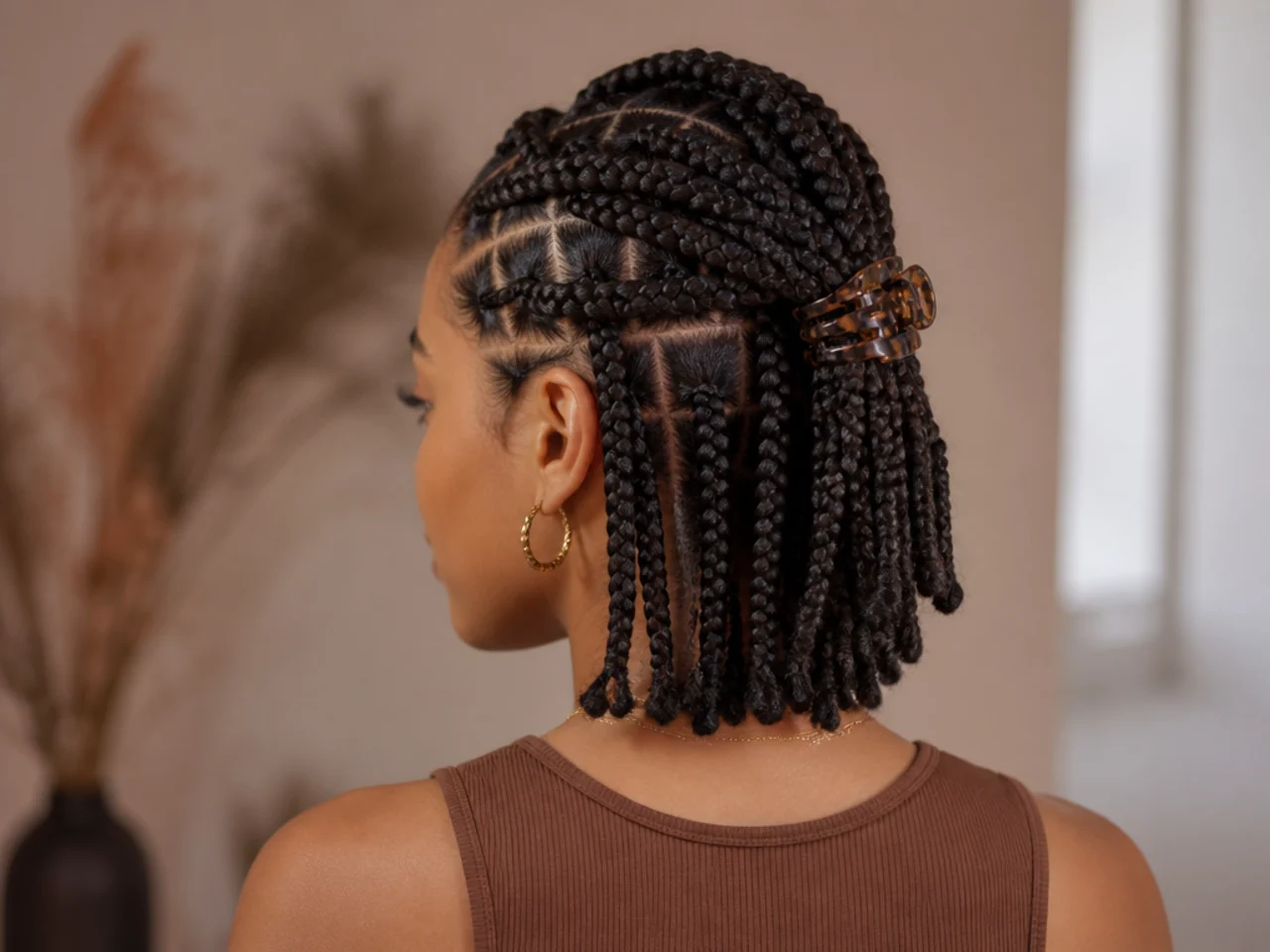
12. Short Braids with a Half-Up Clip
Enough length for a small gather, and it lifts the shape at the crown. Lift at the crown is what stops a short set reading flat, and a half-up clip is the only way to get it.
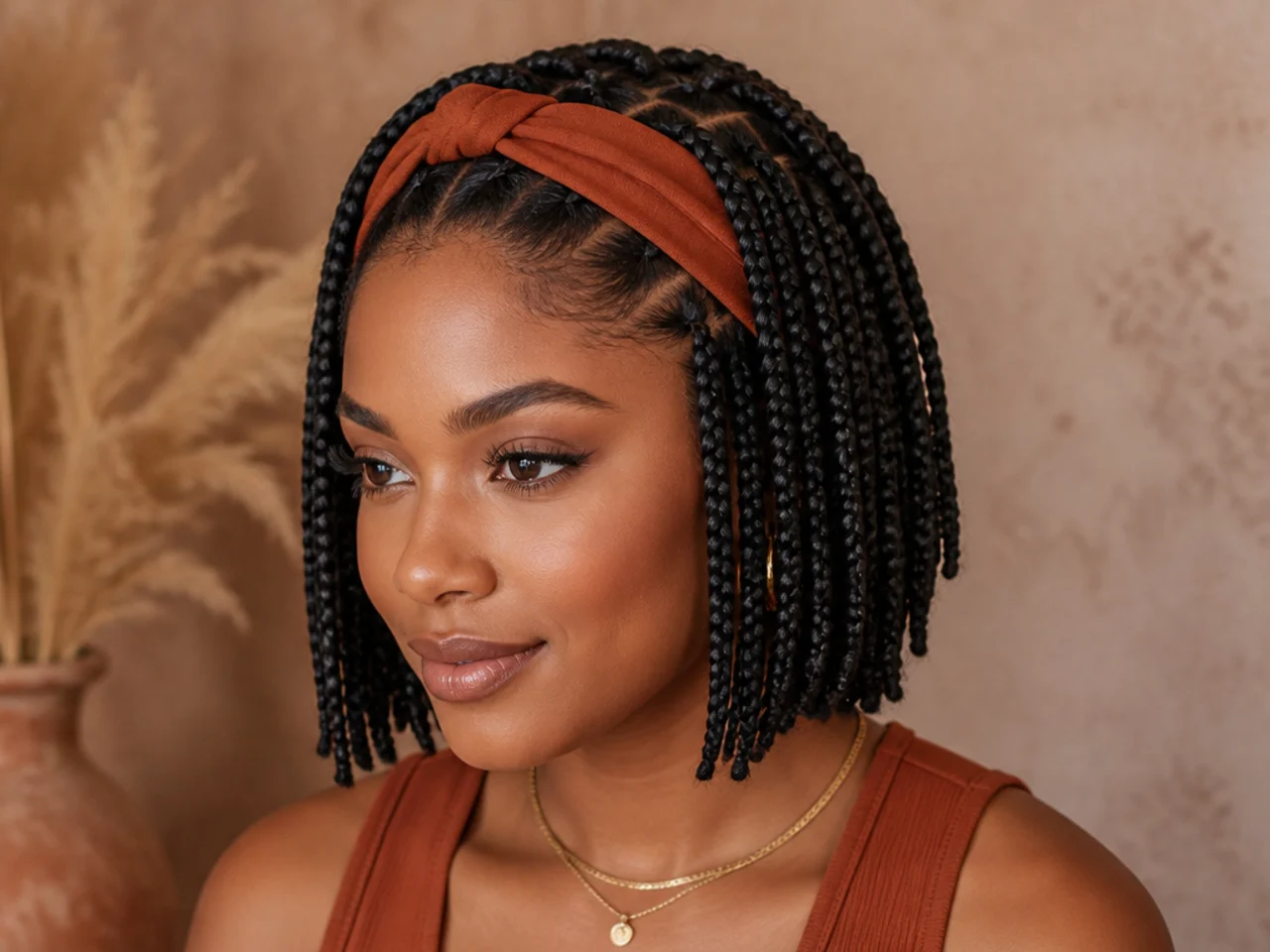
13. Short Braids with a Headband
Covers the front grid on a day when the partings look tired. The front partings are the most visible part of a short set, because there is no length falling over them.
14. Short Braids on Fine Natural Hair
The lightest large set available, and the reason to choose this length. A third of the load per root that a waist-length set carries, which is the whole argument on fine hair.
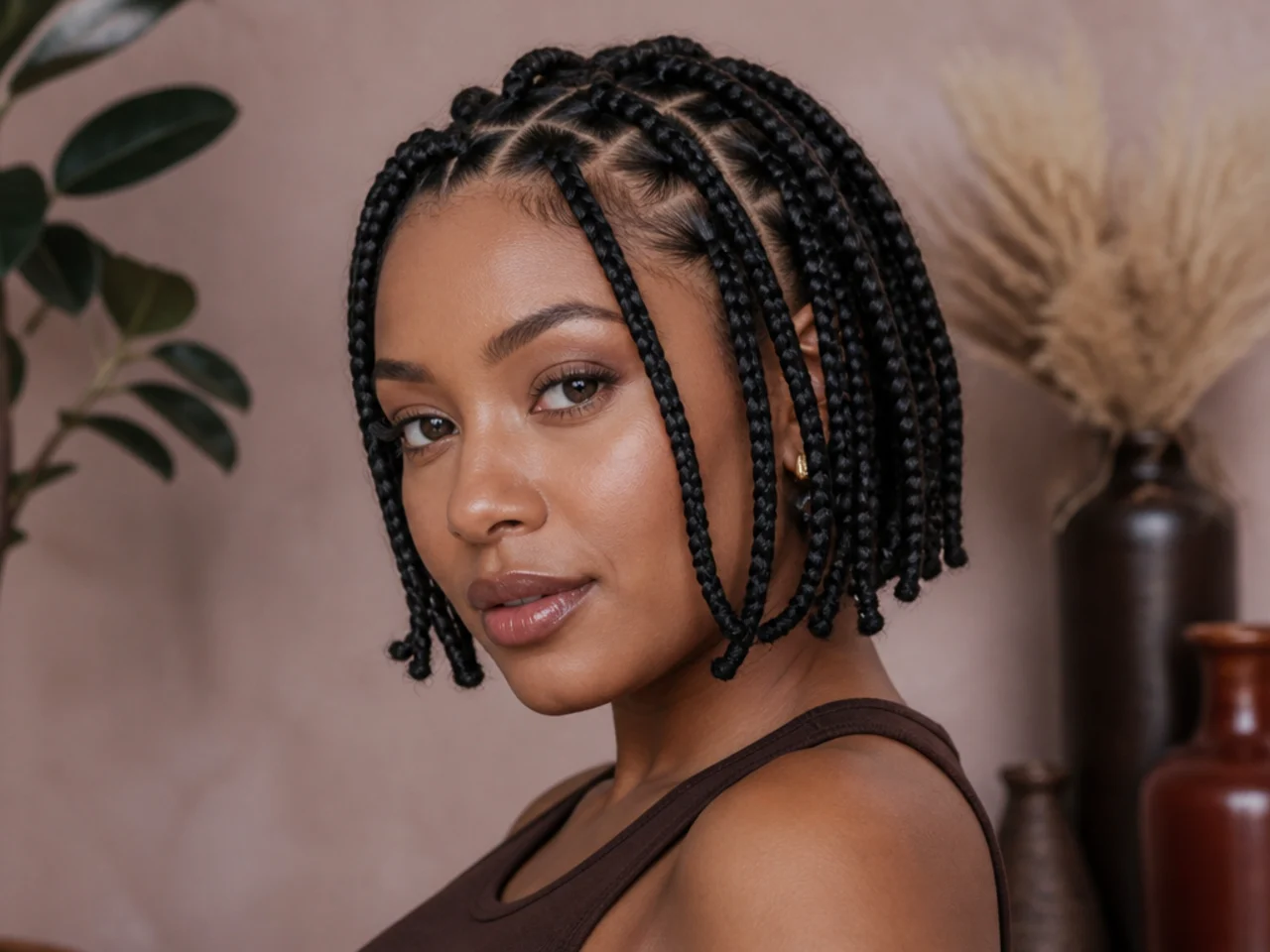
15. A Long Set Cut Down Short
Recycling a grown-out install into a fresh shape rather than taking it out. Every cut end still has to be sealed, so budget the same few minutes you would on a new short set.
Styling and Upkeep
Check the ends weekly. Any braid that has started to unravel from the cut needs resealing before it climbs. Catching it at a centimetre is trivial; catching it at five is not.
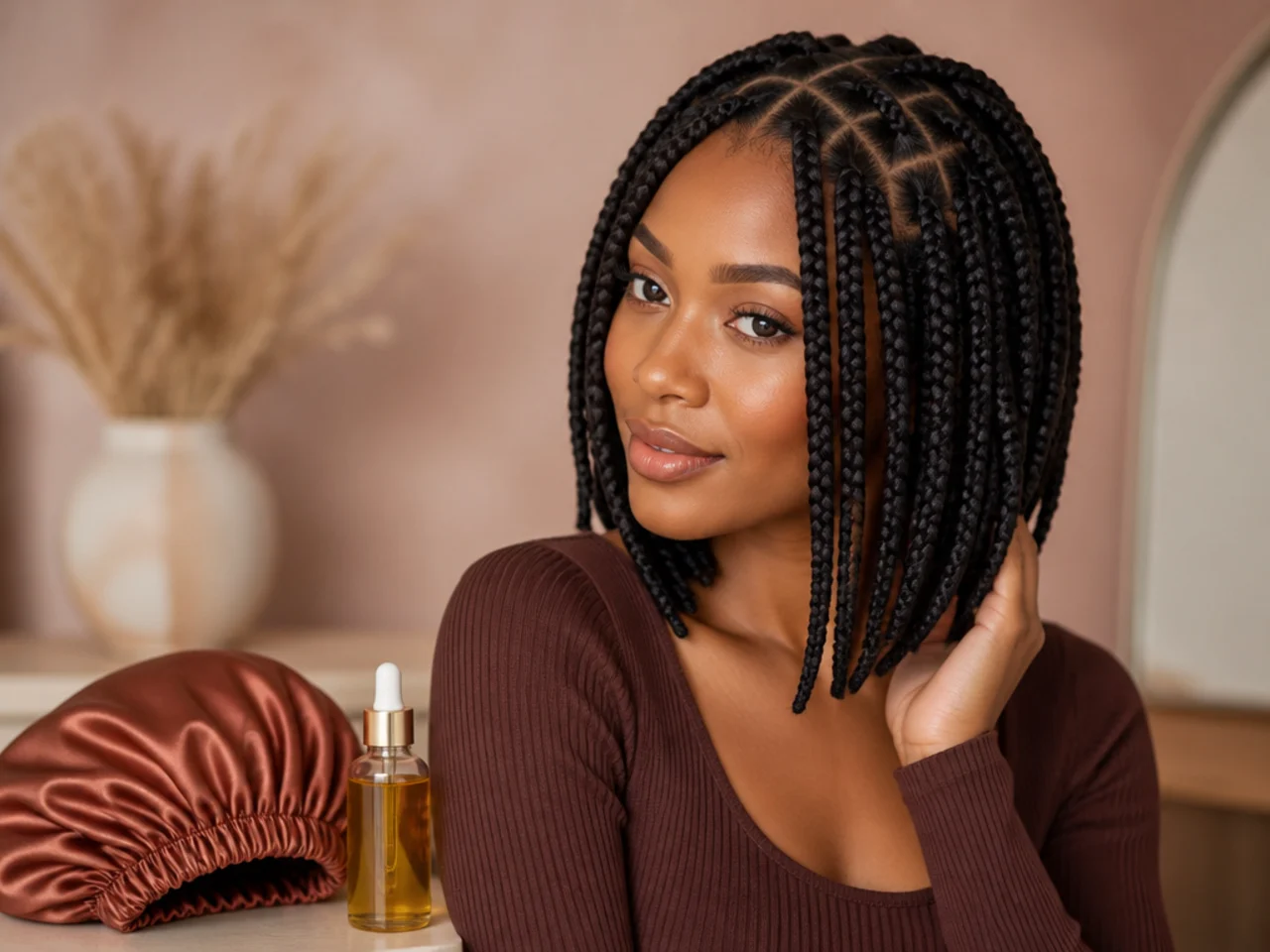
Mind the back grid. At this length the partings at the back are on view from behind whenever you lean forward. Keep them oiled and tidy.
Sleep with a bonnet, not a gathered tie. There is not enough length to gather comfortably, and forcing it puts tension exactly where you did not want any.
Wash normally, and often. Short braids dry quickly, which removes the main reason people stretch washes out on longer sets.
Six weeks still applies. Short braids feel weightless, but the root loosens on the same schedule as any large set.
Mistakes to Avoid
Leaving cut ends unsealed. The single most common failure, and it starts within days.
Cutting damp and seated. The line lands shorter than you asked for.
Assuming short means you can leave them in longer. Weight is not what loosens the root — new growth is.
Gathering them tightly at night. Not enough length to gather, so all you create is tension.
Choosing the length in inches. Choose it against your jaw with the braids in.
FAQ
Can you get them short? Yes, but they are cut down after installing, not braided short.
Do the ends need sealing? Always — a cut braid unravels from the cut upward.
Are they lighter? Much. Roughly a third of a waist-length set on the same roots.
Final Thoughts
If weight is your constraint — fine hair, thinned edges, or a bad experience with a long set — short is the lever that fixes it, and it fixes it more completely than changing braid size does. Just budget the ten minutes for sealing, and check the ends each week for the first fortnight.
For the full range see 25 large knotless braids ideas, and for the weight maths see long large knotless braids. More in Braids & Protective Styles.
Frequently asked questions
Related posts
See all posts
20 Waterfall Mermaid Braid Ideas That Hold
Read more
15 Side Mermaid Braid Ideas That Sit Right
Read more
20 Side Part Medium Knotless Braids I Saved
Read more