20 Long Large Knotless Braids to Save
Twenty long large knotless braid ideas, and the number that decides whether yours are comfortable — length multiplies weight in a straight line. Waist braids weigh roughly twice what mid-back braids do.
In this article · 27
- What Makes Long Large Knotless Work
- How to Choose Your Length
- The 20 Long Ideas
- 1. Classic Waist-Length Large Knotless
- 2. Mid-Back Large Knotless
- 3. Long Braids with Curled Ends
- 4. Long Braids Over One Shoulder
- 5. Waist-Length Honey Blonde
- 6. Long Ombré Braids
- 7. Long Boho Braids
- 8. Long Braids with a Centre Part
- 9. Long Braids in a Low Ponytail
- 10. Half-Up with Length Down
- 11. Long Braids with Beads at the Ends
- 12. Burgundy Waist-Length Braids
- 13. Long Braids with Gold Cuffs
- 14. Long Braids with a Face Frame
- 15. Two-Tone Long Braids
- 16. Long Braids Wrapped into a Low Bun
- 17. Long Braids with a Scarf Down the Length
- 18. Caramel Long Braids
- 19. Long Braids on Fine Natural Hair
- 20. Long Braids at Week Five
- Styling and Upkeep
- Mistakes to Avoid
- FAQ
- Final Thoughts
Long large knotless braids are the version everyone saves and the version most often underestimated, because the cost is not obvious in a photograph.
Length multiplies weight in a straight line. Waist-length braids carry roughly twice the load of mid-back ones, on exactly the same number of anchor points at the root. Nothing about the install changes — only the pull.
What Makes Long Large Knotless Work
The weight sum is simple. Braid count stays the same as any large set — forty to sixty. What changes is how much extension hangs from each one. Doubling the length doubles the load on each root.
Large plus long is the heaviest pairing in this silo. Small braids at waist length spread that weight across two hundred anchors. Large braids at waist length spread it across fifty.
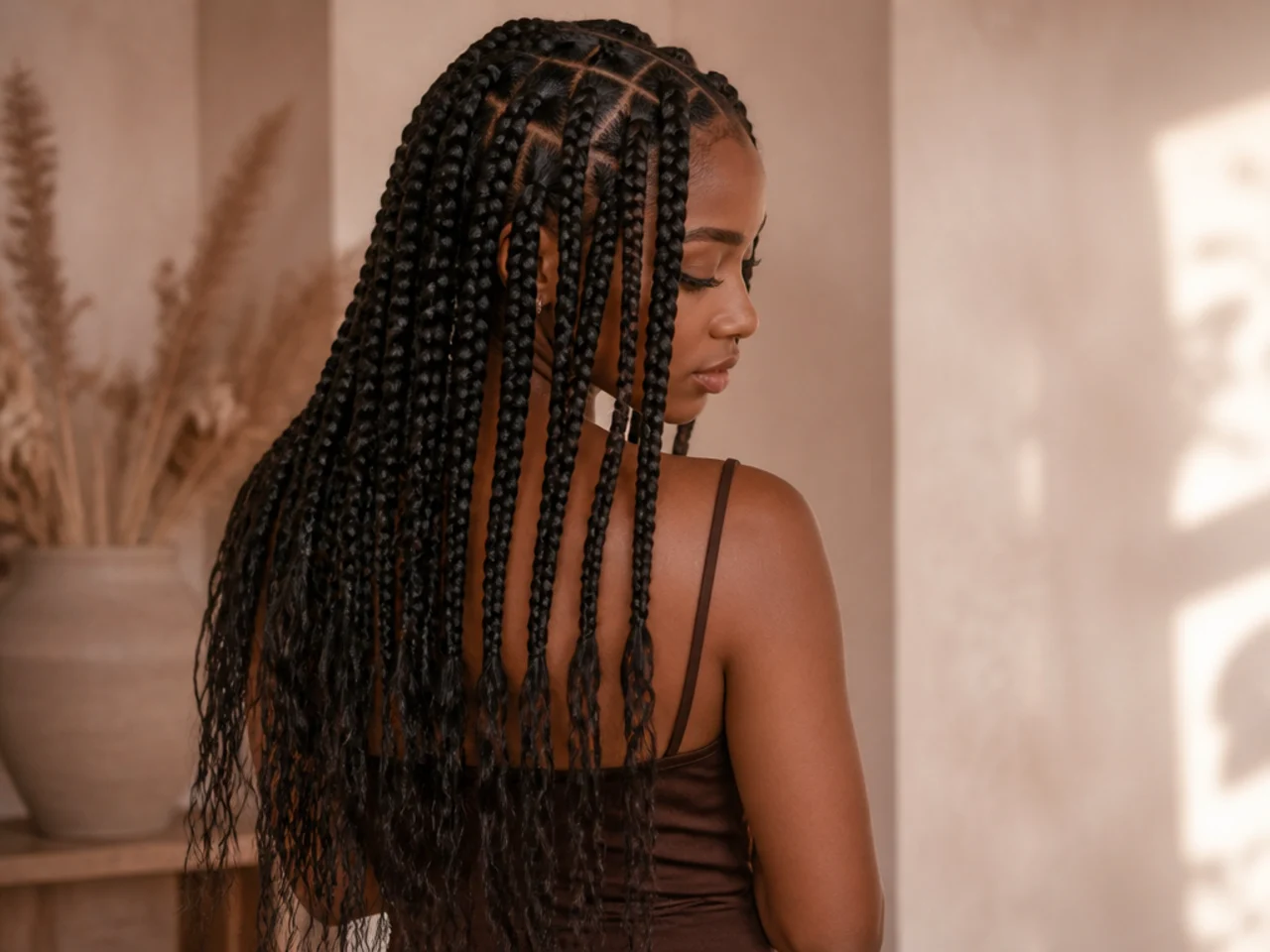
The ends are where the trouble starts. The last few inches of a braid hold the least of your own hair and the loosest extension, so that is where tangling, frizz and knotting begin — not at the root.
Long braids show loosening earlier. A braid that has slipped a centimetre at the root swings more visibly when there are eighteen inches hanging below it.
How to Choose Your Length
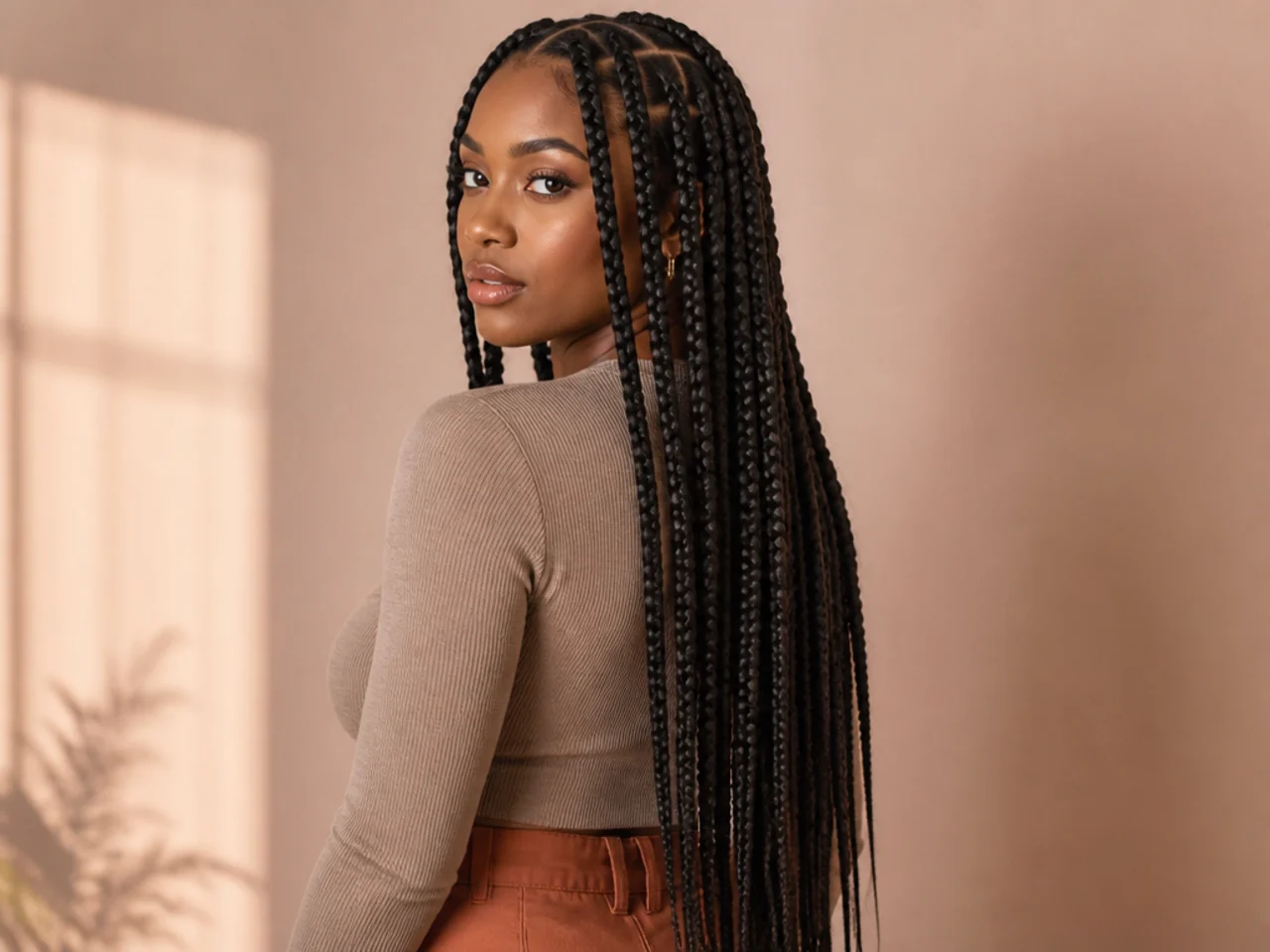
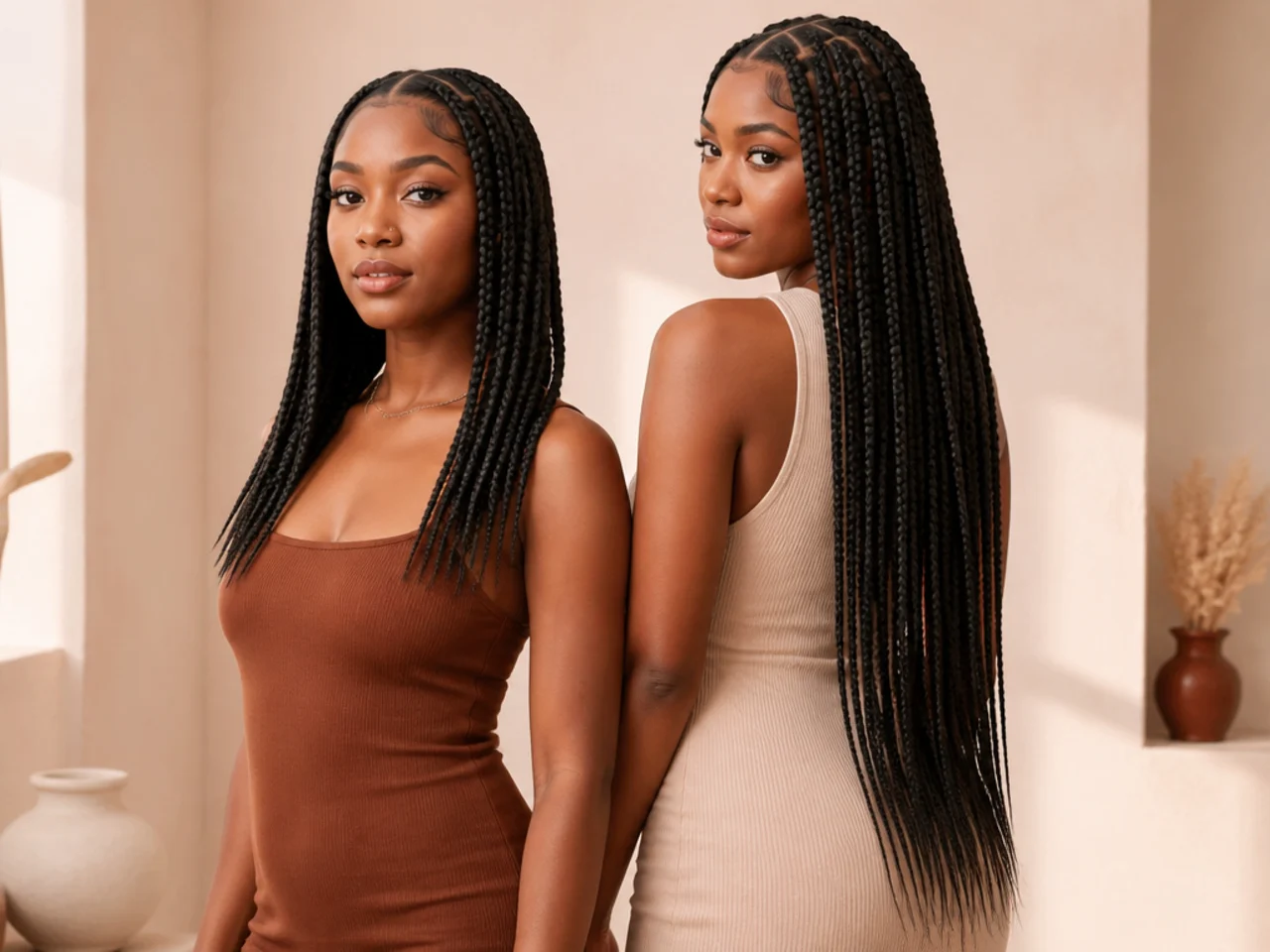
Mid-back is the comfortable default and the length most people are actually picturing.
Waist is the dramatic one. Ask for fewer braids to offset the weight, and expect to wear it up less often.
Past the waist on a large set is not a length problem, it is a weight problem. If you want that look, medium braids will carry it far more comfortably.
On fine hair, go mid-back. This is the same rule as everywhere else in the silo, and length is the easiest lever to pull.
The 20 Long Ideas
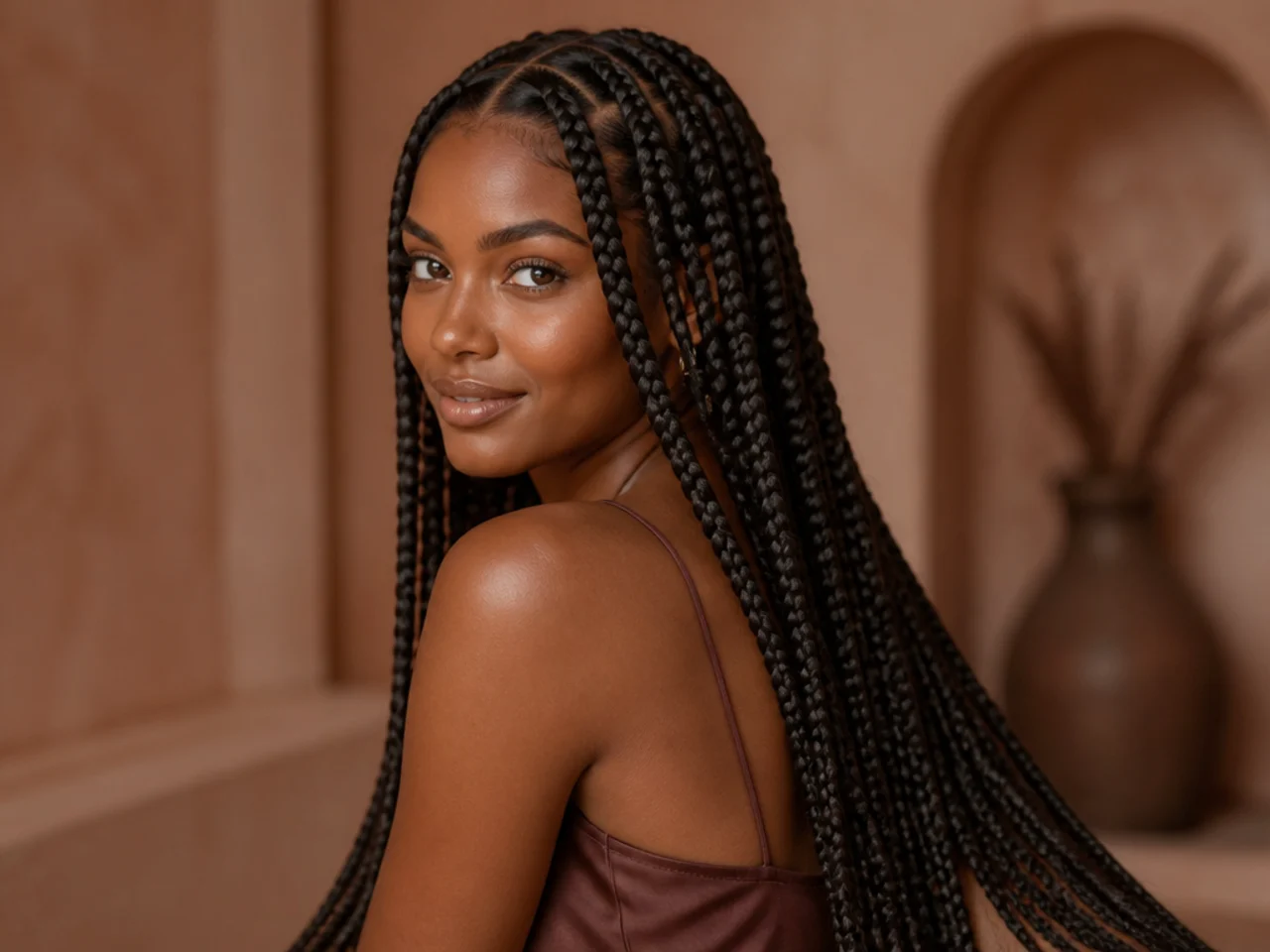
1. Classic Waist-Length Large Knotless
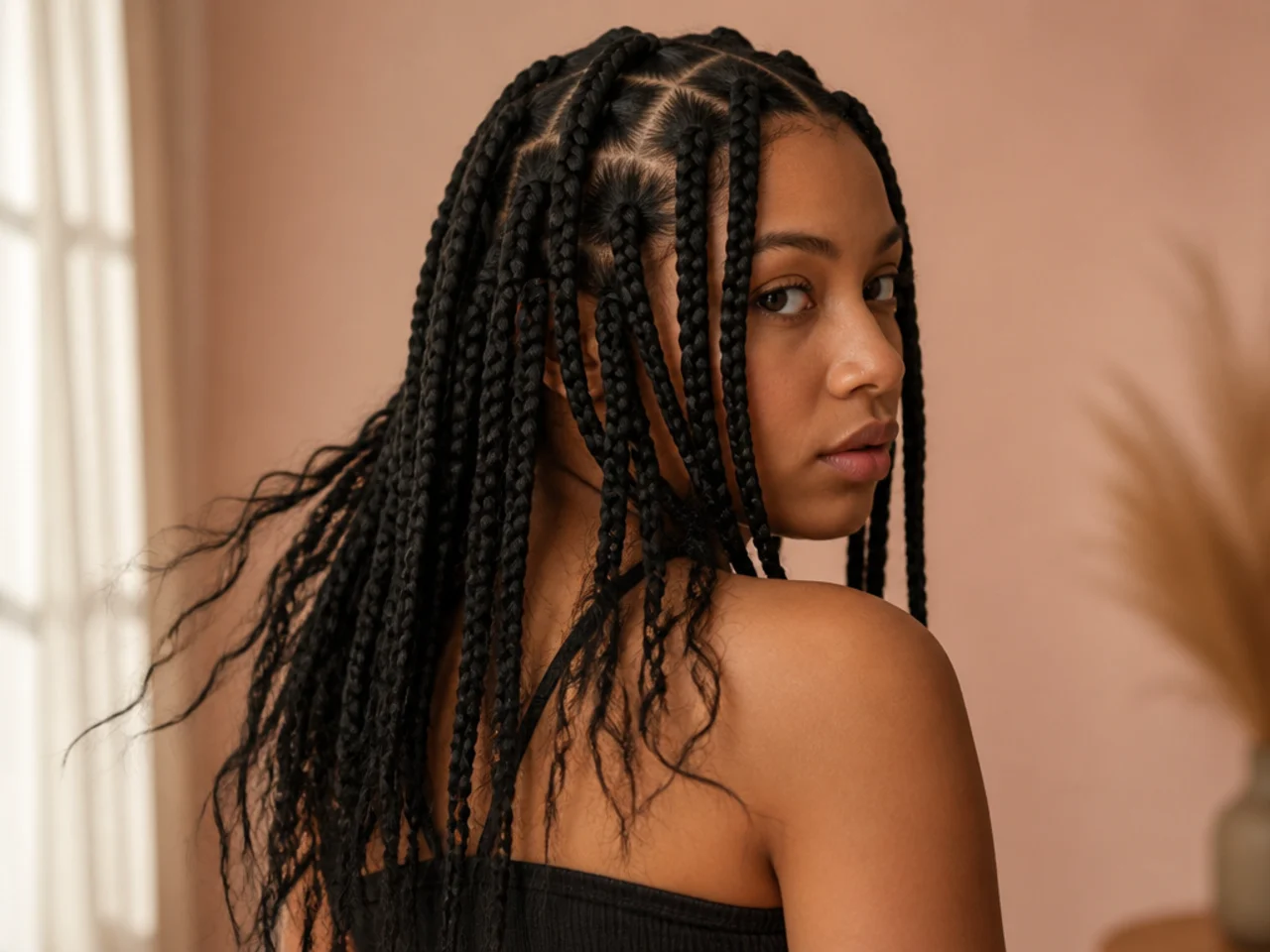
The look everyone saves. Heaviest set on this page. Weight rises with length while the number of anchor points stays the same, so waist length is the hardest thing a large set asks of your roots.
2. Mid-Back Large Knotless
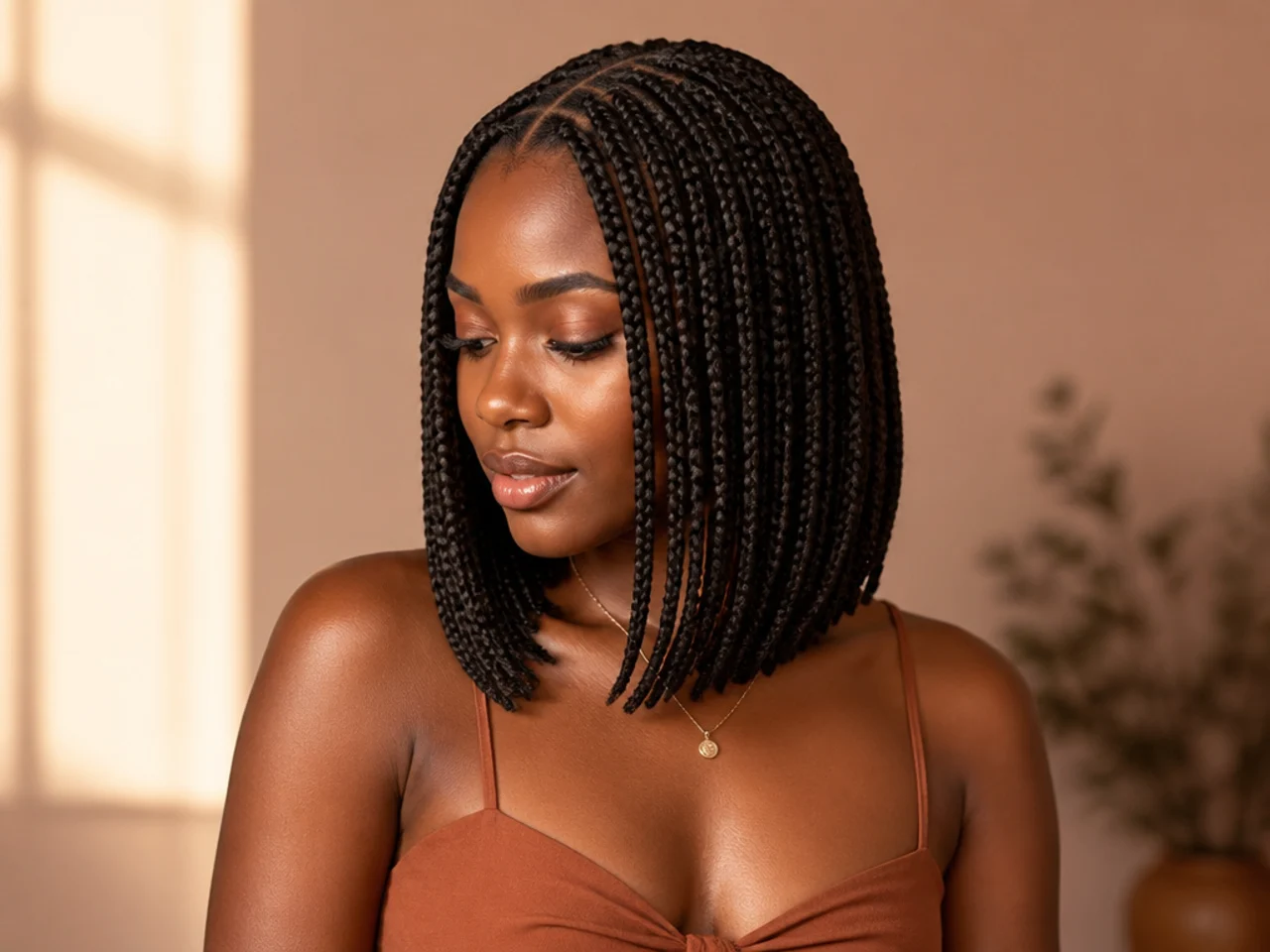
The comfortable default, and the one to start with. Mid-back gives most of the drama for noticeably less load, which is why it is the length people settle on after trying waist.
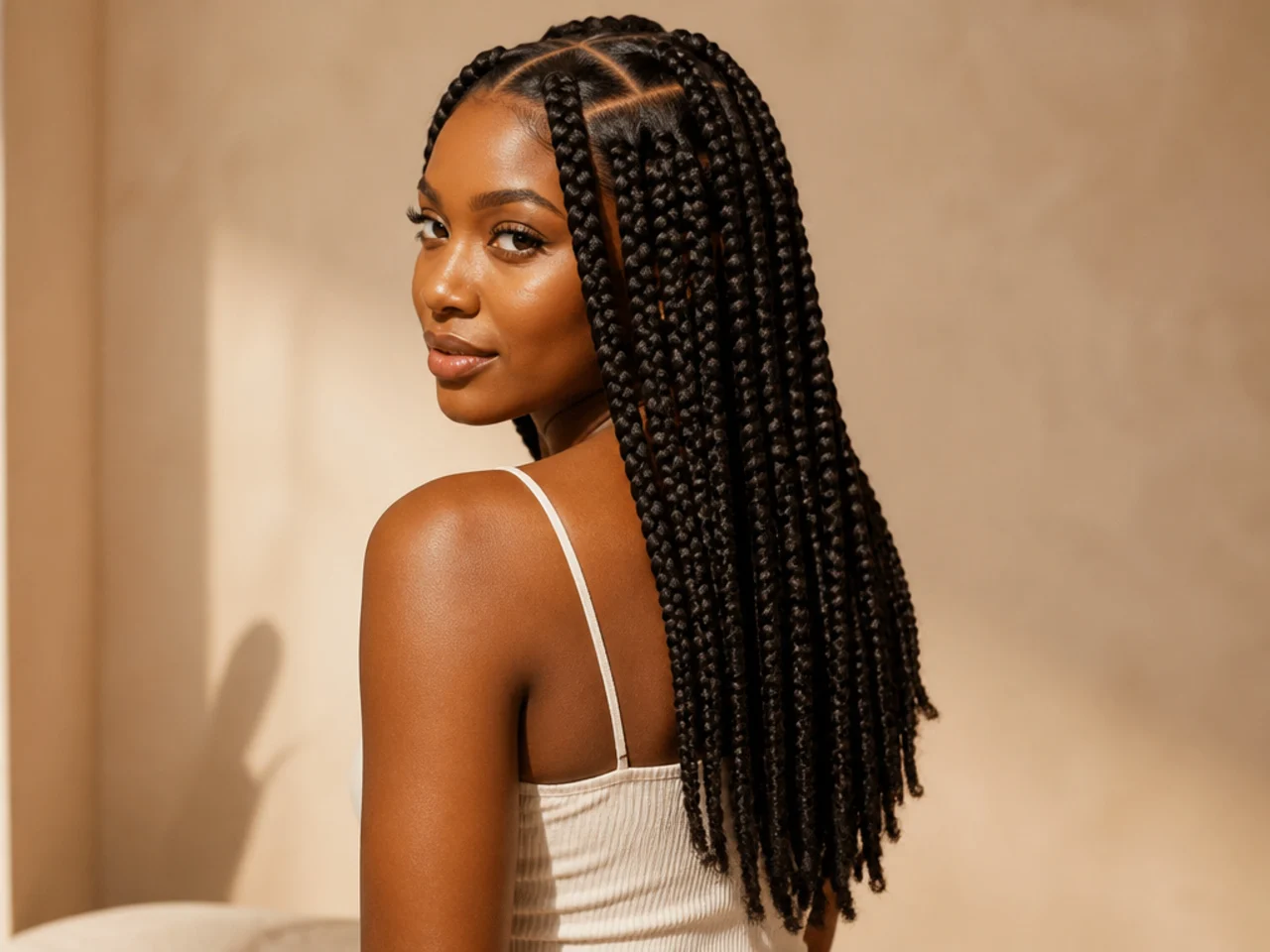
3. Long Braids with Curled Ends
Curled tips stop the length finishing blunt and hide loosening. Frizz shows first at the ends on a long set, and a curled tip disguises it for another fortnight.
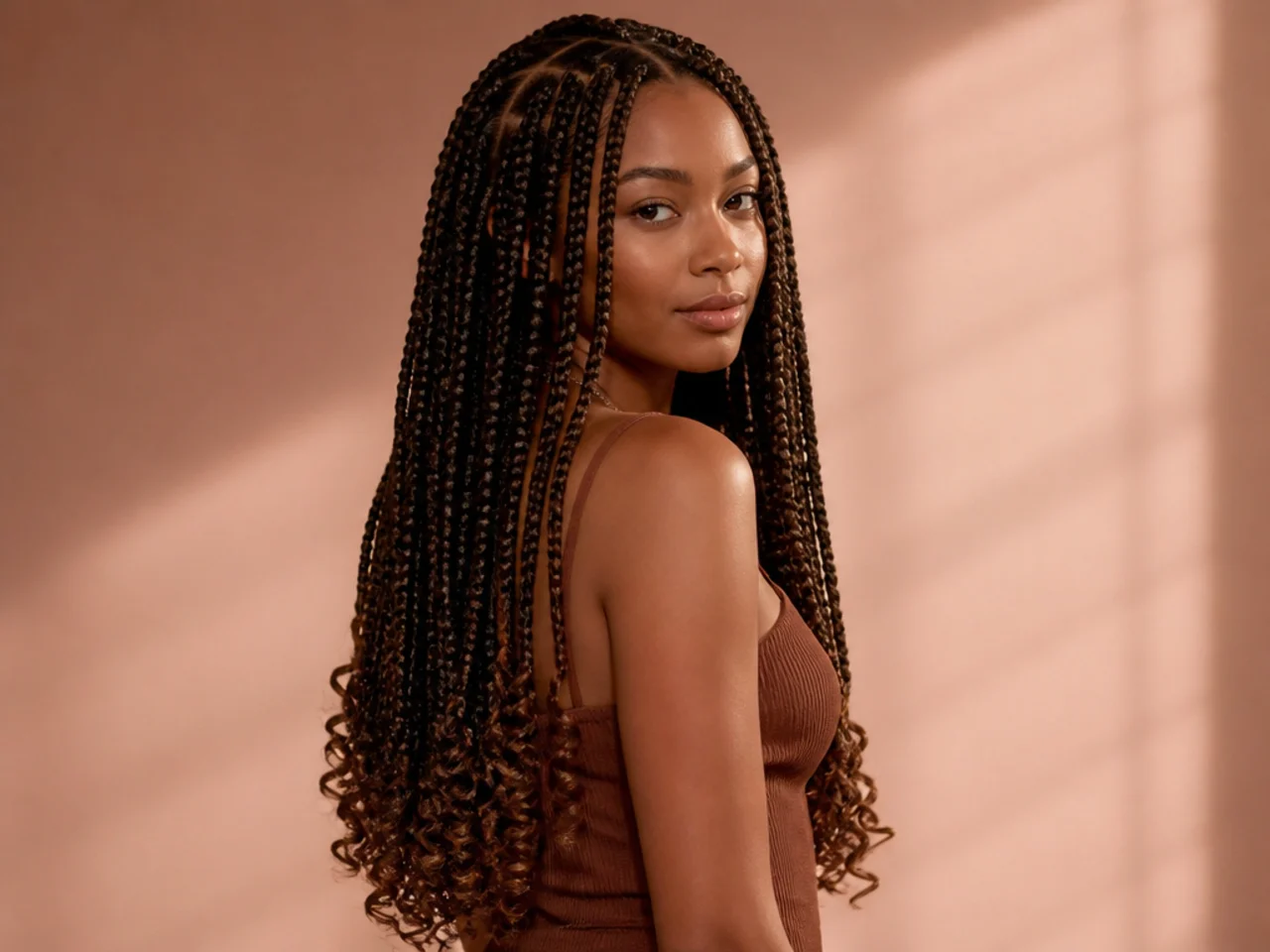
4. Long Braids Over One Shoulder
Everything gathered to one side. Halves the visual weight. It also lifts the whole set off the back of the neck, which is the simplest comfort change available at this length.
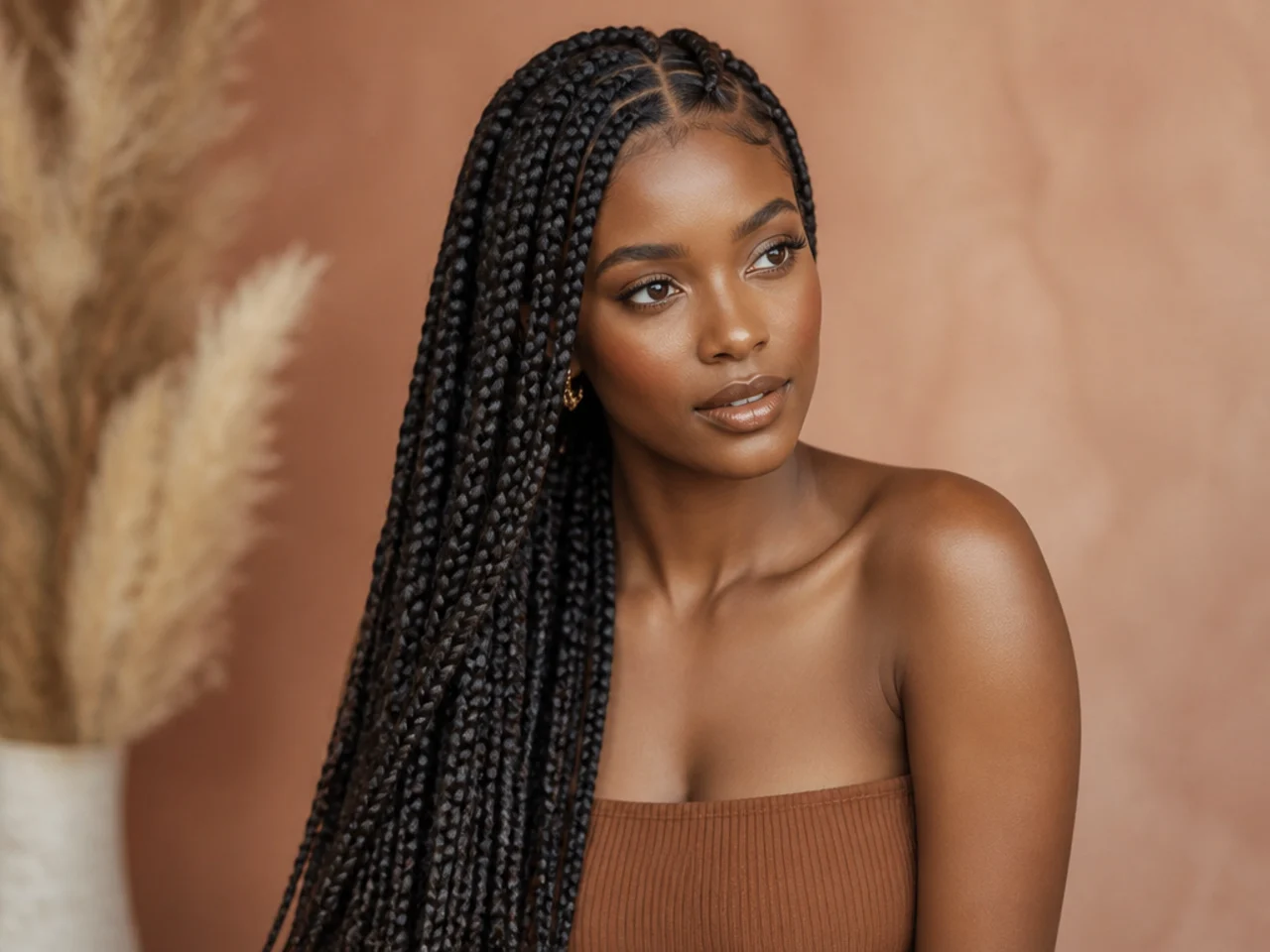
5. Waist-Length Honey Blonde
Warm extension colour down the full length.
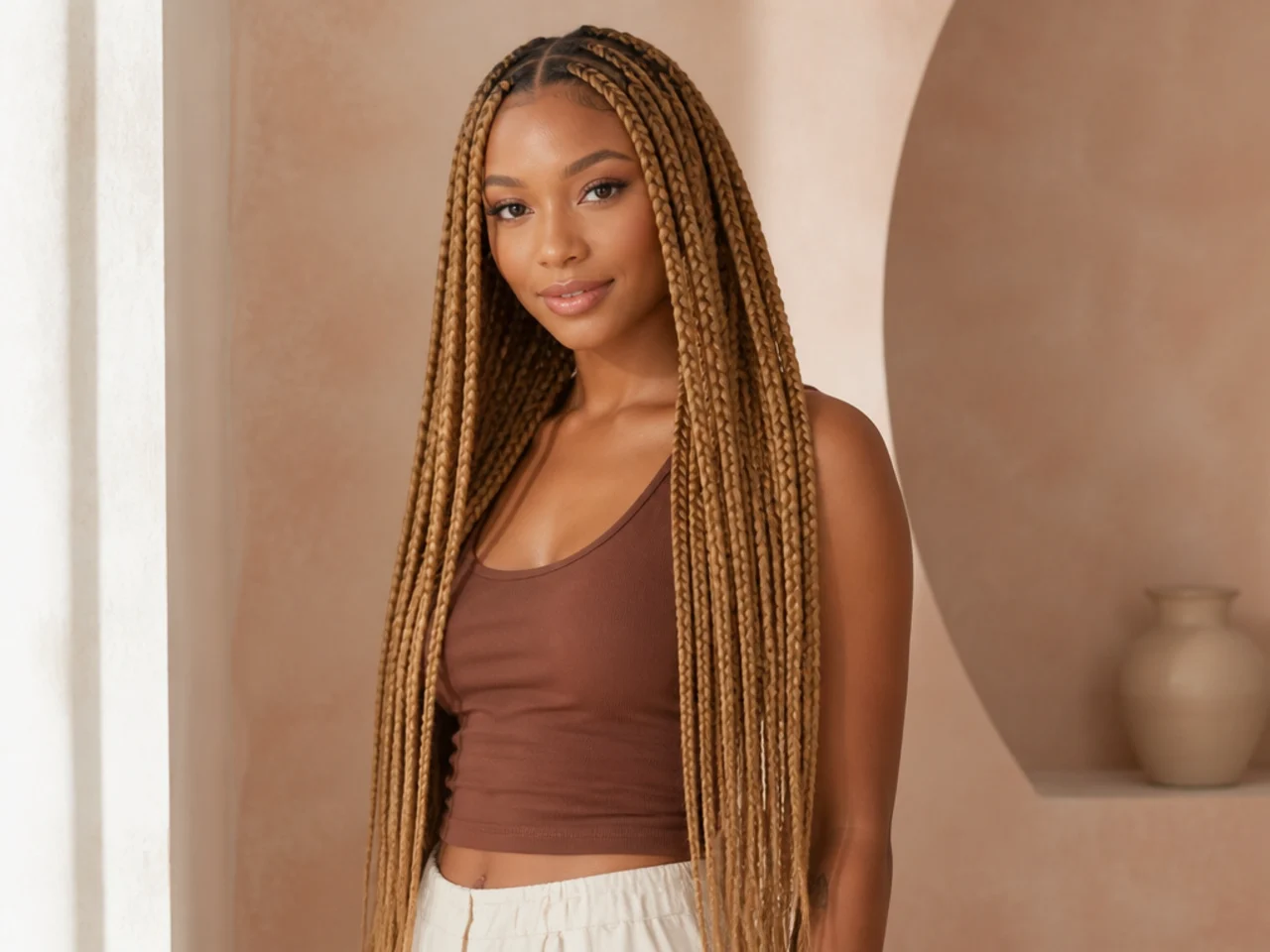
6. Long Ombré Braids
Dark roots melting to a lighter length. Length shows the gradient best. A long braid gives the fade room to happen gradually, where a short one compresses it into something closer to a line.
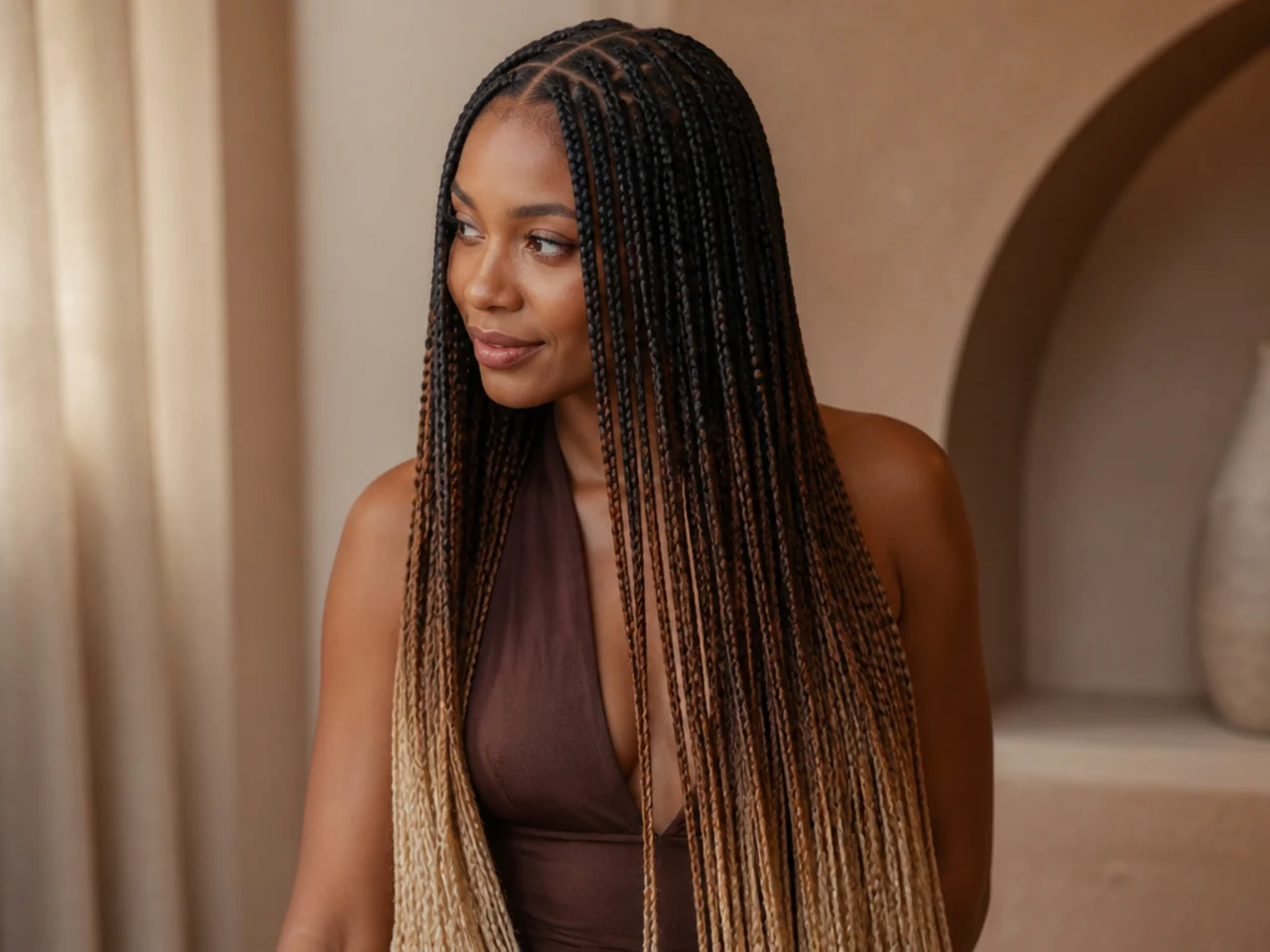
7. Long Boho Braids
Loose curly pieces along the length, softening the weight visually.
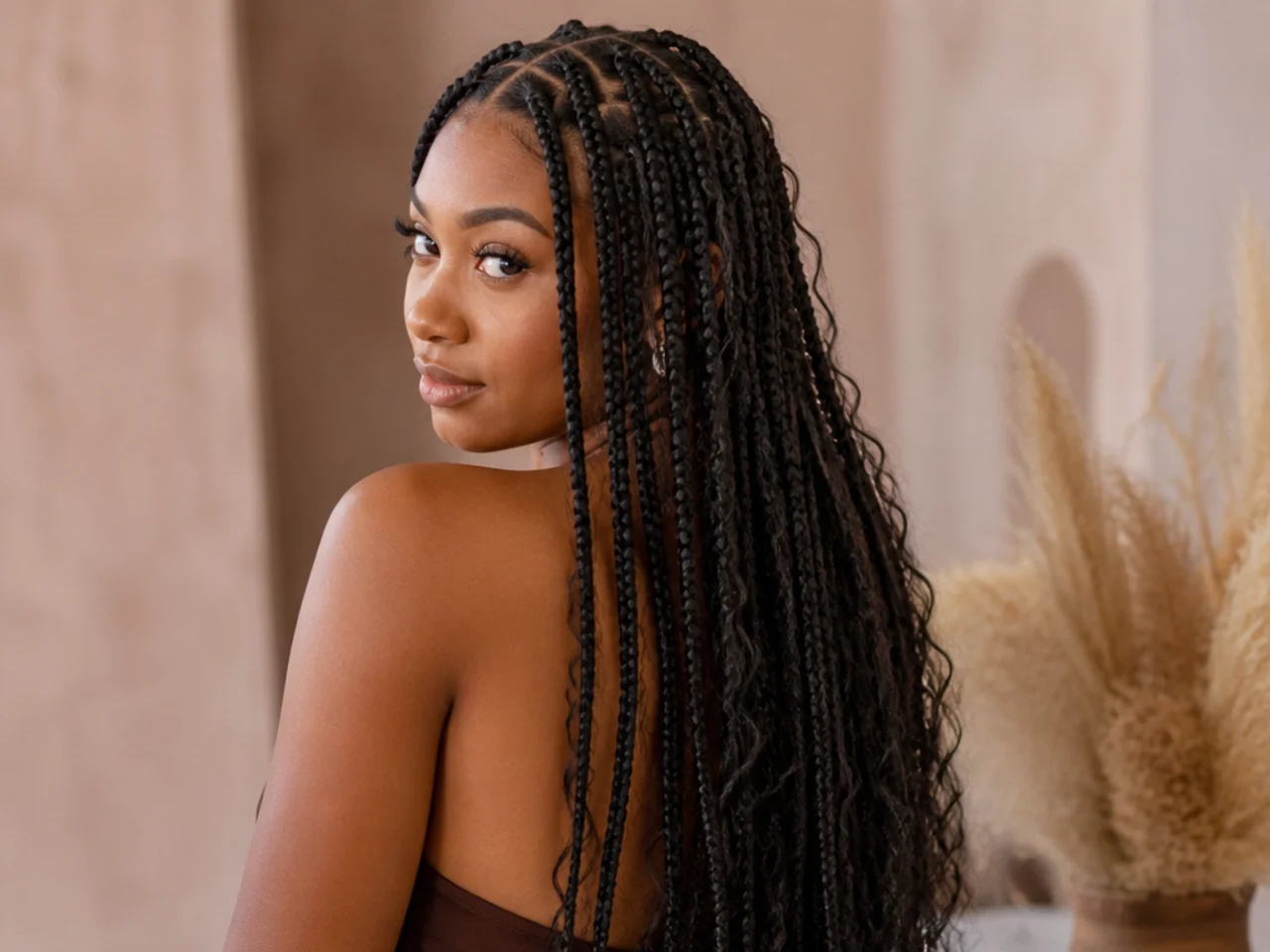
8. Long Braids with a Centre Part
The grid running back from a clean centre line.
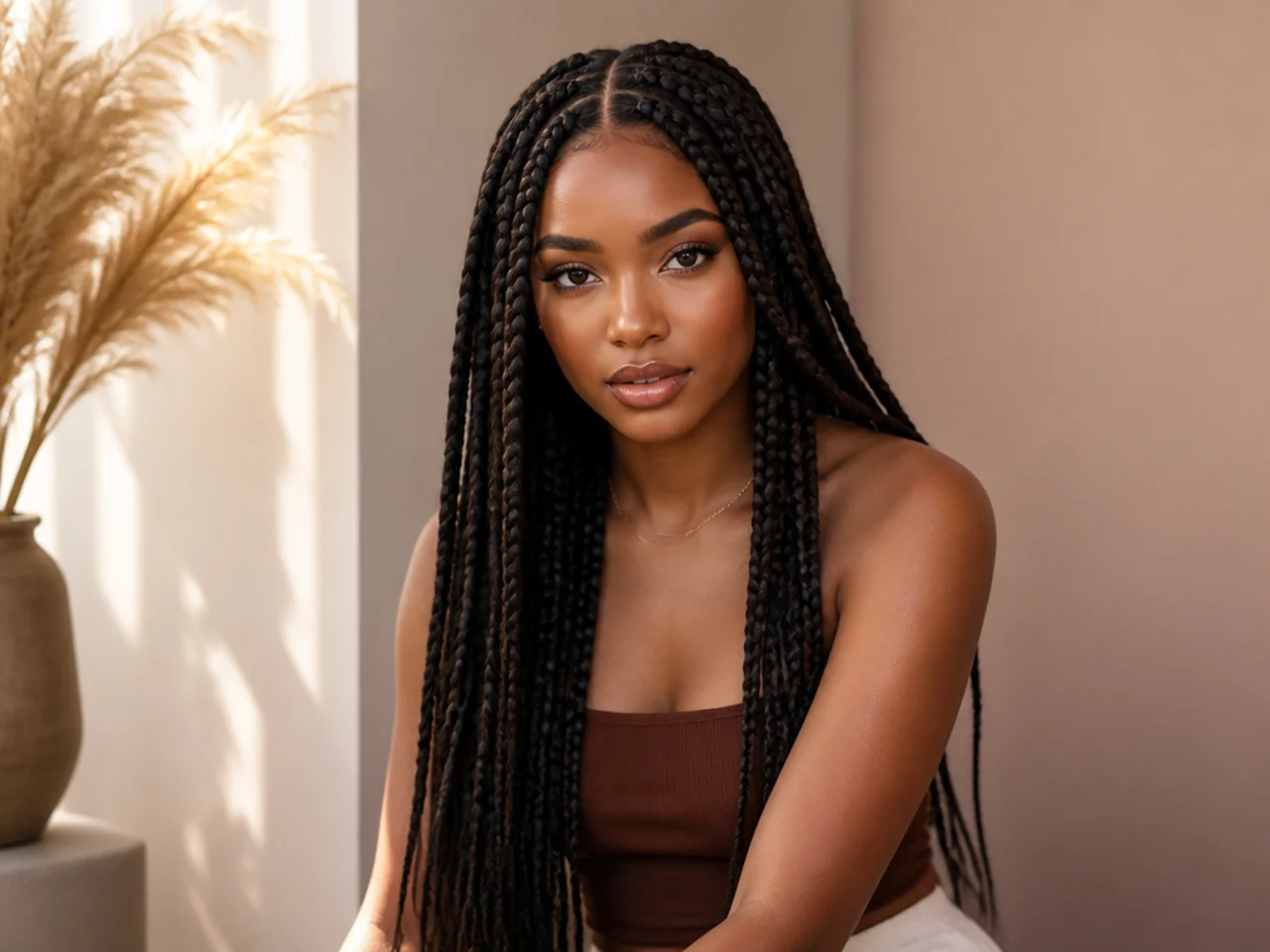
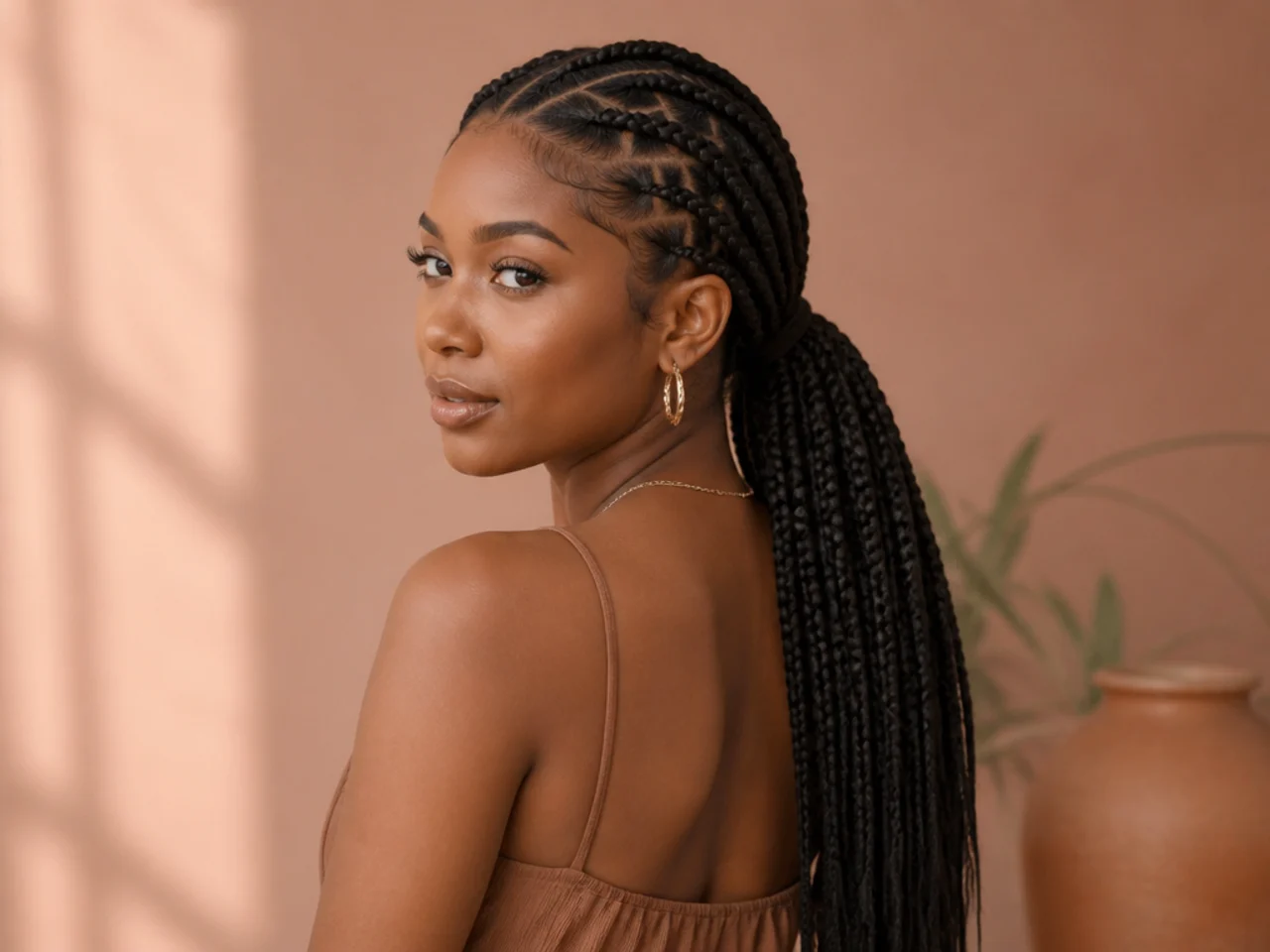
9. Long Braids in a Low Ponytail
Gathered low. The kindest way to carry this length. Low placement lets the skull carry part of the load rather than hanging all of it from the crown roots.
10. Half-Up with Length Down
Top gathered, most of the length left falling.
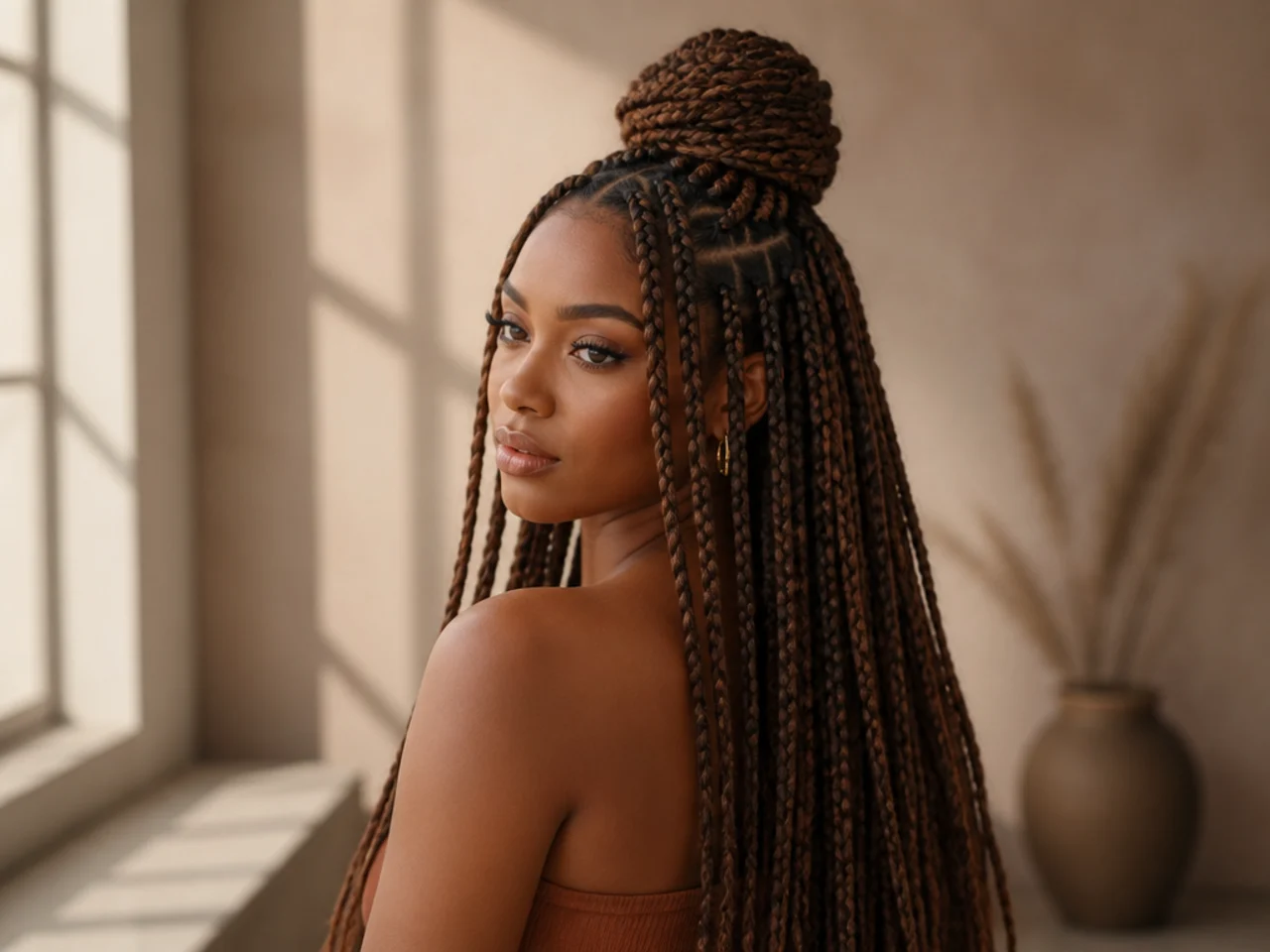
11. Long Braids with Beads at the Ends
Beads add weight exactly where the braid is already longest. The tip is the point of maximum leverage, so beads on a waist-length set are the heaviest arrangement available.
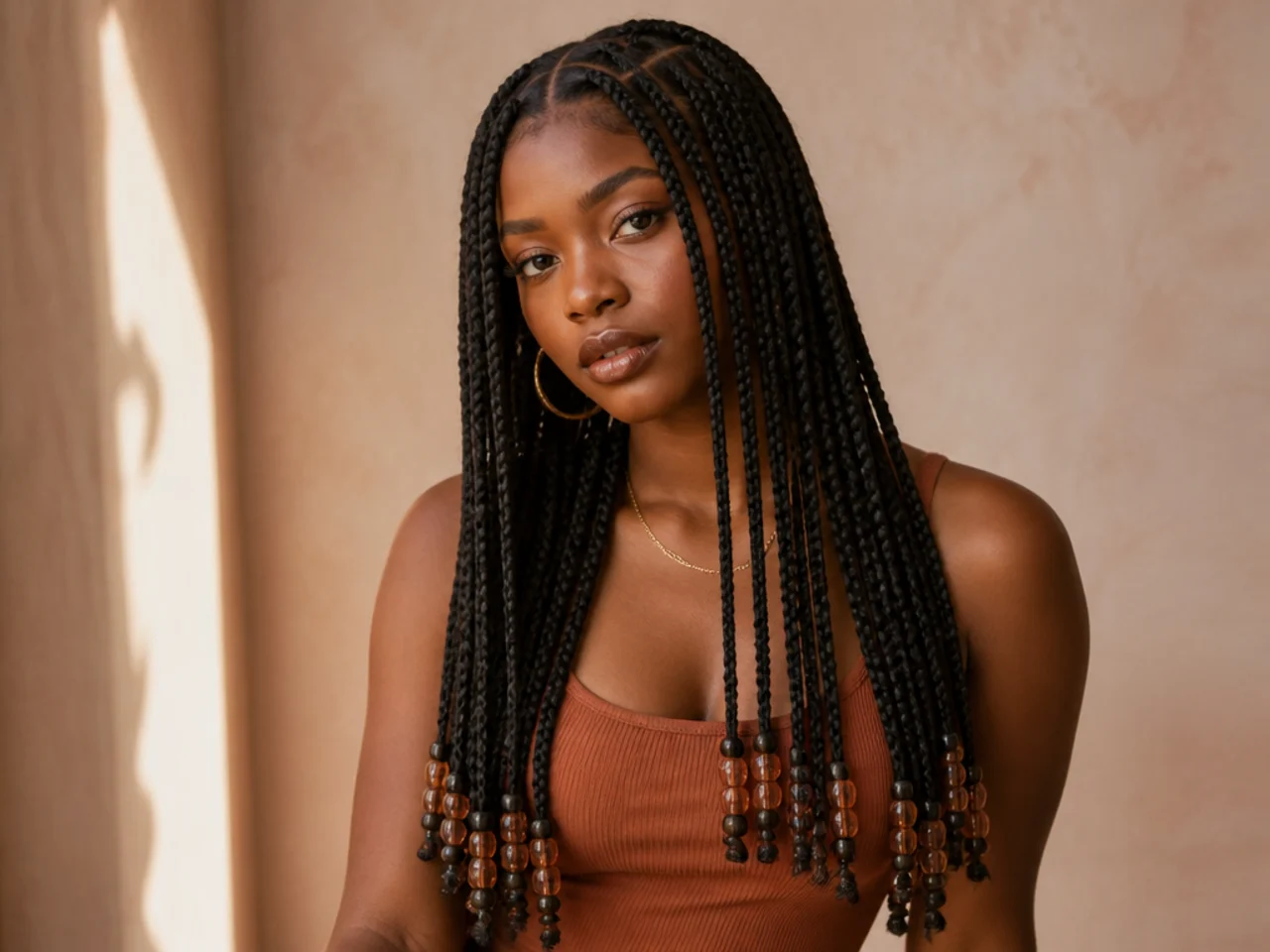
12. Burgundy Waist-Length Braids
Deep red down the full length.
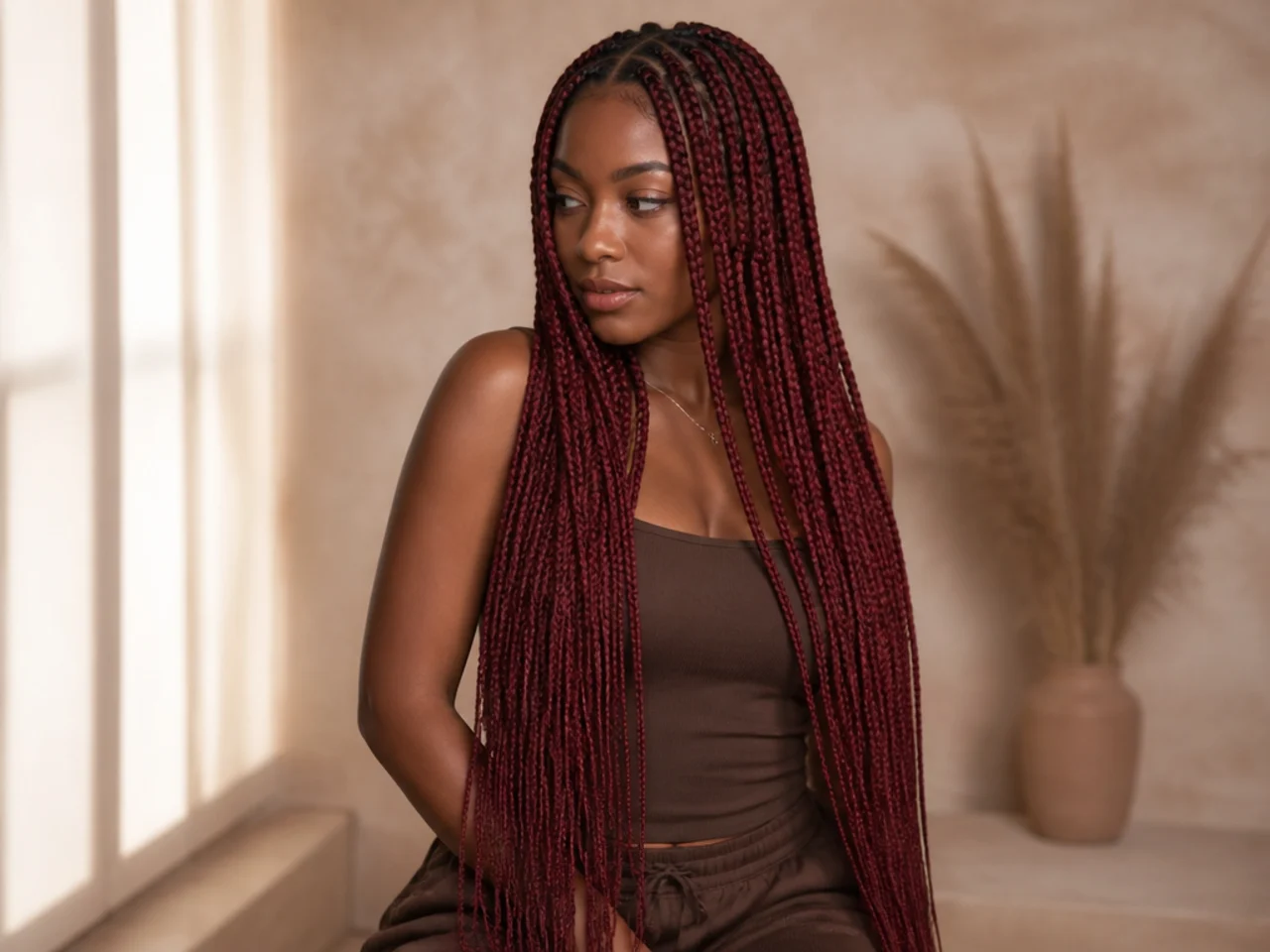
13. Long Braids with Gold Cuffs
Cuffs placed high so they do not add weight at the ends. Less braid hangs below a high cuff, which is the same leverage argument that governs where beads should sit.
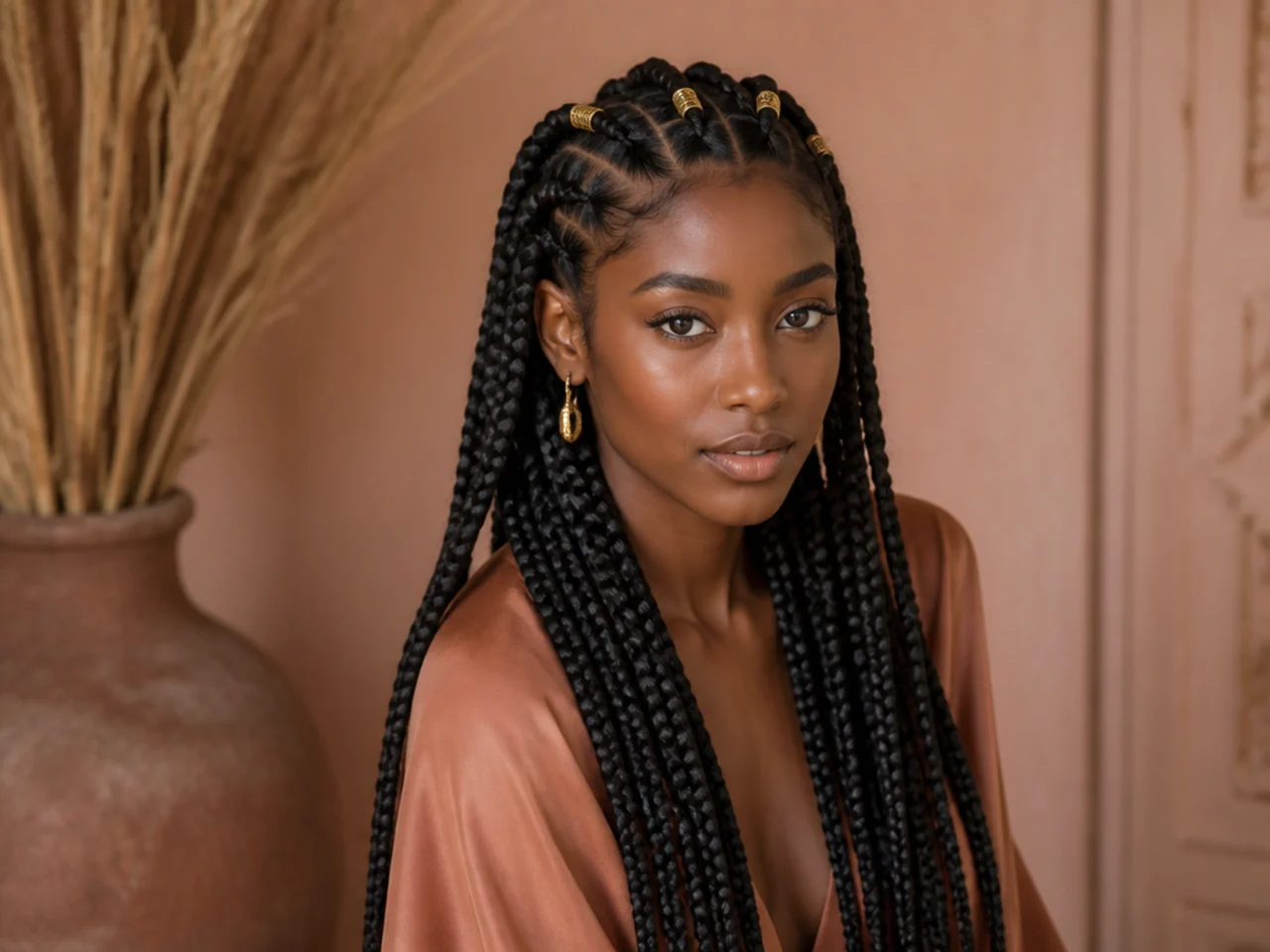
14. Long Braids with a Face Frame
Two shorter braids at the front against the long length behind.
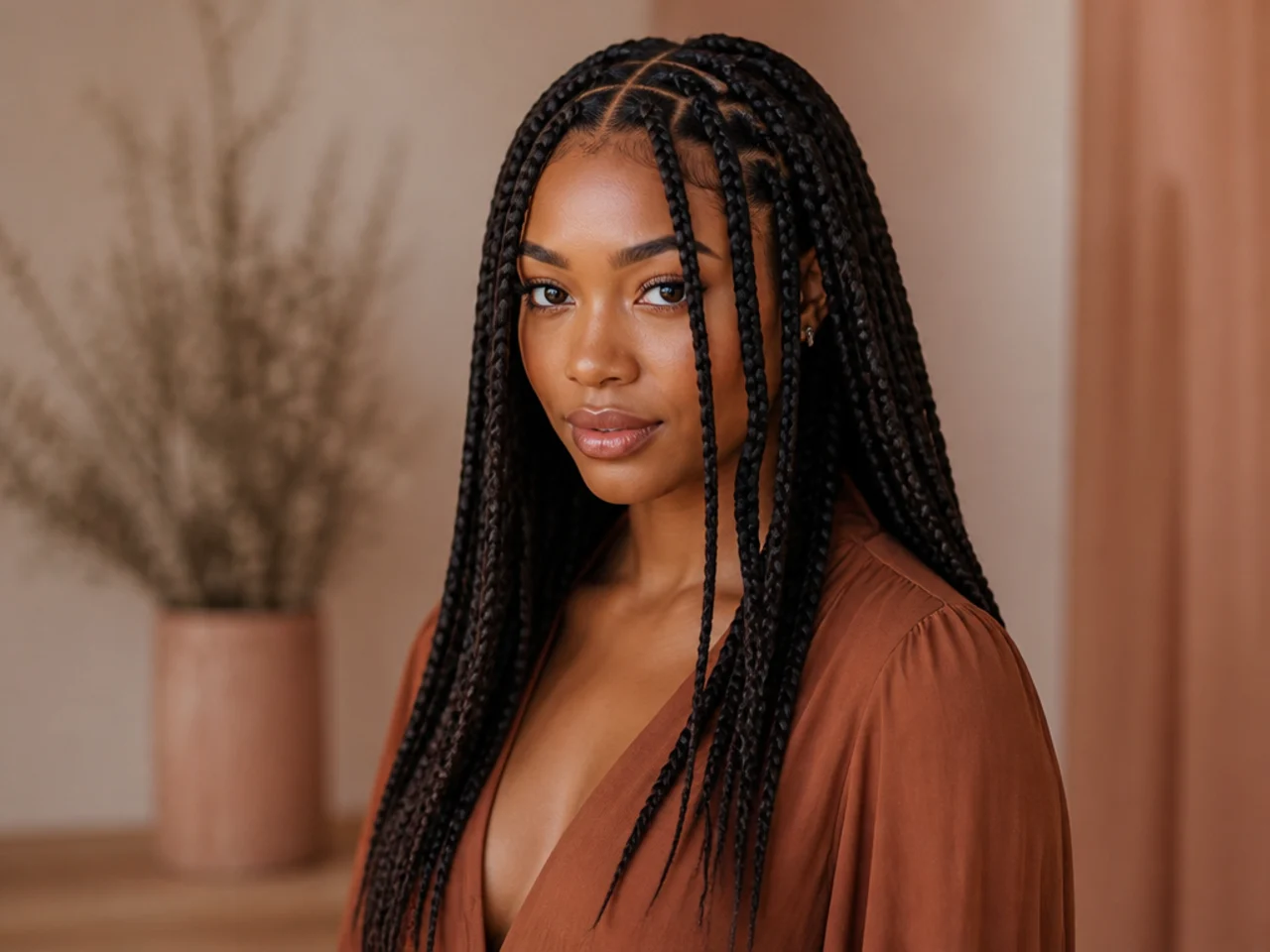
15. Two-Tone Long Braids
Two shades alternated. Length gives the pattern room to read.
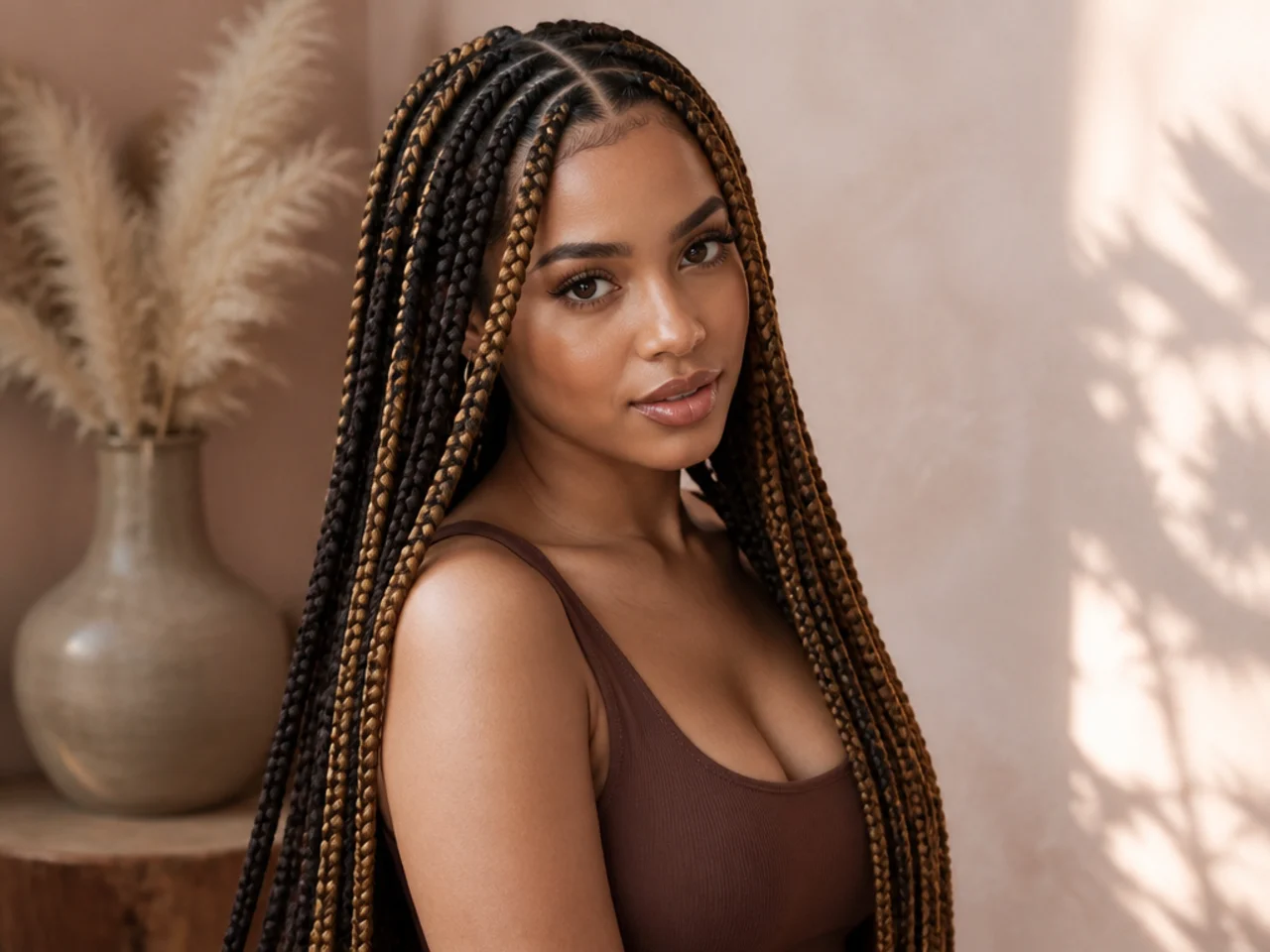
16. Long Braids Wrapped into a Low Bun
Coiled low. Takes the weight off the neck for an evening. Fold or braid the length before winding, or the coil comes out wide and stands away from the head.
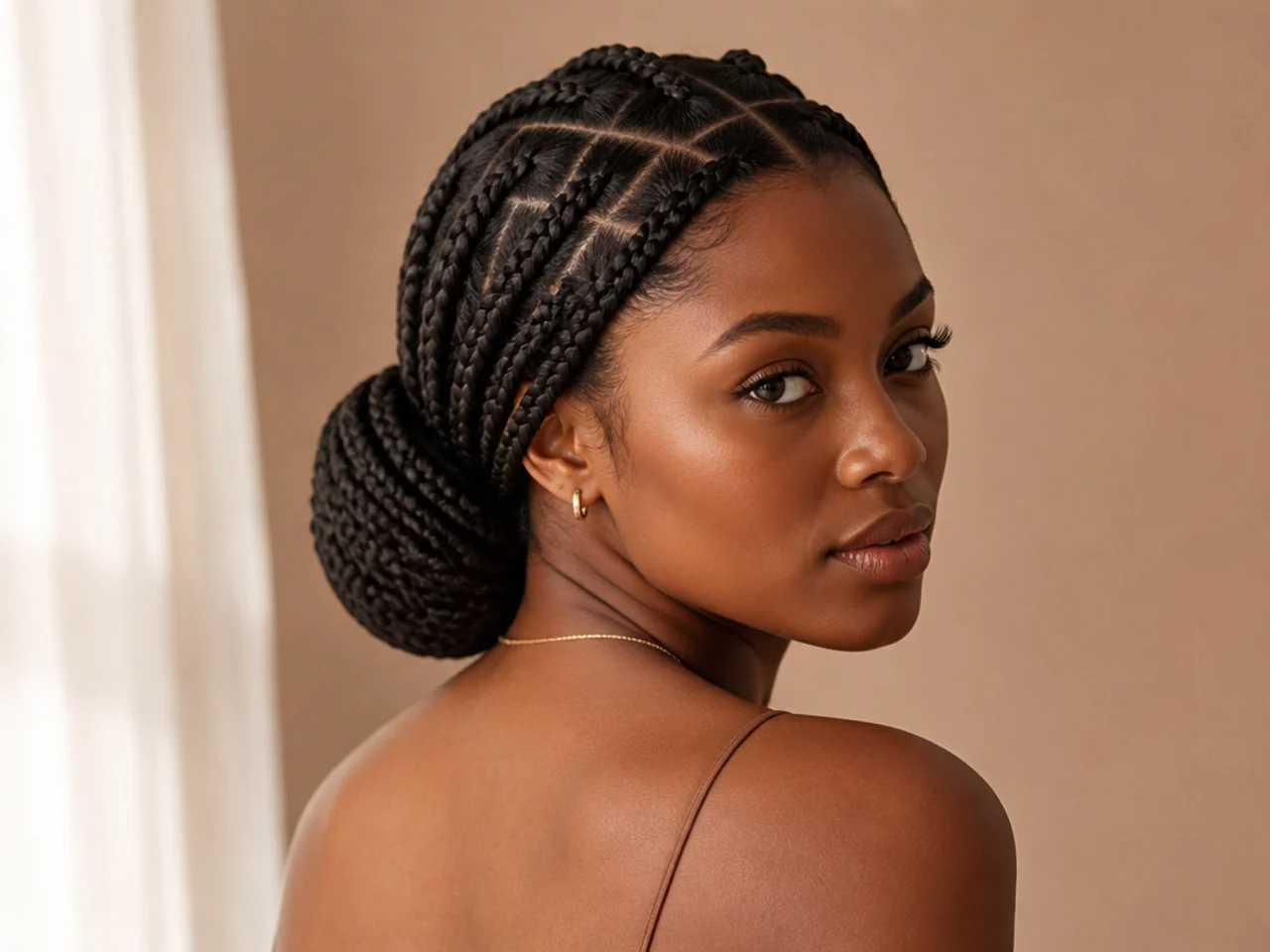
17. Long Braids with a Scarf Down the Length
Fabric wound along one braid. No weight added.
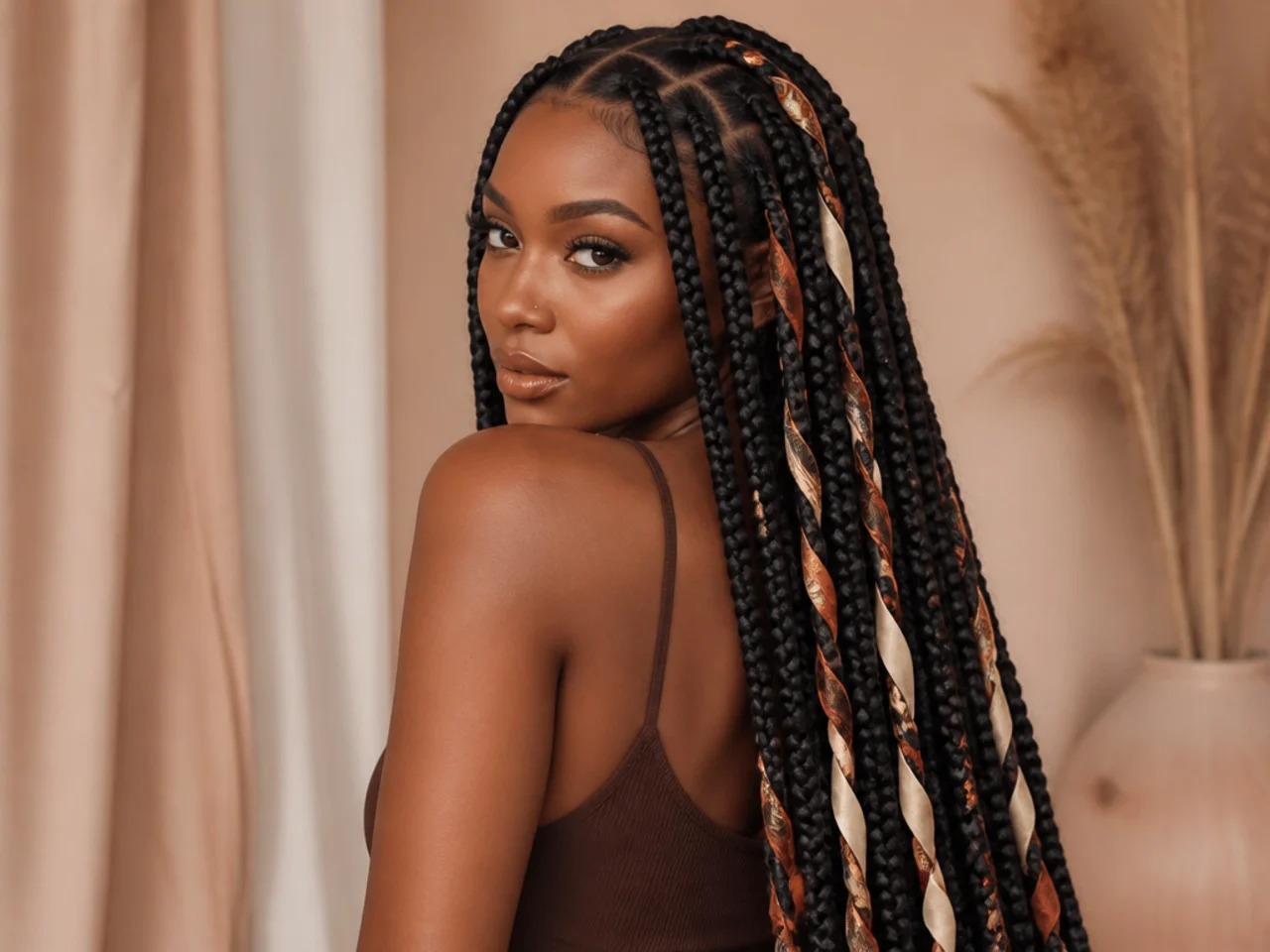
18. Caramel Long Braids
Warm mid-brown. The most natural-looking long option.
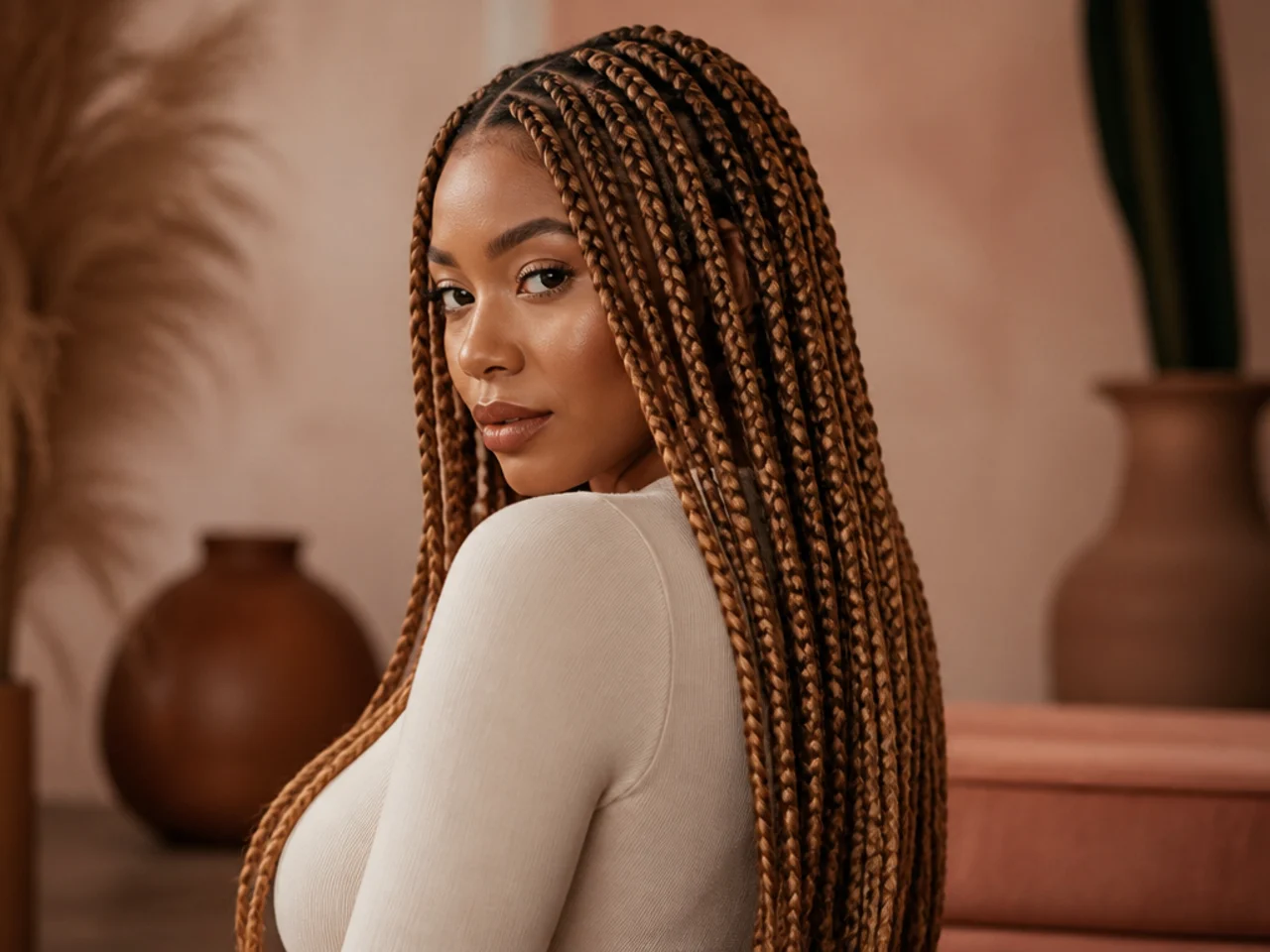
19. Long Braids on Fine Natural Hair
Mid-back rather than waist, with fewer braids. The safe version. Fine hair has less to anchor each braid with, so reducing length does more for it than reducing braid count.
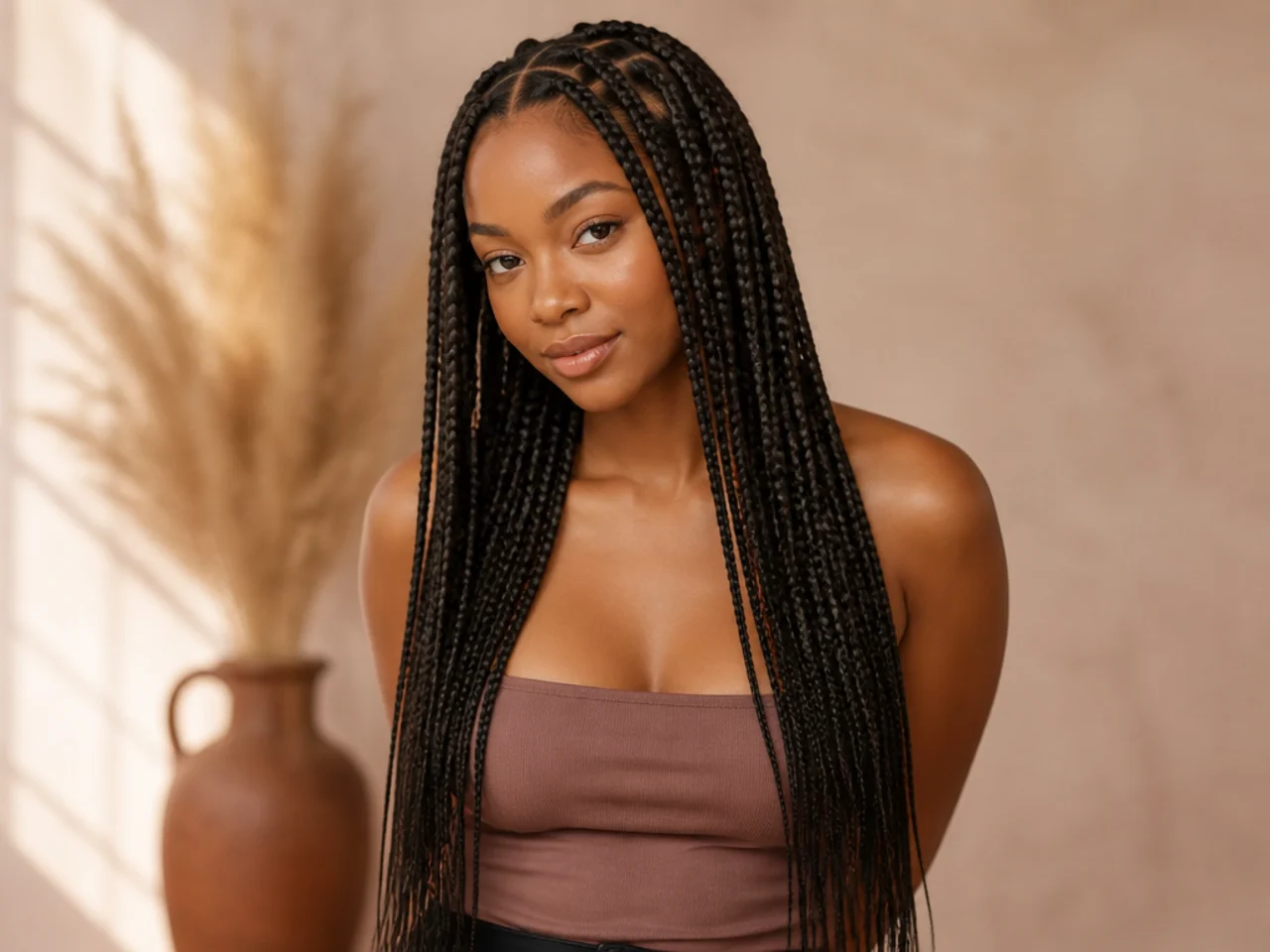
20. Long Braids at Week Five
Where the ends have started to fray. Worth seeing before booking. The ends take the most contact with clothing and chairs, so on a long set they age well before the roots do.
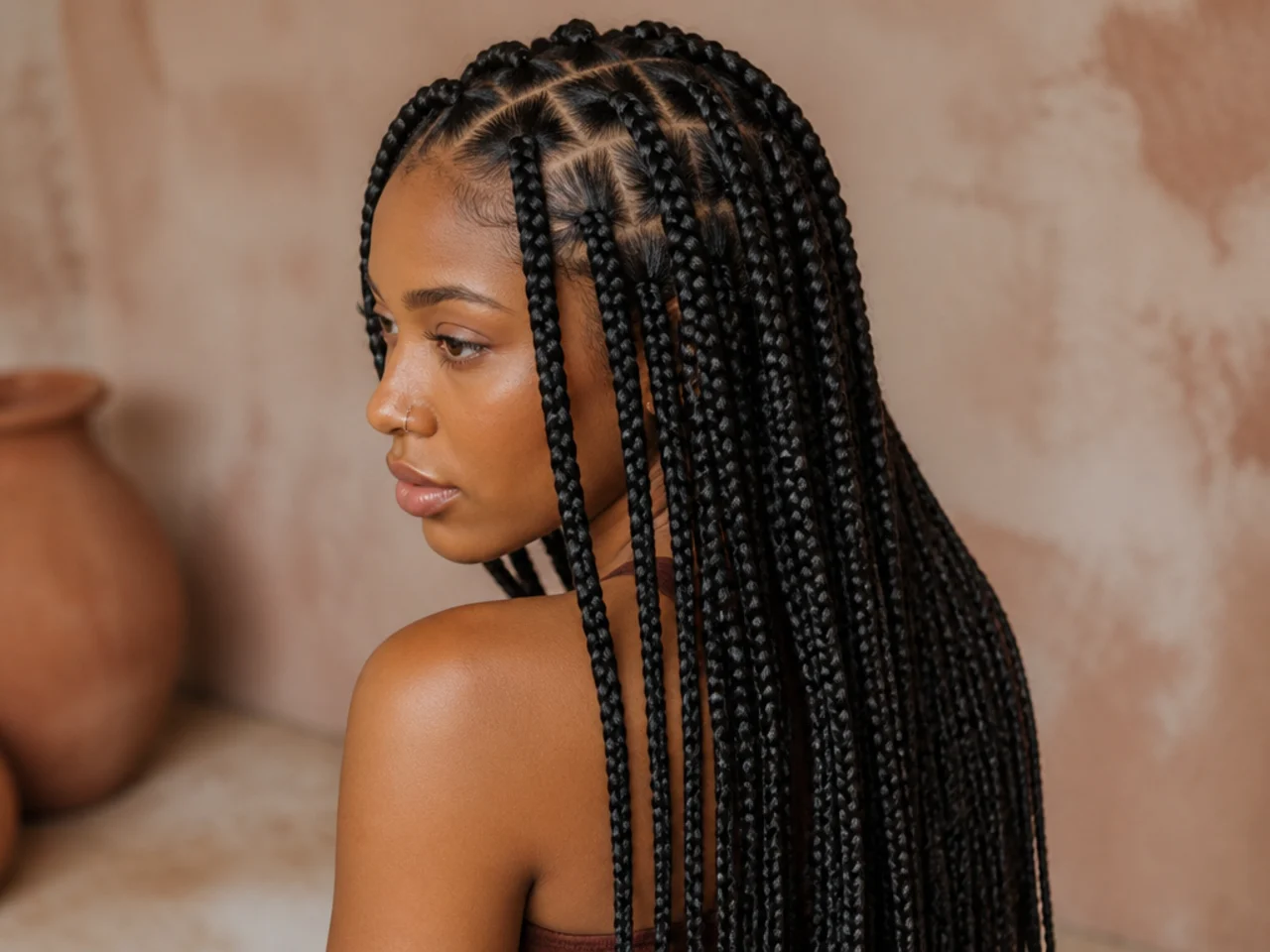
Styling and Upkeep
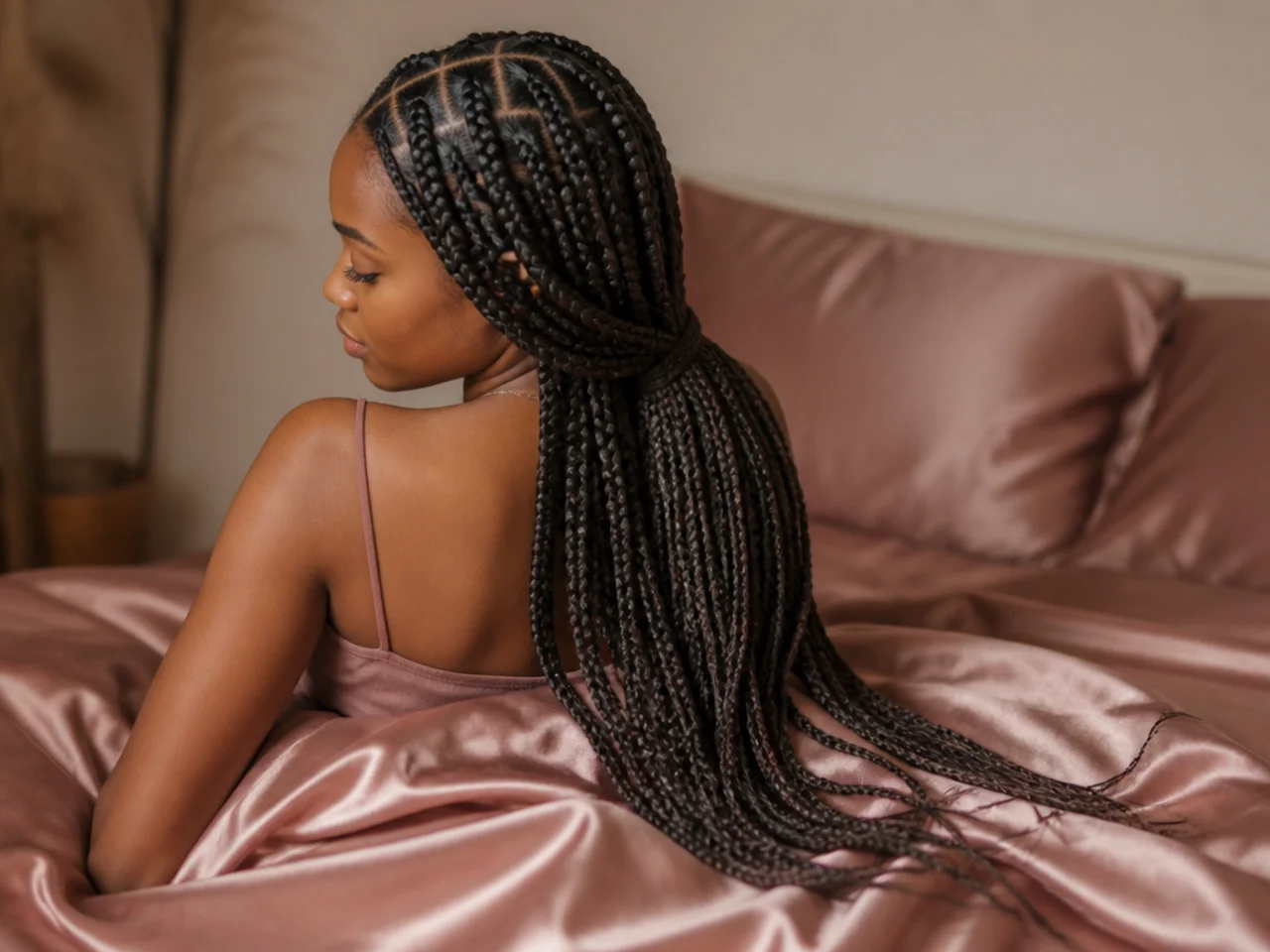
Gather them at night, always. Long braids left loose while you sleep tangle at the ends and pull at the roots as you turn. A loose high gather on satin fixes both.
Seal the ends. Whether by dipping, curling or knotting, unsealed ends unravel first and then knot into each other.
Wear them up on heavy days. A low bun or low ponytail moves the load from hanging weight to supported weight, and an evening of that is genuine relief.
Do not comb the ends. Combing a frayed braid tip pulls the extension loose faster. Separate by hand if you need to.
Six weeks, not eight. At large size and long length, week seven is where the braid stops protecting and starts pulling.
Mistakes to Avoid
Waist length on fine hair. The heaviest pairing available; go mid-back instead.
Leaving the ends unsealed. They fray, then tangle into their neighbours.
Sleeping with them loose. Tangling at the ends and pulling at the roots, for eight hours.
Adding beads at the very ends of a waist-length set. Weight where there is already most of it.
Combing frayed tips. It pulls the extension out rather than tidying it.
FAQ
How long can they be? Waist is the practical limit for a large set, and it is already heavy.
Do long braids damage hair? Length does not; the weight it adds does.
How do you stop the ends tangling? Seal them and gather them at night.
Final Thoughts
Pick mid-back unless you specifically want the waist-length drama and are willing to carry it. The weight rises in a straight line with every inch, it all lands on the same fifty roots, and the ends — not the roots — are where you will first notice things going wrong.
For shorter sets see 25 large knotless braids ideas, and for the size trade see large vs medium knotless braids. More in Braids & Protective Styles.
Frequently asked questions
Related posts
See all posts
20 Waterfall Mermaid Braid Ideas That Hold
Read more
15 Side Mermaid Braid Ideas That Sit Right
Read more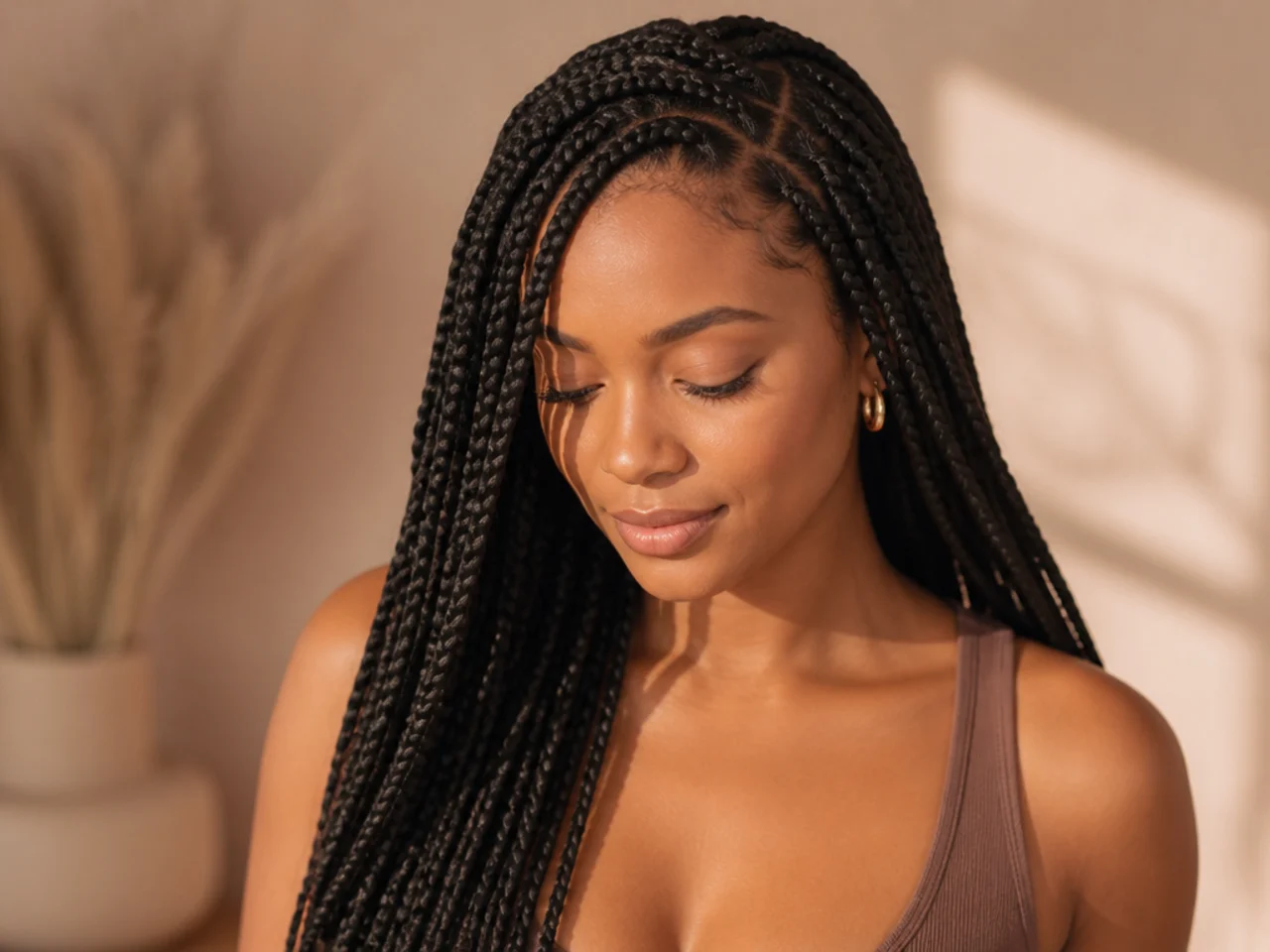
20 Side Part Medium Knotless Braids I Saved
Read more