20 Steps to Ask for a Short Haircut Men
"Short back and sides" names no number, no height and no finish, so the barber fills every gap with a default that is theirs and not yours. Four numbers and two words replace it, and there is an order you say them in.
In this article · 27
- Why "Short Back and Sides" Gets You Someone Else's Haircut
- The Four Numbers to Know Before You Sit Down
- The 20 Steps, in Chair Order
- 1. Say Taper or Fade
- 2. Name the Guard for the Sides
- 3. Point to Where That Length Stops
- 4. Use the Landmarks, Not "Low" and "High"
- 5. Say How Much Shorter Than Today
- 6. Give the Top Length in Centimetres
- 7. Say Scissors or Clippers on Top
- 8. Say Whether Top and Sides Connect
- 9. If Disconnected, Place the Step
- 10. Name the Neckline
- 11. Set the Sideburn Length
- 12. Say Where the Fringe Should Reach
- 13. Ask for Texture, or Ask for It Left Solid
- 14. Say Whether You Want a Part, and Where
- 15. Say How the Temples Are Treated
- 16. Bring One Photo of the Back, Not the Front
- 17. Say How Often You Can Come Back
- 18. Say What You Put On It in the Morning
- 19. Check the Sides in a Hand Mirror
- 20. Ask the Barber to Write It Down
- How to Say It Out Loud
- Mistakes to Avoid
- FAQ
- Final Thoughts
"Short back and sides" is the most spoken sentence in any barbershop, and it settles almost nothing.
It names no number, no height and no finish. Three separate decisions, none of them in the phrase, so somebody else makes all three for you.
Four numbers and two words replace it. Guard, height, top length, interval — plus taper or fade, said in the order below.
Why "Short Back and Sides" Gets You Someone Else's Haircut
It contains no number, no landmark and no finish. It names a region of the head, not a length, a height or an edge.
Every barber has a house default. Unspoken decisions land on whatever that shop cuts fifty times a week.
Three of the four decisions sit behind you. Fade height, neckline and the corner above the ear never appear in a front-facing mirror.
The fix takes twenty seconds to say. Four numbers and two words, before anything is switched on.
The Four Numbers to Know Before You Sit Down
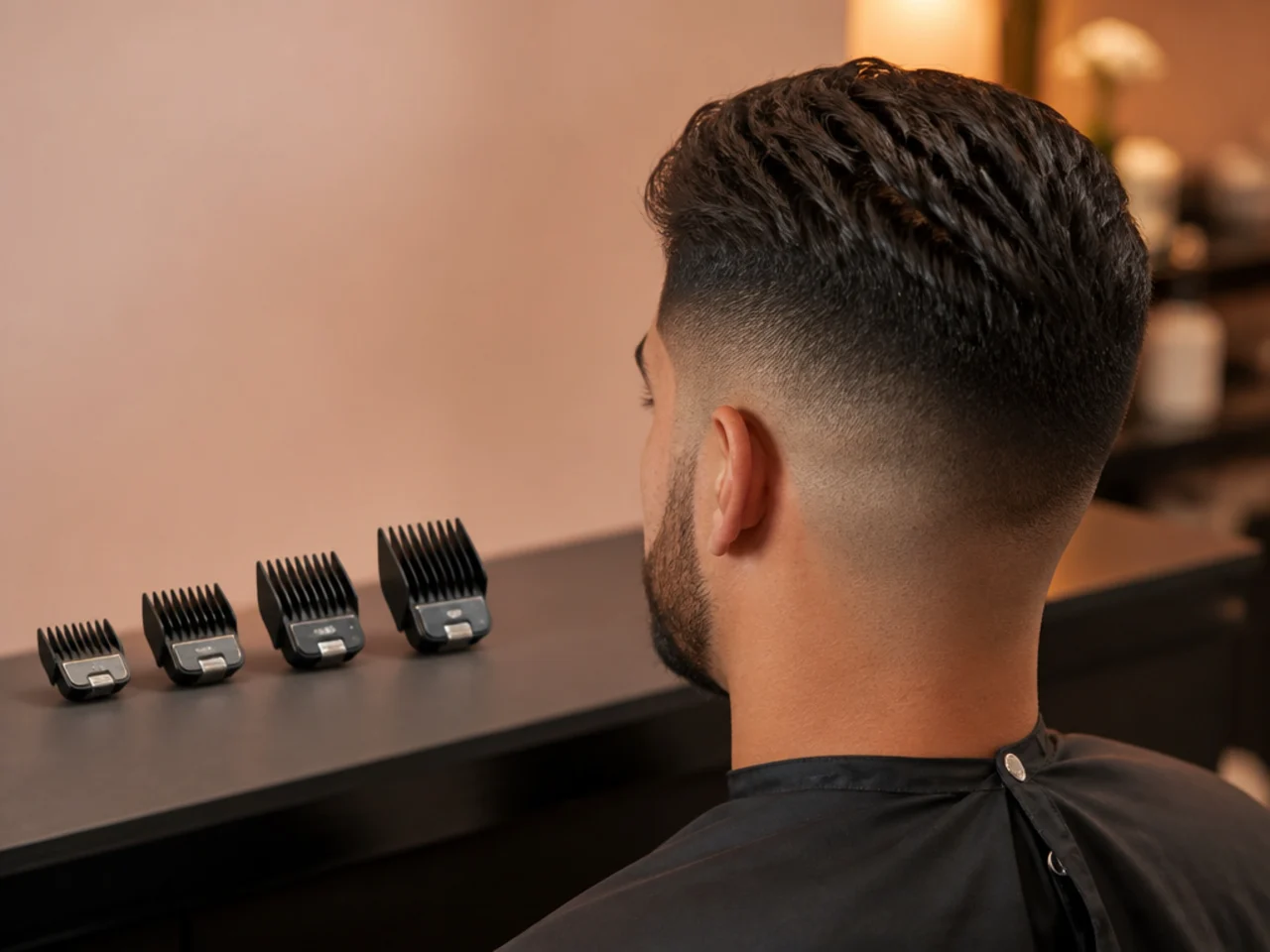
The guard number for the sides. #1 is 3mm, #2 is 6mm, #3 is 10mm, #4 is 13mm.
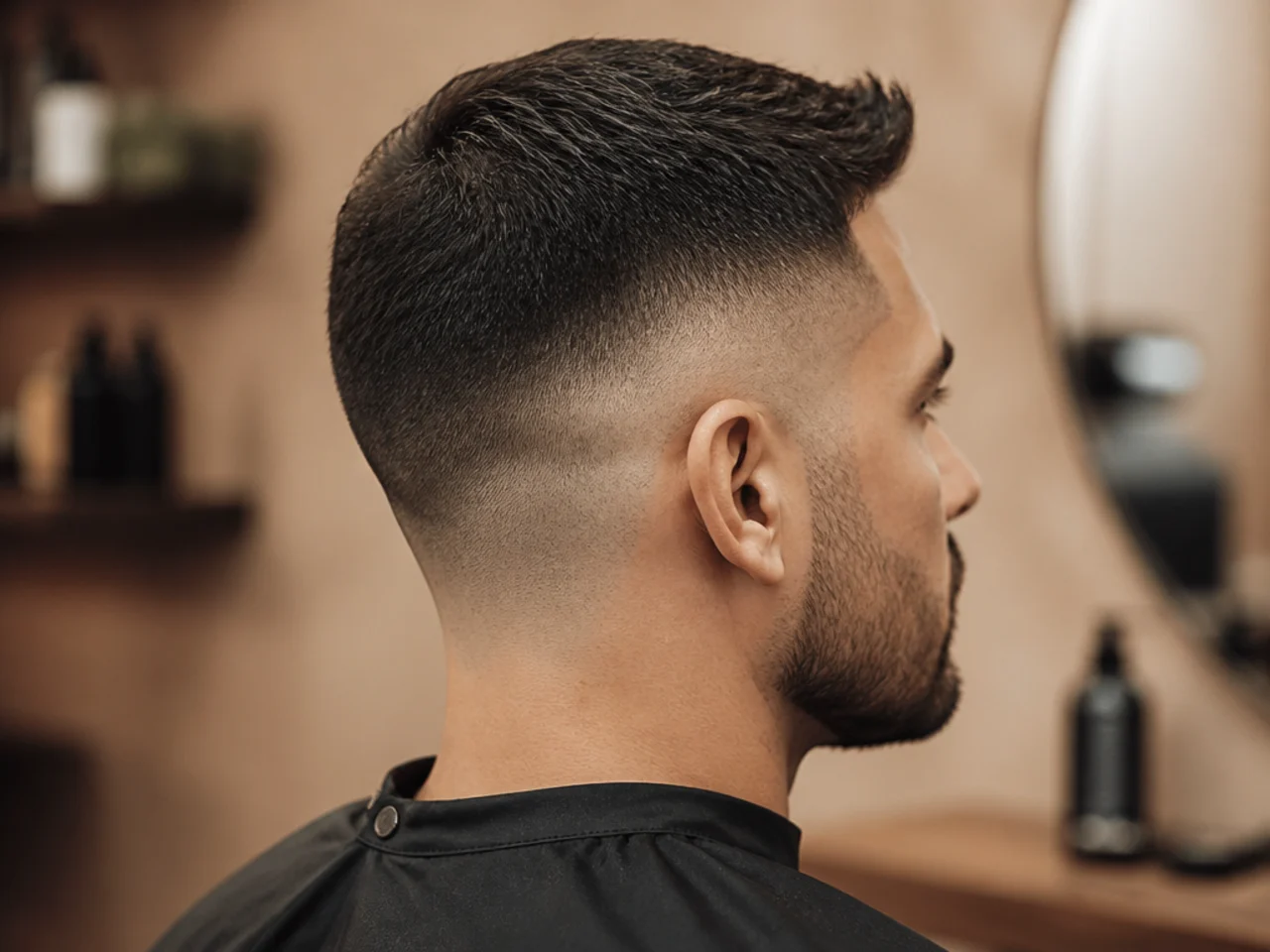
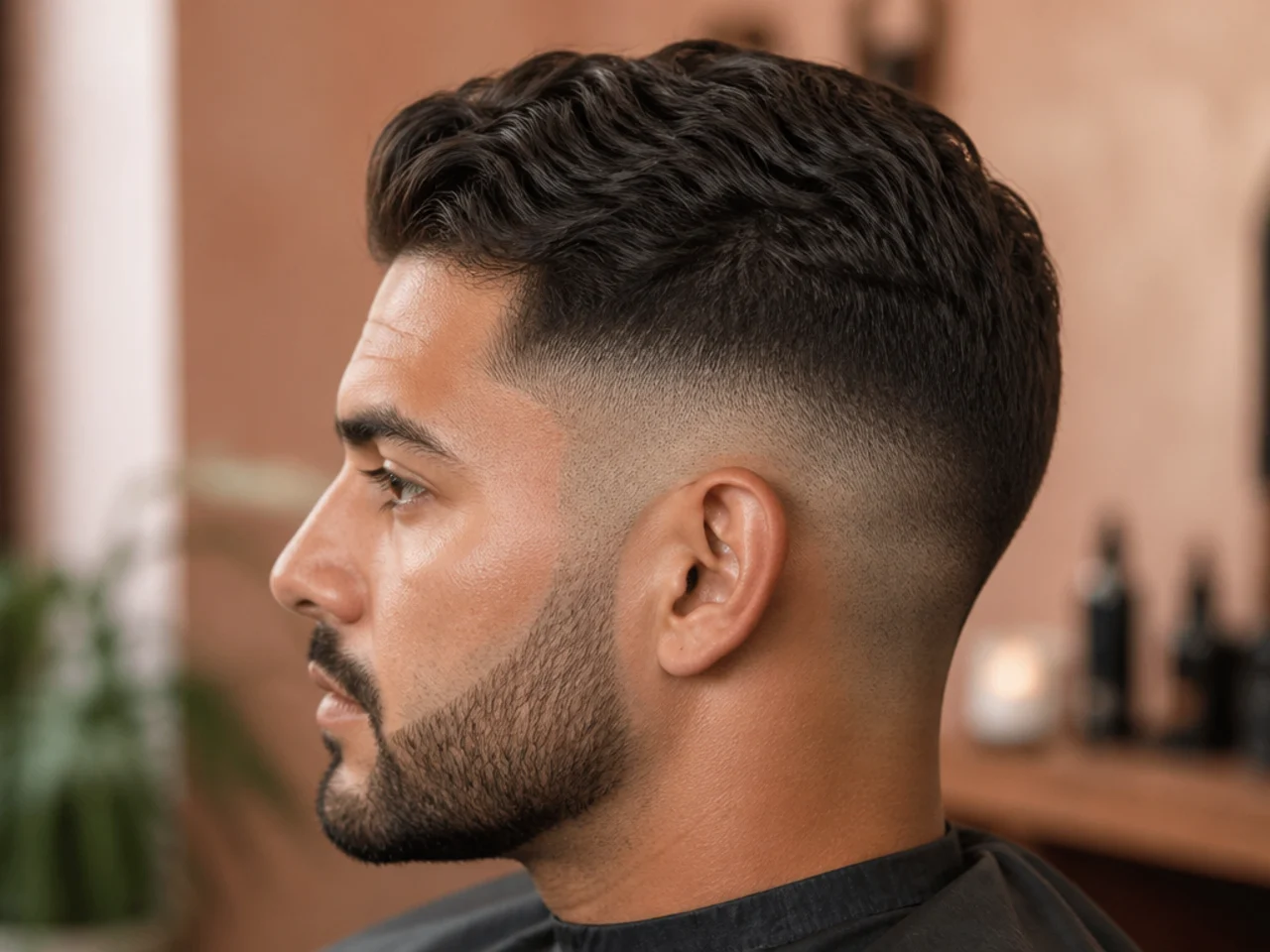
The height that length reaches. Low is at or below the temple, mid between the temple and the parietal ridge, high at or above that ridge.
The centimetres left on top. Measured after the cut, because "take two off" and "leave two on" are opposite instructions.
The weeks until you come back. A skin fade blurs in one to two, a taper holds three to four, so the interval picks the finish.
The 20 Steps, in Chair Order
1. Say Taper or Fade
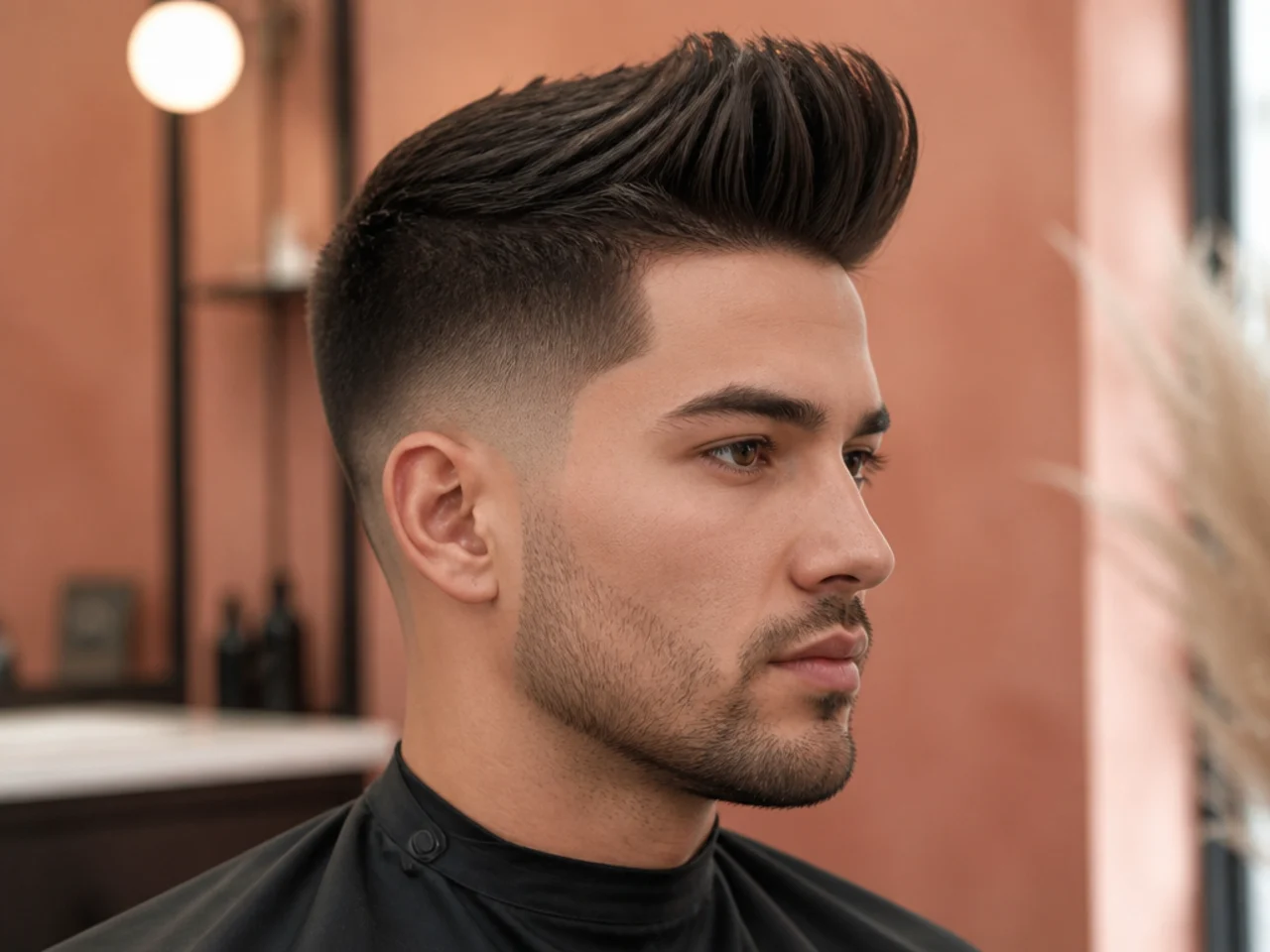
A taper always leaves length, usually a #1 at 3mm along the neckline; a fade goes to bare skin. Say this word first, because it decides how the whole side of the head is cut.
2. Name the Guard for the Sides
Guards are millimetres, not opinions — #1 is 3mm, #2 is 6mm, #3 is 10mm, #4 is 13mm. That numbering is standard across every set of hair clippers for men, so naming the number ends the guessing about what short means to you.
3. Point to Where That Length Stops
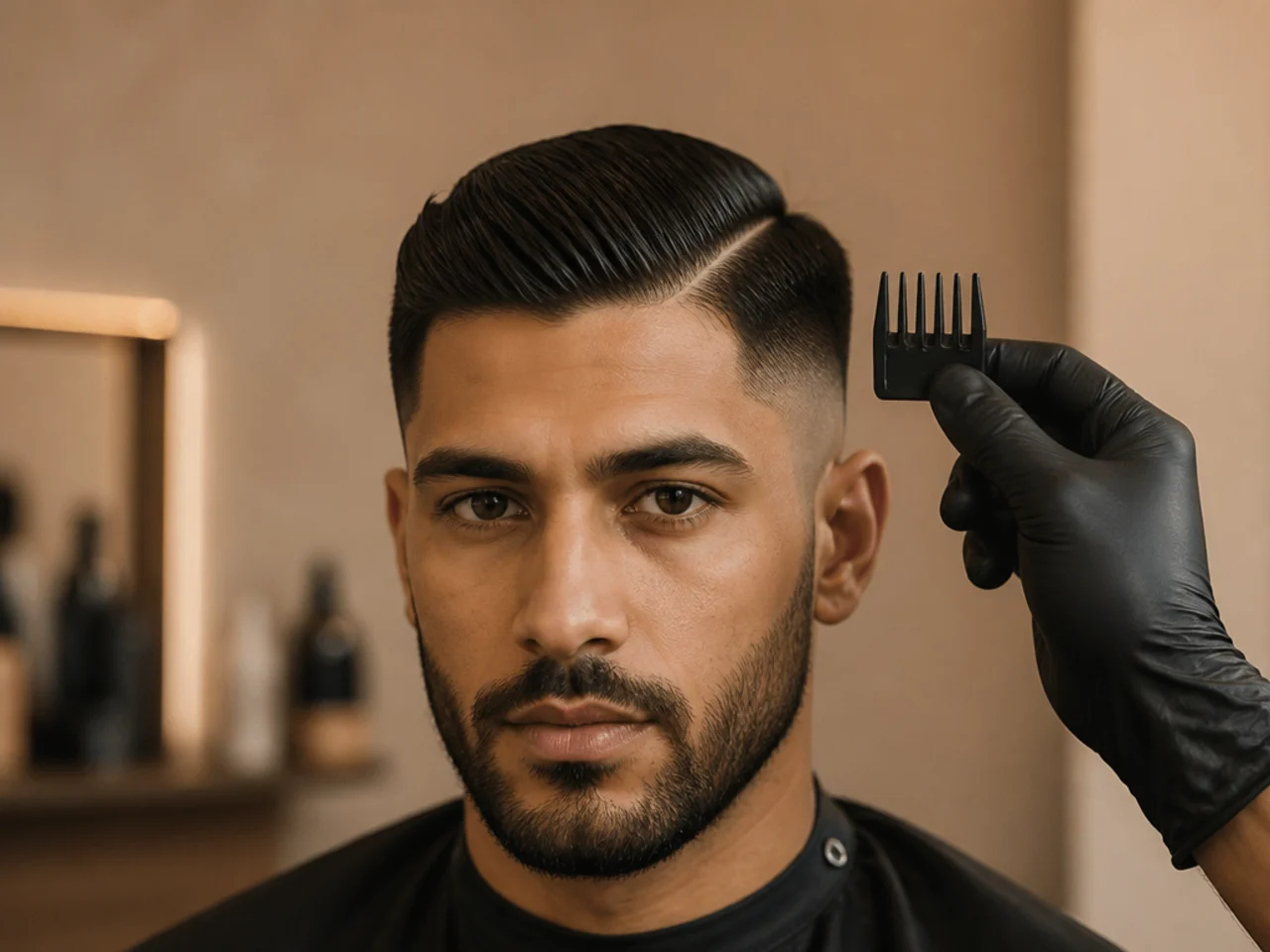
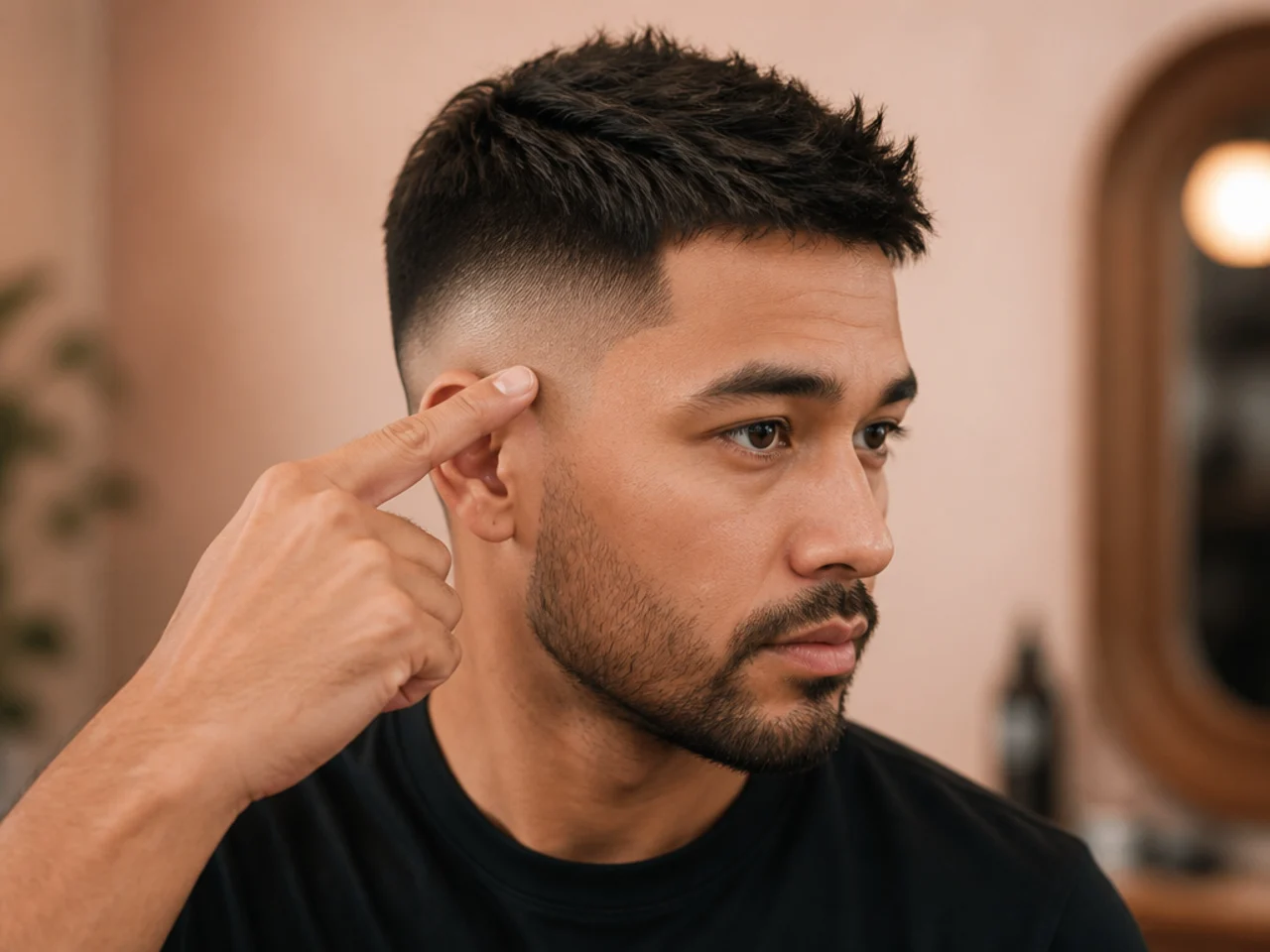
Put a finger on your own head at the height you want the shortest length to reach. Barbers work from landmarks on your skull, and a finger settles it faster than a paragraph.
4. Use the Landmarks, Not "Low" and "High"
Low means at or below the temple, mid between temple and parietal ridge, high at or above that ridge. Landmarks are fixed points on your head; low and high are relative to whoever holds the clippers, which is what low vs high taper fade sets side by side.
5. Say How Much Shorter Than Today
Give it as a share of what is already there — half off, or a third. It anchors the request to hair the barber can see rather than a number you may misjudge.
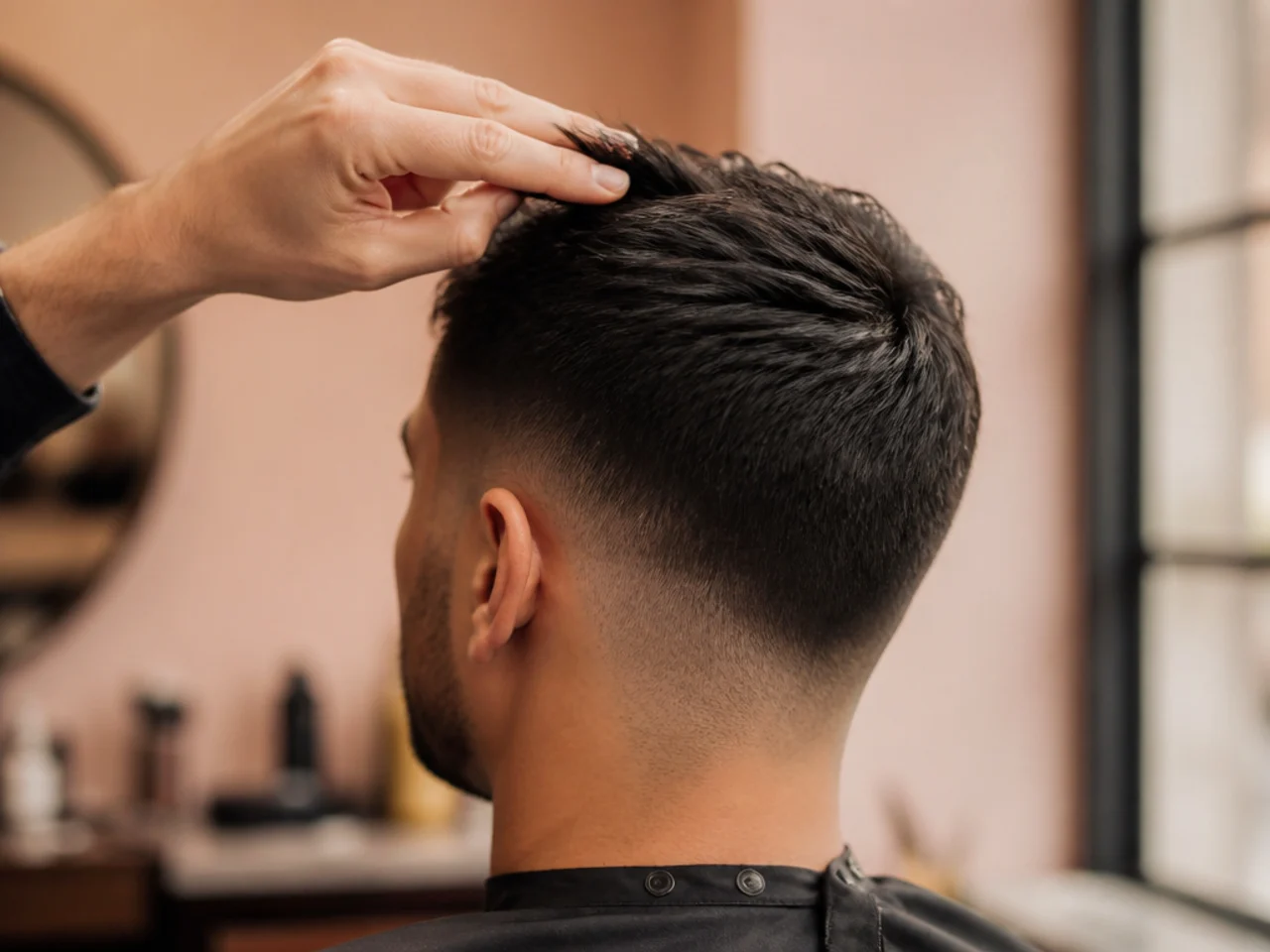
6. Give the Top Length in Centimetres
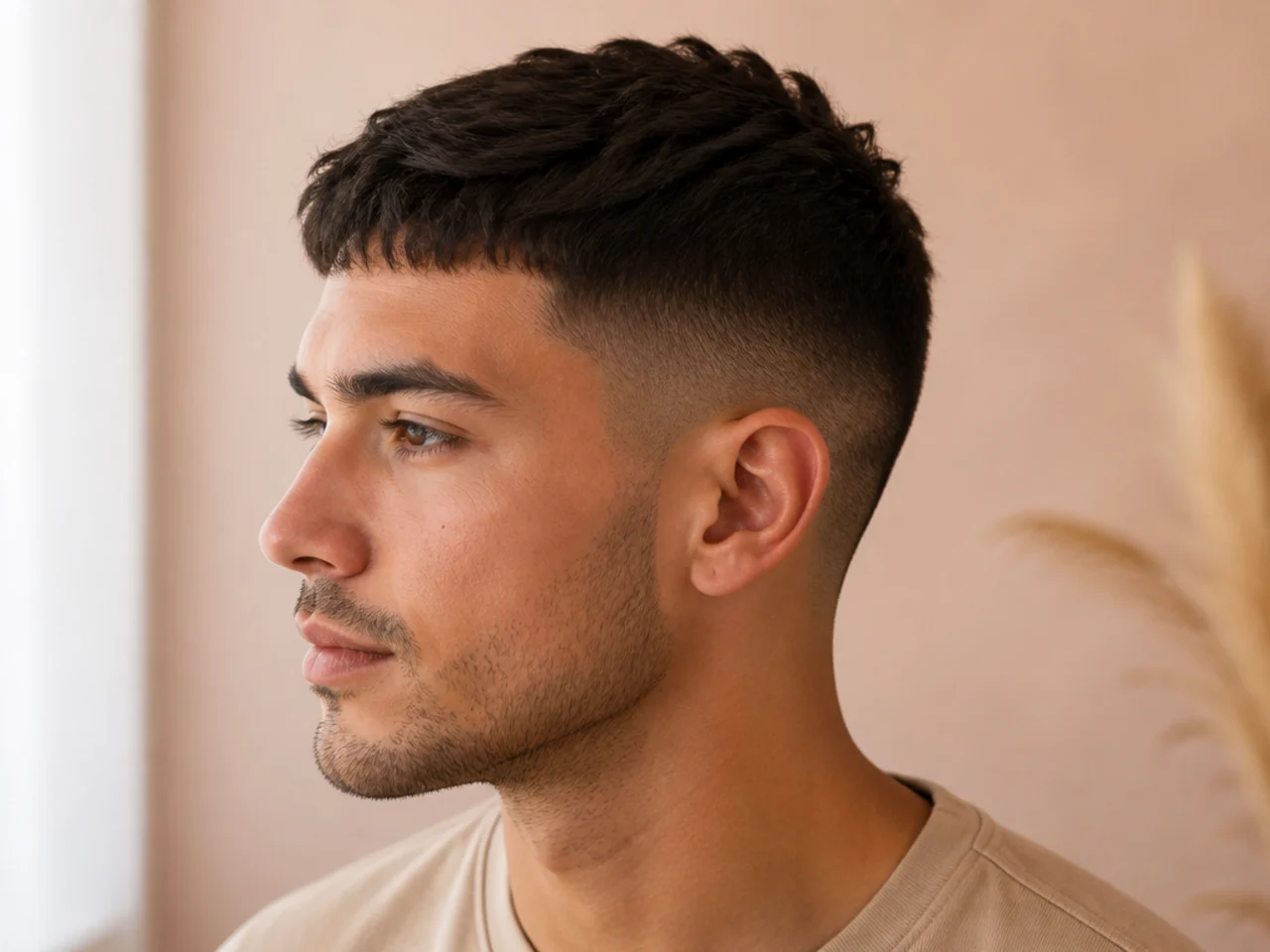
Three centimetres will push into a direction, five gives you a fringe. Say the length you want left rather than the amount removed, because those two sentences produce different haircuts.
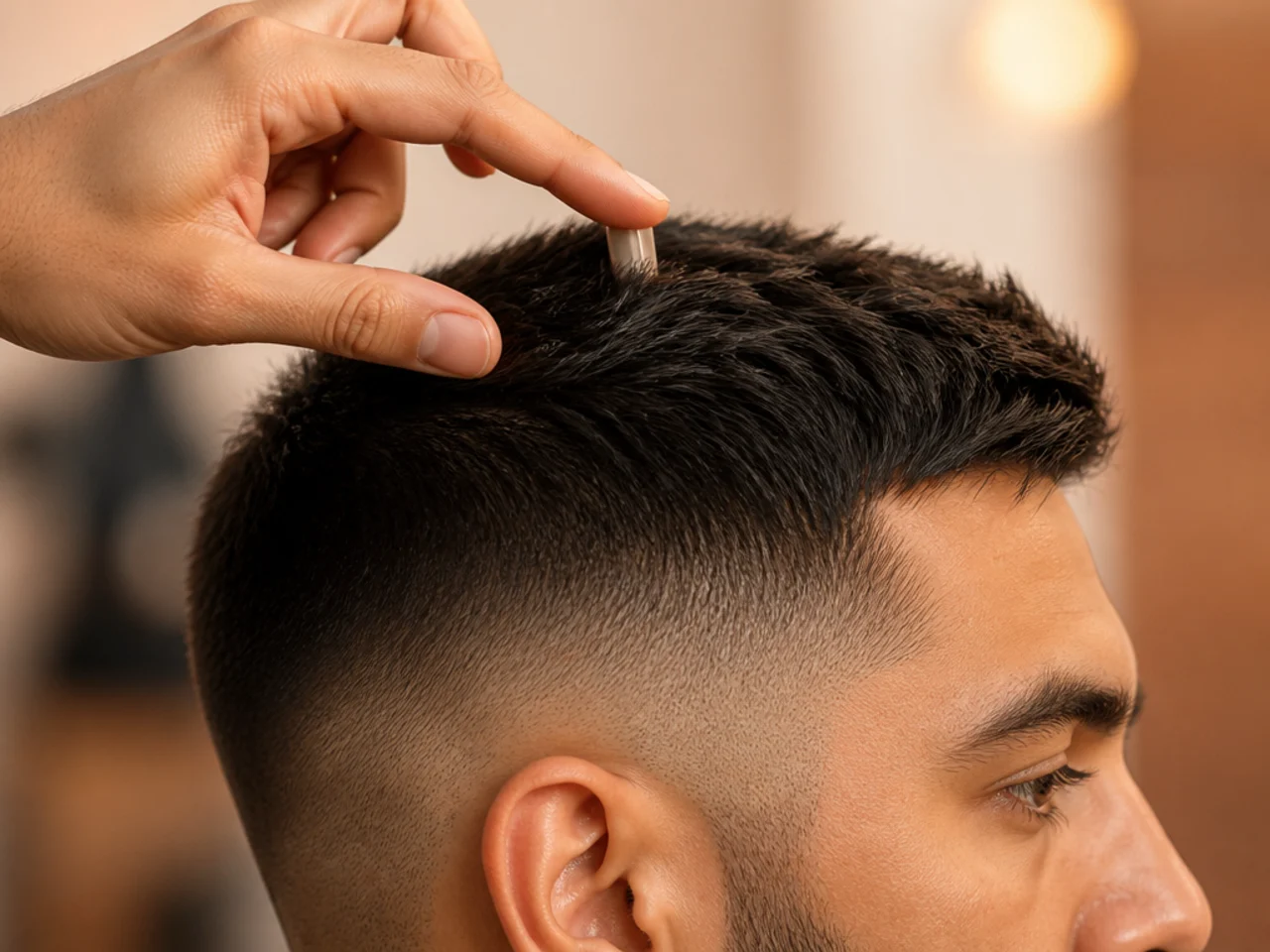
7. Say Scissors or Clippers on Top
Clippers on top leave a flat, even surface; scissors leave the ends uneven enough to separate. It is the difference between a crop that lies down and one that stands up.

8. Say Whether Top and Sides Connect
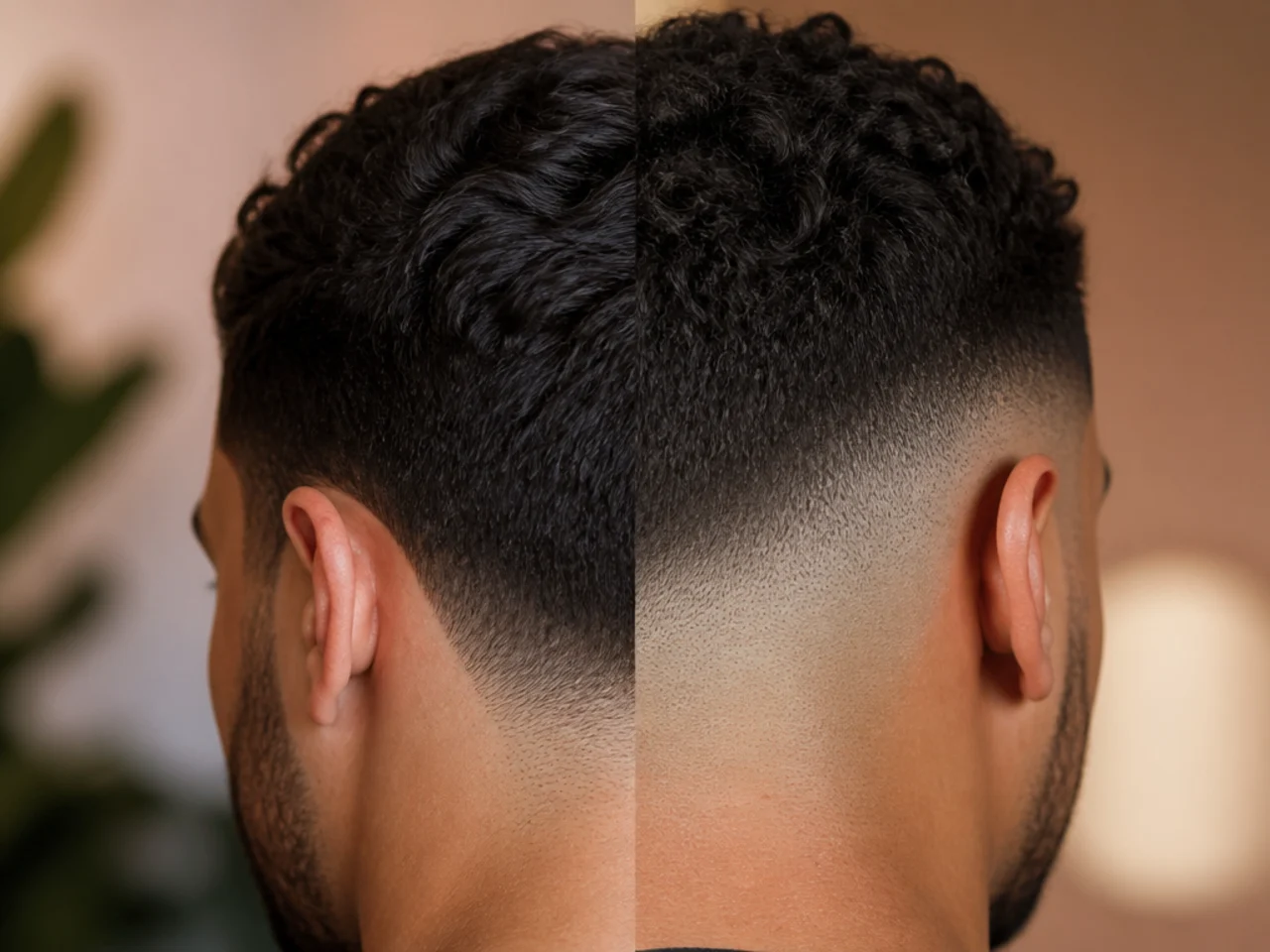
Connected means one gradient from crown to neckline. Disconnected means a visible step where the two meet, and no reference photo will tell your barber which of the two you want.
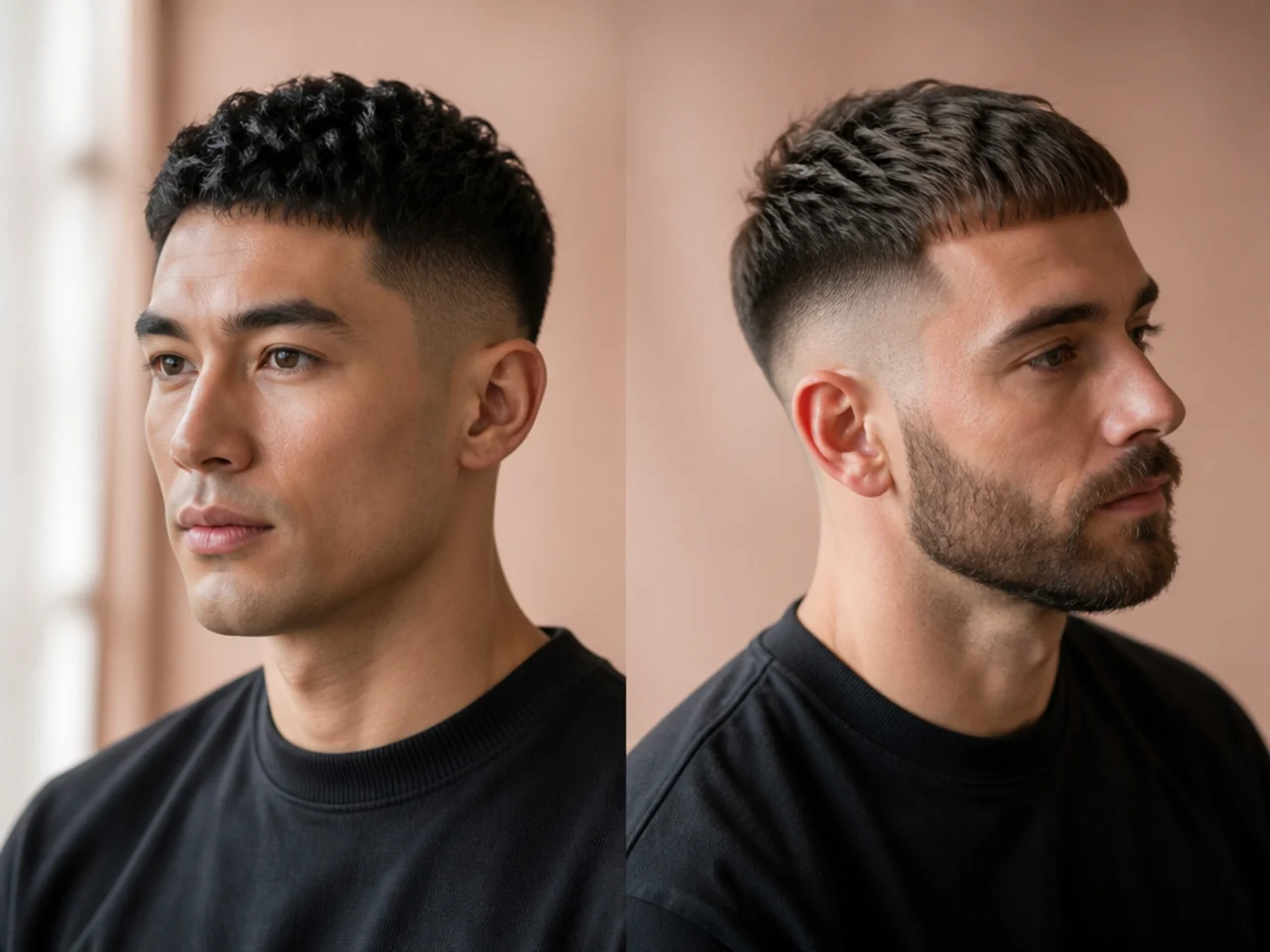
9. If Disconnected, Place the Step
A step needs a stated height or it lands wherever the comb stops. Just above the ear at the parietal ridge is usual, because a step lower than that makes the head read wider.
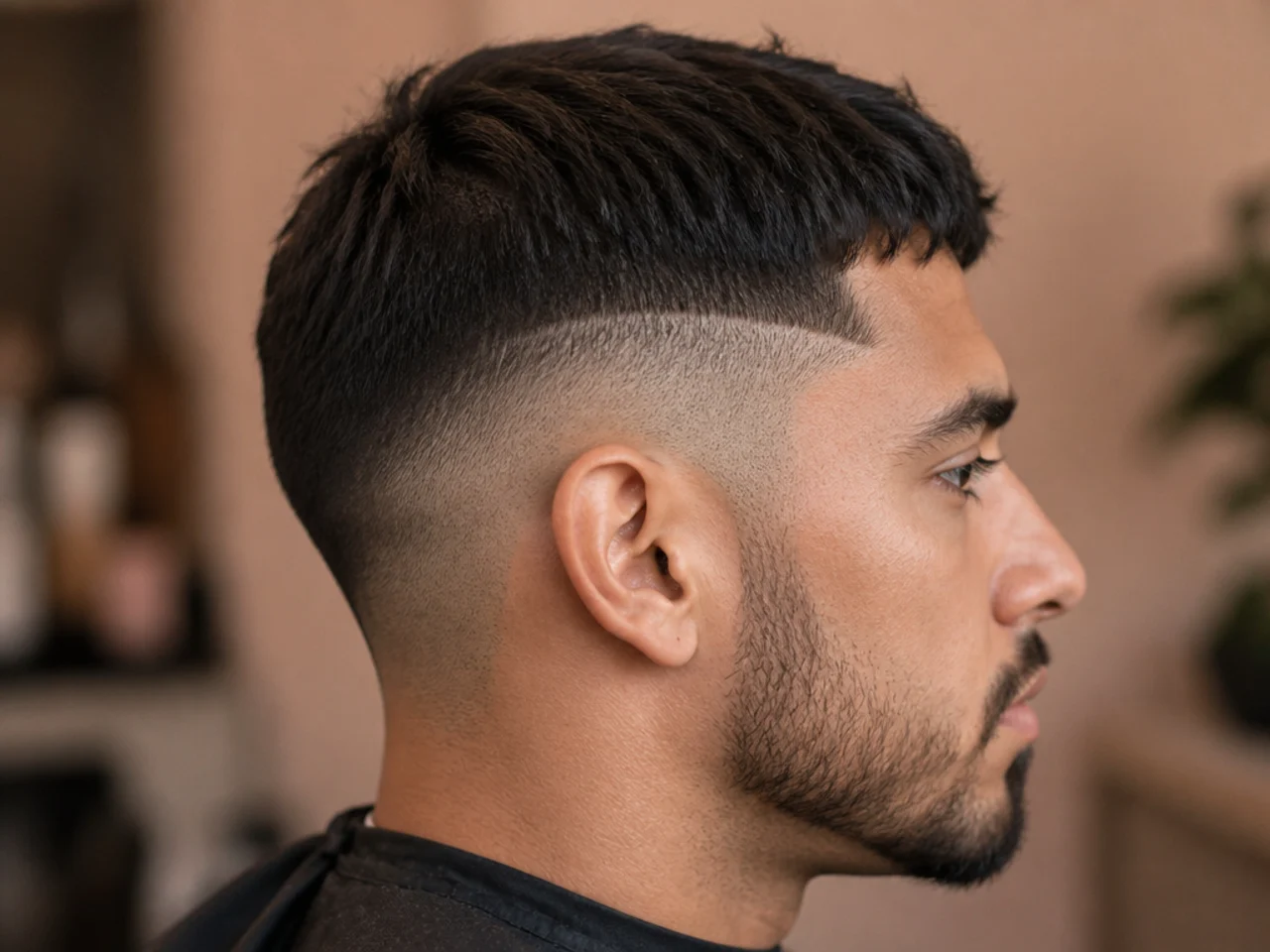
10. Name the Neckline
Blocked is a straight square edge, rounded follows the neck, tapered fades out with no line. Blocked looks sharpest for a week and untidiest by week four.
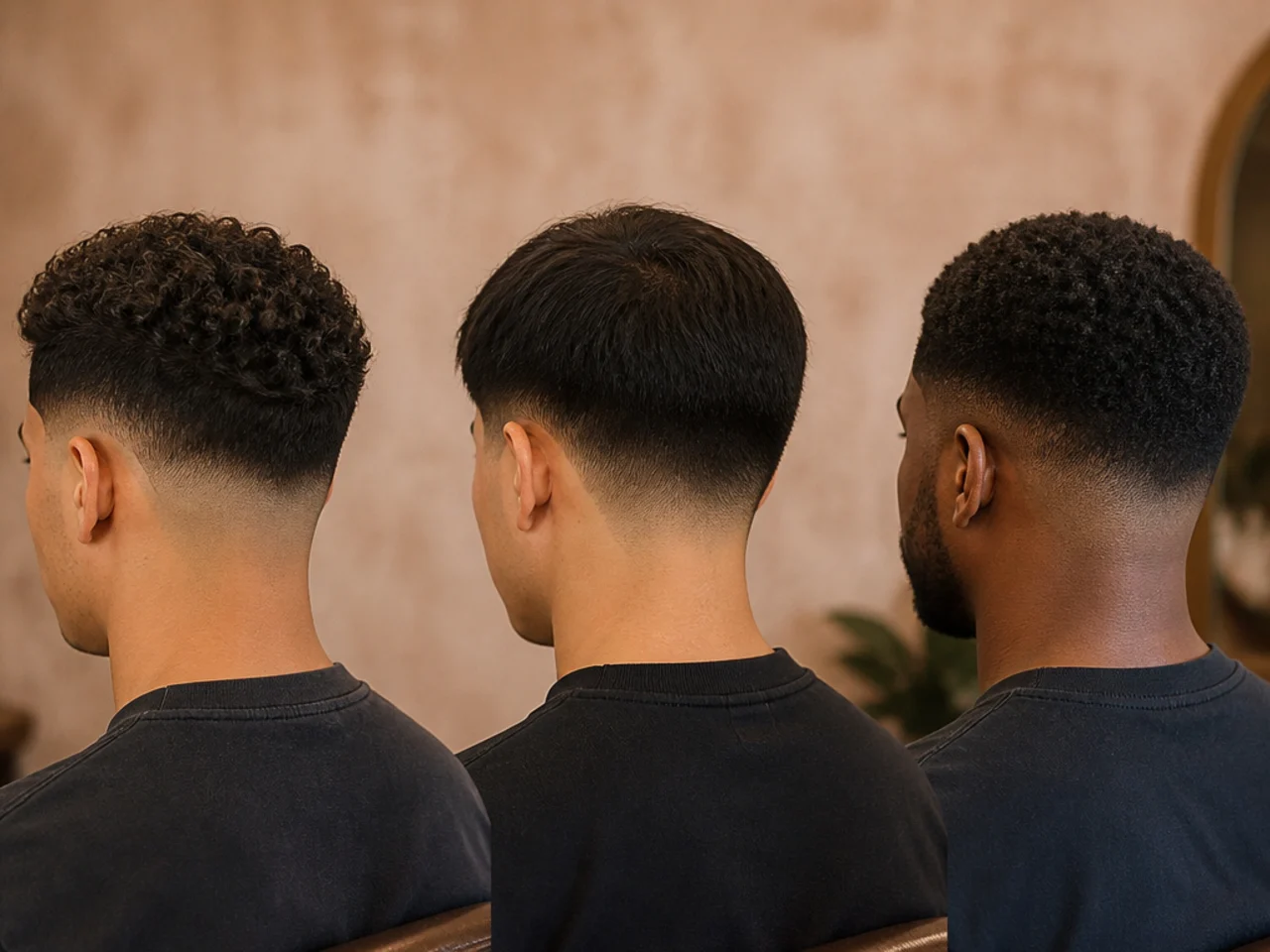
11. Set the Sideburn Length
Say where it stops — mid-ear, level with the tragus, or at the bottom of the lobe. It frames both sides at once, which is why an uneven pair gets spotted instantly.
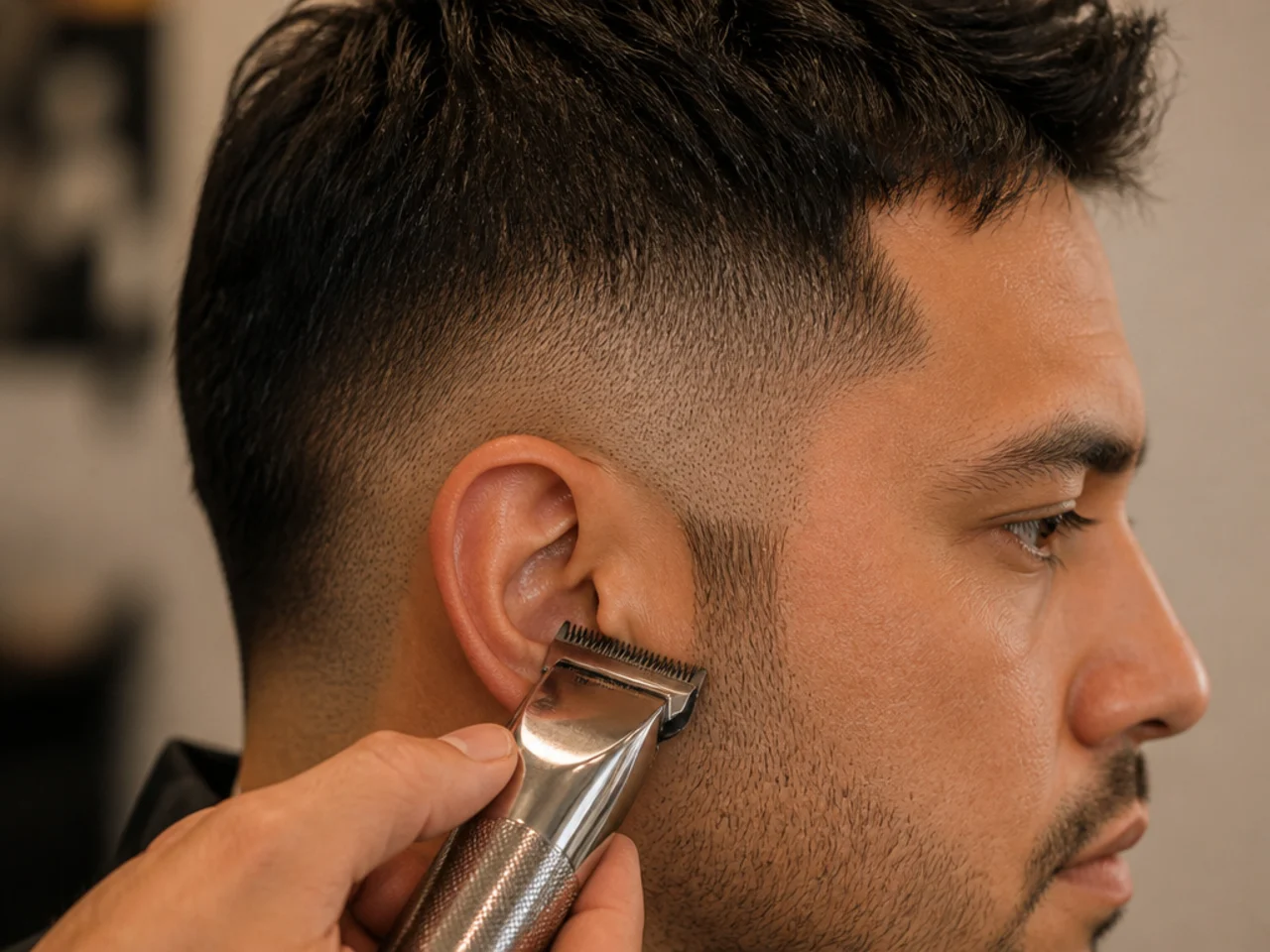
12. Say Where the Fringe Should Reach
State whether the front touches the eyebrow, sits above it, or clears it. Half a centimetre too long reads as untidy rather than styled, and half a centimetre is ten days.

13. Ask for Texture, or Ask for It Left Solid
Texture means the ends are broken up so hair separates instead of sitting as one block. Ask for it on thick hair, and ask against it on fine hair that needs to look denser.

14. Say Whether You Want a Part, and Where
A part is either the one your hair already makes or one you have chosen. Say which, because the two send the barber to different places to remove weight.
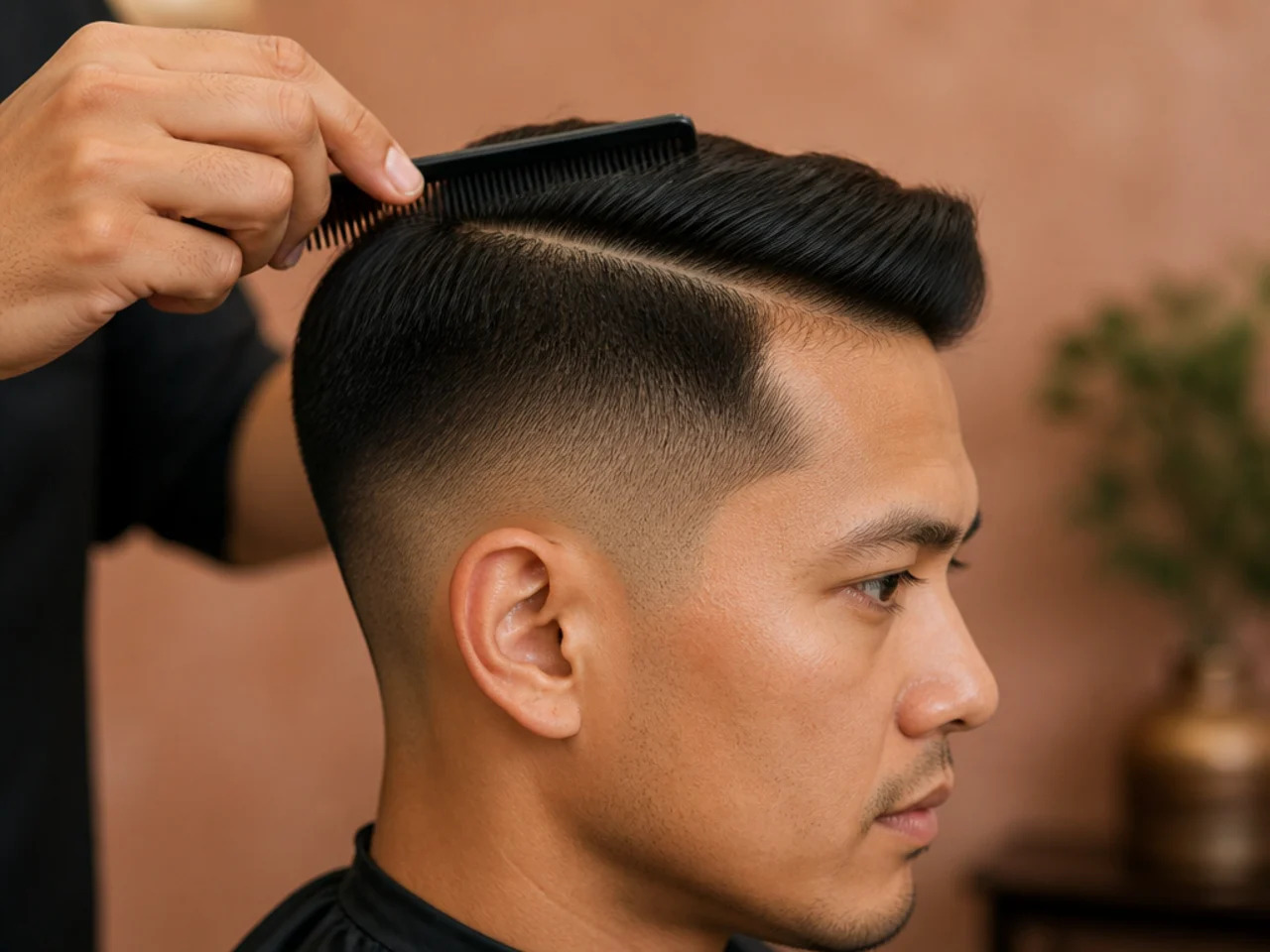
15. Say How the Temples Are Treated
Left natural, softened, or lined up with a straight edge. A lined-up temple grows back with a visible outline in about ten days, so choosing it means choosing to come back sooner.
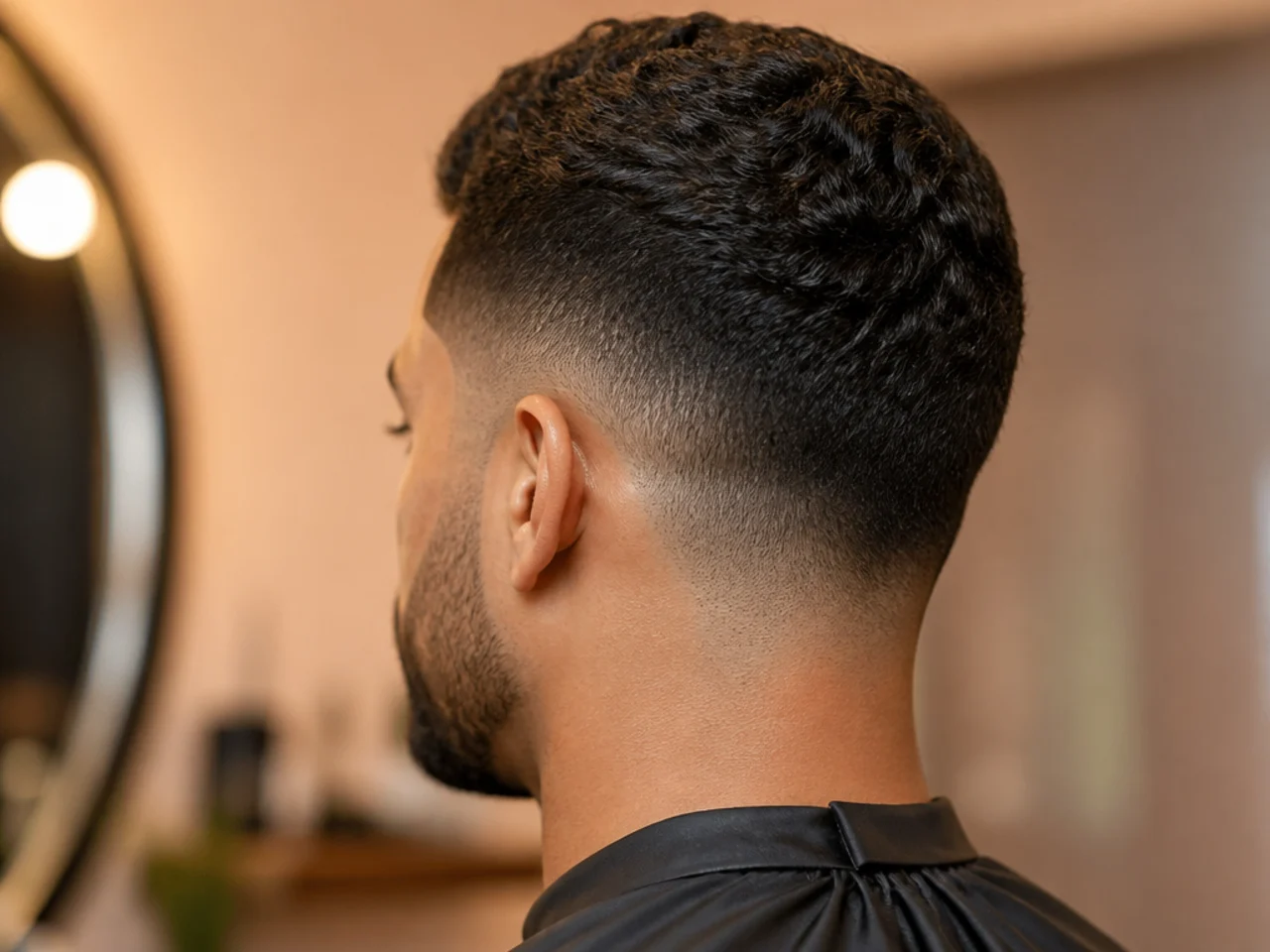
16. Bring One Photo of the Back, Not the Front
Everyone brings the front, the only part you could already describe in words. The back carries the fade height, the neckline and the corner — the parts you cannot name.
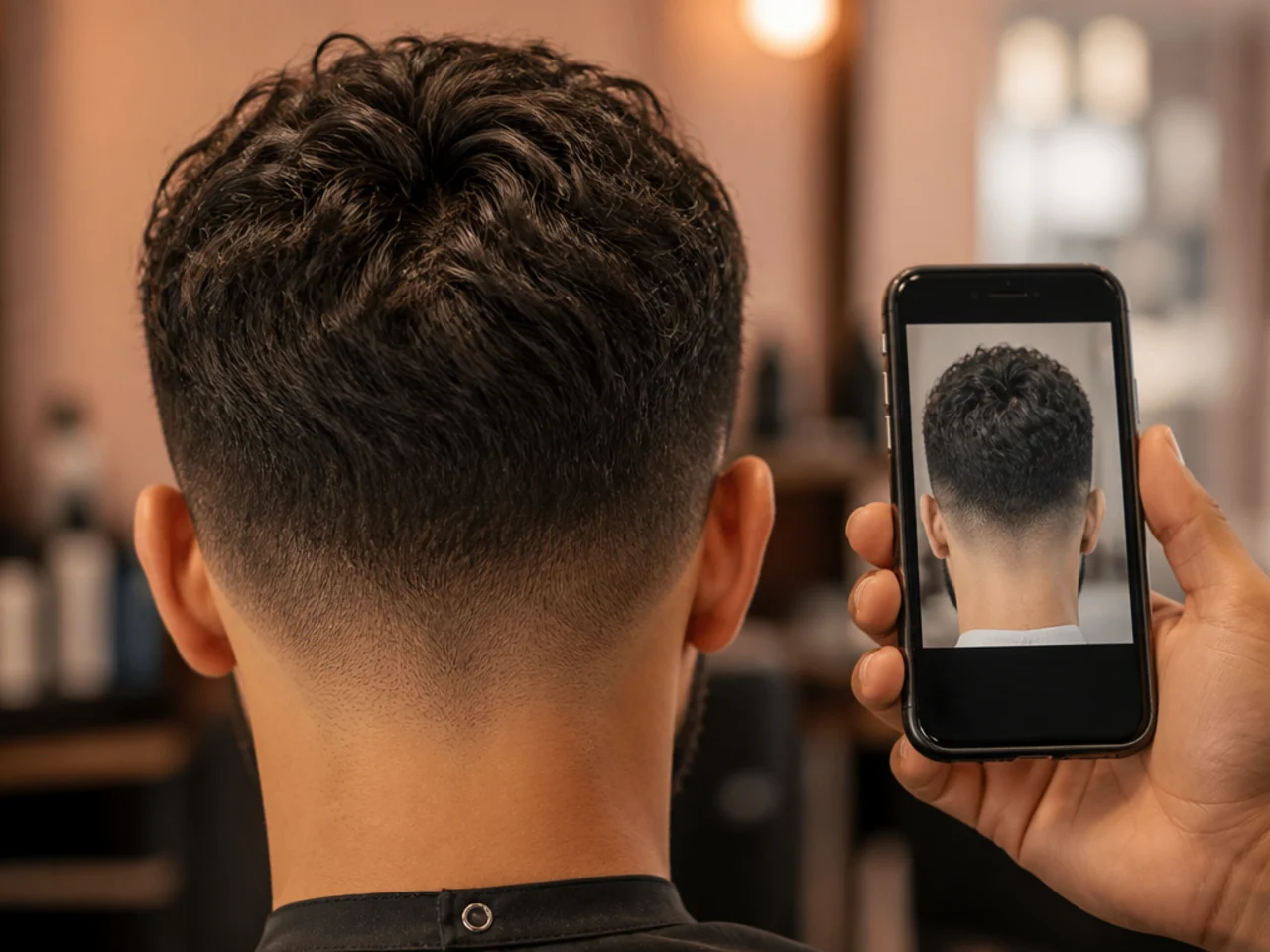
17. Say How Often You Can Come Back
Say the number rather than the style: at a fortnight bare skin has already blurred, and at four weeks a taper is the only finish still standing. Give your real interval and let the barber choose a finish that survives it.

18. Say What You Put On It in the Morning
Clay, paste, or nothing. A cut built for clay and finished with nothing sits flat, so a barber who knows your product removes weight where the product cannot rescue it.
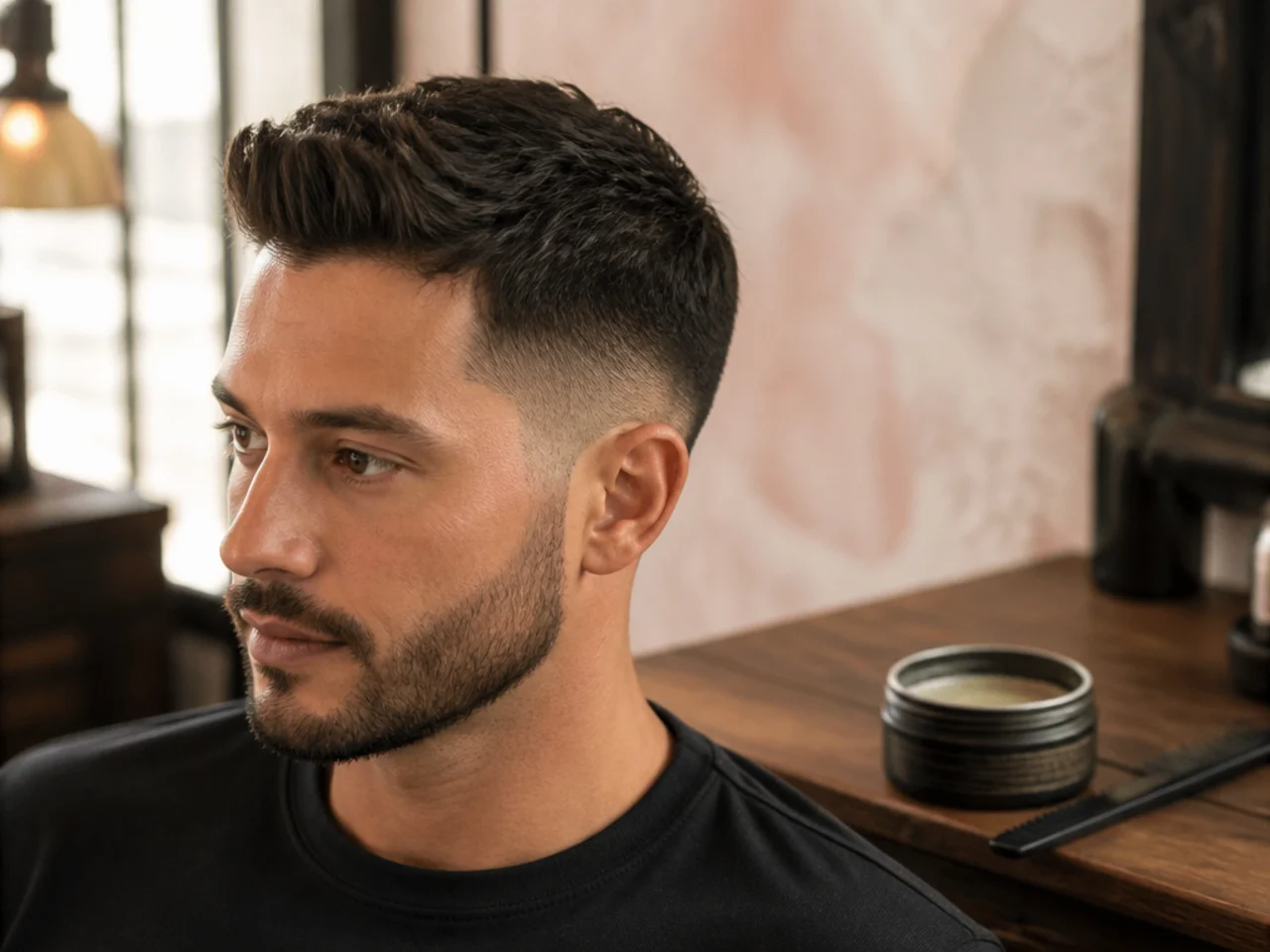
19. Check the Sides in a Hand Mirror
Fade height, neckline and the balance between the two sideburns all sit where the front mirror never reaches. Ten seconds of looking is the last moment anything can still be corrected.
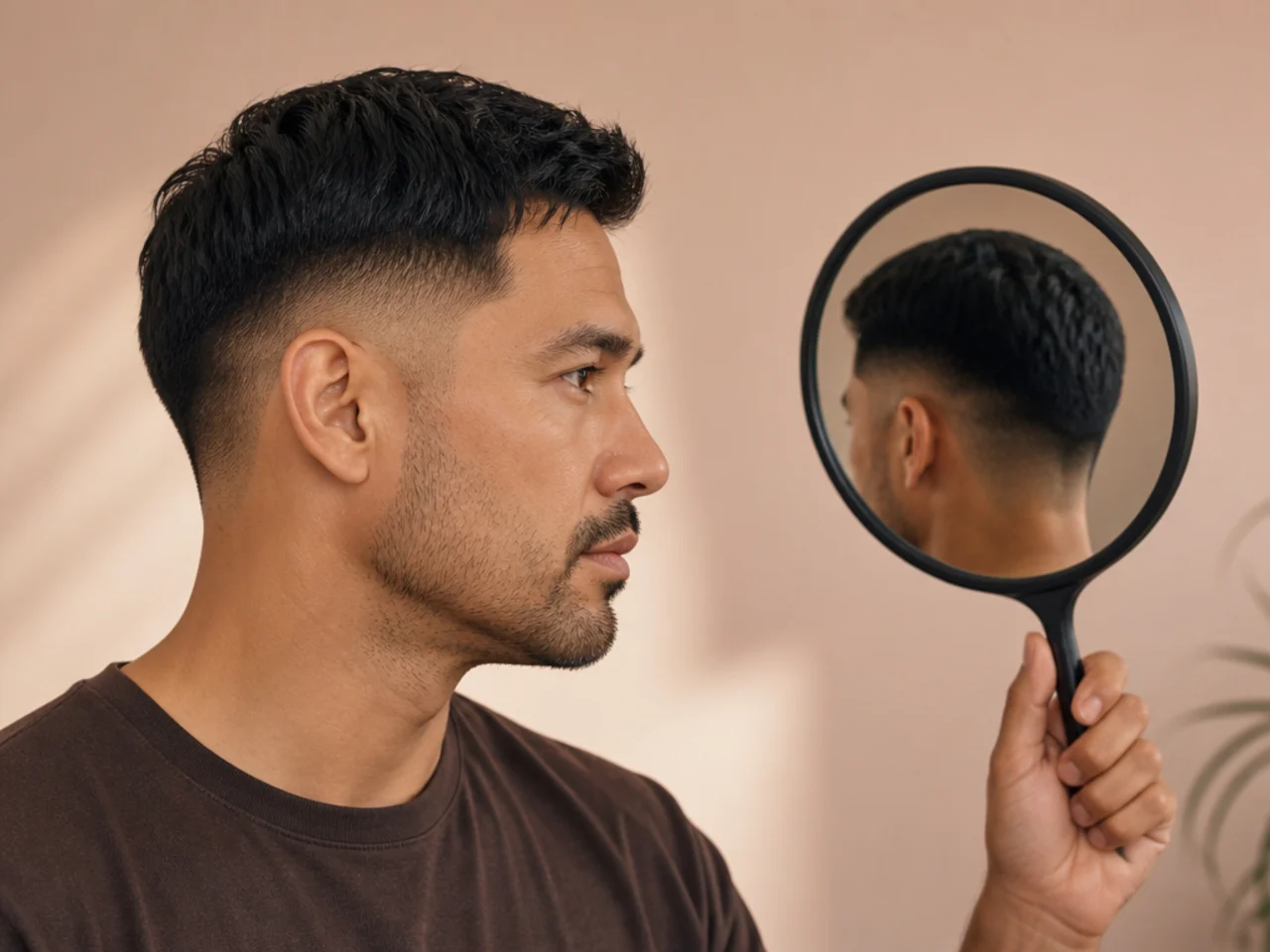
20. Ask the Barber to Write It Down
Guard number, fade height, top length, neckline. Written on your card it becomes a repeatable cut instead of a good one you spend four appointments trying to describe from memory.

How to Say It Out Loud
Sides first, then top, then edges. That is the order the barber works in, so it is the order they can act on.
Put the number before the adjective. "A number two, kept soft" can be set on a machine. "Quite short" cannot.
One decision per sentence. Stack three into one sentence and one of them reliably gets dropped.
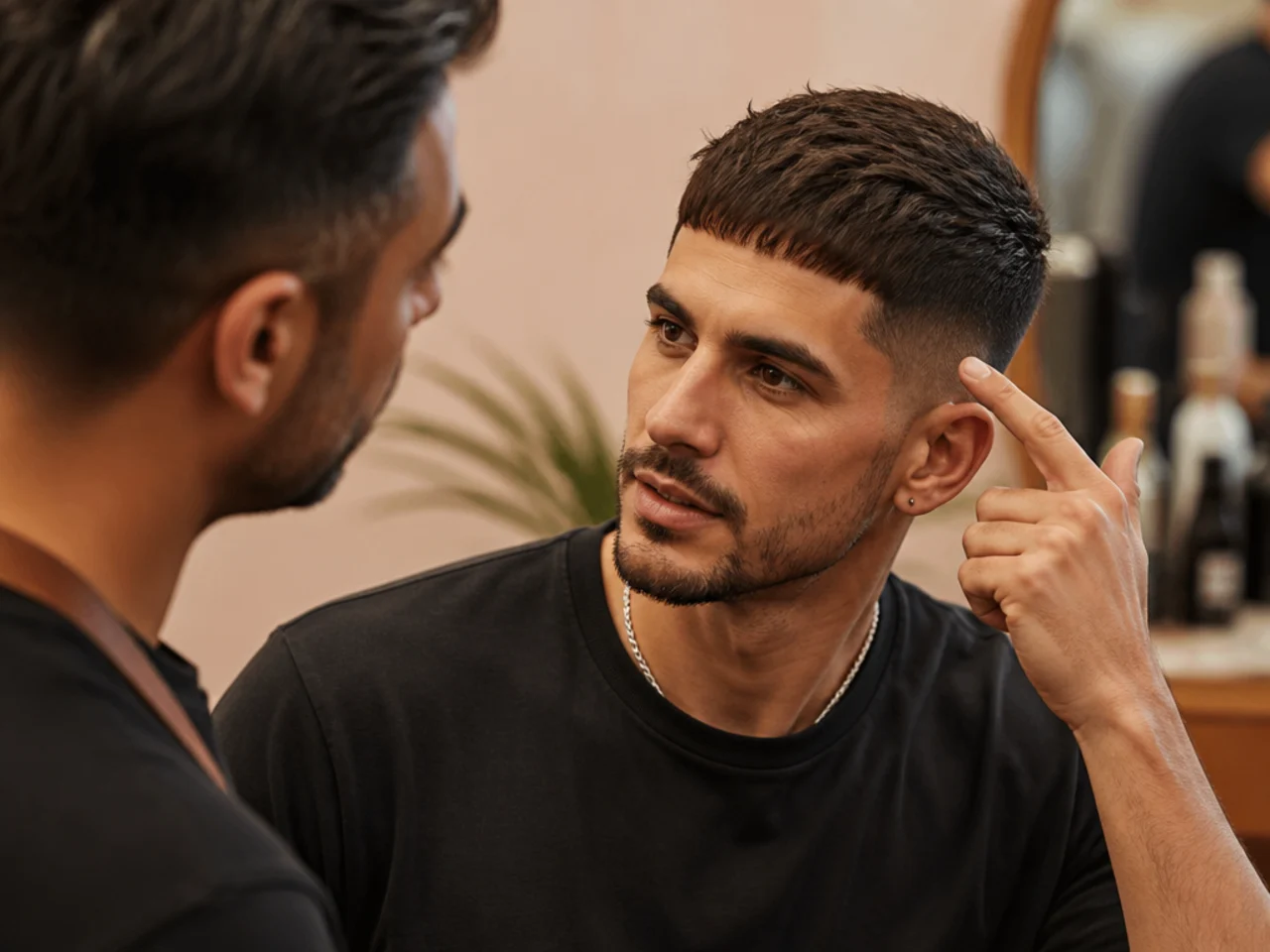
Point while you speak. A finger on the temple settles fade height faster than any word available.
Ask them to repeat it back. If the repeat comes back with no numbers in it, the numbers did not land.
Mistakes to Avoid
Saying "short back and sides" and stopping. It is the request this whole page exists to replace.
Naming a guard without saying where it stops. A #2 taken to the temple and a #2 taken to the crown share a number and nothing else.
Saying "not too short". A warning rather than an instruction, so barbers answer it by taking less off everywhere.
Showing a photo of hair nothing like yours. Density changes what a guard produces, so ask what that setting does on your head.
Waiting until the cape comes off. Length is removable and not returnable, so corrections have to happen while there is hair to correct.
FAQ
What replaces "short back and sides"? A guard number, a landmark, a top length in centimetres, and the word taper or fade.
Taper or fade? A taper leaves a #1 at the neckline and holds three to four weeks; a fade goes to skin and blurs in one or two.
How do I state the top? In centimetres of hair left, never in how much comes off.
Final Thoughts
A barber who has heard a guard, a landmark, a centimetre and an interval has almost nothing left to guess. The men who get the same good cut every time said the numbers out loud and then had them written down.
For the interval that decides your finish see how often men should get a haircut, and to sharpen the request itself browse short haircut ideas for men. More in Men's Haircuts.