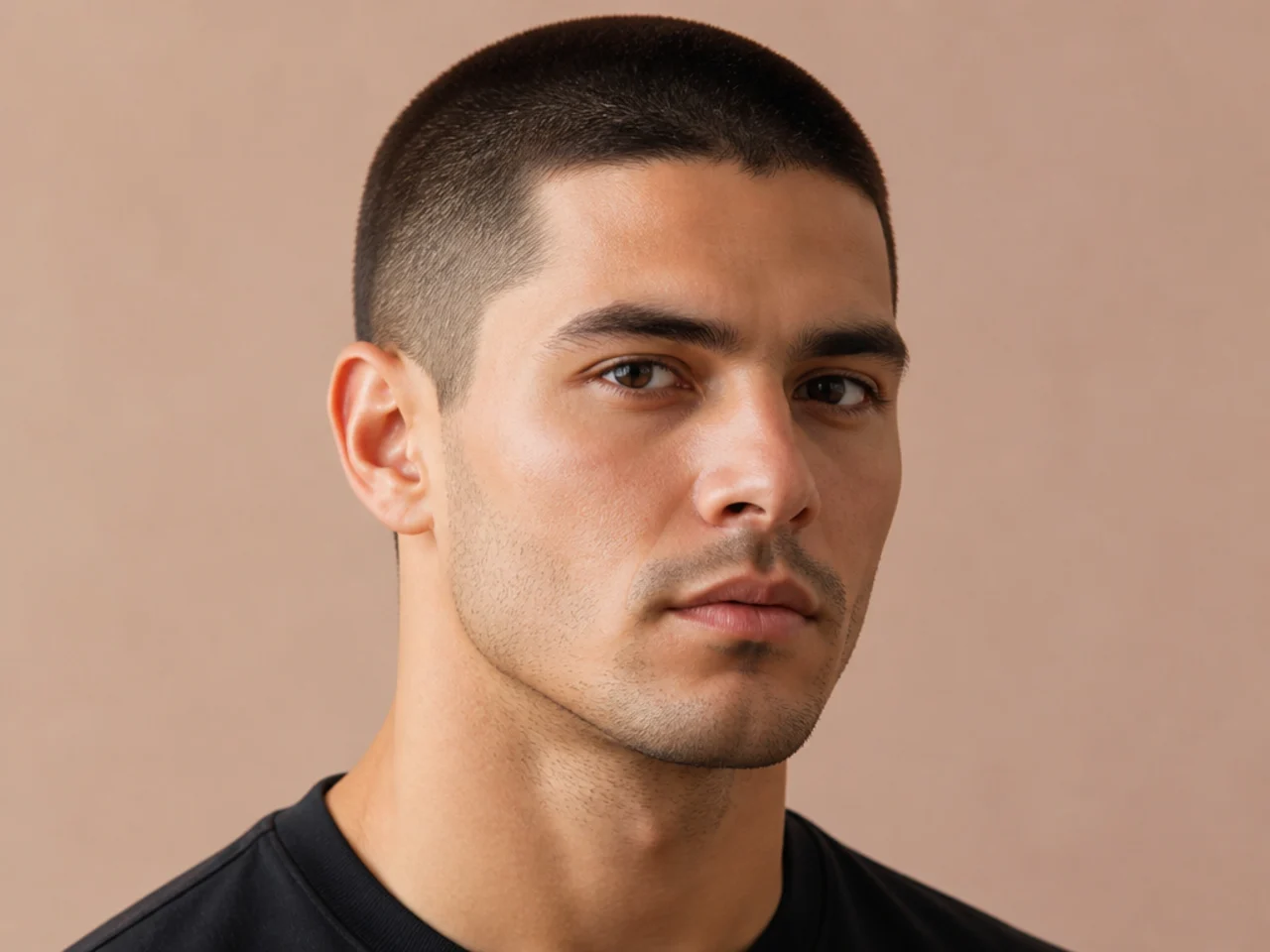
25 Short Haircut Ideas for Men That Look Sharp
Twenty-five short haircut ideas for men — buzz, crop, fade, and textured cuts — with face-shape notes and the exact ask to hand your barber for each.
In this article · 41
- What Makes a Great Short Haircut for Men?
- How to Choose Your Short Haircut
- The Buzz and Butch Family
- 1. Classic Buzz Cut
- 2. Butch Cut
- 3. Induction Cut
- 4. Burr Cut
- 5. Long Buzz with Skin Fade
- Crew Cut and Ivy League Family
- 6. Classic Crew Cut
- 7. High and Tight
- 8. Ivy League Cut
- 9. Modern Crew with Mid Fade
- 10. Caesar Cut
- Textured Crops and Short Fringes
- 11. Short Textured Crop
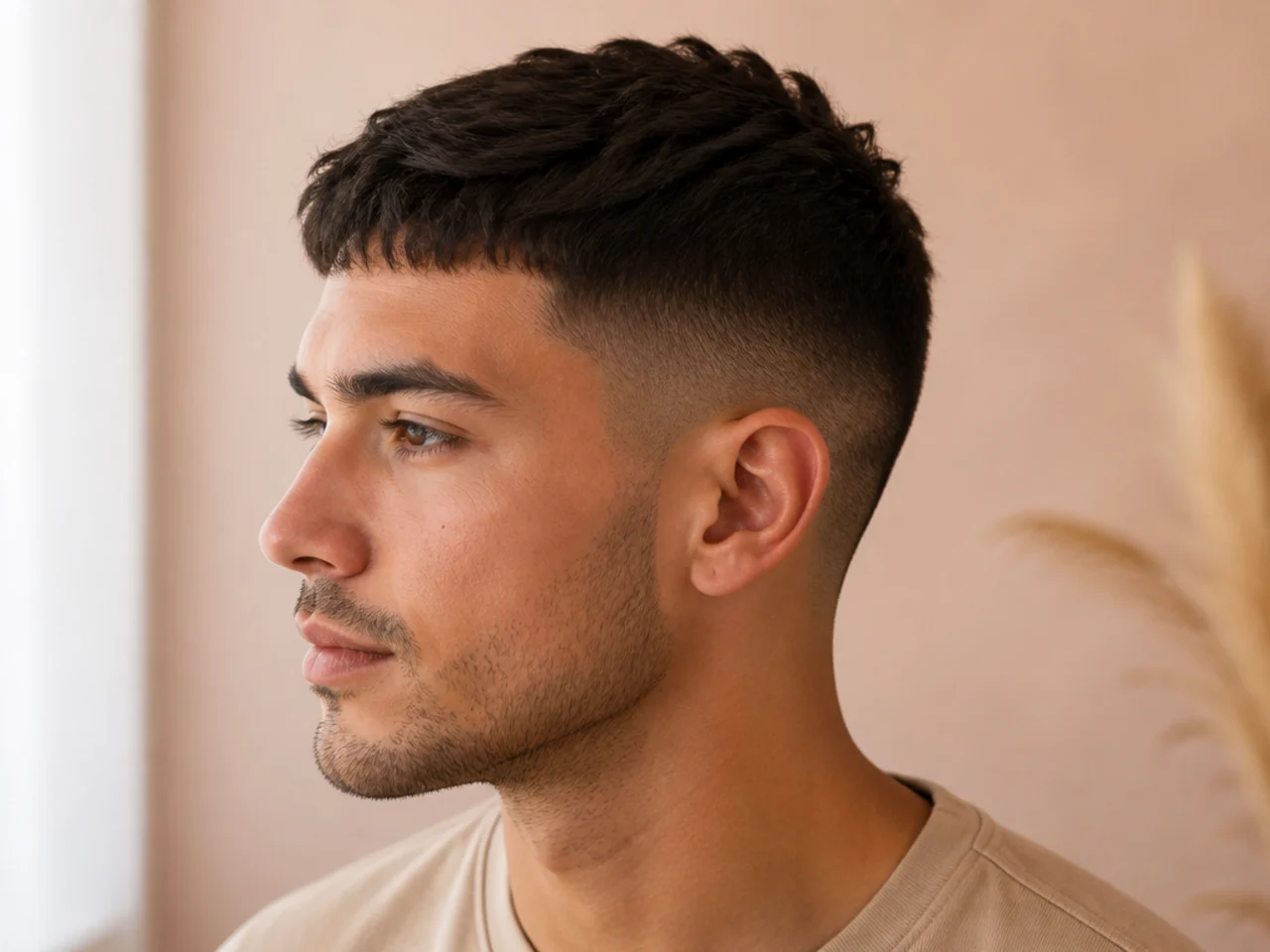
- 12. French Crop with Skin Fade
- 13. Edgar Cut
- 14. Short Comma Haircut
- 15. Short Curtain Fringe
- Short Fades and Tapers
- 16. Low Taper Fade with Textured Top
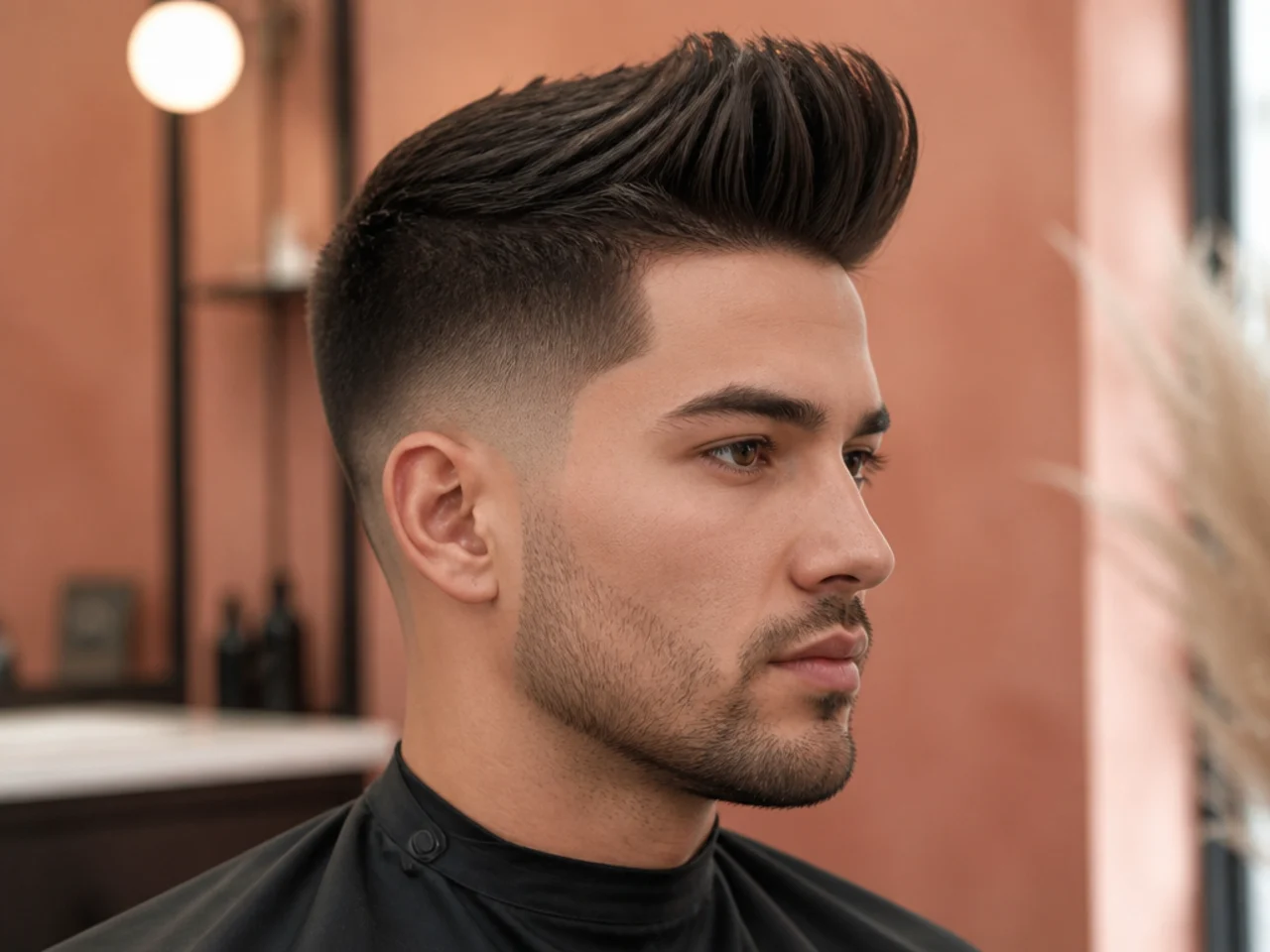
- 17. Mid Fade with Short Quiff
- 18. High Skin Fade with Line-Up
- 19. Drop Fade with Short Top
- 20. Burst Fade with Short Top
- Short Styled Cuts
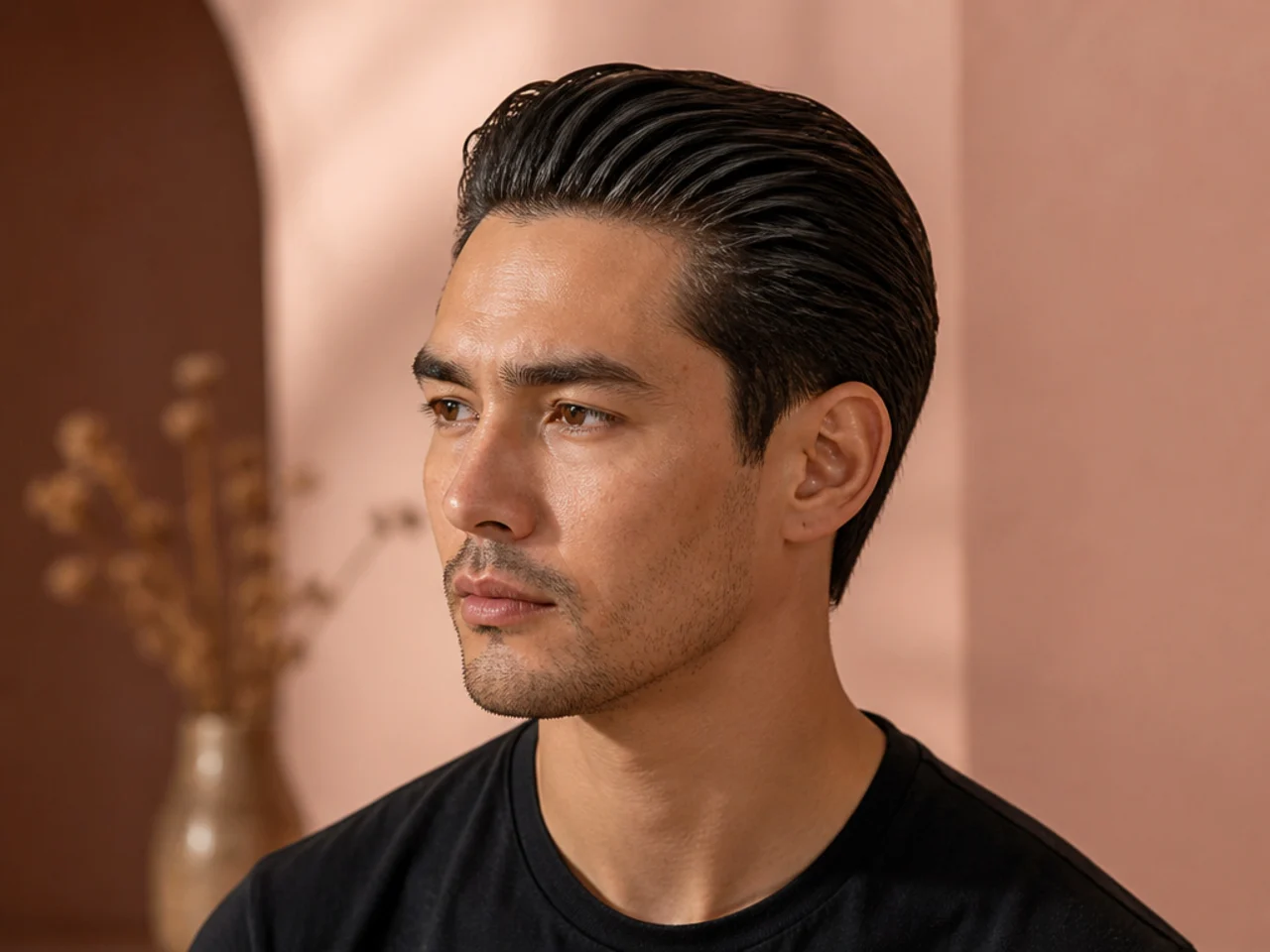
- 21. Short Slick Back
- 22. Short Side Part
- 23. Short Spiky Cut
- 24. Short Curly Fade
- 25. Short Afro Fade
- How to Ask Your Barber for a Short Cut
- Styling and Maintenance
- FAQ
- Are short haircuts still trending for men in 2026?
- Which short haircut suits my face shape best?
- How short is too short for men's hair?
- Do short haircuts need styling?
- How often should I get my short haircut trimmed?
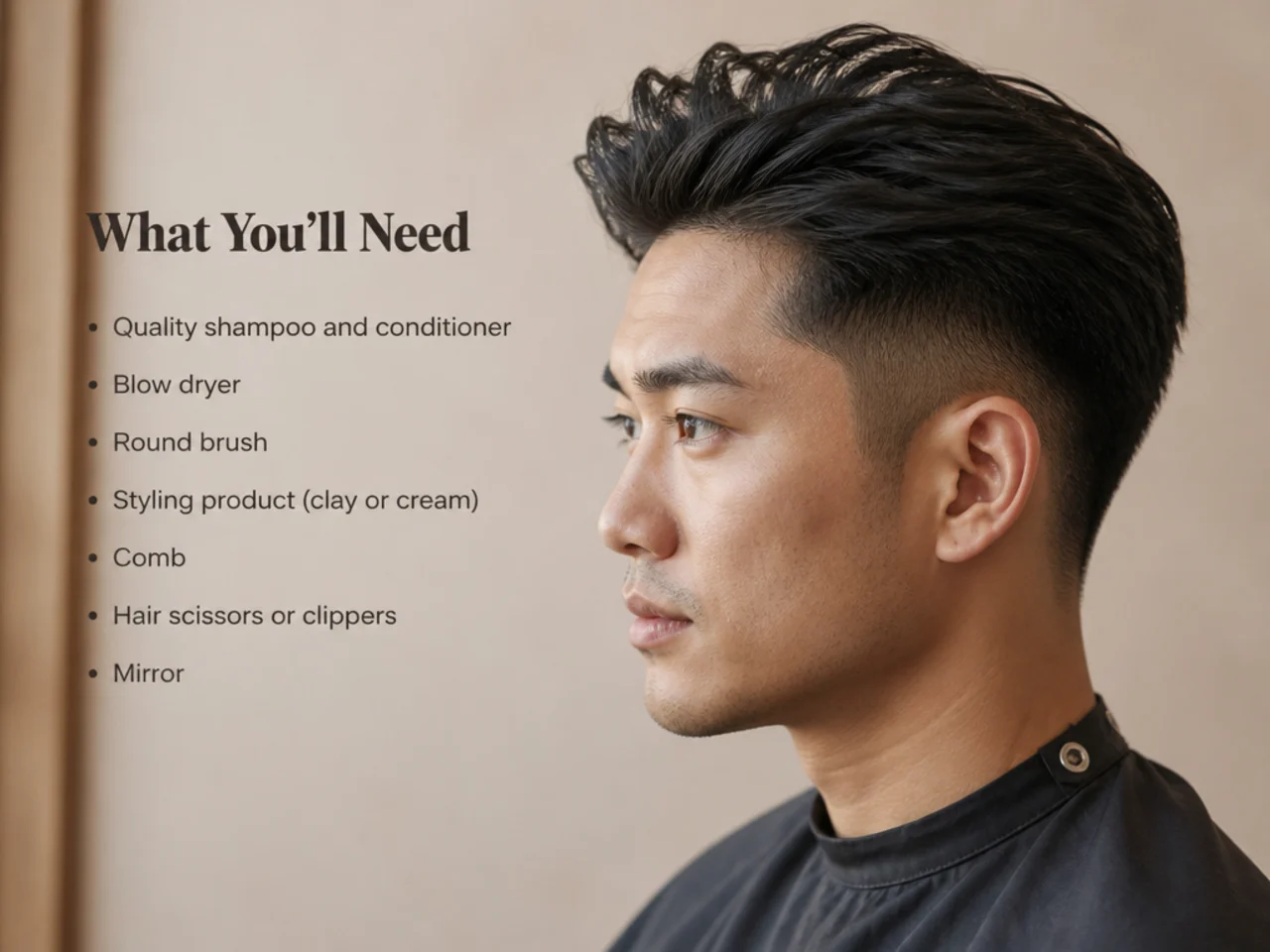
- What products do I need for a short haircut?
Scrolling for a short cut and nothing's clicking? Twenty-five variations below, split across five families — the buzz and butch, the crew and Ivy League, textured crops and fringes, short fades and tapers, and short styled cuts. Every one tagged with the face shape it flatters, the hair type it wants, and the exact language to hand your barber. Save three, book the one you keep coming back to.
What Makes a Great Short Haircut for Men?
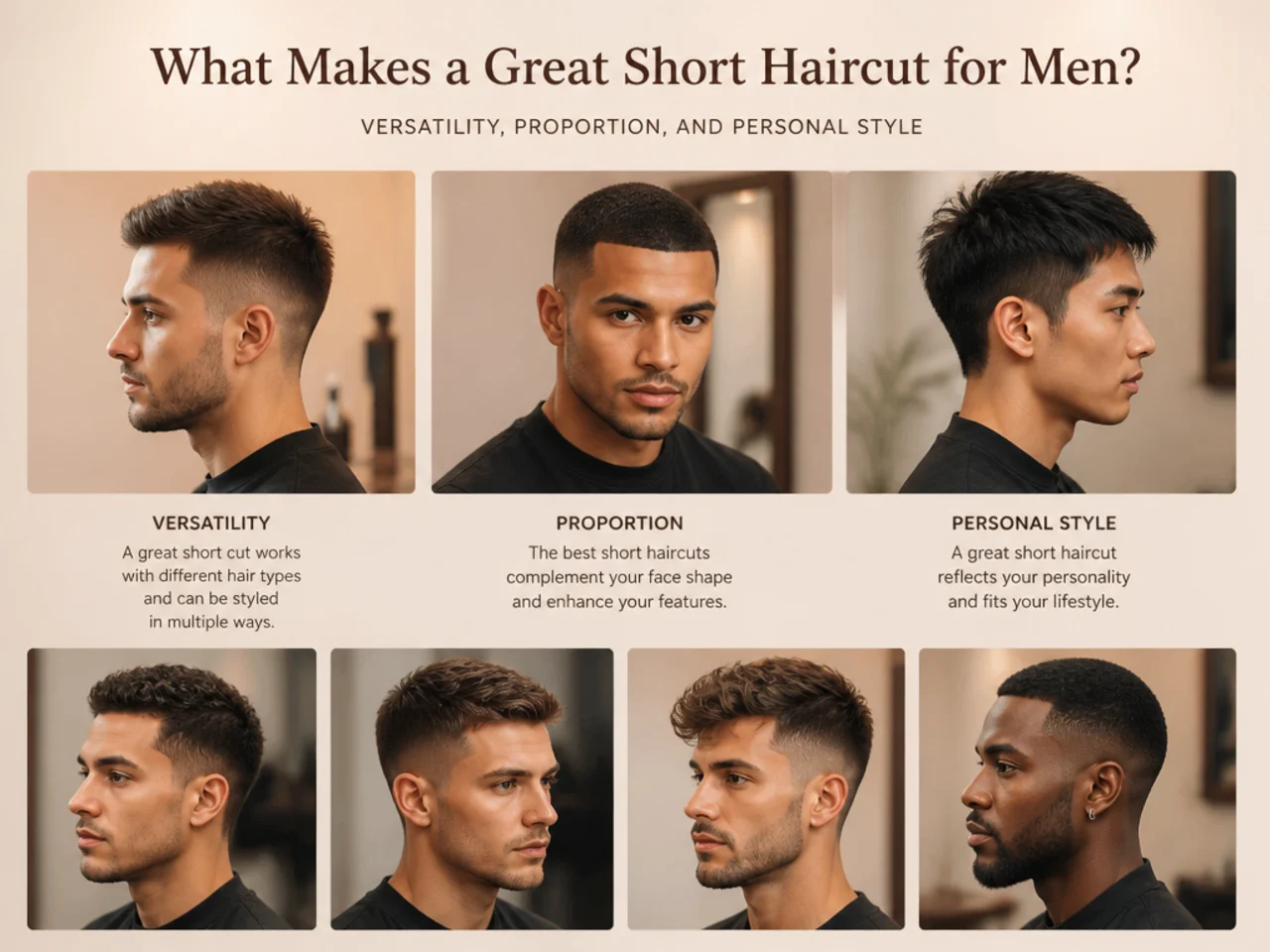
A great short haircut fits three things: your face, your hair type, and how much time you'll actually give the mirror. Every cut on this list moves three levers — top length (in clipper numbers or inches), side treatment (buzz, taper, fade, or scissor blend), and finish (matte or sleek). Get those three right and the same cut reads sharp on you and generic on the next guy.
Short in this guide means anything from a #0 skin to about two inches on top. Long enough to comb, short enough to forget by lunch. See the broader short men's haircut menu for the full family.
How to Choose Your Short Haircut
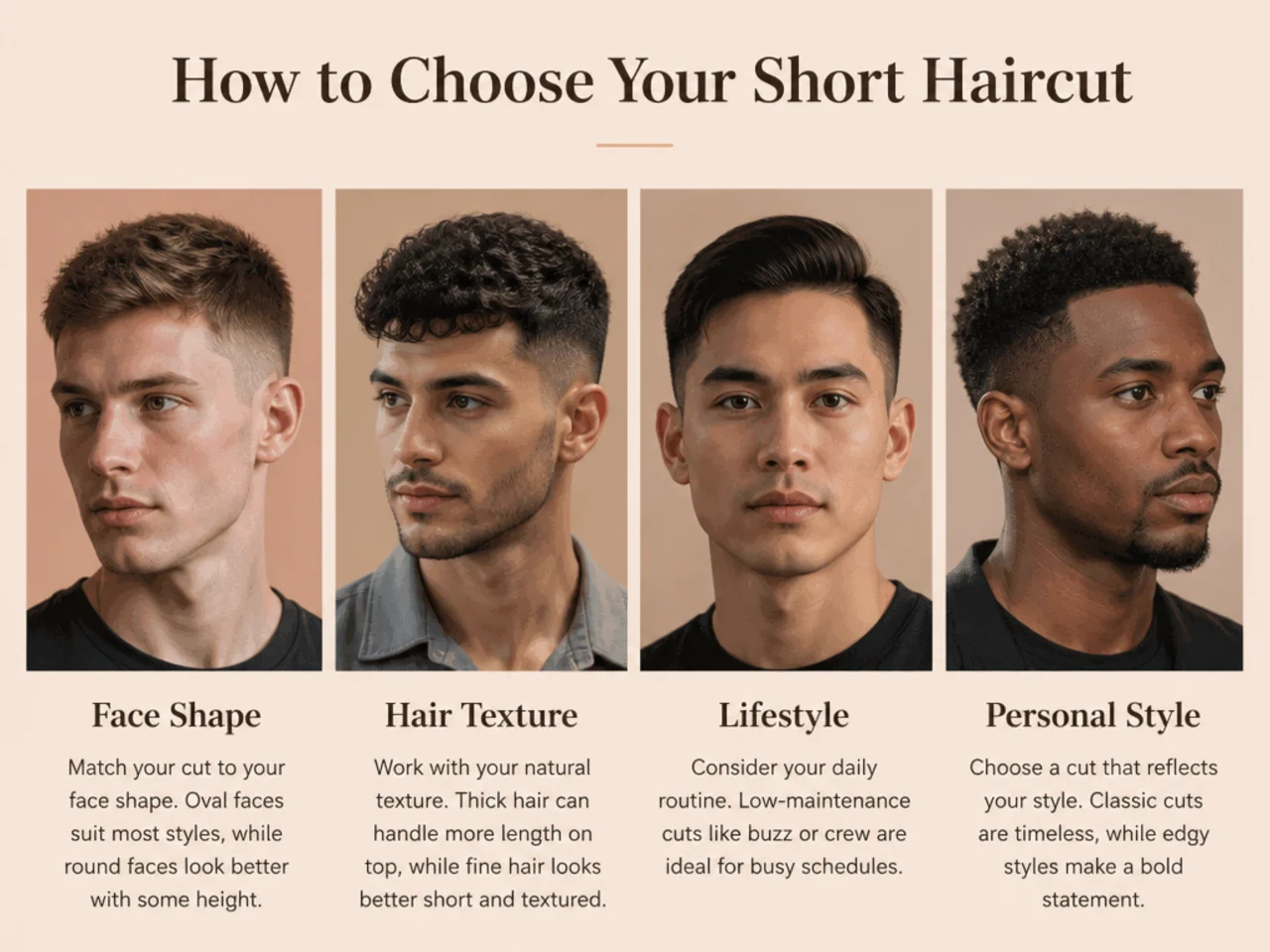
Three questions cut twenty-five ideas down to a shortlist of two.
What's your face shape doing? Round faces want vertical length — French crop, short quiff, high fade. Square faces suit textured crops and softer edges. Long faces need forward fringes and lower fades to add width. Oval faces wear almost everything. Heart and diamond faces do well with defined tops and clean sides. Every variation below flags its best match.
What is your hair actually like? Fine hair reads best at buzz, butch, and short textured lengths — a #2 to a #4. Thick hair holds every shape but needs point-cutting on top so it doesn't sit like a helmet. Straight hair keeps every edge crisp. Wavy hair loves textured crops. Curly hair transforms every silhouette here — plan for shrinkage.
How much time will you actually give it? Buzz and butch are zero mirror time. Crew, Ivy League, and textured crops sit at under a minute. Short slick backs and short quiffs want two to three minutes with a blow-dryer. Faded cuts need a rebook every three to four weeks — factor the chair time in before you commit.
The Buzz and Butch Family
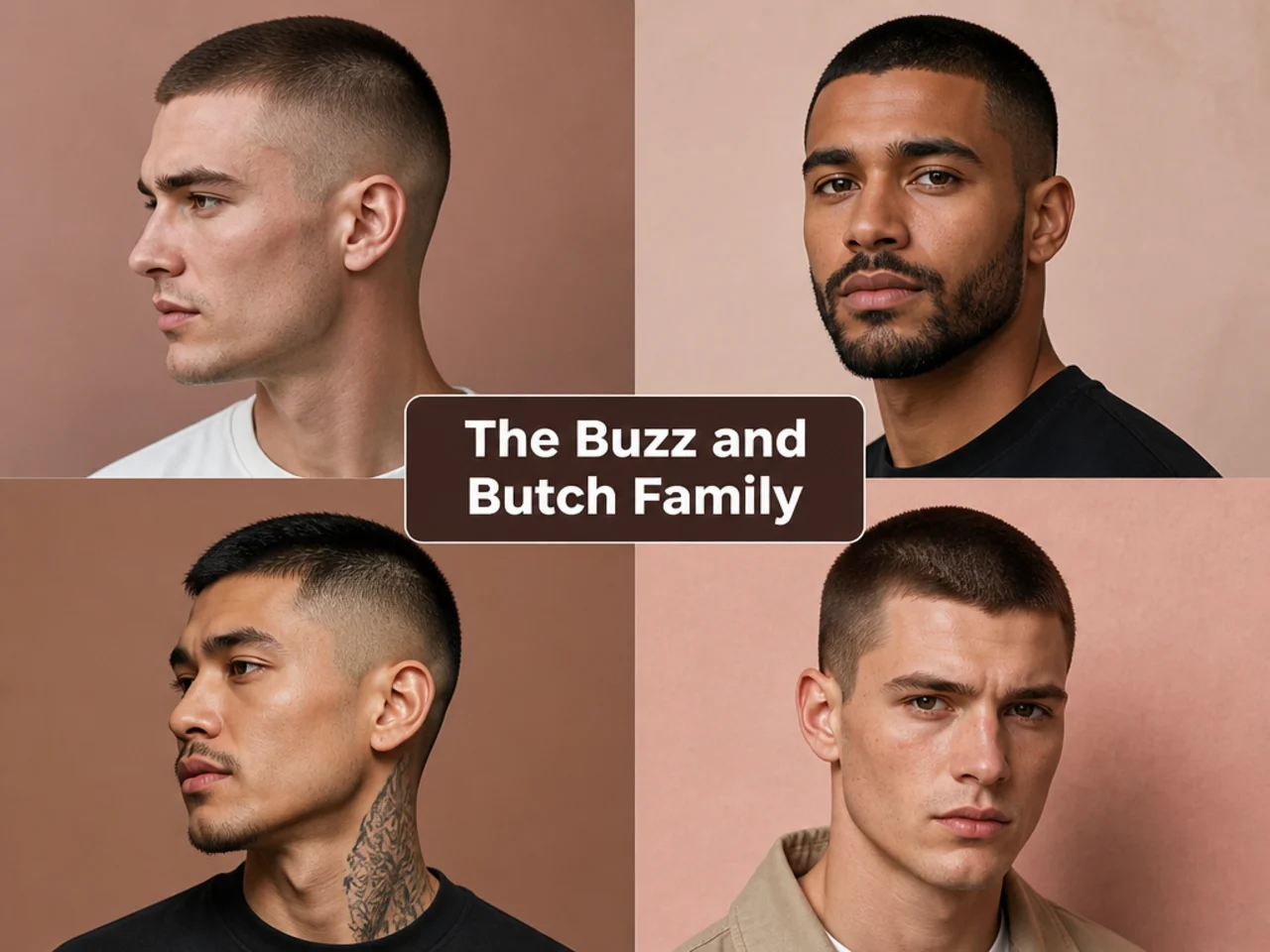
The shortest end of the menu — one uniform clipper length across the head, from a #0 skin to a #4 or #5. Zero styling, maximum honesty. If your hairline is even and your jaw is defined, these five carry themselves without any product on your shelf.
1. Classic Buzz Cut
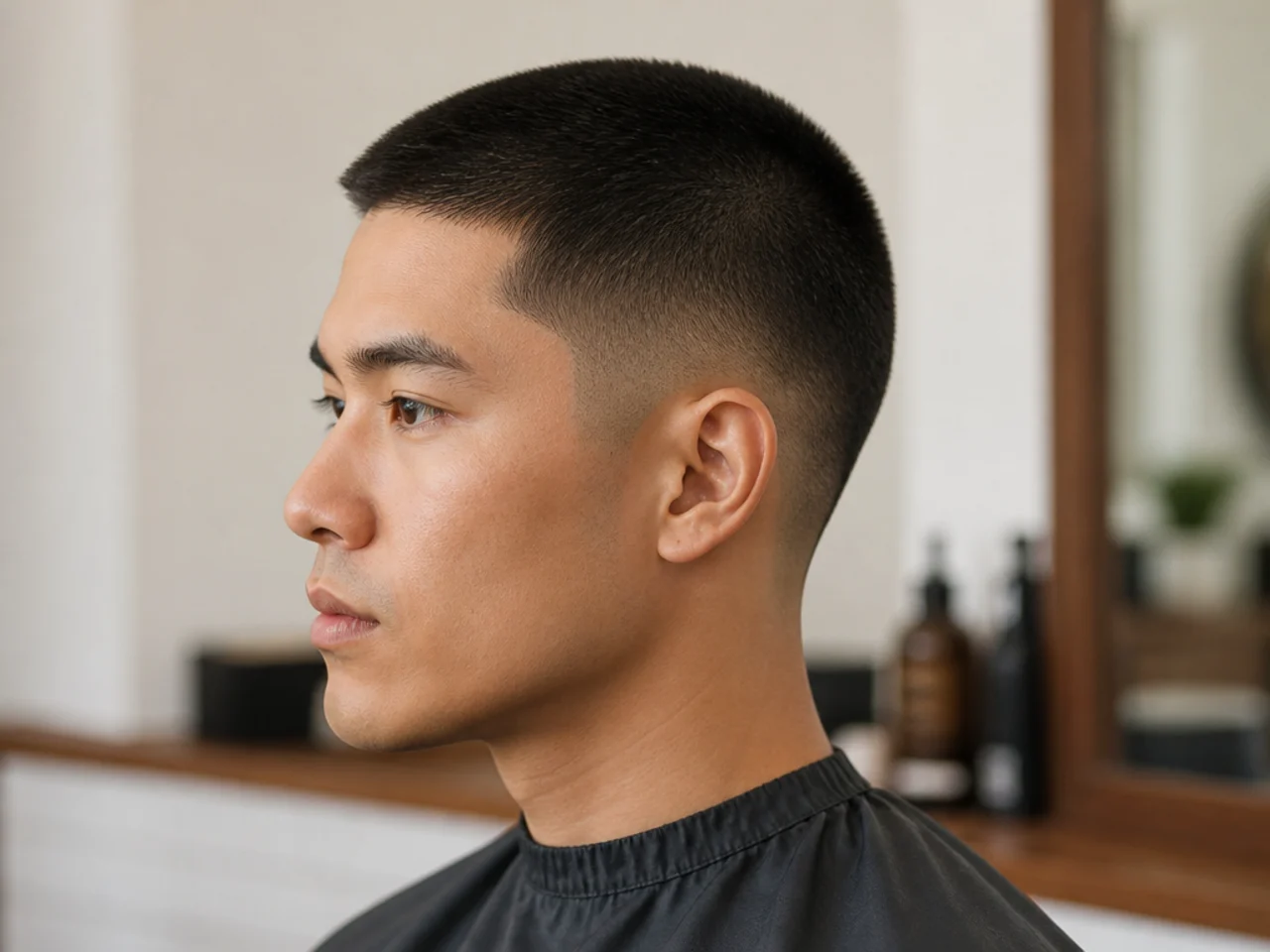
The buzz cut is one length all over — usually a #1, #2, or #3 guard. It's the shortest route to a finished head of hair. Any hair type works. Density matters less at uniform length than at any other point on the list. Round faces should stay at a #2 or higher to avoid emphasizing width; square and oval faces wear any guard number.
Best for: oval, square, and diamond faces with a clean, even hairline.
Ask for: "Number 2 all over, blended into the neckline, sharp perimeter."
2. Butch Cut
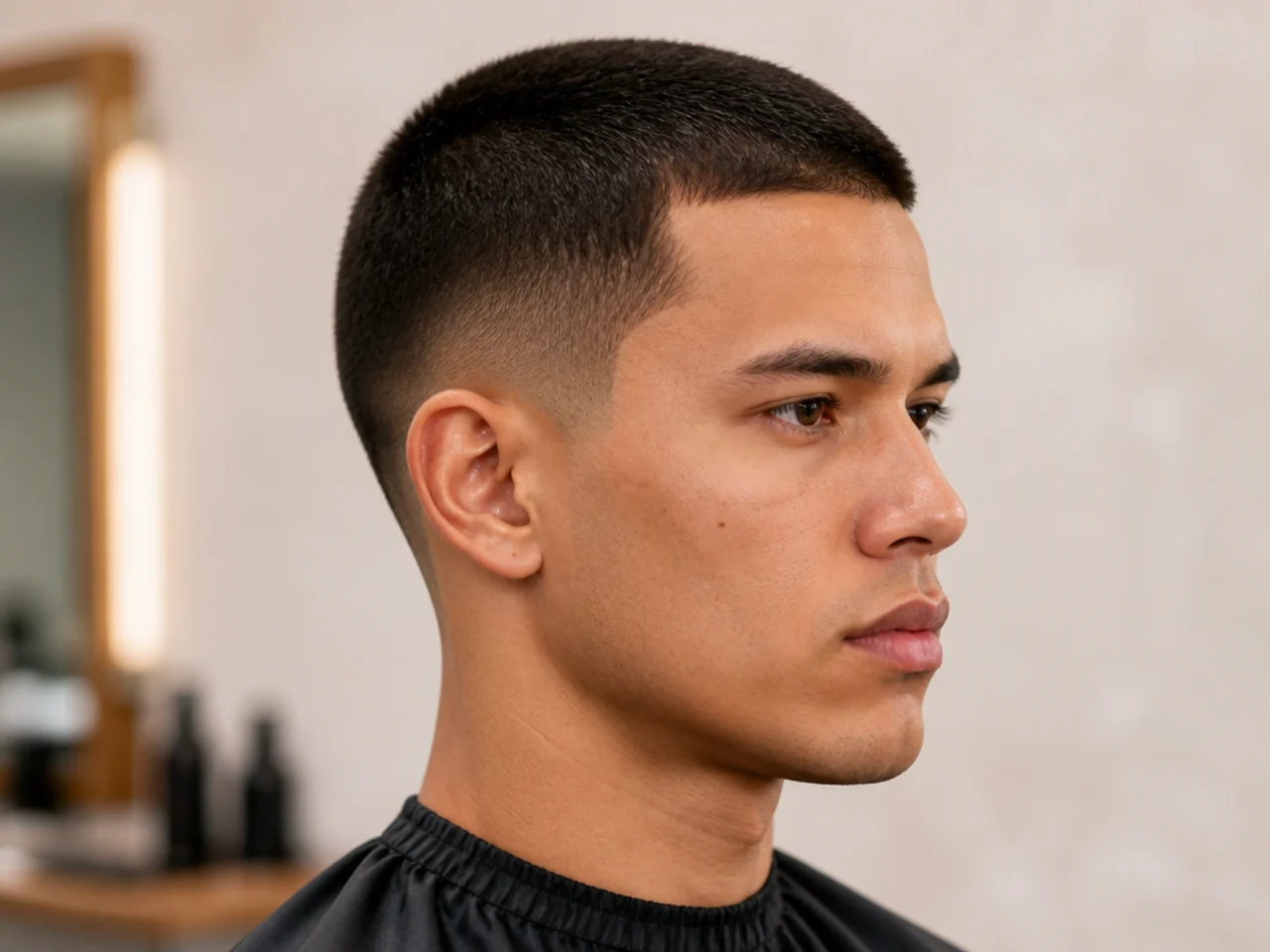
The butch is half a step above a buzz — a #3 or #4 on top, uniform across the crown, with a low taper or a natural neckline. Slightly more presence than a straight buzz, still zero styling. Thick straight hair looks especially clean at this length because it holds a subtle brush pattern instead of standing straight up. Grows out to a crew cut in about three weeks, so the mid-cycle shape is still wearable.
Best for: oval, square, and diamond faces with any hair type.
Ask for: "Butch cut, #3 on top with a low taper down to the neckline, uniform across the crown."
3. Induction Cut
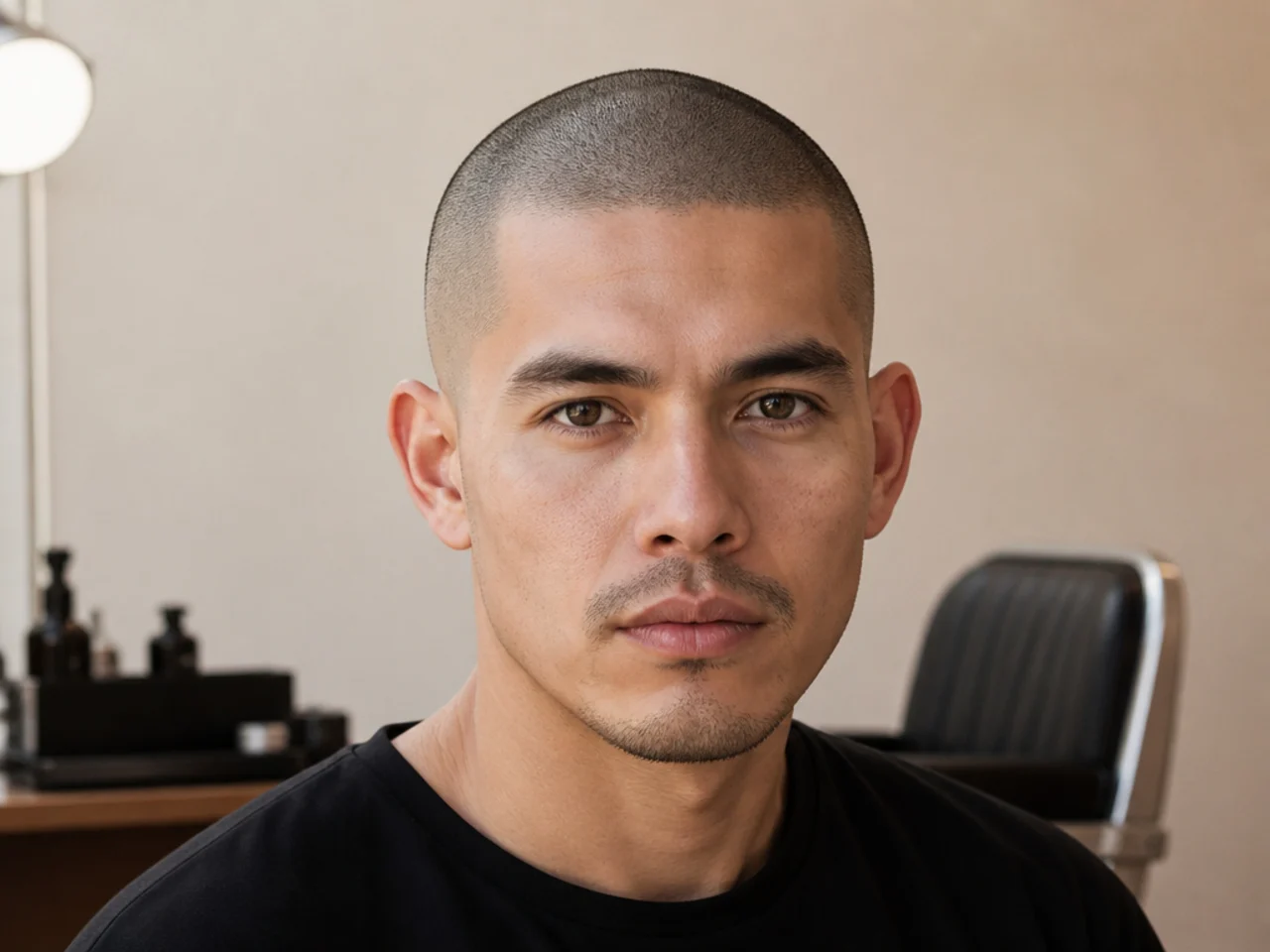
The induction is the shortest clipper cut — a #0 or #0.5 across the entire head. Reads military and honest. There is nothing between your scalp and the room, so a symmetrical hairline and a well-shaped skull carry the whole cut. Grows out to a proper buzz in two weeks, so it's the natural pick if your hair is thinning and you want to stop fighting it. A good pair of home clippers pays for itself here — see the best hair clippers guide.
Best for: oval and square faces with an even hairline, thinning-friendly.
Ask for: "Induction cut, number 0 all over, clean at the neckline and around the ears."
4. Burr Cut
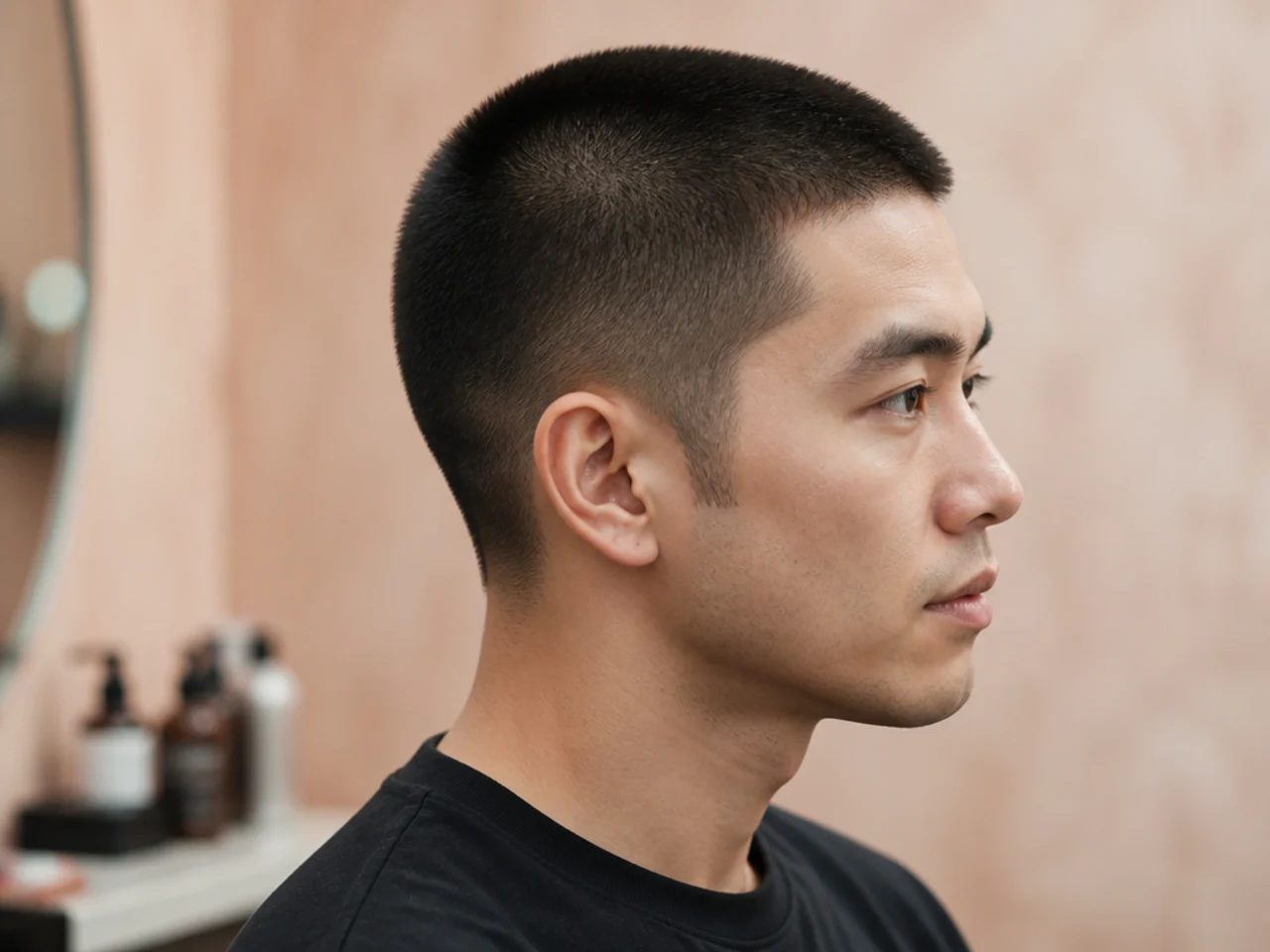
The burr sits between an induction and a butch — a #2 across the entire head, no taper, no fade, just even length that follows the shape of the skull. Feels like velvet under your palm. Reads athletic on lean features and clean on strong jaws. Skip it if your hair grows in swirl patterns at the crown; the uniform length exposes every cowlick.
Best for: oval, square, and diamond faces with straight or wavy hair.
Ask for: "Burr cut, number 2 all over the head, natural neckline, no taper."
5. Long Buzz with Skin Fade
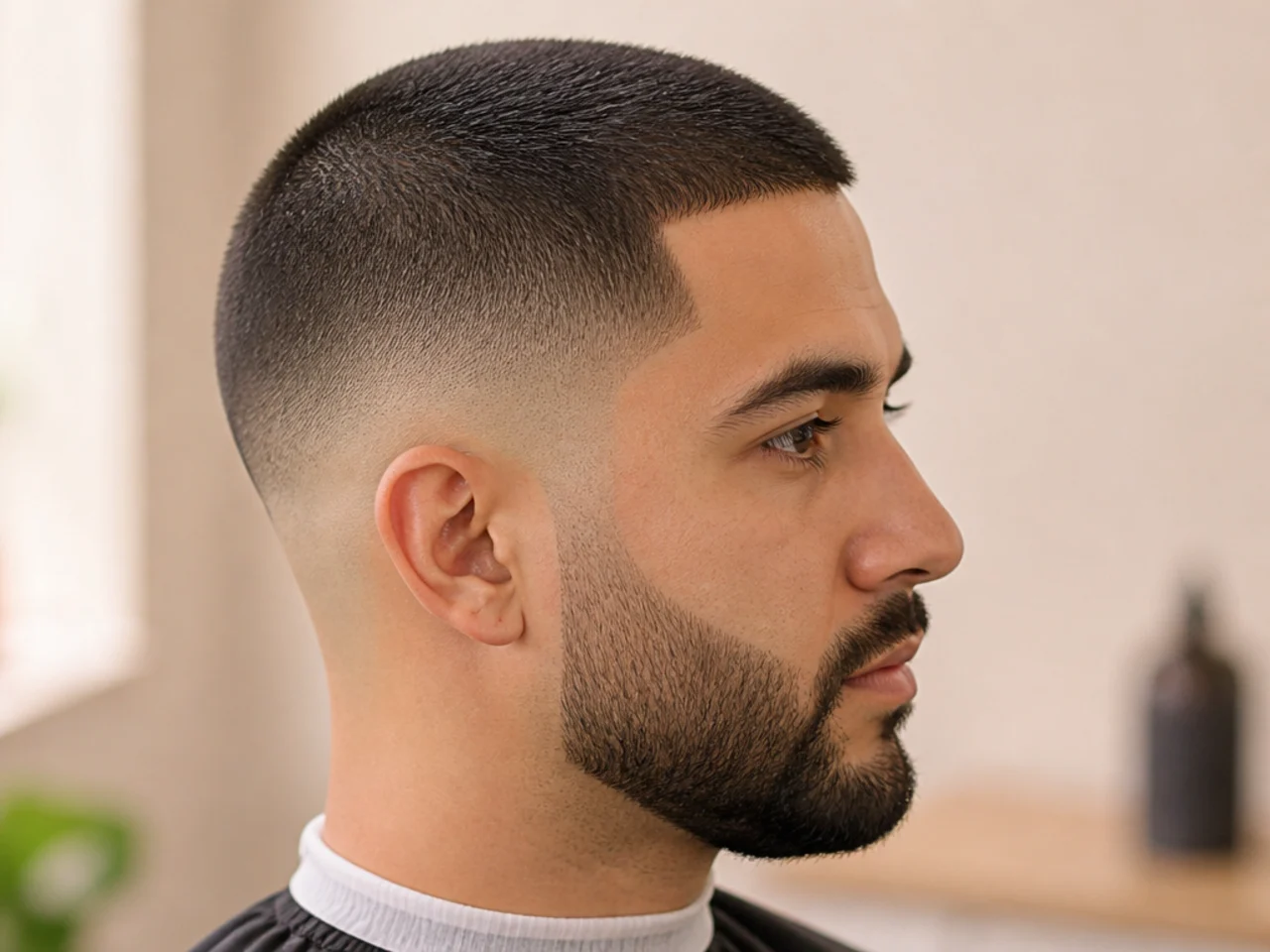
The long buzz keeps a #4 or #5 on top with a skin or low fade at the sides — enough length to feel like hair, none of the daily styling. This is the polished version of the buzz for guys who want more presence than a #2 without adding a single product. The fade at the sides does the visual work; the top stays honest. A great first fade if you've never had one — the length on top keeps mistakes off your ears.
Best for: every face shape with any hair type.
Ask for: "Long buzz, #4 on top, skin fade at the sides, square neckline."
Crew Cut and Ivy League Family
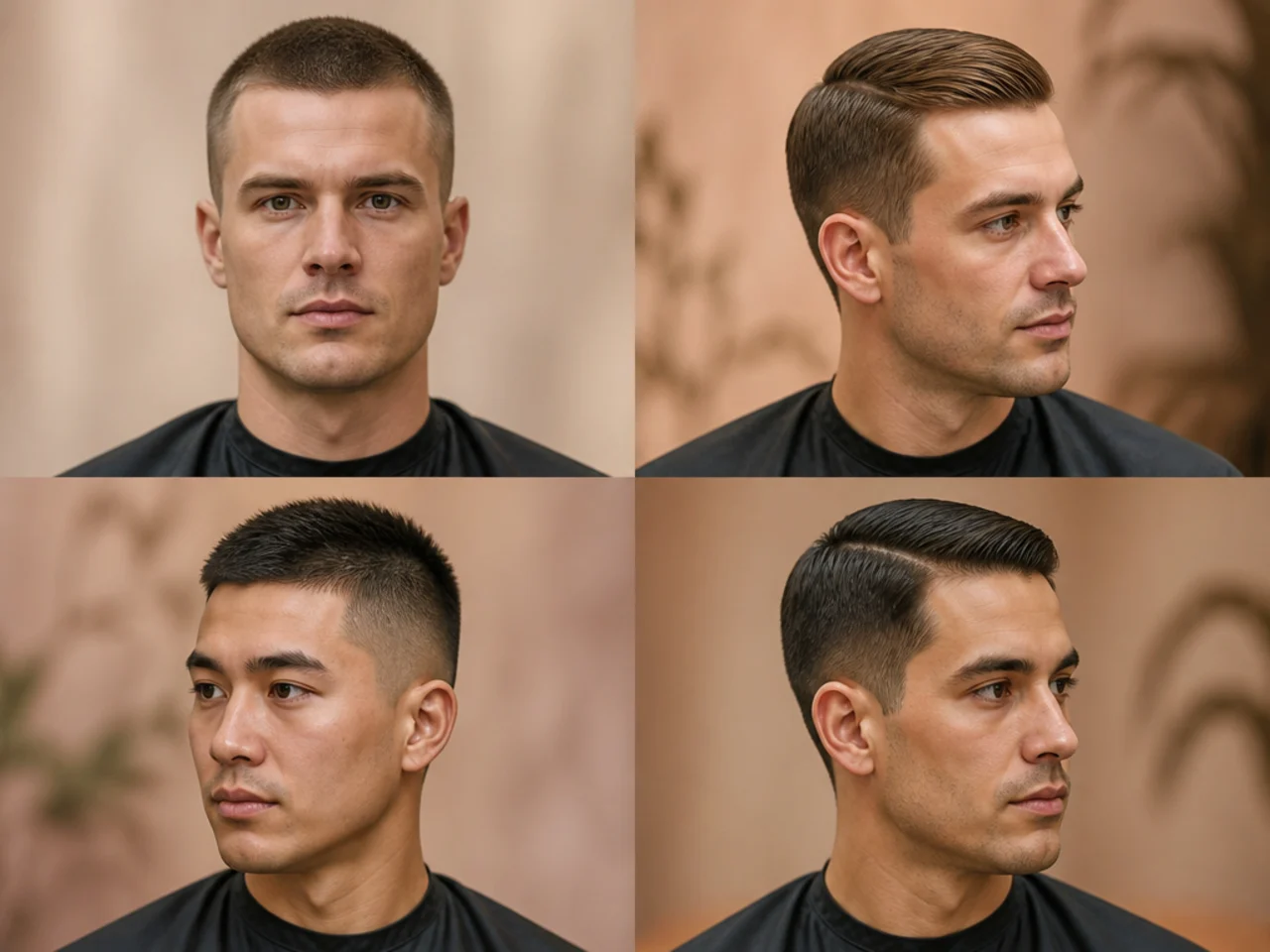
An inch to two inches on top, sides tapered or faded. The workhorse family — sharp enough for a suit, clean enough for a jobsite, easy enough to style in a hotel bathroom. Five variations that have never left a barber's playbook and still work in any decade.
6. Classic Crew Cut
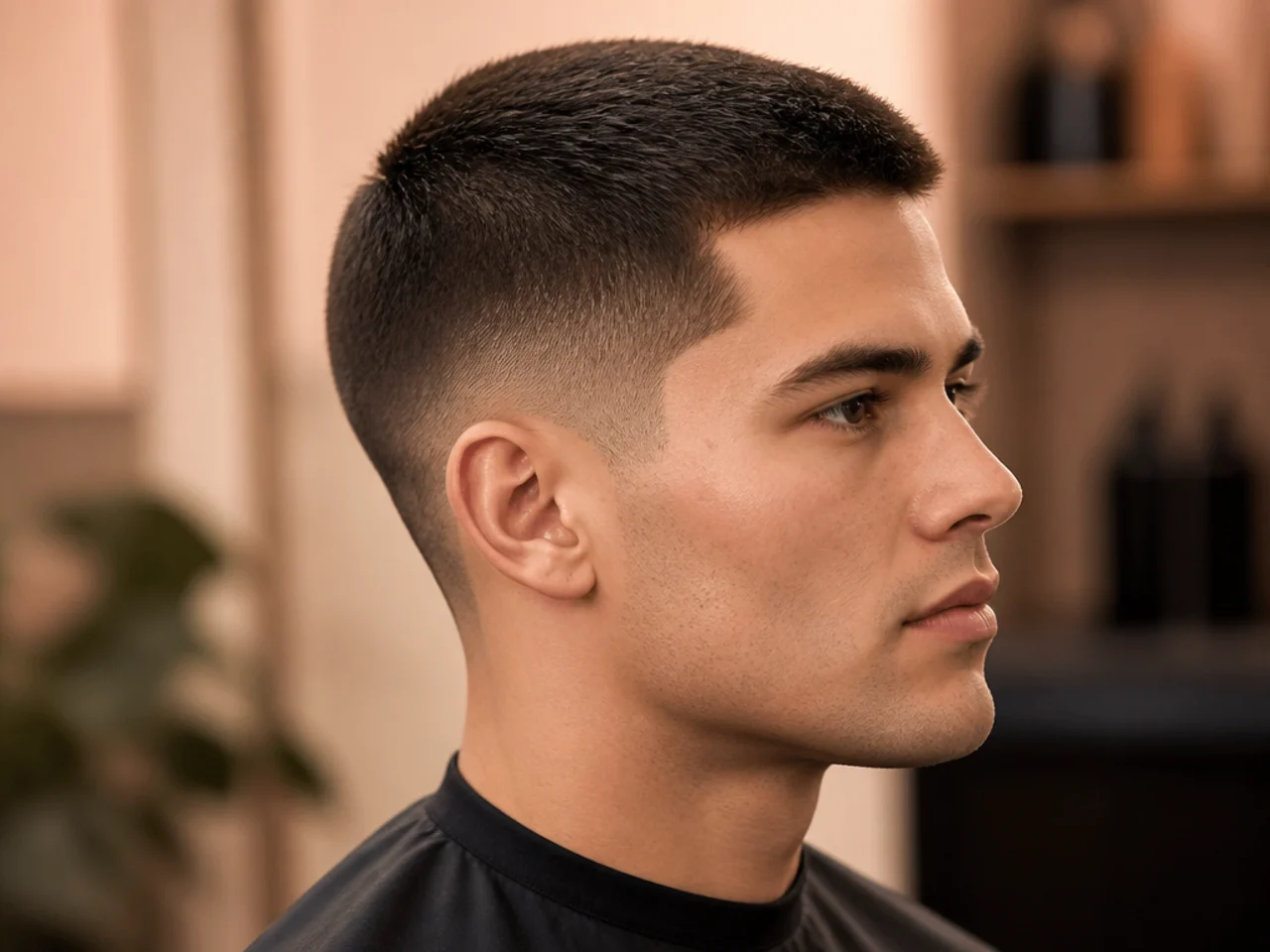
The crew cut keeps an inch to an inch and a half on top with tapered or faded sides. It flatters every face shape and every hair type — that's why military barbers cut nothing else for decades. Styling is a fingertip of matte clay through the front and a single comb-through. The whole routine is under sixty seconds. Reads right in a boardroom, on a construction site, and everywhere in between.
Best for: every face shape, straight-to-wavy hair with medium density.
Ask for: "Crew cut, inch and a half on top, low taper on the sides, front a touch longer than the crown."
7. High and Tight
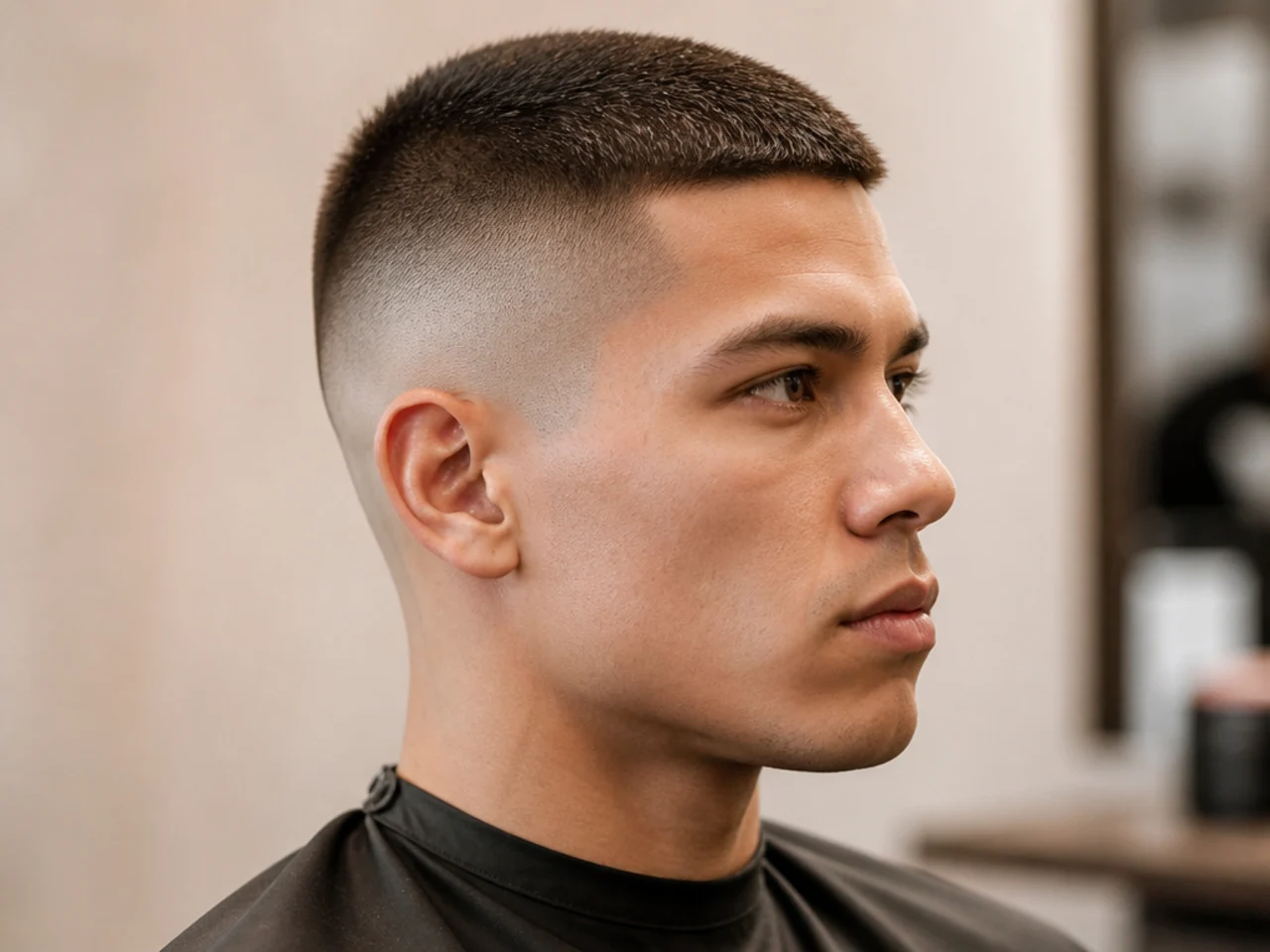
The high and tight is a #2 or #3 on top with a #0 or skin fade that jumps in high on the sides — well above the temple. Military discipline meets civilian polish. The high fade line adds vertical length, which flatters round faces and shorter necks. Works best with strong jaws and thick straight-to-wavy hair. A shaved line part is optional; mention it upfront so the barber can plan the fade around it.
Best for: oval, round, and square faces with straight or wavy hair.
Ask for: "High and tight, #3 on top, skin fade jumping in high above the temple, square neckline."
8. Ivy League Cut
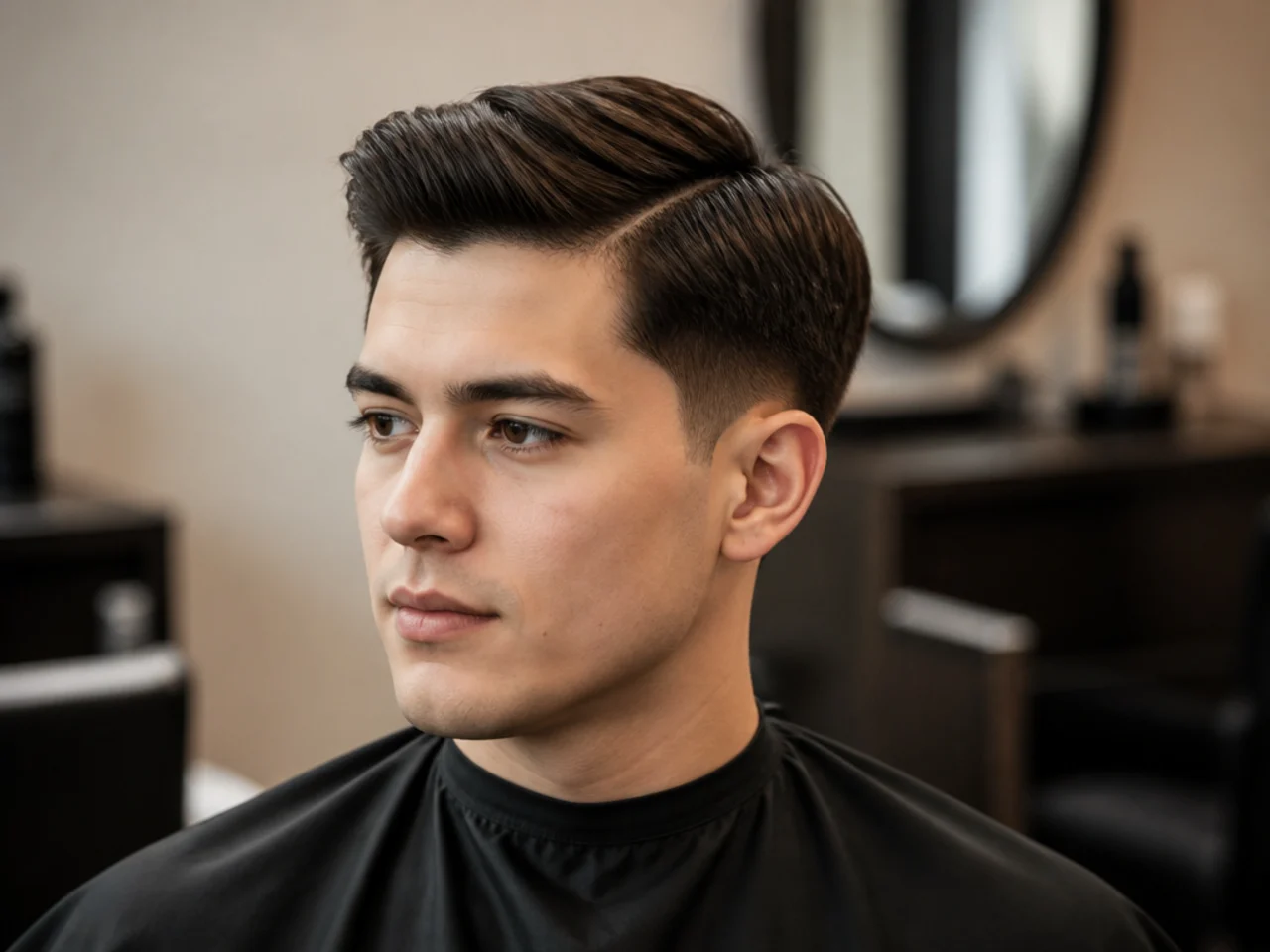
The Ivy League is a crew cut with an extra half inch on top — enough length to build a clean side part and comb it flat. Preppy without reading like a corporate uniform. Straight and wavy hair holds the part sharpest; fine hair benefits from a matte cream to keep the part from collapsing after lunch. Round faces get vertical length from the parted front. Long faces should keep the top flat instead of piled.
Best for: oval, round, and square faces with straight or wavy hair.
Ask for: "Ivy League, two inches on top, scissor-tapered sides, and a natural part on my left."
9. Modern Crew with Mid Fade
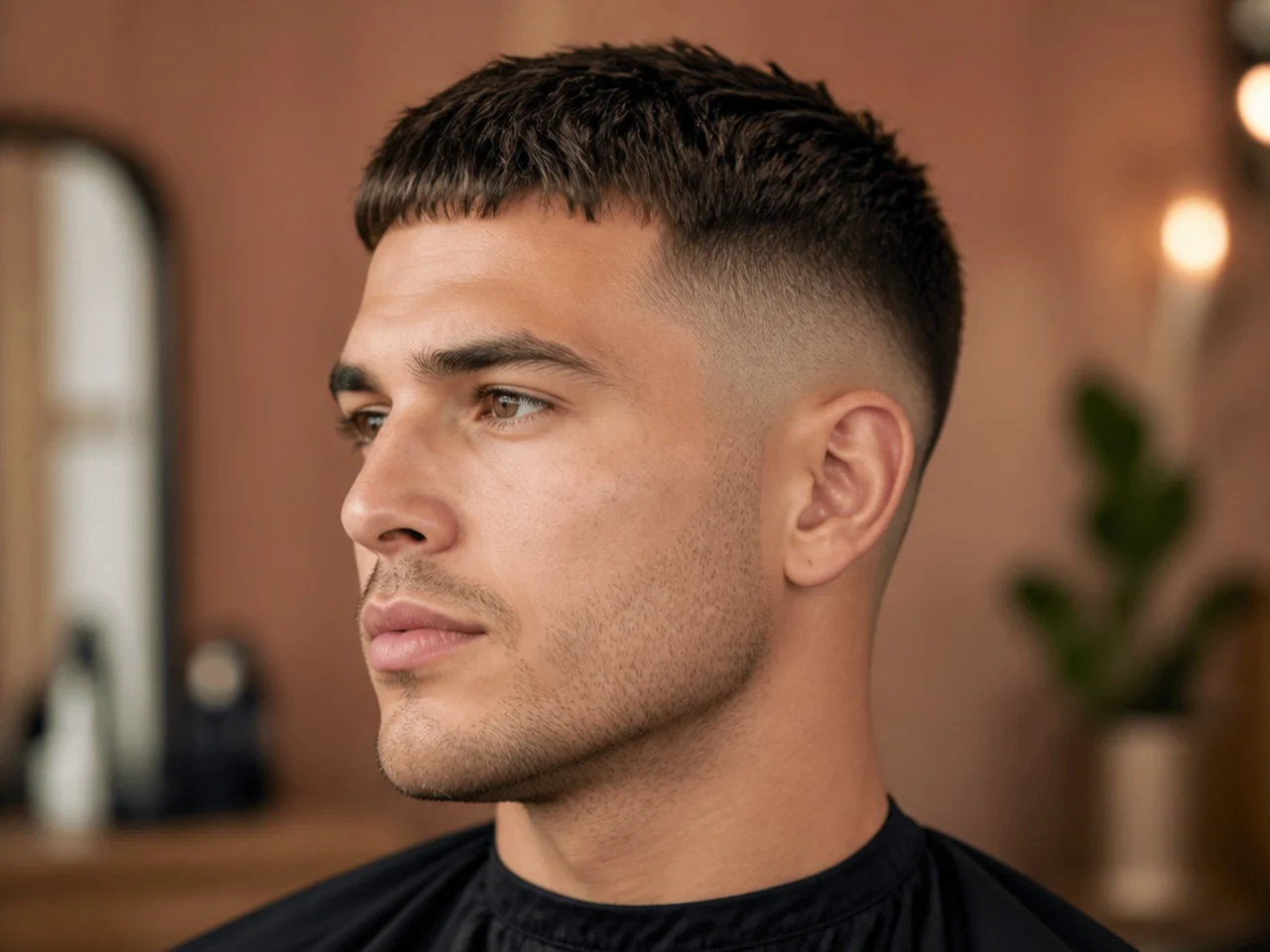
The modern crew updates the classic silhouette with a mid fade instead of a taper — two inches on top, blend starting at the temple, dropping down to skin near the ear. Sharper than a scissor taper, softer than a full skin fade at the crown. The best crossover cut for guys transitioning from a corporate side part to a modern textured look. Any hair type carries it; curls need scissor work on top to keep the pattern.
Best for: every face shape, any hair type with medium density.
Ask for: "Crew cut, two inches on top, mid fade to skin starting at my temple, matte finish."
10. Caesar Cut
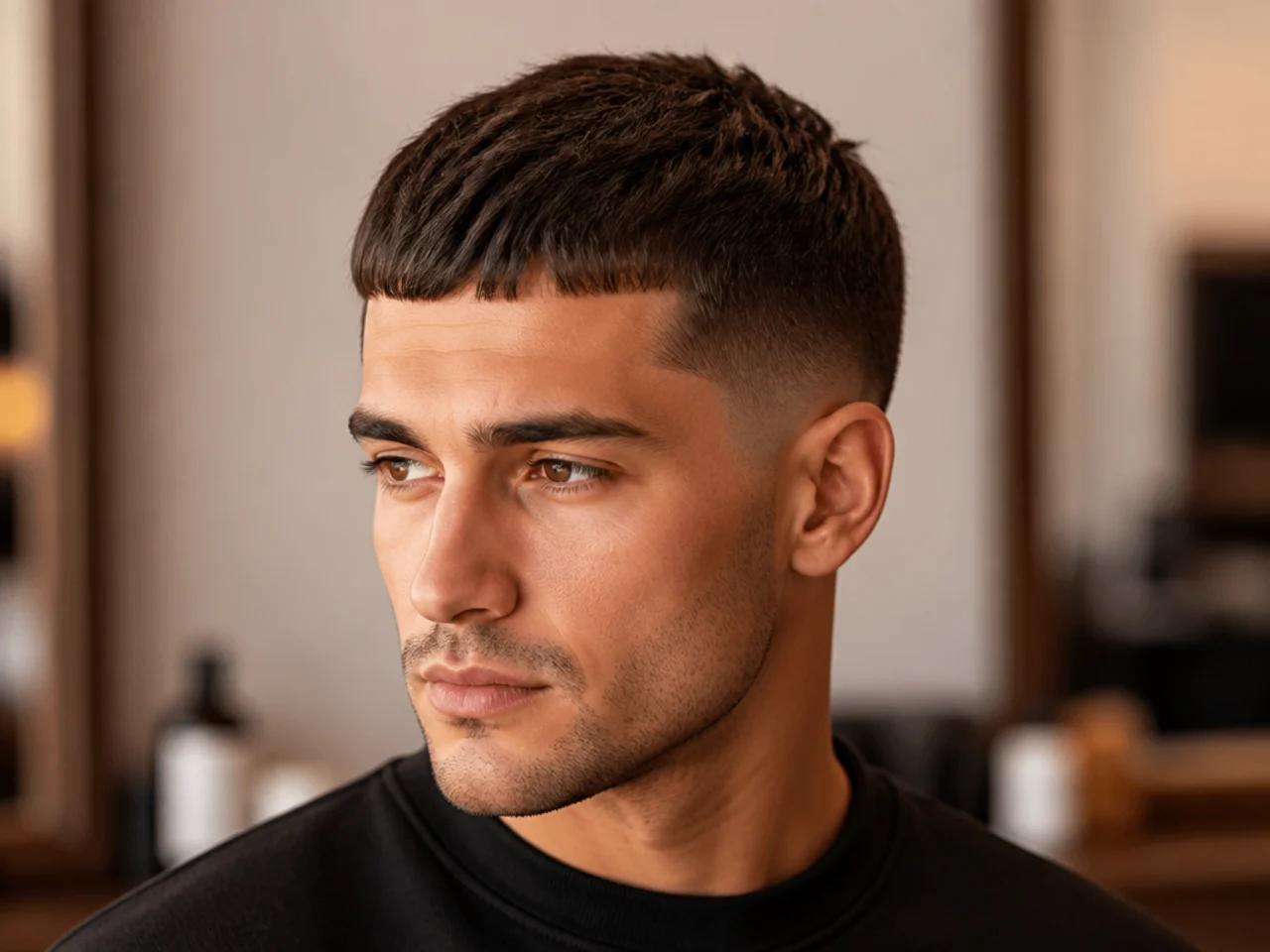
The Caesar is the crew cut's older cousin — an inch to two inches on top, forward-swept, with a soft rounded fringe cut just above the brow. Sides run scissor-tapered or lightly faded. Reads classical rather than trend-driven, which is exactly why it never leaves the barber's book. The forward fringe softens strong hairlines and flatters receding temples honestly. Works on straight and wavy hair with medium density.
Best for: round, oval, and heart faces with straight or wavy hair; friendly to receding hairlines.
Ask for: "Caesar cut, inch and a half on top with a short forward fringe, low scissor taper on the sides."
Textured Crops and Short Fringes
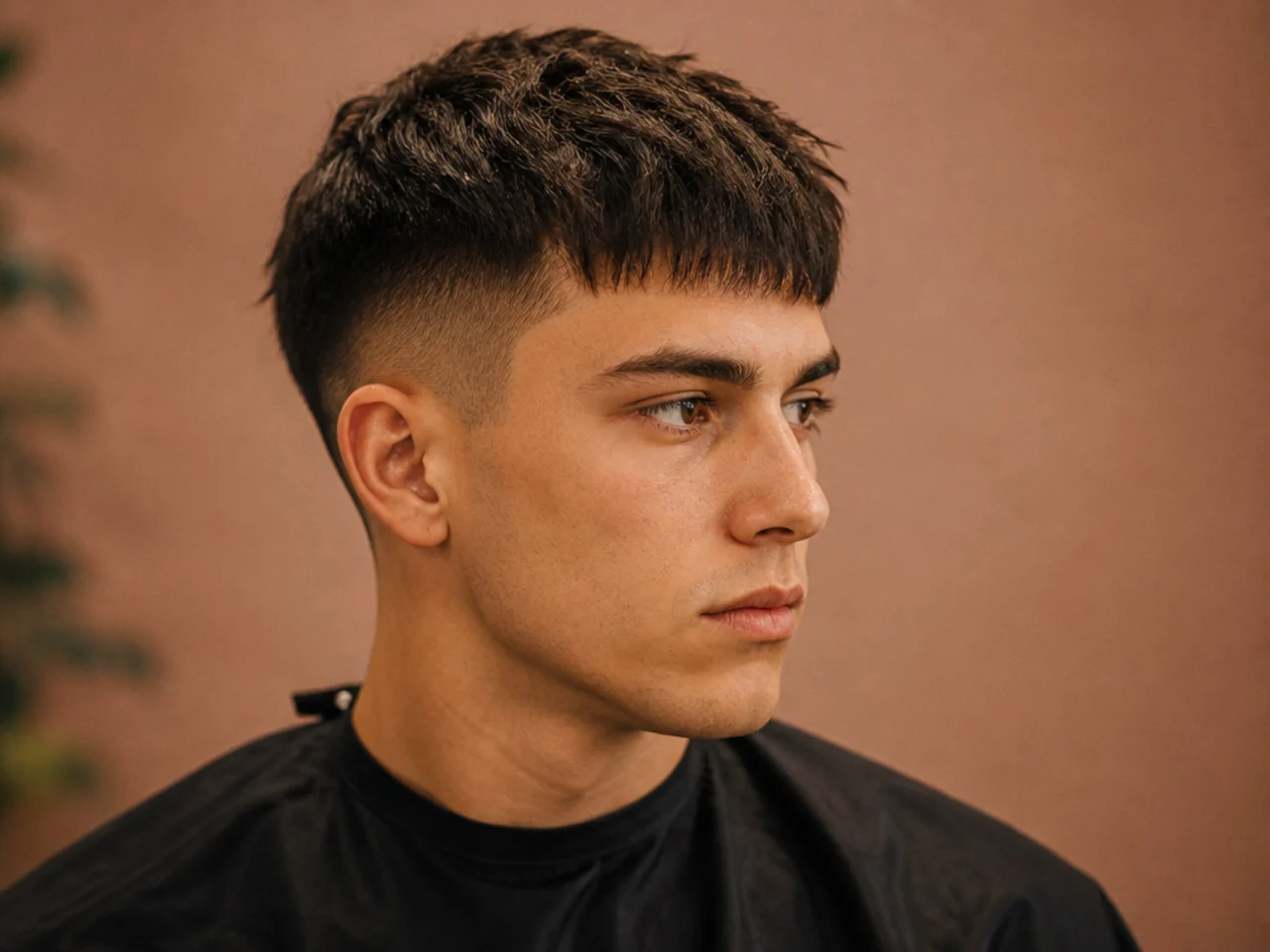
The most-requested family at modern shops right now. Short tops with heavy point-cutting for visible movement, paired with fades or hard undercuts and short forward fringes. Trend-driven but built to last more than a season. Five variations that update every classic short cut for 2026.
11. Short Textured Crop
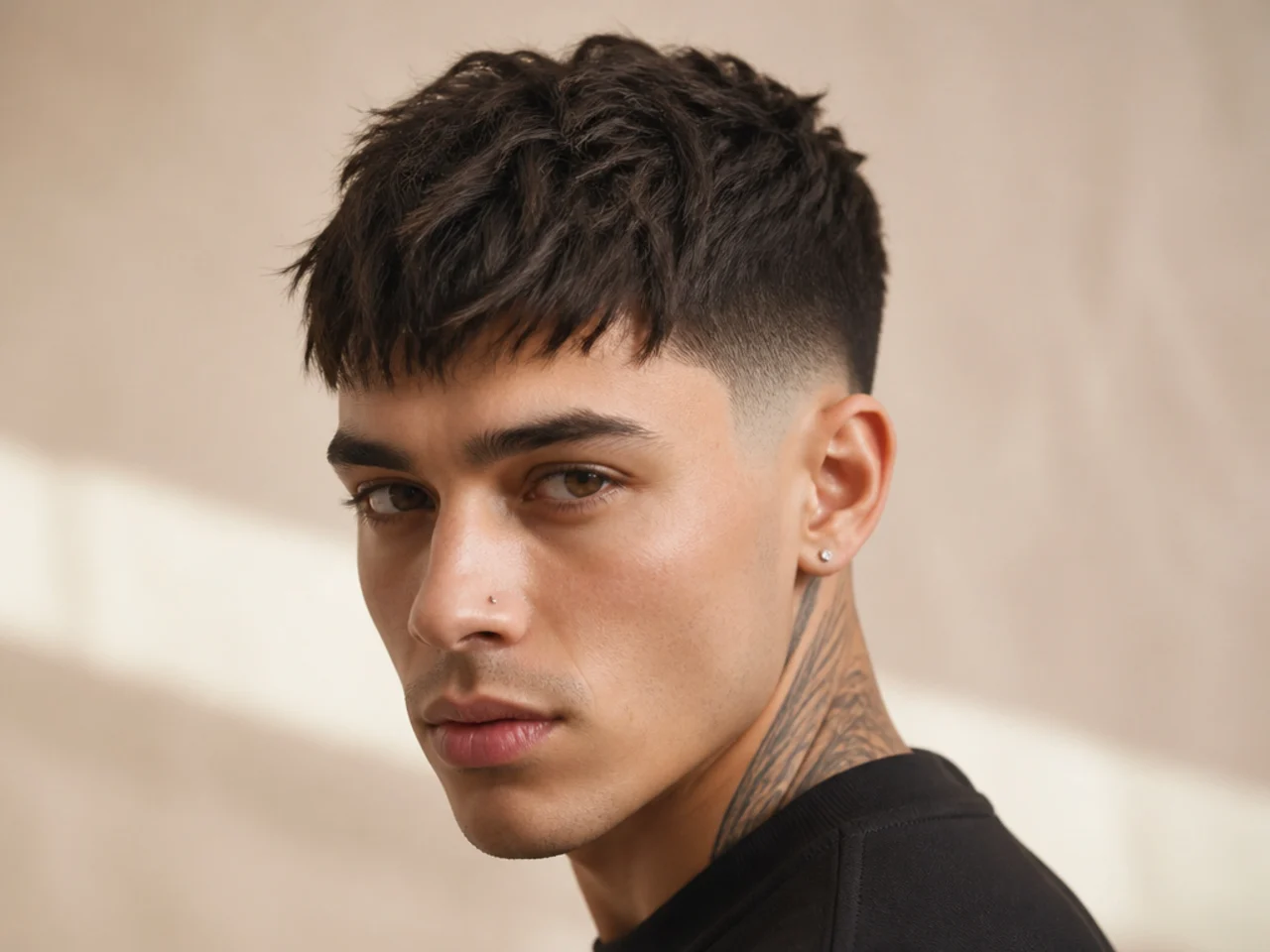
The textured crop is the most-requested cut at modern shops for a reason. An inch and a half to two inches on top with heavy point-cutting throughout for visible separation, plus a short forward fringe reaching the brow. Sides fade low or mid. Reads younger and more European than a classic crew. Best on straight and wavy hair with medium density; fine hair looks scattered instead of textured.
Best for: round, oval, and heart faces with straight or wavy hair.
Ask for: "Textured crop, two inches on top with heavy point-cutting, low fade, fringe long enough to reach my brows."
12. French Crop with Skin Fade
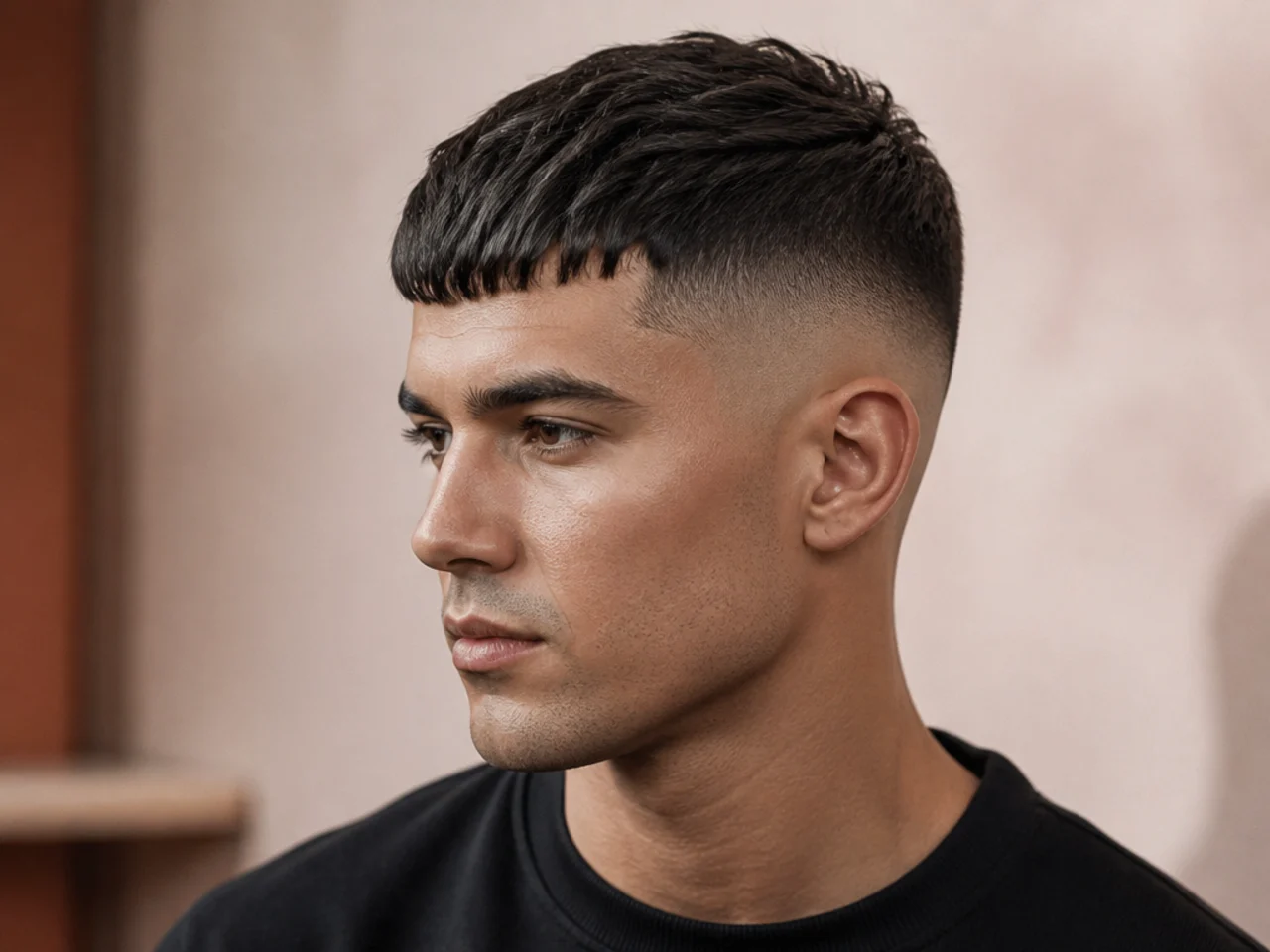
The French crop is a textured crop with a straight, blunt fringe cut horizontally across the forehead. Top runs an inch to an inch and a half, sides fade to skin. The short blunt fringe covers a high or receding hairline honestly — the cut was built for it. Straight hair holds the blunt line best; wavy hair fights it and needs a bit of paste to lie flat. Rebook every three weeks; the shape softens faster than any other short cut in this guide.
Best for: round, square, and heart faces with straight hair; friendly to high hairlines.
Ask for: "French crop, inch and a half on top, tight skin fade, blunt fringe cut horizontally at my forehead."
13. Edgar Cut
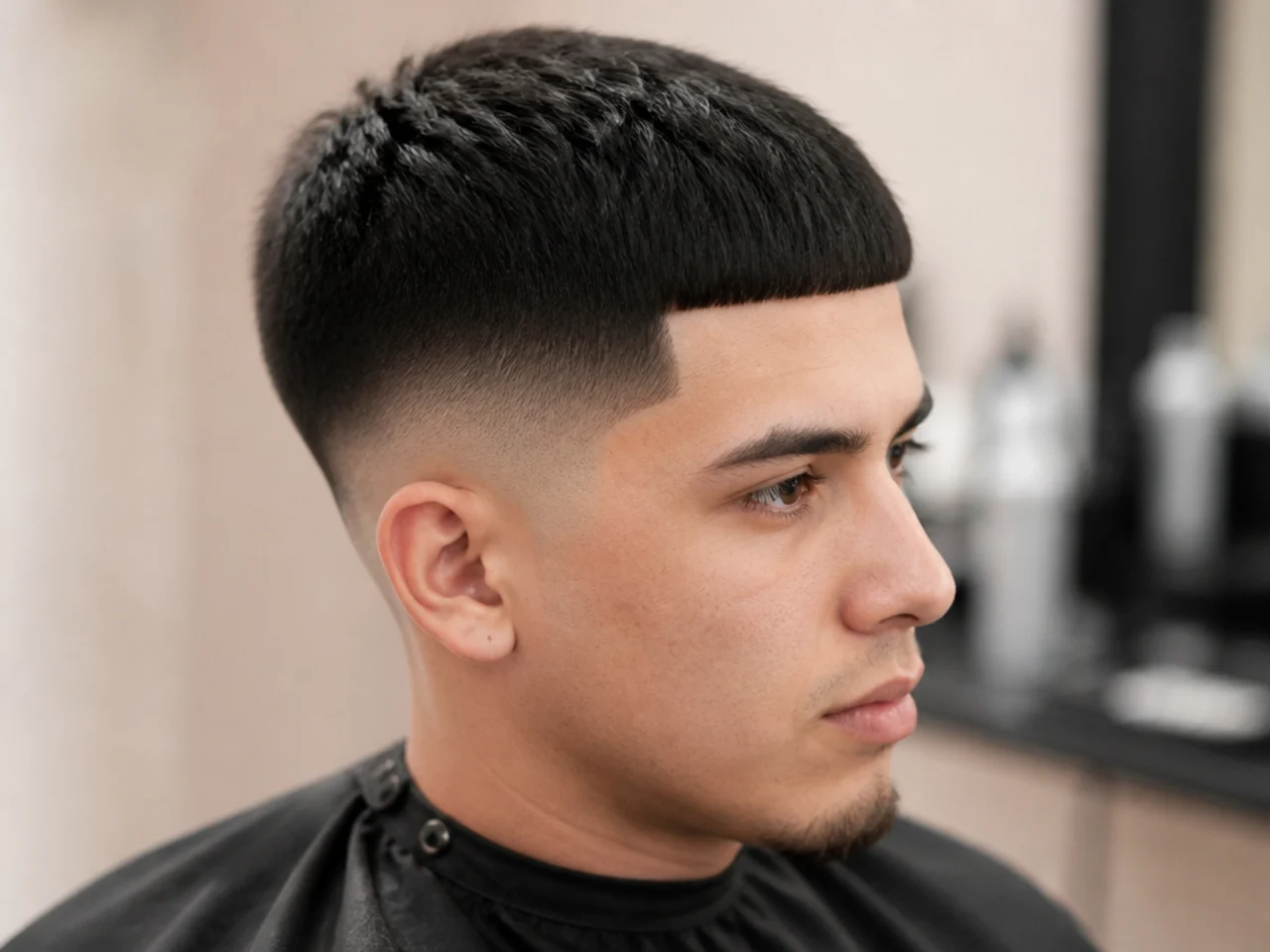
The Edgar trades any curve for a hard, straight-across line cut blunt at the forehead. That razor-sharp horizontal edge is the whole point. Top runs an inch to two inches with a fade or skin fade on the sides. Straight hair with medium density holds the line best. Round, square, and diamond faces suit it directly; heart and long faces should look elsewhere or ask for a softer angled version instead of a hard horizontal.
Best for: round, square, and diamond faces with straight hair.
Ask for: "Edgar cut, inch and a half on top, skin fade on the sides, hard straight fringe line at my forehead."
14. Short Comma Haircut
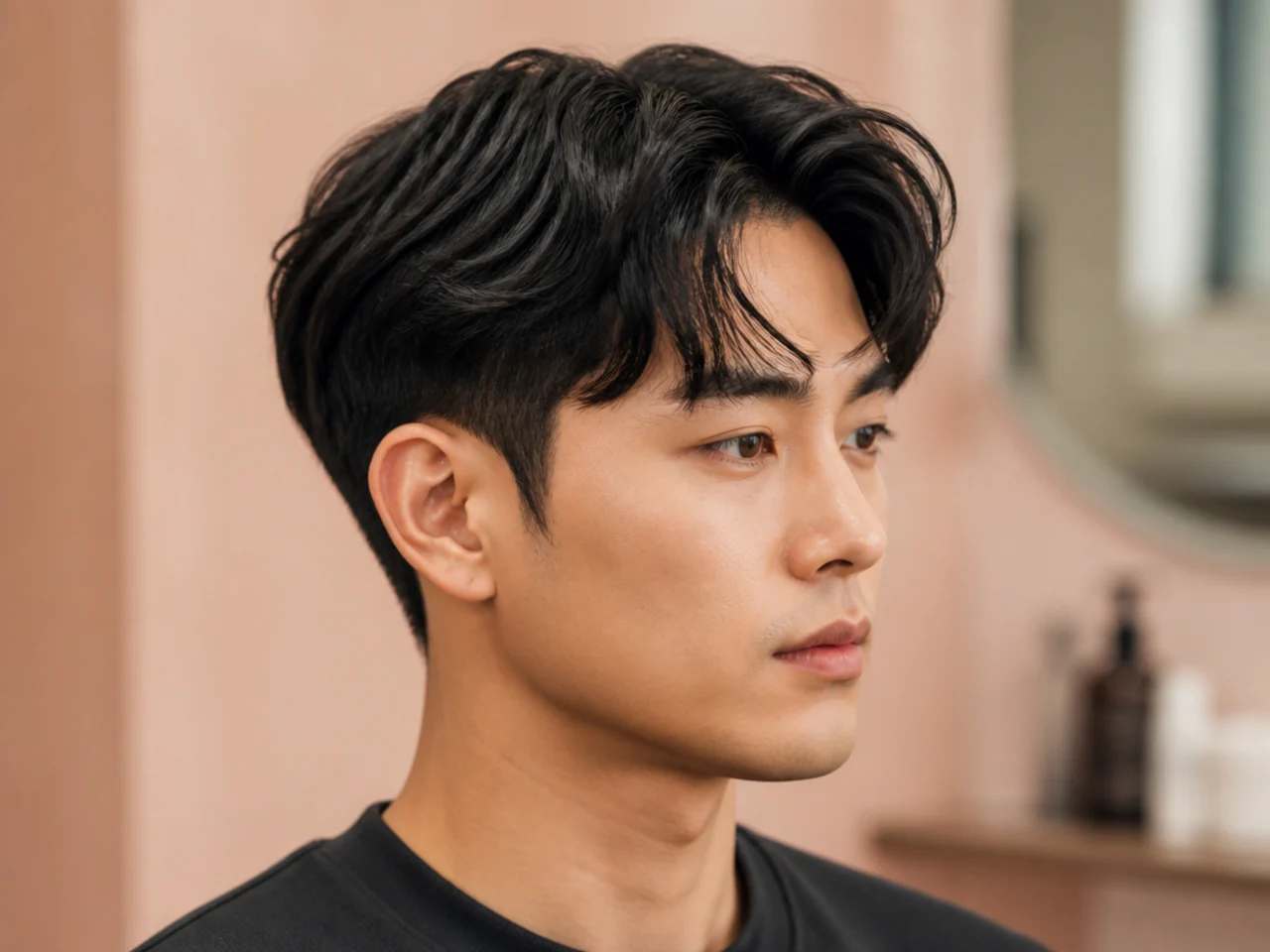
The short version of the comma cut keeps the signature curled front lock but drops the top length to two inches — a shorter, punchier take on the K-pop staple. Sides run low fade or a two-block finish. Best on straight-to-wavy hair with medium density; the front lock is the whole cut, so the length up front has to hold a directional curve. Point-cutting on top gives the comma its shape.
Best for: oval, round, and heart faces with straight or wavy hair.
Ask for: "Short comma cut, two inches on top, low fade on the sides, front cut to hold a curl toward my dominant eye."
15. Short Curtain Fringe
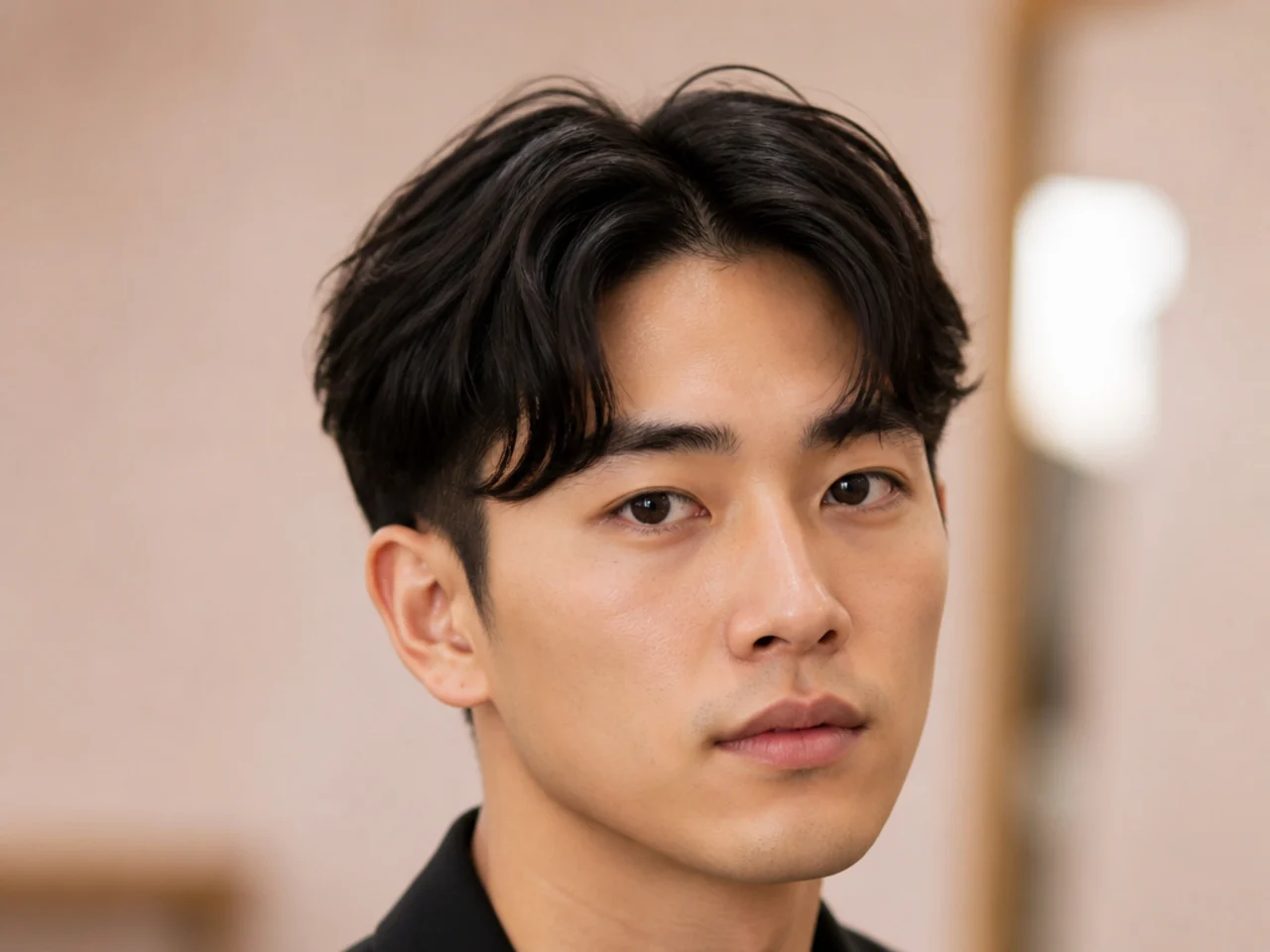
The short curtain trims the classic curtain fringe silhouette to a manageable two-and-a-half inches on top, split down the middle and swept softly outward. Sides run low fade or a short taper. Reads younger and modern without needing the full five-inch commitment of a long curtain. Best on straight-to-wavy hair with medium density; the split needs enough length to hold direction but not so much it collapses on the temple.
Best for: oval, round, and heart faces with straight or wavy hair.
Ask for: "Short curtain fringe, two and a half inches on top, low fade on the sides, split down the middle and swept outward."
Short Fades and Tapers
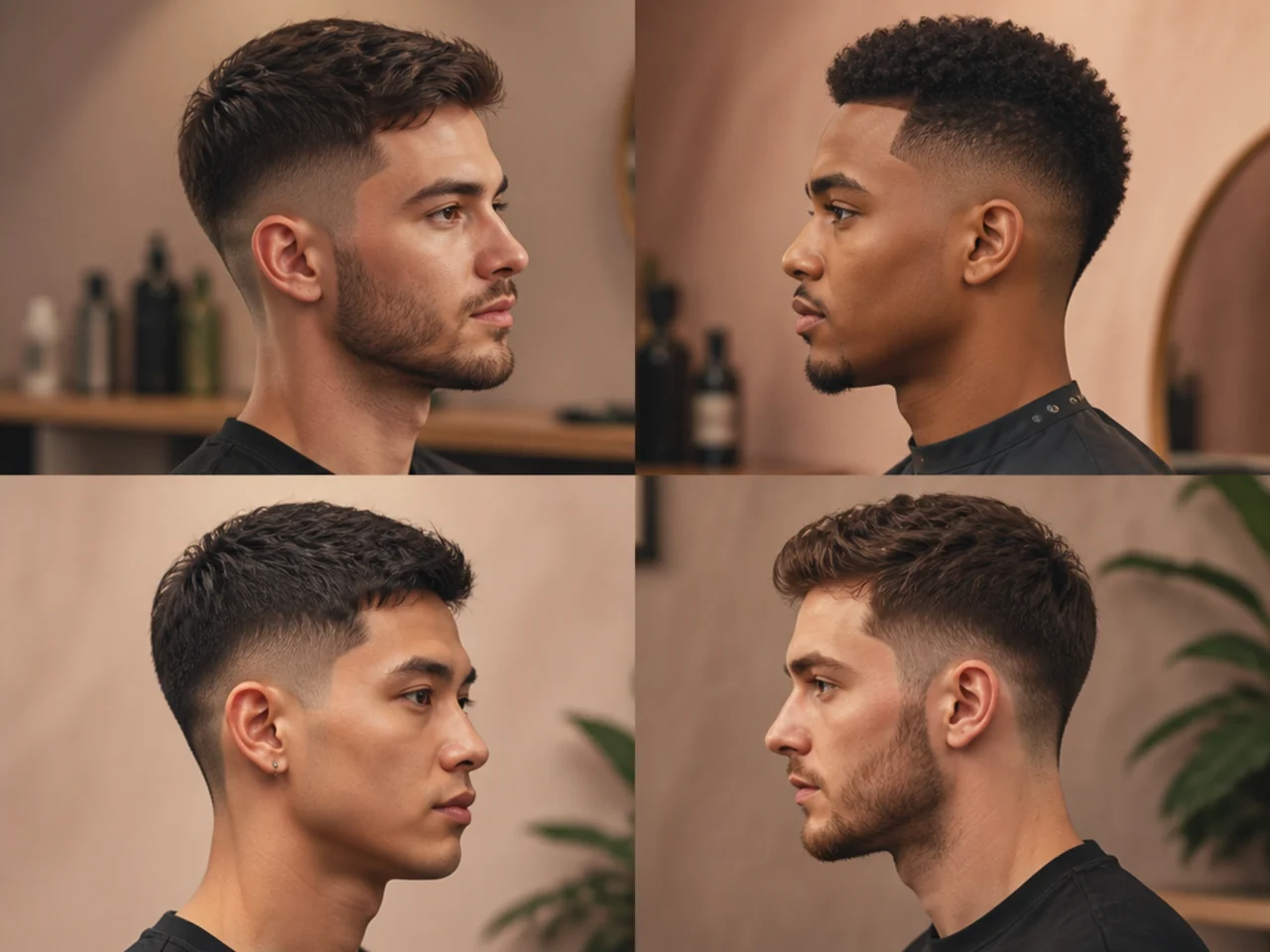
Any of the tops above can pair with any of the fade family variations below. Five short-top fade combinations that dominate barbershop chairs going into 2026. Rebook cadence sits at three to four weeks for standard fades and every two weeks for anything to skin.
16. Low Taper Fade with Textured Top
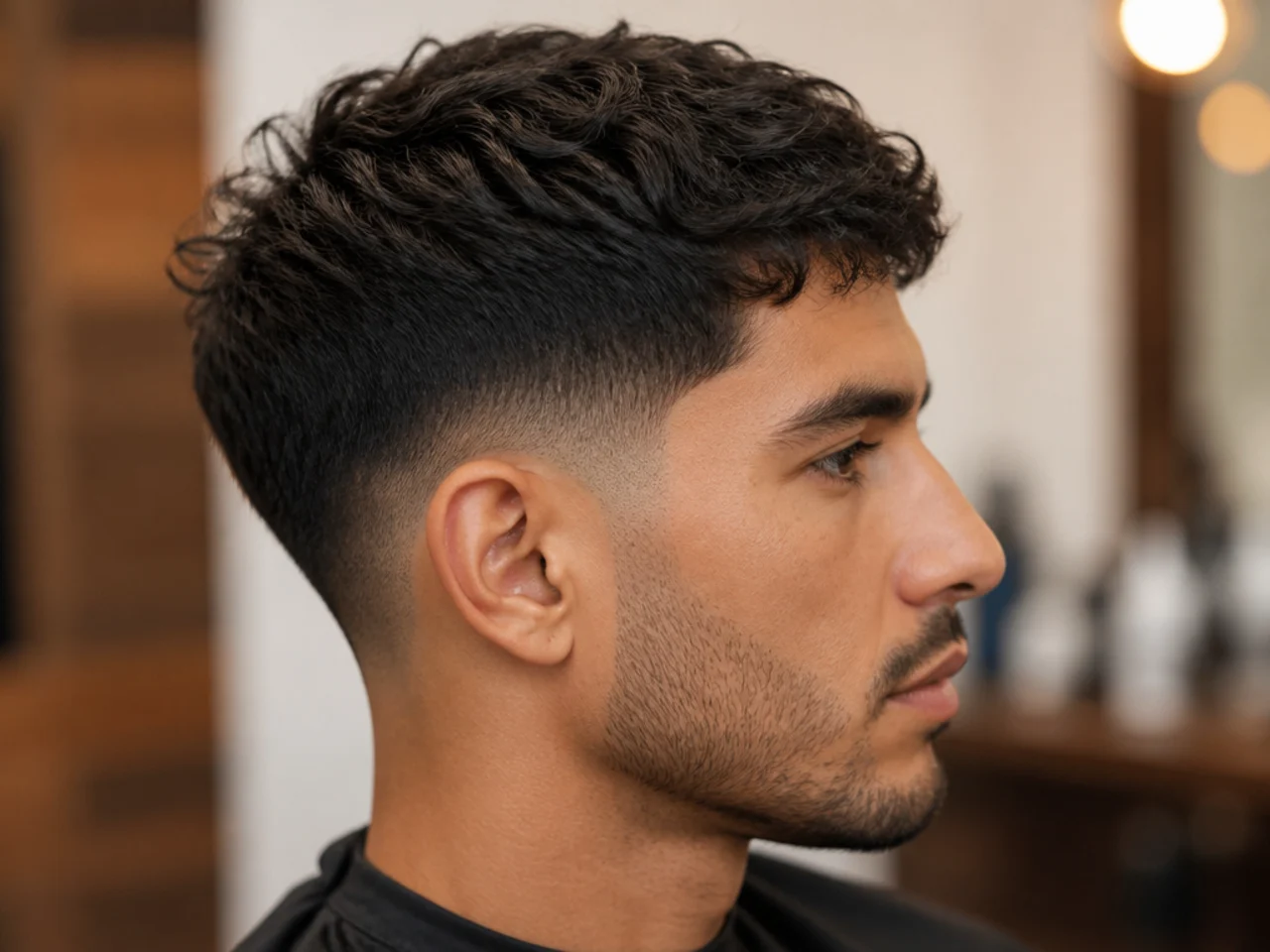
The low taper fade blends only around the ears and neckline — sides stay scissor-length above. Pair it with a two-inch textured top and you get the most job-flexible short cut on the menu: sharp enough for modern, subtle enough for conservative offices. Works on any face shape and any hair type. Rebook every five to six weeks, which is more forgiving than a full fade at any height.
Best for: every face shape, straight-to-wavy or curly hair.
Ask for: "Low taper fade around my ears and neckline only, scissor-length above, and two inches of textured top."
17. Mid Fade with Short Quiff
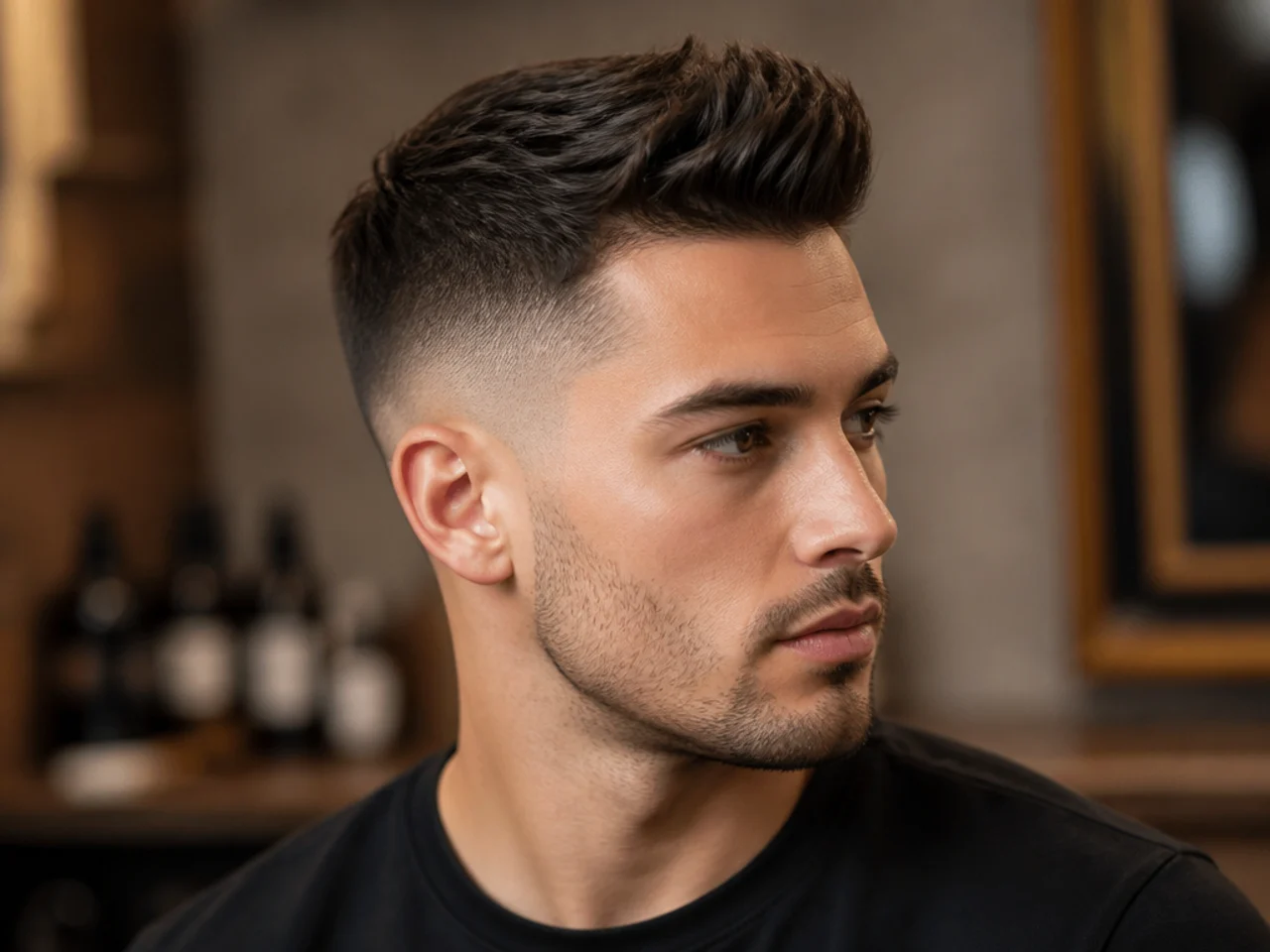
A mid fade starts around the temple and blends down to skin near the ear — high enough to read defined, low enough to grow out gracefully. Pair it with a short two-inch quiff lifted at the front and you get the go-to for guys who want a short cut with a bit of visual lift. Matte paste and a hand-brush build the shape in ninety seconds. Best on straight-to-wavy hair with medium density.
Best for: oval, round, and square faces with straight or wavy hair.
Ask for: "Mid fade to skin starting at my temple, short quiff on top, two inches with lift at the front."
18. High Skin Fade with Line-Up
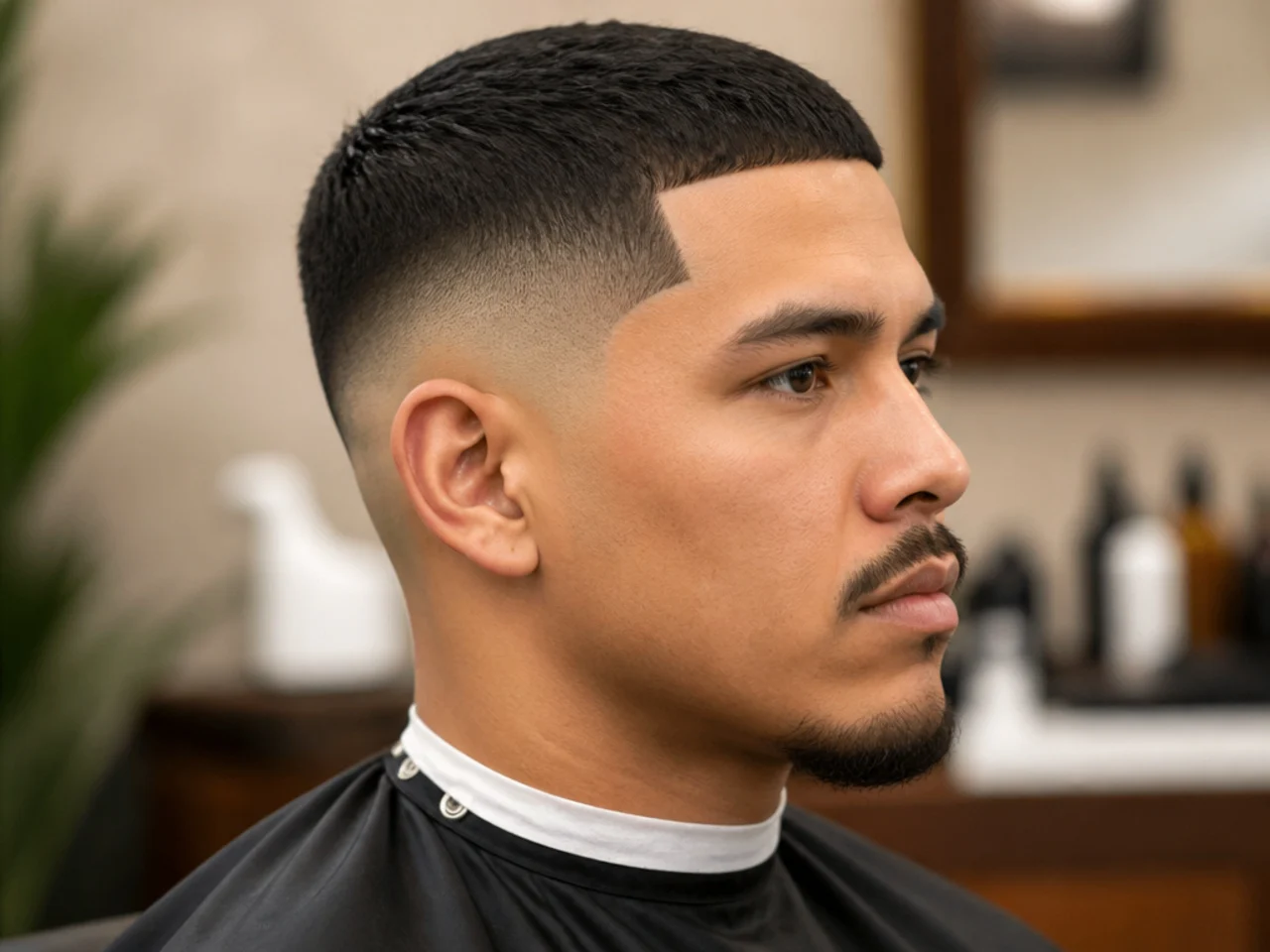
The high skin fade takes the blend to the parietal ridge and finishes with a razor line-up along the temples, forehead, and sideburns. Maximum contrast between top and sides. Every edge is a hard geometry. Pair with any of the short tops in this guide — buzz, textured crop, quiff — and the fade does the visual work. Rebook every ten to fourteen days; a bald fade fuzzes visibly faster than every other variation.
Best for: oval, square, and diamond faces with a clean hairline.
Ask for: "High skin fade to my parietal ridge, razor line-up on the temples and forehead, keep the top at a #4."
19. Drop Fade with Short Top
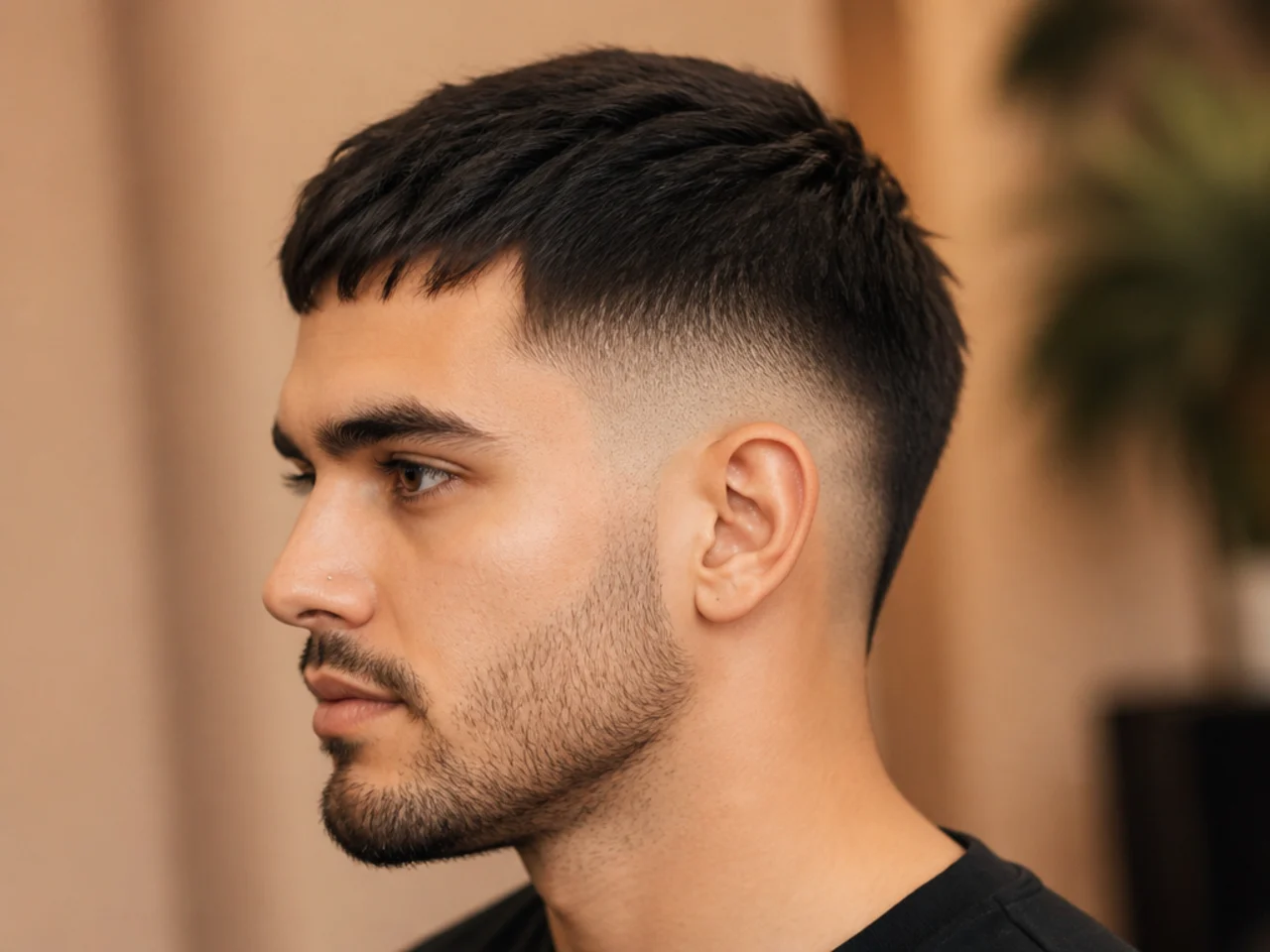
The drop fade arcs the fade line downward behind the ear instead of running straight around the head. The curve follows the shape of the skull and reads more sculpted than a standard flat fade. Works at any height — low, mid, high — and pairs especially well with curly or coily tops that need a shape complement on the sides. Bring a reference photo the first time; not every barber cuts a clean drop by default.
Best for: oval, round, and diamond faces with wavy, curly, or coily hair.
Ask for: "Mid drop fade arcing down behind my ear, two inches of short textured top."
20. Burst Fade with Short Top
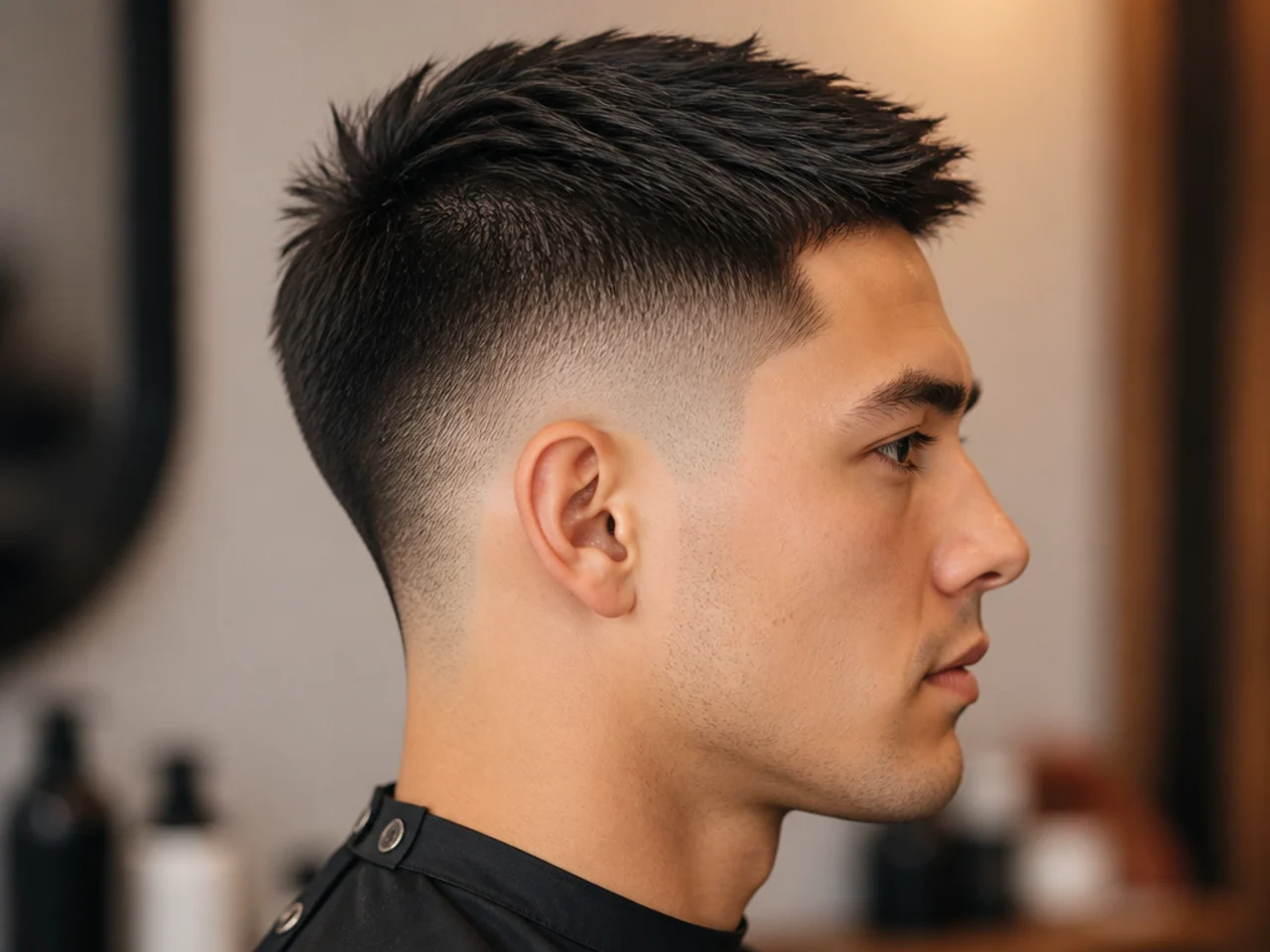
The burst fade radiates around the ear in a curved shape rather than dropping straight down the neckline. The fade sits longest at the back centre and shortest around the ear — a shape that lends itself to short tops especially well. Pair with a short textured crop and you get an athletic, modern silhouette that reads younger than a standard low fade. A go-to for lean athletic faces.
Best for: oval, round, and heart faces with straight, wavy, or curly hair.
Ask for: "Burst fade to skin around each ear, keep length at the back neckline, short textured top."
Short Styled Cuts
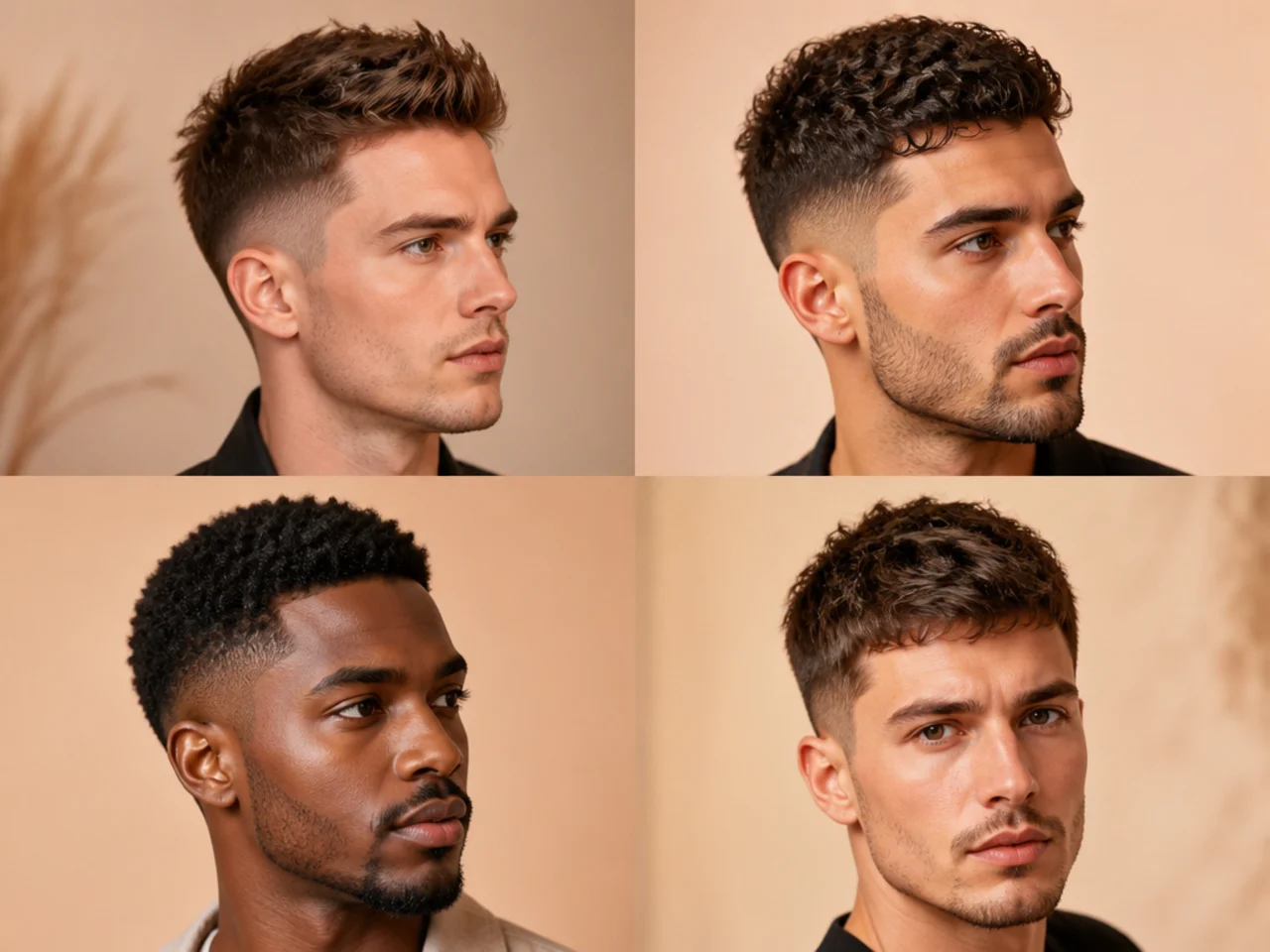
The final five — short-top cuts that ask for one product and about two minutes with a comb or your fingers. More styled than a buzz, less commitment than anything medium-length. The right pick if you want a short cut that reads intentional rather than default.
21. Short Slick Back
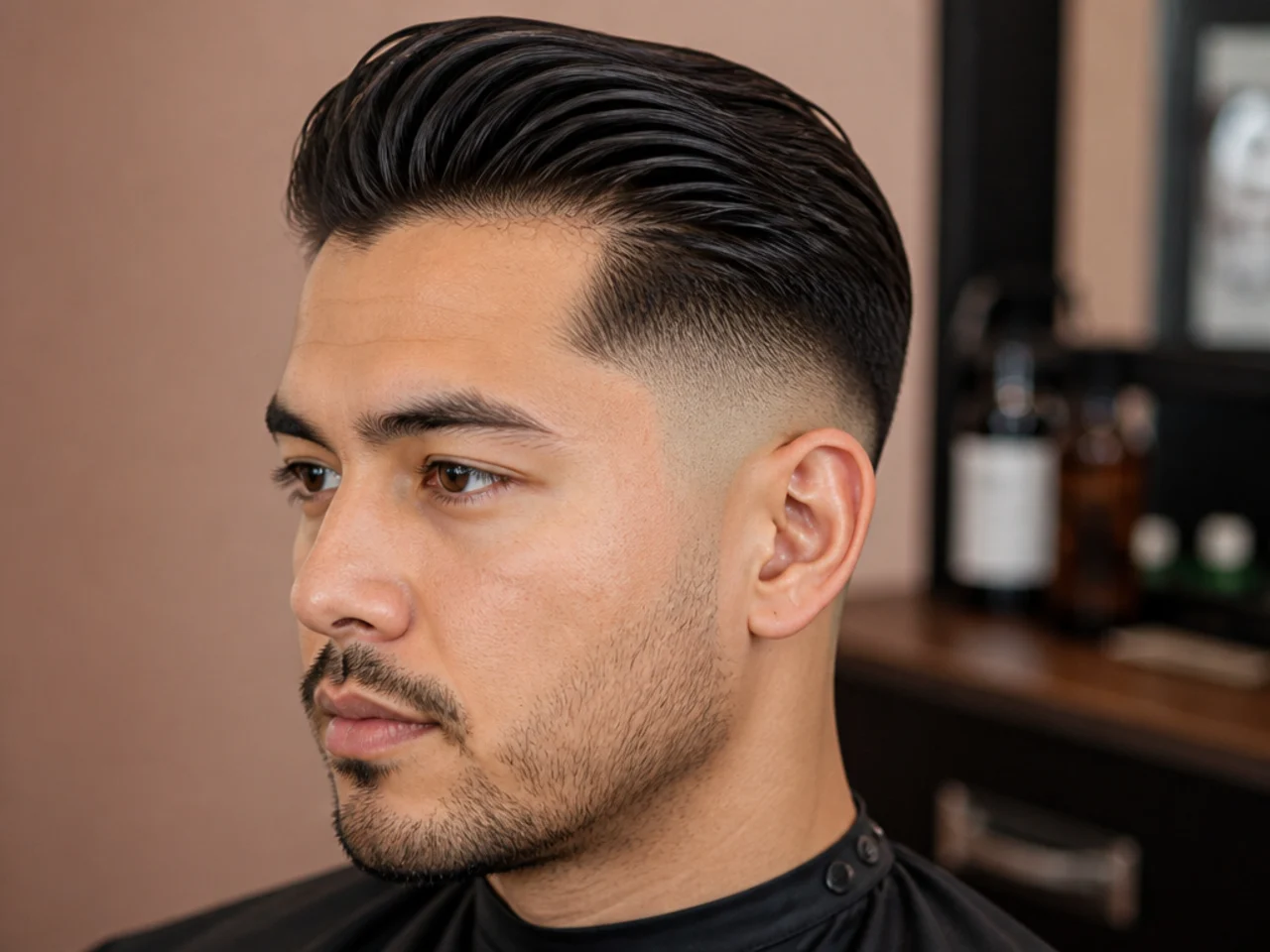
The short slick back keeps two to two-and-a-half inches on top, brushed straight back with a low or mid fade on the sides. Reads grown-up and always in style. Modern versions swap high-shine pomade for a matte cream, which reads current instead of costume. Best on straight-to-wavy hair with medium density that holds a shape without fighting back. Round and square faces suit it directly.
Best for: oval, square, and diamond faces with straight or wavy hair.
Ask for: "Short slick back, two inches on top with the front slightly longer, low or mid fade on the sides, matte finish."
22. Short Side Part
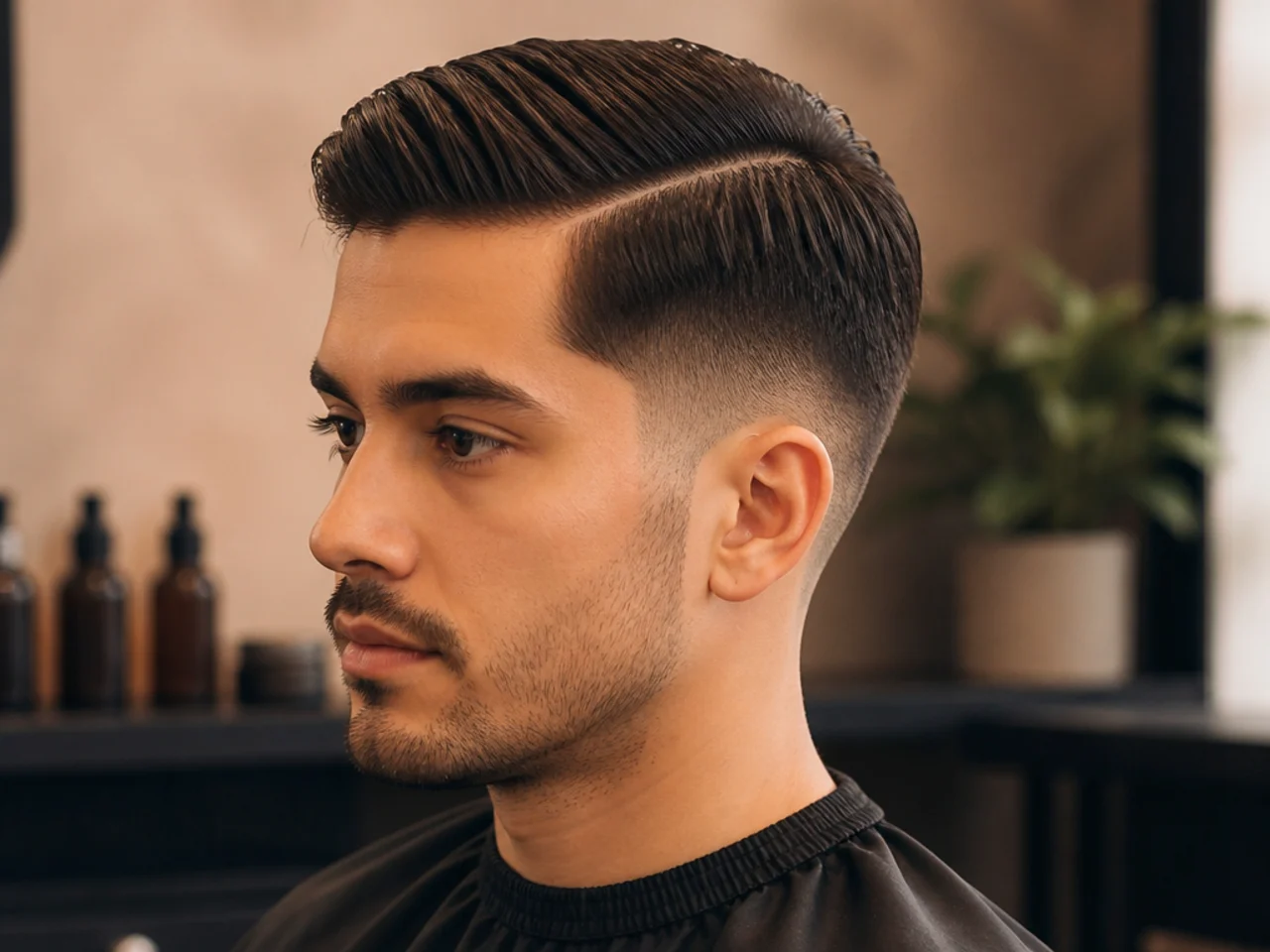
The short side part keeps two inches on top, parted cleanly on one side, with a low taper or scissor blend at the sides. The most versatile office cut on this list — reads sharp with a tie and easy without one. A hard razor part elevates the effort; a natural fall keeps it casual. Straight and wavy hair holds the part sharpest. Round faces should choose a side part over a middle part every time.
Best for: oval, round, and square faces with straight or wavy hair.
Ask for: "Short side part, two inches on top, natural part on my left, low taper on the sides."
23. Short Spiky Cut
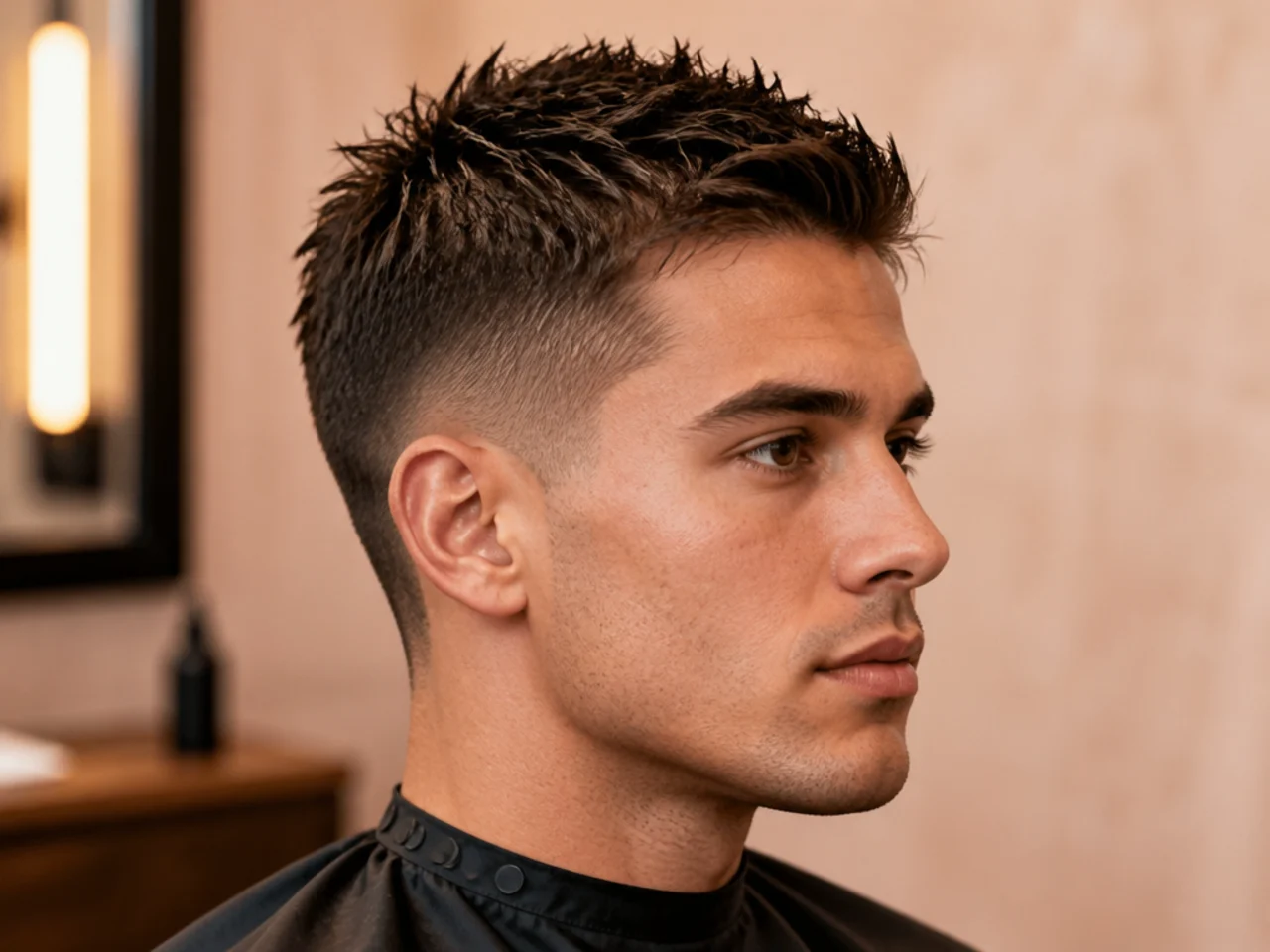
Short spikes keep an inch and a half on top with a fade at the sides to make the spikes stand out. Playful without being a costume. Point-cutting on the top creates the base texture; a firm-hold matte clay pinched into small sections builds the spikes. Best on straight or slightly wavy hair; curly hair reshapes the whole silhouette. A drop fade at the sides amplifies the top; a low fade dials it back for a workplace-friendly version.
Best for: oval, square, and heart faces with straight or wavy hair.
Ask for: "Short spiky cut, inch and a half on top, point-cut for texture, low or drop fade at the sides."
24. Short Curly Fade
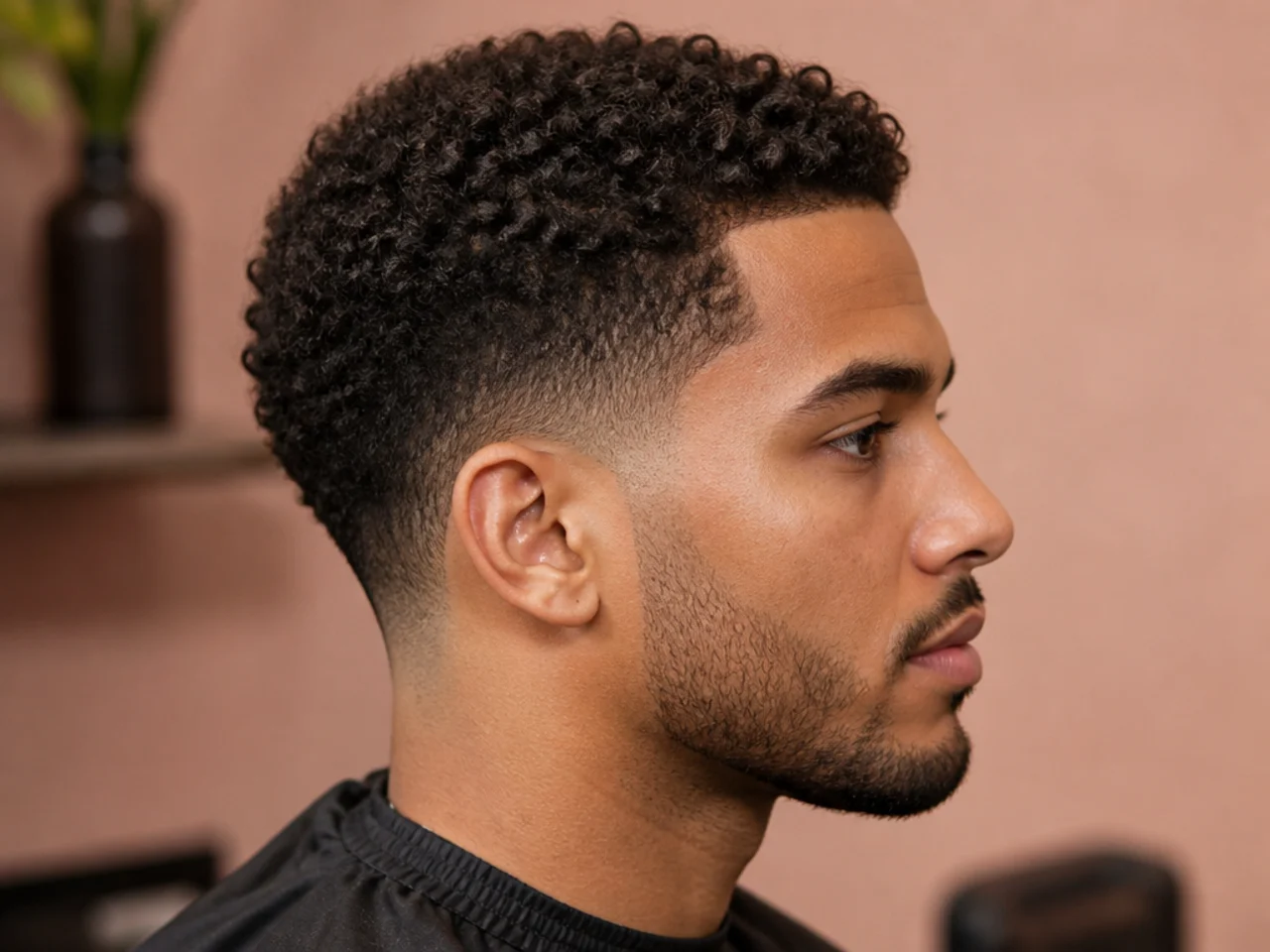
The short curly fade keeps one to two inches of natural curl on top, scissor-shaped on damp hair, with a low taper or mid fade at the sides. Never let a barber use clippers on the top of curly hair — it kills the pattern flat. Best on 3A through 3C curl types and any face shape. Style with a curl cream on soaking-wet hair, scrunch upward with your fingers, air-dry or diffuse on low heat.
Best for: every face shape with 3A-3C curls.
Ask for: "Short curly fade, keep one to two inches of curl on top, scissor cut on damp hair, low taper on the sides."
25. Short Afro Fade
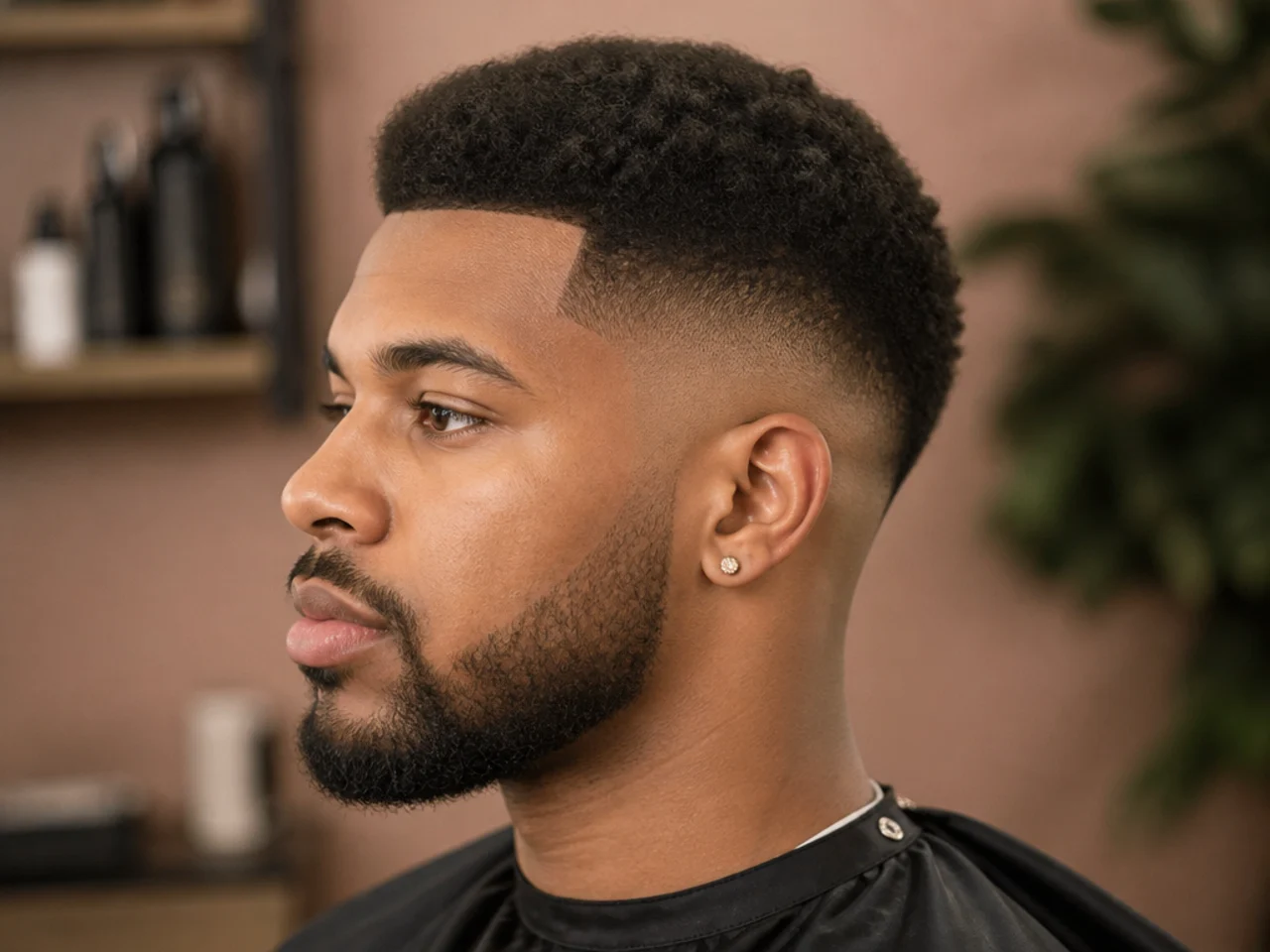
The short afro fade keeps one and a half to two inches of natural afro hair on top, with a skin or taper fade at the sides. The fade sharpens the rounded silhouette without cutting into the shape itself. Best on Type 4 hair and every face shape — the rounded crown flatters most. A line-up at the hairline is optional but sharpens the whole cut noticeably. See the full curly hair for men guide for related textures and styling notes.
Best for: every face shape with Type 4 hair.
Ask for: "Short afro with a mid or skin fade, keep two inches on top, line up the hairline."
How to Ask Your Barber for a Short Cut
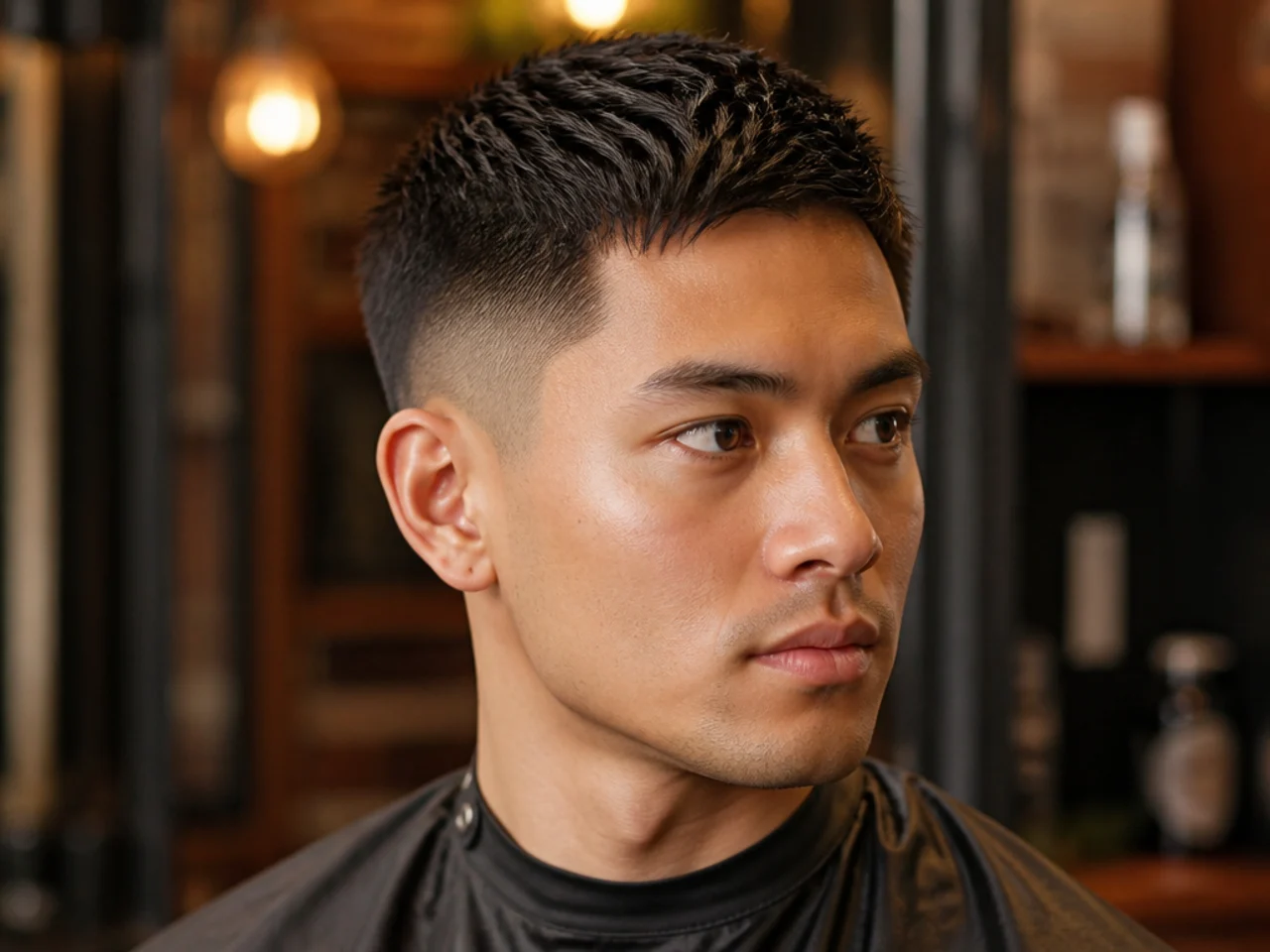
Any of the twenty-five ideas above becomes the wrong cut if you ask for it in the wrong words. Six specifics keep everyone on the same page.
- Bring two or three photos of the same cut. Front, side, and back — three angles of one target beat five photos of five different ideas. Barbers read a single reference more accurately than they average across a mood board.
- Give the three specifics up front. Top length in clipper numbers or inches, side treatment (fade height, taper, or scissor blend), and finish (matte or sleek). "One and a half on top, low taper on the sides, matte finish" is a complete ask.
- Point to where you want the fade line to sit. "Low fade" starts above the ear. "Mid fade" starts at the temple. "High fade" runs to the parietal ridge. A finger on your temple beats any word combination.
- Confirm the neckline. Blocked (sharp horizontal), tapered (soft gradient), or rounded. Each grows out differently and reads different against a collar or a t-shirt neckline.
- Say what you don't want. "No razor lines," "no hard part," "no product needed." Guardrails help a barber more than a wall of positive direction does.
- Speak up mid-cut, not at the mirror check. Once inches are on the floor, they're not going back. If the fringe is dropping shorter than you pictured, say so while the scissors are still in the air.
Styling and Maintenance
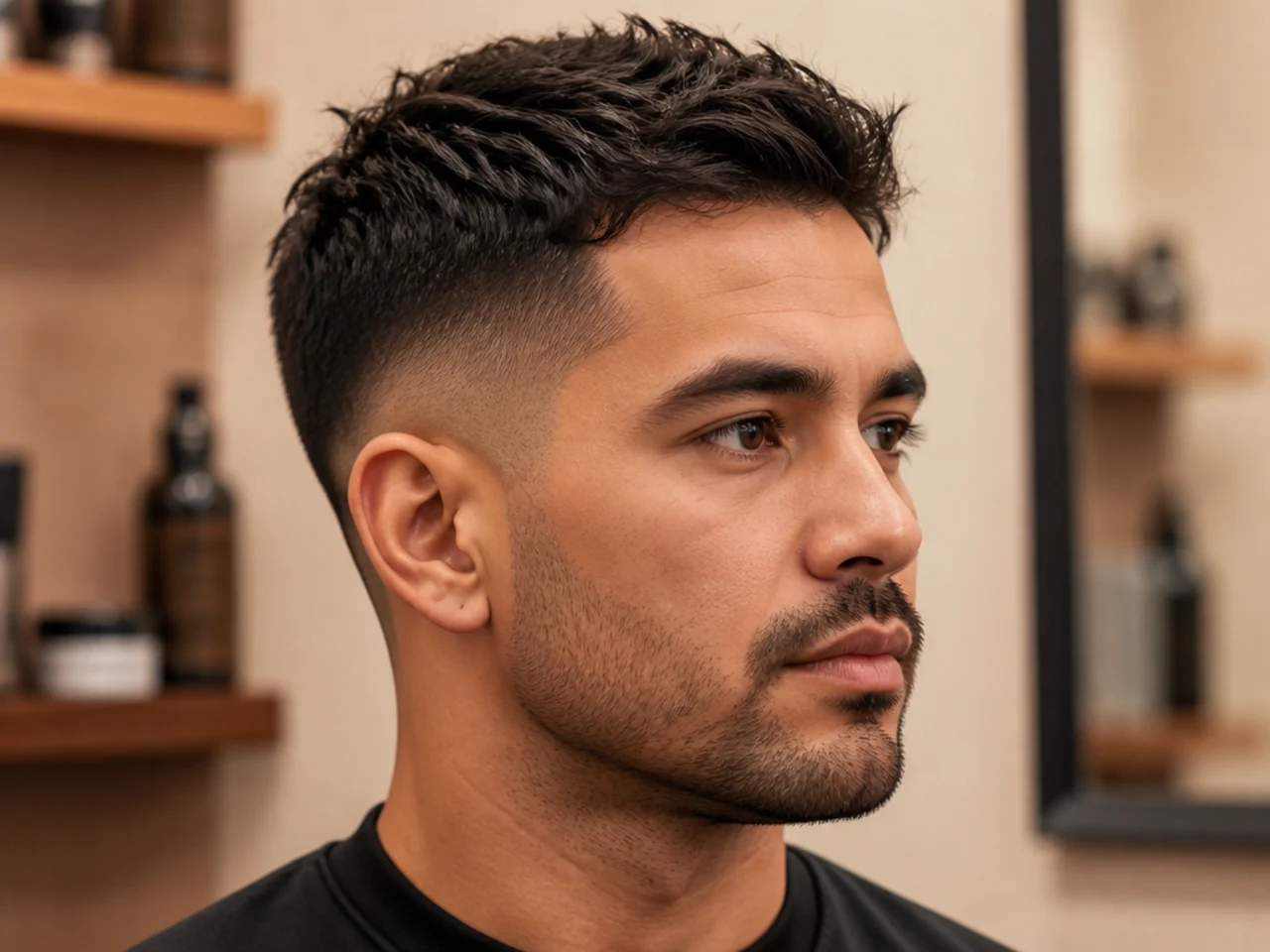
Every short cut in this guide lands in one of three product buckets. Get the bucket right and one product does the whole job.
Buzz, butch, induction, burr, and long buzz cuts want nothing. Splash your face, towel-dry, walk out. If you want a hint of sheen, tap a dime-sized drop of lightweight cream through with your fingers — never comb it in. Rebook every three to four weeks so the shape stays sharp.
Crew, Ivy League, textured crop, French crop, Edgar, Caesar, and short comma cuts want a fingertip of matte clay or matte paste. Warm it between your palms, work through damp or dry hair, no comb. If your hair is fine or slippery, spritz a light sea-salt spray at the roots first for grip. The whole routine is under sixty seconds.
Short slick backs and short quiffs need a blow-dryer, a small vent brush, and a medium-hold matte cream or paste. Blow the front up and back in the direction you want the shape to sit, then work paste through with your fingers. A light setting spray held eight inches away locks it. Under three minutes total.
Rebook cadence sits at three to four weeks for anything faded, five weeks for tapers and scissor blends, every two weeks for skin fades and bald fades. Book the moment the shape softens — not the moment it looks overgrown. For more on cadence and cost, see the low-maintenance men's cuts guide and how often men should get a haircut.
FAQ
Are short haircuts still trending for men in 2026?
Yes — short cuts sit under about seventy percent of what walks into modern barbershops. Textured crops, low taper fades, and short comma cuts lead the requests, and every buzz-adjacent length continues to grow in popularity as guys trim the mirror time.
Which short haircut suits my face shape best?
Round faces want vertical lift and short sides — think French crop, mid fade with a short quiff, or a high and tight. Square faces suit textured crops and softer edges. Long faces need forward fringes and lower fades. Oval faces wear almost everything on this list.
How short is too short for men's hair?
A #0 induction cut is as short as clippers go without a razor — anything shorter is a shave. For most guys, a #2 to #4 (a quarter inch to half inch) is the sweet spot where the cut still reads intentional. Below a #1, an even hairline and a strong jaw start doing more visual work.
Do short haircuts need styling?
Buzz, butch, and induction cuts need nothing beyond a towel. Crew, Ivy League, and short textured cuts want a fingertip of matte clay and thirty seconds. Only the short slick back and short quiff need a blow-dryer — everything else is finger-and-clay simple.
How often should I get my short haircut trimmed?
Every two to three weeks for skin fades and bald fades — the line-up fuzzes visibly by day fourteen. Every three to four weeks for standard fades and buzzed cuts. Every five to six weeks for tapers and scissor-blended crops. Book the moment the shape softens.
What products do I need for a short haircut?
One product does the job for nearly every short cut in this guide — a matte clay or matte paste. Add a light sea-salt spray for grit on fine hair, and swap to a medium-hold pomade for the short slick back or side part. Skip pomade on matte cuts; it kills the finish.