20 Steps to Manage Curly Hair for Boys
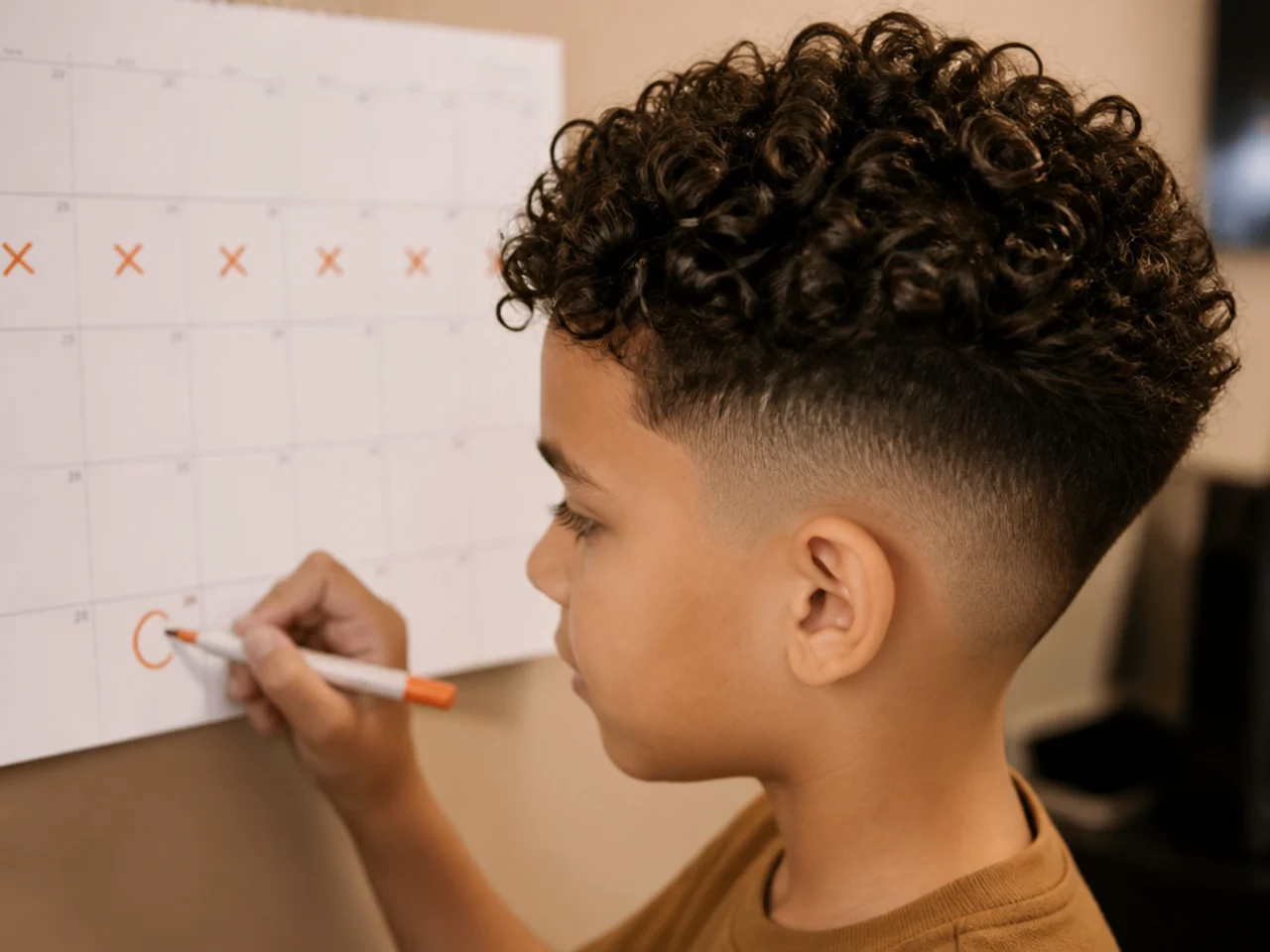
Curly hair on a boy is managed across a week, not across a morning. Wash day decides how the next four days go, and the night undoes more of it than anything that happens after breakfast.
In this article · 27
- Why the Week Beats the Morning
- How to Choose Yours
- The 20 Steps
- 1. Fix a Wash Day and Keep It
- 2. Rinse Thoroughly Before Any Product
- 3. Shampoo the Scalp Only
- 4. Condition the Lengths, Not the Roots
- 5. Detangle With the Conditioner Still In
- 6. Section Anything Past the Ears
- 7. Always Work From the Ends Upward
- 8. Finish With a Cooler Rinse
- 9. Squeeze, Do Not Rub
- 10. Apply Leave-In While It Is Dripping
- 11. Add Cream Only If Water Is Not Enough
- 12. Distribute With One Slow Pass
- 13. Then Do Not Touch It
- 14. Air-Dry, or Diffuse on Low
- 15. Break the Cast, If There Is One
- 16. Protect It Before Bed
- 17. Sleep on Satin
- 18. Morning, Water on the Flat Side Only
- 19. Rake, Never Brush
- 20. Trim Every Six to Eight Weeks
- Styling and Upkeep
- Mistakes to Avoid
- FAQ
- Final Thoughts
Most families try to manage curly hair in the eight minutes before school and conclude that it cannot be managed.
The unit is the week, not the morning. What happens on wash day determines whether the next four mornings take twenty seconds or ten minutes, and no amount of morning effort compensates for a bad wash day.
The night is where the damage happens. Eight hours of friction against cotton undoes a good wash day entirely, which is why the cheapest step in this list is also the most effective.
Why the Week Beats the Morning
Wash day sets up four days. Get the sequence right once and the following mornings need water and nothing else.
Curl carries its own oils badly. The spiral interrupts the path from scalp to ends, which is why curly hair runs dry and why daily shampoo makes it worse.
Friction at night resets your work. Cotton grips curl and eight hours of it flattens one side and mats the nape.
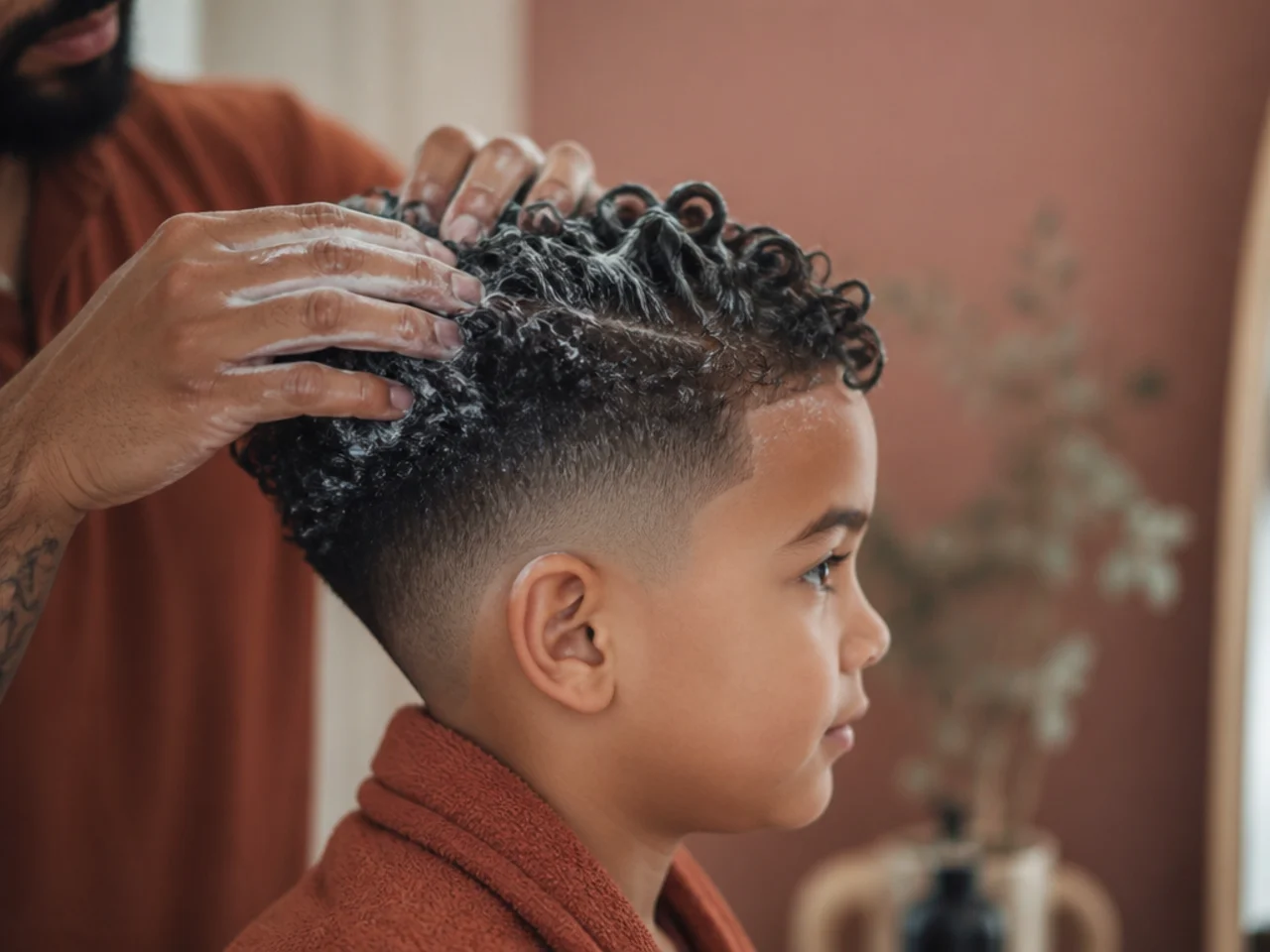
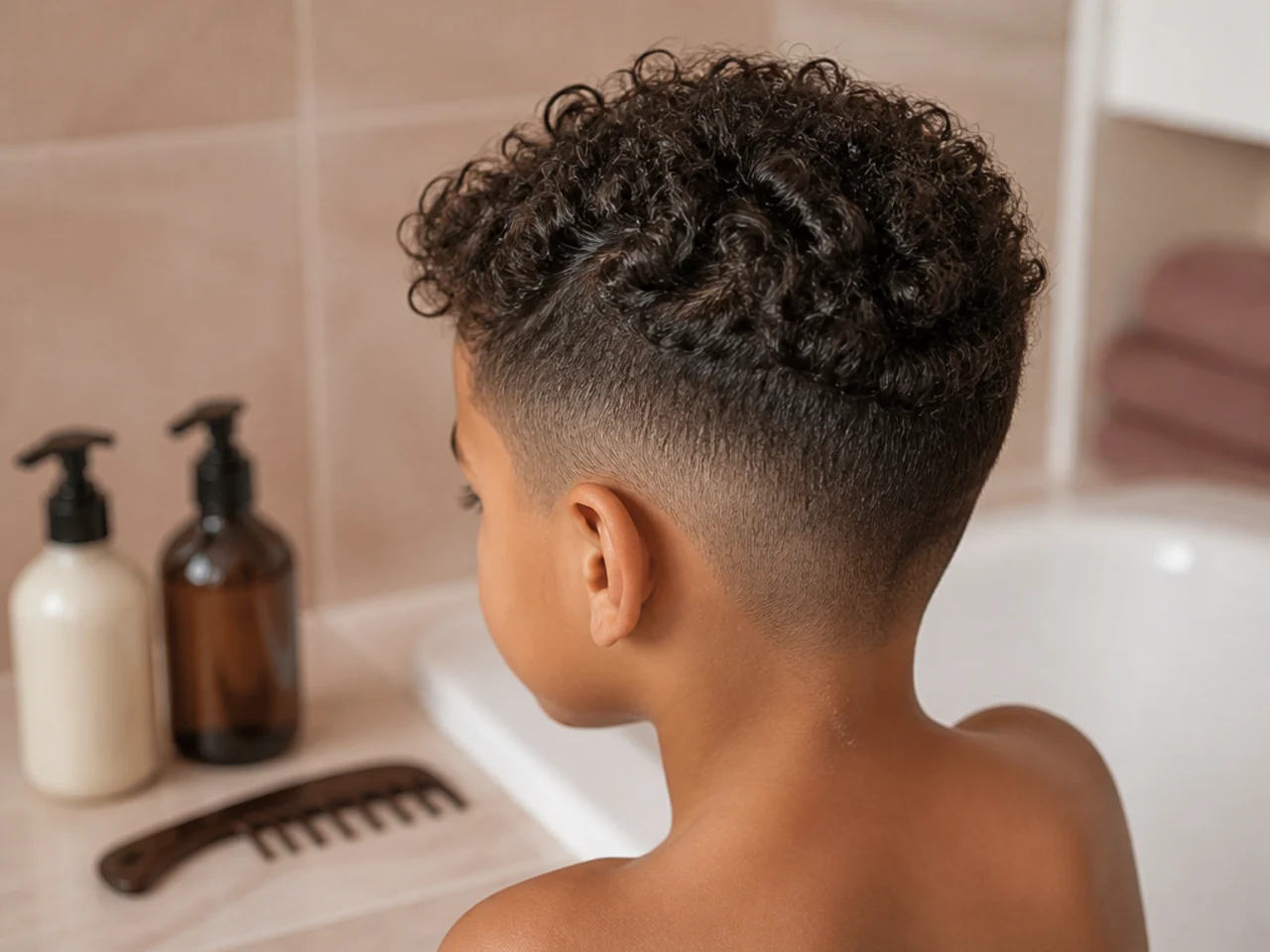
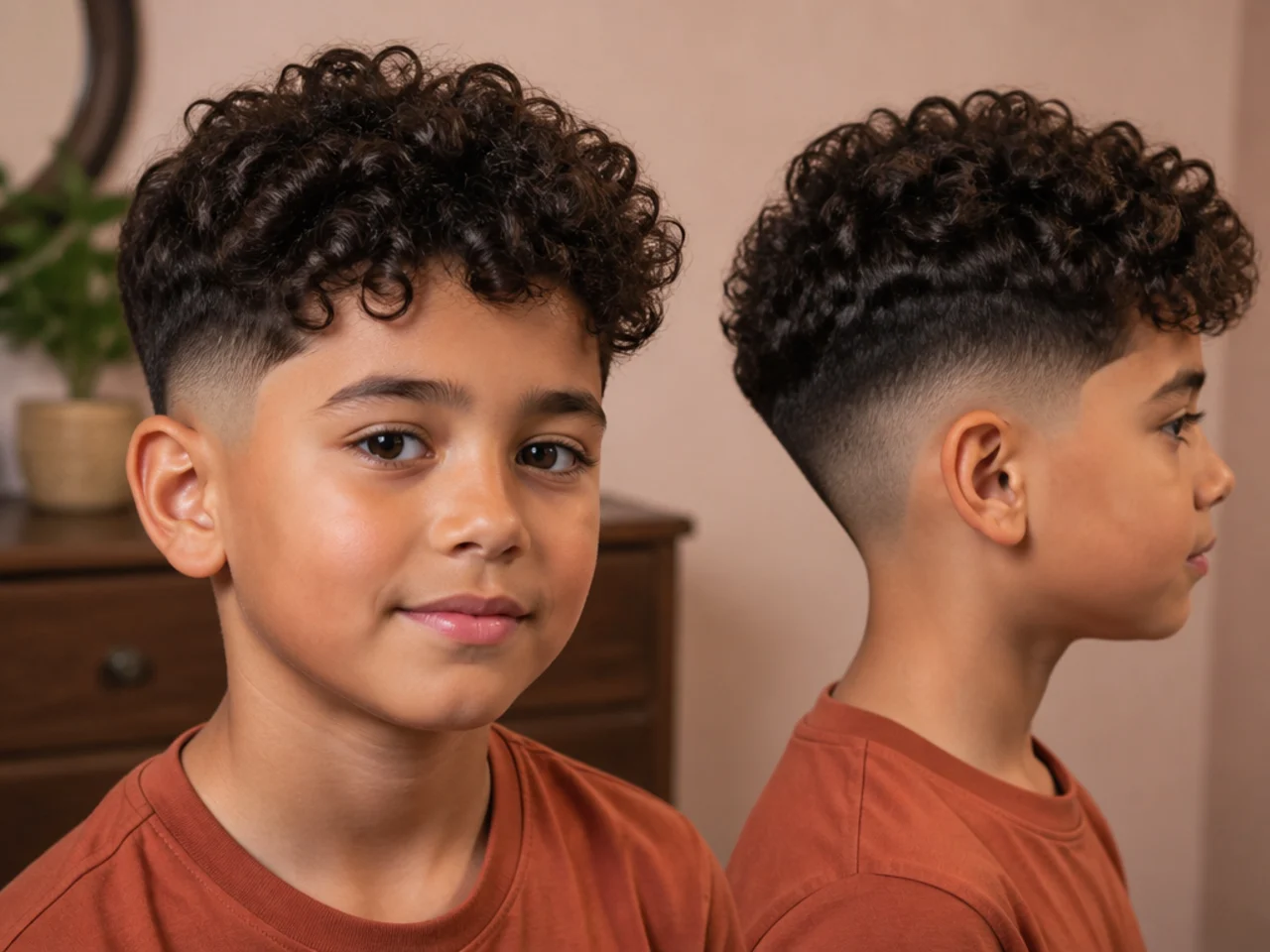
The haircut caps the routine. A shape that needs daily arranging will never be arranged, so the cut has to carry the load — which is the whole case for a taper on a curly-haired boy.
How to Choose Yours
Pick a wash day that suits your week. A weekend wash gives you the slow version and a school night gives you the rushed one.
Decide whether you are detangling in or out of the shower. In the shower with conditioner is faster and hurts less, and that decision changes everything downstream.
Scale the steps to his hair length. Short hair skips half of this list entirely.
Choose the smallest routine you will repeat. Consistency beats completeness on curl every time.
The 20 Steps
1. Fix a Wash Day and Keep It
Two or three washes a week, always on the same days. Curl responds to routine, and an unpredictable schedule leaves you guessing which state the hair is in each morning.
2. Rinse Thoroughly Before Any Product
A full minute of warm water before shampoo. Warm water swells the strand and lifts the day's build-up, which means less shampoo is needed to do the same job.

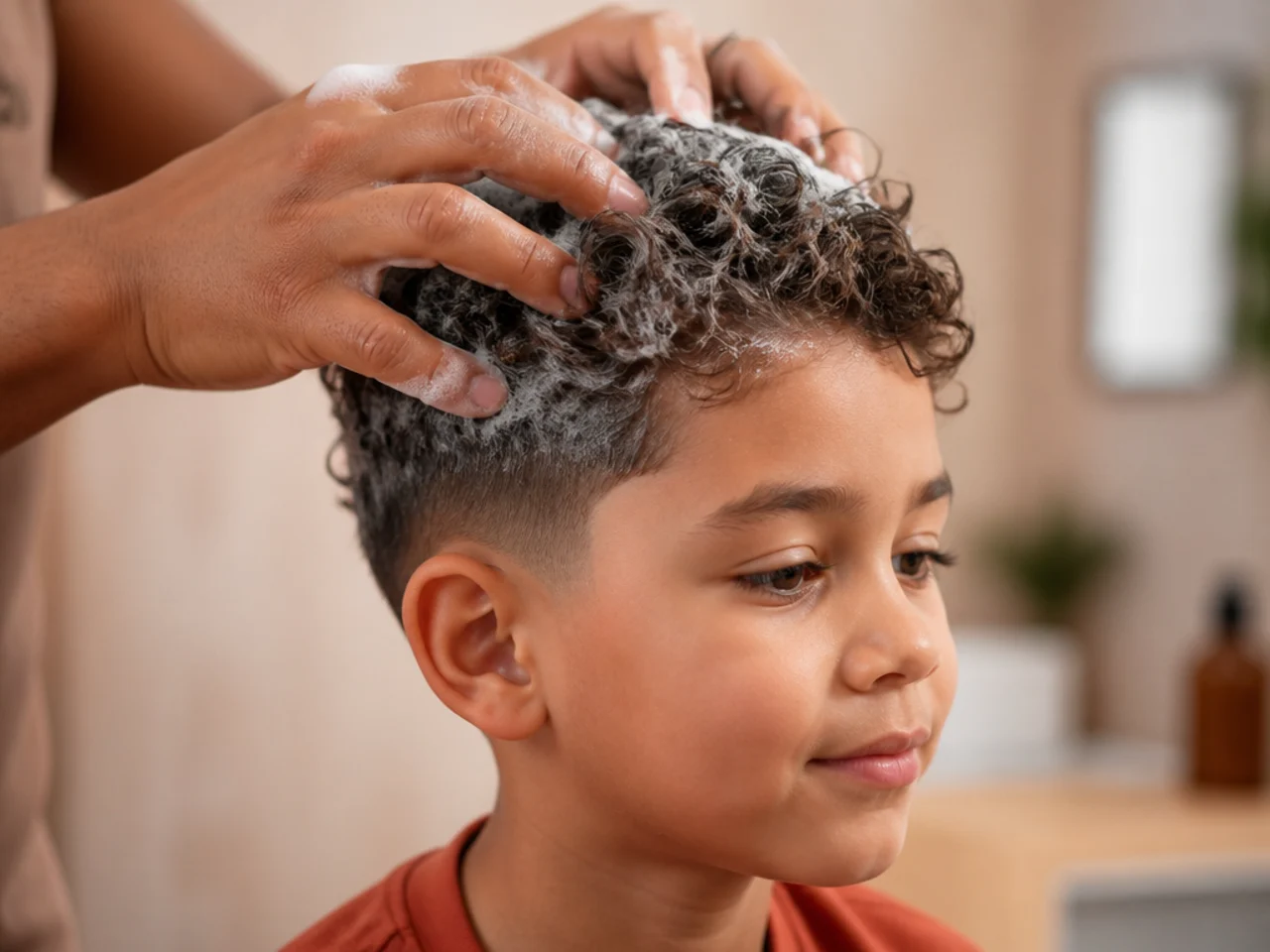
3. Shampoo the Scalp Only
Scrub his scalp with the pads of your fingers and let the lengths hang where they are, because piling the hair up and rubbing it together is what knots the ends. The ends are the oldest and driest part of the hair and they get cleaned enough by the suds running past them.
4. Condition the Lengths, Not the Roots
Conditioner from the ears down. Roots produce their own oil and the ends do not, so putting conditioner where the oil already is simply weighs the curl down.
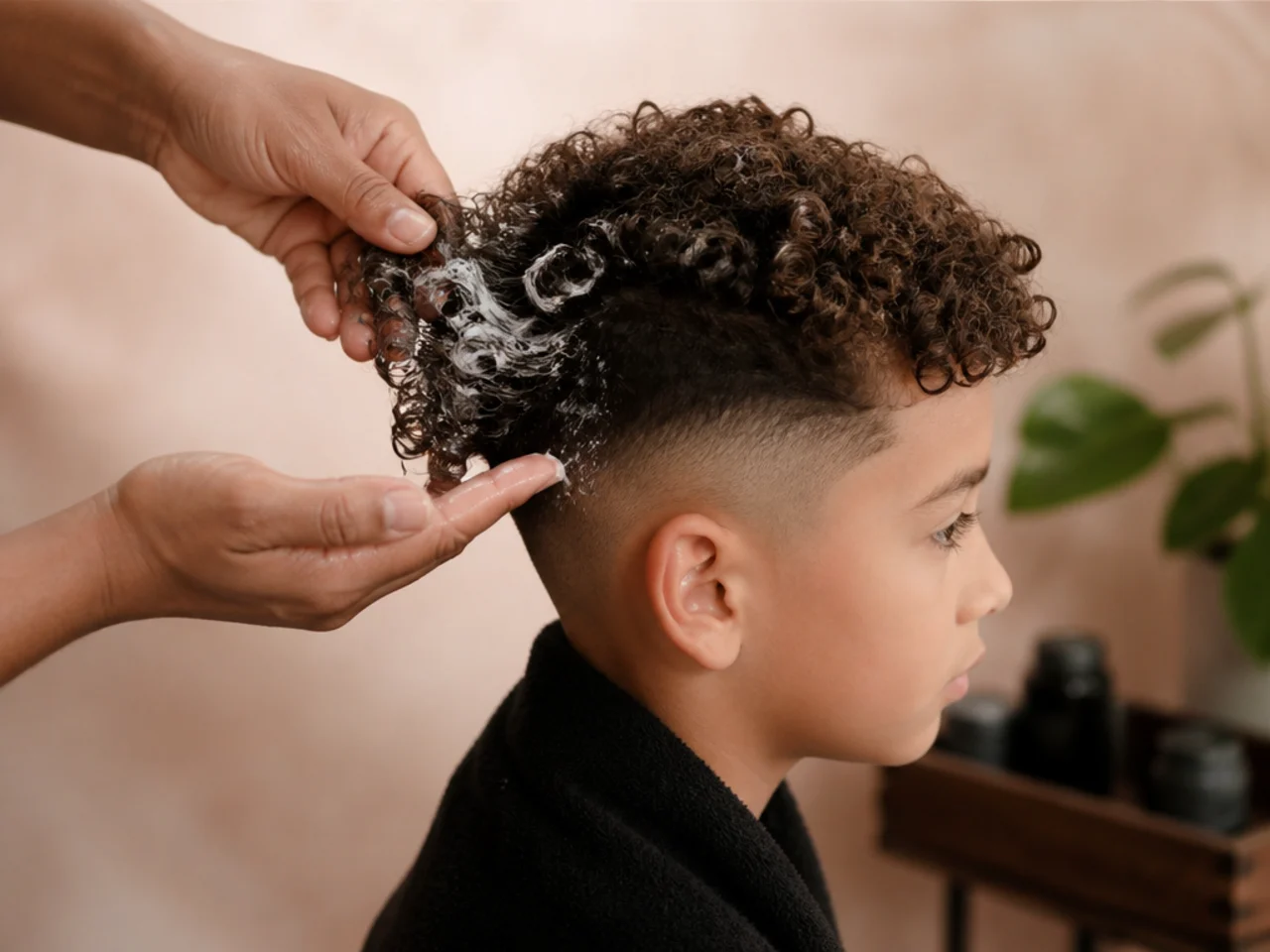
5. Detangle With the Conditioner Still In
Fingers or a wide-tooth comb, in the shower, before rinsing. Slip is what allows a curl to release rather than tear, and this is the single step that decides whether detangling is a fight.
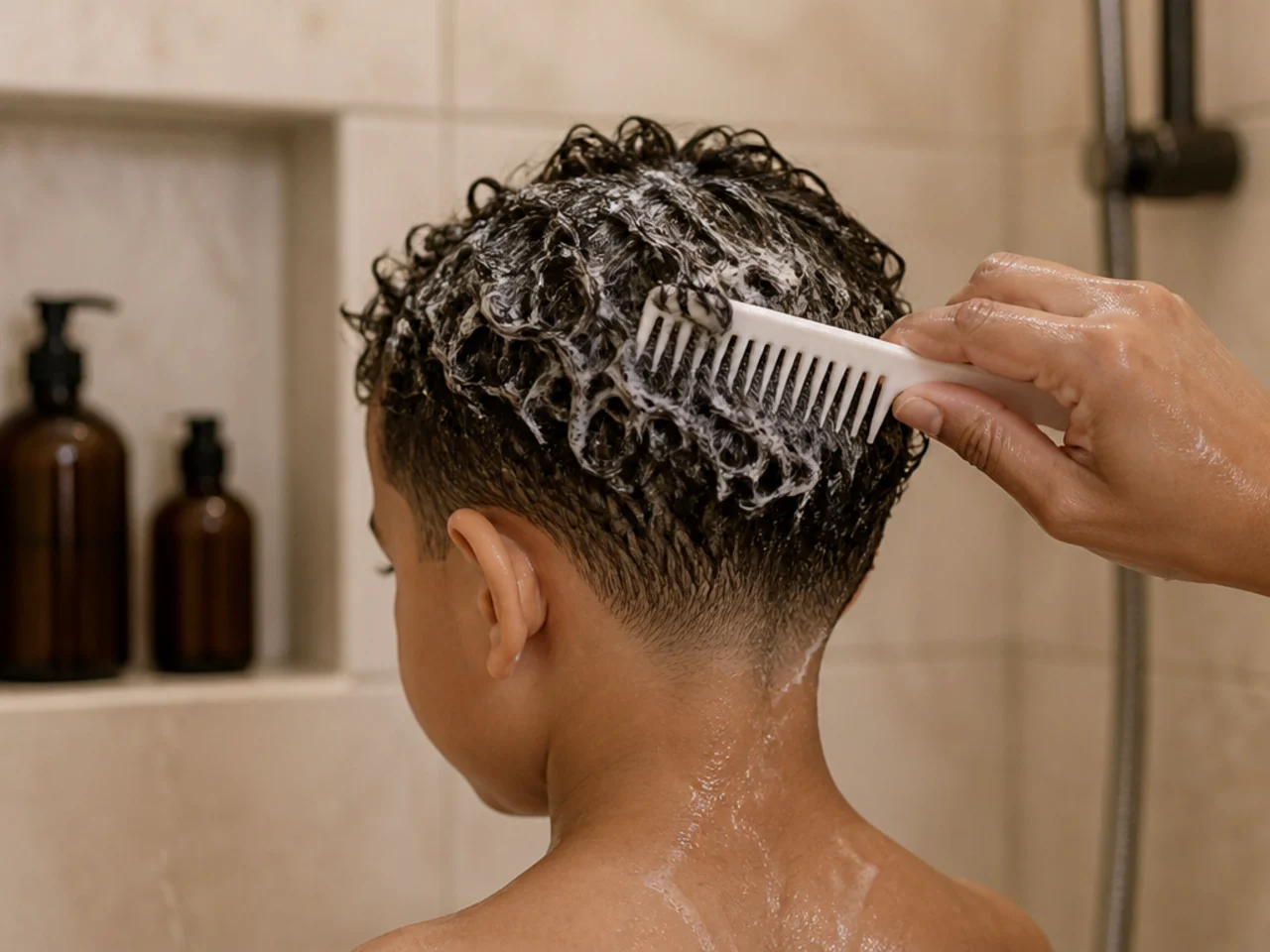
6. Section Anything Past the Ears
Four sections, clipped, worked one at a time. Sectioning turns one long unmanageable job into four short ones and is the change that makes the biggest difference on longer curly hair.
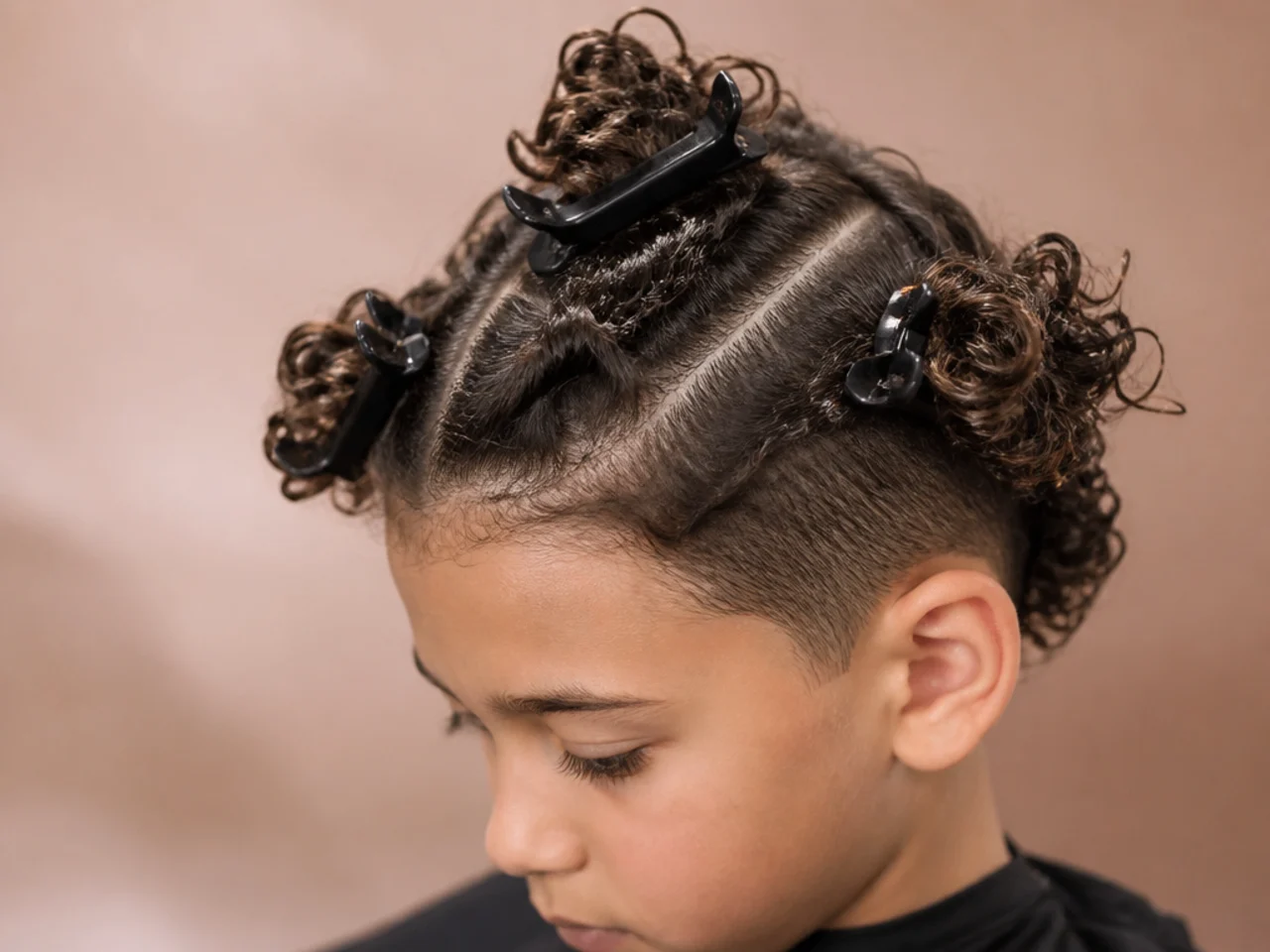
7. Always Work From the Ends Upward
Each pass starts at the last few centimetres. Starting at the root drags the entire length through the knot, and that is the pain that ends his cooperation for the next month.
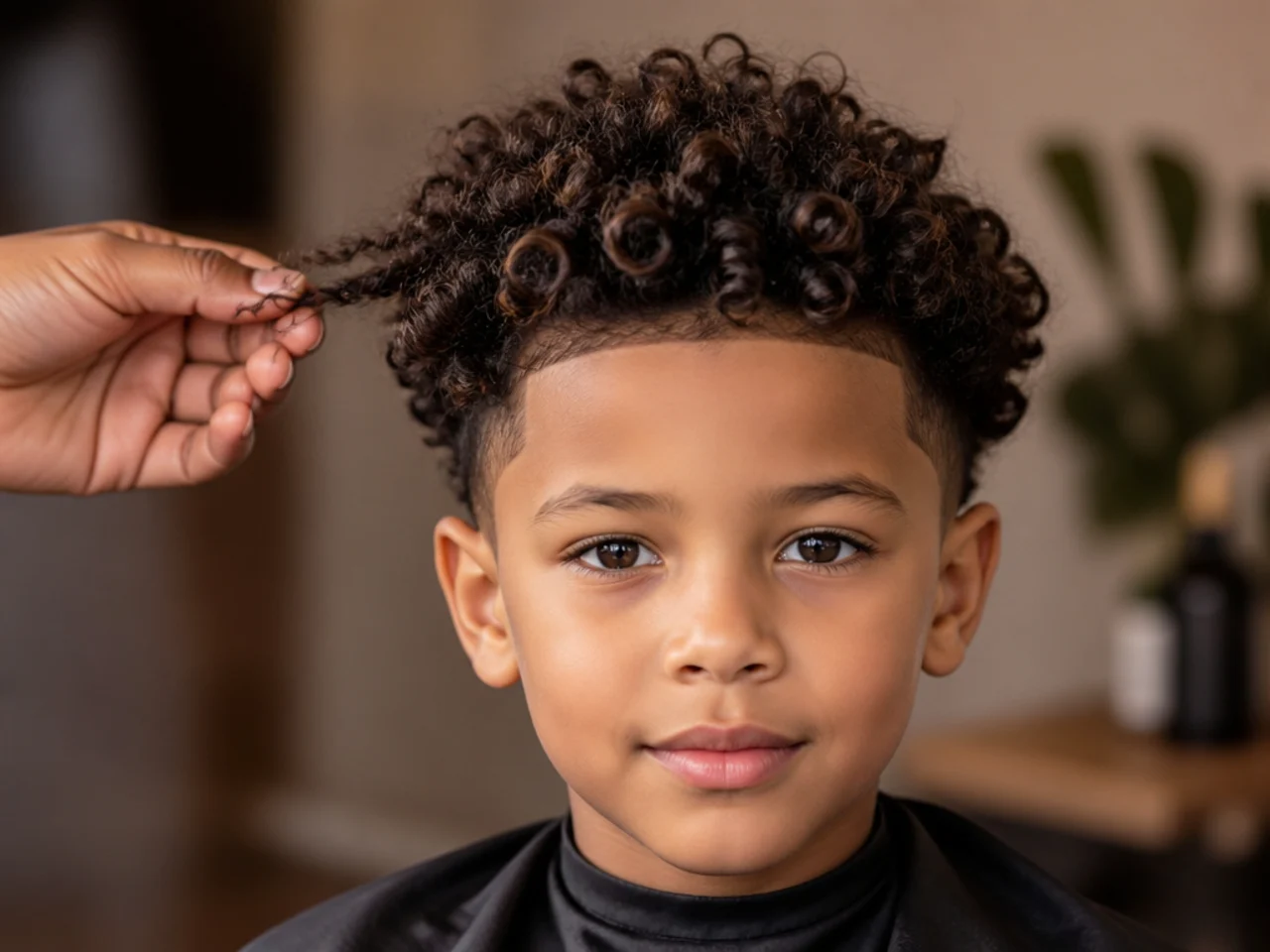
8. Finish With a Cooler Rinse
The last few seconds of the rinse turned down. Cooler water helps the outer layer of the strand lie flat, which is what makes curls reflect light instead of scattering it.

9. Squeeze, Do Not Rub
Water pressed out with a cotton t-shirt. Towel loops catch individual strands and pull them out of their clumps, and every strand pulled out is a strand that dries as frizz.
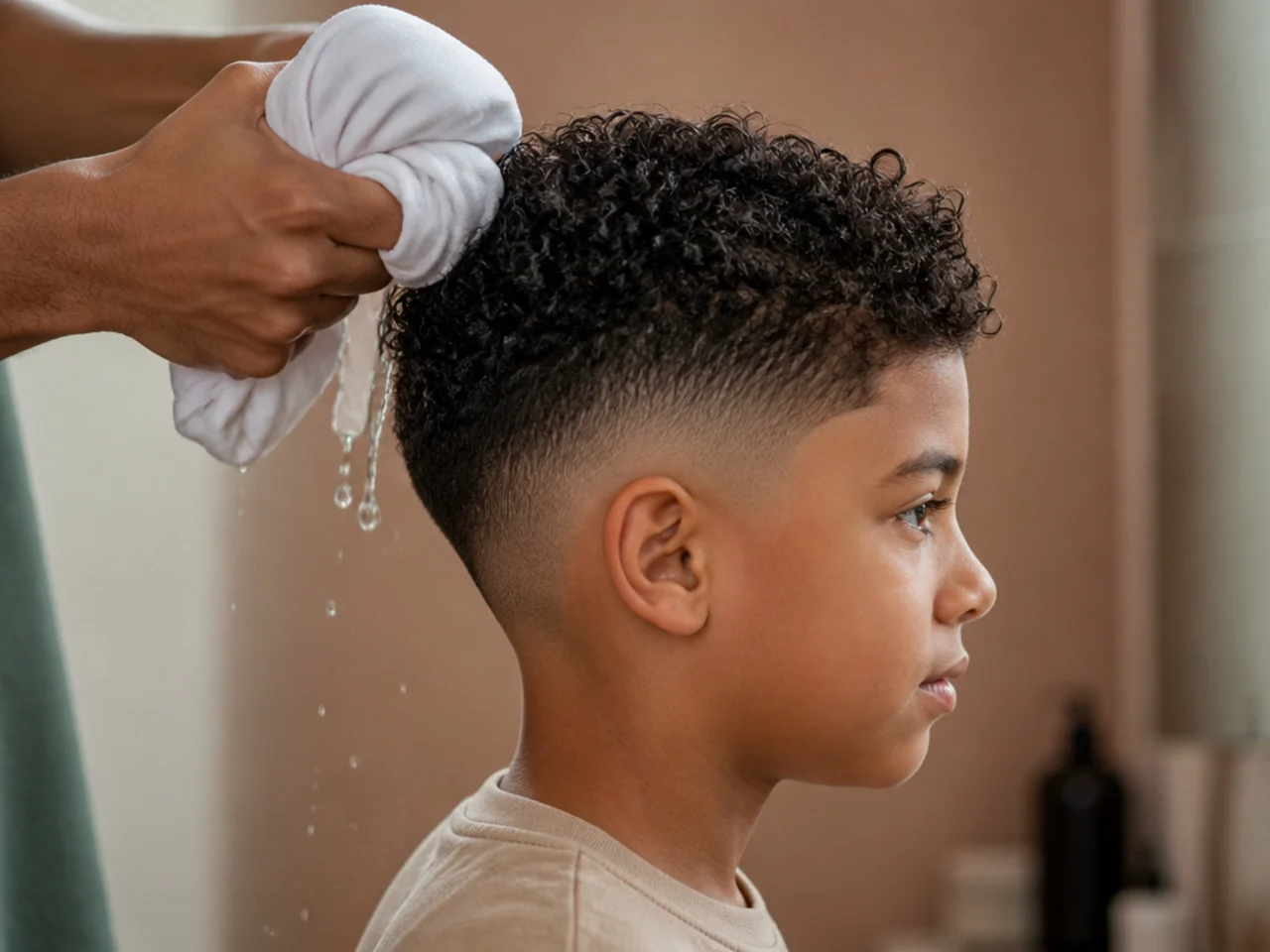
10. Apply Leave-In While It Is Dripping
Not damp, dripping. Water is the carrier that takes product evenly down the strand, and on merely damp hair the same product sits on the surface and dries into a shell.
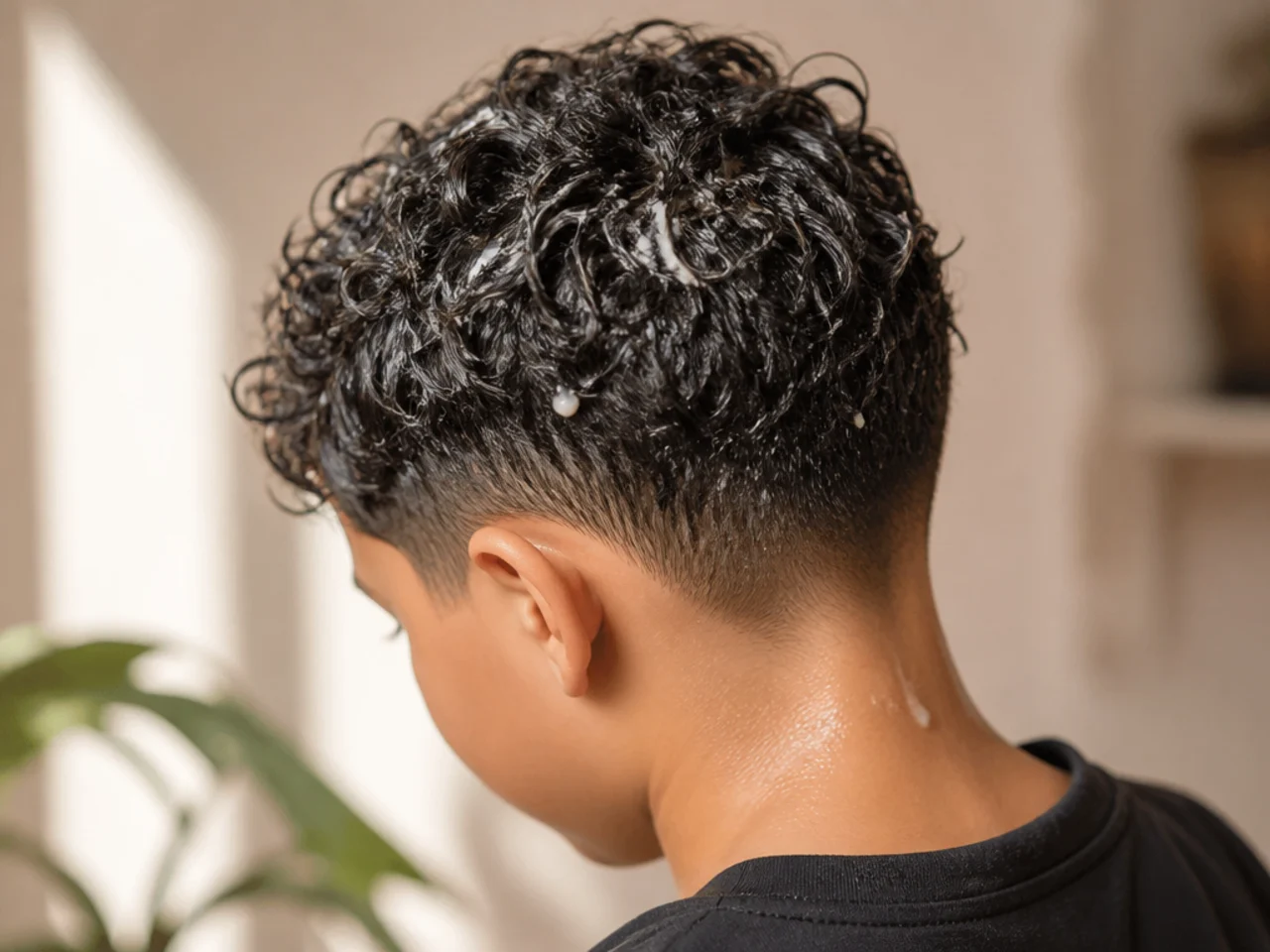
11. Add Cream Only If Water Is Not Enough
One pea for a whole head, and only if the hair frizzes by midday without it. Children's hair is fine, and the amount that defines an adult curl flattens a child's.
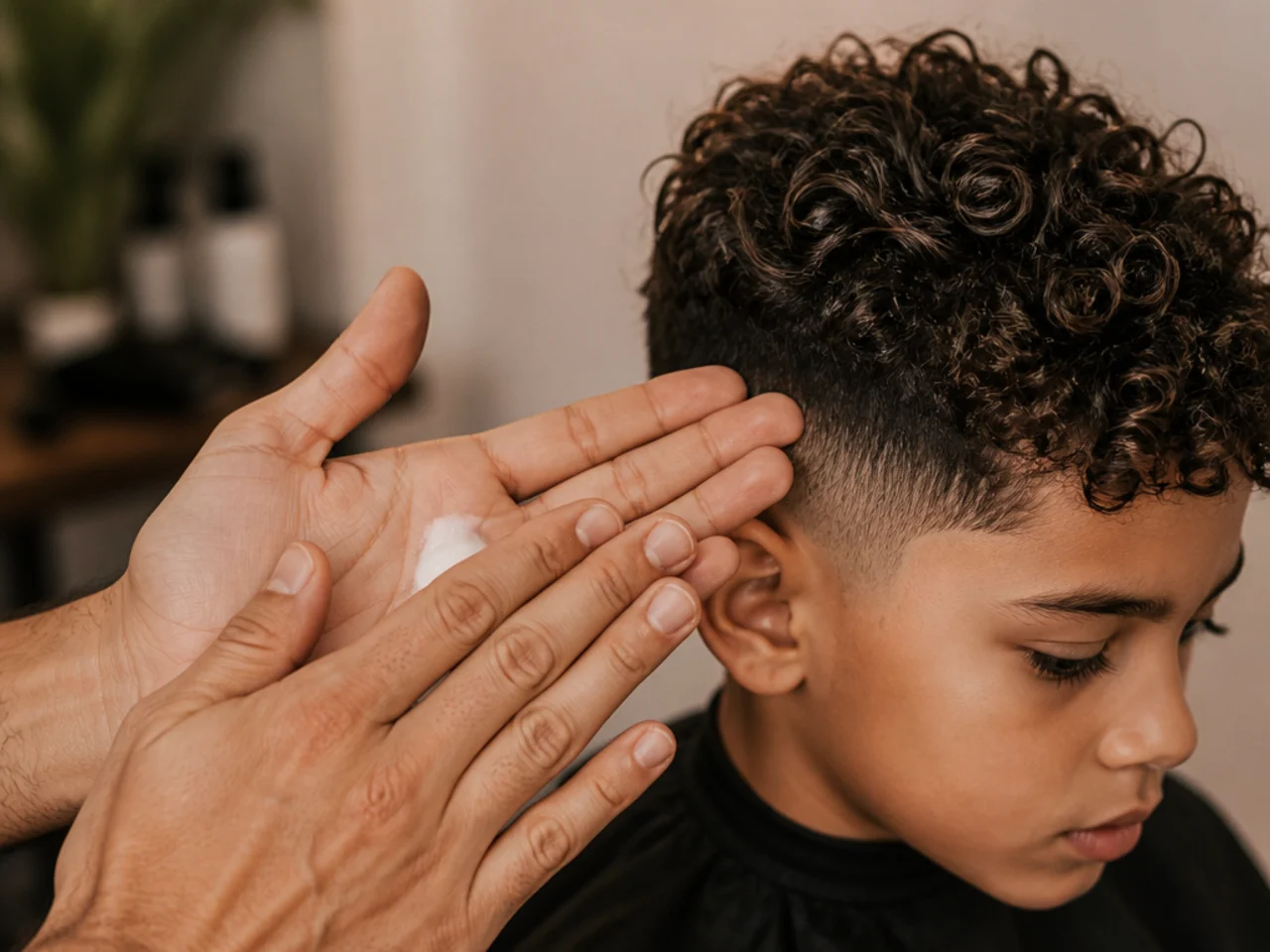
12. Distribute With One Slow Pass
Palms flat, smoothing down the hair once. Repeated passes break the clumps apart, and clumping is the entire mechanism behind curl definition.
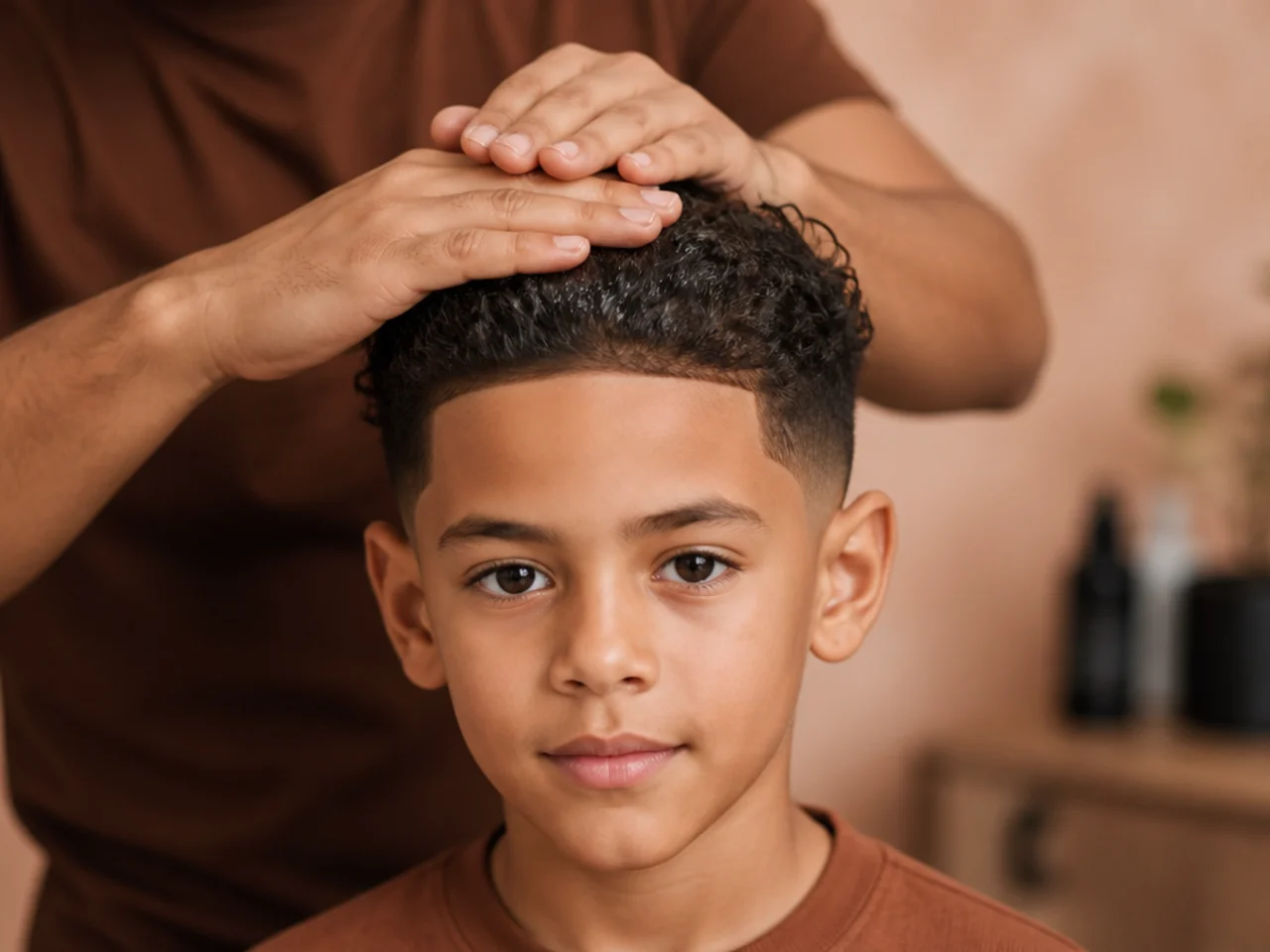
13. Then Do Not Touch It
Hands off while it dries. Every touch during drying separates clumps that are still setting, which is why hair looks worse the more it is fiddled with.

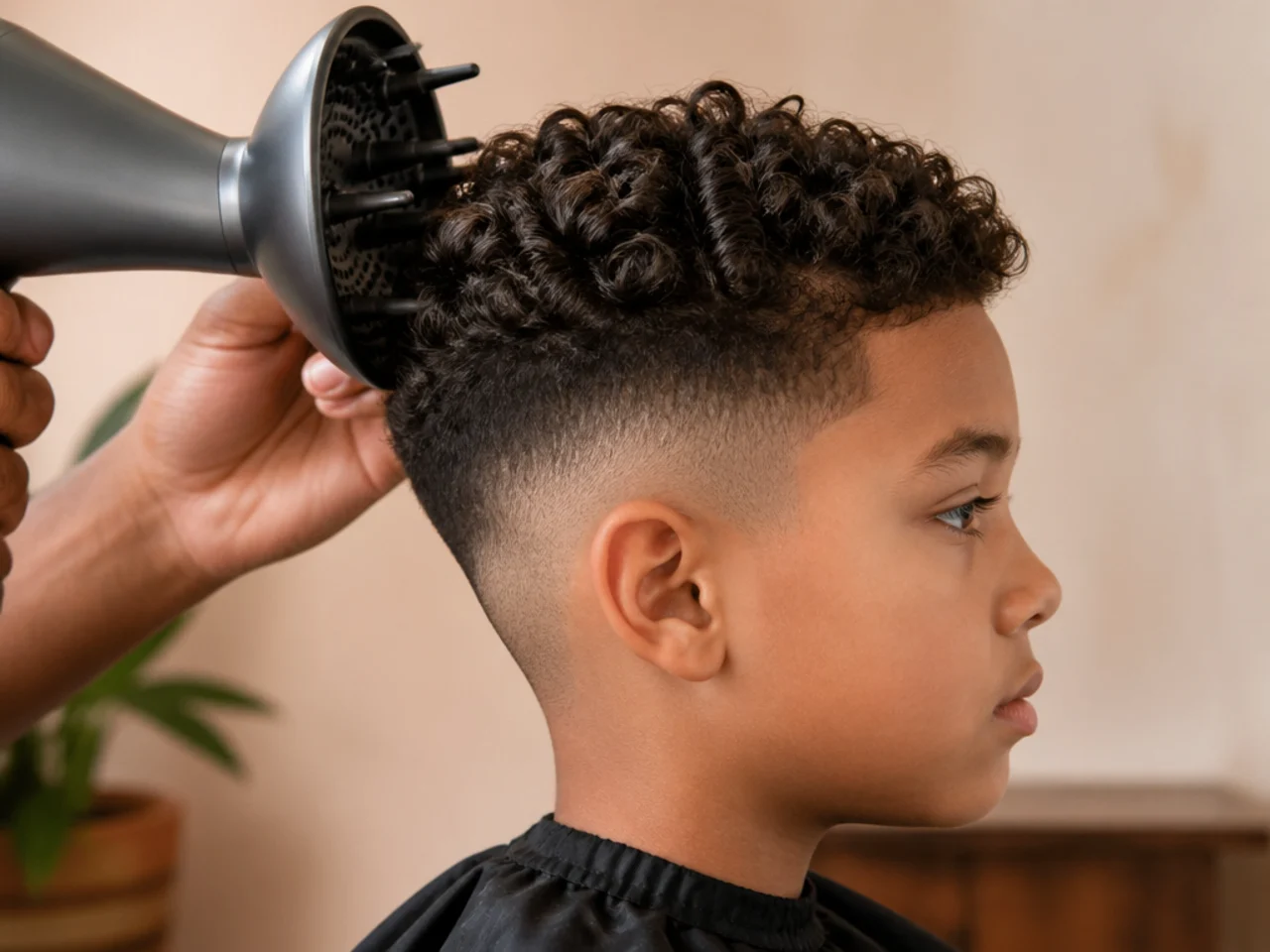
14. Air-Dry, or Diffuse on Low
Low airflow only, cupping the hair rather than blowing at it. High airflow blows the clumps apart and produces exactly the frizz the routine was avoiding.
15. Break the Cast, If There Is One
If gel was used, squeeze the dried hair gently once to break the crunch. On a child this is usually unnecessary, because the routine rarely includes gel in the first place.
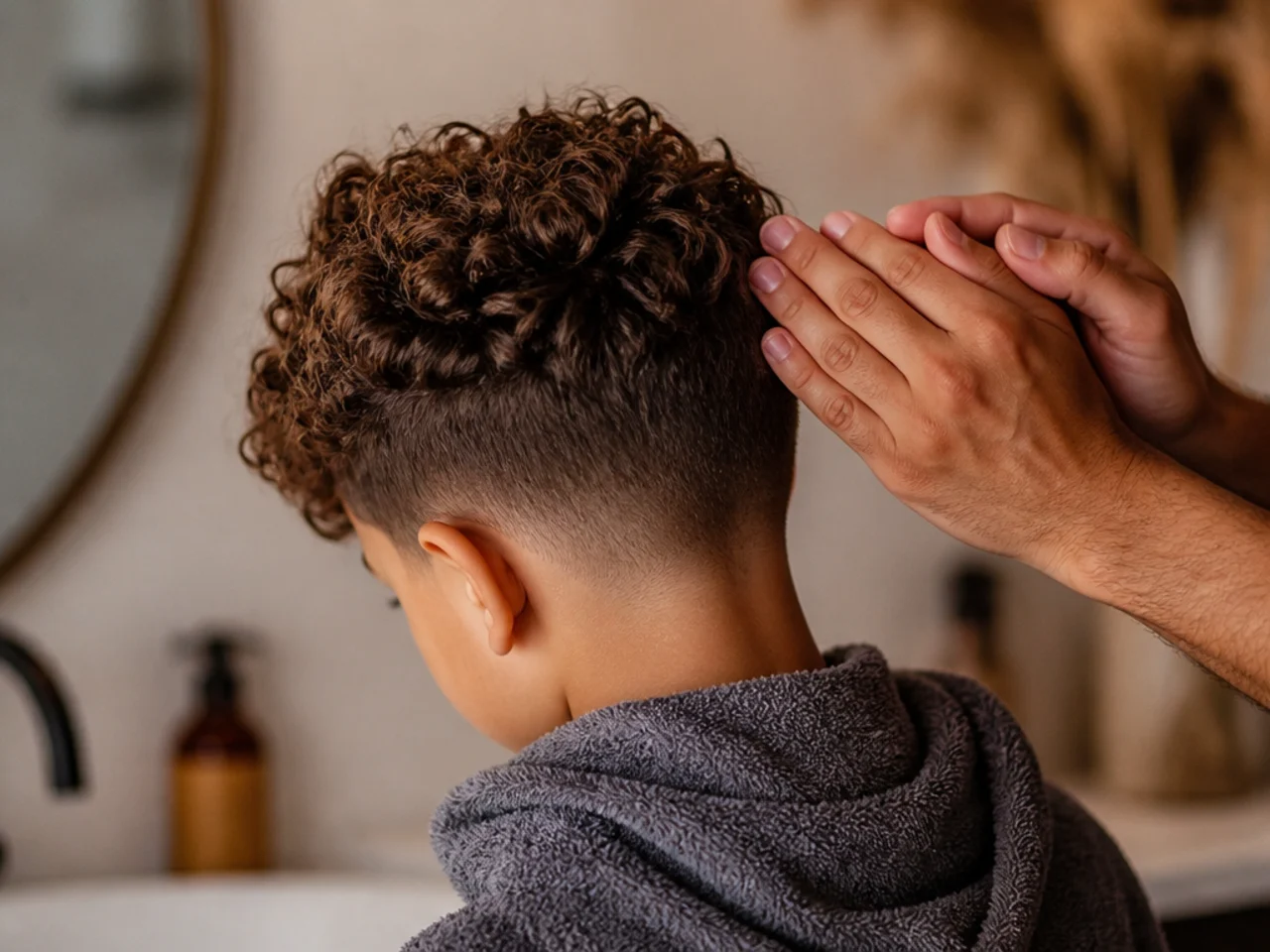
16. Protect It Before Bed
Long hair loosely gathered at the crown, short hair left alone. Keeping the length off the pillow protects the clumps and keeps pressure off the nape, where mats begin.
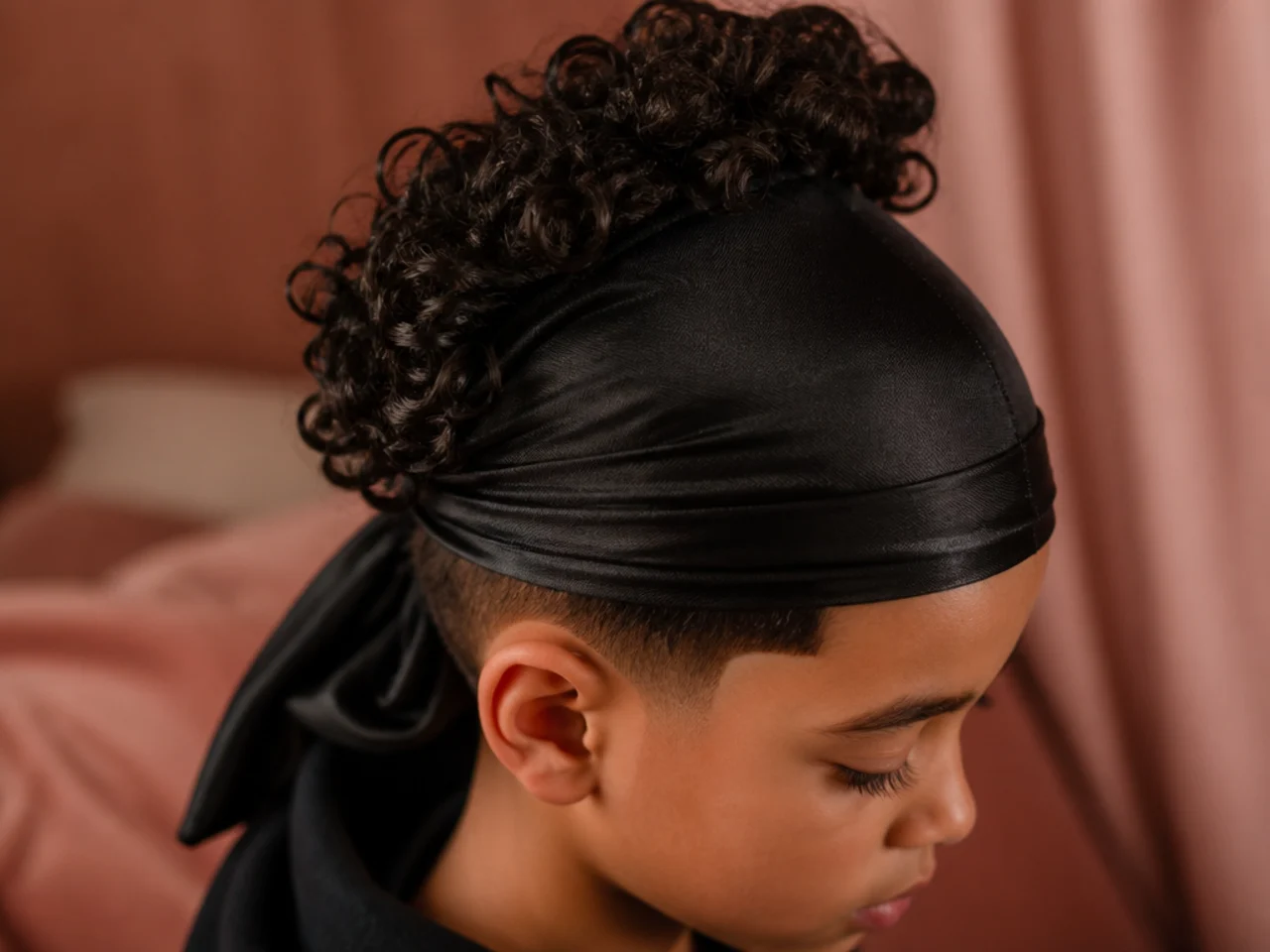
17. Sleep on Satin
The one purchase worth making before any product. Cotton grips curl and creates the friction that flattens one side and knits the back together overnight.

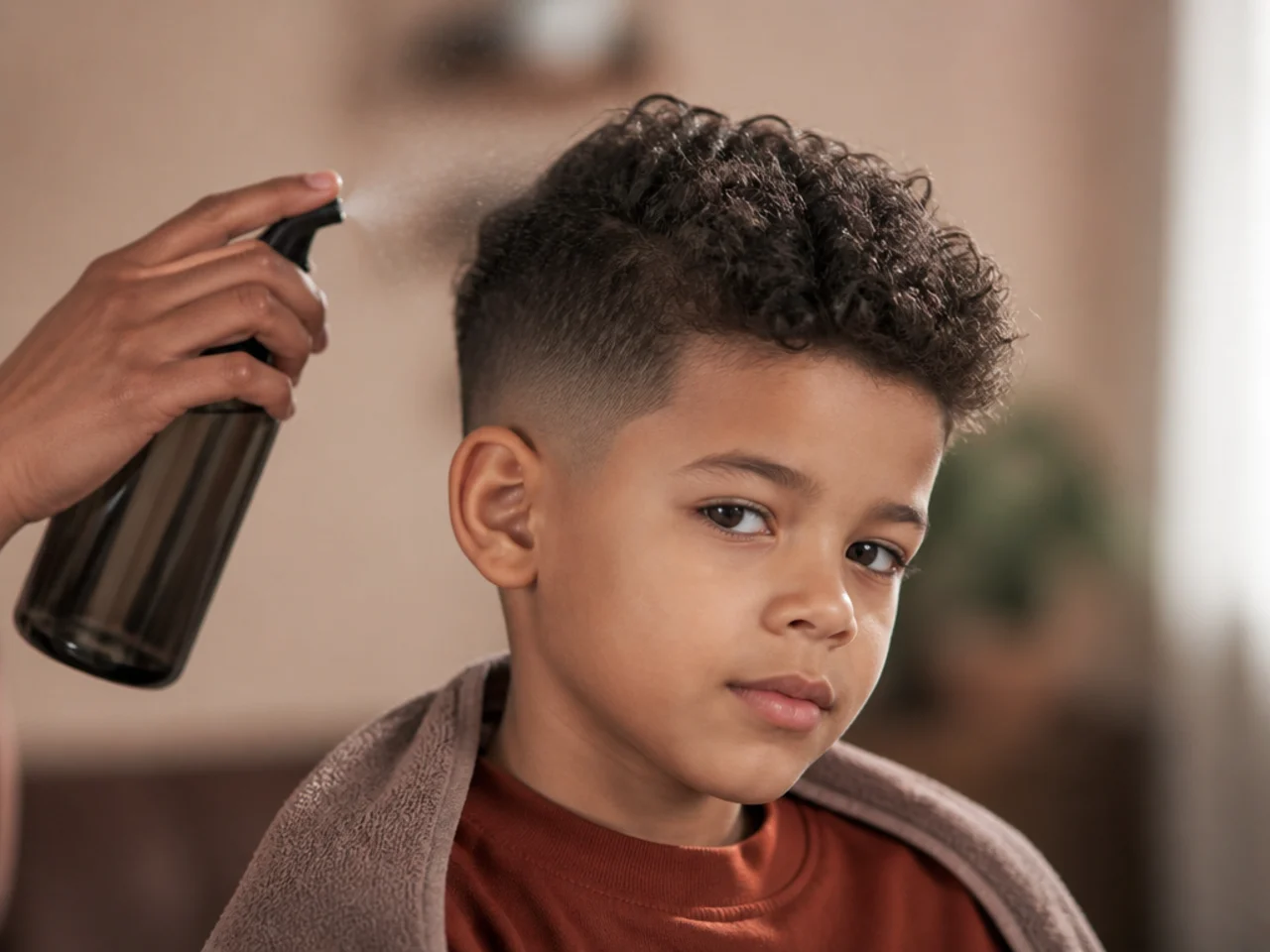
18. Morning, Water on the Flat Side Only
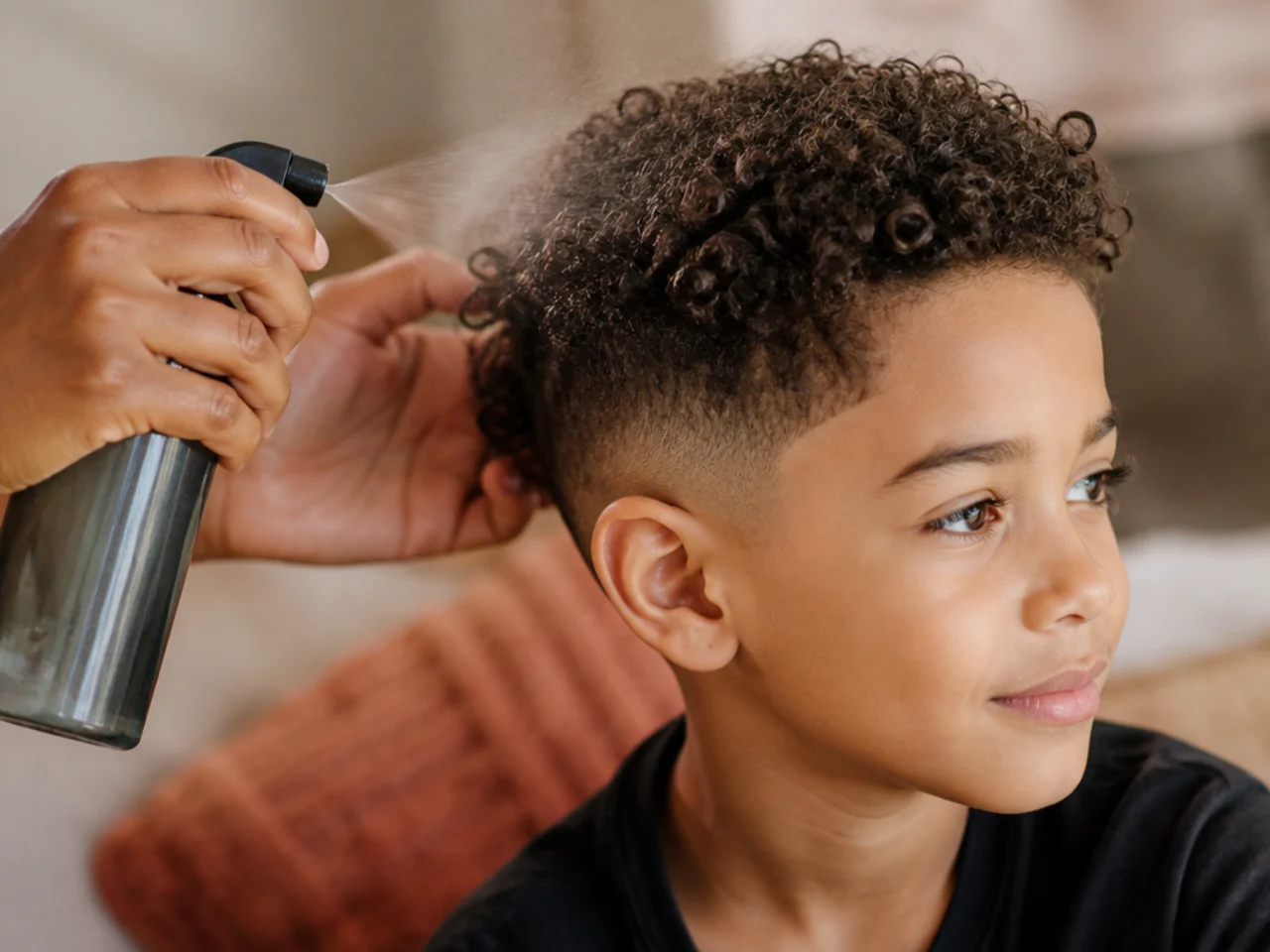
Spray whichever side he slept on, not the whole head. It halves the drying time and gets the shape back in about ten seconds.
19. Rake, Never Brush
Fingers spread wide, drawn through once, then out. A brush through dry curl separates every clump on the head, and nothing short of rewetting brings them back.
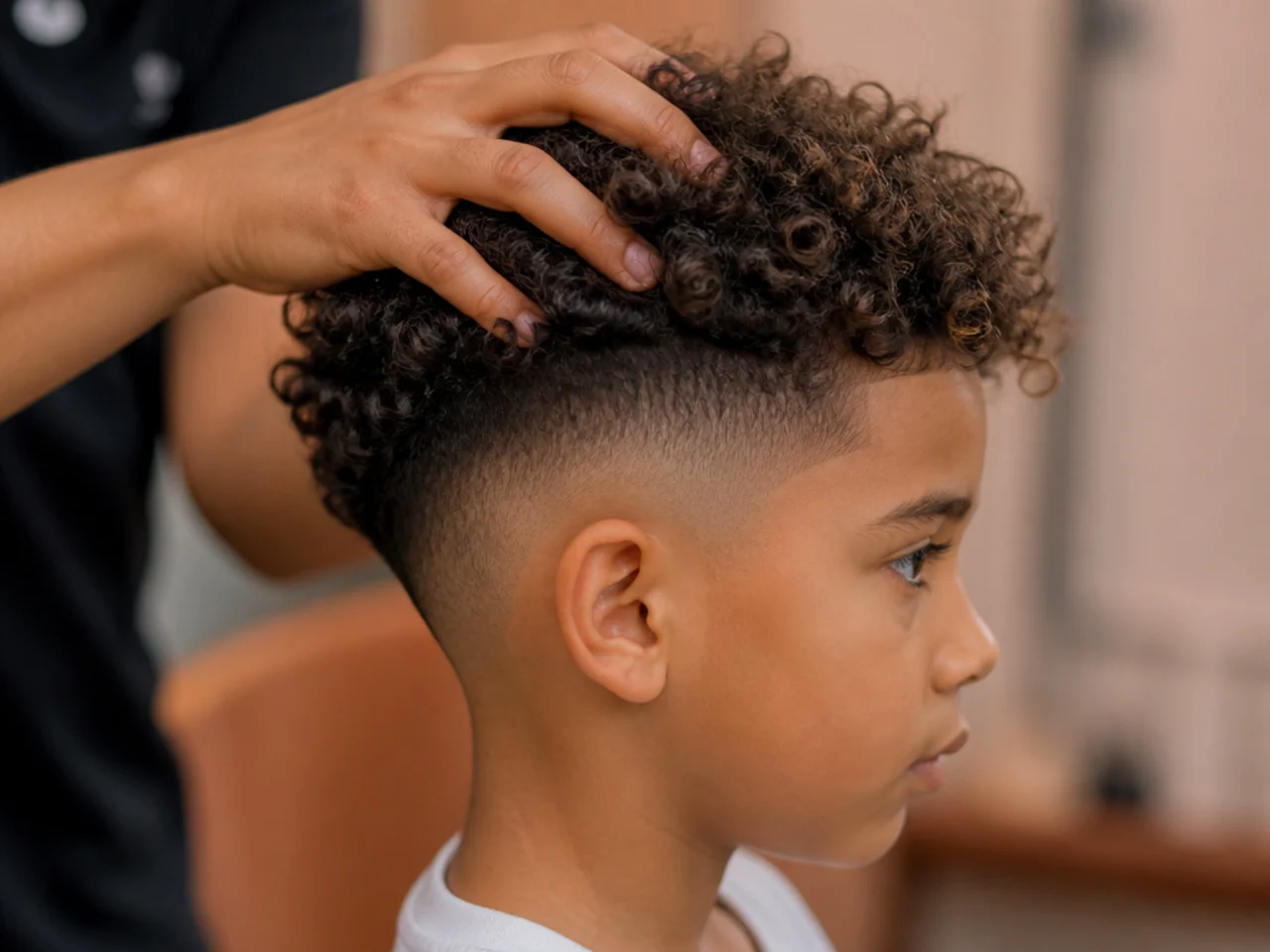
20. Trim Every Six to Eight Weeks
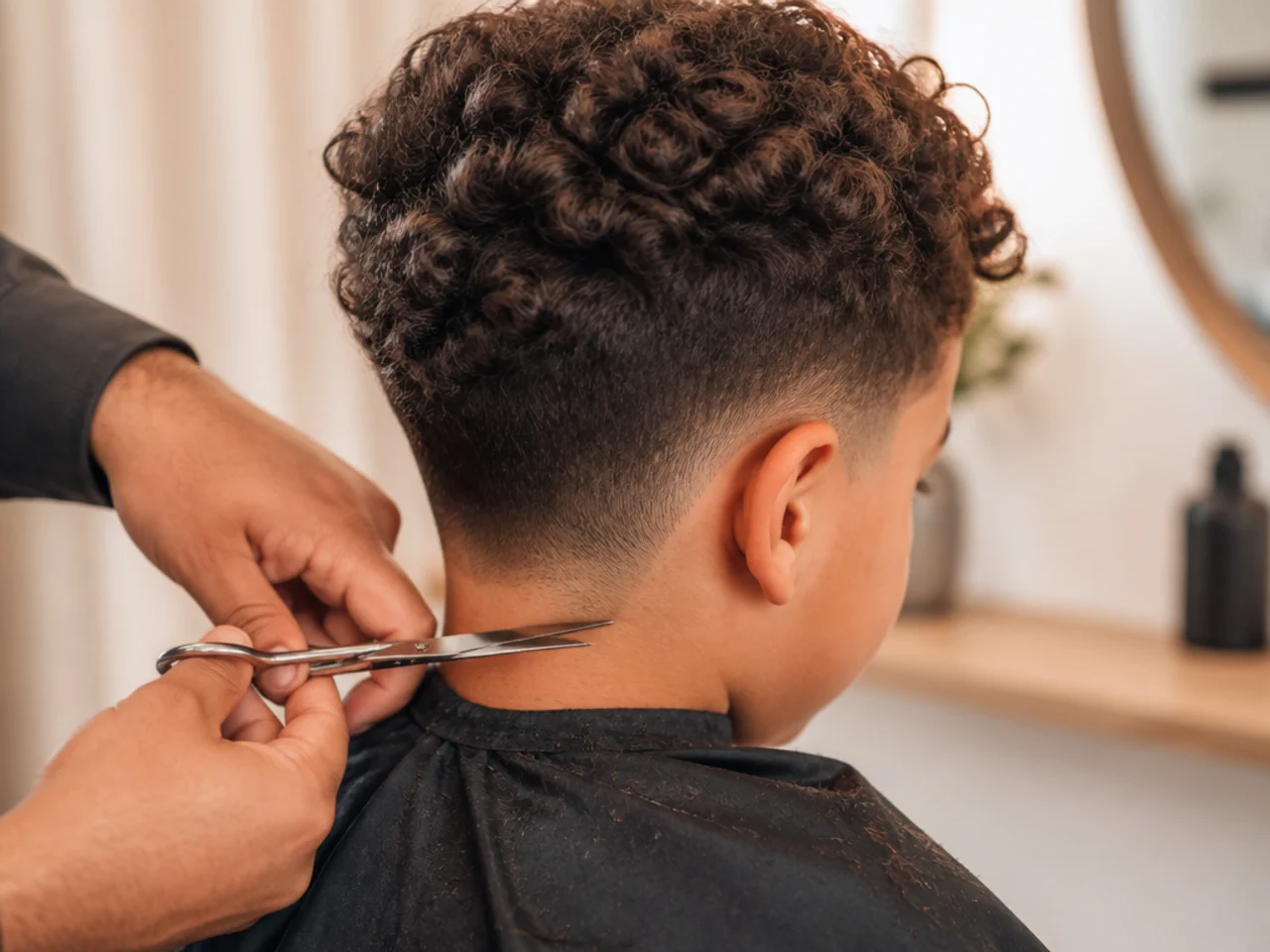
Perimeter and nape, whether or not the shape needs it. Split ends travel upward, and a small regular trim costs less length than the repair does.
Styling and Upkeep
Refresh mid-week rather than re-washing. Water and fingers restore the shape without stripping oils the hair has spent days distributing.
Keep the spray bottle where the routine happens. Wherever he stands in the morning, not wherever the products live.
Watch the nape more than the top. It mats first, from collars, pillows and car seats, and it is the section that ends grow-outs.
Trim before the ends look bad. By the time splits are visible they have already travelled up the strand.
Adjust the routine as the pattern changes. Curl commonly shifts between two and four years old, and what worked last year may not now — the curl type scale is a useful way to describe the change to a barber.
Mistakes to Avoid
Washing every day. Curl already struggles to carry oil down the strand, and daily shampoo removes what little arrives.
Detangling dry. With no slip the comb tears rather than passes, and one painful session costs you ten future ones.
Applying product to towel-dried hair. Without water as a carrier it never reaches inside the curl.
Rubbing with a towel. The loops lift strands out of their clumps and every lifted strand dries as frizz.
Skipping the pillowcase. It is the cheapest step here and it undoes more damage than any product reverses.

FAQ
How often should it be washed? Two or three times a week, with plain water refreshes in between.
What order do products go on? Leave-in on dripping wet hair first, cream second and only if needed.
Is a night routine necessary? One satin pillowcase, and everything else about the night is optional.
Final Thoughts
Get wash day and the pillowcase right and the mornings stop being a problem worth solving. Everything else on this list is a refinement of those two decisions, and none of it works without them.
For individual techniques rather than the full sequence see ways to style a boy's curly hair, and for cuts that reduce the work read curly haircuts for boys. More in Men's Haircuts.