15 Ways to Style a Boy's Curly Hair
Every technique here has to be performed on a child who is walking away from you. That rules out anything taking more than two minutes, anything needing him to hold still, and anything he can feel afterwards.
In this article · 22
- What Actually Makes a Curl Look Defined
- How to Choose Yours
- The 15 Ways to Style a Boy's Curly Hair
- 1. The Ten-Second Water Reset
- 2. Spot-Damping the Flat Side
- 3. Praying Hands, Once
- 4. Scrunching Upward From the Ends
- 5. The Damp Finger Rake
- 6. The Pick at the Root Only
- 7. Squeezing With a Cotton T-Shirt
- 8. One Pea of Cream, on Wet Hair
- 9. Front First, Back Second
- 10. The Loose Overnight Gather
- 11. Detangling in the Bath, Not at the Mirror
- 12. Working From the Ends Upward
- 13. The Ninety-Second Distraction
- 14. The Diffuser on Low, Hands Off
- 15. Knowing When to Wash Instead
- Styling and Upkeep
- Mistakes to Avoid
- FAQ
- Final Thoughts
Styling a boy's curly hair is not a technique problem. It is a time problem with a technique attached.
Every method here has to work in under two minutes. That is roughly how long a child stays in one place voluntarily, and a routine that outlasts his patience is a routine that gets abandoned by week two.
Nothing can require him to hold still. The techniques that survive are the ones done in a passing moment, with wet hands, while he is doing something else.
What Actually Makes a Curl Look Defined
Definition is clumping. Curls that stay grouped together read as defined, and the same curls separated read as frizz.
Water is the reactivator. Product holds a shape, but water is what makes a curl reform, which is why a spray bottle beats any bottle you can buy.
Brushing dry undoes it. Dragging bristles through dry curl separates every clump on the head and there is no way to put them back without rewetting.
Weight is the enemy on fine hair. Children's hair is finer than adults', so the product amount that defines an adult curl flattens a child's.
How to Choose Yours
Start with the water techniques. They cost nothing, need no products, and solve most morning problems on their own.
Add product only if water alone leaves it frizzy by lunchtime. Most boys never reach that point.
Pick techniques you can do one-handed. The other hand is usually holding something else.
Choose one method and repeat it. A pattern handled the same way every morning settles into a shape it never reaches under a routine that keeps changing, and a child stops resisting a sequence he can predict, so repetition buys you the definition and the cooperation at the same time.
The 15 Ways to Style a Boy's Curly Hair
1. The Ten-Second Water Reset
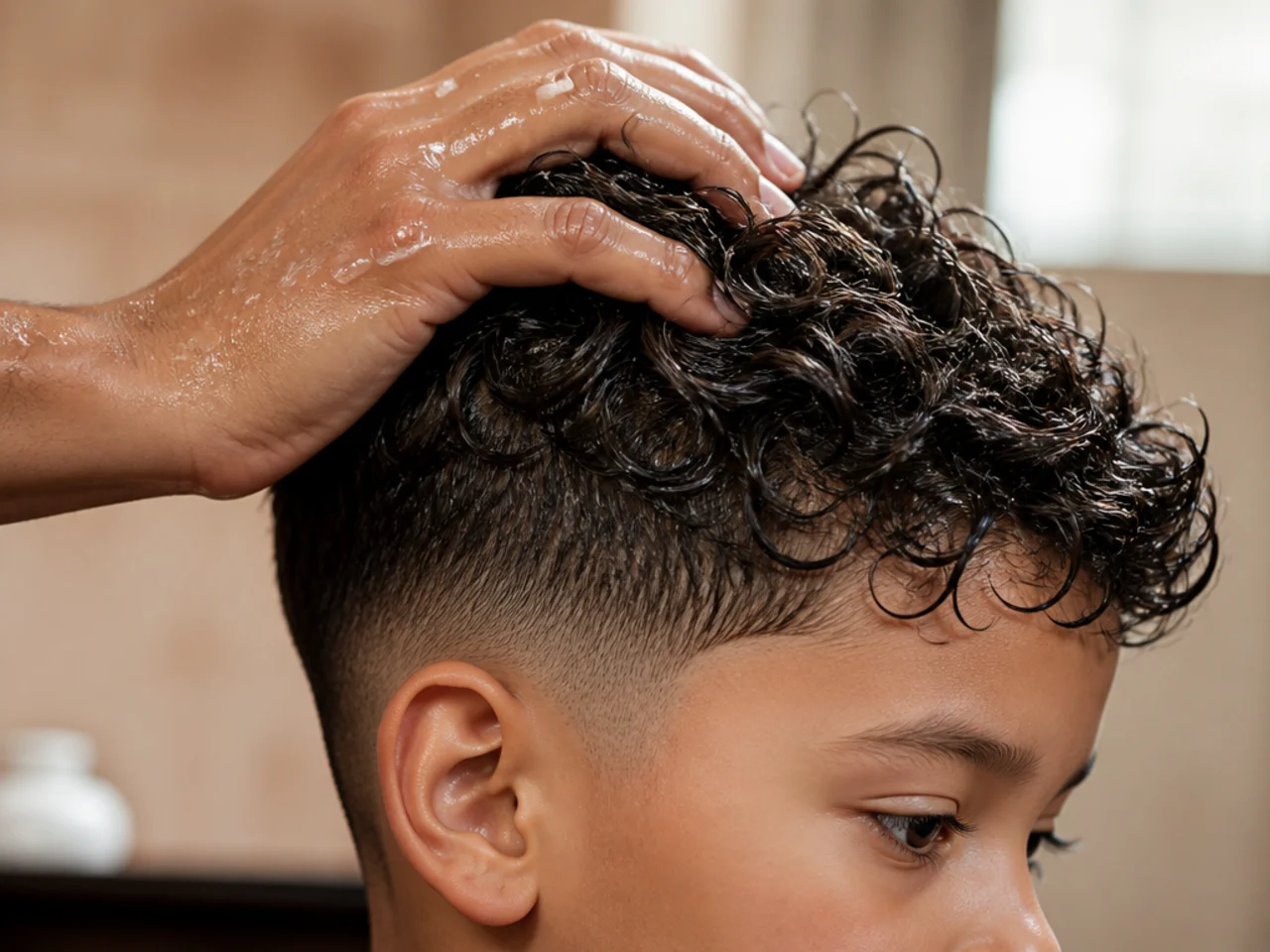
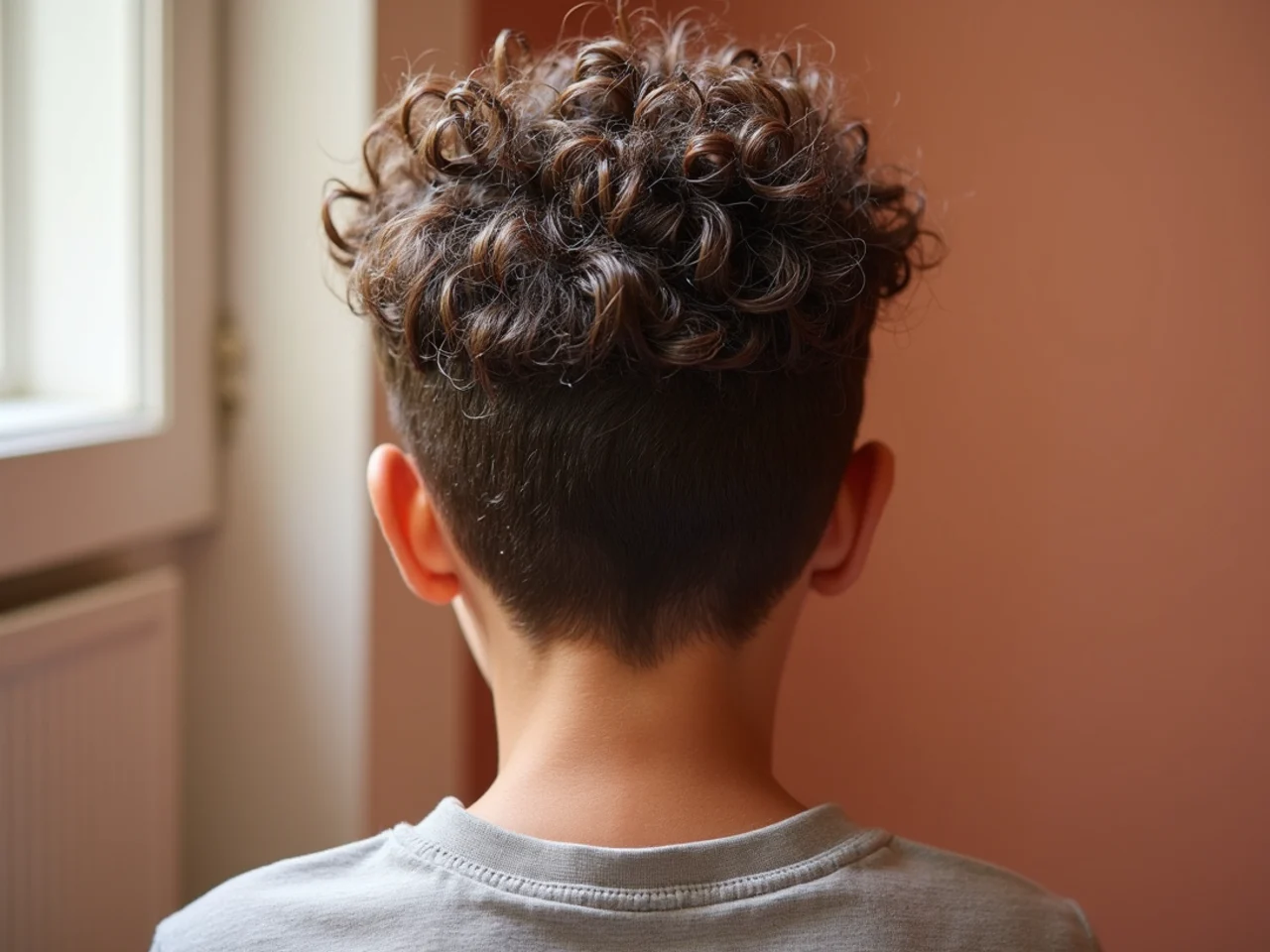
A wet hand pushed through the hair and released. Water reactivates the curl clumps that a pillow flattened, and on a short cut this is genuinely the entire morning routine.
2. Spot-Damping the Flat Side
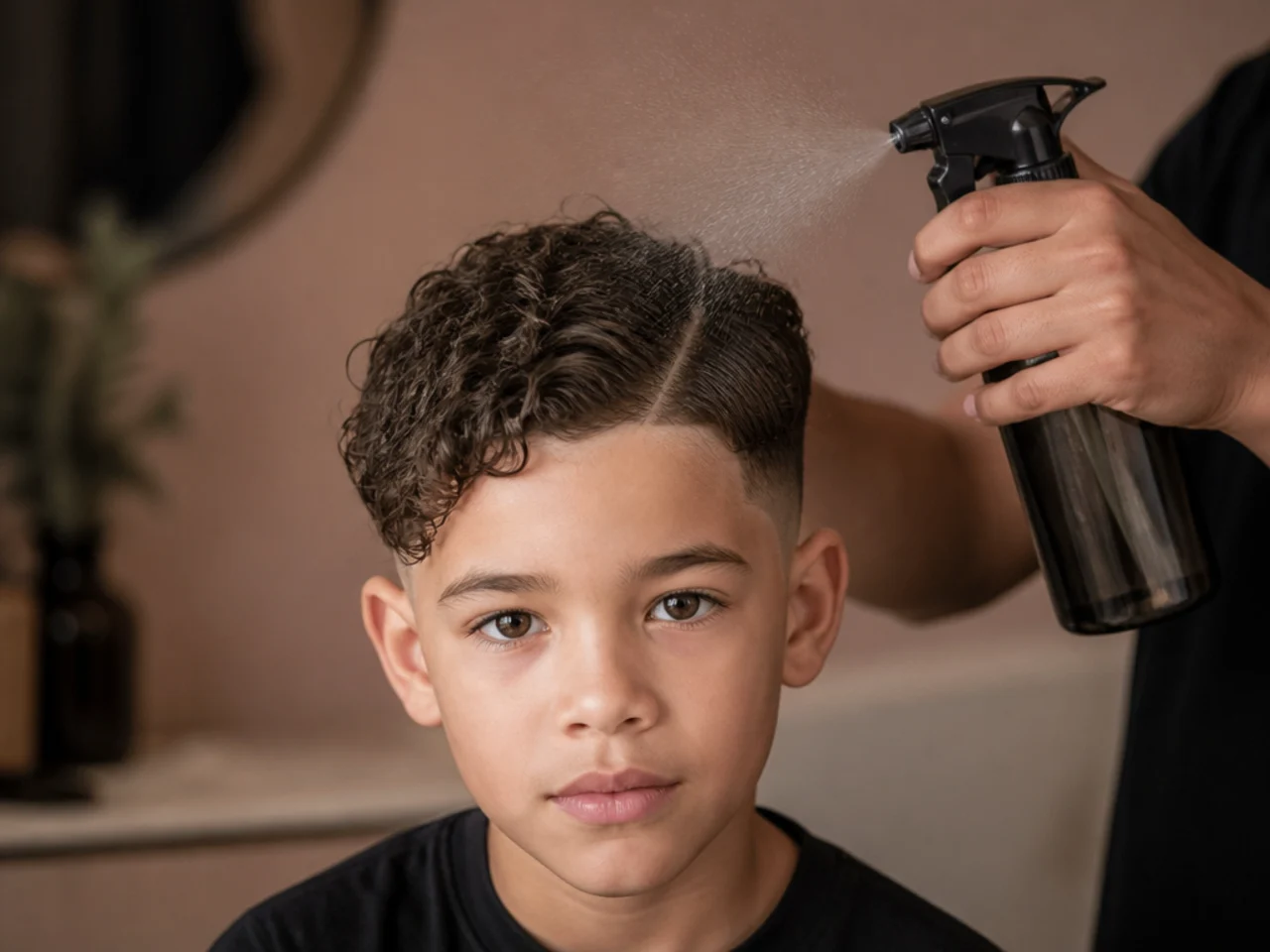
Only the side he slept on gets sprayed. It halves the drying time and avoids the situation where a whole head is soaked five minutes before the school run.
3. Praying Hands, Once
Product or water smoothed down the hair between two flat palms in a single pass. It distributes evenly without disturbing the clumps, which is why one slow pass beats five quick ones.
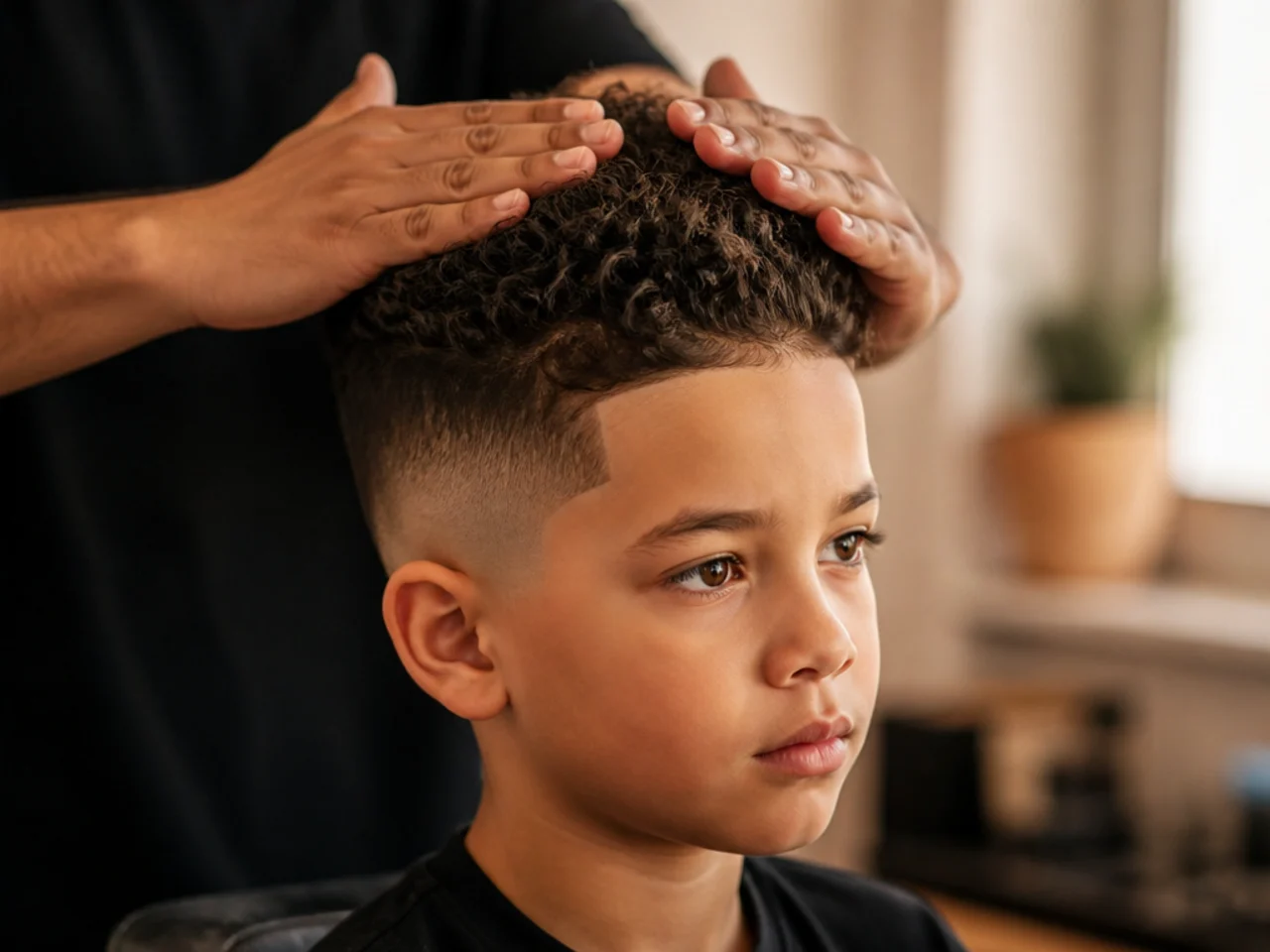
4. Scrunching Upward From the Ends
Hair cupped in the palm and pushed up toward the scalp. Scrunching compresses the strand along its own spiral, which encourages the curl to spring rather than hang.
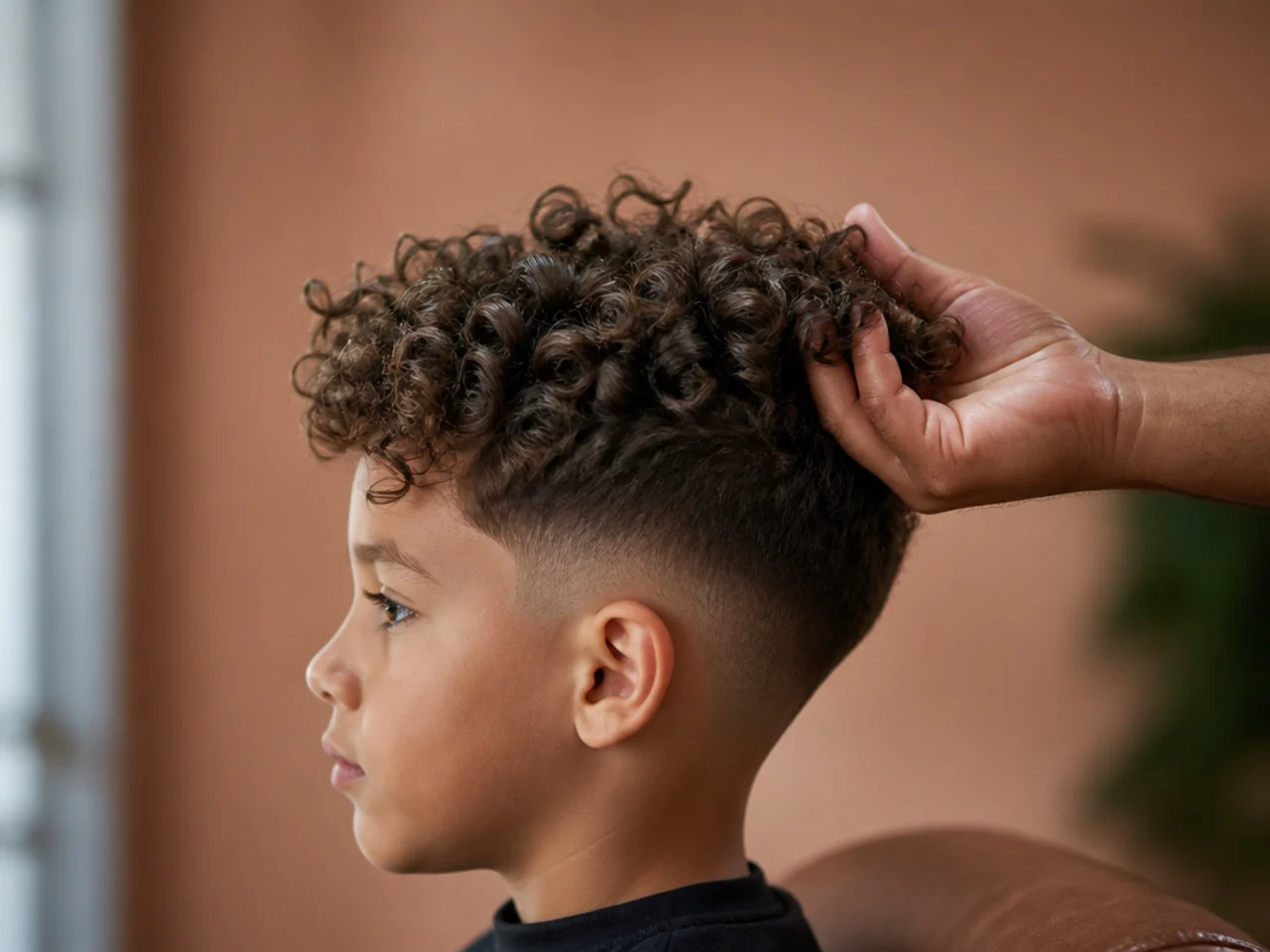
5. The Damp Finger Rake
Fingers spread wide and drawn through once, then removed. It separates without shredding, and it is the only combing motion worth using on curl that is not soaking wet.
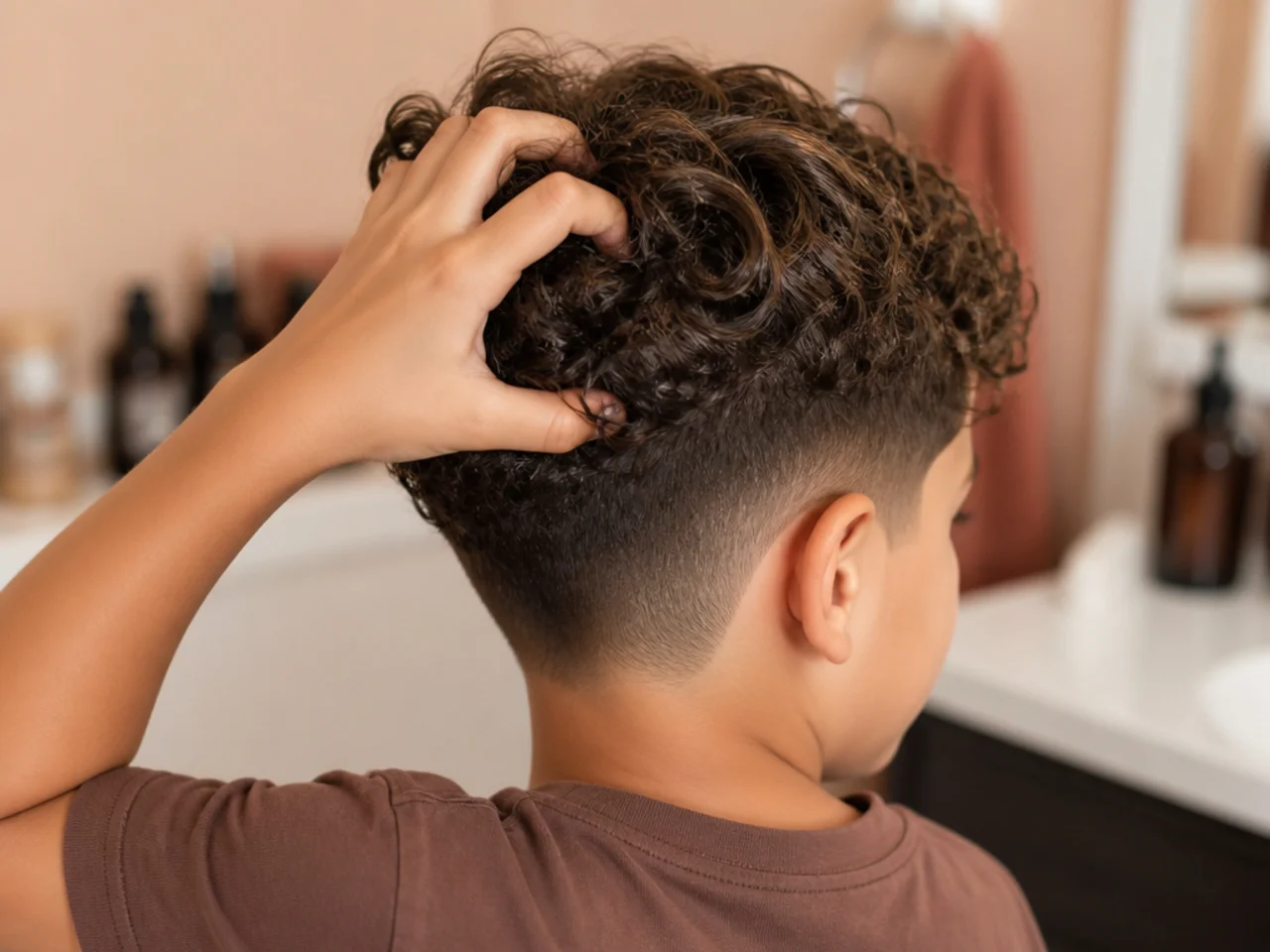
6. The Pick at the Root Only
A wide pick lifted underneath the hair at the scalp, never dragged through the length. It adds height where the hair has been flattened without touching the clumps that hold the definition.
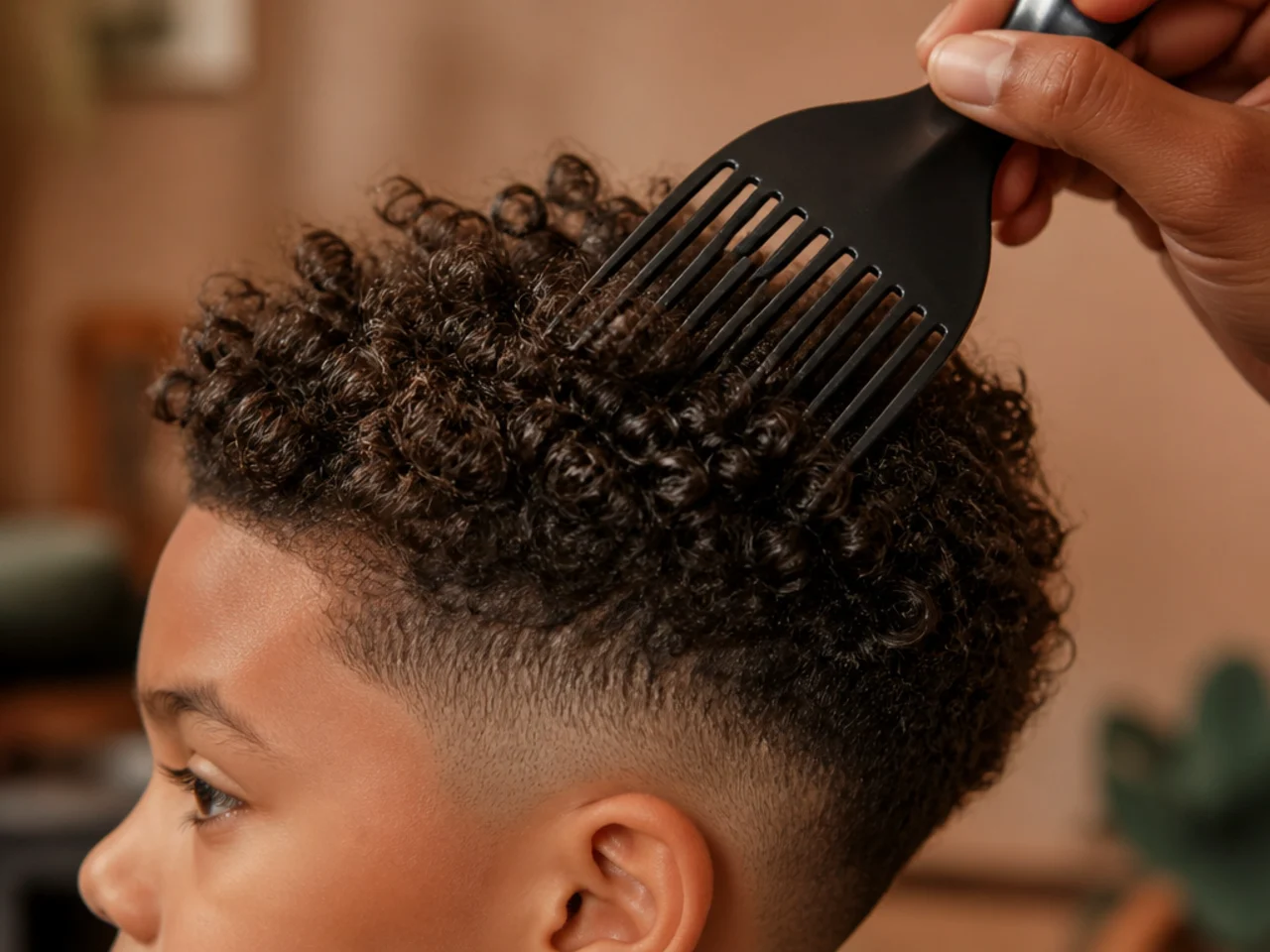
7. Squeezing With a Cotton T-Shirt
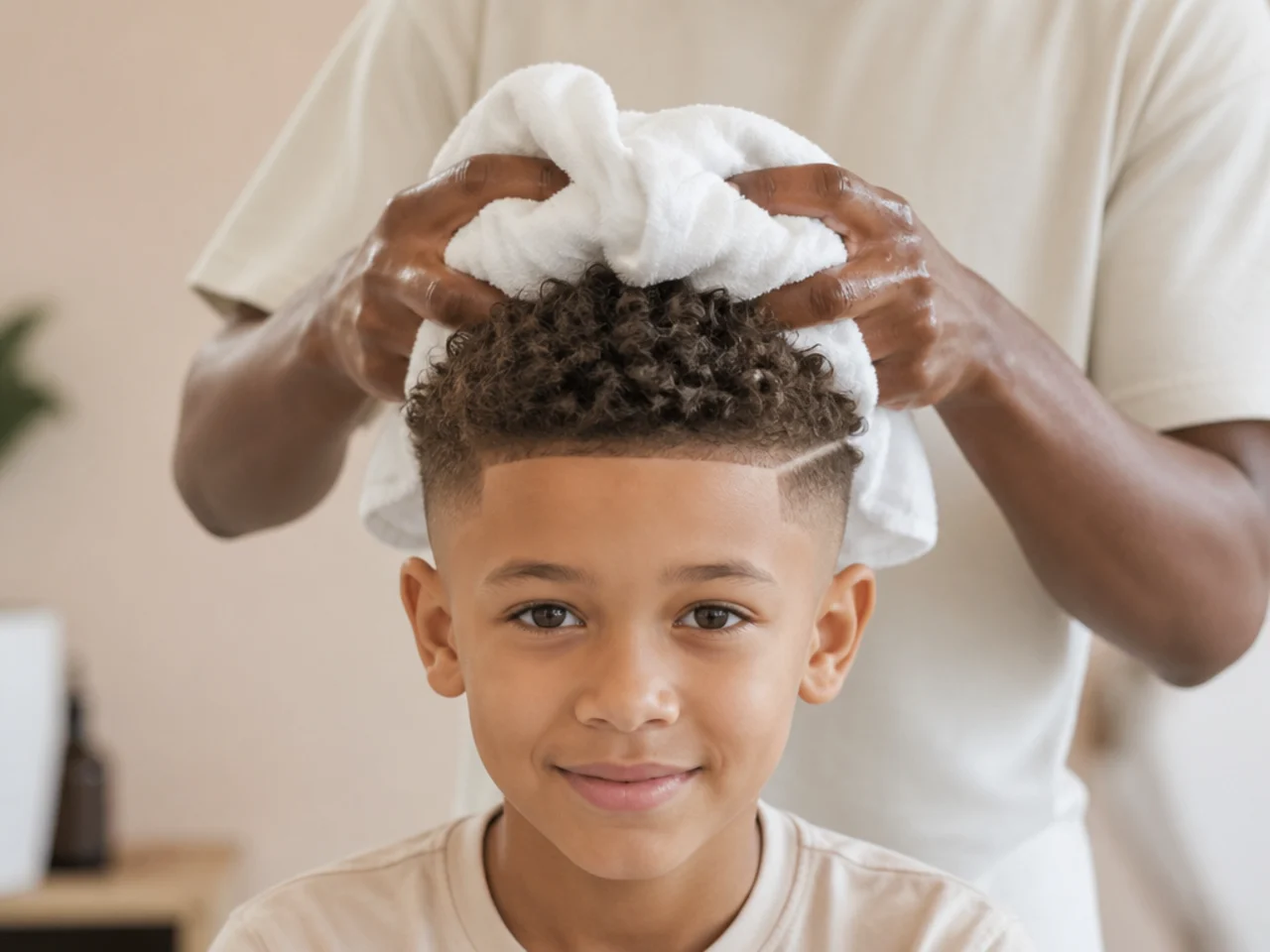
Water pressed out of the hair with a soft cotton shirt rather than rubbed with a towel. Towel loops catch individual strands and lift them out of their clumps, and that lifted hair is what becomes frizz.
8. One Pea of Cream, on Wet Hair
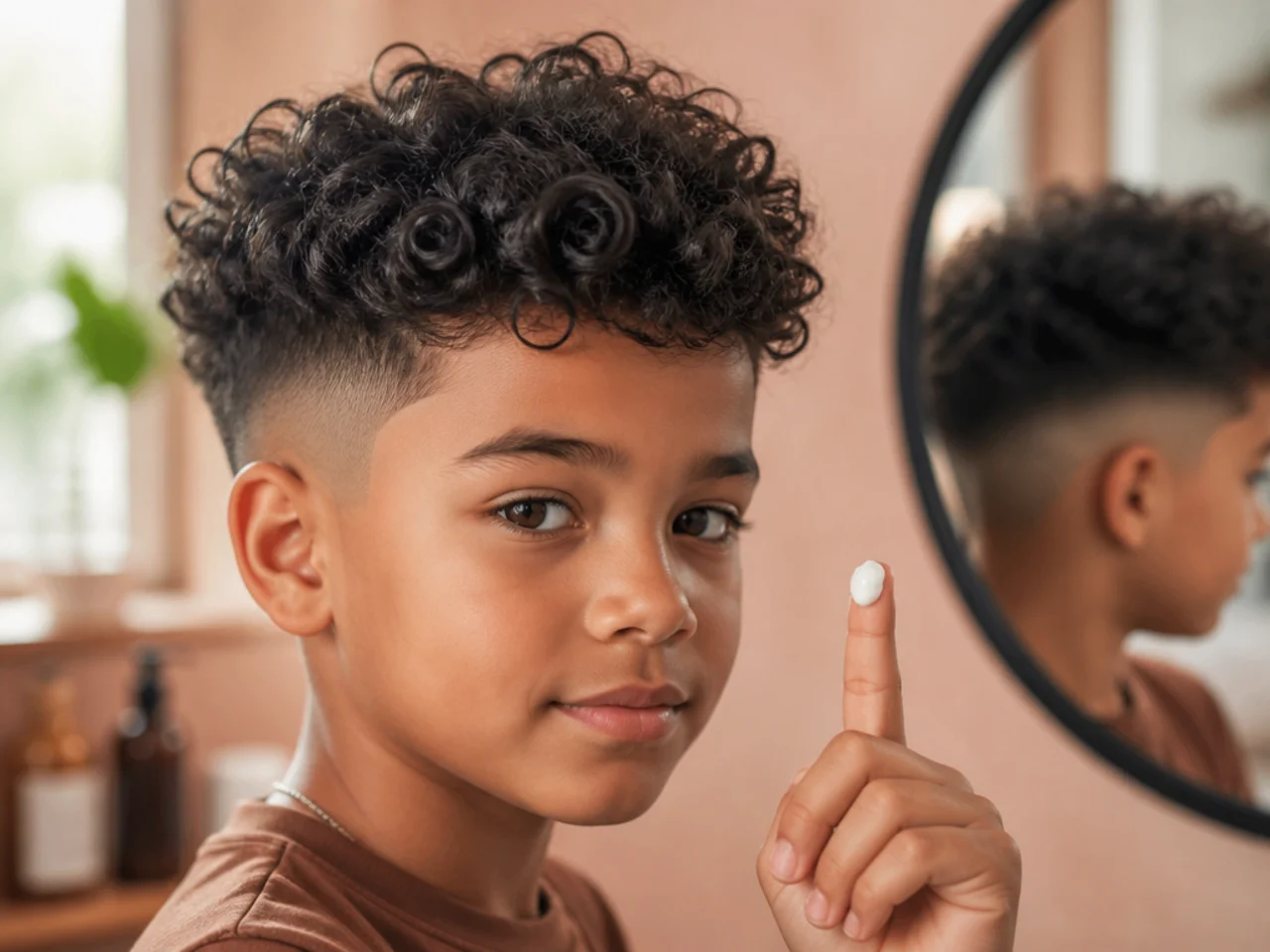
Product applied while the hair is still dripping, not damp, exactly as it works in an adult curly routine. Water carries the cream evenly down the strand, whereas cream on damp hair sits on the surface and dries into a shell.
9. Front First, Back Second
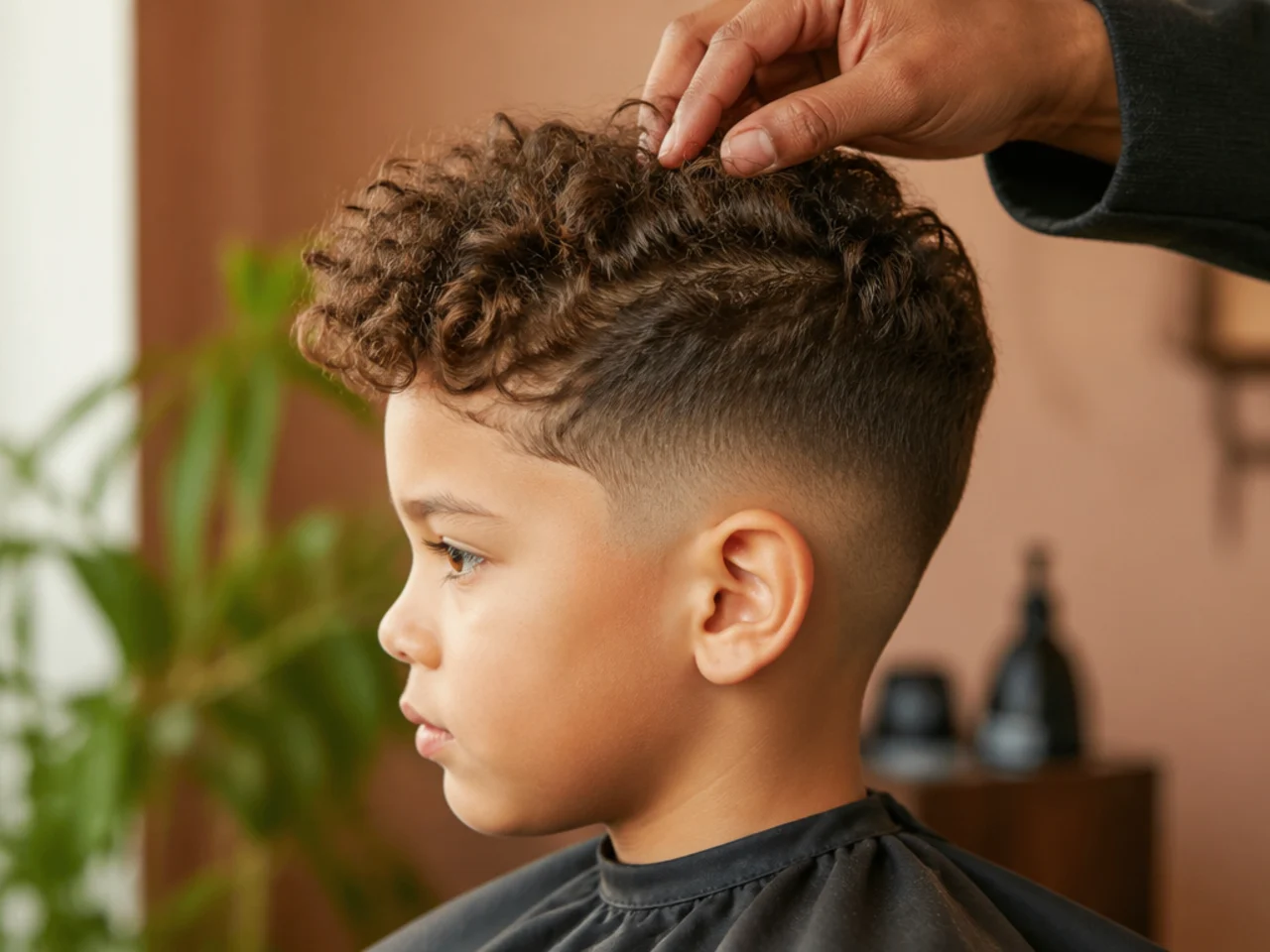
The front section done while his attention lasts and the back done afterwards. The front is what people see and what falls into his eyes, so it deserves the cooperative half of the window.
10. The Loose Overnight Gather
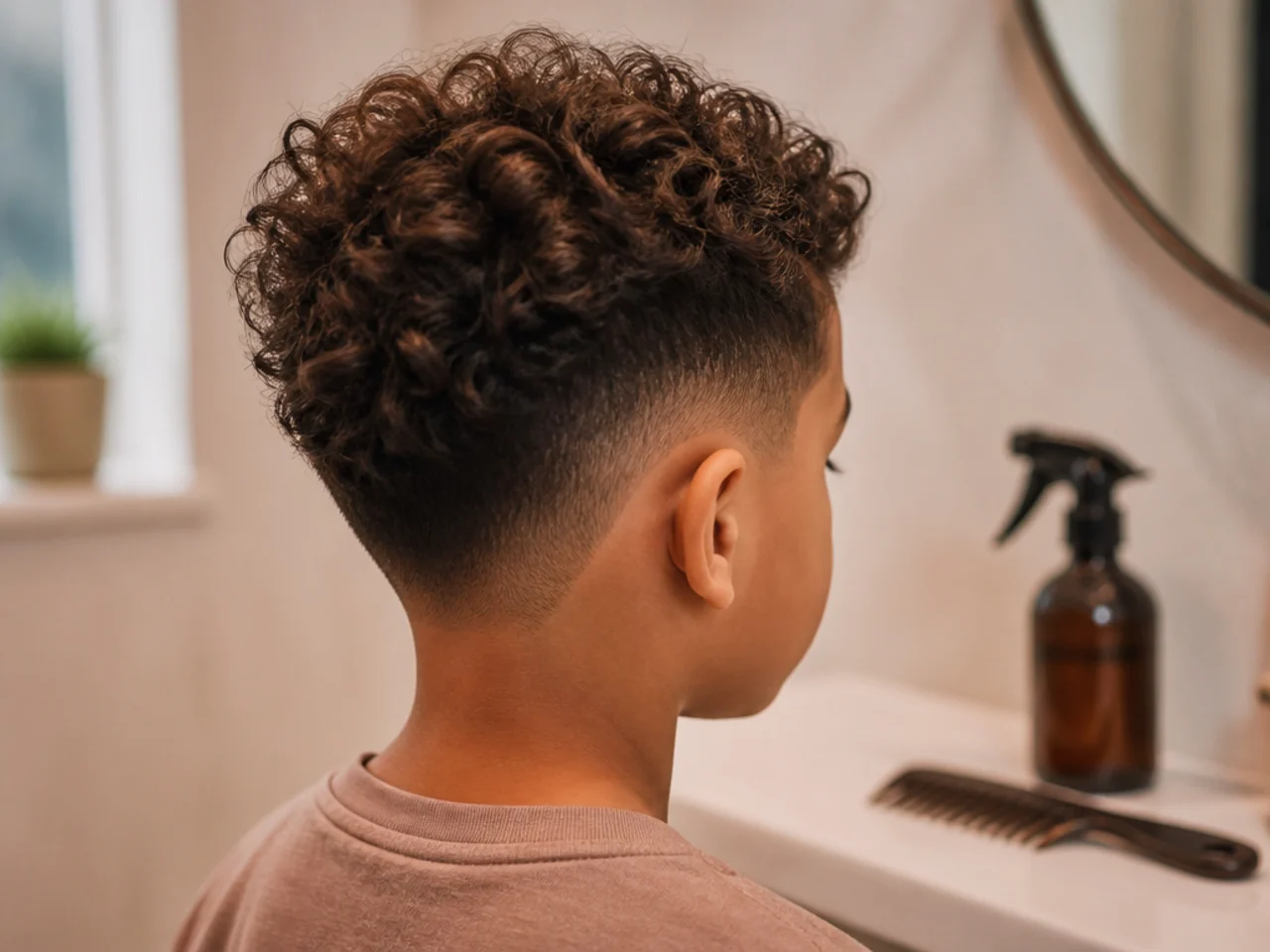
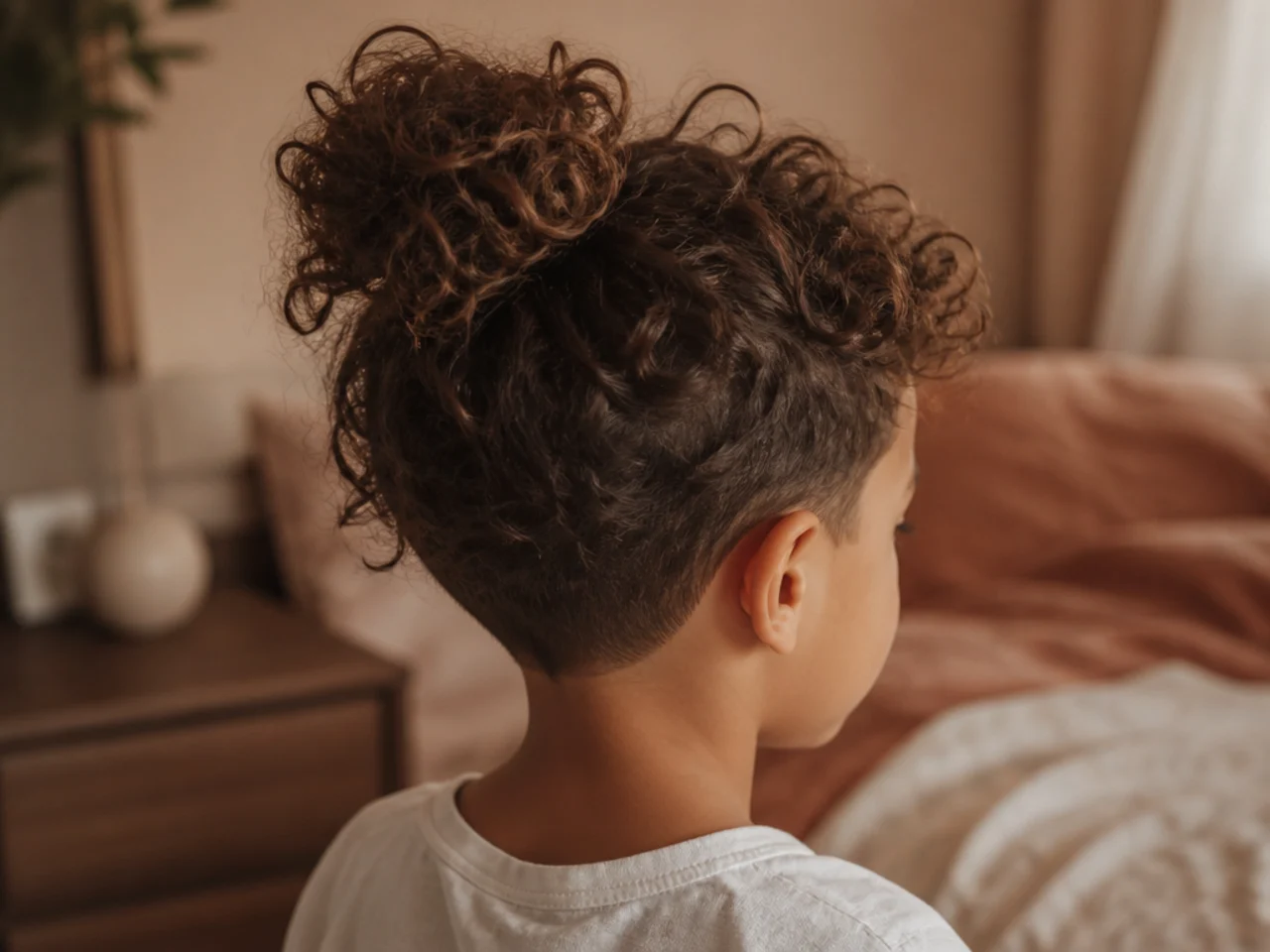
Hair tied loosely at the very top of the head before bed. Keeping the length off the pillow protects the clumps and keeps weight off the nape, where friction builds a mat.
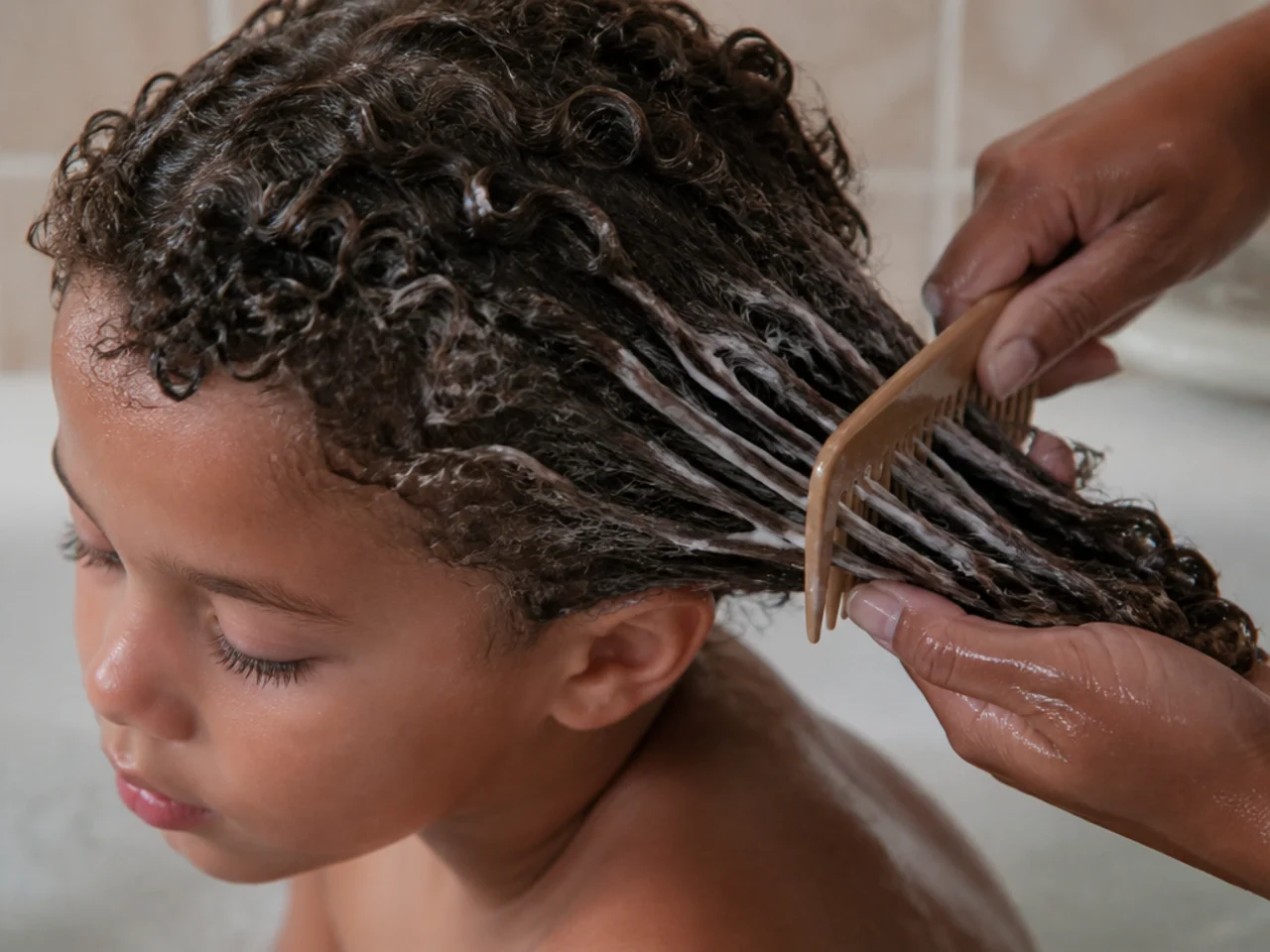
11. Detangling in the Bath, Not at the Mirror
Conditioner left in and fingers worked through while he is already sitting in water. Slip is what lets a curl release, and doing it in the bath removes the standing-still requirement entirely — the same trick that carries most curly toddler routines through the first few years.
12. Working From the Ends Upward
Every detangling pass starting at the last few centimetres and moving up. Starting at the root drags the whole length through the knot, and that is the pain a child remembers and resists next time.
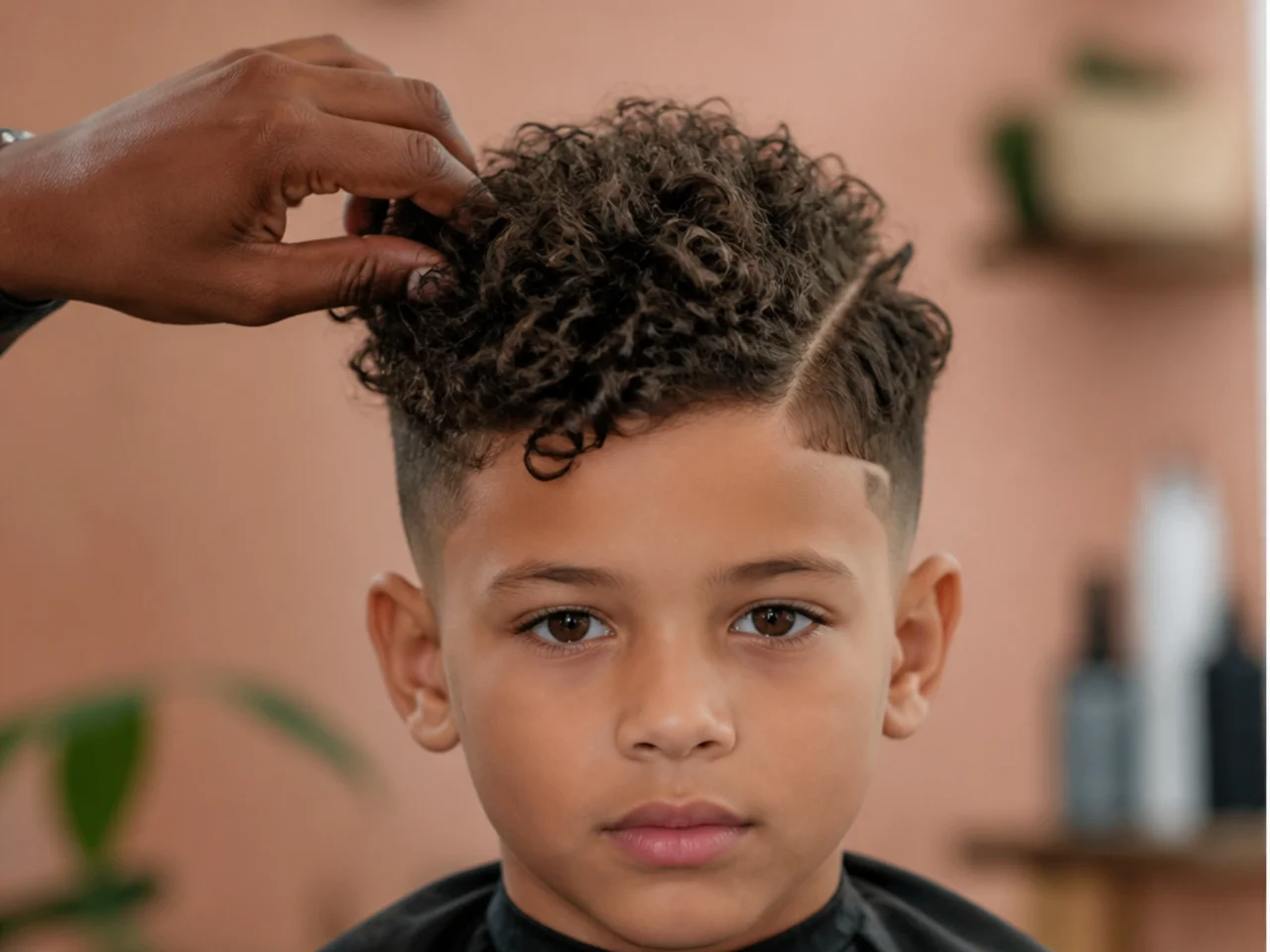
13. The Ninety-Second Distraction
A screen or a book handed over for the length of the routine. It is not a styling technique in the usual sense, but it is the one that makes every other technique possible.
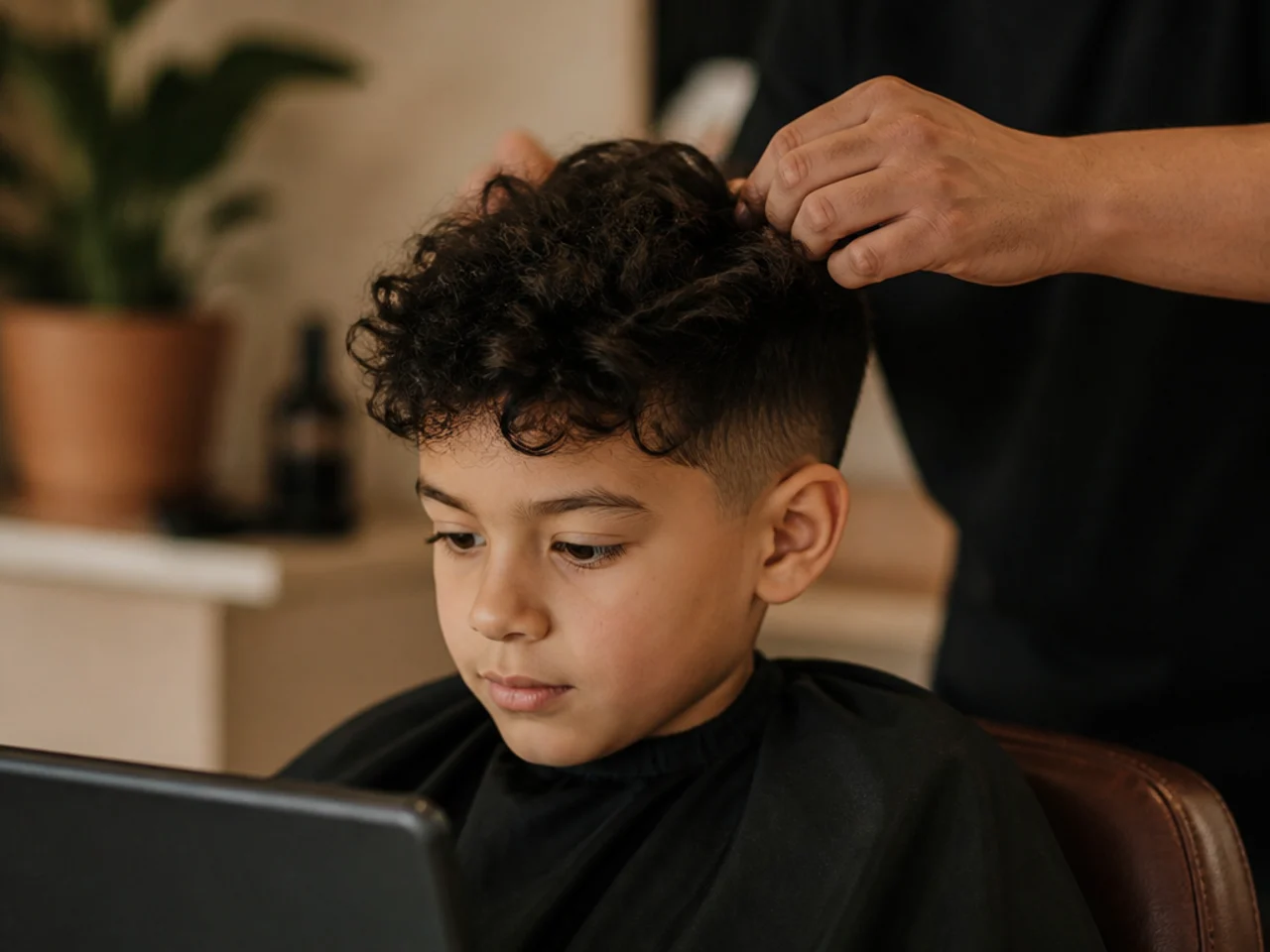
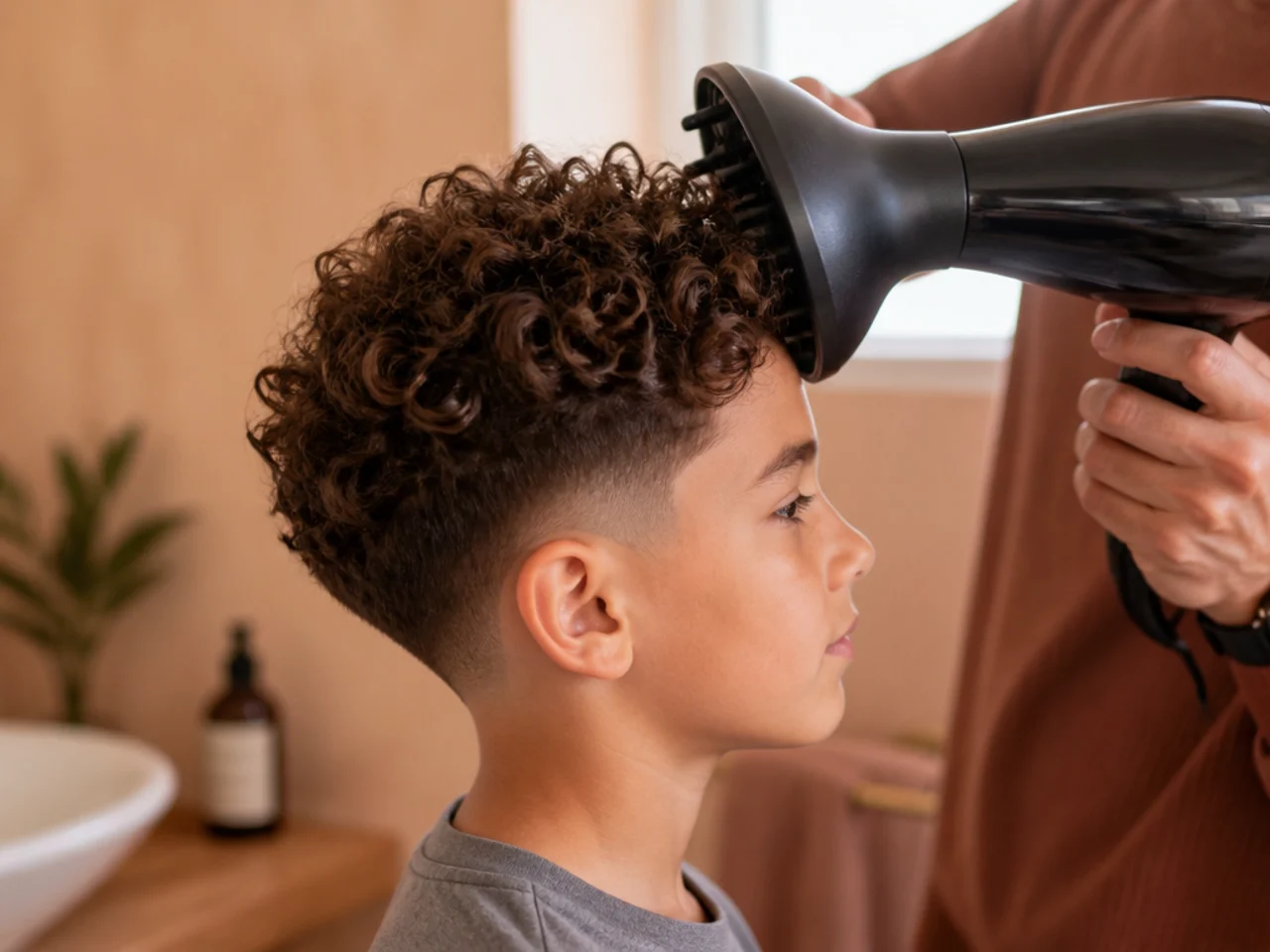
14. The Diffuser on Low, Hands Off
Warm air directed at the roots with the hair cupped in the bowl, borrowed straight from the grown-up curl routine. It only helps if he tolerates the noise, and it only works on low, because high airflow blows the clumps apart.
15. Knowing When to Wash Instead
The point at which no amount of water will bring the shape back. Once product has built up or the curls have knitted together, a full wash is faster than another ten minutes of refreshing.
Styling and Upkeep
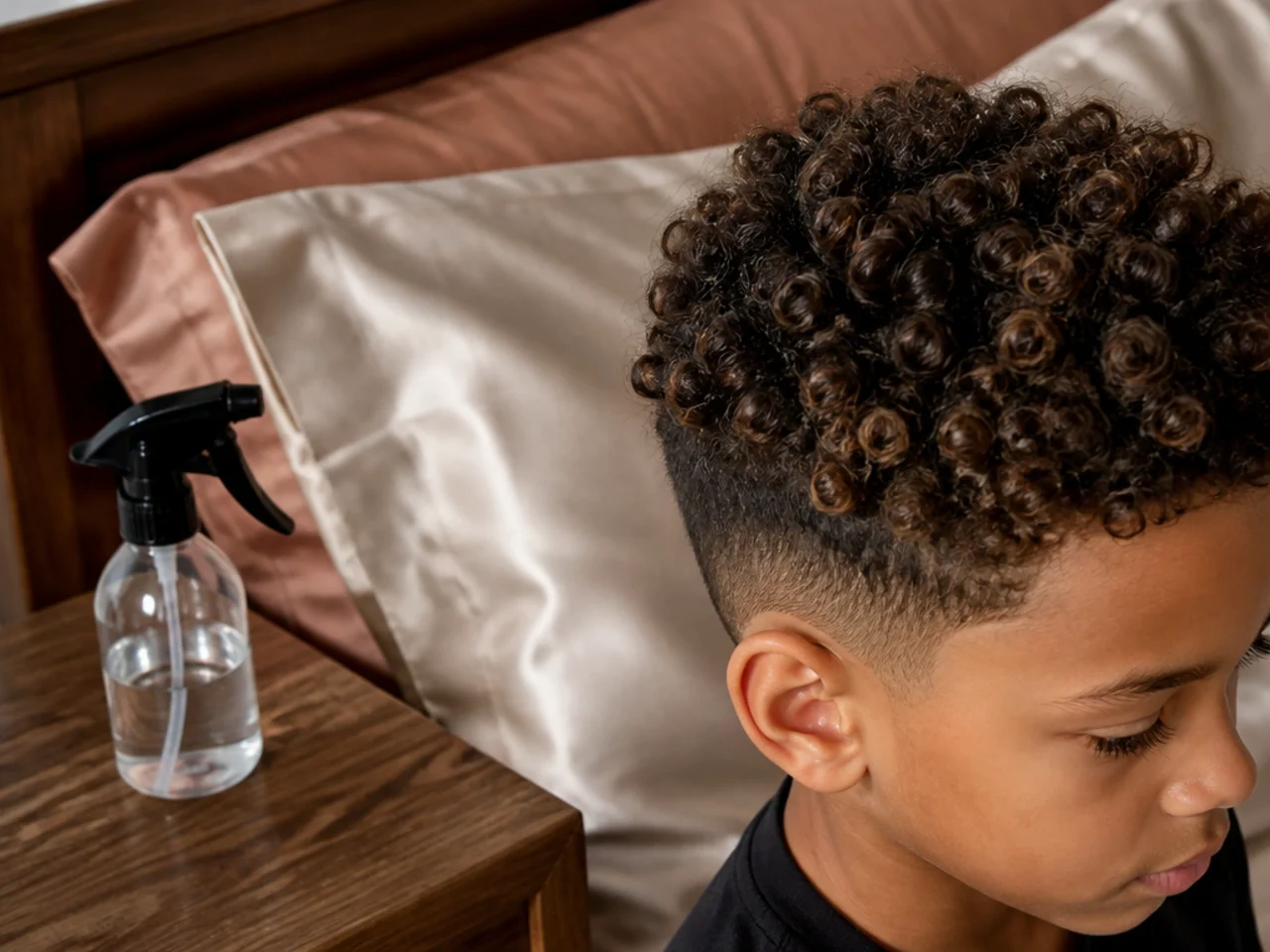
Keep a spray bottle in the kitchen, not the bathroom. The routine happens wherever he is standing, and a bottle upstairs is a bottle unused.
Buy a satin pillowcase before you buy any product. It prevents more overnight damage than a whole shelf of creams reverses.
Condition every wash, without exception. It is the step that makes detangling fast, so skipping it costs time rather than saving it.
Keep the ends trimmed every eight weeks. Split ends travel upward and eventually cost more length than a trim would have.
Do the same thing every day. Curl responds to consistency, and a routine that changes weekly never settles into a pattern.
Mistakes to Avoid
Brushing dry curls. It separates every clump on the head and leaves a halo of frizz that only rewetting fixes.
Applying product to damp rather than wet hair. Without water to carry it, cream sits on the surface and dries into a crust.
Using adult amounts of product. Fine children's hair collapses under weight that an adult head would barely notice.
Detangling from the root. It drags the entire length through the knot and creates the pain that ends future cooperation.
Rubbing with a towel. The loops lift strands out of their clumps, and every lifted strand becomes frizz.
FAQ
Fastest morning fix? Water on the flattened side only, then fingers raked through and released.
Can I brush it? Only wet and full of conditioner, and with fingers or a wide-tooth comb.
How much product? A pea for a whole head, and usually none at all on short cuts.
Final Thoughts
Water first, product second and never a brush is the whole system, and everything above is a variation on those three rules. Pick two techniques that fit your actual mornings and repeat them until they stop feeling like a routine.
For the shapes these techniques suit see curly haircuts for boys, and to identify the pattern you are styling read the curl types guide. More in Men's Haircuts.