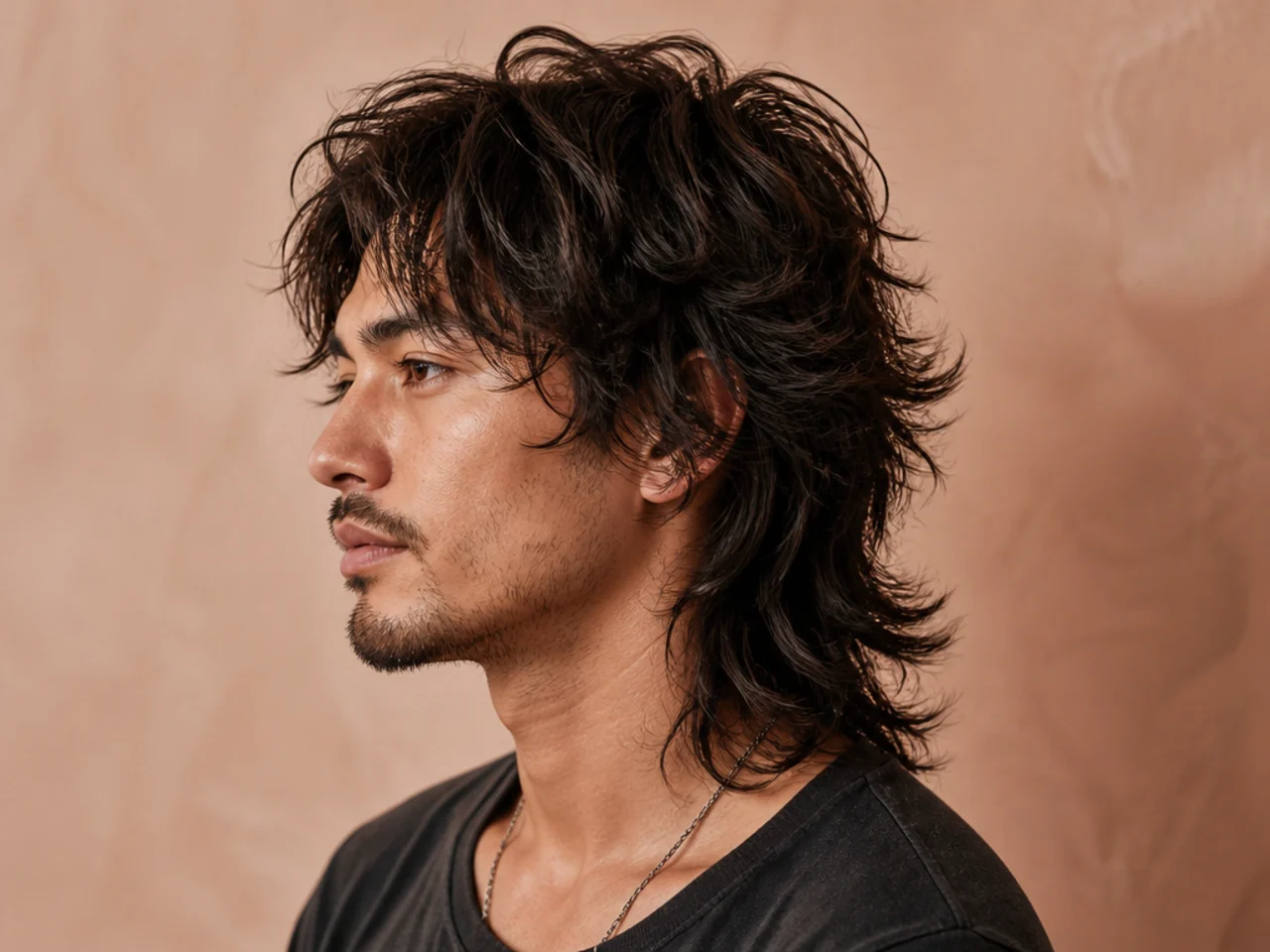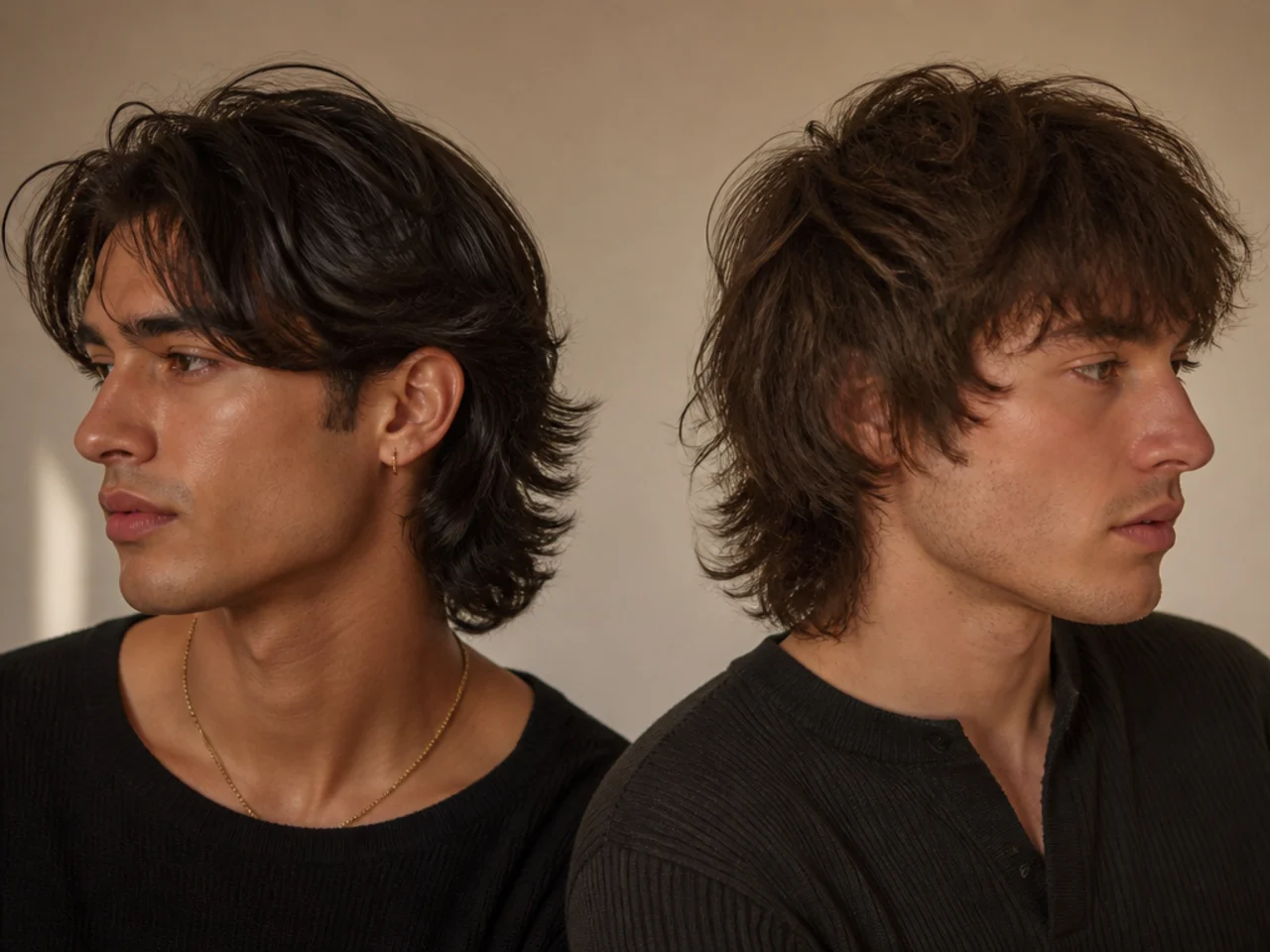
20 Short Wolf Cuts With Bold Micro Bangs
Twenty short wolf cuts with micro bangs, and the test that decides whether yours will work — a fringe this short has no weight to overcome a cowlick, so the way your hairline grows matters more than the shape you asked for.
In this article · 27
- What Micro Bangs Do to a Short Wolf Cut
- How Short Should Yours Be
- The 20 Short Wolf Cuts With Micro Bangs
- 1. Blunt Micro Bangs on a Short Wolf Cut
- 2. Rounded Micro Bangs
- 3. Wispy Micro Bangs
- 4. Choppy Micro Bangs
- 5. Arched Micro Bangs
- 6. Micro Bangs Cut to a Point
- 7. Asymmetric Micro Bangs
- 8. Micro Bangs on Straight Hair
- 9. Micro Bangs on Wavy Hair
- 10. Micro Bangs on Curly Hair
- 11. Micro Bangs on Fine Hair
- 12. Micro Bangs on Thick Hair
- 13. Micro Bangs Over a Cowlick
- 14. Chin Length Wolf Cut With Micro Bangs
- 15. Shoulder Length Wolf Cut With Micro Bangs
- 16. Micro Bangs With Face Framing Pieces
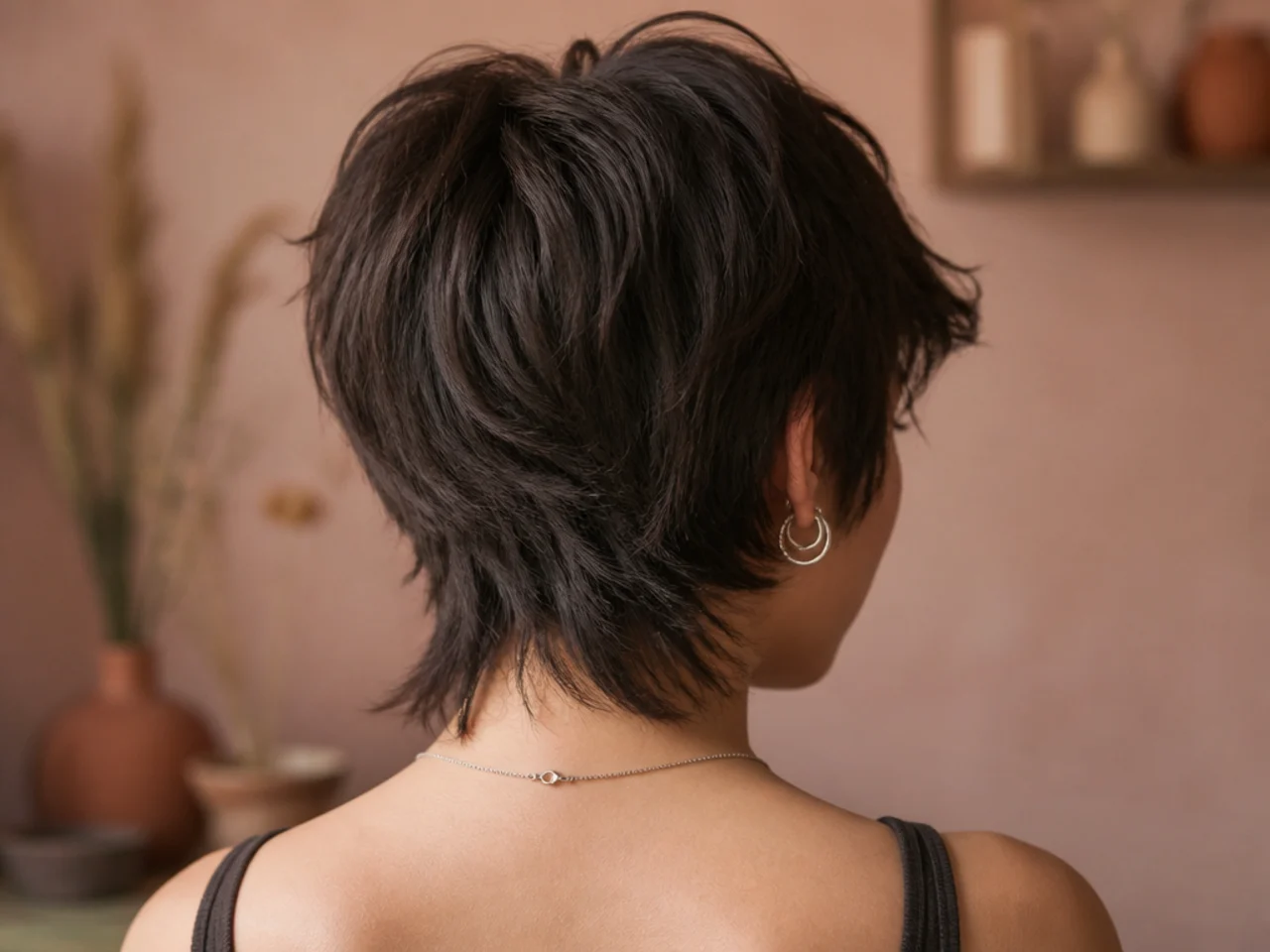
- 17. Micro Bangs With a Tapered Nape
- 18. Micro Bangs With a Bleached Money Piece
- 19. Micro Bangs on a Round Face
- 20. Micro Bangs Growing Out
- Styling and Upkeep
- Mistakes to Avoid
- FAQ
- Final Thoughts
A micro fringe is the one part of a short wolf cut that your hairline gets to veto, and most people find that out after it is cut.
There is no weight in a three centimetre fringe. Length is what forces hair to lie against its own growth direction, and micro bangs have none of it.
The fringe is the whole front view. On a short wolf cut the layers sit behind the face, so from the front the fringe is doing all the work.
What Micro Bangs Do to a Short Wolf Cut
They raise the eye line. Exposing the middle of the forehead moves the visual centre of the face upward, which makes the crown layers read higher than they are.
They shorten the face. A horizontal line drawn across the forehead cuts its apparent height, which is why the shape suits a long face and needs care on a round one.
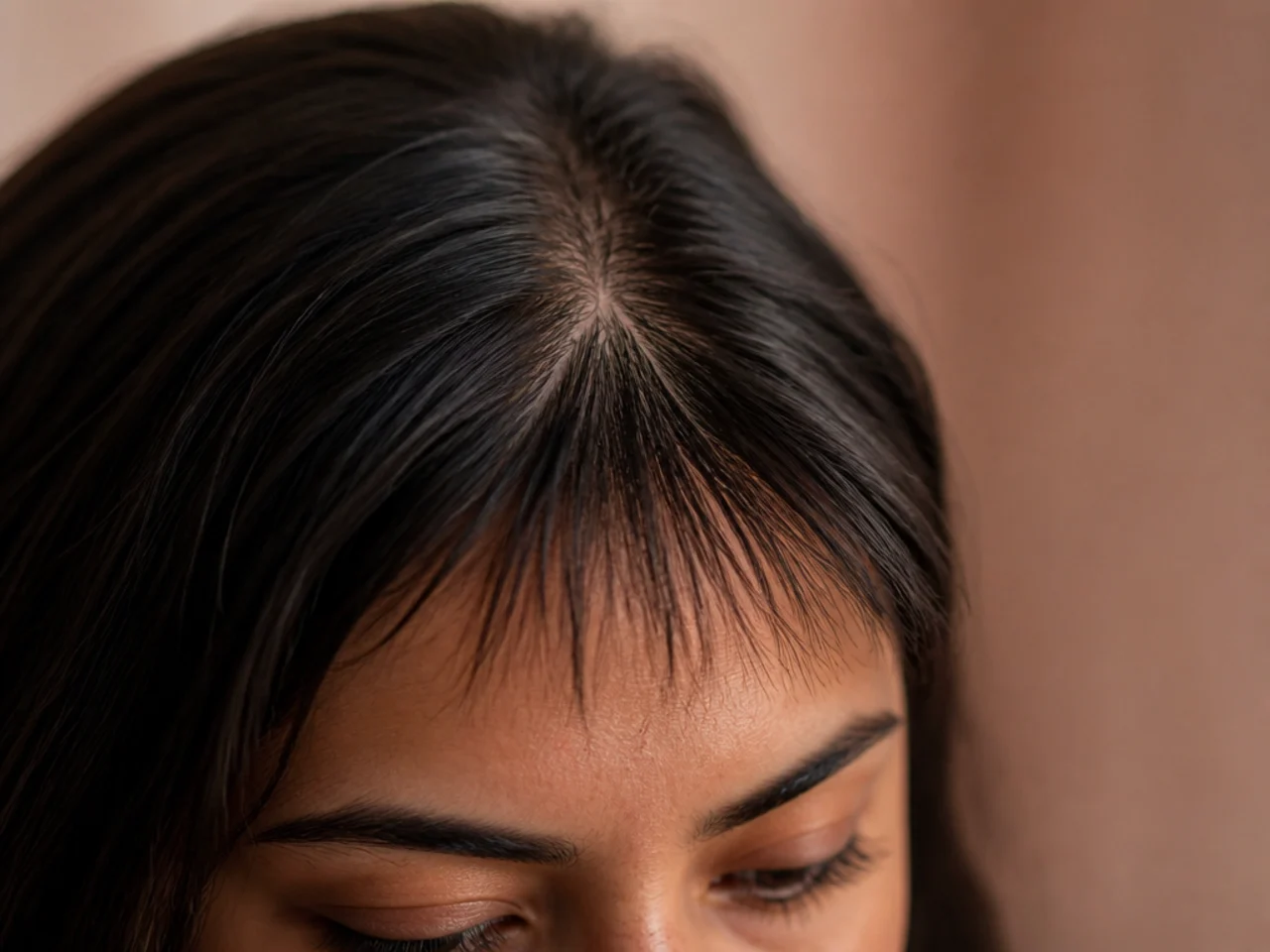
They expose the hairline completely. Every cowlick, thin corner and irregular growth pattern is on show with nothing left to cover it.
They have to meet the crown layers cleanly. The shortest layer of the wolf cut and the fringe join at the temple, and a step there is visible from every angle.
How Short Should Yours Be
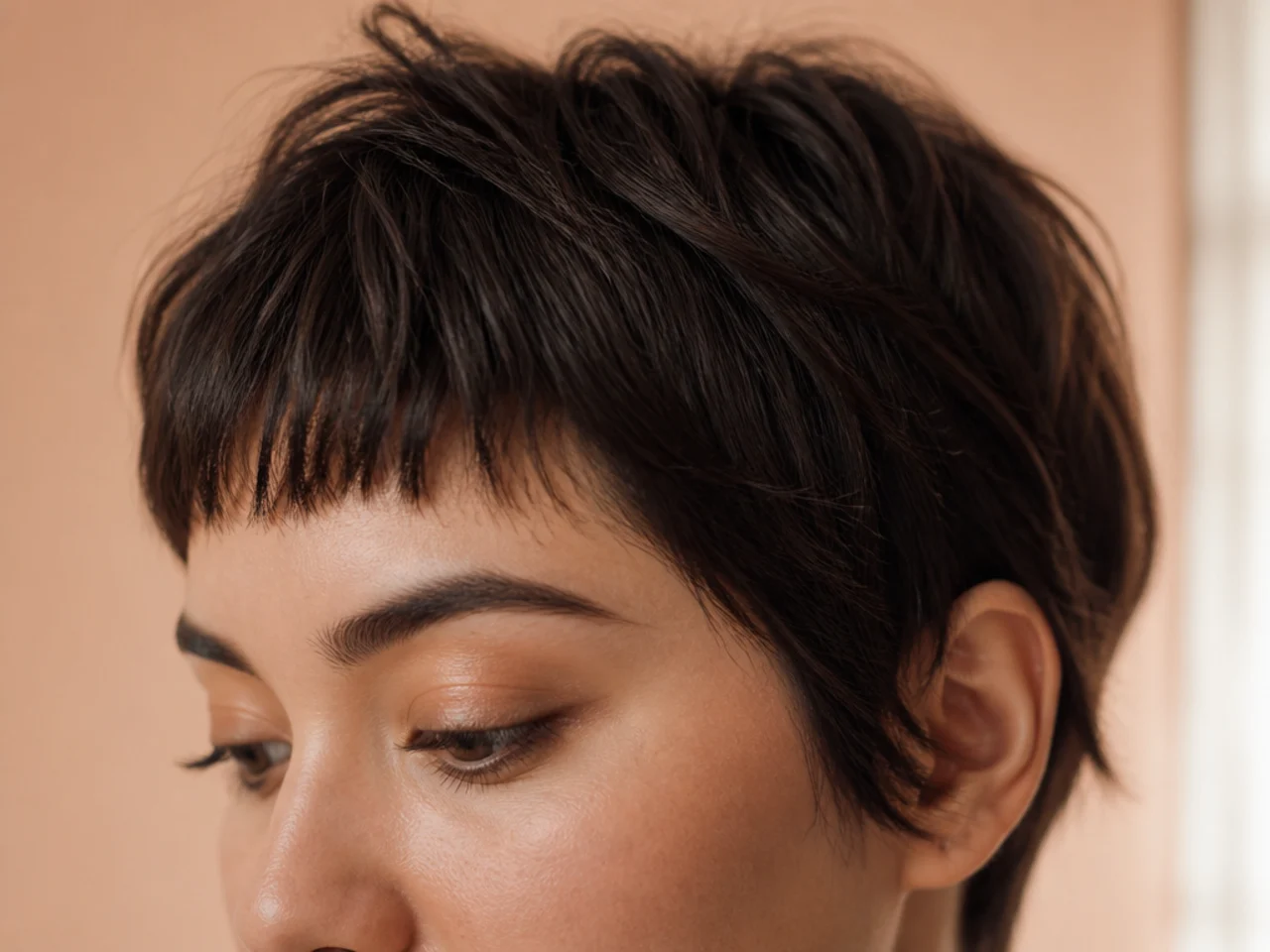
Check your hairline before the shape. Push your fringe forward dry and see where it wants to split. That is the constraint everything else works around.
Two centimetres above the brow is the soft version. It still reads as micro while leaving enough length to control direction.
Five centimetres is the committed version. At that height the fringe is pure graphic shape and cannot be styled into anything else.
Add the shrinkage before cutting, not after. Wave and curl spring up as they dry, and on a fringe this short a centimetre of shrinkage is a third of its length.

The 20 Short Wolf Cuts With Micro Bangs
1. Blunt Micro Bangs on a Short Wolf Cut
Cut straight across with the full weight left in. The solid line is what makes the shape graphic, and it is also the least forgiving — a blunt edge shows every millimetre of unevenness across the forehead.
2. Rounded Micro Bangs
The centre left slightly longer than the corners so the line curves. That curve echoes the shape of the forehead instead of cutting across it, which softens the whole front without adding a millimetre of length.

3. Wispy Micro Bangs
Cut with fewer strands so the forehead shows through the gaps. The transparency is the point — it keeps the fringe from reading as a solid bar and lets the face carry past it.

4. Choppy Micro Bangs
Point cut so the ends finish at several different heights. Uneven ends catch light separately rather than as one edge, and they hide the growth pattern a blunt line would expose.

5. Arched Micro Bangs
The line lifted higher over the outer corners than over the centre. It opens the temples, which counteracts the width a short wolf cut builds at the sides and keeps the head from reading square.

6. Micro Bangs Cut to a Point
The centre dropped to a soft V. The downward point pulls the eye toward the middle of the face, which narrows a wide forehead more effectively than any straight line can.

7. Asymmetric Micro Bangs
One side left noticeably longer than the other. The imbalance gives the front a direction, which is useful on a wolf cut where the layers behind are already symmetrical and can read static.

8. Micro Bangs on Straight Hair
Straight hair holds the line exactly as cut, which is why the sharpest versions of this fringe are all on straight heads. The same precision means a trim two days late is already visible.

9. Micro Bangs on Wavy Hair
The bend lifts the fringe off the forehead and shortens it further, so it has to be cut longer than the finished position you want. The wave also blurs the edge, which suits the shaggy layers behind it. The wavy build follows the same logic.

10. Micro Bangs on Curly Hair
A curl loses a fifth to a half of its length as it springs, so a fringe cut wet lands far higher than intended. Cut dry, curl by curl, exactly as the curly version is built.

11. Micro Bangs on Fine Hair
Fine hair has few enough strands that a heavy blunt fringe leaves the rest of the hairline sparse. Take the section shallow, from the front centimetre or two only, so the density behind it stays intact.

12. Micro Bangs on Thick Hair
Thick hair pushes a short fringe outward rather than letting it lie flat, because there is not enough length for its own weight to settle it. Interior thinning behind the front line is what makes it sit down.

13. Micro Bangs Over a Cowlick
A cowlick pushes hair sideways at the root and a fringe this short has no weight to argue with it. Cut choppy and let the split become part of the shape, rather than fighting it every morning.

14. Chin Length Wolf Cut With Micro Bangs
The shortest wolf cut that still holds its shape, paired with the shortest fringe. The two extremes together leave the whole face and neck exposed, which is why this version reads as deliberate rather than accidental. See the short wolf cut for the base shape.

15. Shoulder Length Wolf Cut With Micro Bangs
More length behind gives the fringe something to contrast against, so the micro bangs read as a choice rather than as the whole haircut. It is the easier of the two proportions to live with.

16. Micro Bangs With Face Framing Pieces
Longer pieces left at the temple beside the short fringe. They give the sides of the face a vertical to balance the fringe's horizontal, which stops the front reading as one flat band.

17. Micro Bangs With a Tapered Nape
The hair at the base of the neck shortened so it lies flat. Clearing the nape puts the neck on show, and the long vertical line it creates is what keeps a very short fringe from making the head read wide.
18. Micro Bangs With a Bleached Money Piece
Two lightened sections beside the fringe. Lightening raises contrast at exactly the point the eye is already going, so the fringe reads bolder without being cut any shorter.

19. Micro Bangs on a Round Face
A horizontal fringe shortens the face, which a round face does not need. Arching the line and leaving longer pieces at the temple restores some vertical, and that is the version worth asking for here.

20. Micro Bangs Growing Out
At about a centimetre and a quarter of growth a month, a micro fringe reaches the brow in roughly three months. The awkward stage is short, which is the real argument for trying them.

Styling and Upkeep
Trim every two to three weeks. A fringe this short spends only a fortnight at the length you asked for.
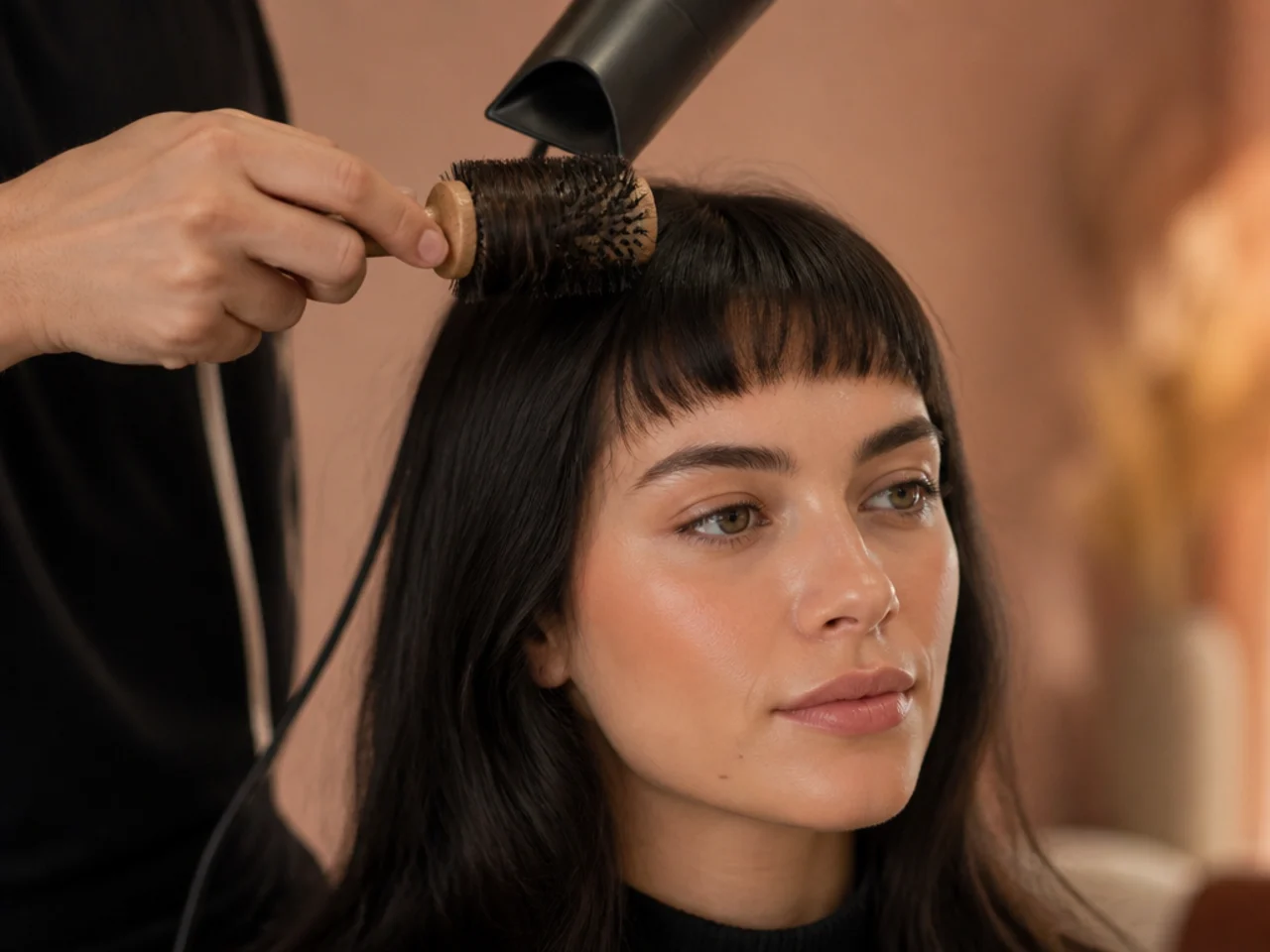
Dry it first, before anything else. The fringe sets its direction as it dries, and once it has set the rest of the head cannot change it.
Use a small round brush at the root only. Direction is decided at the root; the ends of a three centimetre fringe have nowhere to go anyway.
Keep product off it. Anything heavy pulls a short fringe into separated spikes, because there is no length to carry the weight.
Cut it dry if you have any wave. Wet length is not the length you will wear, and on a micro fringe the difference is a third of the whole thing.
Mistakes to Avoid
Cutting it wet. Every texture springs up as it dries, and on a fringe this short there is no margin to absorb it.
Taking the section too deep. Pulling hair from far back leaves a sparse patch behind the fringe that shows the moment you part it.
A blunt line over a cowlick. It will split within an hour and there is no length to weigh it down.
Ignoring the temple join. If the crown layers and the fringe do not meet cleanly, there is a visible step at the side of the head.
Booking it with the full cut only. The fringe needs six trims for every one the rest of the wolf cut needs.
FAQ
How short? Two to five centimetres above the brow, on the forehead itself.
How often trimmed? Every two to three weeks, far more often than the cut.
With a cowlick? Only in a choppy or wispy shape, never blunt.

Final Thoughts
Push your fringe forward dry and watch what it does before you book anything. A hairline that splits will split at three centimetres too, and choosing a choppy shape in advance is far cheaper than discovering it in the mirror.
For the base shape underneath see the short wolf cut, and for the softer, less disconnected build see the korean wolf cut. More in Mullet and Wolf Cut.