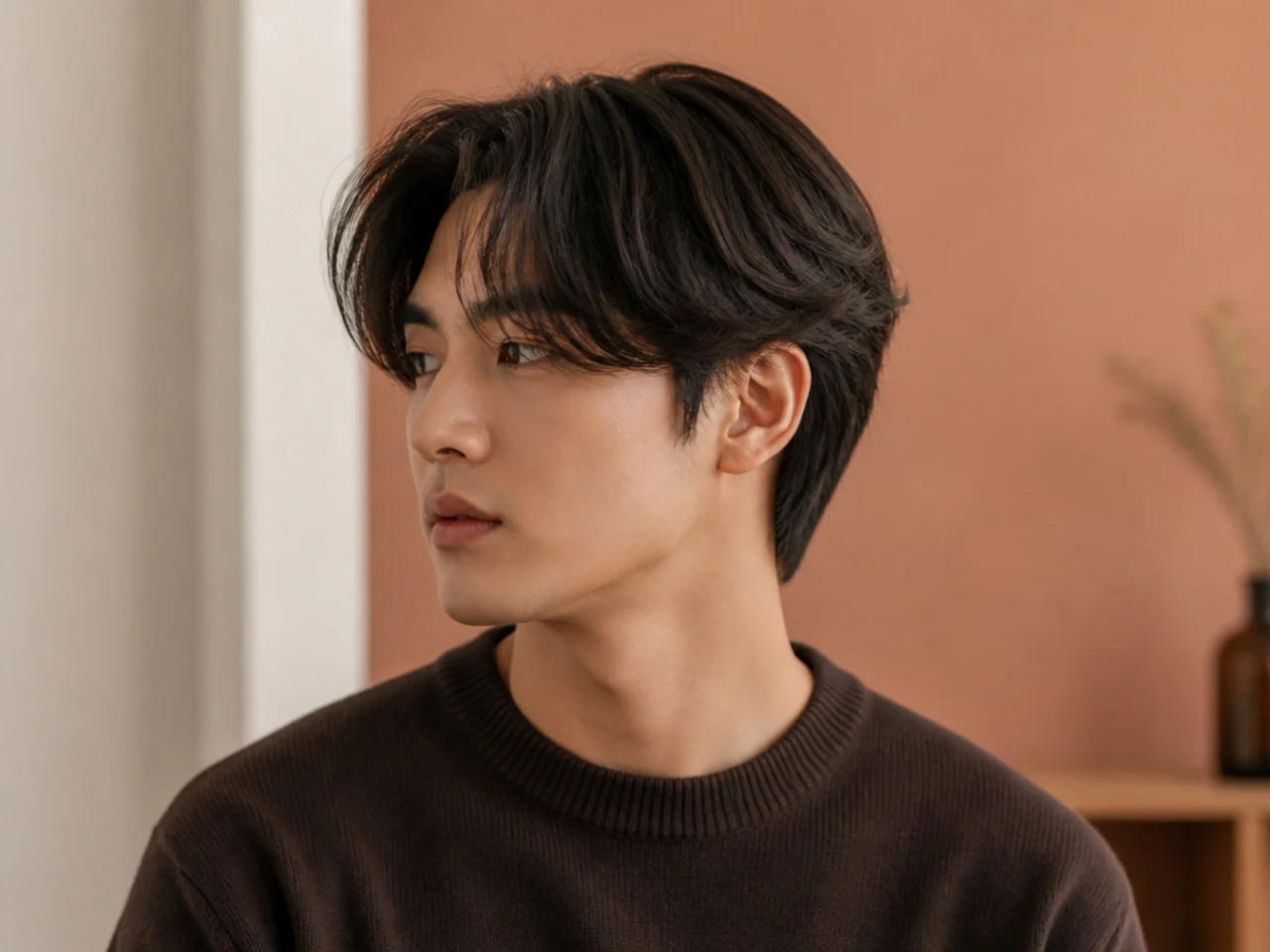
20 Korean Curtain Haircuts for Men (2026 Guide)
Korean curtain haircut men are asking for in 20 versions — face-shape notes, the exact barber language, and a three-minute styling routine. Photos too.
In this article · 26
- What Is a Korean Curtain Haircut?
- How to Choose Your Korean Curtain
- The 20 Korean Curtain Variations
- Classic Korean Curtain
- Two-Block Korean Curtain
- Low Taper Fade Korean Curtain
- Mid Fade Korean Curtain
- Feathered Korean Curtain
- Short Korean Curtain
- Long Flow Korean Curtain
- Wavy Korean Curtain
- Curly Korean Curtain
- Undercut Korean Curtain
- Blowout Korean Curtain
- Comma-Fringe Korean Curtain
- Thin-Hair Korean Curtain
- K-Pop Idol Korean Curtain
- K-Drama Lead Korean Curtain
- Deep-Center Korean Curtain
- Off-Center Korean Curtain
- Textured Piecey Korean Curtain
- Korean Curtain with Beard
- Modern Minimalist Korean Curtain
- How to Ask Your Barber or Stylist
- Styling and Maintenance
- FAQ
The Korean curtain haircut men are asking for in 2026 pulls K-pop staging, K-drama softness, and 90s middle-part energy into one shape. The top runs three to five inches, parts down the middle, and falls in two feathered curtains either side of the forehead. Below are the twenty Korean curtain variations men request most this year — face-shape notes, the exact barber language, and a styling move that clocks in under three minutes.
What Is a Korean Curtain Haircut?
A Korean curtain haircut is a middle-parted men's cut that swaps the blunt, stacked energy of a Western curtain for something softer and more layered. The top usually runs three to five inches. The barber cuts the ends with a slide-and-point motion instead of a straight blunt line, feathering them so the fringe falls in soft strands rather than a flat sheet. The sides sit long enough to tuck behind the ear or blend into a low taper — never a hard undercut unless you go for the two-block version.
The shape lives inside the broader family of Korean haircuts for men that took over Pinterest post-2020. Its shorter sibling is the short curtain haircut men; its more geometric cousin is the Korean two-block haircut. What Korean stylists brought to the shape was restraint — no gel, no stiff pomade, no aggressive undercut. Damp hair, a wide-tooth comb, a matte cream, and let the cut do the work.
Who's wearing it? K-pop idols, K-drama leads, Korean and Chinese TikTok stylists, and — as of this year — half the fashion crowd in New York, London, and Berlin. The look reads modern-Asian on any face because the cut is engineered around movement rather than volume.
How to Choose Your Korean Curtain
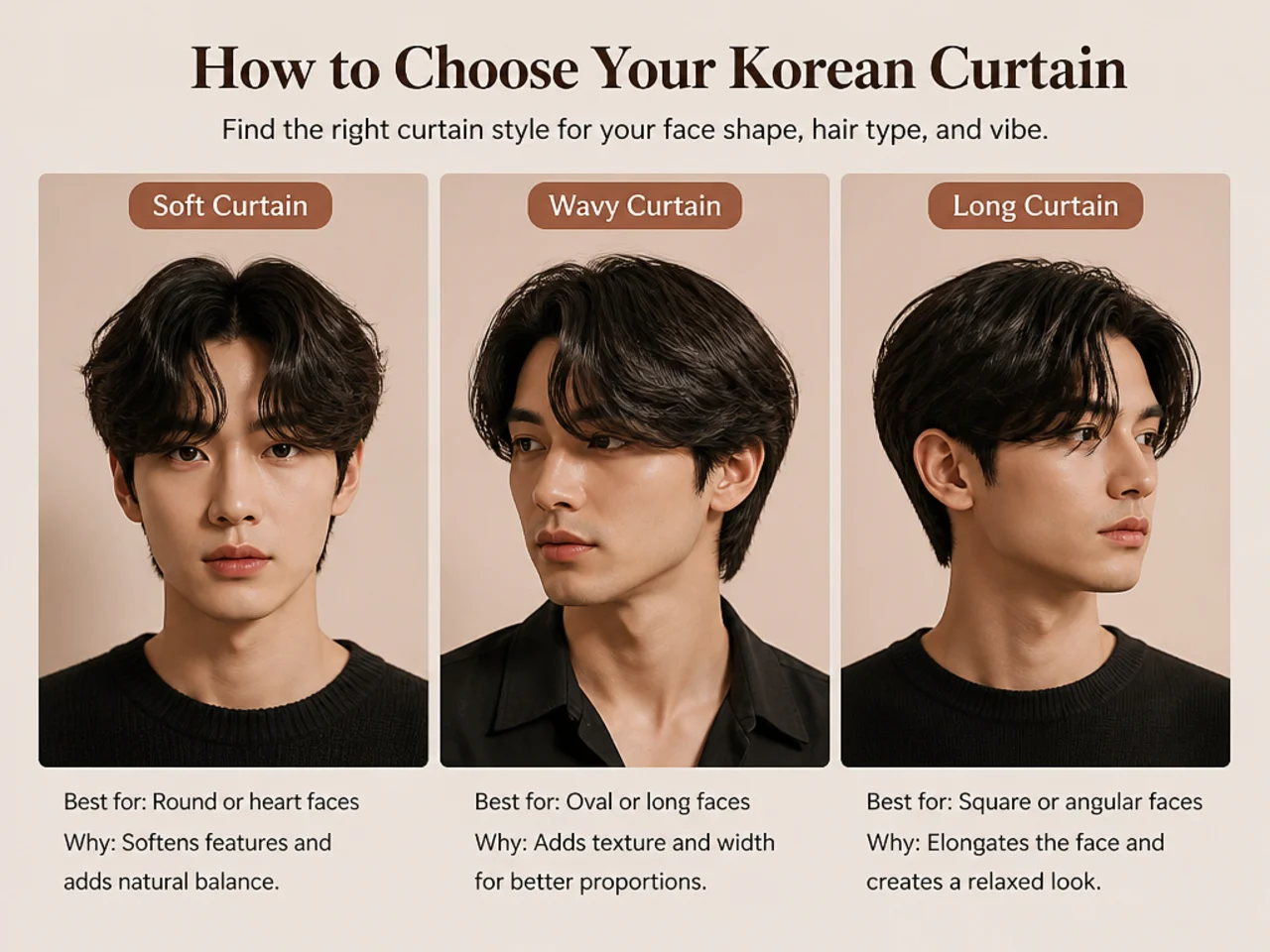
Three variables decide which Korean curtain works for you: face shape, hair type, and how much time you want to spend on it in the morning.
Oval faces suit nearly every version below. Round faces want vertical lift — the two-block, undercut, or mid fade builds it without stealing the softness. Square and diamond faces soften with feathered, wavy, or K-drama versions where the ends break up the jawline. Long or oblong faces want the fuller K-drama or long-flow variations that shorten the visible height of the face.
Straight and lightly wavy hair (patterns 1A-2B) drapes into curtains on its own — no dryer needed. Wave patterns 2C-3B need internal layering and a curl cream to control the mid-shaft. Coily hair 3C and tighter reads better as a textured crop or the standard Korean haircut men family; a curtain fights that texture.
Styling appetite matters. Sub-three minutes points you at the classic, short, or modern variations. Willing to spend five to seven minutes with a dryer? The blowout, K-pop idol, and long flow versions repay you. Pick your variation before you sit down — a barber cannot guess between twenty shapes that all technically qualify as "Korean curtain."
The 20 Korean Curtain Variations
Every cut below shares the same center-parted, feathered top. What shifts is the length, the side treatment, the fringe cut, and how the stylist layers the fall.
Classic Korean Curtain
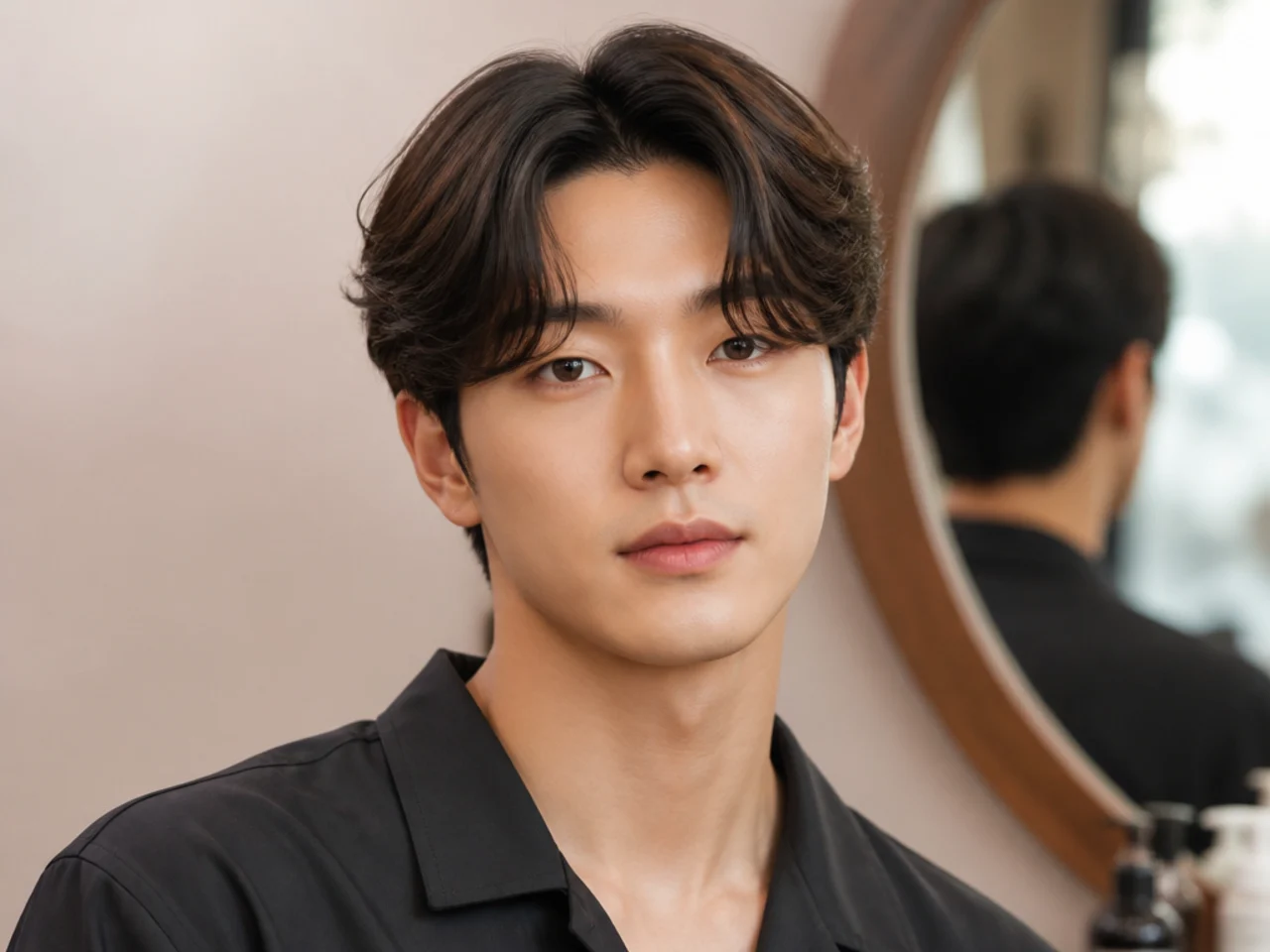
The template. Four inches on top, feathered fringe grazing the eyebrow, scissor-cut sides long enough to sit behind the ear — no fade, no undercut, no shortcut. Suits oval and round faces because the length balances the width and the softness reads warm. Best on straight to lightly wavy hair with medium density. Ask for "Korean-style curtain, four inches on top, feathered fringe past the brow, scissor-tapered sides long enough to tuck." Style with a nickel of matte cream through damp hair, split with a wide-tooth comb, and air-dry.
Two-Block Korean Curtain
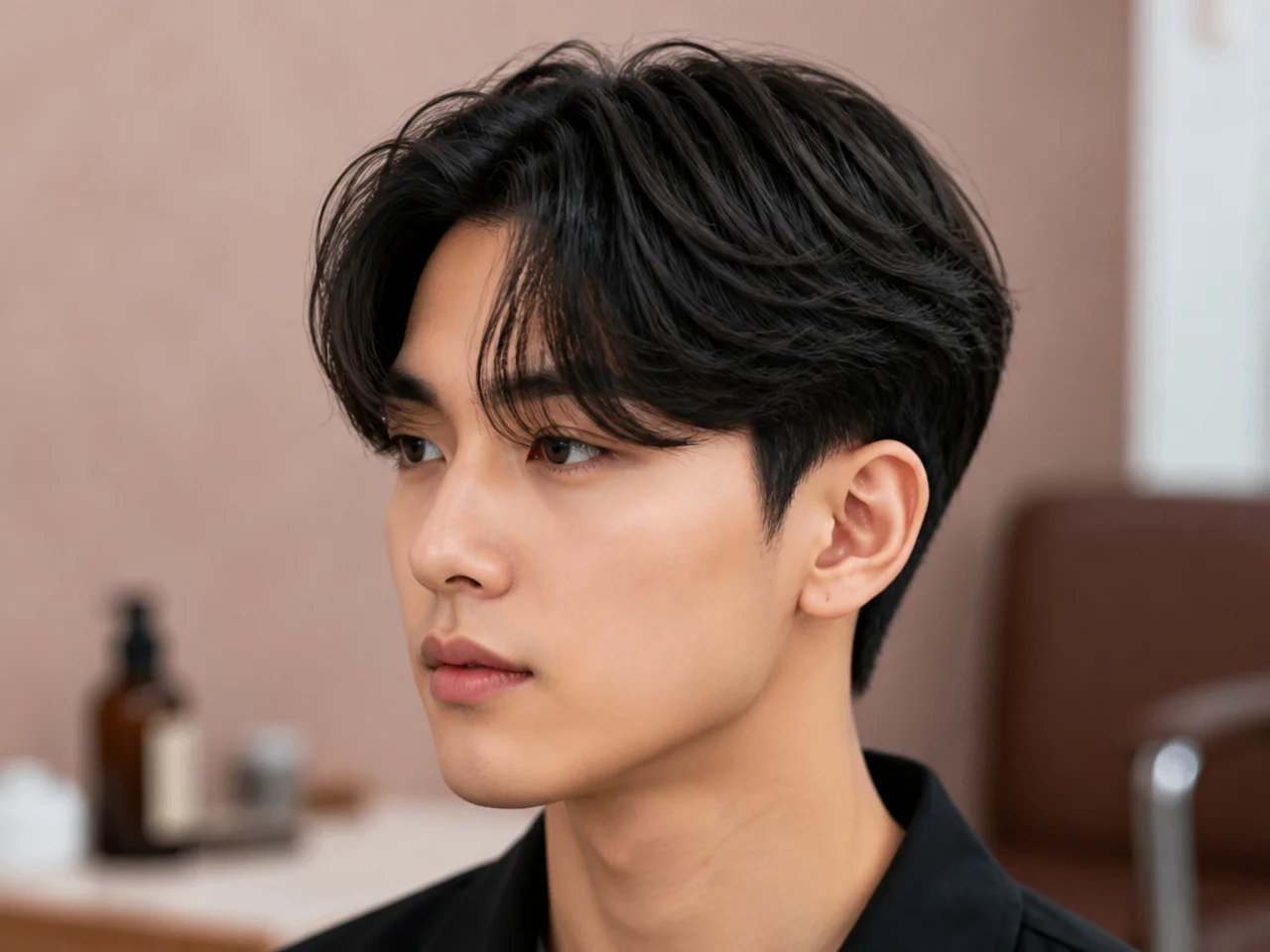
The K-pop staple. Buzzed underlayer at the sides — usually a two or three guard — hidden by a longer scissor-cut layer on top that falls into the curtain shape. The disconnect stays invisible unless you tuck the top layer behind the ear. Suits round and heart faces because the buzz narrows the base of the head while the top volume balances upward. Straight to light-wave hair only. Ask for "Korean two-block haircut with a four-inch curtain top, three-guard underlayer covered by the scissor layer." Style with a light cream and a comb — no clay, no wax.
Low Taper Fade Korean Curtain
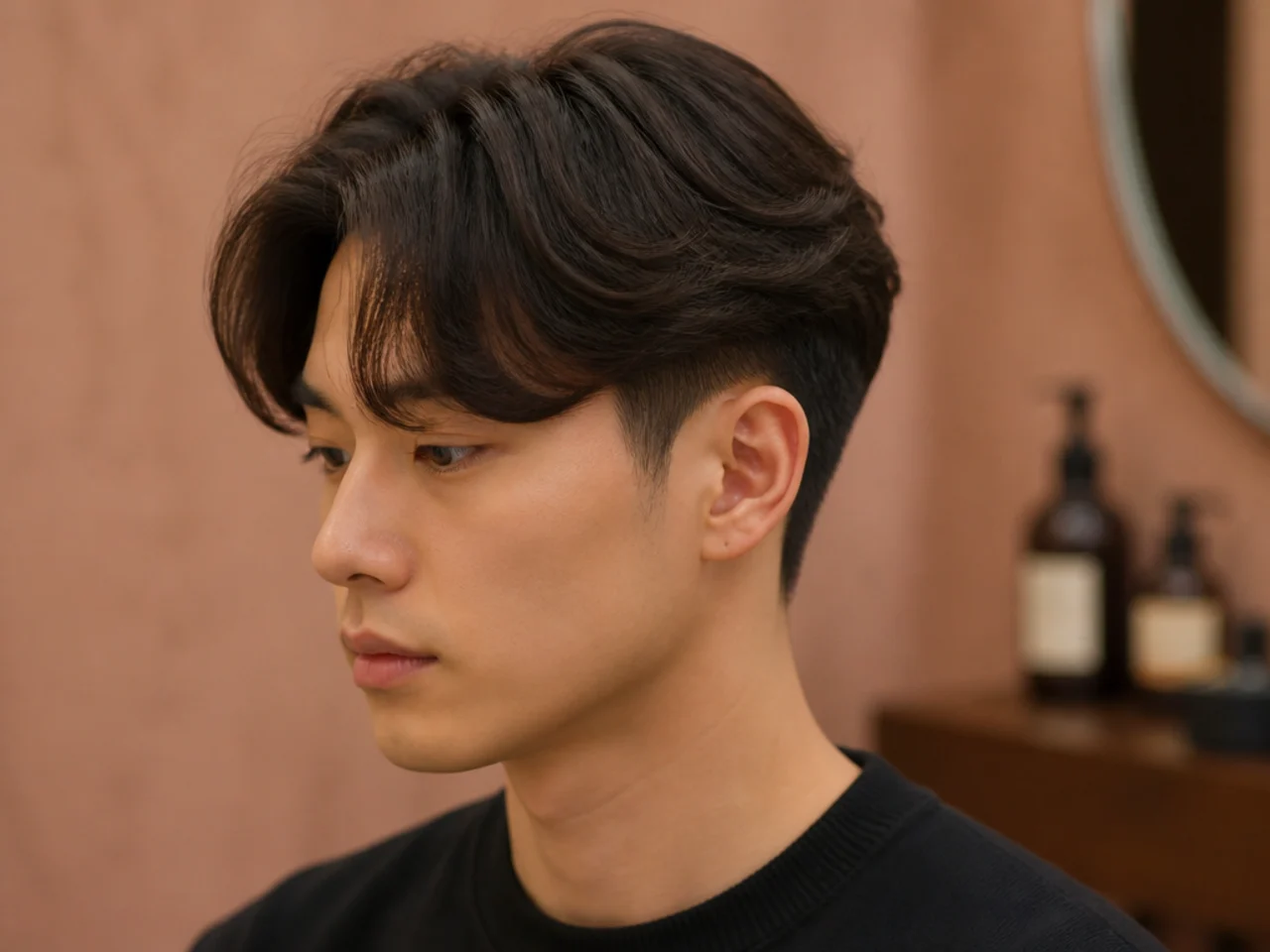
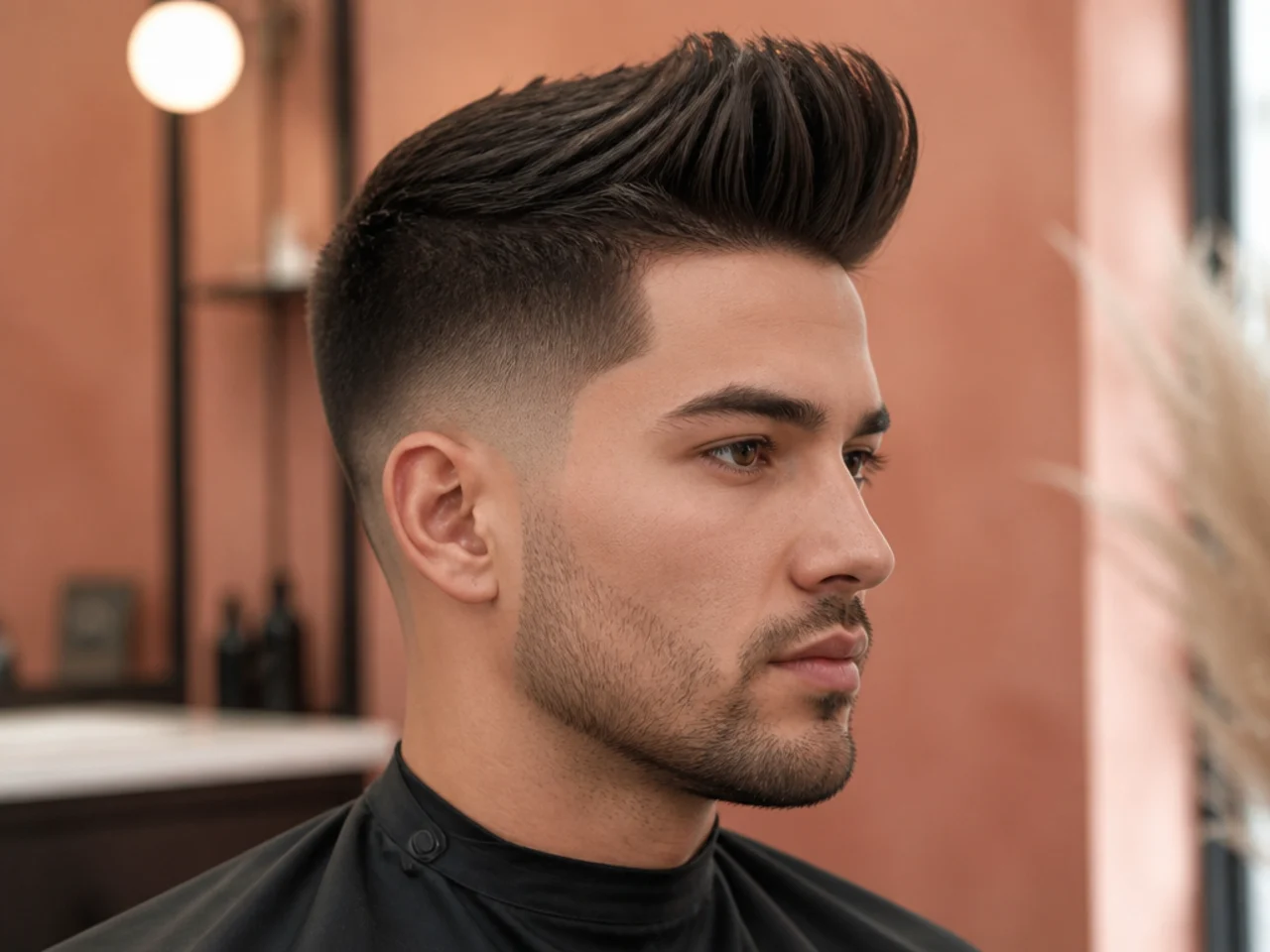
The cleanest Korean-Western crossover. Top stays a feathered curtain; the sides drop from about a three-guard down to skin across a fingerbreadth at the ear. Suits every face shape because the taper adds a shave of proportion without stealing softness. Straight, wavy, and looser curl types all work. Ask for "Korean curtain top at four inches, low taper fade starting just above the ear, faded to zero at the sideburn." Style like the classic — matte cream, comb the split, done. This is the version most Western guys screenshot for their first Korean cut.
Mid Fade Korean Curtain
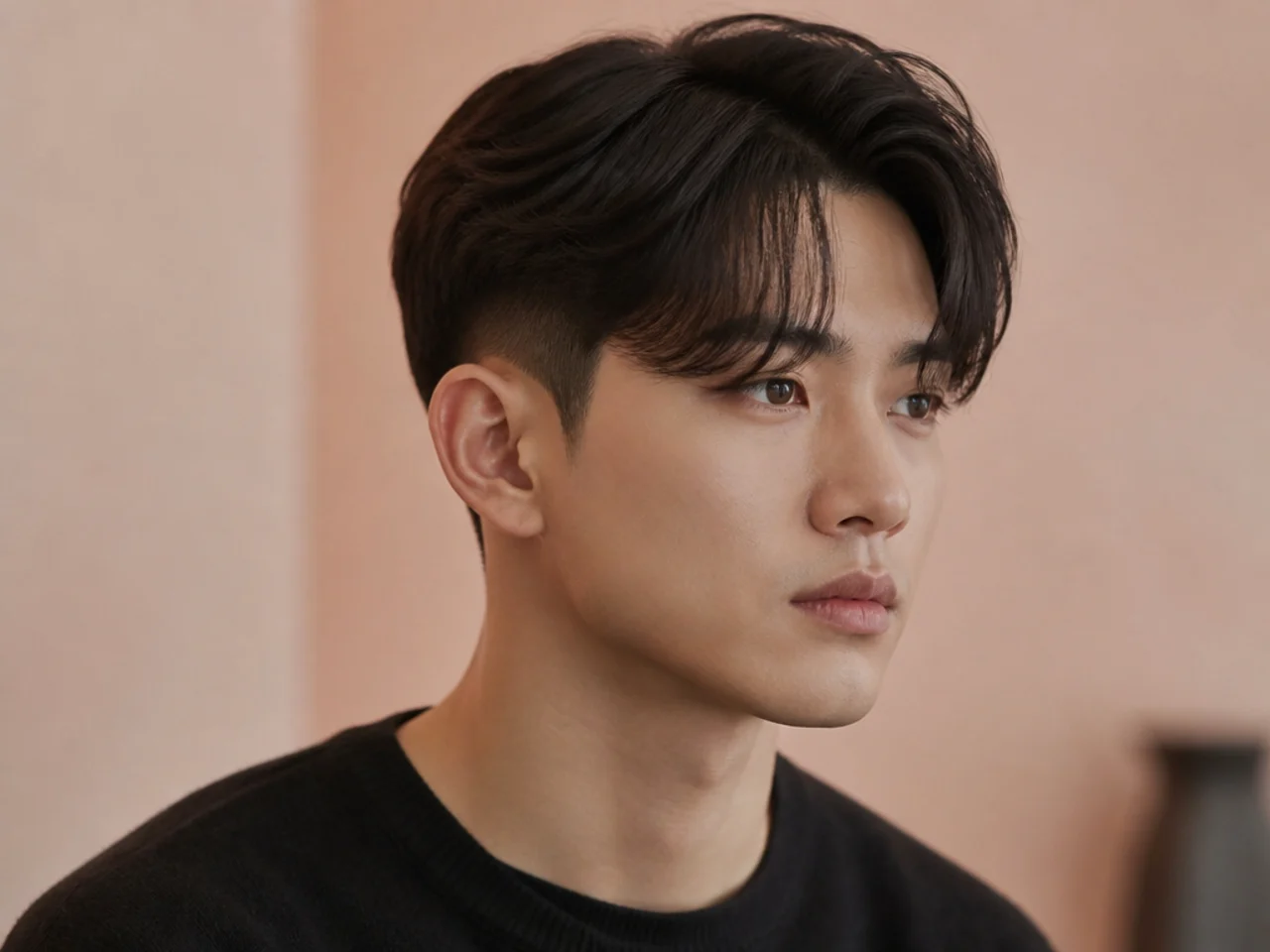
Bolder contrast. The taper starts at the temple instead of the ear, so more skin shows on the sides and the top reads shorter than it actually is. Suits oval, oblong, and long faces where you want to shorten the visible height of the head. Skip it on round faces — the horizontal line adds width. Ask for "Korean curtain, four inches on top, mid fade starting at the temple, blended to skin along the ear." Blow-dry the top forward and split with a comb; anything less than a clear center part reads unfinished against the fade.
Feathered Korean Curtain
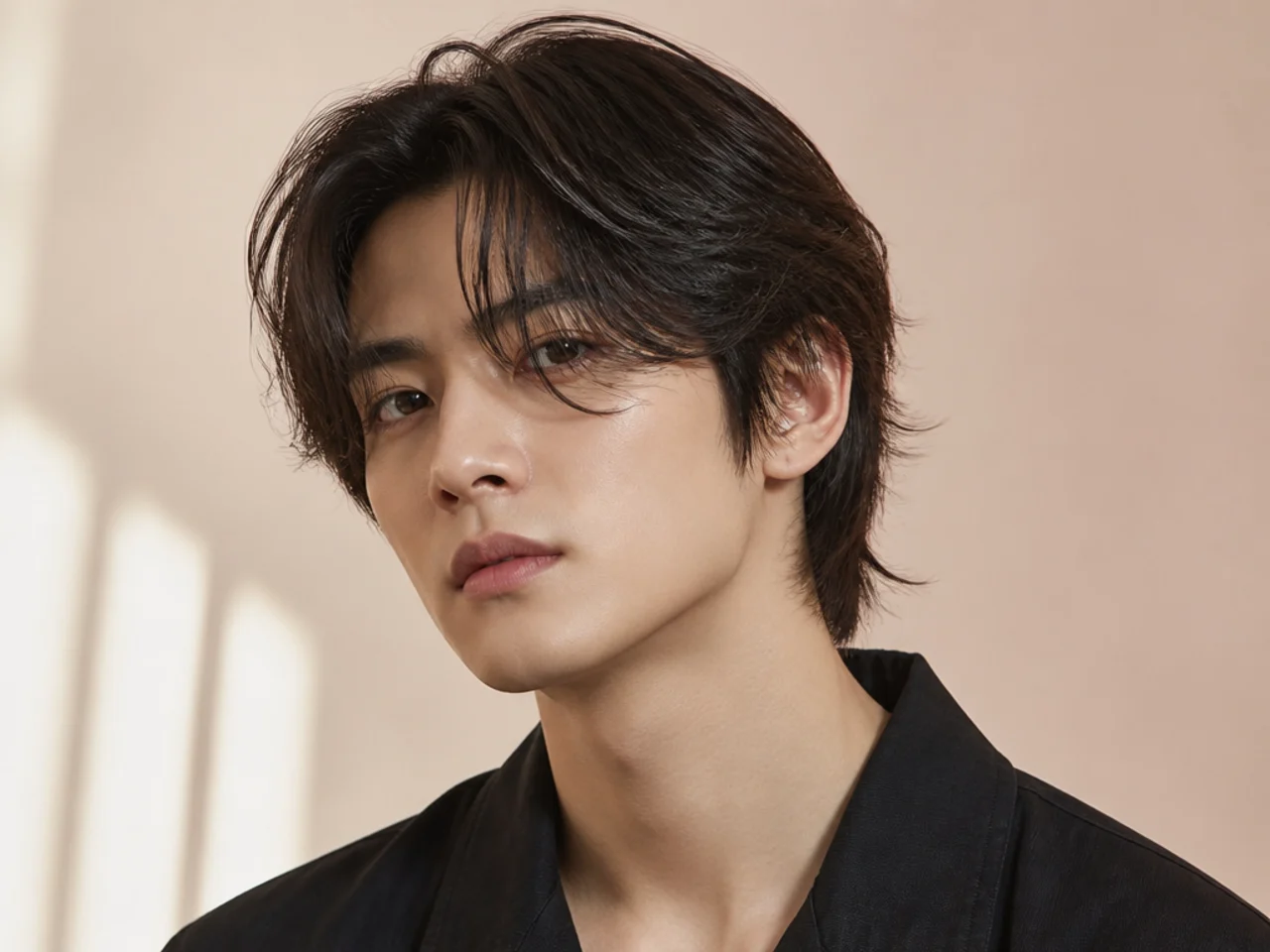
The softest version. Your stylist point-cuts and slides through every layer so the fringe falls in wispy pieces instead of a solid drape. Suits square, diamond, and heart faces because the airy ends soften angular bones. Straight to lightly wavy hair, medium density. Ask for "feathered Korean curtain, four inches on top, ends slide-cut for maximum feathering, sides scissor-tapered above the ear." Finish damp with a light cream and diffuse on low airflow for movement.
Short Korean Curtain
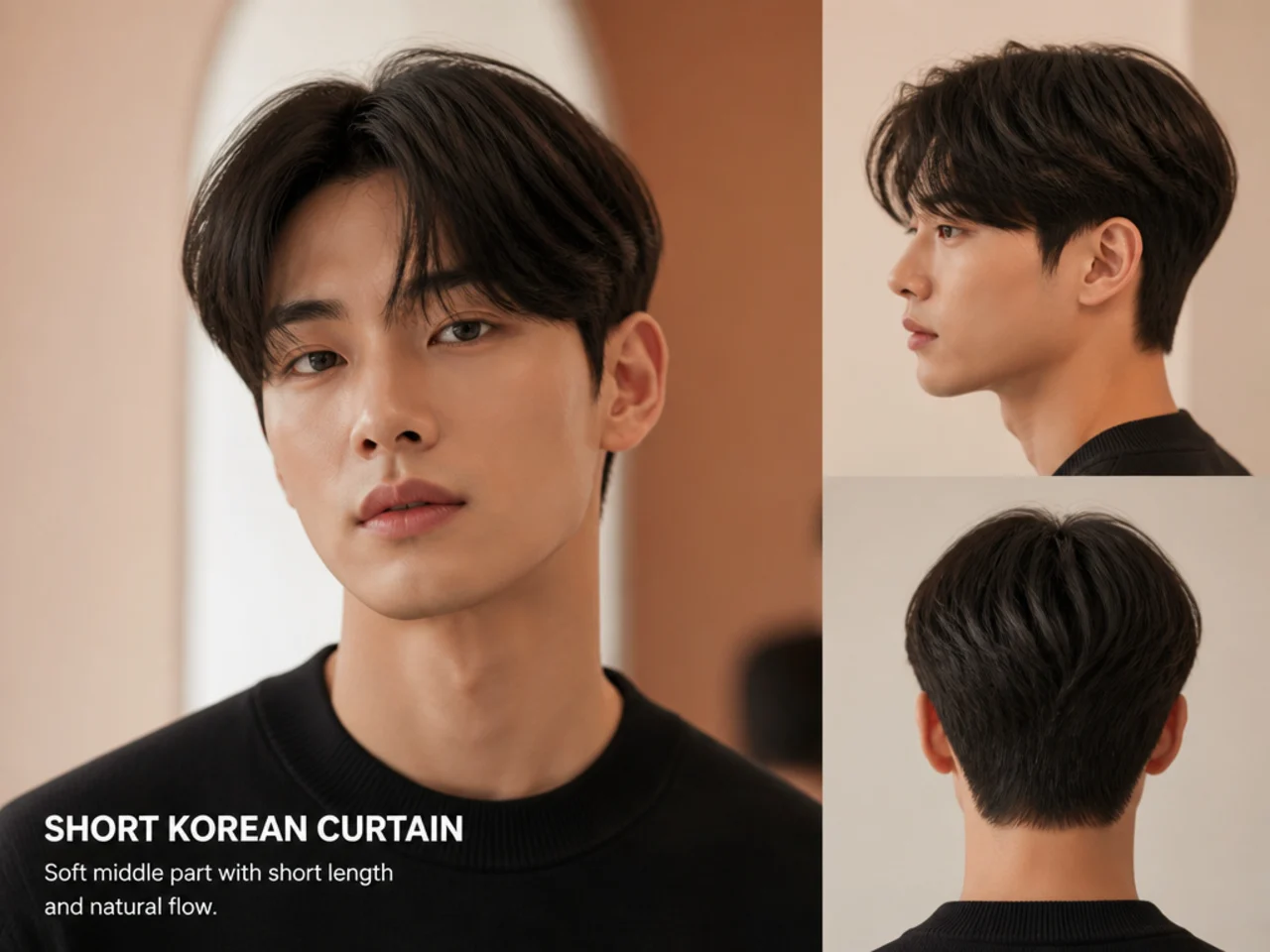
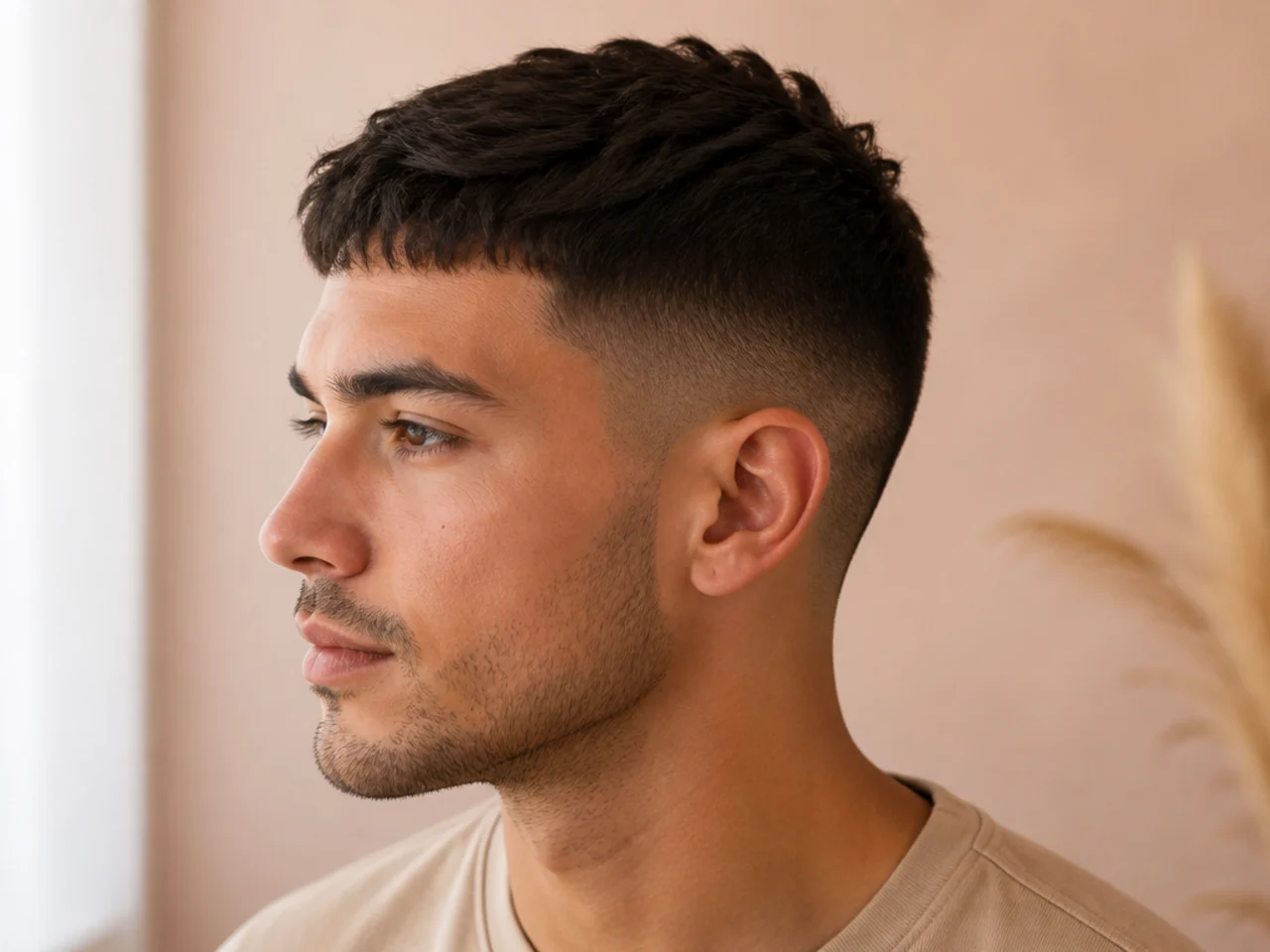
Workplace-legal. Top capped at three inches, sides scissor-tapered to sit above the ear, fringe kept at the brow. Suits every face shape because the shorter proportions read conservative. All hair types. Ask for "short Korean curtain, three inches max on top, feathered fringe at the brow, sides scissor-tapered above the ear, no fade." Style with a light-hold cream and a comb. If you want the longer companion, see the short curtain haircut men breakdown for the same shape at Western proportions.
Long Flow Korean Curtain
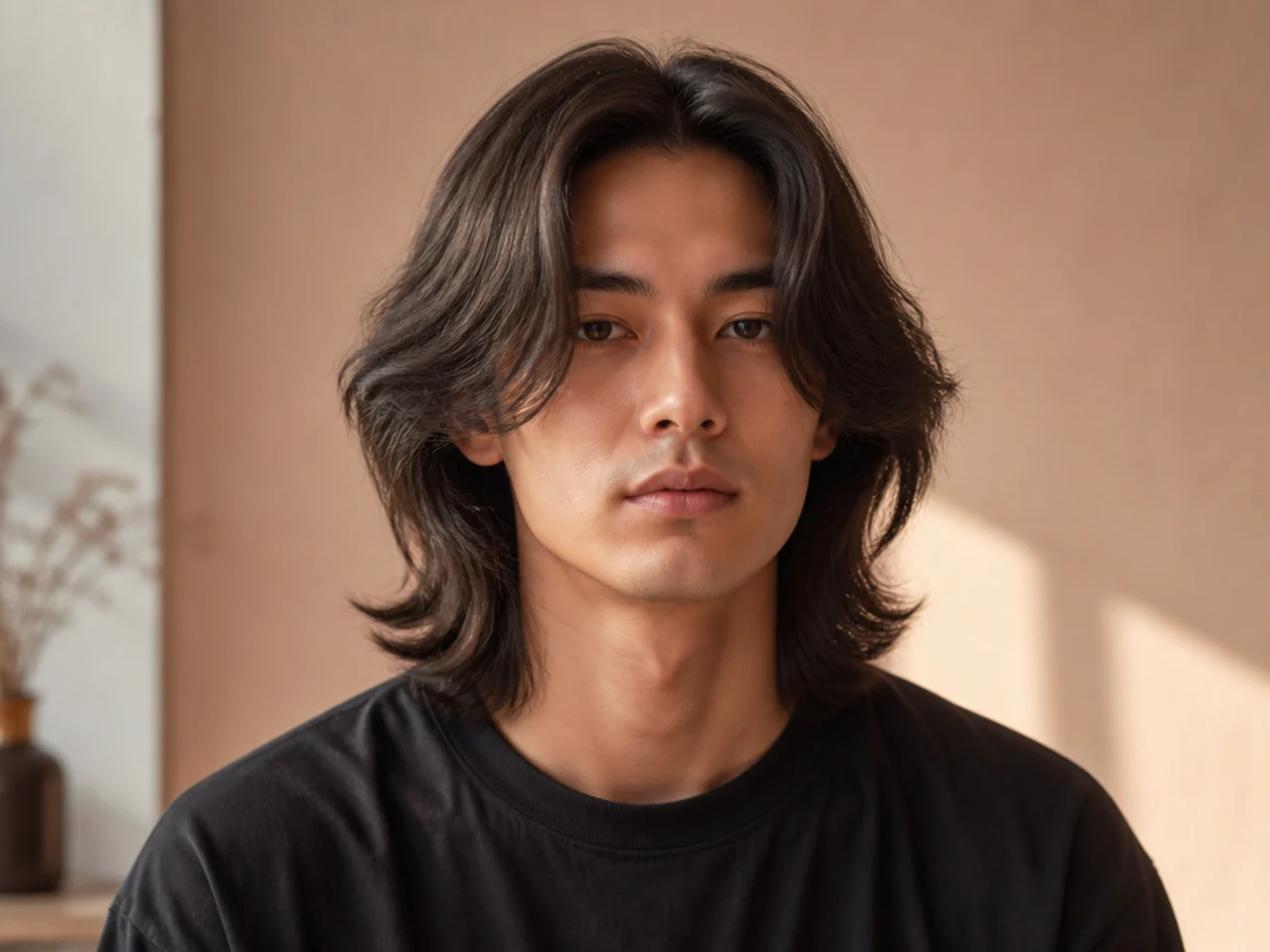
The K-drama lead length. Top runs five to six inches, curtains fall past the cheekbones, sides sit long enough to tuck behind both ears. Suits oval and long faces because the length elongates without adding width. Straight and lightly wavy hair with medium-to-thick density holds this shape best. Ask for "long flow Korean curtain, five to six inches on top, feathered ends past the cheekbone, sides scissor-tapered long enough to tuck." Style damp with a leave-in plus a matte cream, split with a comb, and air-dry.
Wavy Korean Curtain
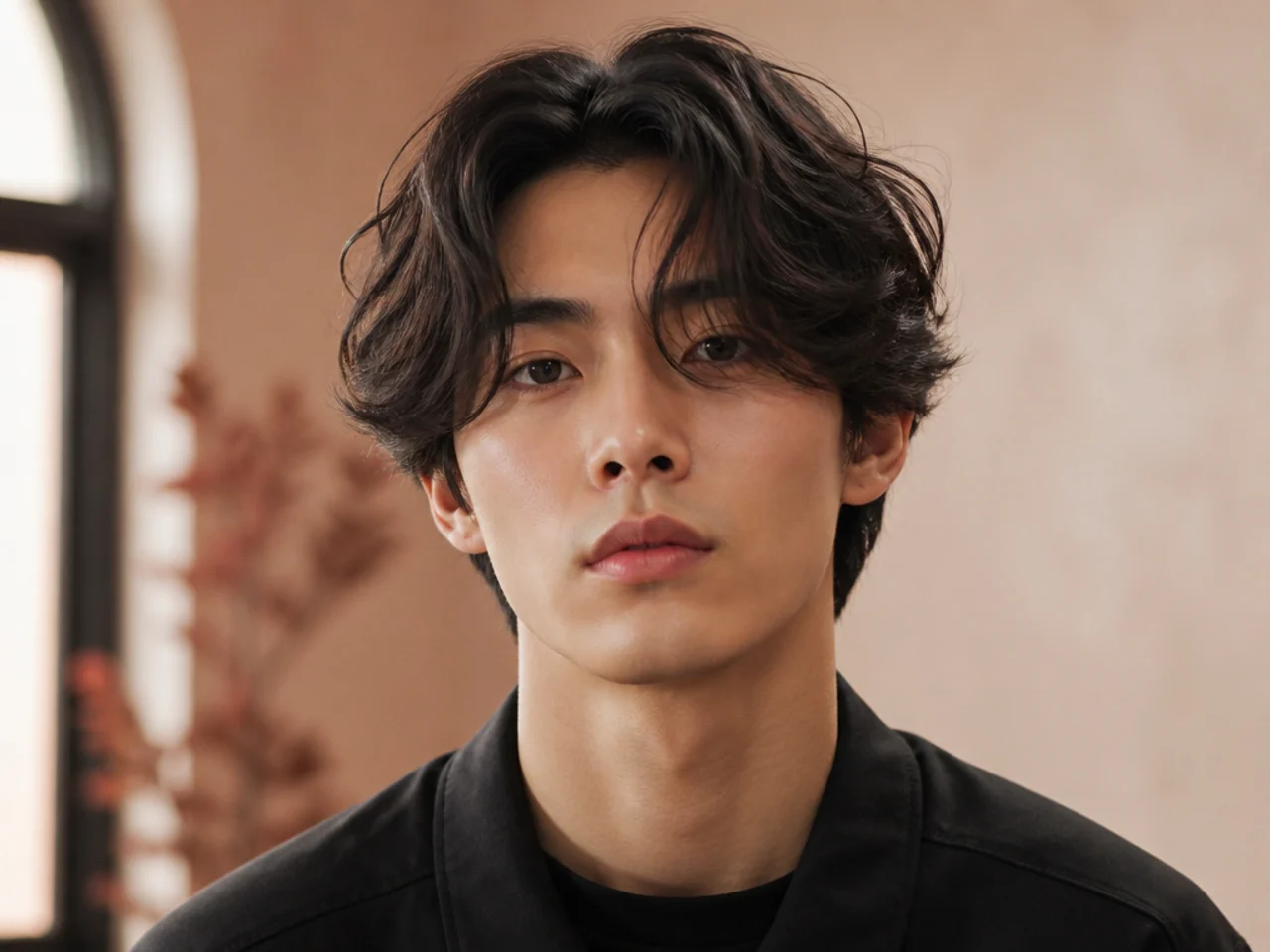
Built around your wave pattern. The stylist cuts internal layers so the S-curve falls forward at the fringe instead of poofing out mid-shaft, and the fringe stays long enough to catch the bend. Suits round and heart faces because the wave breaks up the perimeter. Wave patterns 2A-2C only. Ask for "Korean curtain for wavy hair, four inches on top, internal layers to control the mid-shaft, feathered fringe past the brow, scissor sides above the ear." Diffuse upside-down with a leave-in for root lift, then split with your fingers.
Curly Korean Curtain
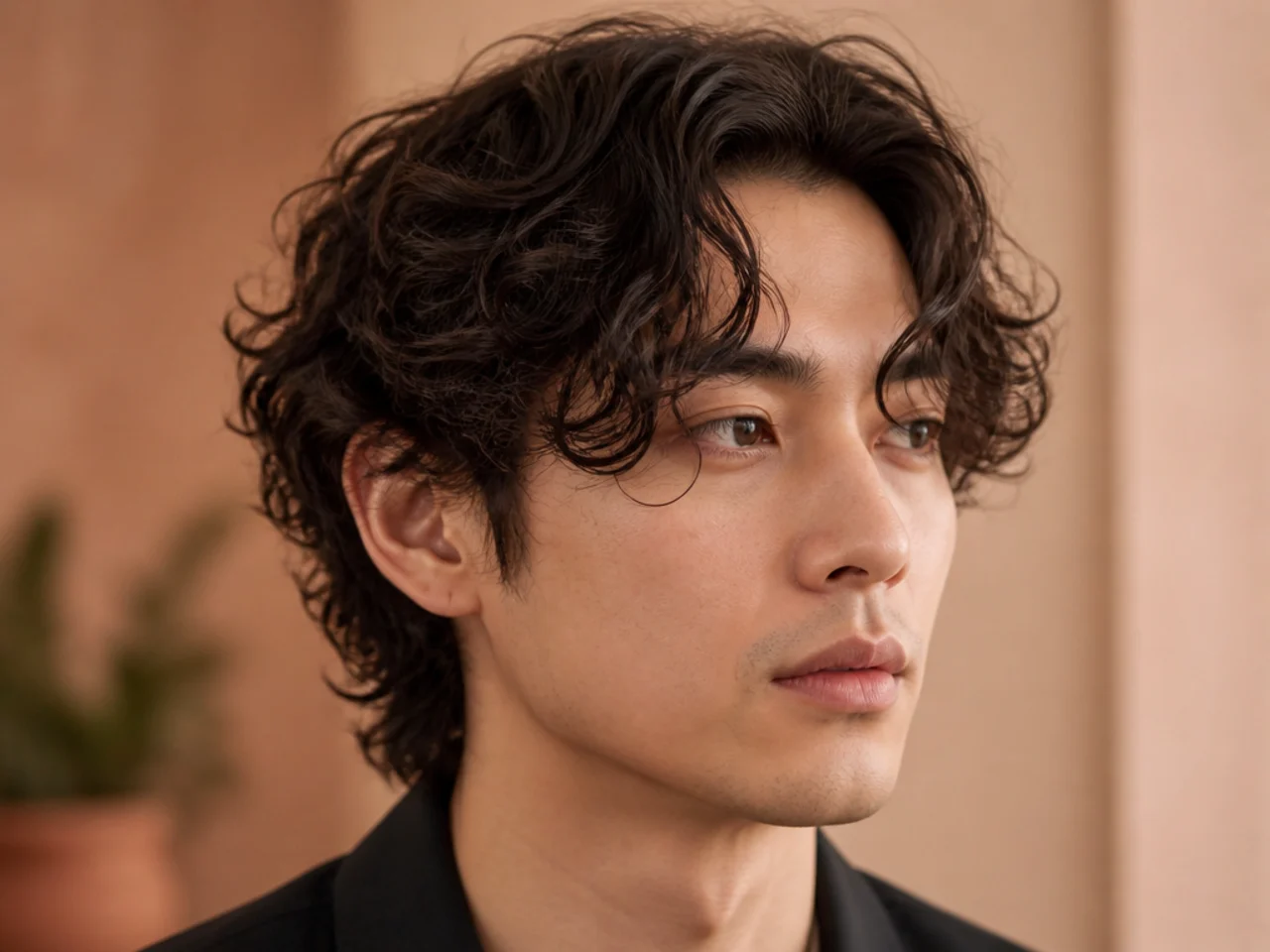
The overlooked variation. Curls need extra length — four inches minimum — to part and fall in two curtains. Your stylist curl-cuts each spring individually while the hair is dry. Suits oval and long faces. Curl types 3A-3B only; tighter than 3B builds into an afro shape instead. Ask for "Korean curly curtain, four inches on top cut dry, scissor sides trimmed short, part cut into the crown." Finish with a curl cream and a diffuser on low airflow. For a curl-first alternative that ditches the center part, the curly hair haircuts hub covers the rest.
Undercut Korean Curtain
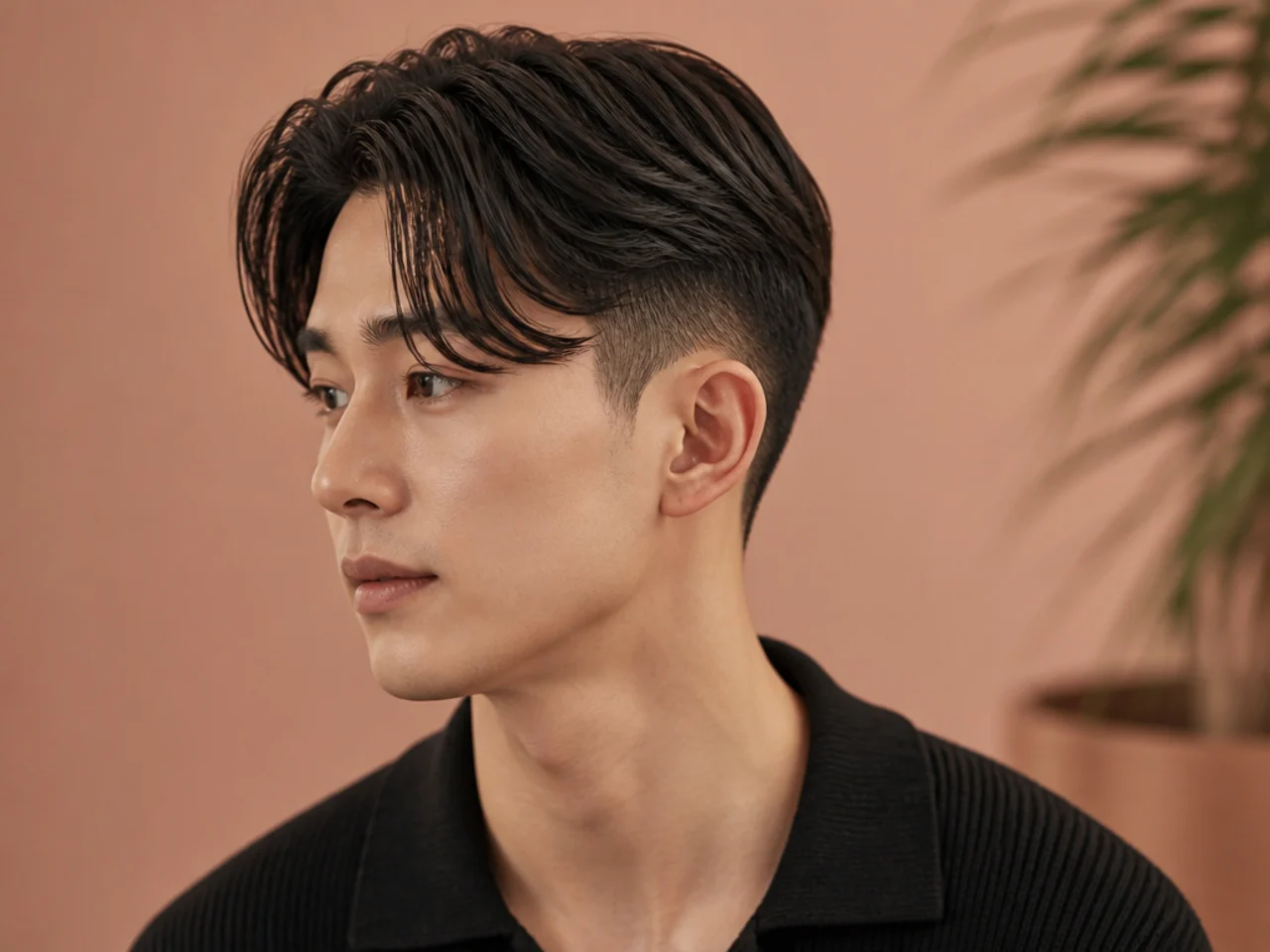
Sharp, one-length top over disconnected buzzed sides. No blend — the length just stops at the perimeter, and the curtain hangs in front of the buzz line. Suits oval and square faces because the vertical drop narrows the head. Straight to wavy hair only; curl looks unfinished with a disconnected line. Ask for "Korean curtain with a disconnected undercut, four inches on top, sides buzzed to a two-guard, no blend." Style with a lightweight cream — heavy product turns the top into a helmet against the buzz.
Blowout Korean Curtain
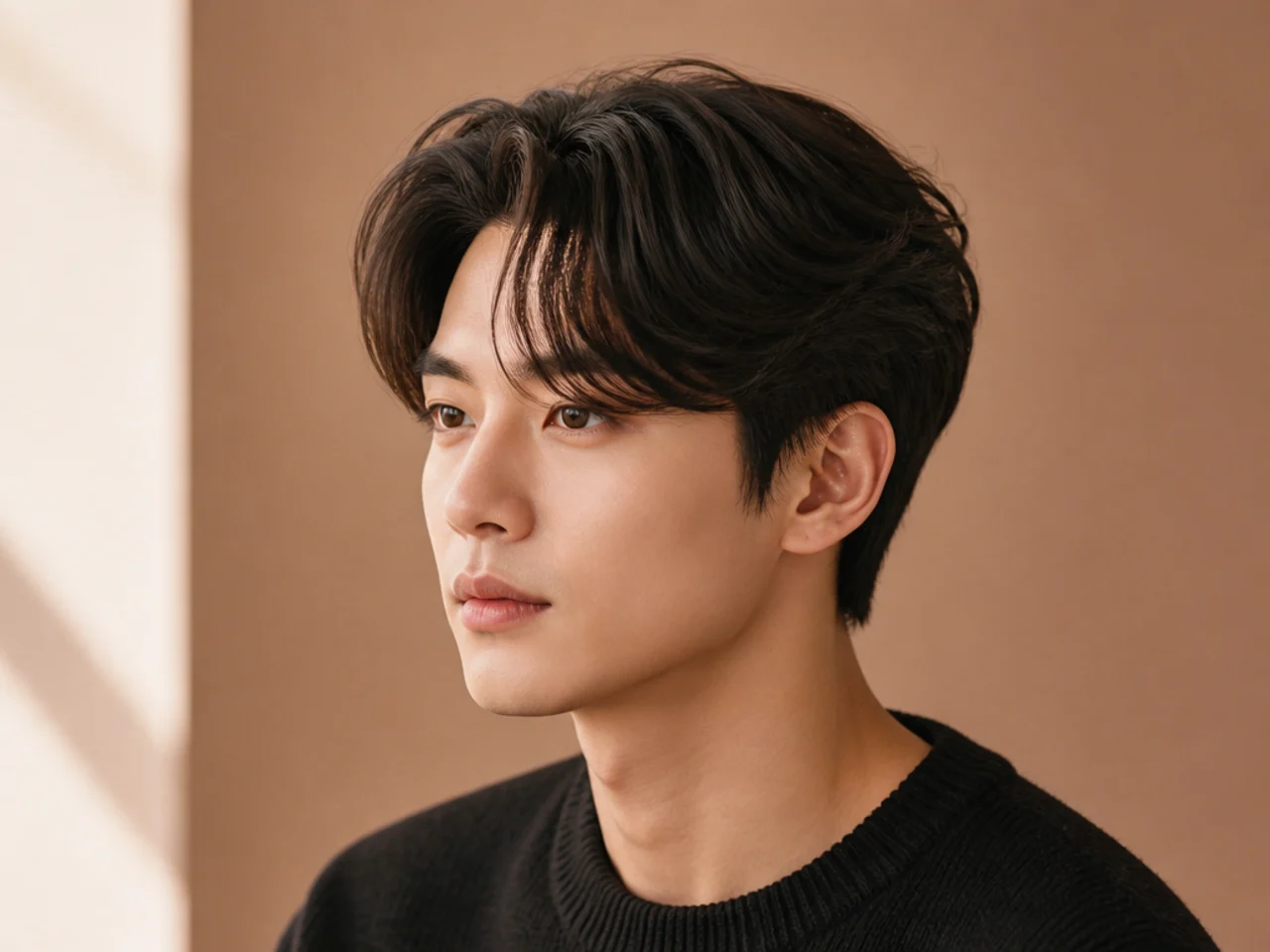
Volume-forward. Your stylist cuts a slight upward angle from the crown down to the fringe so a blow-dry lifts the front off the forehead before dropping into curtains. Suits oval and heart faces. Straight, wavy, or lightly curly hair. Ask for "blowout Korean curtain, four inches on top, angled up through the fringe for lift, sides tapered above the ear." Round-brush the fringe up and back with a blow-dryer on medium heat, then split with a comb. This is the shape you see on TWICE, ATEEZ, and Stray Kids performance stages.
Comma-Fringe Korean Curtain
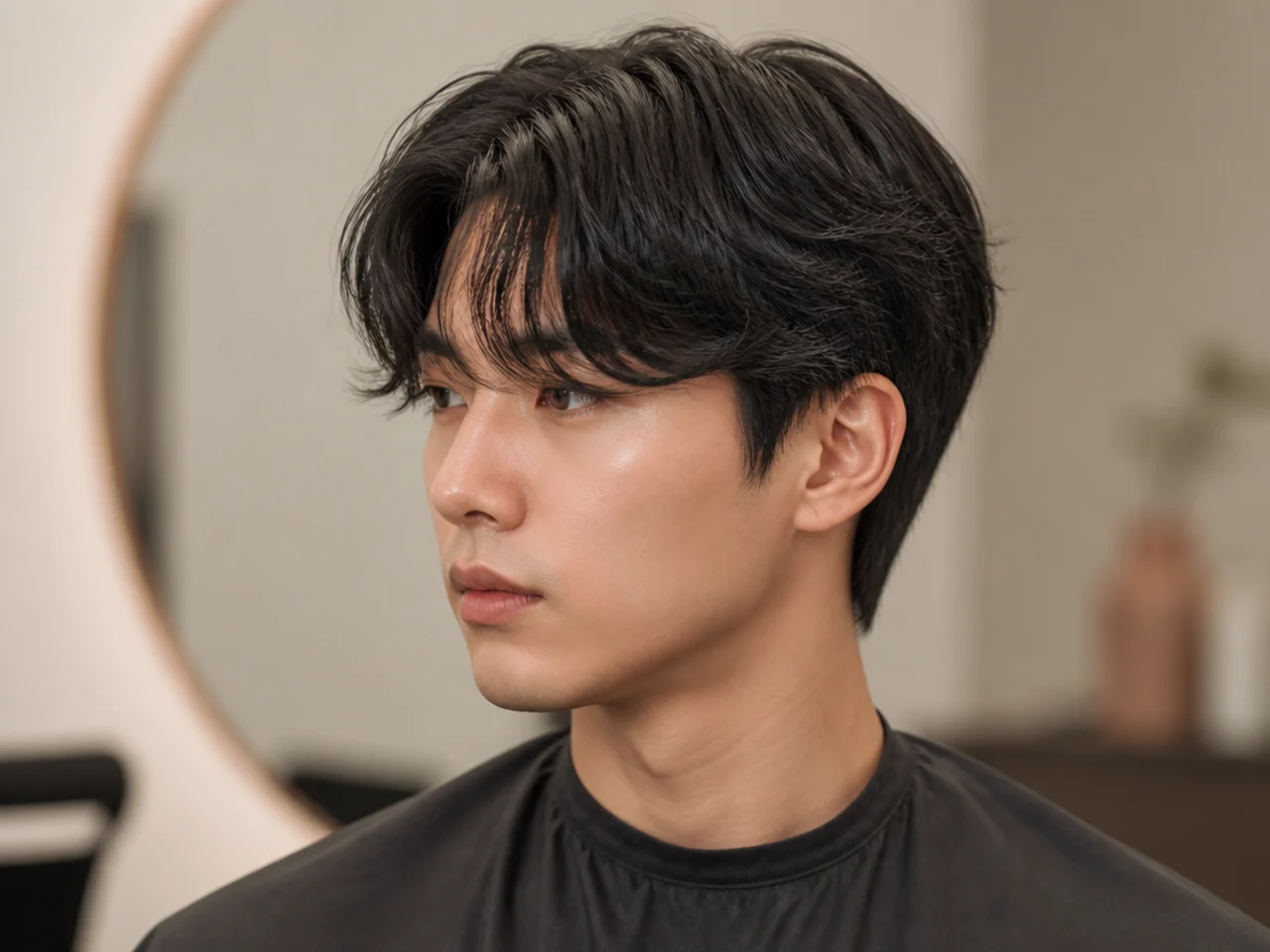
The half-cousin of the comma haircut. Same center-parted curtain base, but the barber shapes the fringe pieces to hook inward at each temple — like two soft commas. Suits oval, square, and long faces because the curved detail softens straight lines. Straight to lightly wavy hair. Ask for "Korean curtain with comma fringe, four inches on top, fringe layered to hook inward at each temple, scissor sides above the ear." Blow-dry the fringe with a round brush, curling the ends inward at the temple. Finish with a matte cream.
Thin-Hair Korean Curtain
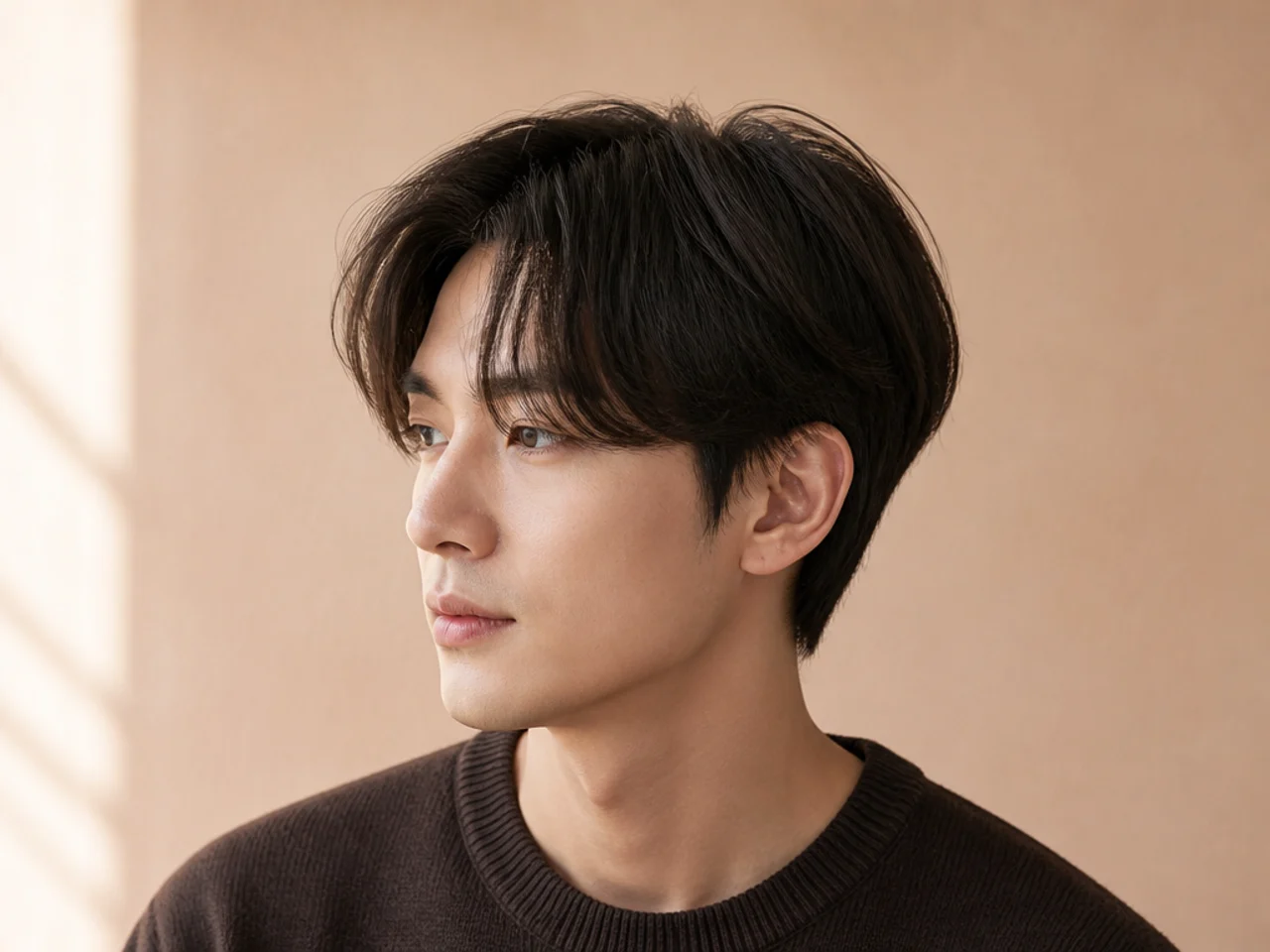
Density-building cut. The stylist layers to a slightly shorter shape — three to three and a half inches — heavily point-cuts every layer to create visual volume, and keeps the fringe long enough to fall in a curtain without looking sparse. Suits oval and heart faces. Fine, thin hair only. Ask for "Korean curtain for thin hair, three inches max on top, heavily point-cut for volume, scissor-tapered sides, no fade." Volumizing mousse at the roots, matte clay through the ends, air-dry with your head tilted forward.
K-Pop Idol Korean Curtain
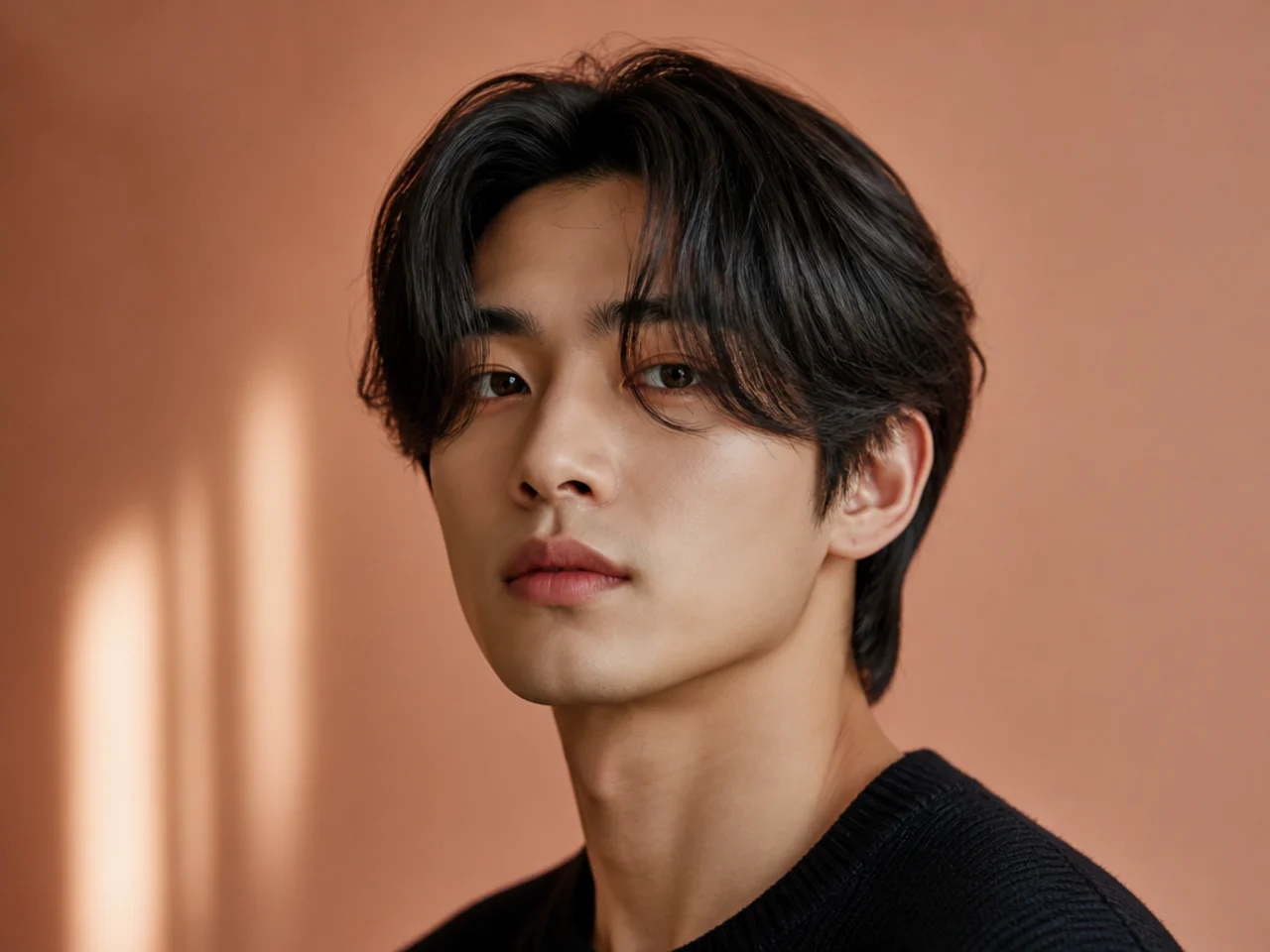
The stage version. Sharper angled fringe, bolder cheekbone-length curtains, often bleached or ash-toned at the tips, and a full blowout finish. Suits oval and long faces. Straight or lightly wavy hair — bleached texture holds the shape without going frizzy under stage lights. Ask for "K-pop idol Korean curtain, four to five inches on top, sharply angled fringe cut past the cheekbone, layered for blowout volume, scissor sides above the ear." Blow-dry with a round brush, matte pomade at the roots for lift, sea-salt spray through the ends.
K-Drama Lead Korean Curtain
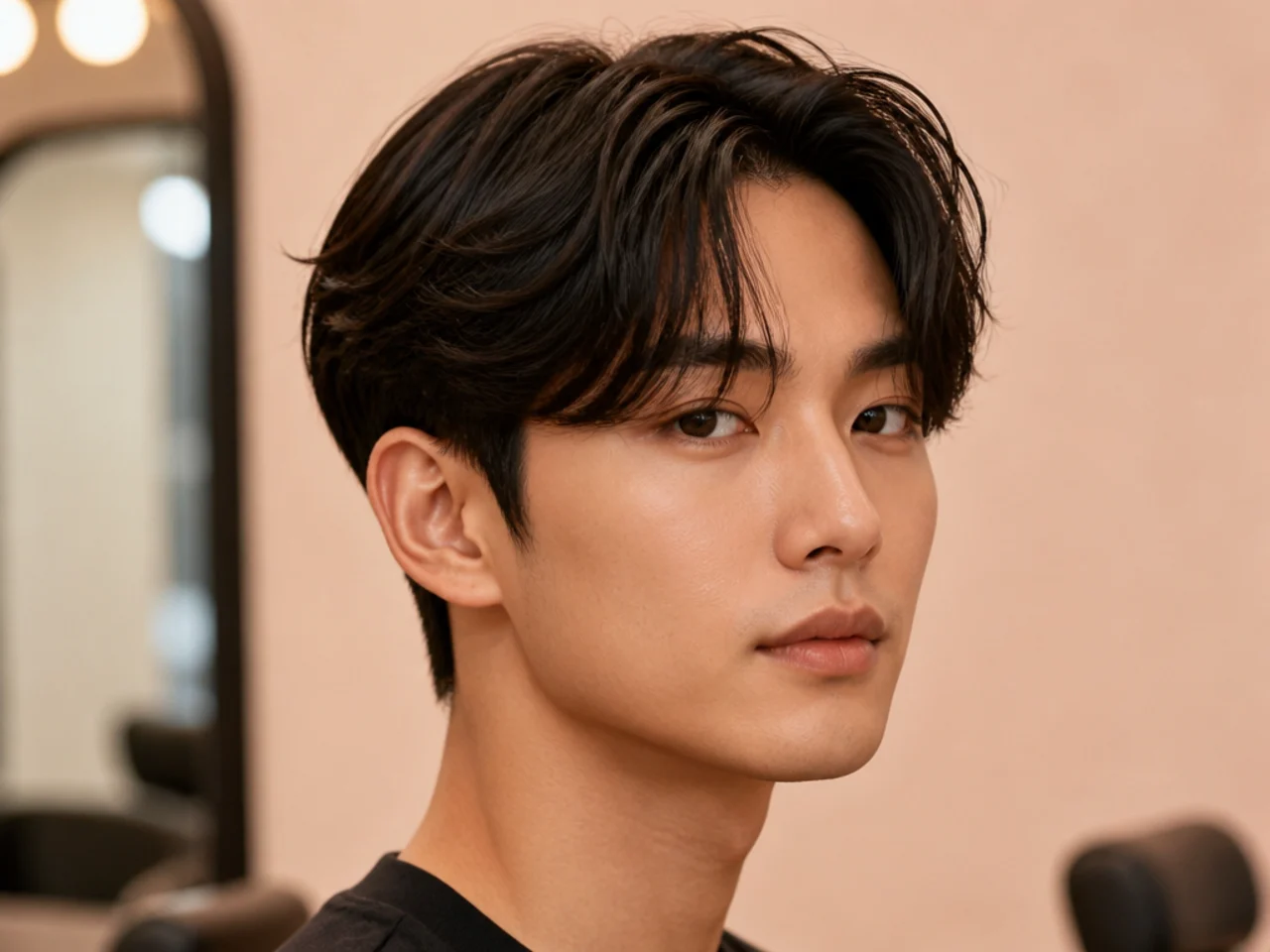
The romantic-lead read. Softer than the K-pop version — no sharp angles, no bleach, just a full drape of feathered curtains falling to the cheek. Suits square, diamond, and round faces because the softness offsets angular bones. Straight to wavy hair, medium density. Ask for "K-drama Korean curtain, five inches on top, soft feathered fringe falling to the cheekbone, sides long enough to tuck, no fade." Style with a lightweight cream and a wide-tooth comb — no product-heavy finish. This is the version to bring your stylist if you want "softer" without knowing the term for it.
Deep-Center Korean Curtain
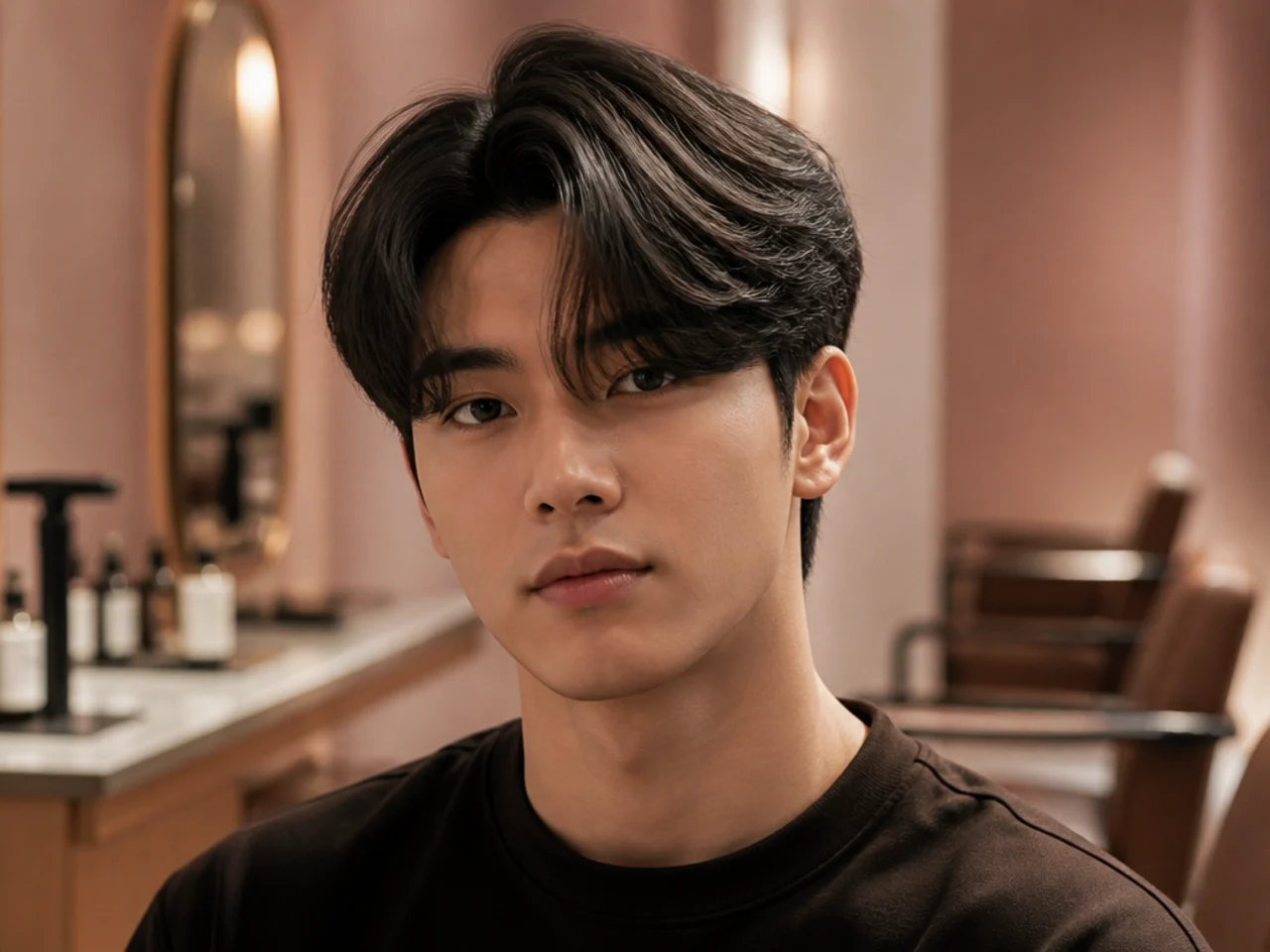
The exaggerated middle-part version. Your stylist cuts the center part deep and heavy so it reads as the main feature of the cut, and the two curtains hang thick on either side. Suits oval, long, and heart faces because the strong vertical line elongates the face and centers focus. Straight hair with medium-to-thick density holds this best. Ask for "deep-center Korean curtain, four inches on top, heavy defined middle part cut into the crown, curtains layered thick on both sides, scissor sides above the ear." Set the part damp with a comb and finish with a matte cream.
Off-Center Korean Curtain
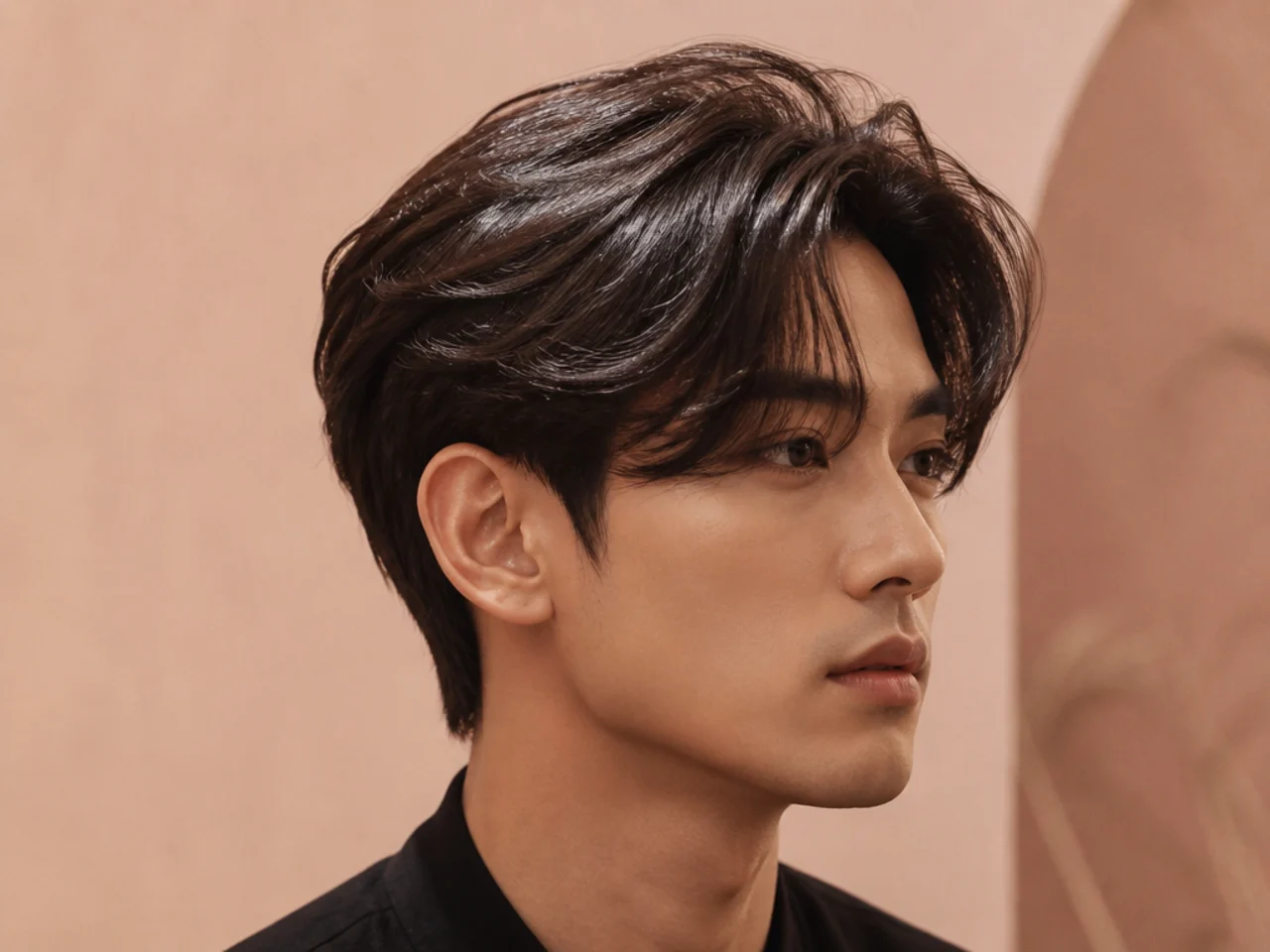
Parted slightly off-middle for asymmetry. One curtain hangs a touch longer than the other. Suits round and square faces because the asymmetry breaks up facial symmetry. Straight to wavy hair. Ask for "off-center Korean curtain, four inches on top, part offset about a fingerbreadth from center, longer side layered a hair lower than the other, sides scissor-tapered above the ear." Set the offset while damp with your comb, then lock with a matte cream. Same base as the middle part haircut men — just cheated a finger off center.
Textured Piecey Korean Curtain
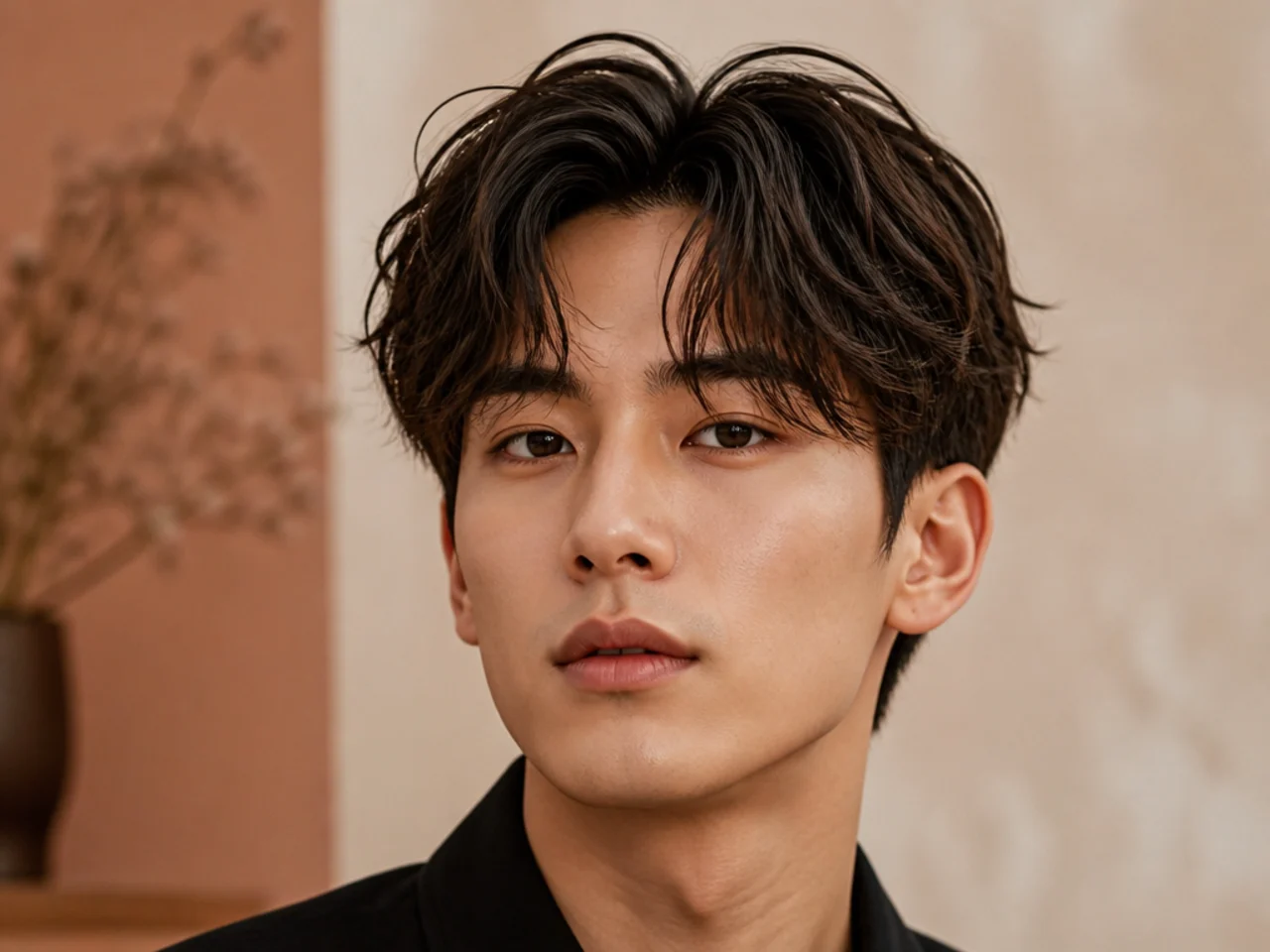
Same base, choppier finish. Your stylist point-cuts the ends aggressively and adds hidden internal layers so the curtains fall in separate pieces instead of one drape. Suits square and diamond faces because the broken-up texture softens the jawline. Any hair type works — sea-salt spray sharpens the pieces. Ask for "textured Korean curtain, four inches on top, heavily point-cut through the ends, hidden internal layers, sides scissor-tapered above the ear." Finish damp with sea-salt spray plus a pea-sized amount of matte clay. Adjacent to the textured fringe men territory if you want more piece and less drape.
Korean Curtain with Beard
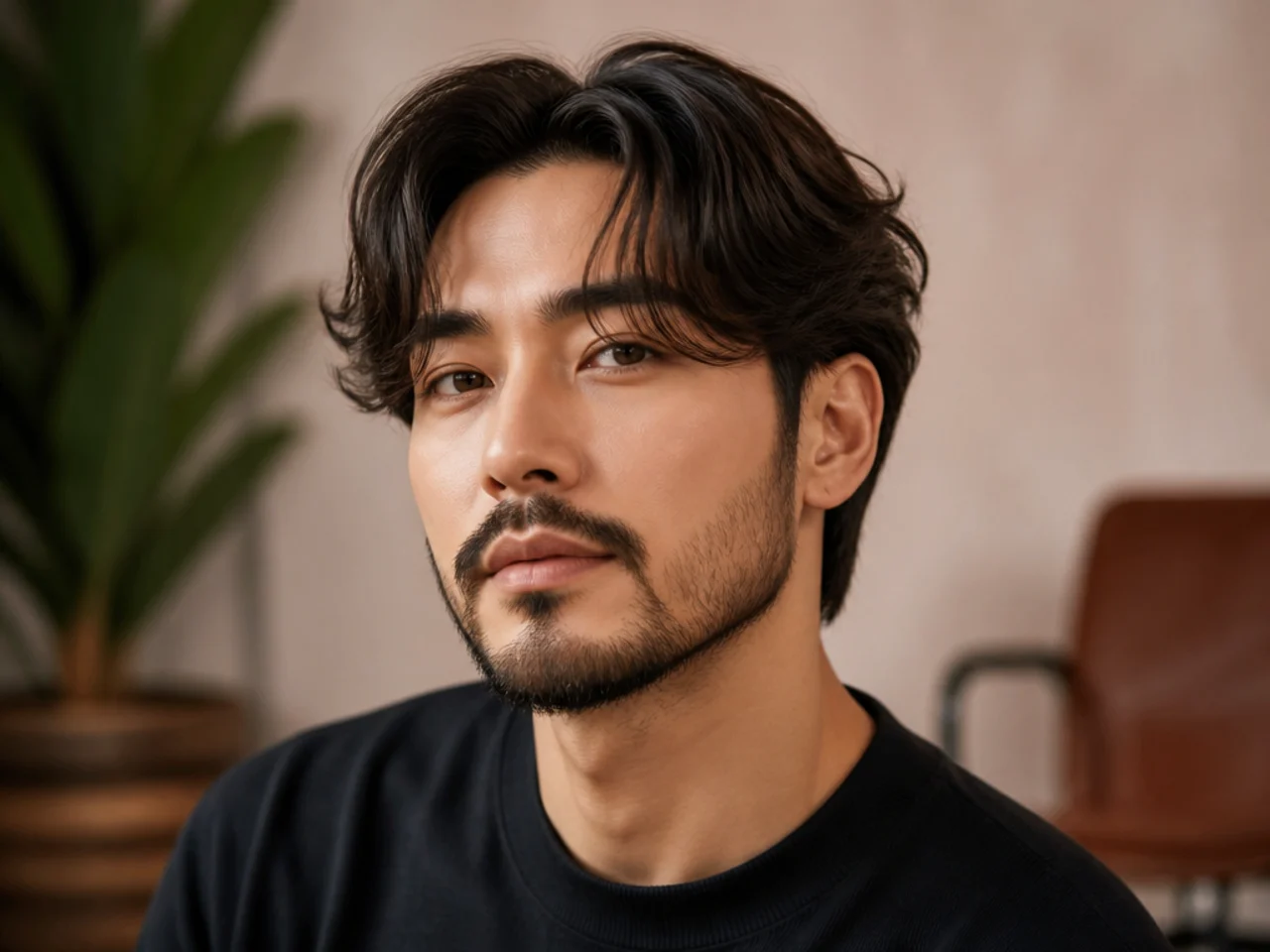
Face-framing combo. The curtain drops onto the temples and the beard defines the jawline — one full oval of hair around the face. Suits square, round, and diamond faces because the beard rebalances a wide top. Beard length sits between a two and a three guard, faded into the sideburn. Ask for "four-inch Korean curtain, feathered fringe at the brow, sides scissor-tapered into a faded beard at the sideburn line." Trim the beard the same day so both sit fresh together. Works especially well on guys who want the softness of the curtain without reading younger than they are.
Modern Minimalist Korean Curtain
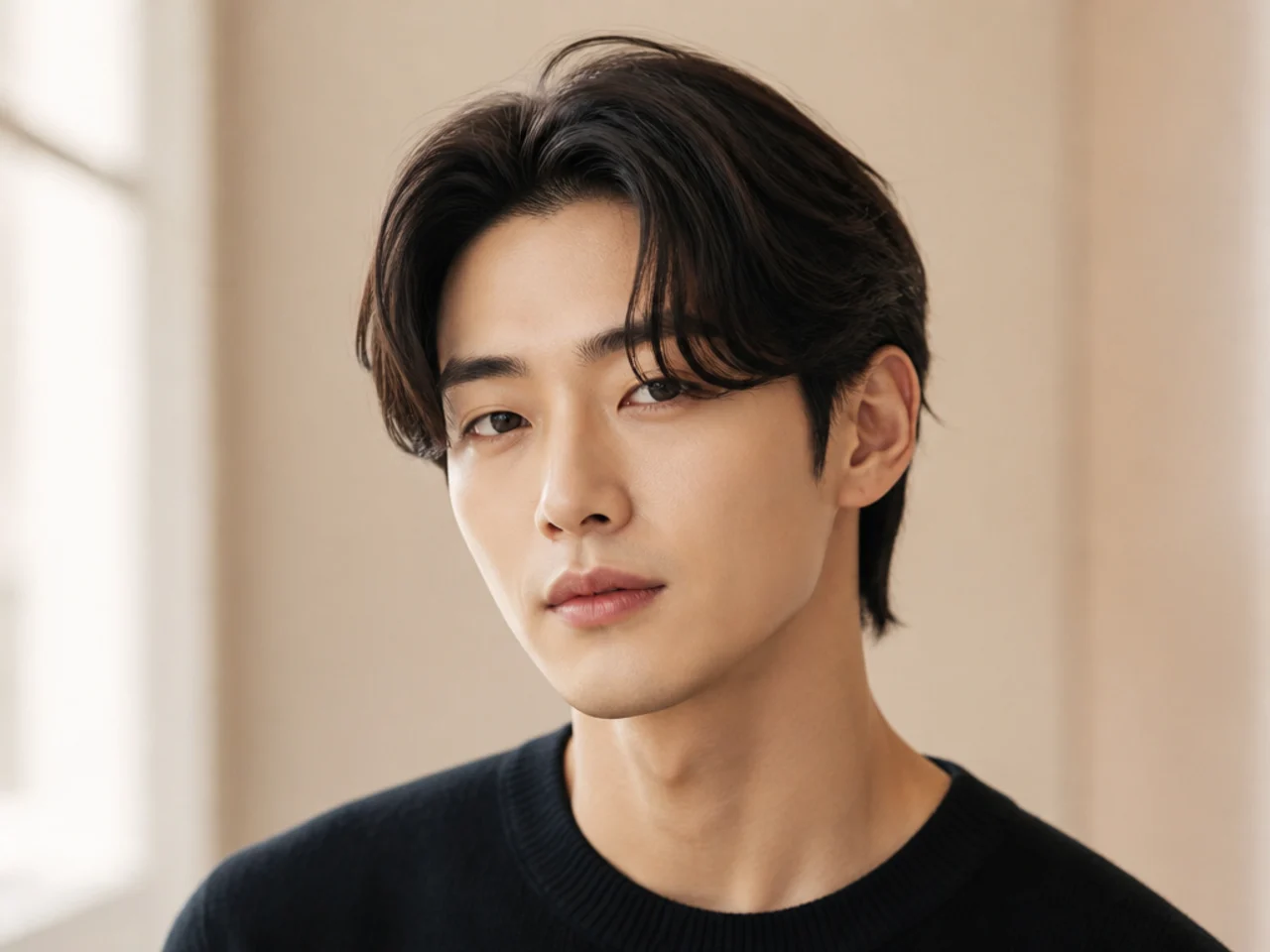
The 2026 refresh. Cleaner lines, softer feathered fringe cut a touch above the brow, subtle low taper on the sides without going full fade. Suits every face shape. Any hair type. Ask for "modern minimalist Korean curtain, three and a half to four inches on top, feathered fringe at the brow, sides gently tapered above the ear with a low scissor fade." Finish with a matte cream and a natural split. This is the version to bring your stylist if you can't decide between the classic, the two-block, and the fade combo — it splits the middle.
How to Ask Your Barber or Stylist
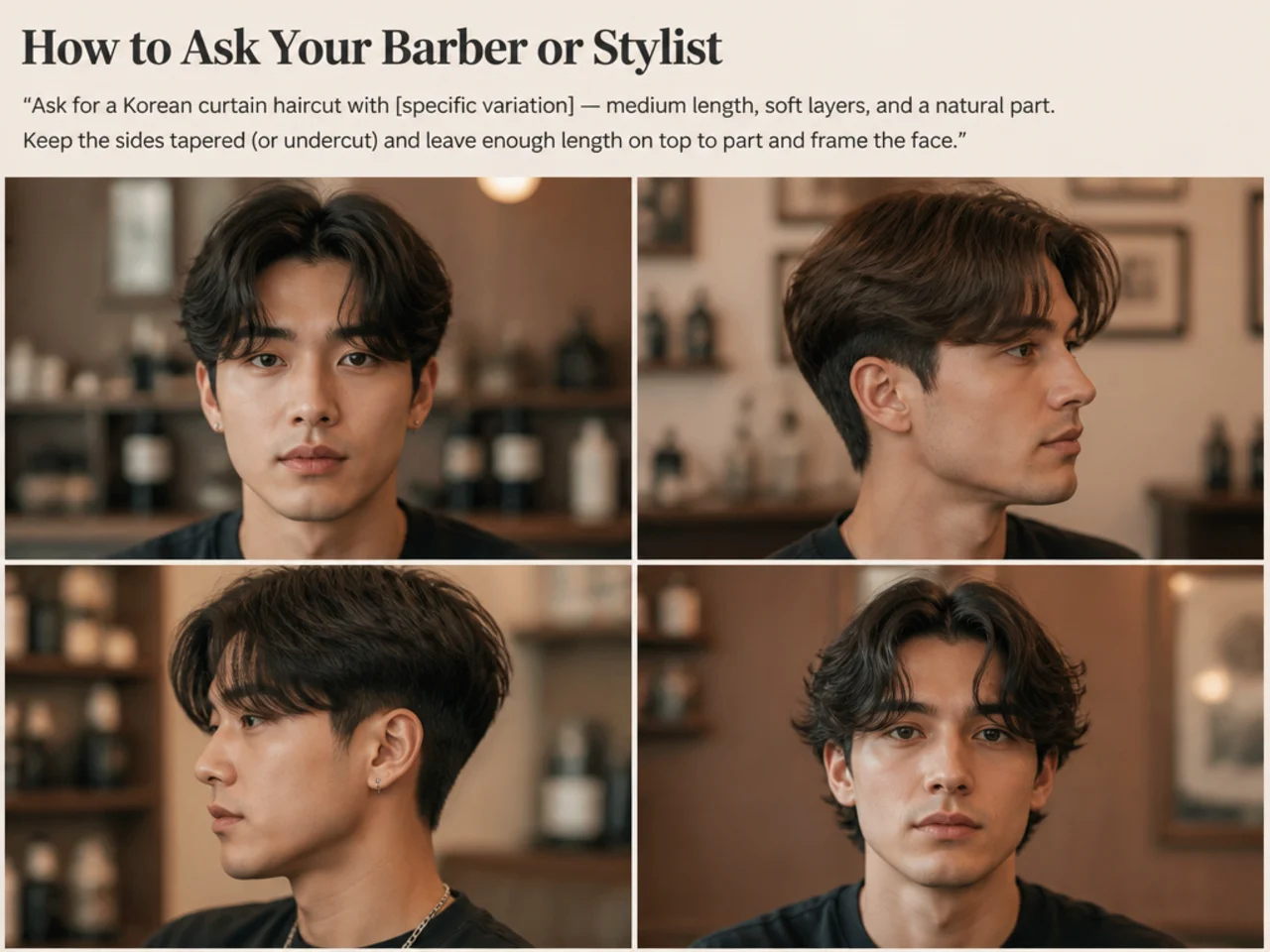
Bring the photo. Bring the language. Then hand your stylist all seven of these decisions before scissors touch hair.
- Show the exact variation. "Korean curtain" means twenty different cuts to twenty different stylists. A screenshot of the variation from this guide skips the guessing.
- Set the top length in inches. Three to five inches for a Korean curtain. Anything shorter loses the fall; anything longer slips into flow-cut territory.
- Name the side finish. Scissor-tapered, low taper fade, mid fade, undercut, or two-block. Pick from the variations above and use the exact phrase.
- Ask for slide-cut, point-cut, or feathered ends. These are the moves that distinguish a Korean curtain from a Western one. Say it outright — most stylists default to blunt.
- Have the part cut in. Ask the stylist to snip a center part while the hair is damp. Without it, the curtains fight you every morning.
- Set the fringe length. Decide between eyebrow-grazing (short, business, modern) or cheekbone-length (K-drama, long flow). Say it in seconds — "just past the brow" or "past the cheekbone."
- Confirm the finish. Matte only. Glossy pomades, gels, and shiny waxes fight the softness that makes a Korean curtain read Korean. Say it before the stylist reaches for product.
Styling and Maintenance
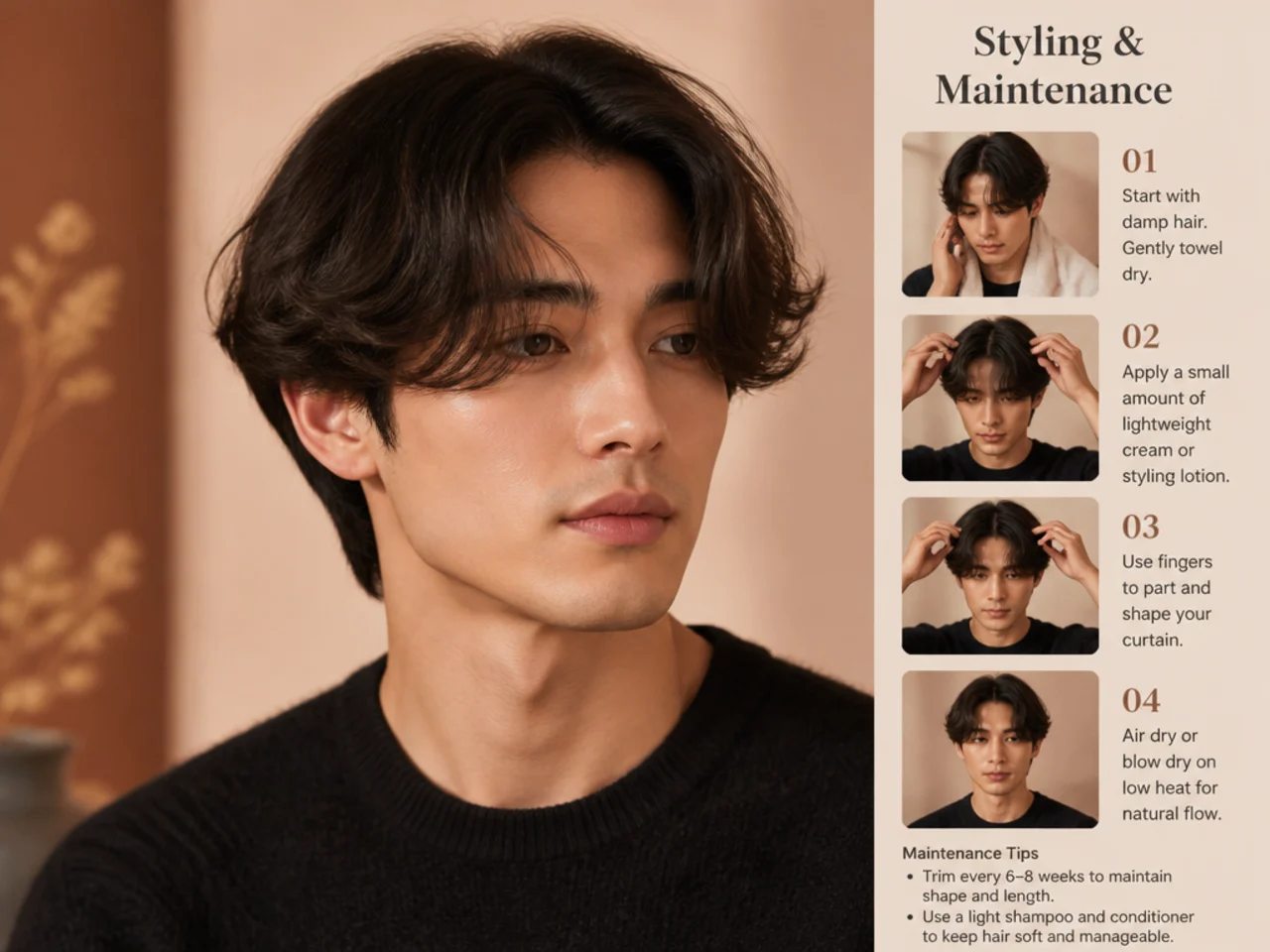
Korean curtain hair styles wet, sets dry, and lives on two products maximum. The whole routine takes under three minutes for the classic and short versions, five to seven minutes for the blowout and K-pop idol builds.
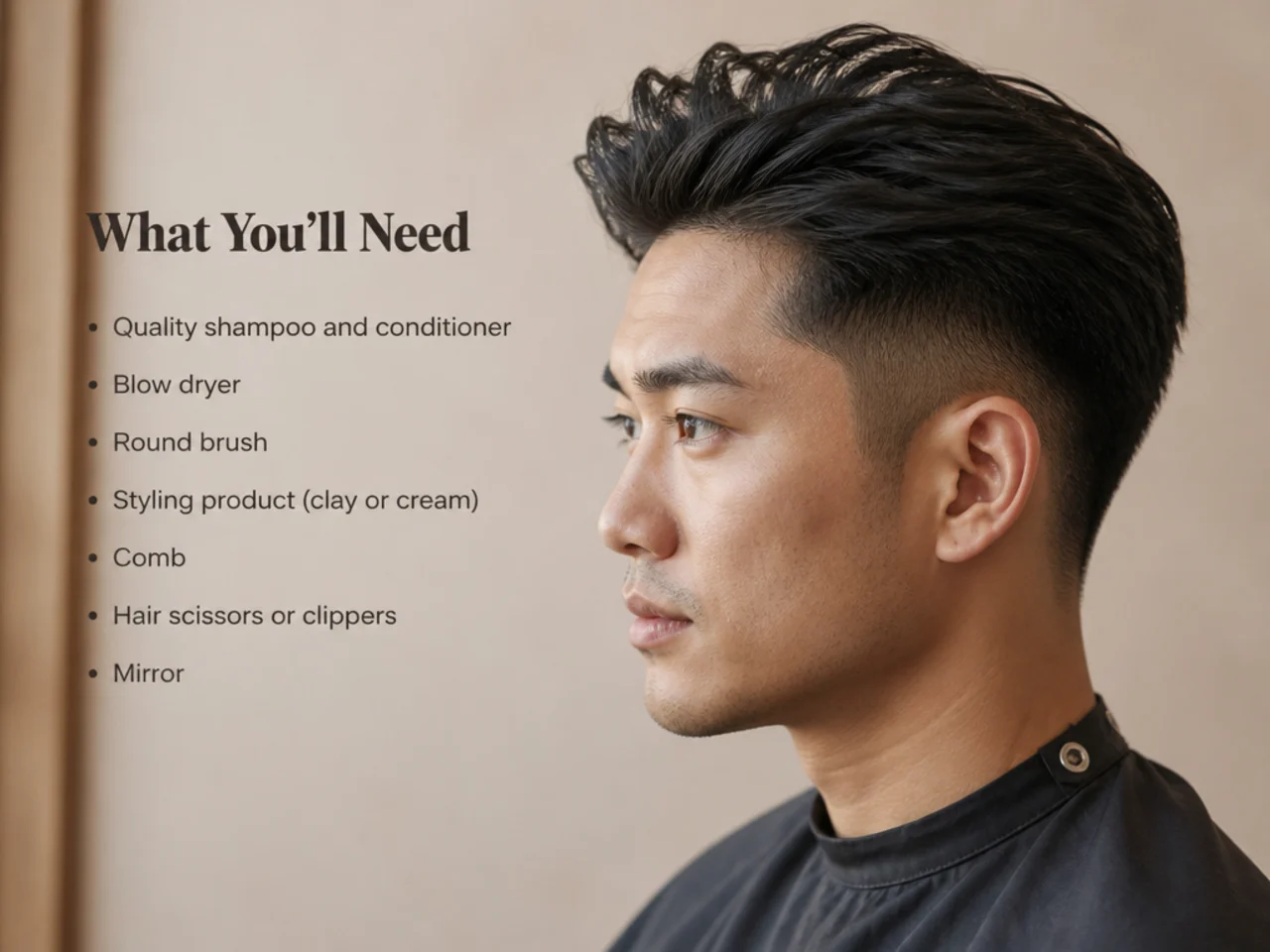
Wash with a sulfate-free shampoo every two to three days and condition mid-lengths to ends. Towel-dry with a microfiber cloth or an old cotton T-shirt — terry towels rough up the cuticle and give you the frizz that fights the fall of a curtain. While hair is still damp (not soaking), warm a nickel of matte cream between your palms until it disappears, then rake from the crown forward with your fingers. Split the curtains with a wide-tooth comb before the hair fully dries. Air-dry the classic and short versions; diffuse the wavy and curly versions on low airflow; round-brush the blowout and K-pop versions with a dryer on medium heat.
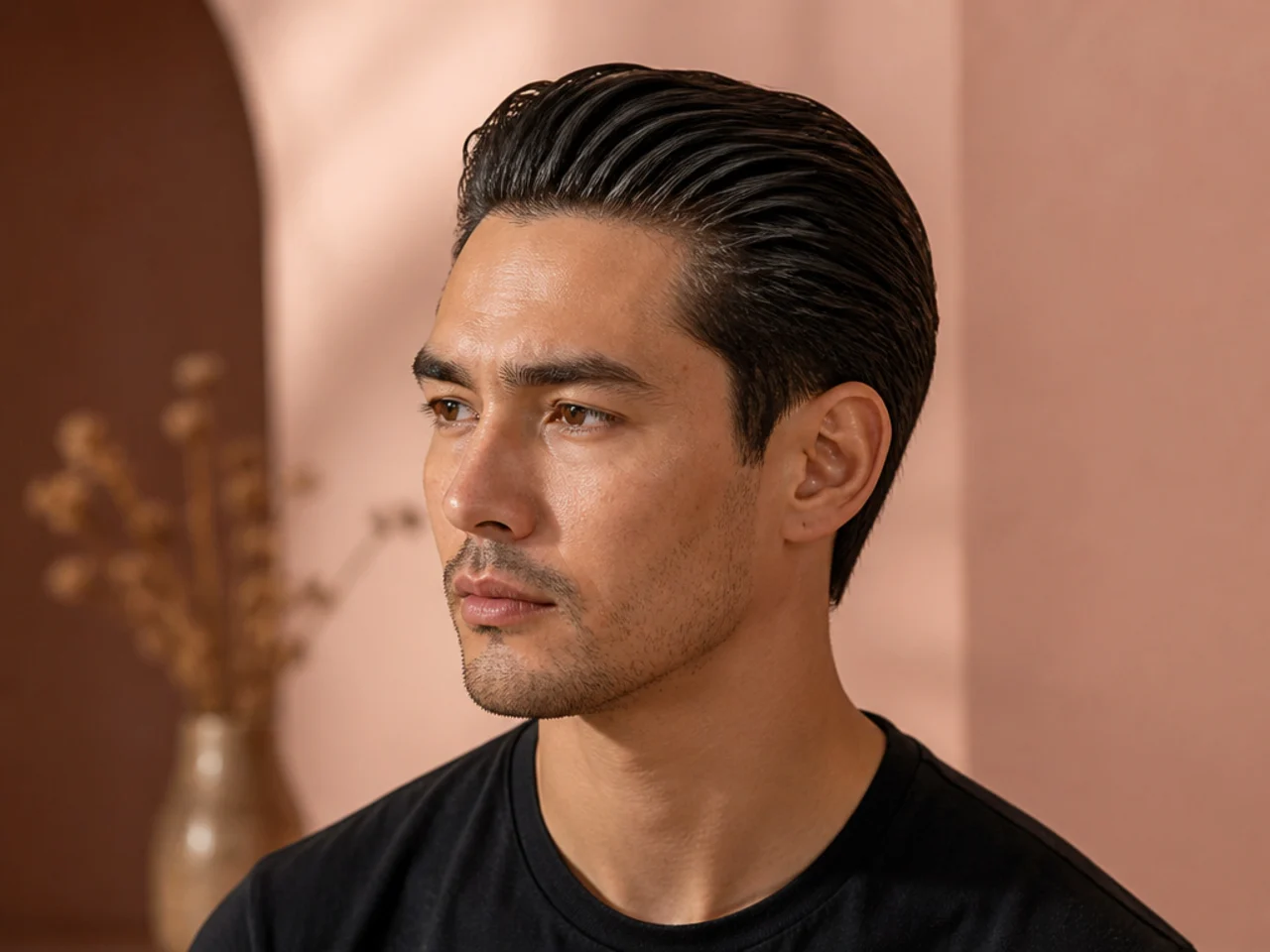
Product line-up: matte cream or light paste is the workhorse; sea-salt spray adds pieces for the textured and messy cuts; curl cream handles the wavy and curly variations; a matte pomade lifts the K-pop and blowout versions. Skip gel — it locks the fall too rigidly and cancels the movement that makes a curtain look Korean. Skip glossy pomade unless you're intentionally building a 90s Western version instead.
Trims live on a five to six week cycle. A Korean curtain grows out of shape faster than a fade because the length on top is doing all the work — a quarter-inch of extra fringe past the eye breaks the split. When the fringe starts sitting past the eye while damp, book. When the curtains stop falling cleanly on either side of the part, book. Bring the same reference photo you brought last time — stylists cut best when they're calibrating against a picture, not their memory of what they did six weeks ago.
For guys with a wider jaw or sharper cheekbones, the Korean curtain pairs beautifully into the haircuts for square faces playbook — softer, feathered versions balance angular features. And if you want the more geometric Korean shape as an alternative, the curtain two-block haircut men breakdown covers that hybrid in the same detail.
FAQ
Is a Korean curtain hard to grow into? Not compared to a full flow. Starting from a fade, you're at short Korean curtain length after four months. The classic and long-flow versions add another two to four months, mostly on the sides.
Will a Korean curtain work for balding hairlines? Yes, if your recession is Norwood 2 or lower. A slight recession is often hidden by the fringe drape. Deeper recession reads better with a textured crop or a fuller Korean two-block haircut that hides the temples entirely.
Which is easier to maintain — Korean curtain or Western curtain? About the same. The Korean version needs a slightly better cut (feathered ends, cut-in part) but a slightly simpler routine (no gel, no comb-through). Cost of cut goes up; time to style goes down.
Can teenagers pull off a Korean curtain? Every version above works on teens — the K-pop idol, modern, two-block, and blowout variants read youngest. The K-drama and beard versions read older.
Does a Korean curtain need a fade to look good? No. The classic and long-flow versions run scissor-tapered sides only and read the most authentically Korean. Faded versions are the Western crossover. Both work — the fade is a preference, not a requirement.
How much should a Korean curtain cost? Anywhere from $40 at a walk-in barber to $120+ at a Korean-trained stylist. Pay for the scissor work — the part cut in, the point-cut ends, the internal layers, the feathered fringe. Those separate a real Korean curtain from a middle-parted haircut wearing the name.