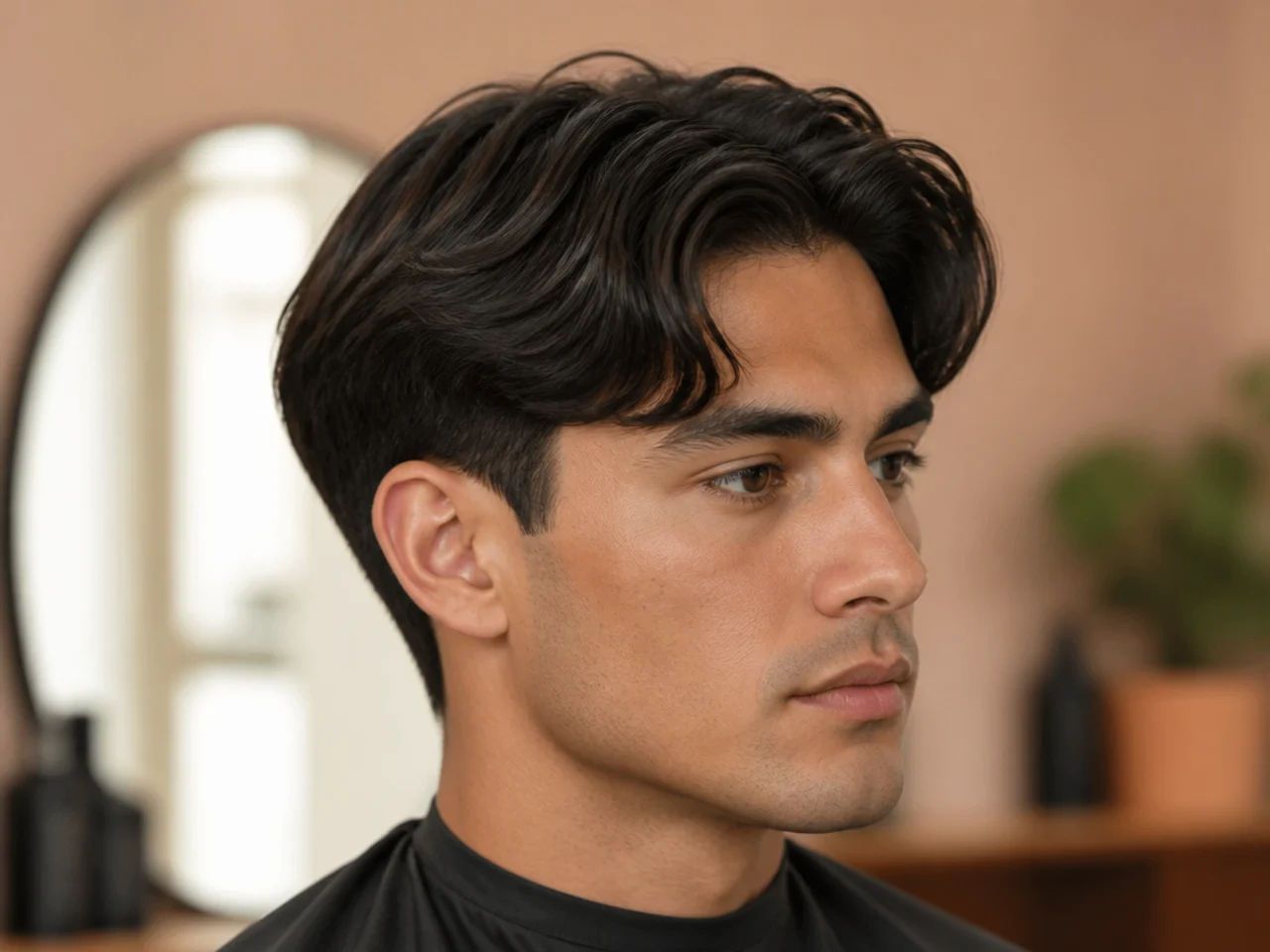
20 Short Curtain Haircuts for Men (2026 Guide)
Short curtain haircuts for men in 20 versions — face-shape notes, exact barber language, and styling in under three minutes. Photos and how to ask.
In this article · 26
- What Is a Short Curtain Haircut?
- How to Choose Your Short Curtain
- The 20 Short Curtain Variations
- Classic Short Curtain
- Textured Short Curtain
- Short Curtain with Low Taper Fade
- Short Curtain with Mid Fade
- Short Curtain with Skin Fade
- Short Curtain with Undercut
- Short Curtain with Two-Block Cut
- Korean Short Curtain
- Messy Short Curtain
- Wavy Short Curtain
- Curly Short Curtain
- Sleek Straight Short Curtain
- Short Curtain Fringe
- Off-Center Short Curtain
- 90s-Inspired Short Curtain
- Modern Short Curtain
- Short Curtain for Thin Hair
- Short Curtain with Beard
- Short Blowout Curtain
- Short Business Curtain
- How to Ask Your Barber
- Styling and Maintenance
- FAQ
The short curtain haircut men have been asking for since 2020 pulls Korean minimalism, 90s middle-part energy, and a low-maintenance office cut into one shape. The top runs 2 to 4 inches, parts down the middle, and sweeps into two soft curtains either side of your forehead. Below are twenty short curtain variations men request most in 2026 — face-shape notes, exact barber language, and a styling move under three minutes.
What Is a Short Curtain Haircut?
A short curtain haircut is a middle-parted men's cut with the top kept between two and four inches — short enough to feel low-maintenance, long enough for the fringe to fall in two "curtains" on either side of the forehead. The sides sit clean above the ear, either scissor-tapered or blended into a low fade. There's no slicked-back move, no gelled shine, no aggressive undercut required. The shape lives entirely up top.
The style sits inside the broader family of men's haircuts that lean modern-Asian and Euro-editorial. Its longer sibling is the middle part haircut men — same DNA, four to six inches on top, more drape, more maintenance. The short curtain trades length for shape control. You still get the center split and the two-curtain fall, but the cut clears your eyes by the end of the day and your barber's chair every five to six weeks.
Who's wearing it? K-pop, Korean and Chinese drama leads, TikTok stylists, and half the finance interns on Wall Street. What's shifted from the classic 90s curtain is the finish — matte instead of glossy, textured instead of blunt, tapered instead of blocky at the sides.
How to Choose Your Short Curtain
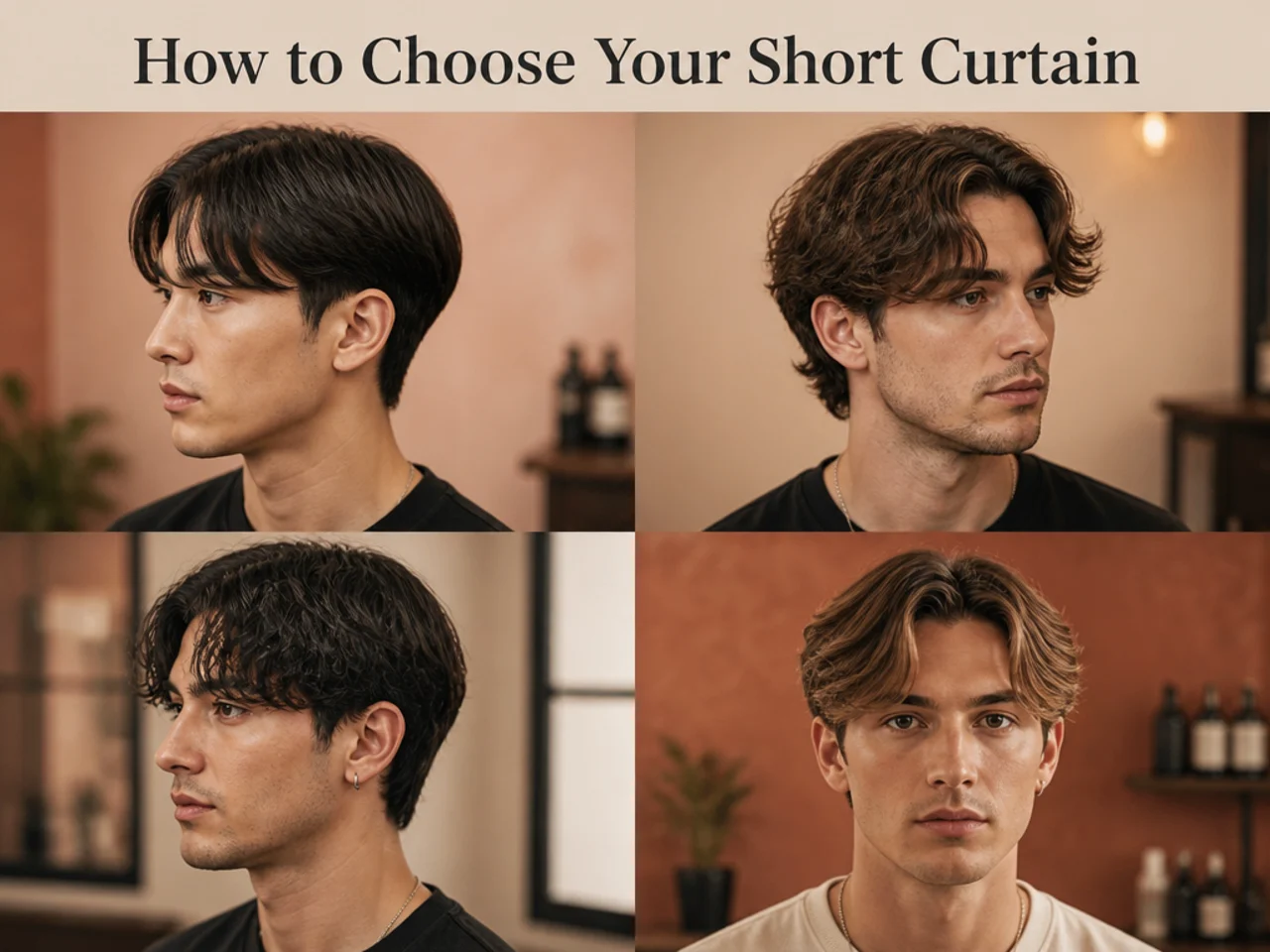
Three variables decide which short curtain fits you: face shape, hair type, and how much styling you want to do in the morning.
Oval faces suit nearly every version below. Round faces want vertical volume — the undercut, mid fade, or blowout builds it. Square and diamond faces soften with textured or feathered variations. Long or oblong faces want a fuller fringe that shortens the visible height of the face — the 90s version and the fringe-forward cut are your picks.
Straight and lightly wavy hair (patterns 1A-2B) drape into curtains on their own. Wave patterns 2C-3B need internal layering and a curl cream to fall right — see the wavy and curly variations below. Coily hair 3C and tighter builds into an afro shape instead of curtains; the Korean haircut for men family or a textured crop reads better on that texture.
Styling appetite: sub-three minutes wants the classic, business, or modern versions. Willing to spend five to seven minutes with a dryer? The blowout, wavy, and 90s versions pay you back. Pick your variation now — the barber can't guess.
The 20 Short Curtain Variations
Every cut below shares the same center-parted, forward-falling top. What changes is the side treatment, the fringe length, the texture, and how the barber layers the fall.
Classic Short Curtain
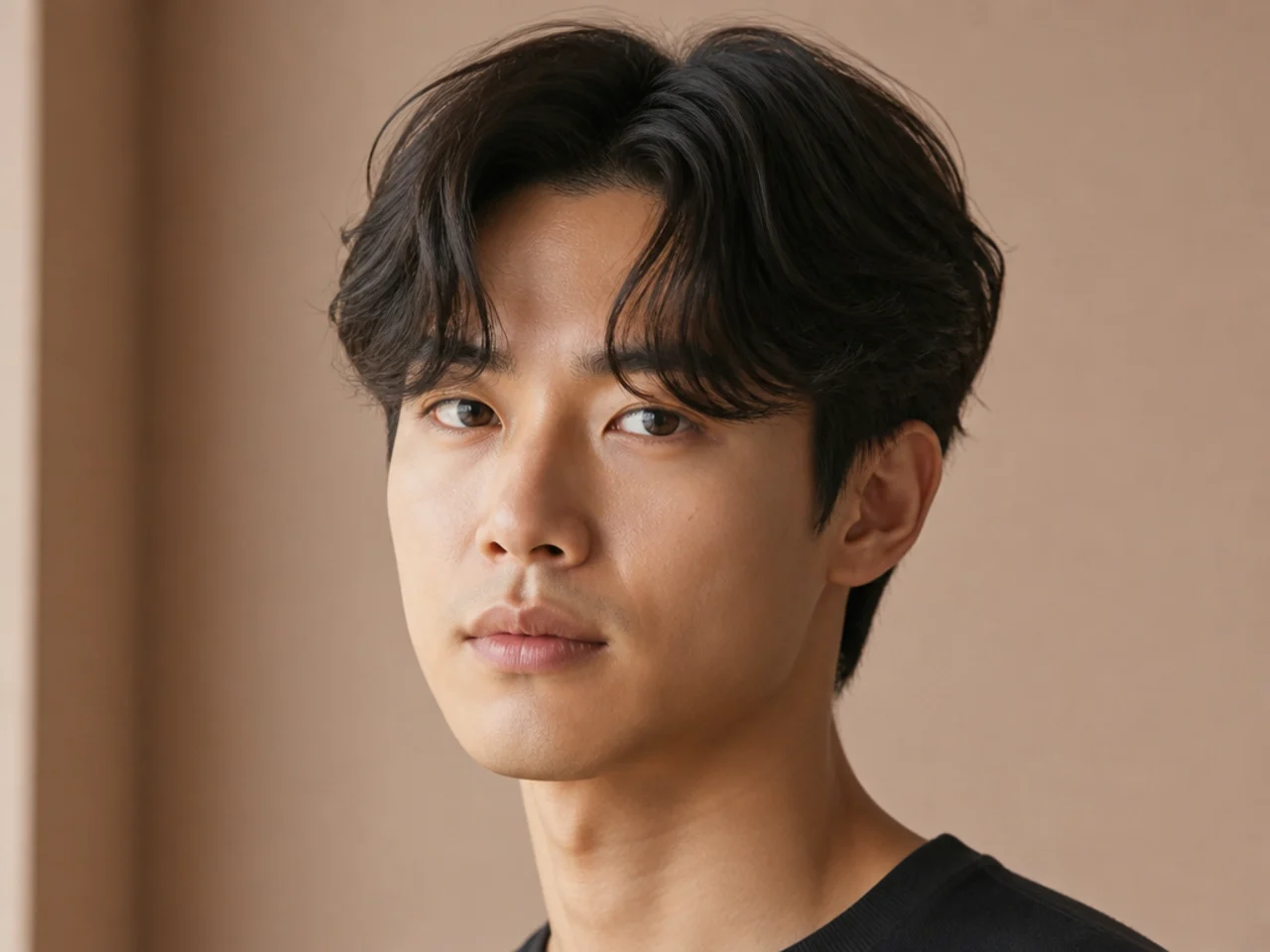
The template. Three inches on top, scissor-cut sides that sit above the ear, everything blended by hand — no clipper guard, no undercut. Suits oval and round faces because the vertical volume you build at the crown balances the width of the face. Best on straight to lightly wavy hair with medium density. Ask for "three inches on top, scissor-tapered sides above the ear, layered so it parts center and falls forward on both sides." Style with a nickel of matte cream through damp hair, split with a wide-tooth comb, and let it air-dry.
Textured Short Curtain
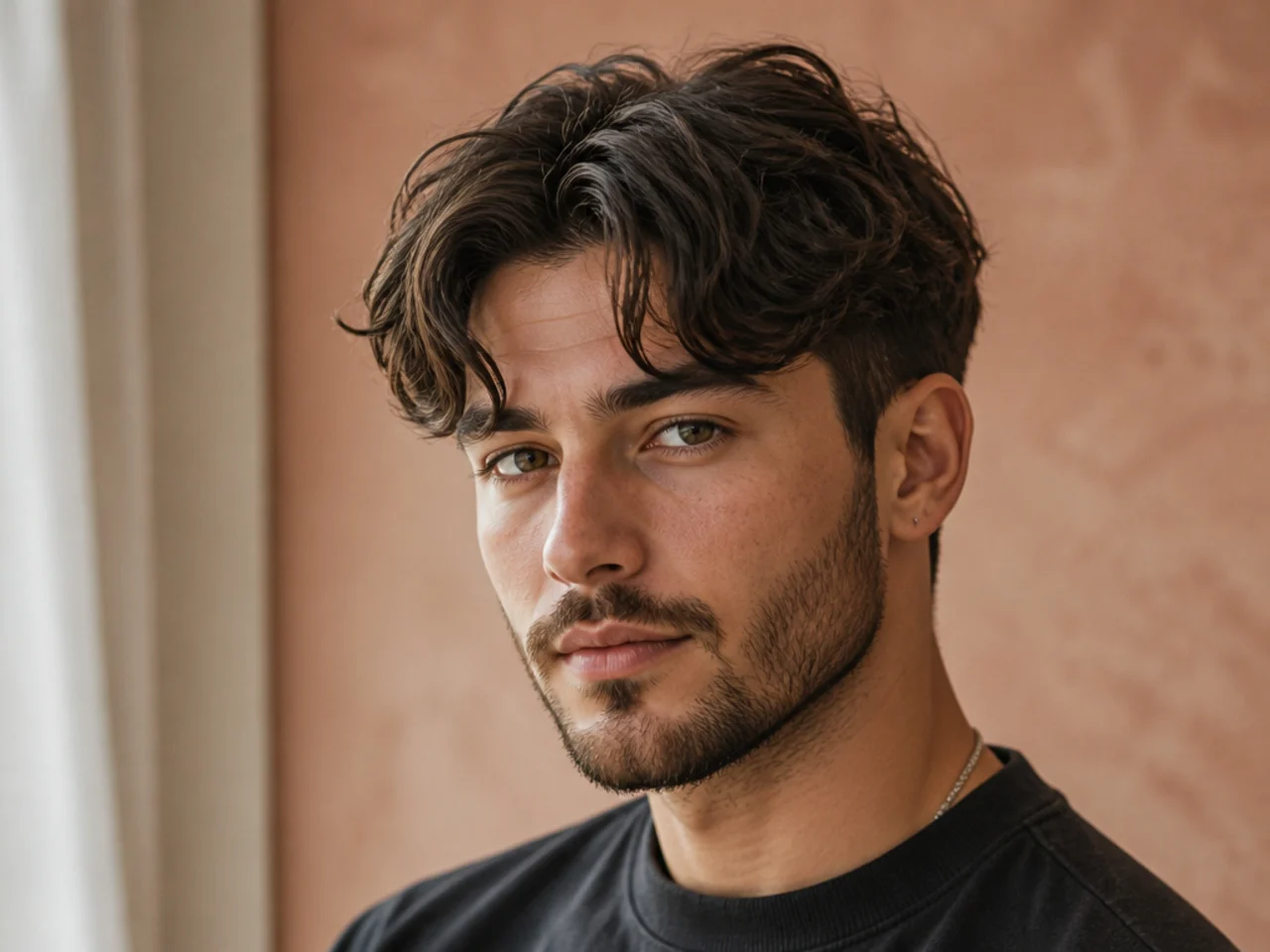
Same base, choppier finish. Your barber point-cuts the ends and adds hidden internal layers so the curtains fall in separate pieces instead of one solid drape. Suits square and diamond faces because the broken-up texture softens the jawline. Any hair type takes it — a sea-salt spray does the rest. Ask for "three inches on top, point-cut through the ends, sides tapered to a two-guard, center-parted with a textured fringe." Finish damp with sea-salt spray plus a pea-sized amount of matte clay.
Short Curtain with Low Taper Fade
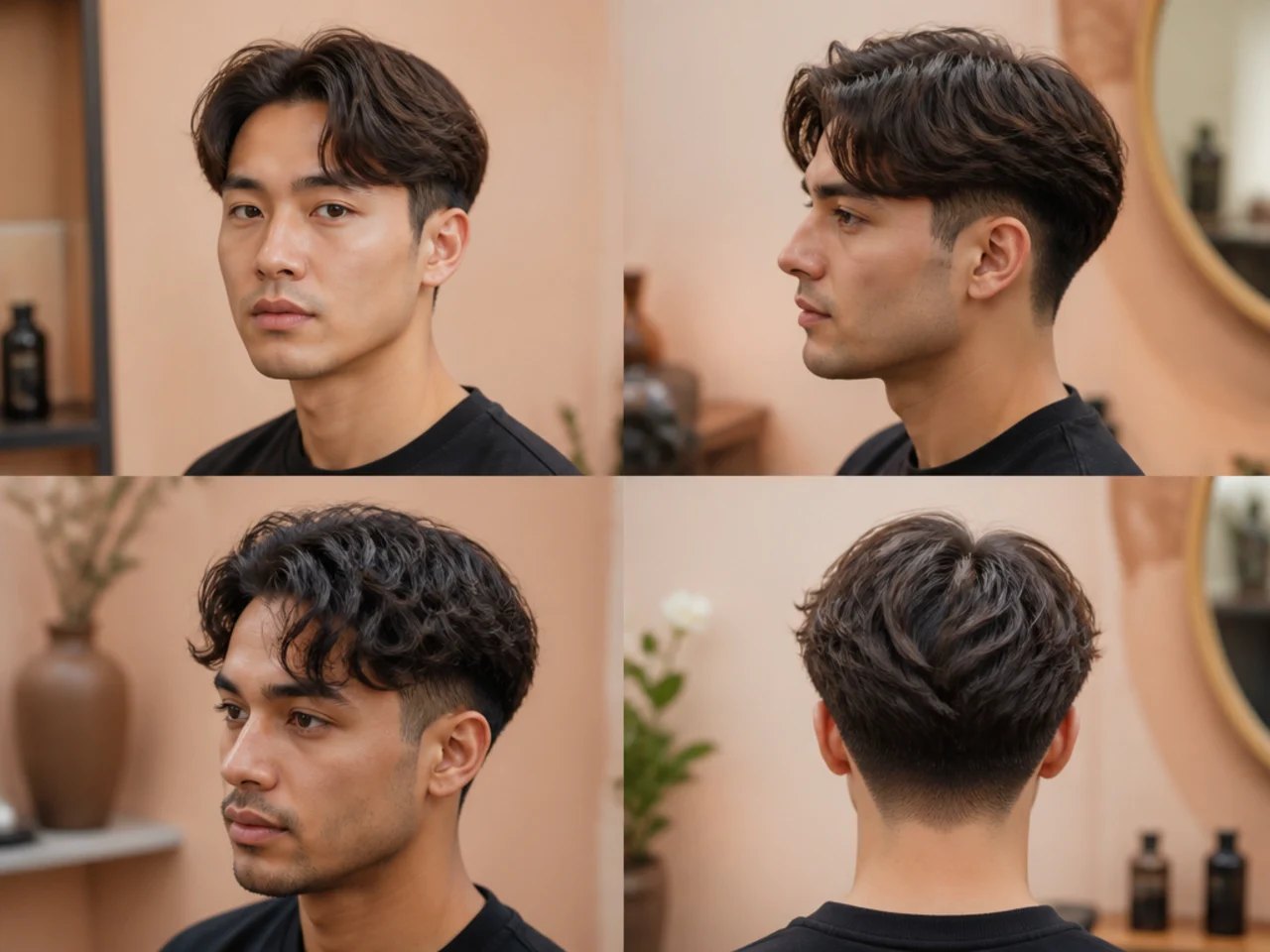
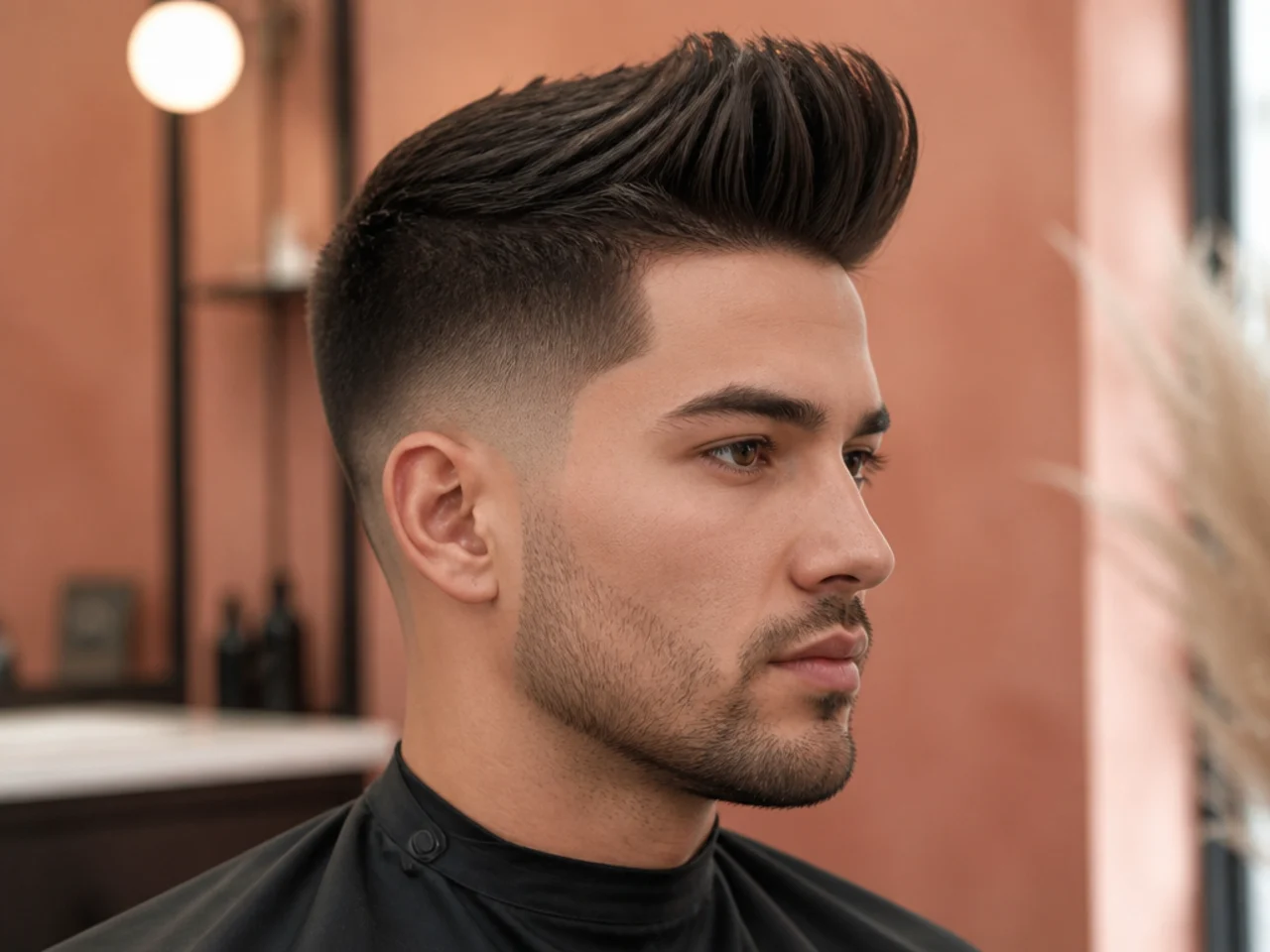
The cleanest crossover version. The top stays a scissor-cut curtain; the sides drop from about a three-guard down to skin along the perimeter over roughly a fingerbreadth. Suits every face shape because the taper adds proportion, and the low starting point keeps the read conservative. Straight, wavy, and looser curl types all work. Ask for "three-inch curtain top, low taper fade starting just above the ear, blending to zero at the sideburn." Style like the classic — matte cream, comb the split, done. This is the version most guys screenshot for their first curtain cut.
Short Curtain with Mid Fade
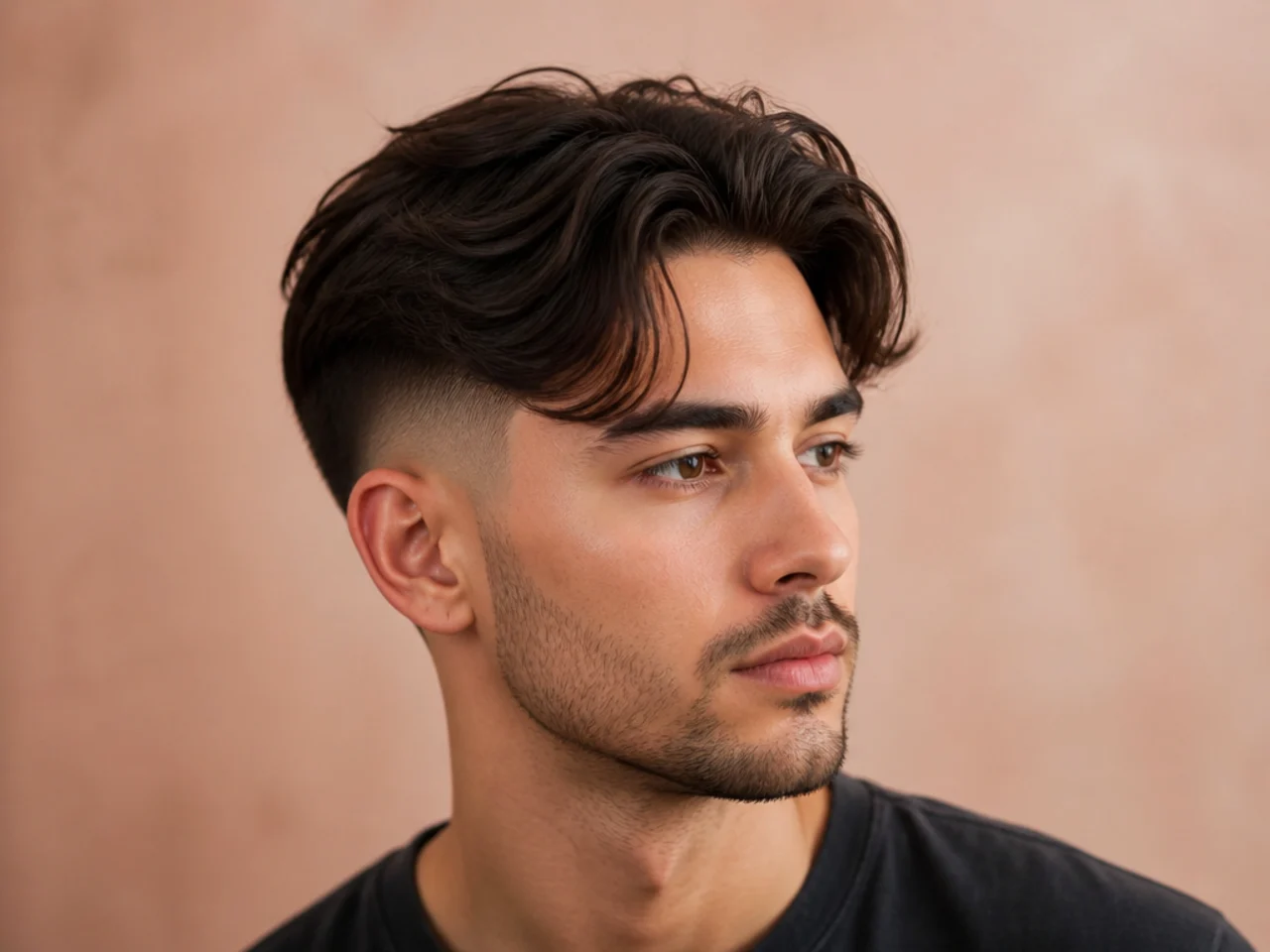
Bolder contrast. The taper starts at the temple instead of the ear, so more skin shows on the sides and the top reads shorter than it actually is. Suits oval, oblong, and long faces where you want to shorten the visible height of the head. Skip it on round faces — the horizontal line adds width where you don't want it. Ask for "three-inch curtain, mid fade starting at the temple, faded to skin along the ear." Blow-dry the top forward and split with a comb; anything less than a strong center part looks off against a mid fade backdrop.
Short Curtain with Skin Fade
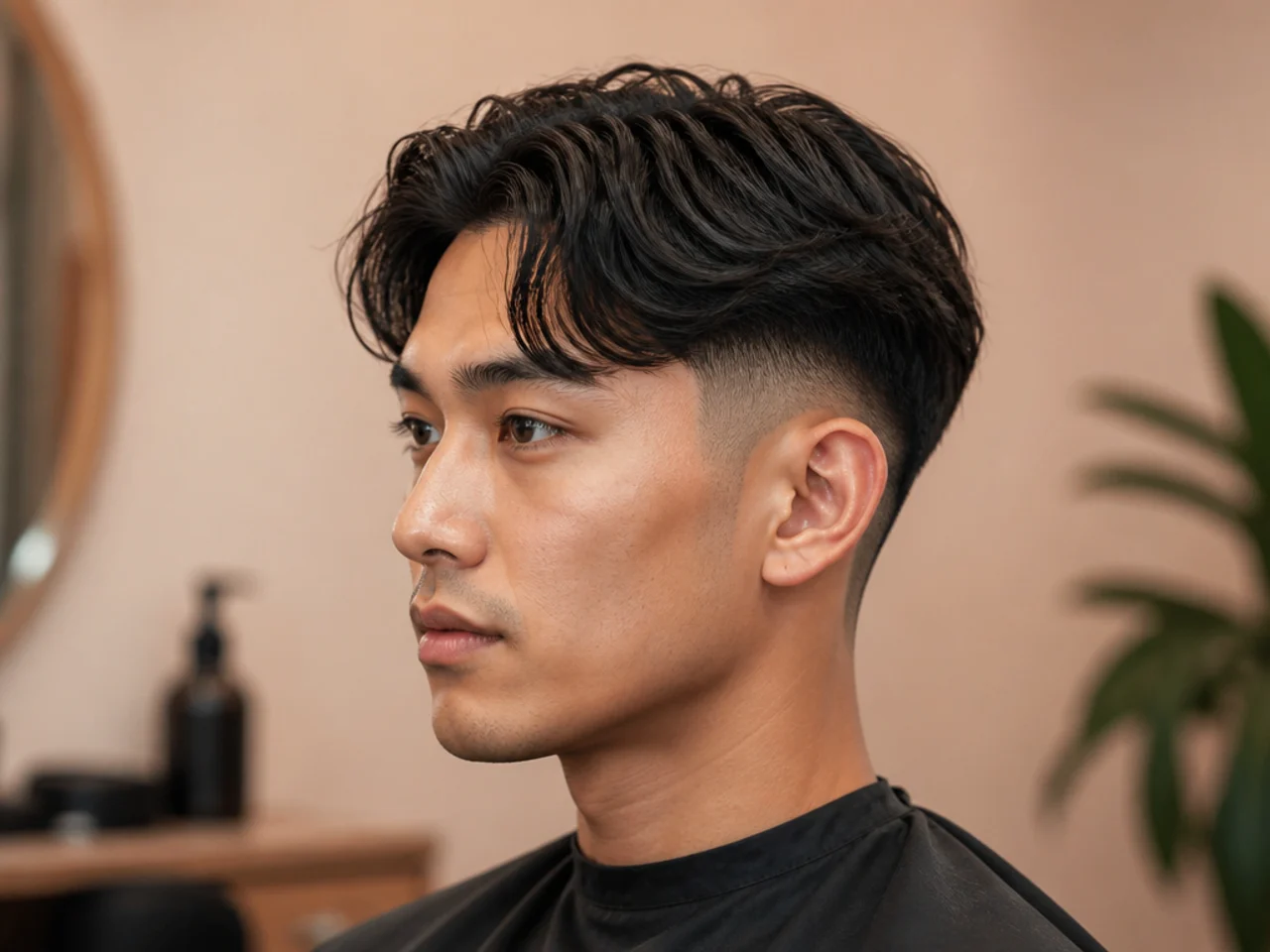
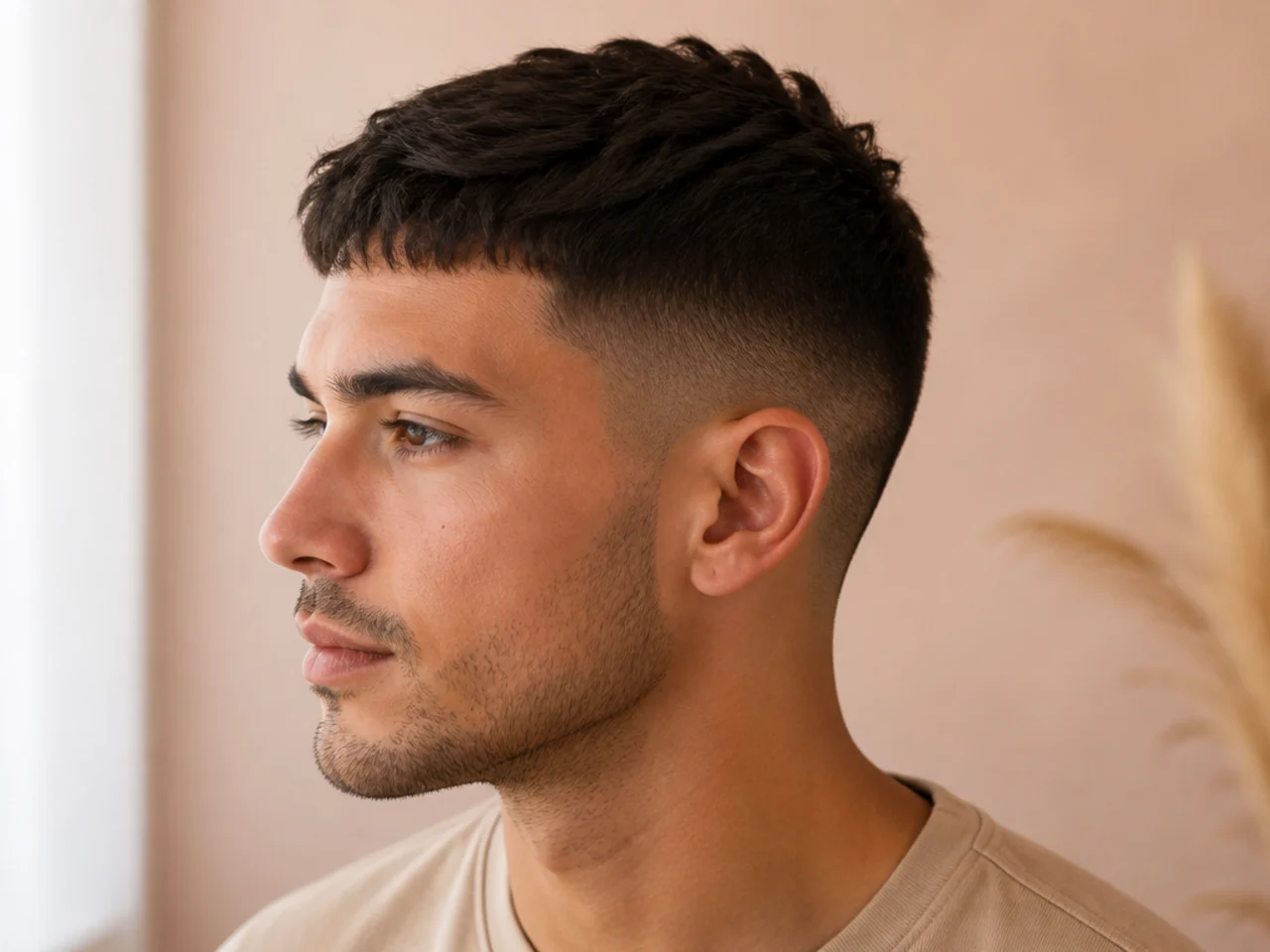
The most modern read on the shape. Sides go bald from the perimeter up to the parietal ridge, and the curtain top sits on top of that clean canvas. Suits oval, square, and triangular faces because the contrast focuses attention up top. Any hair type — the top is short enough that curl won't fight the shape. Ask for "three inches on top, high skin fade to the parietal, hard line at the temple optional." Finish with matte pomade; a traditional glossy pomade fights the sharpness of a skin fade every time.
Short Curtain with Undercut
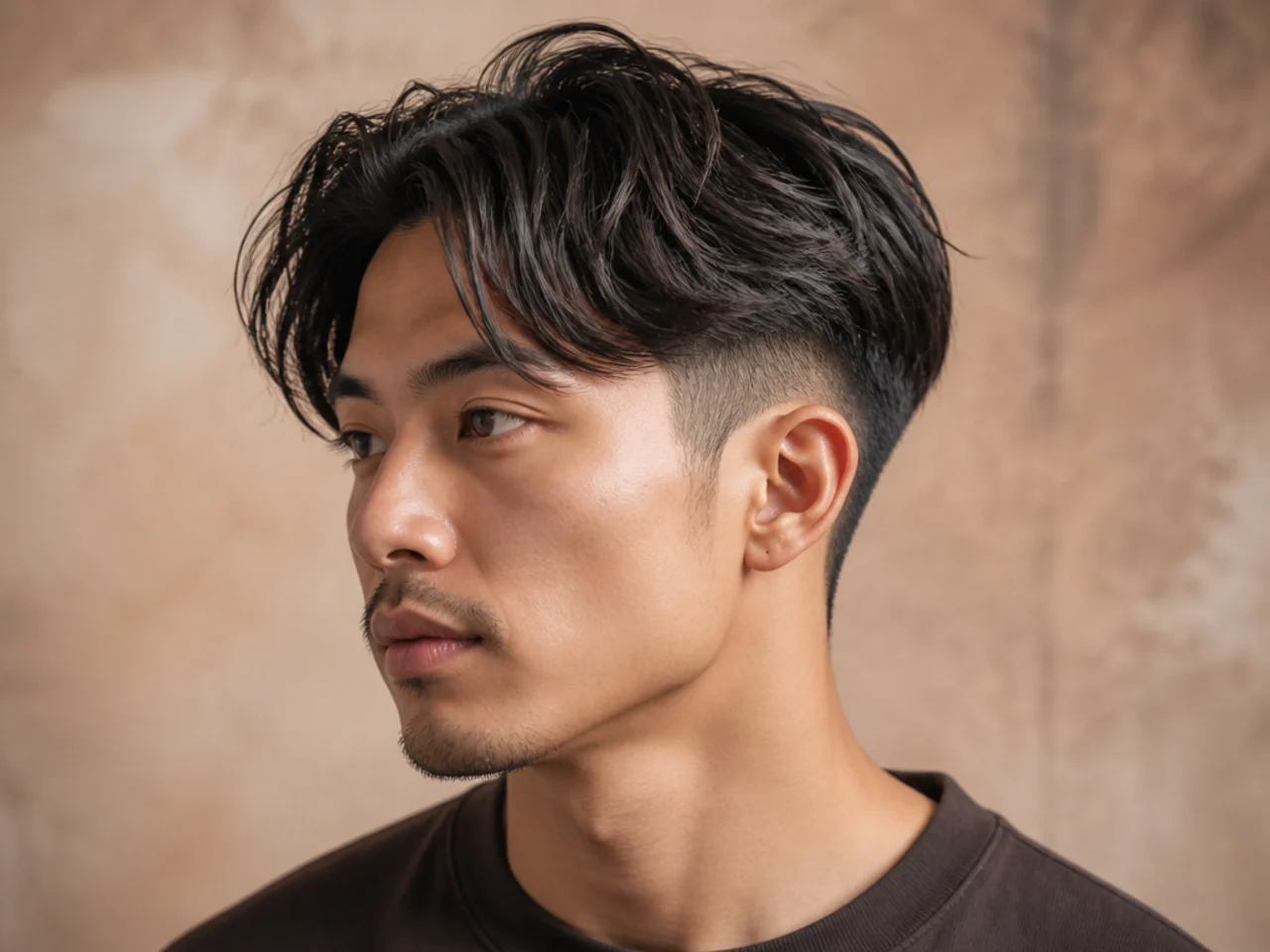
Sharp, one-length top over disconnected buzzed sides. No blend — the length just stops at the perimeter. Suits oval and square faces because the vertical drop narrows the head. Straight to wavy hair only; curl looks unfinished with a disconnected line. Ask for "three-inch curtain top, disconnected undercut on the sides at a two-guard, no blend." Style with a lightweight cream and finger-comb only — undercuts amplify the volume on top, so heavy product turns the crown into a helmet.
Short Curtain with Two-Block Cut
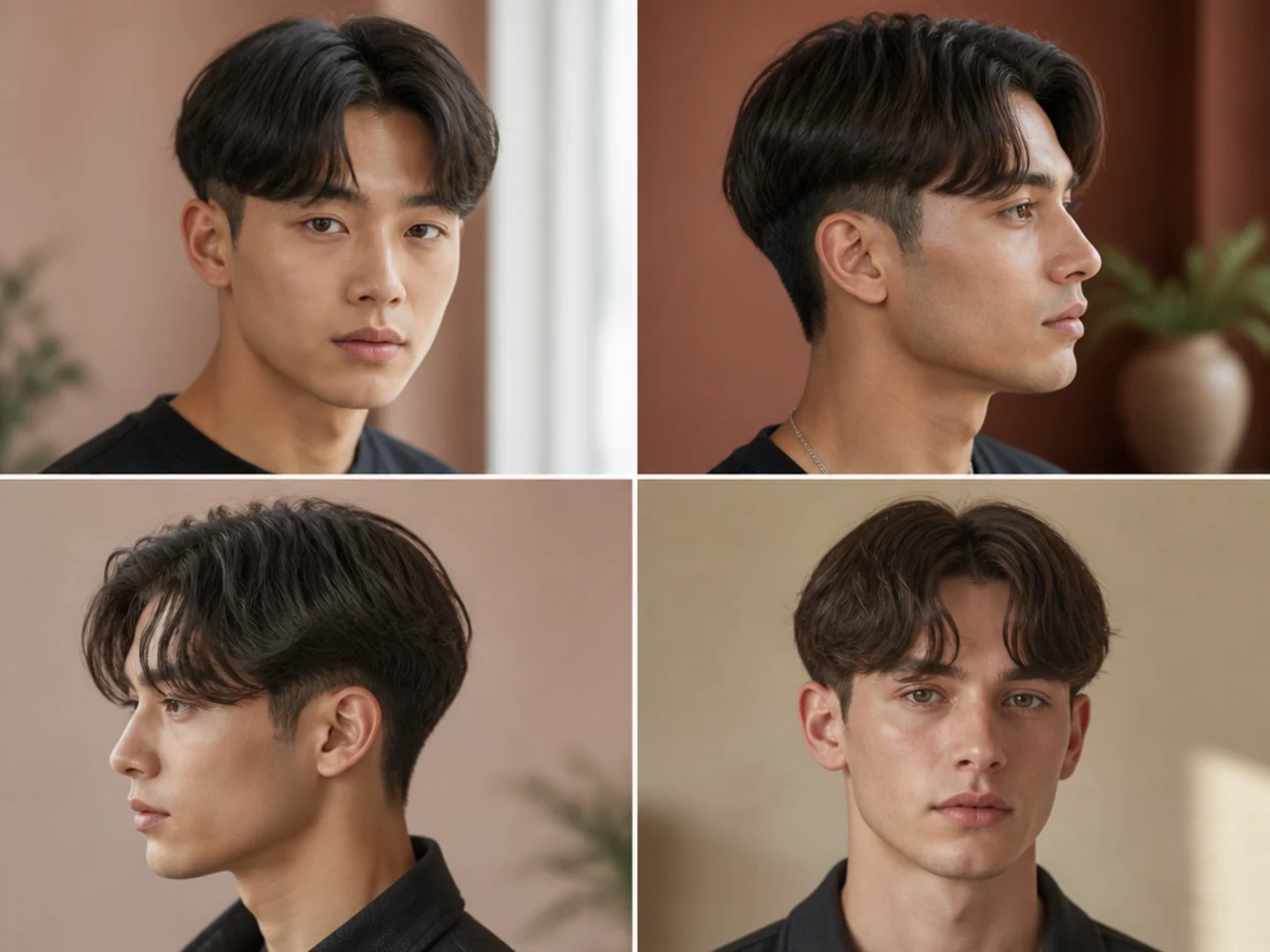
The Korean-inspired hybrid. The top is a soft short curtain; the sides are buzzed underneath while a longer scissor layer sits on top and covers the buzzed portion. Suits round and heart faces because the volume up top balances the buzzed narrowness beneath. Straight and light-wave hair only. Ask for "three-inch curtain top, two-block haircut sides — three-guard underneath, longer scissor layer over it, no visible disconnect." Style with a light cream and a wide-tooth comb.
Korean Short Curtain
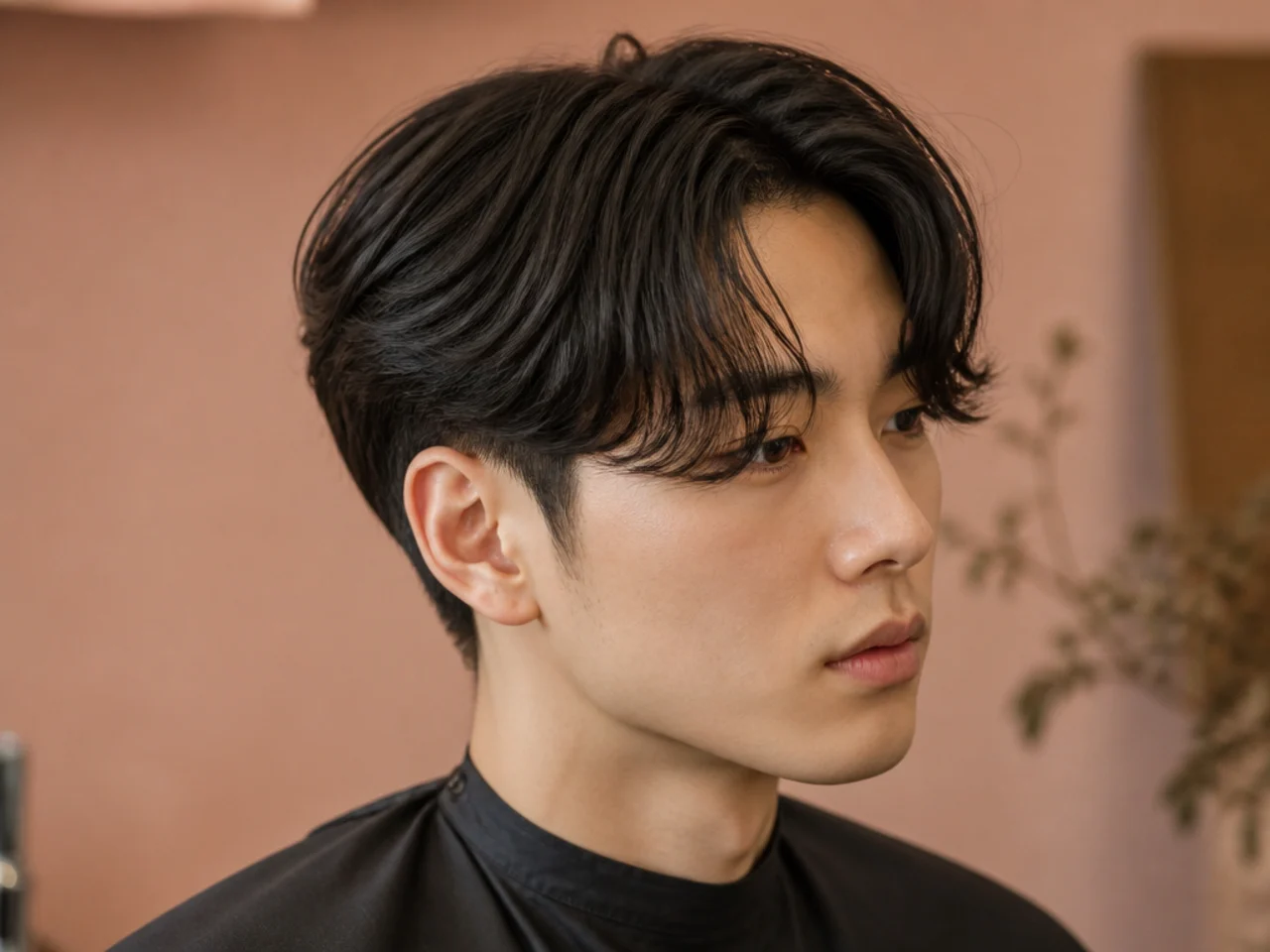
Softer than most Western curtains. The top runs three to four inches, the fringe is feathered instead of blunt-cut, and the sides sit long enough to tuck behind the ear. Suits every face shape because the feathering scales to your bones. Best on straight to light-wave hair. Ask for "Korean-style curtain, feathered fringe past the eyebrow, sides long enough to tuck behind the ear, no fade." Finish with a curl cream on damp hair, then diffuse on low airflow for movement.
Messy Short Curtain
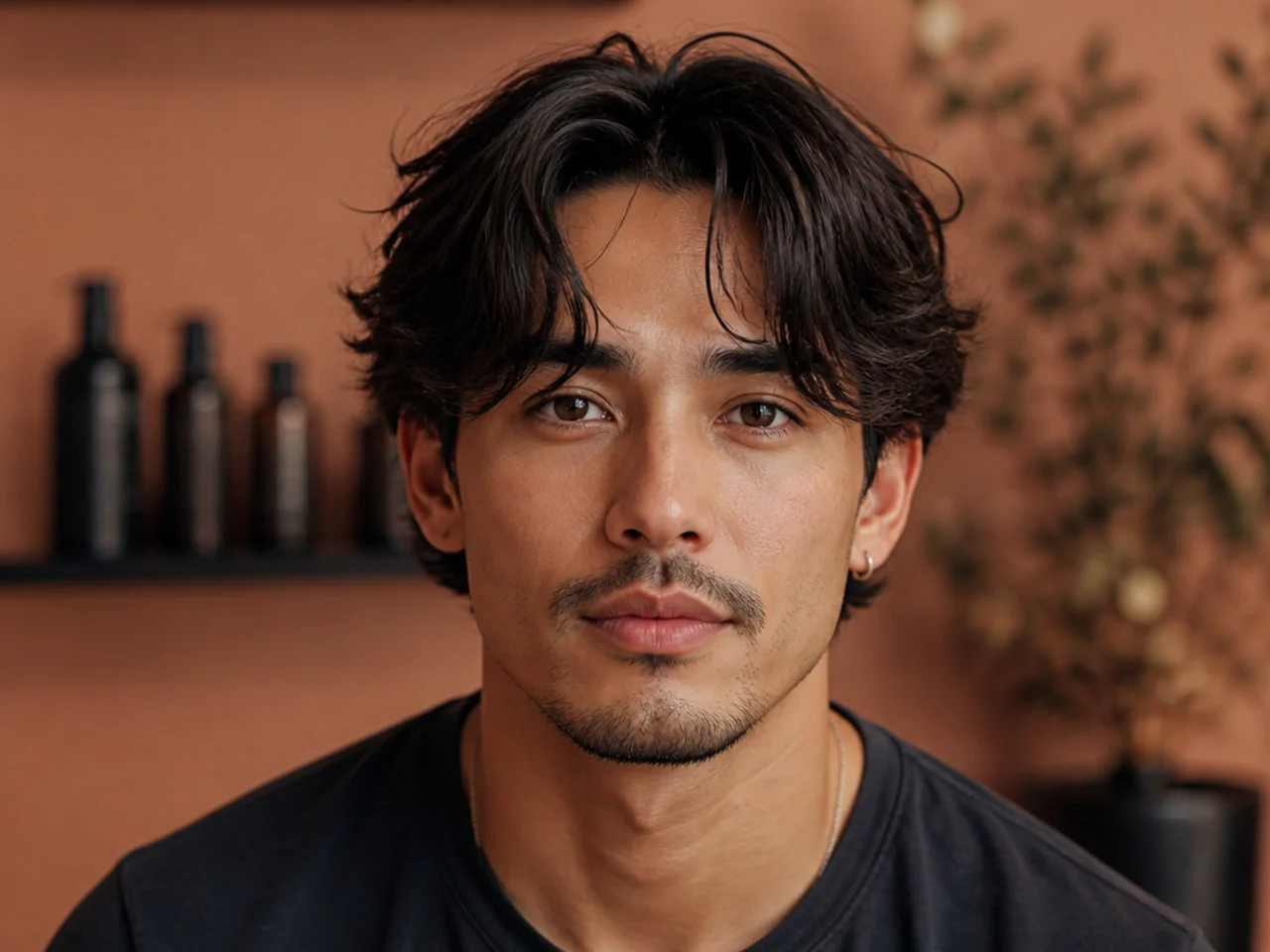
The deliberately unpolished version. Your barber undercuts nothing and lets the top grow in wild — you cheat the split with your fingers instead of a comb. Suits oval and long faces because the volume adds width where you need it. Wavy hair loves this cut; curly hair works too. Ask for "three-inch curtain, no fade, no taper, all-scissor sides, ends heavily point-cut for movement." Style with sea-salt spray only — no cream, no clay, no comb. Rake with your fingers.
Wavy Short Curtain
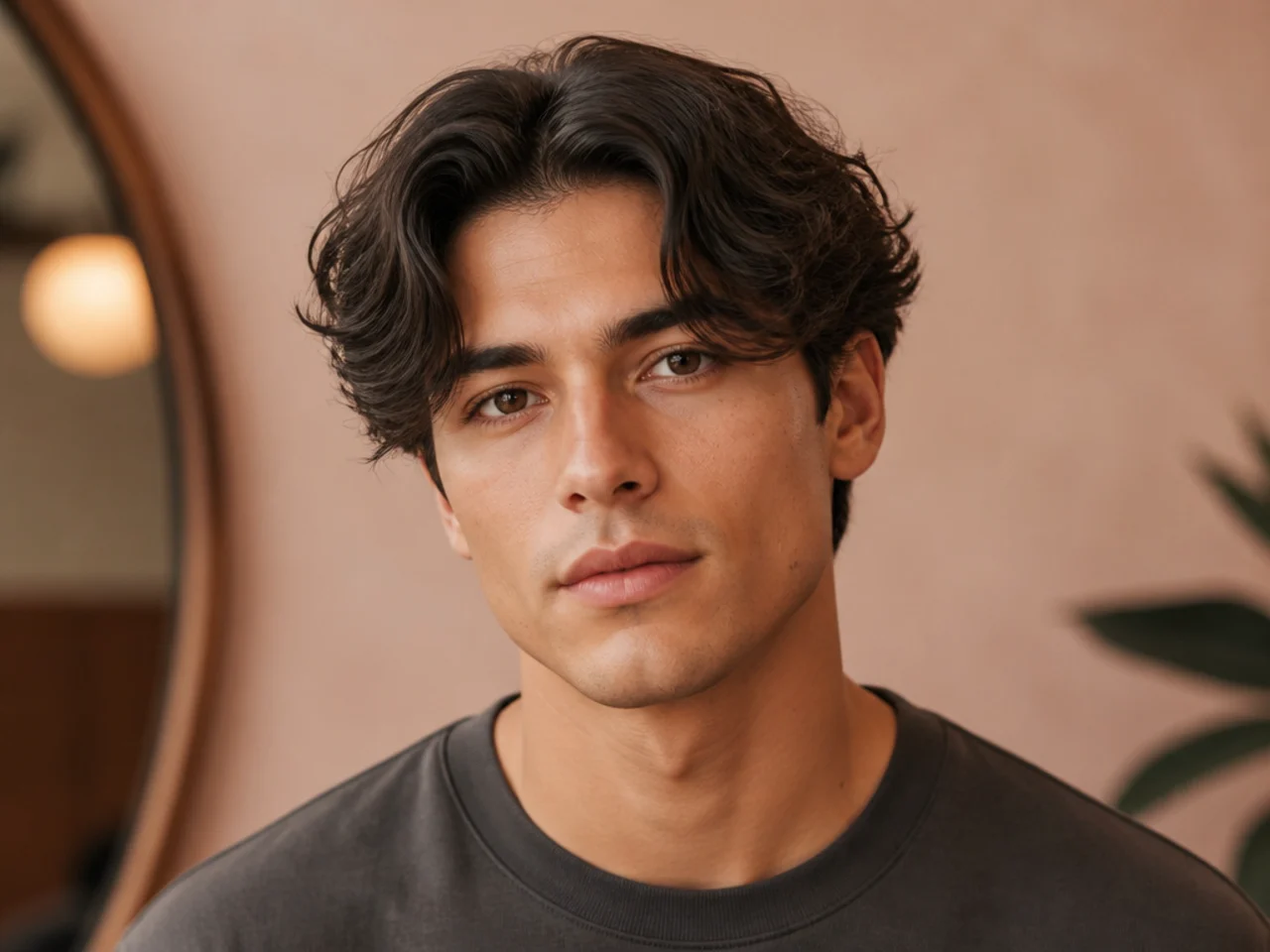
Built around your wave pattern. The barber cuts internal layers so the S-curve falls forward at the fringe instead of poofing out at the mids, and the fringe stays long enough to catch the bend. Suits round and heart faces because the wave breaks up the perimeter. Ideal for wave patterns 2A-2C. Ask for "three-inch curtain for wavy hair, internal layers to control the mid-shaft, scissor-tapered sides, fringe past the eyebrow." Finish with a leave-in and diffuse upside-down for root lift.
Curly Short Curtain
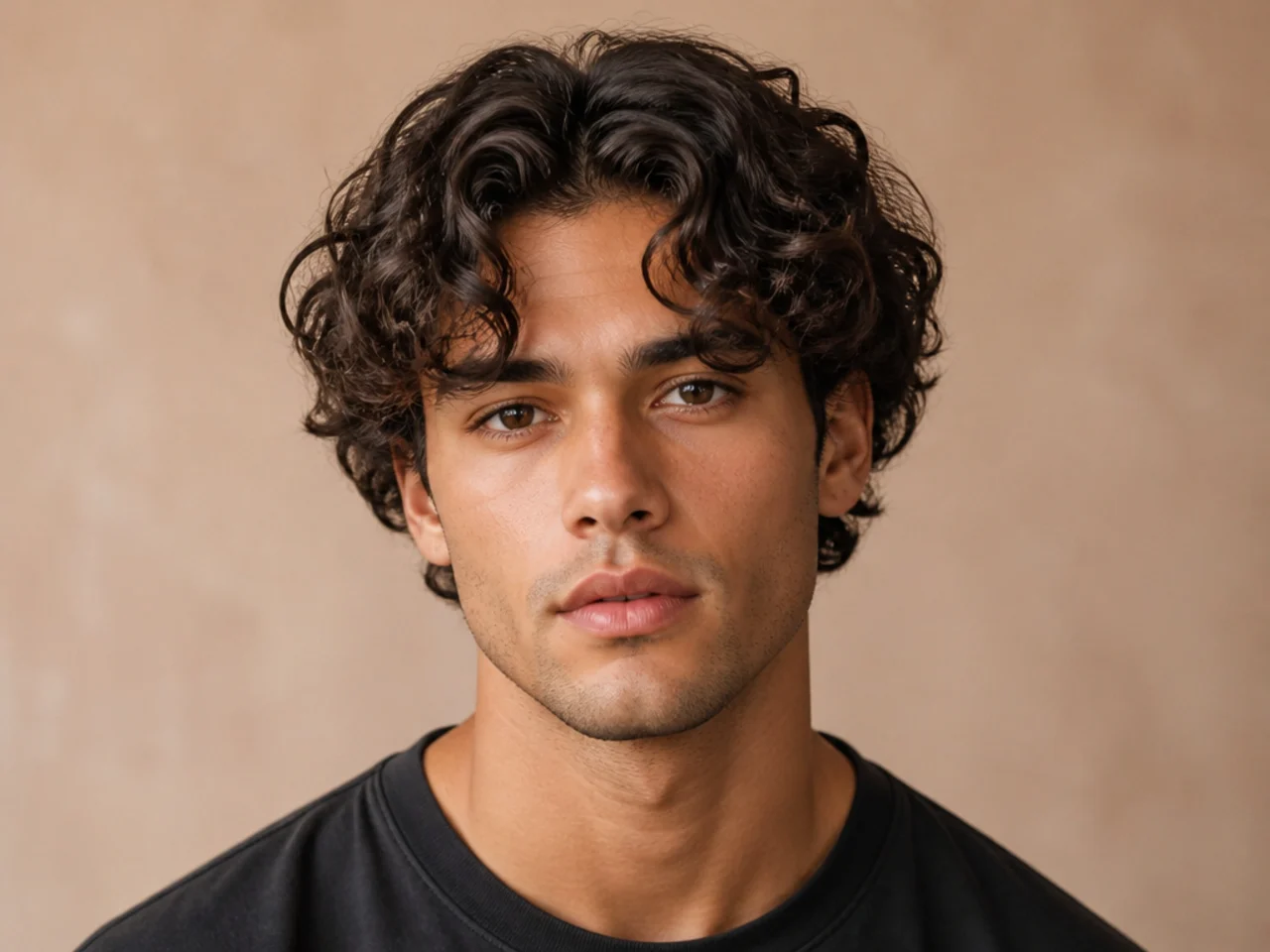
The overlooked cousin. Curls need extra length — four inches minimum — to actually part and fall in two curtains. The barber curl-cuts each spring individually while your hair is dry. Suits oval and long faces. Curl types 3A-3B only; 3C-4A grows into afro shape instead. Ask for "curly curtain, four inches on top cut dry, scissor sides trimmed short, part cut in the center." Finish with a curl cream and a diffuser on low airflow.
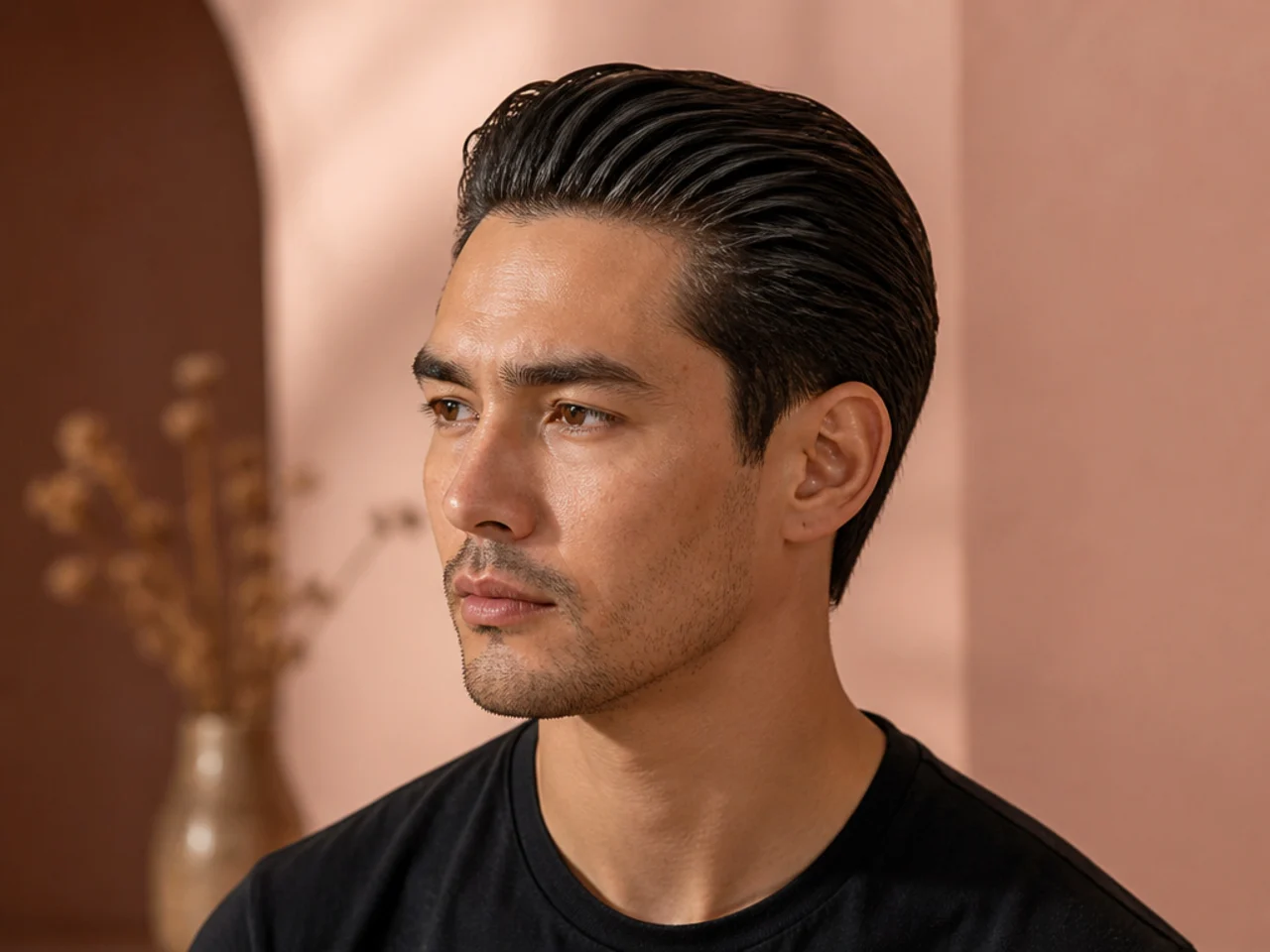
Sleek Straight Short Curtain
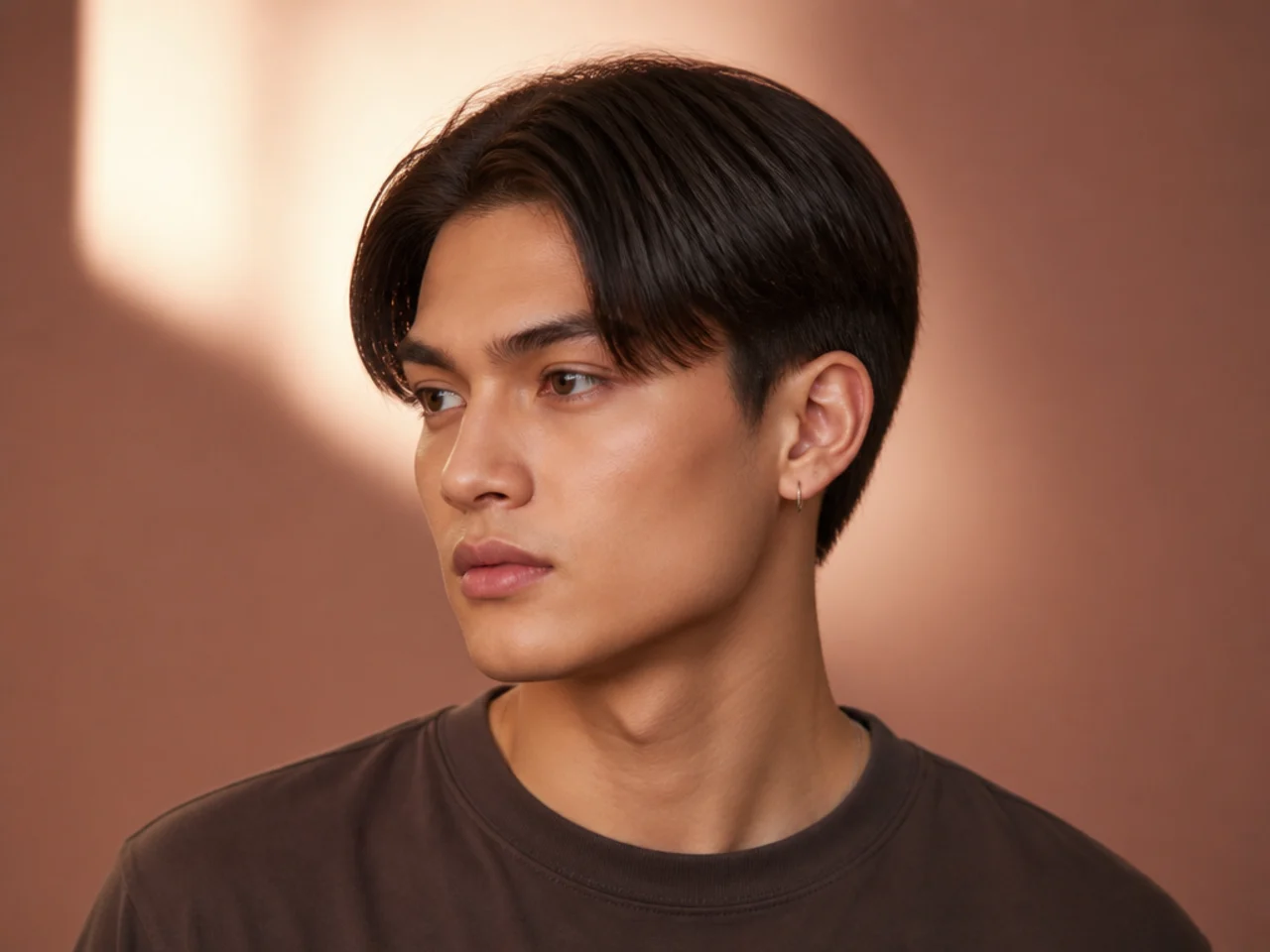
The polished, editorial version. Straight hair, blunt heavy fringe, glass-smooth finish. Suits square and oblong faces because the clean lines echo the geometry. Straight fine-to-medium hair only — any wave fights the sleekness. Ask for "three-inch straight curtain, blunt-cut fringe grazing the eyebrow, scissor-tapered sides, no texture through the ends." Style with a lightweight cream and blow-dry down the shaft with a paddle brush.
Short Curtain Fringe
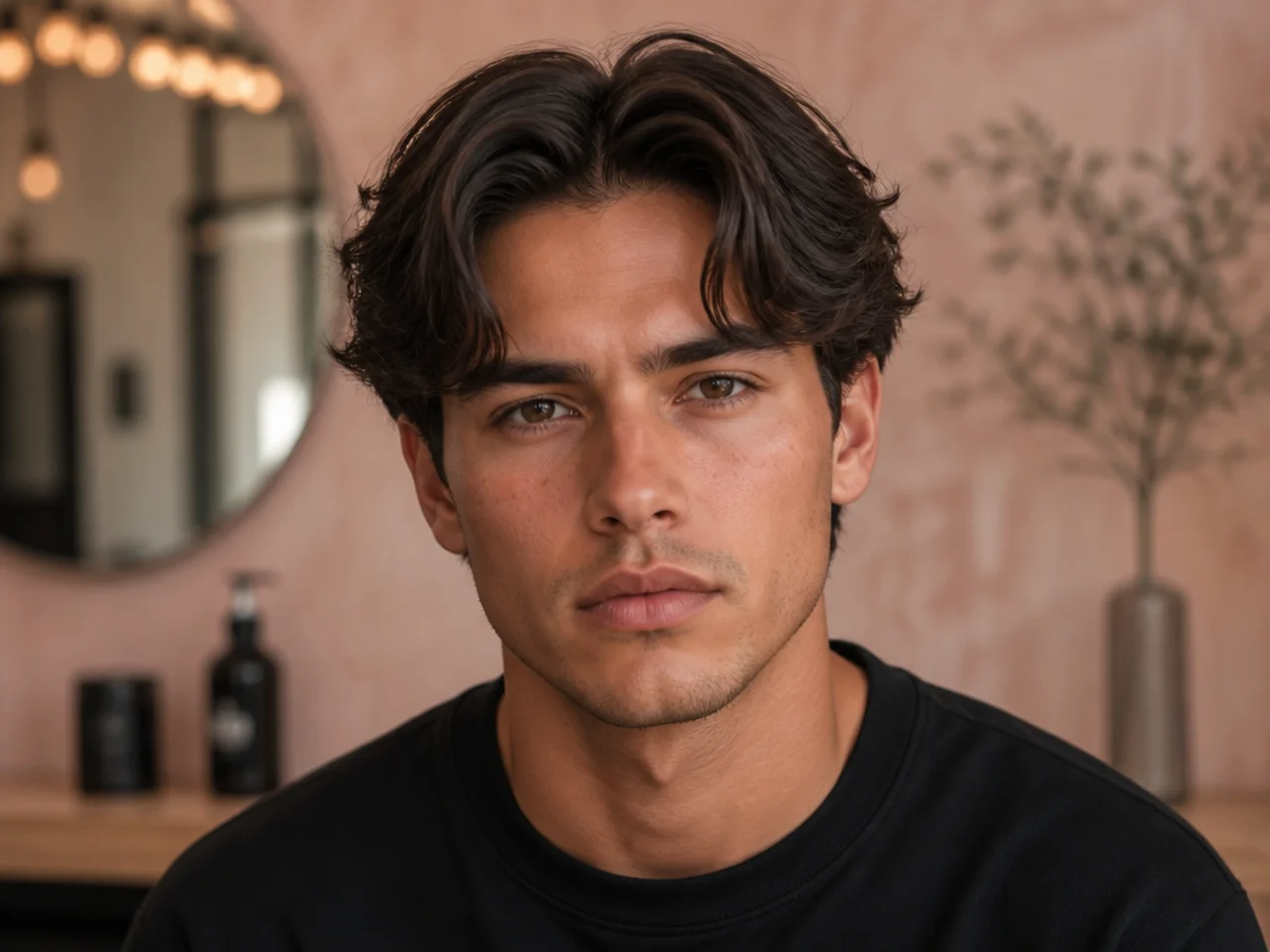
Fringe-forward version. The curtains fall shorter at the front — around the eyebrow — instead of past the eye. Suits round and heart faces because the fringe covers a wider forehead. Any hair type. Ask for "short curtain with an eyebrow-grazing fringe, three inches on top, scissor sides, cut so the fringe naturally sits above the brow." Style close to the fringe haircuts family — comb forward while damp, then split with your fingers just before it dries.
Off-Center Short Curtain
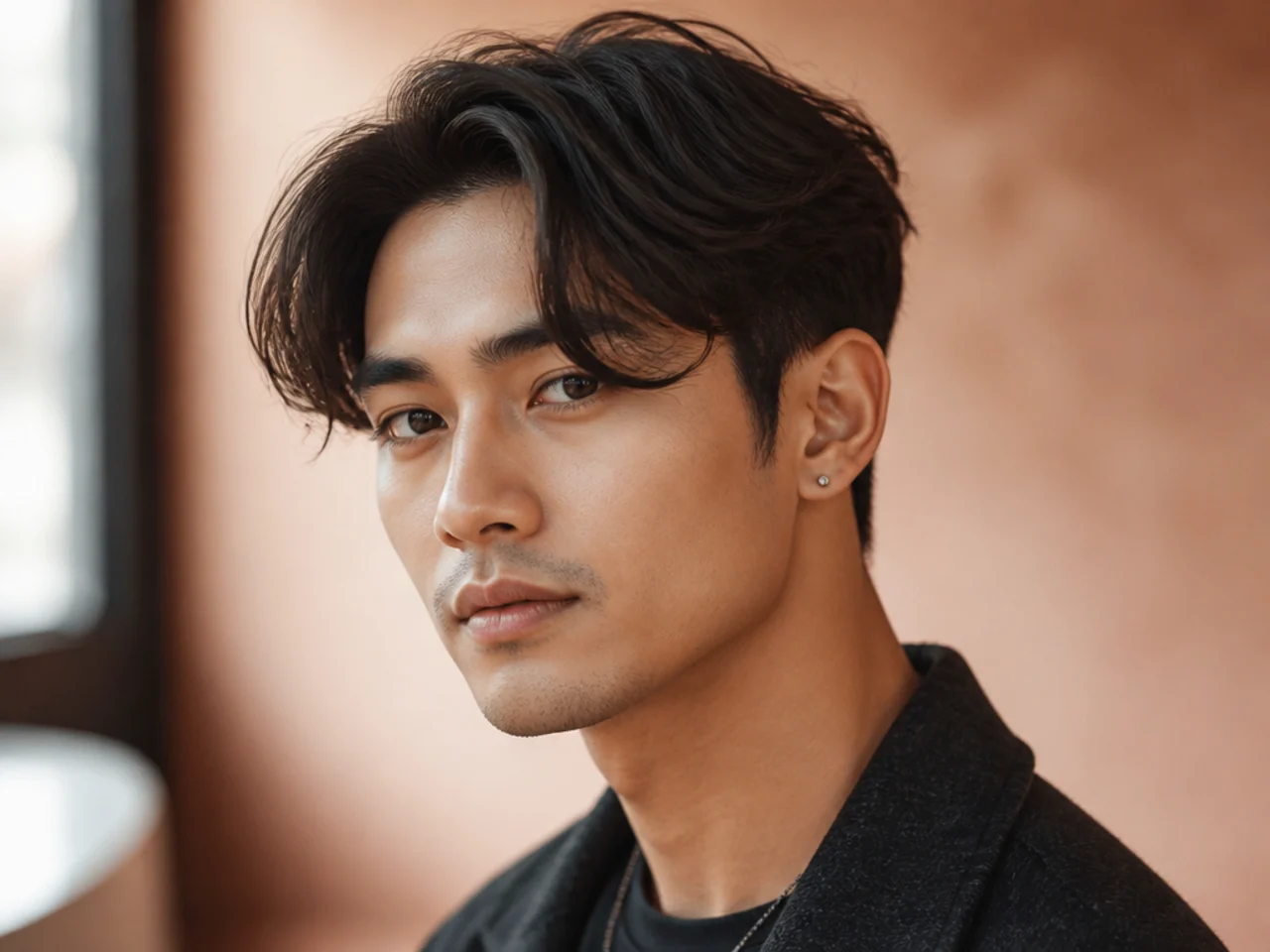
Parted slightly off-middle for asymmetry. One curtain hangs a touch longer than the other. Suits round faces because the asymmetry breaks up the symmetry of the face. Straight to wavy hair. Ask for "three-inch curtain, part offset about a fingerbreadth from center, longer side layered a hair lower than the other." Set the offset while damp with your comb, then use a matte cream to lock it.
90s-Inspired Short Curtain
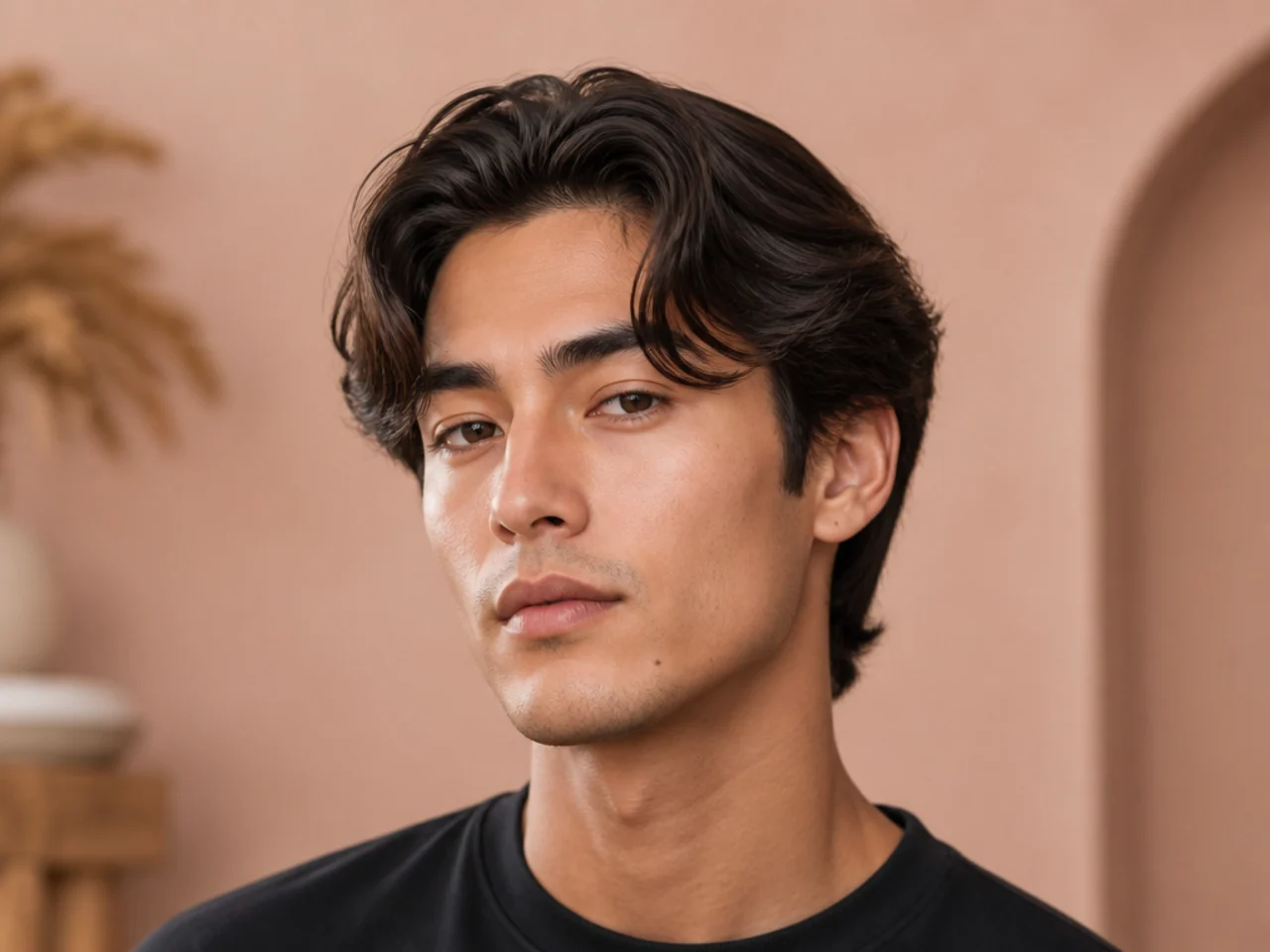
Direct nod to Leonardo DiCaprio in Titanic — heavier, deeper curtain, less taper on the sides. Suits oval, long, and square faces. Straight to wavy hair with medium density. Ask for "90s-style short curtain, three and a half inches on top, sides scissor-cut just above the ear, no fade, no taper, fringe cut heavy." Style with a matte paste and rake back-then-forward for that 90s bounce. Skip the shiny pomade this era was famous for — matte reads modern.
Modern Short Curtain
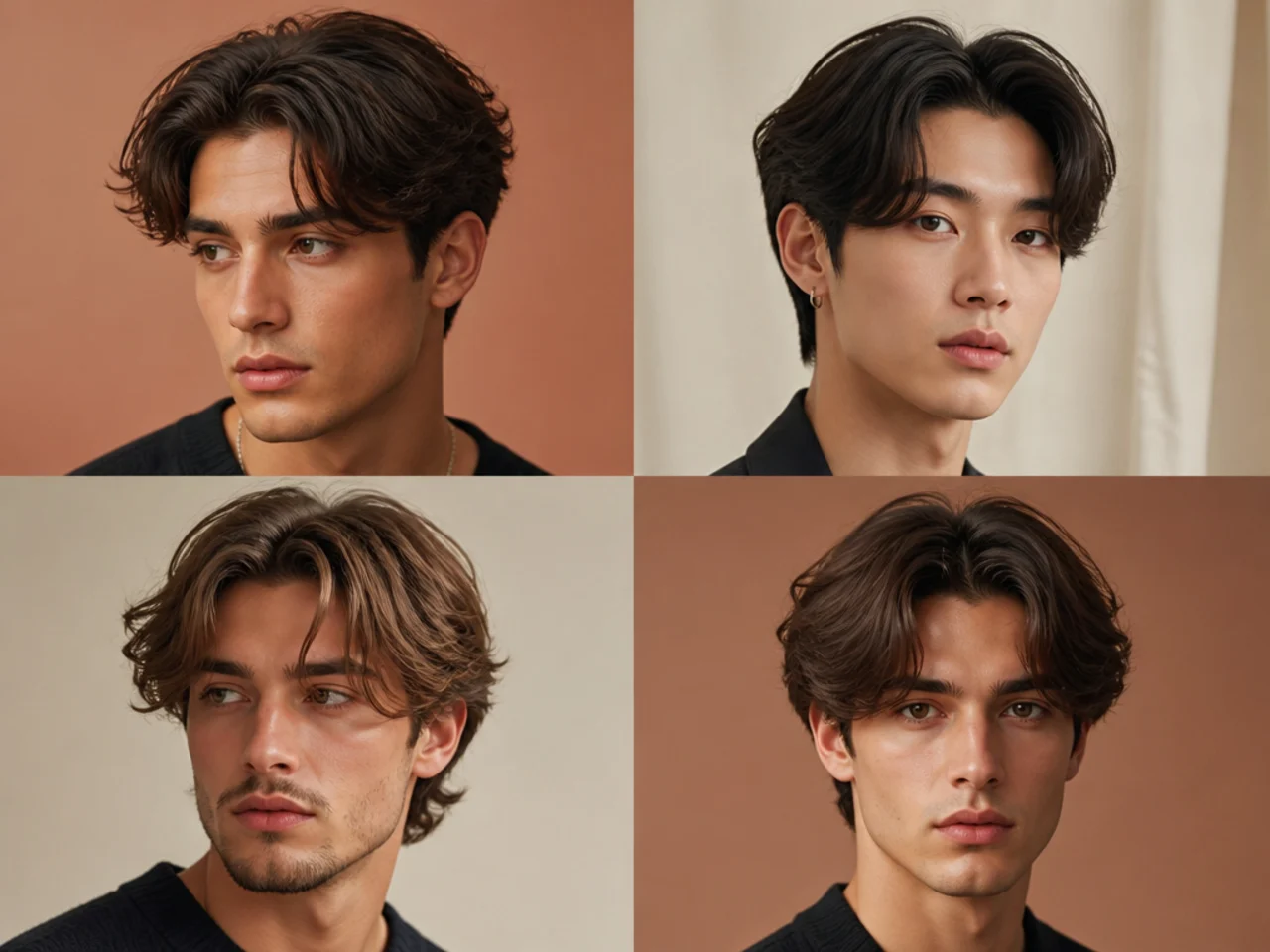
The 2026 refresh — cleaner lines, softer feathered fringe, a hint of taper without going full fade. Suits every face shape. Any hair type. Ask for "modern short curtain, three inches on top, scissor sides that gently taper above the ear, soft feathered fringe below the brow." Finish with a matte cream and a natural split. This is the version to bring your barber if you can't decide between the classic and the fade combo.
Short Curtain for Thin Hair
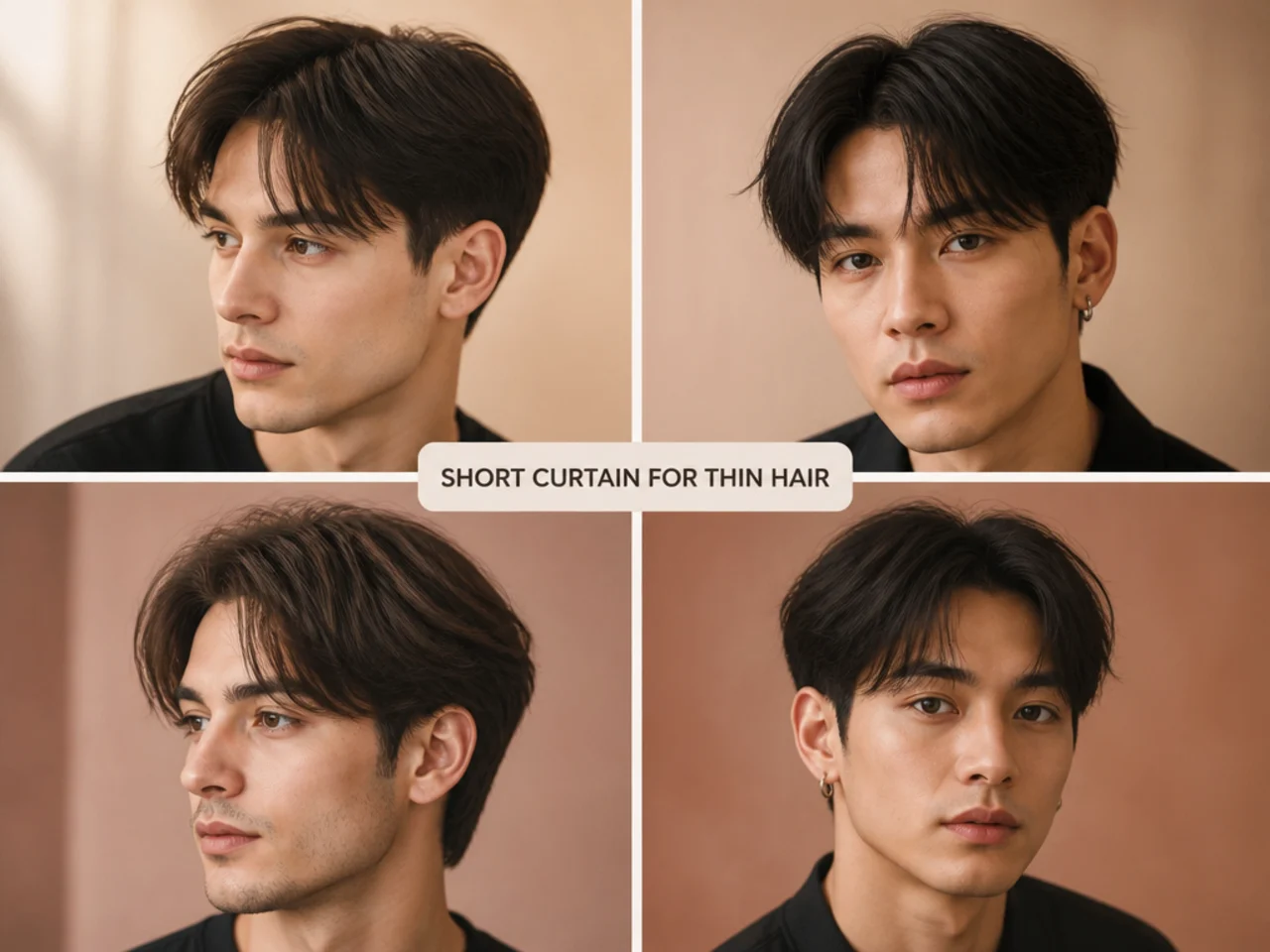
Density-building cut. The barber layers to a shorter shape (2.5 inches max), point-cuts every layer to create visual volume, and keeps the fringe long enough to fall in a curtain without looking sparse. Suits oval and heart faces. Fine, thin hair only. Ask for "short curtain for thin hair, two and a half inches max on top, heavily point-cut for volume, scissor-tapered sides, no fade." Volumizing mousse at the roots, matte clay through the ends.
Short Curtain with Beard
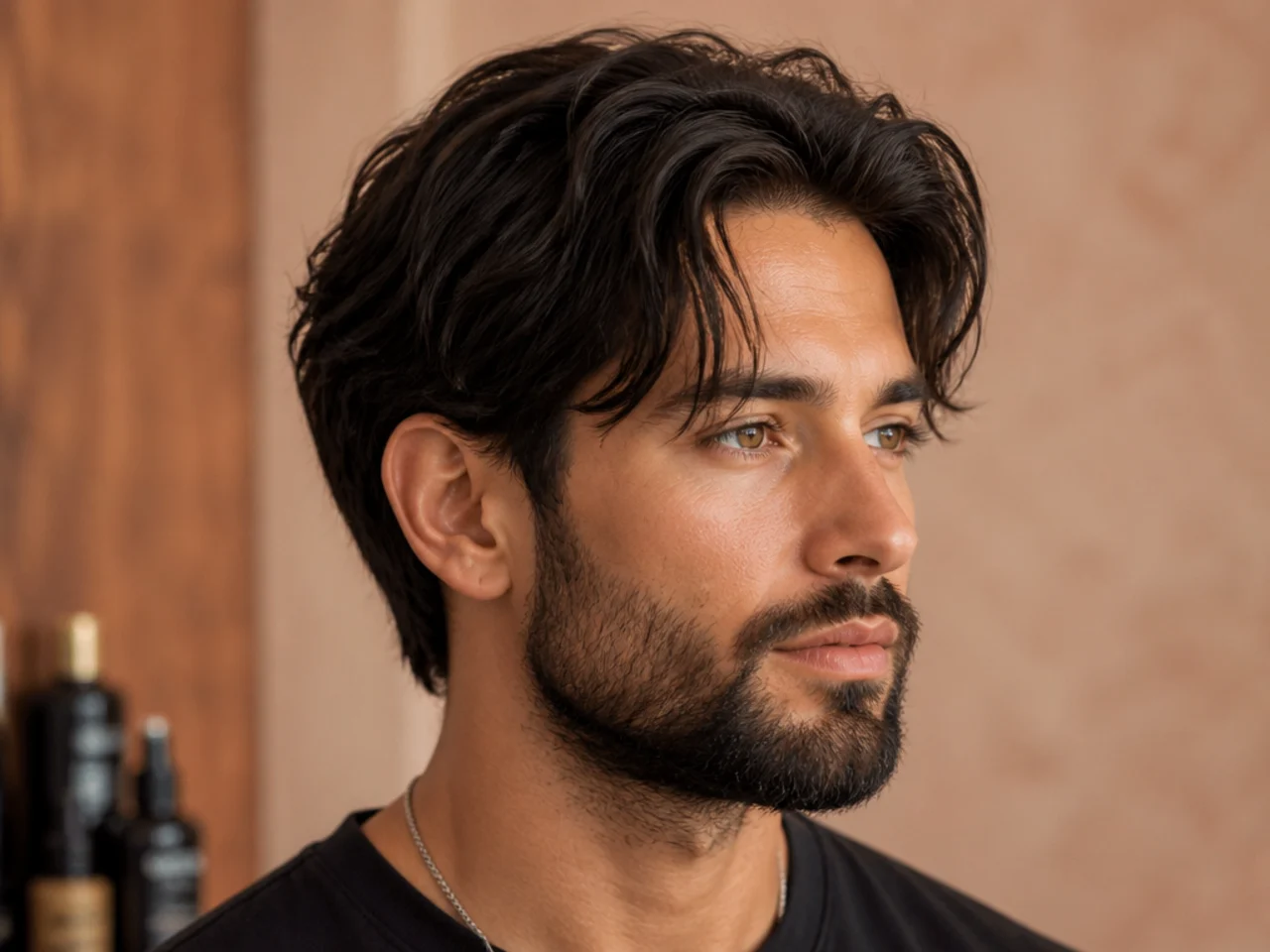
Face-framing combo. The curtain drops onto the temples and the beard defines the jawline — one full oval of hair around your face. Suits square, round, and diamond faces because the beard rebalances a wide top. Beard length sits between a two and a three guard, faded into the sideburn. Ask for "three-inch short curtain, scissor sides tapered into a faded beard at the sideburn line." Trim the beard the same day as your haircut so both sit fresh together.
Short Blowout Curtain
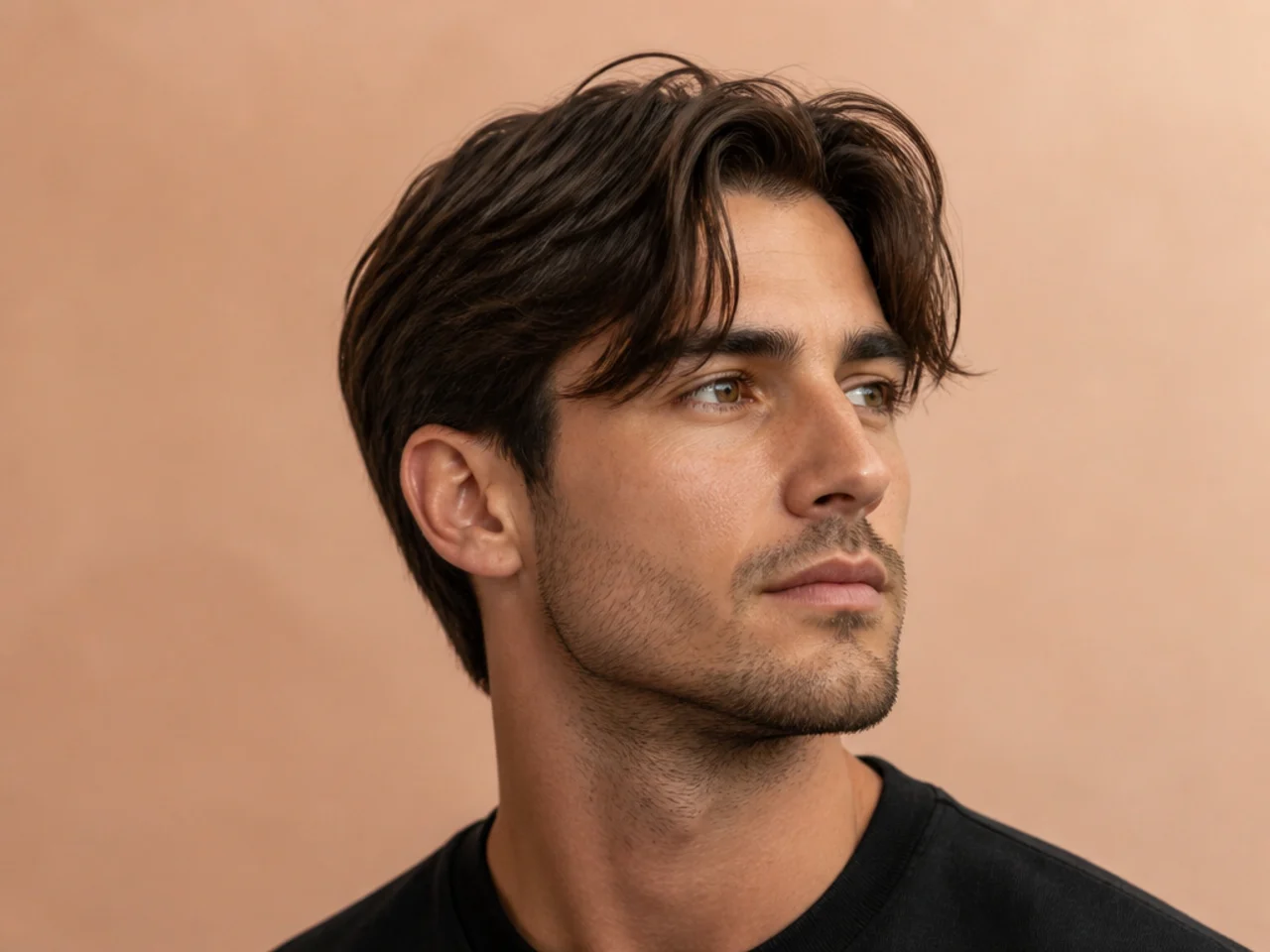
Volume-forward. Your barber cuts a slight upward angle from the crown down to the fringe so a blow-dry lifts the front off the forehead before dropping into curtains. Suits oval and heart faces. Straight, wavy, or lightly curly hair. Ask for "blowout curtain, three inches on top, angled up through the fringe for lift, tapered sides above the ear." Round-brush the fringe up and back with a blow-dryer on medium heat, then split with a comb.
Short Business Curtain
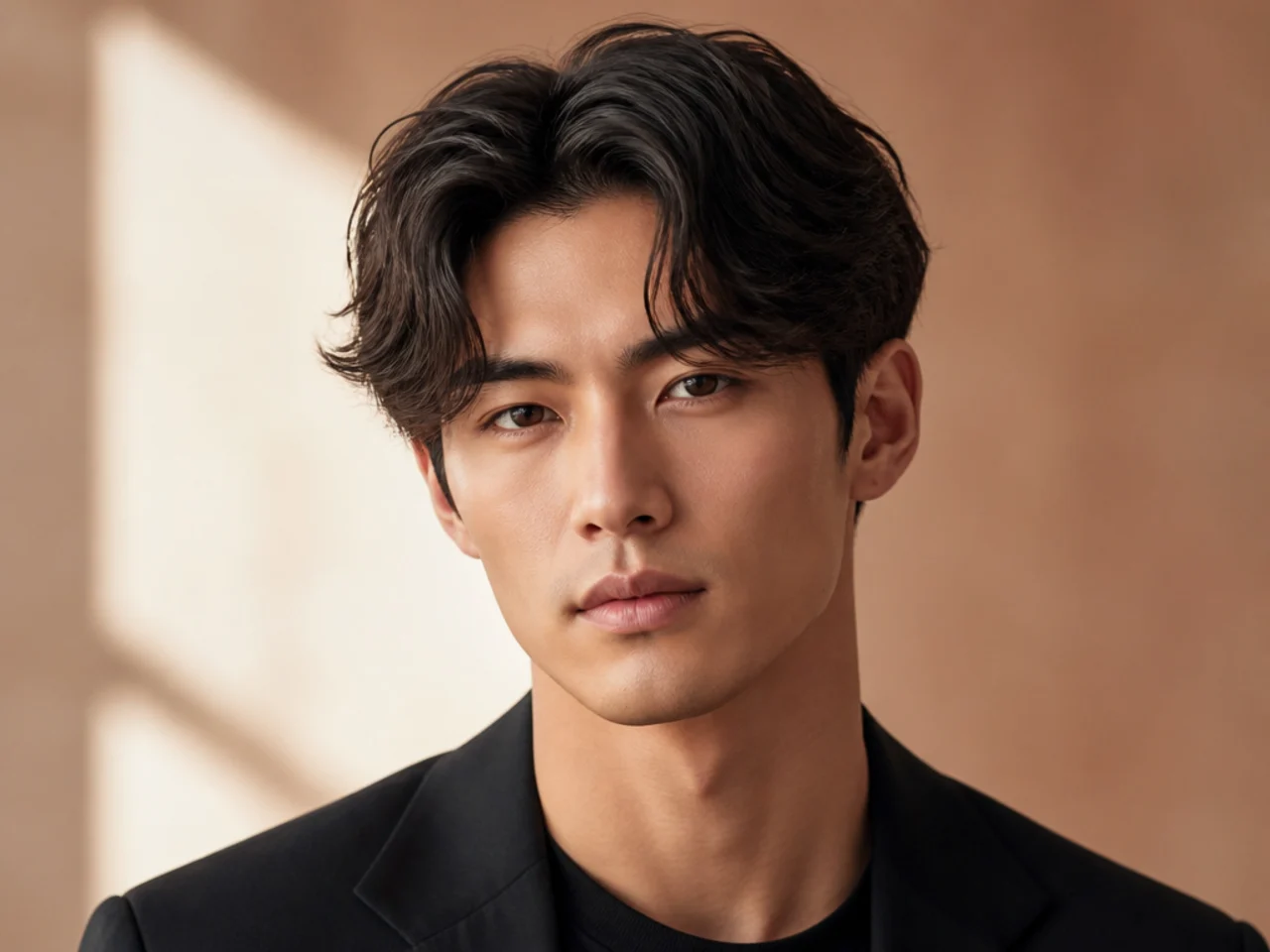
The office-legal build. Top capped at three inches, sides taper-scissored to sit above the ear, fringe kept above the brow, and no fade past a subtle low taper. Suits every face shape because it's engineered to read conservative. All hair types. Ask for "business-appropriate short curtain, three inches max on top, low scissor taper on the sides, fringe cut above the brow." Style with a light-hold cream and a comb — no visible product finish. Sits comfortably next to any short simple men's haircuts list your HR handbook would approve.
How to Ask Your Barber
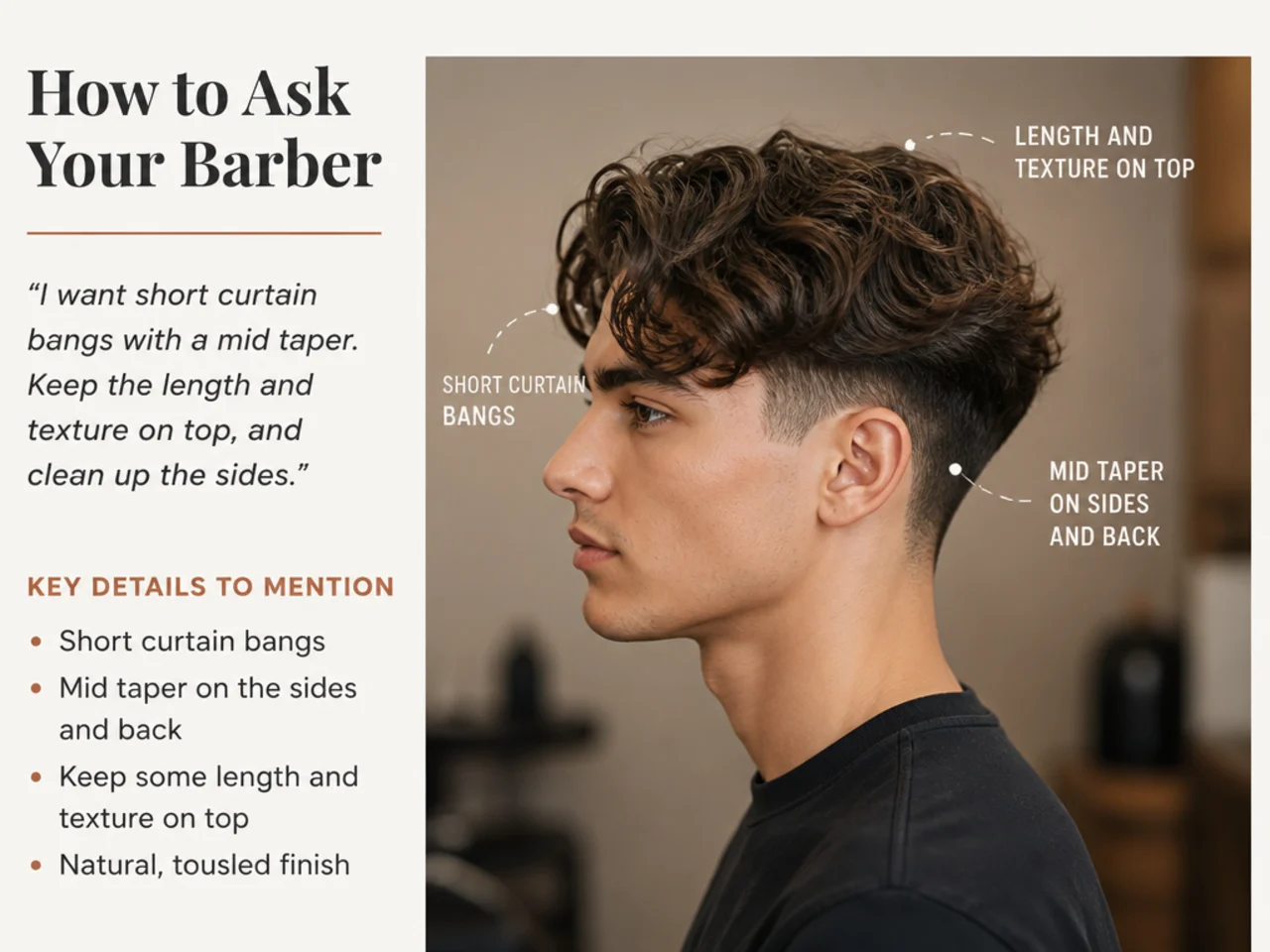
Bring the photo. Bring the language. Then hand your barber all seven of these decisions before scissors touch hair.
- Show the exact variation. "Short curtain" means fifteen different cuts to fifteen different barbers. A screenshot of the variation from this guide skips the guessing.
- Set the top length in inches. Two to four inches for a short curtain. Anything over four slips into medium curtain territory and needs a different maintenance cycle.
- Name the side finish. Scissor-tapered above the ear, low taper fade, mid fade, skin fade, undercut, or two-block. Pick from the variations above and use the exact phrase.
- Point-cut the ends. Ask outright for point-cutting through the fringe and mid-lengths. It's the single move that turns a curtain from stiff to soft.
- Have the part cut in. Ask the barber to snip a center part while your hair is damp so it falls naturally when it dries. Don't let them skip this — a curtain without a cut-in part fights you every morning.
- Set the fringe length. Decide between eyebrow-grazing (most versions) or eye-level (Korean, 90s). Say it in seconds — "just above the brow" or "past the eye."
- Confirm the finish. Matte or slightly polished. Matte reads modern; polished reads 90s or business. Say it before your barber reaches for product.
Styling and Maintenance
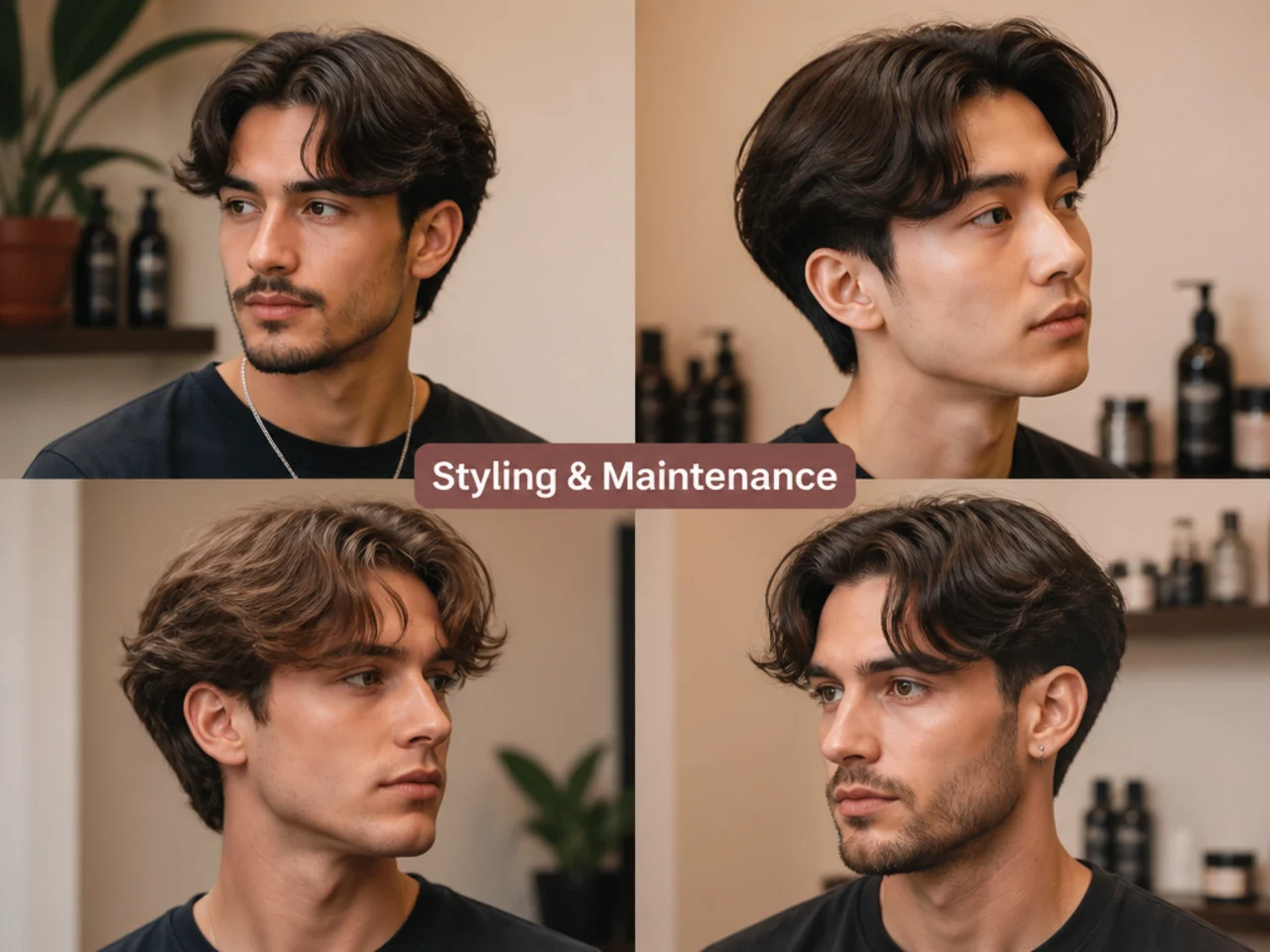
Short curtain hair styles wet, sets dry, and lives on two products maximum.
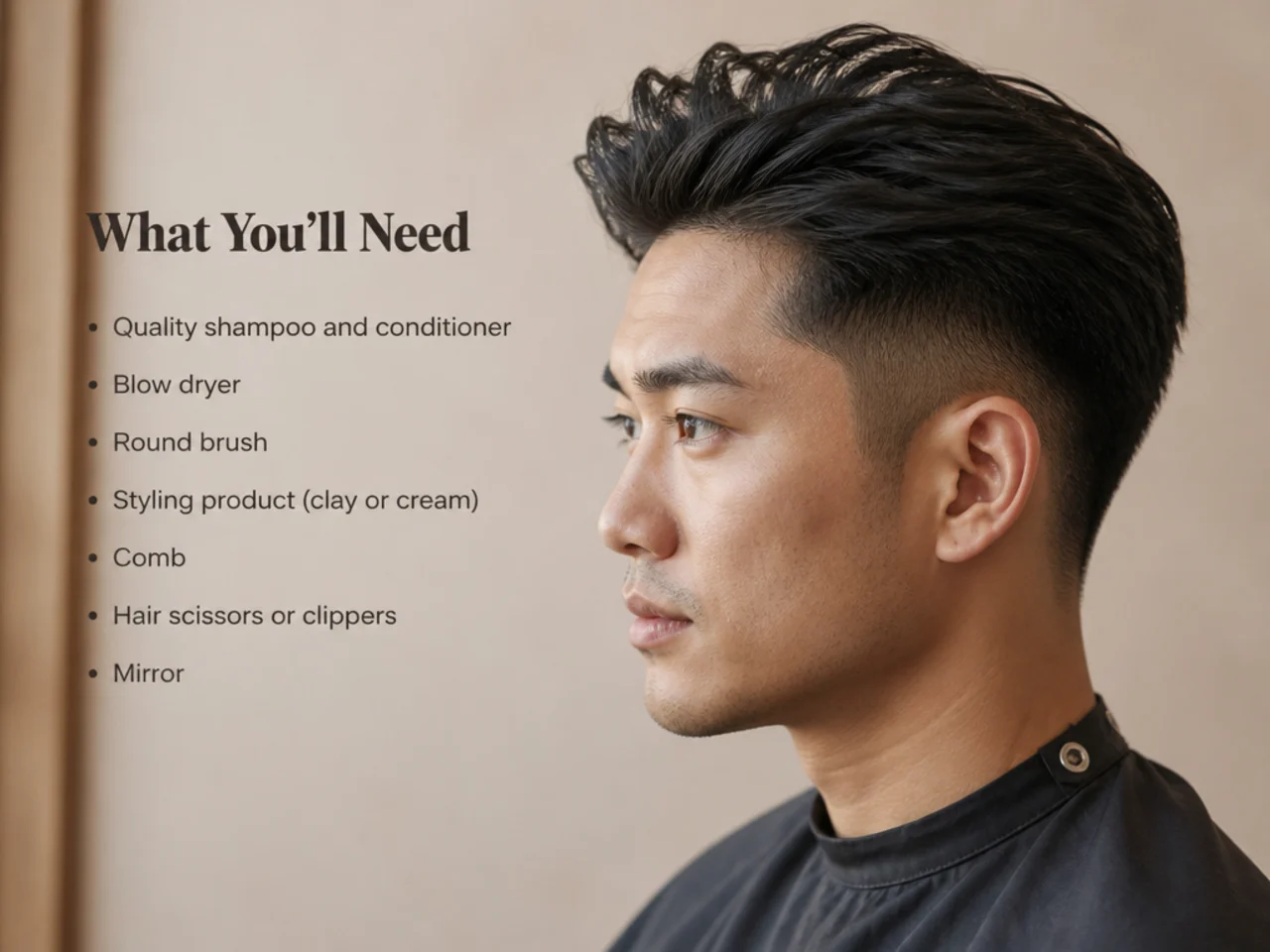
Wash with a sulfate-free shampoo every two to three days and condition mid-lengths to ends. Towel-dry with a microfiber cloth or an old cotton T-shirt — terry towels rough up the cuticle and give you the frizz that fights the fall of a curtain. While hair is still damp (not soaking), work a nickel-sized amount of matte cream between your palms until it disappears, then rake through from the crown forward with your fingers. Split the curtains with a wide-tooth comb before the hair dries. Air-dry for the polished versions; diffuse on low airflow for the wavy and curly variations.
Product line-up: matte cream or light paste is the workhorse; sea-salt spray adds texture for the messy and textured cuts; a curl cream handles the wavy and curly variations. Skip gel — it locks the fall too rigidly and cancels the movement that makes a curtain look like a curtain. Skip glossy pomade unless you're building the 90s version on purpose.
Trims live on a five to six week cycle. A short curtain grows out of shape faster than a fade because the length on top is doing all the work — you can't blame the perimeter. When the fringe starts sitting past the eye while damp, book. When you notice the curtains not splitting cleanly, book. Bring the same reference photo you brought last time — barbers cut best when they're calibrating against a picture, not their memory of what they did six weeks ago.
For guys with sharper cheekbones or a wider jaw, the short curtain pairs beautifully into the haircuts for square faces playbook — softer versions balance angular features.
FAQ
Is a short curtain hard to grow out? Not compared to a full flow. You're already at short-curtain length after four months of growth from a fade. Growing to a medium or long curtain adds another three to four months, mostly on the sides.
Will a short curtain work for balding hairlines? Yes, if your recession is Norwood 2 or lower. A slight recession is often hidden by the fringe drape. Deeper recession reads better with a textured crop or a longer fringe that hides the temples.
Which is easier to maintain — short curtain or flow? Short curtain by a mile. Flow needs a blow-dry most days plus product layering; a classic short curtain is fifteen seconds of cream and a comb.
Can teenagers pull off the short curtain? Every version above works on teens — the modern, textured, and two-block variants read youngest. The 90s and business versions read older.
Does a short curtain need a fade to look good? No. Scissor-tapered sides read cleaner and grow out more gracefully than a fade. Faded versions read modern; non-faded versions read timeless. Both work.
How much should a short curtain cut cost? Anywhere from $30 at a walk-in barber to $80+ at a specialist. Pay for the scissor work — the part cut in, the point-cutting, the internal layers. Those are what separate a great short curtain from a mediocre one, not the fade.