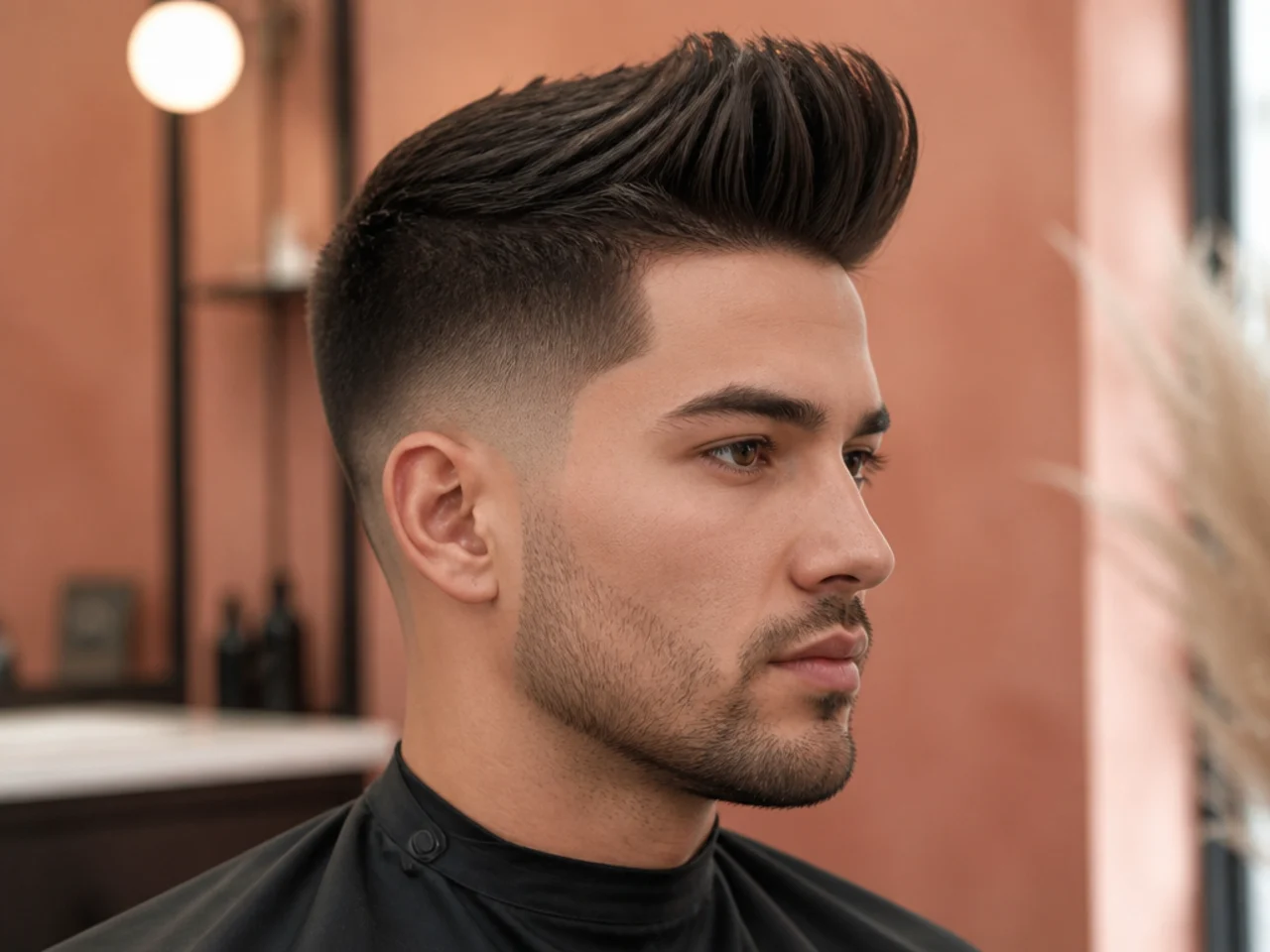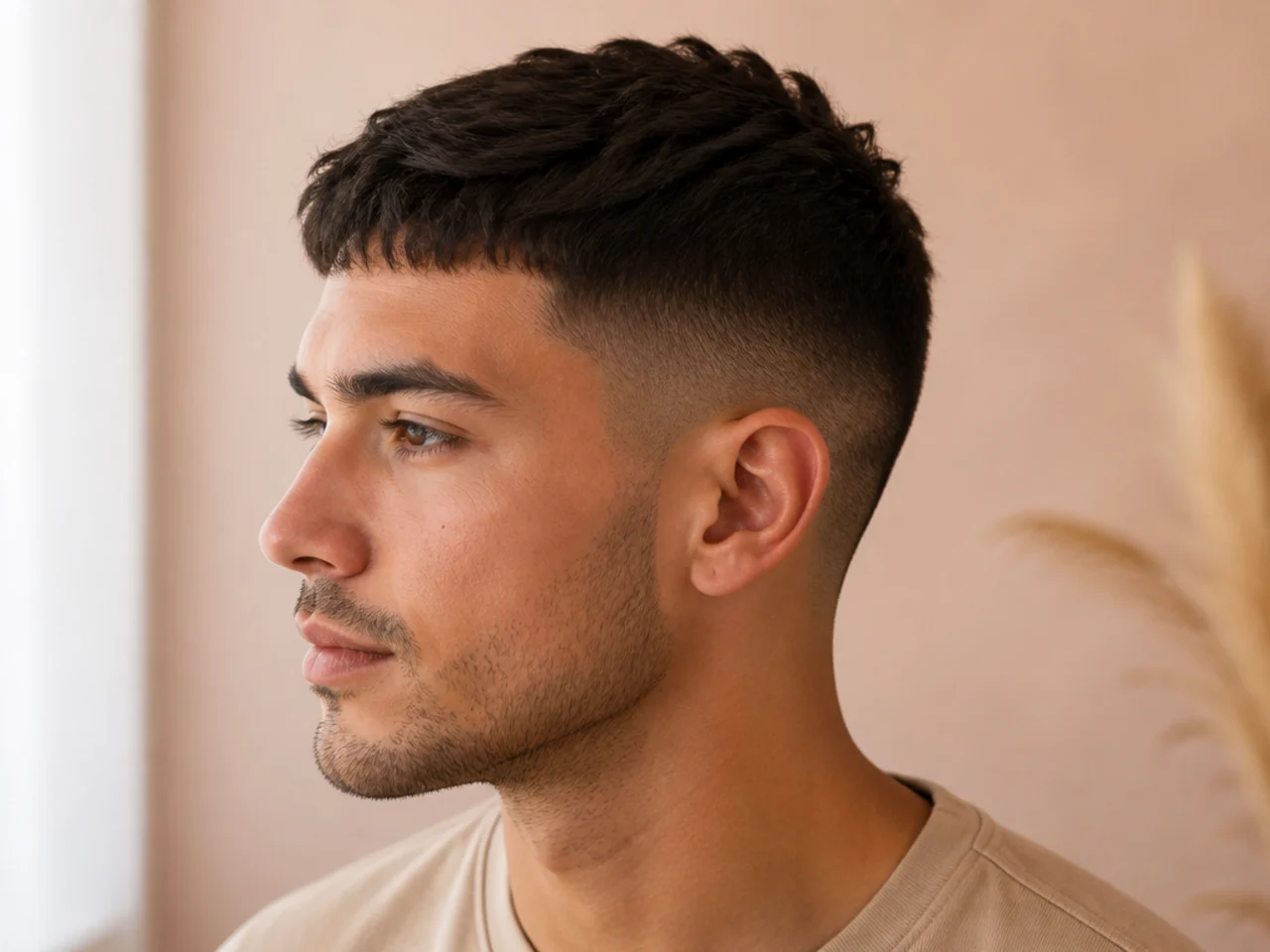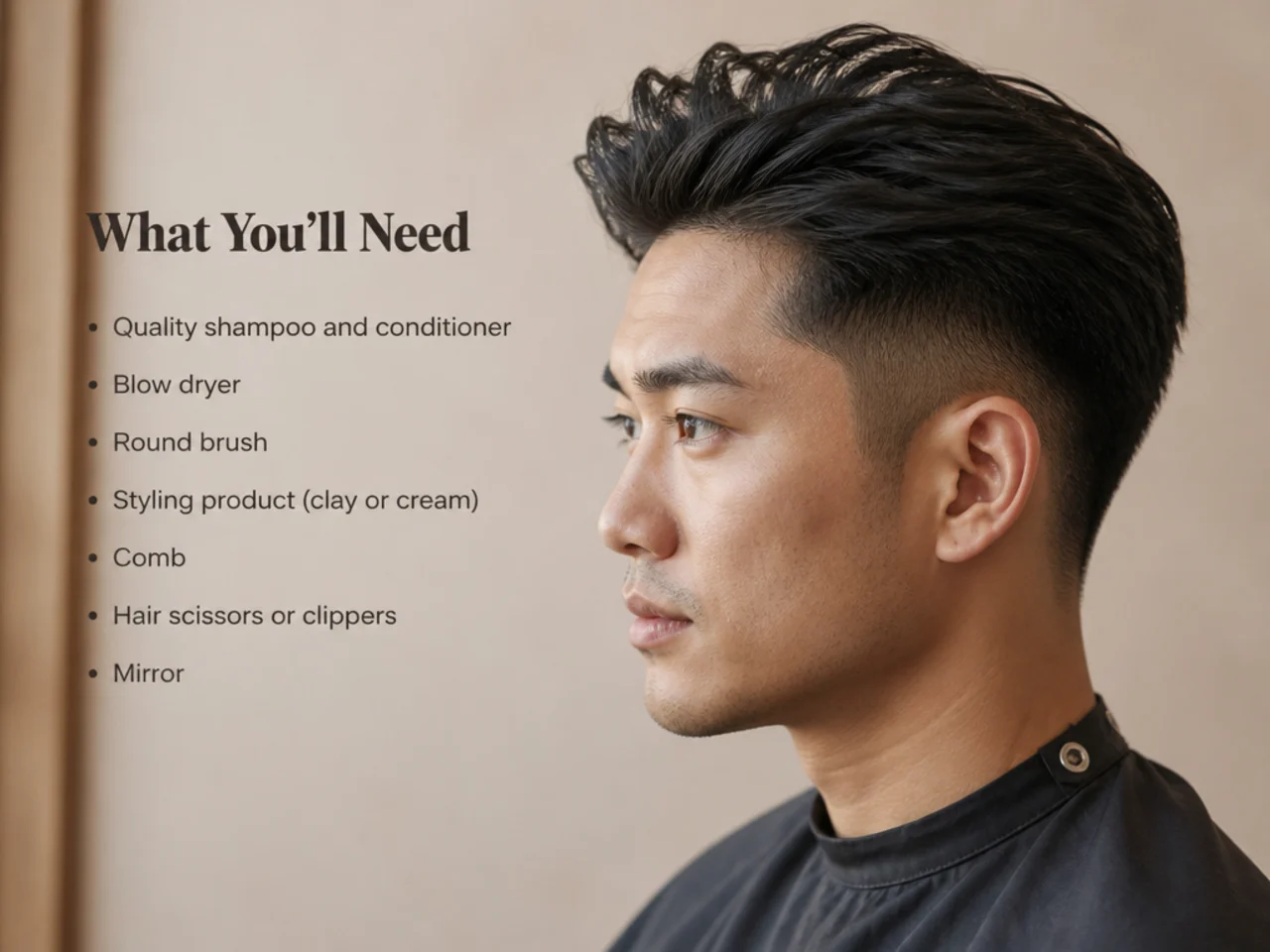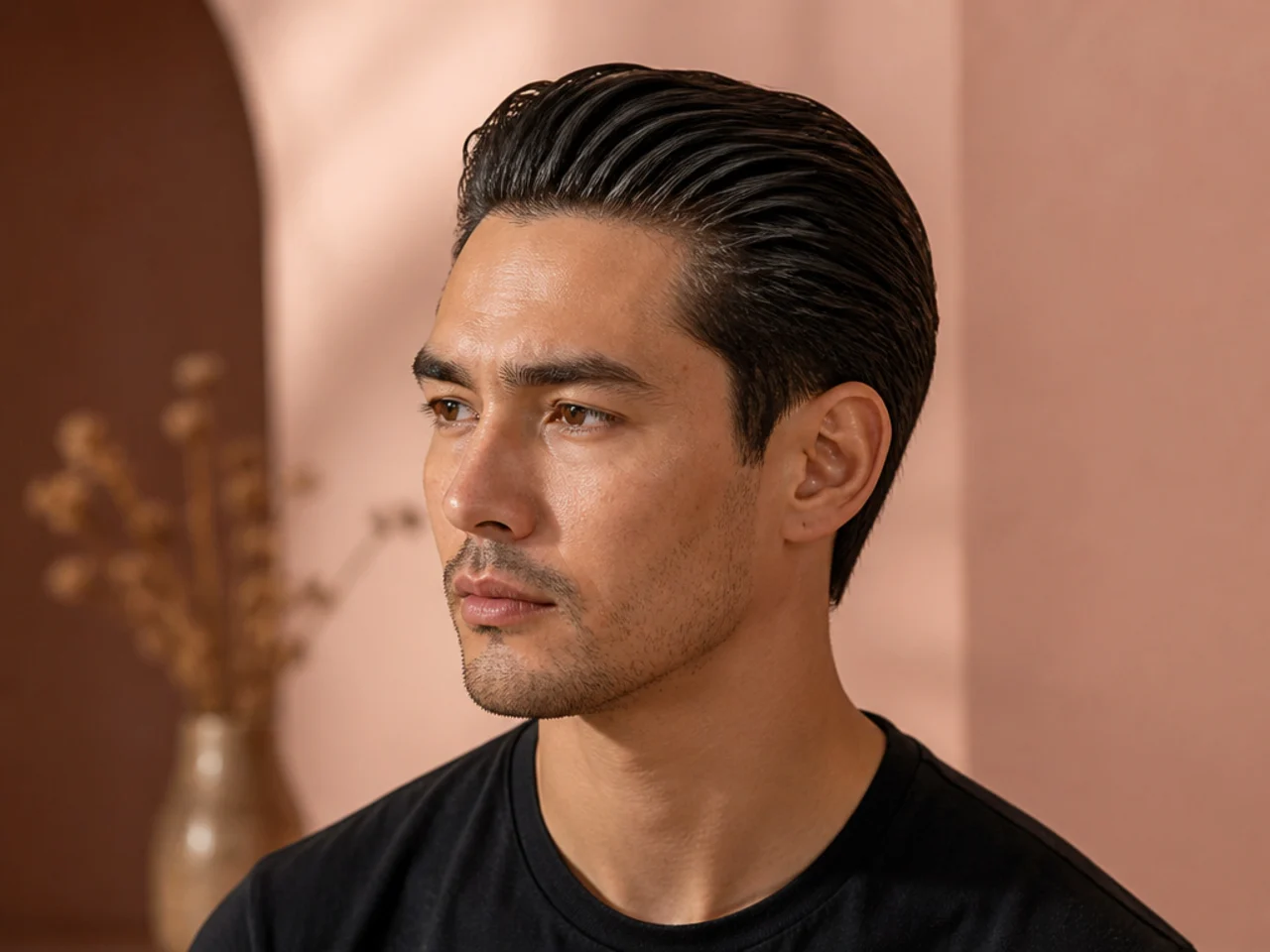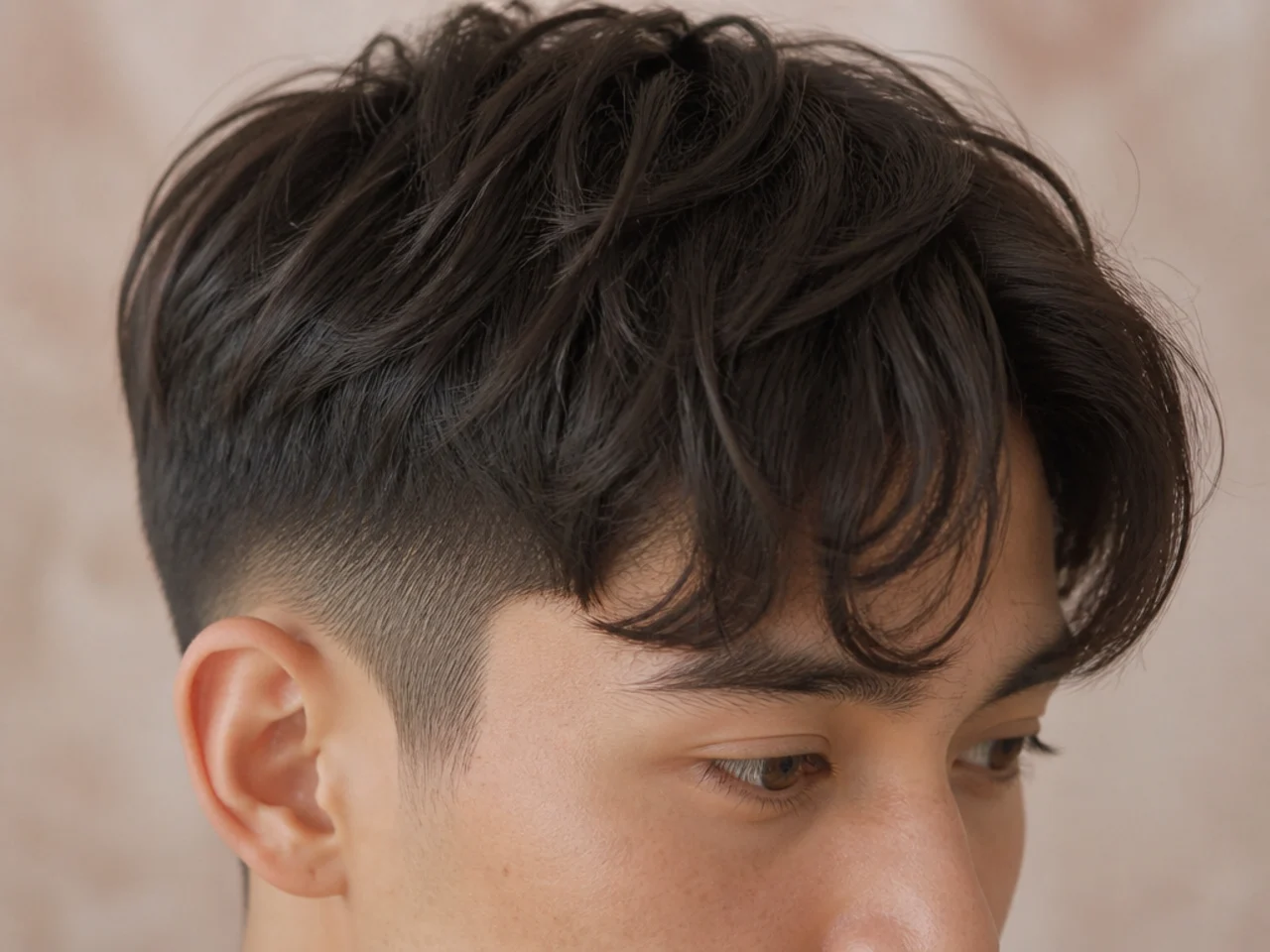
15 Korean Fringe Haircut Ideas for Men
A Korean fringe is not a cut so much as a root direction, which is why copying the length alone never works. The shape lives in the first two centimetres out of the scalp, and that is set with heat or a perm, not with scissors.
In this article · 22
- Why the Root Direction Matters More Than the Cut
- How to Choose Yours
- The 15 Korean Fringe Ideas
- 1. The Classic Comma Fringe
- 2. Two-Block With a Full Fringe
- 3. Middle-Part Korean Fringe
- 4. Down-Perm Flat Fringe
- 5. C-Curl Fringe
- 6. Wolf-Cut Korean Fringe
- 7. Curtain Fringe With Root Lift
- 8. Short Korean Fringe
- 9. Eye-Length Fringe
- 10. Textured Korean Fringe
- 11. Korean Fringe With a Low Taper
- 12. Wavy Korean Fringe
- 13. Korean Fringe on Thick Hair
- 14. Side-Swept Korean Fringe
- 15. The Grown-Out Two-Block
- Styling and Upkeep
- Mistakes to Avoid
- FAQ
- Final Thoughts
Most men who ask for a Korean fringe come in with a photograph and leave with the right length and the wrong shape. The cut in the picture was rarely the thing they were looking at.
A Korean fringe is a root direction, not a length. The hair is lifted where it leaves the scalp and then curved back inward toward the face, and that curve is what the eye is actually reading.
Scissors cannot create it. Root direction is set with heat, with a perm, or with both, which is why the cut is only half the service.
Why the Root Direction Matters More Than the Cut
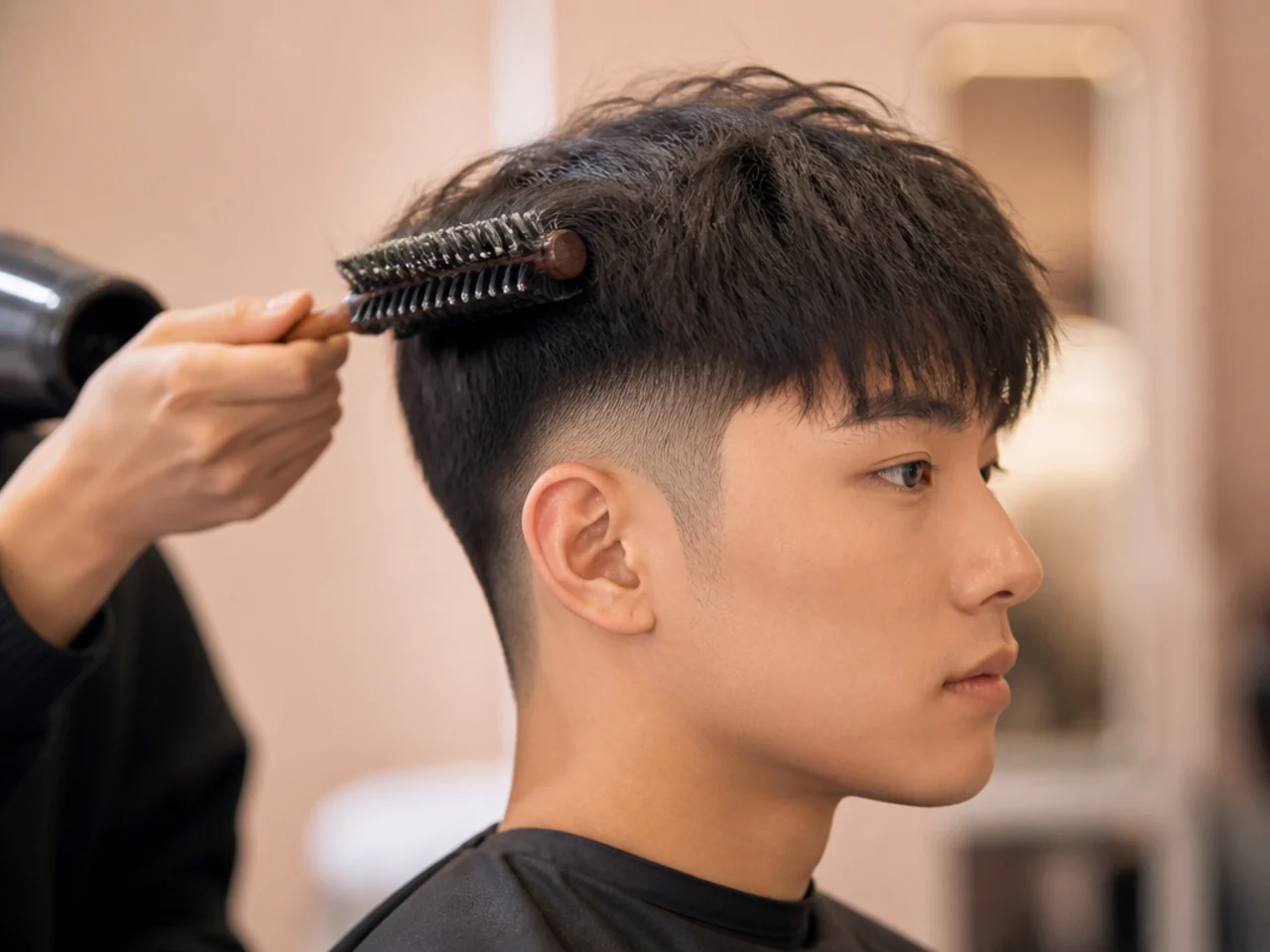
The first two centimetres decide everything. Hair travels in whatever direction it leaves the scalp, and no amount of length changes that.
Lift at the root creates the arc. Without lift the same length lies flat against the forehead as an ordinary fringe.
The inward curve is a second, separate step. Lift alone gives you volume. Lift plus an inward bend gives you the comma.
A perm makes it permanent. A C-curl or down perm locks the direction so it returns after every wash, and it is the service sitting underneath most Korean haircuts for men you will have saved.
How to Choose Yours
Decide perm or daily styling first. It is a ten-minute morning habit or a salon appointment every few months, and the answer changes which version suits you.
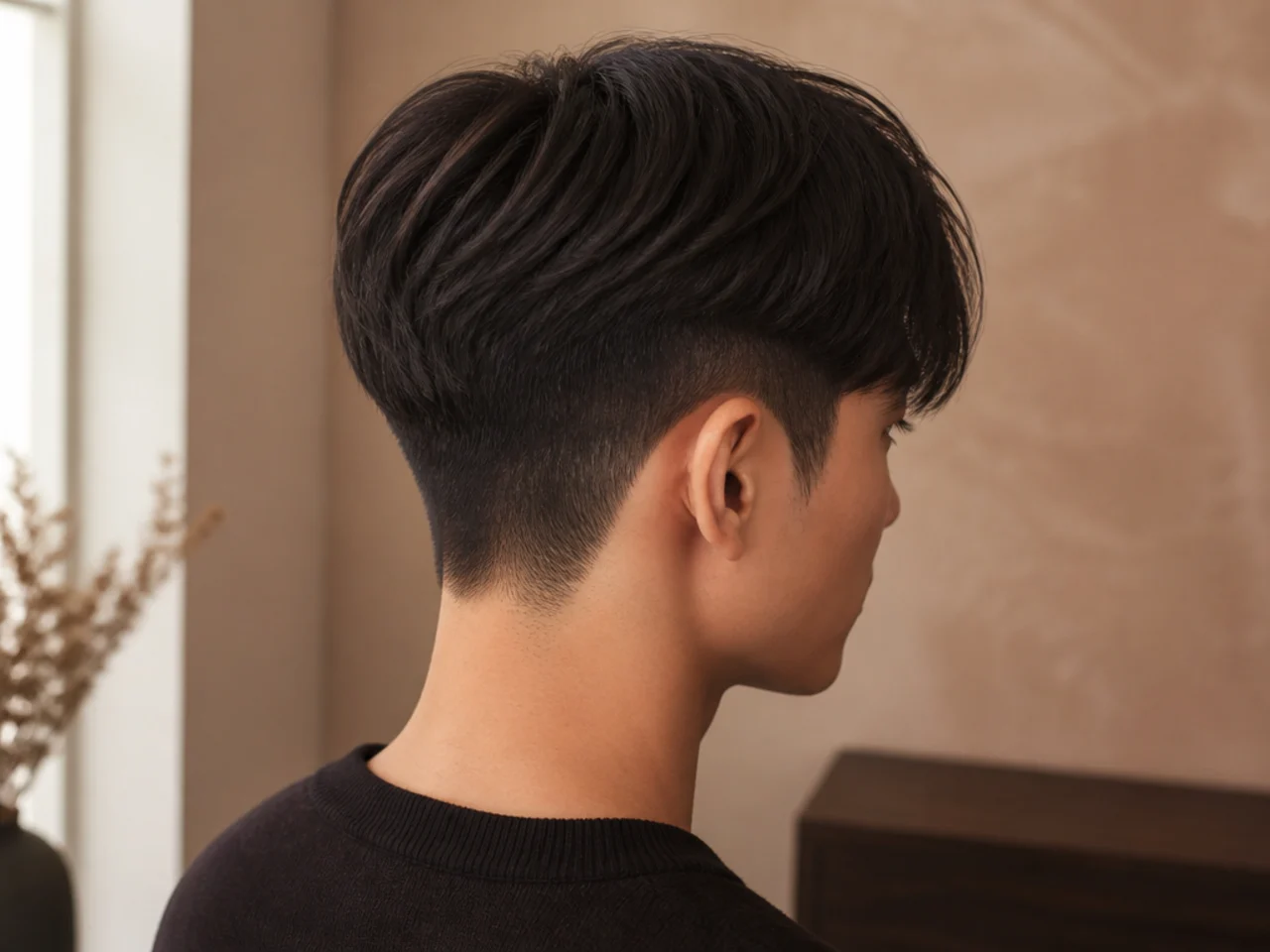
Match the fringe to the side structure. Korean fringes are built on two-block sides, which remove bulk in a step rather than a gradient.
Straight hair takes it most easily. Straight hair holds a set direction, while natural wave fights the imposed curve.
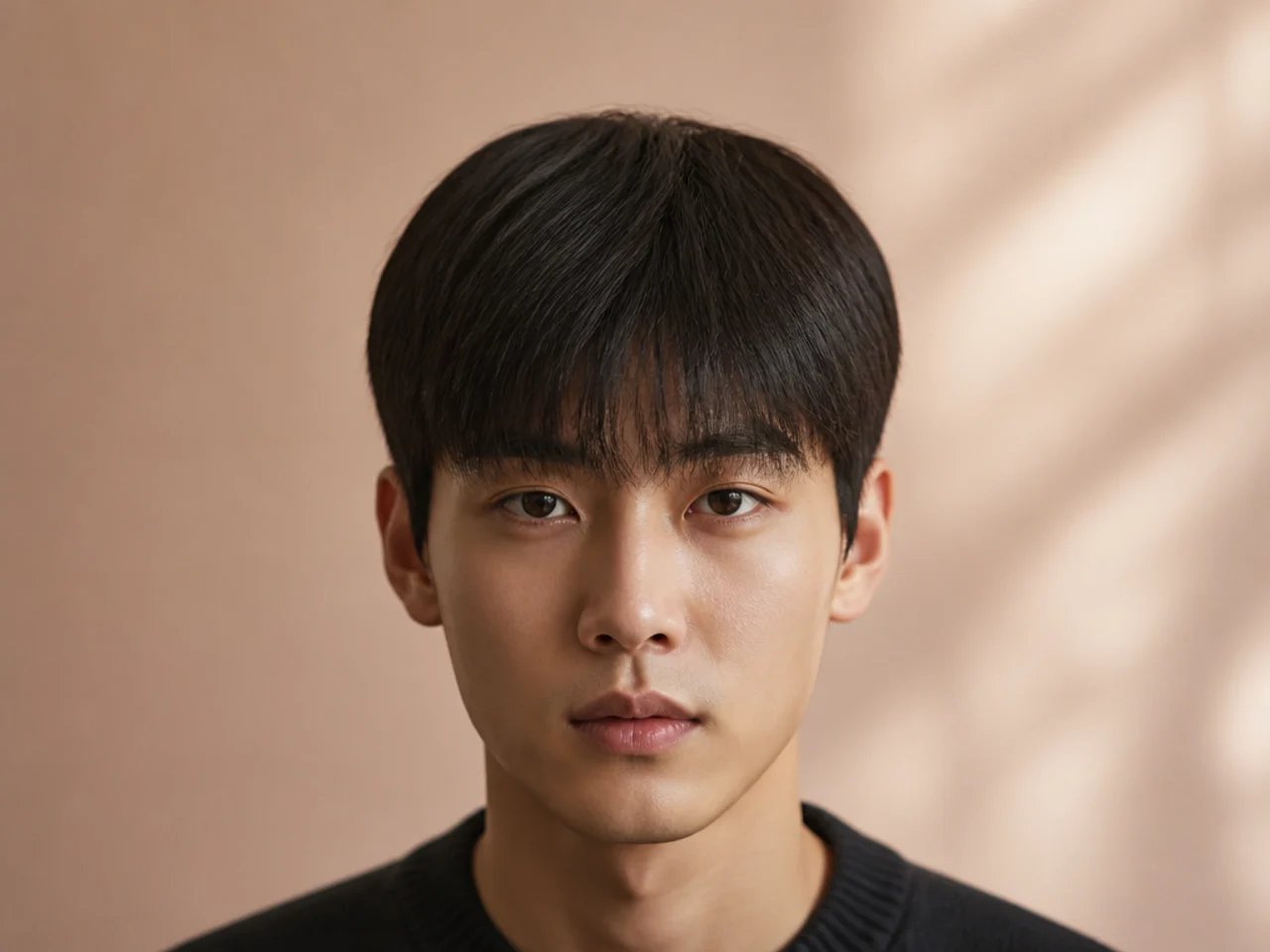
Length must reach the brow at minimum. There is no room for an arc in a fringe shorter than that.
The 15 Korean Fringe Ideas
1. The Classic Comma Fringe
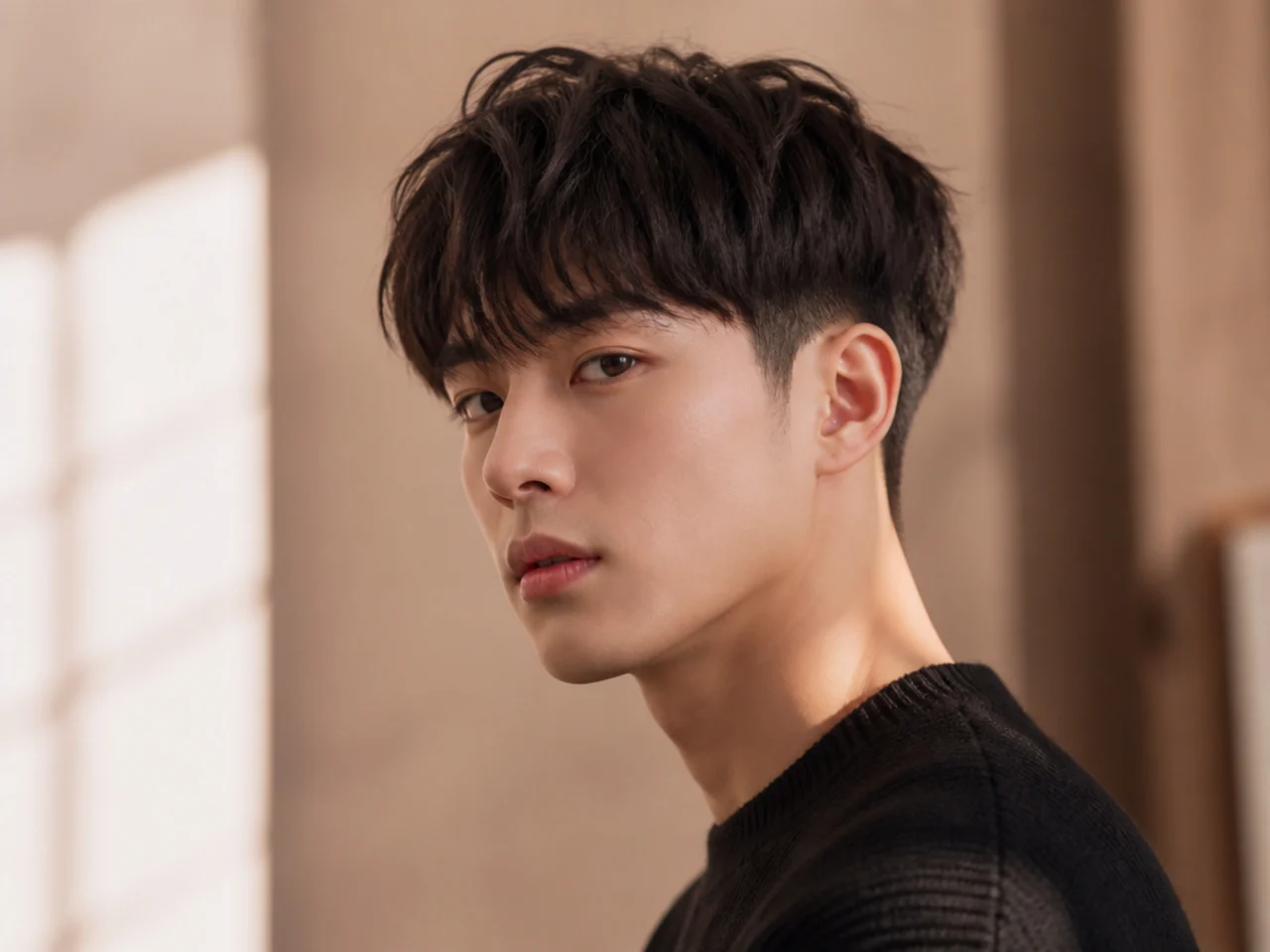
The front section curved inward so the ends point back toward the cheekbone, forming a comma. It is the defining Korean fringe and the one every other version on this page is a variation of. Worn at full length it becomes the comma haircut.
2. Two-Block With a Full Fringe
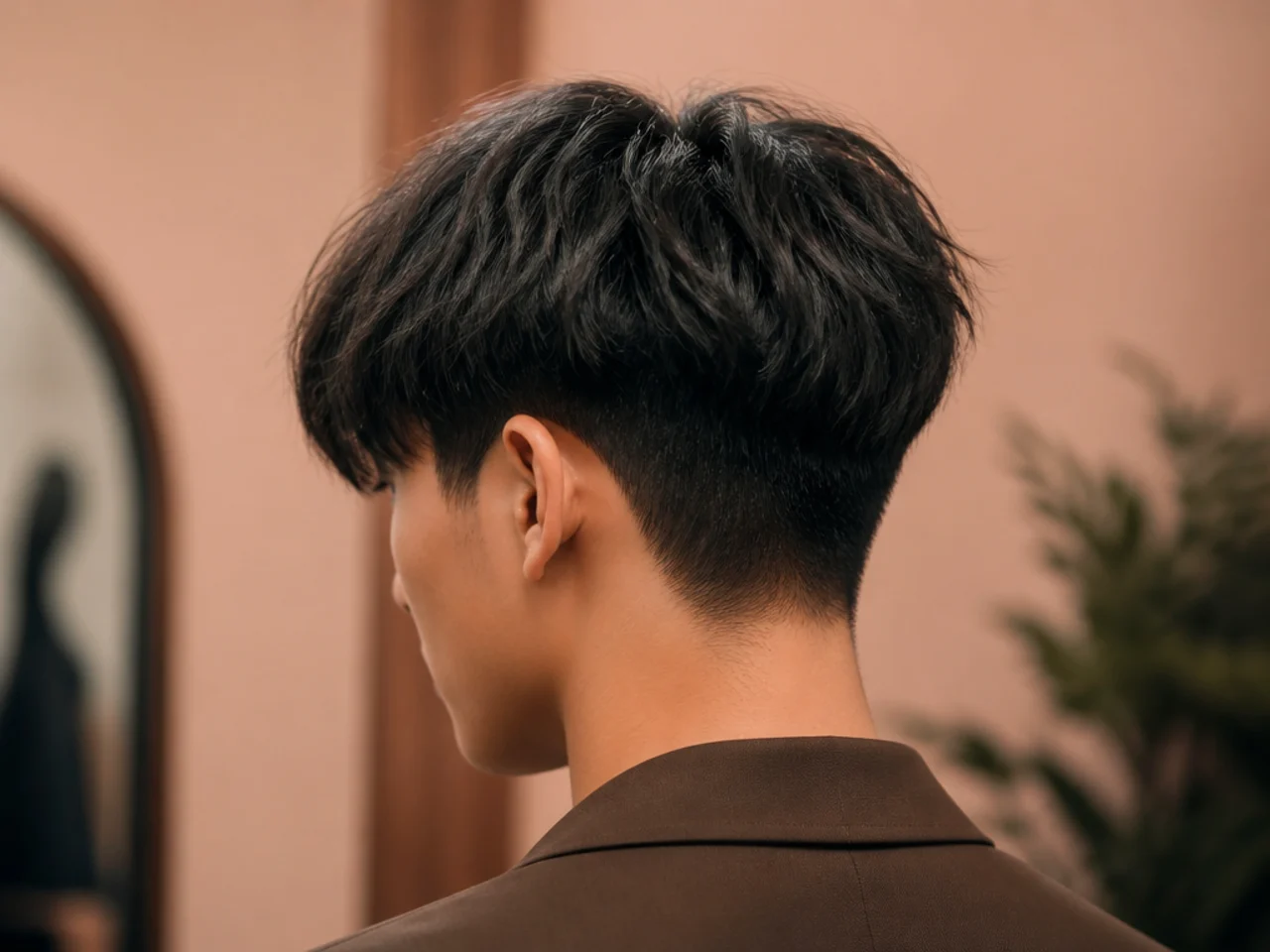
The sides stepped short and disconnected while the top keeps all its weight, so the fringe falls from a solid mass. The disconnection is what stops the sides stealing volume from the front.
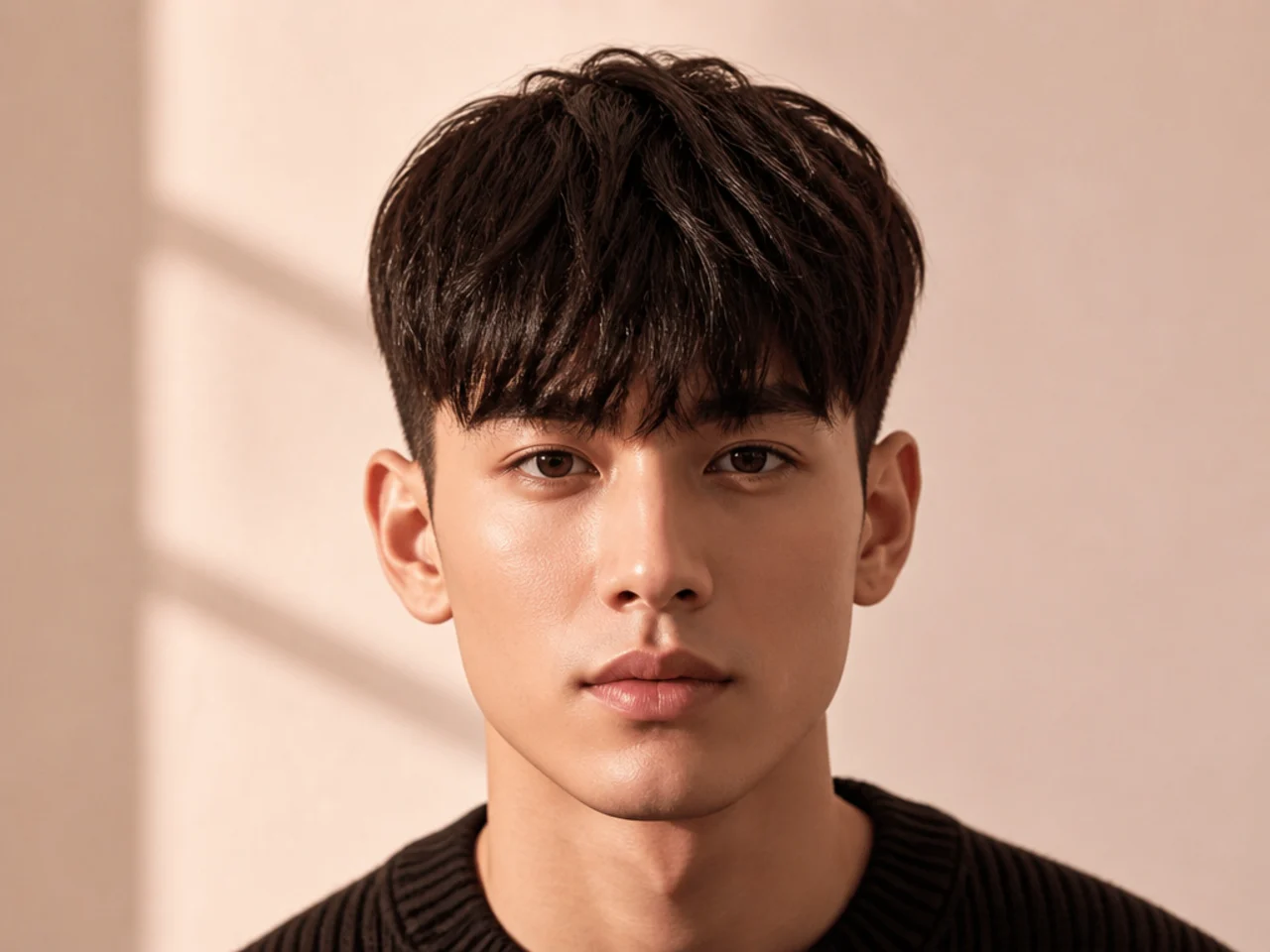
3. Middle-Part Korean Fringe
Split down the centre with both halves curved outward, framing the forehead rather than covering it. The split needs the hair long enough to reach the cheekbone or the two halves just sit as flaps.
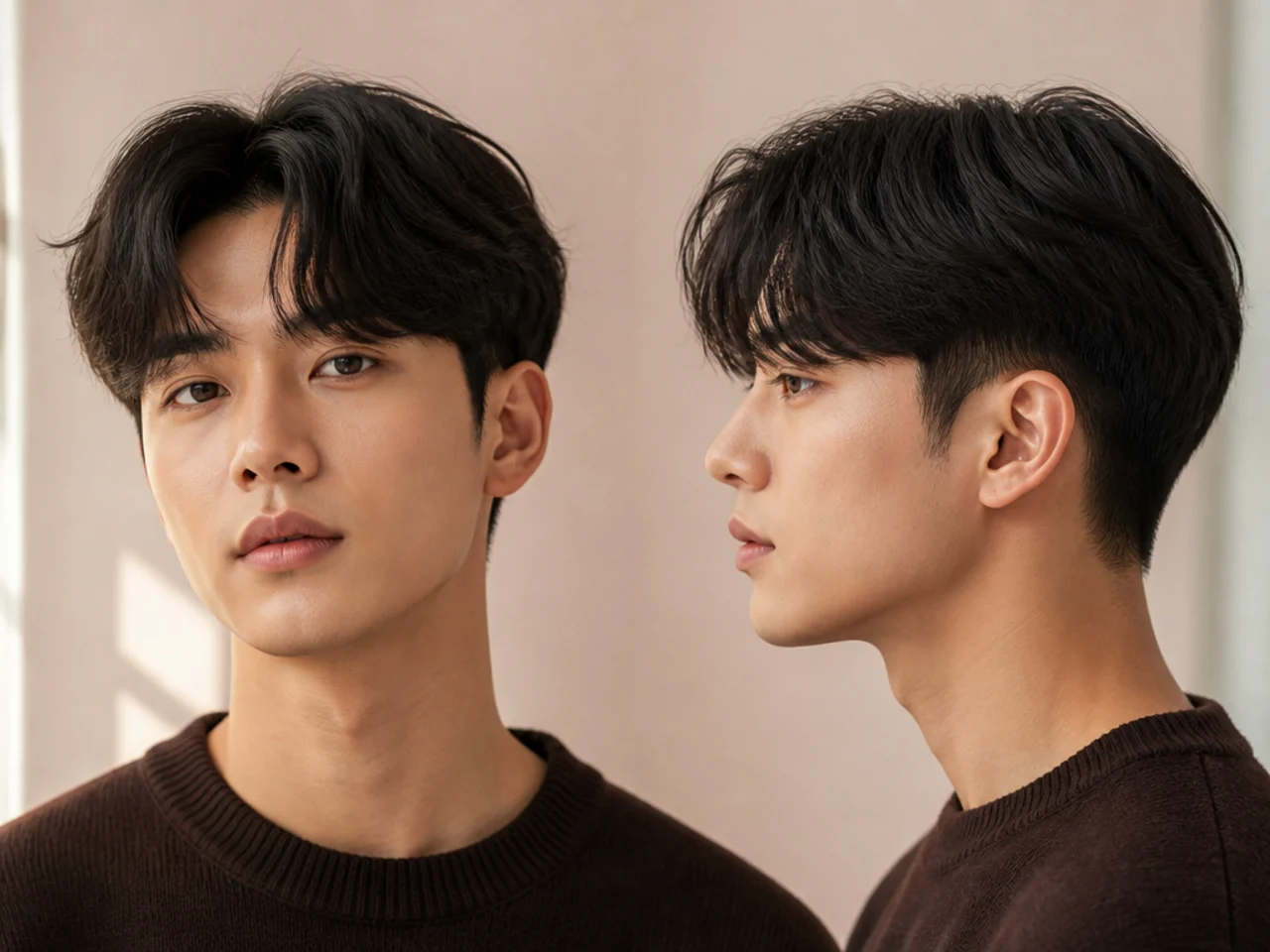
4. Down-Perm Flat Fringe
A down perm flattens hair that grows outward, which is the fix for a fringe that keeps standing away from the head. It is a corrective service rather than a style in its own right.
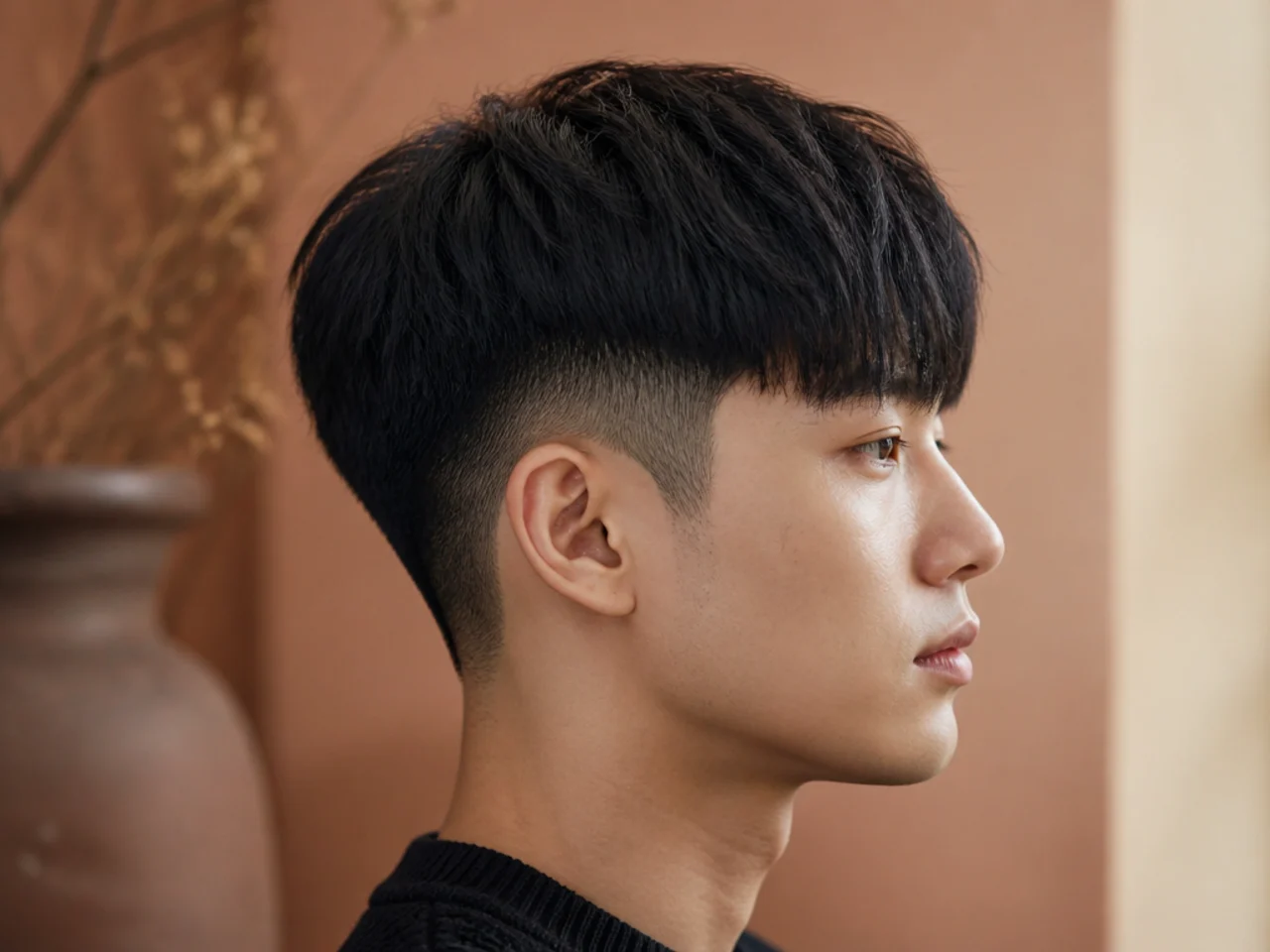
5. C-Curl Fringe
The perm rod sets a single soft C shape into the front section so the inward curve forms without a brush. It is the low-effort route to the comma shape. Booked as a two-block with a perm, the curve holds for three to four months before new root growth undoes it.
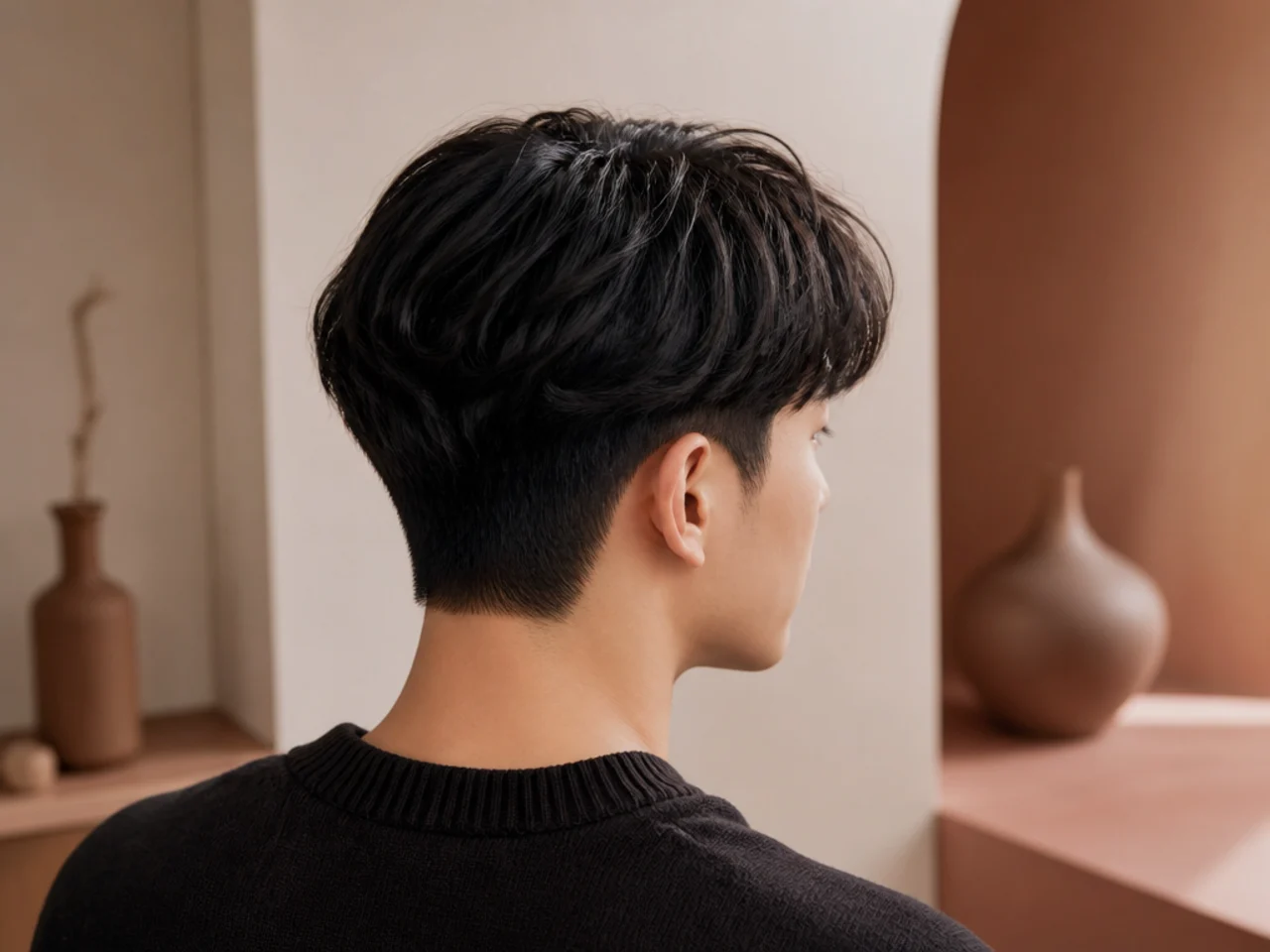
6. Wolf-Cut Korean Fringe
Heavy layering behind a long front section, so the fringe leads a shape that gets shaggier toward the back. The contrast between a clean front and a broken back is the whole idea.
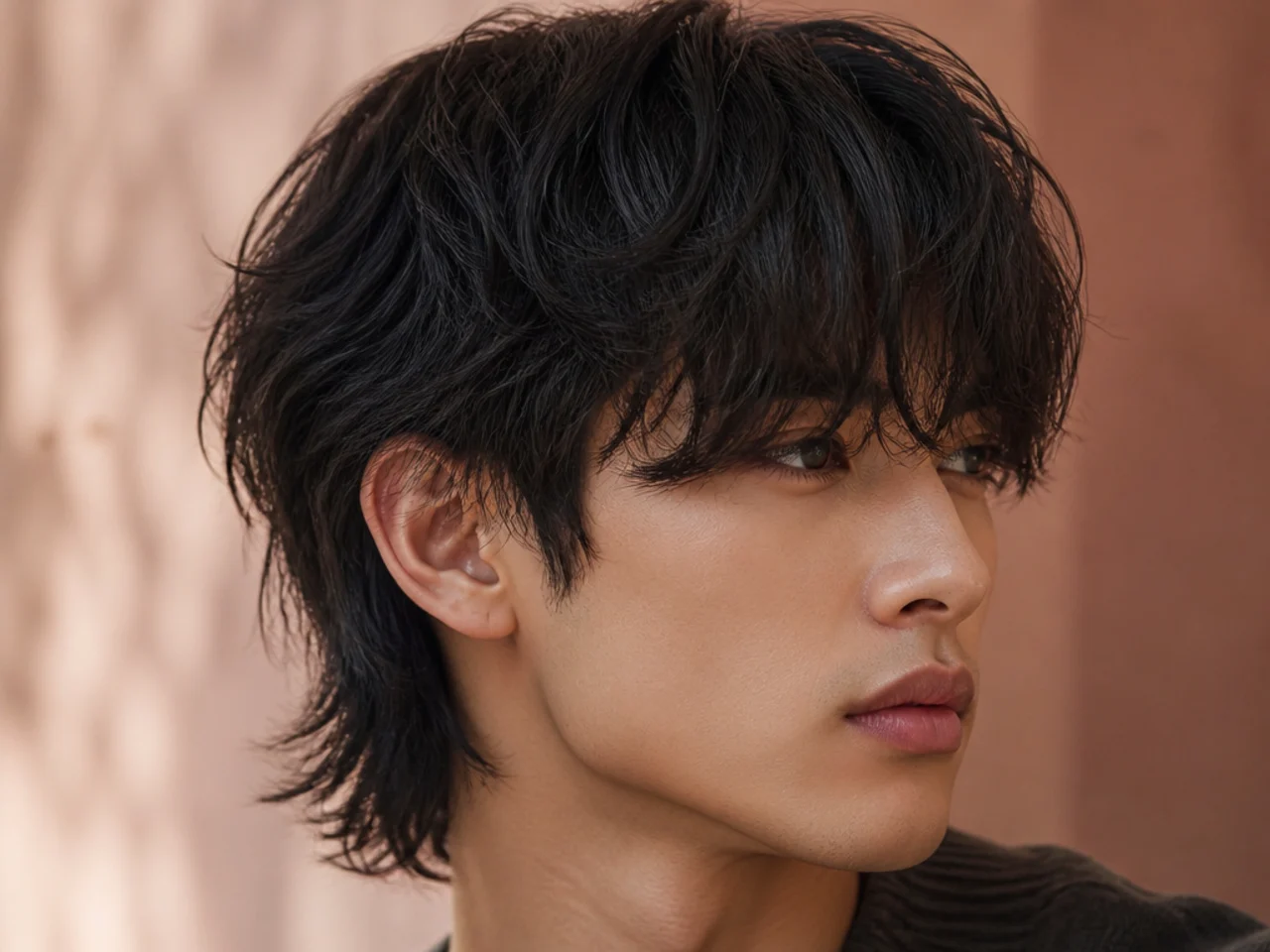
7. Curtain Fringe With Root Lift
Longer than a comma and parted loosely, but still lifted at the root rather than falling flat. Root lift is the only thing separating this from an ordinary grown-out fringe.
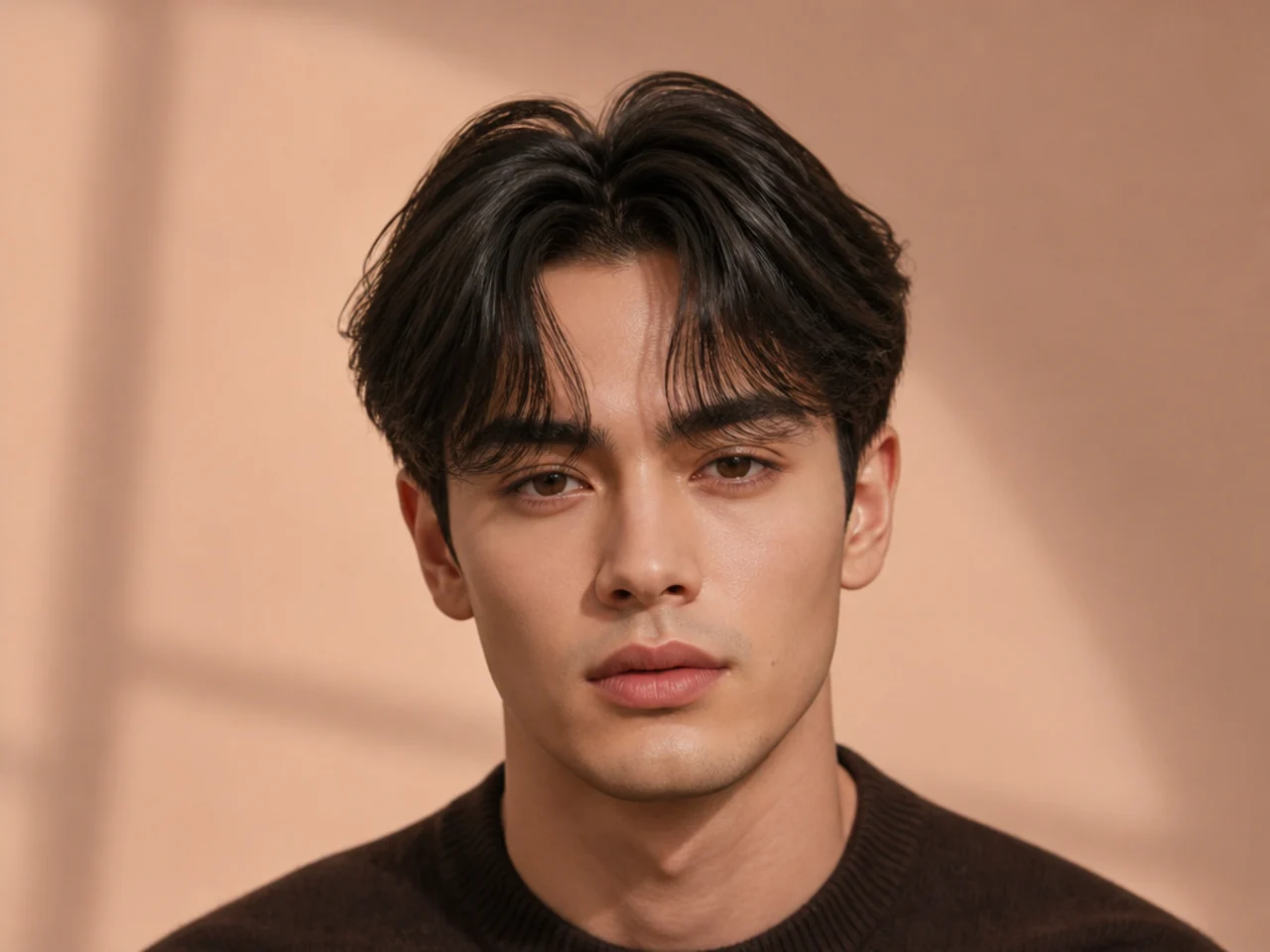
8. Short Korean Fringe
Cut just above the brow but still curved, which takes more skill than the long version because there is less length for the arc to happen in. It suits men who want the shape without hair in their eyes.
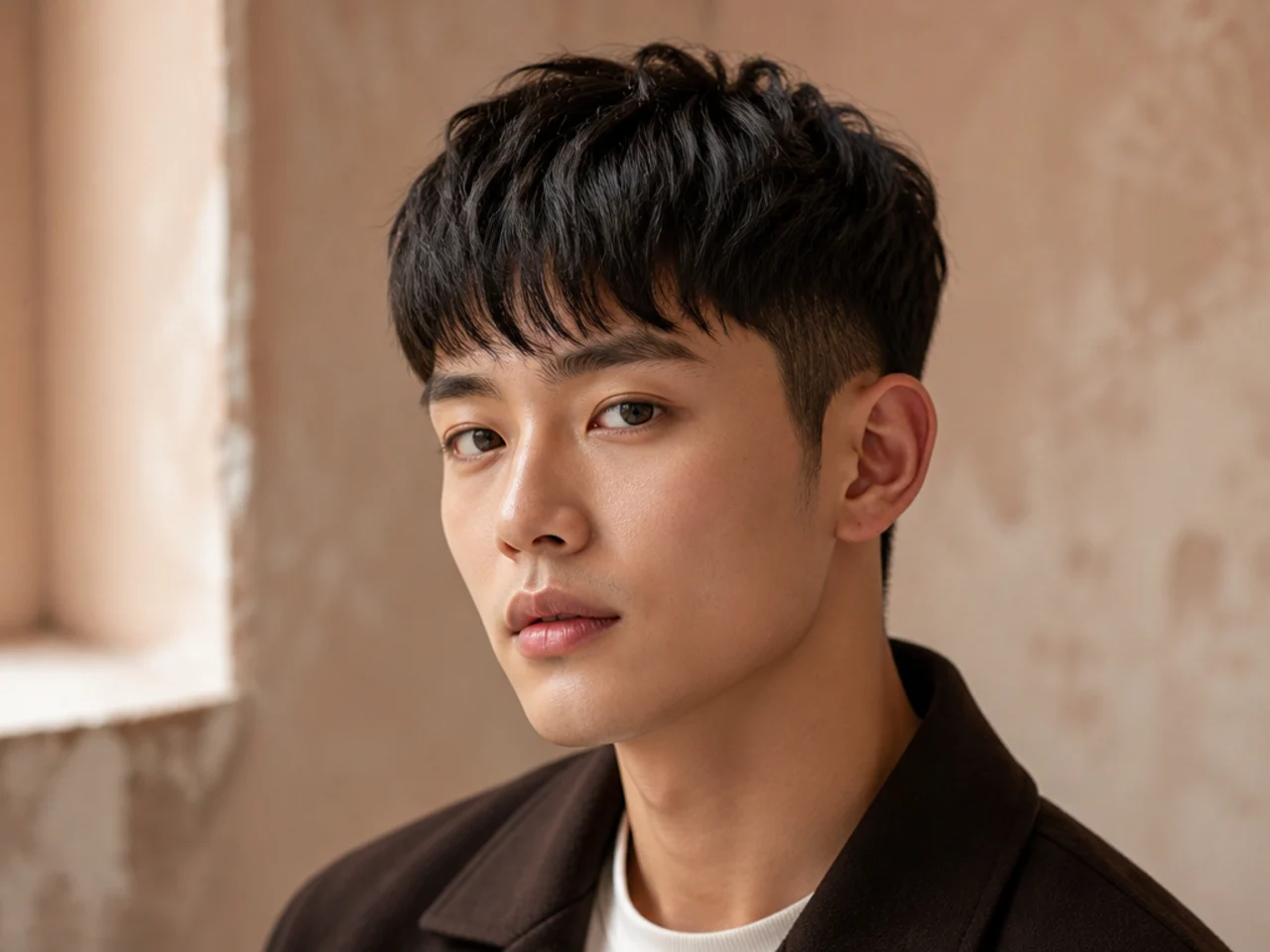
9. Eye-Length Fringe
Cut deliberately to eye level, where a Korean fringe is normally worn. Every other fringe on this site treats that length as the point at which you book a trim, and here it is the target.
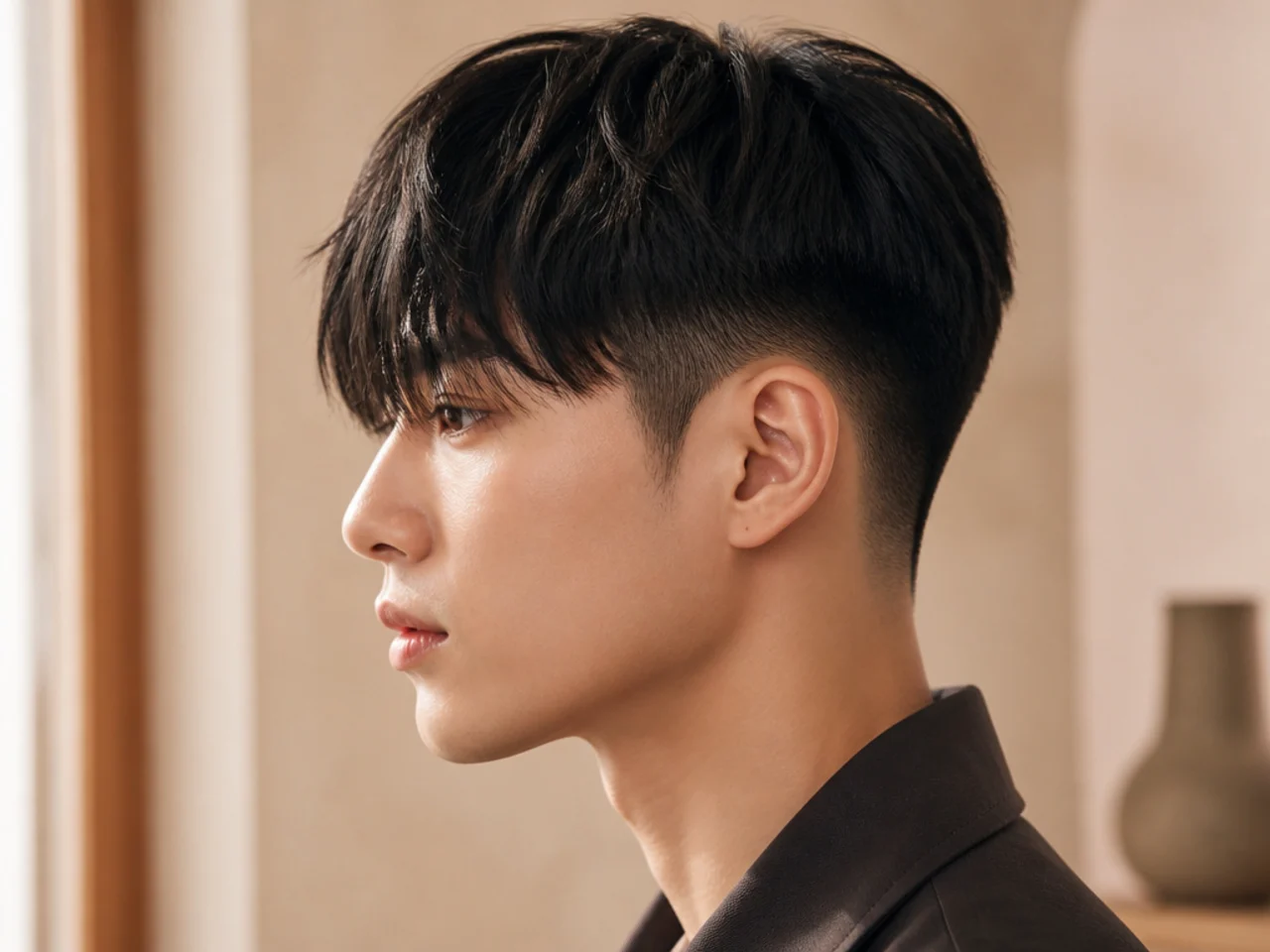
10. Textured Korean Fringe
The ends point-cut so the front breaks into pieces instead of hanging as one panel. Texture keeps a long fringe from reading as heavy on fine hair.
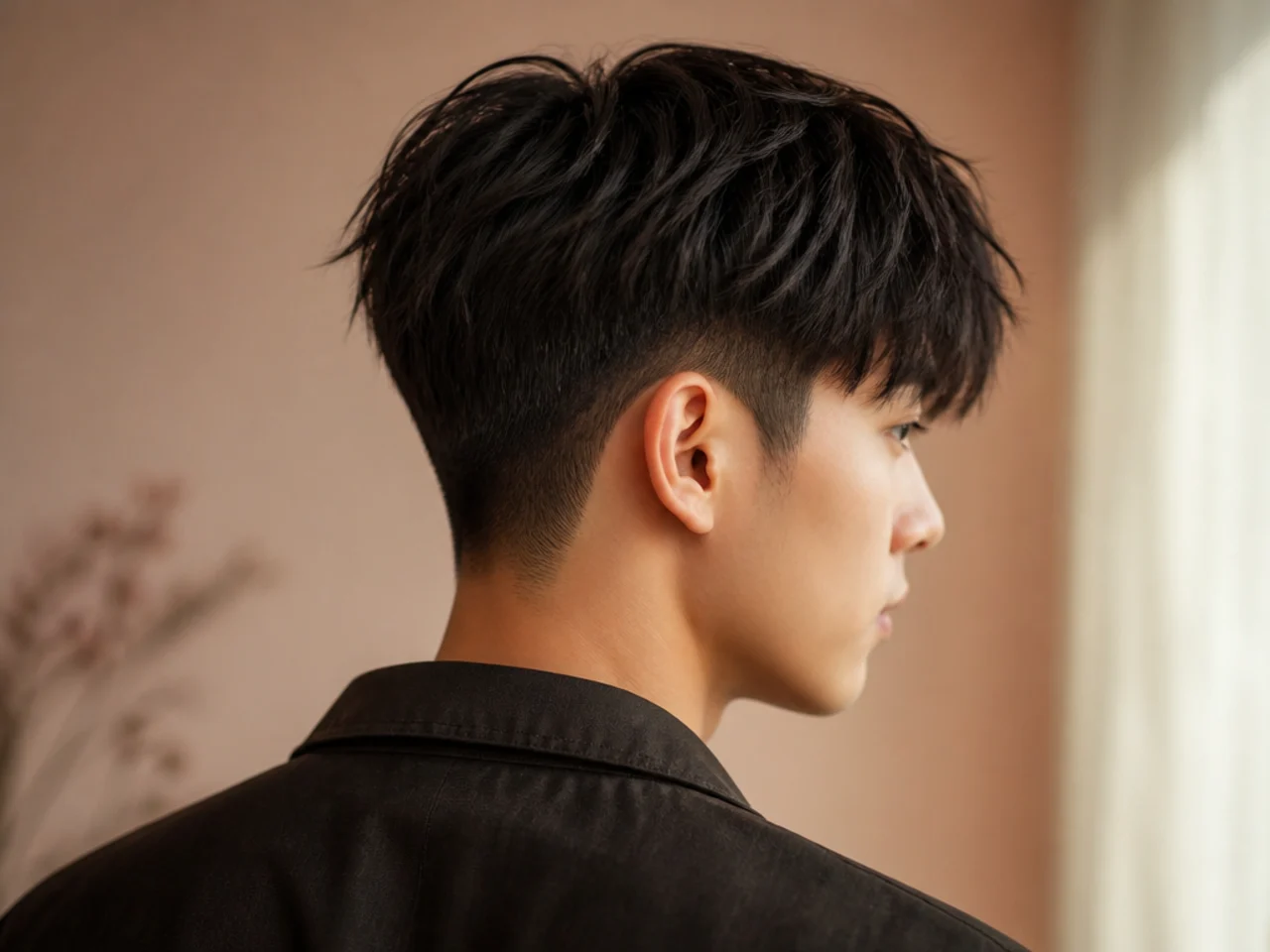
11. Korean Fringe With a Low Taper
Not traditional, but it works when a two-block feels too severe. The taper leaves a #1 at the neckline and softens the step into a gradient.
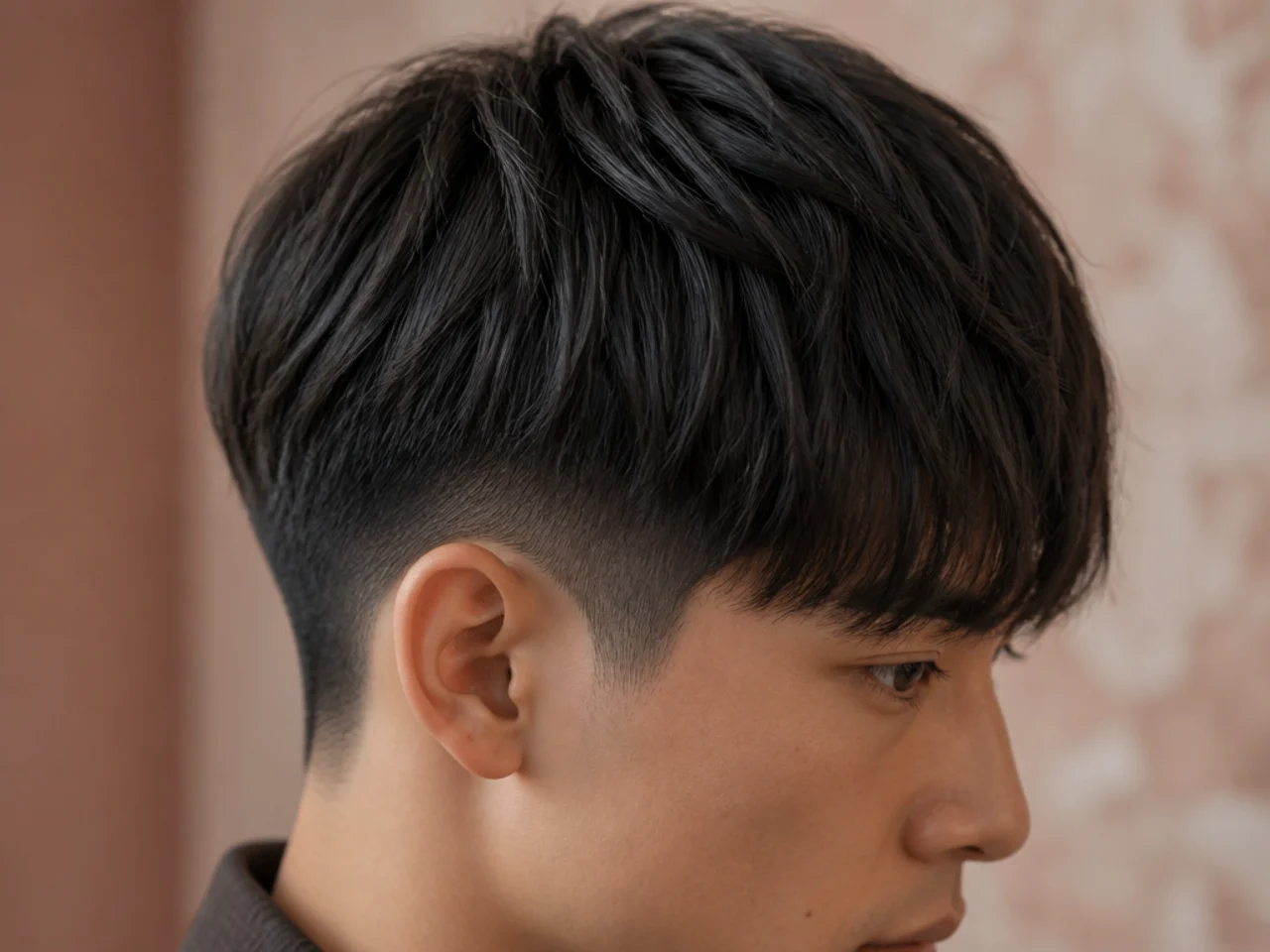
12. Wavy Korean Fringe
Natural wave lifts at the root on its own, which does half the work and fights the other half. The bend has to be redirected inward rather than created from nothing.
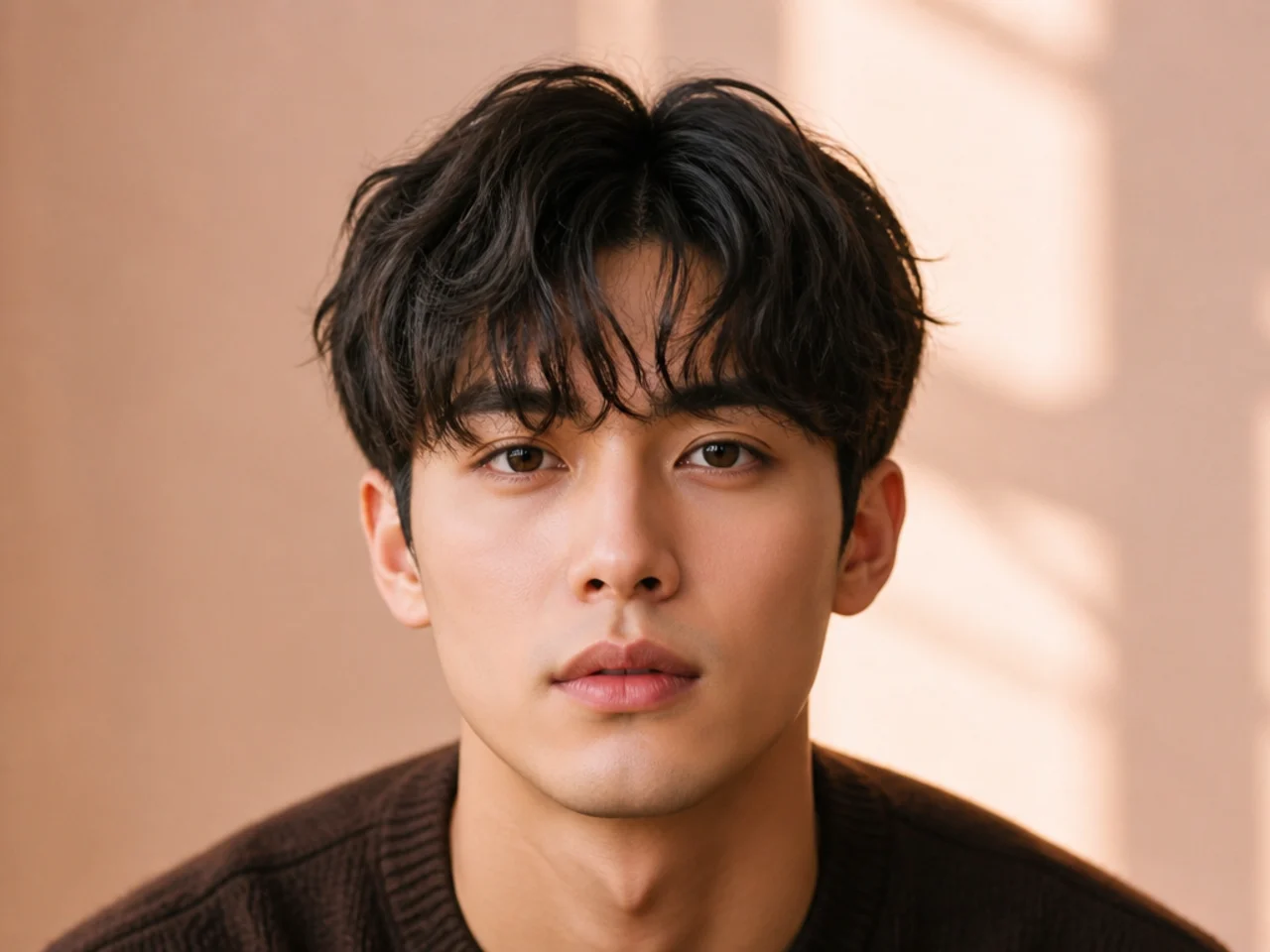
13. Korean Fringe on Thick Hair
Density resists a set direction, so a thick front section needs weight removed from underneath before it will hold a curve. Otherwise it reverts within an hour.
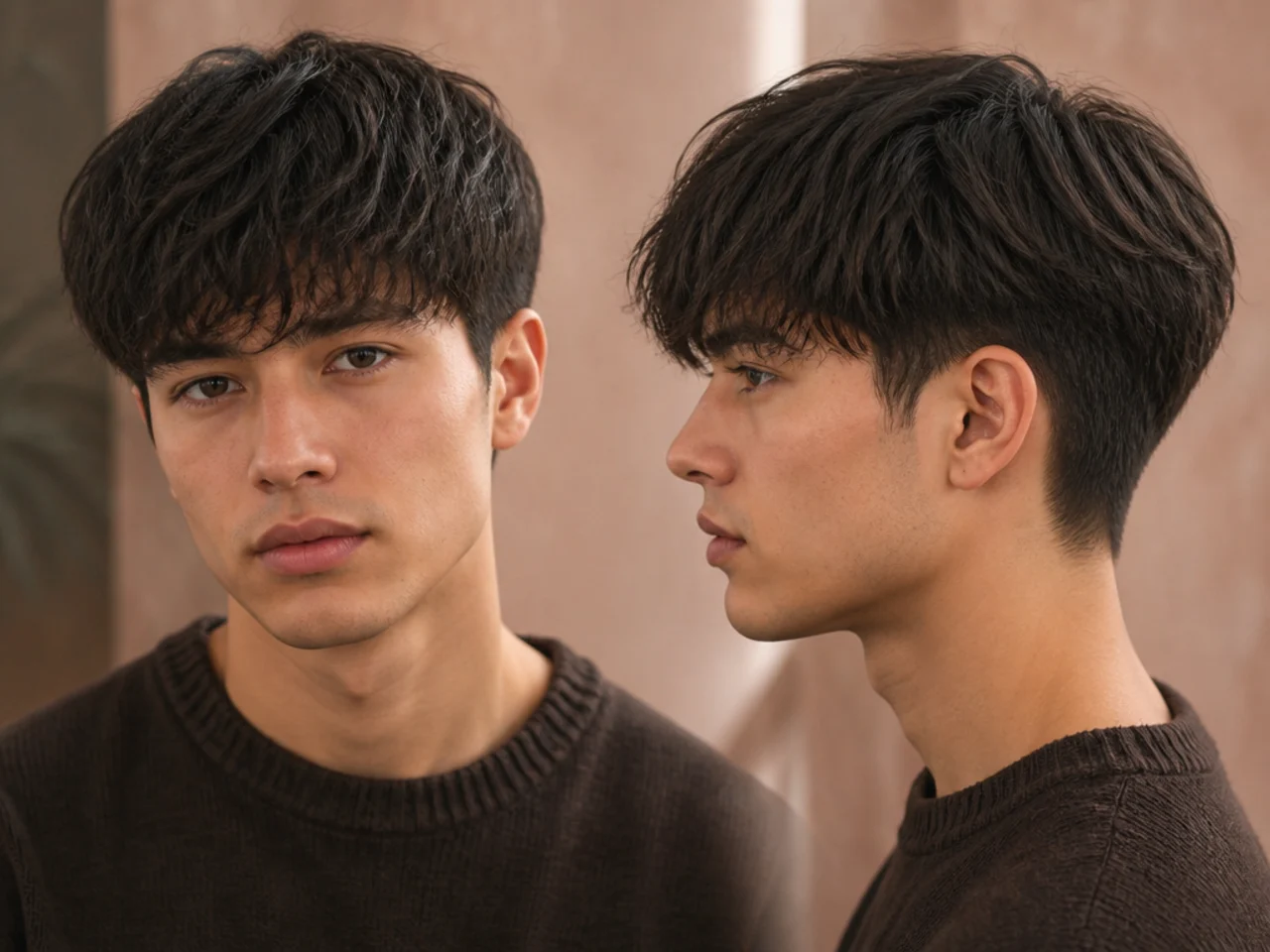
14. Side-Swept Korean Fringe
The whole front section angled across the forehead while keeping the inward end curve. It reads more formal than the centre-split version and covers more forehead.
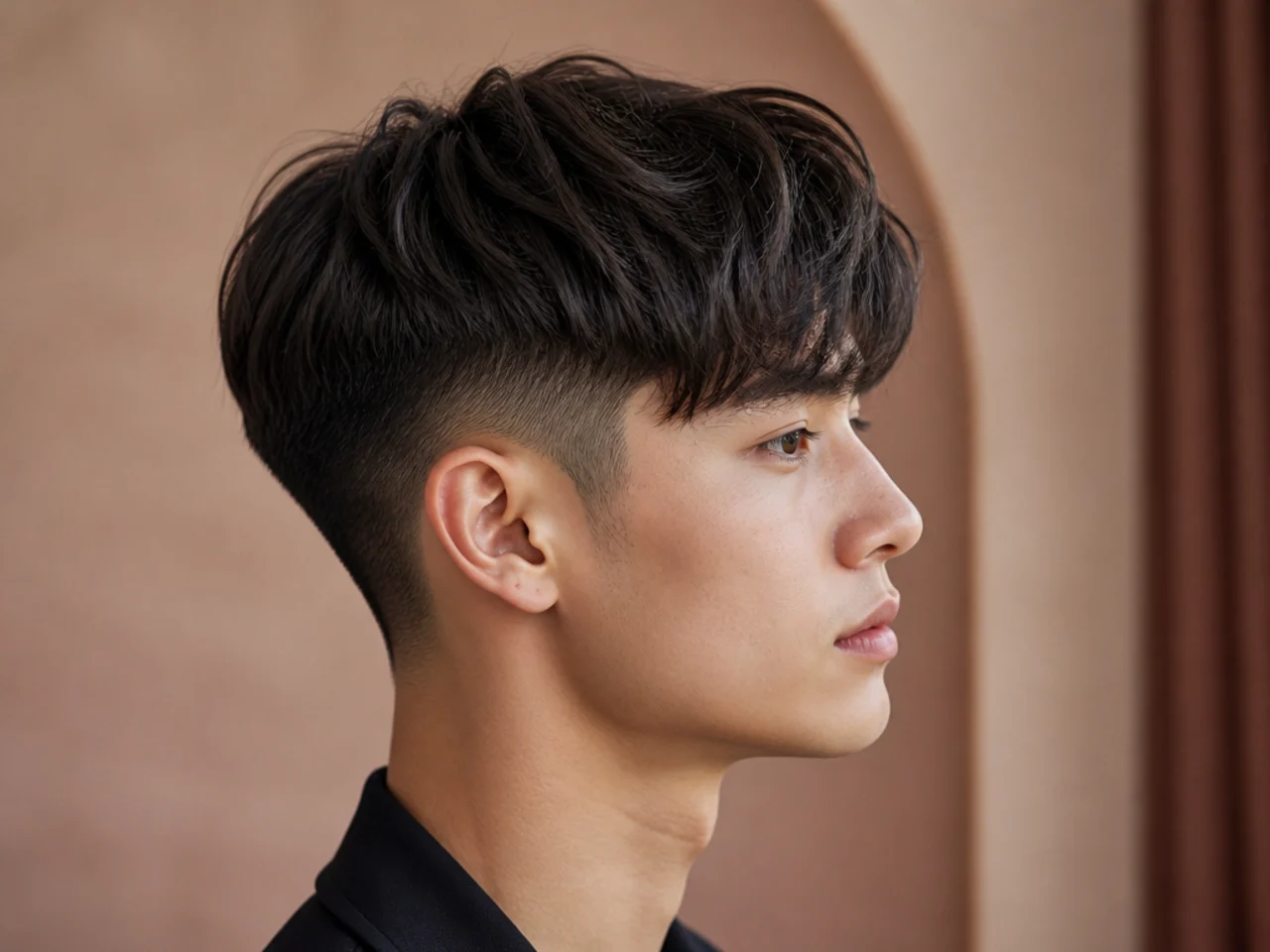
15. The Grown-Out Two-Block
Week six, when the step between top and sides has softened into something closer to a layer. Many men prefer it here, which is worth knowing before you book the next appointment.
Styling and Upkeep
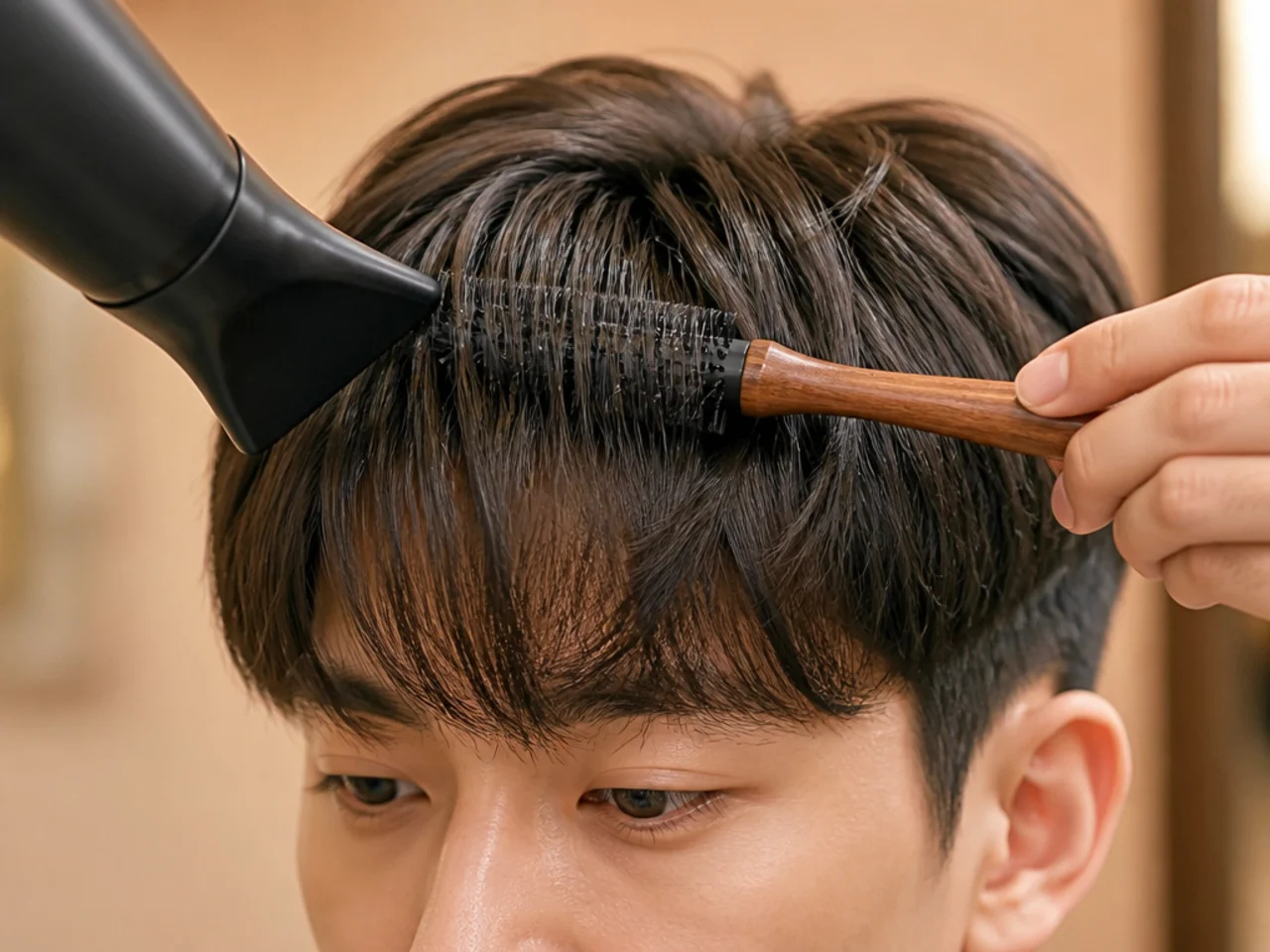
Dry the roots before the ends. The direction is set at the scalp, and drying the ends first locks the wrong shape in place.
Use a round brush, not a flat one. A flat brush pulls the fringe straight down, which is the opposite of what the shape needs.
Finish with cool air. Hair holds whatever shape it is in when it cools, so the cold shot is what makes the curve last past lunchtime.
Keep product light and low. Anything heavy at the root kills lift, and lift is the entire effect.
Re-perm every three to four months. New growth at the root arrives straight and undoes the direction from the scalp outward.
Mistakes to Avoid
Copying the length and ignoring the direction. The length is the easy half and the half that does not create the look.
Asking for a skin fade underneath. Korean structure is a step, not a gradient, and a skin fade blurs in one to two weeks anyway.
Applying product before drying. Product at the root before heat weighs the lift down before it exists.
Cutting it above the brow on the first attempt. There is no room for an inward curve in a short front section.
Brushing it flat after styling. One pass with a comb removes the arc entirely.
FAQ
What makes it Korean? Root direction — lift at the scalp and an inward curve at the ends.
Do I need a perm? No, but a C-curl or down perm replaces ten minutes of daily blow-drying.
Fade or two-block? Two-block, in almost every case, because the top mass has to stay intact.
Final Thoughts
Book the perm conversation at the same time as the cut, or accept that you are signing up for a round brush every morning. The men who are happiest with this fringe are the ones who decided which of those two they were doing before they sat in the chair.
For the side structure the whole look is built on see the two block haircut, and for setting the front curve at home see styling comma hair. More in Men's Haircuts.