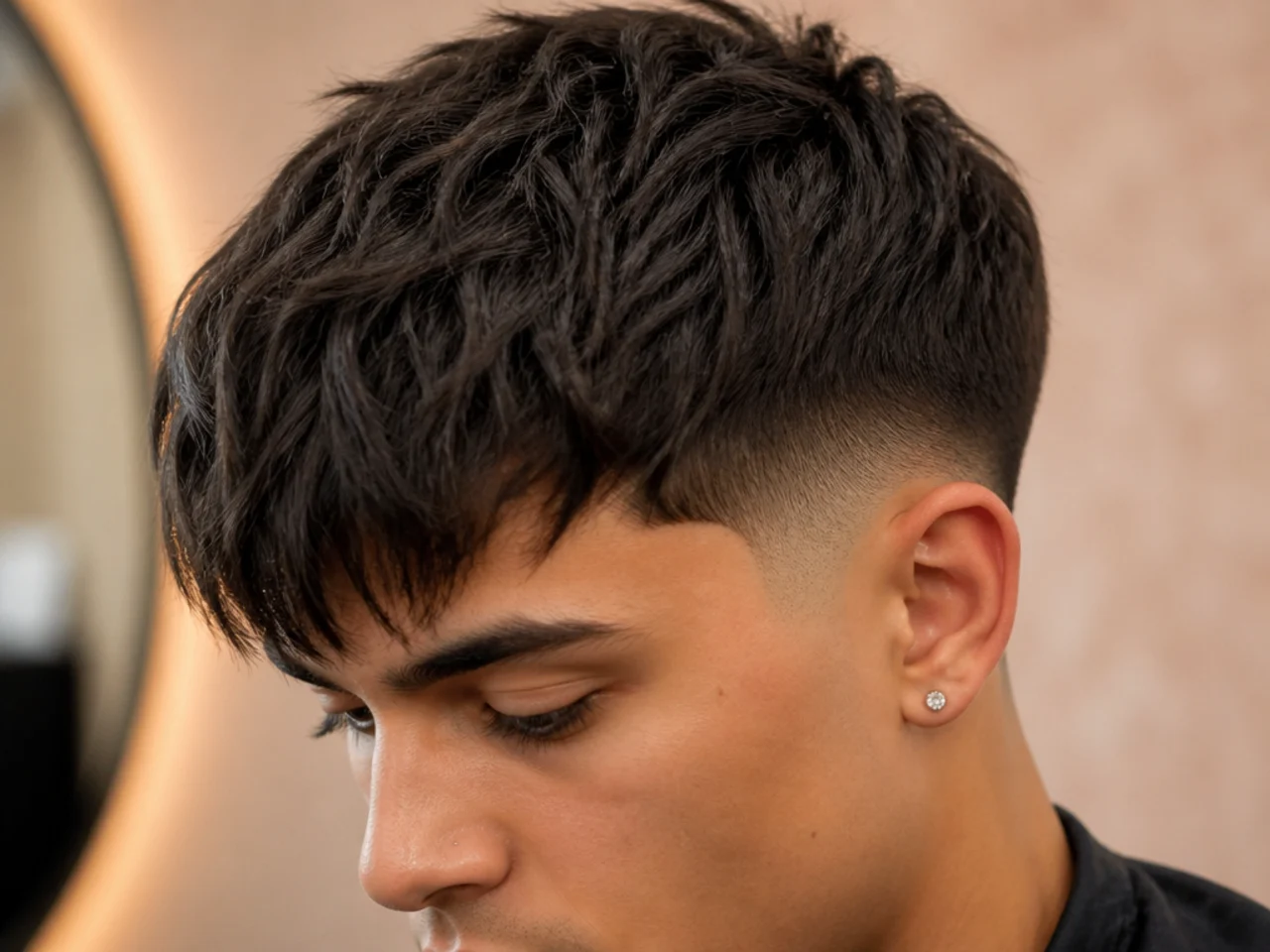
20 Fringe Haircut Ideas for Men With a Fade
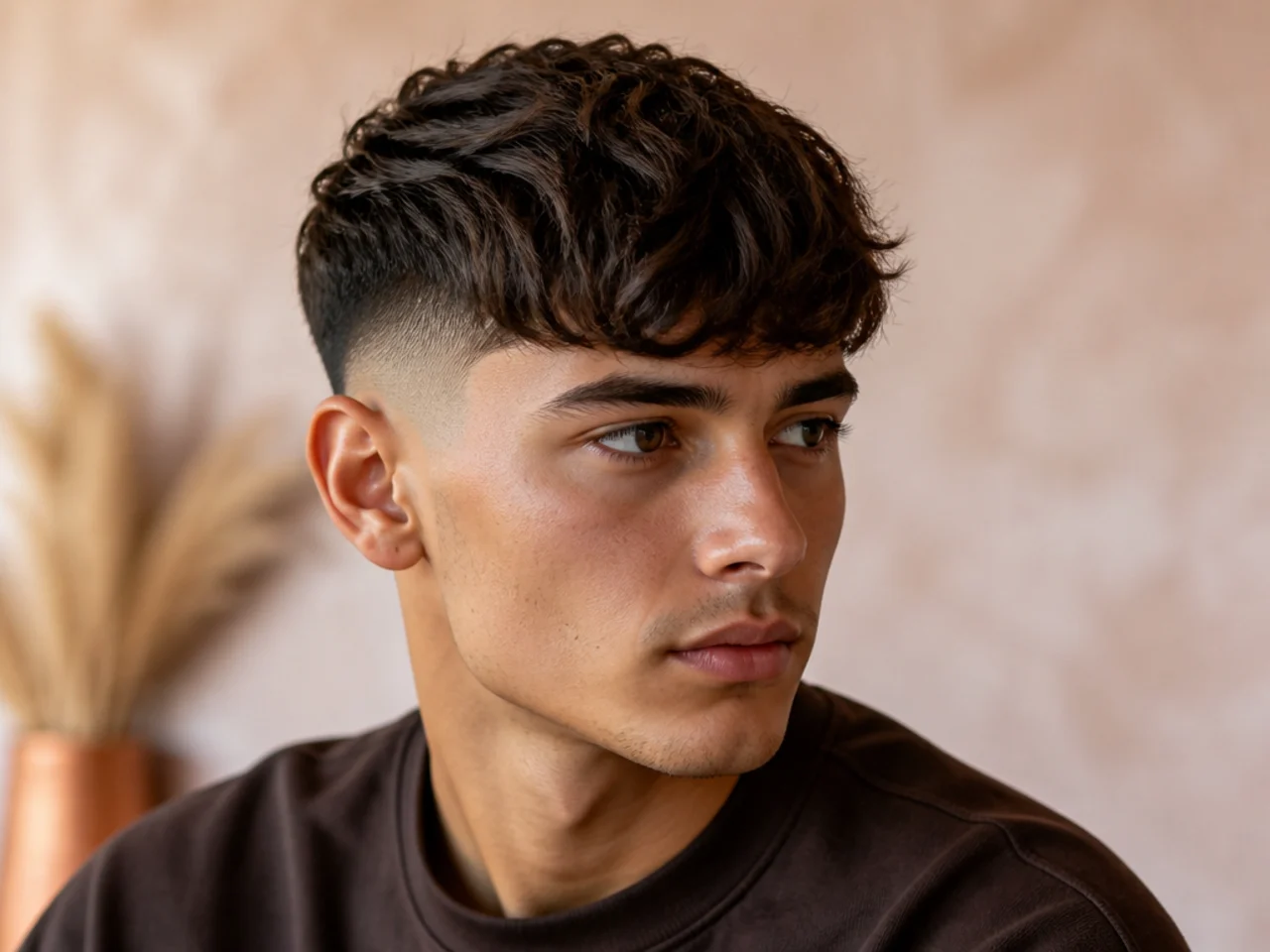
A fade is a vertical gradient and a fringe is a horizontal edge, and the height of one decides how much weight is left to feed the other. Set the fade line first, because it is the decision the fringe has to live with.
In this article · 27
- Where the Fade Height Changes the Fringe
- How to Choose Yours
- The 20 Fringe and Fade Pairings
- 1. Textured Fringe With a Low Taper
- 2. Textured Fringe With a Low Skin Fade
- 3. Cropped Fringe With a Mid Fade
- 4. Heavy Fringe With a High Fade
- 5. Fringe With a Burst Fade
- 6. Fringe With a Drop Fade
- 7. Fringe With a Temple Fade Only
- 8. Curly Fringe With a Low Fade
- 9. Straight Fringe With a Skin Fade
- 10. Wavy Fringe With a Mid Taper
- 11. Fringe With a Hard Part Above the Fade
- 12. Disconnected Fringe Over an Undercut
- 13. Middle-Part Fringe With a Low Fade
- 14. Comma Fringe With a Low Taper
- 15. Fringe With a #2 Guard All Round
- 16. Fringe With a Fade and a Beard
- 17. Fringe With a Fade on a Receding Hairline
- 18. Fringe With a Blurry Taper
- 19. Fringe With a Shadow Fade
- 20. The Week-Three Fringe and Fade
- Styling and Upkeep
- Mistakes to Avoid
- FAQ
- Final Thoughts
A fade runs up and down. A fringe runs side to side. They meet at the temple, and that corner is where most fringe-and-fade combinations either work or fall apart.
Fade height decides how much weight is left for the fringe. Every millimetre the fade climbs takes mass away from the side of the head that a heavy front section is balanced against.
Set the fade line before you discuss the fringe. The fringe can be adjusted afterwards, but the fade height is a structural decision the front has to live with.
Where the Fade Height Changes the Fringe
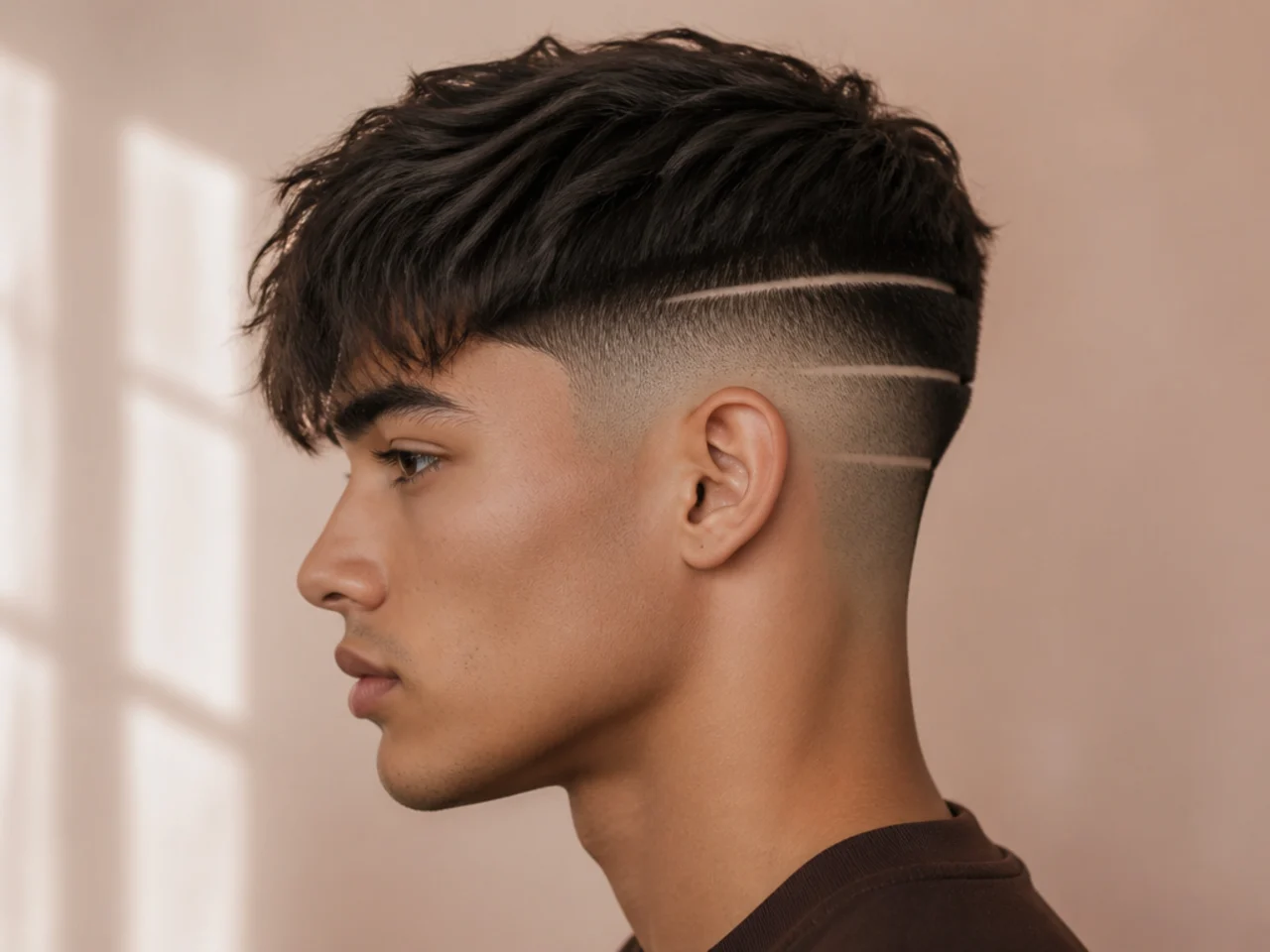
Low sits at or below the temple. Almost all side weight is kept, so the fringe reads as part of a full shape.
Mid sits between temple and parietal ridge. Side weight is halved, and the fringe starts to look like the heaviest thing on the head.
High sits at or above the parietal ridge. The widest point of the skull is cut into, so only the fringe and the top have any mass at all. Read low against mid against high before you settle on a line.
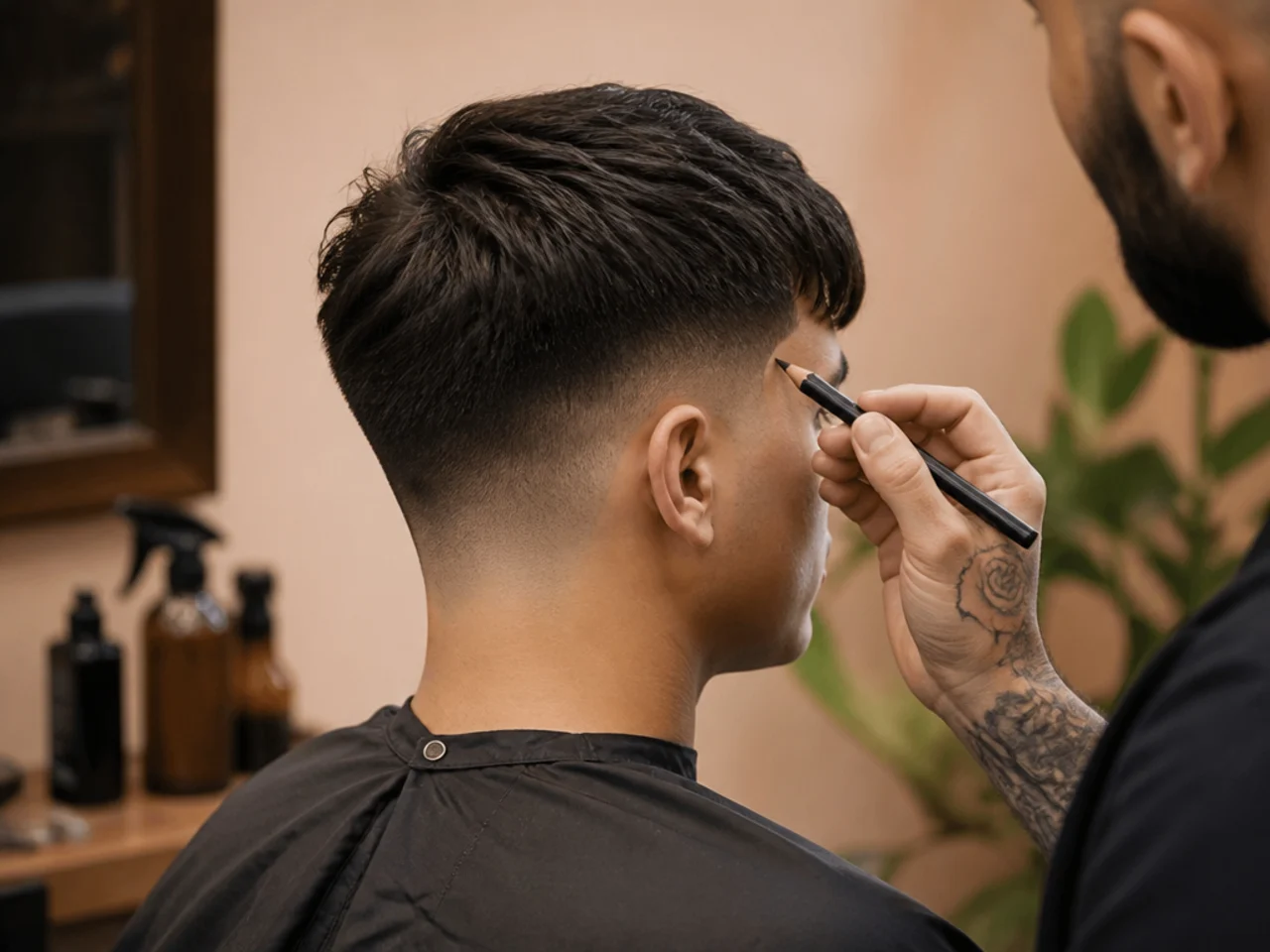
A taper is not a fade. A taper bottoms out at a #1 rather than skin, so the step down from fringe to neckline keeps its proportion for three to four weeks while the fringe itself lengthens. A fade goes to skin and blurs in one to two.
How to Choose Yours
Match upkeep to how often you actually go. If you book monthly, a skin fade will look wrong for half of that month.
Heavier fringe, lower fade. A dense front section needs side weight beneath it or the head reads top-heavy.
Wispier fringe, higher fade. Contrast is what gives a light front section presence.
Decide the temple corner in advance. Connected into the fade, or left square as a separate edge.
The 20 Fringe and Fade Pairings
1. Textured Fringe With a Low Taper
The safest pairing on this page. The taper leaves length at the neckline, so the fringe and sides both hold three to four weeks and you only book once a month.
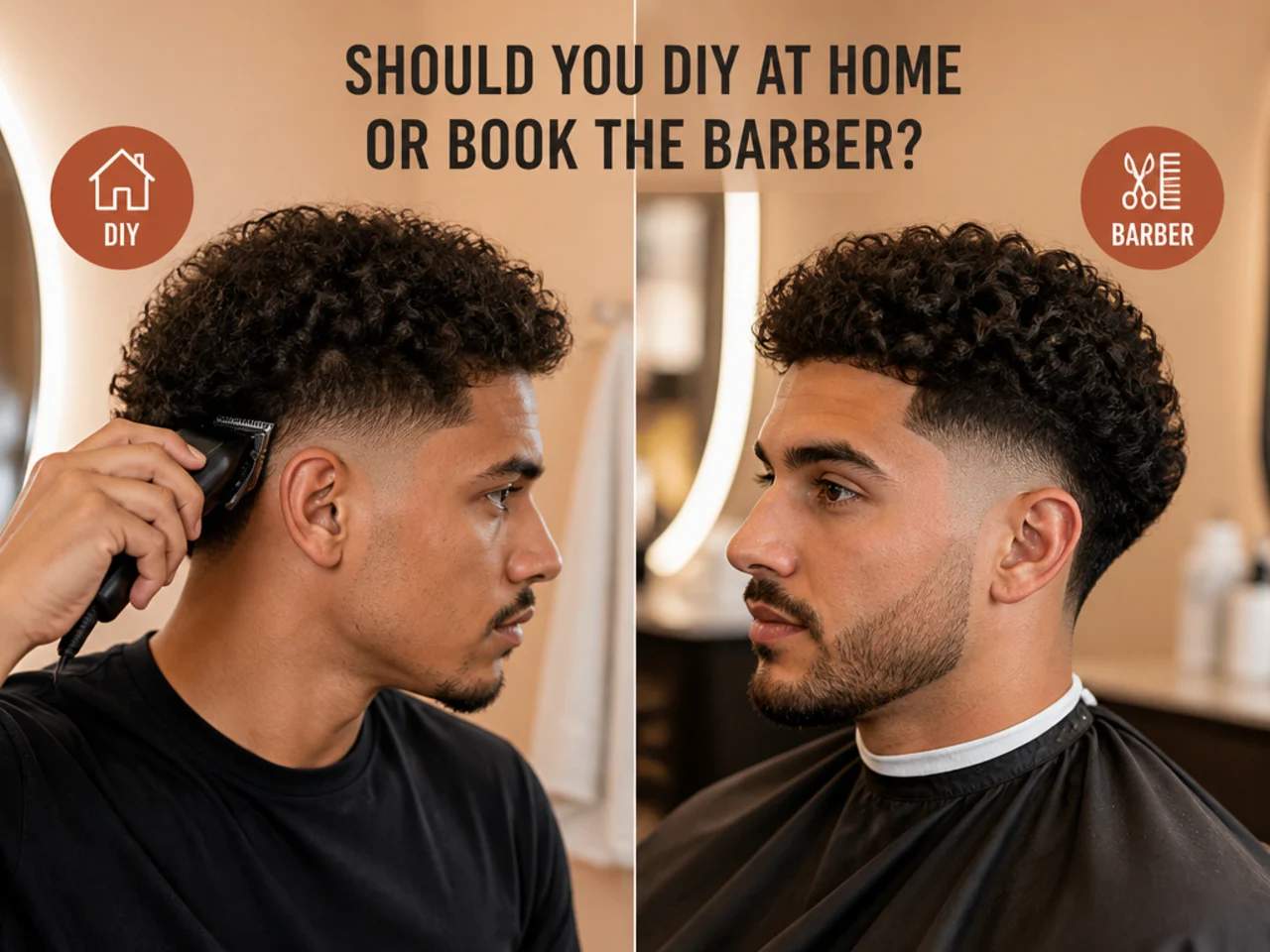
2. Textured Fringe With a Low Skin Fade
Same silhouette, more contrast, and a very different schedule. The skin at the bottom blurs within a fortnight, which means visiting twice as often for a cut that looks the same from three metres away.
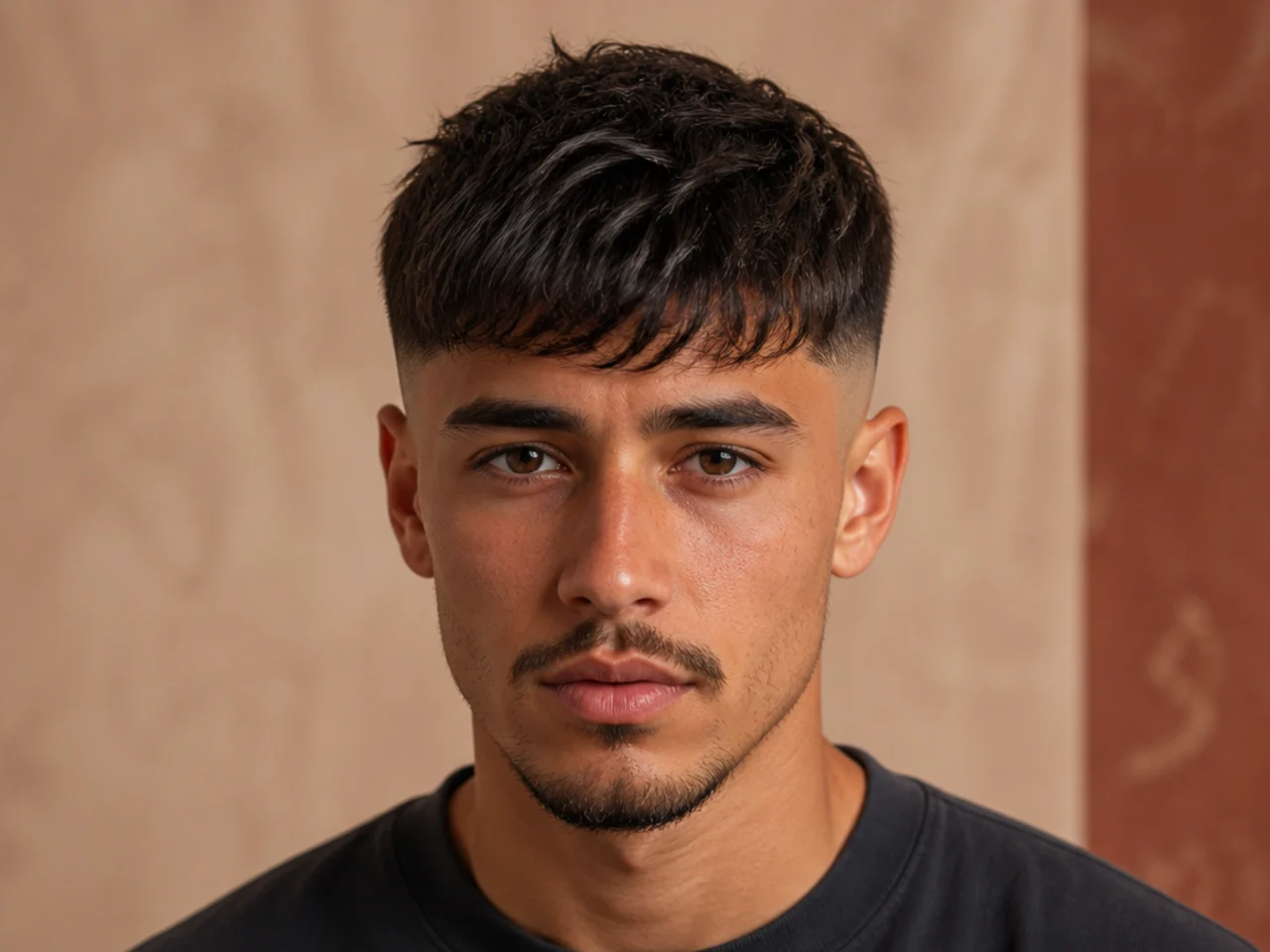
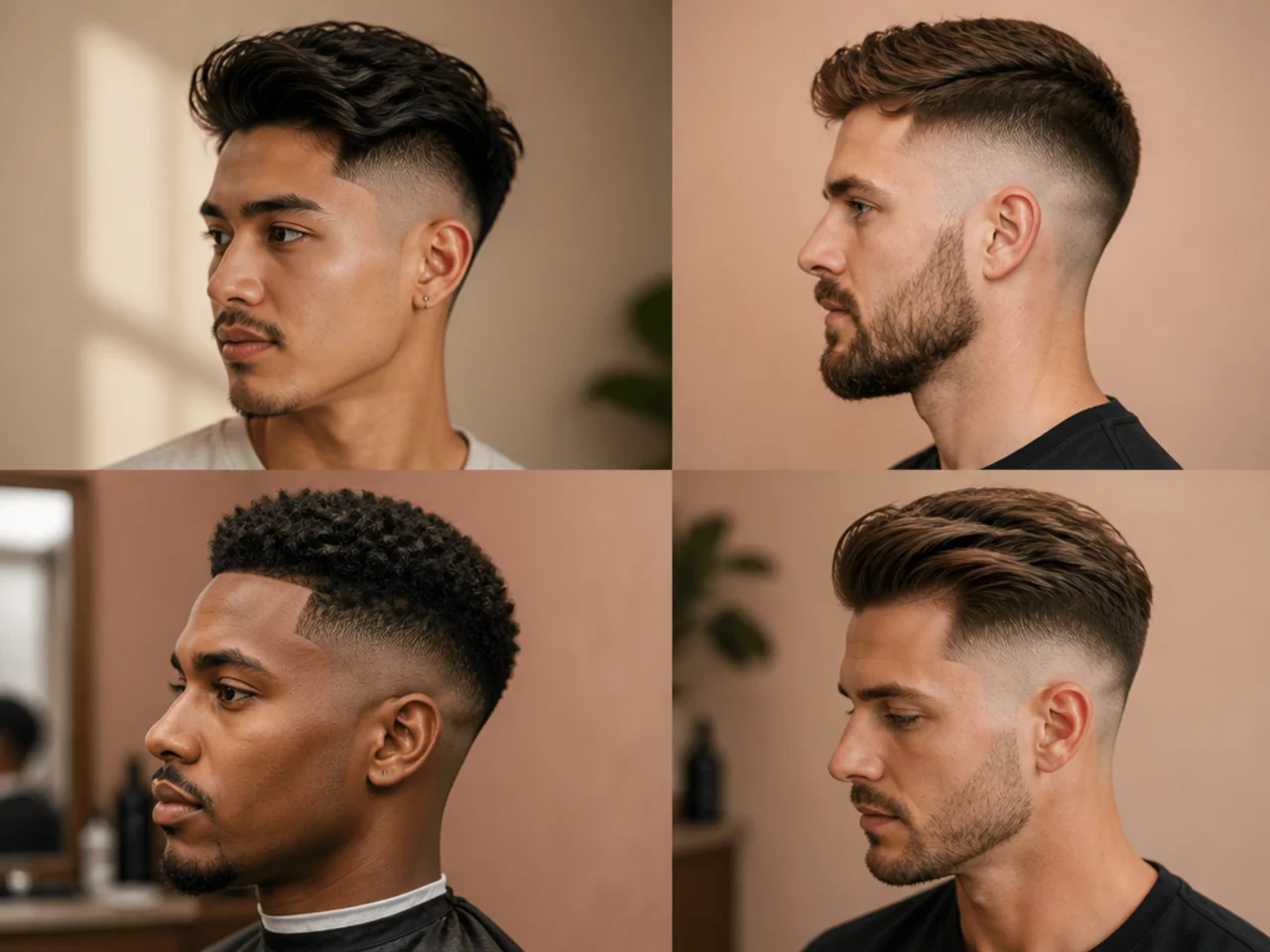
3. Cropped Fringe With a Mid Fade
The classic modern crop. The mid fade sits between the temple and the parietal ridge, which is exactly high enough to make a short fringe read as the deliberate focus of the cut.
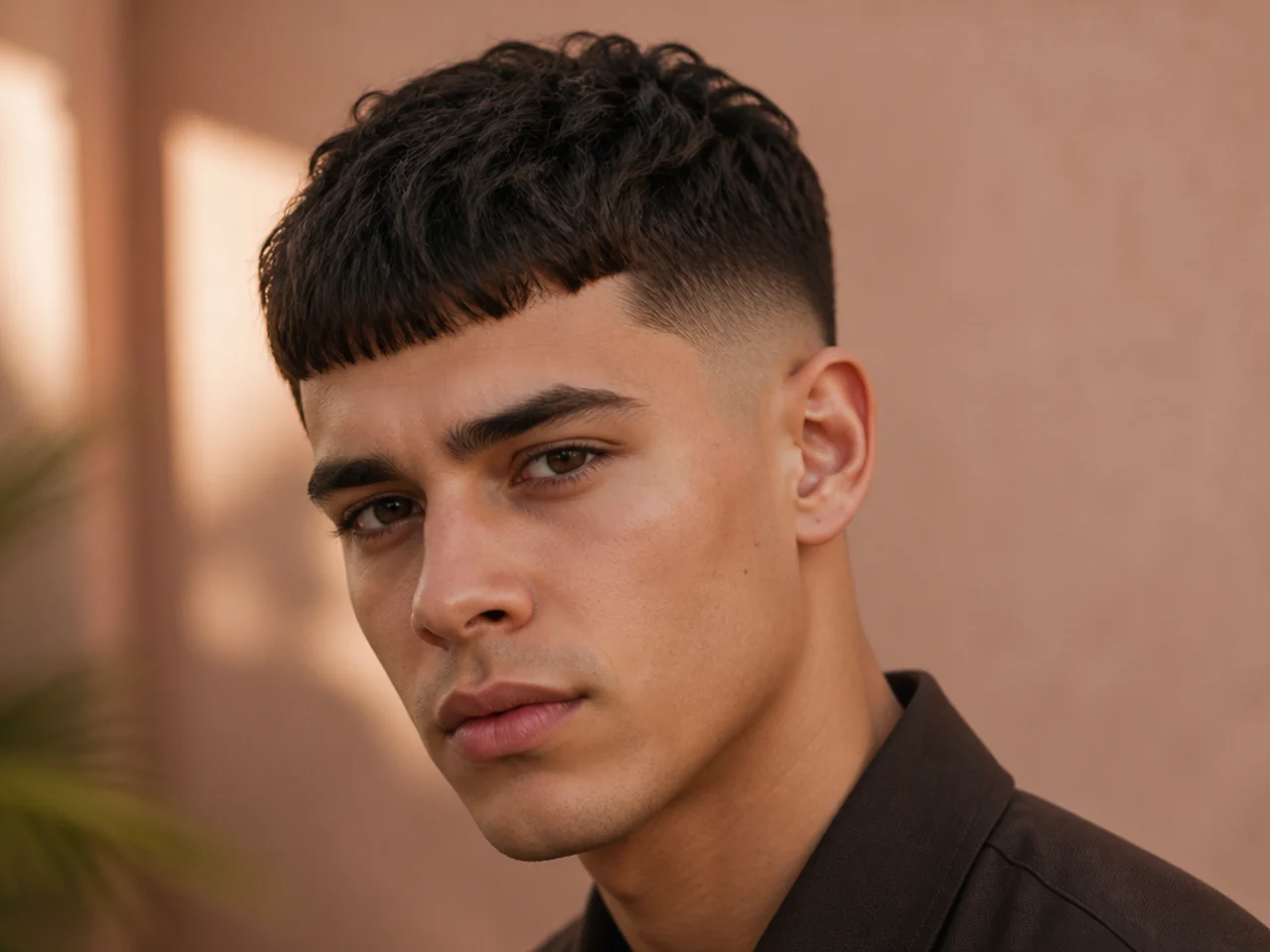
4. Heavy Fringe With a High Fade
Maximum contrast and the hardest to balance. Cutting into the parietal ridge leaves nothing beside the fringe, so the front section has to be genuinely dense to carry the whole shape.
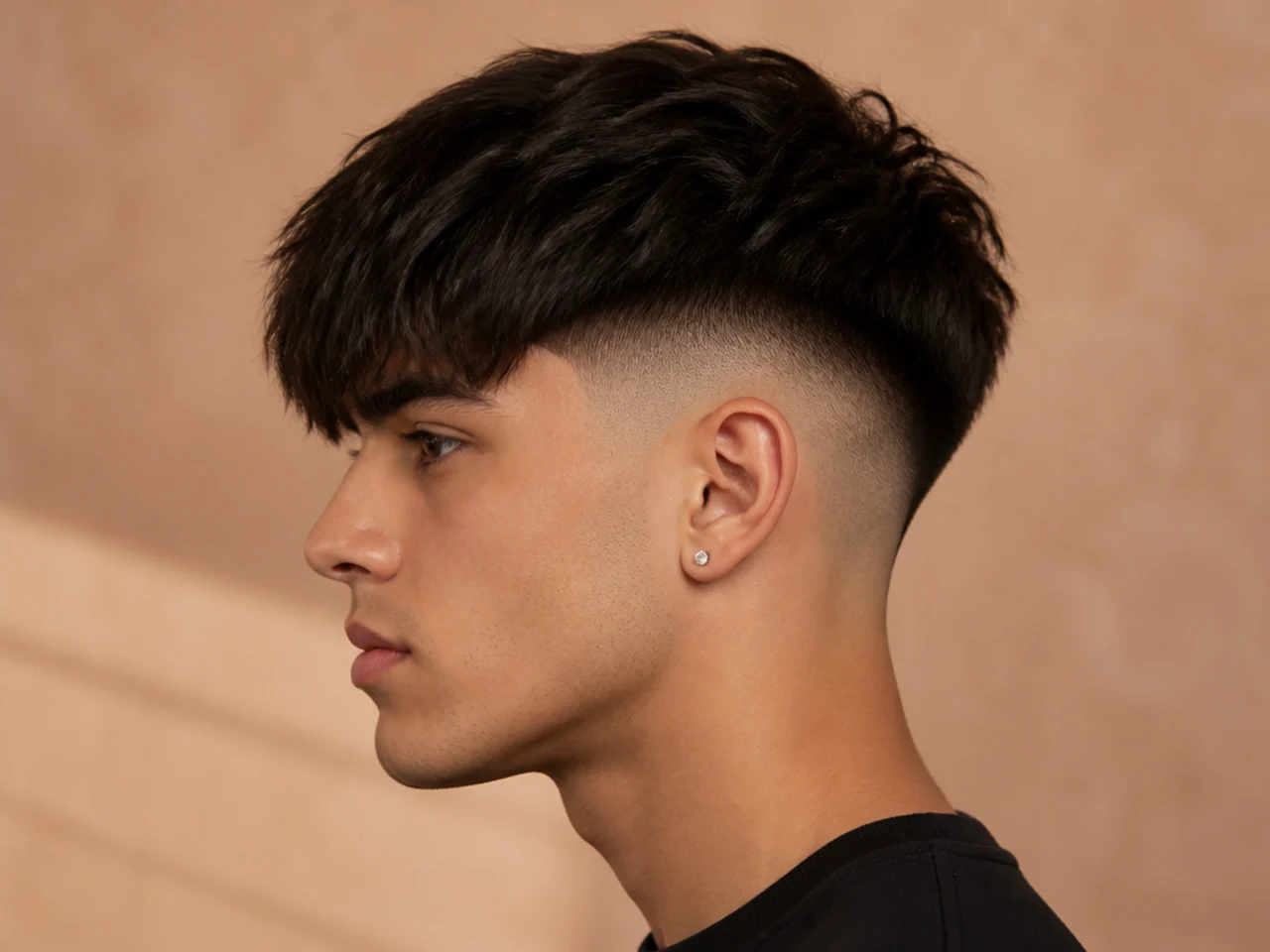
5. Fringe With a Burst Fade
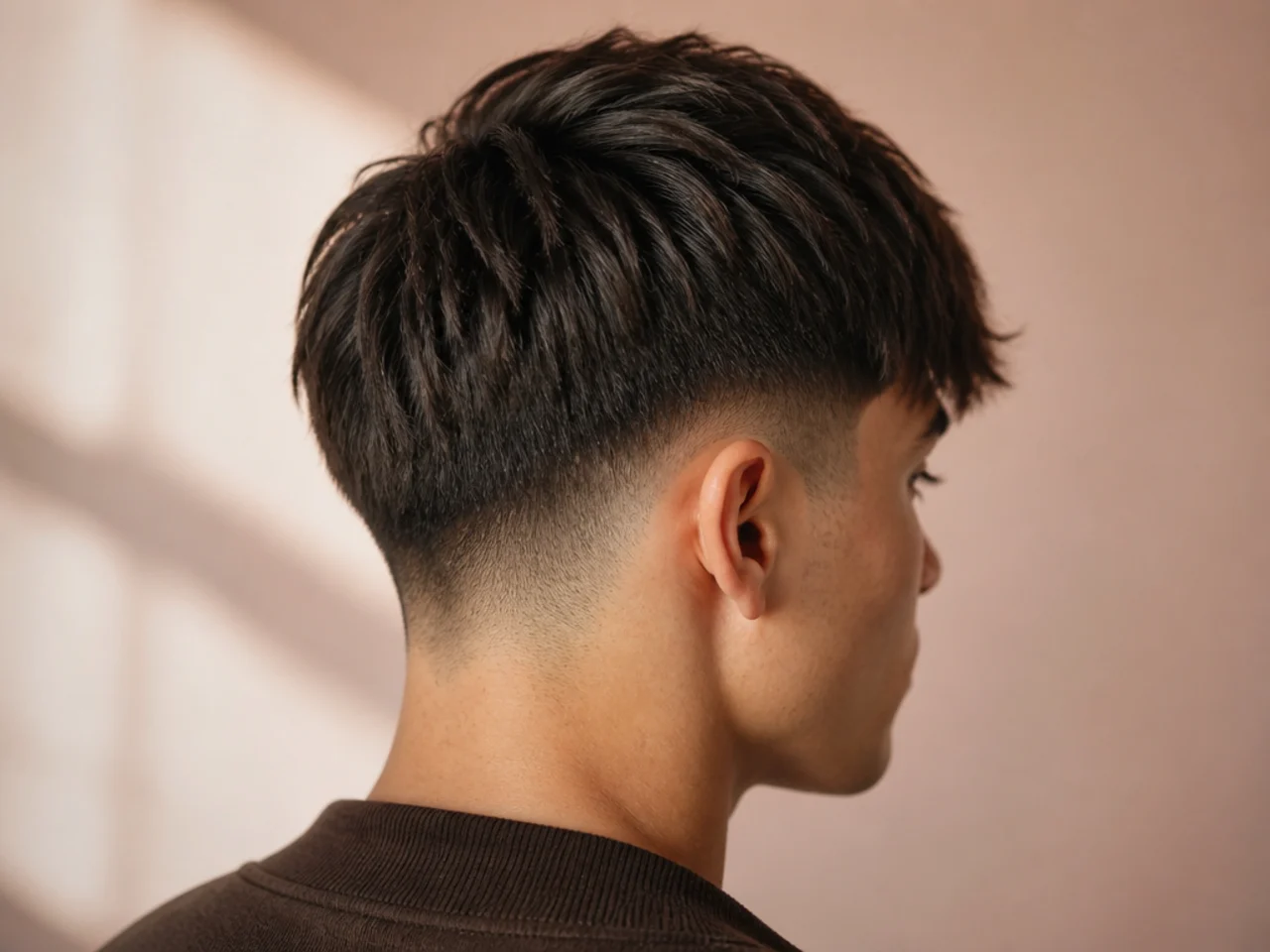
The fade arcs around the ear and leaves the back untouched, so weight stays behind the fringe rather than beside it. It pushes the whole silhouette forward, and that is the reason the burst fade so often sits under a heavy front section.
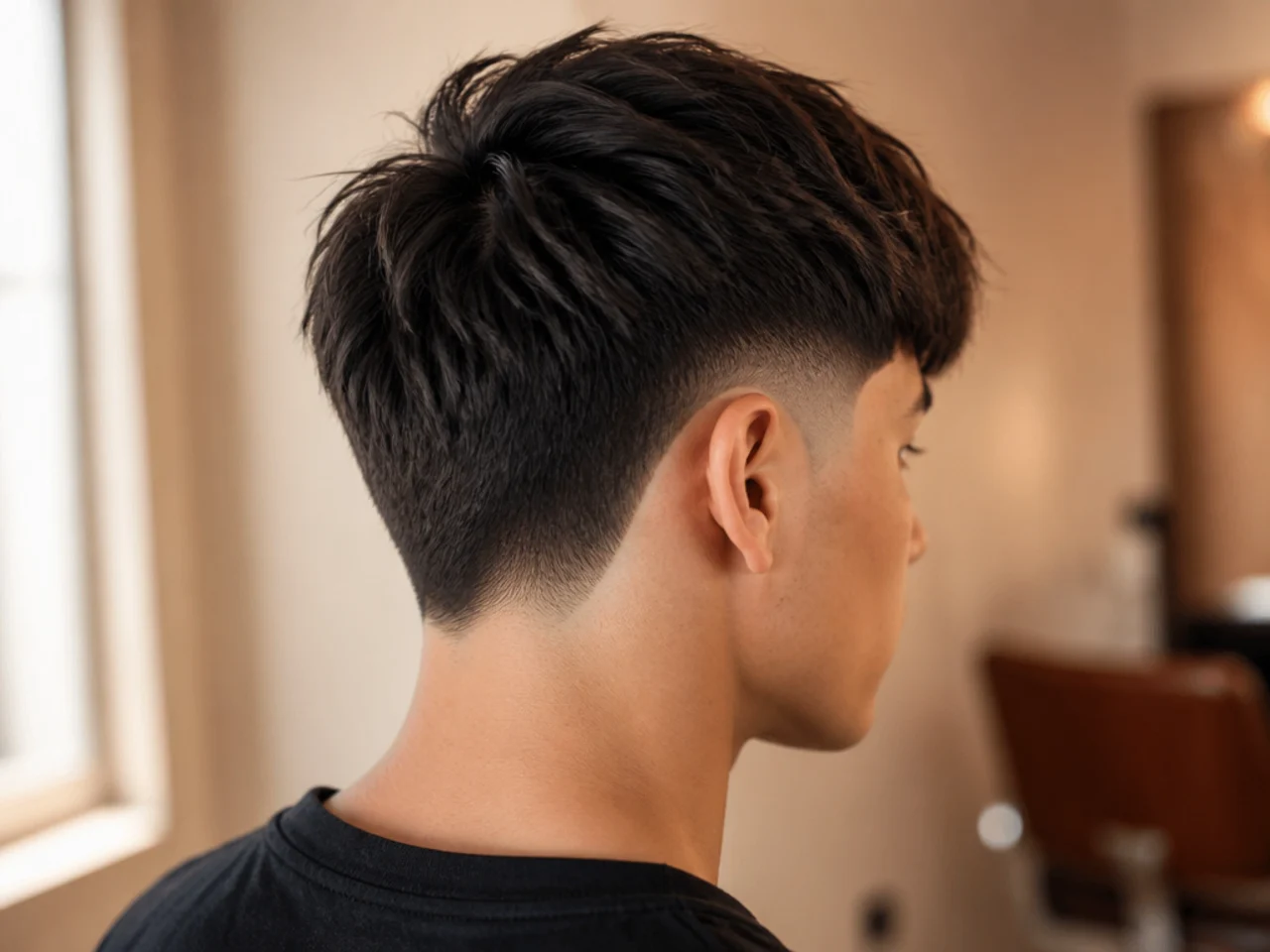
6. Fringe With a Drop Fade
The fade line curves down behind the ear, following the skull rather than cutting straight across it. That curve keeps a little weight at the back to counterbalance a forward-heavy front. Ask for a low drop fade if you want the curve without losing the side mass above it.
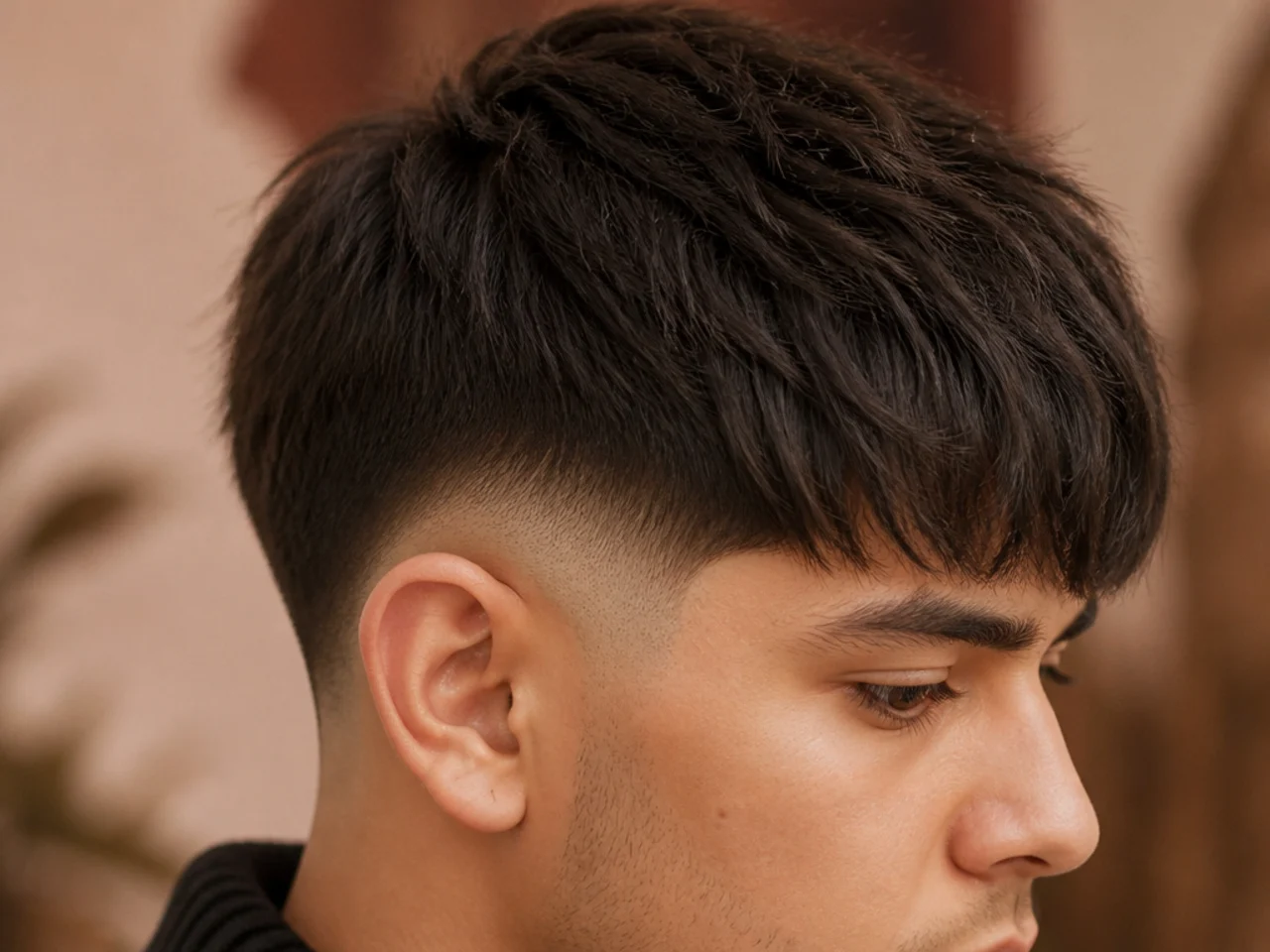
7. Fringe With a Temple Fade Only
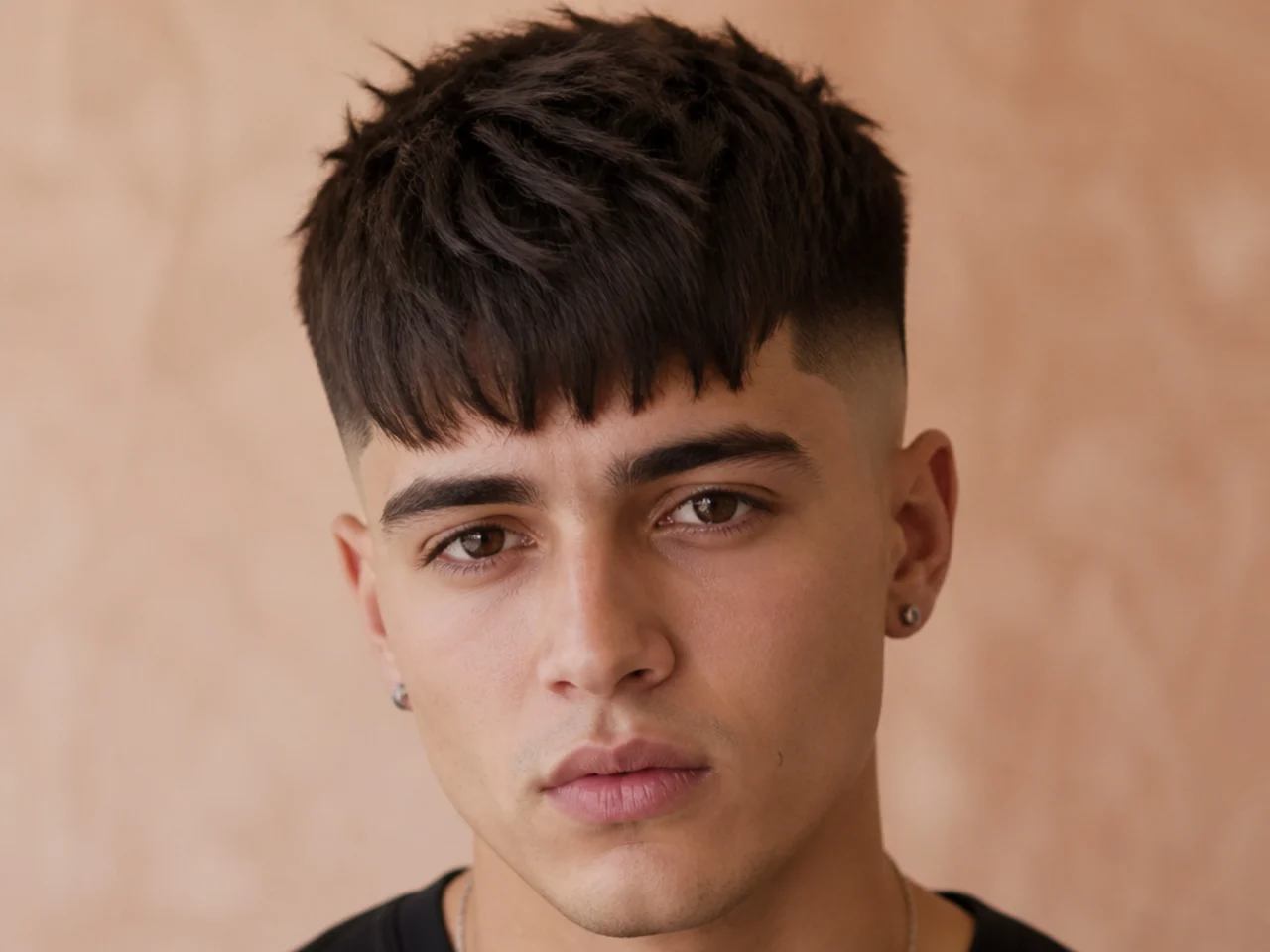
The fade confined to the corners at the temples, leaving the rest of the sides at scissor length. It cleans up the exact spot where the fringe meets the side and nothing else.
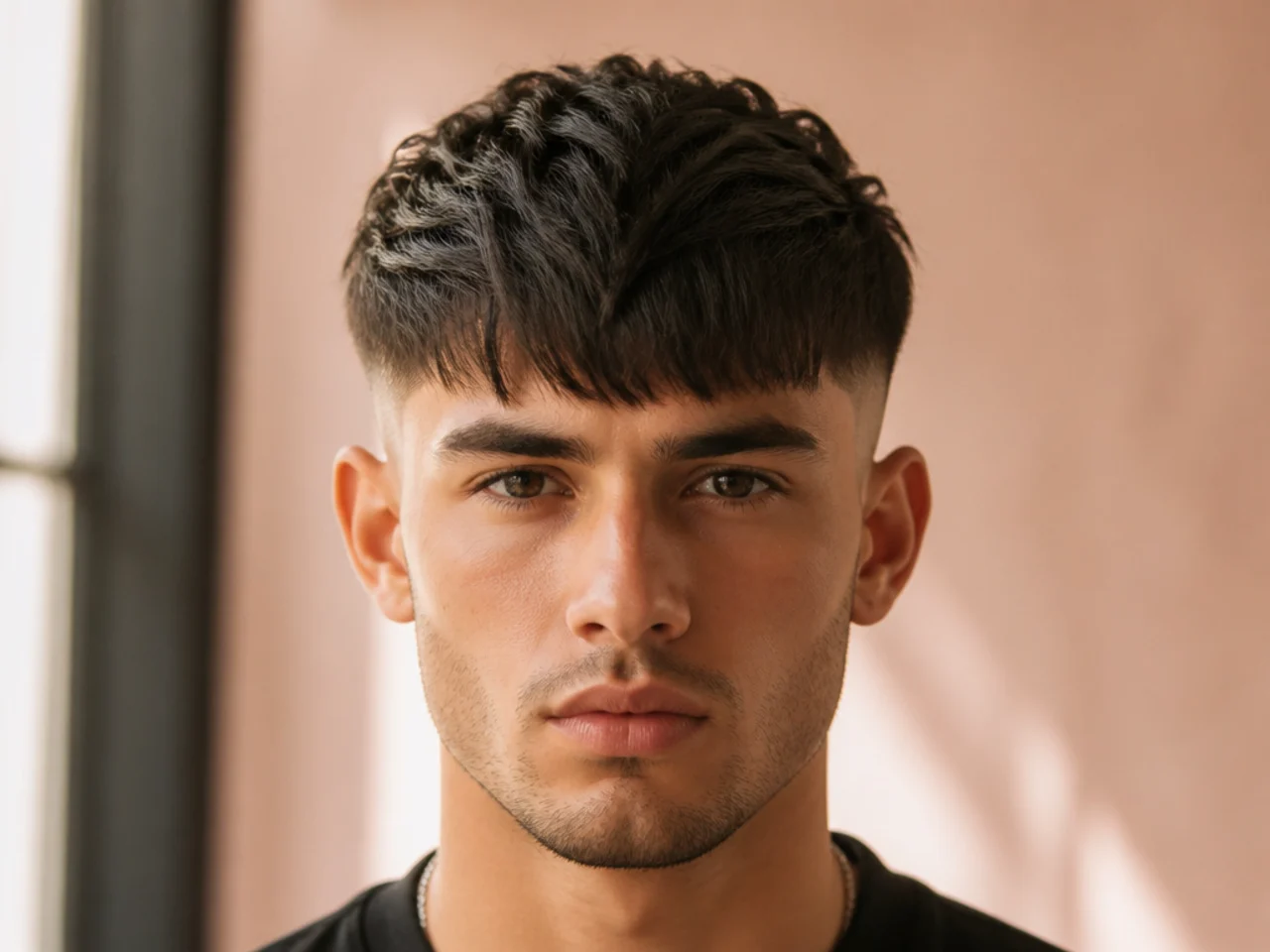
8. Curly Fringe With a Low Fade
Curl loses around a third of its length as it dries, so the fringe rises while the fade stays where it was cut. A low fade keeps enough side weight that the rise does not unbalance the head.
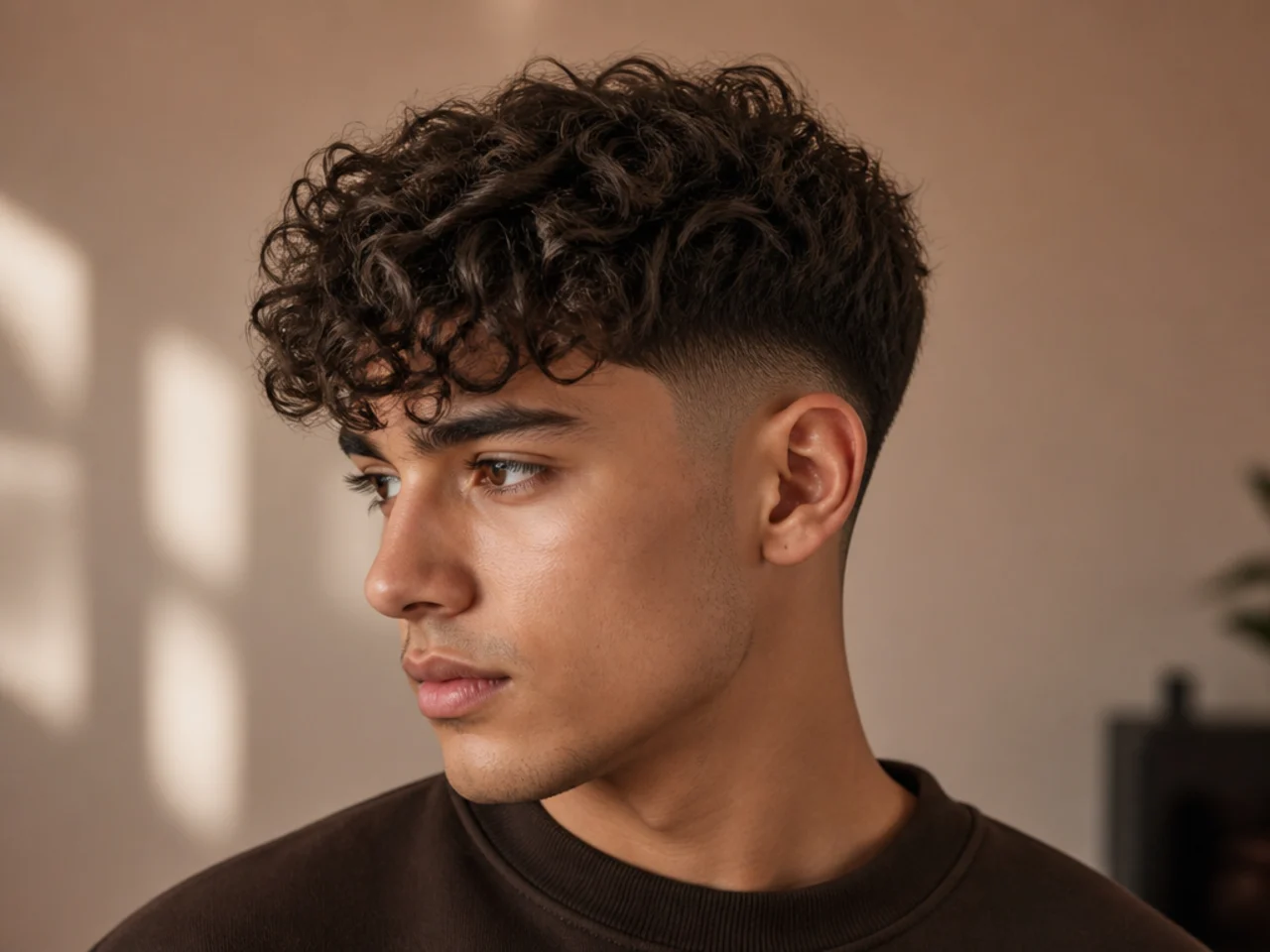
9. Straight Fringe With a Skin Fade
Straight hair falls exactly where the root points, so the fringe edge stays razor-sharp against the bare skin below. It is the most graphic version of the pairing.
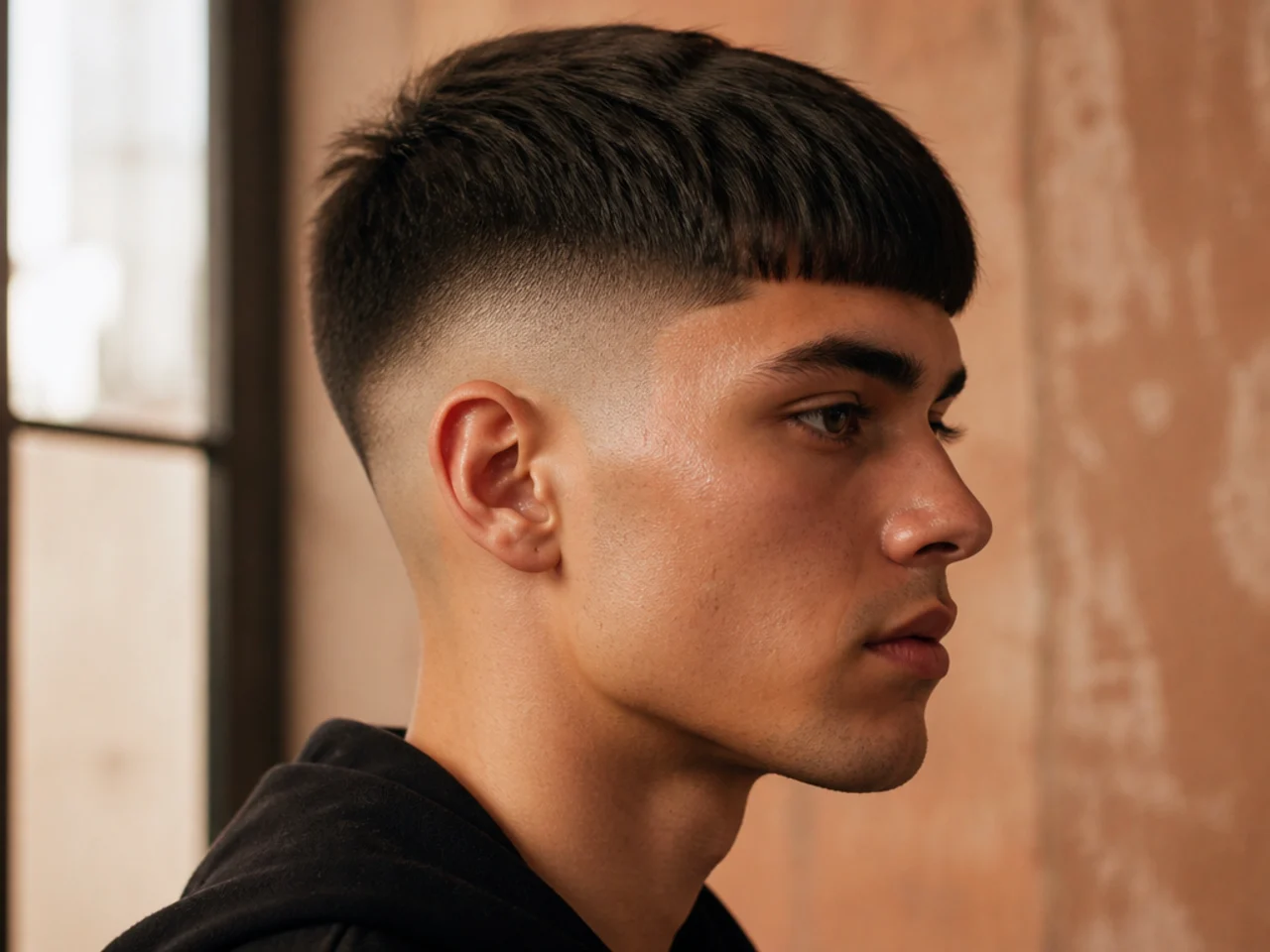
10. Wavy Fringe With a Mid Taper
Wave lifts at the root, so the fringe gains height on its own. A mid taper matches that lift without stripping the sides to skin.
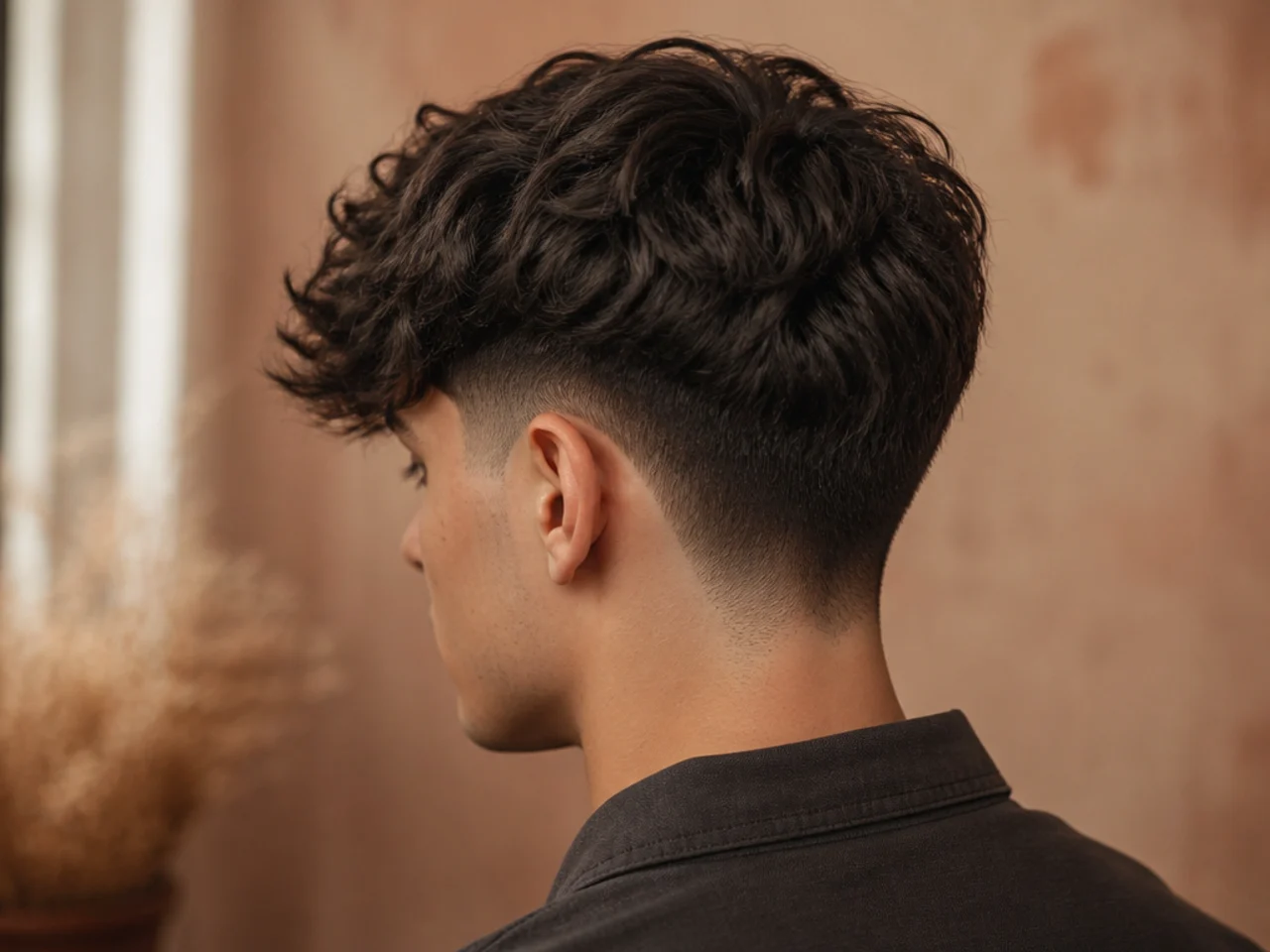
11. Fringe With a Hard Part Above the Fade
A shaved line sitting between the fade and the top gives the eye a boundary. It suits heads where the fade and the fringe are close in weight and need separating.
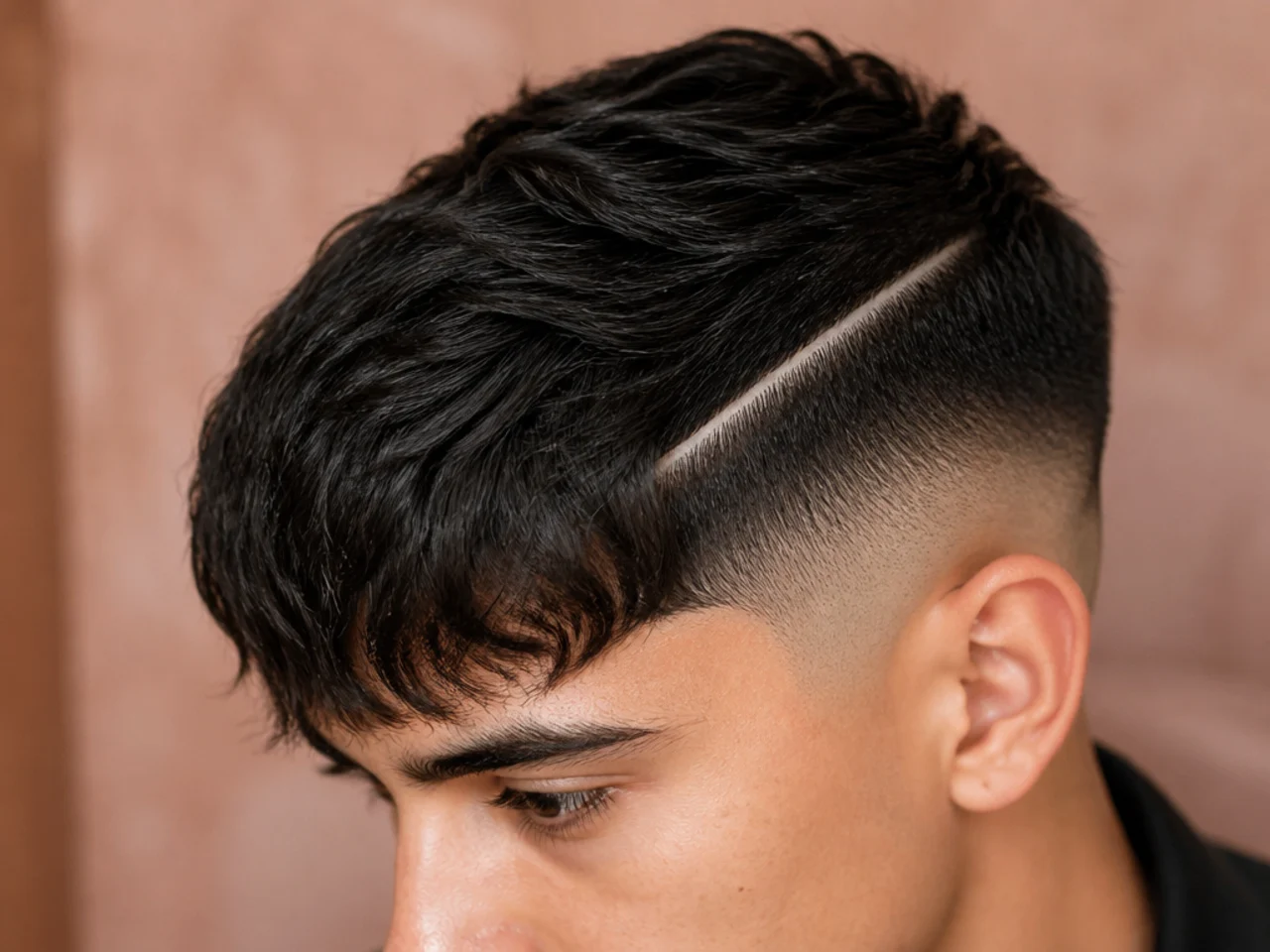
12. Disconnected Fringe Over an Undercut
No blend at all — the top sits as a slab above a single guard length. It is a fade only in position, and it grows out as a visible step rather than a soft edge.
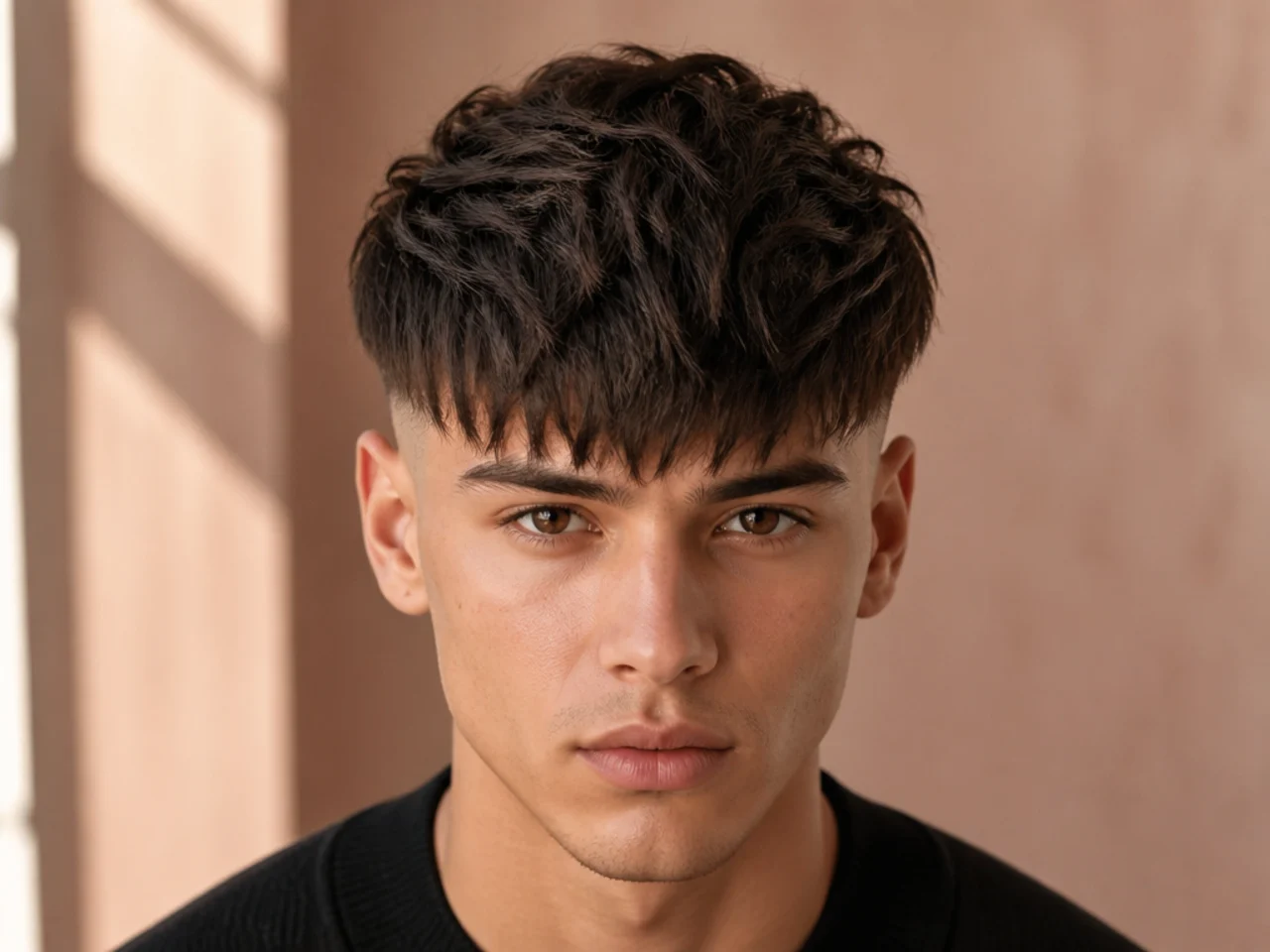
13. Middle-Part Fringe With a Low Fade
The fringe split down the centre and the sides taken short. The split creates two soft diagonals, which needs the low fade to keep enough side weight for them to land on.
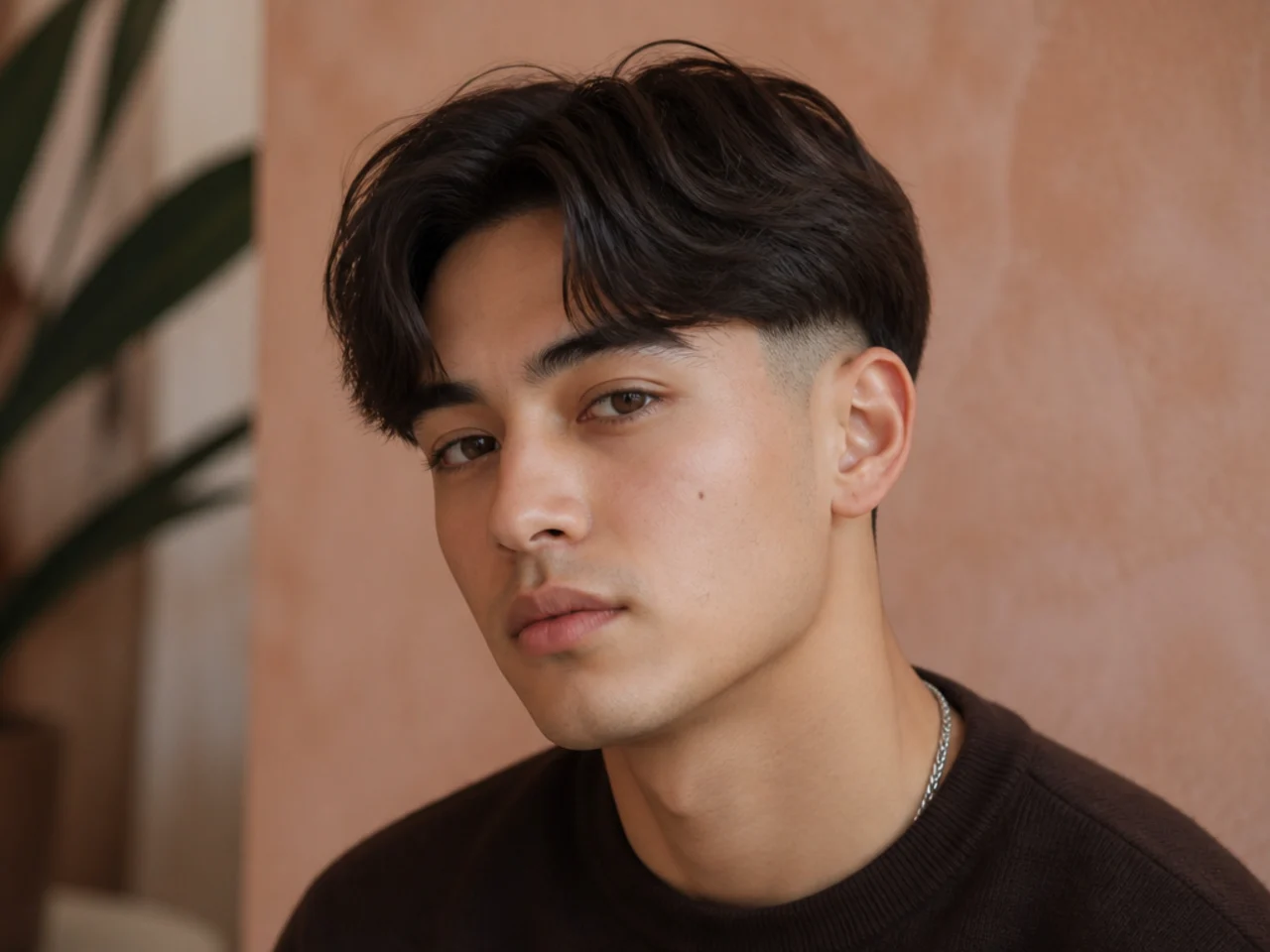
14. Comma Fringe With a Low Taper
The front curved inward toward the cheek, which needs length and root direction rather than clipper work. Keep the fade low so the curve has somewhere to travel.
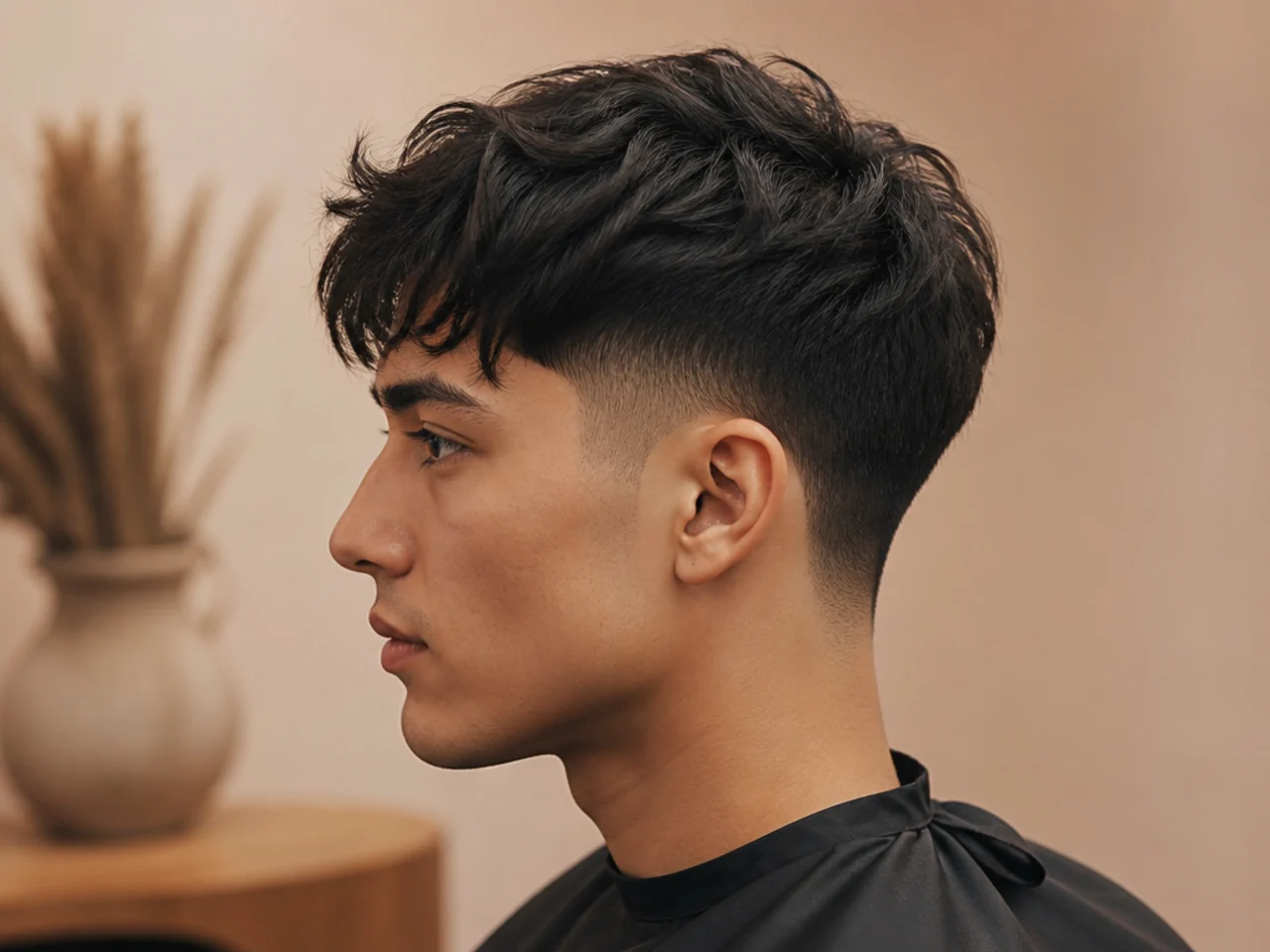
15. Fringe With a #2 Guard All Round
Not a fade at all, just a uniform 6mm on the sides beneath a longer front. It is the version to ask for when you want the fringe to be the only shape in the cut.
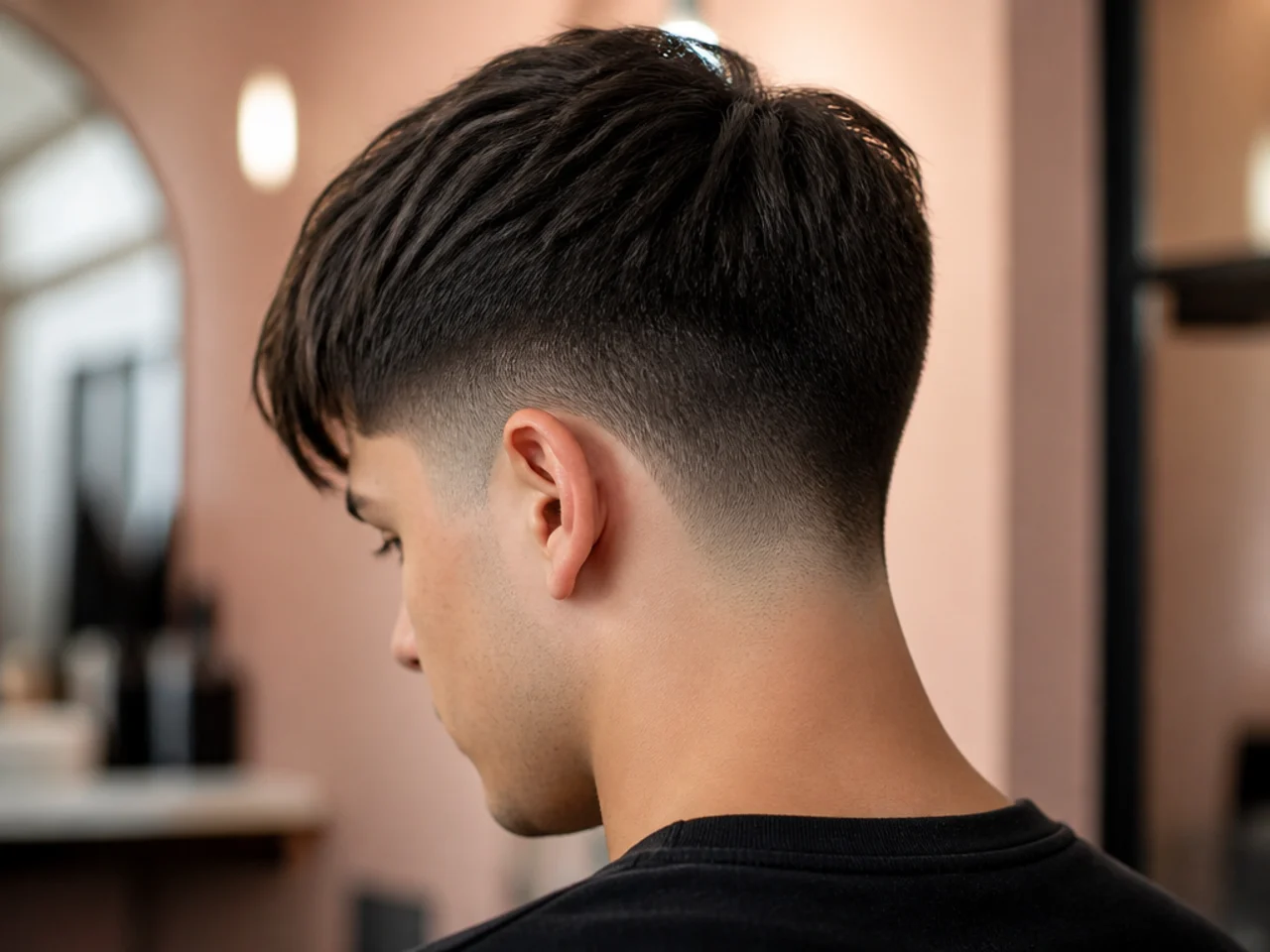
16. Fringe With a Fade and a Beard
The fade meets the beard low, and the fringe sits at the opposite end of the same vertical. A heavy beard adds weight at the jaw, so the fringe usually needs to stay long to balance it.
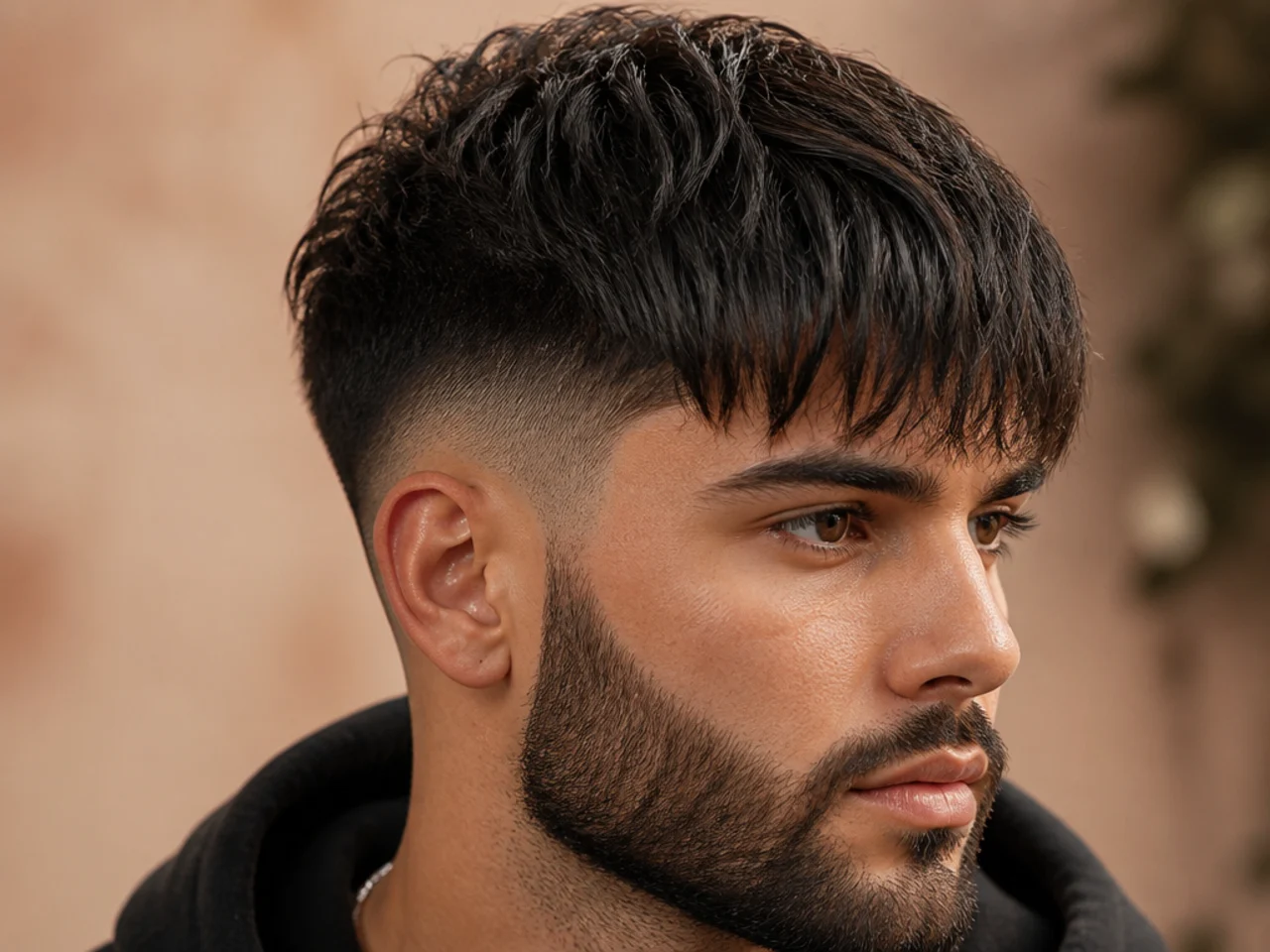
17. Fringe With a Fade on a Receding Hairline
Keep the weight high and the sides short, because the contrast between full sides and a thin front is what draws the eye to the recession. A low fade with a forward fringe does exactly that.
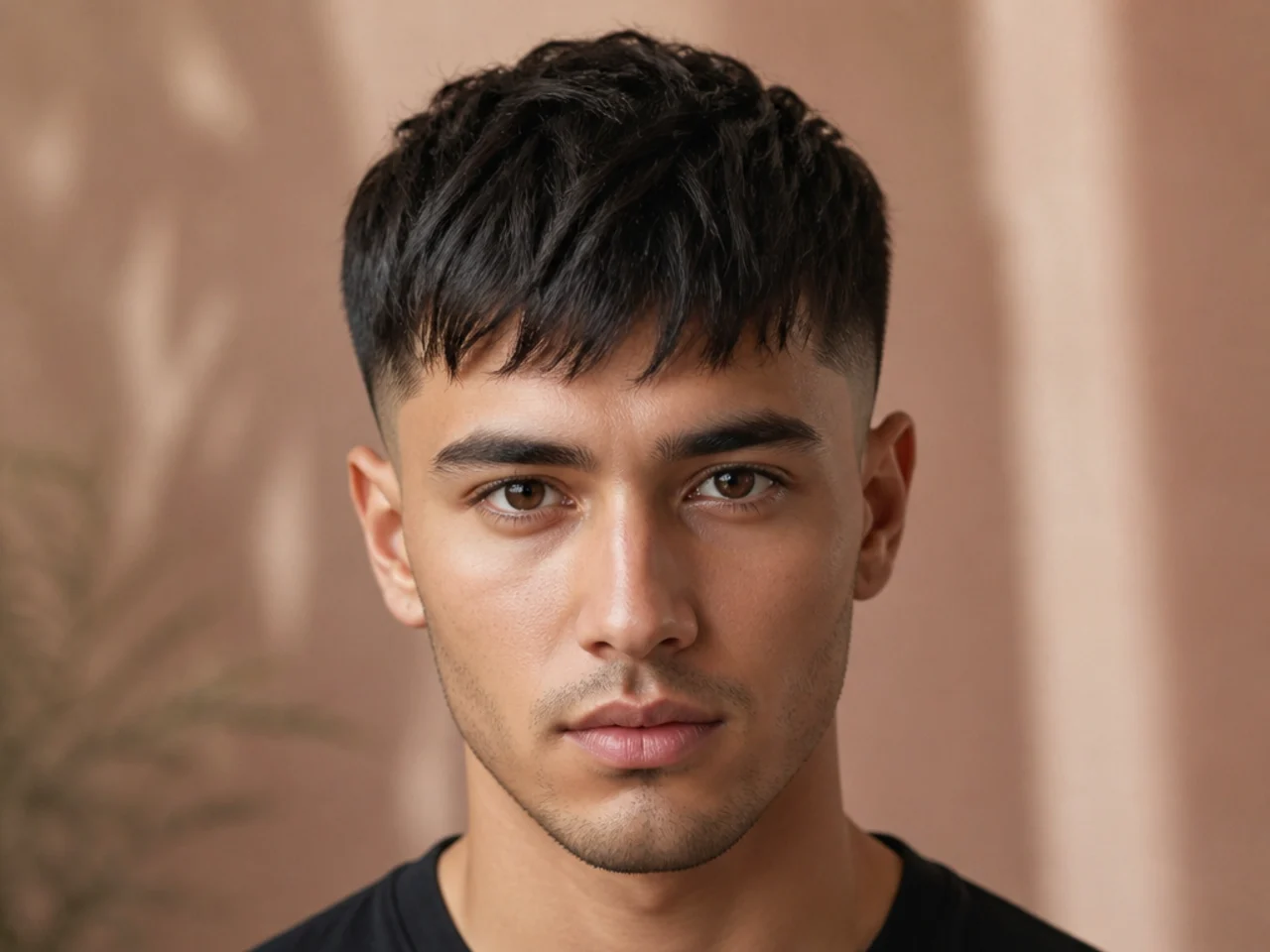
18. Fringe With a Blurry Taper
The gradient extended over a longer distance so there is no discernible start point. Blurry work costs more chair time but grows out invisibly, which suits anyone who books irregularly.
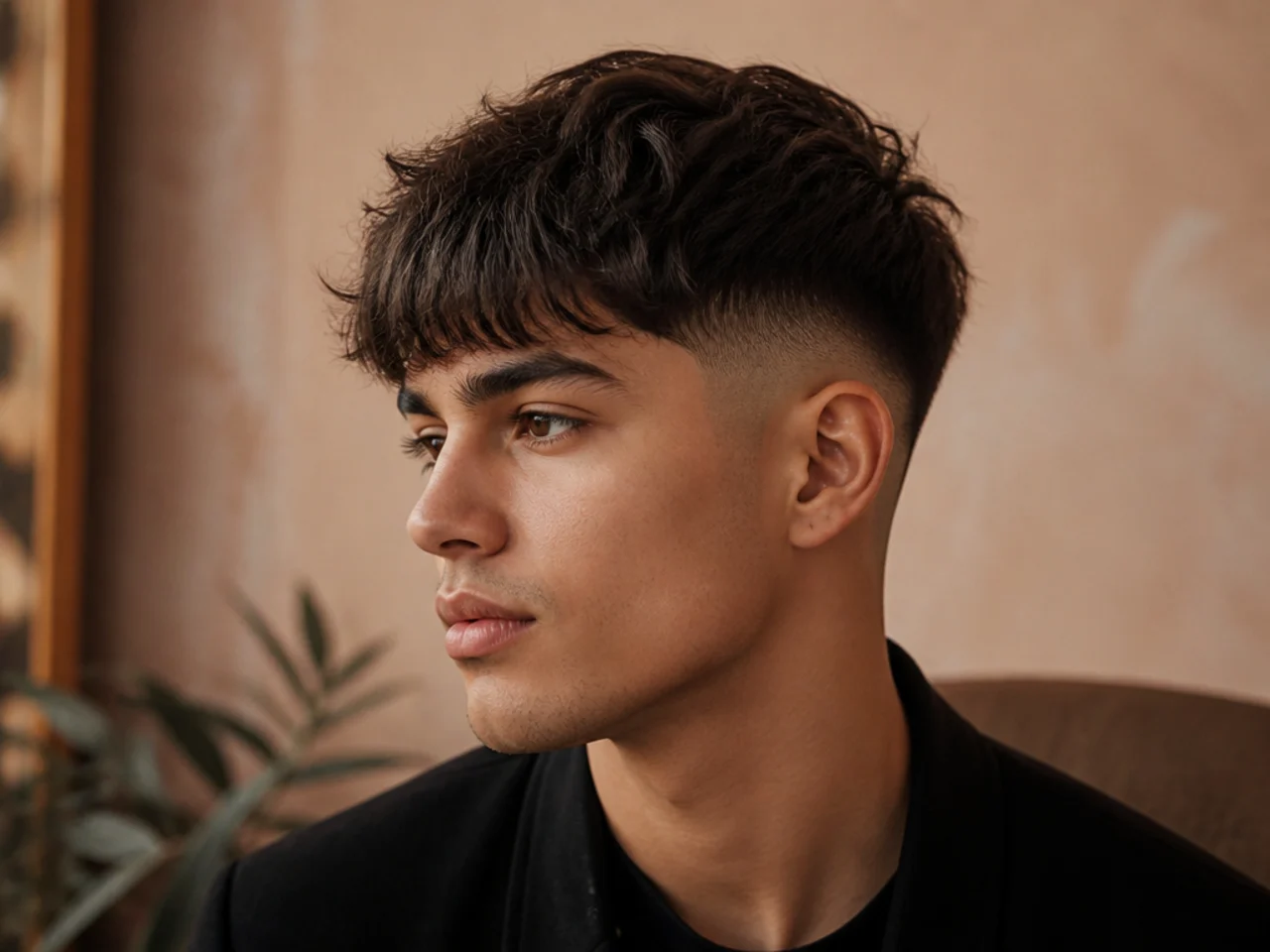
19. Fringe With a Shadow Fade
A fade that stops at a #1 rather than skin, leaving a grey shadow instead of bare scalp. It is the compromise for men who want the look of a skin fade and the schedule of a taper.
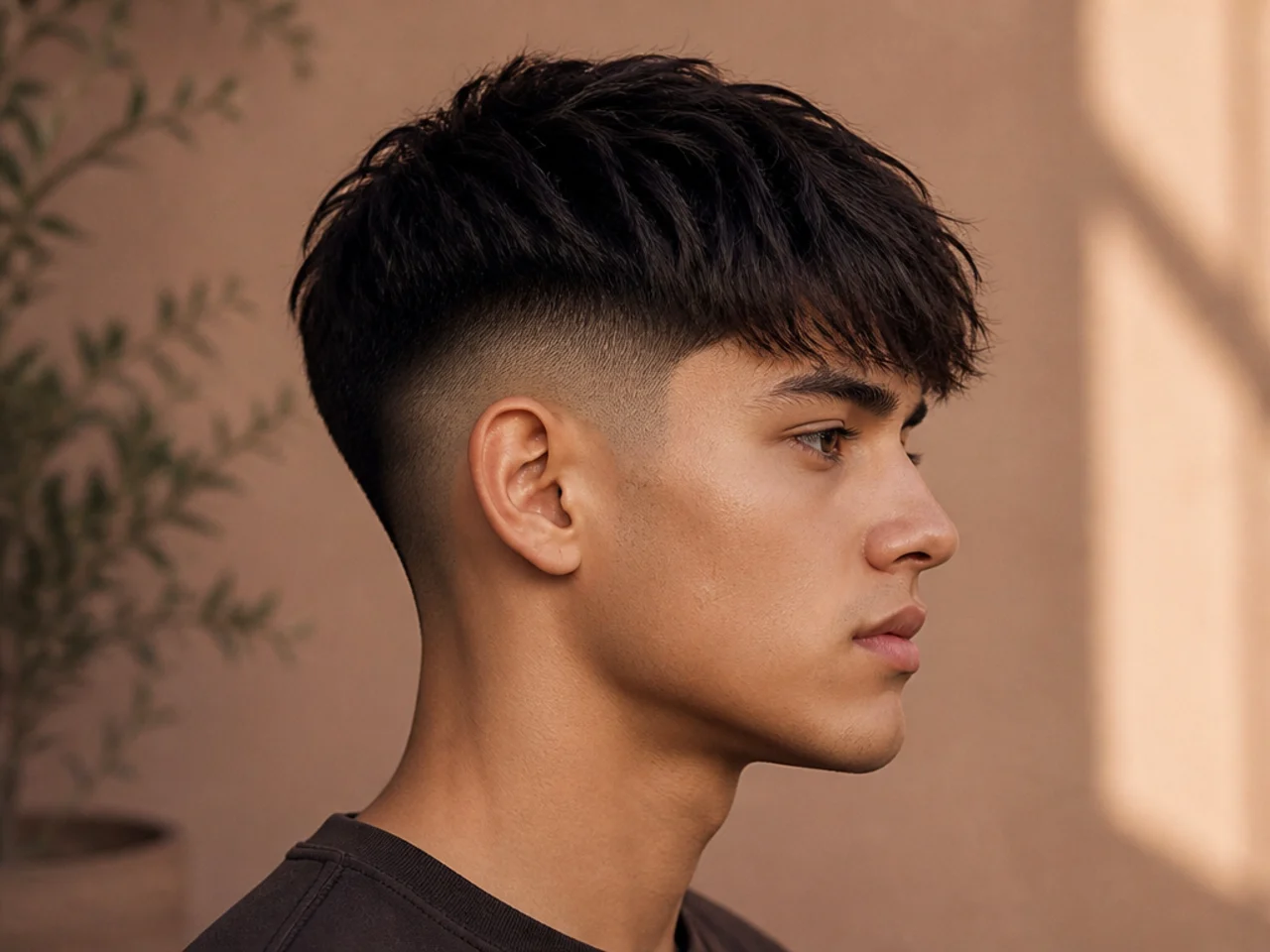
20. The Week-Three Fringe and Fade
The fade has softened and the fringe has arrived at the eyes. It is the moment the pairing tells you which of the two you actually booked around.
Styling and Upkeep
Style the fringe first, then check the temple corner. The corner is where the two shapes meet and the only place they can visibly disagree.
Use matte product on the top only. Shine on the top beside a matte fade reads as two different finishes on one head.
Book to whichever ages fastest. Skin fade means fortnightly. Taper means monthly. Pick the one you can sustain.
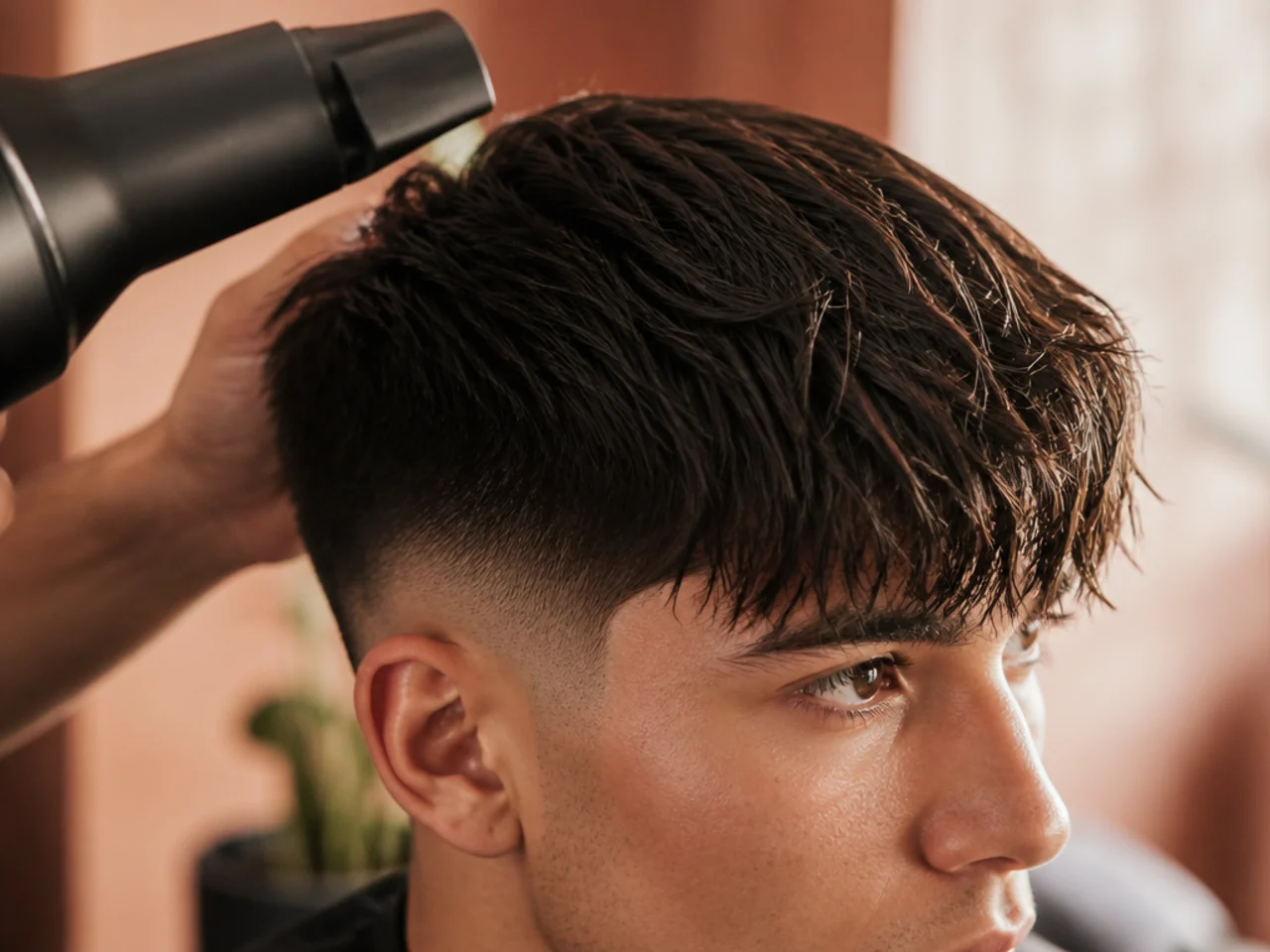
Dry the fringe forward before the sides are touched. Once the sides are dry they set the shape you have to work the front around.
Photograph the temple corner at week one. It is the detail a new barber cannot guess.
Mistakes to Avoid
Asking for a high fade with a light fringe. Nothing is left on the head to give the front any presence.
Pairing a skin fade with a monthly booking habit. It will be blurred for three of those four weeks.
Letting the fade cut into the fringe corner. The corner is part of the front section, not part of the side.
Using shine product over a matte fade. Two finishes on one head reads as an accident.
Judging the fade in a front mirror. It lives on the side of the head, which the front view does not show.
FAQ
Which fade height suits a fringe? Low, in most cases — it keeps the side weight the fringe is balanced against.
How often will I need it re-cut? Fortnightly for skin, monthly for a taper.
Can the fringe connect to the fade? Only on a short fringe, at the temple corner.
Final Thoughts
Choose the fade height for the upkeep you will genuinely keep to, then let the fringe weight follow from it. Almost every fringe-and-fade combination that looks wrong in the mirror is one where the fade was chosen for a photograph and the fringe was left to cope.
For the fade shapes themselves see the taper fade haircut, and for the fringe worn over the lowest of them see textured fringe with a low taper fade. More in Fade Haircuts.