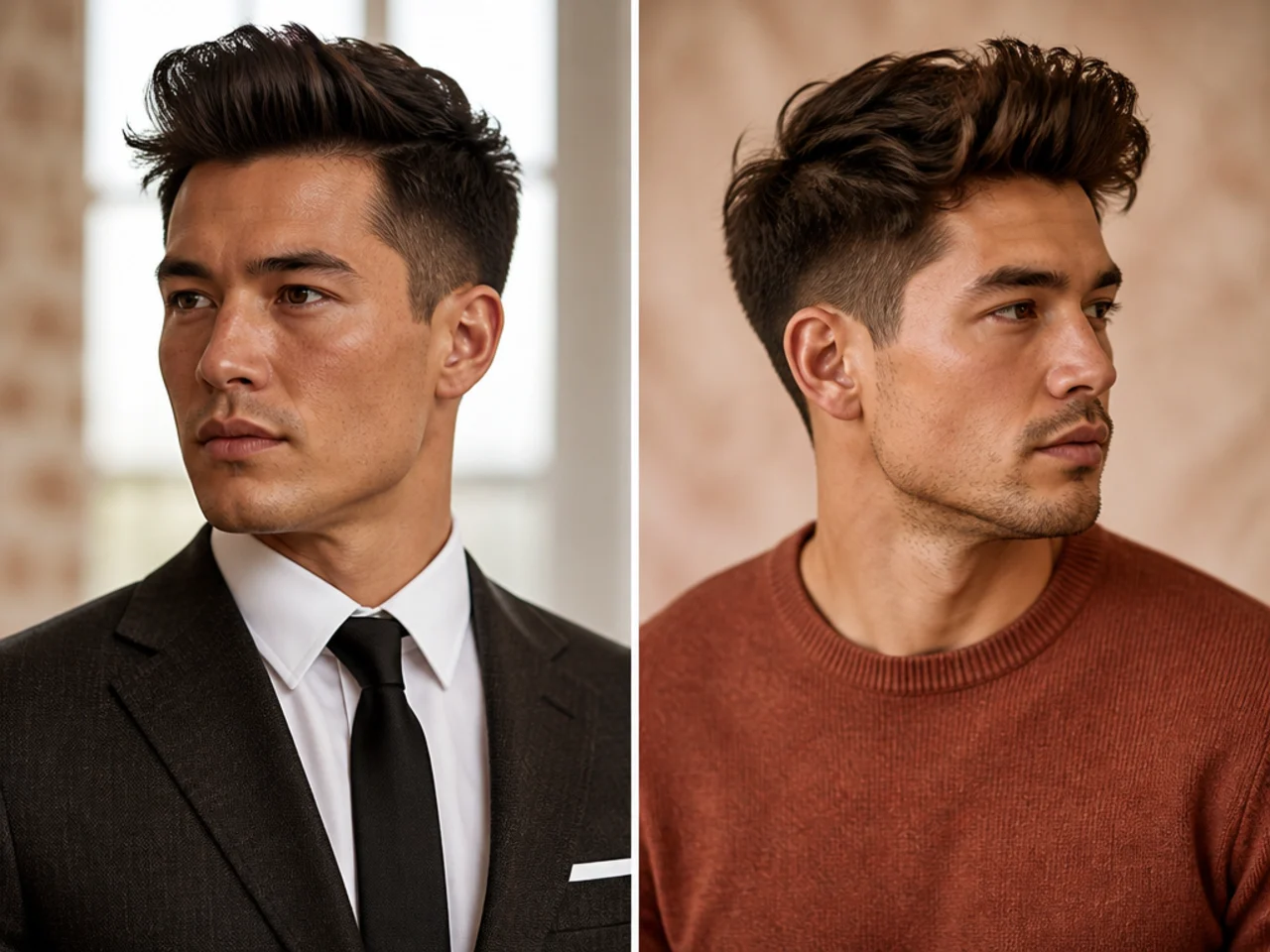
The Quiff for Men — 5 Reasons It's Timeless
The quiff for men — 5 reasons it stays timeless. Face shape rules, workplace fit, effort scaling, hair type range, and how it grows out gracefully.
In this article · 14
- The One-Line Answer
- Why the Quiff Endures
- 1. It flatters every face shape
- 2. It reads sharp at work and off-duty
- 3. It scales up or down for effort
- 4. It works across hair types
- 5. It grows out with grace
- Quiff vs Pompadour vs Slick Back — Quick Comparison
- Should You Get a Quiff?
- FAQ
- What is the modern version of a quiff?
- Can older men wear a quiff?
- Which quiff variation is easiest for a first-timer?
- Do I need to blow-dry a quiff every morning?
The quiff has outlasted every trend it has been packaged inside. It started as 1950s rock 'n' roll, got quiet in the 70s, came back in the 80s and 90s, and reset itself in the 2010s with fades and matte texture. Same silhouette, different decade. This guide breaks down the 5 reasons the quiff for men keeps returning — face shape, workplace fit, effort scale, hair type range, and grow-out behavior — and shows you where it sits against the pompadour and slick back.
The One-Line Answer
The quiff for men stays timeless because it flatters every face shape, reads sharp at work and easy off-duty, scales from two-minute to five-minute effort, works across straight, wavy, and curly hair, and grows out into an intentional shape instead of a shaggy mess. That is the five-point case. Every other men's haircut in rotation gives up at least one of those. The quiff gives up none.
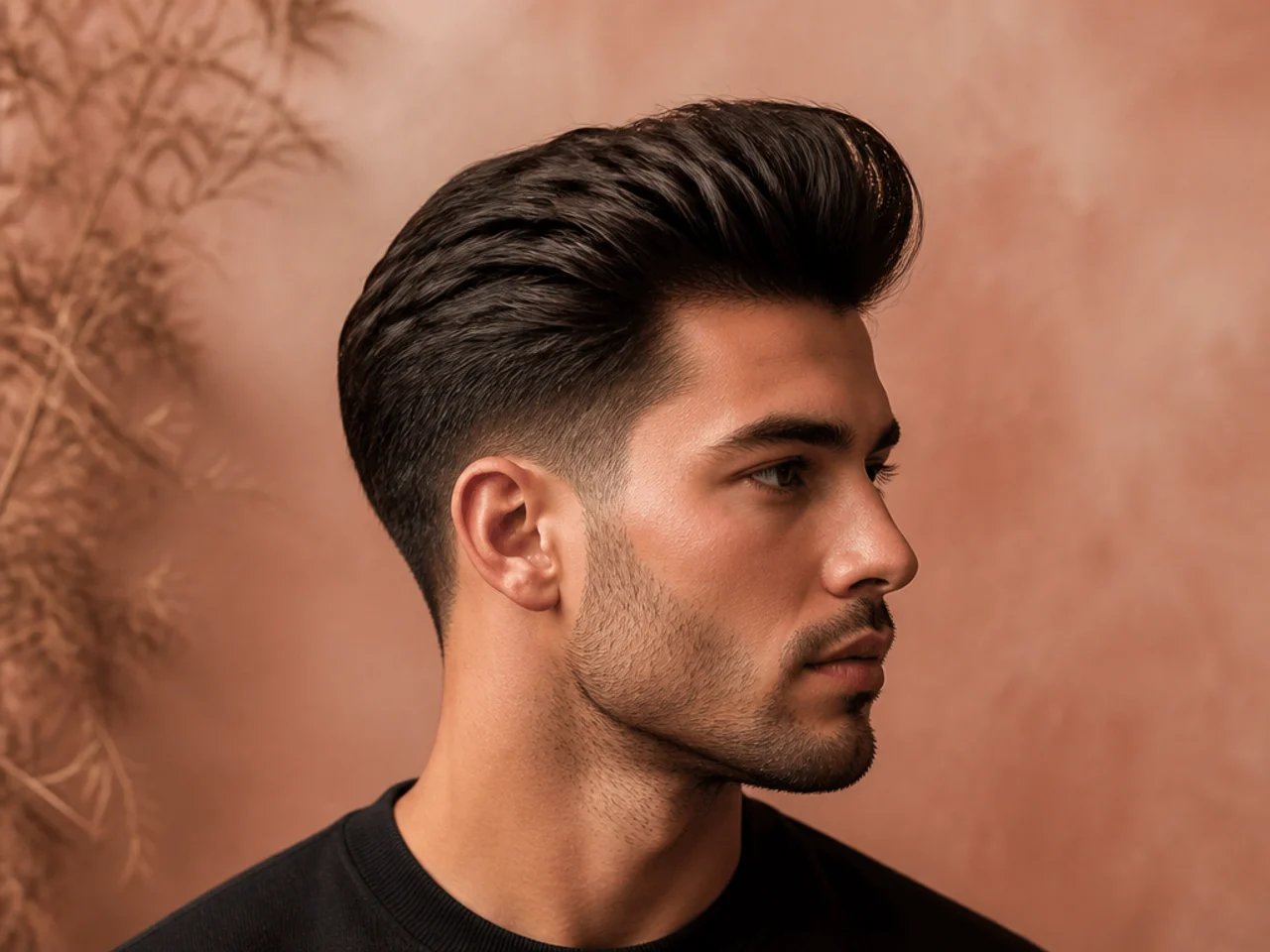
Why the Quiff Endures
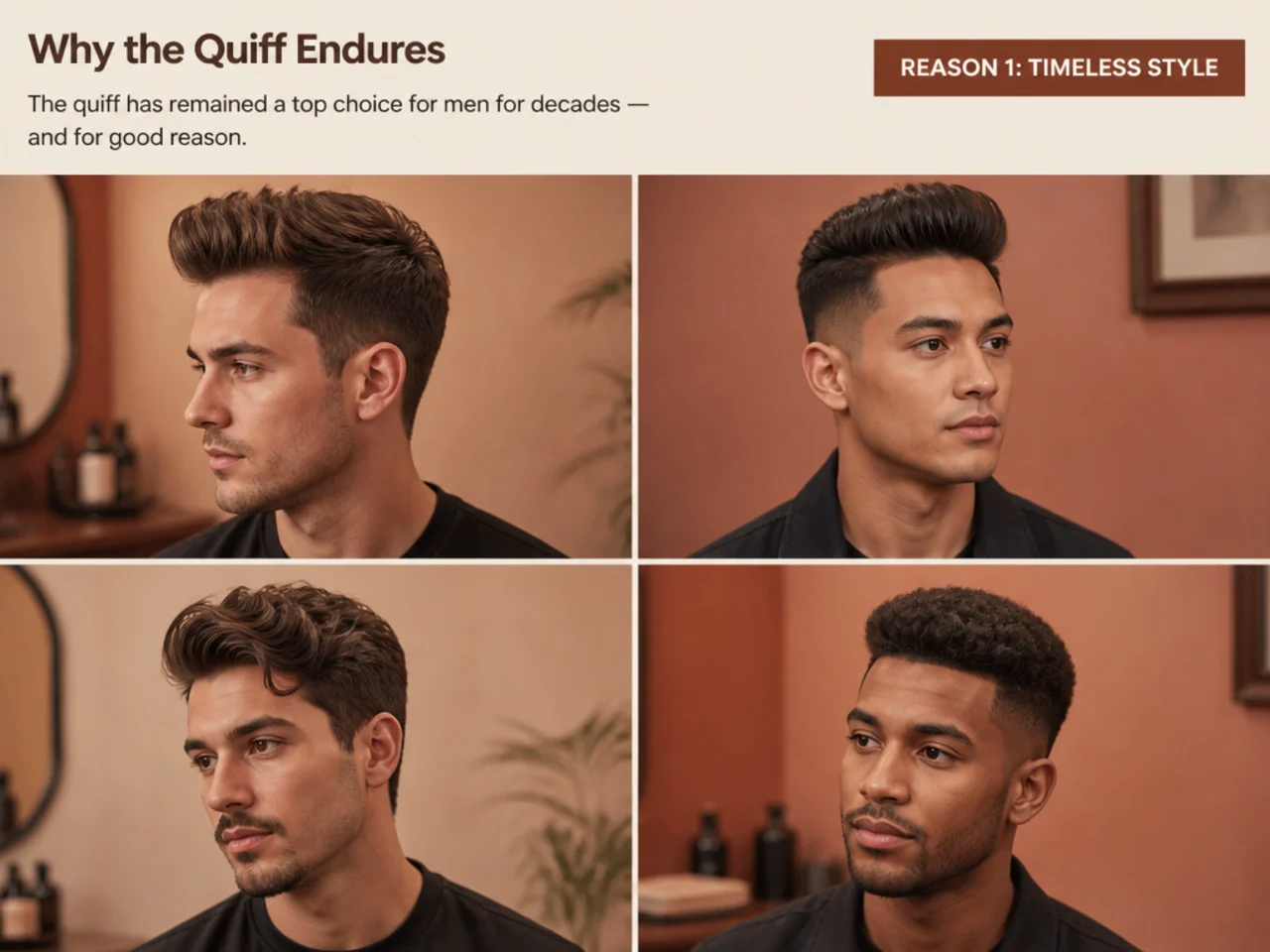
Most men's cuts win on one axis. Crew cuts win on effort. Buzz cuts win on maintenance. Long cuts win on presence. The quiff family is one of the few silhouettes that wins on multiple axes at once — flexibility is its whole identity. Length dials up or down. Finish goes matte or shiny. Sides go scissor-blended, tapered, faded, or disconnected. Each combination reads distinct without leaving the family. That is what makes the shape survive decades of trend cycles.
The five sections below unpack each axis with the level of detail your next barber visit needs.
1. It flatters every face shape
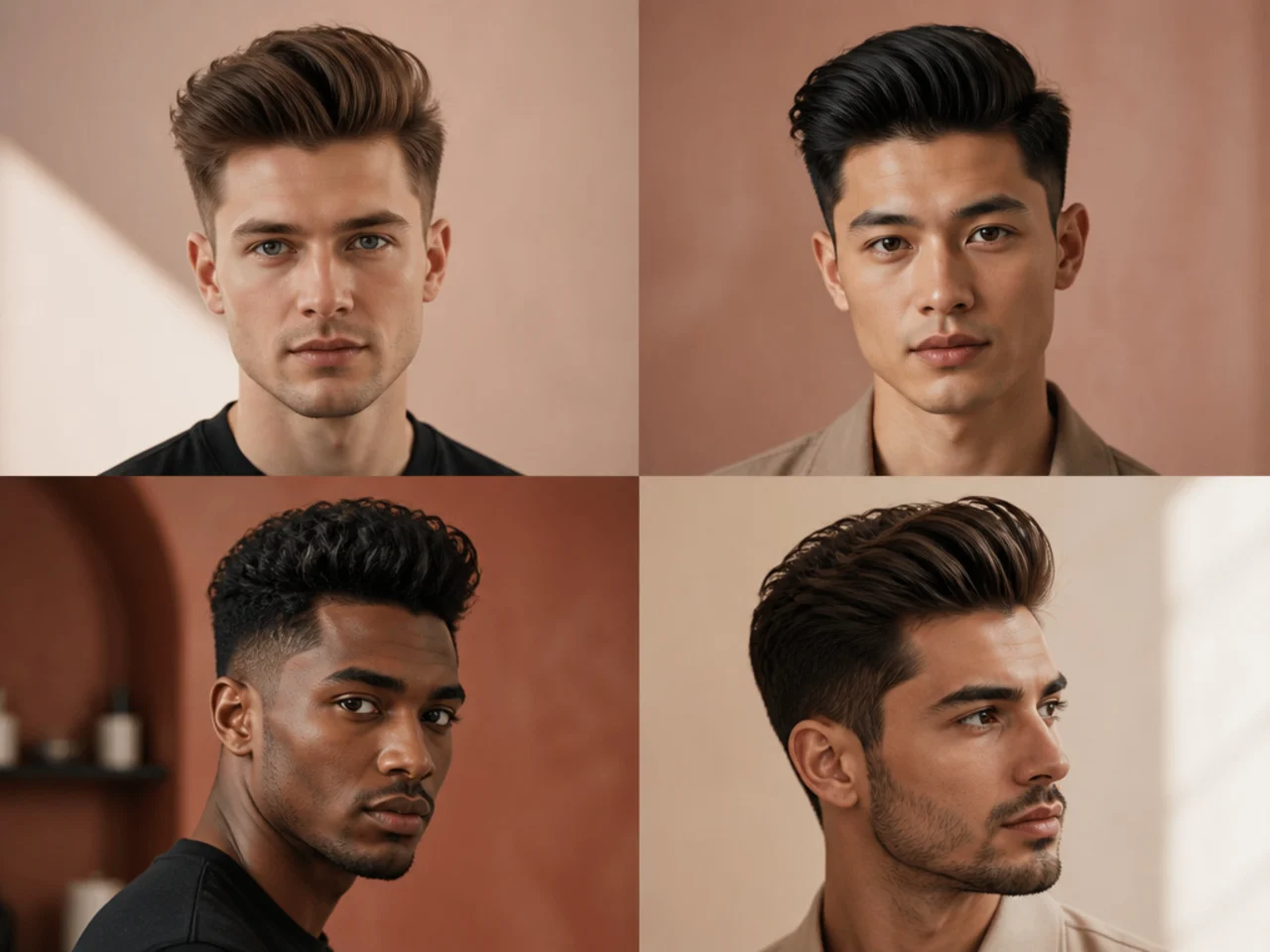
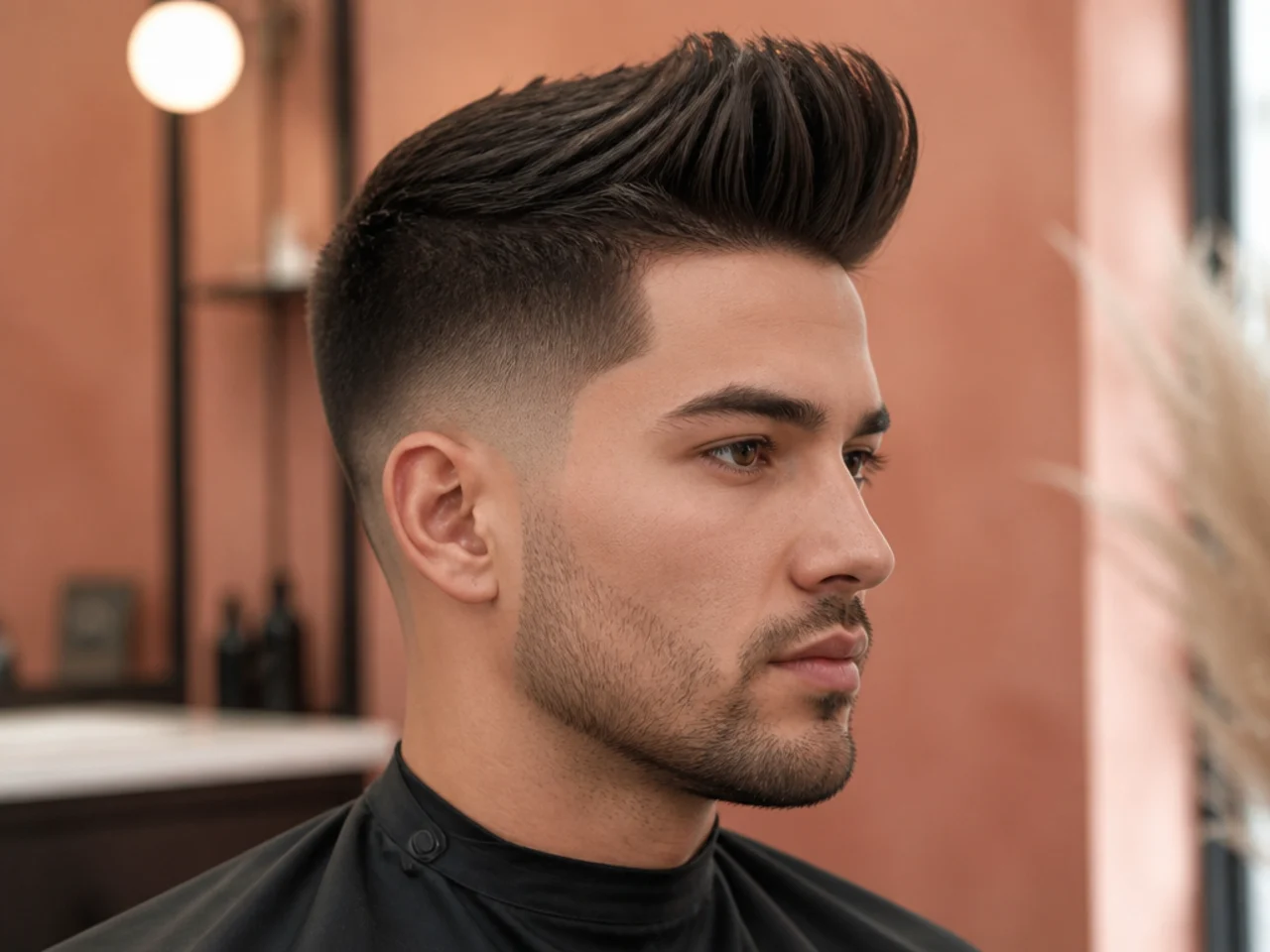
The quiff is the rare cut that does not lock you into one face shape category. Oval and square faces get the sharpest read at almost any length — the front-heavy lift adds a bit of drama without distorting proportions the face already has. Round faces get vertical elongation from the raised front, which is why round-face clients keep asking for medium and long versions. Long faces stay with 3 to 4 inches on top and a forward direction so the profile does not stretch further.
Heart and diamond faces benefit from textured versions where the front softens sharp cheekbones. Ask for scissor layers with a slight forward angle and a mid or low taper at the sides. The overall footprint is what does the flattering — a quiff that sits tall in the center and taper-thins at the perimeter creates a diamond frame around any face inside it.
Compare that to a side part haircut or a hard comb over, both of which flatter narrow bands of face shapes. The quiff wins on inclusivity because the front direction and top length are both adjustable at the chair, not baked into the silhouette.
2. It reads sharp at work and off-duty
Very few men's cuts survive both wardrobes. A surfer hairstyle reads off-duty but not boardroom. A slicked-back cut reads boardroom but not weekend. A quiff pulls both, and the switch takes about 30 seconds at the mirror.
For a professional finish, blow-dry the top straight up and back with a round brush, work a coin of water-based pomade from root to tip, and comb it through. That is the professional hairstyle for men end of the family — sharp, polished, suit-compatible. For the weekend version, skip the blow-dryer or use it for 30 seconds with fingers, then work matte clay through the ends only and push the front up with an open hand. Same haircut. Different product. Different mood.
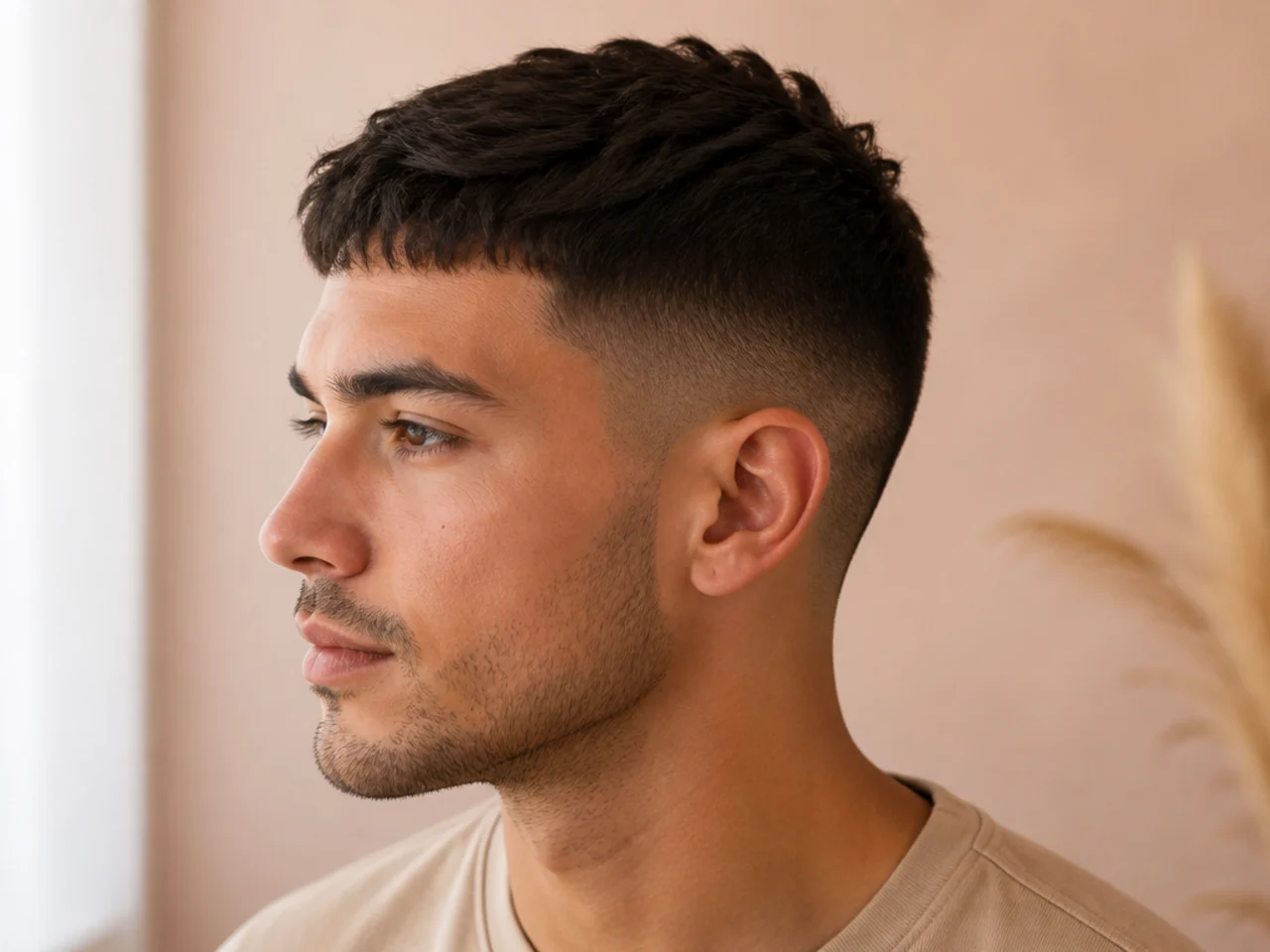
The magic is in the base cut. A quiff with tapered sides or a low fade sits neutral between formal and casual. A skin fade quiff pushes a bit toward casual. A scissor-blended quiff pushes a bit toward formal. All three still work in both settings — the styling does the rest of the code-switching.
3. It scales up or down for effort
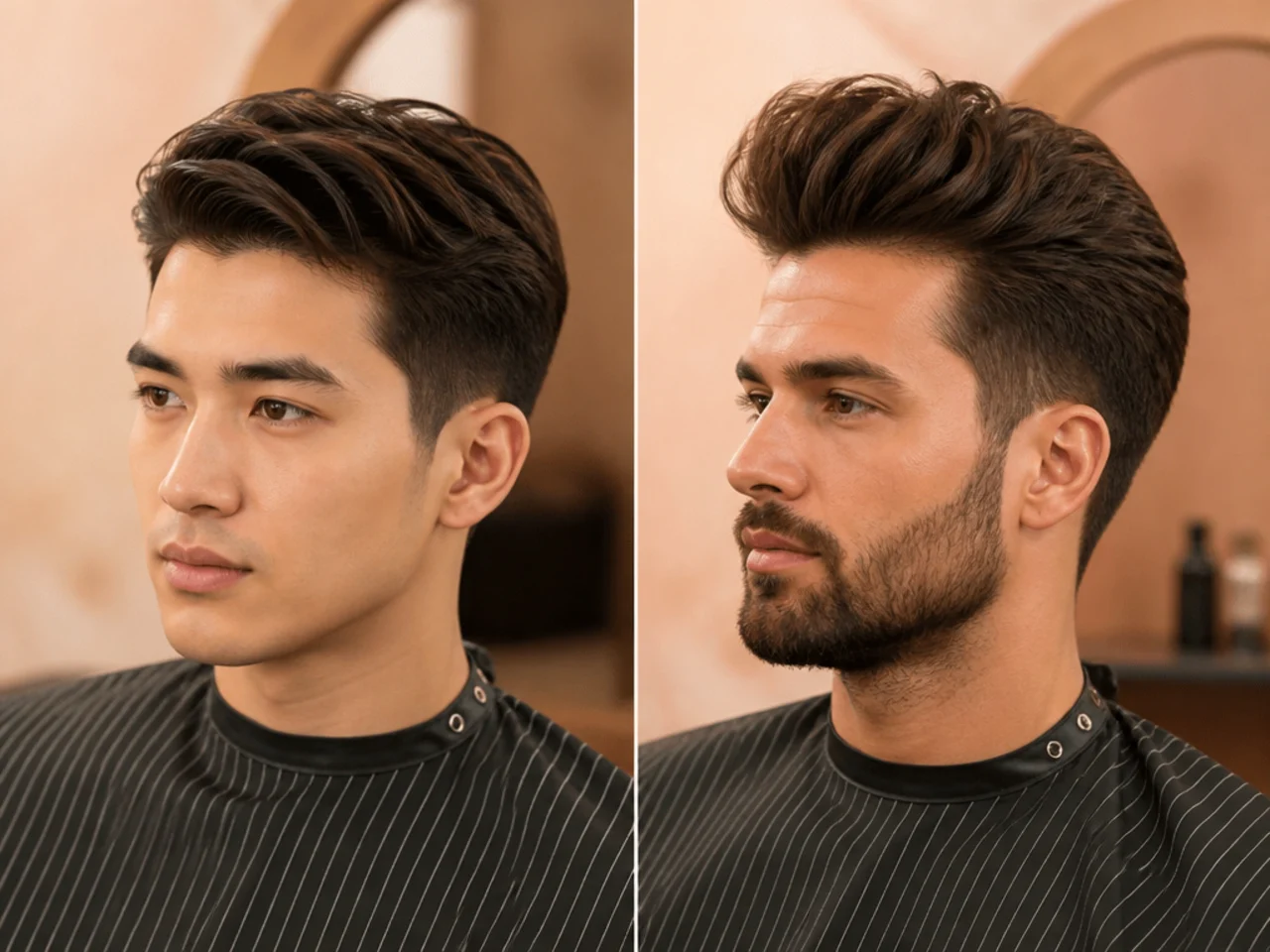
Not every guy wants to style hair for ten minutes. The quiff family gives you three effort tiers so you can pick the one that fits your morning. The 2-minute tier is a short quiff at 2 to 3 inches on top — rub matte paste between palms, push the front up with fingers, walk out the door. That is it.
The 3-minute tier is a classic or textured quiff at 4 to 5 inches. Towel-dry, rough-dry with fingers for 30 seconds, then work matte clay through the mid-lengths and push the front up and back. Add a round brush if you want more lift, skip it if you do not care that day.
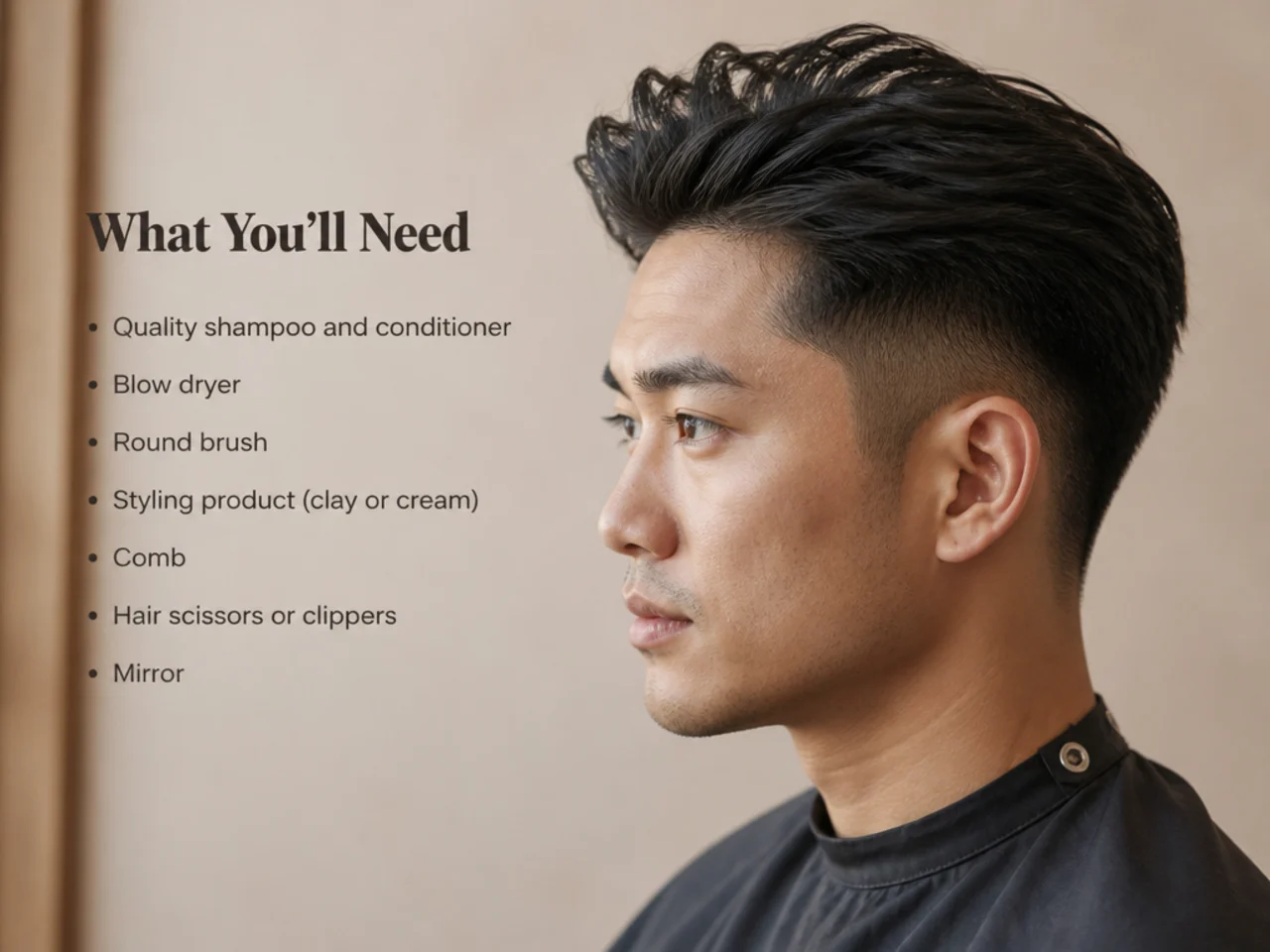
The 5-minute tier is a long quiff or pompadour-style quiff at 6 or more inches. Prep with a light mousse, blow-dry with a round brush section by section, work water-based pomade from root to tip, and comb through. Finish with a light spray if your hair falls flat by afternoon. Same shape family, three completely different morning routines. Match the tier to how much time you actually have — not the one you wish you had.
4. It works across hair types
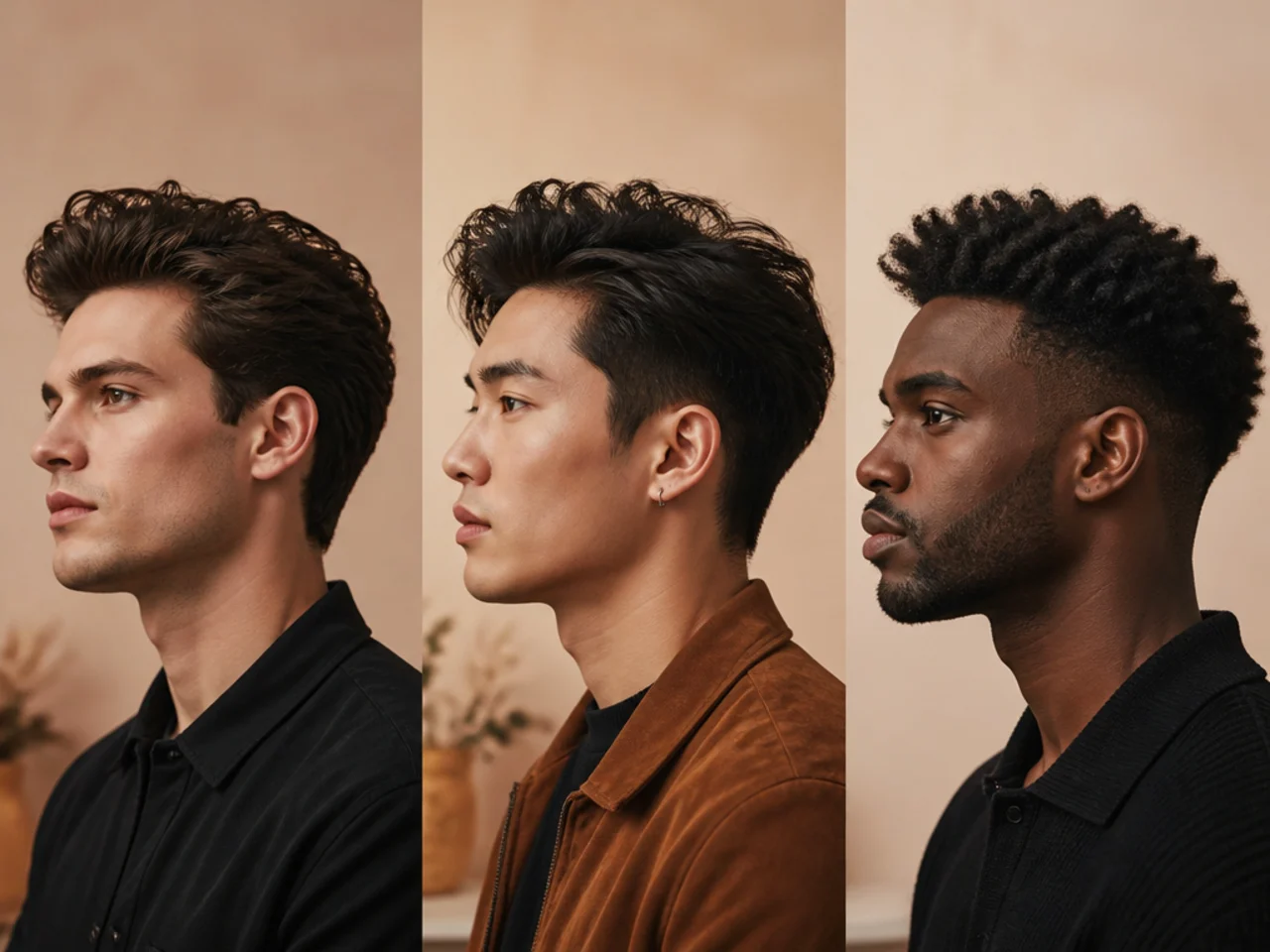
Straight, wavy, curly — the quiff works on all three, but the variation and cutting technique change. Straight hair holds a clean sweep and takes almost any version, including the polished pompadour-style quiff. Point-cutting adds texture the hair does not build on its own; ask for it if your hair is flat by nature.
Wavy hair sits best in a version where the barber cuts with the wave pattern, not against it. Ask for scissor layers cut on damp hair with the wave direction visible, and skip razoring — razors kill wave definition. Product should be a wave cream, not a clay; clay is too thick and tends to clump the wave into blocks.
Curly hair — 3A through 3C — makes the quiff shape read differently, and the barber needs to dry-cut so the pattern is visible before scissors move. Ask for internal layers with no thinning shears and no razor, and measure the front length stretched (curls shrink about 30% when dry). See our curly hair men haircut guide for the full pattern-by-pattern breakdown. Coily 4A to 4C textures work too but usually sit in a related textured crop or broccoli haircut tree — the quiff is possible, but the crop family is easier to maintain.
5. It grows out with grace
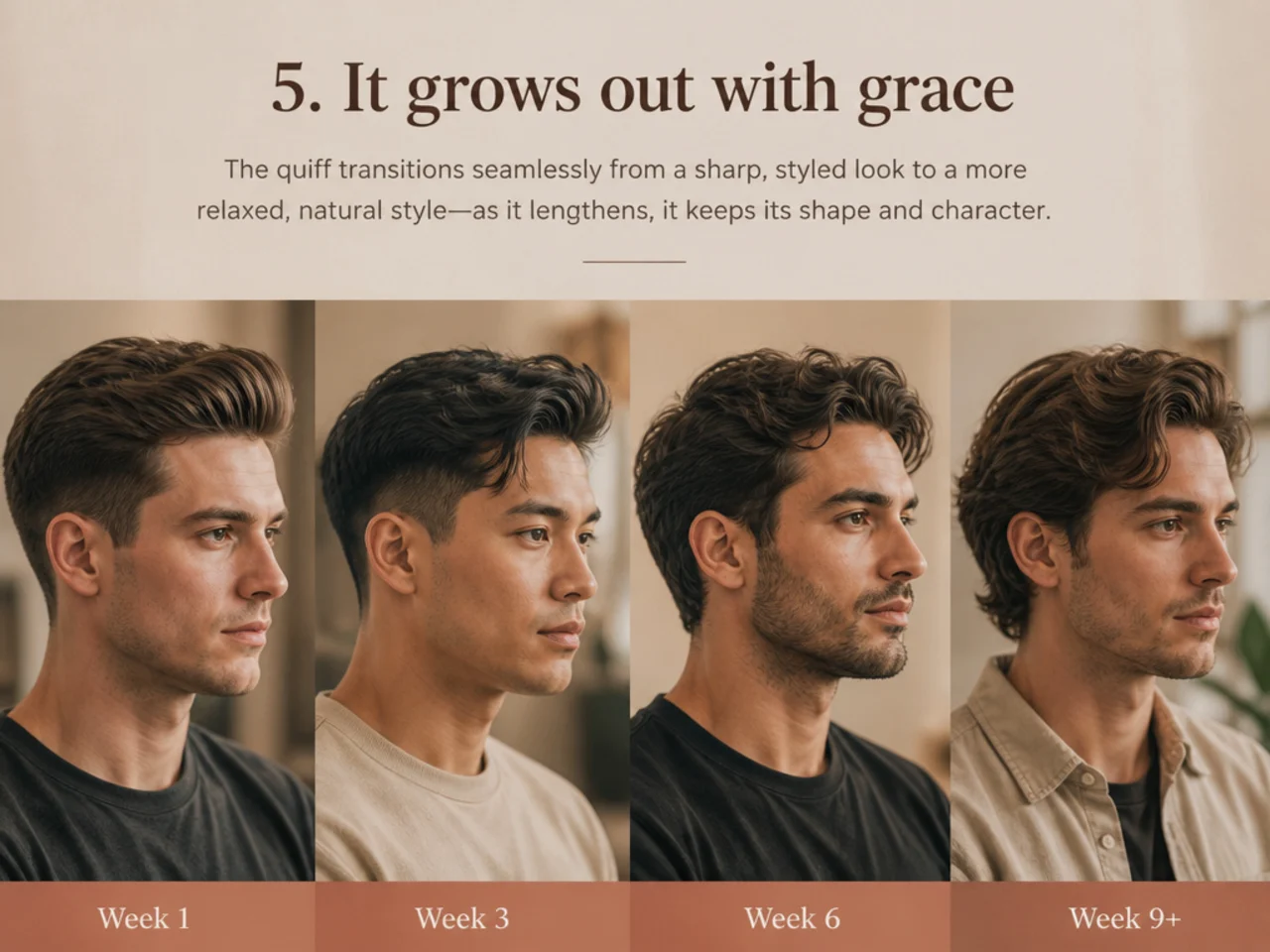
The quiff has one underrated strength: it grows out into something that still looks intentional. A buzz cut or crew cut turns into a fuzzy in-between phase around week 3. A hard French crop turns into a shapeless block around week 5. A quiff at week 6 just reads as a longer quiff — the front is still front-heavy, the sides are still shorter, and the silhouette holds.
That grow-out behavior matters because it changes how often you actually need to book. A scissor-blended quiff can stretch to 6 or 7 weeks before it truly loses shape. A tapered quiff stretches to 5 weeks. Only faded and undercut versions demand the 3-week reset — and even those look fine at week 4 with slightly softer contrast at the sides.
The trick is asking your barber for a soft crown blend and a scissor-blended perimeter at the parietal ridge. Those two moves are what let the shape hold as it grows. Without them, the top starts to stack wide around week 4 and the whole silhouette collapses. With them, you get a haircut that stays presentable for its full cycle. See our how often to get a haircut guide for cadence across your rotation.
Quiff vs Pompadour vs Slick Back — Quick Comparison
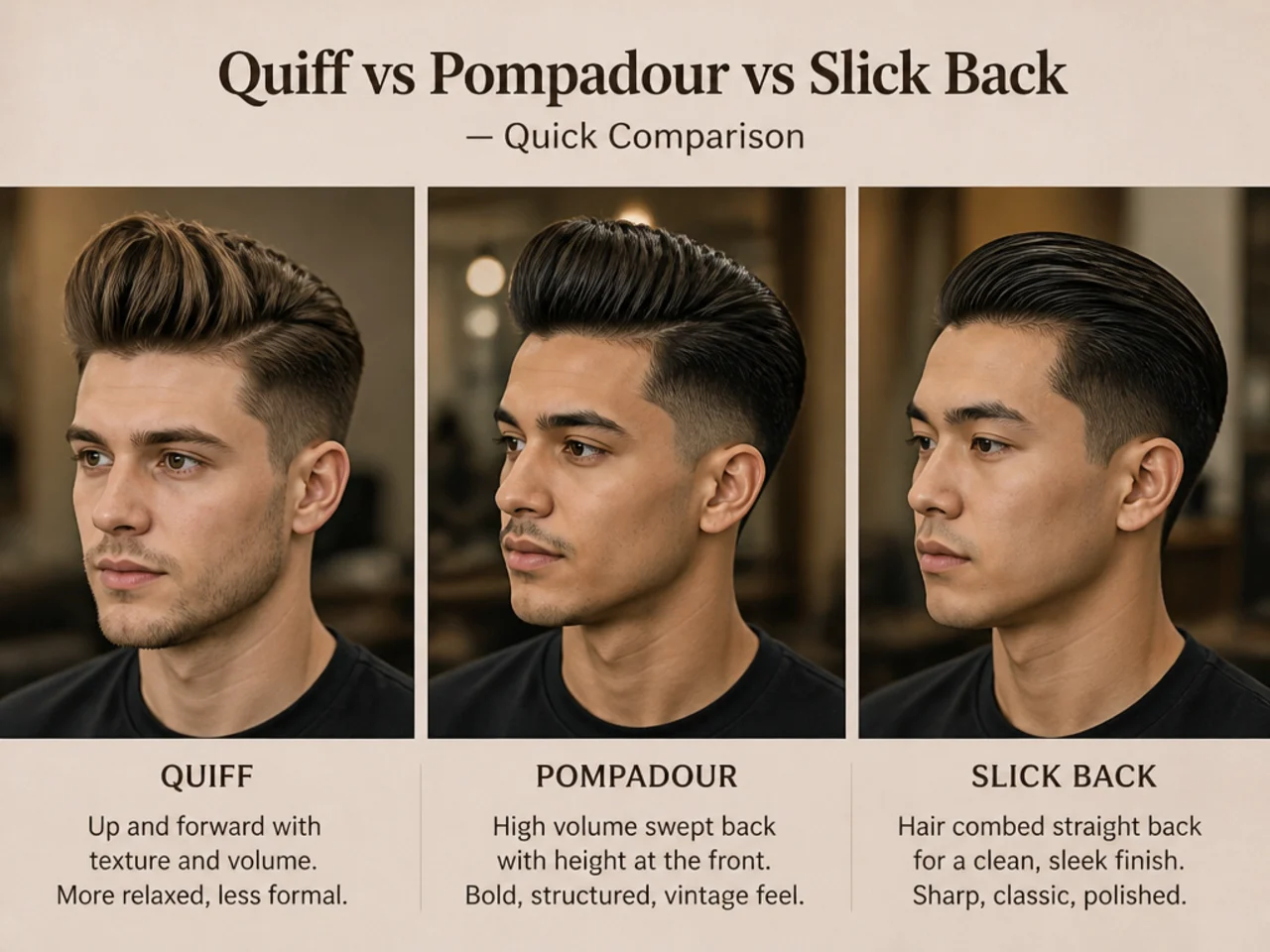
Same family, different personalities. The quiff, pompadour, and slick back all rely on front-heavy structure, but the finish and setup separate them:
- Top length at the front. Quiff: 3 to 6 inches. Pompadour: 5 to 6 inches (needs the length for the height). Slick back: 4 to 8 inches (length is pushed back, not up).
- Front lift. Quiff: moderate — up and slightly back at a soft angle. Pompadour: dramatic — up and back with visible height at the front. Slick back: minimal — the front sweeps back rather than lifts.
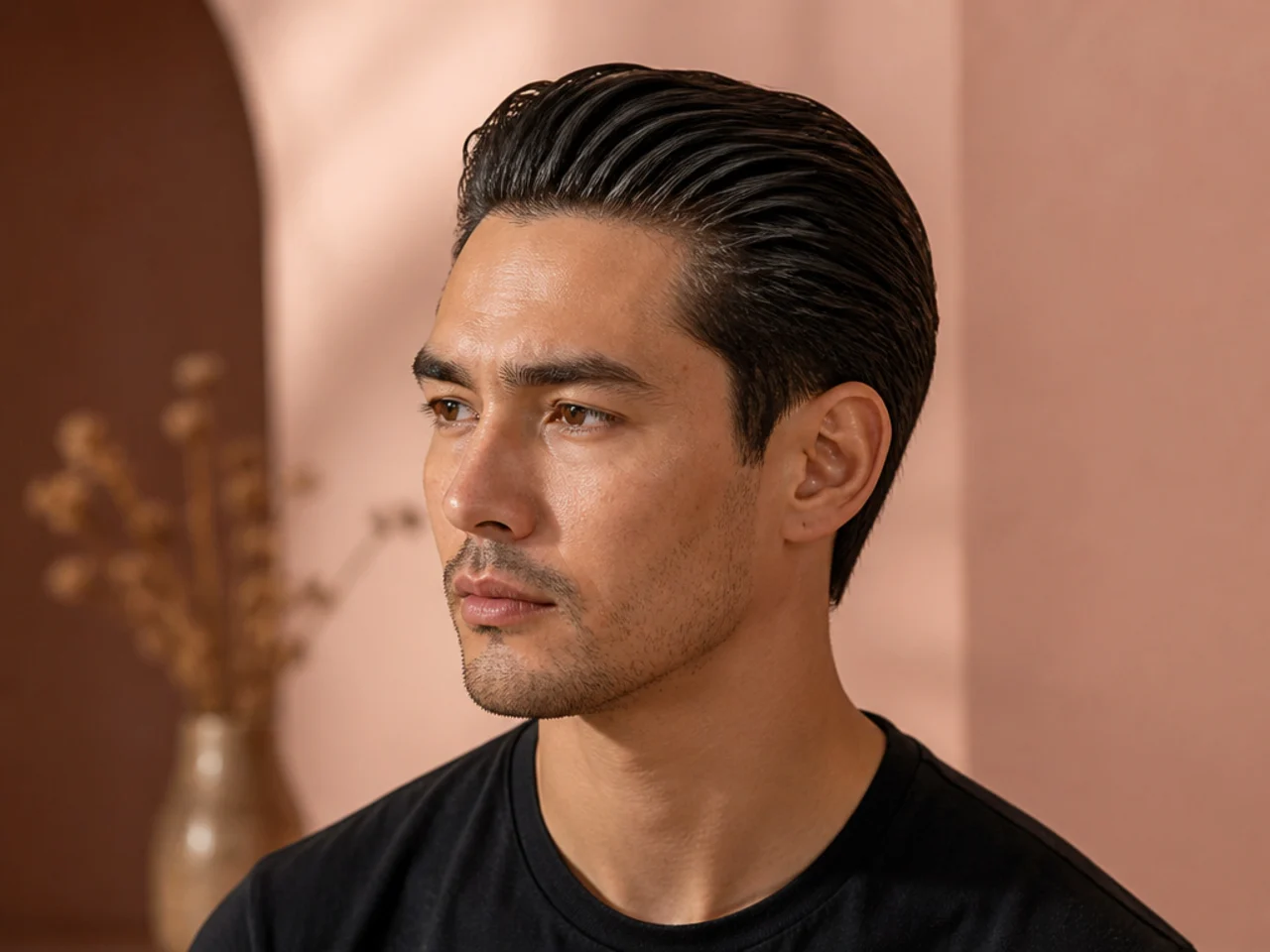
- Finish. Quiff: matte or lightly textured (clay, paste, cream). Pompadour: glossy and structured (pomade). Slick back: glossy and smooth (pomade or gel).
- Workplace read. Quiff: neutral — works everywhere. Pompadour: formal-leaning — reads best in traditional offices. Slick back: formal-leaning — same.
- Effort. Quiff: 2 to 5 minutes depending on variation. Pompadour: 5 to 8 minutes with a round brush and comb. Slick back: 3 to 5 minutes with product and comb.
- Face shape range. Quiff: universal. Pompadour: oval, square, heart. Slick back: oval, square, and long faces best.
- Hair type range. Quiff: straight, wavy, curly. Pompadour: straight and thick — needs density for the height. Slick back: straight, occasionally wavy — curls resist the smooth push.
If you want the widest range on all axes, the quiff wins. If you want formal-first with maximum height, the pompadour wins. If you want formal-first with minimum lift, the slick back wins.
Should You Get a Quiff?
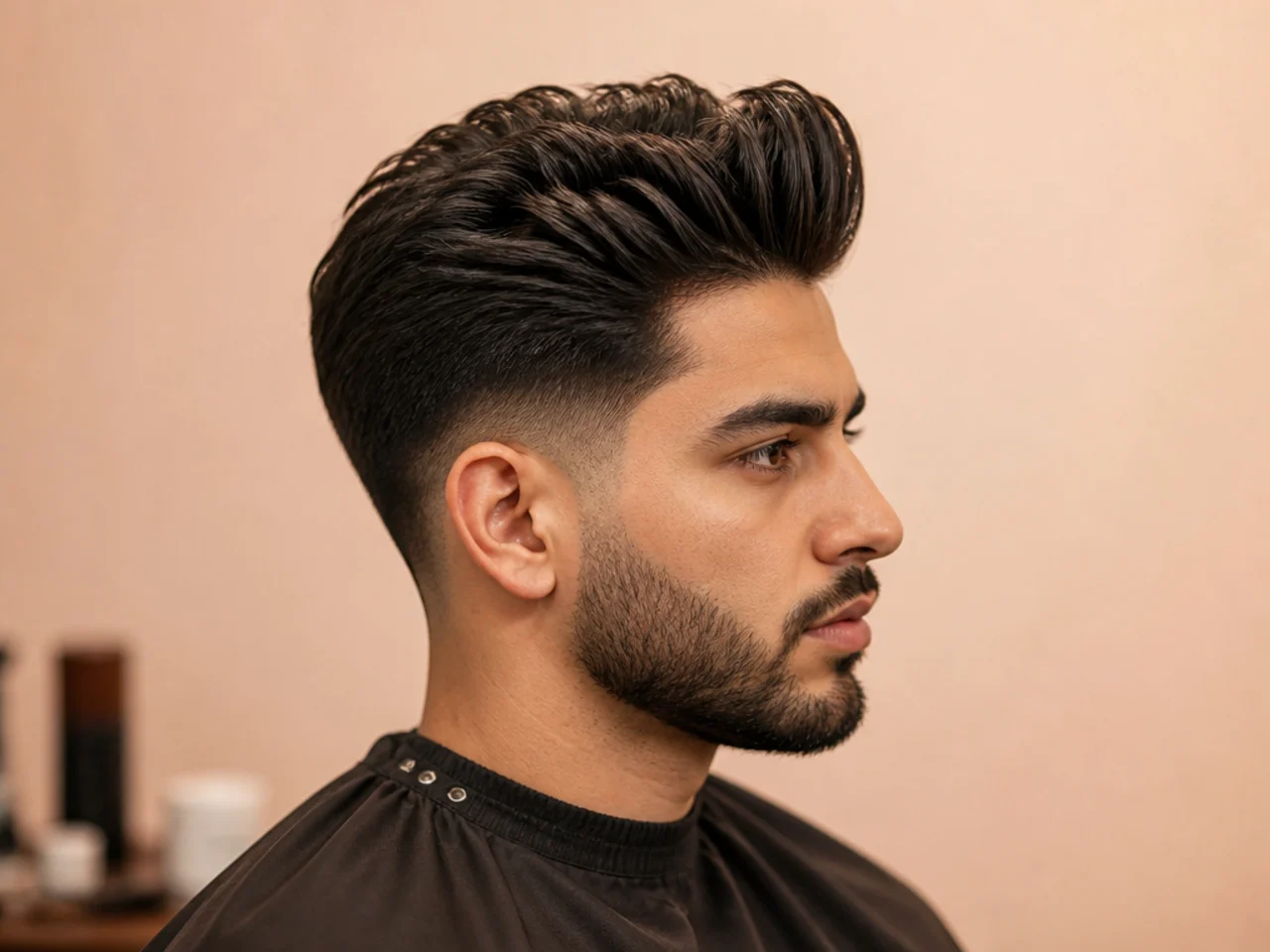
Get a quiff if any of these describe you. You want a haircut that works in a suit and in a hoodie. You have oval, round, square, heart, or diamond face shape (that covers most guys). Your hair is straight, wavy, or curly at a 3A-3C pattern. You want between 3 and 8 weeks between cuts. You want a shape that photographs well and grows out gracefully.
Skip the quiff if you want the tightest, lowest-maintenance short cut possible — a short simple mens haircut or a French crop is a better fit. Skip it if your top hair is thinning noticeably at the crown — the front-heavy structure highlights crown density, and a textured crop or Edgar haircut hides thinning better.
If you land in the "get one" column, decide two things before your appointment: top length (3 to 6 inches) and side treatment (scissor blend, taper, low fade, mid fade, high fade, skin fade, or undercut). Bring a photo of the exact variation you want. Your barber does the rest.
FAQ
What is the modern version of a quiff?
The modern quiff drops most of the 1950s gloss and replaces heavy pomade with matte clay or paste. Sides are usually faded — low, mid, or skin — instead of scissor-blended. The top runs longer and looser, with visible point-cut texture instead of a slicked helmet. That is the version most 20s to 30s guys are wearing today.
Can older men wear a quiff?
Yes. The short quiff with a low taper fade suits guys over 40 better than a long, textured version. Keep the top at 3 to 4 inches, the sides tapered rather than skin-faded, and the finish sleek rather than deliberately messy. That combination reads polished without looking like a costume.
Which quiff variation is easiest for a first-timer?
The classic quiff with a low fade. Top at 4 inches, low fade at the sides, matte clay finish. It reads clean, it forgives styling mistakes, and every barber knows exactly what you mean the second you say it. Once you know how the shape feels, you can trade up to textured, undercut, or long versions.
Do I need to blow-dry a quiff every morning?
Only for the longer versions. Short and medium quiffs can be finger-styled straight out of the shower with a small amount of matte clay. Long quiffs, pompadour-style quiffs, and slicked-back quiffs all need a blow-dryer and a round brush to build the front lift properly. Pick your variation based on how much time your morning actually gives you.