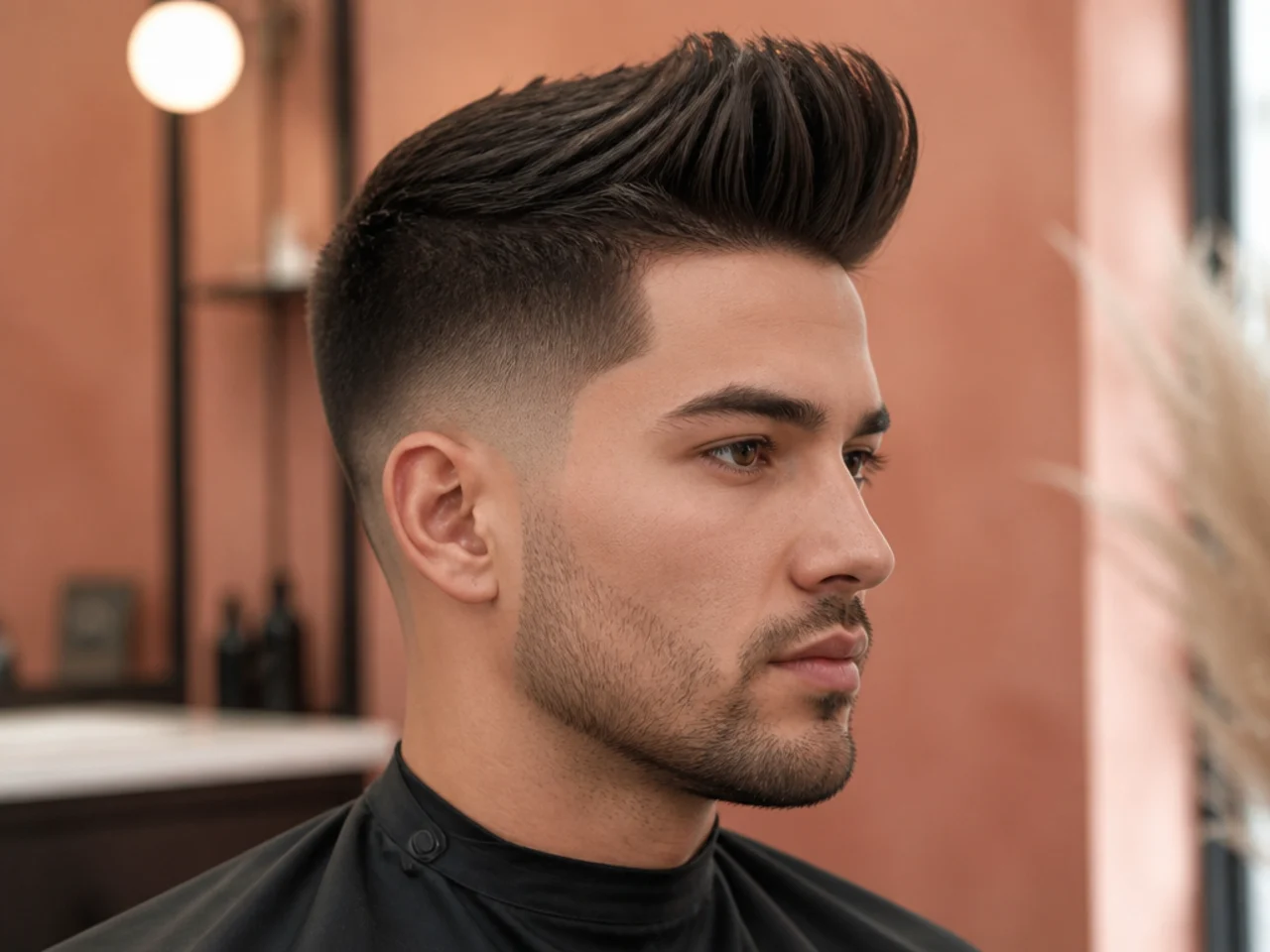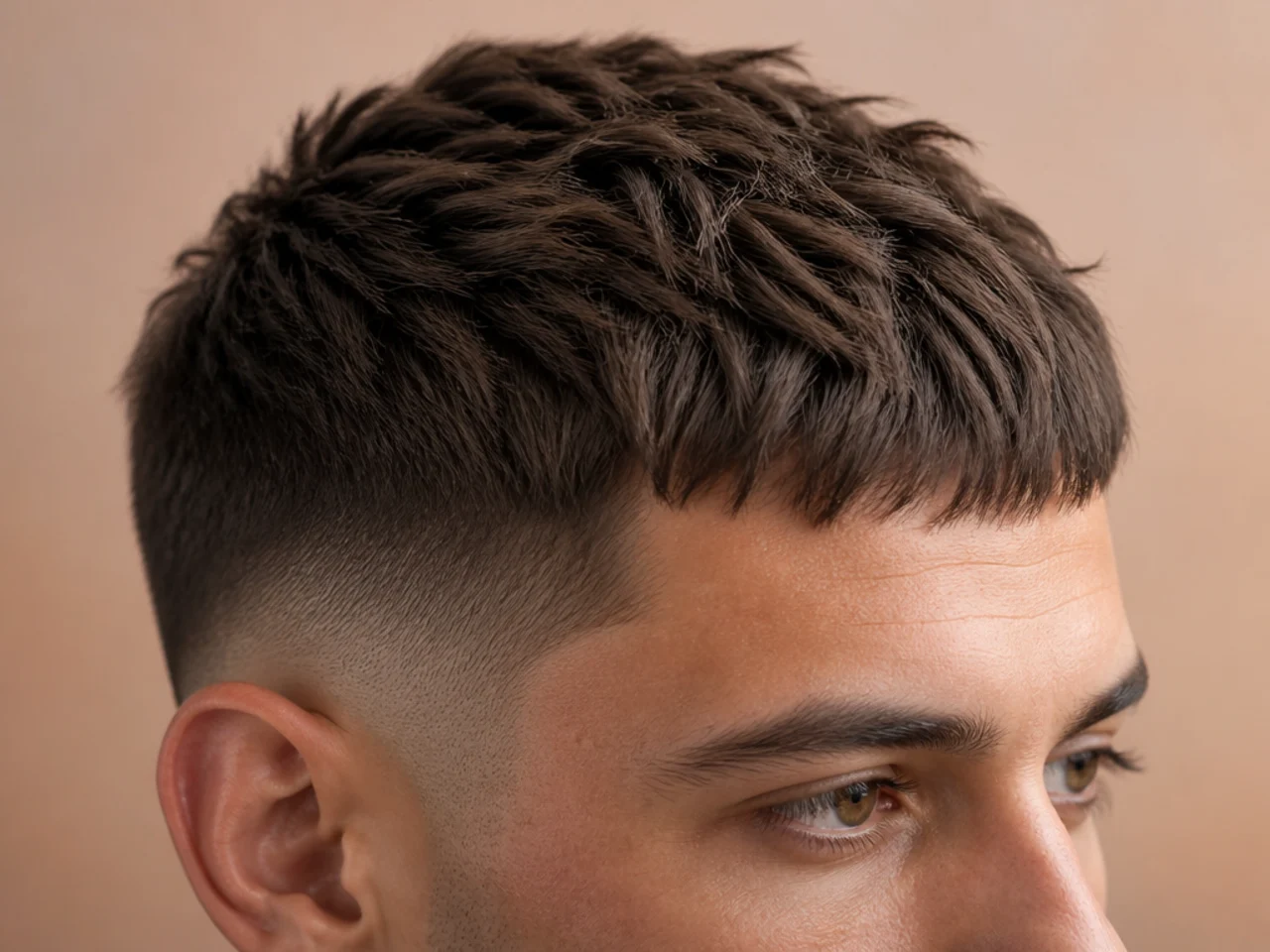
20 Haircut Ideas for Men With Thin Hair
Thin hair is not judged by how much of it there is, it is judged by how much scalp shows through it under a light. Every decision below is about controlling that, and length is almost never the lever people think it is.
In this article · 27
- What Makes Scalp Show
- How to Choose Yours
- The 20 Cuts for Thin Hair
- 1. The Short Textured Crop
- 2. The Caesar
- 3. Buzz Cut at a #2
- 4. The Crew Cut
- 5. Low Taper With a Short Top
- 6. The French Crop
- 7. Textured Quiff, Kept Low
- 8. The Hard Part
- 9. Mid Fade With a Blunt Top
- 10. Short Forward Fringe
- 11. The Ivy League
- 12. Blunt-Cut Medium Length
- 13. The Shadow Taper
- 14. Short Sides With a Beard
- 15. The Messy Finger-Styled Top
- 16. Cropped Sides With a Textured Fringe
- 17. Curly Thin Hair With a Taper
- 18. The Grown-Out Buzz
- 19. Matte Side Part With Blunt Ends
- 20. The Shave
- Styling and Upkeep
- Mistakes to Avoid
- FAQ
- Final Thoughts
Men with thin hair usually describe the problem as not having enough hair. What they are actually reacting to is something more specific.
Thin hair is judged by how much scalp shows through it. Under a ceiling light, in a photograph, in a lift mirror — the shine off the skin between the strands is what registers, not the strands themselves.
Length is almost never the right lever. The variables that matter are how upright the roots stand, how much shadow the ends cast, and how much contrast there is between a dense side and a sparse top.
What Makes Scalp Show
Light passes between separated strands. The wider the gaps, the more skin is lit.
Length increases separation. Long thin hair falls into distinct pieces with space between them.
Flat roots reduce coverage. Hair lying against the scalp covers less area than hair standing away from it.
Contrast draws the eye. Full sides beside a sparse crown make the crown look sparser than it is.
How to Choose Yours
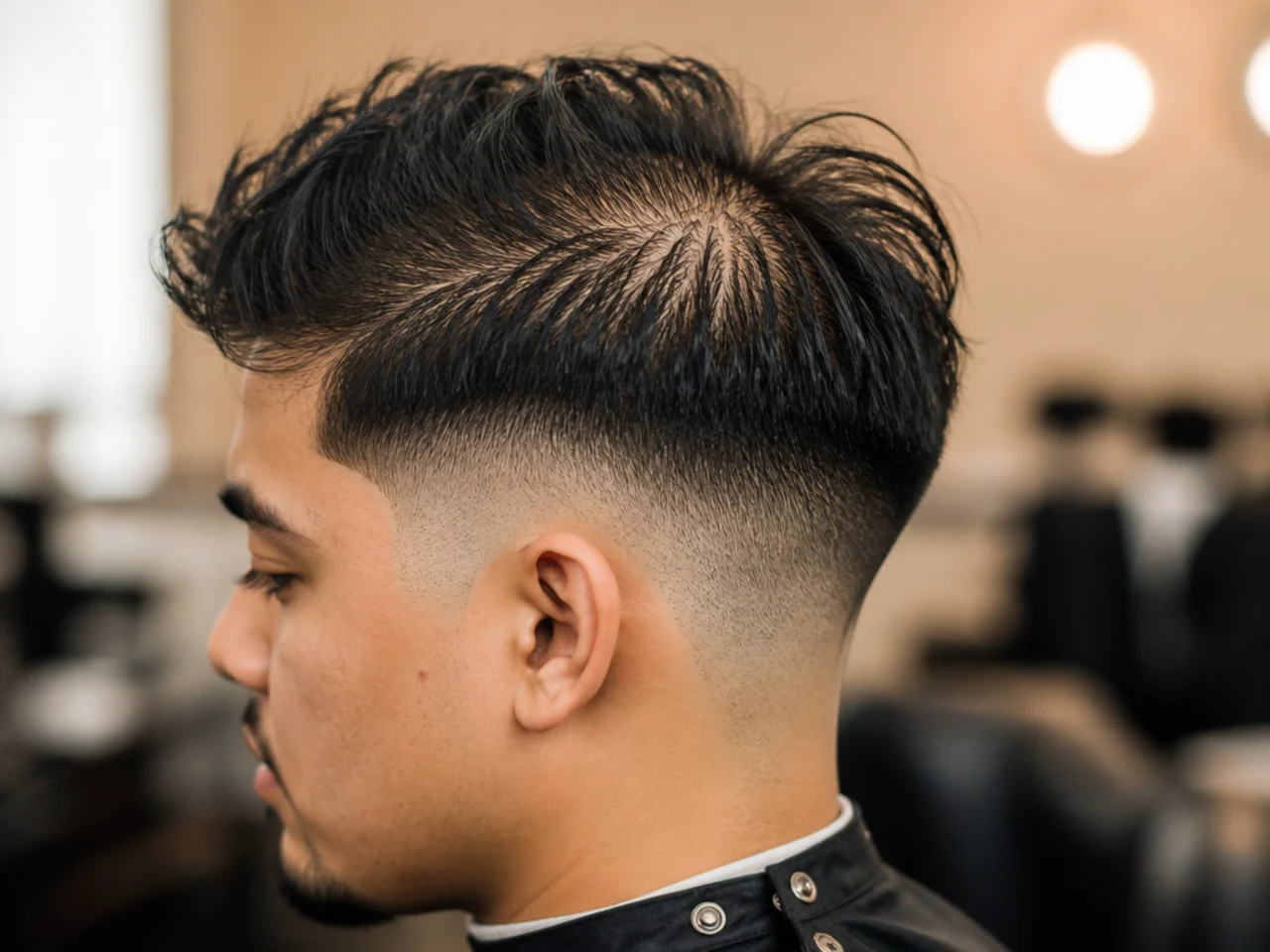
Identify where the thinning is. Crown, front hairline, or overall — each needs a different answer.
Keep the sides shorter than instinct suggests. Reducing contrast beats adding coverage every time.
Ask for blunt ends, not thinned ones. Blunt ends read as a solid edge, and thinning shears remove the little density you have.
Choose matte products only. Shine is what makes gaps visible.
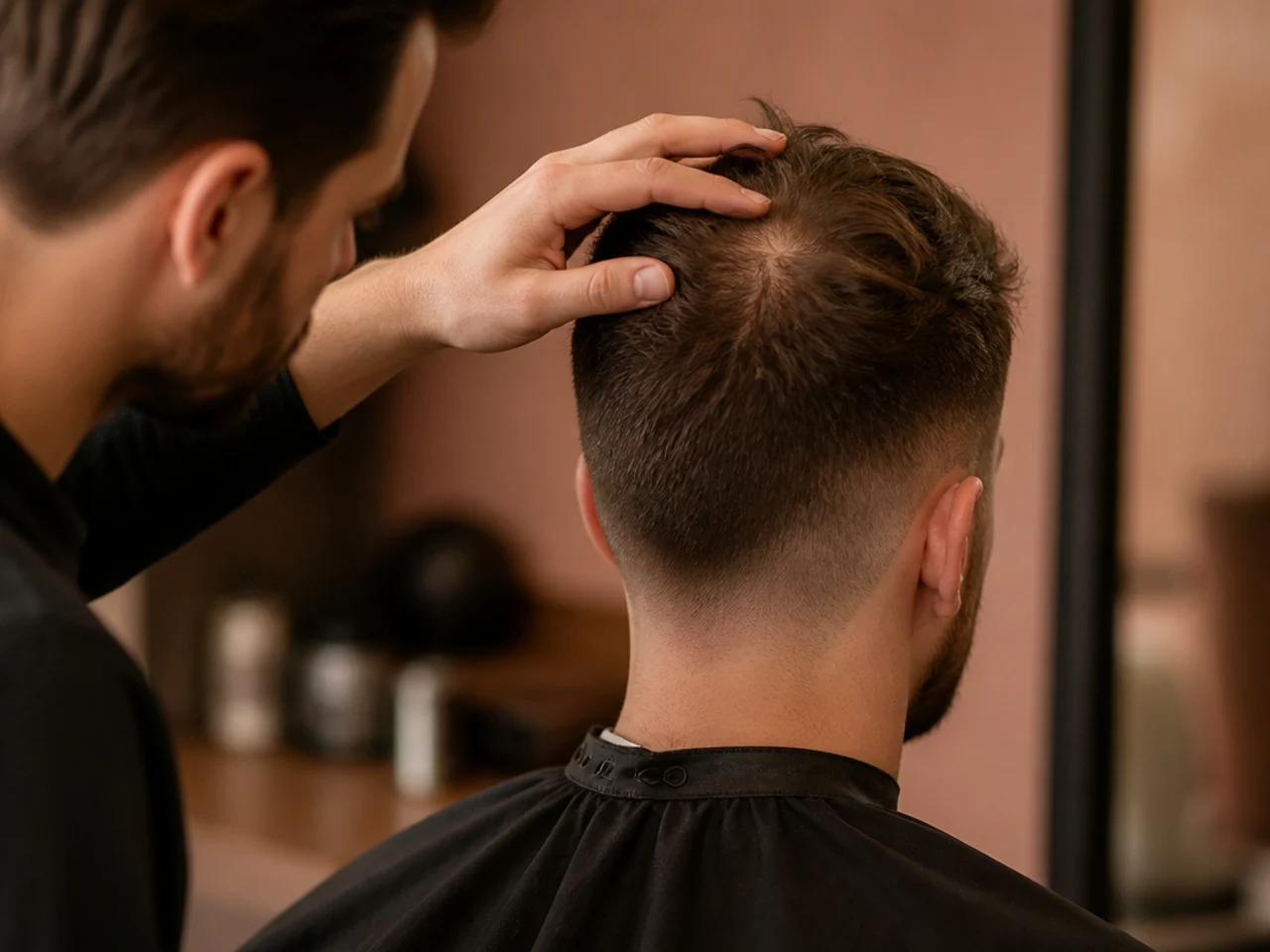
The 20 Cuts for Thin Hair
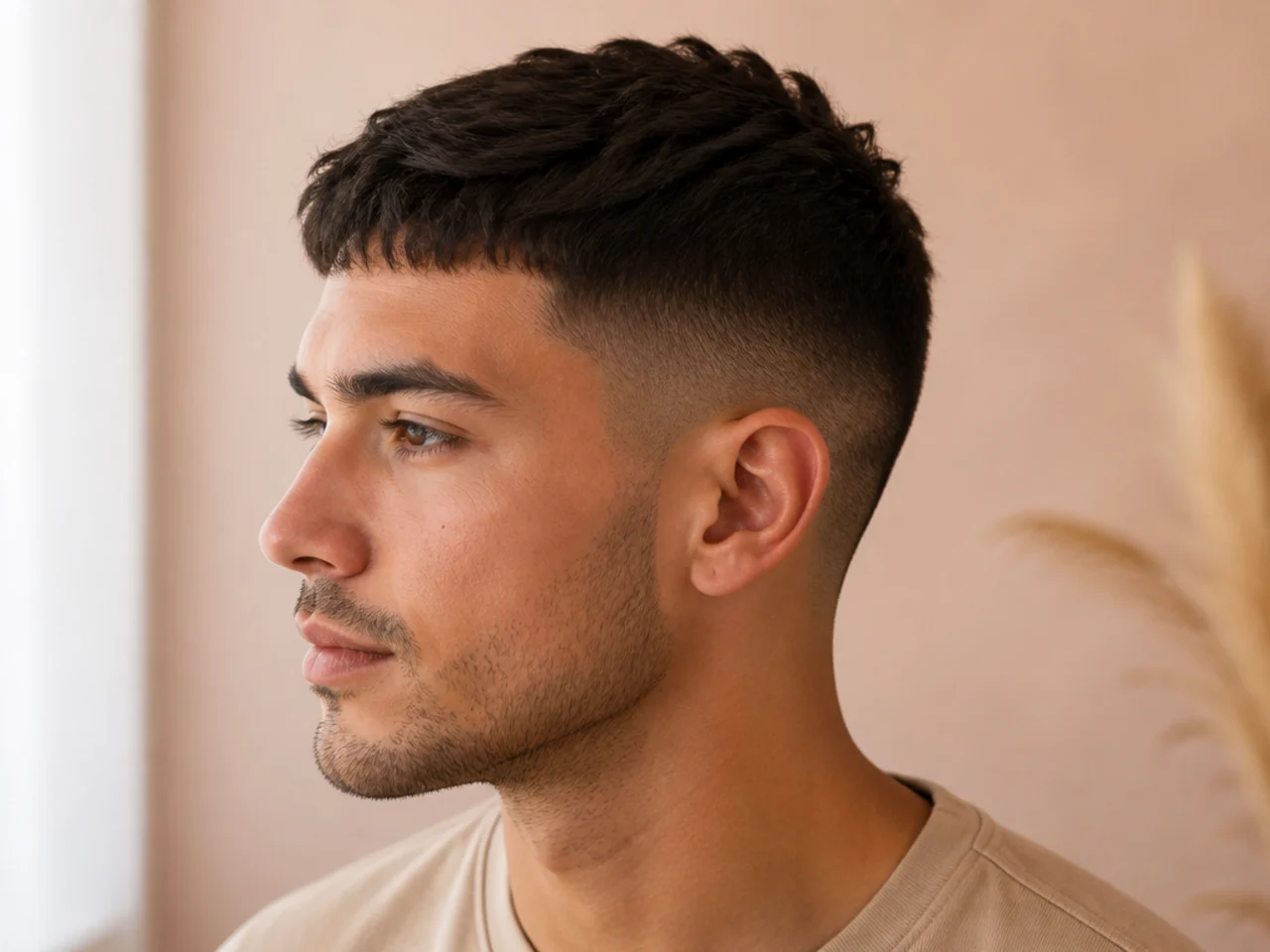
1. The Short Textured Crop
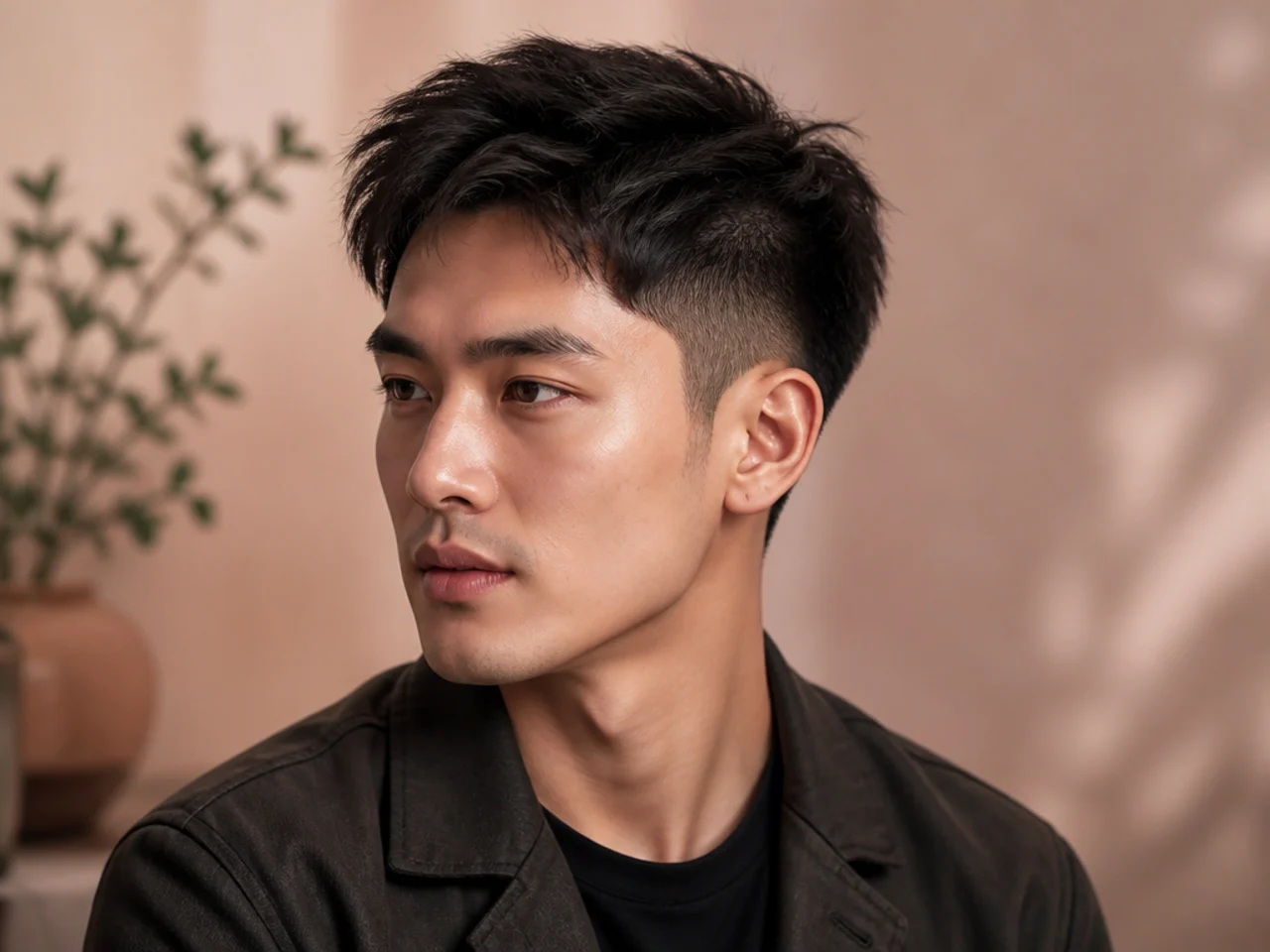
Choose this if the thinning is at the crown. Short forward-falling hair stands upright and covers more scalp per strand than the same hair lying flat.
2. The Caesar
Choose this if the front hairline has moved back. Bringing hair forward from behind the recession covers it without looking like a comb-over.
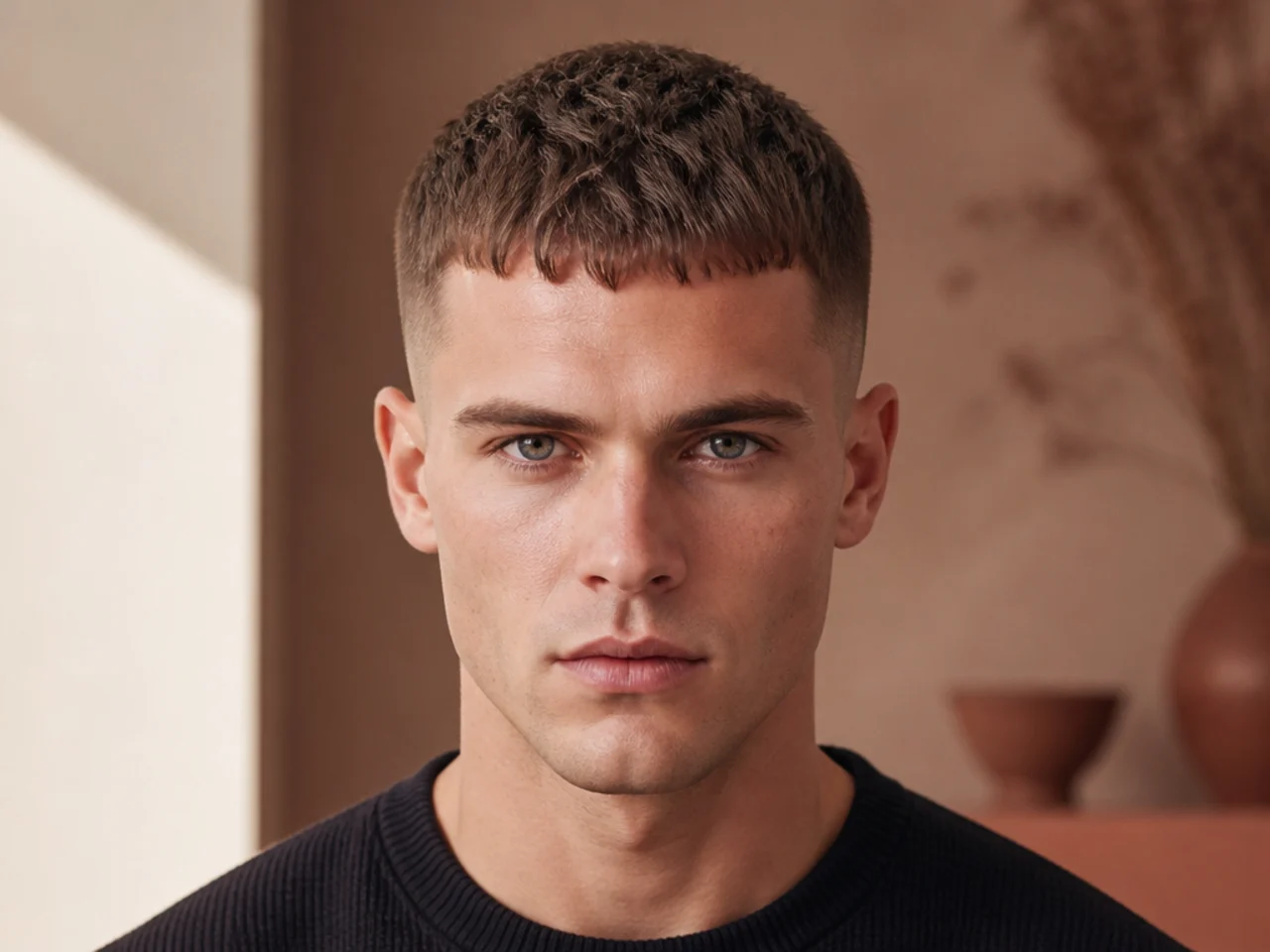
3. Buzz Cut at a #2
Choose this if the thinning is even. At 6mm every part of the head is the same density, so there is no full area for a sparse one to be compared against.
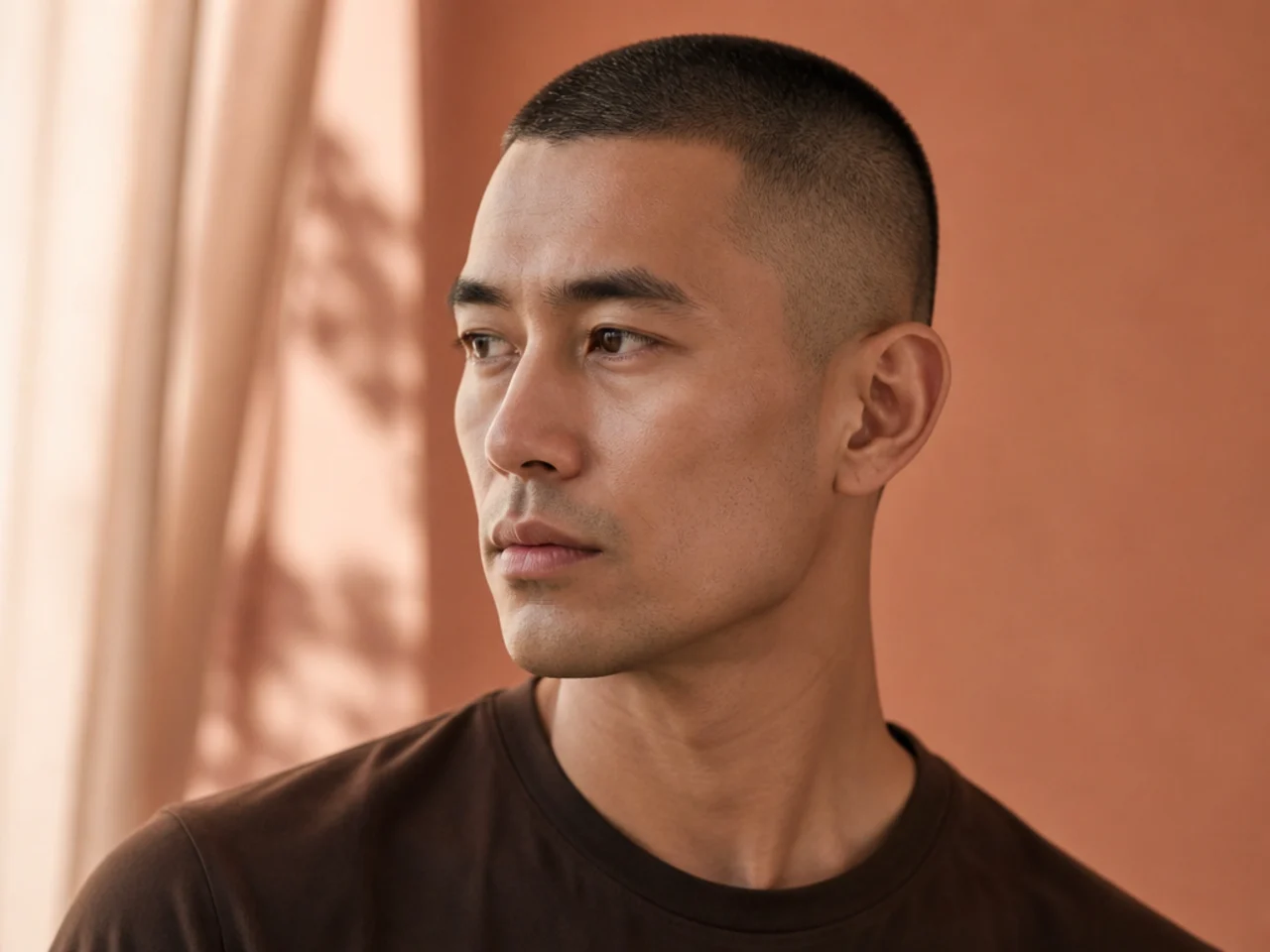
4. The Crew Cut
Choose this if you want structure with low upkeep. The graduated front holds more visual density than a uniform length, because the shortest hair is at the back where nobody looks.
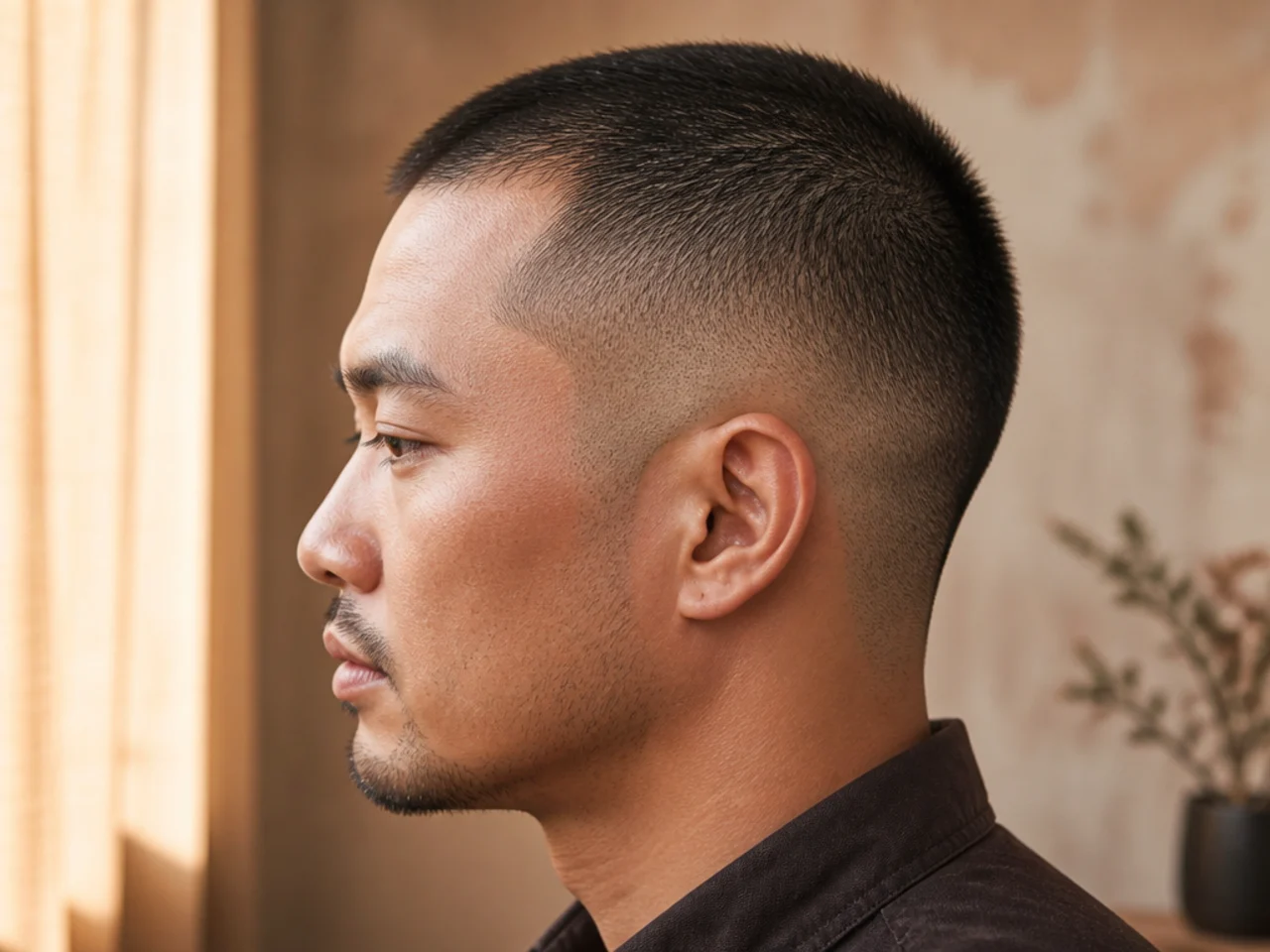
5. Low Taper With a Short Top
Choose this if you book monthly. A taper leaves a #1 at the neckline and holds three to four weeks, and short sides are the main lever against contrast.
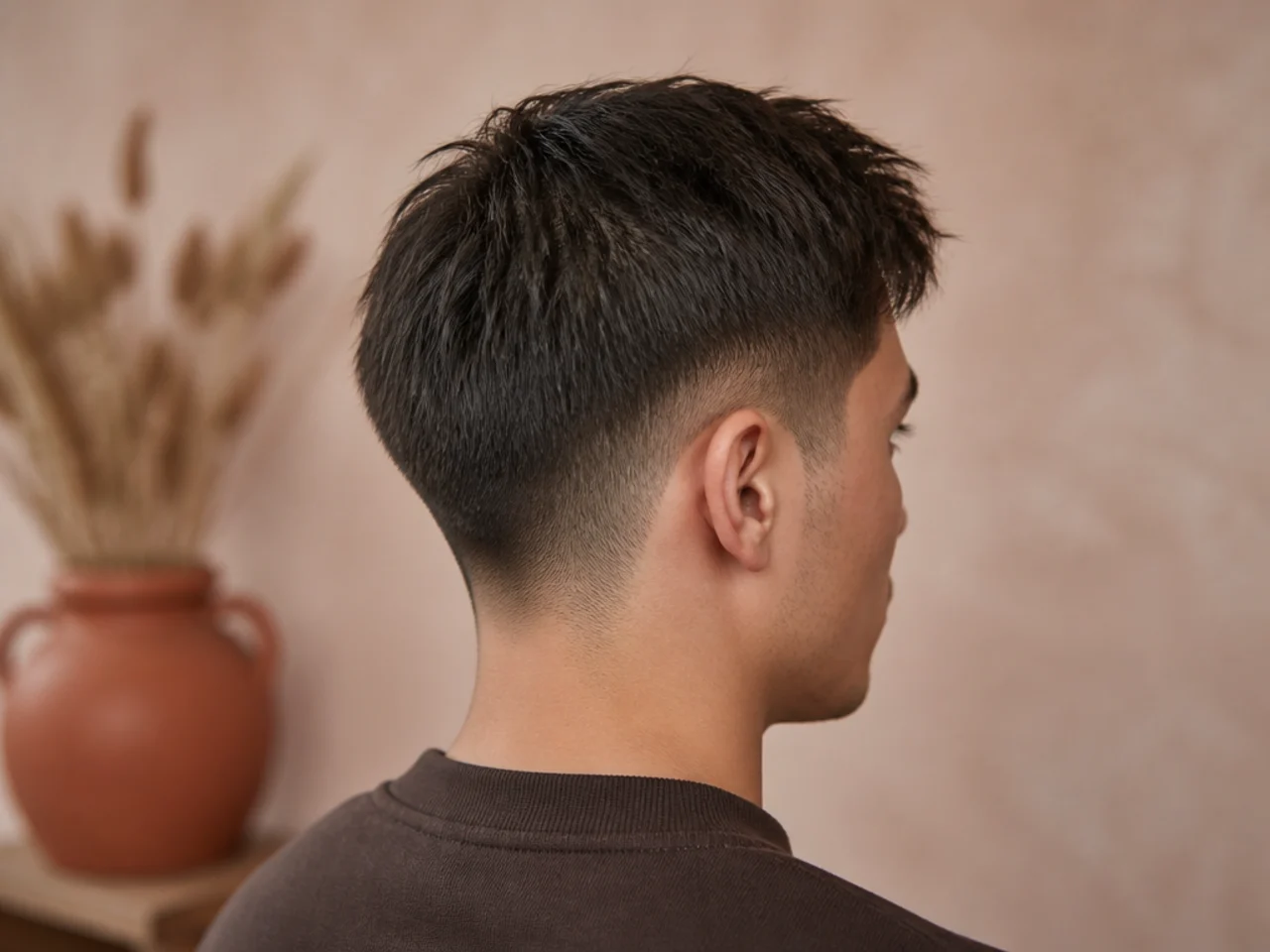
6. The French Crop
Choose this if you want the front thickened. Weight pushed forward and cut blunt at the tips makes the front edge read as a solid line rather than as individual strands.
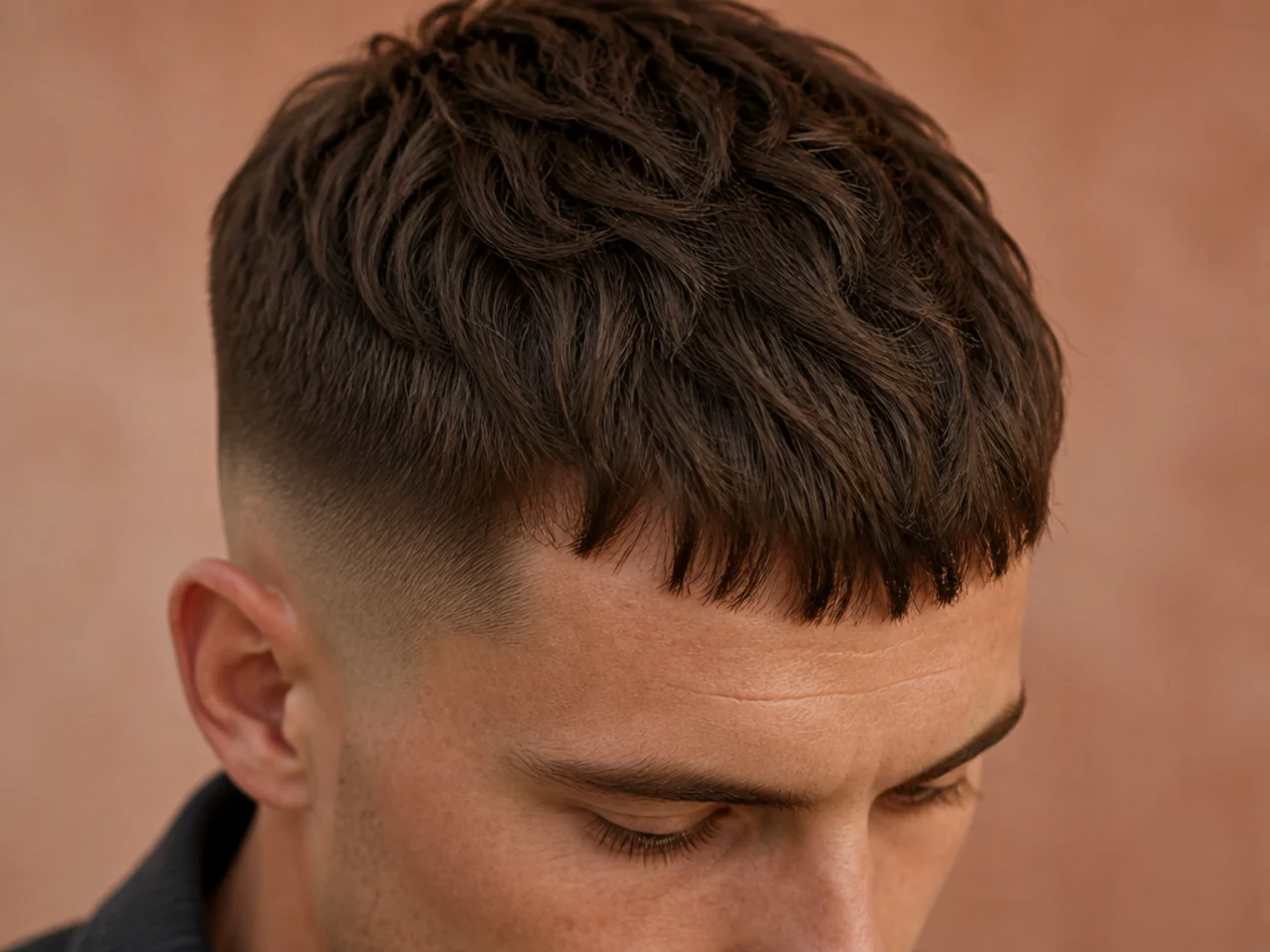
7. Textured Quiff, Kept Low
Choose this if the sides and front are fine but you want height. Keep it low, because a tall quiff opens the roots and shows the scalp underneath.
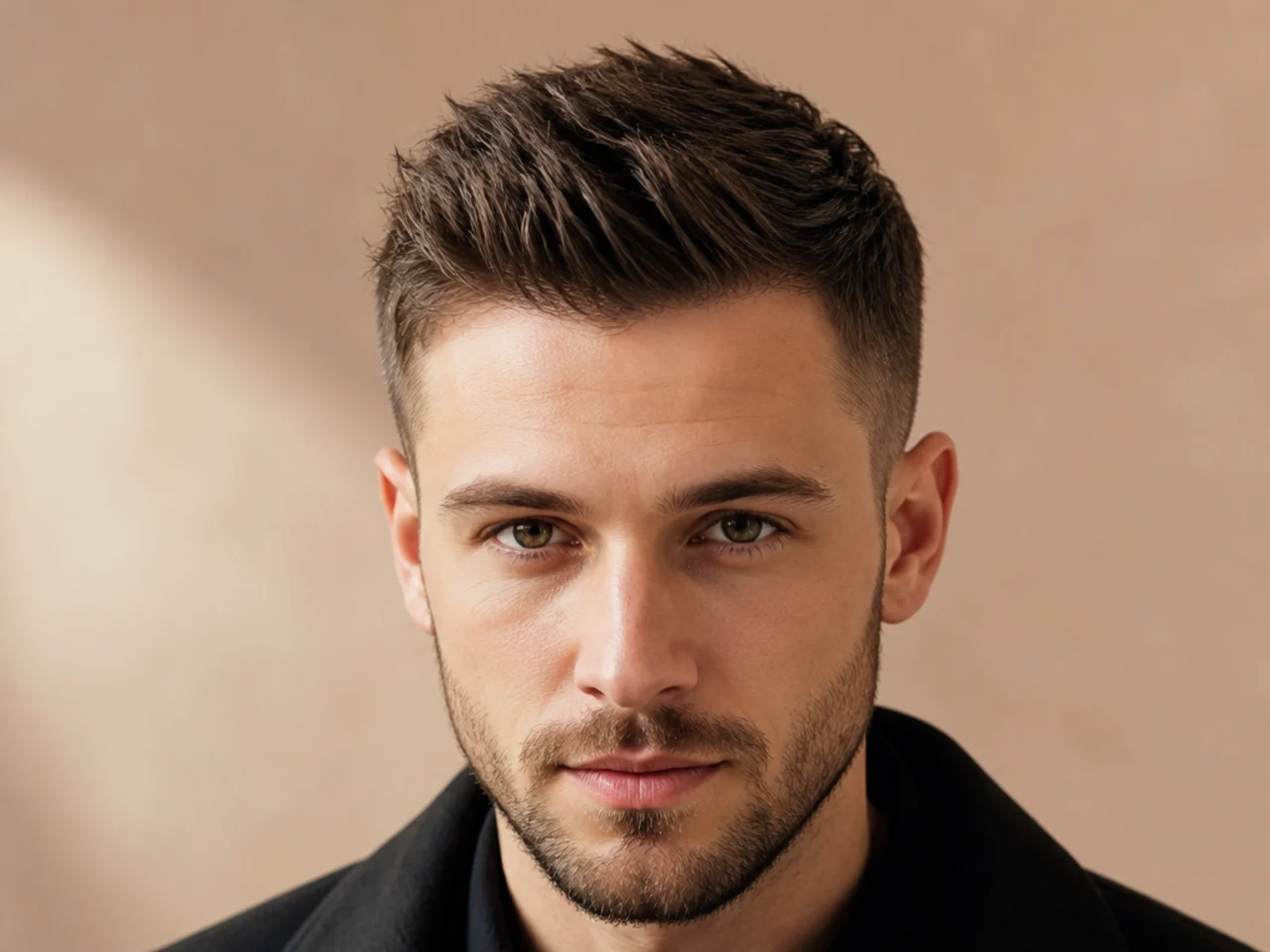
8. The Hard Part
Choose this if you already part your hair. A shaved line is a deliberate scalp line, which is very different from an accidental one showing through.
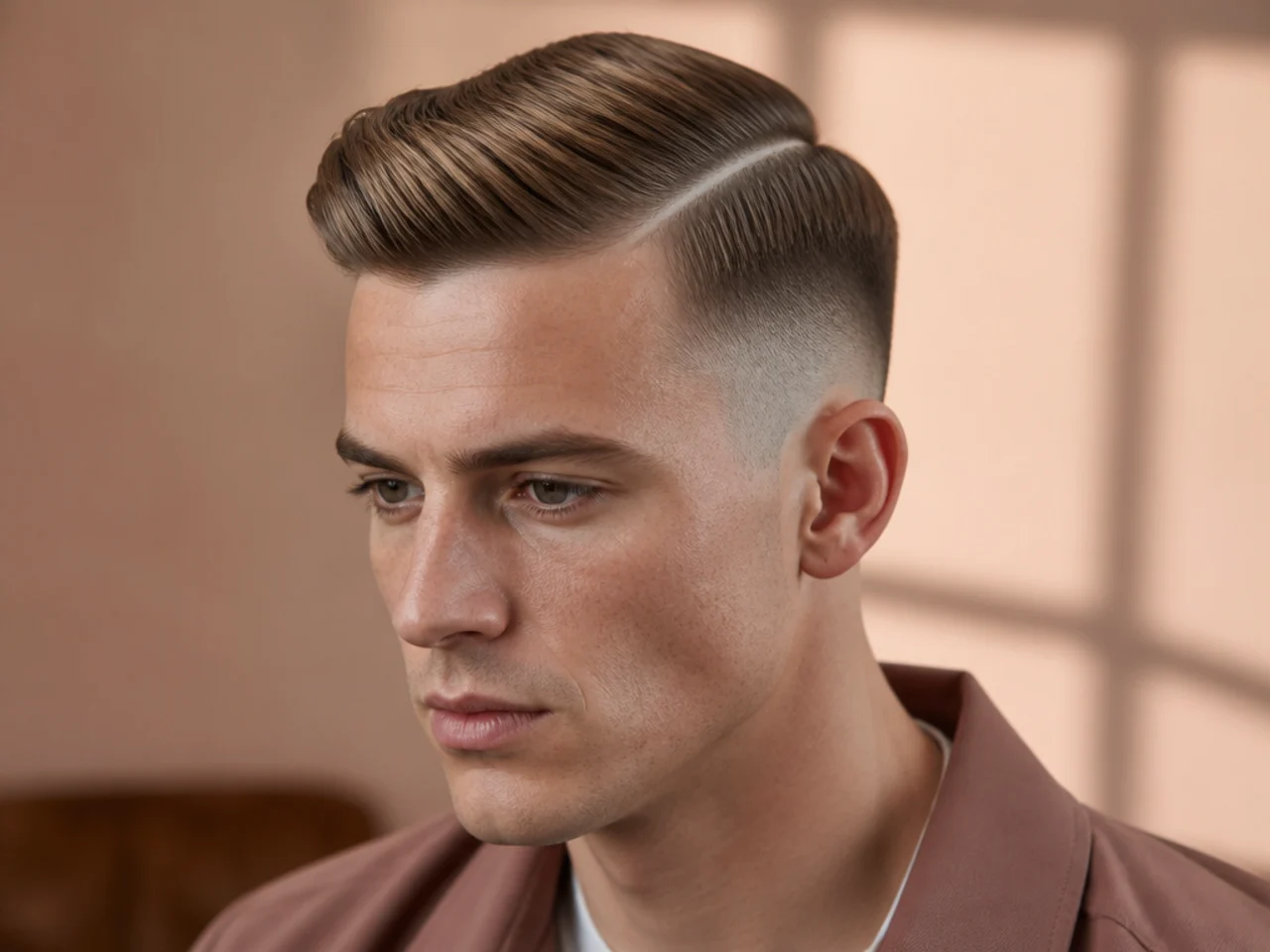
9. Mid Fade With a Blunt Top
Choose this if you want the top to read as a defined shape. The fade sits between temple and parietal ridge, so the top has a clear boundary rather than fading into sparseness.
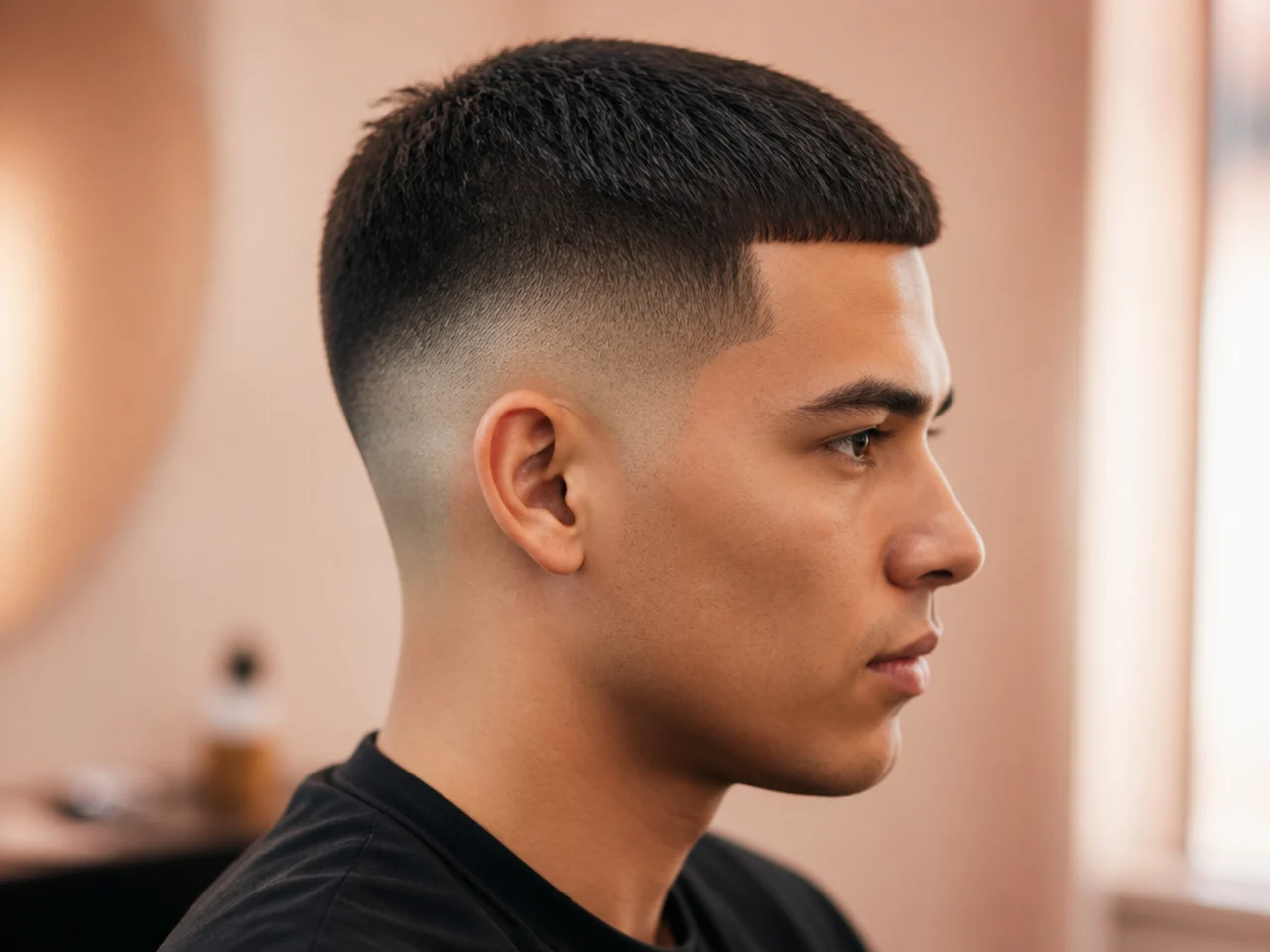
10. Short Forward Fringe
Choose this if your temples have receded. A forward fringe fills exactly the corners a recession empties, and it needs no product to do it.
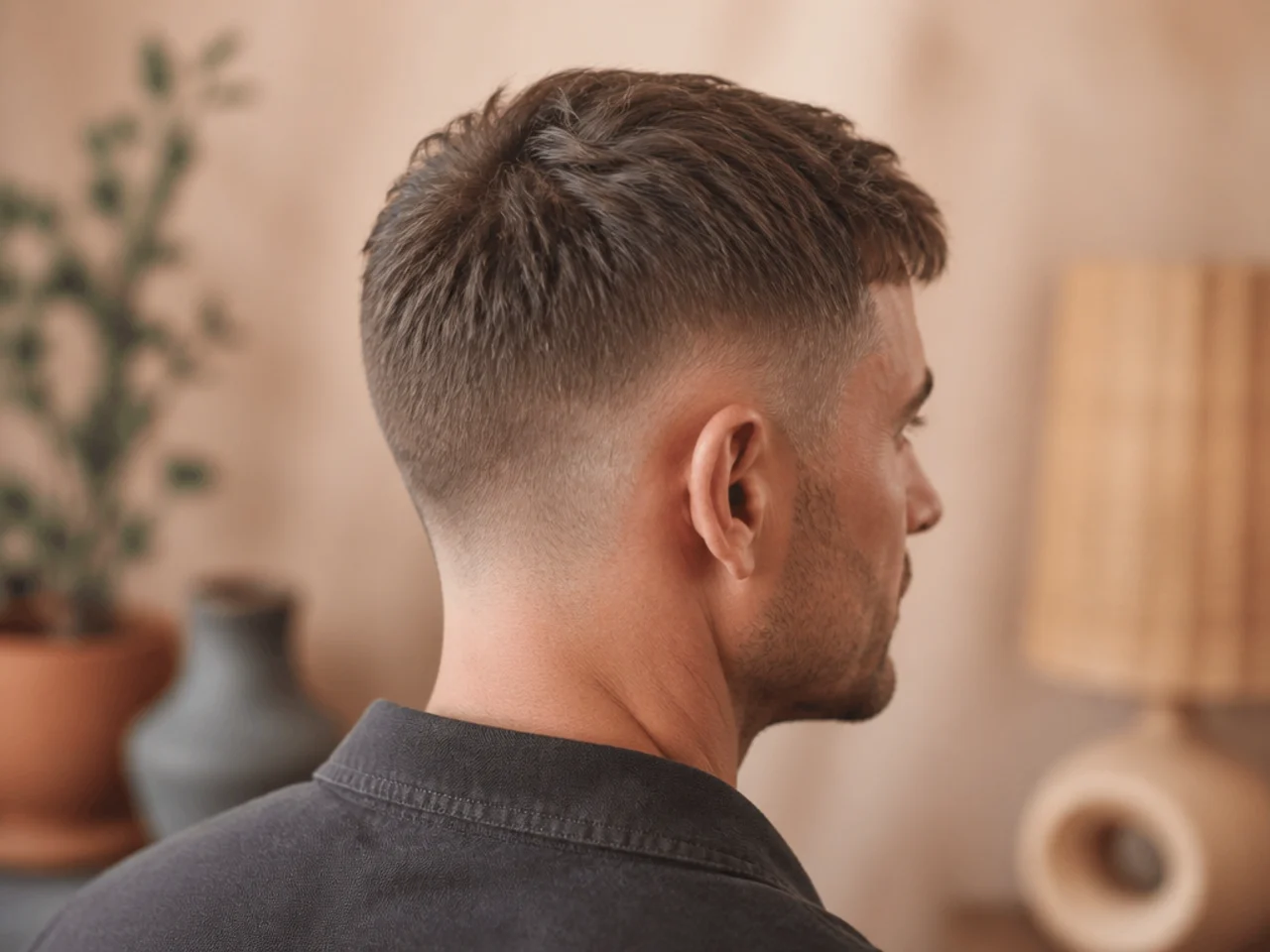
11. The Ivy League
Choose this if you need something formal. It keeps enough length at the front to look considered while staying short enough that the roots stand up.
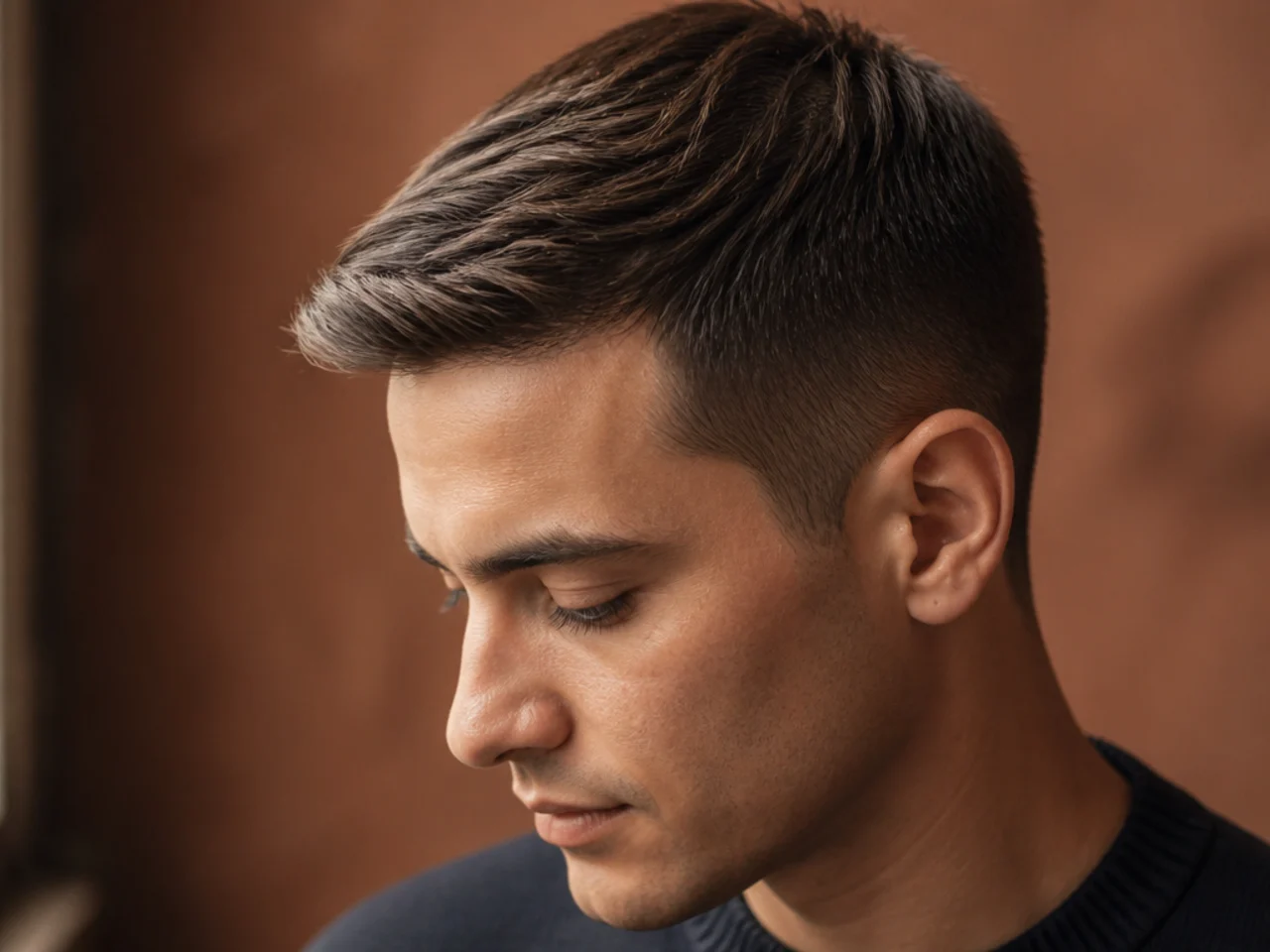
12. Blunt-Cut Medium Length
Choose this if your thinning is only at the temples. Blunt ends at medium length keep the perimeter solid, which is where thin hair usually gives itself away.
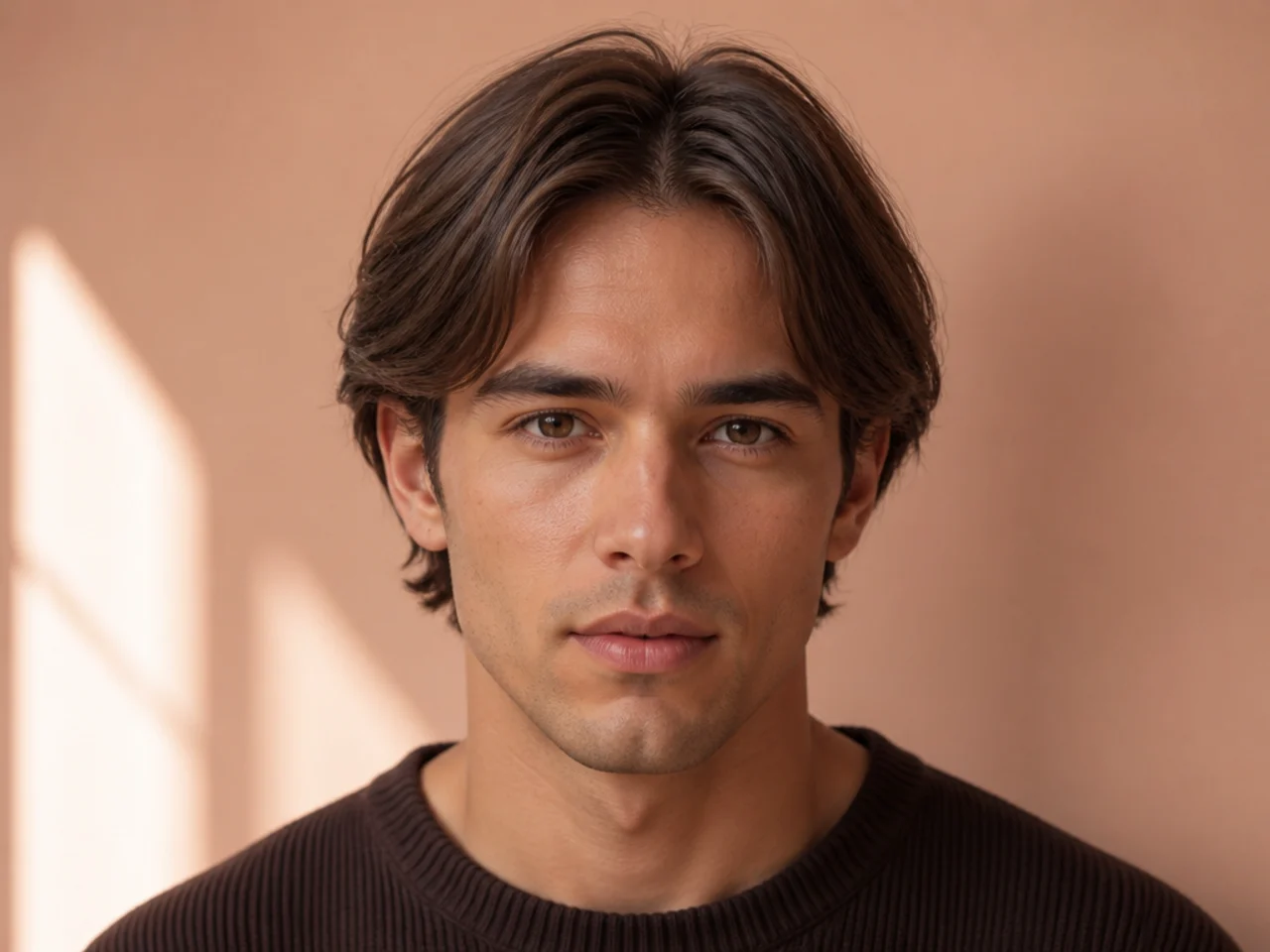
13. The Shadow Taper
Choose this if a skin fade feels too stark. Taking the sides to a #1 rather than skin leaves a shadow and keeps the contrast gentle, which is the same principle the low taper fade is built on.
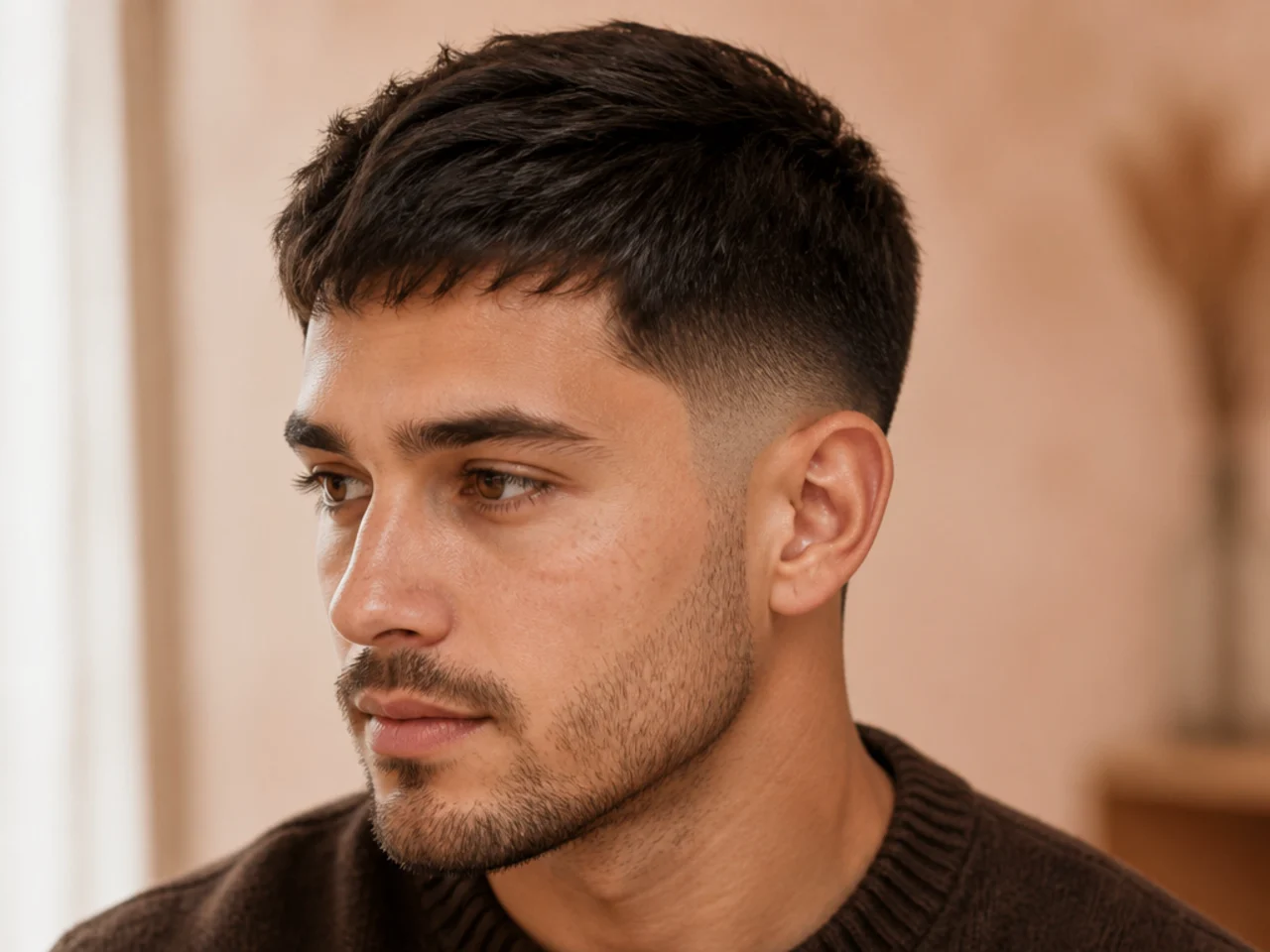
14. Short Sides With a Beard
Choose this when the scalp is visible through the top rather than only receding at the temples. Moving visual weight to the jaw redistributes attention downward and costs nothing but time.
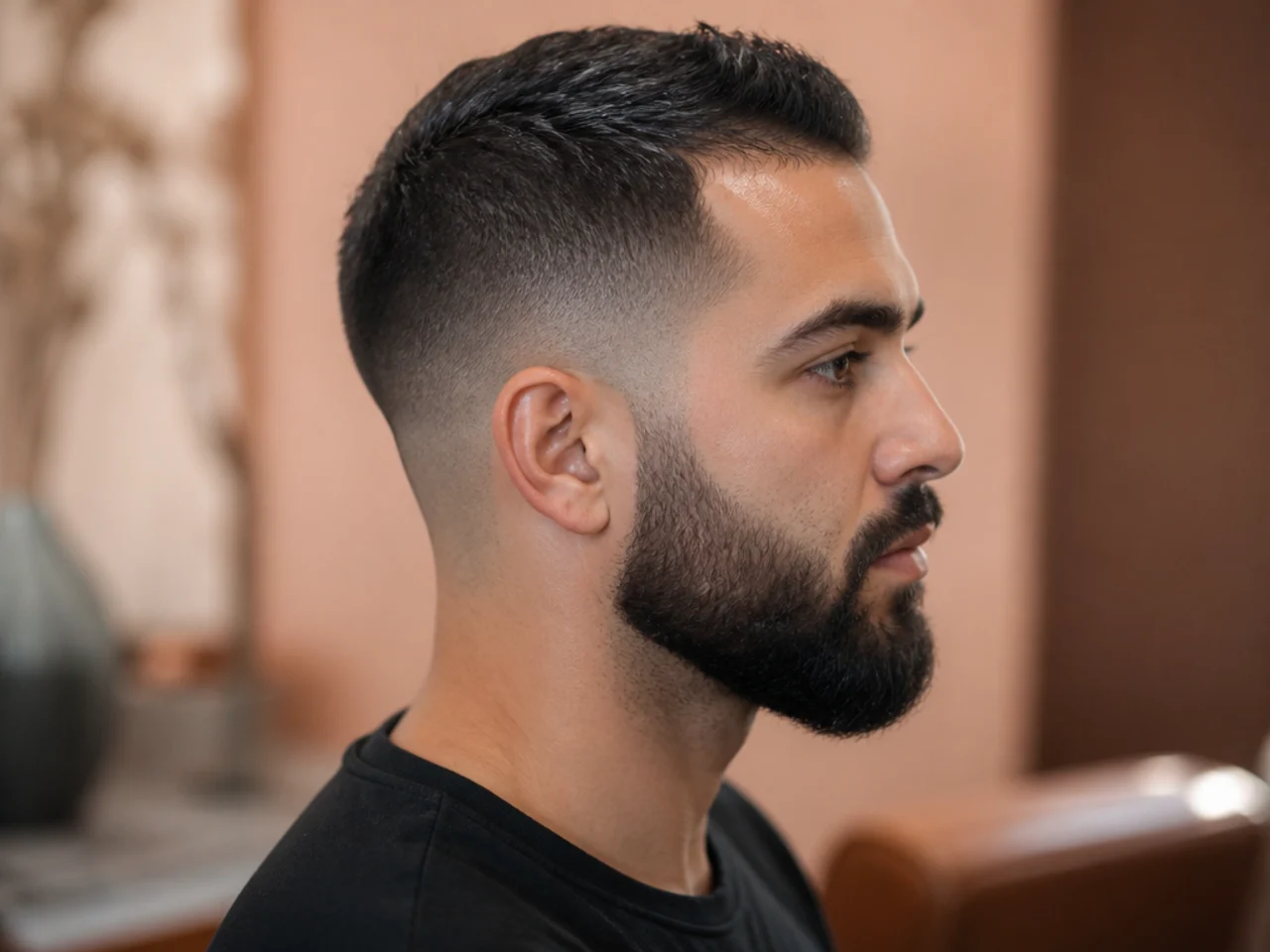
15. The Messy Finger-Styled Top
Choose this if your hair is fine but not sparse. Irregular direction means strands cross each other, and crossed strands block more light than parallel ones.
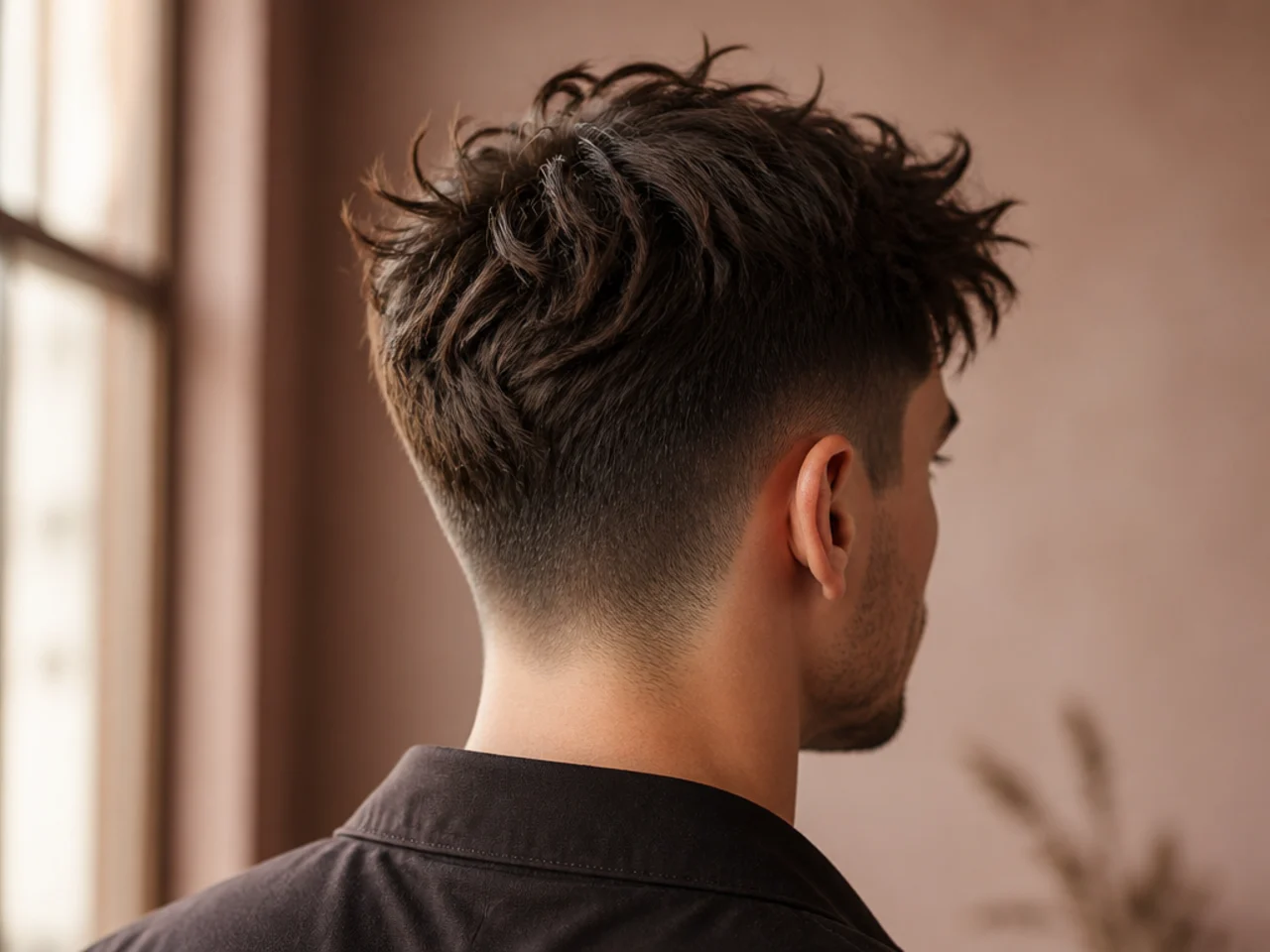
16. Cropped Sides With a Textured Fringe
Choose this if you want the least maintenance for the most coverage. Two short sections, one direction, and no styling decisions to make each morning.
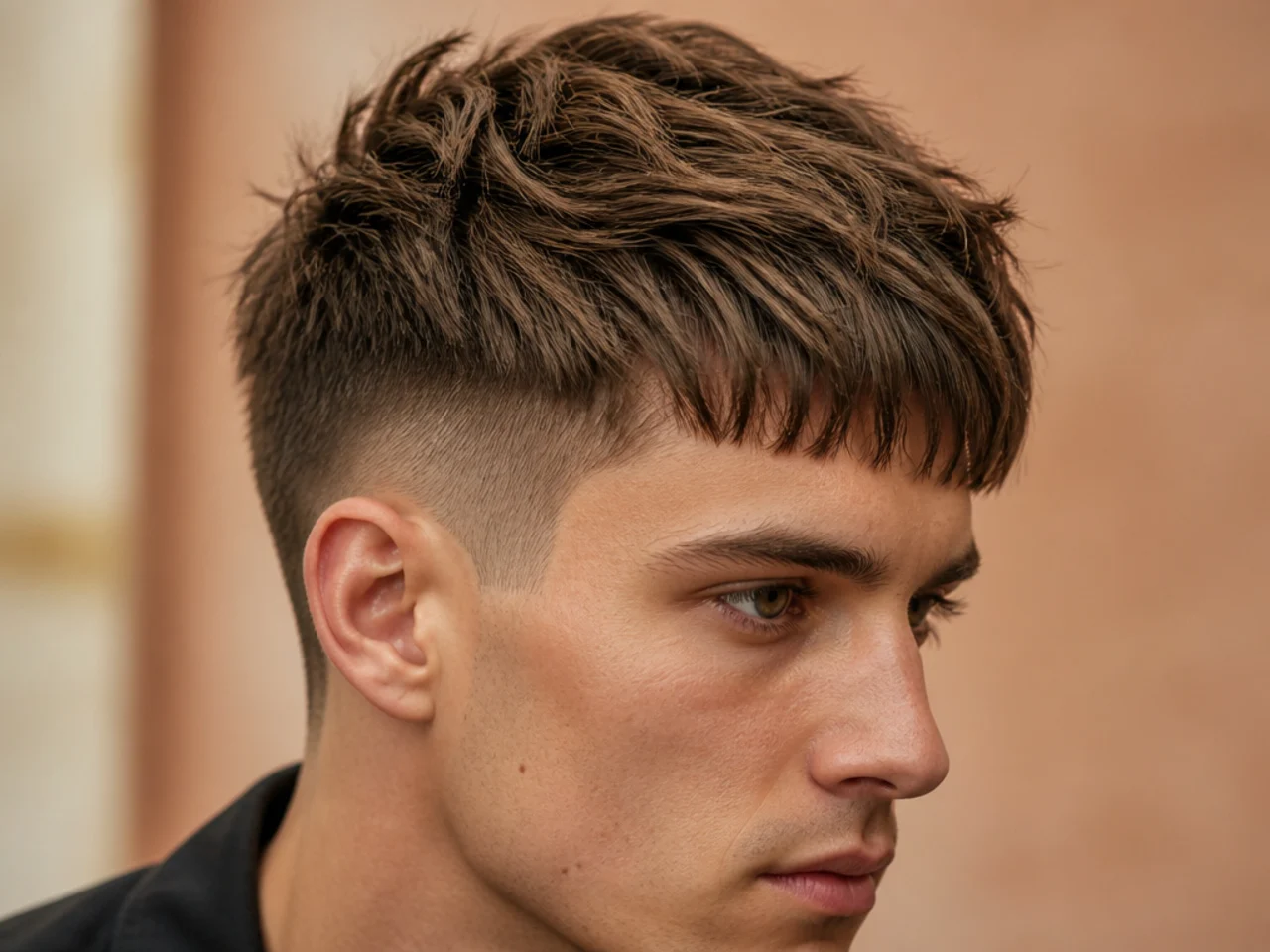
17. Curly Thin Hair With a Taper
Choose this if you have curl left. Curl blocks light better than any straight texture because the strands cross each other constantly.

18. The Grown-Out Buzz
Choose this if you want to test shorter without committing. Two weeks of growth from a #1 tells you exactly how a short cut will read on your density.
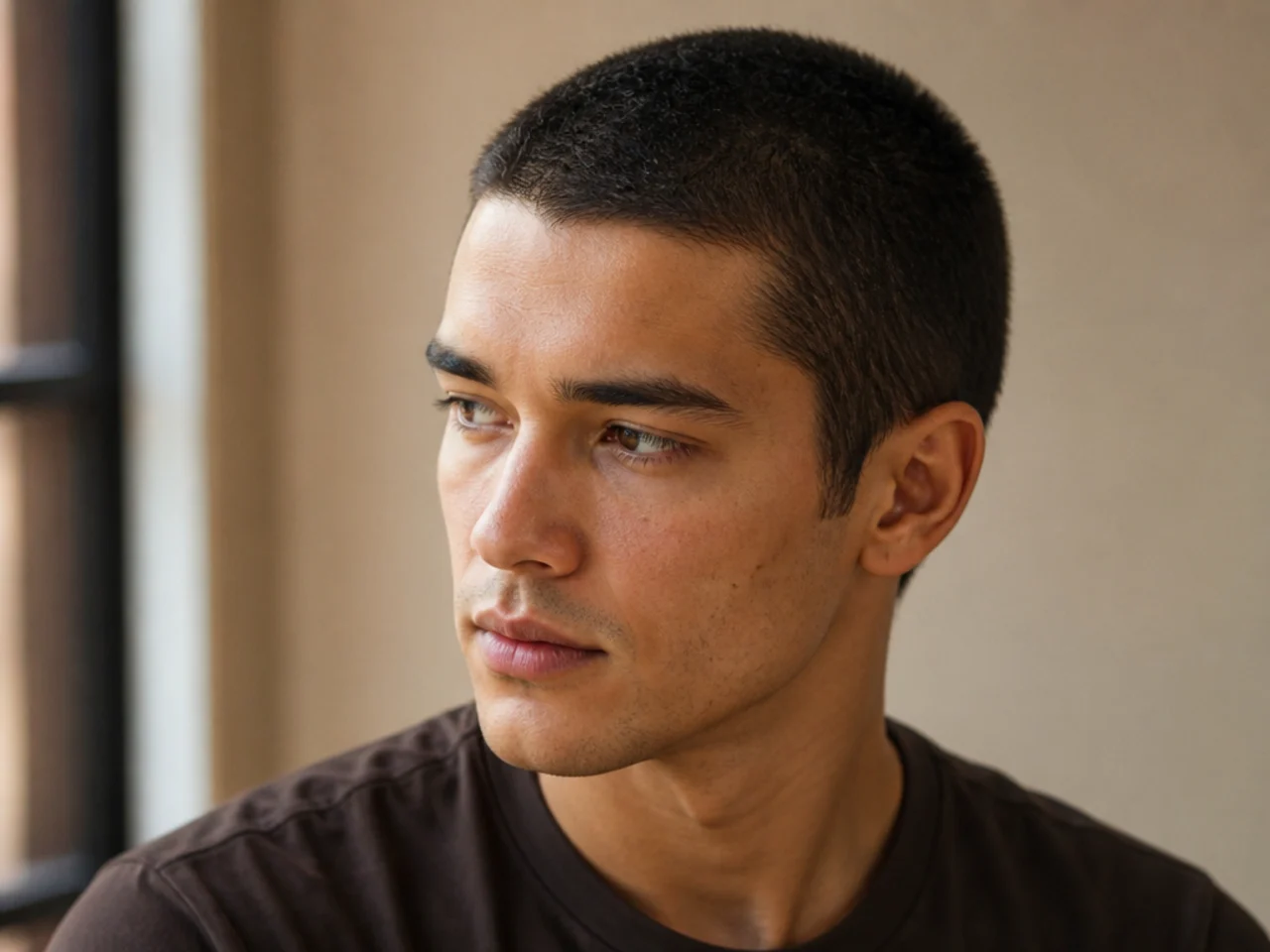
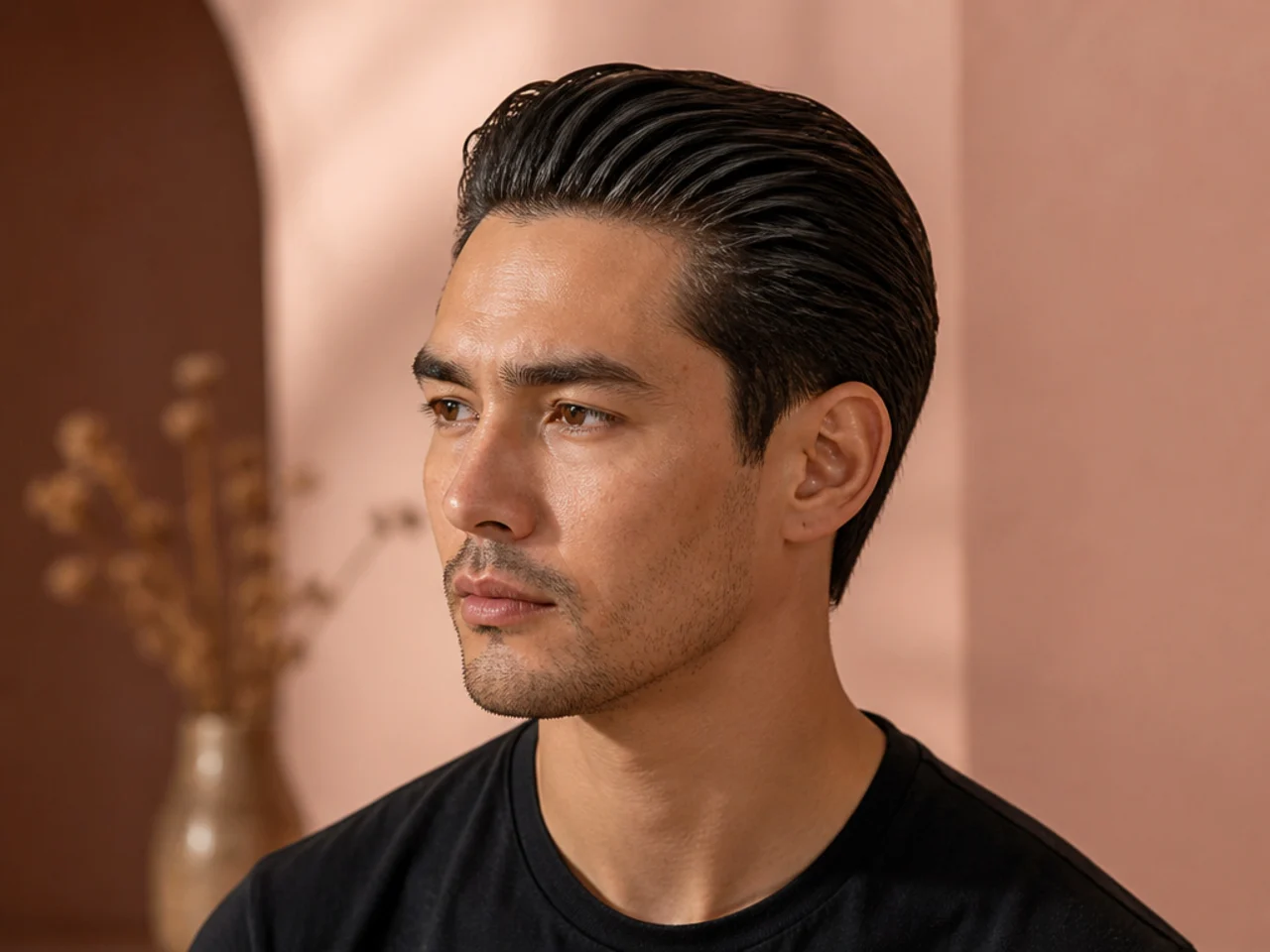
19. Matte Side Part With Blunt Ends
Choose a side part if you want an office cut. Matte finish stops the strands clumping, and blunt ends give the perimeter a solid edge.
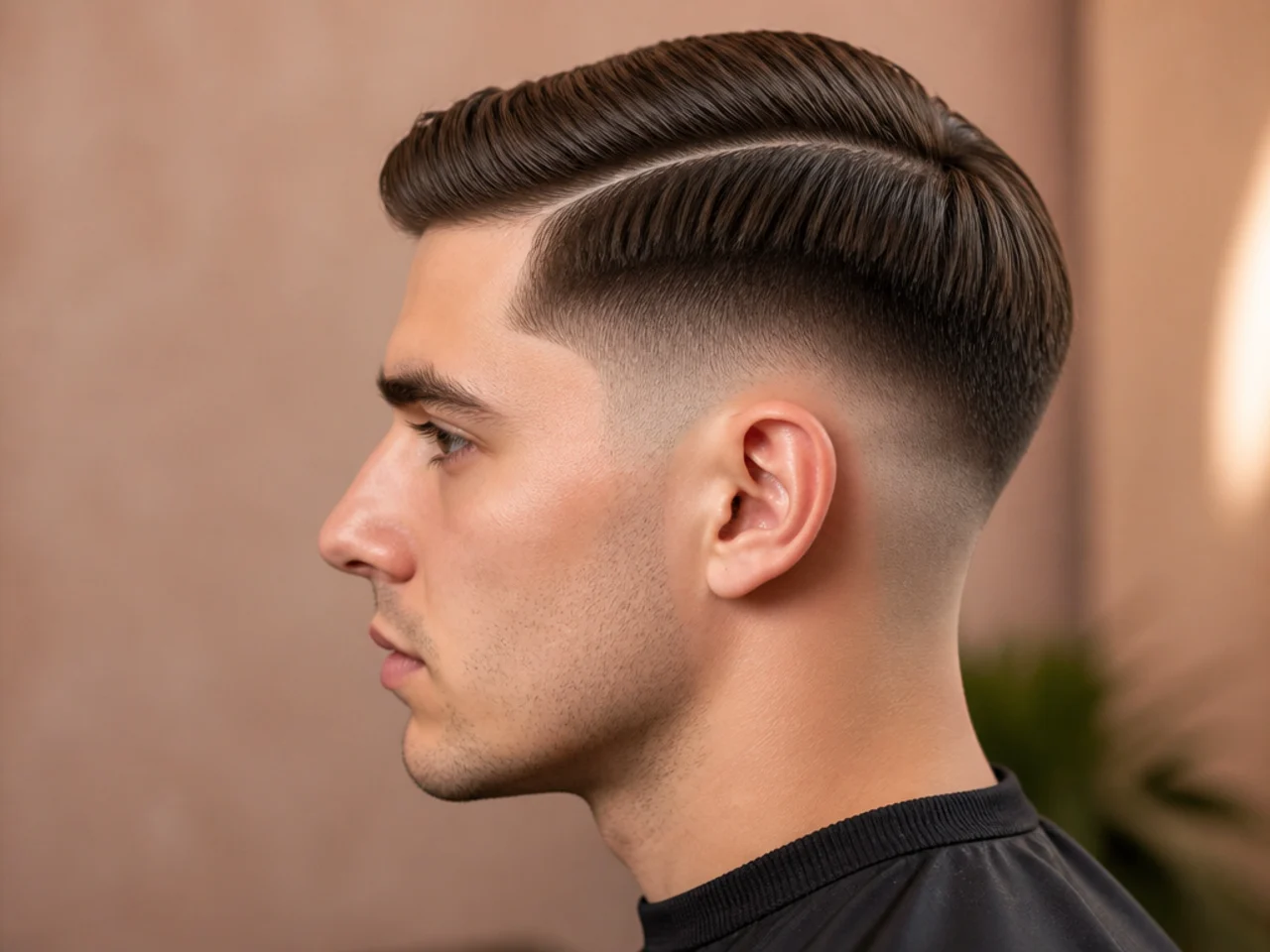
20. The Shave
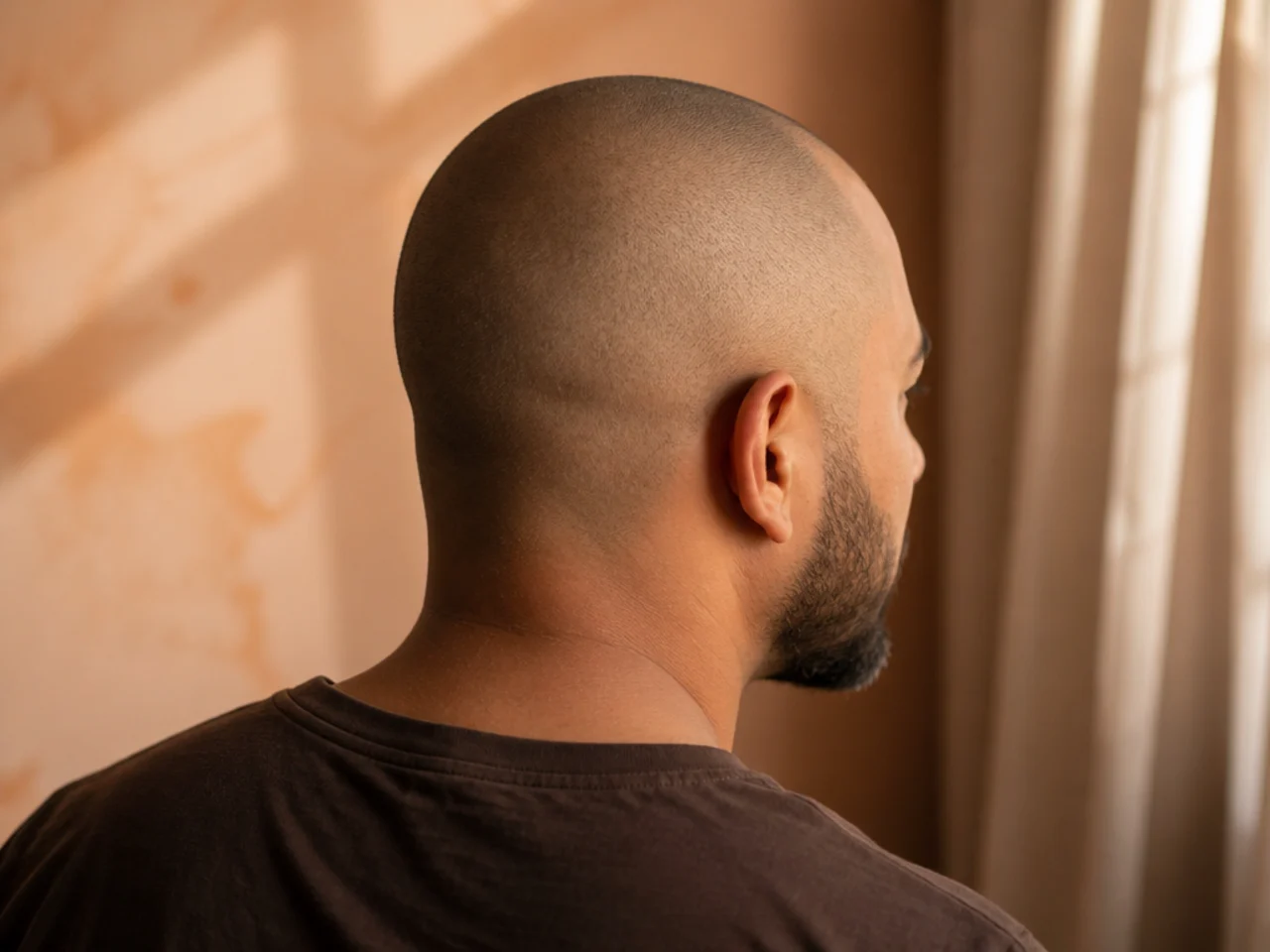
Choose this if the density has gone past what a cut can help with. It removes contrast, coverage and upkeep in a single decision, and it is a choice rather than a concession.
Styling and Upkeep
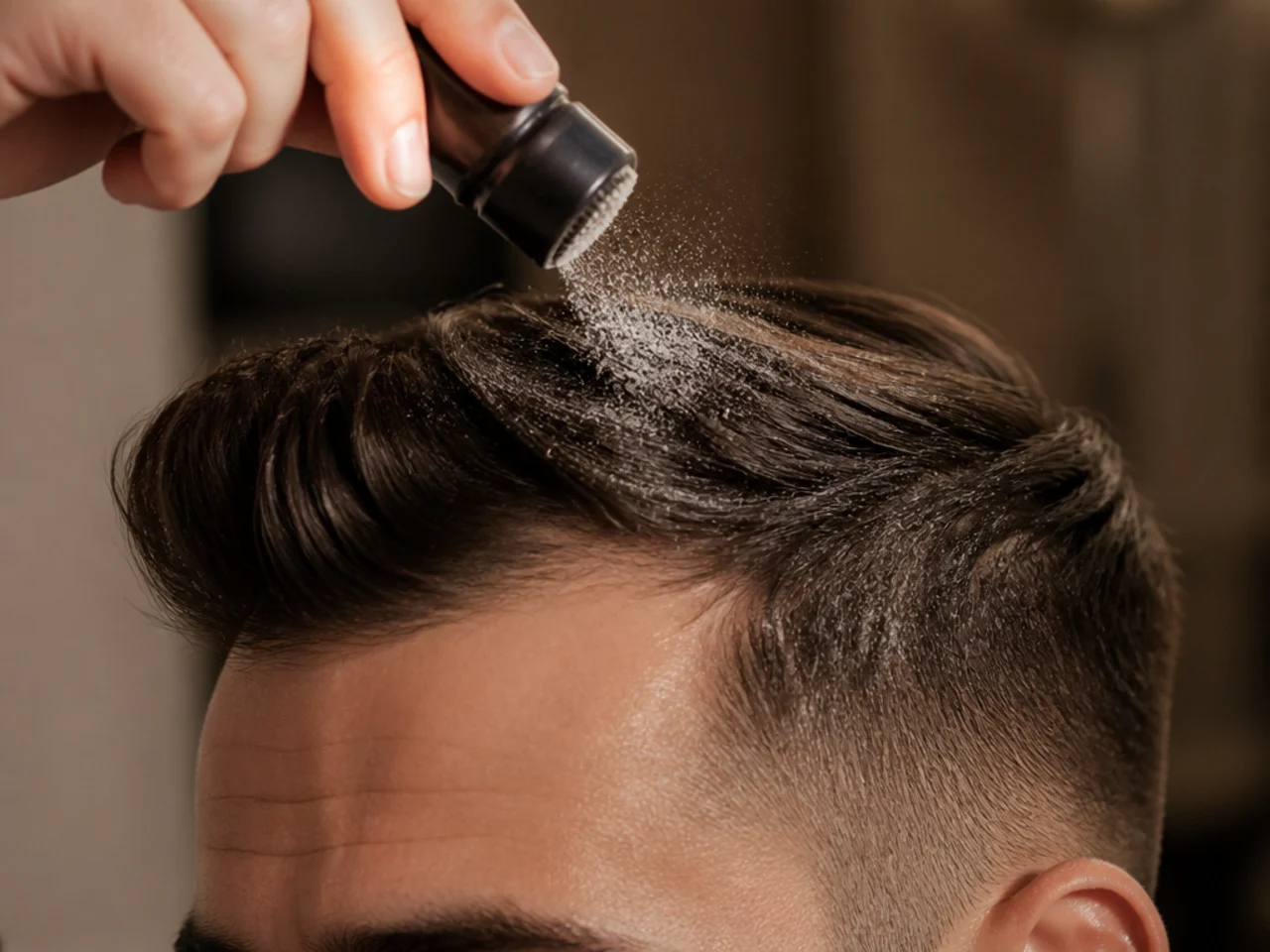
Use matte clay or texture powder at the roots. Both add grip where thin hair has no natural weight to hold a lift.
Dry the roots upward before anything else. Upright roots cover more scalp than any product will.
Avoid conditioner on the roots. It softens the cuticle and drops the lift you just created.
Never comb it into one direction. Parallel strands leave gaps, and crossed strands do not.
Book on the sides. Short sides are the main structural lever, and they are the part that grows out of shape.
Mistakes to Avoid
Growing it longer to cover more. Long thin hair separates and shows more scalp, not less.
Using shine pomade. It groups strands into clumps with lit skin between them.
Letting a barber use thinning shears. You cannot afford to lose density anywhere.
Keeping the sides full. It maximises the contrast that makes a thin top look thinner.
Combing hair across a recession. It is the one thing everyone recognises immediately.
FAQ
Does short look thicker? Usually yes, because short roots stand up and cast less shadow.
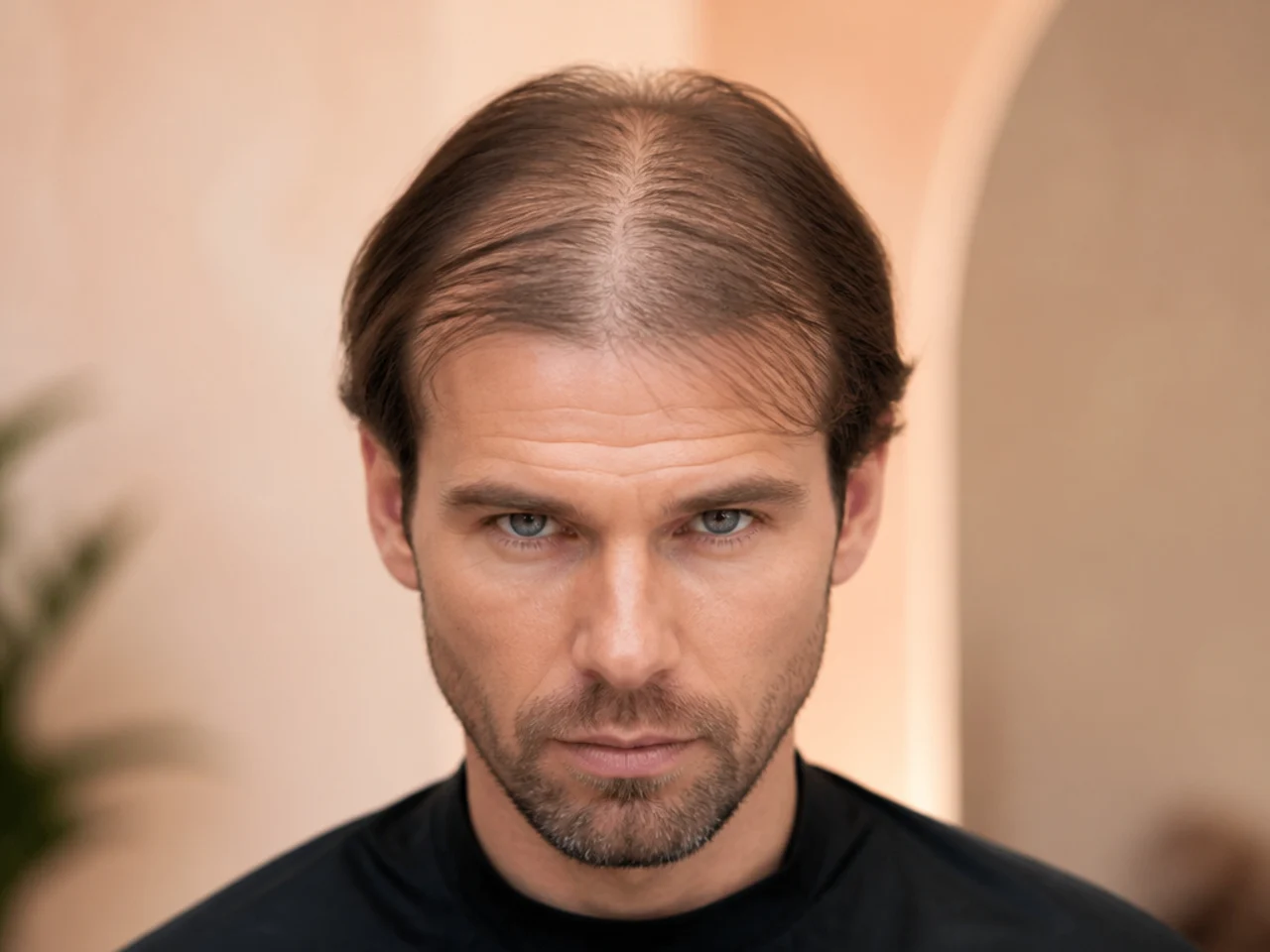
What about a receding hairline? Weight high, sides short, to reduce the contrast.
Which products are wrong? Anything with shine or weight.
Final Thoughts
Stand under a bright overhead light and look at where the scalp actually shows, because that spot is what the haircut needs to answer. Once you know whether it is the crown, the temples or the whole top, the choice narrows to two or three cuts and stops being a guessing game.
For more density-specific options see haircuts for thin hair, and for the shortest versions see short haircuts for thin hair. More in Men's Haircuts.