15 Haircut Ideas for Older Men to Try
Hair does not simply thin with age, it changes texture, and a coarser, drier strand behaves nothing like the one you were cutting at thirty. The cut that stopped working probably stopped because the material changed underneath it.
In this article · 22
- What Actually Changes
- How to Choose Yours
- The 15 Cuts for Older Men
- 1. The Short Textured Crop
- 2. The Classic Side Part
- 3. Low Taper With a Short Top
- 4. The Crew Cut
- 5. The Ivy League
- 6. The #2 Buzz
- 7. The Caesar
- 8. Medium Length With Layers
- 9. The Slick Back With Softened Ends
- 10. Short Back and Sides With a Scissor Top
- 11. The Textured Quiff, Lowered
- 12. Curly Grey With a Taper
- 13. The Grown-Out Natural
- 14. Short Sides With a Full Beard
- 15. The Clean Shave
- Styling and Upkeep
- Mistakes to Avoid
- FAQ
- Final Thoughts
The common assumption is that older men need shorter hair. The more useful observation is that the hair itself is a different material now.
Age changes texture before it changes quantity. Strands become coarser and drier, which means they hold a shape more stubbornly and reflect light differently.
Density becomes uneven rather than simply lower. The crown thins while the sides stay full, and that unevenness is the thing a good cut is actually working around.
What Actually Changes
Texture coarsens. Individual strands get thicker and drier, so they stand rather than fall.
Density thins from the crown outward. The sides usually hold their density longest, which creates a contrast.
Grey reflects more light. It reads thicker than it is and shows every cut line more clearly.
The hairline moves back, not up. Recession happens at the temples first, which changes the shape of the front section.
How to Choose Yours
Map where your density actually is. Full sides with a thin crown is a different problem from even thinning.
Reduce contrast, do not chase coverage. Keeping the sides short is what stops the eye going to the top.
Soften every outline. Coarse grey hair makes hard lines look harder, so ask for broken edges.
Pick something you can do in two minutes. A style that needs a blow-dry will not get one on a Tuesday.
The 15 Cuts for Older Men
1. The Short Textured Crop
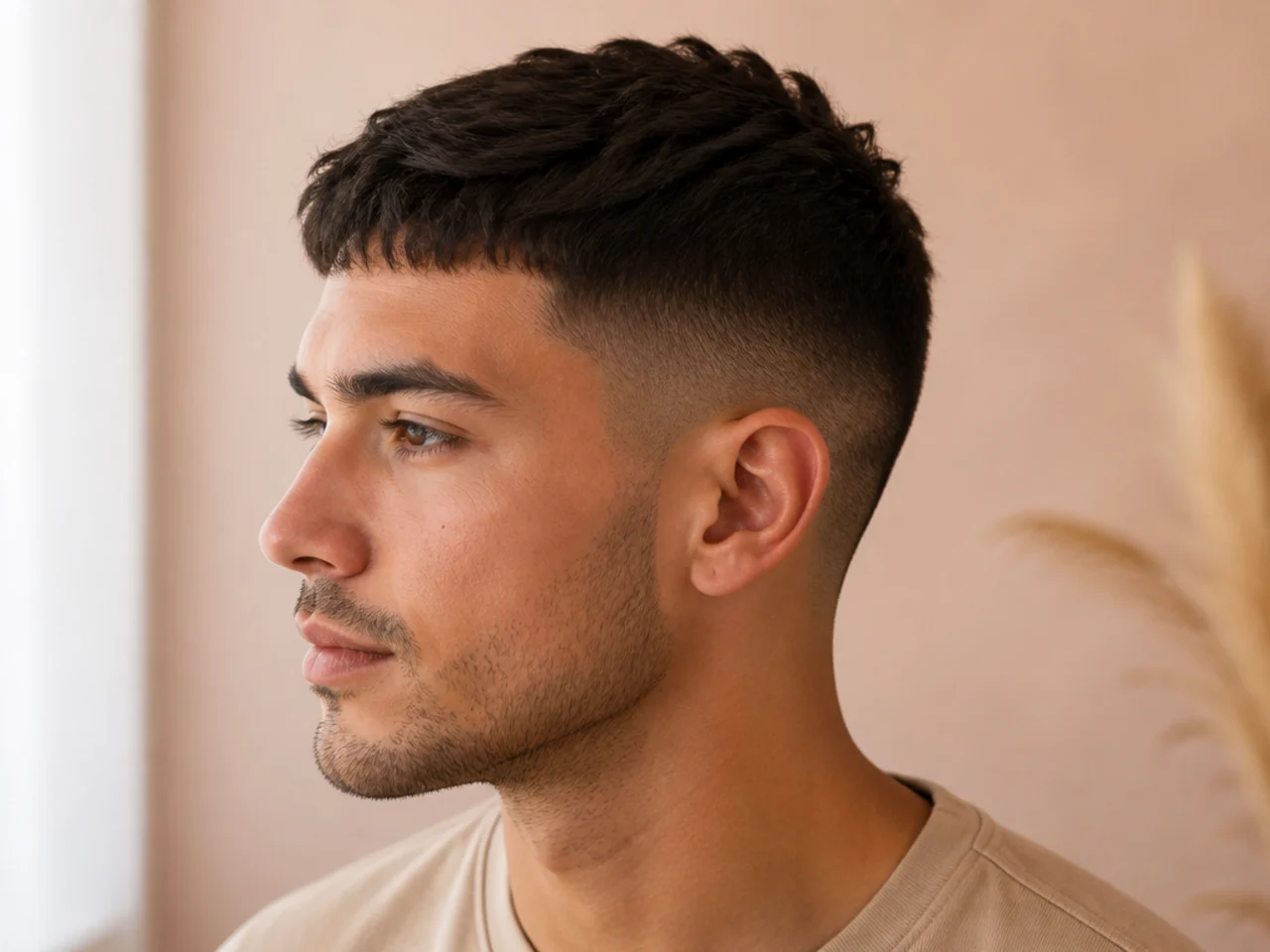
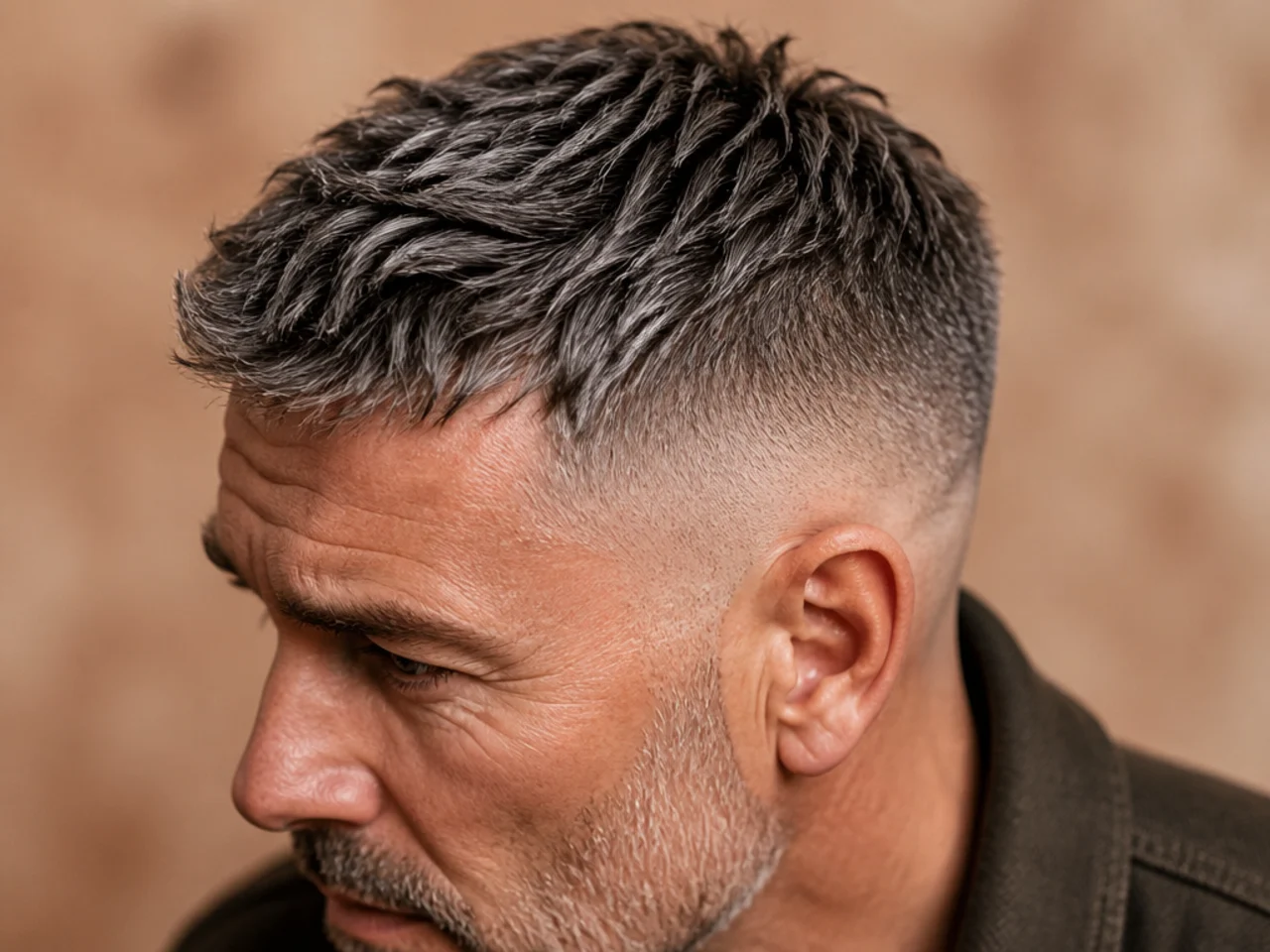
Choose this if the crown has thinned but the front hairline is intact. Texture on the top breaks up the scalp line, and short sides remove the contrast that draws the eye upward.
2. The Classic Side Part
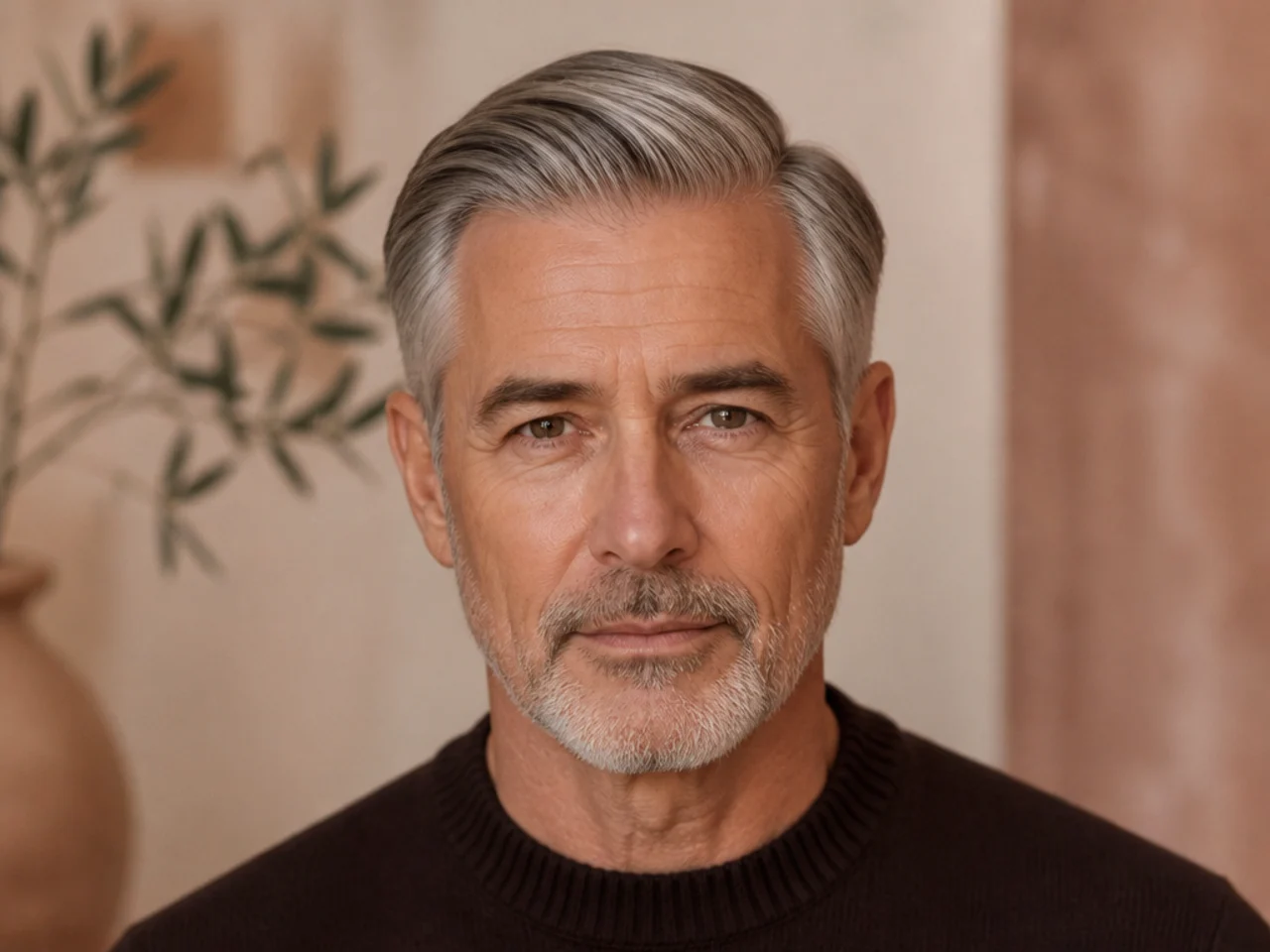
Choose the classic side part if your hair still parts naturally. It is the cut that has always suited coarse hair, because coarse strands hold a part without product, and the part itself is a straight line that draws the eye across the head rather than up toward the crown.
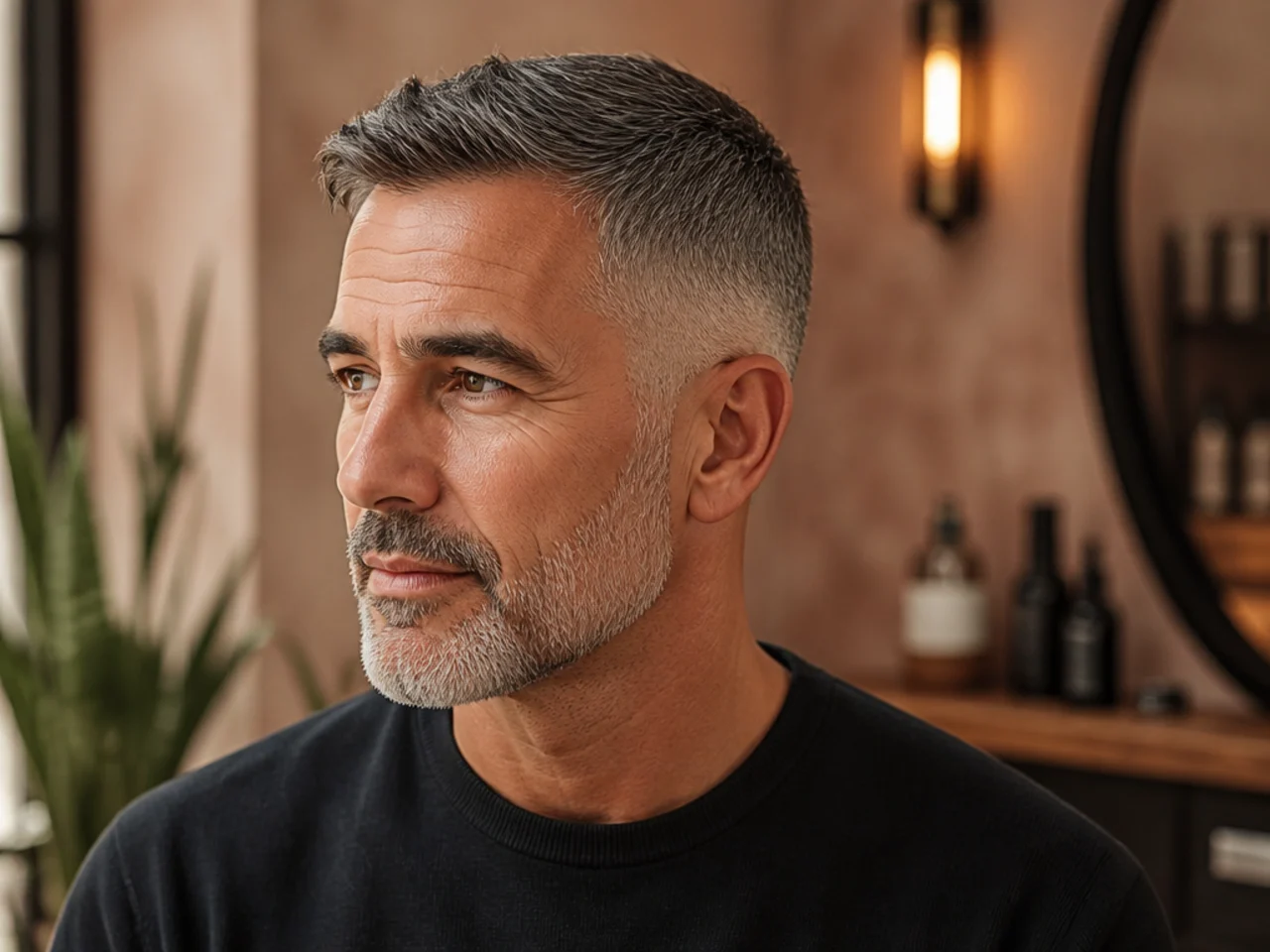
3. Low Taper With a Short Top
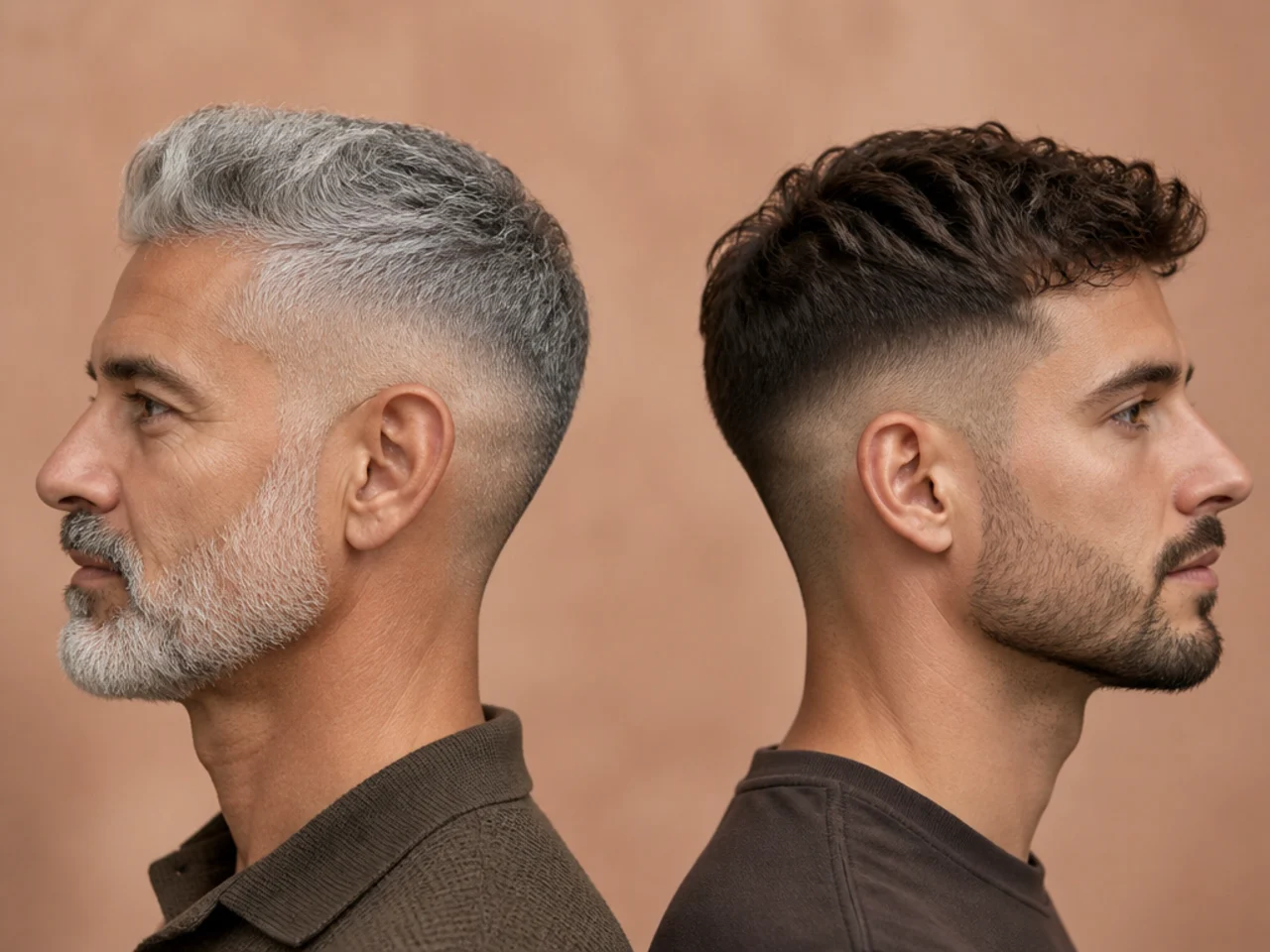
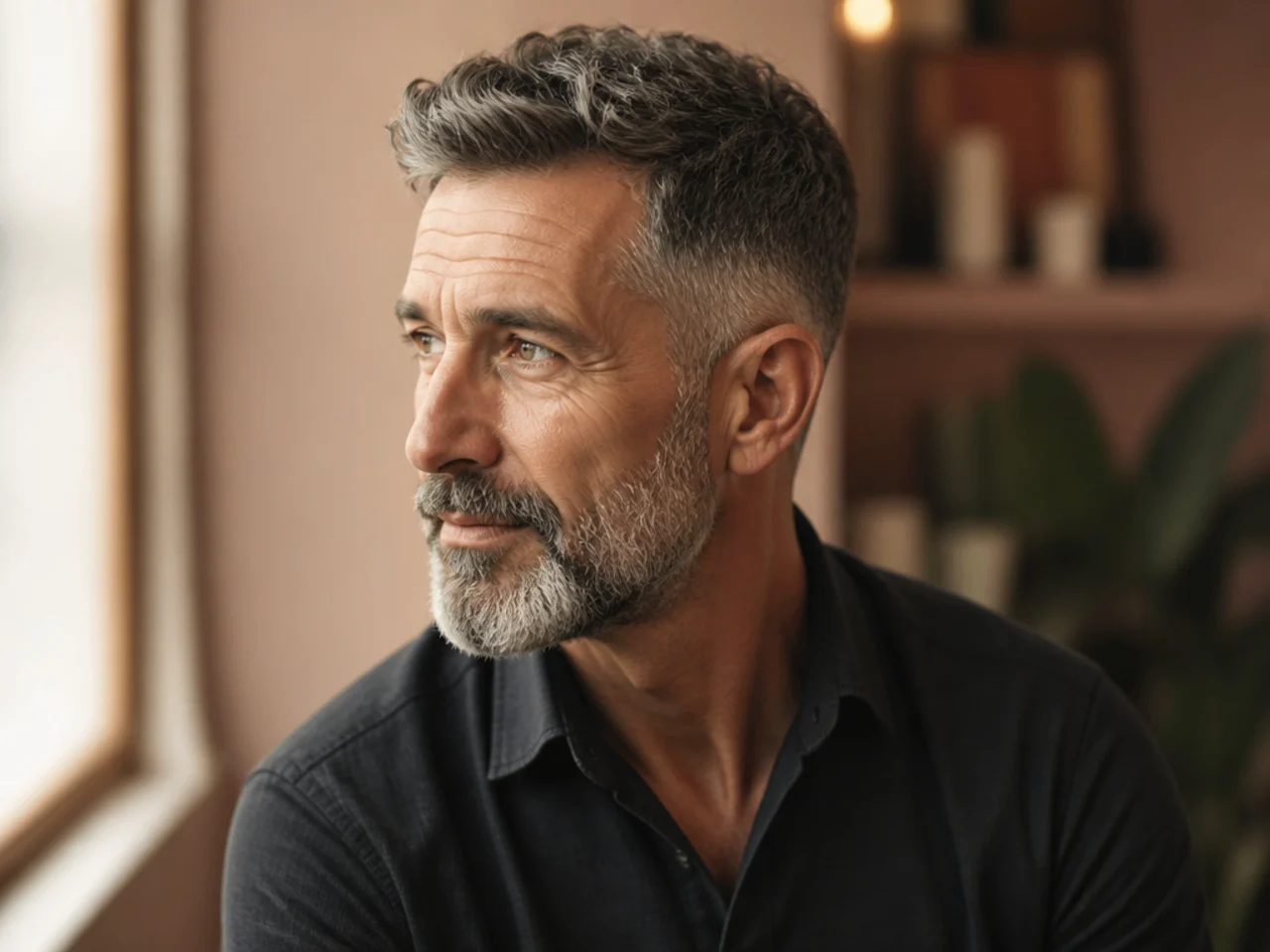
Choose this if you want a shape that holds. A taper leaves a #1 at the neckline and lasts three to four weeks, which suits anyone who prefers a monthly appointment.
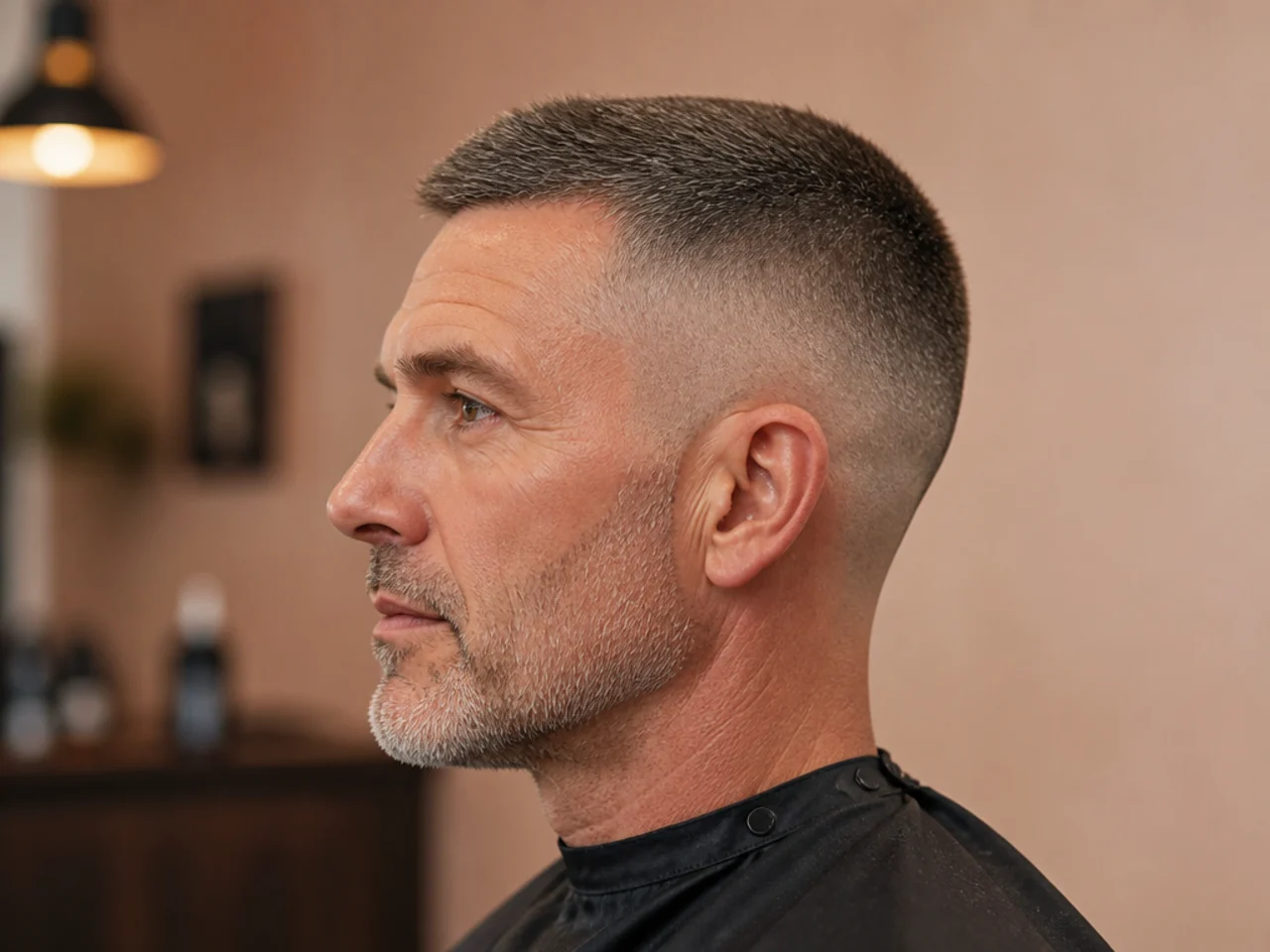
4. The Crew Cut
Choose this if the density is still reasonably even. The graduated top gives the illusion of thickness at the front, which is where most eyes land, and the graduation itself means there is never a hard edge for a thinning patch to sit beside.
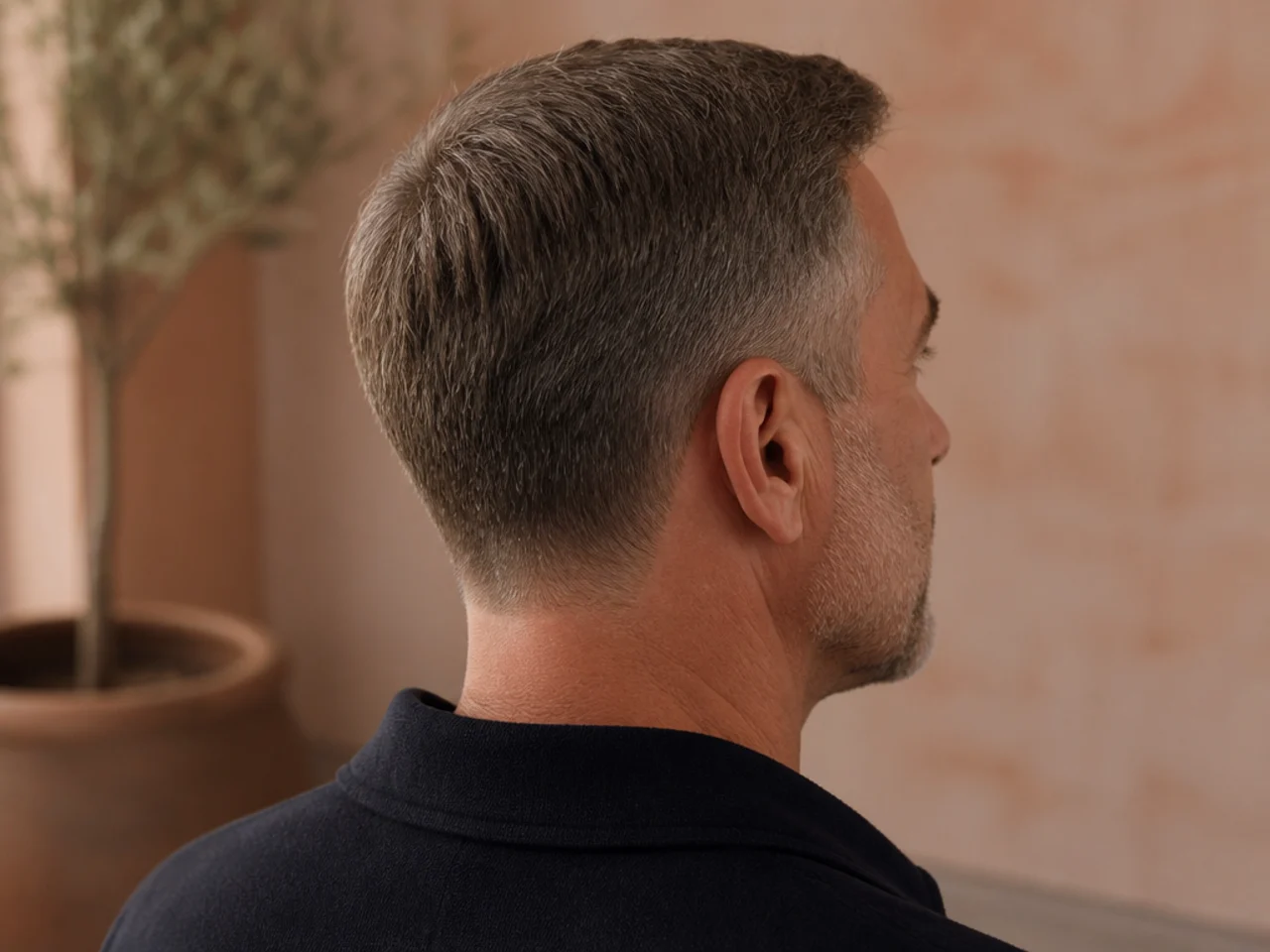
5. The Ivy League
Choose this if you need a formal cut without a formal styling routine. It is a crew cut with enough length at the front to comb, and coarse hair holds that comb line well.
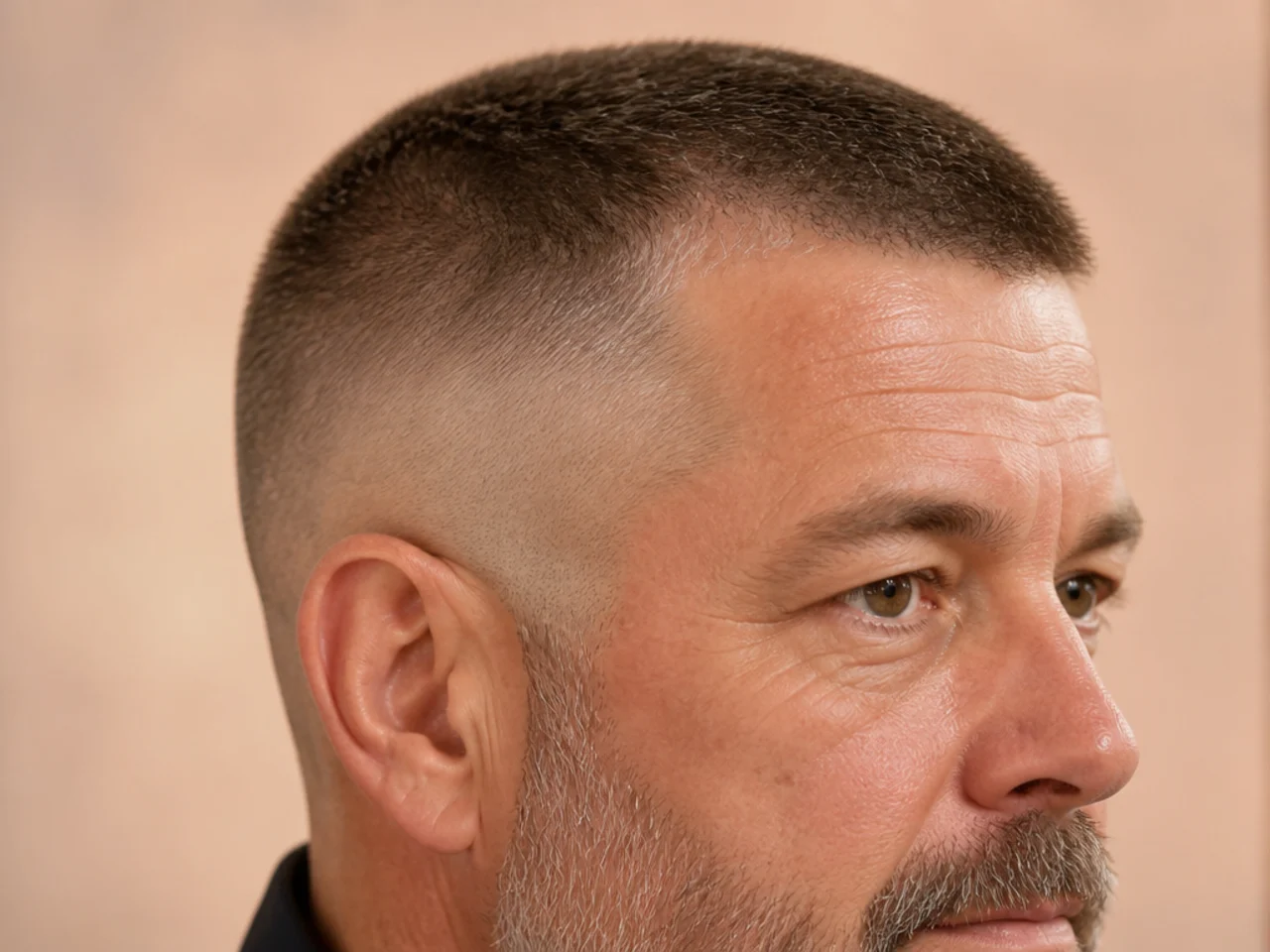
6. The #2 Buzz
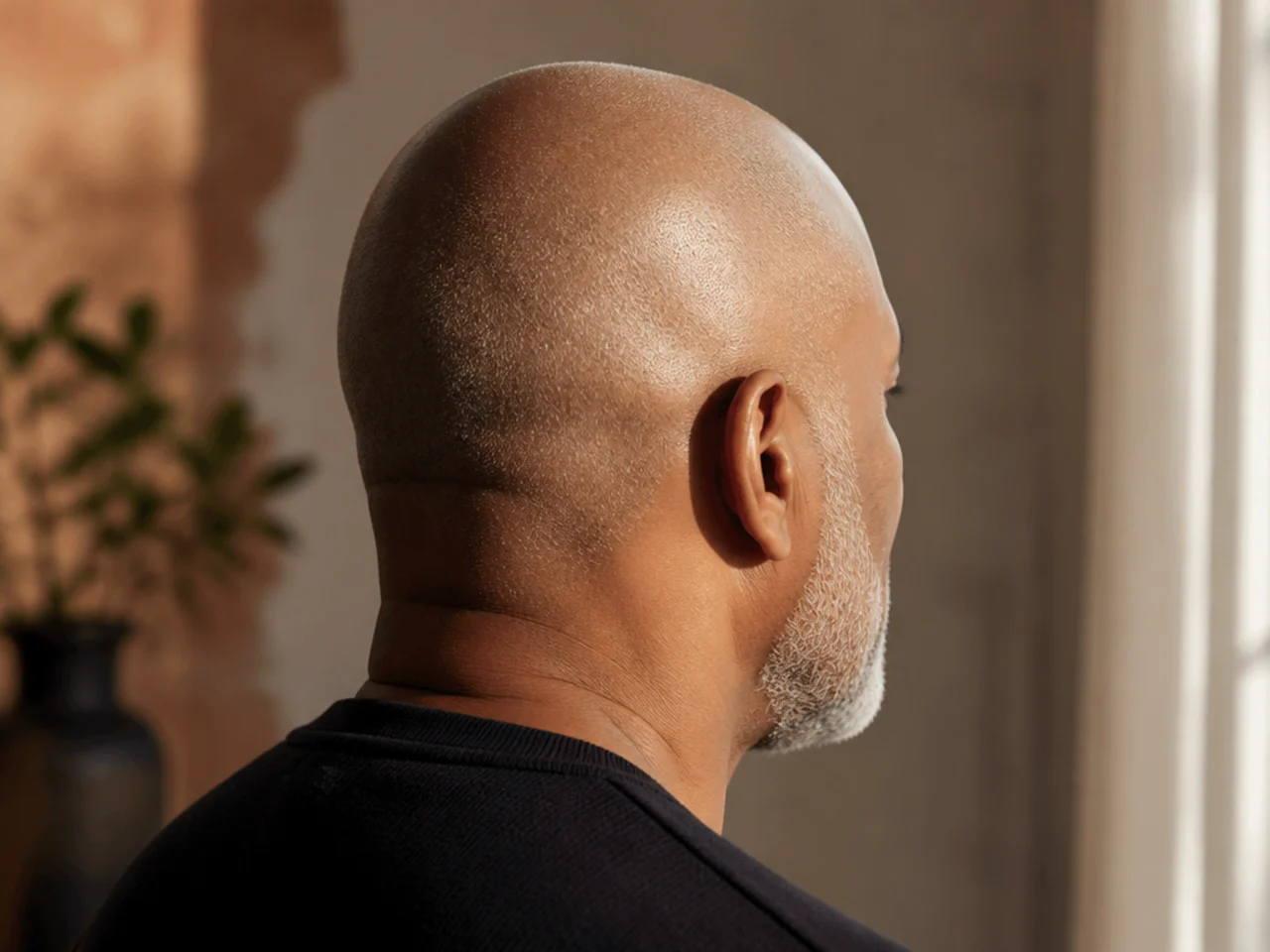
Choose a buzz cut if the thinning has become even across the whole head. At 6mm the difference between dense and sparse areas stops registering at conversational distance, and there is no length anywhere for the eye to compare a thin patch against.
7. The Caesar
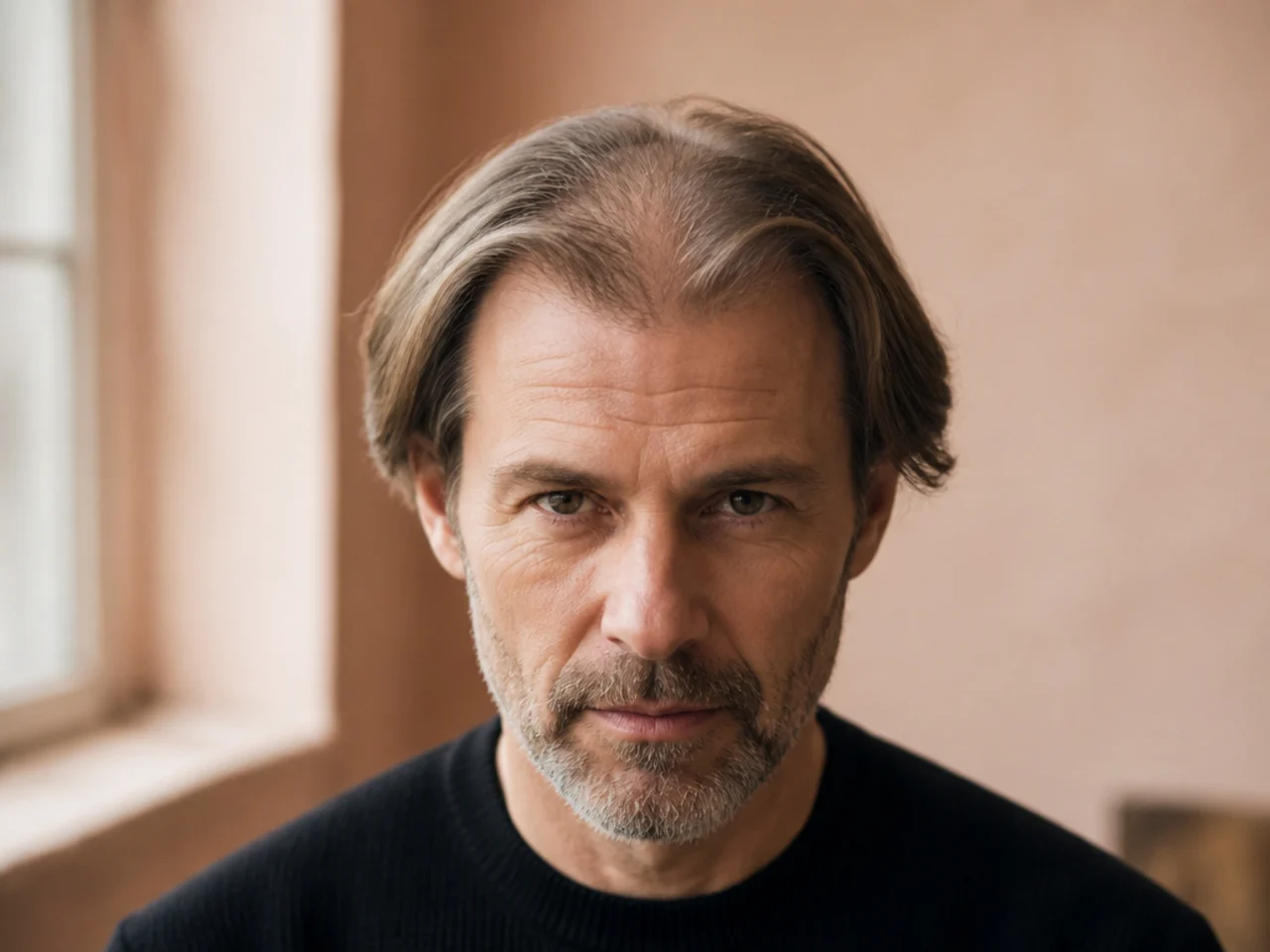
Choose this if your hairline has receded at the temples. Bringing the front forward covers the recession without the comb-over that everybody recognises.
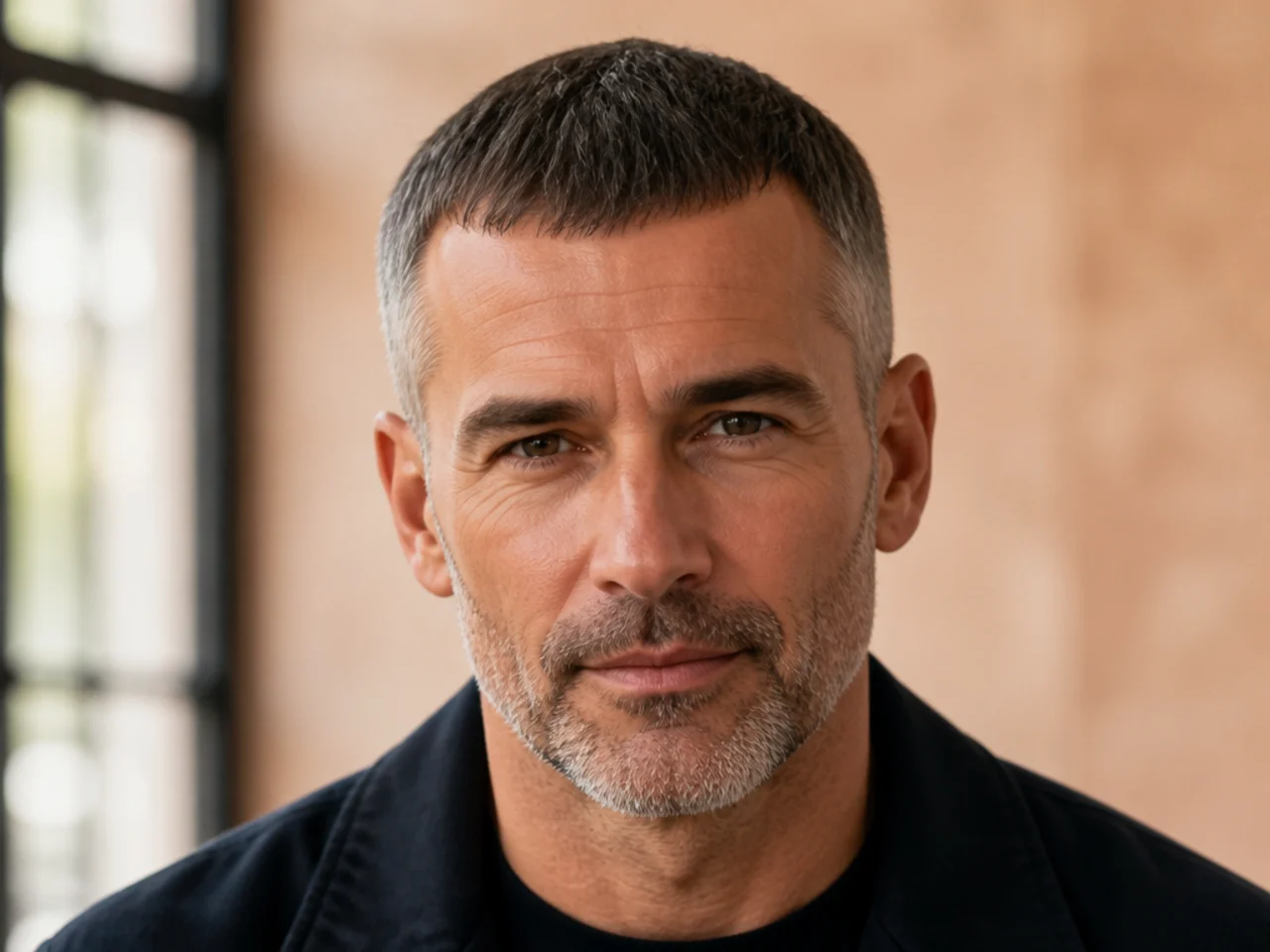
8. Medium Length With Layers
Choose this if your density has held. Coarse hair at medium length is the easiest it ever gets to style, because it supports its own shape, and layers stop the weight collecting in one place and dragging the whole thing flat.
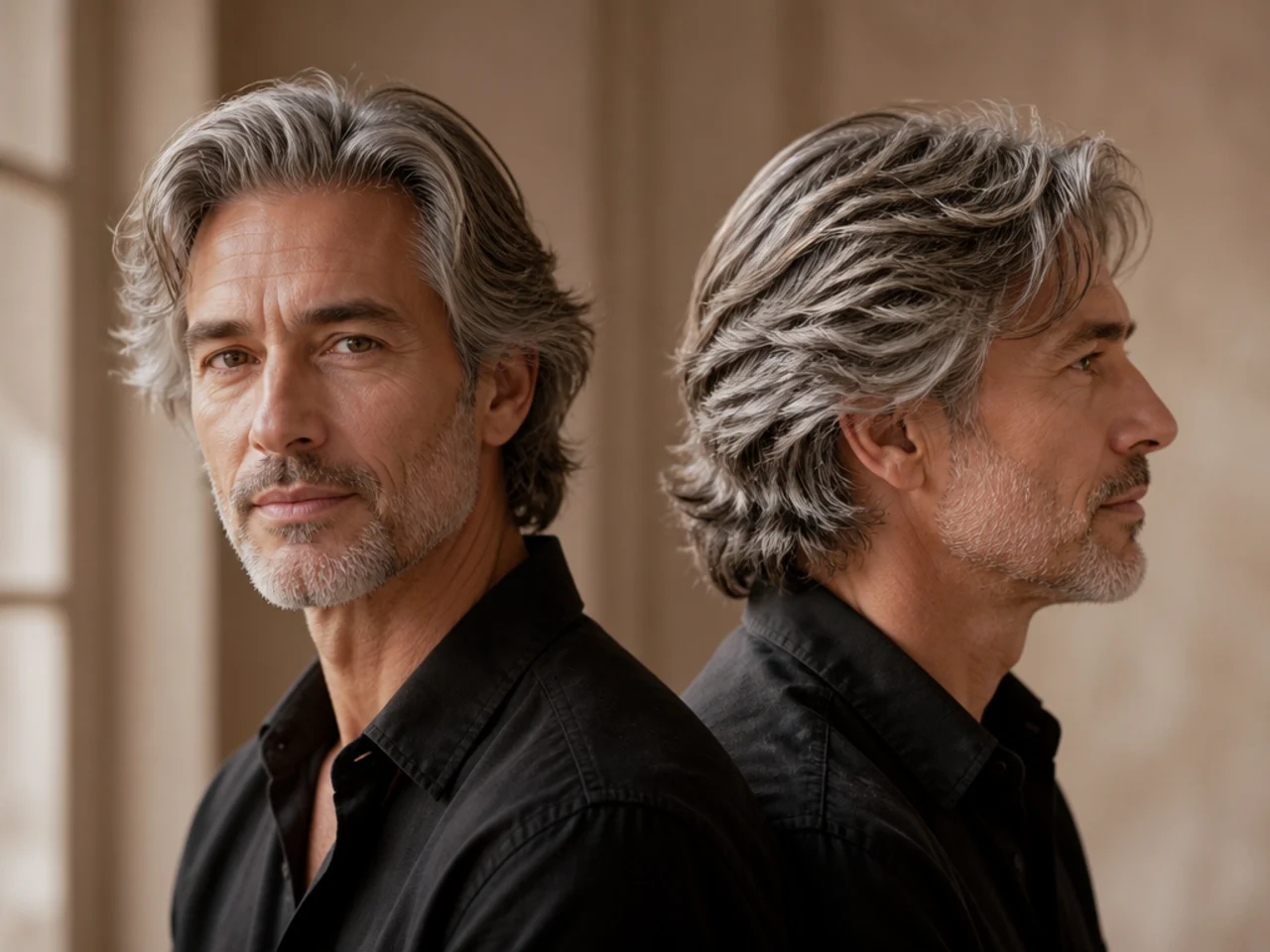
9. The Slick Back With Softened Ends
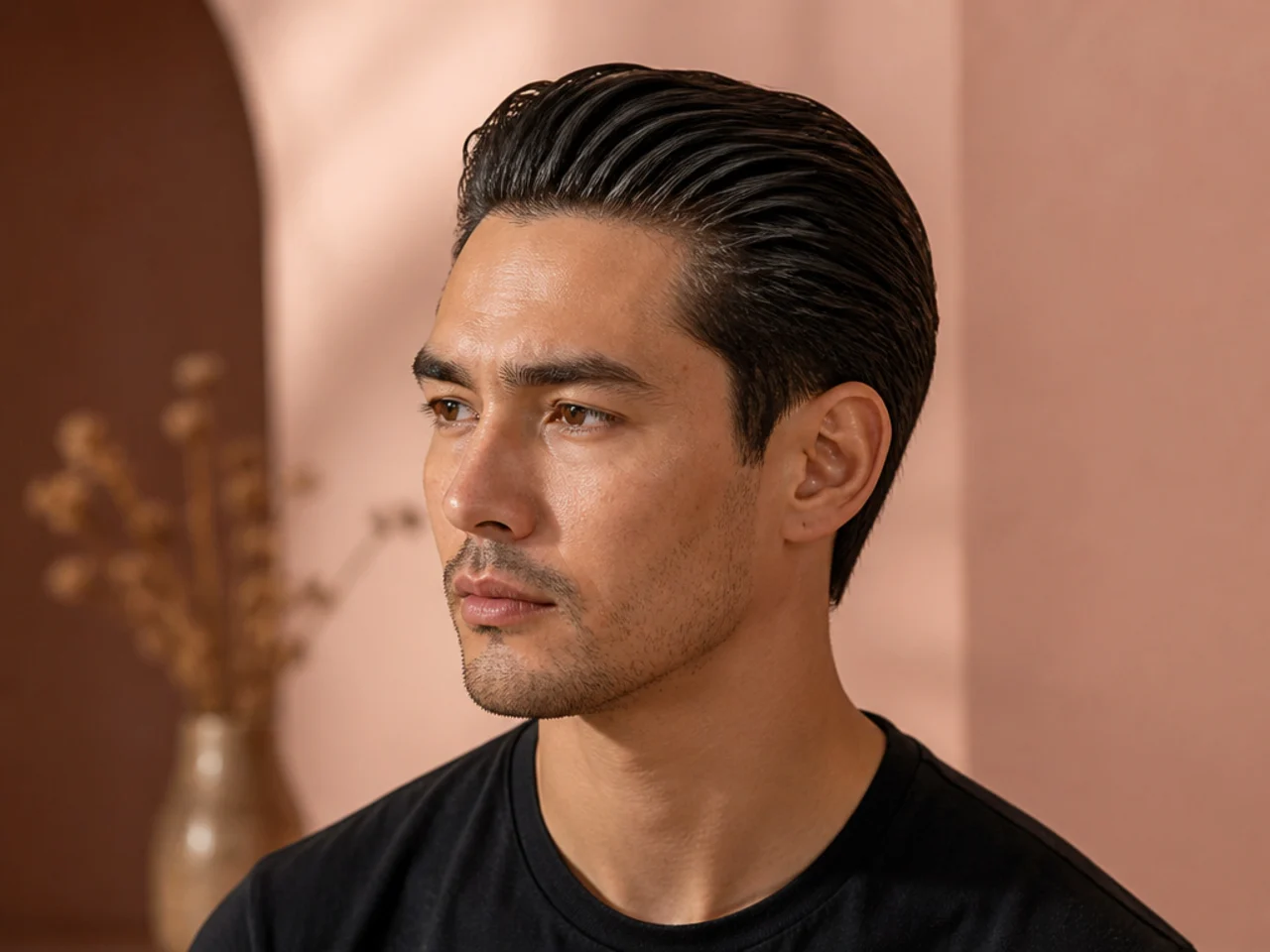
Choose this if you have always worn it back. Grey hair takes shine badly, so a matte cream and broken ends read better than the pomade you used at thirty.
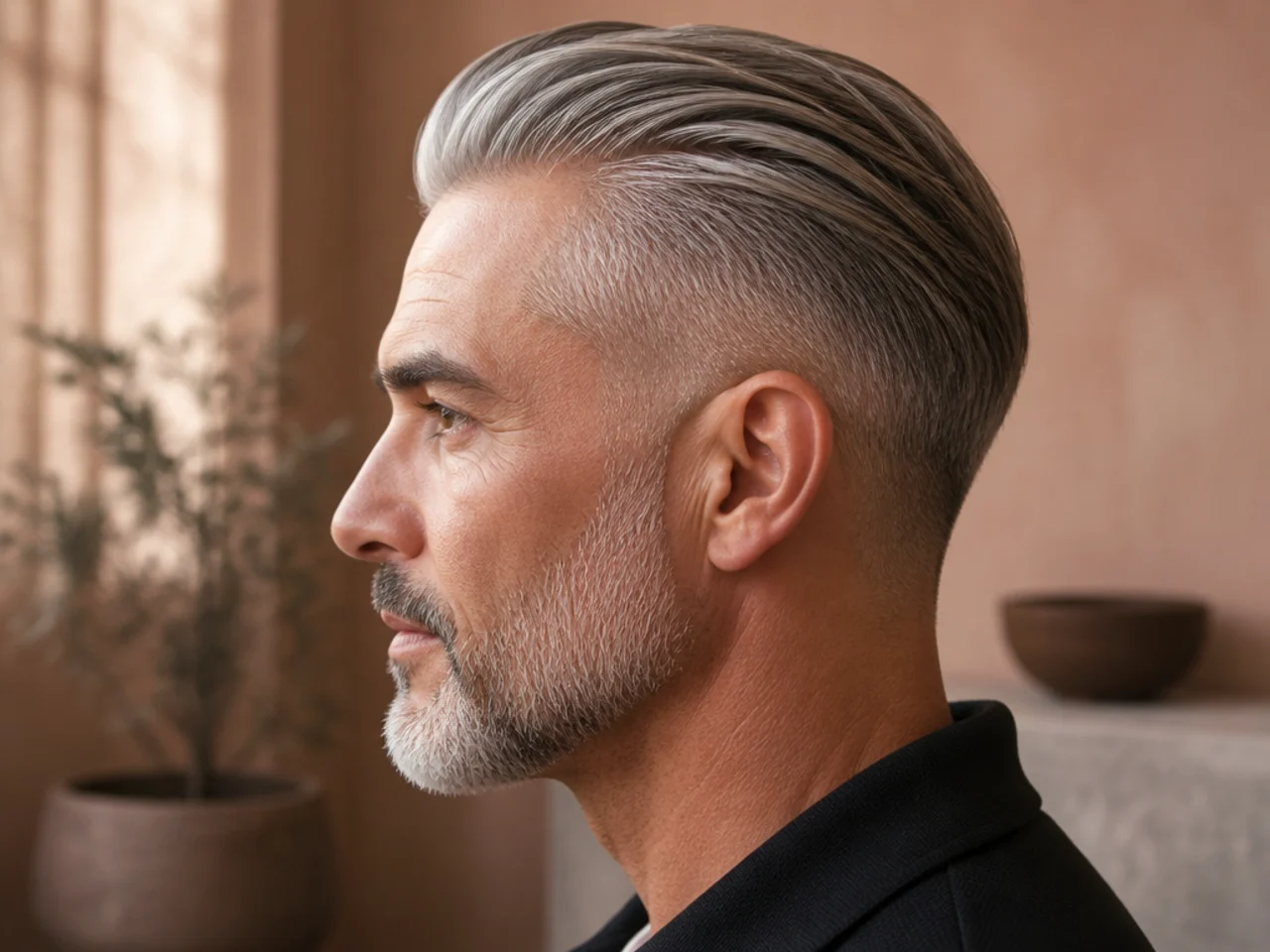
10. Short Back and Sides With a Scissor Top
Choose this if you want the cut that will never look wrong. Scissor work on top leaves a softer outline than clippers, which suits coarse grey hair.
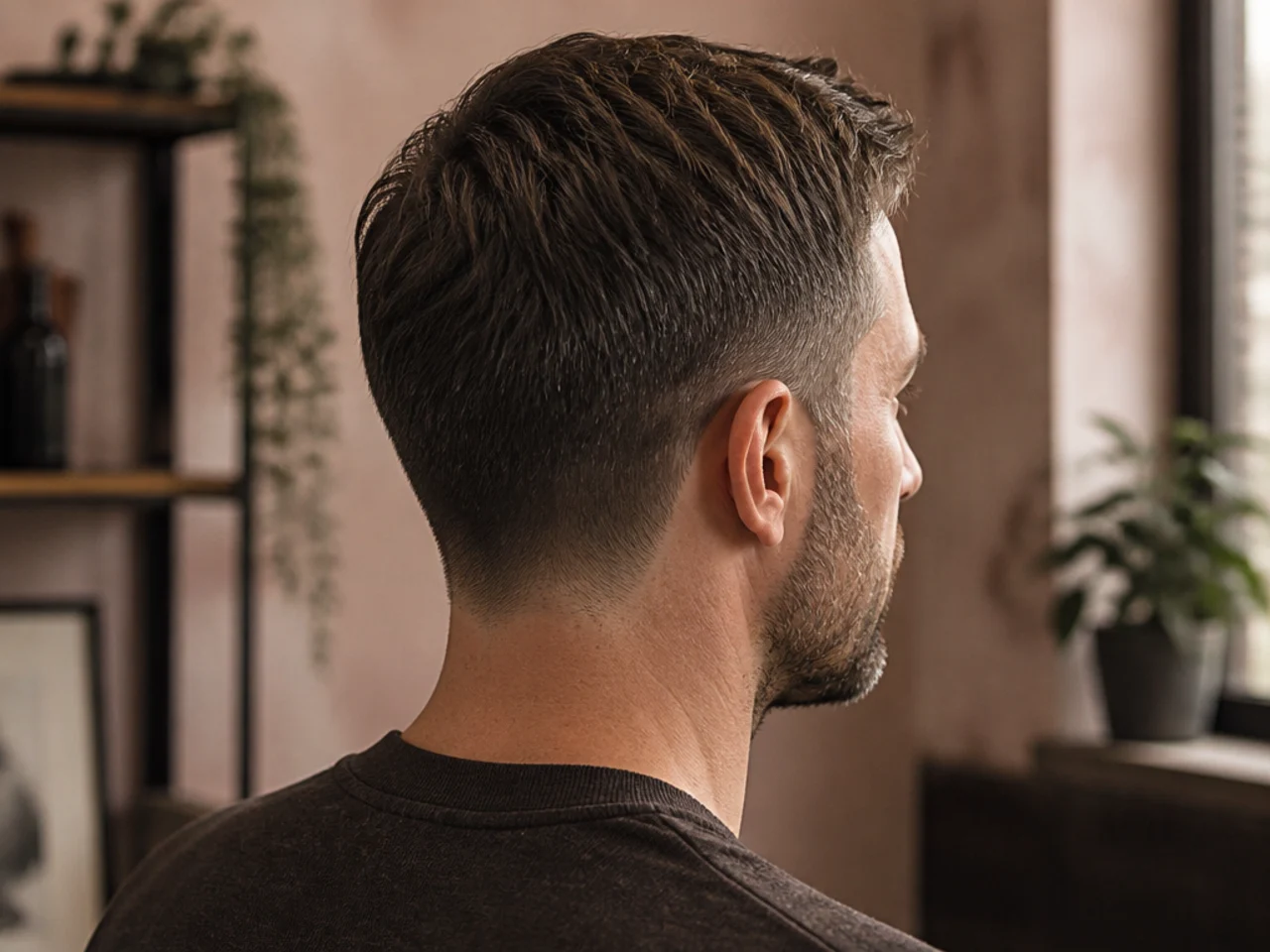
11. The Textured Quiff, Lowered
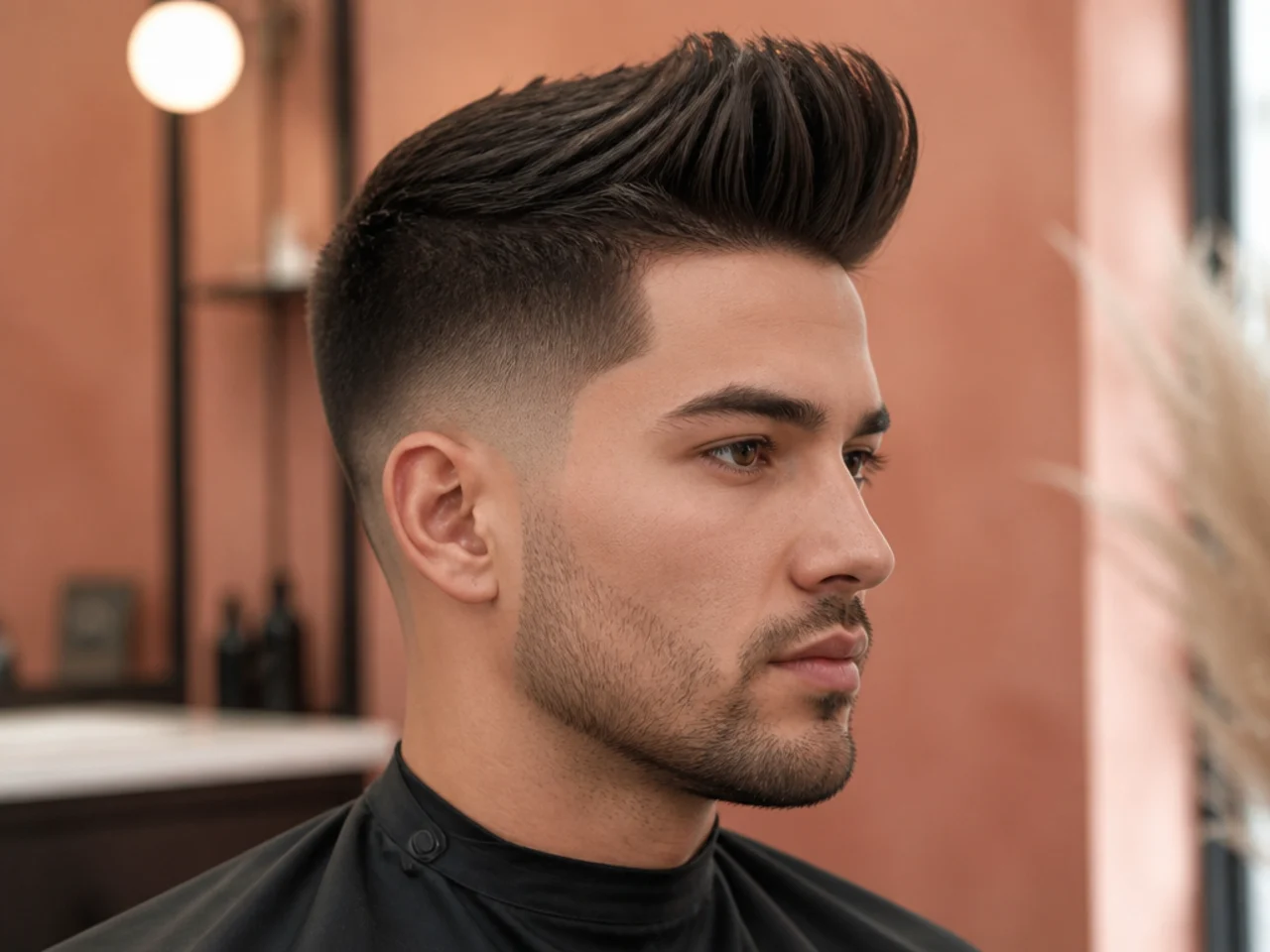
Choose this if you want height but not a dated one. Keep the volume lower and softer than the version you would have worn at twenty-five, because a high quiff on thinning hair shows the scalp underneath.
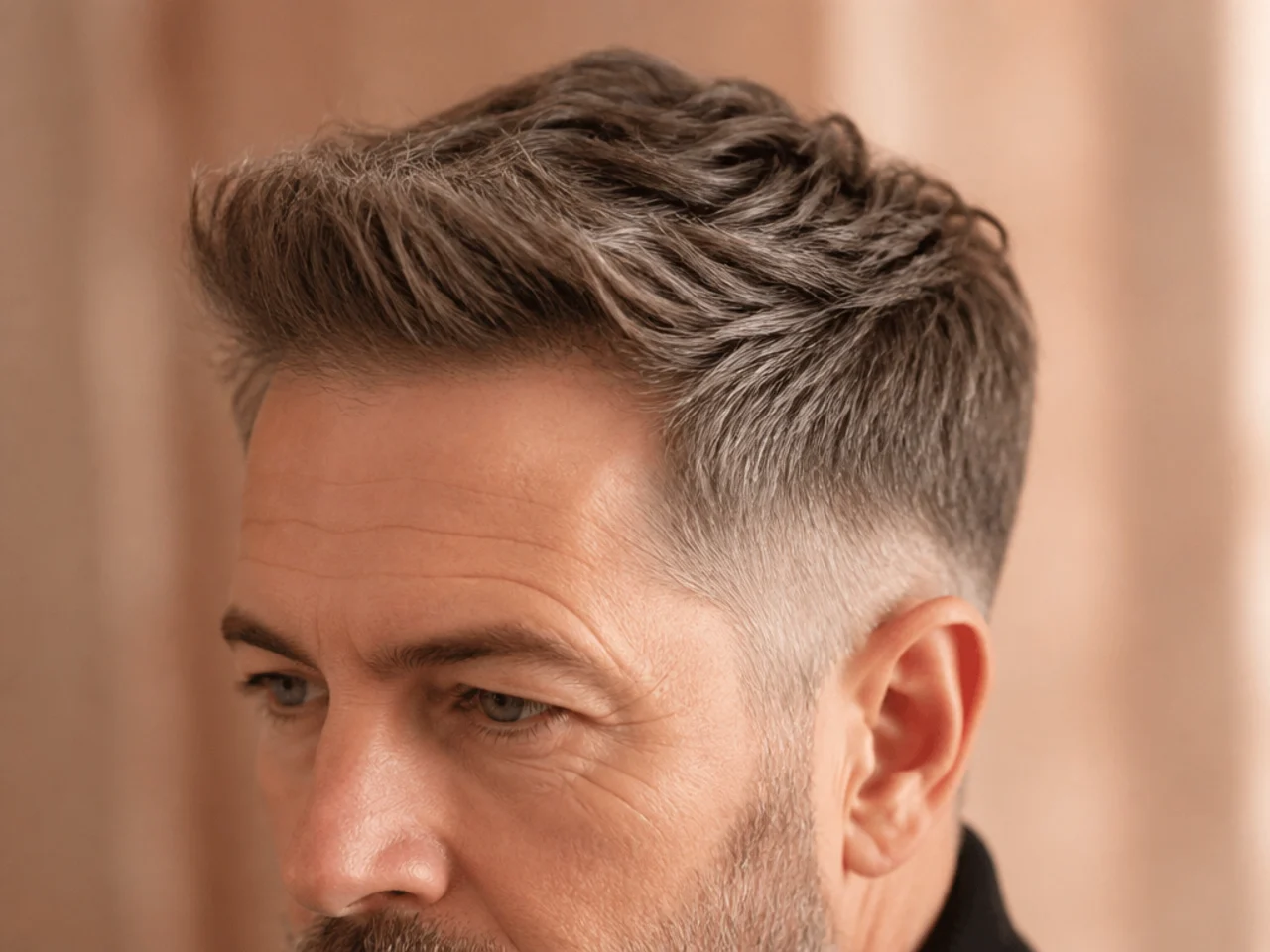
12. Curly Grey With a Taper
Choose this if you have kept your curl. Curl hides scalp better than any other texture, and a taper keeps the outline defined without cutting into the volume.
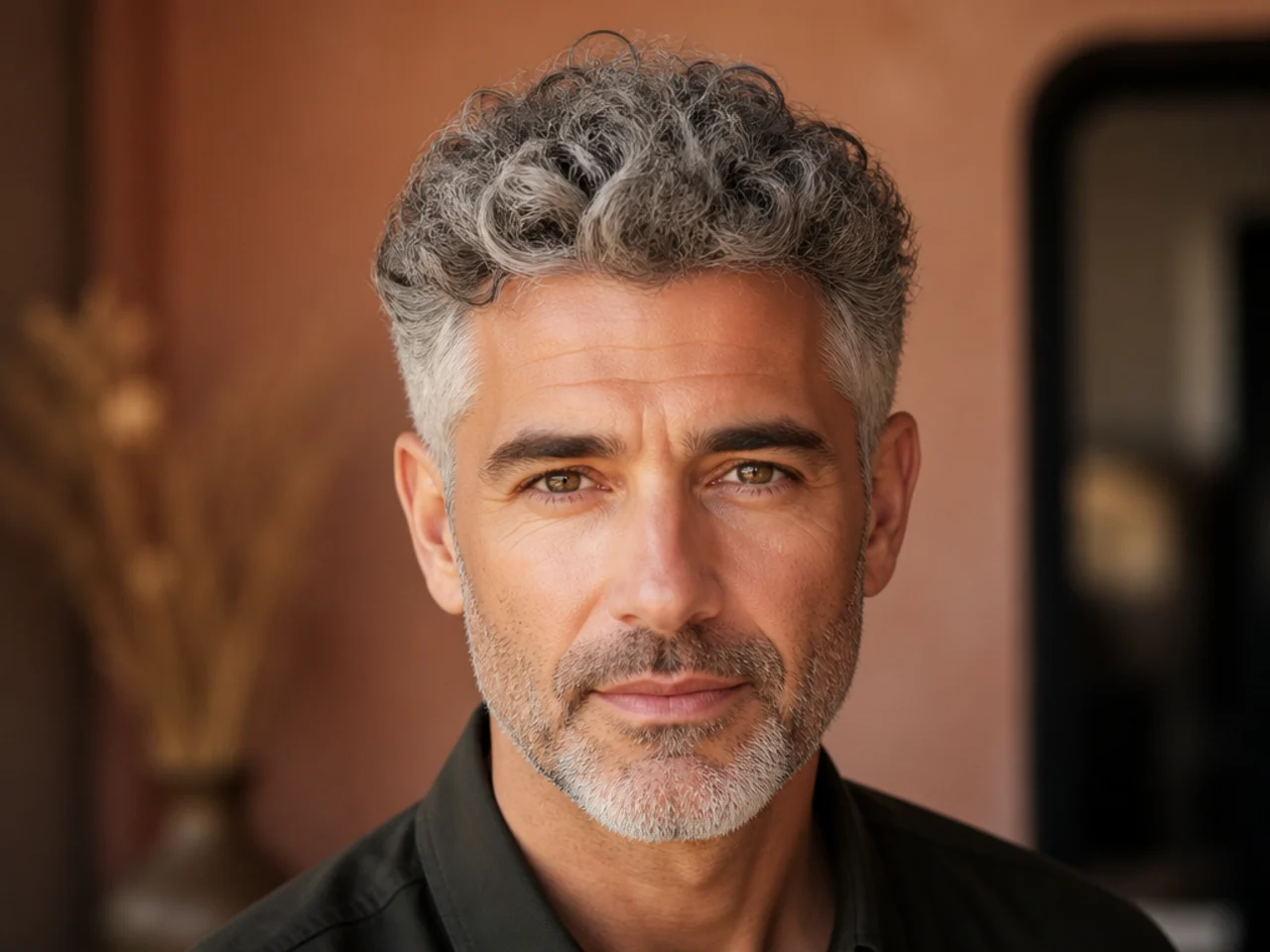
13. The Grown-Out Natural
Choose this if you have stopped fighting it. Longer grey hair with a clean neckline and no styling reads as deliberate, where the same length untended does not.
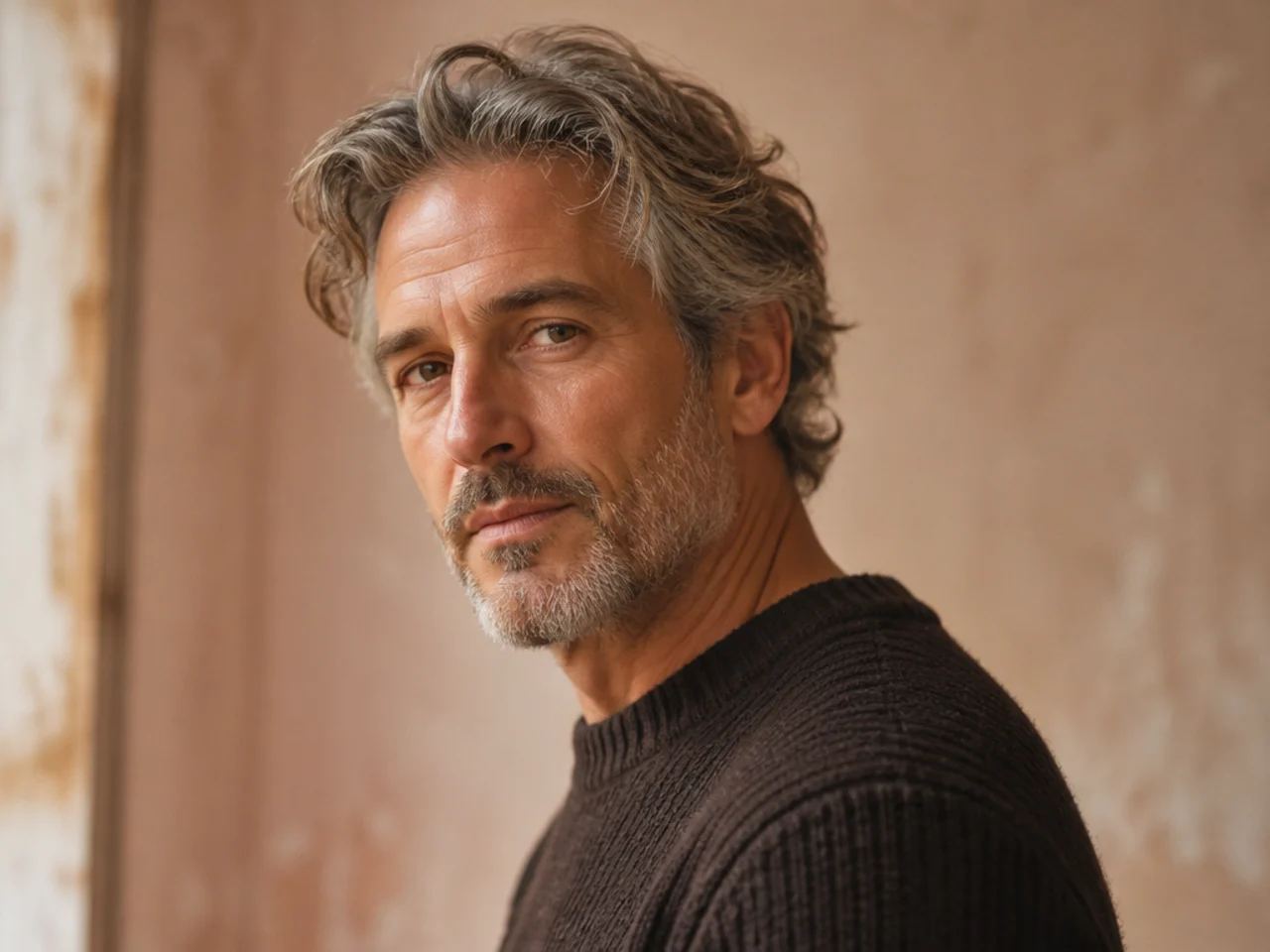
14. Short Sides With a Full Beard
Choose this once the top has thinned to the point where more length changes nothing. Moving the visual weight to the jaw is the most effective redistribution available, and it costs nothing to try.
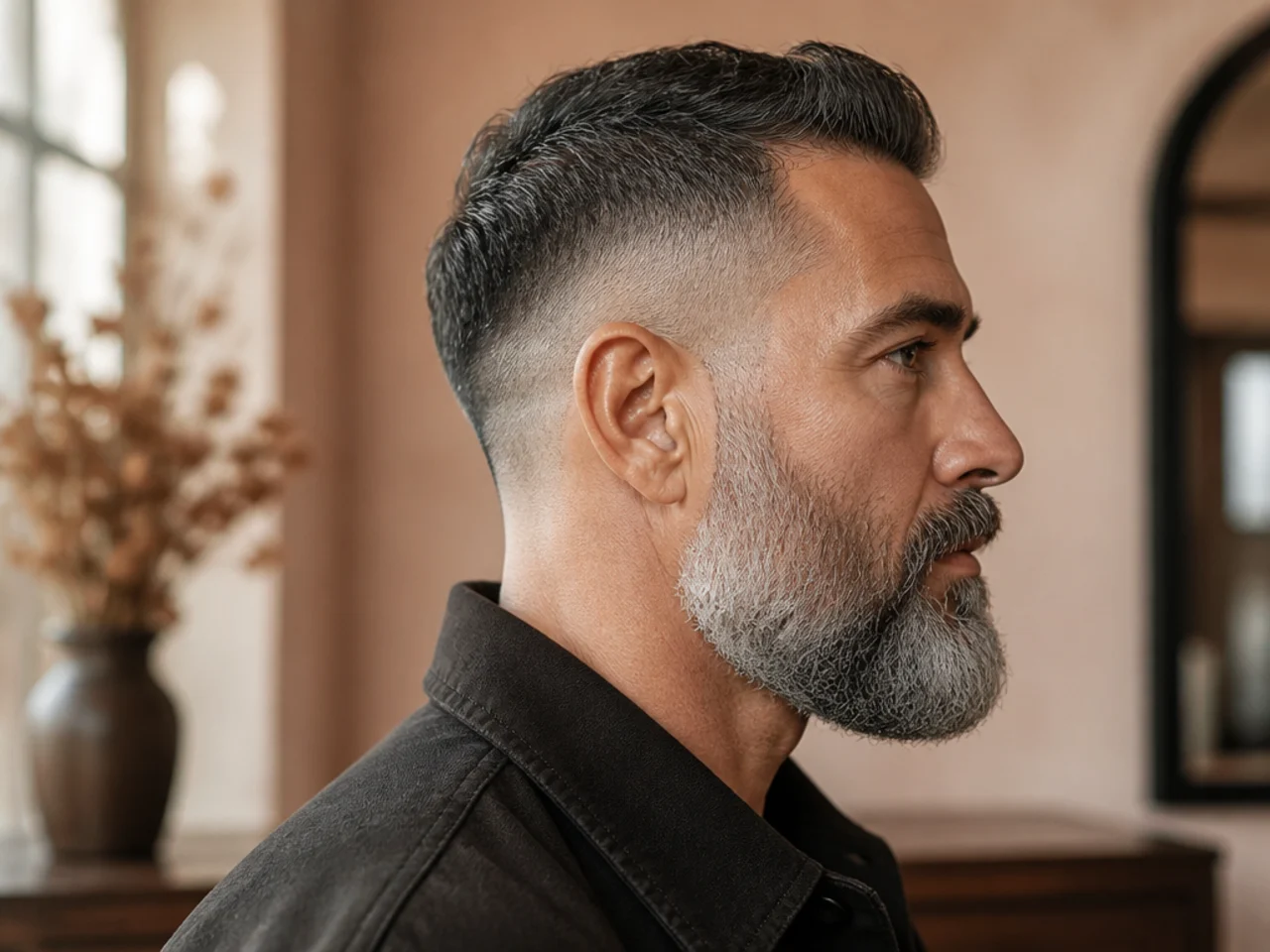
15. The Clean Shave
Choose this if you would rather settle the question. It removes density, texture and hairline from the conversation entirely, and it is the only cut here with no upkeep schedule at all.
Styling and Upkeep
Use a cream, not a clay. Coarse dry hair needs conditioning weight rather than grip.
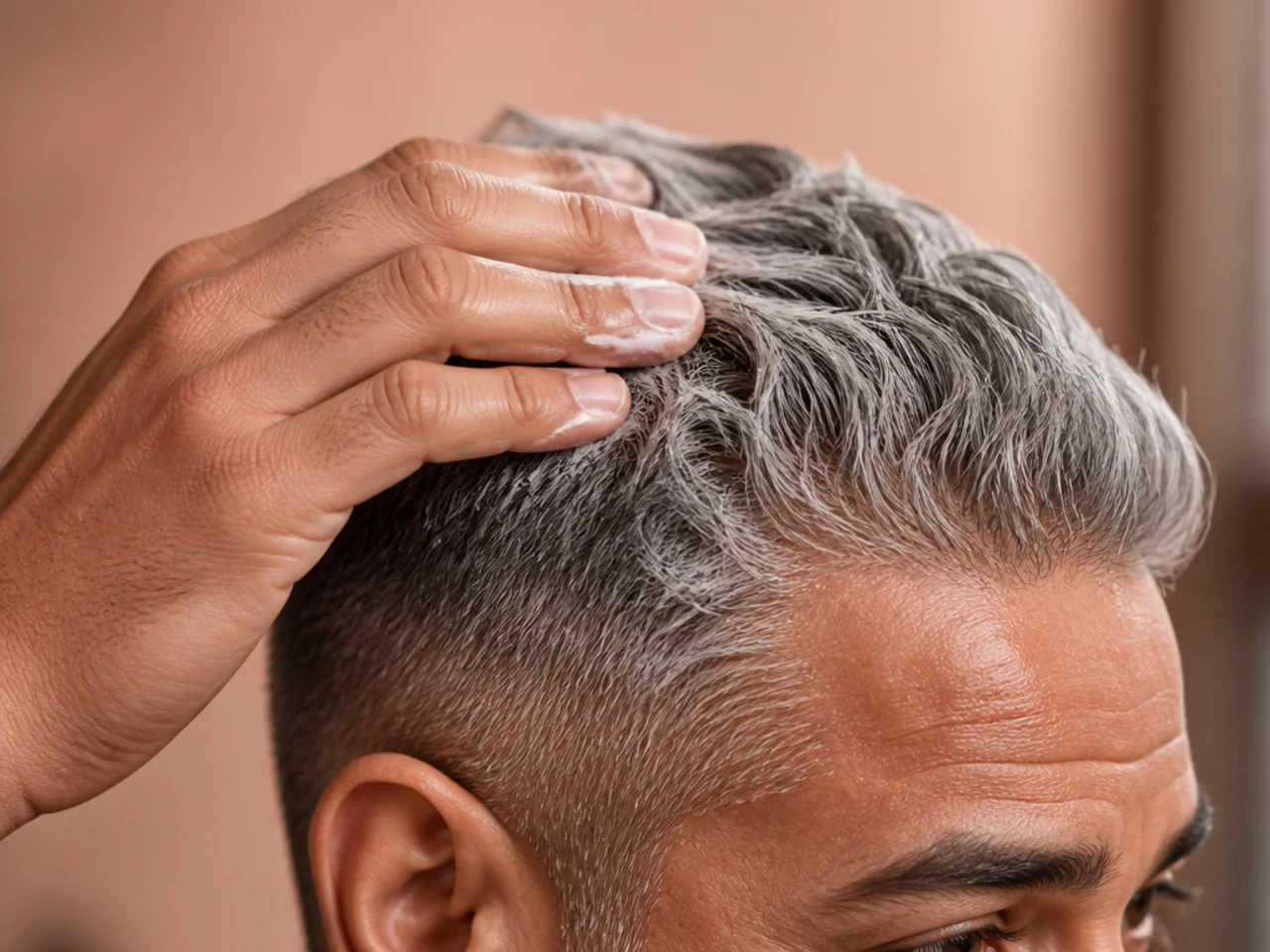
Wash less, condition more. Age reduces the oil that kept the hair pliable in the first place.
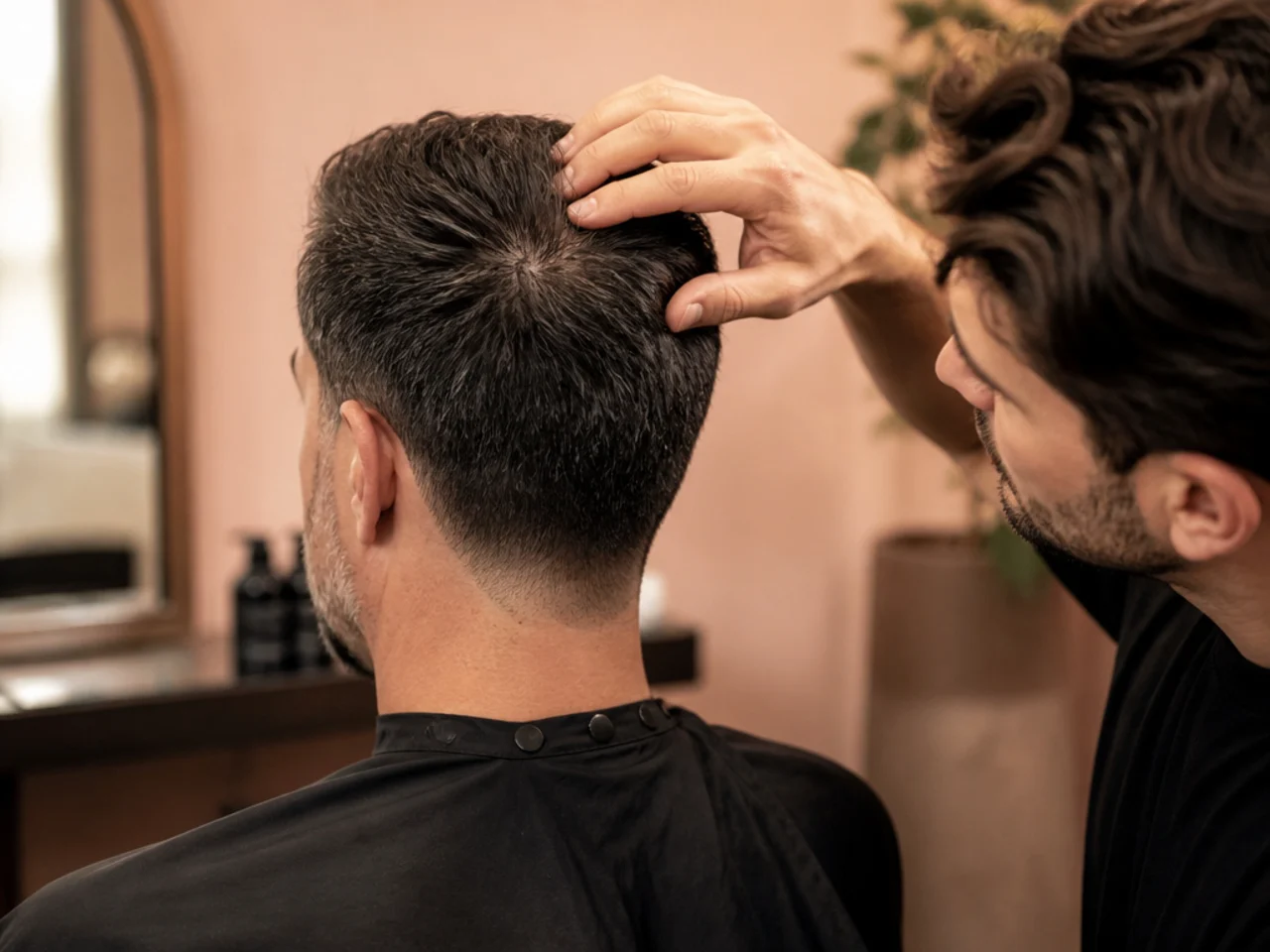
Keep the neckline tidy between cuts. A clean neck reads as a fresh haircut long after the shape has grown.
Trim the eyebrows and ears at the same visit. They coarsen at the same rate as the hair and get noticed more.
Book monthly and stay with a taper. It is the length that ages most quietly, and monthly is close to how often most men actually need a haircut.
Mistakes to Avoid
Growing the sides to compensate for a thin crown. It increases exactly the contrast you want to reduce.
Combing hair across a recession. Everyone can see it, including you.
Using shine pomade on grey hair. Grey already reflects more light than it used to.
Asking for a hard blunt outline. Coarse hair makes every hard line harder.
Keeping the same cut you had at forty. The material has changed even if the style has not.
FAQ
Why has my usual cut stopped working? The hair has changed texture, not just quantity.
Should it be short? Short sides matter more than short length overall.
Does grey need a different cut? It needs a softer outline, because it shows every line.
Final Thoughts
Work out where your density still is before you choose anything, because that map is what the cut is really being designed around. Reducing contrast between a full side and a thinning top does more for how you look than any named style on this page.
For the timeless shapes that suit coarse hair see the classic men's haircut, and for options when density has dropped further see haircuts for thin hair. More in Men's Haircuts.