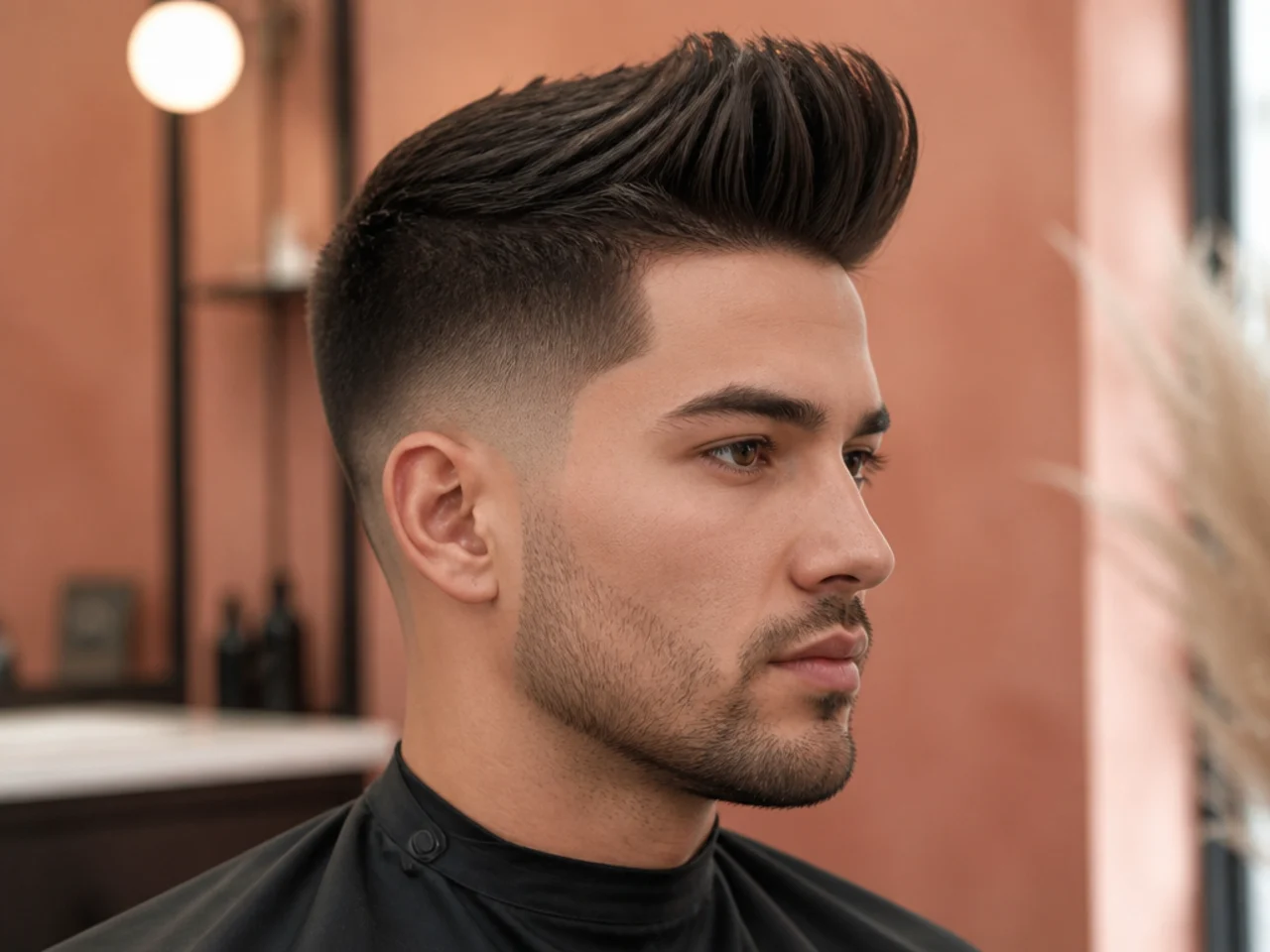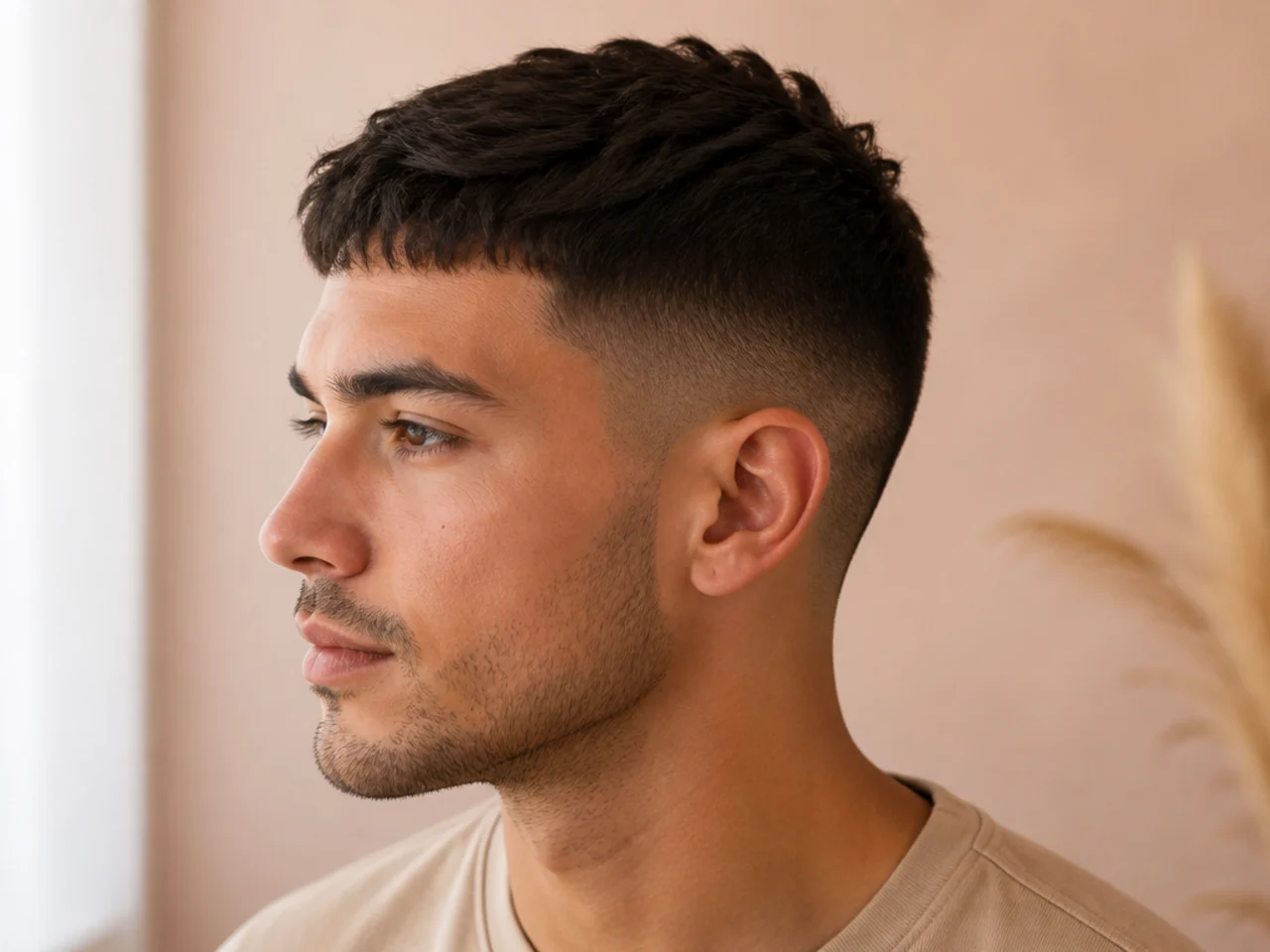
20 Trendy Boys Haircut Ideas With Designs
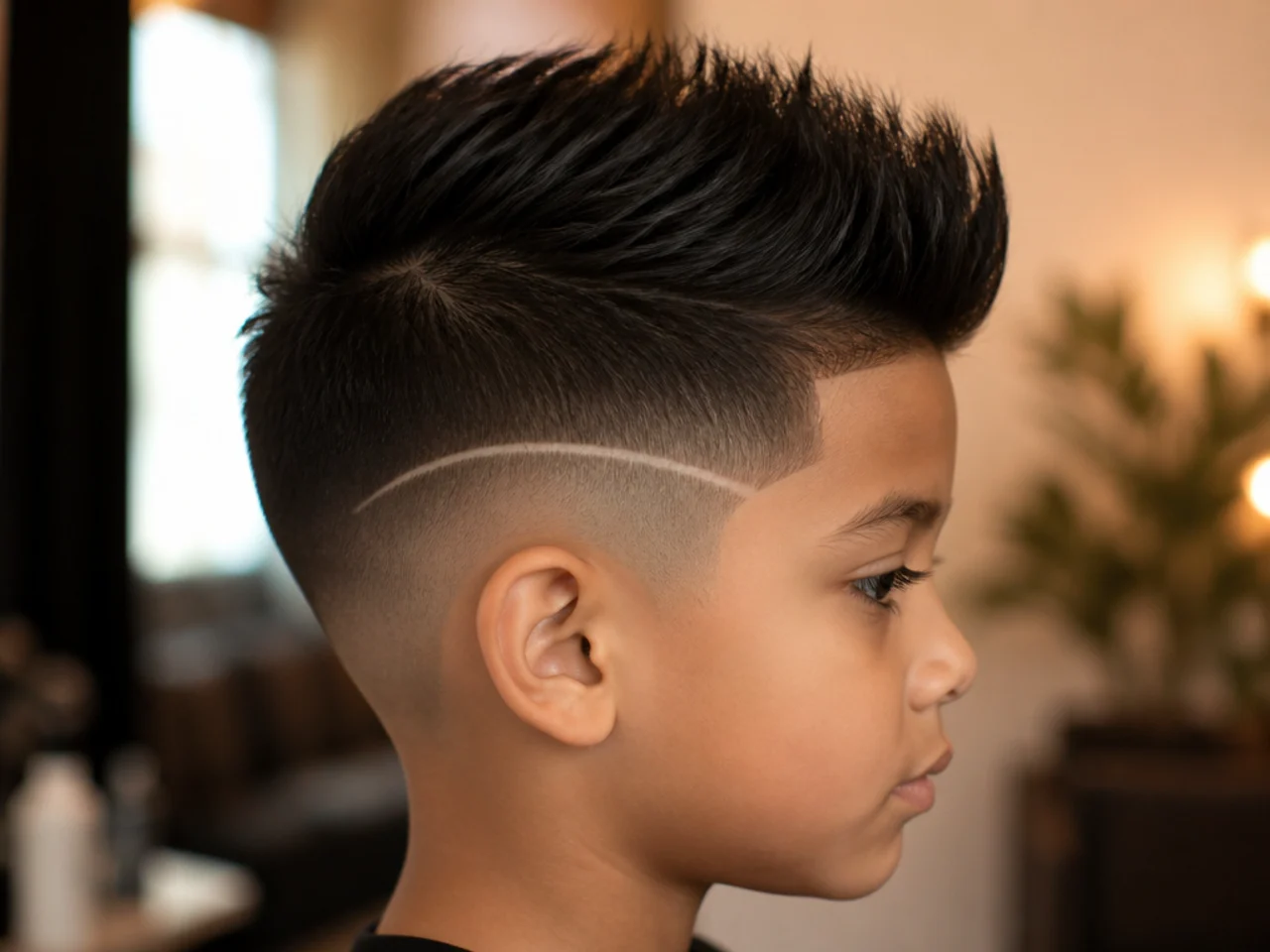
A shaved design has the shortest life of anything you can do to a child's hair, ten to fourteen days, because it is negative space and hair fills a gap from both edges at once. That makes it an event purchase rather than a style.
In this article · 27
- A Design Closes From Both Sides
- How to Choose Yours
- The 20 Designs and How Each One Fails
- 1. A Single Hard Part
- 2. Two Parallel Lines Above the Ear
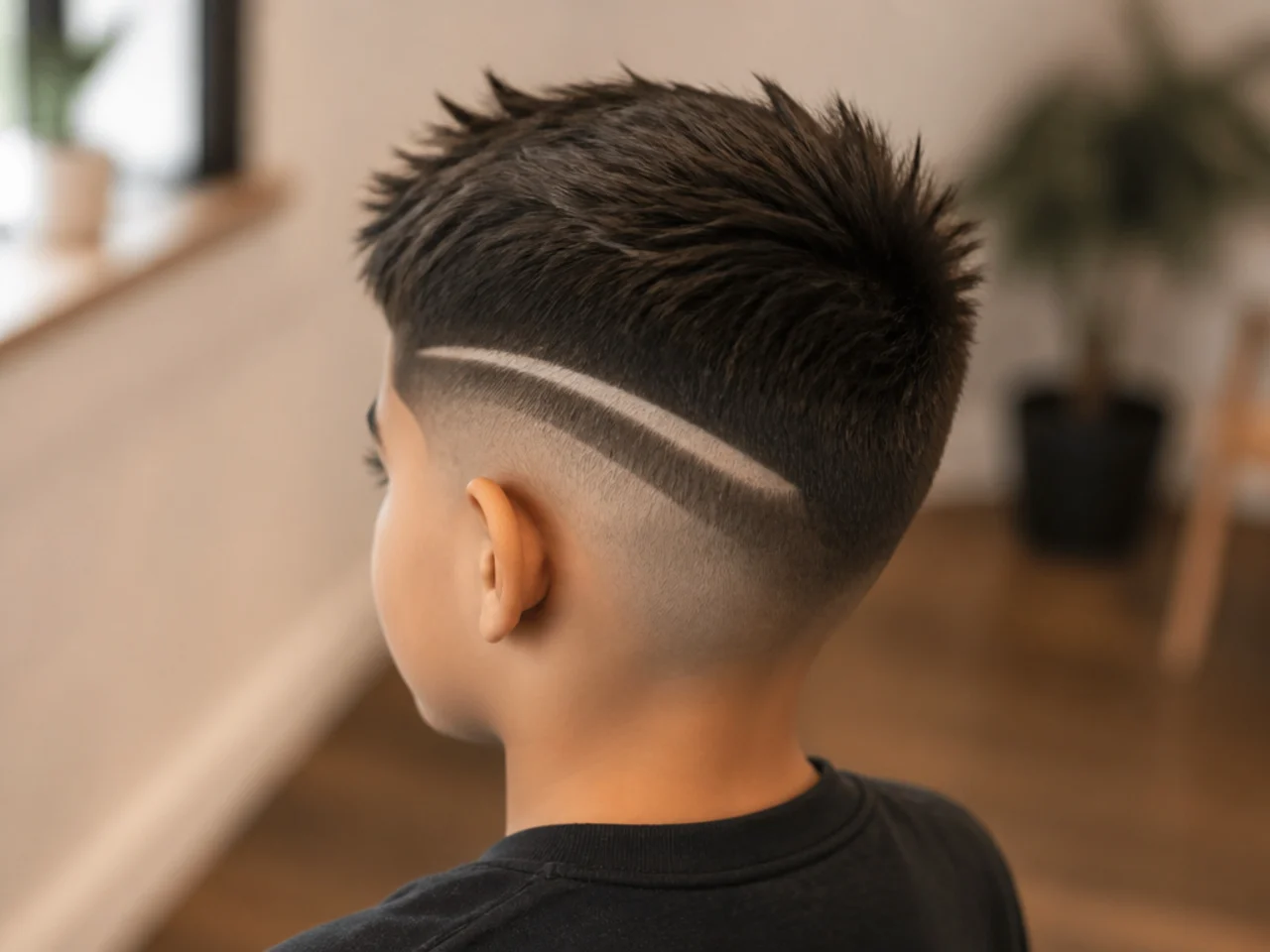
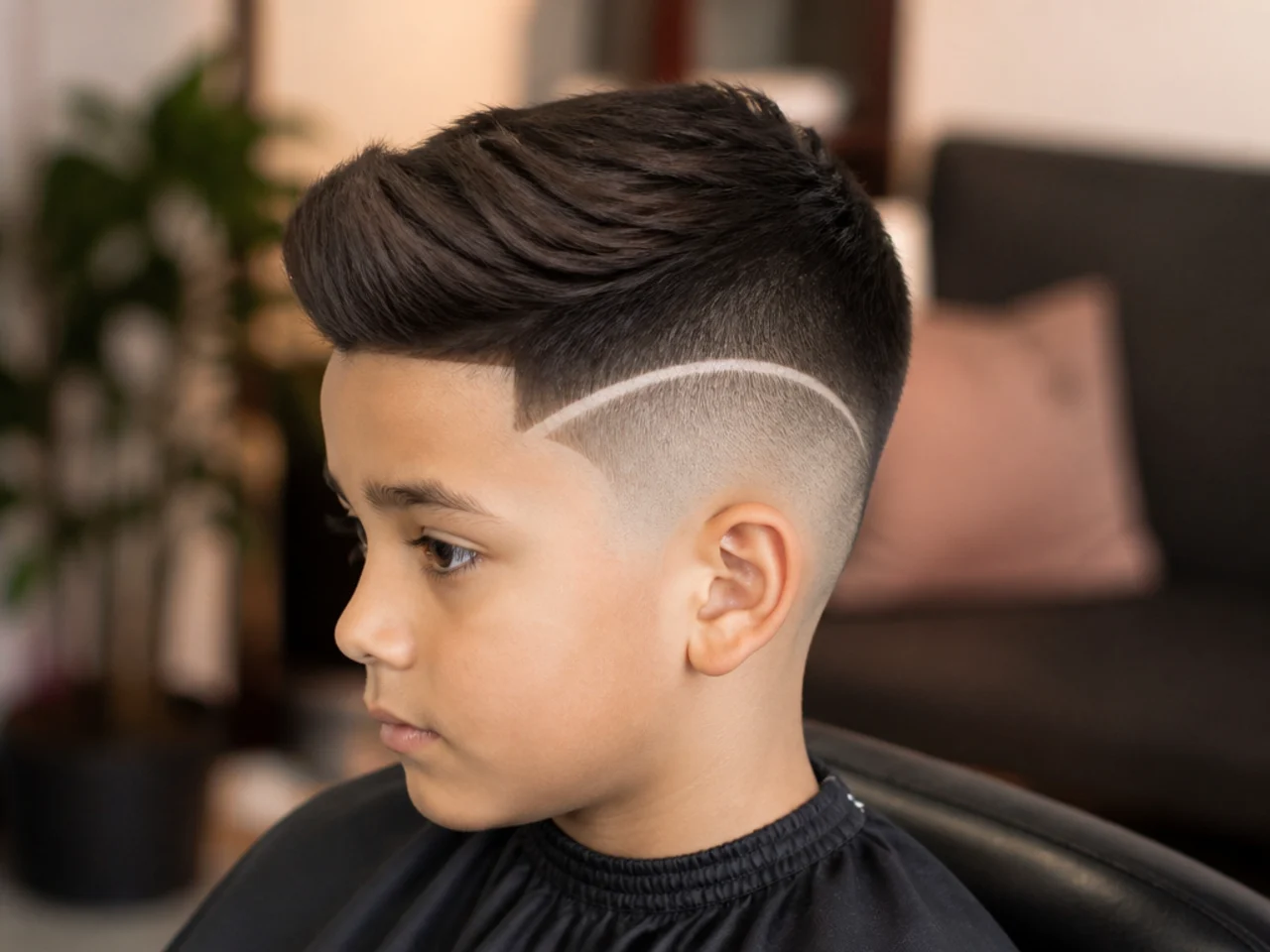
- 3. A Curved Line Following the Taper
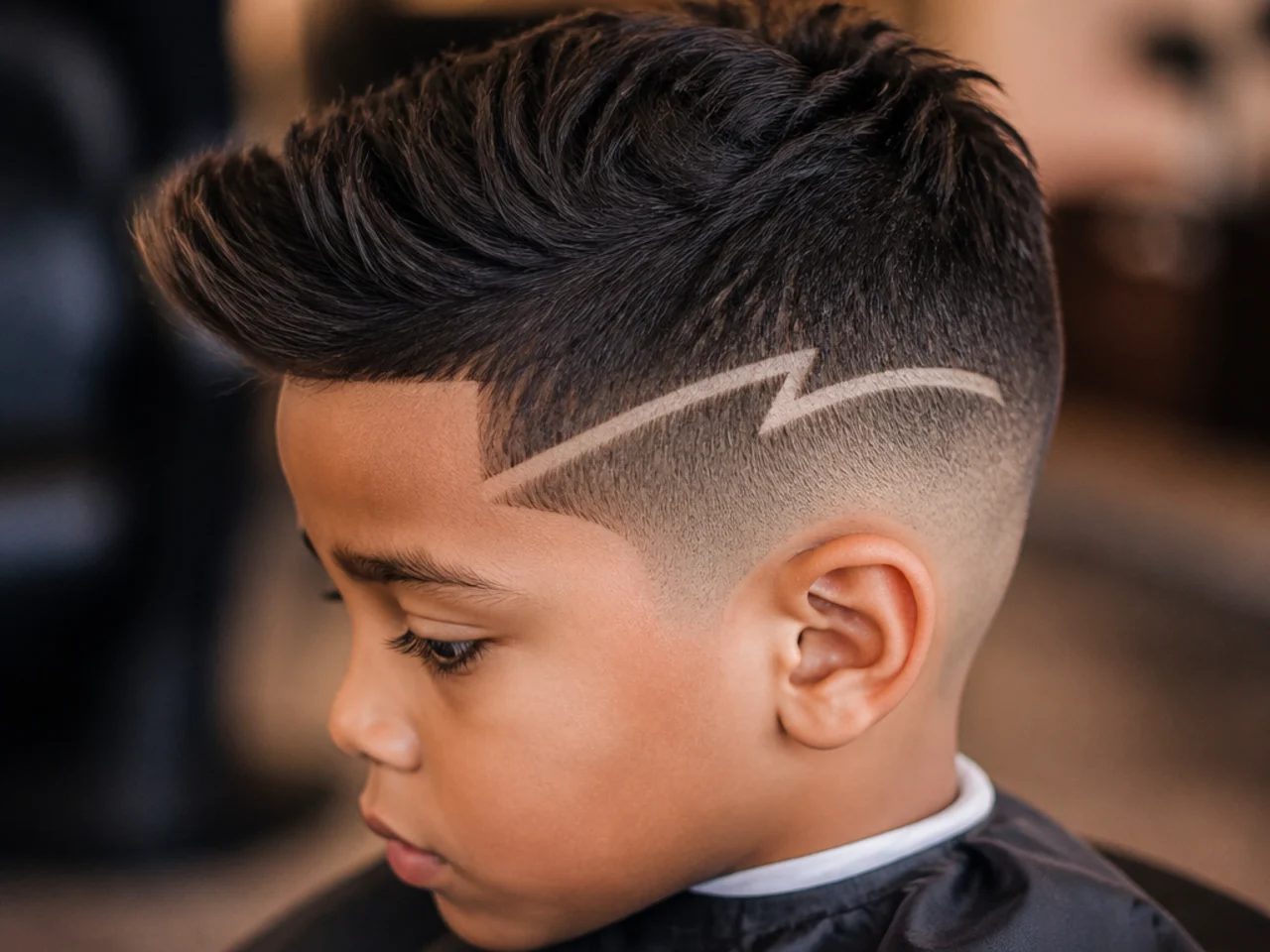
- 4. A Lightning Bolt at the Temple
- 5. A Full Side Pattern
- 6. A Design Cut Only on the Left So the School Side Is Clean
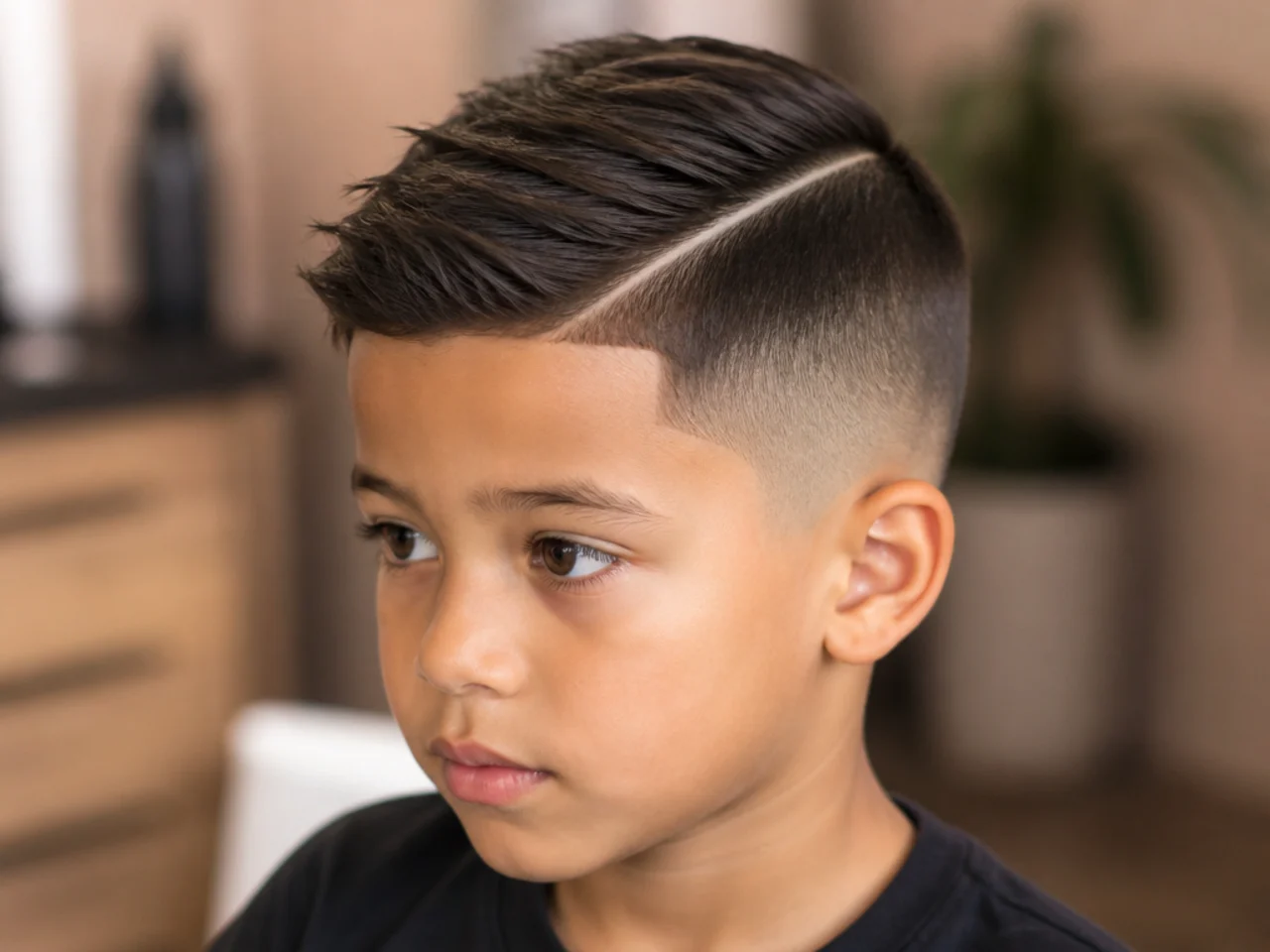
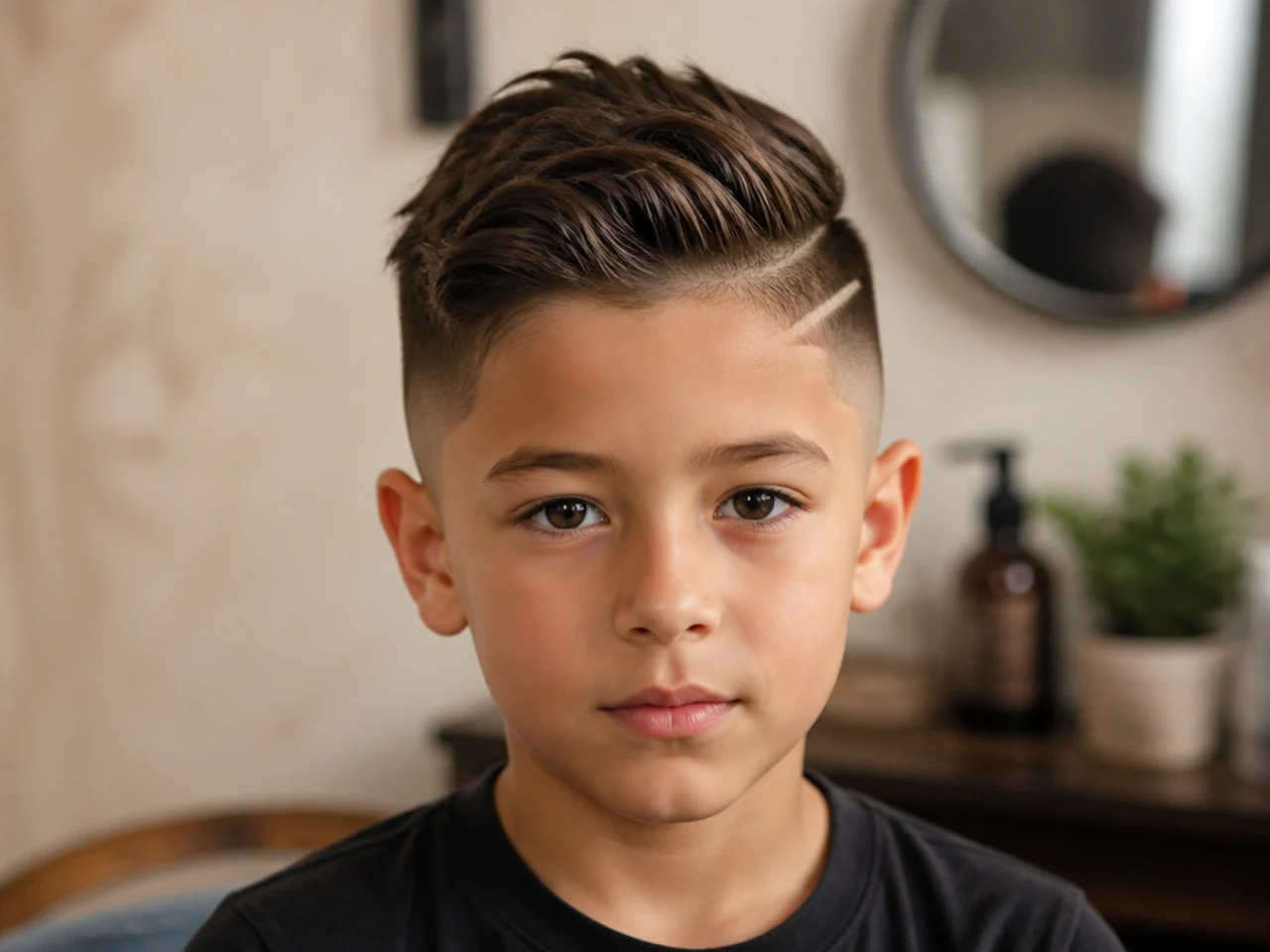
- 7. A Single Line Along the Natural Part
- 8. A Star at the Back of the Head
- 9. A Chevron Above the Ear
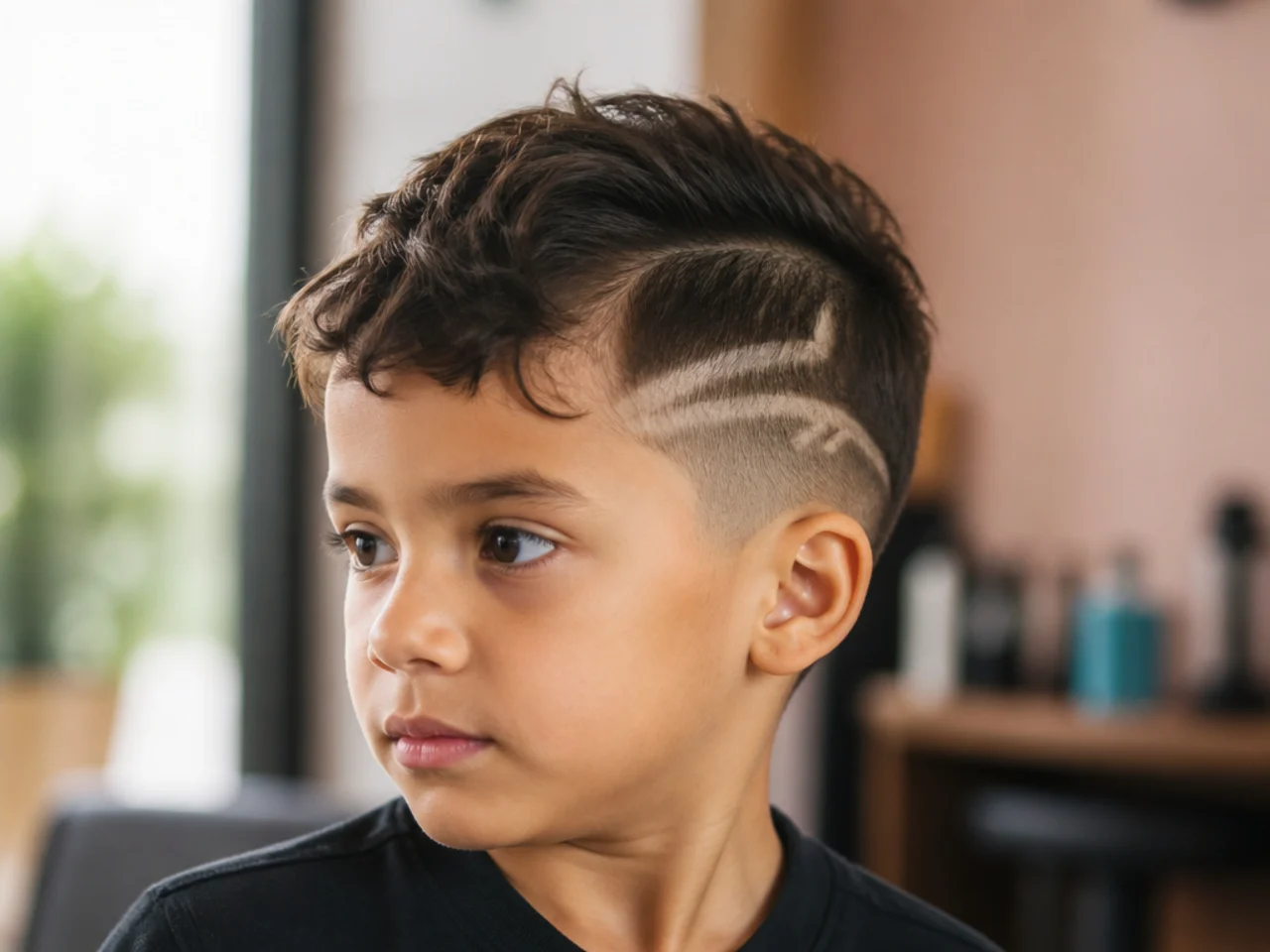
- 10. Three Lines Fanning From the Temple
- 11. A Line Running Around the Whole Head
- 12. An Initial or a Number
- 13. A Line Following the Hairline
- 14. A Design Cut Into a Number Three Instead of Skin
- 15. A Design Over a Skin Fade
- 16. A Zigzag Along the Taper Line
- 17. A Wide Single Band
- 18. A Design at the Nape
- 19. A Two-Line Design With a Deliberately Wide Gap
- 20. A Design Booked for a Photo Day
- Styling and Upkeep
- Mistakes to Avoid
- FAQ
- Final Thoughts
A design is the fastest-ageing thing you can put on a child's head, and the reason is geometric rather than cosmetic.
A shaved line is negative space, and hair fills a gap from both edges at once. That doubles the closing rate, so a design shuts at roughly twice the speed the rest of the cut ages. Ten to fourteen days is the honest window.
So a design is an event purchase, not a style choice. Buy it two weeks before the thing you want it for, choose it by how it fails rather than how it looks on day one, and check the school policy first, because designs are the item those policies name most often.
A Design Closes From Both Sides
Ten to fourteen days is the working life. After that the gap is narrower than the blade that cut it and the shape stops being legible.
Both edges grow inward simultaneously. A one-millimetre gap closes in half the time a two-millimetre gap does, so line width predicts lifespan more reliably than anything else.
Simple lines fail gracefully, dense patterns fail badly. A single line narrows into a faint parting that still looks deliberate. A busy pattern fills at different rates across its own area and reads as patchiness rather than design.
School policies name designs explicitly. Length rules are usually a minimum guard number, but design rules are usually a flat prohibition, which makes them the thing to check first.
How to Choose Yours
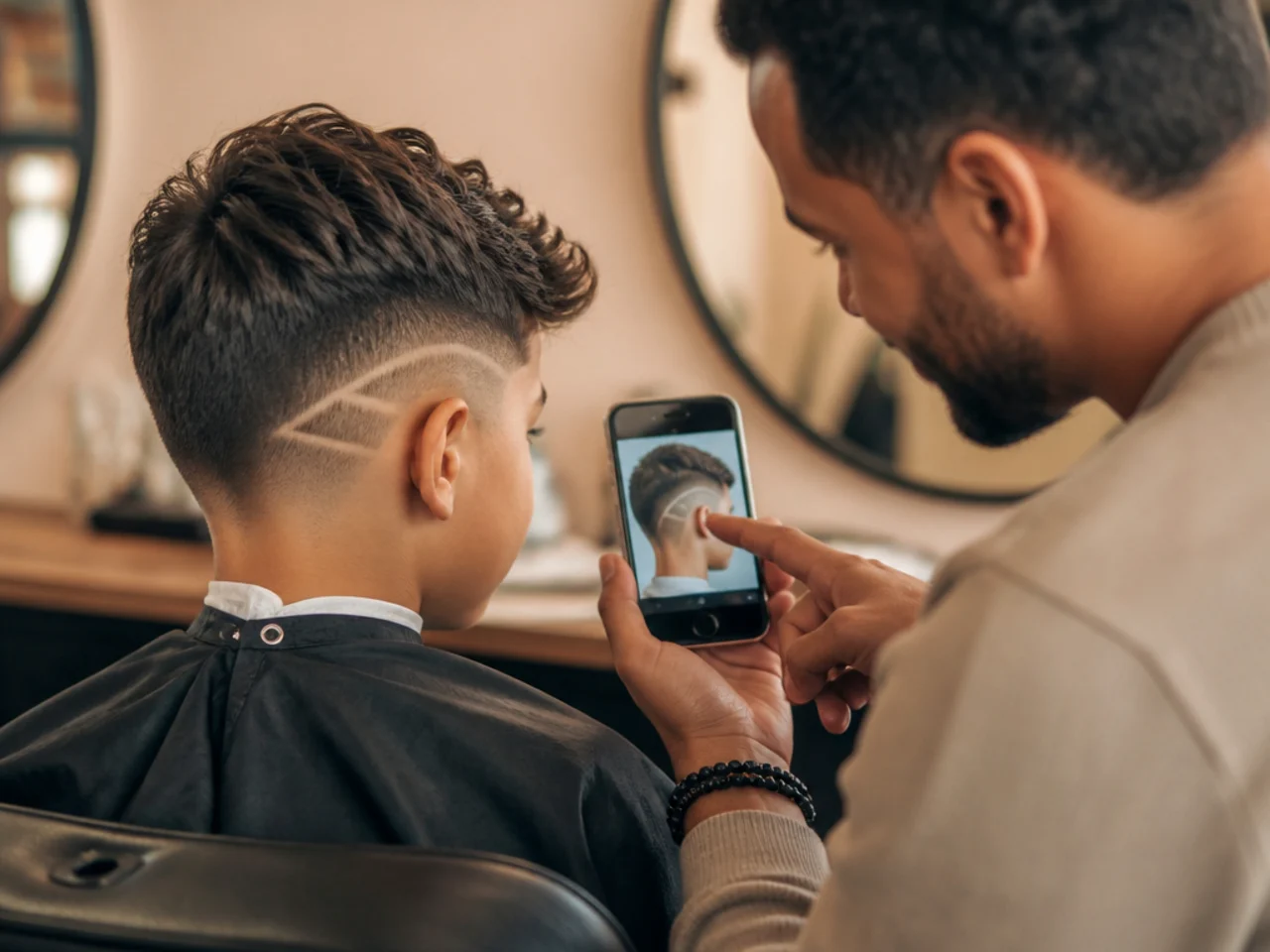
Count back fourteen days from the date you want it for. Any earlier and the design will have closed before the day arrives.
Choose by failure mode, not by the photo. Ask what the design looks like at day twelve, because that is most of its life.
Keep the lines wide and few. Width buys days, and every extra element in a pattern is another edge closing at its own rate.
Read the grooming policy wording before booking. A policy can allow a number two all over and still prohibit a single shaved line, and the two rules are written separately.
The 20 Designs and How Each One Fails
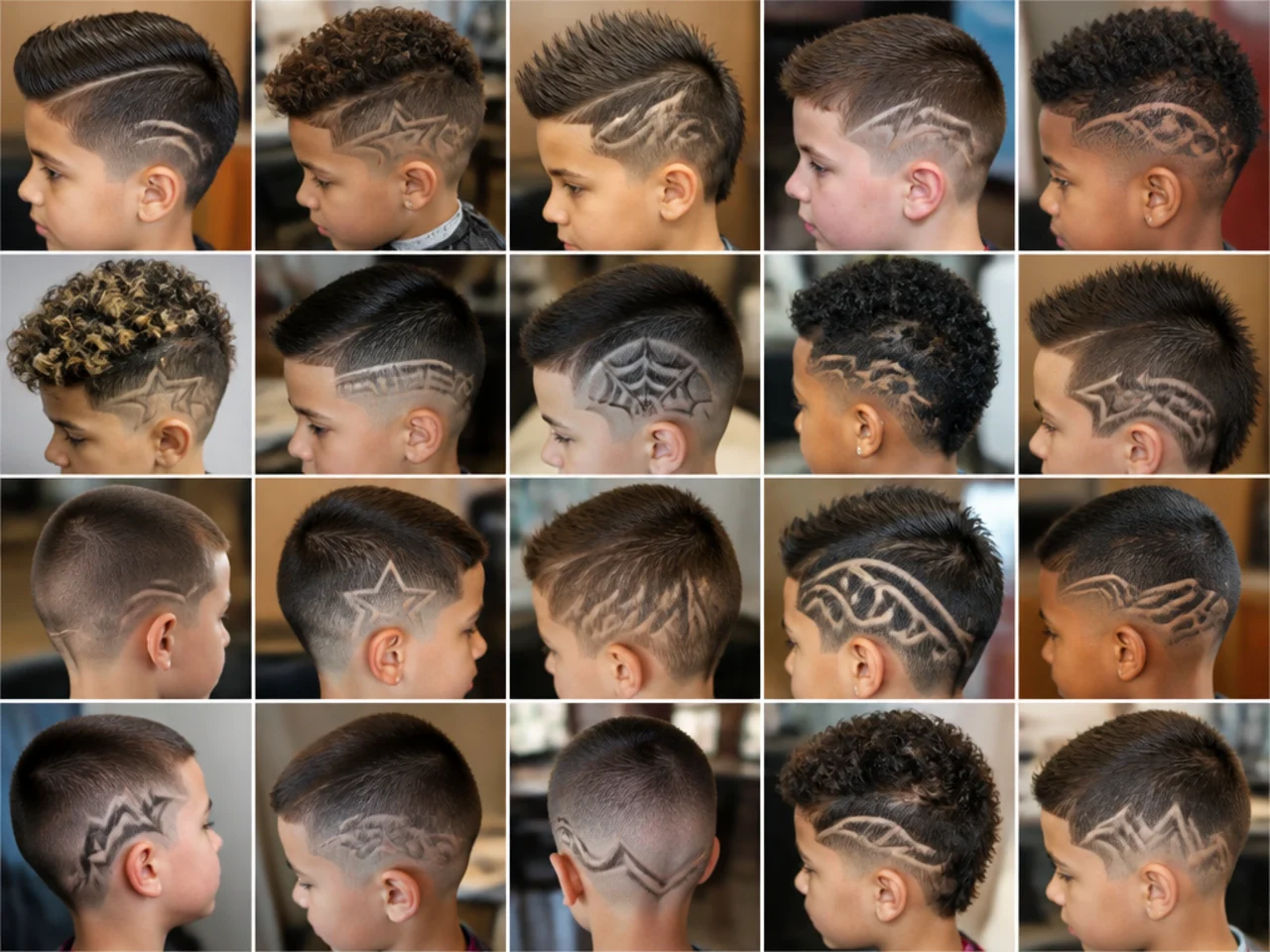
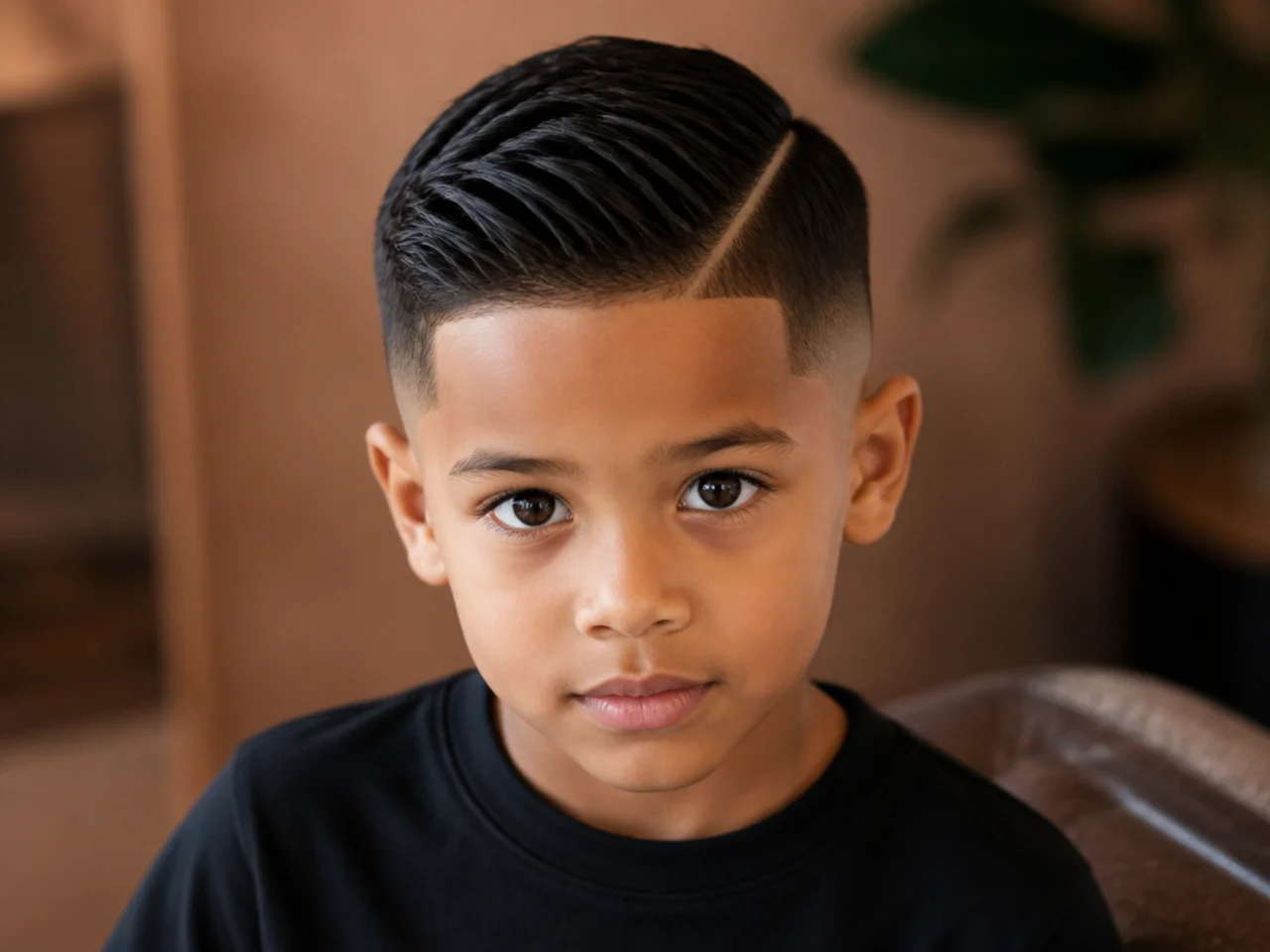
1. A Single Hard Part
Fourteen days. The longest-lived design here because there is only one gap and it sits along a natural split in the hair. It fails into a faint parting line that most people read as a deliberate part rather than a grown-out design. It is also the only one worth cutting on a much younger child, where finer hair gives a narrow gap far less contrast to hold on to.
2. Two Parallel Lines Above the Ear
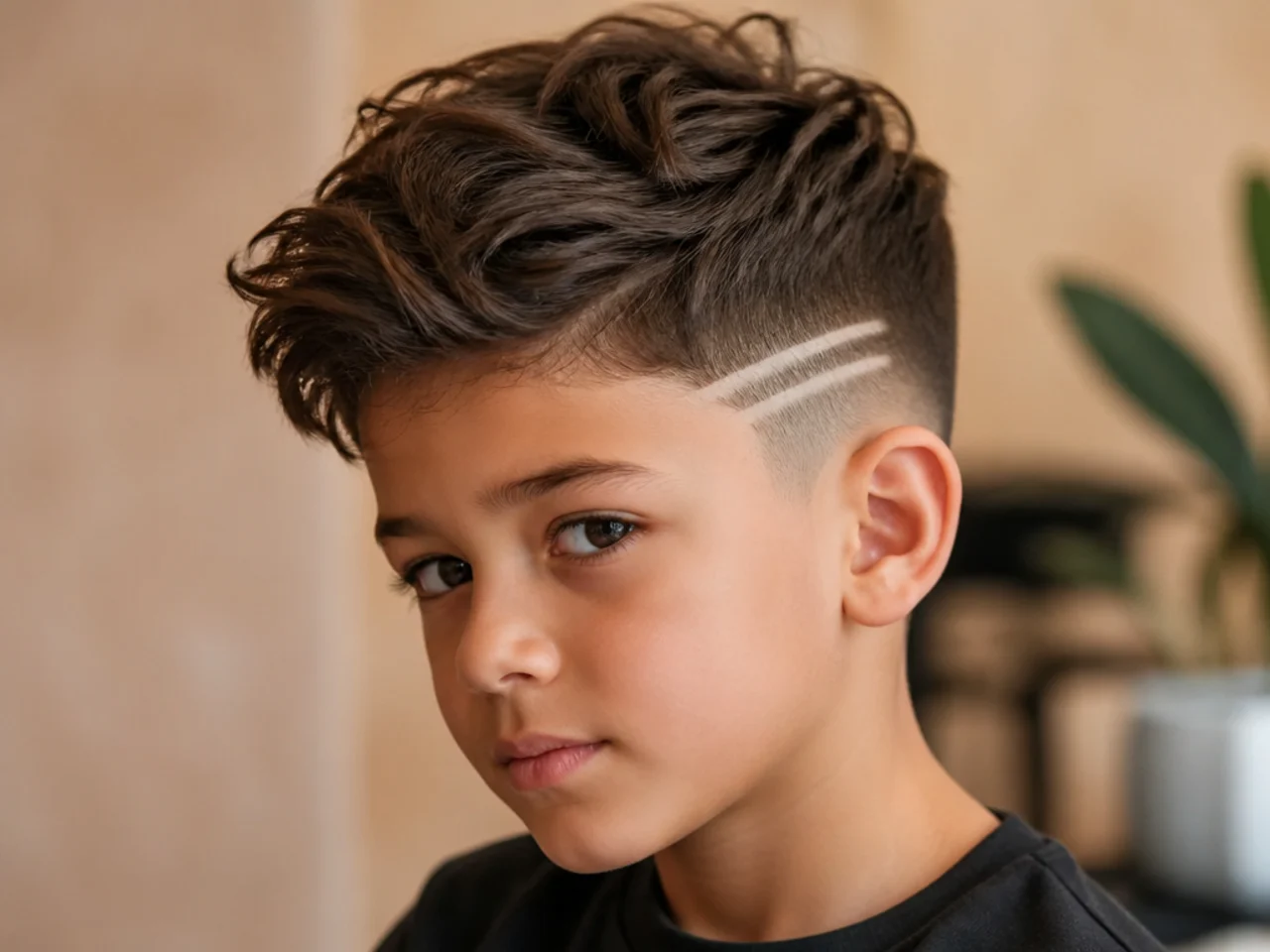
Twelve days. Two gaps closing at once, and the strip of hair between them is the part to watch. Keep that strip at least a centimetre wide, because a narrow one closes from both sides and the two lines merge into a single smudge.
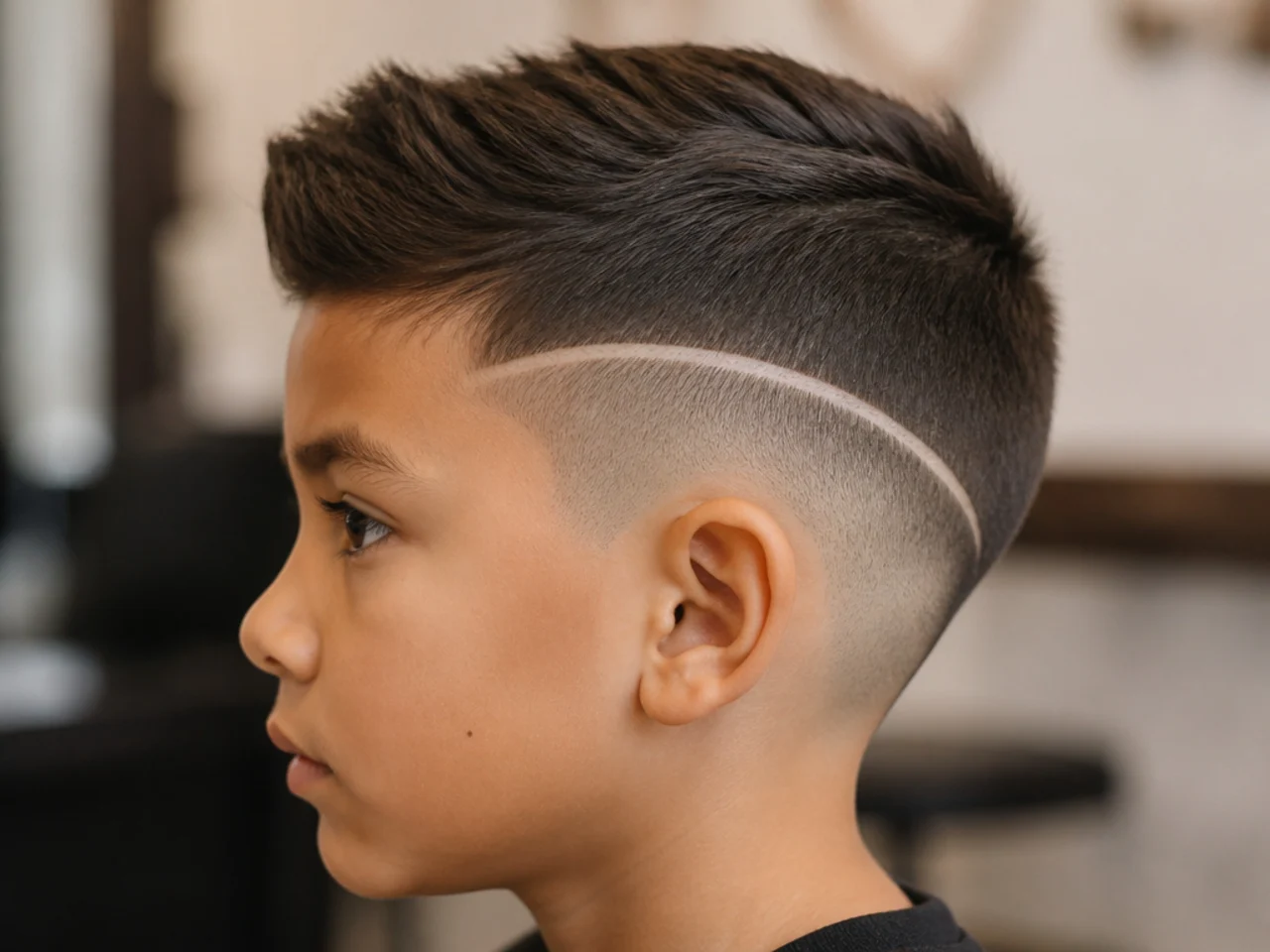
3. A Curved Line Following the Taper
Twelve days. It fails by merging downward into the taper line below it, so the last thing you see is a slightly thick, slightly soft fade edge. That is a forgiving ending, which is why the curve is a safer choice than an angle.
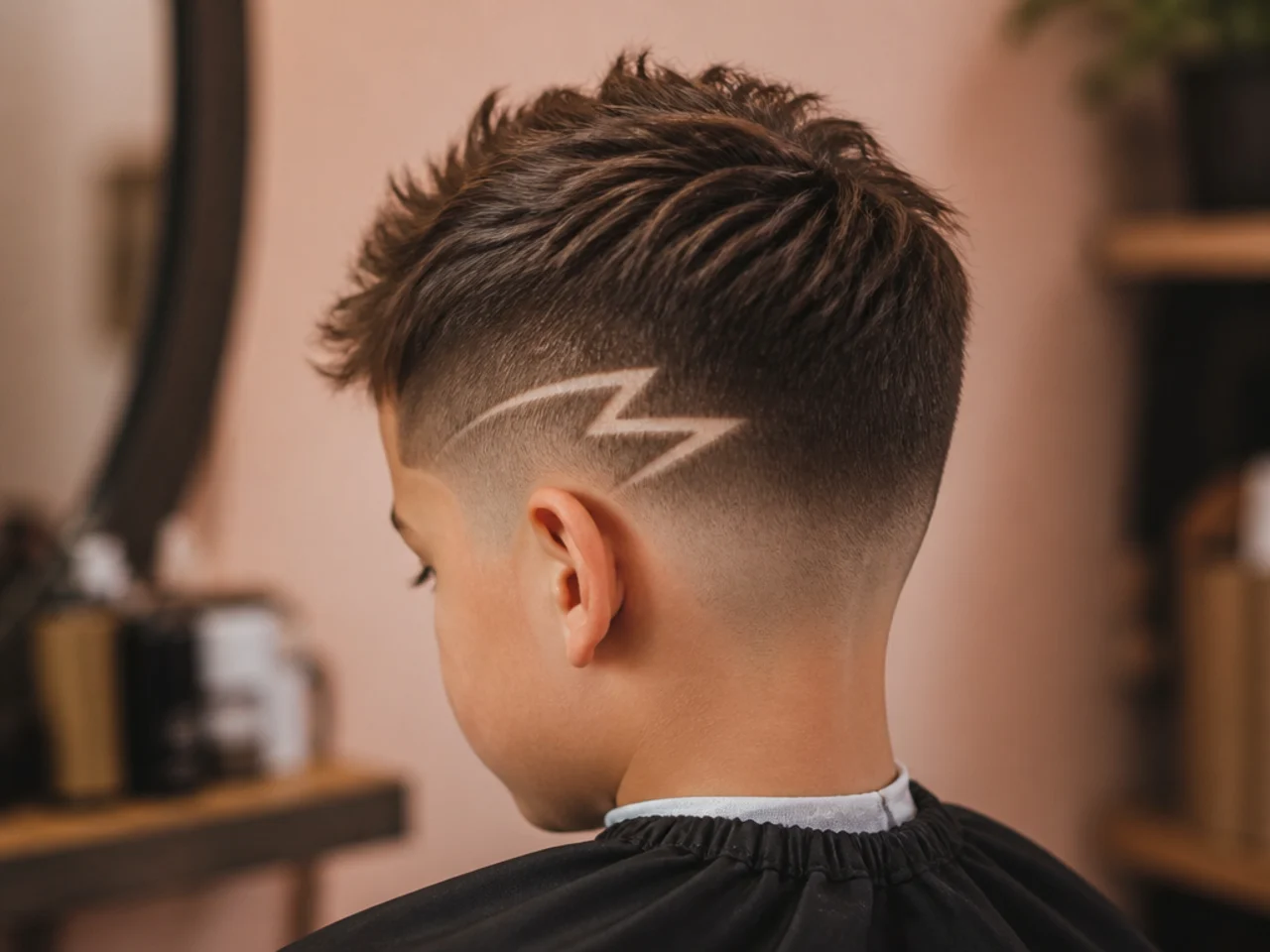
4. A Lightning Bolt at the Temple
Ten days. Sharp angles are the problem, because the inside of each corner has hair growing at it from two directions and closes first. The bolt loses its points before it loses its length and ends up reading as a scribble.
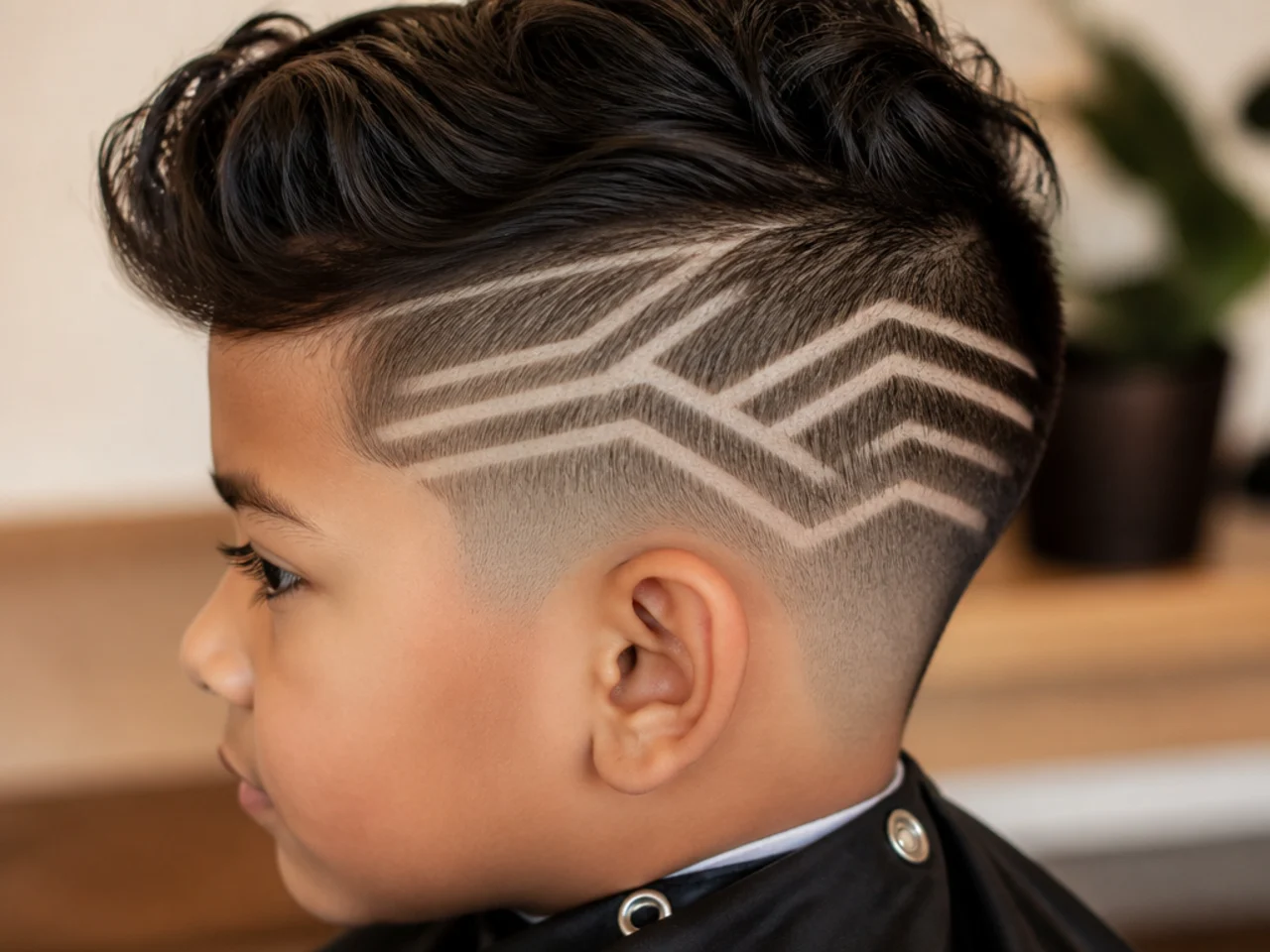
5. A Full Side Pattern
Eight days. The worst failure mode on the page, because a dense pattern has dozens of edges filling at slightly different rates across one area. What you get by day ten is uneven stubble that reads as damage rather than as anything intentional.
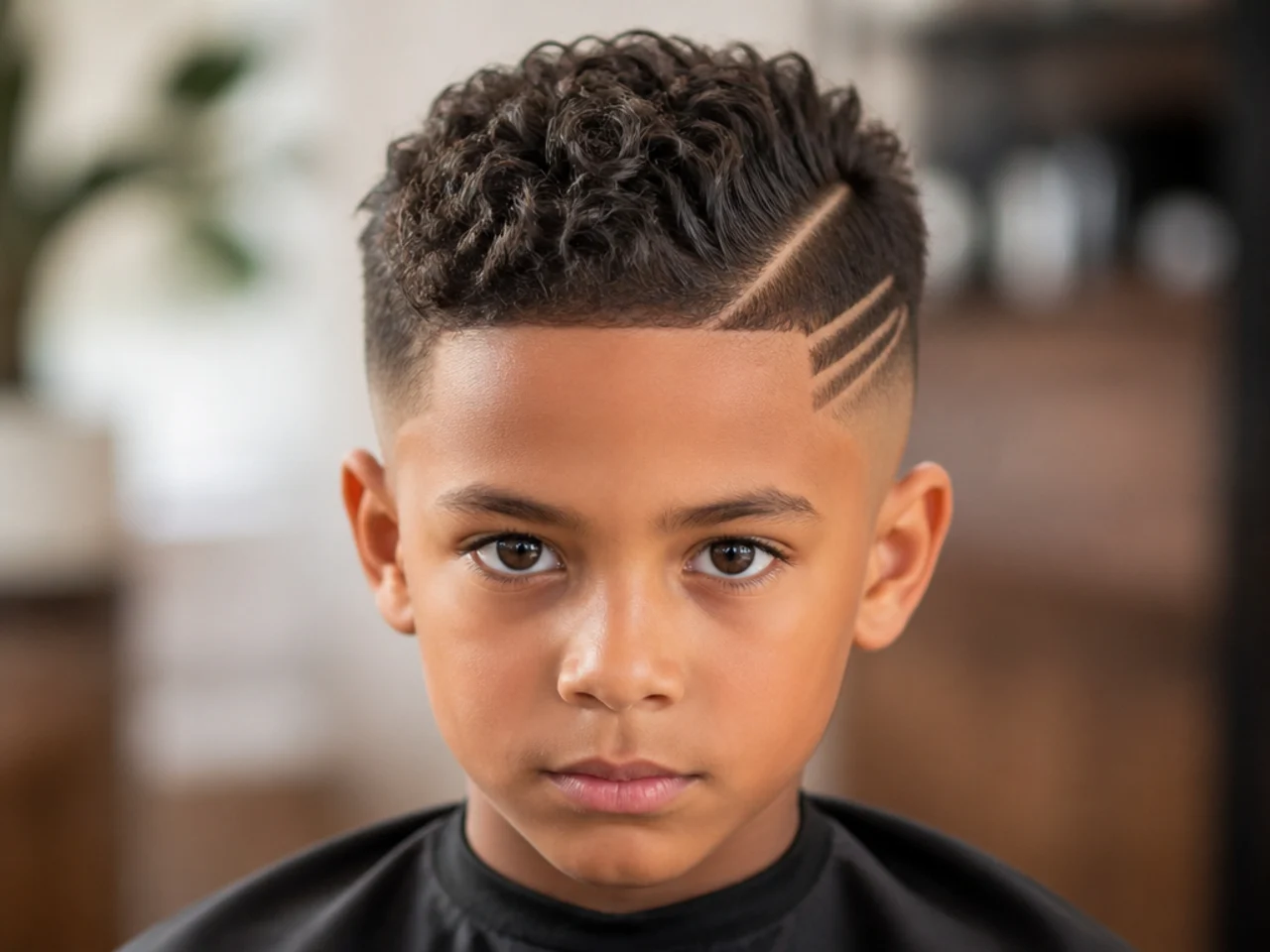
6. A Design Cut Only on the Left So the School Side Is Clean
Fourteen days. A single-sided design is the practical compromise when a policy is vague rather than explicit, and it halves the amount of shaved area to keep track of. It fails the same way a single line does, and the untouched side never needs correcting.
7. A Single Line Along the Natural Part
Fourteen days. Cut where the hair already separates, so the gap is partly held open by the growth direction rather than fighting it. It is the version most likely to still look intentional at the end of its life.
8. A Star at the Back of the Head
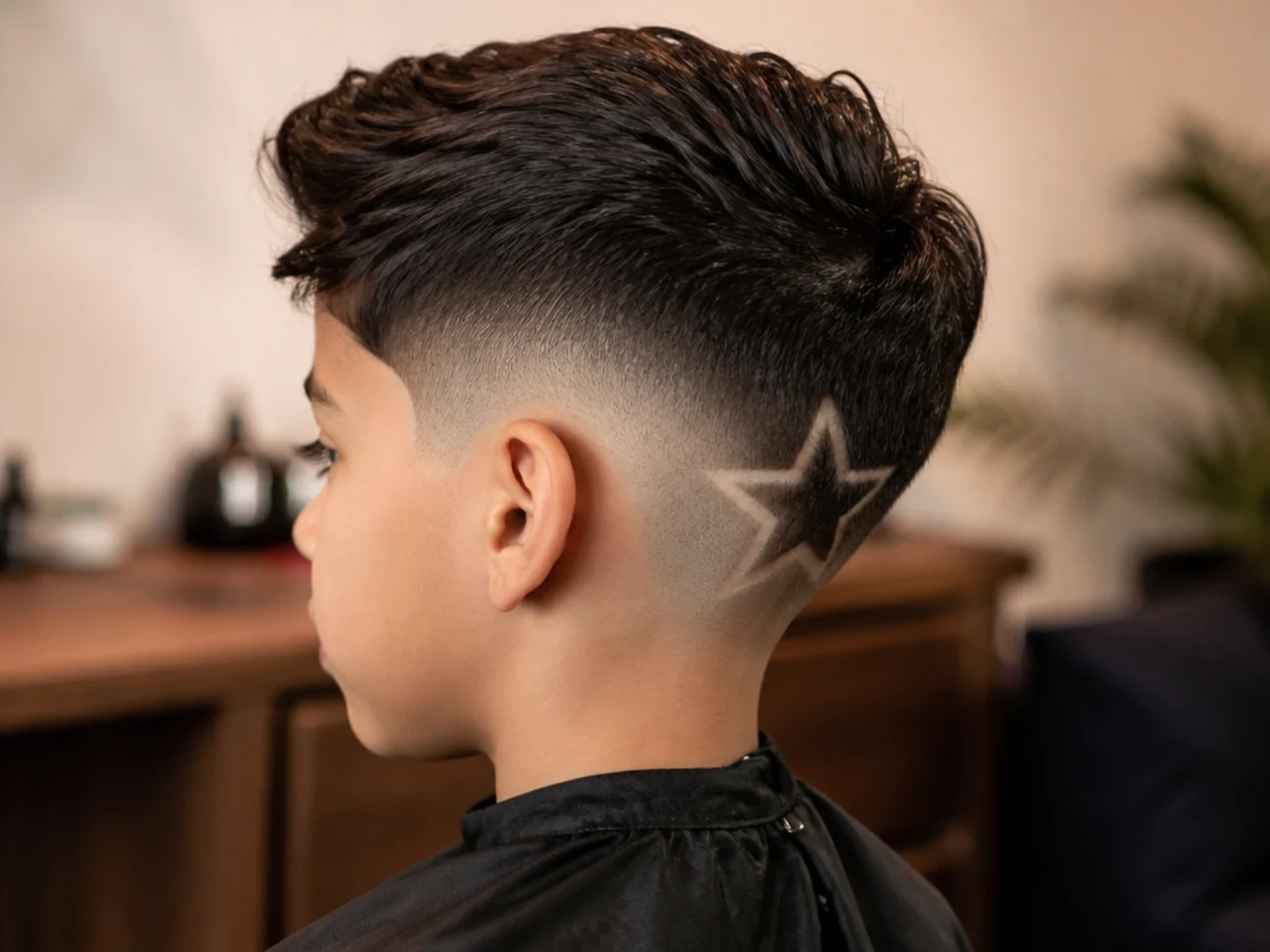
Nine days. Closed shapes are the shortest-lived of all, because the interior of the shape fills from every edge simultaneously rather than from two. The star loses its centre first and the outline survives as a vague blob.
9. A Chevron Above the Ear
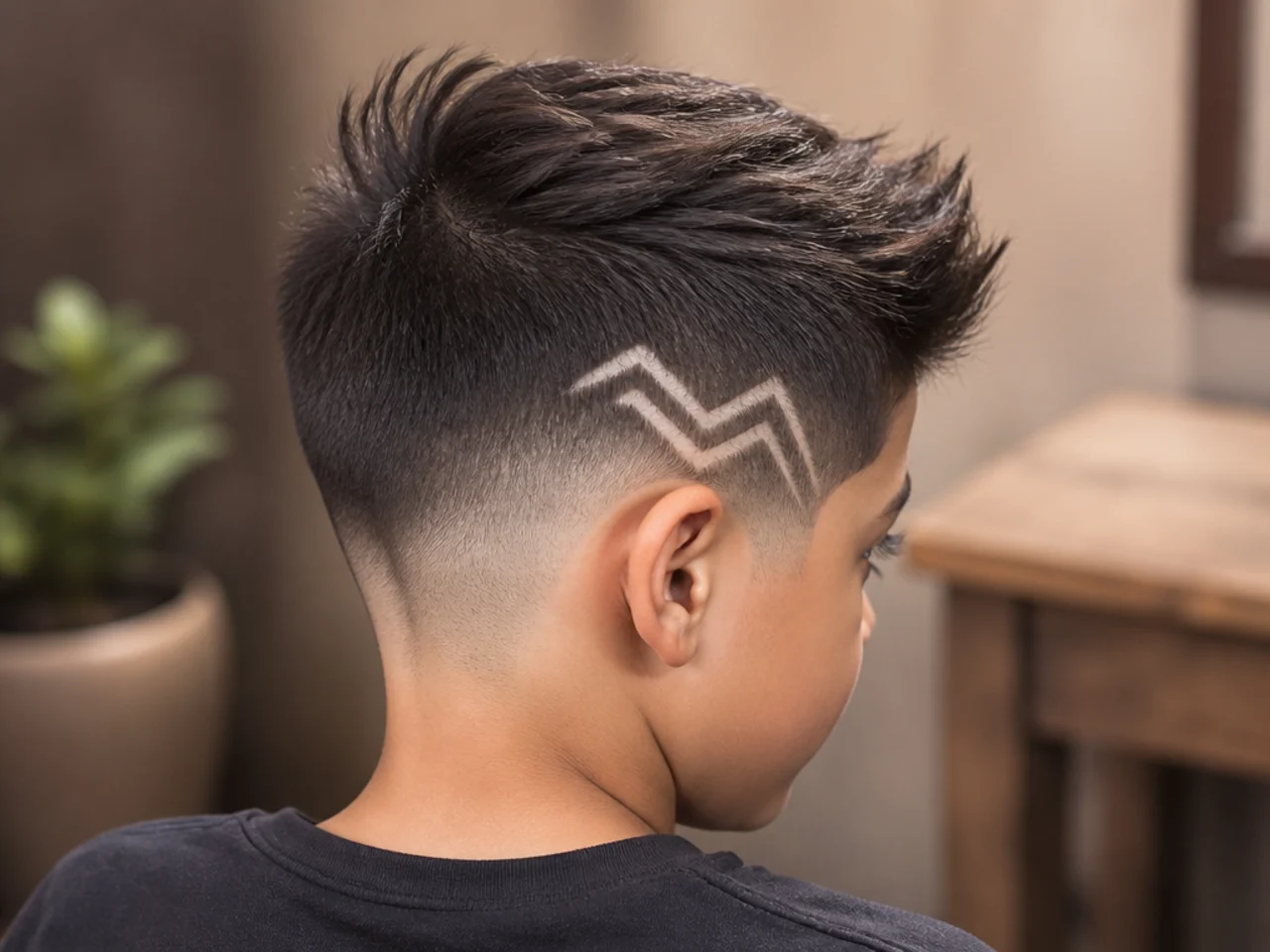
Twelve days. The point of the chevron closes before the two arms do, so it degrades into a pair of separate lines pointing at nothing. Cutting the point slightly wider than the arms delays that by a few days.
10. Three Lines Fanning From the Temple
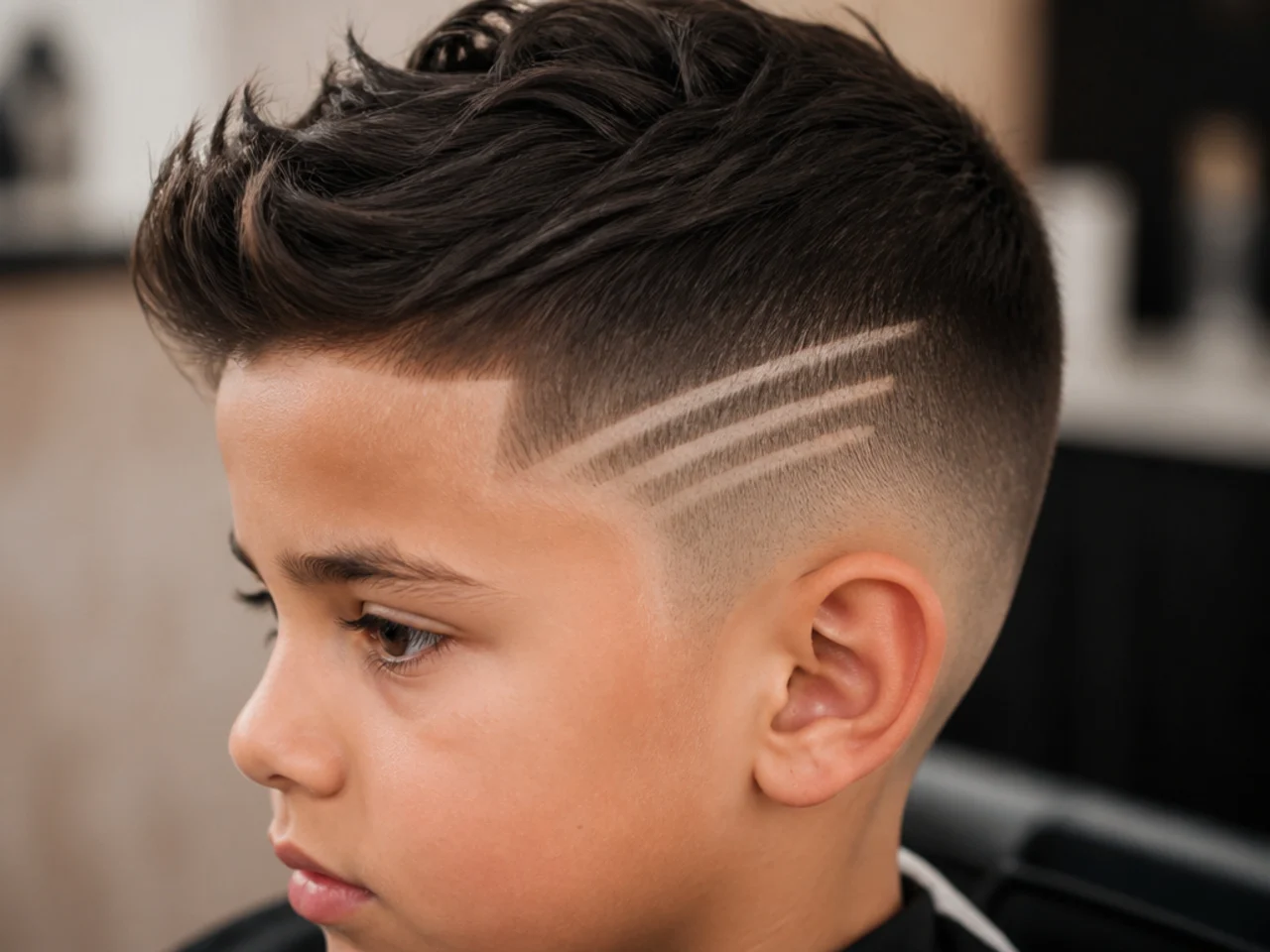
Ten days. The lines are narrowest where they converge, so the fan closes at the temple end first and the spread end outlives it. The result looks lopsided rather than faded, which is the failure to avoid.
11. A Line Running Around the Whole Head
Eleven days. It looks even on day one and fails unevenly, because the section at the back sits in hair that grows in a different direction and closes sooner. You will notice it from the side long after it has already gone at the back.
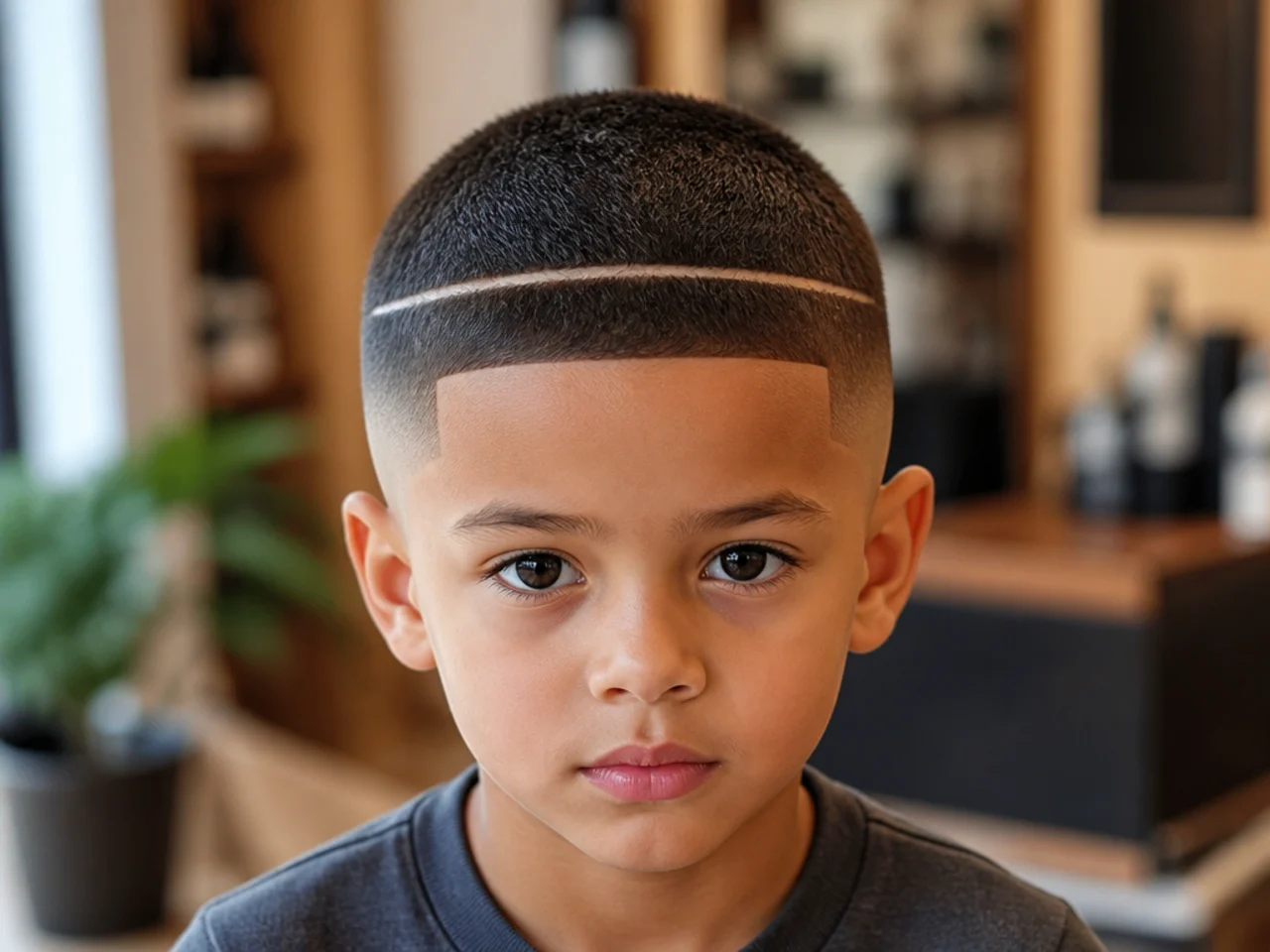
12. An Initial or a Number
Eight days. Letters and numbers need thin internal gaps to stay legible, and thin gaps are exactly what closes first. Once one gap fills the character stops being readable, which is a harder failure than a line going soft.
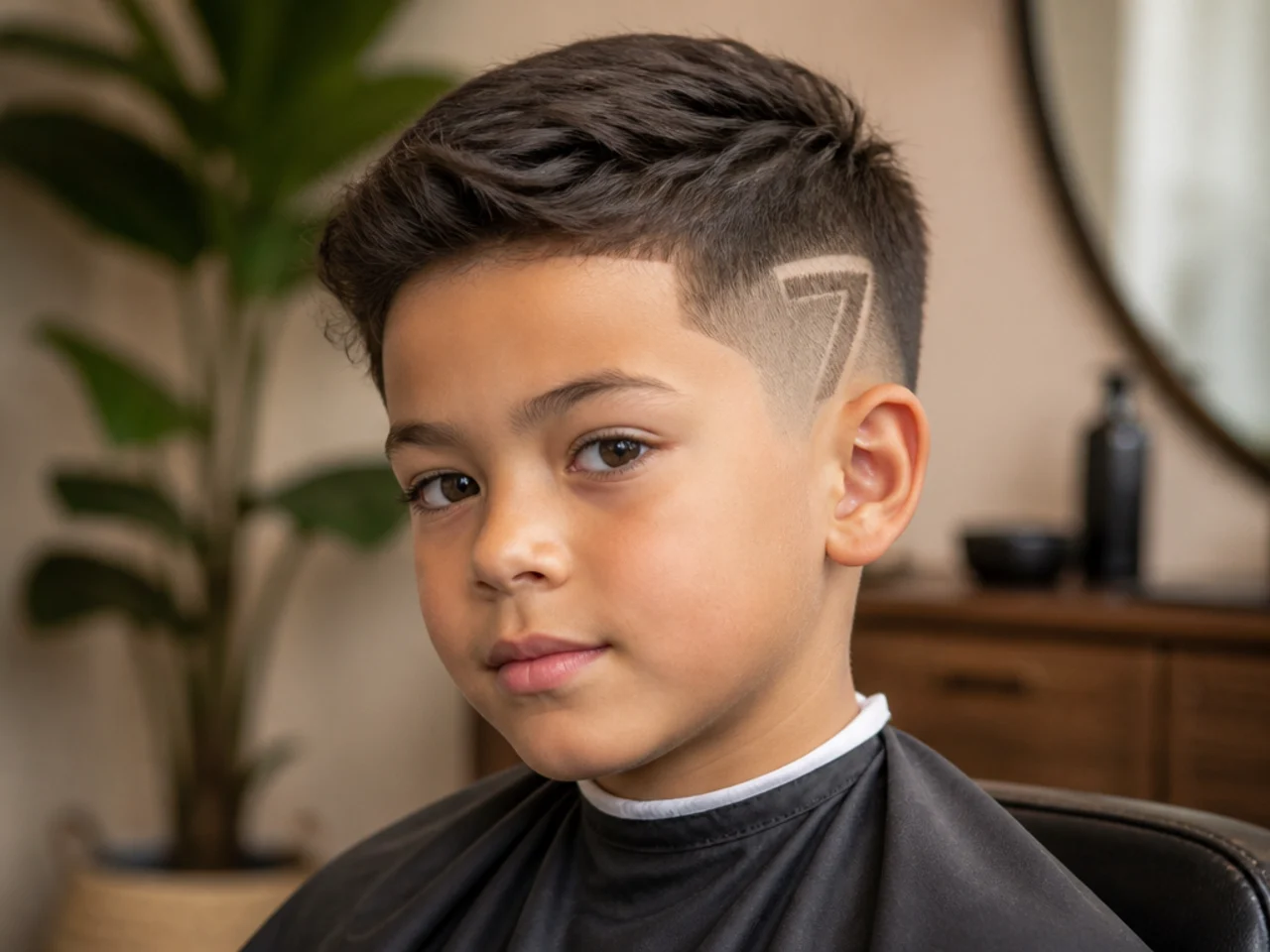
13. A Line Following the Hairline
Fourteen days. It fails by merging into the hairline itself, which is the softest ending available to any design. Nobody looking at it in week three sees a grown-out design, they see a slightly high hairline.
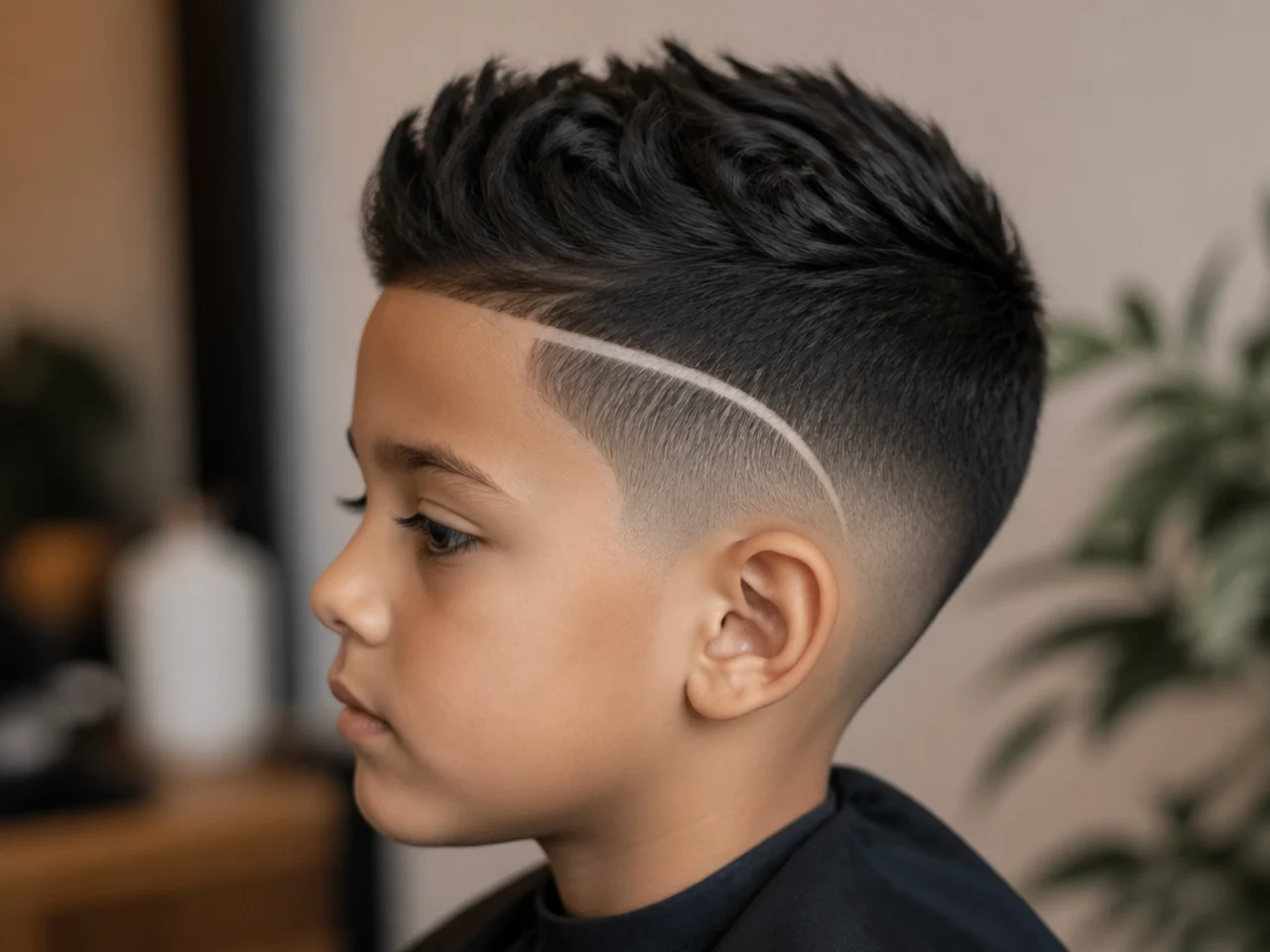
14. A Design Cut Into a Number Three Instead of Skin
Seven days. Cutting a line into ten millimetres rather than into a short fade means the contrast starts low and has less distance to lose. It reads as a soft impression from day one and is gone within the week.
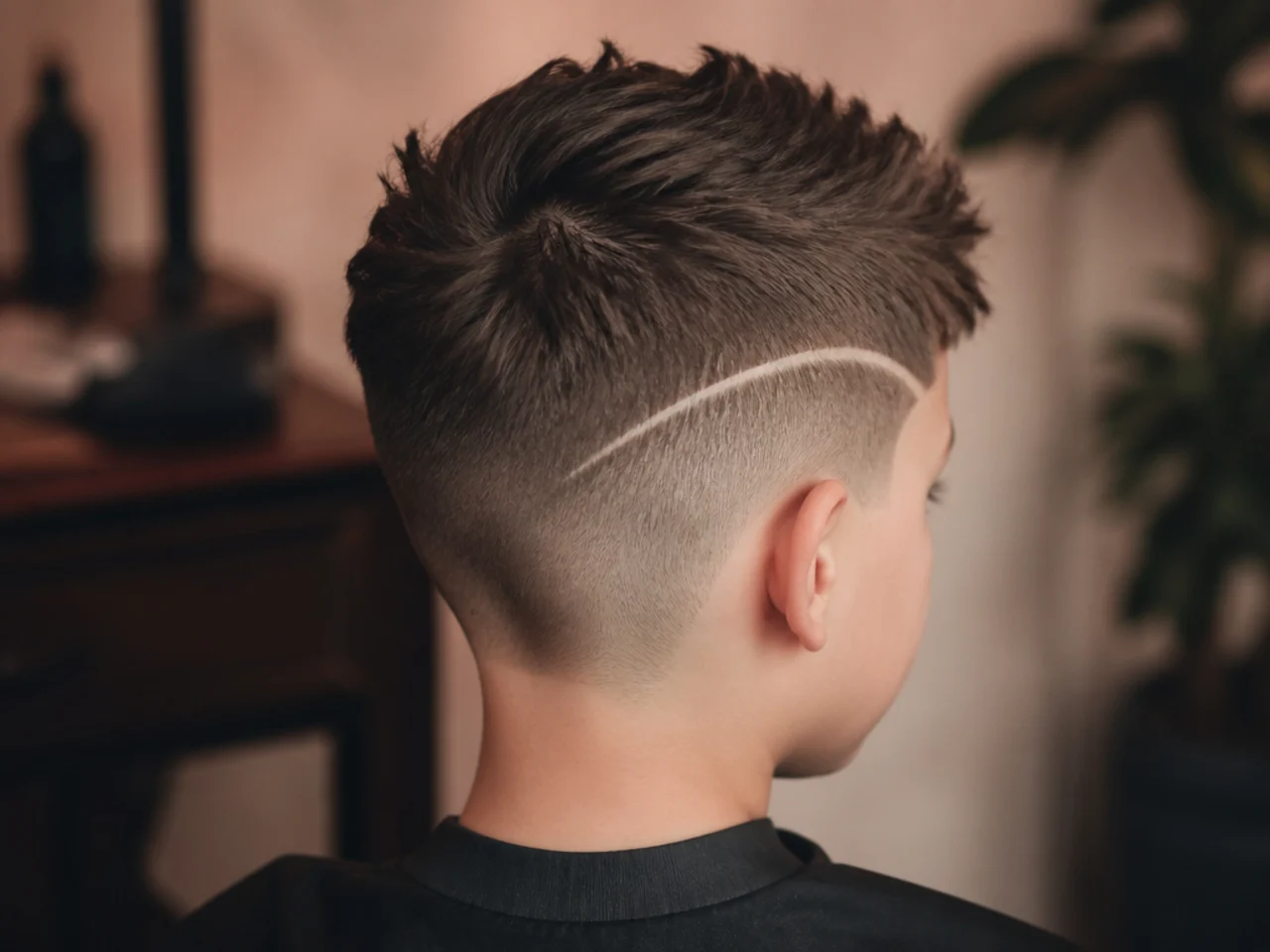
15. A Design Over a Skin Fade
Ten days for the design, seven for the fade. The fade underneath ages faster than the line above it, so the cut fails from the bottom up and the design is left sitting on a blurred background. Pair a design with a taper instead and the two fail together.
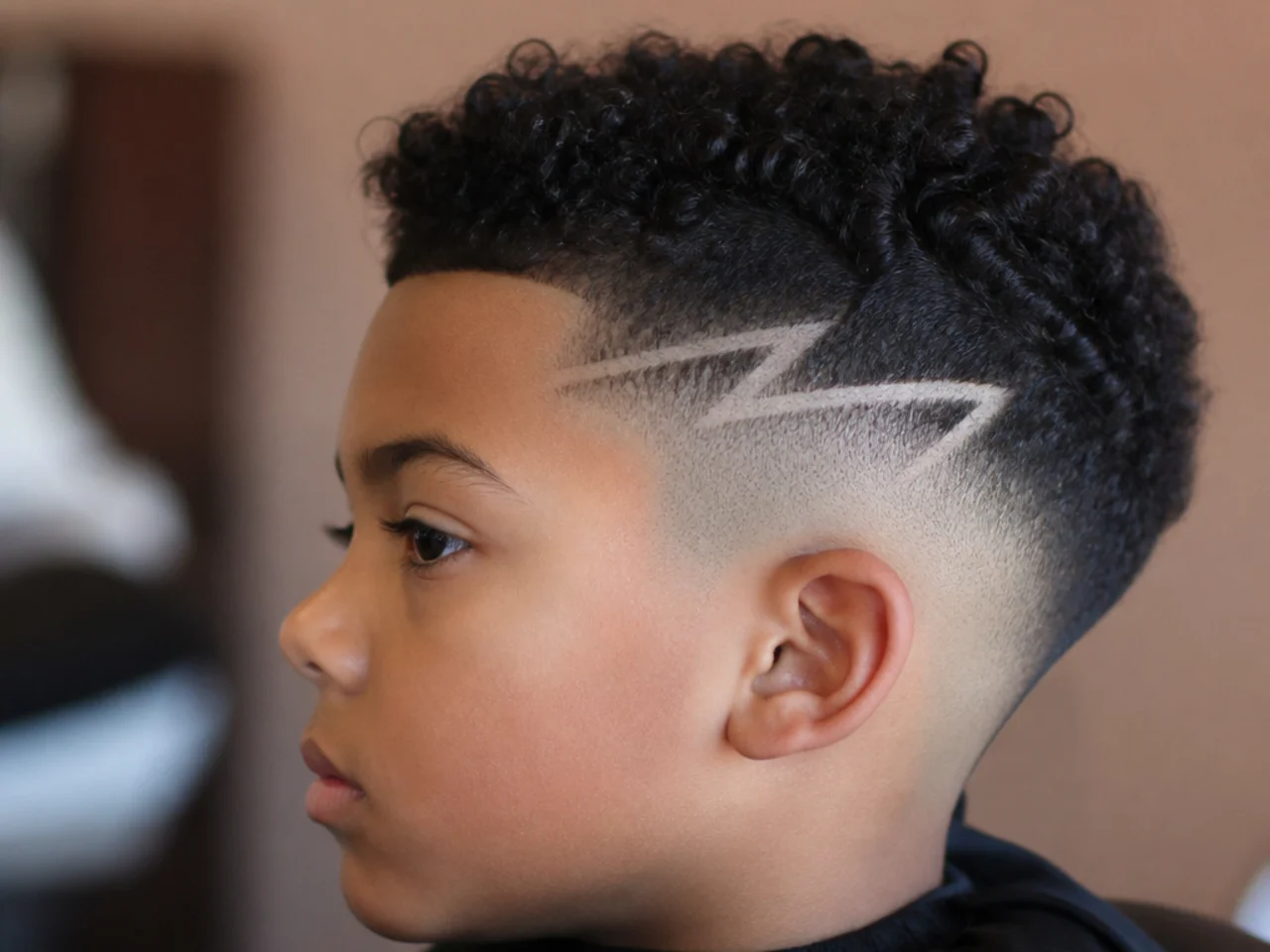
16. A Zigzag Along the Taper Line
Ten days. Every corner rounds off before the straight sections narrow, so a zigzag becomes a wavy line and then a soft band. It is a predictable failure at least, which puts it well ahead of a dense pattern.
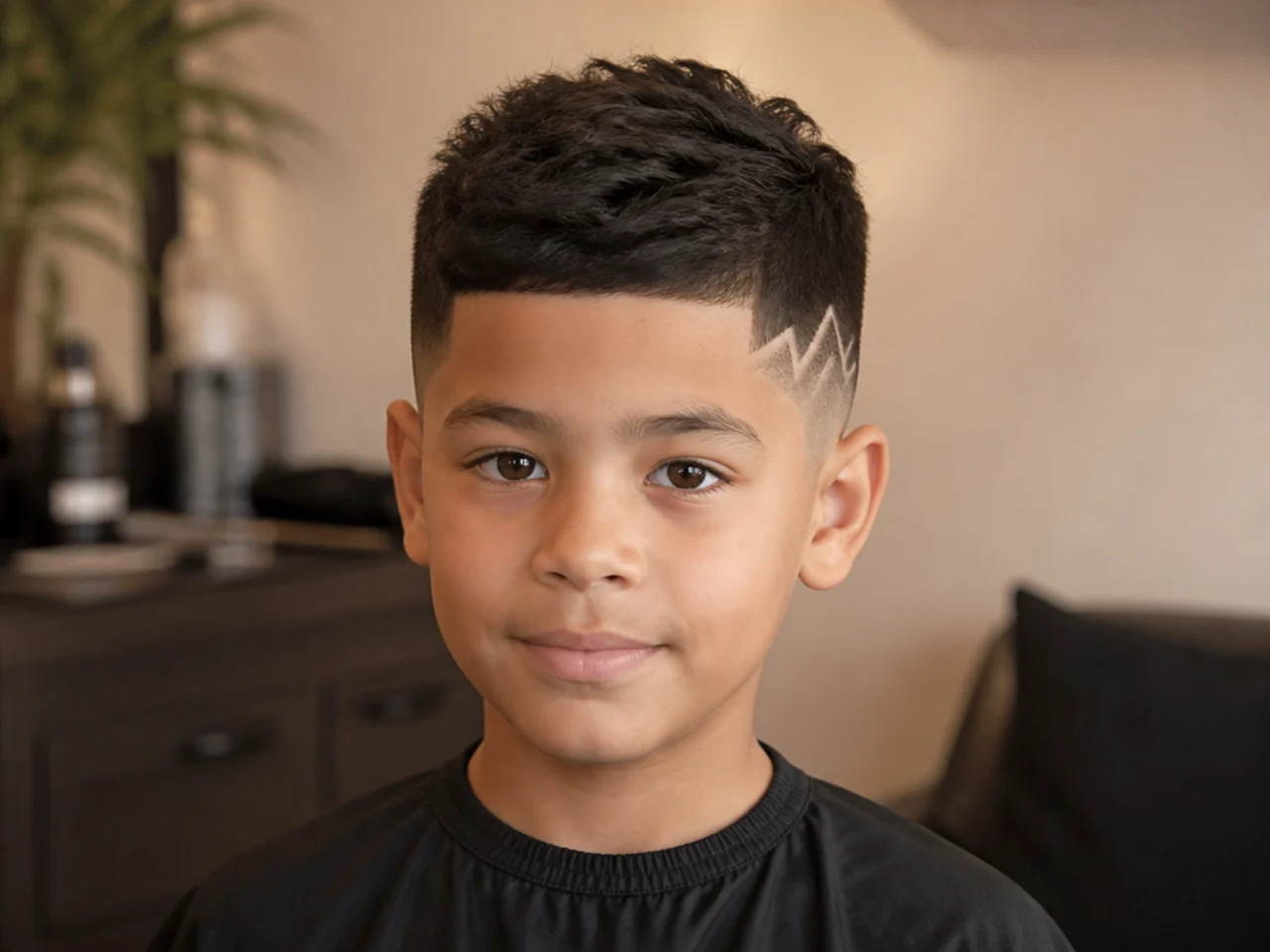
17. A Wide Single Band
Sixteen days. Width is the single biggest lever on lifespan, and a band cut two or three times the width of a normal line simply takes proportionally longer to close. It narrows evenly and ends its life looking like a deliberate part.
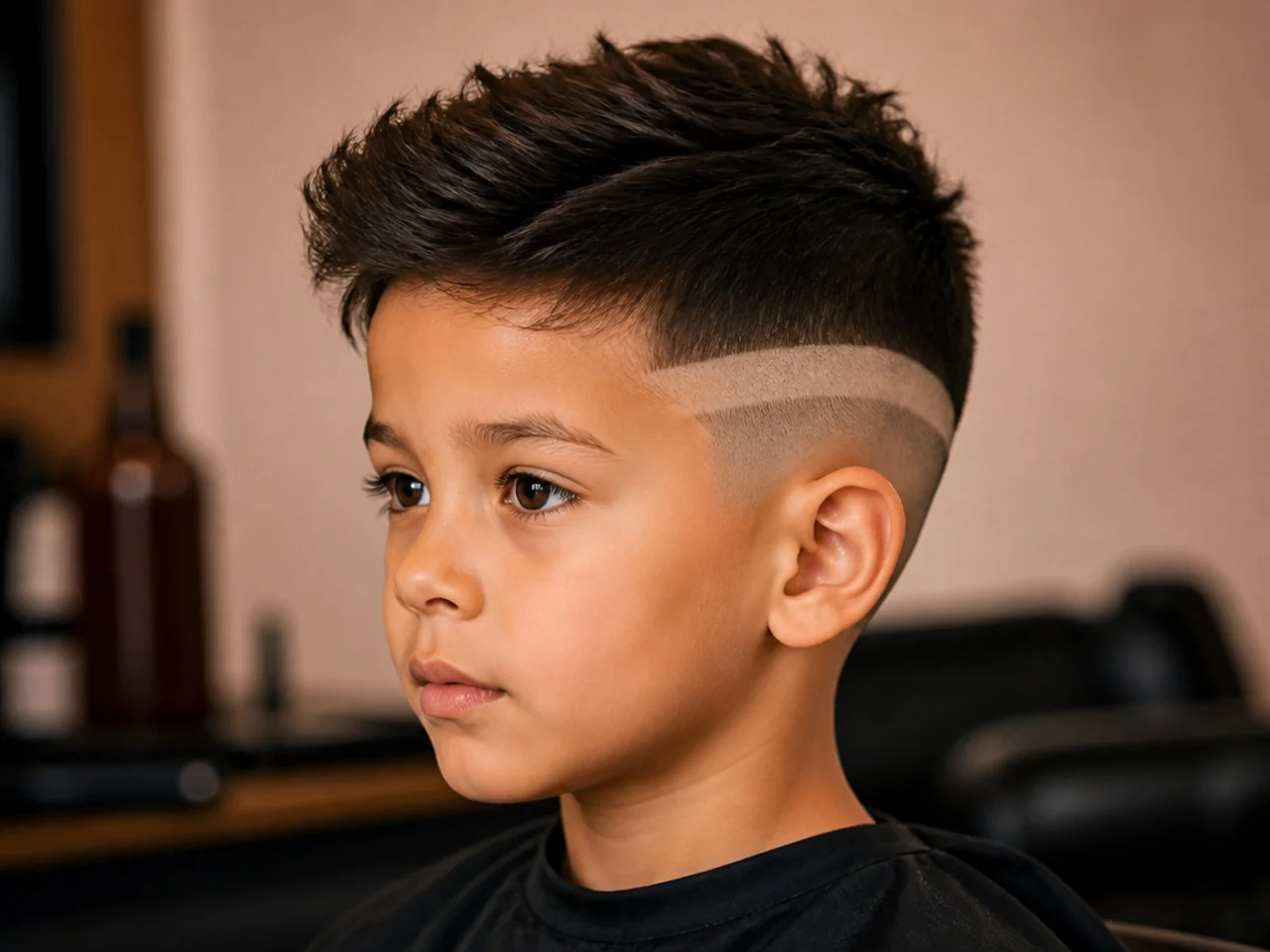
18. A Design at the Nape
Twelve days. Mechanically it behaves like any other single line, but nobody checks the back of a child's head between cuts. It spends most of its second week half closed without anyone noticing, which is fine if that is what you want.
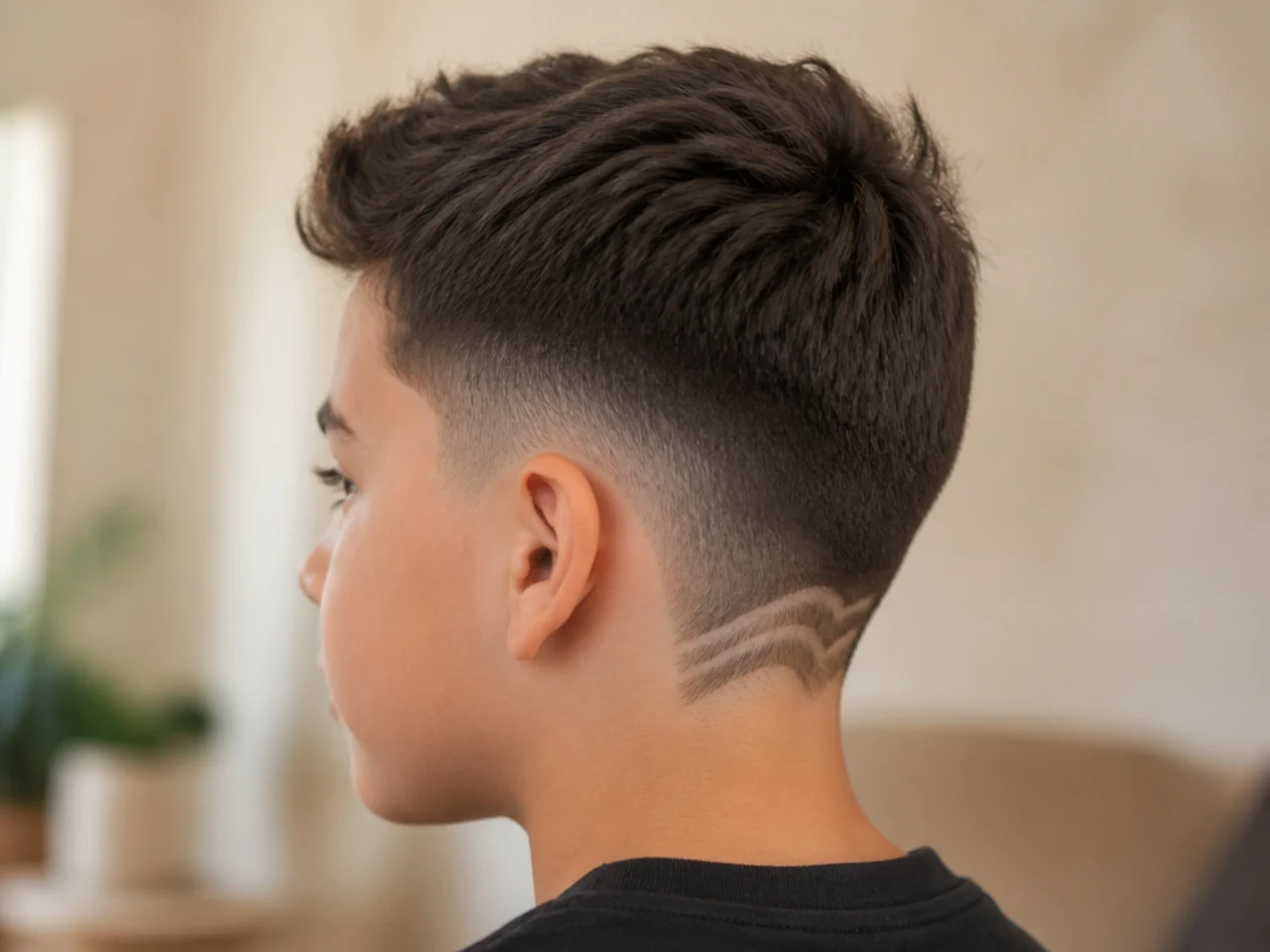
19. A Two-Line Design With a Deliberately Wide Gap
Fourteen days. The same idea as two parallel lines, but with the strip between them widened so the two gaps cannot meet in the middle. It costs nothing visually and adds most of a week.
20. A Design Booked for a Photo Day
Ten useful days. The correct way to buy a design is to work backwards from a date rather than adding it to a routine haircut. Cut it three to five days before the event so it has settled slightly and is still fully legible.
Styling and Upkeep
Treat a design as a separate appointment from the haircut. They run on different clocks, so tying them together means one of the two is always wrong.
Redo the line rather than deepening it. Recutting the same gap wider each time thins the surrounding area until the design sits in a bald patch.
Photograph it on day one from the side. It lives where nobody looks in a mirror, and the picture is what tells the barber where the line was.
Let a failed design grow out rather than shaving it off. Taking the whole side down to match the gap costs you the haircut as well as the design.
Pair a design with a taper, not a skin fade. A taper ages at a similar rate, so the two reach the end of their lives at roughly the same time.
Mistakes to Avoid
Cutting a design a month before the event. It closes in two weeks, so a month of lead time means paying for something nobody will see.
Choosing a dense pattern for a child. It has the worst failure mode of any option and spends most of its short life reading as patchiness.
Assuming a length policy covers designs. Grooming rules usually treat them as two separate items, and the design rule is the stricter of the two.
Cutting lines too close together. Two gaps a few millimetres apart close into each other and leave one thick smudge instead of two lines.
Adding a design to a cut that is already grown out. The line needs contrast to read, and it will not find any in hair that has lost its shape.
FAQ
How long does a design last? Ten to fourteen days, roughly half the life of the haircut around it.
Which ones grow out best? Single wide lines, because they narrow evenly and end up looking like a part.
Will school allow it? Designs are the item grooming policies restrict most often, so check the wording before booking.
Final Thoughts
Pick the design by asking what it looks like on day twelve, then work backwards from the date you actually want it for. A single wide line cut four days before the event will still be legible on the day and will fade into something that passes for a parting afterwards, which is more than can be said for anything with corners in it.
For the adult versions of the same lines see burst fade designs and the low taper fade design. More in Men's Haircuts.