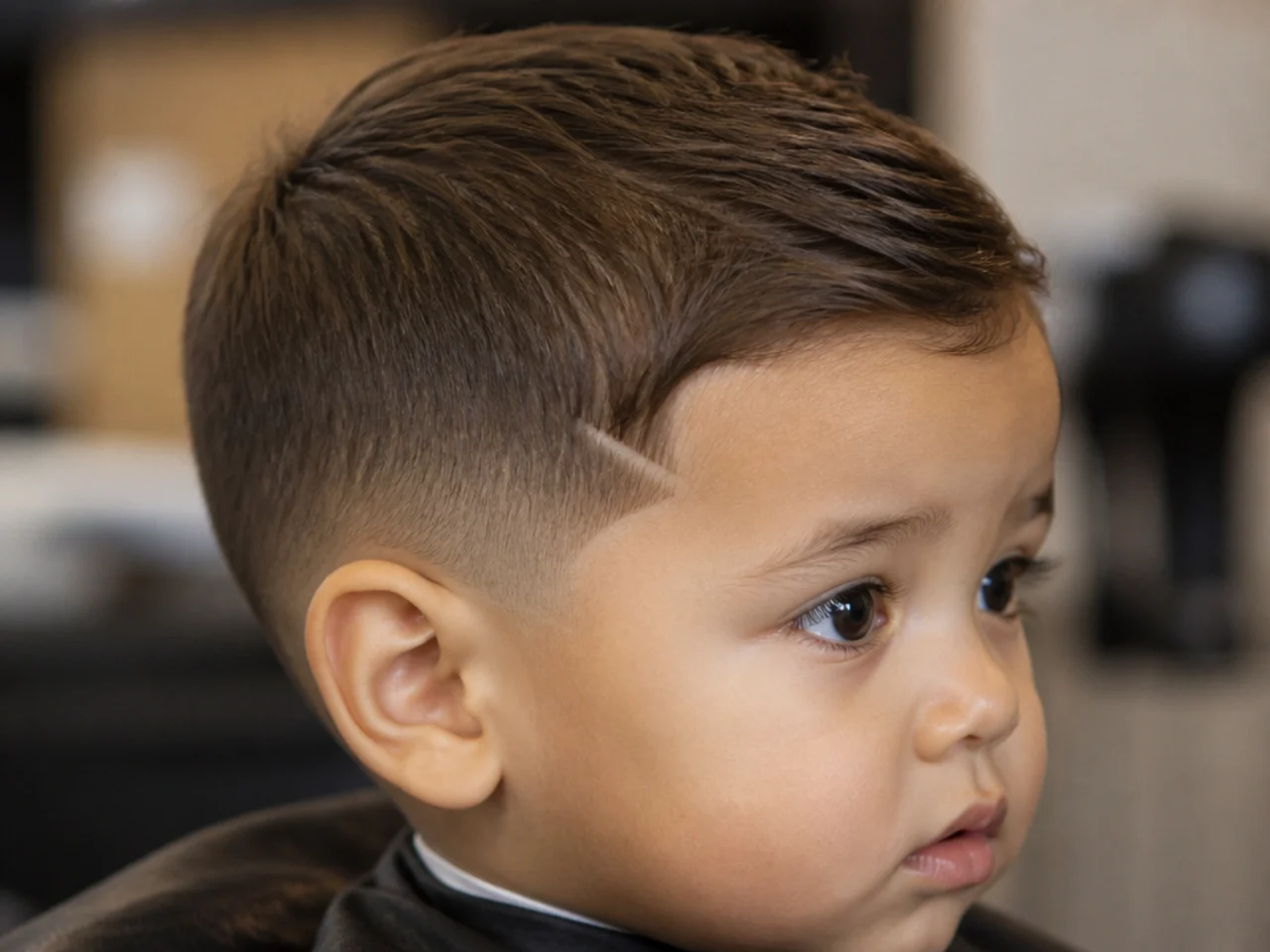
15 Toddler Boy Haircut Ideas With Designs
A design is priced in seconds of continuous stillness, and a toddler holds about fifteen. That single number rules out every repeating pattern and leaves only the designs built from short independent strokes.
In this article · 22
- A Design Is Priced in Seconds of Stillness
- How to Choose Yours
- The 15 Designs Ranked by Stillness Cost
- 1. A Short Notch at the Temple
- 2. A Vertical Line Through the Sideburn
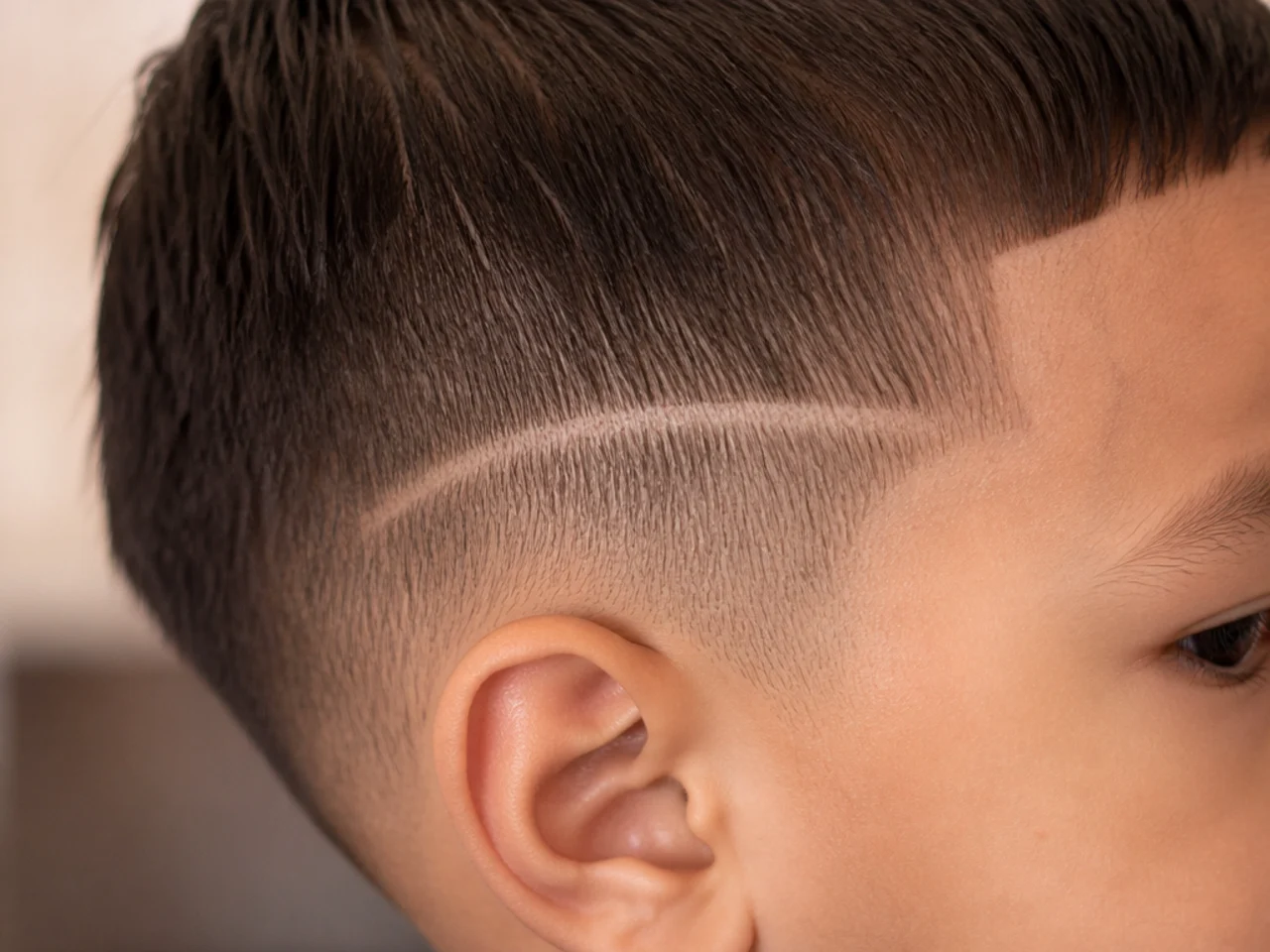
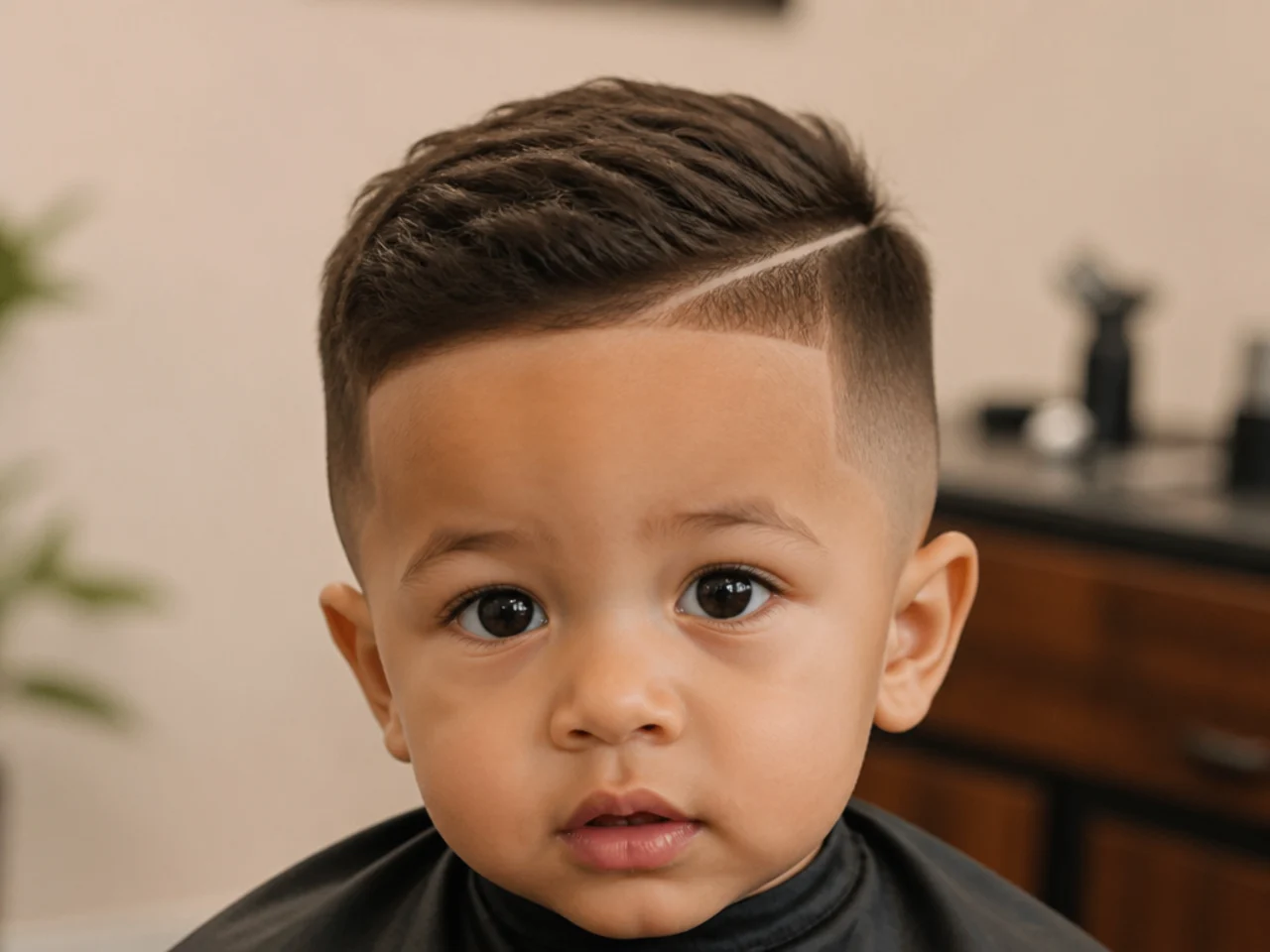
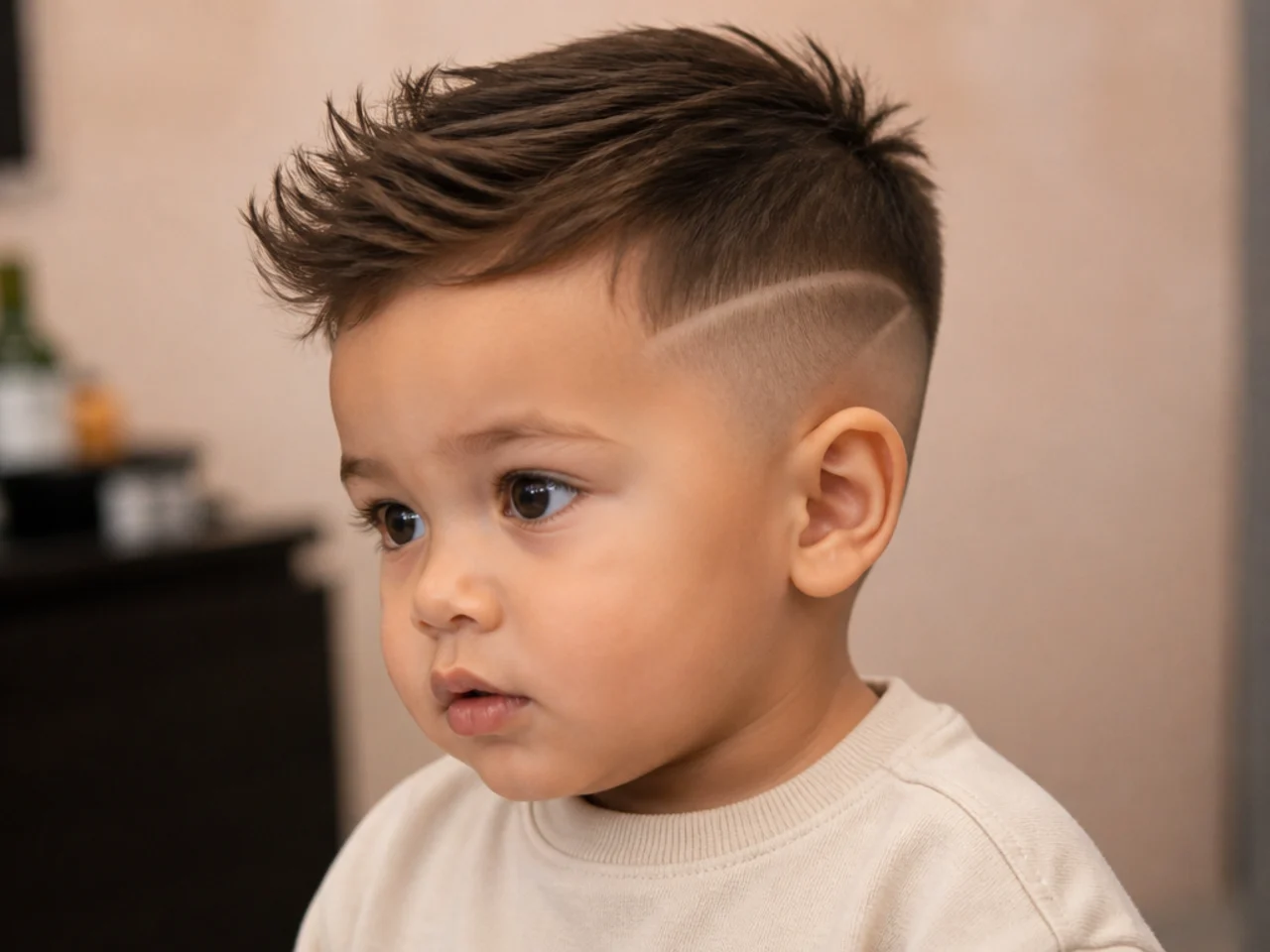
- 3. A Single Straight Line Above the Ear
- 4. A Single Line Behind the Ear
- 5. A Curved Line Following the Taper
- 6. A Cross of Two Short Lines
- 7. Two Parallel Lines
- 8. A V Notch at the Nape
- 9. Three Short Bars Behind the Ear
- 10. A Zigzag Along the Neckline
- 11. A Lightning Bolt Above the Ear
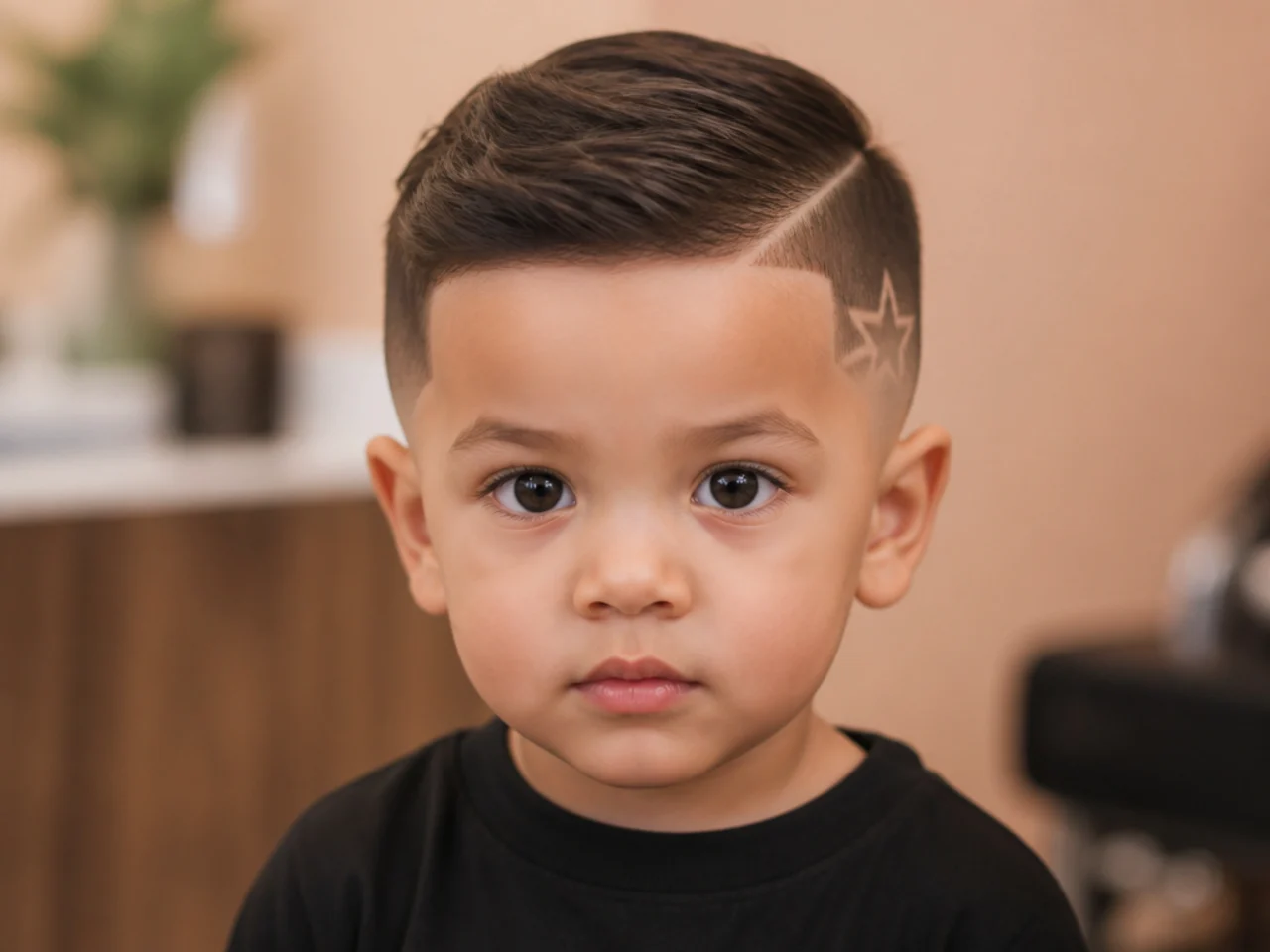
- 12. A Small Star
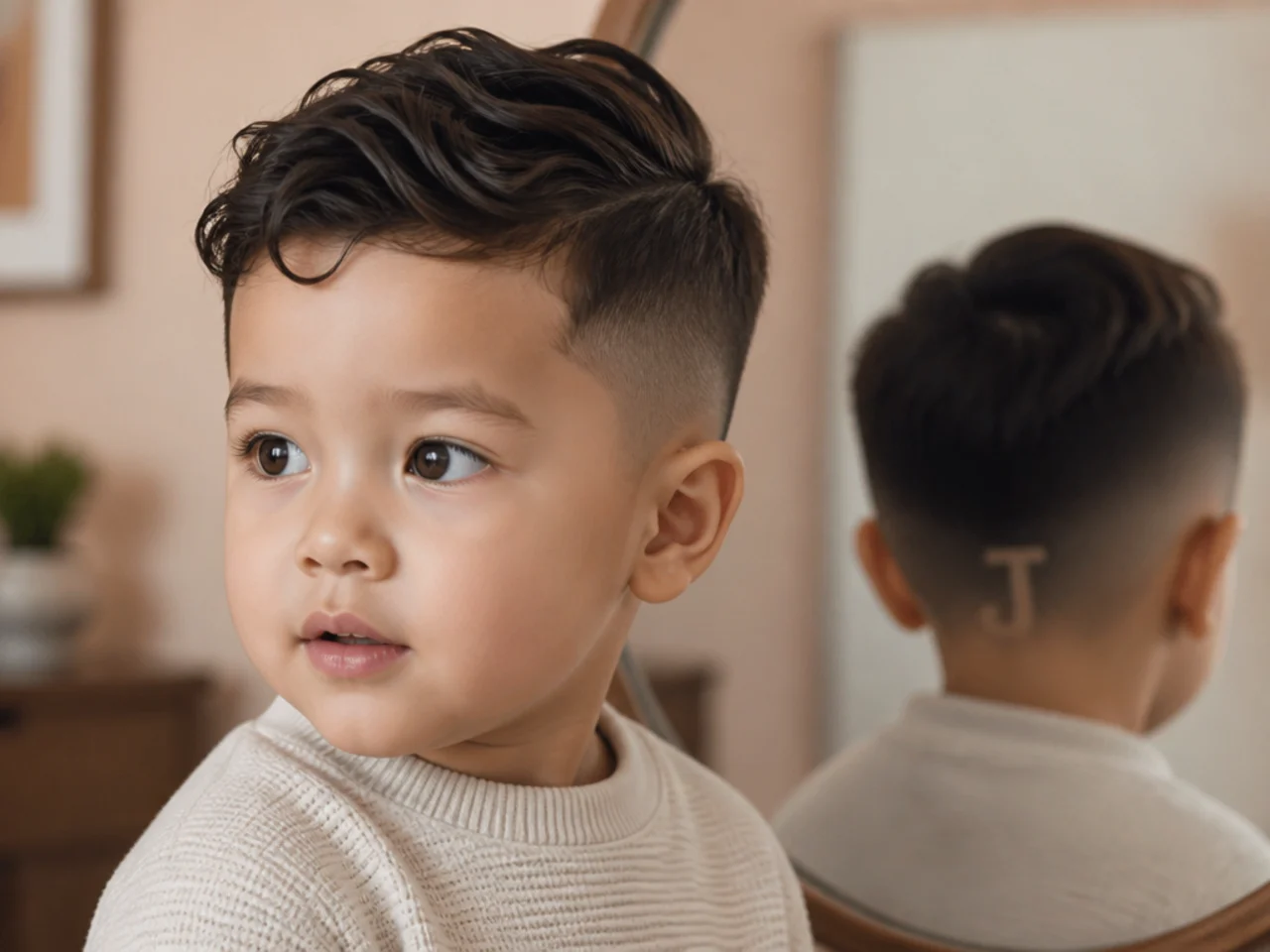
- 13. A Single Initial at the Nape
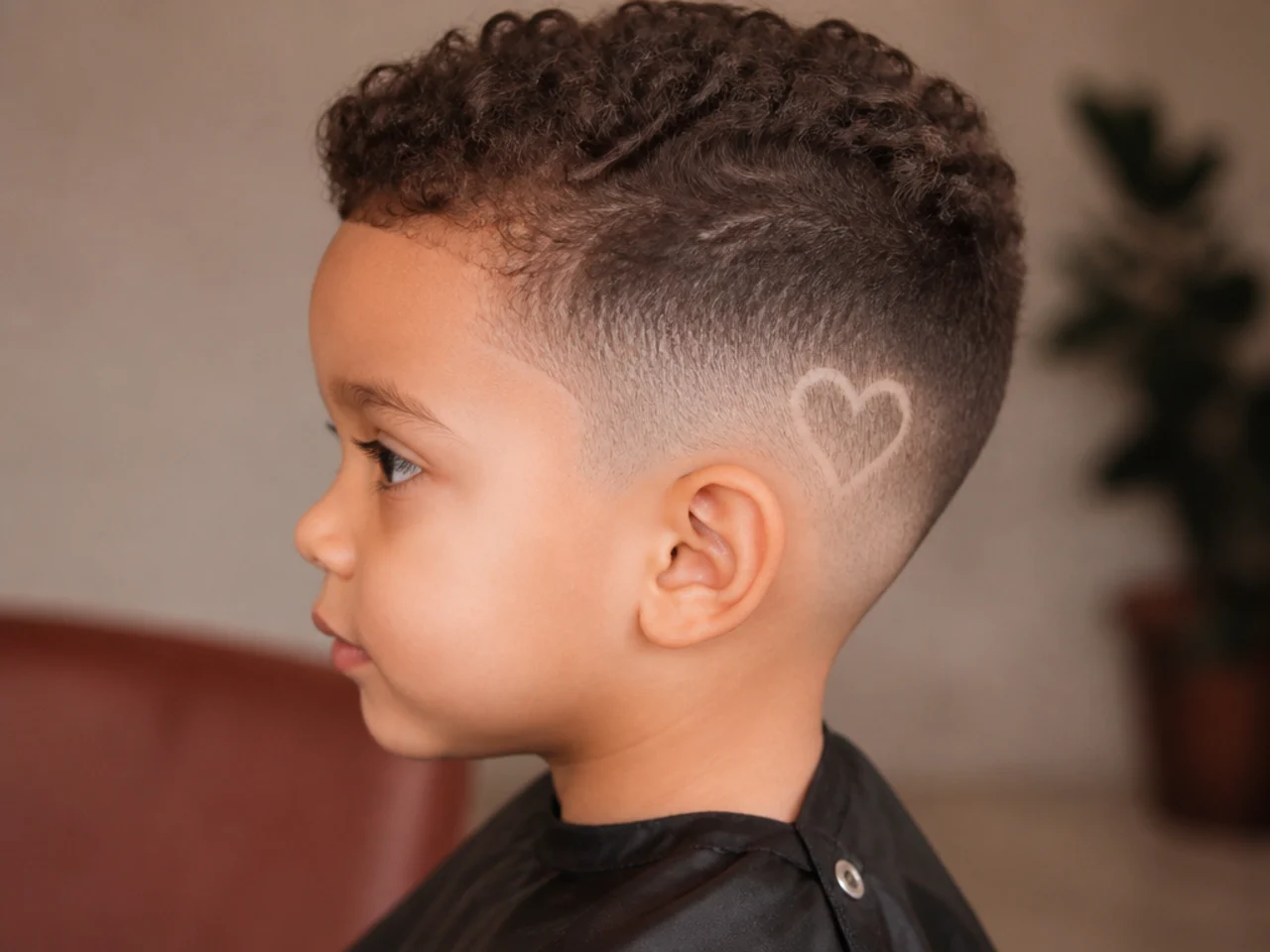
- 14. A Small Heart Behind the Ear
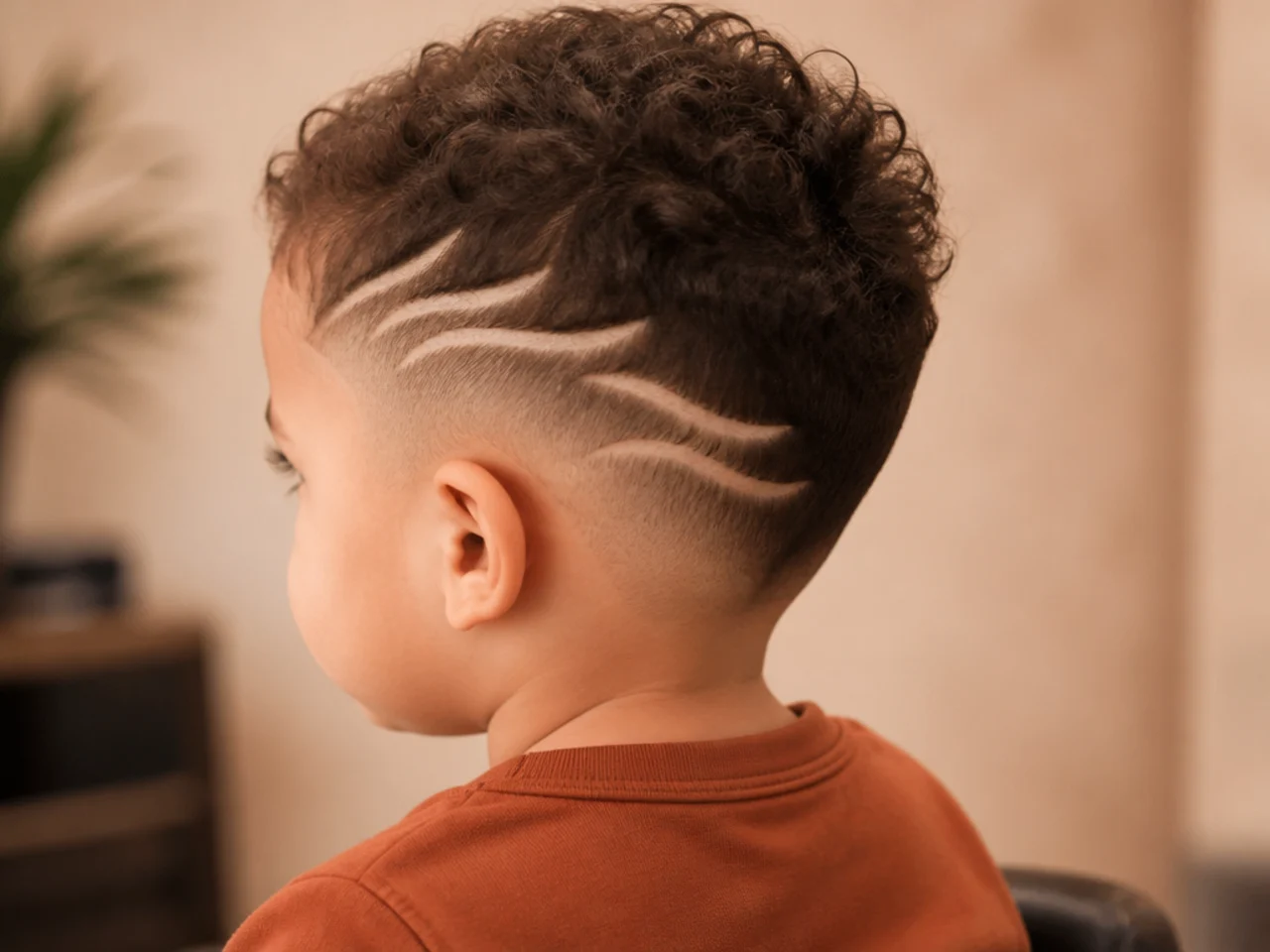
- 15. A Repeating Pattern Across the Side
- Styling and Upkeep
- Mistakes to Avoid
- FAQ
- Final Thoughts
A haircut design on a toddler is not a design problem. It is a stillness problem, and stillness is the one material you have almost none of.
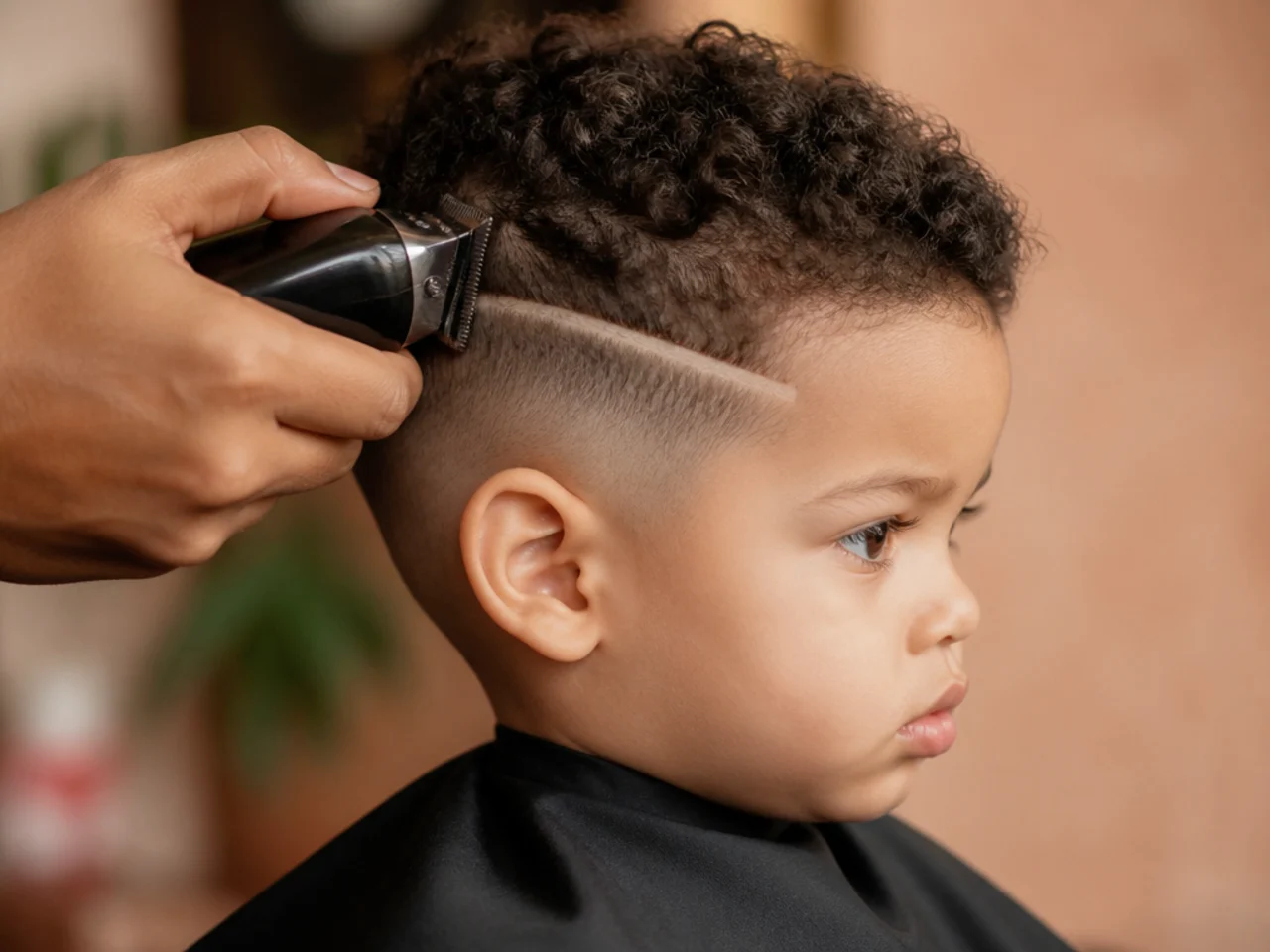
A trimmer cutting a line cannot be paused mid-stroke. Lift it halfway through and the line carries a visible break that cannot be repaired without shaving the whole channel wider. Every stroke has to start and finish inside one window of the head not moving.
A toddler's budget is roughly fifteen seconds of continuous stillness. A single straight line spends three or four of those seconds. A repeating pattern across a whole side wants close to four minutes of unbroken stillness, which is why nobody finishes one on a two-year-old.
A Design Is Priced in Seconds of Stillness
A stroke cannot be paused and resumed. Restarting a channel half a millimetre off leaves a step in the middle of the line that is more obvious than no design at all.
Fifteen seconds is the realistic working budget. That is one line, or two short ones with a break between them. Independent strokes can be spread across separate bursts, so what matters is the length of the longest single stroke, not the stroke count.
Fine baby hair gives a design almost no contrast. The shape reads because the shaved channel sits against hair dense enough to look solid beside it. Toddler hair is thin enough that the surrounding hair already reads half-empty, so the negative space has nothing to push against.
A design behind the ear frightens far less than one at the front. Most of the panic at this age comes from watching the tool travel towards the face, not from the sensation on the scalp.
How to Choose Yours
Count the strokes before you look at the shape. Four separate short strokes can be built over four bursts of calm; one long curve cannot be built at all if the head turns.
Leave the hair beside the design longer than feels right. A number three or four either side gives the channel something to read against, while a number one leaves scalp on both sides and the design vanishes.
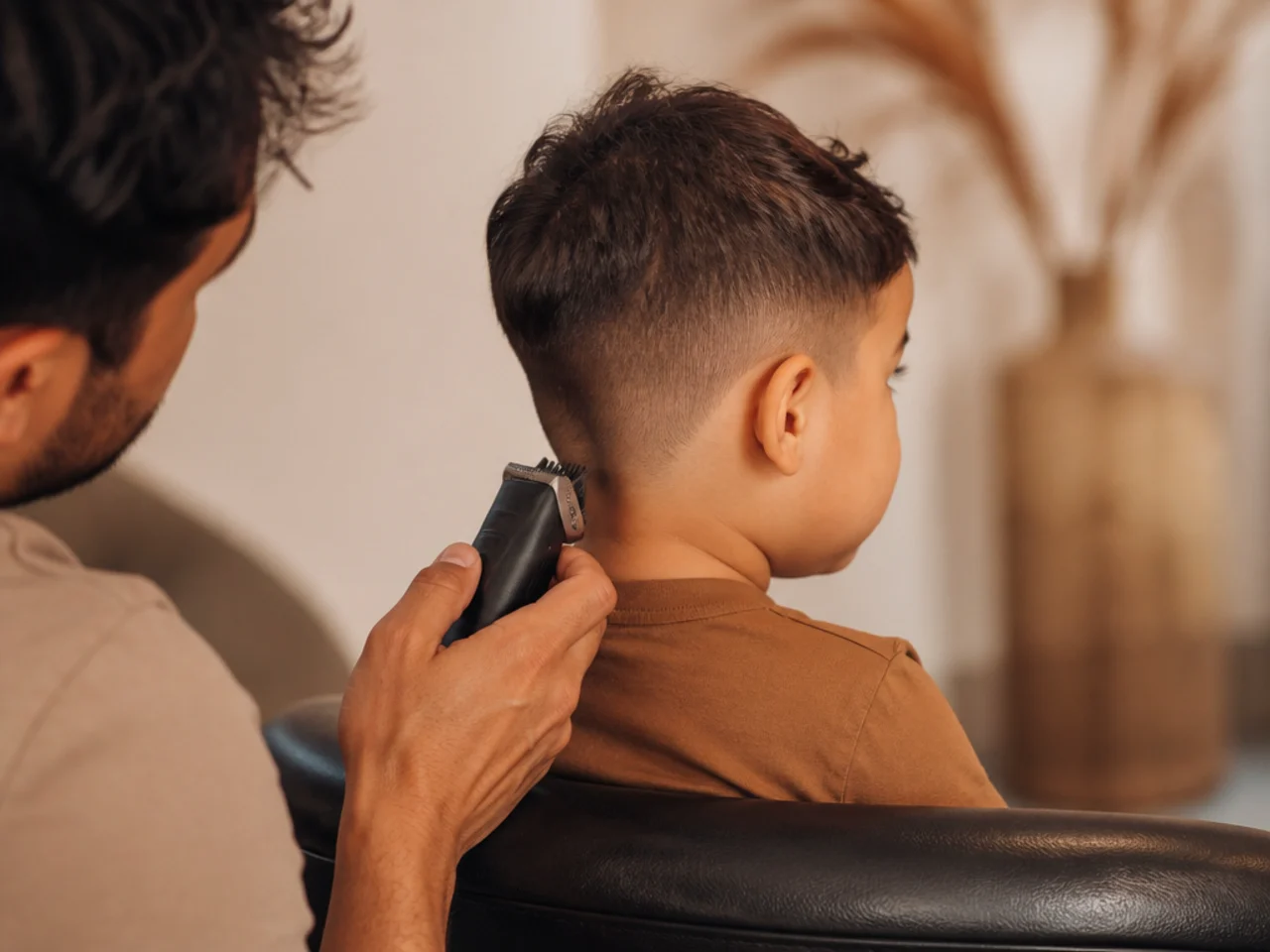
Put it where the child cannot watch it happen. Above the ear, behind the ear and along the nape all sit outside a toddler's view, and the fear drops once the tool stops appearing in front of the face.
Start the motor away from the head. Switching on beside the ear is what makes a toddler jerk, and a jerk mid-stroke is the exact failure the design depends on avoiding.
The 15 Designs Ranked by Stillness Cost
1. A Short Notch at the Temple
One stroke, about two seconds. The trimmer corner goes in at the temple edge and straight back out, so there is no line to hold straight and nothing to break if the head turns halfway. It is the only design here that fits inside a single flinch.
2. A Vertical Line Through the Sideburn
One stroke, three seconds. The stroke travels downward across the sideburn rather than back along the head, so the distance the hand has to cover is barely two centimetres. Short travel is the whole reason it survives a wriggle.
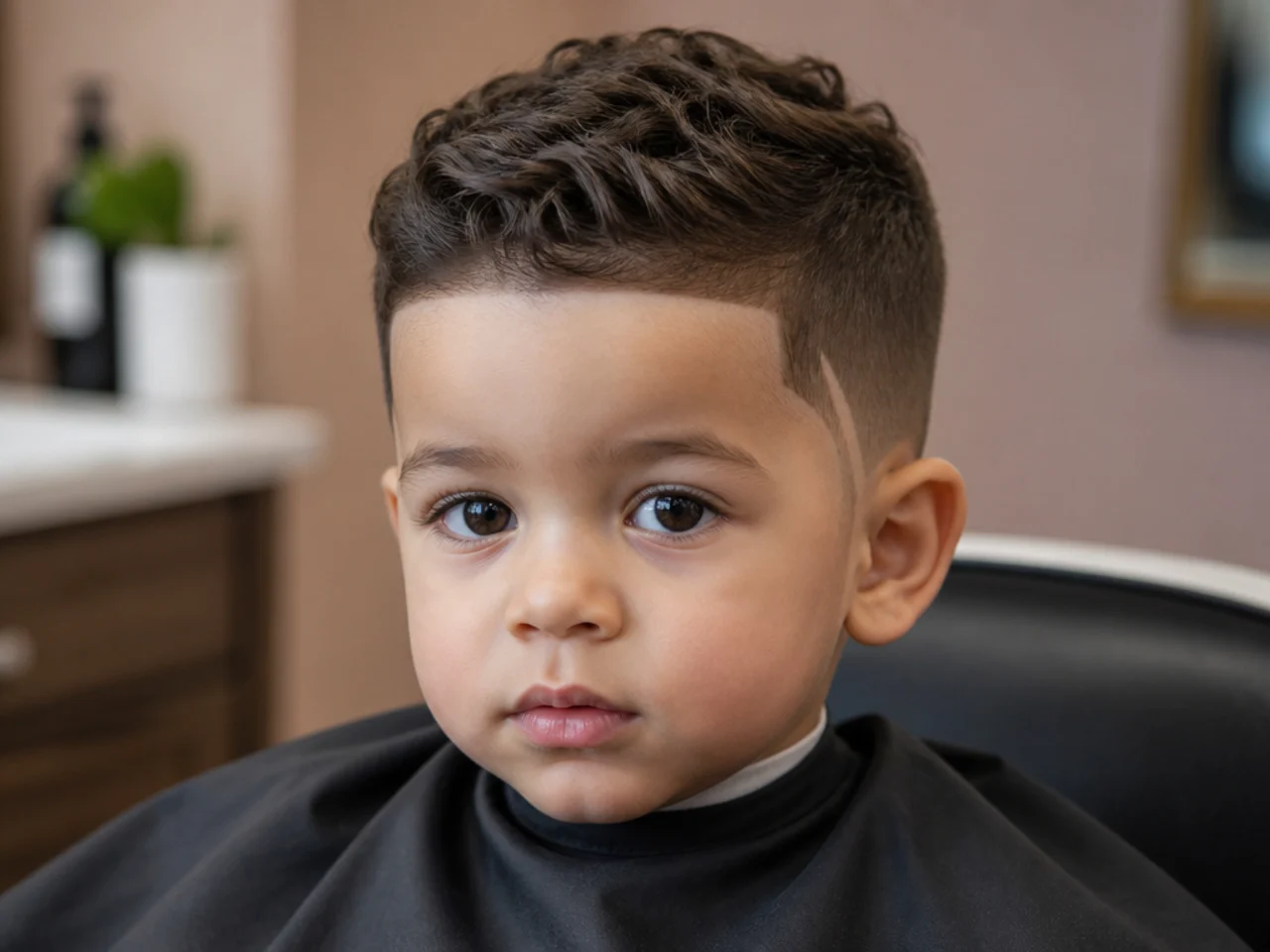
3. A Single Straight Line Above the Ear
One stroke, four seconds. The trimmer corner runs from the temple back towards the crown in one movement, and because the line is straight the hand can travel fast without wobbling off course. Keep a number three either side so the channel has density to read against — it is the entry point to the designs older boys ask for.
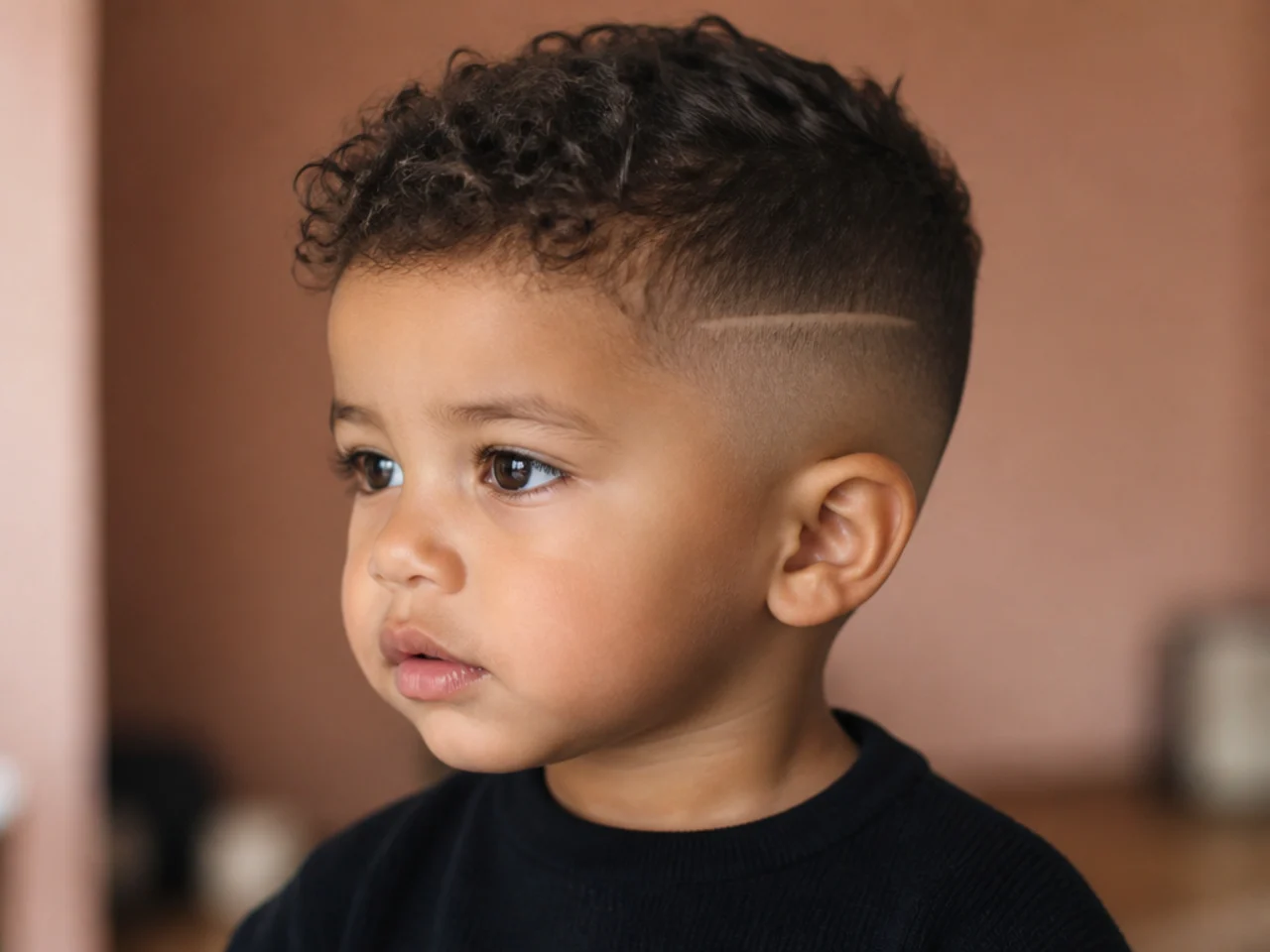
4. A Single Line Behind the Ear
One stroke, four seconds, and the child never sees it being cut. The same movement as the line above the ear, moved back to where a toddler has no sight of the tool, which buys calmer seconds than the front does. It also sits in the densest area of the head, so on fine hair it shows better.
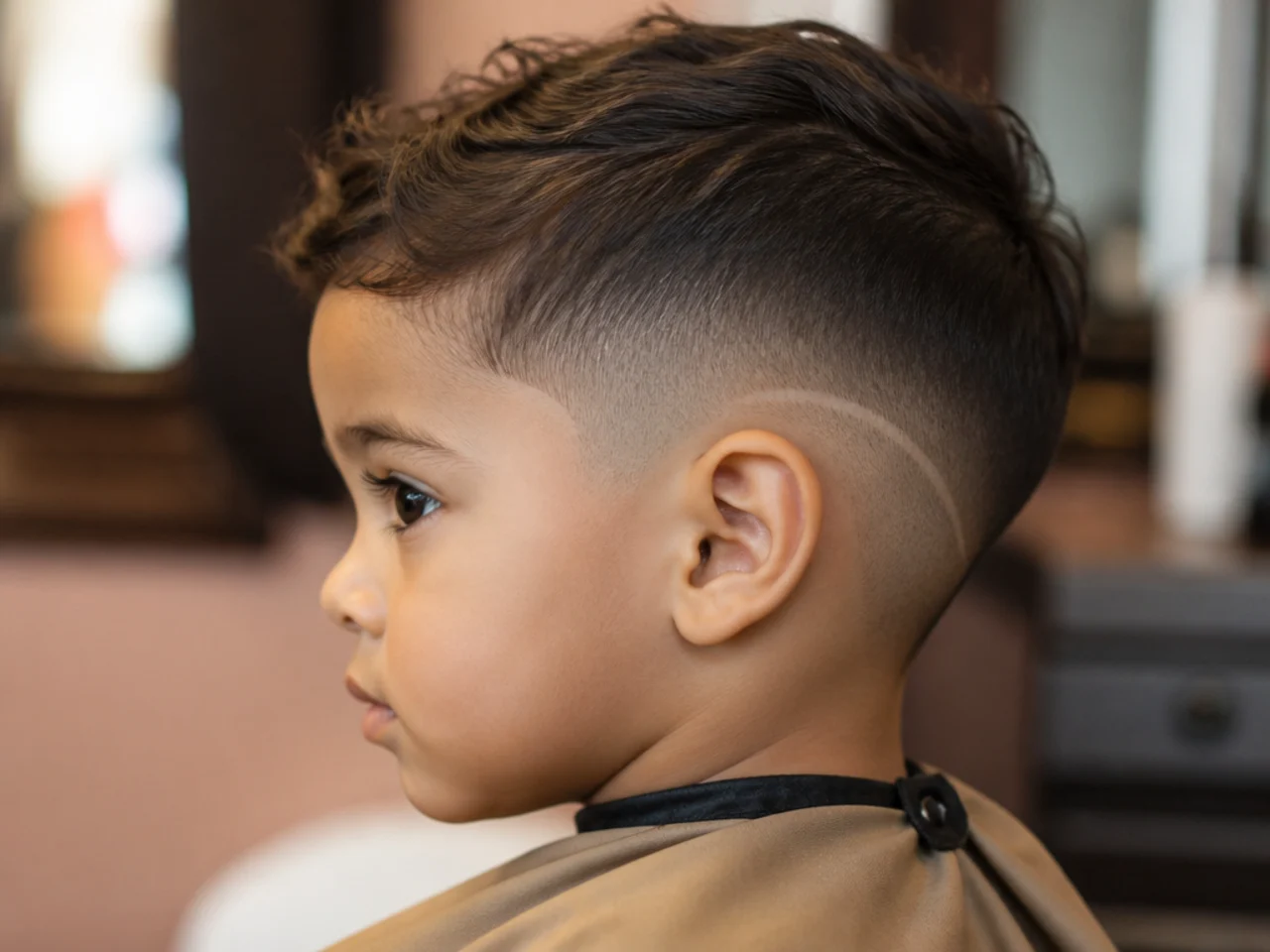
5. A Curved Line Following the Taper
One stroke, five seconds. A curve costs more than a straight line of the same length because the hand slows down to hold the arc, so it is the first design here that a squirm can genuinely ruin. Following the existing taper means a wobble reads as part of the taper rather than a mistake, exactly as it does on a low taper fade design.
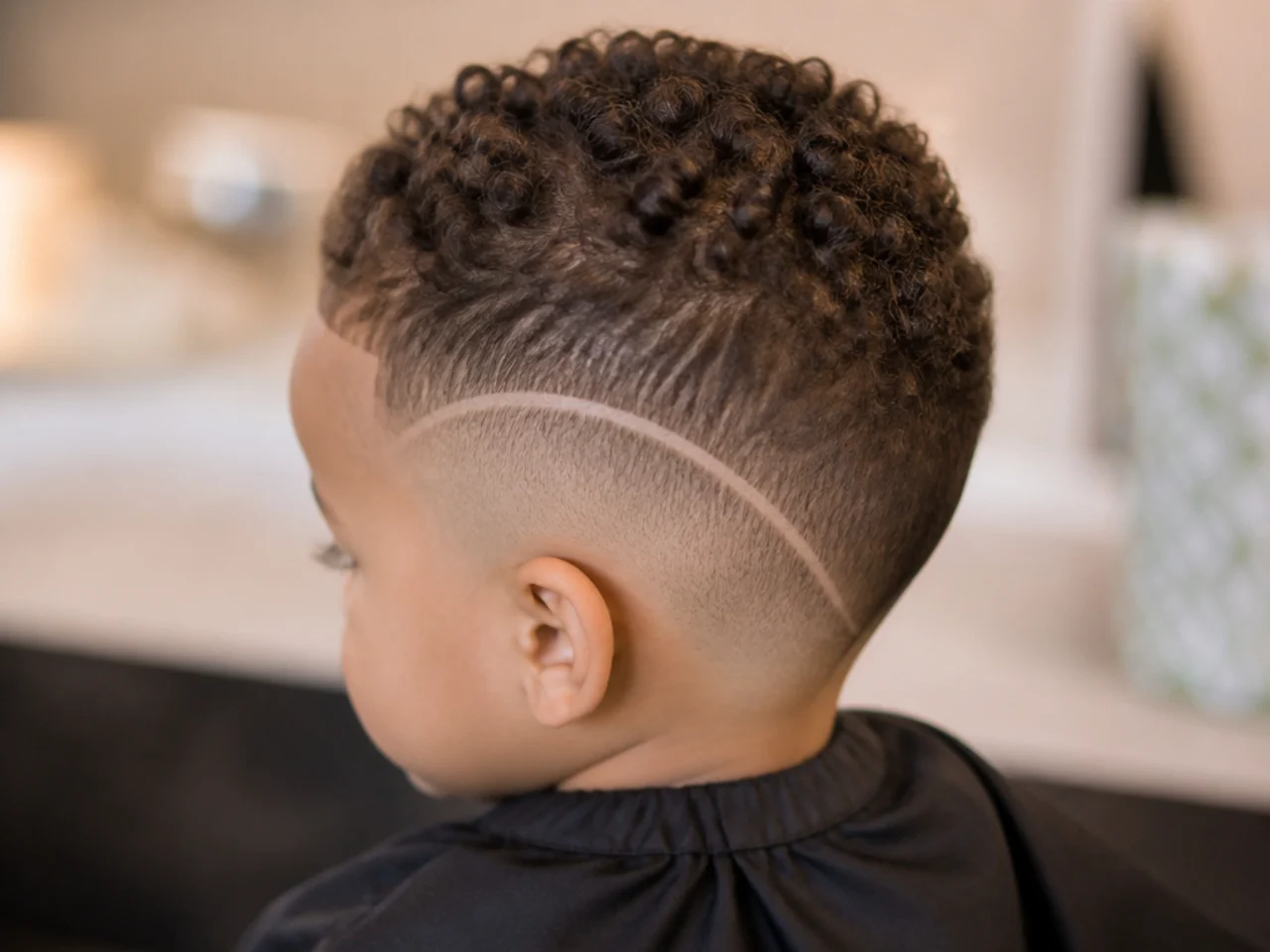
6. A Cross of Two Short Lines
Two strokes, six seconds total. Neither stroke runs longer than three seconds and they need not be cut in the same burst, so the second can wait until the child settles. The intersection hides small inaccuracies, because the eye reads the crossing point rather than either line.
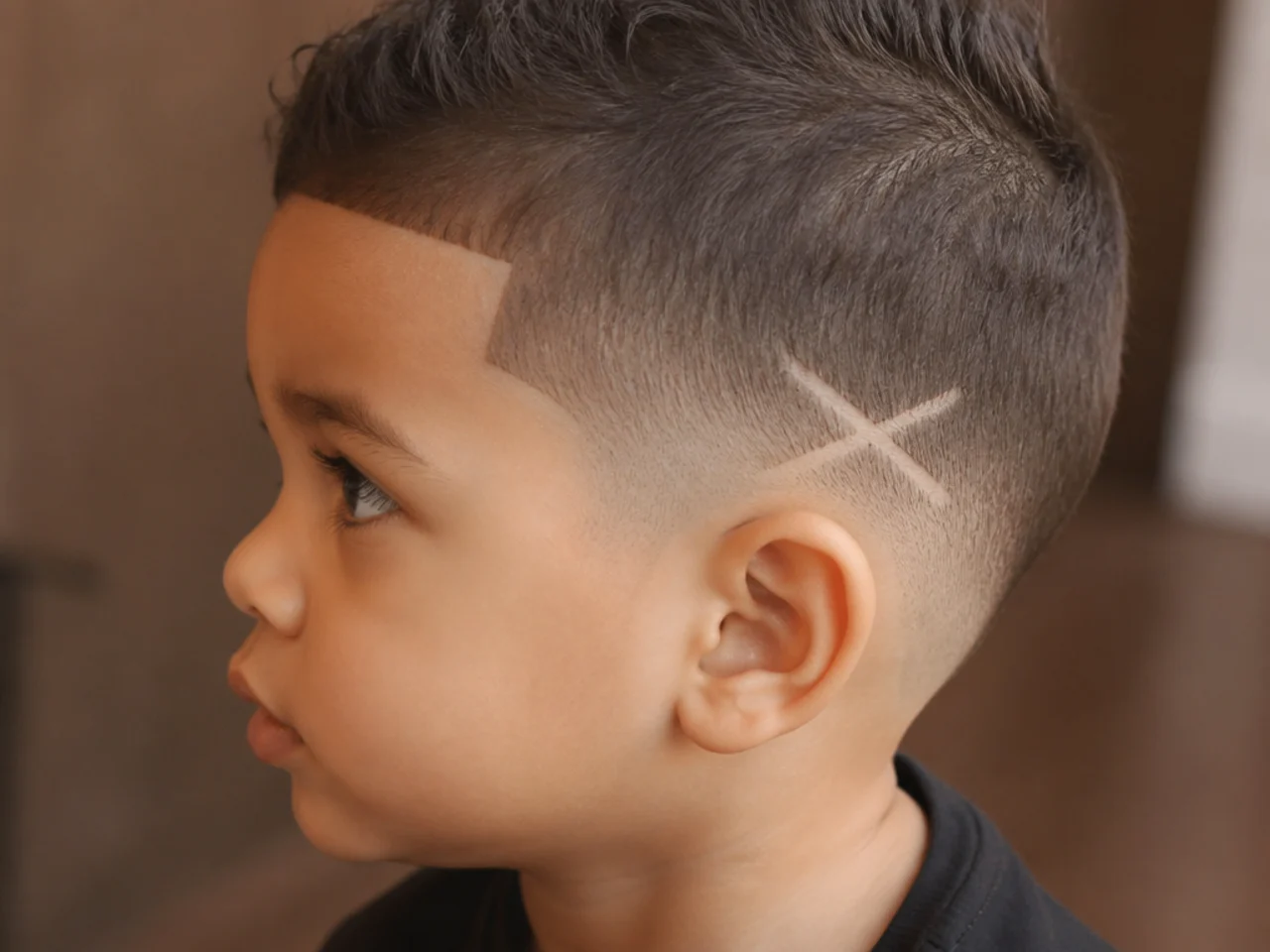
7. Two Parallel Lines
Two strokes, eight seconds total. The strokes are independent, so the gap between them can be minutes long. The catch is that parallel lines expose any difference in angle, so the second stroke has to copy the first rather than be improvised.
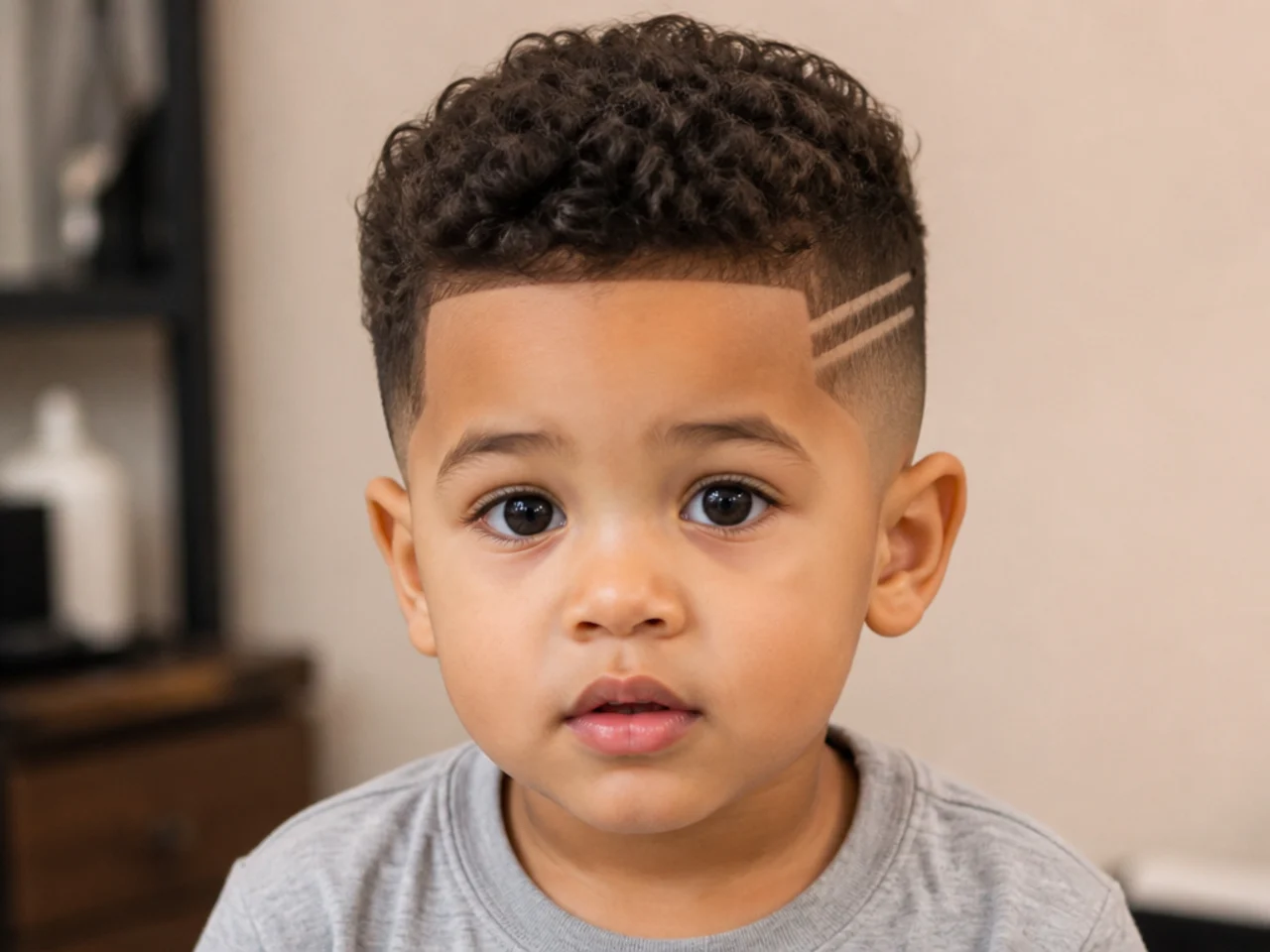
8. A V Notch at the Nape
Two strokes, eight seconds, both at the back where the tool stays out of view. Each arm of the V is its own short stroke, and the meeting point is the only place accuracy matters. Nothing here can be flattened by a pram nap, because there is no length left to crush.

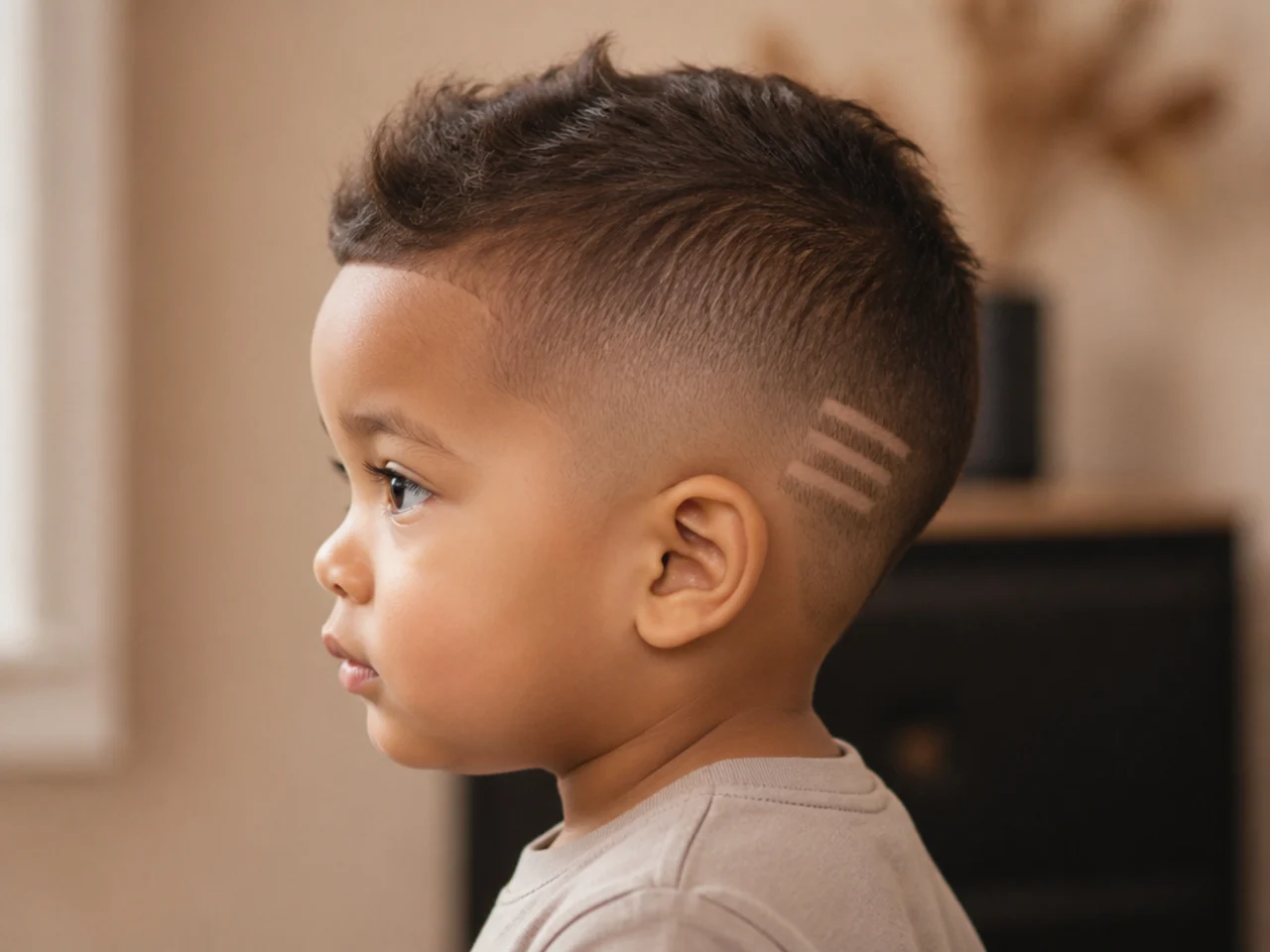
9. Three Short Bars Behind the Ear
Three strokes, twelve seconds total, but no single stroke over four. Three four-second bursts are far easier to find than one twelve-second window, which is the clearest case for splitting a design. Space the bars wide, since fine hair between narrow bars reads as one grey patch.
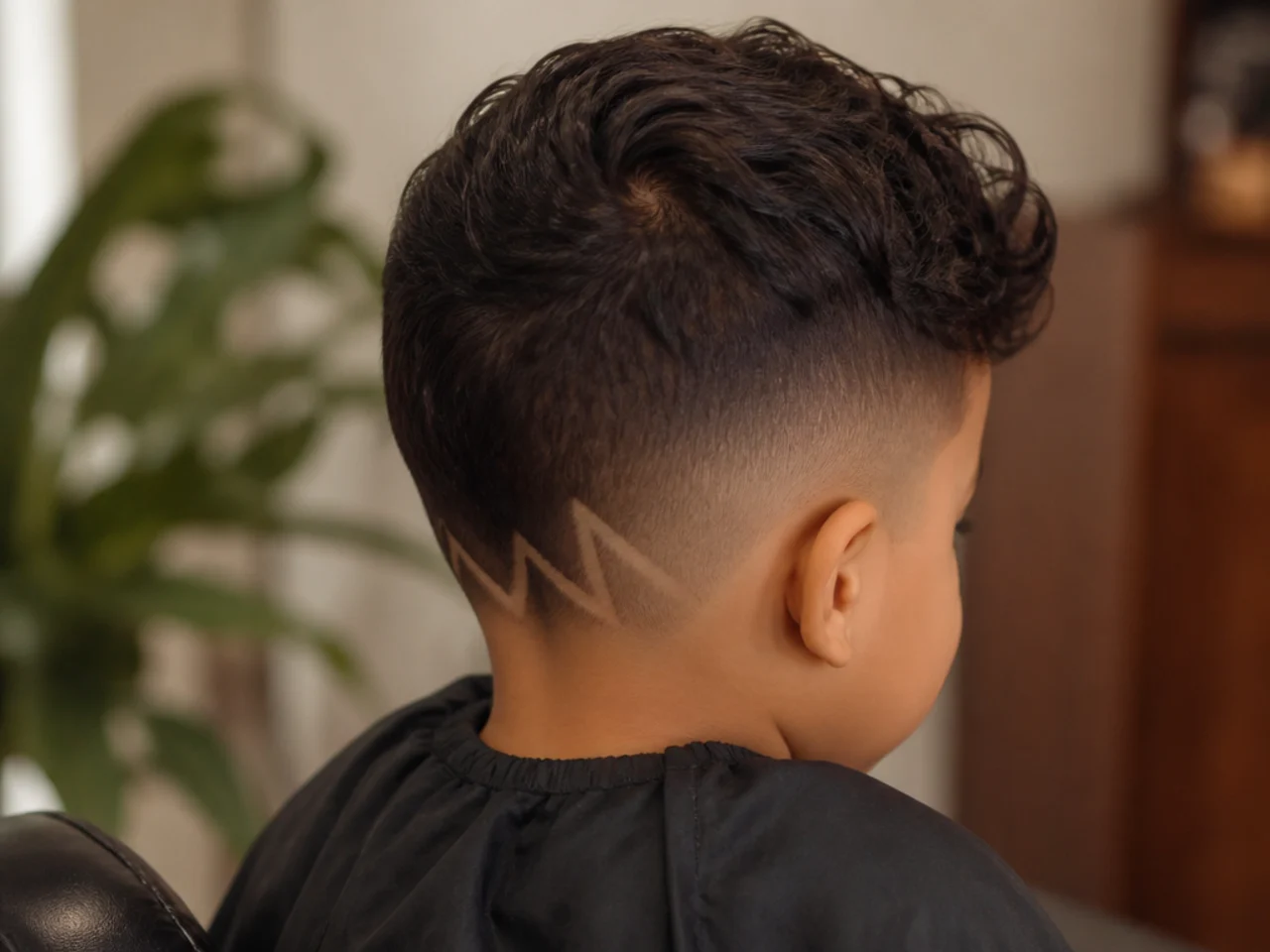
10. A Zigzag Along the Neckline
One stroke, twelve seconds, and every second of it continuous. On paper it costs the same as the three bars above, but it is far harder to land because the whole shape breaks if the head moves once. Only attempt it on a child who has already sat through several cuts.
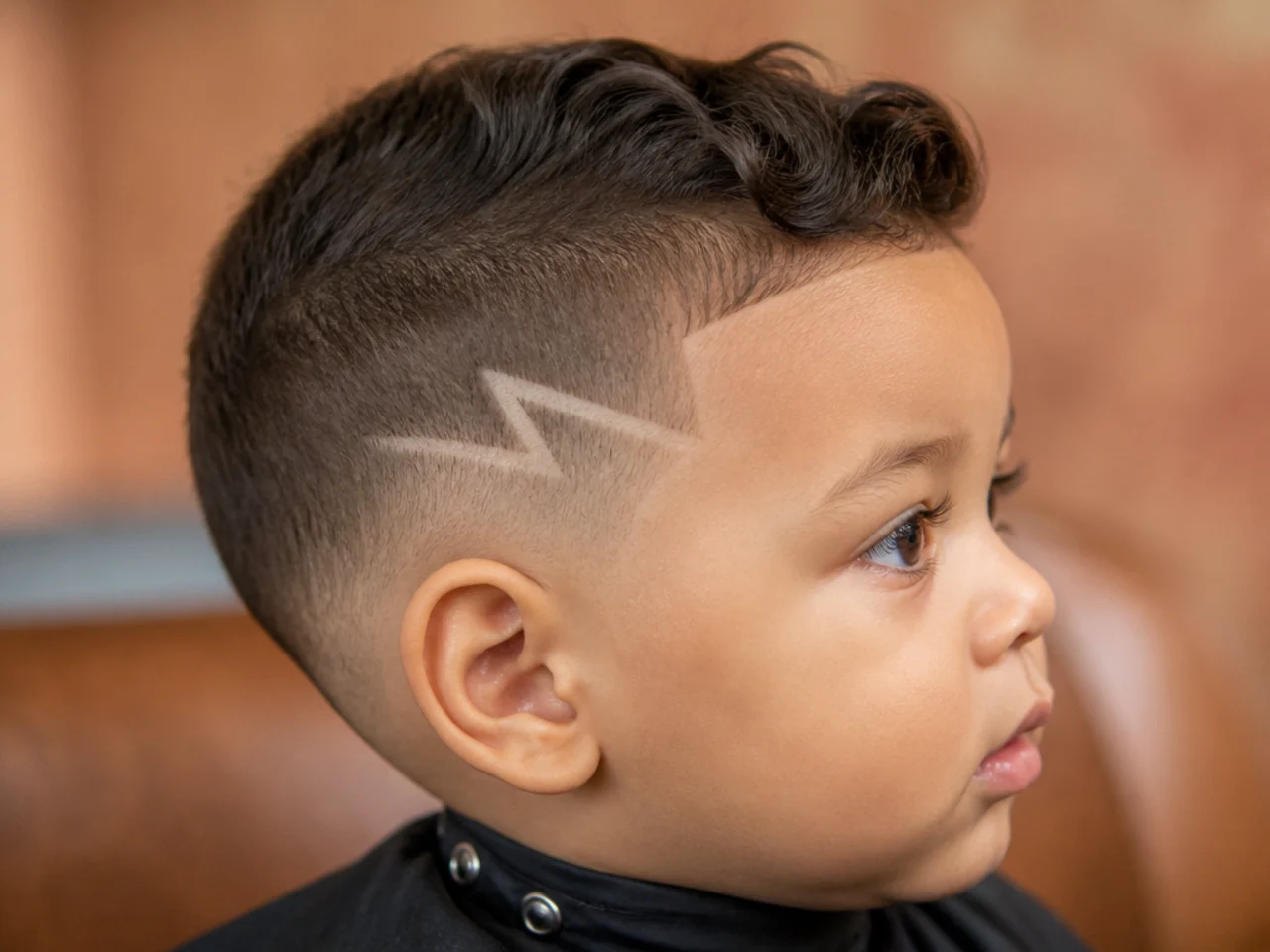
11. A Lightning Bolt Above the Ear
Two strokes, roughly fifteen seconds. The angled joint in the middle is the expensive part, because the trimmer has to stop, change direction and restart on exactly the same channel width. It reads well on fine hair only if the surrounding length is left at a four.
12. A Small Star
Five strokes, about twenty seconds. Each arm is a two- to four-second stroke but all five meet at one centre, so they are cheap individually and unforgiving together. Cut it small and behind the ear, since a large star on low-density hair loses its outline entirely.
13. A Single Initial at the Nape
Four strokes, around twenty-five seconds. A letter made of straight lines costs a fraction of one made of curves, so a T or an H is realistic where an S is not. Keep it under three centimetres tall, because fine hair cannot hold the internal gaps of a bigger letter.
14. A Small Heart Behind the Ear
Two strokes, close to thirty seconds, because both are slow curves. Curves force the hand to travel at maybe a third of the speed of a straight line, which is why a two-stroke design ends up costing more than a five-stroke one. This is the practical ceiling for most toddlers.
15. A Repeating Pattern Across the Side
Twenty or more strokes and close to four minutes of near-continuous stillness. Repeating shapes have to stay evenly spaced, which means the whole side has to be worked in one sitting rather than in bursts, and that is the thing a toddler cannot give. It is on this list to be ruled out, not attempted.
Styling and Upkeep
A design on fine hair softens within about ten days. Low-density hair grows into the channel from both sides at once, so the edges blur long before the depth fills in.
Do not re-cut the whole design to sharpen it. Running the trimmer down the same channel again widens it, and after two or three refreshes the line is twice its original width.
Wash it and leave it alone. There is nothing to style, which is the practical argument for a design on a toddler in the first place.
Photograph it on the day it is cut. It sits where nobody looking at the child head-on really sees it, and the photo is what you show next time.
Let the child hold the trimmer switched off before the next session. A tool that has already been in their hands is far cheaper to bring near their head a week later.
Mistakes to Avoid
Asking for a pattern instead of a line. Patterns need unbroken minutes, and a toddler trades in seconds.
Cutting the design where the child can watch it. A trimmer moving towards the face costs far more stillness than the same trimmer moving behind the ear.
Taking the surrounding hair to a number one. Fine hair at three millimetres already shows scalp, so the channel has nothing to contrast against and the design disappears — keep the sides at the guard lengths a toddler taper uses.
Restarting a stroke that got interrupted. The join never lands in the same place, and a step in the middle of a line looks worse than an unfinished cut.
Leaving the design until the end of the session. By then the stillness budget is spent, so cut the design first and the tidy-up after.
FAQ
How many seconds does a design need? Three or four for one straight line, and about four minutes for a repeating pattern.
Why does the design hardly show? Fine baby hair is not dense enough to make the empty channel read against it.
Where should a first design go? Behind the ear, where the child never sees the trimmer arrive.
Final Thoughts
Pick the design by counting strokes, not by how good the reference photo looks, and put it somewhere the child cannot watch it being cut. One clean line above the ear that got finished is a better result than half a star that ran out of stillness at the third arm.
For the fade a design usually sits inside see the toddler burst fade guide, and for the full range of shapes once a child can sit longer see burst fade designs. More in Men's Haircuts.