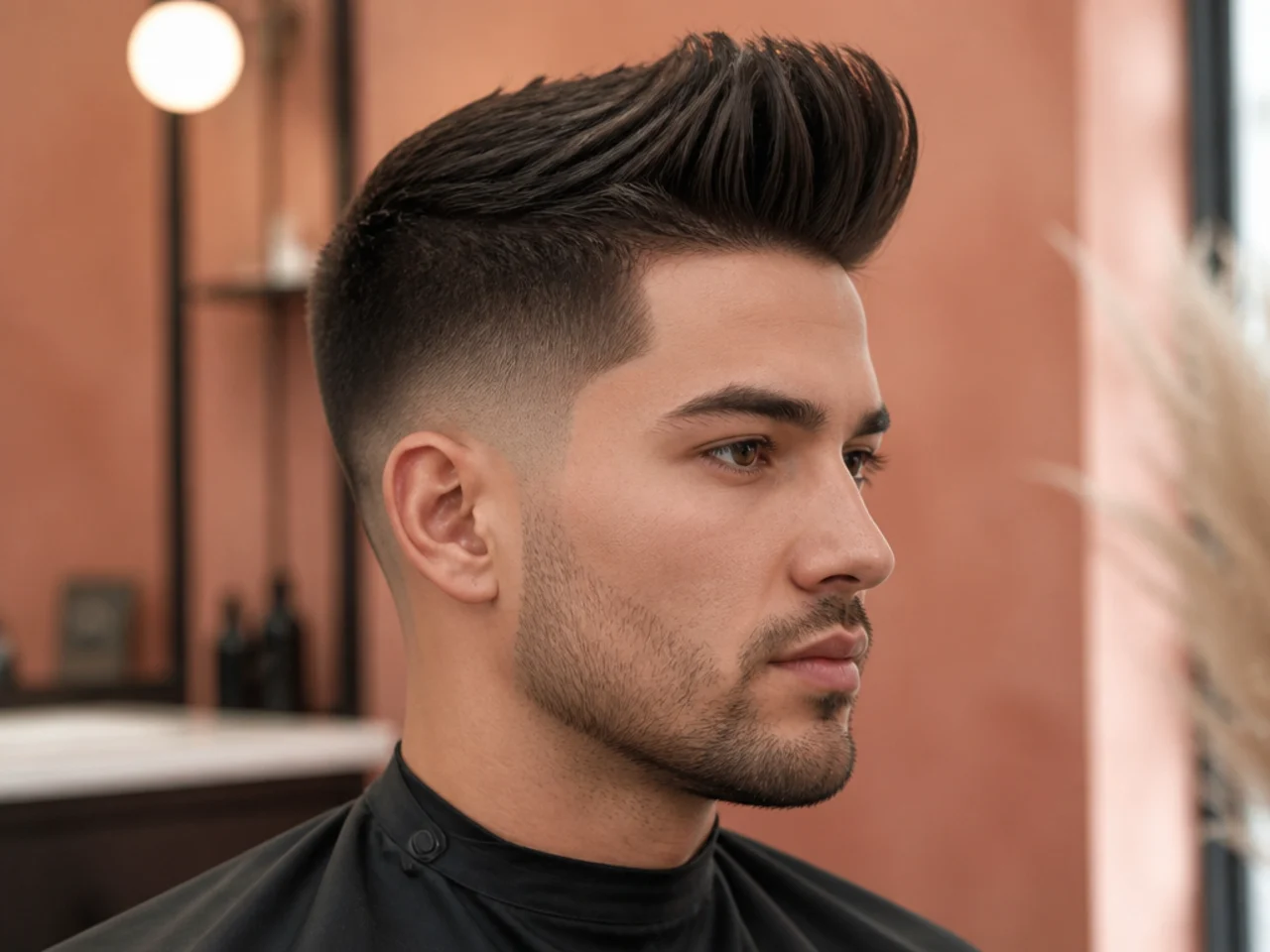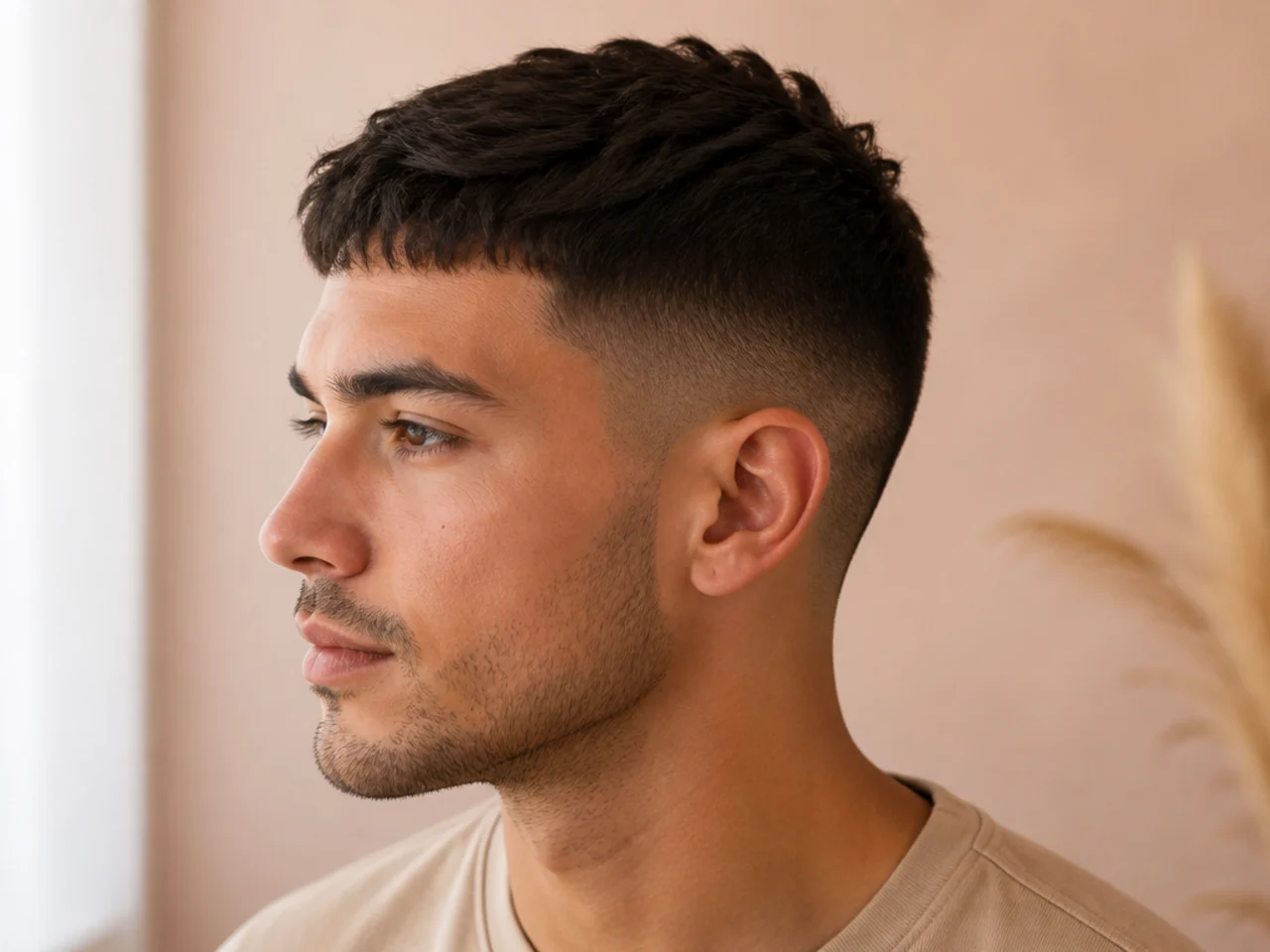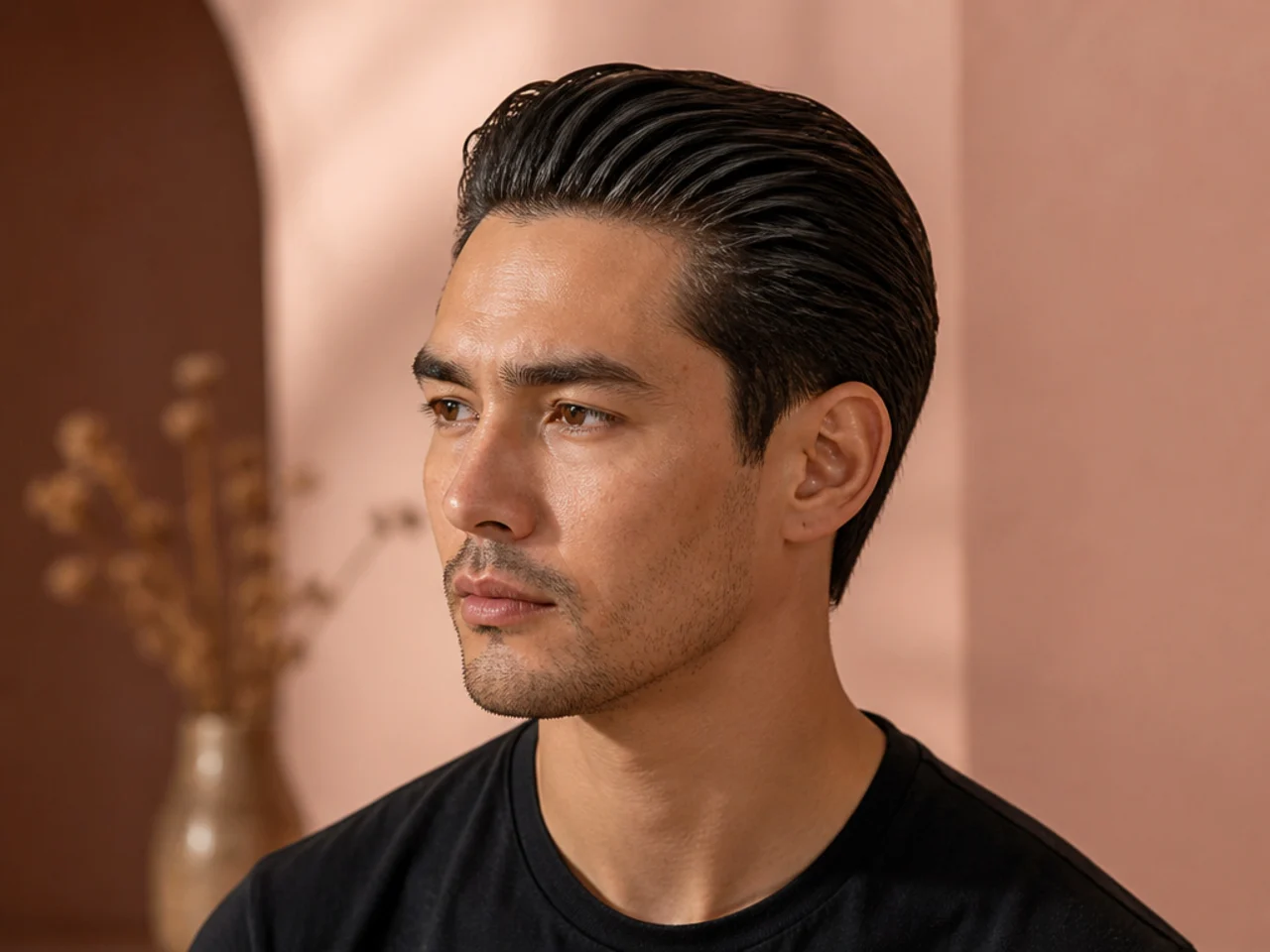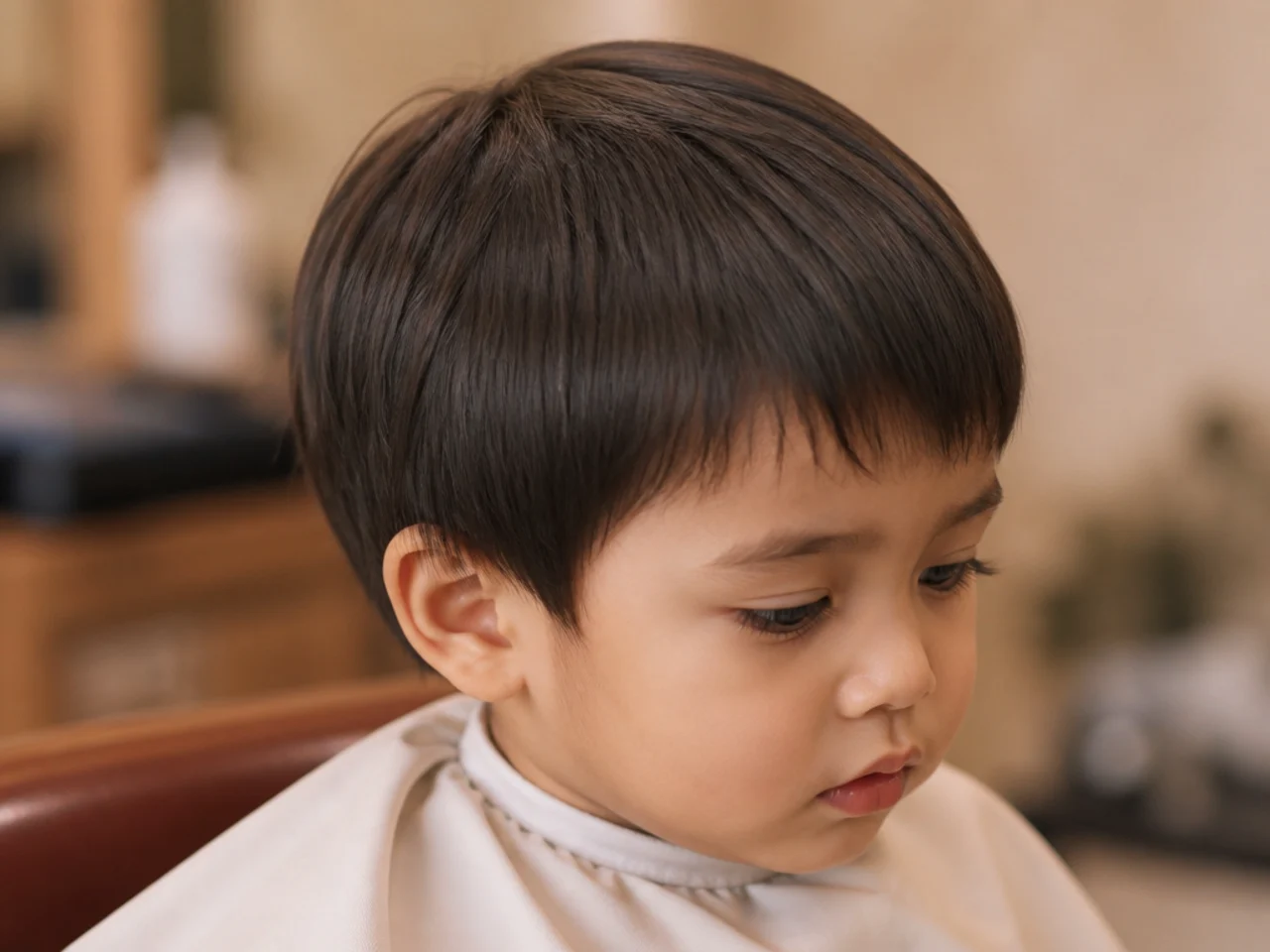
15 Straight Toddler Boy Haircut Ideas to Try
Fine straight toddler hair is the least forgiving texture there is, because there is no curl to bridge a gap. Every step and every hesitation stays visible, so the cuts that work have no internal lines at all.
In this article · 22
- Straight Fine Hair Shows Everything
- How to Choose Yours
- The 15 Straight-Hair Cuts
- 1. One Length All Over
- 2. A Blunt Fringe Cut in a Single Pass
- 3. A Soft Bowl With the Perimeter Point-Cut
- 4. A Side-Swept Fringe Cut With the Cowlick
- 5. A Short Crop With No Fade
- 6. A Long Top Combed Forward From the Crown
- 7. A Number Four All Over With No Guard Change
- 8. A Single-Guard Back and Sides With Scissors on Top
- 9. A Blunt Perimeter at the Earlobe
- 10. A Fringe Left Long Enough to Lie Flat
- 11. A Crown Whorl Left Uncut
- 12. A Straight Perimeter Cut Across the Back
- 13. A Grown-Out One Length With Only the Ends Point-Cut
- 14. A Cut Done Entirely With Scissors Over a Comb
- 15. A Short Back Cut With the Growth at the Nape
- Styling and Upkeep
- Mistakes to Avoid
- FAQ
- Final Thoughts
Curl forgives a haircut. Fine straight toddler hair forgives nothing, and that single fact should decide the shape you pick.
There is no curl to bridge a gap. Straight hair hangs from root to tip in one line, so every step, every uneven scissor pass and every place the clipper hesitated is still sitting there in plain view an hour later.
So the cuts that work have no internal lines at all. One length, one perimeter, and a fringe cut in a single pass rather than snipped at four times in a row.
Straight Fine Hair Shows Everything
Nothing closes a gap for you. On curl the hair either side of an uneven line leans in and covers it, which is why a curly toddler cut can be done in rushed bursts, and on straight fine hair the gap simply stays a gap.
Cut the fringe in one pass, not several. Each return to a fringe leaves a slightly different length, and on straight hair those differences read as notches. Pick the length once and cross the whole fringe in a single movement.
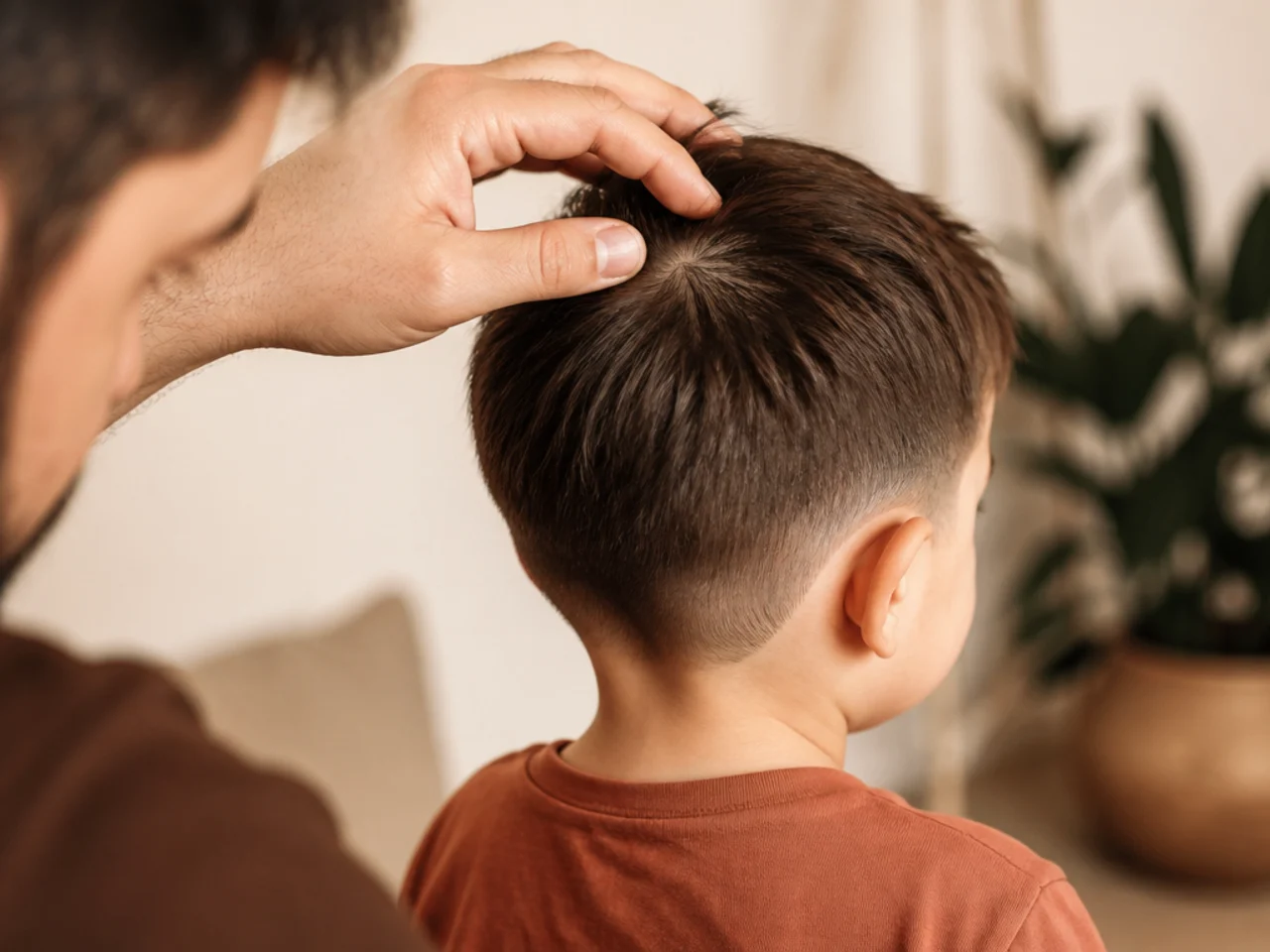
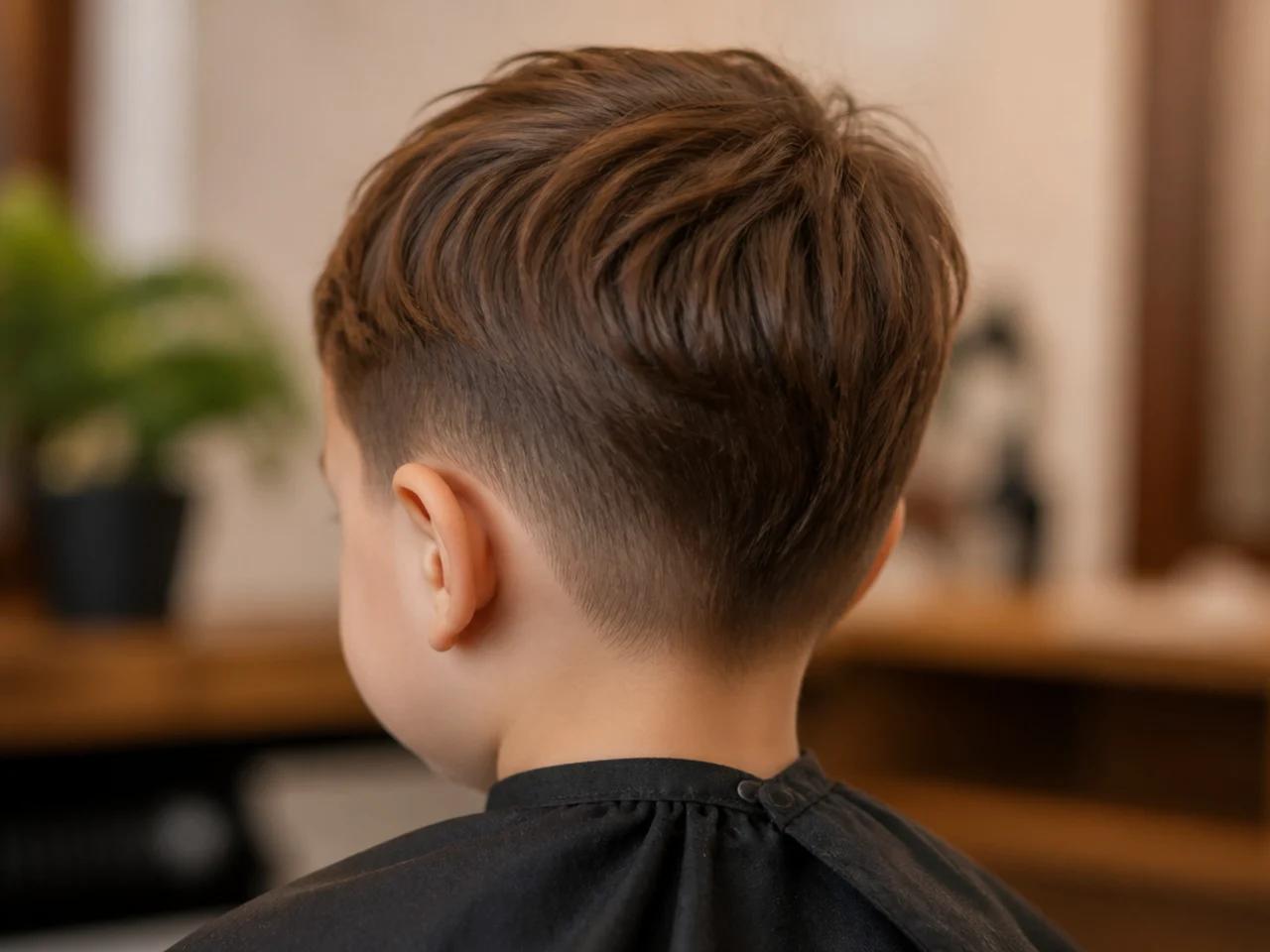
The crown whorl decides the back of the cut. Hair spirals out from that point, and cut short it stands straight up because straight hair goes where it grows. Leave enough weight there for it to lie down.
Cut dry so you see where it actually falls. Fine straight hair pulls longer wet and lifts as it dries, so a wet cut is a guess about a length you cannot see yet.
How to Choose Yours
Count the lines in the cut. One perimeter is one thing that can go wrong. A layered top over a taper over a fringe is three.
Find the cowlick before you pick the shape. A front cowlick makes a straight blunt fringe stand off the forehead, and no amount of cutting will change that.
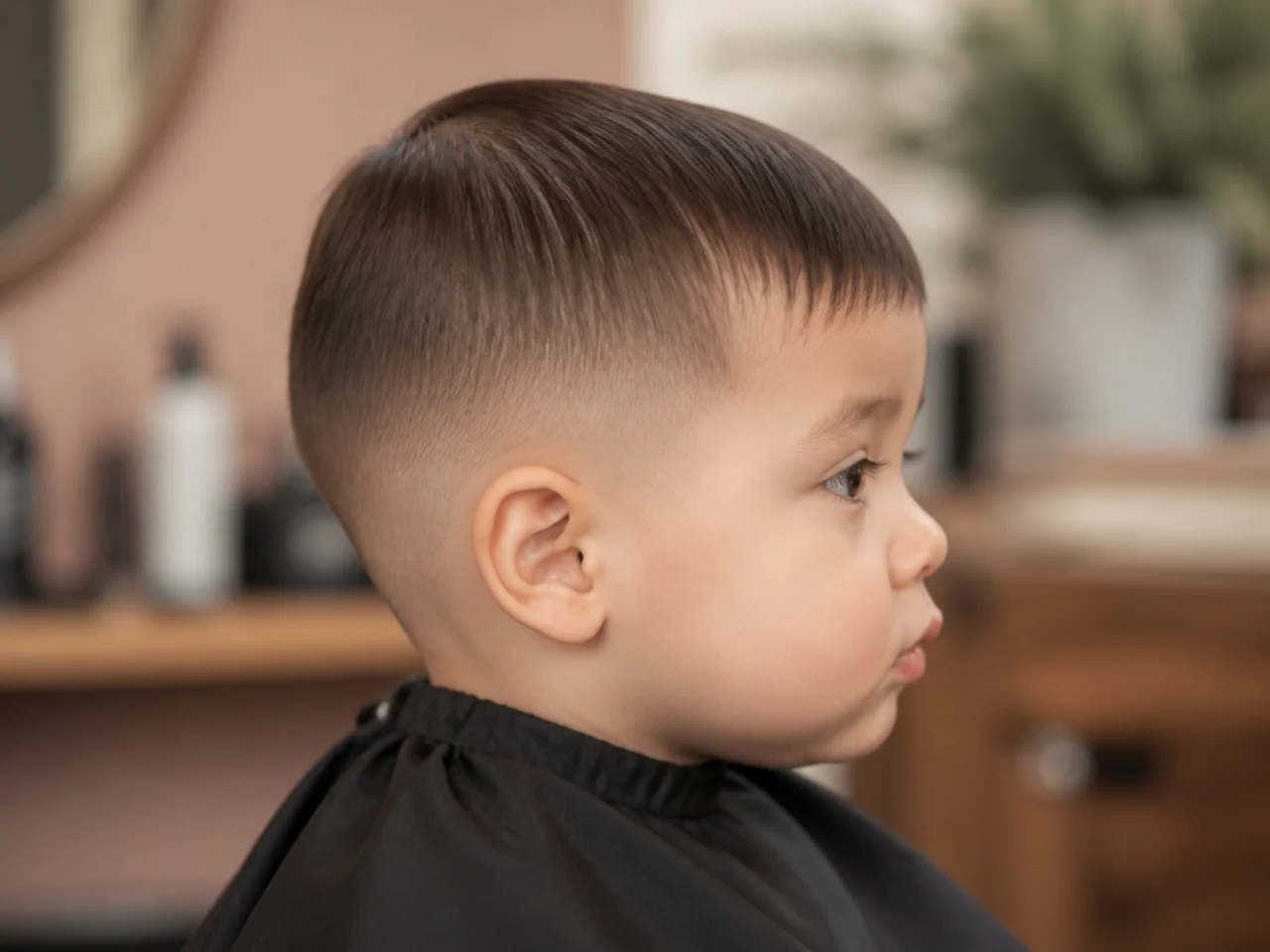
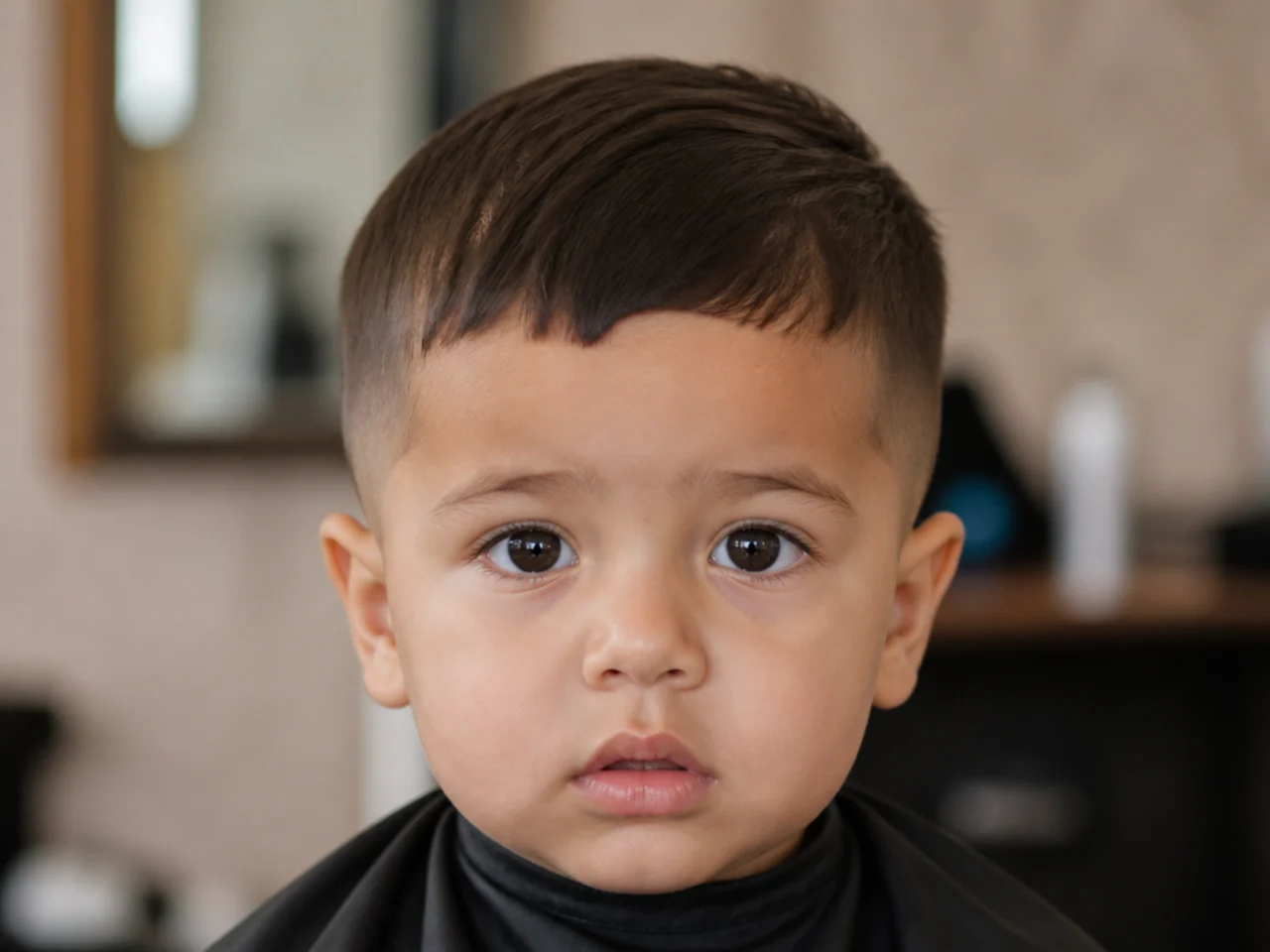
Keep the guard at a three or longer. Fine straight hair at three or six millimetres shows scalp outright, so a short cut reads thin rather than sharp.
Choose a shape you could stop halfway through. One length looks unfinished but even; a half-done graduation looks like a step.
The 15 Straight-Hair Cuts
1. One Length All Over
Everything cut to a single measurement with no graduation anywhere in it. There is no internal line, so an interrupted session leaves one slightly longer section rather than a visible step. It is the only shape on this page that genuinely cannot go wrong.
2. A Blunt Fringe Cut in a Single Pass
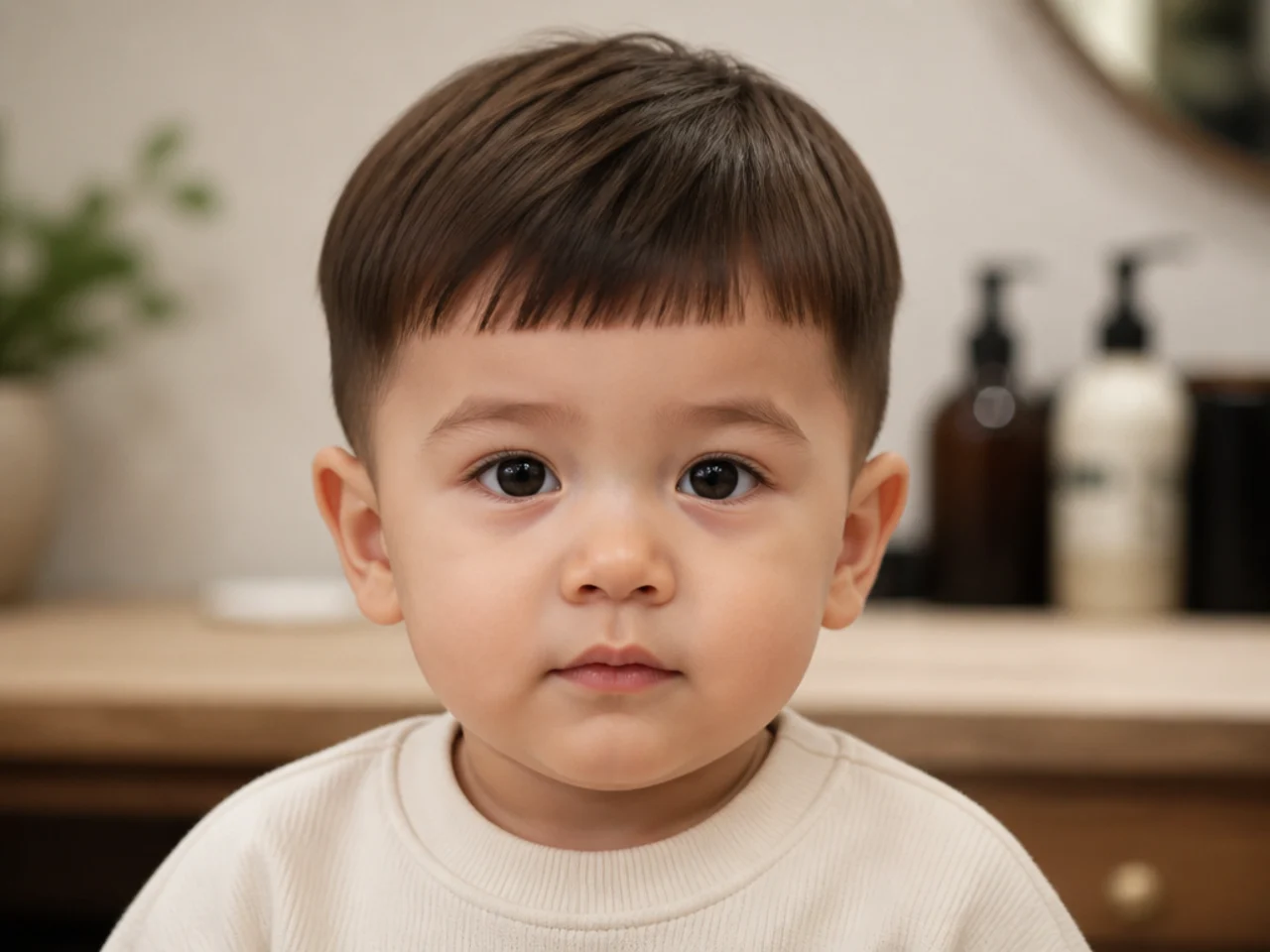
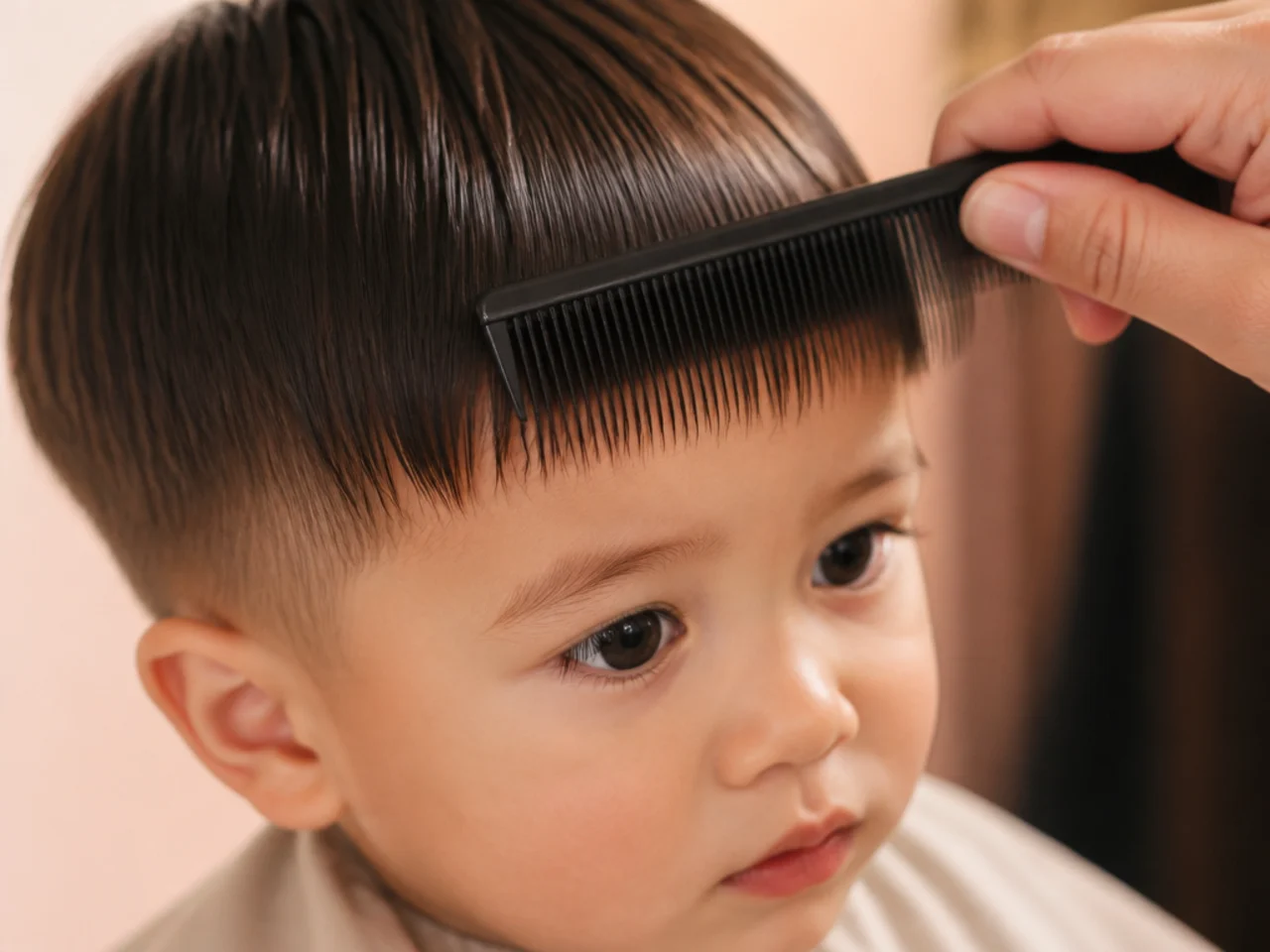
The fringe combed flat and crossed once with the scissors held level. Every return trip leaves a different length, and on straight hair four attempts show as four notches. Decide the height before you start and cut it once.
3. A Soft Bowl With the Perimeter Point-Cut
The round outline of a bowl but with the edge notched rather than cut straight. Point-cutting breaks the perimeter into small irregular lengths, which is the closest straight hair gets to hiding an unsteady line. The shape still reads round from a metre away.
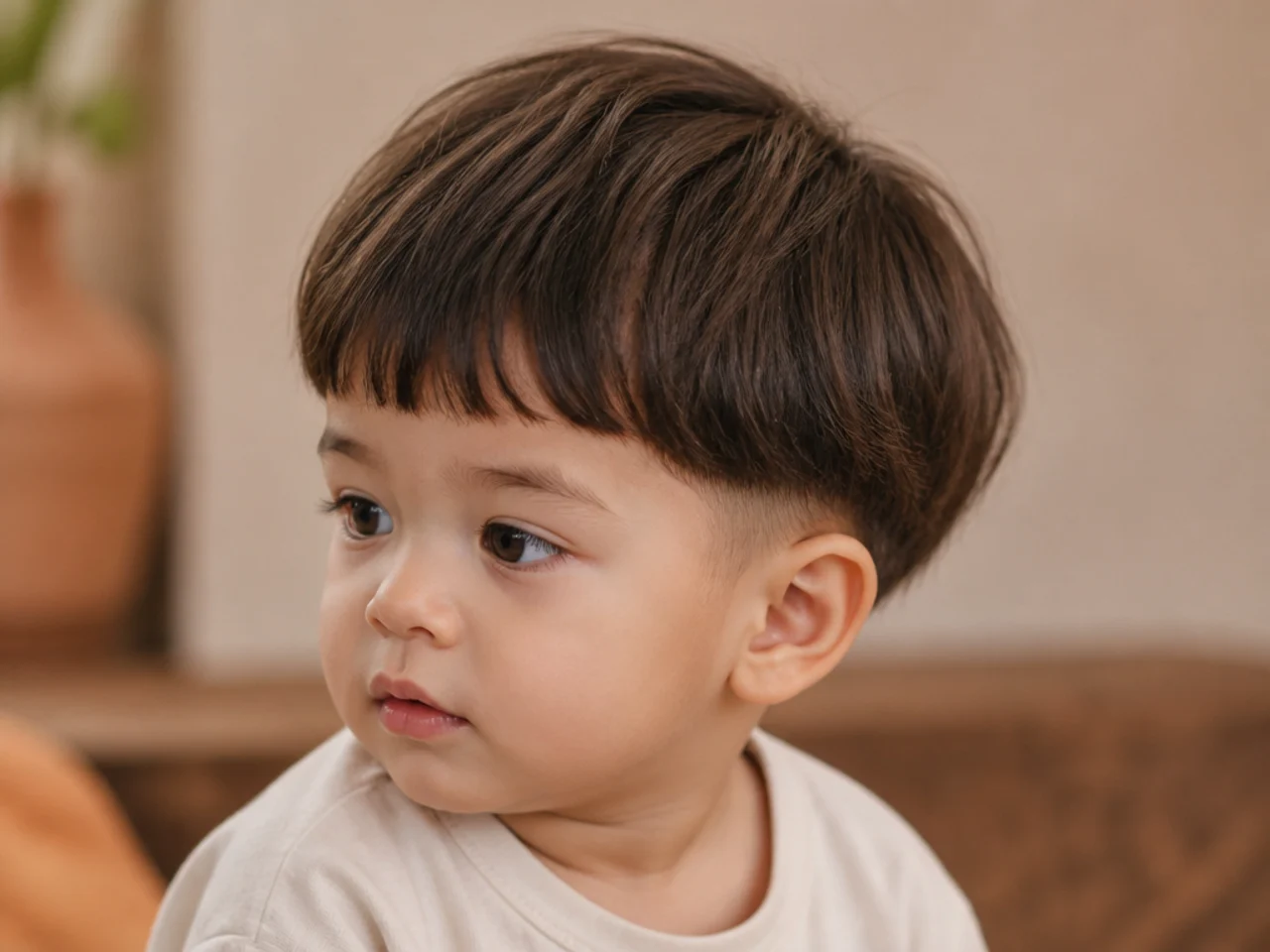
4. A Side-Swept Fringe Cut With the Cowlick
The fringe cut on a diagonal in the direction the front hair already grows, which is how a straight fringe is built at any age. Working with a cowlick means the sweep happens on its own, where cutting a blunt line across the same cowlick leaves the fringe standing off the forehead. The diagonal also disguises a wobble that a level line would advertise.
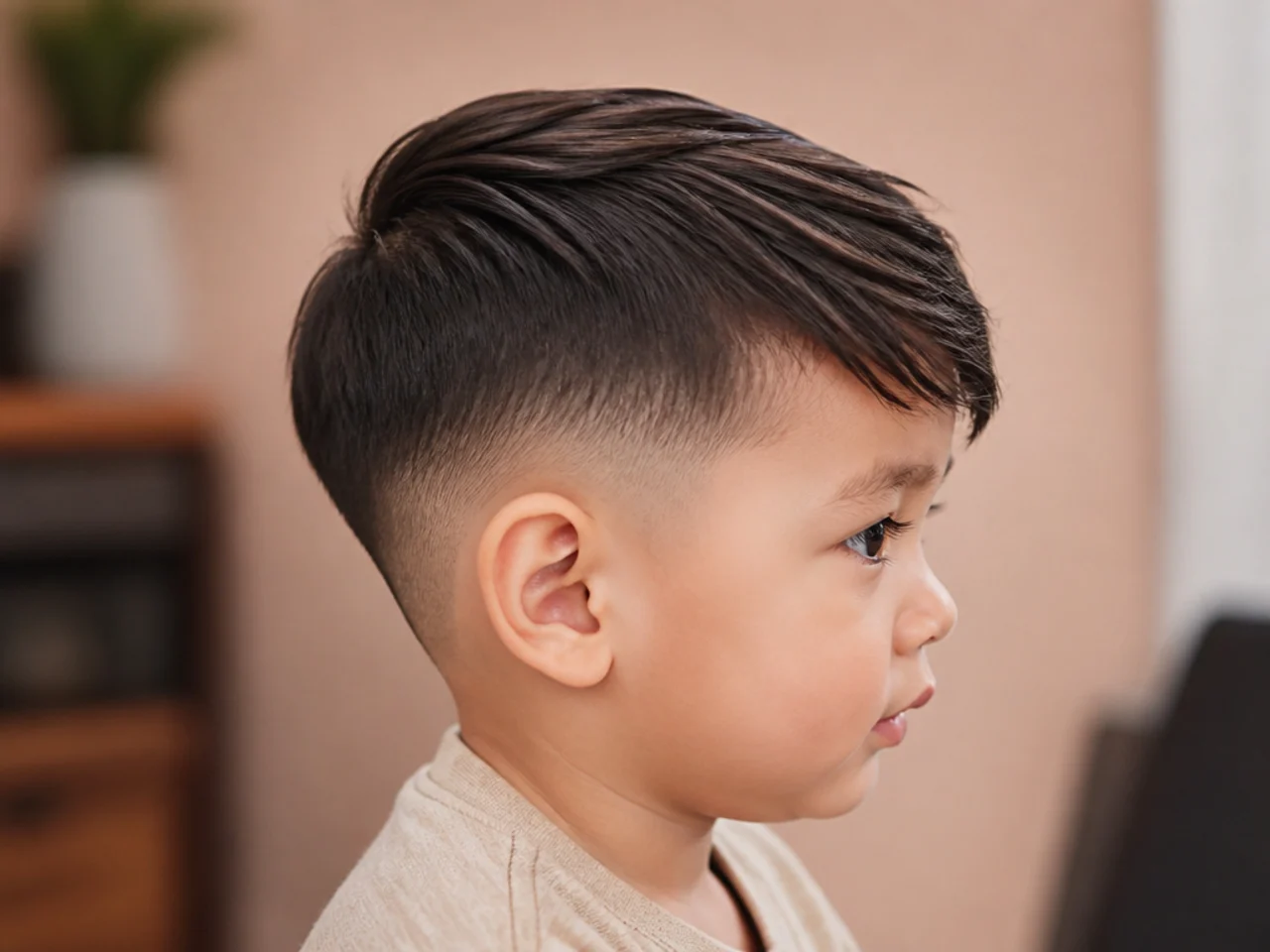
5. A Short Crop With No Fade
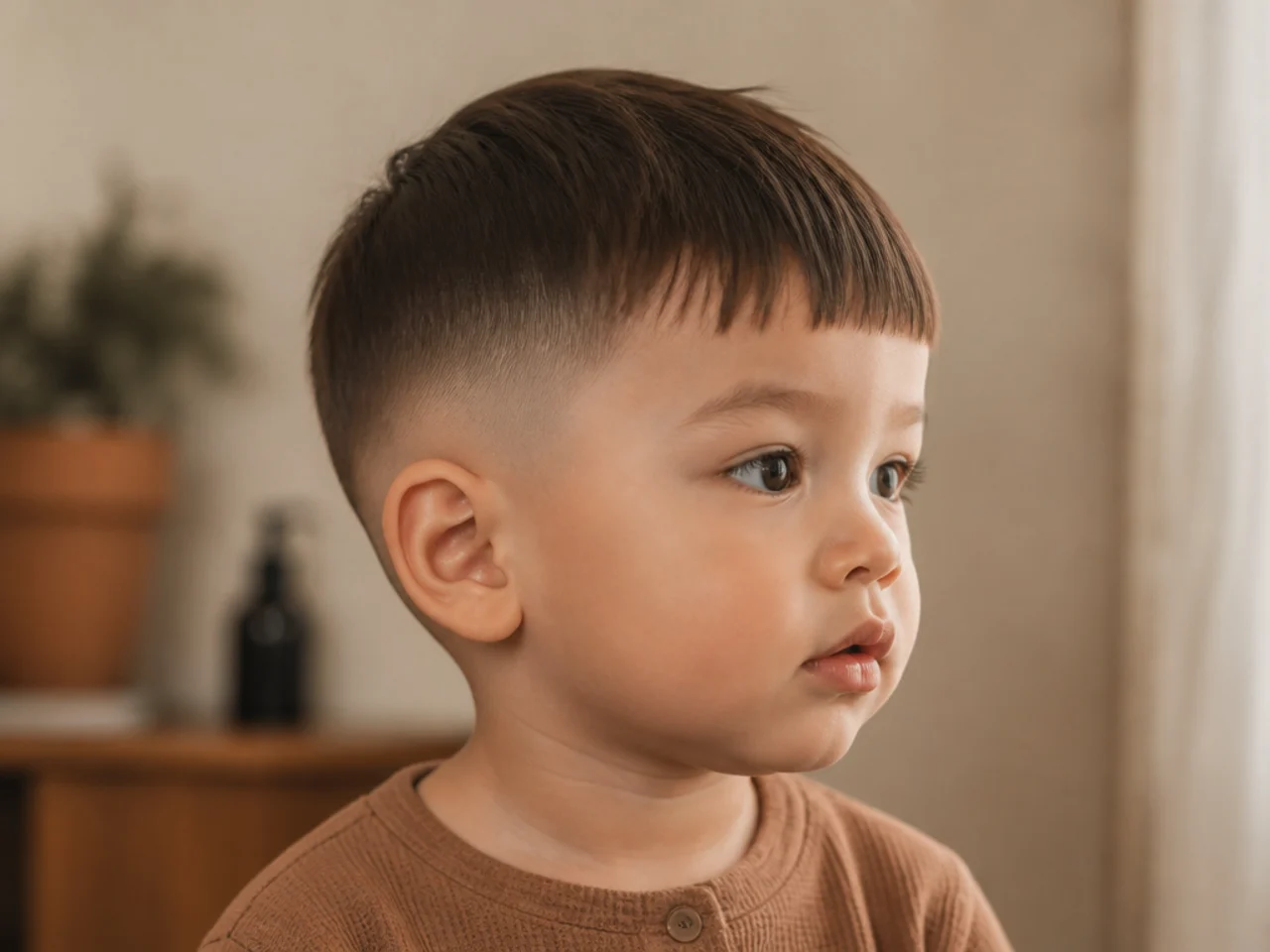
Short all over with a hard stop at the neckline rather than a graduated blend. A fade needs several guard changes blended together, and each join is a line that fine straight hair will show. Removing the fade removes every one of those joins, and if you do want one, a guarded taper is the version that survives this texture.

6. A Long Top Combed Forward From the Crown
The top left long and allowed to fall in the direction it grows out of the whorl. Straight hair will not be persuaded to sit against its growth, so following it is the only version of this that stays put. It also puts weight at the crown, which is where straight fine hair looks thinnest.
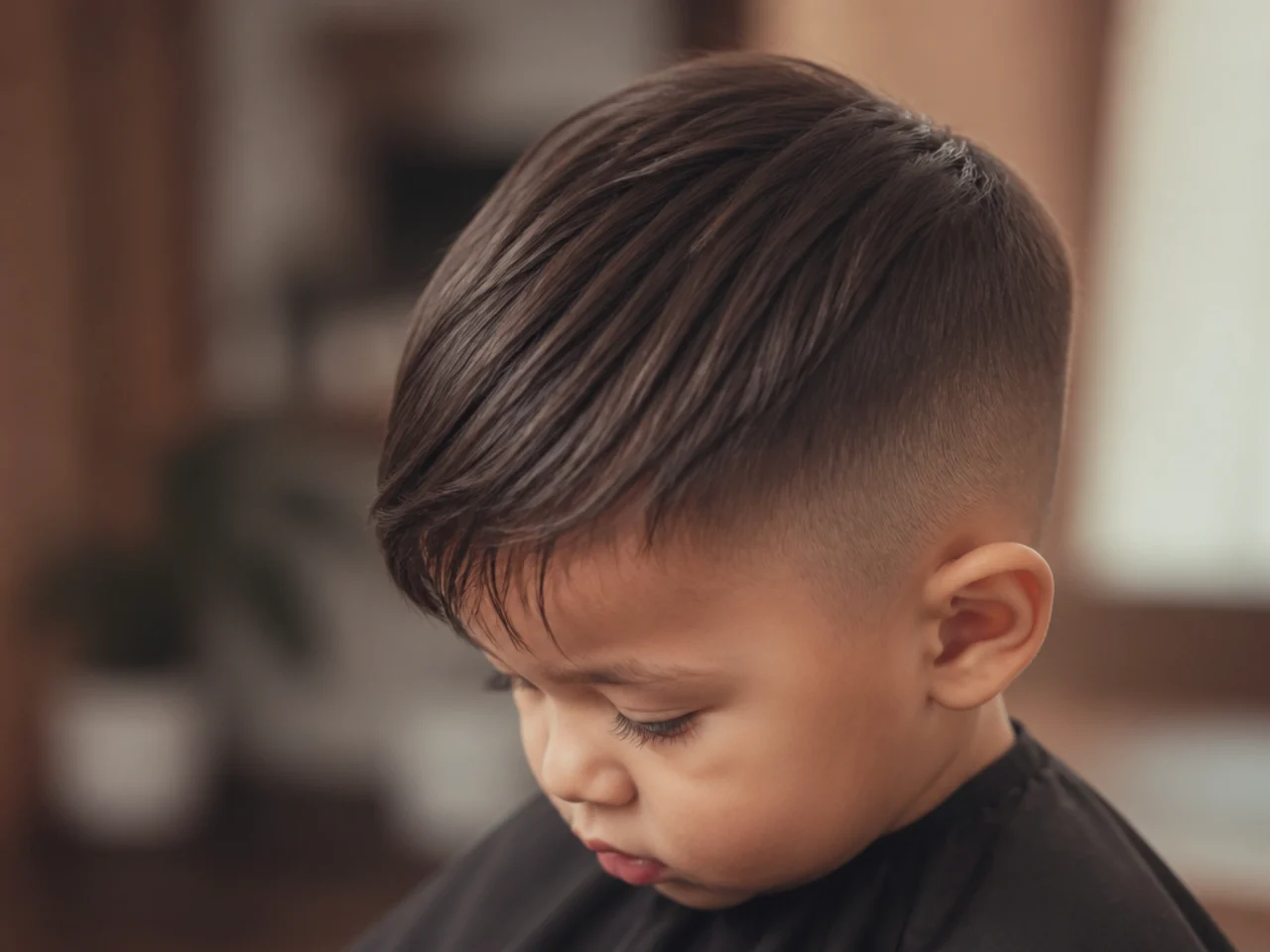
7. A Number Four All Over With No Guard Change
Thirteen millimetres everywhere, and the guard never comes off the clipper. One guard means no blending, which means no join to get wrong, and it is the fastest full haircut there is. On fine straight hair a four is also about the shortest length that still looks covered.

8. A Single-Guard Back and Sides With Scissors on Top
One clipper guard below, scissors above, and a soft join where they meet rather than a blend. The only line in the cut is the one at the top of the clipper work, and leaving the top long enough to hang over it hides that line completely. It halves the number of things that can go wrong.
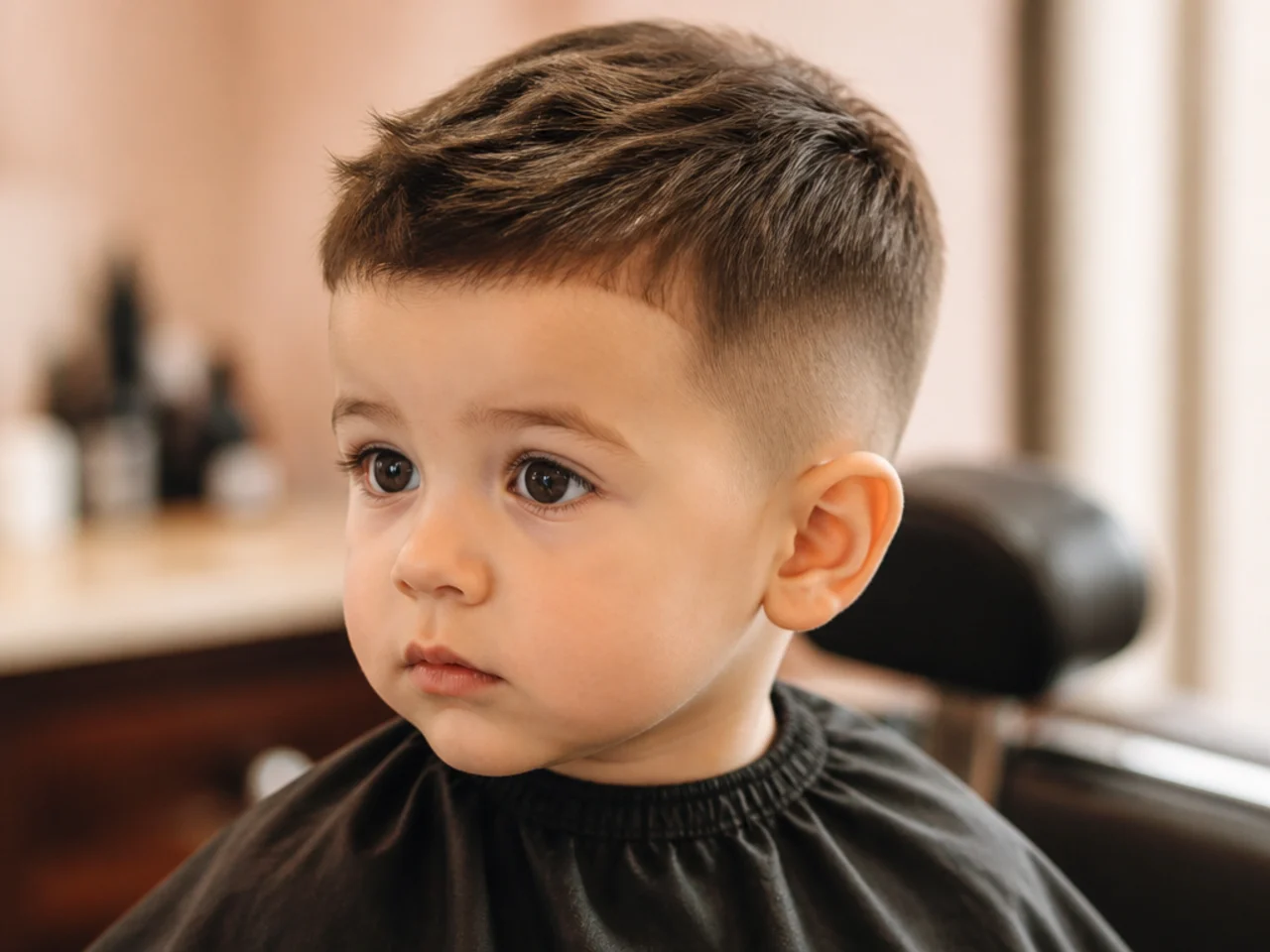
9. A Blunt Perimeter at the Earlobe
Length kept to the earlobe and finished with one hard line all the way round. Fine straight hair goes stringy rather than shaggy as it grows, and a blunt edge is what stops the ends separating into wisps. The weight sitting at the perimeter is doing the whole job.
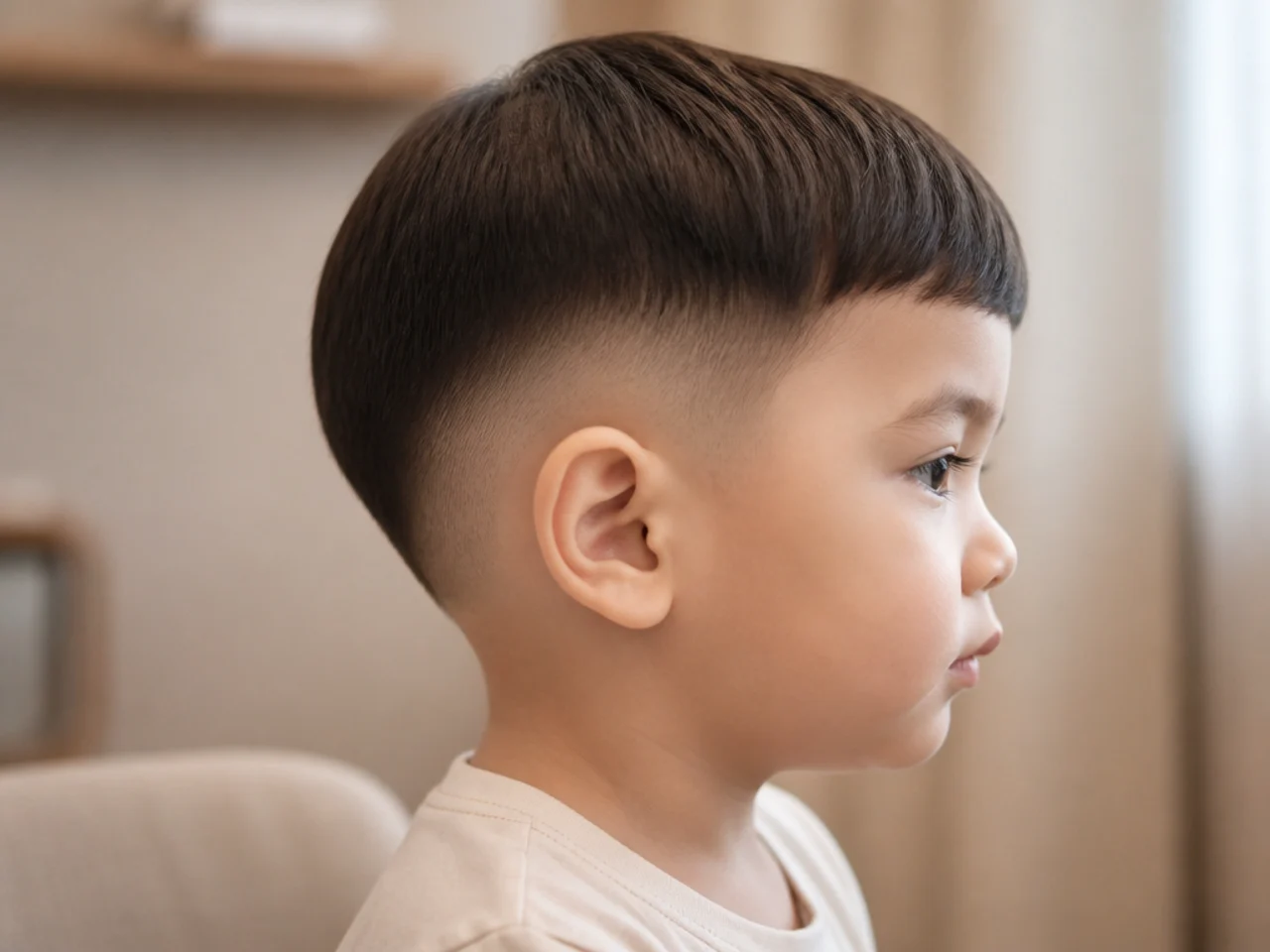
10. A Fringe Left Long Enough to Lie Flat
The front taken to just above the eyebrows rather than high on the forehead. A short fringe on fine straight hair has no weight to hold it down and lifts away from the head, while an extra centimetre pulls it flat. Length is the only thing that settles a straight fringe.

11. A Crown Whorl Left Uncut
Everything else taken down and the spiral at the crown left at full length. Cut short, a whorl on straight hair stands vertically and no styling will flatten it, so leaving weight there is not a compromise but the actual fix. It is the single most common reason a toddler cut looks wrong at the back.
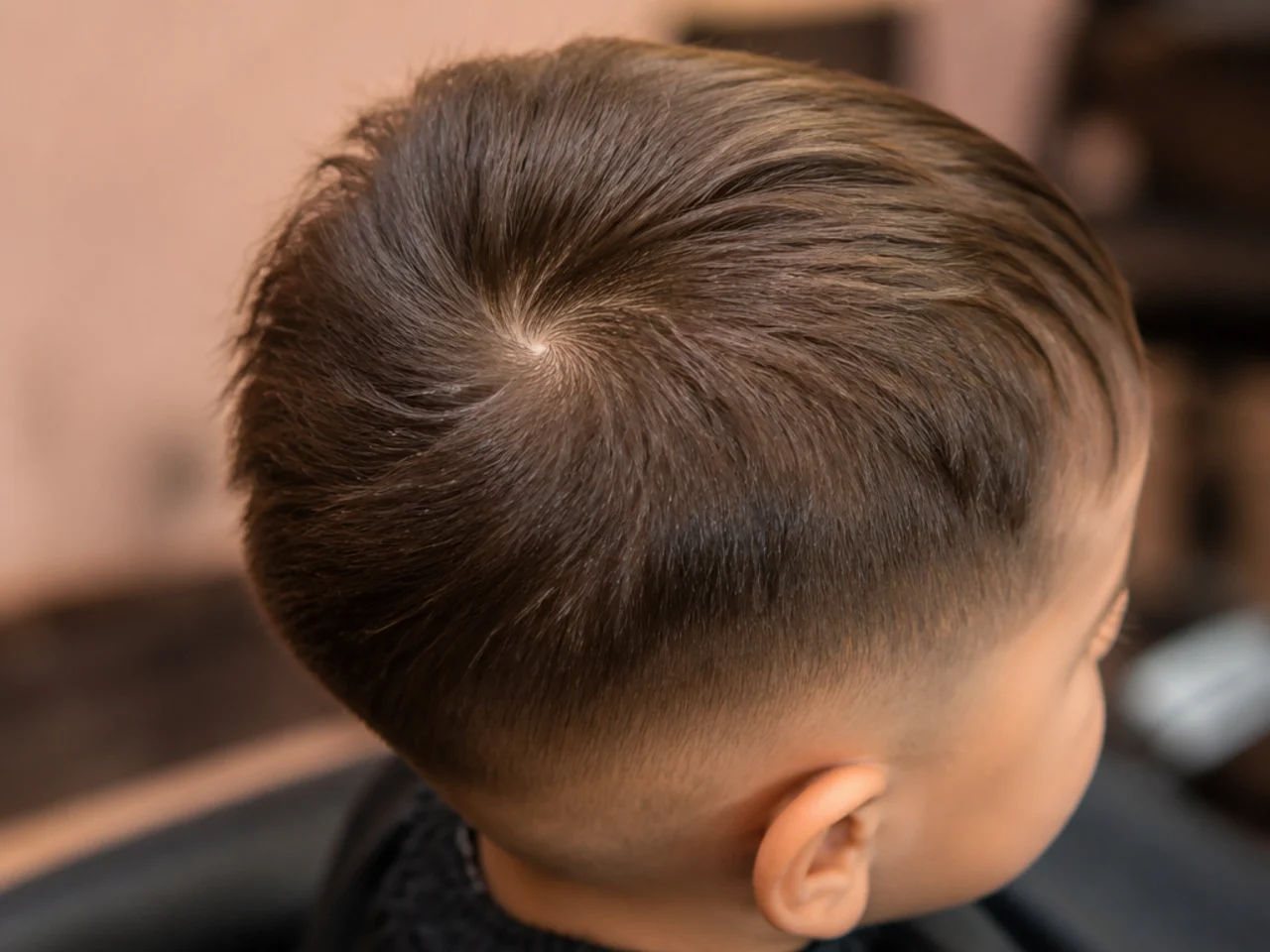
12. A Straight Perimeter Cut Across the Back
A level line across the back of the head instead of a curve or a taper. A straight line only has to be level, where a curve has to be level and even at every point along it. On a moving toddler that difference is the difference between finishing and not.
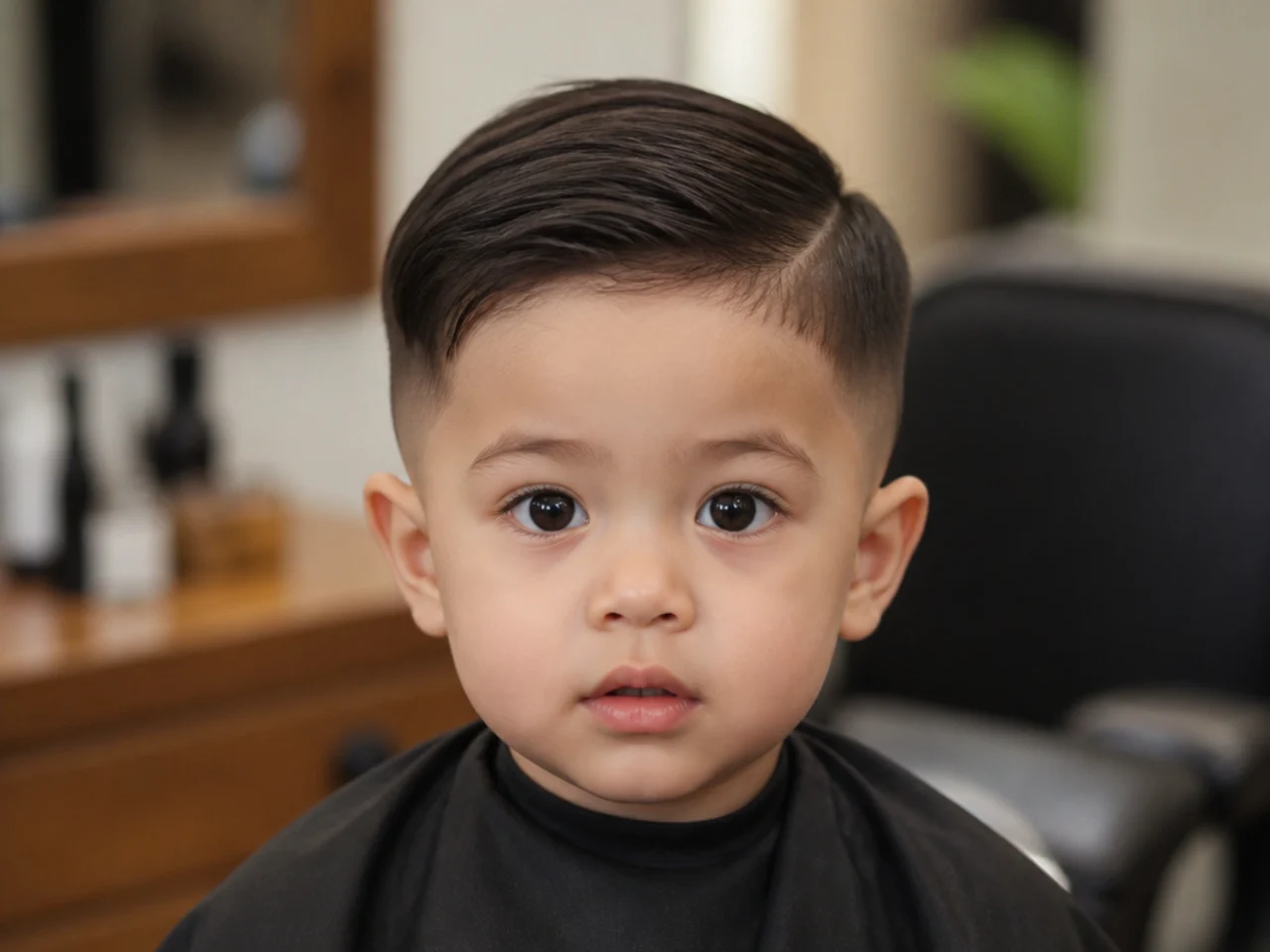
13. A Grown-Out One Length With Only the Ends Point-Cut
No shape cut at all, just the split and wispy ends notched off. Fine straight hair frays at the tips long before it needs a haircut, so removing half a centimetre restores the edge without touching the length. It takes under a minute and buys another month.

14. A Cut Done Entirely With Scissors Over a Comb
No clipper anywhere in the cut, with the comb setting the length instead of a guard. A clipper that pauses on fine straight hair leaves a mark you can see, and scissors over a comb has no motor to pause. It is slower per pass but far easier to stop and restart.
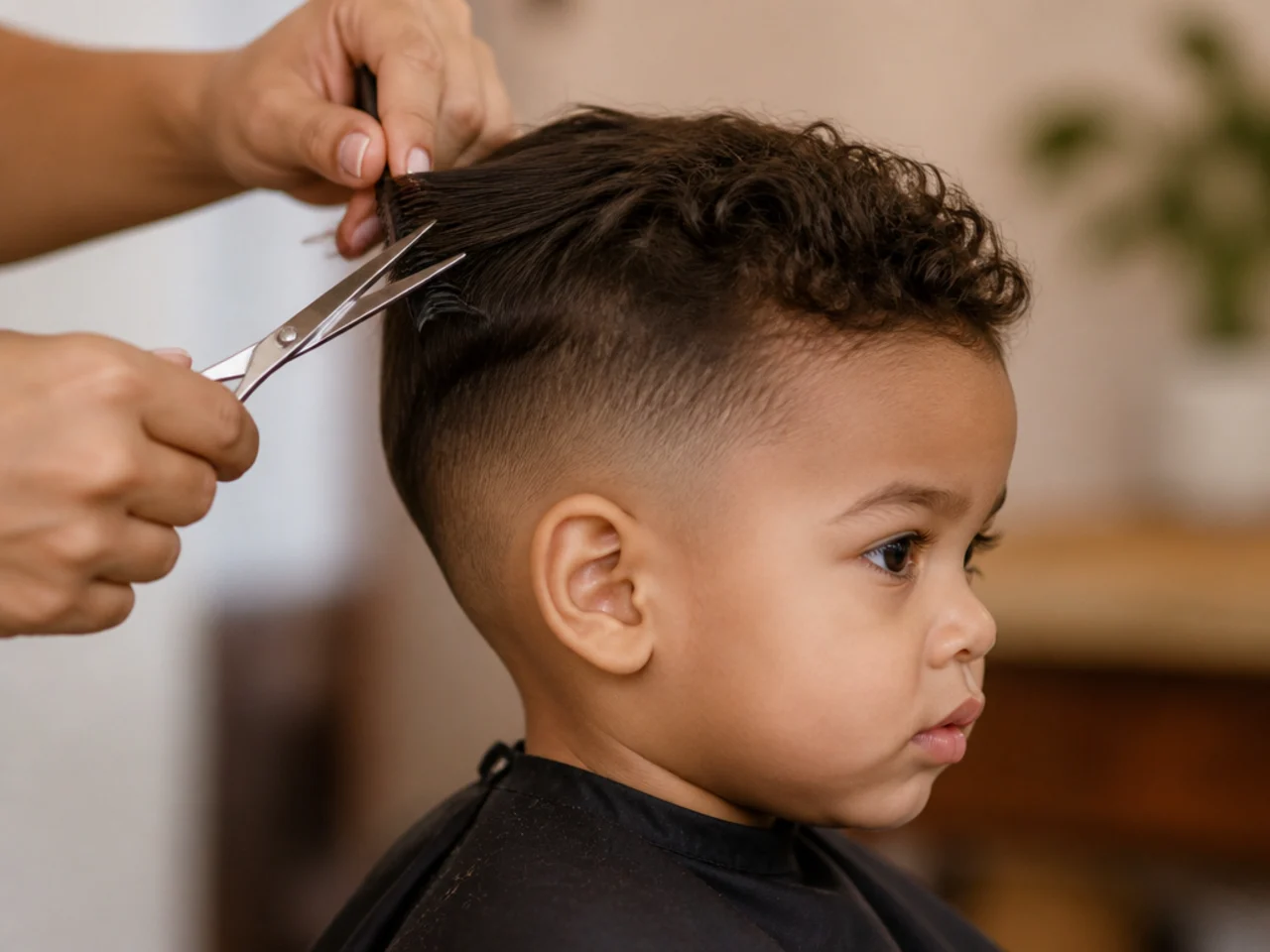
15. A Short Back Cut With the Growth at the Nape
The neckline worked in the direction the hair grows rather than against it. Nape hair on toddlers often grows sideways or upward, and clipping against that lifts it into a fringe of short ends standing off the neck. Following the growth leaves the same length lying flat.
Styling and Upkeep
Comb it and leave it. Fine straight hair holds nothing, and product turns it into separated strands rather than texture.
Trim the fringe on its own every three weeks or so. It is the section that reaches the eyes first, and it is one pass rather than a whole haircut.
Look at the cut dry and settled, not straight after combing. Straight fine hair lifts as it dries, so a perimeter that looked level wet often sits a few millimetres higher.
Wet the fringe to comb it flat, then let it dry before cutting. Combing wet gets it straight; cutting dry gets the length right.
Check the crown before you decide the cut has grown out. The whorl is where a straight cut starts looking untidy first.
Mistakes to Avoid
Snipping at the fringe over several attempts. Every return leaves a different length, and straight hair shows all of them.
Cutting the fringe while it is still wet. Fine straight hair lifts as it dries, so the line lands higher and more uneven than the one you cut.
Taking the sides to a number one or two. Fine straight hair at those lengths shows scalp, and the cut reads thin rather than short.
Cutting the crown whorl short. It will stand straight up and nothing will hold it down except length.
Asking for a fade rather than a taper. Every blend point in a fade is a line, and this is the texture that displays lines best.
FAQ
Why does it look uneven so quickly? There is no curl beside the line to close the gap, so every cut end stays visible.
One pass or several on the fringe? One — repeated attempts leave notches on straight hair.
Why does the crown stick up? Straight hair grows out of the whorl and stands upright unless it has enough weight to lie down.
Final Thoughts
Count the lines in the cut before you agree to it, cut the fringe once rather than four times, and find the whorl before anything comes off the back. Fine straight hair will not cover for you the way curl does, so the answer is always the simplest shape that gets you the length you wanted.
For fringe shapes cut the same way on older heads see the men's fringe guide, and for where a no-fade short crop leads see crew cut hairstyles. More in Men's Haircuts.