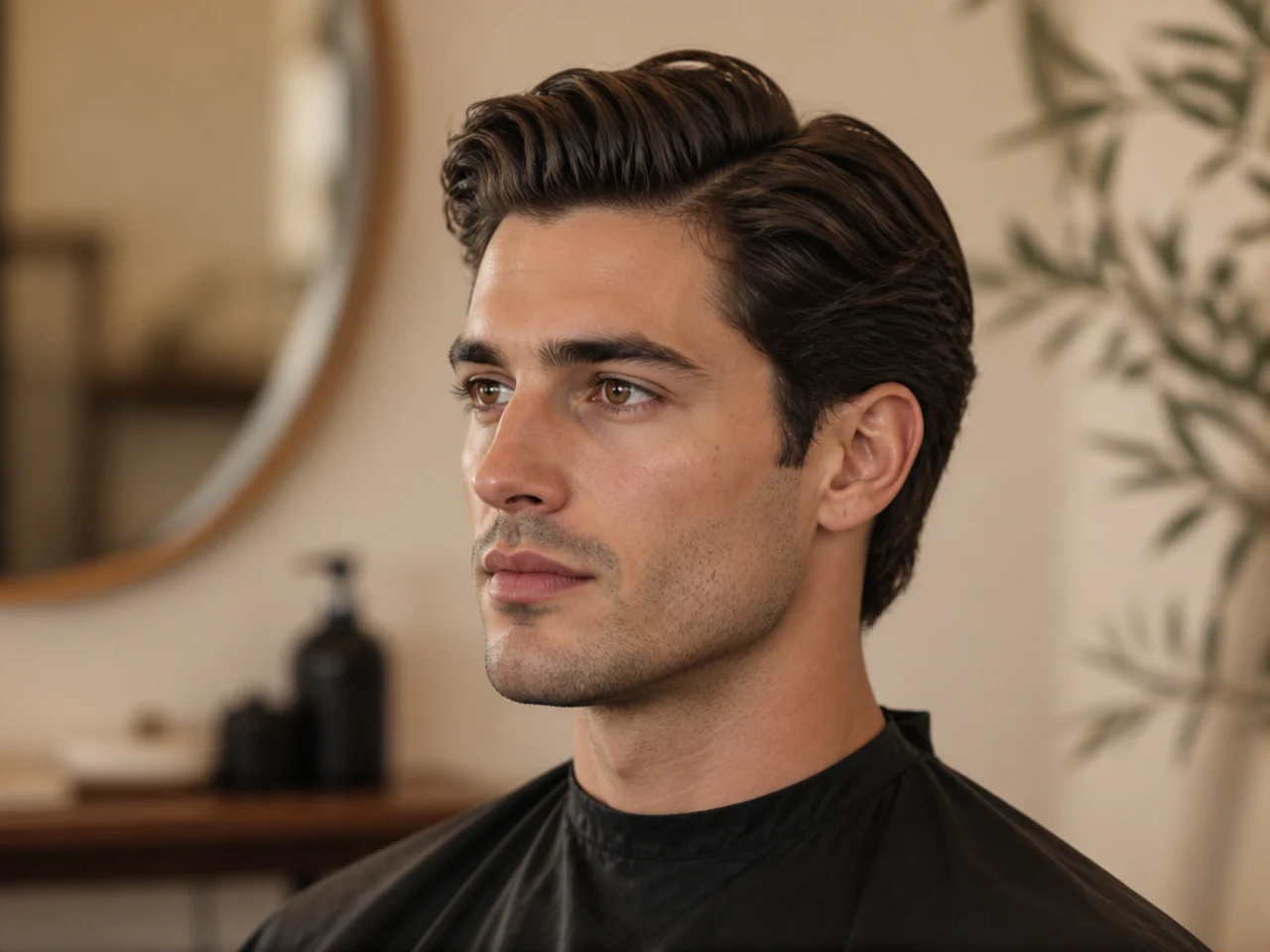
15 Old Money Haircuts That Suit Any Face
The old money haircut for any face — fifteen tailored cuts sorted by shape, each with the length, sides, product, and phrasing to hand your barber.
In this article · 33
- What Is an Old Money Haircut?
- Face Shape Comes First
- Oval Face — The Widest Lane
- Classic Ivy League
- Deep Side Part
- Understated Slick Back
- Round Face — Cuts That Add Height
- Tapered Pomp
- Sharp Elevated Side Part
- Refined French Crop
- Square Face — Cuts That Soften Angles
- Brushed-Back Gentleman
- Sculpted Comb-Over
- Textured Ivy
- Heart Face — Cuts That Balance a Narrow Chin
- Textured Caesar
- Prep-School Comma
- Oblong (Long) Face — Cuts That Add Width
- Full-Sided Scissor Taper
- Precision Crew
- Diamond Face — Cuts That Frame the Forehead
- Voluminous Side Sweep
- Aristocrat's Cut
- How to Ask Your Barber
- Styling and Maintenance
- FAQ
- How do I know my face shape?
- What's the safest old money haircut for any face?
- Does old money hair have to be long?
- Can I mix face-shape rules?
- Does old money hair work on curly hair?
- How much should this cost?
- Final Thoughts
An old money haircut isn't one silhouette — it's a set of rules bent to fit your face. Tailored top, matte finish, sharp perimeter, then the shape changes for the shape you were born with. Below are fifteen old money haircuts sorted by face shape (oval, round, square, heart, oblong, diamond), each with the top length in inches, the sides in guard numbers, and the phrasing to hand your barber.
What Is an Old Money Haircut?
An old money haircut is what a man wears when his hair is meant to disappear behind the rest of him. Length lives between one and a half and four inches on top. Sides sit scissor-tapered or, at their most modern, cut to a whispered low fade. The finish reads matte — never wet, never crunchy.
The register was set on northeastern preparatory school lawns and carried into the boardrooms those boys grew into. Kennedy wore a version, Bogart wore a version, the men in the black-and-white photos on your grandfather's wall each wore a version. The ivy league haircut is the family's most famous member; every cut below is one of the ways the same restraint has been reshaped for a specific face.
Sibling reads if you want the family sorted differently: old money haircuts by silhouette and old money mens haircut by archetype.
Face Shape Comes First
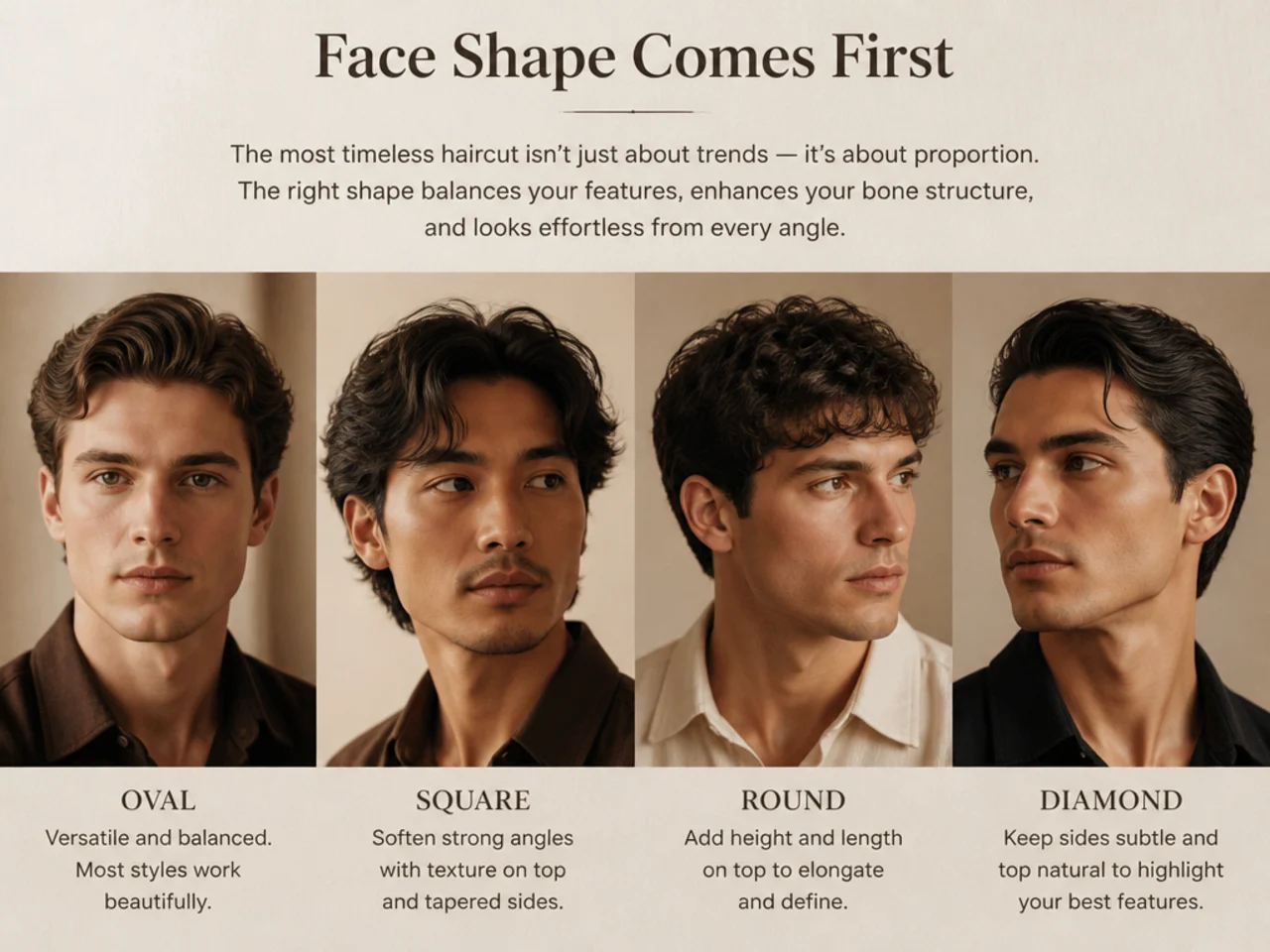
Most old money guides give you one silhouette and hope your face matches. That's how a good cut lands on the wrong head. The real work is choosing which variable to bend.
Oval faces are the widest lane — balanced proportions carry almost every cut here without adjustment, so the pick comes down to dress code and hair type. Round faces need vertical lift and tight sides; anything that adds width at the cheeks fights the shape. Square faces want softness — no hard parts, no blunt fringes, no razor-squared necklines. Heart faces want weight low and light coverage at the wide forehead. Oblong (long) faces want fuller sides and no crown height. Diamond faces want volume at the forehead to match the cheekbones.
Two secondary filters do the fine-tuning. Hair type: straight to lightly wavy hair carries every cut below; coarse and thick hair prefers the longer swept shapes; fine hair prefers the shorter tailored ones. Dress code: traditional finance and law reward scissor tapers and hard parts; creative offices absorb quiet low fades without breaking the read. Bring the mens-haircuts hub up on your phone in the chair if you want to compare against other shapes in the family.
Oval Face — The Widest Lane
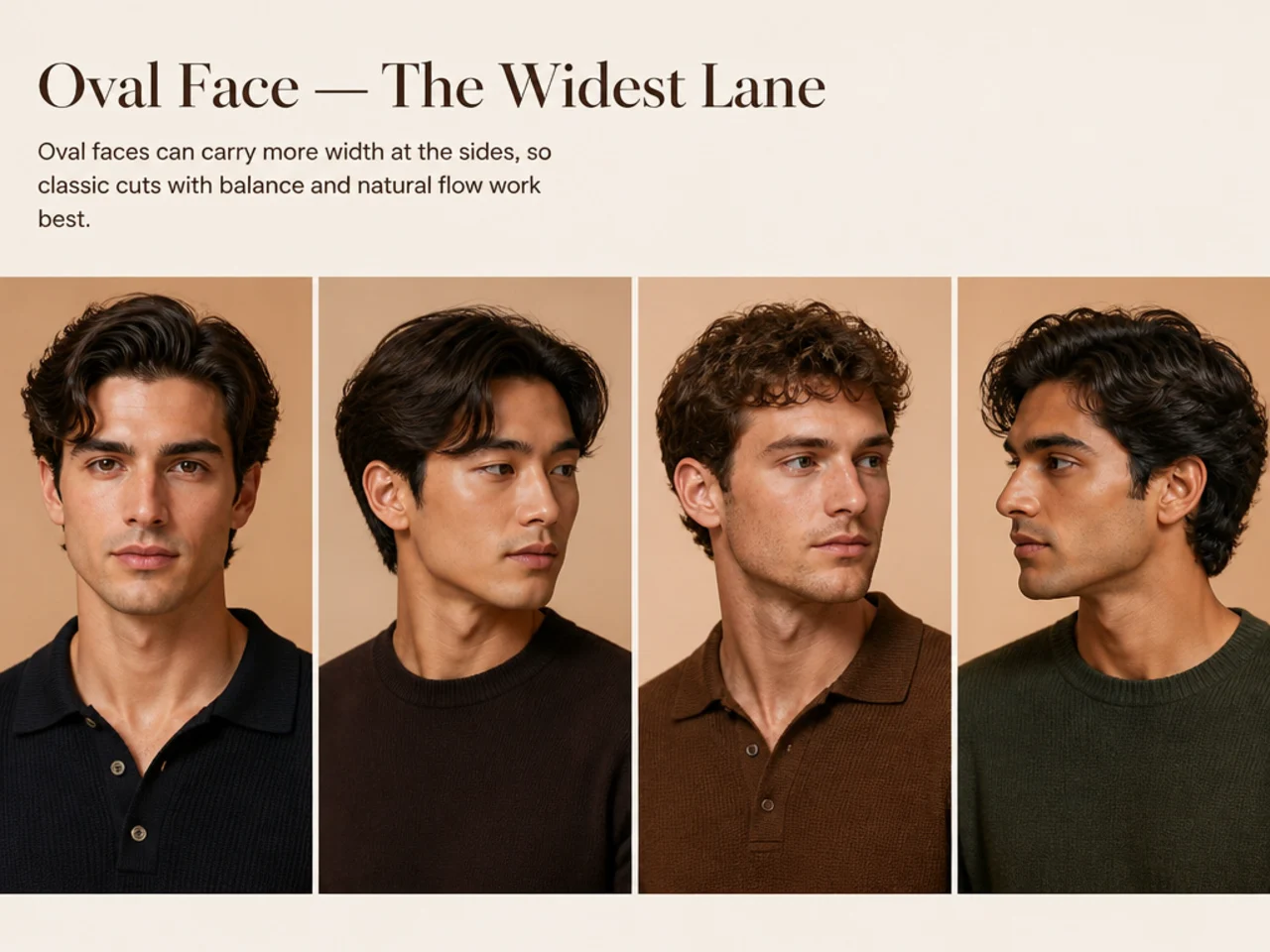
Oval is the balanced face — length slightly greater than width, gently rounded jaw, forehead a hair wider than the chin. Almost every cut in the family flatters oval, which means the decision moves off the silhouette and onto everyday fit. Below are the three cuts most oval men book: the classic, the reference, and the length-forward version for men who want their hair on top to do the work.
Classic Ivy League
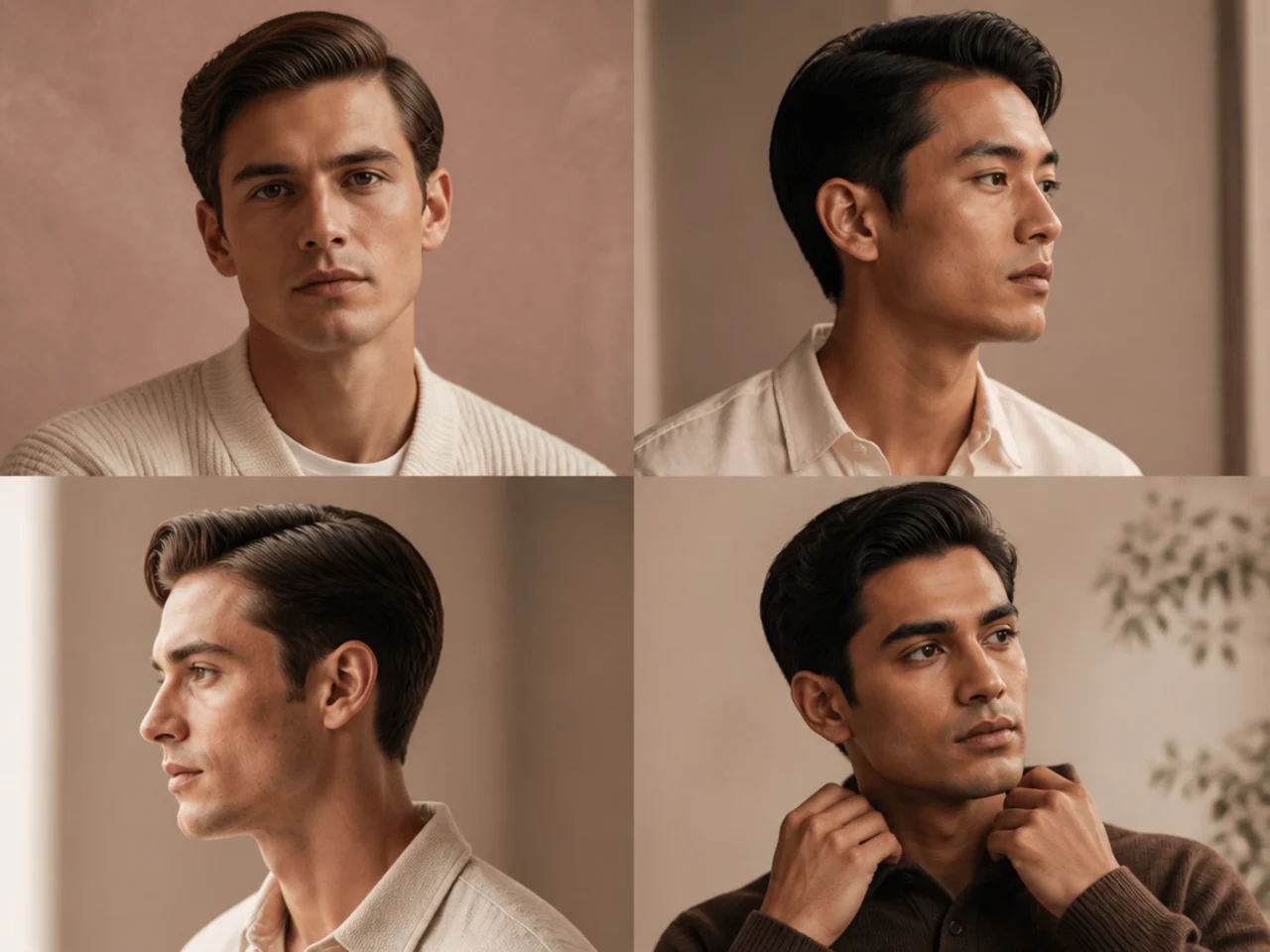
The blueprint cut and the safest opening move on an oval face. Two to two and a half inches on top, a shallow natural side part, scissor-tapered sides that stop above the ear. Nothing clipped past a #2, no fade. The oval face doesn't need help from the cut, which is why the Ivy League — the family's most balanced silhouette — sits on it without adjustment.
Best on straight through 2B wavy hair. Skip if your hair is very coarse and dense; the taper reads bulky without a light thinning pass.
Ask for a classic ivy league haircut, two and a half inches on top, scissor sides to a #2, and a natural side part. Style with a pea of matte cream combed once through damp hair.
Deep Side Part
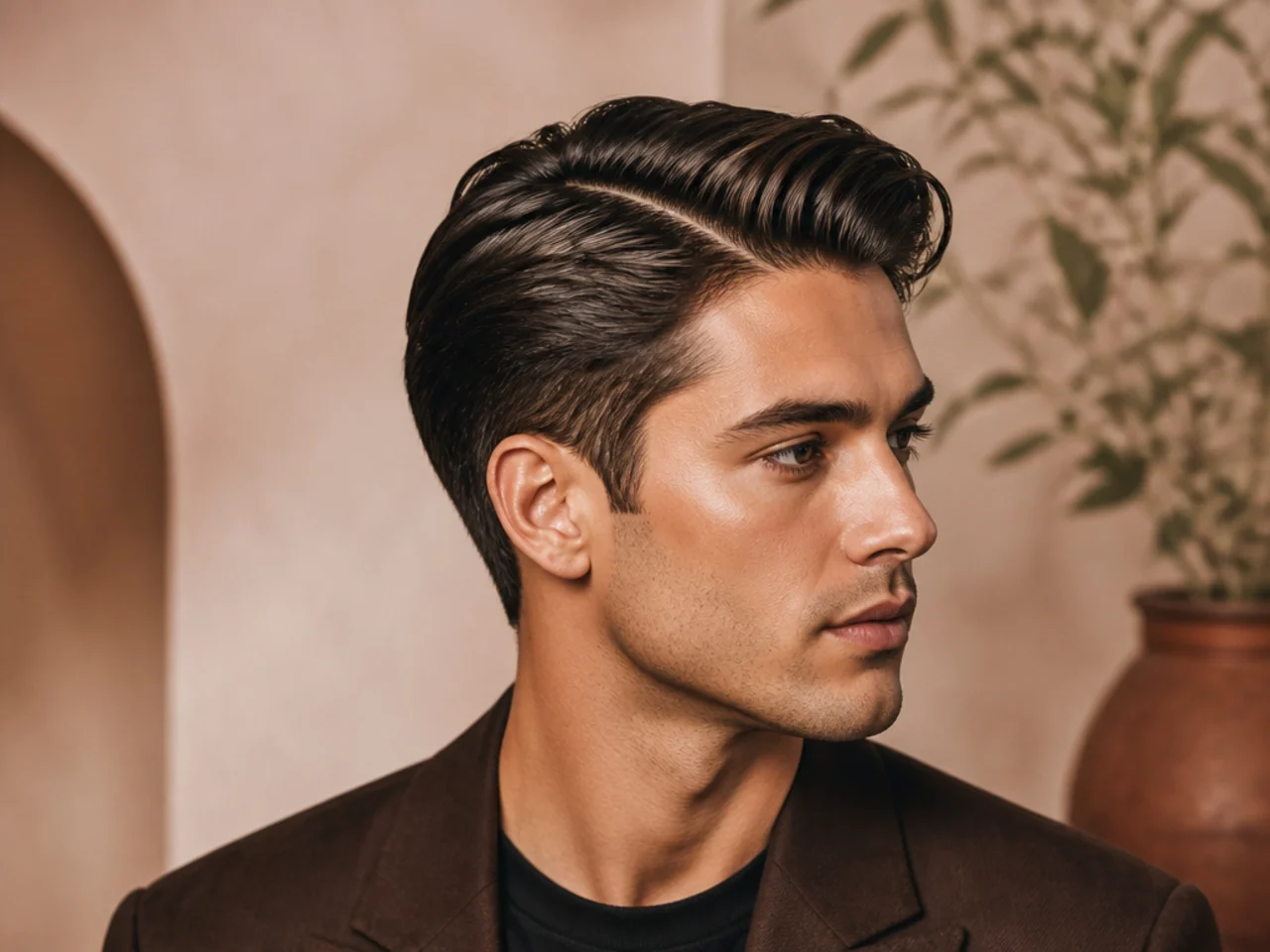
The reference cut for the whole quiet-luxury register. Three inches on top, a deep natural side part on your dominant break, sides scissor-tapered past the ear. Nothing faded. On an oval face the deep part opens the forehead just enough to add definition without pulling proportions off-center.
Straight to lightly wavy hair holds it best. Fine hair works with a matte cream; thicker hair prefers a light matte pomade for the comb-through.
Ask for a classic side part, three inches on top, scissor taper down to a #3 above the ear, and a natural side part. Style with a nickel of matte cream on damp hair, combed once from part to ear.
Understated Slick Back
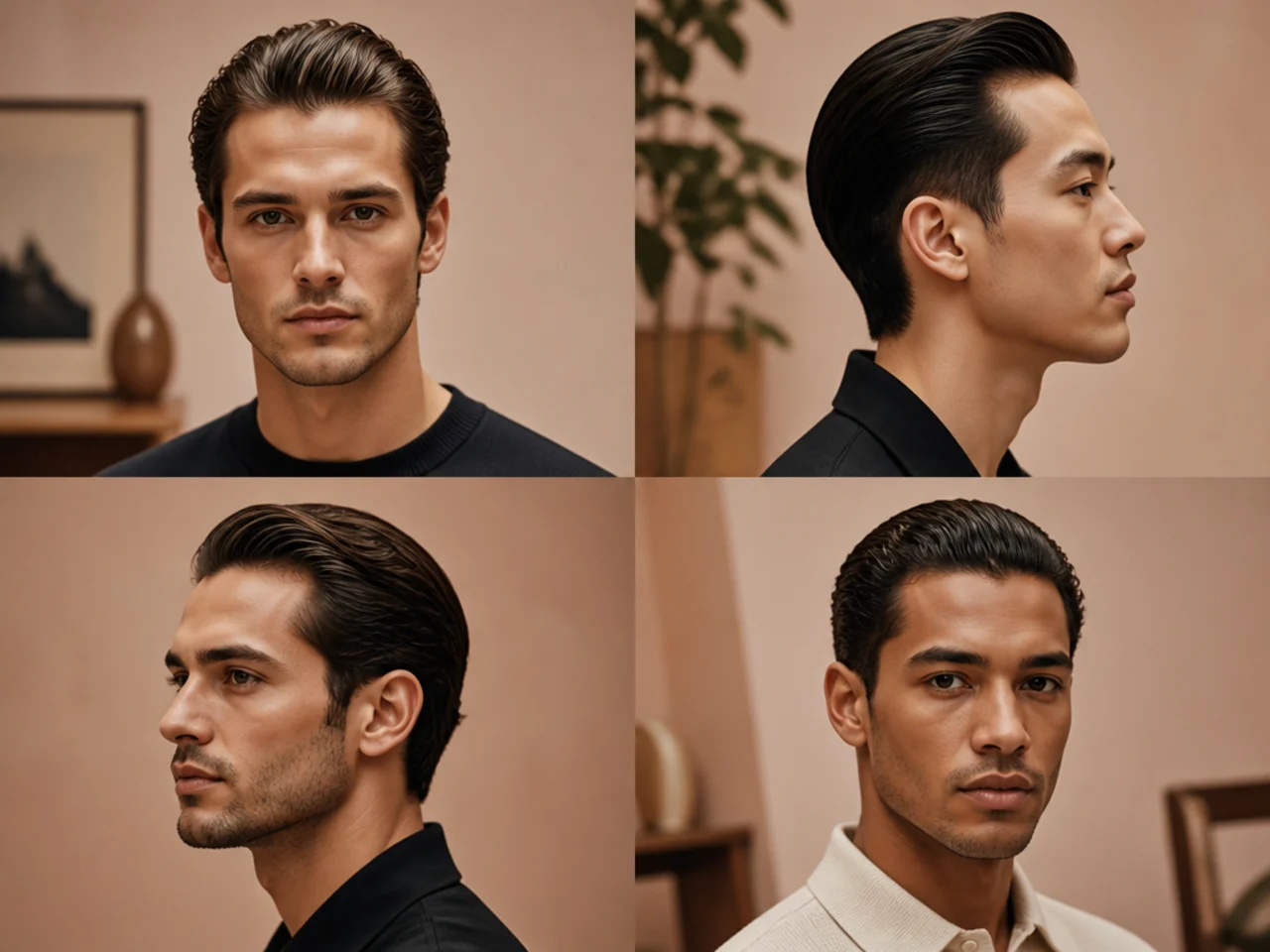
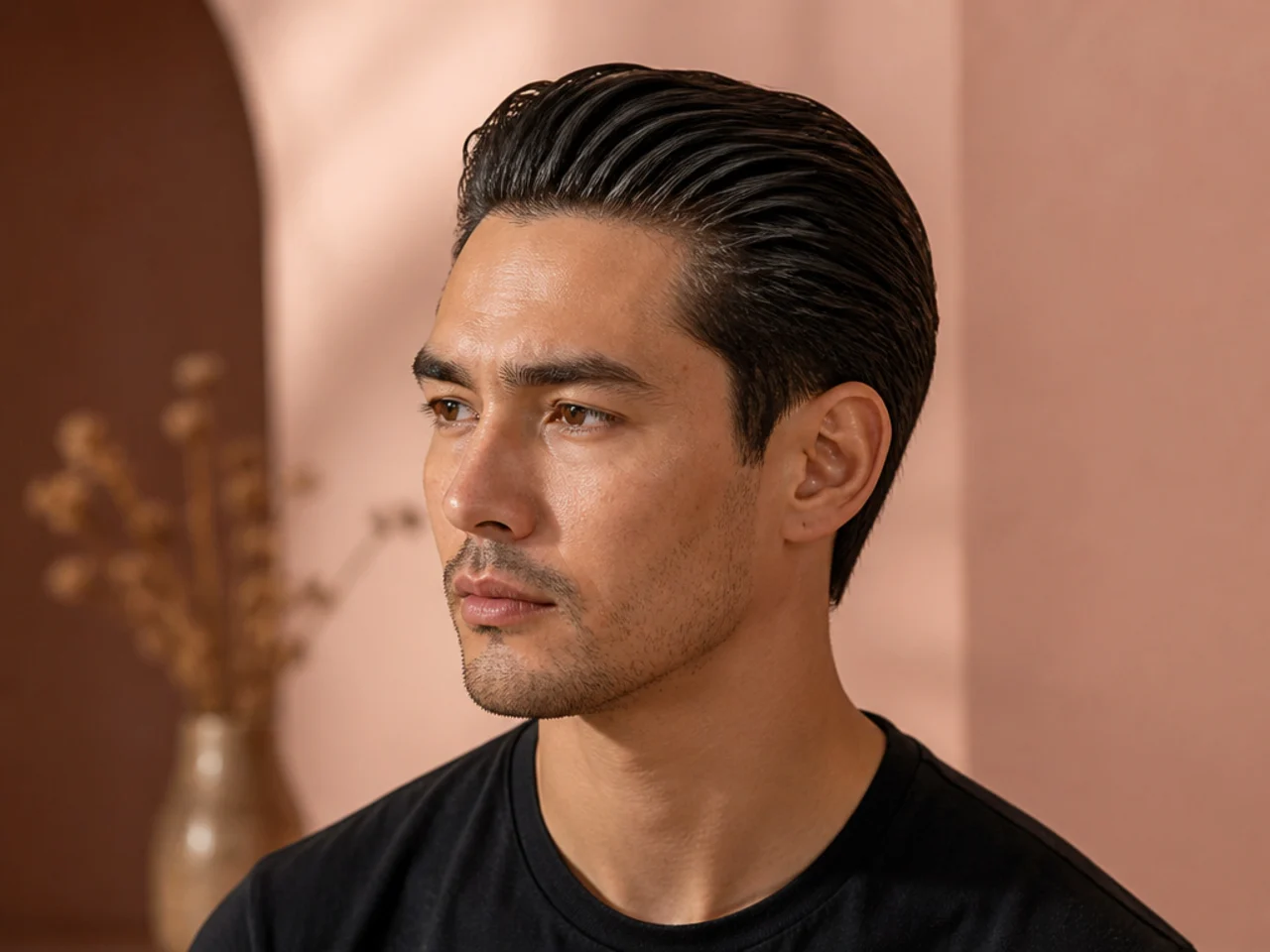
The length-forward cut for oval faces that want the hair on top to do more of the work. Four to five inches on top so the ends reach the crown when combed back, scissor-tapered sides, matte finish always. The 1987 slick back was oil-heavy and Wall Street loud; the 2026 version is dry, tailored, and quiet enough for a partner's meeting.
Best on straight to 2B waves with enough density to sit heavy. Skip if your hair is fine — the shape falls apart within an hour without a strong blow-dry base.
Ask for an understated slick back, four inches on top, scissor sides no shorter than a #3, and a natural taper at the neckline. Style with a matte clay on towel-dried hair, combed back once with a wide-tooth comb, finished with your fingers.
Round Face — Cuts That Add Height
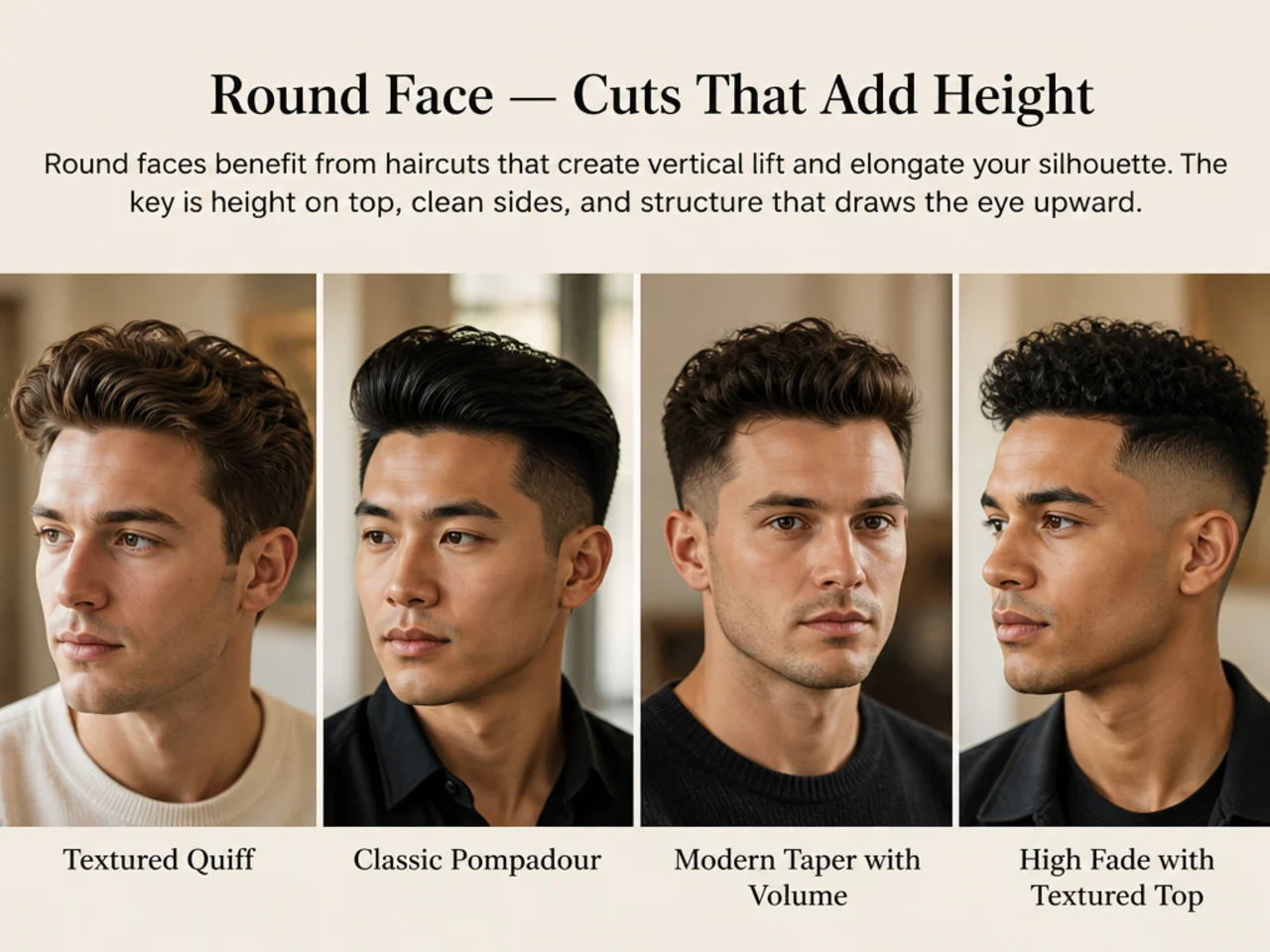
A round face reads shortest when width lives at the cheeks. The fix is vertical lift on top, tight sides, and a soft angle somewhere in the front. Below are three cuts that build the height a round face needs without breaking the quiet-luxury register — no aggressive pompadour, no hard undercut, no fade that shouts.
Tapered Pomp
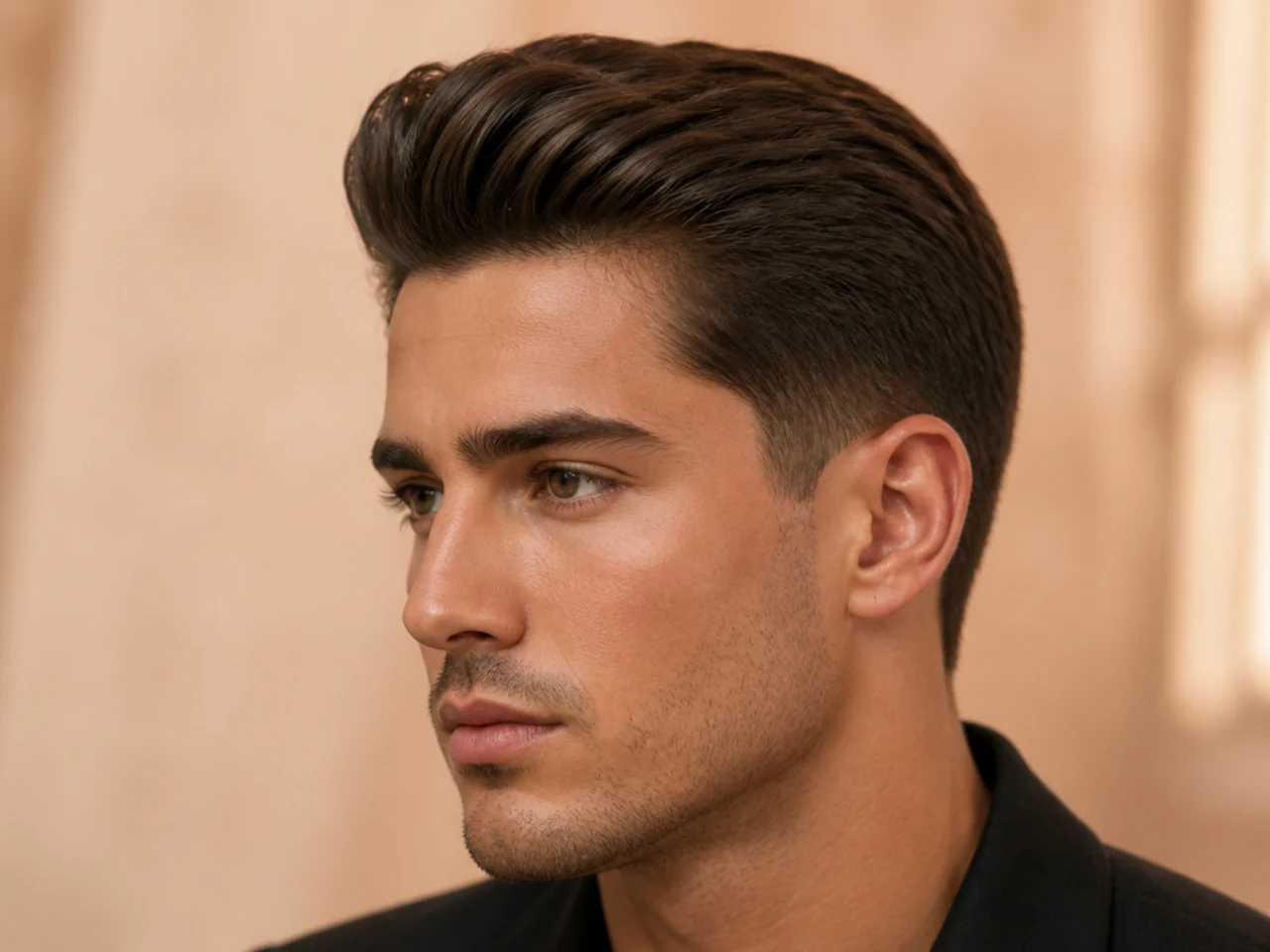
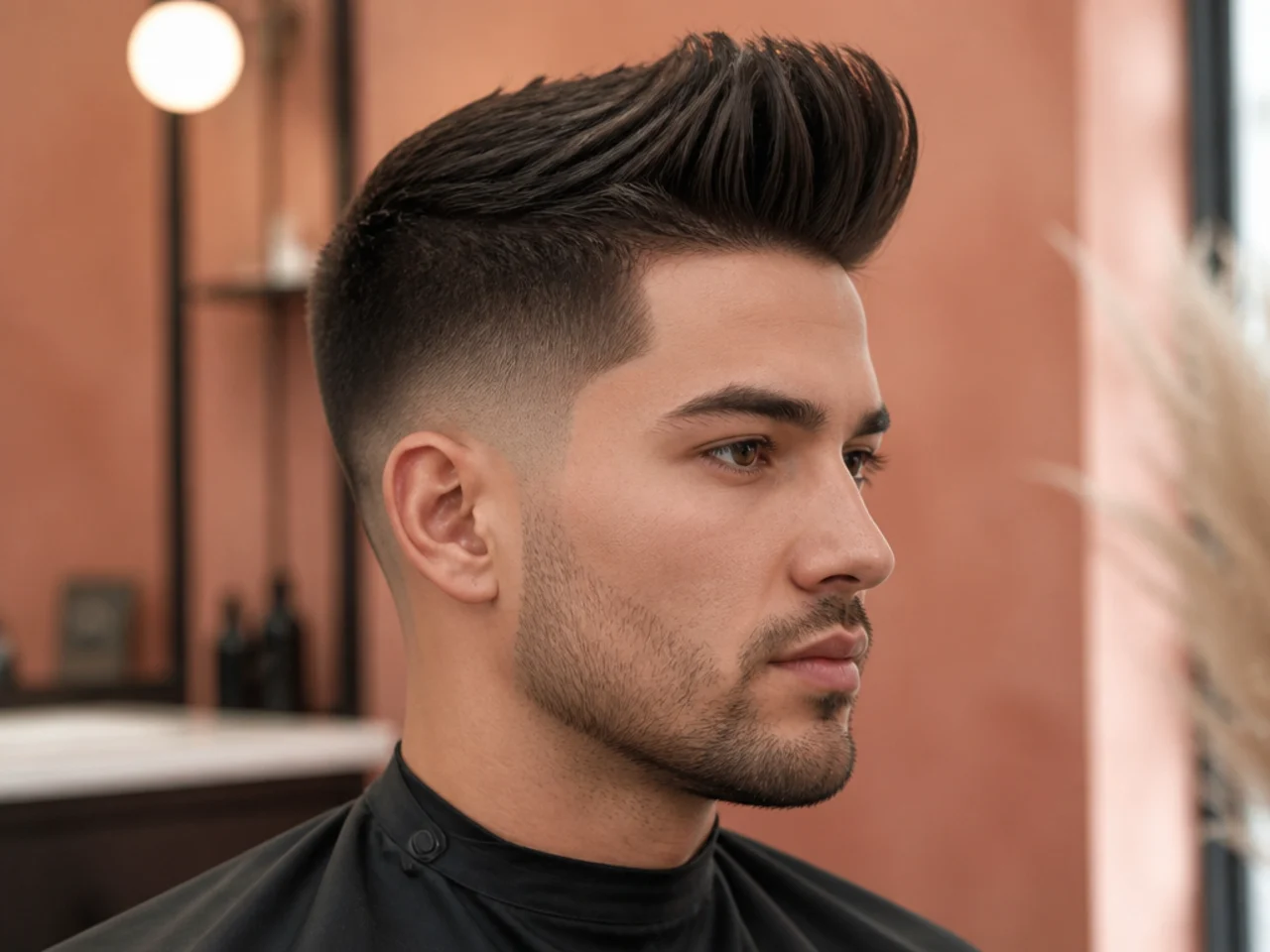
The pompadour rebuilt for men who work in offices, and the single most flattering old money cut on a round face. Three inches on top with a natural rise at the front, a scissor taper on the sides that stops well before the ear, no shaved patch anywhere. The quiff family runs bigger; this is the tamer boardroom cousin.
Best on straight and wavy hair with a bit of natural body. Fine hair needs help from a blow-dryer.
Ask for a tapered pomp, three inches on top, scissor taper on the sides to a #2, and a slight lift built into the front. Style with a matte cream on damp hair, blow-dry back and up with a small vent brush, finish cool.
Sharp Elevated Side Part
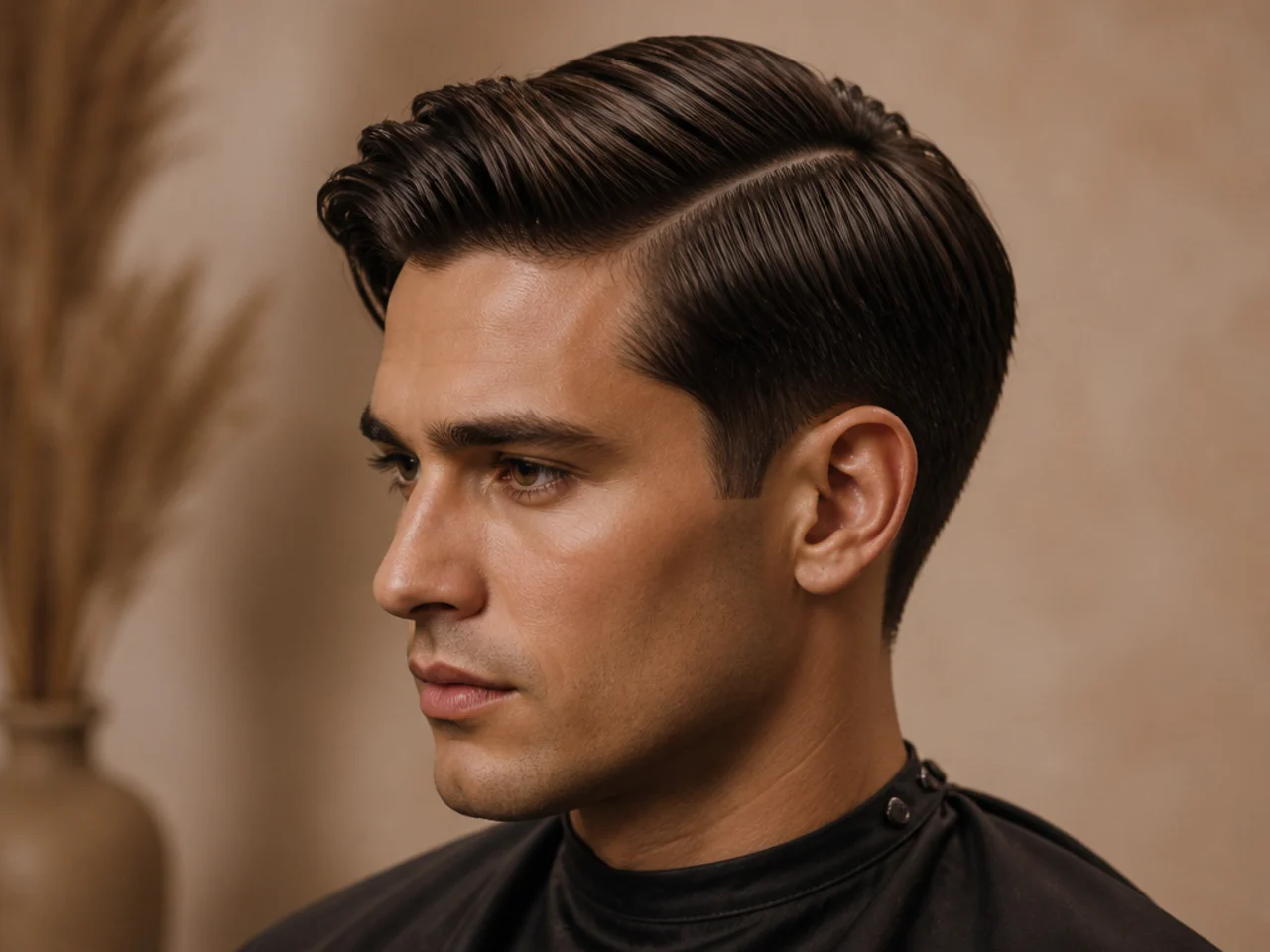
The deep-side-part reference cut with vertical lift baked in. Three inches on top combed across a defined natural break, but blow-dried up at the root before the comb-through so the whole top sits half an inch higher than it would air-dried. Sides scissor-tapered tighter than the oval version — a #1.5 rather than a #3 — so nothing distracts from the elevated top.
Straight to lightly wavy hair holds the height best. Skip if your part won't hold — round faces don't win with a floppy side part.
Ask for a defined side part, three inches on top, scissor sides to a #1.5, and a squared neckline. Style with a light matte pomade on damp hair, blow-dry against the growth at the front for lift, then comb across the part.
Refined French Crop
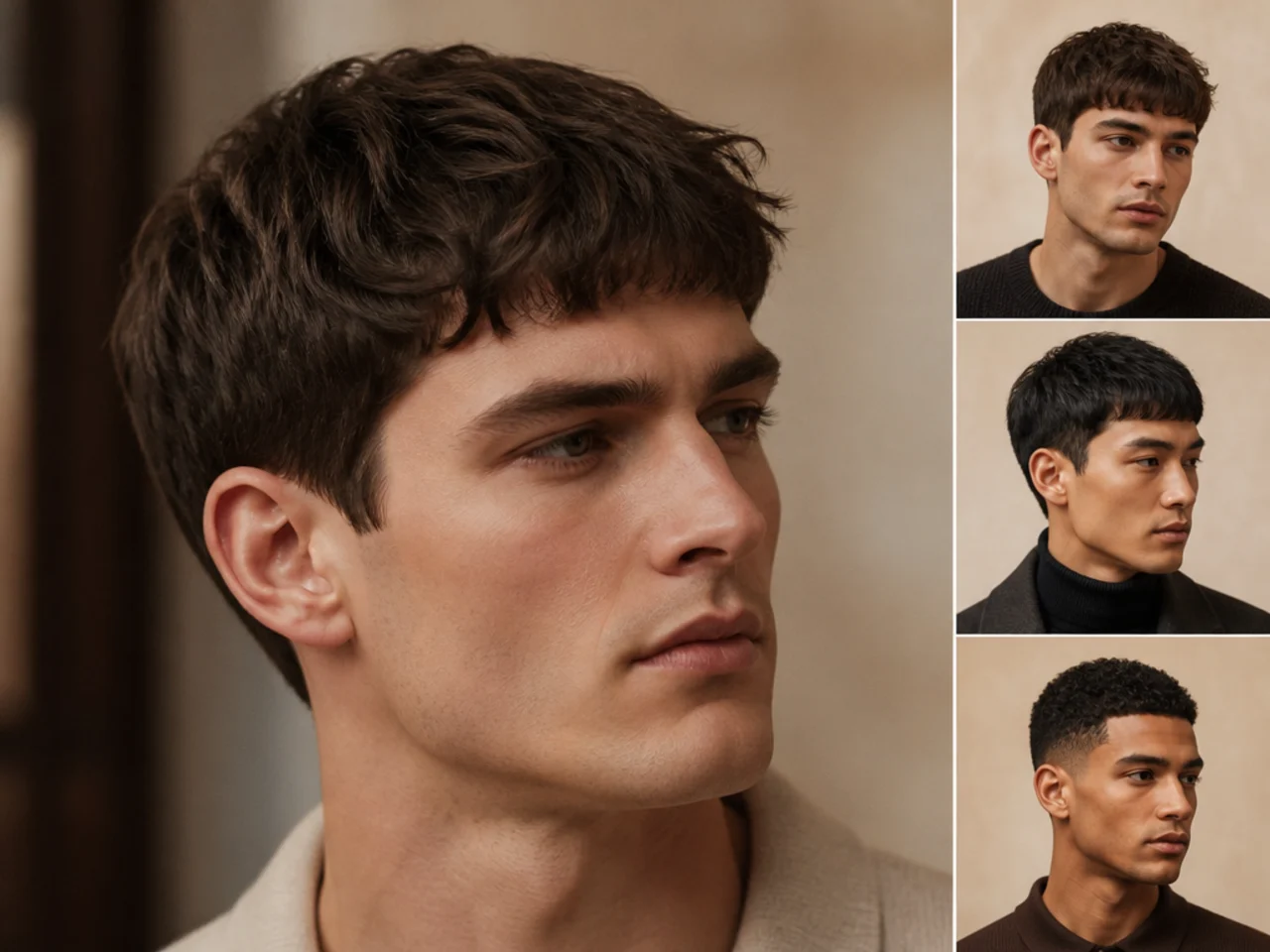
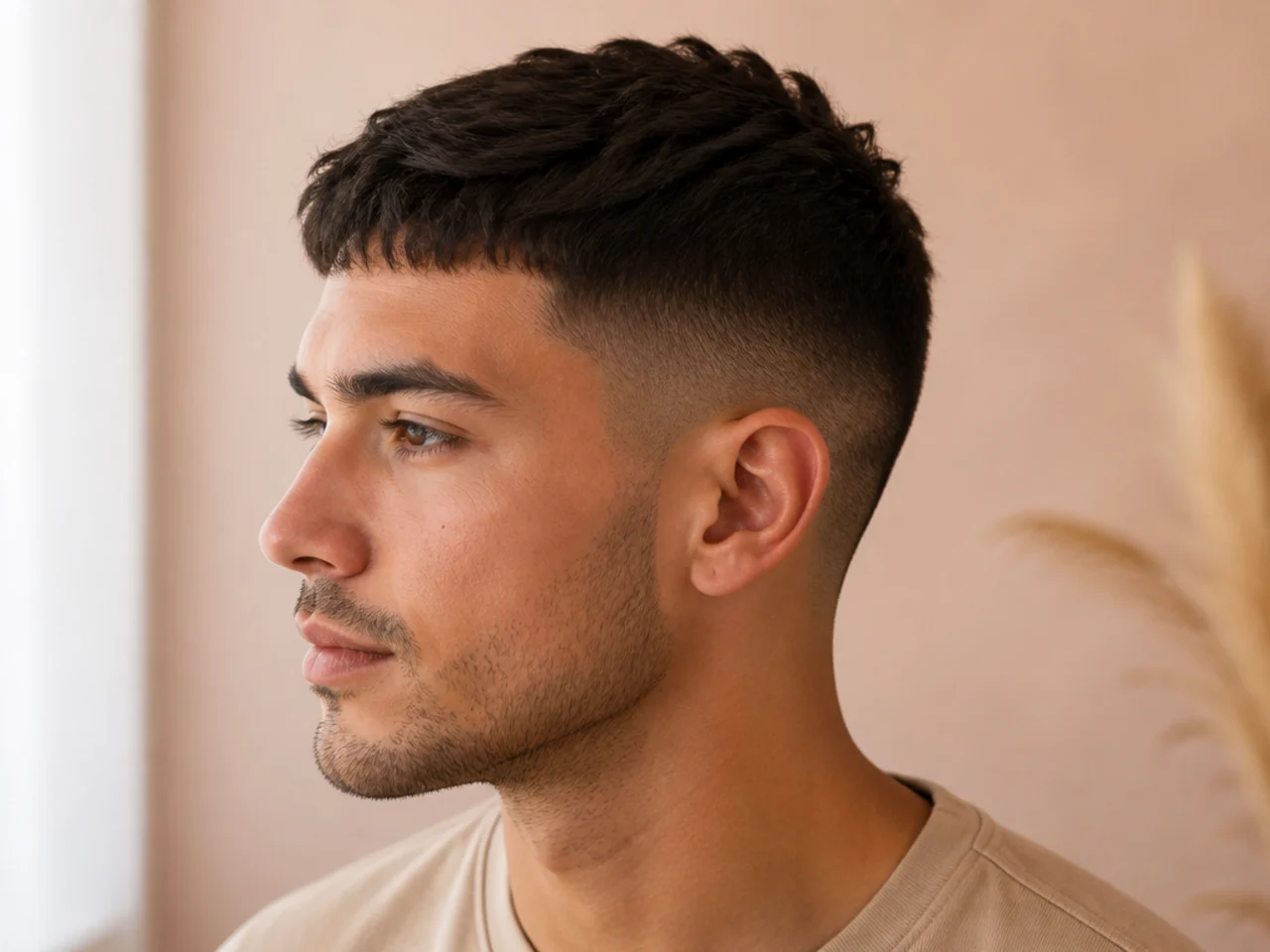
The French crop with the corners tightened, and the round-face pick when a pomp feels like too much. An inch and a half on top with a blunt fringe just above the brow, a low fade to a #0.5 at the sides, matte finish always. The blunt fringe adds a horizontal line at the brow that visually breaks the round shape.
Works on straight, wavy, and lightly curly hair. Sits especially well on high hairlines and receding fronts.
Ask for a refined French crop, inch and a half on top with a blunt fringe half an inch above the brow, a low fade to skin at the low point, and a sharp neckline. Style with a fingertip of matte paste pushed forward with your palm.
Square Face — Cuts That Soften Angles
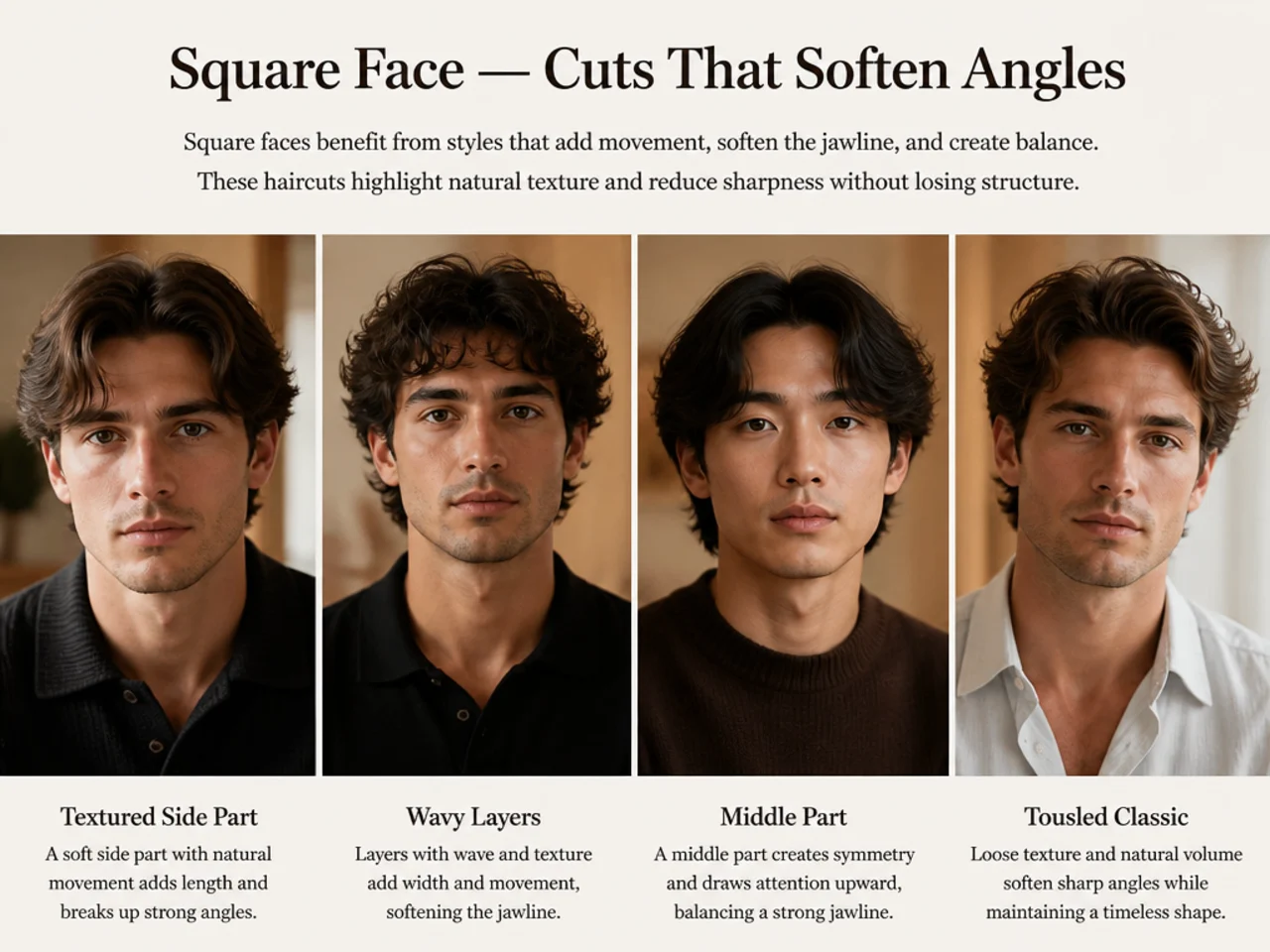
A square face is width equal to length, jaw as wide as the forehead, sharp corners at the mandible. The instinct to mirror those angles with a hard part and razor-square neckline is exactly wrong; it doubles the geometry. What flatters a square face is soft flow — rounded shapes, natural parts, textured tops, blended perimeters. Below are three cuts that carry the register without amplifying the jaw.
Brushed-Back Gentleman
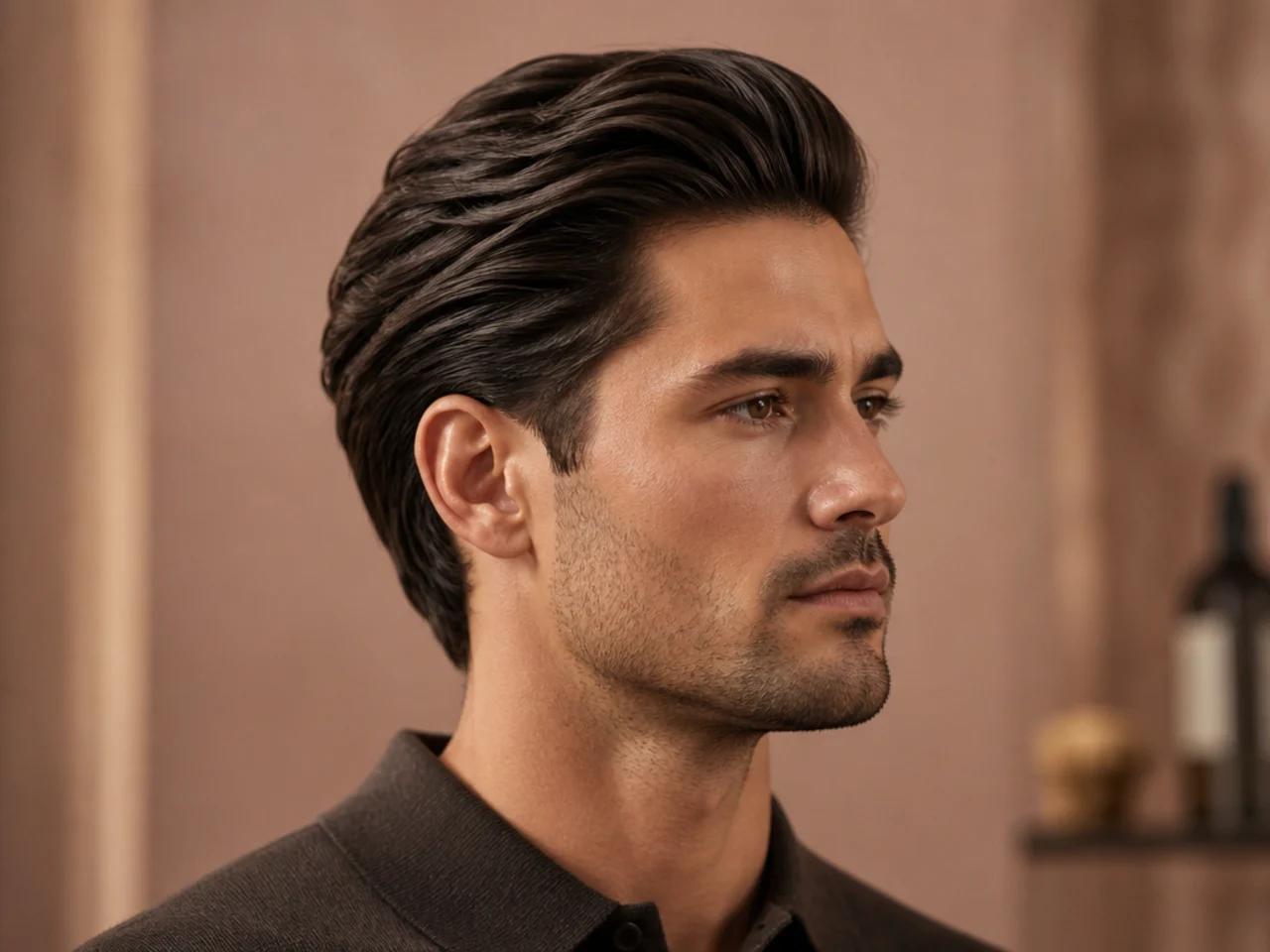
The single most flattering cut on a square face. Three inches on top pushed straight up and slightly back, no defined part anywhere. Sides scissor-tapered to a #2, soft neckline. Skipping the part is the key — a hard side part on a square face reads as a second jaw line running across the head.
Best on thick or coarse hair; fine hair collapses within an hour without a strong blow-dry base.
Ask for a brushed-back cut, three inches on top with point-cut ends, scissor taper on the sides to a #2, and no visible part. Style with a matte clay worked through dry hair from root to tip, pushed up and back with your fingers.
Sculpted Comb-Over
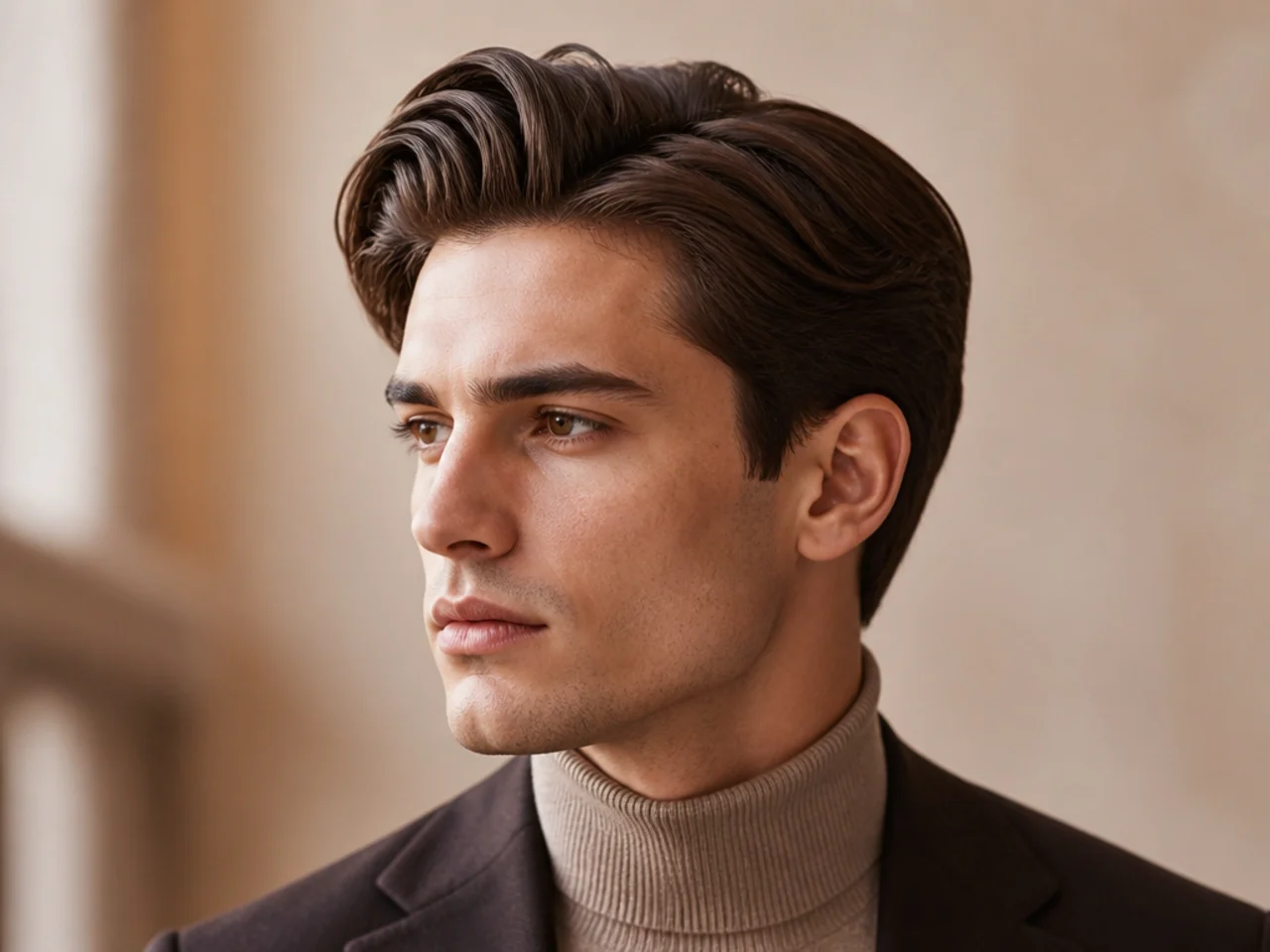
The comb-over at its most tailored, but styled softly rather than sharp. Four inches on top combed diagonally across a natural — not razor-defined — side part, sides scissor-blended down to a #2, soft neckline instead of a squared one. The diagonal flow of the top pulls the eye across the head rather than down onto the jaw.
Best on straight to lightly wavy hair with enough density to hold the sweep.
Ask for a sculpted comb-over, four inches on top, scissor-blended sides to a #2, a natural side part, and a soft neckline. Style with a medium-hold matte pomade combed across the part in one clean pass, then blow-dry against the growth for lift.
Textured Ivy
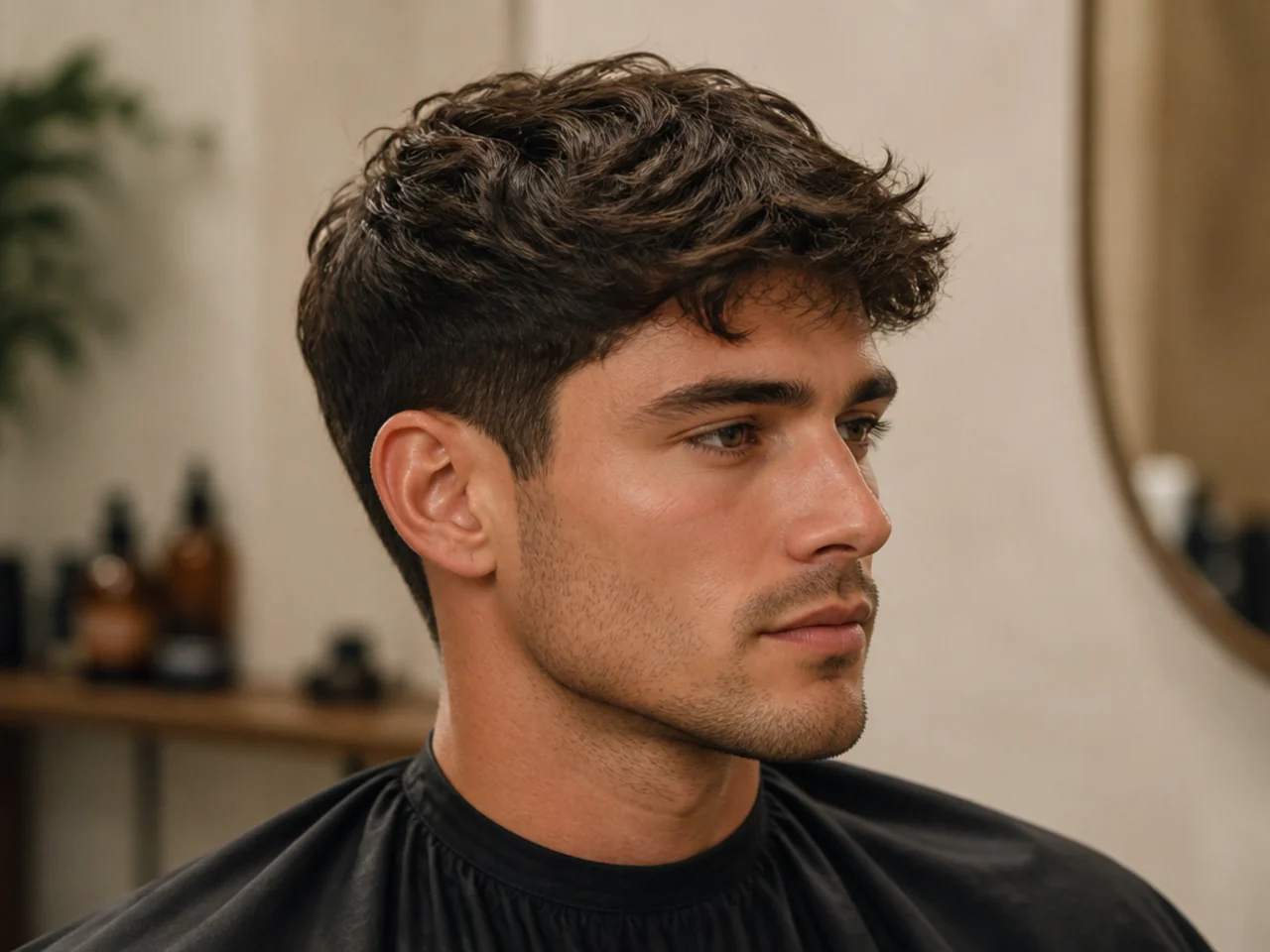
The Ivy League softened for a square face. Two to two and a half inches on top point-cut for movement so the ends sit piecey rather than blunt, sides scissor-tapered to a #2, natural neckline. The point-cut top breaks up the strong horizontal that a standard Ivy would carry above a square jaw.
Best under 40 with straight to type 2B wavy hair. Skip on very coarse hair — the point cut needs finer texture to show.
Ask for an Ivy League point-cut on top for texture, two inches on top, scissor sides to a #2, and a natural neckline. Style with matte clay rubbed between your palms and pressed into dry hair.
Heart Face — Cuts That Balance a Narrow Chin
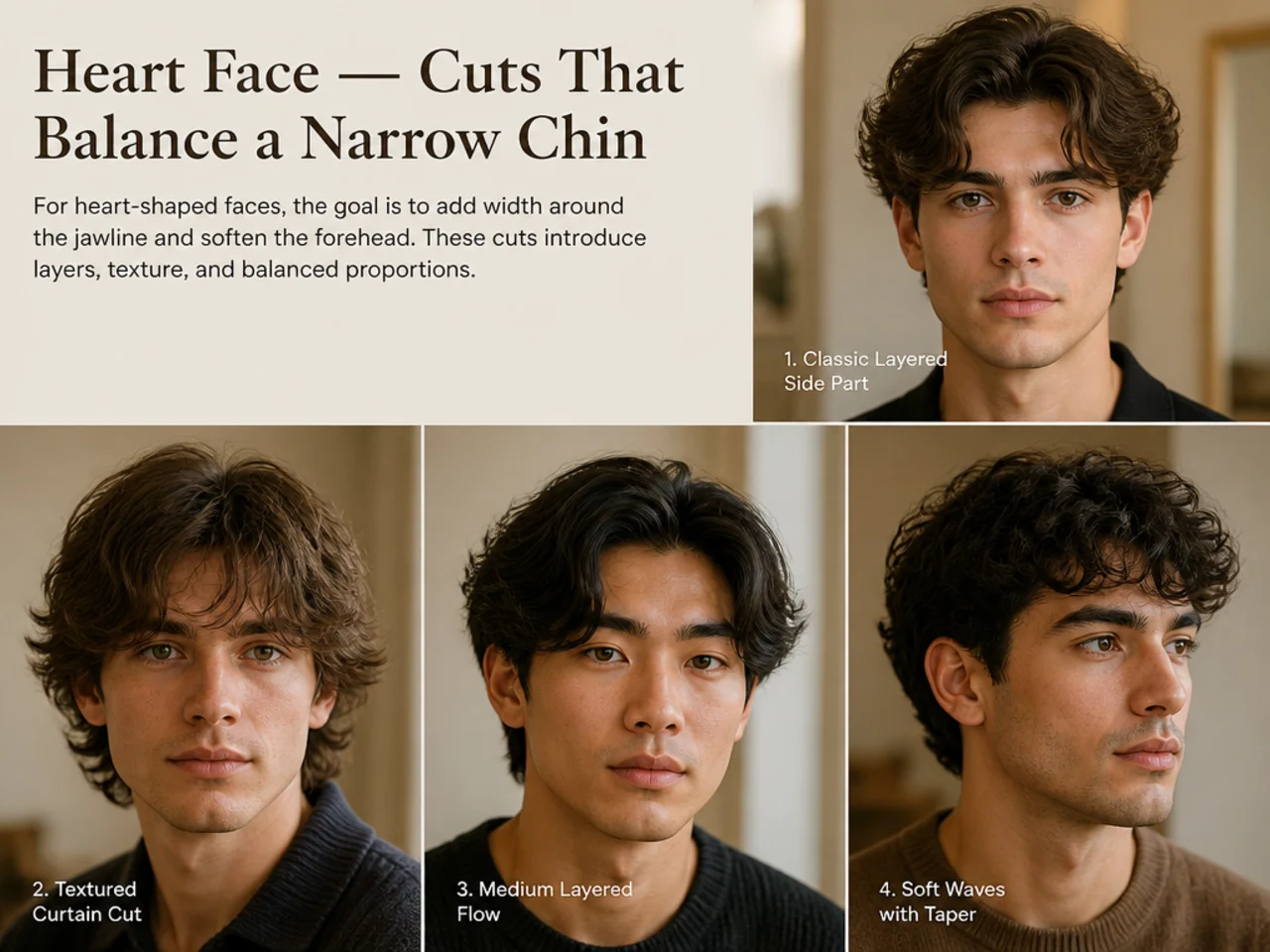
A heart face is wider at the forehead and cheekbones, narrower at the chin. The fix is to keep vertical volume off the crown (which stretches the wide forehead further) and add horizontal weight at the front — a fringe, a comma, a soft forward push. Below are two old-money cuts that carry the register without exaggerating the diamond peak at the temples.
Textured Caesar
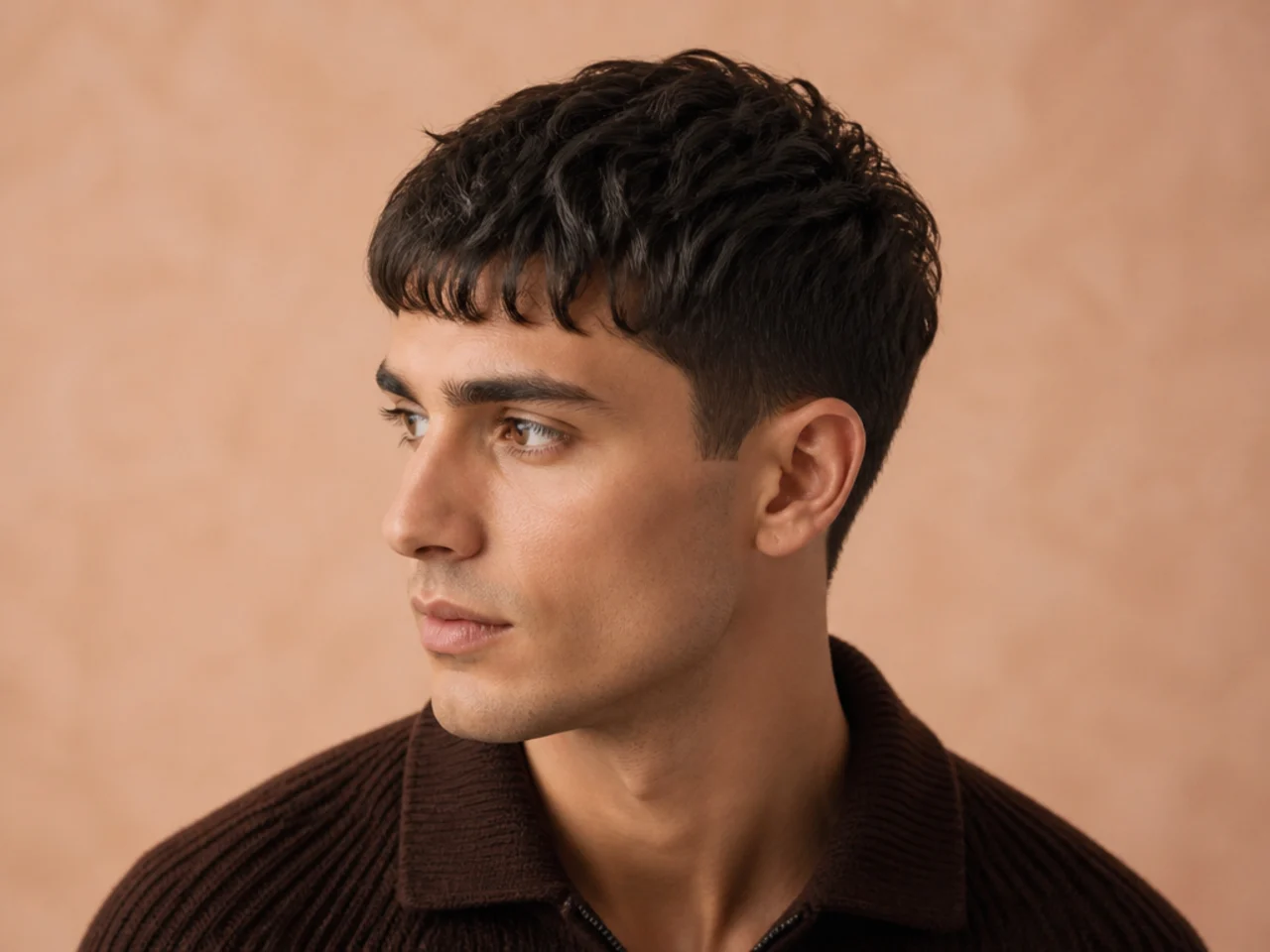
The Caesar sits between a French crop and a crew, and it's the single most flattering old money cut on a heart face. Short textured fringe cut across the brow, an inch to an inch and a half on top, sides scissor-tapered to a #2. What separates the old-money version from the trendier one: no clipper-cut top, no visible product, no forward flick.
Best on straight to type 2B wavy hair. Sits especially well on high hairlines and receding fronts — the fringe covers honestly.
Ask for a textured Caesar with a soft fringe half an inch above the brow, an inch on top, and scissor-tapered sides to a #2. Style with a fingertip of matte clay pressed forward with your palm.
Prep-School Comma
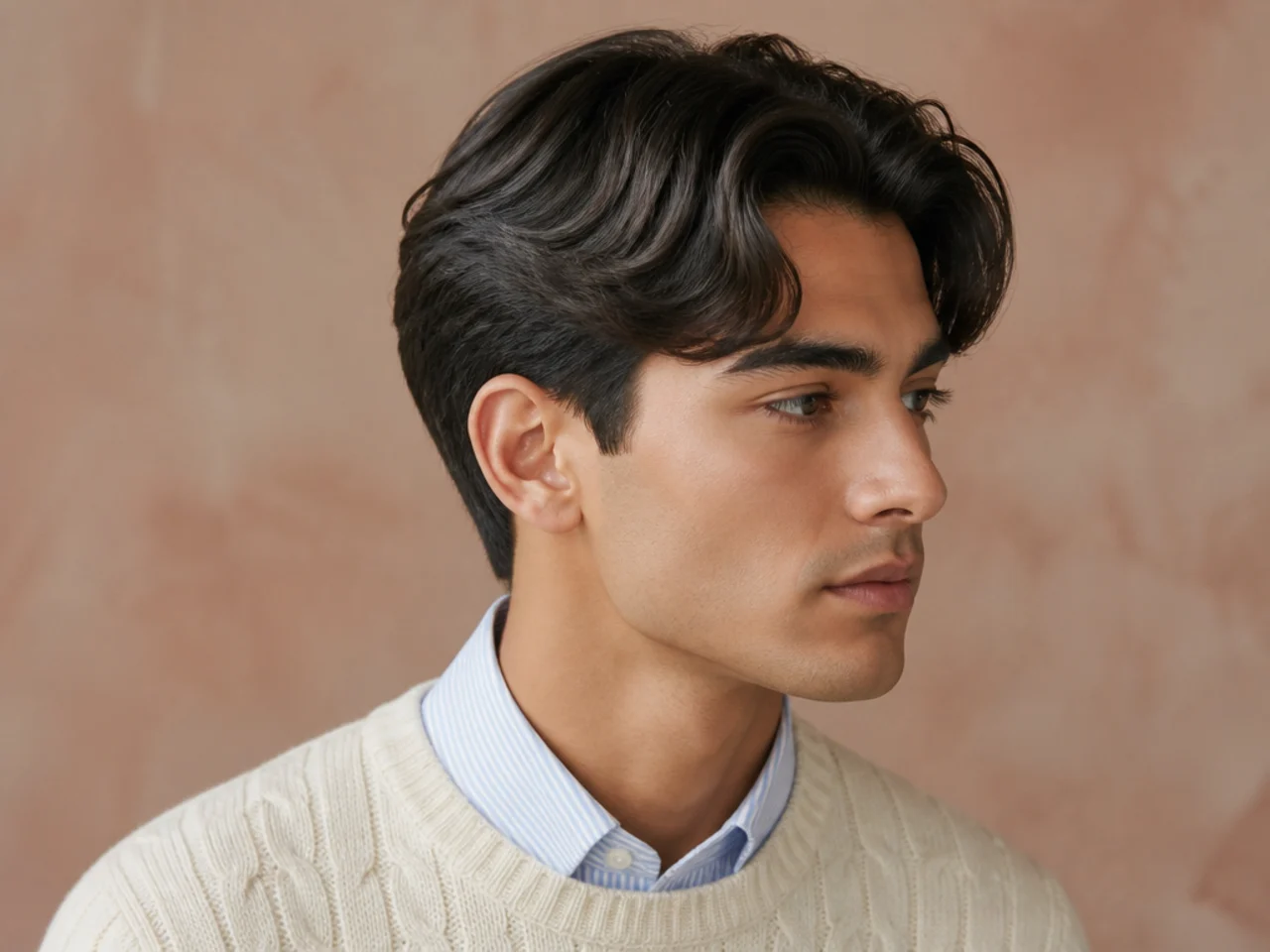
The Korean comma haircut styled in an old-money register, and the heart-face pick when a Caesar feels too short. Three inches on top with a soft comma at the front — the strand that curls back on itself under the ear — sides scissor-blended tight rather than faded, matte finish. Reads like a nineteen-year-old headed to first-semester finals.
Best on straight to type 2A hair; more wave than that and the comma won't hold.
Ask for a small-comma clean cut, three inches on top with a defined comma at the front, scissor-blended sides to a #2, and a soft neckline. Style with matte cream on damp hair, then curl the front piece under and back with a small round brush.
Oblong (Long) Face — Cuts That Add Width
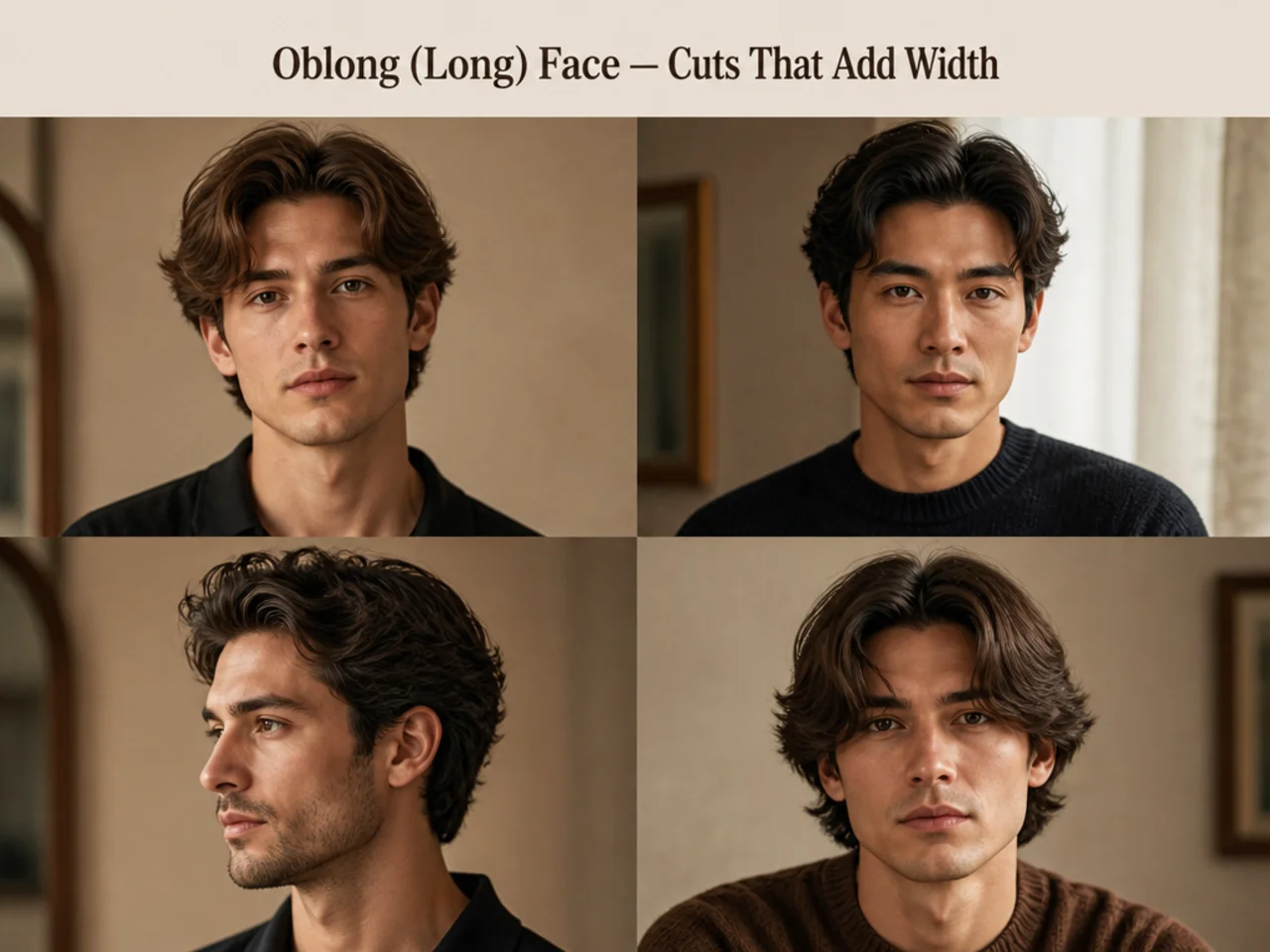
An oblong (long) face is longer than it is wide, with a high forehead and elongated proportions from hairline to chin. Height on top is the enemy — it stretches the face further. The fix runs the other direction: fuller sides, no crown volume, and a shape that ends the vertical line before it starts. Below are two cuts that add width to the temples without pulling the register out of old money.
Full-Sided Scissor Taper
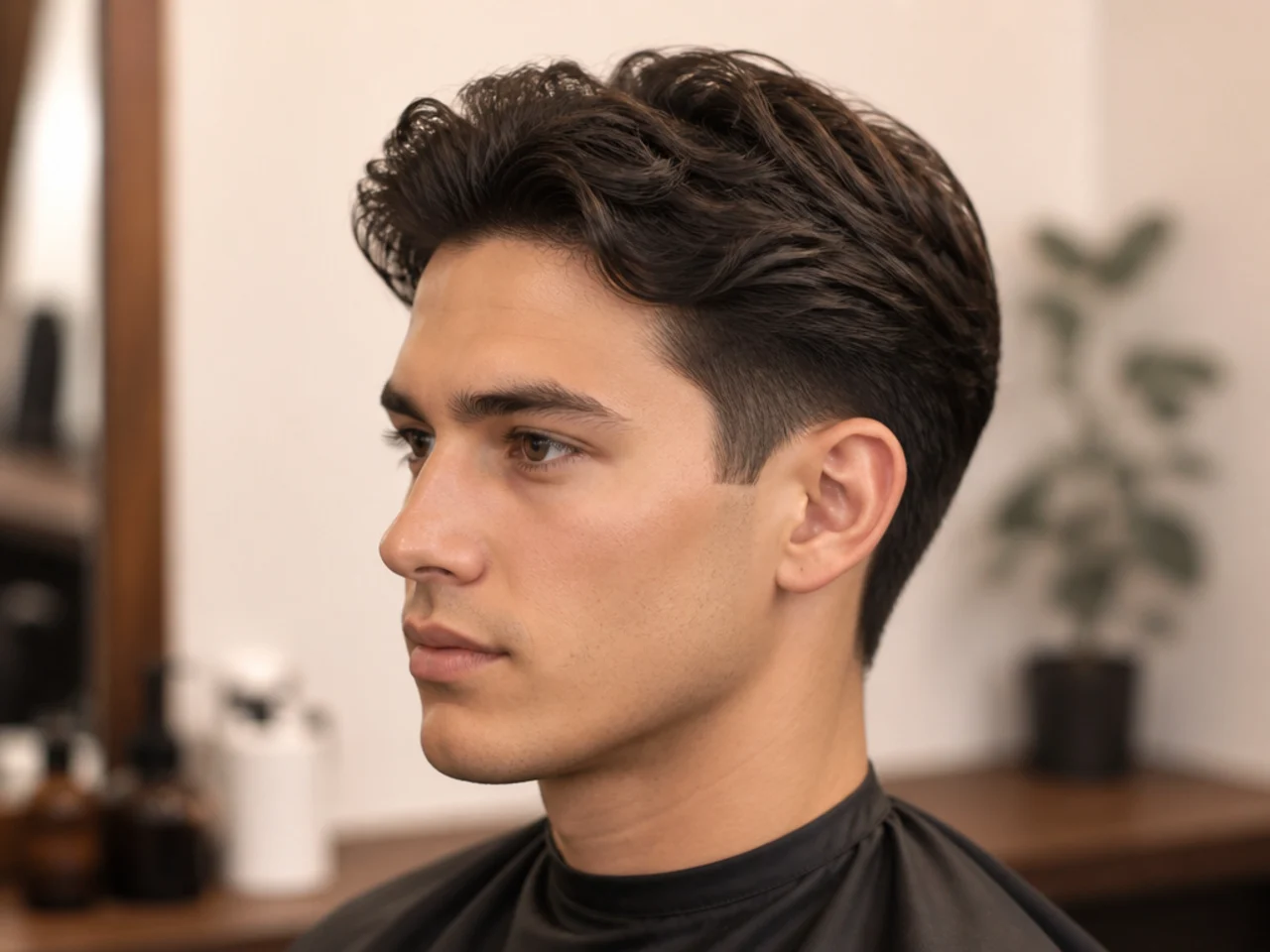
The taper at its quietest, and the long-face adjustment on the classic register. Sides stay long — a #4 or #5 up top blending down to a #2 above the ear — with no skin exposed anywhere. Top runs a modest two to two and a half inches so nothing adds vertical height. Nothing about this cut telegraphs "fresh from the barber," which is exactly why older men in offices default to it.
Best on every hair type. Grows out with more grace than any faded cut in the family.
Ask for a classic scissor taper — no clippers on the sides above the perimeter — two and a half inches on top, and a natural neckline. Style with matte cream combed back or to the side. Book every four to five weeks.
Precision Crew
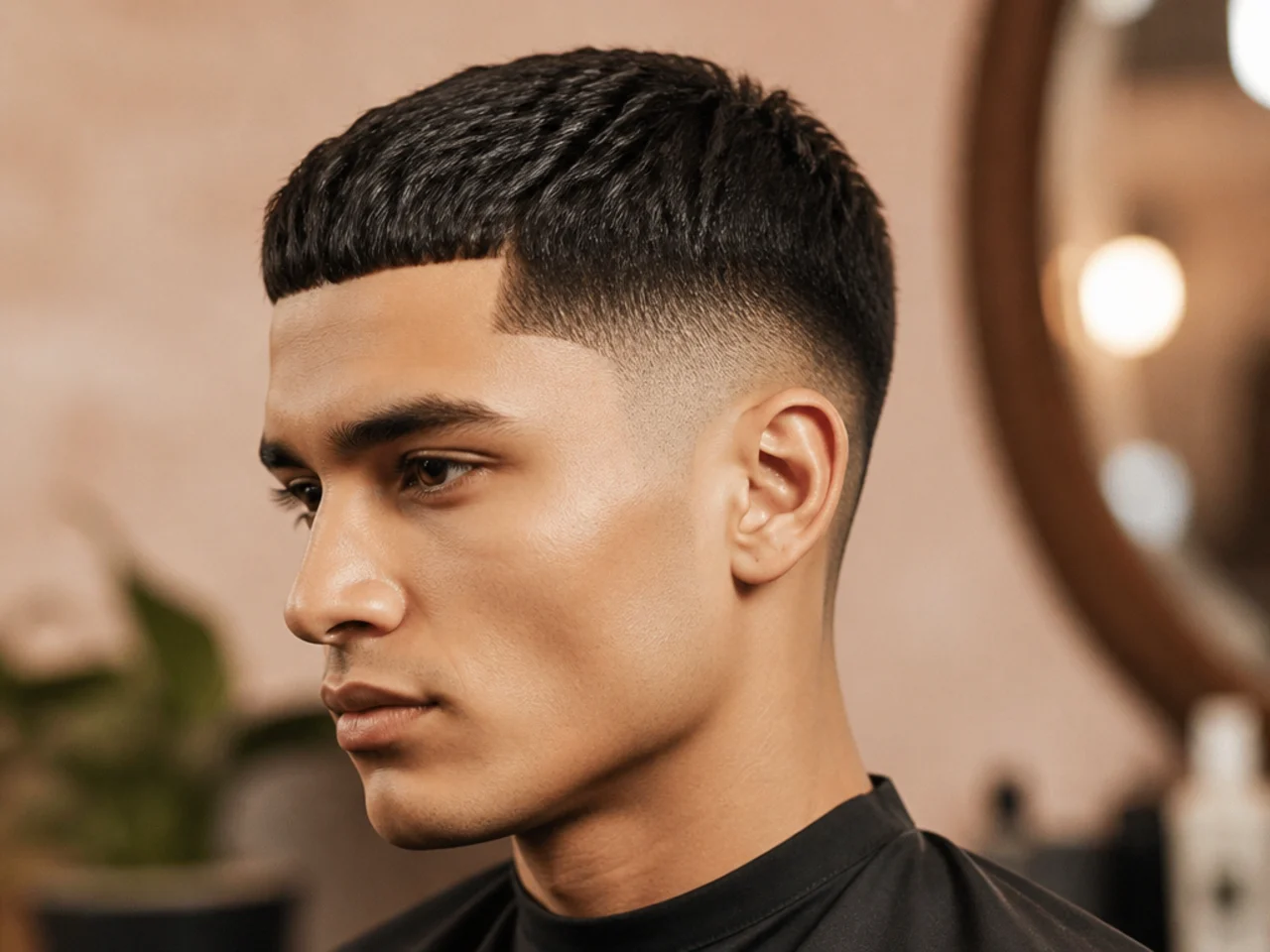
The whole cut lives in the edge, and the oblong-face pick when you want the top short enough to disappear. Top runs a uniform inch to inch and a half — flat, no lift — sides scissor-taper cleanly, and the neckline gets a razor-sharp square finish. No blur at the perimeter, no soft blend at the sideburn; everything sits at a right angle. The crew cut family runs looser than this — the old money version is tighter and more geometric.
Best on every hair type. Reads especially sharp on strong jawlines and even hairlines.
Ask for a crew cut with an inch and a half on top, a scissor taper on the sides to a #2, and a razor-squared neckline. Skip the fade — the sharpness comes from the edge, not the gradient. Style with a pea of matte paste rubbed through with your fingertips.
Diamond Face — Cuts That Frame the Forehead
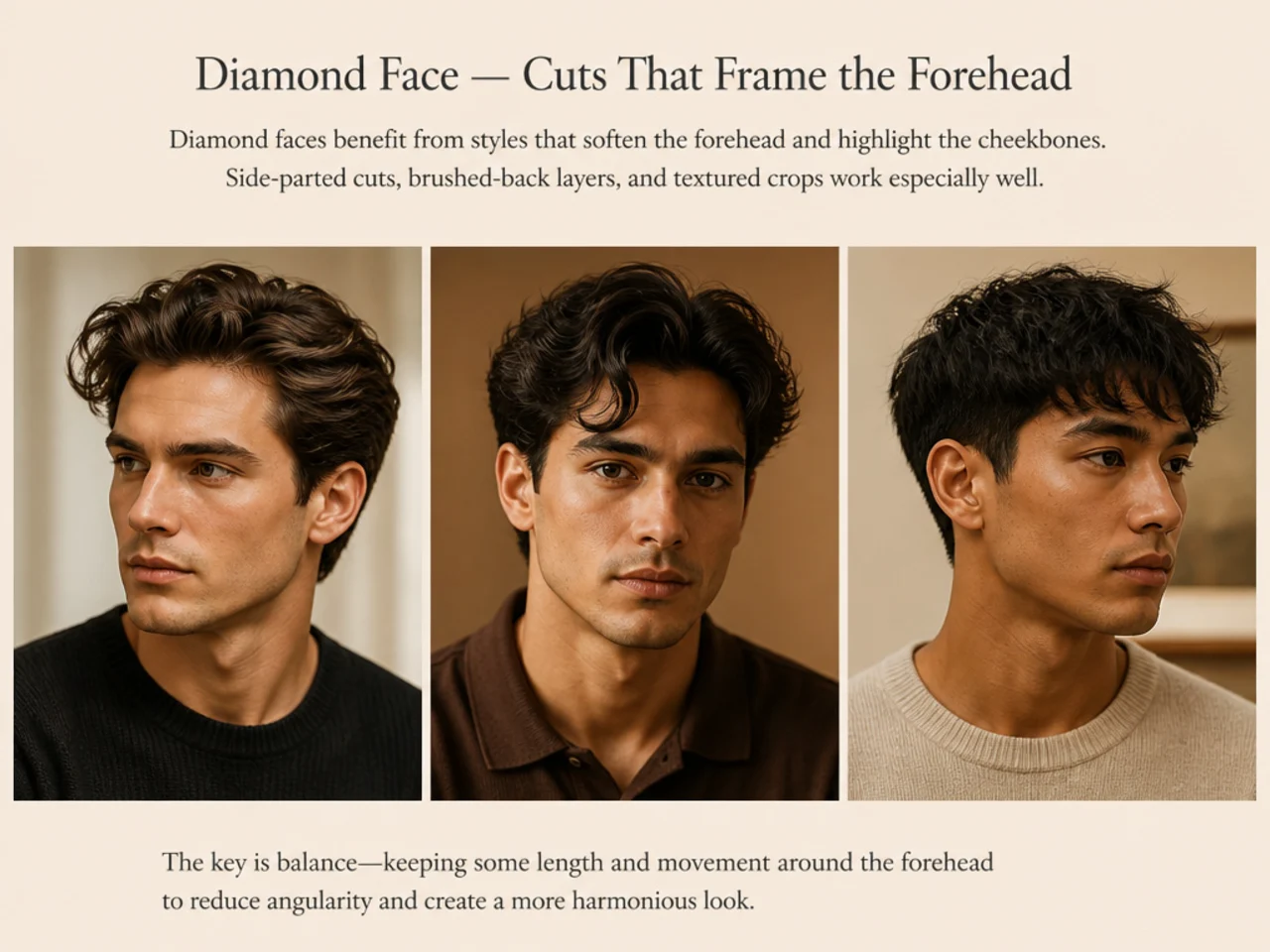
A diamond face has narrow forehead and chin with sharp cheekbones between them. The fix is volume at the top of the frame — a fringe, a side sweep, a longer top that sits horizontally. Anything that keeps the forehead flat and exposed pushes the whole read onto the cheekbones. Below are two cuts that widen the top of the face without turning into a full pompadour.
Voluminous Side Sweep
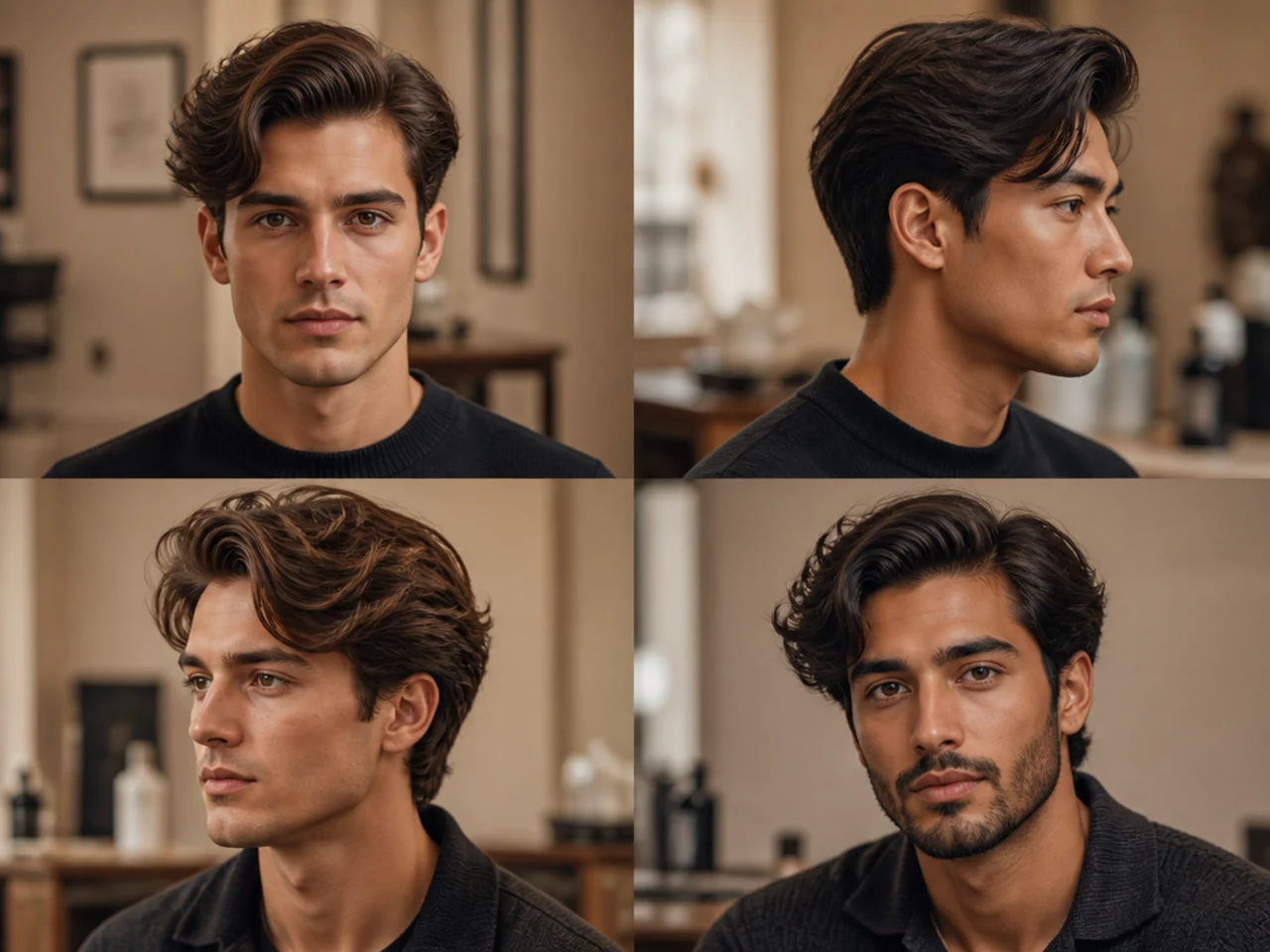
The old-money side sweep with the fringe left long enough to sit across the forehead. Three inches on top pushed hard to one side, scissor-tapered sides to a #2, the front piece long enough to reach the opposite temple when combed. The horizontal fringe across the wide-forehead-narrow-brow gap adds the width a diamond face is missing at the top.
Best on straight to 2B wavy hair with enough weight to stay swept.
Ask for a long side sweep with a fringe reaching the opposite temple, three inches on top, scissor sides to a #2, and a defined side part. Style with a light pomade combed through damp hair from part to ear, then finger-push the fringe across the forehead.
Aristocrat's Cut
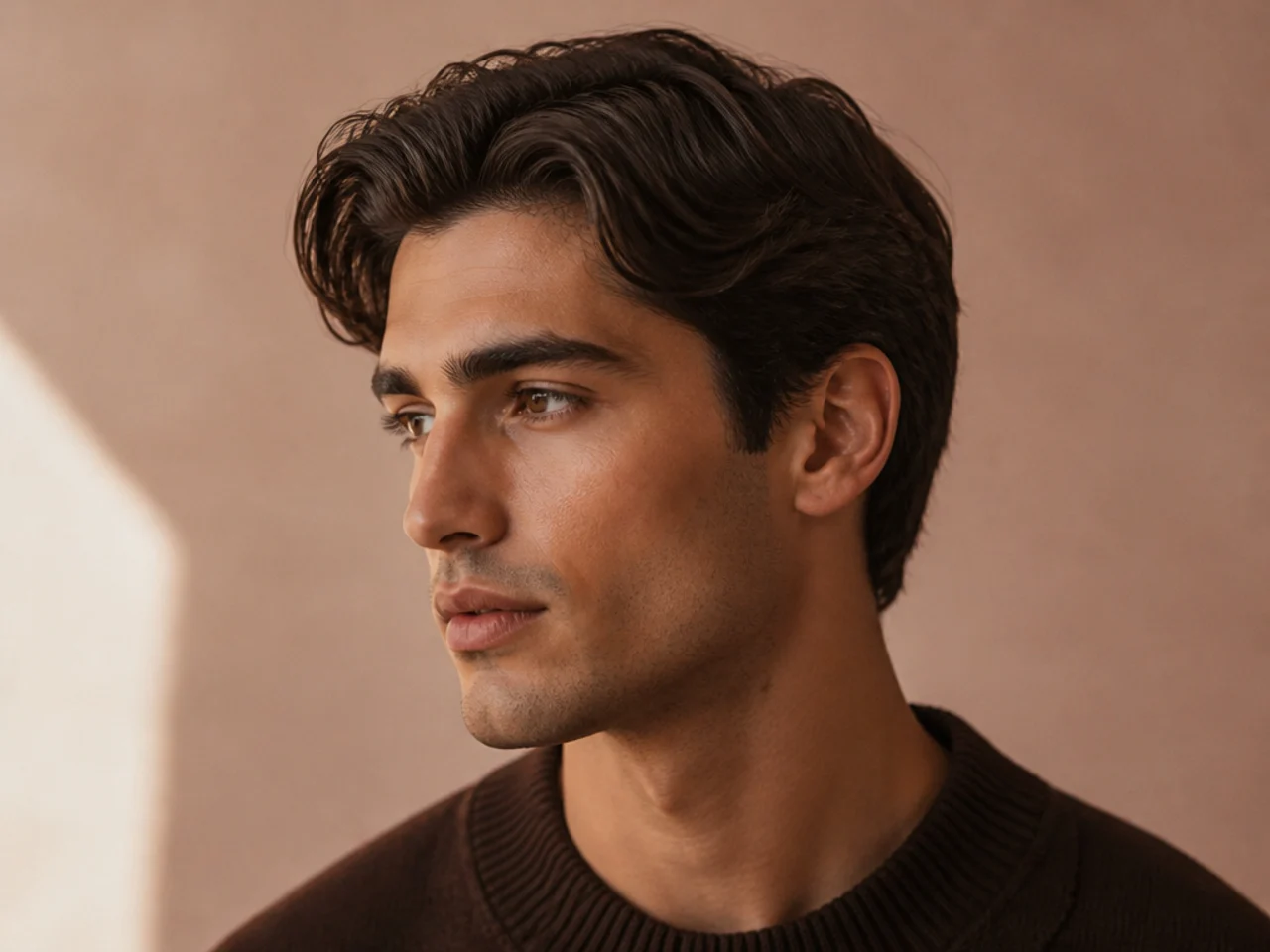
The European heritage register, and the diamond-face pick when a side sweep feels too short. Four inches on top, longer scissor-taper sides that tuck behind the ear, and a soft side part built by the natural fall rather than the comb. The extra length across the top and around the temples adds width exactly where a diamond face needs it. Reads like a photograph in a Kensington drawing room.
Best on thick, healthy hair. Skip on fine hair — the shape needs weight to sit.
Ask for a long side part with a longer scissor taper on the sides, four inches on top left long enough to tuck, and a soft natural part. Style with cream pomade on damp hair, comb back and over, blow-dry with a paddle brush.
How to Ask Your Barber
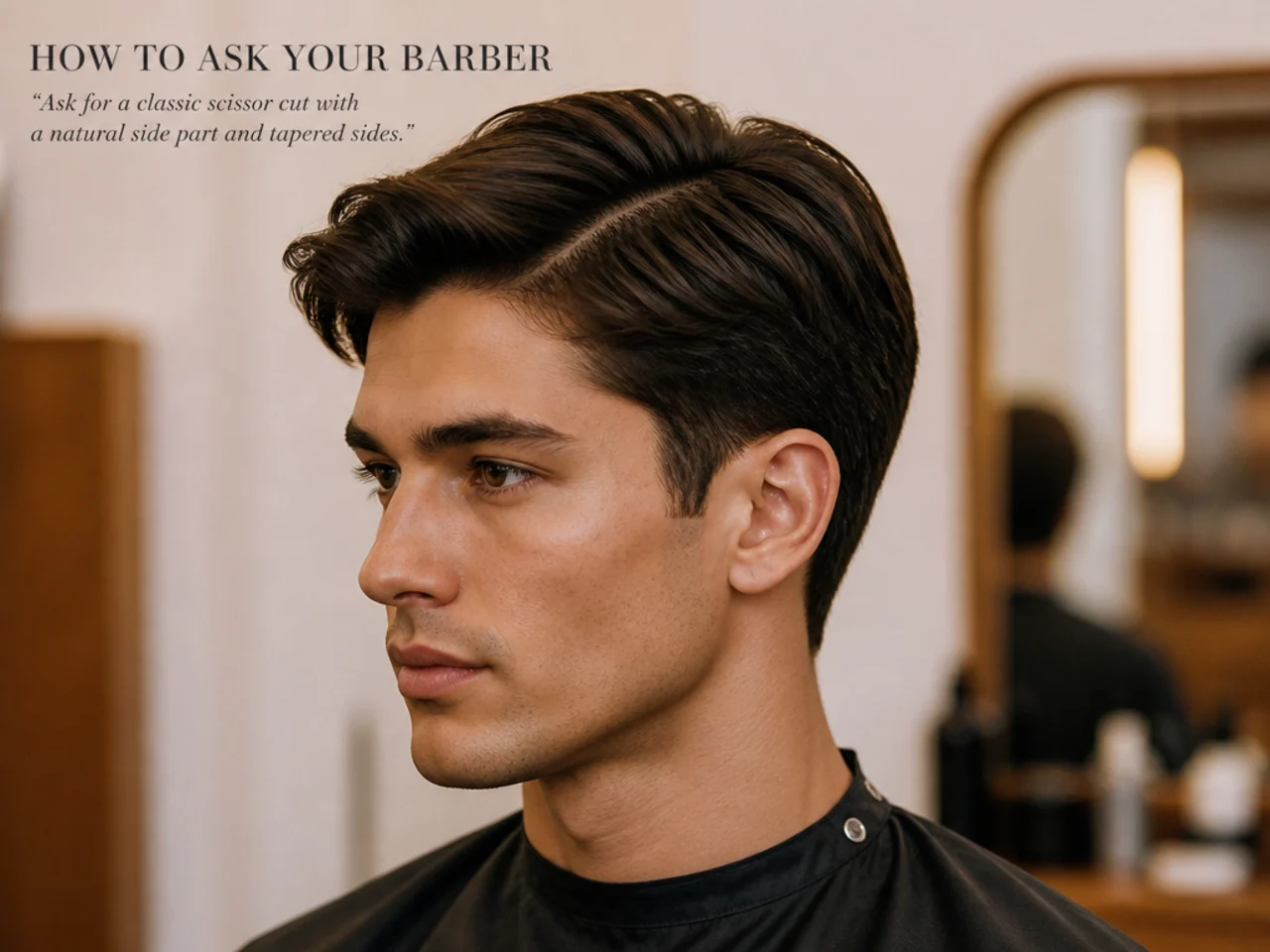
The specs above matter more than the label. Walk in with these six things ready:
- A photo of the exact version. Not the family — the specific variation. Screenshot the image above the cut you picked, or pull the guide up on your phone in the chair.
- Your face shape said out loud. "Round face, so I want vertical lift" or "Long face, so I want the sides fuller than the top." Barbers will thank you for the framing — it removes the guesswork on their end.
- The top length in inches. One and a half is the crew or Caesar. Two to two and a half is the Ivy or textured Ivy. Three is the side parts and pomps. Four is the comb-overs and slick backs.
- The side treatment. "Scissor taper" for the quietest option. "Low fade" for the safest modern one (French crop only). Skip skin fades and undercuts — neither belongs in this register.
- The finish. Say "matte" out loud. Most barbers default to shine-friendly products; matte is what reads old money in 2026.
- The rebook. Book the next appointment before you leave the chair. Three to four weeks for anything short, four to five for anything above three inches on top.
That's the whole conversation. Sit down, hand over the photo, run the numbers, let the barber work. For the wider face-shape framework the barber may recognize, see the sibling piece on haircuts for square faces.
Styling and Maintenance
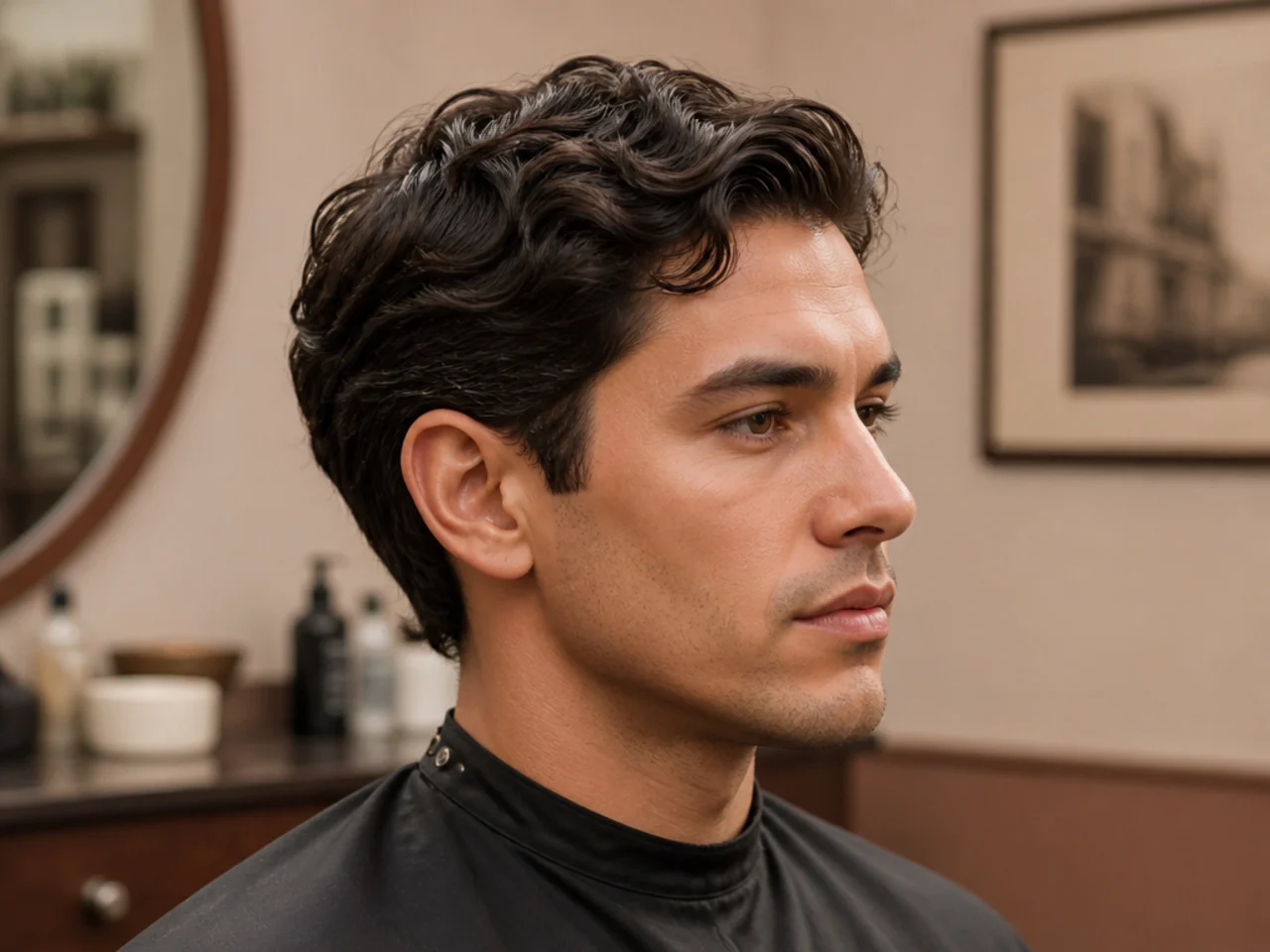
The whole routine takes under three minutes.
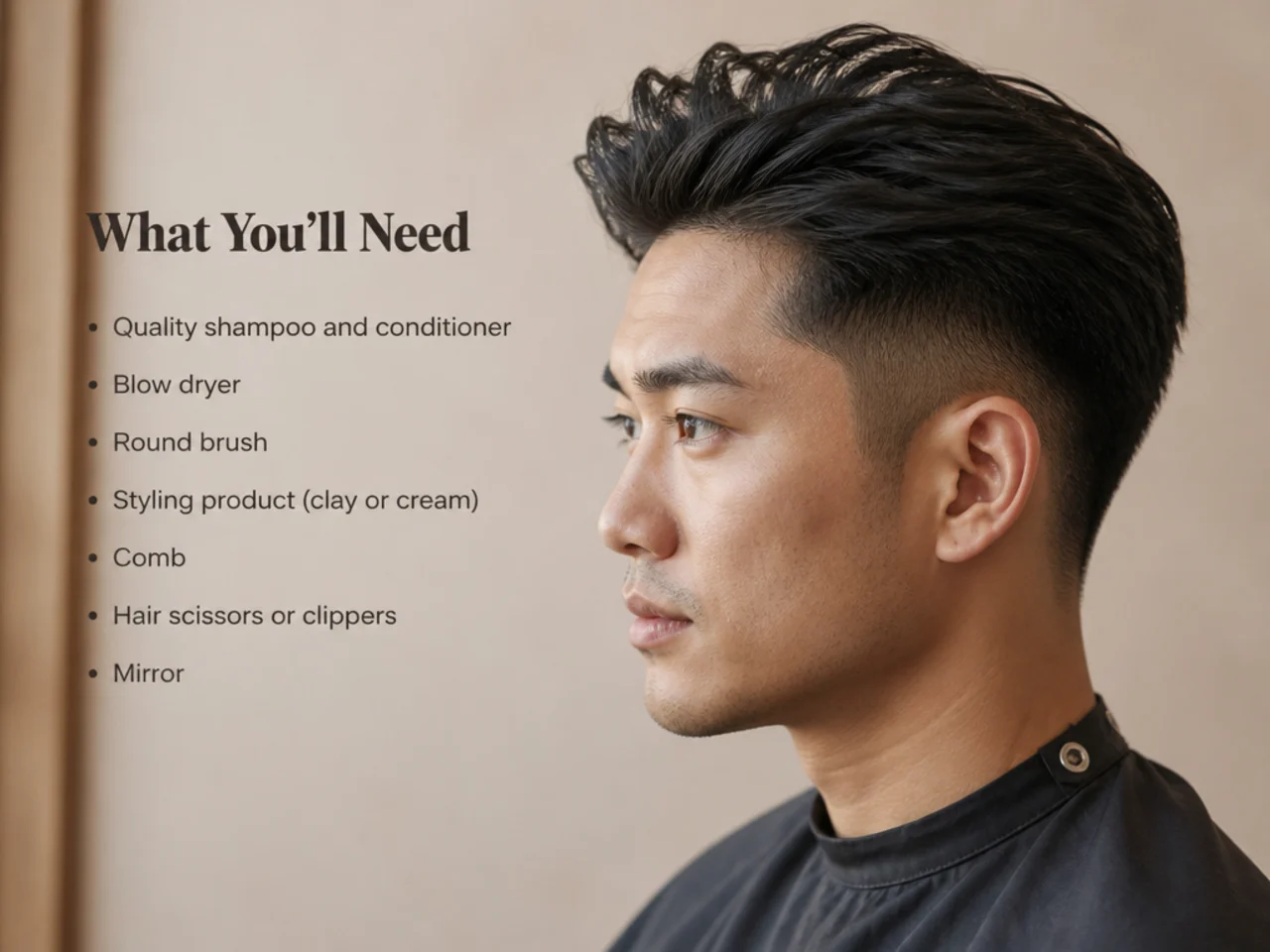
Wash with a sulfate-free shampoo two to three times a week — daily washing strips the oils that make the finish sit natural. Condition on wash days only, focused on the mid-lengths and ends. Towel-dry until the hair is damp, not wet. A matte clay is the default for cuts under two inches (Caesar, crew, French crop, Ivy). A matte cream for medium lengths (side parts, pomp, comma). A light matte pomade for anything that needs a defined sweep (slick back, comb-over, aristocrat's cut, side sweep). One product, nickel-sized, warmed between your palms until it goes clear.
Blow-drying does the heavy lifting for the height-forward face-shape adjustments — the pomp, the elevated side part, the sculpted comb-over, the voluminous side sweep all need thirty seconds of warm air with a small vent brush followed by a cool shot to lock. Skip the blow-dryer entirely for the flat-top cuts (Caesar, crew, textured Ivy) — heat kills matte and pushes the finish toward shine.
Rebook by cadence, not by feel. Short cuts every three to four weeks, medium every four to five. The moment the perimeter softens, the whole face-shape correction collapses. See the professional hairstyles for men roundup for the boardroom-friendly picks in the same maintenance window.
FAQ
How do I know my face shape?
Pull your hair back off your face and take a mirror photo in even light. Measure your forehead, cheekbones, and jaw. Oval is longer than wide with balanced proportions. Round is width close to length with a soft jaw. Square is width close to length with a sharp jaw. Heart is wide forehead, narrow chin. Oblong is significantly longer than wide. Diamond is narrow forehead and chin with wide cheekbones. If two shapes fit, pick the one with the strongest single feature and adjust from there.
What's the safest old money haircut for any face?
The classic Ivy League. Two to two and a half inches on top, natural side part, scissor sides to a #2. It sits on every face shape without hurting proportions; it doesn't add lift to round faces or width to long faces, but it doesn't fight them either. If you can only book one variation and can't diagnose your face shape, book that.
Does old money hair have to be long?
No. The family runs from an inch on top (Caesar) to four or five inches (understated slick back, aristocrat's cut). What links them is the finish and the perimeter, not the length. On a round face, longer cuts read more old-money because they build lift; on a long face, shorter cuts read better because they don't stretch the vertical. Match the length to the face, not the trend.
Can I mix face-shape rules?
Yes — most men are a hybrid. An oval-square face wears the deep side part with the neckline blocked slightly softer than a pure oval would. A round-heart face wears the tapered pomp with the front pieces left long enough to cover the wide forehead. Start with your dominant shape and borrow one adjustment from the second. The 15 stunning layered haircuts for every face guide covers hybrid shapes in more depth.
Does old money hair work on curly hair?
Yes, with two rules. The top has to be scissor-cut on damp curl, never clipper-dry. And swap the matte clay for a curl cream so the pattern still shows. The textured Ivy, prep-school comma, and aristocrat's cut all carry well on 2B through 3A curls. Skip the slick back and the deep side part — both need straight-hair fall to hold the shape.
How much should this cost?
Anywhere from $30 at a good neighborhood barber to $200 at a hotel salon. The cut itself doesn't change much between the two price points; what you pay for at the higher end is time on the perimeter, a proper scissor blend, and a straight-razor finish on the edges. If your neighborhood barber will take an extra ten minutes on the perimeter and neckline, you can get the expensive look at the neighborhood price.
Final Thoughts
The old money look isn't a single haircut. It's three habits — a tailored top, a matte finish, a sharp perimeter — worn on whichever of the fifteen silhouettes above matches the face you have. Diagnose the shape first. Pick the section. Choose one of two or three. Bring the photo. Say the numbers. Rebook before you leave the chair. That's the whole trick.