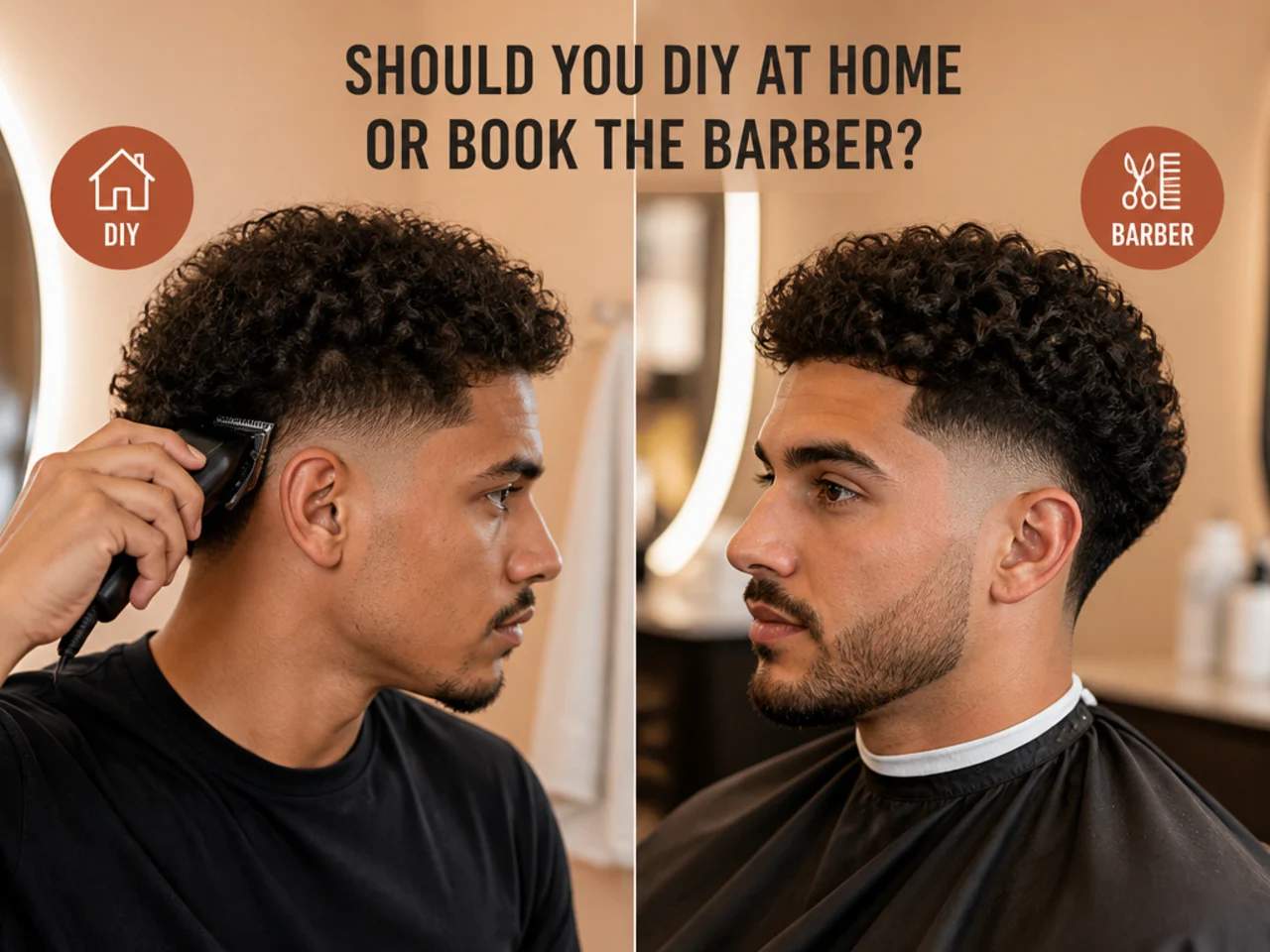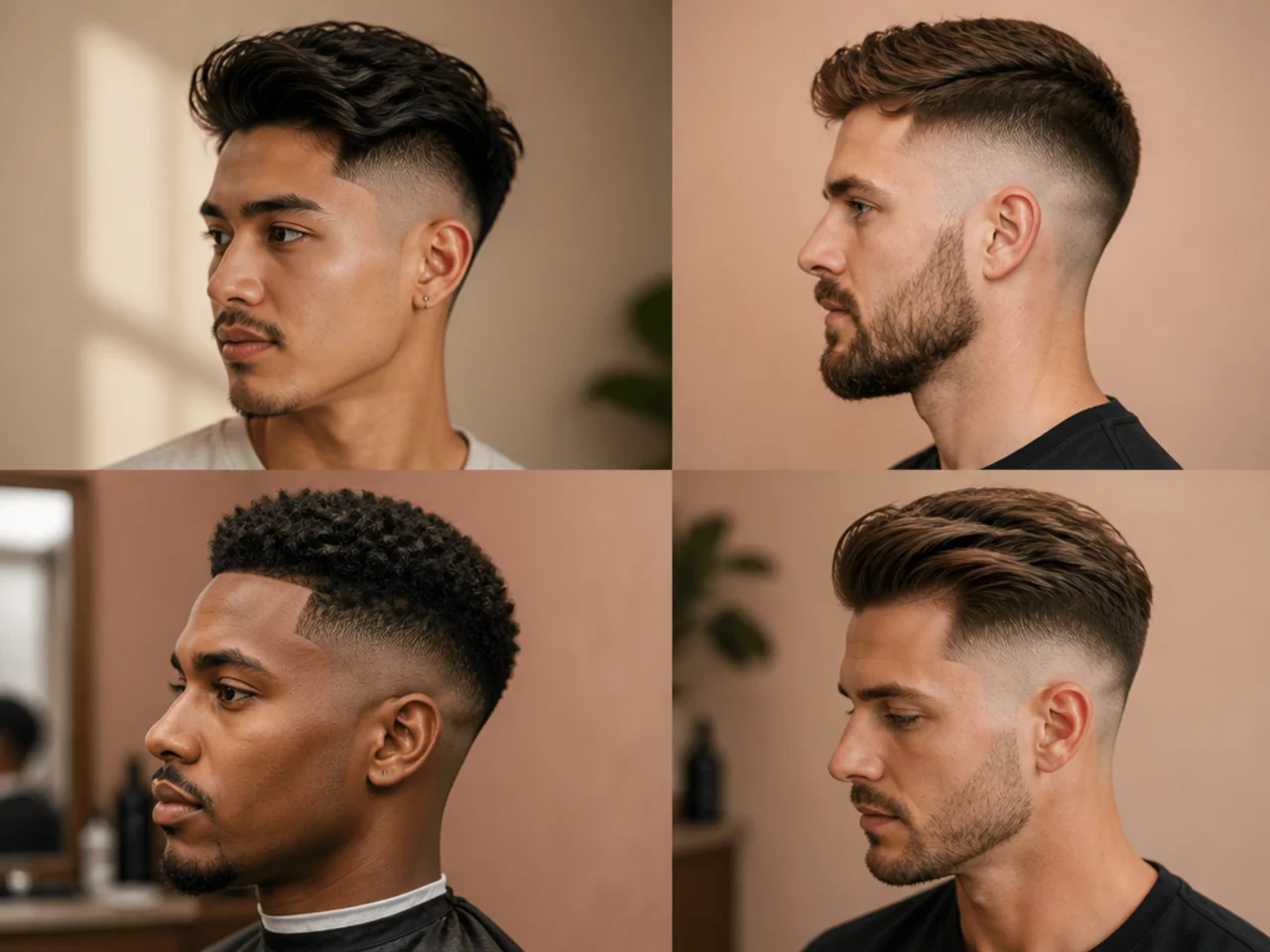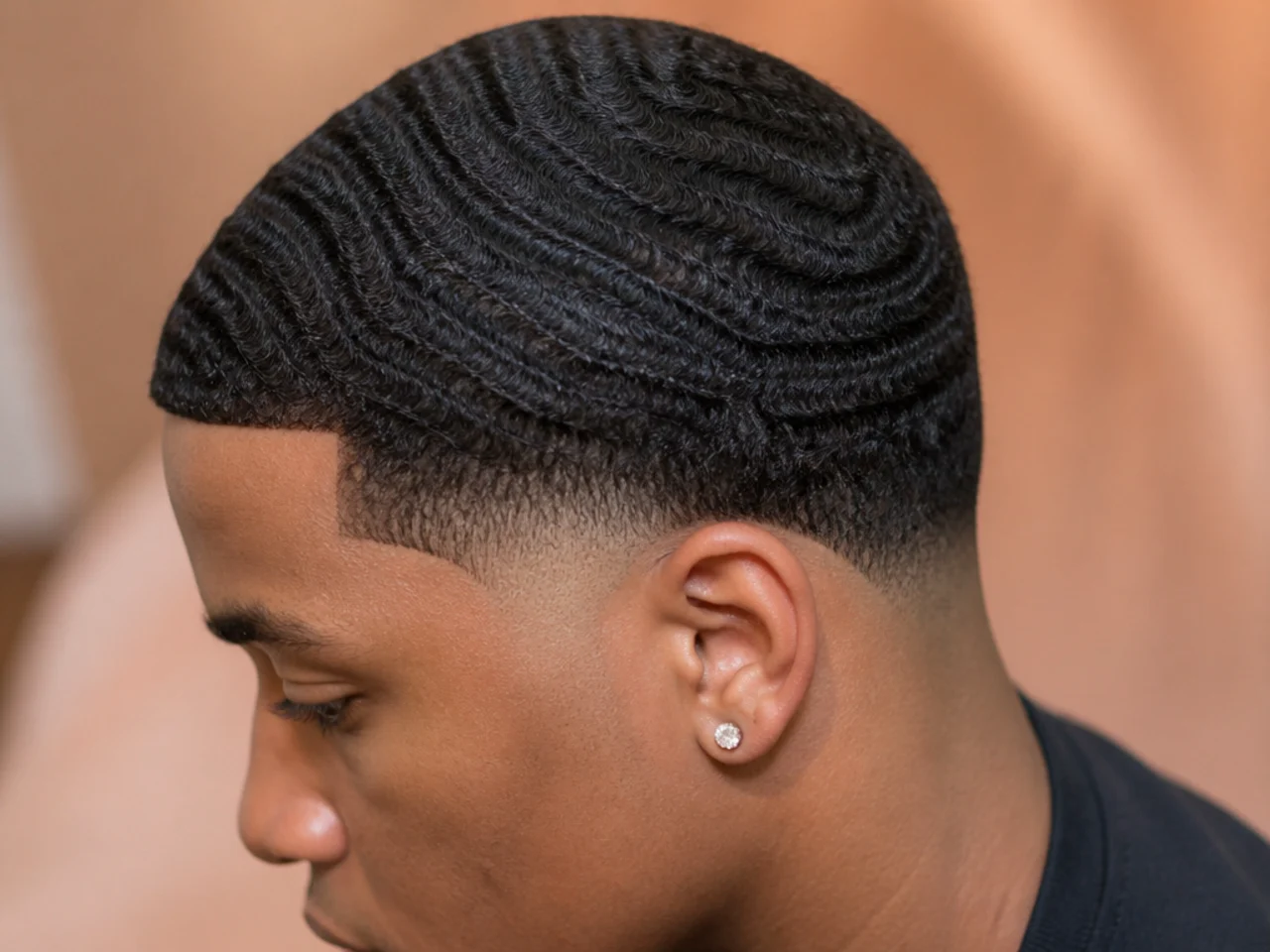
20 Low Fade Haircut Ideas With Waves
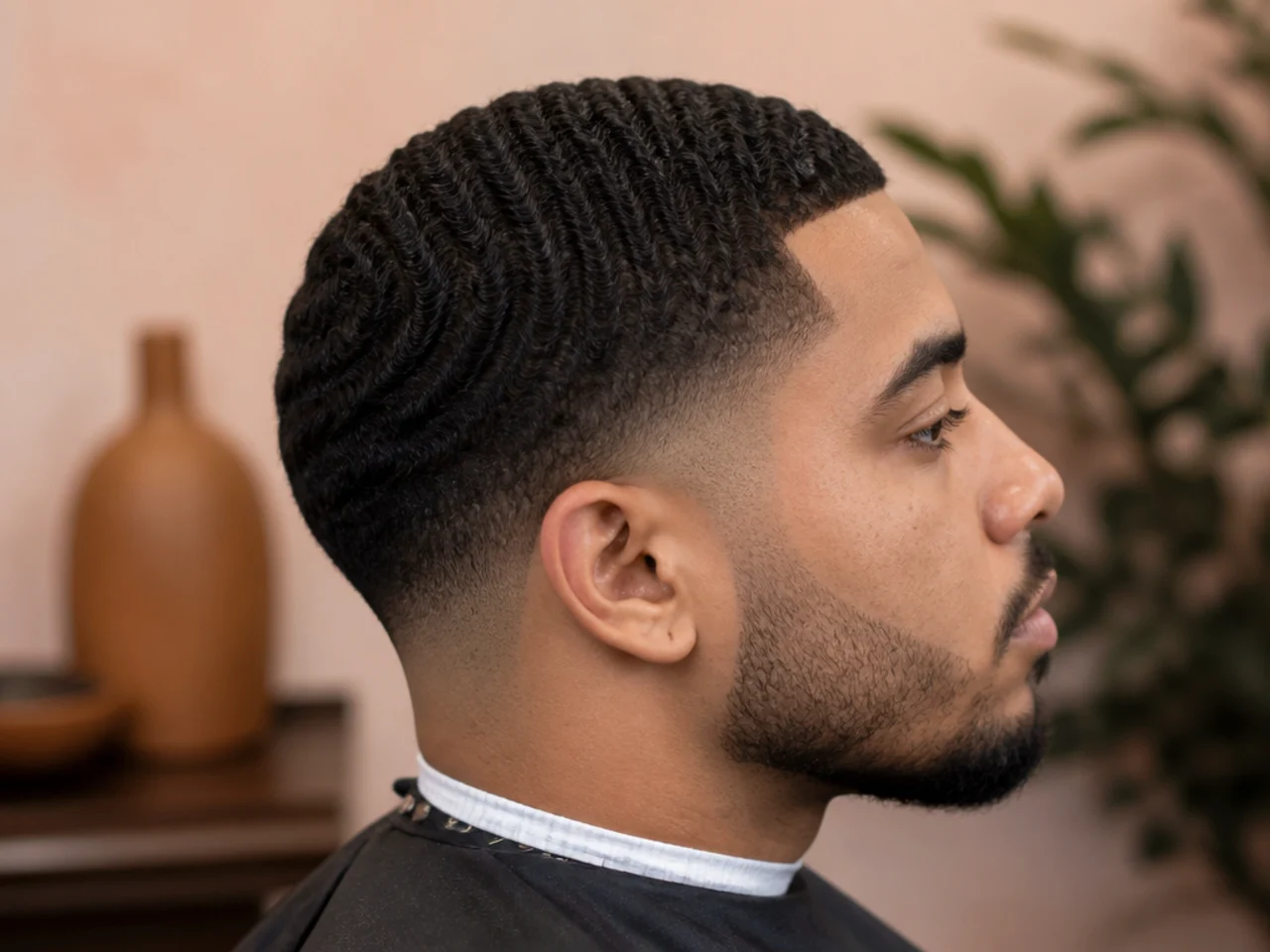
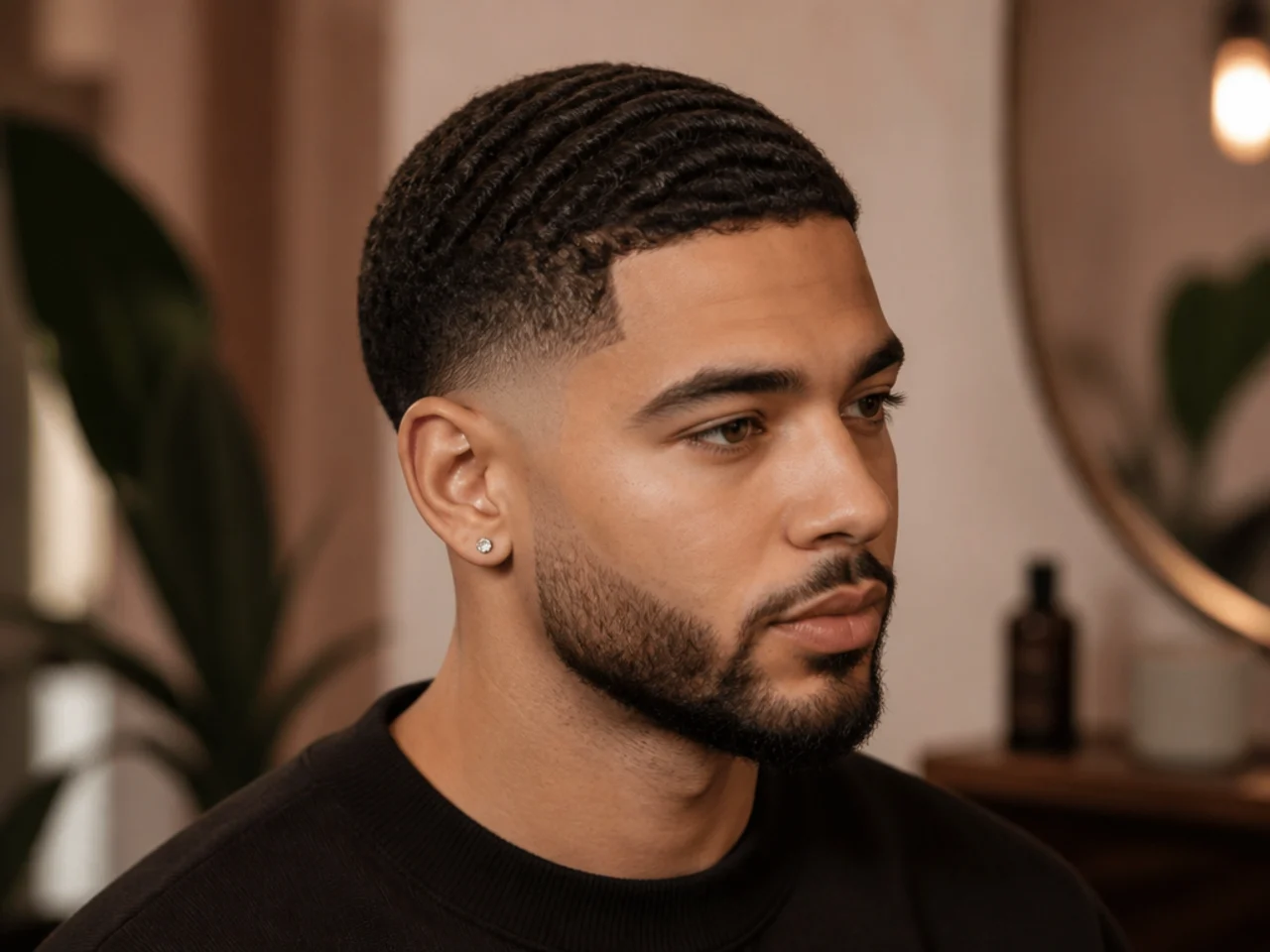
A low fade starts at or below the temple, which means the wave field survives from the crown all the way down to just above the ear. No other fade height keeps so many rows, which is why wave-first men run low fades.
In this article · 27
- How Much Field Survives
- How to Choose Yours
- The 20 Low Fade and Wave Ideas
- 1. Full 360 Waves With a Low Taper
- 2. Low Skin Fade With Waves
- 3. Waves With a Nearly Invisible Low Fade
- 4. Waves With a Low Drop Fade
- 5. Waves With a Low Burst Fade
- 6. New Pattern With a Low Fade
- 7. Deep Waves With a Low Fade
- 8. Low Fade Waves With a Line-Up
- 9. Low Fade Waves With a Beard
- 10. Low Fade Waves With a Hard Part
- 11. Low Fade Waves With a Design
- 12. Low Fade Waves on a Longer Top
- 13. Low Fade Waves at a #1 Top Guard
- 14. Low Fade Waves With a Blocked Nape
- 15. Low Fade Waves With a Tapered Nape
- 16. Low Fade Waves on Coarse Hair
- 17. Low Fade Waves on Fine Hair
- 18. Low Fade Waves, Week Two
- 19. Low Fade Waves, Week Four
- 20. Low Fade Waves With a Line-Up Only Refresh
- Styling and Upkeep
- Mistakes to Avoid
- FAQ
- Final Thoughts
A wave pattern is a field, and the only thing a fade does to it is decide where that field ends.
A low fade's line sits no higher than the temple, a couple of centimetres above the ear. So the pattern survives everywhere else — the crown, the sides, the back and right down the head.
That is the largest field any fade leaves. Which is the entire reason men who care about the pattern more than the fade end up running low fades.
How Much Field Survives
Waves need length to lay flat. Below roughly 3mm the hair stands and cannot hold a row.
A low fade removes two or three centimetres. Only the band from the temple down to the ear.
Everything above stays in pattern. Crown, sides, back and nape all keep their rows.
So the fade barely registers. Which is a strength if the pattern is the point and a weakness if you wanted contrast.
How to Choose Yours
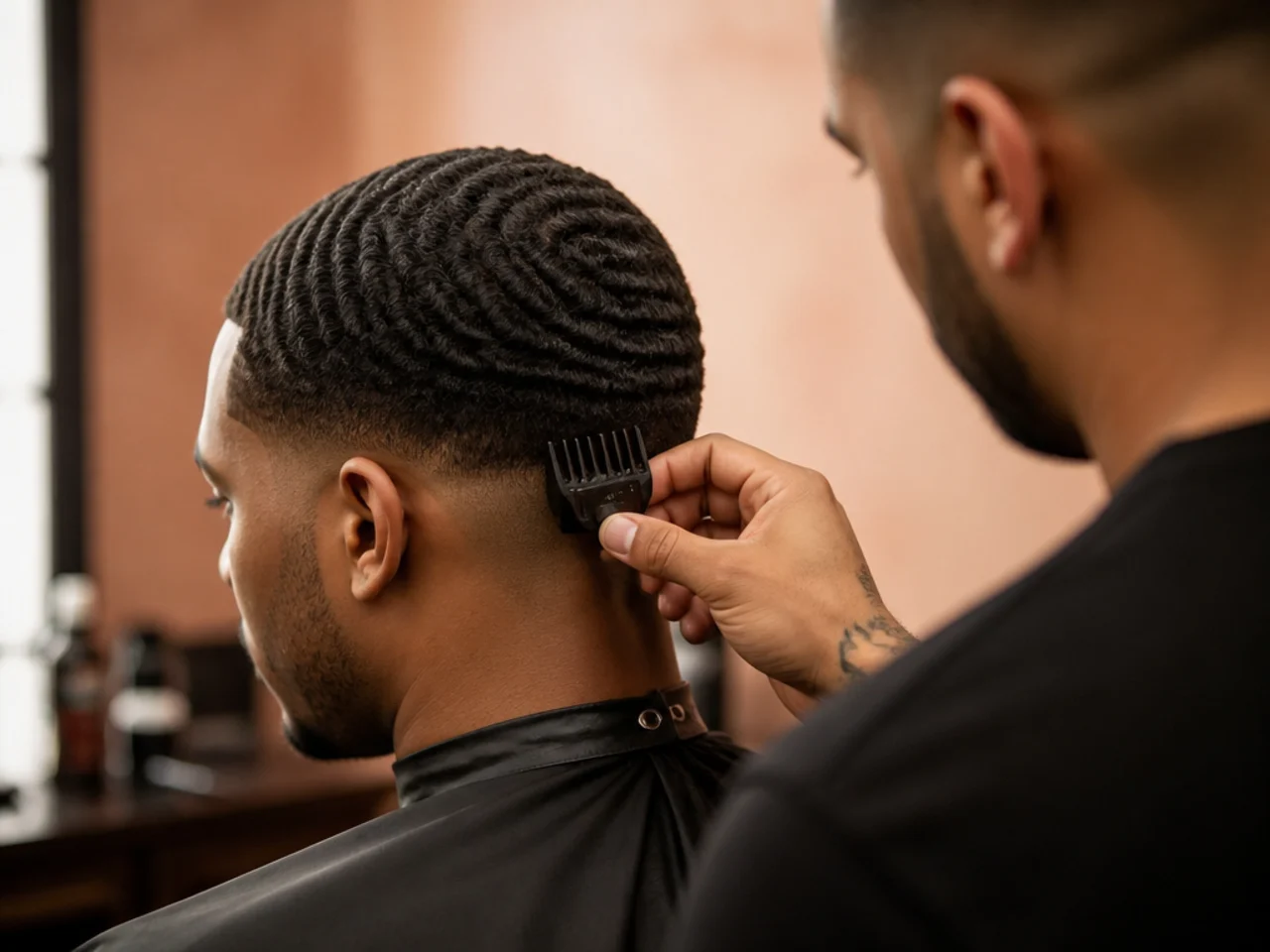
Match the fade's top guard to your trained length. A step at this height is more visible than at any other, because the eye expects continuity.
Choose taper over skin while training. A #1 at 3mm keeps a shadow of pattern going right into the blend.
Decide how visible you want the fade to be. A low fade can be almost invisible, which is either the plan or a disappointment.
Say low fade and name the temple. At or below it, since some barbers hear low and cut mid.
The 20 Low Fade and Wave Ideas
1. Full 360 Waves With a Low Taper
The pattern intact everywhere with only the band above the ear taken down. It is the version that gives up the least, and the one most wavers settle on.
2. Low Skin Fade With Waves
Bare skin in the narrow band above the ear. It gives the pattern a hard bottom edge, which makes the rows above look denser by comparison.
3. Waves With a Nearly Invisible Low Fade
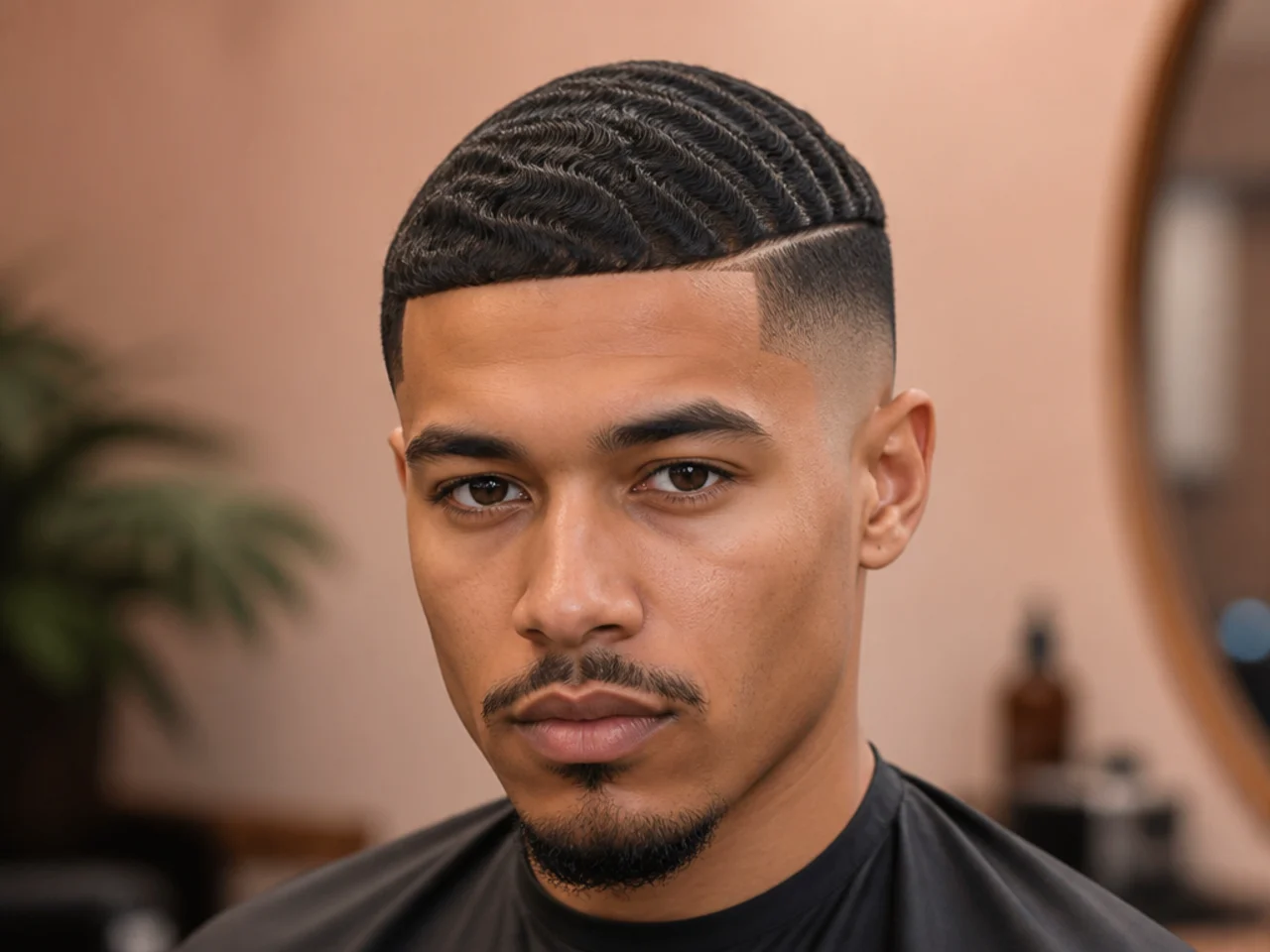
The fade cut at the same guard as the trained length. From two metres away it reads as no fade at all, which is exactly the intention.
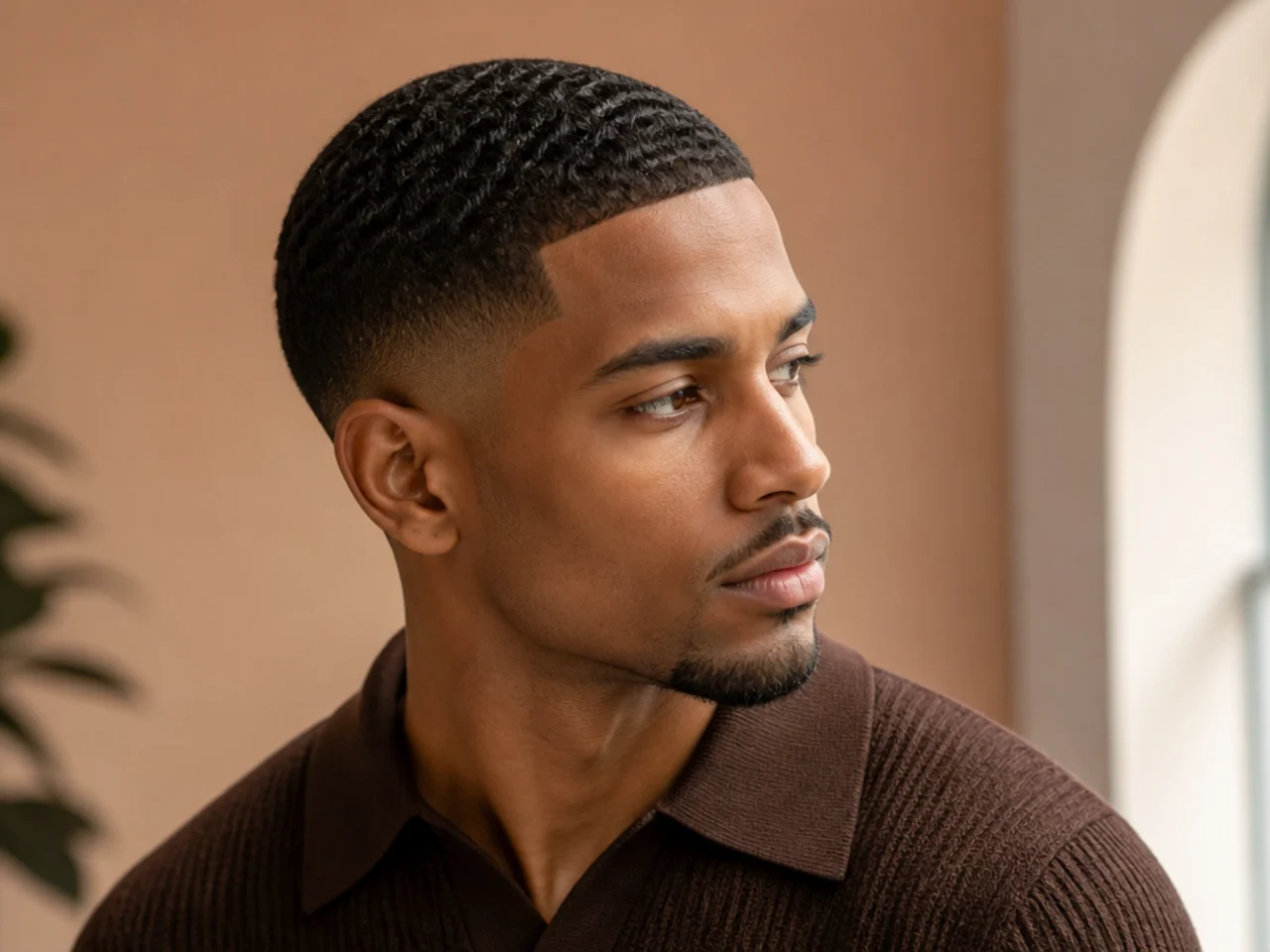
4. Waves With a Low Drop Fade
The line dropping behind the ear. It follows the direction the rows curve at the back, so the two run together rather than crossing.
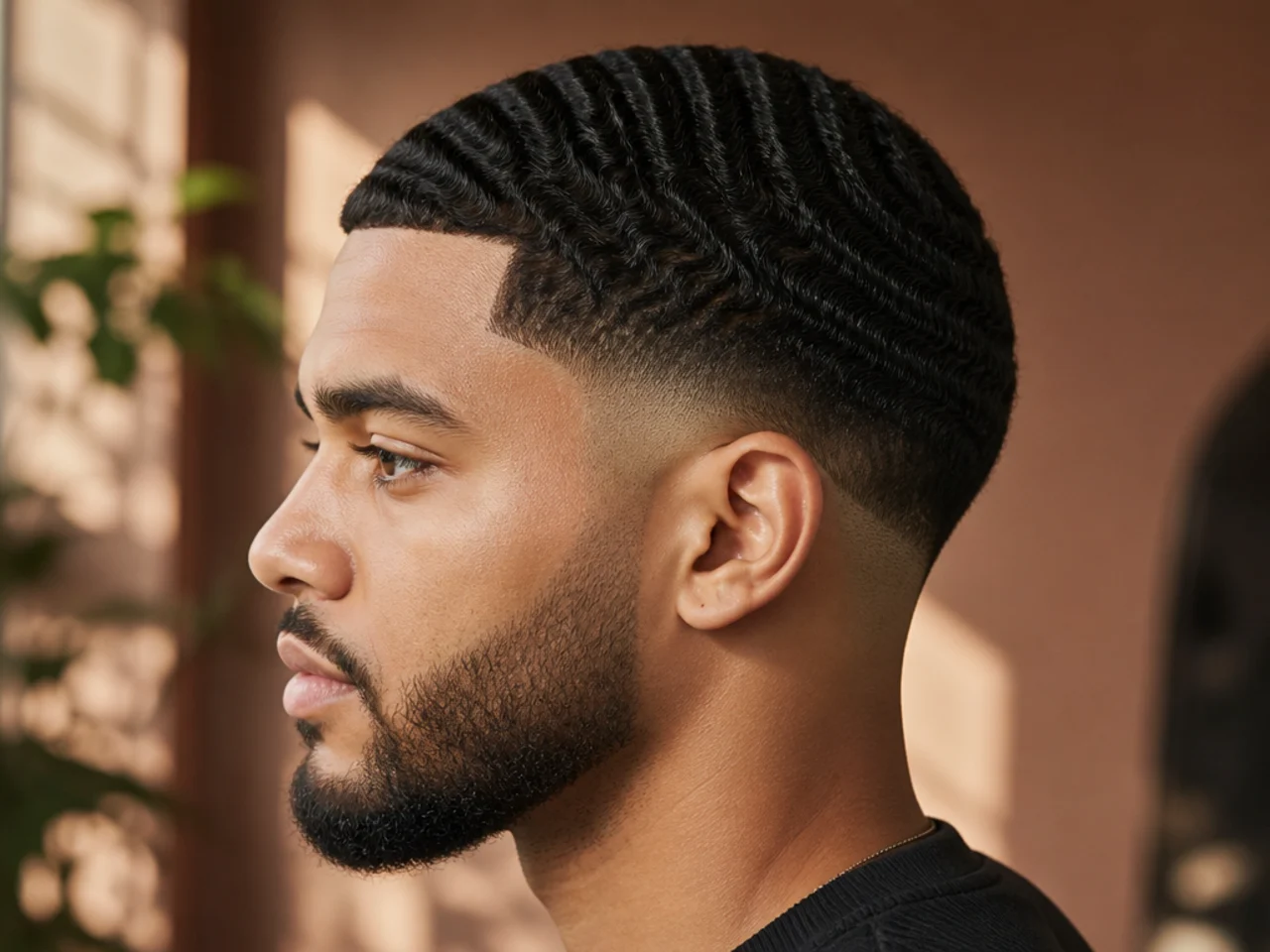
5. Waves With a Low Burst Fade
The fade opened as a circle at the ear with the back panel left untouched, which is all a low burst fade does. It keeps even more of the nape field than a straight low fade does.
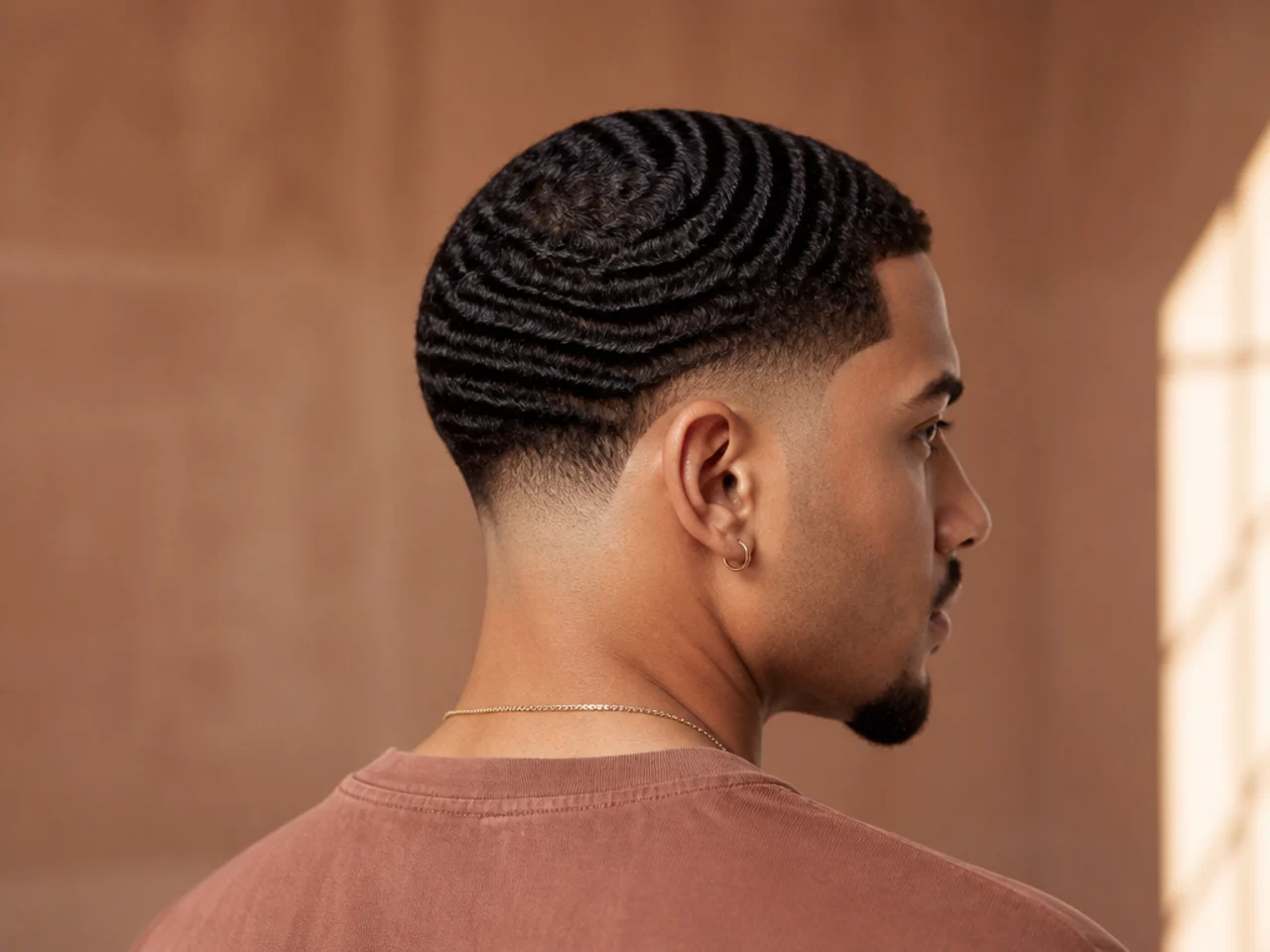
6. New Pattern With a Low Fade
The right cut for a pattern under three months old. Losing only the band above the ear means the field stays almost complete while it trains.
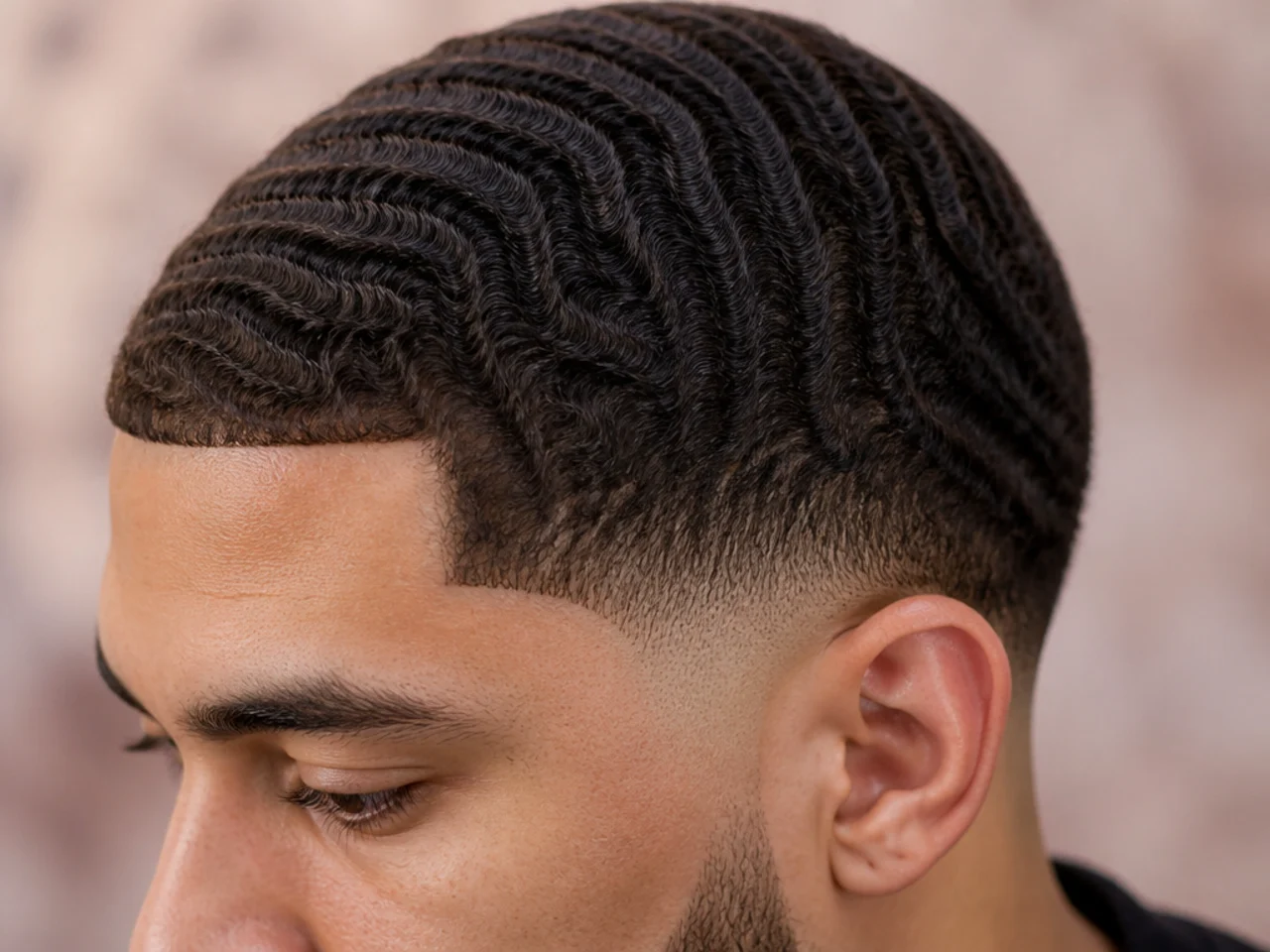
7. Deep Waves With a Low Fade
A long-trained pattern with pronounced ridges. Deep rows need a soft blend at the fade line or they appear to break off mid-ridge.
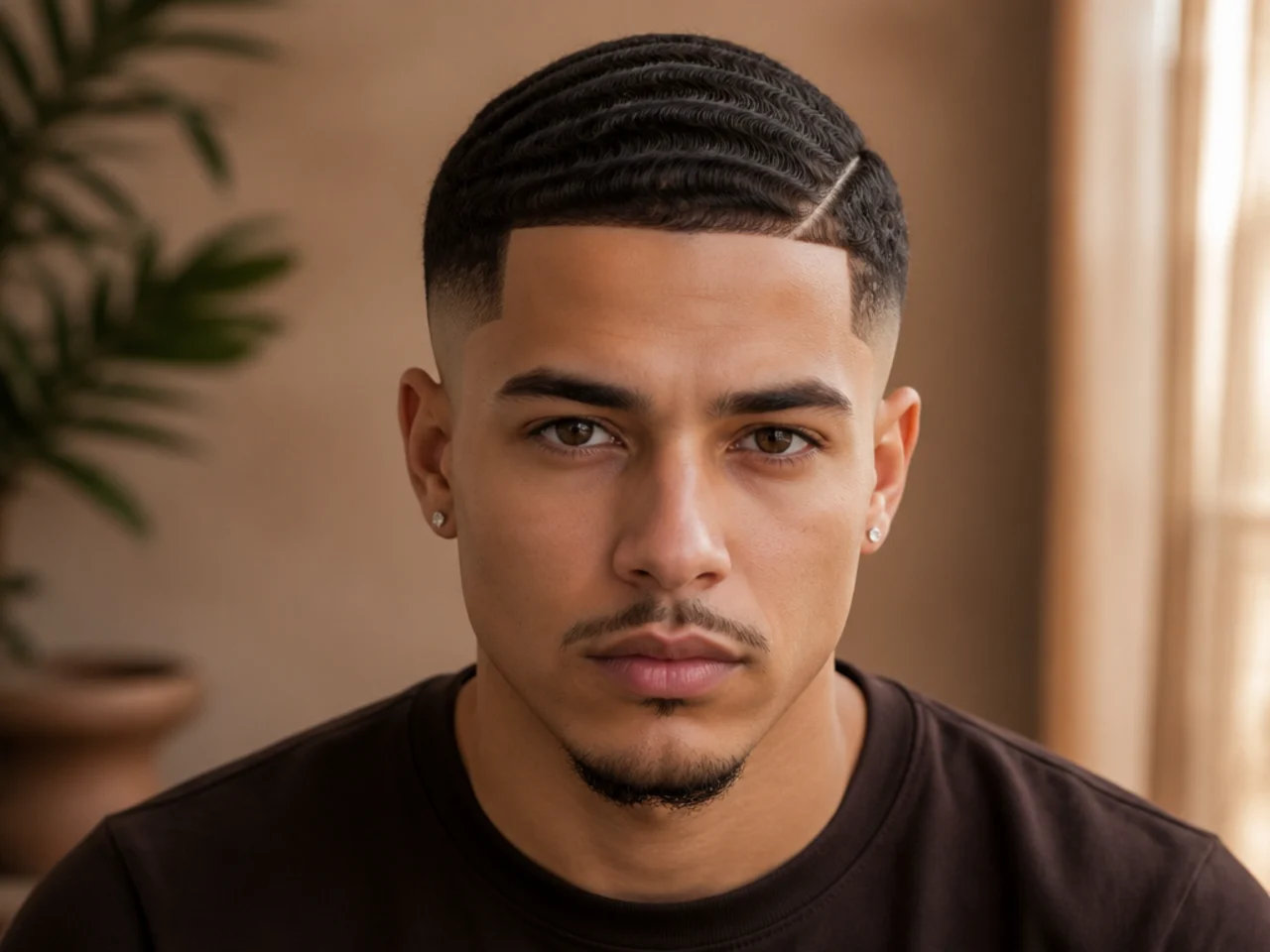
8. Low Fade Waves With a Line-Up
The hairline cut back to a clean straight edge across the brow and down each temple. It gives the rows a hard front boundary while the fade gives them a soft bottom one.
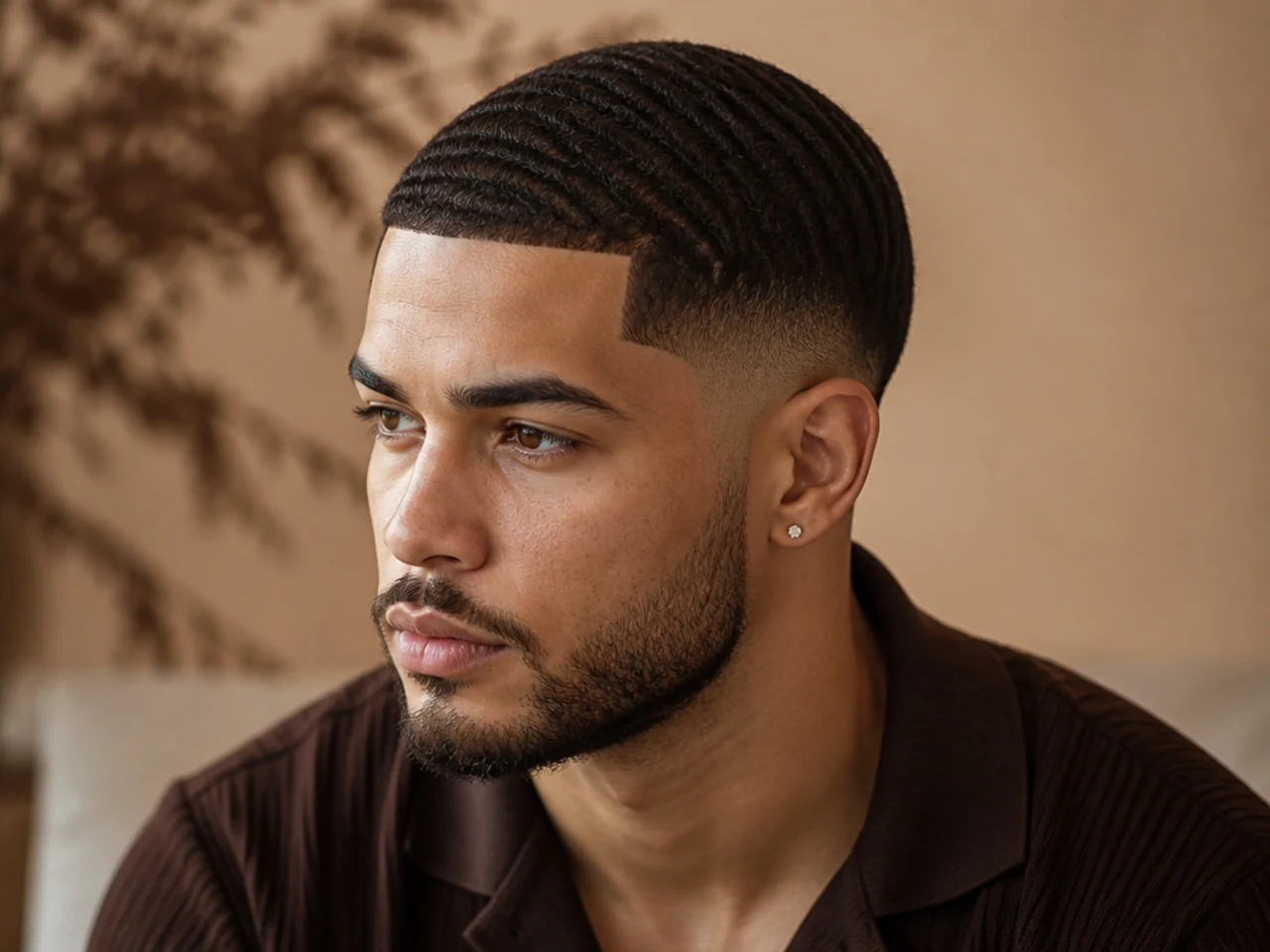
9. Low Fade Waves With a Beard
The rows running all the way down to a beard that starts just below them. The two dark areas nearly touch, which is unique to this fade height.
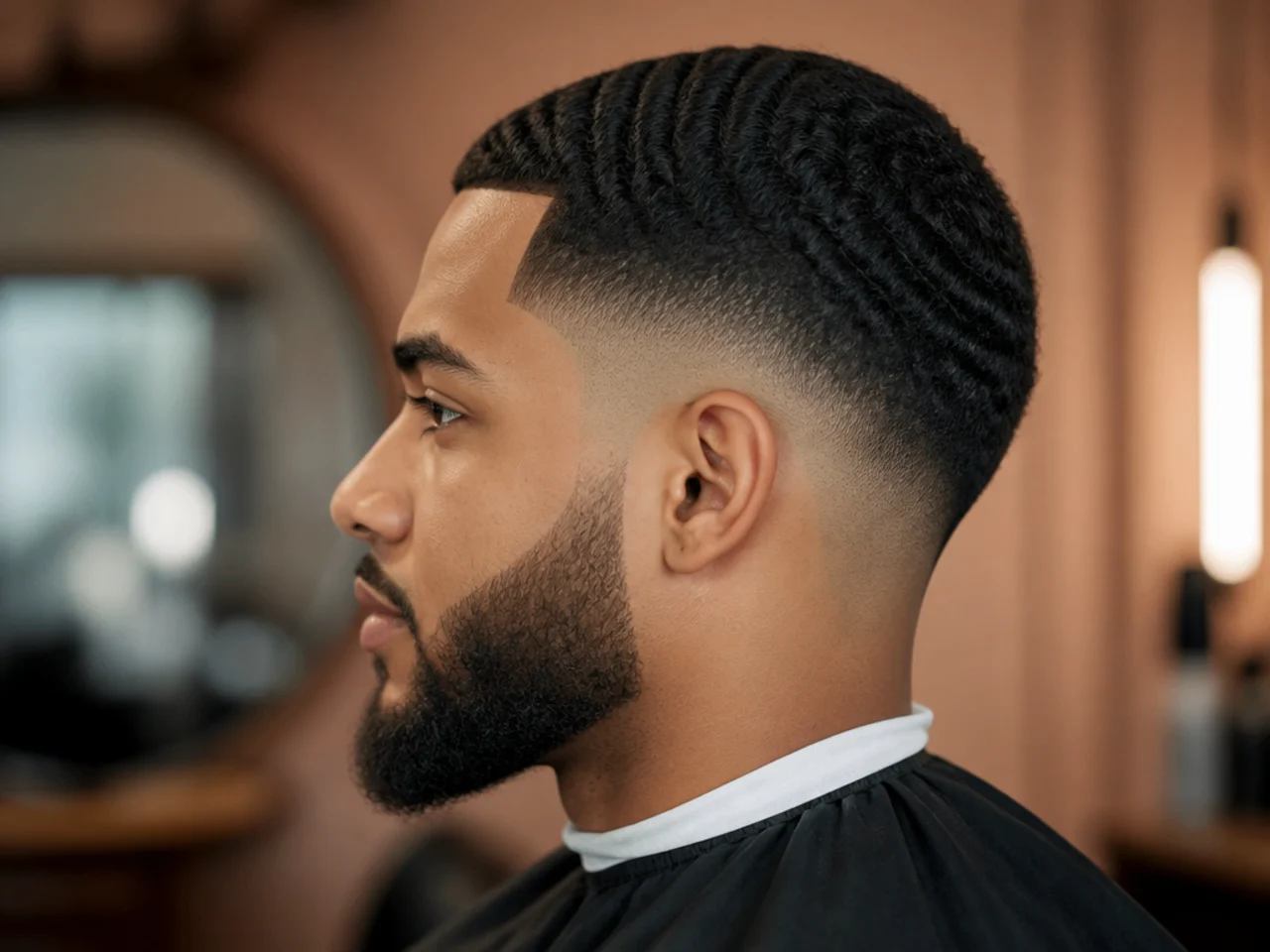
10. Low Fade Waves With a Hard Part
A razored line cut through the pattern. It crosses the row direction, which is what keeps it visible in a field this dense.
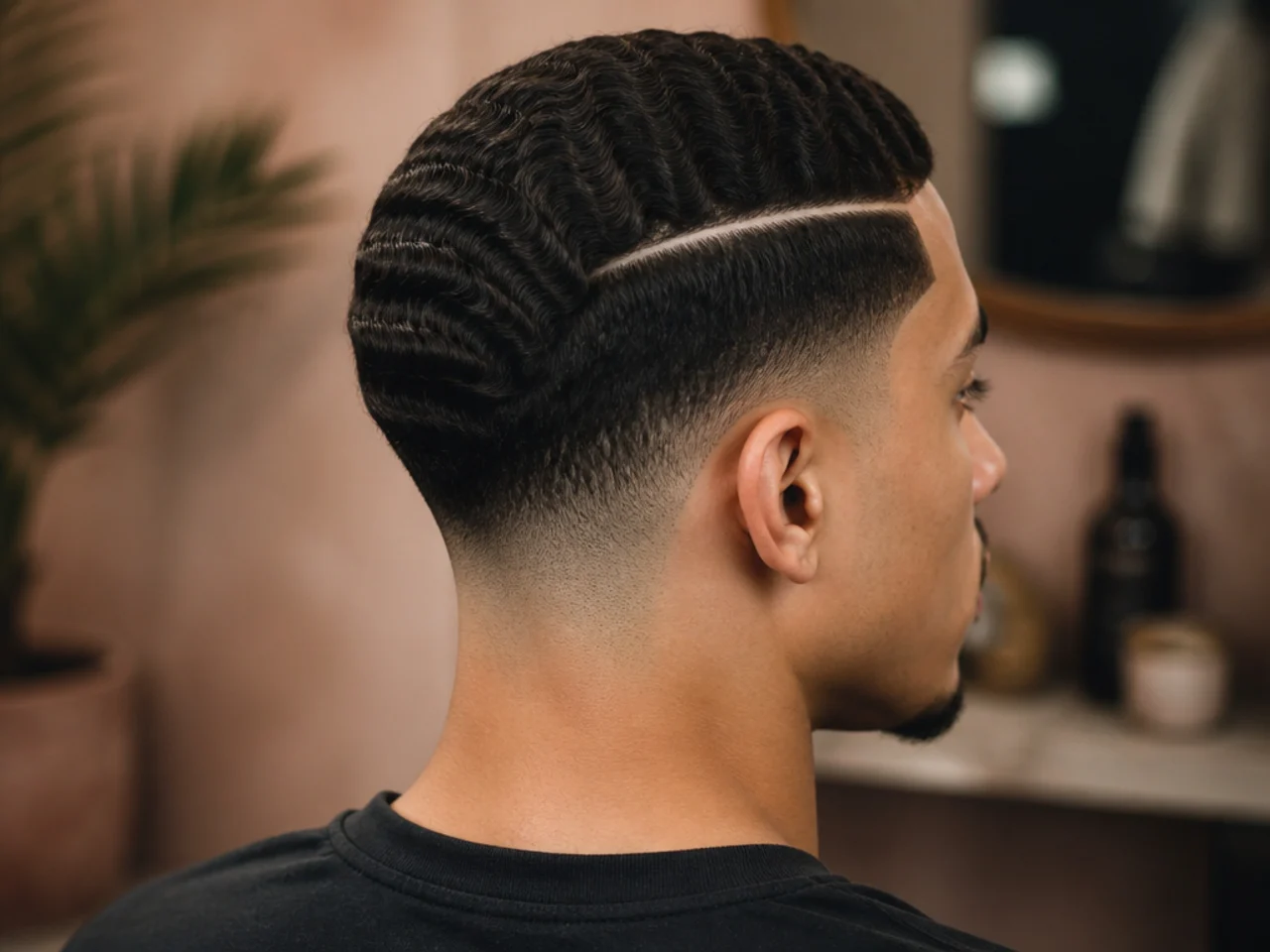
11. Low Fade Waves With a Design
A small shape cut into the narrow band above the ear, sized the way a low taper fade design has to be. The panel is only two or three centimetres deep, so a single short mark is all that fits.
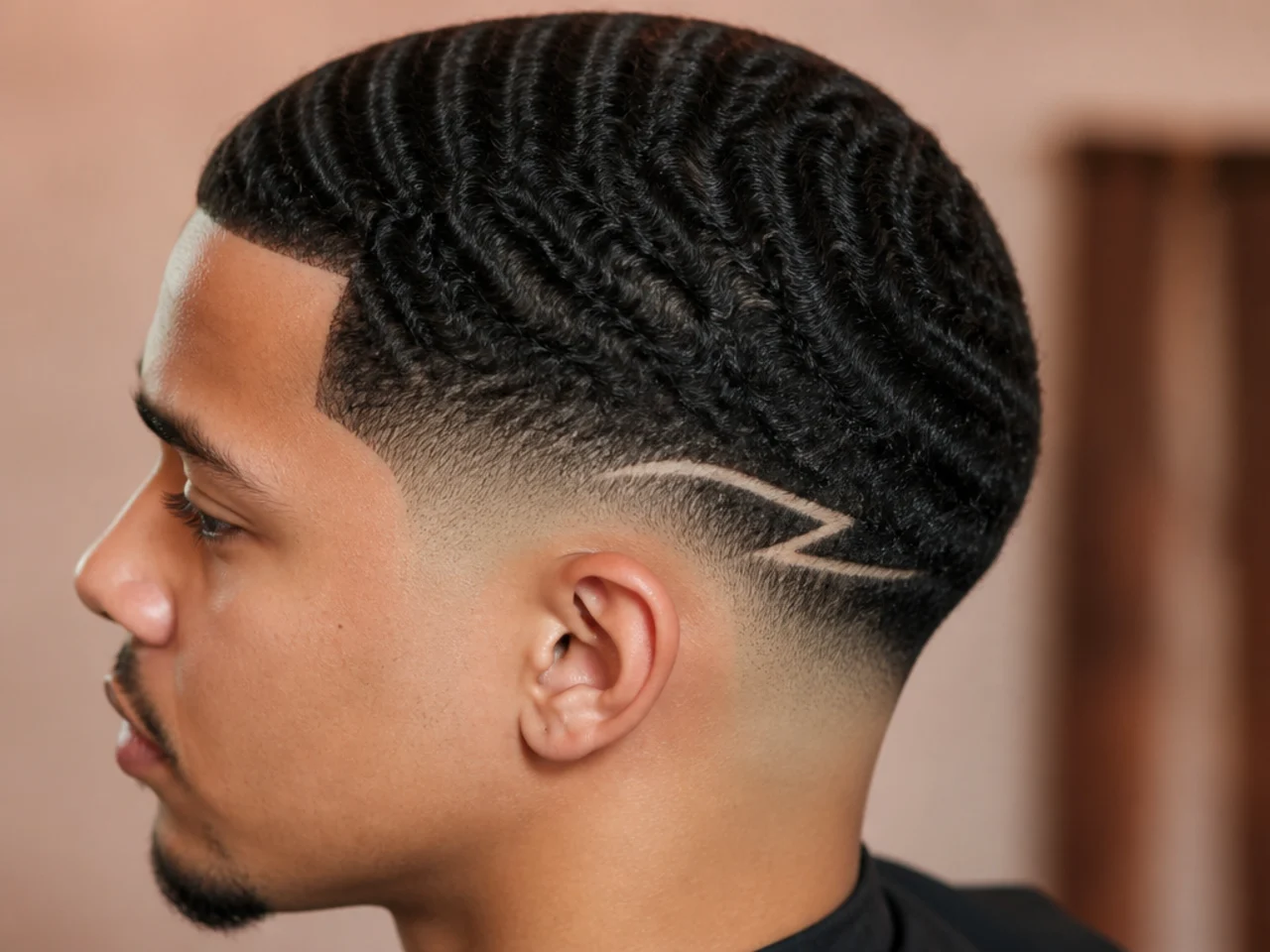
12. Low Fade Waves on a Longer Top
The crown left at 10mm or more so the ridges deepen. Extra length adds shadow to every row and the low fade takes none of it away.
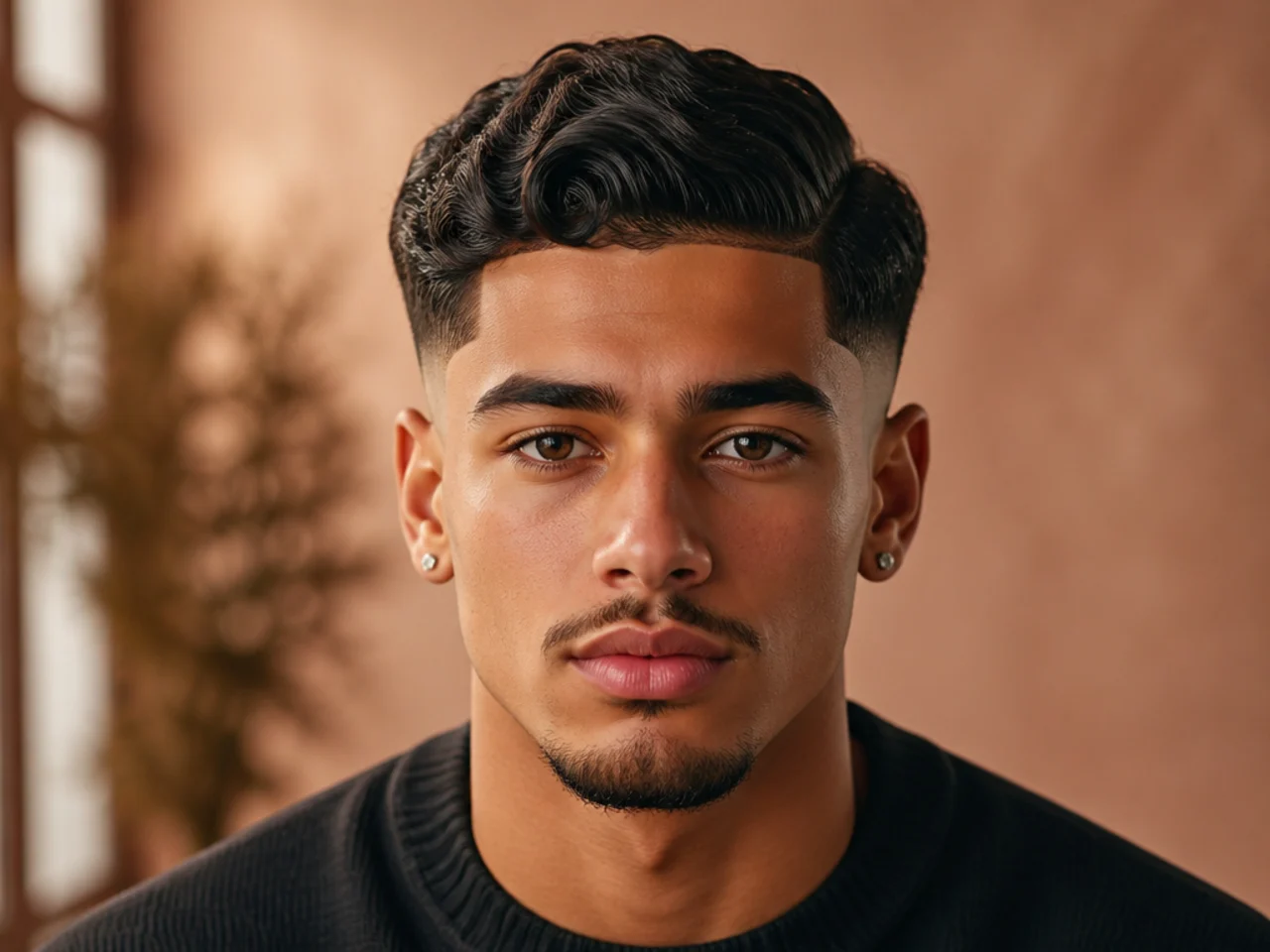
13. Low Fade Waves at a #1 Top Guard
The blend released at 3mm exactly. It is the shortest the top of a low fade should go if the rows are to survive the transition.
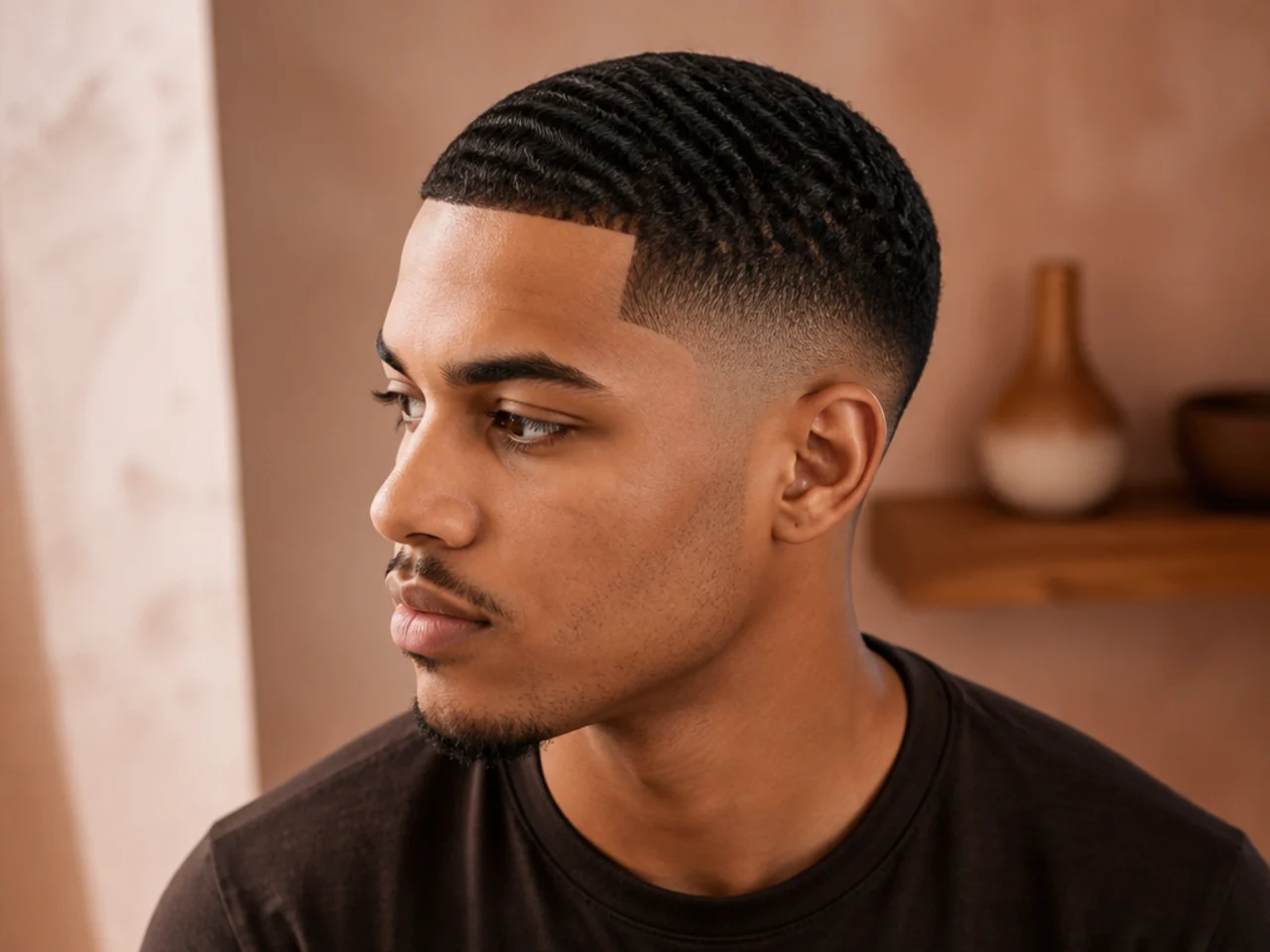
14. Low Fade Waves With a Blocked Nape
A squared neckline under the blend. It closes the field at the bottom, which matters because the nape rows are the ones nobody checks.
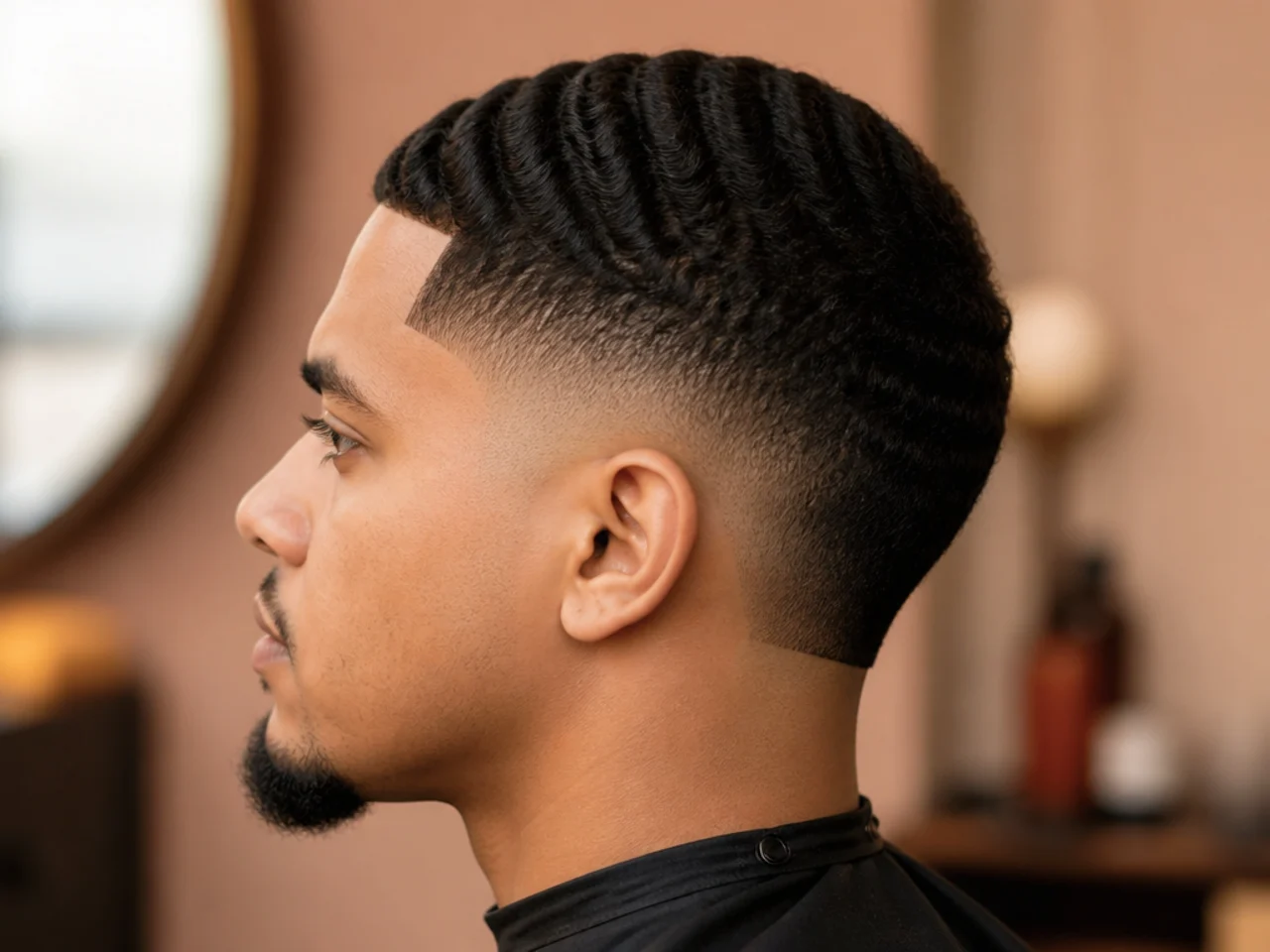
15. Low Fade Waves With a Tapered Nape
The alternative finish, softened rather than squared. It grows out invisibly, which suits a cut whose whole point is a soft grow-out.
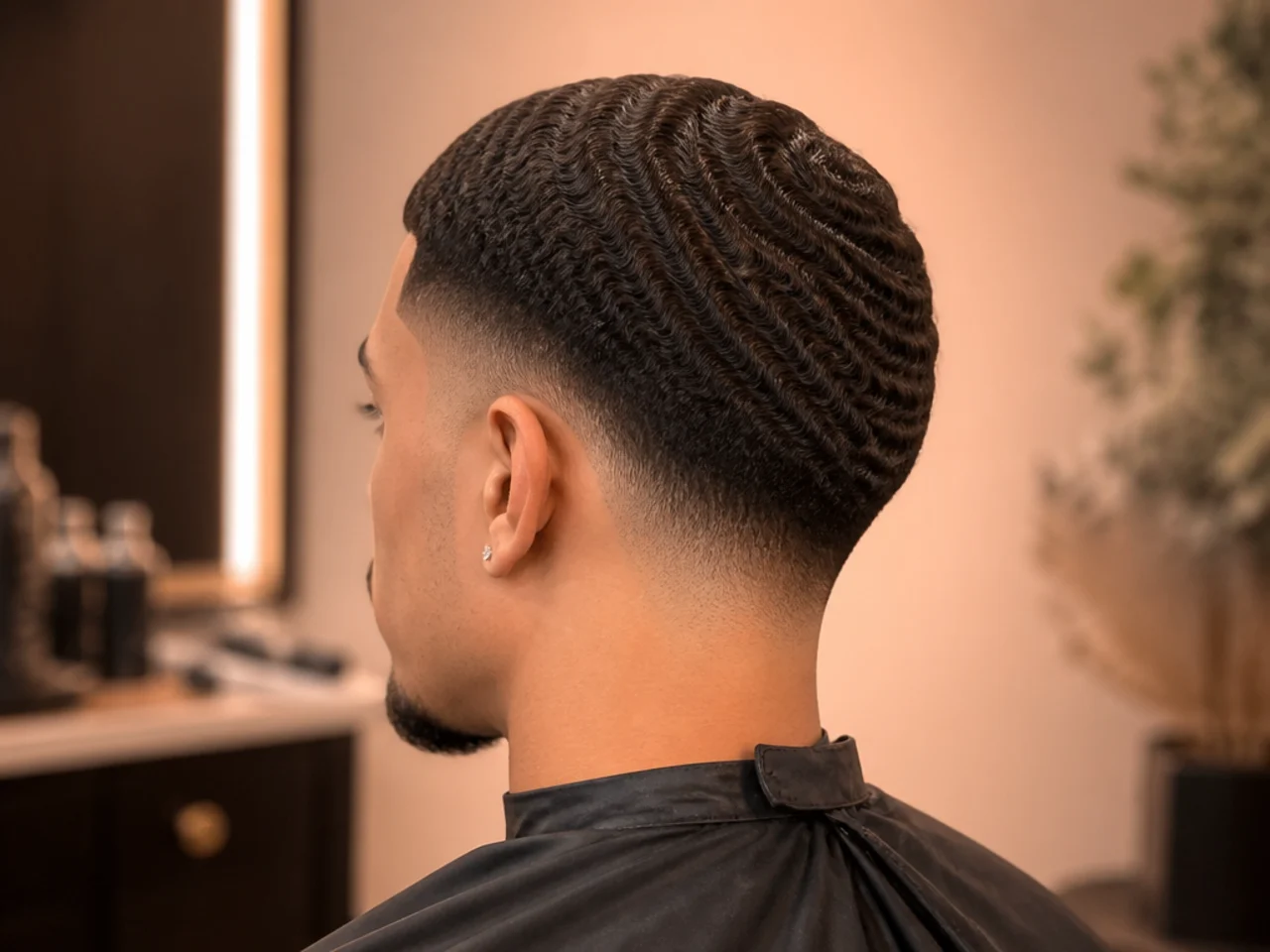
16. Low Fade Waves on Coarse Hair
Coarse hair holds a deeper row and shows the pattern strongly against the fade, which is why it dominates short fade haircuts for black men. It is the texture this combination suits best.
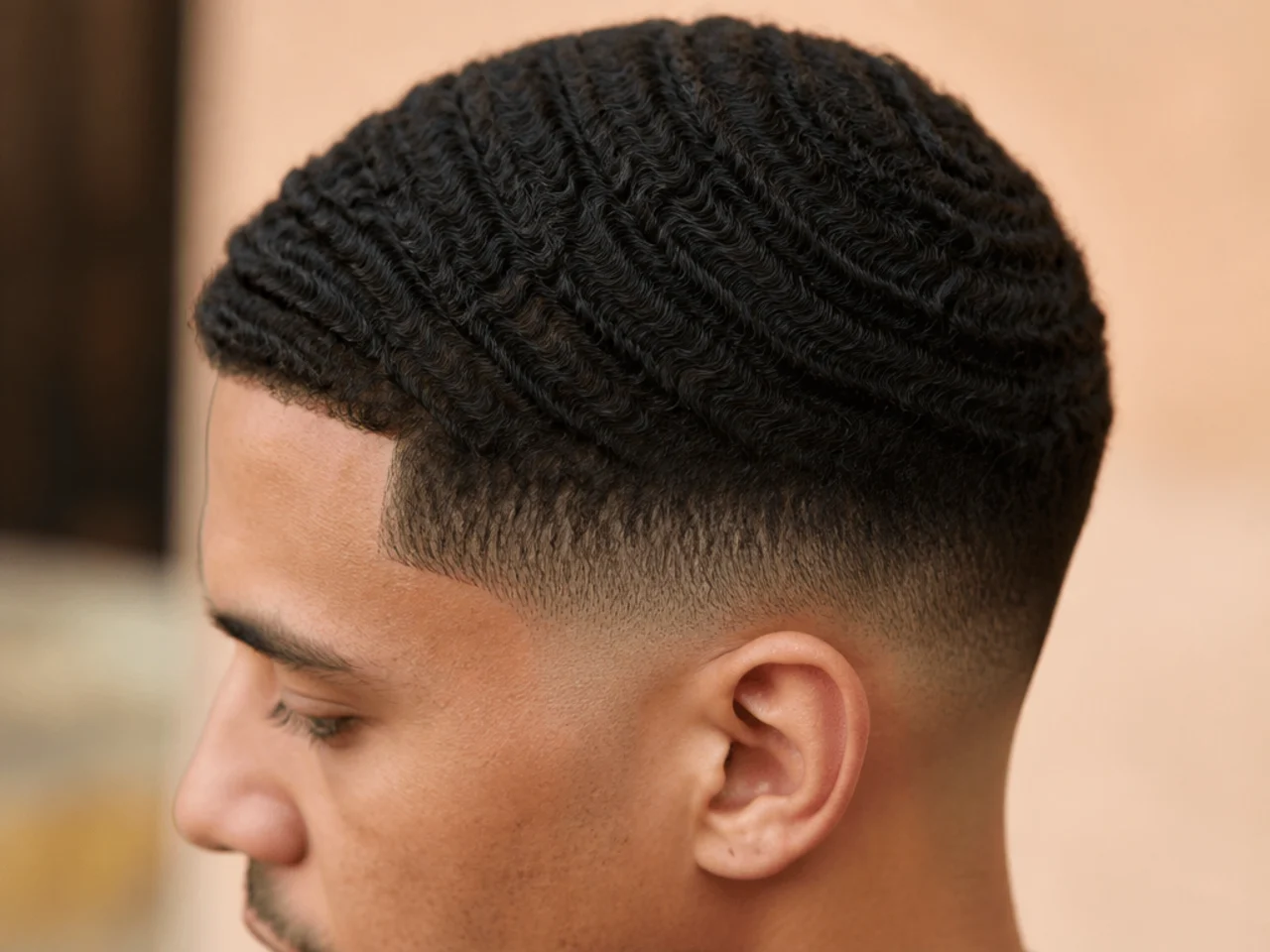
17. Low Fade Waves on Fine Hair
Fine hair needs every row it has, which makes the low fade the only sensible height. Removing more would thin an already light pattern.
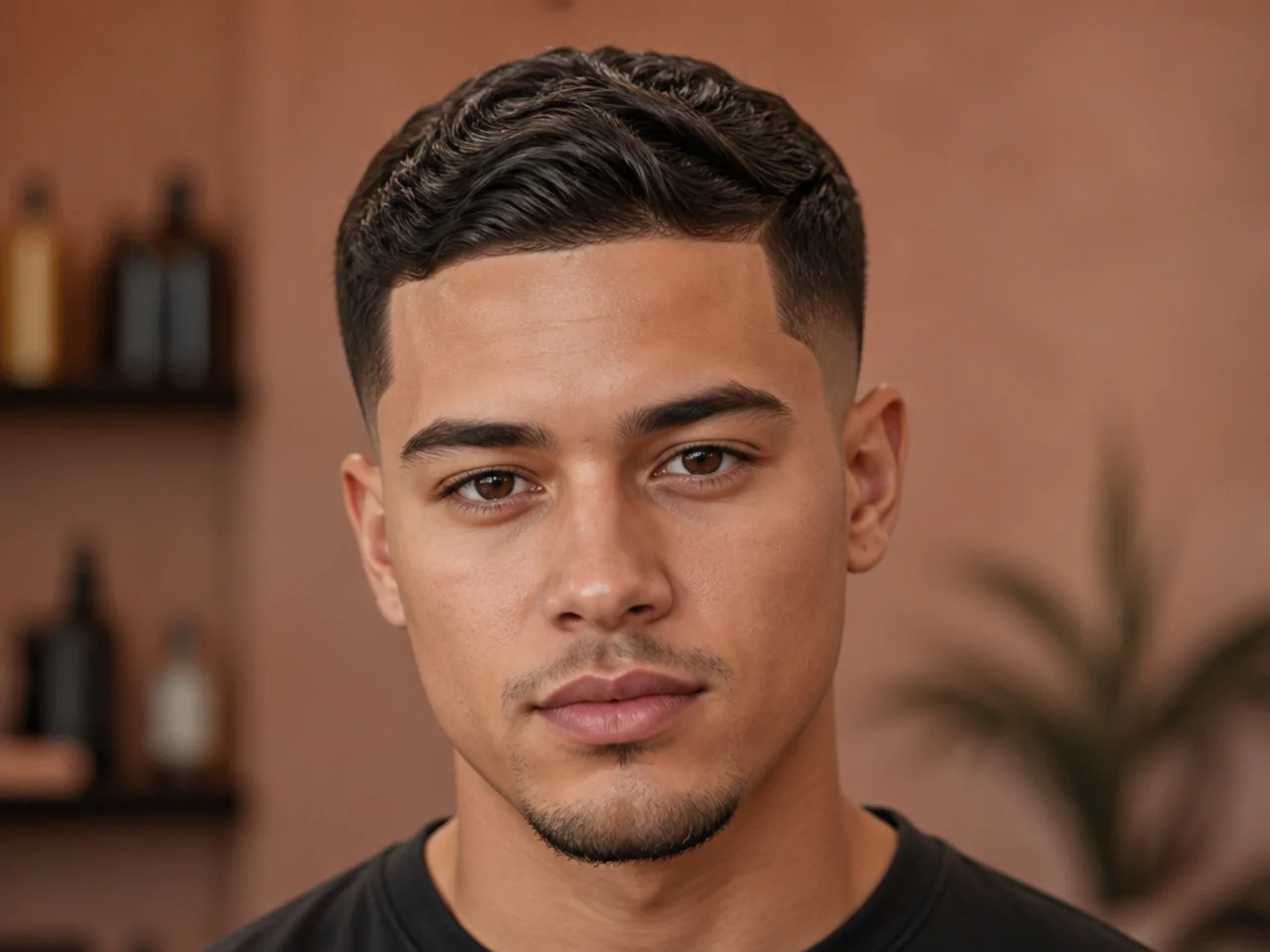
18. Low Fade Waves, Week Two
The blend has softened but the field is unchanged. Almost nothing about the cut has moved, which is the low fade's whole claim.
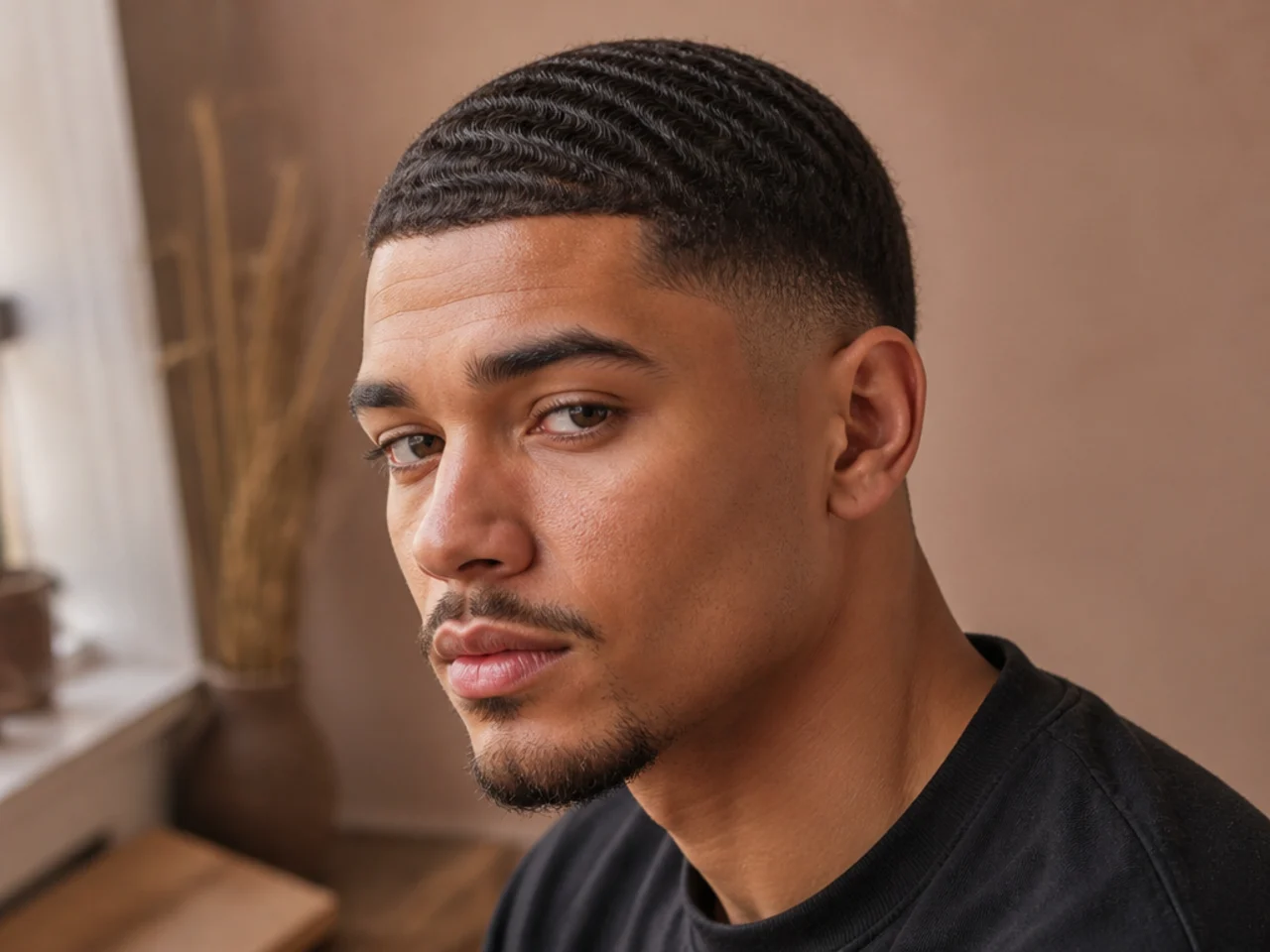
19. Low Fade Waves, Week Four
The band above the ear has grown back into pattern. On a taper finish this reads as a full field rather than as an overgrown fade.
20. Low Fade Waves With a Line-Up Only Refresh
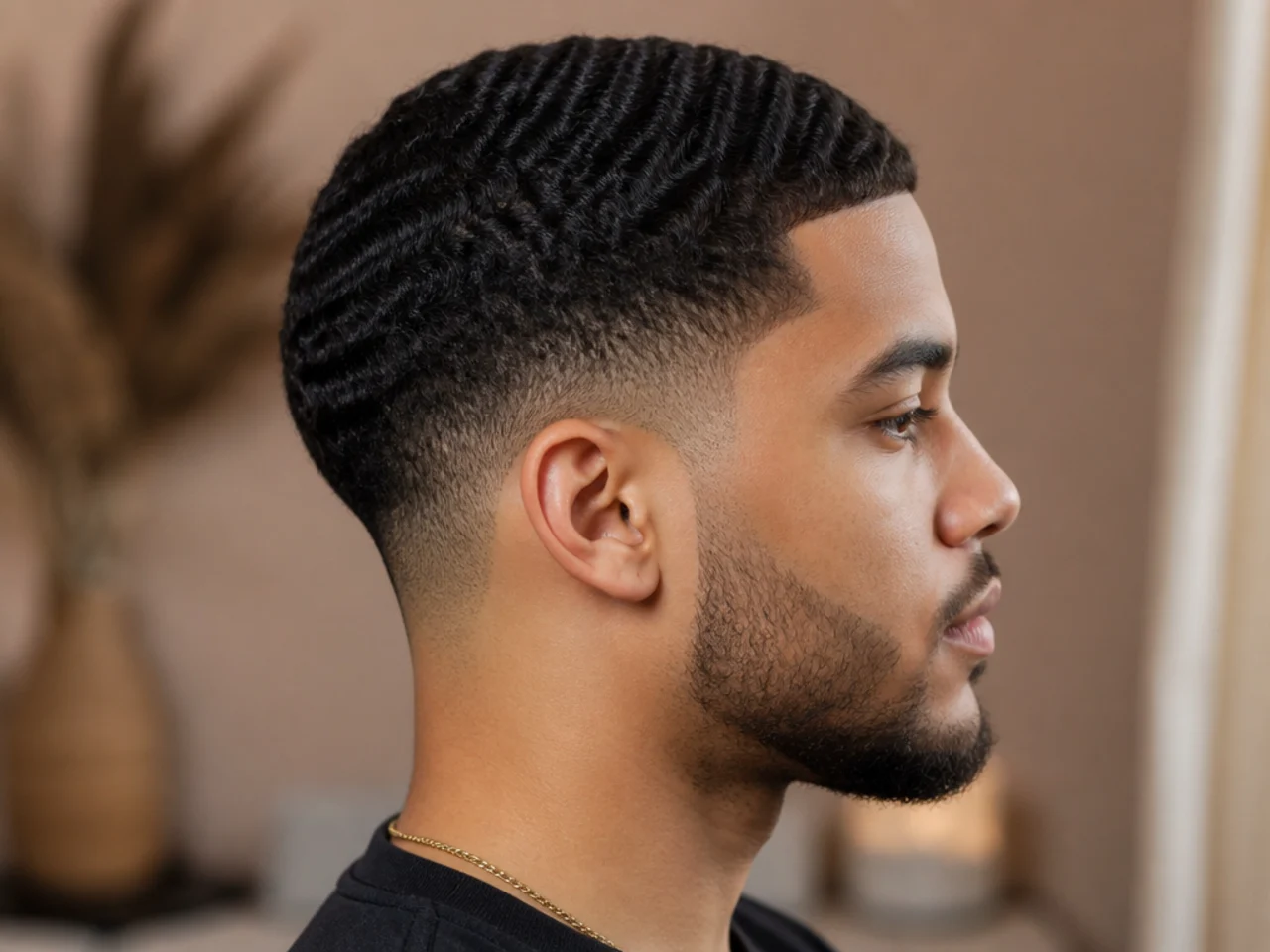
The hairline recut and the fade left alone. It is the cheapest way to keep a wave pattern looking freshly cut between full appointments.
Styling and Upkeep
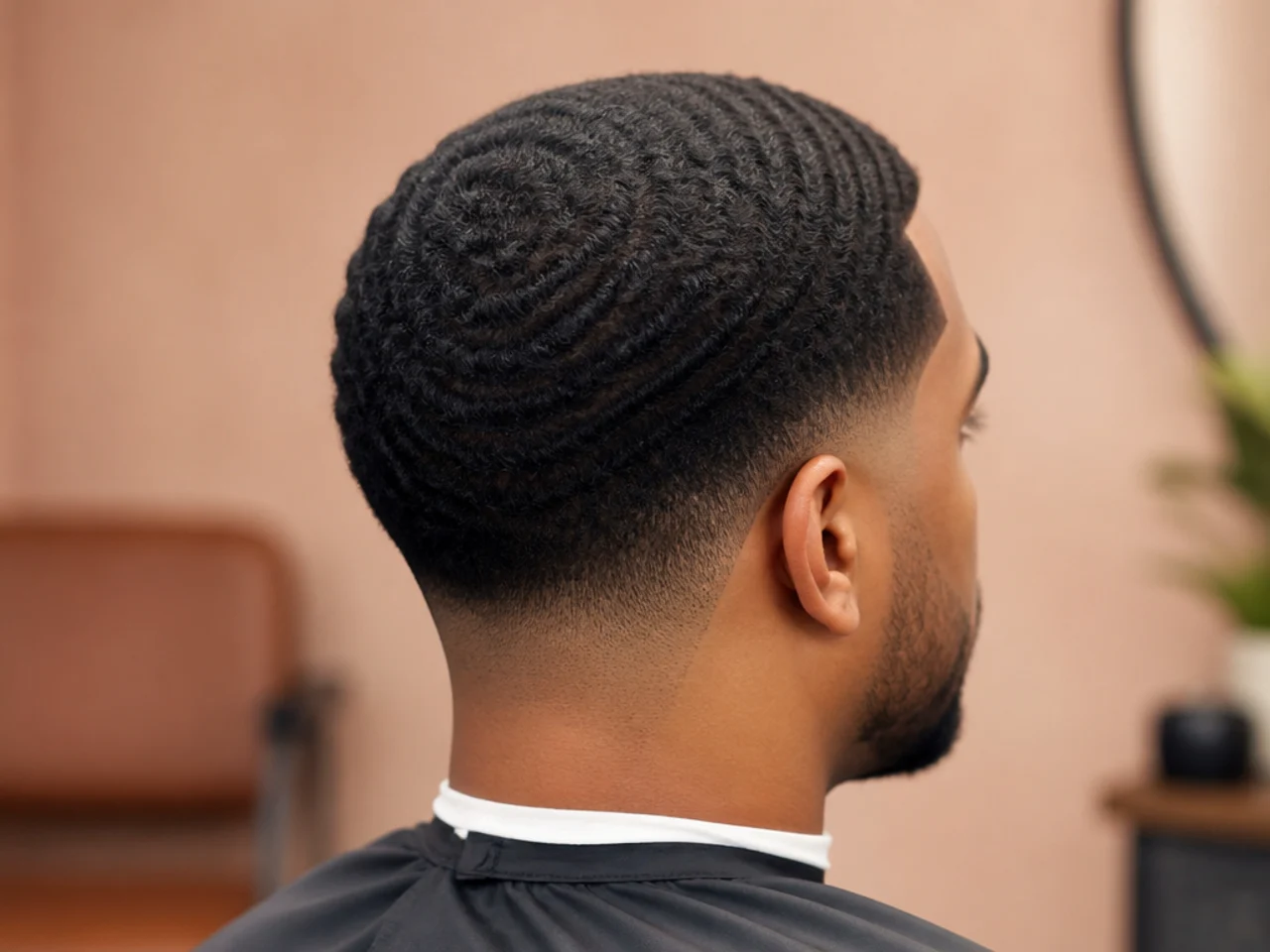
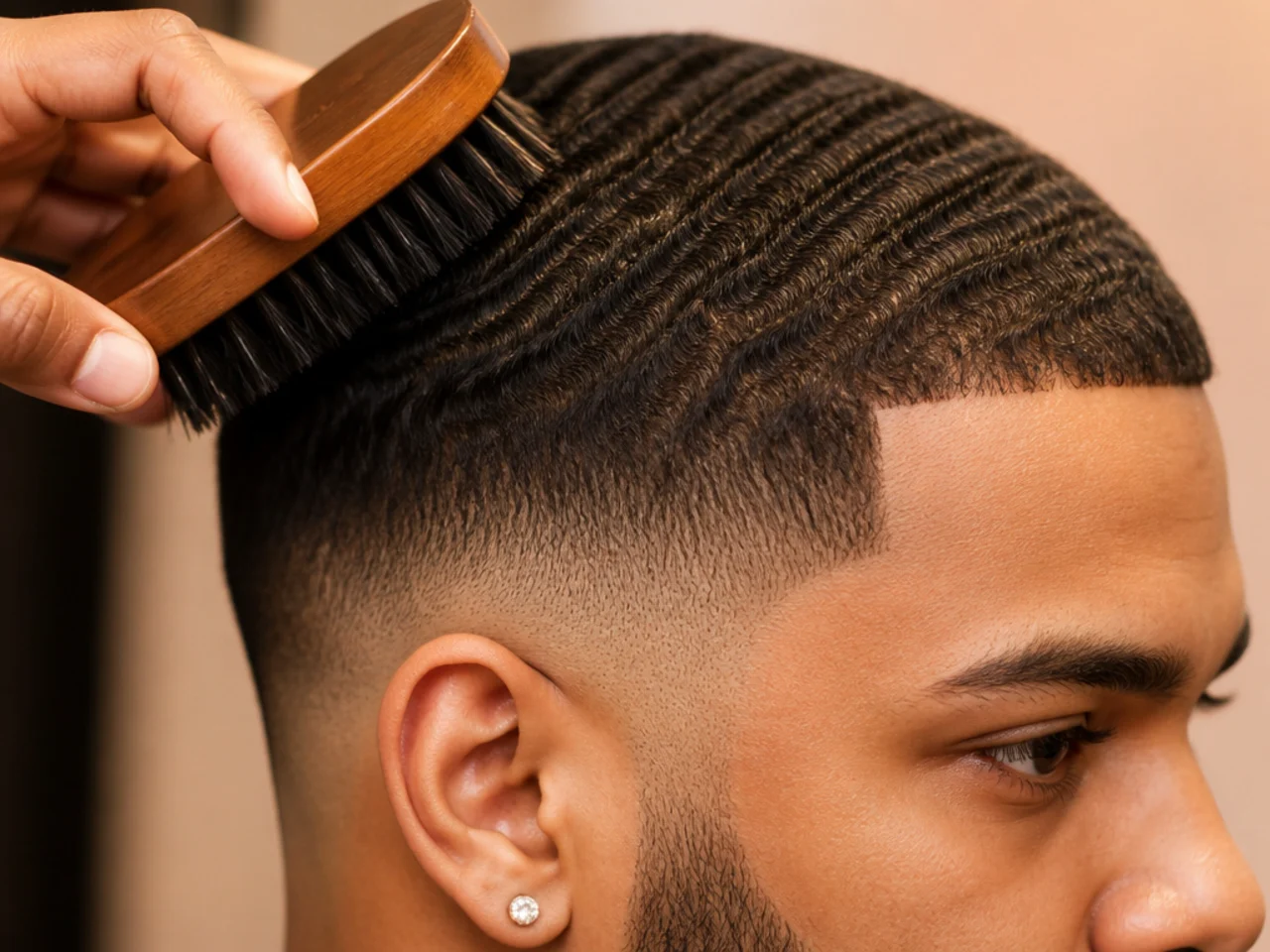
Brush the whole field, not just the top. A low fade leaves rows everywhere, so there is far more to brush than at other heights.
Brush the band above the ear most often. It is the shortest hair still holding a pattern.
Wear a durag every night. Compression is what sets the rows, and a large field needs full coverage.
Wash less than you think. Stripping the oil leaves the hair dry and standing, and dry hair will not hold a row.
Rebook by finish. The field is unaffected either way and only the band above the ear is on a clock, which runs one to two weeks on a low skin fade and three to four on a low taper.
Mistakes to Avoid
Mismatching the top guard to the trained length. At this height a step shows more than it would higher up.
Asking for a higher fade to make it look sharper. You lose rows and gain very little.
Going to skin on a young pattern. Maximum contrast exposes every gap in the field above.
Brushing only the front. The nape rows are the ones nobody sees and the first to break.
Expecting a dramatic result. A low fade is deliberately subtle and the pattern is the feature.
FAQ
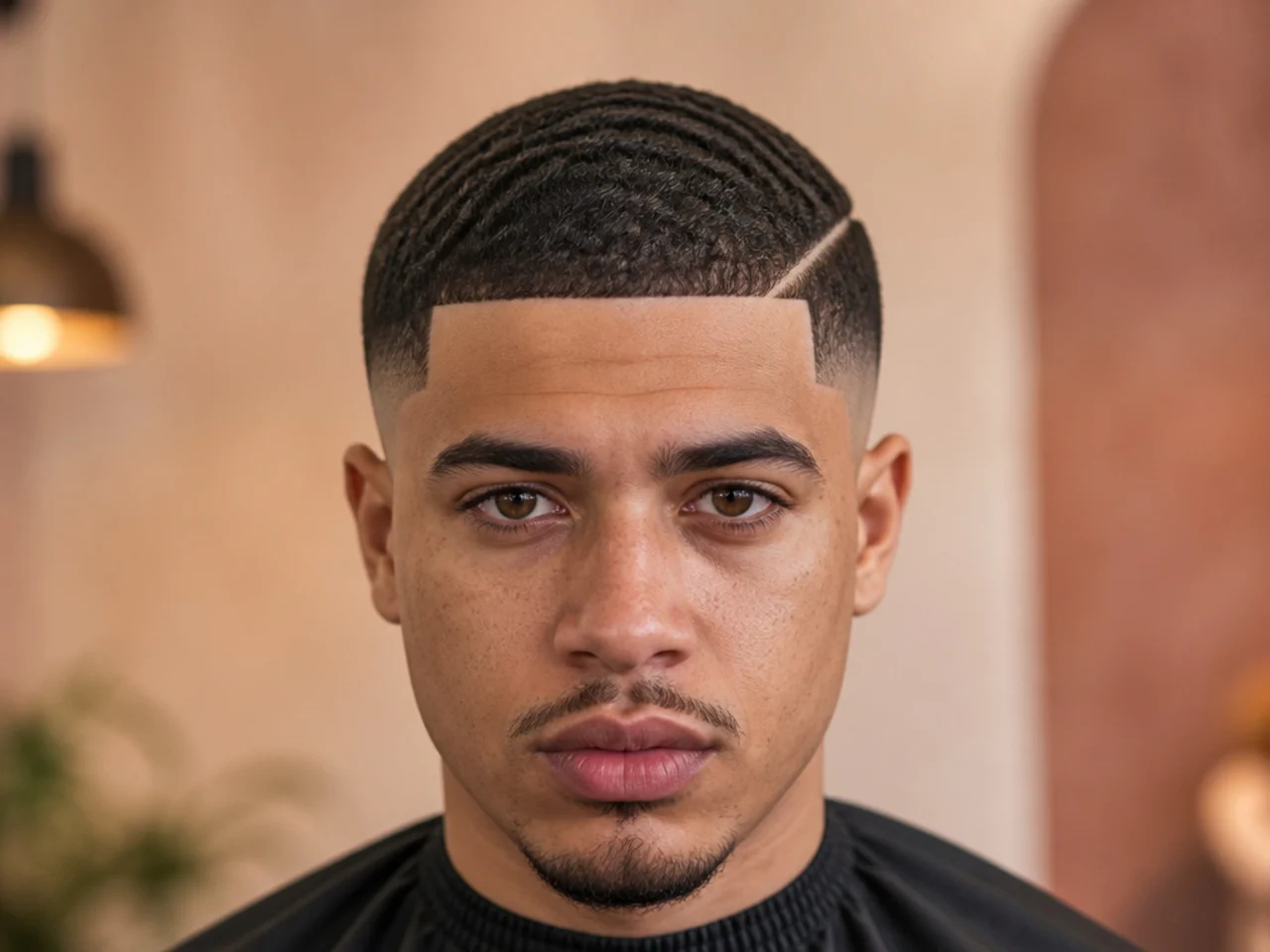
Why does a low fade suit waves? It removes only the band above the ear, so the field stays almost complete.
What top guard should I ask for? Whatever your pattern is trained at, usually a #1 or a #2.
Is it right for a new pattern? Yes, it is the correct starting point.
Final Thoughts
If you have spent months brushing, the fade should be the smallest decision in the appointment rather than the loudest. A low fade takes the two or three centimetres above your ear and leaves the rest of the field exactly where you trained it, which is why it remains the wave community's default long after other heights have come and gone.
For a boundary that takes more of the field see mid fade haircut with waves, and for the low fade itself see low fade haircut. More in Fade Haircuts.