
20 Short Wavy Hair Routine Tips to Try
Twenty tips for short wavy hair, and the thing nobody warns you about after a cut — the same hair reads curlier short, because there is less weight pulling the wave down. So it needs less product, not more.
In this article · 27
- What Changes When You Cut Length
- How to Choose Yours
- The 20 Short Wavy Tips
- 1. Halve Your Product After the Cut
- 2. Dry the Crown Upward
- 3. Clip the Roots While Drying
- 4. Ask for Internal Weight Removal
- 5. Have It Cut Dry
- 6. Scrunch Upward, Not Downward
- 7. Diffuse Upside Down Briefly
- 8. Use a Lighter Product Than Before
- 9. Skip the Oil
- 10. Work Faster After the Shower
- 11. Refresh the Crown Only
- 12. Sleep With It Loosely Gathered
- 13. Trim Every Eight Weeks
- 14. Short Wavy Bob
- 15. Wavy Lob
- 16. Short Wavy With a Fringe
- 17. Short Wavy on Fine Hair
- 18. Short Wavy on Thick Hair
- 19. The Same Hair Before the Cut
- 20. Short Waves With Long-Hair Product Amounts
- Styling and Upkeep
- Mistakes to Avoid
- FAQ
- Final Thoughts
There is one thing that catches people out after cutting length off wavy hair, and it is almost never mentioned in advance.
The same hair reads curlier short. Length was weighing the pattern down, and removing it lets the wave spring up. It is the same pattern with less gravity acting on it.
Which has a practical consequence nobody warns you about: short wavy hair needs less product than the same hair needed long. The amount that worked before will flatten it now.
What Changes When You Cut Length
The pattern tightens. Less weight pulling it straight.
Less product is needed. Less hair to coat, less weight to overcome.
The triangle risk appears. Sides expand while the crown stays flat.
Drying gets faster. Which shortens the window in which you can disturb it.

How to Choose Yours
Halve your product after a cut. Then adjust upward if needed.
Dry the crown upward first. The fix for the triangle shape.
Ask for internal weight removal, not more layers. Layers can widen the sides.
Give it three washes before judging. The new length behaves differently.

The 20 Short Wavy Tips
1. Halve Your Product After the Cut
The first adjustment, and the one most people miss. Your hair has not changed but the weight on it has, so the amount that was right last month is now the thing flattening the pattern you just uncovered.
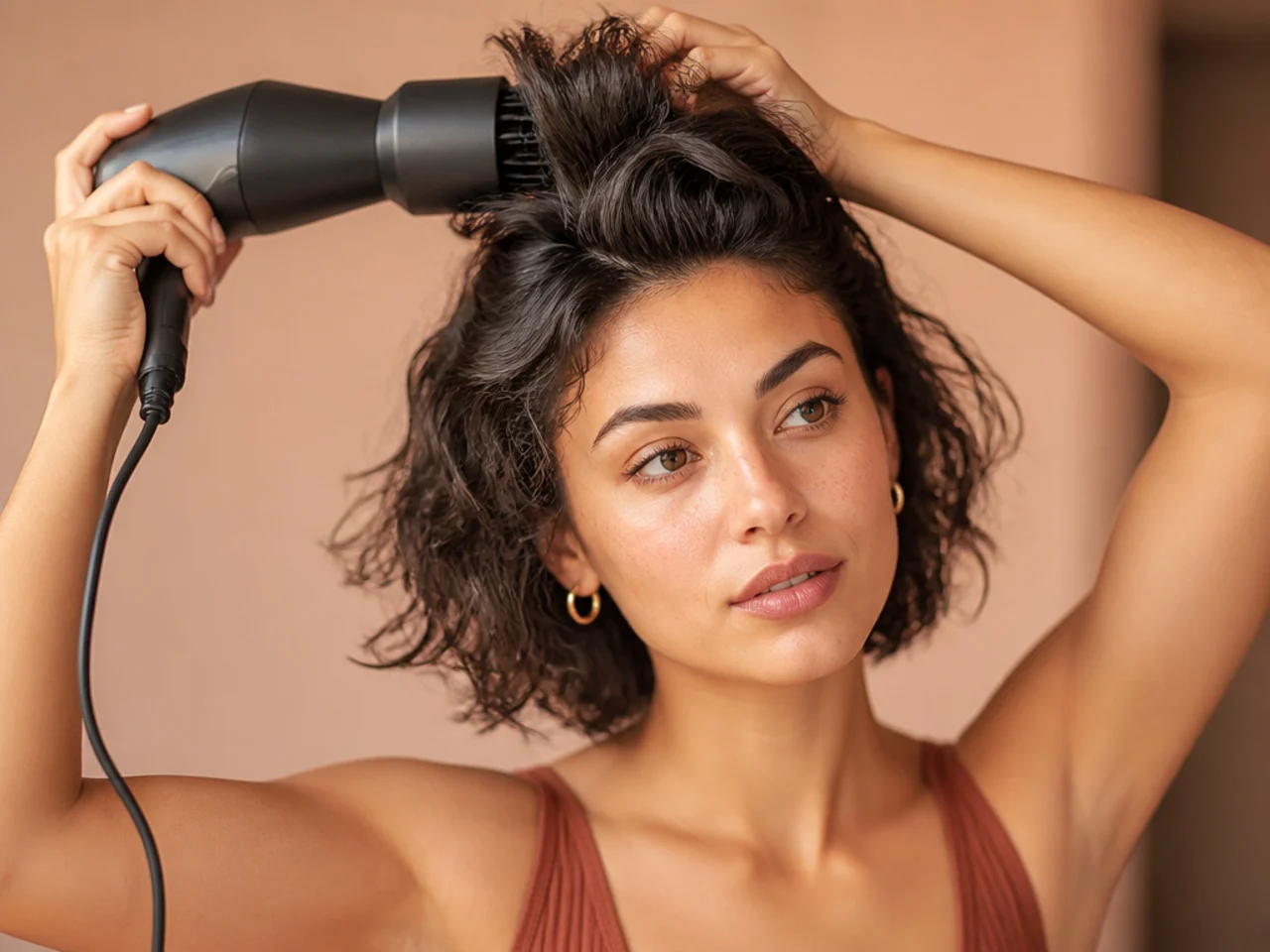
2. Dry the Crown Upward
Prevents the flat-top, wide-sides shape. Lift the roots at the crown while the hair is genuinely wet, because a root dried flat cannot be raised afterwards.
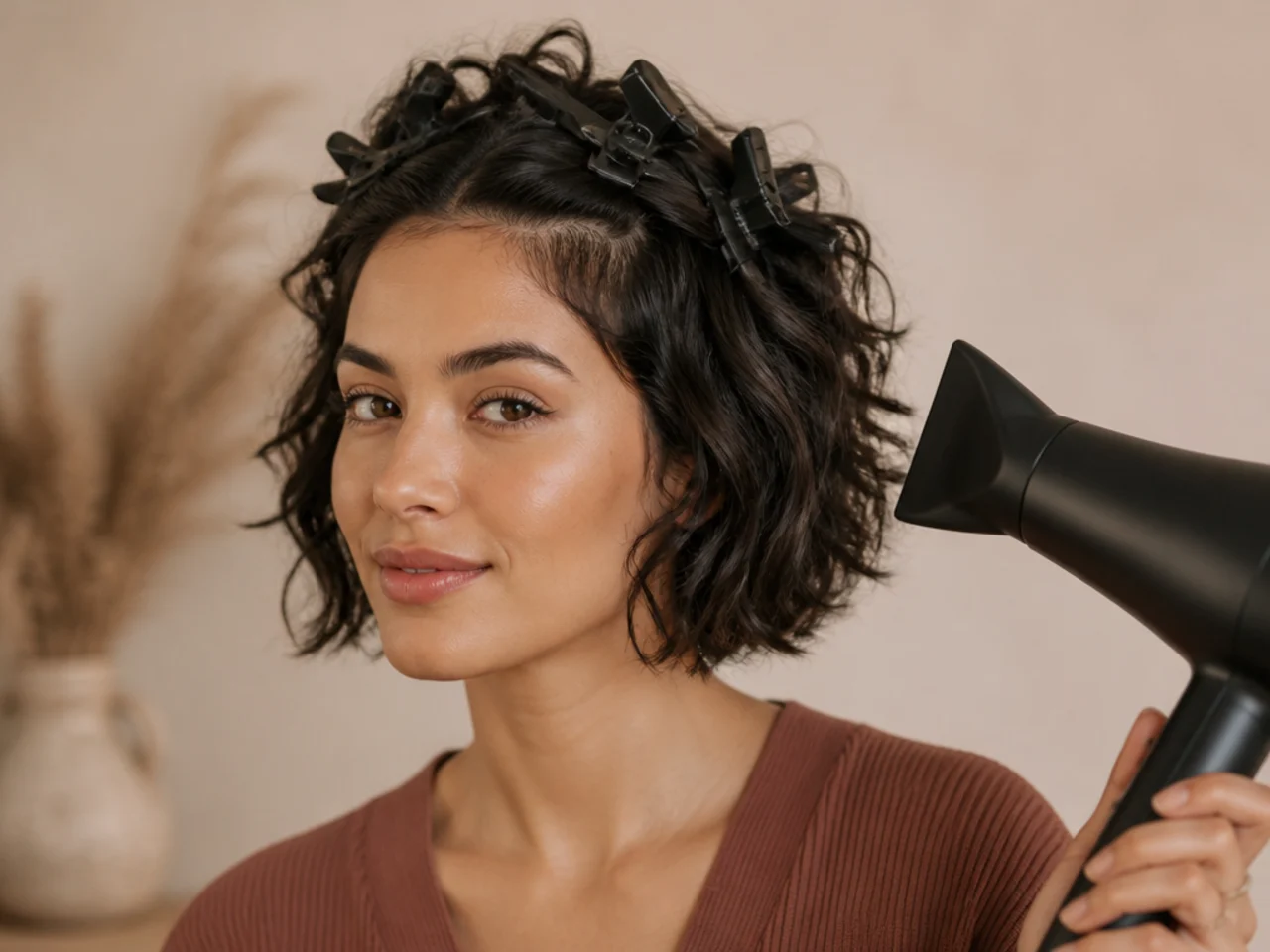
3. Clip the Roots While Drying
Lift built in mechanically. Two clips at the parting hold the roots up until the hair sets, and they cost a few pounds once.
4. Ask for Internal Weight Removal
Rather than more layers, which widen the sides. Layers cut into the outside of a short wavy shape push the sides outward; weight taken from inside does not.

5. Have It Cut Dry
So the stylist sees where the wave actually falls. A wet cut on wavy hair is a cut made on information that disappears the moment it dries.

6. Scrunch Upward, Not Downward
Encourages the wave to lift rather than spread. Press upward toward the scalp rather than squeezing down, which on short hair is the difference between volume and width.

7. Diffuse Upside Down Briefly
Adds crown volume that short hair loses first. Thirty seconds head-down with the diffuser is enough — longer and you are drying the lengths in the wrong direction.

8. Use a Lighter Product Than Before
Not just less of the same one. A cream that suited long hair will still be too dense at short length, because you have removed the weight that was carrying it.

9. Skip the Oil
Short waves have less weight to spare than long ones. Oil is the densest thing most people apply, and a short wave has the smallest margin before it flattens.

10. Work Faster After the Shower
Short hair dries quickly, so the styling window is shorter. You have minutes rather than the half hour long hair gives you, so have the product open before you leave the shower.

11. Refresh the Crown Only
It is what flattens first on short hair. A spray at the roots and a scrunch takes twenty seconds and addresses the only part that usually needs it.

12. Sleep With It Loosely Gathered
Even short lengths benefit from being off the pillow. A loose clip at the crown is enough to keep the top section from being pressed flat overnight.

13. Trim Every Eight Weeks
Short shapes lose their form faster than long ones. The outline is doing more of the work at this length, so it softens sooner and more visibly.
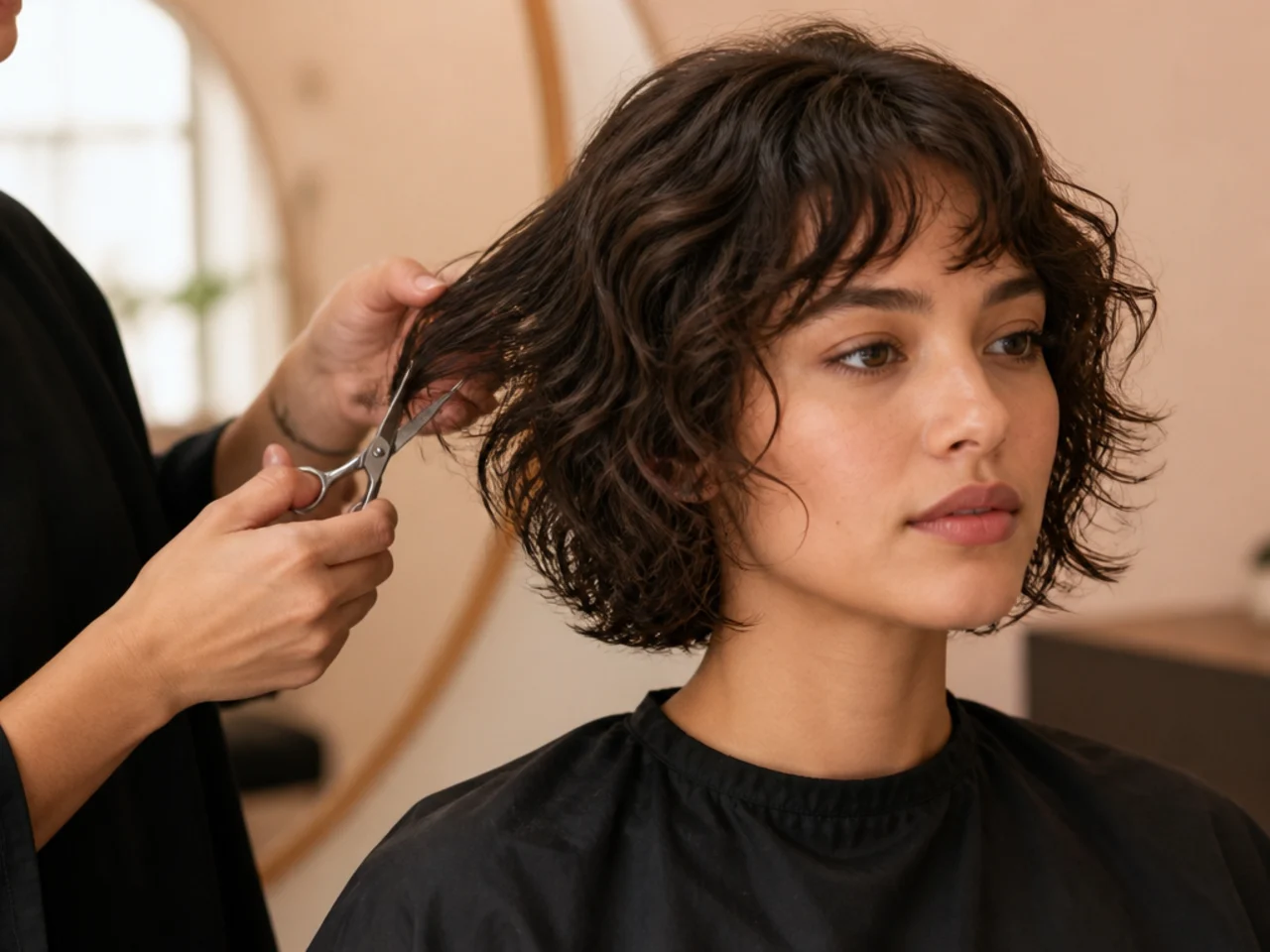
14. Short Wavy Bob
The most common short wavy shape and the most forgiving. Enough weight to stay controlled, short enough that the pattern reads tighter than it did long.

15. Wavy Lob
Collarbone length. Enough weight to stay controlled. The most forgiving length on this page, and the easiest to move to from long hair.

16. Short Wavy With a Fringe
The fringe usually reads straighter than the rest. Fringe hair is handled and dried more than any other section, which loosens the pattern there first.

17. Short Wavy on Fine Hair
Where the tightening effect is strongest. Fine hair had the least weight holding it down to begin with, so removing length changes the pattern most.

18. Short Wavy on Thick Hair
Where the triangle risk is highest. Thick hair expands outward when it is not weighed down, which is exactly what a short cut removes.

19. The Same Hair Before the Cut
Looser, because length was weighing it down. Same hair, same pattern, different amount of gravity acting on it.

20. Short Waves With Long-Hair Product Amounts
Flat on top, wide at the sides. The predictable result. It is the commonest post-haircut complaint on wavy hair and it is a product-amount problem rather than a cutting one.

Styling and Upkeep
Recalibrate your product amount after every big cut. Not just this once.
Prioritise crown lift. It is what short wavy shapes lose first.
Refresh the top, leave the sides. They rarely need it.
Trim on an eight-week cycle. Short shapes soften faster.
Judge over three washes. New lengths behave differently at first.

Mistakes to Avoid
Keeping your long-hair product amount. It flattens short waves.
Adding layers to fix a triangle. Internal weight removal and crown lift are the fixes.
Using oil on short waves. Even less weight to spare.
Neglecting the crown. It is the first thing to flatten.
Judging it on wash one. Give the new length three.

FAQ
Why did it get curlier after a cut? Less length means less weight pulling the pattern down.
More or less product? Less — there is less hair and less weight to overcome.
How do you avoid a triangle? Crown lift and internal weight removal, not shorter sides.

Final Thoughts
Halve your product the first wash after a cut. Your hair has not changed but the weight on it has, and the amount that was exactly right last month is now the thing flattening the pattern you just uncovered.
For the technique behind definition see 20 curl routine steps for wavy hair, and for the full sequence see 25 steps for a wavy hair routine. More in Hair Care.