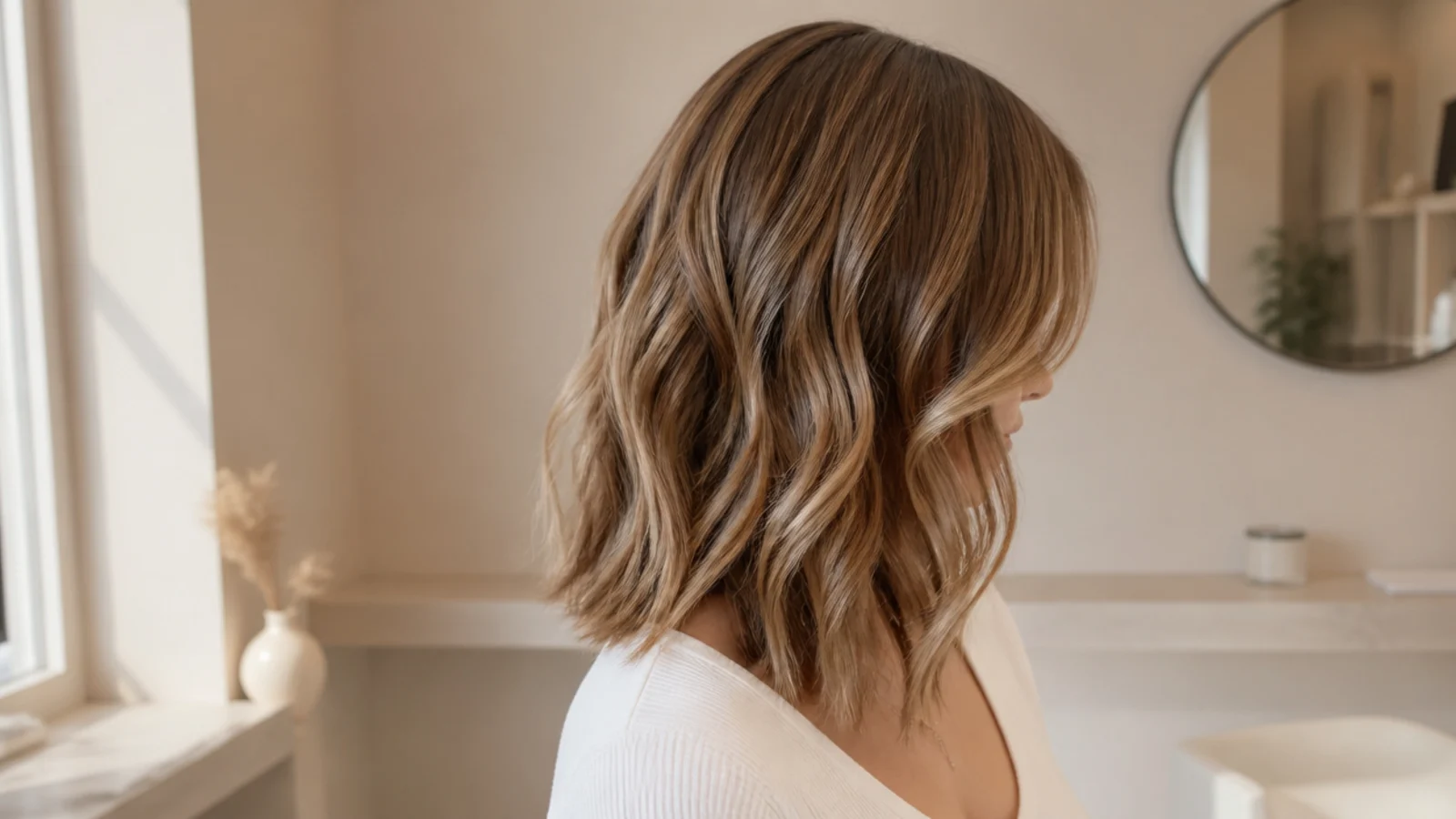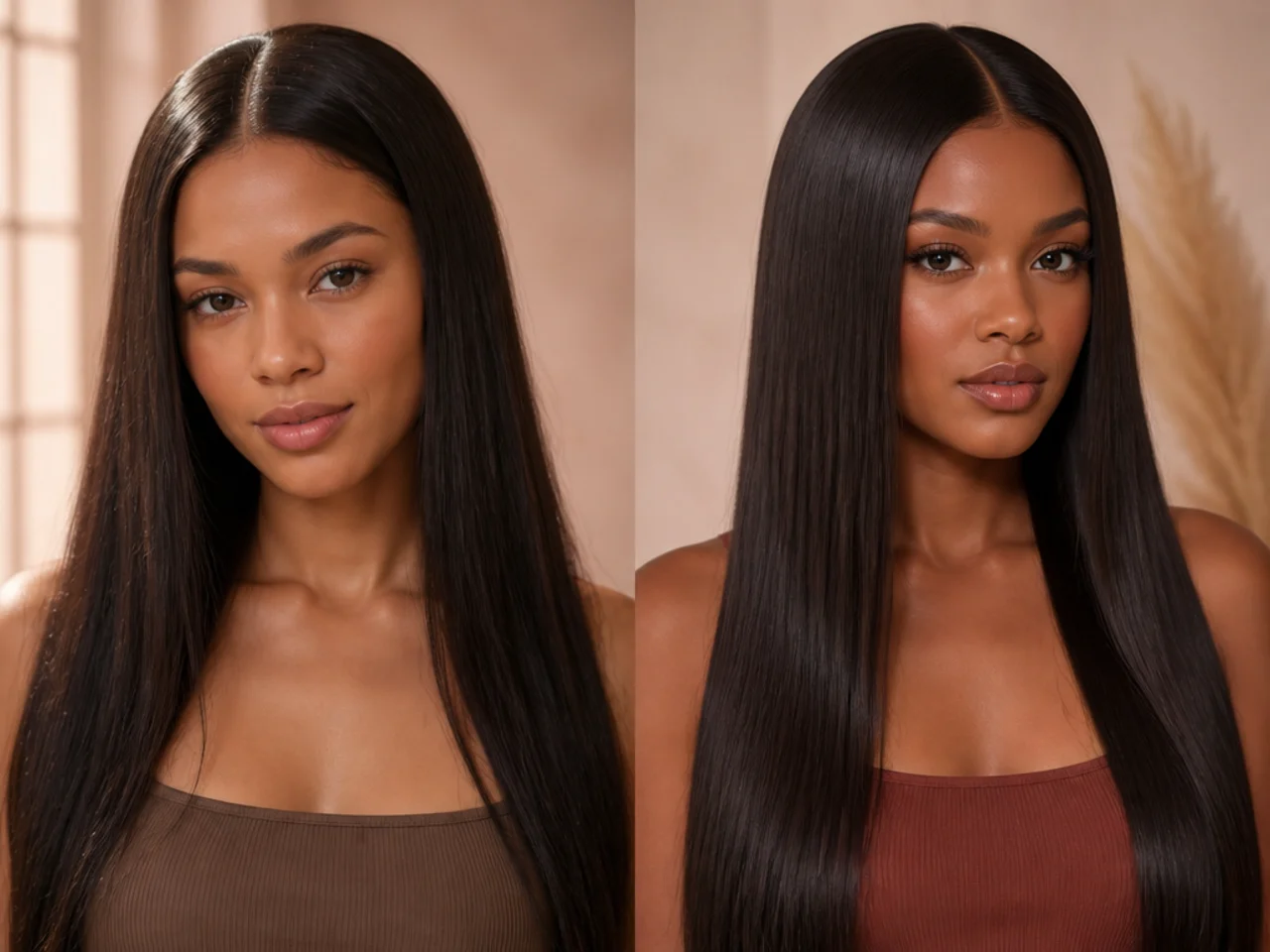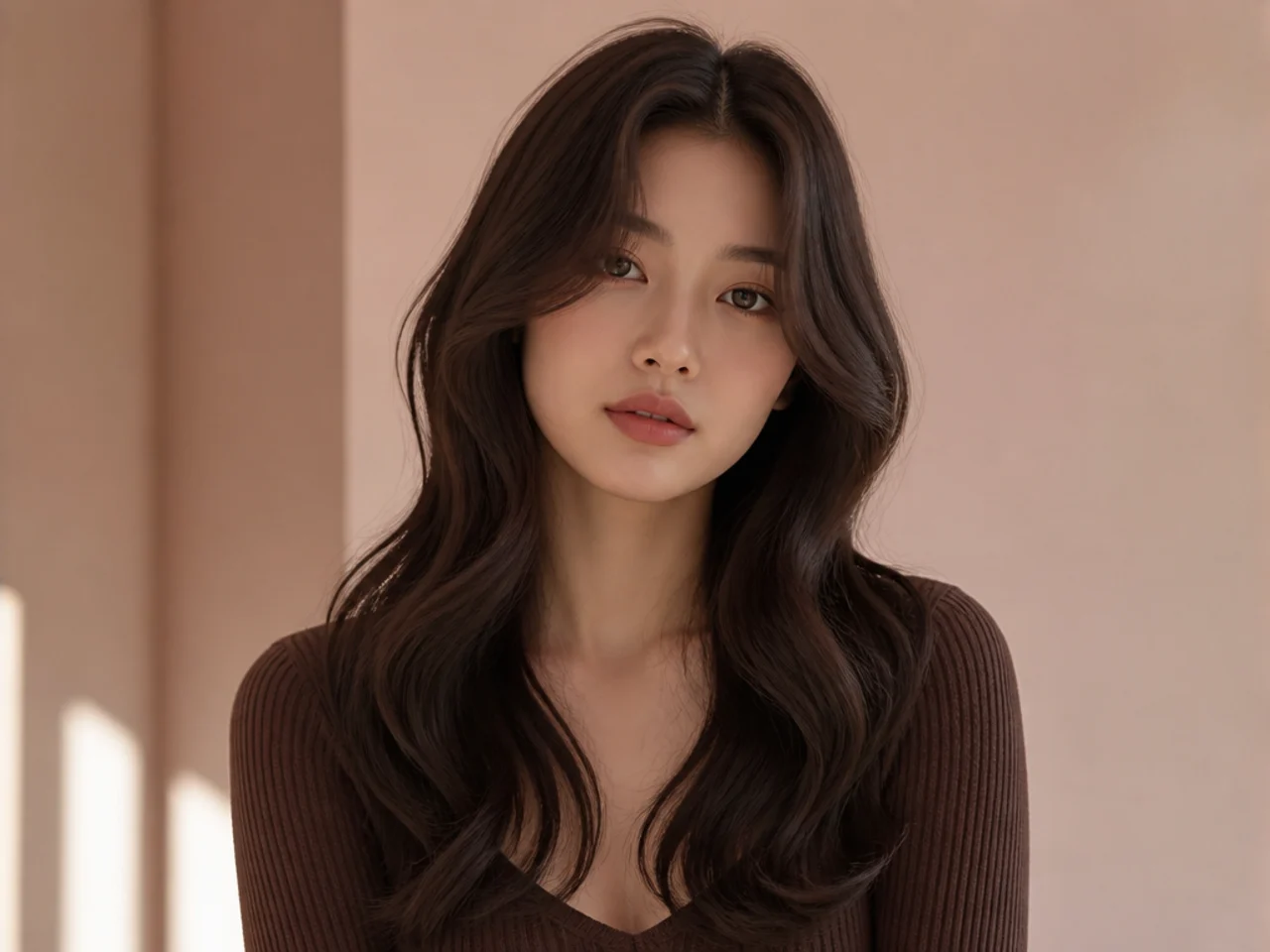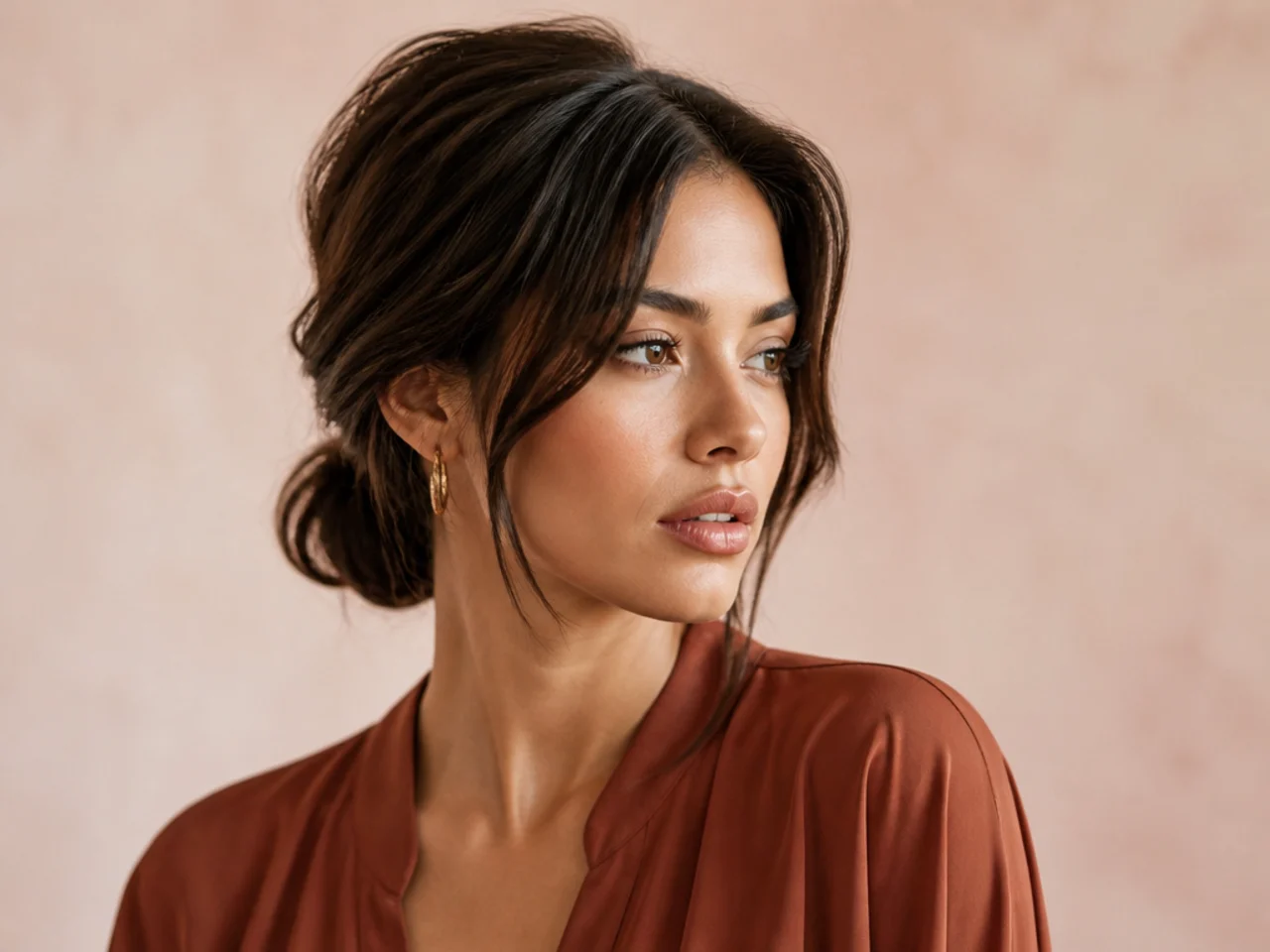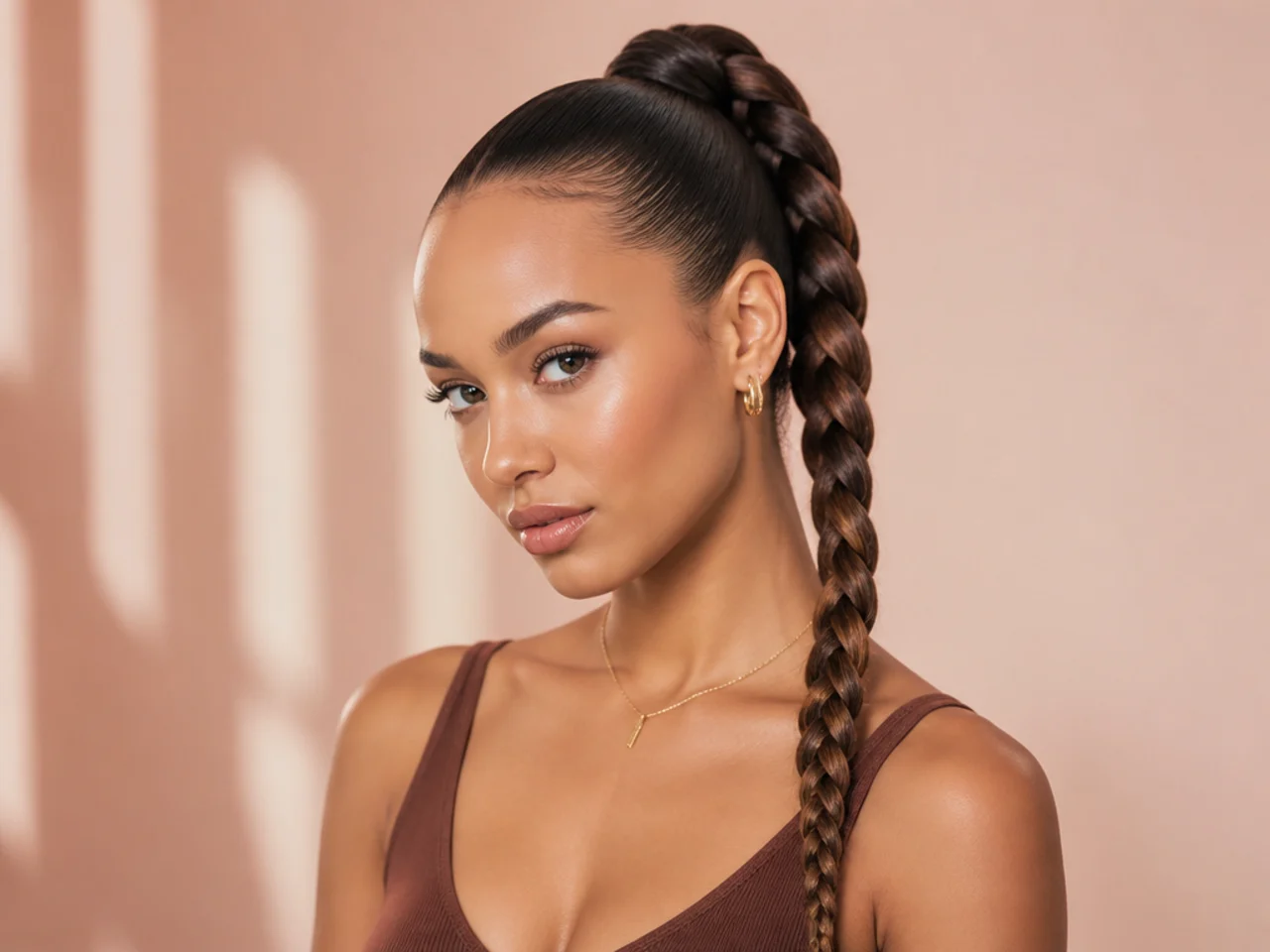
15 High Braided Ponytail Hairstyles for Women
High braided ponytail hairstyles — fifteen fully styled looks from sleek and snatched to boho, bridal, Fulani-inspired, and Y2K, with technique notes and a stylist tip for each.
In this article · 26
- What Makes a High Braided Ponytail Work
- How to Choose Your Braided High Pony
- 1. Snatched Sleek Braid Pony
- 2. Boho Pancaked Braid Pony
- 3. Runway Boxer Braid Pony
- 4. Bubble-Braid Duet Pony
- 5. Fulani-Inspired Beaded Braid Pony
- 6. Coquette Velvet-Ribbon Braid Pony
- 7. Bridal Coronet Braid Pony
- 8. Half-Up Milkmaid Braid Pony
- 9. Snake Braid Compression Pony
- 10. Y2K Micro-Braid Trio Pony
- 11. Butterfly Fishtail Braid Pony
- 12. Festival Jumbo Goddess Braid Pony
- 13. Athletic French-Braid Feed Pony
- 14. Waterfall Cascade Braid Pony
- 15. Baby Braid Halo Pony
- How to Ask Your Stylist for a Braided High Pony
- Styling and Maintenance
- FAQ
- Which of these is the easiest to do at home?
- How do I keep a braided high pony from unraveling?
- Can I do these on shoulder-length hair?
- How do I stop my edges from breaking from braided ponies?
- Will these work with bangs?
- Which braided high pony reads best in photos?
A braid turns a snatched high pony into a signature. The base is the same lifted crown you'd tie for a gym class, but the plait — whether it feeds in from the hairline, runs down the tail, or wraps the elastic — sets the mood. Below are 15 high braided ponytail hairstyles built as complete looks, from sleek and glassy to boho, bridal, athletic, and Y2K, with the technique, the face-shape match, and one stylist tip for each. For the crown base every version sits on, our high ponytail hairstyles guide covers the lift-and-hold fundamentals worth stealing first.
What Makes a High Braided Ponytail Work
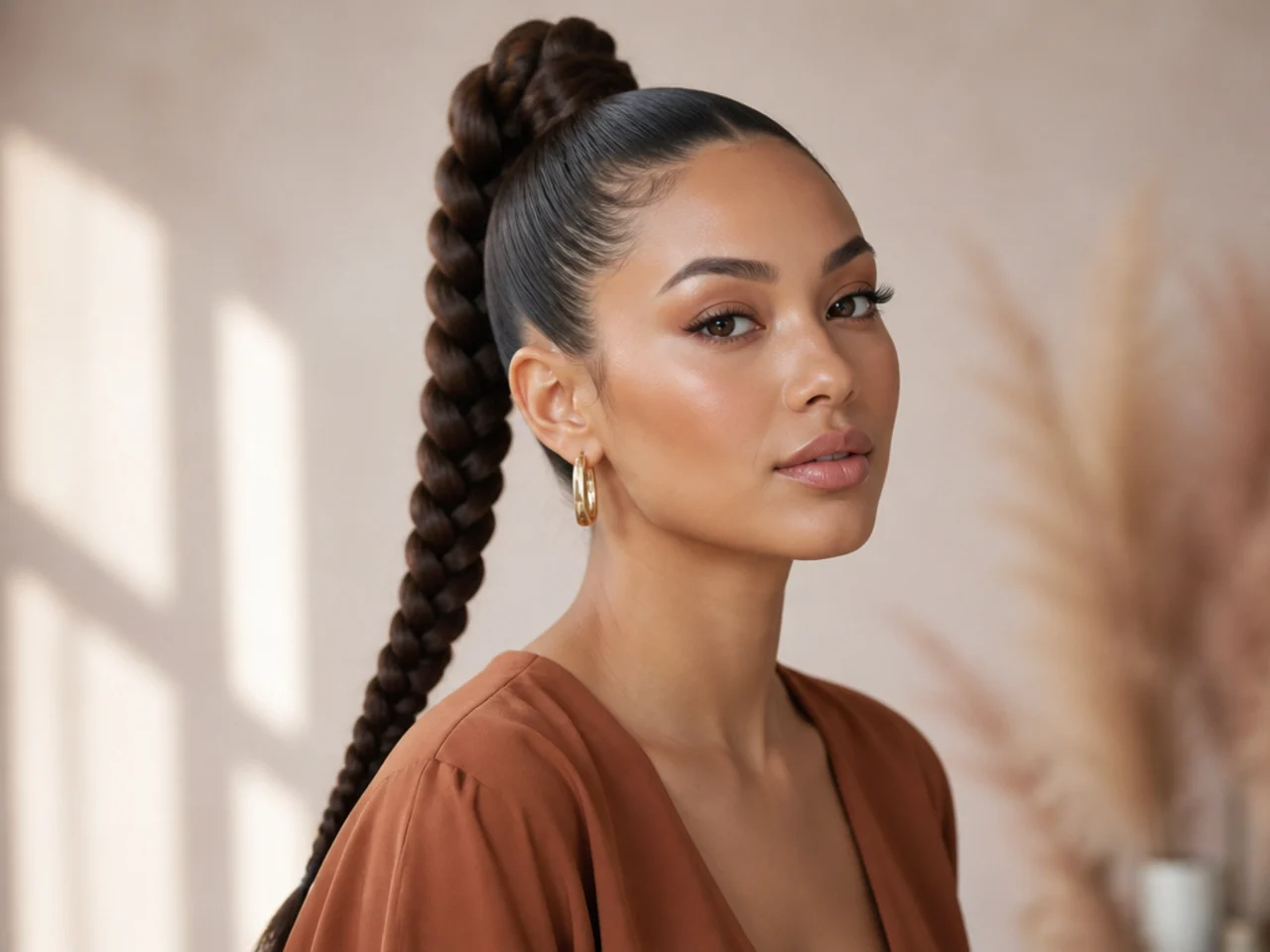
Three ingredients decide whether a braided high pony reads intentional or improvised. The first is placement — the base sits at the crown or an inch forward of it, never sagging toward the occipital bone. The second is the braid itself — one plait, twin plaits, feed-ins, or a jumbo goddess braid, chosen for the vibe. The third is tension. Too tight and you're inviting a headache and a stressed edge; too loose and the braid pancakes into shapelessness by lunch.
The braid can lead in from the hairline, replace the loose tail, wrap the elastic, or run alongside a smooth base. Some versions on this list combine two — a feed-in French plus a rope-braided tail, or twin Dutch boxers meeting a fishtail. What every look shares is a plait that does the styling work while the pony provides the lift.
How to Choose Your Braided High Pony
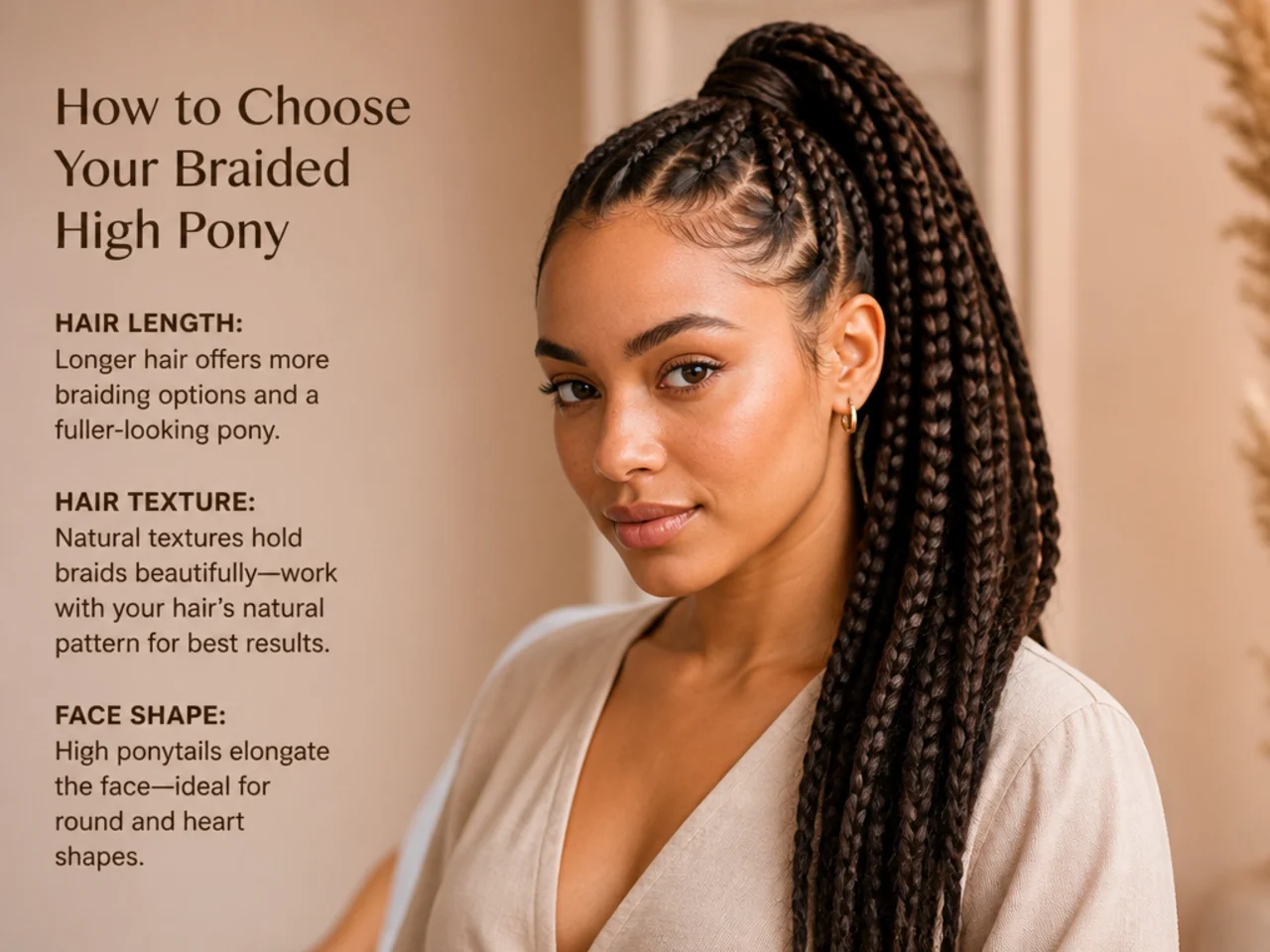
Four filters narrow the field: your hair texture, your face shape, your occasion, and how much time you have before you have to walk out the door.
Straight and wavy hair takes every look on this list with a smoothing cream and a light hairspray. Curly hair grips feed-in French, Dutch, and rope beautifully once stretched. Coily and 4A textures were made for Fulani, cornrow-fed, and jumbo goddess variations — patterns that don't demand each strand behave identically. Our curl types guide covers the prep-by-pattern rules worth knowing before you plait.
Match the moment. Athletic and micro-braid variations read gym-to-office. Sleek and coquette-ribbon versions read date night. Bridal coronet and Fulani-beaded looks read wedding and cultural event. Boho pancaked and butterfly fishtail read music festival and brunch.
1. Snatched Sleek Braid Pony
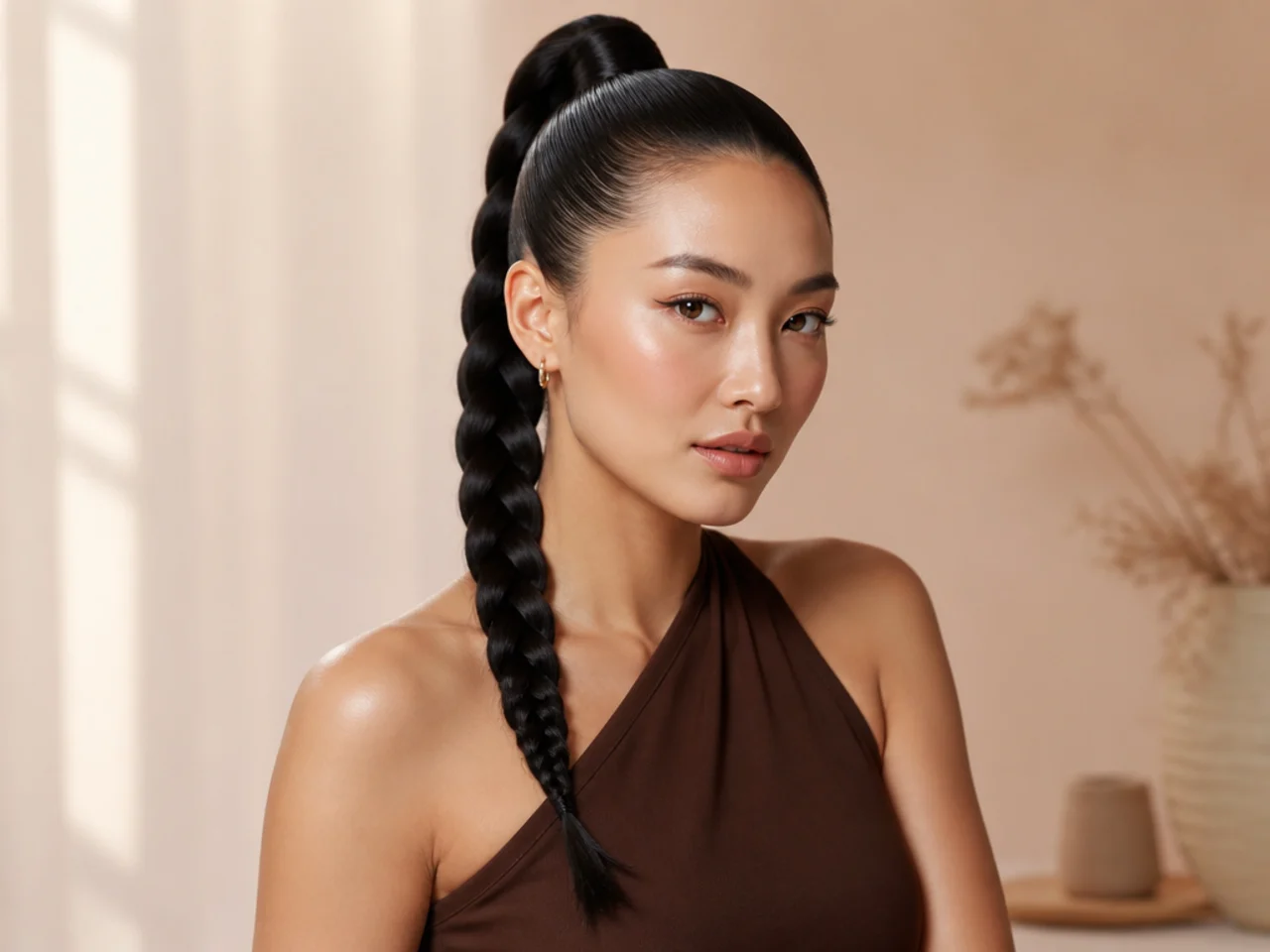
The gold-standard reference. A wet-look base pulled to a mirror finish, an invisible wrap around the elastic, and a single three-strand braid down the tail. It suits every face shape because the shine does the framing work. Pair it with a black tie, a red carpet, or a Monday-morning meeting where you want to walk in looking put-together without saying a word.
Flip your head forward, slick everything up to the crown with a strong-hold gel and a boar-bristle brush, and secure with a bungee tie. Braid a tight three-strand down the length of the tail. Wrap a small section of hair around the base to conceal the elastic, then finish the perimeter with a drop of dry oil pressed only over the outside of the tail.
Stylist tip: flat-iron the tail before you braid, not after. A pre-smoothed tail plaits into a mirror-finish braid; a wavy tail plaits into a braid that reads frizzy at the edges no matter how much product you use later.
2. Boho Pancaked Braid Pony
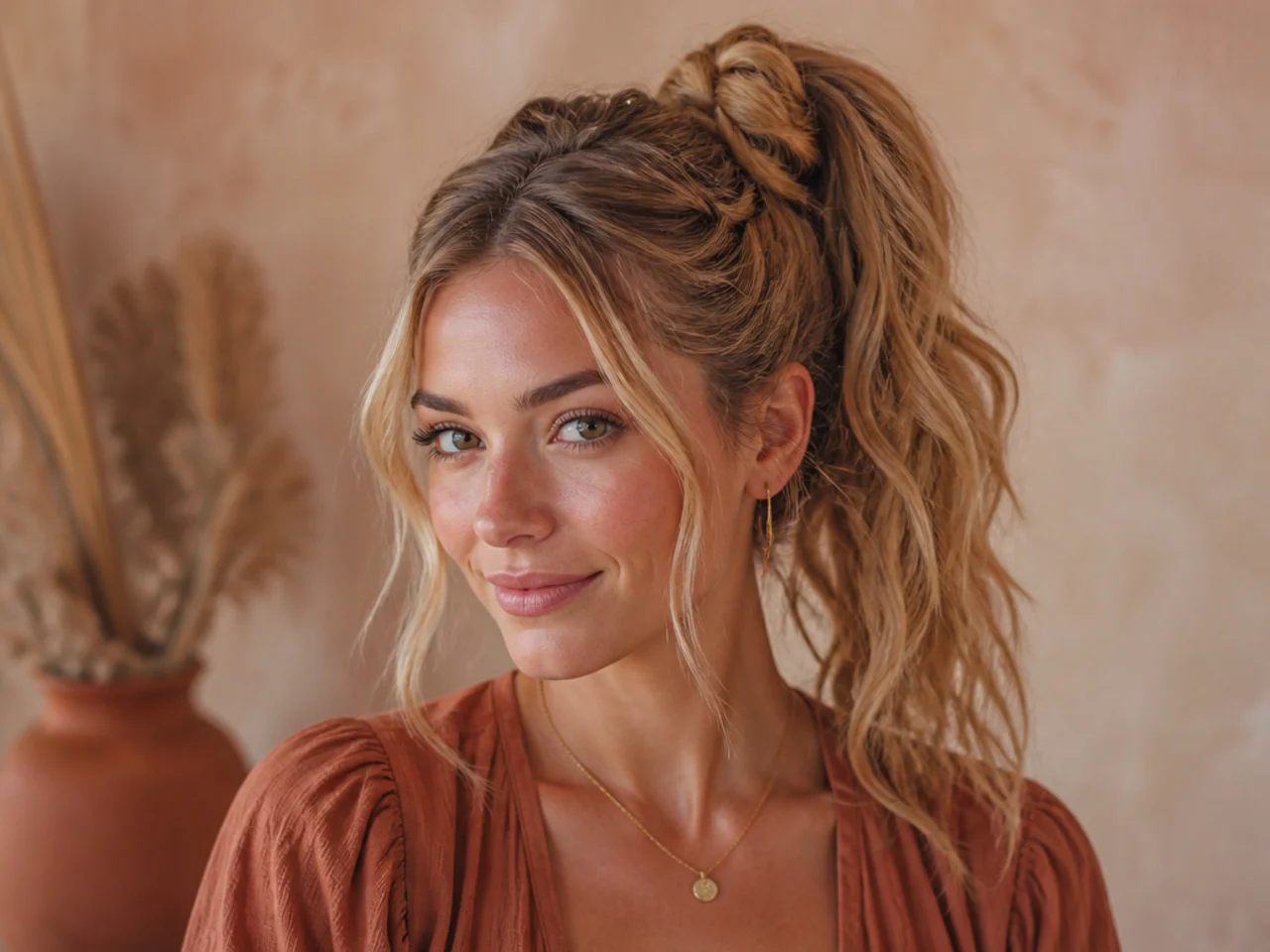
The romantic opposite of the sleek pony. Deliberate softness at the perimeter, chunky braid loops down the tail, and face-framing tendrils falling loose at each temple. It suits square and heart faces because the softness at the front rounds the geometry. Wear it to brunches, garden parties, or anything with a Y2K-goes-cottagecore mood.
Rough-dry the hair for texture instead of blowing it smooth. Tie a high pony loose enough to slide a finger under the base. Braid a loose three-strand or French down the tail. Once the ends are secured, pinch each loop of the plait between your fingertips and pull outward — pancaking the braid to nearly double its visible width. Free two thin sections at the temples and curve them softly with a wand.
Stylist tip: dust a texture powder along the tail before you plait. It gives fine or slippery hair the grip a pancaked braid needs so the loops stay expanded instead of springing back tight.
3. Runway Boxer Braid Pony
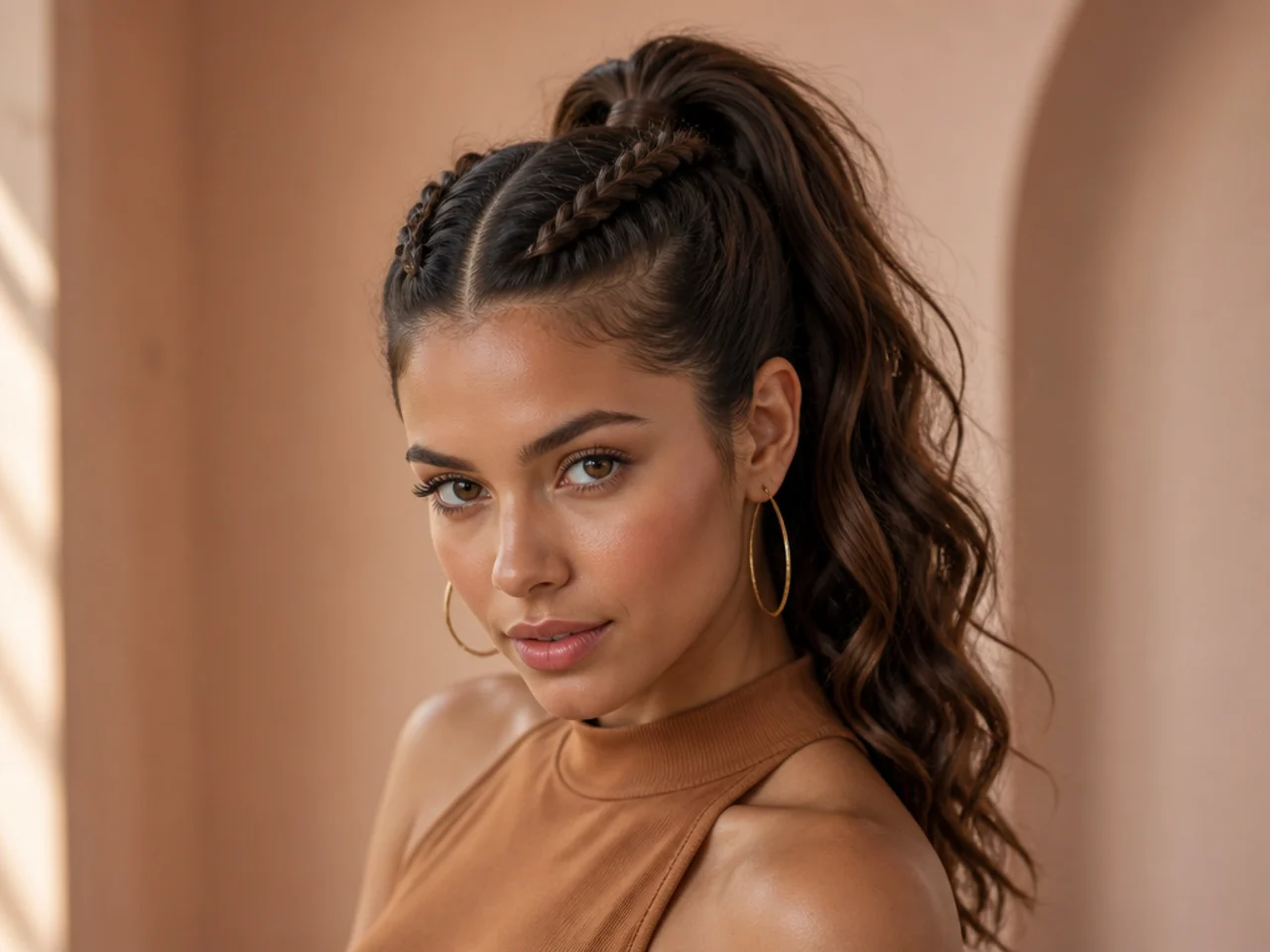
Twin Dutch braids running along either side of a crisp center part, meeting at the crown to feed a single high pony. Called "boxer" because MMA fighters wear them to keep hair off the face — but the runway adopted them long ago as sport-inspired polish. Reads athletic and pretty at the same time. Suits every face shape because the mirror geometry balances any silhouette.
Draw a sharp center part with a rat-tail comb dipped in water. On each side, section a two-inch strip from the front hairline. Dutch braid — under-cross technique — following the curve of the head toward the crown, adding hair from each side of the section on every pass. Feed both finished plaits into a single high pony at the peak. Pancake the outer edges of each braid for chunky mirror ropes.
Stylist tip: wet the center part before you divide. Dry hair wants to close the part back up within an hour; damp hair holds the line all day and reads sharper in photos.
4. Bubble-Braid Duet Pony
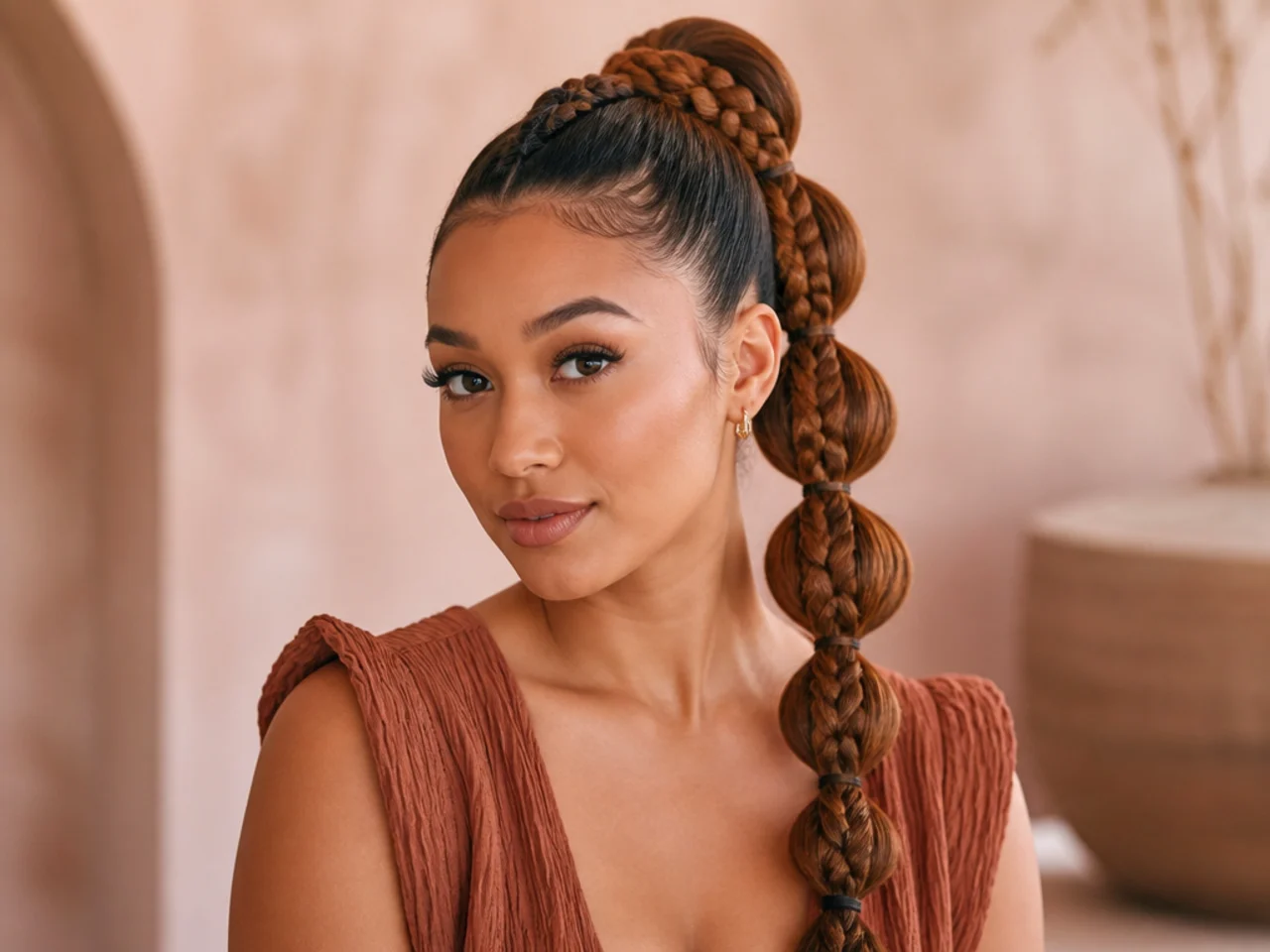
The best of both worlds — braided segments alternate with puffed bubbles down the length of the tail. The bubbles fake density where the braid narrows; the braid adds architecture where a bubble would go shapeless. Suits fine and medium hair because the puff sells fullness in photos. Wear it to concerts, festivals, or anywhere the outfit is doing enough talking that the hair should just support.
Tie a snatched high pony. Braid a tight three-strand for the first three inches. Secure with a clear elastic. Below the elastic, pinch and pull the hair outward with your fingertips to create a bubble. Below the bubble, tie a second clear elastic and start another braided section. Continue alternating braid-elastic-bubble-elastic down the length.
Stylist tip: pinch each elastic between your thumb and forefinger while you tug the bubble outward. It stops the whole tail from shifting and keeps segments parallel. For plain bubble-only versions without the braided halves, our cute high ponytail hairstyles roundup covers the pure-puff variation.
5. Fulani-Inspired Beaded Braid Pony
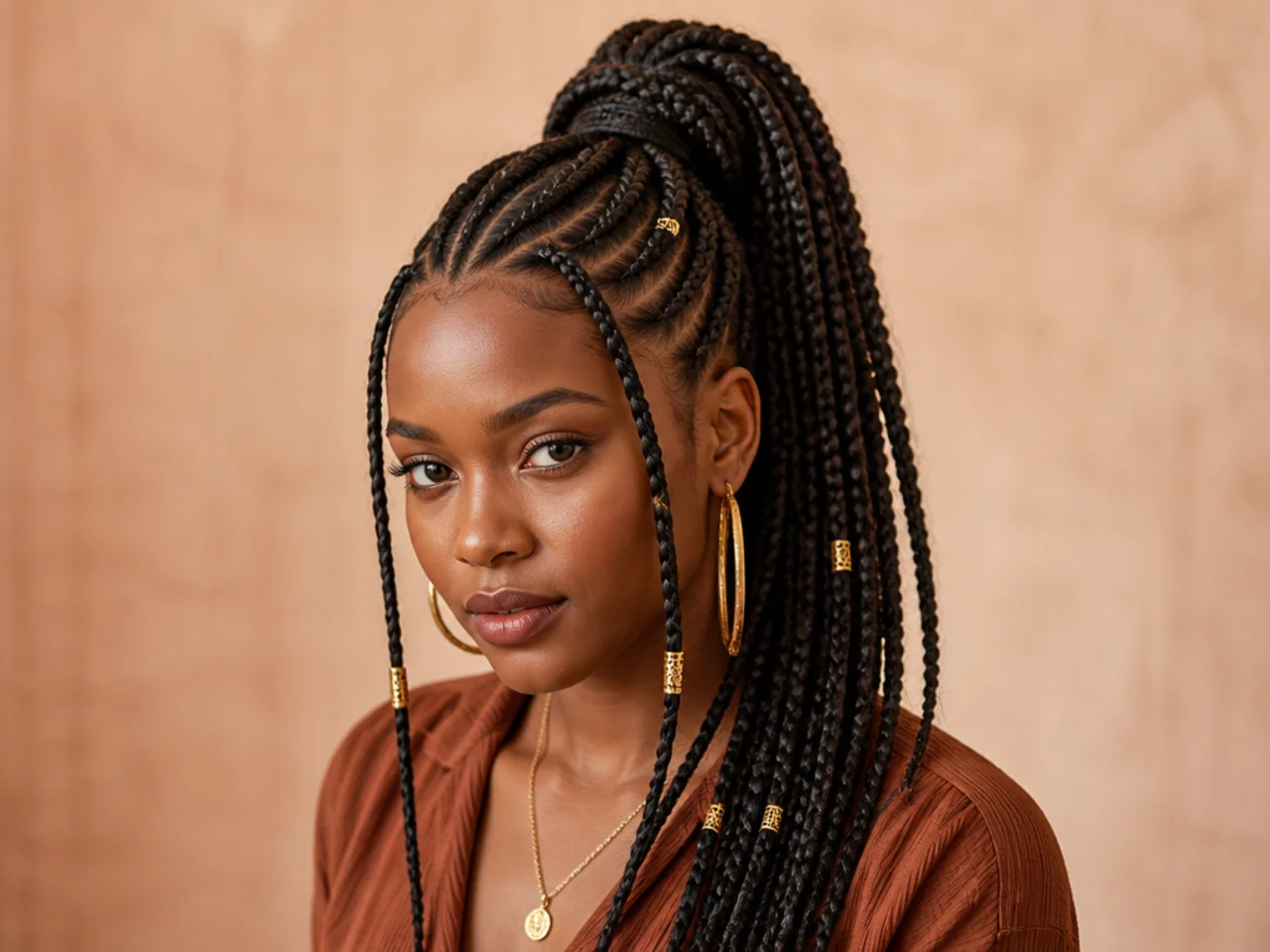
A pattern with deep West African cultural roots — small cornrows running from the front hairline with a center parting braid down the middle, threaded with gold or wooden beads and gathered up into a high pony. Reads statement, celebratory, and richly textured. Suits every face shape and pairs beautifully with 4A through 4C hair. Protective for a full week.
Section a narrow strip down the center of the head and cornrow it front to back. On either side, cornrow smaller feed-in braids following the curve of the scalp toward the crown. Thread gold, wooden, or metallic beads onto specific plaits as you work — traditional placement clusters them at the temples and the base of the pony. Gather everything into a high pony and secure over a satin scrunchie. Stretched natural hair, marley-braided extensions, or a wig-installed pony all work as the tail.
Stylist tip: book a braider who knows the tradition rather than DIYing beading yourself. The tension has to be even across every cornrow or the pony pulls lopsided within a day. For more pony variations built for Type 4 textures, our high ponytail hairstyles for black women guide covers the full protective-styling range.
6. Coquette Velvet-Ribbon Braid Pony
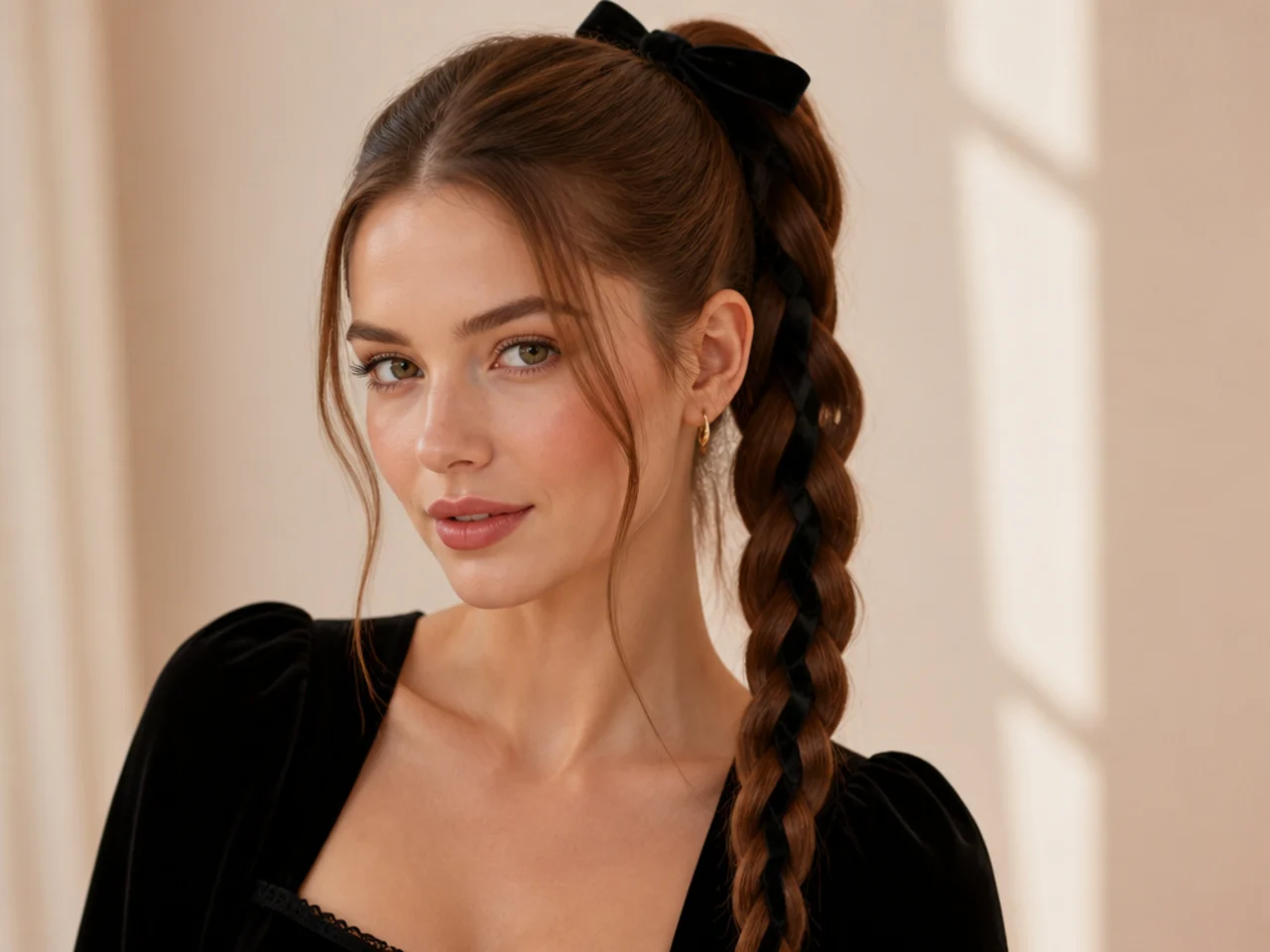
The coquette-adjacent finish — a length of black or burgundy velvet ribbon woven into a three-strand braid down the tail, finished with a soft bow at the base of the elastic. Reads feminine, storybook, and date-night without going full costume. Suits round and heart faces because the vertical ribbon narrows the silhouette.
Tie a snatched high pony. Fold a two-yard length of velvet ribbon in half and loop it under the elastic so the bow sits at the crown. Split the tail into three sections, using one length of the ribbon as a "fourth strand" that follows the middle of the three-strand plait as you braid down the tail. Secure with a small clear elastic and let the ribbon tails fall alongside the braid.
Stylist tip: matte velvet reads richer than satin under warm indoor light. Cool-toned rooms take satin; warm-lit venues take velvet. Pre-measure the ribbon to twice the length of your tail so you have enough to weave and tie off.
7. Bridal Coronet Braid Pony
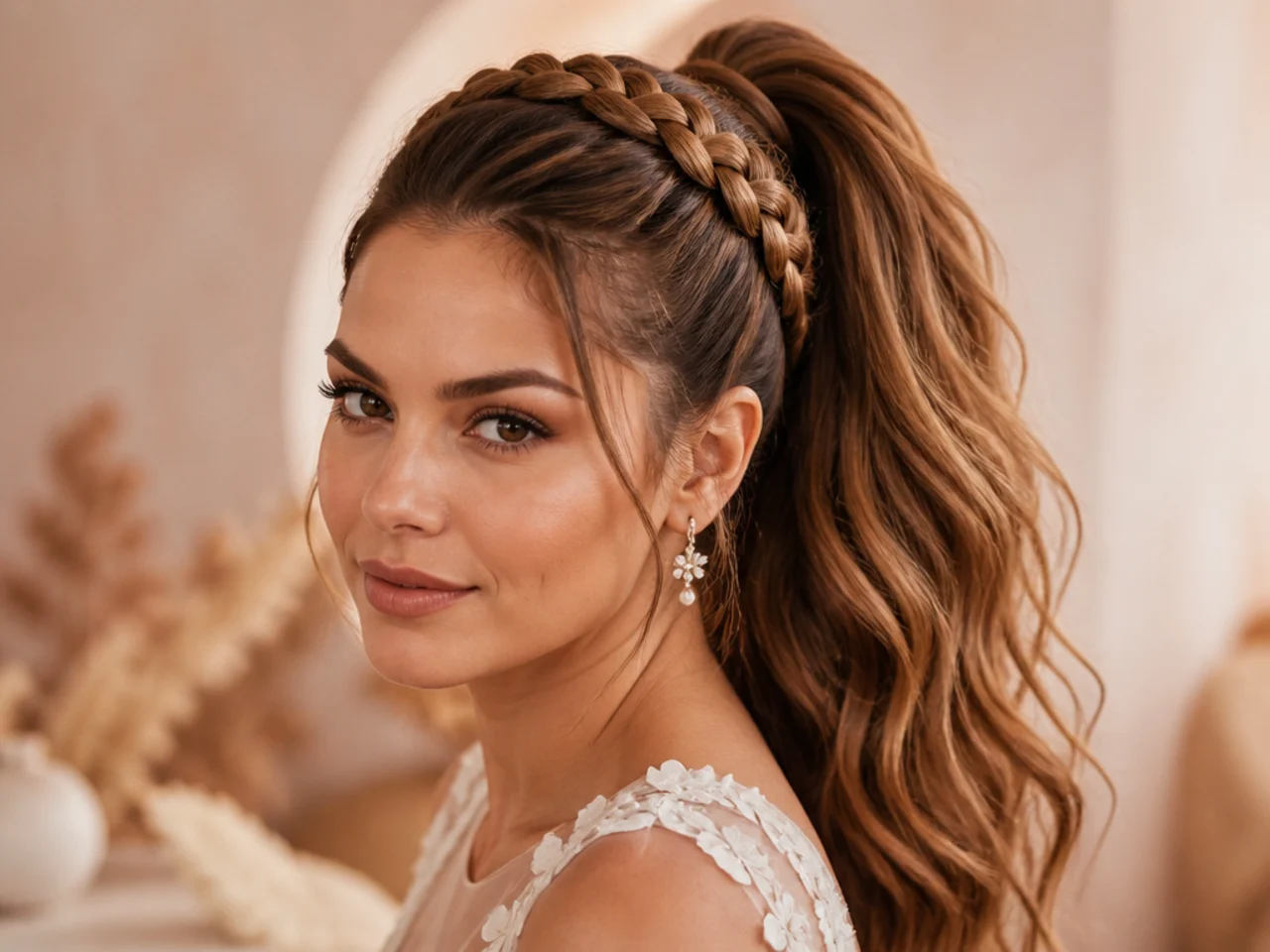
A long braid works around the crown like a tiara before feeding into a high pony behind it. Reads garden wedding, opera, and formal shoot without asking for hardware. Needs length — shoulder-length hair barely reaches around the head. Suits every face shape because the coronet balances any silhouette by adding a horizontal at the crown.
French or Dutch braid a section starting at one temple and continue around the perimeter of the crown in a full circle, adding hair from each side as you work. When you reach the starting point, tuck the finished braid tail under the beginning and pin with two bobby pins driven downward. Gather any remaining hair behind the crown into a high pony over a satin scrunchie.
Stylist tip: braid the coronet on slightly damp hair. The extra moisture lets the plait bend around the curve of the head without lumping. Set with a light hairspray twelve inches away and pin any escaping ends flush before you finish the pony.
8. Half-Up Milkmaid Braid Pony
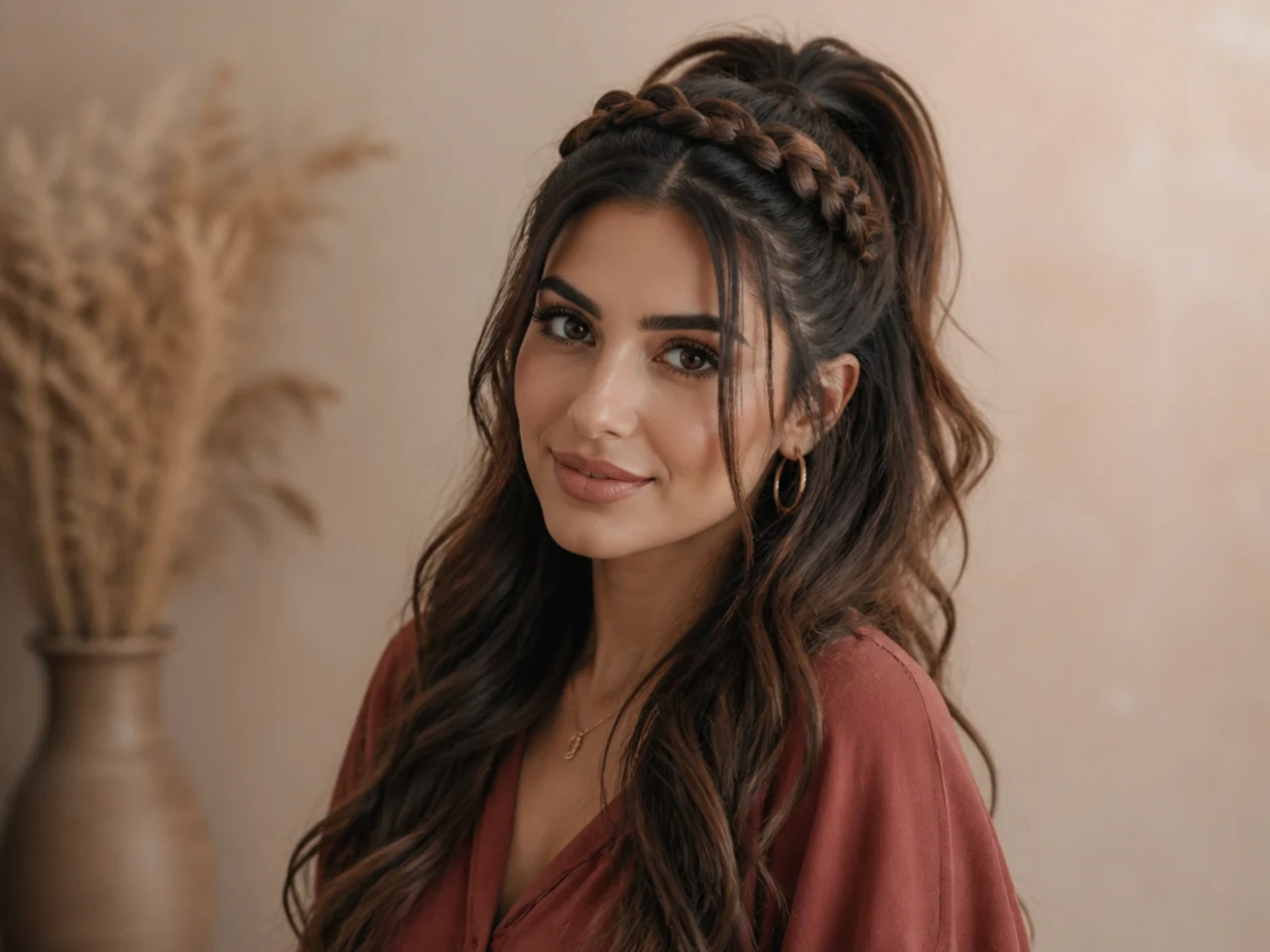
A half-up hybrid where a milkmaid-style braid runs across the crown while the lower half hangs loose behind. Above the braid, the upper section is gathered into a mini high pony that sits like a bow above the plait. Reads soft, romantic, and grown-up — the version to wear to a rehearsal dinner, a christening, or a spring wedding you're a guest at.
Take a two-inch section from the front hairline and French braid it across the top of the head from one temple to the other. Pin the tail down under the opposite ear. Above the braid, gather the upper half of your hair into a snatched high pony. Below the braid, leave the remaining hair loose and softly waved.
Stylist tip: curl the loose lower half before you braid — waves added after the milkmaid is set flatten the braid. Use a 1.25-inch curling wand and alternate the direction of the curl so the ends read organic rather than uniform.
9. Snake Braid Compression Pony
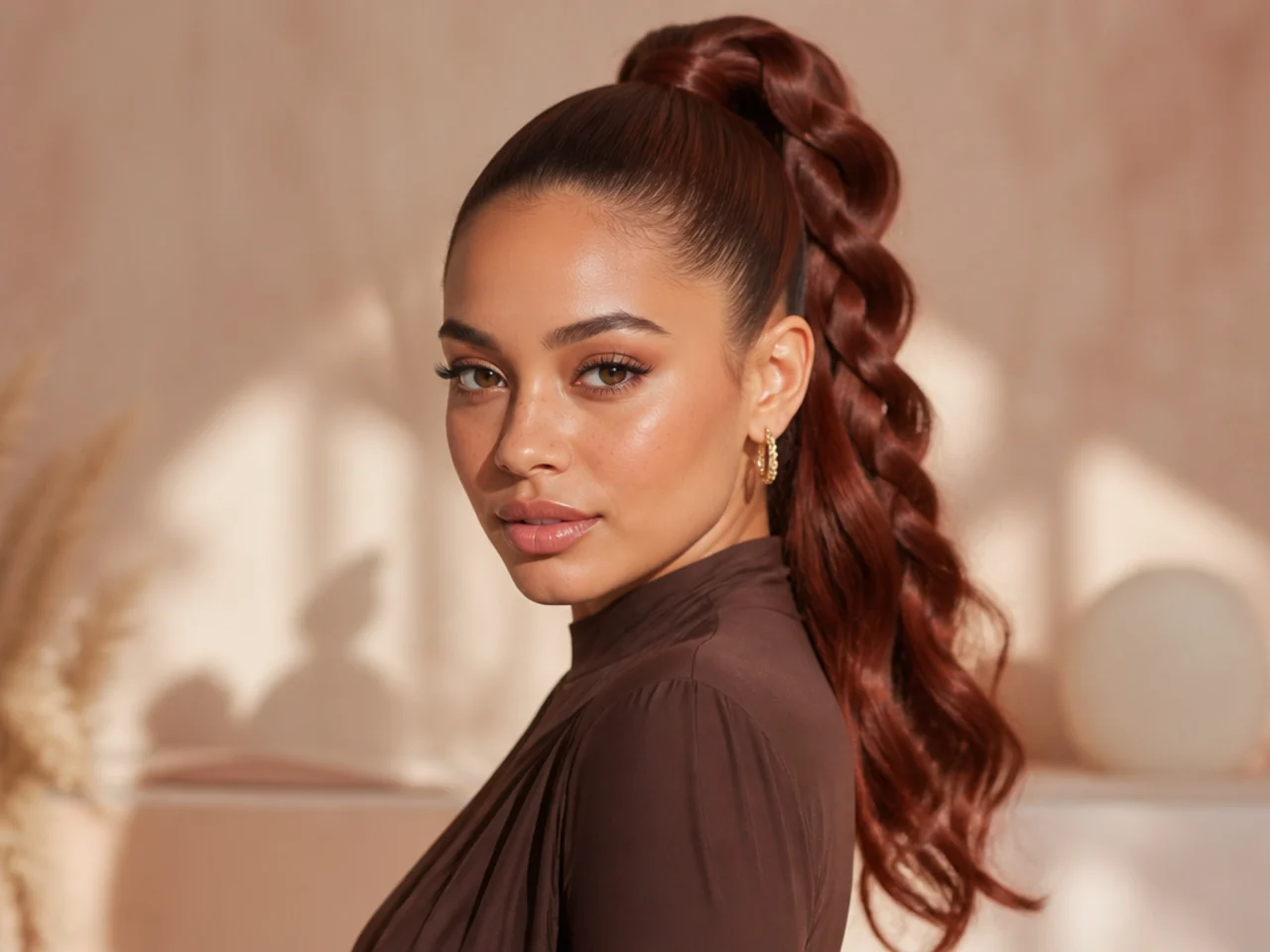
The snake braid is a three-strand plait that gets pushed together at the end — the two outer strands slide up along the middle strand and the whole tail compresses into a serpentine S-shape. Playful, quick, and reads unique in a sea of plain French and Dutch. Suits medium to long straight and wavy hair.
Tie a high pony. Braid a loose three-strand down the length of the tail. Once you reach the ends, hold the middle strand firmly in one hand and gently push the two outer strands upward along the middle strand with the other. The plait crinkles into a compressed S. Secure the ends with a clear elastic to lock the compression in place.
Stylist tip: don't over-braid the tension going in. A loose three-strand pushes together cleanly into a snake shape; a tight one refuses to compress and just kinks awkwardly. Practice the push-together move on a small test tail before you commit to the full length.
10. Y2K Micro-Braid Trio Pony
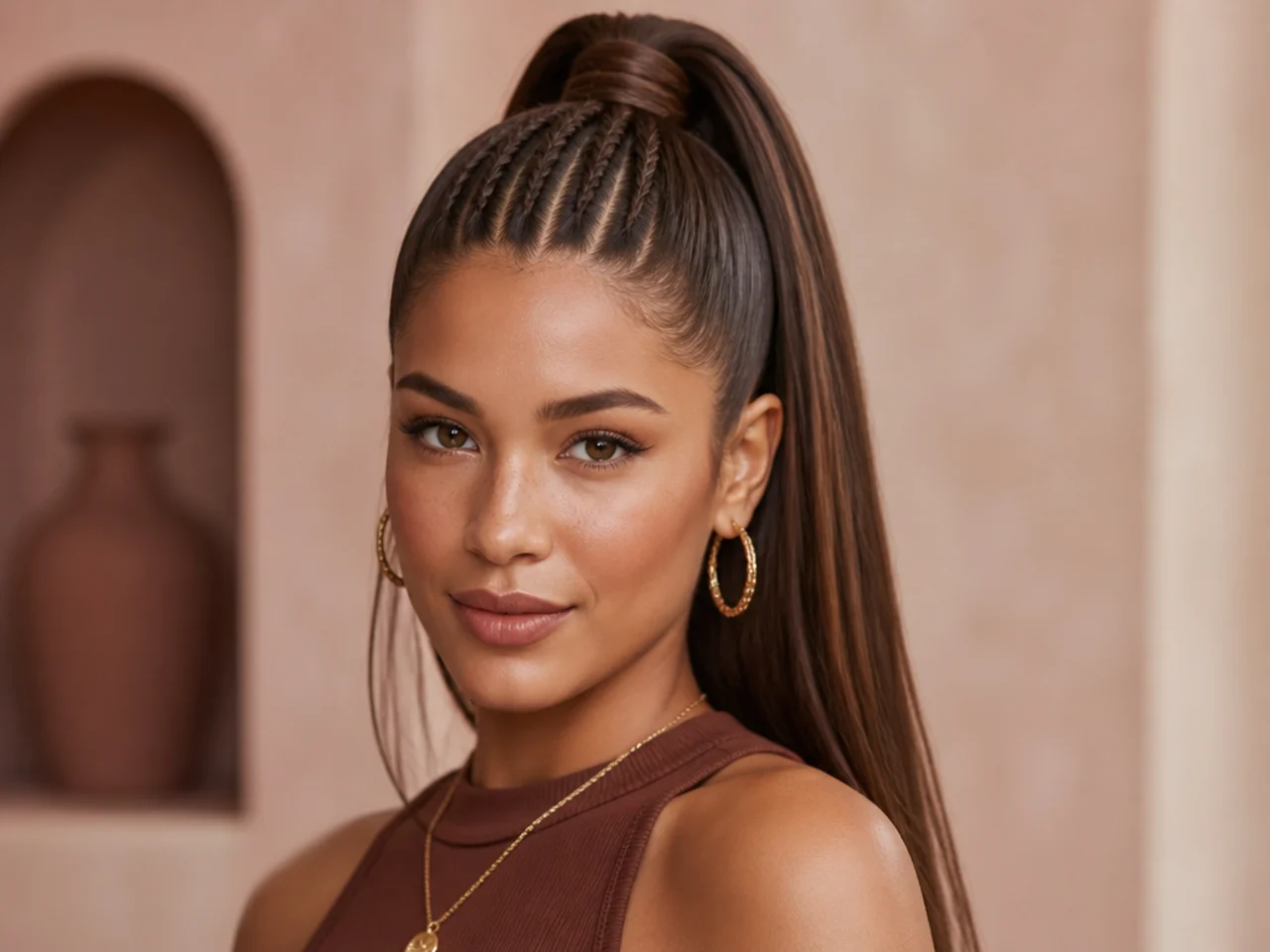
Three thin plaits — each no thicker than a pencil — running from the front hairline over the crown to feed into a high pony. Deeply 2003, currently reviving on TikTok and Pinterest. Reads playful and slightly punk. Suits any face shape and works best on straight to wavy hair; coily textures do their own more sculptural version with cornrow feed-ins.
Section three narrow strips at the front hairline — one at each temple and one down the center parting. Three-strand plait each strip tightly along the top of the head, adding no fresh hair as you go (these are stand-alone micro-braids, not French plaits). Feed all three ends into a single high pony at the crown and secure over a satin scrunchie. Leave the rest of the base smooth.
Stylist tip: clip small silver or beaded pony rings around each micro-braid every inch for the full Y2K effect. Skip the rings and the same look reads clean-girl minimalist. Both are on-brand for 2026.
11. Butterfly Fishtail Braid Pony
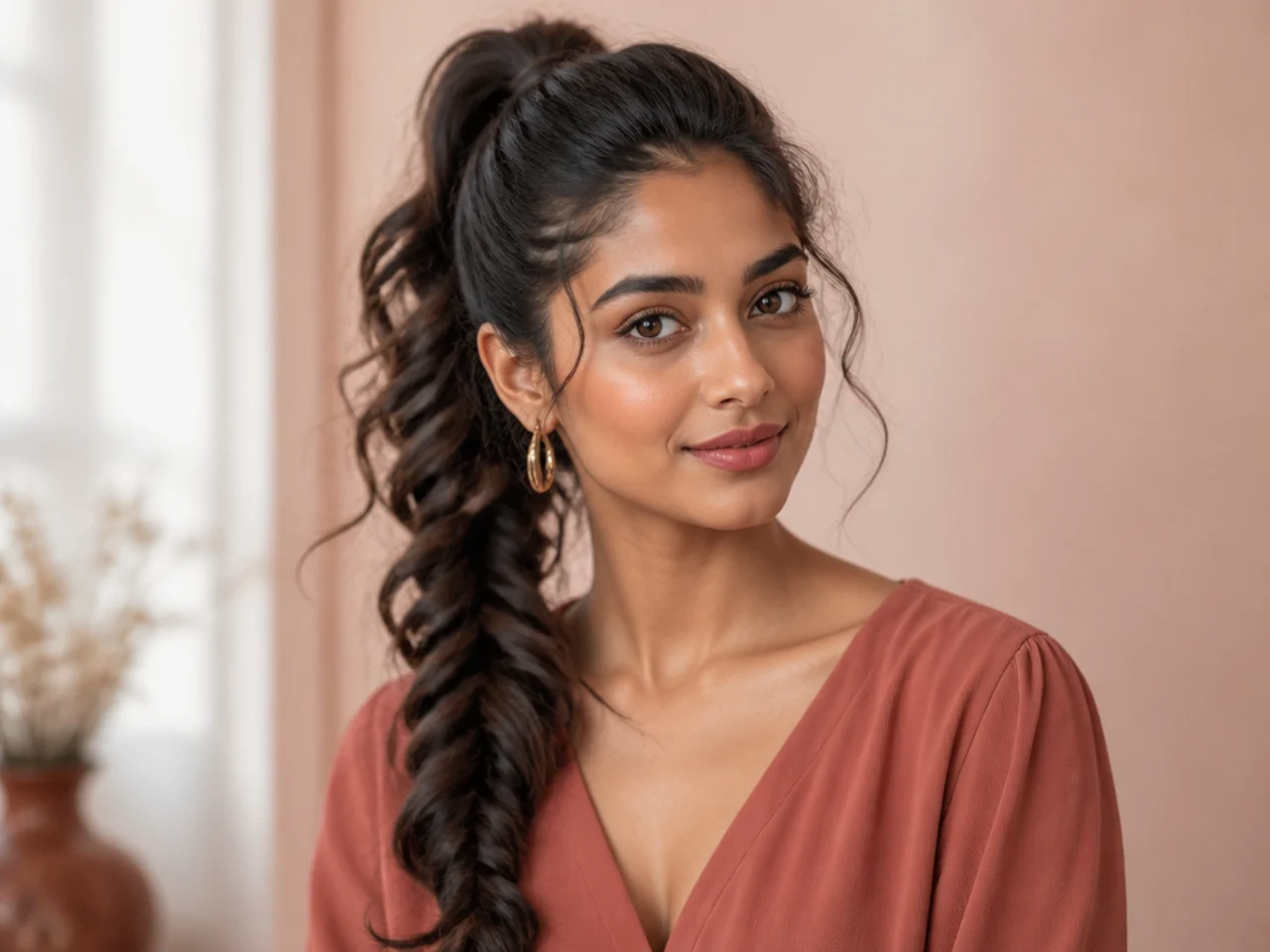
A fishtail plait down the tail — but pancaked wide and loose after braiding so it fans like a butterfly wing rather than sitting as a tight rope. The base stays snatched; the tail reads soft and romantic. Suits medium to long hair because the fishtail wants length to sell the pattern.
Tie a snatched high pony. Split the tail into two equal halves. Take a small strand from the outside of the right section and cross it over the top to join the left. Repeat from the left. Keep each strand quarter-inch thin for a crisp scale pattern and continue to the ends. Once secured, pinch each edge of the finished fishtail between your fingertips and gently pull outward — pancaking the plait until it doubles in visible width.
Stylist tip: pancake from the bottom upward, not top down. Working bottom-up gives you a graduated widening that reads intentional; working top-down collapses the base of the braid and unravels the pattern.
12. Festival Jumbo Goddess Braid Pony
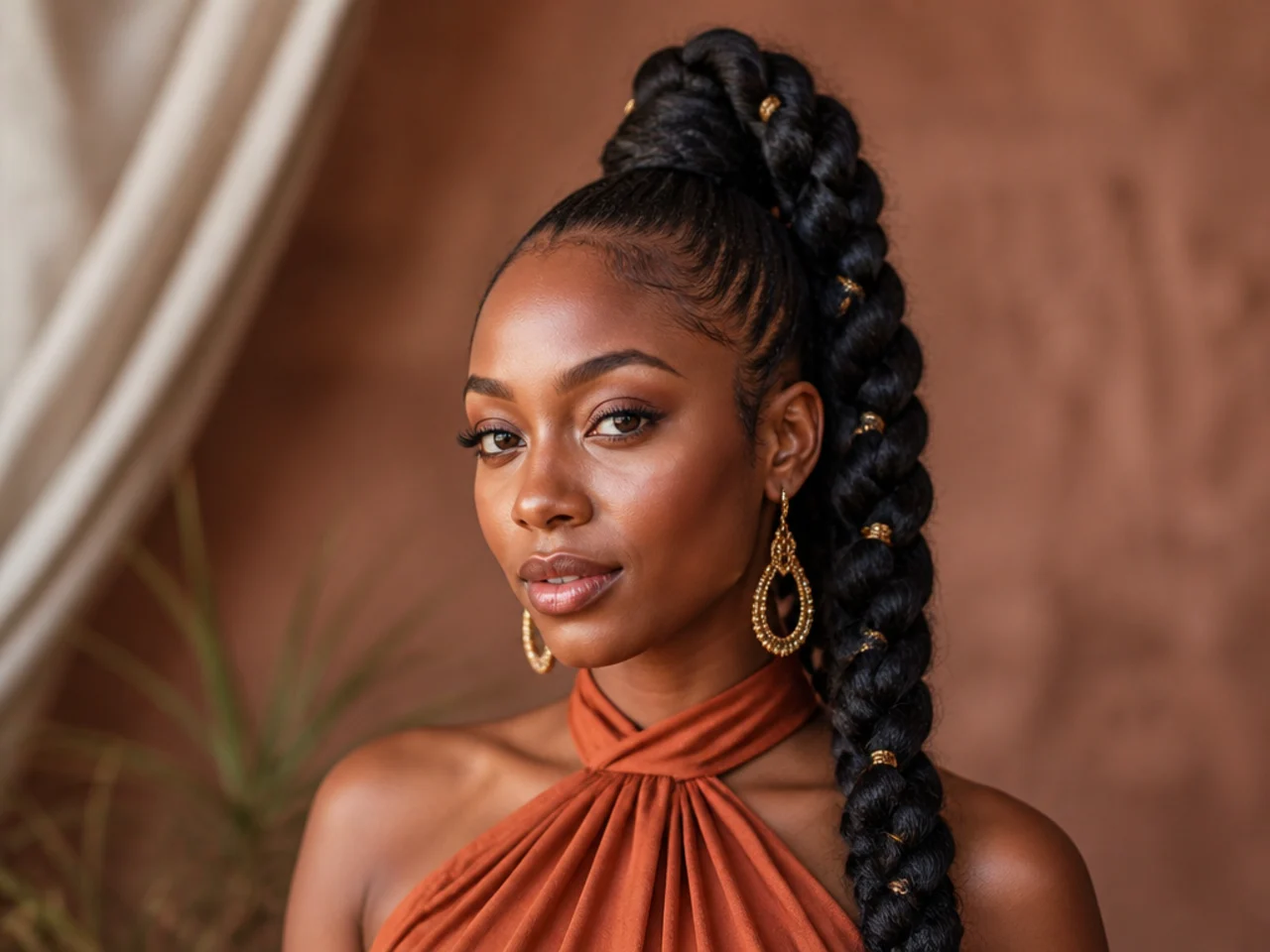
One thick statement braid running down the length of a high pony — the goddess braid, jumbo-scale. Reads festival, protective, and celebratory. Suits every face shape. Made for 3B through 4C hair but works on any texture with the right prep. Holds for three to seven days depending on wear and refresh routine.
Tie a high pony over a satin scrunchie. If your natural hair is short or you want jumbo length, install marley or kanekalon braiding hair at the base of the pony first — feed the extension around the base with a bobby pin and blend into your natural ends. Split the tail into three thick chunky sections. Braid a loose three-strand jumbo plait down the length. Secure the ends with a clear elastic or thread wrap.
Stylist tip: pre-stretch natural hair with a leave-in and a blow-dry on cool for the smoothest goddess base. Skip the tension and the jumbo braid reads chunky-messy; add the stretch and it reads editorial. Our high ponytail hairstyles curly guide covers the prep for texture-specific ponies in more detail.
13. Athletic French-Braid Feed Pony
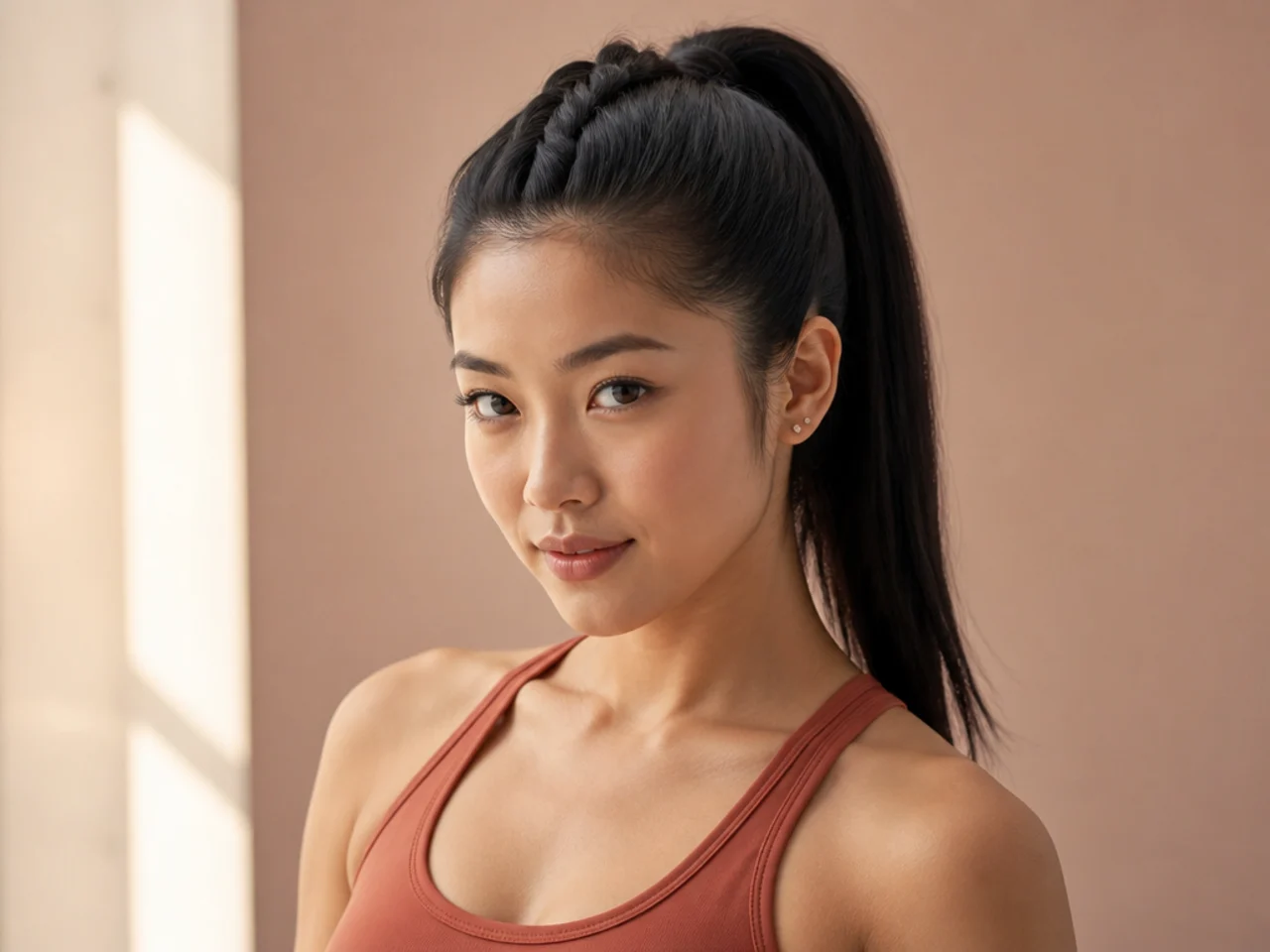
The utility version — a single French braid runs from the front hairline over the top of the head and feeds into a snatched high pony. No pancaking, no bubbles, no ribbon. Just a clean plait that keeps every hair off the face for a workout, a hike, or a nine-hour flight. Suits every face shape. Works on straight to wavy hair with a smoothing cream and on curly hair with a stretching leave-in.
Section a triangle at the front hairline. Split into three. Cross the outer strands over the middle strand and add a small piece of hair from each side of the section on every pass. Continue over the crown until you reach the peak, then gather everything into a high pony over a satin scrunchie. Wrap the base with a small section of tail hair to hide the elastic.
Stylist tip: angle the section slightly narrower as you work back so the braid tapers into the pony rather than fanning wide across the crown. It reads sculpted, not chunky, and photographs better from the side. Dry-shampoo the roots first if freshly washed — clean hair loosens the French braid pattern within an hour.
14. Waterfall Cascade Braid Pony
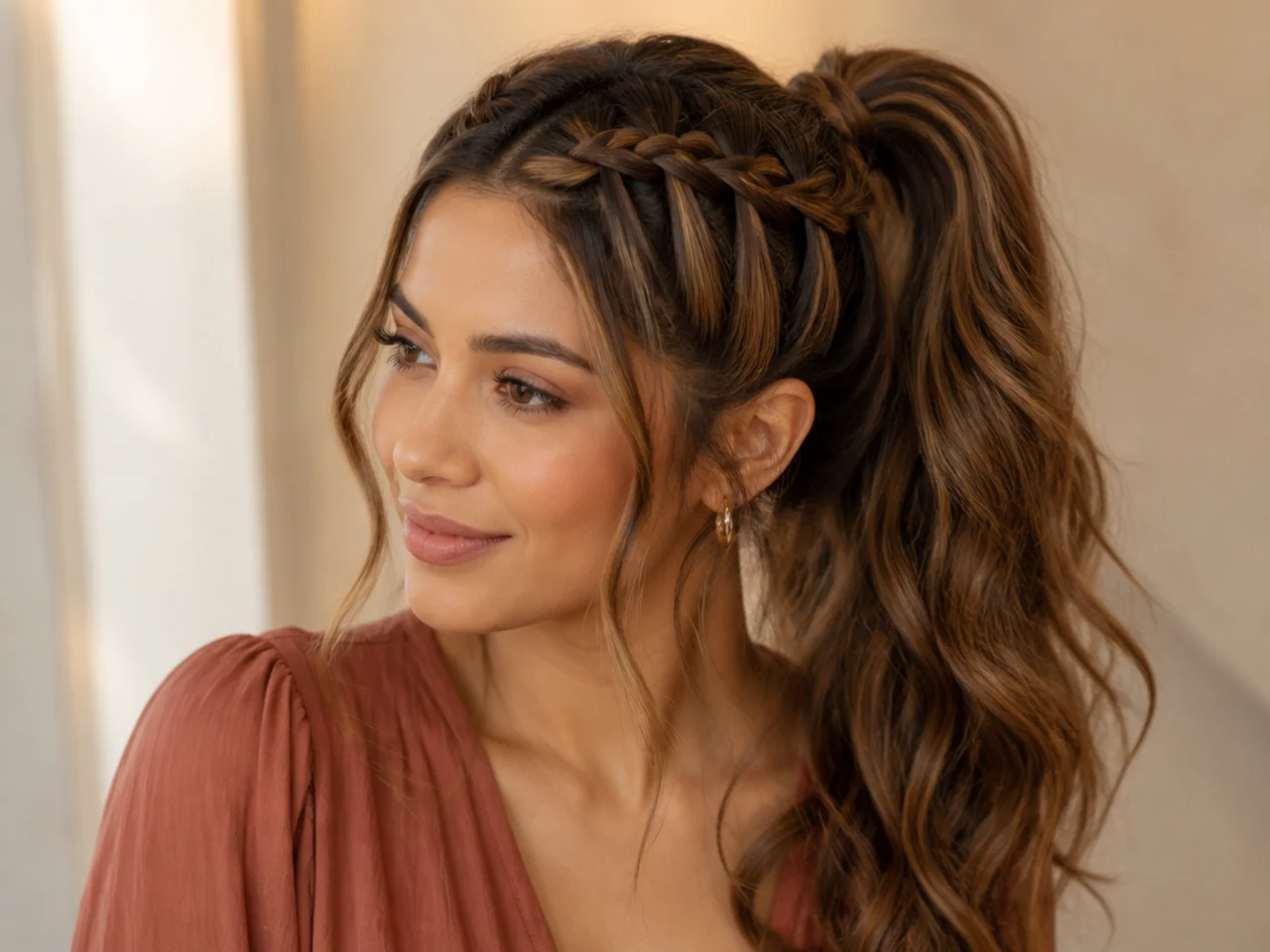
A waterfall braid runs across the top of the head — dropping loose strands beneath the plait as it goes — and finishes at a high pony on the opposite side. The dropped strands cascade like water beneath a ledge. Reads garden party, whimsical wedding guest, and any brief where the hair should look "done" without being obviously styled. Suits every face shape.
Start a three-strand braid at one temple. On each pass, cross the top strand across the middle strand as normal, then drop that top strand out of the braid and pick up a fresh strand of hair from above to replace it. Continue across the top of the head from one side to the other. When you reach the opposite temple, gather all remaining hair — including the dropped strands — into a high pony at the crown.
Stylist tip: curl the dropped strands with a 1-inch wand after the braid is complete, never before. Pre-curled hair tangles into the plait; post-braid curls read polished. Mist the finished cascade with a light hairspray twelve inches away to lock the curl through the day.
15. Baby Braid Halo Pony
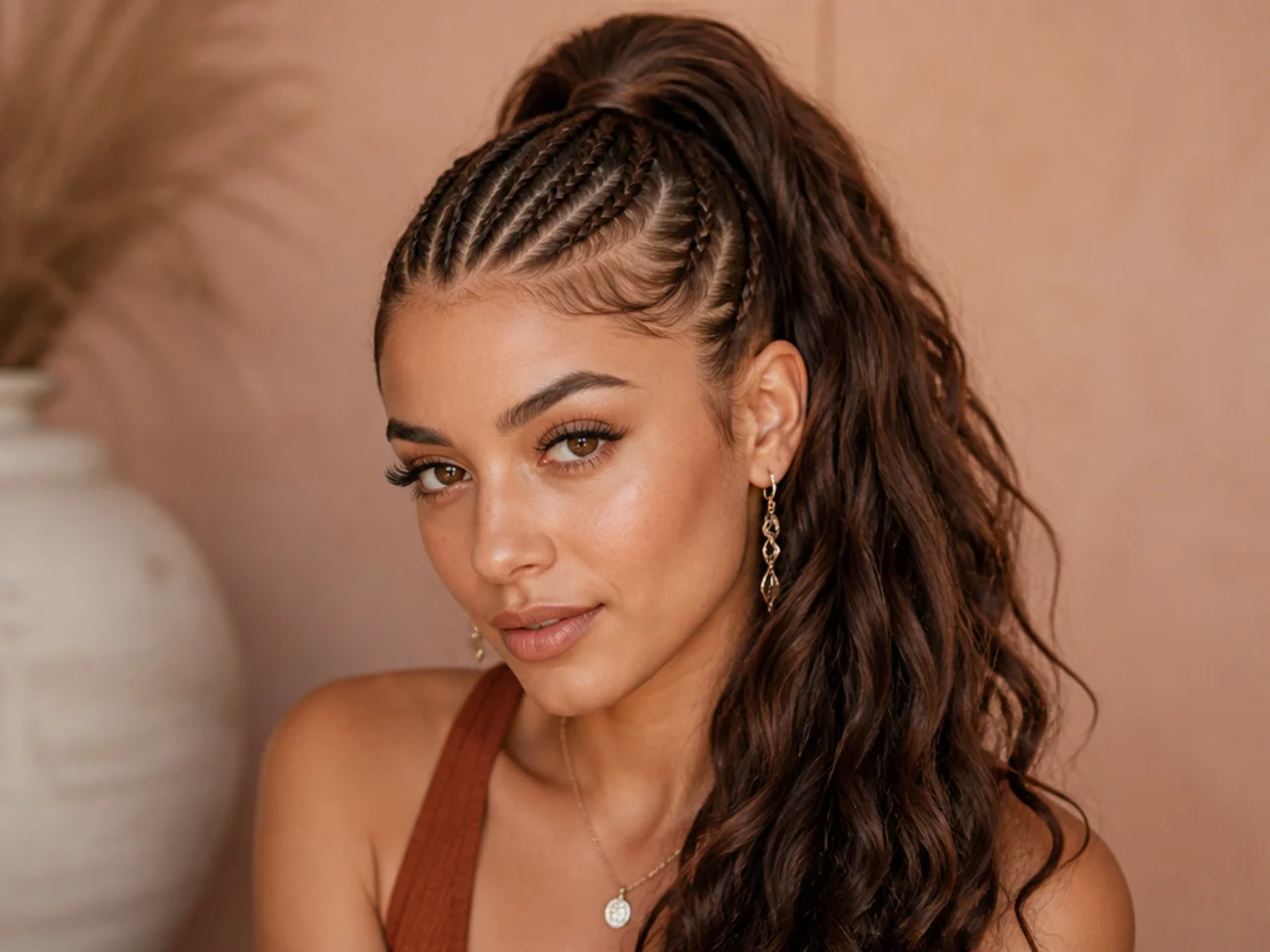
Four to six thin baby braids run along the hairline from ear to ear like a horizontal halo, meeting a snatched high pony behind the crown. Adds warrior-adjacent texture across the front without disturbing the glassy back. Suits narrower faces because the braids add horizontal width across the temples and forehead. Reads editorial, festival, and modern-bohemian.
Section four to six thin one-inch strips along the front hairline from one ear to the other. Three-strand plait each strip along the curve of the hairline, adding no fresh hair as you go. Anchor the ends behind the ear with a bobby pin. Above the halo of braids, sweep everything back into a snatched high pony over a satin scrunchie. Tuck the pinned baby-braid ends into the base of the pony.
Stylist tip: braid the baby plaits before you slick anything back. Trying to braid over gel means product gets dragged through the plait and dries stiff. Plait first, then finish the perimeter with a shine spray on the smoothed sides.
How to Ask Your Stylist for a Braided High Pony
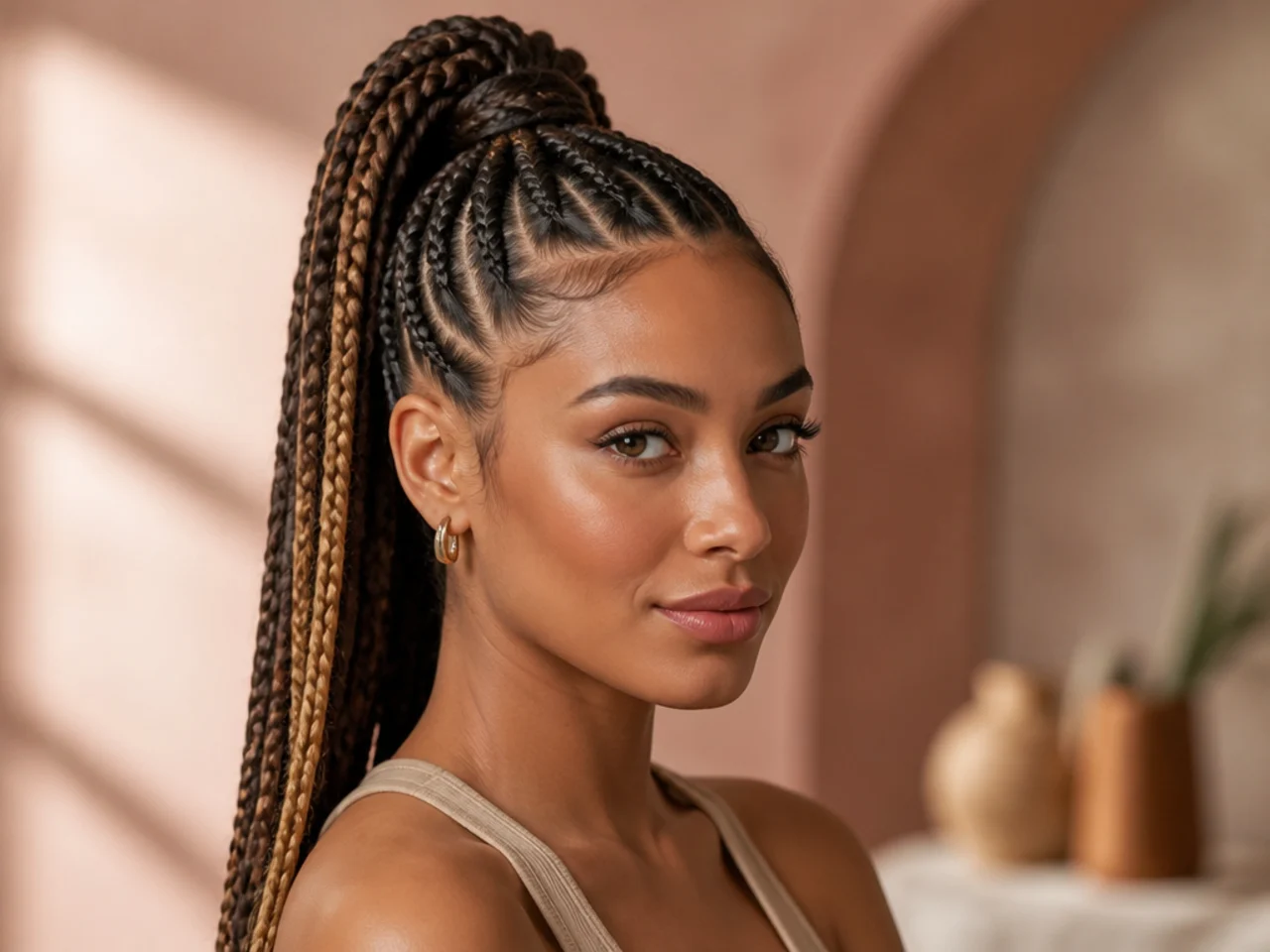
Photos beat vocabulary every time. The same braid gets three different names across three salons. Bring images and the conversation cuts through the drift.
- Show two or three references — front, back, and side if possible. Confirm the pattern name (French, Dutch, fishtail, Fulani, jumbo) alongside the photo.
- Name the placement — braid feeding into the pony, braid down the tail, braid around the base, or all three combined.
- Confirm the base finish — sleek and glassy, wet-look, boho pancaked, natural puff, or protective braid-installed. Each pairs with different products.
- Discuss tension — snatched-tight, mid-hold, or low-tension. Flag any history of thinning at the temples or crown tension headaches.
- Match the extras — bare, velvet ribbon, gold beads, hair rings, or ornamental pin. Bring the accessory to the appointment.
- Talk about the wear window — a same-day style washes out tonight; ask about a hold spray if you need it for a wedding, an event, or a two-day travel window.
- Book the trim cadence — every eight to ten weeks under braid rotations. Ends fray faster in a pony from friction on pillowcases and clothing.
Styling and Maintenance
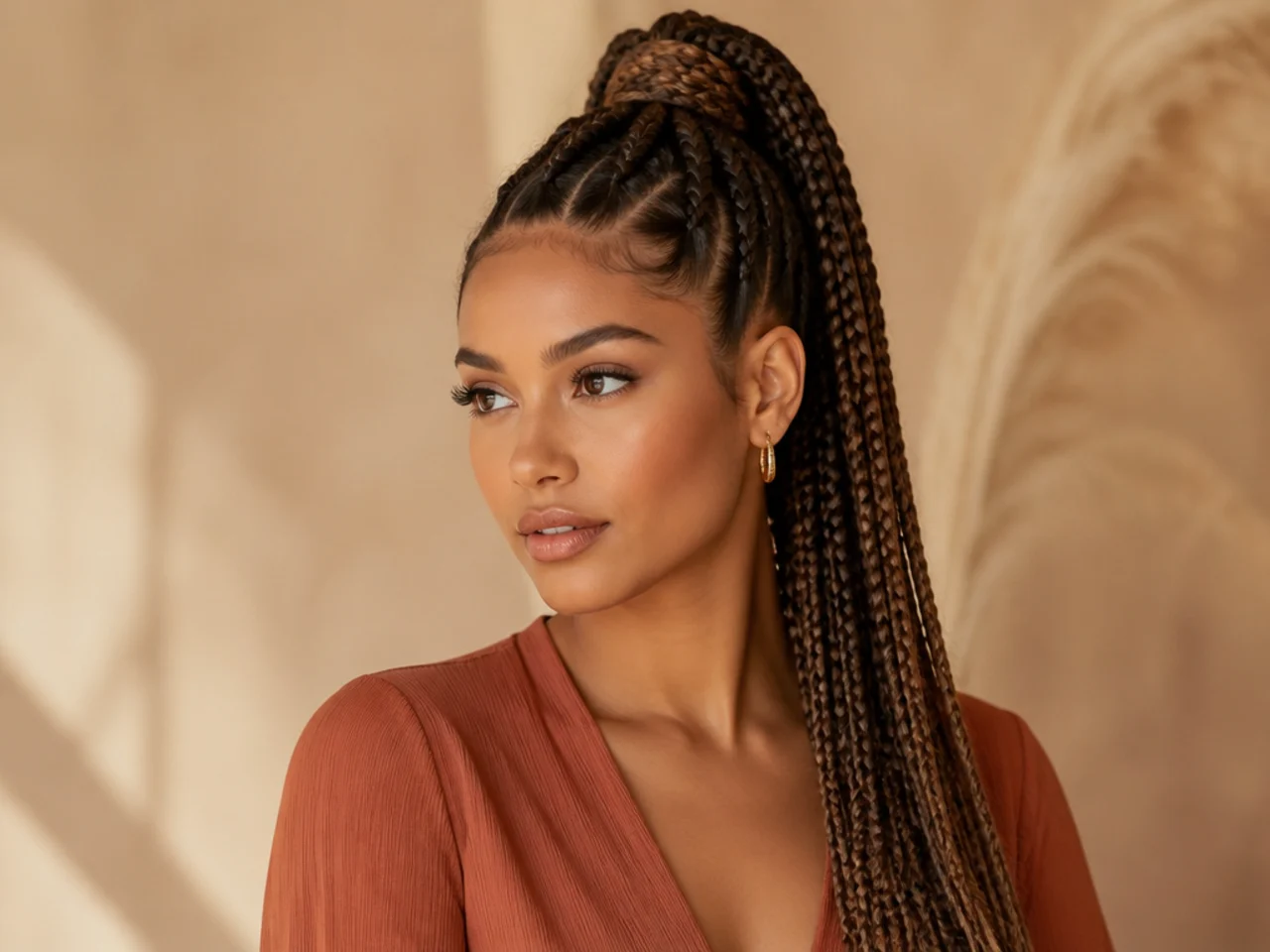
Every variation above starts with the same foundation. Prep the perimeter with a smoothing cream and a boar-bristle brush. Tie over a satin scrunchie underneath any coated elastic to spread tension across a wider surface. Work a styling cream — not gel — through the tail before you plait so each strand has grip. Gel makes strands slippery and the braid loosens by lunch.
Mist a light-hold hairspray twelve inches away for sleek variations; use a curl-refresh mist for texture-forward ones. Refresh the perimeter every second morning with a small amount of edge gel and a bristle brush, and re-tie the pony if the base has slipped forward by half an inch. For product picks that keep fine hair from slipping out of the plait, our best wavy hair products roundup covers lightweight styling creams worth stocking.
At night, always sleep on a satin pillowcase or under a satin bonnet. Swap the daytime elastic for a silk scrunchie and pineapple the braid on top of your head. Sleeping in the same tight elastic breaks hair at the tie point within weeks; sleeping without a bonnet fuzzes the plait within one wear.
If you wear a braided pony more than three days a week, rebook a trim every eight to ten weeks — pony ends fray fast from friction, and choppy-shaped tails photograph better in braided ponies anyway. Our how to get choppy ponytail hair guide covers the point-cutting cheat worth asking for at the trim.
Rotate. High braided ponies concentrate pull at the perimeter and the crown. Alternate a high pony day with a low bun, half-up, or worn-out style the next. If baby hairs are snapping or the front looks sparser than last month, drop the height for two weeks — a slick low bun or low updo puts far less strain on the follicles and gives them time to recover.
FAQ
Which of these is the easiest to do at home?
The wrap-around base and the bubble-braid duet. Neither needs mid-air plaiting — just clear elastics, thumb pinches, and a mirror. Both give you an intricate braided high pony finish in under three minutes and are near-impossible to mess up. Start there before you attempt a Dutch or a five-strand.
How do I keep a braided high pony from unraveling?
Braid on hair that's slightly damper than you think. Bone-dry freshly washed hair is too slippery to hold a small strand. Work a smoothing cream — not gel — through the tail before you split. Pinch each cross tightly, and finish with a clear elastic plus a mist of medium-hold hairspray.
Can I do these on shoulder-length hair?
Yes, though tail-length braids like fishtail, snake, and jumbo goddess want at least mid-back length to sell the pattern. Feed-in variations like the French, boxer, waterfall, halo, and Y2K micro-braid trio all work on anything past a lob because the plait sits on the head, not just in the tail.
How do I stop my edges from breaking from braided ponies?
Loosen the base. Use a bungee tie you can adjust after the pony is up. Never sleep in the style. Rotate a high pony day with a low bun or half-up the next. If you see baby hairs snapping or new sparse patches along the hairline, drop the style for two weeks and see a trichologist before returning to it.
Will these work with bangs?
Yes — with placement adjustments. Curtain bangs blend into a French or waterfall feed-in cleanly if you pin them under the braid. Blunt or micro bangs read best kept out of the plait entirely, worn straight across the forehead below the sleek pony. If your fringe is grown-out awkward, pin it flat under the closest feed-in braid instead of forcing it into the plait itself.
Which braided high pony reads best in photos?
The boho pancaked braid pony, the Fulani-inspired beaded pony, and the runway boxer braid pony photograph the fullest because the pattern adds visible dimension. Sleek variations photograph elegant but flat; texture-forward variations photograph rich. If the pony is for a shoot or a wedding portrait, pick a pancaked, beaded, or twin-braid version.