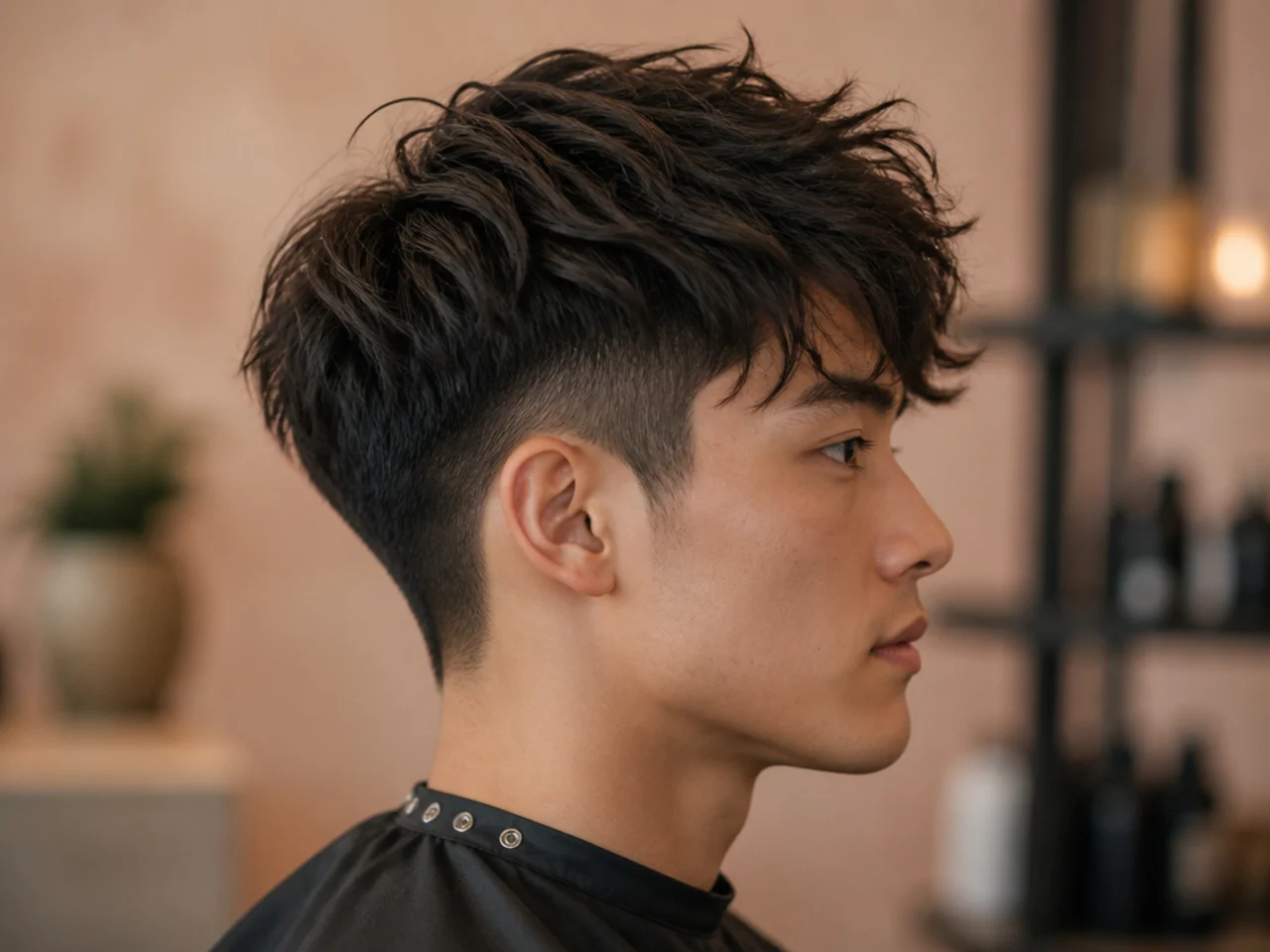
5 Reasons the Two Block Is Worth the Hype
Five reasons the two block haircut earns the ten-year hype — six-week grow-out, sixty-second styling, and twenty looks from one base cut. See how it compares.
In this article · 9
- Is the Two Block Really Worth the Hype?
- Reason 1: It Suits Every Face Shape
- Reason 2: Styling Under Sixty Seconds
- Reason 3: Grow-Out Stays Graceful for Six Weeks
- Reason 4: Modern Without Reading Trendy
- Reason 5: One Cut, Twenty Different Looks
- Two Block vs the Alternatives
- Who Should Skip the Two Block?
- How to Ask for a Two Block
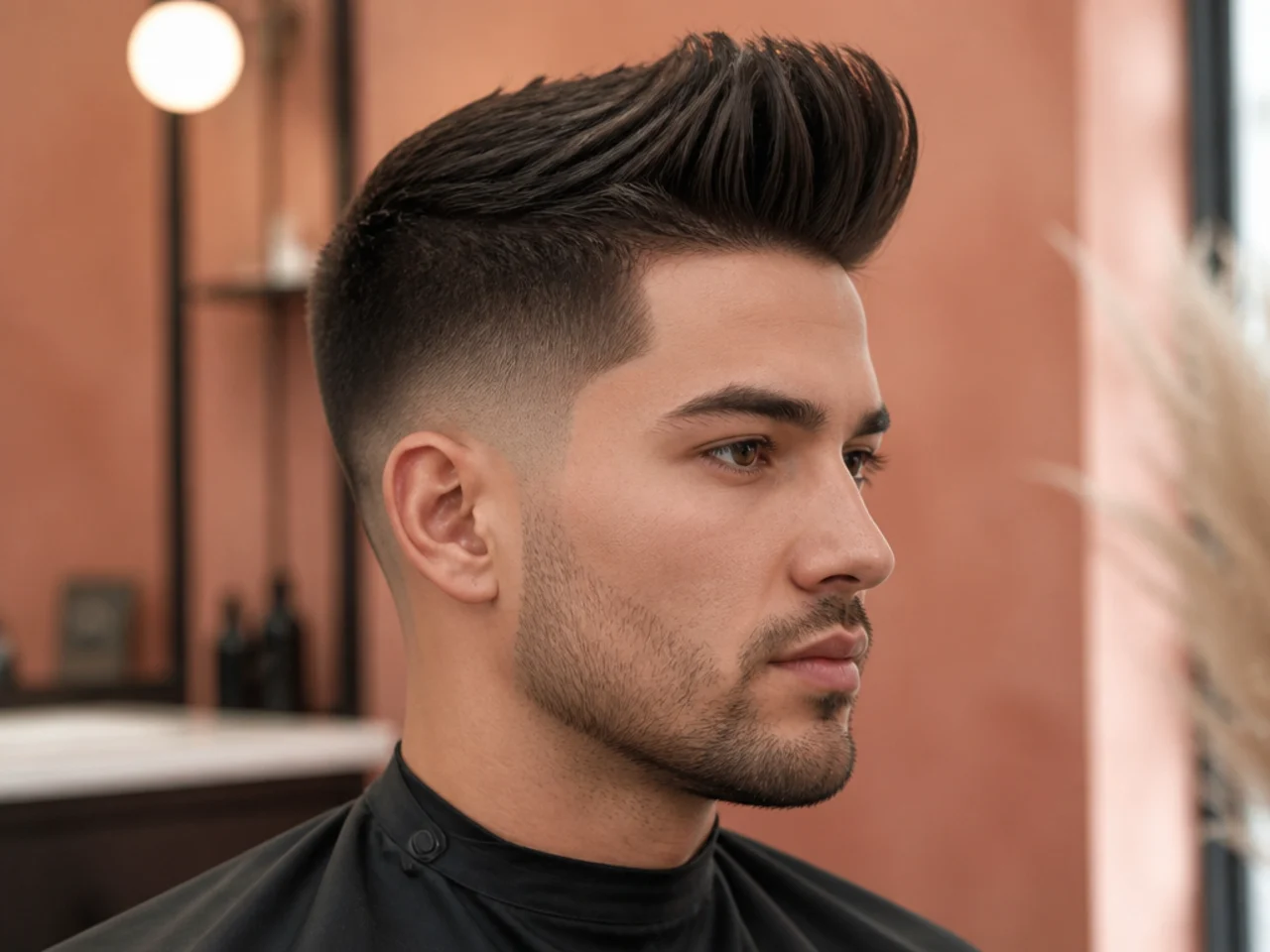
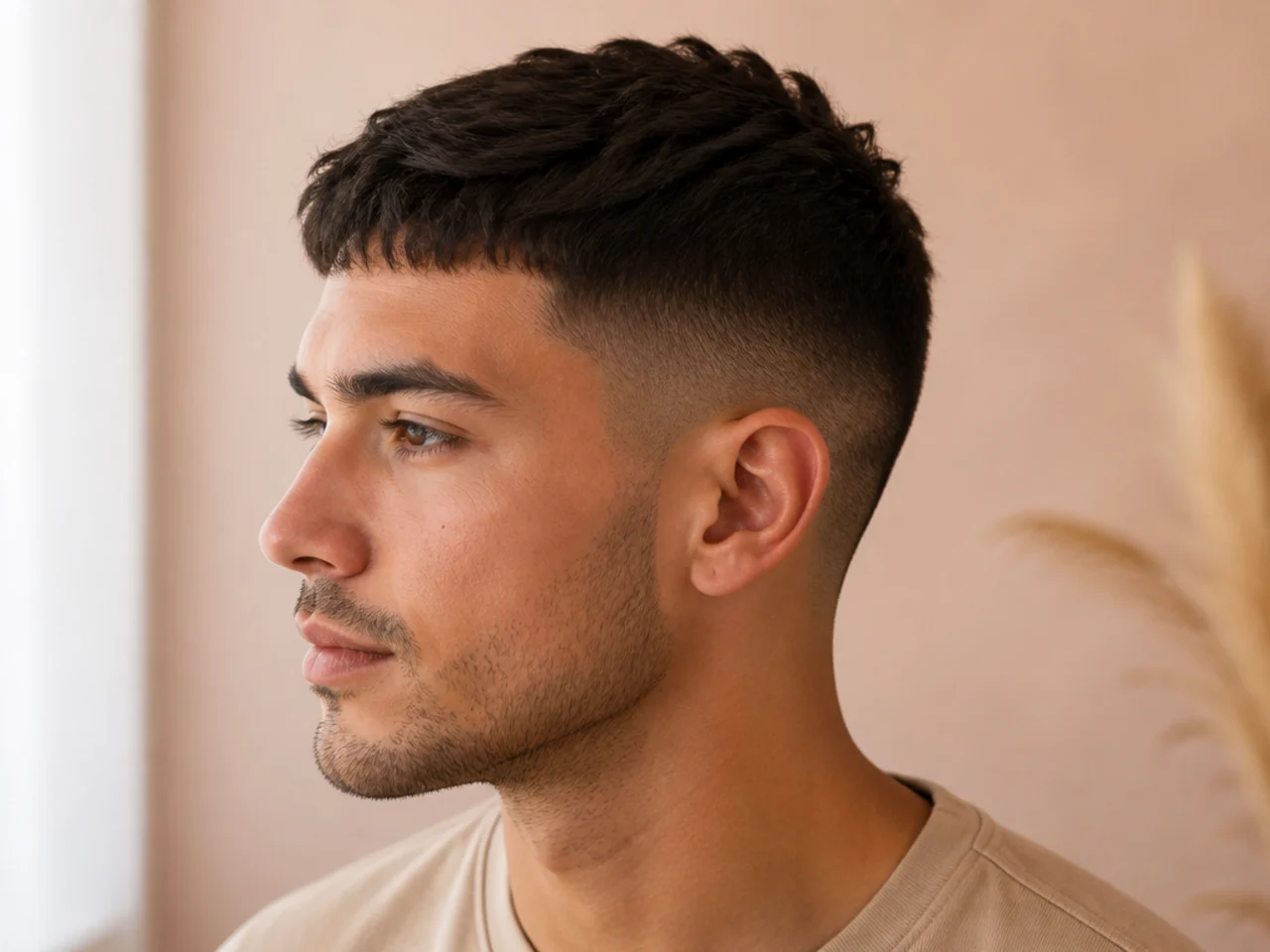
The two block has been trending for a decade. That is not a short life span for a haircut. Below, five reasons your barber and every K-pop group's stylist keep recommending it — plus who it doesn't suit, how it compares to an undercut or a taper fade, and the exact language to bring to your appointment. Start with our full two block haircut guide for the base variations.
Is the Two Block Really Worth the Hype?
Short answer — yes, and here is the framing. The two block is worth the hype because it does four things at once: face-flattering silhouette, sixty-second styling, graceful six-week grow-out, and modern-not-trendy shelf life. No other short-to-medium cut checks all four boxes. Read on for the five reasons the pattern keeps winning, then a side-by-side comparison against the closest alternatives.
Reason 1: It Suits Every Face Shape
Most haircuts flatter two, maybe three face shapes and fight the rest. The two block is one of the rare cuts that adapts to all six — oval, round, square, oblong, heart, diamond — because the hidden lower block collapses side volume and the styled top layer does the shaping.
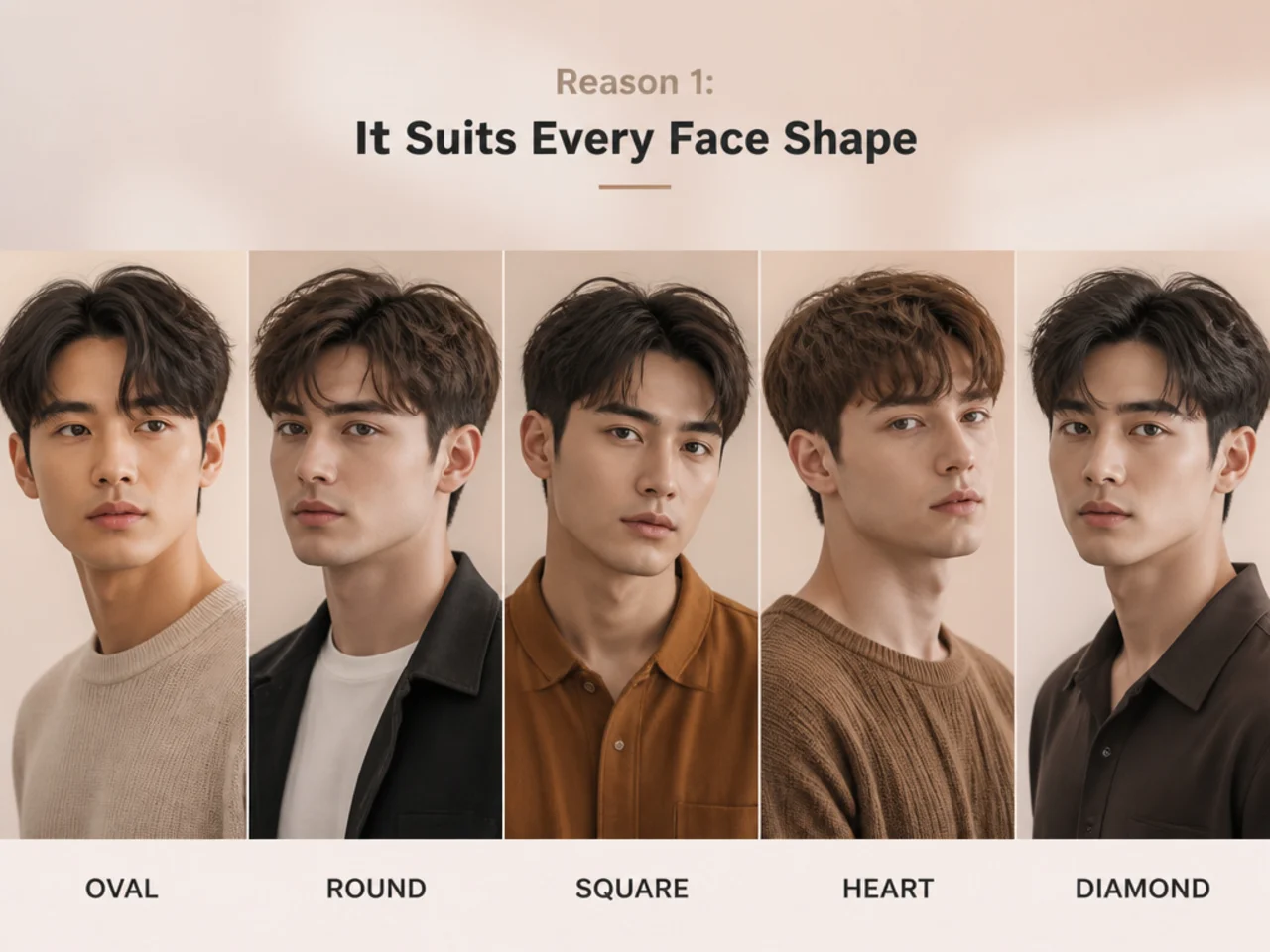
Here is what that means in practice. Round faces get vertical lift from a brushed-up or middle-parted top, which visually lengthens the face. Square faces get softening from a curtain fringe that breaks the corners. Oblong or long faces stay in proportion because the hidden sides refuse to add height where you already have plenty. Heart-shaped faces get width restored at the jaw from a longer, sweeping cover piece. Diamond faces balance out because the top provides a frame at the widest part of the head.
The rule of thumb is simple. The more oval you want your face to read, the more top height you ask for. The more balanced you want it, the flatter the cover piece sits. Length controls that dial, not shape. See the two block haircut guide for face-shape-tagged variations, and the middle part haircut for men for the parted version's specific face fit.
Where it beats alternatives — a fade or an undercut fade adds visible sides that draw the eye horizontally. A slick back or a classic side part reveals your entire head geometry. The two block hides the parts of your head shape that don't need to lead. That is why it flatters six shapes instead of two.
Hair type matters here as much as face shape. Straight and slightly wavy hair (types 1 and 2A–2B) get the cleanest drape at any top length. Thick, coarse hair benefits from internal thinning under the cover piece so the top drapes instead of fanning. Loose curls (2C–3A) do best with the top left slightly longer than average so gravity beats the natural lift. Match your hair type to the variation and the face-shape math still holds.
Reason 2: Styling Under Sixty Seconds
The hidden lower block is why. There is no side hair to style. Your entire morning routine happens on the top layer.
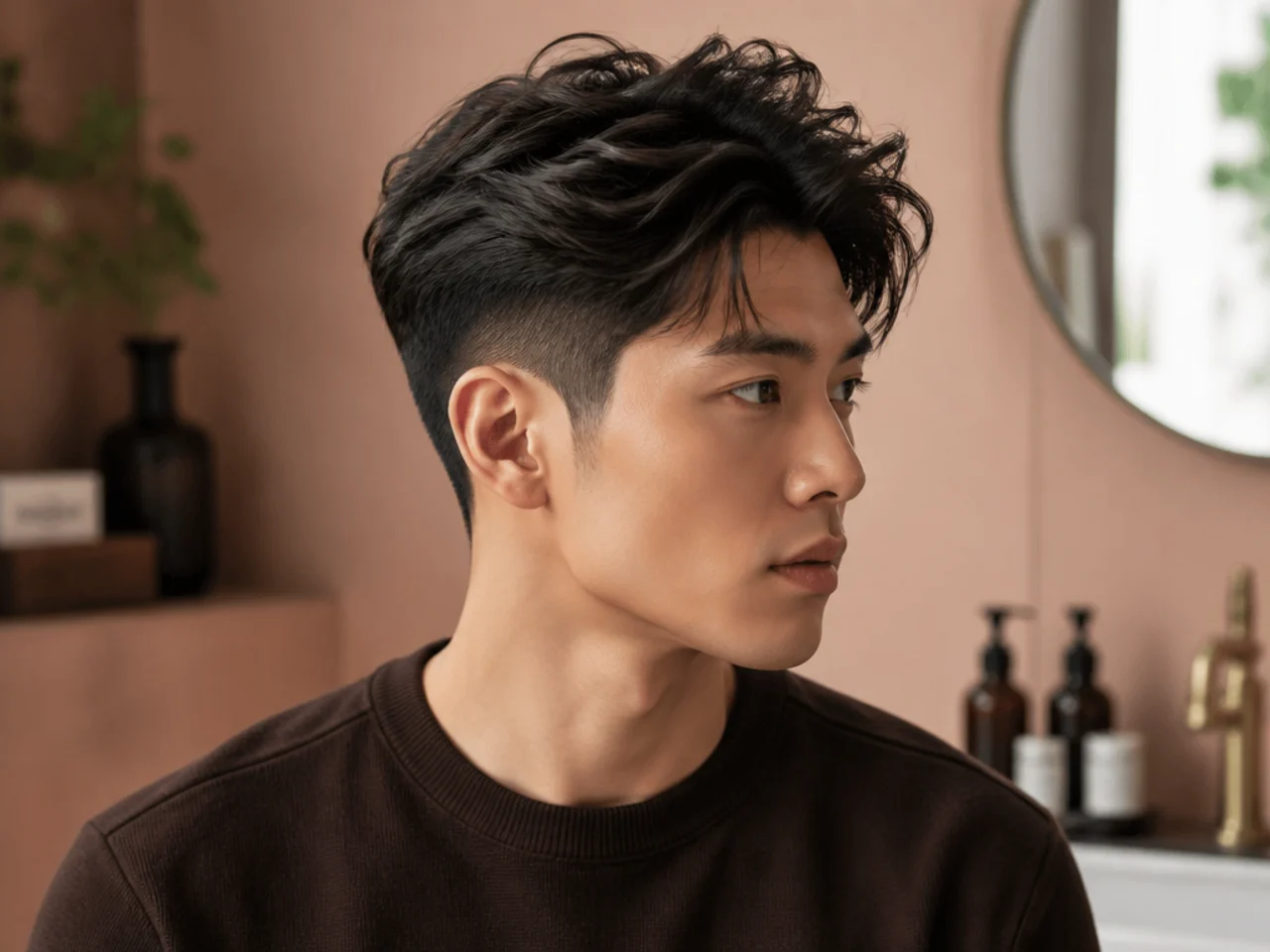
Here is the real timing, honest. Rough-dry until damp — fifteen seconds. Warm a fingertip of product between your palms — ten seconds. Push the top forward, back, or into a part with your fingers — fifteen seconds. Set the direction with a quick blast from the dryer — twenty seconds. Total under a minute without hurrying. Compare that against a proper side part or a classic slick back. Both want a comb, a product with real hold, and often a finishing spray.
The single-product approach is what makes the timing work. Pick one — matte clay for piecey texture, cream for control, pomade for shine — and skip layering. Layering fights itself on a two block because the top is the only piece doing any work. A second product just weighs the cover down and exposes the buzzed layer prematurely, which kills the whole illusion.
For guys with any morning at all — school run, commute, gym, late for standup — a sub-minute routine is not a nice-to-have. It is the difference between wearing the haircut and wrestling with it every morning. That is why the two block reads polished on Instagram after a single blow-dry and reads polished in real life after the same single blow-dry.
Reason 3: Grow-Out Stays Graceful for Six Weeks
Most modern men's cuts have an awkward middle stage between weeks three and five. Faded sides blur. Buzzed backs go patchy. Textured tops flatten out. The two block skips that phase entirely.
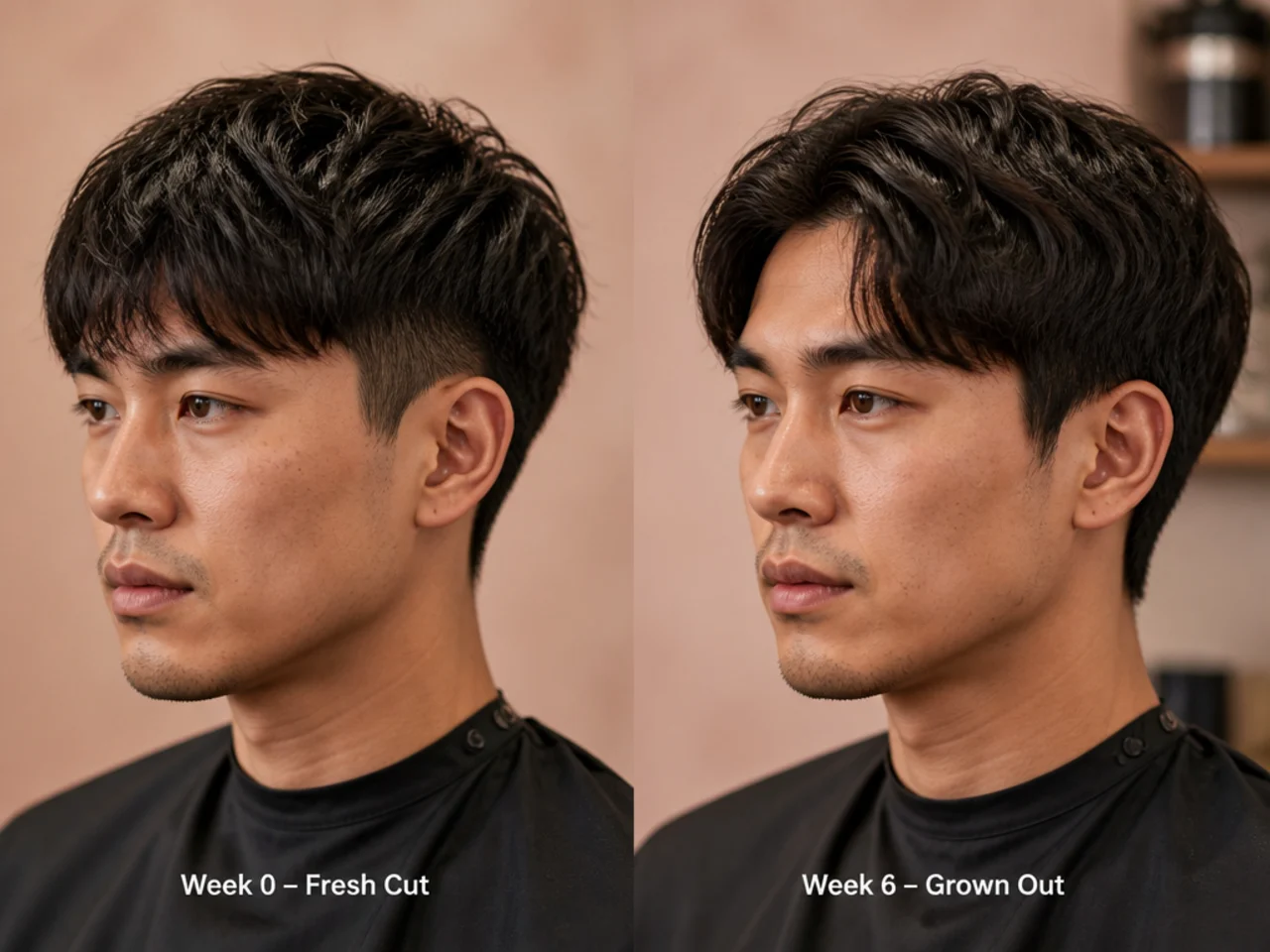
Here is why. The buzzed layer stays hidden under the top. Even when it grows out two guard lengths past your original cut, no one sees it — the cover piece is already covering it. The top layer grows down and forward, which is exactly the direction you want it to sit. The horseshoe line — where the two lengths meet — moves down slightly week to week, but the cover is drape-length by design, so the shift reads as intentional length instead of scruffy grow-out.
Compare against a fade. A skin fade collapses by week two because stubble on the panel destroys the contrast that made the cut work. A taper fade holds until week three, then blurs. A standard buzz cut looks unshaped by week four. The two block's cover piece hides all of that, which means you can push six weeks between cuts without looking like you skipped a month.
That maintenance math adds up. Instead of every three weeks in the chair, you go every six. Over a year that is nine cuts instead of seventeen. Roughly half your annual grooming budget and time, saved because one design decision — hide the layer that grows out fastest — happened at the cut itself.
The grow-out advantage compounds with a second one. Because the two block does not depend on a sharp fade line for its finished look, a busy month or a missed appointment does not embarrass you. The cut you leave the barber with on day one and the cut you show up with on day forty are the same cut, cover piece slightly longer. That predictability is rare for anything modern in men's hair.
Reason 4: Modern Without Reading Trendy
Trendy cuts have a shelf life. The two block does not. It broke through in Korean styling in the mid-2010s, moved into global menswear by 2019, and has been the default modern short-to-medium shape since. Ten years of relevance puts it in the same category as the crew cut and the French crop — not the broccoli or the Edgar, both of which are having moments but will read dated by 2028.
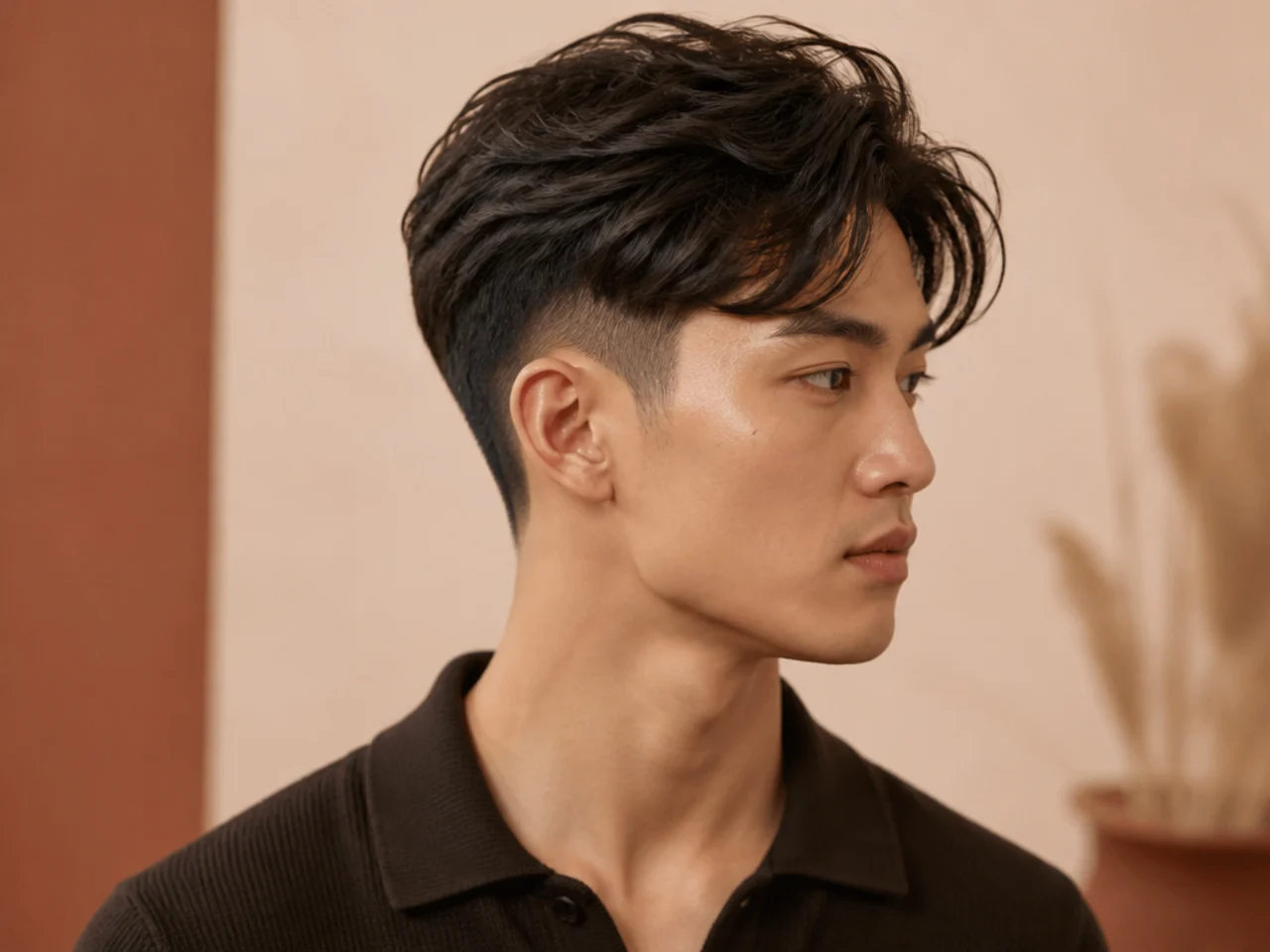
The reason is structural. The two block is a technique — two layers of contrasting length — rather than a specific silhouette. That means the same cut can be styled forward, backward, parted, curtained, brushed up, or worn shaggy without looking dated. Trends move; the two block absorbs them. When curtain bangs came back, the two block wore curtains. When brushed-up flow trended, the two block wore flow. When comma fringes went viral, the two block wore them too. That absorbability is what buys it staying power.
Family-wise, the two block sits inside the wider Korean haircuts for men tradition alongside the comma haircut and the middle-part fringe. That family reads polished across every age group from teens through mid-forties, which is a wider demographic pass than most modern shapes get. A twenty-two-year-old wearing a two block reads current. A forty-year-old wearing the same base cut with less styling and a slightly shorter top reads considered. Same underlying shape, two very different reads — that is unusual.
Reason 5: One Cut, Twenty Different Looks
The two block is not a look. It is a base. Once your barber cuts the two layers, you can style into more than twenty different finished shapes without a second appointment.
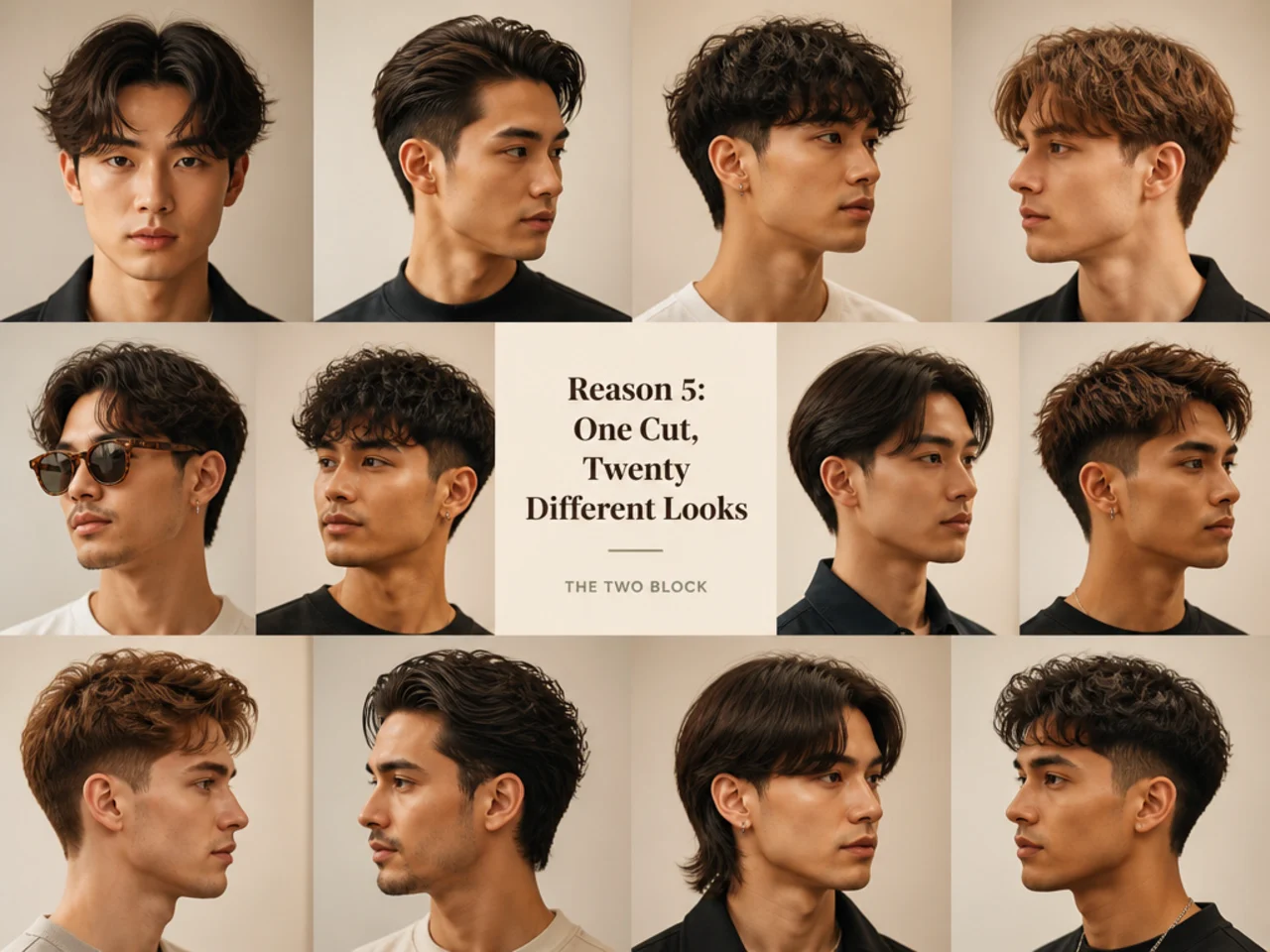
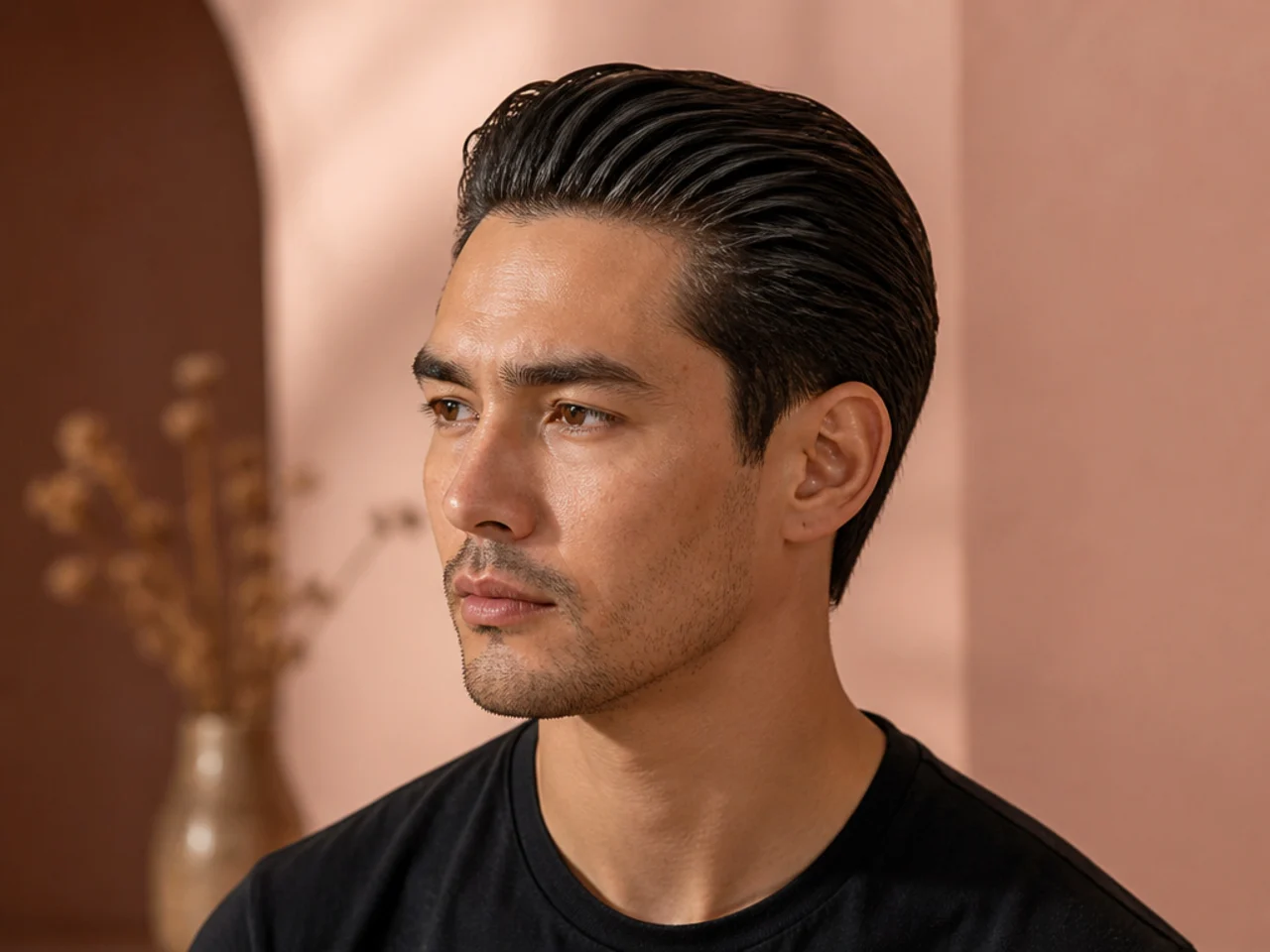
Here is a partial list from the same base cut — middle-parted with curtains, side-swept with a hard part, brushed up and back with mousse, textured forward with matte clay, slicked back with pomade, worn messy with sea-salt spray, layered forward like a fringe, or blown out for extra volume. Add a taper or a fade to the hidden layer and you get another dozen combinations. Grow the length past the shoulder for a long two block. Point-cut the top for a textured two block. All from the same underlying two-layer structure.
Compare against a low fade with a textured crop. That combination gives you one silhouette. To restyle it into something noticeably different, you need a new appointment and a barber who knows what you want. The two block lets you change looks weekly with a different product and a few seconds of blow-dry direction.
That optionality matters for anyone whose week actually varies — client meeting Monday, gym Tuesday, drinks Friday, wedding Saturday. One cut, one product shelf, four different reads. No other short-to-medium men's cut handles that range without a chair visit in between.
Two Block vs the Alternatives
The two block wins on flexibility. The alternatives win on specific things. Here is the honest comparison.
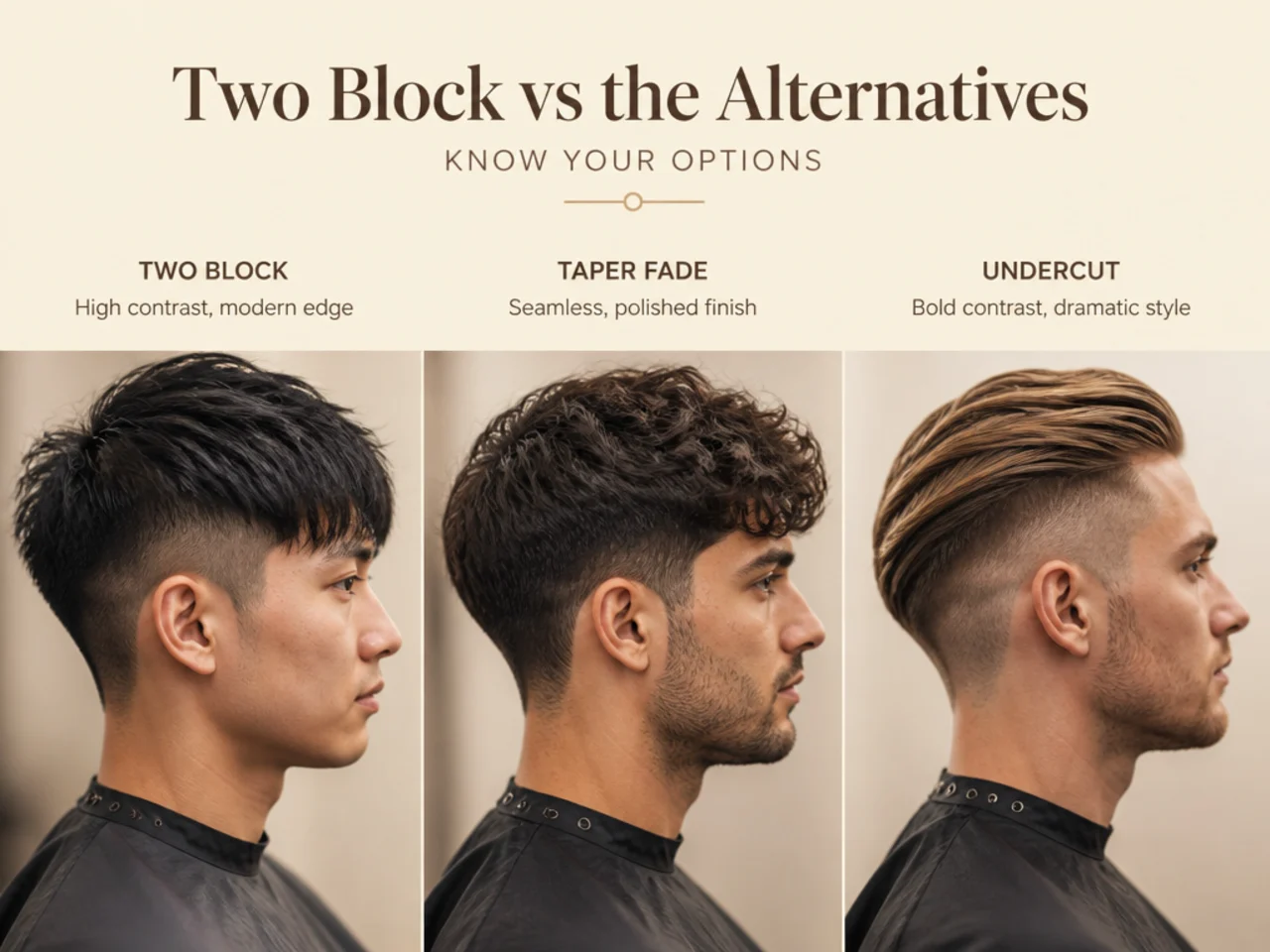
Read the table this way. If you want the widest face-shape range, the cheapest maintenance cadence, and the deepest styling variety, the two block wins outright. If you want a sharper visual statement, the undercut takes it on drama. If you want a modern fade look with the fade visible, a taper fade or a low fade haircut wins on that specific finish. If you want zero styling and traditional workplace fit, the short back and sides is honest and unbeatable at what it does.
The two block loses one thing — sharp, visible sides. If you want people to see your fade line at rest, you don't want a two block. The top hides exactly the part you want on display. Ask for an undercut fade or a fade shape from the main fade haircut family instead, and let your top layer stay short enough to keep those sides in view.
Who Should Skip the Two Block?
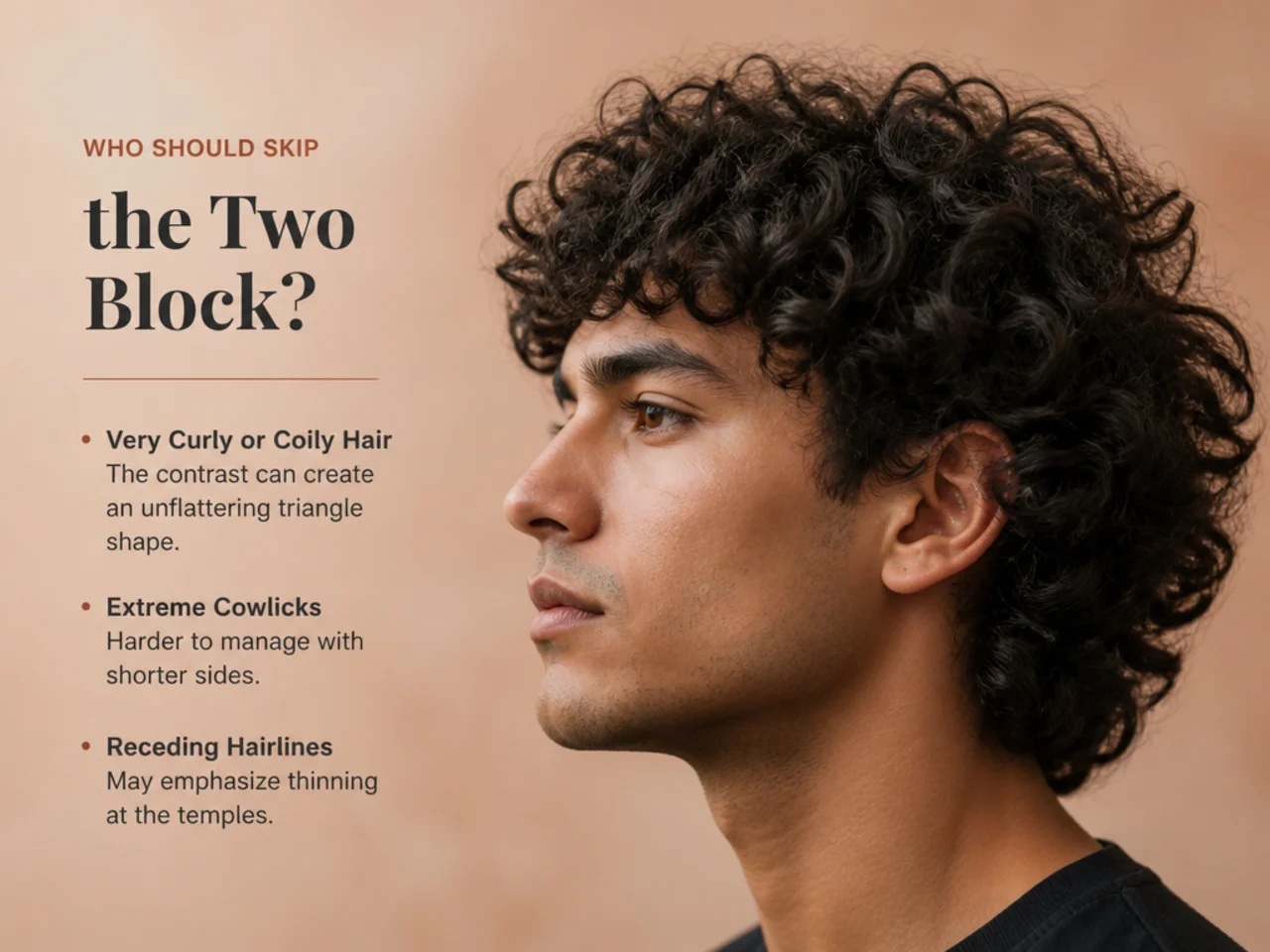
The two block flatters most people. It does not flatter everyone. Skip it if any of these apply.
Very fine or thinning hair. The cover piece needs enough density to drape past the hidden line without showing through. Fine hair often fans sideways at the horseshoe line and reveals the buzz beneath instead of covering it. If your part already shows scalp under normal lighting, the two block will magnify that visible strip. Better options for you sit under short crops or textured cuts that build density instead of relying on it.
Tight coil patterns without a specific plan. The cover piece needs gravity to fall over the hidden layer. Tight 4A–4C coils lift instead of fall. It is doable — see the curly variation in the main two block guide — but it requires longer top length, curl-defining product, and a barber who has cut the pattern before. Do not walk in with a straight-hair reference photo and hope for the best.
Workplaces with rigid grooming rules. Some environments — traditional finance, military, some legal, some healthcare — read "long on top, short underneath" as untidy on principle. If your dress code specifies a maximum length or a "tapered and above the ear" rule, the two block breaks it. Check the handbook or ask a colleague before you commit to the cut.
Guys who won't blow-dry. The sixty-second routine assumes ten of those seconds are a hairdryer to set the direction. Without that step, the cover piece sits however it dried on its own — usually flat and forward regardless of what you want. Air-dry works only if you are okay with whatever shape gravity gave you overnight, and most guys are not.
If none of those apply, you are the audience the two block was built for.
How to Ask for a Two Block
Bring a photo of the exact variation you want. Then say four things.
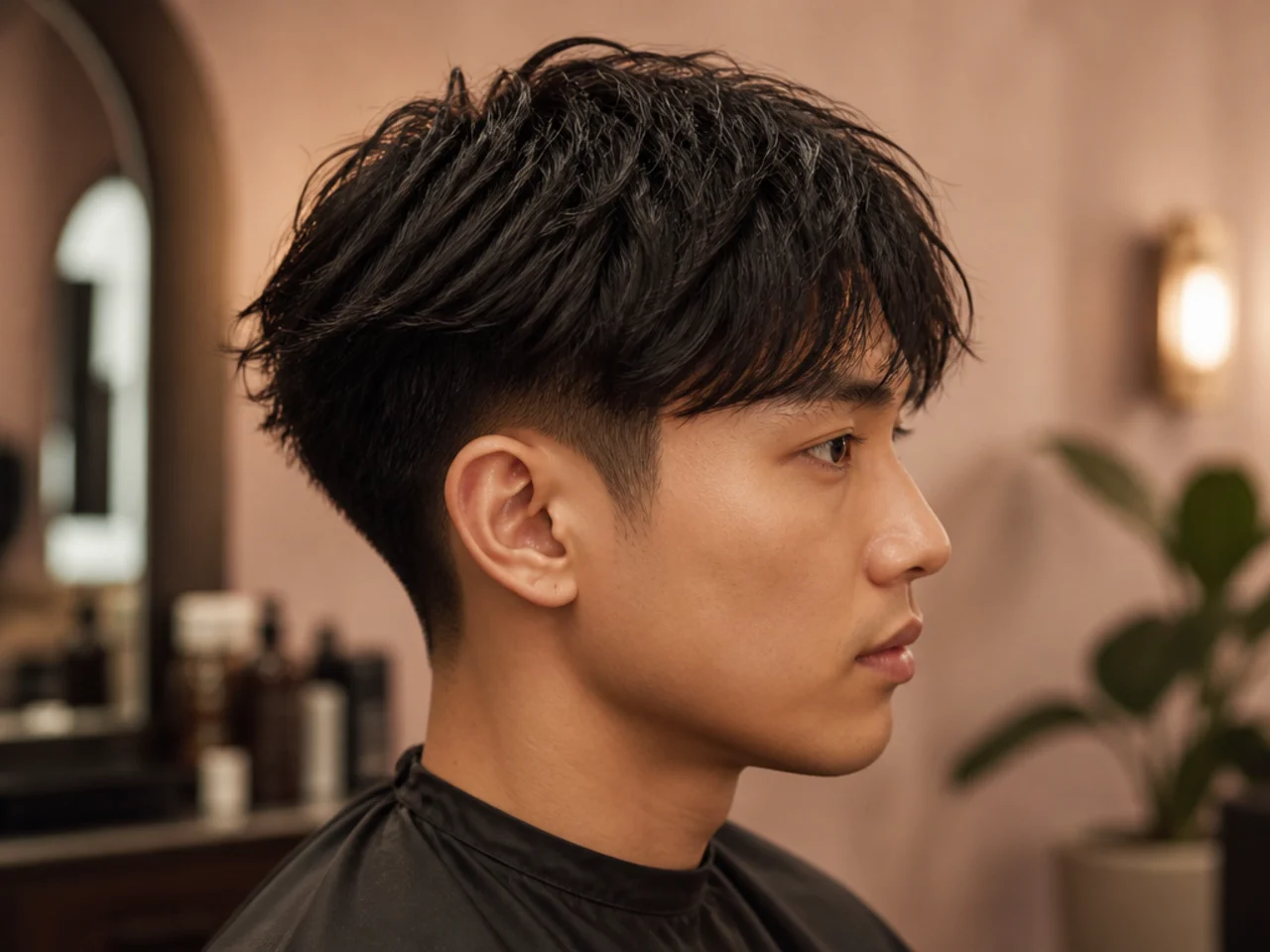
- State the cut. "I want a two block." Do not soften it with "something like this" or "kind of similar to" — the two block is a specific technique and your barber needs to know that is what you are asking for.
- Length on top in inches. Two to three inches for a short cover piece. Four to five inches for the standard medium version. Five-plus inches for a long two block. If you are not sure what length your hair naturally falls to, ask the stylist to check before cutting anything.
- Side guard number. One guard (about 3mm) for a sharp hidden layer, two guard (6mm) for a softer look, half-guard (1.5mm) or skin for maximum contrast on the reveal. Guard number is what makes the cut feel dressy or casual.
- Finish detail. Choose one — hidden at rest, low taper at the neckline, or full fade. Then state your fringe direction — forward, middle-parted, side-swept, or brushed up. Both of those decisions affect how the barber cuts the top edge and where they place the horseshoe line.
An example ask from a real consultation: "Two block, three inches on top with heavy point-cut texture, one guard on the sides, low taper at the ears and neck, side-swept to the left." Nine seconds. The barber understood immediately and cut it in twenty-two minutes.
Do not ask for "just a bit shorter" or "the same as last time." Two blocks live and die on precise numbers. Even a half-inch difference on top changes how the cover piece falls and whether the hidden layer stays hidden. Precision at the chair is what buys you the sixty-second styling routine at home.
One last piece of advice. Book your first two blocks with a stylist who has cut the shape before — Korean or Korean-trained barbers are the safest bet for a first try, since the technique originated in Seoul and most of the best examples still come out of shops that specialize in it. If your regular barber has not cut a two block, ask them to look at three or four reference photos with you before starting. The horseshoe placement, the top-layer weight, and the hidden-layer guard have to all agree with each other, and a barber who has done the cut ten times will make those calls faster than one figuring it out on you.