20 Business Men Haircut Styles to Try
A business haircut is not defined by how it looks on the day it is cut, it is defined by how it looks at week four in a meeting. Everything in this family is built to survive time, weather and a full working day without attention.
In this article · 27
- What Defines the Business Family
- How to Choose Yours
- The 20 Business Haircut Styles
- 1. The Scissor-Tapered Side Part
- 2. The Ivy League
- 3. The Crew Cut
- 4. The Low Taper Business Cut
- 5. The Executive Contour
- 6. The Business Textured Crop
- 7. The Matte Slick Back
- 8. The Comb Over With a Low Taper
- 9. The Business Quiff, Lowered
- 10. The Tapered Buzz
- 11. The Business French Crop
- 12. The Curly Business Cut
- 13. The Business Cut With a Beard
- 14. The Longer Executive
- 15. The Business Cut on Thin Hair
- 16. The Business Cut on Grey Hair
- 17. The Modern Caesar
- 18. The Travel-Proof Cut
- 19. The Business Cut Without a Part
- 20. The Week-Four Version
- Styling and Upkeep
- Mistakes to Avoid
- FAQ
- Final Thoughts
Business haircuts are usually presented as a list of conservative shapes, which explains almost nothing about why some of them work and some do not.
A business haircut is judged at week four, not week one. It has to be correct on the day it is most overdue, in a meeting, under office lighting.
That one requirement produces the whole family. Everything in it survives time, weather and a full day without being touched, and everything excluded from it fails at least one of those.
What Defines the Business Family
It must hold for four weeks. That rules out shaved lines, bare skin and anything with a hard edge.
It must be self-contained. The silhouette stays inside itself rather than separating or moving.
It must not depend on styling. A cut that needs a round brush is a cut that fails on a busy morning.
It must survive weather. Rain and wind should soften it rather than destroy it.
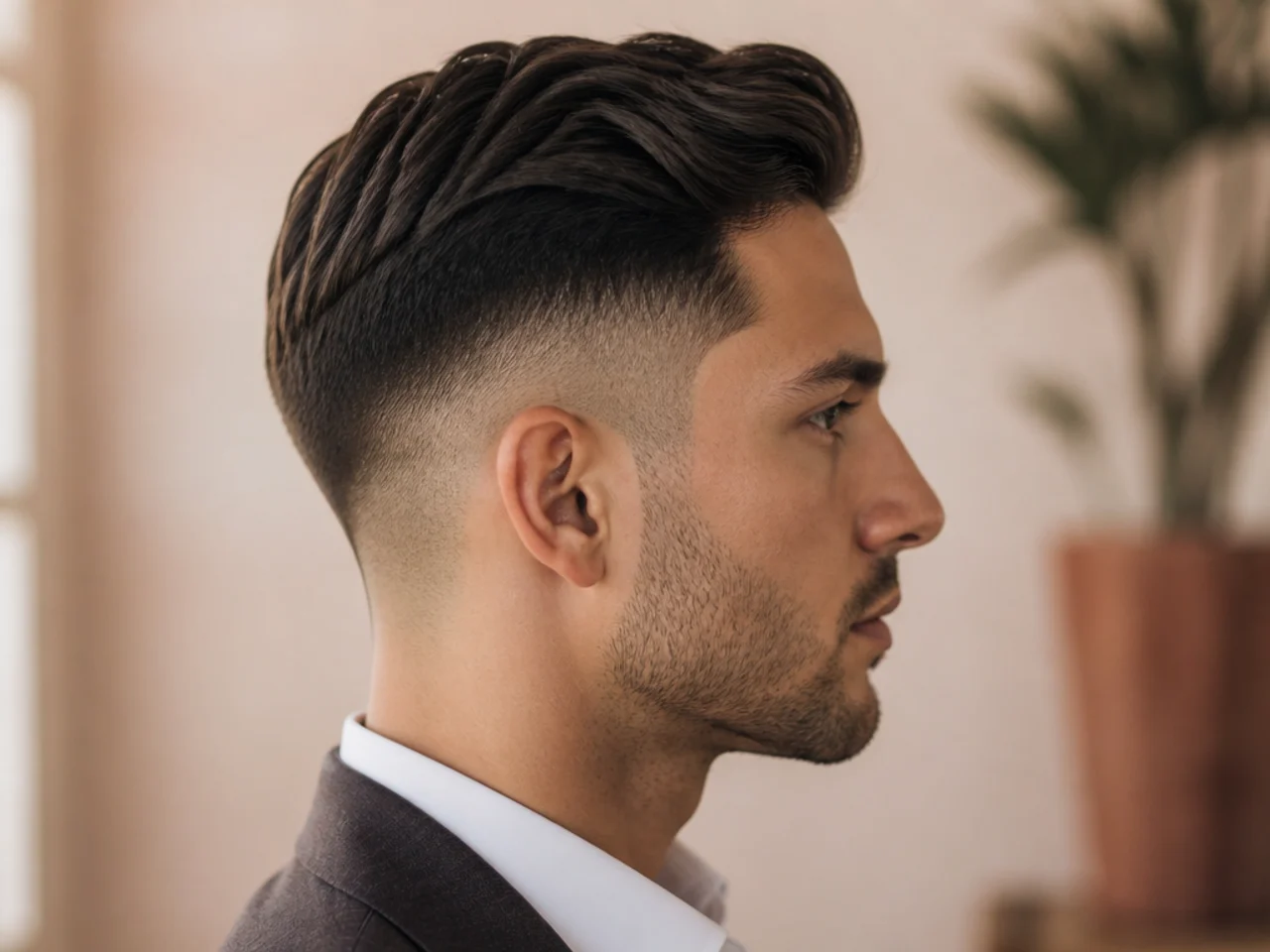
How to Choose Yours
Choose a taper over a fade. Three to four weeks against one to two is the whole argument.
Choose a matte finish. Shine under office lighting reads as product rather than grooming.
Choose scissor work at the sides. It grows out without a boundary appearing.
Choose a length you can leave alone. If it needs eight minutes it will not get them on a Thursday.
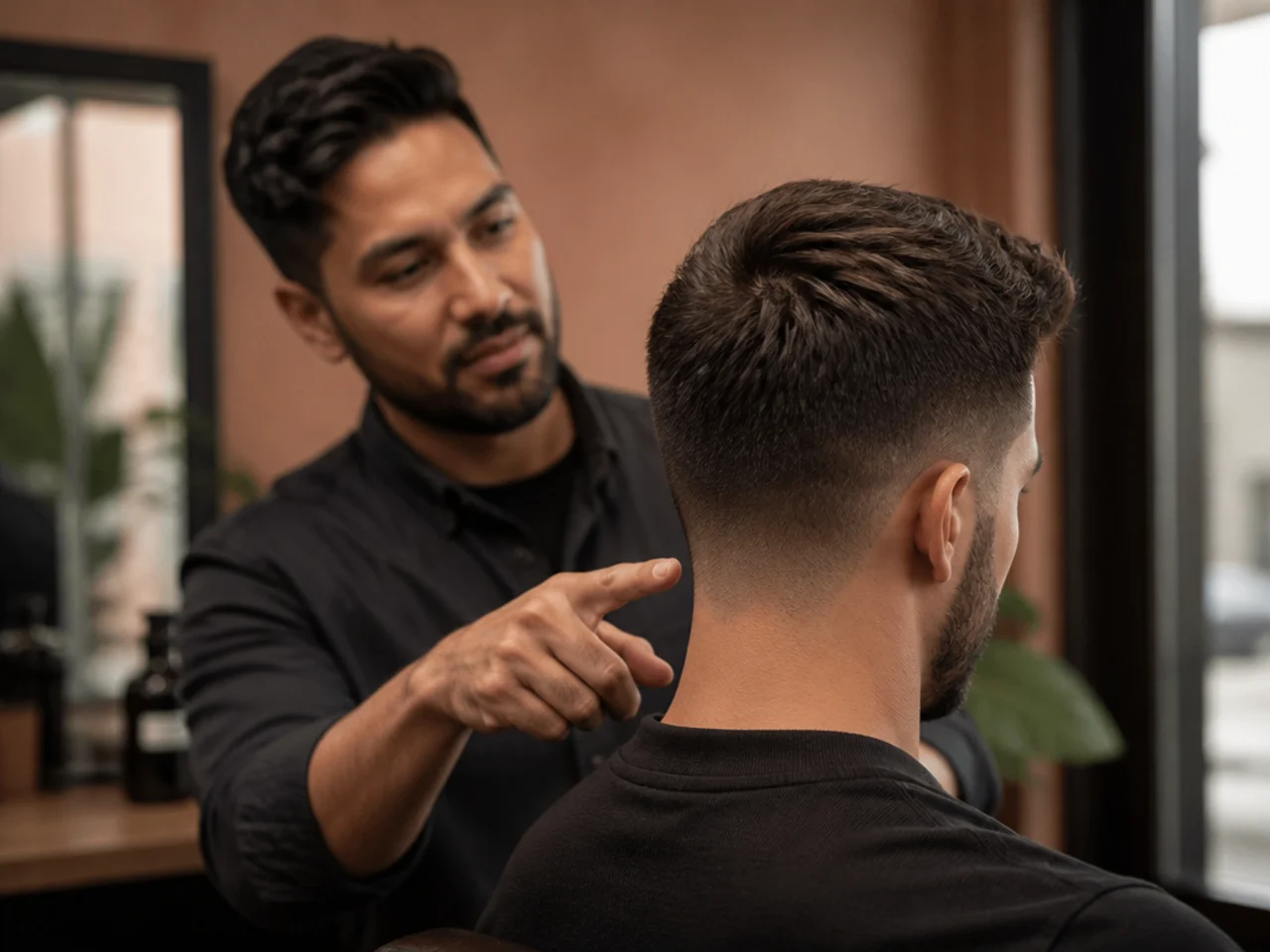
The 20 Business Haircut Styles
1. The Scissor-Tapered Side Part
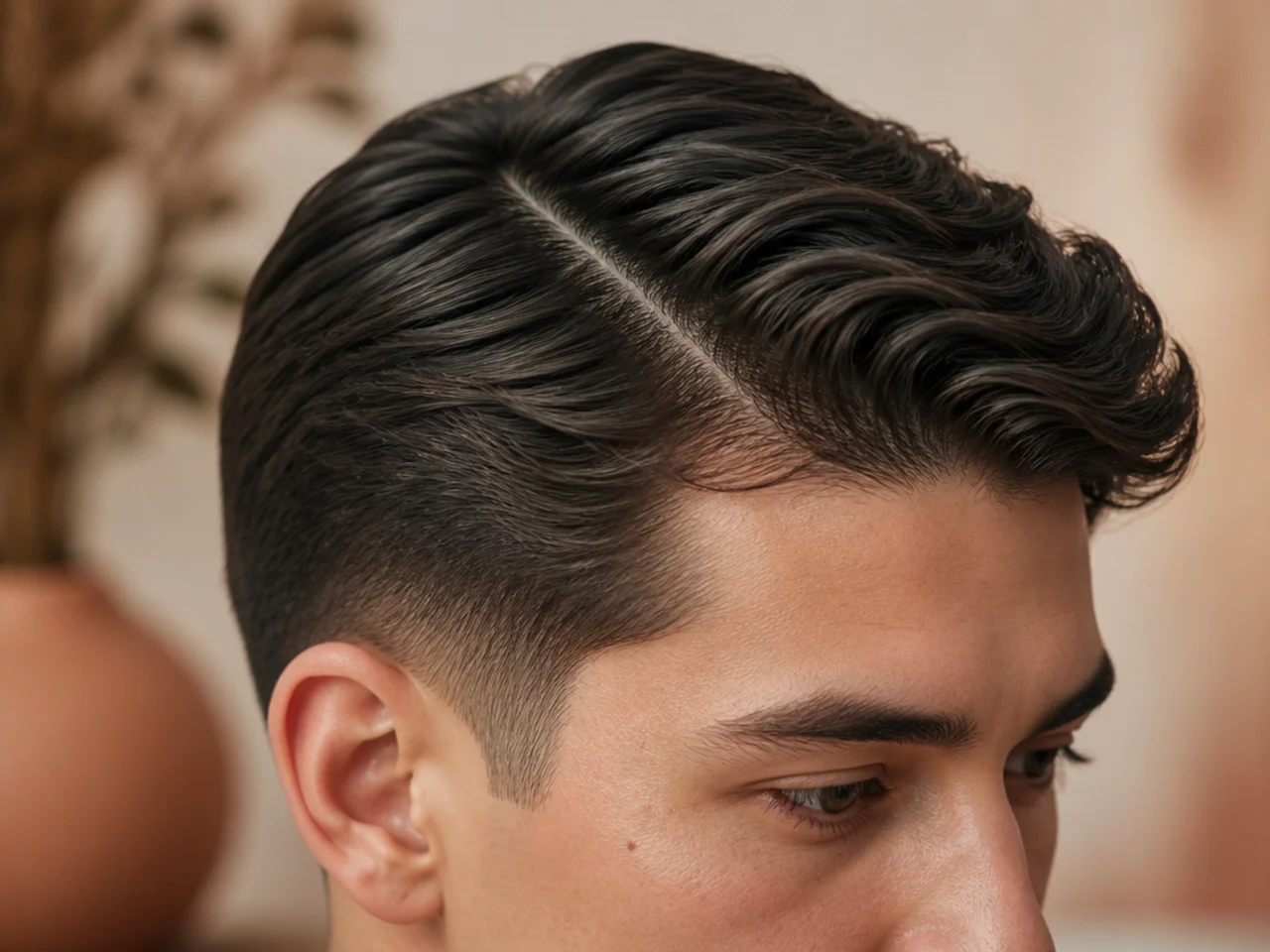
Sides graduated with scissors, a natural parting, nothing shaved. It is the family's baseline and the cut that ages most quietly of anything here.
2. The Ivy League
Graduated top long enough to comb, short enough to ignore. It is the most adaptable cut in the family because it works parted or brushed forward.

3. The Crew Cut
Short at the back, longer at the front, graduated between. It has almost no failure mode at any point in its growth cycle.
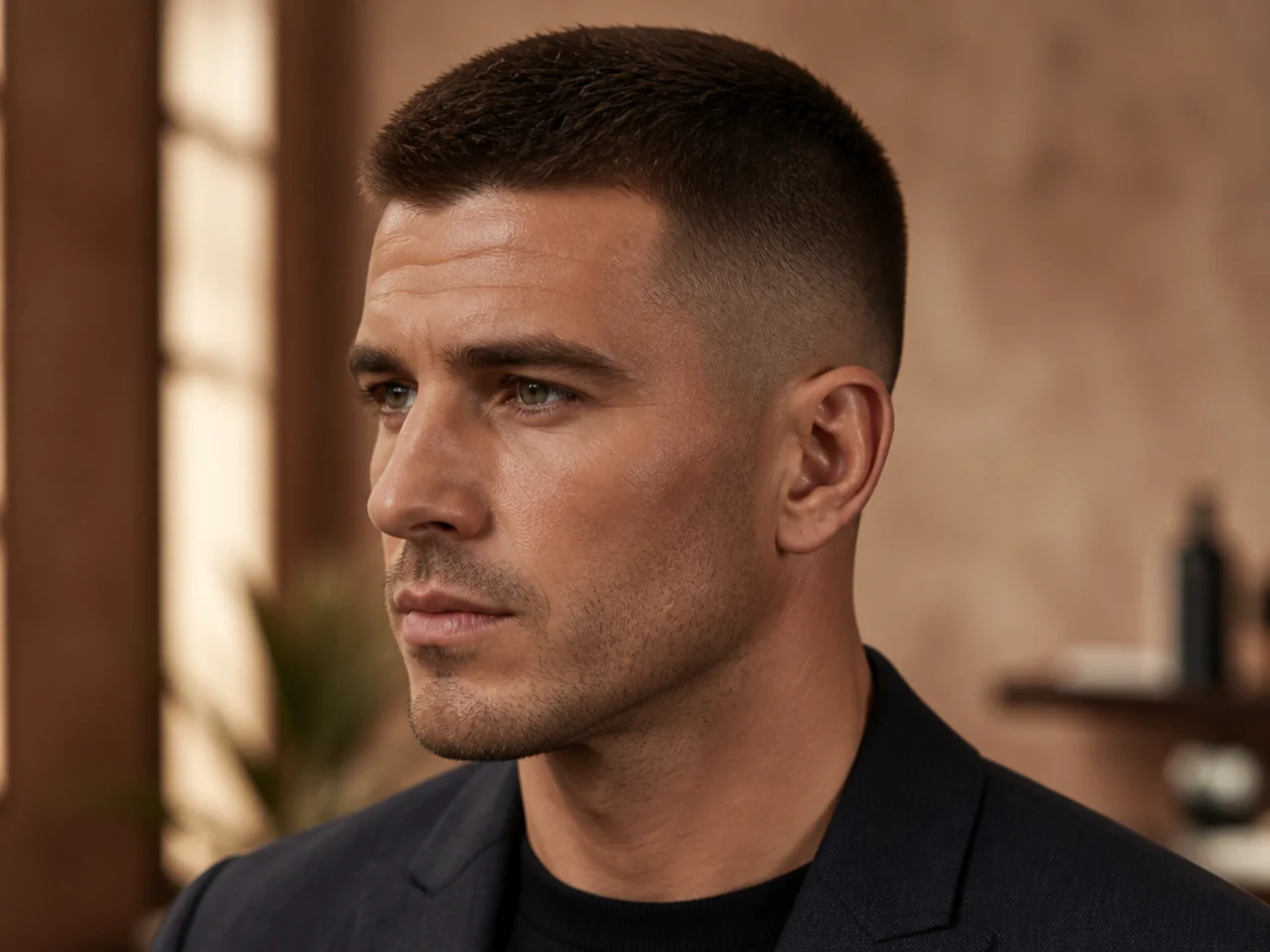
4. The Low Taper Business Cut
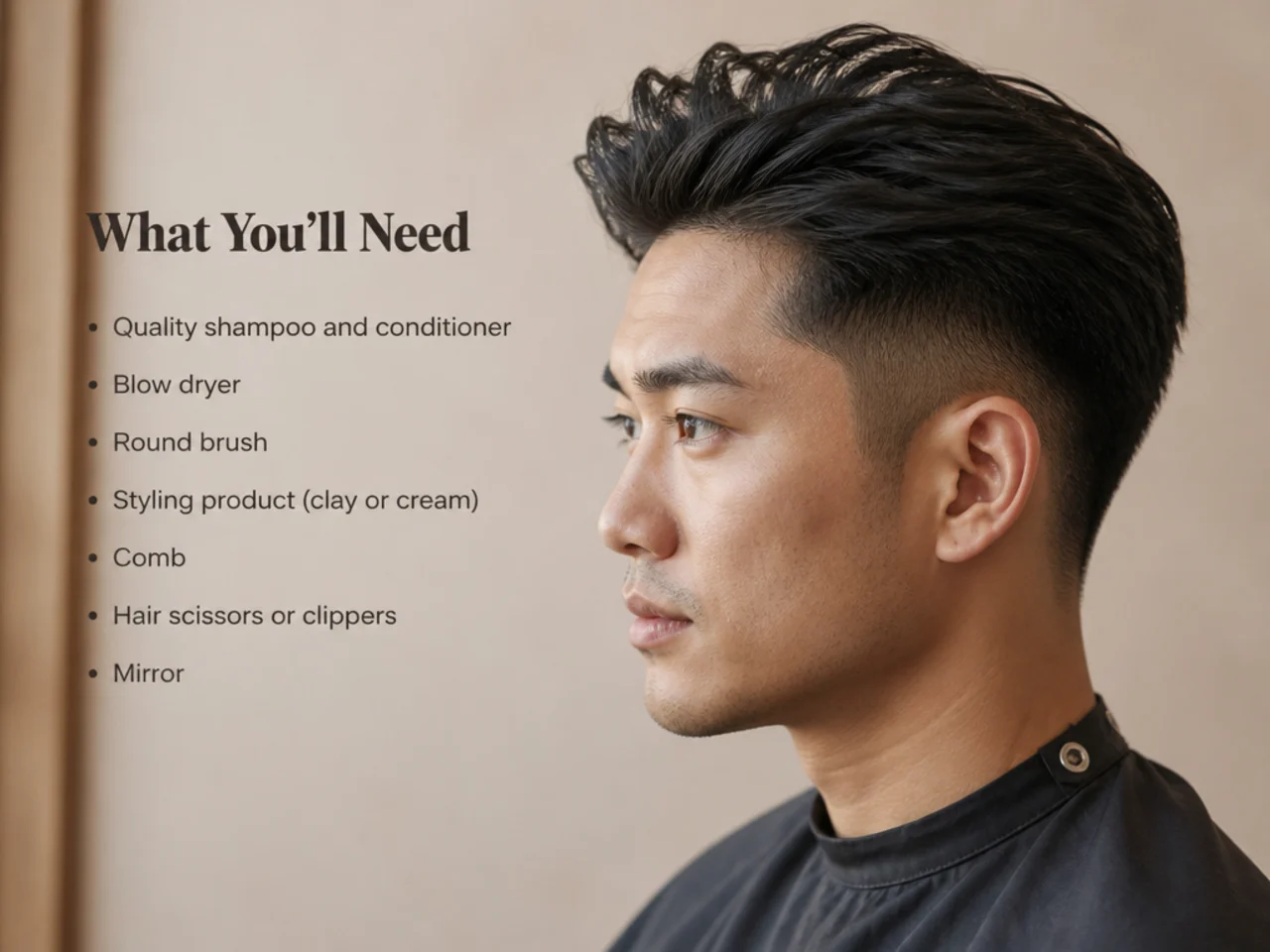
A #1 left at the neckline under a scissor-cut top. It gives the sharpness of a fade with none of the fortnightly upkeep.
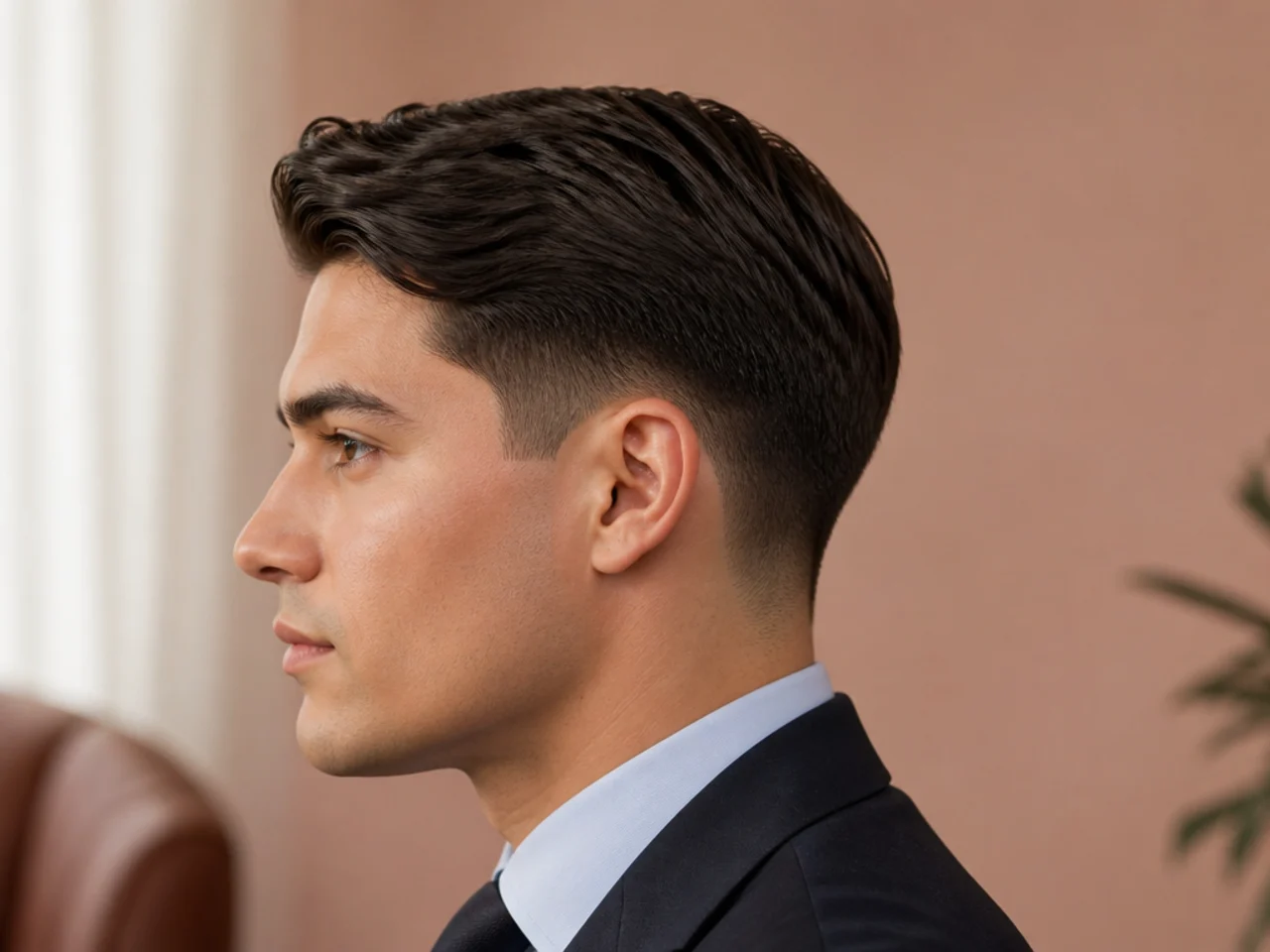
5. The Executive Contour
The top contoured to follow the skull with a defined part. It is the most formal member of the family and needs the least product of any of them.
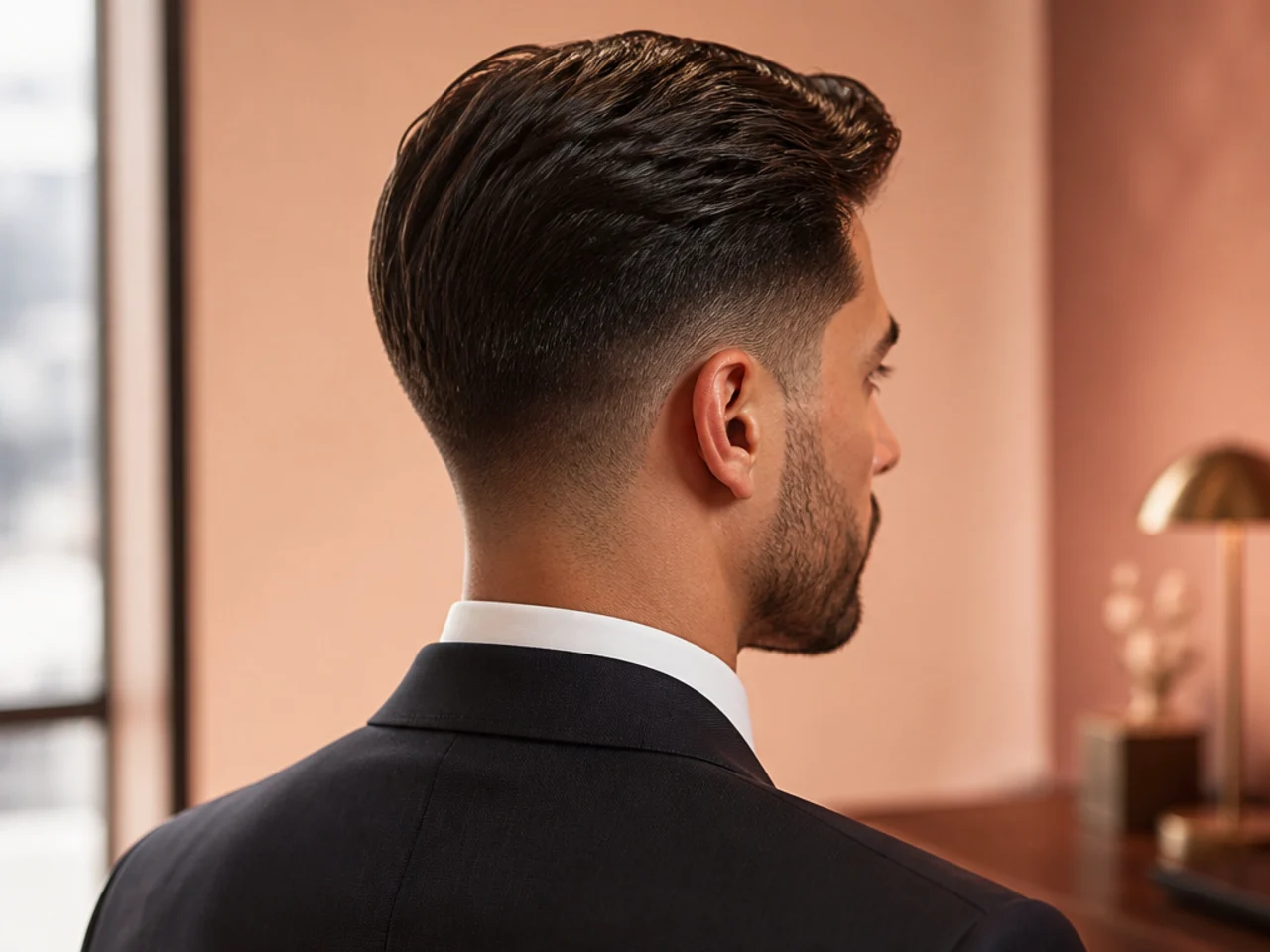
6. The Business Textured Crop
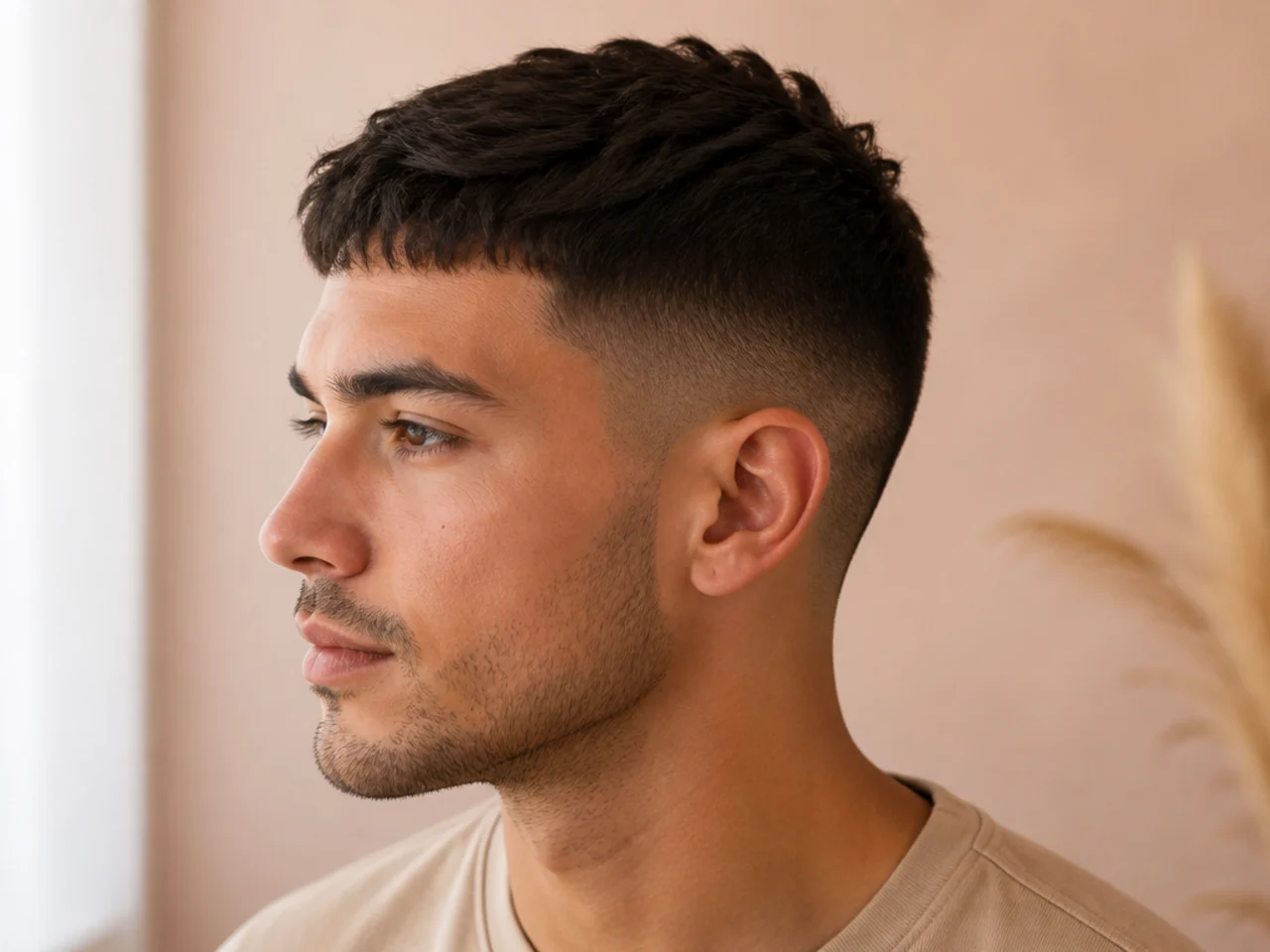
Short and forward with the ends broken. It is the youngest-reading cut that still meets every requirement of the family. Broken ends have no single line to hold, so four weeks of growth softens the crop rather than exposing it.
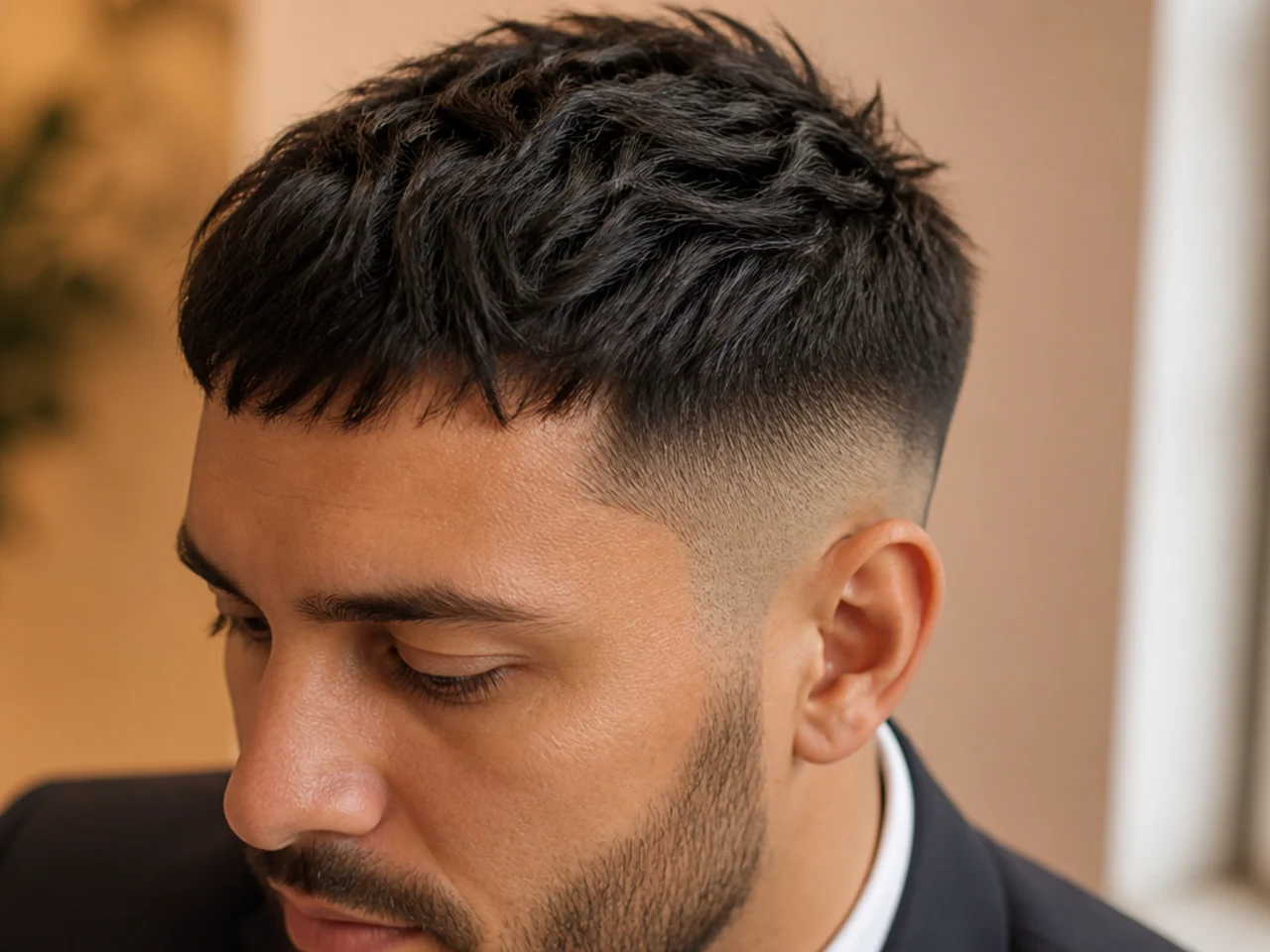
7. The Matte Slick Back
Combed back and finished without shine. Gloss is what makes this shape read as effortful under office lighting. Matte grips by friction rather than film, so the sweep survives on cut weight alone where a classic slick back leans on pomade.
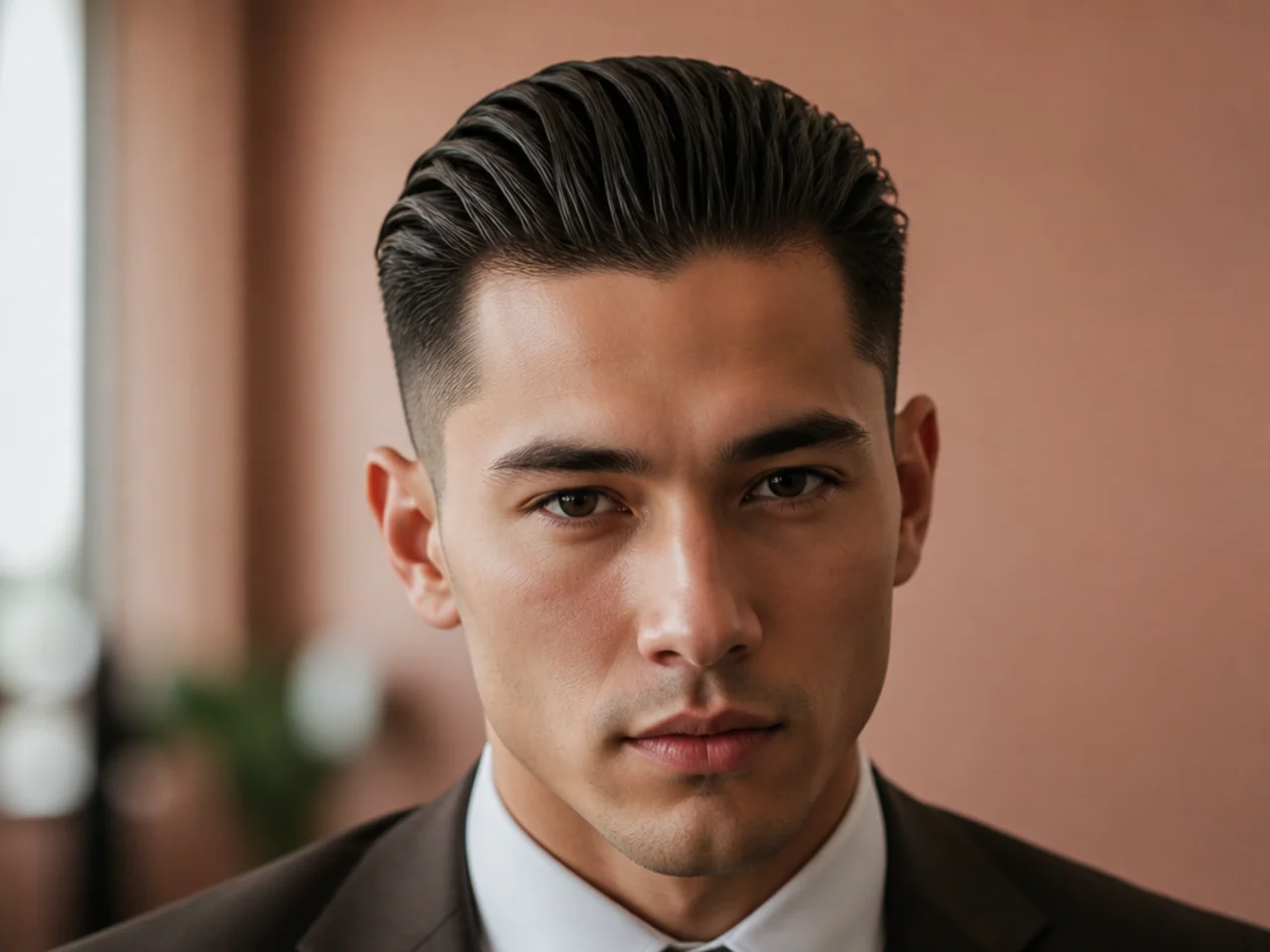
8. The Comb Over With a Low Taper
Length combed across from a low part above tapered sides. Done with proportion it is one of the most durable shapes in the family.
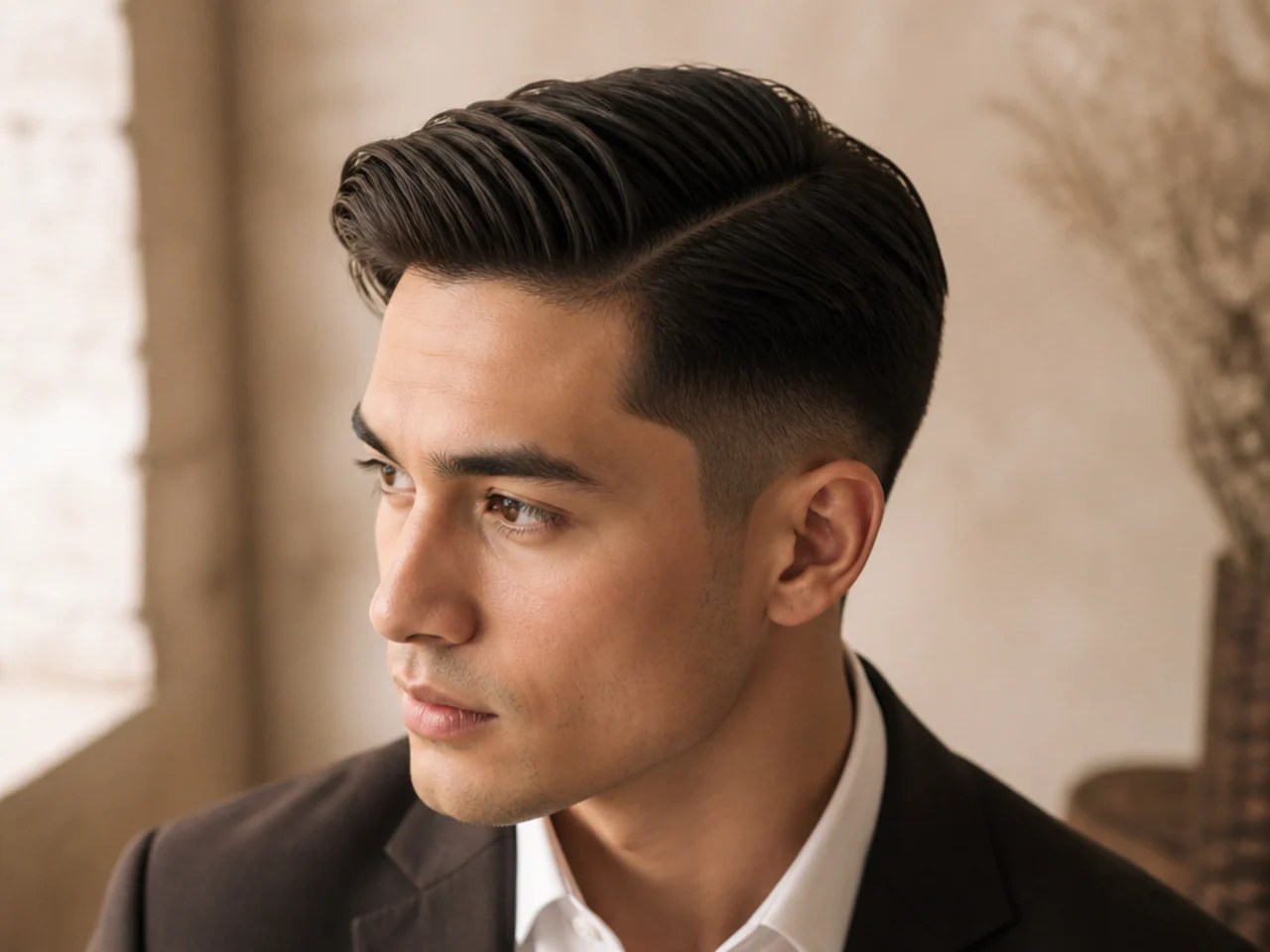
9. The Business Quiff, Lowered
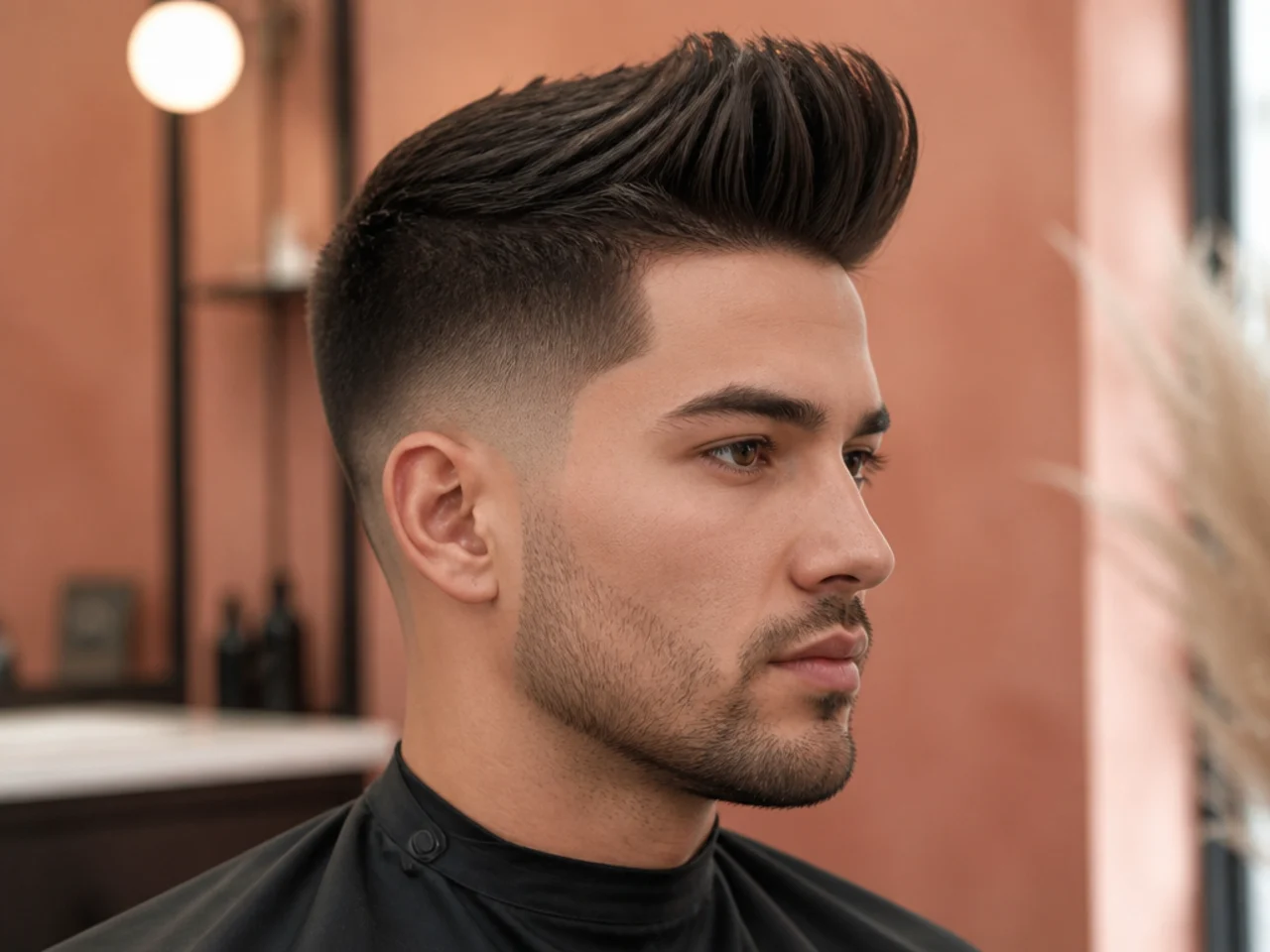
Volume kept modest and matte. A tall quiff collapses by mid-afternoon, which is a week-four failure in miniature. Lowering it means leaving the front only an inch longer than the crown, a shallower graduation than any standard quiff is built on.
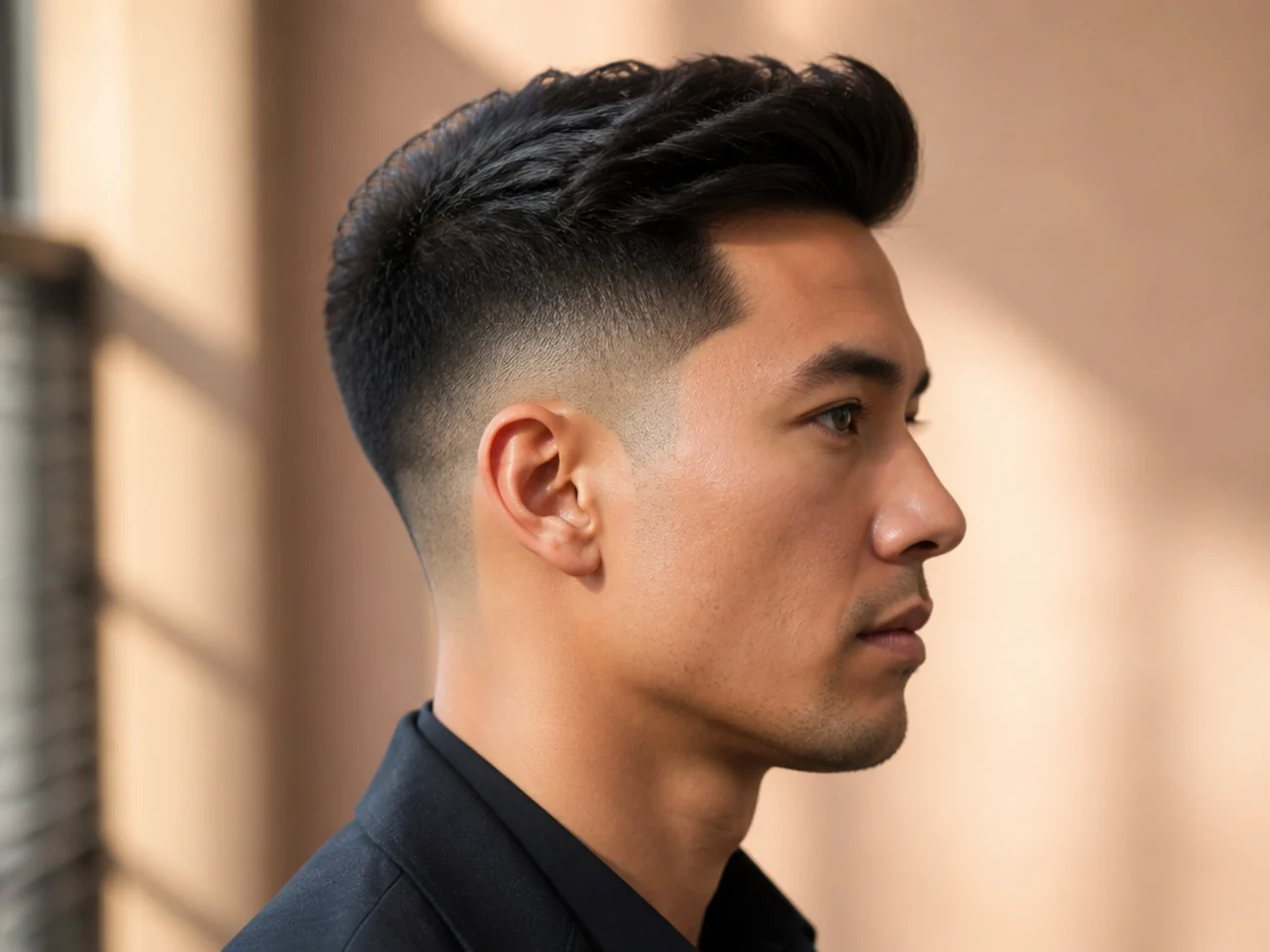
10. The Tapered Buzz
A #3 at 10mm on top with a tapered perimeter. It is the lowest-maintenance business cut and it never looks overdue. Twenty working days takes a #3 from 10mm to a little over 20mm, and a uniform length has no outline to go out of true.
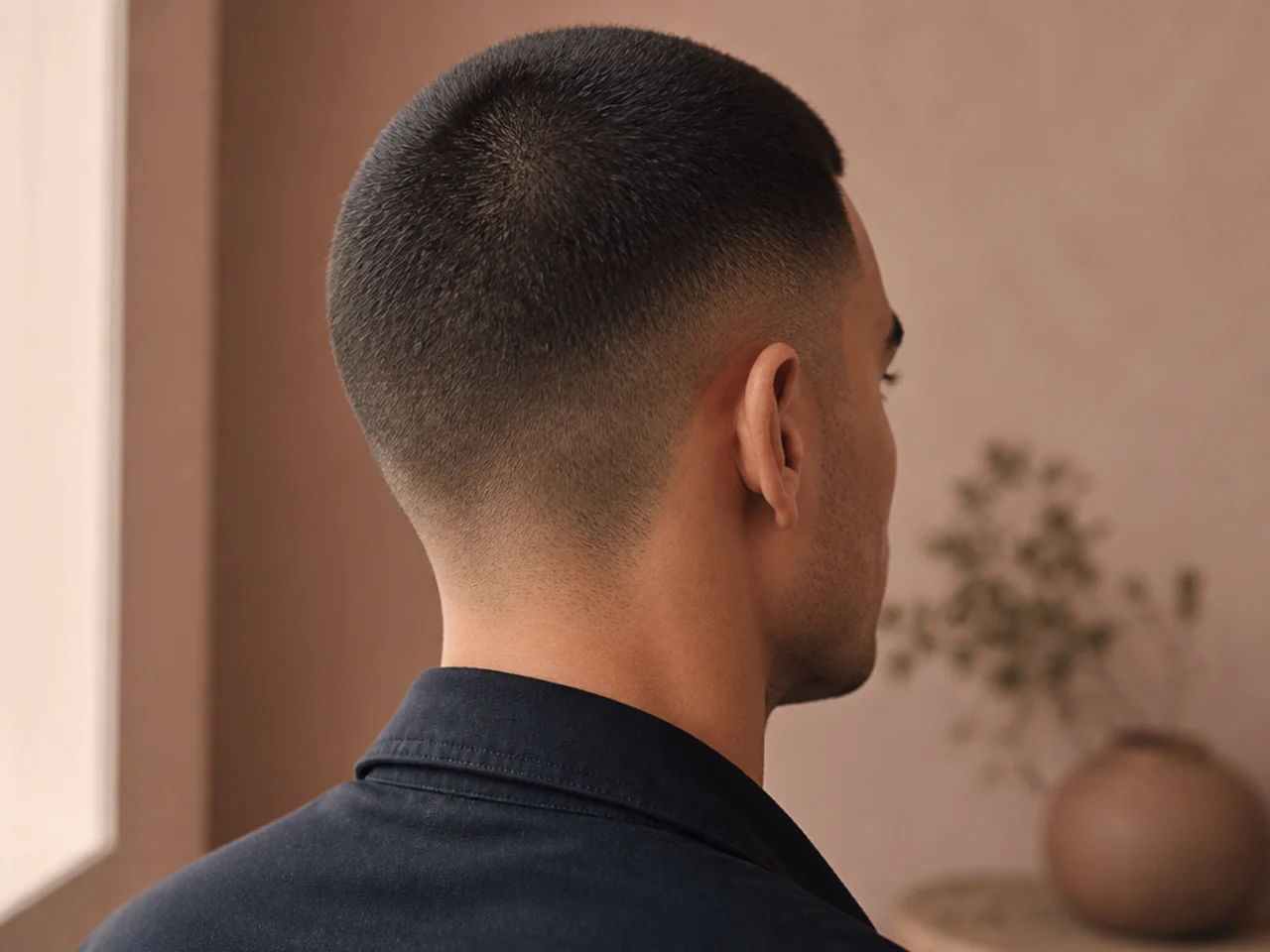
11. The Business French Crop
Short forward front with tapered sides. It needs no product at all, which makes it the fastest morning in the family. Everything is cut to fall forward from the crown, so root direction holds the shape and there is nothing for product to do.
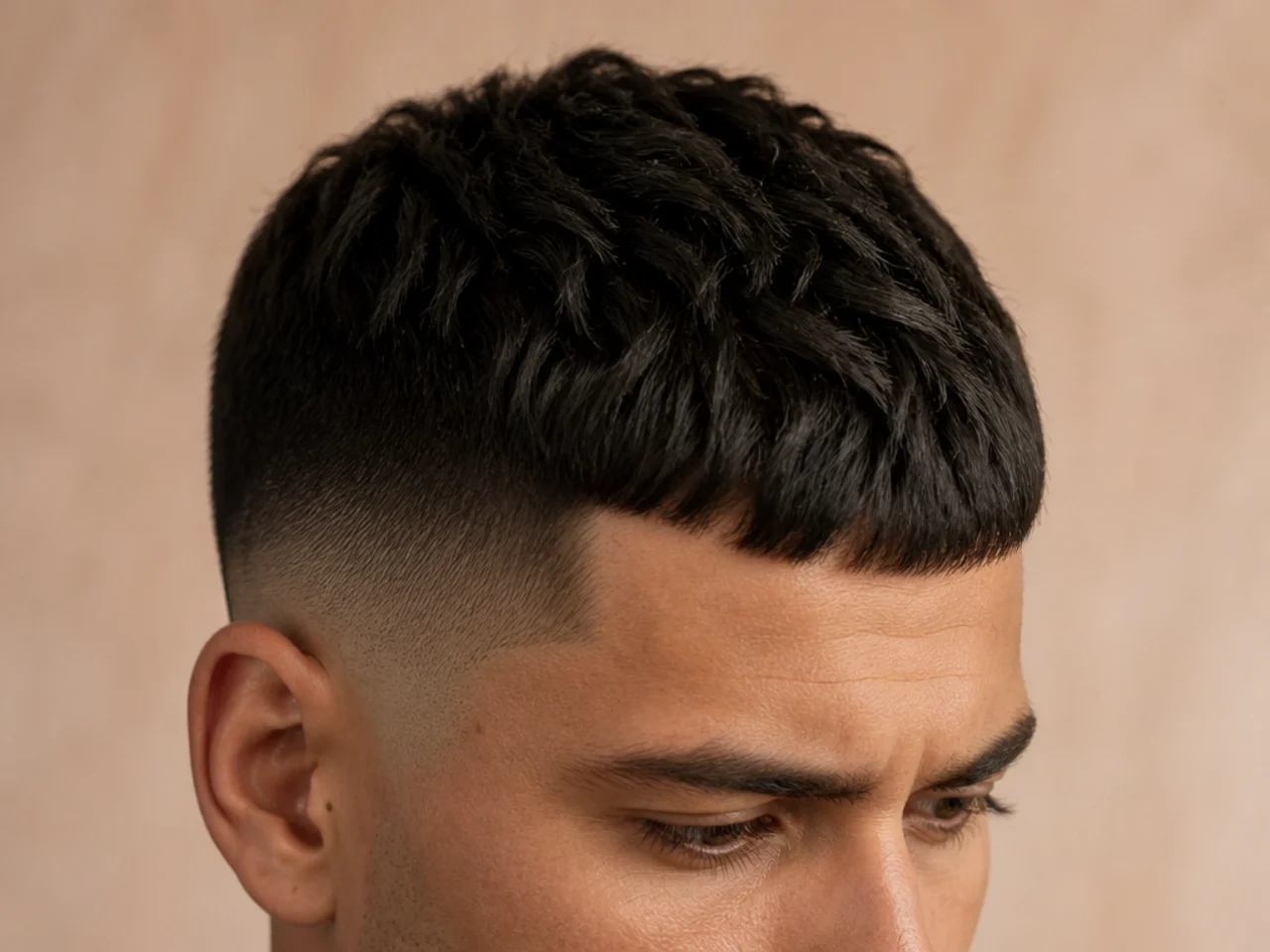
12. The Curly Business Cut
Curl kept short enough to stay contained, with weight removed from underneath. Containment rather than length is what makes curl office-appropriate. Thinning the interior leaves the outline where it is, which is why short curly cuts have to be recut rather than just shortened.
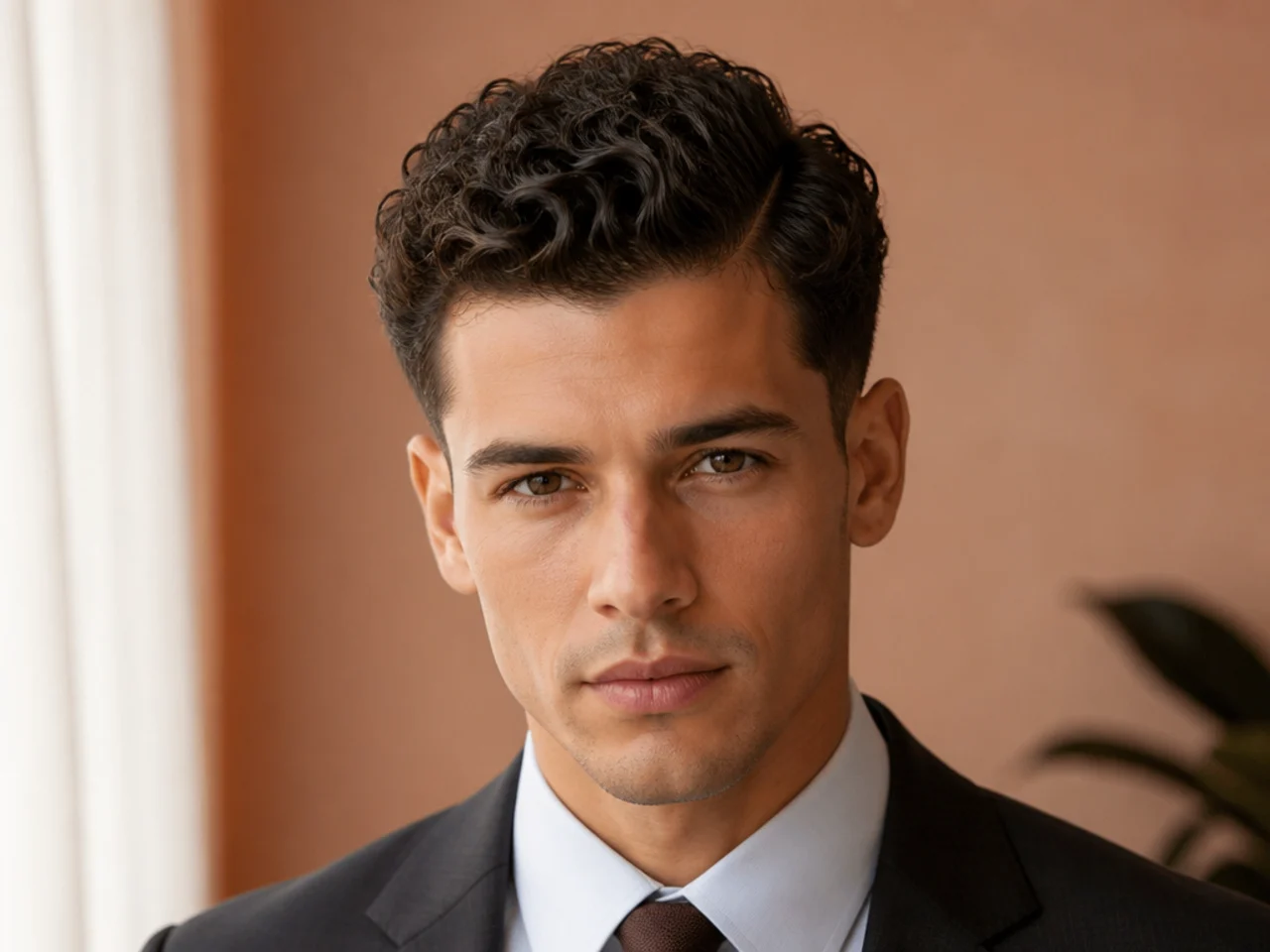
13. The Business Cut With a Beard
The taper meets a groomed beard line softly, with no shaved gap. Two hard horizontals across one face is the failure to avoid.
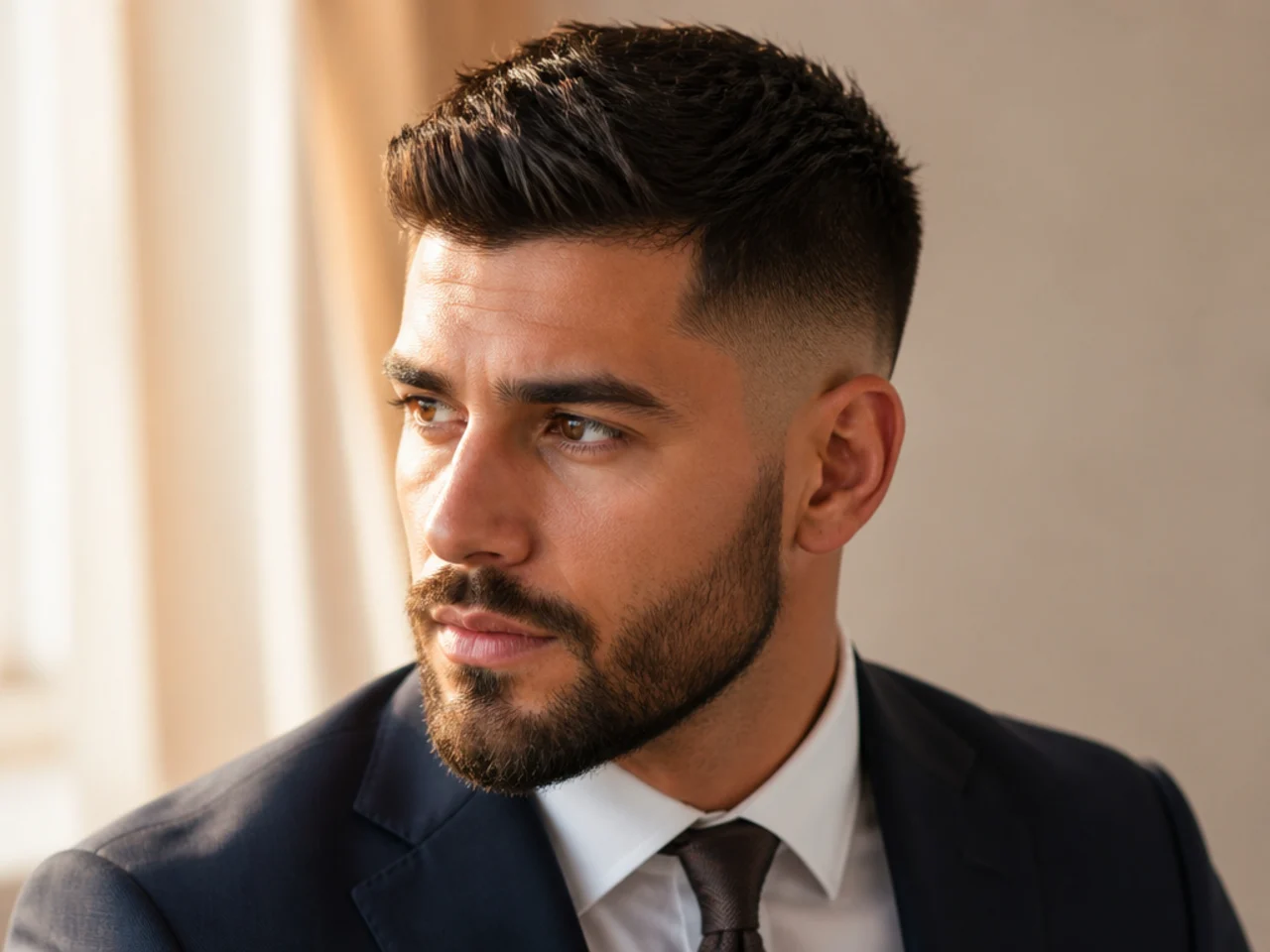
14. The Longer Executive
Four inches on top, contained and combed. Length is acceptable in this family as long as it stays inside its own outline.
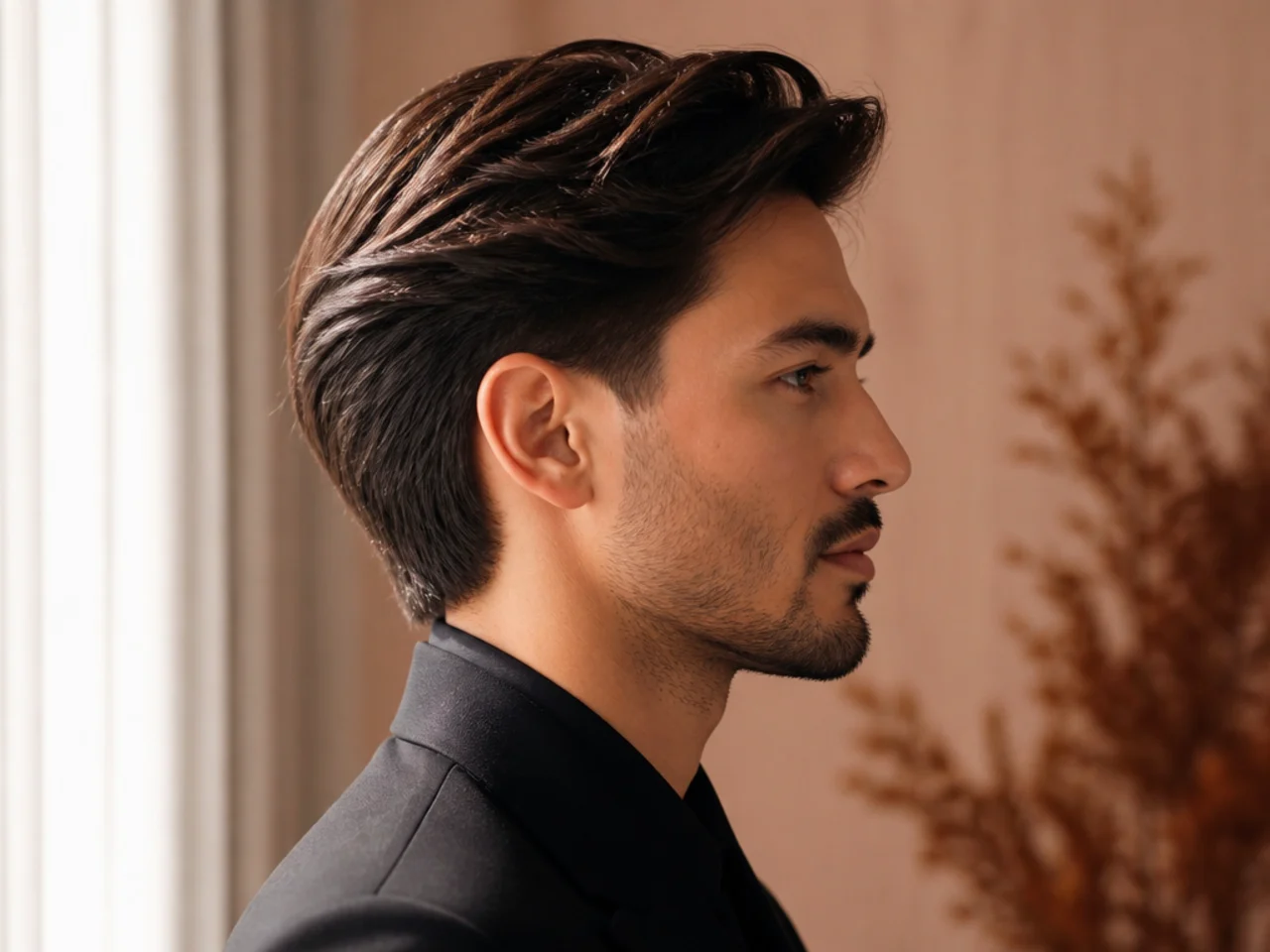
15. The Business Cut on Thin Hair
Short sides and blunt-cut ends on top. Blunt ends read as a solid edge, which is what thin hair needs under strong overhead lighting.
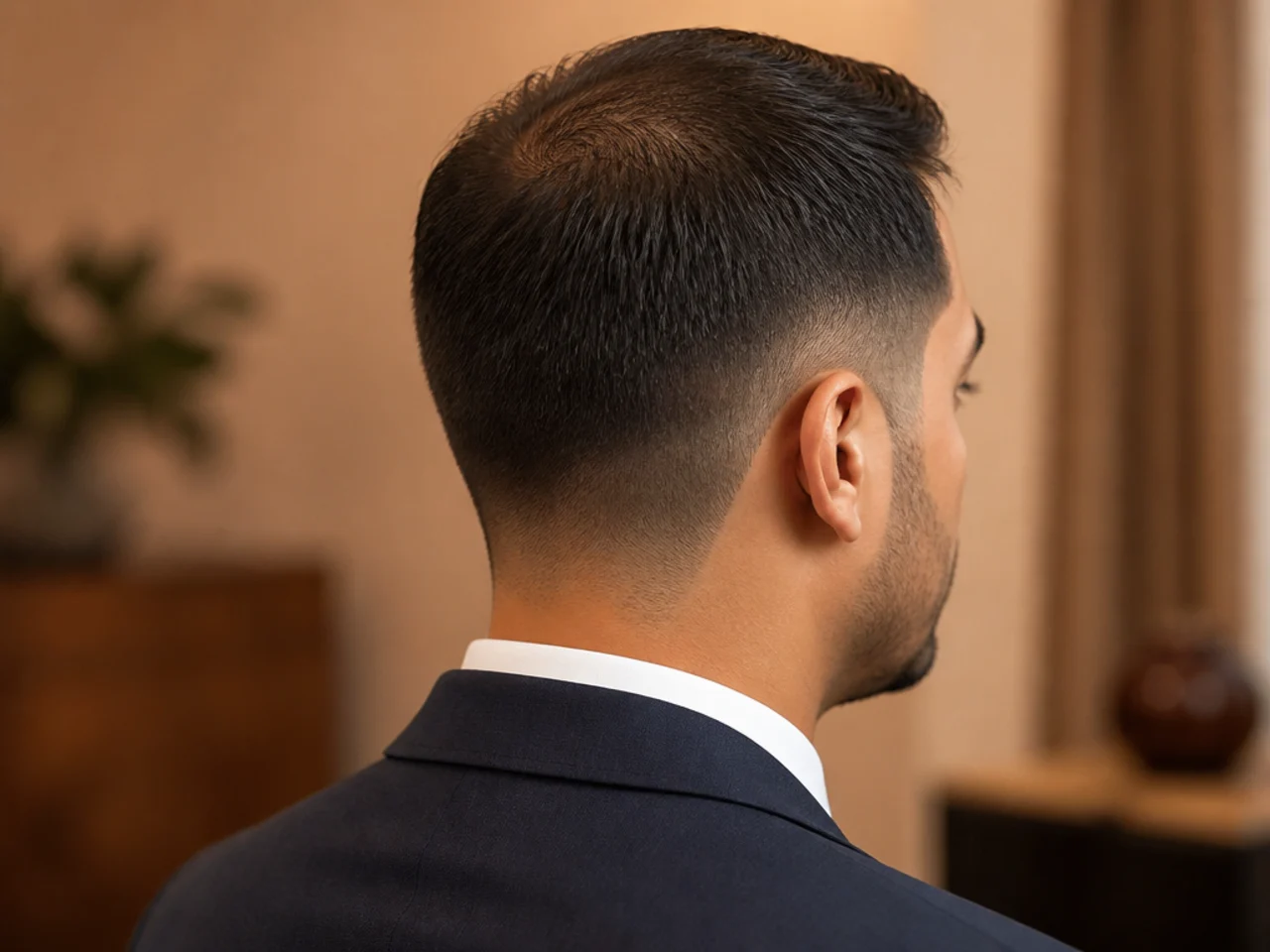
16. The Business Cut on Grey Hair
Soft graduation and no hard outline. Grey is coarser and reflects more light, so every precise edge reads harder than intended. Coarse hair also stands further off the scalp, so the graduation has to start lower down the side to bring the shape in.
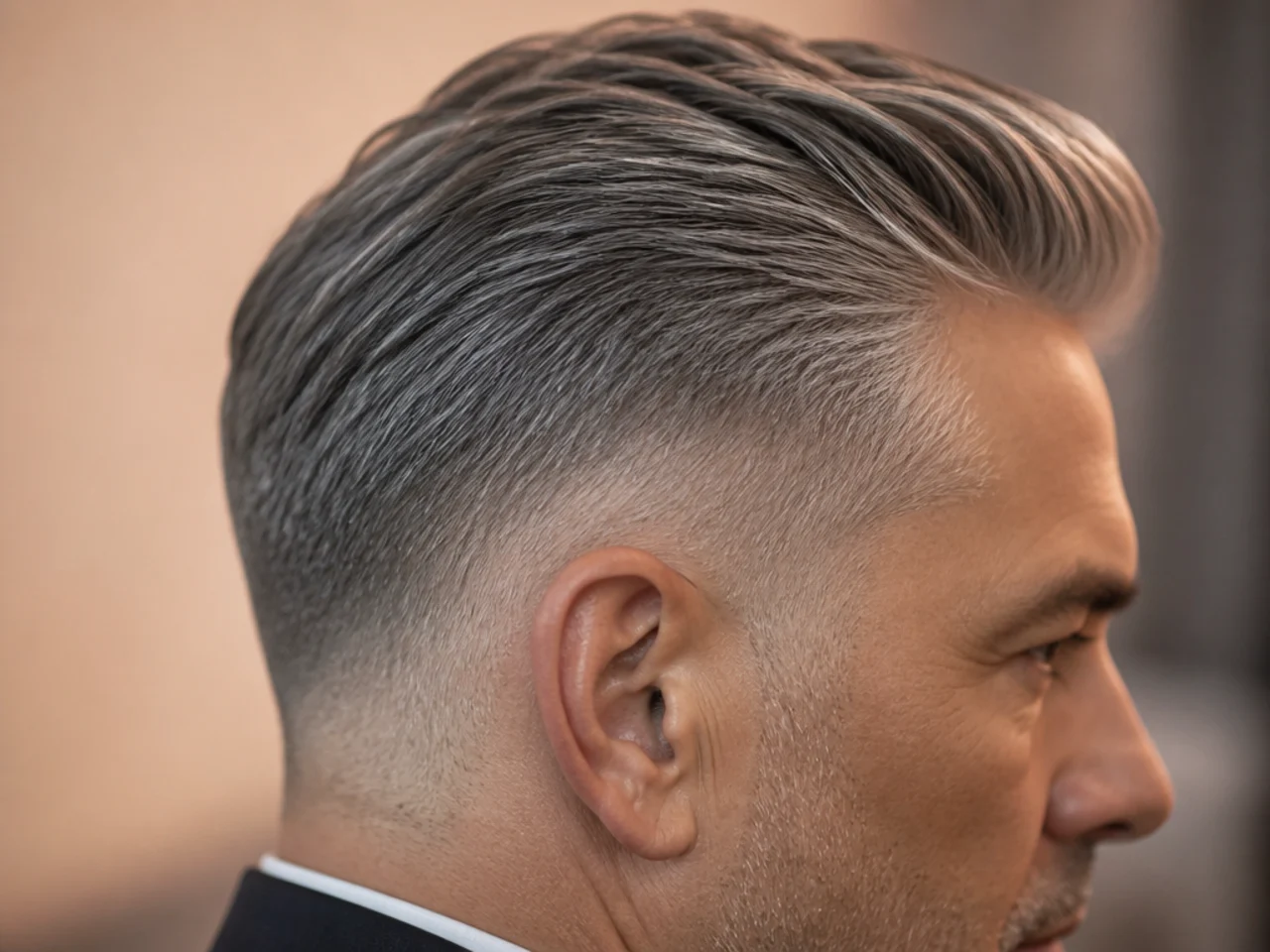
17. The Modern Caesar
Short, forward and flat, with softened rather than blunt ends. It is the shortest business cut that still has a recognisable shape.
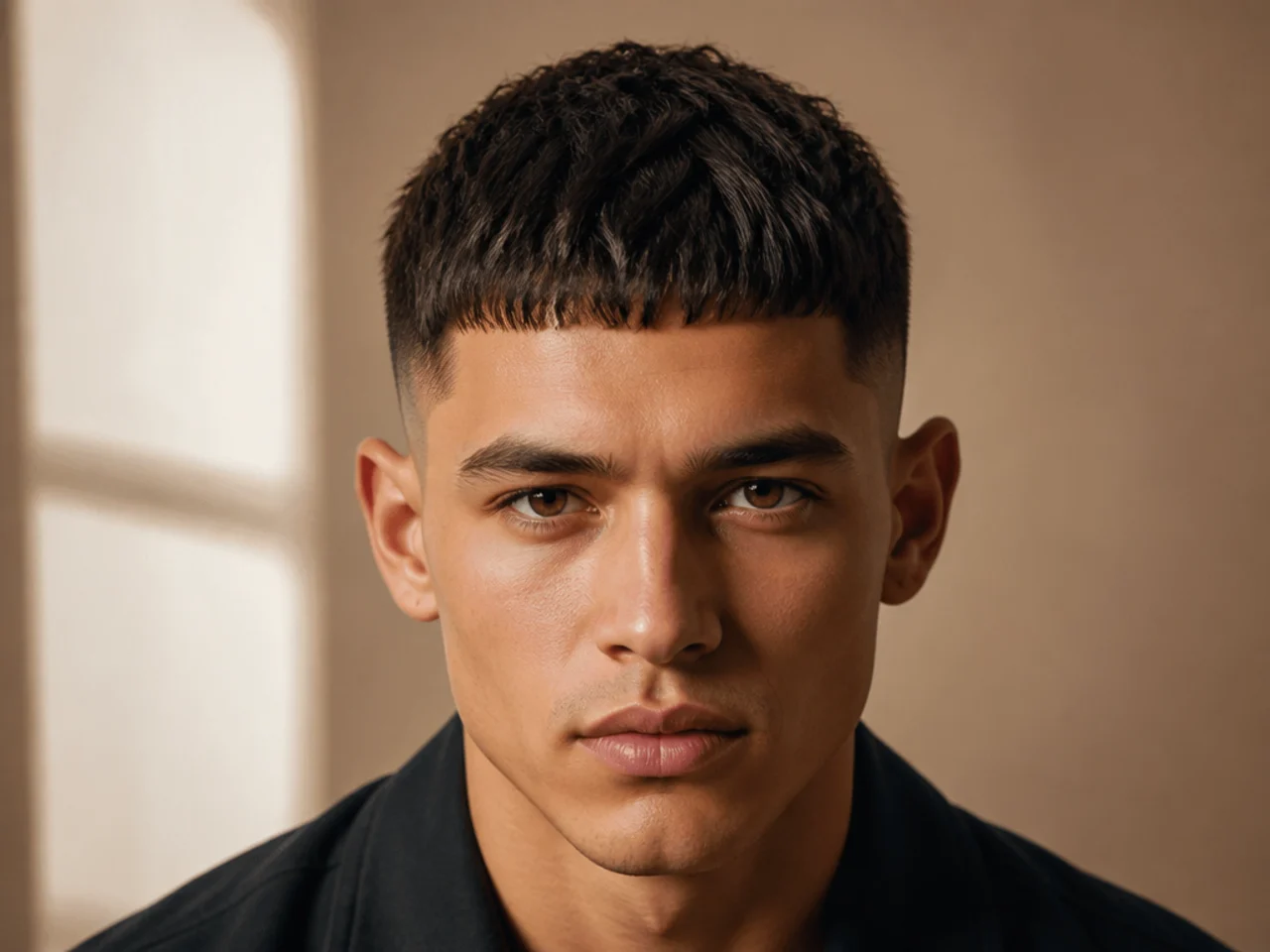
18. The Travel-Proof Cut
Anything that survives a plane, a hat and a hotel shower without a dryer. It is a requirement rather than a shape, and it eliminates half the alternatives.

19. The Business Cut Without a Part
Brushed forward or back with no defined line. It removes the one detail that has to be recreated after every wash. Without a part the top is cut as one continuous length across the head rather than graduated away from a line on each side.
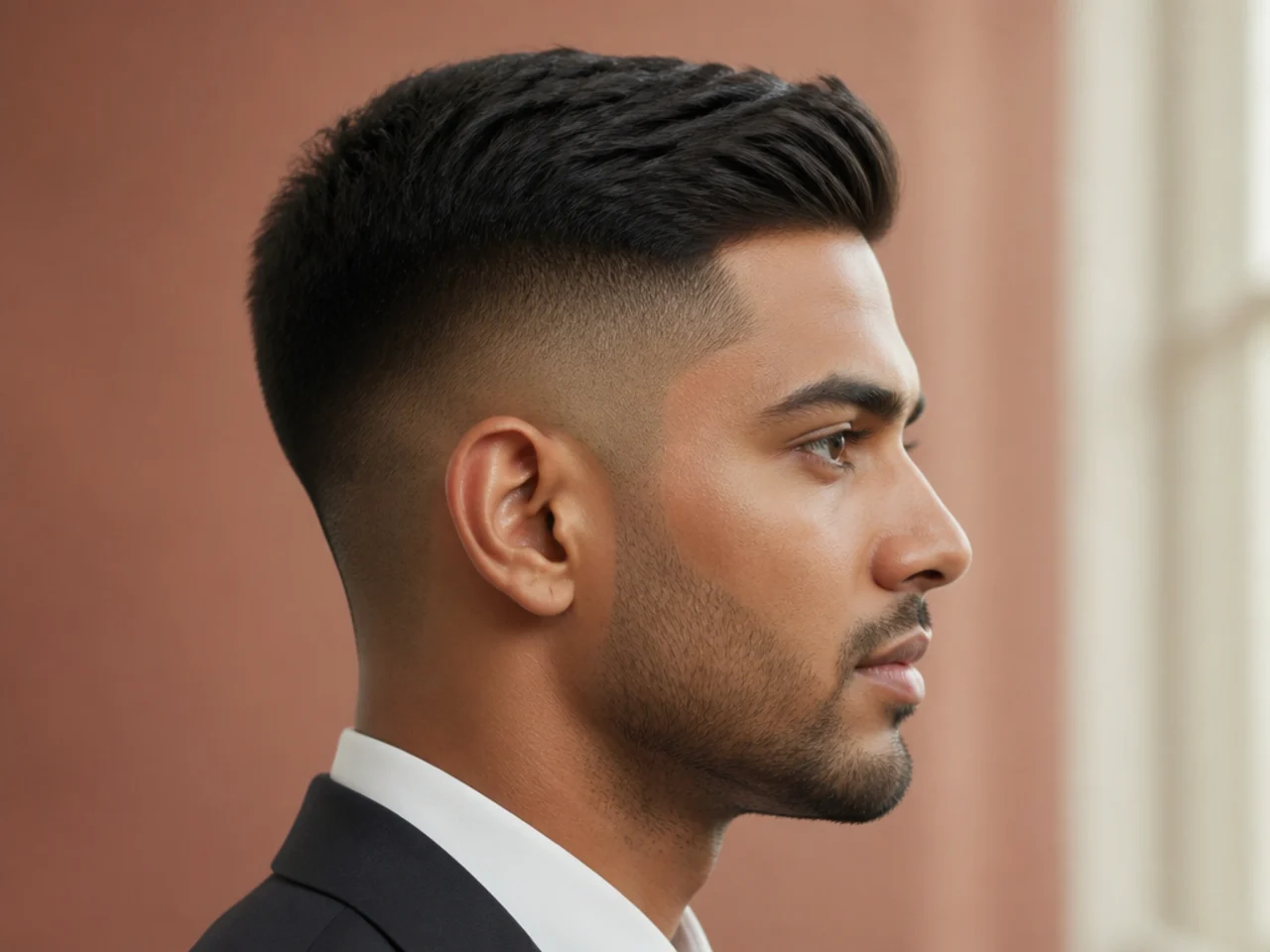
20. The Week-Four Version
The only honest photograph of a business haircut. If it still reads correct here, it belongs in the family, and if it does not, no amount of week-one sharpness rescues it.

Styling and Upkeep
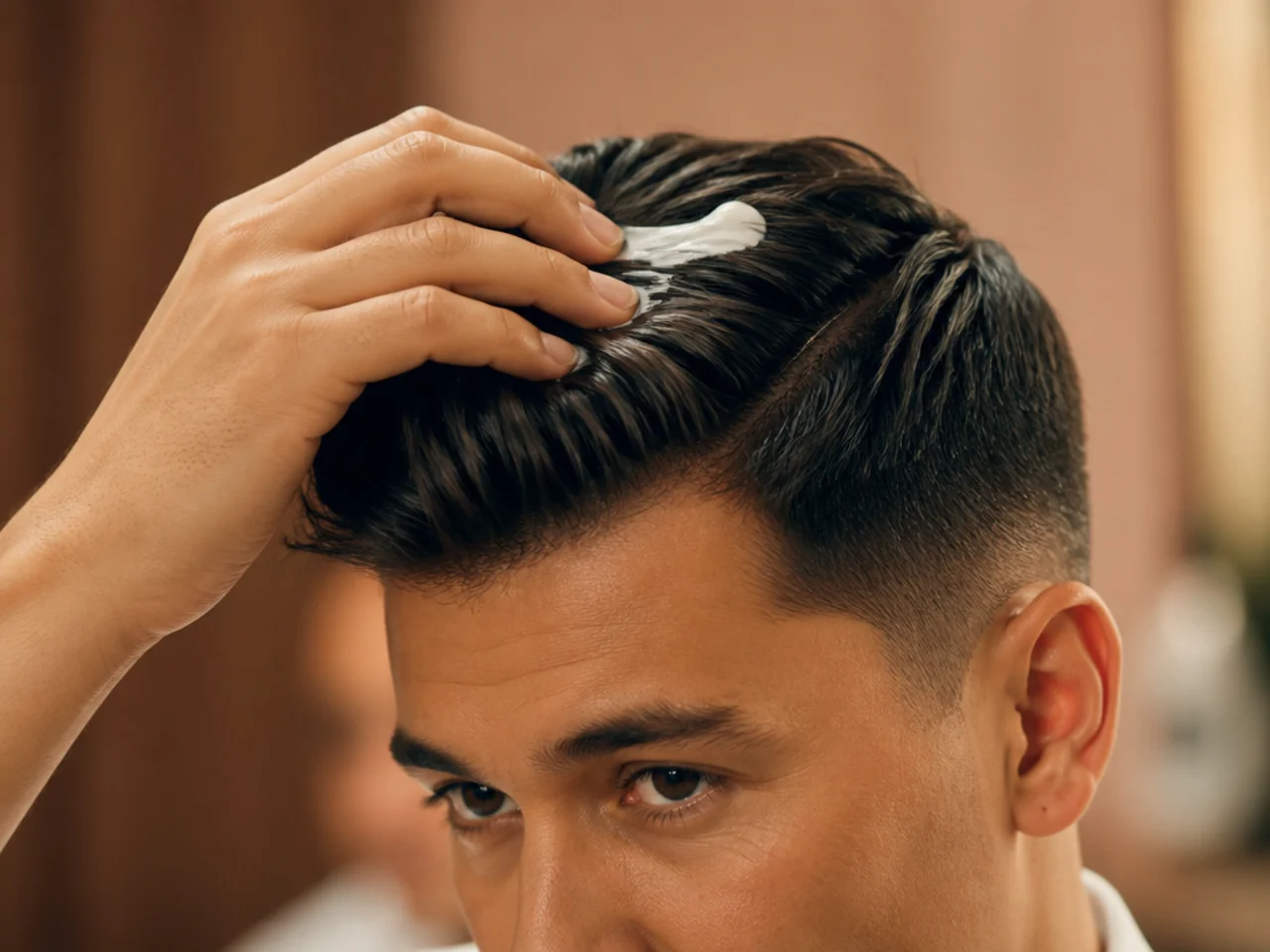
Use a matte cream, not pomade. Office lighting exaggerates shine considerably.
Keep the neckline clean between visits. It reads as a fresh haircut long after the shape has softened.
Book monthly and stay with a taper. It is the only depth that matches a four-week rhythm.
Set the part while damp if you have one. A dry part will not hold past mid-morning.
Trim ears and eyebrows on the same visit. They are noticed more than the haircut is.
Mistakes to Avoid
Asking for a skin fade. It looks overdue for half of every month.
Adding a shaved hard part. It regrows to stubble within about a week.
Choosing a shape that needs a round brush. It will not get one on a busy morning.
Using high-shine product. Office lighting turns it into visible grease.
Judging the cut on the day you get it. Week four is what your colleagues mostly see.
FAQ
What makes a cut a business cut? It has to be correct at week four, not week one.
Fade or taper? Taper, because it holds three to four weeks rather than one to two.
How long can it be? As long as it stays contained within its own silhouette.

Final Thoughts
Choose the cut you would be happy to walk into a meeting with on the day before your appointment. That single test does more filtering than any list of office-appropriate shapes, because it selects for durability rather than for a good first day.
For the office styling side of the same question see business hairstyles for men, and for the formal end of the range see professional hairstyles for men. More in Men's Haircuts.